


- الجميع
- قصص عملاء نيوتوب
- نيوتوب إكسبلورر هاب
- رؤى الصناعة NEWTOP
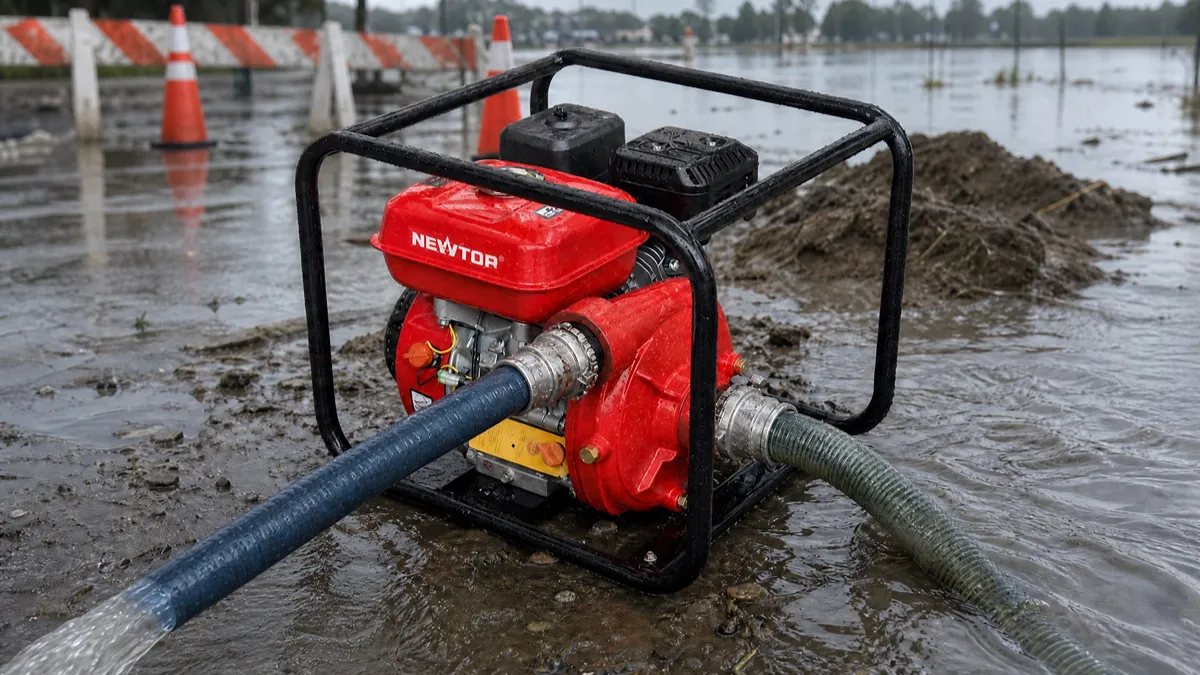
Choosing between a centrifugal pump and a self-priming مضخة depends on your application, working environment, and customer needs. Centrifugal pumps provide higher efficiency and simple operation for stable water sources, while self-priming pumps offer easier startup and better flexibility for changing conditions.
للموزعين, التجار, والمشترين OEM, selecting the right pump type is not only about technical performance but also about market demand, user experience, والموثوقية على المدى الطويل. A pump that works well in a fixed irrigation system may not be the best choice for construction sites or portable water transfer applications.
في هذا الدليل, we will compare centrifugal and self-priming مضخات المياه in terms of working principles, كفاءة, تثبيت, صيانة, التطبيقات, and market suitability to help you make a better product selection decision.
What Is a Centrifugal Pump?
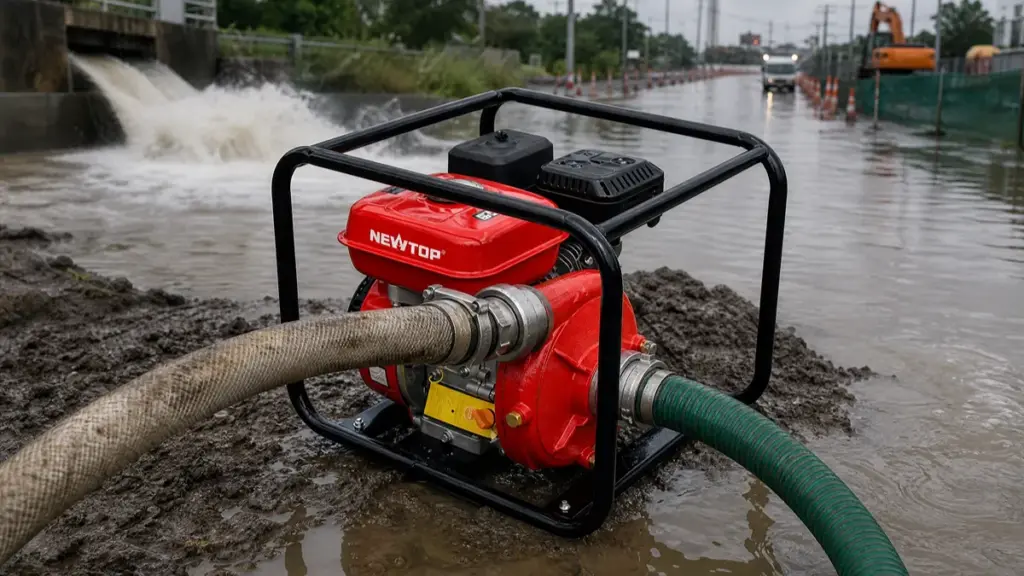
A centrifugal pump is the industry baseline for moving large volumes of water, converting mechanical motor power into hydraulic pressure using a rotating impeller and volute casing.
Core Definition and Energy Conversion
A centrifugal pump is one of the most common types of water pumps used for clean water transfer and irrigation applications. It uses centrifugal force generated by a rotating impeller to move water from the inlet to the outlet.
The mechanism works by increasing the velocity of an incompressible liquid, typically water. As the fast-moving fluid hits the casing walls, the system translates that raw kinetic velocity into usable pressure. Engineers treat this design as the baseline technology for moving large volumes of water against moderate pressure gradients because it delivers continuous flow without excessive mechanical complexity.
What Is a Self-Priming Pump?
A self-priming pump is a specialized centrifugal unit equipped with an internal reservoir to automatically evacuate air and restore liquid flow without repeated manual repriming.
A self-priming pump functions as a specialized centrifugal water machine engineered to evacuate air from its own casing and the connected suction line. Standard centrifugal pumps fail when air enters the system, forcing operators to manually re-prime them. The self-priming design addresses this primary limitation directly.
It incorporates an internal liquid reservoir that generates a vacuum on startup. This mechanism automatically draws water upward into the system before standard pumping begins. Because of this capability, engineers frequently specify these pumps for applications where the equipment must be installed above the water source.
Source High-Margin Garden Machinery Built to Last

How Does a Centrifugal Water Pump Work?
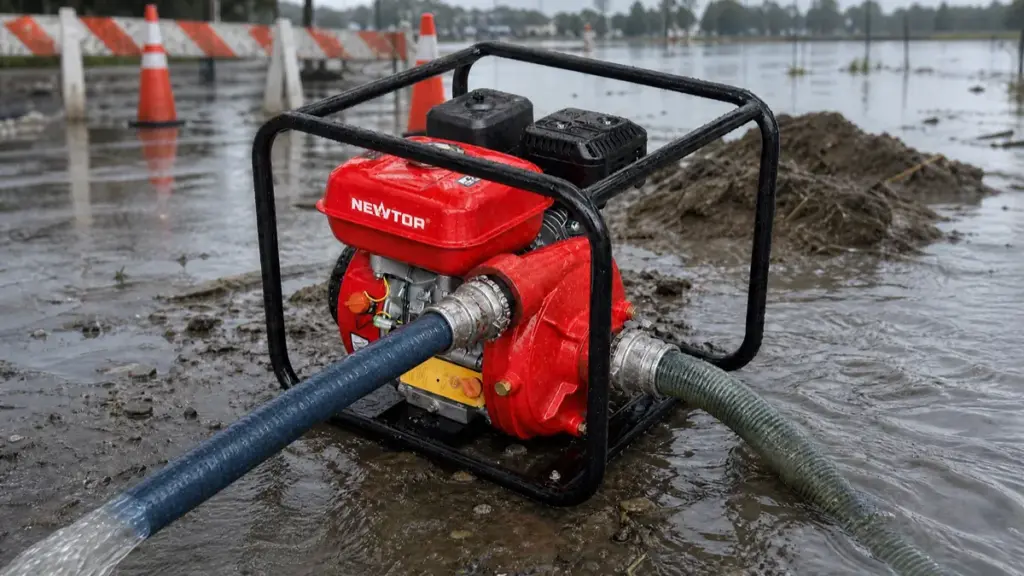
Centrifugal pumps rely on a spinning impeller to convert mechanical rotation into hydrodynamic pressure. They excel at high-volume water transfer but strictly require a fully primed casing before starting.
Core Energy Conversion Principle
At its foundation, a centrifugal pump relies on a straightforward energy exchange. An electric motor or diesel engine supplies rotational kinetic energy to the pump shaft. As the attached impeller spins, it transfers that mechanical energy directly to the incoming water, rapidly accelerating its velocity.
Once the water leaves the impeller blades at high speed, it slams into the surrounding casing. The casing acts as a conversion zone, forcing the high-velocity fluid to decelerate and transforming that kinetic energy into static pressure. This resulting pressure, or head, gives the water the force it needs to push through a piping network.
Key Internal Components
To understand the fluid dynamics, you need to look at the hardware doing the heavy lifting. Three primary components dictate pump performance:
- Impeller: A shaft-driven wheel equipped with curved blades. It uses centrifugal force to push water radially outward from the center.
- Casing (Volute or Diffuser): This stationary housing encloses the impeller. It features an expanding flow area designed to smoothly decelerate the water and build system pressure.
- Shaft and Motor: These elements supply the mechanical torque required for rotation. In standard water applications, the motor typically drives the shaft at speeds between 1750 و 3500 دورة في الدقيقة.
Step-by-Step Fluid Flow Process
The actual movement of fluid happens in a continuous, rapid sequence. Water first enters the pump axially through the suction port, flowing straight into the center—known as the eye—of the impeller. The spinning blades immediately capture this fluid and accelerate it radially outward toward the impeller’s outer edge.
This violent outward movement creates a critical low-pressure zone right at the impeller eye. Atmospheric and static pressure in the suction line react by continuously drawing more water into the pump to fill that void. في أثناء, the original water hits the expanding wall of the volute casing, decelerates, and exits the discharge nozzle as a highly pressurized stream.
The Role of Initial Priming
Standard centrifugal water pumps share a strict operational constraint: they cannot pump air. Before you initiate startup, the casing and the entire suction line must hold a solid column of water. If air accumulates inside the casing, the impeller simply churns the gas. The unit becomes gas-bound and fails to generate the pressure differential required to move the fluid.
Because standard models lack built-in air evacuation features, they depend heavily on system design. Engineers typically install these units in flooded suction layouts, placing the pump below the water source so gravity maintains the prime. In situations where the pump sits above the water level, operators rely on external vacuum systems or foot valves to keep the system fully primed for the next cycle.
How Does a Self-Priming Water Pump Work?
Self-priming pumps mix retained water with incoming air, expel the air, and create a vacuum to draw liquid from below without manual repriming.
Initial Casing Fill and Seal Formation
Before you hit the power switch for the first time, you must manually fill the built-in reservoir with water. This crucial step prevents dry running, a condition that quickly overheats and destroys the mechanical seal. The retained water creates a hydrodynamic seal between the rotating impeller and the wear plate, establishing the physical conditions necessary for the initial suction action.
Air-Water Mixing at the Impeller
As the impeller starts spinning, it pulls in air from the non-flooded suction line. It aggressively mixes this incoming air with the water already sitting inside the casing directly at the impeller eye. This action forms a dense, pumpable air-water mixture, bypassing the typical air binding failure that stops standard centrifugal pumps.
Separation of Air and Recirculation of Water
The spinning impeller uses centrifugal force to fling the newly formed air-water mixture outward into the outer casing chamber. Inside this larger space, gravity and density take over. The lighter air rises to the top and escapes through an open discharge or a dedicated air-release device. The heavier water drops down and cycles back to the impeller through internal recirculation ports to repeat the mixing process.
Vacuum Creation and Suction Lift
Every time the pump expels a pocket of air, the total volume of air in the suction line drops. This continuous extraction creates a partial vacuum at the impeller eye and throughout the suction piping. With the pressure inside the pipe lowered, the higher atmospheric pressure resting on the below-grade water source pushes liquid straight up the pipe toward the pump inlet.
Transition to Standard Centrifugal Pumping
The priming cycle ends the moment the pump evacuates all the air and floods the entire flow path with water. From this point forward, the unit operates exactly like a conventional centrifugal pump, continuously converting water velocity into pressure for the system discharge. When you eventually shut the pump down, the integrated reservoir holds onto a specific volume of water, keeping the equipment ready for its next automatic prime.
مضخة مياه الطرد المركزي مقابل مضخة المياه ذاتية التحضير: الاختلافات الرئيسية في لمحة
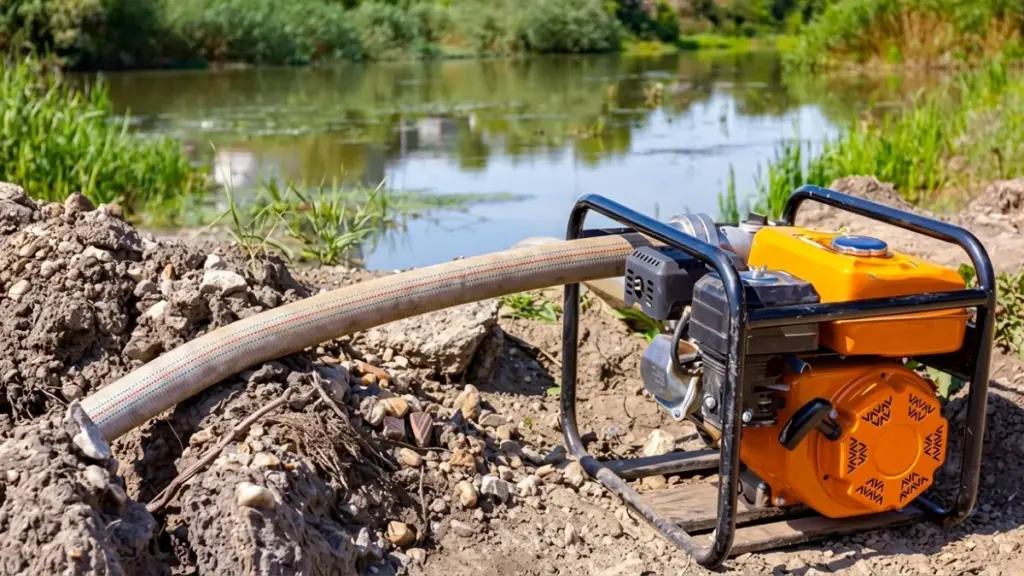
When evaluating a centrifugal vs self-priming water pump, the decision dictates your facility’s energy footprint and maintenance schedule. Engineers must balance peak hydraulic efficiency against the practical realities of air management and suction lift.
| مقارنة | Centrifugal Pump | Self-Priming Pump |
|---|---|---|
| Priming requirement | Requires manual priming before operation | Automatically removes air after initial filling |
| Startup speed | Requires additional preparation before starting | Starts faster with less preparation |
| كفاءة | Slightly higher efficiency under ideal operating conditions | Slightly lower efficiency due to additional self-priming design features |
| Installation | Best suited for fixed installations with stable water sources | Better for portable and frequently relocated applications |
| Operation conditions | Requires a stable water supply and properly sealed suction line | Handles changing water sources and field conditions better |
| صيانة | Simpler structure with easier maintenance | More components but still easy to inspect and service |
| يكلف | Usually more affordable | Usually higher cost due to additional design features |
| Common users | Farms, factories, irrigation systems, and fixed water transfer applications | مواقع البناء, زراعة, الصرف في حالات الطوارئ, and portable water transfer |
Related: الفرق بين مضخة القمامة ومضخة المياه النظيفة
Priming Mechanism and Air-Handling
Standard centrifugal units rely on a fully flooded suction line to operate. If air enters the system, the impeller loses its hydrodynamic grip, causing the pump to drop its prime. Operators must manually refill the casing from an external source to restore flow, which adds downtime to intermittent operations.
Self-priming pumps take a fundamentally different approach. Once you complete an initial casing fill, they automatically evacuate air from the suction line. They actively process air-water mixtures, expelling the gas and recirculating the liquid until they pull a full vacuum. This structural advantage allows them to re-prime repeatedly without manual intervention.
Internal Design and Complexity
A standard centrifugal pump keeps mechanical complexity to a minimum. The fluid follows a simple, direct hydraulic path straight into the impeller and out through the volute. This streamlined geometry requires minimal mechanical upkeep and keeps initial equipment costs low.
Self-priming designs integrate additional components directly into the pump casing. They feature built-in liquid reservoirs and specialized recirculation chambers engineered to separate air from water. While these internal additions remove the need for external vacuum systems, they require slightly more maintenance. Technicians must routinely inspect these chambers to ensure internal clearances remain tight enough to generate a strong vacuum.
Hydraulic Efficiency and Energy Use
Standard centrifugal pumps dominate in raw energy performance. In continuous, flooded suction applications, they deliver 5 ل 15 percent higher hydraulic efficiency than self-priming variants. The fluid moves efficiently without the drag of secondary separation chambers, keeping power consumption low during 24/7 run cycles.
Self-priming models suffer a minor efficiency penalty by design. Forcing water through internal recirculation paths creates friction and turbulence, demanding slightly more motor power to move the same volume of liquid. But raw efficiency does not always tell the whole story. If a standard pump requires an external vacuum pump or costly foot valves to maintain its prime, deploying a self-priming unit reduces total operational costs by eliminating those auxiliary parts.
Installation Suitability and Application Fit
Facility layout and fluid behavior dictate the final pump selection. Standard centrifugal pumps belong in closed piping networks, municipal water boosting stations, and large industrial cooling loops where flooded suction conditions remain stable.
Self-priming models excel in demanding physical layouts where the equipment sits above the water source. They are the strict requirement for systems facing the following conditions:
- Suction lift applications: Pulling water vertically from underground tanks, deep wells, or sumps.
- Intermittent operations: Managing frequent start-stop cycles where the suction line routinely drains.
- Unstable fluid streams: Handling wastewater or agricultural runoff with high gas entrainment.
Matching the pump to the exact physical demands of the piping network prevents premature wear and ensures continuous fluid delivery.
Which Pump Offers Better Efficiency and Performance?
Standard centrifugal pumps deliver 5-15% higher hydraulic efficiency in flooded systems, while self-priming models offer unmatched operational uptime in suction-lift environments.
Hydraulic Efficiency and Energy Consumption
Standard centrifugal pumps rely on simple hydraulic designs without internal recirculation chambers. This streamlined flow path directly translates to a 5-15% efficiency advantage over self-priming models. Self-priming units integrate built-in reservoirs and air-separation paths to manage suction automatically. These extra internal components create unavoidable friction and hydraulic losses during normal operation. For continuous duty tasks running under steady conditions, standard centrifugal pumps minimize energy consumption and achieve the highest pure wire-to-water efficiency.
Priming Capabilities and Air Handling
Standard centrifugal units demand a guaranteed flooded suction line or dedicated external priming systems to function. If a small air pocket enters the suction piping, the pump quickly loses flow and drops prime. Self-priming pumps solve this operational bottleneck directly. After an initial fill, they automatically separate entrained air from the water, pull a vacuum, and restore prime without manual intervention. When a system involves significant suction lift or draws in gas-laden water, the self-priming design provides superior real-world performance and prevents unexpected shutdowns.
Impact of Duty Cycle and Operating Conditions
The daily operating cycle dictates which pump architecture actually performs better in the field. Selecting the right design requires matching the pump to the exact physical demands of the site.
- Continuous operations: Stable tasks like municipal boosting stations and closed HVAC loops heavily favor the pure hydraulic efficiency of standard centrifugal models.
- Intermittent tasks: Dewatering, sump emptying, and variable-flow duties benefit from the rapid auto-repriming capabilities of self-priming pumps.
- البيئات القاسية: Pumping dirty water or slurries requires the rugged reliability of a self-priming unit to sustain flow despite solid debris and air ingestion.
Cost Implications and Long-Term Value
Financial performance ties directly to the installation environment. Standard centrifugal pumps carry a lower initial purchase price, occupy a smaller footprint, and require straightforward mechanical maintenance. Self-priming models demand a higher upfront capital investment due to their complex casing designs.
This extra cost pays off by eliminating the need for expensive external vacuum systems, priming tanks, and foot valves. Choosing the right pump comes down to a strict metric comparison: you either prioritize minimizing kWh consumption under ideal, continuous conditions, or you maximize system uptime and reduce labor costs in challenging, air-prone environments.
Which Pump Is Easier to Install and Maintain?
Standard centrifugal pumps offer mechanical simplicity, while self-priming models reduce system-level complexity by eliminating external priming hardware in lift applications.
Installation Requirements and Physical Footprint
Standard centrifugal pumps feature a compact, lightweight casing. This lean design makes physical installation straightforward when dealing with tight structural spaces. You can mount them quickly without massive baseplates or heavy lifting equipment.
That physical simplicity comes with strict system-level demands. Standard models require a flooded suction setup or external priming hardware. You must design suction piping carefully to prevent air traps that could cause the pump to air-bind.
Self-priming centrifugal pumps take the opposite approach. They have larger, heavier casings due to their built-in fluid reservoirs and internal air-separation chambers. Getting them onto the pad requires more effort and physical space.
Despite their bulk, self-priming units simplify system-level installation for lift applications. By integrating the priming mechanism directly into the casing, they eliminate the need to install external vacuum systems or prone-to-fail foot valves.
Routine Mechanical and Operational Maintenance
From a pure wrench-turning perspective, standard centrifugal pumps are mechanically simpler to disassemble and inspect. They involve fewer internal components and cavities, making routine teardowns and seal replacements fast and predictable.
Operational maintenance tells a different story. If air enters a standard نظام المضخة, the workload increases significantly. Technicians face manual repriming and must spend time troubleshooting auxiliary priming devices to restore flow.
Self-priming pumps manage air autonomously. They automatically evacuate air and re-prime themselves after an initial fill. This capability reduces manual operator interventions and prevents unplanned downtime when suction conditions fluctuate.
While self-priming models remove the burden of external priming hardware maintenance, they introduce a different service point. Their internal recirculation passages may require occasional cleaning to clear sludge and debris in dirty-water applications.
What Applications Are Best for Each Pump Type?
Standard centrifugal pumps dominate continuous, flooded-suction applications, while self-priming models excel in suction-lift, intermittent, and air-prone setups. Match the pump’s air-handling ability to your system’s reality.
Different working environments require different pump characteristics.
Centrifugal Pump Applications
Centrifugal pumps are suitable for:
- Agricultural irrigation systems
- Water circulation
- Industrial water transfer
- Residential water supply
- Fixed pumping stations
They are ideal when users need stable operation and high efficiency.
Self-Priming Pump Applications
Self-priming pumps are commonly used for:
- Construction site drainage
- Flood water removal
- Farm irrigation from rivers or ponds
- Portable water transfer
- Emergency pumping
They are preferred when flexibility and quick operation are more important than maximum efficiency.
كيفية اختيار مضخة المياه المناسبة لسوقك
Matching pump types to local suction limits, duty cycles, and maintenance skills prevents costly field failures and protects your dealer margins.
For OEM buyers and distributors, product selection should consider customer needs, local conditions, and market expectations.
Key factors include:
1. Water Source Conditions
If customers use a fixed water tank or permanent pipeline system, centrifugal pumps are often enough.
If water sources come from rivers, wells, or temporary locations, self-priming pumps provide better reliability.
2. Customer Skill Level
Markets with professional operators may accept centrifugal pumps.
For general users, المزارعين, and rental customers, self-priming pumps offer easier operation.
3. Transportation and Mobility
Portable gasoline water pumps are often moved frequently. In these cases, self-priming models provide better convenience.
4. Target Price Segment
Centrifugal pumps usually offer a more economical solution, while self-priming pumps provide additional value through easier operation.
A strong product portfolio often includes both options to cover different customer segments.
Why OEM Buyers Choose Both Pump Types from NEWTOP
Sourcing both centrifugal and self-priming pumps from NEWTOP allows OEMs to build tiered product lines, standardize supply chains, and lower engineering overhead.
كشركة مصنعة ذات خبرة لمعدات الطاقة الخارجية, نيوتوب understands that different markets require different pumping solutions.
By offering both centrifugal and self-priming gasoline water pumps, NEWTOP helps distributors build a complete product range for agriculture, بناء, الري, and emergency water applications.
NEWTOP water pumps are designed with:
- موثوق gasoline engines for stable operation
- Durable pump bodies for demanding working environments
- User-friendly designs for easier operation
- حازم ضبط الجودة during production
- OEM customization support for different markets
With manufacturing experience in outdoor power equipment, NEWTOP supports global partners with dependable products, flexible solutions, and long-term cooperation.
Whether your market needs efficient centrifugal pumps or versatile self-priming pumps, NEWTOP can help you select the right configuration for your customers.
الأفكار النهائية
Choosing between a standard centrifugal and a self-priming water pump comes down to balancing peak hydraulic efficiency against field reliability. While sourcing a single, cheaper pump type might seem cost-effective initially, matching the correct internal architecture to your buyers’ exact suction conditions protects your margins from preventable dry-run failures. Maintaining a diversified inventory of both standards allows you to secure contracts across every sector, from stable municipal distribution to unpredictable agricultural dewatering.
Building a resilient OEM pump catalog requires verifiable performance data and consistent manufacturing quality. We recommend testing our hydraulic designs firsthand to ensure they align perfectly with your regional market demands. Contact our engineering team to review technical specifications, discuss custom production runs, and arrange sample units for your own field validation.
الأسئلة المتداولة
What is the difference between a standard centrifugal pump and a self-priming pump?
Standard centrifugal pumps require a flooded suction line and manual priming. Self-priming models include a built-in liquid reservoir that automatically evacuates air from the suction line, allowing the pump to draw fluid and run without external priming assistance.
Do self-priming pumps need manual priming?
You must manually fill the casing before the very first use. After this initial setup, they retain enough fluid in their internal chamber to automatically re-prime during future starts. This works as long as the casing does not completely drain or leak between cycles.
Which pump is better for agricultural use?
Standard centrifugal models work best for continuous, large-scale irrigation from stable surface water sources like ponds. If the setup requires lifting water from wells, uses mobile equipment, or experiences fluctuating water levels, a self-priming pump provides much better reliability.
Are self-priming pumps less efficient than standard centrifugal pumps?
عمومًا, centrifugal pumps have slightly higher efficiency because of their simpler design. لكن, self-priming pumps can provide better overall productivity by reducing setup time and operational problems.
Can standard centrifugal pumps handle intermittent operation?
They tolerate intermittent motor start/stop cycles perfectly fine. But they fail if the liquid supply itself is intermittent. If air enters the suction line or the water source drops, the pump loses prime and stops moving fluid until an operator manually refills the system.
Which pump is easier to maintain in the field?
Standard centrifugal pumps feature simpler internal designs with fewer specialized parts, making them easier to rebuild and troubleshoot on-site. Self-priming units contain complex internal recirculation passages and reservoirs that demand specific clearances and more experienced technicians to service correctly.
What pump is better for dealer resale in developing markets?
Self-priming centrifugal pumps generally move faster in these markets. They offer higher reliability for buyers dealing with variable water sources, frequent power interruptions, and suction lift needs, significantly reducing setup friction for users with limited technical maintenance skills.
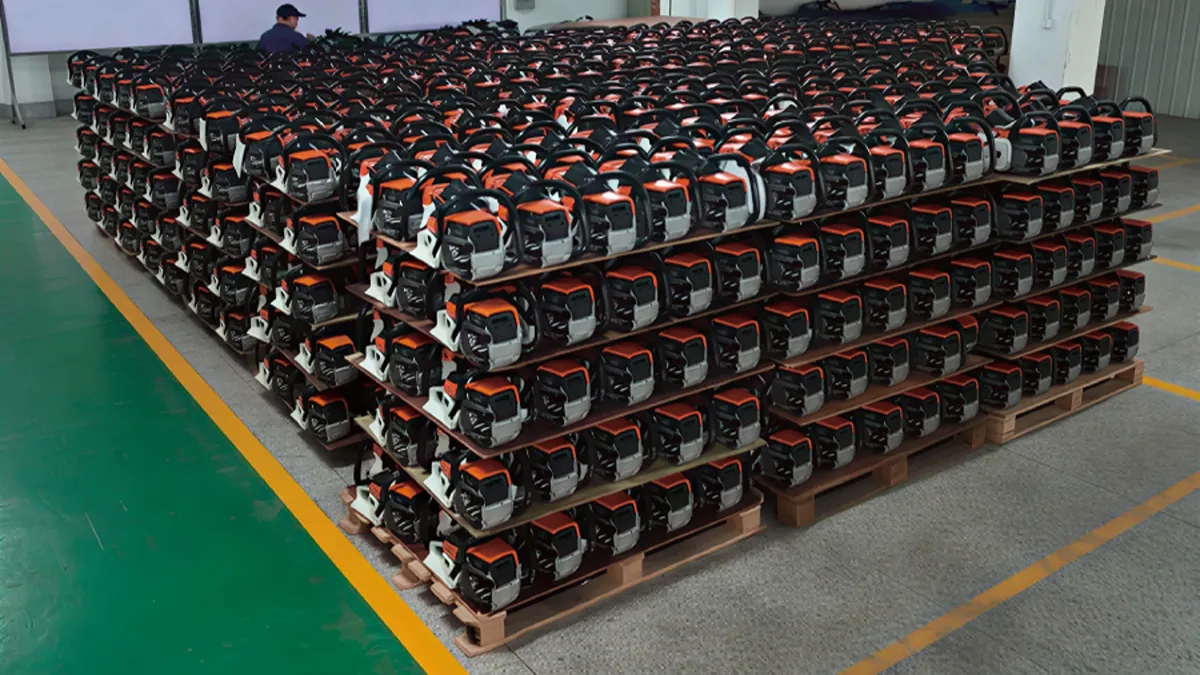
Every stage of chainsaw manufacturing—from metal casting and precision machining to engine assembly, guide bar production, and final testing—plays a critical role in ensuring consistent quality and reliable operation.
This guide explains how modern chainsaws are manufactured step by step, the technologies involved in each production stage, and the quality standards that distinguish a professional chainsaw manufacturer from an average supplier.
What Are the Main Components of a Chainsaw?
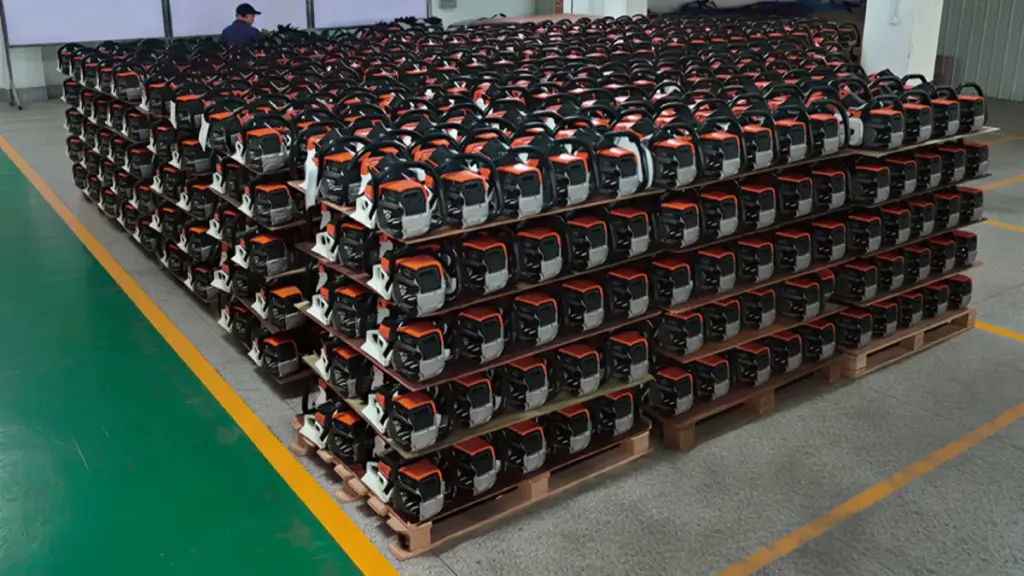
Before exploring the manufacturing process, it’s helpful to understand the major components that make up a chainsaw.
If you’re looking for replacement or OEM components, explore our complete range of chainsaw parts and accessories, including guide bars, سلاسل المنشار, المكربنات, clutch assemblies, ignition systems, and other essential spare parts.
| Component | Function |
|---|---|
| Engine or Motor | Provides cutting power |
| اسطوانة & Crankcase | Houses the combustion system |
| العمود المرفقي & مكبس | Converts combustion into rotational power |
| المكربن | Mixes fuel and air efficiently |
| شريط الدليل | Supports and guides the saw chain |
| سلسلة المنشار | Performs the actual cutting |
| Clutch System | Transfers engine power to the chain |
| Chain Brake | Stops the chain quickly for safety |
| وقود & Oil Tanks | Store fuel and chain lubrication oil |
| Plastic Housing | Protects internal components while reducing weight |
| Handle & Anti-Vibration System | Improves comfort and operator safety |
منصة 1: Metal Casting for High-Strength Engine Components
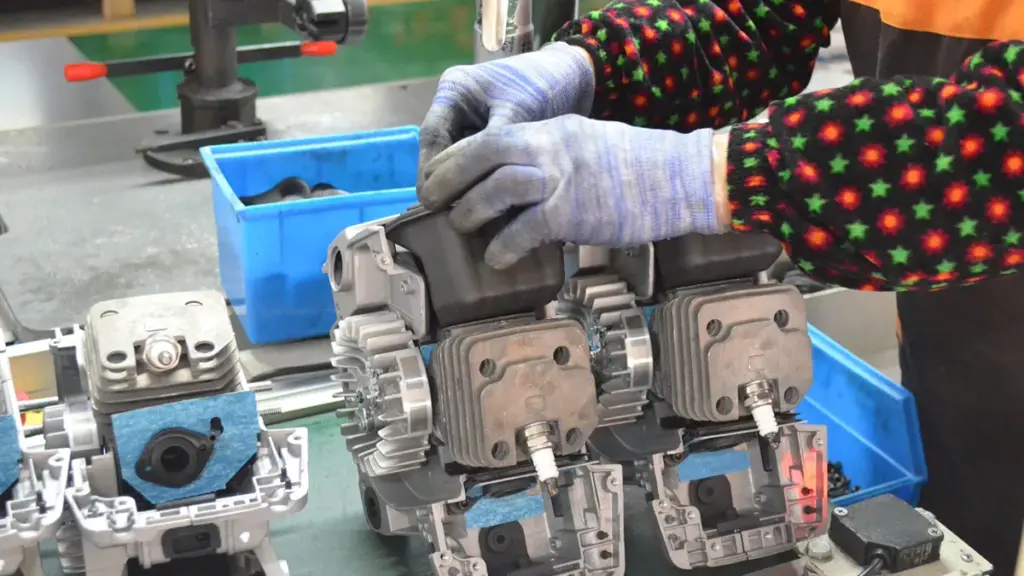
Every chainsaw starts with a strong foundation—the engine. Before any machining or assembly begins, manufacturers create the engine’s structural components through metal casting.
The most important cast parts include the crankcase, cylinder, flywheel, clutch drum, and other load-bearing components. These parts must withstand continuous vibration, high temperatures, and rapid engine speeds while remaining lightweight enough for comfortable operation. نيوتوب further enhances user comfort with an integrated anti-vibration system that minimizes vibration transfer to the handles, allowing safer and more comfortable operation over long working hours. If you’re looking for a dependable chainsaw manufacturer, explore NEWTOP’s full range of professional مناشير البنزين designed for OEM and global distribution.
Different casting processes are selected based on the component’s function:
| Casting Process | Typical Components | Main Advantages |
|---|---|---|
| High-pressure die casting | Aluminum crankcases, engine housings | Excellent dimensional accuracy, high production efficiency |
| Gravity die casting | Cylinder heads, medium-volume components | Better mechanical strength and surface quality |
| Sand casting | Large or low-volume components | Lower tooling cost and greater design flexibility |
| Investment casting | Steel clutch parts, sprockets | High precision and excellent surface finish |
Aluminum alloys are the preferred material for most engine housings because they provide an excellent balance of strength, مقاومة التآكل, heat dissipation, and weight reduction. Steel or ductile iron is typically used for heavily loaded transmission and clutch components where higher wear resistance is required.
After casting, every part undergoes trimming, shot blasting, and preliminary dimensional inspection before moving to the machining department. Removing flash, burrs, and surface defects at this stage helps ensure consistent machining accuracy later in production.
منصة 2: Precision CNC Machining for Critical Parts
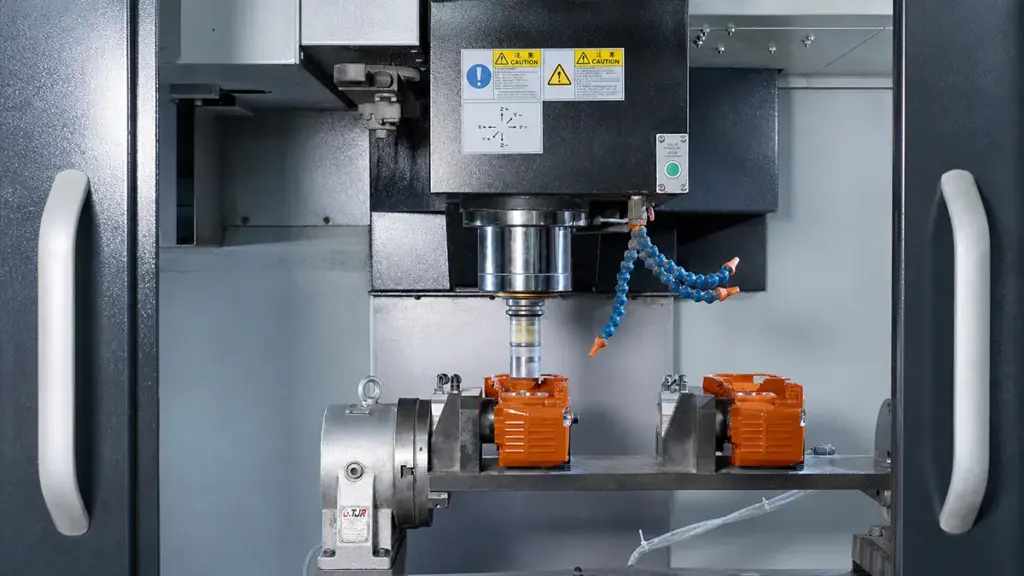
Casting produces the basic shape of each component, but it cannot achieve the tight tolerances required inside a modern chainsaw engine. Precision CNC machining creates the final dimensions that determine engine performance and reliability.
Computer-controlled machining centers perform multiple operations, مشتمل:
- Cylinder boring
- Crankshaft journal machining
- Bearing seat finishing
- Thread tapping
- Surface milling
- Gear machining
- Drilling oil passages
Many chainsaw manufacturers use multi-axis CNC machining centers to complete several operations in a single setup, improving consistency while reducing production time.
The cylinder bore is one of the most critical machining operations. Its diameter, roundness, and surface finish directly influence piston sealing, ضغط, كفاءة الوقود, and engine lifespan. Even minor dimensional errors can increase friction or reduce engine performance.
After machining, coordinate measuring machines (CMM), laser measuring equipment, and precision gauges verify that every critical dimension falls within specification before parts proceed to assembly.
منصة 3: Plastic Injection Molding for Lightweight Housings
While the engine provides power, many external chainsaw components are manufactured using plastic injection molding to reduce overall weight and improve user comfort.
Typical injection-molded parts include:
- Front and rear handles
- Starter covers
- Air filter covers
- خزانات الوقود
- Oil tanks
- Chain brake housings
- Side covers
- Protective guards
Engineering plastics such as PA6, PA66, ABS, polypropylene (PP), and glass fiber reinforced nylon are commonly used because they offer high impact resistance, excellent dimensional stability, and resistance to fuel, زيت, and UV exposure.
The injection molding process consists of several stages:
- Plastic pellets are heated until molten.
- The material is injected into precision molds under high pressure.
- Cooling channels solidify the plastic rapidly.
- Parts are automatically ejected from the mold.
- Gates and flash are removed before inspection.
Modern production lines often use robotic systems for automatic part removal and trimming, improving production efficiency while maintaining consistent quality.
Each molded component is inspected for sink marks, warpage, flash, and dimensional accuracy before entering the final assembly line.
منصة 4: Engine Assembly and Power System Integration
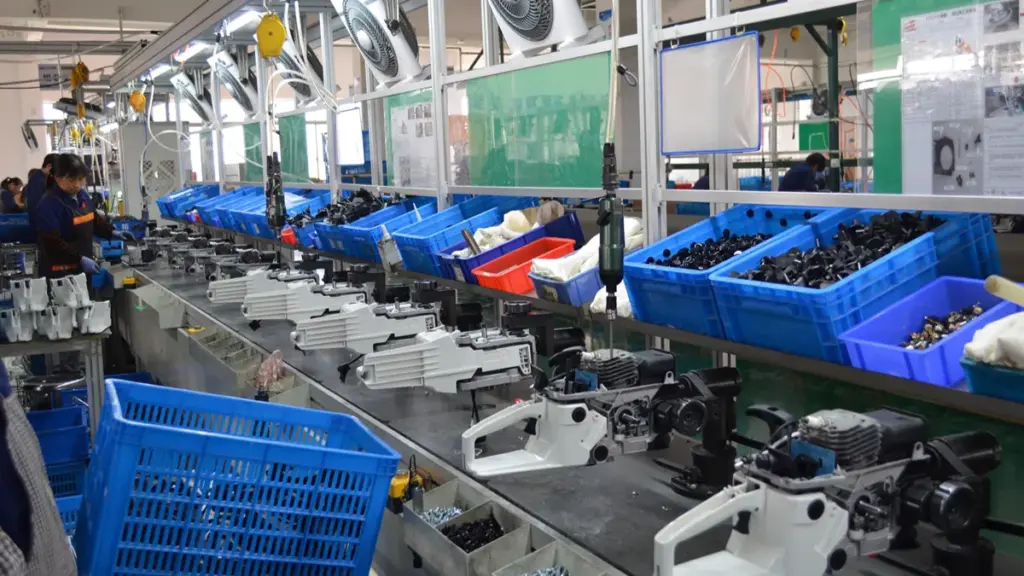
Once all engine components have been manufactured, technicians assemble the complete power unit according to carefully controlled procedures.
A typical assembly sequence includes:
- Installing crankshaft bearings
- Press-fitting the crankshaft
- Installing the piston and piston rings
- Connecting the connecting rod
- Mounting the cylinder
- Installing seals and gaskets
- Assembling the ignition system
- Installing the carburetor
- Mounting the clutch and flywheel
After engine assembly, ignition timing, carburetor settings, and compression are checked before the power unit advances to final product assembly.
Modern production lines also use barcode or QR code tracking to record assembly data, allowing every engine to be traced throughout its manufacturing history.
Maximize Margins With Premium Garden Machinery
منصة 5: Manufacturing the Guide Bar and Saw Chain
The guide bar and saw chain form the cutting system of a chainsaw and require specialized manufacturing processes separate from engine production.
Guide Bar Manufacturing
Guide bars are typically produced from high-strength alloy steel through:
- Steel blanking
- Heat treatment
- Groove machining
- Nose sprocket installation (for sprocket nose bars)
- Grinding
- Surface coating
- Final inspection
Heat treatment increases hardness while maintaining enough toughness to resist bending and cracking during heavy cutting.
Saw Chain Manufacturing
Saw chains are significantly more complex than they appear. A single chain contains hundreds of precisely manufactured components, مشتمل:
- Cutter teeth
- Drive links
- Tie straps
- المسامير
Each cutter tooth is stamped, heat treated, precision ground, and sharpened to produce consistent cutting performance.
Automated riveting machines assemble individual links into complete chains while maintaining accurate chain pitch and articulation. After assembly, chains are lubricated, tension-tested, and inspected for smooth operation.
High-quality chains often feature chrome-plated cutter teeth and hardened rivets to improve wear resistance and extend service life.
منصة 6: Final Assembly, Performance Testing, and Quality Inspection

The final stage brings together every component into a finished chainsaw ready for shipment.
During final assembly, workers install the completed engine, شريط الدليل, سلسلة المنشار, plastic housings, fuel system, ignition components, handles, safety devices, and control mechanisms.
Each chainsaw then undergoes multiple quality inspections before packaging.
Typical production tests include:
| Inspection Item | غاية |
|---|---|
| Torque verification | Ensure fasteners meet assembly specifications |
| Compression test | Verify engine sealing performance |
| Ignition test | Confirm reliable spark generation |
| Fuel system leak test | Prevent fuel leakage |
| Chain brake test | Verify operator safety |
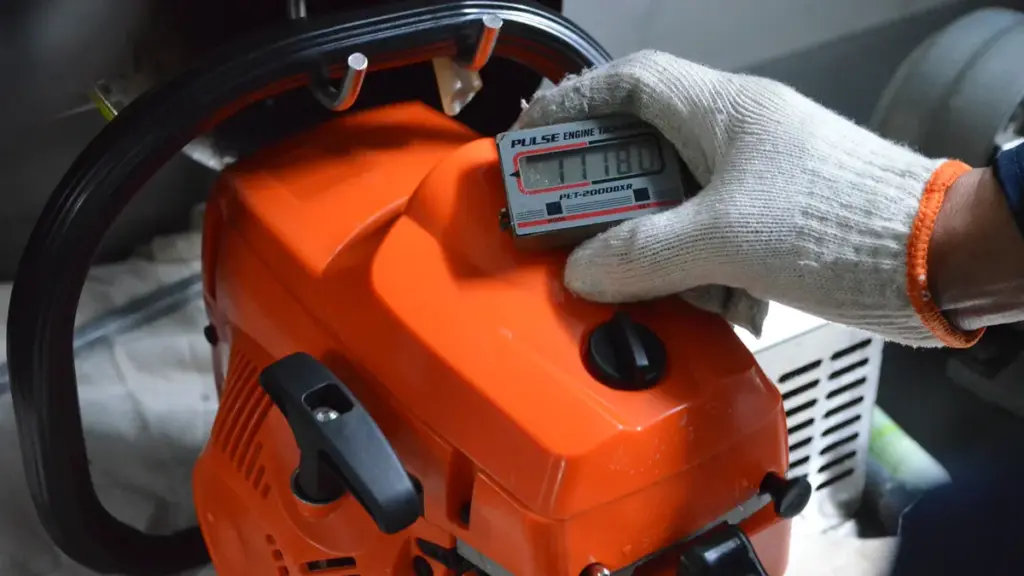
| Idle speed test | Ensure stable engine operation |
| Maximum RPM test | Confirm engine performance |
| Noise and vibration test | Evaluate operating comfort |
| Visual inspection | Check cosmetic quality and assembly accuracy |
في نيوتوب, every chainsaw model undergoes rigorous endurance testing of up to 200 ساعات under demanding operating conditions. Built with high-quality components and strict manufacturing standards, NEWTOP chainsaws are engineered to deliver more than 500 ساعات of working life under professional use, providing reliable performance for forestry, المناظر الطبيعية, والتطبيقات التجارية.
Only after passing all inspection procedures are chainsaws cleaned, packaged with accessories and manuals, and prepared for shipment.
What Certifications and Standards Should a Chainsaw Factory Meet?
Certifications demonstrate that a reliable chainsaw manufacturer follows internationally recognized quality, أمان, and environmental requirements.
Depending on the target market, a reliable chainsaw factory should comply with standards such as:
| Certification | غاية |
|---|---|
| ايزو 9001 | Quality management system |
| م | Compliance with European safety requirements |
| ع | German product safety certification |
| وكالة حماية البيئة | U.S. emissions compliance |
| الكربوهيدرات | California emissions standards |
| بنفايات | Restriction of hazardous substances |
| REACH | Chemical safety compliance |
في نيوتوب, quality and compliance are integrated into every stage of manufacturing. Our factory operates under an ISO 9001-certified quality management system, and our products comply with international standards and certifications, مشتمل م, ع, وكالة حماية البيئة, بنفايات, and REACH, depending on the product model and destination market. This allows us to support OEM customers across Europe, أمريكا الشمالية, and many other global markets with confidence.
How Quality Control Ensures Reliable Chainsaw Performance
Consistent chainsaw performance relies on strict ضبط الجودة, from precise component tolerances to rigorous safety validation and independent lab testing before shipment.
| QC Phase | Key Focus Area | Primary Objective |
|---|---|---|
| Specifications | Dimensional & Material Limits | Establish production baselines. |
| Incoming QC | Bore Size & Groove Width | Block defective parts early. |
| In-Process | Mistake-proofing & PFMEA | Prevent assembly errors. |
| Final Testing | سرعة القطع & أمان | Validate functional performance. |
Establishing Technical Specifications and Supplier Standards
Quality control begins long before parts hit the assembly line. Manufacturers rely on detailed technical documents to set exact boundaries for what constitutes an acceptable component. This foundation dictates how the supply chain operates and prevents vague standards from degrading the final product.
- Defining dimensions: Engineering teams set precise dimensional tolerances for cylinders, أشرطة الدليل, and chains to ensure alignment and prevent vibration.
- Material selection: Production managers establish strict requirements for wear-resistant steel alloys and impact-resistant plastics to survive harsh forestry environments.
- Supplier audits: Procurement teams audit partner factories for dedicated power tool production lines, advanced CNC machining, and specialized heat treatment capabilities.
Incoming Quality Control (IQC) for Critical Components
Catching defects at the source is significantly cheaper and safer than pulling apart a finished chainsaw. Incoming Quality Control (IQC) filters out substandard raw materials and purchased parts before they compromise the powerhead or cutting system.
- Cutting attachment checks: Inspectors test guide bar groove width, rail parallelism, and chain pitch tolerances against technical drawings.
- Engine component verification: Technicians verify cylinder bore size, roundness, and piston dimensions using coordinate measuring machines.
- Hardware validation: Staff check fasteners, trigger lock-outs, and chain brake springs to guarantee safety devices will function under load.
In-Process Controls and Manufacturing Stability
High-volume production lines introduce variables that can drift over a shift. In-process controls keep manufacturing stable, isolating individual workstations to detect assembly errors the moment they happen.
- Process mapping: Engineers map manufacturing steps with PFMEA to prioritize controls on high-risk operations like clutch installation and carburetor tuning.
- Assembly aids: Operators utilize mistake-proofing jigs and go/no-go fixtures to prevent incorrect component alignment.
- Mid-line checks: QC staff conduct intermediate functional tests on engine start behavior and preliminary guide bar tracking.
Final Performance Testing and Safety Validation
Once mechanical assembly concludes, testing shifts from static dimensions to dynamic performance. Every unit or sampled batch must prove it can cut efficiently and shut down safely under simulated field conditions.
- Cutting capability: Technicians perform test cuts on standardized wood samples to verify cutting speed, smoothness, and chip evacuation.
- Safety systems: Inspectors validate chain brake reaction times, throttle lock-outs, and kill switch reliability.
- Visual and physical fit: QA teams check final assembly for the correct chain tension range, secure guard alignment, and overall cosmetic integrity.
Independent Verification and Documentation Standards
International buyers trust independent validation over internal factory reports. Third-party testing and rigorous documentation keep global supply chains honest and protect the brand’s reputation upon import.
- Third-party audits: Brands engage independent inspection firms for AQL pre-shipment sampling and compliance lab testing.
- Physical baselines: Production teams use approved golden samples as the ultimate reference for fit, ينهي, and performance.
- Strict record-keeping: Factories maintain detailed bilingual specification packs and order confirmations to eliminate ambiguity and prevent scope drift.
Why Choose NEWTOP as Your OEM Chainsaw Manufacturer?
Partnering with NEWTOP gives distributors a direct pipeline to fully certified, scalable power equipment built for immediate global market entry.
Selecting the right manufacturing partner involves more than comparing prices. A capable factory should combine engineering expertise, القدرة الإنتاجية مستقرة, strict quality management, ودعم العملاء سريع الاستجابة.
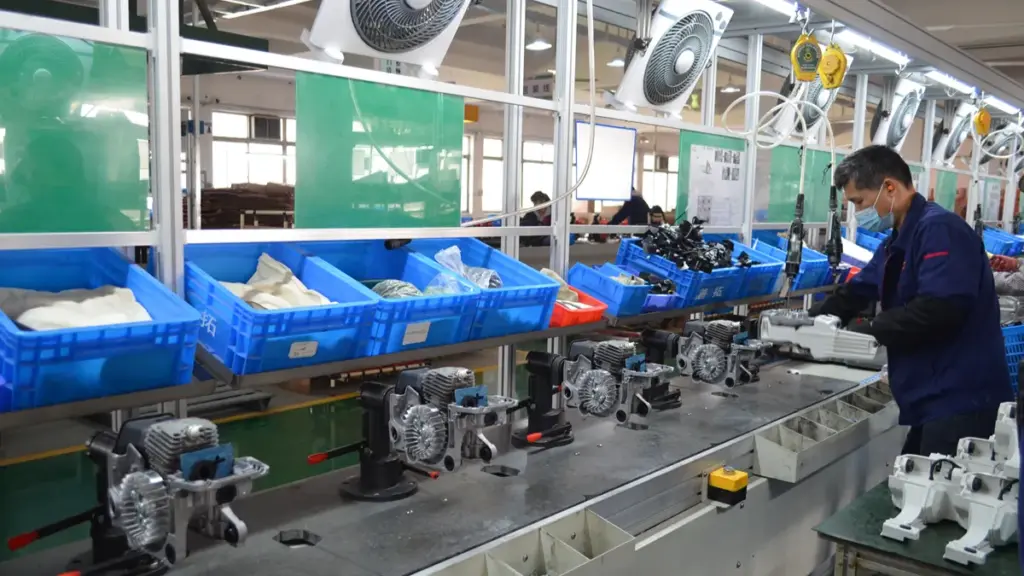
في نيوتوب, we integrate the entire manufacturing process—from component production to final assembly—to ensure consistent product quality across every order.
Our manufacturing advantages include:
- أكثر من 20 years of manufacturing experience in outdoor power equipment
- Modern production facilities with advanced CNC machining and automated assembly
- Strict quality control throughout every production stage
- Comprehensive testing before shipment
- Support for OEM and ODM customization
- Flexible production capacity for distributors and brand owners
- Global export experience across multiple international markets
Whether you are launching a new chainsaw brand or expanding an existing product line, NEWTOP can provide dependable manufacturing support, stable quality, and long-term partnership for your business growth.
الأسئلة المتداولة
Can a Chinese factory handle OEM chainsaw orders?
Chinese factories easily handle end-to-end OEM chainsaw production. You can expect complete support from design adaptation and power parameter tuning to custom branding and export packaging. Facilities run dedicated lines for gasoline, حبالي كهربائية, and battery-powered lithium-ion models.
How long does mass chainsaw production typically take?
Mass production cycles depend on the project scope. Standard repeat batches finish in 5 ل 15 days once parts arrive at the assembly line. New OEM runs requiring prototype validation and custom molds take 3 ل 6 weeks. Once on the main conveyor, physical assembly and testing for a single unit take just 10 ل 30 دقائق.
How do manufacturers test chainsaws before shipping?
Quality control teams run chainsaws through dedicated testing workshops before packaging. They test engine seals under pressure, calibrate idle and high-speed RPM thresholds, and perform physical wood-cutting trials. Inspectors also test critical safety components, including the chain brake reaction time, throttle lock-out, and the engine kill switch.
What materials are used to ensure chainsaw durability?
Professional chainsaw production relies on high-carbon and alloy steels for guide bars and saw chains. Premium cutting teeth often feature double chrome plating or brazed carbide inserts to reduce wear. For the powerhead, manufacturers cast engine blocks from lightweight aluminum or magnesium alloys and mold outer housings from impact-resistant engineering plastics.
What certifications should I look for in a chainsaw manufacturer?
Look for factories operating under ISO 9001 quality management and ISO 14001 environmental standards. For the product itself, target markets dictate the exact requirements. European imports demand CE marking covering Machinery and EMC directives, along with noise and vibration compliance. Verified test reports from recognized labs like TÜV Rheinland provide the strongest proof of reliability.
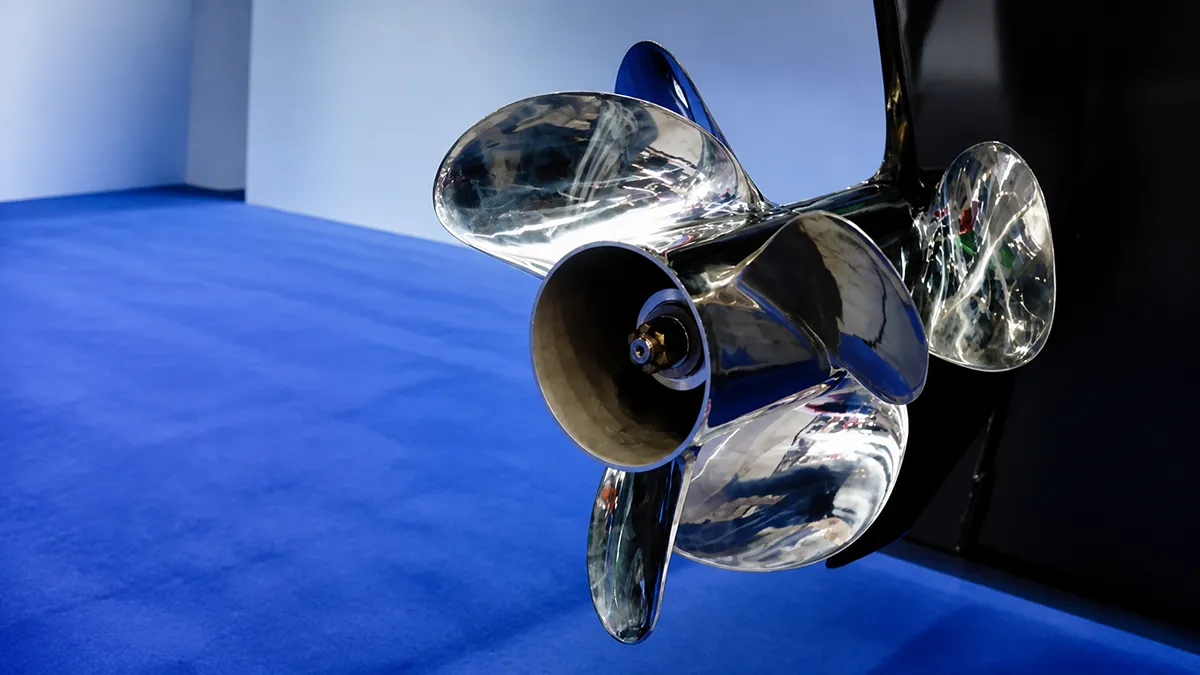
Choosing the right outboard propeller is not simply about finding a model that fits the engine shaft. A propeller directly affects acceleration, top speed, fuel consumption, engine load, وتجربة القوارب الشاملة.
For boat builders, الموزعين, and marine equipment buyers, selecting the wrong propeller can lead to poor performance, excessive vibration, higher fuel costs, and even long-term engine issues.
A reliable propeller selection process should consider several factors, including engine specifications, boat characteristics, ظروف التشغيل, blade design, material choice, and supplier capability.
This guide explains the key points buyers should check before purchasing an outboard propeller and how to make a more accurate selection for different applications.
What Key Information Should You Prepare Before Choosing a Propeller?
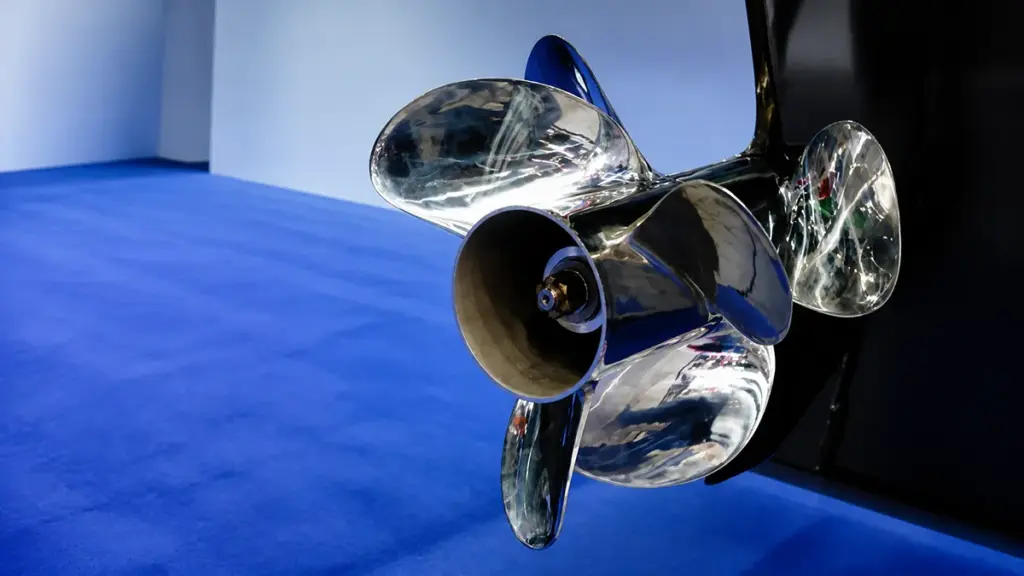
Before comparing propeller models, collect accurate information about the engine, boat, and daily use. This reduces fitting errors and gives the supplier enough data to recommend a suitable starting configuration.
Prepare the following details:
| Data Category | Metrics to Record |
|---|---|
| Current Propeller | Diameter, يقذف, rotation, blade count, مادة, hub splines |
| Engine Details | Rated HP, gearcase size, target WOT RPM, actual WOT RPM |
| Boat Profile | طول (LOA), hull shape, operating weight, speed goals |
| Usage Environment | Primary activity, cruise speed, water conditions (fresh/salt/shallow) |
| Benchmarks | GPS speed at WOT, time to plane, ventilation in turns |
Current Propeller Specifications
Your existing propeller serves as the baseline for any future adjustments. You need exact numbers off the current hub or blades to know which direction to adjust your pitch or diameter.
- Diameter and pitch: Record these numbers (usually stamped on the barrel, يحب 14 س 19) to establish your starting point.
- اتجاه الدوران: Identify if the prop uses right-hand or left-hand rotation. This matters heavily for twin-engine setups.
- Blades and material: Note if you run a 3-blade or 4-blade design, and whether it is cast aluminum or stainless steel.
- Hub and shaft details: Count the splines on the prop shaft and measure the shaft diameter to ensure your replacement physically fits the gearcase.
Engine Details and WOT RPM Limits
Engine specifications define your operating envelope. Your motor has a specific RPM band where it makes peak power safely, and your prop must keep the engine inside that band.
- HP and gearcase size: Verify your rated horsepower and gearcase dimensions. These dictate which propeller families fit the outboard.
- Target WOT RPM: Find the manufacturer’s recommended Wide Open Throttle (WOT) RPM range. Modern outboards usually target 5,000 ل 6,000 دورة في الدقيقة.
- Actual WOT RPM: Measure your current wide-open RPM under a normal load. This tells you if the engine is over-revving or lugging.
- Trim systems: Note if the boat has power trim or trim tabs. These systems dictate how you tune the hull attitude to reach optimal RPM.
Boat Characteristics and Load Profile
Hull design and operating weight directly influence thrust requirements. A heavy pontoon pushes water differently than a light bass boat, demanding a totally different blade geometry.
- Hull dimensions: Document the length overall (LOA), hull material, and bottom shape (like deep-V or flat-bottom). These dictate drag and required lift.
- Operating weight: Calculate your realistic load. Include fuel, الركاب, والعتاد, and livewells.
- Load frequency: Identify if you frequently run heavily loaded. Heavy loads often require stepping down in pitch or moving to a 4-blade prop to maintain thrust.
- Speed targets: Define your present top speed against your desired top speed. This guides the tradeoff between pitch and acceleration.
Usage Profile and Operating Environment
How and where you drive determines the optimal propeller style. You must align the design with your primary on-water activities to get the best efficiency.
- Primary use: Specify if you focus on high-speed cruising, heavy towing for watersports, or commercial work.
- Running speeds: Identify your typical throttle positions. This determines if you optimize for mid-range fuel economy or absolute top-end speed.
- ظروف المياه: Consider your environment. Abrasive, sandy, or shallow waters often demand the durability of stainless steel over standard aluminum.
Real-World Performance Benchmarks
Never buy a new propeller without testing the old one first. You need hard performance data to compare against your post-installation results.
- Baseline test runs: Take the boat out and record maximum RPM and GPS speed at wide-open throttle, trimming up just before the prop cavitates.
- Acceleration metrics: Evaluate your hole shot, the time it takes to get on plane, and the boat’s ability to hold a plane at lower speeds.
- Handling checks: Monitor the steering for signs of propeller ventilation, excessive slip during hard turns, or cavitation in rough chop.
How Do Diameter and Pitch Affect Propeller Performance?
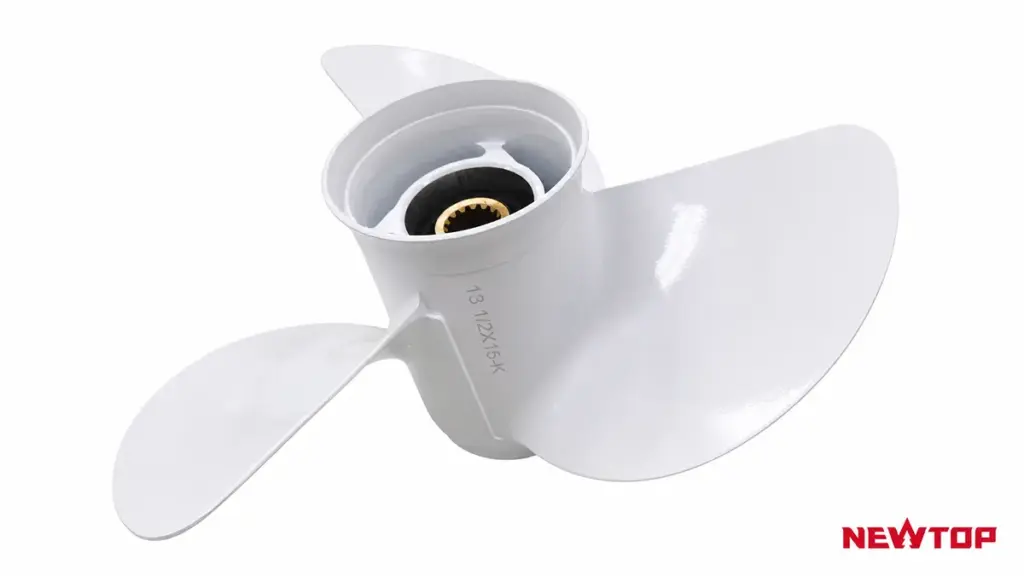
Diameter and pitch are two of the most important measurements in propeller selection. They determine how efficiently an outboard propeller converts engine power into thrust and directly influence acceleration, top speed, كفاءة الوقود, and engine RPM.
Before choosing a replacement propeller, buyers should understand what these two specifications mean and how they work together. A propeller marked as 14 × 19, for example, indicates a 14-inch diameter and a 19-inch pitch. The first number represents diameter, while the second number represents pitch.
For a more detailed explanation of propeller markings and how these measurements affect performance, buyers can refer to our guide on what pitch and diameter mean on an outboard propeller.
Diameter refers to the distance across the full circle made by the rotating blades. A larger diameter generally produces more thrust because it moves more water with each rotation.
Large-diameter propellers are commonly used for:
- Heavy boats
- Commercial applications
- Boats that require strong pulling power
- Low-speed operation
A smaller diameter propeller usually allows higher RPM and may support better top-speed performance on lightweight boats.
يقذف refers to the theoretical distance a propeller moves forward in one complete rotation without considering slip. على سبيل المثال, a 19-inch pitch propeller is designed to move approximately 19 inches per rotation under ideal conditions.
The relationship between pitch and performance is:
| Pitch Choice | Performance Effect |
|---|---|
| Lower pitch | تسارع أسرع, stronger thrust, easier engine operation |
| Higher pitch | Higher potential speed, lower RPM, suitable for light loads |
لكن, increasing pitch does not always increase speed. إذا كانت درجة الصوت مرتفعة جدًا, the engine may struggle to reach its recommended RPM range, causing poor acceleration and increased stress.
A proper selection balances pitch, القطر, engine power, and boat load. Many buyers use factory recommendations as a starting point and then adjust based on real operating conditions.
Source Durable Garden Machinery at Competitive Prices
How Does the Number of Blades Influence Speed, التوجه, and Fuel Efficiency?
Blade count dictates the balance between top speed and load capacity. Fewer blades reduce drag for maximum speed, while more blades provide necessary grip for heavy loads.
The Relationship Between Blade Area and Drag
Every propeller blade moving through water creates surface friction and pressure drag. Fewer blades result in a smaller total wetted area, directly translating to lower hydrodynamic drag and higher potential open-water efficiency.
Adding blades increases the Blade Area Ratio (BAR). A higher BAR gives the propeller significantly more grip on the water, reducing slip and ventilation. The trade-off is higher hydrodynamic interference between the blades, demanding more power to turn at the exact same RPM.
How Blade Count Affects Top Speed
Two-blade propellers theoretically offer the highest top speeds on lightly loaded hulls because they encounter minimal drag. For most recreational planing hulls, three-blade designs hit the sweet spot. A well-matched three-blade propeller consistently runs 5% ل 10% faster at wide-open throttle compared to a four-blade setup.
Upgrading to a four-blade propeller usually cuts peak speed by about 2 ل 3 ميلا في الساعة. Yet, these high-blade configurations maintain effective speed much better in rough water or high-trim conditions by actively resisting blowout.
Thrust Capabilities and Load Management
Total thrust depends heavily on the total blade area. A propeller with fewer blades forces each blade to carry a higher unit thrust. Push a low-blade-count prop too hard under a heavy load, and you risk severe cavitation or structural stress at the blade root.
Four-blade and high-BAR three-blade propellers excel at managing demanding workloads. You need these configurations for:
- Heavy Boats: Lifting heavy hulls onto plane quickly.
- Towing Applications: Delivering strong mid-range acceleration.
- Limited Clearances: Maximizing thrust when gearcase size limits the maximum diameter.
Fuel Efficiency and Optimal Engine Loading
For standard recreational setups, a correctly sized three-blade propeller delivers the best steady-cruise fuel economy. The minimal drag allows the outboard to run efficiently near its peak torque band.
Adding a fourth blade increases the physical load on the engine. You almost always need to drop the pitch to keep the wide-open throttle RPM within the manufacturer’s optimal range. On heavily loaded boats, a four-blade propeller can actually improve real-world fuel efficiency. By drastically reducing slip, it holds the boat on plane at lower RPMs, burning less fuel than a three-blade prop struggling to grip the water.
Should You Choose an Aluminum or Stainless Steel Propeller?
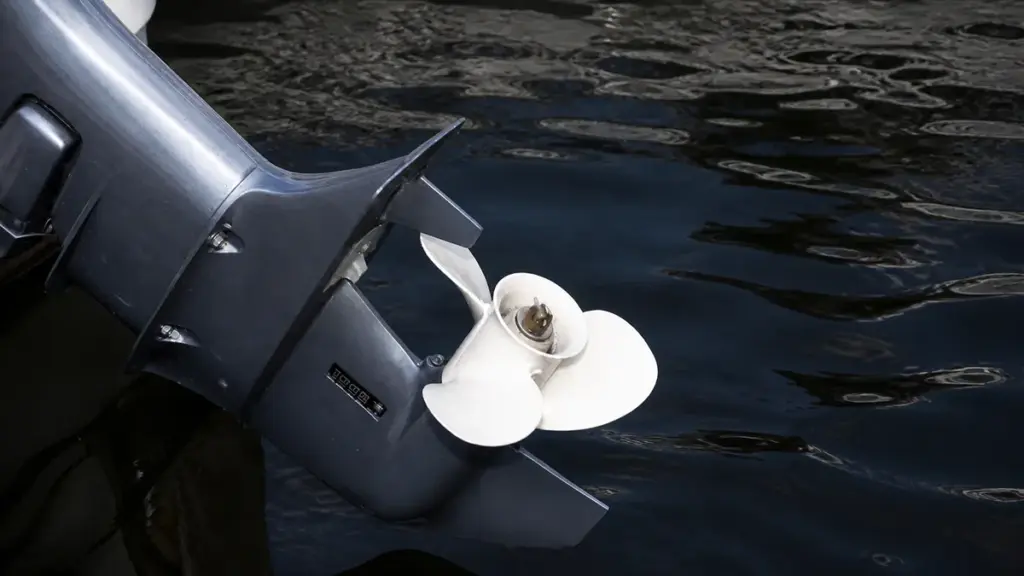
Aluminum offers budget-friendly protection for shallow waters and lower horsepower, while stainless steel delivers speed, grip, and durability for high-performance outboards and saltwater environments.
For buyers who want to understand the detailed differences between these two materials, including strength, متانة, صيانة, and application scenarios, our guide on aluminum vs stainless steel outboard motor propellers provides a complete comparison.
Matching Material to Outboard Horsepower
Outboard horsepower directly dictates the ideal propeller material. For motors under 30 حصان, manufacturers almost exclusively equip factory aluminum propellers. Stainless steel options in this range remain scarce and offer little practical performance benefit.
Mid-range engines between 30 و 70 hp pair perfectly with aluminum for general recreational boating. The power output at this level rarely causes severe blade flex, keeping performance stable for everyday use. Once you step up to outboards producing 75 hp and above, the operating dynamics change. These engines generate high torque and push heavier loads, making stainless steel the standard choice to handle the increased thrust without losing blade shape.
Durability and Lower Unit Risk
How a propeller reacts to underwater impacts determines the safety of your lower unit gears. You must evaluate your primary operating environment before making a choice.
- Sacrificial protection: Aluminum acts as a sacrificial component, bending or cracking upon impact to absorb shock and protect lower unit gears.
- Impact transfer: Stainless steel withstands normal wear and minor impacts, but transfers heavy strike forces directly to the prop shaft.
- Shallow hazards: Boaters navigating shallow, stump-filled, or rocky rivers should select aluminum to minimize expensive gearcase repairs.
- Saltwater endurance: Marine environments heavily favor stainless steel due to its superior long-term corrosion resistance.
Hydrodynamic Performance and Handling
Material stiffness heavily influences thrust efficiency. Manufacturers cast aluminum blades thicker to achieve necessary strength, but they still flex under heavy loads. This flexing slightly reduces top-end speed and high-RPM stability. Stiff, thin stainless steel blades maintain their precise pitch and shape under pressure, improving thrust efficiency and maximizing water displacement.
Upgrading to a stainless steel model often yields a 2 ل 3 mph speed gain alongside stronger acceleration for heavy loads. Stainless steel also holds cupping better than aluminum. This structural advantage ensures reliable grip during tight turns and drastically reduces ventilation issues on the water.
Cost Comparison and Lifespan Value
An aluminum propeller costs roughly one-third the price of a comparable stainless steel model. Budget-conscious buyers and boaters who frequently replace damaged props benefit the most from this low upfront cost. The inexpensive replacement strategy makes sense when striking rocks or stumps is a routine risk.
Stainless steel requires a much higher initial investment. It provides exceptional lifespan in deep, obstruction-free waters where impact damage is rare. The long-term value quickly shifts to stainless steel for performance rigs, as the durable material eliminates the need for frequent replacements and maintains optimal fuel efficiency over thousands of hours of use.
How Do Engine Horsepower and Gear Ratio Affect Propeller Selection?
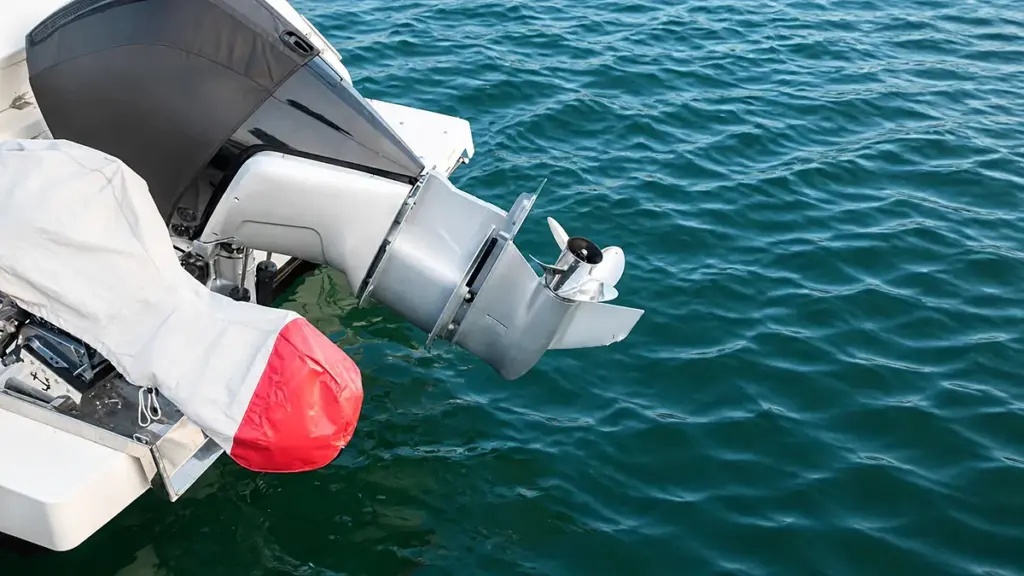
Horsepower dictates the maximum propeller size an engine can efficiently turn, while gear ratio determines shaft speed. معاً, they establish the exact pitch required to hit target WOT RPM.
The Role of Engine Horsepower in Propeller Sizing
Engine horsepower sets the baseline power budget for moving a boat efficiently. A higher horsepower rating allows an outboard to turn a larger diameter or a higher-pitch propeller without struggling. Buyers must match the propeller to the engine’s usable horsepower at the intended operating RPM, rather than looking strictly at peak horsepower marketing numbers.
If you choose an oversized or over-pitched propeller, the engine will lug and fail to reach its intended power band. Undersize the propeller, and the engine will over-rev, leaving valuable performance unused and risking mechanical damage.
How Gear Ratio Determines Propeller Shaft Speed
Gear ratio acts as a primary input that fundamentally changes the final propeller load. It is not just a secondary detail. You calculate propeller shaft RPM directly by dividing the engine RPM by the gear ratio.
A higher numerical gear ratio reduces the prop shaft speed and multiplies torque. To restore the desired boat speed, this setup requires a higher-pitch propeller. على العكس من ذلك, a lower numerical gear ratio spins the propeller faster at a given engine RPM, requiring reduced pitch to prevent the engine from over-revving.
Balancing Pitch and Final RPM for Optimal Performance
Adjusting the gear ratio triggers a chain reaction in pitch selection. Increasing a gear ratio numerically usually requires stepping up the propeller pitch by two to four sizes. Since a single pitch size change typically alters engine speed by 250 ل 350 دورة في الدقيقة, pitch adjustments serve as the ideal mechanism for fine-tuning wide-open-throttle (WOT) دورة في الدقيقة.
Operating conditions also alter this power dynamic. Heavy boat loads and high elevations demand less pitch to keep the engine from dropping below its optimal power band. For high-RPM outboard designs, manufacturers frequently use reduction ratios of 2.3:1 or higher to properly manage the aggressive propeller shaft speed and hydrodynamic load.
Practical Selection Steps for Outboard Buyers
Start the selection process by identifying the engine’s rated horsepower, gear ratio, and recommended WOT RPM range. From there, execute a systematic testing sequence to dial in the correct specifications:
- Baseline Selection: Select a propeller size that lets the engine reach target RPM under expected load, elevation, and water conditions.
- Pitch Adjustment: Reduce pitch if the engine fails to reach target RPM, or increase pitch if the engine over-revs during initial testing.
- Sea Trial Verification: Conduct a final loaded test run to account for specific real-world variables like hull drag, running weight, and ventilation behavior.
How Does Boat Type Influence the Right Propeller Choice?
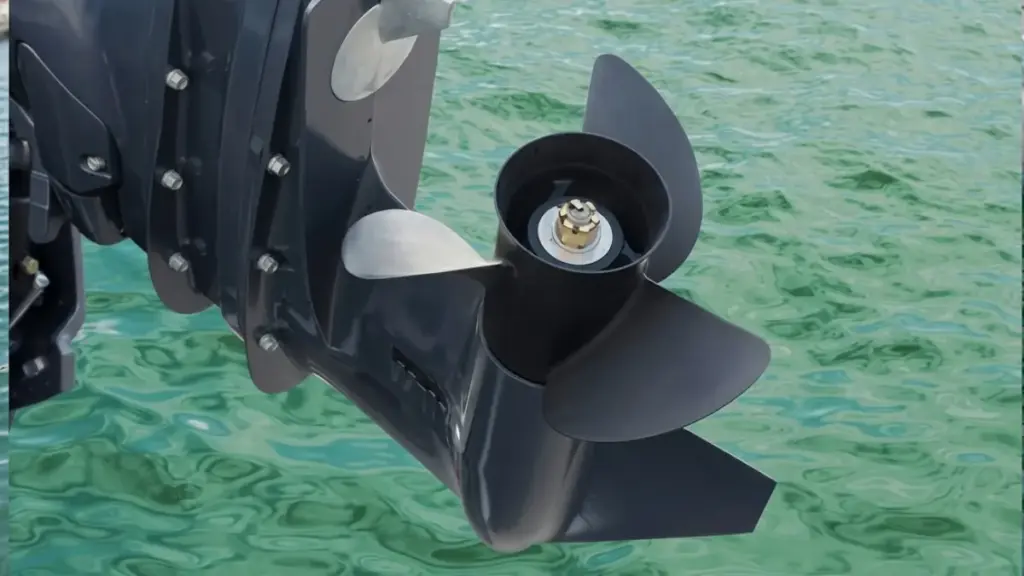
Hull design and typical boat load dictate required thrust and RPM. Matching pitch and diameter to your specific vessel type prevents engine lugging and maximizes hydrodynamic efficiency.
High-Speed Planing and Performance Boats
ضوء, performance-focused hulls like bass boats or sport rigs require setups that minimize drag once on plane. Your primary goal is converting engine torque directly into top-end speed while keeping the outboard near its maximum RPM limit.
To achieve this, operators utilize higher pitch and moderate-to-smaller diameter profiles. High-speed setups rely heavily on 3-blade stainless steel propellers, which deliver the durability and thin-blade efficiency needed to push past 50 mph without flexing.
Watersports and Tow-Sport Configurations
Pulling wakeboarders, skiers, or heavy tubes demands a massive initial surge of thrust. Absolute top speed takes a backseat to a strong hole shot and smooth mid-range pulling power.
Tow boats require lower pitch and larger diameter profiles to move heavily ballasted setups without dropping below the engine’s power band. Owners frequently utilize 4-blade propellers to improve low-speed handling, reduce slip, and keep the boat securely on plane.
طوافات, Tritoons, and Heavy Cruisers
These vessels push a massive amount of water. High frontal drag and heavy, variable passenger loads mean your propeller must maximize water displacement rather than chase speed.
Pontoons and heavy cruisers benefit from larger diameter and moderate-to-low pitch to generate adequate low-speed thrust. This exact configuration prevents engine lugging and ensures the motor reaches its specified WOT RPM despite the heavy structural drag.
General Fishing and All-Purpose Vessels
Aluminum fishing boats and versatile center consoles operate across diverse conditions. The ideal setup balances rapid acceleration, mid-range cruise efficiency, and precise low-speed maneuverability around docks or structure.
Most operators pair moderate pitch with 3-blade designs to achieve versatile performance during long runs. When conditions dictate, shifting to 4-blade setups provides better grip offshore or improves shallow-water stern lift on flats boats.
Sailboats and Displacement Hulls
Displacement hulls cannot exceed their theoretical hull speed regardless of applied power. Propeller selection must focus entirely on low-speed thrust and reliable maneuvering in tight quarters.
Operators use large-diameter, low-pitch profiles to push displacement hulls efficiently at modest engine speeds. This approach protects auxiliary outboards from overloading when fighting strong currents or heavy headwinds.
What Operating Conditions Should Buyers Consider?
Propeller selection requires analyzing actual boat weight, typical water conditions, engine RPM limits, and horsepower output to prevent drivetrain damage and maximize fuel efficiency.
Boat Load and Usage Patterns
Evaluating typical operating loads is the first step in propeller selection. A boat behaves entirely differently when running solo compared to a hull weighed down by passengers, heavy gear, full fuel tanks, or towing duties.
Always prop the boat so the engine reaches the upper end of its wide-open-throttle (WOT) rpm range when lightly loaded. This rpm buffer prevents the engine from lugging once you introduce heavy weight.
- Variable Usage: Boats shifting between light solo fishing trips and fully loaded family cruising require either a compromise propeller or a dedicated two-prop setup.
- Heavy-Duty Operations: Towing, ينقذ, and workboats demand high, continuous thrust. These roles favor larger diameter, lower-pitch propellers designed to run efficiently at lower rpm.
Engine RPM Matching and Performance Goals
The propeller acts as the final gear ratio between the engine and the water. It must keep the outboard operating inside the manufacturer-specified WOT rpm range. Operating outside this band degrades fuel efficiency and accelerates mechanical wear.
Pitch adjustments directly dictate engine speed. Increasing pitch by one inch typically decreases WOT rpm by approximately 200 دورة في الدقيقة, while decreasing pitch raises it by the same amount.
- Planing Hulls: These setups require rapid hole shot and target a controlled slip factor of 8-15% at WOT for peak efficiency.
- Displacement Hulls: Slow-speed vessels ignore top-end speed to focus entirely on generating maximum low-end torque.
- Real-World Validation: Empirical WOT testing with proper trim adjustments is the only reliable way to validate rpm matching and fuel burn under actual operating conditions.
Water Environment and Surface Conditions
The physical water environment dictates blade geometry. Rough water causes the hull to pitch, increasing the risk of the propeller breaking the surface. Propellers with increased blade area or aggressive cupping hold water better and reduce ventilation in heavy chop.
Calm water applications allow operators to take the exact opposite approach, prioritizing higher pitch and lower drag designs to push top-end speed.
- Hazardous Environments: Shallow or debris-filled waters guarantee eventual bottom strikes. These areas require durable materials and responsive motor trim capabilities to protect the drivetrain.
- Water Flow Quality: Propellers require clean, undisturbed water to generate optimal thrust. Poor mounting heights or excessive hull turbulence will cause aeration and immediate power loss.
Outboard Horsepower and Structural Demands
Engine output strictly determines the required material strength. High-horsepower outboards, typically rated at 140 hp and above, exert extreme torque that overwhelms weaker metals and causes aluminum blades to flex.
Rigid stainless steel propellers are the primary choice for high-output engines. Stainless maintains its exact designed geometry under heavy loads and high speeds, providing predictable thrust and maximum traction.
- Lower-Horsepower Applications: General-purpose and lower-hp engines perform exceptionally well with aluminum propellers. They offer a cost-effective, impact-forgiving alternative that acts as a sacrificial part during bottom strikes.
- Exhaust Compatibility: You must verify the propeller design integrates correctly with the lower unit’s specific exhaust routing, particularly for through-hub exhaust systems.
What Common Propeller Selection Mistakes Should Buyers Avoid?
Avoiding common propeller selection mistakes—like guessing pitch, ignoring typical loads, or neglecting lower unit fitment—saves fuel, protects the engine, and prevents costly on-water failures.
Misjudging RPM, يقذف, and Load Requirements
Buyers often sabotage outboard performance by selecting a propeller without validating how it impacts the engine’s actual operating range.
- Ignoring the WOT RPM range: Failing to match the propeller to the engine’s recommended Wide Open Throttle (WOT) limits causes the engine to lug under heavy load or over-rev at top speed.
- Prioritizing theoretical top speed: Selecting pitch just to hit a high top-speed number ignores the inverse effect pitch has on RPM and low-end acceleration.
- Testing on an empty boat: Finalizing a prop choice with a light hull gives false data. The boat will struggle to plane once fully loaded with passengers, والعتاد, والوقود.
Treat the manufacturer’s specified WOT RPM as a hard constraint. You must hit this target under normal, real-world operating loads to ensure efficient running and long engine life.
Overlooking Blade Count and Material Trade-Offs
Many buyers mistakenly believe that simply adding blades or buying the cheapest material will fix performance issues. Every design change shifts the performance curve.
- Assuming more blades equal better performance: Buyers often switch from three to four blades hoping for an outright upgrade, not realizing the extra drag typically drops WOT RPM by 50 ل 150 دورة في الدقيقة.
- Shopping by material price: Choosing aluminum over stainless steel strictly to save money ignores your actual environment. Soft aluminum deforms under high load, while stainless steel maintains its shape and efficiency at high speeds.
- Ignoring the primary use case: Buying a propeller designed for fast, solo runs fails if you spend 80% of your time towing wakeboarders or carrying a heavy crew.
Match the blade geometry and material to your actual daily environment. A high-performance stainless steel prop shines in open water but transfers severe shock to the gearcase if you strike a submerged stump in shallow rivers.
Using Flawed Testing and Adjustment Methods
Troubleshooting a sluggish boat requires a systematic approach. Guessing at propeller specs without proper baseline data leads to wasted money and unresolved engine strain.
- Changing multiple variables at once: Swapping pitch, blade count, and material in a single step makes it impossible to isolate which change improved or hurt performance.
- Ignoring GPS boat speed: Focusing strictly on tachometer readings without verifying actual speed hides secondary issues like extreme prop slip.
- Blaming the prop prematurely: Buyers often fault the propeller for sluggish planing when the real culprit is excessive hull drag, the wrong engine mounting height, or poor trim angle.
Establish a clear baseline with your current setup first. Make single, incremental adjustments—usually starting with pitch—and test the results on the water before changing another variable.
Neglecting Fitment, صيانة, and Spares
Even the perfectly pitched propeller fails if it does not physically integrate with the outboard gearcase or lacks basic maintenance.
- Guessing hub compatibility: Buying a prop without checking spline counts, hub system types, or matching thrust washers leads to stripped splines and lower unit damage.
- Ignoring physical damage: A slightly bent blade or fishing line wrapped around the prop shaft mimics the symptoms of incorrect pitch.
- Running without a spare: Operating without a backup prop leaves you stranded after a severe strike and eliminates your ability to swap to a lower-pitch prop for unexpectedly heavy loads.
Verify fitment against the engine transom tag before purchasing. Inspect the prop hub assembly periodically to catch early signs of slippage or corrosion.
الأفكار النهائية
Buyers should evaluate engine specifications, boat type, ظروف التشغيل, blade design, material choice, and supplier reliability when bulk buying outboard motor propellers.
The right propeller improves acceleration, كفاءة الوقود, handling, and engine performance, while the wrong choice can reduce efficiency and increase operating costs.
للموزعين, boat manufacturers, and marine equipment companies, working with an experienced outboard propeller supplier provides better product consistency and long-term support.
With advanced manufacturing capability, precision-balanced aluminum and stainless steel propellers, and OEM/ODM production experience, NEWTOP helps global partners develop reliable propeller solutions for different marine applications.
الأسئلة المتداولة
What should I check before buying an outboard propeller?
Verify your boat’s primary use, typical load profile, and desired performance goals. You must confirm engine specifications, including the brand, horsepower, shaft type, and the manufacturer’s recommended wide-open-throttle (WOT) RPM range. Collect baseline data from your current prop, such as diameter, يقذف, مادة, and observed WOT RPM, to guide your replacement choices.
How do I choose the right propeller pitch?
Selecting pitch relies on matching the propeller to your engine’s recommended WOT RPM range. Test your current setup at full throttle with a normal load. If the RPM falls below the recommended band, decrease the pitch. If the RPM exceeds the limit, increase the pitch. Changing the pitch by one inch generally alters the engine speed by 150 ل 200 دورة في الدقيقة.
Is stainless steel better than aluminum for all users?
لا. Stainless steel provides superior rigidity, higher top speeds, and excellent saltwater corrosion resistance, making it ideal for high-horsepower engines. Aluminum is highly cost-effective and serves as a sacrificial metal. In shallow or hazard-prone waters, an aluminum propeller will bend or break upon impact, which helps protect the expensive gearcase from severe damage.
What is the best propeller for heavy boats?
Heavy vessels require maximum static thrust and control rather than high top speed. The best approach is selecting a larger diameter propeller with a lower pitch to ensure the engine reaches its target RPM under heavy load. A four-blade design is frequently recommended to improve grip, accelerate planing, and provide smoother handling in rough conditions.
How do I confirm hub compatibility?
Read your engine’s transom tag to find the exact make, model, سنة, and gearcase code. Match this data against the new propeller’s specifications, ensuring the spline count and shaft diameter align perfectly. You also need to identify whether your outboard uses a fixed splined bore or a modular insert kit, and verify the proper thrust washer sequence.
What documents should a propeller supplier provide?
A standard procurement package should include a Certificate of Conformance (CoC), material certificates, and final inspection or balance reports. For commercial or classed vessels, suppliers must also provide traceability records and relevant approval documents to prove the delivered hardware meets the required engineering standards.
How important is sample testing before a bulk order?
On-water sample testing is critical because catalog specifications cannot predict how a hull and engine combination will react to complex loads. Testing a small batch validates WOT RPM, handling, وكفاءة استهلاك الوقود. Skipping this step risks large-scale inventory issues, engine mis-loading, and severe cavitation problems across the fleet.
What if my engine does not reach recommended RPM with the new prop?
Failing to reach the specified WOT RPM range typically means the boat is over-propped, placing excessive mechanical stress on the engine. If the fuel and ignition systems are healthy, correct the issue by switching to a propeller with a lower pitch or a smaller diameter. A one-inch pitch reduction generally increases engine speed by roughly 150 ل 200 دورة في الدقيقة.
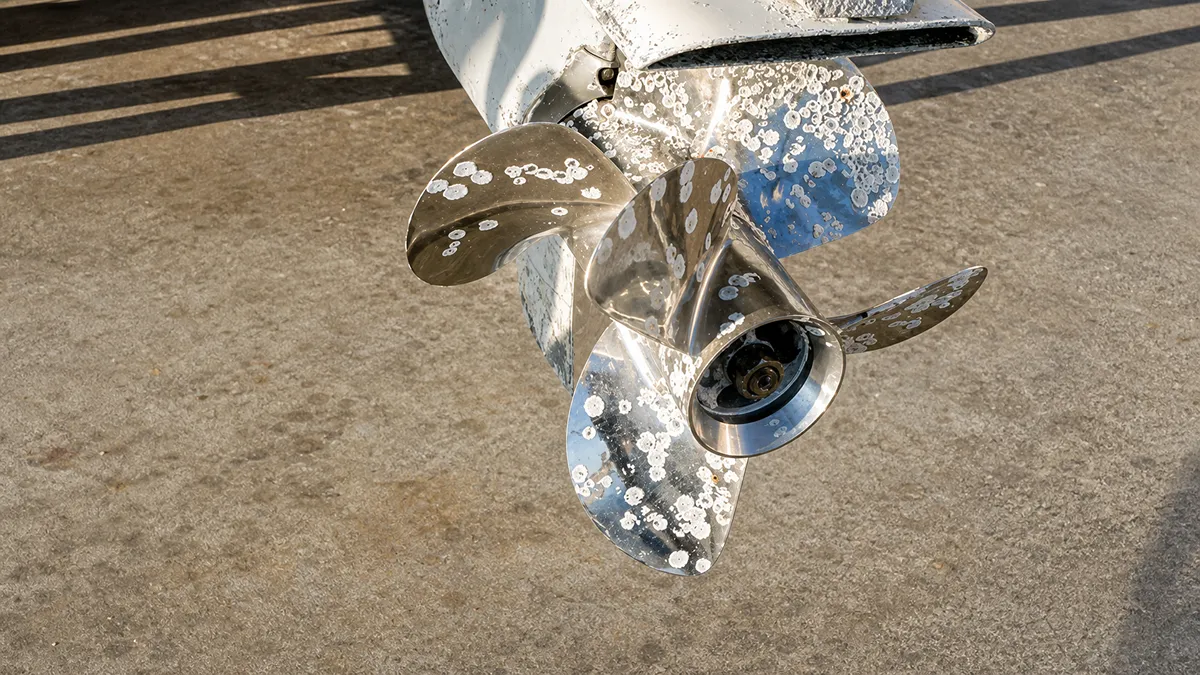
An outboard propeller works in one of the harshest environments on a boat. Every trip exposes it to sand, rocks, floating debris, shallow water, and continuous high-speed rotation. The challenge is that propeller damage often develops slowly. A tiny chip today may become a crack tomorrow, while slight vibration can eventually damage bearings, الأختام, or even the lower unit. Learning how to recognize the early warning signs helps boat owners avoid expensive repairs, improve fuel economy, and maintain safe performance on the water.
في هذا الدليل, you’ll learn the most common signs of outboard propeller damage, how to inspect your propeller correctly, when repairs are practical, and when replacement is the better long-term solution.
Why Early Propeller Damage Detection Matters
Direct Performance and Efficiency Impacts
A compromised propeller immediately degrades how your vessel moves through the water. Minor blade distortions force the engine to work outside its optimal load range, dragging down overall performance.
- Disrupted hydrodynamics: Damaged blades alter water flow, resulting in lower top speeds and weaker acceleration.
- RPM restrictions: Altered effective يقذف prevents the engine from hitting its designated wide-open throttle RPM.
- Fuel waste: Reduced propeller efficiency forces the outboard to work harder, significantly increasing fuel consumption.
- Vibration and handling: Imbalanced blades induce vibration that impairs steering precision and degrades overall ride comfort.
Preventing Secondary Mechanical Failures
Ignoring a damaged propeller transfers stress directly to your outboard’s internal drivetrain. What starts as a bent blade quickly compromises seals and bearings deep inside the lower unit.
- Contaminated gear oil: Unnoticed cracks near the submerged fin often cause water ingress and gear oil contamination.
- Engine stress: Deformed propellers alter engine load, causing harmful under-revving or over-revving that stresses internal components.
- Accelerated fatigue: Continuous vibration from an imbalanced prop accelerates structural fatigue in gearcase bearings, driveshafts, and engine mounts.
- Overheating risks: Combined with restricted water inlets, poor propeller condition elevates the risk of severe engine overheating.
Vessel Safety and Operational Reliability
Propeller condition dictates your physical control over the vessel. Failing to spot damage early puts both crew and cargo at risk during critical maneuvers.
- Sudden propulsion loss: A progressively failing hub or weakened blade can fracture under load, causing an immediate loss of usable propulsion.
- Collision hazards: Degraded handling and delayed acceleration reduce maneuverability around obstacles, increasing collision risks.
- Schedule integrity: Timely detection minimizes unscheduled downtime, protecting schedule integrity for commercial, charter, and rescue operations.
The Economic Case for Early Intervention
The financial logic is straightforward. Swapping a damaged propeller costs a fraction of the repair bills required if you leave a compromised unit attached to your motor.
- Low-cost intervention: Propeller inspection and replacement represent a fraction of the cost of total engine or lower unit repairs.
- Halting financial bleed: Catching damage early halts compounding financial losses from excess fuel burn and accelerated part wear.
- Avoiding major rebuilds: Ignoring early indicators frequently leads to expensive gearcase rebuilds, seal replacements, and powerhead repairs.
The First Visible Signs of Outboard Propeller Damage
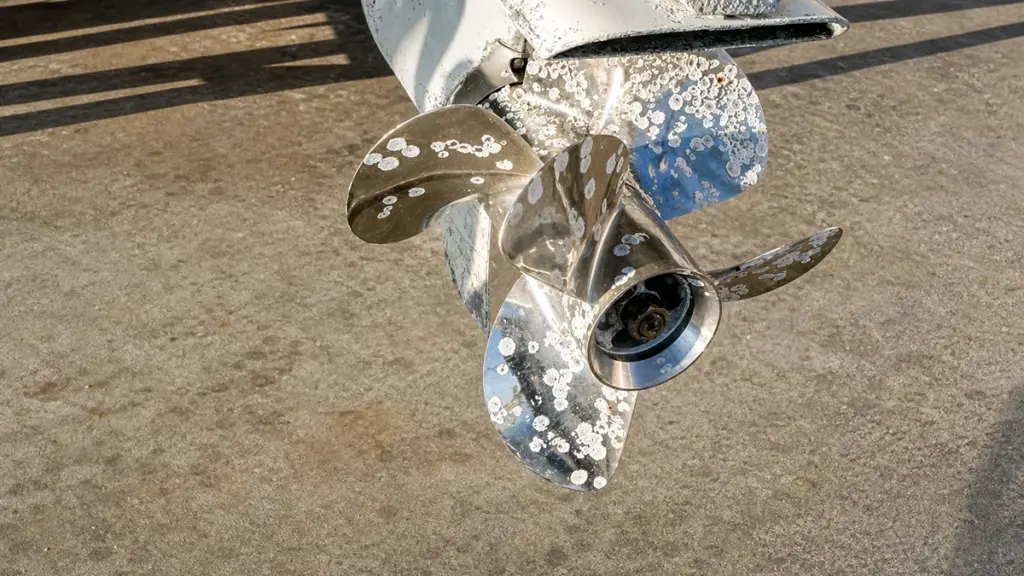
Early detection of outboard propeller damage—like minor nicks, paint wear, or slight bends—prevents escalating fuel costs, vibration-induced drivetrain wear, and sudden propulsion failure.
Paint Deterioration and Superficial Scratches
We often dismiss worn paint as normal wear and tear, but localized paint wear on the blades or hub points to frequent minor impacts with sand or small debris. It acts as the first warning sign before structural bending occurs.
You will typically notice fine scratches appearing on the leading edge first. These surface abrasions usually precede deeper structural wear. Once the protective coating strips away, the exposed bare metal patches create immediate vulnerabilities for accelerated corrosion in saltwater environments.
Nicks, Chips, and Minor Dents
A perfectly smooth edge is essential for hydrodynamic efficiency. Small chips along the leading edge disrupt water flow and increase the risk of cavitation. This turbulent water causes pressure drops that erode the surrounding metal.
Shallow dents on the blade surfaces serve as the earliest structural deformities detectable without specialized tools. Look closely at the trailing edge during inspections. Early material loss at the trailing edge directly impacts the grip and lift of the propeller, which reduces your acceleration and top-end speed.
Subtle Blade Deformation and Bending
Propellers operate under immense load, and even a slight geometric change throws off the balance of the entire drive system. Slightly bent blade tips clearly indicate previous contact with rocks or a hard bottom.
To spot these issues, view the propeller straight from the front. Visible asymmetry suggests uneven deformation from one-sided impacts. Micro warping or twisting alters the pitch and load distribution across the blades. This forces the engine to burn more fuel to maintain your normal cruising speed.
Localized Corrosion and Cavitation Pitting
Material degradation compromises the strength of the unit. Small corrosion pits or powdery white oxidation on aluminum propellers mark areas of material weakening. These spots quickly expand if left unchecked.
Rough, sandblasted patches near high-load regions indicate early cavitation erosion. As vapor bubbles collapse against the metal, they blast away the surface layer. Repeated erosion gradually thins out sections near the leading edge, making them prone to cracking during high-RPM operation.
Visible Hub Misalignment and Scoring
The hub absorbs shift shock and acts as the critical link between the engine and the blades. Scoring or distortion around the hub collar hints at abnormal stress or improper installation. You can test the integrity of the internal rubber bushing with a quick visual diagnostic.
Draw a straight line across the hub and barrel, run the boat under load, and check the marks. Misaligned diagnostic marker lines visually confirm internal hub slippage. You should also check for flattened or peened edges, which reflect a history of running the outboard through shallow, rocky water.
Source High-Margin OEM Garden & الآلات الزراعية
How Vibration, ضوضاء, and Poor Acceleration Reveal Damage
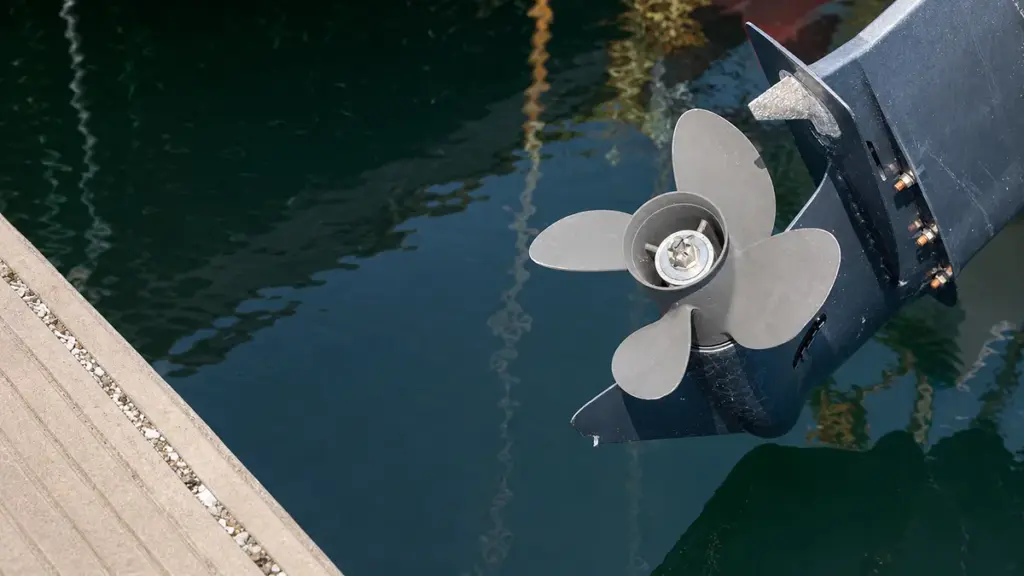
Propeller damage rarely announces itself with a catastrophic failure. It subtly degrades hydrodynamics, sending mechanical warnings through vibration, unusual noise, and sluggish performance that operators must decode.
The Mechanics of Propeller-Induced Vibration
Even minor propeller damage immediately disrupts hydrodynamic balance. When blades hit underwater objects, bent edges or missing metal shift the center of mass off the rotational axis. This mechanical imbalance forces the driveline to absorb cyclical stress.
- Center of mass shift: Bent blades or chipped edges create a mechanical imbalance away from the rotational axis.
- Hydrodynamic distortion: Altered blade geometry changes lift and thrust, placing uneven loads on the shaft and gears.
- RPM sensitivity: Vibrations peak at low to mid RPMs when the propeller works hardest to push the boat onto plane.
- Feedback transmission: Cyclical imbalances travel straight through the propshaft into the steering wheel, transom, and deck.
Translating Noise into Specific Driveline Issues
An outboard should produce a steady acoustic profile under load. When a propeller sustains damage, it introduces turbulence and mechanical interference that change the sound signature completely.
- Cavitation sounds: Damaged blades create low-pressure zones that spawn cavitation bubbles, producing distinct crackling, buzzing, or hissing noises.
- Engine stutter: Uneven thrust generation forces the motor to pulse audibly during hard acceleration runs.
- Lower unit rattle: Impact forces transfer directly into the lower unit, making gears and bearings rumble as they absorb the shock.
- Secondary wear indicators: Prolonged operation with an unbalanced prop causes propshaft bearings to grind or gearcases to emit a high-pitched whine.
Recognizing Performance Loss and Sluggish Acceleration
Physical damage directly compromises grip in the water. This hydrodynamic inefficiency forces the engine to burn more fuel while delivering less forward momentum.
- Increased propeller slip: Physical damage stops the efficient conversion of engine torque into actual forward thrust.
- Weak hole shot: A sluggish transition to plane serves as the primary indicator of blade distortion.
- Speed reduction: Minor imperfections trigger measurable drops in top speed and alter operating RPMs at specific throttle settings.
- Baseline comparison: Comparing current speed and wide-open throttle (WOT) RPM against historical metrics isolates propeller inefficiency from actual engine power loss.
Diagnostic Steps to Confirm the Root Cause
You cannot fix a driveline issue based purely on operator feel. Technicians rely on a strict diagnostic sequence to separate propeller damage from internal engine faults.
- Visual inspection: Check the blades thoroughly for bends, nicks, gouges, cracks, or unequal marine growth.
- Shaft examination: Look at the prop shaft for visible bends, binding during manual rotation, or fishing line cutting into the seals.
- Isolation test: Run the engine safely in gear without the propeller installed to see if the vibration stops.
- Secondary component check: Evaluate engine mounts and fuel delivery systems if symptoms persist after installing a known-good propeller.
How to Inspect Blade Edges, Hub Area, and Shaft Contact
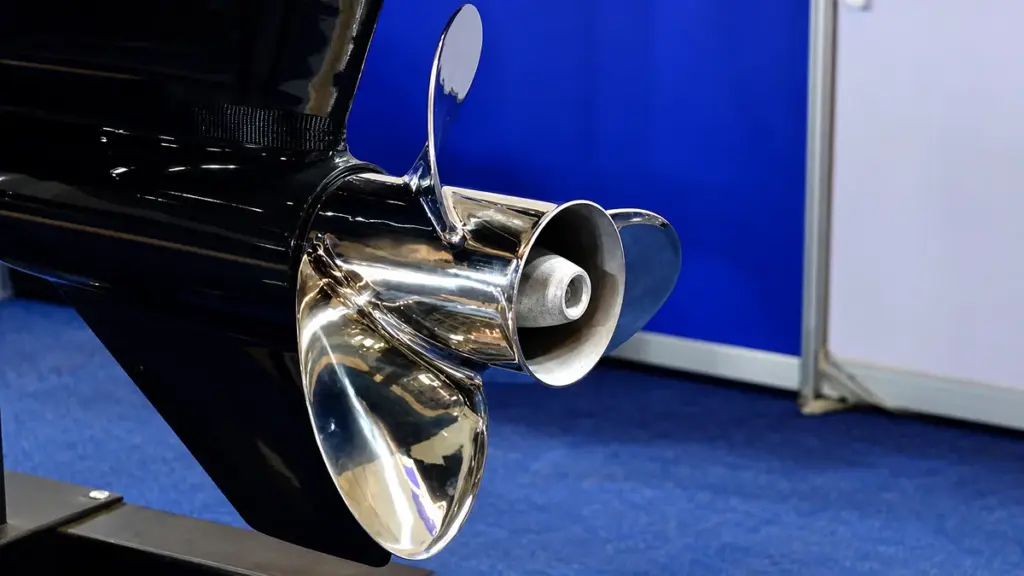
A systematic inspection of blade geometry, hub integrity, and shaft contact points prevents catastrophic lower unit failures, stops vibration, and ensures peak propulsive efficiency.
| Inspection Zone | Key Defect Indicators | Functional Impact |
|---|---|---|
| Blade Edges | Nicks, inward cracks, flattened cup | Hydrodynamic imbalance, التجويف, thrust loss |
| Hub Assembly | Extruded rubber, misaligned marker lines | Spun hub, complete loss of drive under load |
| Shaft & Hardware | Twisted splines, worn thrust washer | Fretting, gearcase vibration, thread damage |
Blade Edges and Surface Integrity
The geometry of the propeller blade dictates thrust generation and fuel efficiency. Technicians must examine leading edges, trailing edges, and tips for nicks, chips, gouges, or inward-radiating cracks. A damaged or flattened cupped trailing edge directly reduces water hold and increases the risk of early cavitation.
- Profile Consistency: Verify uniform rake angle and pitch across all blades to identify uneven bending or impact damage.
- Balance Check: Mount the propeller horizontally on a hub rod to identify heavy or off-plane blades.
- Clearance Limits: Ensure a minimum 3 mm tip clearance from the anti-cavitation plate to prevent contact under heavy load or blade flex.
Hub Area and Spun Hub Detection
The hub handles the brutal torque transfer from the engine to the water. A compromised rubber bushing acts as a failed mechanical fuse, dropping propulsion completely. Inspectors should check the outer hub barrel and blade roots for dents, ovalization, أو الشقوق شعري. Extruded, melted rubber or heat staining clearly signals a failed bushing.
- Slippage Diagnostic: Draw a marker line across the outer housing, rubber zone, and inner hub, then run the boat under load to check for misalignment.
- Exhaust Path: Inspect internal routing for carbon build-up or structural obstructions that could disturb exhaust flow.
Prop Shaft and Hardware Contact Zones
The connection between the propeller and the driveline must remain perfectly aligned to avoid transferring destructive vibrations into the gearcase. Assess the propeller shaft for straightness, runout, الصدأ, and signs of pitting. Spline teeth on both the shaft and the hub bore require close inspection for rounding, chipping, or twisted profiles.
- Thrust Washer Integrity: Examine seating surfaces for cracks, uneven wear, or deep grooves that throw off propeller alignment.
- Torque Application: Apply the proper manufacturer-specified torque—commonly 40-60 ft-lbs—to prevent fretting or thread damage.
Integrated Inspection Workflow
A standard inspection workflow brings these discrete checks into a repeatable process. You must disable the engine ignition, remove the locking hardware, and safely slide the propeller off the shaft. Cleaning the shaft and hub bore with a degreaser is critical to accurately assess the splines and thrust washer without old marine grease hiding the defects.
- Component Evaluation: Systematically check the hub for spun bushing signs and the blade edges for profile consistency.
- Reassembly Protocol: Reinstall using fresh marine grease, pushing the prop forward until it clicks firmly against the thrust washer.
- Final Securing: Torque the nut to spec and verify the locking hardware is properly engaged.
When Minor Damage Can Still Be Repaired
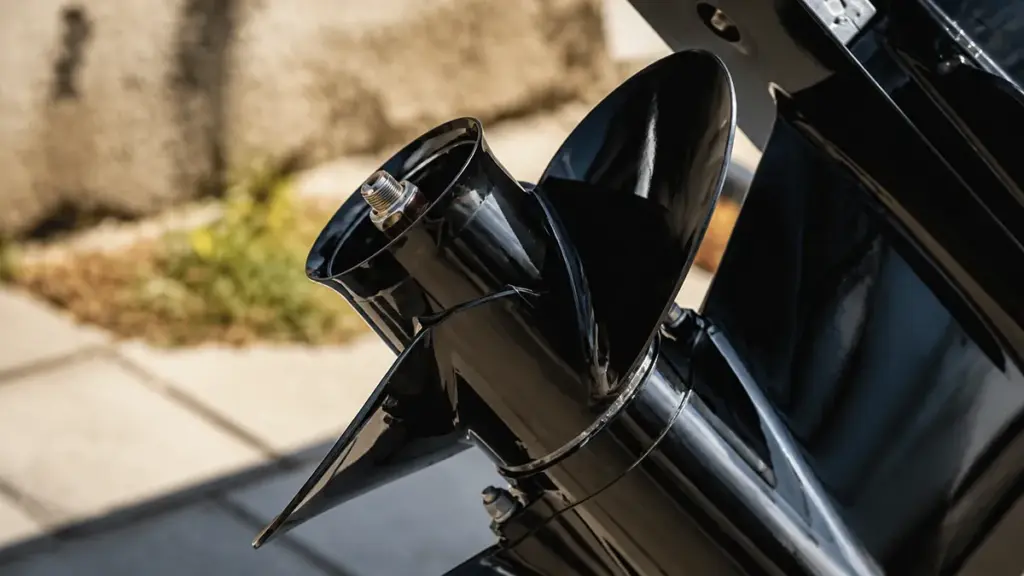
Minor propeller damage like edge burrs and shallow nicks can be repaired with basic filing, provided the blade geometry remains intact and no cracks or vibration are present.
Identifying Repairable Minor Damage
Before breaking out the tools, you need to confirm the damage is actually minor. Repairable defects are strictly surface-level flaws that do not compromise the structural integrity or hydrodynamic shape of the propeller.
- Surface-level dings: Small burrs, leading-edge nicks, and dents that leave the original blade geometry intact.
- Isolated edge wear: Damage limited entirely to the blade edges, meaning the overall diameter and pitch remain unchanged.
- Smooth operation: Propellers that continue to push the boat efficiently without inducing unusual vibration.
- Structural soundness: A complete absence of visible cracks or physical deformation during visual inspection.
If the propeller still performs well and the shaft runs true, you are likely dealing with cosmetic or minor edge wear.
Indicators of Severe Damage
Not all impacts result in a quick fix. Some structural flaws demand immediate professional intervention or a complete replacement to protect your gearcase.
- Visible cracks: Fractures in the blade or hub area, which usually require professional welding or replacement.
- Blade deformation: Noticeable bending or twist across one or multiple propeller blades.
- Severe vibration: Shaking immediately following an impact, signaling a potential mass imbalance.
- Drivetrain impact: Damage extending to the prop shaft, seal, or gear case after a hard strike.
- Die-cast limitations: Die-cast propellers displaying structural flaws, as marine professionals routinely classify these as non-repairable.
Operating with any of these severe defects transfers immense stress directly to your lower unit bearings and seals.
DIY Repair Methods and Discipline
Fixing minor edge damage requires precision and restraint. The goal is to smooth the water flow, not redesign the blade.
- Clean the propeller: Remove all marine growth, الأوساخ, and oil to accurately assess the damage profile.
- File flat: Gently use a coarse or mill bastard file, keeping the tool flat to avoid reshaping the blade.
- Minimize removal: Take off only the absolute minimum amount of metal necessary to smooth out the burr or nick.
- Know when to stop: Cease filing the exact moment the raised metal disappears to preserve blade balance and efficiency.
- Polish the edge: Refine the filed area with fine sandpaper and polish it to reduce hydrodynamic drag and resist corrosion.
Over-filing a single blade shifts the center of mass, transforming a simple nick into a permanent vibration problem.
Deciding Between Repair and Replacement
Knowing when to stop trying to salvage a damaged propeller saves money and prevents unexpected breakdowns on the water.
- Owner repairs: Best suited for slight burrs and minor dings that need only light, controlled filing.
- Professional shops: Necessary for straightening bends, balancing, and checking for hidden cracks using dye or probe scanning.
- Replacement threshold: The smarter financial choice if repair costs exceed 50% of the propeller’s total replacement value.
- Spare recovery: Keeping a spare propeller onboard acts as the ultimate fail-safe if minor damage rapidly worsens during a trip.
Treat your propeller as a consumable wear part. Upgrading to a new unit is significantly cheaper than rebuilding a blown gearcase caused by running an unbalanced prop.
When Early Replacement Is the Safer Choice
Certain types of damage should not be repaired because they increase the risk of sudden failure.
Replacement is usually recommended under the following conditions.
| Damage Type | Replace Immediately? | Reason |
|---|---|---|
| Large blade cracks | نعم | High risk of blade separation |
| Missing blade section | نعم | Severe imbalance |
| Bent propeller shaft | نعم | Can damage gearbox |
| Multiple damaged blades | نعم | Difficult to restore accurately |
| Severe corrosion | نعم | Reduced structural strength |
| Repeated repaired cracks | نعم | Metal fatigue continues to grow |
Choose NEWTOP for Reliable Outboard Propeller Performance
A durable propeller begins with dependable manufacturing. في نيوتوب, we produce precision-balanced aluminum and stainless steel outboard propellers designed to deliver stable performance, عملية سلسة, and long service life across a wide range of marine applications.
Our manufacturing process combines advanced CNC machining, strict dimensional inspection, dynamic balancing, and comprehensive quality testing to ensure every propeller meets consistent performance standards before shipment. Whether you need replacement propellers for aftermarket distribution or OEM production for your own brand, NEWTOP offers flexible manufacturing solutions backed by reliable production capacity and global export experience.
وتشمل المزايا الرئيسية:
- CCS and ECE certified quality for reliable performance and international market requirements.
- Premium materials — aluminum propellers use specially formulated aluminum-magnesium alloy for high strength and toughness, while stainless steel propellers use duplex stainless steel with better yield strength and corrosion resistance.
- Integrated molding technology — propeller blanks are formed with dedicated molds without welding, improving structural strength and durability.
- Precision hub pressing and CNC machining — one-piece pressed hubs improve dynamic balance, while CNC-machined blades ensure consistent geometry and stable thrust performance.
If you’re looking for a trusted outboard motor propeller manufacturer for wholesale supply or customized production, contact NEWTOP today. Our engineering and production teams are ready to help you select the right propeller solution for your market while ensuring consistent quality and long-term supply.
الأسئلة المتداولة
How do I know if my outboard propeller is damaged?
Look for visible bends, chips, cracks, or missing material on the blades. Operational signs include the engine revving unusually high without proportional boat acceleration, which often points to a spun hub. You might also notice persistent vibration, metallic noises, or a loss of steering stability at normal cruising speeds.
Can a small nick on a propeller cause vibration?
نعم, even a small nick alters the mass distribution and hydrodynamic symmetry of the blade. This physical imbalance generates centrifugal forces that manifest as noticeable vibration, often within a specific RPM band. Ignoring minor damage leads to progressive wear on the prop shaft and lower unit bearings.
What does a spun prop hub feel like?
A spun hub feels like the boat is slipping in the water. The engine RPM spikes sharply under throttle, but the boat’s speed does not increase. It mimics the sensation of a slipping automotive clutch and is sometimes accompanied by a sudden loss of thrust or a burnt rubber smell.
Should I repair or replace a chipped propeller?
Repair is usually viable for small edge chips or minor bends, especially on higher-value stainless steel props. Replace the propeller if it has large missing chunks, deep cracks near the root, or if you use a low-cost aluminum unit where repair expenses exceed half the price of a new replacement.
Can propeller damage reduce fuel efficiency?
Damaged blades increase hydrodynamic drag and disrupt smooth water flow, forcing the engine to work harder to maintain speed. This mechanical inefficiency prevents the motor from operating in its optimal RPM band, directly resulting in higher fuel consumption per nautical mile.
What kind of noise does a damaged propeller make?
A compromised prop typically produces a rhythmic knocking or thumping sound synchronized with engine RPM. You may also hear metallic rattling or a harsh, low-frequency drone from the lower unit, especially under heavy acceleration or during sharp turns.
Can I still run a boat with a bent propeller?
You should only operate a boat with a bent propeller at minimal idle power to safely return to the dock. Running at planing speeds with unbalanced blades creates severe radial loads that quickly destroy the prop shaft, محامل, and gearcase seals.
How often should I inspect my propeller?
Perform a quick visual and tactile check before and after every trip to spot obvious bends, chips, or wrapped fishing line. Complete a full removal inspection—taking the prop off to check the shaft, inspect seals, and re-grease the splines—at least once a season or every 100 hours of operation.
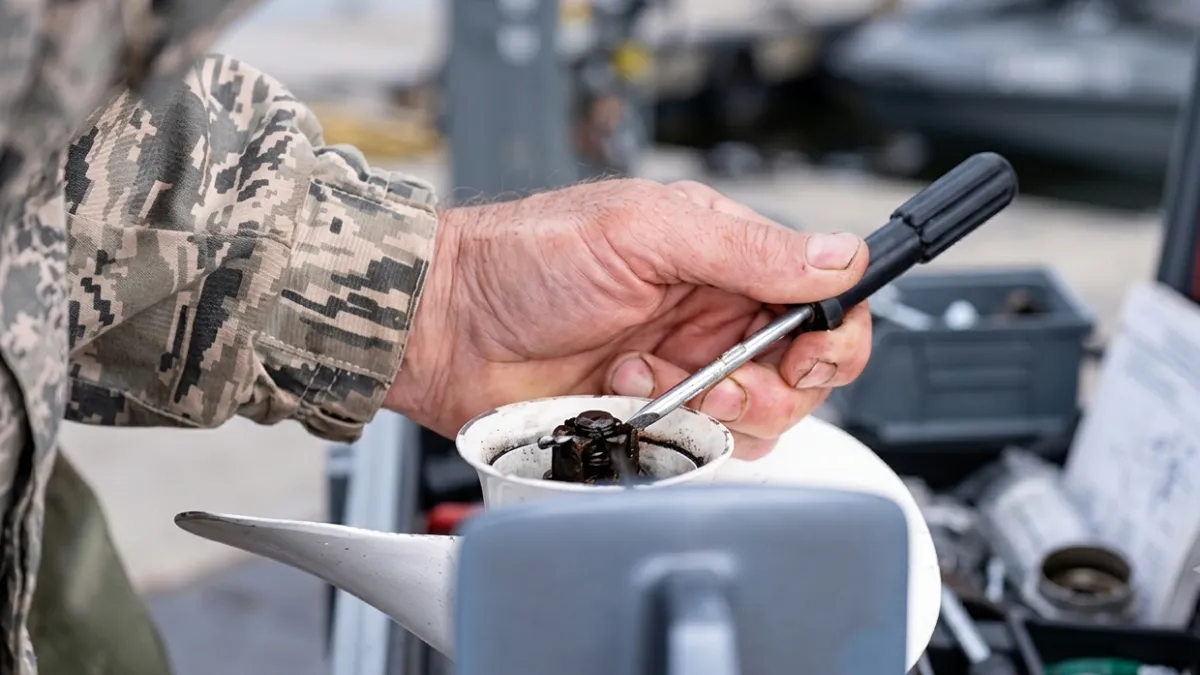
لا يلاحظ العديد من أصحاب القوارب تلف المروحة حتى يبدأ قاربهم في الشعور بالاختلاف. ربما يصبح التسارع أبطأ, زيادة تكاليف الوقود, أو تبدأ عجلة القيادة في الاهتزاز بعد اصطدامها بصخرة مخفية أو حطام عائم. يمكن أن تساعدك معرفة علامات الإنذار المبكر في تجنب الإصلاحات المكلفة والحفاظ على تشغيل المحرك الخارجي بكفاءة.
في هذا الدليل, سنشرح 5 العلامات الأكثر شيوعًا للتلف المروحة الخارجية, لماذا يهمون, وعندما يحين وقت استبدال المروحة الخاصة بك.
لماذا لا ينبغي أبدا تجاهل المروحة التالفة
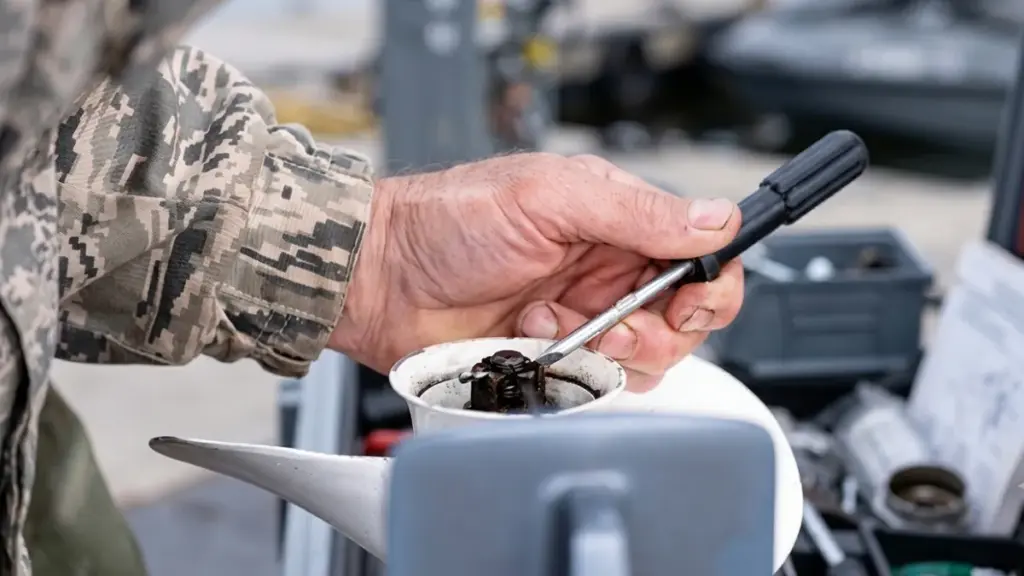
يؤدي تجاهل المروحة التالفة إلى تحويل خسائر الكفاءة البسيطة إلى تلف شديد في علبة التروس, ارتفاع تكاليف الوقود, وقضايا التعامل الخطيرة. قم بإصلاحه مبكرًا لحماية محركك ومحفظتك.
تدهور الأداء وقضايا التعامل
تؤدي المروحة التالفة إلى تجريد الأداء المصمم لقاربك على الفور. حتى التشوه البسيط للشفرة يدمر المظهر الهيدروديناميكي المطلوب لتحويل قوة المحرك إلى حركة أمامية فعالة. عادةً ما يلاحظ المشغلون هذا على أنه لقطة بطيئة للثقب وانخفاض ملحوظ في السرعة القصوى.
- خسارة التوجه: الشفرات المنحنية أو المتكسرة تعطل الهندسة, تقليل الدفع للأمام والتسبب في ضعف التسارع.
- التعامل مع عدم الاستقرار: تخلق أسطح الشفرة غير المنتظمة قوة دفع غير متساوية, مما يؤدي إلى سحب التوجيه, تقليم غير مستقر, والتتبع غير المتسق.
- توليد الاهتزاز: يؤدي الدوران غير المتوازن إلى إنشاء اهتزازات تحت الحمل, غالبًا ما يتم الشعور بها على أنها ضربة إيقاعية عبر سطح السفينة بسرعات التخطيط.
زيادة استهلاك الوقود وتكاليف التشغيل
يؤدي تشغيل المروحة المخترقة إلى مهاجمة ميزانية التشغيل الخاصة بك بشكل مباشر. تؤدي العيوب الموجودة على سطح الشفرة إلى تدمير تدفق المياه الصفحي, واستبدالها بالسحب والاضطراب. يجب أن يحرق المحرك كمية أكبر بكثير من الوقود حتى يصل إلى سرعة الانطلاق القياسية.
- السحب المضافة: الشفرات التالفة تحفز التدفق المضطرب, إجبار المحرك على العمل بجهد أكبر للحفاظ على الزخم.
- ارتفاع حرق الوقود: تعمل المروحة المتعرجة أو المنحنية بشكل روتيني على زيادة الاستهلاك الإجمالي للوقود بمقدار تقريبي 10%.
- تعويض الخنق: يقوم المشغلون بطبيعة الحال بدفع دواسة الوقود بقوة أكبر لتعويض الدفع غير الفعال, مضاعفة تكاليف التشغيل اليومية بصمت.
إجهاد ميكانيكي شديد على الوحدة السفلية
غالبًا ما يخفي الضرر التجميلي من الخارج ضررًا ميكانيكيًا شديدًا من الداخل. تعمل المروحة غير المتوازنة مثل المطرقة ضد نظام نقل الحركة الخاص بك. يرسل ثابت, الإجهاد الدوري مباشرة إلى الوحدة السفلى, تحويل إصلاح الدعامة الرخيصة إلى إعادة بناء علبة التروس الضخمة.
- ارتداء علبة التروس: التحميل غير المتكافئ ينقل الضغط مباشرة إلى الوحدة السفلية, تدمير التروس, محامل, و مهاوي قبل الأوان.
- تدهور الختم: يؤدي الاهتزاز المستمر إلى تمزيق أختام عمود الدعامة, السماح لزيت التروس بالتسرب وتدفق الماء.
- اختلال رمح: التأثيرات الثقيلة التي تشوه الشفرات تؤدي في كثير من الأحيان إلى ثني عمود المروحة, ضمان الفشل الكارثي إذا تركت دون رادع.
مخاطر السلامة والجنوح المحتمل
يؤدي التشغيل باستخدام دعامة تالفة إلى دفع هوامش الأمان الخاصة بك إلى المنطقة الحمراء. فقدان الدفع النظيف يجعل السفينة غير قابلة للتنبؤ بها في الأماكن الضيقة أو الظروف القاسية. يؤدي دفع مجموعة نقل الحركة المخترقة بعيدًا عن الشاطئ إلى حدوث عطل ميكانيكي مفاجئ عندما تكون في أمس الحاجة إلى الطاقة.
- مخاطر الإرساء: يؤدي فقدان الدفع العكسي والتعامل غير المنتظم إلى القضاء على تحكمك في المناورة حول القنوات الضيقة والانزلاقات.
- خطر الانهيار: يؤدي التشغيل مع الأضرار الموجودة إلى تفاقم احتمالات حدوث عطل ميكانيكي مفاجئ أثناء التنفيذ بشكل كبير.
- ضعف الطقس: إن انخفاض كفاءة الدفع يعرض هوامش السلامة الخاصة بك للخطر عند الإبحار في البحار الهائجة, الرياح العاتية, أو تيارات قوية.
5 علامات قائمة المروحة الخارجية التالفة
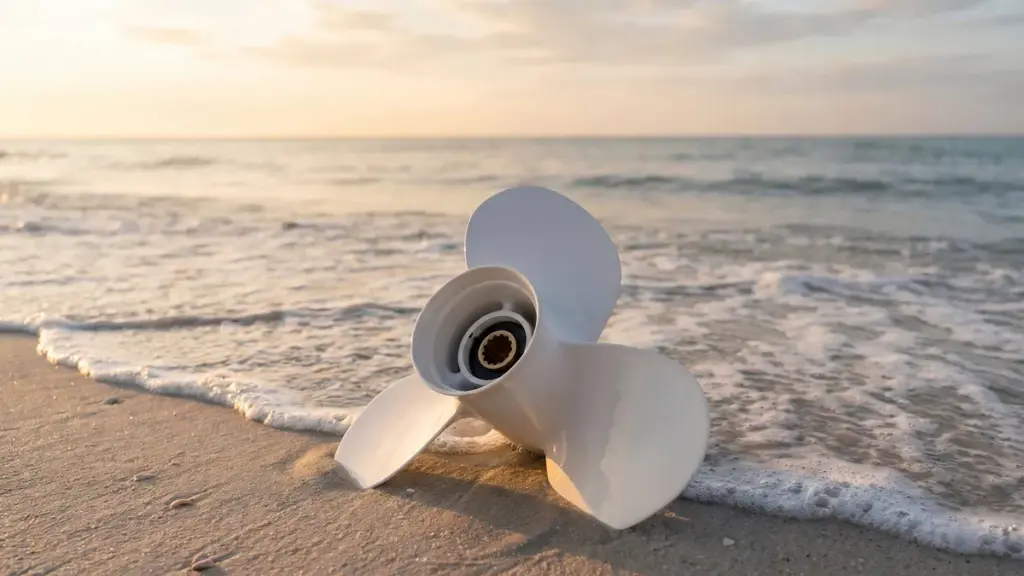
إذا اهتز محركك الخارجي فجأة, يفقد السرعة, أو يستهلك وقودًا أكثر من المعتاد, قد تكون المروحة الخاصة بك تالفة بالفعل. يلخص الجدول أدناه الأعراض الأكثر شيوعًا, أسبابهم المحتملة, وكيف يمكن أن تؤثر على المحرك الخاص بك.
| علامة تحذير | السبب الأساسي | خطر فوري |
|---|---|---|
| اهتزاز | شفرات عازمة أو محور فضفاض | فشل ختم علبة التروس |
| فقدان السرعة / تسديدة سيئة في الحفرة | محور الدوران أو سحب الشفرة | سحب المحرك |
| ضوضاء / عدم استقرار التوجيه | شفرات غير متناظرة أو عمود منحني | تلف تروس الوحدة السفلية |
| ارتفاع استخدام الوقود / حمولة | السحب الهيدروديناميكي | تآكل المكبس ونظام التبريد |
| الضرر المرئي | ضربات التأثير | أحمال الصدمات لنظام الدفع |
لافتة 1: الاهتزاز أثناء التسارع أو الانطلاق
نادراً ما تدور المروحة التالفة بشكل صحيح. ستلاحظ الشعور بالاهتزاز مباشرة من خلال الدفة, غلاف المحرك الخارجي, أو بدن القارب نفسه, خاصة عند التسارع أو الحفاظ على سرعة إبحار ثابتة. يقلل هذا الاهتزاز بشكل كبير من كفاءة المروحة ويضع ضغطًا فوريًا على حوامل المحرك وأختام علبة التروس.
- الأسباب الشائعة: شفرات عازمة أو مشوهة, مركز فضفاض, أو الحطام الثقيل الملوث حول عمود الدعامة.
- فحص قابل للتنفيذ: قم بإيقاف تشغيل المحرك وفحص الدعامة. انظر إلى زوايا الشفرة للتأكد من مطابقتها, ثم قم بتدوير المروحة يدويًا لاكتشاف أي تمايل أو كشط على علبة التروس.
لافتة 2: فقدان السرعة وضعف التسديدة
تسارع بطيء, وقت أبطأ بشكل ملحوظ للصعود على متن الطائرة, وانخفاض نقطة السرعة القصوى مباشرة إلى عدم كفاءة الدفع. حتى لو بقي عدد دورات المحرك في الدقيقة طبيعيًا أو مرتفعًا, تفشل المروحة المخترقة في تحويل هذه القوة إلى قوة دفع للأمام. ينتج هذا غالبًا عن التجويف حول حواف الشفرة التالفة أو القاذورات البحرية الثقيلة التي تسبب سحبًا زائدًا.
- مؤشر سبن هاب: إذا فشلت البطانة الداخلية, ولا يمكنها نقل عزم دوران المحرك الكامل إلى الماء, مما يتسبب في ارتفاع عدد الدورات في الدقيقة مع الحد الأدنى من حركة القارب.
- فحص قابل للتنفيذ: قارن دواسة الوقود الحالية المفتوحة على مصراعيها (WOT) عدد الدورات في الدقيقة والسرعة القصوى مقابل البيانات الأساسية التاريخية لسفينتك.
لافتة 3: ضجيج غير عادي أو عدم استقرار التوجيه
طنين جديد, من الطراز الأول, أو تشير أصوات الطحن إلى اختلال ميكانيكي شديد, خاصة عند الدوران أو المرور عبر نطاقات RPM محددة. قد تلاحظ أيضًا أن الدفة تبدو أكثر صعوبة في التوجيه أو تسحب بقوة إلى جانب واحد. يحدث هذا بسبب عدم التماثل, تولد الشفرات المنحنية قوة دفع غير متساوية, إجبار القارب على الخروج عن مسار التتبع الطبيعي.
- تهديد علبة التروس: يشير الطحن المستمر عادةً إلى عمود دعامة منحني أو تلف تروس الوحدة السفلية نتيجة لضربة سابقة تحت الماء.
- فحص قابل للتنفيذ: قم بتحريك المروحة للأمام والخلف لاكتشاف اللعب الزائد. قم بتدويرها يدويًا واستمع عن كثب لأي أصوات كشط داخلية.
لافتة 4: ارتفاع استهلاك الوقود والحمل غير الطبيعي للمحرك
يعني الانخفاض المفاجئ في كفاءة استهلاك الوقود أنك تتوقف عند محطة الوقود بشكل متكرر لنفس المسارات والأحمال. يؤدي السحب الهيدروديناميكي الناتج عن تلف الشفرة أو التلوث إلى إجبار المحرك على العمل بجهد أكبر فقط للتغلب على قوة الدفع والاهتزاز المفقودة. سيبدو المحرك متوترًا وسيتطلب إعدادات أعلى للخانق للحفاظ على سرعات السير العادية.
- ارتداء طويل الأمد: يؤدي التشغيل المستمر في ظل ظروف الحمل الثقيل هذه إلى تسريع تآكل المكابس, محامل, وأنظمة التبريد الخارجية.
لافتة 5: شفرة مرئية, مَركَز, أو تلف الحافة
العيوب الجسدية هي المؤشرات الأكثر وضوحا للتأثير. غالبًا ما يكشف الفحص البصري السريع عن الضربات, هي نصائح, قطع مفقودة, أو الشقوق شعري. تنبع هذه العيوب عادةً من تأريض القارب أو اصطدامه بالصخور, أشرطة الرمل, الشعاب المرجانية, أو الحطام المغمور. حتى الأضرار الجسدية الطفيفة تغير من درجة فعالية الدعامة وتوازنها, نقل أحمال الصدمات الضارة مباشرة إلى وحدتك السفلية.
- فحص قابل للتنفيذ: قم بإزالة المروحة لفحص جميع الأسطح عن كثب. استبدل الوحدة إذا وجدت أضرارًا هيكلية شديدة أو إذا تجاوزت تقديرات الإصلاح 50% من تكلفة الدعامة الجديدة.
المصدر مراوح خارجية عالية الأداء من OEM

كيفية حماية المحرك الخاص بك عن طريق استبدال المروحة الصحيحة في الوقت المناسب
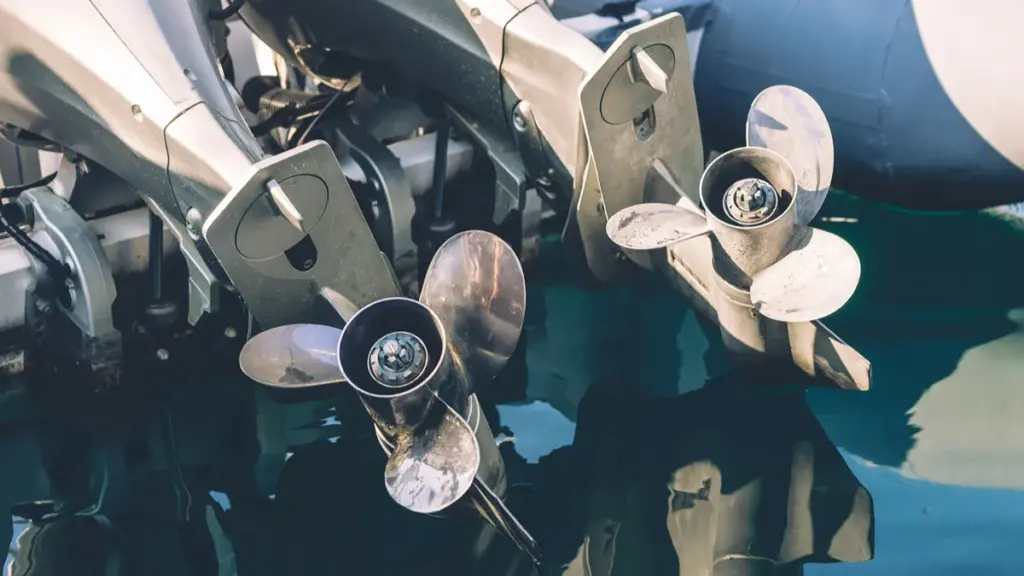
تجبر المروحة التالفة محركك على العمل بجهد أكبر وتخاطر بفشل شديد في نظام نقل الحركة. يؤدي استبدال الوحدة المتضررة إلى حماية علبة التروس الخاصة بك على الفور واستعادة كفاءة استهلاك الوقود الأساسية.
تحديد متى يحين وقت الاستبدال
إن معرفة الوقت المناسب لتبديل المروحة بالضبط يمنع التآكل البسيط من التصاعد إلى عطل ميكانيكي. تعمل عمليات الفحص البصري واللمسي كخط دفاعك الأول. أي ضربة ضد جسم مغمور تتطلب اهتمامًا فوريًا, حتى لو كان القارب لا يزال يتحرك.
- أضرار هيكلية واضحة: تحقق من وجود شقوق عميقة, قطع كبيرة مفقودة, شفرات عازمة بشدة, أو ترقق الحواف التي تؤثر على هندسة الشفرة.
- ينخفض أداء خط الأساس: انتبه للمحرك الذي يفشل فجأة في الوصول إلى دواسة الوقود الأساسية المفتوحة على مصراعيها (WOT) دورة في الدقيقة أو السرعة القصوى تحت الأحمال العادية.
- مشاكل الاهتزاز والتعامل معها: الاهتزاز المستمر, سحب التوجيه, أو يشير التتبع التقريبي إلى وجود مروحة غير متوازنة.
- التحقق بعد التأثير: قم دائمًا بإزالة الدعامة لفحص العمود والختم بعد الاصطدام بالصخور تحت الماء, سجلات, أو الحطام.
اختيار المروحة البديلة المناسبة
يعد تركيب مروحة غير متطابقة أمرًا ضارًا تمامًا مثل تشغيل مروحة مكسورة. تحتاج إلى مواءمة مواصفات الاستبدال مع نوع الهيكل الخاص بك وحمل التشغيل النموذجي.
- الملعب الصحيح والقطر: إن فقدان نطاق الملعب الموصى به من قبل الشركة المصنعة يجبر المحرك على الدوران الزائد أو السحب, تدمير الاقتصاد في استهلاك الوقود والتسارع.
- الألومنيوم لامتصاص الصدمات: تعمل الدعائم المصنوعة من الألومنيوم كحاجز قرباني في المياه الضحلة, مياه كثيفة المخاطر. أنها تشوه عند التأثير, نقل صدمة أقل بكثير إلى علبة التروس باهظة الثمن.
- الفولاذ المقاوم للصدأ من أجل المتانة: اختر الفولاذ المقاوم للصدأ عندما تحتاج إلى أقصى قدر من الكفاءة, المقاومة المرنة, والمتانة في المياه العميقة أو الخالية من المخاطر.
فحوصات التثبيت وما بعد الاستبدال
يتطلب الاستبدال الناجح اهتمامًا صارمًا بمجموعة المحور وبيئة العمود. قبل تشغيل المروحة الجديدة, قم بتنظيف المنطقة وإعدادها جيدًا للتأكد من أن مجموعة القيادة تعمل بشكل صحيح.
- إعداد رمح: قم بإزالة خط الصيد الملفوف, الأعشاب, والحطام الذي يمكن أن يقطع الختم الجديد.
- مقاعد الأجهزة: ضع الشحوم البحرية على الخطوط. قم بتثبيت صامولة الدعامة وفقًا لمواصفات عزم الدوران الدقيقة دون الإفراط في ربطها, وأدخل دبوس كوتر جديدًا إذا كان التصميم يتطلب ذلك.
- اختبار الاحتكاك: قم بتحويل المحرك الخارجي إلى الوضع المحايد وقم بتدوير المروحة الجديدة يدويًا. يجب أن تدور بحرية دون ربط علبة التروس أو كشطها.
- التحقق من خط الأساس: قم بتشغيل القارب تحت حمل عادي للتأكد من أن الدعامة الجديدة تستعيد سرعتك القصوى الأصلية وWOT RPM.
خاتمة
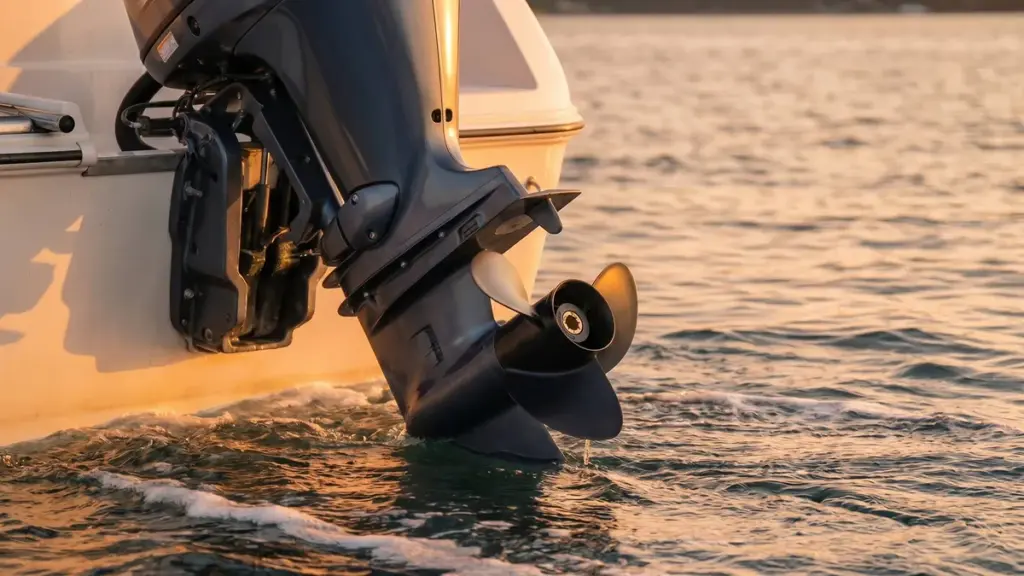
تعد عمليات الفحص المنتظمة والاستبدال في الوقت المناسب من أفضل الطرق لحماية محركك الخارجي, تحسين أداء القوارب, وخفض تكاليف التشغيل على المدى الطويل. ومن المهم بنفس القدر توفير مراوح المحرك الخارجي بالدرجة الصحيحة, القطر, ومواد عالية الجودة لضمان التشغيل الموثوق والفعال.
سواء كنت تستبدل المراوح لأسطولك الخاص أو تقوم بتوفير المنتجات لشركتك, يمكن أن تؤدي الشراكة مع الشركات المصنعة لمراوح المحركات الخارجية ذات الخبرة إلى إحداث فرق كبير في جودة المنتج, أداء, والموثوقية على المدى الطويل. في نيوتوب, يجمع مصنع المروحة الخارجية المتكامل الخاص بنا بين التصنيع المتقدم وخدمات OEM/ODM المرنة لمساعدة الموزعين والعلامات التجارية البحرية على النجاح في الأسواق التنافسية.
👉 اتصل بـ NEWTOP اليوم لمناقشة متطلبات OEM أو البيع بالجملة الخاصة بك والحصول على عرض أسعار تنافسي لمشروع المروحة الخارجية التالي.
الأسئلة المتداولة
ما هي علامات المروحة الخارجية التالفة?
يمكنك اكتشاف تلف المروحة من خلال العيوب البصرية, ينخفض الأداء, والأعراض الميكانيكية. ابحث عن الخدوش, نصائح شفرة عازمة, قطع مفقودة, أو شقوق شعرية بالقرب من المحور. على الماء, يظهر الضرر على شكل سرعات قصوى أبطأ, طلقات حفرة بطيئة, وعدد دورات المحرك العالية في الدقيقة مع سرعة القارب الأمامية المنخفضة. قد تشعر أيضًا باهتزازات إيقاعية جديدة في عجلة القيادة أو تسمع أصواتًا خافتة. إذا لاحظت تسرب زيت القير اللبني حول الوحدة السفلية, من المحتمل أن يؤثر التأثير على أختام عمود الدعامة.
هل يمكن للمروحة التالفة أن تؤذي محركي؟?
نعم, تضع المروحة التالفة ضغطًا شديدًا على المحرك الخارجي بأكمله والوحدة السفلية. حتى الانحناء البسيط للشفرة يخلق دورانًا غير متوازن. يرسل هذا الخلل التناوب المستمر, اهتزازات شديدة مباشرة من خلال مجموعة القيادة. تركت دون تحديد, يؤدي هذا الاهتزاز إلى ضرب أختام عمود الدعامة حتى تفشل, السماح لتسرب تشحيم التروس واندفاع الماء إلى الداخل. يؤدي تشغيل المحرك في هذه الحالة سريعًا إلى تآكل مدمر للأجزاء المعدنية في مجموعات التروس والمحامل.
لماذا يهتز قاربي بعد اصطدامه بشيء ما تحت الماء؟?
يؤدي الاصطدام بجسم مغمور إلى عدم توازن نظام الدفع لديك. عادة ما يؤدي التأثير إلى ثني شفرة المروحة, رقائق قبالة المواد, أو ينحني عمود المروحة قليلاً. لأن المروحة لم تعد تحمل شكلها المتماثل أو تدور بشكل صحيح تمامًا, فهو يدور بدلاً من أن يدور بسلاسة. يولد هذا التذبذب قوة اهتزاز إيقاعية تنتقل مباشرة إلى أعلى الساق الخارجية, من خلال حوامل المحرك, ومباشرة في الهيكل.
يمكن أن يؤدي تلف المروحة إلى ضعف التسارع?
نعم. يغير الضرر الجسدي درجة الشفرة, احدودب, وكأس. يؤدي هذا التشويه إلى قتل الكفاءة الهيدروديناميكية للمروحة, مما أجبرها على فقدان قبضتها على الماء وتقليل الدفع للأمام بشكل كبير. أيضًا, إذا تسببت ضربة قوية في إتلاف المحور المطاطي الداخلي - والذي يُطلق عليه عادة أ “محور نسج”- تنزلق قذيفة المروحة على العمود. عندما تضغط على دواسة الوقود, يدور المحرك بسرعة عالية بينما يتسارع القارب بالكاد أو يجد صعوبة في الصعود على متن الطائرة.
هل المروحة السيئة تزيد من استهلاك الوقود؟?
نعم. يؤدي تشغيل المروحة التالفة إلى إجبار المحرك على حرق المزيد من الوقود لكل ميل. عازمة, متكسرة, أو الشفرات شديدة التلوث تخلق سحبًا هيدروديناميكيًا إضافيًا وتزيد من انزلاق المروحة. لأن الشفرات التالفة لا يمكنها تحويل عزم دوران المحرك إلى قوة دفع بكفاءة, يجب أن يدور المحرك الخارجي بشكل أسرع وأن يعمل بجهد أكبر فقط للحفاظ على سرعة إبحارك الطبيعية. على مدى موسم, يؤدي عدم الكفاءة هذا إلى ارتفاع فواتير الوقود بشكل كبير.
إلى متى يمكنني استخدام المروحة التالفة بأمان؟?
يجب عليك فقط تشغيل المروحة التالفة لفترة كافية للعودة إلى الرصيف بسرعة منخفضة. تشغيل اهتزاز, دعامة غير متوازنة لأي فترة ممتدة تضع غير طبيعي, الضغط الدوري على محامل الوحدة السفلية والأختام. إن دفع المحرك في هذه الحالة يتصاعد بسرعة بشكل بسيط, استبدال المروحة غير المكلفة إلى إعادة بناء علبة التروس الكارثية.
هل يمكن للمحور التالف أن يؤدي إلى زيادة سرعة المحرك?
نعم. يقوم المصنعون بتصميم المحور المطاطي الداخلي بحيث ينزلق أثناء الصدمات الشديدة لحماية تروس الوحدة السفلية من القص. مرة واحدة يدور هذا المحور أو الدموع, يفقد بشكل دائم قبضته المحكمة على غلاف المروحة الخارجي. عند تطبيق دواسة الوقود, ينزلق المحور التالف بدلاً من نقل عزم الدوران. وهذا يسمح لعدد دورات المحرك في الدقيقة بالارتفاع بسرعة دون دفع القارب للأمام, تقليد شعور انتقال الانزلاق.
هل يجب أن أحتفظ بمروحة احتياطية على متن الطائرة؟?
يوصى بشدة بالاحتفاظ بمروحة احتياطية على متن الطائرة. إنه بمثابة تأمين رخيص, خاصة إذا كنت تقوم بتشغيل دعامة من الألومنيوم أو تتنقل بانتظام بشكل سطحي, المياه المليئة بالعرقلة. حمل وحدة احتياطية, جنبا إلى جنب مع وجع الدعامة, غسالة الدفع البديلة, ودبوس كوتر جديد, يتيح لك تبديل الدعامة التالفة على الفور. يؤدي هذا إلى استعادة الدفع الآمن على الفور ويوفر عليك عطلة نهاية أسبوع مدمرة أو فاتورة سحب باهظة الثمن.
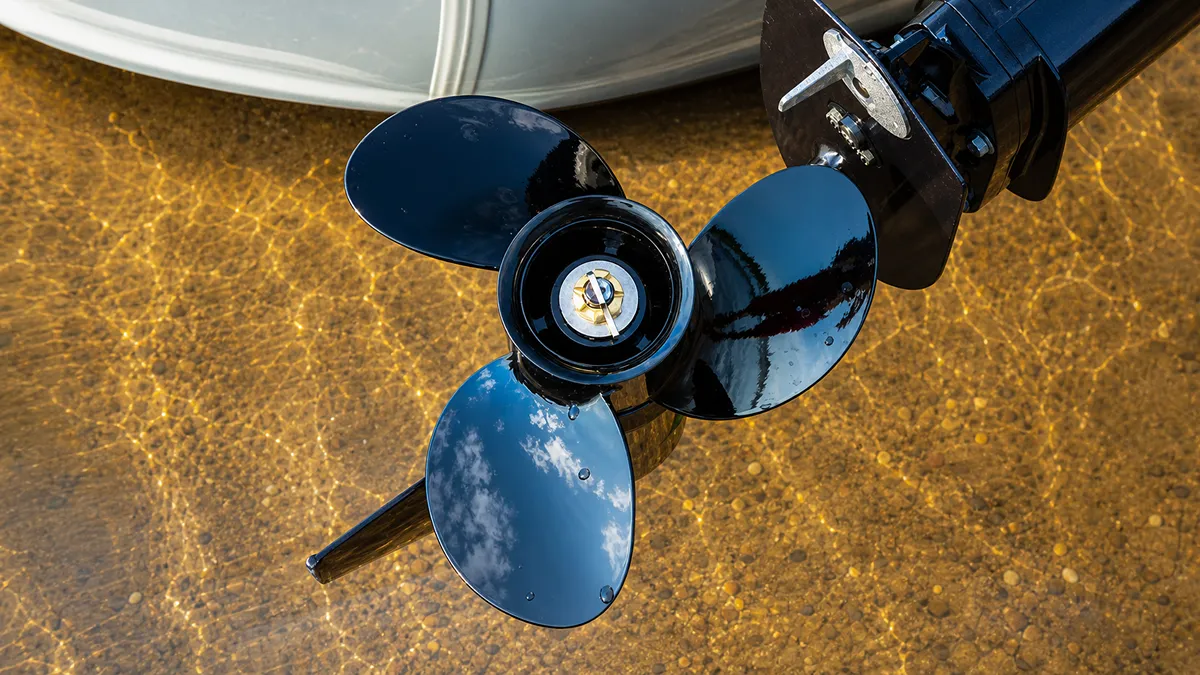
When a boat suddenly loses thrust, engine RPM rises without matching acceleration, or the propeller shows unusual surface damage, many operators assume the propeller is simply worn out. في الواقع, the problem may be propeller cavitation.
Cavitation is one of the most misunderstood issues affecting outboard motor performance. It reduces efficiency, increases fuel consumption, shortens propeller life, and may even lead to expensive repairs if ignored. Although it is often confused with ventilation, the two problems have different causes and require different solutions.
في هذا الدليل, we’ll explain what cavitation is, what causes it, how it affects your boat, and the practical ways to prevent it by choosing the right propeller and setup.
What Is Cavitation in Outboard Motor Propellers?
Cavitation in outboard propellers is a destructive hydrodynamic pressure issue. Vapor bubbles form and violently collapse on the blades, causing power loss and severe metal erosion.
The Physical Process of Cavitation
Cavitation starts when rapid propeller rotation forces local water pressure to drop below its vapor pressure. This extreme low pressure triggers an immediate phase change, creating vapor bubbles directly on the blade surface. The water essentially boils at ambient temperature due to the pressure drop.
As the spinning propeller drives these vapor bubbles into higher-pressure zones, they cannot sustain their form and collapse violently. These collapsing bubbles release intense micro-shock waves against the blade. متأخر , بعد فوات الوقت, these repeated impacts pound the metal surface, eroding the material and causing severe pitting.
Common Causes in Outboard Setups
Several setup and operational factors create the ideal environment for these damaging low-pressure zones to form.
- Incorrect mounting and trim: Setting the engine mounting height too high or trimming the motor out too far disrupts solid water flow across the blades.
- Poor propeller selection: Using a propeller poorly matched to the boat’s hull, load, or engine power forces the blades to carry excessive hydrodynamic load.
- Pre-existing damage: Bent blades, over-filed tips, or nicked edges create uneven hydrodynamics that trigger localized pressure drops.
- Disturbed inflow: Hull turbulence, transducers, or underwater obstructions prevent clean water from reaching the lower unit.
Symptoms and Performance Impacts
Operators usually identify cavitation through immediate handling degradation and eventual mechanical wear on the propulsion system.
- Loss of thrust: You experience a sudden decrease in power transfer efficiency, leaving the boat feeling sluggish under heavy throttle.
- RPM flaring: The engine speed surges rapidly without a proportional increase in forward acceleration.
- Audible disturbances: Collapsing bubbles create a distinct gravel-like rattling, accompanied by excessive vibration through the transom.
- Cumulative wear: Unchecked cavitation leads to visible blade erosion, pitting, and structural metal fatigue over time.
Distinguishing Cavitation from Ventilation
Boaters frequently confuse cavitation with ventilation, but they are entirely different mechanical events. Cavitation functions strictly as a hydrodynamic pressure issue resulting in vaporized water. Ventilation happens when the propeller physically pulls surface air or exhaust gases directly into the slipstream.
Both phenomena create nearly identical operator symptoms, including sudden RPM flare and an immediate loss of bite in the water. Accurate diagnosis dictates the repair path. Fixing ventilation usually involves basic trim adjustments or dropping the engine height. Resolving cavitation often requires repairing damaged blade edges or selecting a completely different propeller design to handle the engine’s output.
How Cavitation Differs from Ventilation
Cavitation is a pressure-induced phase change causing water to boil and erode propeller blades, while ventilation is external air getting sucked into the prop wash, causing sudden slippage.
Many boat owners use the terms التجويف و ventilation interchangeably, but they describe two different phenomena.
| ميزة | Cavitation | Ventilation |
|---|---|---|
| Cause | Water pressure drops below vapor pressure. | Air enters the propeller blades. |
| Medium Around Blade | Water vapor bubbles. | Air from above the water surface. |
| Main Symptom | Blade erosion and reduced propulsion efficiency. | Sudden engine RPM increase with poor thrust. |
| Blade Damage | نعم, often causes pitting and surface erosion. | Usually no direct blade erosion. |
| Typical Causes | Incorrect blade loading, damaged propeller, poor blade design, or excessive pressure drop. | Engine mounted too high, sharp turns, rough water, or excessive trim angle. |
A simple way to remember the difference:
- Cavitation creates bubbles from water.
- Ventilation pulls air into the propeller.
Maximize Margins With Professional-Grade Garden Machinery
The Main Causes of Propeller Cavitation
Cavitation occurs when local water pressure drops below vapor pressure. Excessive speed, mismatched propellers, blade damage, and disturbed inflow from poor setup are the primary triggers.
| Cavitation Cause | Primary Mechanism |
|---|---|
| Speed & تحميل | High RPM and heavy vessel loads drive local pressure below the vapor threshold. |
| Propeller Mis-Match | Wrong pitch or physical size creates extreme pressure imbalances across the blade. |
| Blade Damage | Nicks and bent edges prevent smooth water flow, causing localized low-pressure zones. |
| Setup & Inflow | Improper engine height or hull obstructions introduce turbulent, low-pressure water. |
Excessive Propeller Speed and High Loading
Propellers designed for standard operation struggle when pushed past their hydrodynamic limits. Spinning a blade too fast creates an extreme pressure drop on the back side. This sudden vacuum forces the water to vaporize instantly into gas pockets.
Operating parameters heavily influence this pressure shift. Specific stressors force the propeller into a continuous cavitation cycle.
- Heavy loads: Excess vessel weight forces the engine to work harder, multiplying blade stress.
- Hard acceleration: Rapid throttle spikes disrupt steady water flow and immediately drop local pressure.
- Extreme RPMs: Sustained high-speed operation with an overloaded vessel guarantees continuous vapor formation.
Incorrect Pitch, Sizing, and Propeller Mis-Match
Slapping any available propeller onto an outboard guarantees poor performance. Pitch directly dictates blade loading. Excessive pitch bogs down the engine and overloads the blades at lower speeds. Insufficient pitch lets the engine over-rev, accelerating the blades so fast that they tear the water apart and induce surface cavitation.
Proper matching requires aligning the propeller geometry with the specific vessel dynamics to maintain pressure equilibrium.
- Diameter constraints: Selecting a size that ignores hull weight and horsepower creates severe pressure imbalances.
- Blade geometry: The wrong blade count, rake, or cup strips the propeller of its grip, increasing slip and flow separation.
- توافق الهيكل: A propeller style mismatched to the hull design fails to handle the specific water flow of that vessel.
Physical Blade Damage and Surface Imperfections
Water requires a perfectly smooth surface to maintain laminar flow. Minor impact damage alters the local hydrodynamics completely. Nicks, gouges, or missing chunks on the leading edge stop the blade from slicing cleanly. These defects act as turbulence generators, spawning localized low-pressure zones where vapor bubbles rapidly form.
Physical irregularities consistently trigger flow breakdown across the entire propulsion system.
- Bent blades: Asymmetric geometry causes uneven loading and violent pressure swings during every revolution.
- Altered edges: Overly sharpened or blunt leading edges detach the water flow prematurely.
- Lower unit fouling: Barnacle buildup or deep scratches on the gearcase destroy the clean water stream before it reaches the blades.
Disturbed Inflow, Setup, and Clearance Issues
A propeller operates efficiently only when fed a steady stream of dense, clean water. Mounting the outboard too high on the transom starves the system. This setup places the blades near the surface where the water is already aerated and low in pressure, accelerating the phase change into vapor.
Environmental factors around the transom dictate the quality of the inflow reaching the propeller.
- Clearance limits: Inadequate spacing between the propeller, hull bottom, and skeg amplifies local turbulence.
- Appendage drag: Poorly placed transducers or water pickups inject chaotic currents directly into the propeller path.
- Vessel attitude: Excessive stern weight or improper boat trim shifts the inflow angle, severely degrading water density.
How Cavitation Affects Speed, Fuel Use, and Blade Life
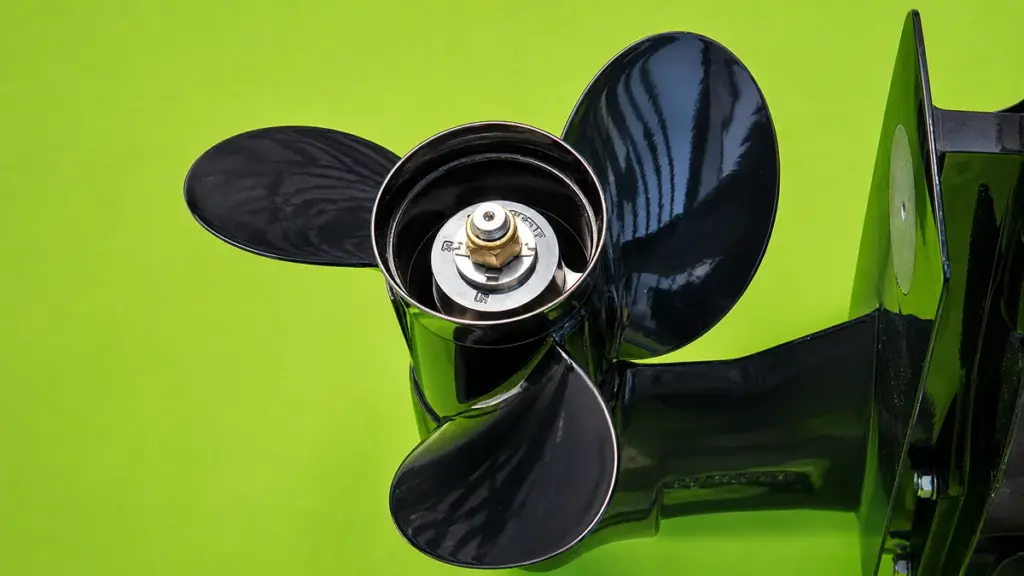
Cavitation cripples propeller efficiency. It kills top speed, burns up to 10% more fuel per mile, and destroys blades through violent micro-shock waves, forcing expensive premature replacements.
Impact on Boat Speed and Acceleration
When cavitation vapor bubbles form, they reduce effective blade lift. This breaks the propeller’s physical hook-up to the water and causes a massive drop in thrust. You will often feel this as a sudden RPM flare with barely any forward movement, forcing you to back off the throttle to let the blades regain bite.
- Hole-Shot Performance: Acceleration becomes sluggish, drastically extending the time it takes to get the heavy hull on plane.
- Top Speed Penalty: Even partial tip cavitation creates enough drag to cause a 2–5% loss in top speed on high-performance setups.
Increased Fuel Consumption and Reduced Efficiency
Vapor bubbles sticking to the blade surfaces act like a physical barrier. They increase friction and alter the effective thickness of the blade, destroying hydrodynamic efficiency. To compensate for the lost thrust, operators push the throttle further forward. This pushes the engine into a higher RPM band where it operates far outside its peak fuel efficiency range.
- Burn Rate: A chronic cavitation mismatch burns 5–10% more fuel per mile just to maintain the same hull speed.
- Lifetime Waste: Over the lifespan of a commercial or high-use outboard, this hydrodynamic drag wastes hundreds of gallons of fuel.
Structural Damage and Shortened Blade Life
Cavitation acts as a mechanical grinder on your hardware. When vapor pockets move into higher-pressure water, they collapse violently. These implosions generate localized micro-shock waves that mechanically hammer the metal, leading to severe pitting along the leading edges and low-pressure faces of the propeller.
- Vibration and Fatigue: The uneven collapse of bubbles creates high-frequency vibrations, subjecting the prop to continuous high-cycle fatigue.
- Cracking and Separation: Fatigue promotes micro-cracking at critical stress points like root fillets, which can quickly progress into complete blade separation under heavy loads.
- Collateral Damage: The constant oscillatory loads force premature propeller replacement and increase the risk of catastrophic bearing and seal failures inside the lower unit.
How to Fix Cavitation Through Setup and Prop Selection

Most slipping issues are actually ventilation. Fixing engine height, adjusting trim, and selecting a cupped stainless-steel propeller will quickly restore grip and stop performance loss.
| Solution | Benefit |
|---|---|
| Repair Damaged Blades | Restores smooth water flow and improves propulsion efficiency. |
| Select Proper Pitch | Reduces blade overload and helps maintain optimal engine RPM. |
| Choose Correct Diameter | Improves thrust distribution and overall propulsion performance. |
| Adjust Engine Mounting Height | Optimizes water flow to the propeller and reduces pressure fluctuations. |
| Correct Trim Angle | Improves blade loading and enhances propulsion efficiency. |
| Clean Hull Regularly | Restores smooth water flow by eliminating marine growth and surface drag. |
| Balance the Propeller | Reduces vibration, uneven loading, and pressure imbalance. |
| Upgrade Propeller Design | Improves hydrodynamic efficiency and minimizes the risk of cavitation. |
Differentiating Ventilation from Cavitation
Operators often blame cavitation when their propeller loses grip. في الواقع, most slipping issues are actually propeller ventilation. This happens when the blades pull in surface air or exhaust gas instead of solid water. True cavitation is a hydrodynamic pressure problem where extreme low pressure forms vapor bubbles on the blade surface. It is far less common in everyday troubleshooting.
Both conditions share identical symptoms on the water. You will experience the following performance drops:
- Rising RPMs: Engine speed flares without a proportional increase in boat speed.
- Loss of thrust: The propeller suddenly drops its grip on the water.
- Slipping: Forward momentum stalls during hard acceleration or tight turns.
Optimizing Engine Height and Trim
A poorly adjusted outboard is the leading cause of poor propeller bite. Start your troubleshooting by testing the boat with the trim fully down to establish a performance baseline. Adjust the trim up slightly to find your usable running range. If the propeller still breaks loose, lower the engine mounting position on the transom. This keeps the anti-ventilation plate deeper in the water, blocking surface air from reaching the blades.
You should also trim down when entering tight turns so the propeller stays submerged as the hull leans. أخيراً, inspect the hull ahead of the lower unit. Transducers, through-hull fittings, or debris can disrupt clean water flow and feed aerated water directly into your propeller.
Choosing a Propeller for Maximum Bite
Your propeller dictates how well your engine transfers power to the water. Always inspect the current propeller for nicks, cracks, or bent blades first. Even minor physical damage frequently causes slipping and breaks the water flow. If the blades are intact but the engine over-revs before generating forward thrust, lower the pitch to help the engine grab solid water.
You can switch to a propeller with increased cup and a larger blade area to maintain grip under heavy loads or in rough chop. Upgrading to a stiffer stainless-steel propeller prevents blade flex under load and enhances hold during aggressive maneuvers.
Utilizing Aftermarket Hardware Solutions
When height and trim adjustments fall short, aftermarket hardware can force the stern down and keep the propeller buried.
- Hydrofoils: Add a hydrofoil to the anti-ventilation plate to help lift the stern onto plane faster and reduce air ingestion.
- Transom wedges: Install a positive transom wedge to increase engine tuck and improve initial propeller bite during takeoff.
- Jack plates: Use a jack plate for precise height adjustments, ensuring the motor is not raised high enough to induce further ventilation.
Choose NEWTOP for Reliable, Precision-Built Outboard Motor Propellers
Reducing cavitation starts with choosing a propeller that is properly engineered, accurately manufactured, and matched to your application. في نيوتوب, we produce high-quality مراوح المحرك الخارجي for a wide range of recreational and commercial boats, combining precision machining with strict quality control to deliver stable performance on the water.
Every propeller is manufactured using carefully selected aluminum or stainless steel materials and undergoes balancing, dimensional inspection, and performance testing to ensure smooth operation, improved fuel efficiency, and longer service life. Whether you need OEM replacement propellers or customized solutions for your own brand, our engineering team can help you select the right diameter, يقذف, and blade design for different engines and operating conditions.
As an experienced outboard motor propeller manufacturer and trusted outboard motor propeller factory, NEWTOP supports الموزعين العالميين, تجار الجملة, and equipment brands with reliable production capacity, consistent product quality, and responsive OEM/ODM services.
Contact our team today to find the right propeller solution for your market and improve your customers’ boating performance.
الأسئلة المتداولة
What causes cavitation in an outboard propeller?
Cavitation occurs when water pressure on the propeller blades drops below vapor pressure, causing vapor bubbles to form and violently collapse. Damaged blades, the wrong propeller size or pitch, excessive rotational speed, or disturbed water flow from the hull and lower unit typically trigger this pressure drop.
How do I know if my boat has cavitation or ventilation?
Cavitation creates a persistent whine, harsh vibration, and visible pitting on the propeller blades, even when running straight. Ventilation happens when the prop pulls in surface air or exhaust. You will feel a sudden RPM spike and loss of bite, usually during tight turns or when you trim the motor too high.
Can cavitation damage my engine?
Cavitation destroys propeller blades through erosion rather than directly damaging the internal engine block. It does cause indirect mechanical harm. When the propeller loses its grip, the engine over-revs. These rapid load fluctuations place heavy stress on your lower unit gears, محامل, and the entire drivetrain.
Does engine height affect cavitation?
Engine height primarily drives ventilation, but it directly impacts cavitation. Mounting an outboard too high reduces propeller submergence and introduces aerated, unstable water flow. This disturbed inflow creates pressure anomalies that force vapor bubbles to form on the blades.
Will changing propeller pitch stop cavitation?
Adjusting pitch reduces cavitation only if your current propeller is over-loaded or under-loaded for your specific setup. If your engine struggles to reach its recommended wide-open throttle RPM, switching to a lower pitch helps balance the load. Pitch adjustments will not fix cavitation caused by physical blade damage, improper engine height, or hull irregularities.
Can a damaged propeller cause cavitation?
نعم. Nicks, cracks, bent edges, or deep scratches disrupt the smooth flow of water across the propeller blades. These physical imperfections create localized low-pressure zones that trigger vaporization. The resulting bubble collapses cause further metal erosion, driving a cycle of worsening damage.
Is cavitation worse at high speed?
As boat speed and propeller RPM increase, water velocity over the blades rises. This lowers local pressure and significantly increases your cavitation risk. While true cavitation intensifies at higher speeds, operators often notice the most dramatic symptoms—like sudden blowout and RPM flares—during heavy acceleration or tight turns due to accompanying ventilation.
Does blade material affect cavitation resistance?
Material choice dictates how well your propeller survives cavitation, not whether it occurs in the first place. High-strength copper alloys and stainless steel resist the microscopic impacts of bubble collapses far better than standard aluminum. Stronger metals also allow manufacturers to cast thinner blade profiles, which helps manage pressure distribution and delays performance loss.
