


- Todos
- Histórias de clientes NEWTOP
- Hub do Explorador NEWTOP
- NEWTOP Insights da indústria
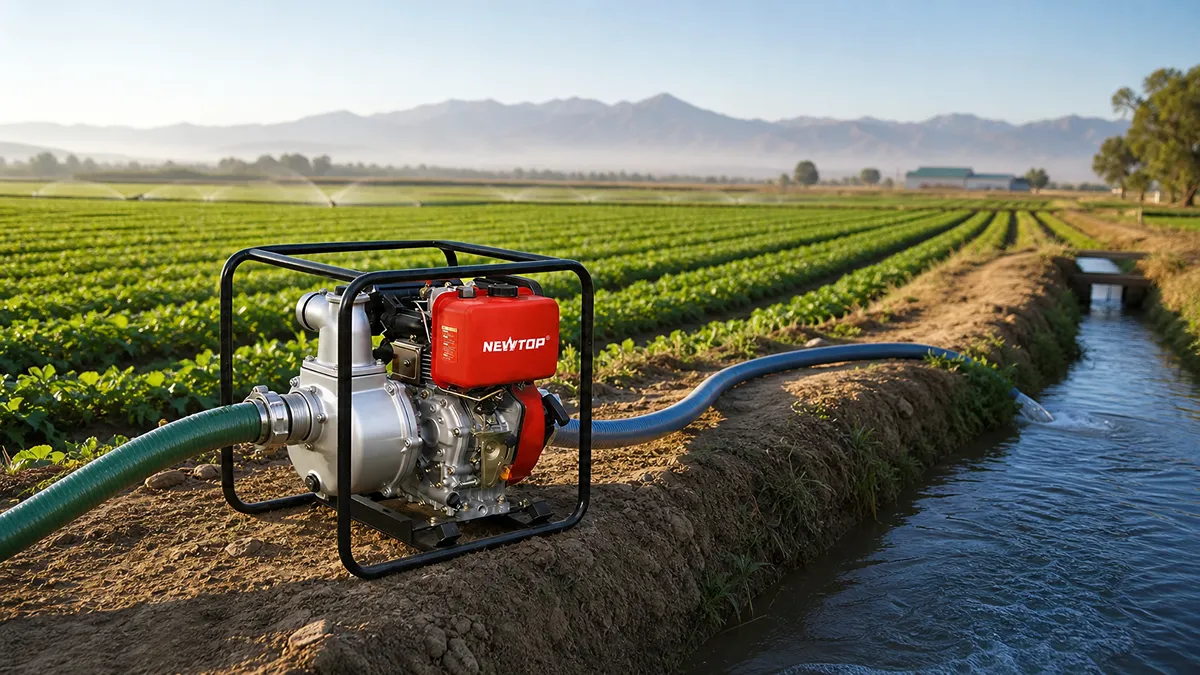
Many buyers focus only on horsepower or pump size when selecting a water pump. No entanto, pump performance depends on several factors, including flow rate, levantamento de cabeça, water type, operating time, and power source. A pump that works well for irrigation may not be suitable for drainage or construction applications.
This guide explains how to choose the right water pump based on different applications and helps you understand the key specifications before making a purchase.
What Is a Water Pump and How Does It Work?
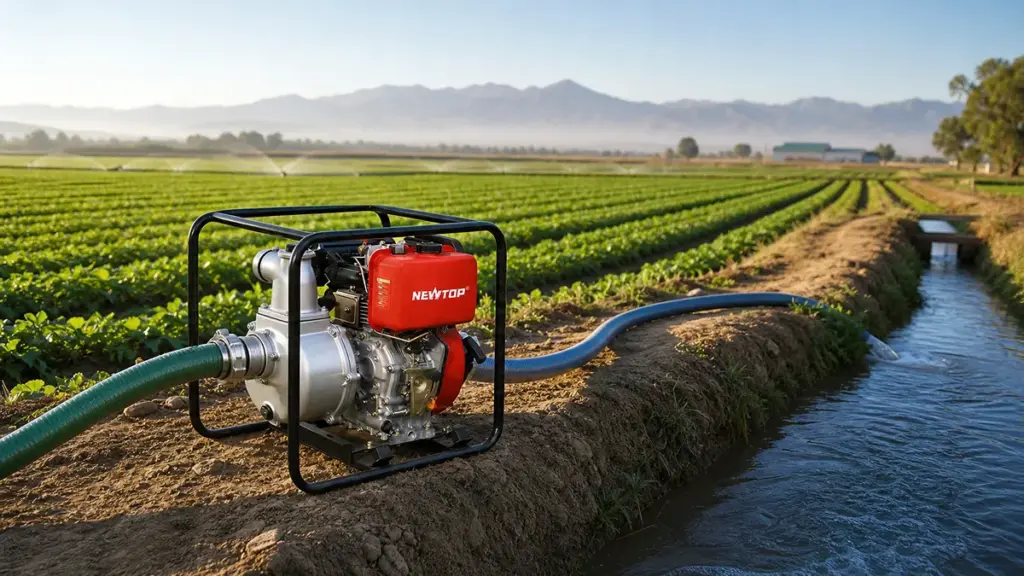
A water pump converts mechanical energy into hydraulic force to move fluid, overcome friction, and deliver the necessary flow and pressure for irrigation, drenagem, and construction sites.
A water pump is a mechanical device designed to move water from one location to another by converting engine or motor power into water pressure and flow. Portable water pumps usually use gasoline or diesel engines to drive an impeller, which creates centrifugal force and pushes water through the discharge outlet.
Most portable pumps work based on centrifugal pump technology. When the engine starts, the impeller rotates at high speed and creates a low-pressure area at the pump inlet. Water is drawn into the pump chamber, accelerated by the impeller, and pushed out through the discharge pipe.
The basic working process includes:
- The engine provides power to rotate the impeller.
- The impeller creates suction and moves water into the pump body.
- The pump casing converts kinetic energy into pressure.
- Water is discharged through the outlet pipe.
Related reading: Bombas de água portáteis: Um guia prático para diferentes aplicações
Key Water Pump Specifications to Compare
| Especificação | O que isso significa | Por que é importante |
|---|---|---|
| Taxa de fluxo | The amount of water a pump can move within a specific time, usually measured in L/min, m³/h, or GPM. | Determines how quickly water can be supplied, transferred, or removed. |
| Total Head | The total height a pump needs to overcome, including vertical lift, pipe friction loss, and required outlet pressure. | Shows whether the pump can deliver water to the required distance and elevation. |
| Potência do motor | The output power of the engine, usually measured in horsepower (HP) or kilowatts (kW). | Affects pumping capacity, pressure performance, and ability to handle demanding applications. |
| Suction Height | The vertical distance between the water source and the pump inlet. | Determines how effectively the pump can draw water from wells, tanques, lagoas, or other sources. |
| Water Type | The condition of the water, such as clean water, água lamacenta, or water containing solid particles. | Helps determine whether you need a clean water pump, trash pump, or another specialized pump type. |
For a more detailed breakdown, you can also read our beginner’s guide to water pump specifications, which explains these parameters in depth.
Maximize Profit with Durable OEM Machinery

What Are the Main Types of Water Pumps?
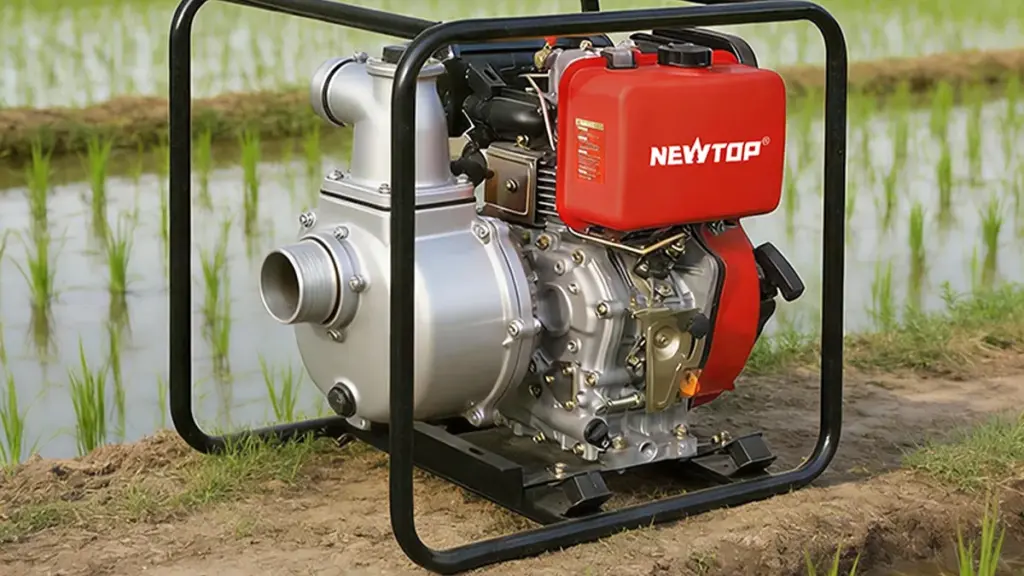
Water pumps can be classified according to their structure, fonte de energia, e aplicação. For portable outdoor equipment, the most common types are clean water pumps, trash pumps, and high-pressure pumps.
If you want to better understand how different pump designs affect performance and priming ability, it’s also helpful to compare centrifugal and self-priming water pumps, ou trash water pump vs clean water pumps, which we explain in detail in our guide on pump working principles and selection differences.
Centrifugal Pumps
Centrifugal pumps rely on a rotating impeller to add velocity to water and convert that velocity into usable pressure. They consistently deliver high efficiency for systems demanding moderate-to-high flow rates.
- Aplicativos primários: The standard choice for surface-water irrigation and general water transfer.
- Maintenance Factor: Requires manual priming in most standard surface installations.
- Liquid Constraint: Struggles to process heavily solids-laden or muddy water.
Submersible Pumps
Installed entirely below the water line, these units push water upward rather than pulling it. This submerged design entirely eliminates suction lift limitations and bypasses the need for manual priming.
- Core Environments: Commonly deployed in deep wells, drainage pits, and flooded basements.
- Operational Advantage: Works directly in the fluid to solve complex or deep suction-lift problems.
- Selection Requirement: Demands specific matching to depth and water quality to prevent submerged maintenance difficulties.
Jet Pumps
A jet pump utilizes an ejector mechanism to create strong suction and pull water directly from the source. Operators primarily install these units above ground to keep the hardware accessible for routine maintenance.
- Best Fits: Highly effective for shallow wells and specific above-ground irrigation supply setups.
- Suction Limits: Faces strict suction-lift restrictions compared to submerged pump alternatives.
- Efficiency Profile: Operates at lower overall efficiencies than standard centrifugal models.
Diaphragm and Positive-Displacement Pumps
This pump category displaces a fixed volume of liquid per cycle using a flexible mechanical mechanism. The physical design delivers strong self-priming capabilities tailored for demanding suction environments where standard pumps lose prime.
- Liquid Tolerance: Handles highly viscous, dirty, or chemically contaminated liquids effectively.
- Flow Characteristics: Produces lower maximum flow rates compared to centrifugal alternatives.
- Discharge Style: Often creates a pulsating discharge rather than a steady, continuous stream.
Trash and Booster Pumps
Neither of these units serves as a general-purpose lifting solution. They exist specifically to address strict environmental conditions or solve system performance constraints that standard equipment cannot handle.
- Trash Pumps: Feature large internal passages engineered to pass solids, sediment, and mud safely during heavy construction dewatering.
- Booster Pumps: Focus entirely on increasing pressure within an existing pressurized line or an underperforming irrigation zone.
How to Choose a Water Pump for Irrigation
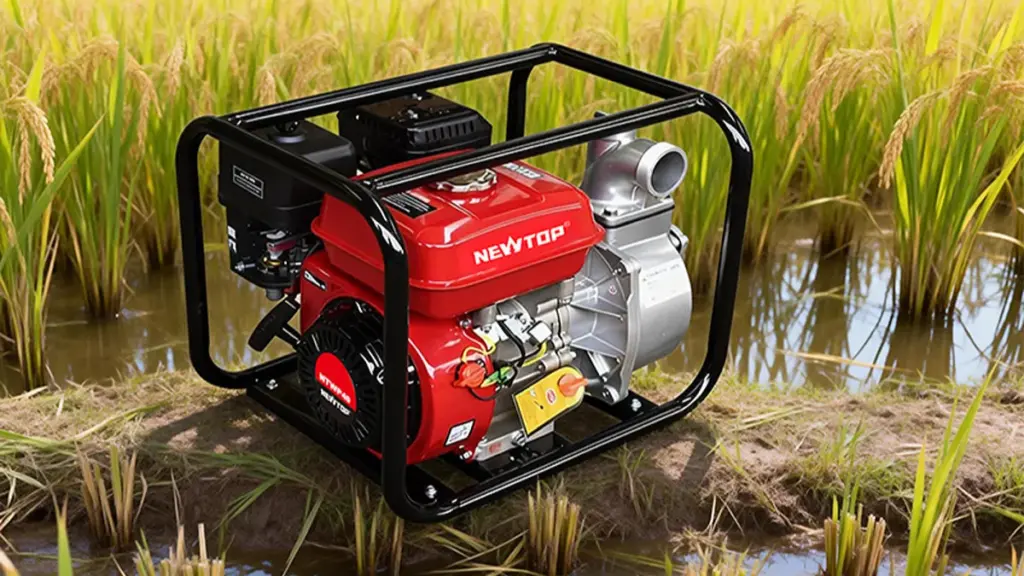
Choosing an irrigation pump comes down to matching your required flow rate and total dynamic head to your water source depth while operating near peak efficiency.
Assessing Your Water Source and Quality
The origin of your water dictates the physical hardware you need to install. If you draw from a deep well, physical suction limits render surface pumps useless, forcing you to rely on a submersible model. Por outro lado, shallow ponds, storage tanks, or canals pair perfectly with standard centrifugal or self-priming surface setups.
Water quality also dictates pump survival. If your source frequently pulls in sand, silt, or agricultural debris, a standard clear-water pump will suffer severe abrasion and rapidly lose pressure. Dealing with debris-laden water requires targeted inline filtration or a drainage-style pump built with larger clearances to prevent clogging.
Calculating Flow Rate and Total Dynamic Head (TDH)
Pump selection relies heavily on calculating two precise performance metrics for your specific site.
- Taxa de fluxo (GPM or LPM): Size your capacity based on the peak simultaneous demand or the single largest irrigation zone in your layout.
- Total Dynamic Head (TDH): Calculate this by adding the vertical suction lift, static elevation change, pipe friction loss, and your required outlet pressure.
- System Distribution Type: Factor in the delivery method, as high-impact sprinkler systems demand much higher continuous pressure than low-flow drip irrigation setups.
Selecting the Appropriate Pump Type
Once you map your head and flow numbers, match the pump style directly to your environmental conditions.
- Centrifugal Surface Pumps: The standard choice for highly efficient operation when transferring clean water from shallow sources at moderate head.
- Submersible Pumps: These sit directly below the water line, entirely bypassing suction lift limitations and eliminating surface priming issues.
- Self-Priming External Pumps: Ideal for above-ground surface transfer where operators need the practical convenience of quick suction recovery.
Matching Power Source and Efficiency Requirements
Buying a pump purely based on horsepower is a common sizing error. A massive motor operating far outside its intended duty point wastes electrical or fuel energy and increases mechanical wear. You must check the manufacturer’s performance curve to ensure your calculated flow and TDH intersect near the Best Efficiency Point (BEP).
Always verify that your site’s power capabilities match the exact motor requirements. Whether you rely on single-phase electric, three-phase power, or a portable diesel engine, the energy supply must handle the startup draw and continuous duty cycle to keep your irrigation system running reliably.
How to Choose a Water Pump for Drainage and Dewatering
Selecting the right drainage or dewatering pump requires matching flow rate, total dynamic head, and solid-handling capabilities to your exact site conditions and power constraints.
Assess the Water Source and Quality
Pump selection begins with a precise evaluation of the job site. You must define the task as either drainage for nuisance water removal or dewatering for continuous site drying. The location of the water source dictates the fundamental pump configuration, while the water composition determines the internal mechanics required to prevent premature failure.
- Task definition: Distinguish between temporary drainage and continuous active dewatering.
- Source location: Identify the water depth to determine whether an above-water or submersible setup minimizes suction losses.
- Qualidade da água: Evaluate the water for sand, silt, or debris to ensure the chosen model handles expected solids without excessive wear or clogging.
Calculate Flow Rate and Total Dynamic Head (TDH)
Sizing a pump relies on hard calculations, not horsepower estimates. Determine the required flow rate in cubic meters per hour, and add a safety margin to account for sudden rainfall or unexpected groundwater seepage. Próximo, you must calculate the Total Dynamic Head (TDH) to understand the true pressure demand on the system.
- Elevação estática: The exact vertical distance the water must travel from source to discharge.
- Perdas por fricção: The resistance caused by water moving through pipes, fittings, and valves.
- Discharge pressure: The specific pressure required at the outlet point.
Factor in long discharge distances carefully. Extended hoses and elevation changes significantly impact total system demand and can render an improperly sized pump useless on site.
Select the Appropriate Pump Type
The pump architecture must match both the physical environment and the water composition. Using a clean-water pump for a muddy excavation guarantees rapid mechanical failure.
- Submersible drainage pumps: Use these for flooded sumps and ponds to completely eliminate suction lift limitations.
- Trash or solids-handling pumps: Select these for construction pits containing muddy or abrasive silt-laden water.
- Dedicated dewatering pumps: Choose these heavy-duty units for continuous trench and foundation work that requires handling high flow volumes.
Verify the Pump Curve and Power Supply
Never buy a pump based solely on its maximum theoretical output. You must match your operating duty point to the middle of the manufacturer’s pump curve, known as the Best Efficiency Point (BEP). Operating near the BEP maximizes electrical efficiency and prevents severe mechanical wear.
- Power compatibility: Confirm the site offers compatible power, whether single-phase electric, three-phase electric, petrol, or diesel.
- Duty cycle matching: Select a motor rated for the anticipated daily duty cycle.
- Continuous operation: Verify the unit supports continuous running during heavy storms or prolonged excavation work.
Evaluate Installation Constraints and Maintenance Needs
Physical site limitations often dictate the final model selection. Verify the physical pump dimensions to guarantee the unit fits narrow boreholes, small sumps, or confined excavations. A tight fit can restrict intake flow and cause overheating.
- Piping constraints: Secure all piping connections to prevent casing strain under heavy load.
- Intake protection: Consistently use recommended strainers to block large debris from destroying the impeller.
- Serviceability: Prioritize models with accessible maintenance features and strong service support for critical continuous applications.
How to Choose a Water Pump for Construction Sites
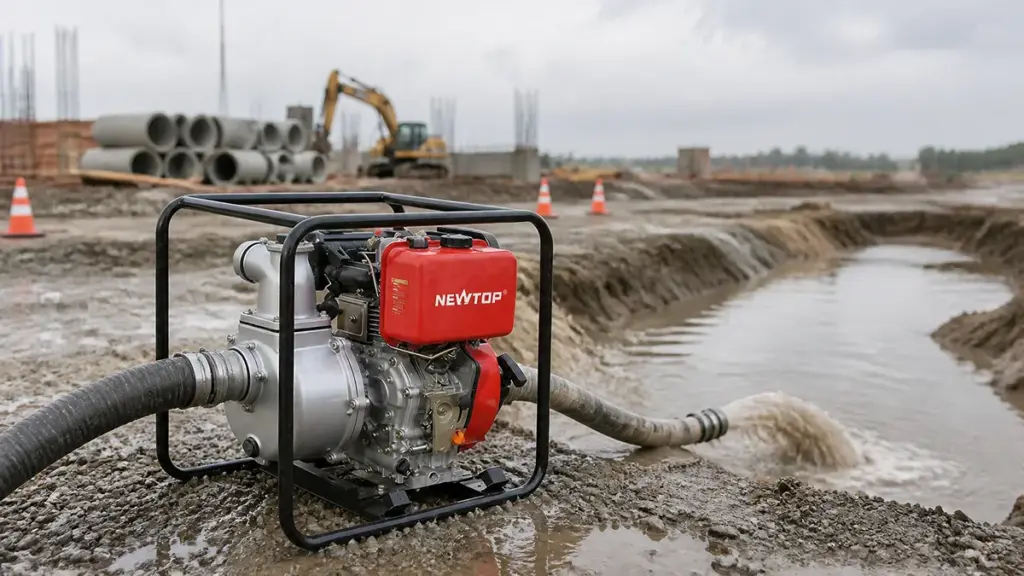
Select a construction water pump based on flow, cabeça total, and solids tolerance before looking at horsepower to avoid downtime and excessive wear.
Calculate Required Flow Rate and Total Head
Determine the volume of water you need to move per minute or hour to keep excavation areas clear and usable. This establishes your target flow rate. Próximo, calcular a cabeça dinâmica total (TDH). This calculation requires three specific inputs:
- Elevação vertical: The physical distance from the water surface to the discharge point.
- Perdas por fricção: The resistance created by hoses, tubos, and fittings along the run.
- Discharge pressure: The specific force required at the final outlet.
Compare these precise requirements against the actual operating pump curve. Relying solely on nominal horsepower ratings often leads to undersized or inefficient equipment.
Assess Water Quality and Solids Content
Construction sites rarely deal with clean water. Identify whether the site requires pumping clean water, água lamacenta, sand-laden fluid, or water heavy with debris. Match the actual water conditions with appropriate impeller types and clog-resistant designs found in trash or solids-handling pumps. You must account for suspended solids early in the selection process to prevent premature wear, sudden clogging, and unexpected downtime on the job site.
Determine Suction Depth and Pump Configuration
Measure the exact distance from the water surface to your intended pump intake. You can utilize surface or self-priming pumps for shallower applications where the suction lift remains within practical limits. Switch to submersible pumps if the source depth exceeds 7 para 8 metros. At that depth, surface suction becomes ineffective and will cause performance failures.
Evaluate Power Availability and Portability Needs
Check the site for a reliable single-phase or three-phase electrical supply to support electric pumps. Select diesel-driven or combustion pumps for remote sites, emergency flood control, or areas lacking stable infrastructure. Consider the physical footprint and mobility required to move the unit between different dewatering zones as the project scales.
Factor in Duty Cycle and Operating Margins
Include a 10 para 20 percent safety margin in your capacity calculations to handle real-world variations, seasonal level changes, and minor obstructions. Prioritize automatic controls like float switches or level sensors for repeated or continuous drainage tasks to reduce manual oversight. Verify you have adequate Net Positive Suction Head (NPSH) margins to avoid cavitation, especially when using long suction lines or operating in shallow water.
How to Choose Between a Gasoline and Diesel Water Pump
Select gasoline pumps for quick deployment and intermittent use, but switch to diesel when operations demand heavy-duty autonomy, long daily hours, and lower lifetime fuel costs.
| Comparação | Gasoline Water Pump | Diesel Water Pump |
|---|---|---|
| Saída de potência | Suitable for light and medium-duty applications that require flexible and portable pumping solutions. | Provides stronger performance for heavy-duty applications and long-duration pumping operations. |
| Eficiência de Combustível | Generally has higher fuel consumption during continuous operation. | Usually offers better fuel efficiency when running for extended working hours. |
| Peso | Lighter design makes it easier to transport and move between different job locations. | Typically heavier because of the stronger diesel engine structure and components. |
| Manutenção | Simple maintenance requirements and easier starting performance. | Built for durability and demanding working environments with longer service needs. |
| Melhores aplicativos | Pequenas fazendas, jardins, transferência de água, and emergency drainage tasks. | Canteiros de obras, industrial drainage, mineração, and large-scale irrigation projects. |
When to Choose a Gasoline Water Pump
Motores a gasolina excel in scenarios that prioritize speed and ease of movement over continuous operation. These units weigh significantly less, making them easy to carry across temporary setups, tight enclosures, or rough terrain by a single operator.
They feature simple startup procedures tailored for occasional, non-intensive use. This makes them highly effective for sporadic tasks, emergency water transfer, or rapid flood response. A gasoline pump fits perfectly into moderate flow requirements where the immediate convenience of deployment outweighs the need for long-term fuel efficiency.
When to Choose a Diesel Water Pump
Diesel engines are built for endurance. You select a diesel pump when the job involves prolonged daily workloads or continuous heavy-duty operation. Manufacturers design these units with robust structural frames capable of withstanding harsh, demanding environments for extended periods without degradation.
While they carry a higher upfront cost and a heavier footprint, diesel pumps deliver superior fuel efficiency over time. This translates to a notably lower total cost of operation for high-hour usage. They become the default choice when equipment autonomy, durabilidade, and raw pumping power outrank lightweight portability.
How to Match Pump Size, Taxa de fluxo, and Head to Your Application
Matching the right pump means balancing flow rate and total dynamic head against your specific water source. Oversize it, and you waste energy; undersize it, and your system starves.
| Aplicativo | Primary Focus | Key Sizing Factor |
|---|---|---|
| Irrigação | Precise flow and pressure | Simultaneous zone flow + TDH |
| Drenagem | Fast evacuation | Total volume + solids handling |
| Construção | Mobilidade & dirty water | Peak inflow + high TDH |
Understanding Core Sizing Variables
You cannot select a pump based on horsepower alone. A successful installation requires matching the physical properties of the water source to the mechanical output of the equipment. Buyers must define four specific variables before reviewing product catalogs.
- Taxa de fluxo (Q): The volume of water moved per unit of time, typically measured in L/min, m³/h, or GPM.
- Total Dynamic Head (TDH): The total resistance the pump must overcome, combining vertical lift and friction.
- Source depth: A depth exceeding 7-8 meters generally requires switching from a surface pump to a submersible model.
- Tipo de água: The presence of solids, sludge, or debris dictates pump material and design compatibility.
Calculating the Required Flow Rate
Flow rate defines how much water moves through your system at any given moment. Sizing this metric correctly prevents both equipment strain and wasted operating expenses.
- Irrigation applications: Require summing the flow of all emitters or zones operating simultaneously.
- Dewatering and construction: Require calculating the total volume of accumulated water against the target evacuation time.
- Cost factors: Oversizing the flow rate unnecessarily increases initial equipment costs and energy consumption.
Determining Total Dynamic Head (TDH)
TDH represents the actual physical resistance the pump pushes against. If you miscalculate this variable, your pump will fail to deliver water at the final destination.
- Static head: The physical vertical distance between the water level and the final discharge point.
- Perdas por fricção: Pressure drops caused by water traveling through pipes, elbows, válvulas, and filters.
- Required operating pressure: The minimum pressure needed at the final delivery point to operate sprinklers or other equipment.
Reading the Pump Curve and Adding Safety Margins
Every pump has a performance curve showing exactly how flow drops as head increases. Operators run into trouble when they force a pump to work outside its intended functional range.
- Target the middle: Select a pump where the calculated flow and head intersect near the middle of its efficiency curve.
- Build in a buffer: Incorporate a 10-20% safety margin to account for system wear, seasonal water level drops, and real-world variations.
- Prevent wear: Avoid selecting pumps that operate at the extreme limits of their performance curves to prevent premature failure.
Application-Specific Selection Criteria
A pump built for one job often fails in another. Different industries prioritize completely different mechanical parameters.
- Irrigation systems: Prioritize precise flow per zone, TDH, and hydraulic efficiency.
- Drainage setups: Focus on rapid evacuation capacity, solids handling, and continuous operation reliability.
- Construction dewatering: Demands robust resistance to dirty water, high mobility, and flexible installation.
Match the pump specifications strictly to the physical environment, and the equipment will deliver the required performance without unnecessary downtime.
Common Water Pump Selection Mistakes to Avoid
Most pump failures stem from sizing by horsepower rather than matching flow and total dynamic head to site-specific conditions, causing inefficient operation and premature wear.
Sizing and Performance Miscalculations
The fastest way to ruin a pumping system is choosing equipment based on horsepower alone. Motor size is a result of system requirements, not the starting point. Buyers consistently run into trouble when they fail to match the system demand for flow rate and Total Dynamic Head (TDH).
Calculating TDH accurately requires accounting for static lift, friction losses through pipes and fittings, and the required outlet pressure. Omitting any of these variables results in underperforming systems. Another frequent error is sizing based on a daily average rather than the peak simultaneous operating demand, leaving critical zones starved for water during heavy use.
When flow and pressure capabilities mismatch the specific operating point of the delivery system, the pump operates too far from its Best Efficiency Point (BEP). Forcing a pump to run on the extreme left or right of its performance curve drastically increases mechanical wear and destroys efficiency.
Overlooking Water Quality and Site Conditions
Matching the physical pump to the actual site environment is just as critical as hitting the right performance curve. Operators frequently try to use standard clean-water pumps for drainage or construction dewatering. When the water contains sediment, debris, or abrasives, these standard impellers quickly clog or wear out.
- Suction Limits: Ignoring suction lift conditions and failing to ensure available NPSH exceeds required NPSH leads directly to cavitation.
- Power Mismatches: Skipping basic power supply checks results in voltage, fase, or frequency conflicts that prevent the system from running.
- Fluid Chemistry: Disregarding abrasive particles or corrosive water chemistry causes premature casing and seal failures without specific corrosion-resistant materials.
Application-Specific Pitfalls
Every job site presents unique hydraulic challenges. Failing to adjust for the specific application guarantees poor performance.
- Irrigação: Buyers often fail to convert individual emitter needs into accurate total pump requirements or ignore the heavy friction losses that occur by the time water reaches the field edge.
- Drenagem: Sizing flow capacity too low for unexpected stormwater peaks leaves areas flooded, while using the wrong impeller style guarantees persistent clogging.
- Construção: Site managers routinely underestimate the total head generated by long temporary discharge runs and sudden elevation changes across an active site.
Neglecting Duty Cycle, Installation, e Manutenção
Even perfectly sized equipment fails if the installation and operating habits are flawed. Underestimating total operating hours is a common trap. Selecting a pump rated only for intermittent use and forcing it into continuous duty cycles causes rapid motor burnout.
Physical installation errors compound these problems. Operating without proper priming mechanisms, missing strainer protection, or using unsecure mounting setups creates destructive vibration. Site operators also overlook the severe risks of dry-running or closed-valve operation, which can melt internal seals in minutes.
Ignoring physical site constraints ensures long-term maintenance headaches. Narrow boreholes, tight footprints, or difficult access points make routine servicing nearly impossible, turning minor preventative maintenance into a massive teardown project.
NEWTOP Water Pumps for Irrigation, Drenagem, and Construction
As an outdoor power equipment manufacturer, NEWTOP develops portable water pumps designed for agriculture, construção, drenagem, and general water transfer applications.
NEWTOP water pumps combine reliable engine performance with practical designs for different working environments. Whether customers need irrigation support, emergency water removal, or construction dewatering solutions, selecting the right pump model ensures better efficiency and longer service life.
Key advantages of NEWTOP water pumps include:
- Reliable engine performance: Designed for stable operation in outdoor working conditions.
- Multiple application options: Solutions available for clean water transfer, irrigação, and drainage applications.
- Durable construction: Strong pump bodies and frames improve product lifespan.
- Easy maintenance: Practical designs help reduce downtime during daily operation.
- OEM and bulk supply capability: Supporting distributors and international partners with customized solutions.
Com anos de experiência na fabricação de equipamentos elétricos para ambientes externos, NEWTOP understands that different markets and applications require different pumping solutions. Whether you are sourcing for retail, industrial projects, or OEM branding, NEWTOP is ready to support you with reliable product quality, strong manufacturing capability, and flexible customization services. Contact us today to build a competitive and dependable water pump product line for your market.
Perguntas frequentes
What size water pump do I need for irrigation?
Sizing an irrigation pump correctly requires determining the specific flow rate and total dynamic head (TDH). Calculate flow by adding the demand of the actual emitters or sectors running simultaneously, rather than the total theoretical field consumption. Próximo, calculate TDH by combining static lift, pipe friction losses, and the required emitter pressure. Select a pump whose performance curve places your target flow and TDH near its best efficiency point. Add a 10–20% safety margin to account for wear and seasonal variations. If your water source sits deeper than 7–8 meters, you need a submersible pump rather than a surface model.
How do I calculate total dynamic head for a water pump?
Total dynamic head (TDH) measures the total resistance your pump must overcome to move water. Calculate it by adding four specific components. Primeiro, measure the static head, which is the vertical distance from the water surface to the highest discharge point. Segundo, calculate friction losses caused by water moving through pipes, válvulas, and filters. Terceiro, add the pressure head, which is the required operating pressure at the outlet like a sprinkler nozzle. Finalmente, include a 5–10% safety margin to accommodate seasonal water level drops and gradual component wear.
What is the difference between a clean water pump and a trash pump?
A clean water pump handles clear water with minimal suspended particles. Operators use these primarily for standard irrigation and general water transfer. A trash pump features larger impellers and volutes designed to pass mud, areia, folhas, and small solids without clogging. Construction crews rely on trash pumps for site dewatering, trench drainage, and flood control tasks where debris would instantly block or destroy a standard clean water pump.
How far can a portable water pump push water?
A pump’s effective reach depends entirely on its available pressure and total dynamic head, not horizontal distance alone. Pushing water over long horizontal runs creates friction, which directly subtracts from the pressure available at your discharge point. To find out if a portable pump can reach your target, calculate the total vertical lift and add the friction losses for your specific hose length and diameter. Check the pump’s performance curve to verify it can maintain the required flow at that total head.
How much horsepower do I need for a water pump?
Horsepower is a byproduct of your system requirements, not the starting metric for pump selection. The correct horsepower depends on your required flow rate, total dynamic head, and pump efficiency. Moving massive volumes of water or pushing it up steep inclines dictates a higher horsepower requirement. You should always select a pump by matching its performance curve to your target flow and head. Once you find that match, the manufacturer’s specifications dictate the necessary motor horsepower to maintain that duty point efficiently.
Can one water pump be used for irrigation and drainage?
Sim, a single pump handles both tasks if the flow rate, cabeça total, and water quality align for both applications. A correctly sized centrifugal pump easily manages irrigation and clear-water drainage. But if your drainage task involves thick mud or construction debris, you must use a specialized trash pump. Trash pumps clear solids effectively but struggle to maintain the high, stable pressure required for agricultural sprinkler systems.
What happens if a water pump is too large for the job?
An oversized pump operates far from its best efficiency point, forcing you to pay for wasted energy and higher operating costs. In an irrigation setup, excess pressure damages fittings, blows out emitters, and creates uneven water distribution across the field. In drainage or construction applications, an oversized pump overwhelms temporary discharge lines or causes automatic float systems to short-cycle rapidly. This constant on-and-off cycling destroys bearings, degrades seals, and burns out the motor prematurely.

As ofertas de outono NEWTOP 2026 estão aqui, trazendo descontos por tempo limitado e recompensas exclusivas em pedidos para novos clientes qualificados.
A partir de agosto 21 a setembro 30, 2026, pedidos anteriores recebem descontos maiores. Pedidos FOB qualificados também podem desbloquear brindes promocionais com base no valor do pedido, dando aos distribuidores um motivo adicional para antecipar o reabastecimento planejado, lançamentos de novos produtos, e compras de categorias mistas.
Se você está se preparando para as vendas de final de ano, expandindo seu alcance atual, ou fazendo seu primeiro pedido NEWTOP, a promoção oferece uma oportunidade prática para reduzir os custos de aquisição e, ao mesmo tempo, criar estoques em torno da demanda real do mercado.

Descontos de outono: Quanto mais cedo você fizer o pedido, quanto mais você economiza
O maior desconto está disponível durante a fase de abertura. Os compradores com requisitos confirmados são incentivados a finalizar as especificações e quantidades de seus produtos antes de agosto 31.
| Período do pedido | Desconto |
|---|---|
| 21 a 31 de agosto, 2026 | 3% DESLIGADO |
| 1 a 15 de setembro, 2026 | 2% DESLIGADO |
| 16 a 30 de setembro, 2026 | 1% DESLIGADO |
O desconto aplicável será baseado na data em que o pedido qualificado for confirmado dentro do período da promoção.
Presentes exclusivos para pedidos qualificados
Além do desconto por tempo, pedidos qualificados podem receber brindes promocionais de acordo com o valor do pedido FOB.
Além dos descontos, NEWTOP oferece brinde premium durante o período da promoção:
- Pedidos encerrados $20,000
🎁 Celular Huawei, 100 camisetas ou chapéus de marca - Pedidos encerrados $10,000
🎁 Alto-falante Bluetooth de alta qualidade - Pedidos encerrados $5,000
🎁 Mochila de última geração - Pedidos encerrados $2,000
🎁 Fones de ouvido Bluetooth
Os valores dos pedidos acima são apenas para o valor FOB. Os brindes promocionais estão disponíveis apenas para o primeiro 20 novos clientes.
As imagens dos presentes são apenas para referência, e modelos reais, cores, e as especificações estão sujeitas aos produtos físicos fornecidos.
Aproveite ao máximo seu primeiro pedido NEWTOP
As Autumn Deals podem oferecer suporte a diferentes planos de compras, se você está testando produtos NEWTOP pela primeira vez, preparando estoque para a próxima temporada de vendas, ou adicionar produtos relacionados à sua linha existente.
A promoção se aplica às principais categorias de produtos da NEWTOP, incluindo equipamentos de energia ao ar livre, maquinaria agrícola, geradores, bombas de água, motores de popa, ferramentas de bateria de lítio, e peças de reposição.
Novos clientes podem usar a promoção para:
- Faça um pedido experimental inicial para modelos selecionados
- Reabastecer produtos com clara demanda local
- Combine categorias complementares em uma compra
- Adicione peças sobressalentes e acessórios comuns
- Comece um projeto OEM ou de marca própria
Um primeiro pedido focado costuma ser mais prático do que selecionar muitos produtos não relacionados. A escolha de vários modelos relevantes e as peças de serviço necessárias pode tornar a avaliação do produto, testes de mercado, e reabastecimento futuro mais fácil.
Por que a confirmação antecipada é importante
A fase de abertura oferece o maior desconto, mas a confirmação antecipada também pode tornar o processo de pedido mais flexível.
Pode ser necessário tempo adicional de preparação quando um pedido inclui:
- Vários modelos de produtos
- Configurações técnicas específicas do mercado
- Cores personalizadas, rótulos, ou caixas
- Máquinas mistas e peças de reposição
- Embalagem especial ou arranjos de carregamento
A confirmação antecipada desses requisitos dá a ambos os lados mais tempo para revisar a cotação, verifique a disponibilidade do produto, preparar materiais OEM, e organizar a produção e envio.
Para receber uma oferta promocional precisa, os compradores devem fornecer os principais modelos de produtos, quantidades, mercado de destino, requisitos técnicos, e quaisquer necessidades de personalização. A equipe de vendas NEWTOP pode então confirmar o desconto aplicável, elegibilidade para presentes, e detalhes do pedido.
Garanta seus benefícios de outono antes de setembro 30
O NEWTOP Ofertas de outono 2026 fugir de Agosto 21 a setembro 30 e estão disponíveis exclusivamente para novos clientes.
Clientes que fazem seus pedidos mais cedo recebem um desconto maior, enquanto pedidos qualificados também podem desbloquear brindes promocionais de acordo com seu valor FOB.
Observe:
- Os brindes promocionais estão limitados ao primeiro 20 clientes qualificados
- Os limites de presentes são calculados de acordo com Valor do pedido FOB
- O desconto aplicável depende da data de confirmação da encomenda
- Os modelos e especificações dos presentes estão sujeitos à disponibilidade real
Entre em contato com a equipe de vendas NEWTOP com os requisitos do seu produto para confirmar a disponibilidade, elegibilidade para promoção, e a oferta aplicável ao seu pedido.
Encomende com antecedência, economize mais, e desbloqueie recompensas extras com sua primeira compra NEWTOP.
*A NEWTOP reserva-se o direito de interpretação final desta promoção.
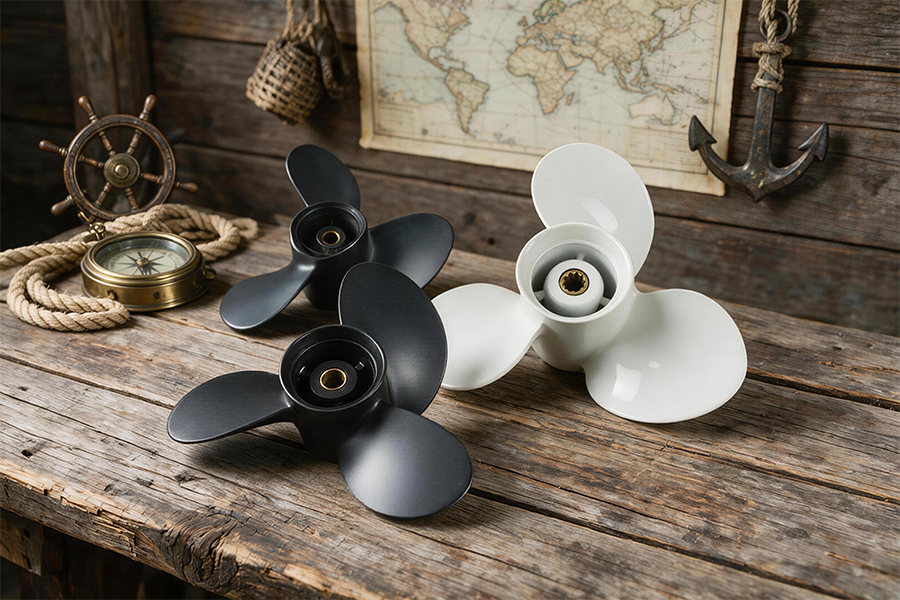
Outboard motor propellers with the strongest repeat-sales potential in South America are generally three-blade aluminum replacement models for widely used small and mid-range outboards. Para muitos distribuidores, the most practical starting points are the 9.9–15 HP and 25–40 HP engine families, followed by selected 40–60 HP applications.
This is not a continent-wide sales ranking. No public database tracks individual propeller SKU sales across every South American country. Brasil, Colômbia, Chile, Peru, and other markets have different fleets, waterways, customer budgets, and recreational boating sectors.
A more reliable way to plan stock is to identify the engines already operating locally, then decide which propeller materials, arremessos, and fitment specifications are most likely to generate repeat replacement demand.
A Practical South American Stocking Map
The following table is a distributor stocking model rather than published regional sales data.
| Inventory Position | Recommended Focus | Why It Deserves This Position |
|---|---|---|
| Deep Stock | Three-blade aluminum propellers for confirmed 9.9–15 HP engine families | Small fishing, inflatable, river, and utility boats create broad replacement demand |
| Core Stock | Three-blade aluminum propellers for established 25–40 HP engine families | Common commercial step-up for loaded fishing and transport boats |
| Selective Stock | Aluminum propellers for selected 40–60 HP engines, plus proven stainless-steel sizes | Useful where larger workboats or recreational fleets are already established |
| Order-Backed Range | Four-blade, premium stainless-steel, uncommon pitch, rotação, or hub configurations | Demand is more application-specific and easier to supply against confirmed orders |
The important phrase is confirmed engine families. Stocking a wide horsepower range is not useful when the propeller hubs, spline counts, diameters, or pitches do not match the engines customers actually operate.
Signal One: Which Outboards Are Already Working Locally?
Propeller turnover follows the installed engine population.
Recent public-sector purchasing in Brazil includes 15 HP two-stroke outboards paired with six-metre aluminum boats designed for up to 25 HP. Na Colômbia, the national fisheries authority reported the delivery of fiberglass fishing boats fitted with 40 HP outboards in 2025. An FAO description of Chilean small-scale benthic fisheries also records open boats using outboards from approximately 10 para 45 HP. These sources are not retail propeller sales reports, but they illustrate why the small and mid-range engine bands remain commercially important.
For a distributor, this means the first inventory decision should not be:
Which propeller sizes are popular worldwide?
Deveria ser:
Which outboard models appear most often in our engine sales, workshop repairs, customer inquiries, and local fishing fleets?
A dealer already selling 15 HP, 30 HP, e 40 HP outboards has a natural starting point. Propeller stock should first support those engines before expanding into unrelated models.
Useful local evidence may come from:
- Outboard sales records
- Workshop service history
- Damaged-propeller replacements
- Customer photographs and part inquiries
- Government boat projects
- Fishing and transport associations
- Competitor engine availability
This produces a better SKU list than selecting propellers only from a general catalog.
Signal Two: What Work Does the Boat Perform?
Two boats using the same horsepower may create different propeller demand.
A lightly loaded inflatable may prioritize easy planing and general-purpose performance. A fishing boat carrying nets, combustível, gelo, crew, and catch places greater emphasis on acceleration and load handling. River transport boats may operate with changing passenger or cargo weights, while recreational users may pay more attention to cruising speed.
The boat’s normal work influences which pitch variations should be available.
Small Fishing and Utility Boats
For portable and light commercial engines, replacement buyers often prioritize:
- Affordable price
- Direct fitment
- Ready availability
- Reliable general performance
- Easy replacement after impact damage
This supports deeper inventory of standard three-blade aluminum models.
Loaded Commercial Boats
A working boat that regularly carries cargo or fishing equipment may need a different pitch from a lightly loaded boat using the same engine.
A dealer serving this market should consider carrying:
- The standard replacement specification
- One confirmed load-oriented alternative
- Matching washers, nozes, pins, and hub components
This gives the workshop a practical second option without creating too many slow-moving SKUs.
Recreational and Performance Boats
Some customers are willing to pay more for stainless steel, sharper acceleration, improved grip, or higher-speed performance.
These products can sell well in the right coastal, lake, or leisure-boating channel. No entanto, they usually require more precise engine and boat matching, so they should not automatically receive the same inventory depth as standard aluminum replacements.
Signal Three: Material and Blade Count
Three-Blade Aluminum Is the Safest Core Range
Aluminum three-blade propellers offer a useful balance of cost, peso, availability, and broad application coverage.
Yamaha describes its general aluminum three-blade propellers as lightweight, low-cost products providing good overall performance across a wide outboard range. Mercury similarly positions aluminum propellers around value and versatility.
These characteristics suit many South American replacement channels because:
- Working boats need affordable downtime solutions.
- Propellers may encounter shallow water, rocks, timber, areia, or fishing gear.
- Customers often want to restore normal operation rather than purchase a performance upgrade.
- Distributors can cover more engine families with the same inventory budget.
This does not mean every aluminum propeller will sell. Compatibility and pitch still determine whether a particular SKU moves.
Stainless Steel Should Follow Proven Demand
Stainless steel can provide thinner, more rigid blades and greater resistance to flex. It is commonly positioned as a more durable and performance-oriented material than aluminum.
A selective stainless-steel range can make sense for:
- Higher-horsepower outboards
- Recreational fishing boats
- Offshore applications
- Customers replacing an existing stainless propeller
- Engine families with repeat premium-part demand
For a new distributor range, confirmed demand is safer than carrying many stainless sizes in advance.
Four-Blade Propellers Solve Specific Problems
Four-blade propellers may improve acceleration, pegada, manuseio, or load performance in particular installations. Mercury and Yamaha both offer four-blade products for applications where stronger acceleration or load-carrying performance is required.
They are better treated as a solution to a known operating issue, como:
- Slow planing under load
- Fraca aceleração
- Ventilation during turns
- Heavy or changing payloads
- Greater low-speed control requirements
Without confirmed local applications, four-blade inventory can become fragmented across too many pitches and engine families.
Signal Four: Pitch Creates More SKUs Than Horsepower
One of the biggest stocking mistakes is assuming that every 15 HP or 30 HP outboard uses one standard propeller.
Official propeller catalogs demonstrate otherwise. Suzuki’s parts catalog, por exemplo, lists several three-blade aluminum pitch options for the same 9.9–20 HP engine groups and another broad range for 25–30 HP applications.
Pitch affects engine speed and boat behaviour. Adding pitch generally reduces wide-open-throttle engine RPM, while reducing pitch raises RPM and may improve acceleration. Too much pitch can overload the engine; too little can allow excessive RPM.
The correct stocking decision therefore depends on:
- Boat weight
- Normal passenger or cargo load
- Projeto do casco
- Engine gear ratio
- Operating altitude
- Desired acceleration
- Recommended engine RPM range
For a common engine family, carrying one standard pitch and one locally proven alternative is often more useful than stocking one pitch across several unrelated horsepower classes.
Horsepower Is Not a Fitment Specification
A product labeled “for 40 HP outboards” does not contain enough information for an accurate order.
Engines with the same horsepower may use different:
- Propeller-shaft splines
- Gearcase dimensions
- Hub systems
- Gear ratios
- Propeller diameters
- Rotation directions
- Thrust washers
- Propeller nuts
- Spacer arrangements
Diameter and pitch markings are only part of the identification.
A distributor should organize each SKU around:
- Compatible outboard model or engine family
- Diâmetro e passo
- Number of blades
- Material
- Contagem de splines
- Hub or rubber-bush design
- Right- or left-hand rotation
- Required mounting hardware
- Cross-reference number, where available
This information should appear in the catalog, warehouse label, quotation, and sales record.
A clear fitment system reduces returns more effectively than simply carrying a larger number of propellers.
Where the Inventory Mix Changes
South America should not be treated as one uniform marine market.
A river-focused distributor may see stronger demand for affordable aluminum props, load-oriented pitches, and 15–40 HP applications. A dealer serving recreational coastal boats may need a narrower but more premium stainless-steel range. Workshops near fishing communities may prioritize immediate replacement availability, while importers serving multiple countries may benefit from mixed orders organized around several established engine families.
The following market patterns can guide the final range:
Fishing and River Transport Markets
Prioritize:
- Aluminum three-blade replacements
- Common 9.9–15 HP and 25–40 HP families
- Standard and load-oriented pitch options
- Mounting hardware and hub components
- Easily reordered repair parts
Mixed Commercial and Recreational Markets
Add:
- Selected 40–60 HP applications
- Several proven stainless-steel models
- More than one performance target per engine family
- Better product identification and application guidance
Emerging or Uncertain Markets
Comece com:
- Engines already sold by the distributor
- Workshop-requested replacement parts
- Small mixed quantities
- Customer-specific special pitches supplied against orders
The opening range should become deeper only after actual sell-through data identifies the strongest SKUs.
Building the Range Around NEWTOP Outboards
The current NEWTOP outboard motor collection includes 9.9 HP, 15 HP, 18 HP, 30 HP, and several 40 HP models. The T15-63V is listed with a 9-1/4 × 9 hélice, while the T40G and T40J offer 12- and 13-inch propeller options. This product ladder gives distributors a practical foundation for small fishing, transporte, utility, e aplicações de lazer.
NEWTOP’s replacement propeller page describes propellers produced with controlled blade geometry, thickness consistency, curvature shaping, and surface finishing. The stated design goals include stable rotation, efficient power transfer, smoother acceleration, and load-handling performance.
For an accurate NEWTOP propeller quotation, buyers should provide:
- Outboard model
- Existing propeller markings
- Diâmetro e passo
- Contagem de splines
- Boat type
- Normal operating load
- Required quantity
- A clear photograph of the existing propeller, where possible
The recommended internal links in this section are:
These should link to the two official NEWTOP pages provided for this article.
A Smarter First Order
A first propeller order does not need to cover every boat and every engine in the region.
A more controlled assortment is:
Keep deeper stock
- Confirmed 9.9–15 HP engine families
- Confirmed 25–40 HP engine families
- Three-blade aluminum construction
- Standard replacement pitches
- Frequently required mounting components
Keep limited stock
- Selected 40–60 HP aluminum propellers
- One proven alternative pitch for heavy-load applications
- Stainless steel for engine families with known demand
Supply against confirmed orders
- Four-blade models
- Uncommon spline or hub systems
- Left-hand rotation
- Premium performance props
- Special diameter and pitch combinations
After the first sales cycle, reorder decisions should be based on sell-through speed, workshop requests, return reasons, engine models serviced, and local load conditions.
Which Outboard Propellers Are Most Likely to Keep Selling?
The strongest general-purpose outboard motor propellers for many South American distributors are three-blade aluminum replacements for established small and mid-range engine families.
The most defensible opening strategy is to:
- Build deep coverage around locally common 9.9–15 HP engines.
- Add the 25–40 HP models used in fishing, transporte, and utility work.
- Carry selected 40–60 HP aluminum propellers.
- Add stainless steel and four-blade designs only where local demand supports them.
- Identify every SKU by complete engine and propeller fitment—not horsepower alone.
The best-selling range will ultimately be determined by the engines already in the market. A compact assortment built around real service demand will usually turn faster than a much larger catalog assembled from horsepower labels alone.
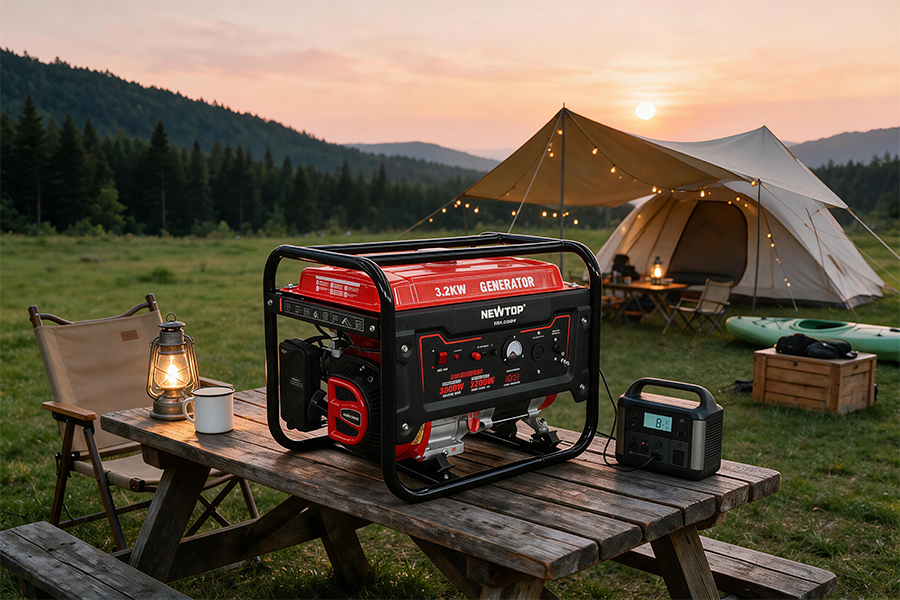
Gasoline generator price is not a single fixed number for every distributor. The same output class can receive different quotations depending on the engine and alternator, sistema de partida, configuração elétrica, quantidade do pedido, marca, embalagem, destino, and trade term.
Prices shown on NEWTOP’s Alibaba.com storefront can help buyers make an initial budget estimate. No entanto, they should be treated as reference information rather than a standing offer for every order. A confirmed quotation must be based on the required quantity, specification, customization, destino, and delivery scope.
The practical question is therefore not only, “How much does the generator cost?” It is also, “What exactly is included in that price?”
A Generator Quotation Is a Defined Scope
Two offers can carry the same output description while covering different products and commercial responsibilities.
One quotation may cover a recoil-start generator in neutral packaging, collected from the factory. Another may include electric start, a battery, rodas, market-specific sockets, branded cartons, peças de reposição, and delivery to an export port.
Their unit prices should not be compared until the technical specifications and commercial terms are aligned.
| Cost Layer | What Can Change | What the Buyer Should Confirm |
|---|---|---|
| Base Generator | Saída, motor, alternador, quadro, and protection | Are the machines technically equivalent? |
| Market Configuration | Tensão, freqüência, fase, sockets, and documents | Is the generator suitable for the destination? |
| Order Setup | Quantity, model mix, marca, e embalagem | Which costs are included in the unit price? |
| Logística | Trade term, carton size, freight, and local charges | What remains payable after the factory quotation? |
| After-Sales Preparation | Peças de reposição, warranty, and service support | Has the cost of supporting the product been considered? |
Each layer can change the final unit cost even when the product photographs look similar.
The Base Generator Sets the Starting Price
The main product cost comes from the machine itself. Output class, cilindrada do motor, alternator design, sistema de controle, tanque de combustível, quadro, and included accessories all influence the factory quotation.
NEWTOP’s current generator collection lists gasoline models across several output classes, incluindo 2.8 kW, 5.5 kW, 7.8 kW, e 10 unidades kW. Moving between these classes can involve changes in the engine, alternador, quadro, peso total, demanda de combustível, and transport requirements.
Rated Output Must Be Compared with Rated Output
A product title may highlight maximum output because it is the larger number. Distributors should use rated output when comparing normal operating capacity.
Two products promoted as “5 kW generators” may not provide the same continuous output. The quotation should therefore show rated and maximum power separately, together with the required voltage, freqüência, e fase.
Comparing only the leading number in a product title can result in quotations for different machine classes.
Engine and Alternator Specifications Matter Together
A larger engine can support greater mechanical demand, but engine displacement alone does not define the electrical performance of the finished generator.
Capacidade do alternador, winding material, regulação de tensão, resfriamento, and component matching also affect the configuration and price.
Buyers should request enough technical detail to identify what is being supplied rather than relying on broad descriptions such as “copper generator” or “high-power engine.”
Starting, Controlar, and Mobility Options Add Cost
Electric start normally requires more components than recoil start. Dependendo do modelo, the system may include a starter motor, switch, charging circuit, battery holder, fiação, and battery.
The quotation should state clearly whether the battery is included. A battery shown in a product photograph does not necessarily confirm that it is included in the export package.
Control-panel choices can also change the price. These may include:
- Socket type and quantity
- Breakers and meters
- Voltage selectors
- DC output
- ATS connections
- Single-phase or three-phase layouts
Wheels, folding handles, quadros reforçados, plugues, ferramentas, and protective covers may appear to be small additions. Several options combined, no entanto, can create a noticeable difference in both product and packaging cost.
Destination Requirements Can Change the Same Base Model
A generator suitable for one market may need a different electrical and documentation package for another.
The destination can determine:
- 50 Hz ou 60 Hz frequency
- 110–127 V or 220–240 V output
- Single-phase or three-phase configuration
- Local socket and plug types
- Warning labels and manual language
- Required certifications or test documents
Some changes use standard components. Others may require a different alternator winding, painel de controle, labeling process, inspection scope, or minimum production quantity.
A reference price based on one configuration should not be applied automatically to another country. The destination market must be confirmed before the supplier can calculate an accurate quotation.
The Order Structure Changes the Unit Price
Once the technical specification is fixed, quantity and order design begin to influence cost.
Quantity Discounts Are Not Always Linear
Larger orders can spread production setup, printing, inspeção, documentação, and internal handling across more units. No entanto, doubling the quantity does not always produce a proportional price reduction.
A more meaningful saving may appear only when an order reaches a more efficient threshold for:
- Component purchasing
- Production scheduling
- Embalagem
- Container loading
Buyers should request prices for realistic order quantities rather than asking for an extremely large-volume price that does not match the actual purchasing plan.
Mixed Models Trade Unit Cost for Inventory Flexibility
A distributor may prefer to combine several output classes in one container. This reduces dependence on a single model and makes it easier to test demand across different customer groups.
The trade-off is that each model may be produced in a smaller quantity. Custom cartons, rótulos, and production setup may also have separate minimums.
A mixed shipment can therefore carry a slightly higher average unit price while reducing inventory concentration and improving product-range flexibility.
OEM Scope Must Be Defined Clearly
Private labeling can mean a simple logo sticker or a complete brand program.
Possible requirements include:
- Custom machine colors
- Product and engine labels
- Control-panel graphics
- Printed cartons
- Branded manuals
- Barcodes and serial labels
- Warranty cards
- Market-specific warning stickers
These items do not all follow the same pricing method. Some are recurring unit expenses, while others involve one-time design, printing, or setup charges.
The quotation should separate those costs instead of presenting one unexplained “OEM fee.”
Sample Price Is Not the Bulk Price
A sample is produced and handled outside the efficiency of a normal bulk production run.
Its price may reflect:
- Small-quantity component purchasing
- Individual packaging
- Additional handling
- Higher freight per unit
- Sample inspection or preparation
The sample should be used to evaluate the product rather than predict the final bulk unit price.
After the configuration is approved, the supplier should issue a new quotation based on the intended production quantity and commercial requirements.
Packaging and Trade Terms Affect the Real Cost
Generator packaging has a direct relationship with logistics.
Carton dimensions, wheel placement, pallet use, proteção interna, and stackability influence how many generators fit into a container and how well they survive transportation.
A small factory-price saving may become meaningless when oversized packaging reduces the container quantity. Ao mesmo tempo, removing too much protection can increase transit damage and warranty claims.
Trade terms must also be compared on the same basis. EXW, FOB, and CIF allocate different costs, risks, and obligations between the buyer and seller. The agreed rule should be stated together with the exact named factory, porta, or destination.
A lower EXW quotation may become more expensive after factory collection, export handling, freight, and local charges are added. A quotation that includes international freight may still leave customs clearance, duties, destination handling, and warehouse delivery to the buyer.
The unit price has little commercial meaning until the buyer understands where the supplier’s responsibility ends.
Convert the Quotation into Landed Cost
The distributor’s calculation should continue beyond the supplier’s unit price.
A practical formula is:
Landed cost per unit = quoted unit price + unit customization cost + allocated shipment cost per saleable unit + duties and taxes per unit + after-sales reserve per unit
Shipment-level expenses may include:
- Origin handling
- International freight
- Insurance
- Customs clearance
- Port charges
- Inspection
- Inland delivery
These expenses should be divided by the number of saleable generators in the shipment. Costs already included under the selected trade term must not be added twice.
The after-sales reserve may cover common spare parts, warranty replacements, technical materials, and service preparation.
This matters because the commercial cost of a generator continues after it reaches the distributor’s warehouse. A lower-priced machine can become more expensive when replacement parts are difficult to obtain, packaging damage is frequent, or local technicians cannot service the configuration efficiently.
Compare One Commercial Scope, Not Several Incomplete Prices
Before requesting a final quotation, prepare one order brief and send the same information to every supplier.
The brief should include:
- Rated and maximum output
- Engine and alternator requirements
- Tensão, freqüência, fase, and sockets
- Recoil or electric starting
- Bateria, rodas, and included accessories
- Quantity required for each model
- Destination country and port
- Branding and packaging scope
- Certification and document requirements
- Spare-parts package
- Preferred trade term
- Payment terms and delivery schedule
Also confirm the quotation currency, issue date, validity period, and whether the freight figure is fixed or indicative.
An unspecified feature should not be assumed to be included simply because it appears in a photograph. It should remain open until the supplier confirms it in the specification sheet or quotation.
Using one consistent order brief makes it possible to identify whether a price difference comes from the machine, the commercial scope, or the supplier’s actual cost level.
What the Final Gasoline Generator Price Should Tell You
Prices displayed online provide a useful starting point for product research and preliminary budgeting. The confirmed figure must still reflect the exact machine, quantidade, destination-market configuration, customization, embalagem, delivery scope, and after-sales requirements.
Once every quotation follows the same technical and commercial brief, distributors can compare landed cost instead of isolated unit prices. This makes it easier to protect resale margin, prepare service support, and avoid paying later for items missing from an incomplete offer.
The most useful quotation is not simply the lowest number. It is the one that clearly shows what the buyer will receive, what remains to be paid, and whether the complete order fits the target market.
O que é um gerador a gasolina? É uma máquina portátil ou montada em estrutura que utiliza gasolina para produzir eletricidade quando a energia da rede não está disponível ou não consegue chegar à área de trabalho.
O produto pode parecer simples, mas selecionar o modelo certo envolve mais do que escolher um modelo familiar ou o maior número no rótulo. O gerador deve corresponder ao equipamento que está sendo alimentado, os padrões elétricos do mercado de destino, as condições operacionais esperadas, e as capacidades de serviço do usuário.
Para revendedores, a tarefa é mais ampla. Um gerador adequado para backup doméstico essencial pode não atender às demandas de uma oficina, fazenda, contratante, ou pequena instalação comercial. Uma gama de produtos prática necessita de diferenças claras na produção, configuração, mobilidade, e preço.
O que um gerador a gasolina pode – e não pode – fazer
Um gerador a gasolina produz eletricidade enquanto seu motor está funcionando e o combustível está disponível. Ao contrário de uma estação de energia de bateria, não armazena energia elétrica para uso posterior.
Várias tomadas no painel de controle também não significam que todos os dispositivos conectados possam operar ao mesmo tempo. Todos os equipamentos compartilham a saída disponível do gerador, então a demanda combinada deve permanecer dentro de sua capacidade nominal.
Um gerador a gasolina completo normalmente combina um motor, alternador, sistema de combustível, painel de controle, dispositivos de proteção, e estrutura de suporte. O motor fornece rotação mecânica, enquanto o alternador converte esse movimento em corrente elétrica.
Uma explicação detalhada deste processo interno está disponível em nosso guia, Como funciona um gerador a gasolina? Principais componentes e geração de energia explicados.
Este artigo se concentra em uma questão diferente: como os compradores e revendedores iniciantes devem avaliar o produto antes de fazer o pedido?
O que um gerador a gasolina pode alimentar?
A resposta depende da potência nominal do gerador e de quais dispositivos irão operar simultaneamente.
Cargas elétricas leves podem incluir:
- Lâmpadas e ventiladores
- Carregadores e equipamentos de comunicação
- Televisores e pequenos eletrodomésticos selecionados
- Equipamento de escritório e sistemas de pagamento
Oficinas, fazendas, e locais de trabalho podem precisar operar:
- Furadeiras e serras elétricas
- Bombas de água
- Arruelas de pressão
- Geladeiras ou freezers
- Compressores de ar
- Outros equipamentos motorizados
Produtos acionados por motor muitas vezes requerem consideravelmente mais energia durante a inicialização do que durante a operação normal. O dimensionamento do gerador deve, portanto, considerar tanto a potência de funcionamento como a maior demanda de partida. Ligar equipamentos de alta demanda em horários diferentes também pode reduzir a capacidade total necessária do gerador.
Antes de selecionar uma classe de saída, identificar:
- O equipamento que deve receber energia
- Quais itens podem ser executados ao mesmo tempo
- Sua potência de funcionamento combinada
- A maior demanda inicial
- Qualquer equipamento que possa ser adicionado posteriormente
O número de tomadas não é uma medida da capacidade do gerador. Mostra apenas quantos pontos de conexão estão disponíveis.
Especificações do gerador a gasolina que os compradores devem verificar primeiro
Uma página de produto pode incluir dezenas de especificações. Os itens a seguir têm maior influência na compatibilidade elétrica e no uso diário.
| Especificação | O que isso significa | Por que é importante |
|---|---|---|
| Saída nominal | Potência destinada à operação normal | Fornece a base para o planejamento contínuo de carga |
| Saída Máxima | Capacidade temporária acima da saída nominal | Ajuda a gerenciar breves picos de demanda |
| Tensão | Saída elétrica fornecida ao equipamento | Deve corresponder aos aparelhos e máquinas locais |
| Freqüência | Geralmente configurado para um 50 Hz ou 60 Mercado Hz | Deve se adequar ao sistema elétrico de destino |
| Fase | Saída monofásica ou trifásica | Precisa corresponder ao equipamento conectado |
| Sistema inicial | Início de recuo, partida elétrica, ou ambos | Afeta a conveniência e os requisitos de bateria |
| Capacidade do tanque de combustível | Quantidade de gasolina armazenada a bordo | Influencia o tempo disponível entre reabastecimentos |
| Painel de controle | Pontos de venda, interruptores, metros, e disjuntores | Deve corresponder aos tipos de plug locais e às expectativas do usuário |
| Recursos de proteção | Baixo teor de óleo, sobrecarga, ou resposta a curto-circuito | Ajuda a proteger o motor e o sistema elétrico |
| Estrutura | Quadro, alças, rodas, e suportes vibratórios | Afeta o transporte e a estabilidade de trabalho |
A produção nominal deve orientar o planejamento de carga normal. A produção máxima destina-se a picos de demanda temporários e não deve ser tratada como a capacidade contínua do gerador.
Escolhendo a faixa de produção certa para o mercado
Um número de modelo torna-se útil somente após a classe de potência necessária ter sido definida.
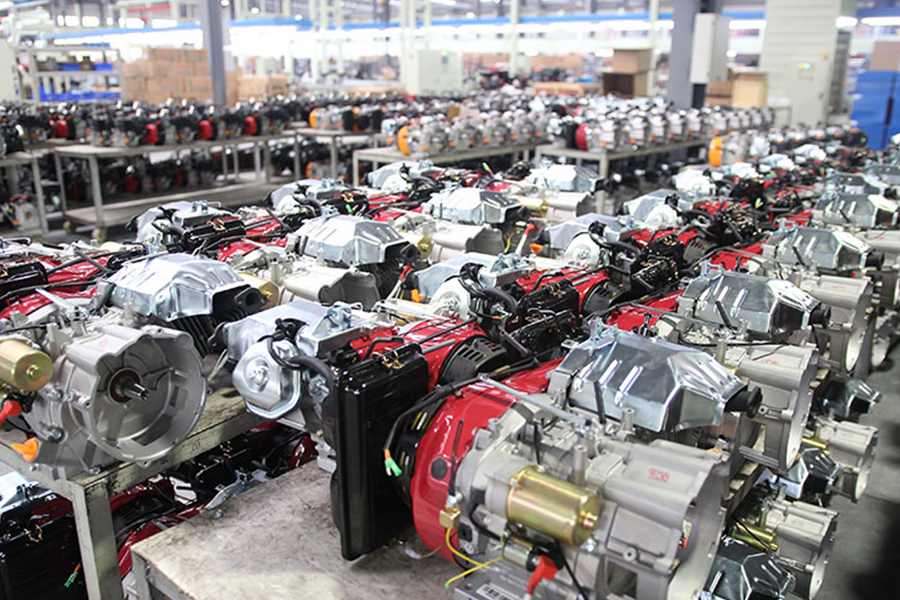
A atual linha de geradores a gasolina NEWTOP inclui geradores compactos 2.8 produtos kW, um 5.5 modelo de gama média kW, um 7.8 configuração de kW, e um 10 gerador de alta potência kW. Isto permite que compradores e distribuidores cubram diferentes níveis de carga sem posicionar uma máquina como adequada para cada usuário.
Potência Compacta: Cerca de 2–3 kW
Esta gama adapta-se a cargas essenciais selecionadas, ferramentas mais leves, e trabalho móvel onde o tamanho e o transporte gerenciáveis são importantes.
Pode cobrir backup temporário básico ou manutenção externa, mas bombas, geladeiras, e ferramentas motorizadas ainda exigem uma verificação de potência inicial.
Potência média: Cerca de 5–6 kW
Os geradores a gasolina de médio porte geralmente cobrem o grupo mais amplo de usuários.
Eles podem atender oficinas, empreiteiros, fazendas, equipes de manutenção de propriedades, e pequenas operações comerciais que precisam de mais capacidade do que um gerador compacto sem passar para a maior classe portátil.
Maior potência portátil: Cerca de 7–8 kW
Neste nível, os clientes podem estar planejando operar equipamentos mais pesados ou diversas cargas juntas.
Peso do gerador, configuração da roda, consumo de combustível, layout do soquete, fase, e reserva inicial merecem mais atenção. A produção adicional deve corresponder a uma procura genuína e não a uma preferência por um número maior de títulos.
Potência a gasolina de alto rendimento: Em volta 10 kW
Geradores a gasolina de maior rendimento atendem a usuários com demanda substancial de energia que ainda preferem um motor a gasolina e uma estrutura portátil.
Eles podem ser adequados para oficinas maiores, operações de construção, ou requisitos de backup mais amplos. Antes de fazer o pedido, confirme se o cliente pode gerenciar o tamanho da máquina, necessidades de transporte, e demanda de combustível.
O que muda entre diferentes classes de potência?
Passando de um gerador compacto para um 5.5 kW, 7.8 kW, ou 10 modelo kW muda mais do que a saída elétrica disponível.
Cilindrada do motor, peso total, demanda de combustível, dimensões do quadro, reserva inicial, arranjos de transporte, e os requisitos do painel de controle também podem mudar. Os revendedores devem comparar a configuração completa dentro de cada classe de potência, em vez de tratar a classificação em kW como a única diferença.
Um distribuidor não precisa necessariamente de todos os níveis de produção. Um modelo compacto, um modelo central de gama média, e uma opção de maior produção pode fornecer separação suficiente para diferentes grupos de clientes.
A combinação final deve refletir:
- Equipamento comum usado localmente
- Orçamentos típicos de clientes
- Padrões elétricos locais
- Condições de transporte e armazenamento
- Disponibilidade de peças de reposição
- Requisitos de certificação
O que confirmar antes de solicitar um orçamento
Uma solicitação como “envie-me o preço de um 5 gerador de kW” não fornece ao fornecedor informações suficientes para recomendar a configuração correta.
Uma investigação mais útil deveria incluir:
País de destino
O mercado ajuda a determinar a configuração elétrica necessária, tipo de soquete, rotulagem, embalagem, e certificação.
Equipamento a ser alimentado
Liste os principais aparelhos, ferramentas, bombas, ou máquinas. Isto dá ao fornecedor informações mais úteis do que apenas uma potência estimada.
Demanda em execução e inicial
Forneça a carga contínua combinada e identifique o equipamento com maior exigência de inicialização.
Padrão Operacional Esperado
Esclareça se o gerador fornecerá backup de emergência ocasional, energia diária regular, ou operação durante um turno normal de trabalho.
Requisitos Comerciais
Incluir:
- Quantidade esperada do pedido
- Requisitos de marca
- Preferências de embalagem
- Necessidades de peças de reposição
- Manuais e requisitos de idioma
- Cronograma de entrega alvo
O fornecedor pode então confirmar o modelo adequado, fase, método inicial, painel de controle, configuração de soquete, e opções de moldura.
O que os revendedores devem verificar em um gerador de amostras
Uma folha de cotação ajuda a restringir a escolha. Uma amostra mostra como o produto final realmente começa, opera, e sente.
Desempenho inicial
Teste a partida a frio e a reinicialização a quente. Para modelos com partida elétrica, inspecione o arranjo da bateria e confirme se a partida de recuo permanece disponível como backup.
Saída sob carga
Não avalie o gerador apenas enquanto ele funciona sem nada conectado. Aplique uma carga apropriada e observe a tensão, resposta do motor, estabilidade operacional, e comportamento do disjuntor.
Resposta à demanda repentina
Use equipamento motorizado adequado ou aparelho de teste controlado para ver como o gerador reage quando a demanda elétrica aumenta rapidamente.
Layout do painel de controle
Verificar:
- Tipo de saída
- Colocação do disjuntor
- Visibilidade do medidor
- Etiquetas e interruptores
- Acesso aos principais controles
Um gerador tecnicamente adequado ainda pode ser difícil de vender se o seu painel de controle não corresponder às expectativas locais.
Quadro e vibração
Inspecionar soldas, fixadores, alças, rodas, montagens de borracha, e movimento durante a operação. A estrutura deve parecer estável e segura, em vez de mal montada.
Acesso ao serviço
As áreas de manutenção de rotina devem ser razoavelmente fáceis de alcançar, incluindo:
- Filtro de ar
- Vela de ignição
- Pontos de enchimento e drenagem de óleo
- Válvula de combustível
- Carburador
- Bateria, onde instalado
Embalagem e itens incluídos
Confirme a resistência da caixa, proteção interna, manuais, ferramentas, plugues, baterias, kits de rodas, e quaisquer peças sobressalentes incluídas na remessa.
Essas verificações fornecem informações que podem não aparecer em um catálogo e ajudam os revendedores a se prepararem para o atendimento ao cliente após a revenda..
Erros comuns de compra pela primeira vez
Escolhendo a saída sem uma lista de carga real
Saída nominal, demanda de execução simultânea, e a carga inicial mais alta devem ser consideradas em conjunto. Um número de saída máxima maior não torna automaticamente um gerador mais adequado.
Comparando apenas a potência do motor
A potência descreve a capacidade mecânica do motor, não o desempenho elétrico completo do gerador. Capacidade do alternador, regulação de tensão, resfriamento, sistemas de proteção, e a correspondência de componentes também é importante.
Tratar o tamanho do tanque como eficiência de combustível
Um tanque maior transporta mais gasolina e pode prolongar o intervalo entre reabastecimentos. Não prova que o motor consome menos combustível.
Ignorando os requisitos de serviços e peças sobressalentes
Um gerador pode se adequar à carga necessária, mas ainda assim criará dificuldades se os filtros, componentes iniciais, peças do painel de controle, ou peças de motor comuns são difíceis de obter.
Para revendedores, o acesso a informações de serviço e componentes de substituição faz parte da decisão do produto, não é algo a considerar somente após a primeira reclamação do cliente.
Uma breve nota de segurança
Geradores a gasolina produzem monóxido de carbono e devem operar ao ar livre. Os EUA. A Comissão de Segurança de Produtos de Consumo aconselha a colocação de geradores portáteis pelo menos 20 pés de distância de casas e edifícios, com a exaustão direcionada para longe das janelas, portas, e aberturas de ventilação. Geradores nunca devem operar dentro de residências, garagens, porões, galpões, ou outros espaços fechados.
O gerador deve ser desligado e deixado esfriar antes de reabastecer. O CPSC também alerta especificamente contra a adição de gasolina enquanto o gerador estiver funcionando ou quente.
Onde um gerador fornecerá circuitos prediais, são necessários equipamentos de transferência adequados e instalação elétrica qualificada, em vez de uma conexão improvisada.
Escolhendo um gerador a gasolina com requisitos claros
O melhor modelo não é automaticamente aquele com maior produção.
Os compradores de primeira viagem devem escolher o equipamento que deve operar, incluindo sua demanda de funcionamento e partida. Os revendedores devem construir sua linha de produtos de acordo com os padrões elétricos locais, aplicações comuns, níveis de preços, e expectativas de serviço.
Uma vez que esses requisitos estejam claros, modelos inadequados podem ser eliminados rapidamente. A escolha restante torna-se uma comparação prática da produção, configuração, mobilidade, construção, e suporte pós-venda.
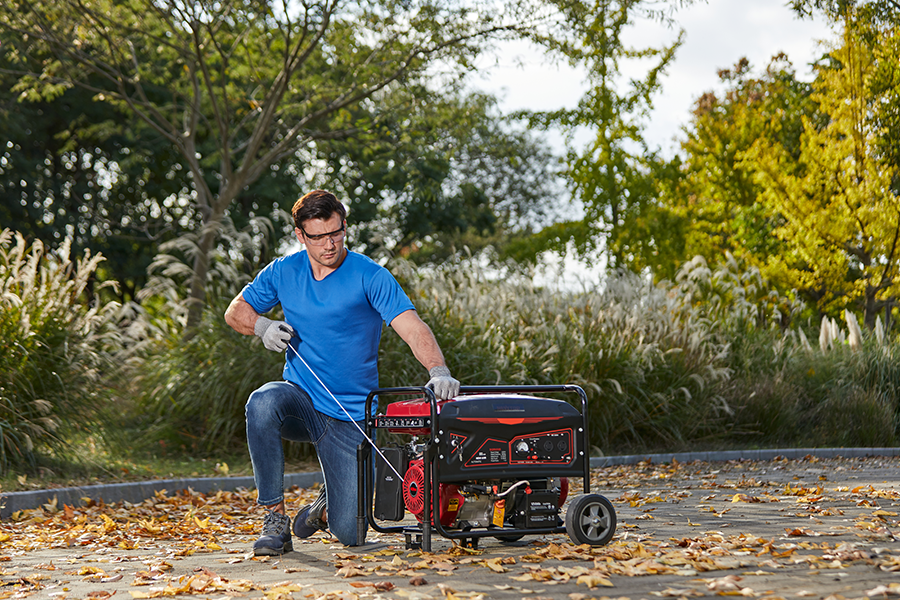
Como funciona um gerador a gasolina? Queima gasolina para criar rotação mecânica, então usa um alternador para converter essa rotação em energia elétrica.
O processo envolve dois sistemas conectados. O motor transforma a energia química da gasolina em movimento, enquanto o alternador transforma esse movimento em eletricidade para ferramentas, bombas, iluminação, eletrodomésticos, e outros equipamentos.
O caminho completo da energia pode ser resumido como:
Gasolina → combustão → rotação do virabrequim → movimento do alternador → saída elétrica
Seguir este caminho ajuda a explicar por que o motor, alternador, governador, regulador de tensão, sistema de refrigeração, e dispositivos de proteção influenciam o desempenho do gerador.
Um Gerador, Dois trabalhos principais
O motor e o alternador são montados na mesma estrutura, mas eles realizam trabalhos diferentes.
O motor produz energia mecânica. Queima uma mistura de gasolina e ar, move um pistão, e gira o virabrequim.
O alternador produz energia elétrica. O virabrequim giratório aciona o alternador, onde a indução eletromagnética gera corrente.
Como esses sistemas são separados, um motor pode dar partida e funcionar enquanto as tomadas não produzem eletricidade utilizável. Da mesma forma, um alternador bem feito não pode manter a produção estável se o motor não fornecer torque suficiente ou manter a velocidade necessária.
Um gerador confiável precisa que os dois sistemas funcionem como uma unidade de energia combinada.
Do tanque de combustível ao virabrequim
A gasolina viaja primeiro do tanque de combustível, através da linha de combustível e para o carburador. O sistema de combustível também pode incluir uma válvula de corte, filtro, copo de sedimentos, ou bomba de combustível, dependendo do projeto do gerador.
O carburador mistura a gasolina com o ar que entra para que o motor possa queimá-la. Antes que o ar entre, um filtro de ar ajuda a evitar que poeira e detritos cheguem ao cilindro.
Muitos geradores portáteis a gasolina usam um motor de quatro tempos. O ciclo operacional consiste em:
- Ingestão: O motor aspira a mistura ar-combustível para dentro do cilindro.
- Compressão: O pistão comprime a mistura.
- Poder: A vela de ignição acende a mistura, empurrando o pistão para baixo.
- Escape: Gases queimados saem do cilindro.
Uma biela transfere o movimento para cima e para baixo do pistão para o virabrequim, transformando-o em rotação contínua. O volante ajuda o motor a manter um movimento suave entre os tempos de combustão.
Qualidade do combustível, fornecimento de ar, ignição, lubrificação, e a condição dos componentes internos afetam o quão constante esta rotação pode ser produzida.
Como o alternador gera eletricidade
O virabrequim aciona o rotor do alternador quando o motor atinge sua velocidade operacional.
Um gerador eletromagnético básico contém um componente rotativo chamado rotor e bobinas de fio isoladas estacionárias chamadas estator.. À medida que o rotor gira, seu campo magnético se move em relação aos enrolamentos do estator, induzindo corrente elétrica. O alternador, portanto, converte a energia mecânica fornecida pelo motor em energia elétrica.
A eletricidade então passa pelo regulador de tensão do gerador, controlar, e sistemas de proteção antes de chegar às tomadas.
A construção do alternador afeta a forma como o gerador gerencia a corrente e o calor. Material de enrolamento, isolamento, projeto do rotor, resfriamento, e a precisão da montagem podem influenciar a estabilidade e a durabilidade da produção.
Componentes principais dentro de um gerador a gasolina
| Componente | Função principal | Por que é importante |
|---|---|---|
| Tanque de combustível e sistema de combustível | Armazene e entregue gasolina | Afetar o fluxo de combustível, começando, e tempo de execução |
| Carburador | Misture gasolina com ar | Suporta combustão estável |
| Filtro de ar | Reduza a entrada de poeira no motor | Protege o desempenho do motor e peças internas |
| Vela de ignição e sistema de ignição | Acender a mistura ar comprimido-combustível | Afetar a partida e a estabilidade da combustão |
| Pistão e biela | Converta a pressão de combustão em movimento | Transferir energia para o virabrequim |
| Virabrequim e volante | Produzir e manter rotação | Dirija o alternador |
| Governador | Responder a mudanças na velocidade do motor | Ajuda o motor a recuperar à medida que a carga aumenta |
| Rotor e Estator | Gerar corrente elétrica | Forme o núcleo do alternador |
| Regulador de tensão | Gerenciar saída de tensão | Ajuda a reduzir a flutuação de tensão |
| Disjuntor | Interromper corrente excessiva | Protege contra sobrecarga e falhas elétricas |
| Sistemas de resfriamento e exaustão | Remova o calor e os gases de exaustão | Apoie a operação segura e sustentada |
| Suportes de estrutura e vibração | Apoie a máquina completa | Melhorar a estabilidade durante o uso e transporte |
É por isso que a qualidade do gerador não pode ser avaliada apenas pela potência do motor. O motor, alternador, sistema de controle, componentes de proteção, e a moldura devem ser devidamente combinadas.
O que acontece quando uma carga está conectada?
Um gerador não funciona tanto quando funciona sem nada conectado.
Uma vez que uma ferramenta, bombear, frigorífico, ou outro dispositivo está conectado, o alternador começa a fornecer corrente. A demanda elétrica cria resistência adicional contra o rotor, então o motor deve produzir mais torque para manter a velocidade.
A resposta acontece rapidamente:
- Demanda elétrica aumenta.
- A velocidade do motor começa a cair.
- O governador abre o acelerador.
- Mais gasolina e ar entram no motor.
- A produção de combustão aumenta.
- O motor retorna à sua velocidade operacional.
- O regulador de tensão responde à nova carga.
Uma breve mudança no som do motor é normal quando uma carga substancial é iniciada. Surto persistente, forte queda de tensão, disparo do disjuntor, ou falha na recuperação pode indicar sobrecarga, fluxo de combustível restrito, velocidade instável do motor, ou uma falha elétrica.
Saída nominal e saída máxima
As especificações do gerador geralmente mostram a saída nominal e máxima, mas as duas figuras servem a propósitos diferentes.
A saída nominal é a potência que o gerador foi projetado para fornecer durante a operação normal.
A produção máxima é uma capacidade adicional temporária que ajuda o gerador a lidar com pequenos aumentos na demanda, especialmente quando o equipamento motorizado arranca.
Um gerador com 6.0 A potência máxima em kW não pode ser projetada para fornecer 6.0 kW continuamente. Os compradores devem calcular a demanda normal usando a produção nominal e deixar reserva suficiente para iniciar as cargas.
Isto é especialmente importante para:
- Bombas de água
- Geladeiras e freezers
- Compressores de ar
- Ferramentas de construção
- Motores elétricos
- Equipamento que inicia automaticamente
Adicionar apenas a potência em funcionamento pode subestimar o curto pico necessário durante a inicialização.
Como o projeto do gerador afeta o fornecimento de energia
Fabricar um gerador envolve mais do que colocar um motor ao lado de um alternador.
O motor deve fornecer torque suficiente para o alternador selecionado. O alternador deve corresponder à tensão pretendida, freqüência, saída nominal, e fase. O fluxo de ar de resfriamento deve atingir os principais componentes produtores de calor, enquanto a estrutura e os suportes vibratórios devem manter a máquina estável.
O NEWTOP NTGR6500H2 mostra como esses elementos são combinados em um gerador a gasolina. Ele usa um 389 CC, monocilíndrico, Motor OHV de quatro tempos refrigerado a ar com alternador de fio de cobre SENCI escovado síncrono. Sua lista de especificações 5.5 potência nominal em kW, 6.0 potência máxima em kW, um 25 L tanque de combustível, partida elétrica, aviso de nível baixo de óleo, e proteção contra curto-circuito.
O motor também usa virabrequim e eixo de comando forjados, enquanto a estrutura completa de aço e os suportes de absorção de vibração suportam o conjunto completo do motor e do alternador. Esses recursos abordam diferentes partes do processo de geração de energia, em vez de depender apenas de uma especificação principal.
Como os geradores acabados são verificados
Um gerador que inicia com sucesso não está necessariamente pronto para envio. A unidade completa também precisa ser verificada após o motor, alternador, painel de controle, quadro, e sistemas de proteção foram montados.
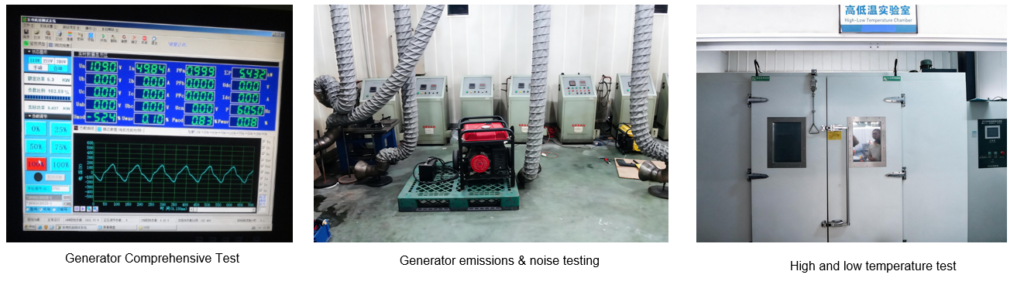
Desempenho abrangente, emissão e ruído, e alto- e testes de baixa temperatura para geradores NEWTOP acabados.
As instalações de inspeção de geradores acabados da NEWTOP cobrem três áreas mostradas nas imagens de testes de fábrica:
Teste abrangente de gerador
A saída elétrica e a operação geral são observadas após a montagem final. Isso ajuda a verificar se o motor, alternador, sistema de controle, e pontos de venda trabalham juntos como uma unidade completa.
Testes de emissão e ruído
As verificações de emissão e ruído operacional examinam as características afetadas pela combustão, projeto de escapamento, condição do motor, controle de vibração, e carga de trabalho.
Alto- e testes de baixa temperatura
Testes ambientais verificam a operação do gerador sob condições variáveis de temperatura. A temperatura pode influenciar a partida, entrega de combustível, lubrificação, baterias, fiação, e outros componentes elétricos.
Estas verificações conectam as especificações técnicas do gerador com o desempenho da máquina acabada. Eles também fornecem evidências mais fortes do que confiar apenas na inspeção de partida do motor.
A manutenção básica mantém o sistema funcionando
Cada tarefa de manutenção protege uma parte do caminho energético.
Gasolina nova e um sistema de combustível limpo ajudam o combustível a chegar ao carburador. Um filtro de ar limpo suporta a mistura correta. A vela de ignição suporta ignição, enquanto o óleo de motor adequado protege o pistão, cambota, árvore de cames, e rolamentos.
As aberturas de resfriamento devem permanecer desobstruídas, e cabos, plugues, disjuntores, e as conexões elétricas devem ser verificadas regularmente. Os geradores de reserva também precisam de partida e inspeção periódicas para que a deterioração do combustível, descarga da bateria, corrosão, ou conexões soltas são encontradas antes que ocorra uma interrupção.
Operar geradores a gasolina ao ar livre
O escapamento do gerador a gasolina contém monóxido de carbono, um gás venenoso incolor e inodoro. Geradores portáteis nunca devem funcionar dentro de residências, garagens, porões, galpões, ou outras áreas fechadas.
Os EUA. A Comissão de Segurança de Produtos de Consumo aconselha o uso de geradores portáteis ao ar livre, pelo menos 20 pés de distância de casas, com o escapamento direcionado para longe das portas, Windows, e aberturas de ventilação.
O gerador também deve ser desligado e deixado esfriar antes de adicionar gasolina. A conexão ao sistema elétrico de um edifício deve usar equipamento de transferência adequado instalado de acordo com os requisitos elétricos locais.
Da gasolina à energia utilizável
Então, como funciona um gerador a gasolina do começo ao fim?
Gasolina e ar entram no motor. A vela de ignição inicia a combustão, movendo o pistão e girando o virabrequim. O virabrequim gira o rotor do alternador dentro do estator, onde a indução eletromagnética produz corrente elétrica. O governador e o regulador de tensão ajudam o gerador a responder conforme a carga conectada muda.
O motor cria rotação. O alternador cria eletricidade. O controle, resfriamento, proteção, e os sistemas de estrutura ajudam a unidade completa a fornecer essa potência de forma segura e consistente.
Compreender esta relação torna as especificações do gerador mais fáceis de avaliar. A cilindrada do motor mostra apenas parte da capacidade da máquina. Saída nominal, construção do alternador, regulação de tensão, testando, sistemas de proteção, e a correspondência de componentes revelam mais sobre o desempenho do gerador final em uso real.
