Sourcing outdoor power equipment parts and accessories becomes complicated long before the order becomes large. A distributor may handle only a few machine families, yet the service parts behind them can run into dozens or hundreds of SKUs. Some items arrive with clear part numbers. Others come as workshop photos, old samples, or descriptions such as “starter for this model.”
The challenge is not simply finding a factory that sells carburetors, recoil starters, ignition coils, cylinders, pistões, virabrequins, or gearboxes. The harder part is keeping every component tied to the correct machine, controlling mixed-SKU orders, and making sure the same part can be identified again when stock needs replenishing.
For dealers and distributors, a good parts supplier should make that process easier—not add another layer of uncertainty.
A Spare-Parts Order Is Not Just a Longer Machine Order
Complete machines are relatively straightforward to specify. A buyer confirms the model, quantity, configuração, embalagem, and destination.
Parts orders behave differently.
One inquiry may contain 40 ou 50 separate lines. Another may combine components from several machine families, with different quantities for every item. Some parts move quickly in the local market, while others are only needed occasionally for workshop repairs.
This creates a different purchasing workload. A distributor has to manage compatibility, SKU identification, packaging references, quantities, and future reorder information at the same time.
A cheap quotation is of limited value if several components turn out to be wrong once the shipment reaches the workshop.
Start with the Machine, Not Just the Part Name
“Carburetor,” “ignition coil,” or “recoil starter” is rarely enough information for reliable matching.
A useful inquiry should start with the machine itself. Whenever possible, provide:
- Machine or engine model
- Existing part number, if available
- Clear photos of the original component
- Required quantity
- Key dimensions when the match is uncertain
- Visible markings, connectors, splines, tópicos, or mounting points
Photos become particularly useful when the original packaging or documentation is no longer available. For older machines, a clear image of the part and its mounting area can often provide more useful information than a general description.
A real sourcing example
A Tanzanian agricultural equipment retailer once approached NEWTOP with a requirement for dozens of different PJH sprayer parts. The quantity of each item was relatively small—fewer than 1,000 pieces per SKU—and several components were not items commonly produced in large volumes.
The request was handled by matching the customer’s machine references and product images rather than treating each line as an unrelated part. Dentro de dois dias, the required items had been identified and organized for quotation.
The difficult part was not one unusual component. It was keeping a long list of small requirements correctly matched to the machines they belonged to.
This kind of inquiry is much closer to a real distributor parts order than a purchase of 5,000 identical pieces.
Compatibility Comes Before Price
Two components can look almost identical and still differ where it matters.
A recoil starter may use a different mounting-hole pattern. An ignition coil may have a different connector or fixing position. Crankshafts can vary in shaft dimensions or thread details. Cylinders, pistons and gearboxes may have version differences that are difficult to identify from a catalog image alone.
Depending on the part, confirmation may involve checking mounting positions, dimensions, shaft diameters, tópicos, splines, connectors, sealing surfaces or other model-specific details.
This also applies to parts described as direct replacements. Fitment should be confirmed against the relevant machine model and available reference information before a bulk order is finalized.
Em NEWTOP, parts can be matched according to the customer’s machine model, photos, and confirmed requirements. Buyers can then choose between a complete matching parts set and individual components, subject to the applicable MOQ.
Complete Parts Set or Individual Parts?
The better option depends on how the dealer sells and services equipment.
| Buying Format | Better Suited To | Main Benefit |
|---|---|---|
| Complete Parts Set | Dealers building service coverage around one machine platform | Broader parts coverage in one purchase |
| Individual Parts | Dealers with existing repair or sales data | Replenish only the SKUs currently needed |
A complete set can be useful when a distributor is entering a new machine category or wants a broader repair range available from the start.
Individual components make more sense once the local market has shown which parts turn over fastest. A dealer may then replenish carburetors, recoil starters, ignition coils, cylinders, pistões, virabrequins, gearboxes, or other frequently requested items separately.
Na prática, many distributors use both. Core machine families receive broader parts coverage, while proven fast-moving SKUs are reordered individually.
Managing Outdoor Power Equipment Parts and Accessories Across Multiple SKUs
A typical aftermarket order does not always look impressive on paper.
It may include 30 pieces of one component, 60 of another, several dozen of a third item, and another 20 ou 30 SKUs in smaller quantities. Once multiple machine categories are involved, the number of lines grows quickly.
This is where one-stop sourcing becomes more useful than simply having a long product catalog.
NEWTOP can support mixed-SKU purchasing across dozens or even hundreds of spare-part items, provided the MOQ for the relevant products is met. Small-batch, multi-SKU requirements can be handled within the same sourcing project.
Depending on the inquiry, the order can include:
- Parts identified from machine models
- Components matched from customer photos
- Complete matching parts sets
- Individual replacement parts
- Complete machines with corresponding spare parts
- OEM packaging
- Customer-specific part numbers
- Barcode labels
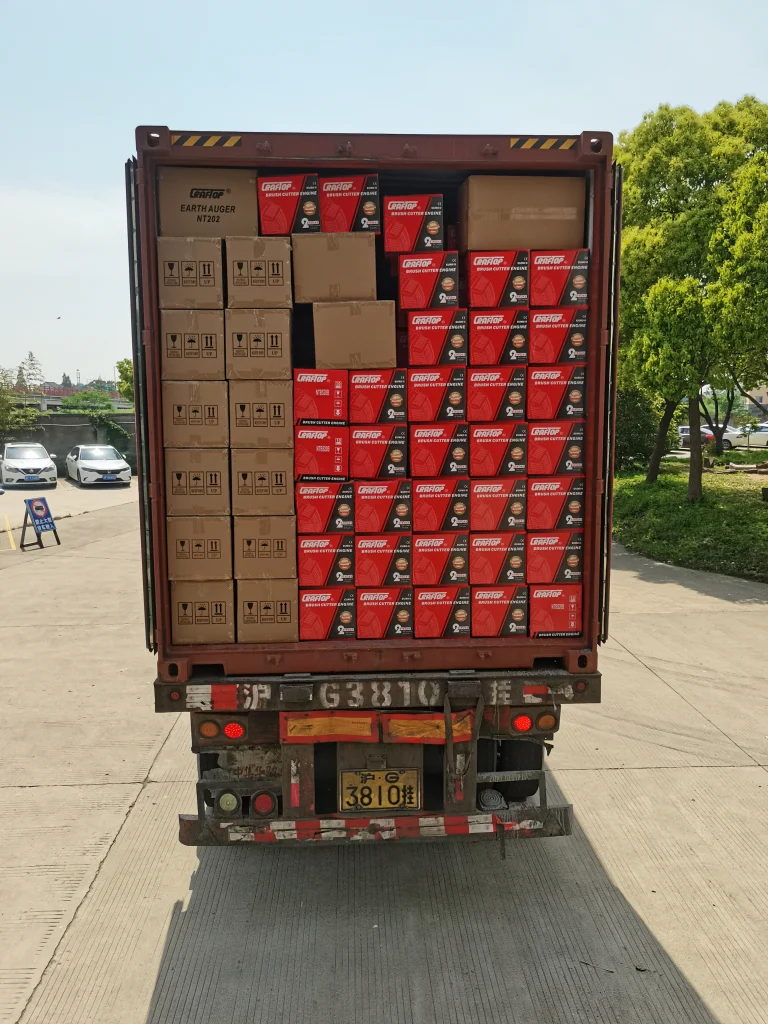
For a distributor already buying machines, adding related service parts to the same purchasing plan can also reduce coordination work. Machines and spare parts do not need to move through completely separate supply chains.
The same applies to packaging and inventory references. If the buyer already uses internal part numbers or barcodes, those identifiers can be incorporated into OEM packaging after the details are confirmed.
This becomes increasingly important as the catalog expands.
Saving a few cents on one component may not mean much if the purchasing team has to coordinate ten different suppliers, reconcile several numbering systems, or re-identify parts every time the workshop needs stock.
For businesses buying outdoor power equipment parts and accessories regularly, efficiency has to be measured across the full order, not only at SKU level.
How Parts Quality Is Checked Before Shipment
Parts inspection should not stop at appearance.
Different components have different failure risks. Dimensional accuracy may be critical for one item, while hardness, rotational balance, sealing performance, or material composition may matter more for another.
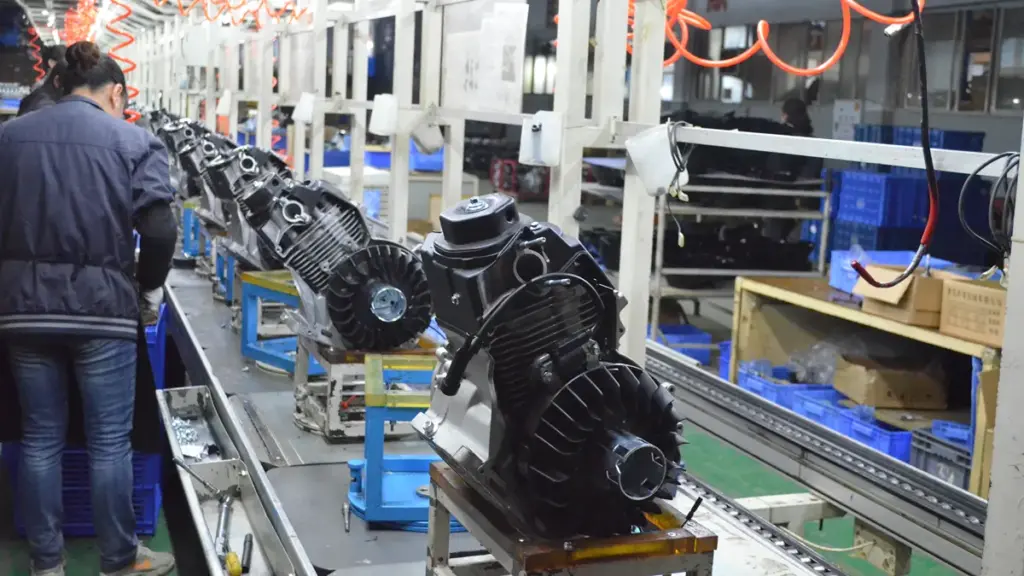
NEWTOP uses professional inspection equipment for incoming components, with the inspection method selected according to the part and the relevant quality requirement.
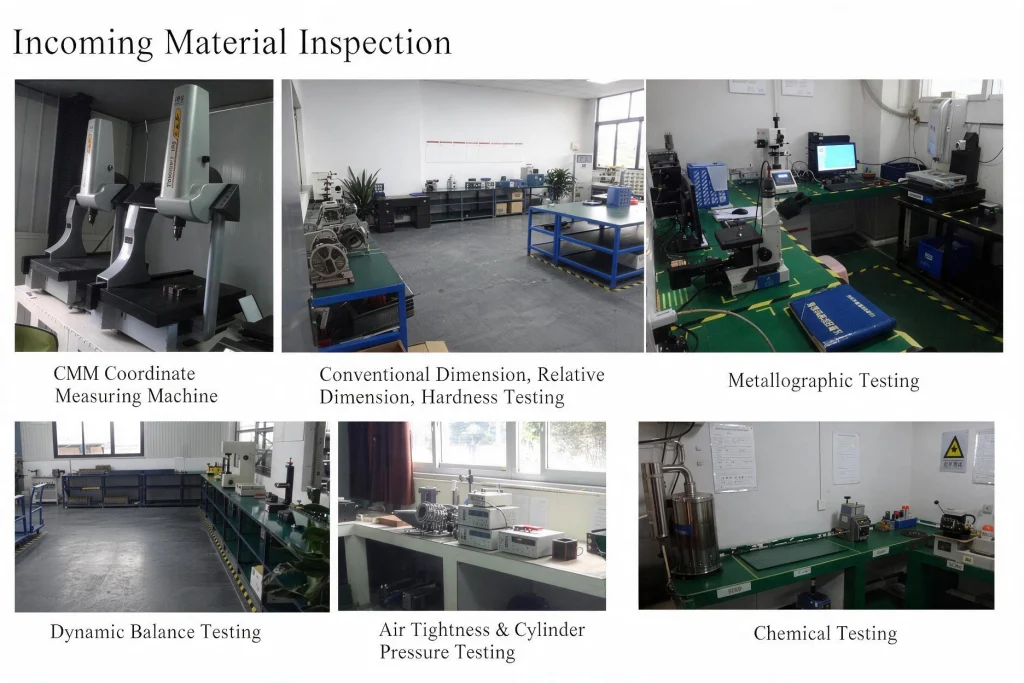
The available inspection methods include:
| Inspection Area | Typical Check |
|---|---|
| Dimensions | Conventional dimensions, relative dimensions, and CMM measurement |
| Material | Hardness, metallographic, and chemical testing |
| Rotating Components | Dynamic balance testing |
| Cylinder-Related Parts | Air-tightness and cylinder-pressure testing |
A coordinate measuring machine, or CMM, can be used where more precise dimensional or positional relationships need to be checked.
Dynamic balance testing is relevant to rotating components where imbalance may contribute to vibration or unstable operation.
For cylinder-related components, air-tightness and cylinder-pressure testing can be applied where sealing performance needs to be verified. Metallographic and chemical testing are available when material structure or composition requires further examination.
Not every component goes through every test. The inspection should match the part and its quality risk.
That distinction is useful when comparing suppliers. Asking how a specific part is checked usually tells a buyer more than asking whether “quality inspection” is available.
Make the First Order Easier to Reorder
The first quotation gets most of the attention, but the real test of a parts supply system often comes months later.
A workshop asks for the same starter again. The warehouse has a product code that the supplier does not recognize. The previous quotation only says “starter assembly.” Someone then has to find an old photo and begin the matching process again.
This is avoidable.
Keep the Reference, Not Just the Part Name
Once a part has been confirmed, it helps to keep a simple record of:
- Supplier part number
- Customer part number
- Machine model
- Confirmed fitment
- Product photo
- Barcode
- Packaging reference
- Previous order quantity
If the distributor already uses an ERP, catalog, or warehouse coding system, its own references can also appear on OEM labels and packaging.
The benefit is simple: purchasing, warehouse, sales, and service teams can refer to the same item in the same way.
It becomes even more useful when machines and spare parts are sourced through the same platform. Equipment already sold in the market can be linked to the service parts needed later, and future machine shipments can include the replacement items that workshops are actually consuming.
A well-organized second order should sound less like:
“Can you identify this part?”
and more like:
“Please replenish these confirmed SKUs.”
That is a much healthier aftermarket supply process.
What to Send When Requesting a Parts Quote
A good spare-parts RFQ does not need to be complicated. It simply needs enough information for the supplier to identify each item correctly.
A Practical RFQ Checklist
Prepare:
- Machine or engine model
- Part name and part number, if available
- Clear photos of the original part
- Quantity required for each SKU
- Dimensions or physical sample if fitment is uncertain
- Complete-set or individual-part requirement
- OEM packaging, barcode, or customer part-number requirements
- Destination country and shipping requirements
For an inquiry containing many SKUs, a spreadsheet with one item per row is usually much easier to manage than dozens of separate messages and photos.
If a component cannot be identified confidently, it is better to leave it pending for confirmation than to force a match simply to complete the quotation.
Good parts sourcing should also become simpler with every reorder. Once the machine model, fitment, part number, embalagem, and buyer reference have been recorded, the same component should not need to be identified from the beginning every time inventory runs low.
For dealers and distributors, a reliable outdoor power equipment parts and accessories supplier is therefore not simply a company with a large catalog. The stronger partner is one that can handle mixed SKUs, confirm compatibility, support appropriate quality inspection, and keep future replenishment organized.
NEWTOP combines complete machines and replacement parts within one sourcing platform. Buyers can source complete matching parts sets, individual components, or machines and service parts together according to their market requirements and MOQ.
The first parts order may still require careful matching. The important part is making sure the second, third, and fourth orders become easier.