


- All
- NEWTOP Customer Stories
- NEWTOP Explorer Hub
- NEWTOP Industry Insights

The NEWTOP Autumn Deals 2026 are here, bringing limited-time discounts and exclusive order rewards to qualified new customers.
From August 21 to September 30, 2026, earlier orders receive higher discounts. Qualified FOB orders can also unlock promotional gifts based on order value, giving distributors an additional reason to bring forward planned restocking, new product introductions, and mixed-category purchases.
Whether you are preparing for year-end sales, expanding your current range, or placing your first NEWTOP order, the promotion offers a practical opportunity to reduce procurement costs while building inventory around real market demand.

Autumn Discounts: The Earlier You Order, the More You Save
The highest discount is available during the opening stage. Buyers with confirmed requirements are encouraged to finalize their product specifications and quantities before August 31.
| Order Period | Discount |
|---|---|
| August 21–31, 2026 | 3% OFF |
| September 1–15, 2026 | 2% OFF |
| September 16–30, 2026 | 1% OFF |
The applicable discount will be based on the date the qualified order is confirmed within the promotion period.
Exclusive Gifts for Qualified Orders
In addition to the time-based discount, qualified orders can receive promotional gifts according to their FOB order value.
In addition to discounts, NEWTOP offers premium gift during the promotion period:
- Orders over $20,000
🎁 Huawei mobile phone, 100 branded T-shirts or hats - Orders over $10,000
🎁 High-quality Bluetooth speaker - Orders over $5,000
🎁 High-end backpack - Orders over $2,000
🎁 Bluetooth earphones
The above order amounts are for FOB value only.The promotional gifts are available only to the first 20 new customers.
Gift images are for reference only, and actual models, colors, and specifications are subject to the physical products supplied.
Make More of Your First NEWTOP Order
The Autumn Deals can support different purchasing plans, whether you are testing NEWTOP products for the first time, preparing stock for the next sales season, or adding related products to your existing range.
The promotion applies across NEWTOP’s main product categories, including outdoor power equipment, agricultural machinery, generators, water pumps, outboard motors, lithium battery tools, and replacement parts.
New customers can use the promotion to:
- Place an initial trial order for selected models
- Replenish products with clear local demand
- Combine complementary categories in one purchase
- Add common spare parts and accessories
- Begin an OEM or private-label project
A focused first order is often more practical than selecting too many unrelated products. Choosing several relevant models and the necessary service parts can make product evaluation, market testing, and future restocking easier.
Why Earlier Confirmation Matters
The opening stage provides the highest discount, but earlier confirmation can also make the order process more flexible.
Additional preparation time may be needed when an order includes:
- Multiple product models
- Market-specific technical configurations
- Custom colors, labels, or cartons
- Mixed machines and spare parts
- Special packaging or loading arrangements
Confirming these requirements early gives both sides more time to review the quotation, check product availability, prepare OEM materials, and arrange production and shipment.
To receive an accurate promotional offer, buyers should provide the main product models, quantities, destination market, technical requirements, and any customization needs. The NEWTOP sales team can then confirm the applicable discount, gift eligibility, and order details.
Secure Your Autumn Benefits Before September 30
The NEWTOP Autumn Deals 2026 run from August 21 to September 30 and are available exclusively to new customers.
Customers who place their orders earlier receive a higher discount, while qualified orders can also unlock promotional gifts according to their FOB value.
Please note:
- Promotional gifts are limited to the first 20 qualified customers
- Gift thresholds are calculated according to FOB order value
- The applicable discount depends on the order confirmation date
- Gift models and specifications are subject to actual availability
Contact the NEWTOP sales team with your product requirements to confirm availability, promotion eligibility, and the offer applicable to your order.
Order early, save more, and unlock extra rewards with your first NEWTOP purchase.
*NEWTOP reserves the right of final interpretation of this promotion.
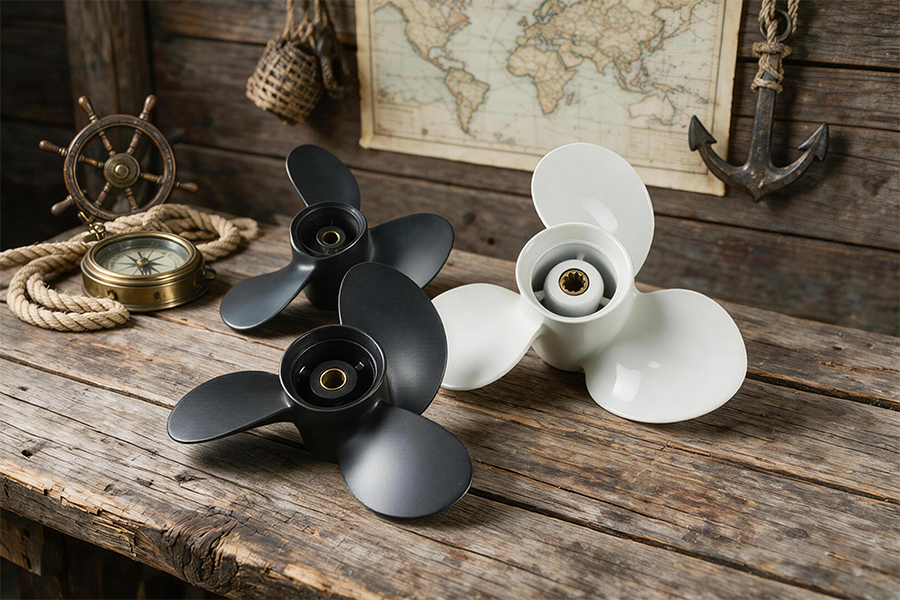
Outboard motor propellers with the strongest repeat-sales potential in South America are generally three-blade aluminum replacement models for widely used small and mid-range outboards. For many distributors, the most practical starting points are the 9.9–15 HP and 25–40 HP engine families, followed by selected 40–60 HP applications.
This is not a continent-wide sales ranking. No public database tracks individual propeller SKU sales across every South American country. Brazil, Colombia, Chile, Peru, and other markets have different fleets, waterways, customer budgets, and recreational boating sectors.
A more reliable way to plan stock is to identify the engines already operating locally, then decide which propeller materials, pitches, and fitment specifications are most likely to generate repeat replacement demand.
A Practical South American Stocking Map
The following table is a distributor stocking model rather than published regional sales data.
| Inventory Position | Recommended Focus | Why It Deserves This Position |
|---|---|---|
| Deep Stock | Three-blade aluminum propellers for confirmed 9.9–15 HP engine families | Small fishing, inflatable, river, and utility boats create broad replacement demand |
| Core Stock | Three-blade aluminum propellers for established 25–40 HP engine families | Common commercial step-up for loaded fishing and transport boats |
| Selective Stock | Aluminum propellers for selected 40–60 HP engines, plus proven stainless-steel sizes | Useful where larger workboats or recreational fleets are already established |
| Order-Backed Range | Four-blade, premium stainless-steel, uncommon pitch, rotation, or hub configurations | Demand is more application-specific and easier to supply against confirmed orders |
The important phrase is confirmed engine families. Stocking a wide horsepower range is not useful when the propeller hubs, spline counts, diameters, or pitches do not match the engines customers actually operate.
Signal One: Which Outboards Are Already Working Locally?
Propeller turnover follows the installed engine population.
Recent public-sector purchasing in Brazil includes 15 HP two-stroke outboards paired with six-metre aluminum boats designed for up to 25 HP. In Colombia, the national fisheries authority reported the delivery of fiberglass fishing boats fitted with 40 HP outboards in 2025. An FAO description of Chilean small-scale benthic fisheries also records open boats using outboards from approximately 10 to 45 HP. These sources are not retail propeller sales reports, but they illustrate why the small and mid-range engine bands remain commercially important.
For a distributor, this means the first inventory decision should not be:
Which propeller sizes are popular worldwide?
It should be:
Which outboard models appear most often in our engine sales, workshop repairs, customer inquiries, and local fishing fleets?
A dealer already selling 15 HP, 30 HP, and 40 HP outboards has a natural starting point. Propeller stock should first support those engines before expanding into unrelated models.
Useful local evidence may come from:
- Outboard sales records
- Workshop service history
- Damaged-propeller replacements
- Customer photographs and part inquiries
- Government boat projects
- Fishing and transport associations
- Competitor engine availability
This produces a better SKU list than selecting propellers only from a general catalog.
Signal Two: What Work Does the Boat Perform?
Two boats using the same horsepower may create different propeller demand.
A lightly loaded inflatable may prioritize easy planing and general-purpose performance. A fishing boat carrying nets, fuel, ice, crew, and catch places greater emphasis on acceleration and load handling. River transport boats may operate with changing passenger or cargo weights, while recreational users may pay more attention to cruising speed.
The boat’s normal work influences which pitch variations should be available.
Small Fishing and Utility Boats
For portable and light commercial engines, replacement buyers often prioritize:
- Affordable price
- Direct fitment
- Ready availability
- Reliable general performance
- Easy replacement after impact damage
This supports deeper inventory of standard three-blade aluminum models.
Loaded Commercial Boats
A working boat that regularly carries cargo or fishing equipment may need a different pitch from a lightly loaded boat using the same engine.
A dealer serving this market should consider carrying:
- The standard replacement specification
- One confirmed load-oriented alternative
- Matching washers, nuts, pins, and hub components
This gives the workshop a practical second option without creating too many slow-moving SKUs.
Recreational and Performance Boats
Some customers are willing to pay more for stainless steel, sharper acceleration, improved grip, or higher-speed performance.
These products can sell well in the right coastal, lake, or leisure-boating channel. However, they usually require more precise engine and boat matching, so they should not automatically receive the same inventory depth as standard aluminum replacements.
Signal Three: Material and Blade Count
Three-Blade Aluminum Is the Safest Core Range
Aluminum three-blade propellers offer a useful balance of cost, weight, availability, and broad application coverage.
Yamaha describes its general aluminum three-blade propellers as lightweight, low-cost products providing good overall performance across a wide outboard range. Mercury similarly positions aluminum propellers around value and versatility.
These characteristics suit many South American replacement channels because:
- Working boats need affordable downtime solutions.
- Propellers may encounter shallow water, rocks, timber, sand, or fishing gear.
- Customers often want to restore normal operation rather than purchase a performance upgrade.
- Distributors can cover more engine families with the same inventory budget.
This does not mean every aluminum propeller will sell. Compatibility and pitch still determine whether a particular SKU moves.
Stainless Steel Should Follow Proven Demand
Stainless steel can provide thinner, more rigid blades and greater resistance to flex. It is commonly positioned as a more durable and performance-oriented material than aluminum.
A selective stainless-steel range can make sense for:
- Higher-horsepower outboards
- Recreational fishing boats
- Offshore applications
- Customers replacing an existing stainless propeller
- Engine families with repeat premium-part demand
For a new distributor range, confirmed demand is safer than carrying many stainless sizes in advance.
Four-Blade Propellers Solve Specific Problems
Four-blade propellers may improve acceleration, grip, handling, or load performance in particular installations. Mercury and Yamaha both offer four-blade products for applications where stronger acceleration or load-carrying performance is required.
They are better treated as a solution to a known operating issue, such as:
- Slow planing under load
- Poor acceleration
- Ventilation during turns
- Heavy or changing payloads
- Greater low-speed control requirements
Without confirmed local applications, four-blade inventory can become fragmented across too many pitches and engine families.
Signal Four: Pitch Creates More SKUs Than Horsepower
One of the biggest stocking mistakes is assuming that every 15 HP or 30 HP outboard uses one standard propeller.
Official propeller catalogs demonstrate otherwise. Suzuki’s parts catalog, for example, lists several three-blade aluminum pitch options for the same 9.9–20 HP engine groups and another broad range for 25–30 HP applications.
Pitch affects engine speed and boat behaviour. Adding pitch generally reduces wide-open-throttle engine RPM, while reducing pitch raises RPM and may improve acceleration. Too much pitch can overload the engine; too little can allow excessive RPM.
The correct stocking decision therefore depends on:
- Boat weight
- Normal passenger or cargo load
- Hull design
- Engine gear ratio
- Operating altitude
- Desired acceleration
- Recommended engine RPM range
For a common engine family, carrying one standard pitch and one locally proven alternative is often more useful than stocking one pitch across several unrelated horsepower classes.
Horsepower Is Not a Fitment Specification
A product labeled “for 40 HP outboards” does not contain enough information for an accurate order.
Engines with the same horsepower may use different:
- Propeller-shaft splines
- Gearcase dimensions
- Hub systems
- Gear ratios
- Propeller diameters
- Rotation directions
- Thrust washers
- Propeller nuts
- Spacer arrangements
Diameter and pitch markings are only part of the identification.
A distributor should organize each SKU around:
- Compatible outboard model or engine family
- Diameter and pitch
- Number of blades
- Material
- Spline count
- Hub or rubber-bush design
- Right- or left-hand rotation
- Required mounting hardware
- Cross-reference number, where available
This information should appear in the catalog, warehouse label, quotation, and sales record.
A clear fitment system reduces returns more effectively than simply carrying a larger number of propellers.
Where the Inventory Mix Changes
South America should not be treated as one uniform marine market.
A river-focused distributor may see stronger demand for affordable aluminum props, load-oriented pitches, and 15–40 HP applications. A dealer serving recreational coastal boats may need a narrower but more premium stainless-steel range. Workshops near fishing communities may prioritize immediate replacement availability, while importers serving multiple countries may benefit from mixed orders organized around several established engine families.
The following market patterns can guide the final range:
Fishing and River Transport Markets
Prioritize:
- Aluminum three-blade replacements
- Common 9.9–15 HP and 25–40 HP families
- Standard and load-oriented pitch options
- Mounting hardware and hub components
- Easily reordered repair parts
Mixed Commercial and Recreational Markets
Add:
- Selected 40–60 HP applications
- Several proven stainless-steel models
- More than one performance target per engine family
- Better product identification and application guidance
Emerging or Uncertain Markets
Start with:
- Engines already sold by the distributor
- Workshop-requested replacement parts
- Small mixed quantities
- Customer-specific special pitches supplied against orders
The opening range should become deeper only after actual sell-through data identifies the strongest SKUs.
Building the Range Around NEWTOP Outboards
The current NEWTOP outboard motor collection includes 9.9 HP, 15 HP, 18 HP, 30 HP, and several 40 HP models. The T15-63V is listed with a 9-1/4 × 9 propeller, while the T40G and T40J offer 12- and 13-inch propeller options. This product ladder gives distributors a practical foundation for small fishing, transport, utility, and leisure applications.
NEWTOP’s replacement propeller page describes propellers produced with controlled blade geometry, thickness consistency, curvature shaping, and surface finishing. The stated design goals include stable rotation, efficient power transfer, smoother acceleration, and load-handling performance.
For an accurate NEWTOP propeller quotation, buyers should provide:
- Outboard model
- Existing propeller markings
- Diameter and pitch
- Spline count
- Boat type
- Normal operating load
- Required quantity
- A clear photograph of the existing propeller, where possible
The recommended internal links in this section are:
These should link to the two official NEWTOP pages provided for this article.
A Smarter First Order
A first propeller order does not need to cover every boat and every engine in the region.
A more controlled assortment is:
Keep deeper stock
- Confirmed 9.9–15 HP engine families
- Confirmed 25–40 HP engine families
- Three-blade aluminum construction
- Standard replacement pitches
- Frequently required mounting components
Keep limited stock
- Selected 40–60 HP aluminum propellers
- One proven alternative pitch for heavy-load applications
- Stainless steel for engine families with known demand
Supply against confirmed orders
- Four-blade models
- Uncommon spline or hub systems
- Left-hand rotation
- Premium performance props
- Special diameter and pitch combinations
After the first sales cycle, reorder decisions should be based on sell-through speed, workshop requests, return reasons, engine models serviced, and local load conditions.
Which Outboard Propellers Are Most Likely to Keep Selling?
The strongest general-purpose outboard motor propellers for many South American distributors are three-blade aluminum replacements for established small and mid-range engine families.
The most defensible opening strategy is to:
- Build deep coverage around locally common 9.9–15 HP engines.
- Add the 25–40 HP models used in fishing, transport, and utility work.
- Carry selected 40–60 HP aluminum propellers.
- Add stainless steel and four-blade designs only where local demand supports them.
- Identify every SKU by complete engine and propeller fitment—not horsepower alone.
The best-selling range will ultimately be determined by the engines already in the market. A compact assortment built around real service demand will usually turn faster than a much larger catalog assembled from horsepower labels alone.
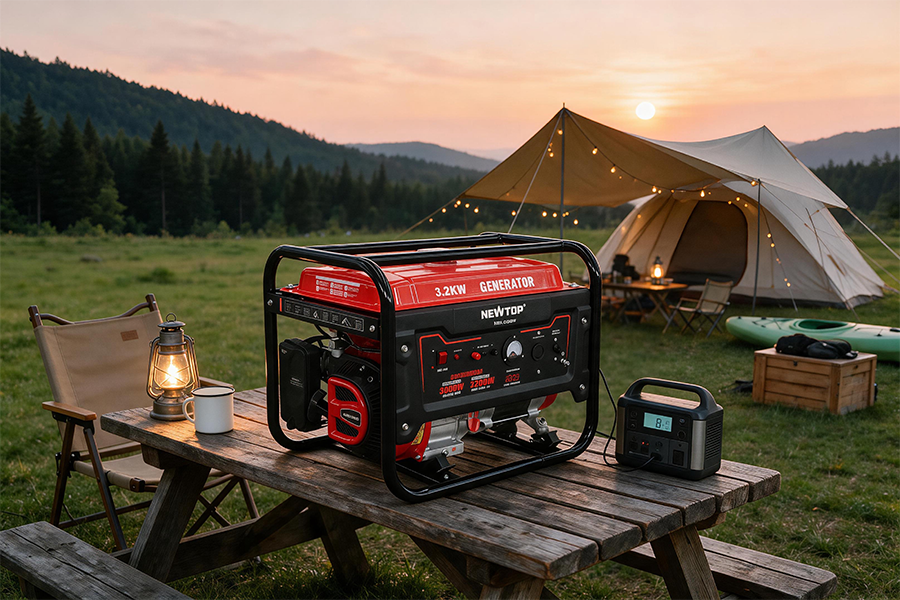
Gasoline generator price is not a single fixed number for every distributor. The same output class can receive different quotations depending on the engine and alternator, starting system, electrical configuration, order quantity, branding, packaging, destination, and trade term.
Prices shown on NEWTOP’s Alibaba.com storefront can help buyers make an initial budget estimate. However, they should be treated as reference information rather than a standing offer for every order. A confirmed quotation must be based on the required quantity, specification, customization, destination, and delivery scope.
The practical question is therefore not only, “How much does the generator cost?” It is also, “What exactly is included in that price?”
A Generator Quotation Is a Defined Scope
Two offers can carry the same output description while covering different products and commercial responsibilities.
One quotation may cover a recoil-start generator in neutral packaging, collected from the factory. Another may include electric start, a battery, wheels, market-specific sockets, branded cartons, spare parts, and delivery to an export port.
Their unit prices should not be compared until the technical specifications and commercial terms are aligned.
| Cost Layer | What Can Change | What the Buyer Should Confirm |
|---|---|---|
| Base Generator | Output, engine, alternator, frame, and protection | Are the machines technically equivalent? |
| Market Configuration | Voltage, frequency, phase, sockets, and documents | Is the generator suitable for the destination? |
| Order Setup | Quantity, model mix, branding, and packaging | Which costs are included in the unit price? |
| Logistics | Trade term, carton size, freight, and local charges | What remains payable after the factory quotation? |
| After-Sales Preparation | Spare parts, warranty, and service support | Has the cost of supporting the product been considered? |
Each layer can change the final unit cost even when the product photographs look similar.
The Base Generator Sets the Starting Price
The main product cost comes from the machine itself. Output class, engine displacement, alternator design, control system, fuel tank, frame, and included accessories all influence the factory quotation.
NEWTOP’s current generator collection lists gasoline models across several output classes, including 2.8 kW, 5.5 kW, 7.8 kW, and 10 kW units. Moving between these classes can involve changes in the engine, alternator, frame, overall weight, fuel demand, and transport requirements.
Rated Output Must Be Compared with Rated Output
A product title may highlight maximum output because it is the larger number. Distributors should use rated output when comparing normal operating capacity.
Two products promoted as “5 kW generators” may not provide the same continuous output. The quotation should therefore show rated and maximum power separately, together with the required voltage, frequency, and phase.
Comparing only the leading number in a product title can result in quotations for different machine classes.
Engine and Alternator Specifications Matter Together
A larger engine can support greater mechanical demand, but engine displacement alone does not define the electrical performance of the finished generator.
Alternator capacity, winding material, voltage regulation, cooling, and component matching also affect the configuration and price.
Buyers should request enough technical detail to identify what is being supplied rather than relying on broad descriptions such as “copper generator” or “high-power engine.”
Starting, Control, and Mobility Options Add Cost
Electric start normally requires more components than recoil start. Depending on the model, the system may include a starter motor, switch, charging circuit, battery holder, wiring, and battery.
The quotation should state clearly whether the battery is included. A battery shown in a product photograph does not necessarily confirm that it is included in the export package.
Control-panel choices can also change the price. These may include:
- Socket type and quantity
- Breakers and meters
- Voltage selectors
- DC output
- ATS connections
- Single-phase or three-phase layouts
Wheels, folding handles, reinforced frames, plugs, tools, and protective covers may appear to be small additions. Several options combined, however, can create a noticeable difference in both product and packaging cost.
Destination Requirements Can Change the Same Base Model
A generator suitable for one market may need a different electrical and documentation package for another.
The destination can determine:
- 50 Hz or 60 Hz frequency
- 110–127 V or 220–240 V output
- Single-phase or three-phase configuration
- Local socket and plug types
- Warning labels and manual language
- Required certifications or test documents
Some changes use standard components. Others may require a different alternator winding, control panel, labeling process, inspection scope, or minimum production quantity.
A reference price based on one configuration should not be applied automatically to another country. The destination market must be confirmed before the supplier can calculate an accurate quotation.
The Order Structure Changes the Unit Price
Once the technical specification is fixed, quantity and order design begin to influence cost.
Quantity Discounts Are Not Always Linear
Larger orders can spread production setup, printing, inspection, documentation, and internal handling across more units. However, doubling the quantity does not always produce a proportional price reduction.
A more meaningful saving may appear only when an order reaches a more efficient threshold for:
- Component purchasing
- Production scheduling
- Packaging
- Container loading
Buyers should request prices for realistic order quantities rather than asking for an extremely large-volume price that does not match the actual purchasing plan.
Mixed Models Trade Unit Cost for Inventory Flexibility
A distributor may prefer to combine several output classes in one container. This reduces dependence on a single model and makes it easier to test demand across different customer groups.
The trade-off is that each model may be produced in a smaller quantity. Custom cartons, labels, and production setup may also have separate minimums.
A mixed shipment can therefore carry a slightly higher average unit price while reducing inventory concentration and improving product-range flexibility.
OEM Scope Must Be Defined Clearly
Private labeling can mean a simple logo sticker or a complete brand program.
Possible requirements include:
- Custom machine colors
- Product and engine labels
- Control-panel graphics
- Printed cartons
- Branded manuals
- Barcodes and serial labels
- Warranty cards
- Market-specific warning stickers
These items do not all follow the same pricing method. Some are recurring unit expenses, while others involve one-time design, printing, or setup charges.
The quotation should separate those costs instead of presenting one unexplained “OEM fee.”
Sample Price Is Not the Bulk Price
A sample is produced and handled outside the efficiency of a normal bulk production run.
Its price may reflect:
- Small-quantity component purchasing
- Individual packaging
- Additional handling
- Higher freight per unit
- Sample inspection or preparation
The sample should be used to evaluate the product rather than predict the final bulk unit price.
After the configuration is approved, the supplier should issue a new quotation based on the intended production quantity and commercial requirements.
Packaging and Trade Terms Affect the Real Cost
Generator packaging has a direct relationship with logistics.
Carton dimensions, wheel placement, pallet use, internal protection, and stackability influence how many generators fit into a container and how well they survive transportation.
A small factory-price saving may become meaningless when oversized packaging reduces the container quantity. At the same time, removing too much protection can increase transit damage and warranty claims.
Trade terms must also be compared on the same basis. EXW, FOB, and CIF allocate different costs, risks, and obligations between the buyer and seller. The agreed rule should be stated together with the exact named factory, port, or destination.
A lower EXW quotation may become more expensive after factory collection, export handling, freight, and local charges are added. A quotation that includes international freight may still leave customs clearance, duties, destination handling, and warehouse delivery to the buyer.
The unit price has little commercial meaning until the buyer understands where the supplier’s responsibility ends.
Convert the Quotation into Landed Cost
The distributor’s calculation should continue beyond the supplier’s unit price.
A practical formula is:
Landed cost per unit = quoted unit price + unit customization cost + allocated shipment cost per saleable unit + duties and taxes per unit + after-sales reserve per unit
Shipment-level expenses may include:
- Origin handling
- International freight
- Insurance
- Customs clearance
- Port charges
- Inspection
- Inland delivery
These expenses should be divided by the number of saleable generators in the shipment. Costs already included under the selected trade term must not be added twice.
The after-sales reserve may cover common spare parts, warranty replacements, technical materials, and service preparation.
This matters because the commercial cost of a generator continues after it reaches the distributor’s warehouse. A lower-priced machine can become more expensive when replacement parts are difficult to obtain, packaging damage is frequent, or local technicians cannot service the configuration efficiently.
Compare One Commercial Scope, Not Several Incomplete Prices
Before requesting a final quotation, prepare one order brief and send the same information to every supplier.
The brief should include:
- Rated and maximum output
- Engine and alternator requirements
- Voltage, frequency, phase, and sockets
- Recoil or electric starting
- Battery, wheels, and included accessories
- Quantity required for each model
- Destination country and port
- Branding and packaging scope
- Certification and document requirements
- Spare-parts package
- Preferred trade term
- Payment terms and delivery schedule
Also confirm the quotation currency, issue date, validity period, and whether the freight figure is fixed or indicative.
An unspecified feature should not be assumed to be included simply because it appears in a photograph. It should remain open until the supplier confirms it in the specification sheet or quotation.
Using one consistent order brief makes it possible to identify whether a price difference comes from the machine, the commercial scope, or the supplier’s actual cost level.
What the Final Gasoline Generator Price Should Tell You
Prices displayed online provide a useful starting point for product research and preliminary budgeting. The confirmed figure must still reflect the exact machine, quantity, destination-market configuration, customization, packaging, delivery scope, and after-sales requirements.
Once every quotation follows the same technical and commercial brief, distributors can compare landed cost instead of isolated unit prices. This makes it easier to protect resale margin, prepare service support, and avoid paying later for items missing from an incomplete offer.
The most useful quotation is not simply the lowest number. It is the one that clearly shows what the buyer will receive, what remains to be paid, and whether the complete order fits the target market.
What is a gasoline generator? It is a portable or frame-mounted machine that uses gasoline to produce electricity when grid power is unavailable or cannot reach the working area.
The product may appear straightforward, but selecting the right one involves more than choosing a familiar model or the largest number on the label. The generator must match the equipment being powered, the electrical standards of the destination market, the expected operating conditions, and the user’s service capabilities.
For dealers, the task is broader. A generator suitable for essential household backup may not meet the demands of a workshop, farm, contractor, or small commercial facility. A practical product range needs clear differences in output, configuration, mobility, and price.
What a Gasoline Generator Can—and Cannot—Do
A gasoline generator produces electricity while its engine is running and fuel is available. Unlike a battery power station, it does not store electrical energy for later use.
Several outlets on the control panel also do not mean that every connected device can operate at the same time. All equipment shares the generator’s available output, so the combined demand must remain within its rated capacity.
A complete gasoline generator normally combines an engine, alternator, fuel system, control panel, protection devices, and supporting frame. The engine supplies mechanical rotation, while the alternator converts that movement into electrical current.
A detailed explanation of this internal process is available in our guide, How Does a Gasoline Generator Work? Key Components and Power Generation Explained.
This article focuses on a different question: how should first-time buyers and dealers evaluate the product before ordering?
What Can a Gasoline Generator Power?
The answer depends on the generator’s rated output and which devices will operate simultaneously.
Light electrical loads may include:
- Lamps and fans
- Chargers and communication equipment
- Televisions and selected small appliances
- Office equipment and payment systems
Workshops, farms, and jobsites may need to operate:
- Electric drills and saws
- Water pumps
- Pressure washers
- Refrigerators or freezers
- Air compressors
- Other motor-driven equipment
Motor-driven products often require considerably more power during startup than during normal operation. Generator sizing should therefore consider both running wattage and the highest starting demand. Switching high-demand equipment on at different times can also reduce the total generator capacity required.
Before selecting an output class, identify:
- The equipment that must receive power
- Which items may run at the same time
- Their combined running wattage
- The largest starting demand
- Any equipment likely to be added later
The number of sockets is not a measure of generator capacity. It only shows how many connection points are available.
Gasoline Generator Specifications Buyers Should Check First
A product page may include dozens of specifications. The following items have the greatest influence on electrical compatibility and everyday use.
| Specification | What It Means | Why It Matters |
|---|---|---|
| Rated Output | Power intended for normal operation | Provides the basis for continuous load planning |
| Maximum Output | Temporary capacity above rated output | Helps manage brief demand peaks |
| Voltage | Electrical output supplied to equipment | Must match local appliances and machinery |
| Frequency | Usually configured for a 50 Hz or 60 Hz market | Must suit the destination electrical system |
| Phase | Single-phase or three-phase output | Needs to match the connected equipment |
| Starting System | Recoil start, electric start, or both | Affects convenience and battery requirements |
| Fuel-Tank Capacity | Amount of gasoline stored onboard | Influences the time available between refueling |
| Control Panel | Outlets, switches, meters, and breakers | Must match local plug types and user expectations |
| Protection Features | Low-oil, overload, or short-circuit response | Helps protect the engine and electrical system |
| Structure | Frame, handles, wheels, and vibration mounts | Affects transport and working stability |
Rated output should guide normal load planning. Maximum output is intended for temporary demand peaks and should not be treated as the generator’s continuous capacity.
Choosing the Right Output Range for the Market
A model number becomes useful only after the required power class has been defined.
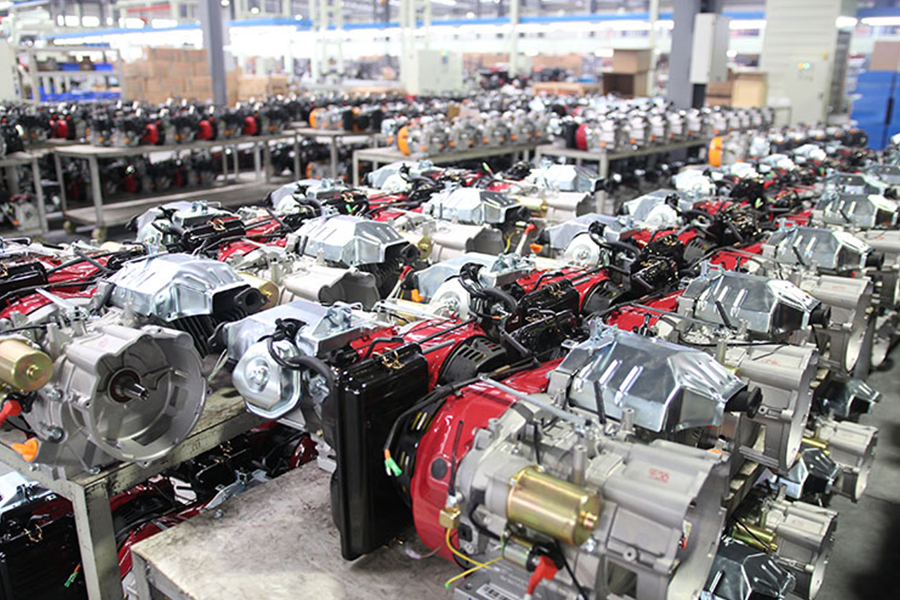
The current NEWTOP gasoline generator range includes compact 2.8 kW products, a 5.5 kW mid-range model, a 7.8 kW configuration, and a 10 kW high-output generator. This allows buyers and distributors to cover different load levels without positioning one machine as suitable for every user.
Compact Power: Around 2–3 kW
This range suits selected essential loads, lighter tools, and mobile work where manageable size and transport are important.
It can cover basic temporary backup or outdoor maintenance, but pumps, refrigerators, and motor-driven tools still require a starting-wattage check.
Mid-Range Power: Around 5–6 kW
Mid-range gasoline generators often cover the broadest group of users.
They can suit workshops, contractors, farms, property maintenance teams, and small commercial operations that need more capacity than a compact generator without moving into the largest portable class.
Larger Portable Power: Around 7–8 kW
At this level, customers may be planning to operate heavier equipment or several loads together.
Generator weight, wheel configuration, fuel consumption, socket layout, phase, and starting reserve deserve closer attention. The additional output should correspond to a genuine demand rather than a preference for a larger headline number.
High-Output Gasoline Power: Around 10 kW
Higher-output gasoline generators address users with substantial power demand who still prefer a gasoline engine and portable-frame structure.
They may suit larger workshops, construction operations, or broader backup requirements. Before ordering, confirm that the customer can manage the machine’s size, transport needs, and fuel demand.
What Changes Between Different Power Classes?
Moving from a compact generator to a 5.5 kW, 7.8 kW, or 10 kW model changes more than the available electrical output.
Engine displacement, overall weight, fuel demand, frame dimensions, starting reserve, transport arrangements, and control-panel requirements may also change. Dealers should compare the complete configuration within each power class rather than treating the kW rating as the only difference.
A distributor does not necessarily need every output level. One compact model, one core mid-range model, and one higher-output option may provide enough separation for different customer groups.
The final combination should reflect:
- Common equipment used locally
- Typical customer budgets
- Local electrical standards
- Transport and storage conditions
- Spare-parts availability
- Certification requirements
What to Confirm Before Requesting a Quotation
A request such as “send me the price for a 5 kW generator” does not give the supplier enough information to recommend the right configuration.
A more useful inquiry should include:
Destination Country
The market helps determine the required electrical configuration, socket type, labeling, packaging, and certification.
Equipment to Be Powered
List the main appliances, tools, pumps, or machines. This gives the supplier more useful information than an estimated wattage alone.
Running and Starting Demand
Provide the combined continuous load and identify the equipment with the highest startup requirement.
Expected Operating Pattern
Clarify whether the generator will provide occasional emergency backup, regular daily power, or operation throughout a normal work shift.
Commercial Requirements
Include:
- Expected order quantity
- Branding requirements
- Packaging preferences
- Spare-parts needs
- Manuals and language requirements
- Target delivery schedule
The supplier can then confirm the suitable model, phase, starting method, control panel, socket configuration, and frame options.
What Dealers Should Check on a Sample Generator
A quotation sheet helps narrow the choice. A sample shows how the finished product actually starts, operates, and feels.
Starting Performance
Test cold starting and hot restarting. For electric-start models, inspect the battery arrangement and confirm whether recoil starting remains available as a backup.
Output Under Load
Do not evaluate the generator only while it runs with nothing connected. Apply an appropriate load and observe voltage, engine response, operating stability, and breaker behavior.
Response to Sudden Demand
Use suitable motor-driven equipment or controlled testing apparatus to see how the generator reacts when electrical demand rises quickly.
Control-Panel Layout
Check:
- Outlet type
- Breaker placement
- Meter visibility
- Labels and switches
- Access to the main controls
A technically suitable generator may still be difficult to sell if its control panel does not match local expectations.
Frame and Vibration
Inspect welds, fasteners, handles, wheels, rubber mounts, and movement during operation. The frame should feel stable and secure rather than loosely assembled.
Service Access
Routine maintenance areas should be reasonably easy to reach, including:
- Air filter
- Spark plug
- Oil filling and draining points
- Fuel valve
- Carburetor
- Battery, where fitted
Packaging and Included Items
Confirm carton strength, internal protection, manuals, tools, plugs, batteries, wheel kits, and any spare parts included with the shipment.
These checks provide information that may not appear in a catalog and help dealers prepare for customer service after resale.
Common First-Time Buying Mistakes
Choosing Output Without a Real Load List
Rated output, simultaneous running demand, and the highest starting load should be considered together. A larger maximum-output number does not automatically make a generator more suitable.
Comparing Only Engine Horsepower
Horsepower describes the mechanical capability of the engine, not the complete electrical performance of the generator. Alternator capacity, voltage regulation, cooling, protection systems, and component matching also matter.
Treating Tank Size as Fuel Efficiency
A larger tank carries more gasoline and may extend the interval between refueling. It does not prove that the engine consumes less fuel.
Overlooking Service and Spare-Parts Requirements
A generator may suit the required load but still create difficulties if filters, starting components, control-panel parts, or common engine parts are hard to obtain.
For dealers, access to service information and replacement components is part of the product decision, not something to consider only after the first customer complaint.
A Short Safety Note
Gasoline generators produce carbon monoxide and must operate outdoors. The U.S. Consumer Product Safety Commission advises placing portable generators at least 20 feet away from homes and buildings, with the exhaust directed away from windows, doors, and vents. Generators should never operate inside homes, garages, basements, sheds, or other enclosed spaces.
The generator must be switched off and allowed to cool before refueling. CPSC also specifically warns against adding gasoline while a generator is running or hot.
Where a generator will supply building circuits, suitable transfer equipment and qualified electrical installation are required rather than an improvised connection.
Choosing a Gasoline Generator with Clear Requirements
The best model is not automatically the one with the highest output.
First-time buyers should choose around the equipment that must operate, including its running and starting demand. Dealers should build their product range around local electrical standards, common applications, price levels, and service expectations.
Once those requirements are clear, unsuitable models can be eliminated quickly. The remaining choice becomes a practical comparison of output, configuration, mobility, construction, and after-sales support.
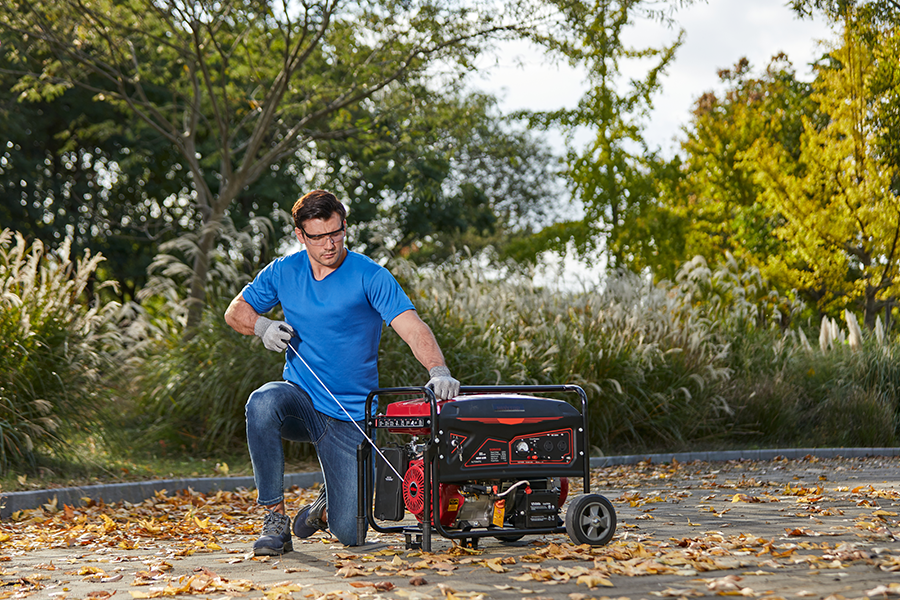
How does a gasoline generator work? It burns gasoline to create mechanical rotation, then uses an alternator to convert that rotation into electrical power.
The process involves two connected systems. The engine turns the chemical energy in gasoline into movement, while the alternator changes that movement into electricity for tools, pumps, lighting, appliances, and other equipment.
The complete energy path can be summarized as:
Gasoline → combustion → crankshaft rotation → alternator movement → electrical output
Following this path helps explain why the engine, alternator, governor, voltage regulator, cooling system, and protection devices all influence generator performance.
One Generator, Two Main Jobs
The engine and alternator are mounted on the same frame, but they perform different jobs.
The engine produces mechanical power. It burns a mixture of gasoline and air, moves a piston, and turns the crankshaft.
The alternator produces electrical power. The rotating crankshaft drives the alternator, where electromagnetic induction generates current.
Because these systems are separate, an engine can start and run while the outlets produce no usable electricity. In the same way, a well-made alternator cannot maintain stable output if the engine does not provide enough torque or hold the required speed.
A dependable generator needs the two systems to work as one matched power unit.
From the Fuel Tank to the Crankshaft
Gasoline first travels from the fuel tank through the fuel line and into the carburetor. The fuel system may also include a shutoff valve, filter, sediment cup, or fuel pump, depending on the generator design.
The carburetor mixes gasoline with incoming air so the engine can burn it. Before the air enters, an air filter helps prevent dust and debris from reaching the cylinder.
Many portable gasoline generators use a four-stroke engine. The operating cycle consists of:
- Intake: The engine draws the air-fuel mixture into the cylinder.
- Compression: The piston compresses the mixture.
- Power: The spark plug ignites the mixture, pushing the piston downward.
- Exhaust: Burned gases leave the cylinder.
A connecting rod transfers the piston’s up-and-down movement to the crankshaft, turning it into continuous rotation. The flywheel helps the engine maintain smooth movement between combustion strokes.
Fuel quality, air supply, ignition, lubrication, and internal component condition all affect how steadily this rotation can be produced.
How the Alternator Generates Electricity
The crankshaft drives the alternator rotor once the engine reaches its operating speed.
A basic electromagnetic generator contains a rotating component called the rotor and stationary insulated wire coils called the stator. As the rotor turns, its magnetic field moves relative to the stator windings, inducing electrical current. The alternator therefore converts the mechanical energy supplied by the engine into electrical energy.
The electricity then passes through the generator’s voltage-regulation, control, and protection systems before reaching the outlets.
Alternator construction affects how the generator manages current and heat. Winding material, insulation, rotor design, cooling, and assembly accuracy can all influence output stability and durability.
Key Components Inside a Gasoline Generator
| Component | Main Function | Why It Matters |
|---|---|---|
| Fuel Tank and Fuel System | Store and deliver gasoline | Affect fuel flow, starting, and runtime |
| Carburetor | Mix gasoline with air | Supports stable combustion |
| Air Filter | Reduce dust entering the engine | Protects engine performance and internal parts |
| Spark Plug and Ignition System | Ignite the compressed air-fuel mixture | Affect starting and combustion stability |
| Piston and Connecting Rod | Convert combustion pressure into movement | Transfer power to the crankshaft |
| Crankshaft and Flywheel | Produce and maintain rotation | Drive the alternator |
| Governor | Respond to changes in engine speed | Helps the engine recover as load increases |
| Rotor and Stator | Generate electrical current | Form the core of the alternator |
| Voltage Regulator | Manage voltage output | Helps reduce voltage fluctuation |
| Circuit Breaker | Interrupt excessive current | Protects against overload and electrical faults |
| Cooling and Exhaust Systems | Remove heat and exhaust gases | Support safe and sustained operation |
| Frame and Vibration Mounts | Support the complete machine | Improve stability during use and transport |
This is why generator quality cannot be judged by engine horsepower alone. The engine, alternator, control system, protective components, and frame must be properly matched.
What Happens When a Load Is Connected?
A generator does not work as hard while running with nothing plugged in.
Once a tool, pump, refrigerator, or other device is connected, the alternator begins supplying current. The electrical demand creates additional resistance against the rotor, so the engine must produce more torque to maintain speed.
The response happens quickly:
- Electrical demand rises.
- Engine speed begins to fall.
- The governor opens the throttle.
- More gasoline and air enter the engine.
- Combustion output increases.
- The engine returns toward its operating speed.
- The voltage regulator responds to the new load.
A brief change in engine sound is normal when a substantial load starts. Persistent surging, heavy voltage drop, breaker tripping, or failure to recover may point to overload, restricted fuel flow, unstable engine speed, or an electrical fault.
Rated Output and Maximum Output
Generator specifications usually show both rated and maximum output, but the two figures serve different purposes.
Rated output is the power the generator is designed to provide during normal operation.
Maximum output is temporary additional capacity that helps the generator handle short increases in demand, particularly when motor-driven equipment starts.
A generator with a 6.0 kW maximum output may not be designed to supply 6.0 kW continuously. Buyers should calculate normal demand using rated output and leave enough reserve for starting loads.
This is especially important for:
- Water pumps
- Refrigerators and freezers
- Air compressors
- Construction tools
- Electric motors
- Equipment that starts automatically
Adding only running wattage can underestimate the short surge required during startup.
How Generator Design Affects Power Delivery
Manufacturing a generator involves more than placing an engine beside an alternator.
The engine must provide enough torque for the selected alternator. The alternator must match the intended voltage, frequency, rated output, and phase. Cooling airflow must reach the major heat-producing components, while the frame and vibration mounts must keep the machine stable.
The NEWTOP NTGR6500H2 shows how these elements are combined in a gasoline generator. It uses a 389 cc, single-cylinder, air-cooled four-stroke OHV engine with a synchronous brushed SENCI copper-wire alternator. Its specifications list 5.5 kW rated output, 6.0 kW maximum output, a 25 L fuel tank, electric starting, low-oil warning, and short-circuit protection.
The engine also uses a forged crankshaft and camshaft, while the full steel frame and vibration-absorbing mounts support the complete engine and alternator assembly. These features address different parts of the power-generation process rather than relying on one headline specification alone.
How Finished Generators Are Checked
A generator that starts successfully is not necessarily ready for shipment. The complete unit also needs to be checked after the engine, alternator, control panel, frame, and protection systems have been assembled.
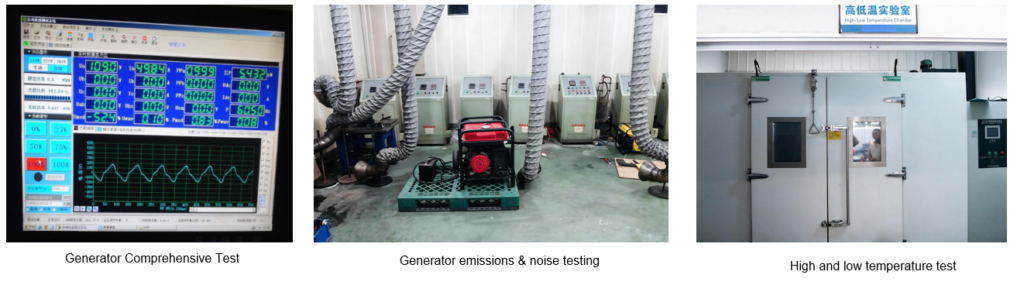
Comprehensive performance, emission and noise, and high- and low-temperature testing for finished NEWTOP generators.
NEWTOP’s finished-generator inspection facilities cover three areas shown in the factory testing images:
Comprehensive Generator Testing
Electrical output and overall operation are observed after final assembly. This helps check whether the engine, alternator, control system, and outlets work together as a complete unit.
Emission and Noise Testing
Emission and operating-noise checks examine characteristics affected by combustion, exhaust design, engine condition, vibration control, and working load.
High- and Low-Temperature Testing
Environmental testing checks generator operation under changing temperature conditions. Temperature can influence starting, fuel delivery, lubrication, batteries, wiring, and other electrical components.
These checks connect the generator’s technical specifications with the performance of the finished machine. They also provide stronger evidence than relying only on an engine start-up inspection.
Basic Maintenance Keeps the System Working
Every maintenance task protects one part of the energy path.
Fresh gasoline and a clean fuel system help fuel reach the carburetor. A clean air filter supports the correct mixture. The spark plug supports ignition, while suitable engine oil protects the piston, crankshaft, camshaft, and bearings.
Cooling openings should remain clear, and cables, plugs, breakers, and electrical connections should be checked regularly. Backup generators also need periodic starting and inspection so that fuel deterioration, battery discharge, corrosion, or loose connections are found before an outage occurs.
Operate Gasoline Generators Outdoors
Gasoline generator exhaust contains carbon monoxide, a colorless and odorless poisonous gas. Portable generators must never operate inside homes, garages, basements, sheds, or other enclosed areas.
The U.S. Consumer Product Safety Commission advises using portable generators outdoors, at least 20 feet away from homes, with the exhaust directed away from doors, windows, and vents.
The generator should also be switched off and allowed to cool before gasoline is added. Connection to a building’s electrical system should use suitable transfer equipment installed according to local electrical requirements.
From Gasoline to Usable Power
So, how does a gasoline generator work from beginning to end?
Gasoline and air enter the engine. The spark plug starts combustion, moving the piston and turning the crankshaft. The crankshaft spins the alternator rotor inside the stator, where electromagnetic induction produces electrical current. The governor and voltage regulator then help the generator respond as the connected load changes.
The engine creates rotation. The alternator creates electricity. The control, cooling, protection, and frame systems help the complete unit deliver that power safely and consistently.
Understanding this relationship makes generator specifications easier to evaluate. Engine displacement shows only part of the machine’s capability. Rated output, alternator construction, voltage regulation, testing, protection systems, and component matching reveal more about how the finished generator will perform in real use.
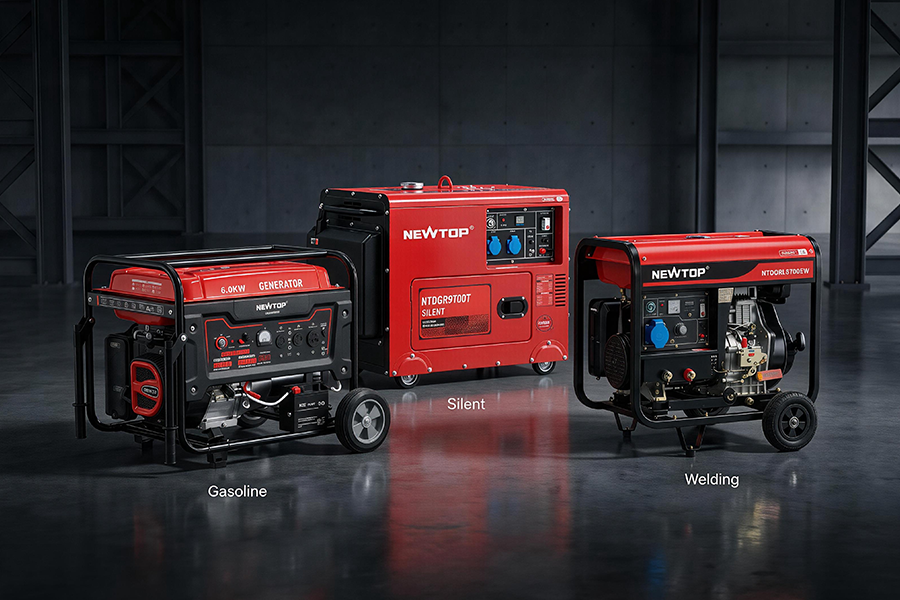
When buyers compare propane vs gasoline generator run time, the number of hours printed on a product page rarely tells the whole story. Runtime changes with the amount of usable fuel, generator load, fuel-specific rated output, tank or cylinder size, ambient temperature, and the way fuel is replenished.
With the same liquid volume and a comparable electrical load, gasoline will generally support a longer run because it contains more energy per gallon. The U.S. Energy Information Administration lists motor gasoline at about 120,214 Btu per gallon and propane at about 91,452 Btu per gallon. A larger propane cylinder or bulk tank, however, can provide more total fuel than a generator’s built-in gasoline tank and may therefore keep the generator operating for longer overall.
The useful question is not simply, “Which fuel lasts longer?”
It is:
How long can the generator support the required load with the fuel supply actually available at the site?
Why Published Run-Time Numbers Are Difficult to Compare
A runtime figure only becomes meaningful when the test conditions are clear.
Consider two specifications:
- Generator A: 10 hours of runtime
- Generator B: 8 hours of runtime
Generator A appears to perform better. But suppose its figure was recorded at 25% load, while Generator B was tested at 50% load. The longer figure no longer proves better fuel performance because the second generator was producing more electricity during the test.
Fuel quantity creates another problem. A gasoline runtime figure may be based on the generator’s full onboard tank, while the propane figure may use one portable cylinder. Those containers do not necessarily hold comparable amounts of usable energy.
A proper comparison needs answers to five questions:
How much fuel was used?
For gasoline, check the tank capacity in liters or gallons. For propane, check the actual fuel weight or usable liquid capacity of the cylinder.
What load was applied?
Runtime at 25% load cannot be compared directly with runtime at 50% or rated load.
Was output different on each fuel?
Dual-fuel generators may provide different rated and maximum outputs on gasoline and propane. The same appliance load can therefore represent a different percentage of the generator’s capacity on each fuel.
Was economy mode active?
An engine that automatically reduces speed under light demand may consume less fuel than one operating at a fixed speed.
Were the operating conditions similar?
Temperature, elevation, equipment condition, and load changes can all move real-world runtime away from the published figure.
Without these details, an advertised number should be treated as a reference rather than a promise.
Put Both Fuels on the Same Basis
The simplest runtime estimate is:
Estimated runtime in hours = usable fuel quantity ÷ hourly fuel consumption at the expected load
The fuel quantity and consumption rate must use matching units. Pounds of propane cannot be divided directly by a gasoline consumption figure expressed in liters per hour. Similarly, a fuel-consumption value stated in grams per kilowatt-hour needs rated output and fuel mass before it can be translated into operating hours.
The expected load also needs to reflect real use.
A generator supplying steady lighting may consume fuel differently from the same generator powering a refrigerator, compressor, pump, or construction tool. Motor-driven equipment can draw substantially more power during startup, and repeated starting cycles affect consumption even when average running wattage appears moderate.
Before comparing fuels, buyers should calculate:
- The equipment expected to run at the same time
- Normal running wattage
- Starting or surge demand
- Expected average load during the operating period
- The amount of reserve capacity needed
Using maximum generator output as the normal load figure will produce a misleading runtime estimate. Maximum output is intended for temporary demand, not continuous operation.
Fuel Supply Can Reverse the Result
The higher energy content of gasoline per gallon does not automatically mean that every gasoline setup will run longer. The total fuel supply often decides the practical outcome.
Gasoline: A Fixed Onboard Supply
Portable gasoline generators commonly carry their fuel in an integrated tank. This creates a clear, self-contained setup: the generator is transported with its tank, filled before use, and operated until fuel runs low.
The main limitation is fixed capacity. A 15-liter or 25-liter tank cannot be expanded without stopping the generator and refueling it according to the manufacturer’s instructions.
Gasoline condition also affects readiness. Fuel left unused for extended periods can deteriorate, so a generator intended for emergency use needs a fuel rotation and maintenance plan. Long theoretical runtime has little value when old fuel, deposits, or a neglected carburetor prevents dependable startup.
Propane: Runtime Depends on the Connected Supply
Propane is stored as a liquid under pressure and changes into gas as pressure is released for combustion. This makes external cylinders and larger storage tanks possible, giving users more flexibility over the quantity of fuel connected to the generator.
A small portable cylinder may provide less runtime than a full gasoline tank. A larger propane supply may provide considerably more. The comparison changes each time cylinder capacity changes.
Propane delivery also depends on vaporization. Tank size, liquid level, surrounding temperature, humidity, and the tank surface in contact with liquid all affect the rate at which propane can turn into usable vapor. Lower temperatures and lower fuel levels reduce vaporization capacity, while tank frosting can further restrict it.
For a larger generator operating under sustained load, buyers therefore need to check more than total propane quantity. The cylinder and regulator system must also be able to supply fuel at the required rate.
Three Runtime Questions Buyers Actually Ask
Published hour figures become easier to assess when they are connected to a specific operating requirement.
“Can the generator cover one full work shift?”
A contractor planning an eight-hour shift should not begin with the brochure’s longest runtime claim. The calculation should use the expected average site load.
Power tools may run intermittently, while lighting, pumps, charging equipment, or temporary facilities may stay active throughout the day. Motor-starting demand and repeated load changes also need to be included.
The fuel plan should show:
- Expected consumption during the shift
- Fuel remaining at the end of the shift
- Whether refueling or changing cylinders will interrupt work
- How reserve fuel will be transported and stored
- Whether the propane supply can maintain adequate vaporization under the expected temperature and load
A nominal ten-hour runtime at light load may not cover an eight-hour shift once heavier equipment is connected.
“Can it run through an overnight outage?”
Overnight backup is usually less about maximum output and more about maintaining essential loads.
Refrigeration, selected lighting, communication equipment, fans, security systems, and a small water pump may use much less power than the generator’s full rated capacity. Removing non-essential equipment can extend runtime more effectively than increasing fuel storage alone.
Buyers should calculate the likely nighttime load rather than using the total wattage of every appliance on the property. They should also allow a reserve rather than planning to empty the tank or cylinder completely before morning.
For portable generators, overnight operation still requires safe placement, weather protection, exhaust clearance, and regular supervision. Runtime should never be extended by moving the generator into a garage, shed, or other enclosed area.
“Can runtime be extended without buying a larger generator?”
Often, yes.
Possible measures include:
- Reducing unnecessary electrical loads
- Avoiding simultaneous startup of high-demand equipment
- Using a larger compatible propane supply
- Scheduling heavy equipment for separate operating periods
- Maintaining the engine, air filter, and fuel system
- Selecting a generator whose rated output places the normal load in a more suitable operating range
A larger generator is not automatically more fuel-efficient. If normal demand is low, an oversized unit may add purchase cost and operate outside its most practical load range.
The first step should be improving the load and fuel plan, not simply increasing maximum output.
A Real Gasoline Specification Shows What to Check
A manufacturer’s specification can provide the inputs needed for runtime planning even when it does not state one simplified number of hours.
The NEWTOP NTGR6500H2 gasoline generator, for example, lists:
- 5.5 kW rated output
- 6.0 kW maximum output
- 389 cc, 13 hp OHV engine
- Fuel consumption of no more than 370 g/kWh
- 25-liter fuel tank
- Electric starting
- Copper-wire alternator
- Low-oil and short-circuit protection
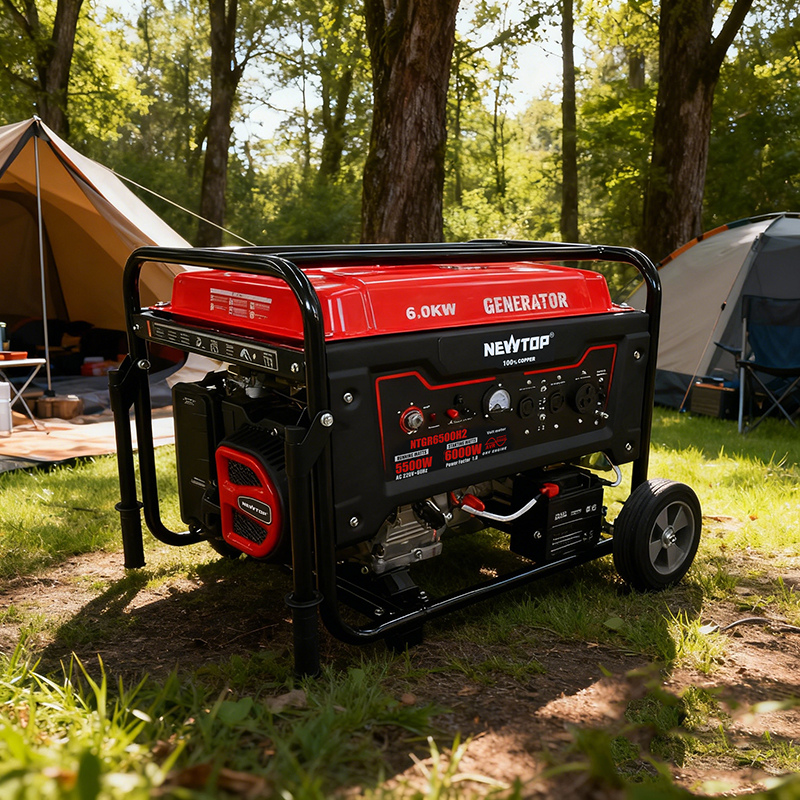
The model also uses a forged crankshaft and camshaft, a full steel frame, and vibration-absorbing mounts for extended outdoor, workshop, construction, and backup operation.
These figures are more useful than a vague “long runtime” claim because they allow buyers to examine the relationship among tank capacity, rated output, and fuel consumption.
They still do not justify one fixed runtime prediction.
Actual consumption changes with load, and the published fuel-consumption value must be interpreted using the manufacturer’s test method. Buyers who need a precise operating-hour estimate should request consumption data at several load levels, such as 25%, 50%, 75%, and rated load.
NEWTOP’s gasoline generator range also includes compact 2.8 kW models, mid-range 5.5 kW and 7.8 kW units, and higher-output 10 kW configurations. This range illustrates why runtime cannot be separated from generator size: engine displacement, output demand, tank capacity, and intended workload change from one power class to another.
Runtime Information to Request from the Supplier
Instead of asking only, “How many hours will it run?”, buyers should request the test information behind the number.
| Information Required | Why It Matters |
|---|---|
| Rated Output on Gasoline | Shows the usable continuous output for the gasoline calculation. |
| Rated Output on Propane | May differ from gasoline output on a dual-fuel generator. |
| Gasoline Tank Capacity | Identifies the fuel quantity behind the gasoline runtime. |
| Propane Cylinder Size and Usable Fuel Amount | Identifies the actual propane supply used in the test. |
| Runtime Test Load | Allows a fair comparison between published runtime figures. |
| Fuel Consumption at Several Loads | Supports more accurate calculations for different applications. |
| Economy-Mode Status | May affect fuel consumption when the generator operates under partial load. |
| Ambient Test Temperature | Provides important context for propane vaporization performance. |
| Starting Loads Used During Testing | Shows whether motor-driven equipment and surge demand were represented. |
| Required Regulator and Connection | Confirms that the propane supply can meet the engine’s fuel demand. |
| Recommended Fuel Reserve | Helps prevent an unexpected shutdown before refueling or cylinder replacement. |
| Refueling or Cylinder-Change Procedure | Reveals whether continuous work will be interrupted. |
A supplier that provides the test basis makes it easier for distributors and end users to set realistic expectations. A single hour figure without fuel quantity and load percentage offers far less value.
Safety Comes Before Additional Runtime
Both gasoline and propane generators produce carbon monoxide. Portable units must operate outdoors and away from occupied buildings, with exhaust directed away from doors, windows, and vents. The U.S. Consumer Product Safety Commission advises placing portable generators at least 20 feet from the home whenever possible.
Gasoline should not be added while the generator is running or hot. Propane cylinders, regulators, hoses, and connectors must match the equipment instructions and applicable gas-safety requirements.
A longer hose, improvised fuel connection, indoor placement, or unsafe hot refueling is never an acceptable way to gain more operating time.
What Buyers Should Really Compare
Gasoline contains more energy per gallon than propane, so an equal-volume comparison generally favors gasoline. Real generator installations rarely use equal fuel volumes, however. A propane generator connected to a larger external supply may run longer than a gasoline model limited to its onboard tank.
A reliable propane vs gasoline generator run time comparison should place both fuels under the same conditions:
- Comparable electrical load
- Clearly stated rated output
- Known usable fuel quantity
- Matching runtime test conditions
- Suitable tank or cylinder capacity
- Realistic temperature and operating pattern
- Safe refueling or cylinder replacement plan
The most useful runtime figure is not the largest number in a catalog. It is the number of hours the generator can support the required equipment before the available fuel supply must be safely replenished.
