


- Todos
- Histórias de clientes NEWTOP
- Hub do Explorador NEWTOP
- NEWTOP Insights da indústria
O que é um gerador a gasolina? É uma máquina portátil ou montada em estrutura que utiliza gasolina para produzir eletricidade quando a energia da rede não está disponível ou não consegue chegar à área de trabalho.
O produto pode parecer simples, mas selecionar o modelo certo envolve mais do que escolher um modelo familiar ou o maior número no rótulo. O gerador deve corresponder ao equipamento que está sendo alimentado, os padrões elétricos do mercado de destino, as condições operacionais esperadas, e as capacidades de serviço do usuário.
Para revendedores, a tarefa é mais ampla. Um gerador adequado para backup doméstico essencial pode não atender às demandas de uma oficina, fazenda, contratante, ou pequena instalação comercial. Uma gama de produtos prática necessita de diferenças claras na produção, configuração, mobilidade, e preço.
O que um gerador a gasolina pode – e não pode – fazer
Um gerador a gasolina produz eletricidade enquanto seu motor está funcionando e o combustível está disponível. Ao contrário de uma estação de energia de bateria, não armazena energia elétrica para uso posterior.
Várias tomadas no painel de controle também não significam que todos os dispositivos conectados possam operar ao mesmo tempo. Todos os equipamentos compartilham a saída disponível do gerador, então a demanda combinada deve permanecer dentro de sua capacidade nominal.
Um gerador a gasolina completo normalmente combina um motor, alternador, sistema de combustível, painel de controle, dispositivos de proteção, e estrutura de suporte. O motor fornece rotação mecânica, enquanto o alternador converte esse movimento em corrente elétrica.
Uma explicação detalhada deste processo interno está disponível em nosso guia, Como funciona um gerador a gasolina? Principais componentes e geração de energia explicados.
Este artigo se concentra em uma questão diferente: como os compradores e revendedores iniciantes devem avaliar o produto antes de fazer o pedido?
O que um gerador a gasolina pode alimentar?
A resposta depende da potência nominal do gerador e de quais dispositivos irão operar simultaneamente.
Cargas elétricas leves podem incluir:
- Lâmpadas e ventiladores
- Carregadores e equipamentos de comunicação
- Televisores e pequenos eletrodomésticos selecionados
- Equipamento de escritório e sistemas de pagamento
Oficinas, fazendas, e locais de trabalho podem precisar operar:
- Furadeiras e serras elétricas
- Bombas de água
- Arruelas de pressão
- Geladeiras ou freezers
- Compressores de ar
- Outros equipamentos motorizados
Produtos acionados por motor muitas vezes requerem consideravelmente mais energia durante a inicialização do que durante a operação normal. O dimensionamento do gerador deve, portanto, considerar tanto a potência de funcionamento como a maior demanda de partida. Ligar equipamentos de alta demanda em horários diferentes também pode reduzir a capacidade total necessária do gerador.
Antes de selecionar uma classe de saída, identificar:
- O equipamento que deve receber energia
- Quais itens podem ser executados ao mesmo tempo
- Sua potência de funcionamento combinada
- A maior demanda inicial
- Qualquer equipamento que possa ser adicionado posteriormente
O número de tomadas não é uma medida da capacidade do gerador. Mostra apenas quantos pontos de conexão estão disponíveis.
Especificações do gerador a gasolina que os compradores devem verificar primeiro
Uma página de produto pode incluir dezenas de especificações. Os itens a seguir têm maior influência na compatibilidade elétrica e no uso diário.
| Especificação | O que isso significa | Por que é importante |
|---|---|---|
| Saída nominal | Potência destinada à operação normal | Fornece a base para o planejamento contínuo de carga |
| Saída Máxima | Capacidade temporária acima da saída nominal | Ajuda a gerenciar breves picos de demanda |
| Tensão | Saída elétrica fornecida ao equipamento | Deve corresponder aos aparelhos e máquinas locais |
| Freqüência | Geralmente configurado para um 50 Hz ou 60 Mercado Hz | Deve se adequar ao sistema elétrico de destino |
| Fase | Saída monofásica ou trifásica | Precisa corresponder ao equipamento conectado |
| Sistema inicial | Início de recuo, partida elétrica, ou ambos | Afeta a conveniência e os requisitos de bateria |
| Capacidade do tanque de combustível | Quantidade de gasolina armazenada a bordo | Influencia o tempo disponível entre reabastecimentos |
| Painel de controle | Pontos de venda, interruptores, metros, e disjuntores | Deve corresponder aos tipos de plug locais e às expectativas do usuário |
| Recursos de proteção | Baixo teor de óleo, sobrecarga, ou resposta a curto-circuito | Ajuda a proteger o motor e o sistema elétrico |
| Estrutura | Quadro, alças, rodas, e suportes vibratórios | Afeta o transporte e a estabilidade de trabalho |
A produção nominal deve orientar o planejamento de carga normal. A produção máxima destina-se a picos de demanda temporários e não deve ser tratada como a capacidade contínua do gerador.
Escolhendo a faixa de produção certa para o mercado
Um número de modelo torna-se útil somente após a classe de potência necessária ter sido definida.
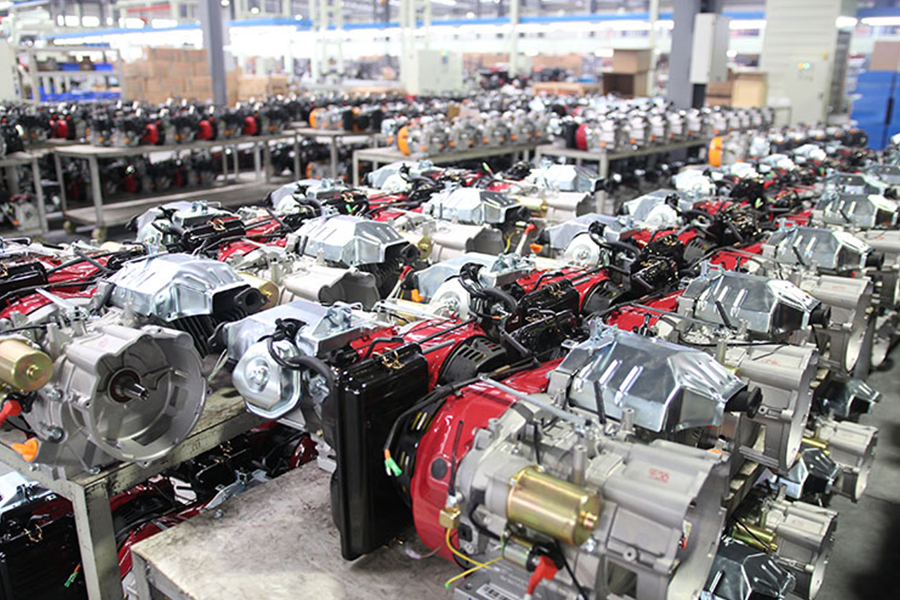
A atual linha de geradores a gasolina NEWTOP inclui geradores compactos 2.8 produtos kW, um 5.5 modelo de gama média kW, um 7.8 configuração de kW, e um 10 gerador de alta potência kW. Isto permite que compradores e distribuidores cubram diferentes níveis de carga sem posicionar uma máquina como adequada para cada usuário.
Potência Compacta: Cerca de 2–3 kW
Esta gama adapta-se a cargas essenciais selecionadas, ferramentas mais leves, e trabalho móvel onde o tamanho e o transporte gerenciáveis são importantes.
Pode cobrir backup temporário básico ou manutenção externa, mas bombas, geladeiras, e ferramentas motorizadas ainda exigem uma verificação de potência inicial.
Potência média: Cerca de 5–6 kW
Os geradores a gasolina de médio porte geralmente cobrem o grupo mais amplo de usuários.
Eles podem atender oficinas, empreiteiros, fazendas, equipes de manutenção de propriedades, e pequenas operações comerciais que precisam de mais capacidade do que um gerador compacto sem passar para a maior classe portátil.
Maior potência portátil: Cerca de 7–8 kW
Neste nível, os clientes podem estar planejando operar equipamentos mais pesados ou diversas cargas juntas.
Peso do gerador, configuração da roda, consumo de combustível, layout do soquete, fase, e reserva inicial merecem mais atenção. A produção adicional deve corresponder a uma procura genuína e não a uma preferência por um número maior de títulos.
Potência a gasolina de alto rendimento: Em volta 10 kW
Geradores a gasolina de maior rendimento atendem a usuários com demanda substancial de energia que ainda preferem um motor a gasolina e uma estrutura portátil.
Eles podem ser adequados para oficinas maiores, operações de construção, ou requisitos de backup mais amplos. Antes de fazer o pedido, confirme se o cliente pode gerenciar o tamanho da máquina, necessidades de transporte, e demanda de combustível.
O que muda entre diferentes classes de potência?
Passando de um gerador compacto para um 5.5 kW, 7.8 kW, ou 10 modelo kW muda mais do que a saída elétrica disponível.
Cilindrada do motor, peso total, demanda de combustível, dimensões do quadro, reserva inicial, arranjos de transporte, e os requisitos do painel de controle também podem mudar. Os revendedores devem comparar a configuração completa dentro de cada classe de potência, em vez de tratar a classificação em kW como a única diferença.
Um distribuidor não precisa necessariamente de todos os níveis de produção. Um modelo compacto, um modelo central de gama média, e uma opção de maior produção pode fornecer separação suficiente para diferentes grupos de clientes.
A combinação final deve refletir:
- Equipamento comum usado localmente
- Orçamentos típicos de clientes
- Padrões elétricos locais
- Condições de transporte e armazenamento
- Disponibilidade de peças de reposição
- Requisitos de certificação
O que confirmar antes de solicitar um orçamento
Uma solicitação como “envie-me o preço de um 5 gerador de kW” não fornece ao fornecedor informações suficientes para recomendar a configuração correta.
Uma investigação mais útil deveria incluir:
País de destino
O mercado ajuda a determinar a configuração elétrica necessária, tipo de soquete, rotulagem, embalagem, e certificação.
Equipamento a ser alimentado
Liste os principais aparelhos, ferramentas, bombas, ou máquinas. Isto dá ao fornecedor informações mais úteis do que apenas uma potência estimada.
Demanda em execução e inicial
Forneça a carga contínua combinada e identifique o equipamento com maior exigência de inicialização.
Padrão Operacional Esperado
Esclareça se o gerador fornecerá backup de emergência ocasional, energia diária regular, ou operação durante um turno normal de trabalho.
Requisitos Comerciais
Incluir:
- Quantidade esperada do pedido
- Requisitos de marca
- Preferências de embalagem
- Necessidades de peças de reposição
- Manuais e requisitos de idioma
- Cronograma de entrega alvo
O fornecedor pode então confirmar o modelo adequado, fase, método inicial, painel de controle, configuração de soquete, e opções de moldura.
O que os revendedores devem verificar em um gerador de amostras
Uma folha de cotação ajuda a restringir a escolha. Uma amostra mostra como o produto final realmente começa, opera, e sente.
Desempenho inicial
Teste a partida a frio e a reinicialização a quente. Para modelos com partida elétrica, inspecione o arranjo da bateria e confirme se a partida de recuo permanece disponível como backup.
Saída sob carga
Não avalie o gerador apenas enquanto ele funciona sem nada conectado. Aplique uma carga apropriada e observe a tensão, resposta do motor, estabilidade operacional, e comportamento do disjuntor.
Resposta à demanda repentina
Use equipamento motorizado adequado ou aparelho de teste controlado para ver como o gerador reage quando a demanda elétrica aumenta rapidamente.
Layout do painel de controle
Verificar:
- Tipo de saída
- Colocação do disjuntor
- Visibilidade do medidor
- Etiquetas e interruptores
- Acesso aos principais controles
Um gerador tecnicamente adequado ainda pode ser difícil de vender se o seu painel de controle não corresponder às expectativas locais.
Quadro e vibração
Inspecionar soldas, fixadores, alças, rodas, montagens de borracha, e movimento durante a operação. A estrutura deve parecer estável e segura, em vez de mal montada.
Acesso ao serviço
As áreas de manutenção de rotina devem ser razoavelmente fáceis de alcançar, incluindo:
- Filtro de ar
- Vela de ignição
- Pontos de enchimento e drenagem de óleo
- Válvula de combustível
- Carburador
- Bateria, onde instalado
Embalagem e itens incluídos
Confirme a resistência da caixa, proteção interna, manuais, ferramentas, plugues, baterias, kits de rodas, e quaisquer peças sobressalentes incluídas na remessa.
Essas verificações fornecem informações que podem não aparecer em um catálogo e ajudam os revendedores a se prepararem para o atendimento ao cliente após a revenda..
Erros comuns de compra pela primeira vez
Escolhendo a saída sem uma lista de carga real
Saída nominal, demanda de execução simultânea, e a carga inicial mais alta devem ser consideradas em conjunto. Um número de saída máxima maior não torna automaticamente um gerador mais adequado.
Comparando apenas a potência do motor
A potência descreve a capacidade mecânica do motor, não o desempenho elétrico completo do gerador. Capacidade do alternador, regulação de tensão, resfriamento, sistemas de proteção, e a correspondência de componentes também é importante.
Tratar o tamanho do tanque como eficiência de combustível
Um tanque maior transporta mais gasolina e pode prolongar o intervalo entre reabastecimentos. Não prova que o motor consome menos combustível.
Ignorando os requisitos de serviços e peças sobressalentes
Um gerador pode se adequar à carga necessária, mas ainda assim criará dificuldades se os filtros, componentes iniciais, peças do painel de controle, ou peças de motor comuns são difíceis de obter.
Para revendedores, o acesso a informações de serviço e componentes de substituição faz parte da decisão do produto, não é algo a considerar somente após a primeira reclamação do cliente.
Uma breve nota de segurança
Geradores a gasolina produzem monóxido de carbono e devem operar ao ar livre. Os EUA. A Comissão de Segurança de Produtos de Consumo aconselha a colocação de geradores portáteis pelo menos 20 pés de distância de casas e edifícios, com a exaustão direcionada para longe das janelas, portas, e aberturas de ventilação. Geradores nunca devem operar dentro de residências, garagens, porões, galpões, ou outros espaços fechados.
O gerador deve ser desligado e deixado esfriar antes de reabastecer. O CPSC também alerta especificamente contra a adição de gasolina enquanto o gerador estiver funcionando ou quente.
Onde um gerador fornecerá circuitos prediais, são necessários equipamentos de transferência adequados e instalação elétrica qualificada, em vez de uma conexão improvisada.
Escolhendo um gerador a gasolina com requisitos claros
O melhor modelo não é automaticamente aquele com maior produção.
Os compradores de primeira viagem devem escolher o equipamento que deve operar, incluindo sua demanda de funcionamento e partida. Os revendedores devem construir sua linha de produtos de acordo com os padrões elétricos locais, aplicações comuns, níveis de preços, e expectativas de serviço.
Uma vez que esses requisitos estejam claros, modelos inadequados podem ser eliminados rapidamente. A escolha restante torna-se uma comparação prática da produção, configuração, mobilidade, construção, e suporte pós-venda.

Como funciona um gerador a gasolina? Queima gasolina para criar rotação mecânica, então usa um alternador para converter essa rotação em energia elétrica.
O processo envolve dois sistemas conectados. O motor transforma a energia química da gasolina em movimento, enquanto o alternador transforma esse movimento em eletricidade para ferramentas, bombas, iluminação, eletrodomésticos, e outros equipamentos.
O caminho completo da energia pode ser resumido como:
Gasolina → combustão → rotação do virabrequim → movimento do alternador → saída elétrica
Seguir este caminho ajuda a explicar por que o motor, alternador, governador, regulador de tensão, sistema de refrigeração, e dispositivos de proteção influenciam o desempenho do gerador.
Um Gerador, Dois trabalhos principais
O motor e o alternador são montados na mesma estrutura, mas eles realizam trabalhos diferentes.
O motor produz energia mecânica. Queima uma mistura de gasolina e ar, move um pistão, e gira o virabrequim.
O alternador produz energia elétrica. O virabrequim giratório aciona o alternador, onde a indução eletromagnética gera corrente.
Como esses sistemas são separados, um motor pode dar partida e funcionar enquanto as tomadas não produzem eletricidade utilizável. Da mesma forma, um alternador bem feito não pode manter a produção estável se o motor não fornecer torque suficiente ou manter a velocidade necessária.
Um gerador confiável precisa que os dois sistemas funcionem como uma unidade de energia combinada.
Do tanque de combustível ao virabrequim
A gasolina viaja primeiro do tanque de combustível, através da linha de combustível e para o carburador. O sistema de combustível também pode incluir uma válvula de corte, filtro, copo de sedimentos, ou bomba de combustível, dependendo do projeto do gerador.
O carburador mistura a gasolina com o ar que entra para que o motor possa queimá-la. Antes que o ar entre, um filtro de ar ajuda a evitar que poeira e detritos cheguem ao cilindro.
Muitos geradores portáteis a gasolina usam um motor de quatro tempos. O ciclo operacional consiste em:
- Ingestão: O motor aspira a mistura ar-combustível para dentro do cilindro.
- Compressão: O pistão comprime a mistura.
- Poder: A vela de ignição acende a mistura, empurrando o pistão para baixo.
- Escape: Gases queimados saem do cilindro.
Uma biela transfere o movimento para cima e para baixo do pistão para o virabrequim, transformando-o em rotação contínua. O volante ajuda o motor a manter um movimento suave entre os tempos de combustão.
Qualidade do combustível, fornecimento de ar, ignição, lubrificação, e a condição dos componentes internos afetam o quão constante esta rotação pode ser produzida.
Como o alternador gera eletricidade
O virabrequim aciona o rotor do alternador quando o motor atinge sua velocidade operacional.
Um gerador eletromagnético básico contém um componente rotativo chamado rotor e bobinas de fio isoladas estacionárias chamadas estator.. À medida que o rotor gira, seu campo magnético se move em relação aos enrolamentos do estator, induzindo corrente elétrica. O alternador, portanto, converte a energia mecânica fornecida pelo motor em energia elétrica.
A eletricidade então passa pelo regulador de tensão do gerador, controlar, e sistemas de proteção antes de chegar às tomadas.
A construção do alternador afeta a forma como o gerador gerencia a corrente e o calor. Material de enrolamento, isolamento, projeto do rotor, resfriamento, e a precisão da montagem podem influenciar a estabilidade e a durabilidade da produção.
Componentes principais dentro de um gerador a gasolina
| Componente | Função principal | Por que é importante |
|---|---|---|
| Tanque de combustível e sistema de combustível | Armazene e entregue gasolina | Afetar o fluxo de combustível, começando, e tempo de execução |
| Carburador | Misture gasolina com ar | Suporta combustão estável |
| Filtro de ar | Reduza a entrada de poeira no motor | Protege o desempenho do motor e peças internas |
| Vela de ignição e sistema de ignição | Acender a mistura ar comprimido-combustível | Afetar a partida e a estabilidade da combustão |
| Pistão e biela | Converta a pressão de combustão em movimento | Transferir energia para o virabrequim |
| Virabrequim e volante | Produzir e manter rotação | Dirija o alternador |
| Governador | Responder a mudanças na velocidade do motor | Ajuda o motor a recuperar à medida que a carga aumenta |
| Rotor e Estator | Gerar corrente elétrica | Forme o núcleo do alternador |
| Regulador de tensão | Gerenciar saída de tensão | Ajuda a reduzir a flutuação de tensão |
| Disjuntor | Interromper corrente excessiva | Protege contra sobrecarga e falhas elétricas |
| Sistemas de resfriamento e exaustão | Remova o calor e os gases de exaustão | Apoie a operação segura e sustentada |
| Suportes de estrutura e vibração | Apoie a máquina completa | Melhorar a estabilidade durante o uso e transporte |
É por isso que a qualidade do gerador não pode ser avaliada apenas pela potência do motor. O motor, alternador, sistema de controle, componentes de proteção, e a moldura devem ser devidamente combinadas.
O que acontece quando uma carga está conectada?
Um gerador não funciona tanto quando funciona sem nada conectado.
Uma vez que uma ferramenta, bombear, frigorífico, ou outro dispositivo está conectado, o alternador começa a fornecer corrente. A demanda elétrica cria resistência adicional contra o rotor, então o motor deve produzir mais torque para manter a velocidade.
A resposta acontece rapidamente:
- Demanda elétrica aumenta.
- A velocidade do motor começa a cair.
- O governador abre o acelerador.
- Mais gasolina e ar entram no motor.
- A produção de combustão aumenta.
- O motor retorna à sua velocidade operacional.
- O regulador de tensão responde à nova carga.
Uma breve mudança no som do motor é normal quando uma carga substancial é iniciada. Surto persistente, forte queda de tensão, disparo do disjuntor, ou falha na recuperação pode indicar sobrecarga, fluxo de combustível restrito, velocidade instável do motor, ou uma falha elétrica.
Saída nominal e saída máxima
As especificações do gerador geralmente mostram a saída nominal e máxima, mas as duas figuras servem a propósitos diferentes.
A saída nominal é a potência que o gerador foi projetado para fornecer durante a operação normal.
A produção máxima é uma capacidade adicional temporária que ajuda o gerador a lidar com pequenos aumentos na demanda, especialmente quando o equipamento motorizado arranca.
Um gerador com 6.0 A potência máxima em kW não pode ser projetada para fornecer 6.0 kW continuamente. Os compradores devem calcular a demanda normal usando a produção nominal e deixar reserva suficiente para iniciar as cargas.
Isto é especialmente importante para:
- Bombas de água
- Geladeiras e freezers
- Compressores de ar
- Ferramentas de construção
- Motores elétricos
- Equipamento que inicia automaticamente
Adicionar apenas a potência em funcionamento pode subestimar o curto pico necessário durante a inicialização.
Como o projeto do gerador afeta o fornecimento de energia
Fabricar um gerador envolve mais do que colocar um motor ao lado de um alternador.
O motor deve fornecer torque suficiente para o alternador selecionado. O alternador deve corresponder à tensão pretendida, freqüência, saída nominal, e fase. O fluxo de ar de resfriamento deve atingir os principais componentes produtores de calor, enquanto a estrutura e os suportes vibratórios devem manter a máquina estável.
O NEWTOP NTGR6500H2 mostra como esses elementos são combinados em um gerador a gasolina. Ele usa um 389 CC, monocilíndrico, Motor OHV de quatro tempos refrigerado a ar com alternador de fio de cobre SENCI escovado síncrono. Sua lista de especificações 5.5 potência nominal em kW, 6.0 potência máxima em kW, um 25 L tanque de combustível, partida elétrica, aviso de nível baixo de óleo, e proteção contra curto-circuito.
O motor também usa virabrequim e eixo de comando forjados, enquanto a estrutura completa de aço e os suportes de absorção de vibração suportam o conjunto completo do motor e do alternador. Esses recursos abordam diferentes partes do processo de geração de energia, em vez de depender apenas de uma especificação principal.
Como os geradores acabados são verificados
Um gerador que inicia com sucesso não está necessariamente pronto para envio. A unidade completa também precisa ser verificada após o motor, alternador, painel de controle, quadro, e sistemas de proteção foram montados.
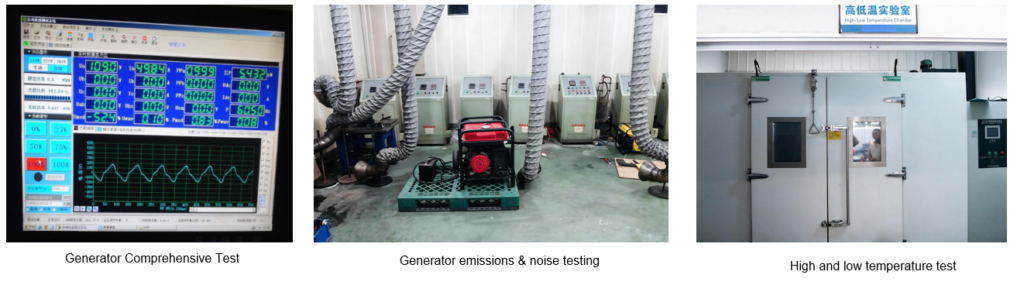
Desempenho abrangente, emissão e ruído, e alto- e testes de baixa temperatura para geradores NEWTOP acabados.
As instalações de inspeção de geradores acabados da NEWTOP cobrem três áreas mostradas nas imagens de testes de fábrica:
Teste abrangente de gerador
A saída elétrica e a operação geral são observadas após a montagem final. Isso ajuda a verificar se o motor, alternador, sistema de controle, e pontos de venda trabalham juntos como uma unidade completa.
Testes de emissão e ruído
As verificações de emissão e ruído operacional examinam as características afetadas pela combustão, projeto de escapamento, condição do motor, controle de vibração, e carga de trabalho.
Alto- e testes de baixa temperatura
Testes ambientais verificam a operação do gerador sob condições variáveis de temperatura. A temperatura pode influenciar a partida, entrega de combustível, lubrificação, baterias, fiação, e outros componentes elétricos.
Estas verificações conectam as especificações técnicas do gerador com o desempenho da máquina acabada. Eles também fornecem evidências mais fortes do que confiar apenas na inspeção de partida do motor.
A manutenção básica mantém o sistema funcionando
Cada tarefa de manutenção protege uma parte do caminho energético.
Gasolina nova e um sistema de combustível limpo ajudam o combustível a chegar ao carburador. Um filtro de ar limpo suporta a mistura correta. A vela de ignição suporta ignição, enquanto o óleo de motor adequado protege o pistão, cambota, árvore de cames, e rolamentos.
As aberturas de resfriamento devem permanecer desobstruídas, e cabos, plugues, disjuntores, e as conexões elétricas devem ser verificadas regularmente. Os geradores de reserva também precisam de partida e inspeção periódicas para que a deterioração do combustível, descarga da bateria, corrosão, ou conexões soltas são encontradas antes que ocorra uma interrupção.
Operar geradores a gasolina ao ar livre
O escapamento do gerador a gasolina contém monóxido de carbono, um gás venenoso incolor e inodoro. Geradores portáteis nunca devem funcionar dentro de residências, garagens, porões, galpões, ou outras áreas fechadas.
Os EUA. A Comissão de Segurança de Produtos de Consumo aconselha o uso de geradores portáteis ao ar livre, pelo menos 20 pés de distância de casas, com o escapamento direcionado para longe das portas, Windows, e aberturas de ventilação.
O gerador também deve ser desligado e deixado esfriar antes de adicionar gasolina. A conexão ao sistema elétrico de um edifício deve usar equipamento de transferência adequado instalado de acordo com os requisitos elétricos locais.
Da gasolina à energia utilizável
Então, como funciona um gerador a gasolina do começo ao fim?
Gasolina e ar entram no motor. A vela de ignição inicia a combustão, movendo o pistão e girando o virabrequim. O virabrequim gira o rotor do alternador dentro do estator, onde a indução eletromagnética produz corrente elétrica. O governador e o regulador de tensão ajudam o gerador a responder conforme a carga conectada muda.
O motor cria rotação. O alternador cria eletricidade. O controle, resfriamento, proteção, e os sistemas de estrutura ajudam a unidade completa a fornecer essa potência de forma segura e consistente.
Compreender esta relação torna as especificações do gerador mais fáceis de avaliar. A cilindrada do motor mostra apenas parte da capacidade da máquina. Saída nominal, construção do alternador, regulação de tensão, testando, sistemas de proteção, e a correspondência de componentes revelam mais sobre o desempenho do gerador final em uso real.
Quando os compradores comparam o tempo de execução do gerador a propano e a gasolina, o número de horas impressas na página de um produto raramente conta toda a história. O tempo de execução muda com a quantidade de combustível utilizável, carga do gerador, potência nominal específica do combustível, tamanho do tanque ou cilindro, temperatura ambiente, e a forma como o combustível é reabastecido.
Com o mesmo volume de líquido e uma carga elétrica comparável, a gasolina geralmente suportará um funcionamento mais longo porque contém mais energia por galão. Os EUA. A Energy Information Administration lista a gasolina para motores em cerca de 120,214 Btu por galão e propano em cerca de 91,452 Btu por galão. Um cilindro de propano maior ou tanque a granel, no entanto, pode fornecer mais combustível total do que o tanque de gasolina embutido no gerador e pode, portanto, manter o gerador operando por mais tempo no geral.
A questão útil não é simplesmente, “Qual combustível dura mais?”
Isso é:
Por quanto tempo o gerador pode suportar a carga necessária com o suprimento de combustível realmente disponível no local??
Por que os números de tempo de execução publicados são difíceis de comparar
Um valor de tempo de execução só se torna significativo quando as condições de teste são claras.
Considere duas especificações:
- Gerador A: 10 horas de execução
- Gerador B: 8 horas de execução
O Gerador A parece ter melhor desempenho. Mas suponha que seu valor tenha sido registrado em 25% carregar, enquanto o Gerador B foi testado em 50% carregar. O valor mais longo não prova mais o melhor desempenho do combustível porque o segundo gerador estava produzindo mais eletricidade durante o teste.
A quantidade de combustível cria outro problema. Um valor de tempo de funcionamento da gasolina pode ser baseado no tanque cheio do gerador, enquanto a figura do propano pode usar um cilindro portátil. Esses recipientes não contêm necessariamente quantidades comparáveis de energia utilizável.
Uma comparação adequada precisa de respostas a cinco perguntas:
Quanto combustível foi usado?
Para gasolina, verifique a capacidade do tanque em litros ou galões. Para propano, verifique o peso real do combustível ou a capacidade líquida utilizável do cilindro.
Qual carga foi aplicada?
Tempo de execução em 25% a carga não pode ser comparada diretamente com o tempo de execução em 50% ou carga nominal.
A produção foi diferente em cada combustível?
Geradores de combustível duplo podem fornecer diferentes potências nominais e máximas com gasolina e propano. A mesma carga do aparelho pode, portanto, representar uma percentagem diferente da capacidade do gerador em cada combustível..
O modo econômico estava ativo?
Um motor que reduz automaticamente a velocidade sob demanda leve pode consumir menos combustível do que um motor operando em velocidade fixa.
As condições de operação eram semelhantes?
Temperatura, elevação, condição do equipamento, e alterações de carga podem afastar o tempo de execução do mundo real da figura publicada.
Sem esses detalhes, um número anunciado deve ser tratado como uma referência e não como uma promessa.
Coloque os dois combustíveis na mesma base
A estimativa de tempo de execução mais simples é:
Tempo de funcionamento estimado em horas = quantidade de combustível utilizável ÷ consumo de combustível por hora na carga esperada
A quantidade de combustível e a taxa de consumo devem usar unidades correspondentes. Libras de propano não podem ser divididas diretamente por um valor de consumo de gasolina expresso em litros por hora. De forma similar, um valor de consumo de combustível declarado em gramas por quilowatt-hora precisa de potência nominal e massa de combustível antes de poder ser traduzido em horas de operação.
A carga esperada também precisa refletir o uso real.
Um gerador que fornece iluminação constante pode consumir combustível de forma diferente do mesmo gerador que alimenta um refrigerador, compressor, bombear, ou ferramenta de construção. Equipamentos motorizados podem consumir substancialmente mais energia durante a inicialização, e ciclos de partida repetidos afetam o consumo mesmo quando a potência média de funcionamento parece moderada.
Antes de comparar combustíveis, os compradores devem calcular:
- O equipamento deverá funcionar ao mesmo tempo
- Potência normal de funcionamento
- Demanda inicial ou de aumento
- Carga média esperada durante o período operacional
- A quantidade de capacidade de reserva necessária
Usar a saída máxima do gerador como valor de carga normal produzirá uma estimativa de tempo de execução enganosa. A produção máxima é destinada à demanda temporária, operação não contínua.
O fornecimento de combustível pode reverter o resultado
O maior conteúdo energético da gasolina por galão não significa automaticamente que cada configuração de gasolina funcionará por mais tempo. O fornecimento total de combustível muitas vezes decide o resultado prático.
Gasolina: Um fornecimento fixo a bordo
Geradores portáteis a gasolina geralmente carregam seu combustível em um tanque integrado. Isto cria uma clara, configuração independente: o gerador é transportado com seu tanque, preenchido antes de usar, e operado até que o combustível fique baixo.
A principal limitação é a capacidade fixa. Um tanque de 15 ou 25 litros não pode ser expandido sem parar o gerador e reabastecê-lo de acordo com as instruções do fabricante..
A condição da gasolina também afeta a prontidão. O combustível não utilizado por longos períodos pode deteriorar-se, portanto, um gerador destinado ao uso emergencial precisa de um plano de rotação e manutenção de combustível. O longo tempo de execução teórico tem pouco valor quando o combustível antigo, depósitos, ou um carburador negligenciado impede uma partida confiável.
Propano: O tempo de execução depende da fonte conectada
O propano é armazenado como líquido sob pressão e se transforma em gás à medida que a pressão é liberada para combustão.. Isto torna possíveis cilindros externos e tanques de armazenamento maiores, dando aos usuários mais flexibilidade sobre a quantidade de combustível conectado ao gerador.
Um pequeno cilindro portátil pode proporcionar menos autonomia do que um tanque de gasolina cheio. Um suprimento maior de propano pode fornecer consideravelmente mais. A comparação muda cada vez que a capacidade do cilindro muda.
A entrega de propano também depende da vaporização. Tamanho do tanque, nível de líquido, temperatura ambiente, umidade, e a superfície do tanque em contato com o líquido afetam a taxa na qual o propano pode se transformar em vapor utilizável. Temperaturas mais baixas e níveis de combustível mais baixos reduzem a capacidade de vaporização, enquanto o congelamento do tanque pode restringi-lo ainda mais.
Para um gerador maior operando sob carga sustentada, os compradores, portanto, precisam verificar mais do que a quantidade total de propano. O cilindro e o sistema regulador também devem ser capazes de fornecer combustível na taxa necessária.
Três perguntas de tempo de execução que os compradores realmente fazem
Os números de horas publicados tornam-se mais fáceis de avaliar quando estão conectados a um requisito operacional específico.
“O gerador pode cobrir um turno completo de trabalho?”
Um empreiteiro que planeja um turno de oito horas não deve começar com a reivindicação de maior tempo de execução do folheto. O cálculo deve usar a carga média esperada do site.
Ferramentas elétricas podem funcionar de forma intermitente, enquanto acende, bombas, equipamento de carregamento, ou instalações temporárias podem permanecer ativas durante todo o dia. A demanda de partida do motor e mudanças repetidas de carga também precisam ser incluídas.
O plano de combustível deve mostrar:
- Consumo esperado durante o turno
- Combustível restante no final do turno
- Se o reabastecimento ou a troca dos cilindros interromperão o trabalho
- Como o combustível de reserva será transportado e armazenado
- Se o fornecimento de propano pode manter a vaporização adequada sob a temperatura e carga esperadas
Uma autonomia nominal de dez horas com carga leve pode não cobrir um turno de oito horas quando um equipamento mais pesado estiver conectado.
“Ele pode passar por uma interrupção noturna?”
O backup noturno geralmente tem menos a ver com a produção máxima e mais com a manutenção de cargas essenciais.
Refrigeração, iluminação selecionada, equipamento de comunicação, fãs, sistemas de segurança, e uma pequena bomba de água pode consumir muito menos energia do que a capacidade nominal total do gerador. A remoção de equipamentos não essenciais pode prolongar o tempo de funcionamento de forma mais eficaz do que apenas aumentar o armazenamento de combustível.
Os compradores devem calcular a provável carga noturna em vez de usar a potência total de cada eletrodoméstico da propriedade. Eles também devem permitir uma reserva em vez de planejar esvaziar completamente o tanque ou cilindro antes da manhã..
Para geradores portáteis, a operação noturna ainda requer posicionamento seguro, proteção contra intempéries, folga de escape, e supervisão regular. O tempo de funcionamento nunca deve ser estendido movendo o gerador para uma garagem, cabana, ou outra área fechada.
“O tempo de execução pode ser estendido sem comprar um gerador maior?”
Muitas vezes, sim.
Possíveis medidas incluem:
- Reduzindo cargas elétricas desnecessárias
- Evitando inicialização simultânea de equipamentos de alta demanda
- Usando um suprimento de propano compatível maior
- Programação de equipamentos pesados para períodos operacionais separados
- Manutenção do motor, filtro de ar, e sistema de combustível
- Selecionar um gerador cuja saída nominal coloque a carga normal em uma faixa operacional mais adequada
Um gerador maior não é automaticamente mais eficiente em termos de combustível. Se a demanda normal for baixa, uma unidade superdimensionada pode aumentar o custo de aquisição e operar fora de sua faixa de carga mais prática.
O primeiro passo deve ser melhorar o plano de carga e combustível, não simplesmente aumentando a produção máxima.
Uma especificação real da gasolina mostra o que verificar
A especificação do fabricante pode fornecer as informações necessárias para o planejamento do tempo de execução, mesmo quando não indica um número simplificado de horas..
O gerador a gasolina NEWTOP NTGR6500H2, por exemplo, listas:
- 5.5 potência nominal em kW
- 6.0 potência máxima em kW
- 389 CC, 13 motor HP OHV
- Consumo de combustível não superior a 370 g/kWh
- 25-tanque de combustível litro
- Partida elétrica
- Alternador de fio de cobre
- Proteção contra baixo nível de óleo e curto-circuito
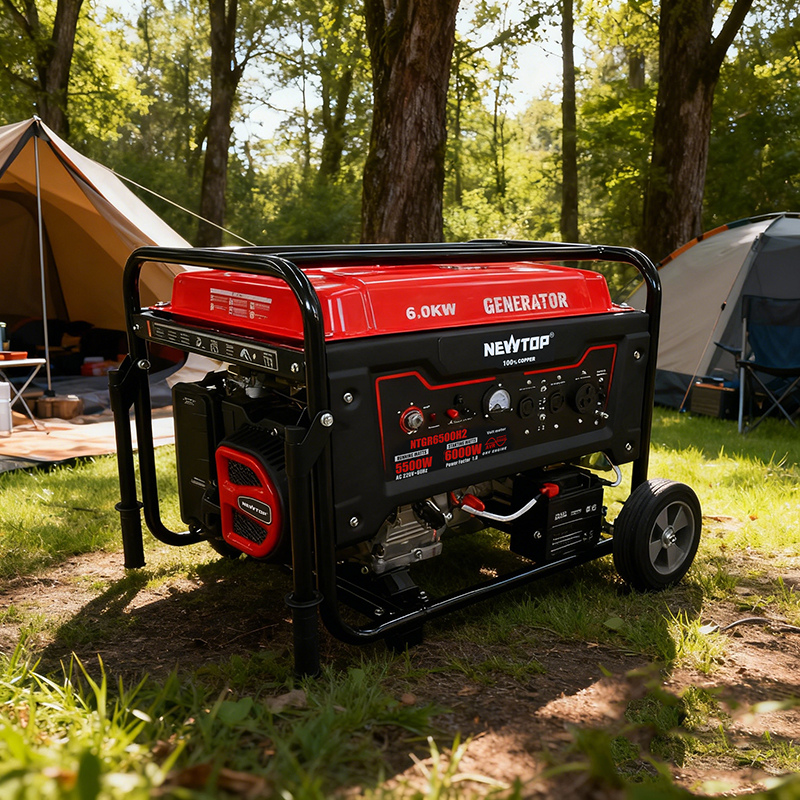
O modelo também usa virabrequim e eixo de comando forjados, uma estrutura de aço completa, and vibration-absorbing mounts for extended outdoor, oficina, construção, e operação de backup.
These figures are more useful than a vague “long runtime” claim because they allow buyers to examine the relationship among tank capacity, saída nominal, e consumo de combustível.
They still do not justify one fixed runtime prediction.
O consumo real muda com a carga, and the published fuel-consumption value must be interpreted using the manufacturer’s test method. Buyers who need a precise operating-hour estimate should request consumption data at several load levels, como 25%, 50%, 75%, e carga nominal.
NEWTOP’s gasoline generator range also includes compact 2.8 modelos kW, médio 5.5 kW e 7.8 unidades kW, e maior produção 10 configurações de kW. This range illustrates why runtime cannot be separated from generator size: cilindrada do motor, demanda de produção, capacidade do tanque, e mudança de carga de trabalho pretendida de uma classe de potência para outra.
Informações de tempo de execução a serem solicitadas ao fornecedor
Em vez de perguntar apenas, “Quantas horas vai funcionar?”, os compradores devem solicitar as informações de teste por trás do número.
| Informações necessárias | Por que é importante |
|---|---|
| Produção nominal em gasolina | Mostra a produção contínua utilizável para o cálculo da gasolina. |
| Saída nominal em propano | Pode diferir da produção de gasolina em um gerador de combustível duplo. |
| Capacidade do tanque de gasolina | Identifica a quantidade de combustível por trás do tempo de execução da gasolina. |
| Tamanho do cilindro de propano e quantidade de combustível utilizável | Identifica o fornecimento real de propano usado no teste. |
| Carga de teste em tempo de execução | Permite uma comparação justa entre os números de tempo de execução publicados. |
| Consumo de combustível em diversas cargas | Suporta cálculos mais precisos para diferentes aplicações. |
| Status do modo econômico | May affect fuel consumption when the generator operates under partial load. |
| Ambient Test Temperature | Provides important context for propane vaporization performance. |
| Starting Loads Used During Testing | Shows whether motor-driven equipment and surge demand were represented. |
| Required Regulator and Connection | Confirms that the propane supply can meet the engine’s fuel demand. |
| Recommended Fuel Reserve | Helps prevent an unexpected shutdown before refueling or cylinder replacement. |
| Refueling or Cylinder-Change Procedure | Reveals whether continuous work will be interrupted. |
A supplier that provides the test basis makes it easier for distributors and end users to set realistic expectations. A single hour figure without fuel quantity and load percentage offers far less value.
Safety Comes Before Additional Runtime
Both gasoline and propane generators produce carbon monoxide. Portable units must operate outdoors and away from occupied buildings, with exhaust directed away from doors, Windows, e aberturas de ventilação. Os EUA. A Comissão de Segurança de Produtos de Consumo aconselha a colocação de geradores portáteis pelo menos 20 feet from the home whenever possible.
Gasoline should not be added while the generator is running or hot. Propane cylinders, regulators, mangueiras, and connectors must match the equipment instructions and applicable gas-safety requirements.
A longer hose, improvised fuel connection, indoor placement, or unsafe hot refueling is never an acceptable way to gain more operating time.
O que os compradores realmente deveriam comparar
Gasoline contains more energy per gallon than propane, so an equal-volume comparison generally favors gasoline. Real generator installations rarely use equal fuel volumes, no entanto. A propane generator connected to a larger external supply may run longer than a gasoline model limited to its onboard tank.
Uma comparação confiável do tempo de operação do gerador de propano e gasolina deve colocar ambos os combustíveis nas mesmas condições:
- Carga elétrica comparável
- Saída nominal claramente declarada
- Quantidade de combustível utilizável conhecida
- Condições de teste de tempo de execução correspondentes
- Capacidade adequada do tanque ou cilindro
- Temperatura realista e padrão operacional
- Plano seguro de reabastecimento ou substituição de cilindros
O valor de tempo de execução mais útil não é o maior número em um catálogo. É o número de horas que o gerador pode suportar o equipamento necessário antes que o suprimento de combustível disponível seja reabastecido com segurança..
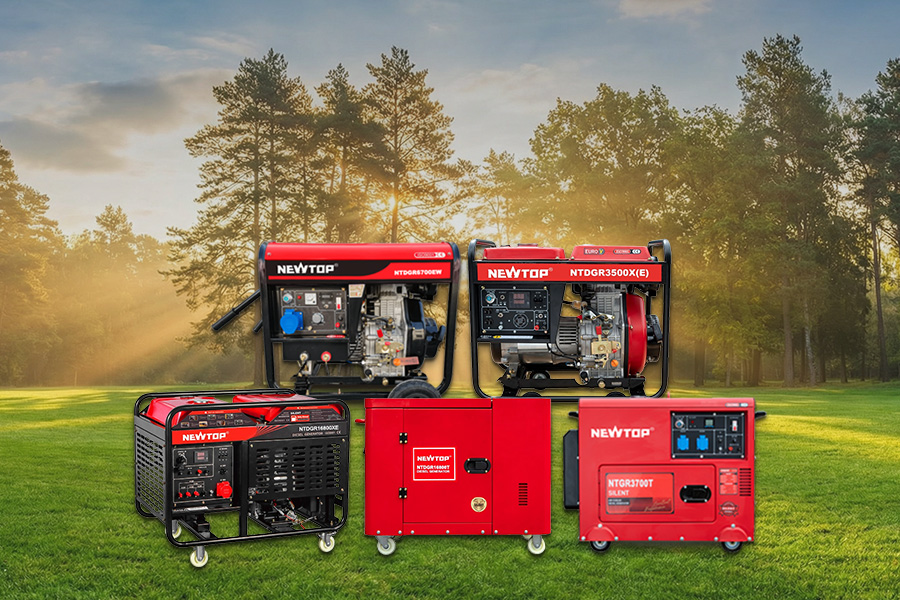
A escolha do Gerador Diesel versus Gasolina depende principalmente das horas de funcionamento, demanda de energia, portabilidade, disponibilidade de combustível, e orçamento. Os geradores a diesel são geralmente mais adequados para operação frequente ou prolongada, enquanto os geradores a gasolina são muitas vezes mais práticos para períodos de reserva mais curtos e tarefas móveis.
No entanto, o tipo de combustível por si só não decide se um gerador funcionará bem. Saída nominal, demanda de partida do motor, construção do motor, capacidade do tanque de combustível, acesso de manutenção, e o custo do tempo de inatividade pode ser igualmente importante. Um gerador a gasolina de tamanho correto pode servir melhor a uma pequena oficina do que uma unidade a diesel de grandes dimensões, enquanto um gerador a diesel pode oferecer melhor valor a longo prazo em um local que precisa de energia durante todo o dia de trabalho.
Gerador Diesel vs Gasolina: Principais diferenças
Ambos os tipos de geradores usam um motor de combustão interna para acionar um alternador e produzir eletricidade. A diferença prática reside na forma como o motor fornece potência e como o gerador se adapta à carga de trabalho pretendida..
Geradores a diesel são comumente selecionados para uso frequente, cargas sustentadas, e aplicações de maior capacidade. Comparado com uma saída semelhante e sob operação prolongada, modelos a diesel podem oferecer consumo de combustível mais favorável. Sua construção mecânica também tende a se adequar a aplicações onde se espera que o gerador funcione regularmente.
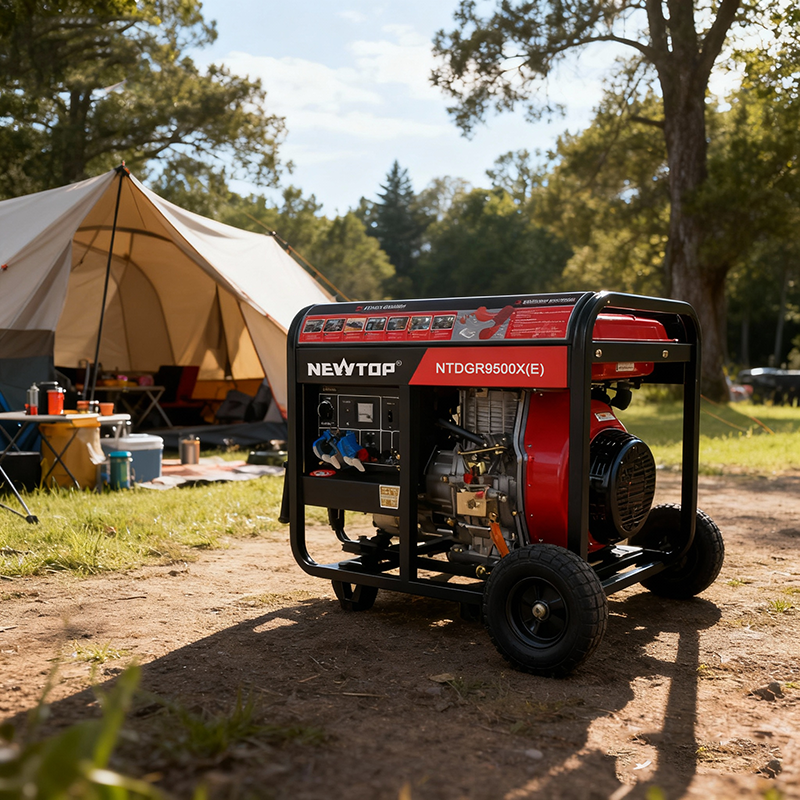
Os geradores a gasolina são amplamente utilizados onde a portabilidade, menor investimento inicial, e operação intermitente são mais importantes. Muitos modelos compactos a gasolina são mais fáceis de transportar entre locais e são adequados para trabalhos temporários, pequenas empresas, backup doméstico, e uso ao ar livre.
Estas são tendências gerais e não regras fixas. O desempenho real depende do modelo do gerador, cilindrada do motor, porcentagem de carga, alternador, recinto, sistema de refrigeração, e condição de manutenção.
| Fator de decisão | Gerador Diesel | Gerador de gasolina |
|---|---|---|
| Padrão operacional típico | Operação frequente ou prolongada | Operação ocasional ou mais curta |
| Investimento Inicial | Geralmente mais alto em classes comparáveis | Muitas vezes mais baixo em faixas de potência portáteis |
| Uso de combustível por longos períodos | Muitas vezes mais favorável com uma produção semelhante e carga sustentada | Pode se tornar menos econômico durante operação prolongada |
| Mobilidade | Comumente usado em fixo, fechado, ou configurações com rodas | Modelos menores costumam ser mais fáceis de transportar |
| Adequação de Carga | Frequentemente selecionado para cargas comerciais e de canteiro de obras sustentadas | Adequado para cargas moderadas e trabalho temporário |
| Opções de estrutura | Modelos de estrutura aberta e fechados silenciosos | Principalmente modelos portáteis de estrutura aberta, com outras opções dependendo da faixa |
| Aplicativos comuns | Construção, fazendas, instalações comerciais, e longos períodos de backup | Pequenas oficinas, serviço móvel, backup doméstico, e tarefas curtas ao ar livre |
| O que os compradores devem verificar | Saída nominal, consumo de combustível, recinto, tempo de execução, e acesso ao serviço | Saída nominal, capacidade do tanque, portabilidade, sistema de partida, e saída de surto |
As especificações de modelos individuais devem sempre ter prioridade sobre comparações gerais de tipos de combustível. Os compradores devem comparar a produção nominal, saída máxima, consumo de combustível, capacidade do tanque, nível de ruído, e condições operacionais recomendadas antes de fazer o pedido.
Qual gerador é melhor para uso comercial?
A seleção do gerador comercial deve começar com a duração e frequência esperadas de cada interrupção de energia.
Para uma pequena loja, escritório, restaurante, ou empresa de serviços que sofre apenas interrupções curtas e ocasionais, um gerador a gasolina pode fornecer backup suficiente a um custo inicial mais administrável. Pode suportar iluminação selecionada, dispositivos de comunicação, sistemas de pagamento, fãs, refrigeração, ou outro equipamento essencial, desde que as cargas totais de operação e partida permaneçam dentro da capacidade nominal do gerador.
As prioridades mudam quando as interrupções duram várias horas ou acontecem várias vezes por semana. O consumo de combustível se torna mais importante, e o gerador deve manter a produção estável por períodos mais longos. Um gerador a diesel pode então oferecer um ajuste melhor, especialmente para armazéns, oficinas maiores, fazendas, empresas de hospitalidade, e instalações onde a perda de energia afeta rapidamente a receita.
Os compradores comerciais devem estabelecer quatro pontos antes de escolher:
✅ Tempo de execução esperado
Estime quantas horas o gerador pode operar durante uma interrupção normal, em vez de confiar apenas na frequência anual de interrupções..
✅ Cargas elétricas essenciais
Identificar quais equipamentos devem permanecer ativos. Sistemas de refrigeração, bombas, compressores de ar, e outros equipamentos motorizados podem exigir substancialmente mais energia durante a inicialização.
✅ Função operacional principal ou de backup
A generator used only during grid failure has a different duty pattern from one used as a regular power source in an area with limited grid access.
✅ Cost of downtime
For businesses that lose products, capacidade de produção, or customer transactions during an outage, operating reliability may matter more than the lowest purchase price.
Automatic transfer requirements should also be considered for fixed commercial installations. Where uninterrupted changeover is important, generator compatibility with the intended transfer and control system should be confirmed before purchase.
Which Generator Is Better for Construction Sites?
Construction sites place different demands on a generator. Loads change throughout the day, equipment may have high starting current, and the generator often operates around dust, vibration, aquecer, and frequent movement.
Geradores a diesel são comumente escolhidos para turnos mais longos e uso repetido no local de trabalho. Eles podem ser mais adequados para alimentar bombas, misturadores, soldadores, compressores, sistemas de iluminação, e instalações locais temporárias durante períodos prolongados. Uma estrutura mais pesada também é uma desvantagem menor quando o gerador permanece em uma área de trabalho fixa ou é montado em uma plataforma com rodas..
Os geradores a gasolina continuam práticos para equipes menores e tarefas mais curtas. Trabalho de reparo, terminando tarefas, iluminação temporária, e ferramentas móveis podem exigir energia apenas por algumas horas. Nesses casos, um gerador compacto a gasolina pode ser mais fácil de carregar, descarregar, e navegar pelo site.
A decisão deve refletir como o site realmente funciona:
- Longos turnos diários com cargas sustentadas: o diesel é muitas vezes o candidato mais forte.
- Tarefas curtas em múltiplas áreas de trabalho: gasolina pode proporcionar mobilidade mais fácil.
- Ferramentas com motores elétricos: a potência inicial deve ser verificada, não apenas potência normal de funcionamento.
- Condições de poeira ou calor: filtração, resfriamento, resistência do quadro, e o acesso à manutenção tornam-se mais importantes.
- Projetos sensíveis ao ruído: compare modelos fechados e de estrutura aberta usando especificações de ruído reais.
- Locais remotos: escolha o combustível que pode ser fornecido, armazenado, e gerenciado de forma confiável naquele local.
O tipo de combustível não pode compensar o mau dimensionamento. Um gerador subdimensionado pode ter dificuldades durante a partida do motor ou desarmar sob cargas variáveis. Uma unidade superdimensionada acrescenta custos e pode operar de forma ineficiente quando a carga média permanece muito baixa.
Qual gerador é melhor para uso de emergência?
O uso emergencial inclui diversas situações muito diferentes. Um proprietário que se prepara para uma curta interrupção na rede não tem os mesmos requisitos que um abrigo, site de comunicação, equipe de resposta a inundações, ou grande instalação comercial.
Um gerador a gasolina costuma ser prático para backup temporário de emergência. Modelos portáteis podem ser implantados rapidamente e podem fornecer energia suficiente para iluminação, equipamento de comunicação, fãs, aparelhos selecionados, e pequenas bombas. Isso os torna úteis onde a facilidade de movimentação e o menor custo inicial são prioridades.
Um gerador a diesel torna-se mais atraente quando a energia de emergência pode ser necessária por muitas horas ou vários dias. Instalações maiores e operações de resposta podem precisar de resultados mais sustentados, capacidade de serviço mais longa, ou uma estrutura fechada silenciosa que pode permanecer em um local fixo.
O planejamento de combustível deve fazer parte do plano de emergência. A gasolina pode deteriorar-se durante o armazenamento prolongado, enquanto o diesel armazenado também precisa de proteção contra água e contaminação. O equipamento existente também pode influenciar a decisão. Um empreiteiro, fazenda, ou organização de emergência que já opera máquinas a diesel pode achar mais fácil integrar o armazenamento e o reabastecimento de diesel.
A segurança do gerador não pode ser tratada como opcional
Tanto os geradores a diesel quanto a gasolina produzem monóxido de carbono e nunca devem ser operados dentro de residências, garagens, porões, galpões, ou outros espaços fechados. Os EUA. A Comissão de Segurança de Produtos de Consumo aconselha a operação de geradores portáteis ao ar livre, pelo menos 20 pés de distância de casas e edifícios, com o escapamento direcionado para longe das portas, Windows, e aberturas de ventilação.
A conexão elétrica também requer cuidados. A OSHA desaconselha a conexão de um gerador portátil diretamente ao sistema elétrico de um edifício, a menos que uma chave de transferência adequada tenha sido instalada por um eletricista qualificado.. Os cabos devem ser classificados para a carga esperada, e aterramento, ligação, proteção contra intempéries, e proteção contra falha à terra devem seguir as instruções do fabricante do gerador e os requisitos elétricos locais.
Como escolher o tamanho certo do gerador
A potência necessária do gerador deve ser calculada antes de decidir entre diesel e gasolina.
Comece listando os equipamentos que podem funcionar simultaneamente. Para cada item, registre sua potência normal de funcionamento e, quando aplicável, sua demanda inicial. Bombas, compressores, geladeiras, e ferramentas elétricas com motores elétricos podem consumir brevemente várias vezes sua potência operacional normal durante a inicialização.
Três figuras merecem especial atenção:
Saída nominal contínua
Esta é a potência que o gerador foi projetado para fornecer durante a operação normal.. A carga contínua planejada deve permanecer dentro desta classificação em vez de depender da produção máxima durante todo o período de trabalho.
Saída máxima ou de surto
Esta capacidade temporária ajuda o gerador a lidar com pequenos aumentos na demanda, especialmente quando o equipamento motorizado arranca. Não deve ser tratado como a classificação operacional normal.
Carga Média Esperada
Um gerador deve ter capacidade de reserva suficiente para gerenciar mudanças de carga sem ser dramaticamente maior que o necessário. A operação regular com carga extremamente alta ou muito baixa pode reduzir a eficiência e criar problemas operacionais evitáveis.
Para pedidos comerciais, os compradores também devem confirmar:
- Tensão e frequência necessárias
- Saída monofásica ou trifásica
- Número e tipo de recipientes
- Partida elétrica ou de recuo
- Capacidade do tanque de combustível
- Tempo de execução contínuo
- Requisitos de AVR ou regulação de tensão
- Estrutura aberta ou gabinete silencioso
- Kits de rodas, alças, ou requisitos de elevação
O que a construção do gerador muda no uso real?
Dois geradores com potência nominal semelhante podem se comportar de maneira diferente quando começarem a alimentar ferramentas ou equipamentos. Materiais do motor, construção do alternador, controle de vibração, sistemas de proteção, and frame design all influence long-term use.
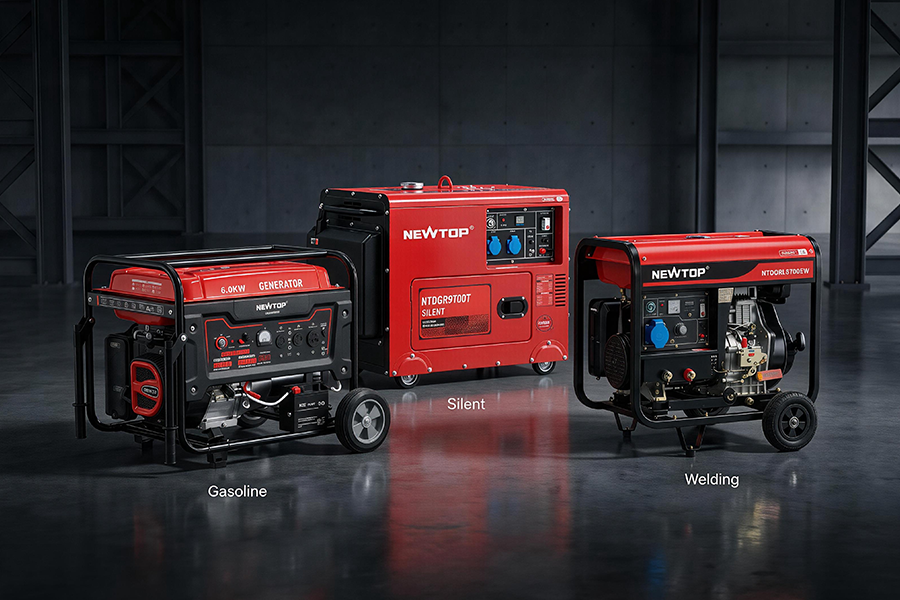
NEWTOP offers both gasoline and diesel generator sets, including open-frame and silent configurations. The current range covers multiple output classes, from compact units for outdoor and backup power to higher-capacity diesel models for commercial and construction applications. Selected NEWTOP generators use copper-winding alternators, steel frames, reinforced engine components, and designs intended to operate in temperatures from -10°C to 50°C.
The differences are easier to understand through actual product configurations.
Gasoline Generator Construction
The NEWTOP NTGR6500H2 provides 5.5 kW rated output and 6.0 potência máxima em kW. Its engine uses a strengthened 42CrMo forged crankshaft and camshaft, while a SENCI copper-wire alternator supports stable voltage and overload performance. Uma estrutura totalmente em aço com suportes que absorvem vibrações protege a máquina durante trabalhos exigentes.
O modelo também inclui um 25 L tanque de combustível, aviso de nível baixo de óleo, e proteção contra curto-circuito. Estas características tornam o gerador adequado para canteiros de obras, pequenas oficinas, manutenção de propriedade, e backup doméstico estendido onde um modelo a gasolina ainda é preferido.
Construção de gerador diesel de estrutura aberta
Para requisitos de energia médios a pesados, o NEWTOP NTDGR6500X(E) combina um virabrequim de aço forjado, engrenagens nitretadas, Injeção de combustível com tecnologia BOSCH, e um alternador com enrolamento de cobre. A estrutura de aço antivibração ajuda a proteger o motor e o alternador durante a construção, agrícola, e operação comercial.
Este modelo fornece 4.8/5.0 potência nominal kVA e até 5.2/5.5 Potência máxima em kVA, dependendo da configuração de frequência. A estrutura do produto reflete as prioridades frequentemente associadas aos equipamentos a diesel: movimentação de carga, resistência mecânica, e produção estável durante períodos de trabalho mais longos.
Construção diesel silenciosa de alta potência
Onde maior produção e menor ruído operacional são necessários juntos, um gabinete silencioso pode ser mais apropriado do que uma estrutura aberta. O NEWTOP NTDGR16800T combina 11 potência nominal kW com 12 potência máxima em kW, um virabrequim forjado 42CrMo, componentes de engrenagens nitretados e um 100% alternador SENCI de cobre.
Seu corpo fechado reduz o ruído operacional enquanto fornece proteção adicional para componentes internos. O modelo é projetado para construção, backup comercial, e outras aplicações exigentes onde tanto a capacidade de energia quanto o ambiente operacional são importantes.
Esses exemplos mostram por que os compradores devem comparar mais do que o tipo de combustível e a potência. O alternador, cambota, estrutura de engrenagem, sistema de proteção, quadro, e o gabinete podem determinar até que ponto um gerador se adapta ao mercado pretendido.
Manutenção, Peças, e suporte técnico local
Um gerador a gasolina bem conservado pode funcionar de forma mais confiável do que uma unidade a diesel negligenciada. O tipo de motor não substitui a inspeção e manutenção regulares.
Antes da operação, os usuários devem verificar:
- Nível e condição do óleo do motor
- Qualidade do combustível e condições de armazenamento
- Filtros de ar e combustível
- Fluxo de ar de resfriamento
- Condição do cabo e do receptáculo
- Condição da bateria em modelos com partida elétrica
- Quadro, montagens, e fixadores
- Sinais de vazamento de combustível ou óleo
Os geradores de backup devem ser iniciados e testados em intervalos programados. Esperar até que haja uma falha real de energia para verificar o gerador pode deixar combustível velho, uma bateria descarregada, ou uma falha elétrica não descoberta.
Para distribuidores e compradores comerciais, o suporte de peças também afeta a experiência total de propriedade. Filtros, componentes iniciais, painéis de controle, reguladores de tensão, peças do alternador, e componentes comuns do motor devem estar disponíveis sem exigir a substituição do gerador completo.
A NEWTOP fornece geradores a gasolina e diesel em diversas faixas de potência, juntamente com seleção de produtos e suporte de peças de reposição para clientes atacadistas. Isto permite que os distribuidores construam uma gama para famílias, empreiteiros, fazendas, oficinas, e usuários de backup comercial em vez de depender de um tipo de gerador para cada aplicação.
Gerador Diesel vs Gasolina: Tomando a decisão final
Escolha um gerador a diesel quando a aplicação envolver operação frequente, cargas sustentadas, períodos de backup mais longos, ou demanda comercial e de construção de maior capacidade. Compare o consumo real de combustível, saída nominal, recinto, barulho, e acesso ao serviço antes de decidir sobre um modelo.
Escolha um gerador a gasolina quando tiver portabilidade, menor investimento inicial, implantação mais rápida, e operação ocasional são as principais prioridades. Muitas vezes é a opção mais prática para pequenas empresas, trabalho móvel, tarefas temporárias de construção, e breves interrupções de emergência.
A decisão final sobre Gerador a Diesel versus Gasolina deve ser baseada nas horas em que o gerador funcionará, o equipamento que deve iniciar, o combustível disponível localmente, e o nível de tempo de inatividade que o usuário pode aceitar. Uma vez definidos esses requisitos, o tipo de combustível torna-se parte de um processo de seleção muito mais claro.
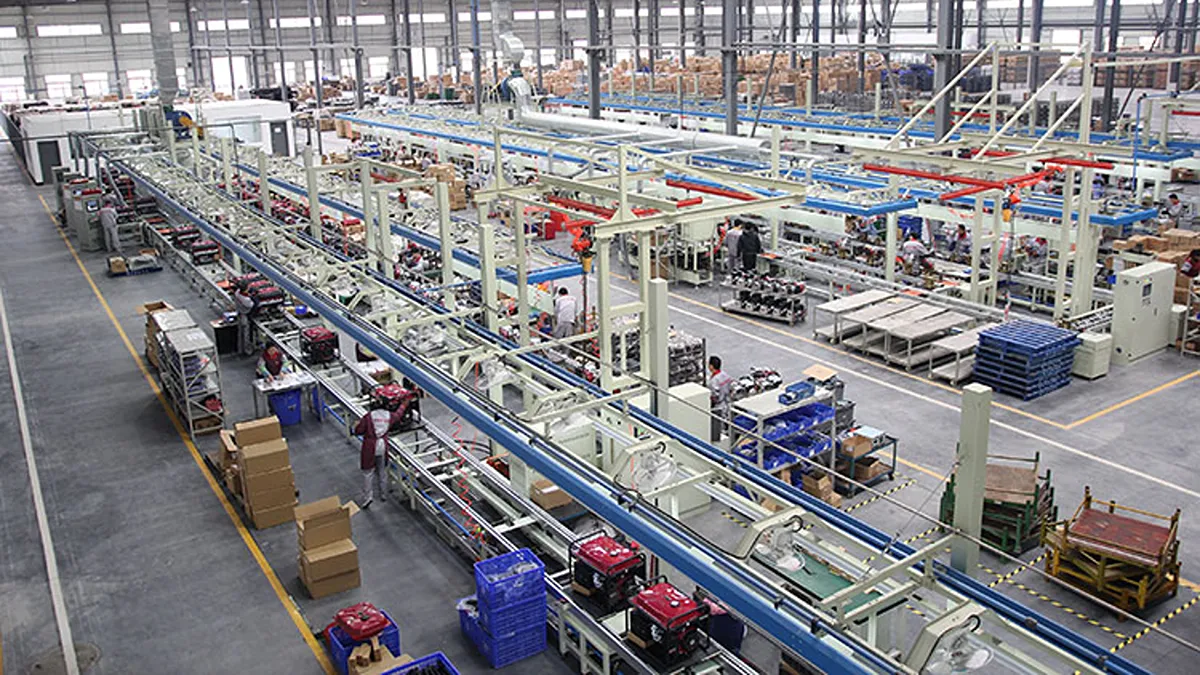
A indústria náutica global continua a evoluir com a crescente demanda por sistemas confiáveis de propulsão elétrica e a gasolina. Quer você seja uma marca de barco, distribuidor de equipamentos marítimos, atacadista, ou comprador OEM, escolher o fabricante certo de motores de popa é essencial para a qualidade do produto, crescimento do negócio a longo prazo, e satisfação do cliente.
Neste guia, nós selecionamos 10 fabricantes respeitáveis de motores de popa da China, Europa, e América do Norte. Eles representam diferentes pontos fortes - desde motores a gasolina econômicos e OEM & Motores de popa ODM até sistemas de propulsão elétrica inovadores – ajudando você a comparar potenciais fornecedores de motores de popa para o seu negócio.
Uma visão geral do topo 10 Fabricantes de motores de popa
| Fabricante | Localização | Fundado | Principais Produtos | Força-chave |
|---|---|---|---|---|
| NOVOTOP | Xangai, China | 2003 | 2-Curso de motores de popa, 5–Motores 15HP, Hélices & Peças de reposição | 500Capacidade anual K+, OEM/ODM, 100+ distribuidores globais |
| Hidea Máquinas Elétricas | Hangzhou, China | 2003 | Gasolina & Motores externos elétricos | Exportado para 80+ países com uma extensa rede de revendedores |
| ePropulsão | Shenzhen, China | 2012 | Motores de popa elétricos, Internos, Baterias & Unidades de pod | Inovador líder em propulsão marítima elétrica |
| Máquinas Elétricas Seanovo | Hangzhou, China | - | Motores de popa a gasolina & Peças de reposição | Fabricação OEM com forte experiência de exportação |
| Máquinas elétricas de Zhejiang Canglong | Zhejiang, China | - | 2-AVC, 4-AVC & Motores de popa elétricos | Amplo portfólio de produtos 5HP–40HP |
| ASSUNTO | França | 2018 | Motores externos elétricos portáteis | Propulsão compacta e leve para barcos pequenos |
| Suzuki Marinha | Hamamatsu, Japão | 1965 | 4-Curso de motores de popa & Motores Marítimos | Líder global em tecnologia de quatro tempos com baixo consumo de combustível |
| Elco Motor Yachts | Nova Iorque, EUA | 1893 | Motores de popa elétricos & Internos | Mais de um século de engenharia naval elétrica |
| Fluxo Marinho | Ilha de Rodes, EUA | 2018 | Motores externos elétricos de alto desempenho | Propulsão elétrica premium com controles digitais inteligentes |
| Marinha Yamaha | Iwata, Japão | 1955 | 2-AVC & 4-Curso de motores de popa, Motores marítimos de alta potência, Hélices | Marca líder mundial conhecida pela confiabilidade, inovação, e suporte global para revendedores |
NOVOTOP
Recomendação: ☆☆☆☆☆
Localização: Xangai, China (Base de fabricação em Jiaxing, Zhejiang)
Principais Produtos: 2-AVC motores de popa a gasolina, 5Motores de popa HP–15HP, hélices de motor de popa, peças de reposição, OEM & Motores externos ODM
Quantidade mínima: Flexível para pedidos OEM/ODM
Fundado em 2003, NOVOTOP é um fabricante profissional de motores de popa na China, especializado em equipamentos de energia para uso externo e motores marítimos confiáveis de pequena e média potência.. Operando a partir de um sistema gerenciado por 6S de 10.000㎡ instalação de fabricação, a empresa tem uma capacidade de produção anual de mais de 500,000 unidades e ganhou 26+ certificações internacionais, incluindo CE, ISO, e UE Estágio V (Euro 5) conformidade para modelos selecionados. Seu portfólio de produtos inclui produtos duráveis 2-acidente vascular cerebral motores de popa a gasolina, hélices de motor de popa, e peças de reposição para barcos de pesca, barcos infláveis, barcos de alumínio, e outras embarcações de recreio.
Como uma fábrica de motores de popa voltada para a exportação, NEWTOP fornece OEM flexível & Soluções ODM para importadores globais, marcas próprias, e distribuidores de motores de popa. Hoje, a empresa trabalha com 100+ distribuidores mundialmente, enquanto os clientes em muitos mercados africanos e latino-americanos podem comprar produtos NEWTOP diretamente através de revendedores locais e lojas de varejo. Apoiado por uma qualidade de fabricação estável, suporte técnico responsivo, e uma rede de serviços global em expansão, NEWTOP tornou-se um fabricante confiável de motores de popa e fornecedor de motores de popa de longo prazo para parceiros que buscam soluções confiáveis de propulsão marítima.
Hidea Máquinas Elétricas

Localização: Hangzhou, Zhejiang, China
Principais Produtos: Motores de popa a gasolina, motores de popa elétricos, peças de motor marítimo, acessórios externos
Quantidade mínima: Contato para cotação
Hidea Power Machinery é um dos fabricantes de motores de popa mais conhecidos da China, oferecendo soluções de propulsão a gasolina e elétrica. Com uma rede de distribuição internacional que abrange mais de 80 países e regiões, A Hidea estabeleceu-se como um fornecedor confiável de motores de popa para revendedores e distribuidores de equipamentos marítimos em todo o mundo.. Seu portfólio de produtos abrange diversas faixas de potência adequadas para barcos de lazer, barcos de pesca, e aplicações comerciais.
A empresa investe continuamente em tecnologia de fabricação, controle de qualidade, e desenvolvimento de produtos para melhorar a eficiência e durabilidade do motor. Além de motores completos, A Hidea também fornece diversas peças de reposição e acessórios, permitindo que os distribuidores de motores de popa criem ofertas abrangentes de produtos para seus mercados locais.
ePropulsão

Recomendação: ☆☆☆☆
Localização: Shenzhen, Guangdong, China
Principais Produtos: Motores elétricos de popa, motores internos, Sistemas Pod Drive, baterias marítimas, sistemas de propulsão híbridos
Quantidade mínima: Contato para cotação
Fundado em 2012, A ePropulsion tornou-se um dos principais fabricantes mundiais de motores elétricos de popa, focando exclusivamente na propulsão marítima sustentável. Sua linha de produtos inclui motores de popa elétricos, sistemas internos, unidades de pod, sistemas de bateria inteligentes, e tecnologias integradas de controle marítimo projetadas para embarcações recreativas e comerciais.
A empresa é reconhecida por combinar engenharia inovadora com operação silenciosa, zero emissões, e baixos requisitos de manutenção. Para compradores que procuram alternativas ecológicas aos motores a gasolina convencionais, A ePropulsion oferece sistemas de propulsão avançados apoiados por uma rede internacional de revendedores em expansão e inovação contínua de produtos.
Máquinas Elétricas Seanovo

Recomendação: ☆☆☆☆
Localização: Hangzhou, Zhejiang, China
Principais Produtos: Motores de popa a gasolina, motores marítimos, peças de reposição de popa
Quantidade mínima: Contato para cotação
Seanovo Power Machinery é uma fábrica profissional de motores de popa dedicada à fabricação de motores marítimos movidos a gasolina e acessórios relacionados. Localizado em Hangzhou, a empresa atende distribuidores internacionais, atacadistas, e clientes OEM com uma ampla gama de motores de popa portáteis adequados para barcos de pesca, barcos infláveis, e embarcações de recreio.
Com linhas de produção especializadas e experiência em exportação, Seanovo se concentra na qualidade de fabricação estável e preços competitivos. Além de motores completos, fornece componentes de reposição que ajudam os clientes a manter um suporte pós-venda confiável. Sua flexibilidade de fabricação também o torna uma escolha prática para compradores que buscam oportunidades de branding personalizado.
Máquinas elétricas de Zhejiang Canglong

Recomendação: ☆☆☆☆
Localização: Zhejiang, China
Principais Produtos: 2-acidente vascular cerebral motores de popa a gasolina, 4-motores de popa de curso, motores de popa elétricos, 5Motores HP–40HP
Quantidade mínima: Contato para cotação
Zhejiang Canglong Power Machinery fabrica motores de popa a gasolina e elétricos, cobrindo faixas de potência de aproximadamente 5HP a 40HP. Através da sua marca Laogen, a empresa oferece diversas séries de produtos projetados para equilibrar durabilidade, eficiência, e acessibilidade para mercados de barcos de recreio.
Seu diversificado portfólio de produtos permite que os distribuidores atendam clientes com diversos requisitos de desempenho, mantendo preços competitivos.. Como um fornecedor crescente de motores de popa, Canglong continua expandindo seus negócios de exportação e fornece soluções práticas para revendedores que buscam produtos de propulsão marítima de médio porte.
ASSUNTO
Recomendação: ☆☆☆☆
Localização: Nantes, França
Principais Produtos: Motores externos elétricos portáteis, Sistema de propulsão elétrica TEMO.450
Quantidade mínima: Contato para cotação
Fundado em 2018, TEMO é um fabricante francês de motores elétricos portáteis para barcos. A empresa desenvolve produtos leves, produtos de propulsão elétrica fáceis de instalar para licitações, botes, veleiros, barcos a remo, e outras embarcações leves. Seu conhecido modelo TEMO.450 foi projetado como um motor externo elétrico compacto para propulsão auxiliar e uso marítimo em curtas distâncias..
A TEMO também recebeu certificação de origem francesa para seus modelos de popa TEMO.450 e TEMO.1000, reforçando seu posicionamento em torno de equipamentos marítimos elétricos de fabricação francesa. Para distribuidores que visam o mercado de pequenas embarcações, a marca oferece um exemplo claro de posicionamento liderado pelo produto: instalação simples, portabilidade, baixo ruído, e fácil manuseio. É especialmente relevante para varejistas e revendedores marítimos focados em motores elétricos de popa, em vez de motores convencionais a gasolina..
Suzuki Marinha

Recomendação: ☆☆☆☆☆
Localização: Hamamatsu, Shizuoka, Japão
Principais Produtos: 4-motores de popa de curso, motores de popa portáteis, motores marítimos de alta potência, acessórios marinhos
Quantidade mínima: Contato para distribuidor local
Fundado em 1965, Suzuki Marine é a divisão marítima da Suzuki Motor Corporation e um dos principais fabricantes mundiais de motores de popa. A empresa é mais conhecida por sua avançada tecnologia de 4 tempos, oferecendo motores de popa que proporcionam excelente eficiência de combustível, baixas emissões, e desempenho confiável. Sua linha de produtos varia de modelos portáteis compactos a motores de alta potência usados em barcos de pesca., barcos de lazer, e navios comerciais em todo o mundo.
Com décadas de experiência em engenharia e uma rede global de revendedores, A Suzuki Marine construiu uma forte reputação em termos de confiabilidade e inovação de produtos. A empresa continua a investir em tecnologias marítimas mais limpas e sistemas avançados de injeção de combustível, ao mesmo tempo que fornece suporte pós-venda abrangente através de distribuidores autorizados de motores de popa. Para compradores que buscam motores marítimos de qualidade premium apoiados por uma marca reconhecida mundialmente, Suzuki Marine continua sendo um fabricante confiável de motores de popa.
Elco Motor Yachts

Recomendação: ☆☆☆☆
Localização: Atenas, Nova Iorque, EUA
Principais Produtos: Motores elétricos de popa, motores internos elétricos, sistemas de propulsão marítima
Quantidade mínima: Contato para cotação
Elco Motor Yachts é um dos nomes mais antigos em propulsão marítima elétrica, com uma história que remonta a mais de um século. Hoje, a empresa fabrica eletricidade motores de popa e sistemas de propulsão internos que atendem proprietários de barcos de recreio e aplicações marítimas comerciais.
Sua herança de engenharia de longa data, combinado com tecnologias elétricas modernas, permite que a Elco se posicione como um fornecedor premium de soluções de propulsão sustentável. Os compradores que procuram marcas americanas estabelecidas geralmente consideram a Elco para projetos que exigem propulsão elétrica confiável, apoiada por uma ampla experiência no setor..
Fluxo Marinho

Recomendação: ☆☆☆☆
Localização: Bristol, Ilha de Rodes, EUA
Principais Produtos: Motores externos elétricos de alto desempenho, sistemas de bateria, sistemas de controle digital
Quantidade mínima: Contato para cotação
A Flux Marine se concentra no desenvolvimento de motores de popa elétricos de alto desempenho para barcos de recreio que buscam aceleração mais rápida e controle digital avançado. A empresa integra tecnologia proprietária de bateria com sistemas de monitoramento inteligentes para otimizar o desempenho, eficiência, e experiência do usuário.
Em vez de competir apenas pela sustentabilidade, A Flux Marine se posiciona em torno de desempenho premium e tecnologia inteligente. Seus produtos demonstram como a propulsão elétrica pode satisfazer os navegantes que esperam benefícios ambientais e um desempenho emocionante na água.
Marinha Yamaha

Recomendação: ☆☆☆☆☆
Localização: Iwata, Shizuoka, Japão
Principais Produtos: 2-motores de popa de 4 tempos e 4 tempos, motores de popa de alta potência, acessórios marinhos, hélices
Quantidade mínima: Contato para distribuidor local
Fundado em 1955, A Yamaha Marine é um dos fabricantes de motores de popa mais respeitados do mundo, oferecendo uma gama abrangente de motores de popa para navegação de recreio, pesca comercial, e aplicações marítimas profissionais. Seu portfólio abrange desde modelos portáteis leves até motores de popa V6 e V8 de alta potência., tudo projetado para excelente confiabilidade, eficiência de combustível, e desempenho suave em ambientes exigentes.
Apoiado por décadas de inovação em engenharia e uma extensa rede global de revendedores, A Yamaha Marine conquistou uma reputação de qualidade premium e suporte pós-venda confiável. A empresa continua investindo em tecnologias avançadas de injeção de combustível, sistemas de controle digital, e engenharia naval de alto desempenho, tornando-se um fornecedor preferido de motores de popa para construtores de barcos, revendedores marítimos, e distribuidores de motores de popa em todo o mundo.
Como escolher um fabricante confiável de motores de popa?
A escolha de um fabricante de motor de popa deve envolver mais do que comparar potência e preço unitário. Importadores, construtores de barcos, e os distribuidores marítimos devem avaliar se o fornecedor pode fornecer qualidade consistente, suporte técnico, disponibilidade de peças, e uma gama de produtos que corresponde aos seus clientes regionais.
- Confirme a capacidade de fabricação: Pergunte se a empresa opera sua própria fábrica de motores de popa, equipe de engenharia, processo de controle de qualidade, e procedimentos de teste.
- Revise a faixa de potência e o tipo de combustível: Selecione gasolina, elétrico, 2-AVC, 4-AVC, ou produtos híbridos baseados no tipo de barco, regulamentos locais, preferências do comprador, e condições operacionais esperadas.
- Verifique o suporte OEM e ODM: Para programas de marca própria, confirmar opções de marca, embalagem, manuais, modificações do produto, e procedimentos de amostragem para OEM & Motores externos ODM.
- Verifique a documentação de conformidade: Solicite certificações aplicáveis, relatórios de teste, documentos de envio, informações de segurança, e suporte de conformidade específico do mercado.
- Avalie o fornecimento de peças: Acesso confiável às hélices do motor externo, impulsores, velas de ignição, componentes do sistema de combustível, e peças de reparo são essenciais para a retenção do distribuidor.
- Avalie a capacidade pós-venda: Pergunte sobre a política de garantia, manuais técnicos, orientação para solução de problemas, recursos de treinamento, e tempos de resposta para reclamações de revendedores.
- Esclareça os termos comerciais: Confirmar quantidade mínima, tempo de espera, condições de pagamento, planos de carregamento de contêineres, pacotes de peças de reposição, e política de território ou distribuidor antes de fazer o pedido.
Considerações Finais
O fornecedor certo de motores de popa depende da sua posição no mercado, categoria de barco alvo, requisitos de energia, e capacidade de atendimento. Os motores de popa a gasolina continuam importantes para muitas aplicações de pesca e recreativas, enquanto os motores elétricos de popa criam novas oportunidades em barcos leves, vias navegáveis de baixo ruído, e mercados orientados para a sustentabilidade.
Para compradores que procuram motores de popa compactos a gasolina, flexibilidade de marca própria, peças de reposição, e um experiente parceiro de fabricação baseado na China, NOVOTOP fornece um ponto de partida prático. Suas capacidades mais amplas de equipamentos de energia para ambientes externos também podem ajudar os distribuidores a consolidar o fornecimento em categorias de produtos complementares.
Se você está planejando seu próximo projeto de sourcing, entre em contato com a NEWTOP para discutir soluções customizadas para o seu mercado.
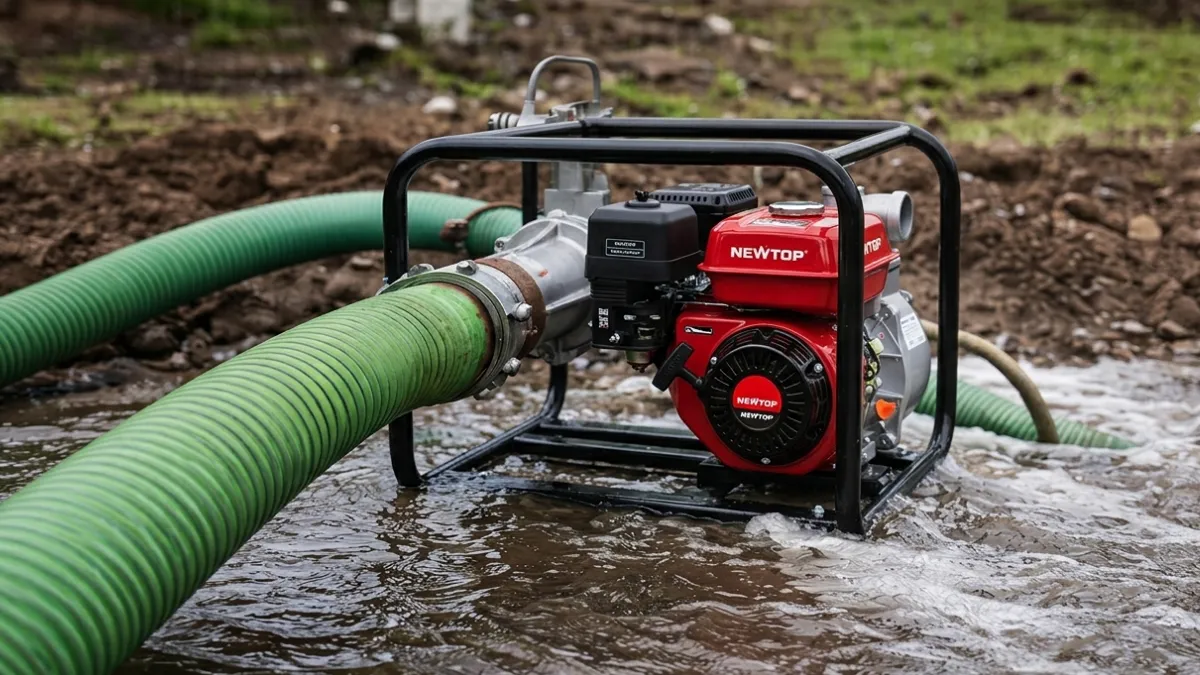
Ao selecionar uma bomba de água para construção, agricultura, drenagem, ou aplicações industriais, escolher o tipo correto de bomba é fundamental. Duas das opções mais comuns são bombas de lixo e bombas de água limpa. Embora ambos sejam projetados para mover água, eles são construídos para condições de trabalho muito diferentes.
Uma bomba de água limpa é projetada para transferir água relativamente limpa com o mínimo de partículas, enquanto uma bomba de lixo é projetada para lidar com água lamacenta, águas residuais, e líquidos contendo detritos sólidos. Escolher a bomba errada pode levar à redução do desempenho, bloqueios frequentes, custos de manutenção mais elevados, ou até mesmo danos à bomba.
Neste guia, explicaremos a diferença entre bombas de água de lixo e bombas limpas bombas de água, incluindo seus princípios de funcionamento, capacidade de manipulação de líquidos, desempenho, aplicações, e como selecionar a solução certa para o seu mercado.
O que é uma bomba de lixo?
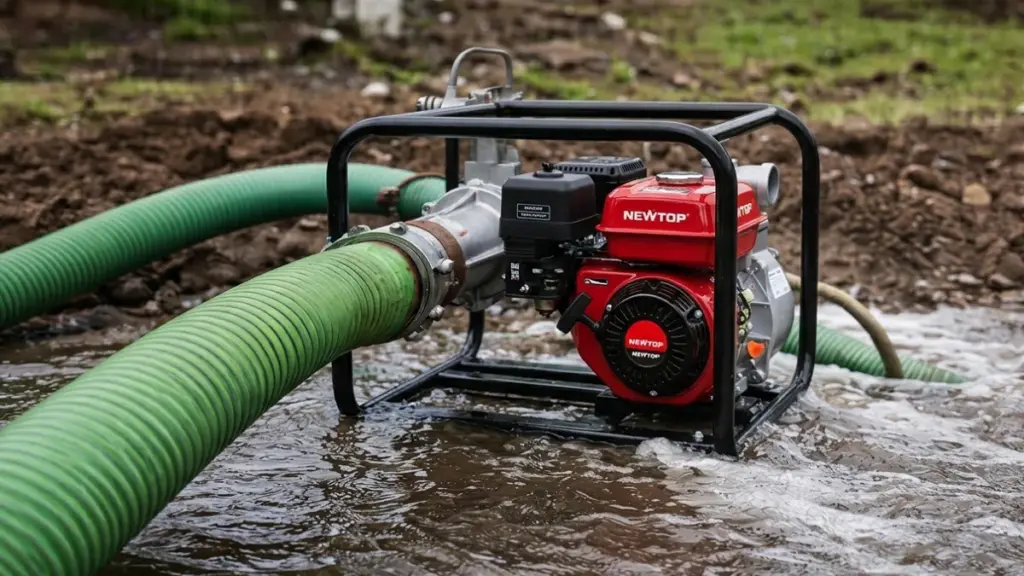
Uma bomba de lixo é um serviço pesado bomba centrífuga construído para mover agressivamente água suja carregada com lodo, areia, e detritos sem obstruir ou falhar.
Definição e propósito central
Engenheiros constroem bombas de lixo especificamente para movimentar água suja repleta de partículas sólidas, como lodo, areia, sujeira, e folhas. Isto contrasta diretamente com as bombas de água limpa padrão, que os operadores pretendem apenas para líquidos claros. If you expose a clean-water pump to heavy contamination, you risk immediate blockage or catastrophic seal failure. The industry categorizes trash pumps as dirty-water pumps because they operate effectively in demanding environments where liquids mix heavily with solid waste.
Key Design Characteristics
The ability to process solid waste requires a specific mechanical architecture. Manufacturers construct these pumps with reinforced components to survive constant internal abrasion.
- Large internal clearances: The design allows suspended solids and debris to pass straight through without plugging internal passages.
- Heavy-duty construction: Production relies on abrasion-resistant materials to withstand the mechanical impact and wear caused by sand and grit.
- Specialized impellers: Rotores abertos ou semiabertos e geometria de voluta especializada evitam matéria orgânica, fibras, ou plásticos se acumulem dentro da caixa.
Aplicações e ambientes típicos
Você implanta uma bomba de lixo quando o líquido que você precisa mover destruiria uma bomba de transferência padrão. Os operadores de campo contam com essas unidades em vários setores de serviços pesados.
- Controle de inundações: Desidratação de porões inundados, garagens, e áreas de trabalho enlameadas após condições climáticas severas ou rupturas de tubos.
- Construção e engenharia civil: Escavações de drenagem, trincheiras de serviços públicos, e bacias sedimentares cheias de águas subterrâneas e solo.
- Águas residuais e drenagem: Limpando esgotos, reservatórios, e canais de drenagem onde o acúmulo de resíduos orgânicos é comum.
- Gestão de resíduos industriais: Movendo efluentes do processo, pastas abrasivas, e fluxos com alto teor de sólidos dentro de estações de tratamento.
O que é uma bomba de água limpa?
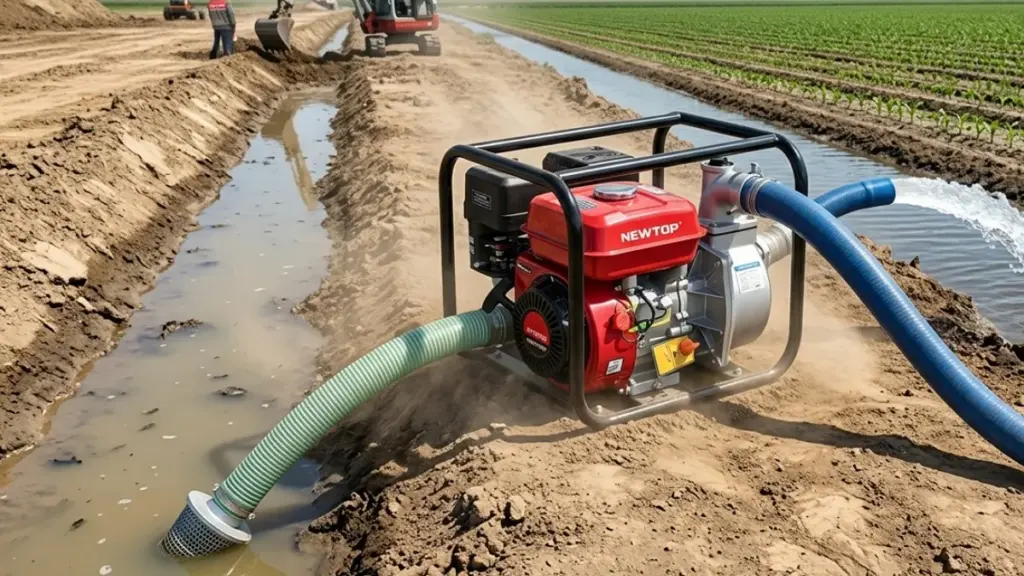
Uma limpeza bomba de água move-se claramente, líquidos sem sólidos de forma eficiente. Ele troca tolerância a detritos por alta pressão, tornando-o a escolha padrão para abastecimento doméstico e irrigação.
Definição e Função Central
As bombas de água limpa são projetadas exclusivamente para fluidos transparentes ou potáveis. Ao contrário das bombas de lixo construídas para mastigar lodo pesado e detritos, essas unidades lidam com água contendo pouco ou nenhum sólido suspenso.
Os engenheiros restringem o tamanho da passagem nessas bombas a um máximo estrito de 5 para 6 milímetros. Os fabricantes avaliam muitos modelos padrão para tolerância sólida zero absoluta. Eles servem como uma alternativa dedicada de líquido transparente quando os riscos de contaminação são baixos e as demandas de desempenho são altas.
Projeto Hidráulico e Eficiência
A arquitetura interna de uma bomba de água limpa prioriza o desempenho em relação ao manuseio de detritos. Estas unidades utilizam passagens de fluxo estreitas para maximizar a pressão de descarga e a eficiência hidráulica. Folgas internas mais estreitas permitem que elas empurrem a água mais rápido e mais longe do que as bombas de água suja equipadas com motores de tamanhos idênticos.
Porque operam em ambientes não abrasivos, livres de pedras e areia, placas de desgaste pesadas em ferro fundido são desnecessárias. Em vez de, os fabricantes constroem as carcaças e os impulsores com materiais adequados para ambientes limpos.
- Plásticos: Leve e altamente resistente à corrosão química.
- Aço inoxidável: Evita a ferrugem em aplicações de água potável e de qualidade alimentar.
- Metais Revestidos: Protege os componentes internos durante o uso doméstico ou agrícola contínuo.
Submersível vs.. Configurações de superfície
Os operadores implantam essas bombas em dois formatos principais com base no layout da fonte de água.
- Unidades Submersíveis: Eles operam inteiramente debaixo d'água com motores hermeticamente selados. Eles costumam utilizar interruptores flutuantes integrados que cortam a energia quando o nível da água cai, evitando o funcionamento a seco e subsequente queima do motor.
- Modelos de Superfície: Estes ficam permanentemente fora da fonte de água. Eles se conectam ao fluido através de mangueiras de sucção rígidas e são padrão para extração de poços rasos e sistemas de pressão domésticos.
Aplicações Típicas
Profissionais da indústria e proprietários residenciais implantam bombas de água limpa para aplicações específicas, tarefas com baixo teor de detritos onde a pressão e a vazão são mais importantes.
- Abastecimento Interno: Extrair água potável doméstica e aumentar a pressão nos sistemas de encanamento residencial.
- Agricultura: Irrigando jardins, pomares, e pequenas colheitas diretamente de poços limpos ou tanques de retenção filtrados.
- Drenagem: Evacuar água limpa ou levemente suja de porões inundados, piscinas, e cisternas de águas pluviais.
Maximize as margens com máquinas de jardim confiáveis

Como funciona uma bomba de lixo?
As bombas de lixo usam um impulsor semiaberto e força centrífuga para mover detritos pesados, contando com fluido retido dentro da carcaça para auto-ferragem automaticamente.
Mecanismo de bombeamento centrífugo
Uma bomba de lixo funciona como uma unidade centrífuga de serviço pesado. A água entra na porta de sucção e atinge uma alta velocidade, semi-open impeller positioned inside a spiral-shaped volute casing.
As the impeller spins, it generates centrifugal force that throws the incoming fluid outward against the casing walls. The volute catches this fluid and converts its kinetic energy into a stable pressure head. This pressure physically drives the water out through the discharge port to create a continuous flow.
Self-Priming Operation
Standard centrifugal pumps fail if air enters the suction line. A trash pump solves this problem by retaining a small charge of water inside its casing between active operating cycles.
When the pump engine starts, the impeller spins this retained water to create a partial vacuum. This vacuum draws air up from the suction line. A mecânica interna separa o ar do líquido e o expulsa pelo lado de descarga. A água então enche o invólucro, completando o processo de preparação e permitindo o início da transferência normal de fluido.
Manuseio de Sólidos e Detritos
A característica definidora de uma bomba de lixo é sua capacidade de processar água contaminada sem obstruir. A unidade utiliza um impulsor semiaberto emparelhado com passagens de fluxo excepcionalmente largas para proteger os componentes internos contra partículas grandes.
Esta geometria interna especializada fornece recursos específicos de manuseio de materiais:
- Tolerância a detritos: Passa materiais sólidos como areia, lama, e se apega 3 polegadas de diâmetro.
- Sólidos Suspensos: Bombeia fluidos contendo até 30% sólidos suspensos por peso.
- Limites de equipamento: Requer uma atualização para uma bomba de polpa especializada para serviço pesado se os sólidos excederem o 30% limite.
Como funciona uma bomba de água limpa?
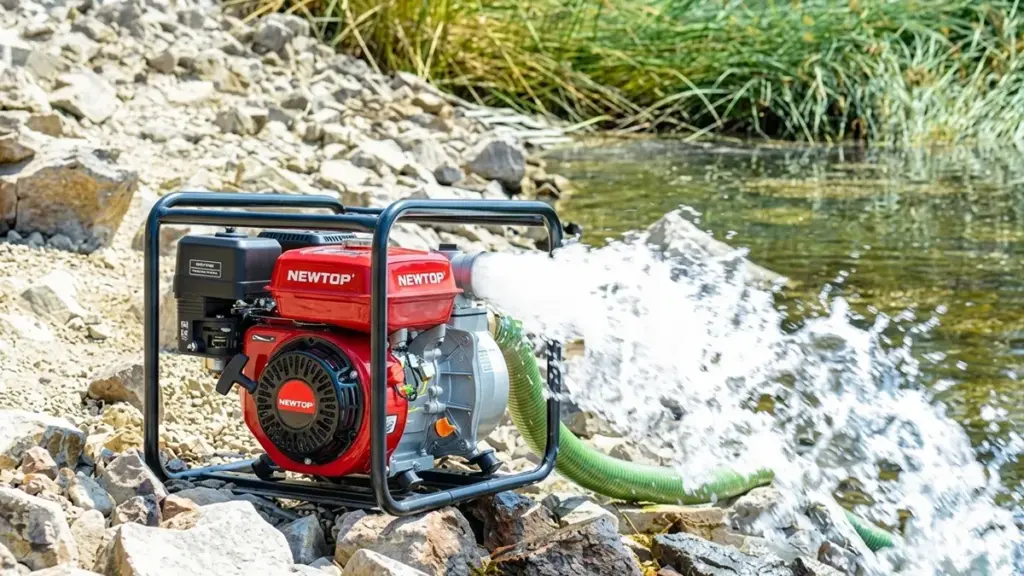
Uma bomba de água limpa usa um impulsor giratório e força centrífuga para converter energia cinética em energia estável., pressão de água utilizável para redes de encanamento e irrigação.
Entrada de água e ação do impulsor
O processo começa quando o líquido transparente entra na câmara da bomba através da porta de entrada. Dentro da habitação, um impulsor motorizado gira rapidamente para acelerar o fluido. À medida que o impulsor gira, gera forte força centrífuga. Esta ação física empurra a água para fora em direção às bordas externas do corpo da bomba, criando o impulso inicial necessário para a transferência.
Conversão de velocidade em pressão
A velocidade por si só não empurrará o fluido através de um layout de encanamento complexo. A carcaça interna da bomba captura a água em movimento rápido assim que ela sai do impulsor. Os engenheiros projetam este invólucro especificamente para traduzir essa energia cinética em pressão de descarga utilizável. A água altamente pressurizada sai então da tubulação de descarga para abastecer a rede de tubulação conectada.
Operação Automática em Sistemas de Poços
As configurações domésticas dependem de componentes adicionais para operar a bomba de forma automática e eficiente. O sistema utiliza três mecanismos principais:
- Tanque de pressão: Armazena água pressurizada para manter um fornecimento consistente e reduzir ciclos curtos no motor.
- Pressostato: Ativa o motor no exato momento em que a pressão da linha cai de um dispositivo aberto.
- Válvula de retenção: Impede que a água flua para trás no poço, mantendo o sistema preparado e mantendo a pressão da linha estável.
Variáveis e limites de desempenho
As condições do mundo real determinam a eficácia com que uma bomba de água limpa funciona. O motor deve gerar força bruta suficiente para superar a gravidade, atrito interno do tubo, e elevação vertical. Os modelos de superfície geralmente requerem preparação manual, o que significa que os operadores devem encher a carcaça com água antes de ligar o motor para garantir a sucção adequada. Os operadores devem monitorar constantemente a fonte de fluido. Operar a bomba sem água causa funcionamento a seco, o que leva diretamente a graves danos por fricção e falha catastrófica da vedação.
Bomba de lixo vs bomba de água limpa: Resumo das principais diferenças
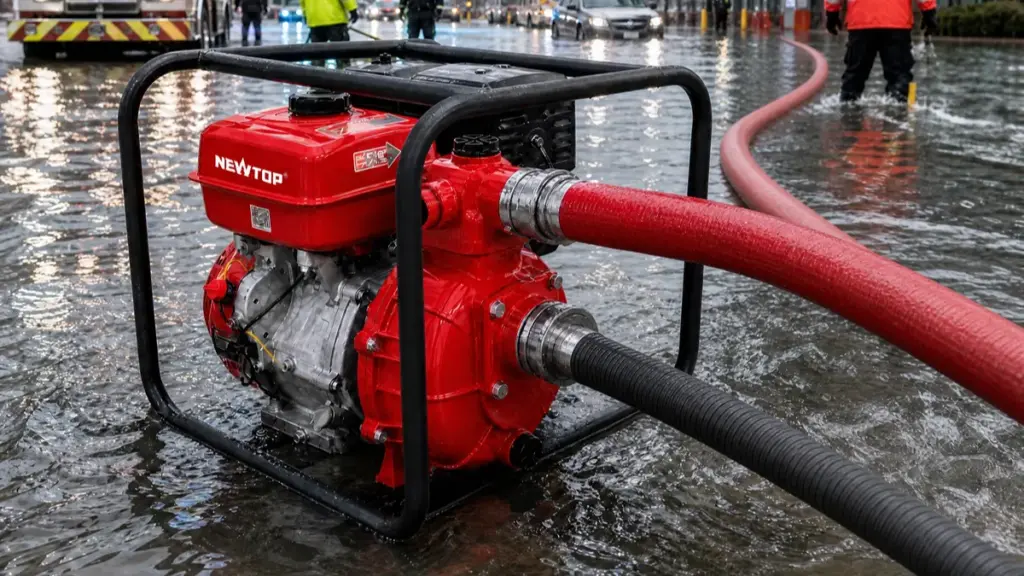
As bombas de lixo priorizam o manuseio robusto de sólidos em ambientes agressivos, enquanto as bombas de água limpa se concentram em maximizar a eficiência hidráulica e a pressão para líquidos claros.
| Comparação | Bomba de lixo | Bomba de água limpa |
|---|---|---|
| Tipo de água | Água suja, água lamacenta, águas residuais | Água limpa |
| Manuseio sólido | Lida com areia, folhas, e pequenos detritos | Manuseio limitado de partículas sólidas |
| Projeto do impulsor | Design de impulsor aberto ou semiaberto | Projeto de impulsor fechado |
| Tamanho da passagem | Maior folga para partículas sólidas | Folga menor para maior eficiência |
| Eficiência | Um pouco mais baixo devido à construção robusta | Maior eficiência ao bombear água limpa |
| Manutenção | Requer inspeção e limpeza após operação com água suja | Menor manutenção sob condições operacionais adequadas |
| Uso típico | Canteiros de obras, controle de enchentes, aplicações de drenagem | Irrigação, transferência de água, abastecimento de água doméstico |
| Durabilidade | Projetado para ambientes agressivos e aplicações exigentes | Projetado para aplicações de água mais limpa |
Manuseio de Sólidos e Ambiente Operacional
As bombas de lixo movem ativamente a lama, areia, folhas, e sólidos de até 2–3 polegadas de diâmetro sem travamento. Os operadores confiam neles como a principal ferramenta para a drenagem de canteiros de obras, gestão de águas residuais municipais, ou limpando poços de lama. Eles mantêm taxas de fluxo constantes mesmo quando a fonte de água está fortemente contaminada com detritos abrasivos.
As bombas de água limpa manuseiam estritamente, líquidos filtrados. Eles atendem sistemas domésticos de abastecimento de água, estações de aumento de pressão, e redes de irrigação agrícola. Se for embora, cascalho, ou lama espessa entra em um sistema de água limpa, a bomba sofre danos imediatos no impulsor e rápida falha na vedação.
Compensações de desempenho e eficiência
As bombas de lixo priorizam alto volume de fluxo e resistência contínua a entupimento em relação à saída de pressão máxima. As folgas internas mais amplas nas bombas de lixo reduzem ligeiramente a eficiência energética geral. Você troca desempenho hidráulico preciso pela garantia de operação confiável em condições imprevisíveis, condições sujas.
Clean water pumps deliver superior pressure and hydraulic efficiency when transporting clear liquids over long distances. Their narrow internal passages convert more motor energy into usable head pressure. They excel at pushing water uphill or feeding long sprinkler lines, provided the water remains pristine.
Internal Design and Material Construction
Manufacturers engineer these two pump categories with distinctly different internal architectures to survive their target environments.
- Impeller and Volute: Trash pump models feature thick, cast-iron semi-open impellers and wide volutes designed to absorb repeated impacts from rocks and gravel. Clean water units utilize standard, closed impellers with tight internal clearances optimized solely for clear liquids.
- Mechanical Seals: As bombas de lixo contam com vedações de carboneto de silício resistentes à abrasão para suportar areia contínua. As bombas de água limpa usam vedações de cerâmica de carbono padrão adaptadas para ambientes não abrasivos.
- Acesso de manutenção: As bombas de lixo geralmente incluem portas de limpeza de liberação rápida para remover grandes objetos alojados. As bombas de água limpa não possuem essas portas porque não foram projetadas para ingerir grandes sólidos.
Economia de custos e ciclo de vida
As bombas de lixo têm um preço de compra inicial mais alto devido ao seu reforço, materiais de fabricação pesados. As robustas carcaças de ferro fundido e os sistemas de vedação atualizados aumentam as despesas iniciais, mas reduzem drasticamente o tempo de inatividade em condições adversas do local.
As bombas para água limpa oferecem o melhor valor a longo prazo e os menores custos operacionais somente quando aplicadas estritamente em aplicações de água limpa. A implantação de uma bomba de água limpa em ambientes lamacentos causa rápida falha mecânica. Substituindo motores queimados, impulsores quebrados, e vedações comprometidas tornam a bomba padrão a escolha mais cara para tarefas pesadas.
Quais líquidos cada bomba pode controlar?
Combine a bomba com o líquido. Água limpa requer bombas de água limpa eficientes, enquanto fluidos turvos exigem passagens maiores de bombas de semi-lixo ou lixo para evitar falhas.
Bombas de água limpa para líquidos transparentes
As bombas de água limpa são construídas exclusivamente para fluidos com quase zero sólidos. Você os usará principalmente para água potável, água da chuva limpa, e água de processo levemente tratada.
Os engenheiros projetam essas bombas com passagens internas estreitas. Esta geometria maximiza a eficiência hidráulica, mas deixa a bomba altamente vulnerável à abrasão e ao entupimento caso sólidos entrem no sistema. Exposição à turbidez visível, areia, areia, ou detritos fibrosos causam desgaste rápido do impulsor e riscos de sobrecarga grave do motor. Se a água parecer suja, mantenha esta bomba fora disso.
Bombas de lixo para detritos pesados e lodo
Quando o fluido contém detritos pesados, você precisa de uma bomba de lixo. Os fabricantes projetam essas unidades especificamente para líquidos sujos, incluindo água lamacenta, pasta espessa, resíduos agrícolas, e forte escoamento de enchentes.
As bombas de lixo apresentam impulsores abertos ou semiabertos capazes de passar grandes sólidos, geralmente até cinco centímetros de diâmetro. Eles lidam com sedimentos grossos, cascalho, folhas, e galhos sem sofrer danos internos ou restringir o caminho do fluxo. Você troca alguma eficiência hidráulica por confiabilidade incomparável em ambientes severos.
Bombas Semi-Lixo para Turbidez Intermediária
As bombas para semi-lixo preenchem a lacuna entre a água limpa e o manuseio de lixo pesado. Eles gerenciam água turva contendo sólidos moderados e impurezas onde uma bomba de água limpa falharia rapidamente.
Estas unidades passam pequenas partículas variando de 0.5 para 1 polegada de diâmetro. Eles são uma escolha prática para desidratação em construções leves, projetos de paisagismo, e drenagem suja da lagoa. Elas oferecem uma resistência muito melhor ao entupimento do que as bombas padrão, mas não possuem capacidade interna para mover pedras grandes ou densas., lama fibrosa.
Diretrizes Práticas para Avaliação de Líquidos
A seleção da bomba começa com uma análise rigorosa do fluido. Inspecione visualmente a clareza da água e estime o tamanho máximo das partículas antes de finalizar a escolha do seu equipamento. Uma rápida avaliação de campo evita tempos de inatividade dispendiosos posteriormente.
Priorize bombas de água limpa ao transferir fluidos visivelmente claros onde é necessária a máxima eficiência hidráulica. Por outro lado, selecione uma bomba de lixo completa para ambientes abrasivos ou fibrosos de alta concentração. Isto garante confiabilidade contínua e evita falhas repentinas do equipamento quando as condições de bombeamento se deterioram.
Como funciona o desempenho, Eficiência, e comparação de manutenção?
As bombas de água limpa priorizam a eficiência hidráulica e a pressão para fluidos claros, enquanto as bombas de lixo sacrificam a eficiência máxima para manter o fluxo contínuo de alto volume em condições com muitos detritos.
Diferenças de desempenho no fluxo, Pressão, e Manuseio de Sólidos
As bombas de água limpa são projetadas para maximizar a pressão (cabeça) e mover líquidos claros rapidamente. Eles usam saídas menores e geometrias internas mais estreitas para empurrar a água por longas distâncias ou subidas. As bombas de lixo abordam o desempenho do ângulo oposto. Eles enfatizam o volume do fluxo bruto sobre a pressão, movendo-se frequentemente mais de 1,000 galões por minuto para evacuar áreas inundadas ou limpar grandes trincheiras.
O limite operacional definidor para ambos os tipos de bombas é a sua capacidade de manuseio de detritos físicos:
- Bombas de água limpa: Possuem tolerância quase zero para detritos. Mesmo pequenas partículas suspensas podem danificar componentes internos.
- Bombas de lixo: Utilize impulsores especializados e volutas largas para passar sólidos que vão desde 0.5 acabar 2 polegadas sem entupimento.
Eficiência Hidráulica vs.. Eficiência Operacional
Uma comparação padrão do pico de eficiência hidráulica sempre favorece os modelos de água limpa. Suas folgas internas mais estreitas convertem mais energia de entrada diretamente em pressão de fluido ao operar em águas cristalinas. As bombas de lixo funcionam inerentemente com menor eficiência hidráulica. Suas passagens internas maiores criam turbulência e recirculação de fluidos, que requer mais energia para mover o mesmo volume de água.
Mas no campo, a eficiência operacional é mais importante do que as classificações do laboratório. Quando você introduz detritos na mistura, uma bomba de água limpa sofre rápida perda de eficiência devido a bloqueios e desgaste de componentes. Uma bomba de lixo fornece a melhor eficiência prática simplesmente permanecendo on-line e mantendo o fluxo contínuo em condições adversas., ambientes contaminados.
Demandas de manutenção, Resistência ao desgaste, e tempo de atividade
Os perfis de manutenção diferem inteiramente com base no ambiente operacional. Uma bomba de água limpa requer muito pouca manutenção de rotina. Se você mantiver o fluido limpo, você apenas monitora a lubrificação básica e realiza inspeções periódicas de vedação. As bombas de lixo exigem um cronograma de manutenção muito mais ativo porque operam em condições altamente abrasivas.
As tarefas de manutenção padrão para uma bomba de lixo incluem:
- Limpeza do filtro: Limpeza frequente das telas de entrada para evitar grandes bloqueios.
- Inspeção do impulsor: Verificação das palhetas quanto a desgaste e danos por impacto causados por pedras e detritos.
- Verificações de voluta: Monitorando a carcaça da bomba quanto à erosão interna causada por areia e cascalho.
Apesar desses requisitos mais elevados de manutenção programada, bombas de lixo são construídas com espessura, materiais pesados. Esta construção robusta absorve o castigo físico da água suja, reduzindo drasticamente o tempo de inatividade inesperado e as falhas catastróficas quando as condições de campo ficam difíceis.
What Are the Best Applications for Each Pump Type?
Match the pump to the fluid. Trash pumps handle high-volume debris removal, while clean water pumps deliver high-pressure transfer for clear liquids.
Ideal Uses for Trash Pumps (Solids and Contaminated Water)
Trash pumps operate in hostile environments where suspended solids would instantly destroy standard impellers. They sacrifice maximum pressure to maintain continuous operation when ingesting heavy debris.
- Flood control and emergency dewatering: Rapidly clearing out basements, garagens, and muddy outdoor areas after heavy rainfall.
- Heavy-duty site operations: Supporting construction, civil works, and industrial processes that involve sand, cement, or thick sludge.
- Agricultural and waste management: Emptying dirty ponds, artificial lakes, or agricultural wastewater systems packed with organic matter.
- Prioridade de desempenho: Oferecendo altas taxas de fluxo (≥100 L/min) usando robusto, impulsores semiabertos em vez de gerar alta pressão.
Melhores cenários para bombas de água limpa (Água Limpa e Pressão)
Quando a fonte de fluido está livre de sedimentos, bombas de água limpa assumem a liderança. Suas folgas internas estreitas permitem que eles empurrem o fluido com eficiência por distâncias maiores e subam elevações mais íngremes.
- Abastecimento doméstico de água: Fornecendo aumento de pressão estável em poços profundos, cisternas, ou retenção de tanques em edifícios residenciais.
- Irrigação direcionada: Alimentação de sistemas de irrigação de jardins e redes de irrigação agrícola leve usando água da chuva filtrada.
- Transferência de líquido transparente: Drenando ou movendo a água perfeitamente entre piscinas, reservatórios fechados, e configurações de aquicultura sensíveis.
- Prioridade de desempenho: Manter taxas de fluxo médias combinadas com pressão mais alta (cabeça) para estável, entrega contínua.
Aplicações de uso misto e bombas de dupla finalidade
As condições do local de trabalho mudam frequentemente. Os fabricantes projetam bombas submersíveis de dupla finalidade especificamente para ambientes onde a qualidade da água oscila entre límpida e com muitos sedimentos ao longo do dia.
Estas unidades híbridas apresentam mecanismos de entrada ajustáveis que permitem aos operadores alternar manualmente entre os modos de água limpa e suja. Esta engenharia maximiza a eficiência energética durante a extração de água limpa, ao mesmo tempo que evita ativamente obstruções no momento em que os detritos entram na bacia.
Lista de verificação acionável: Combinando a bomba com sua tarefa
Evite falhas prematuras do equipamento realizando uma avaliação básica do local antes da implantação. A implantação do tipo errado de bomba garante tempo de inatividade e aumenta os custos de manutenção.
- Avalie a composição da água: Selecione bombas de lixo para ambientes que contenham areia, folhas, ou lama. Use bombas de água limpa exclusivamente para fluidos claros.
- Defina o objetivo: Escolha bombas submersíveis de alto volume para tarefas de esvaziamento rápido, ou bombas focadas em pressão para irrigação de longa distância.
- Calcular os requisitos de capacidade: Verifique a vazão necessária (L/min) e altura total da cabeça ditada pelo layout específico do seu site.
- Garanta automação e segurança adequadas: Instale interruptores flutuantes para gerenciamento de inundação com as mãos livres e proteção contra funcionamento a seco para evitar que as bombas do poço queimem.
Como escolher a bomba de água certa para o seu mercado
A seleção da sua bomba depende da qualidade da água e das necessidades de pressão. Combine a capacidade de manuseio de sólidos com o seu local de trabalho para evitar falhas no equipamento e eliminar tempos de inatividade dispendiosos.
Avalie a qualidade da água e o tamanho dos detritos
O primeiro passo na seleção da bomba é diagnosticar a fonte de água. A qualidade da água determina diretamente as folgas internas e o design do impulsor que seu equipamento precisa para sobreviver.
- Bombas de água limpa: Manuseie fluidos claros com o mínimo de sólidos suspensos, normalmente atingindo o máximo em 0.25 polegadas.
- Bombas de lixo: Processar água suja contendo sedimentos, folhas, e lama, passando sólidos pesados entre 1.25 e 2 polegadas de diâmetro.
Sempre selecione uma classificação de bomba que exceda o maior tamanho de detritos esperado no fluido. Esta margem de segurança evita entupimentos imediatos e danos internos quando as condições do local pioram inesperadamente.
Determinar os requisitos de pressão e fluxo
Além da qualidade da água, você deve definir as demandas hidráulicas do trabalho. Diferentes arquiteturas de bombas atendem a objetivos de transferência totalmente diferentes.
- Alta pressão: Bombas de água limpa fornecem maior pressão de descarga, tornando-os o padrão para movimentação de fluidos por longas distâncias ou alimentação de mangueiras menores.
- Alto volume: Trash pumps trade maximum line pressure for high flow volume, prioritizing rapid dewatering to clear flooded areas fast.
- Port sizing: Trash pumps utilize larger 2-inch to 6-inch ports to ensure debris-laden water moves through the system without restriction.
Match Pump Specifications to Jobsite Applications
You need to align the pump’s design with the actual work environment. Standard centrifugal pumps fail rapidly when misapplied on the jobsite.
- Clean water tasks: Deploy these units for pool draining, basement dewatering after clean floods, and clear-source agricultural irrigation.
- Dirty water tasks: Use trash pumps for construction site dewatering, clearing flooded trenches, and agricultural transfer involving organic matter.
- Dust suppression: Escolha uma bomba de lixo para controle de poeira no local de trabalho para garantir uma operação confiável ao extrair fontes de água turva ou lamacenta.
Pese os custos iniciais em relação ao potencial tempo de inatividade
As decisões de compra geralmente se concentram nas etiquetas de preços iniciais, mas os custos totais do ciclo de vida determinam a verdadeira rentabilidade. As bombas de água limpa proporcionam um preço de compra mais baixo e maior eficiência operacional em ambientes de água limpa.
Operar uma bomba de água limpa padrão em condições lamacentas é um erro caro. As estreitas folgas internas obstruirão rapidamente, arriscando danos graves ao equipamento e atrasos dispendiosos no projeto.
Bombas de lixo exigem um investimento inicial maior. Eles compensaram esse custo apresentando impulsores reforçados, selos mecânicos para serviços pesados, e passagens internas mais largas. Essa construção robusta elimina tempos de inatividade dispendiosos e mantém sua operação funcionando sob condições adversas.
Erros comuns ao selecionar bombas de água
Selecionar a bomba de água errada leva a falhas prematuras e custos operacionais inflacionados. Combine os limites hidráulicos e a classificação de sólidos da bomba com o seu ambiente de fluido específico para garantir confiabilidade.
Tipos de bombas e requisitos de fluido confusos
Os compradores frequentemente pegam uma bomba de água limpa padrão para poços lamacentos ou cheios de detritos. As passagens estreitas obstruem instantaneamente, levando ao rápido desgaste do impulsor e motores queimados. Por outro lado, implantar uma bomba de lixo de alto fluxo para um trabalho que exige água limpa de alta pressão resulta em baixo desempenho e desperdício de combustível. Você deve combinar corretamente o hardware da bomba com o perfil exato do fluido.
- Limites de manuseio de sólidos: Julgar mal o tamanho máximo de sólidos e alimentar grandes detritos em uma bomba classificada para água limpa.
- Erros de química de fluidos: Usar bombas domésticas padrão em água do mar corrosiva ou fluidos químicos sem a resistência adequada do material.
- Incompatibilidade de aplicativo: Contar com uma bomba de lixo de baixa pressão quando uma bomba centrífuga ou multiestágio dedicada é necessária para transferência de alta altura manométrica.
Dimensionamento incorreto para fluxo, Cabeça, e poder
Adivinhar os requisitos de fluxo e altura manométrica destrói a eficiência da bomba. Superdimensionando uma bomba “só para estar seguro” força a unidade a operar longe de seu melhor ponto de eficiência (BEP). Isso aumenta drasticamente o consumo de energia e o desgaste mecânico. Por outro lado, uma bomba subdimensionada funciona continuamente na capacidade máxima, resultando em sobrecarga motora crônica.
- Perdas por fricção: Subestimando a cabeça dinâmica total (TDH) calculando apenas a elevação vertical e ignorando o atrito nas mangueiras, tubos, e acessórios.
- Limites de sucção: Tentativa de extrair água além dos limites físicos de elevação de sucção das bombas de superfície (tipicamente 7 para 9 metros), causando cavitação severa.
- Déficits de volume: Subdimensionando a capacidade de fluxo, levando à entrega inadequada de volume e superaquecimento.
Ignorando a compatibilidade de materiais e os ciclos de trabalho
Você não pode operar equipamentos domésticos leves em um canteiro de obras pesadas. A especificação de materiais padrão para ambientes altamente abrasivos acelera o desgaste de componentes críticos, como impulsores, usar anéis, e invólucros de voluta. Ambientes industriais exigem equipamentos classificados para condições exatas do local.
- Destruição abrasiva: Seleção de ferro fundido padrão ou plásticos que sofrem erosão rapidamente ao bombear areia ou cascalho.
- Abuso do ciclo de trabalho: Using intermittent-duty domestic pumps for continuous heavy-duty dewatering tasks.
- Short cycling: Failing to size the control system correctly causes excessive on/off cycles, stressing motor starters and wearing out mechanical seals.
Overlooking System Design and Electrical Needs
A pump is only as good as the system surrounding it. Many operators design pipework diameters and layout before selecting the pump. This creates high friction losses and chokes performance. Poor suction layouts—such as using overly long, restrictive hoses or placing intakes directly in bottom sediment—force the pump to work harder than necessary.
- Restrictive layouts: Creating poor suction configurations that starve the pump of water and trigger cavitation.
- Power mismatches: Supplying mismatched site voltage and phase, estragando o motor instantaneamente.
- Salvaguardas ausentes: Operando sem recursos críticos de proteção do motor, incluindo ensaio a seco, térmico, e proteções de tensão.
Priorizando o custo inicial em relação ao ciclo de vida e aos dados técnicos
Comprar a unidade mais barata disponível é uma forma garantida de inflacionar seus custos de longo prazo. Os compradores muitas vezes confiam nas manchetes de marketing em vez de verificar as capacidades do fluxo e do cabeçote em relação às curvas reais de desempenho do fabricante.. Em ambientes exigentes, isso leva a uma falha catastrófica do equipamento.
- Cegueira do ciclo de vida: Escolher unidades baratas ignorando a confiabilidade a longo prazo, intervalos de substituição de peças de desgaste, e consumo de energia ao longo da vida.
- Ignorando as curvas: Seleção de bombas com base apenas nos números de pico, em vez de verificar os requisitos operacionais em relação à curva oficial da bomba.
- Ignorando a experiência: Recusar-se a consultar especialistas em bombas para trabalhos complexos, como bombeamento de poços profundos ou desvio de esgoto.
Por que escolher NEWTOP para fabricação OEM de bombas de água?
Como um fabricante experiente de equipamentos elétricos para ambientes externos, NOVOTOP fornece soluções confiáveis de bombas de água para distribuidores globais, revendedores, e usuários profissionais.
Com mais de 20 anos de experiência em fabricação, NEWTOP concentra-se em bombas de água a gasolina, incluindo bombas de água limpa e bombas de lixo projetadas para diferentes ambientes de trabalho.
As soluções de bomba de água NEWTOP apresentam:
- Desempenho confiável do motor a gasolina
- Estruturas de bomba duráveis
- Estrito controle de qualidade processos
- Suporte OEM e personalização
- Capacidade profissional de produção e teste
Para clientes que procuram um parceiro de fabricação de longo prazo, NEWTOP ajuda a desenvolver produtos de bombas de água que atendem às diferentes demandas do mercado, requisitos de aplicação, e padrões regionais.
Considerações Finais
A diferença entre uma bomba de lixo e uma bomba de água limpa se resume principalmente ao tipo de água para a qual foram projetadas..
Uma bomba de água limpa proporciona maior eficiência ao transferir água limpa, enquanto uma bomba de lixo oferece maior durabilidade ao lidar com água lamacenta e detritos sólidos.
Antes de comprar ou importar bombas d’água, sempre considere:
- Qualidade da água
- Tamanho de partícula sólida
- Taxa de fluxo necessária
- Ambiente de trabalho
- Necessidades de manutenção a longo prazo
Escolher o tipo correto de bomba garante melhor desempenho, vida útil mais longa, e menores custos operacionais.
Perguntas frequentes
Qual é a diferença entre uma bomba de lixo e uma bomba de água limpa?
Uma bomba de lixo move água cheia de detritos, como areia, lama, e folhas, usando grandes passagens internas e impulsores semiabertos. Uma bomba de água limpa manuseia água limpa ou levemente suja e opera com folgas mais estreitas, otimizadas para pressões mais altas. Usar uma bomba de água limpa em água suja causa entupimento rápido e desgaste interno.
Uma bomba de água limpa pode lidar com água suja?
Não. As bombas de água limpa dependem de folgas internas estreitas para gerar alta pressão e eficiência. Se eles ingerirem areia, seixos, ou detritos fibrosos, eles obstruem rapidamente ou sofrem danos no impulsor. Você precisa de uma bomba de lixo ou de água suja para água contendo sólidos visíveis ou lodo.
Que tipo de sólidos uma bomba de lixo pode manipular?
As bombas de lixo padrão passam facilmente objetos sólidos entre 1 e 3 polegadas de diâmetro. Isso inclui areia, cascalho, folhas, galhos, e lama mole. Eles lidam com sólidos suspensos até 30% por peso. They are not designed for highly abrasive mining slurries or extremely stringy materials like long ropes or large rags.
Is a trash pump slower than a clean water pump?
In clear water, a trash pump produces lower pressure and hydraulic efficiency than a comparable clean water pump. But in muddy or debris-filled water, a trash pump completes the job much faster. It maintains stable flow without the constant clogging and downtime that completely halts a clean water pump.
Which pump is better for construction sites?
A trash pump is almost always the better choice for construction sites. Trench dewatering and excavation clear-outs involve muddy water, silt, and gravel. A trash pump processes this debris without jamming. Choose a clean water pump only if transferring filtered water over long distances or needing high-pressure output.
Can I use a trash pump for irrigation?
Sim, particularly for flood or basin irrigation drawing from turbid creeks and ponds. Since trash pumps process leaves and silt easily, they prevent system blockages. They produce lower pressure than clean water pumps, making them less suitable for high-pressure sprinkler lines or drip systems unless you install robust downstream filtration.
Why does pump passage size matter?
Passage size dictates the maximum solid diameter a pump can ingest without jamming. A larger passage size, found in trash pumps, minimizes clogging risks and downtime in debris-laden environments. The small passage sizes in clean water pumps maximize hydraulic efficiency but leave them vulnerable to instant blockages from small stones or twigs.
Which pump type has lower maintenance cost?
Under ideal clear-water conditions, a clean water pump costs less to maintain because it avoids abrasive wear. Trash pumps face harsh, gritty environments requiring more frequent clean-outs and wear-part replacements. Deploying a clean water pump in a dirty environment guarantees severe damage, making the trash pump far more cost-effective for heavy-duty applications.
