


- 全て
- NEWTOPのお客様事例
- NEWTOP エクスプローラー ハブ
- NEWTOP 業界の洞察

The NEWTOP Autumn Deals 2026 are here, bringing limited-time discounts and exclusive order rewards to qualified new customers.
From August 21 to September 30, 2026, earlier orders receive higher discounts. Qualified FOB orders can also unlock promotional gifts based on order value, giving distributors an additional reason to bring forward planned restocking, new product introductions, and mixed-category purchases.
Whether you are preparing for year-end sales, expanding your current range, or placing your first NEWTOP order, the promotion offers a practical opportunity to reduce procurement costs while building inventory around real market demand.

Autumn Discounts: The Earlier You Order, the More You Save
The highest discount is available during the opening stage. Buyers with confirmed requirements are encouraged to finalize their product specifications and quantities before August 31.
| Order Period | 割引 |
|---|---|
| August 21–31, 2026 | 3% OFF |
| September 1–15, 2026 | 2% OFF |
| September 16–30, 2026 | 1% OFF |
The applicable discount will be based on the date the qualified order is confirmed within the promotion period.
Exclusive Gifts for Qualified Orders
In addition to the time-based discount, qualified orders can receive promotional gifts according to their FOB order value.
In addition to discounts, NEWTOP offers premium gift during the promotion period:
- Orders over $20,000
🎁 Huawei mobile phone, 100 branded T-shirts or hats - Orders over $10,000
🎁 High-quality Bluetooth speaker - Orders over $5,000
🎁 High-end backpack - Orders over $2,000
🎁 Bluetooth earphones
The above order amounts are for FOB value only.The promotional gifts are available only to the first 20 new customers.
Gift images are for reference only, and actual models, colors, and specifications are subject to the physical products supplied.
Make More of Your First NEWTOP Order
The Autumn Deals can support different purchasing plans, whether you are testing NEWTOP products for the first time, preparing stock for the next sales season, or adding related products to your existing range.
The promotion applies across NEWTOP’s main product categories, including outdoor power equipment, agricultural machinery, 発電機, ウォーターポンプ, 船外機, lithium battery tools, および交換部品.
New customers can use the promotion to:
- Place an initial trial order for selected models
- Replenish products with clear local demand
- Combine complementary categories in one purchase
- Add common spare parts and accessories
- Begin an OEM or private-label project
A focused first order is often more practical than selecting too many unrelated products. Choosing several relevant models and the necessary service parts can make product evaluation, market testing, and future restocking easier.
Why Earlier Confirmation Matters
The opening stage provides the highest discount, but earlier confirmation can also make the order process more flexible.
Additional preparation time may be needed when an order includes:
- Multiple product models
- Market-specific technical configurations
- カスタムカラー, labels, or cartons
- Mixed machines and spare parts
- Special packaging or loading arrangements
Confirming these requirements early gives both sides more time to review the quotation, check product availability, prepare OEM materials, and arrange production and shipment.
To receive an accurate promotional offer, buyers should provide the main product models, quantities, destination market, technical requirements, and any customization needs. The NEWTOP sales team can then confirm the applicable discount, gift eligibility, and order details.
Secure Your Autumn Benefits Before September 30
の NEWTOP Autumn Deals 2026 run from 8月 21 to September 30 and are available exclusively to new customers.
Customers who place their orders earlier receive a higher discount, while qualified orders can also unlock promotional gifts according to their FOB value.
Please note:
- Promotional gifts are limited to the first 20 qualified customers
- Gift thresholds are calculated according to FOB order value
- The applicable discount depends on the order confirmation date
- Gift models and specifications are subject to actual availability
Contact the NEWTOP sales team with your product requirements to confirm availability, promotion eligibility, and the offer applicable to your order.
Order early, save more, and unlock extra rewards with your first NEWTOP purchase.
*NEWTOP reserves the right of final interpretation of this promotion.
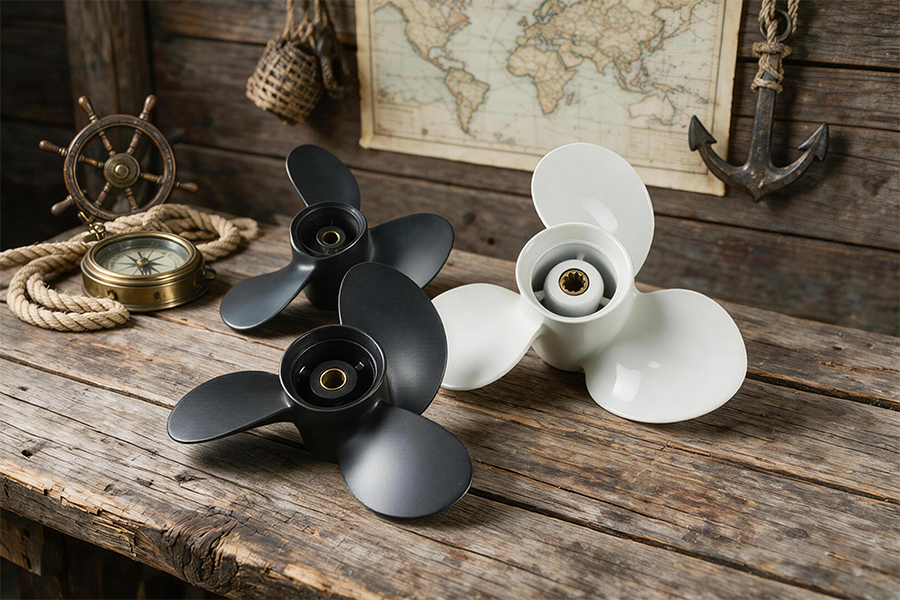
南米で最もリピート販売の可能性が高い船外機プロペラは、通常、広く使用されている小型および中型船外機の 3 枚ブレードのアルミニウム製代替モデルです。. 多くの販売代理店にとって, 最も実用的な出発点は、9.9 ~ 15 HP および 25 ~ 40 HP のエンジン ファミリです。, 続いて選択した 40 ~ 60 HP アプリケーション.
これは大陸全体の売上ランキングではありません. 南米諸国全体で個々のプロペラ SKU の販売を追跡する公開データベースは存在しない. ブラジル, コロンビア, チリ, ペルー, 他の市場には異なるフリートがあります, 水路, 顧客の予算, およびレクリエーションボート部門.
在庫を計画するより信頼性の高い方法は、ローカルですでに稼働しているエンジンを特定することです。, 次にプロペラの材質を決定します, ピッチ, および取り付け仕様により、繰り返しの交換需要が発生する可能性が最も高くなります。.
実用的な南米ストッキングマップ
次の表は、公開されている地域の販売データではなく、代理店の在庫モデルです。.
| 在庫位置 | 推奨フォーカス | この地位にふさわしい理由 |
|---|---|---|
| ディープストック | 確認済みの 9.9 ~ 15 HP エンジン ファミリ用の 3 ブレード アルミニウム プロペラ | 小物釣り, インフレータブル, 川, およびユーティリティボートは広範な交換需要を生み出します |
| コアストック | 確立された 25 ~ 40 HP エンジン ファミリ用の 3 ブレード アルミニウム プロペラ | 積載漁船や輸送船向けの一般的な商用ステップアップ |
| 厳選ストック | 選択された 40 ~ 60 HP エンジン用のアルミニウム プロペラ, プラス実績のあるステンレス鋼サイズ | 大型の作業船やレクリエーション用船団がすでに設置されている場合に便利です |
| オーダーバックレンジ | 4枚刃, プレミアムステンレススチール, 珍しいピッチ, 回転, またはハブ構成 | 需要はよりアプリケーション固有になり、確定した注文に対して供給が容易になります |
重要なフレーズは確認されたエンジンファミリーです. プロペラハブを使用する場合、幅広い馬力範囲をストックしても役に立ちません。, スプライン数, 直径, またはピッチが顧客が実際に操作するエンジンと一致しない.
シグナルワン: すでにローカルで動作している船外機はどれですか?
プロペラの売上高は搭載エンジン数に応じて変化します.
ブラジルにおける最近の公共部門の購入には以下が含まれます。 15 HP 2 ストローク船外機と 6 メートルのアルミニウム ボートを組み合わせた、最大 25 HP. コロンビアでは, 国の漁業当局は、 40 HP船外機 2025. チリの小規模底生漁業に関するFAOの記述には、約100年前の船外機を使用したオープンボートも記録されている。 10 に 45 HP. これらの情報源はプロペラの小売販売レポートではありません。, しかし、これらは小型および中型エンジンバンドが商業的に重要であり続ける理由を示しています.
販売代理店様向け, これは、最初の在庫決定を次のように行うべきではないことを意味します。:
世界中で人気のあるプロペラのサイズはどれですか?
そうあるべきです:
当社のエンジン販売で最も多く登場する船外機モデルはどれですか, ワークショップの修理, お客様からのお問い合わせ, 地元の漁船団と?
すでに販売しているディーラー 15 HP, 30 HP, そして 40 HP 船外機には自然な出発点があります. プロペラの在庫は、無関係なモデルに拡張する前に、まずそれらのエンジンをサポートする必要があります。.
有用な現地証拠が得られる可能性がある:
- 船外機販売実績
- ワークショップサービス履歴
- 損傷したプロペラの交換
- お客様の写真と部品のお問い合わせ
- 政府のボートプロジェクト
- 漁業および運送協会
- 競合他社のエンジンの入手可能性
これにより、一般カタログからのみプロペラを選択するよりも優れた SKU リストが作成されます。.
シグナル2: ボートはどのような仕事をするのか?
同じ馬力を使用する 2 つのボートは異なるプロペラ需要を生み出す可能性があります.
負荷が軽いインフレータブルは、容易なプレーニングと汎用パフォーマンスを優先する場合があります。. 網を運ぶ漁船, 燃料, 氷, クルー, そしてキャッチは加速と荷重処理に重点を置きます. 河川輸送船は乗客または貨物の重量を変更して運行する場合があります, 一方、娯楽ユーザーは巡航速度にもっと注意を払うかもしれません.
ボートの通常の動作は、どのピッチ変動を利用できるかに影響を与えます.
小型漁船および多目的ボート
ポータブルおよび軽量商用エンジン用, 交換購入者が優先することが多い:
- お手頃な価格
- 直接取り付け
- すぐに利用可能
- 信頼できる総合性能
- 衝撃による損傷後の簡単な交換
これにより、標準の 3 ブレード アルミニウム モデルのより深い在庫がサポートされます。.
積載された商用ボート
定期的に貨物や漁具を運ぶ作業船では、同じエンジンを使用する軽荷重の船とは異なるピッチが必要になる場合があります。.
この市場にサービスを提供するディーラーは、:
- 標準置き換え仕様
- 確認された負荷指向の代替案の 1 つ
- 適合するワッシャー, ナッツ, ピン, およびハブコンポーネント
これにより、動きの遅い SKU を大量に作成することなく、ワークショップに実用的な 2 番目のオプションが提供されます。.
レクリエーションボートとパフォーマンスボート
一部の顧客はステンレス鋼にもっとお金を払っても構わないと考えています, より鋭い加速, 改良されたグリップ, またはそれ以上の高速パフォーマンス.
これらの製品は右岸地域でよく売れる, 湖, またはレジャーボートチャンネル. しかし, 通常、より正確なエンジンとボートのマッチングが必要です, そのため、標準のアルミニウム代替品と同じ在庫深度を自動的に受け取るべきではありません。.
シグナル 3: 材質と刃数
3 ブレード アルミニウムは最も安全なコア シリーズです
アルミニウム製 3 ブレード プロペラは、コストのバランスに優れています。, 重さ, 可用性, 幅広いアプリケーションをカバー.
ヤマハは、一般的なアルミニウム製 3 ブレード プロペラを軽量であると説明しています。, 幅広い船外機製品にわたって優れた全体的なパフォーマンスを提供する低コストの製品. マーキュリーも同様に、価値と多用途性を中心にアルミニウム製プロペラを位置付けています.
これらの特性は、多くの南米の代替チャネルに適しています。:
- 作業船には手頃な価格のダウンタイム ソリューションが必要です.
- プロペラが浅瀬に遭遇する可能性がある, 岩, 木材, 砂, または釣り具.
- 多くの場合、顧客はパフォーマンスのアップグレードを購入するのではなく、通常の動作に戻したいと考えています。.
- 販売代理店は、同じ在庫予算でより多くのエンジンファミリーをカバーできる.
これは、すべてのアルミニウム製プロペラが売れるという意味ではありません. 互換性とピッチによって、特定の SKU が移行されるかどうかが決まります。.
ステンレス鋼は実証済みの需要に従うべきである
ステンレス鋼はより薄いものを提供できます, ブレードの剛性が高く、曲げに対する耐性が優れています。. 一般に、アルミニウムよりも耐久性があり、パフォーマンス重視の素材として位置付けられています。.
ステンレス鋼の範囲を選択することは、次の用途に適しています。:
- 高馬力船外機
- 遊漁船
- オフショアアプリケーション
- 既存のステンレスプロペラを交換するお客様
- 繰り返しプレミアムパーツの需要があるエンジンファミリー
新しいディストリビュータ範囲について, 事前に多くのステンレスサイズを持ち込むよりも、需要が確認されている方が安全です.
4 ブレード プロペラは特定の問題を解決します
4 枚羽根プロペラは加速を向上させる可能性がある, グリップ, 取り扱い, または特定のインストールにおける負荷パフォーマンス. Mercury と Yamaha はどちらも、より強力な加速性能や耐荷重性能が必要な用途向けに 4 ブレード製品を提供しています.
これらは、既知の運用上の問題の解決策としてより適切に扱われます。, のような:
- 負荷がかかるとプレーニングが遅くなる
- 加速が悪い
- ターン中の換気
- 重いペイロードまたは変化するペイロード
- より高度な低速制御要件
ローカルアプリケーションが確認されていない場合, 4 ブレードの在庫は、ピッチやエンジン ファミリが多すぎると断片化する可能性があります.
シグナル 4: ピッチは馬力よりも多くの SKU を生み出す
仕入れにおける最大の間違いの 1 つは、すべての商品が次のものであると想定することです。 15 HPとか 30 HP 船外機は 1 つの標準プロペラを使用します.
公式プロペラカタログにはそうではないことが示されています. スズキのパーツカタログ, 例えば, 同じ 9.9 ~ 20 HP エンジン グループ用のいくつかの 3 ブレード アルミニウム ピッチ オプションと、25 ~ 30 HP アプリケーション用の別の幅広いオプションをリストします。.
ピッチはエンジン速度とボートの挙動に影響します. ピッチを追加すると、一般的にスロットル全開時のエンジン RPM が低下します。, ピッチを下げるとRPMが上がり、加速が向上する可能性があります. ピッチが大きすぎるとエンジンに過負荷がかかる可能性があります; 少なすぎると過剰な RPM が発生する可能性があります.
したがって、仕入れの正しい決定は以下に依存します。:
- ボートの重量
- 通常の乗客または貨物の積載量
- 船体設計
- エンジンギア比
- 動作高度
- 希望の加速度
- 推奨エンジン回転数範囲
一般的なエンジンファミリーの場合, 1 つの標準ピッチと 1 つの現地で証明された代替ピッチを搭載することは、無関係な複数の馬力クラスに 1 つのピッチをストックするよりも役立つことがよくあります。.
馬力は適合仕様ではありません
「for」と表示されている製品 40 「HP outboards」には、正確な注文に必要な情報が含まれていません.
同じ馬力のエンジンでも異なるものを使用する場合があります:
- プロペラシャフトスプライン
- ギヤケースの寸法
- ハブシステム
- ギア比
- プロペラ直径
- 回転方向
- スラストワッシャー
- プロペラナット
- スペーサーの配置
直径とピッチのマーキングは識別の一部にすぎません.
ディストリビュータは各 SKU を整理する必要があります。:
- 互換性のある船外機モデルまたはエンジンファミリー
- 直径とピッチ
- 刃数
- 材料
- スプライン数
- ハブまたはゴムブッシュの設計
- 右- または左回転
- 必要な取り付け金具
- 相互参照番号, 利用可能な場合
この情報はカタログに掲載されるはずです, 倉庫ラベル, 引用, そして販売実績.
明確な装備システムは、単に多数のプロペラを搭載するよりも効果的に返品を削減します。.
在庫構成が変化する場所
南米を単一の海洋市場として扱うべきではない.
河川に焦点を当てた流通業者は、手頃な価格のアルミニウム製支柱に対する需要が高まる可能性があります, 負荷重視のピッチ, および 15 ~ 40 HP アプリケーション. 沿岸のレクリエーションボートを扱うディーラーは、より狭いがより高級なステンレス鋼製品を必要とするかもしれません。. 漁村近くのワークショップでは、即時の交換品の入手を優先する場合があります, 一方、複数の国にサービスを提供する輸入業者は、いくつかの確立されたエンジンファミリーを中心に編成された混合注文から恩恵を受ける可能性があります。.
次の市場パターンが最終的なレンジを導く可能性があります:
漁業と河川輸送の市場
優先順位を付ける:
- アルミ製3枚刃の代替品
- 一般的な 9.9 ~ 15 HP および 25 ~ 40 HP ファミリ
- 標準および負荷重視のピッチ オプション
- 取り付け金具とハブコンポーネント
- 修理部品の再注文が簡単
商業市場と娯楽市場が混在する
追加:
- 選択された 40 ~ 60 HP アプリケーション
- 実績のあるいくつかのステンレススチールモデル
- エンジンファミリーごとに複数のパフォーマンス目標
- より良い製品識別とアプリケーションガイダンス
新興市場または不確実な市場
から始める:
- すでに代理店から販売されているエンジン
- ワークショップから要求された交換部品
- 少量の混合量
- 注文に応じて提供される顧客固有の特別なピッチ
実際のセルスルーデータによって最も強力な SKU が特定された場合にのみ、開始範囲がさらに深くなるはずです。.
NEWTOP 船外機を中心にラインナップを構築
現在のNEWTOP船外機コレクションには以下が含まれます。 9.9 HP, 15 HP, 18 HP, 30 HP, そしていくつかの 40 HPモデル. T15-63V は、 9-1/4 × 9 プロペラ, 一方、T40G と T40J は、 12- および 13 インチ プロペラのオプション. この製品はしごは、販売業者に小規模な釣りのための実用的な基盤を提供します。, 輸送, ユーティリティ, およびレジャー用途.
NEWTOP の交換用プロペラのページでは、制御されたブレード形状で製造されたプロペラについて説明しています, 厚さの一貫性, 曲率整形, そして表面仕上げ. 定められた設計目標には、安定した回転が含まれます。, 効率的な電力伝達, スムーズな加速, 耐荷重性能.
NEWTOP プロペラの正確な見積もりについては、, 購入者が提供する必要があります:
- 船外機モデル
- 既存のプロペラのマーキング
- 直径とピッチ
- スプライン数
- ボートの種類
- 通常の運転負荷
- 必要数量
- 既存のプロペラの鮮明な写真, 可能な限り
このセクションで推奨される内部リンクは次のとおりです。:
これらは、この記事で提供されている 2 つの公式 NEWTOP ページにリンクする必要があります。.
よりスマートな最初の注文
最初のプロペラの注文で、地域内のすべてのボートとすべてのエンジンをカバーする必要はありません。.
より管理された品揃えは、:
より深い在庫を保管する
- 確認済みの 9.9 ~ 15 HP エンジン ファミリ
- 25 ~ 40 HP エンジン ファミリを確認
- 3枚刃のアルミニウム構造
- 標準交換ピッチ
- 頻繁に必要となる取り付けコンポーネント
限られた在庫を保つ
- 厳選された 40 ~ 60 HP アルミニウム プロペラ
- 重負荷用途向けの実証済みの代替ピッチ
- 需要がわかっているエンジンファミリー向けのステンレス鋼
確認された注文に対する供給
- 4枚刃モデル
- 珍しいスプラインまたはハブ システム
- 左回転
- プレミアムなパフォーマンス小道具
- 特殊な直径とピッチの組み合わせ
最初の販売サイクルの後, 再注文の決定は、販売スピードに基づいて行う必要があります, ワークショップのリクエスト, 返品理由, サービスされたエンジンモデル, および局所的な負荷条件.
最も売れ続ける可能性が高い船外機はどれですか?
南米の多くの販売代理店にとって最も強力な汎用船外機プロペラは、確立された小型および中型エンジンファミリーの 3 ブレードアルミニウム代替品です。.
最も防御可能なオープニング戦略は、:
- ローカルで一般的な 9.9 ~ 15 HP エンジンを中心に幅広いカバレッジを構築.
- 釣りで使用される25~40馬力モデルを追加, 輸送, そしてユーティリティの仕事.
- 厳選された 40 ~ 60 HP アルミニウム プロペラを搭載.
- 地元の需要がサポートする場合にのみ、ステンレス鋼と 4 枚刃の設計を追加します。.
- 馬力だけではなく、エンジンとプロペラの完全な装備によってすべての SKU を識別します.
最も売れている製品群は、最終的にはすでに市場にあるエンジンによって決まります。. 実際のサービス需要に基づいて構築されたコンパクトな品揃えは、通常、馬力ラベルのみから組み立てられたはるかに大きなカタログよりも早く回転します。.
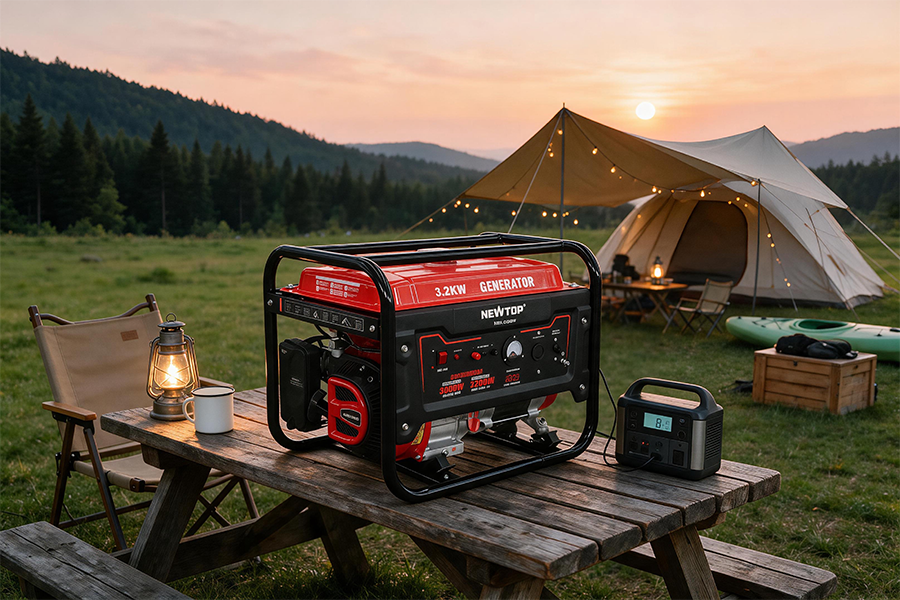
Gasoline generator price is not a single fixed number for every distributor. The same output class can receive different quotations depending on the engine and alternator, 始動システム, electrical configuration, 注文数量, ブランディング, 梱包, destination, and trade term.
Prices shown on NEWTOP’s Alibaba.com storefront can help buyers make an initial budget estimate. しかし, they should be treated as reference information rather than a standing offer for every order. A confirmed quotation must be based on the required quantity, specification, customization, destination, and delivery scope.
The practical question is therefore not only, “How much does the generator cost?” It is also, “What exactly is included in that price?」
A Generator Quotation Is a Defined Scope
Two offers can carry the same output description while covering different products and commercial responsibilities.
One quotation may cover a recoil-start generator in neutral packaging, collected from the factory. Another may include electric start, a battery, wheels, market-specific sockets, branded cartons, スペアパーツ, and delivery to an export port.
Their unit prices should not be compared until the technical specifications and commercial terms are aligned.
| Cost Layer | What Can Change | What the Buyer Should Confirm |
|---|---|---|
| Base Generator | Output, エンジン, alternator, frame, and protection | Are the machines technically equivalent? |
| Market Configuration | 電圧, frequency, 段階, sockets, and documents | Is the generator suitable for the destination? |
| Order Setup | Quantity, model mix, ブランディング, and packaging | Which costs are included in the unit price? |
| ロジスティクス | Trade term, carton size, 貨物, and local charges | What remains payable after the factory quotation? |
| After-Sales Preparation | スペアパーツ, warranty, and service support | Has the cost of supporting the product been considered? |
Each layer can change the final unit cost even when the product photographs look similar.
The Base Generator Sets the Starting Price
The main product cost comes from the machine itself. Output class, エンジン排気量, alternator design, control system, fuel tank, frame, and included accessories all influence the factory quotation.
NEWTOP’s current generator collection lists gasoline models across several output classes, 含む 2.8 kW, 5.5 kW, 7.8 kW, そして 10 kW units. Moving between these classes can involve changes in the engine, alternator, frame, overall weight, fuel demand, and transport requirements.
Rated Output Must Be Compared with Rated Output
A product title may highlight maximum output because it is the larger number. Distributors should use rated output when comparing normal operating capacity.
Two products promoted as “5 kW generators” may not provide the same continuous output. The quotation should therefore show rated and maximum power separately, together with the required voltage, frequency, and phase.
Comparing only the leading number in a product title can result in quotations for different machine classes.
Engine and Alternator Specifications Matter Together
A larger engine can support greater mechanical demand, but engine displacement alone does not define the electrical performance of the finished generator.
Alternator capacity, winding material, voltage regulation, cooling, and component matching also affect the configuration and price.
Buyers should request enough technical detail to identify what is being supplied rather than relying on broad descriptions such as “copper generator” or “high-power engine.”
Starting, コントロール, and Mobility Options Add Cost
Electric start normally requires more components than recoil start. モデルによって異なります, the system may include a starter motor, switch, charging circuit, battery holder, 配線, and battery.
The quotation should state clearly whether the battery is included. A battery shown in a product photograph does not necessarily confirm that it is included in the export package.
Control-panel choices can also change the price. These may include:
- Socket type and quantity
- Breakers and meters
- Voltage selectors
- DC output
- ATS connections
- Single-phase or three-phase layouts
Wheels, folding handles, 強化フレーム, plugs, ツール, and protective covers may appear to be small additions. Several options combined, しかし, can create a noticeable difference in both product and packaging cost.
Destination Requirements Can Change the Same Base Model
A generator suitable for one market may need a different electrical and documentation package for another.
The destination can determine:
- 50 Hz or 60 Hz frequency
- 110–127 V or 220–240 V output
- Single-phase or three-phase configuration
- Local socket and plug types
- Warning labels and manual language
- Required certifications or test documents
Some changes use standard components. Others may require a different alternator winding, control panel, labeling process, inspection scope, or minimum production quantity.
A reference price based on one configuration should not be applied automatically to another country. The destination market must be confirmed before the supplier can calculate an accurate quotation.
The Order Structure Changes the Unit Price
Once the technical specification is fixed, quantity and order design begin to influence cost.
Quantity Discounts Are Not Always Linear
Larger orders can spread production setup, printing, inspection, documentation, and internal handling across more units. しかし, doubling the quantity does not always produce a proportional price reduction.
A more meaningful saving may appear only when an order reaches a more efficient threshold for:
- Component purchasing
- Production scheduling
- Packaging
- Container loading
Buyers should request prices for realistic order quantities rather than asking for an extremely large-volume price that does not match the actual purchasing plan.
Mixed Models Trade Unit Cost for Inventory Flexibility
A distributor may prefer to combine several output classes in one container. This reduces dependence on a single model and makes it easier to test demand across different customer groups.
The trade-off is that each model may be produced in a smaller quantity. Custom cartons, labels, and production setup may also have separate minimums.
A mixed shipment can therefore carry a slightly higher average unit price while reducing inventory concentration and improving product-range flexibility.
OEM Scope Must Be Defined Clearly
Private labeling can mean a simple logo sticker or a complete brand program.
Possible requirements include:
- Custom machine colors
- Product and engine labels
- Control-panel graphics
- Printed cartons
- Branded manuals
- Barcodes and serial labels
- Warranty cards
- Market-specific warning stickers
These items do not all follow the same pricing method. Some are recurring unit expenses, while others involve one-time design, printing, or setup charges.
The quotation should separate those costs instead of presenting one unexplained “OEM fee.”
Sample Price Is Not the Bulk Price
A sample is produced and handled outside the efficiency of a normal bulk production run.
Its price may reflect:
- Small-quantity component purchasing
- Individual packaging
- Additional handling
- Higher freight per unit
- Sample inspection or preparation
The sample should be used to evaluate the product rather than predict the final bulk unit price.
After the configuration is approved, the supplier should issue a new quotation based on the intended production quantity and commercial requirements.
Packaging and Trade Terms Affect the Real Cost
Generator packaging has a direct relationship with logistics.
Carton dimensions, wheel placement, pallet use, internal protection, and stackability influence how many generators fit into a container and how well they survive transportation.
A small factory-price saving may become meaningless when oversized packaging reduces the container quantity. 同時に, removing too much protection can increase transit damage and warranty claims.
Trade terms must also be compared on the same basis. EXW, FOB, and CIF allocate different costs, risks, and obligations between the buyer and seller. The agreed rule should be stated together with the exact named factory, port, or destination.
A lower EXW quotation may become more expensive after factory collection, export handling, 貨物, and local charges are added. A quotation that includes international freight may still leave customs clearance, duties, destination handling, and warehouse delivery to the buyer.
The unit price has little commercial meaning until the buyer understands where the supplier’s responsibility ends.
Convert the Quotation into Landed Cost
The distributor’s calculation should continue beyond the supplier’s unit price.
A practical formula is:
Landed cost per unit = quoted unit price + unit customization cost + allocated shipment cost per saleable unit + duties and taxes per unit + after-sales reserve per unit
Shipment-level expenses may include:
- Origin handling
- International freight
- Insurance
- Customs clearance
- Port charges
- Inspection
- Inland delivery
These expenses should be divided by the number of saleable generators in the shipment. Costs already included under the selected trade term must not be added twice.
The after-sales reserve may cover common spare parts, warranty replacements, technical materials, and service preparation.
This matters because the commercial cost of a generator continues after it reaches the distributor’s warehouse. A lower-priced machine can become more expensive when replacement parts are difficult to obtain, packaging damage is frequent, or local technicians cannot service the configuration efficiently.
Compare One Commercial Scope, Not Several Incomplete Prices
Before requesting a final quotation, prepare one order brief and send the same information to every supplier.
The brief should include:
- Rated and maximum output
- Engine and alternator requirements
- 電圧, frequency, 段階, and sockets
- Recoil or electric starting
- バッテリー, wheels, and included accessories
- Quantity required for each model
- Destination country and port
- Branding and packaging scope
- Certification and document requirements
- Spare-parts package
- Preferred trade term
- Payment terms and delivery schedule
Also confirm the quotation currency, issue date, validity period, and whether the freight figure is fixed or indicative.
An unspecified feature should not be assumed to be included simply because it appears in a photograph. It should remain open until the supplier confirms it in the specification sheet or quotation.
Using one consistent order brief makes it possible to identify whether a price difference comes from the machine, the commercial scope, or the supplier’s actual cost level.
What the Final Gasoline Generator Price Should Tell You
Prices displayed online provide a useful starting point for product research and preliminary budgeting. The confirmed figure must still reflect the exact machine, quantity, destination-market configuration, customization, 梱包, delivery scope, and after-sales requirements.
Once every quotation follows the same technical and commercial brief, distributors can compare landed cost instead of isolated unit prices. This makes it easier to protect resale margin, prepare service support, and avoid paying later for items missing from an incomplete offer.
The most useful quotation is not simply the lowest number. It is the one that clearly shows what the buyer will receive, what remains to be paid, and whether the complete order fits the target market.
What is a gasoline generator? It is a portable or frame-mounted machine that uses gasoline to produce electricity when grid power is unavailable or cannot reach the working area.
The product may appear straightforward, but selecting the right one involves more than choosing a familiar model or the largest number on the label. The generator must match the equipment being powered, the electrical standards of the destination market, the expected operating conditions, and the user’s service capabilities.
販売店様向け, the task is broader. A generator suitable for essential household backup may not meet the demands of a workshop, farm, contractor, or small commercial facility. A practical product range needs clear differences in output, configuration, モビリティ, and price.
What a Gasoline Generator Can—and Cannot—Do
A gasoline generator produces electricity while its engine is running and fuel is available. Unlike a battery power station, it does not store electrical energy for later use.
Several outlets on the control panel also do not mean that every connected device can operate at the same time. All equipment shares the generator’s available output, so the combined demand must remain within its rated capacity.
A complete gasoline generator normally combines an engine, alternator, fuel system, control panel, protection devices, and supporting frame. The engine supplies mechanical rotation, while the alternator converts that movement into electrical current.
A detailed explanation of this internal process is available in our guide, How Does a Gasoline Generator Work? Key Components and Power Generation Explained.
This article focuses on a different question: how should first-time buyers and dealers evaluate the product before ordering?
What Can a Gasoline Generator Power?
The answer depends on the generator’s rated output and which devices will operate simultaneously.
Light electrical loads may include:
- Lamps and fans
- Chargers and communication equipment
- Televisions and selected small appliances
- Office equipment and payment systems
Workshops, 農場, and jobsites may need to operate:
- Electric drills and saws
- Water pumps
- Pressure washers
- Refrigerators or freezers
- Air compressors
- Other motor-driven equipment
Motor-driven products often require considerably more power during startup than during normal operation. Generator sizing should therefore consider both running wattage and the highest starting demand. Switching high-demand equipment on at different times can also reduce the total generator capacity required.
Before selecting an output class, identify:
- The equipment that must receive power
- Which items may run at the same time
- Their combined running wattage
- The largest starting demand
- Any equipment likely to be added later
The number of sockets is not a measure of generator capacity. It only shows how many connection points are available.
Gasoline Generator Specifications Buyers Should Check First
A product page may include dozens of specifications. The following items have the greatest influence on electrical compatibility and everyday use.
| 仕様 | それが意味するもの | なぜそれが重要なのか |
|---|---|---|
| Rated Output | Power intended for normal operation | Provides the basis for continuous load planning |
| Maximum Output | Temporary capacity above rated output | Helps manage brief demand peaks |
| 電圧 | Electrical output supplied to equipment | Must match local appliances and machinery |
| Frequency | Usually configured for a 50 Hz or 60 Hz market | Must suit the destination electrical system |
| Phase | Single-phase or three-phase output | Needs to match the connected equipment |
| 起動システム | Recoil start, 電動スタート, or both | Affects convenience and battery requirements |
| Fuel-Tank Capacity | Amount of gasoline stored onboard | Influences the time available between refueling |
| Control Panel | Outlets, switches, メートル, and breakers | Must match local plug types and user expectations |
| Protection Features | Low-oil, overload, or short-circuit response | Helps protect the engine and electrical system |
| Structure | フレーム, handles, wheels, and vibration mounts | Affects transport and working stability |
Rated output should guide normal load planning. Maximum output is intended for temporary demand peaks and should not be treated as the generator’s continuous capacity.
Choosing the Right Output Range for the Market
A model number becomes useful only after the required power class has been defined.
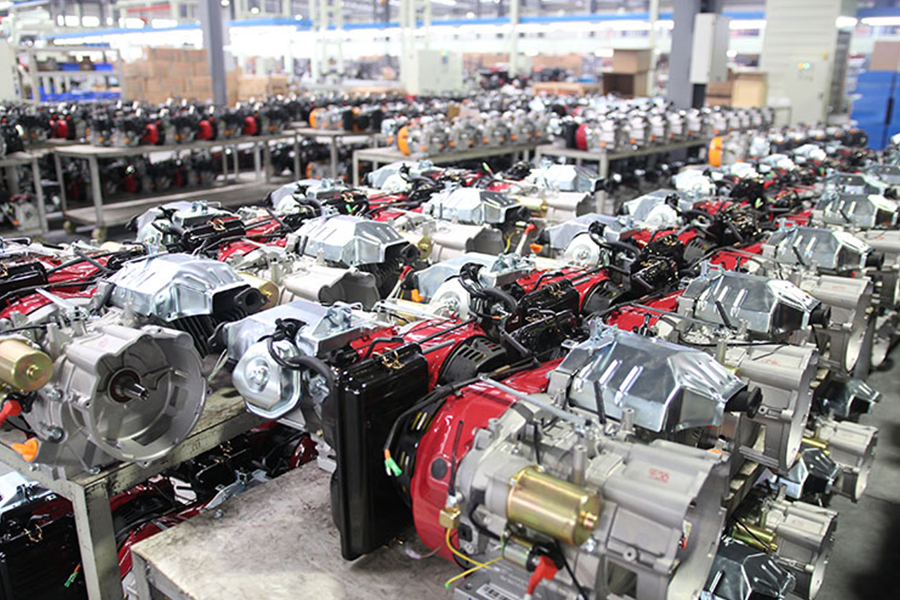
The current NEWTOP gasoline generator range includes compact 2.8 kW products, a 5.5 kW mid-range model, a 7.8 kW configuration, and a 10 kW high-output generator. This allows buyers and distributors to cover different load levels without positioning one machine as suitable for every user.
Compact Power: Around 2–3 kW
This range suits selected essential loads, lighter tools, and mobile work where manageable size and transport are important.
It can cover basic temporary backup or outdoor maintenance, but pumps, refrigerators, and motor-driven tools still require a starting-wattage check.
Mid-Range Power: Around 5–6 kW
Mid-range gasoline generators often cover the broadest group of users.
They can suit workshops, 請負業者, 農場, property maintenance teams, and small commercial operations that need more capacity than a compact generator without moving into the largest portable class.
Larger Portable Power: Around 7–8 kW
At this level, customers may be planning to operate heavier equipment or several loads together.
Generator weight, wheel configuration, 燃費, socket layout, 段階, and starting reserve deserve closer attention. The additional output should correspond to a genuine demand rather than a preference for a larger headline number.
高出力ガソリンパワー: Around 10 kW
Higher-output gasoline generators address users with substantial power demand who still prefer a gasoline engine and portable-frame structure.
They may suit larger workshops, construction operations, or broader backup requirements. Before ordering, confirm that the customer can manage the machine’s size, transport needs, and fuel demand.
What Changes Between Different Power Classes?
Moving from a compact generator to a 5.5 kW, 7.8 kW, または 10 kW model changes more than the available electrical output.
Engine displacement, overall weight, fuel demand, frame dimensions, starting reserve, transport arrangements, and control-panel requirements may also change. Dealers should compare the complete configuration within each power class rather than treating the kW rating as the only difference.
A distributor does not necessarily need every output level. One compact model, one core mid-range model, and one higher-output option may provide enough separation for different customer groups.
The final combination should reflect:
- Common equipment used locally
- Typical customer budgets
- Local electrical standards
- Transport and storage conditions
- Spare-parts availability
- Certification requirements
What to Confirm Before Requesting a Quotation
A request such as “send me the price for a 5 kW generator” does not give the supplier enough information to recommend the right configuration.
A more useful inquiry should include:
Destination Country
The market helps determine the required electrical configuration, socket type, labeling, 梱包, and certification.
Equipment to Be Powered
List the main appliances, ツール, パンプス, or machines. This gives the supplier more useful information than an estimated wattage alone.
Running and Starting Demand
Provide the combined continuous load and identify the equipment with the highest startup requirement.
Expected Operating Pattern
Clarify whether the generator will provide occasional emergency backup, regular daily power, or operation throughout a normal work shift.
Commercial Requirements
Include:
- Expected order quantity
- Branding requirements
- Packaging preferences
- Spare-parts needs
- Manuals and language requirements
- Target delivery schedule
The supplier can then confirm the suitable model, 段階, starting method, control panel, socket configuration, and frame options.
What Dealers Should Check on a Sample Generator
A quotation sheet helps narrow the choice. A sample shows how the finished product actually starts, operates, and feels.
Starting Performance
Test cold starting and hot restarting. For electric-start models, inspect the battery arrangement and confirm whether recoil starting remains available as a backup.
Output Under Load
Do not evaluate the generator only while it runs with nothing connected. Apply an appropriate load and observe voltage, engine response, operating stability, and breaker behavior.
Response to Sudden Demand
Use suitable motor-driven equipment or controlled testing apparatus to see how the generator reacts when electrical demand rises quickly.
Control-Panel Layout
Check:
- Outlet type
- Breaker placement
- Meter visibility
- Labels and switches
- Access to the main controls
A technically suitable generator may still be difficult to sell if its control panel does not match local expectations.
Frame and Vibration
Inspect welds, fasteners, handles, wheels, rubber mounts, and movement during operation. The frame should feel stable and secure rather than loosely assembled.
Service Access
Routine maintenance areas should be reasonably easy to reach, 含む:
- Air filter
- Spark plug
- Oil filling and draining points
- Fuel valve
- キャブレター
- バッテリー, where fitted
Packaging and Included Items
Confirm carton strength, internal protection, マニュアル, ツール, plugs, batteries, wheel kits, and any spare parts included with the shipment.
These checks provide information that may not appear in a catalog and help dealers prepare for customer service after resale.
Common First-Time Buying Mistakes
Choosing Output Without a Real Load List
Rated output, simultaneous running demand, and the highest starting load should be considered together. A larger maximum-output number does not automatically make a generator more suitable.
Comparing Only Engine Horsepower
Horsepower describes the mechanical capability of the engine, not the complete electrical performance of the generator. Alternator capacity, voltage regulation, cooling, protection systems, and component matching also matter.
Treating Tank Size as Fuel Efficiency
A larger tank carries more gasoline and may extend the interval between refueling. It does not prove that the engine consumes less fuel.
Overlooking Service and Spare-Parts Requirements
A generator may suit the required load but still create difficulties if filters, starting components, control-panel parts, or common engine parts are hard to obtain.
販売店様向け, access to service information and replacement components is part of the product decision, not something to consider only after the first customer complaint.
A Short Safety Note
Gasoline generators produce carbon monoxide and must operate outdoors. The U.S. Consumer Product Safety Commission advises placing portable generators at least 20 feet away from homes and buildings, with the exhaust directed away from windows, doors, and vents. Generators should never operate inside homes, garages, basements, sheds, or other enclosed spaces.
The generator must be switched off and allowed to cool before refueling. CPSC also specifically warns against adding gasoline while a generator is running or hot.
Where a generator will supply building circuits, suitable transfer equipment and qualified electrical installation are required rather than an improvised connection.
Choosing a Gasoline Generator with Clear Requirements
The best model is not automatically the one with the highest output.
First-time buyers should choose around the equipment that must operate, including its running and starting demand. Dealers should build their product range around local electrical standards, 一般的なアプリケーション, price levels, and service expectations.
Once those requirements are clear, unsuitable models can be eliminated quickly. The remaining choice becomes a practical comparison of output, configuration, モビリティ, 工事, 販売後のサポート.
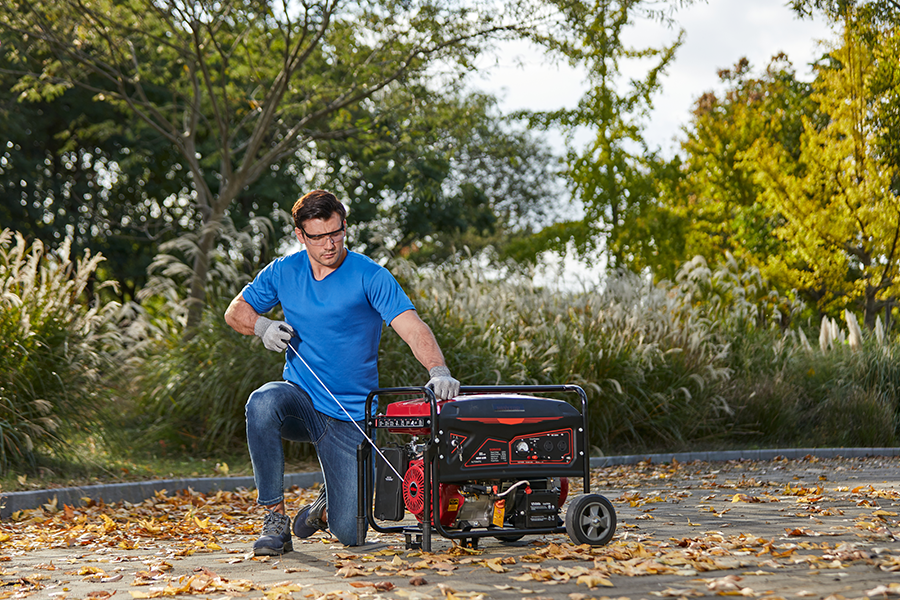
How does a gasoline generator work? It burns gasoline to create mechanical rotation, then uses an alternator to convert that rotation into electrical power.
The process involves two connected systems. The engine turns the chemical energy in gasoline into movement, while the alternator changes that movement into electricity for tools, パンプス, lighting, 家電製品, and other equipment.
The complete energy path can be summarized as:
Gasoline → combustion → crankshaft rotation → alternator movement → electrical output
Following this path helps explain why the engine, alternator, governor, voltage regulator, cooling system, and protection devices all influence generator performance.
One Generator, Two Main Jobs
The engine and alternator are mounted on the same frame, but they perform different jobs.
の エンジン produces mechanical power. It burns a mixture of gasoline and air, moves a piston, and turns the crankshaft.
の alternator produces electrical power. The rotating crankshaft drives the alternator, where electromagnetic induction generates current.
Because these systems are separate, an engine can start and run while the outlets produce no usable electricity. In the same way, a well-made alternator cannot maintain stable output if the engine does not provide enough torque or hold the required speed.
A dependable generator needs the two systems to work as one matched power unit.
From the Fuel Tank to the Crankshaft
Gasoline first travels from the fuel tank through the fuel line and into the carburetor. The fuel system may also include a shutoff valve, filter, sediment cup, or fuel pump, depending on the generator design.
The carburetor mixes gasoline with incoming air so the engine can burn it. Before the air enters, an air filter helps prevent dust and debris from reaching the cylinder.
Many portable gasoline generators use a four-stroke engine. The operating cycle consists of:
- 摂取量: The engine draws the air-fuel mixture into the cylinder.
- 圧縮: The piston compresses the mixture.
- 力: The spark plug ignites the mixture, pushing the piston downward.
- Exhaust: Burned gases leave the cylinder.
A connecting rod transfers the piston’s up-and-down movement to the crankshaft, turning it into continuous rotation. The flywheel helps the engine maintain smooth movement between combustion strokes.
Fuel quality, air supply, ignition, 潤滑, and internal component condition all affect how steadily this rotation can be produced.
How the Alternator Generates Electricity
The crankshaft drives the alternator rotor once the engine reaches its operating speed.
A basic electromagnetic generator contains a rotating component called the rotor and stationary insulated wire coils called the stator. As the rotor turns, its magnetic field moves relative to the stator windings, inducing electrical current. The alternator therefore converts the mechanical energy supplied by the engine into electrical energy.
The electricity then passes through the generator’s voltage-regulation, コントロール, and protection systems before reaching the outlets.
Alternator construction affects how the generator manages current and heat. Winding material, insulation, rotor design, cooling, and assembly accuracy can all influence output stability and durability.
Key Components Inside a Gasoline Generator
| 成分 | Main Function | なぜそれが重要なのか |
|---|---|---|
| Fuel Tank and Fuel System | Store and deliver gasoline | Affect fuel flow, starting, and runtime |
| キャブレター | Mix gasoline with air | Supports stable combustion |
| エアフィルター | Reduce dust entering the engine | Protects engine performance and internal parts |
| Spark Plug and Ignition System | Ignite the compressed air-fuel mixture | Affect starting and combustion stability |
| Piston and Connecting Rod | Convert combustion pressure into movement | Transfer power to the crankshaft |
| Crankshaft and Flywheel | Produce and maintain rotation | Drive the alternator |
| Governor | Respond to changes in engine speed | Helps the engine recover as load increases |
| Rotor and Stator | Generate electrical current | Form the core of the alternator |
| Voltage Regulator | Manage voltage output | Helps reduce voltage fluctuation |
| Circuit Breaker | Interrupt excessive current | Protects against overload and electrical faults |
| Cooling and Exhaust Systems | Remove heat and exhaust gases | Support safe and sustained operation |
| Frame and Vibration Mounts | Support the complete machine | Improve stability during use and transport |
This is why generator quality cannot be judged by engine horsepower alone. The engine, alternator, control system, protective components, and frame must be properly matched.
What Happens When a Load Is Connected?
A generator does not work as hard while running with nothing plugged in.
Once a tool, ポンプ, refrigerator, or other device is connected, the alternator begins supplying current. The electrical demand creates additional resistance against the rotor, so the engine must produce more torque to maintain speed.
The response happens quickly:
- Electrical demand rises.
- Engine speed begins to fall.
- The governor opens the throttle.
- More gasoline and air enter the engine.
- Combustion output increases.
- The engine returns toward its operating speed.
- The voltage regulator responds to the new load.
A brief change in engine sound is normal when a substantial load starts. Persistent surging, heavy voltage drop, breaker tripping, or failure to recover may point to overload, restricted fuel flow, unstable engine speed, or an electrical fault.
Rated Output and Maximum Output
Generator specifications usually show both rated and maximum output, but the two figures serve different purposes.
Rated output is the power the generator is designed to provide during normal operation.
Maximum output is temporary additional capacity that helps the generator handle short increases in demand, particularly when motor-driven equipment starts.
A generator with a 6.0 kW maximum output may not be designed to supply 6.0 kW continuously. Buyers should calculate normal demand using rated output and leave enough reserve for starting loads.
This is especially important for:
- Water pumps
- Refrigerators and freezers
- Air compressors
- Construction tools
- 電気モーター
- Equipment that starts automatically
Adding only running wattage can underestimate the short surge required during startup.
How Generator Design Affects Power Delivery
Manufacturing a generator involves more than placing an engine beside an alternator.
The engine must provide enough torque for the selected alternator. The alternator must match the intended voltage, frequency, rated output, and phase. Cooling airflow must reach the major heat-producing components, while the frame and vibration mounts must keep the machine stable.
The NEWTOP NTGR6500H2 shows how these elements are combined in a gasoline generator. It uses a 389 cc, single-cylinder, air-cooled four-stroke OHV engine with a synchronous brushed SENCI copper-wire alternator. Its specifications list 5.5 kW rated output, 6.0 kW maximum output, a 25 L fuel tank, electric starting, low-oil warning, and short-circuit protection.
The engine also uses a forged crankshaft and camshaft, while the full steel frame and vibration-absorbing mounts support the complete engine and alternator assembly. These features address different parts of the power-generation process rather than relying on one headline specification alone.
How Finished Generators Are Checked
A generator that starts successfully is not necessarily ready for shipment. The complete unit also needs to be checked after the engine, alternator, control panel, frame, and protection systems have been assembled.
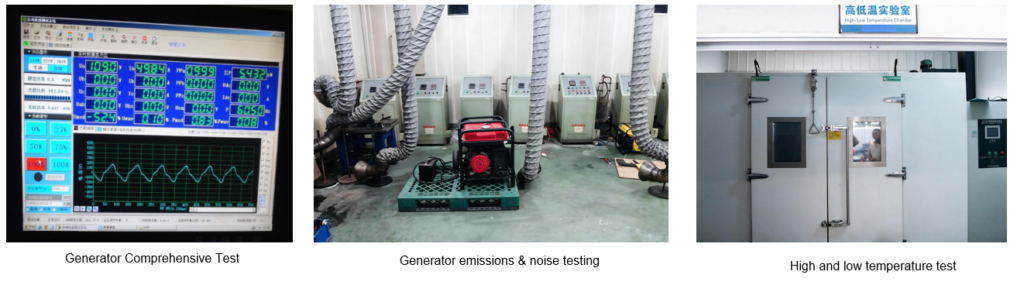
Comprehensive performance, emission and noise, and high- and low-temperature testing for finished NEWTOP generators.
NEWTOP’s finished-generator inspection facilities cover three areas shown in the factory testing images:
Comprehensive Generator Testing
Electrical output and overall operation are observed after final assembly. This helps check whether the engine, alternator, control system, and outlets work together as a complete unit.
Emission and Noise Testing
Emission and operating-noise checks examine characteristics affected by combustion, exhaust design, engine condition, vibration control, and working load.
高い- and Low-Temperature Testing
Environmental testing checks generator operation under changing temperature conditions. Temperature can influence starting, fuel delivery, 潤滑, batteries, 配線, and other electrical components.
These checks connect the generator’s technical specifications with the performance of the finished machine. They also provide stronger evidence than relying only on an engine start-up inspection.
Basic Maintenance Keeps the System Working
Every maintenance task protects one part of the energy path.
Fresh gasoline and a clean fuel system help fuel reach the carburetor. A clean air filter supports the correct mixture. The spark plug supports ignition, while suitable engine oil protects the piston, クランクシャフト, camshaft, and bearings.
Cooling openings should remain clear, and cables, plugs, breakers, and electrical connections should be checked regularly. Backup generators also need periodic starting and inspection so that fuel deterioration, battery discharge, corrosion, or loose connections are found before an outage occurs.
Operate Gasoline Generators Outdoors
Gasoline generator exhaust contains carbon monoxide, a colorless and odorless poisonous gas. Portable generators must never operate inside homes, garages, basements, sheds, or other enclosed areas.
The U.S. Consumer Product Safety Commission advises using portable generators outdoors, at least 20 feet away from homes, with the exhaust directed away from doors, windows, and vents.
The generator should also be switched off and allowed to cool before gasoline is added. Connection to a building’s electrical system should use suitable transfer equipment installed according to local electrical requirements.
From Gasoline to Usable Power
それで, how does a gasoline generator work from beginning to end?
Gasoline and air enter the engine. The spark plug starts combustion, moving the piston and turning the crankshaft. The crankshaft spins the alternator rotor inside the stator, where electromagnetic induction produces electrical current. The governor and voltage regulator then help the generator respond as the connected load changes.
The engine creates rotation. The alternator creates electricity. The control, cooling, protection, and frame systems help the complete unit deliver that power safely and consistently.
Understanding this relationship makes generator specifications easier to evaluate. Engine displacement shows only part of the machine’s capability. Rated output, alternator construction, voltage regulation, testing, protection systems, and component matching reveal more about how the finished generator will perform in real use.
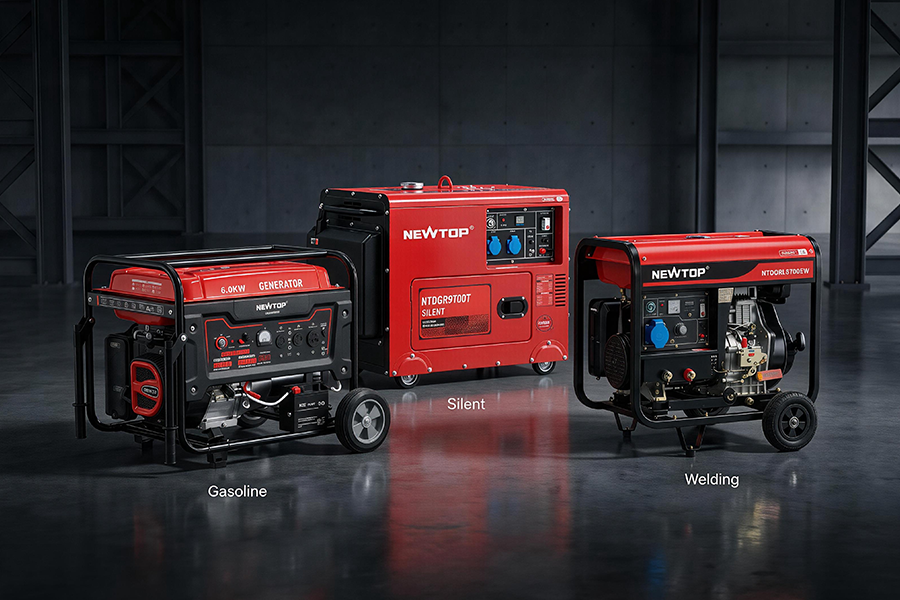
When buyers compare propane vs gasoline generator run time, the number of hours printed on a product page rarely tells the whole story. Runtime changes with the amount of usable fuel, generator load, fuel-specific rated output, tank or cylinder size, ambient temperature, and the way fuel is replenished.
With the same liquid volume and a comparable electrical load, gasoline will generally support a longer run because it contains more energy per gallon. The U.S. Energy Information Administration lists motor gasoline at about 120,214 Btu per gallon and propane at about 91,452 Btu per gallon. A larger propane cylinder or bulk tank, しかし, can provide more total fuel than a generator’s built-in gasoline tank and may therefore keep the generator operating for longer overall.
The useful question is not simply, “Which fuel lasts longer?」
It is:
How long can the generator support the required load with the fuel supply actually available at the site?
Why Published Run-Time Numbers Are Difficult to Compare
A runtime figure only becomes meaningful when the test conditions are clear.
Consider two specifications:
- Generator A: 10 実行時間数時間
- Generator B: 8 実行時間数時間
Generator A appears to perform better. But suppose its figure was recorded at 25% load, while Generator B was tested at 50% load. The longer figure no longer proves better fuel performance because the second generator was producing more electricity during the test.
Fuel quantity creates another problem. A gasoline runtime figure may be based on the generator’s full onboard tank, while the propane figure may use one portable cylinder. Those containers do not necessarily hold comparable amounts of usable energy.
A proper comparison needs answers to five questions:
How much fuel was used?
For gasoline, check the tank capacity in liters or gallons. For propane, check the actual fuel weight or usable liquid capacity of the cylinder.
What load was applied?
Runtime at 25% load cannot be compared directly with runtime at 50% or rated load.
Was output different on each fuel?
Dual-fuel generators may provide different rated and maximum outputs on gasoline and propane. The same appliance load can therefore represent a different percentage of the generator’s capacity on each fuel.
Was economy mode active?
An engine that automatically reduces speed under light demand may consume less fuel than one operating at a fixed speed.
Were the operating conditions similar?
温度, elevation, equipment condition, and load changes can all move real-world runtime away from the published figure.
Without these details, an advertised number should be treated as a reference rather than a promise.
Put Both Fuels on the Same Basis
The simplest runtime estimate is:
Estimated runtime in hours = usable fuel quantity ÷ hourly fuel consumption at the expected load
The fuel quantity and consumption rate must use matching units. Pounds of propane cannot be divided directly by a gasoline consumption figure expressed in liters per hour. Similarly, a fuel-consumption value stated in grams per kilowatt-hour needs rated output and fuel mass before it can be translated into operating hours.
The expected load also needs to reflect real use.
A generator supplying steady lighting may consume fuel differently from the same generator powering a refrigerator, compressor, ポンプ, or construction tool. Motor-driven equipment can draw substantially more power during startup, and repeated starting cycles affect consumption even when average running wattage appears moderate.
Before comparing fuels, buyers should calculate:
- The equipment expected to run at the same time
- Normal running wattage
- Starting or surge demand
- Expected average load during the operating period
- The amount of reserve capacity needed
Using maximum generator output as the normal load figure will produce a misleading runtime estimate. Maximum output is intended for temporary demand, not continuous operation.
Fuel Supply Can Reverse the Result
The higher energy content of gasoline per gallon does not automatically mean that every gasoline setup will run longer. The total fuel supply often decides the practical outcome.
ガソリン: A Fixed Onboard Supply
Portable gasoline generators commonly carry their fuel in an integrated tank. This creates a clear, self-contained setup: the generator is transported with its tank, filled before use, and operated until fuel runs low.
The main limitation is fixed capacity. A 15-liter or 25-liter tank cannot be expanded without stopping the generator and refueling it according to the manufacturer’s instructions.
Gasoline condition also affects readiness. Fuel left unused for extended periods can deteriorate, so a generator intended for emergency use needs a fuel rotation and maintenance plan. Long theoretical runtime has little value when old fuel, deposits, or a neglected carburetor prevents dependable startup.
Propane: Runtime Depends on the Connected Supply
Propane is stored as a liquid under pressure and changes into gas as pressure is released for combustion. This makes external cylinders and larger storage tanks possible, giving users more flexibility over the quantity of fuel connected to the generator.
A small portable cylinder may provide less runtime than a full gasoline tank. A larger propane supply may provide considerably more. The comparison changes each time cylinder capacity changes.
Propane delivery also depends on vaporization. Tank size, liquid level, surrounding temperature, 湿度, and the tank surface in contact with liquid all affect the rate at which propane can turn into usable vapor. Lower temperatures and lower fuel levels reduce vaporization capacity, while tank frosting can further restrict it.
For a larger generator operating under sustained load, buyers therefore need to check more than total propane quantity. The cylinder and regulator system must also be able to supply fuel at the required rate.
Three Runtime Questions Buyers Actually Ask
Published hour figures become easier to assess when they are connected to a specific operating requirement.
“Can the generator cover one full work shift?」
A contractor planning an eight-hour shift should not begin with the brochure’s longest runtime claim. The calculation should use the expected average site load.
Power tools may run intermittently, while lighting, パンプス, charging equipment, or temporary facilities may stay active throughout the day. Motor-starting demand and repeated load changes also need to be included.
The fuel plan should show:
- Expected consumption during the shift
- Fuel remaining at the end of the shift
- Whether refueling or changing cylinders will interrupt work
- How reserve fuel will be transported and stored
- Whether the propane supply can maintain adequate vaporization under the expected temperature and load
A nominal ten-hour runtime at light load may not cover an eight-hour shift once heavier equipment is connected.
“Can it run through an overnight outage?」
Overnight backup is usually less about maximum output and more about maintaining essential loads.
Refrigeration, selected lighting, communication equipment, fans, security systems, and a small water pump may use much less power than the generator’s full rated capacity. Removing non-essential equipment can extend runtime more effectively than increasing fuel storage alone.
Buyers should calculate the likely nighttime load rather than using the total wattage of every appliance on the property. They should also allow a reserve rather than planning to empty the tank or cylinder completely before morning.
For portable generators, overnight operation still requires safe placement, weather protection, exhaust clearance, and regular supervision. Runtime should never be extended by moving the generator into a garage, shed, or other enclosed area.
“Can runtime be extended without buying a larger generator?」
Often, はい.
Possible measures include:
- Reducing unnecessary electrical loads
- Avoiding simultaneous startup of high-demand equipment
- Using a larger compatible propane supply
- Scheduling heavy equipment for separate operating periods
- Maintaining the engine, air filter, and fuel system
- Selecting a generator whose rated output places the normal load in a more suitable operating range
A larger generator is not automatically more fuel-efficient. If normal demand is low, an oversized unit may add purchase cost and operate outside its most practical load range.
The first step should be improving the load and fuel plan, not simply increasing maximum output.
A Real Gasoline Specification Shows What to Check
A manufacturer’s specification can provide the inputs needed for runtime planning even when it does not state one simplified number of hours.
The NEWTOP NTGR6500H2 gasoline generator, 例えば, lists:
- 5.5 kW rated output
- 6.0 kW maximum output
- 389 cc, 13 hp OHV engine
- Fuel consumption of no more than 370 g/kWh
- 25-liter fuel tank
- Electric starting
- Copper-wire alternator
- Low-oil and short-circuit protection
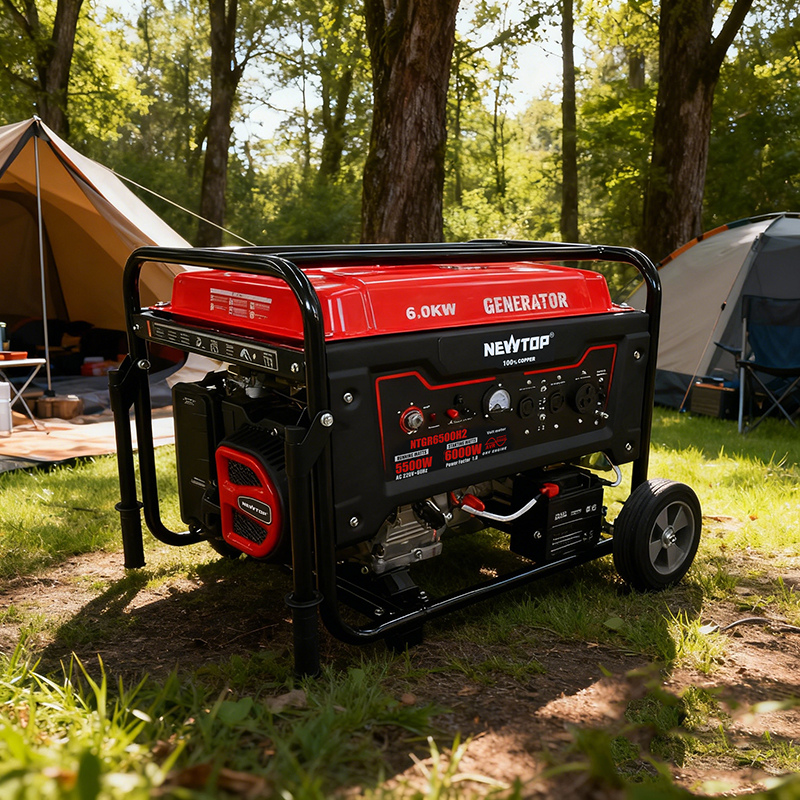
The model also uses a forged crankshaft and camshaft, a full steel frame, and vibration-absorbing mounts for extended outdoor, workshop, 工事, and backup operation.
These figures are more useful than a vague “long runtime” claim because they allow buyers to examine the relationship among tank capacity, rated output, そして燃費.
They still do not justify one fixed runtime prediction.
Actual consumption changes with load, and the published fuel-consumption value must be interpreted using the manufacturer’s test method. Buyers who need a precise operating-hour estimate should request consumption data at several load levels, のような 25%, 50%, 75%, and rated load.
NEWTOP’s gasoline generator range also includes compact 2.8 kW models, mid-range 5.5 kWと 7.8 kW units, and higher-output 10 kW configurations. This range illustrates why runtime cannot be separated from generator size: エンジン排気量, output demand, タンク容量, and intended workload change from one power class to another.
Runtime Information to Request from the Supplier
Instead of asking only, “How many hours will it run?」, buyers should request the test information behind the number.
| Information Required | なぜそれが重要なのか |
|---|---|
| Rated Output on Gasoline | Shows the usable continuous output for the gasoline calculation. |
| Rated Output on Propane | May differ from gasoline output on a dual-fuel generator. |
| Gasoline Tank Capacity | Identifies the fuel quantity behind the gasoline runtime. |
| Propane Cylinder Size and Usable Fuel Amount | Identifies the actual propane supply used in the test. |
| Runtime Test Load | Allows a fair comparison between published runtime figures. |
| Fuel Consumption at Several Loads | Supports more accurate calculations for different applications. |
| Economy-Mode Status | May affect fuel consumption when the generator operates under partial load. |
| Ambient Test Temperature | Provides important context for propane vaporization performance. |
| Starting Loads Used During Testing | Shows whether motor-driven equipment and surge demand were represented. |
| Required Regulator and Connection | Confirms that the propane supply can meet the engine’s fuel demand. |
| Recommended Fuel Reserve | Helps prevent an unexpected shutdown before refueling or cylinder replacement. |
| Refueling or Cylinder-Change Procedure | Reveals whether continuous work will be interrupted. |
A supplier that provides the test basis makes it easier for distributors and end users to set realistic expectations. A single hour figure without fuel quantity and load percentage offers far less value.
Safety Comes Before Additional Runtime
Both gasoline and propane generators produce carbon monoxide. Portable units must operate outdoors and away from occupied buildings, with exhaust directed away from doors, windows, and vents. The U.S. Consumer Product Safety Commission advises placing portable generators at least 20 feet from the home whenever possible.
Gasoline should not be added while the generator is running or hot. Propane cylinders, regulators, ホース, and connectors must match the equipment instructions and applicable gas-safety requirements.
A longer hose, improvised fuel connection, indoor placement, or unsafe hot refueling is never an acceptable way to gain more operating time.
What Buyers Should Really Compare
Gasoline contains more energy per gallon than propane, so an equal-volume comparison generally favors gasoline. Real generator installations rarely use equal fuel volumes, しかし. A propane generator connected to a larger external supply may run longer than a gasoline model limited to its onboard tank.
A reliable propane vs gasoline generator run time comparison should place both fuels under the same conditions:
- Comparable electrical load
- Clearly stated rated output
- Known usable fuel quantity
- Matching runtime test conditions
- Suitable tank or cylinder capacity
- Realistic temperature and operating pattern
- Safe refueling or cylinder replacement plan
The most useful runtime figure is not the largest number in a catalog. It is the number of hours the generator can support the required equipment before the available fuel supply must be safely replenished.
