


- Todo
- NEWTOP Historias de clientes
- NEWTOP Explorador Hub
- NEWTOP Perspectivas de la industria
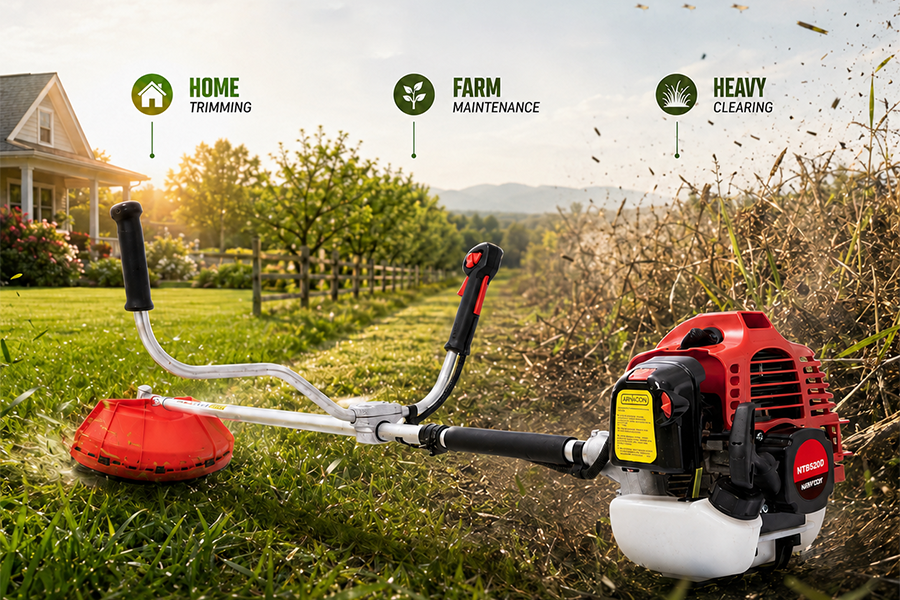
A brush cutter dealer can have a busy sales month and still find that profits are disappointing. Machines leave the warehouse, but discounts, slow-moving stock, and service-related expenses gradually reduce the return on those sales.
The machine itself is only one part of the business. Customers also need cutting heads, cuchillas, and trimmer line, while local repair shops regularly look for replacement components. Some products sell alongside a new machine; others generate demand months after the original purchase.
For agricultural equipment distributors, maintaining healthy margins means understanding which machines customers need, which accessories add value to a sale, and how much inventory is worth keeping on hand.
What Does a Brush Cutter Dealer Actually Earn?
Consider a brush cutter purchased at a total landed cost of US$90 and sold for US$120, excluding sales tax. The dealer earns US$30 in gross profit, equivalent to a 25% gross margin.
Gross Margin = (Selling Price − Cost of Goods Sold) ÷ Selling Price × 100
The markup would be 33.3% in this example because it measures profit against cost rather than sales revenue. Neither figure represents the dealer’s final earnings, since rent, salaries, financing, and other operating expenses still need to be covered.
All figures are hypothetical and do not represent NEWTOP wholesale prices or actual dealer results.
Inventory turnover adds another consideration. A machine earning US$35 in gross profit but taking months to sell may contribute less total profit over a season than one earning US$25 and selling consistently. Dealers therefore need to examine sales volume and inventory performance alongside the margin on each unit.
Stock Models That Match How Customers Work
Professional grass-cutting companies have different expectations from customers maintaining a small garden. For contractors who operate their machines frequently, durability and access to replacement parts can carry more weight than having a wide selection of engine sizes.
What NEWTOP Has Seen in Central America
El NEWTOP NTB143 is a hot-selling brush cutter in Central American markets, including Costa Rica and Belize, according to NEWTOP’s sales experience.
One source of demand comes from companies and professional teams offering grass-cutting and vegetation-clearing services. These users operate their equipment frequently, making durability a major consideration when purchasing machines.
Powered by a 41.5cc two-stroke gasoline engine rated at 1.47kW, the NTB143 is positioned for regular grass-cutting and field maintenance work. For dealers serving these customers, access to suitable maintenance components is also part of the purchasing decision.

Other markets may require a different product mix. Beyond the NTB143, NEWTOP offers configurations for different operating needs:
- NTB330B – Lighter Maintenance: A 32.6cc, 1.1kW gasoline brush cutter with a 26mm shaft tube and low-vibration handle, suited to general trimming and lighter clearing tasks.
- NTBH520E – Higher Output and Starting Convenience: A 51.7cc, 1.65kW model featuring Smart Pull starting and a 255mm three-tooth metal blade for suitable heavier clearing applications.
These models address different customer requirements rather than representing fixed profit categories. A dealer’s inventory should reflect the applications generating local sales, with quantities adjusted according to actual demand.
Accessories Can Change the Value of a Machine Sale
A dealer may spend considerable time negotiating the wholesale price of a brush cutter while paying less attention to what customers purchase with it.
Yet cutting accessories can contribute additional gross profit without requiring another complete machine sale.
Consider a customer buying a gasoline brush cutter for routine grass maintenance. Spare nylon trimmer line or a compatible cutting head may be useful. Someone working with heavier vegetation might require a suitable metal blade, provided it is approved for the machine and application.
The aim is not to add as many accessories as possible, but to offer products customers have a practical reason to buy.
A Simple Accessory Margin Example
Suppose a dealer sells a brush cutter for US$120 with a landed cost of US$90. The customer also purchases compatible accessories worth US$20, which cost the dealer US$12.
| Transaction | Machine Only | Machine + Accesorios |
|---|---|---|
| Sales Revenue | US$120 | US$140 |
| Cost of Goods Sold | US$90 | US$102 |
| Gross Profit | US$30 | US$38 |
| Gross Margin | 25.0% | 27.1% |
Illustrative figures only. Sales taxes and operating expenses are excluded. These are not actual NEWTOP prices or dealer transactions.
Illustrative figures only. Sales taxes and operating expenses are excluded. These are not actual NEWTOP prices or dealer transactions.
The accessories add US$8 in gross profit to the transaction. In this example, the overall gross-margin percentage also increases, although that depends on the actual costs and selling prices of the products offered.
For retailers, the more useful information comes from observing which accessories customers repeatedly purchase with specific machines.
A store supplying professional agricultural contractors may see different demand from one serving residential garden owners. Tracking these combinations helps dealers allocate shelf space to the cutting heads, cuchillas, and trimmer lines that are actually selling.
Piezas de repuesto: Real Demand Matters More Than a Long Catalog
Repair components follow a different purchasing pattern from everyday cutting accessories.
Trimmer line may sell regularly, regardless of whether a machine needs repair. Ignition components or recoil starters, by contrast, are typically purchased to address a specific maintenance requirement.
This distinction is particularly relevant for dealers serving professional grass-cutting companies, whose equipment may be used frequently.
Common Parts Requirements for NTB143
Based on NEWTOP’s experience in Central American markets such as Costa Rica and Belize, commonly requested NTB143 service components include:
- Ignition components – Replacement parts for the ignition system.
- Spark plugs – Service components used in engine maintenance.
- Recoil starters – Replacement starting assemblies and related components.
- juntas – Components required for various engine maintenance and repair tasks.
These observations reflect actual customer purchasing requirements, not a measured ranking of component failure rates.
NEWTOP supplies the Juego de piezas de desbrozadora H143/NTB143, while individual replacement components can also be sourced according to model compatibility, required quantities, and applicable MOQ.
Para distribuidores, this provides two purchasing options: preparing a broader service-parts assortment or ordering selected components according to local workshop demand.
How NEWTOP Matches Replacement Parts
Correct part identification matters, especially when customers purchase multiple components for different machine configurations. NEWTOP uses a practical matching process before preparing a quotation.
1. Submit the Parts List and Photos
Customers provide a list of required components, relevant machine models, available part numbers, and photographs. These materials form the starting point for identifying each item.
2. Verify Specifications and Compatibility
NEWTOP checks the machine models and component specifications against the submitted information. If a part cannot be identified accurately, the team requests additional measurements, structural details, or clearer photographs.
3. Confirm the Parts List and Prepare a Quotation
Once the specifications have been confirmed, NEWTOP organizes the matched components into a purchasing list and prepares a quotation based on the requested quantities.
This process is especially useful when original part numbers are unavailable or visually similar components have different specifications. For a distributor managing several brush cutter models, accurate identification can reduce incorrect purchases and the costs associated with replacement orders.
When Inventory Starts Reducing Profit
Sometimes a dealer’s biggest margin problem is not the purchase price, but the quantity of unsold machines.
When stock remains in the warehouse longer than expected, discounting may seem like the quickest solution. Sin embargo, even a relatively small price reduction can have a noticeable effect on profit.
Using the earlier hypothetical example, reducing the selling price from US$120 to US$110 lowers gross profit from US$30 to US$20. Although the discount is only US$10, it removes one-third of the original gross profit.
Clearing old inventory may still be commercially necessary, particularly when it releases capital for faster-moving products. The more useful lesson comes from examining why that surplus developed.
Three Figures Worth Reviewing Before Reordering
Sales by model: Identify which brush cutters sell consistently and which remain in stock beyond the expected selling period.
Accessory attachment rate: Measure how often machine transactions include compatible cutting heads, cuchillas, or trimmer line.
Replacement-parts demand: Review the components and part numbers most frequently requested by repair workshops.
Looking at these figures together helps dealers make more specific purchasing decisions. A popular machine may justify deeper inventory, while an occasional-demand model could require a smaller allocation. The same records can reveal whether accessory sales and service-parts demand support the current stock levels.
Turn Market Feedback into the Next Purchase Order
When preparing a repeat order, distributors can use their sales and workshop records to identify the machines, accesorios, and replacement parts that need replenishment.
Por ejemplo, a dealer carrying the NTB143 may request additional machines alongside ignition components, bujías, arrancadores de retroceso, or gaskets required by local repair workshops. NEWTOP can review the submitted parts list, confirm specifications and quantities, and prepare a quotation according to the applicable MOQ.
This is an illustrative purchasing arrangement, not a specific recorded customer transaction. OEM requirements, including logos, etiquetas, bandera, y embalaje, can also be discussed as part of the same purchasing plan.
Build a More Profitable Brush Cutter Business with NEWTOP
For a brush cutter dealer, strong machine sales are only one part of a healthy business. The product range must suit local working conditions, accessories should match customer applications, and replacement parts need to be sourced accurately.
NEWTOP supports distributors with gasoline brush cutters, compatible cutting accessories, complete parts sets, and individual replacement components.
Explore the NEWTOP brush cutter range or contact the sales team to discuss machine quantities, spare-parts lists, and OEM requirements.
Dealers interested in expanding their local distribution business can also learn more about becoming a NEWTOP distributor.
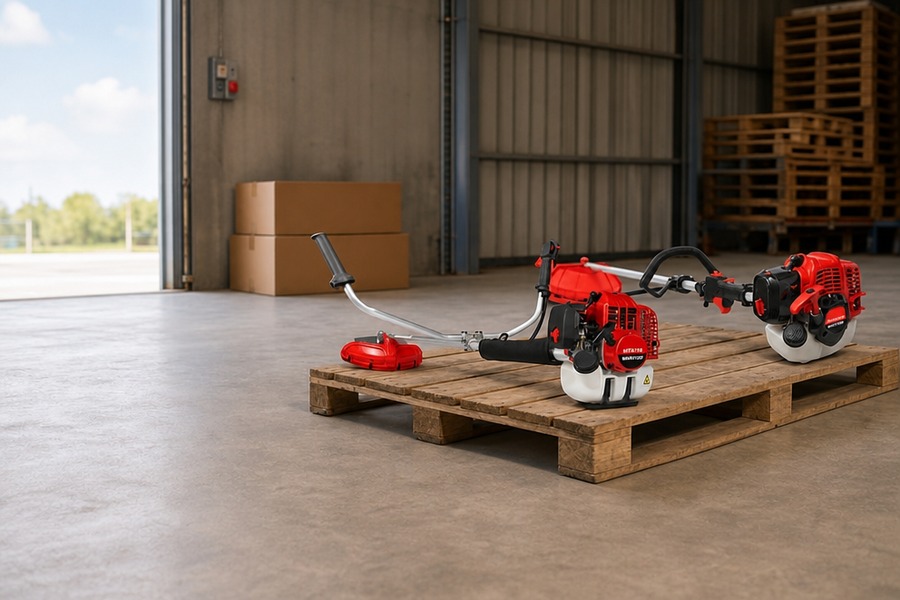
Brush cutter prices can vary considerably, even between machines with similar engine sizes. Ask several suppliers for a 52cc gasoline brush cutter, and the quotations may look very different. One machine might use imported engine components, while another offers locally sourced alternatives. The drive shaft, caja de cambios, and standard accessories may differ too.
Para distribuidores, these details affect more than the initial purchase price. The selected configuration needs to suit local working conditions, expectativas del cliente, and the intended retail price.
Before comparing quotations, it helps to understand what each machine actually includes.
What Do Brush Cutters Cost at Wholesale?
As an initial reference, a NEWTOP NTB520B listing on Alibaba.com displays advertised prices of approximately US$56–75 per unit across different order quantities.
This is a reference for one publicly listed model, not a fixed wholesale price range for all NEWTOP brush cutters.
Price Reference: Alibaba listing prices are for reference only. Actual quotations depend on order quantity, model specifications, component selection, requisitos de personalización, shipping destination, freight arrangements, and agreed trade terms. Contact NEWTOP for pricing based on your purchasing requirements.
The published price can help buyers prepare an initial budget. Sin embargo, a standard machine may have a different quotation from one supplied with imported components, additional cutting attachments, or customized packaging.
Even when the engine displacement stays the same, the complete configuration may not.
What Makes One Brush Cutter More Expensive Than Another?
Engine displacement is usually the first specification buyers notice. Sin embargo, a 43cc or 52cc label does not tell you which components are inside the machine.
Two brush cutters in the same engine class may use different carburetors, bujías, transmission systems, and starting mechanisms. Some differences are visible. Others need to be checked in the technical specifications.
Engine Components: Imported or Domestic Brands?
Component selection is one reason wholesale quotations can differ.
NEWTOP offers selected configurations using components from established international brands, including Japanese-imported spark plugs and Japanese-brand carburetors. Depending on the model and order requirements, buyers can also discuss alternatives from recognized Chinese manufacturers.
The different sourcing options affect component costs and availability. They also give distributors more flexibility when choosing a configuration for their market.
Por ejemplo, an importer targeting professional agricultural users may have specific preferences for the carburetor or ignition components. Another buyer may prefer a well-established Chinese component brand to meet a particular wholesale budget.
Rather than asking for the cheapest carburetor option, buyers should confirm the actual brand and specification included in the quotation.
Professional equipment also shows how engine technology can influence pricing.
El STIHL FS 461 C-EM, por ejemplo, features M-Tronic 3.0 electronic engine management and STIHL ErgoStart. These systems address engine operation and starting convenience, particularly for professional users.
Such features serve a practical purpose, but not every market requires them. Para distribuidores, component selection should reflect how customers use the equipment and which features they are prepared to pay for.
Drive Shaft and Gearbox Construction
The transmission system is another area where seemingly similar brush cutters may have different configurations.
NEWTOP offers drive-shaft connection options including 7-tooth, 9-diente, and square-drive designs, depending on the machine and application.
These connections are not interchangeable without checking the corresponding transmission components. The selected shaft profile must match the connecting parts and gearbox arrangement.
| Drive Shaft Type | What Buyers Should Confirm |
|---|---|
| 7-Tooth Spline | Matching drive connection and gearbox compatibility |
| 9-Tooth Spline | Correct spline profile and transmission components |
| Square Drive | Shaft-end dimensions and corresponding connection design |
There is no universal rule that a 9-tooth shaft is more expensive than a 7-tooth version. The final cost depends on the component construction and selected assembly.
For distributors already selling a particular brush cutter configuration, shaft compatibility can also influence future spare-parts purchases.
El NEWTOP NTB520B provides an example of the other transmission details worth checking. It uses a 51.7cc gasoline engine rated at 1.65kW, together with a 26mm shaft tube, solid steel drive shaft, and heavy-duty gearbox. An anti-vibration design is also part of its configuration.
These specifications give buyers more useful information than displacement alone, especially when selecting equipment for demanding fieldwork.
What Comes Inside the Carton?
Cutting attachments can change the quoted package without changing the engine.
One brush cutter may include a metal blade and standard harness. Another may come with a nylon trimmer head, additional cutting accessories, or different protective equipment.
Some distributors prefer a complete retail package. Others purchase standard machines and stock extra accessories separately.
The choice should reflect actual customer demand. A more expensive accessory package is only worthwhile if those items are useful in the destination market.
Which Brush Cutter Models Fit Different Market Needs?
A distributor does not necessarily need every available engine size. A smaller range with clear differences between models may be easier for retailers to sell.
NEWTOP offers several gasoline brush cutter configurations:
| NEWTOP Model | Engine Specifications | Suggested Applications |
|---|---|---|
| NTB260A | 25.4cc / 0.65kilovatios | Light trimming and garden maintenance |
| NTB143 | 41.5cc / 1.47kilovatios | General grass cutting and farm maintenance |
| NTB520B | 51.7cc / 1.65kilovatios | Heavy weeds and demanding field clearing |
| NTS140CG | 35.8cc / 0.9kilovatios, 4-ataque | Buyers seeking a four-stroke alternative |
These applications represent suggested product positioning, not fixed wholesale price categories.
An agricultural equipment distributor may prioritize general-purpose and higher-output machines. A business supplying garden maintenance services could need more lightweight brush cutters.
The four-stroke NTS140CG provides another option for markets where that engine configuration is preferred.
Actual sales records, inquiries, and workshop feedback can help distributors decide which specifications deserve more inventory.
How to Compare Brush Cutter Prices for Bulk Orders
A lower quotation can be attractive, especially when purchasing several hundred machines. Sin embargo, buyers should first confirm that the offers cover equivalent configurations.
Three checks can help.
1. Confirm the Component Configuration
Compare engine displacement, rated power, carburetor and spark plug options, drive-shaft connection, caja de cambios, and cutting attachments.
If imported or domestic component brands are available, confirm which option is included in each price.
2. Check the Complete Package
Before accepting a quotation, clarify:
- Standard cutting blade and trimmer head
- Harness and protective accessories
- Engine component brands and specifications
- Drive-shaft and gearbox configuration
- Export carton or customized retail packaging
- Logo, label, and manual requirements
- MOQ and quantity-based pricing
Two suppliers may quote the same engine class but include different standard accessories or component options.
The comparison should account for those differences before price negotiations begin.
3. Compare Equivalent Trade Terms
EXW, ENGAÑAR, and CIF quotations cover different costs and responsibilities.
A CIF quotation includes the seller’s contracted freight and insurance to the named destination port, while FOB covers a different scope. Neither necessarily represents the total landed cost.
Import duties, destination charges, and local delivery expenses should also be considered when estimating the cost of bringing machines into the distributor’s warehouse.
What Matters Beyond the Initial Purchase Price?
Price matters, but buyers also need to consider how the machines will perform in their intended applications.
Operator comfort is one example.
El Husqvarna 143R-II brush cutter features an asymmetrical handlebar and standard double harness. These elements are designed to support a more comfortable working position during demanding cutting tasks.
For professional users who operate brush cutters for several hours, handling and weight distribution may influence their purchasing decisions. Customers buying equipment for occasional trimming may have different priorities.
This helps explain why distributors often need more than one product configuration rather than a single model positioned entirely around low price.
Running Tests and Product Durability
NEWTOP conducts practical running tests as part of its product quality evaluation process.
For the NTB143, NEWTOP reports a 500-hour service-life benchmark. This provides a durability reference for the model, although actual operating life depends on working conditions, mantenimiento, fuel quality, and usage.
The figure should not be interpreted as a guarantee that every machine will operate for exactly 500 horas.
Para distribuidores, model-specific testing information is useful when evaluating equipment intended for regular agricultural work. It also provides a more concrete reference than broad descriptions such as “durable” o “long-lasting.”
Piezas de repuesto: Buy with the Machines or Replenish Later?
Spare-parts purchasing does not have to wait until the first machines are sold.
For an initial brush cutter order, distributors can include commonly requested components such as carburetors, arrancadores de retroceso, bobinas de encendido, cabezales de corte, or gearbox parts, depending on the selected models.
NEWTOP supports both complete matching parts sets and individual replacement components , subject to model confirmation and applicable MOQ. Machines and spare parts can also be arranged within the same shipment.
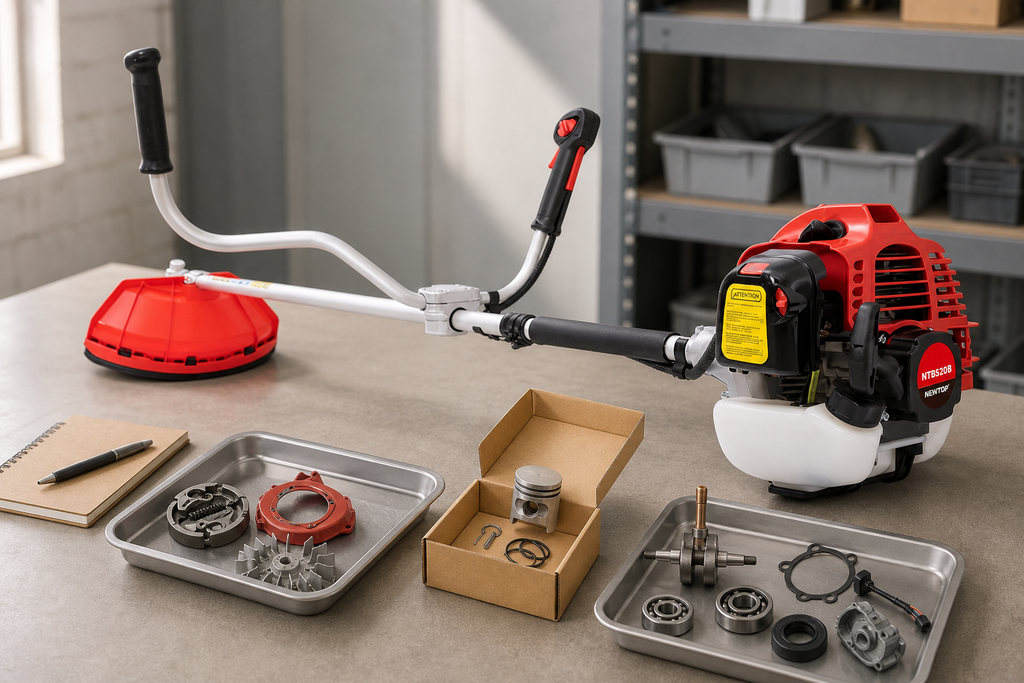
Once the distributor has several months of local sales and repair records, purchasing can become more selective. Instead of repeatedly ordering complete parts sets, the buyer can replenish the specific SKUs that workshops actually need.
This creates two practical purchasing stages: prepare a basic service-parts range with the initial machine shipment, then adjust future orders according to local maintenance demand.
How Order Quantity and OEM Requirements Affect Brush Cutter Prices
Wholesale pricing depends on how the order is structured, not simply how many machines appear on the purchase order.
Consider a distributor planning to purchase 500 desbrozadoras.
Realizar pedidos 500 units of one NTB143 configuration could simplify production arrangements, embalaje, and spare-parts planning. The purchasing team would only need to confirm one main machine specification.
But what if local customers need different power levels?
The distributor might instead order 300 NTB143 units and 200 NTB520B units. This provides a wider selection for retailers, although MOQ, accesorios, and component requirements must be checked separately for each model.
This is an illustrative purchasing scenario, not an actual customer transaction.
A mixed-model order may be commercially useful even when it does not produce the lowest possible unit price. The distributor can serve different customer groups without placing the entire purchasing budget into one configuration.
NEWTOP can review the requested models and quantities before preparing the quotation. Buyers can also discuss adding compatible spare parts to the same shipment, rather than arranging machine and service-parts sourcing separately.
Por ejemplo, the distributor could request a basic parts package for both models, then adjust future replenishment according to actual workshop demand. The component lists and quantities would need to be confirmed for each machine.
OEM requirements add another consideration.
NEWTOP supports customization such as product logos, bandera, etiquetas, y embalaje. A distributor developing its own brand may need customized cartons and market-specific product information, while another buyer may prefer standard packaging for straightforward replenishment.
These details should be confirmed alongside the model quantities because customization can affect MOQ, production arrangements, and pricing.
For mixed orders, a useful quotation should identify each model’s configuration, cantidad, accesorios, spare-parts requirements, and any customization costs separately.
Shipping can then be calculated against the actual packing requirements. If the container includes machines with different carton sizes, buyers should review estimated landed costs by model rather than simply dividing the total logistics cost equally across all units.
What Should You Include in a Brush Cutter RFQ?
A clear inquiry helps the supplier prepare a quotation based on the products you actually intend to purchase.
For bulk orders, proporcionar:
- Model or engine size: A specific NEWTOP model or required displacement
- Order quantity: Total units and quantity per model
- Component preferences: Carburador, bujía, drive-shaft connection, and gearbox requirements
- Standard accessories: Cutting blade, cabezal de corte, harness, y embalaje
- OEM requirements: Logo, bandera, etiquetas, or carton design
- Destination: Country, puerto, and preferred trade term
- Piezas de repuesto: Components required with the initial machine order
Not every buyer will know the exact component configuration at the beginning.
en ese caso, provide the intended application and target market first. NEWTOP can help review available options, confirmar compatibilidad, and prepare the corresponding quotation.
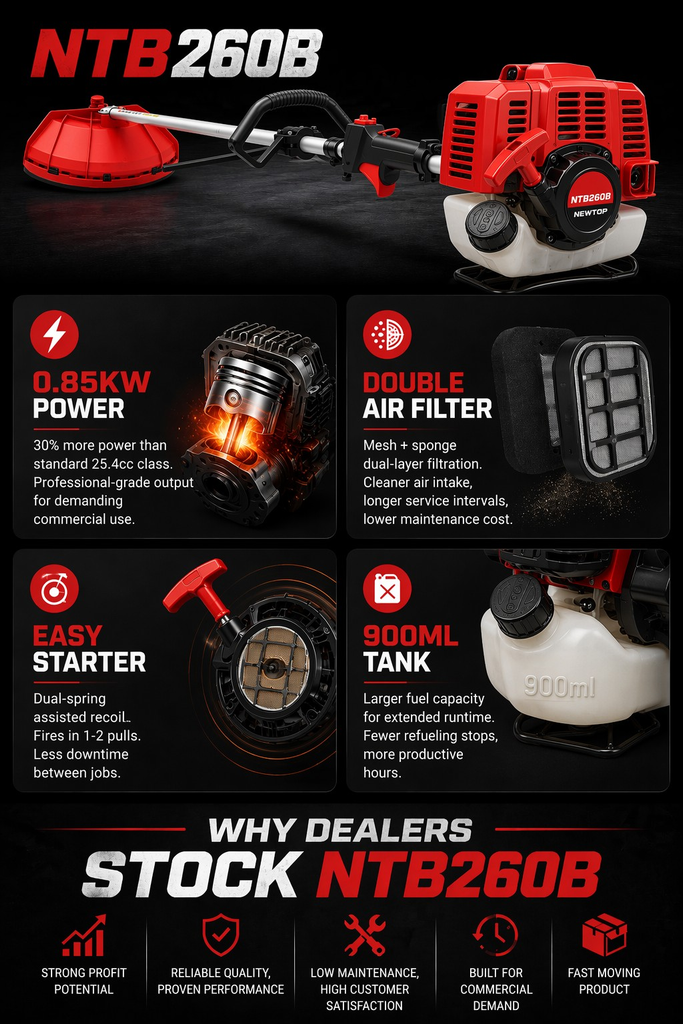
Get Wholesale Brush Cutter Prices from NEWTOP
NEWTOP supplies gasoline brush cutters across different engine sizes and applications, with options for component selection, OEM customization, and compatible spare-parts sourcing.
Whether you are replenishing an established model or building a new product range, your wholesale quotation can be prepared around the required machine specifications, cantidades, y destino.
Explora NEWTOP brush cutter range or contact the sales team to discuss your purchasing requirements.
A well-prepared quotation makes it easier to compare the machines themselves, not just their advertised prices. The component configuration is clear, the purchasing conditions are confirmed, and the distributor can plan both the initial order and future parts replenishment.
》》Interested in expanding your product range? Conviértase en un distribuidor NEWTOP.
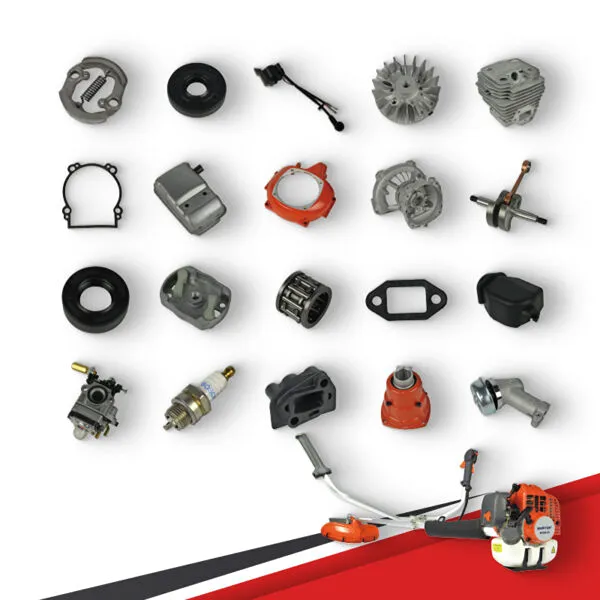
Stock brush cutter replacement parts in the order they wear out. Nylon trimmer line, metal blades with their bolts and washers, bujías, air filter elements, carburetor repair kits and fuel lines with primer bulbs belong on the first order. Cilindros, pistons and gearcases do not.
This guide covers the four decisions behind that split. Primero, which brush cutter replacement parts to stock. Segundo, how to match them to the machines you actually import. Tercero, how many pieces go into a container. Cuatro, how to keep the parts budget earning through the warranty window.
Which Brush Cutter Spare Parts Should You Stock First?
Distributors should generally start with commonly replaced consumables and routine maintenance parts, then expand into model-specific components as demand becomes clearer. The best starting assortment depends on the machines in your market and the maintenance services your customers provide.
Brush Cutter Spare Parts Stocking Guide
| Part Group | Order Stage | Why It Needs Replacement | Initial Stocking Approach | Typical Use |
|---|---|---|---|---|
| Nylon trimmer line | First order | Wears down during cutting, particularly when contacting hard surfaces | Prioritize commonly requested diameters and line types | Counter sales and repeat purchases |
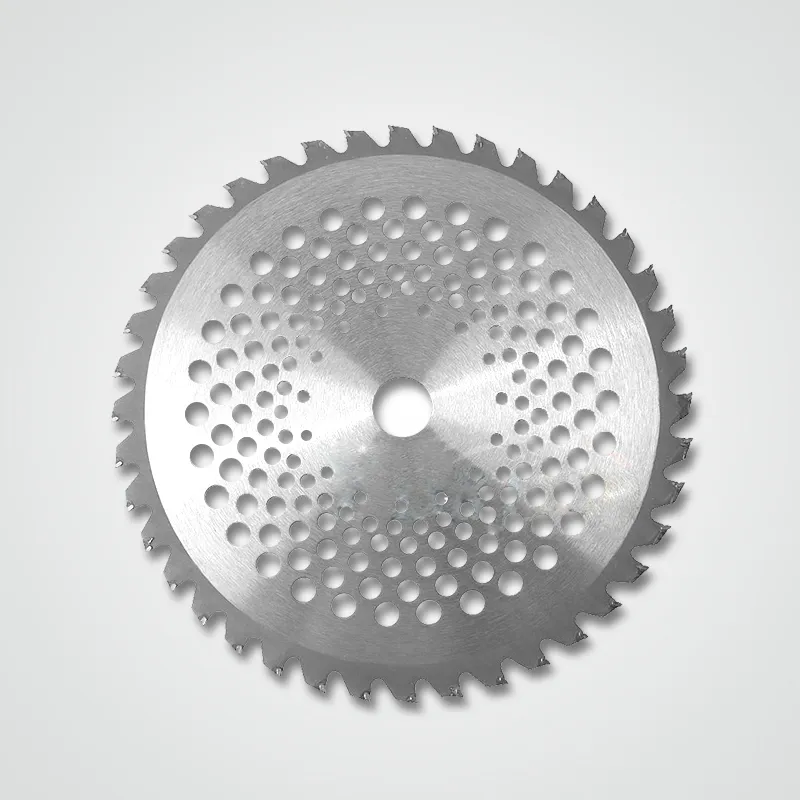
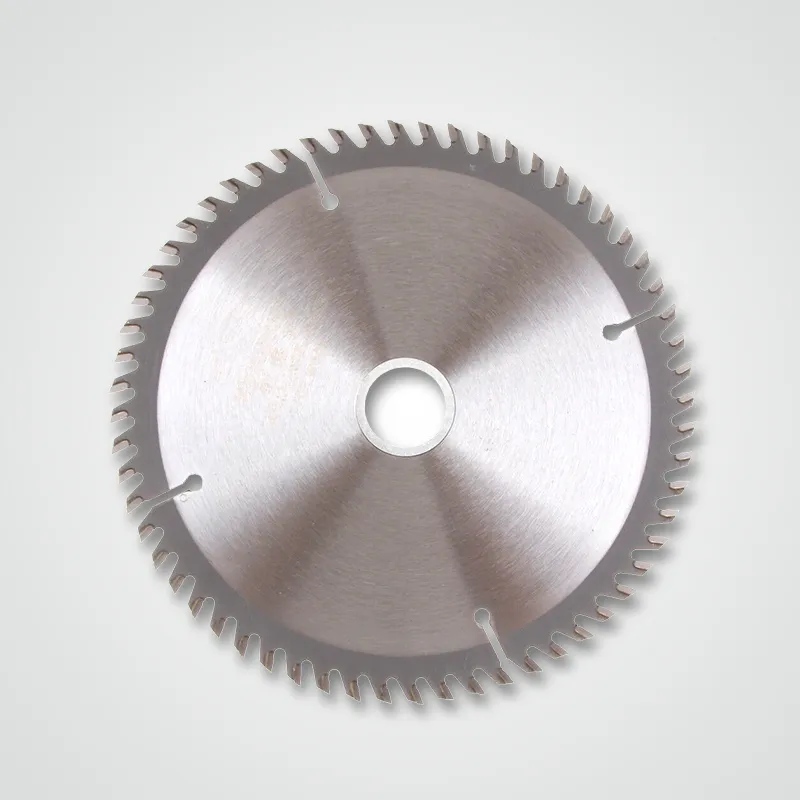
| Cutting blades and mounting hardware | First order | Blades can become dull or damaged; mounting hardware may wear or require replacement | Stock compatible blade types and the correct washers, nueces, and adapters | Counter sales and servicing |
| Spark plugs | First order | Electrode wear, depósitos, or fouling can affect engine starting and operation | Stock specified plug types for popular engine models | Routine maintenance and counter sales |
| Air filter elements | First order | Dust and debris accumulate, restricting airflow; damaged filters may need replacement | Prioritize filters for commonly sold machines | Routine maintenance and servicing |
| Carburetor repair kits | First order or as demand develops | Internal components may wear, deteriorate, or require servicing | Confirm carburetor models and kit contents before ordering | Repair shops |
| Fuel lines and primer bulbs | First order or as demand develops | Rubber components can deteriorate, crack, or leak | Stock compatible parts for frequently serviced models | Repair shops |
| Cabezales de corte | Second order or based on demand | Housings, eyelets, spools, and other components can wear or become damaged | Select compatible head types and mounting specifications | Counter sales and servicing |
| Recoil starters, bobinas de encendido, and switches | Second order or based on demand | Starting mechanisms and electrical components can fail or become damaged | Prioritize popular models and common repair requests | Repair shops |
| Drive shafts | Limited reserve | Shafts can become bent, worn, or damaged | Keep limited quantities for models with established demand | Specialized repairs |
| Cilindros, cigüeñales, and gearcases | Limited reserve or order as needed | Severe wear or mechanical failure may require component replacement | Purchase according to repair demand, plazo de entrega, and component cost | Specialized repairs and warranty assessment |
Stocking priorities are general guidance. Confirm compatibility and adjust quantities based on local demand and the brush cutter models you support.
For a new distributor, prioritize the parts that support the brush cutter models already in the product range. If local repair shops frequently request particular starter assemblies or carburetor components, those items may deserve earlier attention than the suggested order stages indicate.
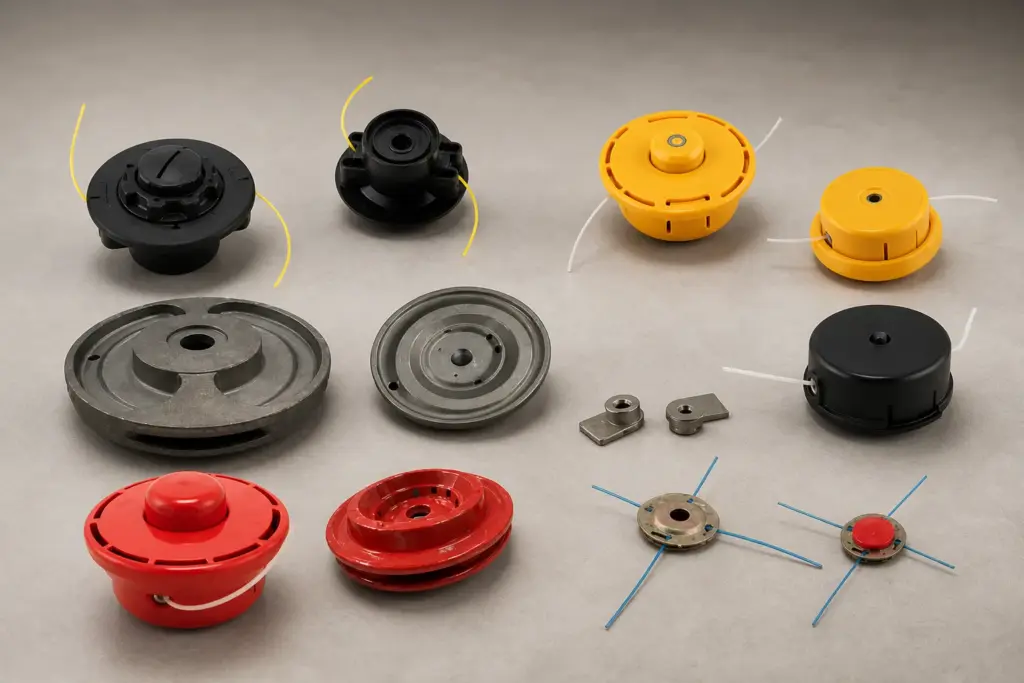
How to Choose the Right Replacement Parts
Compatibility is critical when purchasing brush cutter spare parts in bulk. Parts that look similar may have different dimensions, mounting systems, thread directions, or engine specifications. Incorrect parts can lead to returns, installation problems, and customer dissatisfaction.
Before confirming an order, check these details:
- Machine and engine model: Identify the exact brush cutter model and engine configuration the part is intended for.
- Part number: Use the original part number or an approved replacement reference whenever available.
- Dimensions and mounting: Verify shaft diameter, thread size and direction, mounting holes, and other relevant measurements.
- Cutting accessory specifications: Check blade type, diámetro, mounting bore, and the required protective guard. For trimmer line, confirm the recommended diameter and compatible head.
- Material and construction: Evaluate the material, manufacturing consistency, and suitability for the intended application.
- Packaging and labeling: Ensure that part numbers and compatibility information are clearly identified to reduce warehouse picking errors.
Not every brush cutter uses the same cutting head, cuchilla, bujía, or air filter. Por ejemplo, trimmer line diameter and head capacity must match the machine manufacturer’s specifications. Distributors should verify the relevant manual or parts diagram instead of assuming that a similar-looking component will fit.
A compatibility spreadsheet can make repeat purchasing easier. Record machine models, engine types, part numbers, presupuesto, supplier references, and previous order quantities. This information also helps sales teams respond to customer inquiries more accurately.
How Much Brush Cutter Inventory Should You Order?
The right order quantity depends on sales volume, the number of machines in use, seasonal demand, replacement frequency, and replenishment lead time. A distributor supplying thousands of machines may need a different inventory strategy from a regional dealer serving a smaller customer base.
A useful starting point is to divide spare parts into three groups:
- Fast-moving items: Trimmer line, commonly used blades, bujías, and routine maintenance parts. Prioritize these according to sales history and expected demand.
- Regular repair items: Fuel lines, primer bulbs, cabezales de corte, starter components, and other parts frequently requested by local service shops. Stock quantities based on actual repair patterns.
- Specialized components: Cilindros, cigüeñales, gearcases, and other expensive or model-specific parts. Consider limited reserve stock or ordering when needed.
For distributors without historical sales data, an initial order should be treated as a test assortment rather than a fixed forecast. Start with the most relevant machine models, track sell-through and replenishment times, and adjust subsequent orders accordingly.
The following information can help determine quantities:
Factors to Review Before Placing a Spare Parts Order
| Planning Factor | What to Review | How It Affects Stock |
|---|---|---|
| Installed machine base | Number and types of brush cutters sold or serviced | Helps identify which parts are relevant |
| Historical sales | Previous spare parts orders and customer requests | Highlights fast-moving and slow-moving items |
| Replacement frequency | Maintenance schedules and observed wear patterns | Helps estimate recurring demand |
| Supplier lead time | Production, processing, and shipping time | Helps determine how much reserve stock may be needed |
| Minimum order quantity | Supplier MOQ and packaging requirements | Affects order flexibility and inventory investment |
| Seasonal demand | Local landscaping and agricultural work cycles | Helps prepare for predictable changes in demand |
Avoid using a universal quantity per 100 machines without supporting sales or maintenance data. Two distributors with the same number of machines may have very different spare parts requirements because their equipment models, condiciones de funcionamiento, and customer usage patterns differ.

How to Manage Spare Parts Costs and After-Sales Support
The purchase price is only one part of spare parts inventory management. Distributors also need to consider compatibility, product consistency, confiabilidad de entrega, storage costs, and the time required to resolve customer issues.
Several practices can help control costs and improve service:
- Monitor inventory turnover: Review sales and stock movement regularly to identify parts that need replenishment and items that remain unsold.
- Set reorder points: Consider average demand during supplier lead time and maintain a suitable reserve for unexpected orders.
- Group compatible orders carefully: Combining parts in one shipment may simplify procurement, but only when the items match the machines being supported.
- Compare total purchasing costs: Evaluate unit prices alongside packaging, shipping, defect handling, and the cost of incorrect or delayed deliveries.
- Maintain clear records: Track part numbers, compatibilidad, order history, returns, and customer feedback.
- Clarify after-sales arrangements: Confirm how suppliers handle defective items, incorrect shipments, replacement requests, and technical questions.
Distributors should also distinguish between routine maintenance parts and components that require specialist repair. Keeping common consumables available can support repeat sales, while expensive engine and drive components may be better managed through demand-based purchasing.
A reliable supply process depends on clear communication with the supplier. Before placing repeat orders, confirm product specifications, current availability, minimum order quantities, lead times, and packaging requirements. This helps reduce purchasing errors and makes it easier to support dealers and repair shops.
Why Source Brush Cutter Spare Parts From NEWTOP?
Para importadores y distribuidores, sourcing outdoor power equipment and related spare parts through an established supplier can simplify product selection and purchasing coordination. The key is to confirm that the available parts match the equipment sold in the target market.
NOVEDAD supplies outdoor power equipment for international markets and works with business customers on product sourcing and supply requirements. Distributors evaluating brush cutter spare parts can discuss the relevant product range, compatibility information, order quantities, and packaging requirements with the NEWTOP team.
When requesting a quotation, prepare the brush cutter or engine models you support, a list of required parts, estimated quantities, and your target market. Include part numbers, technical drawings, or photos when available. These details help clarify requirements and reduce the risk of ordering incompatible components.
If you are developing a new spare parts range, start with the most common maintenance items for your existing equipment portfolio. As sales and repair data accumulate, expand the assortment to cover more specialized components based on demonstrated demand.
Contact NEWTOP to discuss brush cutter spare parts and supply options for your distribution business.
Preguntas frecuentes
Which brush cutter spare parts should I order first?
Order nylon trimmer line, metal blades with their bolts and washers, bujías, air filter elements, carburetor repair kits, and fuel lines with primer bulbs. Those brush cutter replacement parts wear out during normal cutting rather than from misuse, so they are what a machine waits on and what your counter sells repeatedly.
How many spare parts should I order per 100 maquinas?
Count from machines, not from a catalog. Per 100 desbrozadoras, a workable first order is 300–500 trimmer line spools, 150–250 blades with bolt sets, 100–150 spark plugs, 100–150 air filters and 30–50 carburetor kits. Engine internals stay a thin reserve until your own service records say otherwise.
Are trimmer heads universal across brush cutters?
No. Mounting thread, gearcase rating and line capacity differ between duty classes, and a head sized for 0.065-inch line loads a straight-shaft gearcase differently from a brush-rated head. Confirm the thread and the rating with your supplier before a mixed-head order.
Do CE and GS certifications cover loose replacement parts?
Not automatically. CE marking is a manufacturer’s declaration that a product meets EU rules, and it applies only to goods covered by harmonised EU requirements. The German GS mark is a voluntary tested-safety seal. Ask which supplier documents name loose replacement parts.
Should importers stock engine internals for warranty claims?
Keep them thin. Most internal failures come from operator error, not mileage: a wrong fuel mix seizes a piston, and a jammed blade can twist a crankshaft. NEWTOP warrants machines for one year and core parts for six months, so a thin reserve plus fast sample shipments covers the window.
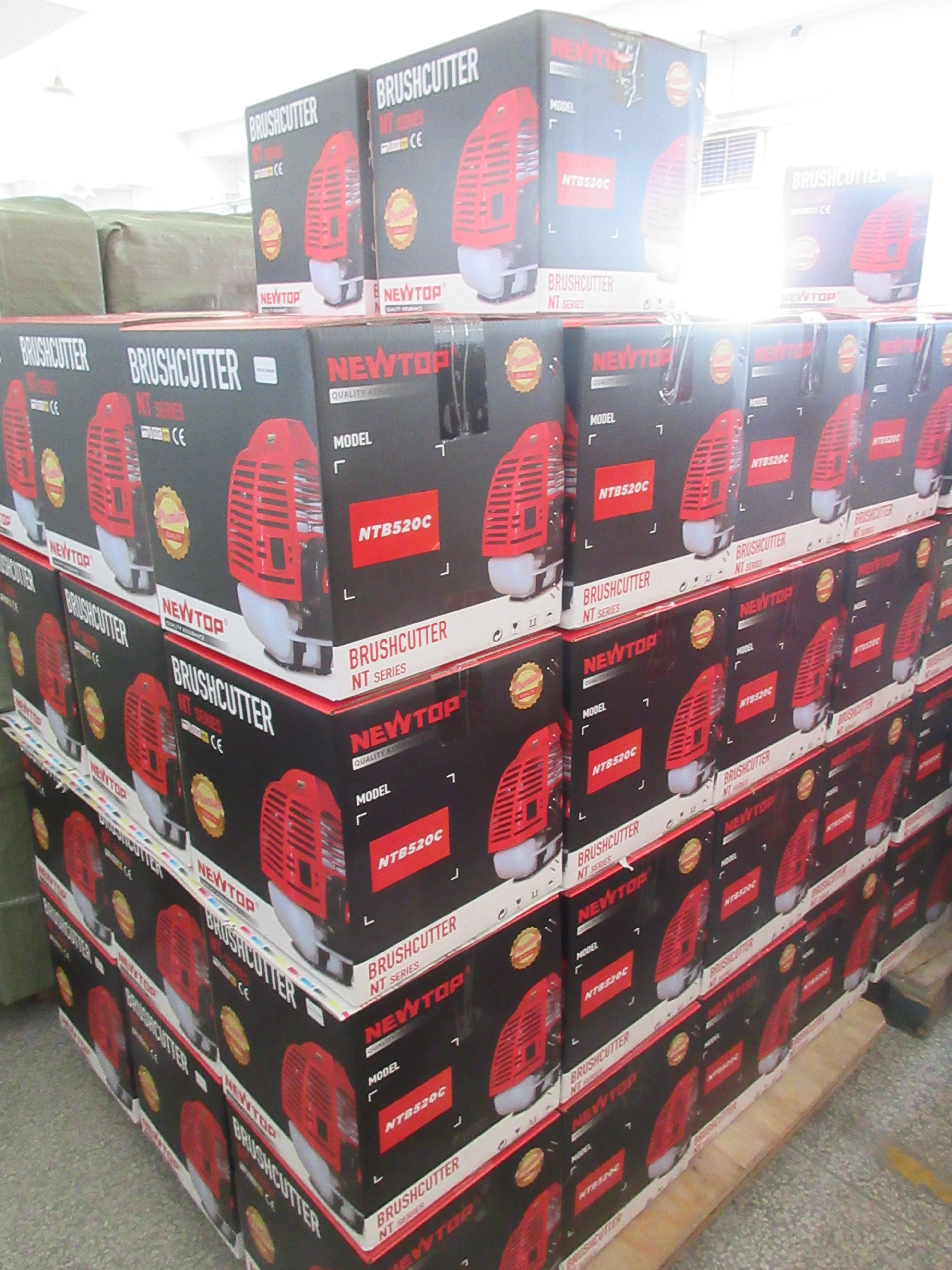
Once the container doors close, your leverage closes with them. Every problem found at the destination — the chainsaw that won’t start, the sprayer without its wand, the carton crushed in transit — gets negotiated from the weakest position an importer can occupy. This guide lays out a pre-shipment inspection checklist for outdoor power equipment that catches those problems while they still cost a rework instead of a season.
The structure is simple: inspect at the right time, sample against a defect classification, test the machines that matter, open the cartons, and check the documents. Follow it in order and a pre-shipment inspection takes one inspector-day for a container lot — and removes the single biggest source of import surprises in this product category.
When to Inspect: During Production vs Pre-Shipment
Two inspection windows serve two different purposes. A during-production check (often called DUPRO) happens when 20 a 40 percent of the order is complete; it catches systemic problems early — a wrong component batch, a process slip on the assembly line — while there is still time to correct the remaining production without delaying the shipment. A pre-shipment inspection (PSI) happens when the order is finished and at least 80 percent packed; it is the final gate that samples the actual lot you are paying for.
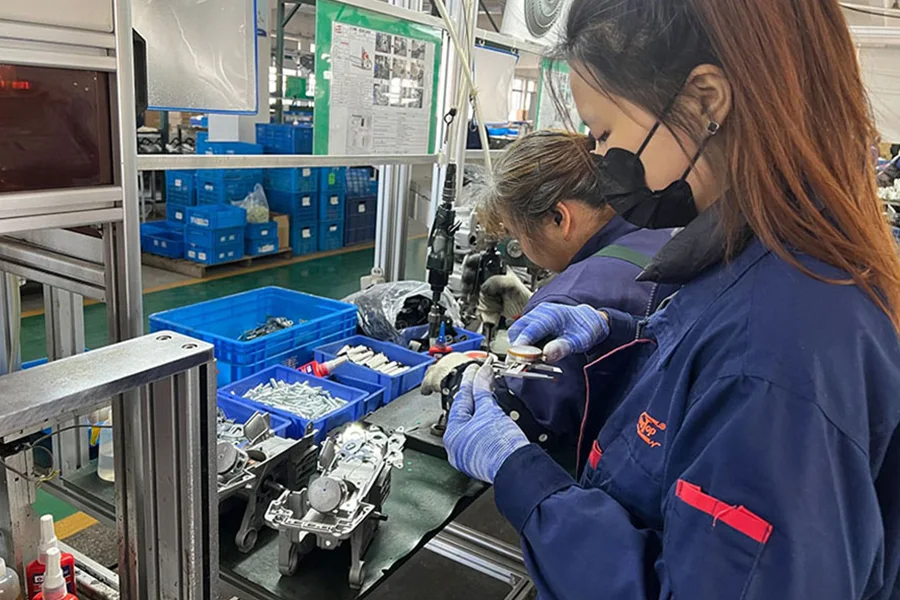
For a first order from a new supplier, run both: the during-production check protects the schedule, the pre-shipment inspection protects the payment. For established relationships with a clean history, a PSI on every shipment with periodic during-production spot checks is the usual rhythm — and patrol inspection between those points keeps the floor honest, as our own quality control process does across every production run.
AQL Sampling in Plain Terms
You will not test every unit in a 1,000-piece order, and you do not need to — you need a statistically defensible sample. That is what AQL (Acceptable Quality Limit) sampling provides, standardized in ISO 2859-1. The mechanics: your lot size and inspection level determine a sample size from the AQL tables; you inspect that sample and classify every defect; the lot passes or fails against acceptance numbers you agreed in advance. For consumer and garden machinery, importers commonly set AQL 2.5 for major defects and 4.0 for minor defects, with zero tolerance for critical ones.
The classification matters more than the numbers, because it is where arguments get settled in advance:
| Defect class | Definición | Garden machinery examples |
|---|---|---|
| Critical | Safety risk or regulatory non-compliance | Chain brake fails to stop the chain; missing guard; fuel leak; missing required certification marks |
| Major | Affects function or usability; likely return | Engine fails to start; chain tensioner skips; sprayer pressure below spec; missing accessories |
| Minor | Cosmetic; unlikely to trigger return | Surface scratches; label misalignment; carton dents; manual print blemishes |
Agree on the class definitions and the AQL levels in the purchase order itself. An inspection without pre-agreed acceptance criteria produces a report, not a verdict.
Functional Tests Every Unit in the Sample Should Pass
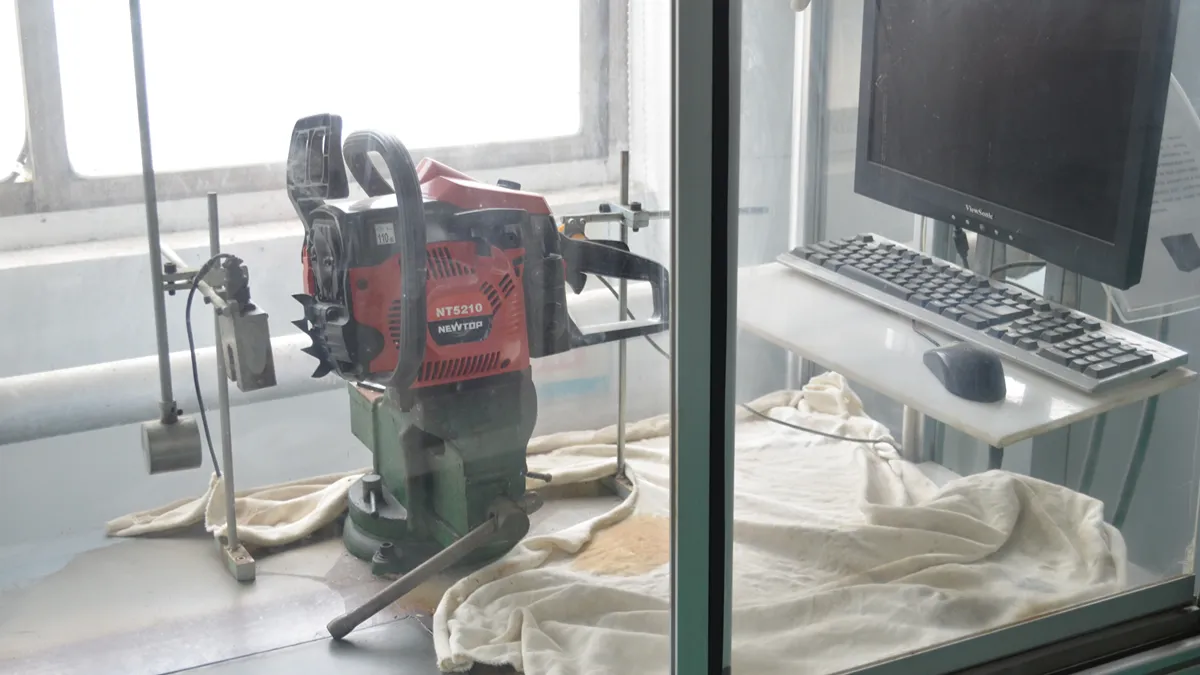
The functional test list is where an inspection earns its keep, and for gasoline-powered outdoor equipment the core tests are non-negotiable: every sampled unit starts cold within the specified pull count, idles without stalling, takes full throttle cleanly, and shuts down with the stop switch. For chainsaws, add the chain brake test — the brake must stop the chain within specification — plus throttle lockout and chain catcher checks. For brush cutters, verify harness and guard fitment; for sprayers, pressure and spray pattern against the rated spec; for generators, voltage stability under load.
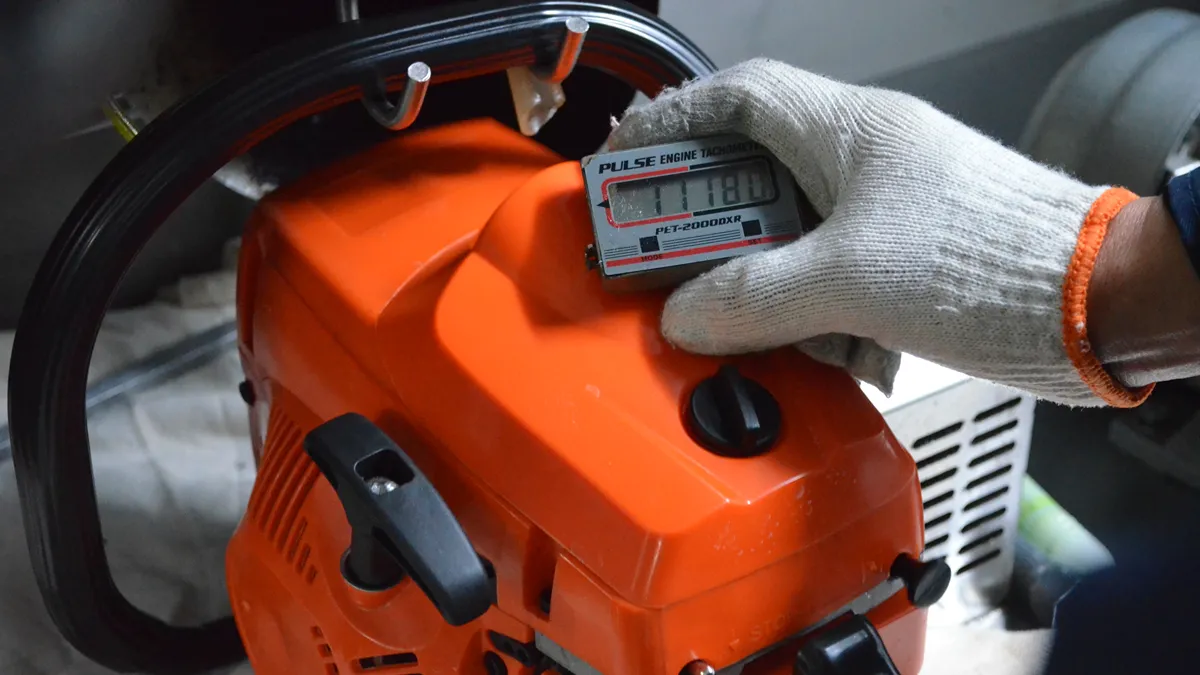
These are the same tests a supplier’s line should run on 100 percent of units before packing — asking for the factory’s internal test records alongside the inspection is how you confirm both layers agree. Our guide on gasoline engine quality for professional buyers details what these tests reveal about long-term durability.
Assembly and Packaging Checks
Half the defects importers discover at destination are assembly and packaging issues that a five-minute carton check would have caught. The checklist:
- Assembly completeness — guards, manijas, and fittings correctly installed and torqued; no loose parts rattling in the housing.
- Accessory kit per pack list — bar, cadena, file, harness, boquillas, or funnels as the order specifies, present and counted.
- Marks present — CE marking and noise label where applicable, EPA emission label on certified engines, rating plates legible and matching the model.
- Carton condition — export-grade board, correct cube dimensions, no compression damage; carton drop-test records for the packaging spec.
- Manual and documentation in box — correct language version, correct model, warranty card if part of the program.

The Document Check
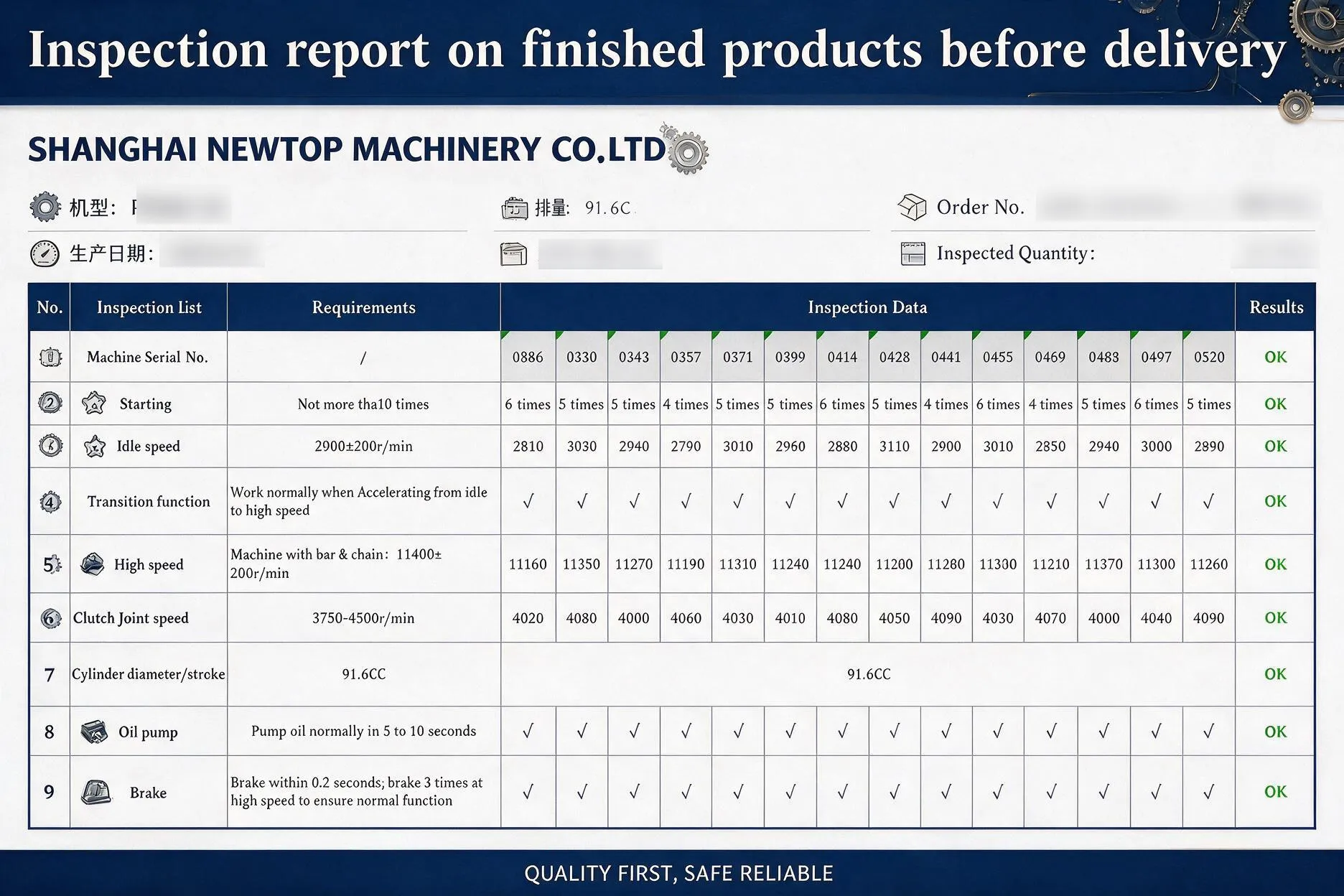
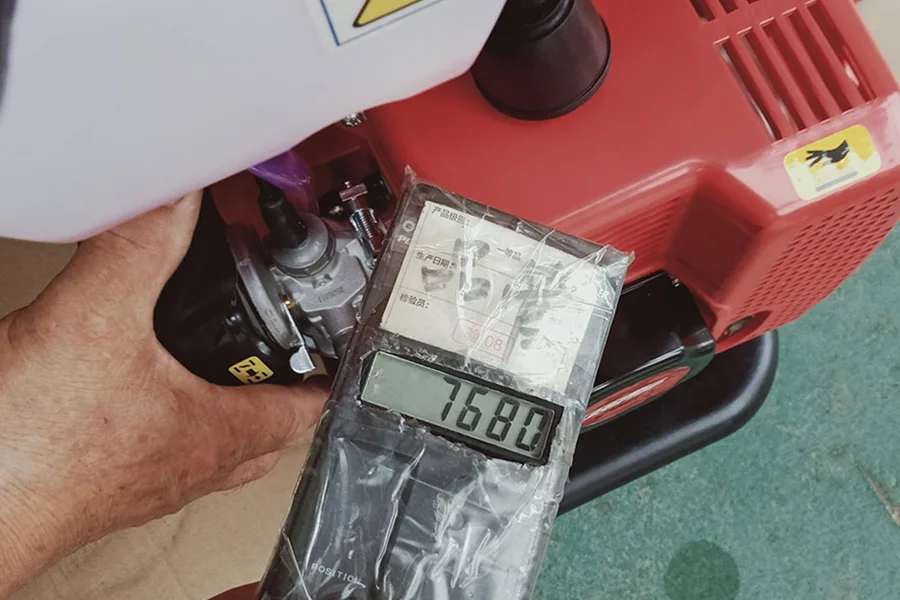
A shipment that tests well but ships with broken paperwork still fails at customs or at the dealer. Close every inspection by collecting the document set: the pre-delivery inspection report with results per sampled unit, photos of the marks and labels on the actual production units, the packing list matching the container plan, and the Declaration of Conformity and certificate references for the models in the lot. En NEWTOP, every shipment leaves with this documented inspection trail — the quality control process page shows what that system looks like behind the report.
Who Should Inspect: Supplier QC, Third Party, or You
Supplier QC is the baseline, not the alternative — it runs on every unit, cada día, and no external inspection replaces it. Third-party inspection adds an independent verdict on the specific lot before payment milestones release, at a cost that is a rounding error against a container. Buyer visits build relationship knowledge but happen rarely and sample less than a professional inspector will. The practical formula: supplier QC on everything, third-party PSI on every shipment from a new supplier and on a sampling rhythm for established ones, and your own visits when the program size justifies the trip.
Preguntas frecuentes
What does AQL 2.5 mean in practice?
It caps accepted major defects at 2.5 percent for the sampled lot. The AQL tables set the sample size by lot size — a 1,000-unit order at normal inspection level samples 80 units — and the lot fails if major defects exceed the acceptance number for that sample.
Can I rely on the factory’s own QC instead of third-party inspection?
For an established supplier with audited systems, Sí. For a new supplier or a first order, add an independent pre-shipment inspection — the fee is trivial against the container value, and the inspection result gives your payment milestone something objective to attach to.
How long does a pre-shipment inspection take?
Typically one inspector-day for a container lot, including functional testing of the sample, carton checks, and report writing. Book it against the ex-factory date with a few days of buffer so rework, if needed, does not move your vessel.
What happens if the inspection fails?
The supplier reworks or replaces the affected units and the lot is re-inspected — which is why the re-inspection terms and who pays belong in the purchase order. Tying the balance payment to inspection pass converts the report from advice into leverage.
Which tests matter most for gasoline chainsaws?
Cold start within the specified pull count, chain brake stop within specification, throttle lockout function, chain catcher presence, idle stability, and hot restart. All are safety-adjacent, so any failure belongs in the critical or major class — never negotiated into the minor column.
A pre-shipment inspection is one working day that stands between a container you trust and a container you argue about. Define the defect classes, sample against AQL, test the functions that matter, open the cartons, and take the documents — then close the doors.
Sourcing outdoor power equipment you will not have the chance to inspect yourself? Explore the NEWTOP product range or talk to our team about distribution terms — every shipment we send leaves with its inspection report attached, and we welcome third-party inspectors on any order.
Two importers request quotations for what looks like the same 52cc chainsaw. One quote comes back at a price the other can’t match — and neither quotation explains why. This guide breaks down what actually drives the price of outdoor power equipment in bulk orders, so the next time two numbers land in your inbox, you will know which one to interrogate and which one to order.
The honest summary: most of the price difference between two “identical” machines is invisible on the quotation line. It sits in the engine tier, the certification status, the order volume, the packaging specification, and the trade terms. Buyers who read those five variables negotiate from information; buyers who read only the bottom line negotiate from hope.
The Cost Stack Behind an Ex-Works Price
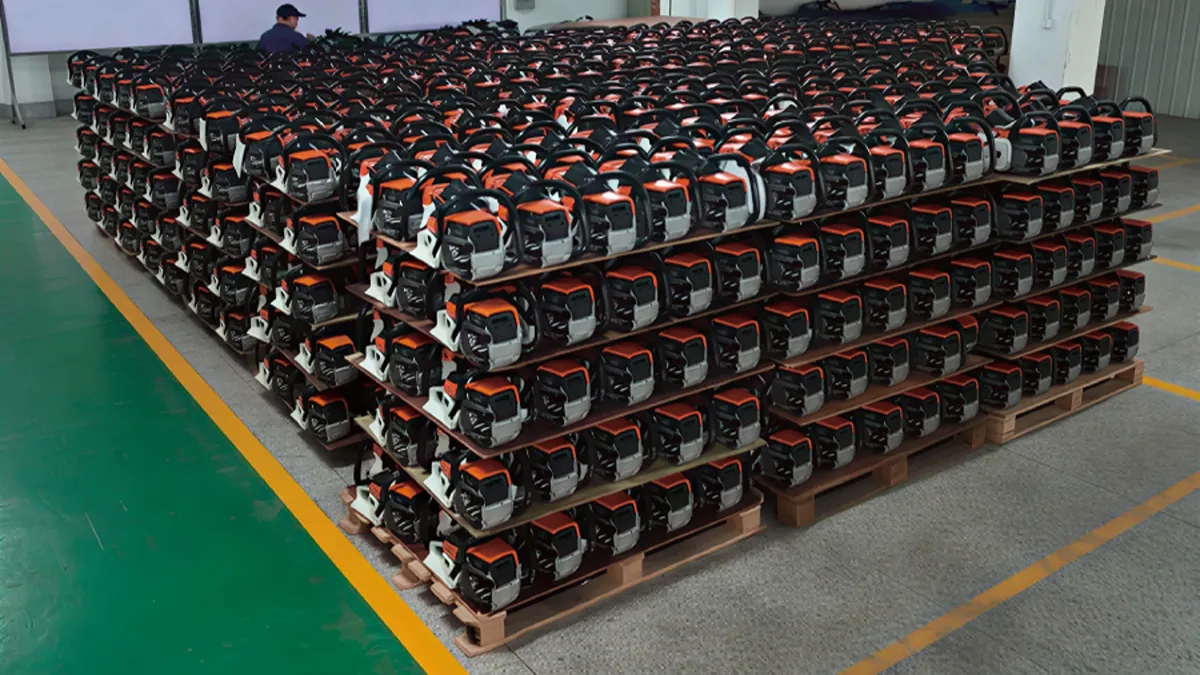
Every quotation for a gasoline chainsaw, desbrozadora, pulverizador, or generator is assembled from the same stack of cost components. What separates machines is the specification inside each layer.
| Cost component | What moves it |
|---|---|
| Engine and core components | Displacement class, engine tier, carburetor quality, ignition and cylinder materials |
| Alojamiento, hardware, y accesorios | Plastic grade, bar and chain spec, metal vs plastic fittings, included accessories |
| Certification status | Tested and certified configuration vs uncertified lookalike; EPA-certified engine family |
| Packaging and labeling | Export carton spec, color box printing, manual language versions, compliance labels |
| Labor and factory overhead | Assembly depth, testing per unit, control de calidad, factory scale |
| Volume and terms | Order quantity tiers, trade terms (EXW/FOB/CIF), condiciones de pago, currency |
The Engine Is the Largest Single Variable
Ask two suppliers to price the “same” 45cc brush cutter and the first question to ask each of them is: which engine, and which carburetor? Engine displacement defines the class, but within one displacement the parts tier moves the price meaningfully — cylinder and crankshaft materials, carburetor sourcing tier, ignition module quality, air filtration. A machine built for seasonal residential use and one built for daily agricultural work can share a displacement figure and nothing else.
This is also where the durability conversation starts. A professional buyer evaluating engines looks past the spec sheet to the quality signals — our article on what professional agricultural machinery buyers look for in gasoline engine quality covers that evaluation in detail. The price you should compare is not per machine; it is per season of reliable service.
Certification Status Is Priced Into Every Unit
A certified machine carries costs an uncertified lookalike does not: pruebas, certification maintenance, factory audits, compliance labeling, and the engineering discipline of staying inside a certified configuration. When one quotation undercuts another by a margin that seems too good, certification is one of the first places the difference hides — along with the engine tier. An uncertified machine is not a discount; it is a different product that may not legally enter your market at all, which is why the certification conversation belongs before the price conversation, not after.
For the United States specifically, the EPA status of the engine family shapes both price and lead time: engines already inside a certified family carry the compliance cost in the unit price, while a configuration requiring new certification adds months and real money. Confirm the certification scope in writing as part of the quotation, not as a verbal assurance.
Order Volume, Cantidad mínima de pedido, and the Price Breaks
Volume pricing is real but structured. Quotations typically step down at volume tiers because fixed costs — production setup, packaging print runs, documentación, inspection — spread across more units. What surprises first-time buyers is how much of the tier effect comes from their own specifications: a full container of one model prices better than a mixed container of six, and standard packaging prices better than a custom color box ordered in small print runs.
The corollary: your first container will rarely be your best unit price, and that is fine. The first order buys market information — which models move, which specs your dealers request — and the reorder, placed against confirmed demand at higher volume, is where the pricing conversation gets serious. Pricing behavior differs by product category too; our analysis of what drives gasoline generator prices shows how the same volume logic plays out on a higher-ticket product.
Embalaje, Labeling, and Language Versions
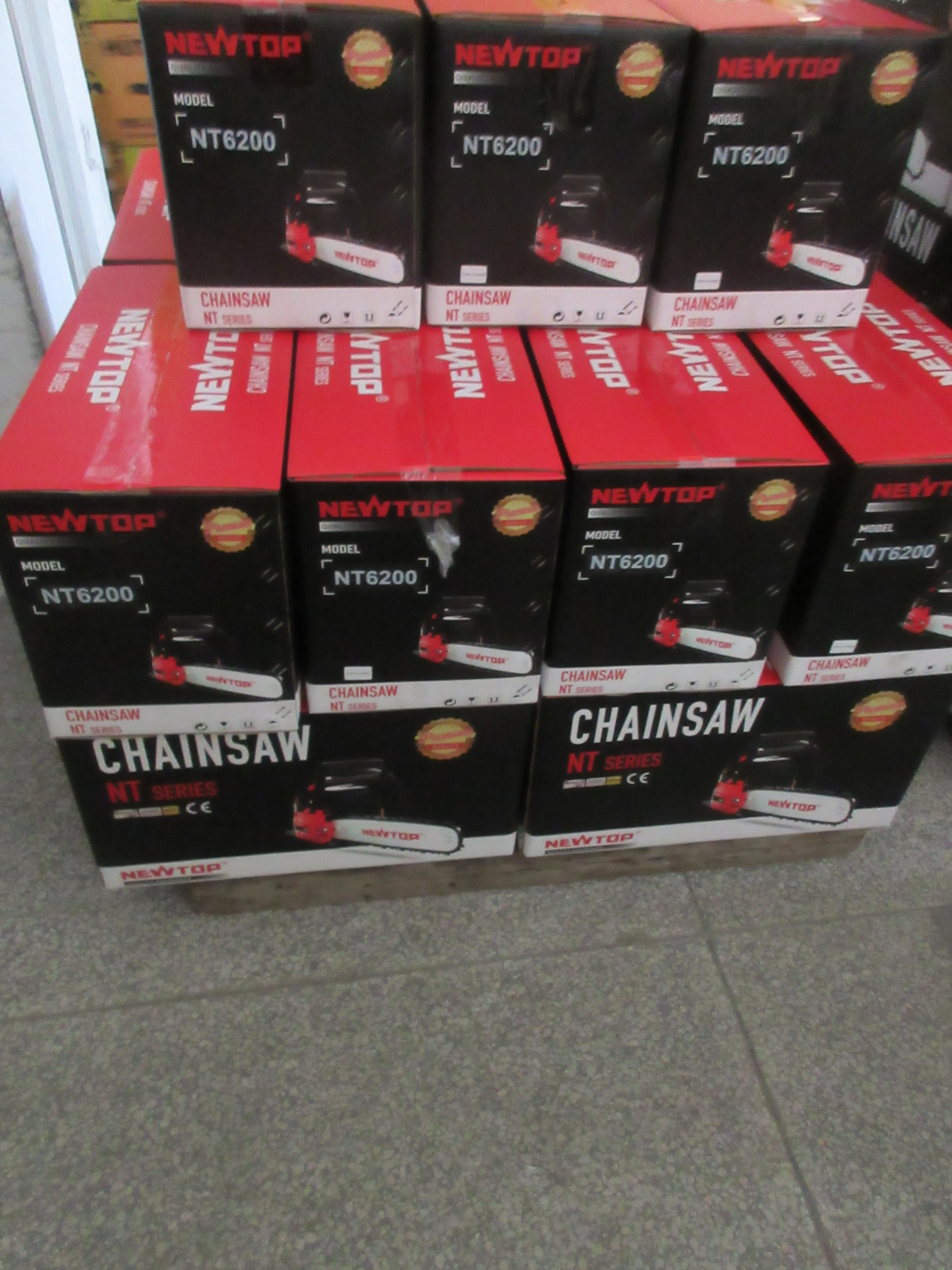
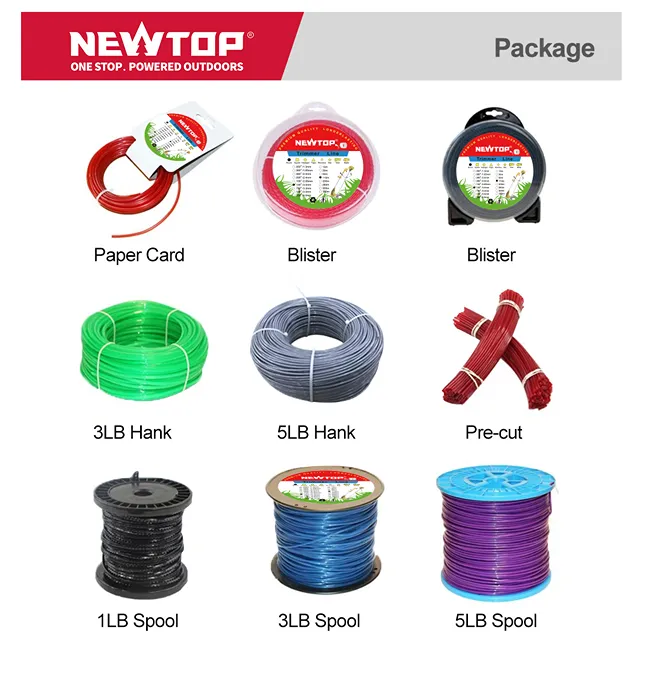
Packaging is a price line that starts small and grows with ambition. A standard brown export carton with a generic manual is the baseline most quotations assume. A printed color box adds print-plate and per-unit costs that shrink at volume; multi-language manuals, market-specific compliance labels, and branded accessory kits each add another line. None of these are reasons to skip them — shelf presence sells — but they are reasons the quotation from a supplier who asked about your packaging specification is more accurate than the one who assumed the cheapest default.
Trade Terms and Freight: What EXW, ENGAÑAR, and CIF Actually Change
Three letters change who pays for what, and comparing quotations on different trade terms is comparing different products. EXW (ex-works) is the bare machine at the factory gate — you arrange and pay for inland transport, export clearance, and freight. ENGAÑAR (free on board) adds the supplier’s local logistics and export clearance to the port of loading. CIF adds insurance and freight to your destination port. The machine’s ex-works value does not change across the three; the service scope does.
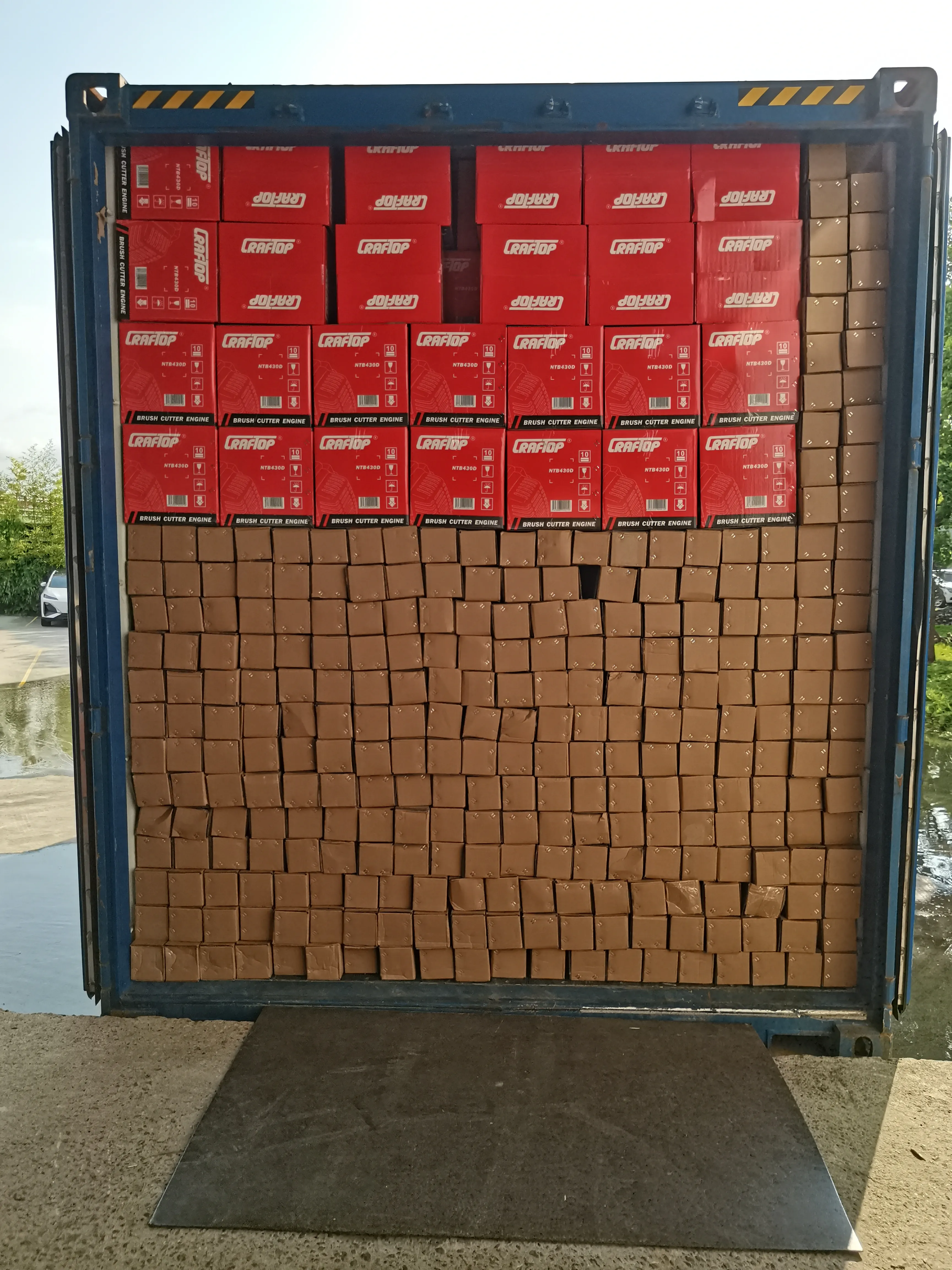
Freight itself deserves its own line in your landed-cost math. Outdoor power equipment is dense, heavy cargo, and container utilization — how many units and cartons fit, how pallets stack — moves your per-unit logistics cost more than most buyers expect. A supplier who packs containers weekly for your lane can usually suggest carton and pallet configurations that measurably improve utilization.
Why the Lowest Quote Is Rarely the Cheapest Order
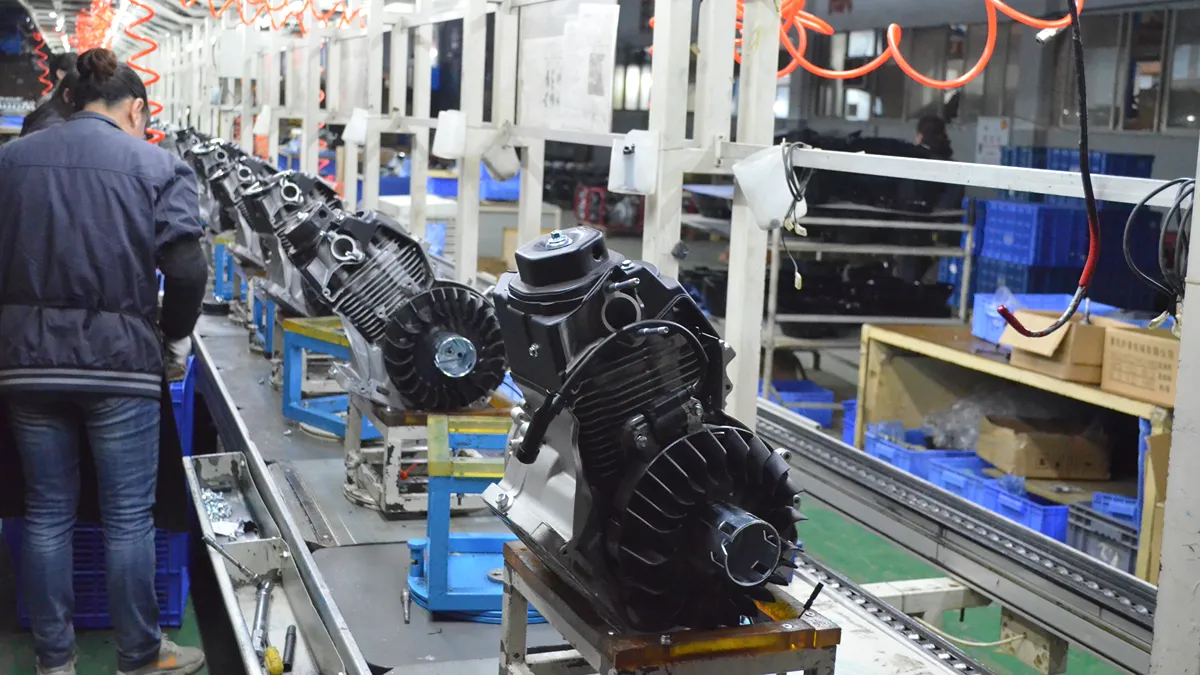
The final component of the cost stack is the one that never appears on the quotation: the cost of getting it wrong. A machine that fails in the field generates warranty claims, replacement shipments, dealer friction, and channel reputation damage that costs more than the original margin. A supplier who tests every engine, runs a documented quality control process, and stands behind parts availability prices that discipline into the unit — and for a distributor building a brand, that discipline is the cheapest line in the stack.
So read the quotation the way an experienced importer does: engine tier, certification scope, packaging specification, trade terms, and the quality system behind it. Then compare. The cheapest order is the one that arrives right, sells through, and reorders without arguments.
Preguntas frecuentes
What is a realistic MOQ for a first bulk order?
For established certified models, suppliers commonly accept mixed-model containers with modest quantities per SKU. Bespoke configurations and ODM projects carry multiples of that. Ask the supplier to state MOQ per model and per configuration in writing before you build your assortment.
Why is FOB usually quoted instead of EXW?
FOB includes local transport and export clearance, which most buyers want the supplier to handle. EXW hands those steps to you and your forwarder. The machine’s ex-works value does not change between the two — only the service scope around it does.
Do quoted prices include certification costs?
For standard models, yes — the manufacturer maintains the certificates and that cost sits inside the unit price. If your customization moves the product outside the certified configuration, new testing and certification is quoted separately. Confirm the certification scope in the quotation itself.
How much does custom packaging add to the price?
A printed color box and branded manual add a modest per-unit cost at container volumes, driven mainly by print run size and carton material. Brown-box export packaging is the baseline most quotations assume, so ask which one the number in front of you includes.
When is the best time to negotiate on price?
After the specification and certification scope are fixed. Negotiating on a moving specification produces quotes that get repriced anyway. Lock the configuration first, then negotiate volume tiers, condiciones de pago, and freight against a stable baseline.
Pin down the engine tier, the certification scope, the packaging, and the terms, and the quotations you receive become comparable. Skip that step, and the only thing you have compared is which salesperson rounds down more aggressively.
Comparing quotations now? Send us your specification and destination market through our product range page or ask about our distributor terms — we quote the configuration, not the illusion of one.
“Can I put my brand on this?” y “can you build a machine to my spec?” sound like variations of the same question. They are not — they lead to different tooling investments, different minimums, different lead times, and very different certification obligations. This guide separates OEM from ODM as they actually work on outdoor power equipment lines, so you can pick the right level of customization before the development clock starts running.
The one-paragraph version: OEM means the manufacturer customizes an existing, already-certified platform for your brand — logo, bandera, embalaje, model naming — while the machine underneath stays proven. ODM means the manufacturer develops or substantially modifies the product for you: new engineering, new molds, new testing, and a certification process that starts closer to zero. Most distributors should start with OEM. Some genuinely need ODM. The expensive mistake is choosing ODM when OEM would have carried the brand just as far.
OEM and ODM in Plain Terms
| Dimension | OEM — customize an existing platform | ODM — develop or modify the product |
|---|---|---|
| Basis | Proven, already-certified model | New engineering or substantial modification |
| Typical changes | Logo, bandera, embalaje, manual, model naming | Engine config, ergonomía, new housings, new molds |
| Proceso de dar un título | Rides on existing certificates for the configuration | New testing and certification cycle for the changed product |
| Cantidad mínima de pedido | Standard model minimums | Multiples of standard — tooling must amortize |
| Lead time | Production schedule | Development + pruebas + certification, then production |
| Best fit | Brand building on proven hardware | Product differentiation the catalog cannot offer |
What OEM Means on an Outdoor Power Equipment Line
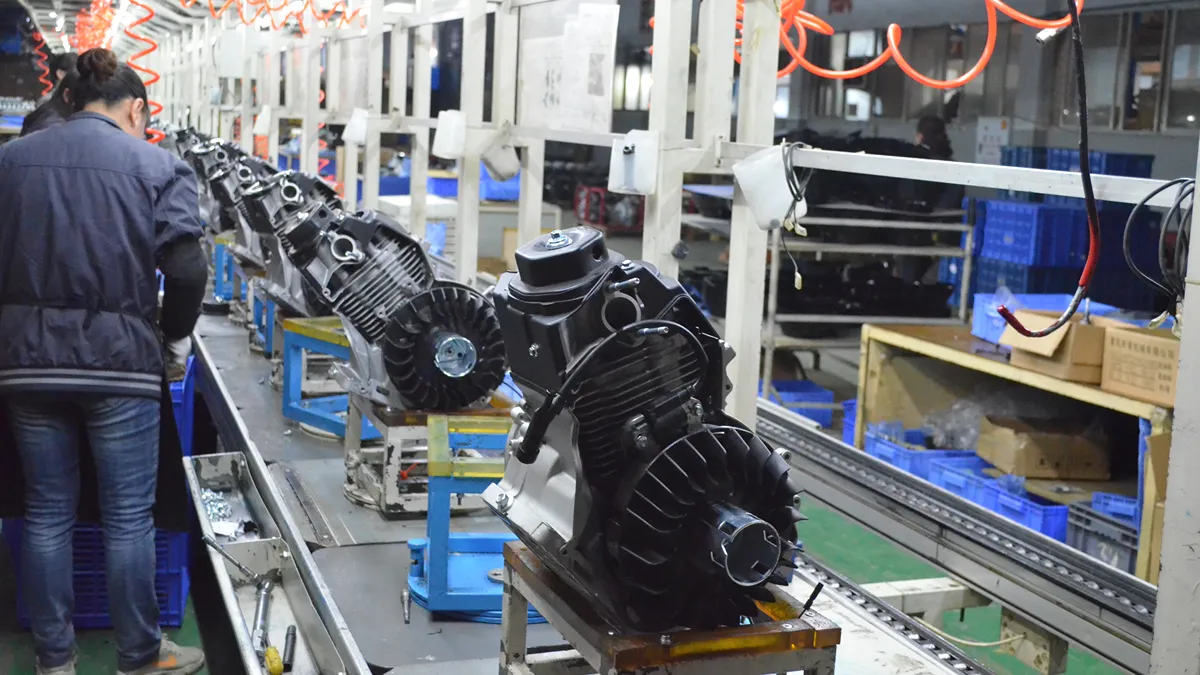
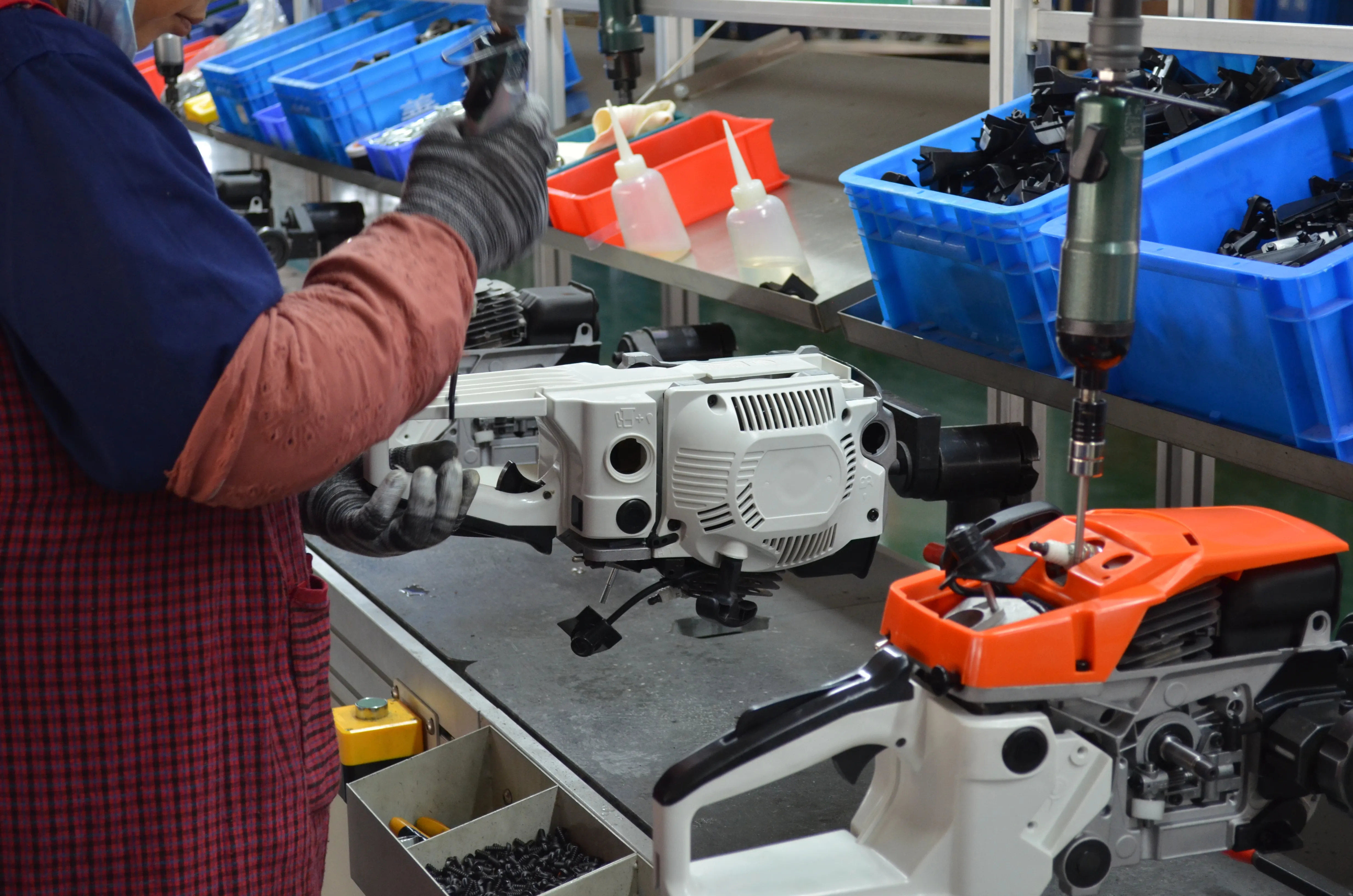
OEM is how most private-label outdoor power equipment actually gets made, and it is faster than buyers expect because the hard work already exists. The platform — engine, housing, cutting system, safety features — is in production, certified, and proven across a fleet of units in real markets. Your program adds the brand layer: your logo on the housing and packaging, your color scheme where the process allows, your model naming, your manual, your warranty card. On an established line this is a production-planning exercise, not an engineering project, which is why an OEM first order can ship on the same timeline as a factory-branded one.
The discipline OEM demands is choosing the right platform, not designing one. A distributor selling to smallholder farmers should not private-label the same machine as a municipal landscaping contractor, no matter how good the logo looks on both. Start from the market’s duty cycle, then pick the certified platform that matches it.
What ODM Changes — and What It Costs You
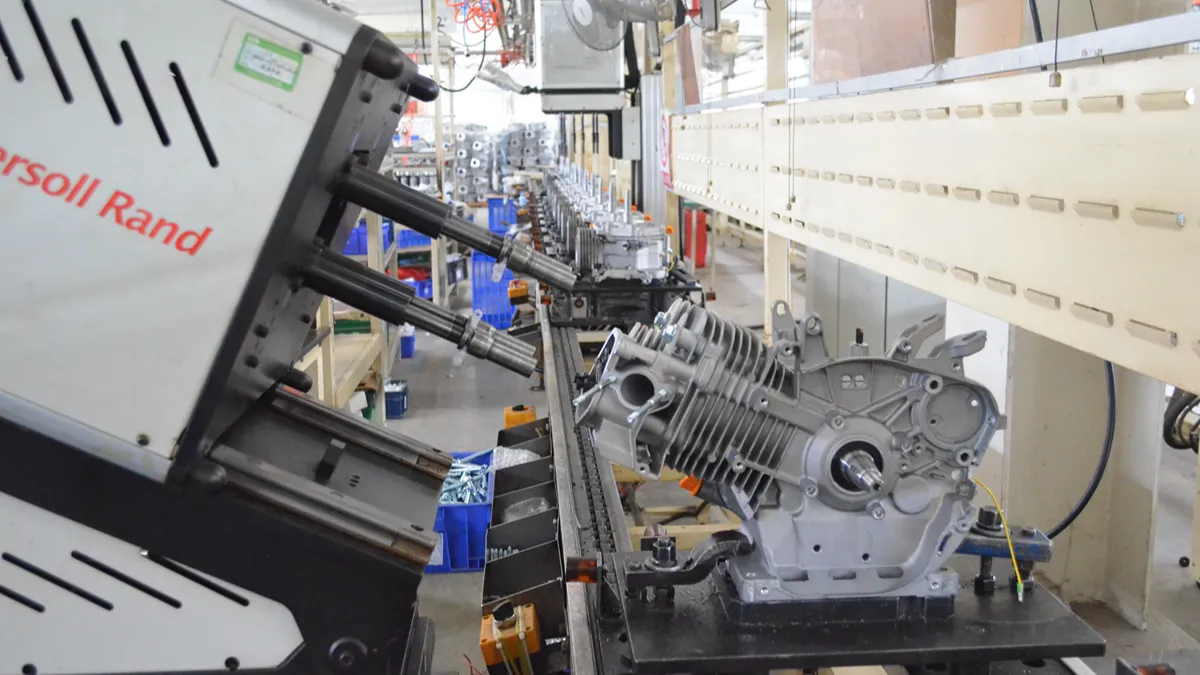
ODM is the right answer when the market needs something the existing catalog cannot offer: a different engine configuration for local fuel quality, an extended pole reach, a housing redesign for a specific duty cycle, or a feature combination no platform carries. What it costs is schedule and certainty. Engineering changes ripple — a new housing means new molds, a modified engine configuration means new testing, and any change that moves the product outside its certified configuration triggers a new certification cycle before the product can enter regulated markets.
Budget ODM programs in phases, not in a single lead-time promise: development and sampling, then testing and certification, then pilot production, then volume. Distributors who plan this way treat the ODM project as a product launch with a budget; distributors who do not treat it as a delayed OEM order and are disappointed by both the timeline and the invoice.
The Certification Question Most Buyers Discover Too Late
Here is the question that separates smooth OEM programs from painful ones: whose certificate covers the machine you ship? On an OEM program, the answer is the factory’s — the existing certificates cover the platform configuration, and your branding does not change the hardware. The documentation set should still be updated so your brand, model names, and the responsible economic operator are consistent for your market, and a transparent manufacturer handles that as part of the program.
On an ODM program, the changed configuration needs its own testing and certificates, and that cost and timeline belong in the project budget from day one. This is exactly why we tell buyers to confirm certificate scope per model before development starts — you can review what a documented portfolio looks like on our certificates and patents page. A distributor in a regulated market who skips this step is not customizing a product; they are pre-ordering a compliance problem.
MOQ and Tooling Economics
The MOQ gap between OEM and ODM is not a sales tactic — it is arithmetic. OEM rides on volumes the factory already produces, so your minimum is close to the model’s standard MOQ. ODM adds tooling that must amortize across your order: molds, fixtures, test setup, and certification fees are largely fixed costs, and they land on the first container unless the agreement spreads them. That is why ODM minimums run at multiples of OEM minimums for the same product category.
The pragmatic path for most distributors is staged: launch the brand with OEM on certified platforms, learn what the market actually asks for, and commission ODM development for the one or two models where differentiation pays for the tooling. Packaging is the middle ground — a fully custom color box and branded manual are OEM-level costs with ODM-level brand impact.
When to Choose Which: A Decision Framework
| Your situation | Better fit | Por qué |
|---|---|---|
| Entering a new market with an untested brand | OEM on certified platforms | Speed and proven hardware while demand is still a hypothesis |
| Established demand and brand equity in-market | ODM for differentiating models | Volume exists to amortize tooling; margin justifies development |
| First container headed to a regulated market | OEM, strictly | Existing certificates de-risk market entry paperwork |
| A feature combination no platform offers | ODM | The differentiation is the reason the tooling is worth it |
| Small first order, brand ambition intact | OEM with custom packaging | Brand presence now; hardware upgrade later |
How NEWTOP Runs OEM and ODM Programs
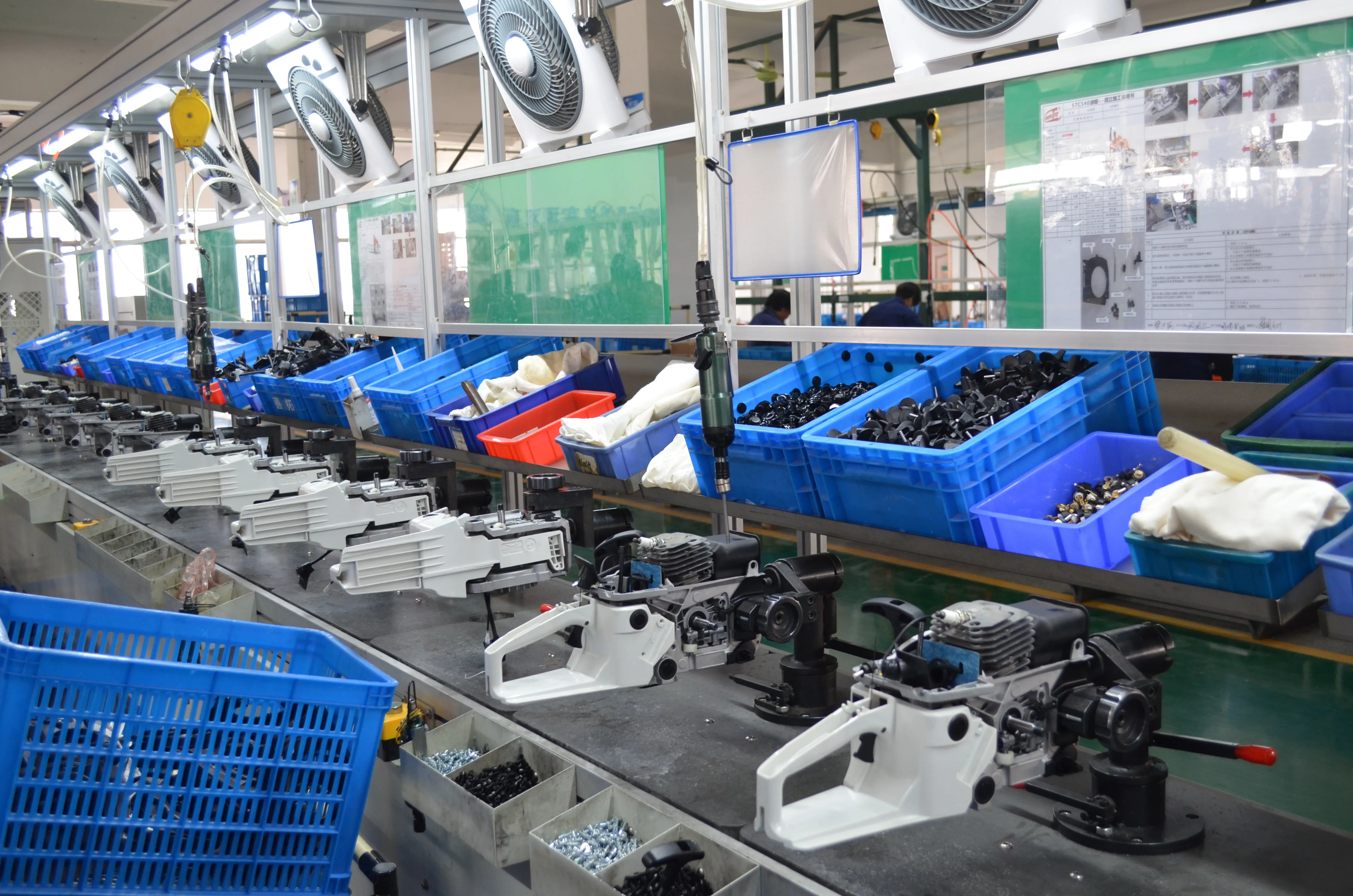
Customized and private-label work is the majority of our order book — OEM programs run on our certified chainsaw, desbrozadora, pulverizador, water pump, and generator platforms, and ODM projects go through our own engineering and tooling for buyers whose markets need configurations the catalog does not carry. Running our own NEWTOP and CRAFTOP brands keeps us honest about both sides of the table: we develop platforms the same way we develop them for partners, and a program that would not survive under our own brand does not get proposed under yours. If you are weighing a private-label launch, nuestro distributor program page describes how the documentation and brand setup work — and our guide on choosing among distribution-oriented manufacturers covers the questions to ask any factory you evaluate.
Preguntas frecuentes
Can I put my own brand logo on certified models?
Yes — that is standard OEM practice. The logo, bandera, embalaje, and manuals change while the certified platform underneath stays proven. The documentation set is updated so your branding and the responsible parties are consistent for your market.
Who owns the molds and tooling in an ODM project?
Whatever the contract says — so negotiate it before development starts. Típicamente, buyer-funded tooling is buyer property with contractual access, which protects your program if you later move production. Put ownership, access, and transfer terms in the development agreement.
How much higher are ODM minimums than OEM?
Usually multiples of the standard model minimum, because tooling, fixtures, and certification costs amortize across the order volume. Ask the supplier to state the MOQ per configuration in writing, including what happens to the minimum if you split colors or packaging versions.
What happens to certification if I only change the color and packaging?
Cosmetic changes normally stay inside the certified configuration, so the certificates remain valid. The product markings must still follow the certification rules, and the Declaration of Conformity should reflect the shipped configuration — confirm both with the supplier before production.
Can I mix OEM and ODM in the same program?
Sí, and most mature programs do: OEM platforms for the core range, ODM development for the one or two models where differentiation pays for the tooling. Decide per model, not per brand — the framework holds line by line.
OEM versus ODM is not a philosophy debate — it is a scheduling and budgeting decision. Choose OEM when proven hardware carries your brand far enough, commission ODM when the market rewards a configuration nobody else ships, and put the certification scope in writing before either one starts.
Planning a private-label program? Browse the platforms available for OEM programs or talk to our team about your market and volume — we will tell you honestly whether your idea is an OEM order or an ODM project.
