Una hélice fueraborda funciona en uno de los entornos más duros de un barco. Cada viaje lo expone a la arena., rocas, escombros flotantes, aguas poco profundas, y rotación continua a alta velocidad. El desafío es que los daños a las hélices a menudo se desarrollan lentamente.. Un pequeño chip hoy puede convertirse en una grieta mañana, mientras que una ligera vibración puede eventualmente dañar los rodamientos, sellos, o incluso la unidad inferior. Aprender a reconocer las primeras señales de alerta ayuda a los propietarios de embarcaciones a evitar costosas reparaciones, mejorar la economía de combustible, y mantener un rendimiento seguro en el agua.
En esta guía, aprenderás lo más común signos de daños en la hélice fuera de borda, cómo inspeccionar su hélice correctamente, cuando las reparaciones son prácticas, y cuando el reemplazo es la mejor solución a largo plazo.
Por qué es importante la detección temprana de daños en las hélices
Impactos directos en el desempeño y la eficiencia
Un comprometido hélice Degrada inmediatamente la forma en que su embarcación se mueve a través del agua.. Las distorsiones menores de las palas obligan al motor a trabajar fuera de su rango de carga óptimo., arrastrando hacia abajo el rendimiento general.
- Hidrodinámica alterada: Las palas dañadas alteran el flujo de agua, lo que resulta en velocidades máximas más bajas y una aceleración más débil.
- Restricciones de RPM: Alterado efectivo paso evita que el motor alcance las RPM designadas con el acelerador completamente abierto.
- Desperdicio de combustible: La reducción de la eficiencia de la hélice obliga al fueraborda a trabajar más duro, aumentando significativamente el consumo de combustible.
- Vibración y manejo: Las palas desequilibradas inducen vibraciones que afectan la precisión de la dirección y degradan el confort general de marcha..
Prevención de fallas mecánicas secundarias
Ignorar una hélice dañada transfiere tensión directamente al tren motriz interno de su fueraborda. Lo que comienza como una hoja doblada rápidamente compromete los sellos y cojinetes en el interior de la unidad inferior..
- Aceite para engranajes contaminado: Las grietas inadvertidas cerca de la aleta sumergida a menudo provocan la entrada de agua y la contaminación del aceite de los engranajes..
- Estrés del motor: Las hélices deformadas alteran la carga del motor, causando dañinas bajas o altas revoluciones que estresan los componentes internos.
- Fatiga acelerada: La vibración continua de una hélice desequilibrada acelera la fatiga estructural en los cojinetes de la caja de engranajes, ejes de transmisión, y soportes de motor.
- Riesgos de sobrecalentamiento: Combinado con entradas de agua restringidas, El mal estado de la hélice eleva el riesgo de sobrecalentamiento grave del motor..
Seguridad del buque y confiabilidad operativa
El estado de la hélice dicta su control físico sobre la embarcación.. No detectar los daños a tiempo pone en riesgo tanto a la tripulación como a la carga durante las maniobras críticas..
- Pérdida repentina de propulsión: Un cubo que falla progresivamente o una pala debilitada pueden fracturarse bajo carga., causando una pérdida inmediata de propulsión utilizable.
- Peligros de colisión: El manejo degradado y la aceleración retardada reducen la maniobrabilidad alrededor de obstáculos, crecientes riesgos de colisión.
- Integridad del horario: La detección oportuna minimiza el tiempo de inactividad no programado, proteger la integridad del cronograma para uso comercial, carta, y operaciones de rescate.
El argumento económico a favor de la intervención temprana
La lógica financiera es sencilla.. Cambiar una hélice dañada cuesta una fracción de las facturas de reparación necesarias si deja una unidad comprometida conectada a su motor.
- Intervención de bajo costo: La inspección y el reemplazo de las hélices representan una fracción del costo total de las reparaciones del motor o de unidades inferiores..
- Detener la hemorragia financiera: La detección temprana de daños detiene las pérdidas financieras derivadas del consumo excesivo de combustible y el desgaste acelerado de las piezas..
- Evitar grandes reconstrucciones: Ignorar los indicadores tempranos frecuentemente conduce a costosas reconstrucciones de la caja de cambios, reemplazos de sellos, y reparaciones de cabezales de potencia.
Los primeros signos visibles de daños en la hélice fuera de borda
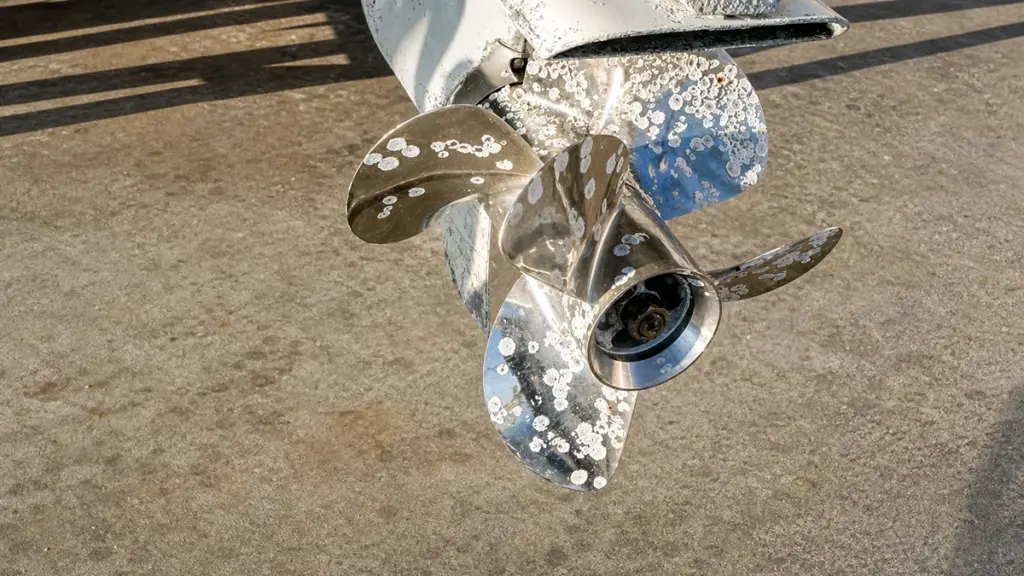
Detección temprana de daños en las hélices fuera de borda, como melladuras menores, desgaste de pintura, o curvas leves: evita el aumento de los costos de combustible, desgaste de la transmisión inducido por vibraciones, y fallo repentino de propulsión.
Deterioro de la pintura y rayones superficiales
We often dismiss worn paint as normal wear and tear, but localized paint wear on the blades or hub points to frequent minor impacts with sand or small debris. It acts as the first warning sign before structural bending occurs.
You will typically notice fine scratches appearing on the leading edge first. These surface abrasions usually precede deeper structural wear. Once the protective coating strips away, the exposed bare metal patches create immediate vulnerabilities for accelerated corrosion in saltwater environments.
Nicks, Chips, and Minor Dents
A perfectly smooth edge is essential for hydrodynamic efficiency. Small chips along the leading edge disrupt water flow and increase the risk of cavitation. This turbulent water causes pressure drops that erode the surrounding metal.
Las abolladuras superficiales en las superficies de las hojas son las primeras deformidades estructurales detectables sin herramientas especializadas.. Mire de cerca el borde de salida durante las inspecciones.. La pérdida temprana de material en el borde de fuga afecta directamente el agarre y la sustentación de la hélice., lo que reduce su aceleración y velocidad máxima.
Deformación y flexión sutiles de la hoja
Las hélices funcionan bajo una carga inmensa., e incluso un ligero cambio geométrico altera el equilibrio de todo el sistema de propulsión. Las puntas de las hojas ligeramente dobladas indican claramente un contacto previo con rocas o un fondo duro..
Para detectar estos problemas, ver la hélice directamente desde el frente. La asimetría visible sugiere una deformación desigual debido a impactos unilaterales. La microdeformación o torsión altera el paso y la distribución de carga entre las palas.. Esto obliga al motor a quemar más combustible para mantener su velocidad de crucero normal..
Corrosión localizada y picaduras por cavitación
La degradación del material compromete la resistencia de la unidad.. Pequeñas picaduras de corrosión u oxidación blanca como polvo en hélices de aluminio marcar áreas de debilitamiento del material. Estos puntos se expanden rápidamente si no se controlan.
Bruto, Los parches arenados cerca de regiones de alta carga indican erosión por cavitación temprana.. Mientras las burbujas de vapor colapsan contra el metal, destruyen la capa superficial. La erosión repetida adelgaza gradualmente las secciones cercanas al borde de ataque, haciéndolos propensos a agrietarse durante la operación a altas RPM.
Desalineación y puntuación visibles del eje
El buje absorbe el impacto del cambio y actúa como vínculo crítico entre el motor y las palas.. Scoring or distortion around the hub collar hints at abnormal stress or improper installation. You can test the integrity of the internal rubber bushing with a quick visual diagnostic.
Draw a straight line across the hub and barrel, run the boat under load, and check the marks. Misaligned diagnostic marker lines visually confirm internal hub slippage. You should also check for flattened or peened edges, which reflect a history of running the outboard through shallow, rocky water.
Source High-Margin OEM Garden & Maquinaria agrícola

How Vibration, Ruido, and Poor Acceleration Reveal Damage
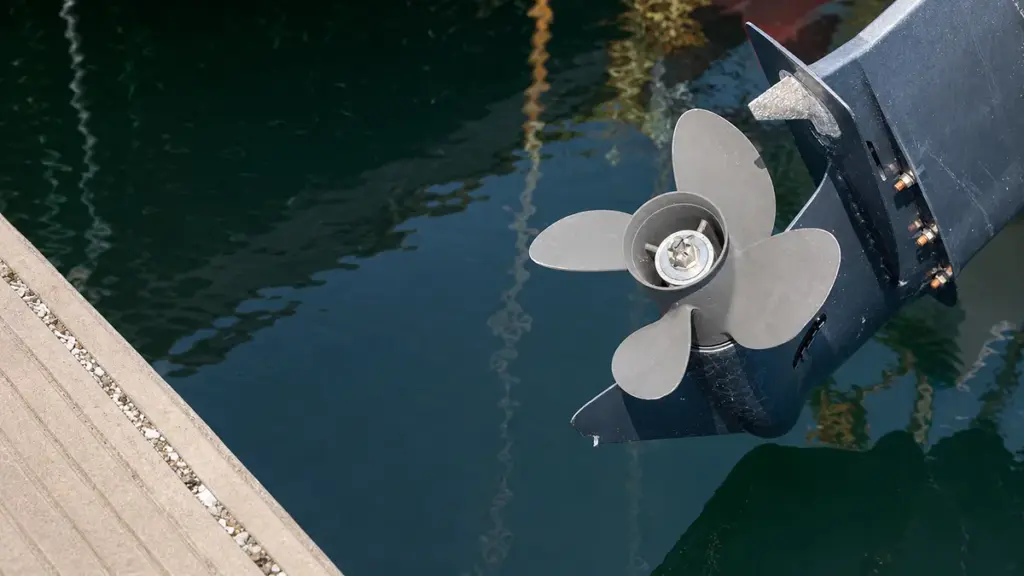
Propeller damage rarely announces itself with a catastrophic failure. It subtly degrades hydrodynamics, sending mechanical warnings through vibration, unusual noise, and sluggish performance that operators must decode.
The Mechanics of Propeller-Induced Vibration
Even minor propeller damage immediately disrupts hydrodynamic balance. When blades hit underwater objects, bent edges or missing metal shift the center of mass off the rotational axis. This mechanical imbalance forces the driveline to absorb cyclical stress.
- Center of mass shift: Bent blades or chipped edges create a mechanical imbalance away from the rotational axis.
- Hydrodynamic distortion: Altered blade geometry changes lift and thrust, placing uneven loads on the shaft and gears.
- RPM sensitivity: Vibrations peak at low to mid RPMs when the propeller works hardest to push the boat onto plane.
- Feedback transmission: Cyclical imbalances travel straight through the propshaft into the steering wheel, transom, and deck.
Translating Noise into Specific Driveline Issues
An outboard should produce a steady acoustic profile under load. When a propeller sustains damage, it introduces turbulence and mechanical interference that change the sound signature completely.
- Cavitation sounds: Damaged blades create low-pressure zones that spawn cavitation bubbles, producing distinct crackling, buzzing, or hissing noises.
- Engine stutter: Uneven thrust generation forces the motor to pulse audibly during hard acceleration runs.
- Lower unit rattle: Impact forces transfer directly into the lower unit, making gears and bearings rumble as they absorb the shock.
- Secondary wear indicators: Prolonged operation with an unbalanced prop causes propshaft bearings to grind or gearcases to emit a high-pitched whine.
Recognizing Performance Loss and Sluggish Acceleration
Physical damage directly compromises grip in the water. This hydrodynamic inefficiency forces the engine to burn more fuel while delivering less forward momentum.
- Increased propeller slip: Physical damage stops the efficient conversion of engine torque into actual forward thrust.
- Weak hole shot: A sluggish transition to plane serves as the primary indicator of blade distortion.
- Speed reduction: Minor imperfections trigger measurable drops in top speed and alter operating RPMs at specific throttle settings.
- Baseline comparison: Comparing current speed and wide-open throttle (WOT) RPM against historical metrics isolates propeller inefficiency from actual engine power loss.
Diagnostic Steps to Confirm the Root Cause
You cannot fix a driveline issue based purely on operator feel. Technicians rely on a strict diagnostic sequence to separate propeller damage from internal engine faults.
- Visual inspection: Check the blades thoroughly for bends, nicks, gubias, grietas, or unequal marine growth.
- Shaft examination: Look at the prop shaft for visible bends, binding during manual rotation, or fishing line cutting into the seals.
- Isolation test: Run the engine safely in gear without the propeller installed to see if the vibration stops.
- Secondary component check: Evaluate engine mounts and fuel delivery systems if symptoms persist after installing a known-good propeller.
How to Inspect Blade Edges, Hub Area, and Shaft Contact
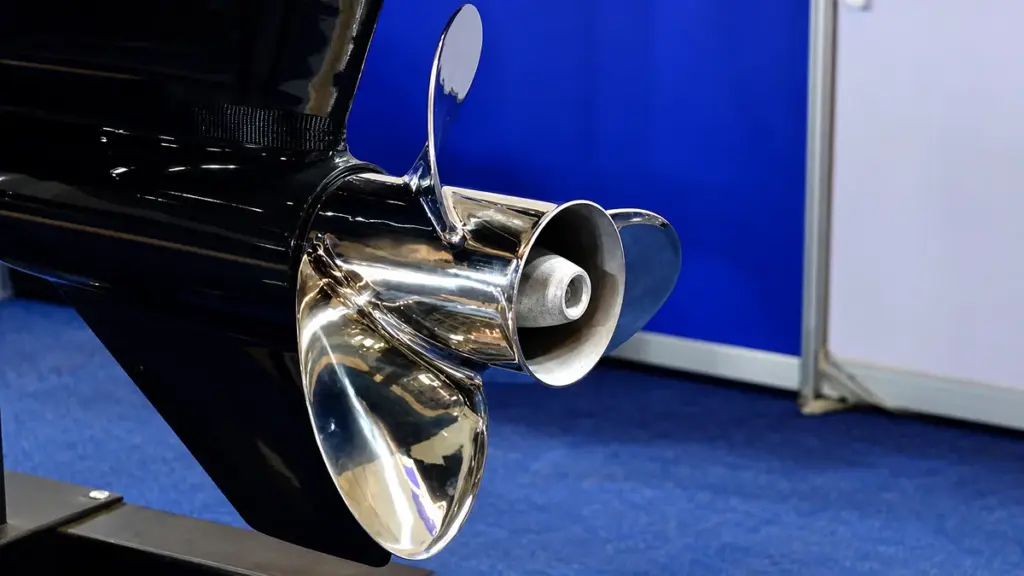
A systematic inspection of blade geometry, hub integrity, and shaft contact points prevents catastrophic lower unit failures, stops vibration, and ensures peak propulsive efficiency.
| Inspection Zone | Key Defect Indicators | Functional Impact |
|---|---|---|
| Blade Edges | Nicks, inward cracks, flattened cup | Hydrodynamic imbalance, cavitación, thrust loss |
| Conjunto de cubo | Extruded rubber, misaligned marker lines | Buje hilado, complete loss of drive under load |
| Eje & Hardware | Twisted splines, worn thrust washer | Fretting, gearcase vibration, thread damage |
Blade Edges and Surface Integrity
The geometry of the propeller blade dictates thrust generation and fuel efficiency. Technicians must examine leading edges, bordes de salida, and tips for nicks, chips, gubias, or inward-radiating cracks. A damaged or flattened cupped trailing edge directly reduces water hold and increases the risk of early cavitation.
- Profile Consistency: Verify uniform rake angle and pitch across all blades to identify uneven bending or impact damage.
- Balance Check: Mount the propeller horizontally on a hub rod to identify heavy or off-plane blades.
- Clearance Limits: Ensure a minimum 3 mm tip clearance from the anti-cavitation plate to prevent contact under heavy load or blade flex.
Hub Area and Spun Hub Detection
The hub handles the brutal torque transfer from the engine to the water. A compromised rubber bushing acts as a failed mechanical fuse, dropping propulsion completely. Inspectors should check the outer hub barrel and blade roots for dents, ovalization, o grietas finas. Extruded, melted rubber or heat staining clearly signals a failed bushing.
- Slippage Diagnostic: Draw a marker line across the outer housing, rubber zone, and inner hub, then run the boat under load to check for misalignment.
- Exhaust Path: Inspect internal routing for carbon build-up or structural obstructions that could disturb exhaust flow.
Prop Shaft and Hardware Contact Zones
The connection between the propeller and the driveline must remain perfectly aligned to avoid transferring destructive vibrations into the gearcase. Assess the propeller shaft for straightness, runout, óxido, and signs of pitting. Spline teeth on both the shaft and the hub bore require close inspection for rounding, chipping, o perfiles torcidos.
- Thrust Washer Integrity: Examine seating surfaces for cracks, uneven wear, or deep grooves that throw off propeller alignment.
- Torque Application: Apply the proper manufacturer-specified torque—commonly 40-60 ft-lbs—to prevent fretting or thread damage.
Integrated Inspection Workflow
A standard inspection workflow brings these discrete checks into a repeatable process. You must disable the engine ignition, remove the locking hardware, and safely slide the propeller off the shaft. Cleaning the shaft and hub bore with a degreaser is critical to accurately assess the splines and thrust washer without old marine grease hiding the defects.
- Component Evaluation: Systematically check the hub for spun bushing signs and the blade edges for profile consistency.
- Reassembly Protocol: Reinstall using fresh marine grease, pushing the prop forward until it clicks firmly against the thrust washer.
- Final Securing: Torque the nut to spec and verify the locking hardware is properly engaged.
When Minor Damage Can Still Be Repaired
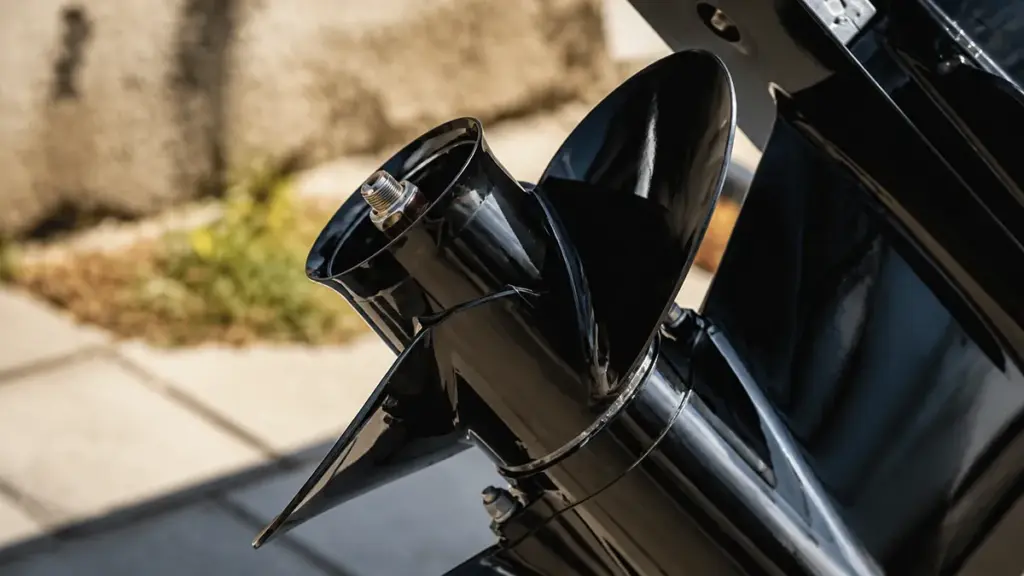
Minor propeller damage like edge burrs and shallow nicks can be repaired with basic filing, provided the blade geometry remains intact and no cracks or vibration are present.
Identifying Repairable Minor Damage
Before breaking out the tools, you need to confirm the damage is actually minor. Repairable defects are strictly surface-level flaws that do not compromise the structural integrity or hydrodynamic shape of the propeller.
- Surface-level dings: Small burrs, leading-edge nicks, and dents that leave the original blade geometry intact.
- Isolated edge wear: Damage limited entirely to the blade edges, meaning the overall diameter and pitch remain unchanged.
- Funcionamiento fluido: Propellers that continue to push the boat efficiently without inducing unusual vibration.
- Structural soundness: A complete absence of visible cracks or physical deformation during visual inspection.
If the propeller still performs well and the shaft runs true, you are likely dealing with cosmetic or minor edge wear.
Indicators of Severe Damage
Not all impacts result in a quick fix. Some structural flaws demand immediate professional intervention or a complete replacement to protect your gearcase.
- Visible cracks: Fractures in the blade or hub area, which usually require professional welding or replacement.
- Blade deformation: Noticeable bending or twist across one or multiple propeller blades.
- Severe vibration: Shaking immediately following an impact, signaling a potential mass imbalance.
- Drivetrain impact: Damage extending to the prop shaft, seal, or gear case after a hard strike.
- Die-cast limitations: Die-cast propellers displaying structural flaws, as marine professionals routinely classify these as non-repairable.
Operating with any of these severe defects transfers immense stress directly to your lower unit bearings and seals.
DIY Repair Methods and Discipline
Fixing minor edge damage requires precision and restraint. The goal is to smooth the water flow, not redesign the blade.
- Clean the propeller: Remove all marine growth, suciedad, and oil to accurately assess the damage profile.
- File flat: Gently use a coarse or mill bastard file, keeping the tool flat to avoid reshaping the blade.
- Minimize removal: Take off only the absolute minimum amount of metal necessary to smooth out the burr or nick.
- Know when to stop: Cease filing the exact moment the raised metal disappears to preserve blade balance and efficiency.
- Polish the edge: Refine the filed area with fine sandpaper and polish it to reduce hydrodynamic drag and resist corrosion.
Over-filing a single blade shifts the center of mass, transforming a simple nick into a permanent vibration problem.
Deciding Between Repair and Replacement
Knowing when to stop trying to salvage a damaged propeller saves money and prevents unexpected breakdowns on the water.
- Owner repairs: Best suited for slight burrs and minor dings that need only light, controlled filing.
- Professional shops: Necessary for straightening bends, balancing, and checking for hidden cracks using dye or probe scanning.
- Replacement threshold: The smarter financial choice if repair costs exceed 50% of the propeller’s total replacement value.
- Spare recovery: Keeping a spare propeller onboard acts as the ultimate fail-safe if minor damage rapidly worsens during a trip.
Treat your propeller as a consumable wear part. Upgrading to a new unit is significantly cheaper than rebuilding a blown gearcase caused by running an unbalanced prop.
When Early Replacement Is the Safer Choice
Certain types of damage should not be repaired because they increase the risk of sudden failure.
Replacement is usually recommended under the following conditions.
| Tipo de daño | Replace Immediately? | Reason |
|---|---|---|
| Large blade cracks | Sí | High risk of blade separation |
| Missing blade section | Sí | Severe imbalance |
| Bent propeller shaft | Sí | Can damage gearbox |
| Multiple damaged blades | Sí | Difficult to restore accurately |
| Severe corrosion | Sí | Reduced structural strength |
| Repeated repaired cracks | Sí | Metal fatigue continues to grow |
Choose NEWTOP for Reliable Outboard Propeller Performance
A durable propeller begins with dependable manufacturing. En NOVEDAD, we produce precision-balanced aluminum and stainless steel outboard propellers designed to deliver stable performance, buen funcionamiento, and long service life across a wide range of marine applications.
Our manufacturing process combines advanced CNC machining, strict dimensional inspection, dynamic balancing, and comprehensive quality testing to ensure every propeller meets consistent performance standards before shipment. Whether you need replacement propellers for aftermarket distribution or OEM production for your own brand, NEWTOP offers flexible manufacturing solutions backed by reliable capacidad de producción and global export experience.
Las ventajas clave incluyen:
- CCS and ECE certified quality for reliable performance and international market requirements.
- Premium materials — aluminum propellers use specially formulated aluminum-magnesium alloy for high strength and toughness, while stainless steel propellers use duplex stainless steel with better yield strength and corrosion resistance.
- Integrated molding technology — propeller blanks are formed with dedicated molds without welding, improving structural strength and durability.
- Precision hub pressing and CNC machining — one-piece pressed hubs improve dynamic balance, while CNC-machined blades ensure consistent geometry and stable thrust performance.
If you’re looking for a trusted outboard motor propeller manufacturer for wholesale supply or customized production, contact NEWTOP today. Our engineering and production teams are ready to help you select the right propeller solution for your market while ensuring consistent quality and long-term supply.
Preguntas frecuentes
How do I know if my outboard propeller is damaged?
Look for visible bends, chips, grietas, or missing material on the blades. Operational signs include the engine revving unusually high without proportional boat acceleration, which often points to a spun hub. You might also notice persistent vibration, metallic noises, or a loss of steering stability at normal cruising speeds.
Can a small nick on a propeller cause vibration?
Sí, even a small nick alters the mass distribution and hydrodynamic symmetry of the blade. This physical imbalance generates centrifugal forces that manifest as noticeable vibration, often within a specific RPM band. Ignoring minor damage leads to progressive wear on the prop shaft and lower unit bearings.
What does a spun prop hub feel like?
A spun hub feels like the boat is slipping in the water. The engine RPM spikes sharply under throttle, but the boat’s speed does not increase. It mimics the sensation of a slipping automotive clutch and is sometimes accompanied by a sudden loss of thrust or a burnt rubber smell.
Should I repair or replace a chipped propeller?
Repair is usually viable for small edge chips or minor bends, especially on higher-value stainless steel props. Replace the propeller if it has large missing chunks, deep cracks near the root, or if you use a low-cost aluminum unit where repair expenses exceed half the price of a new replacement.
Can propeller damage reduce fuel efficiency?
Damaged blades increase hydrodynamic drag and disrupt smooth water flow, forcing the engine to work harder to maintain speed. This mechanical inefficiency prevents the motor from operating in its optimal RPM band, directly resulting in higher fuel consumption per nautical mile.
What kind of noise does a damaged propeller make?
A compromised prop typically produces a rhythmic knocking or thumping sound synchronized with engine RPM. You may also hear metallic rattling or a harsh, low-frequency drone from the lower unit, especially under heavy acceleration or during sharp turns.
Can I still run a boat with a bent propeller?
You should only operate a boat with a bent propeller at minimal idle power to safely return to the dock. Running at planing speeds with unbalanced blades creates severe radial loads that quickly destroy the prop shaft, aspectos, and gearcase seals.
How often should I inspect my propeller?
Perform a quick visual and tactile check before and after every trip to spot obvious bends, chips, or wrapped fishing line. Complete a full removal inspection—taking the prop off to check the shaft, inspect seals, and re-grease the splines—at least once a season or every 100 hours of operation.