Pular para o conteúdo



An outboard propeller works in one of the harshest environments on a boat. Every trip exposes it to sand, rocks, floating debris, shallow water, and continuous high-speed rotation. The challenge is that propeller damage often develops slowly. A tiny chip today may become a crack tomorrow, while slight vibration can eventually damage bearings, selos, or even the lower unit. Learning how to recognize the early warning signs helps boat owners avoid expensive repairs, improve fuel economy, e manter um desempenho seguro na água.
Neste guia, você aprenderá o mais comum sinais de danos na hélice externa, como inspecionar sua hélice corretamente, quando os reparos são práticos, e quando a substituição é a melhor solução a longo prazo.
Por que a detecção precoce de danos à hélice é importante
Impactos diretos no desempenho e na eficiência
Um compromisso hélice degrada imediatamente a forma como sua embarcação se move pela água. Pequenas distorções da lâmina forçam o motor a trabalhar fora da faixa de carga ideal, prejudicando o desempenho geral.
- Hidrodinâmica interrompida: Lâminas danificadas alteram o fluxo de água, resultando em velocidades máximas mais baixas e aceleração mais fraca.
- Restrições de RPM: Efetivo alterado tom evita que o motor atinja a rotação de aceleração máxima designada.
- Desperdício de combustível: A eficiência reduzida da hélice força o motor de popa a trabalhar mais, significantly increasing fuel consumption.
- Vibration and handling: Imbalanced blades induce vibration that impairs steering precision and degrades overall ride comfort.
Preventing Secondary Mechanical Failures
Ignoring a damaged propeller transfers stress directly to your outboard’s internal drivetrain. What starts as a bent blade quickly compromises seals and bearings deep inside the lower unit.
- Contaminated gear oil: Unnoticed cracks near the submerged fin often cause water ingress and gear oil contamination.
- Engine stress: Deformed propellers alter engine load, causing harmful under-revving or over-revving that stresses internal components.
- Accelerated fatigue: Continuous vibration from an imbalanced prop accelerates structural fatigue in gearcase bearings, driveshafts, and engine mounts.
- Overheating risks: Combined with restricted water inlets, poor propeller condition elevates the risk of severe engine overheating.
Vessel Safety and Operational Reliability
Propeller condition dictates your physical control over the vessel. Failing to spot damage early puts both crew and cargo at risk during critical maneuvers.
- Sudden propulsion loss: A progressively failing hub or weakened blade can fracture under load, causing an immediate loss of usable propulsion.
- Collision hazards: Degraded handling and delayed acceleration reduce maneuverability around obstacles, increasing collision risks.
- Schedule integrity: Timely detection minimizes unscheduled downtime, protecting schedule integrity for commercial, charter, and rescue operations.
The Economic Case for Early Intervention
A lógica financeira é direta. Swapping a damaged propeller costs a fraction of the repair bills required if you leave a compromised unit attached to your motor.
- Low-cost intervention: Propeller inspection and replacement represent a fraction of the cost of total engine or lower unit repairs.
- Halting financial bleed: Catching damage early halts compounding financial losses from excess fuel burn and accelerated part wear.
- Avoiding major rebuilds: Ignoring early indicators frequently leads to expensive gearcase rebuilds, seal replacements, and powerhead repairs.
The First Visible Signs of Outboard Propeller Damage
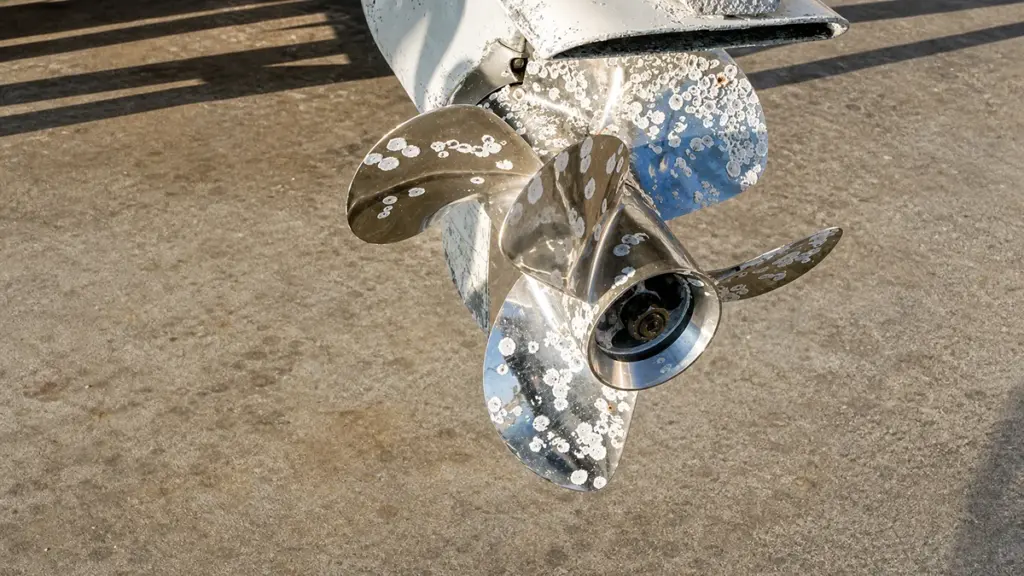
Early detection of outboard propeller damage—like minor nicks, paint wear, or slight bends—prevents escalating fuel costs, vibration-induced drivetrain wear, and sudden propulsion failure.
Paint Deterioration and Superficial Scratches
Muitas vezes descartamos a pintura desgastada como desgaste normal, mas o desgaste localizado da pintura nas lâminas ou nos pontos do cubo causa pequenos impactos freqüentes com areia ou pequenos detritos. Ele atua como o primeiro sinal de alerta antes que ocorra flexão estrutural.
Você normalmente notará arranhões finos aparecendo primeiro na borda principal. Essas abrasões superficiais geralmente precedem um desgaste estrutural mais profundo. Assim que a camada protetora for removida, as manchas de metal expostas criam vulnerabilidades imediatas para corrosão acelerada em ambientes de água salgada.
Nicks, Batatas fritas, e pequenos amassados
Uma borda perfeitamente lisa é essencial para a eficiência hidrodinâmica. Pequenas lascas ao longo da borda principal interrompem o fluxo de água e aumentam o risco de cavitação. Esta água turbulenta causa quedas de pressão que corroem o metal circundante.
Shallow dents on the blade surfaces serve as the earliest structural deformities detectable without specialized tools. Look closely at the trailing edge during inspections. Early material loss at the trailing edge directly impacts the grip and lift of the propeller, which reduces your acceleration and top-end speed.
Subtle Blade Deformation and Bending
Propellers operate under immense load, and even a slight geometric change throws off the balance of the entire drive system. Slightly bent blade tips clearly indicate previous contact with rocks or a hard bottom.
To spot these issues, view the propeller straight from the front. Visible asymmetry suggests uneven deformation from one-sided impacts. Micro warping or twisting alters the pitch and load distribution across the blades. Isso força o motor a queimar mais combustível para manter sua velocidade de cruzeiro normal.
Corrosão localizada e cavitação
A degradação do material compromete a resistência da unidade. Pequenos pontos de corrosão ou oxidação branca em pó hélices de alumínio marcar áreas de enfraquecimento do material. Esses pontos se expandem rapidamente se não forem verificados.
Duro, manchas jateadas perto de regiões de alta carga indicam erosão precoce por cavitação. À medida que as bolhas de vapor colapsam contra o metal, eles explodem a camada superficial. A erosão repetida afina gradualmente as seções próximas à borda principal, tornando-os propensos a rachaduras durante operação de alta rotação.
Desalinhamento e pontuação visíveis do hub
O cubo absorve o choque das mudanças e atua como o elo crítico entre o motor e as lâminas. Scoring or distortion around the hub collar hints at abnormal stress or improper installation. You can test the integrity of the internal rubber bushing with a quick visual diagnostic.
Draw a straight line across the hub and barrel, run the boat under load, and check the marks. Misaligned diagnostic marker lines visually confirm internal hub slippage. You should also check for flattened or peened edges, which reflect a history of running the outboard through shallow, rocky water.
Source High-Margin OEM Garden & Maquinaria agrícola

How Vibration, Barulho, and Poor Acceleration Reveal Damage
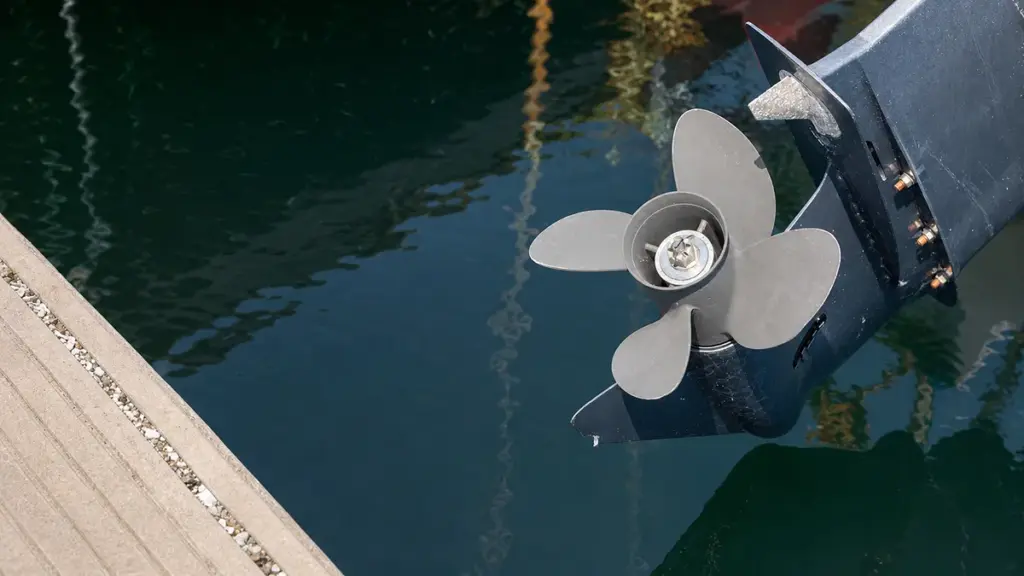
Propeller damage rarely announces itself with a catastrophic failure. It subtly degrades hydrodynamics, sending mechanical warnings through vibration, unusual noise, and sluggish performance that operators must decode.
The Mechanics of Propeller-Induced Vibration
Even minor propeller damage immediately disrupts hydrodynamic balance. When blades hit underwater objects, bent edges or missing metal shift the center of mass off the rotational axis. This mechanical imbalance forces the driveline to absorb cyclical stress.
- Center of mass shift: Bent blades or chipped edges create a mechanical imbalance away from the rotational axis.
- Hydrodynamic distortion: Altered blade geometry changes lift and thrust, placing uneven loads on the shaft and gears.
- RPM sensitivity: As vibrações atingem o pico em RPMs baixas a médias, quando a hélice trabalha mais para empurrar o barco para o plano.
- Transmissão de feedback: Os desequilíbrios cíclicos viajam diretamente através do eixo de transmissão até o volante, popa, e convés.
Traduzindo o ruído em problemas específicos de transmissão
Um motor de popa deve produzir um perfil acústico estável sob carga. Quando uma hélice sofre danos, introduz turbulência e interferência mecânica que alteram completamente a assinatura sonora.
- Sons de cavitação: Lâminas danificadas criam zonas de baixa pressão que geram bolhas de cavitação, produzindo torresmos distintos, zumbido, ou ruídos sibilantes.
- Gagueira do motor: A geração de empuxo irregular força o motor a pulsar de forma audível durante acelerações fortes.
- Chocalho da unidade inferior: As forças de impacto são transferidas diretamente para a unidade inferior, fazendo engrenagens e rolamentos roncarem enquanto absorvem o choque.
- Secondary wear indicators: Prolonged operation with an unbalanced prop causes propshaft bearings to grind or gearcases to emit a high-pitched whine.
Recognizing Performance Loss and Sluggish Acceleration
Physical damage directly compromises grip in the water. This hydrodynamic inefficiency forces the engine to burn more fuel while delivering less forward momentum.
- Increased propeller slip: Physical damage stops the efficient conversion of engine torque into actual forward thrust.
- Weak hole shot: A sluggish transition to plane serves as the primary indicator of blade distortion.
- Speed reduction: Minor imperfections trigger measurable drops in top speed and alter operating RPMs at specific throttle settings.
- Baseline comparison: Comparing current speed and wide-open throttle (O QUE) RPM against historical metrics isolates propeller inefficiency from actual engine power loss.
Diagnostic Steps to Confirm the Root Cause
You cannot fix a driveline issue based purely on operator feel. Technicians rely on a strict diagnostic sequence to separate propeller damage from internal engine faults.
- Inspeção visual: Check the blades thoroughly for bends, nicks, goivas, rachaduras, or unequal marine growth.
- Shaft examination: Look at the prop shaft for visible bends, binding during manual rotation, or fishing line cutting into the seals.
- Isolation test: Run the engine safely in gear without the propeller installed to see if the vibration stops.
- Secondary component check: Evaluate engine mounts and fuel delivery systems if symptoms persist after installing a known-good propeller.
How to Inspect Blade Edges, Hub Area, and Shaft Contact
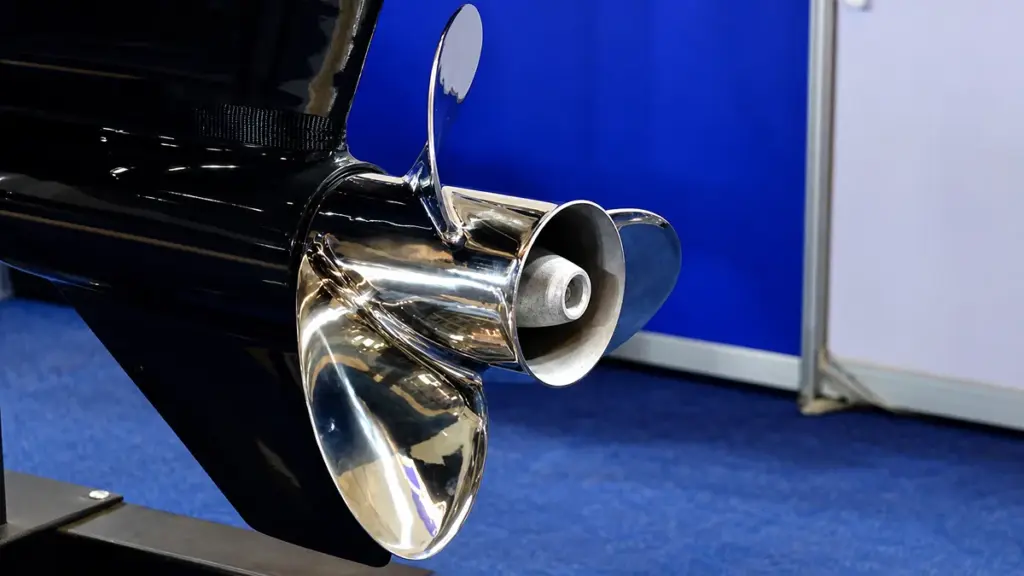
A systematic inspection of blade geometry, hub integrity, and shaft contact points prevents catastrophic lower unit failures, stops vibration, and ensures peak propulsive efficiency.
| Inspection Zone | Key Defect Indicators | Functional Impact |
|---|---|---|
| Blade Edges | Nicks, inward cracks, flattened cup | Hydrodynamic imbalance, cavitação, thrust loss |
| Hub Assembly | Extruded rubber, misaligned marker lines | Spun hub, complete loss of drive under load |
| Shaft & Hardware | Twisted splines, worn thrust washer | Fretting, gearcase vibration, thread damage |
Blade Edges and Surface Integrity
The geometry of the propeller blade dictates thrust generation and fuel efficiency. Technicians must examine leading edges, trailing edges, and tips for nicks, chips, goivas, or inward-radiating cracks. A damaged or flattened cupped trailing edge directly reduces water hold and increases the risk of early cavitation.
- Profile Consistency: Verify uniform rake angle and pitch across all blades to identify uneven bending or impact damage.
- Balance Check: Mount the propeller horizontally on a hub rod to identify heavy or off-plane blades.
- Clearance Limits: Ensure a minimum 3 mm tip clearance from the anti-cavitation plate to prevent contact under heavy load or blade flex.
Hub Area and Spun Hub Detection
The hub handles the brutal torque transfer from the engine to the water. A compromised rubber bushing acts as a failed mechanical fuse, dropping propulsion completely. Inspectors should check the outer hub barrel and blade roots for dents, ovalization, ou rachaduras na linha do cabelo. Extruded, borracha derretida ou manchas de calor sinalizam claramente uma bucha com defeito.
- Diagnóstico de deslizamento: Desenhe uma linha marcadora na carcaça externa, zona de borracha, e cubo interno, em seguida, opere o barco sob carga para verificar se há desalinhamento.
- Caminho de exaustão: Inspecione o roteamento interno quanto a acúmulo de carbono ou obstruções estruturais que possam perturbar o fluxo de exaustão.
Eixo de transmissão e zonas de contato de hardware
A conexão entre a hélice e o sistema de transmissão deve permanecer perfeitamente alinhada para evitar a transferência de vibrações destrutivas para a caixa de engrenagens. Avalie o eixo da hélice quanto à retidão, acabar, ferrugem, e sinais de corrosão. Os dentes estriados no eixo e no furo do cubo exigem inspeção minuciosa para arredondamento, lascar, ou perfis torcidos.
- Integridade da arruela de impulso: Examine as superfícies de assentamento em busca de rachaduras, desgaste irregular, ou sulcos profundos que prejudicam o alinhamento da hélice.
- Torque Application: Apply the proper manufacturer-specified torque—commonly 40-60 ft-lbs—to prevent fretting or thread damage.
Integrated Inspection Workflow
A standard inspection workflow brings these discrete checks into a repeatable process. You must disable the engine ignition, remove the locking hardware, and safely slide the propeller off the shaft. Cleaning the shaft and hub bore with a degreaser is critical to accurately assess the splines and thrust washer without old marine grease hiding the defects.
- Component Evaluation: Systematically check the hub for spun bushing signs and the blade edges for profile consistency.
- Reassembly Protocol: Reinstall using fresh marine grease, pushing the prop forward until it clicks firmly against the thrust washer.
- Final Securing: Torque the nut to spec and verify the locking hardware is properly engaged.
When Minor Damage Can Still Be Repaired
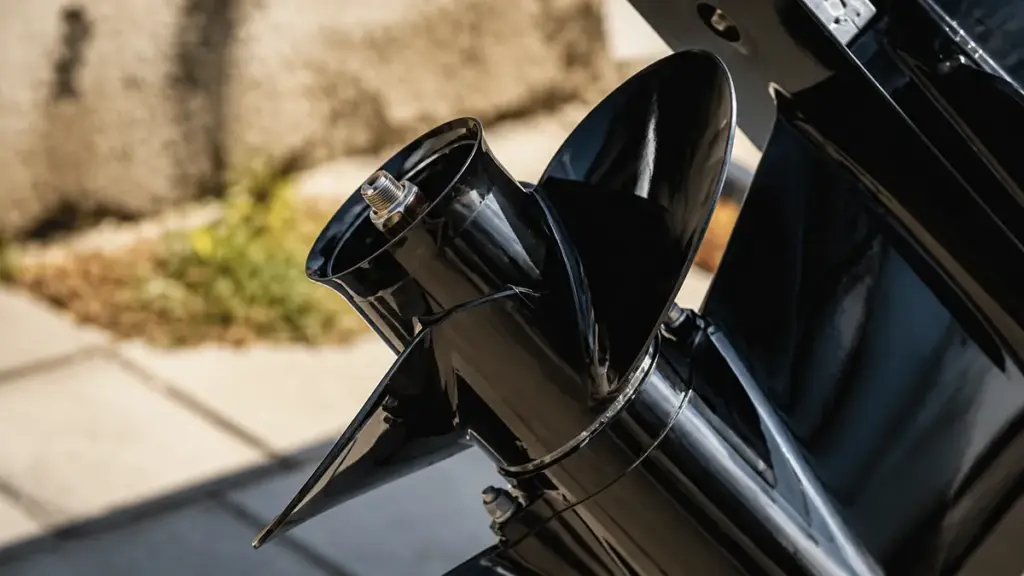
Minor propeller damage like edge burrs and shallow nicks can be repaired with basic filing, provided the blade geometry remains intact and no cracks or vibration are present.
Identifying Repairable Minor Damage
Before breaking out the tools, you need to confirm the damage is actually minor. Repairable defects are strictly surface-level flaws that do not compromise the structural integrity or hydrodynamic shape of the propeller.
- Surface-level dings: Small burrs, leading-edge nicks, and dents that leave the original blade geometry intact.
- Isolated edge wear: Damage limited entirely to the blade edges, meaning the overall diameter and pitch remain unchanged.
- Smooth operation: Propellers that continue to push the boat efficiently without inducing unusual vibration.
- Structural soundness: A complete absence of visible cracks or physical deformation during visual inspection.
If the propeller still performs well and the shaft runs true, you are likely dealing with cosmetic or minor edge wear.
Indicators of Severe Damage
Not all impacts result in a quick fix. Some structural flaws demand immediate professional intervention or a complete replacement to protect your gearcase.
- Visible cracks: Fractures in the blade or hub area, which usually require professional welding or replacement.
- Blade deformation: Noticeable bending or twist across one or multiple propeller blades.
- Severe vibration: Shaking immediately following an impact, sinalizando um potencial desequilíbrio de massa.
- Impacto do sistema de transmissão: Danos que se estendem ao eixo de transmissão, selo, ou caixa de engrenagens após um golpe forte.
- Limitações fundidas: Hélices fundidas exibindo falhas estruturais, já que os profissionais marítimos rotineiramente os classificam como não reparáveis.
Operar com qualquer um desses defeitos graves transfere um estresse imenso diretamente para os rolamentos e vedações da unidade inferior.
Métodos e disciplina de reparo DIY
Reparar pequenos danos nas bordas requer precisão e moderação. O objetivo é suavizar o fluxo de água, não redesenhar a lâmina.
- Limpe a hélice: Remova todo o crescimento marinho, sujeira, e óleo para avaliar com precisão o perfil de danos.
- Arquivo plano: Use delicadamente uma lima bastarda grossa ou fresada, mantendo a ferramenta plana para evitar remodelar a lâmina.
- Minimizar a remoção: Retire apenas a quantidade mínima absoluta de metal necessária para suavizar a rebarba ou corte.
- Saiba quando parar: Pare de lixar no momento exato em que o metal levantado desaparece para preservar o equilíbrio e a eficiência da lâmina.
- Polir a borda: Refine a área lixada com lixa fina e dê polimento para reduzir o arrasto hidrodinâmico e resistir à corrosão.
O arquivamento excessivo de uma única lâmina desloca o centro de massa, transformando um simples corte em um problema de vibração permanente.
Decidindo entre reparo e substituição
Saber quando parar de tentar resgatar uma hélice danificada economiza dinheiro e evita quebras inesperadas na água.
- Reparos do proprietário: Mais adequado para pequenas rebarbas e pequenas marcas que precisam apenas de luz, arquivamento controlado.
- Lojas profissionais: Necessário para endireitar curvas, equilíbrio, e verificação de rachaduras ocultas usando varredura com corante ou sonda.
- Limite de substituição: A escolha financeira mais inteligente se os custos de reparação excederem 50% do valor total de reposição da hélice.
- Recuperação de reposição: Manter uma hélice sobressalente a bordo funciona como a melhor solução à prova de falhas caso pequenos danos piorem rapidamente durante uma viagem.
Trate sua hélice como uma peça de desgaste consumível. Atualizar para uma nova unidade é significativamente mais barato do que reconstruir uma caixa de engrenagens queimada causada pelo funcionamento de uma hélice desequilibrada.
Quando a substituição antecipada é a escolha mais segura
Certos tipos de danos não devem ser reparados porque aumentam o risco de falha repentina.
A substituição geralmente é recomendada nas seguintes condições.
| Tipo de dano | Substitua imediatamente? | Razão |
|---|---|---|
| Grandes rachaduras na lâmina | Sim | Alto risco de separação da lâmina |
| Seção de lâmina ausente | Sim | Desequilíbrio grave |
| Eixo da hélice torto | Sim | Can damage gearbox |
| Multiple damaged blades | Sim | Difficult to restore accurately |
| Severe corrosion | Sim | Reduced structural strength |
| Repeated repaired cracks | Sim | Metal fatigue continues to grow |
Choose NEWTOP for Reliable Outboard Propeller Performance
A durable propeller begins with dependable manufacturing. No NOVOTOP, we produce precision-balanced aluminum and stainless steel outboard propellers designed to deliver stable performance, operação suave, and long service life across a wide range of marine applications.
Our manufacturing process combines advanced CNC machining, strict dimensional inspection, dynamic balancing, and comprehensive quality testing to ensure every propeller meets consistent performance standards before shipment. Whether you need replacement propellers for aftermarket distribution or OEM production for your own brand, NEWTOP oferece soluções de fabricação flexíveis apoiadas por soluções confiáveis capacidade de produção e experiência de exportação global.
As principais vantagens incluem:
- Qualidade certificada CCS e ECE para desempenho confiável e requisitos do mercado internacional.
- Materiais premium — hélices de alumínio usam liga de alumínio-magnésio especialmente formulada para alta resistência e tenacidade, enquanto as hélices de aço inoxidável usam aço inoxidável duplex com melhor resistência ao escoamento e resistência à corrosão.
- Tecnologia de moldagem integrada — os blanks da hélice são formados com moldes dedicados sem soldagem, melhorando a resistência estrutural e durabilidade.
- Prensagem de cubo de precisão e usinagem CNC — cubos prensados de peça única melhoram o equilíbrio dinâmico, enquanto as lâminas usinadas em CNC garantem geometria consistente e desempenho de empuxo estável.
If you’re looking for a trusted outboard motor propeller manufacturer for wholesale supply or customized production, contact NEWTOP today. Our engineering and production teams are ready to help you select the right propeller solution for your market while ensuring consistent quality and long-term supply.
Perguntas frequentes
Como posso saber se minha hélice externa está danificada?
Look for visible bends, chips, rachaduras, or missing material on the blades. Operational signs include the engine revving unusually high without proportional boat acceleration, which often points to a spun hub. You might also notice persistent vibration, metallic noises, or a loss of steering stability at normal cruising speeds.
Can a small nick on a propeller cause vibration?
Sim, even a small nick alters the mass distribution and hydrodynamic symmetry of the blade. This physical imbalance generates centrifugal forces that manifest as noticeable vibration, often within a specific RPM band. Ignoring minor damage leads to progressive wear on the prop shaft and lower unit bearings.
What does a spun prop hub feel like?
A spun hub feels like the boat is slipping in the water. The engine RPM spikes sharply under throttle, but the boat’s speed does not increase. It mimics the sensation of a slipping automotive clutch and is sometimes accompanied by a sudden loss of thrust or a burnt rubber smell.
Should I repair or replace a chipped propeller?
Repair is usually viable for small edge chips or minor bends, especially on higher-value stainless steel props. Replace the propeller if it has large missing chunks, deep cracks near the root, or if you use a low-cost aluminum unit where repair expenses exceed half the price of a new replacement.
Can propeller damage reduce fuel efficiency?
Damaged blades increase hydrodynamic drag and disrupt smooth water flow, forcing the engine to work harder to maintain speed. This mechanical inefficiency prevents the motor from operating in its optimal RPM band, directly resulting in higher fuel consumption per nautical mile.
What kind of noise does a damaged propeller make?
A compromised prop typically produces a rhythmic knocking or thumping sound synchronized with engine RPM. You may also hear metallic rattling or a harsh, low-frequency drone from the lower unit, especially under heavy acceleration or during sharp turns.
Can I still run a boat with a bent propeller?
You should only operate a boat with a bent propeller at minimal idle power to safely return to the dock. Running at planing speeds with unbalanced blades creates severe radial loads that quickly destroy the prop shaft, rolamentos, and gearcase seals.
How often should I inspect my propeller?
Perform a quick visual and tactile check before and after every trip to spot obvious bends, chips, or wrapped fishing line. Complete a full removal inspection—taking the prop off to check the shaft, inspect seals, and re-grease the splines—at least once a season or every 100 hours of operation.