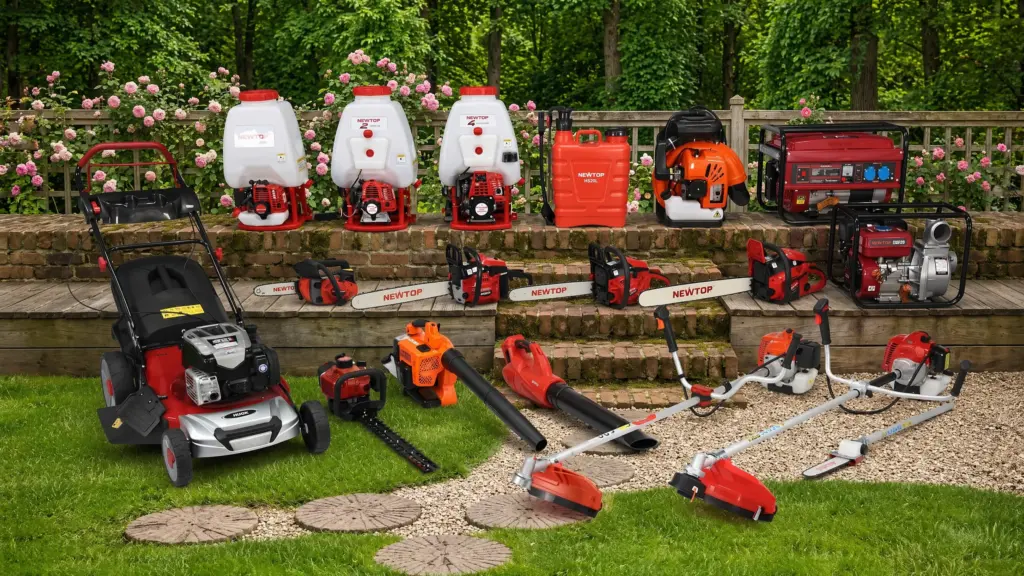
Metal blades and nylon trimmer line are the two cutting consumables our parts customers order most, and we recommend stocking both rather than choosing between them. Blades take down brush, saplings and woody regrowth. Line trims grass along fences, walls and lawn edges. Each wears on its own curve, so the two items build separate reorder rhythms on a distributor’s shelf.
This guide is our blade vs trimmer line brief for spare parts distributors and dealers. It covers what each solution does best, which jobs call for blades, and where line is the better fit. It then covers how to size the mix and what we ask you to confirm before ordering both together.
What to Take From This Guide
- Blades and line wear differently: blades chip, bend or dull against rock and buried root, while line shortens against stone, concrete and fence posts.
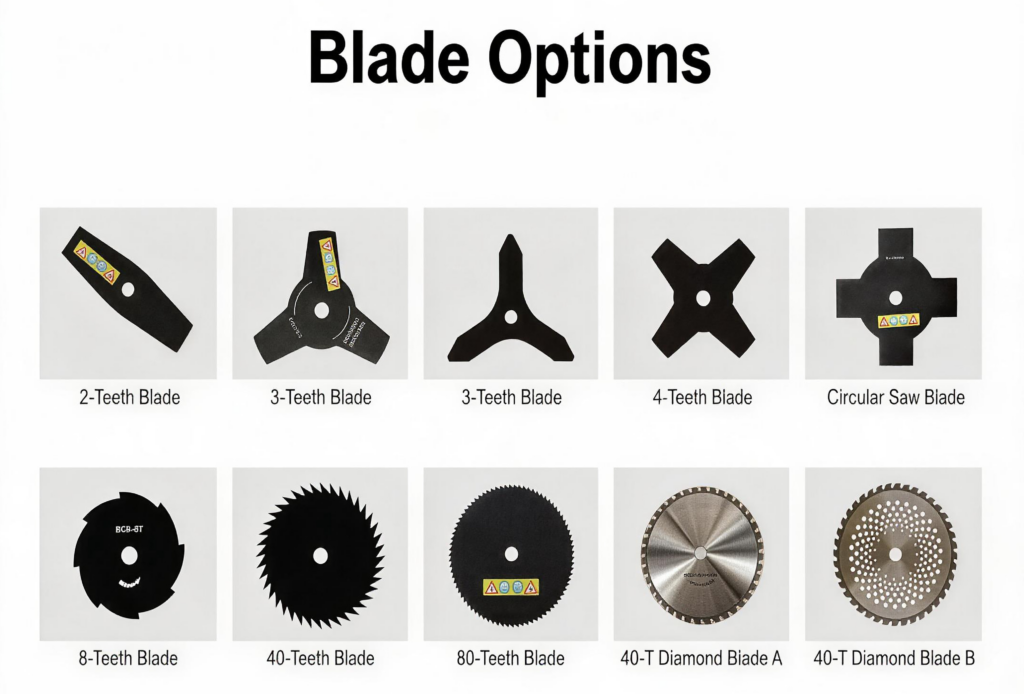
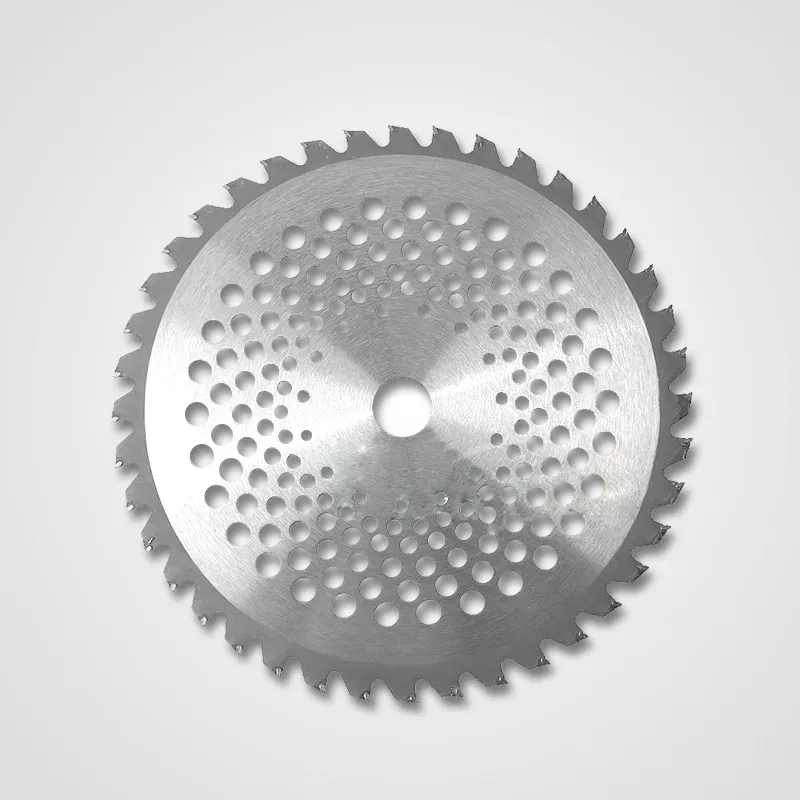
- Three-tooth and forty-tooth blades usually cover brush and dense regrowth; circular saw-tooth blades take thick, hard stalks.
- Replacement line commonly runs from 0.065 pulgada (1.65 milímetros) a 0.155 pulgada (3.94 milímetros), and the head decides which diameters the shelf should carry.
- En NEWTOP, we package blades and line as sets (H143/NTB143 for our machines, NTS140BG/NTS140CG for GX35-class trimmers) and ship samples 7-10 días después del pago.
- Confirm shaft diameter, arbor fit, dirección del hilo, gearcase rating and head diameter range against the model code before any mixed order.
What Each Cutting Solution Does Best
Both items sit in the brush cutter parts and accessories section of our catalog, and they fail for different reasons. A metal blade is a hardened cutting plate that clears brush, saplings and woody regrowth at speed. Nylon line is a flexible cord that whips through soft growth, and it shortens a little with every pass.
The blade vs trimmer line distinction is a job split, and the shelf question is how much of each job your market contains. Distributors who map that split first find reorder quantities easier to plan, because the two items are not substitutes for one another.
Wear character drives the repurchase rhythm. Blades come off the machine for sharpening or swap after they chip, bend or dull against rock and buried root. Line shortens against the same hard surfaces, and the head feeds out more of it until the spool is spent. Mechanics who service both setups usually tell us that engines outlast the cutting parts, so repeat orders tend to concentrate on the cutters.
Metal Blade vs Nylon Trimmer Line Side by Side
The table below gathers the two cutters into one view.
| Atributo | Metal blade | Nylon trimmer line |
|---|---|---|
| Primary job | Cepillar, saplings, woody regrowth | Grass, bordes del césped, fence lines |
| Wear mode | Chipped, bent or dull teeth against rock and buried root | Length lost against stone, concrete and posts |
| Repurchase driver | Chip damage and lost arbor hardware | Spools spent through the season |
| Typical shelf types | Three-tooth, forty-tooth, circular saw-tooth | Round, cuadrado, twisted and serrated profiles |
| Spec to confirm per model | Shaft size, arbor fit, blade nut thread | Diameter range the head feeds |
This table is stocking guidance based on how the two consumables wear, not laboratory wear data. Confirm the model-specific specifications with your supplier before ordering.
Which Jobs Need Metal Blades
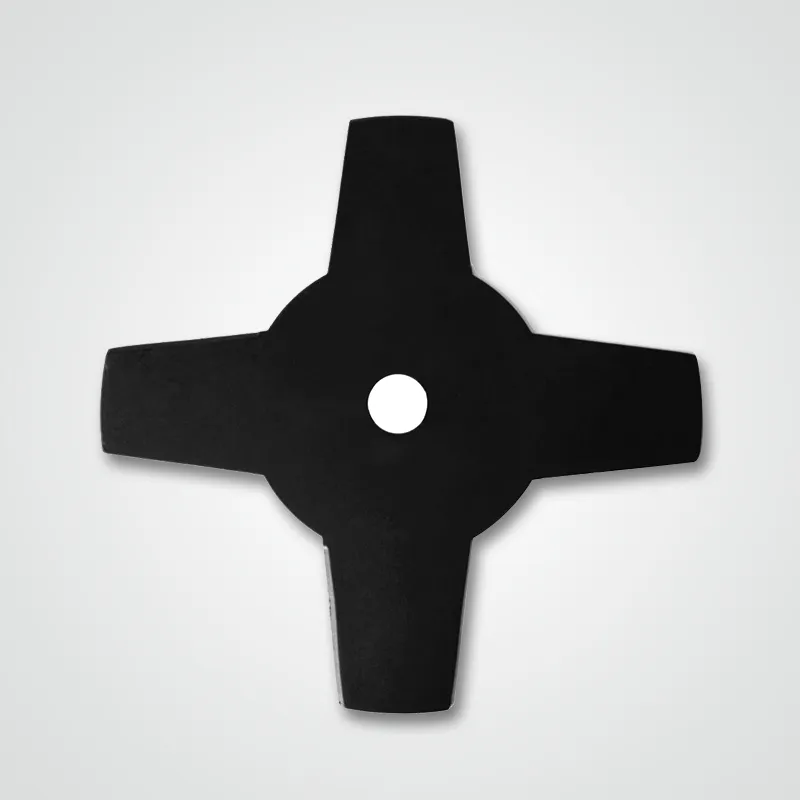
Metal blades belong where growth is too thick for a cord to cut. Land clearing, mantenimiento de senderos, orchard and vineyard rows, roadside regrowth and hard-stalk crops sit on the blade side of the split. Three-tooth and forty-tooth plates handle brush and dense regrowth, while circular saw-tooth blades take thick, hard stalks that a cord would only fray.
Wear comes from impact rather than from mileage. A blade may chip its teeth on buried rock, bend on a hidden stump or dull in sandy soil. Workshop experience also points to lost or loose arbor hardware, because a missing bolt or washer can leave a machine unable to run.
We recommend ordering blades with their arbor hardware as assemblies — bolt, washer and nut — rather than as loose pieces. The Canadian Centre for Occupational Health and Safety covers this equipment in its guidance on grass trimmers and brush cutters. That guidance notes that rotating cutting tools can throw objects or cut the operator, and it advises against rigid blades in stony areas. We suggest passing both notes to your customers along with the blade.
The mounting side is where mixed orders most often go wrong. Blade bolts, washers and nuts are sold as kits, and thread form plus rotation direction differ across gearcases, so there is no universal standard to assume. We treat the nut specification as a confirm item against each model code, and we suggest ordering hardware kits in the same quantity as blades.
Where Nylon Trimmer Line Wins
On the blade vs trimmer line split, line is the better fit where the work is grass and the ground is hard. Lawn edges along sidewalks and driveways, fence lines, beds and walls, park strips and orchard floors belong to cord. Against stone and concrete the contact is constant, and a flexible line that shortens is usually safer near people, windows and vehicles than a rigid disc.
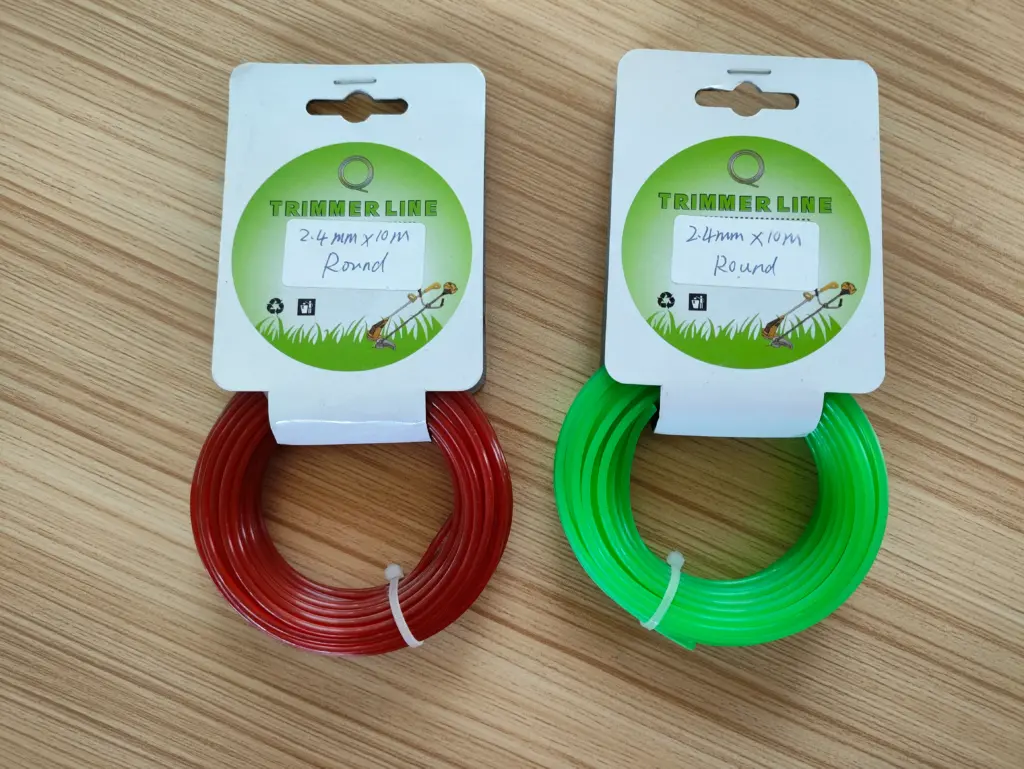
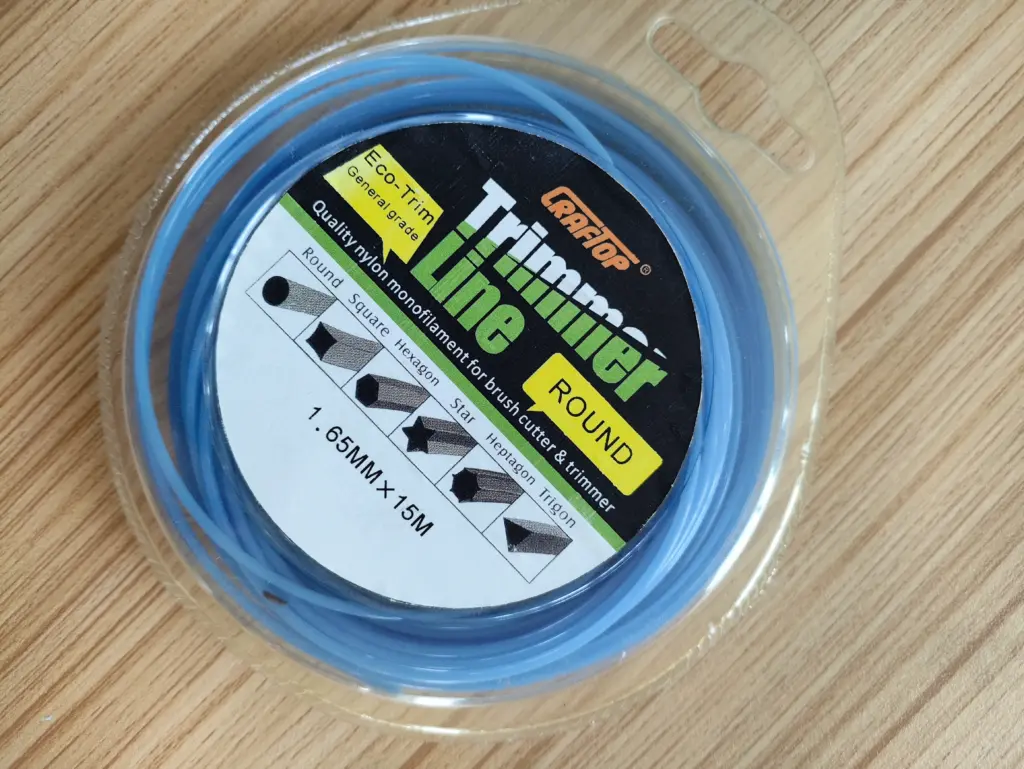
Diameter is the specification that organizes the line shelf. Our published guide puts common replacement sizes between 0.065 pulgada (1.65 milímetros) y 0.155 pulgada (3.94 milímetros). A machine needs the torque to spin the size fitted to it, and an oversized cord tends to batter grass instead of cutting it. Nuestro string trimmer line size guide maps that range job by job.
Profiles split the shelf a second time. Round line is the general-purpose default, and operators in rough terrain often switch to square, twisted or serrated profiles that bite into fibrous stems. The trimmer head decides what you can stock beside it, because each head feeds a defined diameter range. It is worth listing the head types in your market before you fix the spool slots.
How to Size the Shelf Mix
The blade vs trimmer line mix should start from the job structure of your market rather than from the catalog. Clearing-heavy regions — farm conversion, roadside contracts, sugarcane and orchard blocks — tend to pull the blade curve harder. Lawn-and-edge markets — suburban dealers, municipal grounds, hotel and resort maintenance — usually pull the line curve, in spools rather than single pieces.
It helps to count from the machines you actually import. A container of brush cutters sold into farm clearing supports deeper blade slots, while straight-shaft trimmers sold into grounds care supports deeper spool slots. The engine class on each machine tells you which diameters and blade types the shelf should carry beside it.
Treat the first plan as a hypothesis. After one season, counter history should show which curve actually moved and by how much, and the reorder can skew toward the faster mover. The same discipline keeps the two curves readable in a market that contains both buyer types at once.
Depth by Customer Profile
The table below gathers the depth logic by customer profile.
| Customer profile | Curve the shelf leans on | Depth logic |
|---|---|---|
| Farm clearing and land agents | Blades lead | Deep blade slots in two or three types, line for the head work |
| Lawn care and municipal grounds | Line leads | Deep spool slots in the diameters the machines feed, blade stock as backup |
| Mixed general dealers | Both move | Size both slots from the machine mix, then correct from sell-through |
This table names stocking relationships, not demand statistics. The depth words describe how the two curves lean against each other, and the counts should come from your own machine list and counter history.
When the question moves from shelf mix to container quantities, the arithmetic changes scale. Our guide to what brush cutter spare parts importers should order first works through the full first order per 100 maquinas, blades and line included.
What to Confirm Before Mixed Orders
A mixed order usually fails on compatibility before it fails on quality, and the blade vs trimmer line handover is where the specifications multiply. Each consumable attaches to the machine differently, so the checklist has two halves. We suggest running both halves against the model code before the order is placed.
For blades, confirm the shaft diameter, the arbor fit and the blade nut thread form and rotation direction for every model. Confirm the gearcase rating as well, because not every gearcase may be cleared for blade work. Ask the supplier to answer against a written compatibility list, the same way you would for engine parts.
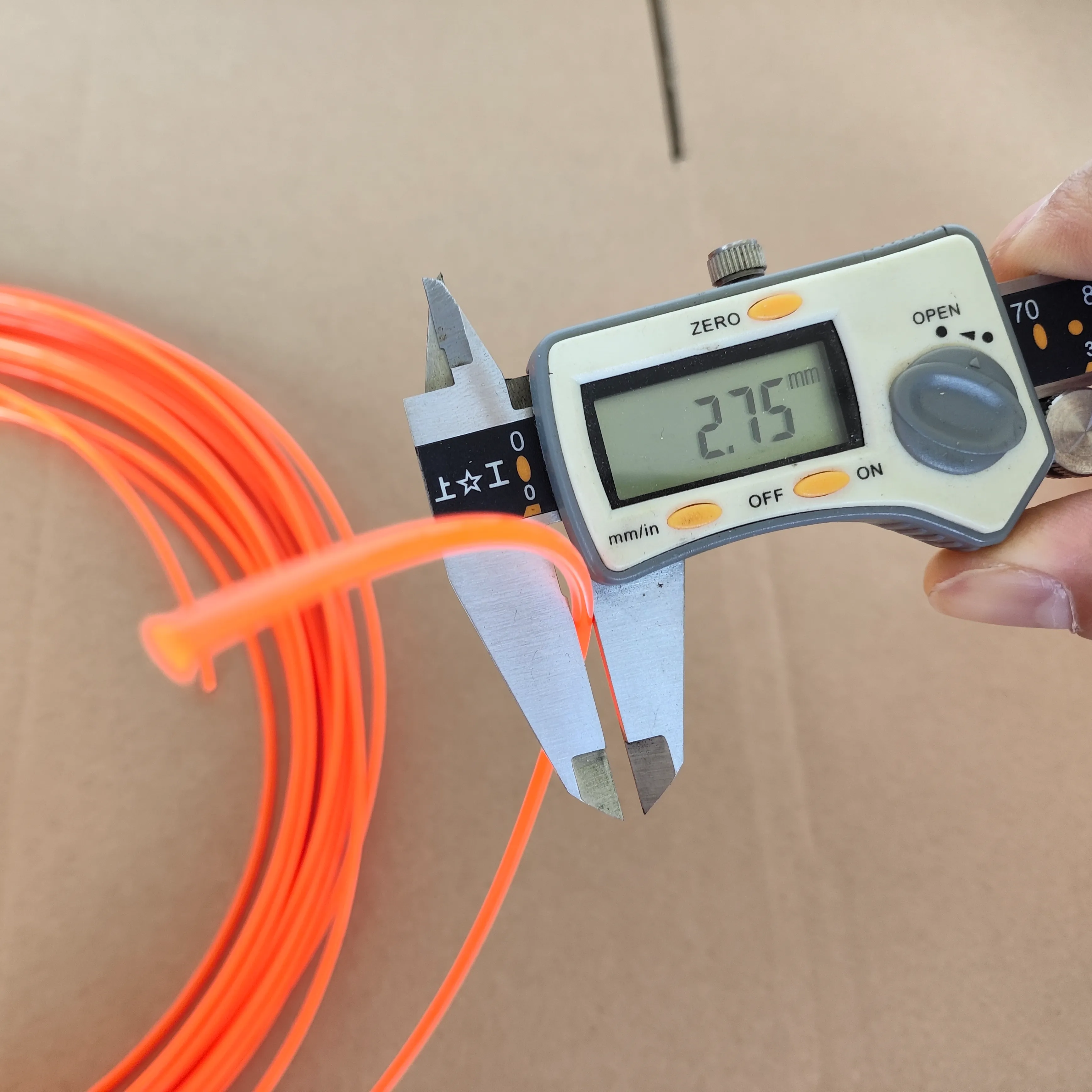
For line, confirm the head type and the diameter range it feeds, then measure the spools against their labels when they arrive. The counter disputes we hear about most often start with a spool that measures thinner than its label, and a caliper check on arrival catches it before shipping. Spool dimensions belong on the same check, because a spool that does not seat feeds badly.
Inspection is a fair question to put to any parts supplier. En NEWTOP, we run incoming (IQC), in-process (IPQC) and pre-shipment (FQC/OQC) checks on components as well as on assembled machines. A documented sampling plan is what makes a consumables order re-orderable, so we suggest asking which stage covers the cutting parts and requesting the paperwork with the shipment.
Why Source Cutting Consumables From NEWTOP
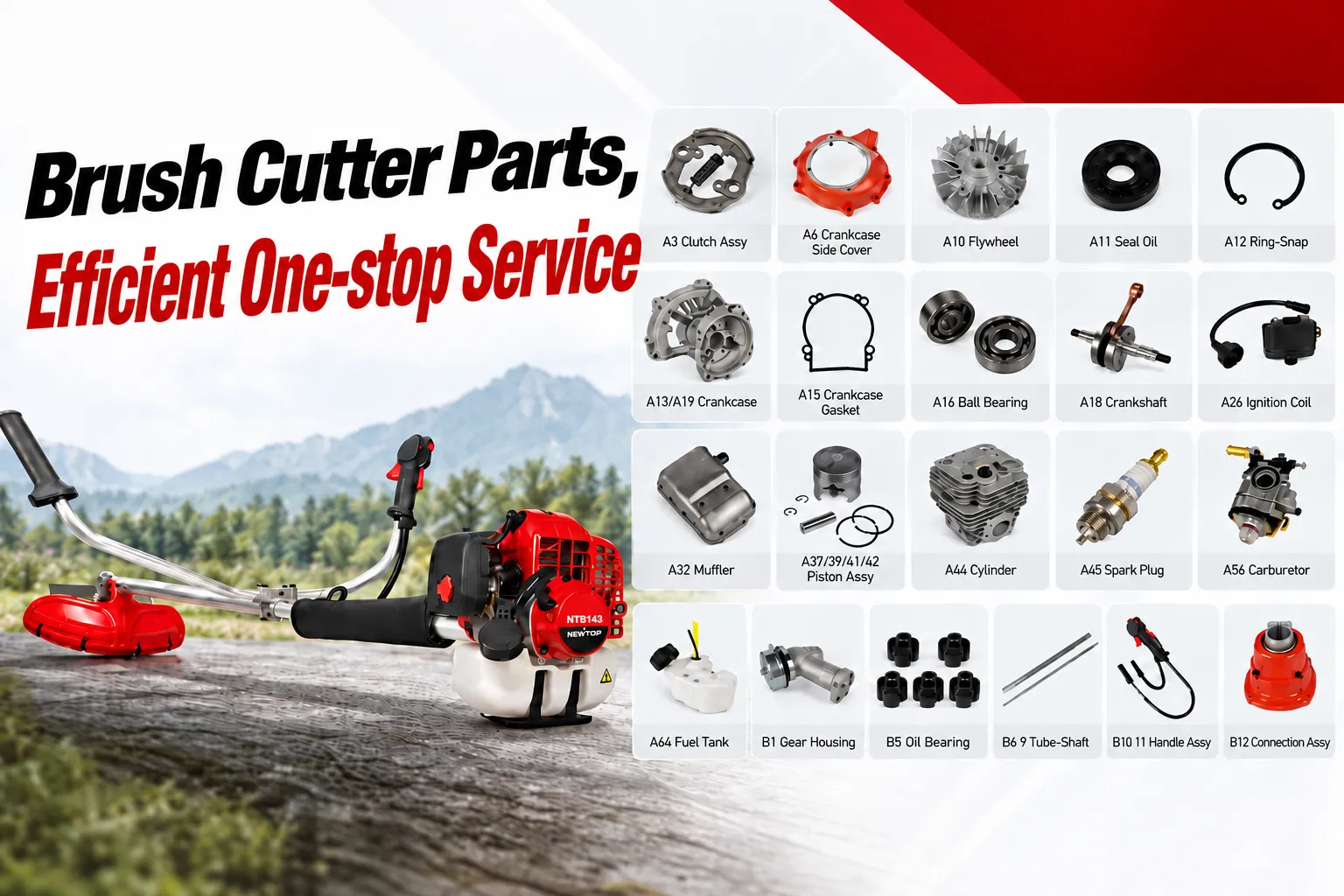
Cutting consumables sit inside the same supply chain as our machines rather than beside it, so the parts and the power equipment behind them share one quality flow. Our company, NOVEDAD, has manufactured outdoor power equipment since 2003 and supplies distributors across 65 países, backed by more than 100 agentes de marca. Annual capacity runs above 500,000 units in a facility exceeding 10,000 metros cuadrados, with a workforce of more than 300 people, incluido 50 R&D engineers.
On the shelf itself, we package blades and line as sets: H143/NTB143 for our own machines and NTS140BG/NTS140CG for GX35-class trimmers, alongside individual components. That set structure lets a distributor open a mixed blade and line order against codes the factory already recognizes. For any model we did not build, we treat the same items as a written compatibility check rather than an assumption.
The terms that matter for consumables are the ones you re-order against. We ship samples 7-10 days after payment and a container moves in about 30 días, so a specification confirmed today can be corrected within a month. Core parts carry a six-month warranty against the machine’s one-year cover. That combination suits testing a mixed blade and line order small, then scaling the side your counter proves.
If you are planning a mixed order for your market, send us your machine list, your main customer types and the cutting jobs behind them. We will come back with a written compatibility check against each model code, a suggested blade and line mix, and sample terms for the pieces you want to verify first.
Preguntas frecuentes
Should a Dealer Stock Metal Blades or Nylon Trimmer Line First?
We recommend stocking both, because they serve different jobs and wear on different curves. Blades clear brush and woody regrowth and come back for sharpening or swap after chipping against rock. Line trims grass edges, shortens against stone and concrete, and tends to re-order in spools through the season.
How Deep Should the Blade vs Trimmer Line Shelf Run?
Let the job structure of your market decide. Clearing-heavy regions need deeper blade slots, lawn-and-edge regions need deeper spool slots, and mixed dealers should size both from the machine mix. We suggest correcting the plan after one season of counter history.
Can One Machine Run Both a Blade and Nylon Line?
Many brush cutters accept both cutters, and each attachment still has its own fit requirements. Shaft diameter, arbor fit, blade nut thread and rotation direction, and the gearcase rating for blade work are all model-specific. Confirm them with your supplier against the model code in writing; for NEWTOP machines, send us the code and we will confirm the set.
Which Nylon Line Diameters Should a Distributor Stock?
Common replacement sizes run from 0.065 pulgada (1.65 milímetros) a 0.155 pulgada (3.94 milímetros), and heavier sizes need engine torque to spin them. We suggest stocking the diameters the machines you import actually feed, in the profiles your market demands, rather than the full range.
How Do You Start a Mixed Blade and Line Order With NEWTOP?
Send us your machine list, your market profile and the cutting jobs behind your demand. We confirm compatibility in writing against each model code, then quote blades and line as sets or individual components. Samples ship 7-10 días después del pago, so you can verify both cutters before the container.