


- Tous
- Témoignages de clients NEWTOP
- NOUVEAUTOP Explorer Hub
- Aperçu de l'industrie NEWTOP
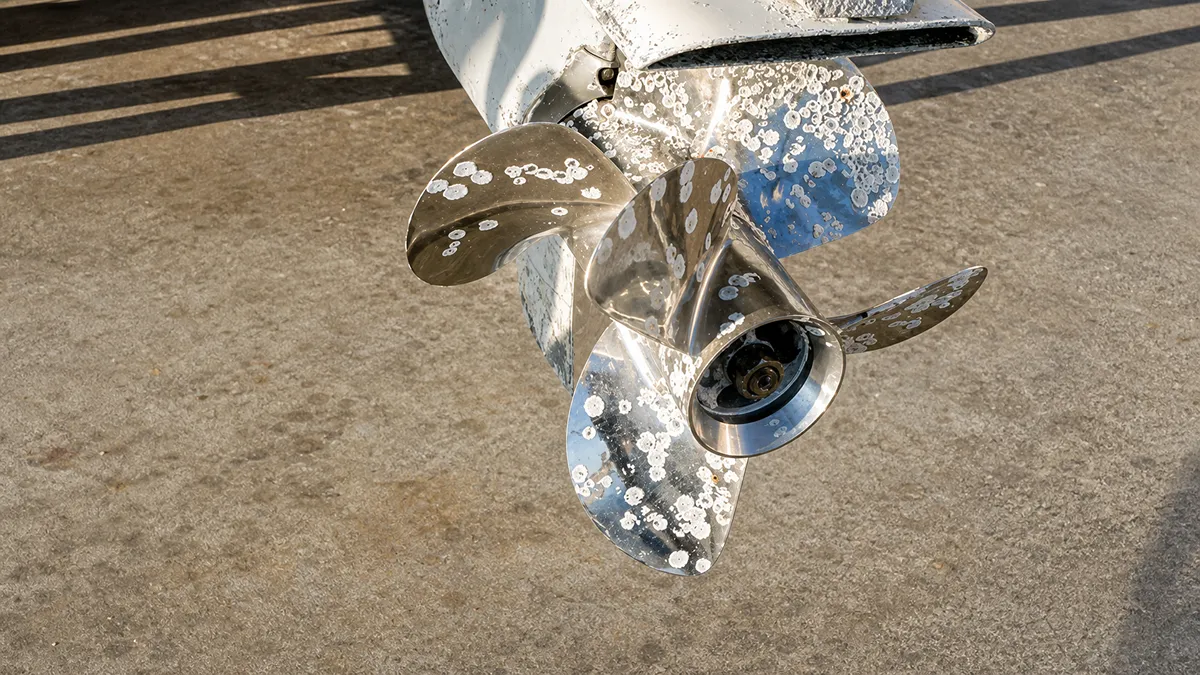
An outboard propeller works in one of the harshest environments on a boat. Every trip exposes it to sand, rocks, floating debris, shallow water, and continuous high-speed rotation. The challenge is that propeller damage often develops slowly. A tiny chip today may become a crack tomorrow, while slight vibration can eventually damage bearings, scellés, or even the lower unit. Learning how to recognize the early warning signs helps boat owners avoid expensive repairs, improve fuel economy, and maintain safe performance on the water.
Dans ce guide, you’ll learn the most common signs of outboard propeller damage, how to inspect your propeller correctly, when repairs are practical, and when replacement is the better long-term solution.
Why Early Propeller Damage Detection Matters
Direct Performance and Efficiency Impacts
A compromised propeller immediately degrades how your vessel moves through the water. Minor blade distortions force the engine to work outside its optimal load range, dragging down overall performance.
- Disrupted hydrodynamics: Damaged blades alter water flow, resulting in lower top speeds and weaker acceleration.
- RPM restrictions: Altered effective pas prevents the engine from hitting its designated wide-open throttle RPM.
- Fuel waste: Reduced propeller efficiency forces the outboard to work harder, significantly increasing fuel consumption.
- Vibration and handling: Imbalanced blades induce vibration that impairs steering precision and degrades overall ride comfort.
Preventing Secondary Mechanical Failures
Ignoring a damaged propeller transfers stress directly to your outboard’s internal drivetrain. What starts as a bent blade quickly compromises seals and bearings deep inside the lower unit.
- Contaminated gear oil: Unnoticed cracks near the submerged fin often cause water ingress and gear oil contamination.
- Engine stress: Deformed propellers alter engine load, causing harmful under-revving or over-revving that stresses internal components.
- Accelerated fatigue: Continuous vibration from an imbalanced prop accelerates structural fatigue in gearcase bearings, driveshafts, and engine mounts.
- Overheating risks: Combined with restricted water inlets, poor propeller condition elevates the risk of severe engine overheating.
Vessel Safety and Operational Reliability
Propeller condition dictates your physical control over the vessel. Failing to spot damage early puts both crew and cargo at risk during critical maneuvers.
- Sudden propulsion loss: A progressively failing hub or weakened blade can fracture under load, causing an immediate loss of usable propulsion.
- Collision hazards: Degraded handling and delayed acceleration reduce maneuverability around obstacles, increasing collision risks.
- Schedule integrity: Timely detection minimizes unscheduled downtime, protecting schedule integrity for commercial, charter, and rescue operations.
The Economic Case for Early Intervention
La logique financière est simple. Swapping a damaged propeller costs a fraction of the repair bills required if you leave a compromised unit attached to your motor.
- Low-cost intervention: Propeller inspection and replacement represent a fraction of the cost of total engine or lower unit repairs.
- Halting financial bleed: Catching damage early halts compounding financial losses from excess fuel burn and accelerated part wear.
- Avoiding major rebuilds: Ignoring early indicators frequently leads to expensive gearcase rebuilds, seal replacements, and powerhead repairs.
The First Visible Signs of Outboard Propeller Damage
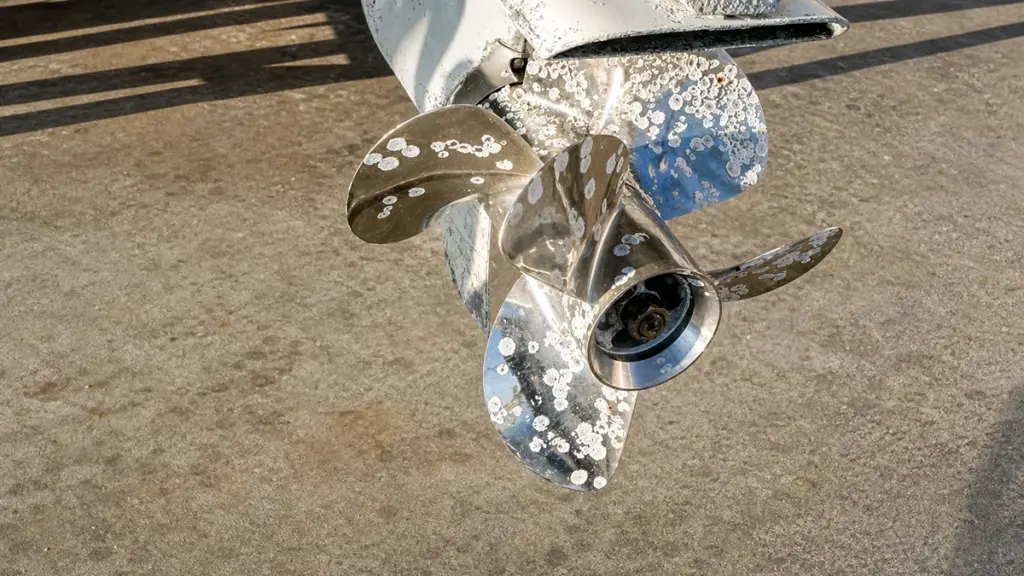
Early detection of outboard propeller damage—like minor nicks, paint wear, or slight bends—prevents escalating fuel costs, vibration-induced drivetrain wear, and sudden propulsion failure.
Paint Deterioration and Superficial Scratches
We often dismiss worn paint as normal wear and tear, but localized paint wear on the blades or hub points to frequent minor impacts with sand or small debris. It acts as the first warning sign before structural bending occurs.
You will typically notice fine scratches appearing on the leading edge first. These surface abrasions usually precede deeper structural wear. Once the protective coating strips away, the exposed bare metal patches create immediate vulnerabilities for accelerated corrosion in saltwater environments.
Nicks, Chips, and Minor Dents
A perfectly smooth edge is essential for hydrodynamic efficiency. Small chips along the leading edge disrupt water flow and increase the risk of cavitation. This turbulent water causes pressure drops that erode the surrounding metal.
Shallow dents on the blade surfaces serve as the earliest structural deformities detectable without specialized tools. Look closely at the trailing edge during inspections. Early material loss at the trailing edge directly impacts the grip and lift of the propeller, which reduces your acceleration and top-end speed.
Subtle Blade Deformation and Bending
Propellers operate under immense load, and even a slight geometric change throws off the balance of the entire drive system. Slightly bent blade tips clearly indicate previous contact with rocks or a hard bottom.
To spot these issues, view the propeller straight from the front. Visible asymmetry suggests uneven deformation from one-sided impacts. Micro warping or twisting alters the pitch and load distribution across the blades. This forces the engine to burn more fuel to maintain your normal cruising speed.
Localized Corrosion and Cavitation Pitting
Material degradation compromises the strength of the unit. Small corrosion pits or powdery white oxidation on aluminum propellers mark areas of material weakening. These spots quickly expand if left unchecked.
Rough, sandblasted patches near high-load regions indicate early cavitation erosion. As vapor bubbles collapse against the metal, they blast away the surface layer. Repeated erosion gradually thins out sections near the leading edge, making them prone to cracking during high-RPM operation.
Visible Hub Misalignment and Scoring
The hub absorbs shift shock and acts as the critical link between the engine and the blades. Scoring or distortion around the hub collar hints at abnormal stress or improper installation. You can test the integrity of the internal rubber bushing with a quick visual diagnostic.
Draw a straight line across the hub and barrel, run the boat under load, and check the marks. Misaligned diagnostic marker lines visually confirm internal hub slippage. You should also check for flattened or peened edges, which reflect a history of running the outboard through shallow, rocky water.
Source High-Margin OEM Garden & Machines agricoles

How Vibration, Bruit, and Poor Acceleration Reveal Damage
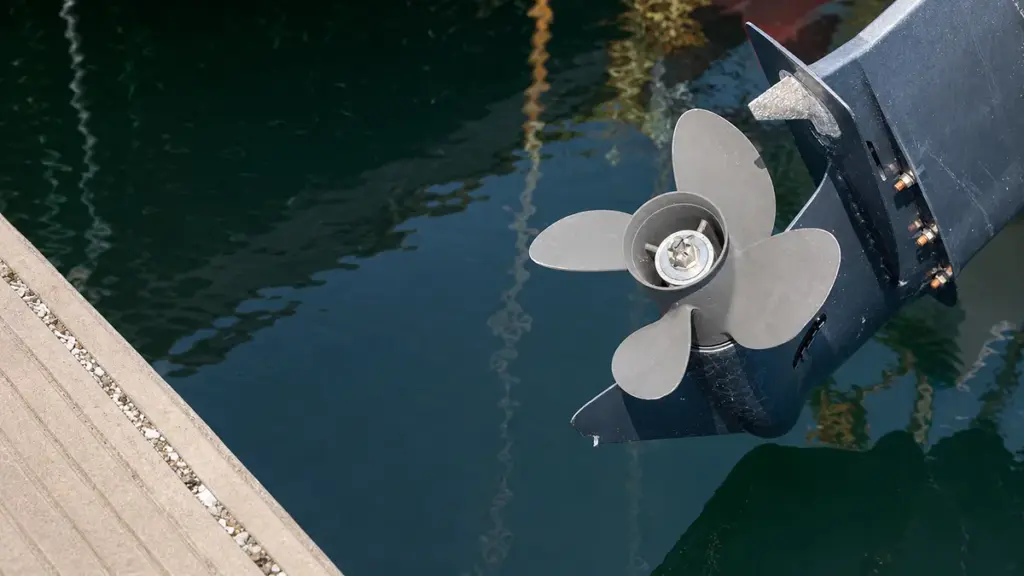
Propeller damage rarely announces itself with a catastrophic failure. It subtly degrades hydrodynamics, sending mechanical warnings through vibration, unusual noise, and sluggish performance that operators must decode.
The Mechanics of Propeller-Induced Vibration
Even minor propeller damage immediately disrupts hydrodynamic balance. When blades hit underwater objects, bent edges or missing metal shift the center of mass off the rotational axis. This mechanical imbalance forces the driveline to absorb cyclical stress.
- Center of mass shift: Bent blades or chipped edges create a mechanical imbalance away from the rotational axis.
- Hydrodynamic distortion: Altered blade geometry changes lift and thrust, placing uneven loads on the shaft and gears.
- RPM sensitivity: Vibrations peak at low to mid RPMs when the propeller works hardest to push the boat onto plane.
- Feedback transmission: Cyclical imbalances travel straight through the propshaft into the steering wheel, transom, and deck.
Translating Noise into Specific Driveline Issues
An outboard should produce a steady acoustic profile under load. When a propeller sustains damage, it introduces turbulence and mechanical interference that change the sound signature completely.
- Cavitation sounds: Damaged blades create low-pressure zones that spawn cavitation bubbles, producing distinct crackling, buzzing, or hissing noises.
- Engine stutter: Uneven thrust generation forces the motor to pulse audibly during hard acceleration runs.
- Lower unit rattle: Impact forces transfer directly into the lower unit, making gears and bearings rumble as they absorb the shock.
- Secondary wear indicators: Prolonged operation with an unbalanced prop causes propshaft bearings to grind or gearcases to emit a high-pitched whine.
Recognizing Performance Loss and Sluggish Acceleration
Physical damage directly compromises grip in the water. This hydrodynamic inefficiency forces the engine to burn more fuel while delivering less forward momentum.
- Increased propeller slip: Physical damage stops the efficient conversion of engine torque into actual forward thrust.
- Weak hole shot: A sluggish transition to plane serves as the primary indicator of blade distortion.
- Speed reduction: Minor imperfections trigger measurable drops in top speed and alter operating RPMs at specific throttle settings.
- Baseline comparison: Comparing current speed and wide-open throttle (WOT) RPM against historical metrics isolates propeller inefficiency from actual engine power loss.
Diagnostic Steps to Confirm the Root Cause
You cannot fix a driveline issue based purely on operator feel. Technicians rely on a strict diagnostic sequence to separate propeller damage from internal engine faults.
- Visual inspection: Check the blades thoroughly for bends, nicks, gouges, fissures, or unequal marine growth.
- Shaft examination: Look at the prop shaft for visible bends, binding during manual rotation, or fishing line cutting into the seals.
- Isolation test: Run the engine safely in gear without the propeller installed to see if the vibration stops.
- Secondary component check: Evaluate engine mounts and fuel delivery systems if symptoms persist after installing a known-good propeller.
How to Inspect Blade Edges, Hub Area, and Shaft Contact
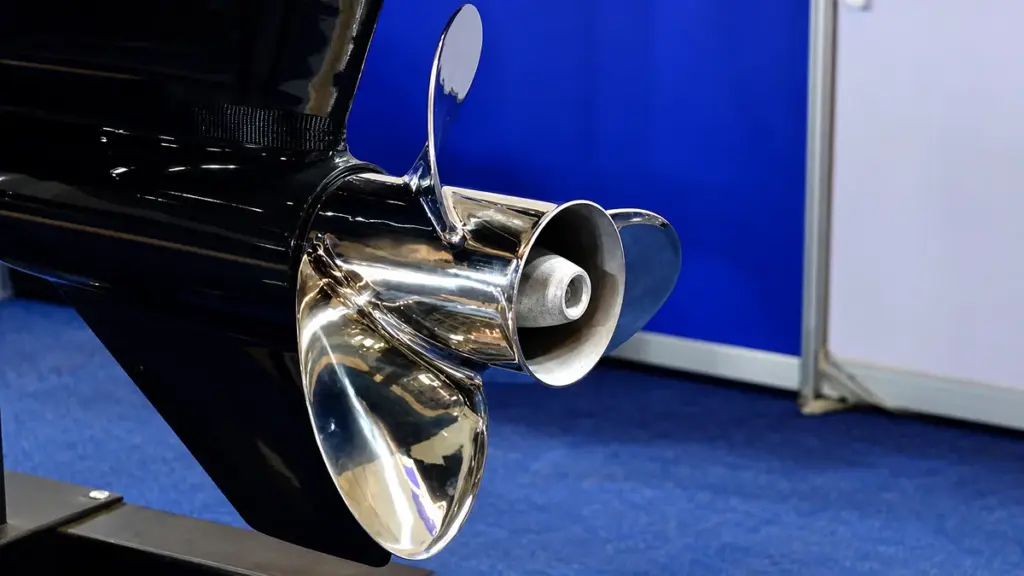
A systematic inspection of blade geometry, hub integrity, and shaft contact points prevents catastrophic lower unit failures, stops vibration, and ensures peak propulsive efficiency.
| Inspection Zone | Key Defect Indicators | Functional Impact |
|---|---|---|
| Blade Edges | Nicks, inward cracks, flattened cup | Hydrodynamic imbalance, cavitation, thrust loss |
| Hub Assembly | Extruded rubber, misaligned marker lines | Spun hub, complete loss of drive under load |
| Arbre & Hardware | Twisted splines, worn thrust washer | Fretting, gearcase vibration, thread damage |
Blade Edges and Surface Integrity
The geometry of the propeller blade dictates thrust generation and fuel efficiency. Technicians must examine leading edges, trailing edges, and tips for nicks, chips, gouges, or inward-radiating cracks. A damaged or flattened cupped trailing edge directly reduces water hold and increases the risk of early cavitation.
- Profile Consistency: Verify uniform rake angle and pitch across all blades to identify uneven bending or impact damage.
- Balance Check: Mount the propeller horizontally on a hub rod to identify heavy or off-plane blades.
- Clearance Limits: Ensure a minimum 3 mm tip clearance from the anti-cavitation plate to prevent contact under heavy load or blade flex.
Hub Area and Spun Hub Detection
The hub handles the brutal torque transfer from the engine to the water. A compromised rubber bushing acts as a failed mechanical fuse, dropping propulsion completely. Inspectors should check the outer hub barrel and blade roots for dents, ovalization, ou des fissures capillaires. Extruded, melted rubber or heat staining clearly signals a failed bushing.
- Slippage Diagnostic: Draw a marker line across the outer housing, rubber zone, and inner hub, then run the boat under load to check for misalignment.
- Exhaust Path: Inspect internal routing for carbon build-up or structural obstructions that could disturb exhaust flow.
Prop Shaft and Hardware Contact Zones
The connection between the propeller and the driveline must remain perfectly aligned to avoid transferring destructive vibrations into the gearcase. Assess the propeller shaft for straightness, runout, rouiller, and signs of pitting. Spline teeth on both the shaft and the hub bore require close inspection for rounding, chipping, ou profils torsadés.
- Thrust Washer Integrity: Examine seating surfaces for cracks, uneven wear, or deep grooves that throw off propeller alignment.
- Torque Application: Apply the proper manufacturer-specified torque—commonly 40-60 ft-lbs—to prevent fretting or thread damage.
Integrated Inspection Workflow
A standard inspection workflow brings these discrete checks into a repeatable process. You must disable the engine ignition, remove the locking hardware, and safely slide the propeller off the shaft. Cleaning the shaft and hub bore with a degreaser is critical to accurately assess the splines and thrust washer without old marine grease hiding the defects.
- Component Evaluation: Systematically check the hub for spun bushing signs and the blade edges for profile consistency.
- Reassembly Protocol: Reinstall using fresh marine grease, pushing the prop forward until it clicks firmly against the thrust washer.
- Final Securing: Torque the nut to spec and verify the locking hardware is properly engaged.
When Minor Damage Can Still Be Repaired
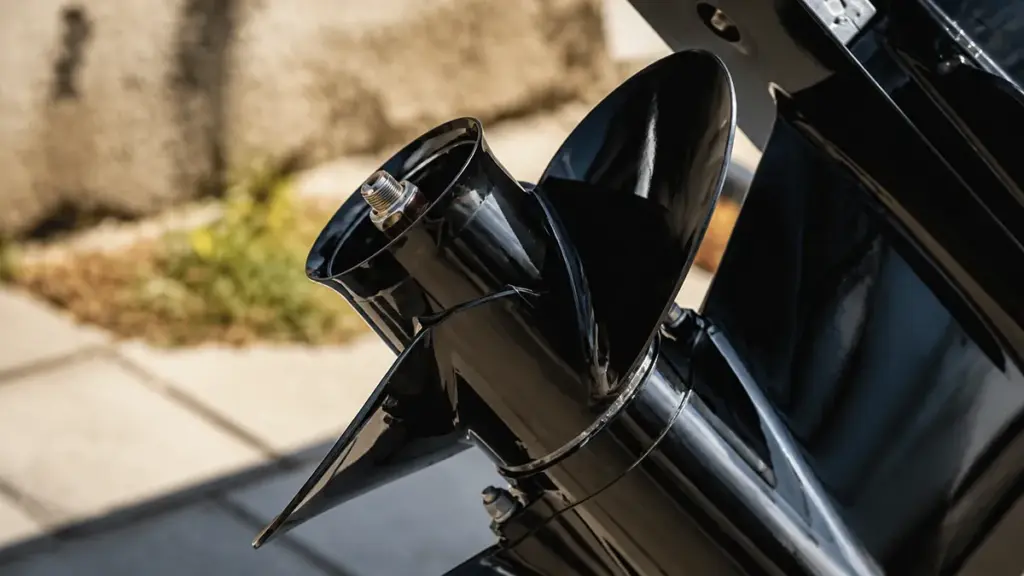
Minor propeller damage like edge burrs and shallow nicks can be repaired with basic filing, provided the blade geometry remains intact and no cracks or vibration are present.
Identifying Repairable Minor Damage
Before breaking out the tools, you need to confirm the damage is actually minor. Repairable defects are strictly surface-level flaws that do not compromise the structural integrity or hydrodynamic shape of the propeller.
- Surface-level dings: Small burrs, leading-edge nicks, and dents that leave the original blade geometry intact.
- Isolated edge wear: Damage limited entirely to the blade edges, meaning the overall diameter and pitch remain unchanged.
- Fonctionnement fluide: Propellers that continue to push the boat efficiently without inducing unusual vibration.
- Structural soundness: A complete absence of visible cracks or physical deformation during visual inspection.
If the propeller still performs well and the shaft runs true, you are likely dealing with cosmetic or minor edge wear.
Indicators of Severe Damage
Not all impacts result in a quick fix. Some structural flaws demand immediate professional intervention or a complete replacement to protect your gearcase.
- Visible cracks: Fractures in the blade or hub area, which usually require professional welding or replacement.
- Blade deformation: Noticeable bending or twist across one or multiple propeller blades.
- Severe vibration: Shaking immediately following an impact, signaling a potential mass imbalance.
- Drivetrain impact: Damage extending to the prop shaft, seal, or gear case after a hard strike.
- Die-cast limitations: Die-cast propellers displaying structural flaws, as marine professionals routinely classify these as non-repairable.
Operating with any of these severe defects transfers immense stress directly to your lower unit bearings and seals.
DIY Repair Methods and Discipline
Fixing minor edge damage requires precision and restraint. The goal is to smooth the water flow, not redesign the blade.
- Clean the propeller: Remove all marine growth, saleté, and oil to accurately assess the damage profile.
- File flat: Gently use a coarse or mill bastard file, keeping the tool flat to avoid reshaping the blade.
- Minimize removal: Take off only the absolute minimum amount of metal necessary to smooth out the burr or nick.
- Know when to stop: Cease filing the exact moment the raised metal disappears to preserve blade balance and efficiency.
- Polish the edge: Refine the filed area with fine sandpaper and polish it to reduce hydrodynamic drag and resist corrosion.
Over-filing a single blade shifts the center of mass, transforming a simple nick into a permanent vibration problem.
Deciding Between Repair and Replacement
Knowing when to stop trying to salvage a damaged propeller saves money and prevents unexpected breakdowns on the water.
- Owner repairs: Best suited for slight burrs and minor dings that need only light, controlled filing.
- Professional shops: Necessary for straightening bends, balancing, and checking for hidden cracks using dye or probe scanning.
- Replacement threshold: The smarter financial choice if repair costs exceed 50% of the propeller’s total replacement value.
- Spare recovery: Keeping a spare propeller onboard acts as the ultimate fail-safe if minor damage rapidly worsens during a trip.
Treat your propeller as a consumable wear part. Upgrading to a new unit is significantly cheaper than rebuilding a blown gearcase caused by running an unbalanced prop.
When Early Replacement Is the Safer Choice
Certain types of damage should not be repaired because they increase the risk of sudden failure.
Replacement is usually recommended under the following conditions.
| Damage Type | Replace Immediately? | Reason |
|---|---|---|
| Large blade cracks | Oui | High risk of blade separation |
| Missing blade section | Oui | Severe imbalance |
| Bent propeller shaft | Oui | Can damage gearbox |
| Multiple damaged blades | Oui | Difficult to restore accurately |
| Severe corrosion | Oui | Reduced structural strength |
| Repeated repaired cracks | Oui | Metal fatigue continues to grow |
Choose NEWTOP for Reliable Outboard Propeller Performance
A durable propeller begins with dependable manufacturing. À NOUVEAUTOP, we produce precision-balanced aluminum and stainless steel outboard propellers designed to deliver stable performance, bon fonctionnement, and long service life across a wide range of marine applications.
Our manufacturing process combines advanced CNC machining, strict dimensional inspection, dynamic balancing, and comprehensive quality testing to ensure every propeller meets consistent performance standards before shipment. Whether you need replacement propellers for aftermarket distribution or OEM production for your own brand, NEWTOP offers flexible manufacturing solutions backed by reliable capacité de production and global export experience.
Key advantages include:
- CCS and ECE certified quality for reliable performance and international market requirements.
- Premium materials — aluminum propellers use specially formulated aluminum-magnesium alloy for high strength and toughness, while stainless steel propellers use duplex stainless steel with better yield strength and corrosion resistance.
- Integrated molding technology — propeller blanks are formed with dedicated molds without welding, improving structural strength and durability.
- Precision hub pressing and CNC machining — one-piece pressed hubs improve dynamic balance, while CNC-machined blades ensure consistent geometry and stable thrust performance.
If you’re looking for a trusted outboard motor propeller manufacturer for wholesale supply or customized production, contact NEWTOP today. Our engineering and production teams are ready to help you select the right propeller solution for your market while ensuring consistent quality and long-term supply.
Foire aux questions
How do I know if my outboard propeller is damaged?
Look for visible bends, chips, fissures, or missing material on the blades. Operational signs include the engine revving unusually high without proportional boat acceleration, which often points to a spun hub. You might also notice persistent vibration, metallic noises, or a loss of steering stability at normal cruising speeds.
Can a small nick on a propeller cause vibration?
Oui, even a small nick alters the mass distribution and hydrodynamic symmetry of the blade. This physical imbalance generates centrifugal forces that manifest as noticeable vibration, often within a specific RPM band. Ignoring minor damage leads to progressive wear on the prop shaft and lower unit bearings.
What does a spun prop hub feel like?
A spun hub feels like the boat is slipping in the water. The engine RPM spikes sharply under throttle, but the boat’s speed does not increase. It mimics the sensation of a slipping automotive clutch and is sometimes accompanied by a sudden loss of thrust or a burnt rubber smell.
Should I repair or replace a chipped propeller?
Repair is usually viable for small edge chips or minor bends, especially on higher-value stainless steel props. Replace the propeller if it has large missing chunks, deep cracks near the root, or if you use a low-cost aluminum unit where repair expenses exceed half the price of a new replacement.
Can propeller damage reduce fuel efficiency?
Damaged blades increase hydrodynamic drag and disrupt smooth water flow, forcing the engine to work harder to maintain speed. This mechanical inefficiency prevents the motor from operating in its optimal RPM band, directly resulting in higher fuel consumption per nautical mile.
What kind of noise does a damaged propeller make?
A compromised prop typically produces a rhythmic knocking or thumping sound synchronized with engine RPM. You may also hear metallic rattling or a harsh, low-frequency drone from the lower unit, especially under heavy acceleration or during sharp turns.
Can I still run a boat with a bent propeller?
You should only operate a boat with a bent propeller at minimal idle power to safely return to the dock. Running at planing speeds with unbalanced blades creates severe radial loads that quickly destroy the prop shaft, roulements, and gearcase seals.
How often should I inspect my propeller?
Perform a quick visual and tactile check before and after every trip to spot obvious bends, chips, or wrapped fishing line. Complete a full removal inspection—taking the prop off to check the shaft, inspect seals, and re-grease the splines—at least once a season or every 100 hours of operation.
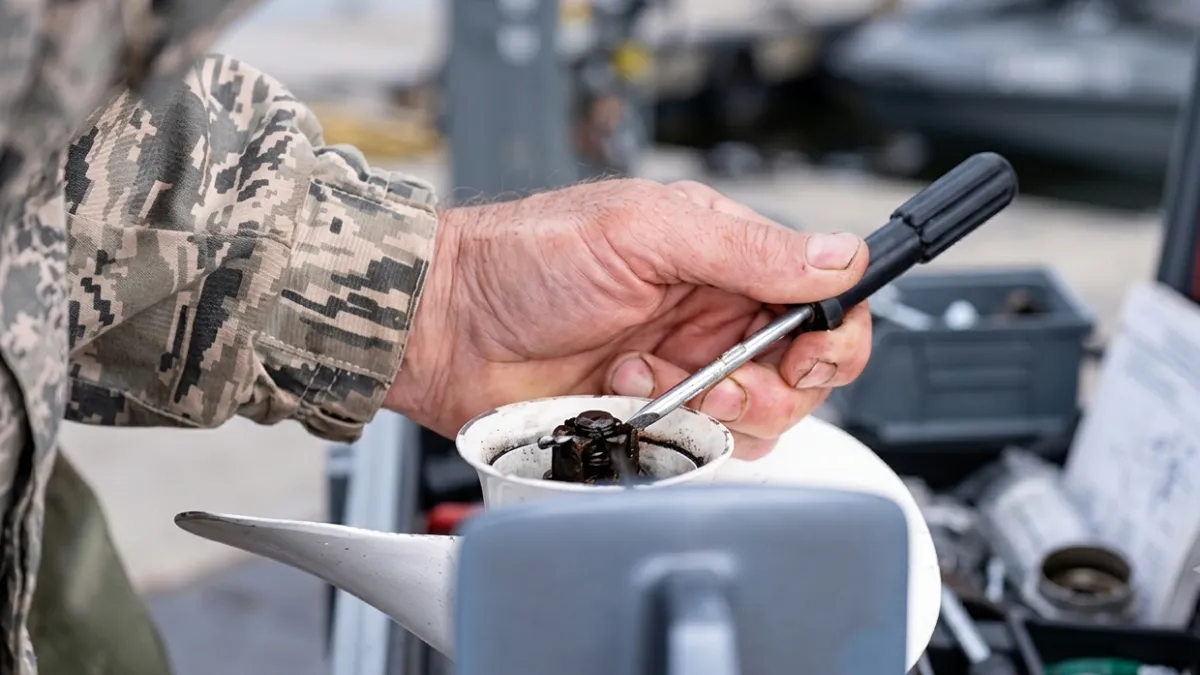
De nombreux propriétaires de bateaux ne remarquent pas les dommages causés à l'hélice jusqu'à ce que leur bateau commence à se sentir différent.. Peut-être que l'accélération devient plus lente, les coûts de carburant augmentent, ou le volant commence à vibrer après avoir heurté un rocher caché ou un débris flottant. Connaître les signes avant-coureurs peut vous aider à éviter des réparations coûteuses et à assurer le fonctionnement efficace de votre moteur hors-bord..
Dans ce guide, nous allons expliquer le 5 signes les plus courants d'un dommage hélice hors-bord, pourquoi ils comptent, et quand il est temps de remplacer votre hélice.
Pourquoi une hélice endommagée ne doit jamais être ignorée
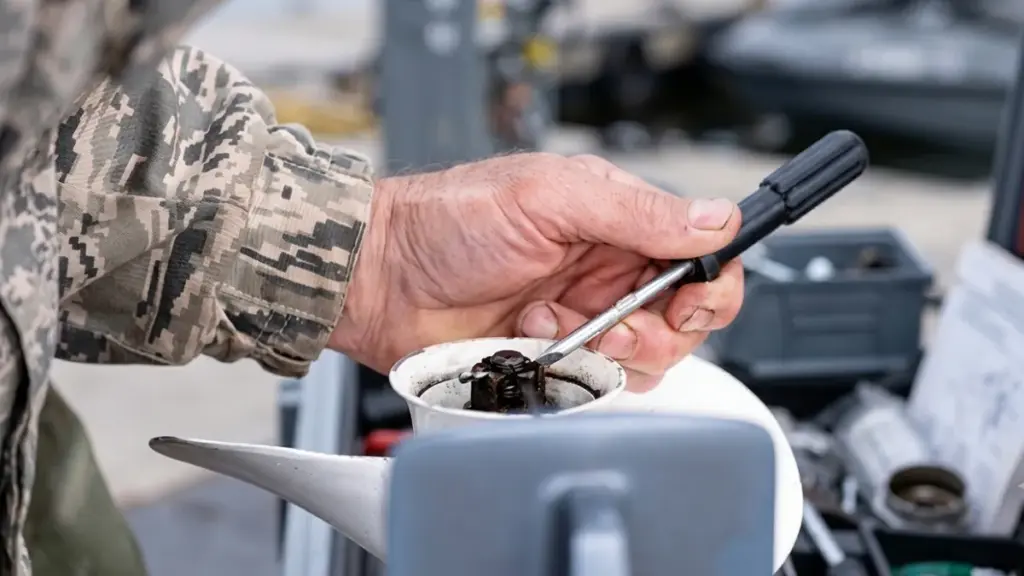
Ignorer une hélice endommagée transforme des pertes d'efficacité mineures en de graves dommages au carter d'engrenages, prix du carburant qui grimpe en flèche, et problèmes de manipulation dangereux. Réparez-le tôt pour protéger votre moteur et votre portefeuille.
Dégradation des performances et problèmes de gestion
Une hélice endommagée enlève immédiatement les performances conçues par votre bateau. Même une déformation mineure de la pale détruit le profil hydrodynamique requis pour convertir la puissance du moteur en un mouvement vers l'avant efficace.. Les opérateurs remarquent généralement cela comme un tir lent et une baisse notable de la vitesse de pointe..
- Perte de poussée: Les lames pliées ou ébréchées perturbent la géométrie, réduisant la poussée vers l'avant et provoquant une mauvaise accélération.
- Gestion de l'instabilité: Les surfaces irrégulières des pales créent une poussée inégale, conduisant à une traction sur la direction, assiette instable, et un suivi incohérent.
- Génération de vibrations: Une rotation déséquilibrée crée des vibrations sous charge, souvent ressenti comme un bruit sourd rythmé à travers le pont à des vitesses de planage.
Augmentation de la consommation de carburant et des coûts d’exploitation
Faire fonctionner une hélice compromise attaque directement votre budget de fonctionnement. Les imperfections sur la surface de la lame détruisent le flux d'eau laminaire, le remplacer par de la traînée et de la turbulence. Le moteur doit consommer beaucoup plus de carburant juste pour atteindre votre vitesse de croisière standard..
- Glissement ajouté: Les pales endommagées provoquent un écoulement turbulent, obliger le moteur à travailler plus fort pour maintenir son élan.
- Consommation de carburant plus élevée: Une hélice tintée ou pliée augmente régulièrement la consommation globale de carburant d'environ 10%.
- Compensation des gaz: Les opérateurs poussent naturellement l’accélérateur plus fort pour compenser une poussée inefficace, multipliant silencieusement les coûts de fonctionnement quotidiens.
Contraintes mécaniques sévères sur l'unité inférieure
Les dommages esthétiques à l’extérieur cachent souvent de graves destructions mécaniques à l’intérieur. Une hélice déséquilibrée agit comme un marteau contre votre transmission. Il envoie constante, contrainte cyclique directement dans l'unité inférieure, transformer une réparation d'hélice bon marché en une reconstruction massive du carter d'engrenages.
- Usure du carter de transmission: Une charge inégale transmet la contrainte directement à l'unité inférieure, détruire des engrenages, roulements, et les arbres prématurément.
- Dégradation du joint: Des vibrations persistantes déchirent les joints d’arbre d’hélice, permettant à l'huile pour engrenages de s'échapper et à l'eau de s'y précipiter.
- Désalignement de l'arbre: Les impacts violents qui déforment les pales plient fréquemment l'arbre d'hélice, garantir une défaillance catastrophique si rien n’est fait.
Risques pour la sécurité et échouement potentiel
Opérer avec une hélice endommagée pousse vos marges de sécurité dans la zone rouge. La perte de poussée propre rend le navire imprévisible dans des espaces restreints ou dans des conditions difficiles. Pousser une transmission compromise à l'étranger provoque une panne mécanique soudaine lorsque vous avez le plus besoin de puissance.
- Risques d'accostage: La perte de poussée inverse et la maniabilité irrégulière tuent votre contrôle des manœuvres dans les canaux étroits et les glissades.
- Risque de panne: Courir avec des dégâts existants augmente considérablement vos risques de panne mécanique soudaine en cours de route..
- Vulnérabilité météorologique: L’efficacité réduite de la propulsion compromet vos marges de sécurité lorsque vous naviguez sur des mers agitées, vents violents, ou courants forts.
5 Liste des signes d'une hélice hors-bord endommagée
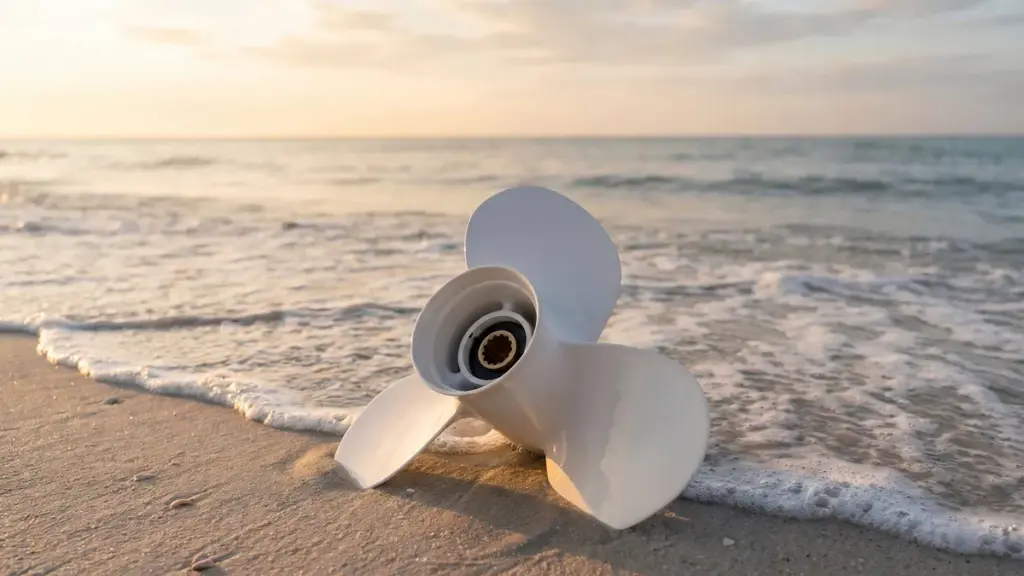
Si votre moteur hors-bord vibre soudainement, perd de la vitesse, ou consomme plus de carburant que d'habitude, votre hélice est peut-être déjà endommagée. Le tableau ci-dessous résume les symptômes les plus courants, leurs causes probables, et comment ils peuvent affecter votre moteur.
| Panneau d'avertissement | Cause principale | Risque immédiat |
|---|---|---|
| Vibration | Lames pliées ou moyeu desserré | Défaillance du joint du carter d'engrenages |
| Perte de vitesse / Mauvais coup de trou | Moyeu filé ou traînée de lame | Transport du moteur |
| Bruit / Instabilité de la direction | Lames asymétriques ou arbre plié | Dommages aux engrenages de l'unité inférieure |
| Consommation élevée de carburant / Charger | Traînée hydrodynamique | Usure des pistons et du système de refroidissement |
| Dommages visibles | Frappes à impact | Charges de choc sur la transmission |
Signe 1: Vibration pendant l'accélération ou la croisière
Une hélice endommagée tourne rarement correctement. Vous remarquerez des secousses ressenties directement à travers la barre, le carter du moteur hors-bord, ou la coque du bateau elle-même, surtout lorsque vous accélérez ou maintenez une vitesse de croisière constante. Cette vibration réduit considérablement l'efficacité de l'hélice et exerce une pression immédiate sur les supports de moteur et les joints du carter d'engrenage..
- Causes courantes: Lames pliées ou déformées, un moyeu lâche, ou de gros débris encrassés autour de l'arbre de transmission.
- Vérification exploitable: Éteignez le moteur et inspectez l'hélice. Vérifiez les angles de la lame pour vous assurer qu’ils correspondent, puis faites tourner l'hélice à la main pour repérer toute oscillation ou grattage contre le carter d'engrenage..
Signe 2: Perte de vitesse et mauvais tir au trou
Accélération lente, un temps sensiblement plus lent pour monter dans l'avion, et une vitesse de pointe réduite directement à l'inefficacité de la propulsion. Même si le régime de votre moteur reste normal ou élevé, une hélice compromise ne parvient pas à convertir cette puissance en poussée vers l'avant. Cela résulte souvent d'une cavitation autour des bords de pale endommagés ou d'un encrassement marin important créant une traînée excessive..
- Indicateur de moyeu filé: Si la bague intérieure tombe en panne, il ne peut pas transmettre tout le couple du moteur à l'eau, provoquant des régimes élevés avec un mouvement minimal du bateau.
- Vérification exploitable: Comparez votre accélérateur actuel à pleine ouverture (WOT) RPM et vitesse maximale par rapport aux données de référence historiques de votre navire.
Signe 3: Bruit inhabituel ou instabilité de la direction
Nouveau bourdonnement, cliquetis, ou des bruits de grincement indiquent un grave désalignement mécanique, surtout lors des virages ou du passage dans des plages de régime spécifiques. Vous remarquerez peut-être également que la barre est plus difficile à diriger ou qu'elle tire fortement d'un côté.. Cela se produit parce que asymétrique, les pales pliées génèrent une poussée inégale, forcer le bateau à quitter sa trajectoire naturelle.
- Menace du carter d'engrenages: Un meulage persistant indique généralement un arbre de transmission plié ou un engrenage de l'unité inférieure endommagé suite à une frappe sous-marine antérieure..
- Vérification exploitable: Remuez l'hélice d'avant en arrière pour détecter un jeu excessif.. Faites-le tourner à la main et écoutez attentivement les bruits de grattage internes.
Signe 4: Consommation de carburant plus élevée et charge anormale du moteur
Une baisse soudaine de la consommation de carburant signifie que vous vous arrêtez plus fréquemment au quai de carburant pour exactement les mêmes itinéraires et les mêmes chargements.. La traînée hydrodynamique due aux dommages ou à l'encrassement des pales oblige le moteur à travailler plus fort juste pour surmonter la perte de poussée et de vibration.. Le moteur semblera tendu et nécessitera des réglages d'accélérateur plus élevés pour maintenir des vitesses de croisière normales..
- Usure à long terme: Un fonctionnement continu dans ces conditions de charge élevée accélère l'usure des pistons, roulements, et systèmes de refroidissement hors-bord.
Signe 5: Lame visible, Moyeu, ou dommages aux bords
Les défauts physiques sont les indicateurs les plus évidents d’un impact. Une inspection visuelle rapide révèle souvent des bosses, sont des conseils, morceaux manquants, ou des fissures capillaires. Ces défauts proviennent généralement de l'échouage du bateau ou de la collision avec des rochers., bancs de sable, récifs, ou des débris immergés. Même des dommages physiques mineurs modifient le pas et l'équilibre efficaces de l'hélice, transmettre des charges de choc nocives directement dans votre unité inférieure.
- Vérification exploitable: Retirez l'hélice pour inspecter toutes les surfaces de près. Remplacez l'appareil si vous constatez de graves dommages structurels ou si les estimations de réparation dépassent 50% du coût d'un nouvel accessoire.
Source d'hélices hors-bord OEM haute performance

Comment protéger votre moteur en remplaçant la bonne hélice à temps
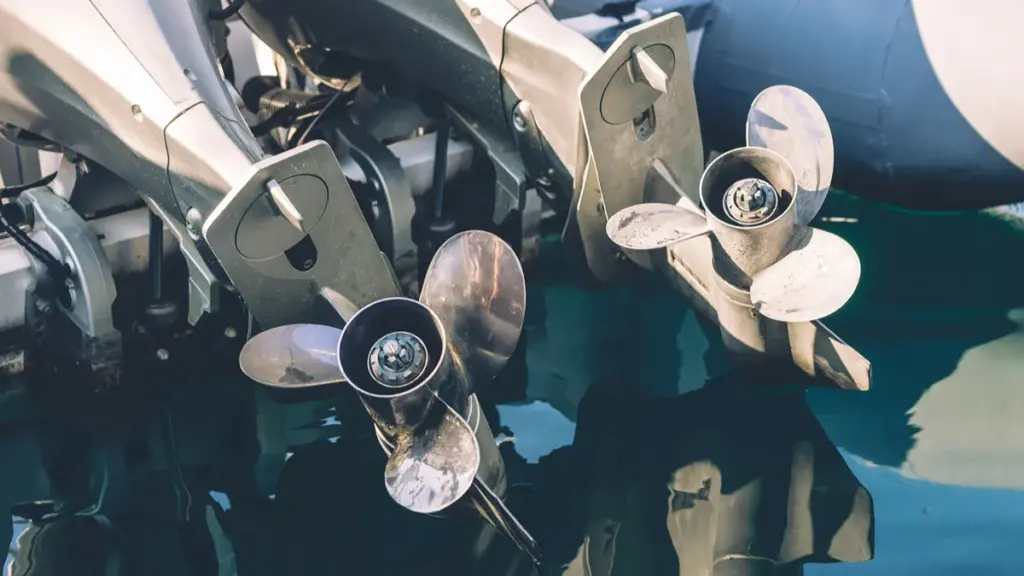
Une hélice endommagée oblige votre moteur à travailler plus fort et risque une grave panne de transmission.. Le remplacement d'une unité compromise protège immédiatement votre carter de transmission et restaure l'efficacité énergétique de base.
Identifier quand il est temps de remplacer
Savoir exactement quand changer une hélice empêche une usure mineure de dégénérer en défaillance mécanique. Les inspections visuelles et tactiles constituent votre première ligne de défense. Toute frappe contre un objet immergé nécessite une attention immédiate, même si le bateau bouge toujours.
- Dommages structurels visibles: Vérifiez les fissures profondes, gros morceaux manquants, lames très pliées, ou des bords amincissants qui compromettent la géométrie de la lame.
- Les performances de base chutent: Surveillez un moteur qui ne parvient soudainement pas à atteindre sa ligne de base à plein régime (WOT) RPM ou vitesse maximale sous des charges normales.
- Problèmes de vibrations et de manipulation: Vibrations persistantes, traction de direction, ou un suivi approximatif indique une hélice déséquilibrée.
- Vérification après impact: Retirez toujours l'hélice pour inspecter l'arbre et le joint après avoir heurté des rochers sous-marins., journaux, ou des débris.
Choisir la bonne hélice de remplacement
Installer une hélice dépareillée est tout aussi dommageable que faire fonctionner une hélice cassée. Vous devez aligner les spécifications de remplacement sur votre type de coque et votre charge de fonctionnement typique..
- Pas et diamètre corrects: Le fait de ne pas respecter la plage de pas recommandée par le fabricant force le moteur à surrégimer ou à traîner, détruisant l'économie de carburant et l'accélération.
- Aluminium pour l'absorption des chocs: Les étais en aluminium agissent comme une barrière sacrificielle dans les eaux peu profondes., eaux à forte densité de risques. Ils se déforment à l'impact, transmettant beaucoup moins de chocs dans le carter d'engrenage coûteux.
- Acier inoxydable pour la durabilité: Choisissez l’acier inoxydable lorsque vous avez besoin d’une efficacité maximale, résistance à la flexion, et durabilité dans les eaux profondes ou sans danger.
Vérifications d'installation et après remplacement
Un remplacement réussi nécessite une attention particulière à l'ensemble du moyeu et à l'environnement de l'arbre.. Avant de glisser la nouvelle hélice sur, nettoyer et préparer soigneusement la zone pour garantir le bon fonctionnement de la transmission.
- Préparation de l'arbre: Enlever la ligne de pêche enveloppée, mauvaises herbes, et les débris qui peuvent couper le nouveau joint.
- Sièges matériels: Appliquez de la graisse de qualité marine sur les cannelures. Fixez l'écrou d'hélice au couple exact spécifié sans trop serrer., et insérez une nouvelle goupille fendue si la conception l'exige.
- Essais de friction: Mettez le moteur hors-bord au point mort et faites tourner la nouvelle hélice à la main.. Il doit tourner librement sans coincer ni rayer le carter d'engrenage..
- Vérification de base: Faites fonctionner le bateau sous une charge normale pour confirmer que la nouvelle hélice rétablit votre vitesse de pointe et votre régime WOT d'origine..
Conclusion
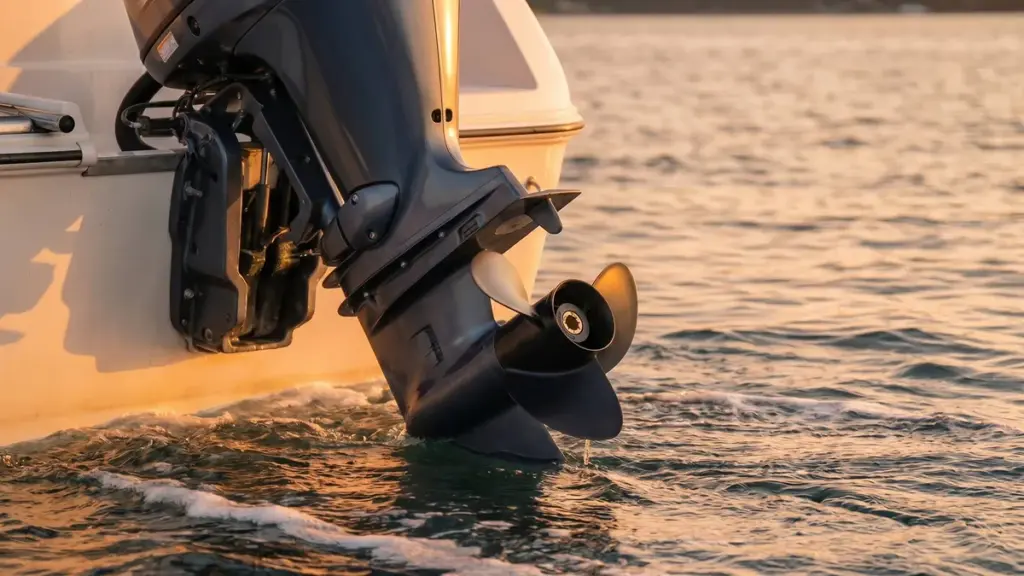
Des inspections régulières et un remplacement rapide sont les meilleurs moyens de protéger votre moteur hors-bord., améliorer les performances de navigation, et réduire les coûts d'exploitation à long terme. Il est tout aussi important de se procurer des hélices de moteur hors-bord avec le pas correct., diamètre, et des matériaux de haute qualité pour garantir un fonctionnement fiable et efficace.
Que vous remplaciez des hélices pour votre propre flotte ou que vous recherchiez des produits pour votre entreprise, un partenariat avec des fabricants expérimentés d'hélices de moteurs hors-bord peut faire une différence significative dans la qualité des produits, performance, et fiabilité à long terme. À NOUVEAUTOP, notre usine intégrée d'hélices de moteurs hors-bord combine une fabrication avancée avec des services OEM/ODM flexibles pour aider les distributeurs et les marques marines à réussir sur des marchés concurrentiels.
👉 Contactez NEWTOP aujourd'hui pour discuter de vos besoins OEM ou en gros et recevoir un devis compétitif pour votre prochain projet d'hélice hors-bord.
Foire aux questions
Quels sont les signes d'une hélice hors-bord endommagée?
Vous pouvez repérer les dommages à l'hélice grâce à des défauts visuels, baisses de performances, et symptômes mécaniques. Cherchez des bosses, pointes de lame pliées, morceaux manquants, ou des fissures capillaires près du moyeu. Sur l'eau, les dégâts se manifestent par des vitesses de pointe plus lentes, coups de trou lents, et des régimes moteur élevés avec une faible vitesse d'avancement du bateau. Vous pourriez également ressentir de nouvelles vibrations rythmiques dans la barre ou entendre des bruits sourds.. Si vous remarquez une fuite d'huile d'engrenage laiteuse autour de l'unité inférieure, l'impact a probablement compromis les joints de votre arbre d'hélice.
Une hélice endommagée peut-elle endommager mon moteur?
Oui, une hélice endommagée exerce une pression importante sur l'ensemble de votre moteur hors-bord et sur l'unité inférieure. Même une légère courbure de la lame crée une rotation déséquilibrée. Ce déséquilibre rotationnel envoie continuellement, fortes vibrations directement à travers la transmission. Laissé sans contrôle, cette secousse martèle les joints de l'arbre d'hélice jusqu'à ce qu'ils échouent, laisser le lubrifiant pour engrenages s'échapper et l'eau s'engouffrer. Faire tourner le moteur dans cet état entraîne rapidement une usure destructrice métal sur métal de vos engrenages et roulements..
Pourquoi mon bateau vibre après avoir heurté quelque chose sous l'eau?
Frapper un objet immergé déséquilibre votre transmission. L'impact plie généralement une pale d'hélice, ébrèche le matériau, ou plie légèrement l'arbre d'hélice. Parce que l'hélice ne tient plus sa forme symétrique ou tourne parfaitement fidèlement, il orbite plutôt que de tourner doucement. Cette oscillation génère une force de secousse rythmique qui se propage jusqu'à la jambe extérieure., à travers les supports moteur, et directement dans la coque.
Les dommages à l'hélice peuvent-ils entraîner une mauvaise accélération?
Oui. Les dommages physiques modifient le pas de la lame, courbure, et une tasse. Cette distorsion tue l’efficacité hydrodynamique de l’hélice, le forçant à perdre son emprise sur l'eau et réduisant considérablement la poussée vers l'avant. Aussi, si un coup violent endommage le moyeu intérieur en caoutchouc, communément appelé “moyeu filé”-la coque de l'hélice glisse sur l'arbre. Quand tu appuies sur l'accélérateur, le moteur tourne à plein régime alors que le bateau accélère à peine ou peine à monter dans le plan.
Une mauvaise hélice augmentera-t-elle la consommation de carburant?
Oui. Faire fonctionner une hélice endommagée oblige le moteur à brûler plus de carburant par mile. Courbé, ébréché, ou des pales fortement encrassées créent une traînée hydrodynamique supplémentaire et augmentent le glissement de l'hélice. Parce que les pales endommagées ne peuvent pas convertir efficacement le couple moteur en poussée, le moteur hors-bord doit tourner plus vite et travailler beaucoup plus dur juste pour maintenir votre vitesse de croisière normale. Sur une saison, cette inefficacité s’ajoute à des factures de carburant considérablement plus élevées.
Combien de temps puis-je utiliser une hélice endommagée en toute sécurité?
Vous ne devez faire fonctionner une hélice endommagée que suffisamment longtemps pour retourner au quai en boitant à basse vitesse.. Faire fonctionner un vibreur, un accessoire déséquilibré pendant une période prolongée rend anormal, contrainte cyclique sur les roulements et les joints de votre unité inférieure. Pousser le moteur dans cet état entraîne rapidement une simple, remplacement peu coûteux de l'hélice dans une reconstruction catastrophique du carter d'engrenages.
Un moyeu endommagé peut-il provoquer un surrégime du moteur?
Oui. Les fabricants conçoivent le moyeu intérieur en caoutchouc pour qu'il glisse lors d'un impact violent afin de protéger les engrenages de votre unité inférieure du cisaillement.. Une fois que ce moyeu tourne ou se déchire, il perd définitivement son emprise sur la coque extérieure de l'hélice. Lorsque vous appliquez l'accélérateur, le moyeu endommagé glisse au lieu de transférer le couple. Cela permet au régime moteur d'augmenter rapidement sans faire avancer le bateau., imitant la sensation d'une transmission qui glisse.
Dois-je garder une hélice de rechange à bord?
Garder une hélice de rechange à bord est fortement recommandé. C’est une assurance bon marché, en particulier si vous utilisez une hélice en aluminium ou si vous naviguez régulièrement en eaux peu profondes, eaux remplies d'obstructions. Transporter une unité de rechange, avec une clé à hélice, une rondelle de butée de remplacement, et une nouvelle goupille fendue, vous permet d'échanger l'hélice endommagée sur place. Cela rétablit immédiatement une propulsion sûre et vous évite un week-end gâché ou une facture de remorquage coûteuse..
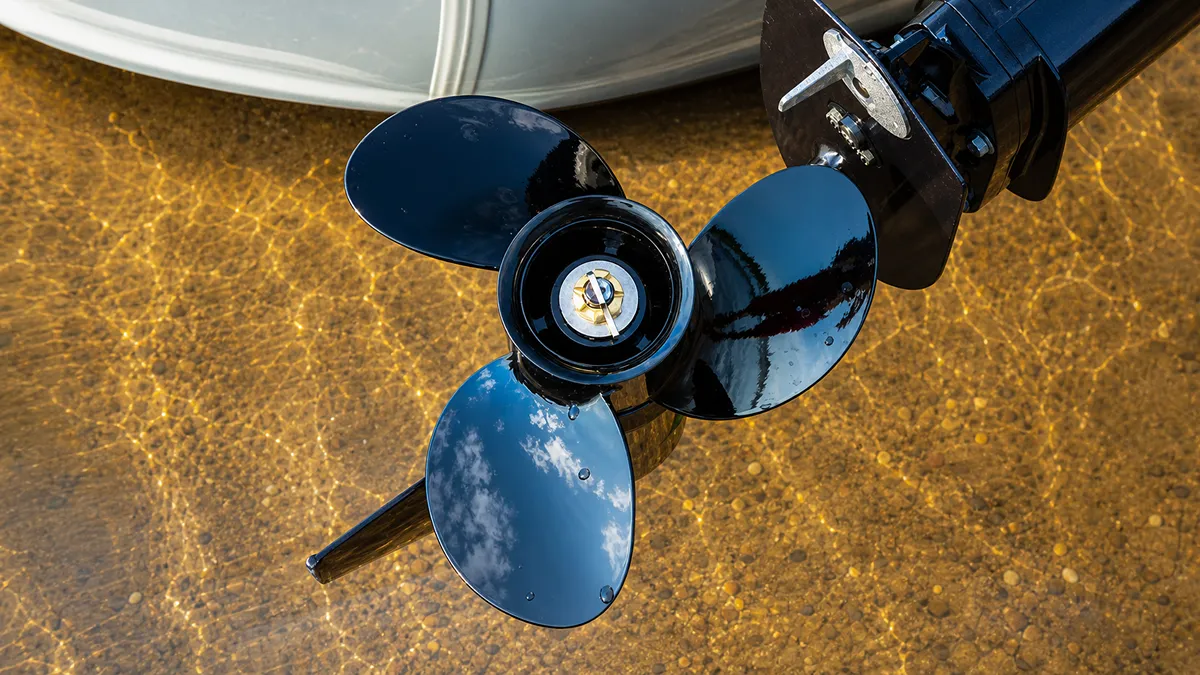
When a boat suddenly loses thrust, engine RPM rises without matching acceleration, or the propeller shows unusual surface damage, many operators assume the propeller is simply worn out. En réalité, the problem may be propeller cavitation.
Cavitation is one of the most misunderstood issues affecting outboard motor performance. It reduces efficiency, increases fuel consumption, shortens propeller life, and may even lead to expensive repairs if ignored. Although it is often confused with ventilation, the two problems have different causes and require different solutions.
Dans ce guide, we’ll explain what cavitation is, what causes it, how it affects your boat, and the practical ways to prevent it by choosing the right propeller and setup.
What Is Cavitation in Outboard Motor Propellers?
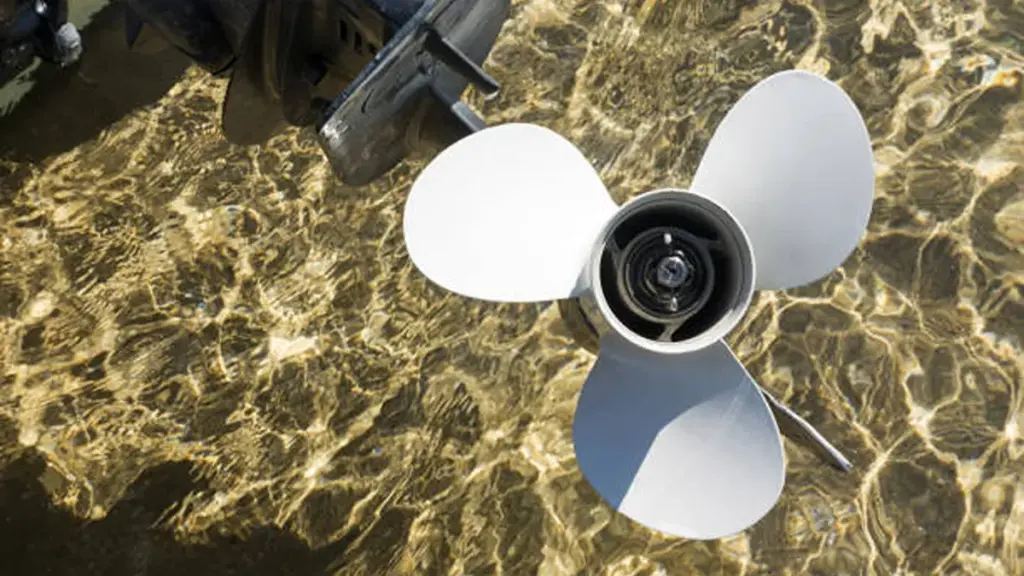
Cavitation in outboard propellers is a destructive hydrodynamic pressure issue. Vapor bubbles form and violently collapse on the blades, causing power loss and severe metal erosion.
The Physical Process of Cavitation
Cavitation starts when rapid propeller rotation forces local water pressure to drop below its vapor pressure. This extreme low pressure triggers an immediate phase change, creating vapor bubbles directly on the blade surface. The water essentially boils at ambient temperature due to the pressure drop.
As the spinning propeller drives these vapor bubbles into higher-pressure zones, they cannot sustain their form and collapse violently. These collapsing bubbles release intense micro-shock waves against the blade. Au fil du temps, these repeated impacts pound the metal surface, eroding the material and causing severe pitting.
Common Causes in Outboard Setups
Several setup and operational factors create the ideal environment for these damaging low-pressure zones to form.
- Incorrect mounting and trim: Setting the engine mounting height too high or trimming the motor out too far disrupts solid water flow across the blades.
- Poor propeller selection: Using a propeller poorly matched to the boat’s hull, load, or engine power forces the blades to carry excessive hydrodynamic load.
- Pre-existing damage: Bent blades, over-filed tips, or nicked edges create uneven hydrodynamics that trigger localized pressure drops.
- Disturbed inflow: Hull turbulence, transducers, or underwater obstructions prevent clean water from reaching the lower unit.
Symptoms and Performance Impacts
Operators usually identify cavitation through immediate handling degradation and eventual mechanical wear on the propulsion system.
- Loss of thrust: You experience a sudden decrease in power transfer efficiency, leaving the boat feeling sluggish under heavy throttle.
- RPM flaring: The engine speed surges rapidly without a proportional increase in forward acceleration.
- Audible disturbances: Collapsing bubbles create a distinct gravel-like rattling, accompanied by excessive vibration through the transom.
- Cumulative wear: Unchecked cavitation leads to visible blade erosion, pitting, and structural metal fatigue over time.
Distinguishing Cavitation from Ventilation
Boaters frequently confuse cavitation with ventilation, but they are entirely different mechanical events. Cavitation functions strictly as a hydrodynamic pressure issue resulting in vaporized water. Ventilation happens when the propeller physically pulls surface air or exhaust gases directly into the slipstream.
Both phenomena create nearly identical operator symptoms, including sudden RPM flare and an immediate loss of bite in the water. Accurate diagnosis dictates the repair path. Fixing ventilation usually involves basic trim adjustments or dropping the engine height. Resolving cavitation often requires repairing damaged blade edges or selecting a completely different propeller design to handle the engine’s output.
How Cavitation Differs from Ventilation
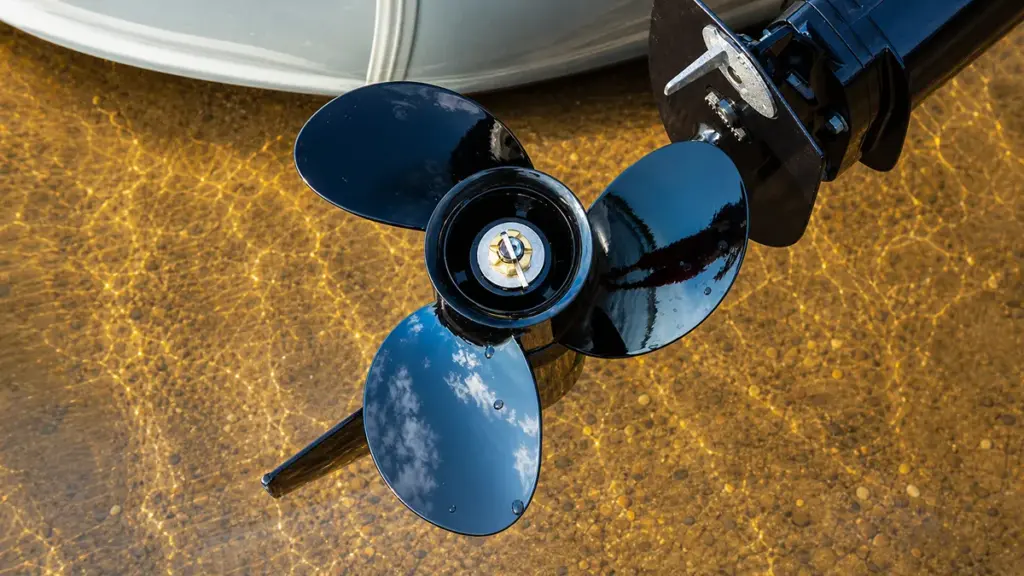
Cavitation is a pressure-induced phase change causing water to boil and erode propeller blades, while ventilation is external air getting sucked into the prop wash, causing sudden slippage.
Many boat owners use the terms cavitation et ventilation interchangeably, but they describe two different phenomena.
| Fonctionnalité | Cavitation | Ventilation |
|---|---|---|
| Cause | Water pressure drops below vapor pressure. | Air enters the propeller blades. |
| Medium Around Blade | Water vapor bubbles. | Air from above the water surface. |
| Main Symptom | Blade erosion and reduced propulsion efficiency. | Sudden engine RPM increase with poor thrust. |
| Blade Damage | Oui, often causes pitting and surface erosion. | Usually no direct blade erosion. |
| Typical Causes | Incorrect blade loading, damaged propeller, poor blade design, or excessive pressure drop. | Engine mounted too high, sharp turns, rough water, or excessive trim angle. |
A simple way to remember the difference:
- Cavitation creates bubbles from water.
- Ventilation pulls air into the propeller.
Maximize Margins With Professional-Grade Garden Machinery
The Main Causes of Propeller Cavitation
Cavitation occurs when local water pressure drops below vapor pressure. Excessive speed, mismatched propellers, blade damage, and disturbed inflow from poor setup are the primary triggers.
| Cavitation Cause | Primary Mechanism |
|---|---|
| Speed & Loading | High RPM and heavy vessel loads drive local pressure below the vapor threshold. |
| Propeller Mis-Match | Wrong pitch or physical size creates extreme pressure imbalances across the blade. |
| Blade Damage | Nicks and bent edges prevent smooth water flow, causing localized low-pressure zones. |
| Setup & Inflow | Improper engine height or hull obstructions introduce turbulent, low-pressure water. |
Excessive Propeller Speed and High Loading
Propellers designed for standard operation struggle when pushed past their hydrodynamic limits. Spinning a blade too fast creates an extreme pressure drop on the back side. This sudden vacuum forces the water to vaporize instantly into gas pockets.
Operating parameters heavily influence this pressure shift. Specific stressors force the propeller into a continuous cavitation cycle.
- Heavy loads: Excess vessel weight forces the engine to work harder, multiplying blade stress.
- Hard acceleration: Rapid throttle spikes disrupt steady water flow and immediately drop local pressure.
- Extreme RPMs: Sustained high-speed operation with an overloaded vessel guarantees continuous vapor formation.
Incorrect Pitch, Sizing, and Propeller Mis-Match
Slapping any available propeller onto an outboard guarantees poor performance. Pitch directly dictates blade loading. Excessive pitch bogs down the engine and overloads the blades at lower speeds. Insufficient pitch lets the engine over-rev, accelerating the blades so fast that they tear the water apart and induce surface cavitation.
Proper matching requires aligning the propeller geometry with the specific vessel dynamics to maintain pressure equilibrium.
- Diameter constraints: Selecting a size that ignores hull weight and horsepower creates severe pressure imbalances.
- Blade geometry: The wrong blade count, rake, or cup strips the propeller of its grip, increasing slip and flow separation.
- Compatibilité coque: A propeller style mismatched to the hull design fails to handle the specific water flow of that vessel.
Physical Blade Damage and Surface Imperfections
Water requires a perfectly smooth surface to maintain laminar flow. Minor impact damage alters the local hydrodynamics completely. Nicks, gouges, or missing chunks on the leading edge stop the blade from slicing cleanly. These defects act as turbulence generators, spawning localized low-pressure zones where vapor bubbles rapidly form.
Physical irregularities consistently trigger flow breakdown across the entire propulsion system.
- Bent blades: Asymmetric geometry causes uneven loading and violent pressure swings during every revolution.
- Altered edges: Overly sharpened or blunt leading edges detach the water flow prematurely.
- Lower unit fouling: Barnacle buildup or deep scratches on the gearcase destroy the clean water stream before it reaches the blades.
Disturbed Inflow, Setup, and Clearance Issues
A propeller operates efficiently only when fed a steady stream of dense, clean water. Mounting the outboard too high on the transom starves the system. This setup places the blades near the surface where the water is already aerated and low in pressure, accelerating the phase change into vapor.
Environmental factors around the transom dictate the quality of the inflow reaching the propeller.
- Clearance limits: Inadequate spacing between the propeller, hull bottom, and skeg amplifies local turbulence.
- Appendage drag: Poorly placed transducers or water pickups inject chaotic currents directly into the propeller path.
- Vessel attitude: Excessive stern weight or improper boat trim shifts the inflow angle, severely degrading water density.
How Cavitation Affects Speed, Fuel Use, and Blade Life
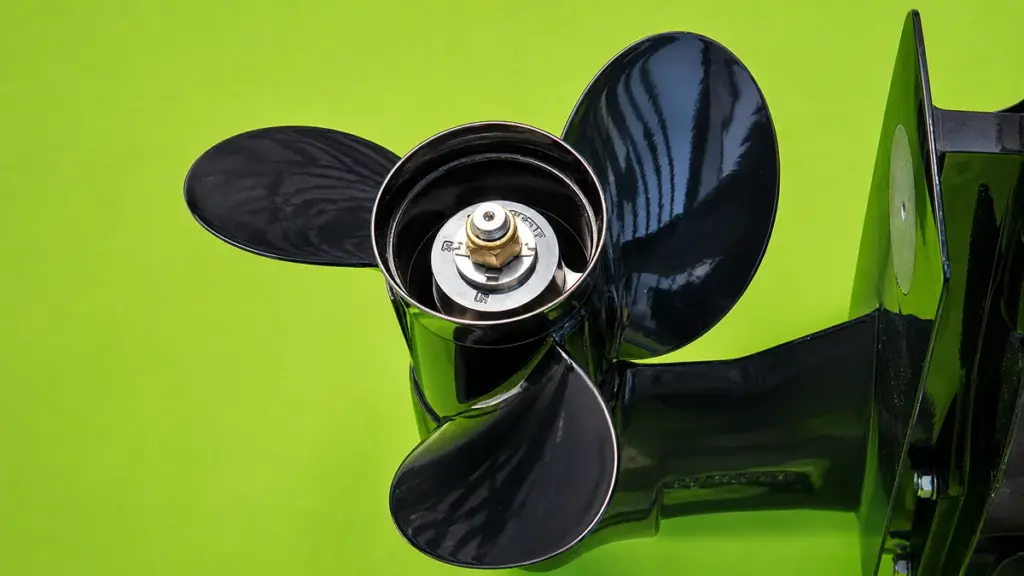
Cavitation cripples propeller efficiency. It kills top speed, burns up to 10% more fuel per mile, and destroys blades through violent micro-shock waves, forcing expensive premature replacements.
Impact on Boat Speed and Acceleration
When cavitation vapor bubbles form, they reduce effective blade lift. This breaks the propeller’s physical hook-up to the water and causes a massive drop in thrust. You will often feel this as a sudden RPM flare with barely any forward movement, forcing you to back off the throttle to let the blades regain bite.
- Hole-Shot Performance: Acceleration becomes sluggish, drastically extending the time it takes to get the heavy hull on plane.
- Top Speed Penalty: Even partial tip cavitation creates enough drag to cause a 2–5% loss in top speed on high-performance setups.
Increased Fuel Consumption and Reduced Efficiency
Vapor bubbles sticking to the blade surfaces act like a physical barrier. They increase friction and alter the effective thickness of the blade, destroying hydrodynamic efficiency. To compensate for the lost thrust, operators push the throttle further forward. This pushes the engine into a higher RPM band where it operates far outside its peak fuel efficiency range.
- Burn Rate: A chronic cavitation mismatch burns 5–10% more fuel per mile just to maintain the same hull speed.
- Lifetime Waste: Over the lifespan of a commercial or high-use outboard, this hydrodynamic drag wastes hundreds of gallons of fuel.
Structural Damage and Shortened Blade Life
Cavitation acts as a mechanical grinder on your hardware. When vapor pockets move into higher-pressure water, they collapse violently. These implosions generate localized micro-shock waves that mechanically hammer the metal, leading to severe pitting along the leading edges and low-pressure faces of the propeller.
- Vibration and Fatigue: The uneven collapse of bubbles creates high-frequency vibrations, subjecting the prop to continuous high-cycle fatigue.
- Cracking and Separation: Fatigue promotes micro-cracking at critical stress points like root fillets, which can quickly progress into complete blade separation under heavy loads.
- Collateral Damage: The constant oscillatory loads force premature propeller replacement and increase the risk of catastrophic bearing and seal failures inside the lower unit.
How to Fix Cavitation Through Setup and Prop Selection
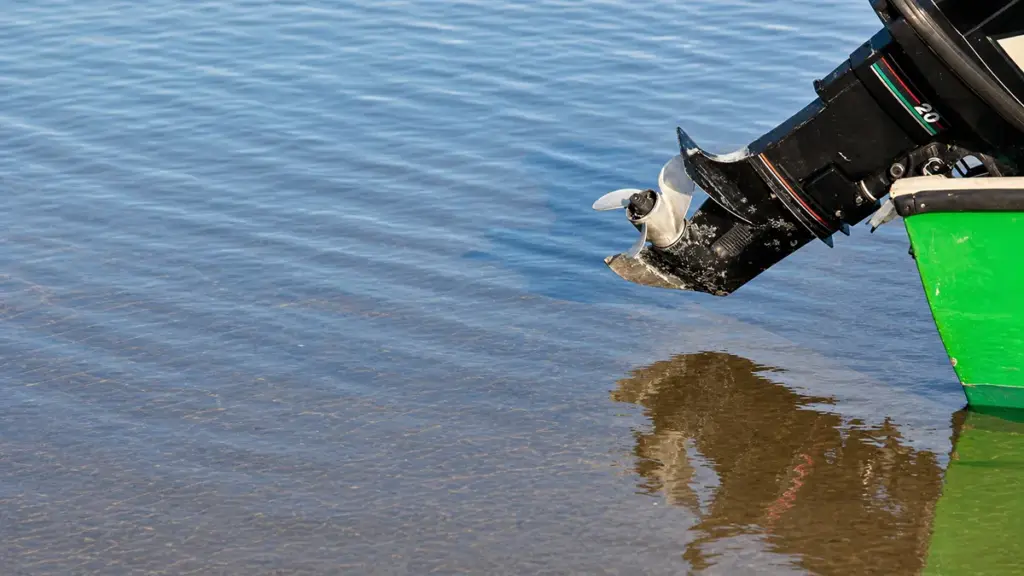
Most slipping issues are actually ventilation. Fixing engine height, adjusting trim, and selecting a cupped stainless-steel propeller will quickly restore grip and stop performance loss.
| Solution | Benefit |
|---|---|
| Repair Damaged Blades | Restores smooth water flow and improves propulsion efficiency. |
| Select Proper Pitch | Reduces blade overload and helps maintain optimal engine RPM. |
| Choose Correct Diameter | Improves thrust distribution and overall propulsion performance. |
| Adjust Engine Mounting Height | Optimizes water flow to the propeller and reduces pressure fluctuations. |
| Correct Trim Angle | Improves blade loading and enhances propulsion efficiency. |
| Clean Hull Regularly | Restores smooth water flow by eliminating marine growth and surface drag. |
| Balance the Propeller | Reduces vibration, uneven loading, and pressure imbalance. |
| Upgrade Propeller Design | Improves hydrodynamic efficiency and minimizes the risk of cavitation. |
Differentiating Ventilation from Cavitation
Operators often blame cavitation when their propeller loses grip. En réalité, most slipping issues are actually propeller ventilation. This happens when the blades pull in surface air or exhaust gas instead of solid water. True cavitation is a hydrodynamic pressure problem where extreme low pressure forms vapor bubbles on the blade surface. It is far less common in everyday troubleshooting.
Both conditions share identical symptoms on the water. You will experience the following performance drops:
- Rising RPMs: Engine speed flares without a proportional increase in boat speed.
- Loss of thrust: The propeller suddenly drops its grip on the water.
- Slipping: Forward momentum stalls during hard acceleration or tight turns.
Optimizing Engine Height and Trim
A poorly adjusted outboard is the leading cause of poor propeller bite. Start your troubleshooting by testing the boat with the trim fully down to establish a performance baseline. Adjust the trim up slightly to find your usable running range. If the propeller still breaks loose, lower the engine mounting position on the transom. This keeps the anti-ventilation plate deeper in the water, blocking surface air from reaching the blades.
You should also trim down when entering tight turns so the propeller stays submerged as the hull leans. Enfin, inspect the hull ahead of the lower unit. Transducers, through-hull fittings, or debris can disrupt clean water flow and feed aerated water directly into your propeller.
Choosing a Propeller for Maximum Bite
Your propeller dictates how well your engine transfers power to the water. Always inspect the current propeller for nicks, fissures, or bent blades first. Even minor physical damage frequently causes slipping and breaks the water flow. If the blades are intact but the engine over-revs before generating forward thrust, lower the pitch to help the engine grab solid water.
You can switch to a propeller with increased cup and a larger blade area to maintain grip under heavy loads or in rough chop. Upgrading to a stiffer stainless-steel propeller prevents blade flex under load and enhances hold during aggressive maneuvers.
Utilizing Aftermarket Hardware Solutions
When height and trim adjustments fall short, aftermarket hardware can force the stern down and keep the propeller buried.
- Hydrofoils: Add a hydrofoil to the anti-ventilation plate to help lift the stern onto plane faster and reduce air ingestion.
- Transom wedges: Install a positive transom wedge to increase engine tuck and improve initial propeller bite during takeoff.
- Jack plates: Use a jack plate for precise height adjustments, ensuring the motor is not raised high enough to induce further ventilation.
Choose NEWTOP for Reliable, Precision-Built Outboard Motor Propellers
Reducing cavitation starts with choosing a propeller that is properly engineered, accurately manufactured, and matched to your application. À NOUVEAUTOP, we produce high-quality hélices de moteur hors-bord for a wide range of recreational and commercial boats, combining precision machining with strict quality control to deliver stable performance on the water.
Every propeller is manufactured using carefully selected aluminum or stainless steel materials and undergoes balancing, dimensional inspection, and performance testing to ensure smooth operation, improved fuel efficiency, and longer service life. Whether you need OEM replacement propellers or customized solutions for your own brand, our engineering team can help you select the right diameter, pas, and blade design for different engines and operating conditions.
As an experienced outboard motor propeller manufacturer and trusted outboard motor propeller factory, NEWTOP supports distributeurs mondiaux, grossistes, and equipment brands with reliable production capacity, consistent product quality, and responsive OEM/ODM services.
Contact our team today to find the right propeller solution for your market and improve your customers’ boating performance.
Foire aux questions
What causes cavitation in an outboard propeller?
Cavitation occurs when water pressure on the propeller blades drops below vapor pressure, causing vapor bubbles to form and violently collapse. Damaged blades, the wrong taille de l'hélice or pitch, excessive rotational speed, or disturbed water flow from the hull and lower unit typically trigger this pressure drop.
How do I know if my boat has cavitation or ventilation?
Cavitation creates a persistent whine, harsh vibration, and visible pitting on the propeller blades, even when running straight. Ventilation happens when the prop pulls in surface air or exhaust. You will feel a sudden RPM spike and loss of bite, usually during tight turns or when you trim the motor too high.
Can cavitation damage my engine?
Cavitation destroys propeller blades through erosion rather than directly damaging the internal engine block. It does cause indirect mechanical harm. When the propeller loses its grip, the engine over-revs. These rapid load fluctuations place heavy stress on your lower unit gears, roulements, and the entire drivetrain.
Does engine height affect cavitation?
Engine height primarily drives ventilation, but it directly impacts cavitation. Mounting an outboard too high reduces propeller submergence and introduces aerated, unstable water flow. This disturbed inflow creates pressure anomalies that force vapor bubbles to form on the blades.
Will changing propeller pitch stop cavitation?
Adjusting pitch reduces cavitation only if your current propeller is over-loaded or under-loaded for your specific setup. If your engine struggles to reach its recommended wide-open throttle RPM, switching to a lower pitch helps balance the load. Pitch adjustments will not fix cavitation caused by physical blade damage, improper engine height, or hull irregularities.
Can a damaged propeller cause cavitation?
Oui. Nicks, fissures, bent edges, or deep scratches disrupt the smooth flow of water across the propeller blades. These physical imperfections create localized low-pressure zones that trigger vaporization. The resulting bubble collapses cause further metal erosion, driving a cycle of worsening damage.
Is cavitation worse at high speed?
As boat speed and propeller RPM increase, water velocity over the blades rises. This lowers local pressure and significantly increases your cavitation risk. While true cavitation intensifies at higher speeds, operators often notice the most dramatic symptoms—like sudden blowout and RPM flares—during heavy acceleration or tight turns due to accompanying ventilation.
Does blade material affect cavitation resistance?
Material choice dictates how well your propeller survives cavitation, not whether it occurs in the first place. High-strength copper alloys and stainless steel resist the microscopic impacts of bubble collapses far better than standard aluminum. Stronger metals also allow manufacturers to cast thinner blade profiles, which helps manage pressure distribution and delays performance loss.

When the boating season ends, many owners focus on winterizing the engine but overlook one of the most important components below the waterline—the outboard motor propeller. Proper seasonal maintenance not only protects the propeller itself but also helps prevent hidden damage to the propeller shaft, gearbox, and seals.
Whether you use an aluminum or stainless steel propeller, spending a short amount of time on inspection and maintenance before storage can reduce unexpected failures, improve performance next season, and extend the service life of your outboard motor.
This guide explains exactly what to inspect, faire le ménage, réparation, and prepare before storing your outboard motor propeller, helping both recreational boat owners and commercial fleets reduce maintenance costs and downtime.
Why Seasonal Propeller Maintenance Matters

Routine seasonal propeller maintenance stops minor wear and hidden shaft debris from escalating into catastrophic lower-unit failures, protecting both fuel efficiency and drive-train longevity.
Ensuring Peak Performance and Fuel Efficiency
Hélices take the brunt of the marine workload. These high-impact components directly dictate your boat’s speed, fuel burn, and handling characteristics. A single bent blade or heavily nicked edge disrupts the hydrodynamic profile, forcing the outboard to work harder while delivering less thrust.
Routine seasonal maintenance restores the motor to its intended baseline efficiency. Catching minor deformations and correcting pas alignment early ensures you get the exact performance you expect every time you hit the throttle.
Preventing Costly Lower-Unit Damage
Fishing line, mauvaises herbes, and netting constantly find their way around the propeller shaft. Operators rarely see this debris from the outside, allowing it to tighten and harden over time. Removing the propeller at the end of the season exposes wrapped monofilament before it cuts into the prop shaft seal.
A compromised seal invites water intrusion directly into the gearcase, emulsifying the gear oil. Finding and clearing these hazards early prevents a basic maintenance step from turning into an expensive lower-unit and drivetrain overhaul.
Mitigating Corrosion and Cavitation Erosion
The marine environment attacks metal relentlessly. Propellers face continuous exposure to saltwater, localized impact damage, and cavitation erosion. Regular visual inspections reveal abnormal wear patterns, deep pitting, and structural issues with critical hardware like prop pins or thrust washers.
Pulling the prop also allows technicians to clean the shaft and apply fresh waterproof marine grease. This targeted lubrication protects the metal splines from long-term galvanic deterioration and ensures the hub never seizes to the shaft.
Identifying When Replacement Is Necessary
Not all damage can be filed out or welded. Inspecting the propeller every 50 à 100 heures, or during the seasonal layup, helps operators spot critical structural defects before they fail under load. Thorough maintenance routines reveal specific signs that warrant an immediate swap.
- Visible warping: Blades that no longer track true or show severe bending.
- Deep notching: Cracks radiating from the blade root or hub area.
- Blade damage: Significant material loss that destroys dynamic balance.
Timely evaluation protects the outboard’s resale value and guarantees you avoid sudden on-water failures caused by fatigued metal or spun hubs.
What to Inspect Before Storing an Outboard Propeller
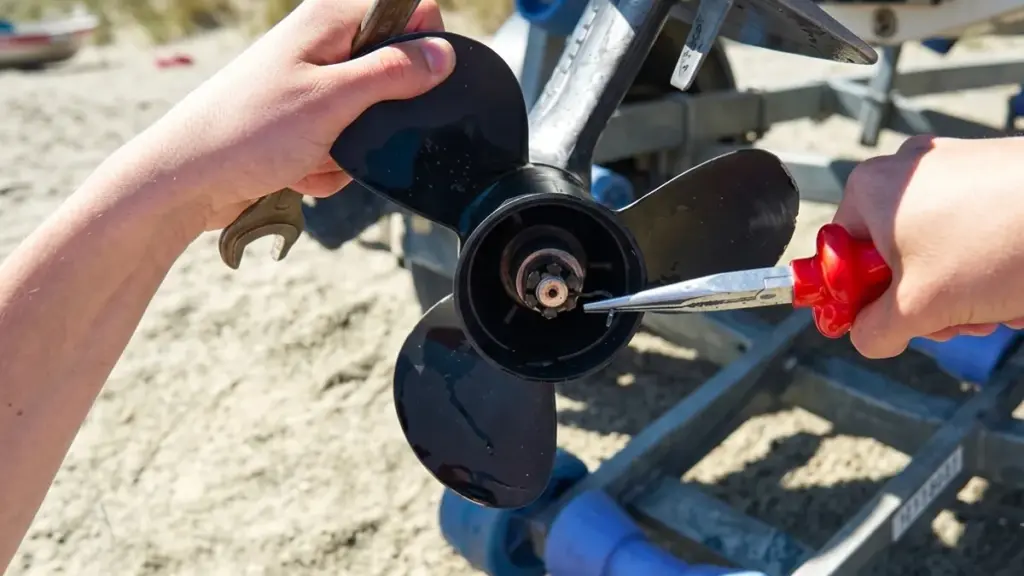
Ignoring your propeller before winter storage guarantees seized splines and compromised lower-unit seals next season. A systematic inspection now prevents catastrophic failure later.
| Composant | Inspection Focus | Primary Risk if Ignored |
|---|---|---|
| Lames & Surfaces | Cracks, bends, marine growth | Imbalance, vibration, speed loss |
| Arbre & Scellés | Fishing line, seal intrusion, bare splines | Water in gearcase, seized propeller |
| Hub Assembly | Slippage, looseness, debris | Spun hub, poor thrust transfer |
| Hardware | Corroded washers, reused cotter pins | Hardware failure, lost propeller |
Propeller Blades and Outer Surfaces
The outer surfaces take the brunt of impact and environmental wear. Visual checks only reveal obvious defects. A physical inspection uncovers the hidden structural damage that worsens over a long storage period.
- Blade integrity: Check each blade for nicks, dents, scratches, bends, fissures, gouges, and wobble.
- Tactile inspection: Run fingers carefully along the edges to feel for hidden damage.
- Corrosion markers: Look for rust, oxidation, discoloration, and salt buildup, especially after saltwater use.
- Biological fouling: Remove weeds, algae, barnacles, and other marine growth before drying.
Prop Shaft, Splines, and Gearcase Seals
Removing the propeller exposes the critical junction between your propulsion system and the lower unit. Debris trapped here eats through seals, inviting water into the gearcase and causing massive internal failure.
- Debris removal: Remove fishing line and rope wrapped around the shaft to prevent lower-unit damage.
- Spline health: Inspect shaft splines for wear, burrs, or corrosion.
- Seal integrity: Examine the seal where the prop shaft enters the gearcase for compromise or water intrusion.
- Lubrification: Apply marine-grade grease to the prop shaft before storage to help prevent seizure.
Internal Hub Assembly
The internal hub absorbs shock and transfers torque. If the rubber or mechanical components start failing, your engine will over-rev while the boat barely moves. Storage prep is the exact time to diagnose these issues.
- Physical condition: Inspect the hub for looseness, slippage, or physical signs of a spun hub.
- Performance context: Connect hub condition to performance clues from the last outing, such as vibration, cavitation, or loss of speed.
- Cavity check: Check the internal cavity for trapped debris or residue that could harden during storage.
Nuts, Washers, and Locking Hardware
Mounting hardware keeps the propeller locked safely onto the shaft under intense load. Reusing fatigued metal components or ignoring thread wear introduces unnecessary risk for your next launch.
- Nut condition: Verify the propeller nut is intact and free of thread damage.
- Supporting parts: Inspect washers and locking rings for wear, déformation, or corrosion.
- Pin replacement: Discard the old cotter pin and prepare a new one for reinstallation.
- Reassembly prep: Plan to reassemble the hardware using the manufacturer’s recommended torque.
Maximize ROI With Professional-Grade Garden Machinery
How to Check for Cracks, Bends, and Corrosion
A thorough propeller inspection requires a clean surface, good lighting, and tactile checks to catch hidden defects before they compromise your lower unit.
Preparation and Cleaning
Remove the propeller from the outboard to get an unobstructed view of the entire assembly. Wash away all marine growth, salt deposits, and oily residue. Dirt and algae easily hide fine stress lines or small chips. Once clean, dry the propeller completely. Moisture masks hairline cracks and subtle pitting that you need to spot with the naked eye.
Visual and Tactical Blade Inspection
Set up bright lighting and examine the leading edges, trailing edges, and blade tips. Look for missing material, deep gouges, and visible cracks. Your hands often catch what your eyes miss. Run a bare hand over every blade surface to feel for rough spots, raised metal, or subtle dents from minor impacts. Pay close attention to the metal condition itself. Inspect for white powdery oxidation, deep pitting, and general material loss. This step is critical for cast aluminum models, which degrade quickly once the protective outer coating fails.
Evaluating Blade Alignment and Geometry
Blades require perfect symmetry to deliver efficient thrust. Compare the pitch angle, tip height, and overall shape of each blade against the others. Look closely for visual inconsistencies that point to bending, twisting, or warping from submerged strikes. Do not ignore slight distortions. Even a minor bend throws the propeller out of balance. This rotational imbalance sends destructive vibrations straight into the gearcase, wearing out seals and bearings over time.
Moyeu, Arbre, and Rotation Checks
Inspect the inner hub assembly for cracking, rubber tearing, or looseness that signals it might slip under heavy load. Check the bare prop shaft for wrapped monofilament fishing line. Laissé sans contrôle, fishing line cuts directly through the prop shaft seal, letting water flood the lower unit and driving internal corrosion. Enfin, slide the propeller back on and rotate it slowly by hand. Watch the hub and blade tips for uneven rotation or a visible wobble. A wobbling propeller often points directly to a bent prop shaft rather than isolated blade damage.
When Propeller Repair Is Possible and When Replacement Is Better
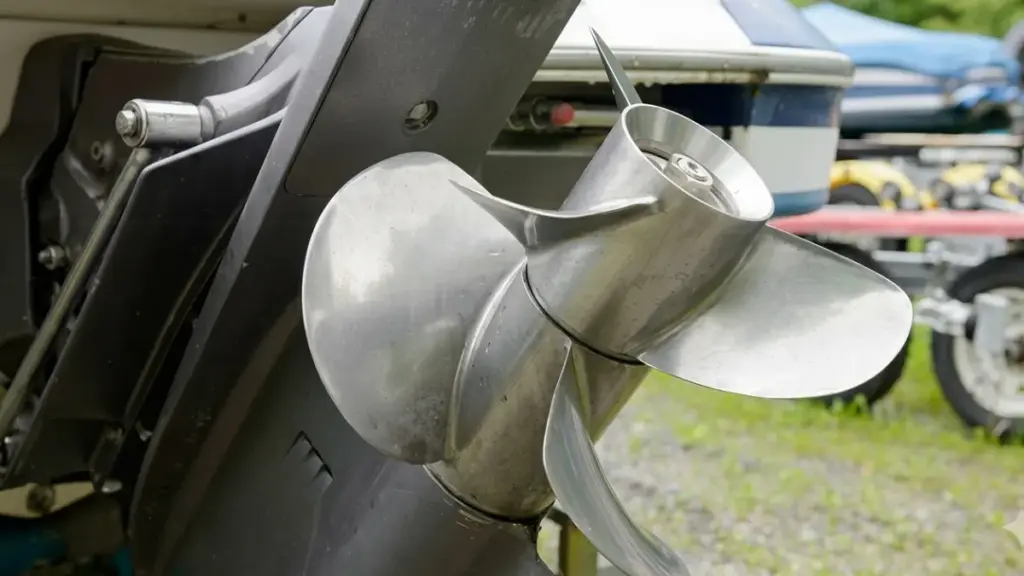
The decision depends on the severity of the damage, the propeller material, and the operating conditions.
| Damage Type | Repair Possible? | Replacement Recommended? |
|---|---|---|
| Small blade nick | Oui | Non |
| Minor bend | Usually | Parfois |
| Surface corrosion | Oui | Non |
| Large crack | Non | Oui |
| Broken blade tip | Parfois | Often |
| Severe hub damage | Rarely | Oui |
| Heavy corrosion | Non | Oui |
Generally speaking:
Repair is suitable when:
- Damage is localized
- Blade geometry can be restored
- Structural strength remains intact
- Repair cost is significantly lower than replacement
Replacement is the better option when:
- Multiple blades are damaged
- Cracks continue growing
- Blade thickness has become too thin
- Repair costs approach the price of a new propeller
- The propeller repeatedly loses balance
Commercial operators often replace damaged propellers sooner because downtime costs far more than the propeller itself. For boat manufacturers, marine equipment distributors, and maintenance providers, having a reliable replacement source is essential to reduce waiting time and keep customers operating efficiently.
NOUVEAUTOP provides high-quality aluminum and stainless steel outboard motor propellers designed for reliable performance in different marine applications. With years of experience in outdoor power equipment manufacturing, NEWTOP combines precision production, strict quality control, and stable supply capability to support global partners with consistent propeller solutions.
Whether you need standard replacement propellers or customized solutions for specific outboard motor applications, working with an experienced outboard motor propeller ma
How to Remove, Faire le ménage, and Reinstall a Propeller Safely
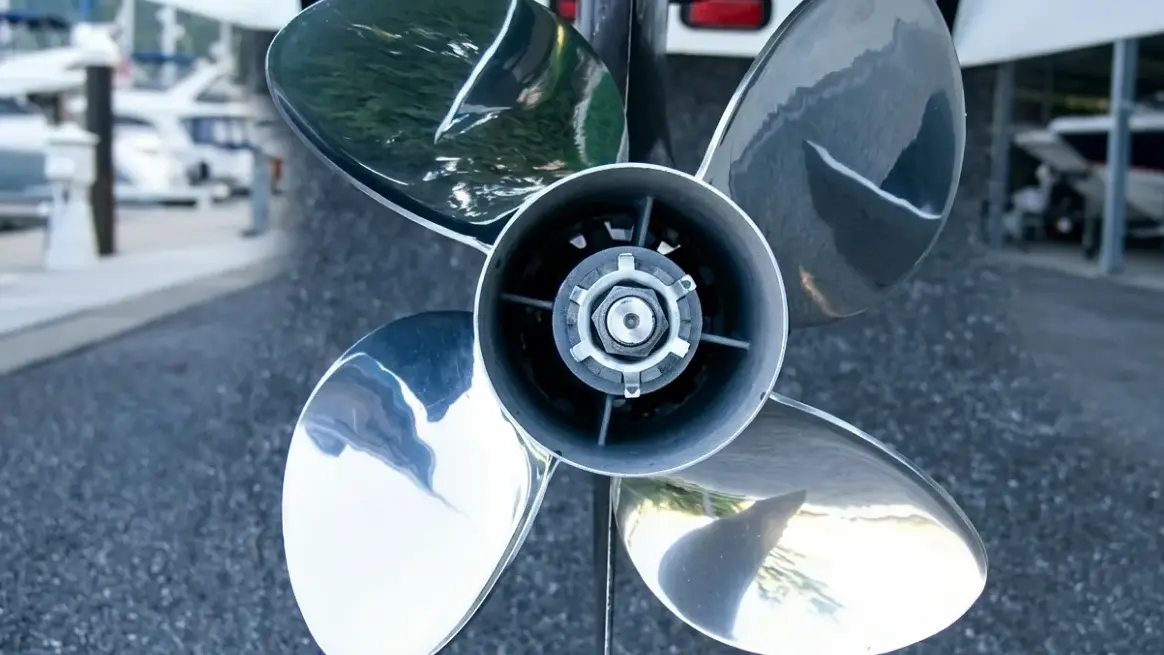
Removing and reinstalling an outboard propeller is a fundamental maintenance task that prevents seized splines, catches hidden fishing line damage early, and keeps the lower unit protected.
Safety Precautions and Tool Preparation
Working around sharp propeller blades requires strict safety protocols before you even touch a wrench. A sudden engine start or an unexpected blade rotation can cause severe injury.
- Engine disablement: Remove the kill-switch lanyard and disconnect the battery to eliminate any chance of an accidental start.
- Propeller immobilization: Wedge a solid block of wood between the blades and the anti-ventilation plate, or use a dedicated propeller holding tool to stop rotation.
- Essential toolkit: Keep a prop nut wrench (or socket set), needle-nose pliers for cotter pins, a flathead screwdriver, and marine-grade grease within arm’s reach.
Step-by-Step Propeller Removal
Once the setup is secure and the prop is locked in place, you can safely dismantle the assembly. Pay close attention to the order of the hardware as it comes off the shaft.
- Free the fastener: Use pliers to straighten and pull the cotter pin, or take a flathead screwdriver and hammer to gently flatten the lock-washer tabs.
- Loosen the nut: Turn the propeller nut counterclockwise with the appropriate wrench until it completely unthreads.
- Extract the propeller: Pull the unit straight outward along the shaft. If you meet resistance, wiggle it gently side-to-side. Avoid using excessive prying force against the lower unit.
- Check the thrust washer: Slide the washer off the shaft and inspect the surface for wear grooves, distortion, or stress cracks.
Cleaning and Inspecting the Propeller and Shaft
A removed propeller gives you a clear view of the lower unit’s most vulnerable areas. This is your primary opportunity to spot early signs of gearcase intrusion.
- Clear the shaft: Wipe away all old grease. Carefully pick out any braided or monofilament fishing line wrapped around the base, as this will eventually slice through the oil seal.
- Inspect the oil seal: Check the rubber seal itself for nicks and cuts. Look for emulsified, milky gear oil seeping out, which signals an active leak.
- Examine the propeller: Wash off marine growth. Check the blades for bends, impact chips, and cavitation pitting, and verify the rubber hub insert shows no signs of slipping or tearing.
Lubrication and Safe Reinstallation
Reassembly requires the right lubrication and precise torque. Skipping these details often leads to a seized propeller next season or a loose assembly under load.
- Grease the splines: Apply a light, even coat of waterproof marine grease to the bare prop shaft splines to block corrosion and ensure the prop slides off easily next time.
- Seat the thrust washer: Slide the washer back onto the shaft in its correct original orientation. Push the propeller on until it rests flush against it.
- Torque the nut: Replace all spacers in order, thread the nut on by hand to avoid cross-threading, and use your wood block to stabilize the prop. Tighten the nut to the manufacturer-specified torque.
- Lock the assembly: Thread a brand-new cotter pin through the shaft and bend the legs securely, or fold the retainer tabs flat against the nut. Spin the prop manually to confirm smooth, unobstructed rotation.
What Spare Parts to Prepare for the Next Season
A well-stocked spare parts kit minimizes downtime and prevents minor hardware failures from ruining your boating season.
Spare Propeller Selection and Storage
You need to match your replacement propeller’s diameter, pas, matériel, and hub system exactly to your current engine requirements to maintain baseline performance. A mismatched spare will compromise your fuel efficiency and engine RPM limits.
Keep at least one primary spare on board at all times. If you navigate shallow, rocheux, or debris-filled waters, pack a secondary ‘get-home’ prop designed just to get you back to the dock safely. Store these spare propellers in a clean, zone sèche. Apply a light coat of marine grease to the hub splines and protect the blades from accidental impacts during rough weather.
Propeller Mounting Hardware
A spare propeller is useless if you lose or damage the mounting hardware during a swap. Your kit requires specific fastening components ready for immediate deployment.
- Thrust washers: Stock spares matched exactly to your specific outboard model to ensure proper prop seating and load transfer.
- Castle nuts and retainers: Keep extra nuts and locking retainers on hand. Inspect your existing hardware for corrosion or thread damage before the season starts.
- Cotter pins: Carry multiple new stainless-steel cotter pins. Used pins fatigue when bent, meaning you should never reuse them.
Marine Lubricants and Corrosion Prevention
Proper lubrication stops your hardware from seizing. Use a marine-grade propeller shaft grease to prevent spline galling. This simple step blocks saltwater intrusion and makes future propeller removals significantly easier.
Apply this lubricant directly to the shaft splines, the rear main seal area, and the mating surfaces between the thrust washer and the prop hub. Plan periodic propeller removals throughout the season. This routine lets you clean the shaft, renew the grease coating, and inspect the entire assembly for hidden corrosion before it causes mechanical failure.
Consumable Parts and Maintenance Tools
Field replacements require the right tools and small consumable components. For outboard setups that index the prop position, keep exact-match replacement shaft keys in your kit. While performing swaps, inspect the prop shaft seal area regularly. Look carefully for embedded fishing line to prevent costly water ingress into the lower unit.
To handle these tasks on the water, assemble a dedicated toolkit with the following items:
- Prop wrench: Sized specifically for your outboard nut to prevent rounding the edges.
- Torque wrench: Required to hit the manufacturer’s exact specifications and avoid overtightening.
- Needle-nose pliers: Essential for inserting, flexion, and removing stainless-steel cotter pins.
- Block of wood: Place this between the blades and the anti-ventilation plate to stop rotation during installation.
How NEWTOP Helps Reduce Replacement Downtime
When selecting a replacement outboard motor propeller, product quality and manufacturing consistency directly affect operating reliability and maintenance costs. A dependable propeller supplier helps reduce replacement delays while ensuring stable performance after installation.
NOUVEAUTOP produces aluminum and stainless steel outboard motor propellers with strict control over materials, structure, and machining accuracy. Key advantages include:
- High-performance materials: Aluminum propellers use aluminum-magnesium alloy made from new aluminum ingots, providing excellent toughness and high strength. Stainless steel propellers use duplex stainless steel, offering higher yield strength and corrosion resistance than standard stainless steel.
- Strong one-piece structure: Propeller blanks are produced through dedicated molds with integrated forming technology, eliminating welding points and improving overall strength and durability.
- Better dynamic balance: The hub is pressed as an integrated part to ensure accurate positioning and smoother rotation, helping reduce vibration during operation.
- Precision blade processing: CNC machining centers with dedicated tooling ensure accurate blade dimensions, consistent blade curves, and stable propulsion performance.
NEWTOP helps global distributors, OEM customers, and marine equipment suppliers reduce replacement downtime with durable and consistent propeller solutions. Looking for a reliable outboard motor propeller supplier? Contact NEWTOP today to explore durable propeller solutions for your marine equipment needs.
Foire aux questions
How often should an outboard propeller be replaced?
There is no fixed timeline for replacing an outboard propeller. Replacement is driven entirely by condition, performance, et la sécurité. You should replace it when you notice structural damage like severe bends, morceaux manquants, or deep cracks, or significant metal loss from corrosion. Unresolved performance issues such as reduced top speed, higher fuel consumption, or heavy vibration also indicate it is time for a new prop.
Should I remove my propeller before winter storage?
Oui, removing the propeller before winter storage is highly recommended. It prevents the theft of valuable stainless-steel or high-performance props. It also allows you to inspect the propeller shaft for wrapped fishing line, which can destroy seals and cause water intrusion into the gearcase. While the prop is off, you can clean the shaft and apply fresh marine grease to prevent it from seizing over the winter.
How do I know if my propeller is damaged?
Visual signs include bent or warped blades, chipped edges, fissures, and heavy corrosion. You may also notice performance changes, such as a loss of top speed, sluggish acceleration, or increased fuel consumption. When running, a damaged propeller often causes unusual vibrations, steering pulling, or a slipping sensation where the engine over-revs without matching boat speed.
Can a bent propeller be repaired?
It depends on the material and severity. Minor bends or small dings in aluminum and some stainless steel propellers can often be reconditioned by a professional prop shop. But severe bends, deep cracks, distorted hubs, or damage to die-cast aluminum props usually require a full replacement. If structural integrity is compromised or the repair cost approaches the price of a new prop, replacement is the safer option.
What grease should be used on a propeller shaft?
Always use a high-quality, waterproof marine grease designed specifically for propeller shaft splines, such as a 2-4-C marine lubricant. This grease resists wash-out in fresh and saltwater, providing critical corrosion protection. Apply a thin, even coat to the shaft splines and threads at least once a season to ensure the propeller hub does not seize to the shaft.
How do I stop corrosion on a stored propeller?
Start by washing the propeller with low-pressure fresh water and a mild detergent to remove salt, grease, and marine growth. Dry it completely. For long-term storage, you can apply a two-part high-build epoxy primer to bare metal surfaces. Store the propeller indoors in a dry, well-ventilated area, avoiding direct contact with concrete floors or dissimilar metals.
What spare parts should I keep with a replacement propeller?
A spare propeller is only useful if you have the right hardware to install it. Keep a kit on board that includes a spare prop nut, several new stainless-steel cotter pins or lock washers, a thrust washer, and any required hub spacers. You should also pack a small tube of marine grease, a block of wood to stop prop rotation during the swap, and the correct size wrench or socket.
Can a damaged propeller affect the gearbox?
Oui, a damaged propeller can severely affect the gearbox. Bent blades or missing material create a rotational imbalance that sends vibrations directly down the prop shaft. Au fil du temps, this constant vibration and potential shaft misalignment increase wear on gearbox bearings, gear teeth, and shaft seals. In severe impact cases, shock loads can chip gears or bend the driveshaft, leading to expensive lower unit repairs.
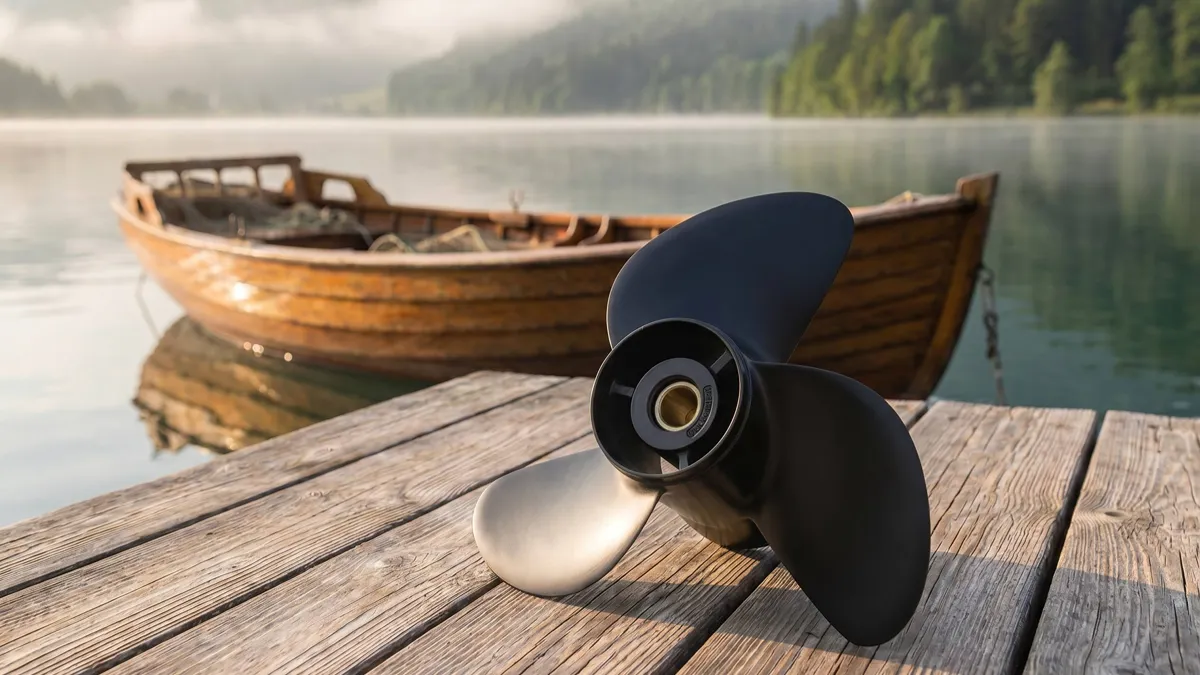
Most outboard propellers include important information such as diameter, pas, rotation direction, hub type, and manufacturer codes. While different brands may use slightly different marking formats, the basic sizing system is very similar across the industry.
Dans ce guide, you’ll learn what each number means, how to identify the correct propeller for your boat, and when changing propeller size makes sense.
Where Can You Find the Size Marks on an Outboard Propeller?
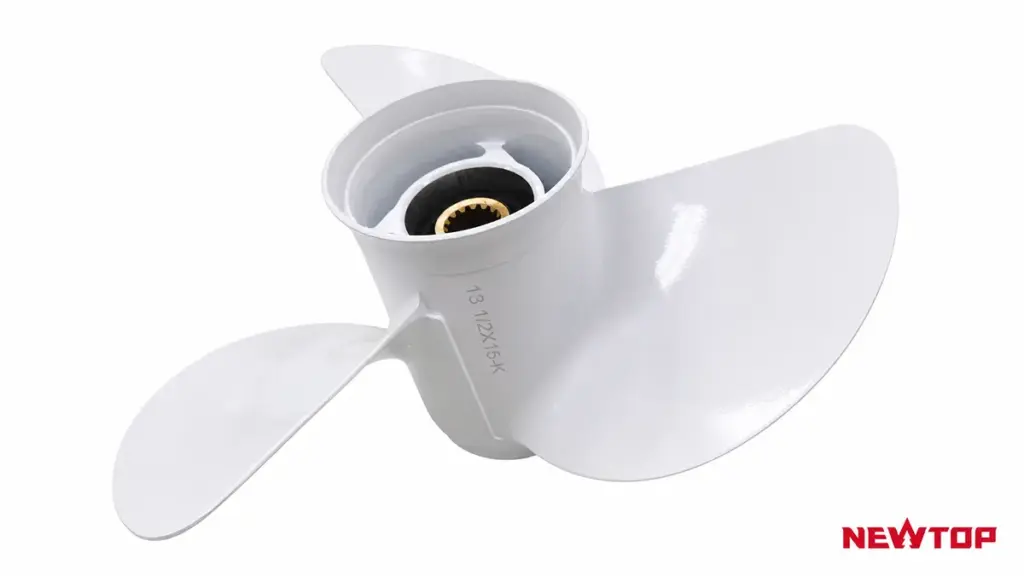
Hélice size markings, indicating diameter and pitch, are typically stamped directly onto the outer hub, blade roots, or the rear face near the mounting nut.
Common Locations on the Hub and Blades
Outboard motor manufacturers do not follow a single universal standard for placing identification numbers, but they generally stick to a few accessible spots. You will usually spot these physical engravings pressed right into the metal housing.
- Outer hub surface: Stamped or engraved directly onto the outer surface of the propeller hub cylinder.
- Blade roots: Located at the base of a blade where it physically connects to the center hub.
- Hub faces: Positioned on the front or rear face of the hub assembly where the propeller meets the prop nut.
Decoding the Size Format
Once you locate the stamp, you need to read the numbers correctly. The marine industry relies on a specific numeric sequence to communicate the physical dimensions and capabilities of the equipment.
- Diamètre x Pas: The numbers are typically displayed in this exact order. A stamp reading “10 x 7” indicates a 10-inch diameter and a 7-inch pitch.
- Supplemental codes: Additional letters or numbers often follow the primary size to indicate blade type, rotation direction (such as ‘R’ for right-hand), or internal manufacturer-specific codes.
- Technical designations: These markings represent exact technical size measurements, not arbitrary brand model names.
How to Reveal Hard-to-See Markings
Older props or those used in harsh saltwater environments often have obscured numbers. A quick visual check might fail to confirm the exact specifications without a bit of surface prep.
- Clean the surface: Thoroughly clean the hub area to remove salt buildup, marine grime, heavy oxidation, or old layers of anti-fouling paint.
- Use angled light: Carefully rotate the propeller and inspect the blade roots and cylinder collar under direct light to catch the shadows of shallow engravings.
- Check documentation: Consult the original packaging, purchase receipts, or manufacturer catalogs using the part number if the physical size stamps are completely worn away.
Why Knowing Your Propeller Size Matters
Operating a boat with an incorrect propeller size causes poor performance and accelerates engine wear. Getting these two specific numbers right dictates exactly how your outboard interacts with the water.
- Power transfer: Diameter and pitch determine how effectively the propeller matches the raw engine power to the physical weight of your boat.
- RPM control: The pitch rating directly influences the engine’s ability to operate within its recommended wide-open throttle (WOT) RPM capabilities.
- Performance tuning: A smaller pitch reduces engine load and allows it to reach higher RPM for faster acceleration, while a larger pitch drops overall RPM and favors top-end speed.
How to Read Diameter and Pitch Markings
The first number on a propeller marking is always diameter, dictating thrust. The second is pitch, controlling your outboard’s RPM and top speed. Mismatching these specifications damages engines. Marking Position Measurement Primary Function First Number (par ex., 10) Diamètre (Pouces) Dictates thrust, load-carrying capacity, and water resistance. Second Number (par ex., 7) Pas (Pouces) Determines top speed, accélération, and engine WOT RPM.
Deciphering the Standard Marking Format
Manufacturers typically stamp propeller markings directly on the hub or near the blade root. Finding these digits is the first step in replacing or upgrading your boat’s hardware. You will see standard industry codes like 10 x 7 ou 14 x 19. These numbers represent two specific measurements that define the propeller’s geometry. The first number always defines the overall diameter in inches, while the second number always defines the theoretical pitch in inches.
Interpreting the First Number: Diamètre
Diameter signifies the total width of the circle created by the blade tips during a full rotation. It determines how much water the propeller actually sweeps. A larger diameter increases the blade surface area, generating stronger thrust to move heavier boats and heavy cargo loads effectively. On the other end of the spectrum, a smaller diameter creates less drag in the water, suiting lighter hulls built specifically for higher top speeds.
Interpreting the Second Number: Pas
Pitch measures the theoretical forward distance the propeller travels through the water in one full 360-degree rotation. Think of pitch as the gearing system for your outboard. Lower pitch numbers act like a low gear, offering better acceleration, quicker planing, and strong low-speed control. Higher pitch numbers function like a high gear, pushing the boat farther forward per revolution to achieve greater top speeds.
Applying Markings to Engine Performance
Your selected pitch directly controls the outboard motor’s wide-open throttle (WOT) RPM. Dialing in the correct pitch ensures the engine runs efficiently without suffering mechanical strain.
- RPM Calibration: Adjusting the pitch by one inch typically changes the engine speed by roughly 200 RPM.
- Under-Revving Fix: Selecting a lower pitch helps an overloaded engine reach its recommended operating RPM without lugging.
- Over-Revving Fix: Switching to a higher pitch prevents the engine from exceeding its maximum recommended RPM limits under light loads.
Maximize ROI With Professional-Grade Garden Machinery
What Do Other Numbers and Letters on a Propeller Mean?
Beyond basic size, extra letters and digits identify blade count, hub dimensions, and specific manufacturer series codes required to source exact replacement parts.
Diamètre, Pas, and the ‘X’ Separator
Most marine propellers follow a universal naming convention. The core specification always appears as a simple sequence stamped onto the casting.
- Diamètre: The first number in a standard sequence denotes the propeller’s overall diameter, measuring the full width of the blade sweep.
- Pas: The second number represents the pitch, indicating the theoretical forward travel distance per single revolution.
- The ‘X’: This character functions simply as a ‘by’ separator, dividing the diameter and pitch measurements.
Series Letters and Additional Digits
Manufacturers rarely stop at just diameter and pitch. You will frequently find extra alphanumeric codes that define the physical geometry and compatibility of the unit.
- Series Letters: Letters such as J, K, or L signify the specific design, série, or type of the propeller within a brand’s lineup.
- Extra Digits: These trailing numbers often represent the total number of blades or specify the exact bore and hub size for mounting.
- Internal Codes: Certain short number combinations serve purely as internal manufacturer codes for catalog referencing.
Where to Locate Propeller Markings
Finding these specifications requires knowing exactly where brands stamp their hardware. Dirt, oxidation, or heavy marine growth can easily obscure these details.
- Blade Roots: Manufacturers often stamp the measurements directly at the root of a blade or deep between the blades.
- Central Hub: The outer surface of the central hub barrel is a common location for visible specification codes.
- Assembly Faces: Some brands engrave these critical details on the front or rear face of the center assembly, which may require removing the propeller nut to read clearly.
How Do Propeller Size Marks Differ Between Major Brands?
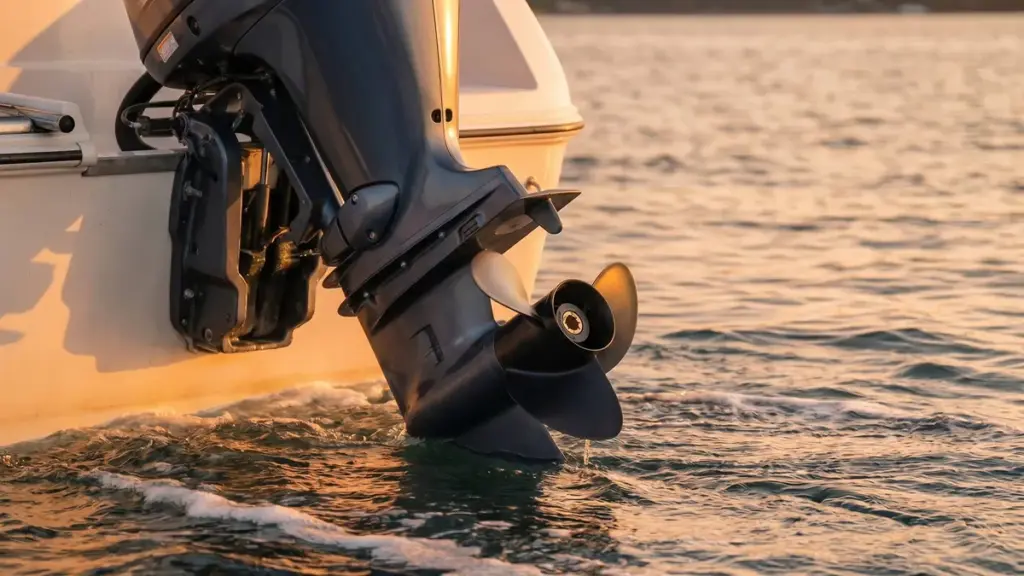
Every major outboard brand follows the standard diameter-by-pitch format, but proprietary suffixes, rotation letters, and hub codes create distinct marking styles you must decode before swapping propellers.
The Universal Baseline: Diameter and Pitch
Outboard manufacturers agree on one core sizing convention across the industry. The first number stamped on a propeller always represents the diameter, while the second number represents the pitch. A base stamp of 10 x 7 indicates a 10-inch diameter and a 7-inch pitch, regardless of the manufacturer.
Brand-Specific Suffixes and Extra Codes
While the base dimensions are universal, brands add unique suffix codes to identify specific propeller features. You have to read past the first two numbers to understand the exact design.
- Rotation: Letters typically denote the turn direction, avec “R.” for standard right-hand (clockwise) et “L” for left-hand (counterclockwise).
- Blade Count: Trailing numbers often indicate the blade setup, such as a 3 ou 4 for three-blade or four-blade designs.
- Model Codes: Internal model codes or specific hub series identifiers are frequently appended to the size block.
Marking Examples from Top Manufacturers
Each manufacturer applies these codes differently on the hub or blade root. Knowing what to expect from specific brands speeds up the identification process.
- Yamaha: Generally uses a straightforward layout, printing the size simply as 14 x 19.
- Mercury: Often includes a “P.” to denote pitch alongside general marine props, formatted as 14.6 x 17P.
- Suzuki: Frequently groups the size, rotation, and blade count together, resulting in detailed stamps like 14 x 19 R. 3.
What to Verify When Swapping Brands
Relying solely on the base diameter and pitch numbers is insufficient for an exact brand-to-brand replacement. Even with identical size stamps, propellers from different manufacturers deliver varying performance. This happens because competing brands use distinct blade shapes, rake angles, cupping, and material compositions to achieve their thrust profiles.
Always confirm rotation, nombre de lames, and hub system compatibility before installing a different brand’s propeller. Matching the spline count and ensuring the thrust washer seats properly prevents gearcase damage and keeps the outboard running safely.
How Can You Verify the Correct Propeller Size for Your Boat?
To verify your propeller size, test your wide-open throttle (WOT) RPM under a normal load. The correct pitch keeps your engine within the manufacturer’s recommended RPM range.
Identify Current Prop Specs and Target WOT RPM
Before hitting the water, establish a baseline for your boat and engine. You need to know what propeller you currently run and the exact performance window the outboard requires.
- Check the propeller hub: Inspect the outer surface or the base of the blades for stamped diameter and pitch markings to confirm your current sizing.
- Find the WOT RPM target: Consult your outboard owner’s manual to identify the manufacturer’s recommended Wide-Open Throttle (WOT) Plage de régime.
- Establish a baseline: Use manufacturer prop selectors or online calculators factoring in engine horsepower and typical operating weight to set your starting point.
Perform an On-Water WOT Test Under Normal Load
The real proof of propeller sizing happens on the water. A structured wide-open throttle test provides the exact engine RPM data needed to determine if your pitch is accurate.
- Simulate real-world conditions: Load the boat with the typical number of passengers, engrenage, and fuel you carry during regular operation.
- Start the run: Trim the engine fully down in open water and advance the throttle to maximum capacity.
- Optimize and record: Slowly trim up to the optimal running angle, return to neutral trim, and record the highest steady RPM and GPS speed achieved.
Compare Test Results Against Manufacturer Specifications
Once you record your GPS speed and tachometer readings, cross-reference them with your engine manual. The resulting RPM tells you exactly how the propeller loads the engine.
- Optimal match: If the measured WOT RPM falls within the manufacturer’s specified range, the current propeller size is correct for your exact rig and typical load.
- Engine over-revving: If the engine spins past the maximum RPM limit, it lacks resistance. The propeller pitch is likely too low.
- Engine under-revving: If the engine struggles and fails to reach the minimum recommended RPM, the load is too heavy. The propeller pitch or diameter is too high.
Adjust Pitch to Correct Under-Revving or Over-Revving
If your test results fall outside the acceptable range, you must change the propeller pitch. Pitch directly dictates the mechanical load on the engine, acting like the gearing in a transmission.
- The standard rule: A 2-inch change in pitch alters your WOT RPM by approximately 300 à 400 RPM.
- Dropping high RPMs: Move to a higher-pitch propeller to lower excessively high RPMs. This prevents mechanical strain and keeps the engine off the rev limiter.
- Raising low RPMs: Switch to a lower-pitch propeller to increase RPMs, improve acceleration, and prevent the engine from lugging under heavy loads.
Common Mistakes When Reading Propeller Size Marks
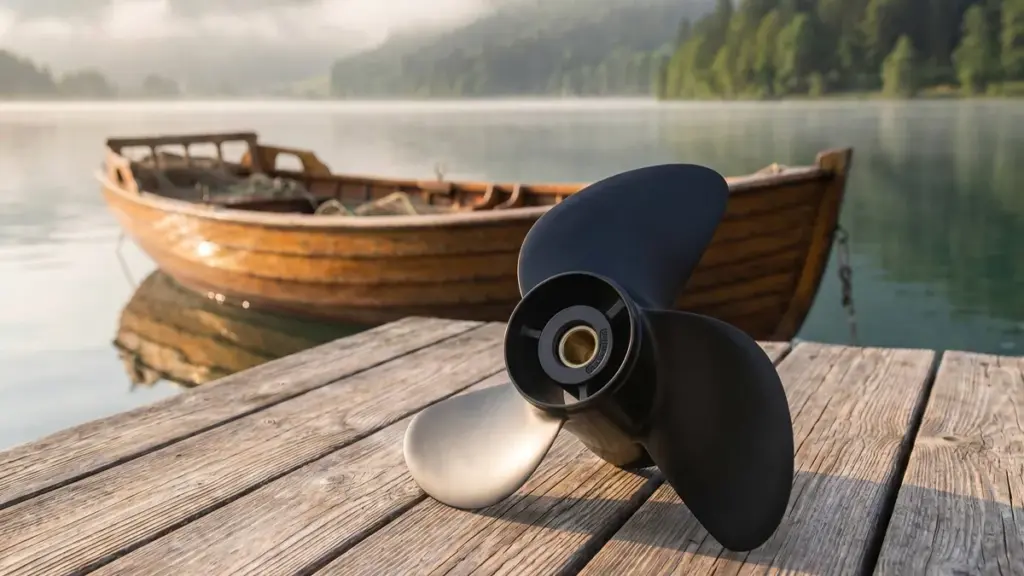
Misreading a propeller mark leads to poor performance, engine strain, and wasted money. Always read diameter first, pitch second, and factor in real-world boat dynamics.
Reversing Diameter and Pitch Numbers
Flipping these numbers is the fastest way to buy the wrong prop. The industry standard always lists diameter first, followed by pitch. When you mix them up, you completely alter how the prop interacts with the water.
- Reading backward: Assuming the first number is pitch instead of diameter.
- Interchanging specs: Failing to recognize that diameter and pitch affect performance differently and are not interchangeable.
- Size misinterpretation: Misinterpreting a 10×7 mark as a 7-inch diameter rather than a 10-inch diameter.
Misinterpreting Rotation and Blade Count
The primary numbers dictate the size, but the trailing letters control fitment and operation. Ignoring these extra characters leads to physical mismatches or dangerous handling on the water.
- Overlooking rotation marks: Missing the R (right-hand) or L (left-hand) indicators, which is critical for single and dual-engine setups.
- Confusing blade count: Assuming the trailing number (comme 3 ou 4) adds another size dimension rather than just counting the blades.
- Installing incorrectly: Mounting a prop with the wrong rotation that physically fits the shaft but runs incorrectly under power.
Equating Theoretical Pitch to Actual Speed
Pitch measures the theoretical distance a propeller moves forward in one revolution through a solid medium. Water is not solid. Expecting a direct conversion from pitch to actual boat speed ignores the reality of marine physics.
- Ignoring water slip: Assuming the stamped pitch equals exact forward travel without factoring in the inevitable slip loss.
- Forgetting physical variables: Overlooking how hull shape, boat weight, and load change the real-world performance of the propeller.
- Unrealistic expectations: Expecting two entirely different boats with the same 10×7 prop to achieve identical speeds.
Ignoring Engine Limits and Boat Usage
You do not pick a propeller based entirely on the boat hull. You pick it based on what the engine can safely handle. The propeller must allow the engine to operate within its defined mechanical limits.
- Skipping WOT checks: Selecting a propeller without checking the engine’s recommended wide-open-throttle (WOT) rpm range.
- Forcing extreme rpms: Choosing too much pitch causing the engine to under-rev, or too little pitch causing it to over-rev.
- Mismatched application: Failing to match the pitch profile to the boat’s primary purpose, such as prioritizing heavy-load acceleration versus top speed.
When Should You Replace Your Propeller with the Same or a Different Size?
Replace with the identical size if your engine hits the correct WOT RPM. Change pitch or diameter only to fix RPM limits, boost hole shot, or increase cruising speed.
Replacing with the Same Size: Wear, Dommage, and Material Upgrades
Stick with the same diameter and pitch if your engine currently operates within the manufacturer’s recommended wide-open throttle (WOT) Plage de régime. The baseline size works. Swap out identical sizes to correct bent blades, chipped edges, or a slipping hub that causes vibration and kills thrust. If you run in abrasive or sandy water, upgrade from aluminum to stainless steel in the exact same size. This improves durability and rigidity while keeping your RPMs consistent.
Adjusting Propeller Pitch for RPM Correction
Pitch acts like gearing. Move to a higher pitch if the engine over-revs past the upper limit. This added load lowers the RPM and improves cruising speed on light boats. Drop to a lower pitch if the engine under-revs and struggles to build speed. Reducing the pitch frees up the engine to reach higher RPMs, delivering a stronger hole shot and aggressive heavy-load acceleration. Remember that changing the pitch by just 1 à 2 inches noticeably shifts engine loading and RPM, even on small outboards.
Changing Propeller Diameter for Thrust or Speed
Diameter dictates total blade surface area. Increase the diameter to gain more blade area for low-speed thrust. This extra grip helps push heavily loaded dinghies and gives you tight control during precise dock maneuvering. Inversement, reduce the diameter to minimize drag on high-speed, lightweight hulls. Whenever you upsize the diameter, you must verify your physical clearance. Maintain a strict minimum clearance of 5/8 à 3/4 inches between the blade tips and the outboard lower unit to prevent contact under load.
Practical Steps to Evaluate Your Replacement Needs
Do not guess your propeller size based on top speed alone. Perform a sea trial at WOT with your typical everyday load, including passengers, engrenage, et du carburant, to establish a realistic baseline RPM. Compare your recorded baseline RPM directly against the engine manual’s WOT specification to identify over-revving or under-revving conditions. Once you have the data, select a replacement based on your primary objective: drop to a lower pitch for towing and acceleration, or step up to a higher pitch for fuel-efficient cruising.
OEM Outboard Motor Propellers and Replacement Solutions from NEWTOP
As an experienced outboard motor propeller manufacturer, NOUVEAUTOP supplies OEM and aftermarket propellers for a wide range of outboard engines used in recreational, commercial, et applications marines professionnelles.
Our product range includes:
- Aluminum outboard propellers
- Stainless steel outboard propellers
- Three-blade and four-blade designs
- OEM replacement propellers
- Custom propeller development for private-label brands
Every propeller is manufactured with strict dimensional control to ensure accurate diameter, pas, blade geometry, and dynamic balance. This helps deliver smooth operation, efficient power transfer, and reliable performance on the water.
As a trusted outboard motor propeller factory, NEWTOP also provides comprehensive OEM and ODM services for global distributors, grossistes, and marine equipment brands. From mold development and logo customization to packaging and quality inspection, our production process is designed to support consistent quality across large-volume orders.
Whether you need a direct replacement for popular outboard brands or a customized propeller solution for your own product line, our engineering and manufacturing teams can help you identify the right specifications for your market.
Conclusion
Understanding outboard motor propeller size marks makes selecting the correct replacement much easier. In most cases, le first number indicates diameter, tandis que le second number indicates pitch, with additional letters identifying rotation direction, matériel, or manufacturer-specific information.
When evaluating a propeller, don’t rely solely on the stamped numbers. Always consider your engine’s recommended RPM range, the boat’s weight, conditions de fonctionnement, et l'utilisation prévue. A properly matched propeller improves acceleration, efficacité énergétique, engine longevity, and overall handling.
If you’re sourcing reliable OEM replacement propellers or looking for an experienced outboard motor propeller manufacturer, NEWTOP offers precision-engineered solutions backed by advanced manufacturing capabilities and extensive OEM experience. Our team can help you select or develop propellers that deliver dependable performance across a wide range of outboard applications.
Foire aux questions
What does 10×7 mean on an outboard propeller?
These numbers indicate diameter and pitch measured in inches. The first number (10) represents the diameter, which is the total width of the circle the blades sweep. The second number (7) is the pitch, indicating the theoretical forward distance the propeller moves in one full revolution. A 10×7 size fits small outboards where strong thrust and low-speed control matter more than top speed.
How do I know if my propeller size is correct?
A correctly sized propeller allows your engine to consistently reach its manufacturer-recommended wide-open throttle (WOT) RPM range under a normal load. The boat will accelerate smoothly, get on plane without excessive delay, and maintain cruising speed efficiently without over-revving or lugging the motor.
Puis-je changer le pas de l'hélice sans changer le diamètre?
Oui. Swapping to a propeller with the same diameter but a different pitch (like moving from a 10×7 to a 10×9) is the standard way to adjust engine RPM and boat performance. Marine shops can also re-pitch existing aluminum or stainless steel props slightly to fine-tune your setup without altering clearance.
What happens if the propeller pitch is too high or too low?
Si le ton est trop élevé, the engine will struggle to reach its recommended RPM range, causing sluggish acceleration and increased mechanical strain. If the pitch is too low, the engine will likely over-rev past its maximum limit, which risks internal damage, wastes fuel, and reduces your top-end speed.
Do all outboard brands use the exact same size marking system?
Major outboard manufacturers all use the core ‘diameter x pitch’ measurement in inches, but their exact stamping methods vary. Brands place the numbers in different spots, such as inside the hub or on the barrel. They also add unique letters and codes to indicate blade count, rotation direction, and specific design series.
How do I read old or worn propeller size markings?
Start by cleaning the hub and blade root areas to reveal any stamped numbers. Most old props still use the standard diameter x pitch format (comme 11.25 x 13). If you only find a single number with a letter (like 17P), it usually represents the pitch. For complex or partial codes, check the manufacturer’s parts catalog or have a marine shop measure the prop directly.
Moteurs hors-bord sont largement utilisés dans les petits bateaux de pêche, navires à passagers, bateaux de travail, et bateaux de plaisance dans le monde. Lors de la sélection d'un moteur hors-bord, une question continue de dominer les décisions d'achat:
Si vous choisissez un moteur hors-bord 2 temps ou 4 temps?
La réponse dépend de votre marché, les attentes des clients, environnement opérationnel, disponibilité du carburant, capacités de maintenance, et budget. Alors que les moteurs hors-bord 4 temps ont gagné en popularité dans de nombreuses régions développées, 2-les moteurs hors-bord à course restent très compétitifs dans la pêche commerciale, transport, et applications en zones éloignées.
Ce guide compare les deux types de moteurs hors-bord à travers les performances, efficacité énergétique, exigences d'entretien, frais de fonctionnement, et l'adéquation au marché pour aider les distributeurs, concessionnaires, et les exploitants de flotte prennent des décisions éclairées.
Différence entre les moteurs hors-bord 2 temps et 4 temps
2-les courses offrent un meilleur rapport puissance/poids et une accélération plus rapide. 4-les coups sont plus silencieux, plus économe en carburant, et ont moins d'émissions.
Un hors-bord 2 temps effectue un cycle de puissance en seulement deux mouvements de piston (un tour de vilebrequin), alors qu'un hors-bord 4 temps nécessite quatre mouvements de piston (deux tours de vilebrequin).
| Fonctionnalité | 2-Hors-bord | 4-Hors-bord |
|---|---|---|
| Cycle de combustion | 2 coups | 4 coups |
| Fréquence de course de puissance | Chaque révolution | Tous les deux tours |
| Poids du moteur | Plus léger | Plus lourd |
| Complexité mécanique | Simple | Plus complexe |
| Lubrification | Mélange fioul | Système d'huile séparé |
| Difficulté d'entretien | Plus facile | Plus impliqué |
| Efficacité énergétique | Modéré | Plus haut |
| Émissions | Plus haut | Inférieur |
Cycle de combustion et conception mécanique
La différence fondamentale réside dans la façon dont ils créent le pouvoir. Un moteur à 2 temps effectue un cycle de puissance complet en seulement deux coups de piston, tir à chaque tour de vilebrequin. C'est une manière très directe de générer de la force. Un 4 temps a besoin de quatre coups de piston – admission, compression, pouvoir, et d'échappement, ce qui signifie qu'il ne se déclenche qu'à tous les deux tours du vilebrequin.
Cette différence fondamentale dicte leur construction. La conception 2 temps est plus simple, utiliser des ports dans les parois des cylindres pour gérer l'admission et l'échappement du carburant. En revanche, un moteur 4 temps nécessite un système de soupapes beaucoup plus complexe, complet avec vannes, arbres à cames, et systèmes de chronométrage, semblable à ce que l'on trouve dans une voiture.
Livraison de puissance, Poids, et performances
Parce qu'ils tirent deux fois plus souvent et comportent moins de pièces, 2-les hors-bord à course ont un rapport puissance/poids beaucoup plus élevé. Cela se traduit par une accélération explosive et un “coup de trou,” faire décoller le bateau plus rapidement. C'est un énorme avantage pour certaines applications.
Les composants supplémentaires rendent les hors-bord 4 temps beaucoup plus lourds. Sur un petit bateau, ce poids supplémentaire sur le tableau arrière peut affecter négativement l'équilibre, augmenter le tirage, et rendre plus difficile l'accès à l'avion. La puissance délivrée par un 4 temps est beaucoup plus douce et linéaire., ce qui est souvent préféré pour les applications à vitesse constante comme la pêche à la traîne ou la croisière longue distance où l'accélération brute n'est pas la priorité.
Efficacité énergétique et émissions
Les moteurs hors-bord à quatre temps sont intrinsèquement plus efficaces. Leur cycle distinct à quatre temps garantit une combustion plus complète du carburant., ce qui entraîne une meilleure économie de carburant et des émissions nettement inférieures. Ils sont la technologie la plus propre, haut la main.
Les 2 temps traditionnels fonctionnent en mélangeant l'huile directement avec l'essence pour la lubrification. Durant leur cycle rapide, une partie de ce mélange de carburant et d'huile non brûlé peut s'échapper avec l'échappement, ce qui augmente à la fois la consommation de carburant et la pollution. Il est important de reconnaître que l’injection directe moderne (DEPUIS) 2-les moteurs à course se sont considérablement améliorés sur ce front, se rapprocher beaucoup plus des niveaux d'efficacité et de propreté des 4 temps.
Entretien, Bruit, et expérience d'exploitation
Il y a une grande différence dans l'expérience sur l'eau. Les moteurs à quatre temps fonctionnent beaucoup plus silencieusement et produisent beaucoup moins de vibrations. Cela fait une énorme différence en termes de confort, surtout pendant les longues journées sur l'eau. L'entretien est similaire à une voiture, nécessitant des changements d'huile et de filtre programmés.
Les deux temps sont plus bruyants et ont la réputation d'être un peu plus rudes. Leur programme d'entretien consiste à ajouter continuellement de l'huile 2 temps dans un réservoir ou à la pré-mélanger avec le carburant.. Bien qu'il s'agisse d'une tâche continue, les moteurs ont moins de pièces mobiles, ce qui peut simplifier certains types de réparations et réduire les points de défaillance potentiels.
Meilleures applications et position sur le marché
Les hors-bord à quatre temps ont conquis la majorité du marché. Ils sont la norme pour les bateaux de pêche hauturière, croiseurs familiaux, et les navires plus grands dont la gamme de carburant, fonctionnement silencieux, et les faibles émissions sont des priorités absolues. Les flottes de location et les opérateurs commerciaux s'appuient également fortement sur les 4 temps pour leur fiabilité et leurs coûts d'exploitation réduits..
Toujours, 2-Strokes conserve une position forte dans des niches performantes. Vous les trouverez sur les bass boat, skiffs plats, et autres poids légers, des coques rapides où leur rapport puissance/poids supérieur et leur accélération instantanée sont des avantages clés. Des réglementations environnementales plus strictes continuent de stimuler le marché, privilégiant soit la technologie 4 temps, soit la plus récente, modèles 2 temps à injection directe plus propres.
Rapport puissance/poids: Pourquoi les 2 temps gagnent toujours en accélération
Un 2 temps, c'est plus simple, la conception plus légère offre un rapport puissance/poids supérieur, offrant une accélération plus rapide et un tir de trou plus rapide que les hors-bord 4 temps plus lourds.
Comment la conception du moteur crée un rapport puissance/poids plus élevé
Un moteur 2 temps achève son cycle de puissance en seulement deux coups de piston. Cette conception est intrinsèquement plus simple et nécessite beaucoup moins de pièces mobiles qu'un moteur 4 temps..
Moins de composants signifient que le moteur est plus compact et nettement plus léger pour une puissance donnée.. Avec moins de masse moteur à transporter, une plus grande partie de la poussée du bateau sert directement au déplacement de la coque, pas seulement transporter le hors-bord.
L'impact sur le tir du trou et la réponse de l'accélérateur
Cet avantage en termes de rapport puissance/poids se traduit directement par un tir de trou plus rapide : la première accélération du bateau à partir d'un arrêt mort.. Les bateaux équipés de moteurs hors-bord 2 temps montent généralement plus rapidement, ce qui est essentiel pour des activités comme le ski nautique.
Les utilisateurs bénéficient également d'une, réponse rapide de l'accélérateur. Ceci est particulièrement visible dans la plage de régime faible à moyen, où les ajustements rapides sont courants..
Comment les moteurs 4 temps se comparent en termes de poids
Les hors-bord à quatre temps sont plus lourds de par leur conception. Ils ont besoin d'un système de soupapes complet avec soupapes et arbres à cames., plus un carter d'huile dédié, qui ajoutent tous un poids important. Le cycle en quatre étapes : admission, compression, pouvoir, échappement : nécessite une mécanique plus complexe et davantage de composants physiques.
Tout ce poids supplémentaire nuit à leur rapport puissance/poids lorsqu'il est confronté à un 2 temps de même puissance nominale..
Quand un meilleur rapport puissance/poids est le plus important
Les avantages d'un rapport puissance/poids élevé sont plus évidents dans les applications spécifiques où l'accélération et le poids minimal sont essentiels..
- Bateaux performants: Pour bateaux remorqueurs de course ou de ski nautique, une accélération rapide n’est pas un luxe, c’est tout l’intérêt.
- Coques légères: Petits bateaux de pêche, skiffs, et les offres sont très sensibles au poids du moteur. Moins de poids sur le tableau arrière signifie un meilleur équilibre et une meilleure maniabilité.
- Opération en eaux peu profondes: Quiconque court dans des eaux maigres doit monter à bord rapidement avec un minimum d'effort pour éviter de s'enfoncer.. Le punch rapide d'un 2 temps est ici un avantage majeur.
Moteur hors-bord T40G
Hors-bord 2 temps fiable, idéal pour les petits bateaux de pêche et les bateaux de travail. Léger mais puissant 40 Moteur HP.
Moteur hors-bord T40J
Moteur 2 temps durable conçu pour les applications intensives. 40 Performances HP avec maintenance facile dans les zones reculées.
Moteur hors-bord T40X
Hors-bord compact 2 temps offrant une fiabilité 40 HP. Parfait pour les petits bateaux nécessitant à la fois puissance et portabilité.
Comparaison de la consommation de carburant: Les 4 temps valent-ils vraiment la prime?
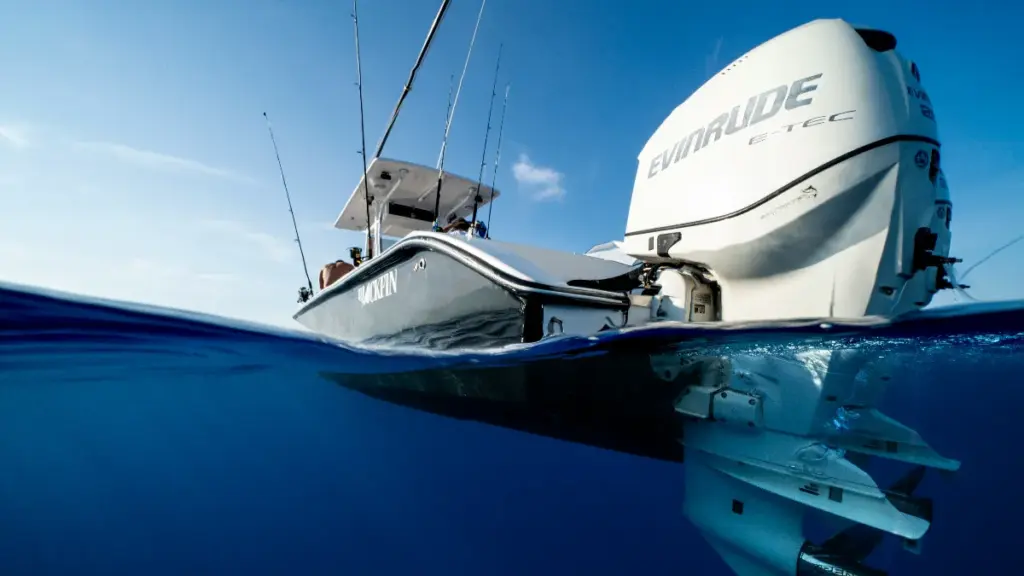
Les DI 2 temps et 4 temps modernes sont étonnamment proches en termes de consommation de carburant. Les véritables économies proviennent de la mise à niveau de n'importe quel vieux moteur à carburateur vers un moteur moderne., quel que soit le type.
Efficacité globale: Les moteurs modernes sont plus proches que vous ne le pensez
Le vieux débat sur les 2 temps assoiffés est pour la plupart mort. L’injection directe d’aujourd’hui (DEPUIS) 2-Les 4 temps et les 4 temps modernes offrent une économie de carburant globale très similaire pour la même puissance.. Les deux technologies concernent 35% plus économe en carburant que les 2 temps à carburateur qu'ils ont remplacés. Lorsque vous regardez la consommation de carburant sur toute la plage de régime, la différence entre les deux types modernes est souvent trop faible pour désigner un gagnant clair basé uniquement sur l'efficacité.
Comment votre style de navigation affecte la consommation de carburant
L'avance d'un moteur dépend souvent de la manière dont vous utilisez l'accélérateur.. À très bas régime, comme sortir de la marina au ralenti ou pêcher lentement à la traîne, un DI 2 temps peut en fait être légèrement plus efficace. Sa capacité à mesurer le carburant avec une telle précision à faible charge lui confère un petit avantage..
Mais dans le milieu de gamme, entre 2,500 et 5,000 RPM : les 4 temps présentent souvent un réel avantage en matière d'économie de carburant. C'est le lieu de croisière idéal où la plupart des bateaux passent leur temps., c’est donc là que l’efficacité du 4 temps se manifeste vraiment. Au sommet, tourner presque à plein régime, les tables peuvent à nouveau s'inverser. Un DI 2 temps peut souvent égaler ou même battre un 4 temps en termes de consommation de carburant tout en offrant plus de vitesse de pointe..
Les vraies économies de carburant: Mise à niveau à partir des moteurs hérités
L’augmentation la plus significative que vous constaterez en matière d’économie de carburant vient du remplacement des anciens modèles., carburateur 2 temps. Peu importe que vous le remplaciez par un DI 2 temps ou un 4 temps moderne.; l'amélioration sera énorme. Une voiture à carburateur peut consommer près du double du carburant d'un moteur moderne en faisant le même travail.. La réputation de consommation de carburant du 4 temps s'est construite sur sa comparaison avec ces anciens moteurs., pas le DI 2 temps efficace d'aujourd'hui.
Calculer le retour sur investissement sur les seules économies de carburant
Donc, les petites économies de carburant d'un 4 temps paient-elles son coût initial plus élevé? Pour un plaisancier occasionnel avec peu d'heures annuelles, la réponse est presque toujours non. Le calcul ne fonctionne tout simplement pas. Mais pour un guide commercial ou un capitaine de charter qui passe beaucoup d'heures, l'efficacité de milieu de gamme du 4 temps peut entraîner des milliers d'économies annuelles, justifiant facilement la prime initiale. La décision dépend vraiment de votre utilisation. Si vous passez toute la journée à naviguer à vitesse constante, l’économie du 4 temps est un argument de poids. Pour usage mixte ou applications performantes, la différence est souvent un lavage.
Maintenance et réparabilité sur les marchés éloignés
Sur les marchés éloignés, 2-strokes are typically easier to maintain and repair in the field. 4-strokes are more sensitive and often depend on service networks, increasing downtime risk.
2-Stroke Simplicity and Field Service Advantages
The core advantage of a 2-stroke in a remote setting is its simple mechanical design. With fewer moving parts, things are just less likely to go wrong, and when they do, repairs in the field are far more practical.
- Routine servicing is minimal, often just spark plugs and gearbox oil changes at very long intervals.
- They are generally more tolerant of variable or poor-quality fuel, which is a constant challenge in isolated locations.
- An operator can usually service the engine with a basic toolkit, which cuts the reliance on specialized technicians.
4-Stroke Maintenance Requirements and Sensitivities
Four-strokes demand a much stricter preventive maintenance schedule. Missing a service interval can have a bigger impact on reliability, which is a serious risk when you’re hours away from help.
- They require regular oil changes, filter checks, and sometimes valve adjustments.
- The fuel system is highly sensitive to clean, fresh fuel. Poor fuel management is a primary cause of failure.
- Cooling systems need consistent upkeep, from water pump impellers to thermostats.
- They have a greater reliance on authorized service centers and specific parts that are rarely available in remote areas.
Direct Comparison of Key Repairability Factors
When you put them side-by-side, the operational differences in a low-support environment become clear.
- Service Complexity: 2-strokes have far fewer scheduled service items compared to the more intensive needs of a 4-stroke.
- Parts Dependence: A 4-stroke requires a higher inventory of specialized parts just for routine maintenance.
- Field Practicality: The simple design of a 2-stroke makes it much better suited for on-the-spot repairs where resources are limited.
- System Sensitivity: 4-stroke fuel and cooling systems are less forgiving of neglect or harsh operating conditions.
Cost and Downtime Impact
The financial penalty for a complex engine in a remote market goes beyond the simple cost of parts. Downtime is the real killer.
- Maintenance costs for a 2-stroke can be significantly lower, particularly in the first few years of operation.
- Engine downtime is extremely disruptive. Transporting parts and technicians to isolated areas is slow and expensive.
- The simpler service schedule of a 2-stroke means there’s less risk of a missed maintenance item causing a critical failure.
- Fewer required service visits directly translate to lower logistical costs and more operational uptime for the vessel.
Bruit, Émissions, and Regulatory Considerations
4-stroke outboards are quieter and cleaner, giving them a significant edge in regulated waterways and for any buyer who prioritizes user comfort over raw performance.
Noise Levels and User Experience
Four-stroke outboards generally run much quieter and with less vibration. This makes them the clear choice for recreational boating and fishing, where a peaceful experience matters. Older carbureted 2-stroke engines are famous for their loud, high-pitched whine and harsh exhaust. For anyone operating in noise-sensitive areas like residential lakes or crowded marinas, the quieter operation of a 4-stroke is a deciding factor.
Exhaust Emissions and Environmental Impact
The design of a 4-stroke engine leads to a more complete and efficient fuel burn. The result is lower emissions of hydrocarbons and less visible smoke. Traditional carbureted 2-strokes are inefficient by comparison, releasing a noticeable amount of unburned fuel and oil directly into the air and water. While modern direct-injection 2-strokes are a massive improvement over their predecessors, 4-strokes usually maintain an advantage in lower overall emissions.
Regulatory Compliance and Waterway Access
Once the EPA and California Air Resources Board (CARB) established stricter regulations, the market quickly moved away from older, high-emission 2-strokes. It’s not just about federal rules. Many specific lakes, reservoirs, and protected waterways have local rules that ban or severely limit the use of these older carbureted engines. Four-stroke engines reliably meet current emissions standards and are positioned to meet future ones, ensuring you have broader access to regulated bodies of water without issue.
Coût total de possession: Upfront Price vs Long-Term Costs
The sticker price is just the beginning. Real ownership cost includes fuel, huile, entretien, and resale value, where a pricier four-stroke often wins long-term.
| Cost Factor | 2-Accident vasculaire cérébral | 4-Accident vasculaire cérébral |
|---|---|---|
| Initial Purchase Price | Inférieur | Plus haut |
| Efficacité énergétique | Inférieur | Plus haut |
| Maintenance Complexity | Inférieur | Plus haut |
| Repair Costs | Inférieur | Plus haut |
| Spare Parts Cost | Inférieur | Plus haut |
| Long-Term Fuel Savings | Limited | Significant |
| Typical Lifespan | Bien | Often Longer |
Regional Recommendation: Which Engine Type for Your Market?
The right outboard choice is market-dependent. Regulations and user comfort drive developed regions to 4-strokes, while cost and field serviceability keep 2-strokes relevant elsewhere.
| Market Profile | Primary Driver | Recommended Engine |
|---|---|---|
| North America, W. Europe, Australia | Regulations & Émissions | 4-Accident vasculaire cérébral (Default), Modern DI 2-Stroke (Niche) |
| SE Asia, South Asia, Afrique | Upfront Cost & Service Simplicity | 2-Accident vasculaire cérébral (Default), 4-Accident vasculaire cérébral (Commercial) |
| High-Hour Commercial Fleets (Global) | Coût total de possession (Fuel & Longevity) | 4-Accident vasculaire cérébral |
| Specialized (Remote Islands, Urban Tourism) | Fuel Range & User Experience | 4-Accident vasculaire cérébral |
Markets Driven by Regulation and Emissions Standards
In developed economies, the choice is often made for you. Strict environmental laws and customer expectations for quiet operation have pushed the market heavily toward 4-stroke technology.
- In North America, Western Europe, and Australia, strict environmental laws make 4-stroke engines the standard choice for compliance.
- Quiet operation is a major factor in these regions, making 4-strokes preferable for recreational boating near populated areas.
- High fuel costs also make the superior efficiency of 4-stroke engines an important economic advantage.
- Modern direct-injection 2-strokes serve a niche market for high-performance applications where regulations permit.
Markets Driven by Cost and Service Simplicity
Where upfront cost and the ability to fix an engine with basic tools are the primary concerns, the simple, classic 2-stroke still holds significant ground. Access to a dealer network isn’t a given in these markets.
- For many users in Southeast Asia, South Asia, and Africa, the lower initial purchase price of a 2-stroke is the primary consideration.
- The simple mechanical design of 2-strokes allows for easier field repairs with basic tools, which is vital where professional service is scarce.
- Lighter weight makes 2-strokes suitable for small boats where the engine must be removed and carried frequently.
- 4-strokes are a strong choice for commercial operators in these regions who prioritize long-term fuel savings over initial cost.
Recommendations for High-Hour Commercial Fleets
For any business that runs boats all day, every day, the math almost always points to a 4-stroke. The initial investment is paid back through lower fuel bills and longer engine life.
- For fishing, transport, or patrol fleets that operate daily, the fuel savings from a 4-stroke can quickly offset its higher purchase price.
- 4-stroke engines typically provide a longer service life and better reliability under continuous, charges lourdes.
- Across most global markets, 4-stroke engines represent the better long-term economic choice for commercial users with access to service networks.
Recommendations for Specialized and Niche Applications
Specific operational needs can make one engine type the only practical option, regardless of other factors. User experience for tourists is very different from the needs of a lone fisherman.
- In remote island communities with very high fuel prices, the range and efficiency of 4-stroke outboards are critical.
- For urban water taxis and tourist boats, the quiet, low-smoke operation of a 4-stroke is essential for customer experience.
- Subsistence fishermen in remote locations may still find the simple maintenance and lower weight of a 2-stroke more practical for their needs.
Why Choose NEWTOP Outboard Motors?
For distributors and importers looking for dependable marine power solutions, NOUVEAUTOP provides a balanced portfolio designed for different market needs.
Key advantages include:
- Comprehensive range of 2-stroke and 4-stroke outboard motors
- Strong OEM and ODM customization capabilities
- Stable production capacity and quality control
- Global export experience across Africa, l'Amérique latine, Asie du Sud-Est, and other emerging markets
- Fiable pièces de rechange pour moteur hors-bord soutien
- Professional technical documentation and after-sales assistance
Whether your customers prioritize affordability, efficacité énergétique, durabilité, or ease of maintenance, NEWTOP can help you build a product lineup that fits your local market requirements.
Foire aux questions
Quel est le meilleur, a 2-stroke or 4-stroke outboard?
Neither is universally better; the right choice depends on your boat and how you use it. Two-stroke outboards are often preferred for their light weight, faster acceleration, and lower initial cost. Four-stroke outboards are generally the better option for fuel economy, fonctionnement silencieux, faibles émissions, and long-distance reliability.
Are 2-stroke outboards being phased out?
Older, traditional carbureted 2-stroke outboards are being phased out in many regions due to emissions regulations. Modern direct-injection (DEPUIS) 2-stroke engines that meet current environmental standards are still available and remain a competitive choice for specific applications, particularly where a high power-to-weight ratio is critical.
Which outboard motor lasts longer?
Four-stroke outboards generally have a longer service life. Their advanced lubrication systems and lower mechanical stress per revolution contribute to greater durability, especially in high-hour commercial or frequent recreational use. A properly maintained 2-stroke can be very reliable, but 4-strokes are typically engineered to achieve higher total operating hours.
Are 2-stroke outboards more powerful than 4-strokes?
A 2-stroke engine has a better power-to-weight ratio, meaning it delivers more power for its size and provides faster, ‘snappier’ accélération. This makes it feel more powerful, especially when getting a light boat on plane. A 4-stroke of the same horsepower rating will produce the same peak power but delivers it more smoothly and is better at handling sustained loads on heavier boats.
Do 4-stroke outboards use less fuel?
Oui, 4-stroke outboards are significantly more fuel-efficient than traditional 2-stroke models. Their combustion process is more complete, wasting less fuel and providing longer range from the same tank of gas. This advantage is most noticeable at trolling and cruising speeds. Modern direct-injection 2-strokes have improved efficiency, but 4-strokes still generally lead in fuel economy.
What are the main disadvantages of a 2-stroke outboard?
Compared to 4-strokes, the primary disadvantages of traditional 2-stroke outboards are higher fuel and oil consumption, louder and rougher operation, and higher emissions that can restrict their use on certain lakes and waterways. They also tend to have a shorter overall lifespan and may have a lower resale value.
