Moteurs hors-bord sont largement utilisés dans les petits bateaux de pêche, navires à passagers, bateaux de travail, et bateaux de plaisance dans le monde. Lors de la sélection d'un moteur hors-bord, une question continue de dominer les décisions d'achat:
Si vous choisissez un moteur hors-bord 2 temps ou 4 temps?
La réponse dépend de votre marché, les attentes des clients, environnement opérationnel, disponibilité du carburant, capacités de maintenance, et budget. Alors que les moteurs hors-bord 4 temps ont gagné en popularité dans de nombreuses régions développées, 2-les moteurs hors-bord à course restent très compétitifs dans la pêche commerciale, transport, et applications en zones éloignées.
Ce guide compare les deux types de moteurs hors-bord à travers les performances, efficacité énergétique, exigences d'entretien, frais de fonctionnement, et l'adéquation au marché pour aider les distributeurs, concessionnaires, et les exploitants de flotte prennent des décisions éclairées.
Différence entre les moteurs hors-bord 2 temps et 4 temps
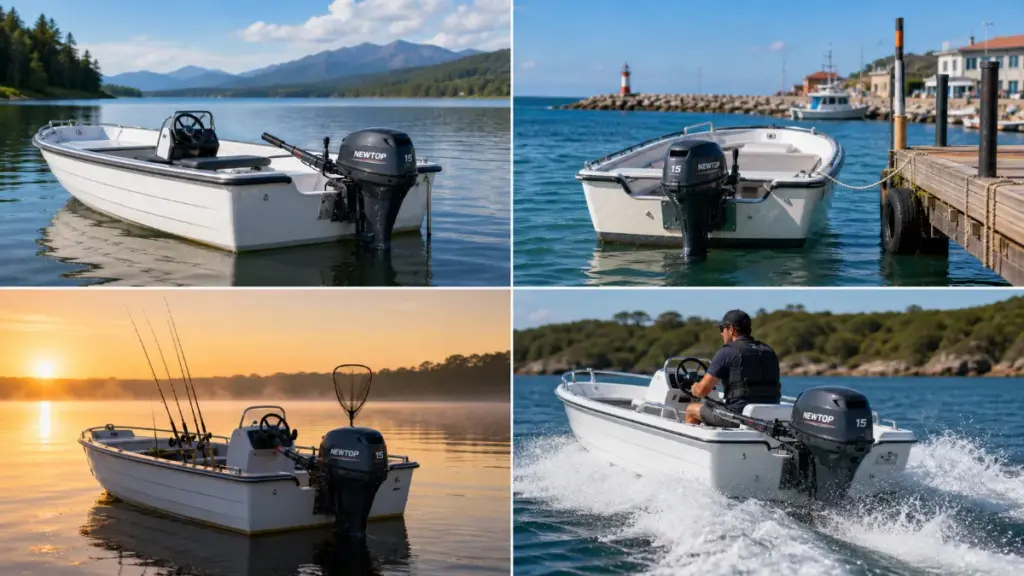
2-les courses offrent un meilleur rapport puissance/poids et une accélération plus rapide. 4-les coups sont plus silencieux, plus économe en carburant, et ont moins d'émissions.
Un hors-bord 2 temps effectue un cycle de puissance en seulement deux mouvements de piston (un tour de vilebrequin), alors qu'un hors-bord 4 temps nécessite quatre mouvements de piston (deux tours de vilebrequin).
| Fonctionnalité | 2-Hors-bord | 4-Hors-bord |
|---|---|---|
| Cycle de combustion | 2 coups | 4 coups |
| Fréquence de course de puissance | Chaque révolution | Tous les deux tours |
| Poids du moteur | Plus léger | Plus lourd |
| Complexité mécanique | Simple | Plus complexe |
| Lubrification | Mélange fioul | Système d'huile séparé |
| Difficulté d'entretien | Plus facile | Plus impliqué |
| Efficacité énergétique | Modéré | Plus haut |
| Émissions | Plus haut | Inférieur |
Cycle de combustion et conception mécanique
La différence fondamentale réside dans la façon dont ils créent le pouvoir. Un moteur à 2 temps effectue un cycle de puissance complet en seulement deux coups de piston, tir à chaque tour de vilebrequin. C'est une manière très directe de générer de la force. Un 4 temps a besoin de quatre coups de piston – admission, compression, pouvoir, et d'échappement, ce qui signifie qu'il ne se déclenche qu'à tous les deux tours du vilebrequin.
Cette différence fondamentale dicte leur construction. La conception 2 temps est plus simple, utiliser des ports dans les parois des cylindres pour gérer l'admission et l'échappement du carburant. En revanche, un moteur 4 temps nécessite un système de soupapes beaucoup plus complexe, complet avec vannes, arbres à cames, et systèmes de chronométrage, semblable à ce que l'on trouve dans une voiture.
Livraison de puissance, Poids, et performances
Parce qu'ils tirent deux fois plus souvent et comportent moins de pièces, 2-les hors-bord à course ont un rapport puissance/poids beaucoup plus élevé. Cela se traduit par une accélération explosive et un “coup de trou,” faire décoller le bateau plus rapidement. C'est un énorme avantage pour certaines applications.
Les composants supplémentaires rendent les hors-bord 4 temps beaucoup plus lourds. Sur un petit bateau, ce poids supplémentaire sur le tableau arrière peut affecter négativement l'équilibre, augmenter le tirage, et rendre plus difficile l'accès à l'avion. La puissance délivrée par un 4 temps est beaucoup plus douce et linéaire., ce qui est souvent préféré pour les applications à vitesse constante comme la pêche à la traîne ou la croisière longue distance où l'accélération brute n'est pas la priorité.
Efficacité énergétique et émissions
Les moteurs hors-bord à quatre temps sont intrinsèquement plus efficaces. Leur cycle distinct à quatre temps garantit une combustion plus complète du carburant., ce qui entraîne une meilleure économie de carburant et des émissions nettement inférieures. Ils sont la technologie la plus propre, haut la main.
Les 2 temps traditionnels fonctionnent en mélangeant l'huile directement avec l'essence pour la lubrification. Durant leur cycle rapide, une partie de ce mélange de carburant et d'huile non brûlé peut s'échapper avec l'échappement, ce qui augmente à la fois la consommation de carburant et la pollution. Il est important de reconnaître que l’injection directe moderne (DEPUIS) 2-les moteurs à course se sont considérablement améliorés sur ce front, se rapprocher beaucoup plus des niveaux d'efficacité et de propreté des 4 temps.
Entretien, Bruit, et expérience d'exploitation
Il y a une grande différence dans l'expérience sur l'eau. Les moteurs à quatre temps fonctionnent beaucoup plus silencieusement et produisent beaucoup moins de vibrations. Cela fait une énorme différence en termes de confort, surtout pendant les longues journées sur l'eau. L'entretien est similaire à une voiture, nécessitant des changements d'huile et de filtre programmés.
Les deux temps sont plus bruyants et ont la réputation d'être un peu plus rudes. Leur programme d'entretien consiste à ajouter continuellement de l'huile 2 temps dans un réservoir ou à la pré-mélanger avec le carburant.. Bien qu'il s'agisse d'une tâche continue, les moteurs ont moins de pièces mobiles, ce qui peut simplifier certains types de réparations et réduire les points de défaillance potentiels.
Meilleures applications et position sur le marché
Les hors-bord à quatre temps ont conquis la majorité du marché. Ils sont la norme pour les bateaux de pêche hauturière, croiseurs familiaux, et les navires plus grands dont la gamme de carburant, fonctionnement silencieux, et les faibles émissions sont des priorités absolues. Les flottes de location et les opérateurs commerciaux s'appuient également fortement sur les 4 temps pour leur fiabilité et leurs coûts d'exploitation réduits..
Toujours, 2-Strokes conserve une position forte dans des niches performantes. Vous les trouverez sur les bass boat, skiffs plats, et autres poids légers, des coques rapides où leur rapport puissance/poids supérieur et leur accélération instantanée sont des avantages clés. Des réglementations environnementales plus strictes continuent de stimuler le marché, privilégiant soit la technologie 4 temps, soit la plus récente, modèles 2 temps à injection directe plus propres.
Rapport puissance/poids: Pourquoi les 2 temps gagnent toujours en accélération
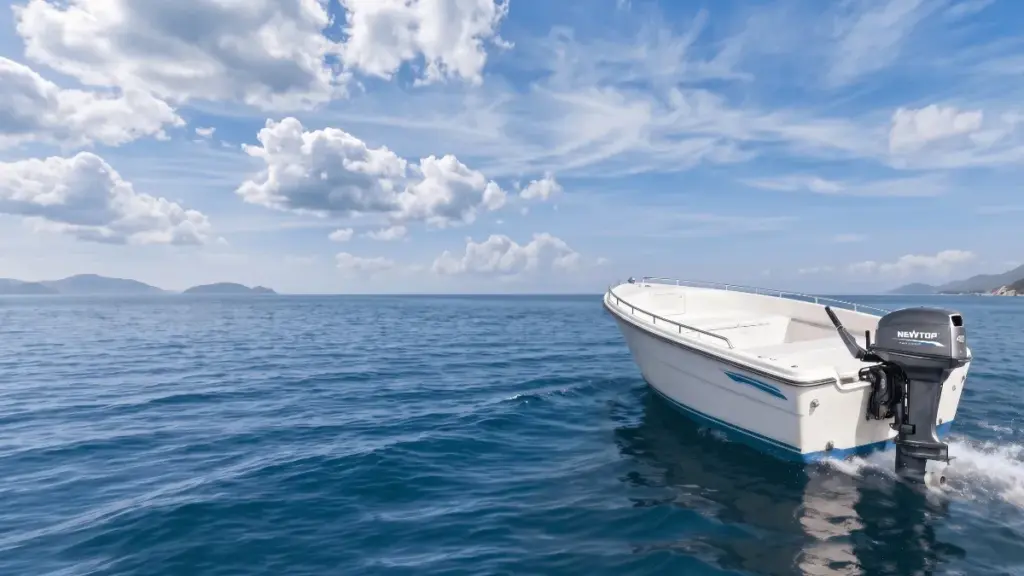
Un 2 temps, c'est plus simple, la conception plus légère offre un rapport puissance/poids supérieur, offrant une accélération plus rapide et un tir de trou plus rapide que les hors-bord 4 temps plus lourds.
Comment la conception du moteur crée un rapport puissance/poids plus élevé
Un moteur 2 temps achève son cycle de puissance en seulement deux coups de piston. Cette conception est intrinsèquement plus simple et nécessite beaucoup moins de pièces mobiles qu'un moteur 4 temps..
Moins de composants signifient que le moteur est plus compact et nettement plus léger pour une puissance donnée.. Avec moins de masse moteur à transporter, une plus grande partie de la poussée du bateau sert directement au déplacement de la coque, pas seulement transporter le hors-bord.
L'impact sur le tir du trou et la réponse de l'accélérateur
Cet avantage en termes de rapport puissance/poids se traduit directement par un tir de trou plus rapide : la première accélération du bateau à partir d'un arrêt mort.. Les bateaux équipés de moteurs hors-bord 2 temps montent généralement plus rapidement, ce qui est essentiel pour des activités comme le ski nautique.
Les utilisateurs bénéficient également d'une, réponse rapide de l'accélérateur. Ceci est particulièrement visible dans la plage de régime faible à moyen, où les ajustements rapides sont courants..
Comment les moteurs 4 temps se comparent en termes de poids
Les hors-bord à quatre temps sont plus lourds de par leur conception. Ils ont besoin d'un système de soupapes complet avec soupapes et arbres à cames., plus un carter d'huile dédié, qui ajoutent tous un poids important. Le cycle en quatre étapes : admission, compression, pouvoir, échappement : nécessite une mécanique plus complexe et davantage de composants physiques.
Tout ce poids supplémentaire nuit à leur rapport puissance/poids lorsqu'il est confronté à un 2 temps de même puissance nominale..
Quand un meilleur rapport puissance/poids est le plus important
Les avantages d'un rapport puissance/poids élevé sont plus évidents dans les applications spécifiques où l'accélération et le poids minimal sont essentiels..
- Bateaux performants: Pour bateaux remorqueurs de course ou de ski nautique, une accélération rapide n’est pas un luxe, c’est tout l’intérêt.
- Coques légères: Petits bateaux de pêche, skiffs, et les offres sont très sensibles au poids du moteur. Moins de poids sur le tableau arrière signifie un meilleur équilibre et une meilleure maniabilité.
- Opération en eaux peu profondes: Quiconque court dans des eaux maigres doit monter à bord rapidement avec un minimum d'effort pour éviter de s'enfoncer.. Le punch rapide d'un 2 temps est ici un avantage majeur.
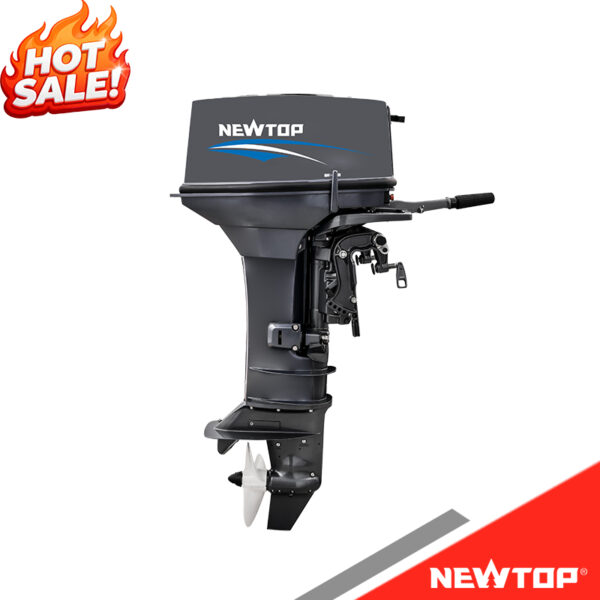
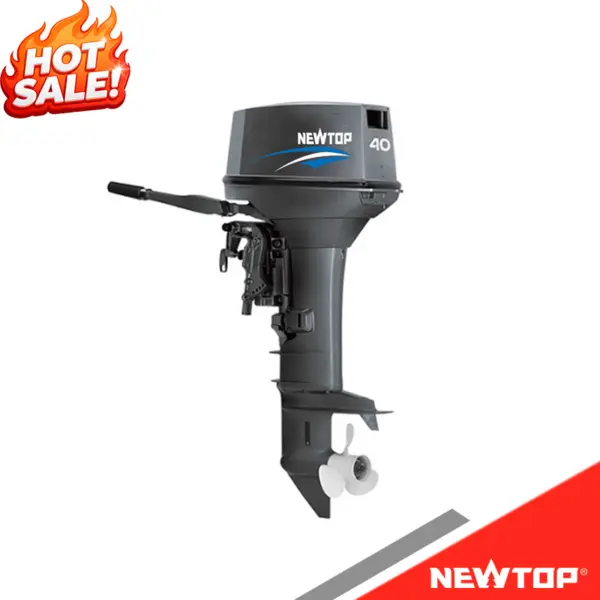
Moteur hors-bord T40G
Hors-bord 2 temps fiable, idéal pour les petits bateaux de pêche et les bateaux de travail. Léger mais puissant 40 Moteur HP.
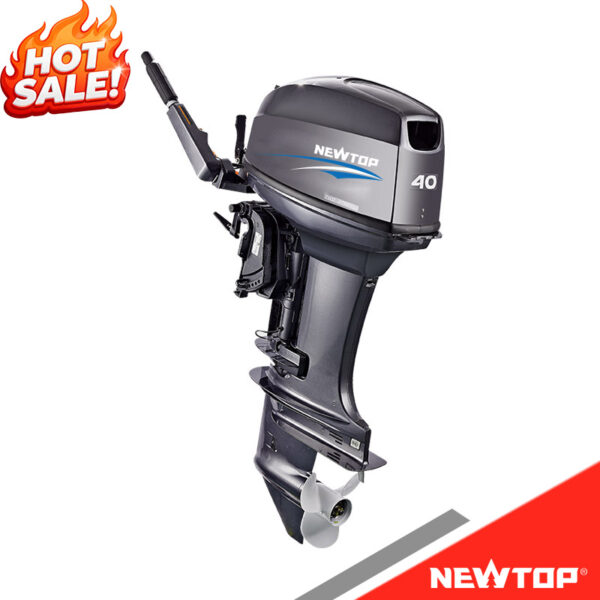
Moteur hors-bord T40J
Moteur 2 temps durable conçu pour les applications intensives. 40 Performances HP avec maintenance facile dans les zones reculées.
Moteur hors-bord T40X
Hors-bord compact 2 temps offrant une fiabilité 40 HP. Parfait pour les petits bateaux nécessitant à la fois puissance et portabilité.
Comparaison de la consommation de carburant: Les 4 temps valent-ils vraiment la prime?
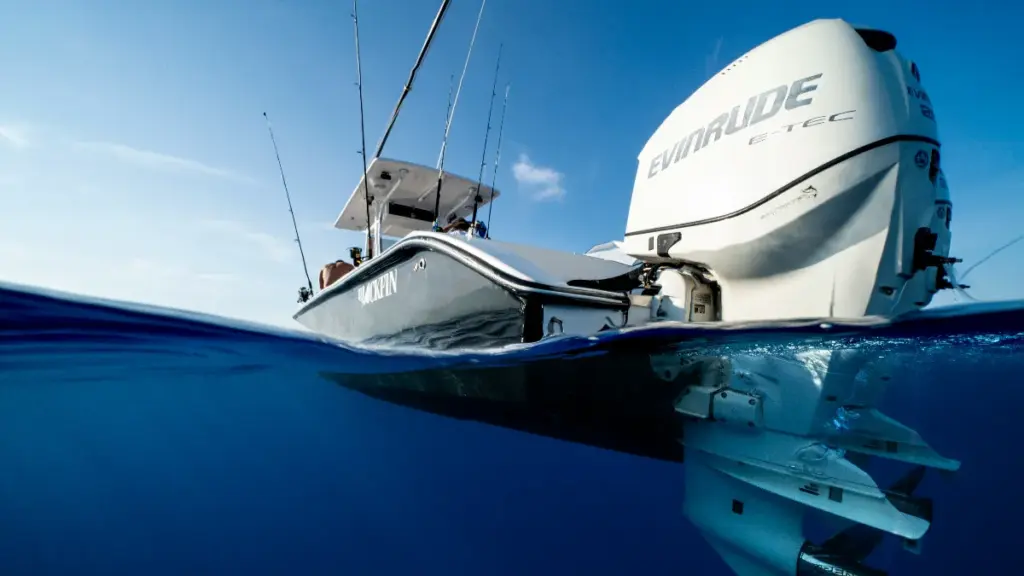
Les DI 2 temps et 4 temps modernes sont étonnamment proches en termes de consommation de carburant. Les véritables économies proviennent de la mise à niveau de n'importe quel vieux moteur à carburateur vers un moteur moderne., quel que soit le type.
Efficacité globale: Les moteurs modernes sont plus proches que vous ne le pensez
Le vieux débat sur les 2 temps assoiffés est pour la plupart mort. L’injection directe d’aujourd’hui (DEPUIS) 2-Les 4 temps et les 4 temps modernes offrent une économie de carburant globale très similaire pour la même puissance.. Les deux technologies concernent 35% plus économe en carburant que les 2 temps à carburateur qu'ils ont remplacés. Lorsque vous regardez la consommation de carburant sur toute la plage de régime, la différence entre les deux types modernes est souvent trop faible pour désigner un gagnant clair basé uniquement sur l'efficacité.
Comment votre style de navigation affecte la consommation de carburant
L'avance d'un moteur dépend souvent de la manière dont vous utilisez l'accélérateur.. À très bas régime, comme sortir de la marina au ralenti ou pêcher lentement à la traîne, un DI 2 temps peut en fait être légèrement plus efficace. Sa capacité à mesurer le carburant avec une telle précision à faible charge lui confère un petit avantage..
Mais dans le milieu de gamme, entre 2,500 et 5,000 RPM : les 4 temps présentent souvent un réel avantage en matière d'économie de carburant. C'est le lieu de croisière idéal où la plupart des bateaux passent leur temps., c’est donc là que l’efficacité du 4 temps se manifeste vraiment. Au sommet, tourner presque à plein régime, les tables peuvent à nouveau s'inverser. Un DI 2 temps peut souvent égaler ou même battre un 4 temps en termes de consommation de carburant tout en offrant plus de vitesse de pointe..
Les vraies économies de carburant: Mise à niveau à partir des moteurs hérités
L’augmentation la plus significative que vous constaterez en matière d’économie de carburant vient du remplacement des anciens modèles., carburateur 2 temps. Peu importe que vous le remplaciez par un DI 2 temps ou un 4 temps moderne.; l'amélioration sera énorme. Une voiture à carburateur peut consommer près du double du carburant d'un moteur moderne en faisant le même travail.. La réputation de consommation de carburant du 4 temps s'est construite sur sa comparaison avec ces anciens moteurs., pas le DI 2 temps efficace d'aujourd'hui.
Calculer le retour sur investissement sur les seules économies de carburant
Donc, les petites économies de carburant d'un 4 temps paient-elles son coût initial plus élevé? Pour un plaisancier occasionnel avec peu d'heures annuelles, la réponse est presque toujours non. Le calcul ne fonctionne tout simplement pas. Mais pour un guide commercial ou un capitaine de charter qui passe beaucoup d'heures, l'efficacité de milieu de gamme du 4 temps peut entraîner des milliers d'économies annuelles, justifiant facilement la prime initiale. La décision dépend vraiment de votre utilisation. Si vous passez toute la journée à naviguer à vitesse constante, l’économie du 4 temps est un argument de poids. Pour usage mixte ou applications performantes, la différence est souvent un lavage.
Maintenance et réparabilité sur les marchés éloignés

Sur les marchés éloignés, 2-strokes are typically easier to maintain and repair in the field. 4-strokes are more sensitive and often depend on service networks, increasing downtime risk.
2-Stroke Simplicity and Field Service Advantages
The core advantage of a 2-stroke in a remote setting is its simple mechanical design. With fewer moving parts, things are just less likely to go wrong, and when they do, repairs in the field are far more practical.
- Routine servicing is minimal, often just spark plugs and gearbox oil changes at very long intervals.
- They are generally more tolerant of variable or poor-quality fuel, which is a constant challenge in isolated locations.
- An operator can usually service the engine with a basic toolkit, which cuts the reliance on specialized technicians.
4-Stroke Maintenance Requirements and Sensitivities
Four-strokes demand a much stricter preventive maintenance schedule. Missing a service interval can have a bigger impact on reliability, which is a serious risk when you’re hours away from help.
- They require regular oil changes, filter checks, and sometimes valve adjustments.
- The fuel system is highly sensitive to clean, fresh fuel. Poor fuel management is a primary cause of failure.
- Cooling systems need consistent upkeep, from water pump impellers to thermostats.
- They have a greater reliance on authorized service centers and specific parts that are rarely available in remote areas.
Direct Comparison of Key Repairability Factors
When you put them side-by-side, the operational differences in a low-support environment become clear.
- Service Complexity: 2-strokes have far fewer scheduled service items compared to the more intensive needs of a 4-stroke.
- Parts Dependence: A 4-stroke requires a higher inventory of specialized parts just for routine maintenance.
- Field Practicality: The simple design of a 2-stroke makes it much better suited for on-the-spot repairs where resources are limited.
- System Sensitivity: 4-stroke fuel and cooling systems are less forgiving of neglect or harsh operating conditions.
Cost and Downtime Impact
The financial penalty for a complex engine in a remote market goes beyond the simple cost of parts. Downtime is the real killer.
- Maintenance costs for a 2-stroke can be significantly lower, particularly in the first few years of operation.
- Engine downtime is extremely disruptive. Transporting parts and technicians to isolated areas is slow and expensive.
- The simpler service schedule of a 2-stroke means there’s less risk of a missed maintenance item causing a critical failure.
- Fewer required service visits directly translate to lower logistical costs and more operational uptime for the vessel.
Bruit, Émissions, and Regulatory Considerations
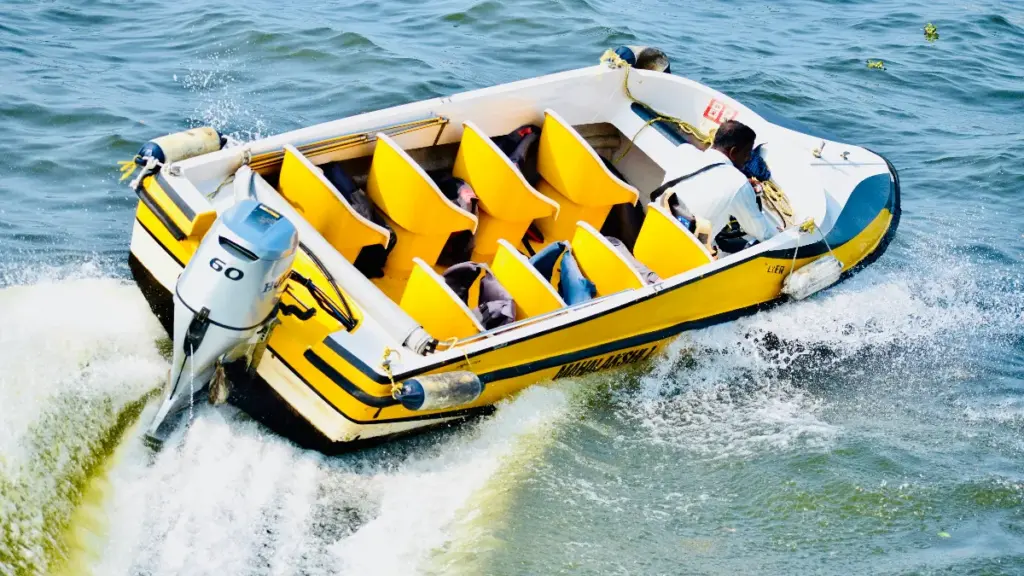
4-stroke outboards are quieter and cleaner, giving them a significant edge in regulated waterways and for any buyer who prioritizes user comfort over raw performance.
Noise Levels and User Experience
Four-stroke outboards generally run much quieter and with less vibration. This makes them the clear choice for recreational boating and fishing, where a peaceful experience matters. Older carbureted 2-stroke engines are famous for their loud, high-pitched whine and harsh exhaust. For anyone operating in noise-sensitive areas like residential lakes or crowded marinas, the quieter operation of a 4-stroke is a deciding factor.
Exhaust Emissions and Environmental Impact
The design of a 4-stroke engine leads to a more complete and efficient fuel burn. The result is lower emissions of hydrocarbons and less visible smoke. Traditional carbureted 2-strokes are inefficient by comparison, releasing a noticeable amount of unburned fuel and oil directly into the air and water. While modern direct-injection 2-strokes are a massive improvement over their predecessors, 4-strokes usually maintain an advantage in lower overall emissions.
Regulatory Compliance and Waterway Access
Once the EPA and California Air Resources Board (CARB) established stricter regulations, the market quickly moved away from older, high-emission 2-strokes. It’s not just about federal rules. Many specific lakes, reservoirs, and protected waterways have local rules that ban or severely limit the use of these older carbureted engines. Four-stroke engines reliably meet current emissions standards and are positioned to meet future ones, ensuring you have broader access to regulated bodies of water without issue.
Coût total de possession: Upfront Price vs Long-Term Costs
The sticker price is just the beginning. Real ownership cost includes fuel, huile, entretien, and resale value, where a pricier four-stroke often wins long-term.
| Cost Factor | 2-Accident vasculaire cérébral | 4-Accident vasculaire cérébral |
|---|---|---|
| Initial Purchase Price | Inférieur | Plus haut |
| Efficacité énergétique | Inférieur | Plus haut |
| Maintenance Complexity | Inférieur | Plus haut |
| Repair Costs | Inférieur | Plus haut |
| Spare Parts Cost | Inférieur | Plus haut |
| Long-Term Fuel Savings | Limited | Significant |
| Typical Lifespan | Bien | Often Longer |
Regional Recommendation: Which Engine Type for Your Market?
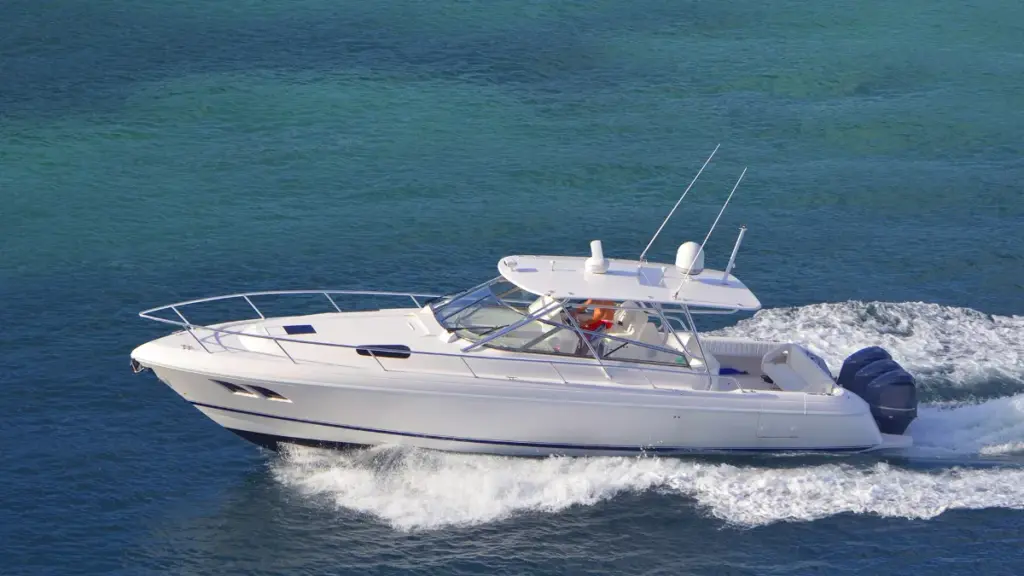
The right outboard choice is market-dependent. Regulations and user comfort drive developed regions to 4-strokes, while cost and field serviceability keep 2-strokes relevant elsewhere.
| Market Profile | Primary Driver | Recommended Engine |
|---|---|---|
| North America, W. Europe, Australia | Regulations & Émissions | 4-Accident vasculaire cérébral (Default), Modern DI 2-Stroke (Niche) |
| SE Asia, South Asia, Afrique | Upfront Cost & Service Simplicity | 2-Accident vasculaire cérébral (Default), 4-Accident vasculaire cérébral (Commercial) |
| High-Hour Commercial Fleets (Global) | Coût total de possession (Fuel & Longevity) | 4-Accident vasculaire cérébral |
| Specialized (Remote Islands, Urban Tourism) | Fuel Range & User Experience | 4-Accident vasculaire cérébral |
Markets Driven by Regulation and Emissions Standards
In developed economies, the choice is often made for you. Strict environmental laws and customer expectations for quiet operation have pushed the market heavily toward 4-stroke technology.
- In North America, Western Europe, and Australia, strict environmental laws make 4-stroke engines the standard choice for compliance.
- Quiet operation is a major factor in these regions, making 4-strokes preferable for recreational boating near populated areas.
- High fuel costs also make the superior efficiency of 4-stroke engines an important economic advantage.
- Modern direct-injection 2-strokes serve a niche market for high-performance applications where regulations permit.
Markets Driven by Cost and Service Simplicity
Where upfront cost and the ability to fix an engine with basic tools are the primary concerns, the simple, classic 2-stroke still holds significant ground. Access to a dealer network isn’t a given in these markets.
- For many users in Southeast Asia, South Asia, and Africa, the lower initial purchase price of a 2-stroke is the primary consideration.
- The simple mechanical design of 2-strokes allows for easier field repairs with basic tools, which is vital where professional service is scarce.
- Lighter weight makes 2-strokes suitable for small boats where the engine must be removed and carried frequently.
- 4-strokes are a strong choice for commercial operators in these regions who prioritize long-term fuel savings over initial cost.
Recommendations for High-Hour Commercial Fleets
For any business that runs boats all day, every day, the math almost always points to a 4-stroke. The initial investment is paid back through lower fuel bills and longer engine life.
- For fishing, transport, or patrol fleets that operate daily, the fuel savings from a 4-stroke can quickly offset its higher purchase price.
- 4-stroke engines typically provide a longer service life and better reliability under continuous, charges lourdes.
- Across most global markets, 4-stroke engines represent the better long-term economic choice for commercial users with access to service networks.
Recommendations for Specialized and Niche Applications
Specific operational needs can make one engine type the only practical option, regardless of other factors. User experience for tourists is very different from the needs of a lone fisherman.
- In remote island communities with very high fuel prices, the range and efficiency of 4-stroke outboards are critical.
- For urban water taxis and tourist boats, the quiet, low-smoke operation of a 4-stroke is essential for customer experience.
- Subsistence fishermen in remote locations may still find the simple maintenance and lower weight of a 2-stroke more practical for their needs.
Why Choose NEWTOP Outboard Motors?
For distributors and importers looking for dependable marine power solutions, NOUVEAUTOP provides a balanced portfolio designed for different market needs.
Key advantages include:
- Comprehensive range of 2-stroke and 4-stroke outboard motors
- Strong OEM and ODM customization capabilities
- Stable production capacity and quality control
- Global export experience across Africa, l'Amérique latine, Asie du Sud-Est, and other emerging markets
- Fiable pièces de rechange pour moteur hors-bord soutien
- Professional technical documentation and after-sales assistance
Whether your customers prioritize affordability, efficacité énergétique, durabilité, or ease of maintenance, NEWTOP can help you build a product lineup that fits your local market requirements.
Foire aux questions
Quel est le meilleur, a 2-stroke or 4-stroke outboard?
Neither is universally better; the right choice depends on your boat and how you use it. Two-stroke outboards are often preferred for their light weight, faster acceleration, and lower initial cost. Four-stroke outboards are generally the better option for fuel economy, fonctionnement silencieux, faibles émissions, and long-distance reliability.
Are 2-stroke outboards being phased out?
Older, traditional carbureted 2-stroke outboards are being phased out in many regions due to emissions regulations. Modern direct-injection (DEPUIS) 2-stroke engines that meet current environmental standards are still available and remain a competitive choice for specific applications, particularly where a high power-to-weight ratio is critical.
Which outboard motor lasts longer?
Four-stroke outboards generally have a longer service life. Their advanced lubrication systems and lower mechanical stress per revolution contribute to greater durability, especially in high-hour commercial or frequent recreational use. A properly maintained 2-stroke can be very reliable, but 4-strokes are typically engineered to achieve higher total operating hours.
Are 2-stroke outboards more powerful than 4-strokes?
A 2-stroke engine has a better power-to-weight ratio, meaning it delivers more power for its size and provides faster, ‘snappier’ accélération. This makes it feel more powerful, especially when getting a light boat on plane. A 4-stroke of the same horsepower rating will produce the same peak power but delivers it more smoothly and is better at handling sustained loads on heavier boats.
Do 4-stroke outboards use less fuel?
Oui, 4-stroke outboards are significantly more fuel-efficient than traditional 2-stroke models. Their combustion process is more complete, wasting less fuel and providing longer range from the same tank of gas. This advantage is most noticeable at trolling and cruising speeds. Modern direct-injection 2-strokes have improved efficiency, but 4-strokes still generally lead in fuel economy.
What are the main disadvantages of a 2-stroke outboard?
Compared to 4-strokes, the primary disadvantages of traditional 2-stroke outboards are higher fuel and oil consumption, louder and rougher operation, and higher emissions that can restrict their use on certain lakes and waterways. They also tend to have a shorter overall lifespan and may have a lower resale value.