Portable water pumps are essential for moving water efficiently across a variety of tasks, from irrigation and construction to emergency drainage. With so many models available, it can be confusing to know which pump suits your needs. Terms like flow rate, total head, and power ratings may seem technical, but understanding them is the key to making the right choice.
This guide breaks down these specifications in a simple and practical way. You’ll learn how to read performance data, compare pump options, and make informed decisions so that your equipment works efficiently and reliably, no matter the task or environment.
Portable Water Pump Specifications Explained Simply
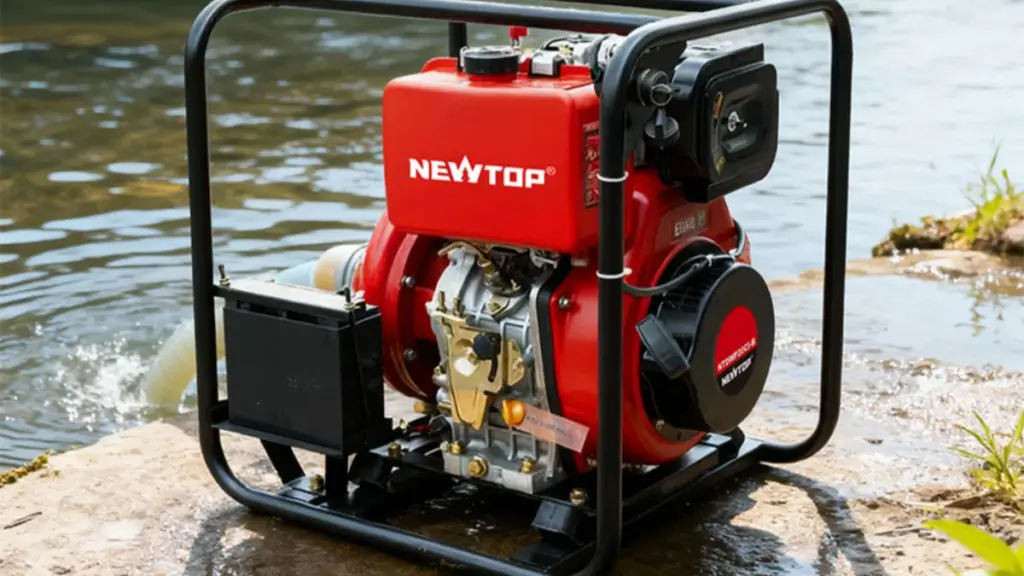
Pump specifications like flow rate, total head, and power ratings define actual field performance. Understanding these metrics prevents overloads and ensures you select the right equipment for the job.
Débit
Flow rate indicates how much water a pump can move in a given time, usually expressed in liters per minute (L/min) or cubic meters per hour (m³/heure). Higher flow rates mean faster water transfer, which is critical for large areas or urgent tasks. Choosing a pump with the right flow rate ensures efficiency without wasting energy.
Lift Height and Suction Lift
Lift height, also called discharge head, is the maximum vertical distance the pump can push water. Suction lift is the vertical distance it can draw water from the source. Ensemble, they determine whether the pump can handle your water source and delivery points.
Type de pompe
Different pump types affect usability. Par exemple, self-priming pumps can start pumping without manual water filling, while standard pumps may require priming. Understanding the pump type helps avoid operational difficulties.
Material of Pump Components
Impellers and pump bodies are made from materials like cast iron or aluminium. These choices affect durability, corrosion resistance, and suitability for different water conditions, such as clean water, muddy water, or water with debris.
Power Ratings
Water pumps are powered by engines or electric motors. Power ratings, given in horsepower (HP) or watts (W), indicate the pump’s ability to handle flow and lift requirements. Stronger engines or motors can handle higher flow and taller lift, but may also consume more fuel or electricity.
Engine or Motor Details
For engine-driven water pumps, specifications like engine type, accident vasculaire cérébral, déplacement, and torque indicate reliability and performance. For electric water pumps, voltage and motor efficiency matter for long-term operation.
Fuel or Energy Consumption
Fuel or power consumption affects operating costs and run time. Knowing the pump’s energy use helps you plan for longer work sessions without interruption.
Starting Type and Maintenance
Some pompes à eau start manually, others with electric starters. Oil capacity, recommended maintenance intervals, and spare parts availability are practical considerations to keep the pump running smoothly.
If you want a broader overview of portable water pumps and how they are applied in real-world situations, consultez notre practical guide to portable water pumps for more insights.
Portable Water Pump Flow Rate and Why It Matters
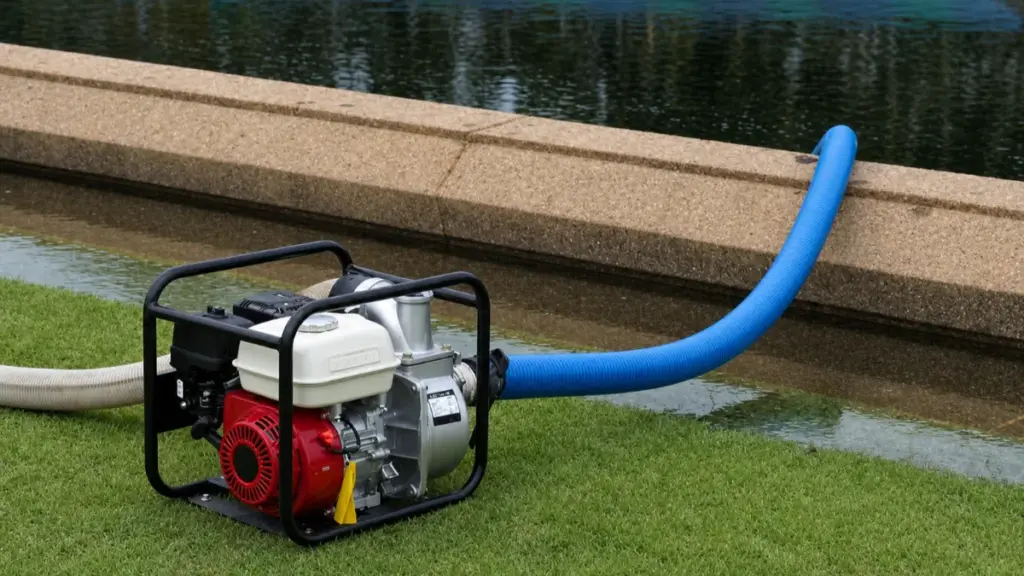
Flow rate dictates how fast you move water, but you must prioritize rated flow over maximum capacity to account for real-world friction and elevation losses.
| Débit (GPM) | Applications courantes |
|---|---|
| 10–50 | Garden irrigation, small ponds |
| 50–200 | Medium-scale construction, fermes |
| 200+ | Large-scale industrial or municipal projects |
Flow Rate Metrics and Limiting Factors
You measure flow rate by calculating the volume of water moved over a specific period, typically expressed in gallons per minute (GPM) or cubic meters per hour (m³/heure). Sourcing the right pump requires looking past the baseline numbers on a spec sheet and understanding the variables that restrict water movement.
- Rated vs. Maximum Flow: Evaluate rated flow instead of maximum flow. Rated capacity accounts for real-world resistance like elevation climbs and pipe friction, whereas maximum flow assumes zero head.
- Tête dynamique totale (TDH): Calculate TDH to anticipate output reductions caused by static lift and friction loss within specific pipe lengths.
- Pipe Diameter Constraints: Match pipe diameters to flow volume to maintain safe water velocity. Keep speeds below 8 ft/s to prevent pipe erosion and internal system damage.
Matching Flow Rates to Real-World Applications
Field performance relies entirely on aligning pump output with specific job demands. Applications range wildly from low-volume 20 GPM firefighting units to high-capacity 1100 GPM industrial dewatering water pumps. Selecting the wrong unit creates immediate site problems.
- Sizing Accuracy: Size flow correctly to prevent operational failures. Undersized water pumps starve system demand, while oversized units waste fuel and risk cavitation.
- Wastewater Velocity: Maintain minimum velocity requirements of 2 à 3 ft/s in wastewater applications. This speed scours solids from the lines and prevents debris from settling inside the system.
- Curve Plotting: Plot continuous and peak GPM requirements against manufacturer flow-versus-head curves to pinpoint the exact portable pump configuration for your site.
Maximize Margins with Durable Power Equipment
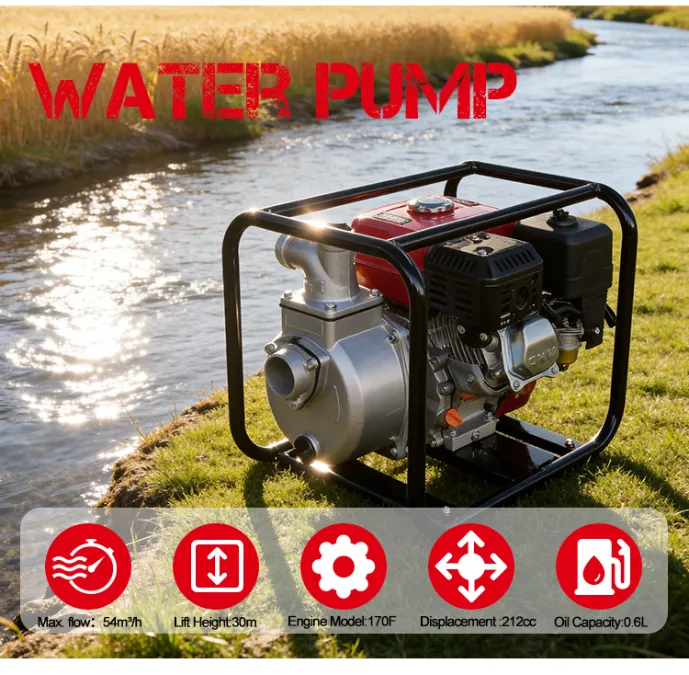
Portable Water Pump Head, Lift, and Pressure Basics
Tête, lift, and pressure dictate a pump’s true capability. Mastering these metrics ensures you select equipment that handles real-world resistance without stalling.
| Term | Définition |
|---|---|
| Total Head | Max height water can be pumped, including friction loss |
| Static Lift | Vertical distance water rises from source to pump |
| Pression (psi) | Water pressure generated at the pump outlet |
Definitions of Head, Lift, and Pressure
Understanding portable pump specifications requires separating head, lift, and pressure. These terms sound interchangeable but measure distinct mechanical forces in your fluid transfer setup.
- Tête: The vertical height a portable pump raises fluid against gravity. This operates independently of fluid density and represents the Total Dynamic Head (TDH) of the system.
- Lift: The vertical suction measurement from the water surface up to the pump inlet. Atmospheric pressure constraints cap this at a practical limit of 25 feet at sea level.
- Pression: The force delivered per unit area, measured in PSI. Use the standard conversion rate where 1 PSI equates to roughly 2.31 feet of water head.
Calculating Total Head and Performance Factors
You cannot size a pump based purely on its maximum theoretical output. Field conditions introduce mechanical resistance, meaning you must evaluate your system’s layout to determine actual performance capabilities.
- Tête dynamique totale (TDH): Calculate this target by combining your static suction lift, static discharge head, pipe friction losses, and velocity head.
- Friction Losses: Longueur du tuyau, narrow pipe diameters, sharp bends, and valves create resistance. These specific layout choices directly reduce your effective head capacity.
- Pump Curves: Read performance charts by plotting flow rate (GPM) against head or pressure. Recognize that water pumps achieve maximum flow at zero head and hit maximum head at zero flow.
- Environmental Variables: High altitude thins the air and drops your maximum suction lift by approximately 2.5% for every 1,000 feet above sea level.
Portable Water Pump Power Ratings in HP and Watts
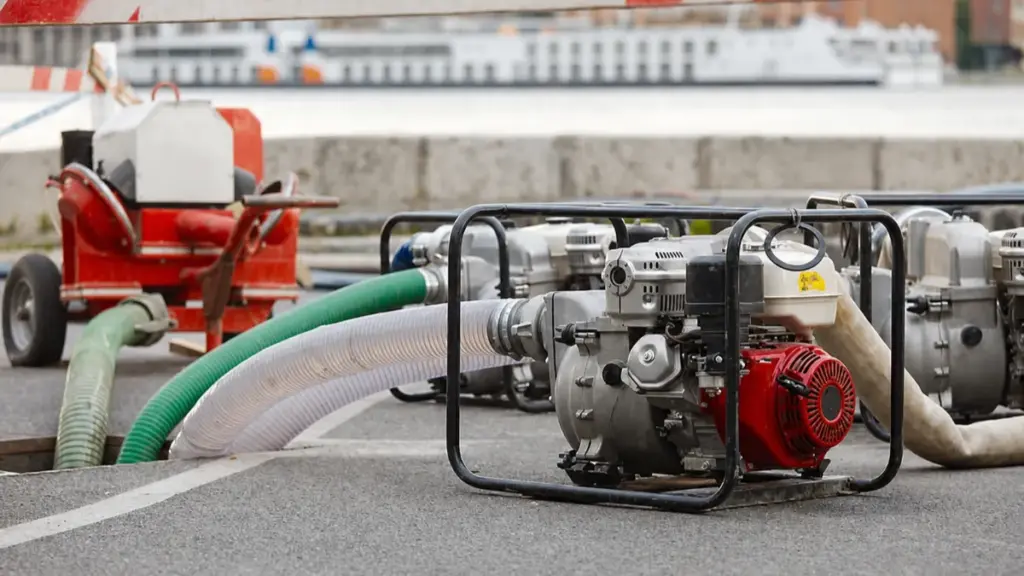
Real-world portable pump wattage significantly exceeds the theoretical 746 watts per horsepower. Motor inefficiencies, startup surges, and heavy mechanical loads require a minimum 20% power buffer for stable operation.
| Type de pompe | Pouvoir (HP / W) | Suitable Applications |
|---|---|---|
| Small portable | 1–3 HP / 750–2200 W | Jardin, small pond, light irrigation |
| Moyen | 4–7 HP / 3–5 kW | Construction, medium farm irrigation |
| Large industrial | 8+ HP / 6+ kW | Mining, municipal water transfer, dewatering |
Converting Horsepower to Running and Starting Watts
Let’s break down the math behind portable water pump power ratings. On paper, a theoretical 1 HP equates to 746 watts. In the field, real-world portable pumps draw 20% à 50% more power. Motor inefficiencies and power factor ratings drive this excess demand.
We separate this power draw into two distinct categories: running watts for continuous operation and starting watts to handle the initial motor surge. That initial kick typically demands two to three times the running wattage. Here is how that translates to real-world power requirements:
- Standard 0.5 HP Pump: Consumes between 670 et 1,050 running watts but requires up to 4,000 starting watts to engage the motor.
- Off-Grid Solar Setups (2026): Modern solar-compatible models require panel arrays sized at 1.5 times the running watts to maintain consistent performance through minor cloud cover.
Variables Influencing Portable Pump Power Draw
You cannot look at power ratings in a vacuum. The physical environment and system setup directly dictate how much electricity your pump actually needs to move water.
Submersible water pumps pulling water from deep wells face heavier mechanical loads. They inherently require more wattage than surface jet water pumps moving water from shallow sources. Water volume and vertical lift distance alter the actual power requirement on the fly, meaning you must calculate the exact brake horsepower based on your specific pressure and flow needs.
Electrical specifications and power sources also dictate system stability. Pay attention to these structural variables:
- Voltage Impact: A 120V portable pump draws double the amperage of a 230V unit to achieve the exact same wattage output.
- Generator Sizing: Portable power stations and generators must match the pump’s starting watts plus a 20% buffer to prevent tripped breakers or equipment stalling.
How to Read Portable Water Pump Performance Data
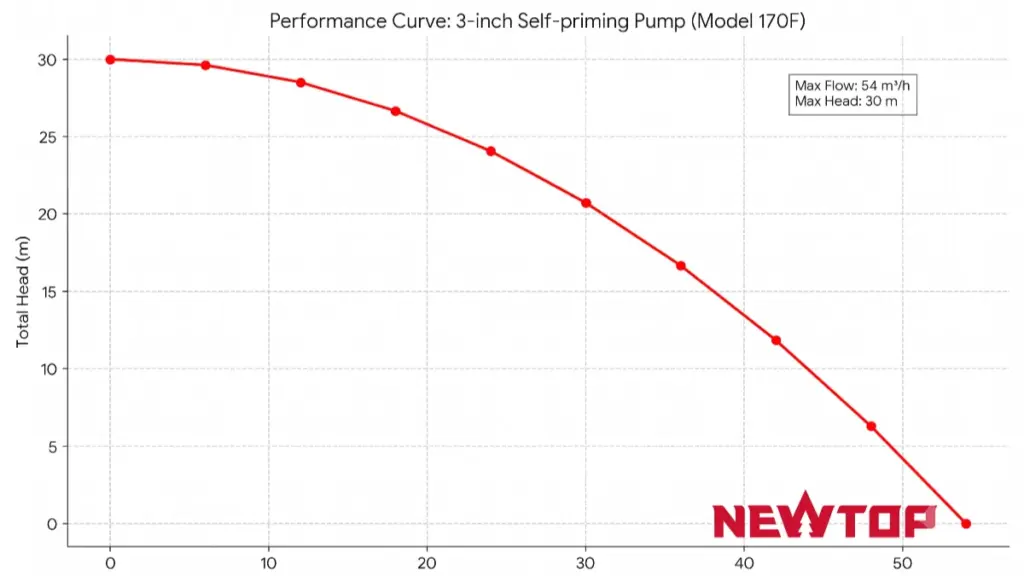
Reading a performance curve ensures you match flow and pressure requirements without overloading the motor. It plots actual tested data to lock in the exact duty point.
| Curve Parameter | Typical Portable Range | Measurement Units |
|---|---|---|
| Débit | 10–200 | GPM, LPM, or m³/hr |
| Discharge Pressure (Tête) | Jusqu'à 150 pieds | Feet, psi (jusqu'à 65 psi) |
| Consommation d'énergie | 1–5 | HP, kW, or Amps |
| NPSHr (Suction Need) | 5–20 | Feet |
Pump manufacturers typically provide a performance curve, which shows the relationship between flow rate and head. Reading this data correctly ensures you select the right pump.
Tips for interpreting performance curves:
- Le x-axis usually represents flow rate (GPM or L/min).
- Le y-axis represents total head (meters or feet).
- The curve itself shows maximum achievable flow at different heads.
Other important specs to check:
- Maximum flow vs rated flow: Rated flow is the pump’s recommended operating point for longevity and efficiency, while maximum flow represents the peak capacity.
- Operating limits: Temperature, water quality, and continuous operation recommendations.
What B2B Buyers Should Request From Manufacturers
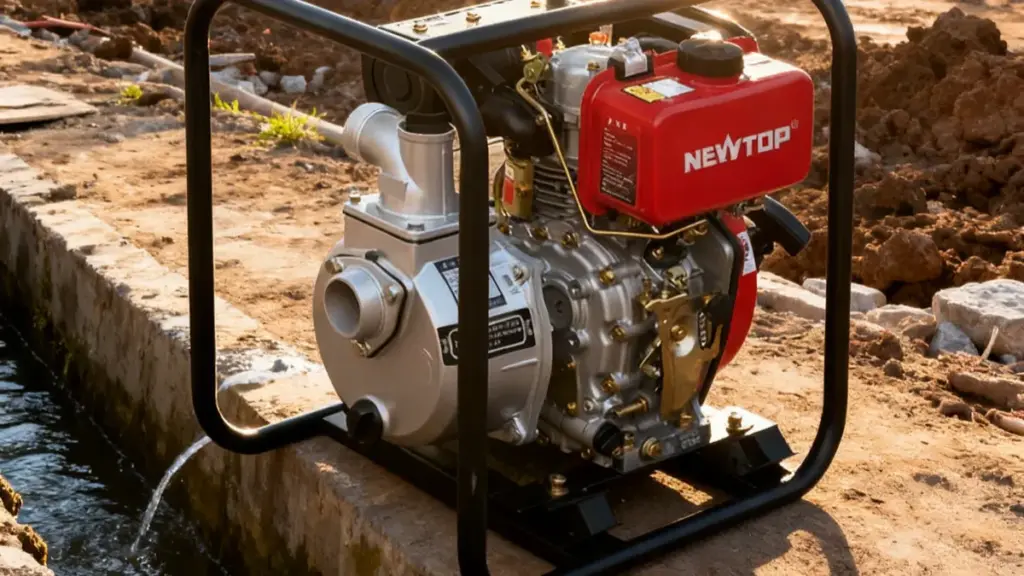
Sourcing portable water pumps requires strict vendor alignment. Focus on verifiable performance data, specific material grades, and exact total cost of ownership breakdowns to secure reliable units.
Technical Specifications and Material Requirements
When evaluating water pump suppliers, vague capacity claims fail in the field. You need exact operational limits matched to your application.
- Performance Curves: Request precise flow rate and head pressure graphs for operating ranges like 50-500 GPM and 50-150 feet of head.
- Fluid Compatibility: Define exactly what the pump handles. Specify constraints like passing up to 10% solids for dewatering operations or operating within tight temperature parameters.
- Mobility Features: Demand explicit details on portability. Ensure dry weights remain under 50 kg for manual transport and verify the units include quick-connect ports.
- Construction Materials: Outline exact material needs based on the environment. Choisir 316 stainless steel for chemical resistance or standard cast iron for basic clean water transfer.
Assurance qualité, Testing, and Commercial Terms
A reliable spec sheet means nothing without proof of performance and long-term support. Lock in commercial and testing terms before signing any purchasing agreement.
- Factory Acceptance Testing (FAT): Mandate FAT to verify actual flow, pressure, and auto-priming speeds under 60 seconds before shipment.
- Reliability Metrics: Require documented lifespan data, including a Mean Time Between Failures (MTBF) dépassement 5,000 hours and relevant ISO, CE, or UL certifications.
- Engineering Documentation: Ask for complete technical files, such as detailed CAD drawings, application-specific installation manuals, and 90-day maintenance schedules.
- Coût total de possession (Coût total de possession): Secure a TCO breakdown that maps unit pricing, freight, spare parts availability, and long-term operating costs over a 5-year period.
Why Work With a Supplier That Understands Your Market?
A market-savvy supplier aligns pump specifications with local environmental and regulatory demands, ensuring rapid deployment and cutting total project costs by up to 25%.
Choosing a water pump supplier who understands your operational context can save time, réduire les coûts, and ensure that your equipment performs reliably. NOUVEAUTOP, a leading manufacturer of outdoor power and water pump equipment, combines large-scale production with deep market knowledge, providing tailored solutions for customers around the world.
Benefits of working with an experienced supplier like NEWTOP include:
- Customized Recommendations: NEWTOP can suggest the right pump model based on your project scale, water source, and site conditions, ensuring optimal performance.
- Support and Service: Their team offers guidance on installation, troubleshooting, entretien, et pièces de rechange, helping you keep operations running smoothly.
- Fiabilité: By leveraging NEWTOP’s experience in global markets, you reduce the risk of receiving underperforming or unsuitable equipment.
En outre, NEWTOP’s understanding of both local and international regulations helps clients navigate import/export requirements, ensuring smooth logistics and compliance. Partnering with a OPE supplier who combines technical expertise, market insight, and robust support can make a significant difference in project efficiency and long-term success.
Pensées finales
Relying on cheap, generic water pumps with inflated specifications guarantees field failures and destroys your margin. Securing units backed by verified performance curves and accurate power ratings is the only way to safeguard your operations against catastrophic motor burnouts. Matching the exact duty point to real-world site resistance ensures your equipment delivers consistent volume without stalling.
We recommend requesting a sample unit and our detailed technical catalog to test these performance metrics on your site. Contact our engineering team to map out the exact portable pump configurations your local market requires.
Foire aux questions
What do portable water pump specifications mean?
Specifications provide information about a pump’s capacity, efficacité, and suitability for specific tasks. Key specifications include flow rate, tête, pouvoir, and operational limits.
What is flow rate in a water pump?
Flow rate is the volume of water a pump can move per unit of time, usually expressed in liters per minute (L/min) or gallons per minute (GPM).
What is total head in a water pump?
Total head is the maximum vertical height water can be lifted, including suction, discharge, and friction losses in the system.
How do I read a water pump performance curve?
A performance curve plots flow rate against head. By matching your desired flow and height requirements to the curve, you can determine the best operating point for the pump.
What is the difference between rated flow and maximum flow?
Rated flow defines the water volume a pump moves under sustained, real-world conditions at peak efficiency. Maximum flow indicates the absolute highest volume the pump achieves at zero head—meaning no lift and no attached pipework. You should base your selection entirely on rated flow to ensure the pump meets your daily operational demands without overloading.
How do I know what size portable water pump I need?
Determine the required flow rate, total head, and operating environment. Compare these requirements with manufacturer datasheets and performance curves to select a pump that meets or slightly exceeds your operational needs.