


- All
- NEWTOP Customer Stories
- NEWTOP Explorer Hub
- NEWTOP Industry Insights
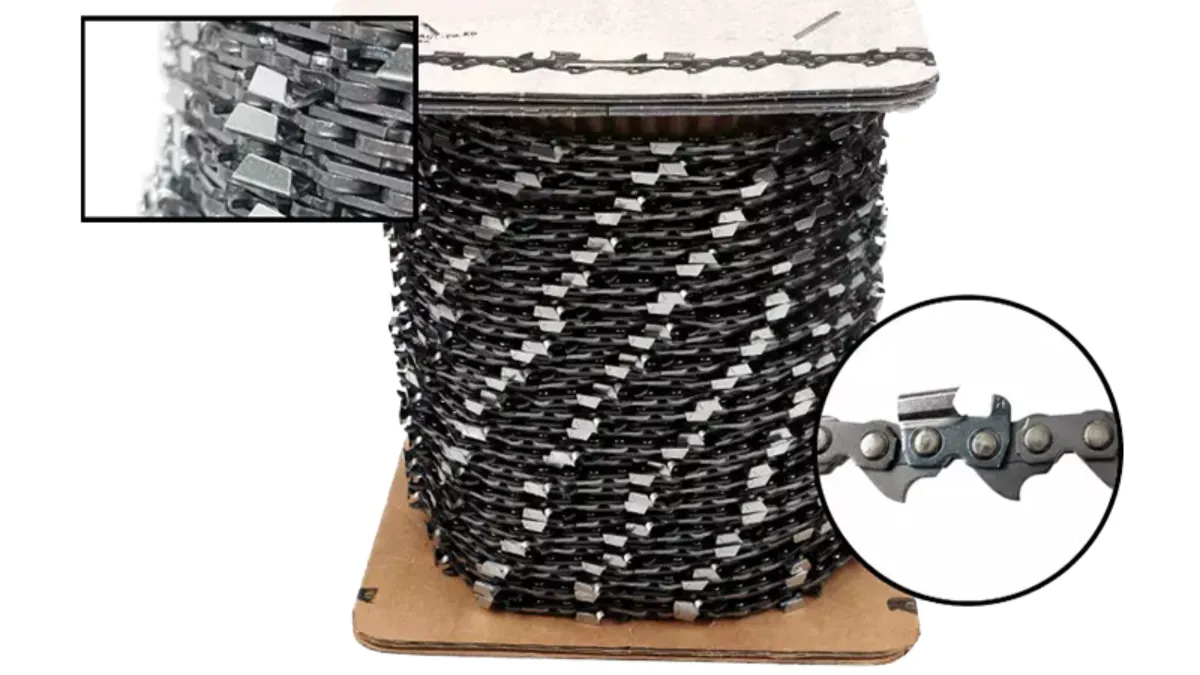
When selecting a chainsaw chain, most buyers focus on brand, bar length, or engine power. No entanto, the real performance difference often lies in two critical technical parameters: pitch and gauge. These two measurements determine compatibility, cutting efficiency, vibration level, durabilidade, and even operator safety.
For distributors, OEM buyers, and professional users in forestry or agriculture, it is essential to understand these engineering fundamentals. Neste guia, we break down pitch and gauge in detail, explain how they affect cutting behavior, and help you select the correct chain configuration for your market.
What is Pitch on a Chainsaw Chain?
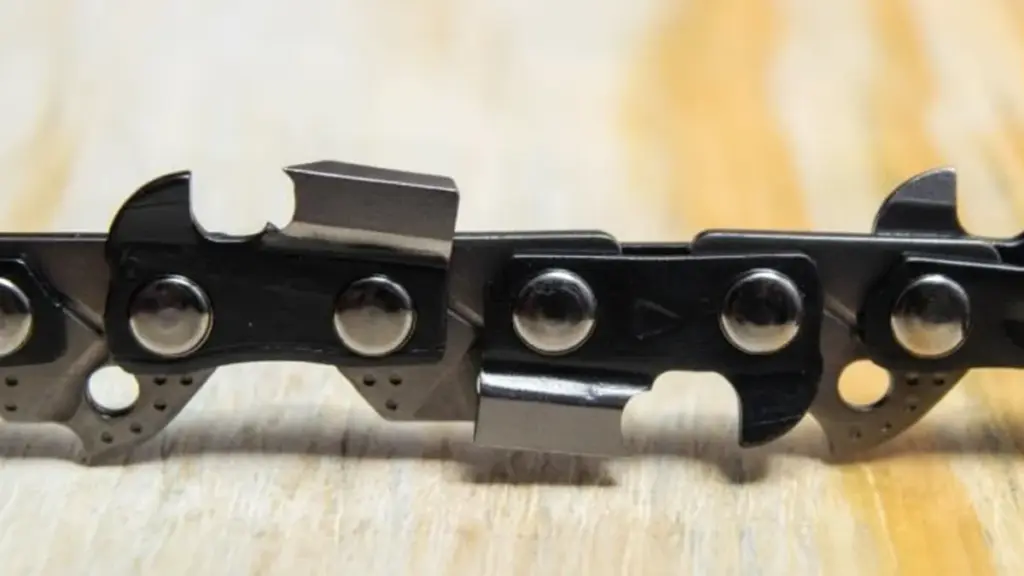
Chain pitch is the fundamental size specification of a chainsaw chain, calculated as half the distance between three consecutive rivets, and it must precisely match the guide bar and drive sprocket for safe operation.
Defining Chain Pitch
Chain pitch is the industry-standard measurement that defines the size of a chainsaw chain. You calculate it by measuring the distance between the center points of any three consecutive rivets and dividing that number by two. For a chainsaw to function correctly, this measurement must match the specifications of the saw’s guide bar and drive sprocket.
Why Pitch Compatibility is Critical
A chainsaw operates as a system where the chain pitch, chain gauge, and guide bar must be fully compatible. Using an incorrect pitch prevents the chain from seating correctly on the guide bar’s drive sprocket, which leads to equipment damage and complete operational failure.
- A mismatched chain will quickly wear down or break the drive sprocket.
- Running incompatible parts almost always voids the equipment’s warranty.
What is Gauge on a Chainsaw Chain?
Chain gauge is the thickness of the drive links, a critical measurement that must exactly match the guide bar’s groove to ensure safe, efficient operation without derailing or binding.
Defining Gauge: The Thickness of the Drive Link
The gauge of a chainsaw chain is the measured thickness of its drive links. These are the bottom, tooth-like parts of the chain that run inside the guide bar’s groove, or track. This single measurement ensures the chain fits securely, preventing excessive movement or friction. Gauge is typically expressed in thousandths of an inch, such as .050″, or in millimeters like 1.3 milímetros.
Why a Correct Gauge Match is Essential
Matching the chain gauge to the guide bar groove is non-negotiable for safe and effective chainsaw operation. Any mismatch introduces immediate performance and safety problems. An incorrect fit will cause the chain to behave erratically and can damage your equipment.
- Gauge too thin: If the drive links are too narrow for the bar’s groove, the chain will wobble side-to-side. This instability causes poor cutting performance and significantly increases the risk of the chain derailing from the bar during use.
- Gauge too thick: If the drive links are too wide, they will bind inside the groove. This creates excessive friction, which strains the engine, generates heat, and can stop the chain from moving at all.
Precision Saw Chains Built for Power & Profit
What Are Parts of Chainsaw Chain?
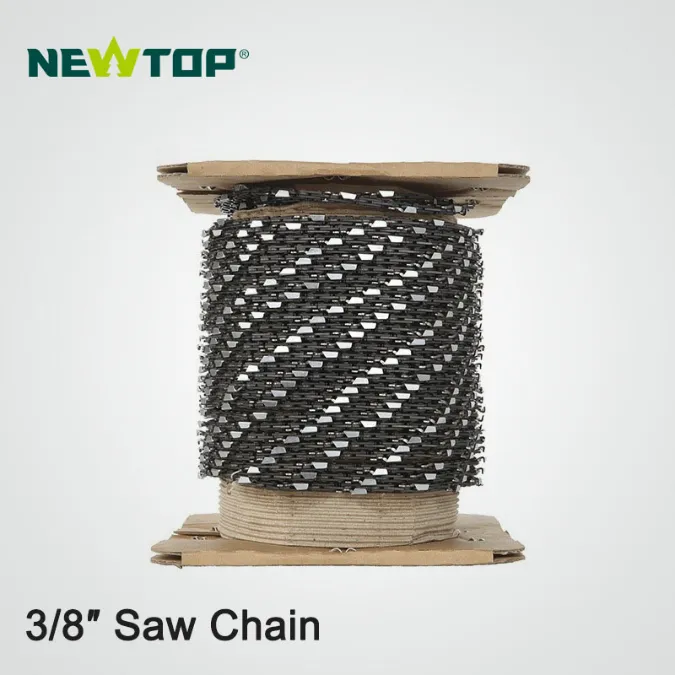
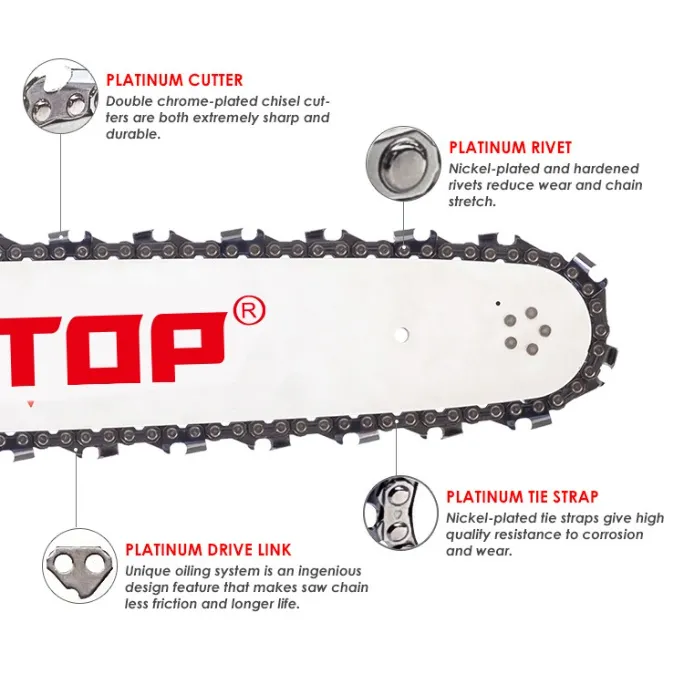
A chainsaw chain integrates three primary components—cutting links for slicing wood, drive links for power transfer, and tie straps for structural integrity—arranged in specific sequences to control cutting performance.
Cutting Links (Cutters)
These are the primary components that perform the actual cutting. Each cutter has a sharp tooth and a depth gauge (raker) that regulates how deep the tooth bites into the wood. The specific design of the cutter determines its performance in different conditions, impacting both speed and durability.
- Features a sharpened cutting corner responsible for slicing wood fibers.
- Includes a depth gauge that controls the thickness of the wood chip removed.
- Available in full-chisel, semi-chisel, and chipper designs for different cutting conditions.
Drive Links
Drive links are the bottom part of the chain that engages with the chainsaw’s sprocket. They pull the chain around the guide bar and help distribute oil for lubrication. The thickness of these links defines the chain’s gauge, which must match the guide bar’s groove precisely for safe and effective operation.
- The part of the chain that fits into the guide bar groove and is propelled by the sprocket.
- Their thickness determines the chain’s gauge, which must match the guide bar.
- Essential for transferring power from the engine to the chain.
Tie Straps
Tie straps are connecting components that hold the cutting links and drive links together in the correct sequence. They do not cut but provide the chain with its structure and flexibility, using riveted joints to allow the chain to move smoothly around the guide bar.
- Connects all links together using riveted joints.
- Allows the chain to move flexibly around the guide bar.
- Ensures the proper spacing and arrangement of cutters and drive links.
Chain Sequence Arrangements
The sequence refers to the pattern of cutters on the chain. Common arrangements like standard, semi-skip, and full-skip affect cutting speed and smoothness, especially on longer guide bars where efficient chip clearance is a critical factor for performance.
- Standard Sequence: Has a cutter on every other link for the smoothest cut.
- Semi-Skip Sequence: Features extra space between cutter groups for better chip clearance.
- Skip Sequence: Has the most space between cutters, ideal for long bars and powerful saws.
Key Details on Chain Measurements

Correctly matching the chain’s pitch to the sprocket and its gauge to the guide bar is non-negotiable for safe and efficient chainsaw operation.
| Measurement | Definition | Common Sizes |
|---|---|---|
| Passo da corrente | Distance between three consecutive rivets, divided by two. Must match the drive sprocket. | 1/4″, .325″, 3/8″, .404″ |
| Medidor de corrente | The thickness of the drive links. Must fit precisely into the guide bar groove. | .043″, .050″, .058″, .063″ |
Common Sizes of Pitch on a Chainsaw Chain
- 3/8″ is the most common size, especially for consumer chainsaws. Many of these saws use a lighter “low profile” or “Picco” variant for reduced kickback.
- .325″ is standard for many semi-professional and mid-range professional saws, balancing cutting speed with durability.
- 1/4″ is a smaller pitch used on lightweight residential saws or specialized carving saws where precision is key.
- .404″ is a heavy-duty pitch reserved for high-powered, large-displacement professional saws used in demanding forestry and logging operations.
Common Thickness of Pitch on a Chainsaw Chain
- The most common gauge sizes are .043″ (1.1 milímetros), .050″ (1.3 milímetros), .058″ (1.5 milímetros), e .063″ (1.6 milímetros).
- O .050″ gauge has become an industry standard for a wide range of consumer and professional chainsaws.
- To eliminate guesswork, manufacturers typically stamp the required gauge measurement directly onto the heel of the chainsaw’s guide bar.
How to Calculate Chainsaw Pitch on a Chainsaw Chain?
| Method | Description | Key Action |
|---|---|---|
| 3-Rivet Measurement | The industry-standard physical measurement to find the base distance. | Use a caliper to measure from the center of the first rivet to the center of the third. |
| Calculation | Converts the 3-rivet measurement into the final, industry-standard pitch value. | Divide the measured distance by two. |
| Stamped Markings Verification | Confirms the calculated pitch using the manufacturer’s provided specifications. | Check for numbers stamped on the guide bar, drive links, or in the owner’s manual. |
The Standard 3-Rivet Measurement Method
The universal industry method for determining chainsaw pitch involves measuring the distance between the centers of three consecutive rivets on the chain. This technique provides a consistent basis for calculation regardless of the chain’s manufacturer.
- Select any three rivets in a row on the chainsaw chain.
- Use a caliper or a precise ruler to measure the exact distance from the center of the first rivet to the center of the third rivet.
- Ensure the chain is taut but not stretched during measurement to get an accurate reading.
Applying the ‘Divide by Two’ Formula
After measuring the distance across three rivets, the final pitch is calculated by dividing that measurement by two. This simple formula converts the measurement into the industry-standard pitch size.
- Take the total distance you measured (por exemplo, 0.75 polegadas).
- Divide this value by two to determine the pitch (por exemplo, 0.75 polegadas / 2 = 0.375 polegadas).
- Convert the decimal result to its common fraction equivalent; for example, 0.375 inches is equal to a 3/8″ pitch.
Verifying Pitch Using Stamped Markings
To confirm your calculation or skip measuring altogether, check for pitch information stamped directly on the equipment. Manufacturers often provide these details on the guide bar or the chain itself to ensure compatibility.
- Inspect the guide bar, typically near the motor end, for stamped numbers indicating pitch, gauge, and drive link count.
- Examine the drive links of the chain for an identification code or number that corresponds to its pitch.
- Referencing the owner’s manual for your chainsaw also provides the correct pitch specification without needing to measure.
How to Measure Gauges on a Chainsaw Chain?
Measuring a chainsaw’s gauge—the thickness of its drive links—is a non-negotiable step for safe operation, and while calipers offer precision, checking for stamped markings on the bar is the most efficient method.
Using Tools for an Accurate Measurement
Gauge is the thickness of the drive link that fits directly into the guide bar’s groove. For a precise reading, a caliper is the most reliable tool. It provides an exact measurement in thousandths of an inch. Alternatively, a go/no-go gauge offers a quick way to confirm the correct fit without needing to read a measurement.
- Use caliper jaws to measure the thickness of a single drive link directly.
- A go/no-go gauge has two sized slots; the drive link should slide easily through the correct slot but be blocked by the smaller one.
The Coin Method for a Quick Approximation
When specialized tools are not available, you can use common coins to get a rough estimate of the gauge. This method involves fitting a coin snugly into the bar’s groove. Before attempting this, make sure the groove is completely clean of any wood chips, oil, or debris to avoid an inaccurate reading.
- A U.S. dime is approximately 0.050″ thick.
- A U.S. penny is approximately 0.058″ thick.
- A U.S. quarter is approximately 0.063″ thick.
Finding Existing Markings and Common Sizes
The easiest way to identify the correct gauge is to inspect the chainsaw bar itself. Manufacturers typically stamp the required specifications, including gauge, directly onto the metal near the mounting point. This eliminates any need for manual measurement. Matching the gauge is critical; a chain that is too thin can derail from the bar, while a chain that is too thick will bind, creating excessive friction and heat.
Standard gauge sizes you will encounter include .043″, .050″, .058″, e .063″.
Pros and Cons of High-Profile vs Low-Profile Pitch Designs
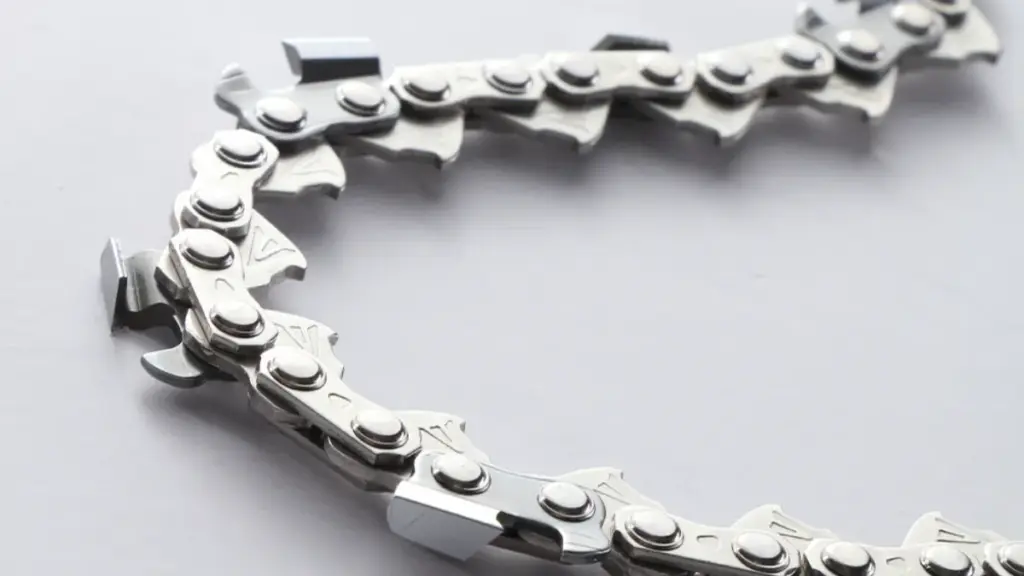
The choice between high-profile and low-profile chain pitch is a direct trade-off between the aggressive cutting power required for professional forestry and the enhanced safety features necessary for residential use.
High-Profile Chains: Performance and Applications
High-profile, or standard, chains are built for professional and heavy-duty applications. They prioritize cutting speed and power, making them the top choice for forestry work and tasks that require high-performance from gas-powered saws.
- Optimized for aggressive cutting and efficiency in demanding jobs.
- Best paired with chainsaws that have larger engine displacements.
- Carries a higher risk of kickback, requiring skill and experience to handle safely.
Low-Profile Chains: Safety and Accessibility
Low-profile chains dominate the consumer and residential market. Their design incorporates safety features that reduce kickback, making them ideal for homeowners, light-duty work, and electric or battery-powered saws.
- Engineered to minimize the intensity and frequency of kickback.
- Delivers a smoother, more controlled cut, which is great for less experienced users.
- Works well with lower-power saws and is common on equipment for general yard maintenance.
Key Trade-Offs: Durability and Maintenance
Choosing between the two designs comes down to balancing performance with safety. High-profile chains are more durable for high-production environments, but low-profile chains offer accessibility at the cost of faster wear.
- Standard chains typically last longer under constant professional use.
- Low-profile chains are built with user safety as the priority, which can affect their overall toughness.
- Professionals select pitch based on the specific cutting task, while consumers benefit from the built-in safety of low-profile chains.
How to Select Pitch Based on Your Chainsaw Sprocket Type
A chainsaw’s chain pitch must exactly match its drive sprocket pitch; any mismatch will damage the saw and create a significant safety risk.
| Sprocket Type | Key Characteristic | Pitch Flexibility |
|---|---|---|
| Spur Sprocket | Um único, solid component with teeth integrated directly into the main body. | Fixed. The pitch cannot be changed without replacing the entire sprocket assembly. |
| Rim Sprocket | A two-piece system with a central drum and a separate, replaceable rim that holds the teeth. | Modular. The pitch can be changed by swapping only the rim for a different size. |
Matching Sprocket Pitch with Chain Pitch
The single most important rule when selecting a chain is that its pitch must exactly match the pitch of the drive sprocket. Using mismatched components causes rapid wear on the drive links, sprocket, and guide bar. This leads to poor cutting performance and creates potential safety hazards from chain slippage or breakage. This compatibility is non-negotiable for proper chainsaw function.
- Your chainsaw’s sprocket, guide bar, and chain must all be designed for the same pitch measurement (por exemplo, .325″, 3/8″).
- Check the sprocket itself for a stamped number indicating its pitch; this is the primary measurement to follow.
- A mismatch prevents the chain’s drive links from seating correctly in the sprocket’s teeth, causing chain slippage and damage.
Identifying Your Sprocket Type: Rim vs. Spur
Chainsaws use one of two sprocket types to drive the chain: a spur sprocket or a rim sprocket system. While both perform the same function, the rim sprocket system offers more flexibility for changing the saw’s pitch. Identifying which type your saw has helps determine the easiest path for component selection and replacement.
- A spur sprocket is a single, solid piece with teeth that directly engage the chain. Its pitch is fixed.
- A rim sprocket consists of a central drum and a separate, replaceable rim that contains the teeth.
- With a rim sprocket, you can change your saw’s pitch by simply swapping the rim for one with a different pitch measurement, as long as a compatible bar and chain are also used.
Using Manufacturer Specifications for Guaranteed Compatibility
To eliminate guesswork, always refer to the manufacturer’s technical specifications for your chainsaw model. As of 2026, most professional-grade manufacturers provide detailed compatibility charts that ensure all components work together seamlessly as an integrated system. Sticking to these official recommendations is the surest way to guarantee both safety and performance.
- Consult your chainsaw’s owner’s manual, which lists the original equipment (OEM) specifications for pitch.
- Look for compatibility charts on the manufacturer’s website or in product catalogs for your specific saw model.
- Following these official recommendations ensures that the chain, bar, and sprocket combination has been tested for safety and optimal performance.
Why Choose NEWTOP Factory-Pitched Chains for Durability?
Direct factory oversight, from CNC machining to final quality control, produces chains with precise pitch and material integrity, resulting in longer operational life and reliable performance.
At NOVOTOP, chain pitch and gauge are engineered as part of a complete power transmission system — not treated as isolated components.
Our chains are manufactured with:
- CNC-precision rivet spacing
- Heat-treated drive links
- High-carbon alloy steel cutters
- Compatibility testing with Oregon-standard sprocket geometry
We collaborate with global component suppliers such as Oregon and Walbro standards to ensure dimensional accuracy and durability.
Com mais 500,000 units annual production capacity and exports to 65+ países, NEWTOP chains are designed for:
- Forestry logging
- Agricultural wood cutting
- Firewood preparation
- Commercial landscaping
For OEM partners, we offer:
- Custom pitch and gauge configurations
- Anti-corrosion coating options
- Packaging customization
- Private label branding
When durability, precisão, and global compatibility matter, factory-matched pitch systems reduce field failure rates and increase long-term customer satisfaction.
Conclusão
Selecting the correct pitch and gauge for your chainsaw chain is essential for both safety and performance. These precise measurements ensure compatibility with your guide bar and sprocket, preventing equipment damage and maximizing cutting efficiency. A proper match delivers a smoother, faster cut while reducing the risk of kickback.
To ensure your equipment is always ready, take a moment to confirm the pitch and gauge requirements for your saws. If you’re looking for durable, factory-specified chains that eliminate guesswork, our team can provide a full product catalog.
Perguntas frequentes
What does 3/8 LP pitch mean?
3/8 LP stands for 3/8-inch low-profile pitch. It has the same rivet spacing as standard 3/8″, but smaller cutter height to reduce kickback and engine load.
What does .325 pitch mean on a chainsaw?
.325 pitch refers to a chain where the rivet spacing divided by two equals 0.325 polegadas. It is commonly used on mid-sized chainsaws for balanced cutting performance.
Is .325 or 3/8 pitch better for firewood?
The better pitch for firewood depends on your chainsaw’s power. A .325″ pitch chain is more efficient on saws between 40-60cc, offering a smoother cut with less vibration. For more powerful saws (60cc+), the larger 3/8″ pitch is superior, as its bigger cutters remove wood more aggressively for faster cutting of large-diameter logs.
What is the difference between a 3.8 and a .325 chainsaw chain?
The primary difference is cutter size and spacing. 3/8″ chains have larger cutters and remove more material per pass, while .325 chains offer smoother handling and moderate engine demand.
What pitch is best for a chainsaw?
The best pitch depends on engine size and intended application. Small homeowner saws often use 3/8″ LP. Mid-range saws use .325. Professional forestry saws use 3/8″ standard or .404.
Can you run a different pitch chain on the same bar?
Não, you cannot run a different pitch chain on the same bar. The chain’s pitch must perfectly match the guide bar’s nose sprocket and the saw’s drive sprocket. A mismatch will prevent the chain from seating correctly, leading to rapid wear, equipment damage, and a significant safety risk. Always use the pitch specified for your bar.
What happens if I use the wrong gauge chain?
Using the wrong gauge chain creates poor performance and a serious safety hazard. If the gauge is too thin, the chain will fit loosely in the bar groove, causing instability, poor oiling, and a high risk of derailing. If the gauge is too thick, it will not fit in the bar groove at all, making operation impossible.
Is 3/8 low profile the same as 3/8 standard?
Não, 3/8″ low profile (LP) is not the same as a standard 3/8″ chain. While both share the 0.375-inch pitch measurement, the LP version has a smaller chassis with shorter cutters and depth gauges. This design reduces kickback and is intended for smaller, less powerful saws. They are not interchangeable and require different drive sprockets.

Chainsaws are now inseparable from forestry, logging, land clearing, and professional arboriculture. Yet when you search “why were chainsaws invented?”, you may be surprised to discover that their origin story has little to do with cutting timber.
Understanding the evolution of chainsaws—from early medical instruments to today’s high-performance gas and lithium-powered machines—reveals how technological innovation responds to real human needs. It also explains why modern chainsaws are engineered the way they are: poderoso, durable, ergonomic, and safety-focused.
In this article, we’ll explore the original purpose of chainsaws, how they transitioned into forestry tools, and how they evolved into the indispensable outdoor power equipment we rely on today.
Why Were Chainsaws Invented in the First Place?
Contrary to popular belief, the chainsaw was developed in the late 18th century not for forestry, but as a surgical instrument to assist in difficult childbirths.
Chainsaws were invented in the late 18th century to solve a medical problem—not a logging one.
Before modern surgical techniques and anesthesia, certain childbirth complications required physically enlarging the pelvic bone to allow delivery. Traditional surgical tools were slow and traumatic. Doctors sought a more efficient way to cut bone with greater precision and less time under procedure.
This led to the development of an early chain-and-blade device that could rotate around bone and cut in a controlled manner. It was manually operated and far removed from the powerful engine-driven machines we associate with chainsaws today.
The underlying concept, however, was revolutionary:
- A continuous chain with cutting teeth
- Guided around a bar or frame
- Designed for repetitive cutting motion
This mechanical principle—rotating cutting teeth on a chain—would later become the foundation of modern chainsaw technology.
The Original Use of Chainsaws in Medical History
The chainsaw originated not in forestry but in late 18th-century operating rooms as a hand-cranked surgical instrument for bone cutting, primarily during obstructed childbirth.
| Key Development | Inventor / Key Figure | Primary Application |
|---|---|---|
| Initial Surgical Saw Concept | John Aitken & James Jeffray (c. 1785) | Symphysiotomy (widening pelvis during childbirth) and bone excision. |
| The Osteotome | Bernhard Heine (c. 1830) | Standardized tool for various surgical bone-cutting operations. |
| Transition to Industrial Use | N/A (Industry Shift) | Repurposed for woodcutting as medical practices evolved. |
Invention for Childbirth and Bone Surgery
Around 1785, Scottish doctors John Aitken and James Jeffray developed the first chainsaw as a surgical instrument. Its purpose was to perform a symphysiotomy—a procedure that widened the pelvis during obstructed childbirth by cutting through bone and cartilage. Before this invention, surgeons relied on manual knives, making the process slow and dangerous. The chainsaw provided a faster and more precise method for this operation and was also used for the excision of diseased bone.
The Osteotome: A Surgical Refinement
The medical chainsaw concept continued to evolve. In 1830, German physician Bernhard Heine created a more refined version called the osteotome. This was a hand-cranked device featuring a cutting chain that ran along a guiding blade, giving surgeons better control and precision during bone excisions. Heine’s osteotome became a standard surgical tool and remained in use throughout much of the 19th century for various bone-cutting procedures.
Transition from Operating Room to Forest
By the early 20th century, the medical chainsaw’s use declined sharply. The primary reason was the increased safety and viability of the Cesarean section, which made the symphysiotomy procedure obsolete. With its original purpose gone, the core technology was adapted for an entirely new field: woodcutting. This shift marked the beginning of its transformation from a specialized surgical instrument into the powerful forestry tool we recognize today, paving the way for motorized, portable designs.
When Did Chainsaws Start Being Used for Woodcutting?
The chainsaw’s shift from a medical instrument to a forestry tool began with late 19th-century patents and became practical with the introduction of portable, motorized designs in the early 20th century.
Early Patents for Woodcutting
The transition of chainsaw technology from surgical applications to forestry began in the late 19th century. Frederick L. Magaw received the first patent for a wood-cutting “chain sawing machine” in 1883, envisioning a tool for producing boards. This was followed by a 1906 patent for an “Endless Chain Saw,” which was specifically engineered to fell giant redwood trees. These early patents established the conceptual framework for using a continuous cutting chain in the timber industry, even if practical, portable models were still decades away.
The First Motorized and Portable Chainsaws
Moving from patent to practice required a power source. The first known experiment with a gasoline-powered chainsaw took place in 1905 in Eureka, California, proving that motorization was a viable path forward. The next critical step was portability. In 1918, Canadian James Shand developed and patented the first truly portable chainsaw. This innovation was a significant shift, as it allowed the tool to be brought directly to the trees, setting the stage for its eventual widespread use in remote logging operations.
Establishment as a Standard Forestry Tool
The 1920s marked the commercial birth of the modern chainsaw. Andreas Stihl designed the first electric model in 1926 and followed it with a petrol-driven version in 1929. These machines, while heavy and often requiring two operators, were effective enough to gain traction in the forestry industry. The final milestone that cemented the chainsaw as an essential tool came around 1950 with the introduction of the first one-man model. This development made it possible for a single operator to work independently, dramatically increasing productivity and accelerating the tool’s adoption worldwide. His company, STIHL, would later become one of the most recognized names in the industry.
The Evolution of Chainsaws Over Time
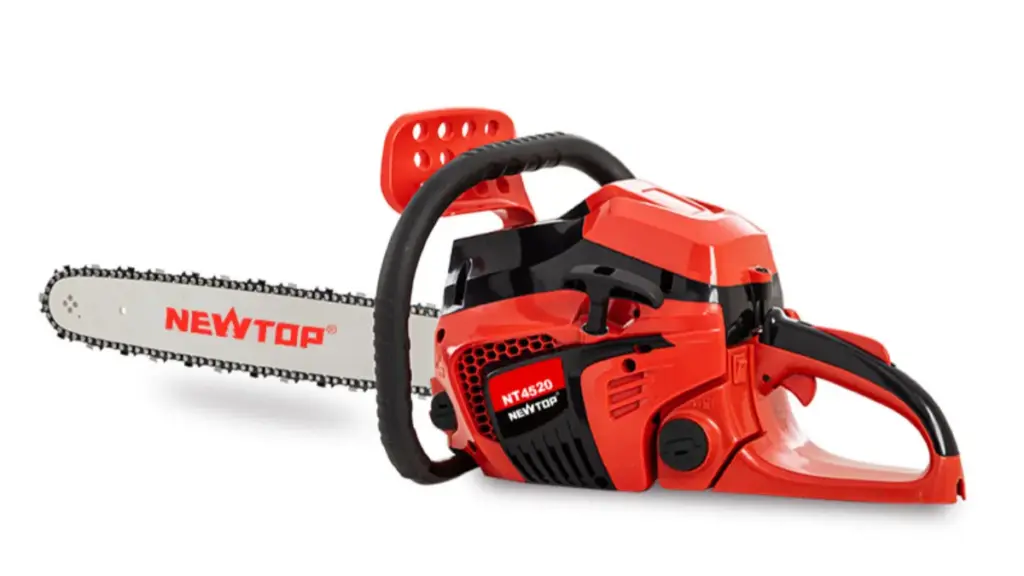
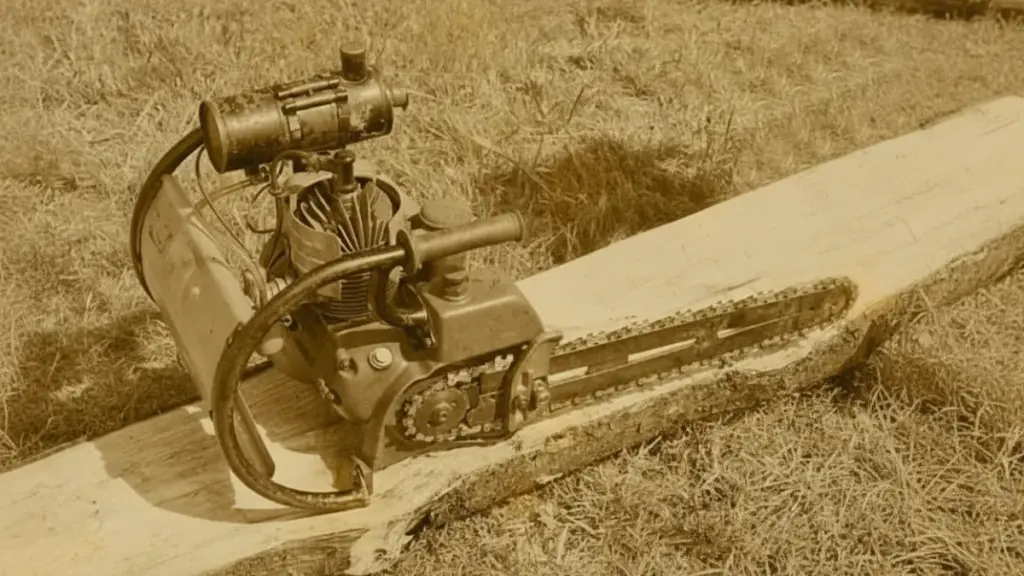
Chainsaw evolution is a story of shedding weight and complexity, moving from massive two-operator industrial machines to lightweight, single-user tools engineered for safety, efficiency, and versatility.
| Era | Key Development | Peso & Operator Impact |
|---|---|---|
| 1920s–1940s | First Gas & Electric Models | Extremely heavy (100+ libras / 45+ kg); required two operators. |
| 1950s | The First One-Man Chainsaw | Weight reduced to 25–35 lbs (11–16 kg), enabling single-person use. |
| 1960s–1980s | Improved Power-to-Weight & Segurança | Weight dropped to ~15 lbs (6.8 kg); anti-vibration systems introduced. |
| 1990s–Present | Emphasis on Safety & Emissions | Standard models 9–11 lbs (4–5 kg); chain brakes and low-emission engines are standard. |
The evolution of chainsaws mirrors the broader development of outdoor power equipment.
Early Industrial Chainsaws (1920s–1940s)
Early gas-powered models weighed over 40–60 pounds (18–27 kg). They were bulky and difficult to maneuver. Despite this, they represented a massive improvement over manual saws in terms of cutting speed and output.
Post-War Technological Improvements (1950s–1970s)
After World War II, advancements in lightweight alloys and two-stroke engine design made chainsaws more compact and powerful. One-person operation became feasible.
Brands such as Husqvarna and McCulloch helped popularize consumer-grade chainsaws.
During this period, innovations included:
- Anti-vibration systems
- Improved chain brake mechanisms
- Automatic chain lubrication
- Better carburetion systems
These changes improved both performance and operator safety.
Modern High-Performance Era (1980s–Present)
Today’s chainsaws are engineered for durability, power efficiency, and user comfort. They are available in multiple configurations:
- Gasoline-powered chainsaws
- Corded electric chainsaws
- Lithium battery-powered chainsaws
Professional forestry chainsaws now deliver optimized power-to-weight ratios, precision-engineered guide bars, and advanced chain designs for reduced kickback and smoother cutting.
Ao mesmo tempo, battery chainsaws are rapidly growing in popularity for landscaping, municipal maintenance, and home garden applications due to:
- Lower noise levels
- Zero direct emissions
- Reduced maintenance
- Instant start functionality
The evolution reflects not only mechanical innovation but also changing environmental regulations, user expectations, and global market demands.
Modern Uses of Chainsaws Today
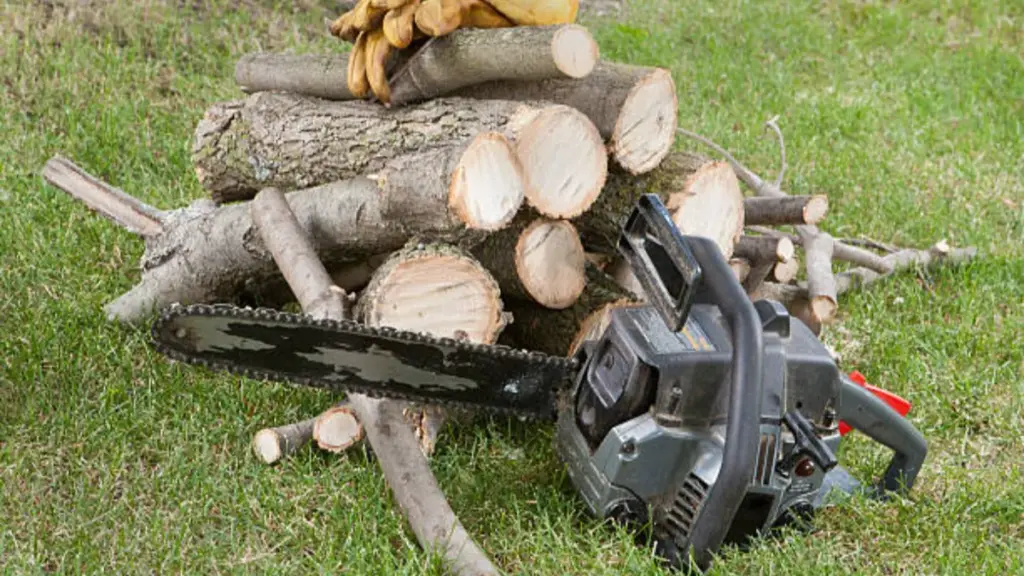
Modern chainsaws have expanded beyond traditional logging into specialized professional roles like mass-timber construction, post-storm salvage, and utility vegetation management.
Modern chainsaws are no longer limited to logging. Their applications span multiple industries:
- Forestry and timber harvesting
- Arborist tree trimming
- Land clearing and agriculture
- Disaster recovery and storm cleanup
- Construction and demolition
- Firewood processing
- Garden and property maintenance
Professional logging chainsaws are engineered for extended operation under heavy loads, often exceeding 300 hours of durability under standardized testing conditions. Enquanto isso, mid-range and entry-level models serve farmers, contractors, and DIY users. Battery-powered models have expanded chainsaw accessibility, particularly in emerging markets where portability and low maintenance are valued.
Para distributors and agricultural equipment suppliers looking for reliable mid-range solutions, brands such as NOVOTOP (Shanghai-based outdoor power equipment manufacturer since 2003) provide a comprehensive portfolio covering gasoline, electric, and lithium-powered chainsaws. Explore our full range of chainsaws and request a personalized quote today to find the model that fits your market needs.
Common Myths and Misconceptions About Chainsaw Origins
The most persistent myths about chainsaw origins incorrectly attribute the tool to forestry and German inventors, masking its true 18th-century Scottish medical roots and the 140-year gap before its adoption for woodcutting.
Myth 1: Chainsaws Were Invented for Cutting Trees
The primary misconception is that chainsaws were designed for forestry. All evidence shows the tool was created as a medical instrument. Scottish doctors John Aitken and James Jeffray developed the first prototypes between 1783 e 1785 to cut bone during difficult childbirths, a procedure known as a symphysiotomy. Their device was a hand-cranked saw with a segmented blade, designed for surgical precision, not felling timber. Its purpose was to make a dangerous and slow medical procedure faster and safer.
Myth 2: A German Inventor Created the First Chainsaw
Another common belief credits German inventors with the chainsaw’s creation, but this confuses motorization with invention. The tool’s origin is Scottish, predating any German contributions by several decades. While the foundational concept was a Scottish medical innovation, German engineers like Andreas Stihl played a critical role in adapting and motorizing the chainsaw for forestry applications in the 1920s. They transformed the existing concept into a powerful industrial tool, but they did not invent the original device.
Myth 3: The Tool Quickly Evolved from Surgical to Logging Use
Many people underestimate the timeline of the chainsaw’s evolution. There was a significant gap of over 140 years between its use as a precision surgical device and its adaptation as a motorized woodcutting tool. The medical prototype existed in the 1780s, but powered forestry tools based on the same principle did not appear until the 1920s. This slow transition highlights the massive engineering leap required to convert a small, hand-cranked surgical instrument into a robust, engine-powered machine capable of industrial logging.
Conclusão
The chainsaw began as a surprising medical device and evolved into the powerful woodcutting tool we recognize today. Its history is a clear example of how a tool’s function can dramatically change through innovation. Modern designs reflect over a century of development focused on operator safety and efficiency.
If this history makes you reconsider your own equipment, explore our catalog of modern chainsaws built for safety and performance. Our specialists can help you select the right tool for your application.
Perguntas frequentes
Was the chainsaw really invented for childbirth?
Partially. The original late-18th-century chain osteotome was designed to assist in bone-cutting procedures, including certain childbirth complications. No entanto, it was not comparable to modern woodcutting chainsaws.
Who invented the first gas-powered chainsaw?
German engineer Andreas Stihl is credited with patenting one of the first practical gasoline-powered chainsaws in 1929, laying the foundation for commercial forestry chainsaw development.
What did the first chainsaw look like?
The earliest version resembled a small hand-cranked surgical instrument with a serrated chain loop—not an engine-powered machine.
How heavy were original industrial chainsaws?
Early 20th-century industrial chainsaws often weighed between 40 e 60 pounds (18–27 kg) and required two operators
Why did chainsaws replace manual crosscut saws?
Chainsaws dramatically increased cutting speed, reduced labor requirements, and improved productivity in large-scale timber harvesting. Ao longo do tempo, improved reliability and fuel efficiency made them economically advantageous.
What were chainsaws invented for?
Chainsaws were originally invented for surgical bone cutting. They were later adapted for forestry and industrial woodcutting, eventually becoming essential tools in logging, agricultura, paisagismo, and construction.

À medida que entramos 2026, o cenário da manutenção de jardins está mudando em direção à eficiência, ergonomia, e liberdade sem fio. Compacto e poderoso, As mini motosserras estão revolucionando a manutenção de jardins com seu design leve e conveniência sem fio. Ideal para poda, aparar, e xilogravura leve, essas ferramentas de poda portáteis oferecem eficiência sem o volume dos modelos de tamanho normal.
Neste guia, exploramos as melhores seleções de mini motosserras para 2026, focando nos avanços tecnológicos em sistemas de íons de lítio e por que essas potências compactas estão se tornando um produto básico em todos os galpões de ferramentas.
O que é uma mini motosserra? A ascensão da poda portátil

Por 2026, a mini motosserra evoluiu de uma ferramenta profissional de nicho para uma ferramenta convencional, solução alimentada por bateria para proprietários de residências, impulsionado por uma demanda por equipamentos de poda acessíveis e menos exigentes fisicamente.
A moderna mini motosserra é leve, alternativa fácil de usar aos modelos tradicionais, projetado especificamente para cortes leves a moderados. Seu crescimento de mercado é uma resposta direta à demanda dos consumidores e prosumidores por compactos, ferramentas acessíveis que não requerem força física ou nível de experiência de maiores, serras a gás. O design central prioriza a conveniência e o controle sobre a energia bruta, tornando-o uma ferramenta prática para manutenção de rotina da propriedade.
- A maioria dos modelos é sem fio e alimentada por bateria, oferecendo portabilidade máxima para trabalhar em torno de uma propriedade.
- Os designs enfatizam o manuseio ergonômico para proporcionar ao usuário melhor controle e reduzir a fadiga durante o uso.
- Eles são construídos para tarefas como podar galhos de árvores, aparar arbustos crescidos, e corte de madeira para projetos DIY de pequena escala.
Principais tendências tecnológicas em 2026
Os avanços tecnológicos recentes concentram-se na melhoria da eficiência energética, segurança do operador, e conveniência geral. Os fabricantes concentraram-se no refinamento dos sistemas de baterias e na integração de medidas de segurança robustas para tornar estas ferramentas mais fiáveis para uma base de utilizadores mais ampla. Este impulso de engenharia transformou as mini motosserras de uma novidade em um equipamento confiável para uso residencial, onde o baixo ruído e a facilidade de manuseio são fatores críticos de compra.
- A indústria adotou amplamente motores de cobre de alta eficiência e sistemas de baterias de íons de lítio de carregamento rápido.
- Recursos avançados de segurança, como freios automáticos de corrente e correntes de baixo contragolpe, estão se tornando padrão.
- Os designs modernos reduzem significativamente o ruído e a vibração, tornando-os adequados para uso em ambientes suburbanos.
Expandindo aplicativos além do uso profissional
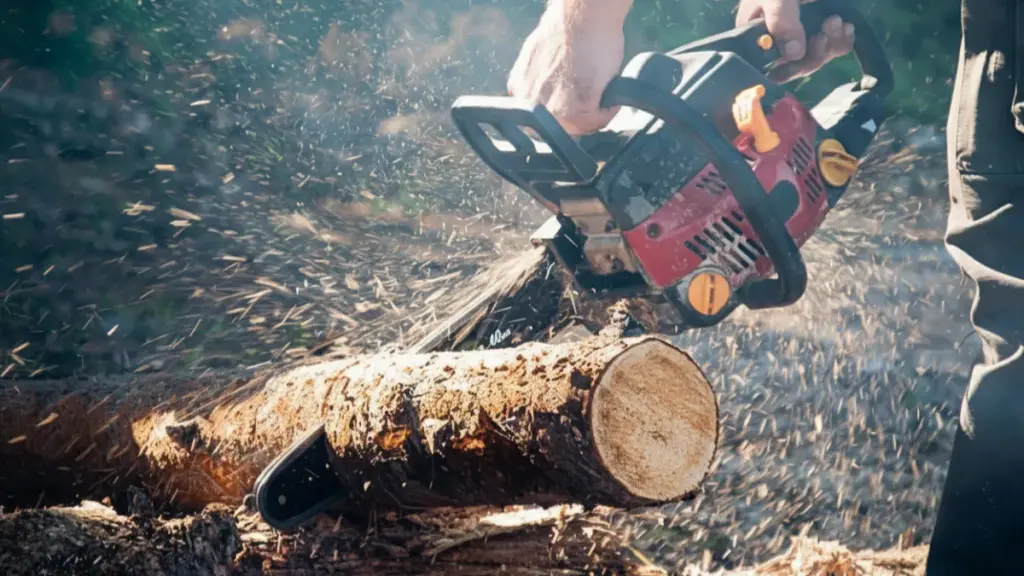
As mini motosserras passaram com sucesso de uma ferramenta especializada para arboristas para um instrumento versátil para o consumidor médio. Sua operação simples e tamanho gerenciável desbloquearam novas aplicações na manutenção doméstica em geral, recreação ao ar livre, e até mesmo preparação para emergências. Esta mudança reflete uma tendência maior em direção a soluções compactas, ferramentas alimentadas por bateria que resolvem problemas cotidianos sem a complexidade dos equipamentos tradicionais.
- Amplamente utilizado para jardinagem doméstica, poda de galhos, e limpando pequenas manchas de pincel.
- Uma ferramenta comum em projetos DIY para fazer trabalhos rápidos, cortes limpos em vários materiais de madeira.
- Serve como complemento prático aos kits para camping, manutenção de trilhas, e limpeza de tempestades.
Prós e contras de mini motosserras para manutenção de jardins
A principal desvantagem das mini motosserras é clara: eles fornecem conveniência e portabilidade excepcionais para tarefas leves, mas são fundamentalmente limitados pela durabilidade da bateria e pelo corte de energia, tornando-os inadequados para aplicações pesadas.
| Aspecto | Prós | Contras |
|---|---|---|
| Portabilidade | Ultraleve (2-6 libras), uso com uma mão | Limitado a pequenos trabalhos |
| Poder | Motores sem escova, 100+ cortes/cobrança | Luta com madeira grossa |
| Manutenção | Lubrificador automático, tensão sem ferramenta | A vida útil da bateria varia (20-60 min) |
| Custo | Acessível ($50-200) | Marcas premium mais caras |
Vantagens para jardineiros domésticos
As mini motosserras se destacam na manutenção rotineira de jardins porque seu design prioriza a facilidade de uso. Os proprietários obtêm benefícios significativos com sua portabilidade e baixa manutenção, especialmente para podas e aparas leves, onde uma serra de tamanho normal seria excessiva. A mudança do mercado em direção a essas ferramentas reflete uma demanda por recursos acessíveis, equipamento ecológico para manutenção de propriedades residenciais.
- Portabilidade e Design Leve: O tamanho compacto torna-os fáceis de manusear para trabalhos rápidos, reduzindo a fadiga física comumente associada a exercícios mais pesados, equipamento movido a gás.
- Conveniência sem fio e baixa manutenção: A energia da bateria de íons de lítio elimina completamente a necessidade de misturar combustível e óleo. Isto simplifica a operação e reduz drasticamente a manutenção do motor exigida pelas serras tradicionais.
- Quieto, Operação com emissão zero: A energia da bateria significa menos ruído, tornando-os ideais para uso em áreas suburbanas ou residenciais. Eles não produzem emissões diretas, que é um forte impulsionador de compras para usuários ambientalmente conscientes.
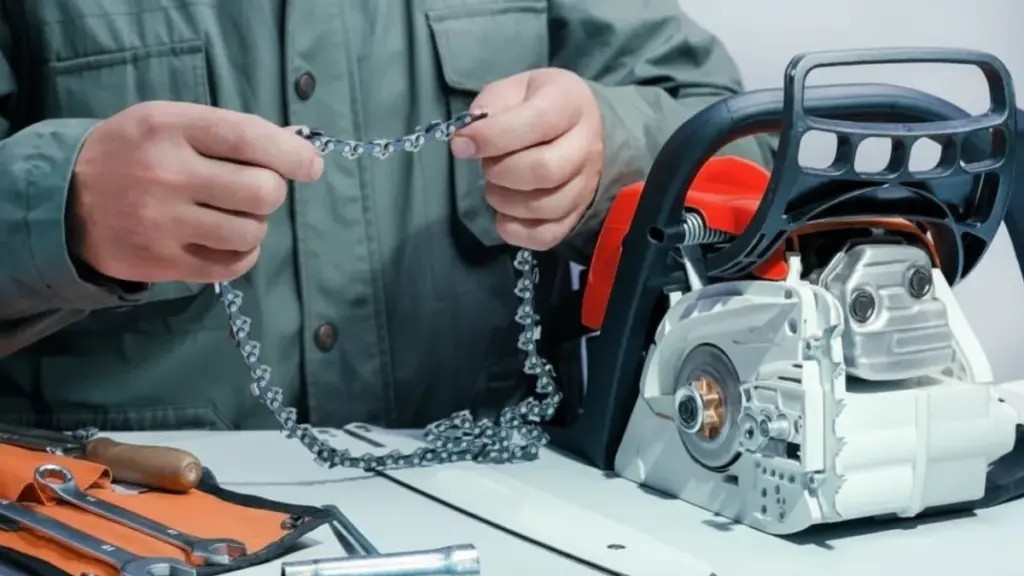
Limitações e desvantagens práticas
Embora conveniente, os limites práticos de uma mini motosserra são definidos pela sua potência e duração da bateria. Estas desvantagens limitam a sua utilização a trabalhos ligeiros e tornam-nos uma escolha inadequada para qualquer trabalho florestal exigente ou profissional.. O design principal prioriza a facilidade de manuseio em detrimento do desempenho bruto.
- Potência limitada e capacidade de corte: Essas ferramentas lutam com galhos grossos, madeiras densas, ou qualquer tarefa além do simples corte. Seus motores não têm torque para trabalhos de corte mais substanciais.
- Ciclos de resistência e recarga da bateria: O tempo de operação é estritamente limitado pela capacidade da bateria. Trabalhos maiores são frequentemente interrompidos pela necessidade de trocar baterias ou aguardar longos ciclos de recarga.
- Não adequado para uso pesado ou profissional: A compensação pela portabilidade é uma perda direta de potência e durabilidade. Eles não atendem aos padrões de desempenho ou robustez exigidos para paisagismo profissional ou corte de árvores.
Equipe seu mercado com ferramentas de jardim de nível profissional

Modelos de mini motosserra com melhor classificação para 2026: Uma revisão comparativa
Para 2026, as melhores mini motosserras combinam agilidade com desempenho de corte, oferecendo soluções confiáveis para proprietários e profissionais. Abaixo, analisamos as mini motosserras de melhor desempenho que atualmente definem o mercado, variando de modelos a gás de última geração a podadores ergonômicos de íons de lítio.
Motosserra NEWTOP NT2500 – Melhor para poda profissional
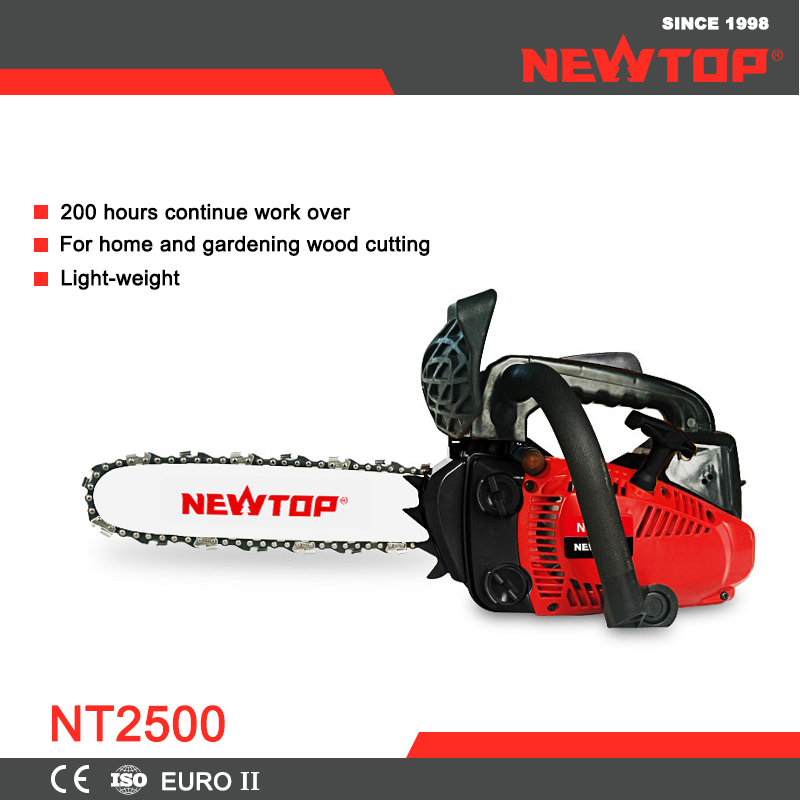
O NEWTOP NT2500 é uma motosserra de cabo superior movida a gás projetada para arboristas e tarefas exigentes. Seu motor de 25,4 cc e barra de 12 polegadas fornecem potência sustentada para cortar galhos de até 8 polegadas de espessura. Construído com componentes premium, como carburadores Walbro e conformidade com EURO II, garante durabilidade e torque consistente para uso durante todo o dia.
- Motor: 25.4cc 2 tempos (0.9kW/1,2 CV)
- Comprimento da barra: 12 polegadas (30.4cm)
- Peso: 3.5kg seco (7.7libras)
- Características: Sistema antivibração, ignição digital, 230tanque de combustível ml
| Prós | Contras |
|---|---|
| Autonomia ilimitada com recargas de combustível; alto torque para madeira densa | Requer mistura de combustível e manutenção regular do motor |
| Durabilidade de nível profissional com certificações CE/GS/EPA | Operação mais ruidosa do que alternativas elétricas |
Machado Milwaukee M18 FUEL – Melhor para velocidade em serviços pesados
O Milwaukee M18 FUEL Hatchet oferece potência e velocidade impressionantes, tornando-o um favorito entre paisagistas profissionais. Integrado no sistema de bateria M18, ele corta madeiras nobres de 3 polegadas sem esforço e oferece até 120 cortes por carga. Seu design ergonômico e pontas metálicas proporcionam controle superior durante sessões de poda intensivas.
- Tensão: 18V íon-lítio
- Comprimento da barra: 8 polegadas
- Peso: 4.9libras (ferramenta nua)
- Características: Motor sem escova, lubrificador automático, gatilho de velocidade variável
| Prós | Contras |
|---|---|
| Velocidade de corte extremamente rápida; qualidade de construção robusta | Preço premium em comparação com modelos de consumo |
| Compatível com extenso ecossistema de ferramentas M18 | Mais pesado que as mini motosserras típicas de 6 polegadas |
Ryobi 18V ONE + HP – Melhor para versatilidade para proprietários domésticos
A mini motosserra 18V ONE+ HP da Ryobi atinge um equilíbrio perfeito entre desempenho e conveniência para os entusiastas do faça você mesmo. Parte do enorme sistema ONE+, possui um motor sem escova que prolonga a vida útil e o tempo de execução do motor. A barra compacta de 6 polegadas é ideal para aparar galhos e controlar o crescimento excessivo do jardim com o mínimo de fadiga.
- Tensão: 18V íon-lítio
- Comprimento da barra: 6 polegadas
- Peso: 3.7libras (ferramenta nua)
- Características: Tensionamento da corrente sem ferramentas, gatilho ambidestro, design sem óleo
| Prós | Contras |
|---|---|
| Excelente valor; bateria funciona com 260+ ferramentas | Velocidade de corte mais lenta em madeiras nobres |
| Leve e fácil de manobrar para iniciantes | A falta de lubrificador automático requer lubrificação manual |
Stihl GTA 26 – Melhor para detalhes de jardim de precisão
O Stihl GTA 26 é um podador de bateria ultracompacto projetado para trabalhos detalhados de jardim e máxima portabilidade. Seu design exclusivo permite cortes precisos em arbustos e árvores pequenas onde serras maiores não conseguem alcançar. Embora não seja um cara pesado, sua operação silenciosa e ergonomia cuidadosa o tornam perfeito para áreas residenciais sensíveis ao ruído.
- Tensão: 10.8V íon-lítio
- Comprimento da barra: 4 polegadas
- Peso: 2.7libras (com bateria)
- Características: Indicador LED de carga, capa protetora flexível, troca de corrente sem ferramentas
| Prós | Contras |
|---|---|
| Extremamente leve e silencioso; controle preciso | Capacidade de corte limitada para ramos grossos |
| Recursos de engenharia e segurança alemães de alta qualidade | Curta duração da bateria por carga (aprox.. 25 minutos) |
Mini motosserra vs.. Motosserra Padrão: Quando trocar de ferramentas
Quando uma mini motosserra é a escolha certa
Uma mini motosserra é a ferramenta certa para trabalhos que exigem portabilidade, precisão, e operação com uma mão. Seu design leve o torna ideal para podar galhos de árvores, aparar arbustos crescidos, e cortar lenha de pequeno diâmetro sem causar fadiga ao operador. Foi construído para ser rápido, cortes controlados onde uma serra maior seria incômoda e insegura.
- Use para ramificações e logs normalmente em 6 polegadas de diâmetro.
- Excelente para tarefas de manutenção rápida no jardim ou propriedade.
- Fornece manobrabilidade superior em espaços apertados ou ao trabalhar em uma escada.
- A energia da bateria oferece um ambiente silencioso, solução livre de emissões para áreas residenciais.
Quando usar uma motosserra padrão
Para trabalhos pesados, uma motosserra padrão é essencial. Sua potência superior e maior comprimento de barra são necessários para derrubar árvores, quebrando toras grandes em seções, e limpando danos significativos da tempestade. Tentar realizar essas tarefas com uma mini motosserra não é apenas ineficaz, mas também extremamente perigoso. Uma serra padrão fornece a estabilidade e a capacidade de corte necessárias para trabalhos em grande escala.
- Necessário para derrubar árvores e cortar madeira mais espessa que 6-8 polegadas.
- Fornece a energia bruta necessária para o processamento eficiente e seguro de grandes volumes de madeira.
- Projetado para controle com as duas mãos, fornecendo a estabilidade necessária para cortes exigentes.
- Os modelos movidos a gás oferecem desempenho sustentado para trabalho durante todo o dia em locais remotos sem acesso a carregamento.
Principais diferenças em potência e tempo de execução
A principal distinção entre essas ferramentas reside na sua fonte de energia e resistência. As mini motosserras operam com baterias de íons de lítio com autonomias típicas de 30 para 100 minutos, tornando-os adequados para curto prazo, trabalhos intermitentes. As motosserras padrão estão disponíveis em opções de gás e bateria de alta tensão, projetadas para uso prolongado, operação contínua sob carga pesada.
- Mini motosserras oferecem conveniência para levar e levar rapidamente, cortes direcionados.
- As motosserras padrão fornecem a potência sustentada necessária para projetos que duram várias horas.
- A duração do trabalho determina a escolha da ferramenta; uma mini serra é para podar, enquanto uma serra padrão lida com um dia inteiro de processamento de madeira.
Como escolher a melhor mini motosserra com base no comprimento da barra
Escolher o comprimento correto da barra é uma troca crítica entre a capacidade bruta de corte e a manobrabilidade necessária para tarefas específicas, impactando diretamente a eficiência da ferramenta e o controle do usuário.
Compreendendo o comprimento da barra e a capacidade de corte
O comprimento da barra de uma mini motosserra define diretamente o diâmetro máximo da madeira que você pode cortar em uma única passagem. Esta medição reflete a área de corte ativa, da ponta da barra até a frente do corpo da serra. Para a maioria dos trabalhos residenciais em 2026, modelos com barras entre 10 e 14 polegadas fornecem um equilíbrio sólido entre capacidade e controle. Uma orientação confiável é escolher uma barra que seja pelo menos cinco centímetros mais longa do que os galhos mais grossos que você pretende cortar.. Este dimensionamento torna a maioria das mini motosserras ideais para poda, enterro, e processando logs até 12 polegadas de diâmetro.
Correspondência do comprimento da barra à fonte de alimentação
O desempenho de uma mini motosserra depende de uma relação adequadamente equilibrada entre o comprimento da barra e a potência do motor. Modelos elétricos sem fio são projetados especificamente para emparelhar barras mais curtas com a saída da bateria para obter eficiência ideal. Esses sistemas funcionam melhor com 10- para barras de 12 polegadas que exigem menos energia, o que ajuda a conservar a vida útil da bateria e manter o torque de corte. Tentar encaixar uma barra mais longa em um motor de baixa potência resultará em corte lento, ligação de cadeia frequente, e desgaste prematuro dos componentes. Os fabricantes projetam essas ferramentas como sistemas integrados para fornecer resultados consistentes, desempenho confiável para os usuários pretendidos.
| Comprimento da barra | Caso de uso principal | Diâmetro máximo de corte (Típico) |
|---|---|---|
| 10 Polegadas | Poda leve, aparar arbustos, corte detalhado | Até 8 polegadas |
| 12 Polegadas | Manutenção geral de pátio, limpando membros, lenha pequena | Até 10 polegadas |
| 14 Polegadas | Cortar galhos mais grossos e derrubar árvores pequenas | Até 12 polegadas |
Por que escolher NEWTOP para o seu negócio?
Como um TOPO 5 fabricante de equipamentos de jardim na China, NOVOTOP estabeleceu uma reputação global baseada em três pilares: Confiabilidade, Preço, e serviço profissional. Somos especializados em preencher a lacuna entre a produção em alto volume e suporte de mercado localizado.
- Escala de Fabricação: Nossa unidade de produção de 10.000㎡ está equipada com usinagem CNC de precisão e linhas de montagem automatizadas, produzindo mais 500,000 unidades anualmente para garantir cadeias de fornecimento estáveis para nossos parceiros.
- Logística Mundial & Apoiar: Com 20+ filiais no exterior e armazéns dedicados, oferecemos suporte pós-venda localizado e disponibilidade de peças de reposição - um nível de serviço que “somente on-line” marcas não podem corresponder.
- Experiência em OEM/ODM: Oferecemos serviços abrangentes de personalização, permitindo que você ajuste as especificações do produto, marca, e embalagem para atender às necessidades do mercado local, utilizando nossas plataformas mecânicas comprovadas.
- Garantia de qualidade: Cada unidade passa por testes rigorosos, incluindo inspeção de matéria-prima e durabilidade de 500 horas, garantindo que nossas ferramentas atendam CE, GS, e padrões da EPA.
Faça parceria com um fabricante líder de equipamentos elétricos para ambientes externos
Você deseja expandir seu estoque com produtos confiáveis, máquinas de jardim de alto desempenho? Quer você seja um distribuidor regional, proprietário de uma marca em busca de soluções OEM, ou um grande varejista, nós fornecemos a estabilidade de fabricação e o conhecimento técnico que você precisa para crescer.
Entre em contato com nossa equipe de vendas hoje mesmo para solicitar um catálogo de atacado ou discutir os requisitos de fabricação OEM.
Perguntas frequentes
Qual é um fabricante confiável de mini motosserra no mercado?
NEWTOP se destaca como um fabricante confiável com fábricas certificadas pela ISO9001, servindo 100+ parceiros em todo o mundo e no topo do ranking do Alibaba. Marcas como Milwaukee e Stihl também são confiáveis, mas NEWTOP oferece valor superior para desempenho de nível intermediário.
Uma mini motosserra pode cortar galhos grossos?
Sim, modelos de qualidade com 8-10 barras de polegada cortadas 4-8 ramos de polegada de forma eficaz, especialmente versões de lítio 21V. Evite exceder os limites recomendados para evitar emperramento ou tensão do motor.
Quanto tempo dura uma bateria de mini motosserra?
O tempo de execução varia: 12V baterias duram 20-30 minutos (50 cortes); 21Os modelos V/24V oferecem 45-90 minutos (100+ cortes). Fatores como a densidade da madeira afetam isso; Os pacotes de alta descarga da NEWTOP são excelentes.
As mini motosserras são seguras para iniciantes?
Absolutamente, com recursos como bloqueios de gatilho, guardas, e correntes de baixo retrocesso. Comece com 4-6 polegadas e siga os manuais - mais seguros do que os modelos a gás devido à ausência de fumaça ou acionamento por tração.
As mini motosserras precisam de lubrificação?
Sim. Mesmo sendo elétricos, o atrito da corrente gera calor. A maioria dos modelos possui um sistema de lubrificação semiautomático ou requer algumas gotas de barra & óleo de corrente cada 10-15 minutos de uso para garantir um corte suave.
Qual é o melhor tamanho de barra para uma mini motosserra?
6-10 polegadas equilibram potência e controle para a maioria dos usuários. Iniciantes: 6 polegadas; trabalho de jardim versátil: 10 polegadas como NEWTOP para membros mais grossos.
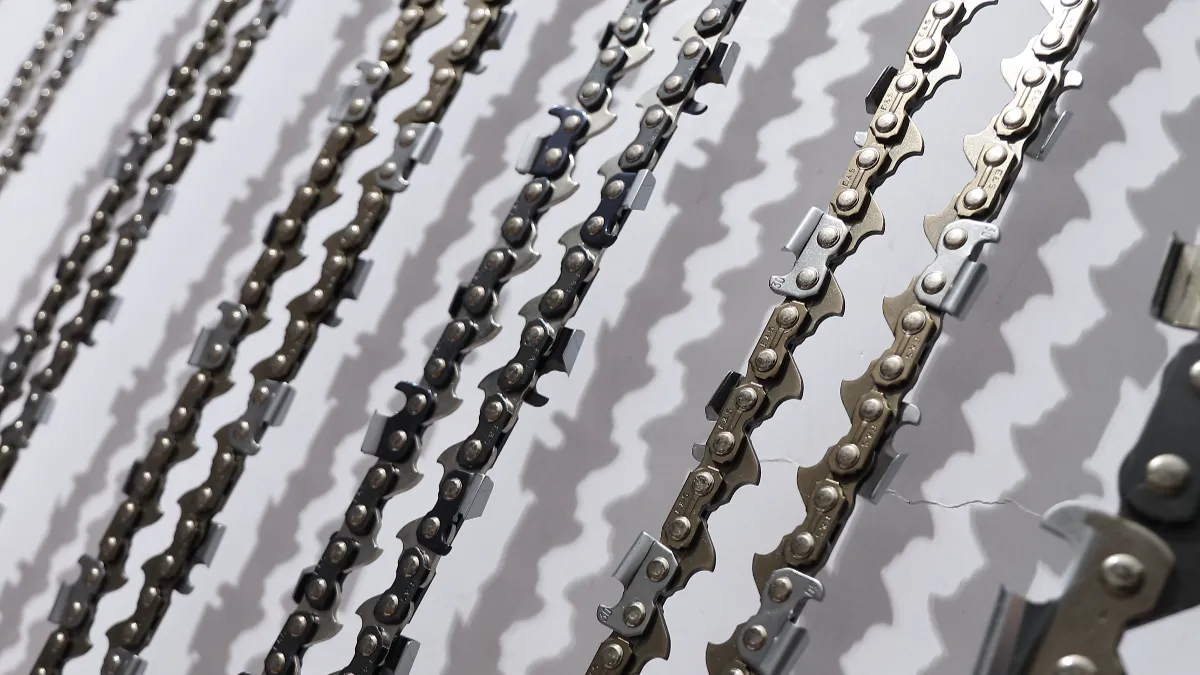
Selecting the right chainsaw chain—often referred to as chainsaw blades—can transform your cutting efficiency, segurança, and tool longevity. This guide breaks down chainsaw chain types, geometry, specs, and selection tips to help you make informed choices for your projects.
What are Chainsaw Blades?

Chainsaw blades, more accurately called saw chains, are the cutting components looped around a chainsaw’s guide bar. The geometry of these teeth—their shape, angle, and corner design—is the primary factor that determines the chain’s cutting speed and its suitability for different wood types.
The mechanical structure of a modern cutting chain consists of 4 primary components:
- Cutter Teeth: The functional part of the chain responsible for wood removal. Each tooth features a depth gauge (or “raker”) and a sharpened cutting edge.
- Drive Links: These links sit inside the groove of the guide bar and interface with the saw’s drive sprocket, transferring the engine’s torque into linear motion.
- Tie Straps: These serve as the connecting plates that hold the cutters and drive links together.
- Rivets: High-strength steel pins that act as pivot points, allowing the chain to remain flexible while maintaining high tensile strength under load.
Tooth Shape and Corner Design
The most significant variation in chain geometry is the cutter’s corner shape. Aggressive, square-cornered teeth define full-chisel chains and are built for maximum speed in clean hardwood. Rounded corners, found on semi-chisel and chipper chains, offer superior durability and maintain sharpness far longer when cutting in dirty, frozen, or abrasive conditions.
- Full-chisel chains use sharp, square corners to slice wood fibers with maximum efficiency.
- Semi-chisel and chipper chains have rounded corners that are more resistant to dulling from dirt and debris.
- Low-profile chains use smaller, rounded cutters engineered to reduce the potential for dangerous kickback.
Pitch and Gauge: Standardized Blade Sizing
Pitch and gauge are the two standardized measurements that ensure a chain is compatible with the chainsaw’s guide bar and drive sprocket. Pitch is the average distance between drive links, while gauge is the thickness of the drive links that ride inside the guide bar’s groove. Matching the chain’s pitch and gauge to the bar and sprocket is non-negotiable for safe and effective operation. Mismatched components can cause derailment and poor performance.
- Common pitch sizes include 1/4″, .325″, and 3/8″.
- Standard gauge measurements are .043″, .050″, e .058″.
Drive Links and Tie Straps: Chain Assembly
Drive links are the portions of the chain that sit within the guide bar groove. They engage the saw’s sprocket to propel the chain forward and guide it accurately. Tie straps are the connecting links that hold the cutters and drive links together to form a complete loop. The total number of drive links dictates the chain’s length. The sequence of cutters and tie straps also affects the chain’s cutting smoothness and vibration levels. Together, these components transfer power from the engine to the wood with functional precision.
Differences Between Each Type of Chainsaw Chain
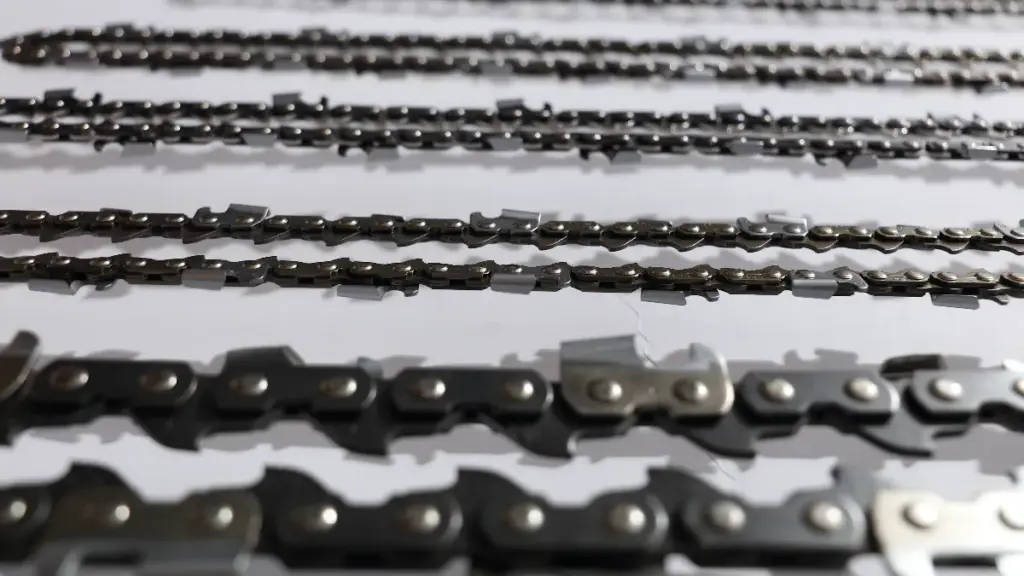
Picking the right chainsaw blade boils down to balancing speed, toughness, segurança, and upkeep. Here’s a full comparison table covering the most common types—from tooth profiles to layouts—across key dimensions. Use it to match your saw, wood, and job perfectly.
| Chain Type | Full-Chisel | Semi-Chisel | Micro-Chisel (Low-Profile) | Chipper | Skip Tooth |
|---|---|---|---|---|---|
| Tooth Profile | Square corners | Rounded corners | Small rounded | Highly rounded (? shape) | Spaced out teeth |
| Typical Pitch/Gauge | .325″-.404″/.050″-.063″ | .325″/.050″ | 3/8″ LP/.043″-.050″ | 3/8″-.404″/.050″ | .404″/.058″-.063″ |
| Cutting Speed | Very High | High | Medium | Medium-Low | Very High |
| Durability | Low (dulls fast) | High | Medium | Medium-High | High |
| Risco de retrocesso | High | Medium | Low | Very Low | High |
| Manutenção | High (precise sharpening) | Medium | Low | Low | Low |
| Power Requirement | High (50cc+) | Medium (40-60CC) | Low (30-50CC) | Low-Medium (35-55CC) | High (60cc+) |
| Primary Wood Type | Clean hard/soft | Dirty/frozen | Softwoods | Soft/clean | Wet/thick logs |
| Best Use Case | Clean wood milling | Firewood, dirty wood | Poda, beginners | Light safety tasks | Long bars, logging |
Full-Chisel Blades: Pros and Cons for Fast Clean Cuts
Full-chisel blades use aggressive, square-cornered teeth to deliver maximum cutting speed in clean wood, but this performance comes at the cost of high maintenance and a significant kickback risk.
Key Advantages: Speed and Cutting Efficiency
Full-chisel blades feature sharp, square-cornered teeth designed for aggressive cutting performance. They excel at moving through wood quickly, delivering clean finishes ideal for professional applications where speed is a priority. The geometry of the cutters slices wood fibers efficiently, resulting in faster work with less operator effort compared to other chain types.
- Delivers the fastest cutting speeds, particularly effective for felling and processing large-diameter hardwood and softwood logs.
- Produces clean, smooth cuts with minimal tear-out, making it suitable for tasks requiring a high-quality finish.
- The design enables rapid chip removal, which helps reduce binding and clogging during deep cuts.
Significant Disadvantages: High Maintenance and Kickback Risk
The trade-off for high performance is increased maintenance and a greater safety risk. The blade’s sharp corners dull easily in abrasive conditions, and its aggressive bite increases the likelihood of dangerous kickback. These chains are less forgiving and demand constant attention to maintain their edge.
- Dulls quickly, especially when cutting dirty or frozen wood, requiring frequent and technically challenging sharpening.
- Presents a high kickback risk due to its aggressive tooth design, making it unsuitable for inexperienced operators.
- More sensitive to dirt, sand, and debris, which can rapidly degrade cutting performance and damage the chain.
Ideal Use Cases for Professional Operators
Full-chisel blades are best suited for skilled professionals working in controlled environments with clean wood. Their benefits are maximized when operators can safely manage kickback and maintain the blade properly. It is a specialized tool for high-volume, precision work, not general-purpose cutting.
- Suited for experienced loggers and arborists performing felling and bucking tasks in clean conditions.
- Less appropriate for beginners, homeowners, or for work in unpredictable environments like storm cleanup.
- Requires an operator who can handle the increased power and safely manage the saw’s behavior.
Boost Your Margins with Reliable Equipment
Semi-Chisel Blades: Durability Benefits in Dirty Environments
Semi-chisel chains are the industry standard for harsh conditions because their rounded-corner tooth design prioritizes dulling resistance and operational uptime over the raw cutting speed of full-chisel blades.
Rounded Tooth Design for Dulling Resistance
The primary advantage of a semi-chisel blade comes from its rounded-corner tooth design. This less aggressive shape is far more resistant to dulling when cutting through wood contaminated with dirt, sand, or ice compared to the sharp point of a full-chisel blade. Its forgiving profile absorbs impacts from foreign objects that would otherwise chip or damage a sharper chain.
- Maintains a usable cutting edge for longer, reducing the frequency of sharpening.
- Handles accidental contact with ground debris without immediate failure.
- Ideal for processing firewood, clearing land, or cutting lumber in construction environments.
Extended Working Life in Harsh Conditions
These chains are built to last in imperfect conditions, often maintaining operational efficiency for 40-60 hours of active use before requiring service. This longevity makes them a cost-effective choice for demanding industrial, forestry, and agricultural applications where equipment uptime is critical. They deliver consistent performance where wood quality is unpredictable.
- Excels at cutting through dirty, frozen, or debris-laden wood.
- Reduces downtime associated with frequent chain sharpening or replacement.
- Provides reliable cutting when wood quality is low or inconsistent.
Balancing Cutting Speed with Lower Maintenance
A semi-chisel blade cuts slightly slower than a full-chisel blade in clean wood, but its durability creates a valuable trade-off. The reduced need for maintenance and lower risk of kickback make it a safer, more reliable option for most users. The rounded profile is also easier for operators to sharpen correctly compared to the precise angles of a full-chisel chain.
- A practical choice where equipment reliability is prioritized over raw cutting speed.
- Forgiving geometry simplifies the field sharpening process.
- Balanced performance is well-suited for both professional and semi-professional users.
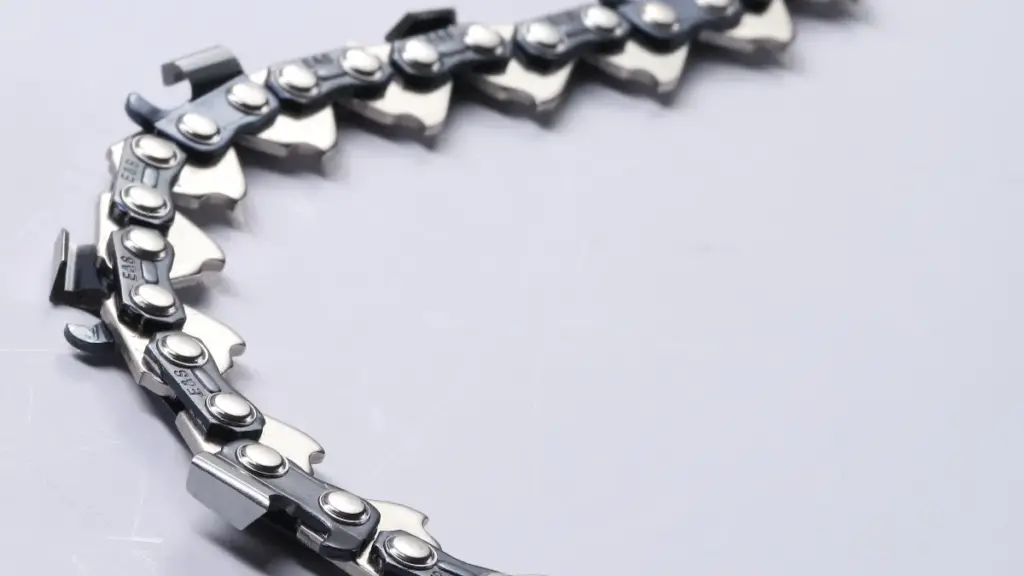
Chipper and Low-Profile Chains: Safety for Entry-Level Saws
Chipper and low-profile chains are now the industry baseline for entry-level equipment, engineered with integrated safety features that prioritize operator protection over raw cutting speed.
Low-Kickback Chain Designs
Chipper and low-profile chains are specifically engineered to reduce the risk of kickback, making them a standard safety component on consumer saws by 2026. These designs incorporate guard links between the cutters, a feature that physically prevents the chain from digging in too deeply at the tip of the bar—the primary cause of dangerous kickback events. This geometry is designed to meet established safety standards like ANSI B175.1, deliberately trading aggressive cutting speed for enhanced operator safety. This makes them the default choice for new or infrequent users who benefit most from the forgiving design.
Integrated Anti-Kickback Systems
Modern entry-level saws now include passive anti-kickback mechanisms directly in their core design. These systems are no longer positioned as premium add-ons but have become baseline safety features across the market. This shift reflects a broader industry trend toward built-in operator protection, driven by a need to both enhance user safety and reduce manufacturer liability. These integrated systems work in tandem with low-kickback chains to create a multi-layered defense against operational hazards.
Standardized Engineering Controls
Beyond the chain itself, current saws feature mandatory engineering controls to provide further layers of protection. Features such as strategically placed emergency shutoff systems and rubber infeed curtains are now common practice, not optional upgrades. This approach treats hardware-based safety innovations as foundational, complementing the expectation that operators will also use proper technique and personal protective equipment (EPI). The goal is a comprehensive safety system where the tool itself provides a high degree of inherent protection.
How to Choose the Right Chainsaw Blade Based on Wood Hardness
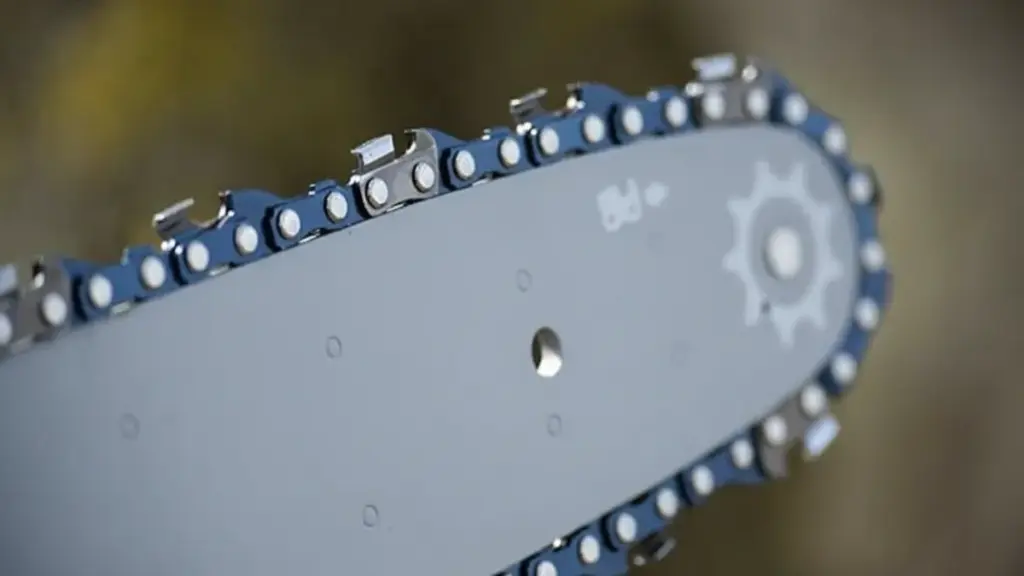
Selecting the right chainsaw chain is about matching the cutter’s geometry to the specific application, balancing the aggressive speed of full-chisel for clean hardwood against the durability of semi-chisel for mixed conditions or carbide tips for abrasive materials.
Softwoods (por exemplo, Pine, Cedar, Fir)
Because softwoods do not impose extreme thermal stress on the cutting edge, Full-Chisel chains are highly suitable for cutting softwood. The sharp 90-degree corner of the cutter penetrates these low-density fibers quickly. This allows the operator to maintain high speed without straining the engine or causing the saw to bog down.
Hardwoods (por exemplo, Oak, Maple, Hickory)
Hardwoods feature dense, resilient fibers that create significant resistance and heat during the cutting process. In these applications, Semi-Chisel chains are the superior choice. The rounded corner of the cutter is more stable when hitting dense grains. While it may cut slightly slower than a full-chisel chain, it maintains its sharpness longer and is less prone to “dulling” from the high friction temperatures.
Frozen and Abrasive Wood
In sub-zero temperatures, moisture within the wood turns into ice, making the timber act like an abrasive material. For frozen logs or wood covered in dirt and sand, you should use Semi-Chisel or specialized Carbide-tipped chains. The sharp points of full-chisel chains often chip or break when hitting ice crystals. Em contraste, the radiused or alloy-reinforced edges are built to withstand high-impact loads in these extreme conditions.
Why Choose NEWTOP Hard-Alloy Chains for Industrial Use?
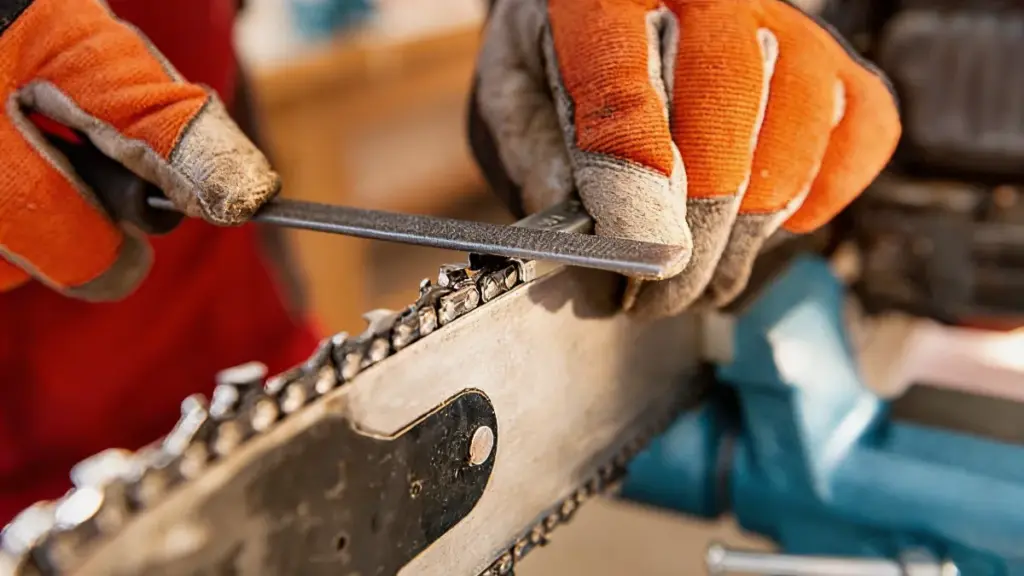
NEWTOP delivers a practical industrial solution by integrating premium hard-alloy chains from established global brands with its own precise, cost-efficient manufacturing process.
At NOVOTOP, our chainsaw chains are engineered for the rigors of global forestry, using high-tensile strength steel and advanced heat-treatment processes.
The NEWTOP Advantage:
- High-End Component Supply: We utilize supply chains similar to world-class brands, incorporating high-quality chrome plating on our cutter teeth to ensure lasting sharpness.
- Industrial Durability: Our chainsaw chains are tested for over 500 hours of performance, ensuring they withstand the tropical humidity of Southeast Asia and the rugged terrain of South America.
- Optimized Oil Channels: Every NEWTOP chainsaw chain features precision-engineered oil holes and grooves to ensure that lubrication reaches the rivets and drive links, reducing heat and stretching.
- Compatibility: We offer a full range of pitch and gauge combinations designed to work seamlessly with our gasoline chainsaw line and our emerging lithium-battery machinery.
Conclusão
Choosing the right chainsaw chain involves balancing cutting speed, durabilidade, and maintenance for each job. Matching the chain geometry, pitch, and gauge to your wood type and cutting conditions prevents premature dulling and reduces kickback risk. This technical knowledge directly impacts project efficiency, segurança do operador, and the lifespan of your equipment.
If your industrial operations require chains that excel in abrasive or demanding environments, explore NEWTOP’s hard-alloy options. Contact our team to request a product catalog or discuss specific application requirements for your fleet.
Perguntas frequentes
What are the 3 main types of chainsaw chains?
The three primary chainsaw chain types are full-chisel (aggressive speed), semi-chisel (balanced durability), and chipper/low-profile (safety-focused). Each suits different cutting demands from precision to rugged use.
Which chain is best for cutting hardwood?
Full-chisel chains excel for hardwood due to sharp square cutters that power through dense fibers quickly. Semi-chisel serves as a durable alternative for resinous species like oak.
What is the difference between full and semi chisel?
The main difference is the corner shape. Full-chisel has a square, 90-degree corner for speed; semi-chisel has a rounded corner for durability and edge retention in dirty conditions.
Are carbide-tipped chains worth it?
Sim, for specific applications. If you are cutting through burnt wood, demolition timber with nails, or extremely frozen logs, carbide-tipped chains stay sharp 25x longer than steel, though they require specialized sharpening.
Which chain type is safest against kickback?
Low-profile chipper chains are safest, with reduced kickback nose and shallow cutters meeting ANSI standards for electric and homeowner saws.
How do I identify my chainsaw blade type?
To identify your chainsaw chain, find three key numbers, typically stamped on the side of the chainsaw bar or on the chain’s drive links: Pitch, Gauge, and Drive Link Count. Por exemplo, you might see “.325” (Pitch), “.050” (Gauge), e “72DL” (72 Drive Links). To determine the cutter type, visually inspect the cutting teeth. Square for full-chisel, rounded for semi-chisel/chipper.
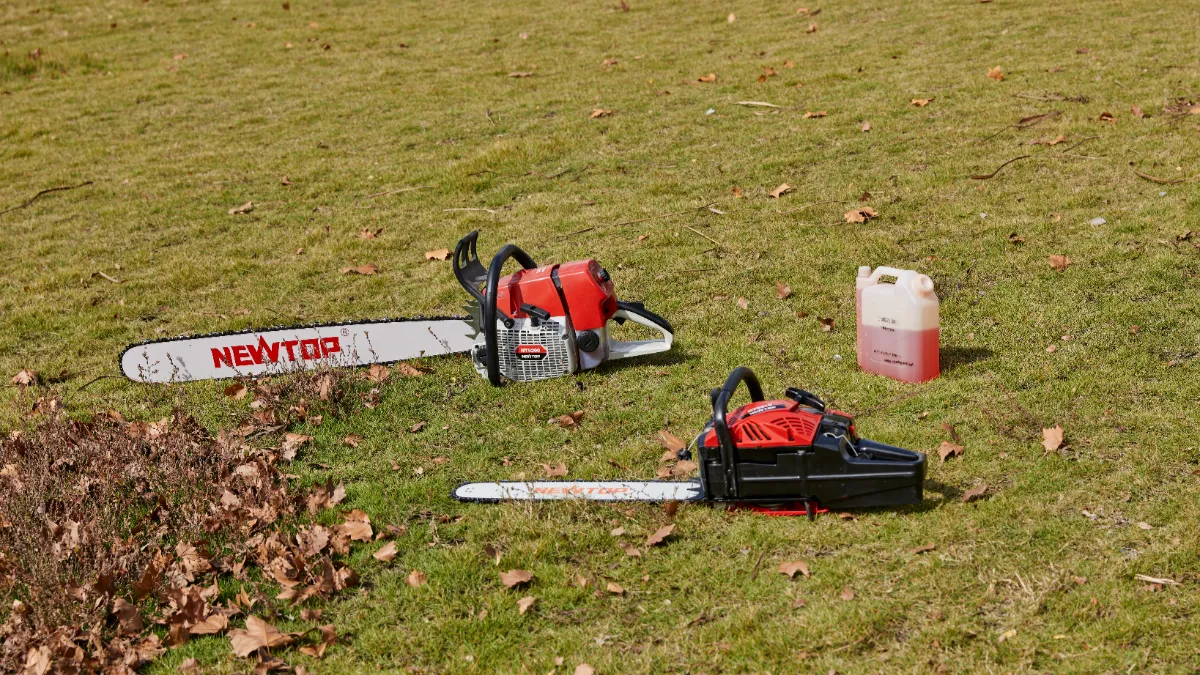
Selecting a chainsaw involves more than evaluating raw power. For professionals in the forestry, agricultural, and landscaping sectors, the choice of equipment directly impacts operational efficiency, maintenance overhead, and long-term ROI.
At NOVOTOP, we have spent over two decades refining the engineering behind wood-cutting machinery. This guide provides a technical breakdown of the different chainsaw types available today, focusing on their mechanical strengths and practical applications in various global markets.
What are the Different Types of Chainsaws? Category Overview
To understand the chainsaw market, one must look at how different power sources and mechanical designs cater to specific workloads. The following table provides a high-level comparison of the most common categories used in the industry today.
| Chainsaw Category | Power Source | Ideal Bar Length | Key Applications | Perfil de usuário |
|---|---|---|---|---|
| Gasolina (2-Stroke) | Petrol & Oil Mix | 16″ – 36″+ | Professional logging, land clearing, heavy felling. | Loggers, Farmers, Arborists |
| Battery (Lithium-ion) | 20V/40V/80V | 10″ – 18″ | Urban pruning, light firewood cutting, indoor use. | Landscapers, Homeowners |
| Corded Electric | AC Outlet | 12″ – 16″ | Backyard maintenance near power sources. | DIY Enthusiasts |
| Serras de poste | Gas or Battery | 8″ – 12″ | High-altitude pruning, orchard maintenance. | Orchardists, Municipalities |
| Top-Handle Saws | Gas or Battery | 10″ – 14″ | In-tree pruning and professional surgery. | Certified Arborists |
Gas-Powered Chainsaws: The Professional Standard for Power
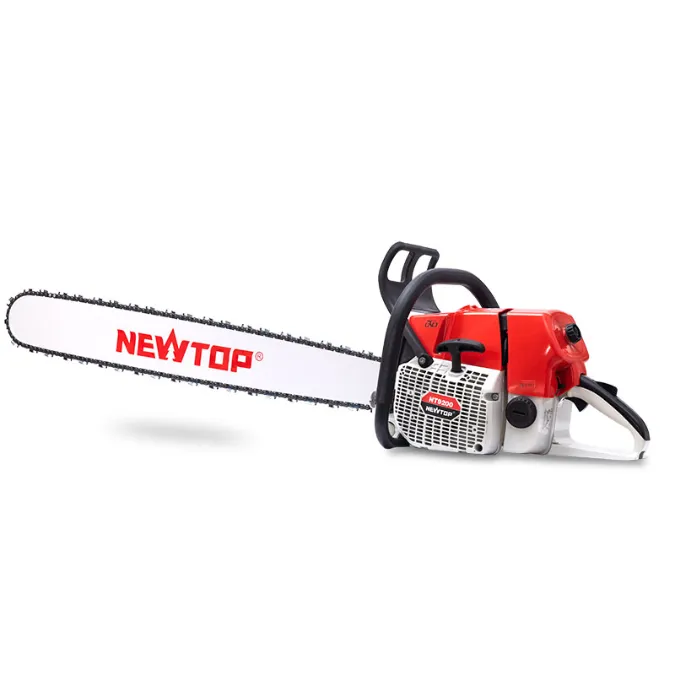
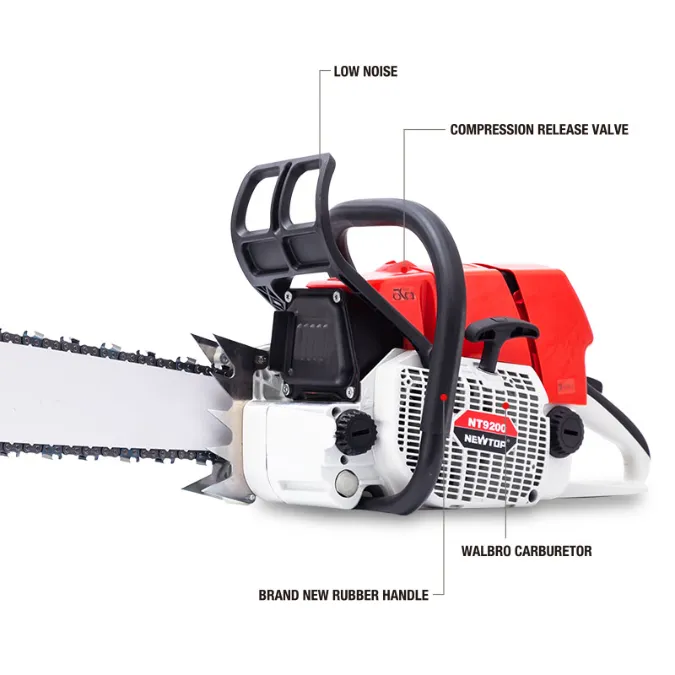
A gas-powered chainsaw is a heavy-duty tool driven by a two-stroke internal combustion engine that runs on a precise mixture of gasoline and oil. It is considered the industrial benchmark for raw power and endurance, specifically engineered for environments where electrical access is non-existent and the cutting workload is intense.
Características principais:
- Engine Displacement (CC): Power is measured in cubic centimeters; a higher displacement translates to the torque necessary for driving longer bars through dense timber.
- Operational Autonomy: These saws require no cords or charging stations. As long as fuel is available, they can operate indefinitely in remote forests or large farmlands.
- Extended Reach: Gas engines are capable of supporting guide bars from 16 to over 36 polegadas, making them the only viable option for felling large-diameter hardwoods.
- Durability: Built with robust metal components (such as magnesium crankcases), they are designed to withstand high-vibration and high-heat environments for extended shifts.
Advancements in Engine Technology and Emissions
The professional gas chainsaw market is shifting toward more advanced engine technologies that meet stricter environmental standards without sacrificing performance. Features that were once exclusive to high-end models, like electronic fuel injection (EFI) and advanced catalytic converters, are becoming more common across professional product lines.
- Electronic Fuel Injection (EFI) actively optimizes the air-fuel mixture, resulting in better fuel efficiency and more consistent power delivery across different altitudes and temperatures.
- Modern engines are engineered to comply with global emissions regulations while maintaining the strong performance that operators demand.
- These advancements help balance the operational needs of professional users with increasing environmental regulations.
Design Focused on Professional Use and Ergonomics
Chainsaw manufacturers design professional saws for people who depend on them for their livelihood, such as arborists, madeireiros, and commercial landscapers. A primary engineering goal is achieving an optimal power-to-weight ratio, making the tools powerful enough for tough jobs but light enough for all-day use. This focus on ergonomics is critical for user safety and productivity.
- Engineers emphasize reducing saw weight without compromising structural integrity or power output, which makes the equipment easier to handle for long workdays.
- Ergonomic handle designs and effective anti-vibration systems are standard features that reduce operator fatigue and improve cutting control.
- Every feature, from the placement of the chain tensioner to the type of air filter, is tailored to the needs of daily users who require maximum uptime and efficiency.
Market Segmentation and Service Infrastructure
The gas chainsaw market is clearly segmented, offering a wide range of models from entry-level professional saws to premium, industrial-grade felling equipment. Established manufacturers maintain their market dominance through extensive dealer networks that provide reliable access to service, repairs, and genuine replacement parts, which is a key purchasing factor for businesses.
- Price points vary significantly to accommodate different professional budgets and specific application requirements.
- Leading brands have built their reputations on decades of proven reliability and consistent field performance.
- A widespread service and support infrastructure ensures that professionals can keep their equipment running with minimal downtime.
Your Trusted Partner for Garden Tools
Battery and Corded Electric Saws: Modern Suburban Solutions
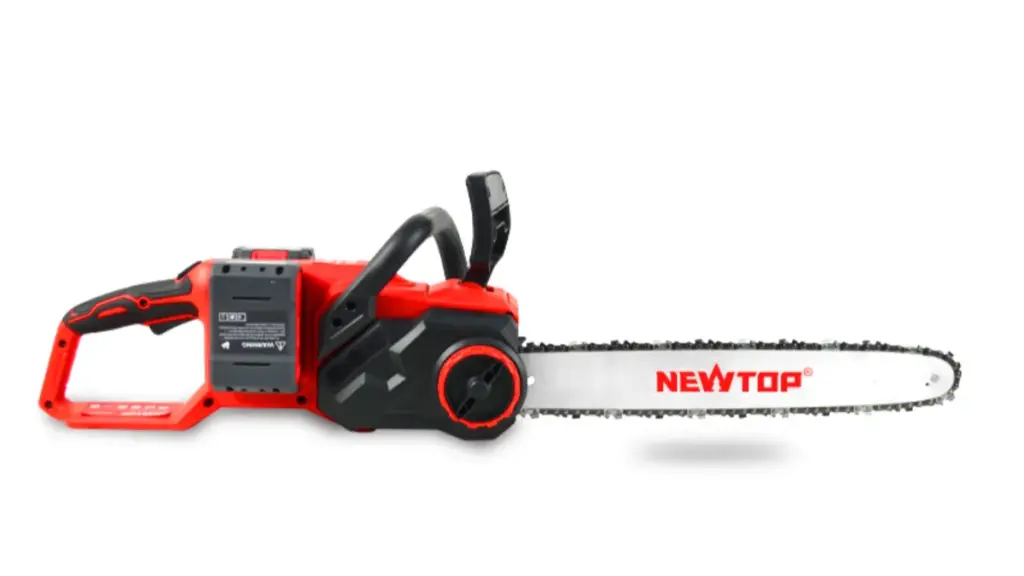
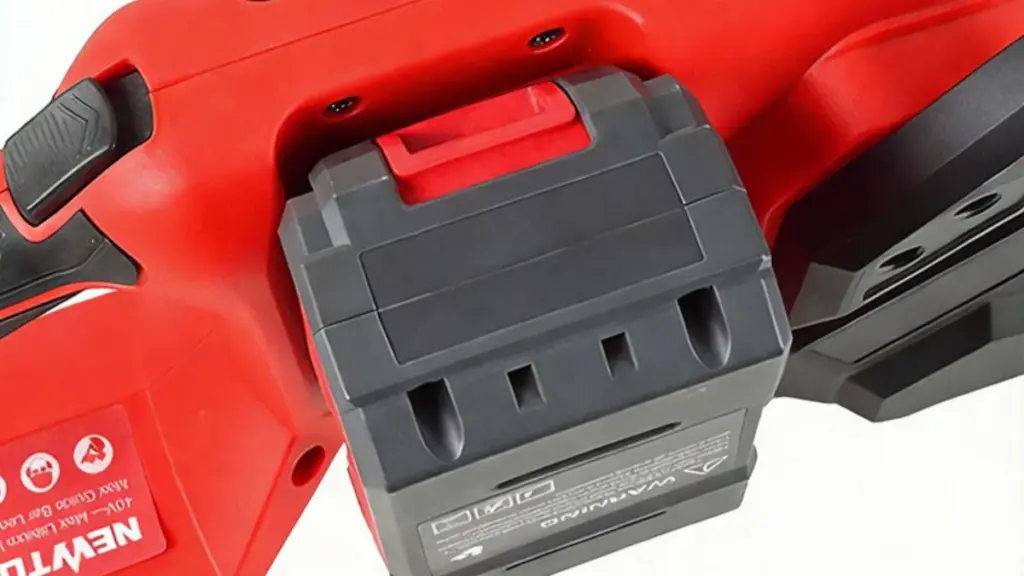
Electric chainsaws utilize an electric motor to drive the cutting chain, offering a cleaner, quieter, and more user-friendly experience than internal combustion models. They are categorized into two formats: corded (tethered to a power outlet) e battery-powered (Cordless Lithium-ion).
Características principais:
- Zero Local Emissions: No exhaust fumes are produced, making these saws ideal for indoor woodworking, estufas, or environmentally regulated urban zones.
- Instant Start Mechanism: Unlike gas saws that require a pull-start, electric models activate immediately with the press of a trigger.
- Low Maintenance Requirements: They eliminate the complexities of fuel mixing, carburetor tuning, and spark plug maintenance.
- Noise Management: Operating at significantly lower decibels, they reduce operator fatigue and are suitable for noise-sensitive residential neighborhoods.
Corded Electric Saws: Consistent and Unlimited Runtime
Corded electric saws are a reliable option for users who need a continuous power supply for extended projects near an outlet. They eliminate all concerns about battery life, offering consistent, non-fading performance for as long as the job takes. This makes them a practical choice for workshops or small yards where mobility is not the primary concern.
- Provides an uninterrupted power supply, eliminating the need to stop and recharge or swap batteries.
- Range of motion is limited by the length and management of the power cord.
- A practical choice for workshops, firewood processing stations, or small yards with readily available power outlets.
Core Differences in User Experience
The primary trade-off between battery and corded electric saws centers on portability versus runtime. Cordless models excel in convenience and flexibility, allowing users to work anywhere on a property without hindrance. Corded versions deliver constant power without interruption, making them better suited for stationary or localized jobs where uptime is critical.
- Battery saws prioritize mobility and ease of use for tasks distributed across a property.
- Corded saws ensure non-stop operation for stationary or localized tasks like bucking logs.
- Both types are generally quieter, lighter, and require significantly less maintenance than their gasoline counterparts.
Related Reading: If you are interested in gas chainsaws and electric chainsaws, check out our in-depth comparison on Electric vs. Gas Chainsaws to find more information for your specific needs.
Serras de poste and Telescopic Tools: Pruning at Heights
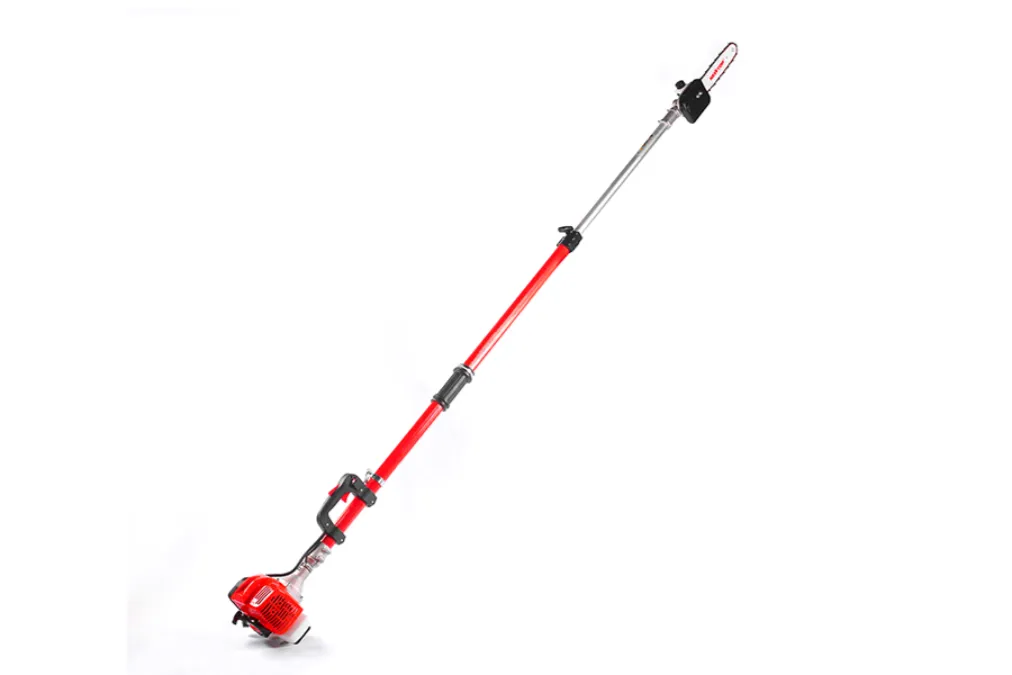
A pole saw is a specialized cutting tool featuring a compact chainsaw head mounted on an extendable, telescopic shaft. Its primary function is to manage high-altitude canopy maintenance, allowing the operator to prune or limb trees while standing securely on the ground.
Características principais:
- Telescopic Reach: The shafts can typically extend from 2 para 4 meters, providing an effective vertical reach that eliminates the need for ladders or scaffolding.
- Specialized Ergonomics: The weight distribution is centered to allow for easier maneuvering when the tool is fully extended overhead.
- Precision Cutting: Equipped with smaller guide bars (usually 8–12 inches), these tools are optimized for precision trimming in dense foliage rather than bulk wood cutting.
- Versatility: Many modern versions are part of multi-tool systems, where the power head can be interchanged with different attachments like hedge trimmers or brush cutters.
The Shift Toward Battery-Powered Solutions
The market for pole saws has decisively shifted from gas and manual models toward battery-powered electric tools. This trend is driven by clear demand for quieter, lower-maintenance equipment for routine property upkeep. Advances in lithium-ion battery technology now deliver the runtime and portability needed to handle substantial jobs without the complexity of mixing fuel or managing extension cords. These improvements make electric models a viable choice for both professional landscapers and homeowners seeking efficient performance.
Innovations for Safety and Efficiency
Current telescopic tools are engineered with features that directly improve safety and work output. The primary goal is allowing operators to effectively prune tall branches while remaining firmly on the ground. Extended reach capabilities, often reaching 15 feet or more, eliminate the instability and risk associated with using ladders. Onboard systems like automatic oilers maintain constant chain lubrication for reliable cutting, and adjustable cutting heads give operators better angles to access awkwardly positioned branches without compromising their stance.
Ergonomic Design to Reduce User Fatigue
Many outdoor power equipment manufacturers now focus heavily on ergonomics to make these long-reach tools comfortable enough for extended use. Managing the weight and leverage of a pole saw is physically demanding, so designs incorporate lightweight materials and improved balance to minimize strain on the user’s back and arms. A well-designed tool also features ergonomic handles that ensure a secure, controlled grip throughout the operation, which is critical for both safety and precision.
Pros and Cons of Each Chainsaw Type
| Chainsaw Type | Technical Pros | Operational Cons |
|---|---|---|
| Gasoline Chainsaws | Highest torque; no range limits; long bar compatibility. | High noise levels; requires fuel mixing; regular engine maintenance. |
| Battery Powered Chainsaws | Low noise; instant start; zero emissions; minimal maintenance. | Limited run time per charge; higher upfront battery cost. |
| Corded Chainsaws | Leve; unlimited run time; lowest cost. | Restricted by cable length; lower power output; cord safety risk. |
| Serras de poste | Safety for high-reach tasks; precision pruning. | Weight distribution can be top-heavy; not for felling. |
Key Differences in Engine Displacement and Power Sources
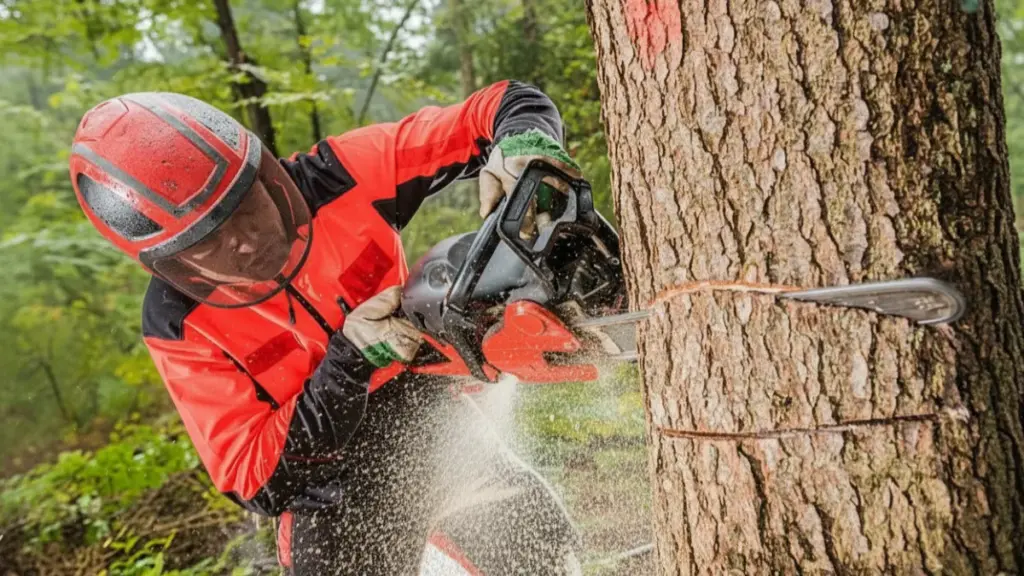
A gas chainsaw’s engine displacement is the single most important metric, directly defining its power output, cutting capacity, and suitability for specific commercial workloads.
| Performance Tier | Engine Displacement (CC) | Typical Power Output (kW) |
|---|---|---|
| Leve / Homeowner | 23 – 35 CC | 1.0 – 1.6 kW |
| Farm & Ranch / Mid-Range | 38 – 55 CC | 1.7 – 2.5 kW |
| Professional Forestry | 60 – 95 CC | 3.0 – 5.5 kW |
| Industrial Heavy Felling | 105 – 120+ CC | 6.0+ kW |
Engine Displacement (CC) and Power Output
A chainsaw’s performance is fundamentally tied to its engine displacement, measured in cubic centimeters (CC). This measurement directly correlates to its power output and cutting force. As displacement increases, the engine generates more torque, enabling it to cut through tough wood without bogging down. This makes engine cc the key metric for matching a saw to its intended workload. The relationship also dictates the saw’s physical dimensions, overall weight, and fuel consumption, creating a clear trade-off between power and portability.
Performance Tiers Based on Displacement
The professional market segments gas-powered chainsaws into distinct performance categories based on engine size. These tiers provide a clear framework for selecting a tool with the right balance of power, weight, and endurance for specific applications. Entry-level saws are sufficient for light-duty homeowner tasks, while mid-range and industrial-grade saws are built for the daily demands of commercial forestry, arboriculture, and land clearing operations.
How to Decide the Right Type of Chainsaws to Your Project Workload

Choosing the correct chainsaw requires a practical assessment of your typical projects. The ideal tool for light garden pruning is fundamentally different from one needed for felling mature hardwood. Matching the machine to the job ensures operational safety, reduces operator fatigue, and delivers a clean, efficient cut without overwhelming the equipment.
| Workload Scale | Recommended Chainsaw Type | Common Guide Bar Length |
|---|---|---|
| Light-Duty (Poda, Small Limbs) | Battery or Corded Electric | 10–14 inches |
| Medium-Duty (Firewood, Cleanup) | High-Capacity Battery / Mid-Range Gas | 16–18 inches |
| Heavy-Duty (Derrubando, Milling) | Professional-Grade Gas | 20+ polegadas |
Assess the Scale of Your Work
Your first step is to define the primary tasks you need to accomplish. A clear understanding of the cutting intensity and wood diameter dictates the necessary power and durability. Miscalculating this can lead to equipment failure or dangerous operating conditions.
- Light-duty work like trimming branches or cutting small saplings requires a compact battery-powered or small electric saw that offers sufficient power without excessive weight.
- Medium-duty tasks, including cutting firewood or clearing storm debris, demand a more robust tool. High-capacity battery models or mid-range gas saws are the best fit for this category.
- Heavy-duty projects such as felling large trees or milling logs require a professional-grade gas chainsaw with significant engine displacement and a long guide bar.
Match the Power Source to Your Environment
The choice between gas, bateria, or corded electric depends heavily on factors like noise restrictions, access to power outlets, and emission regulations in your area.
- Battery and corded electric saws are built for suburban or residential settings. They produce no direct emissions and operate quietly, making them ideal for populated environments.
- Gas-powered chainsaws are the standard for forestry, fazendas, and remote locations. They provide consistent high power without being limited by battery life or cord length.
- For mixed-use scenarios, modern high-voltage battery systems offer a strong balance, giving semi-professional landscapers near-gas performance and mobility without engine maintenance.
Choose a Guide Bar Length for Your Cutting Needs
The guide bar length dictates the largest diameter of wood you can cut in a single pass. Selecting a bar that is too long for the job makes the saw difficult to control and creates a safety hazard. You must match the bar length to both your engine’s power and your typical cutting tasks.
- Bars between 10-14 inches offer excellent maneuverability for pruning and cutting small limbs.
- UM 16-18 inch bar is a versatile, all-purpose size for most homeowners, capable of handling firewood cutting and medium tree removal.
- Bars of 20 inches or more are designed for professional use. They are necessary for felling large trees but require a powerful engine and an experienced operator to handle them safely.
Ready to Work With NEWTOP Full-Range Chainsaw Manufacturing?
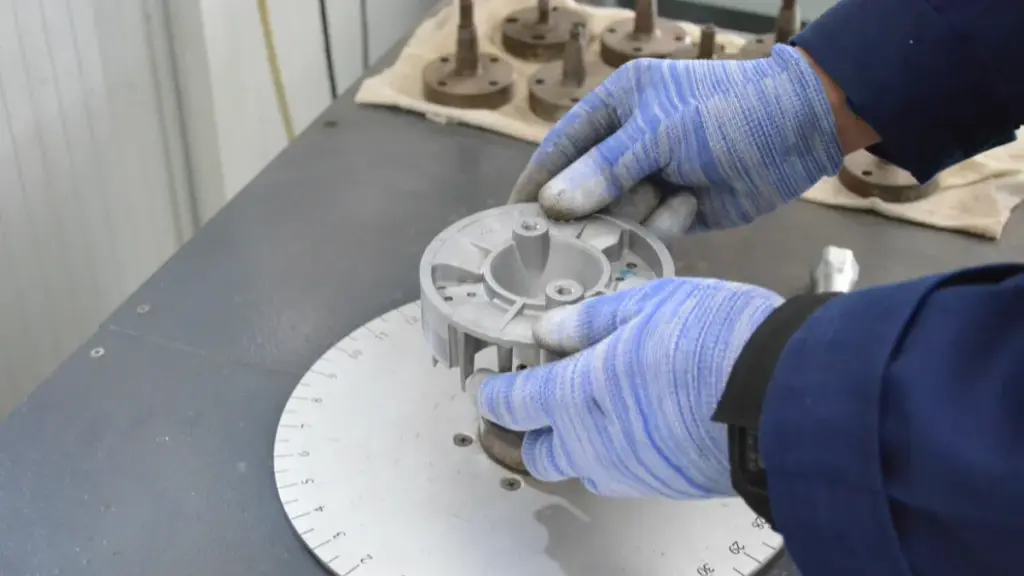
A successful manufacturing partnership hinges on flexible OEM services, a reliable supply chain using globally recognized components, and a comprehensive product portfolio that meets diverse market demands.
As a top 5 garden machinery supplier in China, NOVOTOP is uniquely positioned to support your business. We combine a world-class supply chain with flexible business models to empower global distributors and OEM buyers.
- Global Supply Chain & Quality: We integrate premium components from Walbro, NGK, NSK, e Oregon. Leveraging in-house CNC machining and automated lines, our equipment is engineered for 500+ horas of professional use, backed by CE, GS, and EPA certifications.
- Comprehensive Portfolio: Our range covers traditional gasoline/diesel machinery (chainsaws, cortadores de escova, pulverizadores) and innovative lithium-ion battery tools, providing a one-stop solution for forestry, agricultura, and landscaping across 65+ países.
- Flexible B2B Partnership: We specialize in full OEM customization, including design modifications and private labeling. With a structured pricing strategy and flexible MOQs (from samples to full containers), we ensure our partners achieve rapid market penetration and long-term growth.
Conclusão
Matching the right chainsaw type to your workload is the key to efficiency and safety. Whether you need the raw strength of a gas model, the quiet convenience of an electric saw, or the extended reach of a pole saw, the right choice prevents project delays and ensures a smart investment.
With a clear understanding of your project needs, you can now review our full-range chainsaw catalog to find a model built for your exact application.
Perguntas frequentes
What are the 4 main types of chainsaws?
The industry recognizes four primary types: Gas-powered, battery-powered (cordless), corded electric, and pole saws.
Which type of chainsaw is easiest to maintain?
Electric models (both corded and battery) require the least maintenance because they lack complex fuel systems, air filters, and spark plugs.
Are gas chainsaws better than battery ones?
Gas chainsaws currently outperform battery models for heavy-duty industrial work and long-duration tasks. Battery models are superior for noise control and ease of use.
What type of chainsaw do professional loggers use?
Gas-powered rear-handle chainsaws (50-90CC) with long bars for felling and bucking large timber.
What is a pole saw used for?
Pole saws are used specifically for pruning branches that are out of reach, allowing the operator to stay safely on the ground.
Is a mini chainsaw worth buying?
Sim, for light pruning or small construction tasks, a mini lithium chainsaw is highly efficient and easier to handle than a full-sized unit, as users note impressive performance under $50.
What is the six feet rule for chainsaws?
Maintain at least 6 feet distance from chainsaw operators unless the tool is off and grounded, preventing kickback injuries.
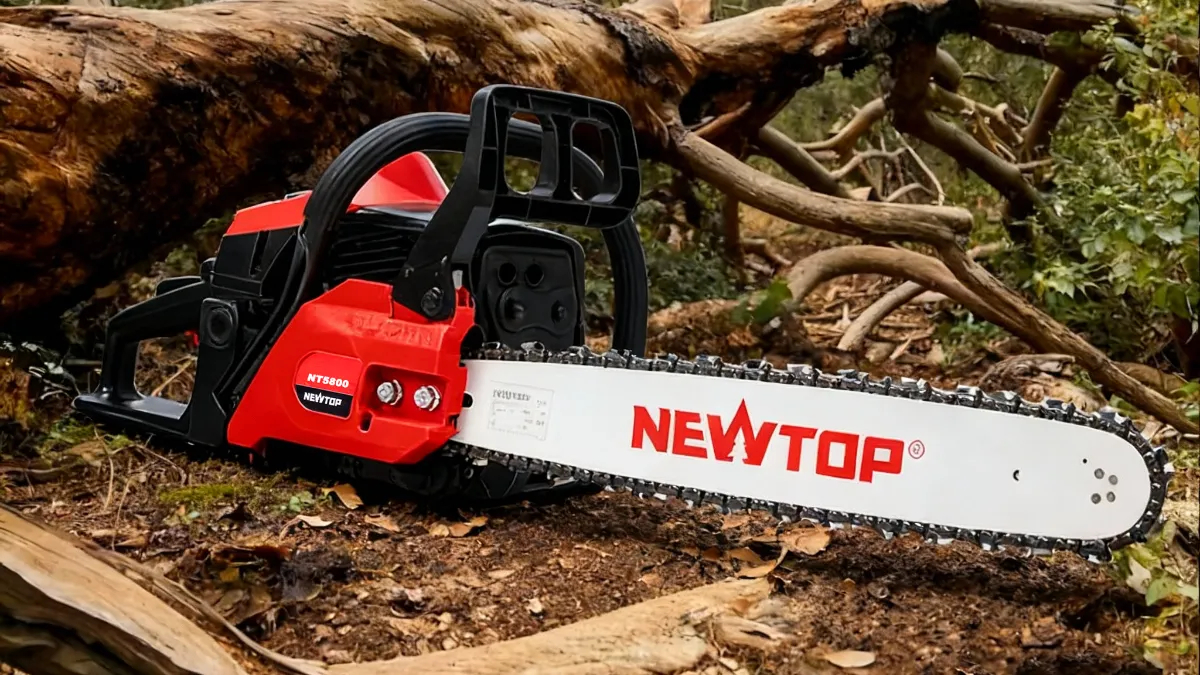
Picture this: you’ve got a pile of firewood to cut or a few trees to clear, and you’re trying to decide between a gas or an electric chainsaw. Both can get the job done, but they perform very differently. This article takes a closer look at electric vs gas chainsaws—their strengths, limits, and what really matters when choosing the right tool for your kind of work. By comparing their performance in specific high-demand scenarios, you can create a clear standard operating procedure for equipping your teams with the right tool for the job.
What is an Electric Chainsaw?
Electric chainsaws have evolved from heavy, cord-tethered tools into powerful, lightweight battery models that now lead the market in convenience and operational efficiency.
Electric chainsaws use electrical energy instead of fuel to power their motors, making them cleaner, quieter, and easier to maintain than traditional gas models. Depending on the power source, they generally come in two main types: corded and battery-powered (lithium). While both share the same principle of using an electric motor to spin the cutting chain, their performance and ideal use cases are quite different.
Corded Electric Chainsaws
A corded electric chainsaw is powered directly by alternating current (AC) through a standard household outlet. Most models operate at 120V–240V depending on regional standards. Without a battery or fuel tank, corded units are lighter and provide consistent, uninterrupted power as long as they remain plugged in.
From a performance standpoint, corded saws typically range from 1,400W to 2,400W output, generating enough torque for small to medium wood-cutting jobs. Because they don’t rely on stored power, their cutting speed stays stable over time — an important advantage for users who value reliability over mobility.
Best suited for:
- Homeowners cutting firewood or pruning trees around the yard
- Light-duty carpentry or workshop use
- Users seeking steady performance and minimal maintenance
Battery-Powered (Lithium) Chainsaws
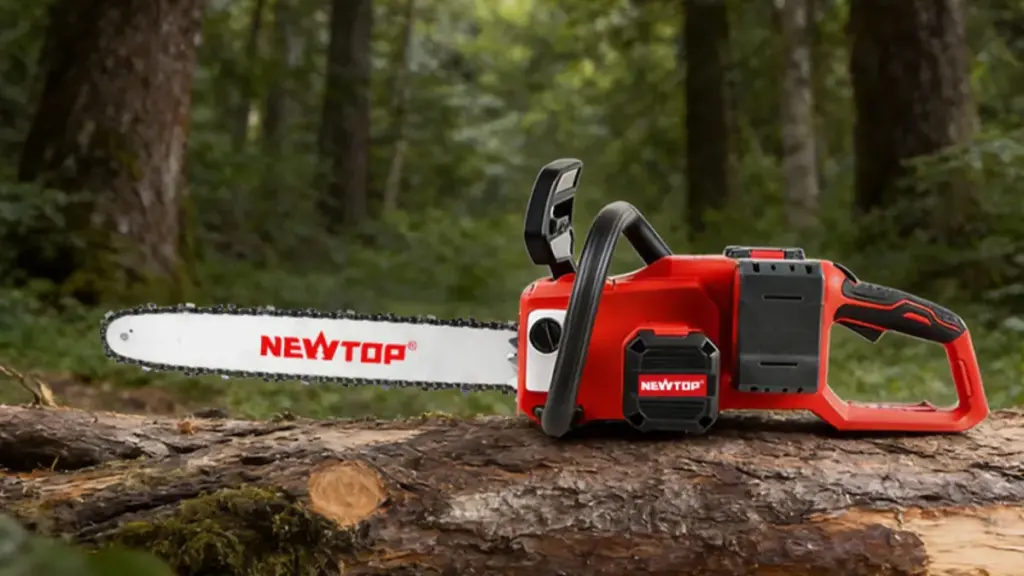
Battery-powered chainsaws, often called cordless chainsaws, run on rechargeable lithium-ion batteries. These units convert stored DC energy into rotating chain motion through a brushless motor, offering smooth acceleration and precision control.
Modern battery chainsaws have grown far more capable in recent years, with typical voltage options ranging from 18V and 36V for homeowner models to 40V, 56V, and even 60V or 80V systems for high-performance and professional-grade tools. Higher voltage generally means longer run time, greater torque, and faster chain speed.
Best suited for:
- Gardeners and homeowners wanting full mobility with no cords
- Urban environments where noise or emissions are restricted
- Light to medium cutting tasks in remote or off-grid areas
Battery tech has improved a lot. The newer ones charge faster, run longer, and deliver smoother power. AtNOVOTOP, we’ve been upgrading our lithium battery chainsaws to get better torque, longer runtime, and brushless motors that feel strong and efficient without too much weight or vibration.
What is a Gas Chainsaw?
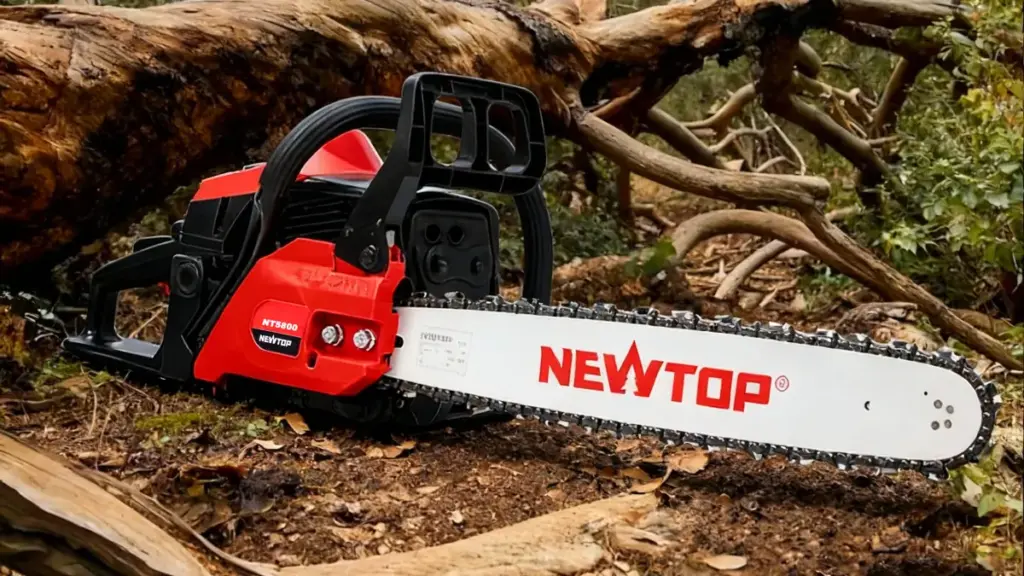
Known for unmatched cutting strength and durability, gas chainsaws remain the benchmark for professional-grade power tools.
A gas chainsaw uses a small internal combustion engine to drive the cutting chain, making it the most powerful type of portable chainsaw available today. Most models rely on2-stroke engines, which run on a mixture of gasoline and oil. This design keeps the tool lightweight, delivers high torque, and provides instant cutting power—ideal for forestry, construção, or heavy-duty land clearing.
While 2-stroke engines dominate the market, some larger or specialized chainsaws use4-stroke systems, offering cleaner combustion and reduced emissions at the cost of additional weight.
Gas chainsaws are valued for their mobility, endurance, and cutting efficiency. They don’t rely on external power or batteries, allowing users to work in remote areas for long periods. No entanto, they require regular maintenance—fuel mixing, filter cleaning, and spark plug replacement—and they produce more noise and exhaust than electric counterparts.
Geral, gas chainsaws remain the top choice for professionals and users who need maximum power and performance in challenging outdoor environments.
Equip Your Business with Durable Machinery
Pros and Cons of Electric Chainsaws for Quiet Operation
Electric chainsaws are all about convenience. If you mostly work around your home or garden, you’ll probably love one of these.
Key Advantage: Reduced Noise Levels
Electric chainsaws operate at much lower decibel levels than gas engines. This reduction in noise is a primary driver for their adoption in residential and suburban settings, where loud equipment can cause disturbances. The quieter performance allows for more flexible work schedules, including early mornings or evenings, without violating noise ordinances or upsetting neighbors.
- Ideal for suburban homeowners who need to avoid disturbing neighbors.
- Allows for flexible work times, including early mornings or late evenings.
- Reduces operator fatigue and the need for constant, heavy-duty hearing protection.
Simplified Maintenance and Operation
The operational simplicity of electric chainsaws is a significant advantage. They eliminate the need for fuel mixing, spark plug replacements, and complex engine servicing. This low-maintenance design makes them accessible to users of all experience levels, removing common frustrations associated with gas engines like carburetor issues or pull-start failures.
- No need to handle or store gasoline and oil mixtures.
- Starts instantly with the push of a button or trigger.
- Eliminates common gas engine problems like carburetor issues or pull-start failures.
Performance Limitations for Heavy-Duty Tasks
While modern electric saws are capable, they cannot match the sustained power of gas models for heavy-duty jobs. Their performance is best suited for light-to-medium work like pruning branches, trimming limbs, and cutting smaller logs. For felling large trees or bucking dense hardwood, the torque and runtime of a gas engine remain the professional standard.
- Best suited for light-to-medium-duty work like pruning, aparar, and cutting small logs.
- Battery-powered models have a limited runtime and may require frequent recharging for extended jobs.
- Professional loggers and arborists still rely on gas saws for maximum torque and sustained performance.
Pros and Cons of Gas Chainsaws for High-Torque Tasks
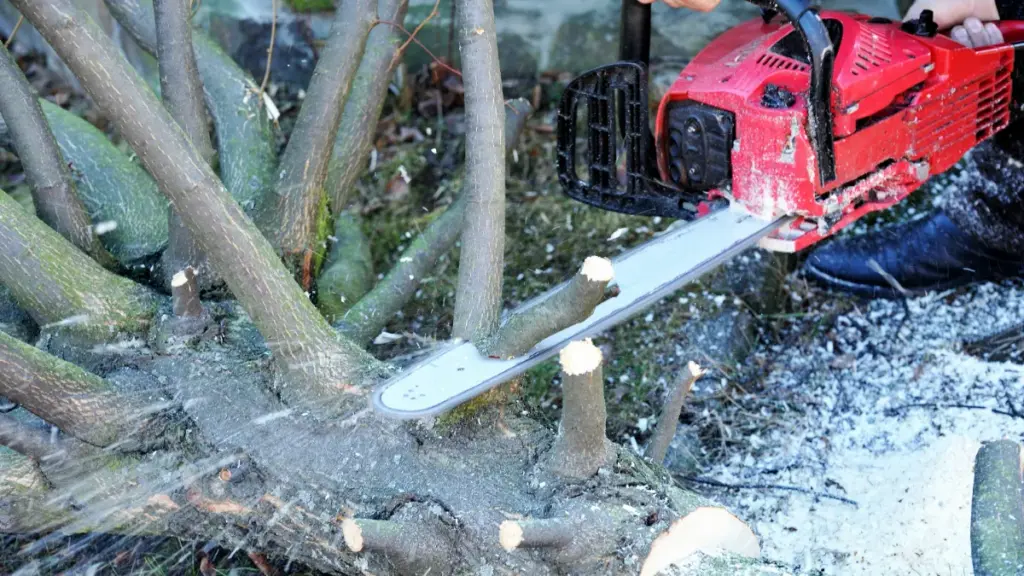
Gas chainsaws are built for power. They’re what you want for big logs, fallen trees, or heavy outdoor jobs.
Vantagens: Unmatched Power and Mobility
Gas chainsaws are engineered for superior power and torque, making them the standard for heavy-duty cutting. Their primary advantage is the ability to run continuously on remote job sites, as long as fuel is available. This design ensures they operate reliably in harsh weather, including cold or wet conditions that can impair battery performance.
- Delivers high torque and fast cutting speeds, essential for felling large trees or processing dense hardwoods.
- Operates without interruption by simply refueling, which eliminates the downtime associated with battery charging.
- Maintains consistent power output in cold, wet, or frozen conditions where battery efficiency often degrades.
- Provides complete freedom of movement without the restrictions of cords or the need for charging stations.
Desvantagens: High Maintenance and Emissions
The main drawbacks of gas chainsaws are their demanding maintenance schedules and environmental impact. The 2-stroke engine produces significant noise and exhaust fumes, making protective gear mandatory and limiting its use in populated or poorly ventilated areas.
- Requires regular servicing, including air filter cleaning, spark plug checks, and precise fuel-oil mixing.
- Generates high noise levels that make ear protection essential for safe, long-term operation.
- Emits exhaust fumes containing carbon monoxide, posing a health risk in enclosed spaces.
Key Differences Between Electric vs Gas Chainsaw
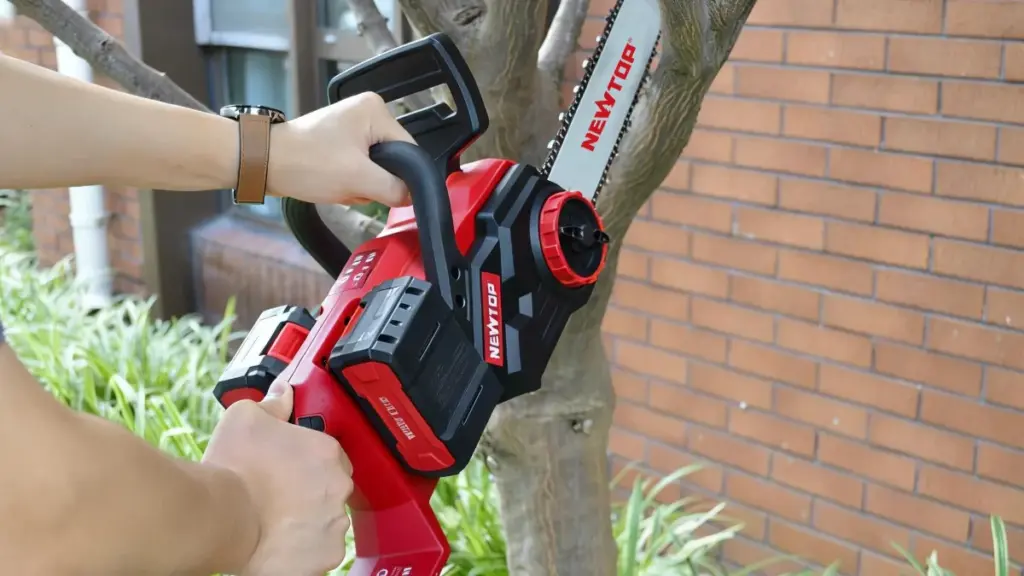
Before choosing your next chainsaw, it helps to understand how electric and gas-powered models truly compare. The table below highlights the key differences in power, desempenho, and maintenance to help you find the best fit for your work.
| Recurso | Gas Chainsaw | Electric Chainsaw (Battery) |
|---|---|---|
| Power Source | Gasoline-powered 2-stroke or 4-stroke engine | Corded electricity or lithium battery (18V–80V) |
| Power Output | High torque and chain speed for demanding cuts | Moderate torque and stable cutting speed |
| Runtime | Unlimited; refuel anytime for continuous operation | Limited by battery capacity or cord range |
| Sistema inicial | Manual pull start; requires fuel mixture | Push-button or trigger start |
| Maintenance Needs | High – fuel mixing, filter cleaning, spark plug changes | Low – mostly battery charging and chain oil |
| Noise Level | High (typically 100–115 dB) | Low (often under 90 dB) |
| Peso | Heavier due to engine and fuel tank | Lighter and easier to handle |
| Mobility | Fully portable; works anywhere outdoors | Battery: full mobility; Corded: limited by power source |
| Operating Cost | Higher – ongoing fuel and maintenance costs | Lower – electricity and minimal upkeep |
| Environmental Impact | Produces exhaust; cleaner designs meet EPA/EURO II standards | Zero direct emissions; energy-efficient operation |
| Ease of Use | Requires experience and strength for control | Simple for beginners; less vibration and fatigue |
| Vibration & Fatigue | Higher vibration; modern models add anti-vibration systems | Minimal vibration with balanced brushless motors |
| Cutting Capacity | Handles thick hardwood and large logs | Best for small to medium branches and trees |
| Noise Regulations Compatibility | Suitable for rural or industrial areas | Ideal for residential and urban settings |
| Best For | Forestry workers, farmers, professional loggers | Homeowners, gardeners, DIY and light commercial use |
Power Output and Application Suitability
Gas chainsaws continue to dominate heavy-duty professional tasks like large-scale tree felling and milling due to their superior raw power and torque. Electric models, particularly battery-powered ones, have gained significant ground for consumer and light-commercial jobs. Their performance is now comparable to mid-range gas saws for tasks like pruning, yard cleanup, and light construction, thanks to advances in brushless motors and battery capacity.
- Gas models deliver consistent high power for cutting through large-diameter hardwood and for continuous operation.
- Battery models excel at tasks where convenience and quick deployment are valued, such as pruning, limpeza de tempestade, and residential firewood cutting.
Operational Demands and Maintenance
The primary operational difference lies in fuel and upkeep. Gas chainsaws require a specific oil-and-gas mixture and regular maintenance of carburetors, fuel filters, and spark plugs to maintain performance. Electric chainsaws eliminate these complexities entirely, offering a simpler user experience focused on chain lubrication and battery management.
- Gas chainsaws need frequent refueling and routine engine maintenance to ensure reliable performance and prevent long-term damage.
- Electric chainsaws require only battery charging and bar oil, eliminating fuel mixing, difficult pull-starts, and engine-related troubleshooting.
Runtime and On-Site Flexibility
Runtime remains a key differentiator. A gas chainsaw can operate as long as you have fuel, making it the standard for remote or extended work where power access is non-existent. Battery chainsaws are limited by their charge capacity, requiring spare batteries or access to a power source for all-day use. This makes gas the clear choice for professional forestry and large-scale land clearing.
- Gas chainsaws can be refueled in minutes, allowing for virtually uninterrupted work on large job sites.
- Battery-powered saws offer great mobility for short-duration tasks but depend on the number and capacity of available batteries for longer jobs.
Market Trends and Technology
The market is clearly dividing based on job requirements rather than one type being universally better. Advances in battery and motor technology have made electric chainsaws a viable alternative for a growing number of users, while gas chainsaw remains the standard for pure power. This trend signals a maturation of the market, where tools are becoming more specialized for their intended applications.
- The consumer and light-commercial segments are shifting toward battery power for its convenience, reduced noise, and lower emissions.
- The professional forestry and industrial sectors still rely on gas power for its unmatched performance in demanding conditions and unlimited runtime.
Maintenance and Fuel Costs: Analyzing Long-Term Investment
When comparing long-term value, the real difference between electric and gas chainsaws becomes clear. Electric models save money on fuel and service, while gas units pay off through raw cutting efficiency and durability. It’s less about which costs more upfront—and more about how often and how hard you use it.
Electric chainsaws require little upkeep beyond chain oil and occasional battery replacement, making them ideal for occasional users or homeowners who value convenience. Gas chainsaws, although needing regular maintenance—fuel, velas de ignição, air filters—are built for high workloads and often last longer under continuous use.
The table below outlines typical cost and value factors for each type:
| Category | Gas Chainsaw | Electric Chainsaw |
|---|---|---|
| Initial Purchase Cost | Slightly higher due to engine and parts | Lower; battery included or optional |
| Fuel or Power Expense | Ongoing fuel and oil costs per use | Low electricity charging cost |
| Maintenance Frequency | Regular—filters, plugs, carburetor tuning | Minimal—chain oil and battery care |
| Average Lifespan (Proper Use) | Long; built for continuous heavy work | Moderate; ideal for intermittent use |
| Long-Term ROI | Higher for professionals; pays off in productivity | Higher for homeowners; saves time and cost |
Guia de seleção: Electric vs Gas – Qual é o certo para você?
For Homeowners and Light-Duty Yard Work
Electric chainsaws are the clear choice for most homeowners. Their low maintenance, quiet operation, and cost-effectiveness make them ideal for occasional tasks like trimming branches, cutting small logs for firewood, and general property cleanup. They offer a simple grab-and-go solution that requires no fuel mixing and minimal technical skill.
- Choose an electric model if your work is primarily in a residential area where noise can be an issue.
- They are perfect for users who prioritize ease of use and aren’t cutting large-diameter hardwood regularly.
For Professional and Heavy-Duty Applications
Gas chainsaws continue to dominate professional fields where sustained power and long runtimes are non-negotiable. They are engineered for felling large trees, bucking thick logs, and clearing extensive areas of land without needing to stop and recharge. Their performance is unmatched for demanding, all-day jobs, especially in remote locations far from a power source.
- Select a gas model if you work in forestry, land management, or agriculture.
- These tools are built for users who need maximum cutting torque and are comfortable performing regular engine maintenance.
| Decision Factor | Choose Electric If… | Choose Gas If… |
|---|---|---|
| Power Requirement | You need sufficient power for pruning, enterro, and cutting small logs. | You need maximum torque for felling large trees and bucking thick hardwoods. |
| Work Location | You work in a suburban yard, close to a power outlet or within battery range. | You work on large properties, remote forests, or any area without electricity. |
| Maintenance Preference | You prefer minimal upkeep: just add bar oil and keep the chain sharp. | You are comfortable with engine maintenance, fuel mixing, and tune-ups. |
| Environment | Quieto, emission-free operation is a priority due to neighbors or regulations. | Raw power and runtime are the main goals; noise and fumes are secondary. |
A Quick Checklist for Your Decision
Answer these questions to quickly identify the right tool for your specific situation.
- Poder: Do you need top-tier torque for large trees (Gas) or sufficient power for yard tasks (Elétrico)?
- Location: Will you work near an outlet (Elétrico) or in remote areas far from a power source (Gas)?
- Manutenção: Do you prefer minimal upkeep (Elétrico) or are you prepared for engine maintenance and fuel mixing (Gas)?
- Environment: Is quiet, emission-free operation your priority (Elétrico), or is raw power the main goal (Gas)?
Why Choose NEWTOP High-Performance Gas Chainsaws?
NEWTOP has established a strong market position by engineering gas chainsaws that deliver professional-grade durability and performance using globally recognized components, but at a price point accessible to mid-range commercial markets.
Founded in 2003, NEWTOP is a professional outdoor power equipment manufacturer, offering a full range of outdoor power products including gas and lithium battery chainsaws, cortadores de escova, pulverizadores, outboard engines, geradores, water pump and more. Whether you’re looking for gas chainsaws or lithium battery chainsaws, NEWTOP has you covered.
Our products built with high-quality components from world-class suppliers such as Walbro, NGK, TOCHA, NSK, and Oregon—the same names trusted by leading global brands. Each unit undergoes multiple ISO9001-certified quality checks and complies with CE, EPA, and EURO II standards to ensure consistent reliability and safety. With NEWTOP, you get power, reliability, and value in one package. That’s why professionals in over 65 countries trust our tools for forestry, farming, and landscaping work.
Conclusão
Electric chainsaws offer quiet operation and simple maintenance, making them excellent tools for residential yard work. Gas-powered models deliver the consistent high torque and runtime necessary for felling large trees or clearing remote land. Matching the tool to the task ensures you have the right balance of power, convenience, and long-term reliability.
If your projects require sustained cutting power and field durability, a professional gas chainsaw is the optimal choice. Explore the NEWTOP catalog to find a model with the right power-to-weight ratio for your needs.
Perguntas frequentes
Are electric chainsaws as powerful as gas?
Not quite. Electric chainsaws handle small to medium jobs well, but gas models still deliver higher torque and faster chain speed for heavy-duty cutting.
Do electric chainsaws need bar oil?
Sim, all chainsaws, including corded and battery-powered electric models, absolutely require bar and chain oil to keep the chain lubricated and reduce wear.
How long do electric chainsaw batteries last?
Most lithium batteries last 30 para 60 minutes per charge, depending on workload and battery capacity. Keeping a spare fully charged can extend runtime.
Is an electric chainsaw safer than gas?
Generally, yes. They’re lighter, start instantly, and produce less vibration, making them easier to control—ideal for beginners or home users.
Can I cut a large tree with an electric chainsaw?
It’s possible with a high-voltage model, but for thick or hardwood trunks, a gas chainsaw is more efficient and faster.
What are the disadvantages of electric chainsaws?
They have limited runtime, slightly less cutting power, and rely on charging or access to electricity, which can restrict use in remote areas.
