


- 全て
- NEWTOPのお客様事例
- NEWTOP エクスプローラー ハブ
- NEWTOP 業界の洞察
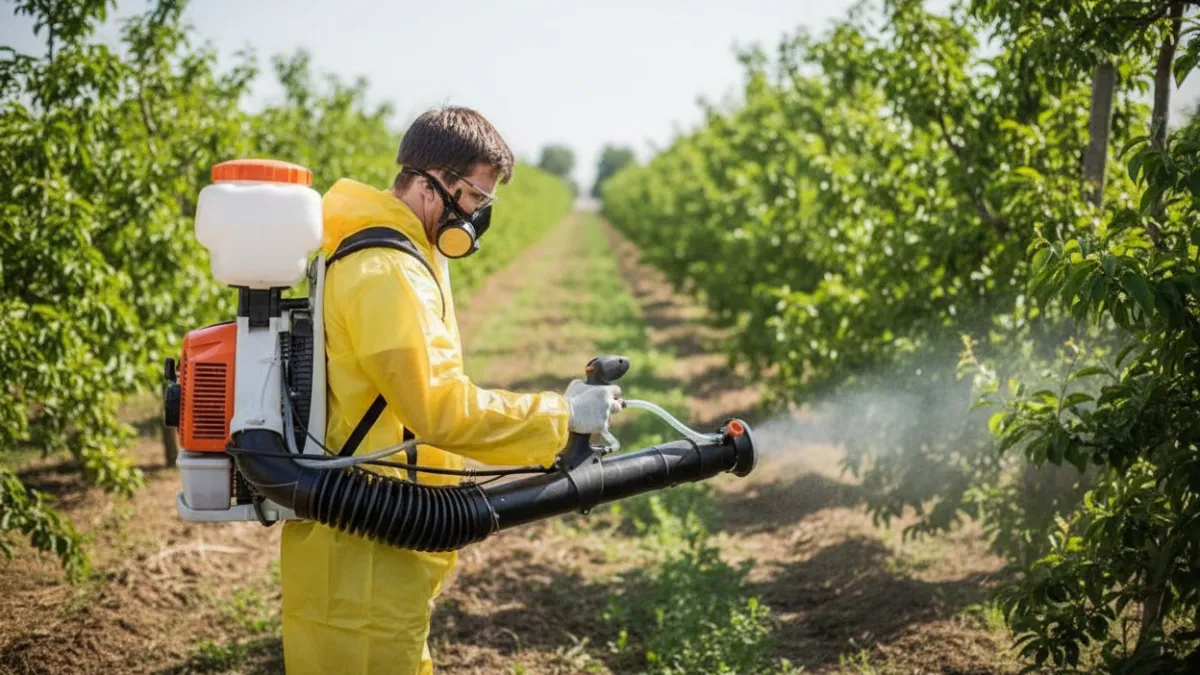
適切なバックパック噴霧器のメーカーを選択することで、噴霧プログラムが成功するか失敗するかが決まります。. 果樹園を経営しているかどうか, 列作物, 温室, または公衆衛生プロジェクト, 一貫したカバー範囲を提供する信頼性の高い機器が必要です, 過酷な化学薬品に耐える, オペレーターは毎日快適に使用できます.
このガイドでは, ヨーロッパ全土の主要なバックパック型噴霧器メーカー 10 社を最終候補に挙げました, アメリカ大陸, アフリカ, そしてアジア, 位置をすぐに比較できるようにする, 製品範囲, MOQ を確認し、技術要件と市場でのポジショニングに最も適合するパートナーを決定します。.
の概要 10 バックパック噴霧器メーカー
| メーカー | 地域 | MOQ | 主な製品 |
|---|---|---|---|
| ニュートップ | 上海, 中国 | 50– 通常の OEM 注文の場合は 100 個 (新しいプロジェクトにも柔軟に対応できる) | 手動背負い式噴霧器, ガソリンバックパック噴霧器, ミストダスター, 動力噴霧器, バッテリーバックパック噴霧器 |
| バーヒマイヤー | スイス | 通常、大量の注文, 地域によって異なります | 手動およびバッテリー式バックパック噴霧器, 圧縮噴霧器, フォーマー, 投与装置 |
| ソロ | ドイツ | 通常、大量の注文, 地域によって異なります | 手動および電動の背負い式噴霧器, 氏, 手持ち式噴霧器, 小型エンジン |
| ジェット | ブラジル (北米とアフリカで地域事業を展開) | 通常、大量の注文, 地域によって異なります | 手動背負い式噴霧器, ナップザック噴霧器, トラクター搭載型噴霧器, 自走式噴霧器 |
| AMS – 農業製造業 & 噴霧器 | メキシコ | 通常、大量の注文, 地域によって異なります | 農業用噴霧器, バックパック噴霧器, 燻蒸および噴霧システム |
| LAハードマン農機具 | ザンビア | 通常、大量の注文, 地域によって異なります | ナップザック/バックパック型噴霧器, 農具, 農具 |
| 市 | ドイツ | 通常、大量の注文, 地域によって異なります | 背負い式噴霧器, 圧縮噴霧器, 建設および清掃用の工業用噴霧器 |
| エコーラテンアメリカ | ラテンアメリカ地域での事業運営 (日本/米国の本社) | 通常、大量の注文, 地域によって異なります | 手動背負い式噴霧器, 手持ち式噴霧器, 屋外電源装置 |
| ファウンテンヘッド・グループ | 米国 | 通常、大量の注文, 地域によって異なります | 背負い式噴霧器, ポンプ噴霧器, 噴霧器, 特殊噴霧器 |
| チェーピン・インターナショナル | 米国 | 通常、大量の注文, 地域によって異なります | 背負い式噴霧器, 手持ち式噴霧器, スプレッダー, 工業用および氷融解噴霧器 |
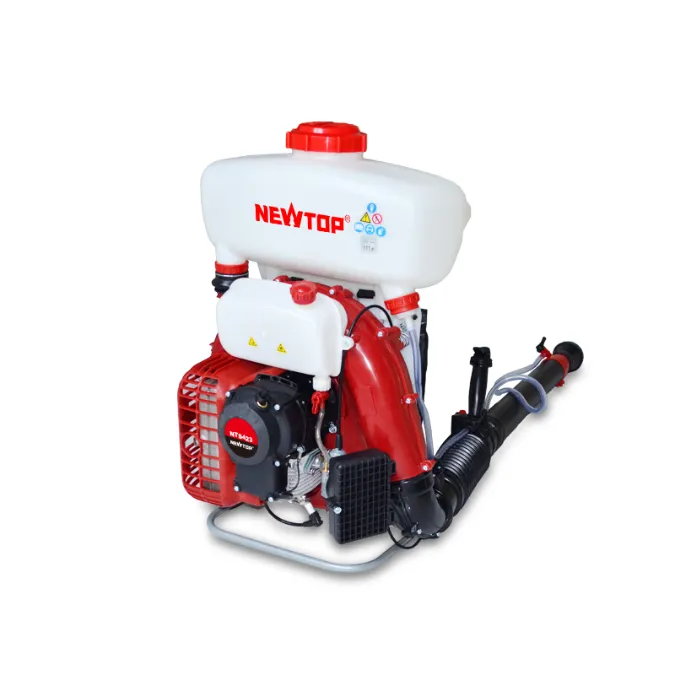
ニュートップ
おすすめ: ☆☆☆☆☆
位置: 上海, 中国
主な製品: 手動背負い式噴霧器, ガソリンバックパック噴霧器, ミストダスター, 等.
MOQ: 50– 通常の OEM 注文の場合は 100 個 (新しいプロジェクトにも柔軟に対応できる)
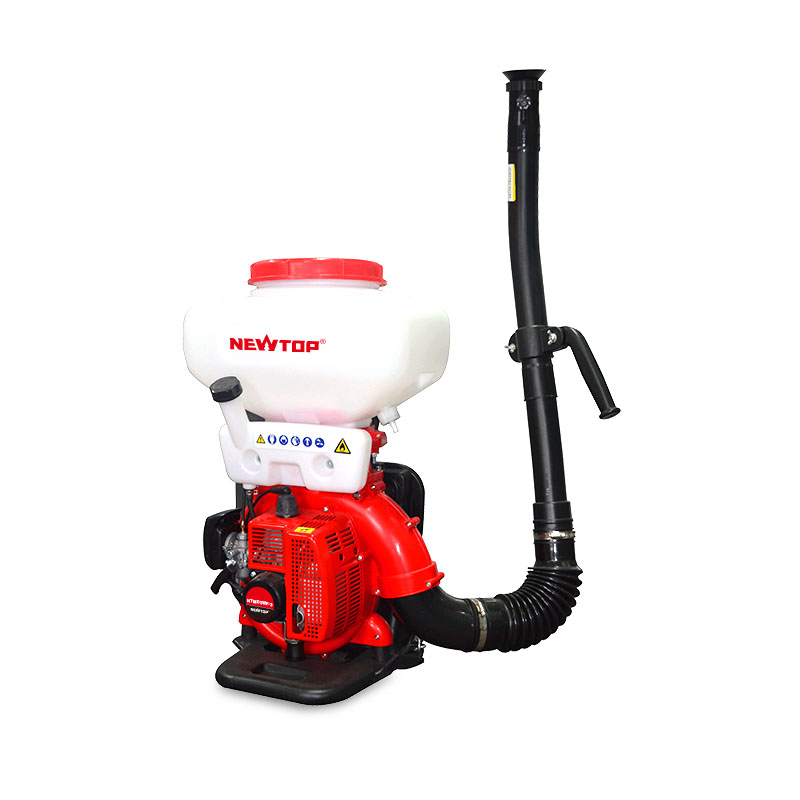
に設立 2003, NEWTOPは屋外用電源機器の専門メーカーです。 バックパック噴霧器 農業用ミストブロワー. 社内Rあり&D, 成形, 機械加工, 組み立ておよびテスト機能, NEWTOP は、南米などの市場における世界的な販売代理店向けの完全な OEM およびプライベート ラベルのカスタマイズをサポートします。, アフリカと東南アジア.
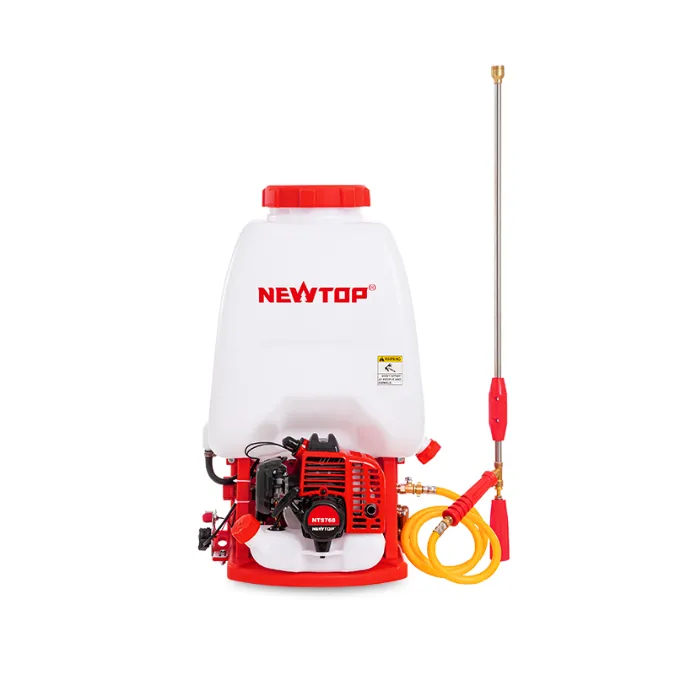
NEWTOPの背負い式噴霧器, NTS3WF-3などのガソリン車を含む, NTS423およびNTS768シリーズ, 私のために設計されています広範囲の作物保護, 蚊の駆除と衛生スプレー. 工場は 国際規格に認定されている 柔軟な注文数量を提供します, カスタマイズされたブランディング, 色のカスタマイズとアクセサリの組み合わせ, 輸入業者のワンストップパートナーとなる, 信頼できる製造およびマーケティングのサポートを必要とする卸売業者および機器ディーラー.
| 私たちが愛するもの | 考慮すべき事項 |
|---|---|
| 柔軟な設計による強力な OEM およびプライベート ラベルのカスタマイズ, 色とブランドのオプション. | 中国に生産拠点があるため、バイヤーは海上輸送とリードタイムを考慮して計画を立てる必要がある. |
| 複数の用途に対応するガソリンおよびバッテリーのバックパック噴霧器をカバーする幅広いポートフォリオ. | カスタマイズプロジェクトは通常、より高いMOQとより詳細な調整を必要とします. |
| 新興市場への経験の輸出, 農業および害虫駆除のニーズに精通している. | 認証と文書の要件は仕向け先の市場によって異なるため、事前に明確にする必要があります. |
バーヒマイヤー
おすすめ: ☆☆☆☆☆
位置: スイス
主な製品: 手動およびバッテリー式バックパック噴霧器, 圧縮噴霧器, フォーマー, 投与装置
MOQ: 通常、プロフェッショナル/B2B の注文の場合はパレットベースの数量 (モデルと地域によって異なります)
Birchmeier はスイスのスプレー装置メーカーであり、 140 長年の歴史, 精度と耐久性が世界的に認められています. 同社はスイスで噴霧器を設計および製造しています。, 金属加工を組み合わせる, プラスチックと組み立てを社内で行うことで、プロユーザー向けの厳格な品質管理を維持します。.
バックパック式噴霧器は農業分野で広く使用されています, 園芸, 害虫駆除と建設, 長寿命と保守性が重要な場合. バーヒマイヤーサポート 代理店および専門ディーラー スペアパーツの入手可能性, 技術トレーニングと幅広い製品ポートフォリオ, ハイエンド市場をターゲットとする輸入業者やサービス会社にとって信頼できる選択肢となる.
ソロ

おすすめ: ☆☆☆☆
位置: ドイツ
主な製品: 手動および電動の背負い式噴霧器, 氏, 手持ち式噴霧器, 小型エンジン
MOQ: 地域パートナー経由のケースまたはパレットの数量
SOLO は植物の保護および管理機器を専門としています。, 本社と中核製造拠点をドイツに置く. その バックパック噴霧器 堅牢なタンクを中心に構築されています, 人間工学に基づいたハーネス システムと信頼性の高いポンプ コンポーネント, 農業や造園での集中的な使用に適しています。.
同社は世界市場で長年にわたり存在感を示している, 基本的な手動噴霧器から高度な電動ユニットまでの明確な製品階層を提供します. この構造により、さまざまなアプリケーション レベルでのモデル選択が簡単になります。, 小規模農場から専門請負業者まで, 地域全体で一貫した品質の期待をサポートします.
ジェット
おすすめ: ☆☆☆☆☆
位置: ブラジル (北米とアフリカで地域事業を展開)
主な製品: 手動背負い式噴霧器, ナップザック噴霧器, トラクター搭載型噴霧器, 自走式噴霧器
MOQ: コンテナレベルまたは流通業者ベースの輸出数量
Jacto はブラジルの農業用噴霧装置の大手メーカーです。, 国の商業農業部門に由来する. その製品ラインは、コンパクトな手動背負式噴霧器から高度な自走式野外噴霧器まで多岐にわたります。, 同社に作物保護技術における豊富な経験を与える.
HDシリーズやXPシリーズなどのバックパックモデルはコーヒー業界で広く使用されています, 南アメリカ全土の果物と列作物の生産, アフリカおよびその他の地域. 熱帯および亜熱帯環境向けに最適化された設計, 堅牢性を重視, 快適さとメンテナンスの容易さ. この農業への焦点により、専門的な農場散布ソリューションが必要な場合に Jacto が強力なリファレンスとなります。.
AMS – 農業製造業 & 噴霧器

おすすめ: ☆☆☆☆
位置: メキシコ
主な製品: 農業用噴霧器, バックパック噴霧器, 燻蒸および噴霧システム
MOQ: プロジェクトの範囲と製品ラインに基づいて交渉可能
AMS はメキシコに本拠を置き、製造を専門とする会社です。, 農業用噴霧燻蒸機器の輸入販売. そのシステムには、Comet ポンプや Geoline アクセサリなどのよく知られたコンポーネントが組み込まれていることがよくあります。, 地元の製造と国際的に認められた部品を組み合わせる.
同社は実践的なことに重点を置いています, メキシコおよび周辺国の地域の作物や農業慣行に合わせた、すぐに使用できる散布ソリューション. ラテンアメリカの製造および統合パートナーを探しているバイヤー向け, AMS はローカル サポート間のバランスを提供します, 技術力と南北アメリカの最終市場への近さ.
LAハードマン農機具

おすすめ: ☆☆☆
位置: ザンビア
主な製品: ナップザック/バックパック型噴霧器, 農具, 農具
MOQ: カートンまたはパレットの数量, 地域の需要に応じて
LA Hardman Africa は農機具のサプライヤーとしてルサカを拠点に活動しています, 地元の農業条件に合わせて設計されたナップサック型噴霧器を含む. その製品構成は小規模農家と中規模農家をターゲットにしています, シンプルなところ, 耐久性のあるデザインと手頃な価格が不可欠です.
噴霧器を超えて, 同社はさまざまな農具を提供しています, 農村開発プロジェクト向けのバンドル機器ソリューションを実現, 協同組合と農産物の販売業者. この地元および地域に焦点を当てているため、LA ハードマンは、現場での存在とアフリカ農業への理解が必要なプログラムに関連性を持っています。.
市
おすすめ: ☆☆☆☆
位置: ドイツ
主な製品: 背負い式噴霧器, 圧縮噴霧器, 建設および清掃用の工業用噴霧器
MOQ: 標準的な B2B 注文サイズ; パレットまたは混合製品の注文
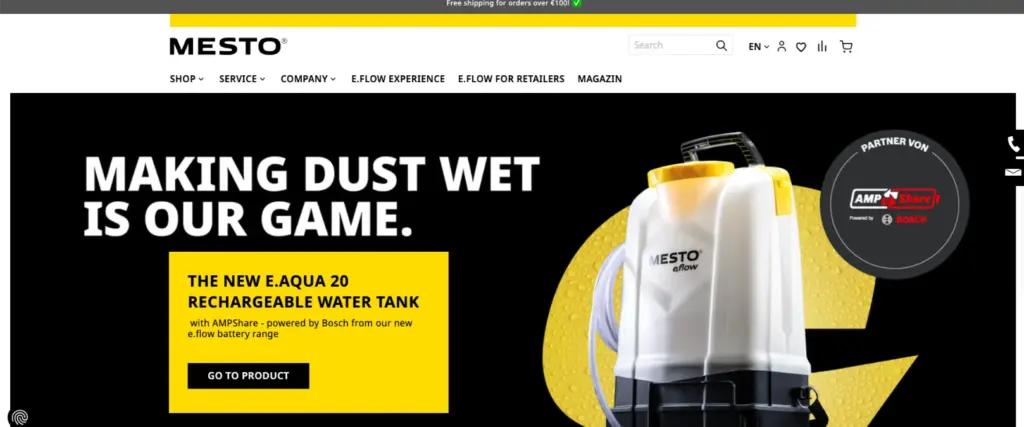
Mesto は 1 世紀以上の経験を持つドイツのナップサック型噴霧器メーカーです, 園芸用機器の製造, 農業, 建設および産業用清掃. 射出成形を統合した生産施設, 金属加工と最終組み立て, これにより、製品ライン全体で一貫した品質と信頼性の高いパフォーマンスを維持できます。.
Mesto のバックパック型噴霧器は多くの場合、化学薬品の取り扱いに指定されています, ファサードの清掃と専門的なメンテナンス作業, より伝統的な園芸用途と並行して. ブランドが重視する人間工学, 耐薬品性と安全機能により、コンプライアンスとオペレーターの快適性が重要となるプロフェッショナルな環境に適しています。.
エコーラテンアメリカ
おすすめ: ☆☆☆☆
位置: ラテンアメリカ地域での事業運営 (日本/米国のグローバル本社)
主な製品: 手動背負い式噴霧器, 手持ち式噴霧器, 屋外電源装置
MOQ: 地域プログラム内の代理店レベルの注文
ECHO は世界的な屋外電源機器メーカーです, ラテンアメリカ部門では、広範な専門機器ポートフォリオの一部としてバックパックおよびハンドヘルド噴霧器を提供しています。. 噴霧器はチェーンソーを補完するように設計されています, 刈払機とブロワー, ディーラーに造園に関するワンストップサービスを提供, 農業と土地の維持管理.
ラテンアメリカに重点を置くことで、製品の仕様とサポートが地域の気候に確実に適合するようにします, 作物と労働条件. 複数の機器カテゴリにわたるブランドの一貫性を重視するバイヤーは、製品を標準化し、トレーニングとサービスを簡素化するために ECHO を選択することがよくあります。.
ファウンテンヘッド・グループ
おすすめ: ☆☆☆☆☆
位置: 米国
主な製品: 背負い式噴霧器, ポンプ噴霧器, 噴霧器, 特殊噴霧器
MOQ: 販売代理店またはプログラムベースの数量; 特定のプロジェクトについては交渉可能
ファウンテンヘッド グループは 19 世紀後半から液体塗布装置に携わってきました。, 背負式噴霧器の専門メーカーへ進化, ポンプ噴霧器および噴霧器. その製品はいくつかの有名なブランドで販売されており、住宅と専門分野の両方にサービスを提供しています。.
社内エンジニアリングと生産により、同社はさまざまな化学薬品や使用シナリオに適応できる専用のスプレー プラットフォームを開発できます。. 大手小売業者や流通業者との長期にわたる協力により、物流も成熟, 大規模なプログラムをサポートできる高品質システムとパッケージング ソリューション.
チェーピン・インターナショナル
おすすめ: ☆☆☆☆☆
位置: 米国
主な製品: 背負い式噴霧器, 手持ち式噴霧器, スプレッダー, 工業用および氷融解噴霧器
MOQ: パレットまたはコンテナの数量, カタログや市場に応じて
Chapin International は、1800 年代後半にルーツをもつ米国に拠点を置くメーカーです。, 米国で噴霧器および散布機の生産施設を運営. Chapin のプロ仕様のバックパック型噴霧器は芝生の手入れのために作られています, 造園, 農業と産業の維持, 肥料と互換性のあるバリアント付き, 除草剤およびその他の化学物質.
同社は耐久性のある戦車を重視している, 信頼性の高いシールと実用的なメンテナンス機能, 集中的に使用される環境でのダウンタイムの削減に役立ちます. 幅広いカタログと流通業者や小売業者との確立された関係により、一貫した供給源を維持しながら、さまざまな市場セグメントに適切な製品ラインを適合させることが比較的容易になります。.
適切なバックパック噴霧器メーカーの選び方?
アプリケーションと容量のニーズを理解する
バックパック噴霧器のメーカーに問い合わせる前に, 噴霧器の使用方法を明確にする: 作物の種類, 対象害虫, スプレー量, および予想される毎日の作業量. 高面積の農場, 植林作業, 公衆衛生キャンペーンには通常、より耐久性の高いエンジンが必要です, より大きなタンク, 時折の造園作業よりも高い流量. お客様のセグメントを理解しているメーカーは、適切な圧力範囲を推奨できます。, ノズルオプション, 画一的なモデルではなく、さまざまな構成を採用しています。
製品の品質をチェックする, 材料, とデザイン
タンク材質, ポンプの設計, シール, ノズルは寿命と安全性に直接影響します. 耐薬品性プラスチックを探す, 堅牢なポンプ機構, 長時間勤務時のオペレーターの疲労を軽減する快適なハーネス システム. バックパック噴霧器のメーカーが手動式と電動式または電池式の両方のオプションを提供しているかどうかも確認する価値があります。, そのため、さまざまな市場や規制に適切な設計を適合させることができます。
認定を評価する, コンプライアンス, とテスト
輸出プロジェクトの場合, CE マーキングや関連する地域の安全基準または排出基準などの認証が不可欠です. 信頼できるバックパック噴霧器工場は、圧力のテスト手順を文書化している必要があります。, 漏れ, 耐薬品性, さらに、必要な言語で書かれた明確なユーザーマニュアルと安全ラベル. これにより、責任リスクが軽減されるだけでなく、通関手続きや市場アクセスがよりスムーズになります。.
OEM/ODM 機能と MOQ の柔軟性を考慮する
独自のブランドを構築または成長させたい場合, OEM/ODM サービスをサポートするメーカーを優先する, ロゴ印刷も含めて, 色のカスタマイズ, そしてパッケージデザインも. 標準モデルと比較して最低発注数量を明確にする. カスタマイズされたバージョン, 試験的な注文や新しい市場テストに対してどれだけ柔軟であるかを確認します. 優れたパートナーは、モデルとスペアパーツの標準化を支援して、トレーニングをより効果的に行うことができます。, 在庫, アフターセールスは時間の経過とともに容易になります.
アフターサービスとスペアパーツのサポートを確認する
最高の噴霧器でもメンテナンスが必要です, そのため、スペアパーツの入手可能性と技術サポートが重要です. 主要コンポーネントがどれくらいの期間供給されるかを尋ねる, どのようなドキュメントが利用可能か, バックパック噴霧器のメーカーがサービス チームやエンド ユーザーにトレーニング リソースを提供できるかどうか. 強力なアフターサポートにより評判が保護され、総所有コストが管理されます。.
最終的な考え
信頼できるバックパック噴霧器のサプライヤーは収量に直接影響します, 労働効率, そして顧客満足度, したがって、決定には慎重な計画が必要です. 最安値のカタログを追いかけるのではなく、, 実際の現場の状況を理解している屋外用電力機器の専門メーカーと協力することが有益です, バッチ間で一貫した品質を維持できる, さまざまな作物や規制に合わせてモデルを微調整することに意欲的です.
柔軟なブランディングと農業および害虫駆除用の実績のあるバックパック噴霧器プラットフォームを組み合わせた OEM パートナーをお探しの場合, NEWTOPはお客様の市場に適したモデルの開発を支援し、設計から量産までサポートします。. NEWTOPに連絡して対象作物について話し合ってください, 必要なスペック, そしてボリュームプラン, 次のバックパック噴霧器プロジェクトを拡張可能なものに変えましょう, 長期プログラム.
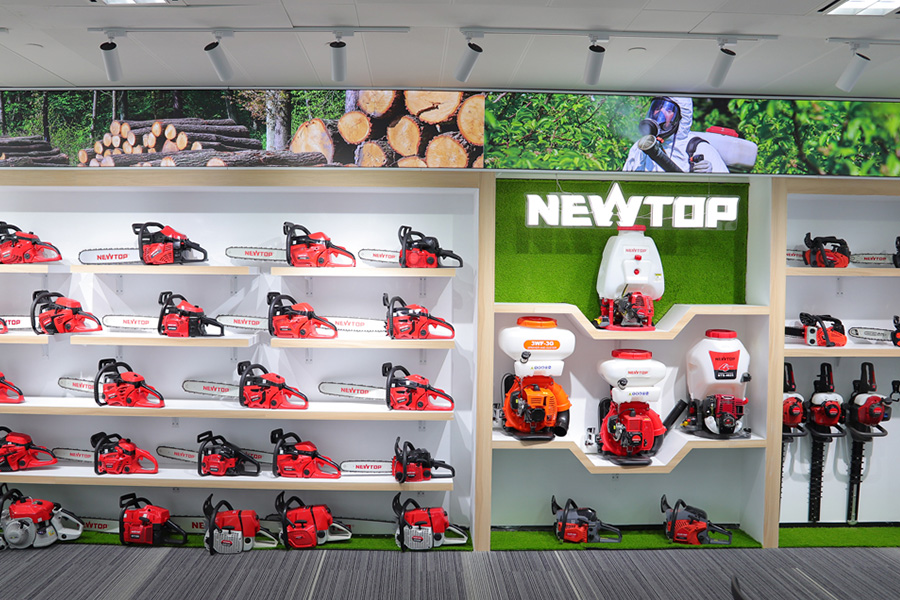
世界中の多くの地域で, 園芸機械販売ビジネスの構築は、1 つの重要な決断から始まります: 適切な園芸機械サプライヤーの選択. 都市が拡大し、造園需要が高まり続ける中, 信頼できるサプライヤーと協力する販売業者は、製品の安定性において明らかな利点を得ることができます。, アフターサポート, そして長期的な成長. 今日, 園芸機械の流通はもはや短期取引ではありません, 信頼とサービスに基づいた信頼できるシステムの構築については.
新興市場と成熟市場の両方にまたがる, 園芸・造園機器は堅実な事業カテゴリーとなった. 公共インフラプロジェクト, 商業造園, および家庭用園芸品はいずれも安定した需要に貢献しています. この安定感があるからこそ, より多くの起業家や地域トレーダーが、流通を真剣な投資に値する機会と見なしている. しかし, 成功は野心よりも実行力に左右されます.
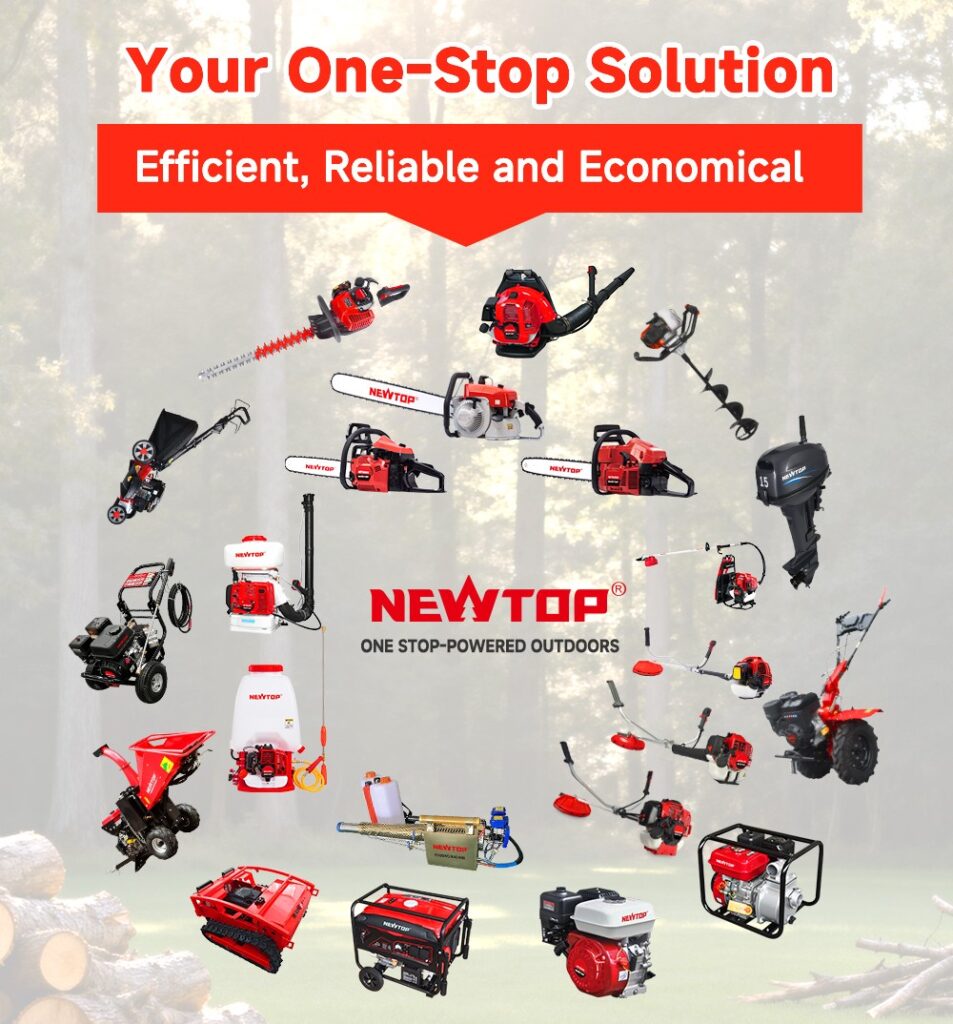
適切な園芸機械サプライヤーを選択することがなぜ重要なのか
世界的なブランドが注目を集めていますが、, ほとんどの購入決定は依然として地元の販売代理店によって決定されています. 園芸機械は厳しい条件下で動作します, 多くの場合、長時間にわたって、限られたメンテナンスで. このため, 買い手は、マーケティング上の主張よりも、スペアパーツへのアクセスとサービスの対応をはるかに重視しています。.
アフリカとラテンアメリカでは, オペレータは通常、重い負荷の下で毎日装置を稼働させます. その間, 多くのヨーロッパ市場で, 買い手はコンプライアンスと一貫性を同等に重視します. 結果として, 実際の使用シナリオを理解しているディストリビュータは、ブランド認知だけに頼っているディストリビュータよりも優れたパフォーマンスを発揮します.
あ プロの園芸機械サプライヤー この地元の利点を強化します. 実際の作業環境を理解した上流のサポートがなければ, 経験豊富なディストリビューターでも規模を拡大するのに苦労しています.
小規模から始めることで、新しいディストリビューターのリスクを軽減できます
多くの初めての販売代理店は、人気モデルはどこでも売れると信じています。. 実際に, 製品は、地元の燃料品質と一致する場合にのみ成功します。, 気候, オペレーターの習慣. したがって, 経験豊富なディストリビューターは通常、 フルカタログ.
数十のモデルをインポートする代わりに, 多くの場合、1 つまたは 2 つの実績のあるプラットフォームから開始します. このアプローチにより、スペアパーツの管理が簡素化されます。, 在庫圧力を軽減する, 市場からより迅速に学習できるようになります. 時間とともに, 代理店は思い込みではなく実需に基づいてラインナップを拡大する.
ニュートップにて, 多くの長期パートナーがまさにこの道をたどりました. フィールドでテストされた構成から開始し、パフォーマンスと顧客からのフィードバックを検証した後にのみ拡張しました。.
プロの園芸機械サプライヤーが長期的な成長をどのようにサポートするか
販売代理店は機械だけを販売するのではなく、信頼性を販売します。. このため, サプライヤーの選択は市場の評判に直接影響します. 低価格が最初の注目を集めるかもしれないが, 長期的にマージンを保護することはほとんどありません.
販売代理店が見積書のみに基づいてサプライヤーを選択する場合, 一貫性のない品質に直面することがよくあります, スペアパーツの供給が不安定, そして発送の遅れ. これらの問題はディーラーの信頼を急速に傷つけ、ビジネスの成長を遅らせます.
対照的に、, 信頼できる園芸機械サプライヤーが一貫性を提供します. 安定した生産基準, 標準化されたコンポーネント, 予測可能なリードタイムにより、ディストリビューターは在庫を計画し、自信を持ってディーラーをサポートできます。. 問題が発生したとき, 責任あるサプライヤーは説明ではなく解決策を提供します.
時間とともに, この信頼性は、価格競争では代えられない競争上の優位性となります。.
短期的なボリュームではなく持続可能性を重視した価格設定
初期段階では, 多くの販売代理店は、積極的な価格設定で市場シェアを獲得しようとしています. しかし, この戦略は通常、マージンを弱め、アフターセールス能力を制限します。. サービス品質が低下すると, 顧客の信頼は後から続く.
成功しているディストリビューターは異なるアプローチを取る. 実際のコストに基づいて価格を計算します, 物流も含めて, スペアパーツ在庫, 保証サポート, そして市場開発. ディストリビューターが透明性のあるサプライヤーと協力する場合, 陸揚げコストをより明確に把握し、予期せぬ損失を回避します.
結果として, ディーラーはより自信を持って営業できる, 顧客からの苦情が減少する, リピート注文がより予測可能になります.
アフターサービスはマーケティングよりも早く信頼を築く
故障はあらゆる装置ビジネスに発生します. 顧客は故障率だけで販売代理店を判断するわけではありません, ただし、応答速度と問題解決により. その結果, 販売後の準備は早めに始めるべきです.
強力な代理店はスペアパーツを迅速に在庫しています, 基本的な技術者の育成, 明確な保証手順を確立する. 同時に, 彼らは、技術文書と長期的な部品の入手可能性について園芸機械のサプライヤーに依存しています。.
NEWTOPは共有コンポーネントを中心に多くの製品ラインを設計しています, これにより、代理店は過剰な在庫を持たずに複数のモデルをサポートできるようになります。. 時間とともに, この効率性により、ディーラーの忠誠心と顧客の信頼が強化されます.
ブランディングと OEM はディストリビューターの存在感を高めるのに役立ちます
競争が激化するにつれて, ディストリビューターは最終的には差別化を必要とする. 認識可能なアイデンティティがなければ, 製品は価格だけで競争します, それは成長を制限する.
このため, 多くの流通業者は、OEM およびプライベートラベルをサポートするサプライヤーと協力することを選択します。. 簡単なカスタマイズでも, ブランドのパッケージやローカライズされたマニュアルなど, 市場での認知度やプロフェッショナリズムの構築に貢献.
ブランディングはディーラーのディストリビューターに対する見方も変える. トレーダーとして行動する代わりに, ディストリビューターは長期的なパートナーになります. NEWTOP はこの移行をサポートしています。 強力な代理店ブランド より安定した持続可能な協力につながる.
物流の安定がスケーラブルな成長を支える
素早い配送が注目を集める, しかし、信頼性の高い配信がビジネスを構築します. 一貫性を優先するディストリビューターは、不必要な中断や計画上の問題を回避します。.
成熟したサプライヤーがピークシーズンに先立って生産能力を計画, コンテナの積載を最適化します, 出荷前に検査を実施します. これらの実践により、遅延と損害のリスクが軽減されます. 結果として, 販売代理店は自信を持ってプロモーションや季節セールを計画できます.
安定した物流により、販売代理店は消火活動ではなく市場拡大に集中できるようになります.
成長はデータと協力から生まれる
運用が安定したら, 成功するディストリビューターは仮定ではなくデータに依存します. 販売パターン, スペアパーツの売上高, ディーラーからのフィードバックにより、明らかな改善の機会が明らかになります.
販売代理店がこの情報を園芸機械のサプライヤーと共有する場合, 双方に利益がある. 製品の改善が早くなる, 構成が改善される, そして新しいモデルは実際の需要にさらに適合します. NEWTOP とその販売代理店との間の多くの長期的なパートナーシップは、この協力的なアプローチを通じて成長してきました。.
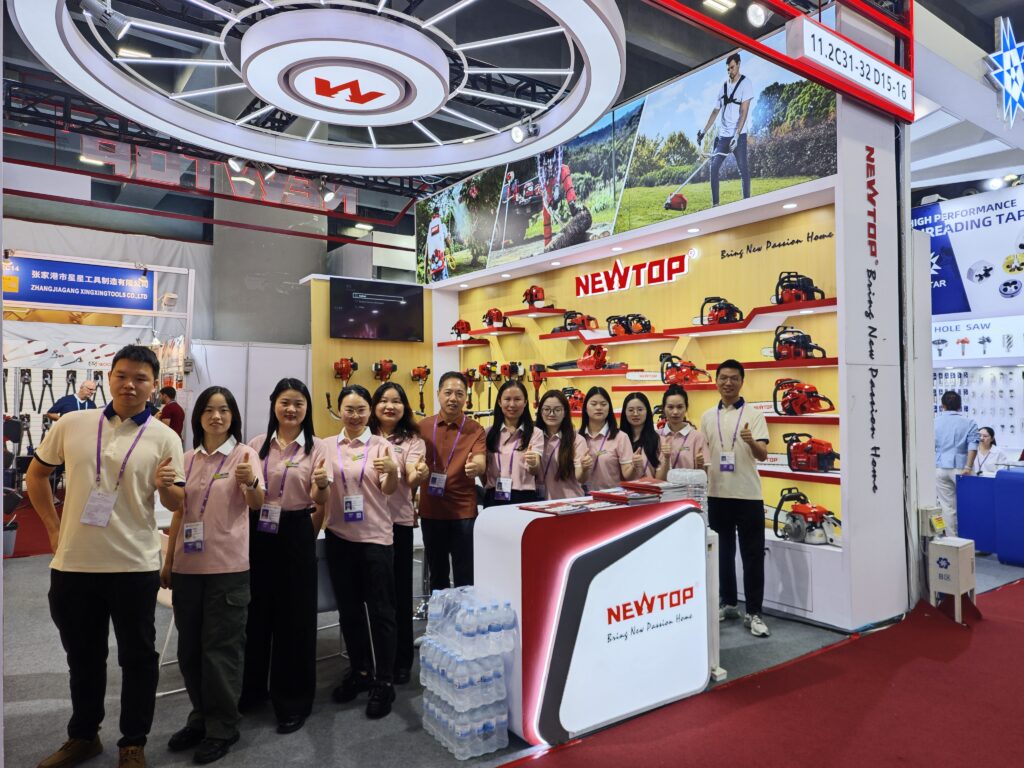
園芸機械の販売事業を始めるには忍耐と体力が必要です. 簡単な勝利が長続きすることはほとんどありません. 持続可能な成功は現実的な市場理解から生まれます, 強力なアフターサービス能力, 適切な園芸機械サプライヤーとの協力.
安定性に投資する販売代理店, サービス, 長期的なパートナーシップにより、着実に成長することができます, 市場が変化しても. NEWTOPのような経験豊富なメーカーをパートナーとして, 成長が達成可能かつ拡張可能になること.
現在、最適な電動チェーンソーを選択するのは簡単なことはほとんどありません. 十年前と比べて, 買い手は今、はるかに多くの選択肢に直面しています, そして、ガソリンチェーンソーは常に「専門家の選択」であるという古い仮定は、もはや現実を反映していません. 電気技術は急速に進歩しました, 毎日の切断作業に取り組むユーザーの数を変える.
実際の使用において, 最高の電動チェーンソーは多くの場合十分なパワーを供給します, 快適, ほとんどの日常業務に対する信頼性. しかし, 正しい選択は依然として、見出しの仕様ではなく、ツールが日常業務にどのように適合するかによって決まります。. 多くの購入決定が静かに間違っているのはここです.
販売代理店やエンドユーザーとの長年にわたる協力から, NEWTOP には 1 つの明確なパターンが見られます: 実際の作業習慣に基づいてチェーンソーを選択するユーザーは、紙上の数字を追うユーザーよりもはるかに長く満足感を維持する傾向があります.
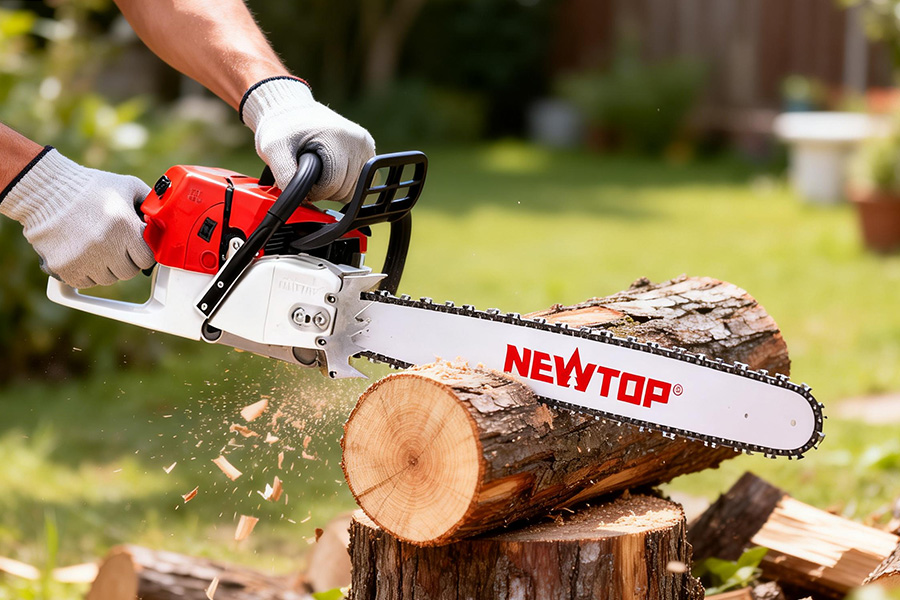
まずは電動チェーンソーの実際の使い方から
モデルやブランドを比較する前に, チェーンソーが毎週どのように使用されているかを正直に観察することは役に立ちます. ほとんどの人は毎日大きな丸太を切るわけではありません. その代わり, 彼らは剪定を処理します, 薪割り, 嵐の掃除, および一般的な財産のメンテナンス.
この種の作業の場合, 利便性が急速に重要になる. 電動チェーンソーが瞬時に始動, 準備はほとんど必要ありません, コントロールしやすくなったと感じます. 結果として, 多くの住宅所有者や軽作業ユーザーは、最高の電動チェーンソーが現実的に必要なものすべてをすでにカバーしていることを認識しています。.
この変化は住宅所有者にとどまらない. 造園業者や不動産管理者も、日常業務で電動チェーンソーへの依存度を高めています。. 改善されたモーター効率とバッテリーシステムにより、古い電気モデルがかつて引き起こしていたフラストレーションを感じることなく、長時間の作業セッションがサポートされるようになりました。.
電動チェーンソーが現実的な選択肢になりつつある理由
電動チェーンソーの人気が高まっているのは、ガソリンモデルを完全に置き換えたからではありません, しかし、日常の作業が簡素化されるため、. ユーザーは燃料の混合を避ける, ウォームアップタイム, プルスタート抵抗. 時間とともに, これらの小さな便利さにより、全体的な作業エクスペリエンスが著しく向上します.
ノイズリダクションも多くの予想よりも大きな役割を果たします. 動作音が静かなので、住宅地でも苦情が少なく作業可能, 振動の低減により、繰り返しの切断時の疲労を軽減します. 組み合わせた, これらの要素により、電動チェーンソーは長期間使用しやすくなります。.
メンテナンスはこの傾向をさらに強化します. 電動チェーンソーはガソリン関連の一般的な問題の多くを解決します. キャブレター調整や点火チューニングなし, ユーザーは作業に多くの時間を費やし、機器の修理にかかる時間を短縮します. このため, 最終的に多くの人は、最高の電動チェーンソーとは、絶えず注意を払うことなく性能を維持し続けるものであると表現します。.
バッテリーチェーンソー: コードレスの利便性が最も重要な場合
電動チェーンソー内, あるカテゴリーが近年特に急速に成長した: バッテリーチェーンソー. 電源コードを完全になくすことで、, バッテリー駆動モデルは、より柔軟な作業体験を提供します. ユーザーは木の周りを自由に移動できる, 生垣, ケーブルの長さを気にせずに庭のスペースでも使用できます, コンセント, または絡まったワイヤー.
多くの住宅所有者や軽作業の専門家向け, このコードレス設計により、チェーンソーの実際の使用頻度が変わります. かつては不便だと感じていたタスク - 素早い剪定, 小さなクリーンアップ, または日常的なトリミング - 扱いやすくなります. 結果として, バッテリーチェーンソーは切断能力だけでなく選ばれることが多い, しかし、それはユーザーとタスク自体の間の摩擦を軽減するためです.
このコードレス操作への移行は、メーカーが新しいツールを設計する方法にも影響を与えます. ニュートップにて, ポータブルバッテリーチェーンソーはバランス重視, 重さ, 最大出力だけではなく、日常の使いやすさを重視. 目指すのは、切削加工をもっと身近に感じてもらうこと, 特にコントロールと快適さを重視するユーザー向け.
このアプローチの好例は NEWTOP です。 ポータブルワイヤレスリチウム電池チェーンソー NTCS401Li.
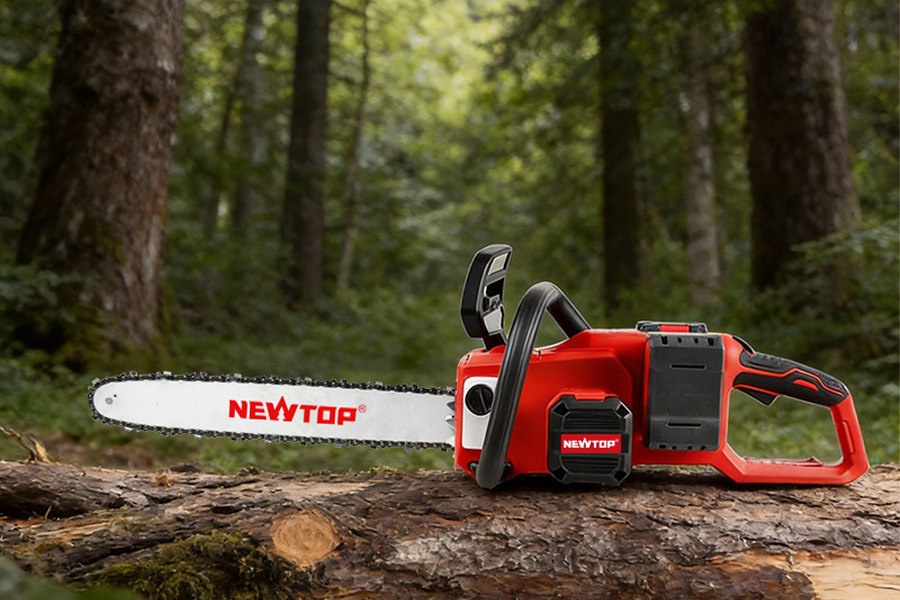
軽量設計, コードレス切断ソリューション, 毎日の庭や屋外の作業に優れた効率性を備えたクリーンなパフォーマンスを提供します。. ブラシレスモーターを搭載し、高度な電子制御によってサポートされています。, NTCS401Li はスムーズな操作を提供します, 低騒音, 大型機械にありがちな振動や複雑さのない、信頼性の高い切断力を実現します。. 切断の安定性を犠牲にせず、バッテリーチェーンソーの利便性を求めるユーザー向け, このタイプのデザインは現代の電動チェーンソーの使用に自然に適合します.
電動チェーンソーの性能を決めるもの
マーケティング資料では電圧が強調されることが多い, チェーン速度, またはバーの長さ. 実際の労働条件では, パフォーマンスは、これらの要素がどのように連携するかによって大きく左右されます。.
モーターの品質が中心的な役割を果たします. ブラシレスモーターは安定したトルクを提供し、負荷時の応答性が向上します, 硬い木材を切断する際のコントロールが向上します。. 電力供給も同様に重要. チェーンソーが失速したとき, オペレーターはもっと強く押す必要があります, 疲労とリスクの増大. 適切に設計された電動チェーンソーは、一貫したチェーンの動きを維持し、ツールに作業を任せることでこの問題を回避します。.
バーの長さも現実的なアプローチに値します. 長いバーは印象的に見えますが、, 彼らはしばしばコントロールを低下させます. 多くの状況で, バーを少し短くすると精度が向上し、実際に作業がスピードアップします。.
快適, 安全性, 電動チェーンソーの信頼性と信頼性
快適さは多くの購入者が思っている以上に満足度に影響を与えます. 電動チェーンソーは通常軽量です, しかし、バランスは総重量と同じくらい重要です. バランスが悪いと手首や肩にすぐに負担がかかります, 特に斜めまたはオーバーヘッドカットの場合.
最新の電動チェーンソーにはチェーンブレーキなどの安全機能が備わっています, トリガーロック, そしてハンドガード. これらの機能によりリスクが軽減されます, しかし、安全な操作は依然としてユーザーの習慣に依存します. スムーズなスロットル応答と予測可能な切断動作により、これらの習慣を維持しやすくなります。.
メンテナンスは簡単ですが必要です. チェーンは研ぎが必要です, バーは掃除が必要です, 潤滑システムには注意が必要です. バッテリーのケアも重要. 適切な充電と保管方法に従うユーザーは、パフォーマンスを維持し、耐用年数を延ばします。.
時間とともに, ビルドの品質が明らかになる. ハウジング強度, 内部レイアウト, 熱管理と熱管理により、チェーンソーが繰り返し使用した後にどれだけ耐えられるかが決まります。. ニュートップにて, エンジニアは現実的な作業条件下で電動チェーンソーを評価します, なぜなら、耐久性は短期間のデモンストレーションではなく、使用することで明らかになるからです。.
チェーンソーの正しい選択
重労働な林業作業は依然としてガソリンチェーンソーが主流, そしてその役割は依然として明らかである. しかし, ほとんどのユーザーは、より軽いタスクにはるかに多くの時間を費やします.
日常のシナリオで, 電動チェーンソーにはバッテリーチェーンソーが含まれており、ほとんどの切断作業をより少ない妥協で処理できるようになりました。. 騒音の低減, 取り扱いが容易, メンテナンスが簡単なため、多くの環境で推奨されるオプションになります。. 結果として, 多くのユーザーは日常の作業には最高の電動チェーンソーを使用し、特定の需要に応じてガソリンモデルを予約しています。.
適切なチェーンソーの選択は、最終的には本当のニーズに対する正直さによって決まります。. 最大のスペックを追い求めるのではなく, 実際の習慣や作業条件に合ったツールを選択することが重要です. For many users today, 電動チェーンソー、特に最新のバッテリーモデルは、そのバランスを保っています。, テクノロジーの進歩に伴い、その役割は増大し続けています.
販売代理店様向け, professionals, チェーンソーを評価するエンドユーザー, NEWTOPは実用的なデザインと信頼できる性能にこだわり続けます。, because in real work, 一貫性は紙上の数字よりもはるかに重要です.

農家がスプレーの性能について語るとき, 彼らはしばしばポンプ圧力に焦点を当てます, タンク容量, またはエンジン出力. 実際には, ランスの先端にある小さな部品であるノズルは、化学物質がどのように分配されるかに最も大きな影響を与えます。, どのくらいのドリフトが発生するか, そしてその治療がどれほど効果的になるか.
より効果的に雑草を防除したい場合は、さまざまなナップザック噴霧器のノズルのタイプを理解することが不可欠です, より健康的な作物, 化学廃棄物の削減. 数ヘクタールを経営している場合でも、大規模な農業を経営している場合でも, 適切なスプレーチップの選択は液滴サイズに直接影響します, スプレーパターン, カバレッジの均一性, 全体的な効率.
の上.
このガイドでは、ナップザック噴霧器のノズルがどのように機能するかを説明します, 利用可能な主なタイプ, アプリケーションに適したものを選択する方法.
ナップザックスプレーノズルとは何ですか、そしてそれがスプレー性能に影響を与える理由
ノズルは、システム上で最も重要なコンポーネントです。 ナップザック噴霧器, 液滴サイズを直接制御する, スプレーパターン, アプリケーションの精度とドリフトの可能性を決定するための流量.
ナップザックスプレーノズルは、液体がスプレーランスからどのように出るかを制御する精密コンポーネントです. それは決定します:
- 液滴サイズ (大丈夫, 中くらい, 粗い)
- スプレーパターン (フラット, ファン, 円錐, ストリーム)
- 流量 (毎分リットル)
- スプレー角度 (例えば, 65°, 80°, 110°)
- ドリフトの可能性
その主な機能はアプリケーションの結果に直接影響します。. 手動および電動の両方のナップザック噴霧器で, 圧力のかかった液体は小さなオリフィスを通過します.
オリフィスの形状とサイズによって、スプレーがどのように霧化されるかが決まります。. 例えば, フラットファンノズルにより薄い, 除草剤の散布に最適な均一に分散されたスプレーのシート. 中空の円錐ノズルが細かい液滴を生成し、葉を包み込みます。, 殺虫剤の適用範囲を改善する.
液滴サイズが細かすぎる場合, スプレードリフトが増加する, 特に風の状況下では. 液滴が粗すぎる場合, カバー力が不均一になり、 害虫駆除 苦しむかもしれない.
ノズルが液滴のサイズとドリフトを制御する方法
液滴のサイズはスプレーの性能に影響を与える主な要素です, ノズルの内部設計により、生成される液滴のサイズが決まります。.
より小さな液滴, 通常は周りに 100-200 ミクロン, より完全に表面をカバーしますが、風によって飛ばされる可能性が非常に高いです. 対照的に, より大きな水滴 400 ミクロンは重く、ドリフトに強い, ただし、植物の表面で跳ね返ったり、均一な被覆が得られない場合があります。.
スプレーパターンがカバレッジ品質に及ぼす影響
スプレー パターンは、ノズルから出るスプレーの物理的な形状です。. 特定のタスクに合わせてさまざまなパターンが設計されており、化学物質が効果的に分散され、最大の効果が得られます。. フラットなファンパターン, 例えば, ユニフォームを提供します, 平らな地面に除草剤を散布するのに最適なスプレーの重複バンド. 中空円錐および完全な円錐パターンにより、円形のより細かい液滴が生成されます。, 殺虫剤や殺菌剤を散布する際に、密集した植物の樹冠に浸透するように設計されています。. 正しいパターンにより、有効成分が意図したターゲットに正確に届けられます。, 葉の表面なのか, 一本の雑草, または土壌.
ナップザックスプレーのノズルタイプの概要
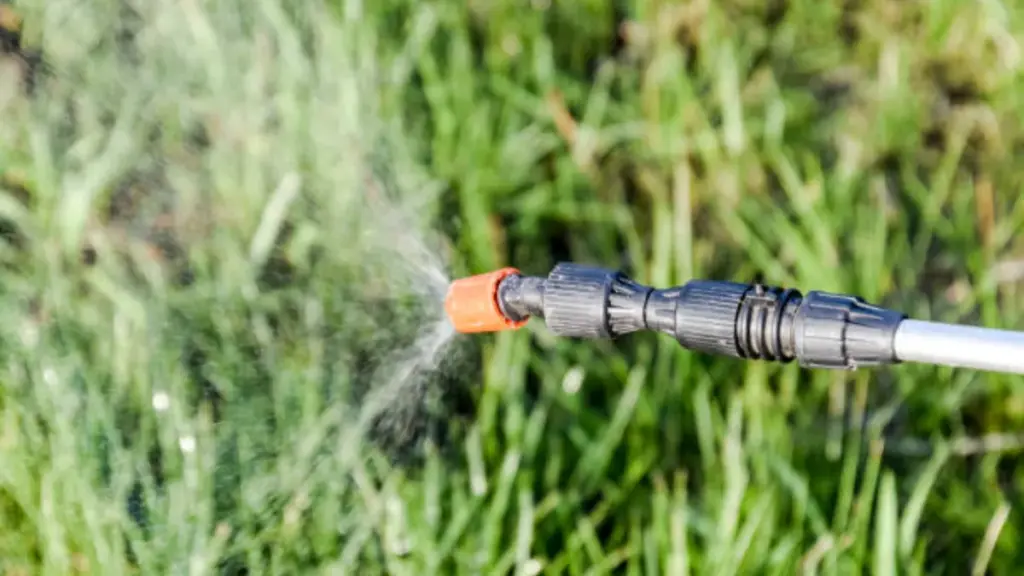
ナップザック噴霧器ノズル 一般に、スプレーパターンと液滴の形成によって分類されます。. ここに、一般的なナップザック噴霧器のノズルのタイプをまとめた完全な表を示します。簡単に参照できるようになります。:
| ノズルの種類 | 意味 & 特徴 | スプレーパターン & 角度 | 液滴サイズ | 流量 (@ 3 バー) | ドリフトの可能性 | 治療の種類 | 長所 & 短所 |
|---|---|---|---|---|---|---|---|
| フラットファン | 楕円形のスプレーで平らな面に均一に分布するように設計されています。. | フラット/ファン (65° – 110°) | ファインからミディアム | 0.4 – 1.6 L/分 | 中程度から高程度 | 放送用除草剤; 均一なコーティング. | (+) 均一 (-) 風の吹き抜け |
| 中空円錐 | 外輪に液体が集中する; 3D 葉カバーに最適. | 円形リング (40° – 90°) | 細かいから非常に細かい | 0.3 – 1.2 L/分 | 非常に高い | 殺虫剤; キャノピーの貫通. | (+) 浸透 (-) オペレーショナルリスク |
| フルコーン | 円形領域全体を塗りつぶします; 大量のウェットスプレーを提供します. | 実線の円 (30° – 120°) | 中~粗 | 0.8 – 2.5 L/分 | 低から中程度 | スポット治療; びしょぬれ濃密ブラシ. | (+) 大きな影響力 (-) 化学廃棄物 |
| ソリッドストリーム | 単一のジェットで最大の精度とターゲットへの衝撃を実現. | シングルドット (0°) | 極粗 | 0.2 – 2.0 L/分 | 非常に低い | 狙った箇所の除草; 隙間掃除. | (+) ゼロドリフト (-) 対象外 |
| 洪水 | 低圧でワイドフラットスプレー; 特大の液滴を生成します. | エクストラワイドファン (110°+) | 極粗 | 1.0 – 4.5 L/分 | 低い | 土壌除草剤; 液体肥料. | (+) 迅速な対応 (-) 廃液 |
| 調整可能 | ノズルをひねってストレートストリームから円錐パターンに変更可能. | 変数 (0° – 90°) | 細かいものから粗いものまで | 0.4 – 1.8 L/分 | 変数 | 園芸全般; 多目的なニーズ. | (+) 多用途 (-) 不十分な校正 |
| 空気の誘導 | 空気混合スプレーにより空気を含んだ大きな泡が発生し、ドリフトを軽減します。. | スタンダードフラット (110°) | 非常に粗い | 0.6 – 2.0 L/分 | 極めて低い | 発芽前除草剤; 風の強い状況. | (+) ドリフトコントロール (-) 高いPSIが必要 |
効率的な除草剤散布のためのフラットファンノズル
フラットファンノズルは、除草剤の散布散布の業界標準です, ドリフト制御や特定の化学的要件に合わせて最適化できる均一なカバレッジを提供します。.
標準アプリケーションを均一にカバー
フラットファンノズルは、畑作物に除草剤を散布するための確立された標準です. その設計により、隣接するノズルからのパターンが適切に重なったときに均一な液体分布を保証する、テーパーエッジのスプレーパターンが生成されます。. この信頼性の高い性能により、一貫した効果的な雑草防除が可能になります。, ブロードキャスト処理に最も広く使用されているノズル タイプです。.
正確な制御のためのドリフト低減バリアント
ノズル エンジニアリングの主要なトレンドは、スプレーのドリフトを最小限に抑えるフラット ファン設計の開発です。. これらのノズルは風の影響を受けにくい、より大きな液滴を生成します。, 除草剤が対象地域に確実に着弾するようにする. これは多くの場合、意図したスプレー パターンを維持しながら液体の出口圧力を下げるプレオリフィス設計によって実現されます。. 特殊なバリアント, フラットファンノズルと同様, 狭い範囲に除草剤を散布する必要があるバンドの塗布にも使用できます。, 濃縮ストリップ.
化学に基づいたノズルの選択
現代の農業における焦点は、汎用ノズルの使用から、特定の除草剤の化学に基づいてノズルを選択することに移行しています。. ノズルの液滴サイズを化学物質の要件に一致させることは、パフォーマンスを最大化し、廃棄物を削減するために重要です. 正しい選択は除草剤の種類によって異なります, キャリアボリューム, および適用時の環境条件. このプロセスを支援するために, 現在、多くのメーカーが、オペレーターが正確なニーズに合わせて最適なノズルを選択できるようにするデジタル ツールやモバイル アプリを提供しています。.
中空円錐ノズルで葉に最大限の浸透を実現
中空円錐ノズルにより、微細な液滴によるリング状のスプレー パターンが生成されます。, 密集した作物の樹冠に浸透し、届きにくい内側の葉に殺菌剤や殺虫剤を届けるように設計されています。.
中空円錐ノズルがリング状のパターンを作り出す仕組み
中空円錐ノズルは、オリフィスから出る前に液体を高速で回転させるワールチャンバーと呼ばれる内部コンポーネントを使用します。. この遠心作用により、液体が円錐形のシートに押し込まれます。, 中央が空洞になった独特のリング状のスプレーパターンを形成します。. この設計により、スプレーの端に細かい液滴が集中し、葉に正確に塗布できます。.
- 液体が渦室に入る, 高速回転流を発生させる.
- スプレーは、円形のリング パターンを形成する円錐形シートのオリフィスから出ます。.
- ほとんどの液滴はリングの外側の端に集中します, 中心を空洞にして残す.
主なパフォーマンス特性
これらのノズルの有効性は、効率的なリング パターン内で微細な液滴を生成する能力に由来します。. この形状は、 40 そして 80 psi. これらの特性が連携して、化学物質の無駄を最小限に抑えながら葉の奥まで確実に浸透します。.
- 密集した植物の樹冠に浸透しながら、表面被覆を最適化する微細から中程度の液滴を生成します.
- リング構成により、スプレーが全体積に浸透するのではなく、葉の表面に向けて噴射されます。.
- 40 ~ 80 psi で効果的に動作, 葉の下側をしっかりカバーします.
主な農業用途
これらのノズルは、密集した葉を完全にカバーすることが重要な用途に最適です。. 彼らは果樹園で優れています, ブドウ畑, そして特産作物, 作物保護のために葉の内部および下部に到達することが不可欠な、標的を絞った殺菌剤および殺虫剤処理の主な選択肢となっています。.
- 大豆や果樹などの作物への殺菌剤や殺虫剤の散布に最適です。.
- 密な樹冠に効果的に浸透して、内部の葉とその裏側に到達します。.
- 液滴を葉の奥まで押し込むエアアシスト噴霧器と併用すると、パフォーマンスが向上します。.
信頼性の高い噴霧器のスペアパーツでリピート注文を増加

Full Cone Nozzles for High-Volume Spray Applications
Full cone nozzles are engineered to deliver a solid, 液滴が均等に分散された円形のスプレー パターン, 完全な表面浸漬と大量生産を必要とする用途の標準となっています。.
フルコーンノズルが均一な分布を実現する仕組み
フルコーンノズルにより固体が生成されます。, 内部部品を使用した円形スプレーパターン, like an S-type or tangential-flow vane, to create a turbulent, swirling flow before the liquid exits the orifice. This mechanism forces droplets to distribute evenly across the entire target area, not just along the edges. The result is consistent, thorough coverage, which makes these nozzles ideal for tasks that require complete wetting or drenching of a surface.
Primary Applications in Agriculture and Industry
これらのノズルは、表面を大量の液体で覆うことが主な目的であるあらゆる分野で重要です。. 均一なスプレーパターンは、完全な被覆が交渉の余地のないプロセスに不可欠です。.
- 工業現場や採石場での粉塵抑制.
- 農業施設における農産物や設備の洗浄およびすすぎ.
- 広範囲に大量の水を供給するように設計された防火システム.
- 産業プラントにおけるガス冷却およびスクラビングプロセス.
高流量タスクの利点
フルコーンノズルの主な利点は、安定したノズルを維持できることです。, 高流量でも均一なパターン. この効率により化学廃棄物が削減され、大規模な操作でも一貫した結果が保証されます。.
- 優れたカバレッジを実現し、見逃しスポットを最小限に抑えます, 繰り返し適用する必要性を軽減.
- スプレーパターンの完全性を失わずに大量生産できるように設計されています.
- 最新の設計により目詰まりに対する耐性が向上, 要求の厳しい環境でも信頼性の高い動作を保証.
ソリッドストリーム (ジェット) 精密スポット治療用ノズル
ソリッドストリームノズルは、最大の衝撃と最小限の霧化で濃縮された液体ジェットを供給します。, オーバースプレーを避けなければならない高精度のスポット処理の標準となっています。.
主な特徴: 精度と高い衝撃
ソリッドストリームノズル, ジェットノズルと呼ばれることが多い, 単一のものを生成するように設計されています, 一貫した液体の流れ. この設計により、出力全体が小さな領域に集中します。, すべてのノズルタイプの中で可能な限り高い衝撃力を生成します。. より小さな液滴への霧化を最小限に抑えることにより、, ノズルがしっかりと密着します, 制御された流れにより、スプレーのドリフトが大幅に軽減され、オペレーターが特定のポイントを高精度でターゲットにできるようになります。. これにより、広範囲にわたる精度が要求されるアプリケーションに最適です。.
スポット治療の一般的な用途
これらのノズルの主な用途は、周囲を汚染することなく化学薬品を特定のターゲットに当てる必要がある作業です。. 敏感な環境ではその精度が非常に重要です, 価値の高い作物を使った, または特殊な清掃業務の場合. 主な用途には以下が含まれます:
- 芝生の個々の雑草に除草剤を直接散布する, 庭, または作物の列.
- 植物の根元やフェンス沿いに隠れている害虫を狙う.
- 高圧水流を使用して機器を洗浄したり、固い表面から頑固な破片を洗浄したりする.
- 液体肥料または全身処理剤を植物の根域近くの土壌に直接注入する.
材質と耐久性についての考慮事項
ソリッド ストリーム ノズルの性能と寿命は、オリフィスの品質と材質に完全に依存します。. による 2026, 大手メーカーは、一貫した流量パターンを維持するために耐久性の高い素材を使用しています。, 研磨剤や腐食性の化学薬品をスプレーする場合でも. オリフィスが摩耗または損傷すると、流れの一貫性が低下します, ターゲティングが不十分になり、ドリフトが増加する. オペレーターは材料の品質と定期的な検査を優先する必要があります.
- オリフィスは通常、硬化ステンレス鋼で作られています, セラミック, または耐摩耗性の炭化タングステン.
- オリフィスが損傷すると、流れが中断される可能性があります, 混乱を招く, 効果の低いスプレー.
- 流れがまっすぐで乱流がないことを確認するには、頻繁に目視チェックする必要があります。.
制限事項と使用を避けるべき場合
ソリッドストリームノズルは精密な作業に優れていますが、, 広い領域をカバーするには間違ったツールです. 集中パターンはブロードキャストスプレーには非効率的です, 誤って使用すると、強い衝撃力が有害になる可能性があります。. 特定の状況ではソリッド ストリーム ノズルの使用を避けるべきです.
- 除草剤や殺虫剤を畑全体に散布するのは現実的ではありません, 芝生, または広い地面.
- 強力な噴流は繊細な植物の葉に物理的な損傷を与える可能性があります, 花, または果物.
- ターゲットが液体の量をすぐに吸収できない場合、過剰な化学物質の流出が発生する可能性があります.
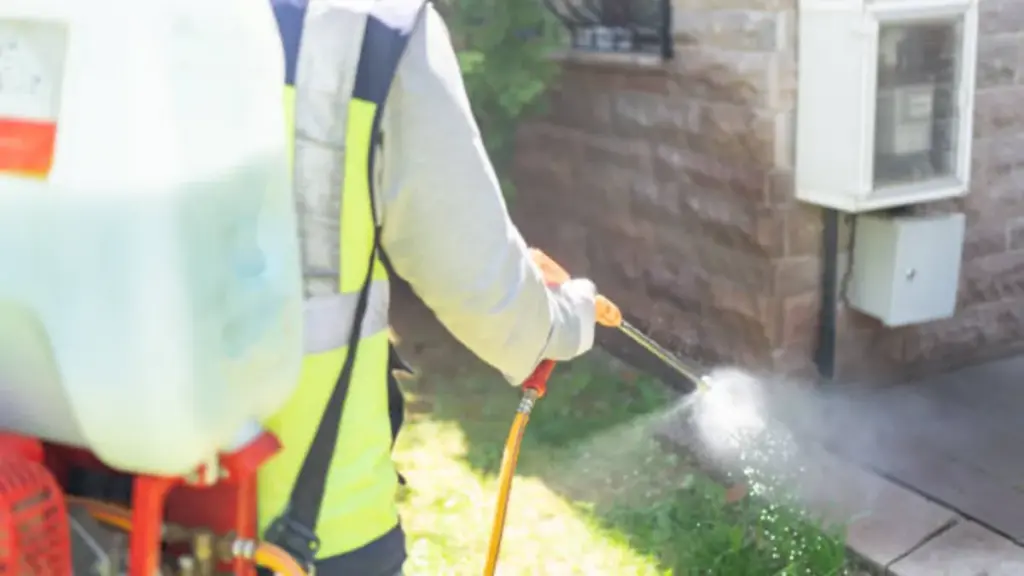
大量の土壌および地盤処理用の洪水ノズル
洪水ノズルは、大量の地上用途の業界標準です, 幅広く届ける, 非常に大きな液滴による均一なパターンにより、液体肥料や土壌対象除草剤を散布する際のスプレーのドリフトを最小限に抑えます。.
フラッディングノズルの機能のしくみ
フラッディング ノズルは広角を生み出すように設計されています。, 液体の固体の流れを傾斜面からそらすことによる扇状のスプレー パターン. このメカニズムにより、非常に粗い液滴スペクトルが生成されます。, 細かいスプレーよりも風の影響を受けにくい. 非常に低い圧力で動作するように設計されています, 通常は次の間で 10 そして 30 psi, 小規模な製品の作成をさらに削減, 漂流しやすい液滴. その結果、ターゲット外の動きを最小限に抑えながら、最大の地上範囲を確保できます。, 特定の放送アプリケーションの基礎となるテクノロジーとなる.
農業における主な用途
これらのノズルは、液体肥料や発芽前の除草剤を土壌に直接散布するためのデフォルトの選択肢です。. 高い流量と均一な分配パターンにより、大規模なフィールドを迅速かつ効果的に処理するのに最適です。. これらは、植物の樹冠を貫通するのではなく、地表を均一に覆うことが目的の放送用途に一般的に使用されます。. その設計は、シングルパス散布用に肥料と除草剤を組み合わせたタンク混合物にも適しています。.
地上散布の主な利点
フラッディング ノズルの主な利点は、ドリフトを大幅に軽減しながら大量の液体を供給できることです。. この組み合わせにより、高価な化学物質が必要な土壌に確実に到達します。, 有効性と環境安全性の向上. 幅広のパターンにより、対地速度も向上します, 業務効率の向上.
- 優れたドリフトコントロール: 大きな液滴サイズと低い操作圧力が、目標外のスプレーの動きを最小限に抑える 2 つの主な要因です.
- 均一な適用範囲: 広い, フラットパターンにより、肥料と除草剤が土壌表面全体に均一に分散され、一貫したパフォーマンスが得られます。.
- 高効率: 高い流量と幅広いスプレー範囲により、オペレーターはより短い時間でより多くの地面をカバーできるようになります。.
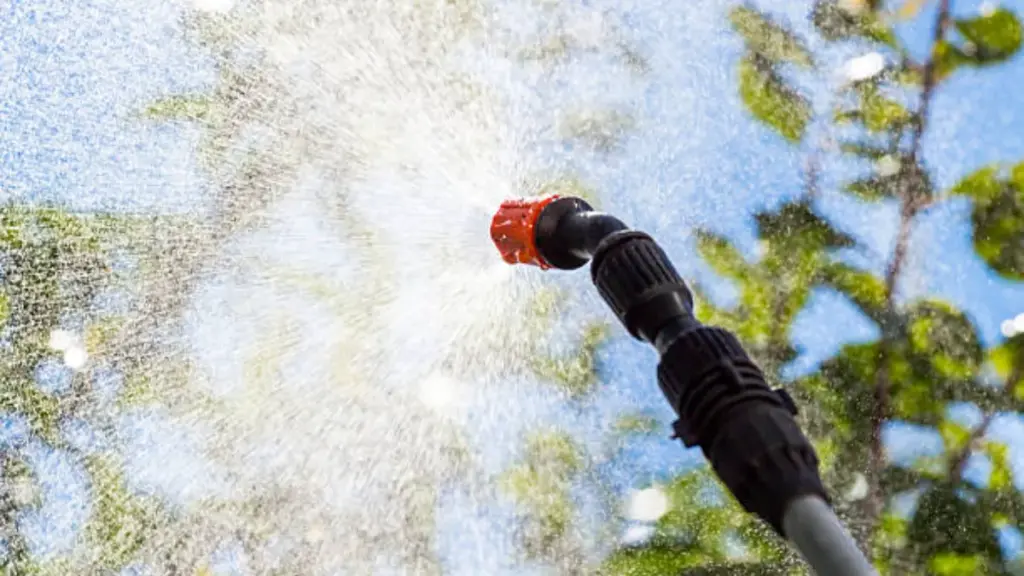
小規模および大規模農場向けの調整可能なノズル
調整可能なノズルにより、運用上の重要な柔軟性が実現します, オペレーターは、ハードウェアを変更することなく、さまざまな化学物質やアプリケーションのニーズに合わせて、細かいミストから固体の流れまでスプレー パターンを変更できるようになります。.
スプレーパターンを霧から水流に適応させる
調整可能なノズルの主な機能は、現場でのスプレー パターンを変更できることです。. オペレーターは広範囲から即座に切り替えることができます。, 細かいミストで広範囲の葉をカバーし、集中した固体ストリームでスポットトリートメントを行います。. この適応性により、さまざまな農業作業に非常に柔軟なツールになります。, 工具を必要としないシンプルな機構で制御.
- シンプルなひねりまたはレバー機構により、スプレーパターン間のシームレスな変更が可能.
- 細かいミスト設定は、広い作物面積に殺菌剤や殺虫剤を散布するのに最適です。.
- ソリッドストリーム設定により、特定の雑草や害虫をターゲットに正確に適用できます。, 過剰なスプレーや化学廃棄物を最小限に抑えます.
さまざまな化学物質や装置にわたる汎用性
調整可能なノズルは、幅広い農薬に効果的に作用するように設計されており、さまざまな種類のスプレー装置に取り付けることができます。. この適応性により、多様な作物を管理し、さまざまな規模で運営する農場にとって普遍的なソリューションとなります。, 小さな土地から大規模な商業畑まで.
- これらのノズルは除草剤と互換性があります, 殺虫剤, そして液体肥料.
- 手動のナップザック噴霧器とそれ以上の大型噴霧器の両方で機能します。, トラクター搭載型ブームスプレーヤ.
- この多用途性により、複数の専用ノズルを購入および管理する必要性が軽減されます。, 在庫とコストの合理化.
現代の農業経営にとっての主な利点
小規模農家と大規模農業企業の両方にとって, 調整可能なノズルはコスト削減を向上させる実用的な利点を提供します, 効率, そして持続可能性. その設計は、スプレープロセス全体を簡素化しながら、化学薬品の使用を最適化します。, より良い運用成果につながる.
- オペレーターがスプレーパターンを塗布対象物に直接合わせることができるため、化学薬品の無駄が削減されます。.
- さまざまな作業でノズルを交換する手間が省け、業務効率が向上します。.
- スプレードリフトをより適切に制御することで、農場が環境基準や規制基準を満たせるように支援します。.
空気導入ノズル: より安全なスプレーのための低ドリフトオプション
空気導入ノズルは、より大きなノズルを生成することでスプレーのドリフトを大幅に軽減するように設計されています。, 空気を含んだ液滴が風に抵抗し、狙った場所への塗布を向上させます。.
空気導入ノズルがスプレーのドリフトを減らす仕組み
空気導入ノズルはベンチュリ設計を採用し、空気とスプレー液体を混合します。. このプロセスにより、より大きなものが作成されます, より重い飛沫が風によって運ばれにくくなる, 目的外のスプレーの動きと環境汚染を最小限に抑えます。.
- ベンチュリ機構が空気をノズル本体に引き込みます, 液体の流れに注入する.
- この動作により、細かい液滴が少なく、粗い液滴が生成されます。, ドリフトしやすい粒子.
- 結果として生じる大きな液滴は、ターゲット表面に直接落下するのに十分な重量を持っています。, 風の影響に抵抗する.
空気導入技術を使用する主な利点
これらのノズルの主な利点は、スプレーのドリフトが大幅に減少することです。, 環境の安全性を高め、対象外の作物を保護します. また、より幅広い条件での効果的な適用も可能になります。, 農家とグラウンドキーパーの作業期間を拡大する.
- を達成します 75% に 90% 従来のフラットファンノズルと比較してスプレードリフトを低減.
- 高い生物学的有効性を維持, 除草剤や殺虫剤が意図したとおりに機能することを保証する.
- 安全なスプレーウィンドウを拡大します, 理想的とは言えない気象条件でも適用可能.
最適な動作条件
ドリフト制御とターゲットカバレッジの最適なバランスを実現するには, 空気導入ノズルは、推奨圧力範囲内で操作する必要があります。. 適切な圧力により、化学薬品の塗布の有効性を犠牲にすることなく、ベンチュリ システムが正しく機能することが保証されます。.
- 多くの場合、パフォーマンスは次の間で動作するときに最適化されます。 60 そして 80 psi.
- オペレーターは、ドリフトの削減と適切な葉の浸透と被覆の必要性のバランスを取る必要があります。.
- 最新の設計により、さまざまなアプリケーション シナリオ全体でパフォーマンスが向上します。, 広大なエーカー農業からスポット処理まで.
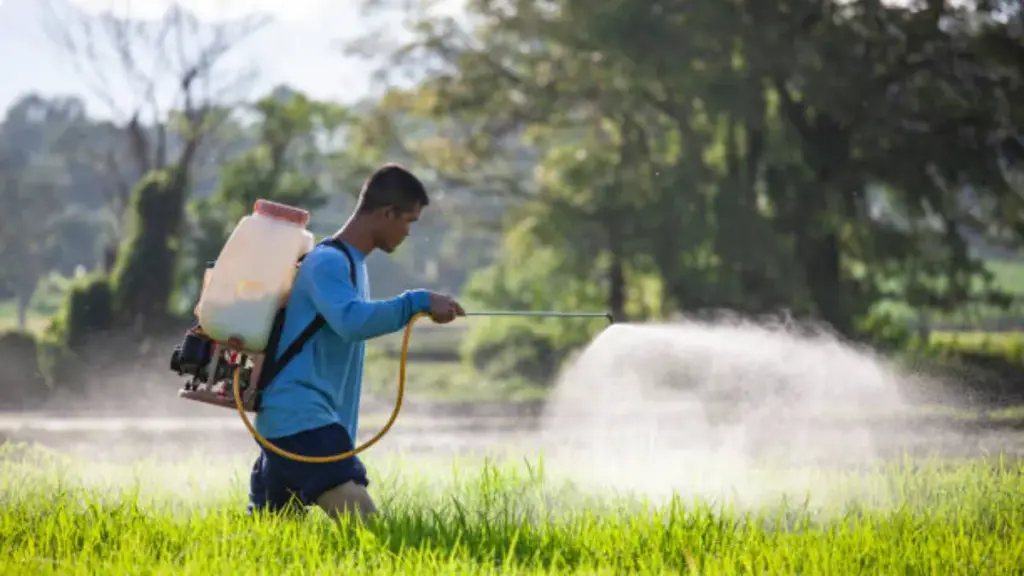
ナップザックスプレーに適したノズルタイプを選択する方法
正しいノズルを選択するには、塗布ターゲットと必要な液滴サイズを一致させて、ターゲット外のドリフトに対する効果的なカバレッジのバランスを取る必要があります。, ノズルの指定圧力範囲内で動作しながら.
| アプリケーションの種類 | 推奨ノズルタイプ | 主な考慮事項 |
|---|---|---|
| 除草剤の散布 (放送) | フラットファンまたは空気誘導 | 均一なカバレッジと低いドリフト (中程度から粗い液滴). |
| 殺虫剤 / 殺菌剤 (紅葉) | 中空円錐または完全な円錐 | キャノピーの貫通と徹底したカバー (細かい水滴). |
| スポットトリートメント / 基礎スプレー | ソリッドストリームまたは調整可能 | オーバースプレーを最小限に抑えた正確なターゲティング. |
| 大量の下地処理 | 洪水 (フラッドジェット) | 低圧での広いパターンと大きな液滴によりドリフトを低減. |
正しいノズルを選択するには、いくつかの実際的な要素を考慮する必要があります.
初め, 化学物質の種類を特定する. 除草剤には通常、フラットファンまたは空気導入ノズルが必要です. 殺虫剤や殺菌剤は、多くの場合、中空の円錐形の先端を使用すると効果が高くなります。.
2番, 作物の構造を評価する. 密集した葉には、より細かい液滴とより優れた浸透力が必要です.
三番目, 環境条件を考慮する. 風速, 温度, と湿度は液滴の挙動に影響します.
4番目, 流量がナップザック式噴霧器と互換性があるか確認してください. ノズルのサイズが正しくないと、圧力が不安定になったり、スプレーが不均一になったりする可能性があります。.
ついに, 代替品の入手可能性について考える. 標準化されたノズルは世界市場での調達と交換が容易です.
プロのアプリケーターは、季節の要件に適応するために、交換可能なノズルの小さなセットを維持していることがよくあります。.
ナップザックスプレーのノズルに関する一般的な問題とメンテナンスのヒント
ノズルは時間の経過とともに摩耗します. 研磨剤や浮遊粒子によりオリフィスが徐々に拡大します。, 流量を増やしてスプレーパターンを変更する.
| よくある問題 | 主な原因(s) | キーメンテナンスアクション |
|---|---|---|
| 詰まり & 詰まり | デブリ, 化学残留物, 未溶解粒子. | 使用後は毎回システムをきれいな水で洗い流し、オリフィスの掃除には柔らかいブラシを使用してください。. |
| 腐食 & 物理的な摩耗 | スプレー溶液中の刺激性の化学物質と研磨粒子. | 耐薬品性の材料で作られたノズルを選択し、使用前に物理的な損傷がないか検査してください。. |
| 一貫性のない圧力 & 漏れ | 摩耗したガスケット, Oリング, またはコンポーネントの不適切な締め付け. | シールと O リングを毎年交換し、すべての接続がしっかりと締めすぎていないことを確認します。. |
| 早期の故障 | 一貫性の欠如, 予防保守ルーチン. | 使用後の洗浄プロトコルを実施し、徹底的な季節検査を実施します. |
NEWTOPのユニバーサルノズルキットが世界中のニーズに適合する理由
以来、屋外電源機器の専門メーカーとして 2003, ニュートップ 国際市場向けに設計されたナップサック型噴霧器を開発.
NEWTOP ノズル キットは、アフリカで使用されているほとんどの標準的なナップサック型噴霧器と互換性があるように設計されています。, ラテンアメリカ, 東南アジア, そして東ヨーロッパ. 各キットには複数のタイプのノズルが含まれています, 農家や流通業者が多様な作物用途に対応できるようにする.
もし あなたは配信者です, 農産物輸入業者, または信頼性の高いナップザック噴霧器のアクセサリを探している地域のブランド所有者, 柔軟なMOQを提供します, 7 ~ 10 日以内のサンプルサポート, およびグローバル物流ソリューション. 商品に関するお問い合わせは, 直接お問い合わせください.
結論
適切なナップザック噴霧器ノズルを選択することは、効果的かつ責任ある化学薬品の塗布の基本です。. 適切なノズルにより、ターゲット領域への正確な供給が保証されます。, コストのかかる無駄を最小限に抑えながら、除草剤や殺虫剤の影響を最大化します。. これは作物保護の向上につながります, 運用コストの削減, より安全な噴霧条件.
多様な噴霧作業を管理する場合, 効率を維持するには、多用途の高品質ノズルのセットが不可欠です. NEWTOP のユニバーサル ノズル キットを調べて、在庫を簡素化し、あらゆる用途に向けてチームを準備する方法を確認してください。.
よくある質問
ナップザックスプレーノズルのさまざまな種類は何ですか?
主な種類にはフラットファンなどがあります。, 中空円錐, フルコーン, 堅実な流れ (ジェット), 洪水, 調整可能な, および空気導入ノズル. それぞれが、特定の農業用途に合わせて異なるスプレー パターンと液滴サイズを生成します。.
除草剤に最適なノズルはどれですか?
除草剤の散布には、地表全体に均一に適用できるフラットファンノズルが一般的に推奨されます。. 風の強い状況では, 空気導入フラットファンノズルによりドリフトを低減.
スプレーノズルのカラーコードを読み取るにはどうすればよいですか?
ノズルのカラーコードは標準圧力での流量を示します, によると ISO 10625 国際規格. 各色は特定の出力ボリュームを表します, 希望の塗布量に合わせて適切なノズルを選択できます. 例えば, 黄色のノズルは青色のノズルよりも流量が低くなります, 安定したスプレー性能を確保.
スプレーノズルはどのくらいの頻度で交換する必要がありますか?
交換は使用強度と化学物質の種類によって異なります. プロの農業では, ノズルは季節ごとに点検され、流量が大幅に増加したりスプレーパターンが不均一になった場合に交換されます。.
ナップザック噴霧器で異なるブランドのノズルを使用できますか??
多くの場合, はい - スレッド サイズと接続タイプが一致する場合. ユニバーサルフィッティングによりブランド間の互換性が可能, でも仕様の確認は大事.
ドリフトが最も少ないノズルはどれですか?
空気の誘導 (AI) ノズルはドリフトを最小限に抑えます. これらは、大きなサイズを作成するために特別に設計されています。, 空気を含んだ飛沫で、より重く、風に運ばれにくいもの. ドリフト制御に優れた技術です, AI ノズルは、敏感な植物の近くに除草剤を散布するための最も安全な選択肢になります.
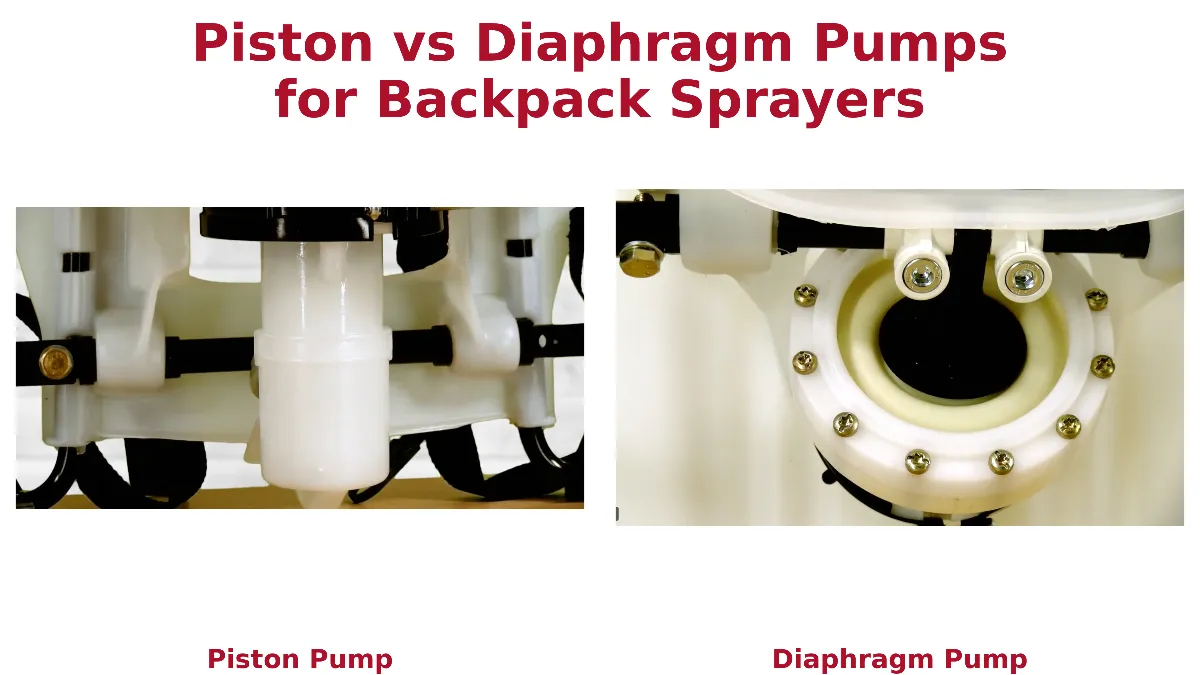
Choosing the right backpack sprayer piston vs diaphragm pump is a critical decision that directly impacts operational uptime, chemical costs, and worker safety. A mismatch between the pump mechanism and the chemical agent leads to premature seal failure, inconsistent application pressure, and unscheduled downtime, turning a routine task into a costly operational risk.
This guide provides a clear technical comparison of both pump systems. We will analyze the core mechanics of piston and diaphragm designs, evaluate their performance against critical metrics like pressure output and chemical compatibility, and outline the maintenance demands for each. Use this breakdown to standardize your equipment selection process and ensure you deploy the most durable and efficient pump for every job.
What Is a Backpack Sprayer Pump and Why It Matters
The pump is the core component of any backpack sprayer, directly controlling pressure, chemical compatibility, and overall application performance.
The Core Function of a Backpack Sprayer Pump
A backpack sprayer pump is the mechanical system that creates pressure inside the spray tank and pushes liquid through the hose, lance, とノズル. Whether you are applying pesticides, 除草剤, 肥料, 消毒剤, or public health chemicals, consistent pressure ensures uniform spray coverage and proper droplet size. Backpack sprayers typically use one of two pump systems: piston pump and diaphragm pump.
- Creates pressure to atomize and propel fluids.
- Dictates the spray reach, pressure level, and droplet size.
- Determines which types of chemicals the sprayer can safely handle.
Low or unstable pressure leads to uneven application, chemical waste, and crop damage. Excessively high pressure can cause misting drift and environmental concerns. したがって, selecting the correct pump type is a practical decision that impacts field performance and product reliability.
For a detailed breakdown of different models and their structural variations, explore our comprehensive guide on the types of knapsack sprayer to find the ideal base configuration for your operations.
How a Piston Pump Works in a Backpack Sprayer
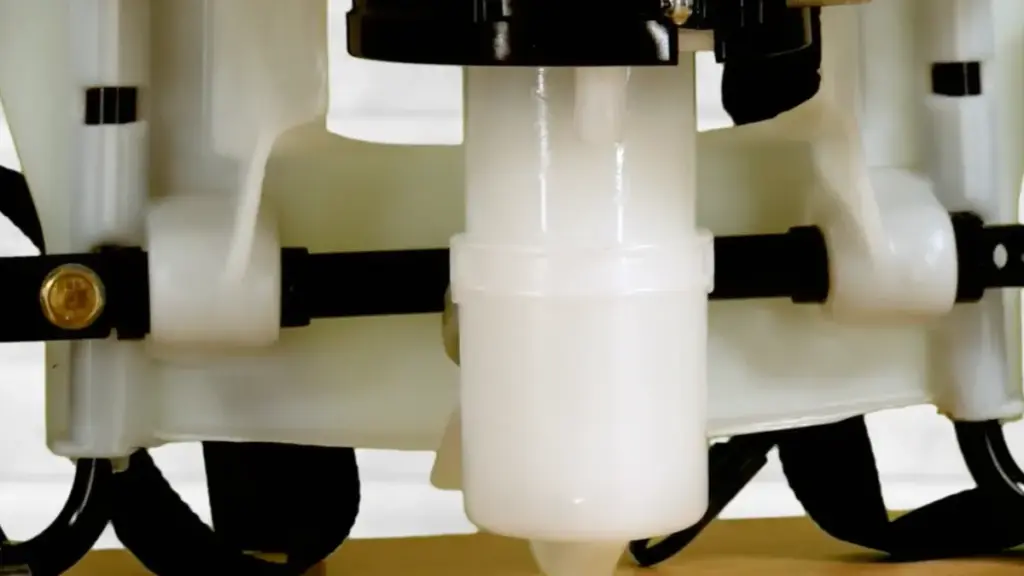
A piston pump uses a reciprocating piston inside a cylinder, leveraging one-way check valves to draw in fluid and then forcefully eject it under high pressure.
Piston pumps use a cylinder and piston mechanism to build high pressure, often reaching up to 90 PSI. The piston pump operates through a simple, reciprocating action. A piston moves up and down inside a sealed cylinder, using one-way valves to draw fluid from the tank and push it toward the spray nozzle.
On the upstroke, the piston creates a vacuum that pulls liquid from the tank through an inlet check valve into the pump cylinder.
On the downstroke, the piston pushes down, closing the inlet valve and forcing the trapped liquid out through an outlet check valve. The operator’s manual pumping of the sprayer handle drives this cycle, creating a pressurized flow for spraying.
How a Diaphragm Pump Works in a Backpack Sprayer
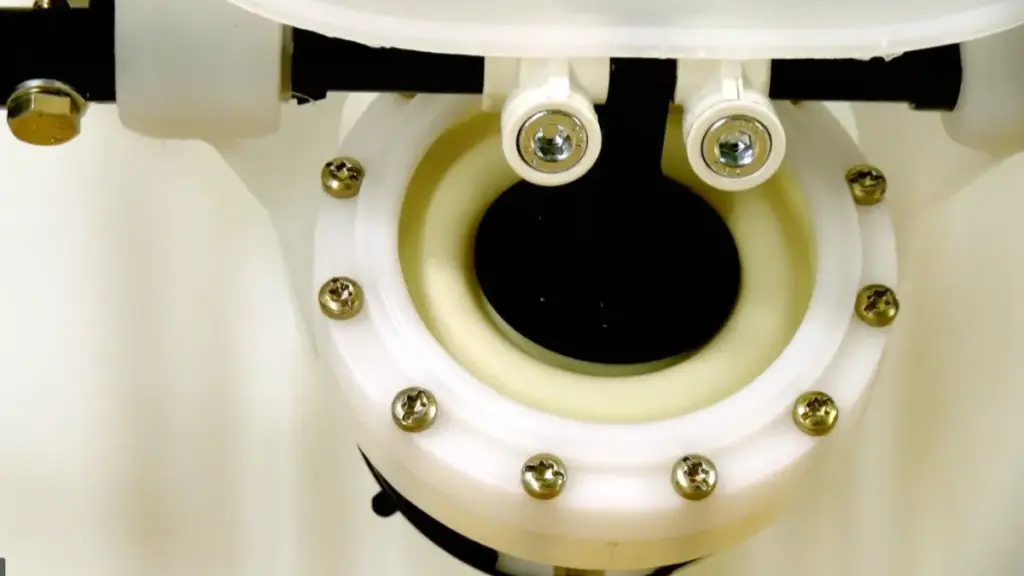
A diaphragm pump uses a flexible, oscillating membrane to move fluid, a design that isolates mechanical components from the chemical solution and allows for handling abrasive or corrosive materials.
A diaphragm pump operates using a flexible, circular membrane that moves back and forth within a sealed chamber. This membrane, often fabricated from chemically resistant elastomers like Viton, creates a seal that separates the mechanical drive components from the fluid being pumped. As the diaphragm moves back and forth, it alters the volume of the pump chamber, directing fluid through a series of one-way valves.
- A flexible elastomer diaphragm is sealed against the pump housing, creating a pumping chamber.
- As the diaphragm pulls back, it increases the chamber’s volume, creating a vacuum that draws liquid in through an inlet valve.
- When the diaphragm pushes forward, it reduces the chamber’s volume, pressurizing the liquid and forcing it out through an outlet valve.
Power Your Profits with Durable Agricultural Machinery
A Comparison of Piston Pump vs. ダイヤフラムポンプ
To assist in your selection process, we have summarized the primary technical differences between piston and diaphragm pumps below.
| 特徴 / Metric | Piston Pump System | Diaphragm Pump System |
|---|---|---|
| Maximum Pressure | 高い (まで 90+ PSI) | Typically around 60 PSI |
| 化学的適合性 | Liquid concentrates, clear water-based solutions | 水和剤, 漂白剤, abrasive & corrosive formulas |
| Mechanism Design | Internal sliding piston with mechanical cylinder seals | Reciprocating flexible membrane (Viton/Santoprene) |
| ベストアプリケーション | 果樹園, tall tree care, fine misting requirements | Commercial pest control, industrial disinfection, 農業 |
| Durability Profile | Sensitive to grit; requires strictly filtered liquids | Isolated drive system; highly resistant to internal wear |
| Maintenance Profile | Frequent but straightforward seal/O-ring replacement | Infrequent service; involves membrane and valve check |
| 到着 & Atomization | Superior reach and finer droplet atomization | Standard reach; optimized for controlled drift |
Pressure Output and Spray Performance
Piston pumps are engineered for high-pressure work, creating a fine mist that provides uniform coverage. Diaphragm pumps run at lower pressures, producing larger droplets that reduce drift. This makes them a better fit for targeted applications where overspray is a primary concern.
- Piston pumps generate much higher pressure, often exceeding 90 psi, which is needed to hit distant targets and create fine, atomized sprays.
- Diaphragm pumps typically operate around 60 psi, resulting in larger, heavier droplets that minimize wind drift.
- The choice directly affects spray quality. The higher pressure from a piston pump gives thorough coverage for insecticides, while the lower pressure from a diaphragm pump is better for applying herbicides without harming nearby plants.
Chemical Compatibility and Corrosion Resistance
Diaphragm pumps have superior compatibility with abrasive and corrosive chemicals. Many agricultural fungicides and insecticides are formulated as wettable powders (WP) or water-dispersible granules (WDG). These solutions contain small, abrasive particles. In a piston pump, these particles become trapped between the piston seal and the cylinder wall, leading to scoring and loss of compression.
しかし, diaphragm’s enclosed design shields mechanical components from direct liquid contact, preventing accelerated wear. Piston pumps are far more vulnerable to damage when used with gritty or harsh formulas.
- The flexible diaphragm isolates the pump’s moving parts from the chemical solution, making it highly resistant to abrasive materials like wettable powders and corrosive liquids.
- In a piston pump, the chemical flows directly over the piston and its seals. This increases the risk of abrasion and premature wear, especially with non-liquid formulas.
- For spraying bleach solutions, suspensions, or other aggressive chemicals, a diaphragm pump delivers greater reliability and a longer service life.
耐久性, Wear Parts, とメンテナンス
Diaphragm pumps are generally more durable and require less frequent maintenance. Their simple design has fewer high-friction parts. Piston pumps need more regular servicing of seals and cylinders but are often designed for quick field repairs.
- Diaphragm pumps have a longer operational lifespan between services because there is no direct friction between moving parts and cylinder walls, minimizing mechanical wear.
- Piston pumps rely on seals that wear down from friction and chemical exposure. These require periodic replacement to maintain pressure.
- While diaphragm pump repairs can be more complex, their maintenance intervals are much longer. Piston pumps need more frequent attention but are often easier for users to service quickly.
Best Applications for Piston Pump Backpack Sprayers

Piston pump sprayers are the standard for high-pressure, precision applications like spot treatments and pest control, where a fine mist is required for effective coverage with liquid-only formulations.
Spot Treatment and Weed Control
Piston pumps excel at delivering herbicides with precision. Their ability to produce a fine, targeted mist at high pressure ensures that chemicals are applied directly to weeds without drifting onto nearby desirable plants. This consistent spray pattern is ideal for controlling invasive species in garden beds, lawns, and along fence lines. The high pressure also helps penetrate dense foliage, ensuring the herbicide reaches its target effectively.
Pest and Disease Management
When applying insecticides and fungicides in gardens, small orchards, or greenhouses, a piston pump provides the fine droplet size needed to evenly coat leaves and stems. This fine mist adheres well to plant surfaces, maximizing the effectiveness of the treatment and ensuring comprehensive plant protection. The technology is well-suited for treating ornamental plants, 野菜, and fruit trees where thorough coverage is essential for disease prevention.
Lawn Care and Turf Management
Maintaining healthy turf often requires applying liquid fertilizers, 除草剤, and growth regulators. Piston pump sprayers offer the control and consistent output necessary for uniform application across lawns. The high-pressure spray ensures even distribution of liquid treatments, preventing patchy or uneven results. Its portability makes it a practical tool for managing turf in residential yards, commercial properties, and athletic fields.
Best Applications for Diaphragm Pump Backpack Sprayers

Diaphragm pumps are the go-to choice for applications involving abrasive powders, mildly corrosive solutions like bleach, and low-pressure weed control where chemical resistance and minimal drift are critical.
Applying Herbicides with Abrasive or Wettable Powders
Diaphragm pumps are engineered to handle abrasive formulas and wettable powders that quickly damage piston pump seals. The flexible diaphragm isolates these particles from the pump’s core mechanics, preventing premature wear and clogs. This design allows abrasive materials, such as kaolin clay carriers in powdered chemicals, to pass through without scoring internal components. The pump maintains consistent performance when spraying suspensions, ensuring an even and effective application of active ingredients across the target area.
Spraying Bleach Solutions or Mildly Corrosive Chemicals
The chemical-resistant materials used in diaphragm pumps make them the right choice for applying disinfectants, bleach solutions, and other mildly corrosive liquids. Internal components are protected from chemical degradation, which significantly extends the sprayer’s service life. This makes them suitable for sanitation tasks, mold remediation, or applying specific agricultural treatments that would corrode a standard piston pump. The sealed pump chamber also minimizes the risk of leaks when working with harsh chemicals, improving operator safety.
Low-Pressure, Targeted Weed Control on Sensitive Plots
Diaphragm pumps operate at a lower pressure range, which is an advantage for applications requiring minimal spray drift. This allows for precise, close-range treatment of weeds in gardens or near sensitive, non-target plants. The gentle application pressure produces larger droplets, reducing the risk of herbicides drifting onto desirable flowers, 野菜, or ornamental shrubs. This makes the pump highly effective for spot-treating weeds on lawns and along fence lines where accuracy is more important than high-pressure coverage.
Piston or Diaphragm Pump: Which Type Wins for Your Needs?
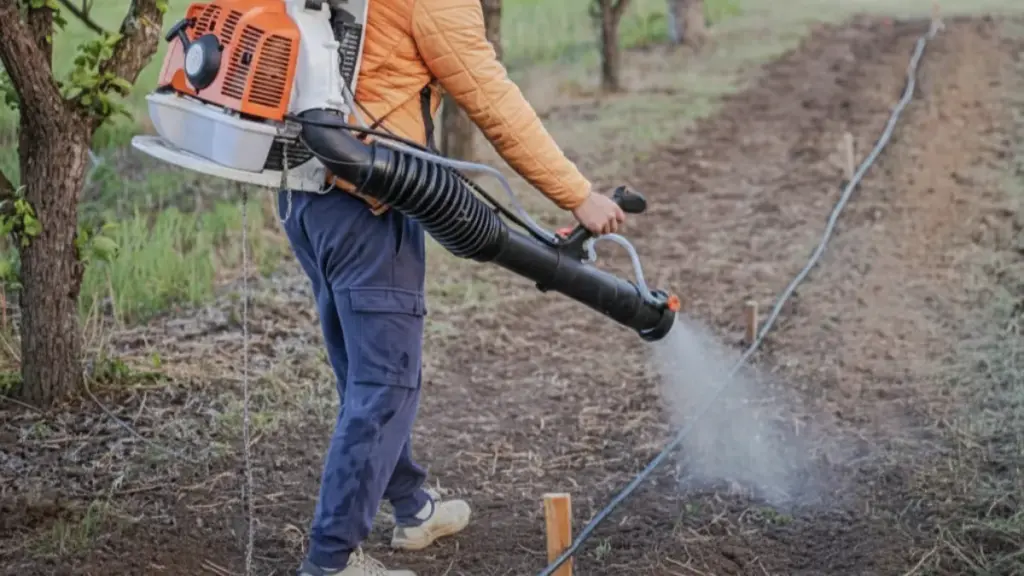
The choice depends entirely on the chemicals you spray; piston pumps excel with high-pressure, low-abrasion liquids, while diaphragm pumps provide superior durability for abrasive or corrosive formulas.
Choose a Piston Pump for High-Pressure, Fine-Mist Applications
A piston pump is the right choice when your work requires a fine, consistent mist delivered at higher pressures. It excels with low-abrasion liquid formulas like standard herbicides and insecticides, making it a go-to for uniform foliage coverage. This pump type delivers pressures up to 90 PSI, which is ideal for creating a fine spray that evenly coats plant surfaces. It is best suited for non-abrasive, water-soluble chemicals to avoid premature wear on the piston cylinder. Using wettable powders or aggressive chemicals can score the cylinder and degrade seals, leading to pressure loss and eventual failure.
Select a Diaphragm Pump for Chemical Versatility and Durability
A diaphragm pump offers superior durability and is compatible with a wider range of chemicals, including abrasive powders and corrosive solutions. Its enclosed design protects critical components from direct contact with the spray material, making it a reliable workhorse for multi-purpose use. This design allows it to handle abrasive materials like wettable powders and bleach-based solutions without significant wear. By sealing the pump mechanism from the chemicals, it reduces corrosion and extends the equipment’s service life. It operates at a lower pressure, typically up to 60 PSI, which is sufficient for most general-purpose spraying jobs.
Why NEWTOP Precision CNC Machining Leads in Pump Durability
NEWTOP achieves superior pump durability by integrating in-house CNC machining for critical components with automated assembly, ensuring every unit meets precise engineering specifications for long-term reliability.
As a professional backpack sprayers and foggers manufacturer founded in 2003, ニュートップ combines long-term industry experience with advanced production technology. 以上で 20 years in agricultural and garden machinery manufacturing, the company focuses on building durable, field-ready spraying equipment for global markets.
NEWTOP uses upgraded PA66 reinforced with 30% glass fiber for key pump components, improving structural strength, chemical resistance, and dimensional stability. 加えて, high-precision CNC machining ensures tight tolerances, smoother internal surfaces, and consistent sealing performance.
結論
Choosing between a piston and a diaphragm pump is a critical decision for your backpack sprayer fleet. The right pump ensures compatibility with your chemicals, reduces costly downtime from component failure, and delivers consistent spray performance. This choice directly impacts both operator efficiency and the lifespan of your equipment.
If you are experiencing frequent pump failures or pressure loss, evaluate your current equipment against your application needs. For pump components engineered to withstand demanding chemicals and reduce maintenance cycles, see how our precision parts can improve your sprayer’s durability.
よくある質問
Is a piston or diaphragm pump better for a backpack sprayer?
It depends on the application. Piston pumps deliver higher pressure for fine spraying, while diaphragm pumps offer better chemical resistance and durability when handling corrosive or abrasive solutions.
Can a piston pump handle bleach or powders?
It is not advisable. Bleach causes rapid degradation of standard rubber seals, and powders act as an abrasive that scores the cylinder walls. Diaphragm pumps are the engineered solution for these substances.
Why is my backpack sprayer pump losing pressure?
Common causes include worn seals, cracked diaphragms, clogged valves, air leaks in the hose, or debris blocking the nozzle. Regular maintenance and timely replacement of wear parts solve most pressure issues.
How often should I replace my sprayer pump seals?
Seal replacement frequency depends on usage intensity and chemical type. In heavy agricultural use, inspection every season is recommended. Replace seals when pressure drops or leakage occurs.
Which pump type is easier to prime?
Piston pumps are generally easier to prime because of their direct suction mechanism. しかし, properly designed diaphragm pumps with quality check valves also prime efficiently.
What is the maximum PSI for a diaphragm pump?
A standard diaphragm pump in a backpack sprayer typically reaches a maximum pressure of 60 PSI. This pressure is ideal for applications requiring larger droplets to reduce drift, such as applying wettable powders or herbicides.
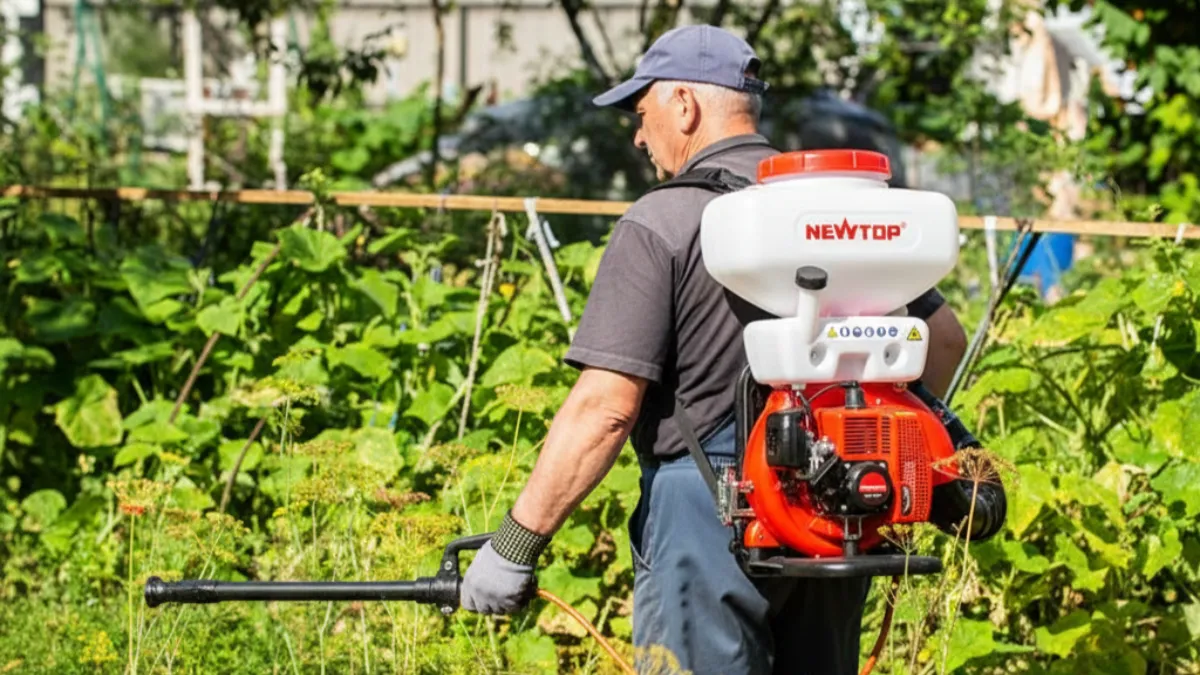
In the world of agriculture and professional landscaping, the terms fogger and sprayer are often used interchangeably, yet they represent two fundamentally different technologies. It is critical for distributors, 請負業者, and agricultural equipment importers to understand the mechanical structure, particle physics, and application efficiencies of each.
This guide provides a comprehensive technical breakdown of foggers and sprayers, helping you determine which tool is best suited for your specific environmental and operational needs.
What Is a Fogger? Definition and Working Principle
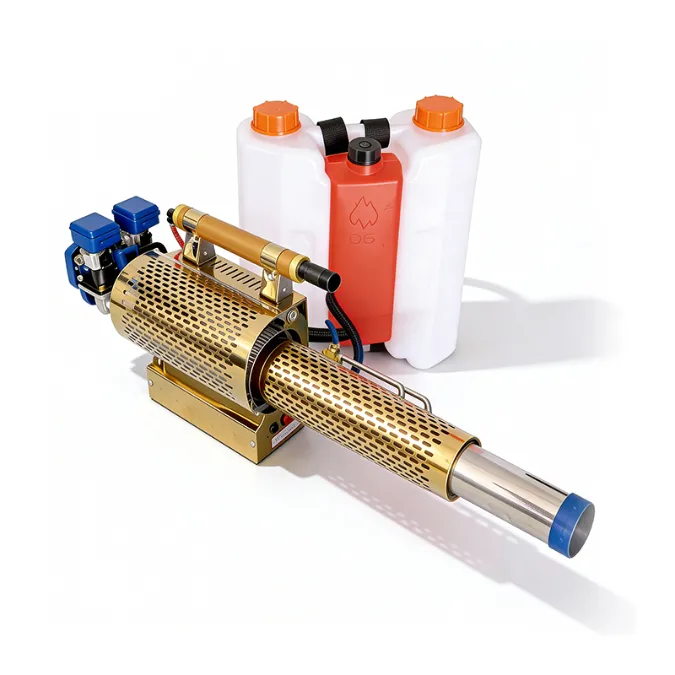
A fogger is designed to transform liquid formulations into ultra-fine droplets that behave more like an aerosol than a traditional spray. The primary objective of a fogger is space treatment rather than surface coating.
Definition of a Fogger
A fogger is a mechanical device that transforms liquid solutions into a fine mist, or aerosol, composed of particles typically under 50 micrometers in diameter. This aerosol remains suspended in the air for an extended period, allowing it to settle without direct application onto horizontal, 垂直, and otherwise hard-to-reach surfaces. The method is effective for large-area disinfection, 害虫駆除, and humidification.
- Converts liquid into an airborne aerosol or mist.
- Generates extremely fine particles (under 50 micrometers) that stay suspended in the air.
- Provides broad coverage by allowing droplets to settle on both horizontal and vertical surfaces.
Most professional foggers fall into two categories: thermal foggers and ULV cold foggers. Despite different atomization mechanisms, both aim to produce extremely small droplets, typically below 50 ミクロン.
Thermal Fogging Principle
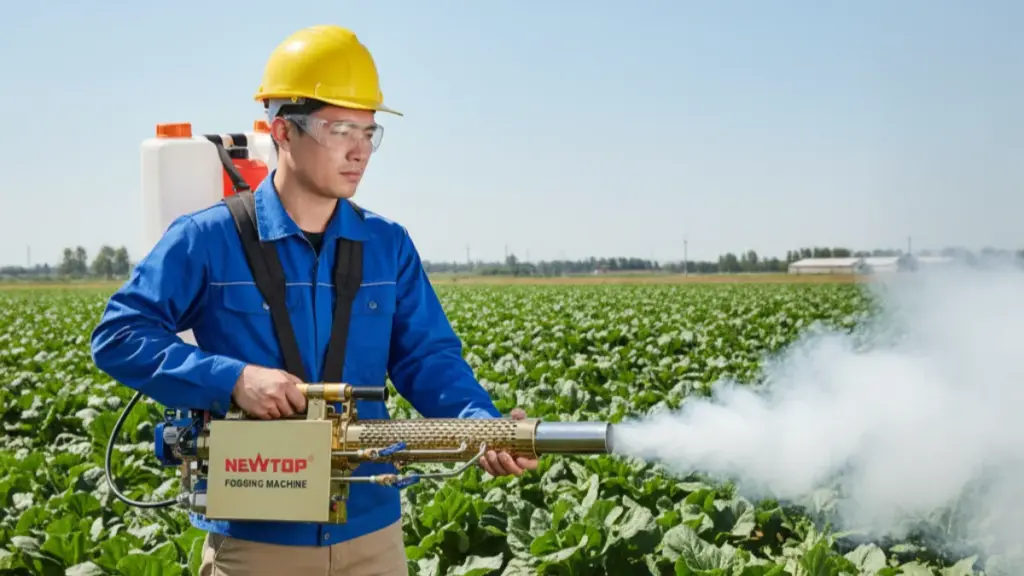
Thermal foggers use a heat source, often powered by gasoline or propane, to rapidly vaporize a chemical solution. The device injects the liquid into a high-velocity stream of hot gas, causing immediate vaporization. When this hot vapor is expelled and mixes with cooler ambient air, it condenses into a dense, visible fog of ultra-fine particles. This process is ideal for penetrating dense foliage and treating large outdoor spaces for pest control.
- Uses a heat source to produce a high-velocity stream of hot gas.
- Injects the liquid formulation into the hot gas, causing immediate vaporization.
- Creates a thick, visible fog as the vapor condenses in the cooler air.
- Primarily used for outdoor applications like mosquito and pest control.
Ultra-Low Volume (ULV) Cold Fogging Principle
Cold foggers, including Ultra-Low Volume (ULV) models, use high-pressure air to break liquid into tiny droplets without applying heat. This mechanical process gives operators precise control over particle size while protecting the chemical integrity of the solution. Because it operates without heat, this method is safer for indoor applications like disinfecting hospitals, schools, and commercial buildings where heat-sensitive chemicals are often used.
- Relies on high air pressure to atomize liquid into fine droplets.
- Operates without heat, protecting the integrity of the chemical solution.
- ULV technology enables efficient application using minimal liquid volume.
- Suitable for indoor disinfection in hospitals, schools, and agricultural facilities.
Advanced Fogging Technologies
Modern fogging equipment now incorporates technologies like electrostatic charging and nano-atomization to improve coverage and safety. Electrostatic foggers impart a positive electrical charge to the aerosolized mist, causing droplets to wrap around and cling to all sides of a surface for complete 360-degree coverage. Nano-atomizers produce an even finer, drier fog that is safe to use around sensitive electronics and fabrics without causing moisture damage.
- Electrostatic Fogging: Charges particles so they are attracted to surfaces, ensuring 360-degree coverage and reducing chemical waste.
- Nano-Atomizers: Create an even finer, drier mist that avoids moisture damage, useful for sanitizing delicate equipment and textiles.
- These modern technologies are increasingly adopted in healthcare and transportation for enhanced efficiency.
What Is a Sprayer? Definition and Working Principle
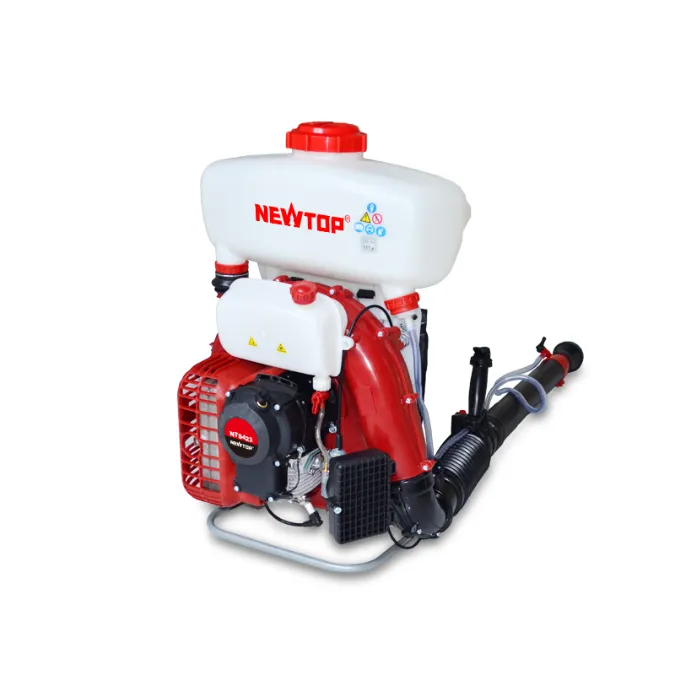
A sprayer is a pressure-driven device that atomizes liquid through a nozzle, enabling the controlled and uniform distribution of agents like pesticides or fertilizers onto a target surface.
Core Function and Definition
A sprayer is a mechanical device designed to apply liquid solutions like pesticides, 除草剤, or fertilizers in a controlled pattern of fine droplets. Unlike the fogger, which aims for suspension, the sprayer is designed for targeted deposition like agricultural, horticultural, or sanitation.
- Applies liquid agents including pesticides, 肥料, and cleaning solutions.
- Generates a controlled spray for even and efficient coverage.
- Essential equipment in farming, 造園, and public health sectors.
Key Components and Mechanism
A sprayer operates by pressurizing liquid stored in a tank and forcing it through a specialized nozzle. This process atomizes the liquid into a spray. The core components—tank, ポンプ, and nozzle—work together to control the flow rate, 液滴サイズ, and spray pattern.
Pressure can be produced manually, mechanically through diaphragm or piston pumps, or by gasoline or electric motors. The liquid is forced through a nozzle, where droplet size is shaped by nozzle geometry and pressure level.
- A tank holds the liquid solution.
- A pump creates the pressure needed to propel the liquid.
- A nozzle atomizes the liquid into droplets and shapes the spray.
- A trigger or valve controls the start and stop of the spray.
Applications and Modern Advancements
による 2026, sprayer technology has advanced to prioritize precision application, reduced chemical waste, and improved operator ergonomics. Innovations in nozzle design and pump systems allow for better coverage in large-scale agriculture and specialized commercial use.
- Used for crop protection, fertilization, そして害虫駆除.
- Modern designs focus on uniform distribution to maximize effectiveness.
- Technological improvements enhance operational speed and reduce chemical drift.
- Ergonomic features are integrated to improve comfort for professional users.
関連書籍: ナップザック噴霧器の種類: 農場に最適なモデルの選択
Boost Your Margins with Reliable Machinery
Difference Between Fogger and Sprayer: Mechanical Overview
The fundamental mechanical difference lies in atomization and delivery—foggers create a suspended mist for broad, volumetric treatment, whereas sprayers apply liquid directly to targeted surfaces, with electrostatic models using a charge to wrap around objects.
| Mechanical Aspect | フォガー | 噴霧器 |
|---|---|---|
| Atomization & Particle Size | Produces fine particles designed to remain suspended in the air for volumetric treatment of large spaces. | Relies on hydraulic pressure for atomization. Electrostatic models add a charge for smaller, more uniform particles. |
| Coverage & 浸透 | Excels at filling large, open rooms and penetrating dense outdoor foliage with a pervasive mist. | Provides direct, targeted surface application. Electrostatic models achieve 360° wrap-around coverage on objects. |
| 応用 & Efficiency | Designed for area-wide decontamination rather than surface-specific precision. Less efficient for targeted tasks. | Offers precise, controlled application. Electrostatic systems maximize chemical deposition and minimize waste. |
| 化学的適合性 | Requires specific formulations. Thermal foggers need oil/water carriers and cannot use flammable liquids. | Standard models handle a broad chemical range. Electrostatic units need liquids formulated to hold an electric charge. |
Spray Mechanism and Particle Size Comparison
Foggers and sprayers atomize liquids through different physical processes, resulting in distinct particle sizes that define their performance. Most sprayers depend on hydraulic pressure; higher pressure forces the liquid through a nozzle, generating shear forces that break it into droplets. Electrostatic sprayers enhance this process by applying a high-voltage charge to the liquid, creating smaller and more uniform particles that actively seek grounded surfaces. 対照的に, foggers are engineered to produce a fine mist with droplets that remain suspended in the air for volumetric treatment. Particle size is a primary performance metric because it directly controls how well a chemical adheres to a surface, penetrates complex geometries, and remains airborne.
Coverage Area and Penetration Ability
A fogger’s strength is volumetric coverage. It disperses a fine mist that fills large, open spaces like warehouses or greenhouses, eventually settling on all exposed horizontal surfaces. This method is effective for treating an entire room’s air and surfaces simultaneously. Sprayers provide direct, targeted surface application. Electrostatic models offer superior penetration by charging droplets that wrap around objects, coating hidden areas like the backsides of fixtures or the undersides of leaves. This “wrap-around” effect ensures comprehensive 360-degree coverage on complex objects, something a fogger’s passive settling cannot achieve. For outdoor pest control, a fogger’s mist can penetrate dense foliage more effectively than a standard direct spray.
Application Accuracy and Chemical Usage Efficiency
Sprayers deliver direct, targeted application, making them the accurate choice for treating specific surfaces or zones. Foggers are built for broad, volumetric decontamination and lack surface-level precision. The greatest efficiency gains come from electrostatic sprayers. By charging the droplets, these systems ensure a much higher percentage of the chemical lands on and adheres to the target surface. This minimizes overspray, 化学廃棄物を削減する, and limits airborne loss of active ingredients. This efficiency also allows for the use of chemicals designed for long-lasting residual protection, while fogging typically relies on short-acting formulas for rapid knockdown.
Suitable Chemicals and Formulations
The equipment’s operating mechanism dictates the required chemical formulation.
Thermal foggers, which use heat to vaporize a solution, require specific oil- or water-based carriers to create a dense fog and must never be used with flammable liquids like alcohol.
ULV (Ultra Low Volume) Cold foggers are more versatile and can handle a wider range of formulations.
Sprayers are compatible with almost all agricultural chemicals, including wettable powders, emulsifiable concentrates, and thick suspensions. The larger nozzle openings are less prone to clogging.
Typical Use Scenarios and Industries
Fogger Scenarios:
- Public health vector control (mosquito and fly abatement).
- Greenhouse pest management.
- Disinfection of large indoor facilities (hospitals, warehouses).
- Odor control in waste management sites.
Sprayer Scenarios:
- Herbicidal application in row crops.
- Liquid fertilization of lawns and gardens.
- Structural pest control (termite barriers around foundations).
- Livestock sanitation and wash-downs.
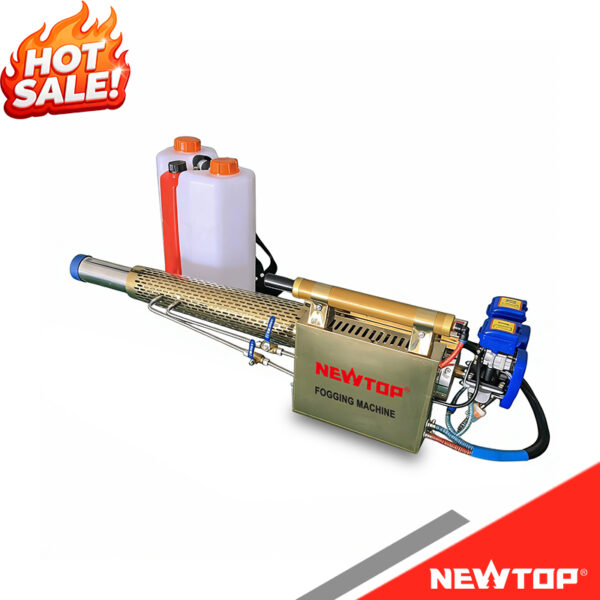
NTYM180K Thermal Fogging Machine
- Professional-grade atomization precision
- Advanced durability (500+ service hours)
- Optimized for large-scale vector control
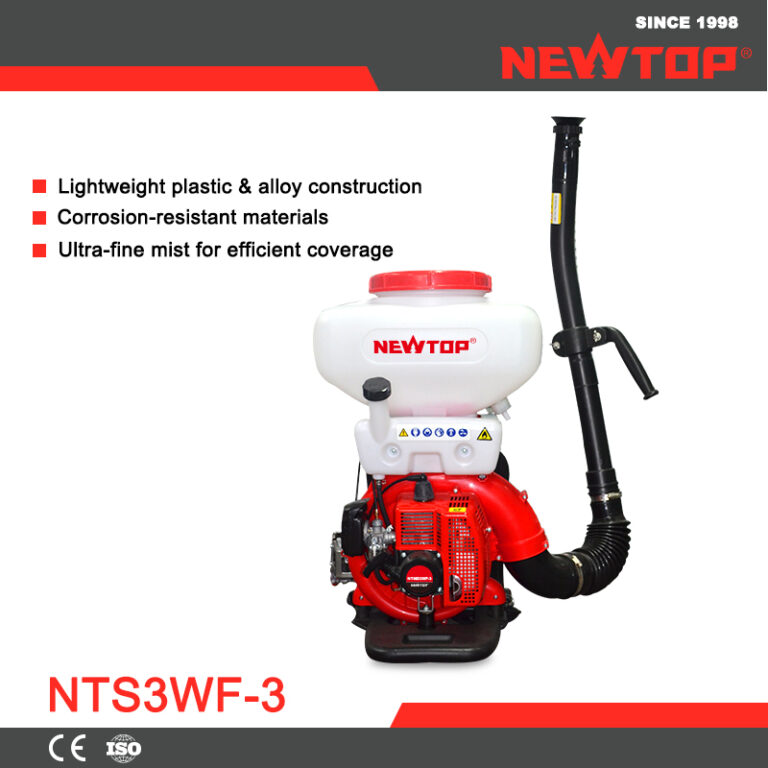
NTS3WF-3 Gas Powered Backpack Sprayer
- High-velocity liquid & granule output
- Precision nozzle for targeted application
- Reinforced chemical-resistant structure
Advantages and Limitations of Fogger and Sprayer
Foggers excel at rapid volumetric treatment for pest control in dense foliage, while sprayers deliver superior surface-level precision and chemical efficiency, especially in electrostatic models.
| Operational Feature | フォガー | 噴霧器 |
|---|---|---|
| Coverage Type | Volumetric (air and surfaces) | Surface-direct |
| Penetration Ability | Excellent for dense foliage and crevices | Limited unless using an electrostatic model |
| Application Speed | Fast for large, open areas | Slower, more methodical application |
| Drift Risk | 高い, susceptible to wind | Low due to larger, heavier droplets |
| 主な使用例 | Outdoor pest control, air disinfection | Targeted surface disinfection, 雑草対策 |
フォガー: Advantages and Key Applications
Foggers are engineered to treat large volumes and penetrate dense environments. Their ability to produce extremely fine, suspended particles makes them highly effective for pest control in thick vegetation and for disinfecting large, open indoor spaces where airborne treatment is critical. This method ensures broad coverage with minimal operator effort once the machine is running.
- Provides deep penetration into dense foliage, ひび割れ, and crevices, making it highly effective for outdoor insect control.
- Covers large volumes of space quickly, which reduces labor time for public health disinfection or agricultural pest management.
- Effective at controlling flying insects and disinfecting air, as the fog remains suspended for an extended period.
フォガー: Limitations and Operational Considerations
The main drawbacks of foggers are tied to control and safety. The fine mist is highly susceptible to wind drift, leading to off-target application and potential environmental contamination. Thermal foggers add another layer of complexity by introducing heat, which limits the types of chemicals that can be used without degradation.
- High risk of chemical drift, making it unsuitable for precise, targeted applications or use in windy conditions.
- Thermal models can pose a fire risk and may damage heat-sensitive chemical solutions, altering their efficacy.
- Can require more extensive personal protective equipment (PPE) due to the risk of inhaling the fine aerosolized particles.
噴霧器: Advantages and Key Applications
Sprayers offer superior control and efficiency for surface-based applications. They produce larger, heavier droplets that deliver chemicals directly to the target with minimal drift. This precision makes them ideal for targeted disinfection, 雑草対策, and applying fertilizers where accuracy is paramount.
- High application accuracy ensures chemicals land on target surfaces, reducing waste and environmental impact.
- Electrostatic sprayers provide complete, wraparound surface coverage, ideal for disinfecting complex objects and high-touch surfaces.
- Generally safer for indoor use and in sensitive areas due to controlled application and reduced inhalation risk.
噴霧器: Limitations and Operational Considerations
While precise, sprayers are less efficient for treating large, open areas or penetrating dense canopies. The application process is slower and more labor-intensive than fogging. Sprayers are primarily designed for treating surfaces rather than volumes of air, limiting their effectiveness against airborne pathogens or flying insects.
- Slower application speed compared to foggers when treating expansive outdoor areas.
- Limited ability to penetrate dense vegetation or reach hidden pests deep within canopies.
- Less effective for controlling flying insects or treating airborne pathogens, as droplets settle quickly.
Cost-Benefit Analysis of Owning Both Equipment Types
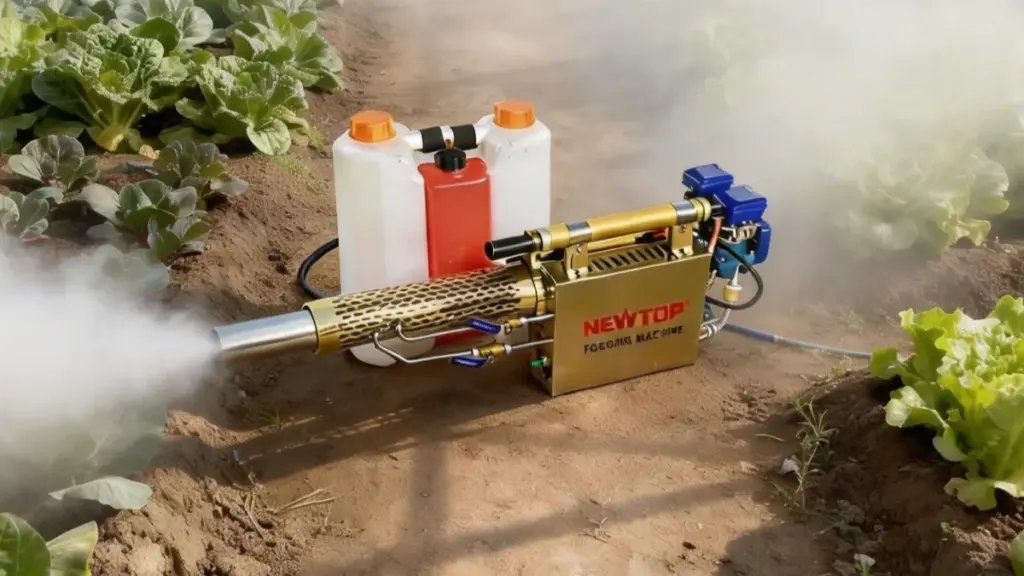
Investing in both a fogger and a sprayer allows an operation to deploy the most resource-efficient tool for any given task, minimizing long-term labor and chemical expenses.
Upfront Investment vs. Long-Term Savings
Owning both a fogger and a sprayer requires a higher initial capital outlay. This dual investment, しかし, translates directly to long-term savings by precisely matching the equipment to the application, which reduces wasted chemicals and minimizes labor hours. 財務ロジックは単純です: use the high-speed fogger for large areas and the precise sprayer for targeted zones.
- Foggers generally have a higher initial cost but cover large areas quickly, reducing labor expenses for big projects.
- Sprayers are more affordable upfront and excel at targeted applications, preventing the overuse of expensive chemicals on small or specific problem areas.
- による 2026, operational savings in labor and materials can often offset the initial dual-equipment cost within one to two seasons for most commercial users.
Labor and Chemical Efficiency
The primary benefit of a dual-equipment strategy is optimized resource allocation. Foggers are built to minimize labor time for large-scale disinfection or pest control, covering vast spaces with minimal operator input. Sprayers provide the control needed for precise, cost-effective chemical application, ensuring active ingredients are applied only where necessary.
- A fogger can treat an area up to 30,000 sq ft with minimal operator effort, a task that would be extremely labor-intensive and time-consuming with a sprayer.
- Sprayers deliver direct, targeted application, which is crucial for spot treatments or delicate plants where overspray would be wasteful and potentially harmful.
- This approach prevents the financial drain of inefficient application—either by wasting labor with a sprayer on a large job or wasting chemicals with a fogger on a small one.
Application Versatility and ROI
Having both tools provides the operational flexibility to handle any treatment scenario, from expansive outdoor spaces to specific indoor zones. This adaptability maximizes your service capabilities and strengthens the return on investment by ensuring you always have the correct equipment for the job.
- Professionals can service a wider range of clients and job types, including agricultural fields, warehouses, and controlled indoor facilities.
- The ability to choose between broad, penetrating fog and a direct, controlled spray enhances overall treatment effectiveness and client outcomes.
- This versatility keeps the equipment productive, leading to a faster and more reliable return on investment compared to relying on a single, less-adaptable tool.
How NEWTOP Engineering Maximizes Durability in Both Types
As a outdoor power equipment manufacturer with over two decades of industry experience, ニュートップ, designs backpack sprayers and foggers with a focus on durability in demanding environments.
We operate a 10,000 square meter facility with CNC machining centers, 自動化された生産ライン, and independent inspection systems. Every pump assembly, airflow component, and fuel system undergoes durability testing to ensure consistent performance.
Key engineering strengths include:
- Chemical-resistant tanks for aggressive formulations
- Precision nozzle systems for stable droplet control
- Engine components sourced from globally recognized suppliers
- Structured quality inspection processes from raw materials to final testing
- Compliance with CE, EPA, ISO9001, and ISO14001 standards
For OEM partners and regional distributors, NEWTOP provides customization options in branding, タンク容量, engine configuration, そしてパッケージデザインも. With exports to over 65 countries and partnerships with more than 100 distributors worldwide, NEWTOP supports long-term cooperation through stable supply chains and technical documentation.
For product catalogs, technical specifications, or OEM inquiries, contact our technical team for a customized quote based on your regional requirements.
結論
Choosing between a fogger and a sprayer comes down to your specific application needs, from particle size to the required coverage area. Making the right equipment choice directly impacts your chemical usage, labor costs, and overall operational efficiency. This technical knowledge ensures you select a tool that delivers the intended results without waste.
Use this guide to evaluate your current equipment and identify any performance gaps. If you need a tool engineered for demanding commercial use, our product specialists can help you find a durable fogger or sprayer that meets your requirements.
よくある質問
What is the main difference between a fogger and a sprayer?
The primary difference is droplet size. A fogger produces microscopic droplets (under 50 ミクロン) that stay suspended in the air to fill a volume of space. A sprayer produces larger droplets (over 100 ミクロン) designed to land on and coat specific surfaces.
Does a fogger use less water than a sprayer?
はい. Foggers, particularly ULV models, use high concentrations of chemicals and very little carrier liquid (water or oil). A sprayer requires a significant amount of water to act as a transport medium for the chemical to reach the target.
Can foggers be used for agricultural pesticides?
はい, especially in enclosed environments like greenhouses, but field crops usually require conventional sprayers for better precision.
Why are foggers more expensive than manual sprayers?
Foggers involve more complex airflow or heating systems, increasing production and maintenance costs.
Which one provides better coverage for dense foliage?
Foggers generally achieve better penetration due to smaller droplet size and longer suspension time.
How do maintenance requirements differ?
Foggers require inspection of airflow or combustion systems, while sprayers mainly need pump seal replacement and nozzle cleaning.
