


- Tutto
- NEWTOP Storie di clienti
- NEWTOP Explorer Hub
- NEWTOP Approfondimenti sul settore

Quando gli agricoltori parlano di prestazioni di irrorazione, spesso si concentrano sulla pressione della pompa, capacità del serbatoio, o potenza del motore. In realtà, il piccolo componente all'estremità della lancia, l'ugello, ha la maggiore influenza sulla distribuzione delle sostanze chimiche, quanta deriva si verifica, e quanto sarà efficace il trattamento.
Comprendere i diversi tipi di ugelli dello spruzzatore a spalla è essenziale se si desidera un migliore controllo delle infestanti, colture più sane, e ridurre i rifiuti chimici. Sia che gestiate pochi ettari o gestiate un'agricoltura su larga scala, la scelta dell'ugello di spruzzatura giusto influisce direttamente sulla dimensione delle gocce, modello di spruzzo, uniformità di copertura, ed efficienza complessiva.
SU.
Questa guida spiega come funzionano gli ugelli degli spruzzatori a spalla, i principali tipi disponibili, e come selezionare quello giusto per la tua applicazione.
Che cos'è un ugello per spruzzatore a zaino e perché influisce sulle prestazioni di spruzzatura
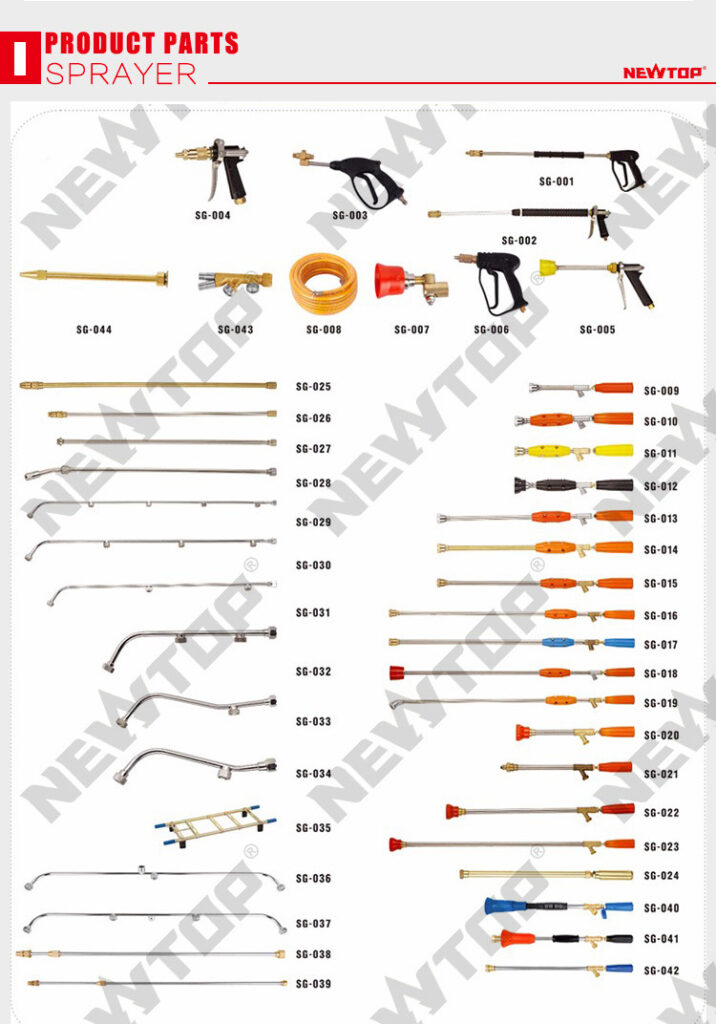
L'ugello è il componente più critico di a spruzzatore a zaino, controllare direttamente la dimensione delle gocce, modello di spruzzo, e la portata per determinare la precisione dell'applicazione e il potenziale di deriva.
Un ugello per spruzzatore a spalla è il componente di precisione che controlla il modo in cui il liquido esce dalla lancia di spruzzatura. Determina:
- Dimensione delle goccioline (Bene, medio, grossolano)
- Modello di spruzzo (Piatto, fan, cono, flusso)
- Portata (litri al minuto)
- Angolo di spruzzo (per esempio., 65°, 80°, 110°)
- Potenziale di deriva
Le sue funzioni primarie influenzano direttamente l'esito della domanda. Sia nelle irroratrici a spalla manuali che motorizzate, il liquido sotto pressione passa attraverso un piccolo orifizio.
La forma e la dimensione di tale orifizio definiscono il modo in cui lo spray atomizza. Per esempio, un ugello a ventola piatta produce un sottile, Foglio spray uniformemente distribuito, ideale per l'applicazione di erbicidi. Un ugello a cono cavo crea goccioline sottili che avvolgono il fogliame, miglioramento della copertura per gli insetticidi.
Se la dimensione delle goccioline è troppo fine, la deriva dello spruzzo aumenta, soprattutto in condizioni di vento. Se le goccioline sono troppo grossolane, la copertura diventa irregolare e controllo dei parassiti potrebbe soffrire.
Come gli ugelli controllano la dimensione e la deriva delle goccioline
La dimensione delle gocce è un fattore primario che influenza le prestazioni di spruzzatura, e il design interno dell’ugello determina la dimensione delle goccioline prodotte.
Goccioline più piccole, tipicamente in giro 100-200 micron, forniscono una copertura superficiale più completa ma sono altamente suscettibili di essere portati fuori bersaglio dal vento. Al contrario, goccioline più grandi sopra 400 i micron sono più pesanti e resistono alla deriva, ma potrebbero rimbalzare sulle superfici delle piante o fornire una copertura meno uniforme.
L'impatto del modello di spruzzatura sulla qualità della copertura
Il modello di spruzzo è la forma fisica dello spruzzo quando esce dall'ugello. Diversi modelli sono progettati per compiti specifici per garantire che la sostanza chimica sia distribuita in modo efficace per il massimo impatto. Un modello a ventaglio piatto, ad esempio, fornisce un'uniforme, fascia di spruzzo sovrapposta ideale per l'applicazione di erbicidi su terreni pianeggianti. I modelli a cono cavo e a cono pieno producono goccioline più fini di forma circolare, progettato per penetrare nelle fitte chiome delle piante durante l'applicazione di insetticidi o fungicidi. Lo schema corretto garantisce che il principio attivo venga erogato esattamente al bersaglio previsto, se si tratta di una superficie fogliare, una sola erbaccia, o il suolo.
Una panoramica dei tipi di ugelli per spruzzatori a spalla
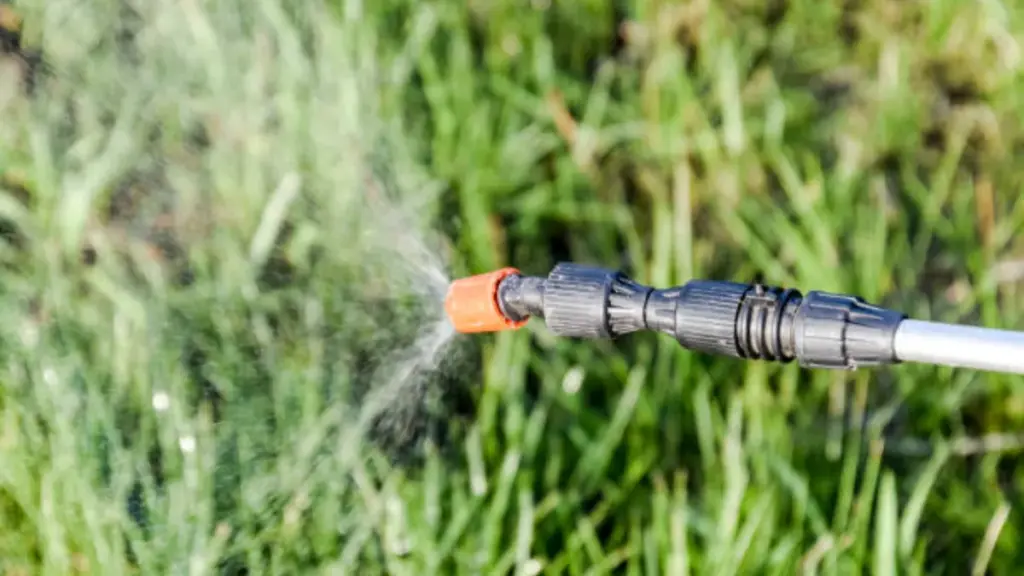
Ugelli per spruzzatori a zaino sono generalmente classificati in base al tipo di spruzzo e alla formazione delle gocce. Di seguito è riportata una tabella completa che riassume i tipi comuni di ugelli per spruzzatori a spalla come riferimento rapido:
| Tipo di ugello | Definizione & Caratteristiche | Modello di spruzzo & Angolo | Dimensione della gocciolina | Portata (@ 3 sbarra) | Potenziale di deriva | Tipo di trattamento | Pro & Contro |
|---|---|---|---|---|---|---|---|
| Ventilatore piatto | Progettato per una distribuzione uniforme su superfici piane con spruzzo ellittico. | Appartamento/Ventilatore (65° – 110°) | Da fine a media | 0.4 – 1.6 l/min | Da moderato ad alto | Diffondere erbicida; rivestimento uniforme. | (+) Uniformità (-) Deriva del vento |
| Cono cavo | Concentra il liquido sull'anello esterno; eccellente per la copertura fogliare 3D. | Anello circolare (40° – 90°) | Da fine a molto fine | 0.3 – 1.2 l/min | Molto alto | Insetticidi; penetrazione della chioma. | (+) Penetrazione (-) Rischio operativo |
| Cono Pieno | Riempie l'intera area circolare; fornisce uno spruzzo umido ad alto volume. | Cerchio solido (30° – 120°) | Da medio a grossolano | 0.8 – 2.5 l/min | Da basso a moderato | Trattamento spot; pennello denso e inzuppato. | (+) Alto impatto (-) Rifiuti chimici |
| Flusso solido | Un unico getto per la massima precisione e impatto sul bersaglio. | Punto singolo (0°) | Extra grossolana | 0.2 – 2.0 l/min | Molto basso | Diserbo mirato; pulizia delle fessure. | (+) Deriva zero (-) Nessuna copertura |
| Allagamento | Getto ampio e piatto a bassa pressione; crea goccioline extra-grandi. | Ventola extra ampia (110°+) | Extra grossolana | 1.0 – 4.5 l/min | Basso | Erbicidi del suolo; fertilizzanti liquidi. | (+) Copertura veloce (-) Rifiuti liquidi |
| Regolabile | Ugello a rotazione per cambiare da un getto dritto a uno a cono. | Variabile (0° – 90°) | Da fine a grossolana | 0.4 – 1.8 l/min | Variabile | Giardinaggio generale; esigenze multiuso. | (+) Versatile (-) Calibrazione scadente |
| Induzione dell'aria | Lo spray misto ad aria crea grandi bolle piene d'aria per ridurre la deriva. | Appartamento standard (110°) | Molto grossolano | 0.6 – 2.0 l/min | Estremamente basso | Erbicida di pre-emergenza; condizioni di vento. | (+) Controllo della deriva (-) Ha bisogno di un PSI elevato |
Ugelli a ventola piatta per un'efficiente applicazione di erbicidi
Gli ugelli a ventola piatta rappresentano lo standard industriale per l'applicazione di erbicidi a diffusione diffusa, fornendo una copertura uniforme che può essere ottimizzata per il controllo della deriva e requisiti chimici specifici.
Copertura uniforme per applicazioni standard
Gli ugelli a ventola piatta rappresentano lo standard consolidato per l'applicazione di erbicidi nelle colture in pieno campo. Il loro design produce un getto di spruzzo dal bordo rastremato che garantisce una distribuzione uniforme del liquido quando i getti degli ugelli adiacenti sono opportunamente sovrapposti. Questa prestazione affidabile porta ad un controllo delle infestanti coerente ed efficace, rendendoli il tipo di ugello più utilizzato per i trattamenti broadcast.
Varianti di riduzione della deriva per un controllo preciso
Una tendenza chiave nella progettazione degli ugelli è lo sviluppo di design a ventola piatta che riducano al minimo la deriva dello spruzzo. Questi ugelli generano goccioline più grandi che sono meno sensibili al vento, garantire che l'erbicida arrivi sull'area target. Ciò è spesso ottenuto attraverso progettazioni di pre-orifizi che riducono la pressione di uscita del liquido mantenendo il modello di spruzzatura previsto. Varianti specializzate, come anche gli ugelli a ventola piatta, sono disponibili anche per applicazioni di fasciatura in cui è necessario applicare l'erbicida in spazi ristretti, strisce concentrate.
Selezione degli ugelli basata sulla chimica
L'attenzione nell'agricoltura moderna si sta spostando dall'utilizzo di un ugello universale alla selezione di un ugello basato sulla chimica specifica dell'erbicida. Adattare la dimensione delle gocce dell’ugello ai requisiti della sostanza chimica è fondamentale per massimizzare le prestazioni e ridurre gli sprechi. La scelta giusta dipende dal tipo di erbicida, volume del portatore, e le condizioni ambientali al momento dell'applicazione. Per aiutare questo processo, molti produttori ora forniscono strumenti digitali e app mobili che aiutano gli operatori a selezionare l’ugello ottimale per le loro precise esigenze.
Ugelli a cono cavo per la massima penetrazione nel fogliame
Gli ugelli a cono cavo creano un getto a forma di anello con gocce fini, progettato per penetrare nelle fitte chiome delle colture e fornire fungicidi o insetticidi alle foglie interne difficili da raggiungere.
Come gli ugelli a cono cavo creano un disegno a forma di anello
Gli ugelli a cono cavo utilizzano un componente interno chiamato camera a vortice che fa girare il liquido ad alta velocità prima che esca dall'orifizio. Questa azione centrifuga forza il liquido in uno strato conico, che forma un caratteristico getto a forma di anello con un centro cavo. Questo design concentra le goccioline fini ai bordi dello spray per un'applicazione precisa sul fogliame.
- Il liquido entra in una camera a vortice, che genera un flusso rotatorio ad alta velocità.
- Lo spruzzo esce dall'orifizio in un foglio conico che forma uno schema ad anello circolare.
- La maggior parte delle goccioline sono concentrate sui bordi esterni dell'anello, lasciando il centro vuoto.
Caratteristiche prestazionali chiave
L'efficacia di questi ugelli deriva dalla loro capacità di produrre goccioline fini all'interno di un efficiente schema ad anello. Questa geometria è ottimizzata per una copertura diretta a pressioni comprese tra 40 E 80 psi. Queste caratteristiche lavorano insieme per garantire una penetrazione profonda nel fogliame con uno spreco chimico minimo.
- Produce goccioline da fini a medie che ottimizzano la copertura della superficie penetrando nelle fitte chiome delle piante.
- La configurazione ad anello dirige lo spruzzo verso le superfici fogliari anziché saturare l'intero volume.
- Funziona efficacemente a 40–80 psi, offrendo un'eccellente copertura sulla pagina inferiore delle foglie.
Applicazioni agricole primarie
Questi ugelli sono particolarmente adatti per le applicazioni in cui è fondamentale una copertura completa del fogliame denso. Eccellono nei frutteti, vigneti, e colture speciali, rendendoli una scelta primaria per trattamenti fungicidi e insetticidi mirati dove raggiungere le foglie interne e inferiori è essenziale per la protezione delle colture.
- Ideale per l'applicazione di fungicidi e insetticidi in colture come soia o alberi da frutto.
- Penetra efficacemente nelle fitte chiome per raggiungere le foglie interne e la loro pagina inferiore.
- Le prestazioni migliorano se utilizzate con spruzzatori ad aria compressa che spingono le goccioline più in profondità nel fogliame.
Aumentate gli ordini ripetuti con pezzi di ricambio affidabili per spruzzatori

Ugelli a cono pieno per applicazioni di spruzzatura ad alto volume
Gli ugelli a cono pieno sono progettati per erogare un solido, getto circolare con gocce uniformemente distribuite, rendendoli lo standard per le applicazioni che richiedono un'irrigazione completa della superficie e un volume elevato.
Come gli ugelli a cono pieno ottengono una distribuzione uniforme
Gli ugelli a cono pieno producono un solido, modello di spruzzo circolare utilizzando un componente interno, come una pala di flusso di tipo S o tangenziale, creare un ambiente turbolento, flusso vorticoso prima che il liquido esca dall'orifizio. Questo meccanismo obbliga le goccioline a distribuirsi uniformemente su tutta l'area target, non solo lungo i bordi. Il risultato è coerente, copertura approfondita, il che rende questi ugelli ideali per attività che richiedono la bagnatura o l'inzuppamento completo di una superficie.
Applicazioni primarie in agricoltura e industria
Questi ugelli sono fondamentali in qualsiasi settore in cui l'obiettivo principale è ricoprire una superficie con un elevato volume di liquido. Il loro getto uniforme è essenziale per i processi in cui la copertura completa non è negoziabile.
- Abbattimento polveri in siti industriali e cave.
- Lavaggio e risciacquo di prodotti o attrezzature negli impianti agricoli.
- Sistemi di protezione antincendio progettati per fornire grandi volumi d'acqua su una vasta area.
- Processi di raffreddamento e lavaggio dei gas negli impianti industriali.
Vantaggi per le attività ad alto flusso
Il vantaggio principale di un ugello a cono pieno è la sua capacità di mantenere una posizione stabile, modello uniforme anche a portate elevate. Questa efficienza riduce i rifiuti chimici e garantisce risultati costanti in operazioni su larga scala.
- Offre una copertura eccellente che riduce al minimo i punti mancati, riducendo la necessità di applicazioni ripetute.
- Progettato per volumi elevati senza perdere l'integrità del ventaglio di spruzzatura.
- I design moderni offrono una migliore resistenza all'intasamento, garantendo un funzionamento affidabile in ambienti difficili.
Flusso solido (Getto) Ugelli per il trattamento spot di precisione
Gli ugelli a getto solido erogano un getto liquido concentrato con il massimo impatto e un'atomizzazione minima, rendendoli lo standard per i trattamenti spot ad alta precisione in cui è necessario evitare l'overspray.
Caratteristiche chiave: Precisione e impatto elevato
Ugelli a flusso solido, spesso chiamati ugelli a getto, sono progettati per produrre un singolo, flusso coerente di liquido. Questo design concentra l'intera produzione in una piccola area, che genera la massima forza d'impatto possibile tra tutti i tipi di ugelli. Riducendo al minimo l'atomizzazione in goccioline più piccole, l'ugello crea una stretta, flusso controllato che riduce significativamente la deriva dello spruzzo e consente agli operatori di mirare a punti specifici con elevata precisione. Ciò li rende ideali per le applicazioni che richiedono precisione su un'ampia copertura.
Applicazioni comuni per il trattamento delle macchie
L'utilizzo principale di questi ugelli è qualsiasi attività in cui la sostanza chimica deve colpire un bersaglio specifico senza contaminare l'area circostante. La loro precisione è fondamentale in ambienti sensibili, con colture di alto valore, o per lavori di pulizia specializzati. Le applicazioni chiave includono:
- Applicazione di erbicidi direttamente sulle singole erbacce in un prato, giardino, o fila del raccolto.
- Mira agli insetti nocivi raggruppati alla base di una pianta o nascosti lungo le linee di recinzione.
- Pulire le attrezzature o lavare i detriti ostinati da superfici dure con un getto ad alta pressione.
- Iniettare fertilizzanti liquidi o trattamenti sistemici direttamente nel terreno vicino alla zona radicale della pianta.
Considerazioni sui materiali e sulla durabilità
Le prestazioni e la durata di un ugello a flusso solido dipendono interamente dalla qualità e dal materiale del suo orifizio. Di 2026, i principali produttori utilizzano materiali altamente durevoli per mantenere un modello di flusso coerente, anche quando si spruzzano prodotti chimici abrasivi o corrosivi. Un orifizio usurato o danneggiato degraderà la coerenza del flusso, causando uno scarso targeting e una maggiore deriva. Gli operatori devono dare priorità alla qualità dei materiali e alle ispezioni regolari.
- Gli orifizi sono generalmente costruiti in acciaio inossidabile temprato, ceramica, o carburo di tungsteno per resistere all'usura.
- Qualsiasi danno all'orifizio può interrompere il flusso, portando ad un turbolento, spray meno efficace.
- Sono necessari frequenti controlli visivi per confermare che il flusso rimanga diritto e non turbolento.
Limitazioni e quando evitarne l'uso
Mentre gli ugelli a getto solido eccellono nei lavori di precisione, sono lo strumento sbagliato per coprire vaste aree. Il loro modello concentrato è inefficiente per l'irrorazione a tappeto, e la forza ad alto impatto può essere dannosa se usata in modo errato. Dovresti evitare di utilizzare un ugello a getto solido in determinate situazioni.
- Non è pratico applicare erbicidi o pesticidi su un intero campo, prato, o un ampio pezzo di terreno.
- Il forte getto può danneggiare fisicamente il delicato fogliame delle piante, fiori, o frutta.
- Può causare un deflusso chimico eccessivo se il bersaglio non è in grado di assorbire rapidamente il volume del liquido.
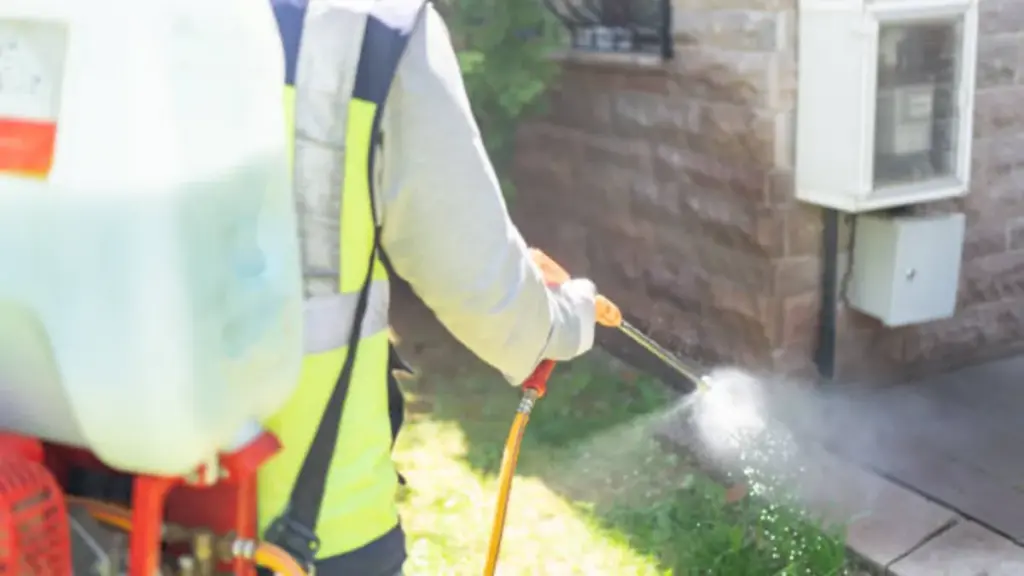
Ugelli ad allagamento per terreni ad alto volume e trattamento del terreno
Gli ugelli di allagamento sono lo standard industriale per le applicazioni a terra ad alto volume, offrendo un ampio, distribuzione uniforme con gocce eccezionalmente grandi per ridurre al minimo la deriva dello spruzzo durante l'applicazione di fertilizzanti liquidi ed erbicidi mirati al suolo.
Come funzionano gli ugelli di allagamento
Gli ugelli di allagamento sono progettati per creare un grandangolo, getto a ventaglio deviando un flusso solido di liquido da una superficie inclinata. Questo meccanismo produce uno spettro di goccioline eccezionalmente grossolane, che è meno suscettibile alla deriva del vento rispetto agli spruzzi più fini. Sono progettati per funzionare a pressioni molto basse, tipicamente tra 10 E 30 psi, riducendo ulteriormente la creazione di piccole dimensioni, goccioline soggette a deriva. Il risultato è la massima copertura del terreno con il minimo movimento fuori bersaglio, rendendoli una tecnologia fondamentale per specifiche applicazioni di trasmissione.
Applicazioni primarie in agricoltura
Questi ugelli sono la scelta predefinita per l'applicazione di fertilizzanti liquidi ed erbicidi pre-emergenza direttamente al terreno. La loro portata elevata e il modello di distribuzione uniforme li rendono ideali per trattare grandi campi in modo rapido ed efficace. Sono comunemente utilizzati per applicazioni broadcast in cui l'obiettivo è coprire la superficie del terreno in modo uniforme anziché penetrare nella chioma delle piante. Il loro design è particolarmente adatto anche per miscele di serbatoi che combinano fertilizzanti ed erbicidi per un'applicazione a passaggio singolo.
Vantaggi principali per l'irrorazione del terreno
Il vantaggio principale degli ugelli ad allagamento è la loro capacità di erogare un volume elevato di liquido riducendo significativamente la deriva. Questa combinazione garantisce che le sostanze chimiche costose raggiungano il terreno dove sono necessarie, migliorare l’efficacia e la sicurezza ambientale. L'ampio disegno consente inoltre velocità di spostamento più elevate, aumento dell’efficienza operativa.
- Eccellente controllo della deriva: Le grandi dimensioni delle gocce e la bassa pressione operativa sono i due fattori principali che riducono al minimo il movimento dello spruzzo fuori bersaglio.
- Copertura uniforme: L'ampio, il modello piatto garantisce che fertilizzanti ed erbicidi siano distribuiti uniformemente sulla superficie del terreno per prestazioni costanti.
- Alta efficienza: Una portata elevata e un'ampia andana di irrorazione consentono agli operatori di coprire più terreno in meno tempo.
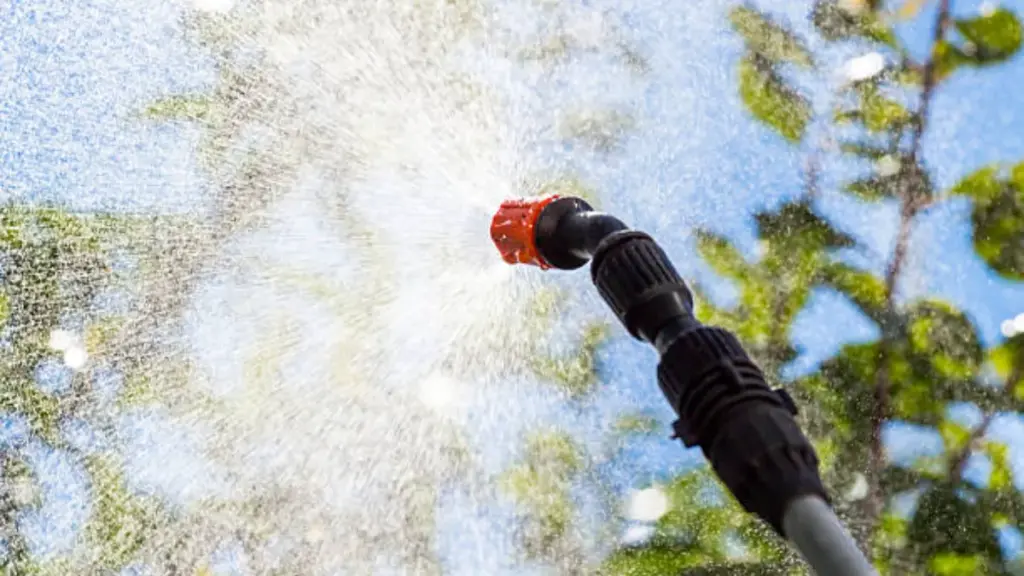
Ugelli Regolabili per Piccole e Grandi Aziende Agricole
Gli ugelli regolabili forniscono una flessibilità operativa essenziale, consentendo agli operatori di modificare i modelli di spruzzatura da una nebbia fine a un flusso solido per soddisfare le diverse esigenze chimiche e applicative senza modificare l'hardware.
Adattamento dei modelli di spruzzo da nebbia a flusso
La funzione principale di un ugello regolabile è la sua capacità di modificare il ventaglio di spruzzatura sul campo. Gli operatori possono passare istantaneamente da un'ampia, nebbia fine per un'ampia copertura del fogliame fino a un flusso solido concentrato per trattamenti localizzati. Questa adattabilità lo rende uno strumento altamente flessibile per varie attività agricole, controllato da un semplice meccanismo che non richiede strumenti.
- Un semplice meccanismo a leva o a rotazione consente cambi fluidi tra i modelli di spruzzo.
- Le impostazioni di nebulizzazione fine sono ideali per l'applicazione di fungicidi o insetticidi su vaste aree coltivate.
- Le impostazioni del flusso solido forniscono un'applicazione precisa per colpire erbe infestanti o parassiti specifici, che riduce al minimo l'overspray e i rifiuti chimici.
Versatilità tra diversi prodotti chimici e apparecchiature
Gli ugelli regolabili sono progettati per funzionare in modo efficace con un'ampia gamma di prodotti chimici agricoli e possono essere montati su vari tipi di apparecchiature di spruzzatura. Questa adattabilità li rende una soluzione universale per le aziende agricole che gestiscono colture diverse e operano su scale diverse, dai piccoli appezzamenti ai grandi campi commerciali.
- Questi ugelli sono compatibili con gli erbicidi, pesticidi, e fertilizzanti liquidi.
- Funzionano sia su irroratrici manuali a spalla che su quelle più grandi, irroratrici a barra montate su trattore.
- Questa versatilità riduce la necessità di acquistare e gestire più ugelli specializzati, razionalizzazione delle scorte e dei costi.
Principali vantaggi per le moderne operazioni agricole
Sia per i piccoli proprietari che per le grandi imprese agricole, gli ugelli regolabili offrono vantaggi pratici che migliorano il risparmio sui costi, efficienza, e sostenibilità. Il loro design ottimizza l'uso dei prodotti chimici semplificando l'intero processo di spruzzatura, portando a migliori risultati operativi.
- Riduce gli sprechi chimici consentendo agli operatori di abbinare il ventaglio di spruzzatura direttamente al target dell'applicazione.
- Aumenta l'efficienza operativa eliminando il tempo impiegato a cambiare gli ugelli per compiti diversi.
- Aiuta le aziende agricole a soddisfare gli standard ambientali e normativi fornendo un migliore controllo sulla deriva dei prodotti irrorati.
Ugelli per l'induzione dell'aria: Opzione a deriva ridotta per una spruzzatura più sicura
Gli ugelli di induzione dell'aria sono progettati per ridurre significativamente la deriva dello spruzzo creando getti più grandi, goccioline piene d'aria che resistono al vento e migliorano l'applicazione sul bersaglio.
Come gli ugelli a induzione d'aria riducono la deriva dello spruzzo
Gli ugelli di induzione dell'aria utilizzano un design Venturi per miscelare l'aria con il liquido spruzzato. Questo processo crea dimensioni maggiori, goccioline più pesanti che sono meno suscettibili di essere portate via dal vento, che riduce al minimo il movimento dello spruzzo fuori bersaglio e la contaminazione ambientale.
- Un meccanismo Venturi aspira l'aria nel corpo dell'ugello, infondendolo nel flusso liquido.
- Questa azione produce goccioline più grossolane con meno particelle fini, particelle soggette a deriva.
- Le goccioline più grandi risultanti hanno un peso sufficiente per cadere direttamente sulla superficie bersaglio, resistere agli effetti del vento.
Principali vantaggi dell'utilizzo della tecnologia di induzione dell'aria
Il vantaggio principale di questi ugelli è la drastica riduzione della deriva dello spruzzo, che migliora la sicurezza ambientale e protegge le colture non bersaglio. Consentono inoltre un'applicazione efficace in una gamma più ampia di condizioni, estendere la finestra operativa per gli agricoltori e i giardinieri.
- Raggiunge a 75% A 90% riduzione della deriva del getto rispetto ai tradizionali ugelli a ventaglio.
- Mantiene un'elevata efficacia biologica, garantire che erbicidi e pesticidi funzionino come previsto.
- Espande la finestra di spruzzatura sicura, consentendo l'applicazione in condizioni meteorologiche non ideali.
Condizioni operative ottimali
Per ottenere il miglior equilibrio tra controllo della deriva e copertura del bersaglio, gli ugelli di aspirazione dell'aria devono essere utilizzati entro l'intervallo di pressione consigliato. Una pressione adeguata garantisce il corretto funzionamento del sistema Venturi senza sacrificare l'efficacia dell'applicazione chimica.
- Le prestazioni sono spesso ottimizzate quando si opera tra 60 E 80 psi.
- Gli operatori devono bilanciare la riduzione della deriva con la necessità di un'adeguata penetrazione e copertura del fogliame.
- I design moderni offrono prestazioni migliorate in una varietà di scenari applicativi, dall'agricoltura su larga scala ai trattamenti spot.
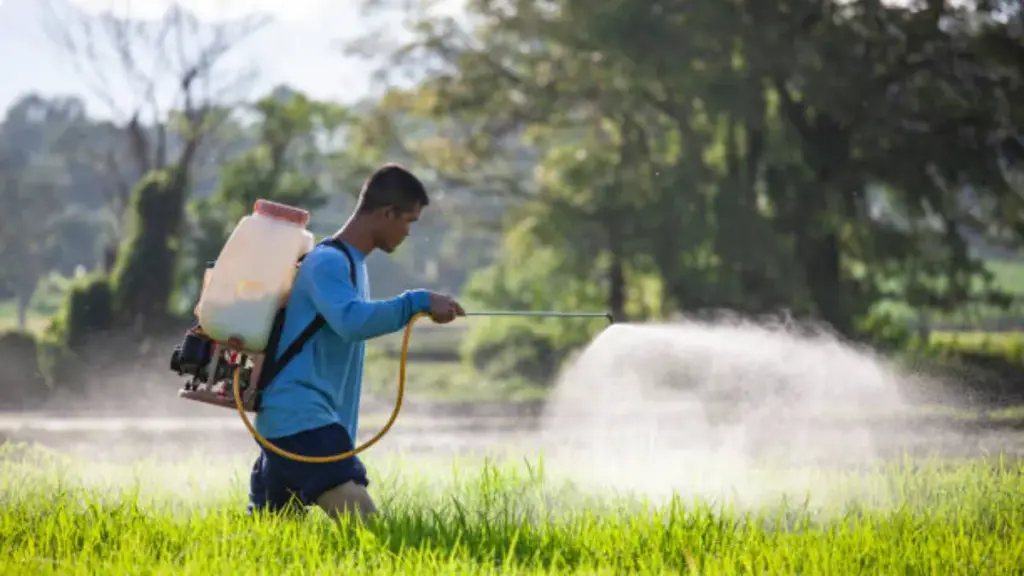
Come scegliere il tipo di ugello giusto per il tuo spruzzatore a spalla
La selezione dell'ugello corretto implica la corrispondenza del target dell'applicazione con la dimensione della goccia richiesta per bilanciare la copertura efficace con la deriva fuori target, il tutto durante il funzionamento entro l'intervallo di pressione specificato dell'ugello.
| Tipo di applicazione | Tipo di ugello consigliato | Considerazione primaria |
|---|---|---|
| Applicazione di erbicidi (Trasmissione) | Ventilatore piatto o induzione d'aria | Copertura uniforme e bassa deriva (goccioline medio-grosse). |
| Insetticida / Fungicida (Fogliame) | Cono cavo o cono pieno | Penetrazione della tettoia e copertura completa (goccioline fini). |
| Trattamento spot / Spray basale | Flusso solido o regolabile | Puntamento di precisione con overspray minimo. |
| Trattamento del terreno ad alto volume | Allagamento (FloodJet) | Distribuzione ampia a bassa pressione con gocce grandi per ridurre la deriva. |
La scelta dell'ugello corretto richiede la considerazione di diversi fattori pratici.
Primo, identificare il tipo chimico. Gli erbicidi in genere richiedono una ventola piatta o ugelli per l'aspirazione dell'aria. Insetticidi e fungicidi spesso funzionano meglio con le punte dei coni cavi.
Secondo, valutare la struttura della coltura. Il fogliame denso richiede goccioline più fini e una migliore penetrazione.
Terzo, considerare le condizioni ambientali. Velocità del vento, temperatura, e l'umidità influenzano il comportamento delle goccioline.
Quarto, verifica la compatibilità della portata con il tuo irroratore a spalla. Una dimensione errata dell'ugello può causare instabilità della pressione o spruzzo non uniforme.
Finalmente, pensare alla disponibilità di sostituzione. Gli ugelli standardizzati sono più facili da reperire e sostituire nei mercati globali.
Gli applicatori professionali spesso mantengono un piccolo set di ugelli intercambiabili per adattarsi alle esigenze stagionali.
Problemi comuni degli ugelli dello spruzzatore a zaino e suggerimenti per la manutenzione
Gli ugelli si usurano nel tempo. Le sostanze chimiche abrasive e le particelle sospese allargano gradualmente l'orifizio, aumentando la portata e modificando il modello di spruzzo.
| Problema comune | Causa primaria(S) | Azione di manutenzione chiave |
|---|---|---|
| Intasamento & Blocchi | Detriti, residuo chimico, particelle non disciolte. | Sciacquare il sistema con acqua pulita dopo ogni utilizzo e utilizzare una spazzola morbida per pulire gli orifizi. |
| Corrosione & Usura fisica | Prodotti chimici aggressivi e particelle abrasive nella soluzione spray. | Selezionare ugelli realizzati con materiali resistenti agli agenti chimici e ispezionarli per eventuali danni fisici prima dell'uso. |
| Pressione incoerente & Perdite | Guarnizioni usurate, O-ring, o serraggio improprio dei componenti. | Sostituire le guarnizioni e gli O-ring ogni anno e assicurarsi che tutti i collegamenti siano sicuri ma non serrati eccessivamente. |
| Fallimento prematuro | Mancanza di coerenza, routine di manutenzione preventiva. | Implementare un protocollo di pulizia post-utilizzo e condurre ispezioni stagionali approfondite. |
Perché i kit di ugelli universali NEWTOP soddisfano le tue esigenze globali
Da allora come produttore professionale di apparecchiature elettriche per esterni 2003, NEWTOP sviluppa irroratrici a spalla destinate ai mercati internazionali.
I kit di ugelli NEWTOP sono progettati per essere compatibili con la maggior parte degli spruzzatori a spalla standard utilizzati in Africa, America Latina, Sud-est asiatico, e dell'Europa orientale. Ogni kit include più tipi di ugelli, consentendo agli agricoltori e ai distributori di servire diverse applicazioni di colture.
Se sei un distributore, importatore agricolo, o proprietario di un marchio regionale alla ricerca di accessori affidabili per spruzzatori a spalla, offriamo MOQ flessibile, supporto campione entro 7-10 giorni, e soluzioni logistiche globali. Per richieste di prodotti, contattaci direttamente.
Conclusione
La scelta dell'ugello corretto per lo spruzzatore a spalla è fondamentale per un'applicazione chimica efficace e responsabile. L'ugello giusto garantisce un'erogazione precisa nell'area target, massimizzando l'impatto dei vostri erbicidi o pesticidi riducendo al minimo i costosi sprechi. Ciò porta ad una migliore protezione delle colture, costi operativi ridotti, e condizioni di spruzzatura più sicure.
Se gestisci diverse attività di irrorazione, disporre di un set versatile di ugelli di alta qualità è essenziale per mantenere l'efficienza. Esplora i kit di ugelli universali di NEWTOP per vedere come puoi semplificare l'inventario e preparare il tuo team per qualsiasi applicazione.
Domande frequenti
Quali sono i diversi tipi di ugelli per spruzzatori a zaino?
I tipi principali includono il ventilatore piatto, cono cavo, cono pieno, flusso solido (getto), allagamento, regolabile, e ugelli per l'aspirazione dell'aria. Ciascuno produce diversi modelli di spruzzo e dimensioni delle gocce per specifiche applicazioni agricole.
Quale ugello è il migliore per il diserbante?
Gli ugelli a ventola piatta sono generalmente consigliati per l'applicazione di erbicidi perché forniscono una copertura uniforme su tutte le superfici del terreno. In condizioni di vento, Gli ugelli a ventola piatta a induzione d'aria riducono la deriva.
Come leggo i codici colore sugli ugelli degli spruzzatori?
I codici colore degli ugelli indicano la portata ad una pressione standard, secondo il ISO 10625 norma internazionale. Ciascun colore rappresenta un volume di output specifico, permettendoti di selezionare l'ugello giusto per la dose di applicazione desiderata. Per esempio, un ugello giallo ha una portata inferiore rispetto ad uno blu, garantendo prestazioni di spruzzatura costanti.
Con quale frequenza è necessario sostituire gli ugelli dello spruzzatore?
La sostituzione dipende dall'intensità di utilizzo e dal tipo di prodotto chimico. Nell'agricoltura professionale, gli ugelli vengono ispezionati ogni stagione e sostituiti quando la portata aumenta in modo significativo o il ventaglio di spruzzatura diventa irregolare.
Posso utilizzare ugelli di marche diverse sul mio irroratore a spalla??
In molti casi, sì, se la dimensione della filettatura e il tipo di connessione corrispondono. I raccordi universali consentono la compatibilità tra marchi, ma controllare le specifiche è importante.
Quale ugello produce la minima deriva?
Induzione d'aria (AI) gli ugelli producono la minima quantità di deriva. Sono specificamente progettati per creare grandi dimensioni, goccioline piene d'aria che sono più pesanti e meno suscettibili al trasporto del vento. Questa tecnologia è superiore per il controllo della deriva, rendendo gli ugelli AI la scelta più sicura per l'applicazione di erbicidi vicino a piante sensibili.
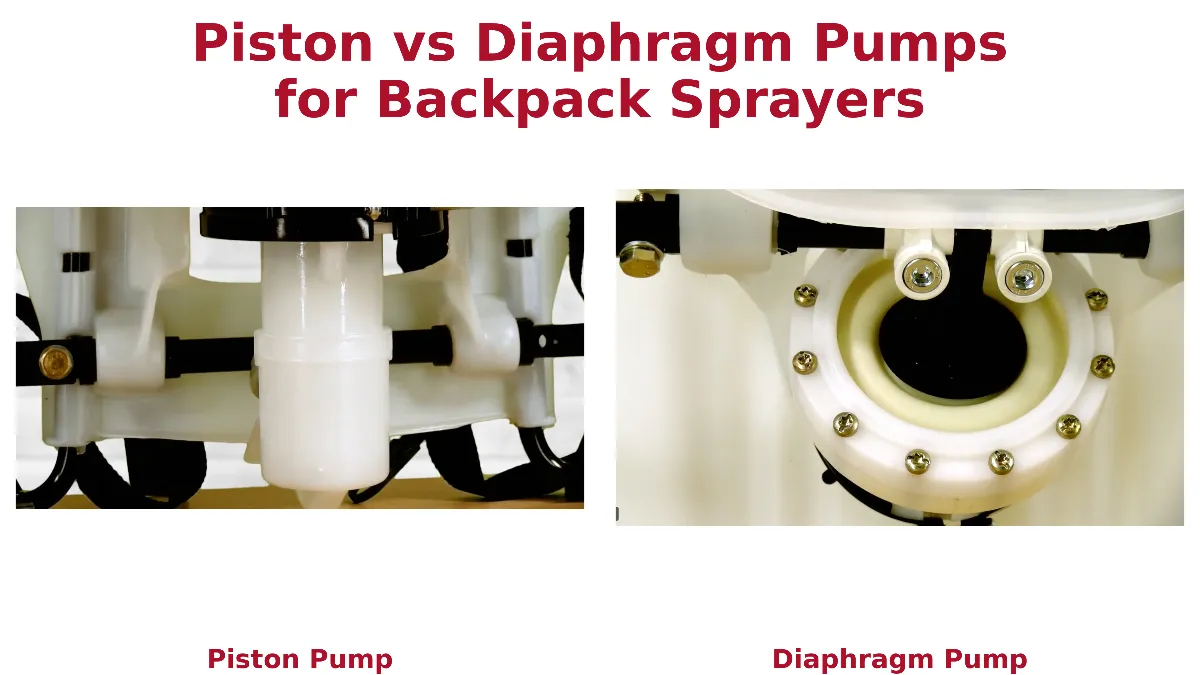
La scelta della giusta pompa a pistone per spruzzatore a spalla o a membrana è una decisione fondamentale che incide direttamente sui tempi di attività operativa, costi chimici, e sicurezza dei lavoratori. Una mancata corrispondenza tra il meccanismo della pompa e l'agente chimico porta a un guasto prematuro della tenuta, pressione di applicazione incoerente, e tempi di inattività non programmati, trasformare un compito di routine in un rischio operativo costoso.
Questa guida fornisce un chiaro confronto tecnico di entrambi i sistemi di pompaggio. Analizzeremo la meccanica principale dei progetti di pistoni e diaframmi, valutare le loro prestazioni rispetto a parametri critici come la pressione in uscita e la compatibilità chimica, e delineare le esigenze di manutenzione per ciascuno. Utilizza questa suddivisione per standardizzare il processo di selezione delle attrezzature e assicurarti di utilizzare la pompa più durevole ed efficiente per ogni lavoro.
Cos'è un Pompa irroratrice a zaino e perché è importante
La pompa è il componente principale di qualsiasi spruzzatore a zaino, controllando direttamente la pressione, compatibilità chimica, e le prestazioni complessive dell'applicazione.
La funzione principale di una pompa irroratrice a zaino
Una pompa irroratrice a spalla è il sistema meccanico che crea pressione all'interno del serbatoio di irrorazione e spinge il liquido attraverso il tubo, lancia, e ugello. Se stai applicando pesticidi, erbicidi, fertilizzanti, disinfettanti, o prodotti chimici per la salute pubblica, una pressione costante garantisce una copertura di spruzzatura uniforme e una dimensione delle gocce adeguata. Gli spruzzatori a spalla utilizzano in genere uno dei due sistemi di pompaggio: pompa a pistone e pompa a membrana.
- Crea pressione per atomizzare e spingere i fluidi.
- Determina la portata dello spruzzo, livello di pressione, e dimensione delle gocce.
- Determina quali tipi di sostanze chimiche lo spruzzatore può gestire in sicurezza.
Una pressione bassa o instabile porta ad un'applicazione non uniforme, rifiuti chimici, e danni alle colture. Una pressione eccessivamente alta può causare la formazione di nebbie e problemi ambientali. Perciò, selezionare il tipo di pompa corretto è una decisione pratica che influisce sulle prestazioni sul campo e sull'affidabilità del prodotto.
Per una ripartizione dettagliata dei diversi modelli e delle loro variazioni strutturali, esplora la nostra guida completa su tipologie di irroratrici a spalla per trovare la configurazione di base ideale per le vostre operazioni.
Come funziona una pompa a pistone in uno spruzzatore a spalla
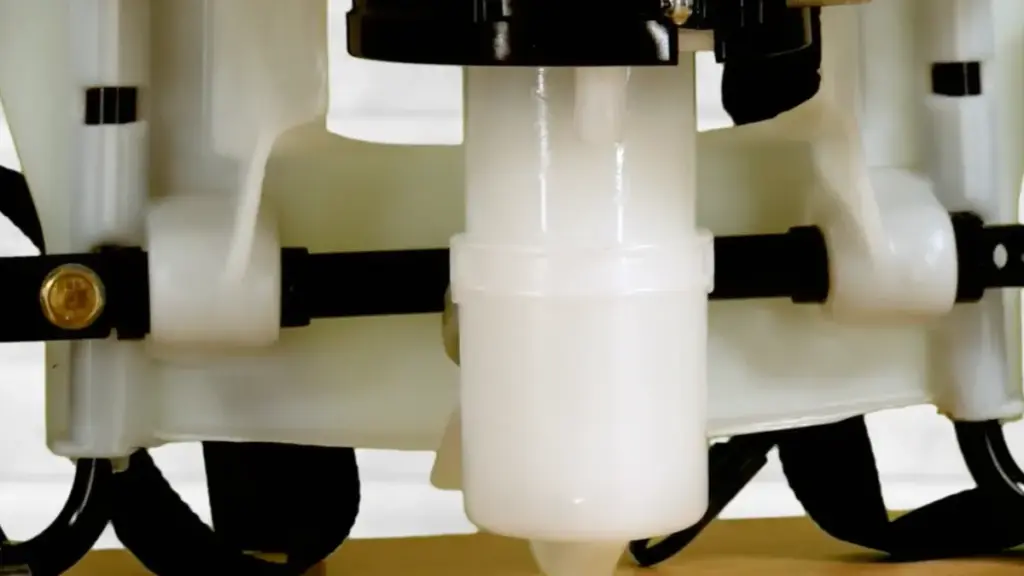
Una pompa a pistone utilizza un pistone alternativo all'interno di un cilindro, sfruttando le valvole di ritegno unidirezionali per aspirare il fluido e quindi espellerlo con forza ad alta pressione.
Le pompe a pistone utilizzano un meccanismo a cilindro e pistone per creare alta pressione, spesso arrivando fino a 90 PSI. La pompa a pistone funziona attraverso un semplice, azione reciproca. Un pistone si muove su e giù all'interno di un cilindro sigillato, utilizzando valvole unidirezionali per aspirare il fluido dal serbatoio e spingerlo verso l'ugello di spruzzatura.
In salita, il pistone crea un vuoto che aspira il liquido dal serbatoio attraverso una valvola di ritegno in ingresso nel cilindro della pompa.
In discesa, il pistone spinge verso il basso, chiudendo la valvola di ingresso e forzando la fuoriuscita del liquido intrappolato attraverso una valvola di ritegno in uscita. Il pompaggio manuale dell'impugnatura dello spruzzatore da parte dell'operatore guida questo ciclo, creando un flusso pressurizzato per la spruzzatura.
Come funziona una pompa a membrana in uno spruzzatore a spalla
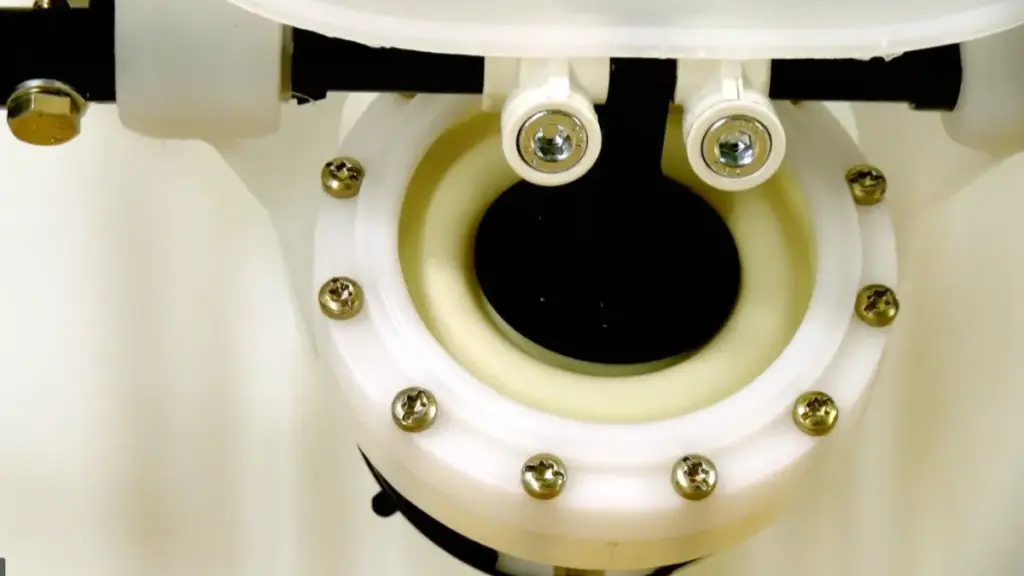
Una pompa a membrana utilizza un flessibile, membrana oscillante per spostare il fluido, un design che isola i componenti meccanici dalla soluzione chimica e consente la manipolazione di materiali abrasivi o corrosivi.
Una pompa a membrana funziona utilizzando un flessibile, membrana circolare che si muove avanti e indietro all'interno di una camera sigillata. Questa membrana, spesso fabbricato con elastomeri chimicamente resistenti come il Viton, crea un sigillo che separa i componenti della trasmissione meccanica dal fluido pompato. Mentre il diaframma si muove avanti e indietro, altera il volume della camera della pompa, dirigere il fluido attraverso una serie di valvole unidirezionali.
- Una membrana in elastomero flessibile è sigillata contro il corpo della pompa, creazione di una camera di pompaggio.
- Mentre il diaframma si tira indietro, aumenta il volume della camera, creando un vuoto che aspira il liquido attraverso una valvola di ingresso.
- Quando il diaframma si spinge in avanti, riduce il volume della camera, pressurizzando il liquido e forzandolo fuori attraverso una valvola di uscita.
Aumenta i tuoi profitti con macchine agricole durevoli
Un confronto tra pompa a pistone e pompa a pistone. Pompa a membrana
Per assisterti nel processo di selezione, di seguito abbiamo riassunto le principali differenze tecniche tra le pompe a pistone e quelle a membrana.
| Caratteristica / Metrico | Sistema di pompa a pistone | Sistema di pompa a membrana |
|---|---|---|
| Pressione massima | Alto (Fino a 90+ PSI) | Tipicamente in giro 60 PSI |
| Compatibilità chimica | Concentrati liquidi, soluzioni trasparenti a base d'acqua | Polveri bagnabili, candeggina, abrasivo & formule corrosive |
| Progettazione del meccanismo | Pistone scorrevole interno con tenute meccaniche del cilindro | Membrana flessibile alternativa (Viton/Santoprene) |
| Le migliori applicazioni | Frutteti, cura degli alberi ad alto fusto, requisiti di nebulizzazione fine | Disinfestazione commerciale, disinfezione industriale, agricoltura |
| Profilo di durabilità | Sensibile alla grinta; richiede liquidi rigorosamente filtrati | Sistema di azionamento isolato; altamente resistente all'usura interna |
| Profilo di manutenzione | Sostituzione frequente ma semplice della guarnizione/O-ring | Servizio poco frequente; comporta il controllo della membrana e della valvola |
| Portata & Atomizzazione | Portata superiore e atomizzazione delle gocce più fini | Portata standard; ottimizzato per la deriva controllata |
Emissione di pressione e prestazioni di spruzzatura
Le pompe a pistoni sono progettate per lavori ad alta pressione, creando una nebbia sottile che fornisce una copertura uniforme. Le pompe a membrana funzionano a pressioni più basse, producendo goccioline più grandi che riducono la deriva. This makes them a better fit for targeted applications where overspray is a primary concern.
- Piston pumps generate much higher pressure, often exceeding 90 psi, which is needed to hit distant targets and create fine, atomized sprays.
- Diaphragm pumps typically operate around 60 psi, resulting in larger, heavier droplets that minimize wind drift.
- The choice directly affects spray quality. The higher pressure from a piston pump gives thorough coverage for insecticides, while the lower pressure from a diaphragm pump is better for applying herbicides without harming nearby plants.
Chemical Compatibility and Corrosion Resistance
Diaphragm pumps have superior compatibility with abrasive and corrosive chemicals. Many agricultural fungicides and insecticides are formulated as wettable powders (WP) or water-dispersible granules (WDG). These solutions contain small, particelle abrasive. In una pompa a pistone, queste particelle rimangono intrappolate tra la guarnizione del pistone e la parete del cilindro, portando a rigature e perdita di compressione.
Tuttavia, Il design chiuso del diaframma protegge i componenti meccanici dal contatto diretto con il liquido, prevenendo un'usura accelerata. Le pompe a pistone sono molto più vulnerabili ai danni se utilizzate con formule granulose o aggressive.
- La membrana flessibile isola le parti mobili della pompa dalla soluzione chimica, rendendolo altamente resistente ai materiali abrasivi come polveri bagnabili e liquidi corrosivi.
- In una pompa a pistone, la sostanza chimica scorre direttamente sul pistone e sulle sue guarnizioni. Ciò aumenta il rischio di abrasione e usura prematura, soprattutto con formule non liquide.
- Per spruzzare soluzioni di candeggina, sospensioni, o altri prodotti chimici aggressivi, una pompa a membrana offre maggiore affidabilità e una maggiore durata.
Durabilità, Parti soggette ad usura, e Manutenzione
Le pompe a membrana sono generalmente più durevoli e richiedono una manutenzione meno frequente. Il loro design semplice ha meno parti ad alto attrito. Le pompe a pistoni necessitano di una manutenzione più regolare di guarnizioni e cilindri, ma sono spesso progettate per riparazioni rapide sul campo.
- Le pompe a membrana hanno una durata operativa più lunga tra un servizio e l'altro perché non c'è attrito diretto tra le parti mobili e le pareti del cilindro, riducendo al minimo l’usura meccanica.
- Le pompe a pistone fanno affidamento su guarnizioni che si usurano a causa dell'attrito e dell'esposizione chimica. Questi richiedono una sostituzione periodica per mantenere la pressione.
- Mentre le riparazioni delle pompe a membrana possono essere più complesse, i loro intervalli di manutenzione sono molto più lunghi. Le pompe a pistoni richiedono un'attenzione più frequente ma spesso sono più facili da manutenere rapidamente per gli utenti.
Le migliori applicazioni per gli spruzzatori a zaino con pompa a pistone
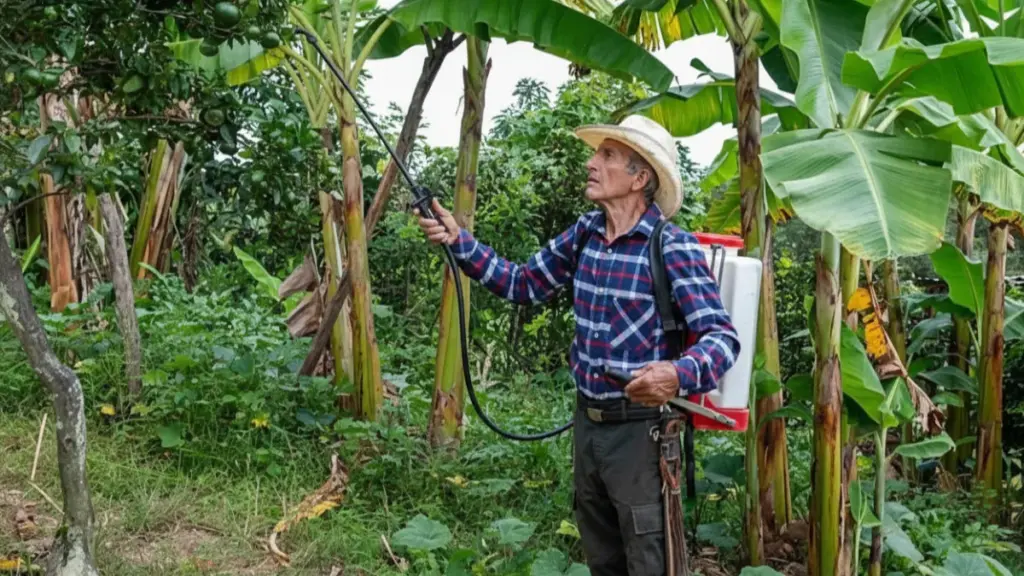
Gli spruzzatori con pompa a pistone sono lo standard per l'alta pressione, applicazioni di precisione come trattamenti localizzati e controllo dei parassiti, dove è necessaria una nebbia sottile per una copertura efficace con formulazioni solo liquide.
Trattamento localizzato e controllo delle infestanti
Le pompe a pistoni eccellono nel fornire erbicidi con precisione. La loro capacità di produrre una multa, la nebbia mirata ad alta pressione garantisce che le sostanze chimiche vengano applicate direttamente sulle erbacce senza spostarsi sulle piante desiderabili vicine. Questo modello di spruzzo uniforme è ideale per il controllo delle specie invasive nelle aiuole, prati, e lungo le linee di recinzione. L'alta pressione aiuta anche a penetrare nel fogliame denso, garantire che l'erbicida raggiunga il suo obiettivo in modo efficace.
Gestione dei parassiti e delle malattie
Quando si applicano insetticidi e fungicidi nei giardini, piccoli frutteti, o serre, una pompa a pistone fornisce la dimensione delle goccioline fini necessarie per rivestire uniformemente foglie e steli. Questa nebbia sottile aderisce bene alle superfici delle piante, massimizzando l’efficacia del trattamento e garantendo una protezione completa della pianta. La tecnologia è particolarmente adatta per il trattamento delle piante ornamentali, verdure, e alberi da frutto dove una copertura completa è essenziale per la prevenzione delle malattie.
Cura del prato e gestione del tappeto erboso
Mantenere il tappeto erboso sano spesso richiede l’applicazione di fertilizzanti liquidi, erbicidi, e regolatori della crescita. Gli spruzzatori con pompa a pistone offrono il controllo e la resa costante necessari per un'applicazione uniforme sui prati. Lo spruzzo ad alta pressione garantisce una distribuzione uniforme dei trattamenti liquidi, evitando risultati irregolari o irregolari. La sua portabilità lo rende uno strumento pratico per la gestione del tappeto erboso nei cantieri residenziali, proprietà commerciali, e campi sportivi.
Le migliori applicazioni per gli spruzzatori a zaino con pompa a membrana

Le pompe a membrana sono la scelta ideale per le applicazioni che coinvolgono polveri abrasive, soluzioni leggermente corrosive come la candeggina, e controllo delle infestanti a bassa pressione dove la resistenza chimica e la deriva minima sono fondamentali.
Applicazione di erbicidi con polveri abrasive o bagnabili
Le pompe a membrana sono progettate per gestire formule abrasive e polveri bagnabili che danneggiano rapidamente le guarnizioni della pompa a pistone. Il diaframma flessibile isola queste particelle dai meccanismi principali della pompa, prevenendo l'usura prematura e gli intasamenti. Questo design consente materiali abrasivi, come i vettori di argilla caolino nei prodotti chimici in polvere, passare senza incidere i componenti interni. La pompa mantiene prestazioni costanti durante la spruzzatura delle sospensioni, garantendo un'applicazione uniforme ed efficace dei principi attivi su tutta l'area target.
Spruzzo di soluzioni di candeggina o prodotti chimici leggermente corrosivi
I materiali resistenti agli agenti chimici utilizzati nelle pompe a membrana le rendono la scelta giusta per l'applicazione di disinfettanti, soluzioni di candeggina, e altri liquidi leggermente corrosivi. I componenti interni sono protetti dalla degradazione chimica, che prolunga significativamente la vita utile dello spruzzatore. Ciò li rende adatti a compiti igienico-sanitari, bonifica muffe, oppure applicare trattamenti agricoli specifici che corroderebbero una pompa a pistoni standard. La camera della pompa sigillata riduce inoltre al minimo il rischio di perdite quando si lavora con sostanze chimiche aggressive, migliorare la sicurezza dell’operatore.
Bassa pressione, Controllo mirato delle infestanti su appezzamenti sensibili
Le pompe a membrana funzionano a un intervallo di pressione inferiore, il che rappresenta un vantaggio per le applicazioni che richiedono una deriva minima dello spruzzo. Ciò consente una precisione, trattamento a distanza ravvicinata delle erbe infestanti nei giardini o nelle zone sensibili, piante non bersaglio. La leggera pressione di applicazione produce gocce più grandi, riducendo il rischio che gli erbicidi finiscano sui fiori desiderabili, verdure, o arbusti ornamentali. Ciò rende la pompa estremamente efficace per il trattamento puntuale delle erbacce sui prati e lungo le recinzioni dove la precisione è più importante della copertura ad alta pressione.
Pompa a pistone o a membrana: Quale tipologia vince per le tue esigenze?
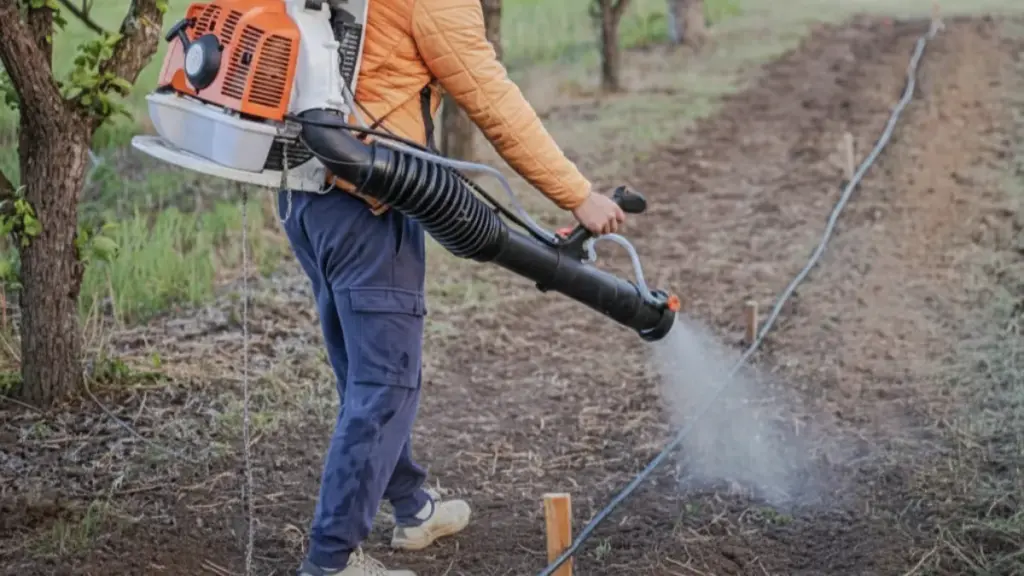
La scelta dipende interamente dalle sostanze chimiche spruzzate; le pompe a pistoni eccellono con l'alta pressione, liquidi poco abrasivi, mentre le pompe a membrana garantiscono una durata superiore per le formule abrasive o corrosive.
Scegli una pompa a pistone per l'alta pressione, Applicazioni con nebbia fine
Una pompa a pistone è la scelta giusta quando il tuo lavoro richiede una multa, nebbia costante erogata a pressioni più elevate. Eccelle con formule liquide a bassa abrasione come erbicidi e insetticidi standard, rendendolo un punto di riferimento per una copertura uniforme del fogliame. Questo tipo di pompa eroga pressioni fino a 90 PSI, che è ideale per creare uno spray fine che ricopre uniformemente le superfici delle piante. È più adatto per non abrasivi, prodotti chimici solubili in acqua per evitare l'usura prematura del cilindro del pistone. L'uso di polveri bagnabili o di prodotti chimici aggressivi può rigare il cilindro e deteriorare le guarnizioni, con conseguente perdita di pressione ed eventuale guasto.
Seleziona una pompa a membrana per versatilità e durata chimica
Una pompa a membrana offre una durata superiore ed è compatibile con una gamma più ampia di prodotti chimici, comprese polveri abrasive e soluzioni corrosive. Il suo design chiuso protegge i componenti critici dal contatto diretto con il materiale spruzzato, rendendolo un cavallo di battaglia affidabile per un uso multiuso. Questo design gli consente di gestire materiali abrasivi come polveri bagnabili e soluzioni a base di candeggina senza un'usura significativa. Sigillando il meccanismo della pompa dalle sostanze chimiche, riduce la corrosione e prolunga la vita utile dell'apparecchiatura. Funziona a una pressione inferiore, tipicamente fino a 60 PSI, che è sufficiente per la maggior parte dei lavori di irrorazione generici.
Perché la lavorazione CNC di precisione NEWTOP è leader nella durata della pompa
NEWTOP raggiunge una durata superiore della pompa integrando la lavorazione CNC interna per componenti critici con assemblaggio automatizzato, garantendo che ogni unità soddisfi precise specifiche tecniche per un'affidabilità a lungo termine.
Come produttore professionale di spruzzatori e nebulizzatori a zaino fondato nel 2003, NEWTOP combina l'esperienza a lungo termine nel settore con tecnologia di produzione avanzata. Con oltre 20 anni nella produzione di macchine agricole e da giardino, l'azienda si concentra sulla costruzione di beni durevoli, attrezzature di irrorazione pronte per il campo per i mercati globali.
NEWTOP utilizza PA66 aggiornato rinforzato con 30% fibra di vetro per i componenti chiave della pompa, miglioramento della resistenza strutturale, resistenza chimica, e stabilità dimensionale. Inoltre, La lavorazione CNC ad alta precisione garantisce tolleranze strette, superfici interne più lisce, e prestazioni di tenuta costanti.
Conclusione
La scelta tra una pompa a pistone e una a membrana è una decisione fondamentale per la vostra flotta di irroratrici a zaino. La pompa giusta garantisce la compatibilità con i tuoi prodotti chimici, riduce i costosi tempi di fermo dovuti al guasto dei componenti, e offre prestazioni di spruzzatura costanti. Questa scelta ha un impatto diretto sia sull'efficienza dell'operatore che sulla durata della vostra attrezzatura.
Se si verificano frequenti guasti alla pompa o perdite di pressione, valutare la vostra attuale attrezzatura rispetto alle vostre esigenze applicative. Per componenti di pompe progettati per resistere a sostanze chimiche impegnative e ridurre i cicli di manutenzione, scopri come i nostri componenti di precisione possono migliorare la durata del tuo spruzzatore.
Domande frequenti
Per uno spruzzatore a zaino è meglio una pompa a pistone o a membrana??
Dipende dall'applicazione. Le pompe a pistone forniscono una pressione più elevata per una spruzzatura fine, mentre le pompe a membrana offrono una migliore resistenza chimica e durata quando si maneggiano soluzioni corrosive o abrasive.
Una pompa a pistone può gestire candeggina o polveri?
Non è consigliabile. La candeggina provoca un rapido degrado delle guarnizioni in gomma standard, e le polveri agiscono come un abrasivo che riga le pareti del cilindro. Le pompe a membrana sono la soluzione ingegnerizzata per queste sostanze.
Perché la pompa del mio irroratore a spalla perde pressione??
Le cause più comuni includono guarnizioni usurate, diaframmi rotti, valvole intasate, perdite d'aria nel tubo, o detriti che bloccano l'ugello. La manutenzione regolare e la sostituzione tempestiva delle parti soggette ad usura risolvono la maggior parte dei problemi di pressione.
Con quale frequenza devo sostituire le guarnizioni della pompa dell'irroratrice??
La frequenza di sostituzione della guarnizione dipende dall'intensità di utilizzo e dal tipo di prodotto chimico. Nell'uso agricolo pesante, si consiglia l'ispezione ogni stagione. Sostituire le guarnizioni quando si verifica una caduta di pressione o una perdita.
Quale tipo di pompa è più facile da adescare?
Le pompe a pistoni sono generalmente più facili da adescare grazie al loro meccanismo di aspirazione diretta. Tuttavia, Anche le pompe a membrana adeguatamente progettate con valvole di controllo della qualità si adescano in modo efficiente.
Qual è il PSI massimo per una pompa a membrana?
Una pompa a membrana standard in uno spruzzatore a spalla raggiunge in genere una pressione massima di 60 PSI. Questa pressione è ideale per applicazioni che richiedono gocce più grandi per ridurre la deriva, come l'applicazione di polveri bagnabili o erbicidi.

Nel mondo dell’agricoltura e del paesaggismo professionale, i termini nebulizzatore e spruzzatore sono spesso usati in modo intercambiabile, tuttavia rappresentano due tecnologie fondamentalmente diverse. È fondamentale per i distributori, appaltatori, e importatori di attrezzature agricole per comprendere la struttura meccanica, fisica delle particelle, e l'efficienza applicativa di ciascuno.
Questa guida fornisce una descrizione tecnica completa di nebulizzatori e spruzzatori, aiutandoti a determinare quale strumento è più adatto alle tue specifiche esigenze ambientali e operative.
Cos'è un nebulizzatore? Definizione e principio di funzionamento
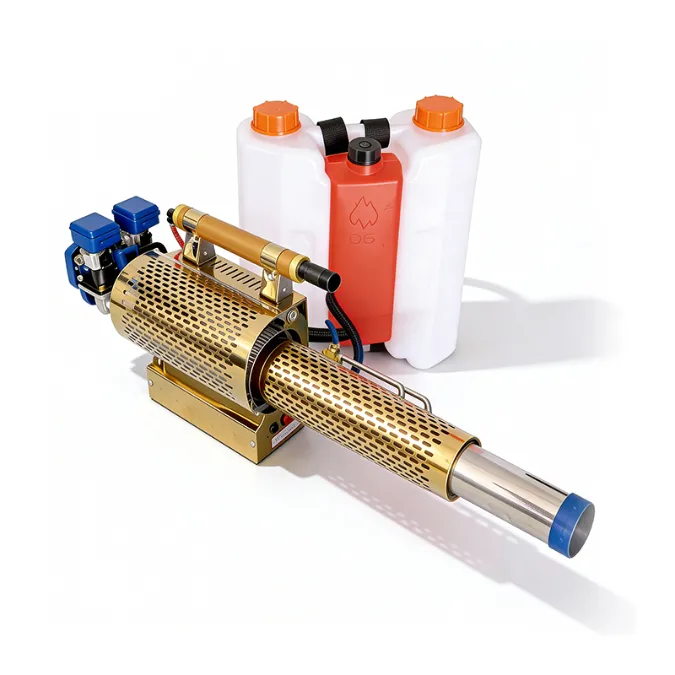
Un nebulizzatore è progettato per trasformare formulazioni liquide in goccioline ultrafini che si comportano più come un aerosol che come uno spray tradizionale. L'obiettivo principale di un nebulizzatore è il trattamento dello spazio piuttosto che il rivestimento superficiale.
Definizione di nebulizzatore
Un nebulizzatore è un dispositivo meccanico che trasforma le soluzioni liquide in una nebbia sottile, o aerosol, composto da particelle tipicamente sotto 50 micrometri di diametro. Questo aerosol rimane sospeso nell'aria per un lungo periodo, permettendogli di depositarsi senza applicazione diretta su superfici orizzontali, verticale, e superfici altrimenti difficili da raggiungere. Il metodo è efficace per la disinfezione di vaste aree, controllo dei parassiti, e umidificazione.
- Converte il liquido in un aerosol o una nebbia sospesa nell'aria.
- Genera particelle estremamente fini (Sotto 50 micrometri) che restano sospesi nell'aria.
- Fornisce un'ampia copertura consentendo alle goccioline di depositarsi sia su superfici orizzontali che verticali.
La maggior parte dei nebulizzatori professionali rientrano in due categorie: nebulizzatori termici e nebulizzatori freddi ULV. Nonostante i diversi meccanismi di atomizzazione, entrambi mirano a produrre goccioline estremamente piccole, tipicamente di seguito 50 micron.
Principio dell'appannamento termico
I nebulizzatori termici utilizzano una fonte di calore, spesso alimentato da benzina o propano, vaporizzare rapidamente una soluzione chimica. Il dispositivo inietta il liquido in un flusso di gas caldo ad alta velocità, provocando una vaporizzazione immediata. Quando questo vapore caldo viene espulso e si mescola con l'aria ambiente più fredda, si condensa in un denso, nebbia visibile di particelle ultrafini. Questo processo è ideale per penetrare nel fogliame denso e trattare ampi spazi esterni per il controllo dei parassiti.
- Utilizza una fonte di calore per produrre un flusso di gas caldo ad alta velocità.
- Inietta la formulazione liquida nel gas caldo, provocando una vaporizzazione immediata.
- Crea uno spessore, nebbia visibile mentre il vapore si condensa nell'aria più fresca.
- Utilizzato principalmente per applicazioni esterne come il controllo delle zanzare e dei parassiti.
Volume ultra basso (LUPO) Principio dell'appannamento a freddo
Nebulizzatori freddi, compreso il volume ultra basso (LUPO) modelli, utilizzare aria ad alta pressione per rompere il liquido in minuscole goccioline senza applicare calore. Questo processo meccanico offre agli operatori un controllo preciso sulla dimensione delle particelle, proteggendo al contempo l'integrità chimica della soluzione. Perché funziona senza calore, questo metodo è più sicuro per applicazioni interne come la disinfezione degli ospedali, scuole, ed edifici commerciali dove vengono spesso utilizzati prodotti chimici sensibili al calore.
- Si basa sull'elevata pressione dell'aria per atomizzare il liquido in goccioline fini.
- Funziona senza calore, proteggere l'integrità della soluzione chimica.
- La tecnologia ULV consente un'applicazione efficiente utilizzando un volume di liquido minimo.
- Adatto per la disinfezione interna negli ospedali, scuole, e strutture agricole.
Tecnologie avanzate di nebulizzazione
Le moderne apparecchiature di nebulizzazione ora incorporano tecnologie come la carica elettrostatica e la nanoatomizzazione per migliorare la copertura e la sicurezza. I nebulizzatori elettrostatici conferiscono una carica elettrica positiva alla nebbia aerosolizzata, facendo sì che le goccioline si avvolgano e aderiscano a tutti i lati di una superficie per una copertura completa a 360 gradi. I nanoatomizzatori producono un risultato ancora più fine, nebbia più secca che può essere utilizzata in tutta sicurezza attorno a componenti elettronici e tessuti sensibili senza causare danni da umidità.
- Nebbia elettrostatica: Carica le particelle in modo che siano attratte dalle superfici, garantendo una copertura a 360 gradi e riducendo i rifiuti chimici.
- Nanoatomizzatori: Creane uno ancora più raffinato, nebbia più secca che evita danni da umidità, utile per igienizzare attrezzature e tessuti delicati.
- Queste moderne tecnologie sono sempre più adottate nel settore sanitario e dei trasporti per una maggiore efficienza.
Cos'è uno spruzzatore? Definizione e principio di funzionamento
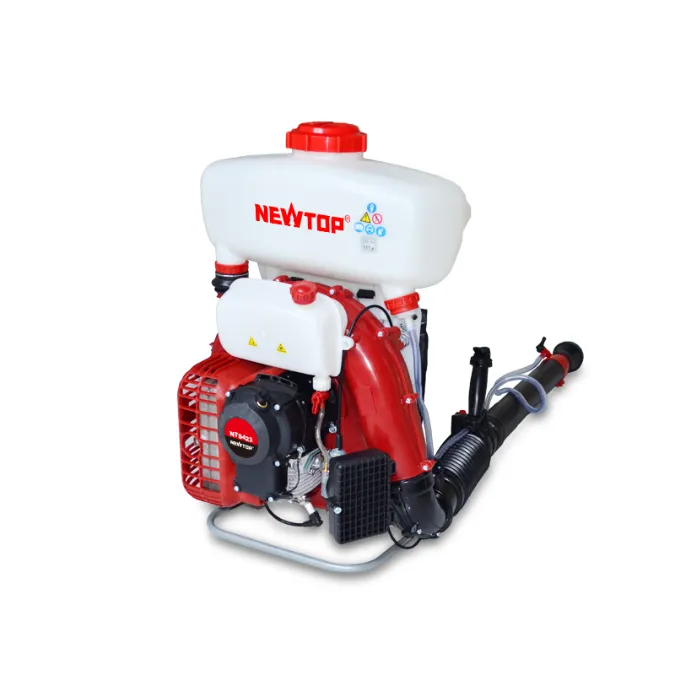
Uno spruzzatore è un dispositivo a pressione che atomizza il liquido attraverso un ugello, consentendo la distribuzione controllata e uniforme di agenti come pesticidi o fertilizzanti su una superficie target.
Funzione principale e definizione
Uno spruzzatore è un dispositivo meccanico progettato per applicare soluzioni liquide come i pesticidi, erbicidi, o fertilizzanti in uno schema controllato di goccioline fini. A differenza del nebulizzatore, che mira alla sospensione, l'irroratore è progettato per la deposizione mirata come quella agricola, orticolo, o servizi igienico-sanitari.
- Applica agenti liquidi inclusi pesticidi, fertilizzanti, e soluzioni detergenti.
- Genera uno spruzzo controllato per una copertura uniforme ed efficace.
- Attrezzature essenziali in agricoltura, paesaggistico, e settori della sanità pubblica.
Componenti chiave e meccanismo
Uno spruzzatore funziona pressurizzando il liquido immagazzinato in un serbatoio e forzandolo attraverso un ugello specializzato. Questo processo atomizza il liquido in uno spray. I componenti principali: il serbatoio, pompa, e ugello: lavorano insieme per controllare la portata, dimensione delle goccioline, e modello di spruzzo.
La pressione può essere prodotta manualmente, meccanicamente tramite pompe a membrana o a pistoni, o da motori a benzina o elettrici. Il liquido viene forzato attraverso un ugello, dove la dimensione delle gocce è modellata dalla geometria dell'ugello e dal livello di pressione.
- Un serbatoio contiene la soluzione liquida.
- Una pompa crea la pressione necessaria per spingere il liquido.
- Un ugello atomizza il liquido in goccioline e modella lo spray.
- Un grilletto o una valvola controlla l'avvio e l'arresto dello spruzzo.
Applicazioni e progressi moderni
Di 2026, la tecnologia degli spruzzatori è avanzata per dare priorità all'applicazione di precisione, riduzione dei rifiuti chimici, e una migliore ergonomia dell'operatore. Le innovazioni nella progettazione degli ugelli e nei sistemi di pompaggio consentono una migliore copertura nell'agricoltura su larga scala e nell'uso commerciale specializzato.
- Utilizzato per la protezione delle colture, fecondazione, e controllo dei parassiti.
- I design moderni si concentrano sulla distribuzione uniforme per massimizzare l'efficacia.
- I miglioramenti tecnologici migliorano la velocità operativa e riducono la deriva chimica.
- Le caratteristiche ergonomiche sono integrate per migliorare il comfort per gli utenti professionali.
Lettura correlata: Tipi di spruzzatori a zaino: Scegliere il modello migliore per la tua azienda agricola
Aumenta i tuoi margini con macchinari affidabili
Differenza tra Nebulizzatore e spruzzatore: Panoramica meccanica
La differenza meccanica fondamentale risiede nell'atomizzazione e nell'erogazione: i nebulizzatori creano una nebbia sospesa per l'ampio, trattamento volumetrico, mentre gli spruzzatori applicano il liquido direttamente sulle superfici mirate, con modelli elettrostatici che utilizzano una carica per avvolgere gli oggetti.
| Aspetto meccanico | Nebulizzatore | Spruzzatore |
|---|---|---|
| Atomizzazione & Dimensione delle particelle | Produce particelle fini destinate a rimanere sospese nell'aria per il trattamento volumetrico di grandi spazi. | Si basa sulla pressione idraulica per l'atomizzazione. I modelli elettrostatici aggiungono una carica per i più piccoli, particelle più uniformi. |
| Copertura & Penetrazione | Eccelle nel riempire grandi dimensioni, stanze aperte e un fitto fogliame esterno penetrante con una nebbia pervasiva. | Fornisce diretto, applicazione superficiale mirata. I modelli elettrostatici raggiungono una copertura avvolgente a 360° sugli oggetti. |
| Applicazione & Efficienza | Progettato per la decontaminazione dell'intera area piuttosto che per la precisione specifica della superficie. Meno efficiente per compiti mirati. | Offerte precise, applicazione controllata. I sistemi elettrostatici massimizzano la deposizione chimica e riducono al minimo gli sprechi. |
| Compatibilità chimica | Richiede formulazioni specifiche. I nebulizzatori termici necessitano di vettori olio/acqua e non possono utilizzare liquidi infiammabili. | I modelli standard gestiscono un'ampia gamma di prodotti chimici. Le unità elettrostatiche necessitano di liquidi formulati per trattenere una carica elettrica. |
Meccanismo di spruzzatura e confronto delle dimensioni delle particelle
Nebulizzatori e spruzzatori atomizzano i liquidi attraverso diversi processi fisici, risultando in dimensioni delle particelle distinte che ne definiscono le prestazioni. La maggior parte degli spruzzatori dipende dalla pressione idraulica; una pressione più elevata spinge il liquido attraverso un ugello, generando forze di taglio che lo spezzano in goccioline. Gli spruzzatori elettrostatici migliorano questo processo applicando una carica ad alta tensione al liquido, creando particelle più piccole e più uniformi che cercano attivamente superfici messe a terra. Al contrario, i nebulizzatori sono progettati per produrre una nebbia fine con goccioline che rimangono sospese nell'aria per il trattamento volumetrico. La dimensione delle particelle è un parametro di prestazione primario poiché controlla direttamente la capacità di adesione di una sostanza chimica a una superficie, penetra geometrie complesse, e rimane in volo.
Area di copertura e capacità di penetrazione
La forza di un nebulizzatore è la copertura volumetrica. Disperde una nebbia sottile che riempie grandi dimensioni, spazi aperti come magazzini o serre, eventualmente depositandosi su tutte le superfici orizzontali esposte. Questo metodo è efficace per trattare contemporaneamente l’aria e le superfici di un’intera stanza. Gli spruzzatori forniscono direttamente, applicazione superficiale mirata. I modelli elettrostatici offrono una penetrazione superiore caricando le goccioline che avvolgono gli oggetti, rivestire aree nascoste come il retro degli infissi o la parte inferiore delle ante. Questo “avvolgente” L'effetto garantisce una copertura completa a 360 gradi su oggetti complessi, qualcosa che l’assestamento passivo di un nebulizzatore non può raggiungere. Per il controllo dei parassiti all'aperto, la nebbia di un nebulizzatore può penetrare nel fogliame denso in modo più efficace rispetto a uno spruzzo diretto standard.
Precisione dell'applicazione ed efficienza nell'uso dei prodotti chimici
Gli spruzzatori erogano direttamente, applicazione mirata, rendendoli la scelta accurata per il trattamento di superfici o zone specifiche. I nebulizzatori sono costruiti per un ampio utilizzo, decontaminazione volumetrica e mancanza di precisione a livello superficiale. I maggiori miglioramenti in termini di efficienza provengono dagli spruzzatori elettrostatici. Caricando le goccioline, questi sistemi garantiscono che una percentuale molto più elevata di sostanze chimiche si depositi e aderisca alla superficie target. Ciò riduce al minimo l'overspray, riduce i rifiuti chimici, e limita la perdita di principi attivi nell'aria. Questa efficienza consente anche l'uso di prodotti chimici progettati per una protezione residua di lunga durata, mentre l'appannamento si basa in genere su formule ad azione breve per un rapido abbattimento.
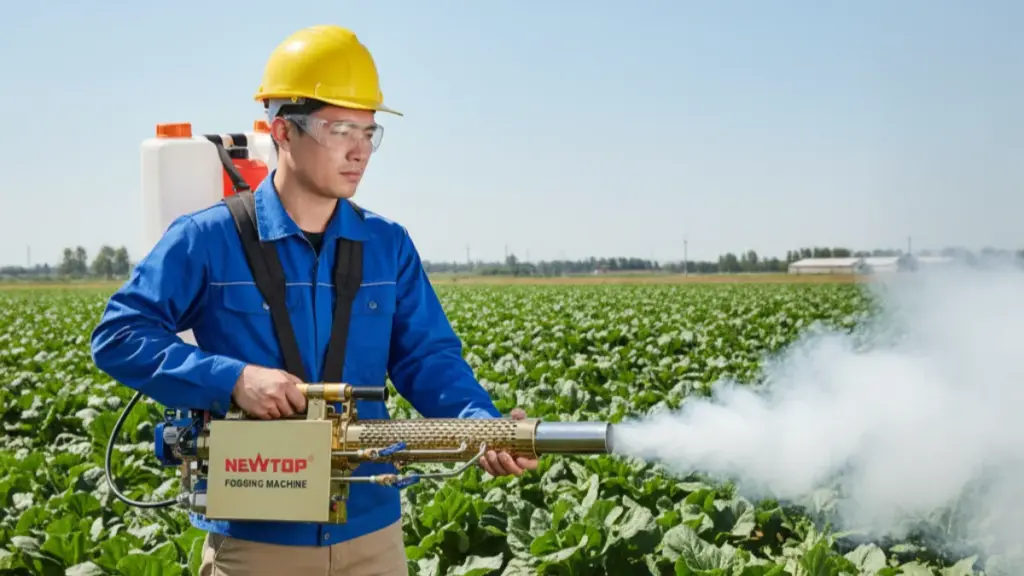
Prodotti chimici e formulazioni idonei
Il meccanismo di funzionamento dell’apparecchiatura determina la formulazione chimica richiesta.
Nebulizzatori termici, che utilizzano il calore per vaporizzare una soluzione, richiedono un olio specifico- o veicoli a base d'acqua per creare una nebbia densa e non devono mai essere utilizzati con liquidi infiammabili come l'alcol.
LUPO (Volume ultra basso) I nebulizzatori a freddo sono più versatili e possono gestire una gamma più ampia di formulazioni.
Gli spruzzatori sono compatibili con quasi tutti i prodotti chimici agricoli, comprese le polveri bagnabili, concentrati emulsionabili, e sospensioni spesse. Le aperture degli ugelli più grandi sono meno soggette a intasamenti.
Scenari d'uso e industrie tipici
Scenari di nebulizzazione:
- Controllo dei vettori di sanità pubblica (abbattimento zanzare e mosche).
- Gestione dei parassiti della serra.
- Disinfezione di grandi strutture interne (ospedali, magazzini).
- Controllo degli odori nei siti di gestione dei rifiuti.
Scenari di spruzzatori:
- Applicazione erbicida nelle colture a filari.
- Concimazione liquida di prati e giardini.
- Controllo strutturale dei parassiti (barriere antitermiti attorno alle fondazioni).
- Sanificazione e lavaggi del bestiame.
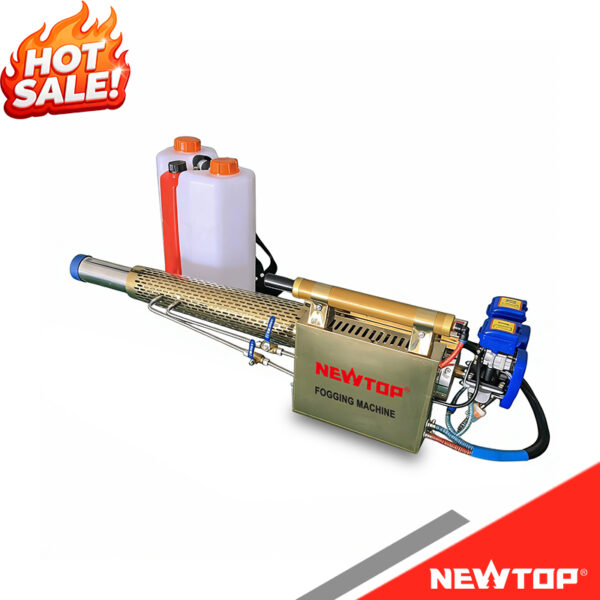
Macchina per l'appannamento termico NTYM180K
- Precisione di atomizzazione di livello professionale
- Durabilità avanzata (500+ orari di servizio)
- Ottimizzato per il controllo vettoriale su larga scala
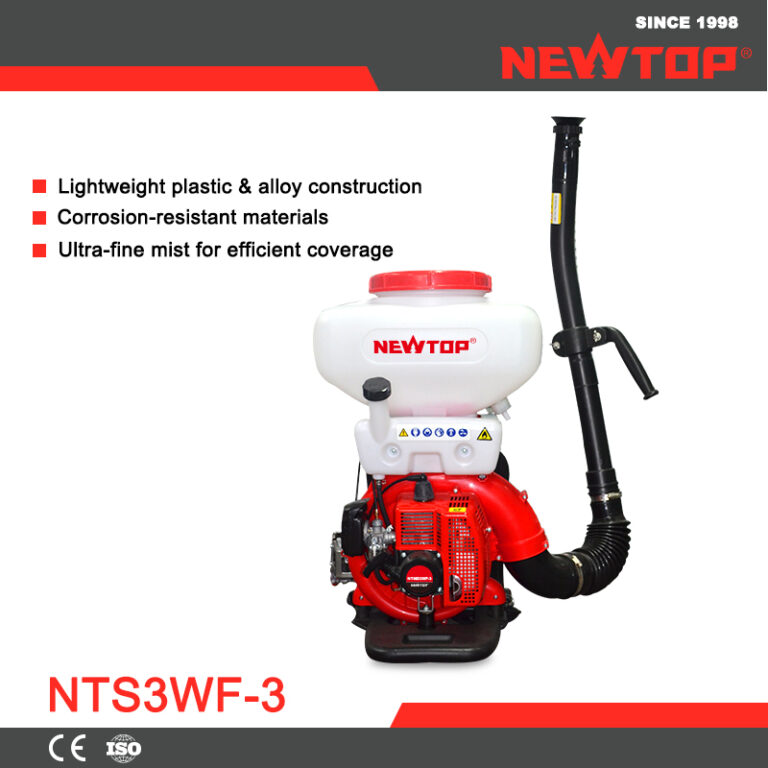
NTS3WF-3 Spruzzatore a spalla alimentato a gas
- Liquido ad alta velocità & uscita dei granuli
- Ugello di precisione per un'applicazione mirata
- Struttura rinforzata resistente agli agenti chimici
Vantaggi e limiti di nebulizzatore e spruzzatore
I nebulizzatori eccellono nel trattamento volumetrico rapido per il controllo dei parassiti nel fogliame denso, mentre gli spruzzatori offrono precisione a livello superficiale ed efficienza chimica superiori, soprattutto nei modelli elettrostatici.
| Caratteristica operativa | Nebulizzatore | Spruzzatore |
|---|---|---|
| Tipo di copertura | Volumetrico (aria e superfici) | Diretto in superficie |
| Abilità di penetrazione | Eccellente per fogliame denso e fessure | Limitato a meno che non si utilizzi un modello elettrostatico |
| Velocità di applicazione | Veloce per grandi, aree aperte | Più lentamente, applicazione più metodica |
| Rischio operativo | Alto, suscettibile al vento | Basso a causa del più grande, goccioline più pesanti |
| Caso d'uso primario | Controllo dei parassiti all'aperto, disinfezione dell'aria | Disinfezione mirata delle superfici, controllo delle infestanti |
Nebulizzatore: Vantaggi e applicazioni chiave
I nebulizzatori sono progettati per trattare grandi volumi e penetrare in ambienti densi. La loro capacità di produrre estremamente bene, le particelle sospese li rendono altamente efficaci per il controllo dei parassiti nella vegetazione fitta e per la disinfezione di grandi dimensioni, spazi interni aperti in cui il trattamento dell'aria è fondamentale. Questo metodo garantisce un'ampia copertura con il minimo sforzo da parte dell'operatore una volta che la macchina è in funzione.
- Fornisce una penetrazione profonda nel fogliame denso, crepe, e fessure, rendendolo altamente efficace per il controllo degli insetti all'aperto.
- Copre rapidamente grandi volumi di spazio, che riduce il tempo di lavoro per la disinfezione della sanità pubblica o la gestione dei parassiti agricoli.
- Efficace nel controllare gli insetti volanti e nella disinfezione dell'aria, poiché la nebbia rimane sospesa per un periodo prolungato.
Nebulizzatore: Limitazioni e considerazioni operative
I principali inconvenienti dei nebulizzatori sono legati al controllo e alla sicurezza. La nebbia sottile è altamente suscettibile alla deriva del vento, portando ad applicazioni fuori target e potenziale contaminazione ambientale. I nebulizzatori termici aggiungono un altro livello di complessità introducendo calore, che limita i tipi di sostanze chimiche che possono essere utilizzate senza degradazione.
- Elevato rischio di deriva chimica, rendendolo inadatto per la precisione, applicazioni mirate o utilizzo in condizioni di vento.
- I modelli termici possono comportare un rischio di incendio e danneggiare le soluzioni chimiche sensibili al calore, alterandone l'efficacia.
- Può richiedere dispositivi di protezione individuale più estesi (DPI) a causa del rischio di inalazione delle fini particelle aerosolizzate.
Spruzzatore: Vantaggi e applicazioni chiave
Gli spruzzatori offrono controllo ed efficienza superiori per le applicazioni superficiali. Producono più grandi, goccioline più pesanti che trasportano le sostanze chimiche direttamente sul bersaglio con una deriva minima. Questa precisione li rende ideali per una disinfezione mirata, controllo delle infestanti, e l'applicazione di fertilizzanti dove la precisione è fondamentale.
- L'elevata precisione di applicazione garantisce che le sostanze chimiche si depositino sulle superfici target, riduzione degli sprechi e dell’impatto ambientale.
- Gli spruzzatori elettrostatici forniscono una soluzione completa, copertura superficiale avvolgente, ideale per disinfettare oggetti complessi e superfici ad alto contatto.
- Generalmente più sicuro per uso interno e in aree sensibili grazie all'applicazione controllata e al ridotto rischio di inalazione.
Spruzzatore: Limitazioni e considerazioni operative
Pur essendo preciso, gli spruzzatori sono meno efficienti per il trattamento di grandi dimensioni, aree aperte o fitte chiome penetranti. Il processo di applicazione è più lento e più laborioso rispetto all'appannamento. Gli spruzzatori sono progettati principalmente per il trattamento di superfici piuttosto che di volumi d'aria, limitandone l’efficacia contro agenti patogeni presenti nell’aria o insetti volanti.
- Velocità di applicazione più lenta rispetto ai nebulizzatori quando si trattano ampie aree esterne.
- Capacità limitata di penetrare nella fitta vegetazione o di raggiungere parassiti nascosti nelle profondità delle chiome.
- Meno efficace per il controllo degli insetti volanti o il trattamento degli agenti patogeni presenti nell'aria, poiché le goccioline si depositano rapidamente.
Analisi costi-benefici del possesso di entrambi i tipi di apparecchiature
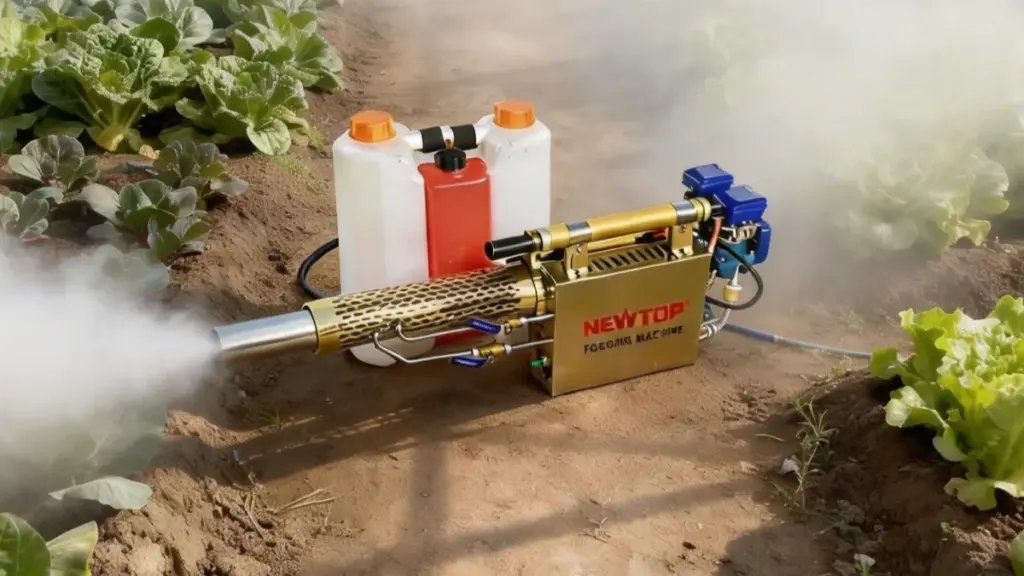
Investire sia in un nebulizzatore che in uno spruzzatore consente a un'operazione di utilizzare lo strumento più efficiente in termini di risorse per qualsiasi attività specifica, riducendo al minimo le spese di manodopera e prodotti chimici a lungo termine.
Investimento iniziale vs. Risparmio a lungo termine
Possedere sia un nebulizzatore che uno spruzzatore richiede un esborso di capitale iniziale più elevato. Questo duplice investimento, Tuttavia, si traduce direttamente in risparmi a lungo termine adattando esattamente l'apparecchiatura all'applicazione, che riduce gli sprechi di sostanze chimiche e riduce al minimo le ore di lavoro. La logica finanziaria è semplice: utilizzare il nebulizzatore ad alta velocità per grandi aree e lo spruzzatore preciso per zone mirate.
- I nebulizzatori generalmente hanno un costo iniziale più elevato ma coprono rapidamente ampie aree, ridurre le spese di manodopera per grandi progetti.
- Gli spruzzatori sono più convenienti in anticipo ed eccellono in applicazioni mirate, prevenire l’uso eccessivo di prodotti chimici costosi su aree problematiche piccole o specifiche.
- Di 2026, i risparmi operativi in termini di manodopera e materiali possono spesso compensare il costo iniziale della doppia attrezzatura entro una o due stagioni per la maggior parte degli utenti commerciali.
Labor and Chemical Efficiency
The primary benefit of a dual-equipment strategy is optimized resource allocation. Foggers are built to minimize labor time for large-scale disinfection or pest control, covering vast spaces with minimal operator input. Sprayers provide the control needed for precise, cost-effective chemical application, ensuring active ingredients are applied only where necessary.
- A fogger can treat an area up to 30,000 sq ft with minimal operator effort, a task that would be extremely labor-intensive and time-consuming with a sprayer.
- Gli spruzzatori erogano direttamente, applicazione mirata, which is crucial for spot treatments or delicate plants where overspray would be wasteful and potentially harmful.
- This approach prevents the financial drain of inefficient application—either by wasting labor with a sprayer on a large job or wasting chemicals with a fogger on a small one.
Application Versatility and ROI
Having both tools provides the operational flexibility to handle any treatment scenario, from expansive outdoor spaces to specific indoor zones. This adaptability maximizes your service capabilities and strengthens the return on investment by ensuring you always have the correct equipment for the job.
- Professionals can service a wider range of clients and job types, including agricultural fields, magazzini, and controlled indoor facilities.
- The ability to choose between broad, penetrating fog and a direct, controlled spray enhances overall treatment effectiveness and client outcomes.
- This versatility keeps the equipment productive, leading to a faster and more reliable return on investment compared to relying on a single, less-adaptable tool.
How NEWTOP Engineering Maximizes Durability in Both Types
As a outdoor power equipment manufacturer with over two decades of industry experience, NEWTOP, designs backpack sprayers and foggers with a focus on durability in demanding environments.
We operate a 10,000 square meter facility with CNC machining centers, linee di produzione automatizzate, and independent inspection systems. Every pump assembly, airflow component, and fuel system undergoes durability testing to ensure consistent performance.
Key engineering strengths include:
- Chemical-resistant tanks for aggressive formulations
- Precision nozzle systems for stable droplet control
- Engine components sourced from globally recognized suppliers
- Structured quality inspection processes from raw materials to final testing
- Compliance with CE, APE, ISO9001, and ISO14001 standards
For OEM partners and regional distributors, NEWTOP provides customization options in branding, capacità del serbatoio, engine configuration, and packaging design. With exports to over 65 countries and partnerships with more than 100 distributors worldwide, NEWTOP supports long-term cooperation through stable supply chains and technical documentation.
Per i cataloghi dei prodotti, specifiche tecniche, or OEM inquiries, contact our technical team for a customized quote based on your regional requirements.
Conclusione
Choosing between a fogger and a sprayer comes down to your specific application needs, from particle size to the required coverage area. Making the right equipment choice directly impacts your chemical usage, labor costs, and overall operational efficiency. This technical knowledge ensures you select a tool that delivers the intended results without waste.
Use this guide to evaluate your current equipment and identify any performance gaps. If you need a tool engineered for demanding commercial use, our product specialists can help you find a durable fogger or sprayer that meets your requirements.
Domande frequenti
What is the main difference between a fogger and a sprayer?
The primary difference is droplet size. A fogger produces microscopic droplets (Sotto 50 micron) that stay suspended in the air to fill a volume of space. A sprayer produces larger droplets (over 100 micron) designed to land on and coat specific surfaces.
Does a fogger use less water than a sprayer?
SÌ. Nebulizzatori, particularly ULV models, use high concentrations of chemicals and very little carrier liquid (water or oil). A sprayer requires a significant amount of water to act as a transport medium for the chemical to reach the target.
Can foggers be used for agricultural pesticides?
SÌ, especially in enclosed environments like greenhouses, but field crops usually require conventional sprayers for better precision.
Why are foggers more expensive than manual sprayers?
Foggers involve more complex airflow or heating systems, increasing production and maintenance costs.
Which one provides better coverage for dense foliage?
Foggers generally achieve better penetration due to smaller droplet size and longer suspension time.
How do maintenance requirements differ?
Foggers require inspection of airflow or combustion systems, while sprayers mainly need pump seal replacement and nozzle cleaning.
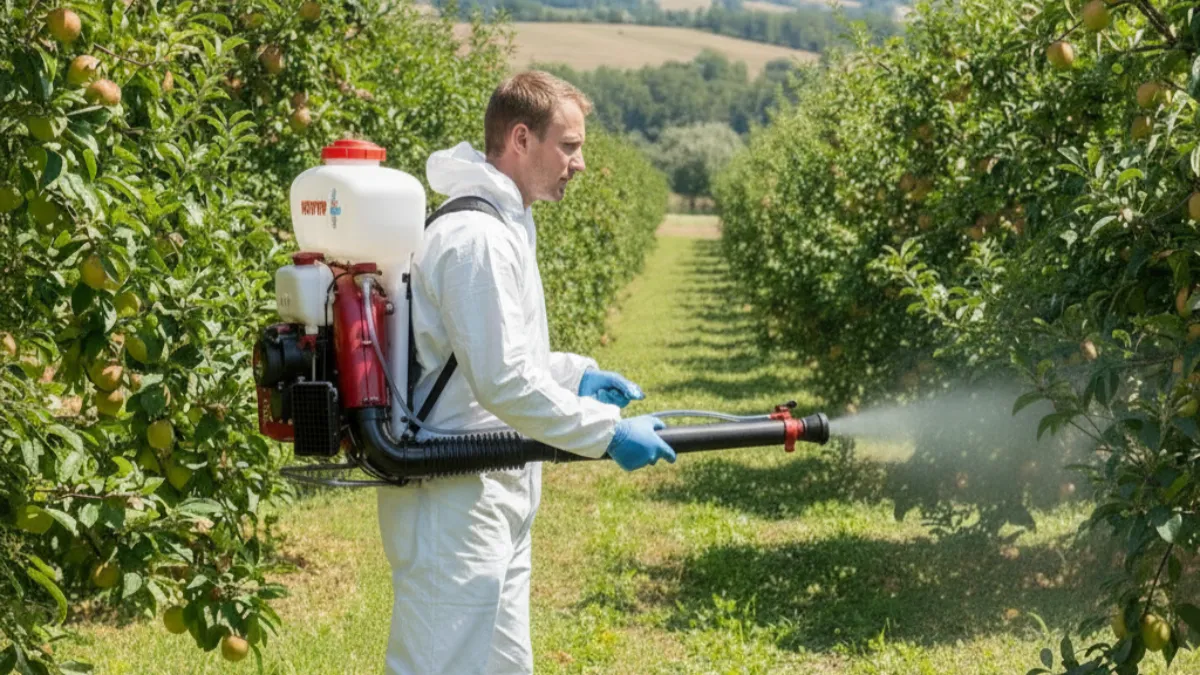
Il controllo delle zanzare è una seria preoccupazione per le aziende agricole, frutteti, spazi pubblici, e aree residenziali nelle regioni tropicali e subtropicali. In Africa, Sud-est asiatico, e America Latina, La gestione delle zanzare non è solo una questione di comfort, ma anche di protezione della salute pubblica e della produttività agricola.
Nella scelta delle macchine agricole, gli acquirenti spesso confrontano due soluzioni principali: nebulizzatori e spruzzatori per zanzare. Entrambi sono ampiamente utilizzati nel controllo dei parassiti agricoli, programmi di controllo vettoriale, e trattamento delle zanzare del cortile. Tuttavia, operano in modo diverso e servono a scopi diversi.
In questa guida, analizziamo le differenze principali, fattori di prestazione, costi operativi, e l’impatto ambientale per aiutare i distributori, importatori, e i professionisti della disinfestazione selezionano la soluzione giusta per il loro mercato.
Nebulizzatore per zanzare vs. Spruzzatore: Differenze chiave in breve
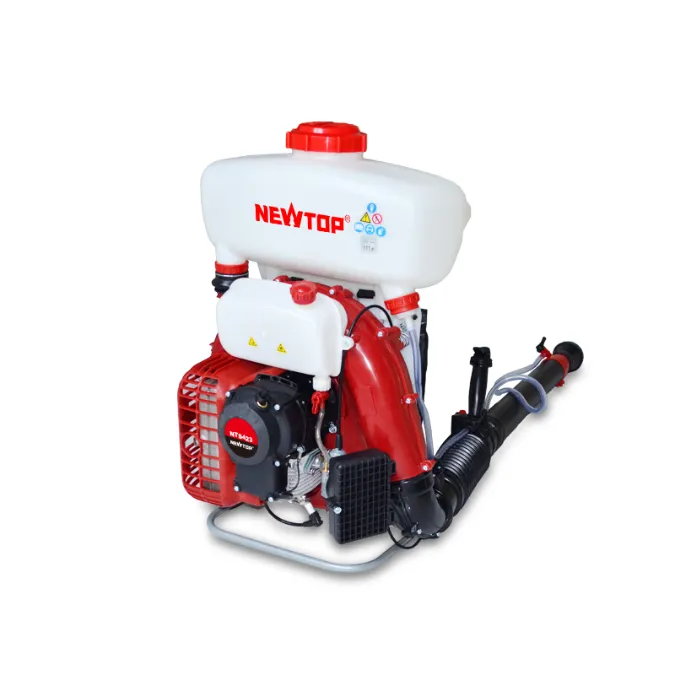
Un nebulizzatore tratta l'aria per abbattere immediatamente le zanzare, mentre uno spruzzatore tratta le superfici creando una barriera protettiva di lunga durata.
Per scegliere lo strumento giusto, devi prima comprendere la fondamentale distinzione meccanica tra nebulizzazione e spruzzatura.
| Attributo | Nebulizzatore per zanzare (Termico o ULV) | Spruzzatore a zaino (Manuale o elettrico) |
|---|---|---|
| Funzione primaria | Trattamento dell'aria (Atterramento immediato) | Trattamento superficiale (Barriera residua) |
| Dimensione della gocciolina | 5-50 micron (nebbia aerosolizzata) | 100+ micron (spruzzo liquido) |
| Durata del controllo | A breve termine (Ore a 1 giorno) | A lungo termine (Fino a 21–30 giorni) |
| Obiettivo primario | Insetti volanti nella colonna d'aria | Superfici dove gli insetti atterrano o si riproducono |
| Velocità di copertura | Estremamente veloce (Ettari in pochi minuti) | Più lentamente, applicazione dettagliata |
| Stadio dei parassiti bersaglio | Adulti volanti attivi | Adulti (sulle superfici) & Larve |
Metodo di applicazione e dimensione delle goccioline
La differenza fondamentale tra questi strumenti sta nel modo in cui disperdono l'insetticida. Un nebulizzatore atomizza il liquido in una sottile nuvola di aerosol con minuscole particelle (5-50 micron) che fluttuano nell'aria. Questo metodo è progettato per “spray spaziale” applicazioni, uccidendo le zanzare adulte al contatto mentre la nebbia attraversa un'area.
Al contrario, uno spruzzatore applica gocce di liquido più grandi (100+ micron) direttamente sulle superfici. Questo approccio si concentra sul rivestimento delle foglie, muri, e altri punti di sosta delle zanzare per creare una barriera insetticida duratura.
Durata e tipologia del controllo
L'appannamento offre una soluzione immediata ma temporanea. È efficace per pulire un'area appena prima di un evento all'aperto, ma le zanzare delle zone circostanti possono ritornare una volta che la nebbia si sarà dissipata nel giro di poche ore.
Gli spruzzatori forniscono estesa, controllo residuo. La barriera chimica creata da un'applicazione a spruzzo rimane efficace fino a 21 giorni, uccidendo le zanzare che si posano sulle superfici trattate molto tempo dopo il trattamento iniziale. Questo metodo consente anche di prendere di mira le larve di zanzara nei loro siti di riproduzione, che è fondamentale per interrompere il ciclo di vita e ottenere una riduzione della popolazione a lungo termine.
Efficienza chimica e attenzione all'ambiente
Gli spruzzatori a spalla consentono un'erogazione precisa, applicazione mirata. Gli operatori possono dirigere l'insetticida esattamente dove serve: sottocoperta, sul fogliame ombreggiato, e attorno alle porte, riducendo al minimo i rifiuti chimici e il rischio per gli organismi non bersaglio.
La nebulizzazione disperde ampiamente le sostanze chimiche, rendendo difficile controllare la deriva e aumentando il potenziale impatto sugli insetti utili come gli impollinatori. Grazie alla loro efficacia mirata e alla migliore sostenibilità, i trattamenti spray barriera professionali sono diventati lo standard industriale per la moderna gestione dei parassiti.
Come funziona il controllo delle zanzare?
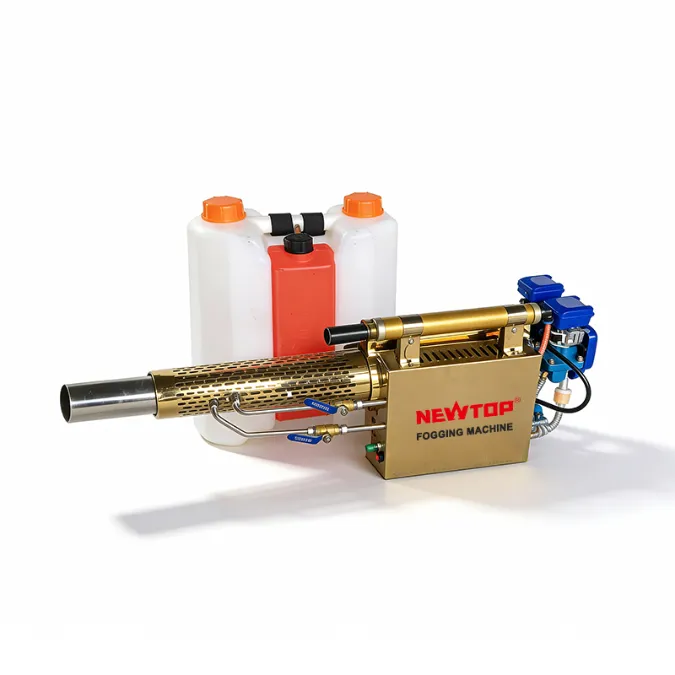
Controllo efficace delle zanzare in 2026 è una strategia globale che si rivolge a tutte le fasi della vita, dall’eliminazione dei terreni riproduttivi alla gestione delle popolazioni adulte, piuttosto che fare affidamento su un unico metodo di applicazione.
Gestione integrata dei parassiti (IPM) Approccio
Il moderno controllo delle zanzare si basa su una strategia di gestione integrata, andando oltre la semplice applicazione di prodotti chimici. Questo approccio combina la riduzione della fonte (eliminando l'acqua stagnante), controlli biologici (utilizzando predatori o agenti naturali), e applicazioni chimiche mirate. L’obiettivo è gestire le popolazioni di zanzare a lungo termine interrompendone il ciclo di vita, che minimizza i rischi ambientali e riduce le possibilità di resistenza ai pesticidi. Un programma IPM di successo è un piano articolato che affronta il problema da più angolazioni contemporaneamente.
Mirare al ciclo di vita delle zanzare
Un solido programma di controllo attacca le zanzare in ogni fase del loro sviluppo per interrompere sistematicamente il ciclo riproduttivo.
Si inizia con la riduzione delle fonti, identificando e rimuovendo qualsiasi acqua stagnante dove le zanzare depongono le uova. Il passo successivo è il controllo delle larve, che comporta il trattamento delle fonti d'acqua inevitabili con regolatori di crescita o agenti biologici per impedire alle larve di maturare in adulti. Finalmente, la gestione della popolazione adulta utilizza strumenti come spruzzatori o nebulizzatori a zaino ridurre il numero dei voli, pungere le zanzare che possono trasmettere malattie.
Bilanciamento dei metodi chimici e non tossici
Lo standard industriale ora bilancia l’impatto immediato dei trattamenti chimici con quelli più sicuri, alternative non tossiche. Gli interventi chimici forniscono un rapido abbattimento delle popolazioni di zanzare adulte, uno strumento fondamentale durante le epidemie attive. A questi si aggiungono metodi sostenibili come la modifica dell’habitat e i controlli biologici, che forniscono un modo responsabile dal punto di vista ambientale per sopprimere la riproduzione durante un’intera stagione. Questo approccio equilibrato protegge la salute pubblica senza compromettere la stabilità ecologica.
Aumenta i tuoi profitti con attrezzature affidabili
Quando scegliere uno spruzzatore a spalla per applicazioni mirate
Gli spruzzatori a spalla offrono un controllo superiore per l'applicazione di insetticidi residui a lunga durata direttamente sui siti di riposo delle zanzare, rendendoli lo strumento preferito per mirati, protezione per più settimane e utilizzo in ambienti sensibili.
Trattamento di precisione per aree specifiche
Gli spruzzatori a spalla sono lo strumento giusto per applicare le soluzioni direttamente sui siti di riposo e riproduzione delle zanzare. Ciò include arbusti densi, aree sottocoperta, e umido, zone d'ombra dove un'applicazione mirata è più efficace di una nebulizzazione su larga scala. L'operatore ha il controllo completo per trattare aree problematiche specifiche senza diffondere inutilmente sostanze chimiche.
- Consente l'applicazione diretta sul fogliame delle piante e sulle superfici strutturali dove riposano le zanzare adulte durante il giorno.
- Riduce al minimo l'uso di sostanze chimiche concentrandosi solo sulle zone problematiche, evitando l'esposizione non necessaria ad aree non target.
Applicazione di insetticidi residui per una protezione duratura
A differenza dei nebulizzatori che forniscono un abbattimento immediato ma di breve durata, gli spruzzatori eccellono nell'applicazione di prodotti chimici residui. Queste formulazioni si legano alle superfici, offrendo una protezione che può durare per settimane dopo un singolo trattamento. Questo approccio è in linea con lo spostamento del settore verso l’integrazione, trattamenti barriera più duraturi che forniscono un controllo duraturo.
- Crea una barriera protettiva sulle foglie, muri, e recinzioni che continuano a funzionare sulle zanzare al contatto.
- Riduce la frequenza dei trattamenti necessari, rendendolo una soluzione conveniente per il controllo per tutta la stagione.
Versatilità per molteplici attività di cura del giardino
Un singolo spruzzatore a zaino può gestire un'ampia gamma di applicazioni oltre al controllo delle zanzare. È efficace per concimare i giardini, Applicazione di fungicidi alle piante, e distribuzione di erbicidi per la gestione delle infestanti. Questa adattabilità lo rende un prezioso strumento per qualsiasi operazione professionale di disinfestazione o di disinfestazione.
- Serve come strumento tutto in uno per la gestione integrata dei parassiti e la manutenzione generale del paesaggio.
- Gli spruzzatori NEWTOP sono costruiti per gestire varie formulazioni chimiche, dagli insetticidi ai nutrienti liquidi.
Controllo in ambienti sensibili
Quando si lavora in prossimità di orti, stagni di pesci, o aree gioco pubbliche, uno spruzzatore a zaino fornisce un controllo superiore sulla deriva chimica. Questa precisione garantisce che la soluzione venga applicata solo dove previsto, minimizzando l’impatto sull’ecosistema circostante. La capacità di gestire la dimensione delle goccioline è un vantaggio chiave rispetto all'appannamento.
- L'ugello regolabile consente la caduta rapida di gocce grossolane, riducendo il rischio di deriva aerea.
- Questo livello di controllo è essenziale per garantire la sicurezza delle persone, animali domestici, e insetti utili.
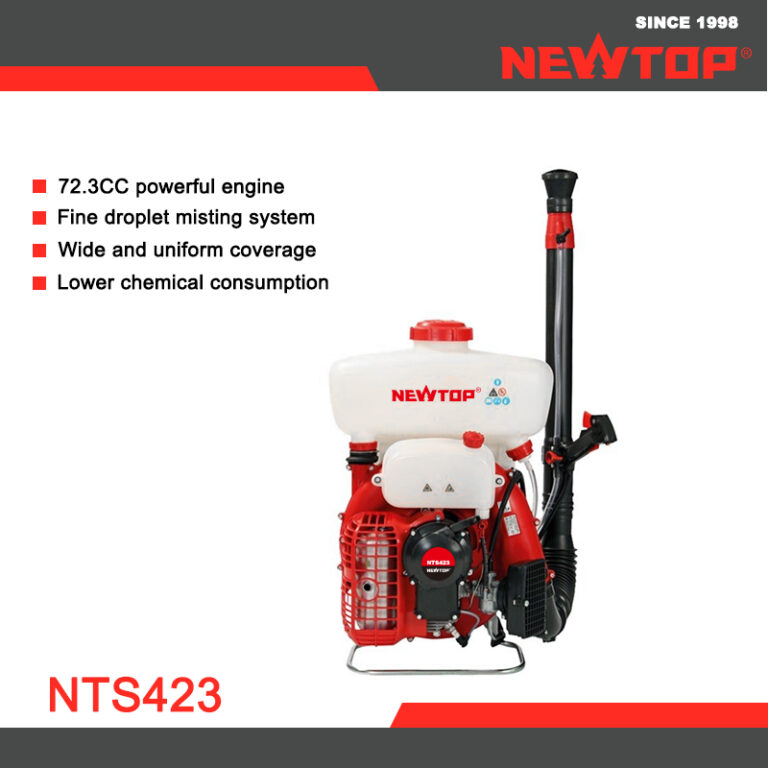
Spruzzatore a zaino per benzina NTS423
Progettato per precisione e durata, caratterizzato da un'uscita ad alta pressione e da un design ergonomico per attività di controllo dei parassiti di lunga durata.
Visualizza i dettagli del prodotto
Zaino Mist-Duster NTS3WF-3
Uno spruzzatore a zaino versatile e multifunzionale, ideale sia per applicazioni liquide che per spolverare in ambienti agricoli o di giardino su larga scala.
Visualizza i dettagli del prodottoPer Suggerimento: Non sei sicuro di quale configurazione sia adatta al tuo team? Consulta la nostra guida dettagliata su diverse tipologie di irroratrici a spalla per confrontare il manuale, batteria, e opzioni benzina.
Confronto tra efficienza chimica e dimensione delle goccioline per le zanzare
L’efficienza del controllo delle zanzare dipende dalla produzione di gocce di dimensioni precise, tipicamente tra 5 e 25 micron, per massimizzare il tempo di respirazione e il contatto con le zanzare adulte riducendo al minimo i rifiuti chimici.
| Parametro | Specifica ottimale | Impatto sull'efficienza |
|---|---|---|
| Dimensione della gocciolina (Controllo degli adulti) | 5–25 micron | Massimizza la sospensione aerea per il contatto con le zanzare volanti; riduce la deriva e gli sprechi. |
| Tecnologia applicativa | Volume ultra basso (LUPO) | Copre vaste aree con meno sostanze chimiche e migliora il targeting. |
| Formulazione del solvente | A base d'acqua | Riduce i costi delle applicazioni, minimizza la deriva, e offre un’opzione più sostenibile. |
Il ruolo della dimensione delle goccioline nel controllo efficace delle zanzare
L’efficacia di qualsiasi trattamento contro le zanzare è direttamente legata alla dimensione delle goccioline insetticide. L'obiettivo è produrre goccioline sufficientemente piccole da rimanere in volo e entrare in contatto con le zanzare volanti, ma abbastanza pesante da evitare di andare fuori bersaglio. Per il controllo delle zanzare adulte, la dimensione ottimale è costantemente compresa tra 5 e 25 micron. Questo dimensionamento specifico garantisce che le goccioline galleggino nella colonna d'aria dove sono attive le zanzare, massimizzando la probabilità di contatto. Il raggiungimento di questo equilibrio è fondamentale per massimizzare le prestazioni degli insetticidi riducendo al minimo i rifiuti chimici e l’esposizione ambientale non necessaria.
Volume ultra basso (LUPO) Tecnologia per l'efficienza
Volume ultra basso (LUPO) L'applicazione è una tecnica ingegnerizzata per fornire formulazioni chimiche concentrate su ampie aree con un volume minimo. La disinfestazione professionale si affida ai sistemi ULV perché sono progettati specificamente per produrre goccioline nell'intervallo ideale di 5-25 micron. Questa coerenza migliora il targeting e riduce drasticamente la quantità totale di insetticida necessaria per un lavoro. La tecnologia ULV raggiunge un equilibrio cruciale tra prestazioni elevate e utilizzo responsabile delle sostanze chimiche, rendendolo uno standard per le applicazioni di sanità pubblica.
Formulazioni di solventi: A base d'acqua vs. A base di olio
Il solvente, o il veicolo liquido per l'insetticida, influenza anche le prestazioni e i costi. Il settore ha assistito a un significativo spostamento dai tradizionali solventi a base di olio verso formulazioni a base di acqua. Le soluzioni a base acquosa aiutano a ridurre i costi complessivi di applicazione e sono meno inclini alla deriva dello spruzzo rispetto alle controparti a base di olio. Rappresentano un’alternativa più sostenibile ed economica per la maggior parte degli scenari di controllo delle zanzare. I solventi a base oleosa hanno ancora un posto, ma sono generalmente riservati a condizioni specifiche in cui una maggiore aderenza delle goccioline alle superfici è un requisito primario.
Costo del lavoro ed efficienza temporale: Quale strumento vince?

La scelta tra un nebulizzatore e uno spruzzatore dipende da un compromesso diretto: i nebulizzatori offrono una rapida, copertura a breve termine, mentre gli spruzzatori richiedono più manodopera iniziale per una lunga durata, controllo residuo economicamente vantaggioso.
| Metrico | Nebulizzatore | Spruzzatore |
|---|---|---|
| Tempo di applicazione | 5-15 minuti fino a 30,000 piede quadrato | Più a lungo, processo manuale che richiede un tecnico |
| Efficacia residua | ca. 72 ore | Fino a 21 giorni |
| Modello del lavoro | Basso travaglio iniziale, elevata manodopera cumulativa dovuta alla riapplicazione | Travaglio iniziale elevato, lavoro cumulativo basso a causa della longevità |
| Caso d'uso ottimale | Immediato, abbattimento temporaneo delle zanzare per eventi | Contratti di servizi residenziali o commerciali stagionali |
Nebulizzatori: Applicazione veloce, Ripetizione frequente
I nebulizzatori eccellono in velocità. Un tecnico può trattare una proprietà di grandi dimensioni, fino a 30,000 metri quadrati: in soli cinque-quindici minuti con il minimo sforzo pratico. Questa efficienza senza pari rende l'appannamento la soluzione immediata, bisogni a breve termine. Lo svantaggio critico è che l’effetto del trattamento si dissipa rapidamente, tipicamente solo duraturo 72 ore. Ciò richiede frequenti riapplicazioni per mantenere il controllo, facendo aumentare significativamente i costi cumulativi della manodopera nell’arco di un’intera stagione.
- Offre una copertura rapida per la riduzione immediata delle zanzare prima di un evento.
- Richiede trattamenti ripetuti ogni pochi giorni per mantenere il controllo.
- L’investimento totale in manodopera aumenta in modo significativo per la gestione a lungo termine.
Spruzzatori: Investimento iniziale per risultati duraturi
Applicare un trattamento barriera con uno spruzzatore a zaino è un processo più deliberato e dispendioso in termini di tempo. Richiede un tecnico esperto in grado di coprire meticolosamente le aree target in cui le zanzare riposano e si riproducono. Mentre la manodopera iniziale è più alta, questo investimento offre risultati potenti a lungo termine. Un singolo, un'applicazione approfondita può fornire una protezione residua fino a 21 giorni, ciò riduce drasticamente la necessità di costose visite ripetute e consente di risparmiare sulle ore di manodopera nel corso del contratto.
- Coinvolge il manuale, applicazione mirata per una copertura completa.
- Fornisce un'efficacia residua che dura per settimane, non giorni.
- Un minor numero di applicazioni significa minori spese complessive di manodopera per un controllo duraturo.
Rapporto costo-efficacia per la gestione sostenuta delle zanzare
Per i progetti di controllo delle zanzare in corso che definiscono il mercato in 2026, gli spruzzatori a zaino sono lo strumento più conveniente. La protezione estesa derivante da un trattamento spray barriera annulla i costi di manodopera associati alle molteplici sessioni di nebulizzazione che andrebbe a sostituire. I nebulizzatori mantengono il loro valore temporaneo, situazioni una tantum come feste o eventi all'aperto. Ma per i contratti di manutenzione stagionale di immobili residenziali e commerciali, gli spruzzatori forniscono una soluzione più solida dal punto di vista finanziario ed efficiente dal punto di vista operativo.
- L'appannamento è la scelta economica per situazioni una tantum.
- La spruzzatura offre un valore superiore per i contratti di servizi residenziali o commerciali.
- Lo strumento migliore dipende se l'obiettivo è l'abbattimento immediato o la protezione duratura.
Impatto ambientale dell'appannamento vs. Spruzzatura mirata
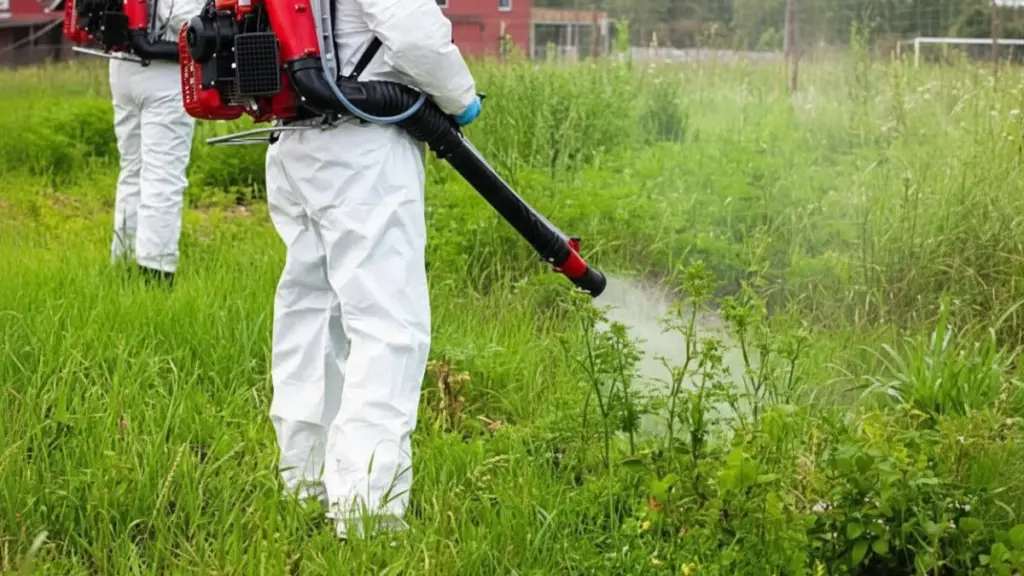
L’irrorazione mirata riduce significativamente i danni ambientali concentrando le sostanze chimiche sui punti in cui riposano le zanzare, a differenza dell’ampia nebulizzazione che causa danni indiscriminati agli impollinatori e rischia la deriva chimica in aree non previste.
Rischio per organismi non bersaglio
L'appannamento disperde un'ampia nuvola di insetticida che può danneggiare gli insetti utili come le api, farfalle, e altri impollinatori. La mancanza di precisione significa che qualsiasi cosa nel percorso della nebbia viene influenzata. Spruzzatura mirata, d'altra parte, concentra l'applicazione direttamente sulle superfici dove riposano le zanzare, come la parte inferiore del fogliame e materiali da costruzione ombreggiati. Questo approccio riduce al minimo i danni collaterali all’ecosistema locale.
- L'appannamento ad ampio spettro colpisce un'ampia gamma di insetti, non solo zanzare, interrompendo le catene alimentari naturali.
- Gli spruzzatori consentono agli operatori di evitare piante da fiore e altre aree frequentate dagli impollinatori.
- Questa precisione aiuta a preservare gli insetti essenziali per un giardino sano e per l'ambiente locale.
Deriva chimica e contaminazione dell'acqua
Il sottile aerosol prodotto dai nebulizzatori viene facilmente trasportato dal vento, portando alla deriva chimica. Questo pesticida disperso nell'aria può depositarsi su superfici non previste, compresi gli immobili limitrofi, orti, e fonti d'acqua. Il più grande, le goccioline più pesanti provenienti da uno spruzzatore cadono direttamente sulla superficie target, che riduce notevolmente il rischio di deriva e conseguente contaminazione dei corpi idrici vicini.
- La nebbia può spostarsi ben oltre la zona di trattamento prevista, esporre aree non bersaglio ai pesticidi.
- Il deflusso dalle superfici appannate può trasportare sostanze chimiche negli stagni, flussi, e caditoie.
- La spruzzatura mirata garantisce che la sostanza chimica rimanga dove viene applicata, proteggere le riserve idriche vicine e le aree sensibili.
Resistenza ed efficienza ai pesticidi
L’appannamento diffuso può esporre le zanzare a dosi subletali di insetticidi, un fattore chiave che incoraggia lo sviluppo della resistenza ai pesticidi tra la popolazione locale. La spruzzatura mirata offre un effetto più efficace, dose letale direttamente negli habitat e nei luoghi di riposo delle zanzare. Questo è un uso più efficiente delle sostanze chimiche e aiuta a rallentare lo sviluppo della resistenza, in linea con la moderna gestione integrata dei parassiti (IPM) pratiche.
- Le strategie IPM privilegiano metodi mirati per garantire l’efficacia chimica a lungo termine.
- L’utilizzo di meno sostanze chimiche riduce in modo più efficace il carico ambientale complessivo sul suolo e sull’acqua.
- Un'applicazione efficace da uno spruzzatore significa che sono necessari meno trattamenti nell'arco di una stagione, riducendo ulteriormente l’uso di prodotti chimici.
Perché i disinfestatori professionisti si affidano alle soluzioni NEWTOP
Gli operatori professionisti della disinfestazione scelgono NEWTOP perché le sue attrezzature offrono prestazioni affidabili sul campo, riduce al minimo i tempi di inattività operativa, ed è supportato da una solida rete globale di componenti e supporto.
Da allora è un produttore professionale di macchine agricole e da giardino 2003, NEWTOP, fornisce affidabili apparecchiature elettriche per esterni per i mercati globali. Con oltre 500,000 unità di capacità produttiva annua e di esportazioni superiori a 65 Paesi, supportiamo i distributori, Partner OEM, e progetti di sanità pubblica in tutta l’Africa, America Latina, Sud-est asiatico, e dell'Europa orientale.
I principali vantaggi includono:
- Motori durevoli testati 500+ orario di lavoro
- Uscita di pressione stabile per un controllo costante delle gocce
- CE, GS, APE, e altre certificazioni
- Personalizzazione OEM flessibile
- 7–Invio del campione entro 10 giorni
- Tempi di consegna competitivi in giro 30 giorni per ordini all'ingrosso
Per i cataloghi dei prodotti, specifiche tecniche, o richieste del distributore, visita newtoptools.com oppure contatta direttamente il team di vendita.
Conclusione
La scelta tra un nebulizzatore per zanzare e uno spruzzatore dipende dalla scala di applicazione e dalla precisione del target. I nebulizzatori forniscono una rapida, Trattamenti abbattinti ad ampia superficie ideali per grandi spazi, mentre gli spruzzatori forniscono un controllo diretto su specifici terreni fertili e superfici di riposo. L'adattamento dell'attrezzatura al lavoro garantisce un uso efficiente dei prodotti chimici, gestisce il costo del lavoro, e fornisce risultati efficaci.
Domande frequenti
Un nebulizzatore è più efficace di uno spruzzatore per le zanzare?
Un nebulizzatore è più efficace per ridurre rapidamente le popolazioni di zanzare adulte nelle aree aperte. Uno spruzzatore è più efficace per il controllo a lungo termine prendendo di mira i siti di riproduzione e applicando insetticidi residui.
Posso usare uno spruzzatore normale come nebulizzatore?
NO, non è possibile utilizzare uno spruzzatore normale come nebulizzatore. Gli spruzzatori producono gocce liquide più grandi progettate per rivestire le superfici e creare una barriera residua. I nebulizzatori atomizzano l'insetticida in una nebbia sottile che rimane sospesa nell'aria per uccidere le zanzare volanti al contatto. I loro ugelli e meccanismi sono progettati per dimensioni delle particelle e metodi di applicazione completamente diversi.
Quali sono gli svantaggi dell'appannamento delle zanzare?
L'appannamento ha un effetto residuo limitato, potrebbe andare alla deriva in condizioni di vento, e può colpire insetti non bersaglio. Spesso richiede applicazioni ripetute per un controllo duraturo.
Quanto spesso dovresti spruzzare vs. nebbia per le zanzare?
L'appannamento viene generalmente utilizzato durante le epidemie e può essere ripetuto settimanalmente a seconda della densità delle zanzare. L'irrorazione dei siti di riproduzione può essere effettuata ogni poche settimane in base ai cicli di crescita delle larve.
Che è più sicuro per l'uso in giardino, nebulizzatore o spruzzatore?
L'irrorazione mirata è generalmente più sicura per l'uso in giardino perché riduce la deriva e consente un'applicazione precisa intorno alla vegetazione e alle fonti d'acqua.
L'appannamento uccide le larve di zanzara?
NO. L'appannamento prende di mira principalmente le zanzare adulte in volo. Le larve devono essere trattate direttamente in acqua utilizzando larvicidi applicati con uno spruzzatore.
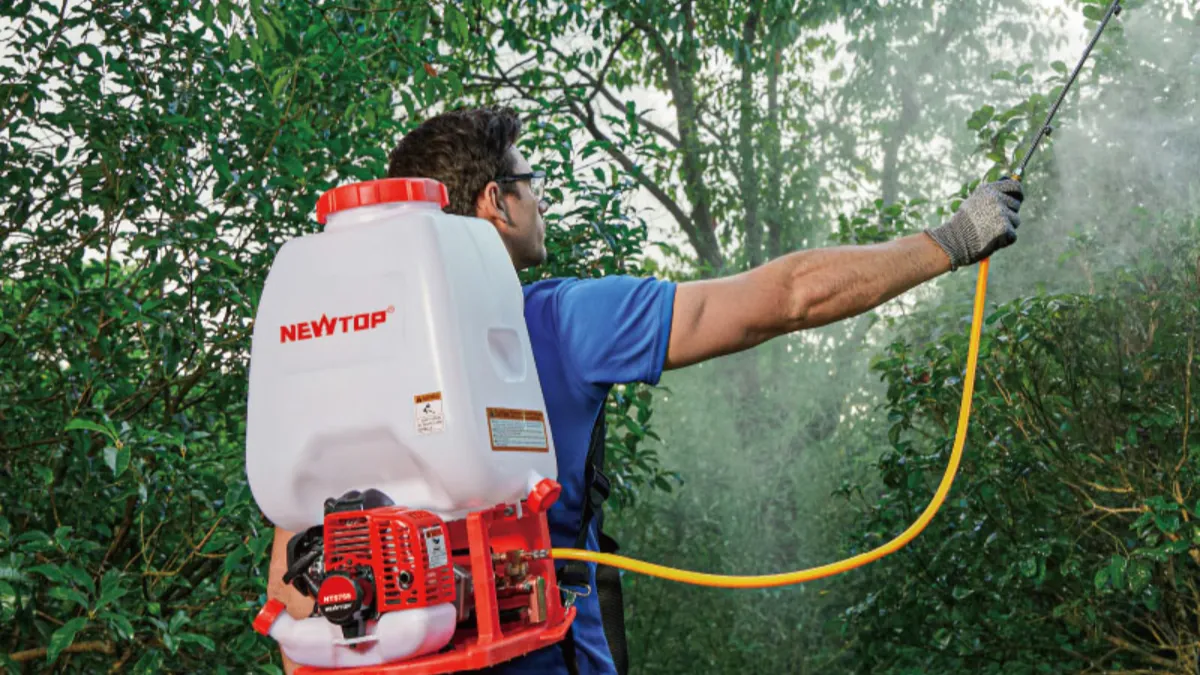
Nell'agricoltura moderna, l’irrorazione di precisione non è più un optional: ha un impatto diretto sulla resa del raccolto, efficienza chimica, costo del lavoro, e sicurezza ambientale. Che tu gestisca un piccolo campo di ortaggi nel sud-est asiatico, una piantagione di caffè in America Latina, o una fattoria di grano su larga scala in Africa, la scelta del giusto tipo di irroratrice a spalla può migliorare significativamente l'efficienza operativa.
In questa guida completa, esploreremo le diverse tipologie di irroratrici a spalla, confrontare i loro meccanismi di funzionamento, analizzare applicazioni agricole reali, e aiutarti a scegliere il modello più adatto alle tue specifiche esigenze. Se sei un importatore, distributore, o partner OEM alla ricerca di attrezzature affidabili per l'irrorazione agricola, questo articolo mostrerà anche come lavorare con NEWTOP può rafforzare la tua linea di prodotti.
Cos'è uno spruzzatore a spalla e come funziona?
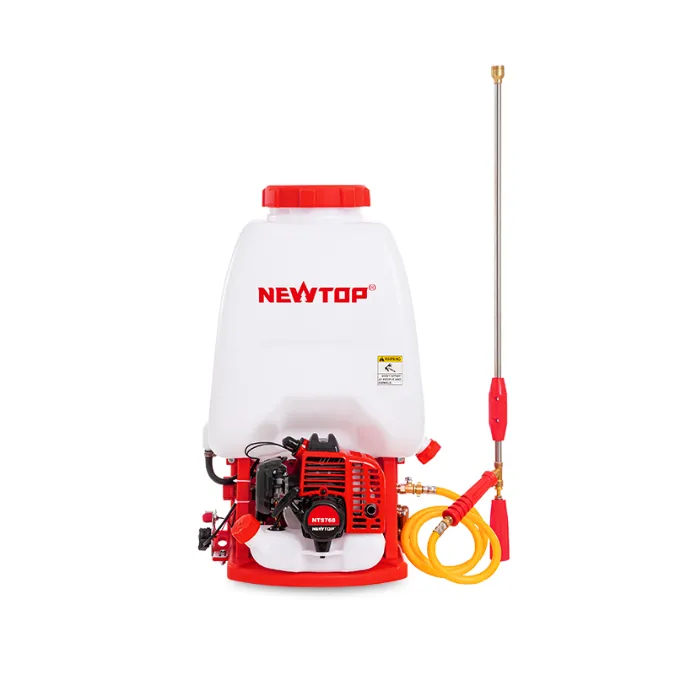
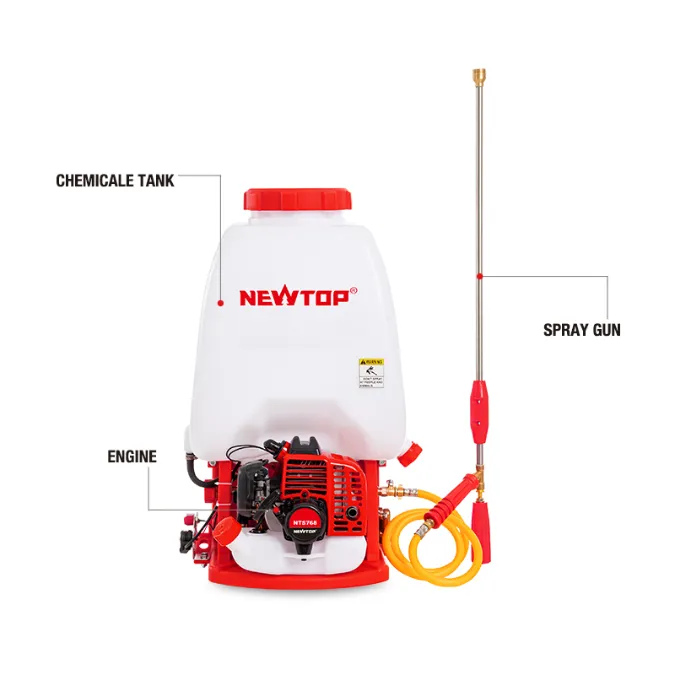
Uno spruzzatore a spalla è portatile, macchina agricola montata sul retro che utilizza la pressione manuale o motorizzata per applicare liquidi come pesticidi e fertilizzanti con precisione in contesti agricoli e paesaggistici.
Uno spruzzatore a zaino (chiamato anche spruzzatore a zaino) è un'attrezzatura portatile indossata sulla schiena dell'operatore per applicare liquidi, come i pesticidi, erbicidi, e fertilizzanti. È ampiamente utilizzato per l'applicazione di pesticidi, erbicidi, fungicidi, fertilizzanti, e disinfettanti.
Componenti principali e loro funzioni
Ogni irroratore a spalla funziona utilizzando una serie di componenti essenziali che immagazzinano, pressurizzare, ed erogare il liquido. La comprensione di queste parti chiarisce il funzionamento dello spruzzatore.
- Cisterna: Un contenitore, tipicamente tenendo 15 A 20 litri, che immagazzina la miscela chimica.
- Pompa e leva: Il meccanismo utilizzato per creare pressione. Nei modelli manuali, un operatore pompa una leva per pressurizzare il serbatoio.
- Tubo e lancia: Un tubo flessibile collega il serbatoio ad una lancia rigida, o lancia, che permette all'operatore di direzionare il getto.
- Ugello: La punta della lancia che atomizza il liquido in una nebbia sottile o in un flusso mirato per un'applicazione uniforme. Determina la dimensione delle gocce e il tipo di spruzzo, come il ventilatore, cono, o correnti a getto.
Il principio di funzionamento fondamentale
La funzione di uno spruzzatore a spalla si basa sulla generazione e sul mantenimento della pressione per espellere il liquido in modo controllato. Il processo è semplice, se l'irroratore è manuale o motorizzato.
- L'operatore riempie il serbatoio con la soluzione liquida desiderata.
- Utilizzando una leva manuale o un motore elettrico, l'operatore crea pressione all'interno del serbatoio.
- Quando si preme il grilletto della lancia, si apre una valvola, rilasciare il liquido pressurizzato.
- Il liquido scorre attraverso il tubo e la lancia, esce dall'ugello come uno spruzzo.
- La pressione costante viene mantenuta attraverso il pompaggio periodico o una fonte di alimentazione continua per garantire un'applicazione uniforme.
A seconda del modello, la pressione può essere generata manualmente (pompaggio a leva), elettricamente (motore a batteria), o attraverso un motore a benzina. I progetti avanzati includono regolatori di pressione, ugelli antigoccia, modelli di spruzzo regolabili, e sistemi di imbracatura ergonomici.
Uno spruzzatore a zaino ben progettato garantisce:
- Distribuzione uniforme delle dimensioni delle gocce
- Pressione di spruzzo stabile
- Ridotto affaticamento dell'operatore
- Rifiuti chimici minimi
- Manipolazione sicura dei prodotti chimici per l'agricoltura
Un rapido confronto tra diversi tipi di spruzzatori a spalla
Prima di immergerci più in profondità, è utile capire come si confrontano i diversi tipi nelle condizioni pratiche di coltivazione.
| Tipo di spruzzatore a zaino | Energia / Meccanismo | Peso / Portata | Stabilità della pressione | Migliore applicazione | Manutenzione. / Costo |
|---|---|---|---|---|---|
| PER FONTE DI ENERGIA | |||||
| Manuale | Lavoro umano (Leva) | 5–10kg / Corto | Basso (Fluttua) | Piccole aziende agricole, diserbo a punti | Basso / $ |
| Batteria | Motore elettrico | 6–8 kg / Medio | Alto (Costante) | Serre, colture in fila | Con / $$ |
| Benzina | Motore a benzina | 14–17 kg / Lungo | Molto alto | Frutteti, grandi piantagioni | Alto / $$$ |
| MEDIANTE MECCANISMO DELLA POMPA | |||||
| Pistone | Pistone cilindrico | Varia / PSI alto | Stabile (Alto) | Nebulizzazione fine, liquidi limpidi | Con / $$ |
| Diaframma | Membrana flessibile | Varia / PSI basso | Stabile (Basso) | Polveri bagnabili, candeggina | Basso / $$ |
| Stantuffo | Stantuffo solido | Varia / Flusso elevato | Medio | Cotone, verdure, uso generale | Basso / $ |
| MEDIANTE MECCANISMO A SPRUZZO | |||||
| Nebulizzatore | Ventilatore ad aria | Pesante / Portata massima | Costante | Alberi ad alto fusto, fogliame denso | Alto / $$$ |
| Compressione | Pressione atmosferica immagazzinata | Leggero / Corto | Decrescente | Trattamento spot, piccoli giardini | Basso / $ |
| Idraulico | Pompa del fluido diretto | Con / Coerente | Molto stabile | Copertura del campo uniforme | Con / $$ |
Tipi di spruzzatori a zaino in base alla fonte di alimentazione
La fonte di alimentazione è il fattore principale nel determinare l'affaticamento dell'operatore e la velocità di lavoro. Al NEWTOP, analizziamo le tendenze del mercato globale e abbiamo scoperto che, mentre le tradizionali unità manuali rimangono un punto fermo nei mercati emergenti, l’industria si sta rapidamente orientando verso soluzioni basate su batterie e benzina per una maggiore efficienza della manodopera.
Spruzzatori manuali a spalla
Gli spruzzatori manuali a spalla funzionano con una pompa a mano, dando all'utente il controllo diretto sulla pressione. Non hanno bisogno di elettricità o carburante, rendendoli una scelta affidabile ed economica per le aziende agricole di piccole e medie dimensioni. Il loro design leggero, tipicamente di peso compreso tra 5 E 10 kg, li rende ideali per applicazioni mirate in cui è necessaria precisione per ridurre i rifiuti chimici. Lo svantaggio principale è la necessità di uno sforzo fisico costante, che porta all'affaticamento dell'operatore durante l'uso prolungato. Mantenere manualmente una pressione costante su campi di grandi dimensioni è difficile, limitandone l’efficacia per operazioni commerciali su larga scala.
Spruzzatori a spalla alimentati a batteria
Gli spruzzatori a spalla alimentati a batteria utilizzano una batteria ricaricabile per alimentare un motore elettrico, fornendo una pressione di spruzzatura continua e costante senza pompaggio manuale. Questo design è particolarmente adatto per l'abbellimento professionale e l'agricoltura commerciale perché riduce significativamente l'affaticamento dell'utente. Lo stabile, la pressione regolabile garantisce una copertura uniforme per erbicidi e pesticidi. Una singola carica dura in genere tra 4 A 8 ore, consentendo un'intera giornata di lavoro e rendendo i lavori di grandi dimensioni più gestibili. Il costo iniziale è superiore rispetto ai modelli manuali, e il funzionamento dipende interamente dalla batteria carica.
Irroratrici a zaino alimentate a benzina
Le irroratrici a spalla a benzina sono dotate di un piccolo motore a benzina a 2 o 4 tempi per generare alta pressione per l'irrorazione su vaste aree. Offrono la massima potenza e sono costruiti per compiti agricoli impegnativi come il trattamento di frutteti o campi di grandi dimensioni. Spruzzatori a benzina, spesso configurati come nebulizzatori, può scaricare liquidi fino a 10 O 15 metri in orizzontale o in verticale fornendo la copertura necessaria per frutteti ad alta chioma e ampi campi agricoli. Funzionano indipendentemente da qualsiasi fonte elettrica, ma sono anche più pesanti e rumorosi, con un peso a pieno carico di 14-17 kg. Richiedono una manutenzione regolare del motore, compresa la gestione delle miscele olio-carburante per le versioni a 2 tempi.
Aumenta i tuoi margini con attrezzature elettriche per esterni durevoli
Tipi di spruzzatori a zaino in base al meccanismo della pompa
La scelta tra un pistone, diaframma, o il meccanismo della pompa a stantuffo determina direttamente la compatibilità chimica e le capacità di pressione dello spruzzatore, con pompe a pistoni che eccellono nell'atomizzazione ad alta pressione e pompe a membrana che offrono una durata superiore per le formulazioni abrasive.
Spruzzatore a spalla a pistone
Uno spruzzatore a zaino a pistone utilizza un pistone cilindrico che si muove all'interno di una camera per generare pressione. Questo design è altamente efficiente per raggiungere pressioni elevate, rendendolo una scelta eccellente per le applicazioni che richiedono una nebbia fine o uno spruzzo a lunga distanza. Gli operatori generalmente li utilizzano per applicare erbicidi e pesticidi liquidi che non contengono particelle abrasive, che potrebbero danneggiare le guarnizioni interne.
- Raggiunge pressioni più elevate, spesso fino a 150 PSI, per nebulizzare efficacemente i liquidi.
- Ideale per formulazioni solo liquide, in quanto le polveri abrasive possono usurare le guarnizioni dei pistoni.
- Richiede generalmente una maggiore manutenzione su guarnizioni e O-ring rispetto alle pompe a membrana.
- Ideale per il controllo mirato dei parassiti e per l'applicazione di insetticidi laddove la dimensione delle gocce fini è vantaggiosa.
Spruzzatore a spalla a membrana
Uno spruzzatore a spalla a membrana utilizza una membrana flessibile che pulsa per creare pressione. Questo meccanismo mantiene la soluzione chimica separata dalle parti mobili della pompa. Questa separazione rende la pompa eccezionalmente durevole quando si utilizzano materiali abrasivi come polveri bagnabili o anche soluzioni a base di candeggina.
- Altamente resistente alla corrosione e all'abrasione da parte di prodotti chimici aggressivi o a base di polvere.
- Funziona a una pressione inferiore, tipicamente in giro 60 PSI, che produce gocce più grandi e riduce la deriva dello spruzzo.
- Richiede meno manutenzione perché la membrana protegge i componenti critici della pompa.
- La scelta preferita per l'applicazione di polveri bagnabili, fertilizzanti, ed erbicidi per i quali è importante il controllo della deriva.
Spruzzatore a stantuffo
Lo spruzzatore a spalla a stantuffo è un tipo specifico di pompa a pistone in cui uno stantuffo solido sposta il fluido per aumentare la pressione. È noto per la sua semplicità, design robusto e capacità di generare alta pressione con il minimo sforzo dell'operatore. Ciò lo rende una scelta affidabile ed economica per l'irrorazione agricola generica.
- Combina le capacità di alta pressione di una pompa a pistone con un design semplice e durevole.
- Raggiunge un ritmo di lavoro elevato, rendendolo efficace per il trattamento di aree medio-grandi.
- Il meccanismo è semplice da mantenere e riparare sul campo.
- Adatto per un'ampia gamma di applicazioni colturali, comprese le verdure, cotone, e arachidi.
Tipi di spruzzatori a spalla in base al meccanismo di spruzzatura
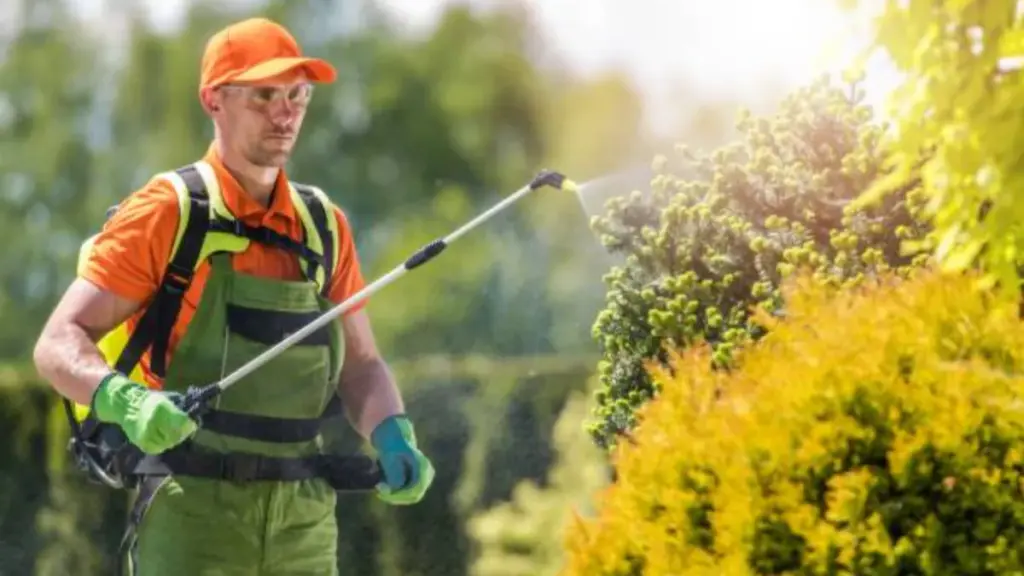
La scelta del meccanismo di spruzzatura: nebulizzazione ad aria, pressione dell'aria immagazzinata, o forza idraulica diretta: determina direttamente la velocità di applicazione dello spruzzatore, zona di copertura, e coerenza operativa.
Atomizzatori motorizzati
Gli atomizzatori motorizzati sono spruzzatori a motore che utilizzano un flusso d'aria ad alta velocità per atomizzare e spingere il liquido su lunghe distanze. Questo design è ideale per il trattamento di ampie aree, fogliame denso, o alberi ad alto fusto rapidamente, rendendolo una scelta comune per l’agricoltura commerciale, silvicoltura, e il controllo dei parassiti della salute pubblica.
- Combina uno spray liquido con una potente ventola per creare una nebbia sottile in grado di coprire un'area orizzontale di 15 A 40 piedi.
- Riduce significativamente i tempi di applicazione rispetto agli spruzzatori manuali o a bassa pressione, spesso completando i lavori due o tre volte più velocemente.
- Il motore fornisce una potenza costante, che elimina l'affaticamento dell'operatore dovuto al pompaggio manuale e garantisce una copertura uniforme.
- Adatto per l'applicazione di pesticidi e fungicidi nei frutteti, vigneti, e grandi campi coltivati.
Spruzzatore a compressione
Uno spruzzatore a compressione funziona pompando manualmente aria in un serbatoio sigillato per aumentare la pressione. Questa pressione immagazzinata spinge quindi il liquido fuori attraverso un ugello quando il grilletto è attivato. Sono semplici, basso costo, e ampiamente utilizzato per trattamenti localizzati e applicazioni su scala ridotta nel giardinaggio e nell'agricoltura.
- Richiede all'utente di pressurizzare il serbatoio prima della spruzzatura; la pressione diminuisce gradualmente man mano che si utilizza il liquido.
- Offre un controllo preciso per applicazioni mirate di erbicidi, insetticidi, o fertilizzanti.
- Leggero, portatile, e di facile manutenzione grazie al suo design meccanico semplice con poche parti mobili.
- Il funzionamento è silenzioso e privo di emissioni, ma può essere ad alta intensità di manodopera per grandi aree.
Spruzzatore idraulico
Gli spruzzatori idraulici utilizzano una pompa per generare direttamente la pressione del liquido, forzando la soluzione attraverso gli ugelli per formare uno spruzzo. A differenza degli spruzzatori a compressione, forniscono una pressione continua e costante finché la pompa è attiva. Questa categoria comprende di tutto, dalle pompe manuali a leva ai sistemi azionati da motore.
- Fornisce un flusso e una pressione costanti, con conseguente dimensione e applicazione delle gocce più uniformi.
- L'operatore utilizza una leva o un motore per attivare la pompa, che crea una forza idraulica immediata.
- Comunemente utilizzato in agricoltura per l'applicazione di prodotti chimici che richiedono una copertura costante.
- I modelli vanno dalle semplici unità zaino manuali a quelle più grandi, sistemi più complessi per un vasto lavoro sul campo.
Applicazioni comuni degli irroratori a spalla in agricoltura
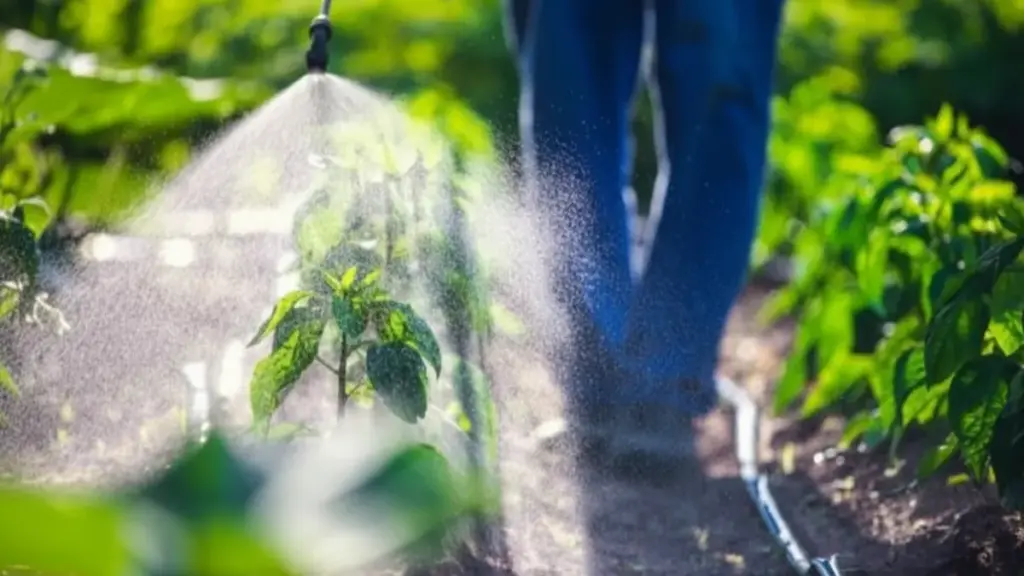
Gli irroratori a zaino sono le principali macchine agricole per il mirato, Applicazione sul terreno di pesticidi, erbicidi, e fertilizzanti liquidi, dando agli agricoltori un controllo preciso sulla salute e sulla gestione delle colture.
Controllo dei parassiti e delle malattie
Le irroratrici a spalla sono fondamentali per applicare insetticidi e fungicidi direttamente sulle colture. Questo approccio mirato aiuta a proteggere le piante dagli insetti dannosi e dalle malattie fungine che possono ridurre la resa e la qualità. L'applicazione diretta riduce al minimo gli sprechi e garantisce che i principi attivi raggiungano le aree specifiche che necessitano di trattamento.
- Fornisce un trattamento preciso alle foglie colpite, steli, e frutta nei frutteti e negli orti.
- Efficace per gestire le infestazioni localizzate prima che si diffondano su un intero campo.
- Consente agli agricoltori di utilizzare soluzioni chimiche e organiche per combattere i comuni parassiti agricoli.
Gestione delle infestanti
L’applicazione di erbicidi con uno spruzzatore a spalla è un modo efficace per gestire le erbe infestanti indesiderate che competono con le colture per l’acqua, luce solare, e sostanze nutritive. Permette un'applicazione controllata in aree specifiche, prevenendo danni alla coltura principale eliminando efficacemente le piante invasive.
- Ideale per il trattamento puntuale delle erbe infestanti lungo le linee di recinzione, tra le file di colture, e nelle aiuole.
- Supporta l'uso di erbicidi selettivi che colpiscono le erbe infestanti senza danneggiare la coltura primaria.
- Garantisce una copertura uniforme per le strategie di controllo delle infestanti in pre-emergenza e post-emergenza.
Applicazione di fertilizzanti e nutrienti
Questi irroratori sono comunemente usati per la concimazione fogliare, dove fertilizzanti liquidi e micronutrienti vengono applicati direttamente sulle foglie. Questo metodo fornisce un rapido impulso nutrizionale alle colture durante le fasi critiche di crescita, bypassando l'assorbimento più lento del suolo per un effetto immediato.
- Facilita il rapido assorbimento dei nutrienti per correggere le carenze più velocemente dell'applicazione nel terreno.
- Garantisce una distribuzione uniforme del nutrimento vegetale liquido per favorire una crescita costante.
- Utile per applicare regolatori di crescita e integratori che migliorano la salute e la produttività generale delle piante.
Fattori chiave da considerare quando si sceglie un'irroratrice a spalla per la propria azienda agricola
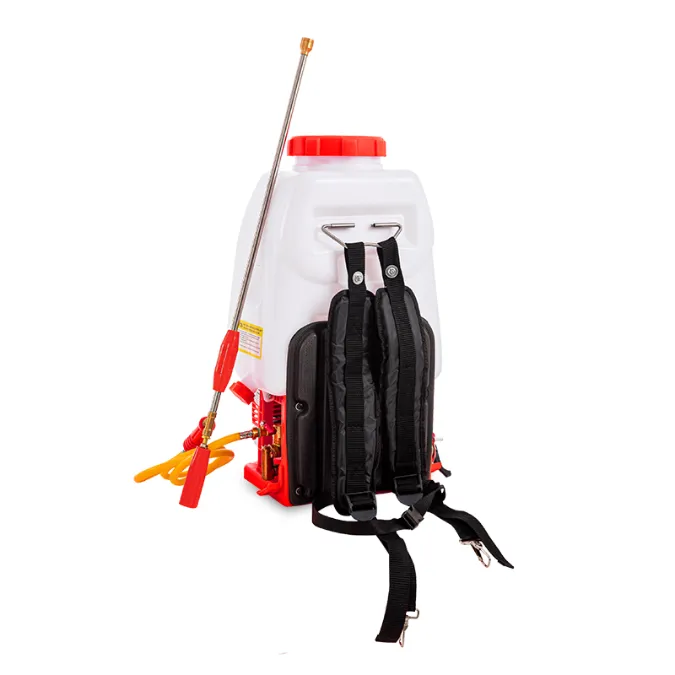
La scelta dell’irroratrice a spalla giusta richiede una valutazione pratica delle dimensioni della vostra azienda agricola, i prodotti chimici che usi, la precisione necessaria per le vostre colture, e le esigenze fisiche dell'operatore.
| Fattore | Considerazione chiave | Impatto sull'efficienza |
|---|---|---|
| Compatibilità chimica | Garantire l'uso di guarnizioni in Viton™ e pompe a membrana per solventi a base di petrolio o polveri abrasive. | Previene il rigonfiamento delle guarnizioni e il guasto della pompa, riducendo i costi di manutenzione e i tempi di inattività. |
| Capacità del serbatoio | Corrisponde alla dimensione del serbatoio (10-20L+) su scala aziendale considerando il peso gestibile dell'operatore. | Riduce il tempo di rifornimento su appezzamenti di grandi dimensioni ma aumenta la fatica se troppo pesante per il compito. |
| Durabilità del materiale | Selezionare polietilene ad alta densità resistente ai raggi UV (HDPE) serbatoi per resistere all'esposizione ambientale dura. | Previene la rottura del serbatoio e le perdite di liquidi, estendere la vita utile complessiva dell'apparecchiatura. |
| Configurazione degli ugelli | Assicurarsi che lo spruzzatore supporti ugelli intercambiabili (fan, cono, flusso) per le varie attività agricole. | Migliora la precisione dell'applicazione, riduce i rifiuti chimici, e aumenta l’efficacia del trattamento. |
| Ergonomia | Cerca spallacci imbottiti, supporto posteriore sagomato, ed equilibrata distribuzione del peso. | Riduce al minimo l'affaticamento dell'operatore, consentendo periodi di lavoro più lunghi e produttivi sul campo. |
Compatibilità chimica
Rivedi i principi attivi delle sostanze chimiche che intendi utilizzare. Se si utilizzano solventi a base di petrolio o polveri abrasive, assicurarsi che lo spruzzatore sia dotato di guarnizioni in Viton e di una pompa a membrana. Le guarnizioni in gomma standard si gonfieranno e falliranno se esposte a solventi aggressivi.
Capacità del serbatoio e dimensioni dell'azienda agricola
Adattare le dimensioni del serbatoio dell'irroratrice alla vostra scala operativa è fondamentale per l'efficienza. Un serbatoio più grande riduce al minimo le interruzioni di rifornimento per i campi estesi, ma uno più piccolo, un modello più portatile è spesso migliore per applicazioni mirate o appezzamenti più piccoli. L'obiettivo è bilanciare la copertura con un peso che un operatore possa gestire comodamente per un'intera giornata lavorativa.
- Per l'agricoltura su piccola scala o biologica, un serbatoio da 10–15 litri offre un buon equilibrio tra portabilità e capacità.
- Le operazioni agricole più grandi beneficiano di serbatoi da 20 litri o più per massimizzare l'area di copertura per riempimento.
- Considerare sempre il peso totale quando è pieno, garantendo che sia gestibile per l'operatore per periodi prolungati.
Durabilità dei materiali e compatibilità chimica
I materiali di costruzione di uno spruzzatore ne determinano la longevità e la sicurezza. È importante selezionare un modello con serbatoio e guarnizioni in grado di resistere agli effetti corrosivi di vari prodotti chimici agricoli. Le scelte sbagliate dei materiali portano a crepe, perdite, e guasti prematuri alle apparecchiature, comportando rischi sia per l’operatore che per l’ambiente.
- Cerca serbatoi realizzati in polietilene ad alta densità o altra plastica resistente ai raggi UV che prevenga crepe e degrado.
- Tenute e guarnizioni realizzate con materiali resistenti agli agenti chimici sono necessarie per evitare perdite quando si utilizzano fertilizzanti o pesticidi aggressivi.
- Un telaio robusto e cinghie durevoli sono importanti anche per la sicurezza dell'operatore e la stabilità dell'attrezzatura durante l'uso.
Configurazione degli ugelli e precisione dell'applicazione
L'ugello è un componente critico che controlla il ventaglio di spruzzatura, dimensione delle goccioline, e portata. Un'irroratrice con ugelli intercambiabili o regolabili offre la flessibilità necessaria per colture e trattamenti diversi. L'ugello giusto garantisce che i prodotti chimici vengano applicati in modo efficace dove necessario, minimizzare gli sprechi e prevenire danni alle piante non bersaglio.
- Gli ugelli regolabili consentono di passare da una nebbia sottile per insetticidi a un flusso diretto per il trattamento puntuale delle erbacce.
- Diversi tipi di ugelli, come il ventilatore, cono, o modelli di inondazione, fornire una copertura su misura per Broadacre, raccolto in fila, o applicazioni impiantistiche specifiche.
- L'applicazione precisa non solo migliora l'efficacia ma riduce anche i rifiuti chimici e l'impatto ambientale.
Ergonomia e comfort dell'operatore
Un serbatoio da 20 litri pesa circa 20 kg. Le caratteristiche ergonomiche aiutano a distribuire il peso in modo uniforme e rendono l'attrezzatura più facile da maneggiare. Un operatore confortevole può lavorare più a lungo e con maggiore precisione, che si traduce direttamente in risultati migliori sul campo.
- Cerca schienali sagomati con ventilazione integrata, ampi spallacci imbottiti, e cinture in vita che spostano il peso dalle spalle ai fianchi.
- Un design leggero è più facile da trasportare e manovrare, soprattutto su terreni irregolari.
- La maniglia della pompa, facile da raggiungere e dall'azione fluida, aiuta a mantenere una pressione costante senza causare affaticamento eccessivo.
Suggerimenti per la manutenzione per prolungare la durata del tuo spruzzatore a zaino

Passando da riparazioni reattive a riparazioni disciplinate, un programma di manutenzione preventiva basato sulla pulizia post-utilizzo e sui controlli regolari dei componenti è il modo più diretto per massimizzare la durata operativa della vostra attrezzatura.
Implementare una routine di pulizia post-utilizzo
Un protocollo di pulizia coerente dopo ogni utilizzo è il modo più efficace per prevenire l'accumulo di sostanze chimiche e il guasto della pompa. Questa pratica non è negoziabile per impedire ai residui corrosivi di deteriorare le guarnizioni, ugelli, e componenti interni. Trascurare questo passaggio è il modo più rapido per ridurre la durata dello spruzzatore, portando a intasamenti e perdite.
- Sciacquare accuratamente il serbatoio, tubo flessibile, e ugello con acqua pulita subito dopo aver terminato il lavoro.
- Quando si passa da un tipo chimico all'altro, eseguire un risciacquo più intenso per neutralizzare i residui e prevenire la contaminazione incrociata.
- Assicurarsi che l'esterno dello spruzzatore sia pulito per rimuovere eventuali fuoriuscite di sostanze chimiche che potrebbero danneggiare il cablaggio o l'alloggiamento in plastica.
Ispezionare e lubrificare regolarmente le guarnizioni e le parti mobili
Sigilli, guarnizioni, e i meccanismi delle pompe sono i punti di guasto più comuni perché sono sottoposti a costanti stress chimici e meccanici. L'ispezione di routine e la corretta lubrificazione ne mantengono l'integrità, prevenendo perdite e garantendo una pressione costante quando ne hai più bisogno. Questo controllo proattivo rileva l'usura prima che porti a un guasto sul campo.
- Su base trimestrale, controllare che tutti gli O-ring e le guarnizioni non presentino segni di fessurazione, fragilità, oppure indossarli e sostituirli se necessario.
- Applicare un lubrificante siliconico consigliato dal produttore alle guarnizioni della pompa e ad altri componenti mobili per mantenerli flessibili e protetti. Evita la vaselina poiché può degradare specifici tipi di gomma sintetica.
- Controllare che tutti i morsetti, raccordi, e le connessioni sono strette per evitare perdite durante il funzionamento.
Seguire un programma di manutenzione sistematica
Il passaggio dalle riparazioni reattive alla manutenzione preventiva prolunga significativamente la durata operativa dello spruzzatore, con gli operatori professionali che ottengono 4-5 anni di uso quotidiano. Un programma strutturato elimina le congetture e crea responsabilità, garantendo che attività critiche come la pulizia o la lubrificazione dei filtri non vengano trascurate durante i periodi di maggiore affluenza.
- Crea una semplice lista di controllo per le attività quotidiane (risciacquo), controlli settimanali (pulizia del filtro), e azioni trimestrali (lubrificazione).
- Considerare un sistema di attrezzature assegnate in cui ciascun operatore è responsabile della manutenzione di uno specifico irroratore per migliorare la responsabilità.
- Conservare lo spruzzatore in un luogo pulito, luogo asciutto e lontano dalla luce solare diretta per prevenire la degradazione UV delle parti in plastica e gomma.
Personalizza il tuo marchio con i diversi tipi di spruzzatori di NEWTOP
NEWTOP fornisce OEM completo e etichettatura privata, consentendo ai distributori internazionali di personalizzare tutto, dal colore e il marchio dell'irroratrice alle specifiche tecniche principali e all'imballaggio per specifici mercati regionali.
Da allora come produttore professionale di macchine agricole 2003, NEWTOP fornisce una gamma completa di manuali, alimentato a batteria, e irroratrici a spalla a benzina.
Con centri di lavoro CNC avanzati, linee di produzione automatizzate, e rigorosi sistemi di controllo della qualità, NEWTOP garantisce:
- Prestazioni stabili del prodotto
- Materiali durevoli resistenti agli agenti chimici
- Conformità CE e internazionale
- Personalizzazione flessibile OEM/ODM
- Supporto per il branding del marchio del distributore
- Fornitura affidabile di pezzi di ricambio
Per i distributori in Africa, Sud America, Sud-est asiatico, e mercati emergenti, NEWTOP offre prezzi competitivi combinati con una qualità costante.
Dalla personalizzazione del colore del serbatoio al design dell'imballaggio e alle modifiche delle specifiche, NEWTOP aiuta i partner a creare forti marchi locali con soluzioni affidabili di irrorazione agricola.
Se stai cercando di espandere il tuo portafoglio di macchine agricole, collaborazione con NEWTOP significa accedere ad un sistema produttivo collaudato con esperienza di distribuzione globale.
Conclusione
Scegliere l'irroratore a zaino giusto significa abbinare la sua fonte di alimentazione, pompa, e meccanismo di spruzzatura in base alle vostre specifiche esigenze agricole. Uno spruzzatore ben scelto ti aiuta ad applicare i trattamenti con precisione, proteggere la salute delle colture gestendo al tempo stesso i costi operativi. Questo allineamento ti garantisce di ottenere il massimo dalla tua attrezzatura, non importa la portata del tuo lavoro.
Sei pronto per ottimizzare la tua produzione agricola? Esplora la collezione di spruzzatori a spalla NEWTOP o contattare il nostro team tecnico all'indirizzo [email protected] per una consulenza professionale e un catalogo OEM.
Domande frequenti
Quali sono i quattro tipi di spruzzatori?
I quattro tipi comuni sono gli spruzzatori manuali a spalla, atomizzatori a batteria, nebulizzatori a benzina, e spruzzatori a compressione, ciascuno adatto a diverse dimensioni e applicazioni di aziende agricole.
Quale tipo di spruzzatore è il migliore per il controllo delle infestanti?
Uno spruzzatore a spalla dotato di ugello a ventola piatta è la soluzione migliore per il controllo delle infestanti. Questa configurazione fornisce un modello di spruzzatura uniforme, garantendo una copertura uniforme degli erbicidi senza danneggiare le piante vicine.
Gli atomizzatori a batteria sono affidabili per lavori pesanti?
SÌ. Gli spruzzatori a spalla di alta qualità alimentati a batteria con motori durevoli e batterie al litio possono funzionare per diverse ore e sono adatti per aziende agricole di medie e grandi dimensioni.
Qual è la differenza tra una pompa a pistone e una a membrana??
Una pompa a pistone è la soluzione migliore per applicazioni ad alta pressione con acqua trasparente, liquidi non abrasivi. Una pompa a membrana è lo standard per prodotti chimici aggressivi e polveri abrasive perché i componenti della pompa sono protetti dalla soluzione.
Quale irroratore a spalla è il migliore per la risaia?
Gli spruzzatori idraulici a zaino alimentati a batteria o a membrana sono ideali per le risaie grazie alla pressione costante e alla resistenza agli agenti chimici corrosivi.
Come scegliere tra atomizzatori manuali ed elettrici?
Scegli gli atomizzatori manuali a spalla per le piccole aziende agricole e con budget ridotti. Scegli gli spruzzatori elettrici a spalla per aree più grandi, maggiore efficienza, e riduzione dell'affaticamento del lavoro.
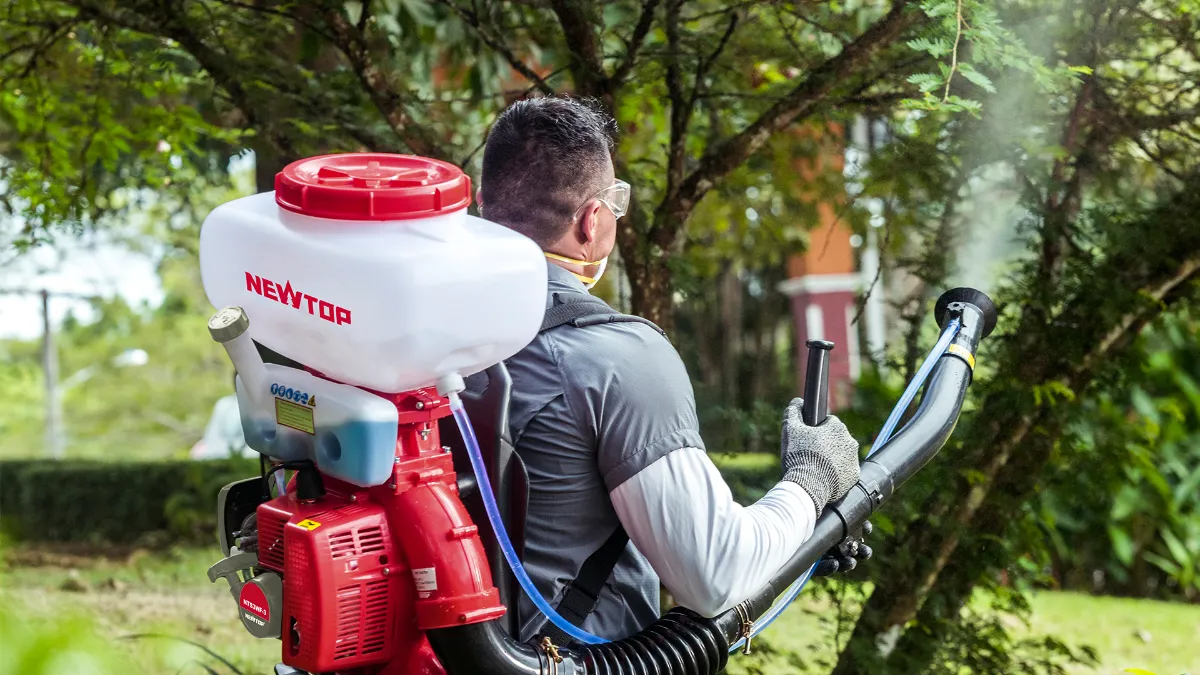
Across different farming regions, knapsack sprayers help manage crop protection efficiently. In rice fields of Southeast Asia, they are used for targeted pesticide application. In orchards in South America, sprayers allow growers to treat trees without causing excessive chemical runoff. Beyond agriculture, these sprayers are also used for urban pest control and public sanitation programs. The effectiveness of a sprayer depends on its tank design, pumping mechanism, nozzle selection, and operator technique, making equipment choice critical for consistent results.
This guide serves as a complete technical breakdown for agricultural managers and field operators. We will identify every major component in the sprayer’s anatomy. You’ll get a clear, step-by-step procedure for preparing and operating the equipment for the first time, along with a definitive list of essential safety gear. The focus is on building a repeatable process for safe, efficiente, and effective crop management.
What Is Knapsack Sprayer?
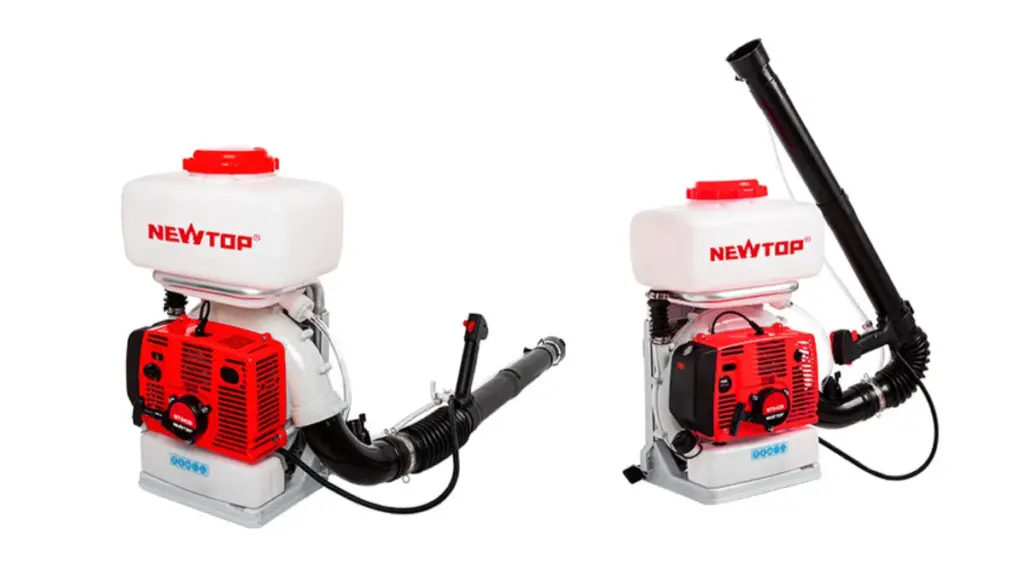
Knapsack sprayers, also known as backpack sprayers, are compact, portable devices designed to apply liquids such as pesticides, erbicidi, fertilizzanti, and water directly onto crops, plants, and soil. Their design allows the operator to carry the sprayer on their back while controlling the nozzle with one hand, providing mobility and precision in areas where larger spraying equipment cannot reach. The portability and adaptability of knapsack sprayers make them widely used in small- to medium-scale agriculture, orticoltura, and landscape maintenance.
Unlike hand-held or tractor-mounted sprayers, knapsack sprayers excel in precision spraying on irregular terrain, around densely planted crops, or inside greenhouses. The wand allows the operator to reach the undersides of leaves, branches, or hard-to-reach spots. Adjustable nozzles enable control over spray pattern and droplet size, which is crucial to prevent chemical drift, optimize coverage, and reduce wastage.
- Used for applying pesticides and fungicides to protect crops from diseases and pests.
- Facilitates precise herbicide management to control weeds in fields, frutteti, and gardens.
- Supports the distribution of liquid fertilizers to deliver nutrients directly to plants.
Shift from Manual to Powered Models
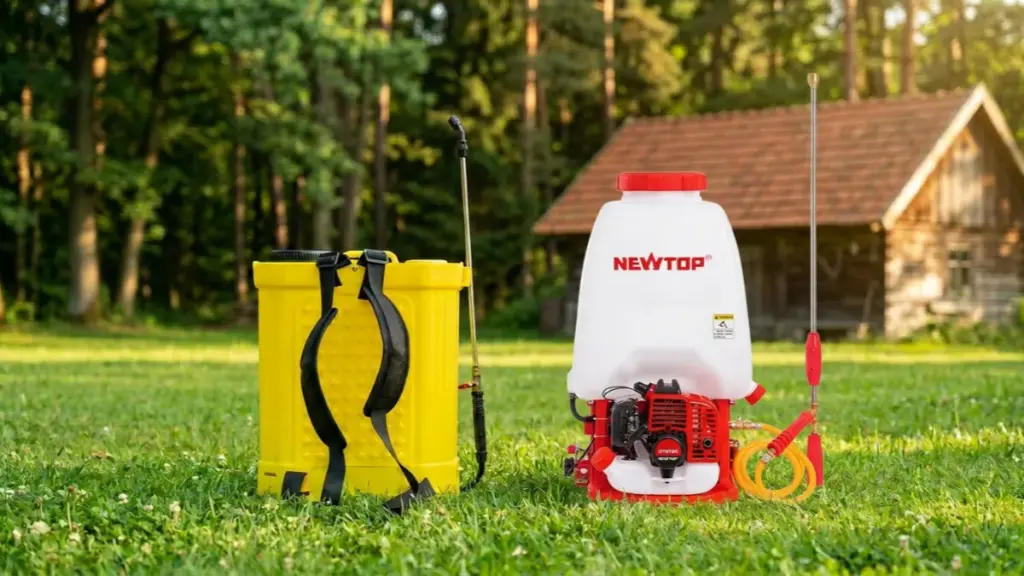
The market shows a clear trend moving from traditional manual backpack sprayers to battery-powered and motorized backpack sprayers. This change is driven by the need to reduce labor costs, increase operational speed, and achieve more consistent application pressure over large areas.
- Manual models remain a dominant choice in cost-sensitive markets due to their simplicity and affordability.
- Battery-powered electric sprayers offer consistent pressure without operator fatigue, improving application accuracy.
- Gasoline-powered models provide higher pressure and are suited for large-scale commercial operations requiring sustained power.
Lettura correlata: Tipi di spruzzatori a zaino: Scegliere il modello migliore per la tua azienda agricola
Understanding the Anatomy of a Knapsack Sprayer
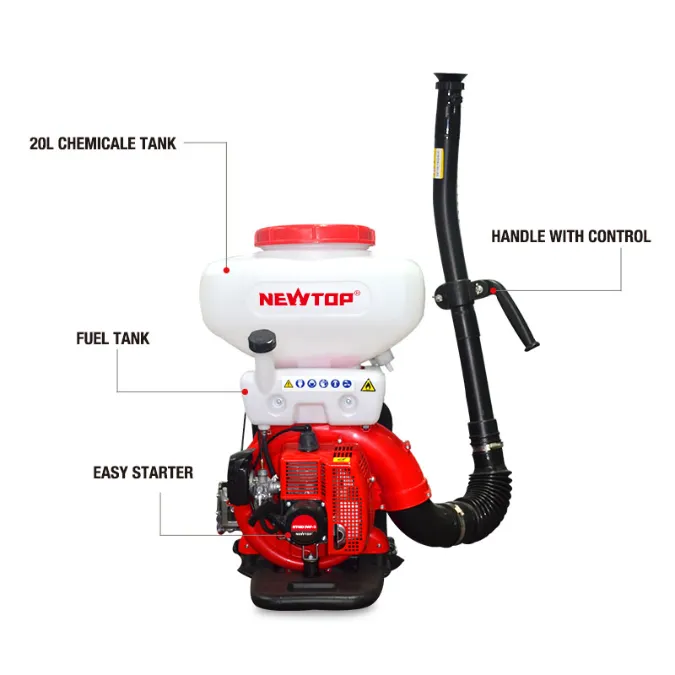
A knapsack sprayer’s design integrates four distinct systems—liquid storage, spray delivery, pressure control, and operator support—to ensure reliable and precise chemical application.
| Sistema di componenti | Key Parts | Funzione primaria |
|---|---|---|
| Cisterna & Pressurization | Cisterna, Pump (Piston or Diaphragm) | Holds chemical liquid and generates the force needed for spraying. |
| Spray Delivery | Lance (Spray Wand), Ugello | Directs the pressurized liquid and atomizes it into a specific pattern. |
| Controllare & Regulation | Trigger Valve, Pressure Regulator | Manages liquid flow and maintains consistent system pressure for uniform coverage. |
| Operator Comfort & Manutenzione | Harness, Telaio, Strainer, Filter | Reduces operator fatigue and prevents internal clogs to prolong equipment life. |
Tank and Pressurization System
The tank and pump form the core of a knapsack sprayer. The tank serves as the reservoir for the chemical solution, typically holding 10–20 liters, depending on the model and intended use. Tanks are constructed from durable, chemical-resistant plastics, which can withstand exposure to fertilizers, erbicidi, and pesticides without corroding or deforming.
The pump generates the pressure that forces the liquid through the system. Piston pumps are generally used when high-pressure spraying is required, providing a strong, steady stream. Diaphragm pumps are preferred for abrasive or aggressive chemical formulations, offering smoother pressure and reducing wear. The selection of pump type affects spray consistency, operator fatigue, ed efficienza complessiva.
Spray Delivery Components
Once pressurized, the liquid travels through the lance (spray wand) and exits through the nozzle.
- Lance (Spray Wand): This extendable rod allows the operator to reach leaves, steli, and other difficult-to-access areas, ensuring that all surfaces receive treatment. Its length and maneuverability are crucial for dense crops or orchard environments.
- Ugello: The nozzle atomizes the liquid into droplets and shapes the spray pattern. Common types include:
- Flat Fan Nozzle: Produces a thin, uniform sheet for even coverage over broad surfaces.
- Cone Nozzle: Creates a circular spray pattern, ideal for targeted misting and dense foliage.
- Adjustable Nozzle: Allows operators to change the spray type according to crop requirements.
Proper selection of nozzle type ensures efficient chemical use, reduces drift, and minimizes over-application.
Control and Regulation Mechanisms
Spraying effectiveness depends on the operator’s ability to regulate liquid flow and pressure:
- Trigger Valve: Mounted on the wand handle, this allows instant control over start-and-stop of liquid flow. It helps reduce chemical waste and improves precision during targeted applications.
- Pressure Regulator / Pressure Chamber: Maintains consistent system pressure, ensuring a uniform spray across the entire treatment area. Consistent pressure is particularly important in manual pumps or battery-operated sprayers, preventing uneven coverage or missed spots.
Together, these mechanisms allow operators to maintain accurate application rates, adapt to different crops, and minimize chemical use.
Operator Comfort and Maintenance Features
Ergonomic design improves usability and reduces operator fatigue, especially during long spraying sessions:
- Harness and Frame: Imbottito, adjustable straps distribute the sprayer’s weight evenly across the shoulders and back, reducing strain. Some models include waist belts or back supports for additional comfort.
- Strainer and Filter: Positioned at the tank inlet or inside the pump, these prevent debris from entering the system, reducing the risk of nozzle clogging and prolonging equipment life.
Routine inspection and maintenance of these components, such as cleaning filters and adjusting straps, ensures consistent performance and increases the sprayer’s service life.
Equip Your Market with Proven Performance
Economic Importance of Knapsack Sprayer in Modern Farming
Knapsack sprayers directly boost farm profitability by enabling precise chemical application, which reduces input costs and improves labor efficiency.
Cost Efficiency and Resource Optimization
Knapsack sprayers provide significant economic advantages by ensuring the precise application of agricultural inputs. This accuracy helps minimize chemical waste, directly lowering operational costs for farmers and improving overall farm profitability.
- High-pressure pumps and adjustable nozzles optimize the use of pesticides and fertilizers, reducing over-application.
- Large-capacity tanks decrease the need for frequent refilling, which saves valuable labor time and increases work continuity.
- Targeted application helps farmers get the most value from every liter of chemical, boosting resource efficiency.
Labor Productivity and Time Savings
The portable, back-carried design of these sprayers significantly boosts labor efficiency on farms. It allows a single worker to manage larger areas more quickly and accurately, optimizing workforce deployment, especially where labor is a major expense.
- Farmers can cover more acreage in less time, a crucial benefit for small to medium-sized operations.
- The ergonomic design enables operators to work comfortably and maintain consistent performance throughout the day, maximizing output.
Market Scale and Manufacturing Growth
The global demand for knapsack sprayers highlights their economic importance, fostering the growth of major manufacturing hubs. This industrial concentration reflects the tool’s proven return on investment for farmers worldwide.
- Regions like Taizhou, China have become key centers for knapsack sprayer production, supplying international markets.
- Strong global demand is driven by the clear economic benefits and efficiency gains that these sprayers provide to the agricultural sector.
Sustainability and Long-Term Farm Viability
By enabling targeted treatments and reducing overall chemical usage, knapsack sprayers contribute to more sustainable and cost-effective farming. This approach lowers immediate expenses and enhances the long-term economic health of the farm.
- Support for integrated pest management strategies reduces reliance on broad-spectrum chemical applications.
- Lowering chemical inputs not only cuts costs but also minimizes long-term environmental liabilities, making farming operations more resilient.
Common Types of Pumps Used in Knapsack Sprayers
The choice of pump technology in a knapsack sprayer—typically piston, diaframma, or battery-powered—directly dictates its chemical compatibility, pressure capabilities, and operator efficiency.
Piston Pumps
Piston pumps are a popular and reliable option for knapsack sprayers, especially when working with standard liquid formulations. Their simple mechanical design allows them to generate consistent pressure for effective application. This makes them a go-to choice for many standard agricultural and landscaping tasks.
- Best suited for non-abrasive chemicals like liquid insecticides and herbicides.
- Known for achieving higher pressure levels, which is useful for certain spraying tasks.
- The straightforward construction simplifies maintenance and repair.
Diaphragm Pumps
Diaphragm pumps are engineered for durability, particularly when spraying abrasive or corrosive chemicals. The pump’s internal mechanism is sealed off from the chemical, which protects moving parts from wear and damage. This design is critical for operators who frequently work with wettable powders or other challenging formulations.
- Ideal for abrasive materials like wettable powders and some fertilizers.
- The sealed design reduces direct contact between chemicals and critical components.
- Offers a longer service life when used with challenging formulations.
Lettura correlata: Pistone spruzzatore a zaino vs. Pompa a membrana: Quale sistema vince?
Battery-Powered Pumps
Battery-powered systems represent a significant shift in the knapsack mercato degli spruzzatori. They eliminate the need for manual pumping, reducing operator fatigue and ensuring a constant, even pressure for uniform spray coverage. This technology is gaining traction in commercial operations where consistency and efficiency are primary concerns.
- Provides consistent pressure delivery without physical effort.
- Reduces operator fatigue, making it easier to complete large jobs.
- Increases efficiency and precision for both agricultural and residential users.
How to Prepare and Operate Your Backpack Sprayer for the First Time
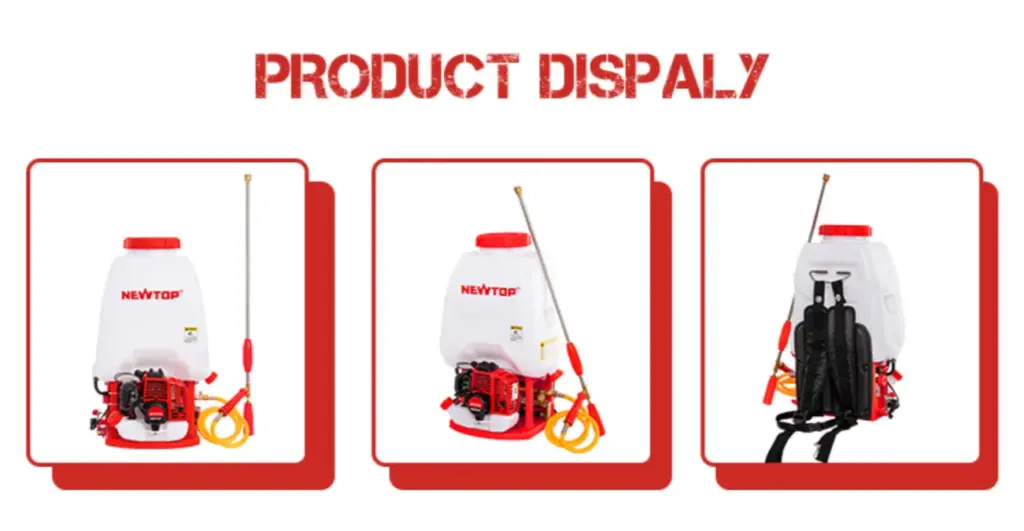
Proper sprayer setup involves a sequence of pre-use inspection, precise calibration, safe chemical mixing, and consistent application technique to ensure operational safety and effectiveness.
| Stage | Azione chiave | Primary Goal |
|---|---|---|
| Pre-Operation Inspection | Check for cracks, tighten all connections, and test with clean water. | Prevent leaks and confirm basic pump functionality. |
| Calibration | Spray a measured test area to calculate the application rate. | Ensure accurate dosing to avoid waste and crop damage. |
| Mixing & Filling | Wear PPE, half-fill with water, add chemical, then top off. | Achieve a safe, thoroughly mixed, and effective solution. |
| Spraying Technique | Maintain a steady pace, constant nozzle height, and overlap passes. | Achieve uniform coverage and minimize chemical drift. |
Pre-Operation Inspection and Assembly
Before you fill the tank with any chemical, a complete inspection and proper assembly are mandatory. This initial check verifies that the unit was not damaged during shipping and that all components are connected correctly to prevent leaks and ensure safe operation. A simple water test is the final step to confirm the system holds pressure as expected.
- Unpack and verify all components against the parts list in the user manual.
- Inspect the tank for any cracks or defects and confirm that all seals and gaskets are properly seated.
- Firmly attach the hose, spray wand, e ugello, tightening every connection to create a leak-proof seal.
- Fill the tank with clean water to test the pump. Build pressure and check for any drips or leaks from the connections or seals.
Calibrating the Sprayer for Accurate Dosing
Calibration is the process of matching your sprayer’s output to the requirements of the chemical and the target area. Correct calibration is not optional; it is fundamental to effective treatment, preventing the waste of expensive chemicals, and protecting crops from being over- or under-dosed. The goal is to determine exactly how much liquid your sprayer applies over a defined area so you can mix your solution accurately.
- Fill the sprayer with a precise volume of water (per esempio., 5 litri).
- Mark out a specific test area, ad esempio 10 square meters (2m x 5m).
- Spray the test area using the same walking speed and pumping rhythm you plan to use for the actual job.
- Measure the amount of water remaining in the tank. The difference is your application rate, which you can use to adjust your technique or mixture.
Proper Mixing and Filling Procedures
Handling and mixing chemical concentrates is a high-risk step that demands strict adherence to safety protocols. Always follow the instructions printed on the chemical’s label. The standard procedure is to partially fill the tank with water first, which helps dilute the concentrate safely and promotes a more thorough mix.
- Always put on your personal protective equipment (DPI), especially chemical-resistant gloves and safety glasses, before handling chemicals.
- Fill the sprayer tank about halfway with the required amount of water.
- Add the measured volume of chemical concentrate to the water in the tank.
- Add the remaining water to reach the final desired volume, then close the lid securely and agitate the tank to mix the solution completely.
Safe and Effective Spraying Techniques
Your physical technique during application directly controls the quality of coverage and your level of exposure. A disciplined, consistent method ensures the chemical is applied uniformly across the target surface and minimizes the risk of drift, where spray travels to unintended areas. Maintaining steady pressure through consistent pumping is key for an even spray pattern.
- Walk at a constant, steady pace while keeping the nozzle at a consistent height from the target plants or ground.
- Apply the spray in a smooth, sweeping motion. Overlap each pass slightly to avoid gaps and ensure even coverage.
- Do not spray in windy conditions. Wind causes chemical drift, wasting product and potentially harming adjacent, non-target plants or property.
- Pump the handle with a consistent rhythm to maintain steady pressure, which is critical for a uniform spray pattern and flow rate.
Essential Safety Gear for Backpack Spraying Tasks
Using the correct personal protective equipment (DPI) is a non-negotiable industry standard, forming the primary defense against chemical exposure during all spraying operations.
Protective Coveralls and Footwear
To shield the body from direct contact with chemicals, wearing full-body coveralls and chemical-resistant boots is fundamental. This gear acts as the primary barrier against accidental spills, splashes, and spray drift during mixing and application.
- Select coveralls made from durable, non-absorbent materials designed to resist chemical penetration.
- Use waterproof boots that are high enough to be covered by the pant legs, preventing liquids from running down into them.
- Before each use, inspect all coveralls and boots for tears or holes that could compromise protection.
Chemical-Resistant Gloves
Hands are highly susceptible to chemical exposure. Unlined, waterproof gloves made from materials like nitrile or neoprene are essential for safely handling pesticides, mixing solutions, and operating the sprayer.
- Choose gloves that extend well beyond the wrist to protect forearms.
- Never use leather or fabric gloves, as they absorb and retain chemicals, leading to prolonged skin contact.
- Regularly check for signs of degradation, such as cracks or discoloration, and replace them immediately if damage is found.
Eye and Face Protection
Protecting the eyes from chemical splashes is critical to prevent severe injury. Vented goggles or a full-face shield creates an effective barrier against airborne droplets and accidental splashes.
- Ensure goggles provide a snug seal around the eyes to block liquids from all angles.
- A face shield can offer additional protection for the entire face but should be used with goggles for complete eye safety.
- Standard eyeglasses are not a substitute for proper safety eyewear as they do not protect from splashes.
Respiratory Protection
Inhaling chemical mists or vapors can lead to serious health issues. A properly fitted respirator filters harmful particles and is a vital piece of equipment when working with many types of agricultural chemicals.
- The specific type of respirator needed is determined by the chemical being applied; always check the product’s safety data sheet.
- A tight seal between the respirator and the face is necessary for it to work correctly.
- Replace filters and cartridges based on the manufacturer’s instructions or if breathing becomes difficult.
Ready to Work with a Top 5 Knapsack Sprayer Factory?
NEWTOP has over 20 years of experience in manufacturing garden tools and agricultural equipment, providing reliable knapsack sprayers for global markets. I vantaggi includono:
- Wide Product Range: Manual and gasoline knapsack sprayers for varied agricultural applications.
- Distribuzione globale: Products shipped to 65+ Paesi, with after-sales support and local service points.
- Certifications and Quality: CE, GS, ETL, and ISO-certified production lines ensure consistent performance.
- Customization Options: OEM/ODM solutions for tank capacity, tipi di ugelli, and branding to meet regional requirements.
- Technical Support: R&D-backed design ensures long-lasting durability and precise chemical application.
Partnering with us guarantees access to high-quality, durable sprayers suited to modern farming challenges.
Conclusione
The knapsack sprayer is a fundamental tool in modern agriculture, offering a precise and portable way to manage crops. Understanding its core components, proper operation, and essential safety measures is key to maximizing its effectiveness. This knowledge helps ensure consistent application, protects the operator, and extends the life of the equipment.
If you are sourcing new equipment, consider the pump type and capacity that best match your operational needs. Contact our team to review our full catalog of durable manual and battery-powered knapsack sprayers.
Domande frequenti
What is the use of knapsack sprayer in agriculture?
Knapsack sprayers apply fertilizers, erbicidi, pesticidi, and water directly to crops, improving plant health and reducing chemical waste.
What are the main parts of a knapsack sprayer?
Cisterna, pompa, tubo flessibile, bacchetta magica, ugello, straps, and optionally a pressure regulator.
How does a knapsack sprayer work?
The pump pressurizes the liquid, forcing it through the hose and nozzle. The nozzle controls droplet size and spray pattern.
Is a manual or battery knapsack sprayer better?
Manual sprayers are suitable for small farms or short-term use. Battery-powered models provide uniform pressure and reduce operator fatigue for larger or repeated tasks.
What is the capacity of a standard knapsack sprayer?
Most standard knapsack sprayers range from 10 A 20 litri (approximately 2.6–5.3 gallons), with 16L and 20L being the most widely used capacities in agricultural applications.
How to maintain a knapsack sprayer after use?
Rinse tank, tubi, and nozzles thoroughly. Inspect for damage and store in a shaded, dry area. Periodically lubricate moving parts for longer service life.
Where can I find reliable knapsack sprayer manufacturers?
Choosing a reliable supplier requires evaluating production scale, pump testing standards, spare part consistency, and export certifications. You can review our detailed guide on the Superiore 10 Produttori di spruzzatori a spalla to compare leading global factories.
