


- Tous
- Témoignages de clients NEWTOP
- NOUVEAUTOP Explorer Hub
- Aperçu de l'industrie NEWTOP

Knowing how to measure a chainsaw bar correctly is a critical safety protocol that prevents dangerous kickback events and catastrophic equipment failure. A simple sizing error, often caused by measuring the entire physical bar from tip to tip, leads directly to ordering incompatible replacement parts. This mismatch not only causes poor cutting performance but also places excessive strain on the saw’s engine, resulting in accelerated wear and costly operational downtime.
Dans ce guide complet, we’ll walk you through the exact professional method used by service technicians and forestry equipment suppliers. You’ll also learn how to match bar length with engine displacement (CC), and how to avoid common sizing errors that reduce performance and damage your saw.
What is Chainsaw Bar Length?
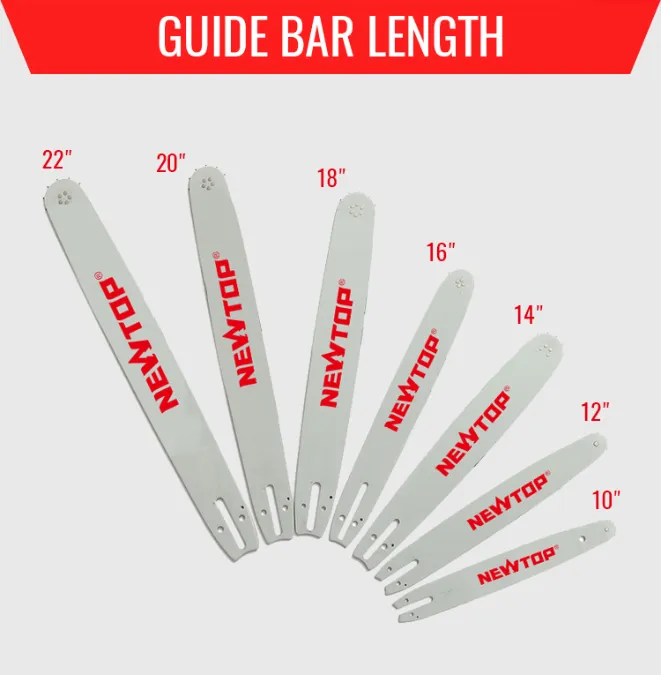
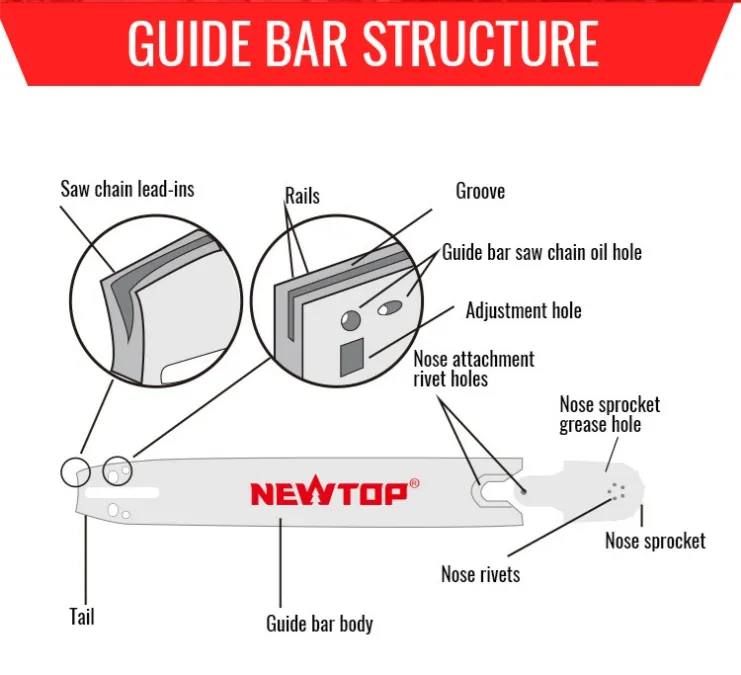
Le barre de guidage is the long steel plate that supports and guides the chain during cutting. Cependant, a portion of the bar sits inside the chainsaw body (the powerhead). That internal section does not contribute to cutting capacity.
Understanding Effective Cutting Length
Chainsaw bar length refers to the effective cutting length of the guide bar — not the total metal length from end to end. Technicians measure from the front of the saw’s body to the furthest tip of the bar, which represents the maximum width of wood you can cut in a single pass. When manufacturers list a bar as 16-pouce, 18-pouce, ou 20-pouce, they are referring to the usable cutting length, measured from the front of the saw housing to the tip of the bar.
How Bar Size Relates to Pitch and Gauge
While length is the primary specification, it works directly with pitch and gauge to create a compatible and safe cutting system. Pitch defines the distance between the chain’s drive links, and gauge measures the thickness of those links. The bar’s groove must match the chain’s gauge perfectly for proper function. Common pitch sizes are 0.325″ and 3/8″, while standard gauge sizes include .050″, .058″, et .063″. Mismatching these critical measurements leads to poor cutting performance, chain derailment, and accelerated wear on the bar and sprocket.
Matching Bar Length to Application and Power
The ideal bar length depends entirely on the saw’s engine power and the job at hand. A longer bar requires more torque to drive the chain through dense wood, while a shorter bar provides better control and maneuverability for precise tasks. The relationship between length, pouvoir, and application is straightforward.
- Shorter Bars (10–16 inches): Suited for saws with smaller engines. They are ideal for light tasks like pruning, enterrement, and cutting small firewood where control is paramount.
- Medium Bars (16–20 inches): These are versatile all-rounders, common on homeowner and semi-professional models. They offer a good balance of cutting capacity and control for felling medium-sized trees.
- Longer Bars (22–30+ inches): Designed exclusively for powerful, professional-grade saws. These bars are used in forestry and land-clearing for felling large-diameter trees where maximum cutting width is necessary.
Different chainsaw types—such as gas, électrique, ou top-handle models—have varying bar length requirements. Learn more about the different types of chainsaws and how they influence your bar selection.
Step 1: Measuring the Effective Cutting Length (Called Length)
The industry-standard ‘called length’ is determined by measuring the bar’s usable cutting area from the tip to the saw’s body and rounding to the nearest standard size, a critical first step for ensuring correct chain and bar compatibility.
| Raw Measurement Example | Rounding Rule | Standard “Called Length” |
|---|---|---|
| 17.75 pouces | Round to the nearest standard size (typically 2-inch increments). | 18 pouces |
| 15.8 pouces | Round to the nearest standard size (typically 2-inch increments). | 16 pouces |
| 19.9 pouces | Round to the nearest standard size (typically 2-inch increments). | 20 pouces |
The Standard Measurement Technique
To find a chainsaw bar’s size, you measure its effective cutting length, also known as the “called length.” This is the only measurement that matters for part identification. For an accurate reading, keep the bar attached to the saw. Place the end of a tape measure at the very tip of the bar and extend it back to the point where the bar enters the chainsaw’s housing. The resulting distance is the effective cutting length, which represents the usable portion of the bar.
Rounding to Match Standard Bar Sizes
Your raw measurement must be converted to a standard commercial size. Chainsaw bars are manufactured and sold in fixed sizes, usually in two-inch increments like 16, 18, ou 20 pouces. If your measurement is 17.75 pouces, you have an 18-inch bar. Always round your measurement to the nearest whole inch to identify its commercial classification. This industry standardization is what simplifies the process of buying replacement parts and guarantees that components from different batches or manufacturers will fit correctly.
Why This Measurement Is Foundational
Getting the effective length correct is the most important step in identifying your equipment. An incorrect measurement has a direct effect on cutting capacity, chain fitment, and operator safety. The called length determines the maximum diameter of wood you can cut in a single pass and is a required specification for purchasing the correct replacement chain. Using a bar that is too long for the saw’s engine will strain the motor, reduce performance, and create unsafe operating conditions.
Watch this step-by-step video, you’ll learn the proper technique for measuring your chainsaw’s effective cutting length. After watching, continue to Step 2 to count the drive links on your chain and make sure your saw and bar fit perfectly.
Step 2: Locating and Counting Drive Links on the Chain
An incorrect drive link count is a primary cause of chain derailment and operational failure, making an accurate manual count a critical maintenance step for safe equipment function.
| Verification Method | Purpose & Rationale | Common Pitfall to Avoid |
|---|---|---|
| Manual Count | Confirms the exact number of links required for the bar, preventing slack or excessive tension that leads to failure. | Losing count mid-way. Always mark the starting link with tape or a paint pen to ensure an accurate tally. |
| Check Stamped Bar Info | Provides the manufacturer’s exact specification (often abbreviated as “DL”) for quick and accurate chain replacement. | Relying on worn, illegible markings on an old bar. If you cannot clearly read the numbers, default to a manual count. |
What is a Drive Link and Why Does the Count Matter?
Drive links are the protrusions on the underside of the chain that sit inside the guide bar’s groove. They engage with the chainsaw’s drive sprocket to propel the chain and guide it along the bar. An accurate count of these links is fundamental for proper fitment. If the chain has too few links, it won’t fit onto the bar. If it has too many, the chain will be too loose, leading to poor cutting performance, binding, and a high risk of derailment during operation. The drive link count determines the precise length of the chain needed for a specific bar, ensuring safe and efficient power transfer from the engine to the wood.
A Reliable Method for Counting Drive Links Manually
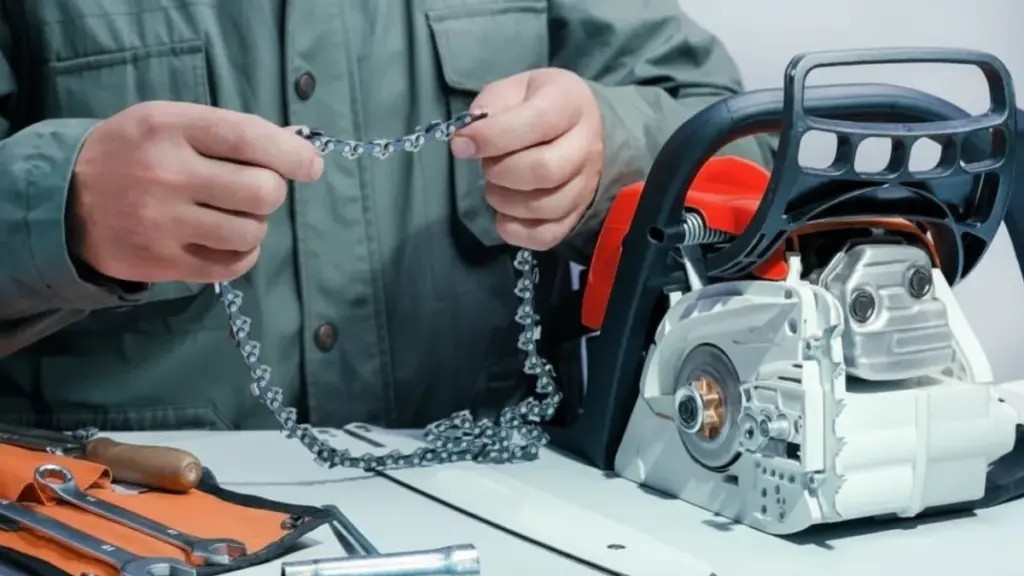
To avoid errors, use a systematic counting method. D'abord, remove the chain from the saw and lay it out on a flat, clean surface like a workbench or floor. This straightens the chain completely and prevents tangles that cause miscounts. Mark your starting drive link with a piece of tape or a paint pen to create a clear reference point. From there, carefully count each individual drive link until you return to your marked link. For better accuracy, count in small groups, such as by fives, and then perform a second count to verify your final number.
Where to Find Drive Link Information on Your Equipment
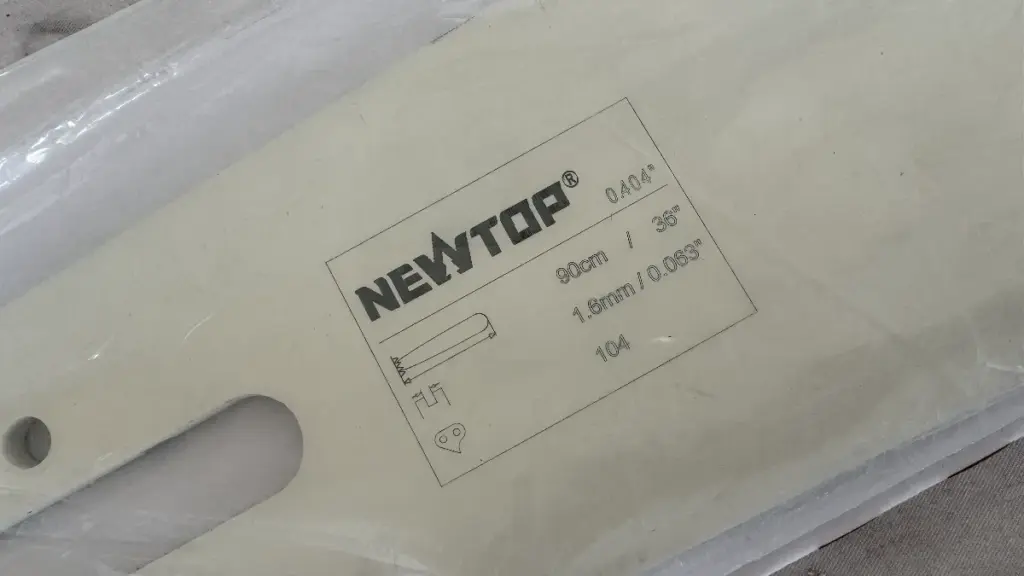
Many manufacturers stamp or laser-etch the required drive link count directly onto the guide bar to simplify replacement. Inspect the tail end of the bar, near the area where it mounts to the saw body. This information is often listed alongside the bar’s required pitch and gauge specifications. The drive link count is typically abbreviated as “DL” followed by a number (par ex., “72DL”). Even when this information is available, performing a manual count on your old chain remains a reliable verification method, especially if the bar is worn or the markings have become difficult to read.
Step 3: Determining Bar Gauge and Pitch for Perfect Fitment

Getting the pitch and gauge right is non-negotiable; these two measurements act as a lock-and-key system, and a mismatch guarantees poor performance and significant safety risks.
| Mesures | Technical Definition | Common Industry Sizes |
|---|---|---|
| Pitch | The distance between the centers of three consecutive rivets on the chain, divisé par deux. | .325″, 3/8″, 1/4″ |
| Gauge | L'épaisseur des maillons d'entraînement, which must match the width of the bar’s groove. | .043″, .050″, .063″ |
Understanding Pitch and Gauge
Pitch and gauge are the two critical measurements that ensure your chain and guide bar function as a single, efficient system. A proper match is essential for safe operation. Pitch defines the spacing between drive links, while gauge sets the thickness of those links. This ensures the chain seats perfectly within the bar’s groove, preventing binding or derailing during high-speed operation.
How to Measure and Identify
The most efficient way to find these measurements is to look for the information stamped directly on the tail of the guide bar, near the mounting slots. If the markings are worn or unreadable, your chainsaw’s operator manual is the next best source. It will list the exact factory specifications for your model.
- Check the base of the bar for stamped numbers that specify both pitch and gauge.
- Consult your chainsaw’s instruction manual for the original equipment specifications.
- If you are still unsure, bring the bar or saw to a local dealer for professional identification.
Why Matching Matters
Using a mismatched chain and bar introduces immediate operational problems and safety hazards. For the cutting system to work, the chain pitch, the drive sprocket pitch on the saw, and the bar’s nose sprocket pitch must all be identical. Any deviation breaks this alignment and causes performance failure.
- An incorrect pitch causes the chain to bind or jump in the groove, leading to poor cutting and potential kickback.
- If the gauge is too thin for the bar’s groove, the chain will wobble and can easily derail.
- Si la jauge est trop épaisse, the chain will bind, generating excessive friction, chaleur, and wear on both the bar and the engine.
Your Partner for Reliable, Profitable Power Tools
Pros and Cons of Using Longer vs Shorter Bars on One Saw
Selecting the right bar length is a critical balance between the cutting capacity needed for a job and the saw’s engine power, where shorter bars prioritize control and longer bars maximize reach and efficiency.
Advantages and Disadvantages of Shorter Bars (12-18 pouces)
Shorter bars offer superior control and safety, making them ideal for homeowners and light-duty tasks like trimming limbs or cutting small trees. Their compact size reduces operator fatigue and minimizes the risk of dangerous kickback, a significant advantage for users with less experience. This category of bar dominates the homeowner market because it provides a good balance of capability and manageability.
- Easier to handle and maneuver in tight spaces.
- Lower kickback potential, making them safer for less experienced users.
- Requires less engine power, putting less strain on the saw.
- Limited cutting diameter, making them inefficient for felling large trees.
Advantages and Disadvantages of Longer Bars (20+ pouces)
Longer bars provide a greater cutting capacity, allowing professional users to fell large-diameter trees and buck thick logs more efficiently. This performance comes at the cost of increased weight, reduced maneuverability, and a higher demand for operator skill. A long bar allows for cutting through thick logs in a single pass, which is essential for productivity in commercial forestry and farm applications.
- Enables cutting through wider logs in a single pass, increasing productivity.
- Provides extended reach for felling and limbing.
- Heavier and more difficult to balance, leading to quicker operator fatigue.
- Requires a more powerful engine to drive the chain effectively without bogging down.
Finding the Right Balance: Engine Power and User Skill
The best bar length for a chainsaw is a trade-off between the saw’s engine displacement (CCs) and the operator’s physical ability and experience. Overloading a small engine with a long bar leads to poor performance, slow cuts, and premature wear on the clutch and engine components. It’s not just about what fits; it’s about what the powerhead can realistically drive through dense material.
- Always match the bar length to the manufacturer’s recommended range for your saw’s engine size.
- A bar that is too long for the powerhead will cut slowly and strain the engine.
- Consider the type of wood; hardwoods require more power, often favoring a slightly shorter bar for a given engine.
- Operator experience is crucial, as longer bars amplify the forces of kickback and demand more physical control.
Common Sizing Mistakes: Why “End-to-End” Measuring Fails
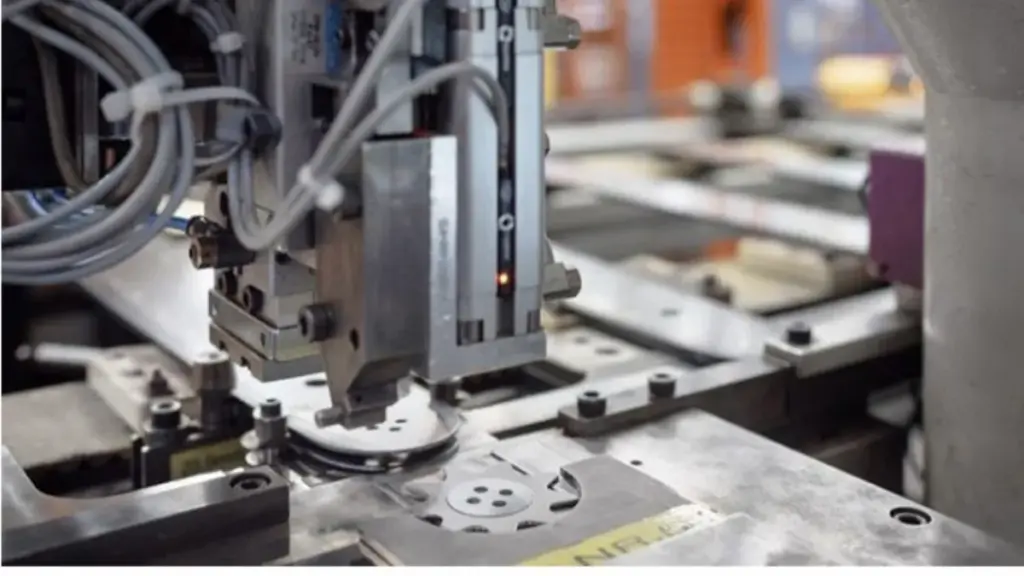
Measuring the total physical length of a chainsaw bar instead of its functional cutting length is the primary cause of equipment incompatibility and performance issues.
Measuring Total Bar Length Instead of Effective Cutting Length
A frequent mistake is measuring the entire physical bar from tip to tail. The correct industry standard is the “effective cutting length” ou “called length,” which only measures the usable portion of the bar that extends from the chainsaw’s body. Measuring the full bar guarantees you will purchase the wrong size replacement chain and potentially other mismatched accessories.
- This error results in selecting a chain that is too long for the bar’s actual exposed cutting area.
- An end-to-end measurement does not reflect the functional length specified by manufacturers for matching chains and accessories.
Including Mounting Hardware in the Measurement
Operators often incorrectly include the part of the bar that fits inside the powerhead when measuring. This mounting section, or tail, does not contribute to cutting and artificially inflates the length. This inflated number leads directly to incorrect sizing and equipment that will not fit or function properly.
- Accurate measurement must begin where the guide bar emerges from the front of the chainsaw’s casing.
- Failing to exclude the mounting hardware leads to equipment incompatibility, poor performance, and potential safety risks from an improperly tensioned chain.
Forgetting to Round to the Nearest Standard Increment
Chainsaw bars are sold in standardized even-inch sizes, such as 16″, 18″, or 20″. If your measurement of the effective cutting length is slightly off, like 17.5 pouces, you must round it to the nearest standard size, which would be 18 pouces, to find the correct replacement part. The market does not produce fractional or odd-numbered bar lengths.
- Industry practice is to round the effective cutting length to the closest even-inch number for marketing and sales.
- Ignoring this convention can lead to searching for non-existent bar sizes and purchasing the wrong equipment.
Selection Guide: How to Match Bar Length to Engine Power (CC)
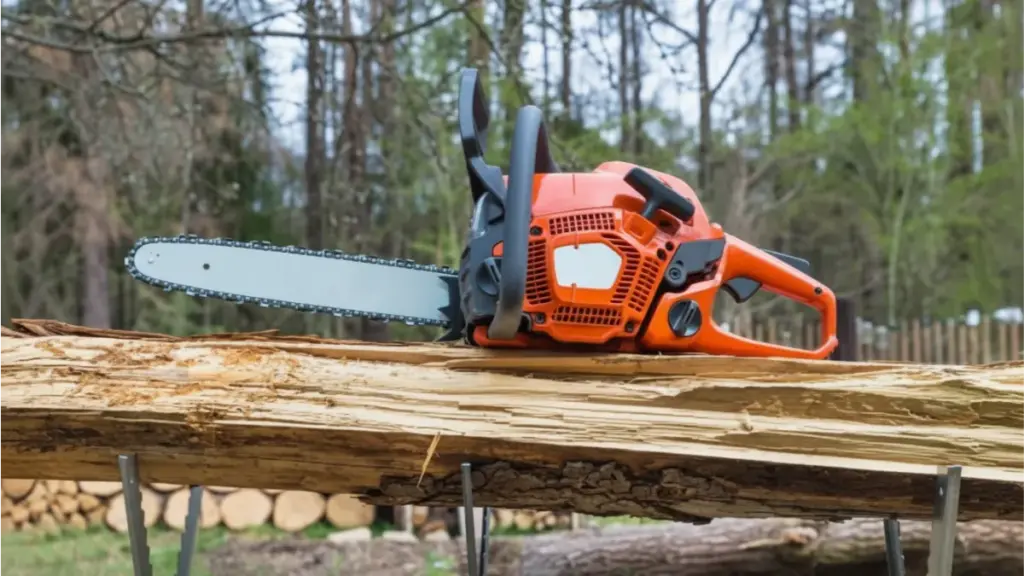
Matching the guide bar length to the engine’s displacement is critical for preventing clutch burnout and ensuring safe, efficient cutting performance.
Matching guide bar length to engine displacement (CC) is essential for maintaining cutting efficiency, protecting the clutch system, and extending engine lifespan. A bar that is too long for the engine’s torque output will reduce chain speed, increase vibration, and cause premature mechanical wear. Proper balance ensures smooth power transfer and safe operation.
| Engine Size (cc) | Typical Bar Length Suggestion (pouces) |
|---|---|
| 25–35 cc | ~10–14″ |
| 35–45 cc | ~12–16″ |
| 45–60 cc | ~16–20″ |
| 60–80+ cc | ~20–28″ |
| 30–35 cc | 10–12″ (Light Duty) |
| 35–45 cc | 12–16″ |
| 45–55 cc | 16–20″ |
| 55–65 cc | 18–24″ |
| 65–80 cc | 24–32″ |
| 10–14″ and Up | Varies by Use Case |
For small engines between 25cc and 35cc, the ideal bar length is typically 10 à 14 pouces. These compact saws are designed for pruning, enterrement, and light firewood cutting. Installing a longer bar places excessive strain on the engine, especially when cutting hardwood.
Mid-range engines in the 35cc to 45cc category perform best with 14 to 16-inch bars. While some high-output 45cc models may technically accommodate an 18-inch bar, pushing beyond this range often results in slower chain speed and reduced efficiency under load.
Pour 45cc to 55cc engines, a 16 to 18-inch bar is generally optimal, with certain 50cc+ models capable of handling up to 20 inches when properly tuned. This range offers a strong balance between maneuverability and cutting capacity.
Professional-grade engines from 55cc to 70cc can reliably operate 18 to 24-inch bars, depending on torque design. Engines above 70cc are typically paired with 24-inch bars or longer for heavy forestry work.
Factors Beyond CC: Wood Type and Operator Skill
While engine displacement provides a solid baseline, the ideal bar length also depends on the type of wood and the operator’s experience level. Hardwoods like oak or maple require significantly more power to cut, so you might choose a slightly shorter bar than you would for cutting softwoods like pine with the same saw. Operator skill is also critical, as a longer bar is more difficult to control and increases the risk of dangerous kickback. A well-balanced saw with an optimal power-to-weight ratio reduces user fatigue and improves safety during extended work periods.
Consequences of an Incorrect Match
Using an improperly sized guide bar directly compromises both performance and operator safety. An underpowered setup, where the bar is too long for the engine, results in slow cutting, frequent chain stalling, and potential clutch burnout from the constant strain. Conversely, a bar that is too short for a powerful engine underutilizes the saw’s capability and makes the work less efficient. The most significant consequence is the increased safety risk—a poorly balanced saw is difficult to handle and significantly raises the probability of dangerous kickback events.
Why Choose NEWTOP Precision-Engineered Guide Bars?
NEWTOP’s guide bars combine globally sourced components with in-house precision manufacturing to offer professional-grade reliability and a strong cost advantage in competitive markets.
If you are sourcing replacement guide bars for retail, Marque OEM, or distribution, it is critical to select a reliable chainsaw guide bar manufacturer.
NOUVEAUTOP has specialized in garden machinery and forestry tools since 2003. With over 10,000㎡ production facilities and advanced CNC machining centers, NEWTOP manufactures precision-engineered guide bars designed for durability and long service life.
What Sets NEWTOP Guide Bars Apart?
- High-grade alloy steel construction
- Precision rail hardening for wear resistance
- Accurate groove machining for smooth chain tracking
- Compatibility with major chain standards (.325″, 3/8″, .404″)
- Strict QC testing including rail straightness and hardness verification
NEWTOP products are exported to 65+ countries across Latin America, Afrique, Asie du Sud-Est, and Eastern Europe, supporting both OEM clients (60%) and brand distributors.
Whether you are replacing bars for professional logging or supplying regional dealers, NEWTOP offers stable supply, competitive pricing, and customizable packaging options.
If you’re looking to expand your product line with reliable chainsaw components, our engineering team can support OEM/ODM development tailored to your market needs.
Conclusion
Measuring a chainsaw bar’s effective length, pas, and gauge is fundamental for ensuring safe operation and optimal cutting performance. These steps guarantee you select a compatible replacement, preventing premature equipment wear and costly purchasing errors. This precision directly contributes to the reliability and longevity of your tools.
If you are sourcing new components, review our catalog of precision-engineered guide bars. Our team is available to help verify the correct fitment for a single saw or an entire fleet.
Foire aux questions
Do you measure a chainsaw bar from tip to tip?
Non. You measure from the front edge of the chainsaw housing to the tip of the bar. Measuring tip to mounting tail gives an incorrect length.
How do I know what size bar fits my chainsaw?
To determine the correct bar size, consult your chainsaw’s user manual, which lists the manufacturer’s recommended bar lengths and specifications. You must match three critical specs: the bar’s mount pattern (which must fit your saw), the chain pitch (par ex., .325″), and the chain gauge (par ex., .050″). Using an incompatible bar can lead to poor performance and safety risks.
Is a 18-inch bar really 18 inches long?
The effective cutting length is approximately 18 pouces. The total physical length is slightly longer due to the mounting section.
Can I put a 20-inch bar on a 16-inch chainsaw?
Only if the engine displacement supports it and the sprocket matches the pitch. Otherwise, it may cause performance issues and mechanical strain.
Where is the size marked on the chainsaw bar?
The bar’s specifications are almost always stamped or printed on the tail end of the bar, near the mounting slots. Look for a series of numbers indicating the effective cutting length (par ex., 18″ or 45cm), chain pitch (par ex., .325″), jauge (par ex., .050″ or 1.3mm), and the required drive link count for the matching chain.
How do I measure the drive links on a chain?
Remove the chain, lay it flat, and count each drive link individually. Alternativement, check the packaging label if available
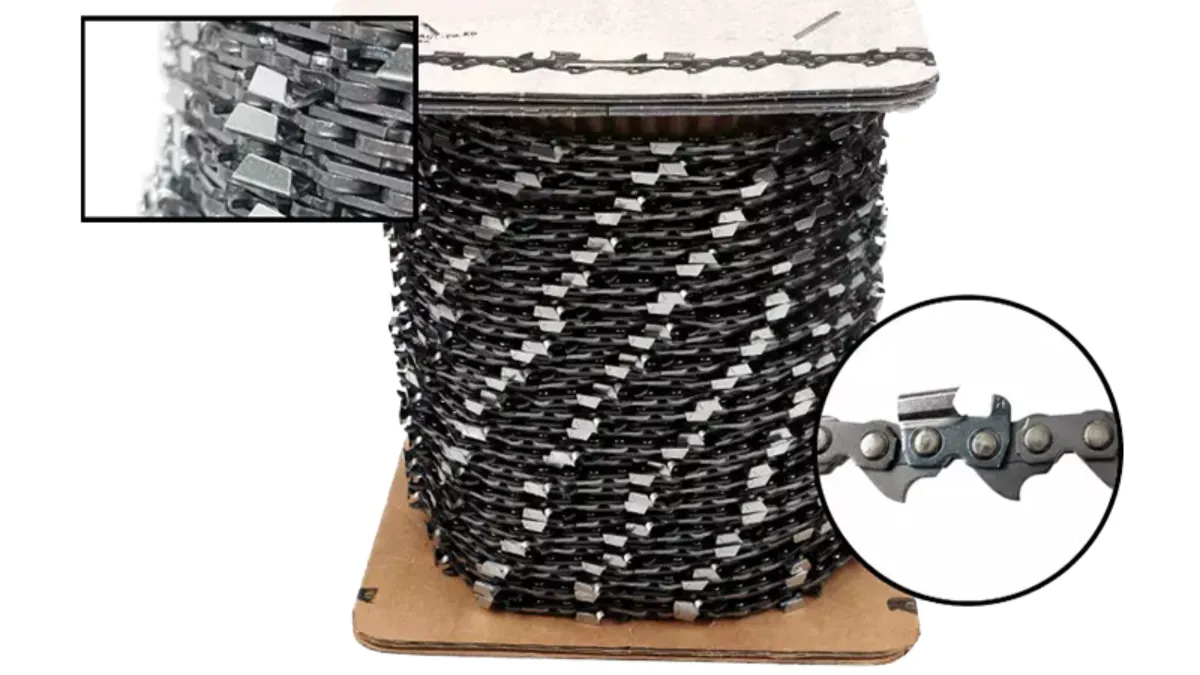
Lors de la sélection d'une chaîne de tronçonneuse, la plupart des acheteurs se concentrent sur la marque, longueur de la barre, ou la puissance du moteur. Cependant, la véritable différence de performances réside souvent dans deux paramètres techniques critiques: pas et jauge. Ces deux mesures déterminent la compatibilité, efficacité de coupe, niveau de vibration, durabilité, et même la sécurité des opérateurs.
Pour les distributeurs, Acheteurs OEM, et utilisateurs professionnels en foresterie ou en agriculture, il est essentiel de comprendre ces fondamentaux de l'ingénierie. Dans ce guide, nous décomposons le pitch et la jauge en détail, expliquer comment ils affectent le comportement de coupe, et vous aider à sélectionner la configuration de chaîne adaptée à votre marché.
Qu'est-ce que le pitch sur un Chaîne de tronçonneuse?
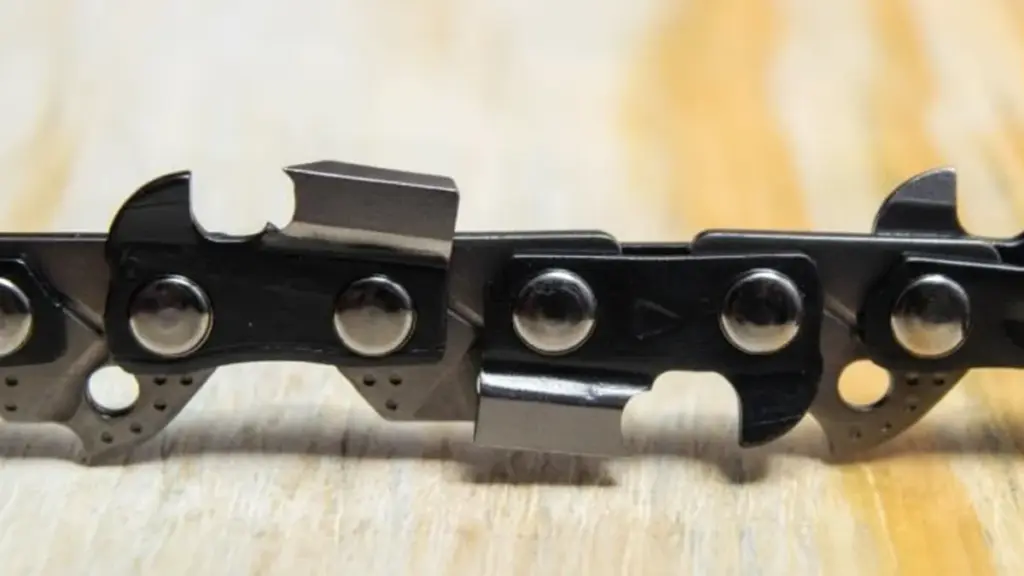
Le pas de chaîne est la spécification fondamentale de taille d’une chaîne de tronçonneuse, calculé comme la moitié de la distance entre trois rivets consécutifs, et il doit correspondre précisément à la barre de guidage et au pignon d'entraînement pour un fonctionnement sûr.
Définir le pas de chaîne
Le pas de chaîne est la mesure standard de l'industrie qui définit la taille d'une chaîne de tronçonneuse.. Vous le calculez en mesurant la distance entre les points centraux de trois rivets consécutifs et en divisant ce nombre par deux.. Pour qu'une tronçonneuse fonctionne correctement, cette mesure doit correspondre aux spécifications de la barre de guidage et du pignon d’entraînement de la scie.
Pourquoi la compatibilité des pitchs est essentielle
Une tronçonneuse fonctionne comme un système dans lequel le pas de la chaîne, jauge de chaîne, et la barre de guidage doivent être entièrement compatibles. L’utilisation d’un pas incorrect empêche la chaîne de s’asseoir correctement sur le pignon d’entraînement du guide-chaîne., ce qui entraîne des dommages à l'équipement et une défaillance opérationnelle complète.
- Une chaîne mal adaptée s'usera rapidement ou cassera le pignon d'entraînement.
- L’utilisation de pièces incompatibles annule presque toujours la garantie de l’équipement.
Qu'est-ce que la jauge sur une chaîne de tronçonneuse?
La jauge de chaîne est l'épaisseur des maillons d'entraînement, une mesure critique qui doit correspondre exactement à la rainure du guide-chaîne pour garantir la sécurité, fonctionnement efficace sans déraillement ni grippage.
Définir la jauge: L'épaisseur du lien d'entraînement
Le calibre d'une chaîne de tronçonneuse est l'épaisseur mesurée de ses maillons d'entraînement. Ce sont les bas, parties de la chaîne en forme de dents qui passent à l’intérieur de la rainure du guide-chaîne, ou suivre. Cette mesure unique garantit que la chaîne est bien ajustée, empêcher les mouvements ou les frottements excessifs. La jauge est généralement exprimée en millièmes de pouce, tel que .050″, ou en millimètres comme 1.3 mm.
Pourquoi une correspondance correcte de la jauge est essentielle
L'adaptation du calibre de chaîne à la rainure du guide-chaîne n'est pas négociable pour un fonctionnement sûr et efficace de la tronçonneuse.. Toute inadéquation entraîne des problèmes immédiats de performances et de sécurité. Un ajustement incorrect entraînera un comportement erratique de la chaîne et pourra endommager votre équipement..
- Jauge trop fine: Si les maillons d'entraînement sont trop étroits pour la rainure de la barre, la chaîne oscillera d'un côté à l'autre. Cette instabilité entraîne de mauvaises performances de coupe et augmente considérablement le risque de déraillement de la chaîne du guide-chaîne lors de l'utilisation..
- Jauge trop épaisse: Si les maillons du lecteur sont trop larges, ils se lieront à l'intérieur de la rainure. Cela crée une friction excessive, ce qui fatigue le moteur, génère de la chaleur, et peut empêcher la chaîne de bouger du tout.
Chaînes de scie de précision conçues pour la puissance & Profit
Quelles sont les parties de la chaîne de tronçonneuse?
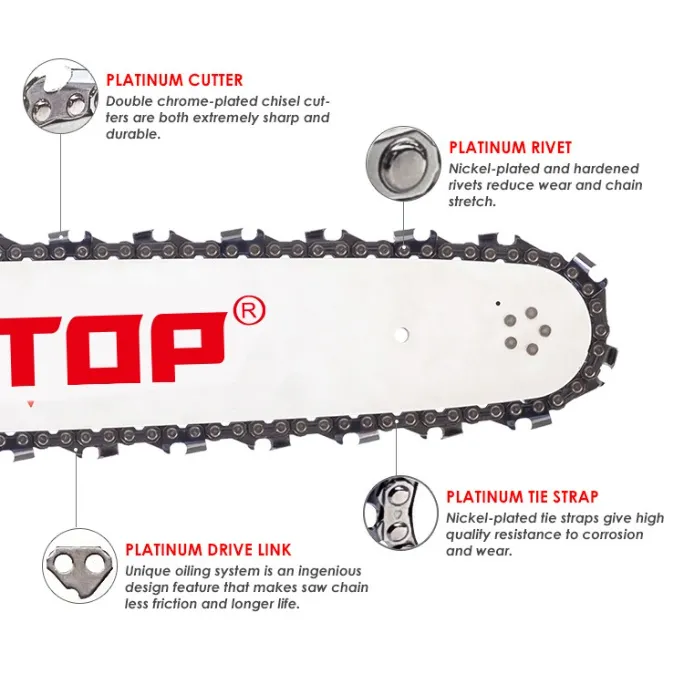
Une chaîne de tronçonneuse intègre trois composants principaux : des maillons de coupe pour trancher le bois., liens d'entraînement pour le transfert de puissance, et des sangles d'attache pour l'intégrité structurelle, disposées dans des séquences spécifiques pour contrôler les performances de coupe.
Couper les liens (Fraises)
Ce sont les principaux composants qui effectuent la coupe proprement dite.. Chaque fraise a une dent pointue et une jauge de profondeur (ratisseur) qui régule la profondeur de la dent dans le bois. La conception spécifique de la fraise détermine ses performances dans différentes conditions, impactant à la fois la vitesse et la durabilité.
- Dispose d'un coin coupant aiguisé chargé de trancher les fibres de bois.
- Comprend une jauge de profondeur qui contrôle l'épaisseur des copeaux de bois retirés.
- Disponible en burin complet, semi-ciseau, et conceptions de broyeurs pour différentes conditions de coupe.
Liens de lecteur
Les maillons d’entraînement sont la partie inférieure de la chaîne qui s’engage avec le pignon de la tronçonneuse. Ils tirent la chaîne autour du guide-chaîne et aident à distribuer l'huile pour la lubrification. L’épaisseur de ces maillons définit le calibre de la chaîne, qui doit correspondre précisément à la rainure du guide-chaîne pour un fonctionnement sûr et efficace.
- La partie de la chaîne qui s'insère dans la rainure du guide-chaîne et est propulsée par le pignon.
- Leur épaisseur détermine le calibre de la chaîne, qui doit correspondre au guide-chaîne.
- Indispensable pour transférer la puissance du moteur à la chaîne.
Sangles à nouer
Les sangles d'attache sont des composants de connexion qui maintiennent les maillons de coupe et les maillons d'entraînement ensemble dans le bon ordre.. Ils ne coupent pas mais apportent à la chaîne sa structure et sa souplesse, utiliser des joints rivetés pour permettre à la chaîne de se déplacer en douceur autour du guide-chaîne.
- Relie tous les maillons ensemble à l'aide de joints rivetés.
- Permet à la chaîne de se déplacer de manière flexible autour du guide-chaîne.
- Garantit l’espacement et la disposition appropriés des couteaux et des maillons d’entraînement.
Arrangements de séquence de chaîne
La séquence fait référence au motif des couteaux sur la chaîne. Dispositions communes comme la norme, demi-saut, et le saut complet affectent la vitesse et la douceur de coupe, en particulier sur les barres de guidage plus longues où un dégagement efficace des copeaux est un facteur critique pour les performances.
- Séquence standard: Possède un cutter sur un maillon sur deux pour une coupe plus douce.
- Séquence de semi-saut: Dispose d'un espace supplémentaire entre les groupes de couteaux pour un meilleur dégagement des copeaux.
- Sauter la séquence: A le plus d'espace entre les couteaux, idéal pour les barres longues et les scies puissantes.
Détails clés sur les mesures de la chaîne
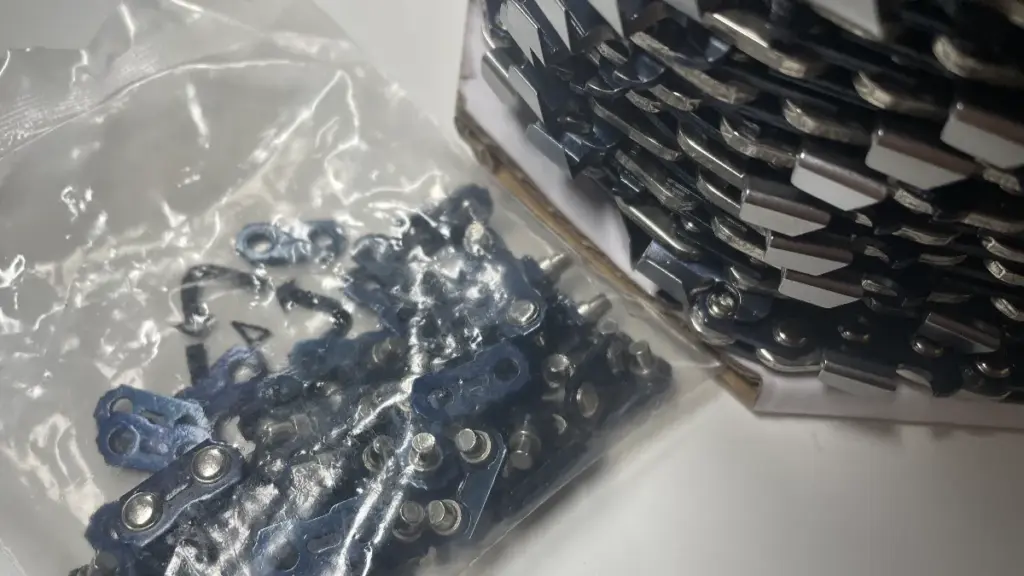
Faire correspondre correctement le pas de la chaîne au pignon et son calibre au guide-chaîne n'est pas négociable pour un fonctionnement sûr et efficace de la tronçonneuse..
| Mesures | Définition | Tailles courantes |
|---|---|---|
| Pas de chaîne | Distance entre trois rivets consécutifs, divisé par deux. Doit correspondre au pignon d'entraînement. | 1/4″, .325″, 3/8″, .404″ |
| Jauge de chaîne | L'épaisseur des maillons d'entraînement. Doit s'insérer précisément dans la rainure du guide-chaîne. | .043″, .050″, .058″, .063″ |
Tailles courantes de pas sur une chaîne de tronçonneuse
- 3/8″ est la taille la plus courante, spécialement pour les tronçonneuses grand public. Beaucoup de ces scies utilisent un briquet “profil bas” ou “Culminer” variante pour rebond réduit.
- .325″ est standard pour de nombreuses scies professionnelles semi-professionnelles et de milieu de gamme, Équilibrer vitesse de coupe et durabilité.
- 1/4″ est un pas plus petit utilisé sur les scies résidentielles légères ou les scies à découper spécialisées où la précision est la clé.
- .404″ est un terrain robuste réservé aux véhicules de grande puissance, scies professionnelles à grande cylindrée utilisées dans les opérations forestières et forestières exigeantes.
Épaisseur de pas courante sur une chaîne de tronçonneuse
- Les tailles de jauge les plus courantes sont .043″ (1.1 mm), .050″ (1.3 mm), .058″ (1.5 mm), et .063″ (1.6 mm).
- Le .050″ La jauge est devenue une norme industrielle pour une large gamme de tronçonneuses grand public et professionnelles..
- Pour éliminer les incertitudes, les fabricants apposent généralement la mesure de jauge requise directement sur le talon du guide-chaîne de la tronçonneuse.
Comment calculer le pas d'une tronçonneuse sur une chaîne de tronçonneuse?
| Méthode | Description | Action clé |
|---|---|---|
| 3-Mesure des rivets | La mesure physique standard de l'industrie pour trouver la distance de base. | Utilisez un pied à coulisse pour mesurer du centre du premier rivet au centre du troisième.. |
| Calcul | Convertit la mesure à 3 rivets en mesure finale, valeur de pas standard de l'industrie. | Divisez la distance mesurée par deux. |
| Vérification des marquages estampés | Confirme le pas calculé à l’aide des spécifications fournies par le fabricant. | Vérifiez les numéros estampés sur le guide-chaîne, conduire des liens, ou dans le manuel du propriétaire. |
La méthode de mesure standard à 3 rivets
La méthode industrielle universelle pour déterminer le pas d'une tronçonneuse consiste à mesurer la distance entre les centres de trois rivets consécutifs sur la chaîne.. Cette technique fournit une base de calcul cohérente quel que soit le fabricant de la chaîne..
- Sélectionnez trois rivets d'affilée sur la chaîne de tronçonneuse.
- Utilisez un pied à coulisse ou une règle précise pour mesurer la distance exacte entre le centre du premier rivet et le centre du troisième rivet..
- Assurez-vous que la chaîne est tendue mais pas étirée pendant la mesure pour obtenir une lecture précise.
Appliquer la méthode « Diviser par deux »’ Formule
Après avoir mesuré la distance entre trois rivets, la hauteur finale est calculée en divisant cette mesure par deux. Cette formule simple convertit la mesure en taille de pas standard de l'industrie..
- Prenez la distance totale que vous avez mesurée (par ex., 0.75 pouces).
- Divisez cette valeur par deux pour déterminer la hauteur (par ex., 0.75 pouces / 2 = 0.375 pouces).
- Convertir le résultat décimal en son équivalent de fraction commune; Par exemple, 0.375 pouces est égal à 3/8″ pas.
Vérification du pas à l'aide de marques estampillées
Pour confirmer votre calcul ou ignorer complètement la mesure, vérifier les informations de pas inscrites directement sur l'équipement. Les fabricants fournissent souvent ces détails sur le guide-chaîne ou sur la chaîne elle-même pour garantir la compatibilité..
- Inspecter la barre de guidage, généralement près de l'extrémité du moteur, pour les numéros estampillés indiquant le pas, jauge, et générer le nombre de liens.
- Examinez les maillons d'entraînement de la chaîne pour un code ou un numéro d'identification qui correspond à son pas.
- La référence au manuel du propriétaire de votre tronçonneuse fournit également la spécification de pas correcte sans avoir besoin de mesurer.
Comment mesurer les jauges sur une chaîne de tronçonneuse?
Mesurer le calibre d’une tronçonneuse – l’épaisseur de ses maillons d’entraînement – est une étape non négociable pour un fonctionnement sûr, et tandis que les étriers offrent une précision, vérifier les marques estampées sur la barre est la méthode la plus efficace.
Utiliser des outils pour une mesure précise
La jauge est l’épaisseur du maillon d’entraînement qui s’insère directement dans la rainure du guide-chaîne. Pour une lecture précise, un pied à coulisse est l'outil le plus fiable. Il fournit une mesure exacte en millièmes de pouce. Alternativement, une jauge go/no-go offre un moyen rapide de confirmer le bon ajustement sans avoir besoin de lire une mesure.
- Utilisez des mâchoires d’étrier pour mesurer directement l’épaisseur d’un seul maillon d’entraînement.
- Une jauge go/no-go a deux fentes de taille; le lien du lecteur doit glisser facilement dans le bon emplacement mais être bloqué par le plus petit.
La méthode des pièces pour une approximation rapide
Lorsque les outils spécialisés ne sont pas disponibles, vous pouvez utiliser des pièces de monnaie communes pour obtenir une estimation approximative de la jauge. Cette méthode consiste à insérer parfaitement une pièce de monnaie dans la rainure de la barre.. Avant de tenter cela, assurez-vous que la rainure est complètement exempte de copeaux de bois, huile, ou des débris pour éviter une lecture inexacte.
- Un États-Unis. le centime est d'environ 0,050″ épais.
- Un États-Unis. le centime est d'environ 0,058″ épais.
- Un États-Unis. le quart est d'environ 0,063″ épais.
Recherche de marquages existants et de tailles courantes
Le moyen le plus simple d’identifier le bon calibre est d’inspecter le guide-chaîne de la tronçonneuse lui-même.. Les fabricants tamponnent généralement les spécifications requises, y compris la jauge, directement sur le métal près du point de montage. Cela élimine tout besoin de mesure manuelle. Faire correspondre la jauge est essentiel; une chaîne trop fine peut dérailler du guide, tandis qu'une chaîne trop épaisse liera, créant une friction et une chaleur excessives.
Les tailles de jauge standard que vous rencontrerez incluent .043″, .050″, .058″, et .063″.
Avantages et inconvénients des conceptions à pas haut profil et à profil bas
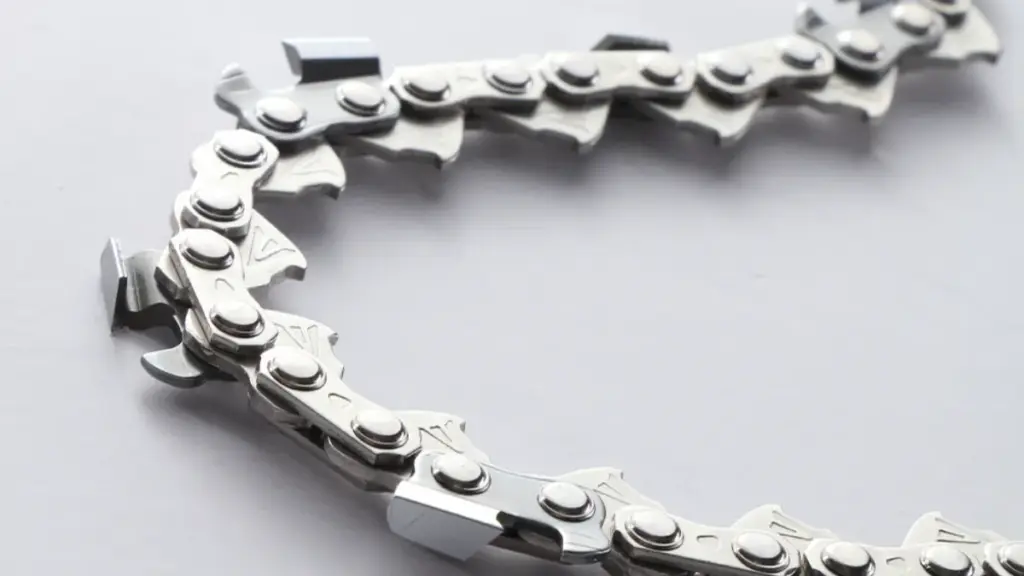
Le choix entre un pas de chaîne haut et bas est un compromis direct entre la puissance de coupe agressive requise pour la foresterie professionnelle et les caractéristiques de sécurité améliorées nécessaires pour un usage résidentiel..
Chaînes haut de gamme: Performances et applications
Haut profil, ou standard, les chaînes sont conçues pour les applications professionnelles et intensives. Ils donnent la priorité à la vitesse et à la puissance de coupe, ce qui en fait le premier choix pour les travaux forestiers et les tâches qui nécessitent des performances élevées de la part des scies à essence.
- Optimisé pour une coupe agressive et une efficacité dans les travaux exigeants.
- Idéalement associé aux tronçonneuses dont la cylindrée du moteur est plus importante.
- Présente un risque plus élevé de rebond, nécessitant des compétences et de l'expérience pour manipuler en toute sécurité.
Chaînes à profil bas: Sécurité et accessibilité
Les chaînes discrètes dominent le marché grand public et résidentiel. Leur conception intègre des fonctions de sécurité qui réduisent le rebond, ce qui les rend idéaux pour les propriétaires, travaux légers, et scies électriques ou à batterie.
- Conçu pour minimiser l'intensité et la fréquence des rebonds.
- Offre un rendu plus fluide, coupe plus contrôlée, ce qui est idéal pour les utilisateurs moins expérimentés.
- Fonctionne bien avec les scies de faible puissance et est courant sur les équipements destinés à l'entretien général de la cour..
Principaux compromis: Durabilité et entretien
Choisir entre les deux modèles revient à équilibrer performances et sécurité. Les chaînes haut de gamme sont plus durables pour les environnements de production élevée, mais les chaînes à profil bas offrent une accessibilité au prix d'une usure plus rapide.
- Les chaînes standard durent généralement plus longtemps en cas d'utilisation professionnelle constante.
- Les chaînes à profil bas sont construites avec la sécurité des utilisateurs comme priorité, ce qui peut affecter leur ténacité globale.
- Les professionnels sélectionnent le pas en fonction de la tâche de coupe spécifique, tandis que les consommateurs bénéficient de la sécurité intégrée des chaînes à profil bas.
Comment sélectionner le pas en fonction du type de pignon de votre tronçonneuse
Le pas de la chaîne d’une tronçonneuse doit correspondre exactement au pas de son pignon d’entraînement; tout décalage endommagera la scie et créera un risque important pour la sécurité.
| Type de pignon | Caractéristique clé | Flexibilité du terrain |
|---|---|---|
| Pignon Pignon | Un seul, composant solide avec dents intégrées directement dans le corps principal. | Fixé. Le pas ne peut pas être modifié sans remplacer l'ensemble du pignon. |
| Pignon de jante | Un système en deux parties avec un tambour central et un, jante remplaçable qui maintient les dents. | Modulaire. Le pas peut être modifié en échangeant uniquement la jante contre une taille différente. |
Pas de pignon assorti au pas de chaîne
La règle la plus importante lors de la sélection d'une chaîne est que son pas doit correspondre exactement au pas du pignon d'entraînement.. L'utilisation de composants incompatibles entraîne une usure rapide des maillons d'entraînement, pignon, et barre de guidage. Cela entraîne de mauvaises performances de coupe et crée des risques potentiels pour la sécurité dus au glissement ou à la rupture de la chaîne.. Cette compatibilité n'est pas négociable pour le bon fonctionnement de la tronçonneuse.
- Le pignon de votre tronçonneuse, barre de guidage, et la chaîne doivent toutes être conçues pour la même mesure de pas (par ex., .325″, 3/8″).
- Vérifiez le pignon lui-même pour un numéro estampillé indiquant son pas; c'est la principale mesure à suivre.
- Un décalage empêche les maillons d’entraînement de la chaîne de s’asseoir correctement dans les dents du pignon, provoquant un glissement et des dommages à la chaîne.
Identifier votre type de pignon: Jante vs. Éperon
Les tronçonneuses utilisent l'un des deux types de pignons pour entraîner la chaîne: un système de pignon droit ou de pignon sur jante. Alors que les deux remplissent la même fonction, le système de pignon de jante offre plus de flexibilité pour changer le pas de la scie. Identifier le type de votre scie aide à déterminer le chemin le plus simple pour la sélection et le remplacement des composants..
- Un pignon droit est un simple, pièce solide avec des dents qui engagent directement la chaîne. Son pas est fixe.
- Un pignon de jante se compose d'un tambour central et d'un, jante remplaçable qui contient les dents.
- Avec un pignon de jante, vous pouvez modifier le pas de votre scie en échangeant simplement la jante contre une autre avec une mesure de pas différente, à condition qu'un guide-chaîne et une chaîne compatibles soient également utilisés.
Utilisation des spécifications du fabricant pour une compatibilité garantie
Pour éliminer les incertitudes, référez-vous toujours aux spécifications techniques du fabricant de votre modèle de tronçonneuse. Dès 2026, la plupart des fabricants de qualité professionnelle fournissent des tableaux de compatibilité détaillés qui garantissent que tous les composants fonctionnent ensemble de manière transparente en tant que système intégré. S'en tenir à ces recommandations officielles est le moyen le plus sûr de garantir à la fois la sécurité et les performances..
- Consultez le manuel du propriétaire de votre tronçonneuse, qui répertorie l'équipement d'origine (OEM) spécifications pour le terrain.
- Recherchez les tableaux de compatibilité sur le site Web du fabricant ou dans les catalogues de produits pour votre modèle de scie spécifique..
- Le respect de ces recommandations officielles garantit que la chaîne, bar, et la combinaison de pignons ont été testées pour leur sécurité et leurs performances optimales.
Pourquoi choisir les chaînes NEWTOP à pas d'usine pour la durabilité?
Surveillance directe de l'usine, de l'usinage CNC au contrôle qualité final, produit des chaînes avec un pas précis et une intégrité des matériaux, ce qui se traduit par une durée de vie opérationnelle plus longue et des performances fiables.
À NOUVEAUTOP, Le pas et le calibre de la chaîne sont conçus dans le cadre d'un système de transmission de puissance complet et ne sont pas traités comme des composants isolés..
Nos chaînes sont fabriquées avec:
- Espacement des rivets de précision CNC
- Maillons d'entraînement traités thermiquement
- Fraises en acier allié à haute teneur en carbone
- Tests de compatibilité avec la géométrie de pignon standard de l'Oregon
Nous collaborons avec des fournisseurs mondiaux de composants tels que les normes de l'Oregon et Walbro pour garantir la précision dimensionnelle et la durabilité..
Avec plus 500,000 unités de capacité de production annuelle et exportations vers 65+ pays, Les chaînes NEWTOP sont conçues pour:
- Exploitation forestière
- Coupe de bois agricole
- Préparation du bois de chauffage
- Aménagement paysager commercial
Pour les partenaires OEM, nous offrons:
- Configurations personnalisées de pas et de jauge
- Options de revêtement anticorrosion
- Personnalisation des emballages
- Marque privée
Quand la durabilité, précision, et la compatibilité globale est importante, les systèmes de pas adaptés en usine réduisent les taux de défaillance sur le terrain et augmentent la satisfaction client à long terme.
Conclusion
La sélection du pas et du calibre corrects pour votre chaîne de tronçonneuse est essentielle à la fois pour la sécurité et les performances.. Ces mesures précises garantissent la compatibilité avec votre guide-chaîne et votre pignon, prévenir les dommages à l'équipement et maximiser l'efficacité de coupe. Une bonne correspondance offre un résultat plus fluide, coupe plus rapide tout en réduisant le risque de rebond.
Pour garantir que votre équipement soit toujours prêt, prenez un moment pour confirmer les exigences en matière de pas et de calibre pour vos scies. Si vous recherchez du durable, chaînes spécifiées en usine qui éliminent les incertitudes, notre équipe peut fournir un catalogue de produits complet.
Foire aux questions
Qu'est-ce que 3/8 Moyenne du pitch LP?
3/8 LP signifie pas à profil bas de 3/8 de pouce. Il a le même espacement des rivets que le standard 3/8″, mais hauteur de coupe plus petite pour réduire le rebond et la charge du moteur.
Qu'est-ce que .325 pas moyen sur une tronçonneuse?
.325 le pas fait référence à une chaîne où l'espacement des rivets divisé par deux est égal 0.325 pouces. Il est couramment utilisé sur les tronçonneuses de taille moyenne pour des performances de coupe équilibrées..
Est .325 ou 3/8 meilleur emplacement pour le bois de chauffage?
Le meilleur pas pour le bois de chauffage dépend de la puissance de votre tronçonneuse. Un .325″ la chaîne à pas est plus efficace sur les scies entre 40 et 60 cc, offrant une coupe plus douce avec moins de vibrations. Pour des scies plus puissantes (60cc+), le plus grand 3/8″ le pitch est supérieur, car ses couteaux plus gros enlèvent le bois de manière plus agressive pour une coupe plus rapide des bûches de grand diamètre.
Quelle est la différence entre un 3.8 et un .325 chaîne de tronçonneuse?
La principale différence réside dans la taille et l’espacement des couteaux.. 3/8″ les chaînes ont des couteaux plus grands et enlèvent plus de matière par passage, alors que .325 les chaînes offrent une manipulation plus douce et une demande modérée du moteur.
Quel pas est le meilleur pour une tronçonneuse?
Le meilleur pas dépend de la taille du moteur et de l'application prévue. Les petites scies de propriétaire utilisent souvent 3/8″ LP. Utilisation de scies de milieu de gamme .325. Les scies forestières professionnelles utilisent 3/8″ standard ou .404.
Pouvez-vous exécuter une chaîne de pas différente sur le même bar?
Non, vous ne pouvez pas exécuter une chaîne de pas différente sur le même guidon. Le pas de la chaîne doit correspondre parfaitement au pignon avant du guide-chaîne et au pignon d’entraînement de la scie.. Un décalage empêchera la chaîne de s'asseoir correctement, entraînant une usure rapide, dommages à l'équipement, et un risque important pour la sécurité. Utilisez toujours le pas spécifié pour votre barre.
Que se passe-t-il si j'utilise la mauvaise chaîne de jauge?
L'utilisation d'une mauvaise chaîne de jauge crée de mauvaises performances et un grave risque pour la sécurité.. Si la jauge est trop fine, la chaîne s'insèrera sans serrer dans la rainure du guide-chaîne, provoquant une instabilité, mauvais huilage, et un risque élevé de déraillement. Si la jauge est trop épaisse, il ne rentre pas du tout dans la rainure de la barre, rendant l'opération impossible.
Est 3/8 profil bas le même que 3/8 standard?
Non, 3/8″ profil bas (LP) ce n'est pas la même chose qu'un 3/8 standard″ chaîne. Alors que les deux partagent la mesure du pas de 0,375 pouce, la version LP a un châssis plus petit avec des couteaux et des jauges de profondeur plus courts. Cette conception réduit le rebond et est destinée aux petits, scies moins puissantes. Ils ne sont pas interchangeables et nécessitent des pignons d'entraînement différents.
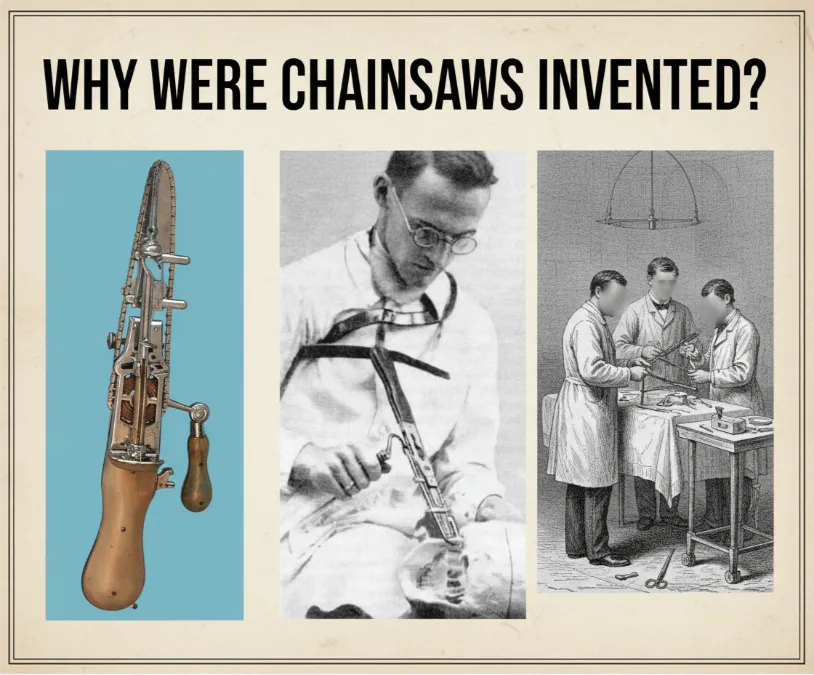
Chainsaws are now inseparable from forestry, logging, défrichement, and professional arboriculture. Yet when you search “why were chainsaws invented?”, you may be surprised to discover that their origin story has little to do with cutting timber.
Understanding the evolution of chainsaws—from early medical instruments to today’s high-performance gas and lithium-powered machines—reveals how technological innovation responds to real human needs. It also explains why modern chainsaws are engineered the way they are: puissant, durable, ergonomic, and safety-focused.
In this article, we’ll explore the original purpose of chainsaws, how they transitioned into forestry tools, and how they evolved into the indispensable outdoor power equipment we rely on today.
Why Were Chainsaws Invented in the First Place?
Contrary to popular belief, the chainsaw was developed in the late 18th century not for forestry, but as a surgical instrument to assist in difficult childbirths.
Chainsaws were invented in the late 18th century to solve a medical problem—not a logging one.
Before modern surgical techniques and anesthesia, certain childbirth complications required physically enlarging the pelvic bone to allow delivery. Traditional surgical tools were slow and traumatic. Doctors sought a more efficient way to cut bone with greater precision and less time under procedure.
This led to the development of an early chain-and-blade device that could rotate around bone and cut in a controlled manner. It was manually operated and far removed from the powerful engine-driven machines we associate with chainsaws today.
The underlying concept, cependant, was revolutionary:
- A continuous chain with cutting teeth
- Guided around a bar or frame
- Designed for repetitive cutting motion
This mechanical principle—rotating cutting teeth on a chain—would later become the foundation of modern chainsaw technology.
The Original Use of Chainsaws in Medical History
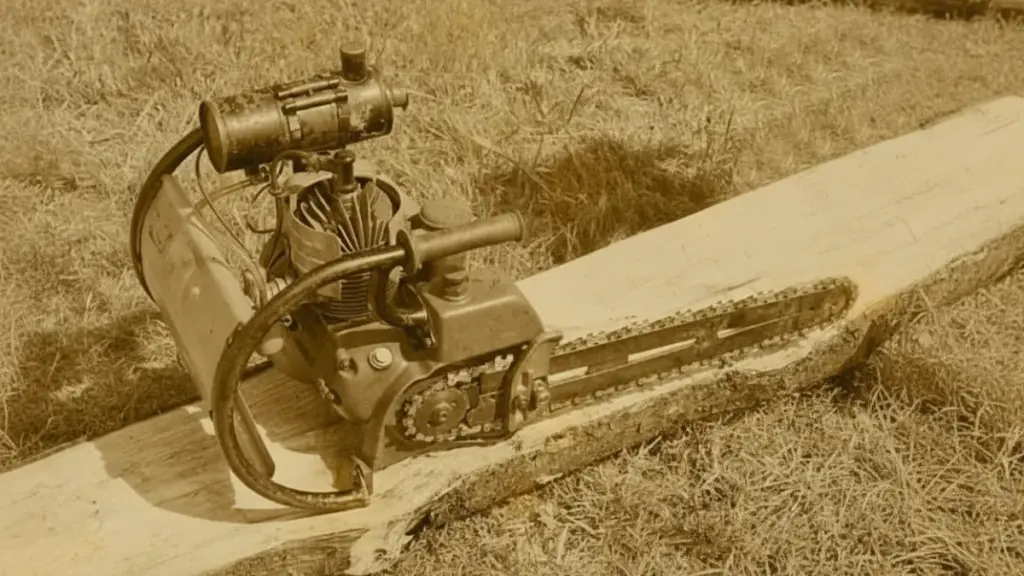
The chainsaw originated not in forestry but in late 18th-century operating rooms as a hand-cranked surgical instrument for bone cutting, primarily during obstructed childbirth.
| Key Development | Inventor / Key Figure | Primary Application |
|---|---|---|
| Initial Surgical Saw Concept | John Aitken & James Jeffray (c. 1785) | Symphysiotomy (widening pelvis during childbirth) and bone excision. |
| The Osteotome | Bernhard Heine (c. 1830) | Standardized tool for various surgical bone-cutting operations. |
| Transition to Industrial Use | N/A (Industry Shift) | Repurposed for woodcutting as medical practices evolved. |
Invention for Childbirth and Bone Surgery
Around 1785, Scottish doctors John Aitken and James Jeffray developed the first chainsaw as a surgical instrument. Its purpose was to perform a symphysiotomy—a procedure that widened the pelvis during obstructed childbirth by cutting through bone and cartilage. Before this invention, surgeons relied on manual knives, making the process slow and dangerous. The chainsaw provided a faster and more precise method for this operation and was also used for the excision of diseased bone.
The Osteotome: A Surgical Refinement
The medical chainsaw concept continued to evolve. Dans 1830, German physician Bernhard Heine created a more refined version called the osteotome. This was a hand-cranked device featuring a cutting chain that ran along a guiding blade, giving surgeons better control and precision during bone excisions. Heine’s osteotome became a standard surgical tool and remained in use throughout much of the 19th century for various bone-cutting procedures.
Transition from Operating Room to Forest
By the early 20th century, the medical chainsaw’s use declined sharply. The primary reason was the increased safety and viability of the Cesarean section, which made the symphysiotomy procedure obsolete. With its original purpose gone, the core technology was adapted for an entirely new field: woodcutting. This shift marked the beginning of its transformation from a specialized surgical instrument into the powerful forestry tool we recognize today, paving the way for motorized, portable designs.
When Did Chainsaws Start Being Used for Woodcutting?
The chainsaw’s shift from a medical instrument to a forestry tool began with late 19th-century patents and became practical with the introduction of portable, motorized designs in the early 20th century.
Early Patents for Woodcutting
The transition of chainsaw technology from surgical applications to forestry began in the late 19th century. Frederick L. Magaw received the first patent for a wood-cutting “chain sawing machine” dans 1883, envisioning a tool for producing boards. This was followed by a 1906 patent for an “Endless Chain Saw,” which was specifically engineered to fell giant redwood trees. These early patents established the conceptual framework for using a continuous cutting chain in the timber industry, even if practical, portable models were still decades away.
The First Motorized and Portable Chainsaws
Moving from patent to practice required a power source. The first known experiment with a gasoline-powered chainsaw took place in 1905 in Eureka, California, proving that motorization was a viable path forward. The next critical step was portability. Dans 1918, Canadian James Shand developed and patented the first truly portable chainsaw. This innovation was a significant shift, as it allowed the tool to be brought directly to the trees, setting the stage for its eventual widespread use in remote logging operations.
Establishment as a Standard Forestry Tool
The 1920s marked the commercial birth of the modern chainsaw. Andreas Stihl designed the first electric model in 1926 and followed it with a petrol-driven version in 1929. These machines, while heavy and often requiring two operators, were effective enough to gain traction in the forestry industry. The final milestone that cemented the chainsaw as an essential tool came around 1950 with the introduction of the first one-man model. This development made it possible for a single operator to work independently, dramatically increasing productivity and accelerating the tool’s adoption worldwide. His company, STIHL, would later become one of the most recognized names in the industry.
The Evolution of Chainsaws Over Time
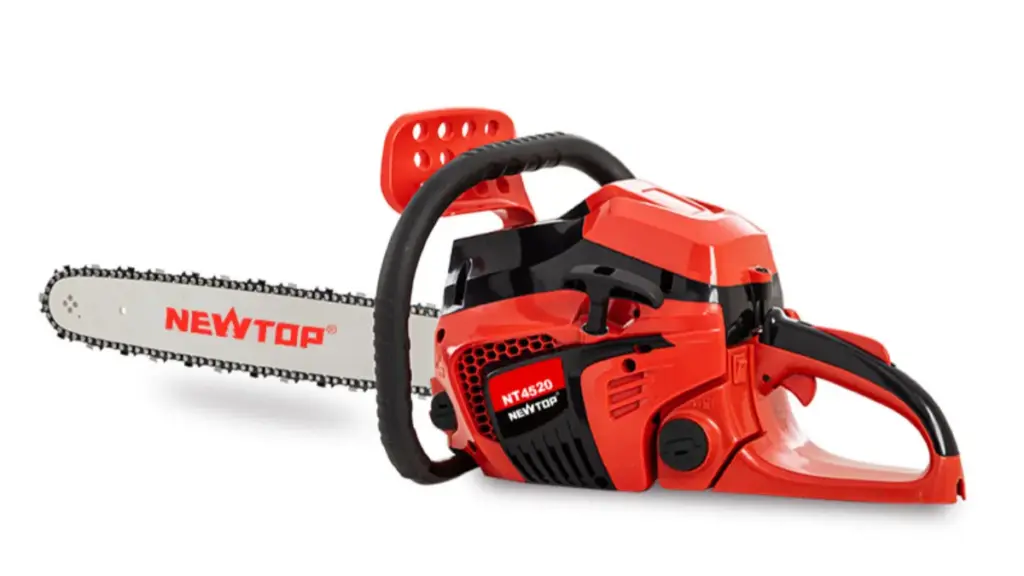
Chainsaw evolution is a story of shedding weight and complexity, moving from massive two-operator industrial machines to lightweight, single-user tools engineered for safety, efficacité, and versatility.
| Era | Key Development | Poids & Operator Impact |
|---|---|---|
| 1920s–1940s | First Gas & Electric Models | Extremely heavy (100+ livres / 45+ kilos); required two operators. |
| 1950s | The First One-Man Chainsaw | Weight reduced to 25–35 lbs (11–16 kg), enabling single-person use. |
| 1960s–1980s | Improved Power-to-Weight & Safety | Weight dropped to ~15 lbs (6.8 kilos); anti-vibration systems introduced. |
| 1990s–Present | Emphasis on Safety & Émissions | Standard models 9–11 lbs (4–5 kg); chain brakes and low-emission engines are standard. |
The evolution of chainsaws mirrors the broader development of outdoor power equipment.
Early Industrial Chainsaws (1920s–1940s)
Early gas-powered models weighed over 40–60 pounds (18–27 kg). They were bulky and difficult to maneuver. Despite this, they represented a massive improvement over manual saws in terms of cutting speed and output.
Post-War Technological Improvements (1950s–1970s)
After World War II, advancements in lightweight alloys and two-stroke engine design made chainsaws more compact and powerful. One-person operation became feasible.
Brands such as Husqvarna and McCulloch helped popularize consumer-grade chainsaws.
During this period, innovations included:
- Anti-vibration systems
- Improved chain brake mechanisms
- Automatic chain lubrication
- Better carburetion systems
These changes improved both performance and operator safety.
Modern High-Performance Era (1980s–Present)
Today’s chainsaws are engineered for durability, power efficiency, et confort d'utilisation. They are available in multiple configurations:
- Gasoline-powered chainsaws
- Corded electric chainsaws
- Lithium battery-powered chainsaws
Professional forestry chainsaws now deliver optimized power-to-weight ratios, precision-engineered guide bars, and advanced chain designs for reduced kickback and smoother cutting.
En même temps, battery chainsaws are rapidly growing in popularity for landscaping, entretien municipal, and home garden applications due to:
- Lower noise levels
- Zero direct emissions
- Reduced maintenance
- Instant start functionality
The evolution reflects not only mechanical innovation but also changing environmental regulations, user expectations, and global market demands.
Modern Uses of Chainsaws Today
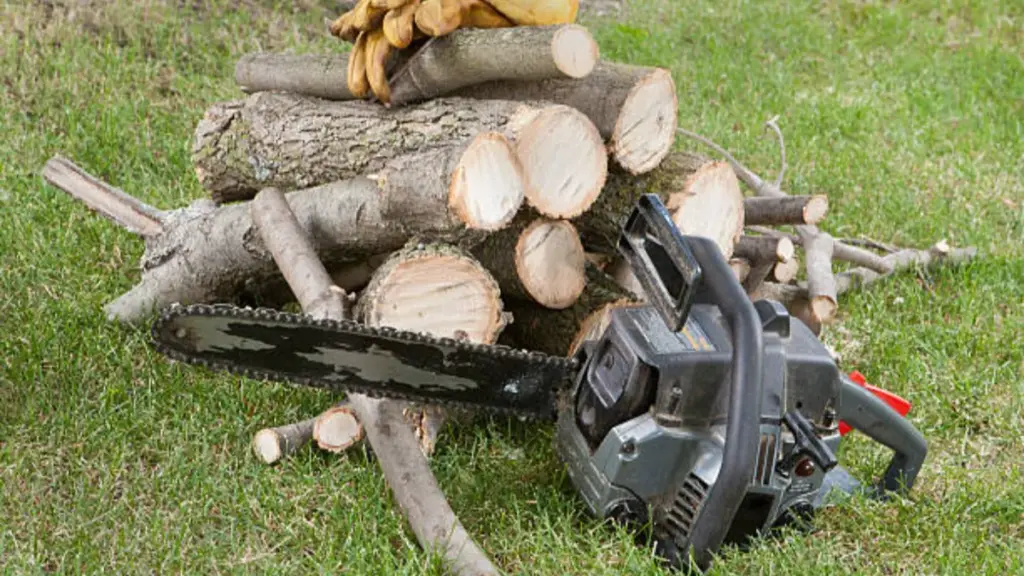
Modern chainsaws have expanded beyond traditional logging into specialized professional roles like mass-timber construction, post-storm salvage, and utility vegetation management.
Modern chainsaws are no longer limited to logging. Their applications span multiple industries:
- Forestry and timber harvesting
- Arborist tree trimming
- Land clearing and agriculture
- Disaster recovery and storm cleanup
- Construction and demolition
- Firewood processing
- Garden and property maintenance
Professional logging chainsaws are engineered for extended operation under heavy loads, often exceeding 300 hours of durability under standardized testing conditions. Entre-temps, mid-range and entry-level models serve farmers, entrepreneurs, and DIY users. Battery-powered models have expanded chainsaw accessibility, particularly in emerging markets where portability and low maintenance are valued.
Pour distributeurs and agricultural equipment suppliers looking for reliable mid-range solutions, brands such as NOUVEAUTOP (Shanghai-based outdoor power equipment manufacturer since 2003) provide a comprehensive portfolio covering gasoline, électrique, and lithium-powered chainsaws. Explore our full range of chainsaws and request a personalized quote today to find the model that fits your market needs.
Common Myths and Misconceptions About Chainsaw Origins
The most persistent myths about chainsaw origins incorrectly attribute the tool to forestry and German inventors, masking its true 18th-century Scottish medical roots and the 140-year gap before its adoption for woodcutting.
Myth 1: Chainsaws Were Invented for Cutting Trees
The primary misconception is that chainsaws were designed for forestry. All evidence shows the tool was created as a medical instrument. Scottish doctors John Aitken and James Jeffray developed the first prototypes between 1783 et 1785 to cut bone during difficult childbirths, a procedure known as a symphysiotomy. Their device was a hand-cranked saw with a segmented blade, designed for surgical precision, not felling timber. Its purpose was to make a dangerous and slow medical procedure faster and safer.
Myth 2: A German Inventor Created the First Chainsaw
Another common belief credits German inventors with the chainsaw’s creation, but this confuses motorization with invention. The tool’s origin is Scottish, predating any German contributions by several decades. While the foundational concept was a Scottish medical innovation, German engineers like Andreas Stihl played a critical role in adapting and motorizing the chainsaw for forestry applications in the 1920s. They transformed the existing concept into a powerful industrial tool, but they did not invent the original device.
Myth 3: The Tool Quickly Evolved from Surgical to Logging Use
Many people underestimate the timeline of the chainsaw’s evolution. There was a significant gap of over 140 years between its use as a precision surgical device and its adaptation as a motorized woodcutting tool. The medical prototype existed in the 1780s, but powered forestry tools based on the same principle did not appear until the 1920s. This slow transition highlights the massive engineering leap required to convert a small, hand-cranked surgical instrument into a robust, engine-powered machine capable of industrial logging.
Conclusion
The chainsaw began as a surprising medical device and evolved into the powerful woodcutting tool we recognize today. Its history is a clear example of how a tool’s function can dramatically change through innovation. Modern designs reflect over a century of development focused on operator safety and efficiency.
If this history makes you reconsider your own equipment, explore our catalog of modern chainsaws built for safety and performance. Our specialists can help you select the right tool for your application.
Foire aux questions
Was the chainsaw really invented for childbirth?
Partially. The original late-18th-century chain osteotome was designed to assist in bone-cutting procedures, including certain childbirth complications. Cependant, it was not comparable to modern woodcutting chainsaws.
Who invented the first gas-powered chainsaw?
German engineer Andreas Stihl is credited with patenting one of the first practical gasoline-powered chainsaws in 1929, laying the foundation for commercial forestry chainsaw development.
What did the first chainsaw look like?
The earliest version resembled a small hand-cranked surgical instrument with a serrated chain loop—not an engine-powered machine.
How heavy were original industrial chainsaws?
Early 20th-century industrial chainsaws often weighed between 40 et 60 pounds (18–27 kg) and required two operators
Why did chainsaws replace manual crosscut saws?
Chainsaws dramatically increased cutting speed, reduced labor requirements, and improved productivity in large-scale timber harvesting. Au fil du temps, improved reliability and fuel efficiency made them economically advantageous.
What were chainsaws invented for?
Chainsaws were originally invented for surgical bone cutting. They were later adapted for forestry and industrial woodcutting, eventually becoming essential tools in logging, agriculture, aménagement paysager, and construction.
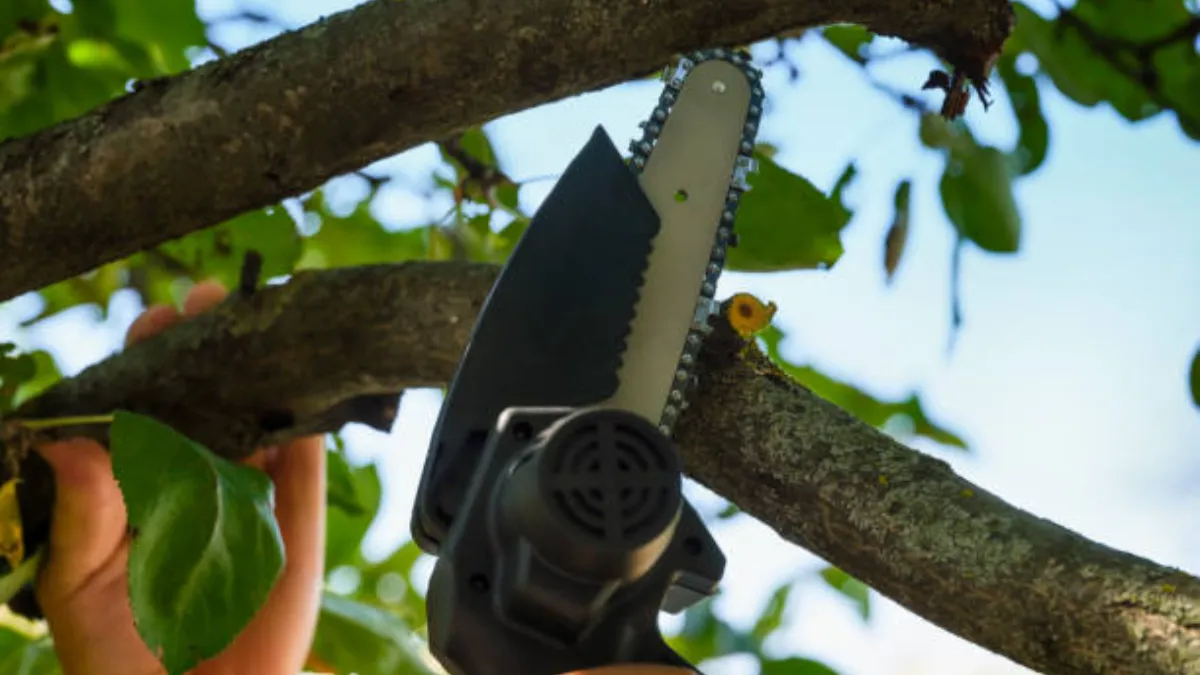
Alors que nous nous dirigeons vers 2026, le paysage de l’entretien des jardins évolue vers l’efficacité, ergonomie, et liberté sans fil. Compact et puissant, les mini tronçonneuses révolutionnent l'entretien du jardin grâce à leur conception légère et leur commodité sans fil. Idéal pour la taille, garniture, et coupe de bois légère, ces outils d'élagage portatifs offrent une efficacité sans l'encombrement des modèles pleine grandeur.
Dans ce guide, nous explorons les meilleures sélections de mini tronçonneuses pour 2026, se concentrer sur les avancées technologiques des systèmes lithium-ion et pourquoi ces centrales compactes deviennent un incontournable dans chaque remise à outils.
Qu'est-ce qu'une mini tronçonneuse? L’essor de l’élagage manuel
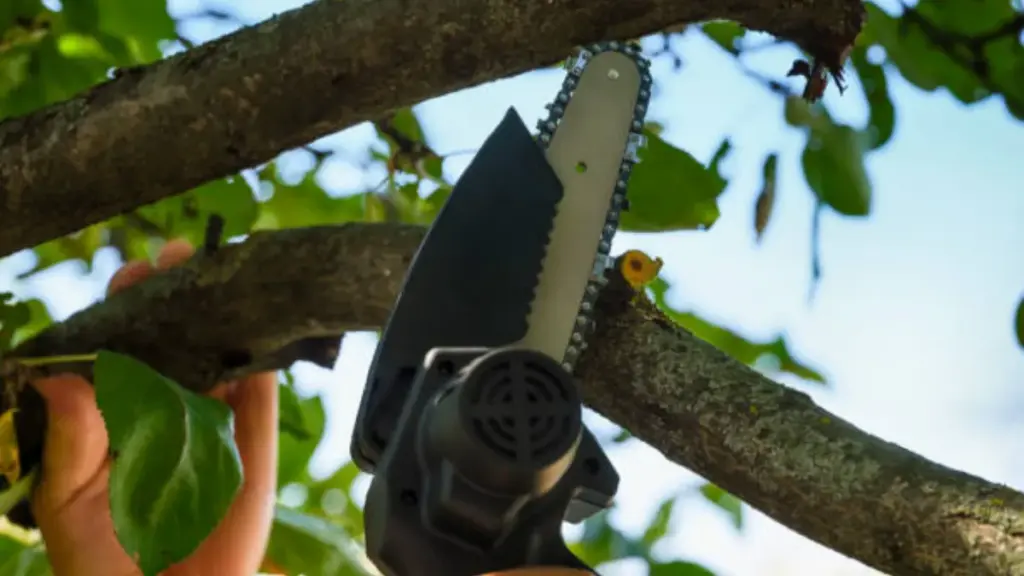
Par 2026, la mini tronçonneuse est passée d'un outil professionnel de niche à un outil grand public, solution alimentée par batterie pour les propriétaires, motivée par une demande d’équipements d’élagage accessibles et moins exigeants physiquement.
La mini tronçonneuse moderne est légère, alternative conviviale aux modèles traditionnels, conçu spécifiquement pour les coupes légères à modérées. La croissance de son marché est une réponse directe à la demande des consommateurs et des prosommateurs en matière de produits compacts., des outils accessibles qui ne nécessitent pas la force physique ou le niveau d’expérience de plus grands, scies à essence. La conception de base donne la priorité à la commodité et au contrôle de la puissance brute, ce qui en fait un outil pratique pour l'entretien courant de la propriété.
- La plupart des modèles sont sans fil et alimentés par batterie, offrant une portabilité maximale pour les travaux autour d'une propriété.
- Les conceptions mettent l'accent sur la manipulation ergonomique pour donner à l'utilisateur un meilleur contrôle et réduire la fatigue pendant l'utilisation.
- Ils sont conçus pour des tâches telles que l’élagage des branches d’arbres, tailler les arbustes envahis par la végétation, et couper du bois pour des projets de bricolage à petite échelle.
Principales tendances technologiques 2026
Les avancées technologiques récentes se concentrent sur l’amélioration de l’efficacité énergétique, sécurité des opérateurs, et la commodité générale. Les fabricants se sont concentrés sur le perfectionnement des systèmes de batterie et l'intégration de mesures de sécurité robustes pour rendre ces outils plus fiables pour une base d'utilisateurs plus large.. Cette avancée technique a fait passer les mini-tronçonneuses d'un article de nouveauté à un équipement fiable pour un usage résidentiel., où le faible bruit et la facilité de manipulation sont des facteurs d'achat essentiels.
- L'industrie a largement adopté des moteurs en cuivre à haut rendement et des systèmes de batteries lithium-ion à chargement rapide..
- Les fonctionnalités de sécurité avancées telles que les freins de chaîne automatiques et les chaînes à faible rebond deviennent la norme.
- Les conceptions modernes réduisent considérablement le bruit et les vibrations, ce qui les rend adaptés à une utilisation dans des environnements suburbains.
Extension des applications au-delà de l'usage professionnel
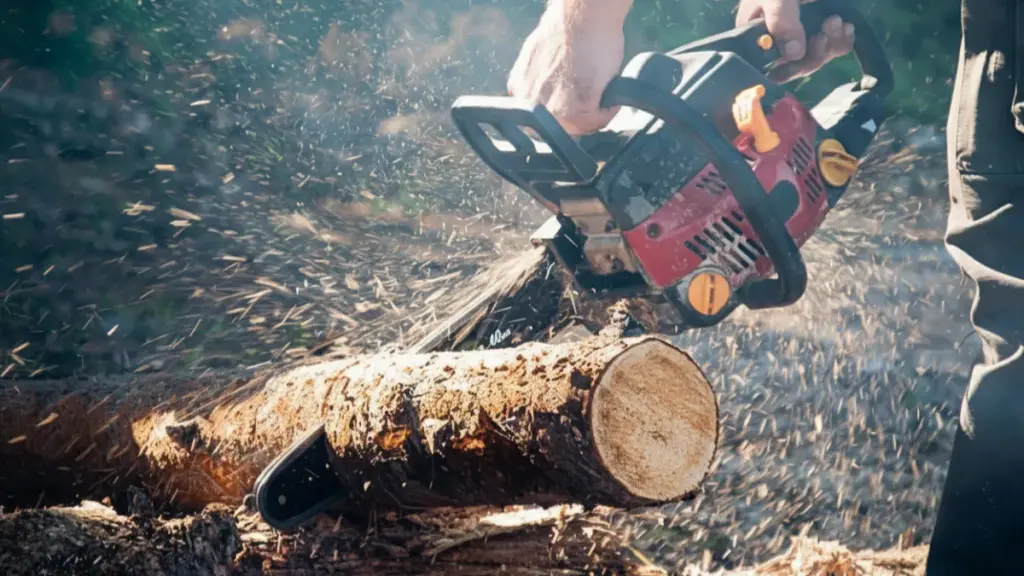
Les mini-tronçonneuses sont passées avec succès d'un outil spécialisé pour les arboriculteurs à un instrument polyvalent pour le consommateur moyen.. Leur fonctionnement simple et leur taille gérable ont ouvert de nouvelles applications dans l'entretien ménager général., loisirs de plein air, et même la préparation aux situations d'urgence. Ce changement reflète une tendance plus large vers le compact, des outils alimentés par batterie qui résolvent les problèmes quotidiens sans la complexité des équipements traditionnels.
- Largement utilisé pour le jardinage domestique, branches d'élagage, et nettoyer de petites parcelles de broussailles.
- Un outil courant dans les projets de bricolage pour réaliser rapidement, coupes nettes dans divers matériaux en bois.
- Sert de complément pratique aux kits de camping, entretien des sentiers, et nettoyage des tempêtes.
Avantages et inconvénients des mini tronçonneuses pour l'entretien du jardin
Le principal compromis avec les mini-tronçonneuses est clair: ils offrent une commodité et une portabilité exceptionnelles pour les tâches légères, mais sont fondamentalement limités par l'endurance de la batterie et la puissance de coupe, ce qui les rend impropres aux applications lourdes.
| Aspect | Avantages | Inconvénients |
|---|---|---|
| Portabilité | Ultra-léger (2-6 livres), utilisation à une main | Limité aux petits travaux |
| Pouvoir | Moteurs sans balais, 100+ coupures/facturation | Luttes avec du bois épais |
| Entretien | Graisseur automatique, tension sans outil | La durée de vie de la batterie varie (20-60 min) |
| Coût | Abordable ($50-200) | Les marques premium plus chères |
Avantages pour les jardiniers amateurs
Les mini tronçonneuses excellent dans l'entretien courant du jardin car leur conception donne la priorité à la convivialité. Les propriétaires bénéficient d’avantages significatifs grâce à leur portabilité et à leur faible entretien, en particulier pour l'élagage et la taille légère où une scie pleine grandeur serait excessive. L'évolution du marché vers ces outils reflète une demande de, équipement écologique pour l'entretien des propriétés résidentielles.
- Portabilité et conception légère: Leur taille compacte les rend faciles à manipuler pour des travaux rapides, réduire la fatigue physique généralement associée à des charges plus lourdes, équipement fonctionnant au gaz.
- Commodité sans fil et faible entretien: La puissance de la batterie au lithium-ion élimine complètement le besoin de mélanger le carburant et l’huile. Cela simplifie le fonctionnement et réduit considérablement l'entretien du moteur requis par les scies traditionnelles..
- Calme, Fonctionnement zéro émission: La puissance de la batterie signifie moins de bruit, ce qui les rend idéaux pour une utilisation dans les zones suburbaines ou résidentielles. Ils ne produisent aucune émission directe, qui constitue un puissant moteur d'achat pour les utilisateurs soucieux de l'environnement.
Limites et inconvénients pratiques
Bien que pratique, les limites pratiques d'une mini tronçonneuse sont définies par sa puissance et la durée de vie de sa batterie. Ces inconvénients limitent leur utilisation à des travaux légers et en font un choix inapproprié pour tout travail forestier exigeant ou professionnel.. La conception de base donne la priorité à la facilité de manipulation plutôt qu'aux performances brutes.
- Puissance et capacité de coupe limitées: Ces outils ont du mal avec les branches épaisses, feuillus denses, ou toute tâche au-delà du simple découpage. Leurs moteurs n’ont pas le couple nécessaire pour des travaux de coupe plus importants.
- Autonomie de la batterie et cycles de recharge: La durée de fonctionnement est strictement limitée par la capacité de la batterie. Les travaux plus importants sont souvent interrompus par la nécessité de remplacer les batteries ou d'attendre de longs cycles de recharge..
- Ne convient pas à un usage intensif ou professionnel: Le compromis pour la portabilité est une perte directe de puissance et de durabilité. Ils ne répondent pas aux normes de performance ou de robustesse requises pour un aménagement paysager ou un abattage d'arbres professionnel..
Équipez votre marché avec des outils de jardinage de qualité professionnelle

Modèles de mini tronçonneuses les mieux notés pour 2026: Une revue comparative
Pour 2026, les meilleures mini tronçonneuses allient agilité et performances de coupe, proposer des solutions fiables aux particuliers et aux professionnels. Ci-dessous, nous passons en revue les mini tronçonneuses les plus performantes qui définissent actuellement le marché, allant des modèles à essence haut de gamme aux sécateurs ergonomiques au lithium-ion.
4 Tronçonneuse NEWTOP NT2500 – Idéale pour l’élagage professionnel
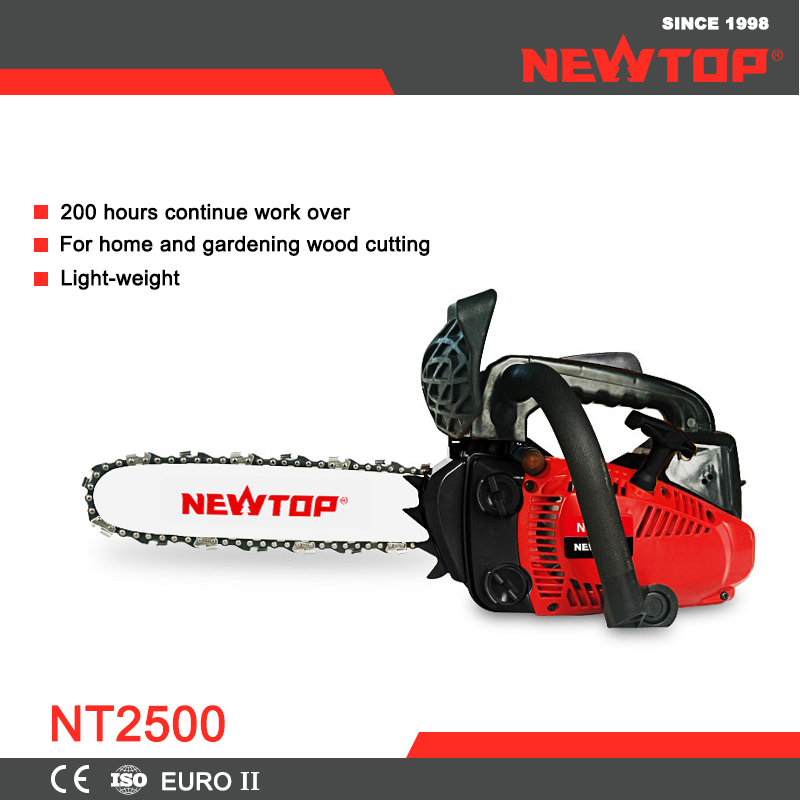
Le NOUVEAUTOP NT2500 est une tronçonneuse à essence à poignée supérieure conçue pour les arboriculteurs et les tâches exigeantes. Son moteur de 25,4 cm3 et son guidon de 12 pouces fournissent une puissance soutenue pour couper des branches jusqu'à 8 pouces d'épaisseur. Construit avec des composants haut de gamme comme les carburateurs Walbro et la conformité EURO II, il garantit une durabilité et un couple constant pour une utilisation toute la journée.
- Moteur: 25.4cm3 2 temps (0.9kW/1,2 CV)
- Longueur de la barre: 12 pouces (30.4cm)
- Poids: 3.5kg sec (7.7livres)
- Caractéristiques: Système anti-vibration, allumage numérique, 230réservoir de carburant en ml
| Avantages | Inconvénients |
|---|---|
| Autonomie illimitée avec recharges de carburant; couple élevé pour le bois dense | Nécessite un mélange de carburant et un entretien régulier du moteur |
| Durabilité de qualité professionnelle avec certifications CE/GS/EPA | Fonctionnement plus bruyant que les alternatives électriques |
Hachette Milwaukee M18 FUEL – Idéale pour les vitesses intensives
La hachette Milwaukee M18 FUEL offre une puissance et une vitesse impressionnantes, ce qui en fait un favori parmi les paysagistes professionnels. Intégré au système de batterie M18, il coupe sans effort des bois durs de 3 pouces et offre jusqu'à 120 réductions par charge. Son design ergonomique et ses pointes métalliques offrent un contrôle supérieur lors des séances de taille intensives..
- Tension: 18V Lithium-Ion
- Longueur de la barre: 8 pouces
- Poids: 4.9livres (outil nu)
- Caractéristiques: Moteur sans balais, huileur automatique, gâchette à vitesse variable
| Avantages | Inconvénients |
|---|---|
| Vitesse de coupe extrêmement rapide; qualité de construction robuste | Prix plus élevé par rapport aux modèles grand public |
| Compatible avec le vaste écosystème d'outils M18 | Plus lourde que les mini-tronçonneuses classiques de 6 pouces |
Ryobi 18V ONE+ HP – Idéal pour la polyvalence des propriétaires
La mini tronçonneuse 18 V ONE+ HP de Ryobi offre un équilibre parfait entre performances et commodité pour les bricoleurs. Fait partie du système massif ONE+, il est doté d'un moteur sans balais qui prolonge la durée de vie et l'autonomie du moteur. La barre compacte de 6 pouces est idéale pour tailler les branches et gérer la prolifération du jardin avec un minimum de fatigue.
- Tension: 18V Lithium-Ion
- Longueur de la barre: 6 pouces
- Poids: 3.7livres (outil nu)
- Caractéristiques: Tension de chaîne sans outil, gâchette ambidextre, conception sans huile
| Avantages | Inconvénients |
|---|---|
| Excellente valeur; la batterie fonctionne avec 260+ outils | Vitesse de coupe plus lente sur les bois durs |
| Léger et facile à manœuvrer pour les débutants | L'absence de graisseur automatique nécessite une lubrification manuelle |
Stihl GTA 26 – Idéal pour les détails de précision du jardin
Le Stihl GTA 26 est un sécateur à batterie ultra-compact conçu pour les travaux de jardinage détaillés et une portabilité maximale. Sa conception unique permet des coupes précises sur les arbustes et les petits arbres là où les scies plus grandes ne peuvent pas atteindre. Bien qu’il ne s’agisse pas d’un abatteur robuste, son fonctionnement silencieux et son ergonomie réfléchie le rendent parfait pour les zones résidentielles sensibles au bruit.
- Tension: 10.8V Lithium-Ion
- Longueur de la barre: 4 pouces
- Poids: 2.7livres (avec batterie)
- Caractéristiques: Indicateur de charge LED, capuche de protection souple, changement de chaîne sans outil
| Avantages | Inconvénients |
|---|---|
| Extrêmement léger et silencieux; contrôle précis | Capacité de coupe limitée pour les branches épaisses |
| Caractéristiques d'ingénierie et de sécurité allemandes de haute qualité | Autonomie courte de la batterie par charge (environ. 25 minutes) |
Mini Tronçonneuse vs. Tronçonneuse standard: Quand changer d’outil
Quand une mini tronçonneuse est le bon choix
Une mini tronçonneuse est l'outil idéal pour les travaux qui exigent de la portabilité, précision, et opération à une main. Sa conception légère le rend idéal pour l’élagage des branches d’arbres, tailler les arbustes envahis par la végétation, et couper du bois de chauffage de petit diamètre sans causer de fatigue à l'opérateur. Il est conçu pour être rapide, coupes contrôlées où une scie plus grande serait encombrante et dangereuse.
- À utiliser pour les branches et les journaux généralement sous 6 pouces de diamètre.
- Excellent pour les tâches d'entretien rapide autour du jardin ou de la propriété.
- Offre une maniabilité supérieure dans les espaces restreints ou lorsque vous travaillez sur une échelle.
- La puissance de la batterie offre un silence, solution sans émissions pour les zones résidentielles.
Quand utiliser une tronçonneuse standard
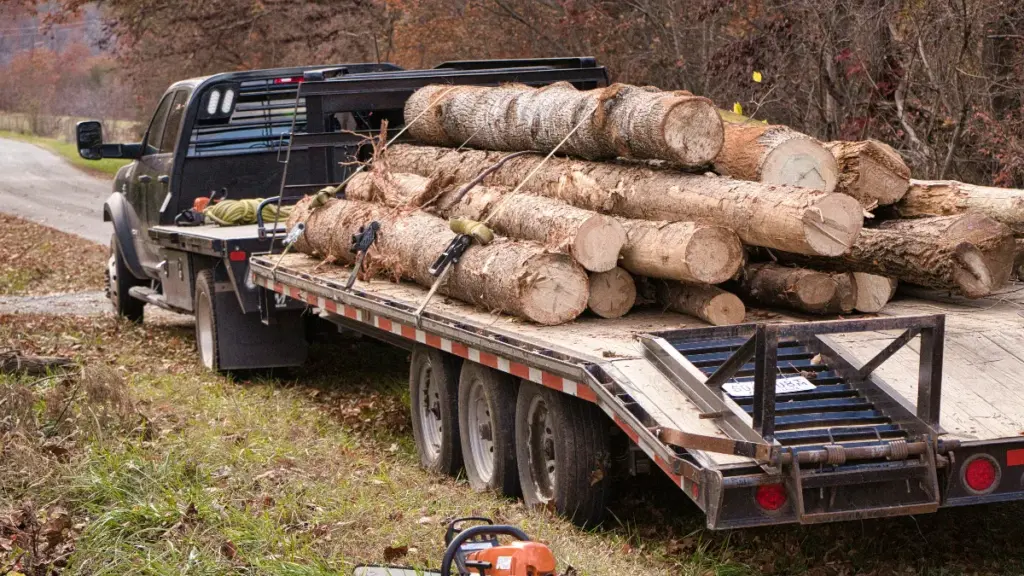
Pour les travaux lourds, une tronçonneuse standard est indispensable. Sa puissance supérieure et sa barre plus longue sont nécessaires pour abattre des arbres, tronçonner de grosses bûches en sections, et réparer les dégâts importants causés par la tempête. Tenter ces tâches avec une mini tronçonneuse est non seulement inefficace mais aussi extrêmement dangereux. Une scie standard offre la stabilité et la capacité de coupe nécessaires pour les travaux à grande échelle.
- Nécessaire pour abattre des arbres et couper du bois plus épais que 6-8 pouces.
- Fournit la puissance brute nécessaire au traitement efficace et sûr de grands volumes de bois.
- Conçu pour un contrôle à deux mains, offrant la stabilité nécessaire pour les coupes exigeantes.
- Les modèles alimentés au gaz offrent des performances durables pour travailler toute la journée dans des endroits éloignés sans accès à une recharge..
Principales différences de puissance et d'autonomie
La principale distinction entre ces outils réside dans leur source d'énergie et leur endurance.. Les mini tronçonneuses fonctionnent avec des batteries lithium-ion avec une autonomie typique de 30 à 100 minutes, ce qui les rend adaptés à court terme, emplois intermittents. Les tronçonneuses standard sont disponibles en options de batterie à essence et haute tension conçues pour une utilisation prolongée, fonctionnement continu sous forte charge.
- Les mini tronçonneuses offrent une commodité à emporter pour un travail rapide, réductions ciblées.
- Les tronçonneuses standard fournissent la puissance soutenue requise pour les projets de plusieurs heures.
- La durée du travail dicte le choix de l’outil; une mini scie est pour l'élagage, tandis qu'une scie standard gère une journée complète de transformation du bois.
Comment choisir la meilleure mini tronçonneuse en fonction de la longueur du guidon
Choisir la bonne longueur de barre est un compromis crucial entre la capacité de coupe brute et la maniabilité requise pour des tâches spécifiques., impactant directement l’efficacité de l’outil et le contrôle de l’utilisateur.
Comprendre la longueur des barres et la capacité de coupe
La longueur du guide d’une mini tronçonneuse définit directement le diamètre maximum du bois que vous pouvez couper en un seul passage. Cette mesure reflète la zone de coupe active, de la pointe de la barre à l'avant du corps de la scie. Pour la plupart des travaux résidentiels 2026, modèles avec barres entre 10 et 14 les pouces offrent un solide équilibre entre capacité et contrôle. Une ligne directrice fiable consiste à choisir une barre qui est au moins deux pouces plus longue que les branches les plus épaisses que vous avez l'intention de couper.. Cette taille rend la plupart des mini-tronçonneuses idéales pour l'élagage, enterrement, et traitement des journaux jusqu'à 12 pouces de diamètre.
Faire correspondre la longueur de la barre à la source d'alimentation
Les performances d’une mini tronçonneuse reposent sur une relation bien équilibrée entre la longueur de sa barre et la puissance du moteur.. Modèles électriques sans fil sont spécialement conçus pour associer des barres plus courtes à la puissance de leur batterie afin d'obtenir une efficacité optimale. Ces systèmes fonctionnent mieux avec 10- aux barres de 12 pouces qui demandent moins de puissance, ce qui aide à préserver la durée de vie de la batterie et à maintenir le couple de coupe. Tenter d'installer une barre plus longue sur un moteur sous-alimenté entraînera une coupe lente, liaison fréquente en chaîne, et une usure prématurée des composants. Les fabricants conçoivent ces outils comme des systèmes intégrés pour fournir des, des performances fiables pour les utilisateurs visés.
| Longueur de la barre | Cas d'utilisation principal | Diamètre de coupe maximal (Typique) |
|---|---|---|
| 10 Pouces | Taille légère, tailler les arbustes, coupe détaillée | Jusqu'à 8 pouces |
| 12 Pouces | Entretien général de la cour, nettoyer les membres, petit bois de chauffage | Jusqu'à 10 pouces |
| 14 Pouces | Couper des branches plus épaisses et abattre de petits arbres | Jusqu'à 12 pouces |
Pourquoi choisir NEWTOP pour votre entreprise?
En tant que TOP 5 fabricant d'équipement de jardin en Chine, NOUVEAUTOP a bâti une réputation mondiale fondée sur trois piliers: Fiabilité, Prix, et service professionnel. Nous sommes spécialisés dans la réduction du fossé entre la fabrication à grand volume et support de marché localisé.
- Échelle de fabrication: Notre usine de production de 10 000㎡ est équipée d’usinage de précision CNC et de lignes d’assemblage automatisées, produire plus de 500,000 unités chaque année pour assurer des chaînes d’approvisionnement stables pour nos partenaires.
- Logistique mondiale & Soutien: Avec 20+ succursales à l’étranger et entrepôts dédiés, nous fournissons un support après-vente localisé et une disponibilité des pièces de rechange – un niveau de service qui “en ligne uniquement” les marques ne peuvent pas correspondre.
- Expertise OEM/ODM: Nous proposons des services de personnalisation complets, vous permettant d'ajuster les spécifications du produit, image de marque, et un emballage adapté aux exigences de votre marché local tout en utilisant nos plates-formes mécaniques éprouvées.
- Assurance qualité: Chaque unité est soumise à des tests rigoureux, y compris l'inspection des matières premières et un cycle de durabilité de 500 heures, s'assurer que nos outils répondent aux normes CE, GS, et les normes EPA.
Associez-vous à un important fabricant d’équipements motorisés extérieurs
Cherchez-vous à élargir votre inventaire avec des, machines de jardinage performantes? Que vous soyez un distributeur régional, un propriétaire de marque à la recherche de solutions OEM, ou un grand détaillant, nous fournissons la stabilité de fabrication et l’expertise technique dont vous avez besoin pour vous développer.
Contactez notre équipe commerciale dès aujourd'hui pour demander un catalogue de gros ou discuter des exigences de fabrication OEM..
Foire aux questions
Quel est un fabricant de mini tronçonneuse fiable sur le marché?
NEWTOP se distingue comme un fabricant fiable avec des usines certifiées ISO9001, portion 100+ partenaires mondiaux et en tête du classement Alibaba. Des marques comme Milwaukee et Stihl jouissent également de la confiance, mais NEWTOP offre une valeur supérieure pour des performances de niveau intermédiaire.
Une mini tronçonneuse peut-elle couper des branches épaisses?
Oui, modèles de qualité avec 8-10 barres en pouces coupées 4-8 branches en pouces efficacement, surtout les versions lithium 21V. Évitez de dépasser les limites recommandées pour éviter toute contrainte ou contrainte motrice.
Combien de temps dure une batterie de mini tronçonneuse?
La durée d'exécution varie: 12V les piles durent 20-30 minutes (50 coupes); 21Offre des modèles V/24V 45-90 minutes (100+ coupes). Des facteurs tels que la densité du bois affectent cela; Les packs haute décharge de NEWTOP excellent.
Les mini tronçonneuses sont-elles sans danger pour les débutants?
Absolument, avec des fonctionnalités telles que les verrous de déclenchement, gardes, et chaînes à faible rebond. Commencez par 4-6 barres en pouces et suivez les manuels - plus sûrs que les modèles à essence en raison de l'absence de fumées et de démarrages par traction.
Les mini tronçonneuses ont-elles besoin d'être huilées?
Oui. Même s'ils sont électriques, le frottement de la chaîne génère de la chaleur. La plupart des modèles disposent d'un système de graissage semi-automatique ou nécessitent quelques gouttes de barre & huile de chaîne tous les 10-15 minutes d'utilisation pour assurer une coupe lisse.
Quelle est la meilleure taille de guide pour une mini tronçonneuse?
6-10 pouces équilibre la puissance et le contrôle pour la plupart des utilisateurs. Débutants: 6 pouces; travaux de jardin polyvalents: 10 pouces comme ceux de NEWTOP pour des membres plus épais.
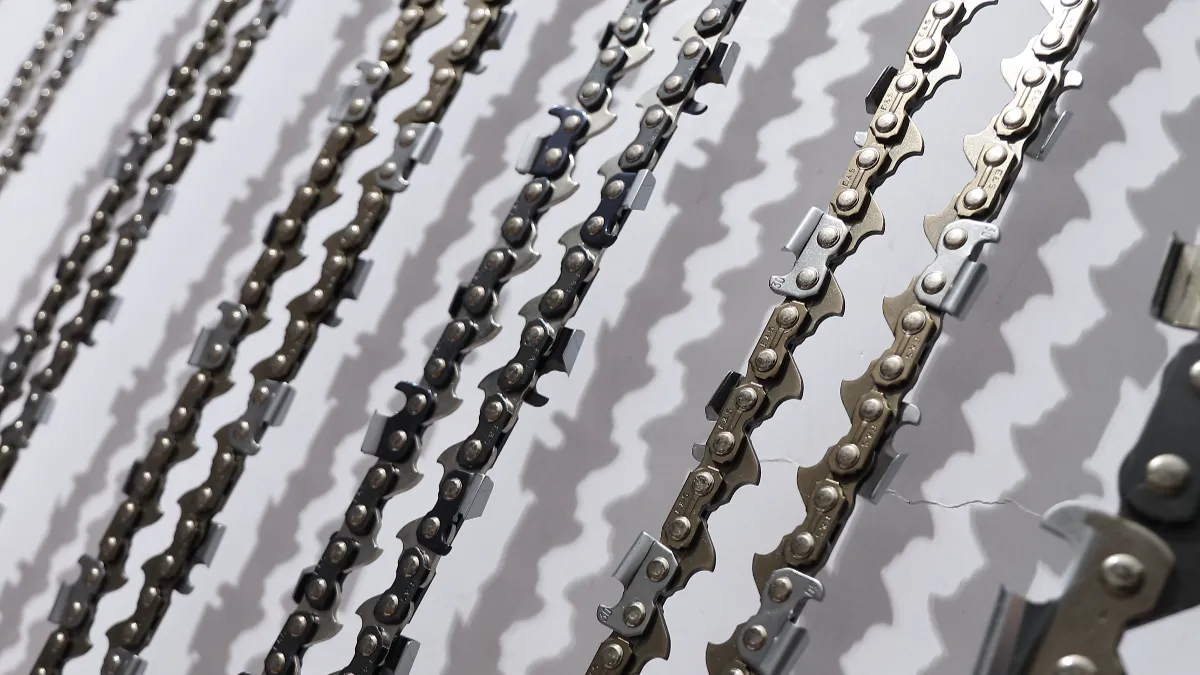
Selecting the right chainsaw chain—often referred to as chainsaw blades—can transform your cutting efficiency, sécurité, and tool longevity. This guide breaks down chainsaw chain types, geometry, specs, and selection tips to help you make informed choices for your projects.
What are Chainsaw Blades?
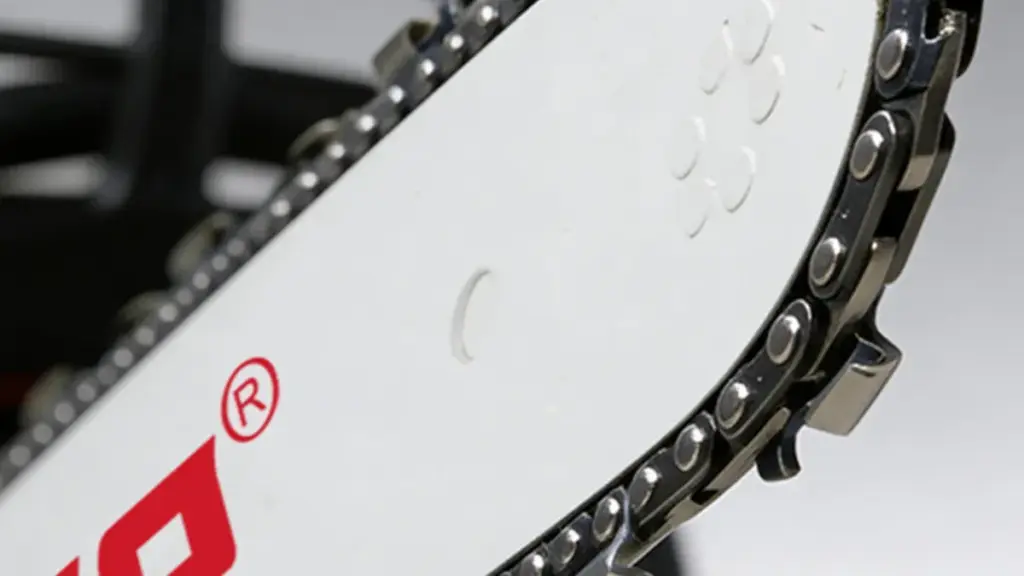
Chainsaw blades, more accurately called saw chains, are the cutting components looped around a chainsaw’s guide bar. The geometry of these teeth—their shape, angle, and corner design—is the primary factor that determines the chain’s cutting speed and its suitability for different wood types.
The mechanical structure of a modern cutting chain consists of 4 primary components:
- Cutter Teeth: The functional part of the chain responsible for wood removal. Each tooth features a depth gauge (ou “ratisseur”) and a sharpened cutting edge.
- Liens de lecteur: These links sit inside the groove of the guide bar and interface with the saw’s drive sprocket, transferring the engine’s torque into linear motion.
- Sangles à nouer: These serve as the connecting plates that hold the cutters and drive links together.
- Rivets: High-strength steel pins that act as pivot points, allowing the chain to remain flexible while maintaining high tensile strength under load.
Tooth Shape and Corner Design
The most significant variation in chain geometry is the cutter’s corner shape. Aggressive, square-cornered teeth define full-chisel chains and are built for maximum speed in clean hardwood. Rounded corners, found on semi-chisel and chipper chains, offer superior durability and maintain sharpness far longer when cutting in dirty, frozen, or abrasive conditions.
- Full-chisel chains use sharp, square corners to slice wood fibers with maximum efficiency.
- Semi-chisel and chipper chains have rounded corners that are more resistant to dulling from dirt and debris.
- Low-profile chains use smaller, rounded cutters engineered to reduce the potential for dangerous kickback.
Pitch and Gauge: Standardized Blade Sizing
Pitch and gauge are the two standardized measurements that ensure a chain is compatible with the chainsaw’s guide bar and drive sprocket. Pitch is the average distance between drive links, while gauge is the thickness of the drive links that ride inside the guide bar’s groove. Matching the chain’s pitch and gauge to the bar and sprocket is non-negotiable for safe and effective operation. Mismatched components can cause derailment and poor performance.
- Common pitch sizes include 1/4″, .325″, and 3/8″.
- Standard gauge measurements are .043″, .050″, et .058″.
Drive Links and Tie Straps: Chain Assembly
Drive links are the portions of the chain that sit within the guide bar groove. They engage the saw’s sprocket to propel the chain forward and guide it accurately. Tie straps are the connecting links that hold the cutters and drive links together to form a complete loop. The total number of drive links dictates the chain’s length. The sequence of cutters and tie straps also affects the chain’s cutting smoothness and vibration levels. Ensemble, these components transfer power from the engine to the wood with functional precision.
Differences Between Each Type of Chainsaw Chain
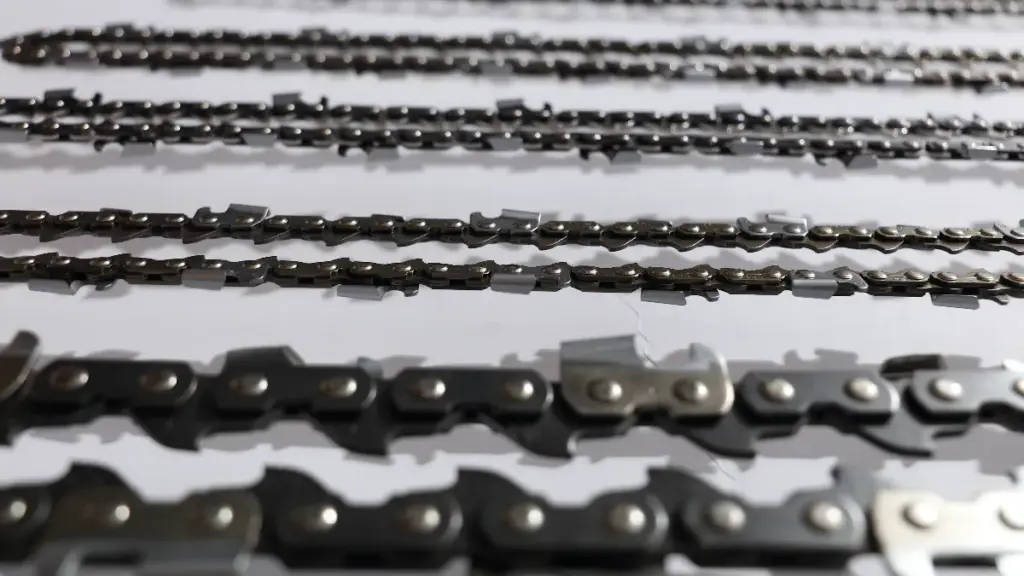
Picking the right chainsaw blade boils down to balancing speed, toughness, sécurité, and upkeep. Here’s a full comparison table covering the most common types—from tooth profiles to layouts—across key dimensions. Use it to match your saw, wood, and job perfectly.
| Chain Type | Full-Chisel | Semi-Chisel | Micro-Chisel (Low-Profile) | Chipper | Skip Tooth |
|---|---|---|---|---|---|
| Tooth Profile | Square corners | Rounded corners | Small rounded | Highly rounded (? shape) | Spaced out teeth |
| Typical Pitch/Gauge | .325″-.404″/.050″-.063″ | .325″/.050″ | 3/8″ LP/.043″-.050″ | 3/8″-.404″/.050″ | .404″/.058″-.063″ |
| Cutting Speed | Très élevé | Haut | Moyen | Medium-Low | Très élevé |
| Durabilité | Faible (dulls fast) | Haut | Moyen | Medium-High | Haut |
| Kickback Risk | Haut | Moyen | Faible | Very Low | Haut |
| Entretien | Haut (precise sharpening) | Moyen | Faible | Faible | Faible |
| Power Requirement | Haut (50cc+) | Moyen (40-60cc) | Faible (30-50cc) | Low-Medium (35-55cc) | Haut (60cc+) |
| Primary Wood Type | Clean hard/soft | Dirty/frozen | Softwoods | Soft/clean | Wet/thick logs |
| Best Use Case | Clean wood milling | Bois de chauffage, dirty wood | Taille, beginners | Light safety tasks | Long bars, logging |
Full-Chisel Blades: Pros and Cons for Fast Clean Cuts
Full-chisel blades use aggressive, square-cornered teeth to deliver maximum cutting speed in clean wood, but this performance comes at the cost of high maintenance and a significant kickback risk.
Key Advantages: Speed and Cutting Efficiency
Full-chisel blades feature sharp, square-cornered teeth designed for aggressive cutting performance. They excel at moving through wood quickly, delivering clean finishes ideal for professional applications where speed is a priority. The geometry of the cutters slices wood fibers efficiently, resulting in faster work with less operator effort compared to other chain types.
- Delivers the fastest cutting speeds, particularly effective for felling and processing large-diameter hardwood and softwood logs.
- Produces clean, smooth cuts with minimal tear-out, making it suitable for tasks requiring a high-quality finish.
- The design enables rapid chip removal, which helps reduce binding and clogging during deep cuts.
Significant Disadvantages: High Maintenance and Kickback Risk
The trade-off for high performance is increased maintenance and a greater safety risk. The blade’s sharp corners dull easily in abrasive conditions, and its aggressive bite increases the likelihood of dangerous kickback. These chains are less forgiving and demand constant attention to maintain their edge.
- Dulls quickly, especially when cutting dirty or frozen wood, requiring frequent and technically challenging sharpening.
- Presents a high kickback risk due to its aggressive tooth design, making it unsuitable for inexperienced operators.
- More sensitive to dirt, sand, and debris, which can rapidly degrade cutting performance and damage the chain.
Ideal Use Cases for Professional Operators
Full-chisel blades are best suited for skilled professionals working in controlled environments with clean wood. Their benefits are maximized when operators can safely manage kickback and maintain the blade properly. It is a specialized tool for high-volume, precision work, not general-purpose cutting.
- Suited for experienced loggers and arborists performing felling and bucking tasks in clean conditions.
- Less appropriate for beginners, propriétaires, or for work in unpredictable environments like storm cleanup.
- Requires an operator who can handle the increased power and safely manage the saw’s behavior.
Boost Your Margins with Reliable Equipment
Semi-Chisel Blades: Durability Benefits in Dirty Environments
Semi-chisel chains are the industry standard for harsh conditions because their rounded-corner tooth design prioritizes dulling resistance and operational uptime over the raw cutting speed of full-chisel blades.
Rounded Tooth Design for Dulling Resistance
The primary advantage of a semi-chisel blade comes from its rounded-corner tooth design. This less aggressive shape is far more resistant to dulling when cutting through wood contaminated with dirt, sand, or ice compared to the sharp point of a full-chisel blade. Its forgiving profile absorbs impacts from foreign objects that would otherwise chip or damage a sharper chain.
- Maintains a usable cutting edge for longer, reducing the frequency of sharpening.
- Handles accidental contact with ground debris without immediate failure.
- Ideal for processing firewood, défricher un terrain, or cutting lumber in construction environments.
Extended Working Life in Harsh Conditions
These chains are built to last in imperfect conditions, often maintaining operational efficiency for 40-60 hours of active use before requiring service. This longevity makes them a cost-effective choice for demanding industrial, sylviculture, and agricultural applications where equipment uptime is critical. They deliver consistent performance where wood quality is unpredictable.
- Excels at cutting through dirty, frozen, or debris-laden wood.
- Reduces downtime associated with frequent chain sharpening or replacement.
- Provides reliable cutting when wood quality is low or inconsistent.
Balancing Cutting Speed with Lower Maintenance
A semi-chisel blade cuts slightly slower than a full-chisel blade in clean wood, but its durability creates a valuable trade-off. The reduced need for maintenance and lower risk of kickback make it a safer, more reliable option for most users. The rounded profile is also easier for operators to sharpen correctly compared to the precise angles of a full-chisel chain.
- A practical choice where equipment reliability is prioritized over raw cutting speed.
- Forgiving geometry simplifies the field sharpening process.
- Balanced performance is well-suited for both professional and semi-professional users.
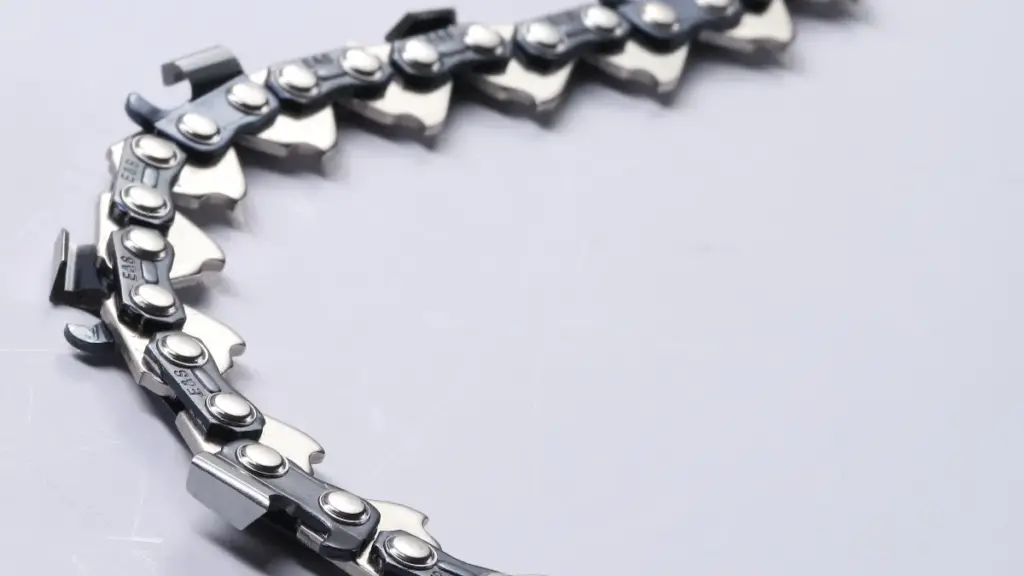
Chipper and Low-Profile Chains: Safety for Entry-Level Saws
Chipper and low-profile chains are now the industry baseline for entry-level equipment, engineered with integrated safety features that prioritize operator protection over raw cutting speed.
Low-Kickback Chain Designs
Chipper and low-profile chains are specifically engineered to reduce the risk of kickback, making them a standard safety component on consumer saws by 2026. These designs incorporate guard links between the cutters, a feature that physically prevents the chain from digging in too deeply at the tip of the bar—the primary cause of dangerous kickback events. This geometry is designed to meet established safety standards like ANSI B175.1, deliberately trading aggressive cutting speed for enhanced operator safety. This makes them the default choice for new or infrequent users who benefit most from the forgiving design.
Integrated Anti-Kickback Systems
Modern entry-level saws now include passive anti-kickback mechanisms directly in their core design. These systems are no longer positioned as premium add-ons but have become baseline safety features across the market. This shift reflects a broader industry trend toward built-in operator protection, driven by a need to both enhance user safety and reduce manufacturer liability. These integrated systems work in tandem with low-kickback chains to create a multi-layered defense against operational hazards.
Standardized Engineering Controls
Beyond the chain itself, current saws feature mandatory engineering controls to provide further layers of protection. Features such as strategically placed emergency shutoff systems and rubber infeed curtains are now common practice, not optional upgrades. This approach treats hardware-based safety innovations as foundational, complementing the expectation that operators will also use proper technique and personal protective equipment (EPI). The goal is a comprehensive safety system where the tool itself provides a high degree of inherent protection.
How to Choose the Right Chainsaw Blade Based on Wood Hardness
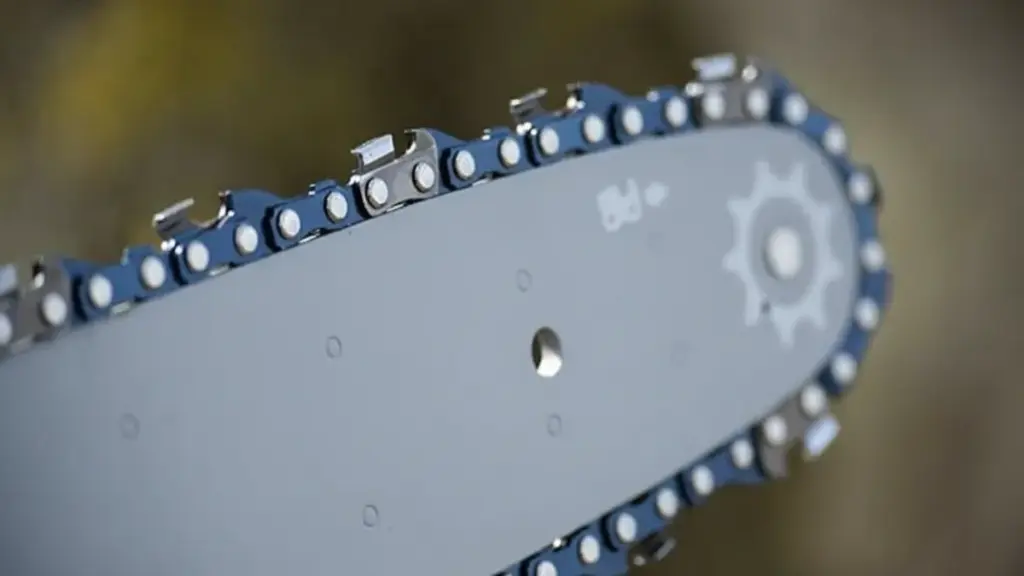
Selecting the right chainsaw chain is about matching the cutter’s geometry to the specific application, balancing the aggressive speed of full-chisel for clean hardwood against the durability of semi-chisel for mixed conditions or carbide tips for abrasive materials.
Softwoods (par ex., Pine, Cedar, Fir)
Because softwoods do not impose extreme thermal stress on the cutting edge, Full-Chisel chains are highly suitable for cutting softwood. The sharp 90-degree corner of the cutter penetrates these low-density fibers quickly. This allows the operator to maintain high speed without straining the engine or causing the saw to bog down.
Hardwoods (par ex., Oak, Maple, Hickory)
Hardwoods feature dense, resilient fibers that create significant resistance and heat during the cutting process. In these applications, Semi-Chisel chains are the superior choice. The rounded corner of the cutter is more stable when hitting dense grains. While it may cut slightly slower than a full-chisel chain, it maintains its sharpness longer and is less prone to “dulling” from the high friction temperatures.
Frozen and Abrasive Wood
In sub-zero temperatures, moisture within the wood turns into ice, making the timber act like an abrasive material. For frozen logs or wood covered in dirt and sand, you should use Semi-Chisel or specialized Carbide-tipped chains. The sharp points of full-chisel chains often chip or break when hitting ice crystals. En revanche, the radiused or alloy-reinforced edges are built to withstand high-impact loads in these extreme conditions.
Why Choose NEWTOP Hard-Alloy Chains for Industrial Use?
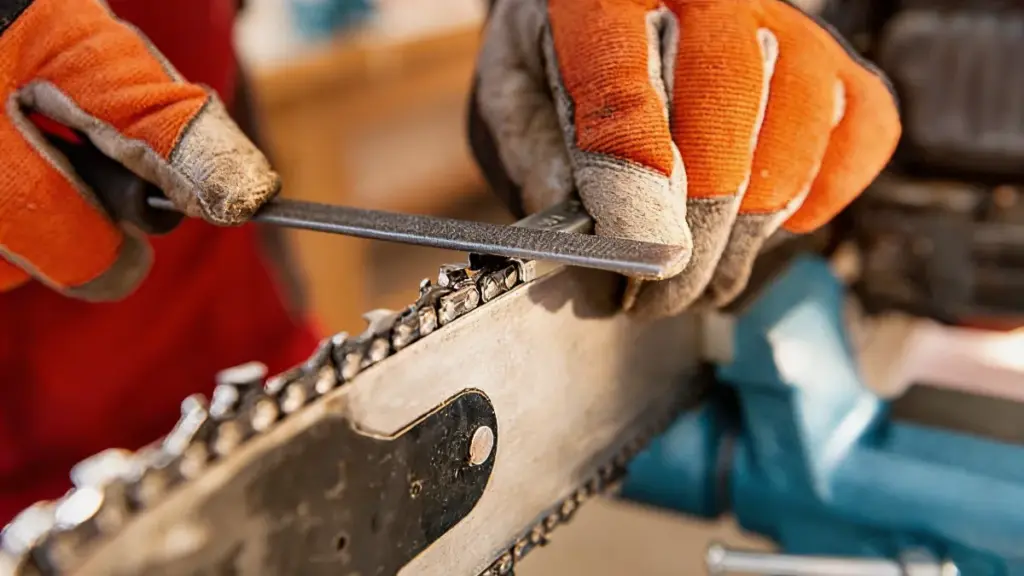
NEWTOP delivers a practical industrial solution by integrating premium hard-alloy chains from established global brands with its own precise, cost-efficient manufacturing process.
À NOUVEAUTOP, our chainsaw chains are engineered for the rigors of global forestry, using high-tensile strength steel and advanced heat-treatment processes.
The NEWTOP Advantage:
- High-End Component Supply: We utilize supply chains similar to world-class brands, incorporating high-quality chrome plating on our cutter teeth to ensure lasting sharpness.
- Industrial Durability: Our chainsaw chains are tested for over 500 hours of performance, ensuring they withstand the tropical humidity of Southeast Asia and the rugged terrain of South America.
- Optimized Oil Channels: Every NEWTOP chainsaw chain features precision-engineered oil holes and grooves to ensure that lubrication reaches the rivets and drive links, reducing heat and stretching.
- Compatibility: We offer a full range of pitch and gauge combinations designed to work seamlessly with our gasoline chainsaw line and our emerging lithium-battery machinery.
Conclusion
Choosing the right chainsaw chain involves balancing cutting speed, durabilité, and maintenance for each job. Matching the chain geometry, pas, and gauge to your wood type and cutting conditions prevents premature dulling and reduces kickback risk. This technical knowledge directly impacts project efficiency, sécurité des opérateurs, and the lifespan of your equipment.
If your industrial operations require chains that excel in abrasive or demanding environments, explore NEWTOP’s hard-alloy options. Contact our team to request a product catalog or discuss specific application requirements for your fleet.
Foire aux questions
Quels sont les 3 main types of chainsaw chains?
The three primary chainsaw chain types are full-chisel (aggressive speed), semi-ciseau (balanced durability), and chipper/low-profile (safety-focused). Each suits different cutting demands from precision to rugged use.
Which chain is best for cutting hardwood?
Full-chisel chains excel for hardwood due to sharp square cutters that power through dense fibers quickly. Semi-chisel serves as a durable alternative for resinous species like oak.
What is the difference between full and semi chisel?
The main difference is the corner shape. Full-chisel has a square, 90-degree corner for speed; semi-chisel has a rounded corner for durability and edge retention in dirty conditions.
Are carbide-tipped chains worth it?
Oui, for specific applications. If you are cutting through burnt wood, demolition timber with nails, or extremely frozen logs, carbide-tipped chains stay sharp 25x longer than steel, though they require specialized sharpening.
Which chain type is safest against kickback?
Low-profile chipper chains are safest, with reduced kickback nose and shallow cutters meeting ANSI standards for electric and homeowner saws.
How do I identify my chainsaw blade type?
To identify your chainsaw chain, find three key numbers, typically stamped on the side of the chainsaw bar or on the chain’s drive links: Pitch, Gauge, and Drive Link Count. Par exemple, you might see “.325” (Pitch), “.050” (Gauge), et “72DL” (72 Liens de lecteur). To determine the cutter type, visually inspect the cutting teeth. Square for full-chisel, rounded for semi-chisel/chipper.
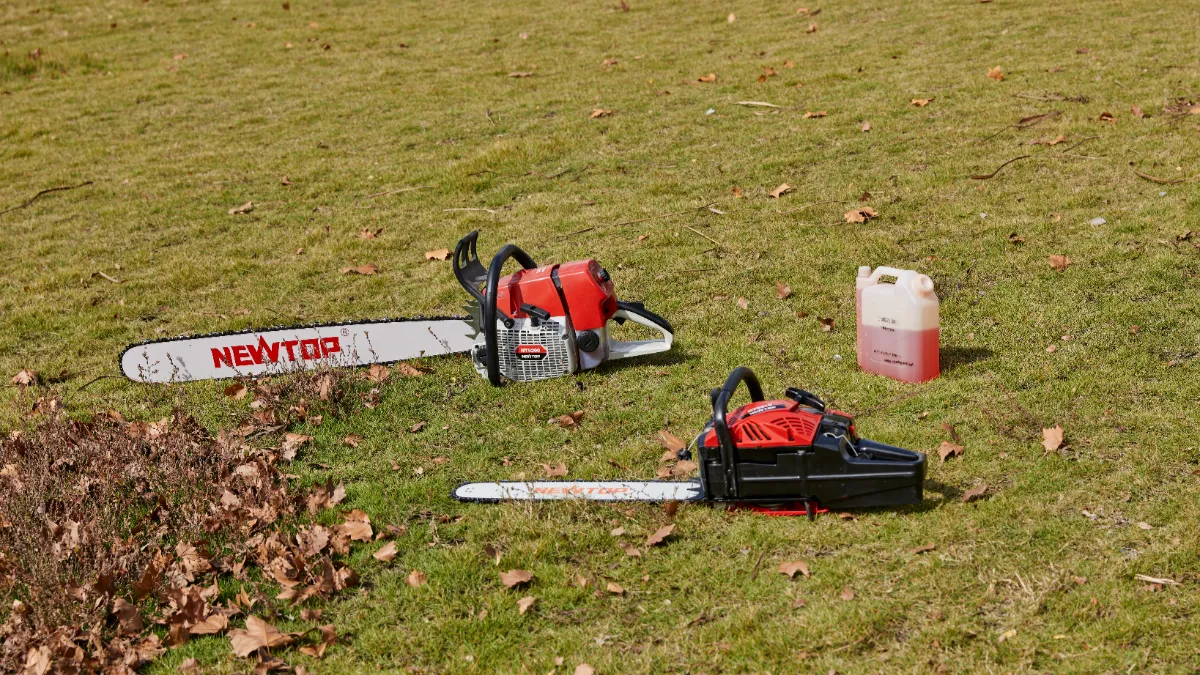
Le choix d’une tronçonneuse implique bien plus que l’évaluation de la puissance brute. Pour les professionnels de la foresterie, agricole, et du paysage, le choix des équipements impacte directement l’efficacité opérationnelle, frais généraux de maintenance, et un retour sur investissement à long terme.
À NOUVEAUTOP, nous avons passé plus de deux décennies à perfectionner l'ingénierie derrière les machines à couper le bois. Ce guide fournit une ventilation technique des différents types de tronçonneuses disponibles aujourd'hui, se concentrant sur leurs résistances mécaniques et leurs applications pratiques sur divers marchés mondiaux.
Quels sont les différents types de tronçonneuses? Aperçu de la catégorie
Comprendre le marché des tronçonneuses, il faut examiner comment les différentes sources d'énergie et conceptions mécaniques répondent à des charges de travail spécifiques. Le tableau suivant fournit une comparaison de haut niveau des catégories les plus couramment utilisées dans l'industrie aujourd'hui..
| Catégorie de tronçonneuse | Source d'alimentation | Longueur de barre idéale | Applications clés | Profil utilisateur |
|---|---|---|---|---|
| Essence (2-Accident vasculaire cérébral) | Essence & Mélange d'huile | 16″ – 36″+ | Journalisation professionnelle, défrichement, abattage lourd. | Enregistreurs, Agriculteurs, Arboriculteurs |
| Batterie (Lithium-ion) | 20V/40V/80V | 10″ – 18″ | Taille urbaine, coupe de bois de chauffage léger, utilisation en intérieur. | Paysagistes, Propriétaires |
| Électrique filaire | Prise secteur | 12″ – 16″ | Entretien de la cour à proximité des sources d'électricité. | Amateurs de bricolage |
| Scies à perche | Gaz ou batterie | 8″ – 12″ | Taille en haute altitude, entretien du verger. | Vergeristes, Municipalités |
| Scies à poignée supérieure | Gaz ou batterie | 10″ – 14″ | Taille des arbres et chirurgie professionnelle. | Arboriculteurs certifiés |
Tronçonneuses à essence: La norme professionnelle en matière de puissance
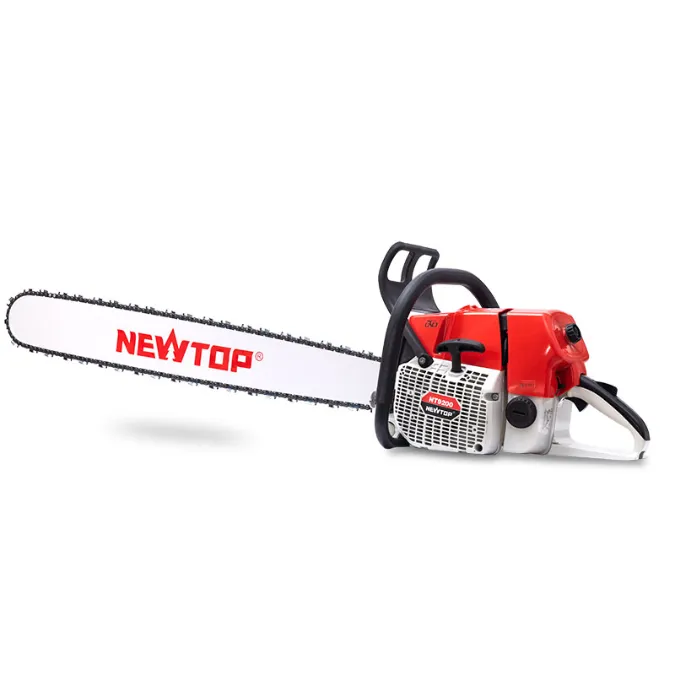
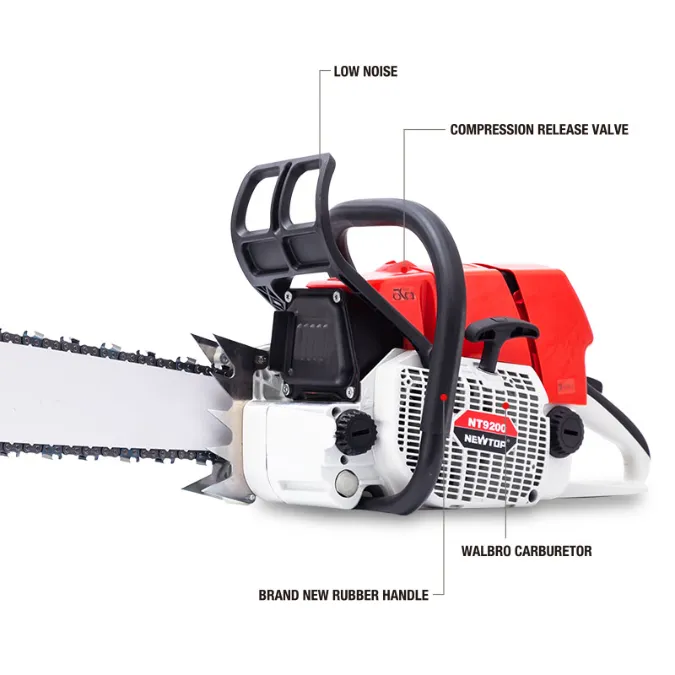
Une tronçonneuse à essence est un outil robuste entraîné par un moteur à combustion interne à deux temps qui fonctionne avec un mélange précis d'essence et d'huile.. Il est considéré comme la référence industrielle en matière de puissance brute et d'endurance., spécialement conçu pour les environnements où l'accès électrique est inexistant et où la charge de travail de coupe est intense.
Caractéristiques clés:
- Cylindrée du moteur (cc): La puissance est mesurée en centimètres cubes; un déplacement plus élevé se traduit par le couple nécessaire pour enfoncer des barres plus longues à travers du bois dense.
- Autonomie opérationnelle: Ces scies ne nécessitent aucun cordon ni station de recharge. Tant que le carburant est disponible, ils peuvent fonctionner indéfiniment dans des forêts isolées ou de grandes terres agricoles.
- Portée étendue: Les moteurs à gaz sont capables de supporter des barres de guidage de 16 à plus 36 pouces, ce qui en fait la seule option viable pour l'abattage de feuillus de grand diamètre.
- Durabilité: Construit avec des composants métalliques robustes (comme les carters en magnésium), ils sont conçus pour résister aux environnements à fortes vibrations et à haute température pendant des quarts de travail prolongés.
Progrès dans la technologie des moteurs et les émissions
Le marché des tronçonneuses à essence professionnelles évolue vers des technologies de moteur plus avancées qui répondent à des normes environnementales plus strictes sans sacrifier les performances.. Des fonctionnalités autrefois exclusives aux modèles haut de gamme, comme l'injection électronique de carburant (EFI) et convertisseurs catalytiques avancés, sont de plus en plus courants dans les gammes de produits professionnels.
- Injection électronique de carburant (EFI) optimise activement le mélange air-carburant, ce qui se traduit par un meilleur rendement énergétique et une fourniture de puissance plus constante à différentes altitudes et températures.
- Les moteurs modernes sont conçus pour se conformer aux réglementations mondiales sur les émissions tout en conservant les performances élevées exigées par les opérateurs..
- Ces avancées aident à équilibrer les besoins opérationnels des utilisateurs professionnels avec des réglementations environnementales croissantes..
Conception axée sur l'usage professionnel et l'ergonomie
Les fabricants de tronçonneuses conçoivent des scies professionnelles pour les personnes qui en dépendent pour leur gagne-pain, comme les arboriculteurs, bûcherons, et paysagistes commerciaux. L'un des principaux objectifs d'ingénierie est d'atteindre un rapport puissance/poids optimal., rendant les outils suffisamment puissants pour les travaux difficiles mais suffisamment légers pour une utilisation toute la journée. Cette focalisation sur l'ergonomie est essentielle pour la sécurité et la productivité des utilisateurs..
- Les ingénieurs mettent l'accent sur la réduction du poids de la scie sans compromettre l'intégrité structurelle ou la puissance de sortie, ce qui rend l'équipement plus facile à manipuler lors de longues journées de travail.
- Les poignées ergonomiques et les systèmes anti-vibrations efficaces sont des caractéristiques standard qui réduisent la fatigue de l'opérateur et améliorent le contrôle de la coupe..
- Chaque fonctionnalité, de l'emplacement du tendeur de chaîne au type de filtre à air, est adapté aux besoins des utilisateurs quotidiens qui exigent une disponibilité et une efficacité maximales.
Segmentation du marché et infrastructure de services
Le marché des tronçonneuses à essence est clairement segmenté, offrant une large gamme de modèles allant des scies professionnelles d'entrée de gamme aux scies haut de gamme, équipement d'abattage de qualité industrielle. Les fabricants établis maintiennent leur domination du marché grâce à de vastes réseaux de concessionnaires qui offrent un accès fiable au service., réparations, et pièces de rechange d'origine, qui est un facteur d'achat clé pour les entreprises.
- Les niveaux de prix varient considérablement pour s'adapter aux différents budgets professionnels et aux exigences spécifiques des applications..
- Les grandes marques ont bâti leur réputation sur des décennies de fiabilité éprouvée et de performances constantes sur le terrain..
- Une infrastructure de service et d'assistance étendue garantit que les professionnels peuvent maintenir leur équipement en fonctionnement avec un minimum de temps d'arrêt..
Votre partenaire de confiance pour les outils de jardin
Scies électriques à batterie et filaires: Solutions suburbaines modernes
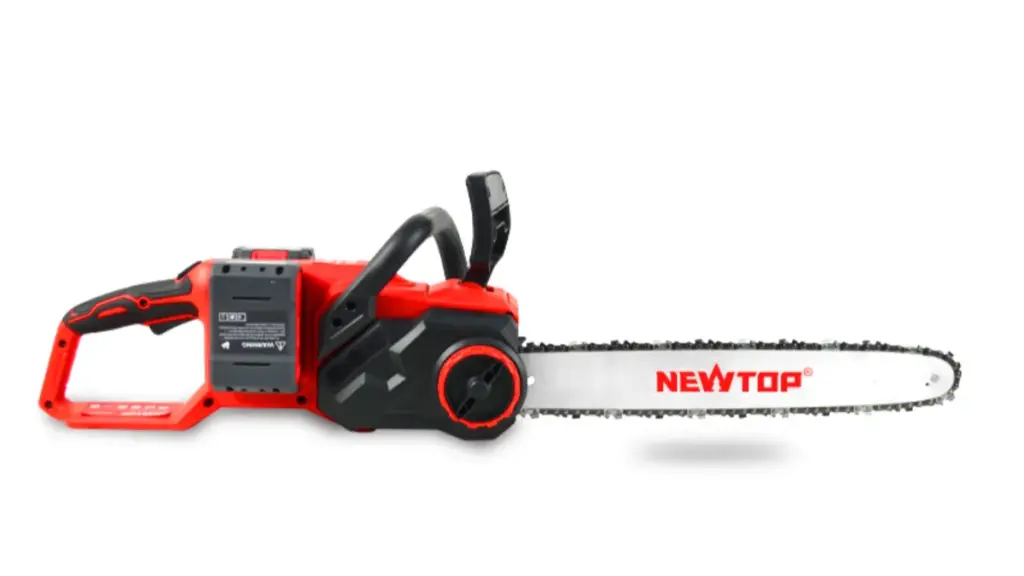
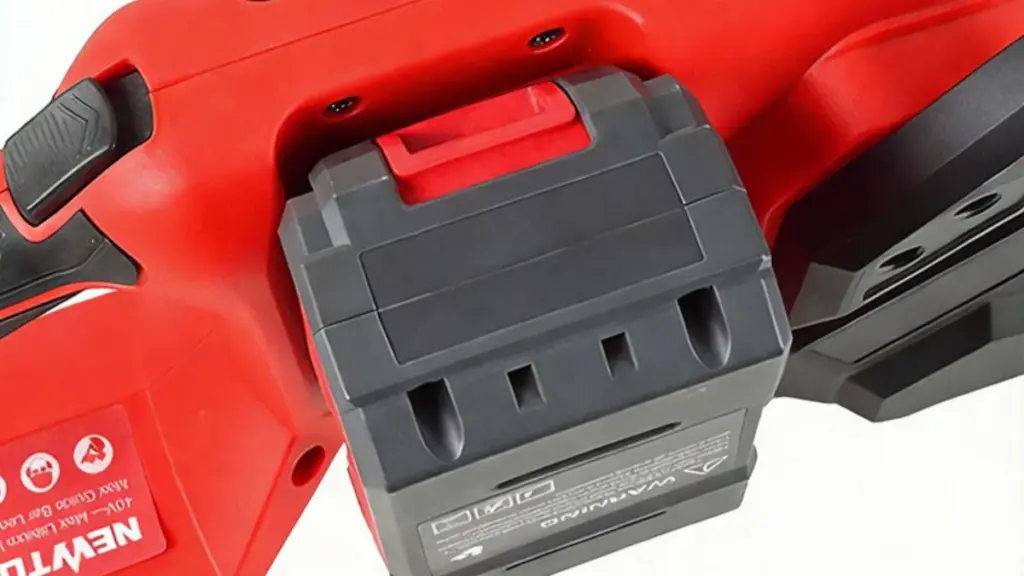
Les tronçonneuses électriques utilisent un moteur électrique pour entraîner la chaîne de coupe, offrir un nettoyeur, plus silencieux, et une expérience plus conviviale que les modèles à combustion interne. Ils sont classés en deux formats: filaire (connecté à une prise de courant) et alimenté par batterie (Lithium-ion sans fil).
Caractéristiques clés:
- Zéro émission locale: Aucun gaz d'échappement n'est produit, ce qui rend ces scies idéales pour le travail du bois en intérieur, serres, ou zones urbaines à régulation environnementale.
- Mécanisme de démarrage instantané: Contrairement aux scies à essence qui nécessitent un démarrage par traction, les modèles électriques s'activent immédiatement en appuyant sur une gâchette.
- Faibles exigences de maintenance: Ils éliminent les complexités du mélange de carburant, réglage du carburateur, et entretien des bougies.
- Gestion du bruit: Fonctionnant à des décibels nettement inférieurs, ils réduisent la fatigue des opérateurs et conviennent aux quartiers résidentiels sensibles au bruit.
Scies électriques filaires: Durée d'exécution cohérente et illimitée
Les scies électriques filaires sont une option fiable pour les utilisateurs qui ont besoin d'une alimentation continue pour des projets prolongés à proximité d'une prise.. Ils éliminent tous les soucis concernant la durée de vie de la batterie, offrant une offre cohérente, performances qui ne se décolorent pas aussi longtemps que le travail dure. Cela en fait un choix pratique pour les ateliers ou les petites cours où la mobilité n'est pas la principale préoccupation..
- Fournit une alimentation électrique ininterrompue, éliminant le besoin de s'arrêter et de recharger ou de remplacer les batteries.
- L'amplitude de mouvement est limitée par la longueur et la gestion du cordon d'alimentation.
- Un choix pratique pour les ateliers, stations de transformation du bois de chauffage, ou petites cours avec des prises de courant facilement disponibles.
Différences fondamentales dans l’expérience utilisateur
Le principal compromis entre les scies électriques à batterie et les scies électriques filaires se concentre sur la portabilité par rapport à la durée de fonctionnement.. Les modèles sans fil excellent en termes de commodité et de flexibilité, permettre aux utilisateurs de travailler n'importe où sur une propriété sans entrave. Les versions filaires fournissent une puissance constante sans interruption, ce qui les rend mieux adaptés aux travaux stationnaires ou localisés où la disponibilité est critique.
- Les scies à batterie privilégient la mobilité et la facilité d'utilisation pour les tâches réparties sur une propriété.
- Les scies filaires garantissent un fonctionnement continu pour les tâches stationnaires ou localisées comme le tronçonnage de bûches.
- Les deux types sont généralement plus silencieux, plus léger, et nécessitent beaucoup moins d'entretien que leurs homologues à essence.
Lecture connexe: Si vous êtes intéressé par les tronçonneuses à essence et les tronçonneuses électriques, consultez notre comparaison approfondie sur Électrique vs. Tronçonneuses à essence pour trouver plus d'informations sur vos besoins spécifiques.
Scies à perche et outils télescopiques: Taille en hauteur
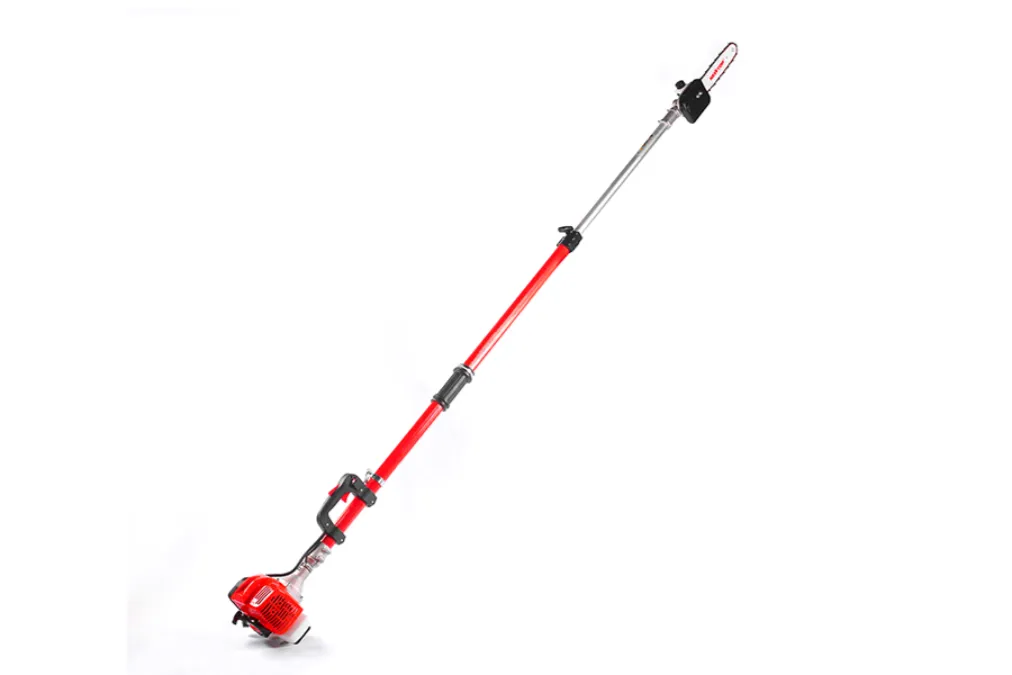
Une scie à perche est un outil de coupe spécialisé doté d'une tête de tronçonneuse compacte montée sur un support extensible, arbre télescopique. Sa fonction première est de gérer l'entretien de la canopée en haute altitude, permettant à l'opérateur d'élaguer ou d'ébrancher des arbres tout en se tenant solidement au sol.
Caractéristiques clés:
- Portée télescopique: Les arbres peuvent généralement s'étendre de 2 à 4 mètres, offrant une portée verticale efficace qui élimine le besoin d'échelles ou d'échafaudages.
- Ergonomie spécialisée: La répartition du poids est centrée pour permettre des manœuvres plus faciles lorsque l'outil est complètement étendu au-dessus de votre tête..
- Coupe de précision: Equipé de barres de guidage plus petites (généralement 8 à 12 pouces), ces outils sont optimisés pour une coupe de précision dans un feuillage dense plutôt que pour une coupe de bois en vrac.
- Versatilité: De nombreuses versions modernes font partie des systèmes multi-outils, où la tête motrice peut être interchangée avec différents accessoires comme des taille-haies ou des débroussailleuses.
La transition vers des solutions alimentées par batterie
Le marché des scies à perche est passé de manière décisive des modèles à essence et manuels aux outils électriques alimentés par batterie.. Cette tendance est motivée par une demande claire de systèmes plus silencieux., équipement nécessitant peu d’entretien pour l’entretien courant de la propriété. Les progrès de la technologie des batteries lithium-ion offrent désormais l'autonomie et la portabilité nécessaires pour gérer des travaux importants sans la complexité du mélange de carburant ou de la gestion des rallonges.. Ces améliorations font des modèles électriques un choix viable aussi bien pour les paysagistes professionnels que pour les propriétaires à la recherche de performances efficaces..
Innovations pour la sécurité et l'efficacité
Les outils télescopiques actuels sont conçus avec des fonctionnalités qui améliorent directement la sécurité et le rendement du travail. L'objectif principal est de permettre aux opérateurs de tailler efficacement les branches hautes tout en restant fermement au sol.. Capacités de portée étendue, atteignant souvent 15 pieds ou plus, éliminer l'instabilité et les risques associés à l'utilisation d'échelles. Les systèmes embarqués tels que les graisseurs automatiques maintiennent une lubrification constante de la chaîne pour une coupe fiable, et les têtes de coupe réglables offrent aux opérateurs de meilleurs angles pour accéder aux branches mal positionnées sans compromettre leur position..
Conception ergonomique pour réduire la fatigue de l'utilisateur
De nombreux fabricants d'équipements électriques d'extérieur se concentrent désormais fortement sur l'ergonomie pour rendre ces outils à longue portée suffisamment confortables pour une utilisation prolongée.. Gérer le poids et l’effet de levier d’une scie à perche est physiquement exigeant, les conceptions intègrent donc des matériaux légers et un équilibre amélioré pour minimiser la pression sur le dos et les bras de l'utilisateur. Un outil bien conçu comporte également des poignées ergonomiques qui garantissent une sécurité, préhension contrôlée tout au long de l’opération, ce qui est essentiel à la fois pour la sécurité et la précision.
Avantages et inconvénients de chaque type de tronçonneuse
| Type de tronçonneuse | Avantages techniques | Inconvénients opérationnels |
|---|---|---|
| Tronçonneuses à essence | Couple le plus élevé; aucune limite de portée; compatibilité avec les barres longues. | Niveaux de bruit élevés; nécessite un mélange de carburant; entretien régulier du moteur. |
| Tronçonneuses à batterie | Faible bruit; démarrage instantané; zéro émission; entretien minimal. | Durée d'exécution limitée par charge; coût initial plus élevé de la batterie. |
| Tronçonneuses filaires | Léger; durée d'exécution illimitée; coût le plus bas. | Limité par la longueur du câble; puissance de sortie inférieure; risque pour la sécurité du cordon. |
| Scies à perche | Sécurité pour les tâches de grande envergure; taille de précision. | La répartition du poids peut être lourde; pas pour abattre. |
Principales différences dans la cylindrée du moteur et les sources d'énergie
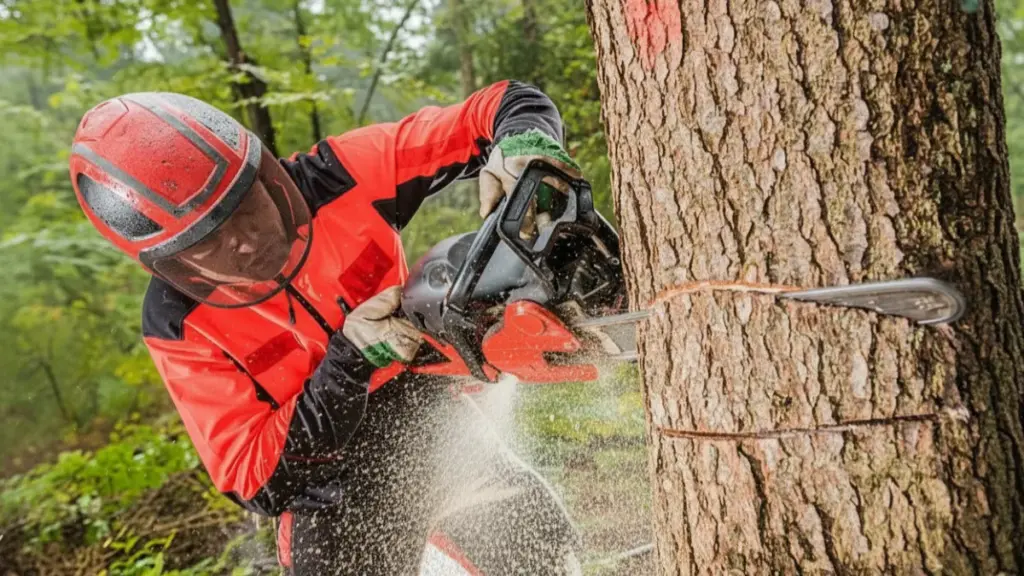
La cylindrée du moteur d’une tronçonneuse à essence est la mesure la plus importante, définissant directement sa puissance de sortie, capacité de coupe, et adéquation à des charges de travail commerciales spécifiques.
| Niveau de performances | Cylindrée du moteur (cc) | Puissance de sortie typique (kW) |
|---|---|---|
| Léger / Propriétaire | 23 – 35 cc | 1.0 – 1.6 kW |
| Ferme & Ranch / Milieu de gamme | 38 – 55 cc | 1.7 – 2.5 kW |
| Foresterie professionnelle | 60 – 95 cc | 3.0 – 5.5 kW |
| Abattage lourd industriel | 105 – 120+ cc | 6.0+ kW |
Cylindrée du moteur (cc) et puissance de sortie
Les performances d’une tronçonneuse sont fondamentalement liées à la cylindrée de son moteur, mesuré en centimètres cubes (cc). Cette mesure est directement corrélée à sa puissance de sortie et à sa force de coupe. À mesure que le déplacement augmente, le moteur génère plus de couple, lui permettant de couper du bois dur sans s'enliser. Cela fait du moteur cc la mesure clé pour adapter une scie à la charge de travail prévue.. La relation dicte également les dimensions physiques de la scie, poids total, et consommation de carburant, créer un compromis clair entre puissance et portabilité.
Niveaux de performance basés sur le déplacement
Le marché professionnel segmente les tronçonneuses à essence en catégories de performances distinctes en fonction de la taille du moteur.. Ces niveaux fournissent un cadre clair pour sélectionner un outil avec le bon équilibre de pouvoir, poids, et endurance pour des applications spécifiques. Les scies d'entrée de gamme sont suffisantes pour les tâches légères des propriétaires, tandis que les scies de milieu de gamme et de qualité industrielle sont conçues pour répondre aux exigences quotidiennes de la foresterie commerciale., arboriculture, et opérations de défrichement.
Comment choisir le type de tronçonneuse adapté à la charge de travail de votre projet

Choisir la bonne tronçonneuse nécessite une évaluation pratique de vos projets typiques. L’outil idéal pour la taille légère du jardin est fondamentalement différent de celui nécessaire pour abattre du bois dur mature.. L'adaptation de la machine à la tâche garantit la sécurité de fonctionnement, réduit la fatigue de l'opérateur, et offre un nettoyage, coupe efficace sans surcharger l'équipement.
| Échelle de la charge de travail | Type de tronçonneuse recommandé | Longueur de barre de guidage commune |
|---|---|---|
| Travaux légers (Taille, Petits membres) | Batterie ou électrique filaire | 10–14 pouces |
| Usage moyen (Bois de chauffage, Nettoyage) | Batterie haute capacité / Gaz milieu de gamme | 16–18 pouces |
| Robuste (Abattage, Fraisage) | Gaz de qualité professionnelle | 20+ pouces |
Évaluez l’ampleur de votre travail
Votre première étape consiste à définir les principales tâches que vous devez accomplir. Une compréhension claire de l'intensité de coupe et du diamètre du bois dicte la puissance et la durabilité nécessaires.. Un mauvais calcul peut entraîner une panne de l'équipement ou des conditions de fonctionnement dangereuses..
- Travaux légers comme couper des branches ou couper de petits arbres nécessite une petite scie électrique compacte alimentée par batterie qui offre une puissance suffisante sans poids excessif.
- Tâches moyennes, y compris couper du bois de chauffage ou nettoyer les débris de la tempête, exiger un outil plus robuste. Les modèles à batterie haute capacité ou les scies à essence de milieu de gamme sont les mieux adaptés à cette catégorie..
- Projets lourds comme l'abattage de grands arbres ou le fraisage de bûches nécessitent une tronçonneuse à essence de qualité professionnelle avec une cylindrée importante du moteur et une longue barre de guidage.
Adaptez la source d'alimentation à votre environnement
Le choix entre le gaz, batterie, ou électrique filaire dépend fortement de facteurs tels que les restrictions de bruit, accès aux prises de courant, et les réglementations sur les émissions dans votre région.
- Les scies électriques à batterie et filaires sont conçues pour les environnements suburbains ou résidentiels. Ils ne produisent aucune émission directe et fonctionnent silencieusement, ce qui les rend idéaux pour les environnements peuplés.
- Les tronçonneuses à essence sont la norme en foresterie, fermes, et emplacements éloignés. Ils fournissent une puissance élevée et constante sans être limités par la durée de vie de la batterie ou la longueur du cordon..
- Pour les scénarios d’usage mixte, les systèmes de batteries haute tension modernes offrent un équilibre solide, offrant aux paysagistes semi-professionnels des performances et une mobilité proches du gaz sans entretien du moteur.
Choisissez une longueur de barre de guidage adaptée à vos besoins de coupe
La longueur du guide-chaîne détermine le plus grand diamètre de bois que vous pouvez couper en un seul passage. La sélection d'une barre trop longue pour le travail rend la scie difficile à contrôler et crée un risque pour la sécurité. Vous devez adapter la longueur de la barre à la puissance de votre moteur et à vos tâches de coupe typiques..
- Barres entre 10-14 les pouces offrent une excellente maniabilité pour élaguer et couper les petits membres.
- UN 16-18 La barre en pouces est une barre polyvalente, taille polyvalente pour la plupart des propriétaires, capable de gérer la coupe de bois de chauffage et l’abattage d’arbres moyens.
- Barres de 20 les pouces ou plus sont conçus pour un usage professionnel. Ils sont nécessaires pour abattre de gros arbres mais nécessitent un moteur puissant et un opérateur expérimenté pour les manipuler en toute sécurité..
Prêt à travailler avec la fabrication de tronçonneuses à gamme complète NEWTOP?
Un partenariat de fabrication réussi repose sur des services OEM flexibles, une chaîne d'approvisionnement fiable utilisant des composants mondialement reconnus, et une gamme complète de produits qui répondent aux diverses demandes du marché.
En haut 5 fournisseur de machines de jardin en Chine, NOUVEAUTOP est dans une position unique pour soutenir votre entreprise. Nous combinons une chaîne d'approvisionnement de classe mondiale avec des modèles commerciaux flexibles pour responsabiliser les distributeurs mondiaux et les acheteurs OEM..
- Chaîne d'approvisionnement mondiale & Qualité: Nous intégrons des composants premium de Walbro, NGK, NSK, et l'Oregon. Tirer parti de l’usinage CNC en interne et des lignes automatisées, notre équipement est conçu pour 500+ heures à usage professionnel, soutenu par CE, GS, et l'EPA attestations.
- Portefeuille complet: Notre gamme couvre les machines essence/diesel traditionnelles (tronçonneuses, débroussailleuses, pulvérisateurs) et innovant outils à batterie lithium-ion, fournir une solution unique pour la foresterie, agriculture, et l'aménagement paysager à travers 65+ pays.
- Partenariat B2B flexible: Nous sommes spécialisés dans personnalisation OEM complète, y compris les modifications de conception et l'étiquetage privé. Avec une stratégie de tarification structurée et des MOQ flexibles (des échantillons aux conteneurs pleins), nous veillons à ce que nos partenaires parviennent à une pénétration rapide du marché et à une croissance à long terme.
Conclusion
Faire correspondre le type de tronçonneuse adapté à votre charge de travail est la clé de l'efficacité et de la sécurité.. Que vous ayez besoin de la puissance brute d'un modèle à gaz, le confort silencieux d'une scie électrique, ou la portée étendue d'une scie à perche, le bon choix évite les retards dans les projets et garantit un investissement intelligent.
Avec une compréhension claire des besoins de votre projet, vous pouvez maintenant consulter notre catalogue complet de tronçonneuses pour trouver un modèle conçu pour votre application exacte.
Foire aux questions
Quels sont les 4 principaux types de tronçonneuses?
L'industrie reconnaît quatre types principaux: Alimenté au gaz, alimenté par batterie (sans fil), électrique filaire, et scies à perche.
Quel type de tronçonneuse est le plus facile à entretenir?
Modèles électriques (à la fois filaire et batterie) nécessitent le moins d’entretien car ils manquent de systèmes de carburant complexes, filtres à air, et bougies d'allumage.
Les tronçonneuses à essence sont-elles meilleures que celles à batterie?
Les tronçonneuses à essence surpassent actuellement les modèles à batterie pour les travaux industriels lourds et les tâches de longue durée. Les modèles à batterie sont supérieurs en termes de contrôle du bruit et de facilité d'utilisation.
Quel type de tronçonneuse les bûcherons professionnels utilisent-ils?
Tronçonneuses à essence à poignée arrière (50-90cc) avec de longues barres pour l'abattage et le tronçonnage de gros bois.
A quoi sert une scie à perche?
Les scies à perche sont utilisées spécifiquement pour tailler les branches hors de portée., permettant à l'opérateur de rester en toute sécurité au sol.
Une mini tronçonneuse vaut-elle la peine d'être achetée?
Oui, pour une taille légère ou de petits travaux de construction, une mini tronçonneuse au lithium est très efficace et plus facile à manipuler qu'une unité pleine grandeur, car les utilisateurs notent des performances impressionnantes sous $50.
Quelle est la règle des six pieds pour les tronçonneuses?
Maintenir au moins 6 distance de pieds des opérateurs de tronçonneuse à moins que l'outil ne soit éteint et mis à la terre, prévenir les blessures par rebond.
