A distributor in Chile and a buyer in Germany can look at the identical chainsaw and need two completely different sets of paperwork. That single mismatch explains most of the certification questions we receive: not “is this machine certified?” but “certified for whom?” This guide compares the four marks that dominate outdoor power equipment trade — CE, GS, EPA, and ETL — and maps each one to the markets and product types where it actually decides whether your order moves.
The short version: CE is the legal baseline for Europe, GS is the retail credibility layer on top of it, EPA is the emissions gate for gasoline engines into the United States, and ETL covers electrical safety for battery and corded equipment in North America. Everything else in this article is detail — but the detail is where importers either save a certification cycle or lose a season.
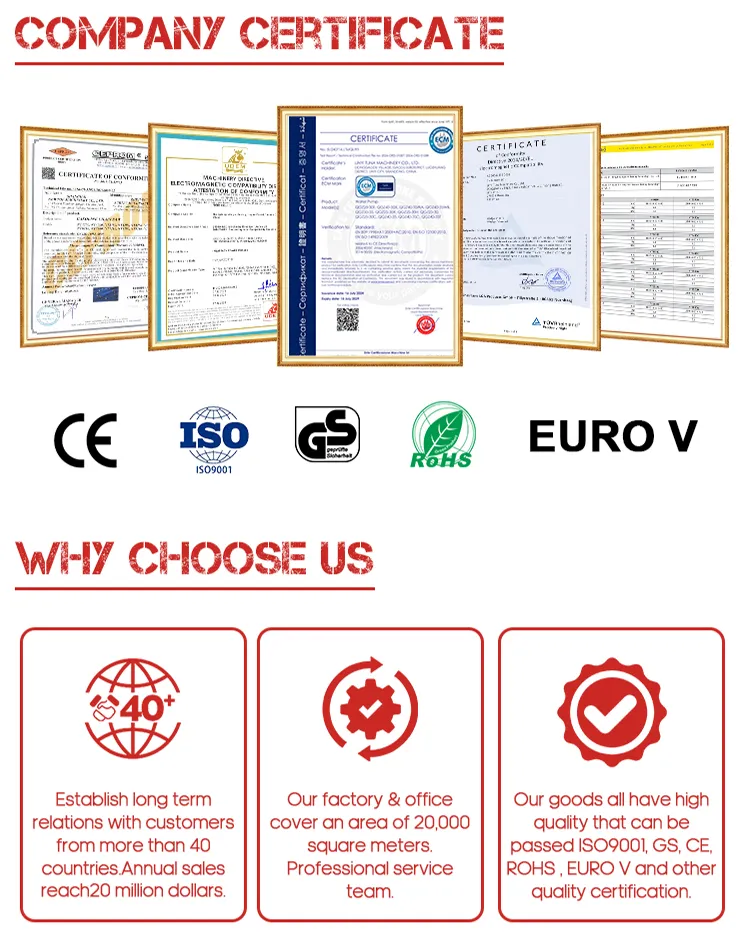
The Four Marks at a Glance
Before the market-by-market detail, here is what each mark actually is — because the four are routinely confused, and the confusion is expensive.
| Marque | Région | What it covers | Legal status | Who issues it |
|---|---|---|---|---|
| CE | EU / EEA | Machinery safety, CEM, outdoor noise | Mandatory by law | Manufacturer self-declaration; notified body for some routes |
| GS | Allemagne / EU retail | Product safety, independently tested | Voluntary, expected by retail channels | Testing houses such as TÜV |
| EPA | États-Unis | Spark-ignition engine emissions | Mandatory by law | US EPA certificate of conformity |
| ETL | North America | Electrical safety to UL/CSA standards | Voluntary, required by most channels | Intertek testing laboratories |
CE Marking: The Legal Baseline Across Europe
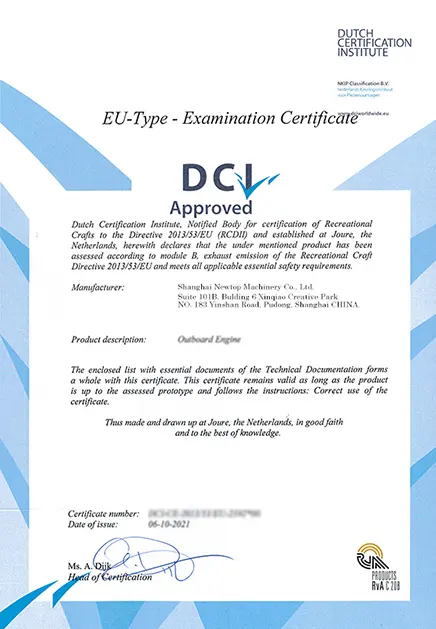
CE marking is the manufacturer’s declaration that a product meets the applicable EU directives, and for chainsaws, débroussailleuses, tondeuses à gazon, and similar machines it is the law of the market, not a preference. Le European Commission’s CE marking page sets out the framework. For this product category, three directive families carry the weight: the Machinery Directive for mechanical safety, the Outdoor Noise Directive 2000/14/EC for guaranteed sound power levels on equipment used outdoors, and the EMC Directive for electromagnetic behavior — the last one especially relevant as battery platforms multiply.
The practical point for buyers comparing CE against the other three marks: CE is the only one on this list that is a market-access requirement across an entire economic bloc. If your destination is the EU and the machine is missing a genuine CE technical file, the conversation ends there — the other marks cannot substitute for it.

GS Mark: The Retail Layer in German-Speaking Markets
GS (Geprüfte Sicherheit, “tested safety”) is voluntary in law and close to mandatory in practice for garden machinery sold through German and Austrian retail. The mark signals that an independent testing house — TÜV being the best known — has tested the machine against the German Product Safety Act, and its GS mark overview explains the route. Three traits separate GS from CE in a buyer’s comparison: it is issued per model, it expires and requires ongoing factory audits, and it sits on top of CE rather than replacing it.
If your channel plan runs through DIY chains or builder’s merchants in the DACH region, ask for the GS certificate number at the RFQ stage. If your plan is to sell through independent dealers in Spain or Poland, GS moves from requirement to sales argument — worth having, not worth delaying a container for.
EPA Certification: The Gate for Gasoline Engines Into the United States
EPA is the odd one out in this comparison because it regulates the engine, not the machine. Any gasoline-powered equipment destined for US sale — chainsaws, débroussailleuses, générateurs, water pumps — must use engines certified under the EPA’s nonroad spark-ignition rules, codified in 40 CFR Part 1054. Unlike CE, this is not self-declaration: the engine family carries a certificate of conformity, and the engine wears an emission compliance label that ties the physical unit to that certificate.
The comparison that matters here is lead time. A supplier whose engines already sit inside a certified family ships on production schedules. A supplier that must certify a new engine family for your order is signing up for laboratory testing and agency review measured in months. Two quotations for the “same” brush cutter can legitimately differ by six weeks for this reason alone.
ETL: Electrical Safety for Battery and Corded Lines in North America
Battery sprayers, corded mowers, electric hedge trimmers, pressure washers — anything electrical sold in the United States or Canada is expected to demonstrate compliance with UL or CSA safety standards. The ETL Listed mark, issued by Intertek, is one of the two marks North American buyers accept for this, with equal standing to UL in law and practice. Retail chains and e-commerce platforms check for one or the other before listing an electrical product.
Two comparison notes buyers get wrong. D'abord, EPA and ETL answer different questions — EPA governs the gasoline engine, ETL governs the electrical system — so a battery line never needs EPA and a gasoline line never needs ETL. Deuxième, the certification covers the complete configuration: machine, battery pack, and charger. A mark on the tool alone does not cover a third-party charger bundled into your kit.
Which Certification Should You Require? A Market Decision Matrix
Put the four marks against real destinations and product types, and the answer to “which one matters” becomes mechanical rather than a matter of opinion.
| Your market | Product line | Require at minimum | Strongly consider |
|---|---|---|---|
| EU / EEA | Gasoline or battery equipment | CE (Machinery + Bruit + EMC as applicable) | GS for DACH retail |
| Allemagne / Austria retail | Garden machinery | CE + GS | — |
| États-Unis | Gasoline equipment | EPA-certified engine family | CARB confirmation for California |
| US / Canada | Battery or corded equipment | ETL or UL | CE baseline for product credibility |
| Brésil | Gasoline equipment | Confirm scope with customs broker; engine documentation | CE baseline; INMETRO where in scope |
| Middle East / Afrique / rest of LATAM | Gasoline equipment | Destination-specific confirmation | CE baseline — dealer and tender expectations |
One row deserves emphasis: for most Latin American, African, and Middle Eastern destinations there is no single binding mark for gasoline garden machinery, and CE documentation has become the de facto quality baseline that dealers and institutional buyers use to compare suppliers. We cover the country-level import requirements — Brazil, Mexique, Colombie, Chile, Pérou, and more — in a separate import regulations guide.
Four Confusions That Cost Importers Money
- CE is not a quality award. It is a legal declaration backed by a technical file. Comparing two suppliers on “both have CE” compares nothing — compare the certificate scope, the cited standard versions, and whether a test report sits behind the declaration.
- EPA belongs to the engine, not the machine. A certified engine inside a modified or different machine configuration does not automatically transfer compliance. Ask which engine family your configuration ships with.
- ETL and UL are interchangeable for channel purposes. North American buyers who demand one and refuse the other are imposing a preference, not a rule. Both demonstrate compliance with the same UL/CSA standards.
- GS never replaces CE. For the EU market, a GS-certified machine still needs the full CE route. GS adds independent testing on top; it does not subtract the baseline.
How NEWTOP Combines These Marks Across Product Lines
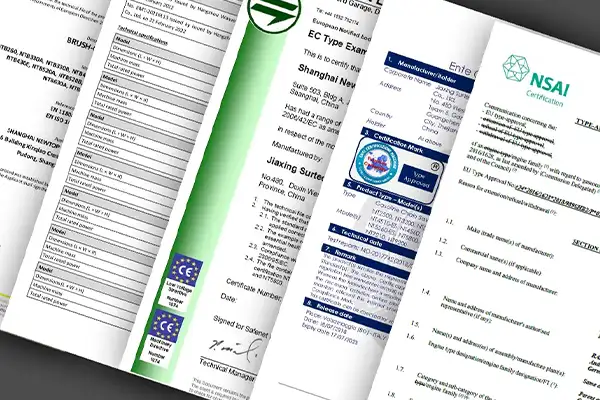
We manufacture gasoline and battery-powered outdoor equipment under the NEWTOP and CRAFTOP brands and hold CE, GS, EPA, ETL, and ISO 9001 certification across our chainsaw, brush cutter, pulvérisateur, water pump, and generator lines. In practice that means a European distributor orders against CE documentation with GS available for retail programs, a US buyer orders against EPA-certified engine families, and a battery program carries ETL for North American channels — each with the Declaration of Conformity and test report summaries available per model. The current portfolio is public on our certificates and patents page.
Foire aux questions
Is CE marking accepted in the United Kingdom?
For most product categories the UK continues to accept CE marking, while UKCA is the separate UK regime. The rules and deadlines have been extended several times, so confirm the current position for your specific category on GOV.UK before shipping.
Can one machine carry CE, GS, and EPA at the same time?
Oui. The marks cover different regimes — EU safety, German retail testing, US emissions — so a single model can legitimately carry several. What matters is that each certificate covers your exact model and destination configuration.
Does GS certification replace CE marking?
Non. GS sits on top of CE for the EU market — a GS-certified machine still needs the full CE conformity route. GS adds independent third-party testing that many German and Austrian retail channels expect; treat it as a channel requirement, not an alternative.
Is EPA certification needed for battery-powered equipment?
Non. EPA emission rules apply to spark-ignition engines, so battery and corded electric machines sit outside its scope. For those lines the North American question is electrical safety — ETL or UL certification instead.
Which certification do Latin American buyers ask for most?
CE, as a quality baseline, because most gasoline-powered lines in the region have no single unified mark of their own. The binding requirements are set per country, so confirm the destination rules for your specific market before ordering.
Certification comparison is not paperwork trivia — it is market selection. Match the mark to the destination and the product line before you request quotations, and the certificates become a filter that removes the wrong suppliers in the first email instead of a problem discovered at the port.
Building a line for a specific market? Browse the NEWTOP product range or talk to our team about which certification combinations fit your destination country — and if you are setting up distribution, notre distributor program includes documentation support for your market entry.