Choosing the right string trimmer line size can make yard work faster, cleaner, and much easier. Use a line that is too thin, and it may snap repeatedly when cutting thick grass or weeds. Choose one that is too thick, and your trimmer may lose cutting speed, use more power, or put extra load on the trimmer head.
Also, what diameter should you use? Is 0.080″ enough for normal grass, or is 0.095″ better for weeds? When does it make sense to move up to 0.105″ or 0.130″?
This guide breaks down common string trimmer line diameters, explains which sizes work best for different yard conditions, and compares popular line shapes. Whether you are maintaining a small lawn or tackling dense weeds and heavy vegetation, you will learn how to match the line to both the job and your trimmer.
What Is String Trimmer Line?
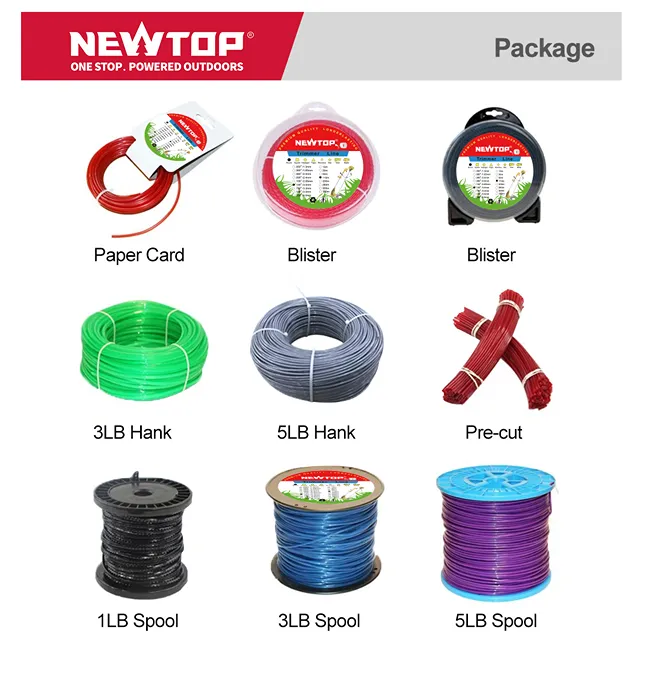
String trimmer line, also called trimmer cord or weed eater line, is the flexible cutting material used by string trimmers and brush cutters. It rotates at high speed around the trimmer head and cuts grass and weeds through impact and friction.
Verwandte Lektüre: Arten von Fadenschneiderköpfen
Am meisten trimmer lines are made from durable nylon or nylon-based materials. Some professional-grade lines use reinforced or co-extruded materials to improve wear resistance and reduce breakage.
The line diameter is one of the most important specifications. Common sizes range from about 0.065 (1.65 mm) inches to 0.155 Zoll (3.94 mm), although some heavy-duty machines can use larger diameters.
A larger diameter generally provides:
- Better durability
- Higher resistance to breaking
- Better performance in thick vegetation
- More cutting power for demanding jobs
Jedoch, thicker does not always mean better. The trimmer head and engine must be designed to handle the selected line.
What String Trimmer Line Sizes Are Available?
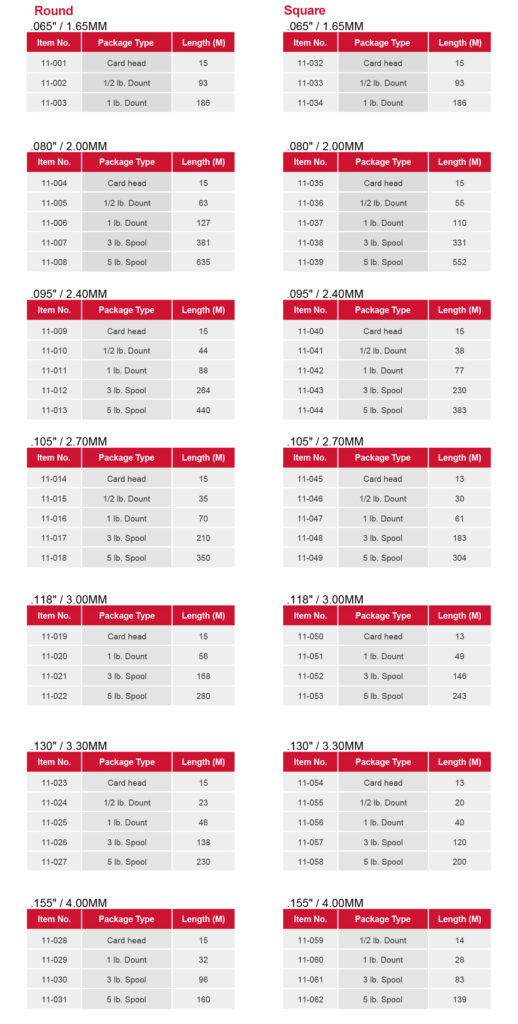
String trimmer line is commonly sold by diameter in inches. The most widely used sizes include 0.065″, 0.080″, 0.095″, 0.105″, and 0.130″.
Smaller diameters are suitable for light grass and residential trimming. Medium diameters provide a balance between cutting performance and durability. Larger diameters are designed for thick weeds, dichte Vegetation, and heavier-duty work.
The table below gives a quick overview:
| Line Diameter | Typische Anwendung | Cutting Conditions |
|---|---|---|
| 0.065″–0.080″ (1.65–2.03 mm) |
Light trimming | Soft grass and lawn edges |
| 0.080″–0.095″ (2.03–2.41 mm) |
General yard work | Regular grass and moderate weeds |
| 0.095″–0.105″ (2.41–2.67 mm) |
Heavy residential or professional use | Thick grass and tough weeds |
| 0.105″–0.130″ (2.67–3.30 mm) |
Heavy-duty cutting | Dense weeds and rough vegetation |
| 0.130″+ (3.30 mm+) |
Professional heavy-duty work | Heavy brush and demanding conditions |
High-Margin Garden Equipment for Global Distributors

How to Choose String Trimmer Line Size for Different Grass Types
For soft lawn grass, a smaller line can provide fast cutting with less engine load. For thick, dry, or tough grass, a medium or large diameter is usually more suitable because it can withstand repeated impacts.
Consider three factors:
Grass density: Dense grass creates more resistance against the line.
Stem toughness: Tough weeds and dry vegetation require a stronger cutting line.
Maschinenleistung: A larger line needs more rotational energy. A small trimmer may struggle with oversized cord.
Kurz, Soft Turf and Light Edging
Fine turf species like Kentucky bluegrass, fescue, and ryegrass require a gentle touch to avoid scalping. A thinner diameter protects delicate flower beds, sprinkler heads, and patio edges during routine maintenance.
Using a lightweight cord prevents small electric trimmers from bogging down while spinning. For these manicured areas, rely on the following specifications:
- Recommended diameter: 0.065″ to 0.080″ round line
- Target vegetation: Soft turf kept at standard mowing heights
- Key benefit: Minimizes tearing of thin grass blades
Standard Residential Lawns and Mixed Weeds
Most typical suburban yards feature a mix of regular turf and common weeds like dandelions, clover, and young crabgrass. You need a versatile cord that handles weekly perimeter maintenance along fences, Einfahrten, and trees without breaking every five minutes.
This category hits the sweet spot for mid-range gas and 40-56V battery trimmers, offering a perfect balance between cutting strength and flexibility.
- Recommended diameter: 0.080″ to 0.095″
- Primary application: Default all-purpose residential use
- Optimal equipment: Mid-range gas and 40-56V battery units
Thick Turf, Mature Grass, and Tough Weeds
Neglected yard corners and overgrown sections quickly outmatch standard homeowner line. When facing thick-stemmed weeds like mature plantain or coarse sedges, you need a cord with enough physical mass to maintain its momentum.
A heavier cord slices straight through dense clumps instead of folding over on impact. It also resists rapid fraying and snapping when making repeated contact with retaining walls or concrete foundations.
- Recommended diameter: 0.085″ to 0.110″
- Target vegetation: Mature grass and tough, fibrous stems
- Durability advantage: Survives heavy impact with hard landscape obstacles
Tall Grass, Dense Brush, and Heavy Vegetation
Clearing coarse pasture grass, drainage ditches, nettles, and brambles demands serious cutting power. This rough terrain pushes string trimmers to their absolute limits, often requiring heavy-duty lines to tear through small woody saplings.
Operators working in these extreme conditions frequently switch from round lines to square, serrated, or twisted profiles. These aggressive shapes bite directly into fibrous stems for faster clearing.
- Recommended diameter: 0.110″ and above (oft 3.0 mm to 3.3 mm+)
- Equipment requirement: Commercial-grade trimmers or walk-behind brush cutters
- Preferred profiles: Square, serrated, or twisted shapes
Aligning Line Size with Trimmer Power
Matching your cord thickness to the vegetation is only half the battle; the machine must actually possess the torque to spin it. Installing a line thicker than the manufacturer’s maximum rating reduces RPMs, resulting in battered, torn grass instead of clean cuts.
Engine displacement and battery voltage strictly dictate what your machine can handle safely.
- Under 40V Electric/Battery: Requires 0.065″ to 0.080″ line to prevent motor strain and overheating.
- Mid-Power Units (20-30 cc gas or 40-56V battery): Optimized to efficiently spin 0.080″ to 0.095″ line.
- Commercial Units (30 cc+ gas): Built to operate 0.095″ to 0.130″+ line without losing critical tip speed.
What Size Trimmer Line Is Best for Light Grass and Small Yards?
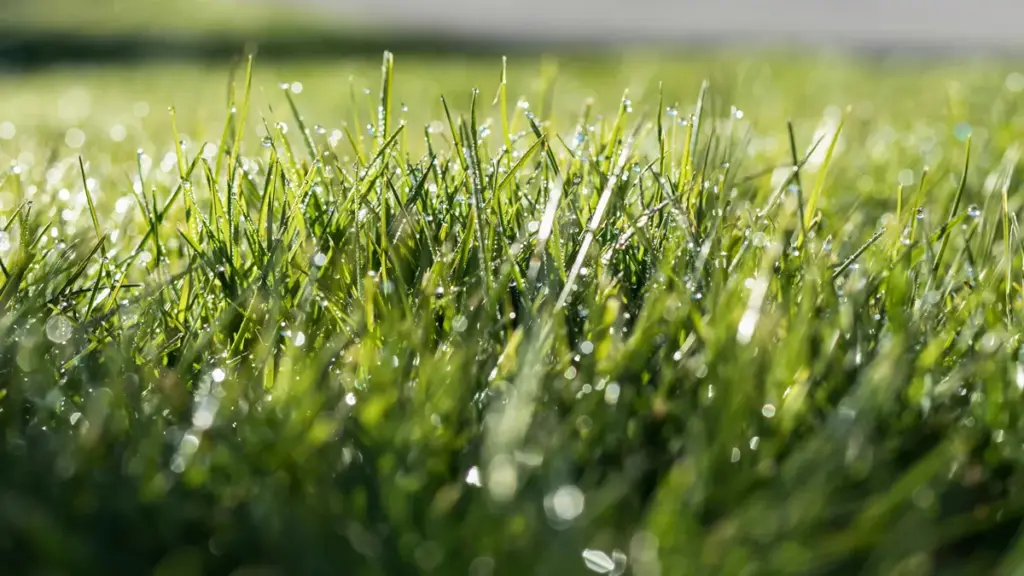
For light grass and small yards, stick strictly to 0.065 or 0.080-inch trimmer line. This range maximizes RPMs on low-voltage equipment while preventing damage to delicate hardscapes.
The Core Size Range: 0.065 Zu 0.080 Inch
The industry-standard size for light grass and small residential trimming falls strictly between 0.065 Und 0.080 Zoll (1.65–2.03 mm). Manufacturers build lightweight consumer trimmer heads specifically around these tolerances to ensure smooth feeding.
A 0.065-inch line is the optimal choice for very light-duty tasks. It excels at touching up short grass and executing clean edges around delicate flower beds without tearing the turf.
A 0.080-inch line provides a slightly more robust, versatile option. It tackles yards requiring regular maintenance and holds up better against minor impacts with garden borders.
Why Thinner Line Suits Small Yard Equipment
Thinner line is highly aerodynamic. This minimal drag allows low-power electric and battery trimmers operating under 40V to maintain high RPMs without overloading the motor.
Using oversized line on small-yard tools causes immediate mechanical stress. It triggers faster battery drain, excessive vibration, and premature wear on drive components.
Round line under 0.080 inches also offers high precision around tight obstacles. You can maneuver close to borders, reducing the risk of scarring tree bark or damaging expensive hardscapes.
Choosing Between 0.065 Und 0.080 Inch
Select 0.065-inch line for small, regularly mowed yards featuring soft turf. It pairs perfectly with low-voltage, lightweight trimmers handling basic detail work.
Upgrade to 0.080-inch line if the yard occasionally features taller grass or small weeds. This diameter performs much better for frequent edging against concrete walkways, where thinner cords snap on contact.
Small gas trimmers under 25 cc handle 0.080-inch line comfortably. It offers better resistance to fraying and snap-offs than thinner alternatives, keeping your workflow steady.
What Size Trimmer Line Is Best for Thick Grass and Weeds?
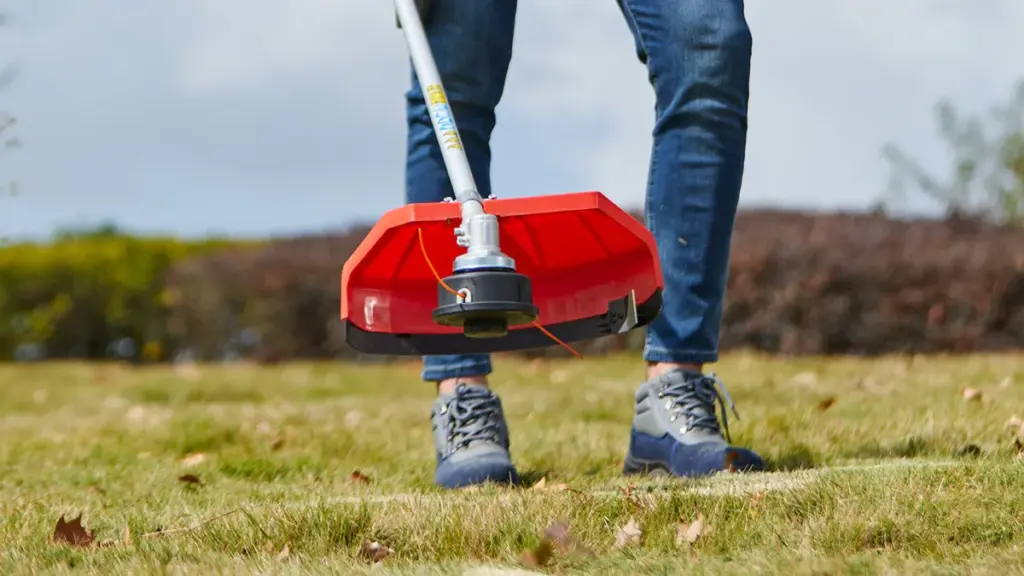
For thick grass and heavy weeds, the 0.095-inch line is the versatile standard. Step up to 0.105-inch for overgrown stalks, provided your equipment has the power.
The Optimal Range: 0.095″ vs. 0.105″ Line
The 0.095-inch (2.4 mm) line acts as the most versatile option for thick turf and heavy residential yard work. It strikes a balance between cutting power and flexibility, allowing you to clear dense patches without immediately bogging down standard landscape equipment.
The 0.105-inch (2.7 mm) line offers superior strength for overgrown grass, thick-stemmed weeds, and intense fence line clearing. Users should start with the 0.095-inch line and only upgrade to the 0.105-inch variant if the line snaps frequently against dense stalks or hard borders.
Matching Line Size to Equipment Power
Mid-range gas trimmers in the 20 Zu 30 cc category and 40V+ battery units generate enough torque to run 0.095-inch lines efficiently. These machines can maintain the high rotational speeds required to cut cleanly through tough vegetation.
Low-voltage battery models struggle with heavy lines, often resulting in sluggish performance or severe motor strain. Operators must verify the maximum supported diameter in the equipment manual before installing a thicker string to prevent drive system failure.
How Diameter Affects Cutting Efficiency and Durability
String trimmers rely on tip velocity and weight to perform work. Larger diameters carry more physical mass, delivering the momentum needed to slice right through coarse, fibrous vegetation instead of just bending it over.
Upgrading to a 0.095-inch or 0.105-inch size drastically reduces breakage when striking hard surfaces like concrete walls or wood retaining posts. Selecting the smallest effective diameter for your specific terrain prevents unnecessary engine drag and optimizes battery runtimes for long shifts.
What Size Trimmer Line Is Best for Heavy-Duty Brush?
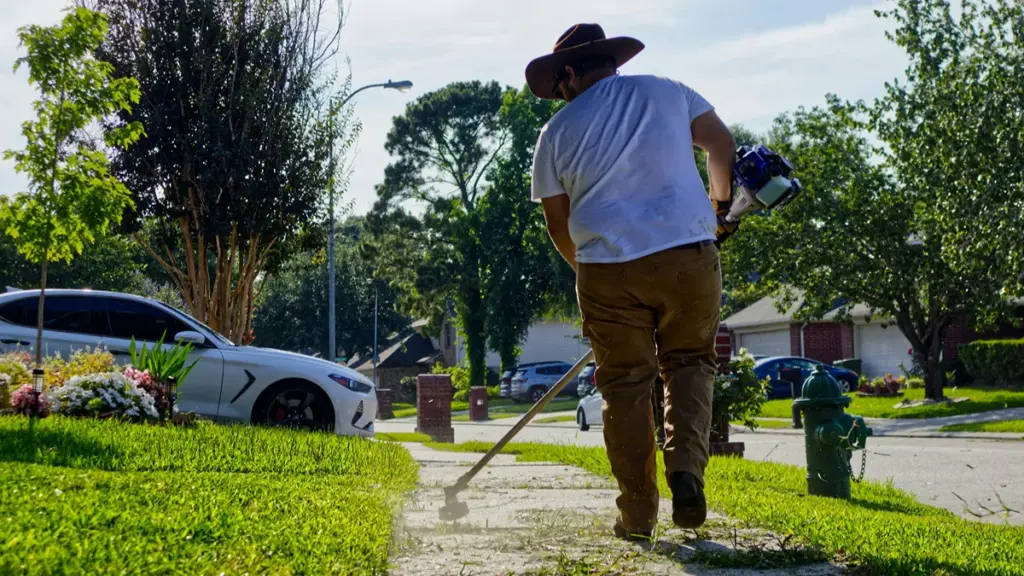
Heavy-duty brush requires line diameters between 0.110 Und 0.155 Zoll. To maintain cutting speed and protect the clutch, always match these thicker lines to commercial-grade engine displacements.
Recommended Line Sizes by Brush Density
Thick, woody brush destroys standard residential trimmer line on impact. To clear dense undergrowth efficiently, you need mass and rigidity. Operators categorize heavy-duty string trimmer line into three primary bands based on vegetation density.
- 0.095 Zu 0.105 Zoll: Suited for heavy weeds, thick grass, and light brush using high-powered residential trimmers.
- 0.110 Zu 0.130 Zoll: Ideal for thick brush, woody shrubs, and dense vegetation in commercial-grade clearing work.
- 0.155 inch and above: Reserved for extreme-duty clearing and heavy commercial applications.
Matching Line Diameter to Engine Displacement
Pushing a thick line through dense brush creates massive drag. Thicker lines resist breakage but demand significantly more engine torque to maintain cutting speed. If your engine lacks the output to spin a heavy line at peak RPM, the trimmer bogs down and batters the vegetation.
- 25 Zu 35 cc engines: Perform best with 2.7 Zu 3.0 mm (ca. 0.110 Zoll) line.
- 40 cc engines: Provide the necessary torque for 3.0 Zu 3.5 mm (ca. 0.130 Zoll) line.
- 40 Zu 50 cc or larger engines: Required to effectively spin 3.5 Zu 4.5 mm (0.155 inch and thicker) line.
Choosing the Right Line Shape for Heavy Brush
Profile geometry dictates how the line interacts with woody stems. You must weigh raw cutting power against material wear and motor strain.
- Round line: Offers high durability and resists breaking against hard stems, making it a reliable choice for everyday heavy clearing.
- Square, serrated, or twisted line: Delivers a more aggressive cut through thick brush but tends to wear faster.
Aggressive line profiles place higher drag on the trimmer head. You need adequate engine power to prevent the machine from bogging down when those sharp edges bite into thick stalks.
Equipment Limitations and Capacity Bounds
Manufacturers engineer trimmer heads and clutches for specific load limits. Forcing an oversized line into a head not rated for it guarantees mechanical failure.
- Poor cutting performance: Using a line thicker than the trimmer’s rating causes poor cutting performance and accelerates head wear.
- Mechanical overload: Excessive line weight puts unnecessary strain on the engine and clutch system.
- Strict upper limits: Always treat the manufacturer’s specified maximum line diameter as a strict upper limit to protect the equipment.
Round vs Square vs Star-Shaped Trimmer Line
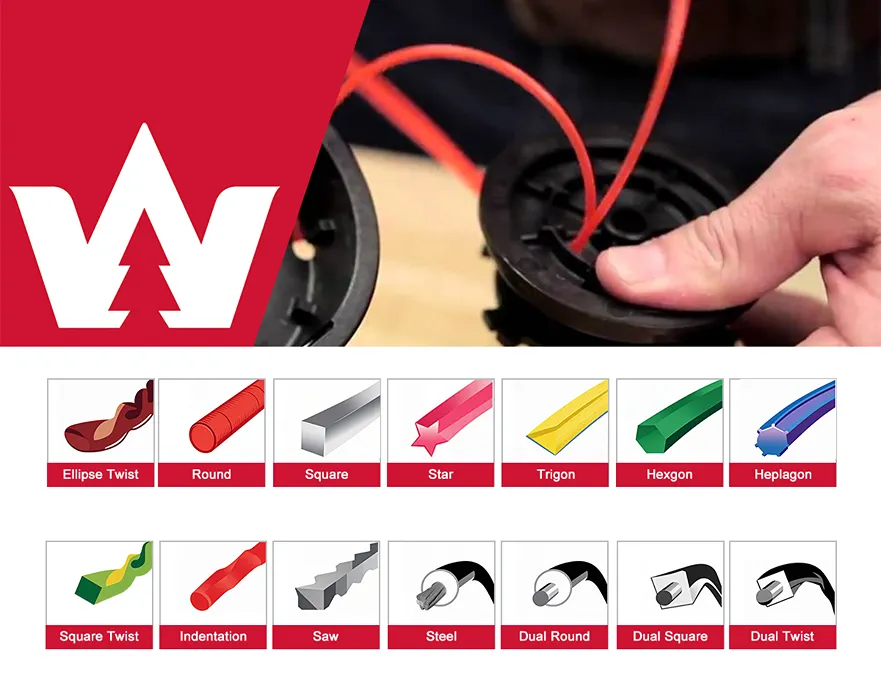
Round line is the most common type. Its smooth surface provides good durability and works well for general grass and weed trimming. It is also less likely to wear unevenly.
Square line has sharper edges that can provide more aggressive cutting on thick grass and weeds. It may be useful for demanding vegetation but can wear differently depending on the working conditions.
Star-shaped or multi-sided line has multiple cutting edges. It is designed to improve cutting efficiency and can perform well on tougher vegetation.
The best shape depends on the job. For everyday lawn maintenance, round line is a reliable choice. For heavier vegetation, square or multi-sided line may provide more aggressive cutting.
Best Applications and Diameter Selection
Match the line shape and diameter directly to the yard conditions and your specific equipment capacity.
- Round Line (0.065-0.095 Zoll): Use for regular weekly maintenance on typical residential yards using battery or small gas trimmers.
- Square Line (0.080-0.105 Zoll): Step up to this size for tackling overgrown fence lines, ditch banks, and medium-to-heavy vegetation.
- Star-Shaped Line (0.090+ Zoll): Reserve these large diameters for heavy-duty cleanup of coarse grasses, dichtes Unkraut, and neglected lots.
How to Know Which Trimmer Line Size Your Machine Needs
Match your trimmer line size to your machine’s manual, power output, and the target vegetation. Getting this right maximizes cutting performance and prevents equipment damage.
Check the Owner’s Manual or Trimmer Head
The fastest way to find your required line size is to consult the original documentation. Open your owner’s manual and scan for specifications labeled as cutting line, line diameter, spool capacity, or recommended line size. Manufacturers engineer the trimmer head to operate within these exact tolerances.
If you lost the manual, inspect the equipment directly. You can often find the printed or molded dimensions on the trimmer head, spool cover, or housing. Once you find this number, treat it as a hard limit. Stay strictly within the manufacturer’s specified range rather than choosing by appearance or feel at the hardware store.
Match Line Size to Trimmer Power and Type
Trimmer power directly dictates how thick of a line the motor can spin efficiently. Mismatching the line thickness overloads the drive system and slows down the RPMs.
- Electric and battery-powered trimmers: Generally require smaller diameters, commonly between 0.065 Und 0.080 Zoll (1.6 Zu 2.0 mm).
- Residential gas trimmers: Support mid-range to thicker lines, often ranging from 0.080 Zu 0.110 Zoll.
- Commercial brush cutters: Handle the thickest lines, starting at 0.110 inches and scaling up to 0.155 inches for high-power units.
Matching the line to the motor ensures the tip speed stays high. High tip speed is exactly how the tool slices cleanly through grass instead of just battering it.
Select the Right Diameter for the Vegetation
Once you know what sizes your machine accepts, select the specific diameter based on your yard conditions. Thicker lines deliver more impact force, but they also create more drag.
- 0.065 to 0.080-inch line: Use for light grass, Kanten, sidewalks, and fences.
- 0.080 to 0.095-inch line: Choose for general lawn maintenance and thicker grass.
- 0.095 to 0.110-inch line (or higher): Opt for heavy weeds, dense growth, and woody stems.
The smartest approach is to apply the smallest line size that reliably completes the task. A thinner line cuts cleaner and minimizes mechanical strain on your machine.
Common Mistakes to Avoid
Many operators try to force a heavier line to do a job the machine wasn’t built to handle. This creates a cascade of mechanical and performance issues.
- Overloading the head: Installing a thicker line than the trimmer is designed for drops cutting performance and damages the head assembly.
- Copying old spools blindly: Buying replacement line based solely on the size of the old spool causes errors, especially if a previous owner modified or replaced the trimmer head.
- Ignoring the limits: Exceeding the maximum allowed diameter just because a thicker line physically fits into the spool housing will overheat the motor.
Stick strictly to the manufacturer specifications. A fast-spinning thin line always outcuts a slow, bogging thick line.
Common String Trimmer Line Problems and Solutions
Even the correct diameter can perform poorly if the line is installed or used incorrectly.
| Problem | Possible Cause | Lösung |
|---|---|---|
| Line breaks frequently | Line is too thin or worn | Use the recommended diameter and replace worn line |
| Line does not feed | Incorrect winding | Rewind evenly in the correct direction |
| Poor cutting performance | Line too thin or worn | Use a suitable diameter and fresh line |
| Engine slows down | Line is too thick | Use the manufacturer’s recommended size |
| Line welds together on spool | Excessive heat or poor line material | Use quality line and store it correctly |
| Uneven cutting | Different line lengths | Rewind and adjust both sides evenly |
How to Replace String Trimmer Line
Replacing trimmer line requires matching the exact diameter to your head style, winding it tightly in the designated direction, and testing the feed mechanism before operation.
Safety Checks and Trimmer Preparation
Preparation ensures you do not accidentally trigger the equipment while working near the cutting head. Securing the tool properly speeds up the replacement process.
- Power disconnection: Disconnect the power source by unplugging the cord, removing the battery, or detaching the spark plug.
- Tool positioning: Place the trimmer on a flat surface with the head facing up to provide clear access to the spool.
- Head identification: Identify the specific head style, such as a standard manual-wrap reel, a bump-feed head, or a quick-load system.
Removing the Old Line and Cleaning the Head
Old debris causes friction and stops new line from feeding properly. You need to clear the housing completely before loading fresh cord.
- Head opening: Open the trimmer head by pressing the side release tabs or twisting off the central bump knob.
- Spool removal: Pull the spool out of the housing and completely unravel any leftover string.
- Debris clearance: Wipe away accumulated grass, Schmutz, and mud from the spool and housing to prevent future jamming.
Selecting and Cutting the New Trimmer Line
Using the wrong line thickness or leaving ragged edges will cause immediate feed issues. Cut the cord cleanly to match your specific equipment ratings.
- Diameter selection: Select the appropriate diameter for the job, typischerweise im Bereich von 0.065 inches for light grass to 0.095 inches for heavy weeds.
- Length measurement: Measure and cut the manufacturer-recommended length, which usually falls between 10 Und 25 feet per spool.
- Clean cuts: Use sharp cutters to create clean ends, preventing fraying that makes threading difficult.
Winding the Line Onto the Spool
Loose or crossed lines trap heat and melt together during operation. Winding requires consistent tension and correct alignment.
- Anchor location: Locate the starting anchor hole and the directional arrow printed on the spool.
- Tension application: Wind the line tightly and evenly side-to-side in the direction of the arrow to avoid overlapping or binding.
- End securing: Stop winding when about six inches remain, securing the loose ends into the holding slots on the spool rim.
Reassembling the Trimmer Head
The spool must seat perfectly into the housing for the bump mechanism to function without jamming or failing under high RPMs.
- Eyelet threading: Thread the free ends of the line through the exit eyelets located on the sides of the trimmer head housing.
- Spool seating: Push the wound spool down onto the central spindle until it seats firmly into place.
- Cover locking: Replace the outer cover or bump knob, snapping or twisting it until securely locked.
Final Testing and Adjustments
Before returning to active yard work, verify the feed system operates correctly under normal operating speed.
- Power restoration: Reconnect the battery, power cord, or spark plug.
- System testing: Turn on the trimmer and activate the feed mechanism, such as tapping the bump head on the ground, to verify smooth operation.
- Length calibration: Allow the line cutter blade on the trimmer guard to automatically trim any excess length as the head spins.
Letzte Gedanken
Choosing the right string trimmer line size is a balance between Schneidleistung, Haltbarkeit, and machine compatibility.
For light grass and small yards, 0.065″–0.080″ line is often enough. For general grass and weeds, 0.080″–0.095″ provides a useful balance. Tough weeds and heavy vegetation may require 0.105″–0.130″ line, provided that the trimmer is designed for it.
The most important rule is simple: do not choose line diameter based on thickness alone. Match the line to the vegetation and the specifications of the trimmer head and engine.
Looking for a reliable outdoor power equipment partner? NEUTOP provides complete trimmer and brush cutter solutions for manufacturers, Händler, and professional users. Contact NEWTOP today to discuss your product requirements and develop the right cutting system for your market.
Häufig gestellte Fragen
What size trimmer line should I use?
The right trimmer line size depends on your equipment and the vegetation. For light-duty work with electric trimmers, use 0.065–0.080 inch line. Typical residential lawns with mixed grass and weeds require 0.080–0.095 inch line. For heavy weeds or larger properties requiring mid-power gas trimmers, step up to 0.095–0.105 inch line. Commercial brush cutting calls for 0.110 inch or thicker line on rated machines.
Can I use thicker trimmer line in my trimmer?
You can use thicker trimmer line only if your trimmer head and powertrain are rated for it. While thicker line increases durability, it also creates more drag. If your trimmer lacks the power to spin it, the tool may bog down, cut poorly, and drain the battery faster. Always stay within the diameter range specified in your owner’s manual or stamped on the trimmer head.
Ist 0.095 oder 0.080 trimmer line better?
0.080-inch line excels at typical residential lawn maintenance, light edging, and maximizing battery efficiency on smaller trimmers. 0.095-inch line handles heavy residential work, dichtes Unkraut, and rough terrain. Choose 0.080 for a clean cut on regular grass, and upgrade to 0.095 only if you use a powerful gas or high-voltage cordless trimmer capable of driving the heavier mass.
What is 0.095 trimmer line used for?
0.095-inch line serves as a medium-to-heavy-duty diameter for thick grass, tough weeds, and light brush. It bridges standard residential trimming and light commercial work. Yard owners frequently use it for edging along hard surfaces like fences and driveways where thinner lines wear out quickly. This size pairs best with mid-power gas trimmers and high-voltage cordless models.
What trimmer line is best for thick weeds?
Heavy-duty line ranging from 0.095 Zu 0.130 inch handles thick weeds effectively. Square or multi-sided lines in these diameters provide sharp edges that slice aggressively through fibrous stems. You must pair this heavier gauge with a sufficiently powerful tool, such as a 25cc+ gas trimmer or a commercial-grade battery unit, to maintain high RPMs and clean cutting performance.
Does thicker trimmer line cut better?
Thicker line cuts overgrown vegetation and woody weeds effectively by delivering more impact force and resisting breakage. It does not provide a better cut on standard lawn grass. Using overly thick line on thin grass can reduce the trimmer’s speed and push the turf over, leaving a rough finish. Match the thickness directly to the vegetation type and tool power.
How do I know what size line my trimmer head takes?
Check your owner’s manual or look for the approved diameter range stamped directly on the trimmer head. If the labels are missing, match the line to the power class. Small electric units typically use 0.065–0.080 inch line, mid-range gas and battery tools handle 0.080–0.095 inch, and heavy-duty brush cutters require 0.105 inch and above. Never exceed the maximum rated diameter for your specific head.