


- 全て
- NEWTOPのお客様事例
- NEWTOP エクスプローラー ハブ
- NEWTOP 業界の洞察
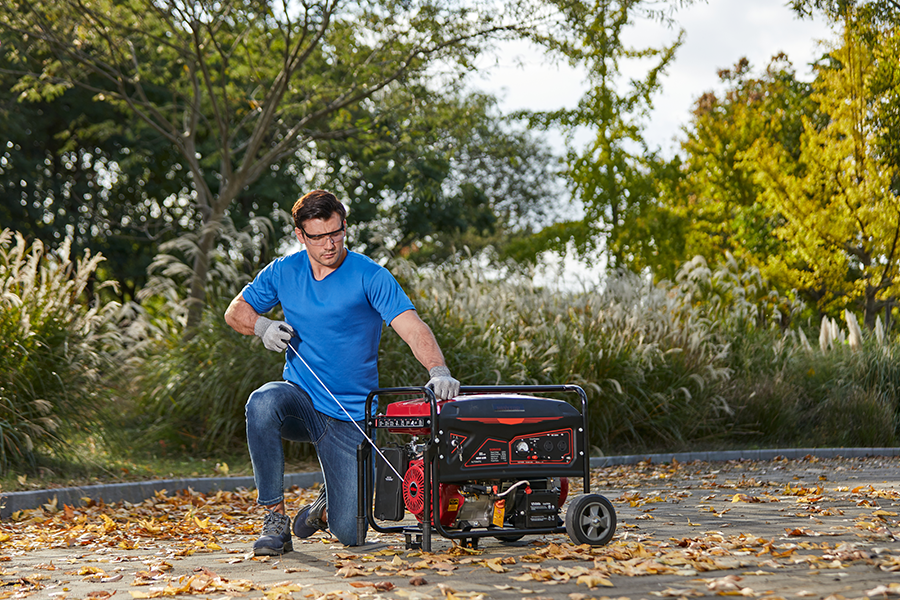
How does a gasoline generator work? It burns gasoline to create mechanical rotation, then uses an alternator to convert that rotation into electrical power.
The process involves two connected systems. The engine turns the chemical energy in gasoline into movement, while the alternator changes that movement into electricity for tools, パンプス, lighting, 家電製品, and other equipment.
The complete energy path can be summarized as:
Gasoline → combustion → crankshaft rotation → alternator movement → electrical output
Following this path helps explain why the engine, alternator, governor, voltage regulator, cooling system, and protection devices all influence generator performance.
One Generator, Two Main Jobs
The engine and alternator are mounted on the same frame, but they perform different jobs.
の エンジン produces mechanical power. It burns a mixture of gasoline and air, moves a piston, and turns the crankshaft.
の alternator produces electrical power. The rotating crankshaft drives the alternator, where electromagnetic induction generates current.
Because these systems are separate, an engine can start and run while the outlets produce no usable electricity. In the same way, a well-made alternator cannot maintain stable output if the engine does not provide enough torque or hold the required speed.
A dependable generator needs the two systems to work as one matched power unit.
From the Fuel Tank to the Crankshaft
Gasoline first travels from the fuel tank through the fuel line and into the carburetor. The fuel system may also include a shutoff valve, filter, sediment cup, or fuel pump, depending on the generator design.
The carburetor mixes gasoline with incoming air so the engine can burn it. Before the air enters, an air filter helps prevent dust and debris from reaching the cylinder.
Many portable gasoline generators use a four-stroke engine. The operating cycle consists of:
- 摂取量: The engine draws the air-fuel mixture into the cylinder.
- 圧縮: The piston compresses the mixture.
- 力: The spark plug ignites the mixture, pushing the piston downward.
- Exhaust: Burned gases leave the cylinder.
A connecting rod transfers the piston’s up-and-down movement to the crankshaft, turning it into continuous rotation. The flywheel helps the engine maintain smooth movement between combustion strokes.
Fuel quality, air supply, ignition, 潤滑, and internal component condition all affect how steadily this rotation can be produced.
How the Alternator Generates Electricity
The crankshaft drives the alternator rotor once the engine reaches its operating speed.
A basic electromagnetic generator contains a rotating component called the rotor and stationary insulated wire coils called the stator. As the rotor turns, its magnetic field moves relative to the stator windings, inducing electrical current. The alternator therefore converts the mechanical energy supplied by the engine into electrical energy.
The electricity then passes through the generator’s voltage-regulation, コントロール, and protection systems before reaching the outlets.
Alternator construction affects how the generator manages current and heat. Winding material, insulation, rotor design, cooling, and assembly accuracy can all influence output stability and durability.
Key Components Inside a Gasoline Generator
| 成分 | Main Function | なぜそれが重要なのか |
|---|---|---|
| Fuel Tank and Fuel System | Store and deliver gasoline | Affect fuel flow, starting, and runtime |
| キャブレター | Mix gasoline with air | Supports stable combustion |
| エアフィルター | Reduce dust entering the engine | Protects engine performance and internal parts |
| Spark Plug and Ignition System | Ignite the compressed air-fuel mixture | Affect starting and combustion stability |
| Piston and Connecting Rod | Convert combustion pressure into movement | Transfer power to the crankshaft |
| Crankshaft and Flywheel | Produce and maintain rotation | Drive the alternator |
| Governor | Respond to changes in engine speed | Helps the engine recover as load increases |
| Rotor and Stator | Generate electrical current | Form the core of the alternator |
| Voltage Regulator | Manage voltage output | Helps reduce voltage fluctuation |
| Circuit Breaker | Interrupt excessive current | Protects against overload and electrical faults |
| Cooling and Exhaust Systems | Remove heat and exhaust gases | Support safe and sustained operation |
| Frame and Vibration Mounts | Support the complete machine | Improve stability during use and transport |
This is why generator quality cannot be judged by engine horsepower alone. The engine, alternator, control system, protective components, and frame must be properly matched.
What Happens When a Load Is Connected?
A generator does not work as hard while running with nothing plugged in.
Once a tool, ポンプ, refrigerator, or other device is connected, the alternator begins supplying current. The electrical demand creates additional resistance against the rotor, so the engine must produce more torque to maintain speed.
The response happens quickly:
- Electrical demand rises.
- Engine speed begins to fall.
- The governor opens the throttle.
- More gasoline and air enter the engine.
- Combustion output increases.
- The engine returns toward its operating speed.
- The voltage regulator responds to the new load.
A brief change in engine sound is normal when a substantial load starts. Persistent surging, heavy voltage drop, breaker tripping, or failure to recover may point to overload, restricted fuel flow, unstable engine speed, or an electrical fault.
Rated Output and Maximum Output
Generator specifications usually show both rated and maximum output, but the two figures serve different purposes.
Rated output is the power the generator is designed to provide during normal operation.
Maximum output is temporary additional capacity that helps the generator handle short increases in demand, particularly when motor-driven equipment starts.
A generator with a 6.0 kW maximum output may not be designed to supply 6.0 kW continuously. Buyers should calculate normal demand using rated output and leave enough reserve for starting loads.
This is especially important for:
- Water pumps
- Refrigerators and freezers
- Air compressors
- Construction tools
- 電気モーター
- Equipment that starts automatically
Adding only running wattage can underestimate the short surge required during startup.
How Generator Design Affects Power Delivery
Manufacturing a generator involves more than placing an engine beside an alternator.
The engine must provide enough torque for the selected alternator. The alternator must match the intended voltage, frequency, rated output, and phase. Cooling airflow must reach the major heat-producing components, while the frame and vibration mounts must keep the machine stable.
The NEWTOP NTGR6500H2 shows how these elements are combined in a gasoline generator. It uses a 389 cc, single-cylinder, air-cooled four-stroke OHV engine with a synchronous brushed SENCI copper-wire alternator. Its specifications list 5.5 kW rated output, 6.0 kW maximum output, a 25 L fuel tank, electric starting, low-oil warning, and short-circuit protection.
The engine also uses a forged crankshaft and camshaft, while the full steel frame and vibration-absorbing mounts support the complete engine and alternator assembly. These features address different parts of the power-generation process rather than relying on one headline specification alone.
How Finished Generators Are Checked
A generator that starts successfully is not necessarily ready for shipment. The complete unit also needs to be checked after the engine, alternator, control panel, frame, and protection systems have been assembled.
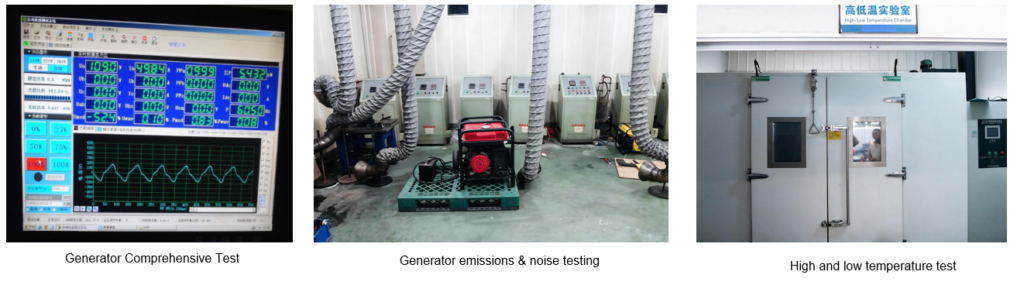
Comprehensive performance, emission and noise, and high- and low-temperature testing for finished NEWTOP generators.
NEWTOP’s finished-generator inspection facilities cover three areas shown in the factory testing images:
Comprehensive Generator Testing
Electrical output and overall operation are observed after final assembly. This helps check whether the engine, alternator, control system, and outlets work together as a complete unit.
Emission and Noise Testing
Emission and operating-noise checks examine characteristics affected by combustion, exhaust design, engine condition, vibration control, and working load.
高い- and Low-Temperature Testing
Environmental testing checks generator operation under changing temperature conditions. Temperature can influence starting, fuel delivery, 潤滑, batteries, 配線, and other electrical components.
These checks connect the generator’s technical specifications with the performance of the finished machine. They also provide stronger evidence than relying only on an engine start-up inspection.
Basic Maintenance Keeps the System Working
Every maintenance task protects one part of the energy path.
Fresh gasoline and a clean fuel system help fuel reach the carburetor. A clean air filter supports the correct mixture. The spark plug supports ignition, while suitable engine oil protects the piston, クランクシャフト, camshaft, and bearings.
Cooling openings should remain clear, and cables, plugs, breakers, and electrical connections should be checked regularly. Backup generators also need periodic starting and inspection so that fuel deterioration, battery discharge, corrosion, or loose connections are found before an outage occurs.
Operate Gasoline Generators Outdoors
Gasoline generator exhaust contains carbon monoxide, a colorless and odorless poisonous gas. Portable generators must never operate inside homes, garages, basements, sheds, or other enclosed areas.
The U.S. Consumer Product Safety Commission advises using portable generators outdoors, at least 20 feet away from homes, with the exhaust directed away from doors, windows, and vents.
The generator should also be switched off and allowed to cool before gasoline is added. Connection to a building’s electrical system should use suitable transfer equipment installed according to local electrical requirements.
From Gasoline to Usable Power
それで, how does a gasoline generator work from beginning to end?
Gasoline and air enter the engine. The spark plug starts combustion, moving the piston and turning the crankshaft. The crankshaft spins the alternator rotor inside the stator, where electromagnetic induction produces electrical current. The governor and voltage regulator then help the generator respond as the connected load changes.
The engine creates rotation. The alternator creates electricity. The control, cooling, protection, and frame systems help the complete unit deliver that power safely and consistently.
Understanding this relationship makes generator specifications easier to evaluate. Engine displacement shows only part of the machine’s capability. Rated output, alternator construction, voltage regulation, testing, protection systems, and component matching reveal more about how the finished generator will perform in real use.
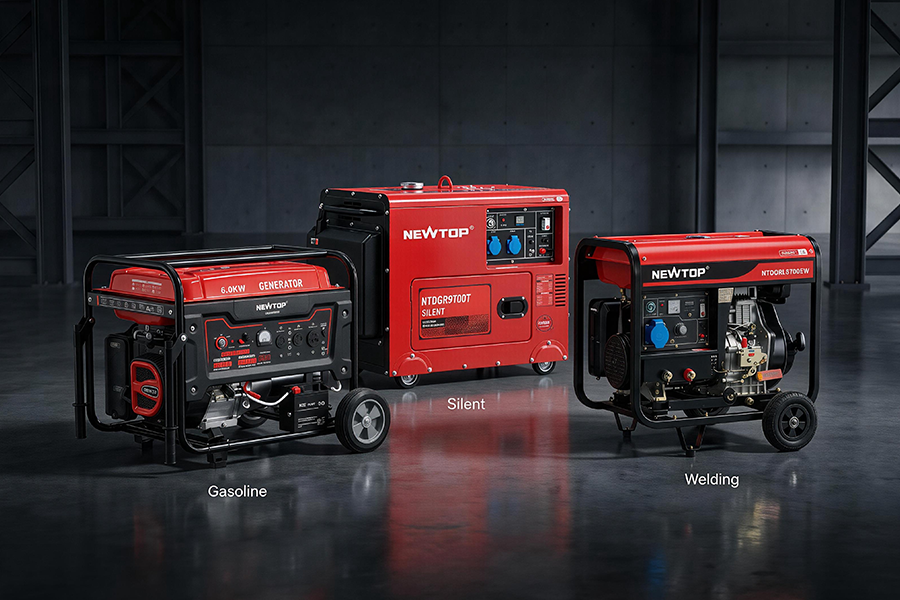
When buyers compare propane vs gasoline generator run time, the number of hours printed on a product page rarely tells the whole story. Runtime changes with the amount of usable fuel, generator load, fuel-specific rated output, tank or cylinder size, ambient temperature, and the way fuel is replenished.
With the same liquid volume and a comparable electrical load, gasoline will generally support a longer run because it contains more energy per gallon. The U.S. Energy Information Administration lists motor gasoline at about 120,214 Btu per gallon and propane at about 91,452 Btu per gallon. A larger propane cylinder or bulk tank, しかし, can provide more total fuel than a generator’s built-in gasoline tank and may therefore keep the generator operating for longer overall.
The useful question is not simply, “Which fuel lasts longer?」
It is:
How long can the generator support the required load with the fuel supply actually available at the site?
Why Published Run-Time Numbers Are Difficult to Compare
A runtime figure only becomes meaningful when the test conditions are clear.
Consider two specifications:
- Generator A: 10 hours of runtime
- Generator B: 8 hours of runtime
Generator A appears to perform better. But suppose its figure was recorded at 25% load, while Generator B was tested at 50% load. The longer figure no longer proves better fuel performance because the second generator was producing more electricity during the test.
Fuel quantity creates another problem. A gasoline runtime figure may be based on the generator’s full onboard tank, while the propane figure may use one portable cylinder. Those containers do not necessarily hold comparable amounts of usable energy.
A proper comparison needs answers to five questions:
How much fuel was used?
For gasoline, check the tank capacity in liters or gallons. For propane, check the actual fuel weight or usable liquid capacity of the cylinder.
What load was applied?
Runtime at 25% load cannot be compared directly with runtime at 50% or rated load.
Was output different on each fuel?
Dual-fuel generators may provide different rated and maximum outputs on gasoline and propane. The same appliance load can therefore represent a different percentage of the generator’s capacity on each fuel.
Was economy mode active?
An engine that automatically reduces speed under light demand may consume less fuel than one operating at a fixed speed.
Were the operating conditions similar?
温度, elevation, equipment condition, and load changes can all move real-world runtime away from the published figure.
Without these details, an advertised number should be treated as a reference rather than a promise.
Put Both Fuels on the Same Basis
The simplest runtime estimate is:
Estimated runtime in hours = usable fuel quantity ÷ hourly fuel consumption at the expected load
The fuel quantity and consumption rate must use matching units. Pounds of propane cannot be divided directly by a gasoline consumption figure expressed in liters per hour. Similarly, a fuel-consumption value stated in grams per kilowatt-hour needs rated output and fuel mass before it can be translated into operating hours.
The expected load also needs to reflect real use.
A generator supplying steady lighting may consume fuel differently from the same generator powering a refrigerator, compressor, ポンプ, or construction tool. Motor-driven equipment can draw substantially more power during startup, and repeated starting cycles affect consumption even when average running wattage appears moderate.
Before comparing fuels, buyers should calculate:
- The equipment expected to run at the same time
- Normal running wattage
- Starting or surge demand
- Expected average load during the operating period
- The amount of reserve capacity needed
Using maximum generator output as the normal load figure will produce a misleading runtime estimate. Maximum output is intended for temporary demand, not continuous operation.
Fuel Supply Can Reverse the Result
The higher energy content of gasoline per gallon does not automatically mean that every gasoline setup will run longer. The total fuel supply often decides the practical outcome.
ガソリン: A Fixed Onboard Supply
Portable gasoline generators commonly carry their fuel in an integrated tank. This creates a clear, self-contained setup: the generator is transported with its tank, filled before use, and operated until fuel runs low.
The main limitation is fixed capacity. A 15-liter or 25-liter tank cannot be expanded without stopping the generator and refueling it according to the manufacturer’s instructions.
Gasoline condition also affects readiness. Fuel left unused for extended periods can deteriorate, so a generator intended for emergency use needs a fuel rotation and maintenance plan. Long theoretical runtime has little value when old fuel, deposits, or a neglected carburetor prevents dependable startup.
Propane: Runtime Depends on the Connected Supply
Propane is stored as a liquid under pressure and changes into gas as pressure is released for combustion. This makes external cylinders and larger storage tanks possible, giving users more flexibility over the quantity of fuel connected to the generator.
A small portable cylinder may provide less runtime than a full gasoline tank. A larger propane supply may provide considerably more. The comparison changes each time cylinder capacity changes.
Propane delivery also depends on vaporization. Tank size, liquid level, surrounding temperature, 湿度, and the tank surface in contact with liquid all affect the rate at which propane can turn into usable vapor. Lower temperatures and lower fuel levels reduce vaporization capacity, while tank frosting can further restrict it.
For a larger generator operating under sustained load, buyers therefore need to check more than total propane quantity. The cylinder and regulator system must also be able to supply fuel at the required rate.
Three Runtime Questions Buyers Actually Ask
Published hour figures become easier to assess when they are connected to a specific operating requirement.
“Can the generator cover one full work shift?」
A contractor planning an eight-hour shift should not begin with the brochure’s longest runtime claim. The calculation should use the expected average site load.
Power tools may run intermittently, while lighting, パンプス, charging equipment, or temporary facilities may stay active throughout the day. Motor-starting demand and repeated load changes also need to be included.
The fuel plan should show:
- Expected consumption during the shift
- Fuel remaining at the end of the shift
- Whether refueling or changing cylinders will interrupt work
- How reserve fuel will be transported and stored
- Whether the propane supply can maintain adequate vaporization under the expected temperature and load
A nominal ten-hour runtime at light load may not cover an eight-hour shift once heavier equipment is connected.
“Can it run through an overnight outage?」
Overnight backup is usually less about maximum output and more about maintaining essential loads.
Refrigeration, selected lighting, communication equipment, fans, security systems, and a small water pump may use much less power than the generator’s full rated capacity. Removing non-essential equipment can extend runtime more effectively than increasing fuel storage alone.
Buyers should calculate the likely nighttime load rather than using the total wattage of every appliance on the property. They should also allow a reserve rather than planning to empty the tank or cylinder completely before morning.
For portable generators, overnight operation still requires safe placement, weather protection, exhaust clearance, and regular supervision. Runtime should never be extended by moving the generator into a garage, shed, or other enclosed area.
“Can runtime be extended without buying a larger generator?」
Often, はい.
Possible measures include:
- Reducing unnecessary electrical loads
- Avoiding simultaneous startup of high-demand equipment
- Using a larger compatible propane supply
- Scheduling heavy equipment for separate operating periods
- Maintaining the engine, air filter, and fuel system
- Selecting a generator whose rated output places the normal load in a more suitable operating range
A larger generator is not automatically more fuel-efficient. If normal demand is low, an oversized unit may add purchase cost and operate outside its most practical load range.
The first step should be improving the load and fuel plan, not simply increasing maximum output.
A Real Gasoline Specification Shows What to Check
A manufacturer’s specification can provide the inputs needed for runtime planning even when it does not state one simplified number of hours.
The NEWTOP NTGR6500H2 gasoline generator, for example, lists:
- 5.5 kW rated output
- 6.0 kW maximum output
- 389 cc, 13 hp OHV engine
- Fuel consumption of no more than 370 g/kWh
- 25-liter fuel tank
- Electric starting
- Copper-wire alternator
- Low-oil and short-circuit protection
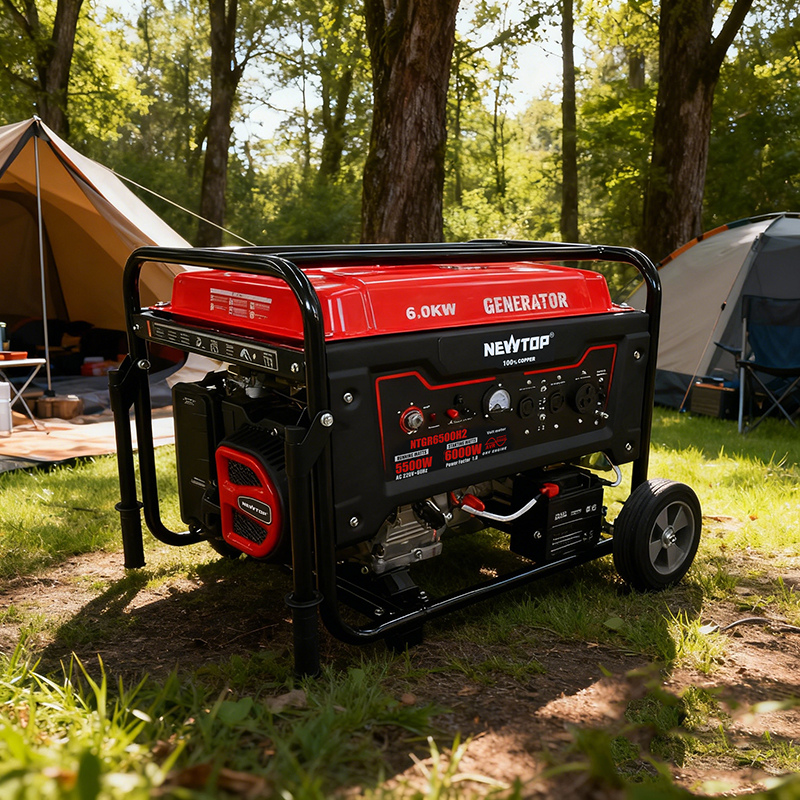
The model also uses a forged crankshaft and camshaft, a full steel frame, and vibration-absorbing mounts for extended outdoor, workshop, 工事, and backup operation.
These figures are more useful than a vague “long runtime” claim because they allow buyers to examine the relationship among tank capacity, rated output, そして燃費.
They still do not justify one fixed runtime prediction.
Actual consumption changes with load, and the published fuel-consumption value must be interpreted using the manufacturer’s test method. Buyers who need a precise operating-hour estimate should request consumption data at several load levels, のような 25%, 50%, 75%, and rated load.
NEWTOP’s gasoline generator range also includes compact 2.8 kW models, mid-range 5.5 kWと 7.8 kW units, and higher-output 10 kW configurations. This range illustrates why runtime cannot be separated from generator size: エンジン排気量, output demand, タンク容量, and intended workload change from one power class to another.
Runtime Information to Request from the Supplier
Instead of asking only, “How many hours will it run?」, buyers should request the test information behind the number.
| Information Required | なぜそれが重要なのか |
|---|---|
| Rated Output on Gasoline | Shows the usable continuous output for the gasoline calculation. |
| Rated Output on Propane | May differ from gasoline output on a dual-fuel generator. |
| Gasoline Tank Capacity | Identifies the fuel quantity behind the gasoline runtime. |
| Propane Cylinder Size and Usable Fuel Amount | Identifies the actual propane supply used in the test. |
| Runtime Test Load | Allows a fair comparison between published runtime figures. |
| Fuel Consumption at Several Loads | Supports more accurate calculations for different applications. |
| Economy-Mode Status | May affect fuel consumption when the generator operates under partial load. |
| Ambient Test Temperature | Provides important context for propane vaporization performance. |
| Starting Loads Used During Testing | Shows whether motor-driven equipment and surge demand were represented. |
| Required Regulator and Connection | Confirms that the propane supply can meet the engine’s fuel demand. |
| Recommended Fuel Reserve | Helps prevent an unexpected shutdown before refueling or cylinder replacement. |
| Refueling or Cylinder-Change Procedure | Reveals whether continuous work will be interrupted. |
A supplier that provides the test basis makes it easier for distributors and end users to set realistic expectations. A single hour figure without fuel quantity and load percentage offers far less value.
Safety Comes Before Additional Runtime
Both gasoline and propane generators produce carbon monoxide. Portable units must operate outdoors and away from occupied buildings, with exhaust directed away from doors, windows, and vents. The U.S. Consumer Product Safety Commission advises placing portable generators at least 20 feet from the home whenever possible.
Gasoline should not be added while the generator is running or hot. Propane cylinders, regulators, ホース, and connectors must match the equipment instructions and applicable gas-safety requirements.
A longer hose, improvised fuel connection, indoor placement, or unsafe hot refueling is never an acceptable way to gain more operating time.
What Buyers Should Really Compare
Gasoline contains more energy per gallon than propane, so an equal-volume comparison generally favors gasoline. Real generator installations rarely use equal fuel volumes, しかし. A propane generator connected to a larger external supply may run longer than a gasoline model limited to its onboard tank.
A reliable propane vs gasoline generator run time comparison should place both fuels under the same conditions:
- Comparable electrical load
- Clearly stated rated output
- Known usable fuel quantity
- Matching runtime test conditions
- Suitable tank or cylinder capacity
- Realistic temperature and operating pattern
- Safe refueling or cylinder replacement plan
The most useful runtime figure is not the largest number in a catalog. It is the number of hours the generator can support the required equipment before the available fuel supply must be safely replenished.
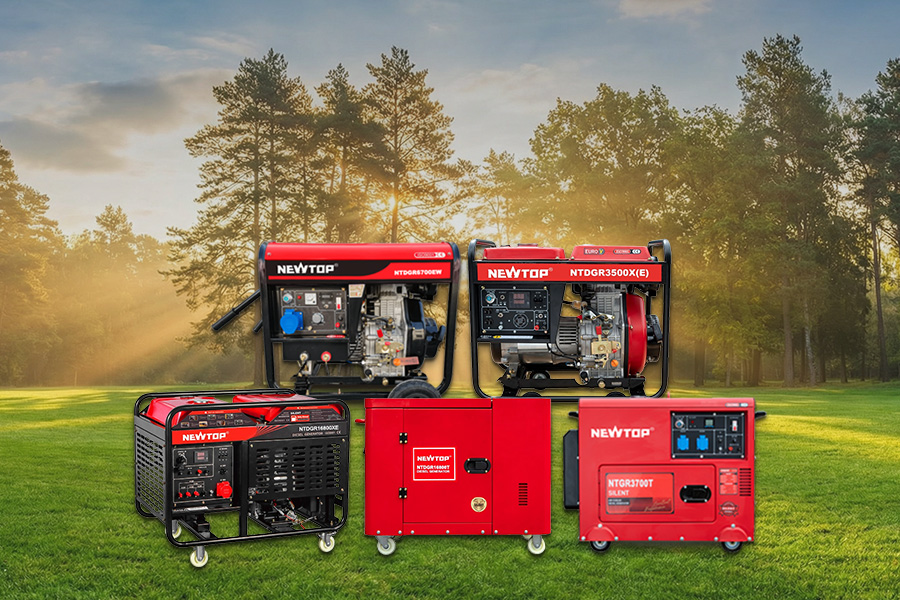
The Diesel Generator vs Gasoline choice mainly depends on running hours, power demand, 携帯性, 燃料の入手可能性, そして予算. Diesel generators are generally better suited to frequent or extended operation, while gasoline generators are often more practical for shorter backup periods and mobile tasks.
しかし, fuel type alone does not decide whether a generator will perform well. Rated output, motor-starting demand, engine construction, fuel tank capacity, maintenance access, and the cost of downtime can be just as important. A correctly sized gasoline generator may serve a small workshop better than an oversized diesel unit, while a diesel generator may offer better long-term value on a site that needs power throughout the working day.
Diesel Generator vs Gasoline: Key Differences
Both generator types use an internal combustion engine to drive an alternator and produce electricity. The practical difference lies in how the engine delivers power and how the generator fits the intended workload.
Diesel generators are commonly selected for frequent use, sustained loads, and higher-capacity applications. Compared at a similar output and under extended operation, diesel models may offer more favorable fuel consumption. Their mechanical construction also tends to suit applications where the generator is expected to work regularly.
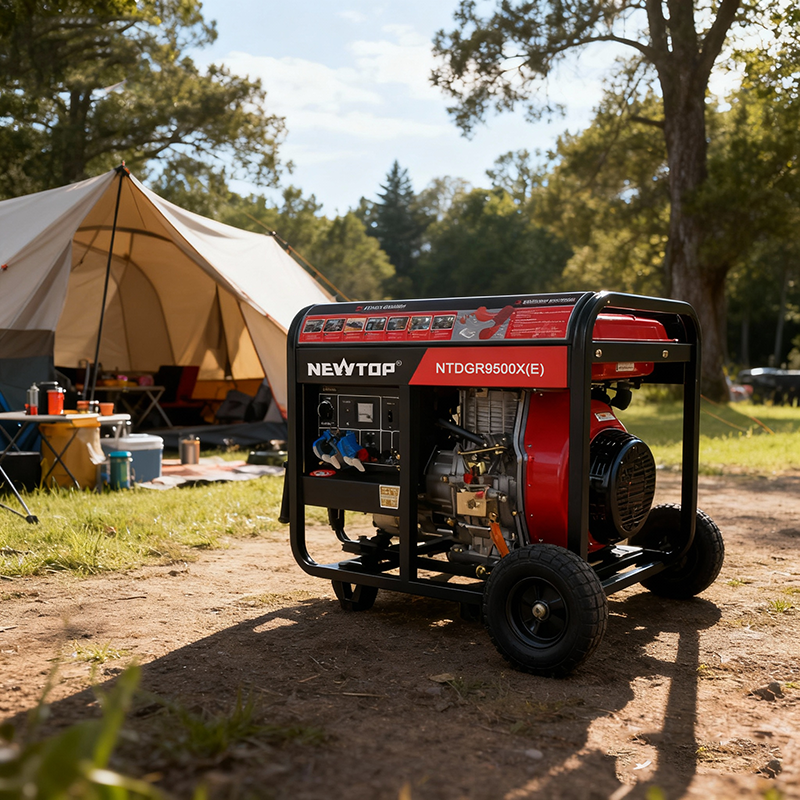
Gasoline generators are widely used where portability, lower initial investment, and intermittent operation matter more. Many compact gasoline models are easier to move between locations and are suitable for temporary work, 中小企業, household backup, and outdoor use.
These are general tendencies rather than fixed rules. Actual performance depends on the generator model, エンジン排気量, load percentage, alternator, enclosure, cooling system, and maintenance condition.
| Decision Factor | Diesel Generator | Gasoline Generator |
|---|---|---|
| Typical Operating Pattern | Frequent or extended operation | Occasional or shorter operation |
| Initial Investment | Usually higher in comparable classes | Often lower in portable power ranges |
| Fuel Use Over Long Periods | Often more favorable at a similar output and sustained load | Can become less economical during extended operation |
| Mobility | Commonly used in fixed, enclosed, or wheeled configurations | Smaller models are often easier to transport |
| Load Suitability | Frequently selected for sustained commercial and jobsite loads | Suitable for moderate loads and temporary work |
| Structure Options | Open-frame and silent enclosed models | Mainly portable open-frame models, with other options depending on the range |
| 一般的なアプリケーション | 工事, 農場, commercial facilities, and long backup periods | Small workshops, mobile service, household backup, and short outdoor tasks |
| What Buyers Should Verify | Rated output, 燃費, enclosure, running time, and service access | Rated output, タンク容量, 携帯性, 始動システム, and surge output |
Specifications from individual models should always take priority over general fuel-type comparisons. Buyers should compare rated output, maximum output, 燃費, タンク容量, noise level, and recommended operating conditions before ordering.
Which Generator Is Better for Commercial Use?
Commercial generator selection should begin with the expected duration and frequency of each power interruption.
For a small shop, office, restaurant, or service business that only experiences occasional short outages, a gasoline generator may provide sufficient backup at a more manageable initial cost. It can support selected lighting, communication devices, payment systems, fans, refrigeration, or other essential equipment, provided that the total running and starting loads remain within the generator’s rated capacity.
The priorities change when outages last for several hours or happen several times each week. Fuel consumption becomes more important, and the generator must maintain stable output for longer periods. A diesel generator may then offer a better fit, particularly for warehouses, larger workshops, 農場, hospitality businesses, and facilities where power loss quickly affects revenue.
Commercial buyers should establish four points before choosing:
✅ Expected running time
Estimate how many hours the generator may operate during a normal outage rather than relying only on annual outage frequency.
✅ Essential electrical loads
Identify which equipment must remain active. Refrigeration systems, パンプス, air compressors, and other motor-driven equipment may require substantially more power during startup.
✅ Backup or primary operating role
A generator used only during grid failure has a different duty pattern from one used as a regular power source in an area with limited grid access.
✅ Cost of downtime
For businesses that lose products, production capacity, or customer transactions during an outage, operating reliability may matter more than the lowest purchase price.
Automatic transfer requirements should also be considered for fixed commercial installations. Where uninterrupted changeover is important, generator compatibility with the intended transfer and control system should be confirmed before purchase.
Which Generator Is Better for Construction Sites?
Construction sites place different demands on a generator. Loads change throughout the day, equipment may have high starting current, and the generator often operates around dust, vibration, 熱, and frequent movement.
Diesel generators are commonly chosen for longer shifts and repeated jobsite use. They may be better suited to powering pumps, mixers, welders, compressors, lighting systems, and temporary site facilities over sustained periods. A heavier frame is also less of a disadvantage when the generator remains in a fixed work area or is mounted on a wheeled platform.
Gasoline generators remain practical for smaller crews and shorter assignments. Repair work, finishing tasks, temporary lighting, and mobile tools may only require power for a few hours. そういった場合には, a compact gasoline generator can be easier to load, unload, and move around the site.
The decision should reflect how the site actually works:
- Long daily shifts with sustained loads: diesel is often the stronger candidate.
- Short tasks across multiple work areas: gasoline may provide easier mobility.
- Tools with electric motors: starting wattage must be checked, not only normal running wattage.
- Dusty or hot conditions: filtration, cooling, frame strength, and maintenance access become more important.
- Noise-sensitive projects: compare enclosed and open-frame models using actual noise specifications.
- Remote sites: choose the fuel that can be supplied, stored, and managed reliably in that location.
Fuel type cannot compensate for poor sizing. An undersized generator may struggle during motor startup or trip under changing loads. An oversized unit adds cost and may operate inefficiently when the average load remains very low.
Which Generator Is Better for Emergency Use?
Emergency use includes several very different situations. A homeowner preparing for a short grid outage does not have the same requirements as a shelter, communication site, flood response team, or large commercial facility.
A gasoline generator is often practical for temporary emergency backup. Portable models can be deployed quickly and may provide enough power for lighting, communication equipment, fans, selected appliances, and small pumps. This makes them useful where ease of movement and lower upfront cost are priorities.
A diesel generator becomes more attractive when emergency power may be required for many hours or several days. Larger facilities and response operations may need more sustained output, longer service capability, or a silent enclosed structure that can remain in a fixed location.
Fuel planning must form part of the emergency plan. Gasoline can deteriorate during prolonged storage, while stored diesel also needs protection from water and contamination. Existing equipment can influence the decision as well. A contractor, farm, or emergency organization that already operates diesel machinery may find diesel storage and refueling easier to integrate.
Generator Safety Cannot Be Treated as Optional
Both diesel and gasoline generators produce carbon monoxide and must never be operated inside homes, garages, basements, sheds, or other enclosed spaces. The U.S. Consumer Product Safety Commission advises operating portable generators outdoors, at least 20 feet away from homes and buildings, with the exhaust directed away from doors, windows, and vents.
Electrical connection also requires care. OSHA advises against connecting a portable generator directly to a building’s electrical system unless a suitable transfer switch has been installed by a qualified electrician. Cables should be rated for the expected load, and grounding, bonding, weather protection, and ground-fault protection must follow the generator manufacturer’s instructions and local electrical requirements.
How to Choose the Right Generator Size
The required generator output should be calculated before deciding between diesel and gasoline.
Begin by listing the equipment that may run simultaneously. For each item, record its normal running wattage and, where applicable, its starting demand. Pumps, compressors, refrigerators, and power tools with electric motors may briefly draw several times their normal operating power during startup.
Three figures deserve particular attention:
Continuous Rated Output
This is the power the generator is designed to provide during normal operation. The planned continuous load should remain within this rating rather than relying on maximum output throughout the working period.
Maximum or Surge Output
This temporary capacity helps the generator handle short increases in demand, particularly when motor-driven equipment starts. It should not be treated as the normal operating rating.
Expected Average Load
A generator should have enough reserve capacity to manage load changes without being dramatically larger than necessary. Regular operation at either extremely high or very low load can reduce efficiency and create avoidable operating issues.
For commercial orders, buyers should also confirm:
- Required voltage and frequency
- Single-phase or three-phase output
- Number and type of receptacles
- Electric or recoil starting
- 燃料タンク容量
- Continuous running time
- AVR or voltage regulation requirements
- Open-frame or silent enclosure
- Wheel kits, handles, or lifting requirements
What Generator Construction Changes in Real Use?
Two generators with similar rated output may behave differently once they begin powering tools or equipment. Engine materials, alternator construction, vibration control, protection systems, and frame design all influence long-term use.
NEWTOP offers both gasoline and diesel generator sets, including open-frame and silent configurations. The current range covers multiple output classes, from compact units for outdoor and backup power to higher-capacity diesel models for commercial and construction applications. Selected NEWTOP generators use copper-winding alternators, steel frames, reinforced engine components, and designs intended to operate in temperatures from -10°C to 50°C.
The differences are easier to understand through actual product configurations.
Gasoline Generator Construction
The NEWTOP NTGR6500H2 provides 5.5 kW rated output and 6.0 kW maximum output. Its engine uses a strengthened 42CrMo forged crankshaft and camshaft, while a SENCI copper-wire alternator supports stable voltage and overload performance. A full steel frame with vibration-absorbing mounts protects the machine during demanding work.
The model also includes a 25 L fuel tank, low-oil warning, and short-circuit protection. These features make the generator suitable for construction sites, small workshops, property maintenance, and extended household backup where a gasoline model is still preferred.
Open-Frame Diesel Generator Construction
For medium-to-heavy power requirements, the NEWTOP NTDGR6500X(E) combines a forged-steel crankshaft, nitrided gears, BOSCH-technology fuel injection, and a copper-winding alternator. The anti-vibration steel frame helps protect the engine and alternator during construction, agricultural, and commercial operation.
This model provides 4.8/5.0 kVA rated output and up to 5.2/5.5 kVA maximum output, depending on frequency configuration. The product structure reflects the priorities often associated with diesel equipment: load handling, mechanical strength, and stable output over longer working periods.
Silent High-Power Diesel Construction
Where higher output and lower operating noise are needed together, a silent enclosure may be more appropriate than an open frame. The NEWTOP NTDGR16800T combines 11 kW rated output with a 12 kW maximum output, a 42CrMo forged crankshaft, nitrided gear components and a 100% copper SENCI alternator.
Its enclosed body reduces operating noise while providing additional protection for internal components. The model is designed for construction, commercial backup, and other demanding applications where both power capacity and operating environment matter.
These examples show why buyers should compare more than fuel type and horsepower. The alternator, クランクシャフト, gear structure, protection system, frame, and enclosure can determine how well a generator fits the intended market.
メンテナンス, 部品, and Local Technical Support
A well-maintained gasoline generator can perform more reliably than a neglected diesel unit. Engine type does not replace regular inspection and service.
Before operation, users should check:
- Engine oil level and condition
- Fuel quality and storage condition
- Air and fuel filters
- Cooling airflow
- Cable and receptacle condition
- Battery condition on electric-start models
- フレーム, mounts, and fasteners
- Signs of fuel or oil leakage
Backup generators should be started and tested at scheduled intervals. Waiting until an actual power failure to check the generator can leave old fuel, a discharged battery, or an electrical fault undiscovered.
For distributors and commercial buyers, parts support also affects the total ownership experience. Filters, starting components, control panels, voltage regulators, alternator parts, and common engine components should be available without requiring the replacement of the complete generator.
NEWTOP supplies gasoline and diesel generators across multiple power ranges, along with product selection and spare-parts support for wholesale customers. This allows distributors to build a range for households, 請負業者, 農場, ワークショップ, and commercial backup users rather than relying on one generator type for every application.
Diesel Generator vs Gasoline: Making the Final Decision
Choose a diesel generator when the application involves frequent operation, sustained loads, longer backup periods, or higher-capacity commercial and construction demand. Compare actual fuel consumption, rated output, enclosure, noise, and service access before deciding on a model.
Choose a gasoline generator when portability, lower initial investment, faster deployment, and occasional operation are the main priorities. It is often the more practical option for small businesses, mobile work, temporary construction tasks, and short emergency outages.
The final Diesel Generator vs Gasoline decision should be based on the hours the generator will run, the equipment it must start, the fuel available locally, and the level of downtime the user can accept. Once those requirements are defined, fuel type becomes one part of a much clearer selection process.
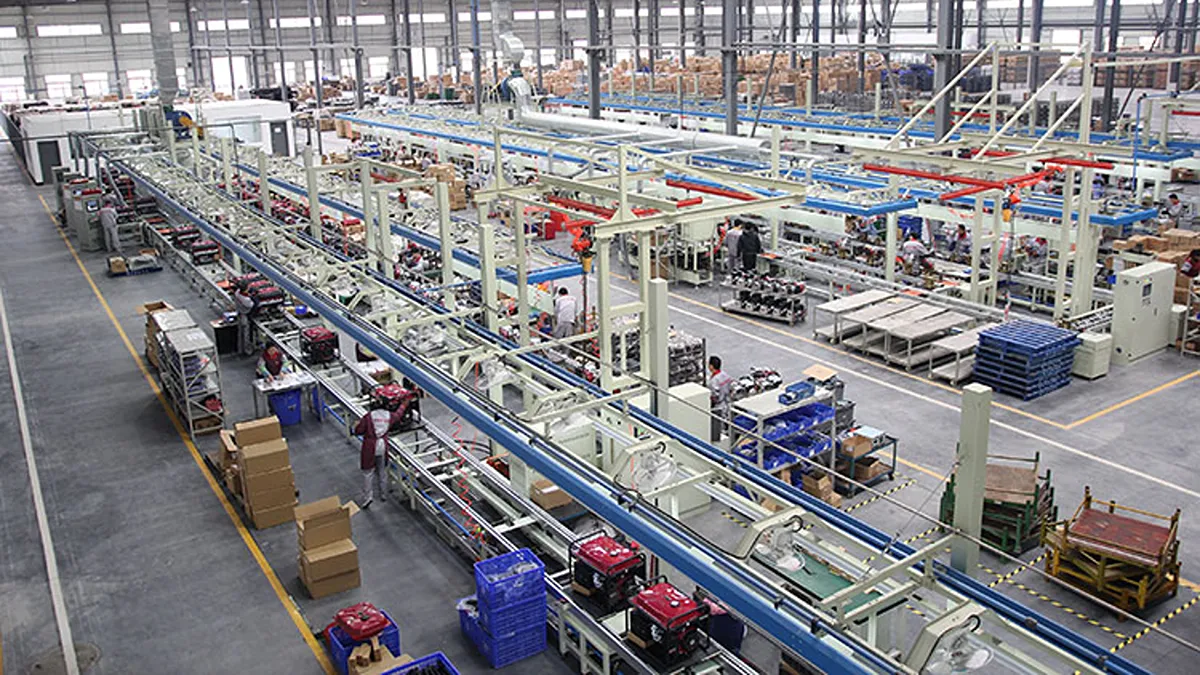
世界のボート業界は、信頼性の高いガソリンおよび電気推進システムに対する需要の高まりに伴い進化し続けています。. ボートブランドかどうか, 船舶用機器販売代理店, 卸売業者, またはOEM購入者, 適切な船外機メーカーを選択することは製品の品質にとって不可欠です, 長期的なビジネスの成長, そして顧客満足度.
このガイドでは, 私たちが選んだのは 10 中国の評判の良い船外機メーカー, ヨーロッパ, そして北米. コスト効率の高いガソリン エンジンや OEM など、さまざまな強みを発揮します。 & 革新的な電気推進システムへの船外機の ODM – 貴社のビジネス向けの潜在的な船外機サプライヤーの比較に役立ちます.
トップの概要 10 船外機メーカー
| メーカー | 位置 | 設立 | 主な製品 | 主要な強み |
|---|---|---|---|---|
| ニュートップ | 上海, 中国 | 2003 | 2-ストローク船外機, 5–15HP エンジン, プロペラ & スペアパーツ | 500K+ 年間生産能力, OEM/ODM, 100+ グローバルディストリビューター |
| 秀亜パワーマシナリー | 杭州, 中国 | 2003 | ガソリン & 電動船外機 | 輸出先 80+ 広範なディーラーネットワークを持つ国々 |
| e推進力 | 深セン, 中国 | 2012 | 電動船外機, 船内機, 電池 & ポッドドライブ | 電動船舶推進の革新者をリードする企業 |
| Seanovo パワーマシナリー | 杭州, 中国 | — | ガソリン船外機 & スペアパーツ | 豊富な輸出経験を持つOEM製造 |
| 浙江滄龍発電機械 | 浙江省, 中国 | — | 2-脳卒中, 4-脳卒中 & 電動船外機 | 5HP ~ 40HP の幅広い製品ポートフォリオ |
| 主題 | フランス | 2018 | ポータブル電動船外機 | 小型船舶用の小型・軽量推進装置 |
| スズキマリン | 浜松市, 日本 | 1965 | 4-ストローク船外機 & 船舶用エンジン | 燃料効率の高い 4 ストローク技術の世界的リーダー |
| エルコモーターヨット | ニューヨーク, アメリカ合衆国 | 1893 | 電動船外機 & 船内機 | 1世紀を超える電気海洋工学 |
| フラックスマリン | ロードアイランド州, アメリカ合衆国 | 2018 | 高性能電動船外機 | スマートデジタル制御を備えたプレミアム電気推進 |
| ヤマハマリン | 岩田, 日本 | 1955 | 2-脳卒中 & 4-ストローク船外機, 高出力船舶用エンジン, プロペラ | 信頼性で知られる世界トップブランド, 革新, およびグローバルディーラーサポート |
ニュートップ
おすすめ: ☆☆☆☆☆
位置: 上海, 中国 (嘉興市の製造拠点, 浙江省)
主な製品: 2-脳卒中 ガソリン船外機, 5HP~15HP船外機, 船外機プロペラ, スペアパーツ, OEM & ODM船外機
MOQ: OEM/ODM注文にも柔軟に対応
に設立 2003, ニュートップ は、屋外動力機器と信頼性の高い中小馬力の船舶用エンジンを専門とする中国の船外機専門メーカーです。. 10,000㎡の6S管理の敷地で運営 製造施設, 同社は以上の年間生産能力を持っています 500,000 単位を獲得し、 26+ 国際認証, CEを含む, ISO, および EU ステージ V (ユーロ 5) 選択したモデルのコンプライアンス. その製品ポートフォリオには耐久性のある製品が含まれます。 2-ストロークガソリン船外機, 船外機プロペラ, 漁船の交換部品, インフレータブルボート, アルミボート, およびその他のレクリエーション船.
輸出型船外機工場として, NEWTOPは柔軟なOEMを提供します & 世界の輸入業者向けの ODM ソリューション, プライベートブランドブランド, および船外機販売代理店. 今日, 会社は協力しています 100+ 販売代理店 世界中で, 一方、多くのアフリカおよびラテンアメリカ市場の顧客は、地元のディーラーや小売店を通じて NEWTOP 製品を直接購入できます。. 安定した製造品質に裏付けられた, 迅速な技術サポート, 拡大するグローバルサービスネットワーク, NEWTOPは、信頼できる船舶用推進ソリューションを求めるパートナーにとって、信頼できる船外機メーカーおよび長期的な船外機サプライヤーとなりました。.
秀亜パワーマシナリー

位置: 杭州, 浙江省, 中国
主な製品: ガソリン船外機, 電動船外機, 船舶用エンジン部品, 船外機アクセサリー
MOQ: 見積に関するお問い合わせ
Hidea Power Machinery は中国で最も有名な船外機メーカーの 1 つです, ガソリンと電気の両方の推進ソリューションを提供. 以上に及ぶ国際的な販売ネットワークにより、 80 国と地域, Hidea は、世界中のディーラーや海洋機器販売業者にとって信頼できる船外機サプライヤーとしての地位を確立しています。. その製品ポートフォリオは、レジャーボートに適した複数の馬力範囲をカバーしています。, 漁船, および商用アプリケーション.
同社は製造技術に継続的に投資しています, 品質管理, エンジンの効率と耐久性を向上させる製品開発. 完成したエンジン以外にも, Hidea はさまざまなスペアパーツや付属品も提供しています, 船外機の販売代理店が地域市場向けに包括的な製品提供を構築できるようにする.
e推進力

おすすめ: ☆☆☆☆
位置: 深セン, 広東省, 中国
主な製品: 電動船外機, 船内機, ポッドドライブシステム, 船舶用電池, ハイブリッド推進システム
MOQ: 見積に関するお問い合わせ
に設立 2012, ePropulsion は世界有数の電動船外機メーカーの 1 つになりました, 持続可能な海洋推進力のみに焦点を当てる. 電動船外機もラインナップ, 船内システム, ポッドドライブ, インテリジェントバッテリーシステム, 娯楽船および商業船向けに設計された統合海洋制御技術.
同社は革新的なエンジニアリングと静かな動作を組み合わせていることで知られています。, ゼロエミッション, メンテナンスの必要性が低い. 従来のガソリンエンジンに代わる環境に優しい代替品をお探しのバイヤー向け, ePropulsion は、拡大する国際ディーラー ネットワークと継続的な製品革新によってサポートされる高度な推進システムを提供します.
Seanovo パワーマシナリー

おすすめ: ☆☆☆☆
位置: 杭州, 浙江省, 中国
主な製品: ガソリン船外機, 船舶用エンジン, 船外機のスペアパーツ
MOQ: 見積に関するお問い合わせ
Seanovo Power Machinery は、ガソリン駆動の船舶用エンジンおよび関連アクセサリの製造を専門とする船外機の専門工場です。. 杭州に位置, 同社は国際的な販売代理店にサービスを提供しています, 卸売業者, 漁船に適した幅広いポータブル船外機を提供する OEM 顧客, インフレータブルボート, およびレクリエーション用水上バイク.
専門的な生産ラインと輸出経験, Seanovo は安定した製造品質と競争力のある価格に重点を置いています. 完成したエンジンに加えて、, 顧客が信頼できるアフターサポートを維持できるようにする交換コンポーネントを提供します。. 製造の柔軟性により、カスタマイズされたブランディングの機会を探しているバイヤーにとっても実用的な選択肢になります。.
浙江滄龍発電機械

おすすめ: ☆☆☆☆
位置: 浙江省, 中国
主な製品: 2-ストロークガソリン船外機, 4-ストローク船外機, 電動船外機, 5HP ~ 40HP エンジン
MOQ: 見積に関するお問い合わせ
Zhejiang Canglong Power Machinery は、ガソリン船外機と電気船外機の両方を製造しています, 約5HPから40HPの範囲の馬力をカバーします。. ラオゲンブランドを通じて, 同社は耐久性のバランスを考慮して設計されたいくつかの製品シリーズを提供しています, 効率, レクリエーションボート市場向けの手頃な価格.
その多様な製品ポートフォリオにより、販売代理店は競争力のある価格を維持しながら、さまざまなパフォーマンス要件を持つ顧客にサービスを提供できます。. 成長する船外機サプライヤーとして, Canglong は引き続き輸出事業を拡大し、中級船舶用推進製品を求めるディーラーに実用的なソリューションを提供しています。.
主題
おすすめ: ☆☆☆☆
位置: ナント, フランス
主な製品: ポータブル電動船外機, TEMO.450 電気推進システム
MOQ: 見積に関するお問い合わせ
に設立 2018, TEMO はフランスのポータブル電動ボート モーターのメーカーです. 同社は軽量化を開発しています, 設置が容易な入札用電気推進製品, ディンギー, ヨット, 手漕ぎボート, その他の軽水艇. 有名な TEMO.450 モデルは、補助推進および短距離船舶用のコンパクトな電動船外機として設計されました。.
TEMO は、TEMO.450 および TEMO.1000 船外機モデルについてもフランス発の認証を取得しています。, フランス製船舶用電動機器を中心としたポジショニングを強化. 小型ボート市場をターゲットとする代理店向け, このブランドは製品主導のポジショニングの明確な例を提供しています: 簡単な取り付け, 携帯性, 低騒音, そして扱いやすい. 従来のガソリンエンジンではなく電動船外機に重点を置いている小売業者や船舶ディーラーに特に関係があります。.
スズキマリン

おすすめ: ☆☆☆☆☆
位置: 浜松市, 静岡県, 日本
主な製品: 4-ストローク船外機, ポータブル船外機, 高馬力船舶用エンジン, マリンアクセサリー
MOQ: 現地代理店へのお問い合わせ
に設立 1965, スズキ マリンはスズキ株式会社の船舶部門であり、世界有数の船外機メーカーの 1 つです。. 同社は先進的な 4 ストローク技術で最もよく知られています。, 燃費に優れた船外機を提供, 低排出ガス, そして信頼できるパフォーマンス. ポータブルな小型モデルから漁船用の高馬力エンジンまでラインナップ, レジャーボート, 世界中の商船.
数十年にわたるエンジニアリングの専門知識と世界的なディーラーネットワークを備えています, スズキマリンは製品の信頼性と革新性で高い評判を築いています. 同社は、船外機の正規販売代理店を通じて包括的なアフターサポートを提供しながら、よりクリーンな海洋技術と高度な燃料噴射システムへの投資を継続しています。. 世界的に認められたブランドに裏打ちされた高品質の船舶用エンジンを求めるバイヤー向け, スズキマリンは信頼される船外機メーカーであり続けます.
エルコモーターヨット

おすすめ: ☆☆☆☆
位置: アテネ, ニューヨーク, アメリカ合衆国
主な製品: 電動船外機, 電動船外機, 船舶用推進システム
MOQ: 見積に関するお問い合わせ
Elco Motor Yachts は、船舶用電動推進装置において最も古い企業の 1 つです。, 1世紀以上前に遡る歴史を持つ. 今日, その会社は電気製品を製造しています 船外機 レクリエーションボートの所有者と商業用海洋用途に役立つ船内推進システム.
長年にわたるエンジニアリングの伝統, 最新の電気技術との組み合わせ, これにより、Elco は持続可能な推進ソリューションのプレミアムプロバイダーとしての地位を確立することができます。. 確立されたアメリカのブランドを探しているバイヤーは、豊富な業界経験に裏打ちされた信頼性の高い電気推進を必要とするプロジェクトとして Elco を検討することがよくあります。.
フラックスマリン

おすすめ: ☆☆☆☆
位置: ブリストル, ロードアイランド州, アメリカ合衆国
主な製品: 高性能電動船外機, バッテリーシステム, デジタル制御システム
MOQ: 見積に関するお問い合わせ
Flux Marine は、より高速な加速と高度なデジタル制御を求めるレクリエーション ボート用の高性能電動船外機の開発に重点を置いています。. 同社は独自のバッテリー技術とインテリジェントな監視システムを統合し、パフォーマンスを最適化しています。, 効率, ユーザーエクスペリエンスと.
持続可能性だけで競争するのではなく, Flux Marine は、プレミアムなパフォーマンスとスマート テクノロジーを中心に自社を位置づけています。. 同社の製品は、電気推進が環境上の利点とエキサイティングな水上パフォーマンスの両方を期待するボート愛好家をどのように満足させることができるかを実証しています。.
ヤマハマリン

おすすめ: ☆☆☆☆☆
位置: 岩田, 静岡県, 日本
主な製品: 2-ストロークおよび4ストローク船外機, 高馬力船外機, マリンアクセサリー, プロペラ
MOQ: 現地代理店へのお問い合わせ
に設立 1955, ヤマハマリンは世界で最も尊敬される船外機メーカーの一つです, レクリエーションボート用の幅広い船外エンジンを提供, 商業漁業, および専門的な海洋アプリケーション. そのポートフォリオは、軽量のポータブルモデルから高馬力の V6 および V8 船外機まで多岐にわたります。, すべて優れた信頼性を実現するように設計されています, 燃費, 要求の厳しい環境でもスムーズなパフォーマンスを実現.
数十年にわたるエンジニアリングの革新と広範なグローバルディーラーネットワークに支えられています, ヤマハマリンは最高の品質と信頼できるアフターサポートで定評があります. 同社は先進的な燃料噴射技術への投資を継続しています。, デジタル制御システム, 高性能海洋工学, ボートビルダーにとって好ましい船外機サプライヤーとなっています。, 海洋ディーラー, および世界中の船外機販売代理店.
信頼できる船外機メーカーの選び方?
船外機メーカー選びは馬力と単価の比較だけではない. 輸入業者, ボートビルダー, 海洋流通業者は、サプライヤーが一貫した品質を提供できるかどうかを評価する必要があります。, テクニカルサポート, 部品の入手可能性, 地域の顧客にマッチした製品ラインナップ.
- 製造能力の確認: 自社で船外機工場を運営しているかどうかを尋ねる, エンジニアリングチーム, 品質管理プロセス, およびテスト手順.
- 出力範囲と燃料の種類を確認する: ガソリンを選ぶ, 電気, 2-脳卒中, 4-脳卒中, またはボートのタイプに基づいたハイブリッド製品, 現地の規制, 購入者の好み, および予想される動作条件.
- OEM および ODM サポートを確認する: プライベートブランドプログラムの場合, ブランドオプションを確認する, 梱包, マニュアル, 製品の改造, OEM向けのサンプリング手順と & ODM船外機.
- コンプライアンス文書を確認する: 該当する認定をリクエストする, テストレポート, 発送書類, 安全に関する情報, 市場固有のコンプライアンス サポート.
- 部品供給の評価: 船外機プロペラへの確実なアクセス, インペラ, スパークプラグ, 燃料システムコンポーネント, 修理部品はディストリビュータの維持に不可欠です.
- アフターセールス能力を評価する: 保証ポリシーについて問い合わせる, 技術マニュアル, トラブルシューティングのガイダンス, トレーニングリソース, ディーラーからのクレームに対する応答時間.
- 商業条件を明確にする: MOQの確認, リードタイム, 支払い条件, コンテナ積み込み計画, スペアパーツパッケージ, 注文前に地域または販売代理店のポリシーを確認してください.
最終的な考え
適切な船外機サプライヤーは市場での地位によって決まります, 対象ボートカテゴリー, 電力要件, とサービス能力. ガソリン船外機は、多くの釣りやレクリエーション用途にとって引き続き重要です, 一方、電動船外機は軽量ボートに新たな可能性をもたらします, 低騒音水路, 持続可能性主導の市場.
コンパクトなガソリン船外機をお探しの方へ, プライベートブランドの柔軟性, スペアパーツ, 経験豊富な中国拠点の製造パートナー, ニュートップ 実用的な出発点を提供します. 幅広い屋外電源機器の機能により、販売代理店が補完的な製品カテゴリー全体で調達を統合することもできます。.
次の調達プロジェクトを計画している場合, あなたの市場向けにカスタマイズされたソリューションについて話し合うには、NEWTOP にお問い合わせください。.
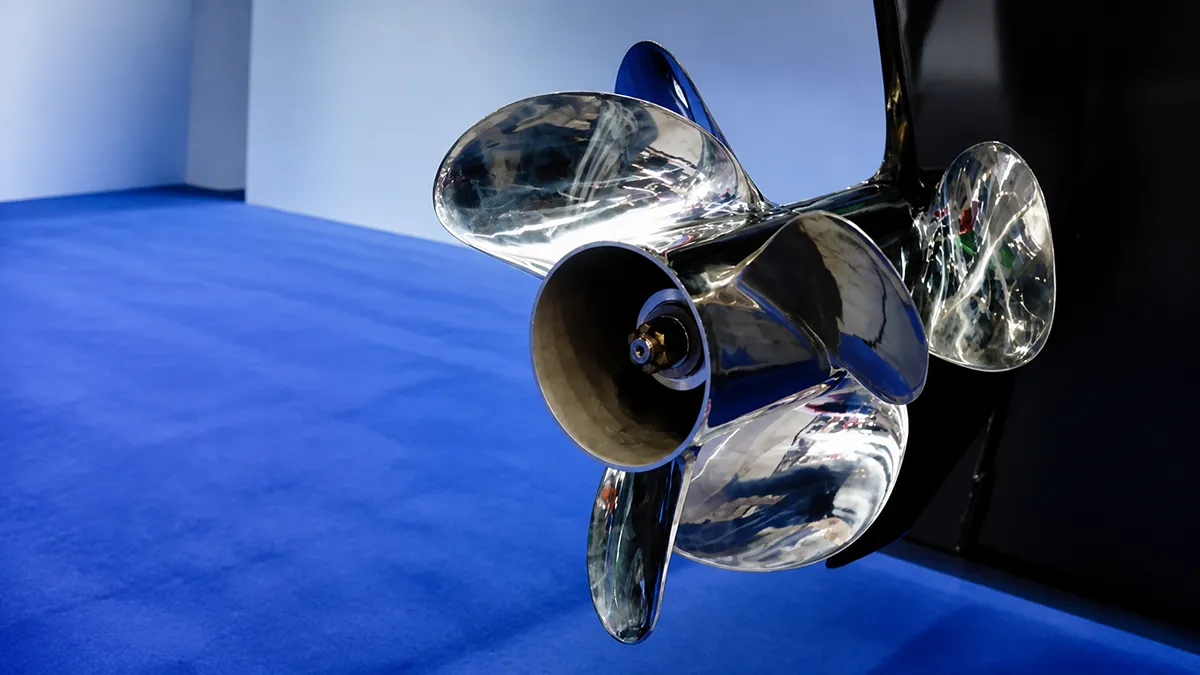
Choosing the right outboard propeller is not simply about finding a model that fits the engine shaft. A propeller directly affects acceleration, トップスピード, 燃費, engine load, そして全体的なボート体験.
For boat builders, 販売代理店, and marine equipment buyers, selecting the wrong propeller can lead to poor performance, excessive vibration, higher fuel costs, and even long-term engine issues.
A reliable propeller selection process should consider several factors, including engine specifications, boat characteristics, 動作条件, blade design, material choice, and supplier capability.
This guide explains the key points buyers should check before purchasing an outboard propeller and how to make a more accurate selection for different applications.
What Key Information Should You Prepare Before Choosing a Propeller?
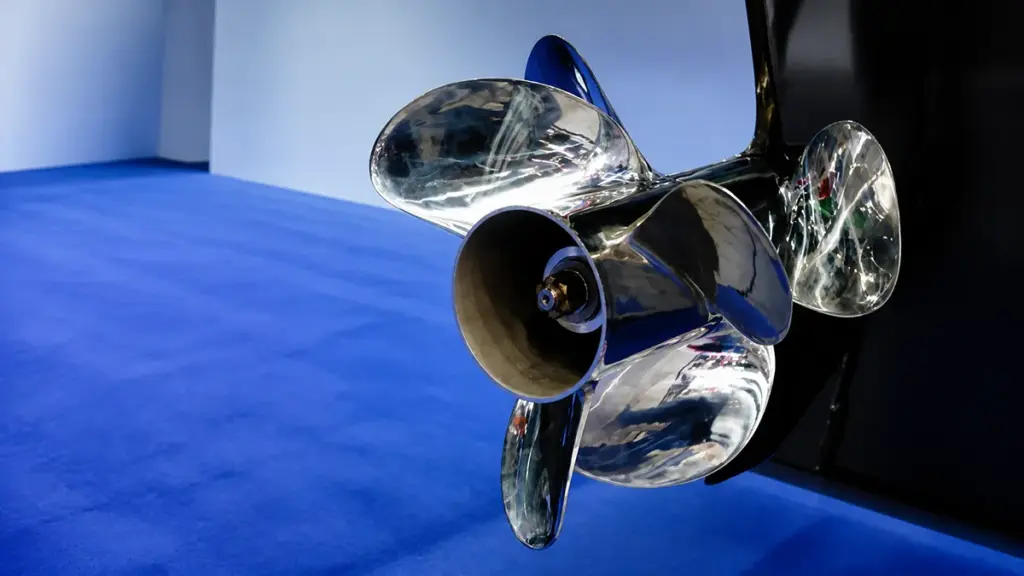
Before comparing propeller models, collect accurate information about the engine, boat, and daily use. This reduces fitting errors and gives the supplier enough data to recommend a suitable starting configuration.
Prepare the following details:
| Data Category | Metrics to Record |
|---|---|
| Current Propeller | 直径, ピッチ, rotation, blade count, 材料, hub splines |
| Engine Details | Rated HP, gearcase size, target WOT RPM, actual WOT RPM |
| Boat Profile | 長さ (LOA), hull shape, operating weight, speed goals |
| Usage Environment | Primary activity, cruise speed, water conditions (fresh/salt/shallow) |
| Benchmarks | GPS speed at WOT, time to plane, ventilation in turns |
Current Propeller Specifications
Your existing propeller serves as the baseline for any future adjustments. You need exact numbers off the current hub or blades to know which direction to adjust your pitch or diameter.
- Diameter and pitch: Record these numbers (usually stamped on the barrel, のように 14 × 19) to establish your starting point.
- Rotation direction: Identify if the prop uses right-hand or left-hand rotation. This matters heavily for twin-engine setups.
- Blades and material: Note if you run a 3-blade or 4-blade design, and whether it is cast aluminum or stainless steel.
- Hub and shaft details: Count the splines on the prop shaft and measure the shaft diameter to ensure your replacement physically fits the gearcase.
Engine Details and WOT RPM Limits
Engine specifications define your operating envelope. Your motor has a specific RPM band where it makes peak power safely, and your prop must keep the engine inside that band.
- HP and gearcase size: Verify your rated horsepower and gearcase dimensions. These dictate which propeller families fit the outboard.
- Target WOT RPM: Find the manufacturer’s recommended Wide Open Throttle (ウォット) 回転数範囲. Modern outboards usually target 5,000 に 6,000 回転数.
- Actual WOT RPM: Measure your current wide-open RPM under a normal load. This tells you if the engine is over-revving or lugging.
- Trim systems: Note if the boat has power trim or trim tabs. These systems dictate how you tune the hull attitude to reach optimal RPM.
Boat Characteristics and Load Profile
Hull design and operating weight directly influence thrust requirements. A heavy pontoon pushes water differently than a light bass boat, demanding a totally different blade geometry.
- Hull dimensions: Document the length overall (LOA), hull material, and bottom shape (like deep-V or flat-bottom). These dictate drag and required lift.
- Operating weight: Calculate your realistic load. Include fuel, 乗客, ギヤ, and livewells.
- Load frequency: Identify if you frequently run heavily loaded. Heavy loads often require stepping down in pitch or moving to a 4-blade prop to maintain thrust.
- Speed targets: Define your present top speed against your desired top speed. This guides the tradeoff between pitch and acceleration.
Usage Profile and Operating Environment
How and where you drive determines the optimal propeller style. You must align the design with your primary on-water activities to get the best efficiency.
- Primary use: Specify if you focus on high-speed cruising, heavy towing for watersports, or commercial work.
- Running speeds: Identify your typical throttle positions. This determines if you optimize for mid-range fuel economy or absolute top-end speed.
- 水の状態: Consider your environment. Abrasive, 砂っぽい, or shallow waters often demand the durability of stainless steel over standard aluminum.
Real-World Performance Benchmarks
Never buy a new propeller without testing the old one first. You need hard performance data to compare against your post-installation results.
- Baseline test runs: Take the boat out and record maximum RPM and GPS speed at wide-open throttle, trimming up just before the prop cavitates.
- Acceleration metrics: Evaluate your hole shot, the time it takes to get on plane, and the boat’s ability to hold a plane at lower speeds.
- Handling checks: Monitor the steering for signs of propeller ventilation, excessive slip during hard turns, or cavitation in rough chop.
How Do Diameter and Pitch Affect Propeller Performance?
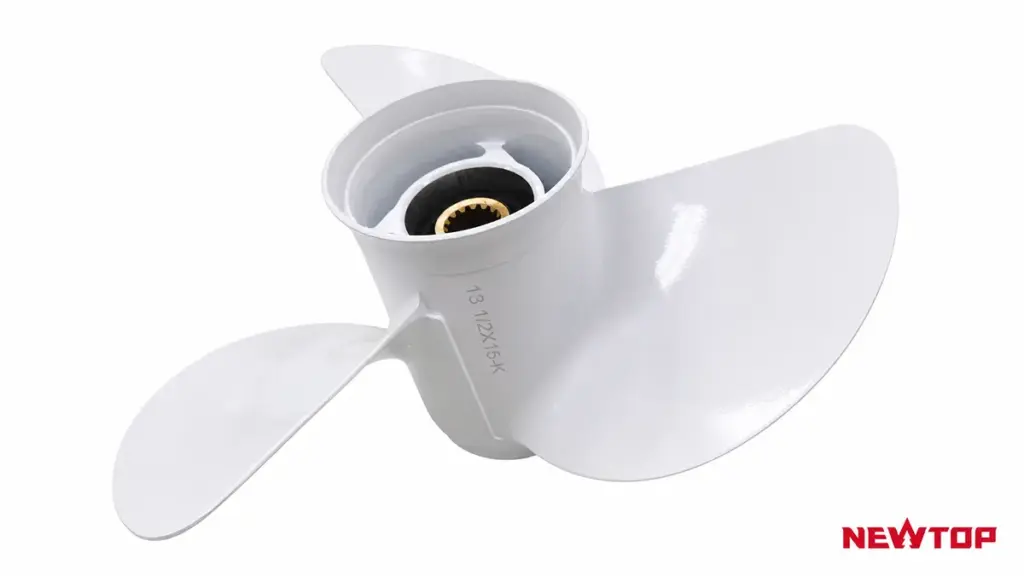
Diameter and pitch are two of the most important measurements in propeller selection. They determine how efficiently an outboard propeller converts engine power into thrust and directly influence acceleration, トップスピード, 燃費, and engine RPM.
Before choosing a replacement propeller, buyers should understand what these two specifications mean and how they work together. A propeller marked as 14 × 19, for example, indicates a 14-inch diameter and a 19-inch pitch. The first number represents diameter, while the second number represents pitch.
For a more detailed explanation of propeller markings and how these measurements affect performance, buyers can refer to our guide on what pitch and diameter mean on an outboard propeller.
直径 refers to the distance across the full circle made by the rotating blades. A larger diameter generally produces more thrust because it moves more water with each rotation.
Large-diameter propellers are commonly used for:
- Heavy boats
- Commercial applications
- Boats that require strong pulling power
- Low-speed operation
A smaller diameter propeller usually allows higher RPM and may support better top-speed performance on lightweight boats.
ピッチ refers to the theoretical distance a propeller moves forward in one complete rotation without considering slip. 例えば, a 19-inch pitch propeller is designed to move approximately 19 inches per rotation under ideal conditions.
The relationship between pitch and performance is:
| Pitch Choice | Performance Effect |
|---|---|
| Lower pitch | より速い加速, stronger thrust, easier engine operation |
| Higher pitch | Higher potential speed, lower RPM, suitable for light loads |
しかし, increasing pitch does not always increase speed. ピッチが高すぎる場合, the engine may struggle to reach its recommended RPM range, causing poor acceleration and increased stress.
A proper selection balances pitch, 直径, engine power, and boat load. Many buyers use factory recommendations as a starting point and then adjust based on real operating conditions.
Source Durable Garden Machinery at Competitive Prices

How Does the Number of Blades Influence Speed, 推力, and Fuel Efficiency?
Blade count dictates the balance between top speed and load capacity. Fewer blades reduce drag for maximum speed, while more blades provide necessary grip for heavy loads.
The Relationship Between Blade Area and Drag
Every propeller blade moving through water creates surface friction and pressure drag. Fewer blades result in a smaller total wetted area, directly translating to lower hydrodynamic drag and higher potential open-water efficiency.
Adding blades increases the Blade Area Ratio (BAR). A higher BAR gives the propeller significantly more grip on the water, reducing slip and ventilation. The trade-off is higher hydrodynamic interference between the blades, demanding more power to turn at the exact same RPM.
How Blade Count Affects Top Speed
Two-blade propellers theoretically offer the highest top speeds on lightly loaded hulls because they encounter minimal drag. For most recreational planing hulls, three-blade designs hit the sweet spot. A well-matched three-blade propeller consistently runs 5% に 10% faster at wide-open throttle compared to a four-blade setup.
Upgrading to a four-blade propeller usually cuts peak speed by about 2 に 3 時速マイル. Yet, these high-blade configurations maintain effective speed much better in rough water or high-trim conditions by actively resisting blowout.
Thrust Capabilities and Load Management
Total thrust depends heavily on the total blade area. A propeller with fewer blades forces each blade to carry a higher unit thrust. Push a low-blade-count prop too hard under a heavy load, and you risk severe cavitation or structural stress at the blade root.
Four-blade and high-BAR three-blade propellers excel at managing demanding workloads. You need these configurations for:
- Heavy Boats: Lifting heavy hulls onto plane quickly.
- Towing Applications: Delivering strong mid-range acceleration.
- Limited Clearances: Maximizing thrust when gearcase size limits the maximum diameter.
Fuel Efficiency and Optimal Engine Loading
For standard recreational setups, a correctly sized three-blade propeller delivers the best steady-cruise fuel economy. The minimal drag allows the outboard to run efficiently near its peak torque band.
Adding a fourth blade increases the physical load on the engine. You almost always need to drop the pitch to keep the wide-open throttle RPM within the manufacturer’s optimal range. On heavily loaded boats, a four-blade propeller can actually improve real-world fuel efficiency. By drastically reducing slip, it holds the boat on plane at lower RPMs, burning less fuel than a three-blade prop struggling to grip the water.
Should You Choose an Aluminum or Stainless Steel Propeller?
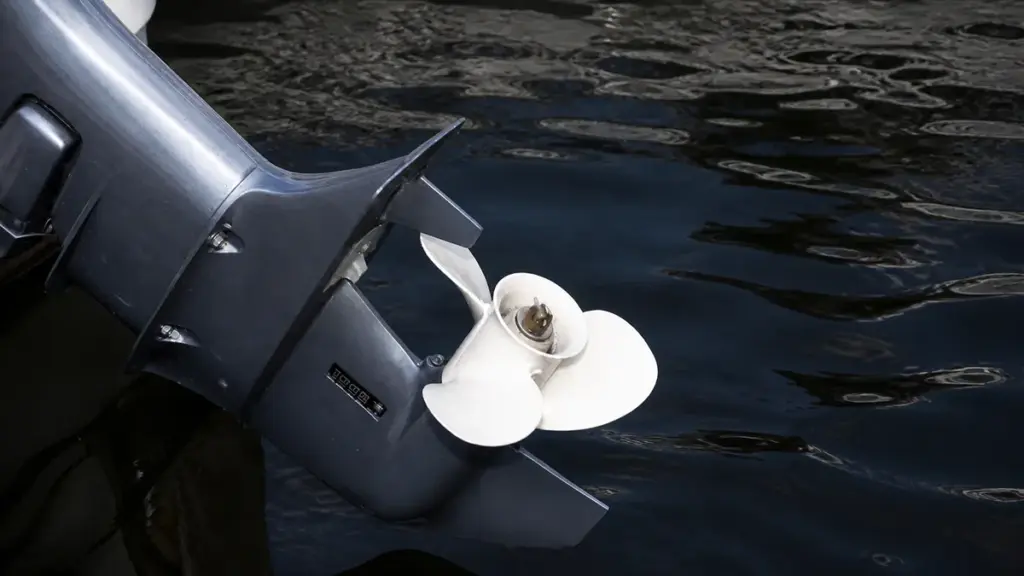
Aluminum offers budget-friendly protection for shallow waters and lower horsepower, while stainless steel delivers speed, grip, and durability for high-performance outboards and saltwater environments.
For buyers who want to understand the detailed differences between these two materials, including strength, 耐久性, メンテナンス, and application scenarios, our guide on aluminum vs stainless steel outboard motor propellers provides a complete comparison.
Matching Material to Outboard Horsepower
Outboard horsepower directly dictates the ideal propeller material. For motors under 30 馬力, manufacturers almost exclusively equip factory aluminum propellers. Stainless steel options in this range remain scarce and offer little practical performance benefit.
Mid-range engines between 30 そして 70 hp pair perfectly with aluminum for general recreational boating. The power output at this level rarely causes severe blade flex, keeping performance stable for everyday use. Once you step up to outboards producing 75 hp and above, the operating dynamics change. These engines generate high torque and push heavier loads, making stainless steel the standard choice to handle the increased thrust without losing blade shape.
Durability and Lower Unit Risk
How a propeller reacts to underwater impacts determines the safety of your lower unit gears. You must evaluate your primary operating environment before making a choice.
- Sacrificial protection: Aluminum acts as a sacrificial component, bending or cracking upon impact to absorb shock and protect lower unit gears.
- Impact transfer: Stainless steel withstands normal wear and minor impacts, but transfers heavy strike forces directly to the prop shaft.
- Shallow hazards: Boaters navigating shallow, stump-filled, or rocky rivers should select aluminum to minimize expensive gearcase repairs.
- Saltwater endurance: Marine environments heavily favor stainless steel due to its superior long-term corrosion resistance.
Hydrodynamic Performance and Handling
Material stiffness heavily influences thrust efficiency. Manufacturers cast aluminum blades thicker to achieve necessary strength, but they still flex under heavy loads. This flexing slightly reduces top-end speed and high-RPM stability. Stiff, thin stainless steel blades maintain their precise pitch and shape under pressure, improving thrust efficiency and maximizing water displacement.
Upgrading to a stainless steel model often yields a 2 に 3 mph speed gain alongside stronger acceleration for heavy loads. Stainless steel also holds cupping better than aluminum. This structural advantage ensures reliable grip during tight turns and drastically reduces ventilation issues on the water.
Cost Comparison and Lifespan Value
An aluminum propeller costs roughly one-third the price of a comparable stainless steel model. Budget-conscious buyers and boaters who frequently replace damaged props benefit the most from this low upfront cost. The inexpensive replacement strategy makes sense when striking rocks or stumps is a routine risk.
Stainless steel requires a much higher initial investment. It provides exceptional lifespan in deep, obstruction-free waters where impact damage is rare. The long-term value quickly shifts to stainless steel for performance rigs, as the durable material eliminates the need for frequent replacements and maintains optimal fuel efficiency over thousands of hours of use.
How Do Engine Horsepower and Gear Ratio Affect Propeller Selection?
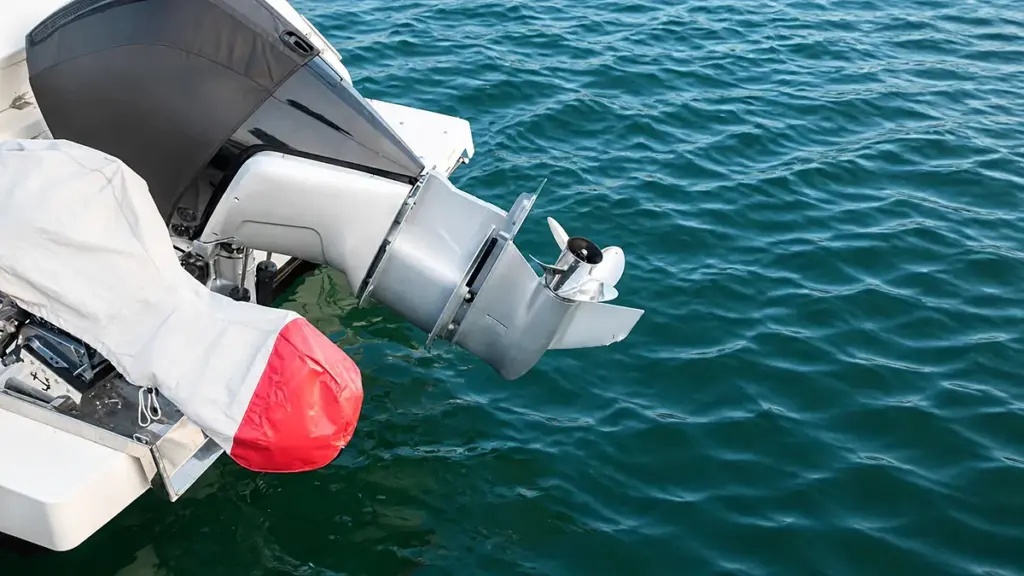
Horsepower dictates the maximum propeller size an engine can efficiently turn, while gear ratio determines shaft speed. 一緒に, they establish the exact pitch required to hit target WOT RPM.
The Role of Engine Horsepower in Propeller Sizing
Engine horsepower sets the baseline power budget for moving a boat efficiently. A higher horsepower rating allows an outboard to turn a larger diameter or a higher-pitch propeller without struggling. Buyers must match the propeller to the engine’s usable horsepower at the intended operating RPM, rather than looking strictly at peak horsepower marketing numbers.
If you choose an oversized or over-pitched propeller, the engine will lug and fail to reach its intended power band. Undersize the propeller, and the engine will over-rev, leaving valuable performance unused and risking mechanical damage.
How Gear Ratio Determines Propeller Shaft Speed
Gear ratio acts as a primary input that fundamentally changes the final propeller load. It is not just a secondary detail. You calculate propeller shaft RPM directly by dividing the engine RPM by the gear ratio.
A higher numerical gear ratio reduces the prop shaft speed and multiplies torque. To restore the desired boat speed, this setup requires a higher-pitch propeller. 逆に, a lower numerical gear ratio spins the propeller faster at a given engine RPM, requiring reduced pitch to prevent the engine from over-revving.
Balancing Pitch and Final RPM for Optimal Performance
Adjusting the gear ratio triggers a chain reaction in pitch selection. Increasing a gear ratio numerically usually requires stepping up the propeller pitch by two to four sizes. Since a single pitch size change typically alters engine speed by 250 に 350 回転数, pitch adjustments serve as the ideal mechanism for fine-tuning wide-open-throttle (ウォット) 回転数.
Operating conditions also alter this power dynamic. Heavy boat loads and high elevations demand less pitch to keep the engine from dropping below its optimal power band. For high-RPM outboard designs, manufacturers frequently use reduction ratios of 2.3:1 or higher to properly manage the aggressive propeller shaft speed and hydrodynamic load.
Practical Selection Steps for Outboard Buyers
Start the selection process by identifying the engine’s rated horsepower, gear ratio, and recommended WOT RPM range. From there, execute a systematic testing sequence to dial in the correct specifications:
- Baseline Selection: Select a propeller size that lets the engine reach target RPM under expected load, elevation, and water conditions.
- Pitch Adjustment: Reduce pitch if the engine fails to reach target RPM, or increase pitch if the engine over-revs during initial testing.
- Sea Trial Verification: Conduct a final loaded test run to account for specific real-world variables like hull drag, running weight, and ventilation behavior.
How Does Boat Type Influence the Right Propeller Choice?
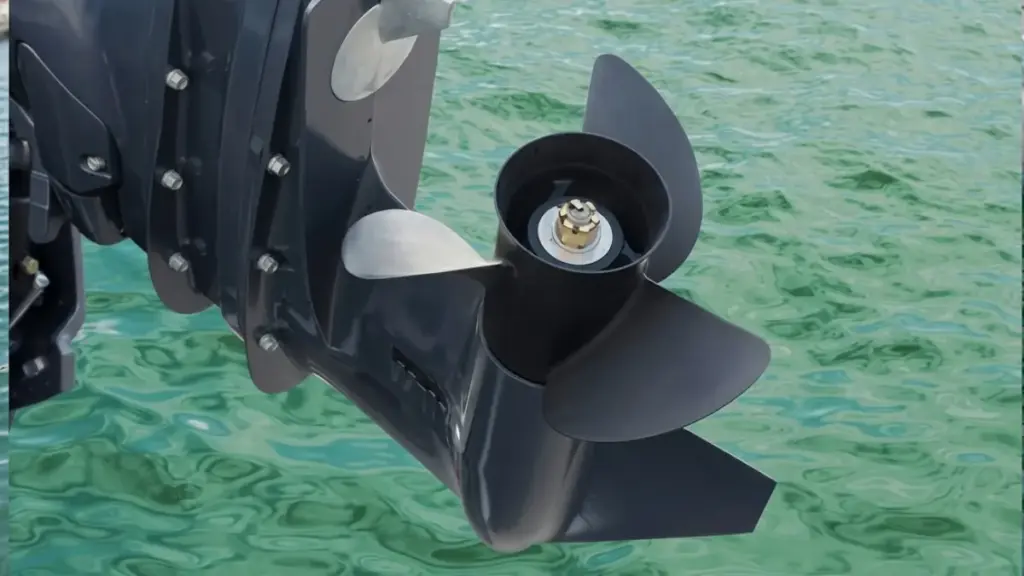
Hull design and typical boat load dictate required thrust and RPM. Matching pitch and diameter to your specific vessel type prevents engine lugging and maximizes hydrodynamic efficiency.
High-Speed Planing and Performance Boats
ライト, performance-focused hulls like bass boats or sport rigs require setups that minimize drag once on plane. Your primary goal is converting engine torque directly into top-end speed while keeping the outboard near its maximum RPM limit.
To achieve this, operators utilize higher pitch and moderate-to-smaller diameter profiles. High-speed setups rely heavily on 3-blade stainless steel propellers, which deliver the durability and thin-blade efficiency needed to push past 50 mph without flexing.
Watersports and Tow-Sport Configurations
Pulling wakeboarders, skiers, or heavy tubes demands a massive initial surge of thrust. Absolute top speed takes a backseat to a strong hole shot and smooth mid-range pulling power.
Tow boats require lower pitch and larger diameter profiles to move heavily ballasted setups without dropping below the engine’s power band. Owners frequently utilize 4-blade propellers to improve low-speed handling, reduce slip, and keep the boat securely on plane.
ポンツーン, Tritoons, and Heavy Cruisers
These vessels push a massive amount of water. High frontal drag and heavy, variable passenger loads mean your propeller must maximize water displacement rather than chase speed.
Pontoons and heavy cruisers benefit from larger diameter and moderate-to-low pitch to generate adequate low-speed thrust. This exact configuration prevents engine lugging and ensures the motor reaches its specified WOT RPM despite the heavy structural drag.
General Fishing and All-Purpose Vessels
Aluminum fishing boats and versatile center consoles operate across diverse conditions. The ideal setup balances rapid acceleration, mid-range cruise efficiency, and precise low-speed maneuverability around docks or structure.
Most operators pair moderate pitch with 3-blade designs to achieve versatile performance during long runs. When conditions dictate, shifting to 4-blade setups provides better grip offshore or improves shallow-water stern lift on flats boats.
Sailboats and Displacement Hulls
Displacement hulls cannot exceed their theoretical hull speed regardless of applied power. Propeller selection must focus entirely on low-speed thrust and reliable maneuvering in tight quarters.
Operators use large-diameter, low-pitch profiles to push displacement hulls efficiently at modest engine speeds. This approach protects auxiliary outboards from overloading when fighting strong currents or heavy headwinds.
What Operating Conditions Should Buyers Consider?
Propeller selection requires analyzing actual boat weight, typical water conditions, engine RPM limits, and horsepower output to prevent drivetrain damage and maximize fuel efficiency.
Boat Load and Usage Patterns
Evaluating typical operating loads is the first step in propeller selection. A boat behaves entirely differently when running solo compared to a hull weighed down by passengers, heavy gear, full fuel tanks, or towing duties.
Always prop the boat so the engine reaches the upper end of its wide-open-throttle (ウォット) rpm range when lightly loaded. This rpm buffer prevents the engine from lugging once you introduce heavy weight.
- Variable Usage: Boats shifting between light solo fishing trips and fully loaded family cruising require either a compromise propeller or a dedicated two-prop setup.
- Heavy-Duty Operations: Towing, レスキュー, and workboats demand high, continuous thrust. These roles favor larger diameter, lower-pitch propellers designed to run efficiently at lower rpm.
Engine RPM Matching and Performance Goals
The propeller acts as the final gear ratio between the engine and the water. It must keep the outboard operating inside the manufacturer-specified WOT rpm range. Operating outside this band degrades fuel efficiency and accelerates mechanical wear.
Pitch adjustments directly dictate engine speed. Increasing pitch by one inch typically decreases WOT rpm by approximately 200 回転数, while decreasing pitch raises it by the same amount.
- Planing Hulls: These setups require rapid hole shot and target a controlled slip factor of 8-15% at WOT for peak efficiency.
- Displacement Hulls: Slow-speed vessels ignore top-end speed to focus entirely on generating maximum low-end torque.
- Real-World Validation: Empirical WOT testing with proper trim adjustments is the only reliable way to validate rpm matching and fuel burn under actual operating conditions.
Water Environment and Surface Conditions
The physical water environment dictates blade geometry. Rough water causes the hull to pitch, increasing the risk of the propeller breaking the surface. Propellers with increased blade area or aggressive cupping hold water better and reduce ventilation in heavy chop.
Calm water applications allow operators to take the exact opposite approach, prioritizing higher pitch and lower drag designs to push top-end speed.
- Hazardous Environments: Shallow or debris-filled waters guarantee eventual bottom strikes. These areas require durable materials and responsive motor trim capabilities to protect the drivetrain.
- Water Flow Quality: Propellers require clean, undisturbed water to generate optimal thrust. Poor mounting heights or excessive hull turbulence will cause aeration and immediate power loss.
Outboard Horsepower and Structural Demands
Engine output strictly determines the required material strength. High-horsepower outboards, typically rated at 140 hp and above, exert extreme torque that overwhelms weaker metals and causes aluminum blades to flex.
Rigid stainless steel propellers are the primary choice for high-output engines. Stainless maintains its exact designed geometry under heavy loads and high speeds, providing predictable thrust and maximum traction.
- Lower-Horsepower Applications: General-purpose and lower-hp engines perform exceptionally well with aluminum propellers. They offer a cost-effective, impact-forgiving alternative that acts as a sacrificial part during bottom strikes.
- Exhaust Compatibility: You must verify the propeller design integrates correctly with the lower unit’s specific exhaust routing, particularly for through-hub exhaust systems.
What Common Propeller Selection Mistakes Should Buyers Avoid?
Avoiding common propeller selection mistakes—like guessing pitch, ignoring typical loads, or neglecting lower unit fitment—saves fuel, protects the engine, and prevents costly on-water failures.
Misjudging RPM, ピッチ, and Load Requirements
Buyers often sabotage outboard performance by selecting a propeller without validating how it impacts the engine’s actual operating range.
- Ignoring the WOT RPM range: Failing to match the propeller to the engine’s recommended Wide Open Throttle (ウォット) limits causes the engine to lug under heavy load or over-rev at top speed.
- Prioritizing theoretical top speed: Selecting pitch just to hit a high top-speed number ignores the inverse effect pitch has on RPM and low-end acceleration.
- Testing on an empty boat: Finalizing a prop choice with a light hull gives false data. The boat will struggle to plane once fully loaded with passengers, ギヤ, そして燃料.
Treat the manufacturer’s specified WOT RPM as a hard constraint. You must hit this target under normal, real-world operating loads to ensure efficient running and long engine life.
Overlooking Blade Count and Material Trade-Offs
Many buyers mistakenly believe that simply adding blades or buying the cheapest material will fix performance issues. Every design change shifts the performance curve.
- Assuming more blades equal better performance: Buyers often switch from three to four blades hoping for an outright upgrade, not realizing the extra drag typically drops WOT RPM by 50 に 150 回転数.
- Shopping by material price: Choosing aluminum over stainless steel strictly to save money ignores your actual environment. Soft aluminum deforms under high load, while stainless steel maintains its shape and efficiency at high speeds.
- Ignoring the primary use case: Buying a propeller designed for fast, solo runs fails if you spend 80% of your time towing wakeboarders or carrying a heavy crew.
Match the blade geometry and material to your actual daily environment. A high-performance stainless steel prop shines in open water but transfers severe shock to the gearcase if you strike a submerged stump in shallow rivers.
Using Flawed Testing and Adjustment Methods
Troubleshooting a sluggish boat requires a systematic approach. Guessing at propeller specs without proper baseline data leads to wasted money and unresolved engine strain.
- Changing multiple variables at once: Swapping pitch, blade count, and material in a single step makes it impossible to isolate which change improved or hurt performance.
- Ignoring GPS boat speed: Focusing strictly on tachometer readings without verifying actual speed hides secondary issues like extreme prop slip.
- Blaming the prop prematurely: Buyers often fault the propeller for sluggish planing when the real culprit is excessive hull drag, the wrong engine mounting height, or poor trim angle.
Establish a clear baseline with your current setup first. Make single, incremental adjustments—usually starting with pitch—and test the results on the water before changing another variable.
Neglecting Fitment, メンテナンス, and Spares
Even the perfectly pitched propeller fails if it does not physically integrate with the outboard gearcase or lacks basic maintenance.
- Guessing hub compatibility: Buying a prop without checking spline counts, hub system types, or matching thrust washers leads to stripped splines and lower unit damage.
- Ignoring physical damage: A slightly bent blade or fishing line wrapped around the prop shaft mimics the symptoms of incorrect pitch.
- Running without a spare: Operating without a backup prop leaves you stranded after a severe strike and eliminates your ability to swap to a lower-pitch prop for unexpectedly heavy loads.
Verify fitment against the engine transom tag before purchasing. Inspect the prop hub assembly periodically to catch early signs of slippage or corrosion.
最終的な考え
Buyers should evaluate engine specifications, ボートタイプ, 動作条件, blade design, material choice, and supplier reliability when bulk buying outboard motor propellers.
The right propeller improves acceleration, 燃費, 取り扱い, そしてエンジン性能も, while the wrong choice can reduce efficiency and increase operating costs.
販売代理店様向け, boat manufacturers, and marine equipment companies, working with an experienced outboard propeller supplier provides better product consistency and long-term support.
With advanced manufacturing capability, precision-balanced aluminum and stainless steel propellers, and OEM/ODM production experience, NEWTOP helps global partners develop reliable propeller solutions for different marine applications.
よくある質問
What should I check before buying an outboard propeller?
Verify your boat’s primary use, typical load profile, and desired performance goals. You must confirm engine specifications, including the brand, horsepower, shaft type, and the manufacturer’s recommended wide-open-throttle (ウォット) 回転数範囲. Collect baseline data from your current prop, such as diameter, ピッチ, 材料, and observed WOT RPM, to guide your replacement choices.
How do I choose the right propeller pitch?
Selecting pitch relies on matching the propeller to your engine’s recommended WOT RPM range. Test your current setup at full throttle with a normal load. If the RPM falls below the recommended band, decrease the pitch. If the RPM exceeds the limit, increase the pitch. Changing the pitch by one inch generally alters the engine speed by 150 に 200 回転数.
Is stainless steel better than aluminum for all users?
いいえ. Stainless steel provides superior rigidity, higher top speeds, and excellent saltwater corrosion resistance, making it ideal for high-horsepower engines. Aluminum is highly cost-effective and serves as a sacrificial metal. In shallow or hazard-prone waters, an aluminum propeller will bend or break upon impact, which helps protect the expensive gearcase from severe damage.
What is the best propeller for heavy boats?
Heavy vessels require maximum static thrust and control rather than high top speed. The best approach is selecting a larger diameter propeller with a lower pitch to ensure the engine reaches its target RPM under heavy load. A four-blade design is frequently recommended to improve grip, accelerate planing, and provide smoother handling in rough conditions.
How do I confirm hub compatibility?
Read your engine’s transom tag to find the exact make, モデル, 年, and gearcase code. Match this data against the new propeller’s specifications, ensuring the spline count and shaft diameter align perfectly. You also need to identify whether your outboard uses a fixed splined bore or a modular insert kit, and verify the proper thrust washer sequence.
What documents should a propeller supplier provide?
A standard procurement package should include a Certificate of Conformance (CoC), material certificates, and final inspection or balance reports. For commercial or classed vessels, suppliers must also provide traceability records and relevant approval documents to prove the delivered hardware meets the required engineering standards.
How important is sample testing before a bulk order?
On-water sample testing is critical because catalog specifications cannot predict how a hull and engine combination will react to complex loads. Testing a small batch validates WOT RPM, 取り扱い, そして燃費. Skipping this step risks large-scale inventory issues, engine mis-loading, and severe cavitation problems across the fleet.
What if my engine does not reach recommended RPM with the new prop?
Failing to reach the specified WOT RPM range typically means the boat is over-propped, placing excessive mechanical stress on the engine. If the fuel and ignition systems are healthy, correct the issue by switching to a propeller with a lower pitch or a smaller diameter. A one-inch pitch reduction generally increases engine speed by roughly 150 に 200 回転数.
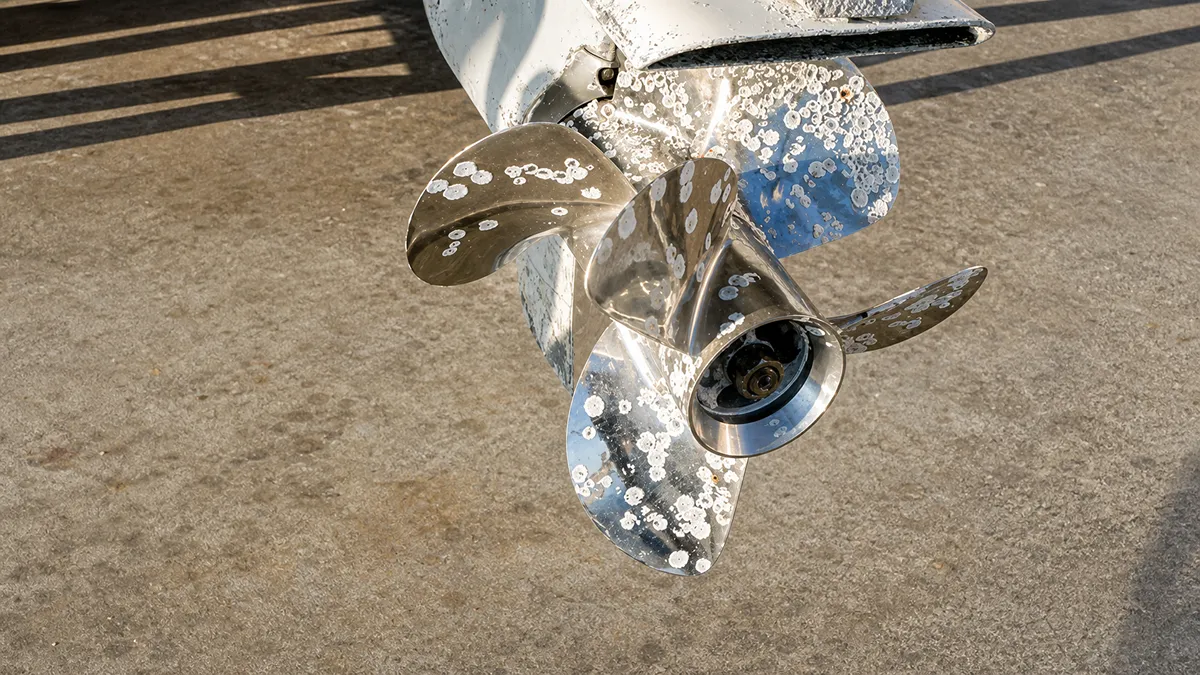
An outboard propeller works in one of the harshest environments on a boat. Every trip exposes it to sand, rocks, floating debris, shallow water, and continuous high-speed rotation. The challenge is that propeller damage often develops slowly. A tiny chip today may become a crack tomorrow, while slight vibration can eventually damage bearings, シール, or even the lower unit. Learning how to recognize the early warning signs helps boat owners avoid expensive repairs, improve fuel economy, and maintain safe performance on the water.
このガイドでは, you’ll learn the most common signs of outboard propeller damage, how to inspect your propeller correctly, when repairs are practical, and when replacement is the better long-term solution.
Why Early Propeller Damage Detection Matters
Direct Performance and Efficiency Impacts
A compromised propeller immediately degrades how your vessel moves through the water. Minor blade distortions force the engine to work outside its optimal load range, dragging down overall performance.
- Disrupted hydrodynamics: Damaged blades alter water flow, resulting in lower top speeds and weaker acceleration.
- RPM restrictions: Altered effective ピッチ prevents the engine from hitting its designated wide-open throttle RPM.
- Fuel waste: Reduced propeller efficiency forces the outboard to work harder, significantly increasing fuel consumption.
- Vibration and handling: Imbalanced blades induce vibration that impairs steering precision and degrades overall ride comfort.
Preventing Secondary Mechanical Failures
Ignoring a damaged propeller transfers stress directly to your outboard’s internal drivetrain. What starts as a bent blade quickly compromises seals and bearings deep inside the lower unit.
- Contaminated gear oil: Unnoticed cracks near the submerged fin often cause water ingress and gear oil contamination.
- Engine stress: Deformed propellers alter engine load, causing harmful under-revving or over-revving that stresses internal components.
- Accelerated fatigue: Continuous vibration from an imbalanced prop accelerates structural fatigue in gearcase bearings, driveshafts, and engine mounts.
- Overheating risks: Combined with restricted water inlets, poor propeller condition elevates the risk of severe engine overheating.
Vessel Safety and Operational Reliability
Propeller condition dictates your physical control over the vessel. Failing to spot damage early puts both crew and cargo at risk during critical maneuvers.
- Sudden propulsion loss: A progressively failing hub or weakened blade can fracture under load, causing an immediate loss of usable propulsion.
- Collision hazards: Degraded handling and delayed acceleration reduce maneuverability around obstacles, increasing collision risks.
- Schedule integrity: Timely detection minimizes unscheduled downtime, protecting schedule integrity for commercial, charter, and rescue operations.
The Economic Case for Early Intervention
The financial logic is straightforward. Swapping a damaged propeller costs a fraction of the repair bills required if you leave a compromised unit attached to your motor.
- Low-cost intervention: Propeller inspection and replacement represent a fraction of the cost of total engine or lower unit repairs.
- Halting financial bleed: Catching damage early halts compounding financial losses from excess fuel burn and accelerated part wear.
- Avoiding major rebuilds: Ignoring early indicators frequently leads to expensive gearcase rebuilds, seal replacements, and powerhead repairs.
The First Visible Signs of Outboard Propeller Damage
Early detection of outboard propeller damage—like minor nicks, paint wear, or slight bends—prevents escalating fuel costs, vibration-induced drivetrain wear, and sudden propulsion failure.
Paint Deterioration and Superficial Scratches
We often dismiss worn paint as normal wear and tear, but localized paint wear on the blades or hub points to frequent minor impacts with sand or small debris. It acts as the first warning sign before structural bending occurs.
You will typically notice fine scratches appearing on the leading edge first. These surface abrasions usually precede deeper structural wear. Once the protective coating strips away, the exposed bare metal patches create immediate vulnerabilities for accelerated corrosion in saltwater environments.
Nicks, Chips, and Minor Dents
A perfectly smooth edge is essential for hydrodynamic efficiency. Small chips along the leading edge disrupt water flow and increase the risk of cavitation. This turbulent water causes pressure drops that erode the surrounding metal.
Shallow dents on the blade surfaces serve as the earliest structural deformities detectable without specialized tools. Look closely at the trailing edge during inspections. Early material loss at the trailing edge directly impacts the grip and lift of the propeller, which reduces your acceleration and top-end speed.
Subtle Blade Deformation and Bending
Propellers operate under immense load, and even a slight geometric change throws off the balance of the entire drive system. Slightly bent blade tips clearly indicate previous contact with rocks or a hard bottom.
To spot these issues, view the propeller straight from the front. Visible asymmetry suggests uneven deformation from one-sided impacts. Micro warping or twisting alters the pitch and load distribution across the blades. This forces the engine to burn more fuel to maintain your normal cruising speed.
Localized Corrosion and Cavitation Pitting
Material degradation compromises the strength of the unit. Small corrosion pits or powdery white oxidation on aluminum propellers mark areas of material weakening. These spots quickly expand if left unchecked.
Rough, sandblasted patches near high-load regions indicate early cavitation erosion. As vapor bubbles collapse against the metal, they blast away the surface layer. Repeated erosion gradually thins out sections near the leading edge, making them prone to cracking during high-RPM operation.
Visible Hub Misalignment and Scoring
The hub absorbs shift shock and acts as the critical link between the engine and the blades. Scoring or distortion around the hub collar hints at abnormal stress or improper installation. You can test the integrity of the internal rubber bushing with a quick visual diagnostic.
Draw a straight line across the hub and barrel, run the boat under load, and check the marks. Misaligned diagnostic marker lines visually confirm internal hub slippage. You should also check for flattened or peened edges, which reflect a history of running the outboard through shallow, rocky water.
Source High-Margin OEM Garden & 農業機械
How Vibration, ノイズ, and Poor Acceleration Reveal Damage
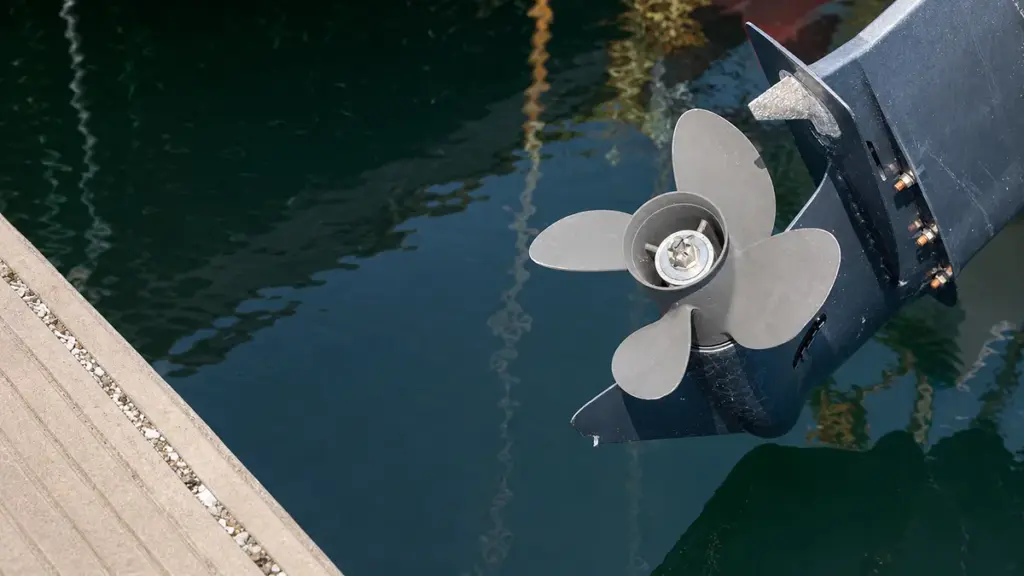
Propeller damage rarely announces itself with a catastrophic failure. It subtly degrades hydrodynamics, sending mechanical warnings through vibration, unusual noise, and sluggish performance that operators must decode.
The Mechanics of Propeller-Induced Vibration
Even minor propeller damage immediately disrupts hydrodynamic balance. When blades hit underwater objects, bent edges or missing metal shift the center of mass off the rotational axis. This mechanical imbalance forces the driveline to absorb cyclical stress.
- Center of mass shift: Bent blades or chipped edges create a mechanical imbalance away from the rotational axis.
- Hydrodynamic distortion: Altered blade geometry changes lift and thrust, placing uneven loads on the shaft and gears.
- RPM sensitivity: Vibrations peak at low to mid RPMs when the propeller works hardest to push the boat onto plane.
- Feedback transmission: Cyclical imbalances travel straight through the propshaft into the steering wheel, transom, and deck.
Translating Noise into Specific Driveline Issues
An outboard should produce a steady acoustic profile under load. When a propeller sustains damage, it introduces turbulence and mechanical interference that change the sound signature completely.
- Cavitation sounds: Damaged blades create low-pressure zones that spawn cavitation bubbles, producing distinct crackling, buzzing, or hissing noises.
- Engine stutter: Uneven thrust generation forces the motor to pulse audibly during hard acceleration runs.
- Lower unit rattle: Impact forces transfer directly into the lower unit, making gears and bearings rumble as they absorb the shock.
- Secondary wear indicators: Prolonged operation with an unbalanced prop causes propshaft bearings to grind or gearcases to emit a high-pitched whine.
Recognizing Performance Loss and Sluggish Acceleration
Physical damage directly compromises grip in the water. This hydrodynamic inefficiency forces the engine to burn more fuel while delivering less forward momentum.
- Increased propeller slip: Physical damage stops the efficient conversion of engine torque into actual forward thrust.
- Weak hole shot: A sluggish transition to plane serves as the primary indicator of blade distortion.
- Speed reduction: Minor imperfections trigger measurable drops in top speed and alter operating RPMs at specific throttle settings.
- Baseline comparison: Comparing current speed and wide-open throttle (ウォット) RPM against historical metrics isolates propeller inefficiency from actual engine power loss.
Diagnostic Steps to Confirm the Root Cause
You cannot fix a driveline issue based purely on operator feel. Technicians rely on a strict diagnostic sequence to separate propeller damage from internal engine faults.
- Visual inspection: Check the blades thoroughly for bends, nicks, gouges, ひび割れ, or unequal marine growth.
- Shaft examination: Look at the prop shaft for visible bends, binding during manual rotation, or fishing line cutting into the seals.
- Isolation test: Run the engine safely in gear without the propeller installed to see if the vibration stops.
- Secondary component check: Evaluate engine mounts and fuel delivery systems if symptoms persist after installing a known-good propeller.
How to Inspect Blade Edges, Hub Area, and Shaft Contact
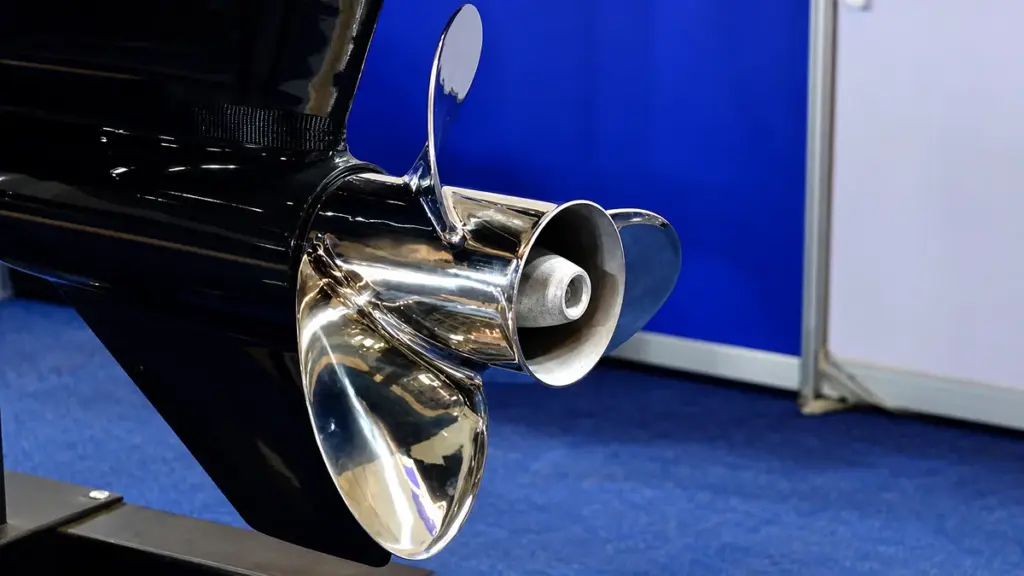
A systematic inspection of blade geometry, hub integrity, and shaft contact points prevents catastrophic lower unit failures, stops vibration, and ensures peak propulsive efficiency.
| Inspection Zone | Key Defect Indicators | Functional Impact |
|---|---|---|
| Blade Edges | Nicks, inward cracks, flattened cup | Hydrodynamic imbalance, キャビテーション, thrust loss |
| Hub Assembly | Extruded rubber, misaligned marker lines | Spun hub, complete loss of drive under load |
| Shaft & Hardware | Twisted splines, worn thrust washer | Fretting, gearcase vibration, thread damage |
Blade Edges and Surface Integrity
The geometry of the propeller blade dictates thrust generation and fuel efficiency. Technicians must examine leading edges, trailing edges, and tips for nicks, chips, gouges, or inward-radiating cracks. A damaged or flattened cupped trailing edge directly reduces water hold and increases the risk of early cavitation.
- Profile Consistency: Verify uniform rake angle and pitch across all blades to identify uneven bending or impact damage.
- Balance Check: Mount the propeller horizontally on a hub rod to identify heavy or off-plane blades.
- Clearance Limits: Ensure a minimum 3 mm tip clearance from the anti-cavitation plate to prevent contact under heavy load or blade flex.
Hub Area and Spun Hub Detection
The hub handles the brutal torque transfer from the engine to the water. A compromised rubber bushing acts as a failed mechanical fuse, dropping propulsion completely. Inspectors should check the outer hub barrel and blade roots for dents, ovalization, またはヘアラインクラック. Extruded, melted rubber or heat staining clearly signals a failed bushing.
- Slippage Diagnostic: Draw a marker line across the outer housing, rubber zone, and inner hub, then run the boat under load to check for misalignment.
- Exhaust Path: Inspect internal routing for carbon build-up or structural obstructions that could disturb exhaust flow.
Prop Shaft and Hardware Contact Zones
The connection between the propeller and the driveline must remain perfectly aligned to avoid transferring destructive vibrations into the gearcase. Assess the propeller shaft for straightness, runout, rust, and signs of pitting. Spline teeth on both the shaft and the hub bore require close inspection for rounding, chipping, or twisted profiles.
- Thrust Washer Integrity: Examine seating surfaces for cracks, uneven wear, or deep grooves that throw off propeller alignment.
- Torque Application: Apply the proper manufacturer-specified torque—commonly 40-60 ft-lbs—to prevent fretting or thread damage.
Integrated Inspection Workflow
A standard inspection workflow brings these discrete checks into a repeatable process. You must disable the engine ignition, remove the locking hardware, and safely slide the propeller off the shaft. Cleaning the shaft and hub bore with a degreaser is critical to accurately assess the splines and thrust washer without old marine grease hiding the defects.
- Component Evaluation: Systematically check the hub for spun bushing signs and the blade edges for profile consistency.
- Reassembly Protocol: Reinstall using fresh marine grease, pushing the prop forward until it clicks firmly against the thrust washer.
- Final Securing: Torque the nut to spec and verify the locking hardware is properly engaged.
When Minor Damage Can Still Be Repaired
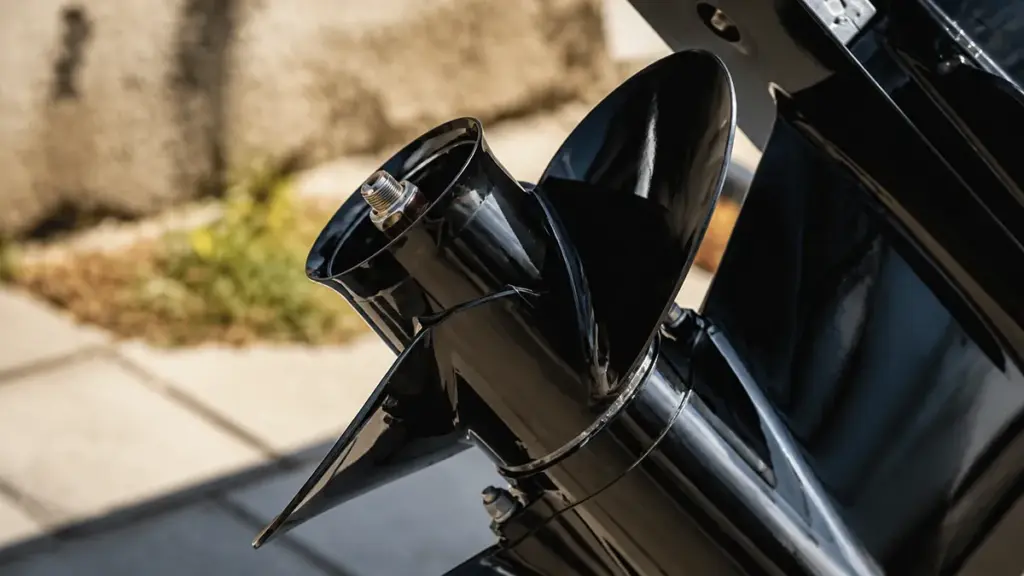
Minor propeller damage like edge burrs and shallow nicks can be repaired with basic filing, provided the blade geometry remains intact and no cracks or vibration are present.
Identifying Repairable Minor Damage
Before breaking out the tools, you need to confirm the damage is actually minor. Repairable defects are strictly surface-level flaws that do not compromise the structural integrity or hydrodynamic shape of the propeller.
- Surface-level dings: Small burrs, leading-edge nicks, and dents that leave the original blade geometry intact.
- Isolated edge wear: Damage limited entirely to the blade edges, meaning the overall diameter and pitch remain unchanged.
- Smooth operation: Propellers that continue to push the boat efficiently without inducing unusual vibration.
- Structural soundness: A complete absence of visible cracks or physical deformation during visual inspection.
If the propeller still performs well and the shaft runs true, you are likely dealing with cosmetic or minor edge wear.
Indicators of Severe Damage
Not all impacts result in a quick fix. Some structural flaws demand immediate professional intervention or a complete replacement to protect your gearcase.
- Visible cracks: Fractures in the blade or hub area, which usually require professional welding or replacement.
- Blade deformation: Noticeable bending or twist across one or multiple propeller blades.
- Severe vibration: Shaking immediately following an impact, signaling a potential mass imbalance.
- Drivetrain impact: Damage extending to the prop shaft, seal, or gear case after a hard strike.
- Die-cast limitations: Die-cast propellers displaying structural flaws, as marine professionals routinely classify these as non-repairable.
Operating with any of these severe defects transfers immense stress directly to your lower unit bearings and seals.
DIY Repair Methods and Discipline
Fixing minor edge damage requires precision and restraint. The goal is to smooth the water flow, not redesign the blade.
- Clean the propeller: Remove all marine growth, dirt, and oil to accurately assess the damage profile.
- File flat: Gently use a coarse or mill bastard file, keeping the tool flat to avoid reshaping the blade.
- Minimize removal: Take off only the absolute minimum amount of metal necessary to smooth out the burr or nick.
- Know when to stop: Cease filing the exact moment the raised metal disappears to preserve blade balance and efficiency.
- Polish the edge: Refine the filed area with fine sandpaper and polish it to reduce hydrodynamic drag and resist corrosion.
Over-filing a single blade shifts the center of mass, transforming a simple nick into a permanent vibration problem.
Deciding Between Repair and Replacement
Knowing when to stop trying to salvage a damaged propeller saves money and prevents unexpected breakdowns on the water.
- Owner repairs: Best suited for slight burrs and minor dings that need only light, controlled filing.
- Professional shops: Necessary for straightening bends, balancing, and checking for hidden cracks using dye or probe scanning.
- Replacement threshold: The smarter financial choice if repair costs exceed 50% of the propeller’s total replacement value.
- Spare recovery: Keeping a spare propeller onboard acts as the ultimate fail-safe if minor damage rapidly worsens during a trip.
Treat your propeller as a consumable wear part. Upgrading to a new unit is significantly cheaper than rebuilding a blown gearcase caused by running an unbalanced prop.
When Early Replacement Is the Safer Choice
Certain types of damage should not be repaired because they increase the risk of sudden failure.
Replacement is usually recommended under the following conditions.
| Damage Type | Replace Immediately? | Reason |
|---|---|---|
| Large blade cracks | はい | High risk of blade separation |
| Missing blade section | はい | Severe imbalance |
| Bent propeller shaft | はい | Can damage gearbox |
| Multiple damaged blades | はい | Difficult to restore accurately |
| Severe corrosion | はい | Reduced structural strength |
| Repeated repaired cracks | はい | Metal fatigue continues to grow |
Choose NEWTOP for Reliable Outboard Propeller Performance
A durable propeller begins with dependable manufacturing. で ニュートップ, we produce precision-balanced aluminum and stainless steel outboard propellers designed to deliver stable performance, スムーズな動作, and long service life across a wide range of marine applications.
Our manufacturing process combines advanced CNC machining, strict dimensional inspection, dynamic balancing, and comprehensive quality testing to ensure every propeller meets consistent performance standards before shipment. Whether you need replacement propellers for aftermarket distribution or OEM production for your own brand, NEWTOP offers flexible manufacturing solutions backed by reliable production capacity and global export experience.
主な利点は次のとおりです。:
- CCS and ECE certified quality for reliable performance and international market requirements.
- Premium materials — aluminum propellers use specially formulated aluminum-magnesium alloy for high strength and toughness, while stainless steel propellers use duplex stainless steel with better yield strength and corrosion resistance.
- Integrated molding technology — propeller blanks are formed with dedicated molds without welding, improving structural strength and durability.
- Precision hub pressing and CNC machining — one-piece pressed hubs improve dynamic balance, while CNC-machined blades ensure consistent geometry and stable thrust performance.
If you’re looking for a trusted outboard motor propeller manufacturer for wholesale supply or customized production, contact NEWTOP today. Our engineering and production teams are ready to help you select the right propeller solution for your market while ensuring consistent quality and long-term supply.
よくある質問
船外機プロペラが損傷しているかどうかを確認するにはどうすればよいですか?
Look for visible bends, chips, ひび割れ, or missing material on the blades. Operational signs include the engine revving unusually high without proportional boat acceleration, which often points to a spun hub. You might also notice persistent vibration, metallic noises, or a loss of steering stability at normal cruising speeds.
Can a small nick on a propeller cause vibration?
はい, even a small nick alters the mass distribution and hydrodynamic symmetry of the blade. This physical imbalance generates centrifugal forces that manifest as noticeable vibration, often within a specific RPM band. Ignoring minor damage leads to progressive wear on the prop shaft and lower unit bearings.
What does a spun prop hub feel like?
A spun hub feels like the boat is slipping in the water. The engine RPM spikes sharply under throttle, but the boat’s speed does not increase. It mimics the sensation of a slipping automotive clutch and is sometimes accompanied by a sudden loss of thrust or a burnt rubber smell.
Should I repair or replace a chipped propeller?
Repair is usually viable for small edge chips or minor bends, especially on higher-value stainless steel props. Replace the propeller if it has large missing chunks, deep cracks near the root, or if you use a low-cost aluminum unit where repair expenses exceed half the price of a new replacement.
Can propeller damage reduce fuel efficiency?
Damaged blades increase hydrodynamic drag and disrupt smooth water flow, forcing the engine to work harder to maintain speed. This mechanical inefficiency prevents the motor from operating in its optimal RPM band, directly resulting in higher fuel consumption per nautical mile.
What kind of noise does a damaged propeller make?
A compromised prop typically produces a rhythmic knocking or thumping sound synchronized with engine RPM. You may also hear metallic rattling or a harsh, low-frequency drone from the lower unit, especially under heavy acceleration or during sharp turns.
Can I still run a boat with a bent propeller?
You should only operate a boat with a bent propeller at minimal idle power to safely return to the dock. Running at planing speeds with unbalanced blades creates severe radial loads that quickly destroy the prop shaft, ベアリング, and gearcase seals.
How often should I inspect my propeller?
Perform a quick visual and tactile check before and after every trip to spot obvious bends, chips, or wrapped fishing line. Complete a full removal inspection—taking the prop off to check the shaft, inspect seals, and re-grease the splines—at least once a season or every 100 hours of operation.
