What is a gasoline generator? It is a portable or frame-mounted machine that uses gasoline to produce electricity when grid power is unavailable or cannot reach the working area.
The product may appear straightforward, but selecting the right one involves more than choosing a familiar model or the largest number on the label. The generator must match the equipment being powered, the electrical standards of the destination market, the expected operating conditions, and the user’s service capabilities.
For dealers, the task is broader. A generator suitable for essential household backup may not meet the demands of a workshop, ferme, contractor, or small commercial facility. A practical product range needs clear differences in output, configuration, mobilité, and price.
What a Gasoline Generator Can—and Cannot—Do
A gasoline generator produces electricity while its engine is running and fuel is available. Unlike a battery power station, it does not store electrical energy for later use.
Several outlets on the control panel also do not mean that every connected device can operate at the same time. All equipment shares the generator’s available output, so the combined demand must remain within its rated capacity.
A complete gasoline generator normally combines an engine, alternateur, fuel system, control panel, protection devices, and supporting frame. The engine supplies mechanical rotation, while the alternator converts that movement into electrical current.
A detailed explanation of this internal process is available in our guide, How Does a Gasoline Generator Work? Key Components and Power Generation Explained.
This article focuses on a different question: how should first-time buyers and dealers evaluate the product before ordering?
What Can a Gasoline Generator Power?
The answer depends on the generator’s rated output and which devices will operate simultaneously.
Light electrical loads may include:
- Lamps and fans
- Chargers and communication equipment
- Televisions and selected small appliances
- Office equipment and payment systems
Workshops, fermes, and jobsites may need to operate:
- Electric drills and saws
- Water pumps
- Pressure washers
- Refrigerators or freezers
- Air compressors
- Other motor-driven equipment
Motor-driven products often require considerably more power during startup than during normal operation. Generator sizing should therefore consider both running wattage and the highest starting demand. Switching high-demand equipment on at different times can also reduce the total generator capacity required.
Before selecting an output class, identify:
- The equipment that must receive power
- Which items may run at the same time
- Their combined running wattage
- The largest starting demand
- Any equipment likely to be added later
The number of sockets is not a measure of generator capacity. It only shows how many connection points are available.
Gasoline Generator Specifications Buyers Should Check First
A product page may include dozens of specifications. The following items have the greatest influence on electrical compatibility and everyday use.
| Specification | What It Means | Pourquoi c'est important |
|---|---|---|
| Rated Output | Power intended for normal operation | Provides the basis for continuous load planning |
| Maximum Output | Temporary capacity above rated output | Helps manage brief demand peaks |
| Tension | Electrical output supplied to equipment | Must match local appliances and machinery |
| Fréquence | Usually configured for a 50 Hz or 60 Hz market | Must suit the destination electrical system |
| Phase | Sortie monophasée ou triphasée | Needs to match the connected equipment |
| Système de démarrage | Recoil start, démarrage électrique, or both | Affects convenience and battery requirements |
| Fuel-Tank Capacity | Amount of gasoline stored onboard | Influences the time available between refueling |
| Control Panel | Outlets, switches, mètres, and breakers | Must match local plug types and user expectations |
| Protection Features | Low-oil, overload, or short-circuit response | Helps protect the engine and electrical system |
| Structure | Cadre, poignées, roues, and vibration mounts | Affects transport and working stability |
Rated output should guide normal load planning. Maximum output is intended for temporary demand peaks and should not be treated as the generator’s continuous capacity.
Choosing the Right Output Range for the Market
A model number becomes useful only after the required power class has been defined.
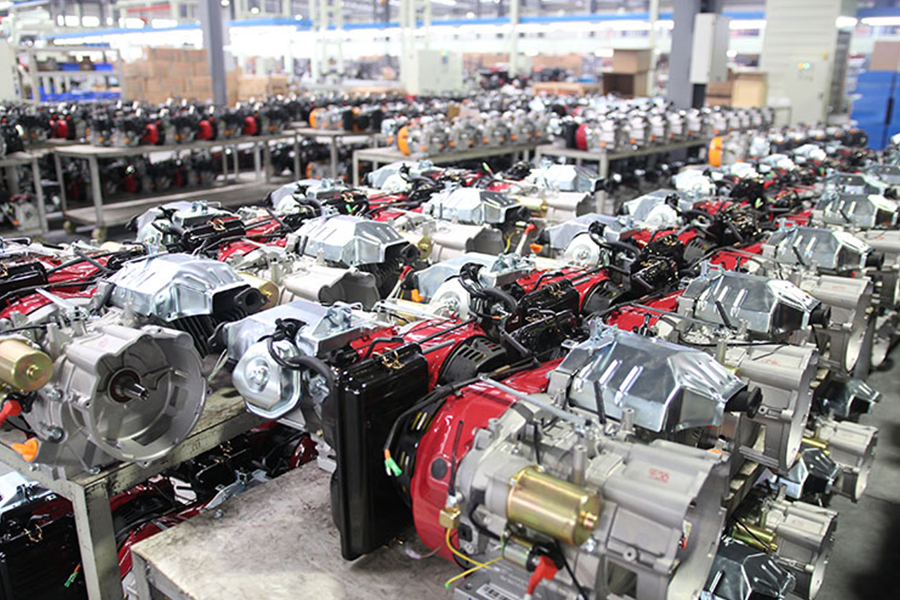
The current NEWTOP gasoline generator range includes compact 2.8 kW products, un 5.5 kW mid-range model, un 7.8 kW configuration, et un 10 kW high-output generator. This allows buyers and distributors to cover different load levels without positioning one machine as suitable for every user.
Compact Power: Around 2–3 kW
This range suits selected essential loads, lighter tools, and mobile work where manageable size and transport are important.
It can cover basic temporary backup or outdoor maintenance, but pumps, réfrigérateurs, and motor-driven tools still require a starting-wattage check.
Mid-Range Power: Around 5–6 kW
Mid-range gasoline generators often cover the broadest group of users.
They can suit workshops, entrepreneurs, fermes, property maintenance teams, and small commercial operations that need more capacity than a compact generator without moving into the largest portable class.
Larger Portable Power: Around 7–8 kW
At this level, customers may be planning to operate heavier equipment or several loads together.
Generator weight, wheel configuration, consommation de carburant, socket layout, phase, and starting reserve deserve closer attention. The additional output should correspond to a genuine demand rather than a preference for a larger headline number.
Puissance essence à haut rendement: Autour 10 kW
Higher-output gasoline generators address users with substantial power demand who still prefer a gasoline engine and portable-frame structure.
They may suit larger workshops, construction operations, or broader backup requirements. Before ordering, confirm that the customer can manage the machine’s size, transport needs, and fuel demand.
What Changes Between Different Power Classes?
Moving from a compact generator to a 5.5 kW, 7.8 kW, ou 10 kW model changes more than the available electrical output.
Engine displacement, poids total, fuel demand, frame dimensions, starting reserve, transport arrangements, and control-panel requirements may also change. Dealers should compare the complete configuration within each power class rather than treating the kW rating as the only difference.
A distributor does not necessarily need every output level. One compact model, one core mid-range model, and one higher-output option may provide enough separation for different customer groups.
The final combination should reflect:
- Common equipment used locally
- Typical customer budgets
- Local electrical standards
- Transport and storage conditions
- Spare-parts availability
- Certification requirements
What to Confirm Before Requesting a Quotation
A request such as “send me the price for a 5 kW generator” does not give the supplier enough information to recommend the right configuration.
A more useful inquiry should include:
Destination Country
The market helps determine the required electrical configuration, socket type, étiquetage, conditionnement, and certification.
Equipment to Be Powered
List the main appliances, outils, pompes, or machines. This gives the supplier more useful information than an estimated wattage alone.
Running and Starting Demand
Provide the combined continuous load and identify the equipment with the highest startup requirement.
Expected Operating Pattern
Clarify whether the generator will provide occasional emergency backup, regular daily power, or operation throughout a normal work shift.
Commercial Requirements
Include:
- Expected order quantity
- Branding requirements
- Packaging preferences
- Spare-parts needs
- Manuals and language requirements
- Target delivery schedule
The supplier can then confirm the suitable model, phase, starting method, control panel, socket configuration, and frame options.
What Dealers Should Check on a Sample Generator
A quotation sheet helps narrow the choice. A sample shows how the finished product actually starts, operates, and feels.
Starting Performance
Test cold starting and hot restarting. For electric-start models, inspect the battery arrangement and confirm whether recoil starting remains available as a backup.
Output Under Load
Do not evaluate the generator only while it runs with nothing connected. Apply an appropriate load and observe voltage, engine response, operating stability, and breaker behavior.
Response to Sudden Demand
Use suitable motor-driven equipment or controlled testing apparatus to see how the generator reacts when electrical demand rises quickly.
Control-Panel Layout
Check:
- Outlet type
- Breaker placement
- Meter visibility
- Labels and switches
- Access to the main controls
A technically suitable generator may still be difficult to sell if its control panel does not match local expectations.
Frame and Vibration
Inspect welds, fasteners, poignées, roues, rubber mounts, and movement during operation. The frame should feel stable and secure rather than loosely assembled.
Service Access
Routine maintenance areas should be reasonably easy to reach, y compris:
- Air filter
- Spark plug
- Oil filling and draining points
- Fuel valve
- Carburateur
- Batterie, where fitted
Packaging and Included Items
Confirm carton strength, internal protection, manuels, outils, plugs, piles, wheel kits, and any spare parts included with the shipment.
These checks provide information that may not appear in a catalog and help dealers prepare for customer service after resale.
Common First-Time Buying Mistakes
Choosing Output Without a Real Load List
Sortie nominale, simultaneous running demand, and the highest starting load should be considered together. A larger maximum-output number does not automatically make a generator more suitable.
Comparing Only Engine Horsepower
Horsepower describes the mechanical capability of the engine, not the complete electrical performance of the generator. Alternator capacity, voltage regulation, refroidissement, systèmes de protection, and component matching also matter.
Treating Tank Size as Fuel Efficiency
A larger tank carries more gasoline and may extend the interval between refueling. It does not prove that the engine consumes less fuel.
Overlooking Service and Spare-Parts Requirements
A generator may suit the required load but still create difficulties if filters, composants de démarrage, control-panel parts, or common engine parts are hard to obtain.
For dealers, access to service information and replacement components is part of the product decision, not something to consider only after the first customer complaint.
A Short Safety Note
Gasoline generators produce carbon monoxide and must operate outdoors. Les États-Unis. Consumer Product Safety Commission advises placing portable generators at least 20 à quelques pas des maisons et des immeubles, with the exhaust directed away from windows, doors, et les évents. Generators should never operate inside homes, garages, sous-sols, hangars, ou d'autres espaces clos.
The generator must be switched off and allowed to cool before refueling. CPSC also specifically warns against adding gasoline while a generator is running or hot.
Where a generator will supply building circuits, suitable transfer equipment and qualified electrical installation are required rather than an improvised connection.
Choosing a Gasoline Generator with Clear Requirements
The best model is not automatically the one with the highest output.
First-time buyers should choose around the equipment that must operate, including its running and starting demand. Dealers should build their product range around local electrical standards, applications courantes, price levels, and service expectations.
Once those requirements are clear, unsuitable models can be eliminated quickly. The remaining choice becomes a practical comparison of output, configuration, mobilité, construction, et support après-vente.