


- Todo
- NEWTOP Historias de clientes
- NEWTOP Explorador Hub
- NEWTOP Perspectivas de la industria
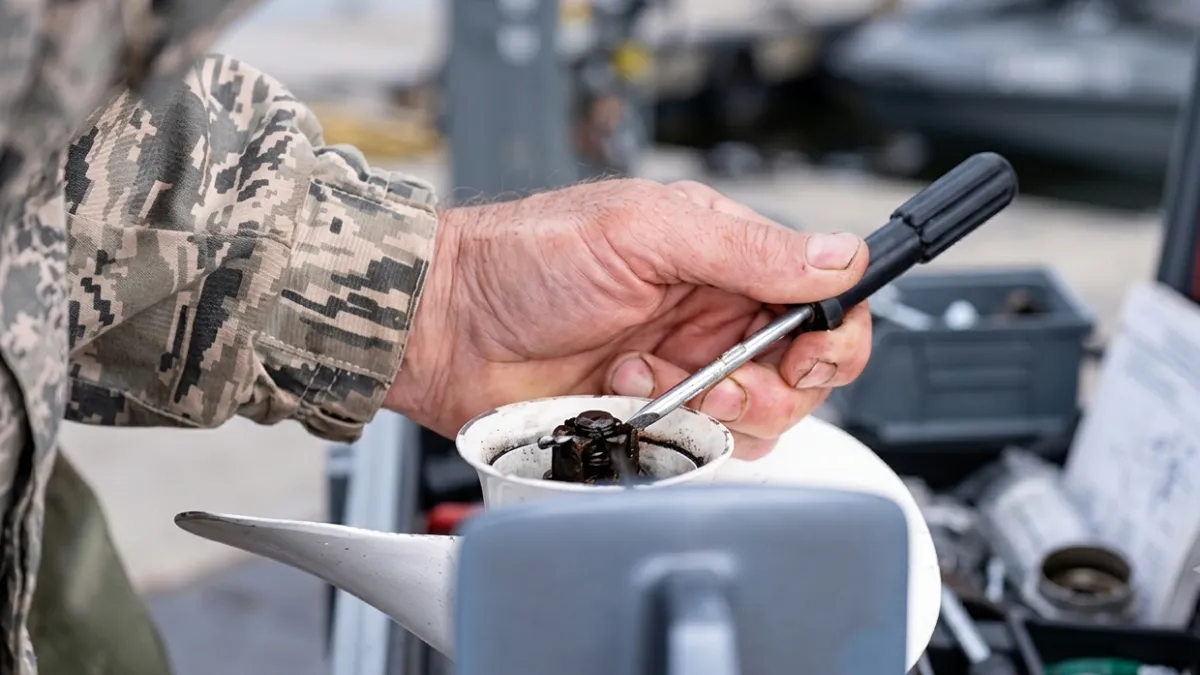
Muchos propietarios de embarcaciones no notan daños en la hélice hasta que su embarcación empieza a sentirse diferente.. Quizás la aceleración se vuelva más lenta., los costos de combustible aumentan, o el volante comienza a vibrar después de golpear una roca escondida o escombros flotantes. Conocer las primeras señales de advertencia puede ayudarle a evitar reparaciones costosas y a mantener su fueraborda funcionando de manera eficiente..
En esta guía, te explicaremos el 5 signos más comunes de un daño hélice fuera de borda, por qué importan, y cuando llega el momento de reemplazar su hélice.
Por qué nunca se debe ignorar una hélice dañada
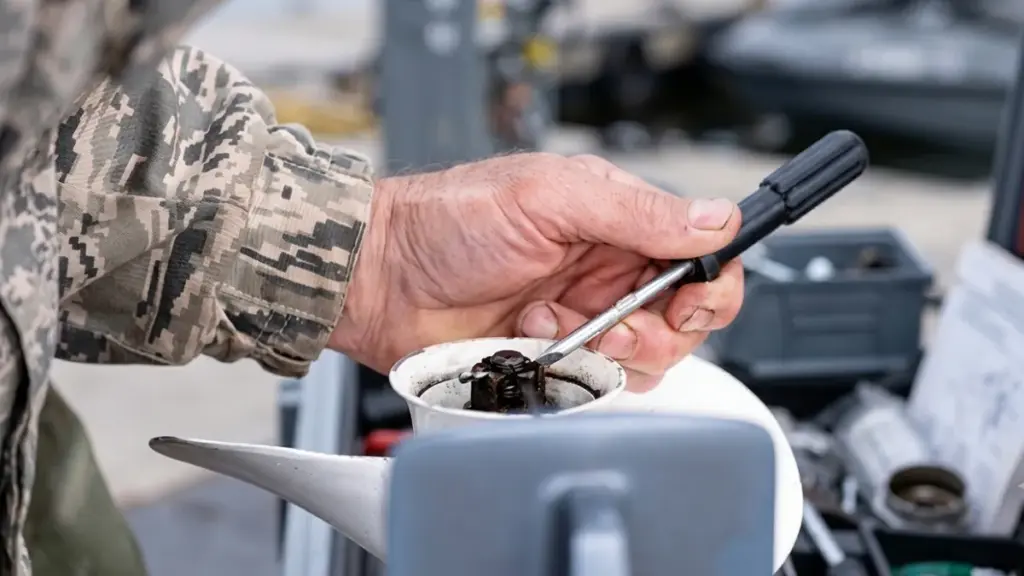
Ignorar una hélice dañada convierte pérdidas menores de eficiencia en daños graves a la caja de engranajes, aumento vertiginoso de los costos del combustible, y problemas de manejo peligrosos. Arréglelo temprano para proteger su motor y su billetera.
Degradación del rendimiento y problemas de manejo
Una hélice dañada anula inmediatamente el rendimiento diseñado de su embarcación. Incluso una pequeña distorsión de la pala arruina el perfil hidrodinámico necesario para convertir la potencia del motor en un movimiento de avance eficiente.. Los operadores generalmente notan esto como un disparo lento y una caída notable en la velocidad máxima..
- pérdida de empuje: Las hojas dobladas o astilladas alteran la geometría, reduciendo el empuje hacia adelante y causando una mala aceleración.
- Manejando la inestabilidad: Las superficies irregulares de las hojas crean un empuje desigual, lo que lleva a tirar de la dirección, ajuste inestable, y seguimiento inconsistente.
- Generación de vibraciones: La rotación desequilibrada crea vibraciones bajo carga, A menudo se siente como un golpe rítmico a través de la plataforma a velocidades de planeo..
Mayor consumo de combustible y costos operativos
Ejecutar una hélice comprometida ataca directamente su presupuesto operativo. Las imperfecciones en la superficie de la pala destruyen el flujo de agua laminar, reemplazándolo con arrastre y turbulencia. El motor tiene que quemar mucho más combustible para alcanzar la velocidad de crucero estándar..
- Arrastre agregado: Las palas dañadas inducen un flujo turbulento, obligando al motor a trabajar más duro para mantener el impulso.
- Mayor consumo de combustible: Una hélice abollada o doblada aumenta habitualmente el consumo total de combustible en aproximadamente 10%.
- Compensación del acelerador: Naturalmente, los operadores presionan más el acelerador para compensar el empuje ineficiente., multiplicando silenciosamente los costos de funcionamiento diarios.
Estrés mecánico severo en la unidad inferior
Los daños estéticos en el exterior a menudo ocultan una grave destrucción mecánica en el interior.. Una hélice desequilibrada actúa como un martillo contra la transmisión. Envía constante, tensión cíclica directamente en la unidad inferior, convertir una reparación de hélice barata en una reconstrucción masiva de la caja de cambios.
- Desgaste de la caja de cambios: La carga desigual transmite la tensión directamente a la unidad inferior, destruyendo engranajes, aspectos, y ejes prematuramente.
- Degradación del sello: La vibración persistente rompe los sellos del eje de transmisión, permitiendo que el aceite de engranajes se escape y el agua entre rápidamente.
- Desalineación del eje: Los impactos fuertes que deforman las palas frecuentemente doblan el eje de la hélice., garantizando un fallo catastrófico si no se controla.
Riesgos de seguridad y posible varamiento
Operar con una hélice dañada empuja sus márgenes de seguridad a la zona roja. La pérdida de empuje limpio hace que la embarcación sea impredecible en espacios reducidos o en condiciones difíciles.. Empujar una transmisión comprometida en alta mar provoca fallas mecánicas repentinas cuando más se necesita energía.
- Peligros de atraque: La pérdida de empuje inverso y el manejo errático acaban con el control de maniobra en canales estrechos y rampas..
- Riesgo de avería: Correr con daños existentes aumenta drásticamente las probabilidades de sufrir una falla mecánica repentina mientras está en marcha..
- Vulnerabilidad climática: La reducción de la eficiencia de la propulsión compromete sus márgenes de seguridad al navegar en mares agitados, fuertes vientos, o corrientes fuertes.
5 Lista de signos de una hélice externa dañada
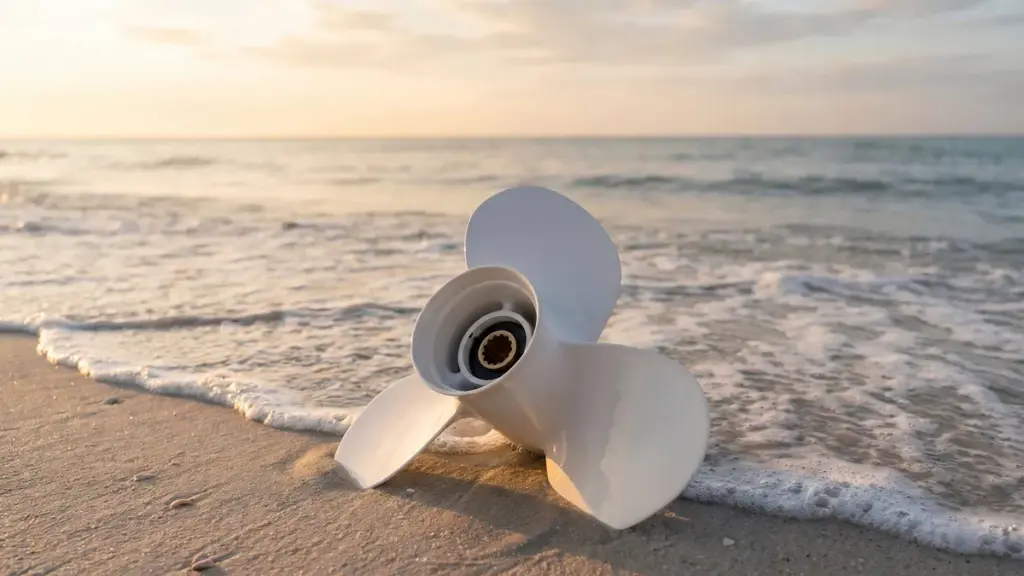
Si su motor fueraborda vibra repentinamente, pierde velocidad, o consume más combustible de lo habitual, Es posible que su hélice ya esté dañada.. La siguiente tabla resume los síntomas más comunes., sus causas probables, y cómo pueden afectar su motor.
| Señal de advertencia | Causa primaria | Riesgo inmediato |
|---|---|---|
| Vibración | Cuchillas dobladas o buje flojo | Falla en el sello de la caja de engranajes |
| Pérdida de velocidad / Mal tiro en el hoyo | Arrastre de cubo o pala girado | Arrastre del motor |
| Ruido / Inestabilidad de la dirección | Cuchillas asimétricas o eje doblado | Daños en el engranaje de la unidad inferior |
| Alto consumo de combustible / Carga | Arrastre hidrodinámico | Desgaste del pistón y del sistema de refrigeración. |
| Daño visible | Golpes de impacto | Cargas de impacto en la transmisión |
Firmar 1: Vibración durante la aceleración o el crucero
Una hélice dañada rara vez gira correctamente. Notarás que el temblor se siente directamente a través del timón., la carcasa del motor fuera de borda, o el propio casco del barco, especialmente al acelerar o mantener una velocidad de crucero constante. Esta vibración reduce drásticamente la eficiencia de la hélice y genera tensión inmediata en los soportes del motor y en los sellos de la caja de engranajes..
- Causas comunes: Cuchillas dobladas o deformadas, un centro suelto, o escombros pesados ensuciados alrededor del eje de hélice.
- Verificación procesable: Apague el motor e inspeccione la hélice.. Mire los ángulos de la hoja para asegurarse de que coincidan., luego gire la hélice con la mano para detectar cualquier bamboleo o raspado contra la caja de engranajes..
Firmar 2: Pérdida de velocidad y mal tiro en el hoyo
Aceleración lenta, un tiempo notablemente más lento para subir al avión, y la velocidad máxima reducida apuntan directamente a la ineficiencia de la propulsión. Incluso si las RPM de su motor permanecen normales o elevadas, una hélice comprometida no logra convertir esa potencia en empuje hacia adelante. Esto a menudo se debe a la cavitación alrededor de los bordes de las palas dañados o a fuertes incrustaciones marinas que crean un exceso de resistencia..
- Indicador de cubo hilado: Si falla el casquillo interior, no puede transmitir el par motor completo al agua, causando altas RPM con un movimiento mínimo del barco.
- Verificación procesable: Compara tu acelerador a fondo actual (WOT) RPM y velocidad máxima en comparación con los datos históricos de referencia de su embarcación.
Firmar 3: Ruido inusual o inestabilidad de la dirección
Nuevo tarareo, muy, o ruidos de chirrido indican una desalineación mecánica severa, especialmente al girar o pasar por rangos de RPM específicos. También puede notar que el timón se siente más difícil de manejar o tira mucho hacia un lado.. Esto sucede porque asimétrico, las cuchillas dobladas generan un empuje desigual, Forzar al barco a salirse de su trayectoria natural..
- Amenaza de la caja de cambios: El chirrido persistente generalmente indica un eje de hélice doblado o daño en el engranaje de la unidad inferior debido a un golpe submarino anterior..
- Verificación procesable: Mueva la hélice hacia adelante y hacia atrás para detectar exceso de juego.. Gírelo con la mano y escuche atentamente cualquier sonido de raspado interno..
Firmar 4: Mayor uso de combustible y carga anormal del motor
Una caída repentina en la eficiencia del combustible significa que usted se detiene en el muelle de combustible con más frecuencia para exactamente las mismas rutas y cargas.. La resistencia hidrodinámica causada por daños en las palas o suciedad obliga al motor a trabajar más duro solo para superar la pérdida de empuje y vibración.. El motor sonará forzado y requerirá ajustes de aceleración más altos para mantener velocidades de crucero normales..
- Desgaste a largo plazo: La operación sostenida bajo estas condiciones de carga pesada acelera el desgaste de los pistones., aspectos, y sistemas de refrigeración externos.
Firmar 5: Hoja visible, Centro, o daños en los bordes
Los defectos físicos son los indicadores más obvios de un impacto.. Una inspección visual rápida a menudo revela abolladuras, son consejos, trozos faltantes, o grietas finas. Estos defectos suelen deberse a que el barco queda varado o al golpear rocas., bancos de arena, arrecifes, o escombros sumergidos. Incluso los daños físicos menores alteran el cabeceo y el equilibrio efectivos de la hélice., Transmitir cargas de choque dañinas directamente a la unidad inferior..
- Verificación procesable: Retire la hélice para inspeccionar todas las superficies de cerca.. Reemplace la unidad si encuentra daños estructurales graves o si las estimaciones de reparación exceden 50% del coste de una nueva hélice.
Obtenga hélices fueraborda OEM de alto rendimiento

Cómo proteger su motor reemplazando la hélice adecuada a tiempo
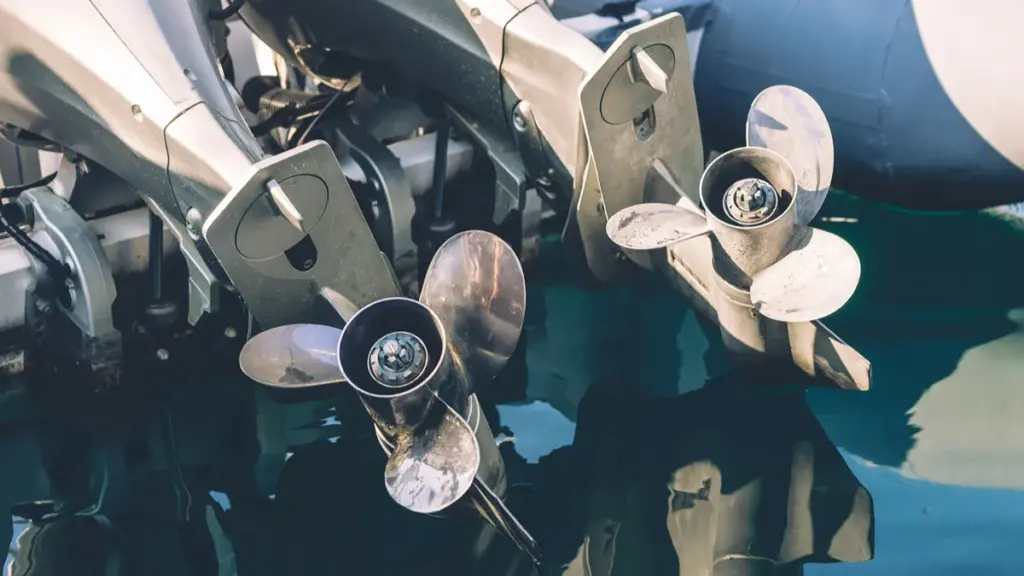
Una hélice dañada obliga al motor a trabajar más y corre el riesgo de sufrir fallos graves en la transmisión. Reemplazar una unidad comprometida protege inmediatamente su caja de cambios y restablece la eficiencia básica del combustible..
Identificar cuándo es el momento de reemplazar
Saber exactamente cuándo cambiar una hélice evita que un desgaste menor se convierta en una falla mecánica. Las inspecciones visuales y táctiles actúan como su primera línea de defensa.. Cualquier golpe contra un objeto sumergido requiere atención inmediata., Incluso si el barco todavía se mueve.
- Daño estructural visible: Compruebe si hay grietas profundas, grandes trozos faltantes, cuchillas muy dobladas, o bordes adelgazados que comprometen la geometría de la hoja.
- El rendimiento básico cae: Esté atento a un motor que de repente no logra alcanzar su punto de referencia con el acelerador completamente abierto. (WOT) RPM o velocidad máxima bajo cargas normales.
- Problemas de vibración y manejo.: Vibración persistente, tirón de dirección, o un seguimiento irregular indica una hélice desequilibrada.
- Verificación post-impacto: Retire siempre la hélice para inspeccionar el eje y el sello después de golpear rocas submarinas., registros, o escombros.
Elegir la hélice de repuesto adecuada
Instalar una hélice que no coincide es tan dañino como hacer funcionar una rota. Debe alinear las especificaciones de reemplazo con su tipo de casco y carga operativa típica..
- Paso y diámetro correctos: La falta del rango de paso recomendado por el fabricante obliga al motor a acelerar demasiado o a retrasarse., destruyendo la economía de combustible y la aceleración.
- Aluminio para absorción de impactos.: Los puntales de aluminio actúan como una barrera de sacrificio en aguas poco profundas., aguas densas en peligro. Se deforman al impactar, transmitiendo mucho menos impacto a la costosa caja de cambios.
- Acero inoxidable para mayor durabilidad: Elija acero inoxidable cuando necesite la máxima eficiencia, resistencia a la flexión, y durabilidad en aguas profundas o libres de peligros.
Comprobaciones de instalación y posteriores al reemplazo
Un reemplazo exitoso requiere atención estricta al conjunto del cubo y al entorno del eje.. Antes de colocar la nueva hélice, Limpie y prepare a fondo el área para garantizar que la línea motriz funcione correctamente..
- Preparación del eje: Retire el hilo de pescar envuelto, malas hierbas, y residuos que pueden cortar el nuevo sello.
- Asientos de hardware: Aplique grasa de grado marino a las estrías.. Asegure la tuerca de apoyo a la especificación de torsión exacta sin apretar demasiado., e inserte una chaveta nueva si el diseño lo requiere.
- Prueba de fricción: Coloque el fueraborda en punto muerto y haga girar la nueva hélice con la mano.. Debe girar libremente sin atascar ni raspar la caja de engranajes..
- Verificación de referencia: Haga funcionar la embarcación con una carga normal para confirmar que la nueva hélice restablezca su velocidad máxima original y RPM WOT..
Conclusión
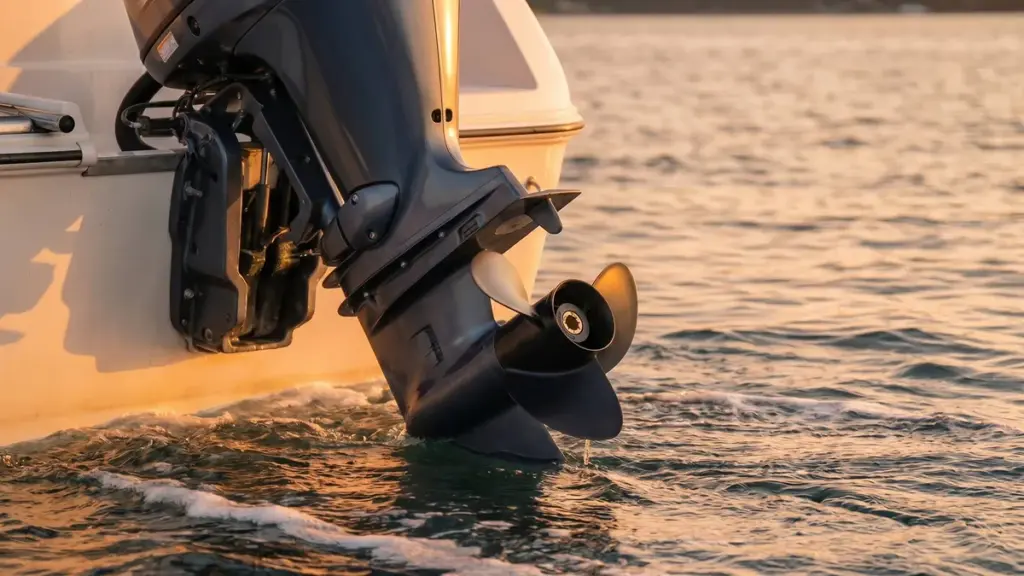
Las inspecciones periódicas y el reemplazo oportuno son las mejores formas de proteger su motor fueraborda, mejorar el rendimiento de la navegación, y reducir los costos operativos a largo plazo. Es igualmente importante conseguir hélices de motores fuera de borda con el paso correcto., diámetro, y materiales de alta calidad para garantizar un funcionamiento confiable y eficiente.
Ya sea que esté reemplazando hélices para su propia flota o buscando productos para su negocio, asociarse con fabricantes experimentados de hélices de motores fuera de borda puede marcar una diferencia significativa en la calidad del producto, actuación, y confiabilidad a largo plazo. En NOVEDAD, Nuestra fábrica integrada de hélices para motores fuera de borda combina fabricación avanzada con servicios flexibles de OEM/ODM para ayudar a los distribuidores y marcas marinas a tener éxito en mercados competitivos..
👉 Póngase en contacto con NEWTOP hoy para analizar sus requisitos OEM o mayoristas y recibir una cotización competitiva para su próximo proyecto de hélice fuera de borda.
Preguntas frecuentes
¿Cuáles son los signos de una hélice fuera de borda dañada??
Puede detectar daños en la hélice a través de defectos visuales, caídas de rendimiento, y síntomas mecánicos. buscar abolladuras, puntas de hoja dobladas, trozos faltantes, o grietas finas cerca del cubo. en el agua, El daño se manifiesta como velocidades máximas más lentas., tiros de hoyo lentos, y altas RPM del motor con baja velocidad de avance del barco. También puedes sentir nuevas vibraciones rítmicas en el timón o escuchar ruidos sordos.. Si nota una fuga de aceite lechoso para engranajes alrededor de la unidad inferior, el impacto probablemente comprometió los sellos del eje de transmisión.
¿Puede una hélice dañada dañar mi motor??
Sí, Una hélice dañada ejerce una gran presión sobre todo el motor fueraborda y la unidad inferior.. Incluso una pequeña curvatura de la hoja crea una rotación desequilibrada. Este desequilibrio rotacional envía continuos, vibraciones fuertes directamente a través de la línea motriz. Dejado sin marcar, Esta sacudida martilla los sellos del eje de transmisión hasta que fallan., dejar que el lubricante del engranaje se escape y el agua entre. Hacer funcionar el motor en este estado provoca rápidamente un desgaste destructivo de metal con metal en los juegos de engranajes y cojinetes..
¿Por qué mi barco vibra después de golpear algo bajo el agua??
Golpear un objeto sumergido desequilibra la transmisión. El impacto suele doblar la pala de una hélice., se desprende el material, o dobla ligeramente el eje de la hélice. Porque la hélice ya no mantiene su forma simétrica o gira perfectamente, orbita en lugar de girar suavemente. Esta oscilación genera una fuerza de vibración rítmica que sube por la pata exterior., a través de los soportes del motor, y directamente en el casco.
¿Puede el daño de la hélice causar una mala aceleración??
Sí. El daño físico altera el paso de la pala., comba, y taza. Esta distorsión acaba con la eficiencia hidrodinámica de la hélice., obligándolo a perder su agarre en el agua y reduciendo drásticamente el empuje hacia adelante.. También, si un golpe fuerte daña el cubo de goma interior, comúnmente llamado “cubo hilado”—la carcasa de la hélice se desliza sobre el eje. Cuando pisas el acelerador, el motor acelera mucho mientras el barco apenas acelera o tiene dificultades para subir al avión.
¿Una hélice defectuosa aumentará el consumo de combustible??
Sí. Operar una hélice dañada obliga al motor a quemar más combustible por milla. Doblado, astillado, o las palas muy sucias crean una resistencia hidrodinámica adicional y aumentan el deslizamiento de la hélice. Porque las palas dañadas no pueden convertir el par del motor en empuje de manera eficiente, el fueraborda tiene que girar más rápido y trabajar mucho más duro sólo para mantener su velocidad de crucero normal. Más de una temporada, Esta ineficiencia se suma a facturas de combustible significativamente más altas..
¿Cuánto tiempo puedo utilizar una hélice dañada de forma segura??
Sólo debe hacer funcionar una hélice dañada el tiempo suficiente para regresar cojeando al muelle a baja velocidad.. Operando un vibrante, apoyo desequilibrado durante un período prolongado pone anormal, estrés cíclico en los rodamientos y sellos de la unidad inferior. Empujar el motor en esta condición rápidamente provoca un simple, Reemplazo económico de hélice en una reconstrucción catastrófica de la caja de engranajes..
¿Puede un cubo dañado hacer que el motor acelere demasiado??
Sí. Los fabricantes diseñan el cubo de goma interior para que se deslice durante un impacto severo para proteger los engranajes de la unidad inferior contra cortes.. Una vez que este centro gira o se rompe, Pierde permanentemente su firme agarre sobre la carcasa exterior de la hélice.. Cuando aplicas el acelerador, el cubo dañado se desliza en lugar de transferir torque. Esto permite que las RPM del motor aumenten rápidamente sin empujar el barco hacia adelante., imitando la sensación de una transmisión patinando.
¿Debo llevar una hélice de repuesto a bordo??
Se recomienda encarecidamente llevar una hélice de repuesto a bordo.. Sirve como seguro barato., especialmente si utiliza una hélice de aluminio o navega regularmente en aguas poco profundas., aguas llenas de obstrucciones. Llevar una unidad de repuesto, junto con una llave de apoyo, una arandela de empuje de repuesto, y una chaveta nueva, le permite cambiar el accesorio dañado en el acto. Esto restablece la propulsión segura inmediatamente y le evita un fin de semana arruinado o una costosa factura de remolque..
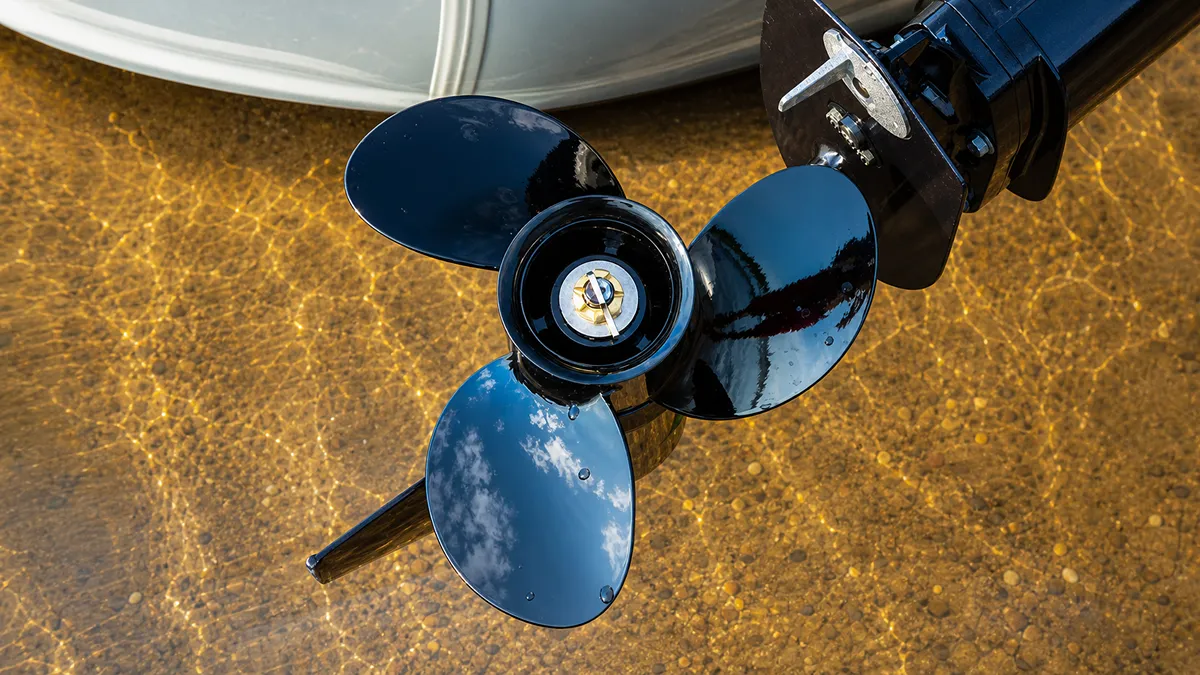
When a boat suddenly loses thrust, engine RPM rises without matching acceleration, or the hélice shows unusual surface damage, many operators assume the propeller is simply worn out. En realidad, the problem may be propeller cavitation.
Cavitation is one of the most misunderstood issues affecting outboard motor performance. It reduces efficiency, increases fuel consumption, shortens propeller life, and may even lead to expensive repairs if ignored. Although it is often confused with ventilation, the two problems have different causes and require different solutions.
En esta guía, we’ll explain what cavitation is, what causes it, how it affects your boat, and the practical ways to prevent it by choosing the right propeller and setup.
What Is Cavitation in Outboard Motor Propellers?
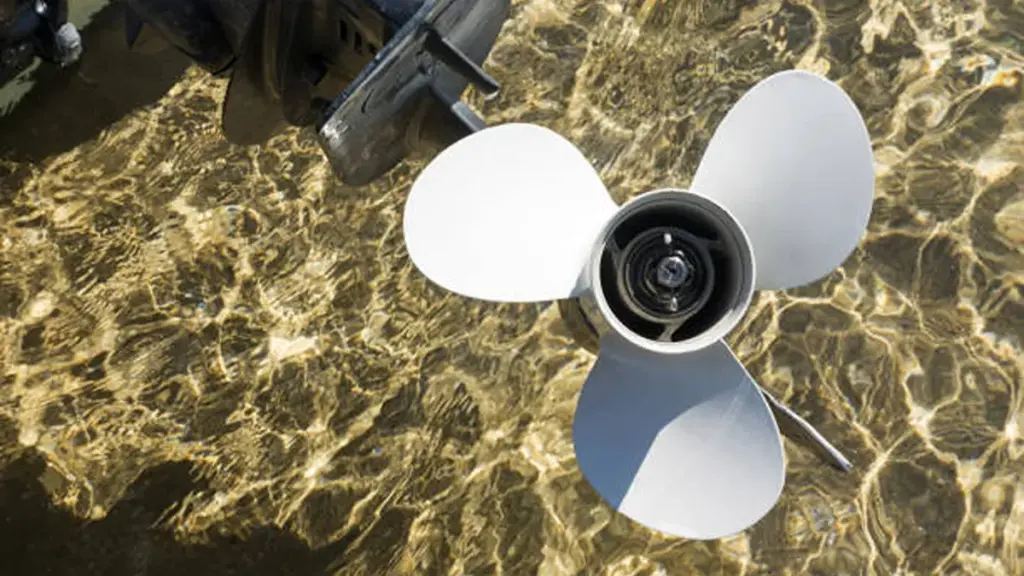
Cavitation in outboard propellers is a destructive hydrodynamic pressure issue. Vapor bubbles form and violently collapse on the blades, causing power loss and severe metal erosion.
The Physical Process of Cavitation
Cavitation starts when rapid propeller rotation forces local water pressure to drop below its vapor pressure. This extreme low pressure triggers an immediate phase change, creating vapor bubbles directly on the blade surface. The water essentially boils at ambient temperature due to the pressure drop.
As the spinning propeller drives these vapor bubbles into higher-pressure zones, they cannot sustain their form and collapse violently. These collapsing bubbles release intense micro-shock waves against the blade. Con el tiempo, these repeated impacts pound the metal surface, eroding the material and causing severe pitting.
Common Causes in Outboard Setups
Several setup and operational factors create the ideal environment for these damaging low-pressure zones to form.
- Incorrect mounting and trim: Setting the engine mounting height too high or trimming the motor out too far disrupts solid water flow across the blades.
- Poor propeller selection: Using a propeller poorly matched to the boat’s hull, carga, or engine power forces the blades to carry excessive hydrodynamic load.
- Pre-existing damage: Bent blades, over-filed tips, or nicked edges create uneven hydrodynamics that trigger localized pressure drops.
- Disturbed inflow: Hull turbulence, transducers, or underwater obstructions prevent clean water from reaching the lower unit.
Symptoms and Performance Impacts
Operators usually identify cavitation through immediate handling degradation and eventual mechanical wear on the propulsion system.
- Loss of thrust: You experience a sudden decrease in power transfer efficiency, leaving the boat feeling sluggish under heavy throttle.
- RPM flaring: The engine speed surges rapidly without a proportional increase in forward acceleration.
- Audible disturbances: Collapsing bubbles create a distinct gravel-like rattling, accompanied by excessive vibration through the transom.
- Cumulative wear: Unchecked cavitation leads to visible blade erosion, pitting, and structural metal fatigue over time.
Distinguishing Cavitation from Ventilation
Boaters frequently confuse cavitation with ventilation, but they are entirely different mechanical events. Cavitation functions strictly as a hydrodynamic pressure issue resulting in vaporized water. Ventilation happens when the propeller physically pulls surface air or exhaust gases directly into the slipstream.
Both phenomena create nearly identical operator symptoms, including sudden RPM flare and an immediate loss of bite in the water. Accurate diagnosis dictates the repair path. Fixing ventilation usually involves basic trim adjustments or dropping the engine height. Resolving cavitation often requires repairing damaged blade edges or selecting a completely different propeller design to handle the engine’s output.
How Cavitation Differs from Ventilation
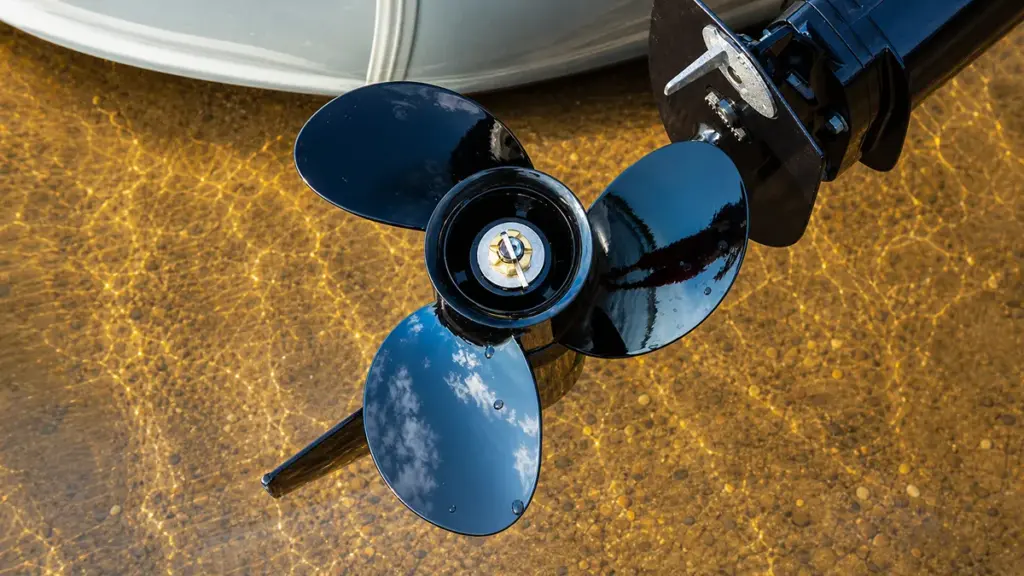
Cavitation is a pressure-induced phase change causing water to boil and erode propeller blades, while ventilation is external air getting sucked into the prop wash, causing sudden slippage.
Many boat owners use the terms cavitación y ventilation interchangeably, but they describe two different phenomena.
| Característica | Cavitation | Ventilation |
|---|---|---|
| Cause | Water pressure drops below vapor pressure. | Air enters the propeller blades. |
| Medium Around Blade | Water vapor bubbles. | Air from above the water surface. |
| Main Symptom | Blade erosion and reduced propulsion efficiency. | Sudden engine RPM increase with poor thrust. |
| Blade Damage | Sí, often causes pitting and surface erosion. | Usually no direct blade erosion. |
| Typical Causes | Incorrect blade loading, damaged propeller, poor blade design, or excessive pressure drop. | Engine mounted too high, sharp turns, rough water, or excessive trim angle. |
A simple way to remember the difference:
- Cavitation creates bubbles from water.
- Ventilation pulls air into the propeller.
Maximize Margins With Professional-Grade Garden Machinery

The Main Causes of Propeller Cavitation
Cavitation occurs when local water pressure drops below vapor pressure. Excessive speed, mismatched propellers, blade damage, and disturbed inflow from poor setup are the primary triggers.
| Cavitation Cause | Primary Mechanism |
|---|---|
| Speed & Loading | High RPM and heavy vessel loads drive local pressure below the vapor threshold. |
| Propeller Mis-Match | Wrong pitch or physical size creates extreme pressure imbalances across the blade. |
| Blade Damage | Nicks and bent edges prevent smooth water flow, causing localized low-pressure zones. |
| Setup & Inflow | Improper engine height or hull obstructions introduce turbulent, low-pressure water. |
Excessive Propeller Speed and High Loading
Propellers designed for standard operation struggle when pushed past their hydrodynamic limits. Spinning a blade too fast creates an extreme pressure drop on the back side. This sudden vacuum forces the water to vaporize instantly into gas pockets.
Operating parameters heavily influence this pressure shift. Specific stressors force the propeller into a continuous cavitation cycle.
- Heavy loads: Excess vessel weight forces the engine to work harder, multiplying blade stress.
- Hard acceleration: Rapid throttle spikes disrupt steady water flow and immediately drop local pressure.
- Extreme RPMs: Sustained high-speed operation with an overloaded vessel guarantees continuous vapor formation.
Incorrect Pitch, Sizing, and Propeller Mis-Match
Slapping any available propeller onto an outboard guarantees poor performance. Pitch directly dictates blade loading. Excessive pitch bogs down the engine and overloads the blades at lower speeds. Insufficient pitch lets the engine over-rev, accelerating the blades so fast that they tear the water apart and induce surface cavitation.
Proper matching requires aligning the propeller geometry with the specific vessel dynamics to maintain pressure equilibrium.
- Diameter constraints: Selecting a size that ignores hull weight and horsepower creates severe pressure imbalances.
- Blade geometry: The wrong blade count, rake, or cup strips the propeller of its grip, increasing slip and flow separation.
- Compatibilidad del casco: A propeller style mismatched to the hull design fails to handle the specific water flow of that vessel.
Physical Blade Damage and Surface Imperfections
Water requires a perfectly smooth surface to maintain laminar flow. Minor impact damage alters the local hydrodynamics completely. Nicks, gouges, or missing chunks on the leading edge stop the blade from slicing cleanly. These defects act as turbulence generators, spawning localized low-pressure zones where vapor bubbles rapidly form.
Physical irregularities consistently trigger flow breakdown across the entire propulsion system.
- Bent blades: Asymmetric geometry causes uneven loading and violent pressure swings during every revolution.
- Altered edges: Overly sharpened or blunt leading edges detach the water flow prematurely.
- Lower unit fouling: Barnacle buildup or deep scratches on the gearcase destroy the clean water stream before it reaches the blades.
Disturbed Inflow, Setup, and Clearance Issues
A propeller operates efficiently only when fed a steady stream of dense, clean water. Mounting the outboard too high on the transom starves the system. This setup places the blades near the surface where the water is already aerated and low in pressure, accelerating the phase change into vapor.
Environmental factors around the transom dictate the quality of the inflow reaching the propeller.
- Clearance limits: Inadequate spacing between the propeller, hull bottom, and skeg amplifies local turbulence.
- Appendage drag: Poorly placed transducers or water pickups inject chaotic currents directly into the propeller path.
- Vessel attitude: Excessive stern weight or improper boat trim shifts the inflow angle, severely degrading water density.
How Cavitation Affects Speed, Fuel Use, and Blade Life
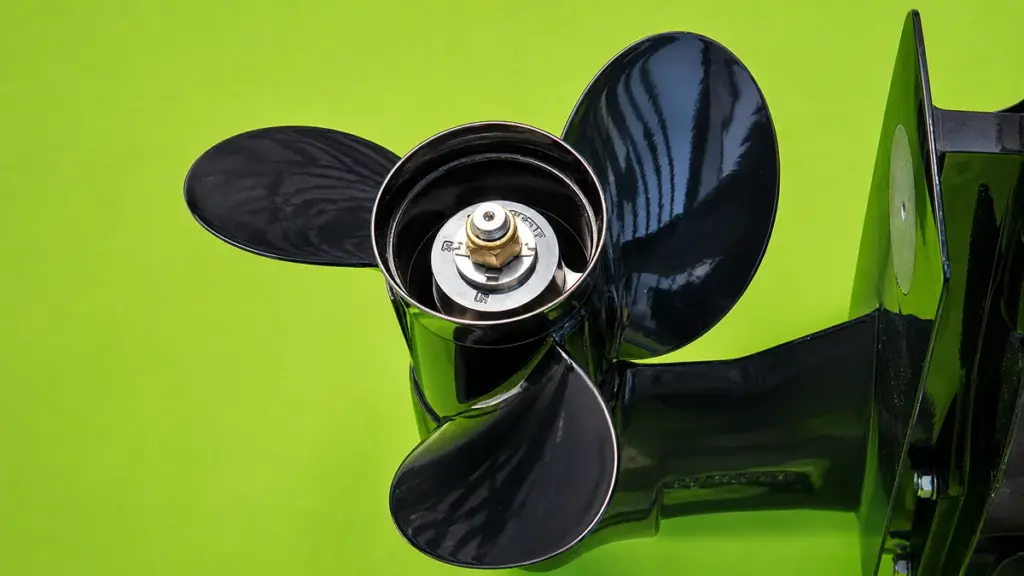
Cavitation cripples propeller efficiency. It kills top speed, burns up to 10% more fuel per mile, and destroys blades through violent micro-shock waves, forcing expensive premature replacements.
Impact on Boat Speed and Acceleration
When cavitation vapor bubbles form, they reduce effective blade lift. This breaks the propeller’s physical hook-up to the water and causes a massive drop in thrust. You will often feel this as a sudden RPM flare with barely any forward movement, forcing you to back off the throttle to let the blades regain bite.
- Hole-Shot Performance: Acceleration becomes sluggish, drastically extending the time it takes to get the heavy hull on plane.
- Top Speed Penalty: Even partial tip cavitation creates enough drag to cause a 2–5% loss in top speed on high-performance setups.
Increased Fuel Consumption and Reduced Efficiency
Vapor bubbles sticking to the blade surfaces act like a physical barrier. They increase friction and alter the effective thickness of the blade, destroying hydrodynamic efficiency. To compensate for the lost thrust, operators push the throttle further forward. This pushes the engine into a higher RPM band where it operates far outside its peak fuel efficiency range.
- Burn Rate: A chronic cavitation mismatch burns 5–10% more fuel per mile just to maintain the same hull speed.
- Lifetime Waste: Over the lifespan of a commercial or high-use outboard, this hydrodynamic drag wastes hundreds of gallons of fuel.
Structural Damage and Shortened Blade Life
Cavitation acts as a mechanical grinder on your hardware. When vapor pockets move into higher-pressure water, they collapse violently. These implosions generate localized micro-shock waves that mechanically hammer the metal, leading to severe pitting along the leading edges and low-pressure faces of the propeller.
- Vibration and Fatigue: The uneven collapse of bubbles creates high-frequency vibrations, subjecting the prop to continuous high-cycle fatigue.
- Cracking and Separation: Fatigue promotes micro-cracking at critical stress points like root fillets, which can quickly progress into complete blade separation under heavy loads.
- Collateral Damage: The constant oscillatory loads force premature propeller replacement and increase the risk of catastrophic bearing and seal failures inside the lower unit.
How to Fix Cavitation Through Setup and Prop Selection
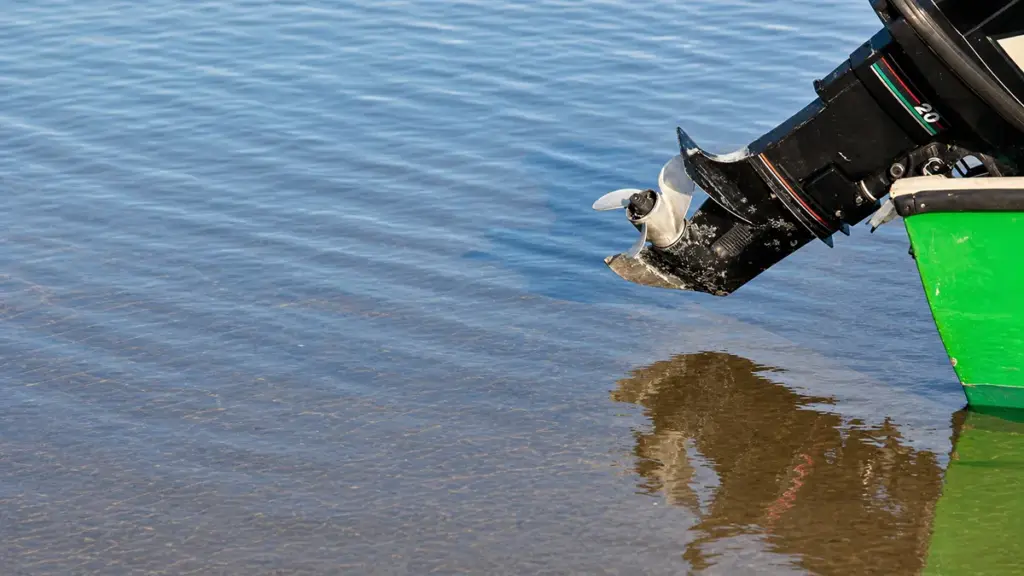
Most slipping issues are actually ventilation. Fixing engine height, adjusting trim, and selecting a cupped stainless-steel propeller will quickly restore grip and stop performance loss.
| Solution | Benefit |
|---|---|
| Repair Damaged Blades | Restores smooth water flow and improves propulsion efficiency. |
| Select Proper Pitch | Reduces blade overload and helps maintain optimal engine RPM. |
| Choose Correct Diameter | Improves thrust distribution and overall propulsion performance. |
| Adjust Engine Mounting Height | Optimizes water flow to the propeller and reduces pressure fluctuations. |
| Correct Trim Angle | Improves blade loading and enhances propulsion efficiency. |
| Clean Hull Regularly | Restores smooth water flow by eliminating marine growth and surface drag. |
| Balance the Propeller | Reduces vibration, uneven loading, and pressure imbalance. |
| Upgrade Propeller Design | Improves hydrodynamic efficiency and minimizes the risk of cavitation. |
Differentiating Ventilation from Cavitation
Operators often blame cavitation when their propeller loses grip. En realidad, most slipping issues are actually propeller ventilation. This happens when the blades pull in surface air or exhaust gas instead of solid water. True cavitation is a hydrodynamic pressure problem where extreme low pressure forms vapor bubbles on the blade surface. It is far less common in everyday troubleshooting.
Both conditions share identical symptoms on the water. You will experience the following performance drops:
- Rising RPMs: Engine speed flares without a proportional increase in boat speed.
- Loss of thrust: The propeller suddenly drops its grip on the water.
- Slipping: Forward momentum stalls during hard acceleration or tight turns.
Optimizing Engine Height and Trim
A poorly adjusted outboard is the leading cause of poor propeller bite. Start your troubleshooting by testing the boat with the trim fully down to establish a performance baseline. Adjust the trim up slightly to find your usable running range. If the propeller still breaks loose, lower the engine mounting position on the transom. This keeps the anti-ventilation plate deeper in the water, blocking surface air from reaching the blades.
You should also trim down when entering tight turns so the propeller stays submerged as the hull leans. Finalmente, inspect the hull ahead of the lower unit. Transducers, through-hull fittings, or debris can disrupt clean water flow and feed aerated water directly into your propeller.
Choosing a Propeller for Maximum Bite
Your propeller dictates how well your engine transfers power to the water. Always inspect the current propeller for nicks, grietas, or bent blades first. Even minor physical damage frequently causes slipping and breaks the water flow. If the blades are intact but the engine over-revs before generating forward thrust, lower the pitch to help the engine grab solid water.
You can switch to a propeller with increased cup and a larger blade area to maintain grip under heavy loads or in rough chop. Upgrading to a stiffer stainless-steel propeller prevents blade flex under load and enhances hold during aggressive maneuvers.
Utilizing Aftermarket Hardware Solutions
When height and trim adjustments fall short, aftermarket hardware can force the stern down and keep the propeller buried.
- Hydrofoils: Add a hydrofoil to the anti-ventilation plate to help lift the stern onto plane faster and reduce air ingestion.
- Transom wedges: Install a positive transom wedge to increase engine tuck and improve initial propeller bite during takeoff.
- Jack plates: Use a jack plate for precise height adjustments, ensuring the motor is not raised high enough to induce further ventilation.
Choose NEWTOP for Reliable, Precision-Built Outboard Motor Propellers
Reducing cavitation starts with choosing a propeller that is properly engineered, accurately manufactured, and matched to your application. En NOVEDAD, we produce high-quality hélices de motores fuera de borda for a wide range of recreational and commercial boats, combining precision machining with strict quality control to deliver stable performance on the water.
Every propeller is manufactured using carefully selected aluminum or stainless steel materials and undergoes balancing, dimensional inspection, and performance testing to ensure smooth operation, improved fuel efficiency, and longer service life. Whether you need OEM replacement propellers or customized solutions for your own brand, our engineering team can help you select the right diameter, paso, and blade design for different engines and operating conditions.
As an experienced outboard motor propeller manufacturer and trusted outboard motor propeller factory, NEWTOP supports distribuidores globales, mayoristas, and equipment brands with reliable production capacity, consistent product quality, and responsive OEM/ODM services.
Contact our team today to find the right propeller solution for your market and improve your customers’ boating performance.
Preguntas frecuentes
What causes cavitation in an outboard propeller?
Cavitation occurs when water pressure on the propeller blades drops below vapor pressure, causing vapor bubbles to form and violently collapse. Damaged blades, the wrong tamaño de la hélice or pitch, excessive rotational speed, or disturbed water flow from the hull and lower unit typically trigger this pressure drop.
How do I know if my boat has cavitation or ventilation?
Cavitation creates a persistent whine, harsh vibration, and visible pitting on the propeller blades, even when running straight. Ventilation happens when the prop pulls in surface air or exhaust. You will feel a sudden RPM spike and loss of bite, usually during tight turns or when you trim the motor too high.
Can cavitation damage my engine?
Cavitation destroys propeller blades through erosion rather than directly damaging the internal engine block. It does cause indirect mechanical harm. When the propeller loses its grip, the engine over-revs. These rapid load fluctuations place heavy stress on your lower unit gears, aspectos, and the entire drivetrain.
Does engine height affect cavitation?
Engine height primarily drives ventilation, but it directly impacts cavitation. Mounting an outboard too high reduces propeller submergence and introduces aerated, unstable water flow. This disturbed inflow creates pressure anomalies that force vapor bubbles to form on the blades.
Will changing propeller pitch stop cavitation?
Adjusting pitch reduces cavitation only if your current propeller is over-loaded or under-loaded for your specific setup. If your engine struggles to reach its recommended wide-open throttle RPM, switching to a lower pitch helps balance the load. Pitch adjustments will not fix cavitation caused by physical blade damage, improper engine height, or hull irregularities.
Can a damaged propeller cause cavitation?
Sí. Nicks, grietas, bent edges, or deep scratches disrupt the smooth flow of water across the propeller blades. These physical imperfections create localized low-pressure zones that trigger vaporization. The resulting bubble collapses cause further metal erosion, driving a cycle of worsening damage.
Is cavitation worse at high speed?
As boat speed and propeller RPM increase, water velocity over the blades rises. This lowers local pressure and significantly increases your cavitation risk. While true cavitation intensifies at higher speeds, operators often notice the most dramatic symptoms—like sudden blowout and RPM flares—during heavy acceleration or tight turns due to accompanying ventilation.
Does blade material affect cavitation resistance?
Material choice dictates how well your propeller survives cavitation, not whether it occurs in the first place. High-strength copper alloys and stainless steel resist the microscopic impacts of bubble collapses far better than standard aluminum. Stronger metals also allow manufacturers to cast thinner blade profiles, which helps manage pressure distribution and delays performance loss.

When the boating season ends, many owners focus on winterizing the engine but overlook one of the most important components below the waterline—the hélice de motor fuera de borda. Proper seasonal maintenance not only protects the propeller itself but also helps prevent hidden damage to the propeller shaft, gearbox, and seals.
Whether you use an aluminum or stainless steel propeller, spending a short amount of time on inspection and maintenance before storage can reduce unexpected failures, improve performance next season, and extend the service life of your outboard motor.
This guide explains exactly what to inspect, limpio, repair, and prepare before storing your outboard motor propeller, helping both recreational boat owners and commercial fleets reduce maintenance costs and downtime.
Why Seasonal Propeller Maintenance Matters

Routine seasonal propeller maintenance stops minor wear and hidden shaft debris from escalating into catastrophic lower-unit failures, protecting both fuel efficiency and drive-train longevity.
Ensuring Peak Performance and Fuel Efficiency
Hélices take the brunt of the marine workload. These high-impact components directly dictate your boat’s speed, fuel burn, and handling characteristics. A single bent blade or heavily nicked edge disrupts the hydrodynamic profile, forcing the outboard to work harder while delivering less thrust.
Routine seasonal maintenance restores the motor to its intended baseline efficiency. Catching minor deformations and correcting paso alignment early ensures you get the exact performance you expect every time you hit the throttle.
Preventing Costly Lower-Unit Damage
Fishing line, malas hierbas, and netting constantly find their way around the propeller shaft. Operators rarely see this debris from the outside, allowing it to tighten and harden over time. Removing the propeller at the end of the season exposes wrapped monofilament before it cuts into the prop shaft seal.
A compromised seal invites water intrusion directly into the gearcase, emulsifying the gear oil. Finding and clearing these hazards early prevents a basic maintenance step from turning into an expensive lower-unit and drivetrain overhaul.
Mitigating Corrosion and Cavitation Erosion
The marine environment attacks metal relentlessly. Propellers face continuous exposure to saltwater, localized impact damage, and cavitation erosion. Regular visual inspections reveal abnormal wear patterns, deep pitting, and structural issues with critical hardware like prop pins or thrust washers.
Pulling the prop also allows technicians to clean the shaft and apply fresh waterproof marine grease. This targeted lubrication protects the metal splines from long-term galvanic deterioration and ensures the hub never seizes to the shaft.
Identifying When Replacement Is Necessary
Not all damage can be filed out or welded. Inspecting the propeller every 50 a 100 horas, or during the seasonal layup, helps operators spot critical structural defects before they fail under load. Thorough maintenance routines reveal specific signs that warrant an immediate swap.
- Visible warping: Blades that no longer track true or show severe bending.
- Deep notching: Cracks radiating from the blade root or hub area.
- Blade damage: Significant material loss that destroys dynamic balance.
Timely evaluation protects the outboard’s resale value and guarantees you avoid sudden on-water failures caused by fatigued metal or spun hubs.
What to Inspect Before Storing an Outboard Propeller
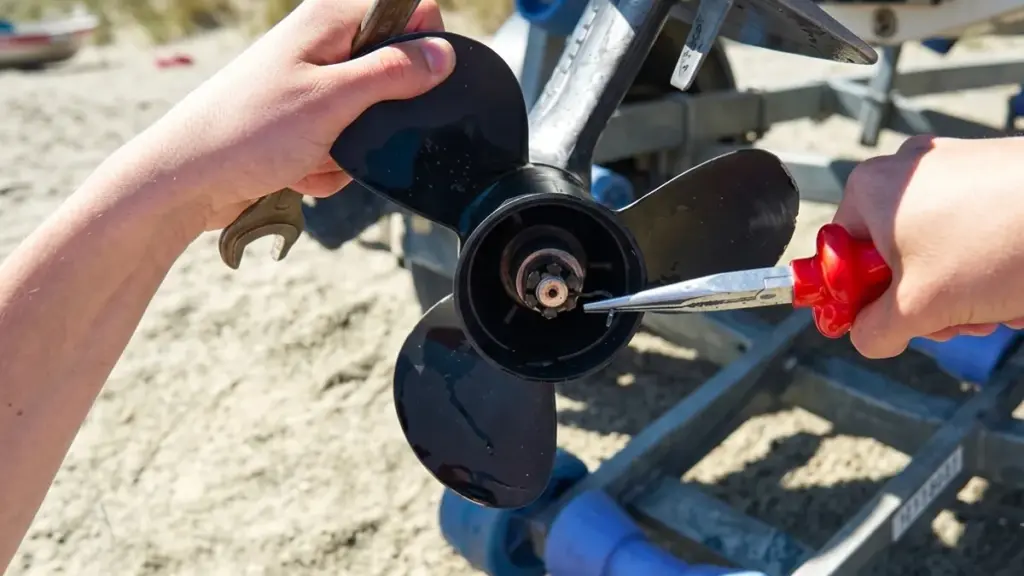
Ignoring your propeller before winter storage guarantees seized splines and compromised lower-unit seals next season. A systematic inspection now prevents catastrophic failure later.
| Componente | Inspection Focus | Primary Risk if Ignored |
|---|---|---|
| Cuchillas & Surfaces | Cracks, bends, marine growth | Imbalance, vibración, speed loss |
| Eje & Sellos | Fishing line, seal intrusion, bare splines | Water in gearcase, seized propeller |
| Hub Assembly | Slippage, looseness, debris | Spun hub, poor thrust transfer |
| Hardware | Corroded washers, reused cotter pins | Hardware failure, lost propeller |
Propeller Blades and Outer Surfaces
The outer surfaces take the brunt of impact and environmental wear. Visual checks only reveal obvious defects. A physical inspection uncovers the hidden structural damage that worsens over a long storage period.
- Blade integrity: Check each blade for nicks, dents, scratches, bends, grietas, gouges, and wobble.
- Tactile inspection: Run fingers carefully along the edges to feel for hidden damage.
- Corrosion markers: Look for rust, oxidation, discoloration, and salt buildup, especially after saltwater use.
- Biological fouling: Remove weeds, algae, barnacles, and other marine growth before drying.
Prop Shaft, Splines, and Gearcase Seals
Removing the propeller exposes the critical junction between your propulsion system and the lower unit. Debris trapped here eats through seals, inviting water into the gearcase and causing massive internal failure.
- Debris removal: Remove fishing line and rope wrapped around the shaft to prevent lower-unit damage.
- Spline health: Inspect shaft splines for wear, burrs, or corrosion.
- Seal integrity: Examine the seal where the prop shaft enters the gearcase for compromise or water intrusion.
- Lubricación: Apply marine-grade grease to the prop shaft before storage to help prevent seizure.
Internal Hub Assembly
The internal hub absorbs shock and transfers torque. If the rubber or mechanical components start failing, your engine will over-rev while the boat barely moves. Storage prep is the exact time to diagnose these issues.
- Physical condition: Inspect the hub for looseness, slippage, or physical signs of a spun hub.
- Performance context: Connect hub condition to performance clues from the last outing, such as vibration, cavitación, or loss of speed.
- Cavity check: Check the internal cavity for trapped debris or residue that could harden during storage.
Nuts, Washers, and Locking Hardware
Mounting hardware keeps the propeller locked safely onto the shaft under intense load. Reusing fatigued metal components or ignoring thread wear introduces unnecessary risk for your next launch.
- Nut condition: Verify the propeller nut is intact and free of thread damage.
- Supporting parts: Inspect washers and locking rings for wear, deformación, or corrosion.
- Pin replacement: Discard the old cotter pin and prepare a new one for reinstallation.
- Reassembly prep: Plan to reassemble the hardware using the manufacturer’s recommended torque.
Maximize ROI With Professional-Grade Garden Machinery
How to Check for Cracks, Bends, and Corrosion
A thorough propeller inspection requires a clean surface, good lighting, and tactile checks to catch hidden defects before they compromise your lower unit.
Preparation and Cleaning
Remove the propeller from the outboard to get an unobstructed view of the entire assembly. Wash away all marine growth, salt deposits, and oily residue. Dirt and algae easily hide fine stress lines or small chips. Once clean, dry the propeller completely. Moisture masks hairline cracks and subtle pitting that you need to spot with the naked eye.
Visual and Tactical Blade Inspection
Set up bright lighting and examine the leading edges, trailing edges, and blade tips. Look for missing material, deep gouges, and visible cracks. Your hands often catch what your eyes miss. Run a bare hand over every blade surface to feel for rough spots, raised metal, or subtle dents from minor impacts. Pay close attention to the metal condition itself. Inspect for white powdery oxidation, deep pitting, and general material loss. This step is critical for cast aluminum models, which degrade quickly once the protective outer coating fails.
Evaluating Blade Alignment and Geometry
Blades require perfect symmetry to deliver efficient thrust. Compare the pitch angle, tip height, and overall shape of each blade against the others. Look closely for visual inconsistencies that point to bending, twisting, or warping from submerged strikes. Do not ignore slight distortions. Even a minor bend throws the propeller out of balance. This rotational imbalance sends destructive vibrations straight into the gearcase, wearing out seals and bearings over time.
Centro, Eje, and Rotation Checks
Inspect the inner hub assembly for cracking, rubber tearing, or looseness that signals it might slip under heavy load. Check the bare prop shaft for wrapped monofilament fishing line. Dejado sin marcar, fishing line cuts directly through the prop shaft seal, letting water flood the lower unit and driving internal corrosion. Finalmente, slide the propeller back on and rotate it slowly by hand. Watch the hub and blade tips for uneven rotation or a visible wobble. A wobbling propeller often points directly to a bent prop shaft rather than isolated blade damage.
When Propeller Repair Is Possible and When Replacement Is Better
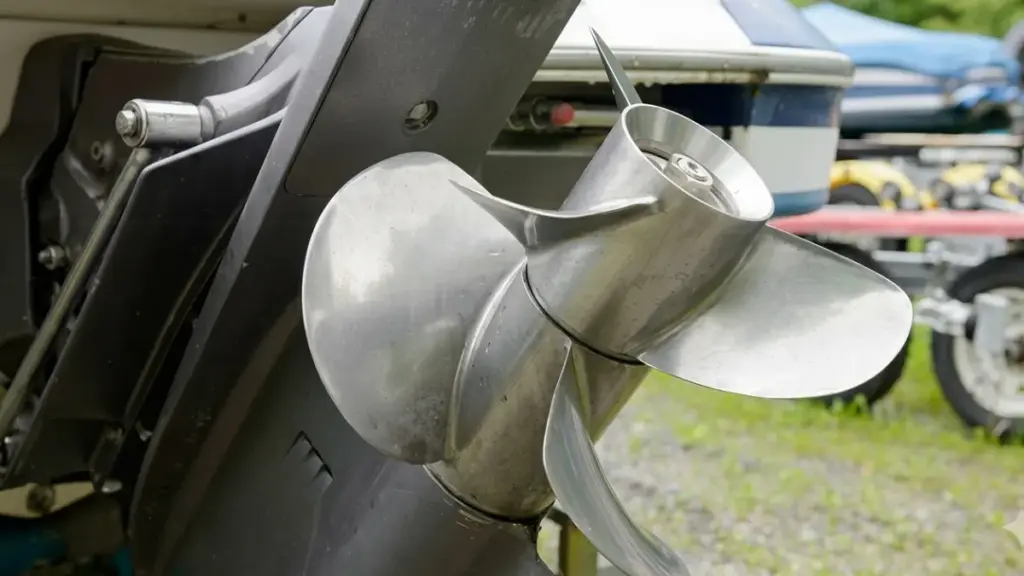
The decision depends on the severity of the damage, the propeller material, and the operating conditions.
| Damage Type | Repair Possible? | Replacement Recommended? |
|---|---|---|
| Small blade nick | Sí | No |
| Minor bend | Usually | A veces |
| Surface corrosion | Sí | No |
| Large crack | No | Sí |
| Broken blade tip | A veces | A menudo |
| Severe hub damage | Rarely | Sí |
| Heavy corrosion | No | Sí |
Generally speaking:
Repair is suitable when:
- Damage is localized
- Blade geometry can be restored
- Structural strength remains intact
- Repair cost is significantly lower than replacement
Replacement is the better option when:
- Multiple blades are damaged
- Cracks continue growing
- Blade thickness has become too thin
- Repair costs approach the price of a new propeller
- The propeller repeatedly loses balance
Commercial operators often replace damaged propellers sooner because downtime costs far more than the propeller itself. For boat manufacturers, marine equipment distributors, and maintenance providers, having a reliable replacement source is essential to reduce waiting time and keep customers operating efficiently.
NOVEDAD provides high-quality aluminum and stainless steel outboard motor propellers designed for reliable performance in different marine applications. With years of experience in outdoor power equipment manufacturing, NEWTOP combines precision production, strict quality control, and stable supply capability to support global partners with consistent propeller solutions.
Whether you need standard replacement propellers or customized solutions for specific outboard motor applications, working with an experienced outboard motor propeller ma
How to Remove, Limpio, and Reinstall a Propeller Safely
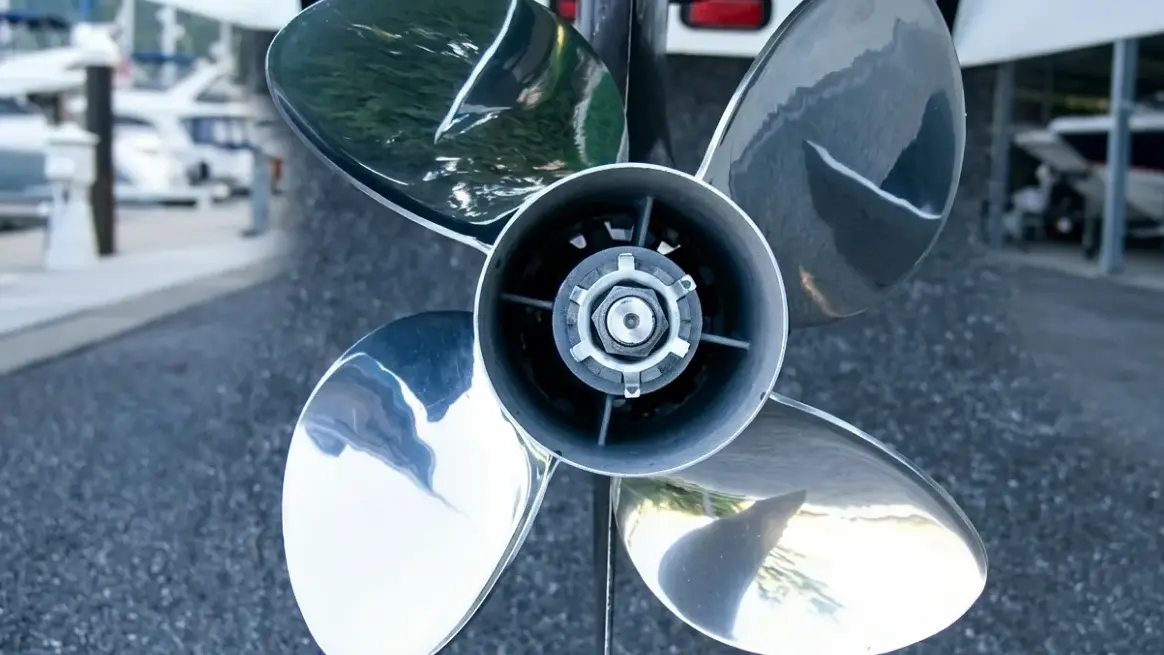
Removing and reinstalling an outboard propeller is a fundamental maintenance task that prevents seized splines, catches hidden fishing line damage early, and keeps the lower unit protected.
Safety Precautions and Tool Preparation
Working around sharp propeller blades requires strict safety protocols before you even touch a wrench. A sudden engine start or an unexpected blade rotation can cause severe injury.
- Engine disablement: Remove the kill-switch lanyard and disconnect the battery to eliminate any chance of an accidental start.
- Propeller immobilization: Wedge a solid block of wood between the blades and the anti-ventilation plate, or use a dedicated propeller holding tool to stop rotation.
- Essential toolkit: Keep a prop nut wrench (or socket set), needle-nose pliers for cotter pins, a flathead screwdriver, and marine-grade grease within arm’s reach.
Step-by-Step Propeller Removal
Once the setup is secure and the prop is locked in place, you can safely dismantle the assembly. Pay close attention to the order of the hardware as it comes off the shaft.
- Free the fastener: Use pliers to straighten and pull the cotter pin, or take a flathead screwdriver and hammer to gently flatten the lock-washer tabs.
- Loosen the nut: Turn the propeller nut counterclockwise with the appropriate wrench until it completely unthreads.
- Extract the propeller: Pull the unit straight outward along the shaft. If you meet resistance, wiggle it gently side-to-side. Avoid using excessive prying force against the lower unit.
- Check the thrust washer: Slide the washer off the shaft and inspect the surface for wear grooves, distortion, or stress cracks.
Cleaning and Inspecting the Propeller and Shaft
A removed propeller gives you a clear view of the lower unit’s most vulnerable areas. This is your primary opportunity to spot early signs of gearcase intrusion.
- Clear the shaft: Wipe away all old grease. Carefully pick out any braided or monofilament fishing line wrapped around the base, as this will eventually slice through the oil seal.
- Inspect the oil seal: Check the rubber seal itself for nicks and cuts. Look for emulsified, milky gear oil seeping out, which signals an active leak.
- Examine the propeller: Wash off marine growth. Check the blades for bends, impact chips, and cavitation pitting, and verify the rubber hub insert shows no signs of slipping or tearing.
Lubrication and Safe Reinstallation
Reassembly requires the right lubrication and precise torque. Skipping these details often leads to a seized propeller next season or a loose assembly under load.
- Grease the splines: Apply a light, even coat of waterproof marine grease to the bare prop shaft splines to block corrosion and ensure the prop slides off easily next time.
- Seat the thrust washer: Slide the washer back onto the shaft in its correct original orientation. Push the propeller on until it rests flush against it.
- Torque the nut: Replace all spacers in order, thread the nut on by hand to avoid cross-threading, and use your wood block to stabilize the prop. Tighten the nut to the manufacturer-specified torque.
- Lock the assembly: Thread a brand-new cotter pin through the shaft and bend the legs securely, or fold the retainer tabs flat against the nut. Spin the prop manually to confirm smooth, unobstructed rotation.
What Spare Parts to Prepare for the Next Season
A well-stocked spare parts kit minimizes downtime and prevents minor hardware failures from ruining your boating season.
Spare Propeller Selection and Storage
You need to match your replacement propeller’s diameter, paso, material, and hub system exactly to your current engine requirements to maintain baseline performance. A mismatched spare will compromise your fuel efficiency and engine RPM limits.
Keep at least one primary spare on board at all times. If you navigate shallow, rocoso, or debris-filled waters, pack a secondary ‘get-home’ prop designed just to get you back to the dock safely. Store these spare propellers in a clean, zona seca. Apply a light coat of marine grease to the hub splines and protect the blades from accidental impacts during rough weather.
Propeller Mounting Hardware
A spare propeller is useless if you lose or damage the mounting hardware during a swap. Your kit requires specific fastening components ready for immediate deployment.
- Thrust washers: Stock spares matched exactly to your specific outboard model to ensure proper prop seating and load transfer.
- Castle nuts and retainers: Keep extra nuts and locking retainers on hand. Inspect your existing hardware for corrosion or thread damage before the season starts.
- Cotter pins: Carry multiple new stainless-steel cotter pins. Used pins fatigue when bent, meaning you should never reuse them.
Marine Lubricants and Corrosion Prevention
Proper lubrication stops your hardware from seizing. Use a marine-grade propeller shaft grease to prevent spline galling. This simple step blocks saltwater intrusion and makes future propeller removals significantly easier.
Apply this lubricant directly to the shaft splines, the rear main seal area, and the mating surfaces between the thrust washer and the prop hub. Plan periodic propeller removals throughout the season. This routine lets you clean the shaft, renew the grease coating, and inspect the entire assembly for hidden corrosion before it causes mechanical failure.
Consumable Parts and Maintenance Tools
Field replacements require the right tools and small consumable components. For outboard setups that index the prop position, keep exact-match replacement shaft keys in your kit. While performing swaps, inspect the prop shaft seal area regularly. Look carefully for embedded fishing line to prevent costly water ingress into the lower unit.
To handle these tasks on the water, assemble a dedicated toolkit with the following items:
- Prop wrench: Sized specifically for your outboard nut to prevent rounding the edges.
- Torque wrench: Required to hit the manufacturer’s exact specifications and avoid overtightening.
- Needle-nose pliers: Essential for inserting, doblando, and removing stainless-steel cotter pins.
- Block of wood: Place this between the blades and the anti-ventilation plate to stop rotation during installation.
How NEWTOP Helps Reduce Replacement Downtime
When selecting a replacement outboard motor propeller, product quality and manufacturing consistency directly affect operating reliability and maintenance costs. A dependable propeller supplier helps reduce replacement delays while ensuring stable performance after installation.
NOVEDAD produces aluminum and stainless steel outboard motor propellers with strict control over materials, estructura, and machining accuracy. Las ventajas clave incluyen:
- High-performance materials: Aluminum propellers use aluminum-magnesium alloy made from new aluminum ingots, providing excellent toughness and high strength. Stainless steel propellers use duplex stainless steel, offering higher yield strength and corrosion resistance than standard stainless steel.
- Strong one-piece structure: Propeller blanks are produced through dedicated molds with integrated forming technology, eliminating welding points and improving overall strength and durability.
- Better dynamic balance: The hub is pressed as an integrated part to ensure accurate positioning and smoother rotation, helping reduce vibration during operation.
- Precision blade processing: CNC machining centers with dedicated tooling ensure accurate blade dimensions, consistent blade curves, and stable propulsion performance.
NEWTOP helps global distributors, OEM customers, and marine equipment suppliers reduce replacement downtime with durable and consistent propeller solutions. Looking for a reliable outboard motor propeller supplier? Contact NEWTOP today to explore durable propeller solutions for your marine equipment needs.
Preguntas frecuentes
How often should an outboard propeller be replaced?
There is no fixed timeline for replacing an outboard propeller. Replacement is driven entirely by condition, actuación, y seguridad. You should replace it when you notice structural damage like severe bends, trozos faltantes, or deep cracks, or significant metal loss from corrosion. Unresolved performance issues such as reduced top speed, higher fuel consumption, or heavy vibration also indicate it is time for a new prop.
Should I remove my propeller before winter storage?
Sí, removing the propeller before winter storage is highly recommended. It prevents the theft of valuable stainless-steel or high-performance props. It also allows you to inspect the propeller shaft for wrapped fishing line, which can destroy seals and cause water intrusion into the gearcase. While the prop is off, you can clean the shaft and apply fresh marine grease to prevent it from seizing over the winter.
How do I know if my propeller is damaged?
Visual signs include bent or warped blades, chipped edges, grietas, and heavy corrosion. You may also notice performance changes, such as a loss of top speed, sluggish acceleration, or increased fuel consumption. When running, a damaged propeller often causes unusual vibrations, steering pulling, or a slipping sensation where the engine over-revs without matching boat speed.
Can a bent propeller be repaired?
It depends on the material and severity. Minor bends or small dings in aluminum and some stainless steel propellers can often be reconditioned by a professional prop shop. But severe bends, deep cracks, distorted hubs, or damage to die-cast aluminum props usually require a full replacement. If structural integrity is compromised or the repair cost approaches the price of a new prop, replacement is the safer option.
What grease should be used on a propeller shaft?
Always use a high-quality, waterproof marine grease designed specifically for propeller shaft splines, such as a 2-4-C marine lubricant. This grease resists wash-out in fresh and saltwater, providing critical corrosion protection. Apply a thin, even coat to the shaft splines and threads at least once a season to ensure the propeller hub does not seize to the shaft.
How do I stop corrosion on a stored propeller?
Start by washing the propeller with low-pressure fresh water and a mild detergent to remove salt, grease, and marine growth. Dry it completely. For long-term storage, you can apply a two-part high-build epoxy primer to bare metal surfaces. Store the propeller indoors in a dry, well-ventilated area, avoiding direct contact with concrete floors or dissimilar metals.
What spare parts should I keep with a replacement propeller?
A spare propeller is only useful if you have the right hardware to install it. Keep a kit on board that includes a spare prop nut, several new stainless-steel cotter pins or lock washers, a thrust washer, and any required hub spacers. You should also pack a small tube of marine grease, a block of wood to stop prop rotation during the swap, and the correct size wrench or socket.
Can a damaged propeller affect the gearbox?
Sí, a damaged propeller can severely affect the gearbox. Bent blades or missing material create a rotational imbalance that sends vibrations directly down the prop shaft. Con el tiempo, this constant vibration and potential shaft misalignment increase wear on gearbox bearings, gear teeth, and shaft seals. In severe impact cases, shock loads can chip gears or bend the driveshaft, leading to expensive lower unit repairs.
Most outboard propellers include important information such as diameter, paso, rotation direction, hub type, and manufacturer codes. While different brands may use slightly different marking formats, the basic sizing system is very similar across the industry.
En esta guía, you’ll learn what each number means, how to identify the correct propeller for your boat, and when changing propeller size makes sense.
Where Can You Find the Size Marks on an Outboard Propeller?
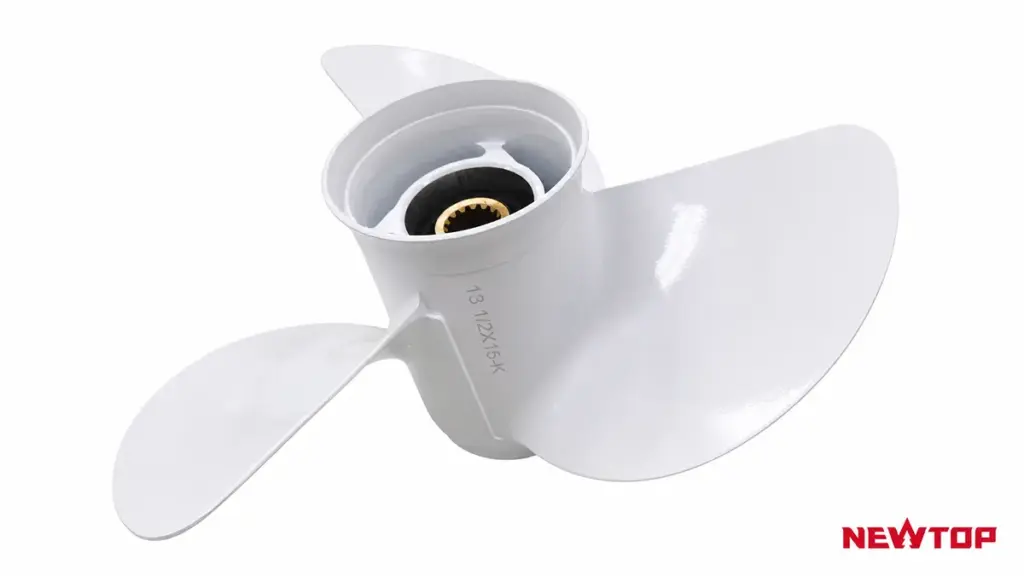
Hélice size markings, indicating diameter and pitch, are typically stamped directly onto the outer hub, blade roots, or the rear face near the mounting nut.
Common Locations on the Hub and Blades
Outboard motor manufacturers do not follow a single universal standard for placing identification numbers, but they generally stick to a few accessible spots. You will usually spot these physical engravings pressed right into the metal housing.
- Outer hub surface: Stamped or engraved directly onto the outer surface of the propeller hub cylinder.
- Blade roots: Located at the base of a blade where it physically connects to the center hub.
- Hub faces: Positioned on the front or rear face of the hub assembly where the propeller meets the prop nut.
Decoding the Size Format
Once you locate the stamp, you need to read the numbers correctly. The marine industry relies on a specific numeric sequence to communicate the physical dimensions and capabilities of the equipment.
- Diámetro x paso: The numbers are typically displayed in this exact order. A stamp reading “10 x 7” indicates a 10-inch diameter and a 7-inch pitch.
- Supplemental codes: Additional letters or numbers often follow the primary size to indicate blade type, rotation direction (such as ‘R’ for right-hand), or internal manufacturer-specific codes.
- Technical designations: These markings represent exact technical size measurements, not arbitrary brand model names.
How to Reveal Hard-to-See Markings
Older props or those used in harsh saltwater environments often have obscured numbers. A quick visual check might fail to confirm the exact specifications without a bit of surface prep.
- Clean the surface: Thoroughly clean the hub area to remove salt buildup, marine grime, heavy oxidation, or old layers of anti-fouling paint.
- Use angled light: Carefully rotate the propeller and inspect the blade roots and cylinder collar under direct light to catch the shadows of shallow engravings.
- Check documentation: Consult the original packaging, purchase receipts, or manufacturer catalogs using the part number if the physical size stamps are completely worn away.
Why Knowing Your Propeller Size Matters
Operating a boat with an incorrect propeller size causes poor performance and accelerates engine wear. Getting these two specific numbers right dictates exactly how your outboard interacts with the water.
- Power transfer: Diameter and pitch determine how effectively the propeller matches the raw engine power to the physical weight of your boat.
- RPM control: The pitch rating directly influences the engine’s ability to operate within its recommended wide-open throttle (WOT) RPM capabilities.
- Performance tuning: A smaller pitch reduces engine load and allows it to reach higher RPM for faster acceleration, while a larger pitch drops overall RPM and favors top-end speed.
How to Read Diameter and Pitch Markings
The first number on a propeller marking is always diameter, dictating thrust. The second is pitch, controlling your outboard’s RPM and top speed. Mismatching these specifications damages engines. Marking Position Measurement Primary Function First Number (p.ej., 10) Diámetro (Pulgadas) Dictates thrust, load-carrying capacity, and water resistance. Second Number (p.ej., 7) Paso (Pulgadas) Determines top speed, aceleración, and engine WOT RPM.
Deciphering the Standard Marking Format
Manufacturers typically stamp propeller markings directly on the hub or near the blade root. Finding these digits is the first step in replacing or upgrading your boat’s hardware. You will see standard industry codes like 10 incógnita 7 o 14 incógnita 19. These numbers represent two specific measurements that define the propeller’s geometry. The first number always defines the overall diameter in inches, while the second number always defines the theoretical pitch in inches.
Interpreting the First Number: Diámetro
Diameter signifies the total width of the circle created by the blade tips during a full rotation. It determines how much water the propeller actually sweeps. A larger diameter increases the blade surface area, generating stronger thrust to move heavier boats and heavy cargo loads effectively. On the other end of the spectrum, a smaller diameter creates less drag in the water, suiting lighter hulls built specifically for higher top speeds.
Interpreting the Second Number: Paso
Pitch measures the theoretical forward distance the propeller travels through the water in one full 360-degree rotation. Think of pitch as the gearing system for your outboard. Lower pitch numbers act like a low gear, offering better acceleration, quicker planing, and strong low-speed control. Higher pitch numbers function like a high gear, pushing the boat farther forward per revolution to achieve greater top speeds.
Applying Markings to Engine Performance
Your selected pitch directly controls the outboard motor’s wide-open throttle (WOT) RPM. Dialing in the correct pitch ensures the engine runs efficiently without suffering mechanical strain.
- RPM Calibration: Adjusting the pitch by one inch typically changes the engine speed by roughly 200 RPM.
- Under-Revving Fix: Selecting a lower pitch helps an overloaded engine reach its recommended operating RPM without lugging.
- Over-Revving Fix: Switching to a higher pitch prevents the engine from exceeding its maximum recommended RPM limits under light loads.
Maximize ROI With Professional-Grade Garden Machinery
What Do Other Numbers and Letters on a Propeller Mean?
Beyond basic size, extra letters and digits identify blade count, hub dimensions, and specific manufacturer series codes required to source exact replacement parts.
Diámetro, Paso, and the ‘X’ Separator
Most marine propellers follow a universal naming convention. The core specification always appears as a simple sequence stamped onto the casting.
- Diámetro: The first number in a standard sequence denotes the propeller’s overall diameter, measuring the full width of the blade sweep.
- Paso: The second number represents the pitch, indicating the theoretical forward travel distance per single revolution.
- The ‘X’: This character functions simply as a ‘by’ separator, dividing the diameter and pitch measurements.
Series Letters and Additional Digits
Manufacturers rarely stop at just diameter and pitch. You will frequently find extra alphanumeric codes that define the physical geometry and compatibility of the unit.
- Series Letters: Letters such as J, k, or L signify the specific design, serie, or type of the propeller within a brand’s lineup.
- Extra Digits: These trailing numbers often represent the total number of blades or specify the exact bore and hub size for mounting.
- Internal Codes: Certain short number combinations serve purely as internal manufacturer codes for catalog referencing.
Where to Locate Propeller Markings
Finding these specifications requires knowing exactly where brands stamp their hardware. Dirt, oxidation, or heavy marine growth can easily obscure these details.
- Blade Roots: Manufacturers often stamp the measurements directly at the root of a blade or deep between the blades.
- Central Hub: The outer surface of the central hub barrel is a common location for visible specification codes.
- Assembly Faces: Some brands engrave these critical details on the front or rear face of the center assembly, which may require removing the propeller nut to read clearly.
How Do Propeller Size Marks Differ Between Major Brands?
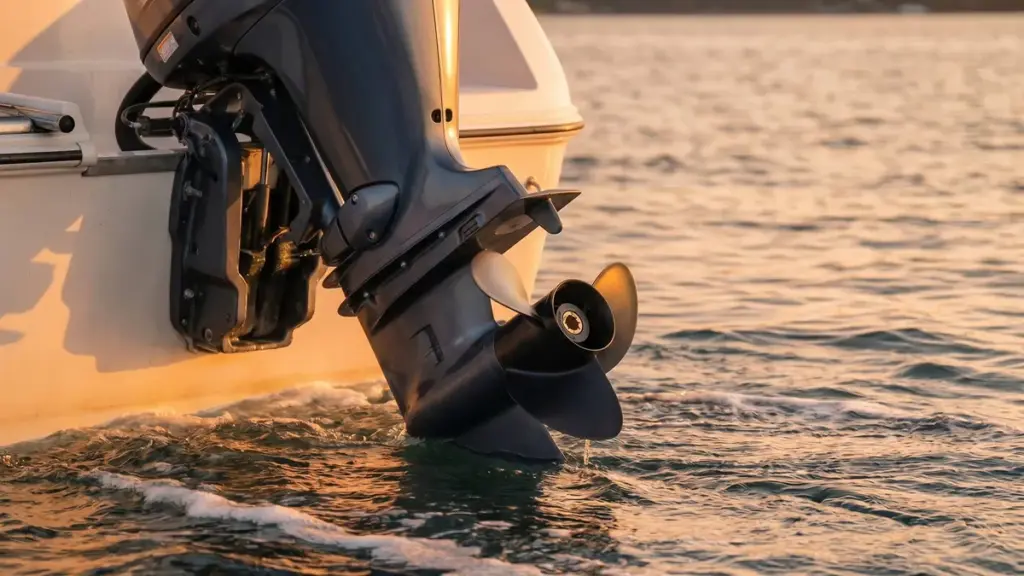
Every major outboard brand follows the standard diameter-by-pitch format, but proprietary suffixes, rotation letters, and hub codes create distinct marking styles you must decode before swapping propellers.
The Universal Baseline: Diameter and Pitch
Outboard manufacturers agree on one core sizing convention across the industry. The first number stamped on a propeller always represents the diameter, while the second number represents the pitch. A base stamp of 10 incógnita 7 indicates a 10-inch diameter and a 7-inch pitch, regardless of the manufacturer.
Brand-Specific Suffixes and Extra Codes
While the base dimensions are universal, brands add unique suffix codes to identify specific propeller features. You have to read past the first two numbers to understand the exact design.
- Rotation: Letters typically denote the turn direction, con “R” for standard right-hand (clockwise) y “l” for left-hand (counterclockwise).
- Blade Count: Trailing numbers often indicate the blade setup, such as a 3 o 4 for three-blade or four-blade designs.
- Model Codes: Internal model codes or specific hub series identifiers are frequently appended to the size block.
Marking Examples from Top Manufacturers
Each manufacturer applies these codes differently on the hub or blade root. Knowing what to expect from specific brands speeds up the identification process.
- Yamaha: Generally uses a straightforward layout, printing the size simply as 14 incógnita 19.
- Mercury: Often includes a “PAG” to denote pitch alongside general marine props, formatted as 14.6 x 17P.
- Suzuki: Frequently groups the size, rotación, and blade count together, resulting in detailed stamps like 14 incógnita 19 R 3.
What to Verify When Swapping Brands
Relying solely on the base diameter and pitch numbers is insufficient for an exact brand-to-brand replacement. Even with identical size stamps, propellers from different manufacturers deliver varying performance. This happens because competing brands use distinct blade shapes, rake angles, cupping, and material compositions to achieve their thrust profiles.
Always confirm rotation, recuento de cuchillas, and hub system compatibility before installing a different brand’s propeller. Matching the spline count and ensuring the thrust washer seats properly prevents gearcase damage and keeps the outboard running safely.
How Can You Verify the Correct Propeller Size for Your Boat?
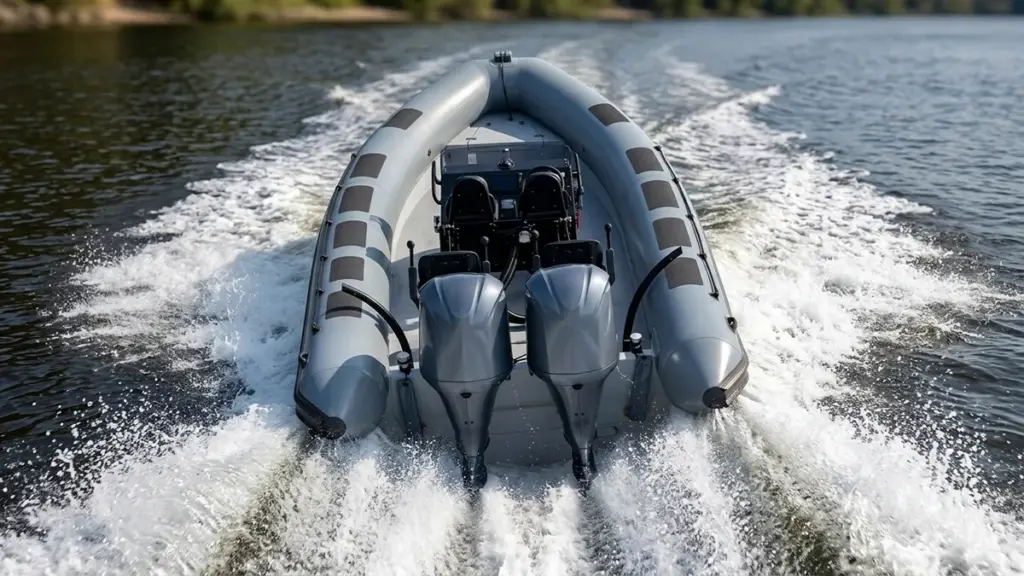
To verify your propeller size, test your wide-open throttle (WOT) RPM under a normal load. The correct pitch keeps your engine within the manufacturer’s recommended RPM range.
Identify Current Prop Specs and Target WOT RPM
Before hitting the water, establish a baseline for your boat and engine. You need to know what propeller you currently run and the exact performance window the outboard requires.
- Check the propeller hub: Inspect the outer surface or the base of the blades for stamped diameter and pitch markings to confirm your current sizing.
- Find the WOT RPM target: Consult your outboard owner’s manual to identify the manufacturer’s recommended Wide-Open Throttle (WOT) rango de revoluciones.
- Establish a baseline: Use manufacturer prop selectors or online calculators factoring in engine horsepower and typical operating weight to set your starting point.
Perform an On-Water WOT Test Under Normal Load
The real proof of propeller sizing happens on the water. A structured wide-open throttle test provides the exact engine RPM data needed to determine if your pitch is accurate.
- Simulate real-world conditions: Load the boat with the typical number of passengers, engranaje, and fuel you carry during regular operation.
- Start the run: Trim the engine fully down in open water and advance the throttle to maximum capacity.
- Optimize and record: Slowly trim up to the optimal running angle, return to neutral trim, and record the highest steady RPM and GPS speed achieved.
Compare Test Results Against Manufacturer Specifications
Once you record your GPS speed and tachometer readings, cross-reference them with your engine manual. The resulting RPM tells you exactly how the propeller loads the engine.
- Optimal match: If the measured WOT RPM falls within the manufacturer’s specified range, the current propeller size is correct for your exact rig and typical load.
- Engine over-revving: If the engine spins past the maximum RPM limit, it lacks resistance. The propeller pitch is likely too low.
- Engine under-revving: If the engine struggles and fails to reach the minimum recommended RPM, the load is too heavy. The propeller pitch or diameter is too high.
Adjust Pitch to Correct Under-Revving or Over-Revving
If your test results fall outside the acceptable range, you must change the propeller pitch. Pitch directly dictates the mechanical load on the engine, acting like the gearing in a transmission.
- The standard rule: A 2-inch change in pitch alters your WOT RPM by approximately 300 a 400 RPM.
- Dropping high RPMs: Move to a higher-pitch propeller to lower excessively high RPMs. This prevents mechanical strain and keeps the engine off the rev limiter.
- Raising low RPMs: Switch to a lower-pitch propeller to increase RPMs, improve acceleration, and prevent the engine from lugging under heavy loads.
Common Mistakes When Reading Propeller Size Marks
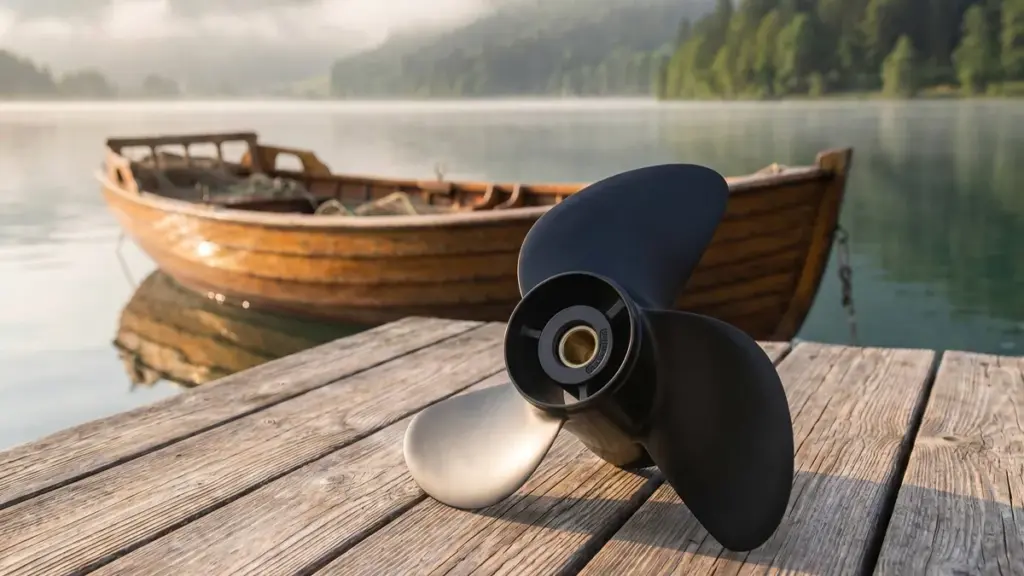
Misreading a propeller mark leads to poor performance, engine strain, and wasted money. Always read diameter first, pitch second, and factor in real-world boat dynamics.
Reversing Diameter and Pitch Numbers
Flipping these numbers is the fastest way to buy the wrong prop. The industry standard always lists diameter first, followed by pitch. When you mix them up, you completely alter how the prop interacts with the water.
- Reading backward: Assuming the first number is pitch instead of diameter.
- Interchanging specs: Failing to recognize that diameter and pitch affect performance differently and are not interchangeable.
- Size misinterpretation: Misinterpreting a 10×7 mark as a 7-inch diameter rather than a 10-inch diameter.
Misinterpreting Rotation and Blade Count
The primary numbers dictate the size, but the trailing letters control fitment and operation. Ignoring these extra characters leads to physical mismatches or dangerous handling on the water.
- Overlooking rotation marks: Missing the R (right-hand) or L (left-hand) indicators, which is critical for single and dual-engine setups.
- Confusing blade count: Assuming the trailing number (como 3 o 4) adds another size dimension rather than just counting the blades.
- Installing incorrectly: Mounting a prop with the wrong rotation that physically fits the shaft but runs incorrectly under power.
Equating Theoretical Pitch to Actual Speed
Pitch measures the theoretical distance a propeller moves forward in one revolution through a solid medium. Water is not solid. Expecting a direct conversion from pitch to actual boat speed ignores the reality of marine physics.
- Ignoring water slip: Assuming the stamped pitch equals exact forward travel without factoring in the inevitable slip loss.
- Forgetting physical variables: Overlooking how hull shape, boat weight, and load change the real-world performance of the propeller.
- Unrealistic expectations: Expecting two entirely different boats with the same 10×7 prop to achieve identical speeds.
Ignoring Engine Limits and Boat Usage
You do not pick a propeller based entirely on the boat hull. You pick it based on what the engine can safely handle. The propeller must allow the engine to operate within its defined mechanical limits.
- Skipping WOT checks: Selecting a propeller without checking the engine’s recommended wide-open-throttle (WOT) rpm range.
- Forcing extreme rpms: Choosing too much pitch causing the engine to under-rev, or too little pitch causing it to over-rev.
- Mismatched application: Failing to match the pitch profile to the boat’s primary purpose, such as prioritizing heavy-load acceleration versus top speed.
When Should You Replace Your Propeller with the Same or a Different Size?
Replace with the identical size if your engine hits the correct WOT RPM. Change pitch or diameter only to fix RPM limits, boost hole shot, or increase cruising speed.
Replacing with the Same Size: Wear, Daño, and Material Upgrades
Stick with the same diameter and pitch if your engine currently operates within the manufacturer’s recommended wide-open throttle (WOT) rango de revoluciones. The baseline size works. Swap out identical sizes to correct bent blades, chipped edges, or a slipping hub that causes vibration and kills thrust. If you run in abrasive or sandy water, upgrade from aluminum to stainless steel in the exact same size. This improves durability and rigidity while keeping your RPMs consistent.
Adjusting Propeller Pitch for RPM Correction
Pitch acts like gearing. Move to a higher pitch if the engine over-revs past the upper limit. This added load lowers the RPM and improves cruising speed on light boats. Drop to a lower pitch if the engine under-revs and struggles to build speed. Reducing the pitch frees up the engine to reach higher RPMs, delivering a stronger hole shot and aggressive heavy-load acceleration. Remember that changing the pitch by just 1 a 2 inches noticeably shifts engine loading and RPM, even on small outboards.
Changing Propeller Diameter for Thrust or Speed
Diameter dictates total blade surface area. Increase the diameter to gain more blade area for low-speed thrust. This extra grip helps push heavily loaded dinghies and gives you tight control during precise dock maneuvering. En cambio, reduce the diameter to minimize drag on high-speed, lightweight hulls. Whenever you upsize the diameter, you must verify your physical clearance. Maintain a strict minimum clearance of 5/8 a 3/4 inches between the blade tips and the outboard lower unit to prevent contact under load.
Practical Steps to Evaluate Your Replacement Needs
Do not guess your propeller size based on top speed alone. Perform a sea trial at WOT with your typical everyday load, including passengers, engranaje, y combustible, to establish a realistic baseline RPM. Compare your recorded baseline RPM directly against the engine manual’s WOT specification to identify over-revving or under-revving conditions. Once you have the data, select a replacement based on your primary objective: drop to a lower pitch for towing and acceleration, or step up to a higher pitch for fuel-efficient cruising.
OEM Outboard Motor Propellers and Replacement Solutions from NEWTOP
As an experienced outboard motor propeller manufacturer, NOVEDAD supplies OEM and aftermarket propellers for a wide range of outboard engines used in recreational, comercial, y aplicaciones marinas profesionales.
Our product range includes:
- Aluminum outboard propellers
- Stainless steel outboard propellers
- Three-blade and four-blade designs
- OEM replacement propellers
- Custom propeller development for private-label brands
Every propeller is manufactured with strict dimensional control to ensure accurate diameter, paso, blade geometry, and dynamic balance. This helps deliver smooth operation, efficient power transfer, and reliable performance on the water.
As a trusted outboard motor propeller factory, NEWTOP also provides comprehensive OEM and ODM services for global distributors, mayoristas, and marine equipment brands. From mold development and logo customization to packaging and quality inspection, our production process is designed to support consistent quality across large-volume orders.
Whether you need a direct replacement for popular outboard brands or a customized propeller solution for your own product line, our engineering and manufacturing teams can help you identify the right specifications for your market.
Conclusión
Understanding outboard motor propeller size marks makes selecting the correct replacement much easier. In most cases, el first number indicates diameter, mientras que el second number indicates pitch, with additional letters identifying rotation direction, material, or manufacturer-specific information.
When evaluating a propeller, don’t rely solely on the stamped numbers. Always consider your engine’s recommended RPM range, the boat’s weight, condiciones de funcionamiento, y uso previsto. A properly matched propeller improves acceleration, eficiencia de combustible, engine longevity, and overall handling.
If you’re sourcing reliable OEM replacement propellers or looking for an experienced outboard motor propeller manufacturer, NEWTOP offers precision-engineered solutions backed by advanced manufacturing capabilities and extensive OEM experience. Our team can help you select or develop propellers that deliver dependable performance across a wide range of outboard applications.
Preguntas frecuentes
What does 10×7 mean on an outboard propeller?
These numbers indicate diameter and pitch measured in inches. The first number (10) represents the diameter, which is the total width of the circle the blades sweep. The second number (7) is the pitch, indicating the theoretical forward distance the propeller moves in one full revolution. A 10×7 size fits small outboards where strong thrust and low-speed control matter more than top speed.
How do I know if my propeller size is correct?
A correctly sized propeller allows your engine to consistently reach its manufacturer-recommended wide-open throttle (WOT) RPM range under a normal load. The boat will accelerate smoothly, get on plane without excessive delay, and maintain cruising speed efficiently without over-revving or lugging the motor.
¿Puedo cambiar el paso de la hélice sin cambiar el diámetro??
Sí. Swapping to a propeller with the same diameter but a different pitch (like moving from a 10×7 to a 10×9) is the standard way to adjust engine RPM and boat performance. Marine shops can also re-pitch existing aluminum or stainless steel props slightly to fine-tune your setup without altering clearance.
What happens if the propeller pitch is too high or too low?
Si el tono es demasiado alto, the engine will struggle to reach its recommended RPM range, causing sluggish acceleration and increased mechanical strain. If the pitch is too low, the engine will likely over-rev past its maximum limit, which risks internal damage, wastes fuel, and reduces your top-end speed.
Do all outboard brands use the exact same size marking system?
Major outboard manufacturers all use the core ‘diameter x pitch’ measurement in inches, but their exact stamping methods vary. Brands place the numbers in different spots, such as inside the hub or on the barrel. They also add unique letters and codes to indicate blade count, rotation direction, and specific design series.
How do I read old or worn propeller size markings?
Start by cleaning the hub and blade root areas to reveal any stamped numbers. Most old props still use the standard diameter x pitch format (como 11.25 incógnita 13). If you only find a single number with a letter (like 17P), it usually represents the pitch. For complex or partial codes, check the manufacturer’s parts catalog or have a marine shop measure the prop directly.
motores fuera de borda Son ampliamente utilizados en pequeños barcos de pesca., buques de pasajeros, barcos de trabajo, y embarcaciones de recreo en todo el mundo. Al seleccionar un motor fueraborda, Una pregunta sigue dominando las decisiones de compra.:
¿Debería elegir un motor fueraborda de 2 o 4 tiempos??
La respuesta depende de tu mercado., expectativas del cliente, entorno operativo, disponibilidad de combustible, capacidades de mantenimiento, y presupuesto. Si bien los motores fuera de borda de 4 tiempos han ganado popularidad en muchas regiones desarrolladas, 2-Los motores fueraborda de carrera siguen siendo altamente competitivos en la pesca comercial., transporte, y aplicaciones de área remota.
Esta guía compara los dos tipos de motores fuera de borda a través del rendimiento, eficiencia de combustible, requisitos de mantenimiento, costos operativos, e idoneidad del mercado para ayudar a los distribuidores, distribuidores, y los operadores de flotas toman decisiones informadas.
Diferencia entre motores fueraborda de 2 y 4 tiempos

2-Los golpes ofrecen una mejor relación potencia-peso y una aceleración más rápida.. 4-los golpes son más silenciosos, más eficiente en combustible, y tener menores emisiones.
Un fueraborda de 2 tiempos completa un ciclo de potencia en sólo dos movimientos del pistón (una revolución del cigüeñal), mientras que un fueraborda de 4 tiempos requiere cuatro movimientos de pistón (dos revoluciones del cigüeñal).
| Característica | 2-Carrera fuera de borda | 4-Carrera fuera de borda |
|---|---|---|
| Ciclo de combustión | 2 trazos | 4 trazos |
| Frecuencia de carrera de potencia | Cada revolución | Cada dos revoluciones |
| Peso del motor | Encendedor | mas pesado |
| Complejidad mecánica | Simple | Más complejo |
| Lubricación | Mezcla de combustible y aceite | Sistema de aceite separado |
| Dificultad de mantenimiento | Más fácil | Más involucrado |
| Eficiencia de combustible | Moderado | Más alto |
| Emisiones | Más alto | Más bajo |
Ciclo de combustión y diseño mecánico.
La principal diferencia se reduce a cómo generan energía.. Un motor de 2 tiempos completa un ciclo de potencia completo en sólo dos golpes de pistón, disparando en cada revolución del cigüeñal. Esta es una forma muy directa de generar fuerza.. Un motor de 4 tiempos necesita cuatro tiempos de pistón: admisión, compresión, fuerza, y escape, lo que significa que solo se dispara cada dos vueltas del cigüeñal..
Esta diferencia fundamental dicta su construcción.. El diseño de 2 tiempos es más sencillo., Usar puertos en las paredes del cilindro para gestionar la entrada y salida de combustible.. En contraste, un motor de 4 tiempos requiere un tren de válvulas mucho más complejo, completo con válvulas, árboles de levas, y sistemas de cronometraje, similar a lo que encontrarías en un auto.
Entrega de energía, Peso, y rendimiento
Porque disparan el doble de veces y tienen menos piezas., 2-Los fuerabordas de carrera tienen una relación potencia-peso mucho mayor. Esto se traduce en una aceleración explosiva y una velocidad más rápida. “tiro de hoyo,” subir el barco al avión más rápido. Esta es una gran ventaja para ciertas aplicaciones..
Los componentes adicionales hacen que los fuerabordas de 4 tiempos sean significativamente más pesados. En un barco más pequeño, Este peso añadido en el espejo de popa puede afectar negativamente al equilibrio., aumentar el borrador, y hacer que sea más difícil subir al avión. La entrega de potencia de un 4 tiempos es mucho más suave y lineal, que a menudo se prefiere para aplicaciones de velocidad constante como pesca por curricán o cruceros de larga distancia donde la aceleración bruta no es la prioridad.
Eficiencia de combustible y emisiones
Los motores fueraborda de cuatro tiempos son intrínsecamente más eficientes. Su ciclo distintivo de cuatro tiempos garantiza que el combustible se queme de manera más completa., lo que resulta en una mejor economía de combustible y emisiones significativamente más bajas. Son la tecnología más limpia, manos abajo.
Los motores tradicionales de 2 tiempos funcionan mezclando aceite directamente con la gasolina para lubricación.. Durante su rápido ciclo, Parte de esta mezcla de combustible y aceite no quemado puede escapar con el tubo de escape., lo que aumenta tanto el consumo de combustible como la contaminación. Es importante reconocer que la inyección directa moderna (DE) 2-Los motores de carrera han mejorado dramáticamente en este frente., acercándose mucho más a los niveles de eficiencia y limpieza de los 4 tiempos.
Mantenimiento, Ruido, y experiencia operativa
Hay una gran diferencia en la experiencia en el agua.. Los motores de cuatro tiempos funcionan mucho más silenciosamente y producen muchas menos vibraciones.. Esto hace una gran diferencia en comodidad., especialmente durante largos días en el agua. El mantenimiento es similar al de un coche., Requiere cambios programados de aceite y filtro..
Los de dos tiempos son más ruidosos y tienen fama de ser un poco más duros.. Su programa de mantenimiento implica agregar continuamente aceite de 2 tiempos a un depósito o mezclarlo previamente con el combustible.. Si bien esta es una tarea continua, Los motores tienen menos piezas móviles., que puede simplificar ciertos tipos de reparaciones y reducir posibles puntos de falla.
Mejores aplicaciones y posición en el mercado
Los motores fueraborda de cuatro tiempos se han apoderado de la mayor parte del mercado. Son el estándar para los barcos de pesca de altura., cruceros familiares, y embarcaciones más grandes donde el rango de combustible, funcionamiento silencioso, y las bajas emisiones son las máximas prioridades. Las flotas de alquiler y los operadores comerciales también apuestan en gran medida por los motores de 4 tiempos por su fiabilidad y menores costes de funcionamiento..
Aún, 2-Los trazos mantienen una posición sólida en nichos de alto rendimiento.. Los encontrarás en barcos de lubina., esquifes planos, y otros ligeros, Cascos rápidos donde su relación superior potencia-peso y su aceleración instantánea son ventajas clave.. Las regulaciones ambientales más estrictas continúan impulsando el mercado, favoreciendo la tecnología de 4 tiempos o la más nueva, Modelos más limpios de inyección directa de 2 tiempos..
Relación potencia-peso: Por qué los 2 tiempos siguen ganando en aceleración
Un 2 tiempos es más sencillo, El diseño más ligero proporciona una relación potencia-peso superior., Ofrece una aceleración más rápida y un disparo más rápido que los fuerabordas de 4 tiempos más pesados..
Cómo el diseño del motor crea una mayor relación potencia-peso
Un motor de 2 tiempos completa su ciclo de potencia en sólo dos golpes de pistón. Este diseño es inherentemente más simple y requiere muchas menos piezas móviles que un motor de 4 tiempos..
Menos componentes significan que el motor es más compacto y significativamente más liviano para cualquier potencia dada.. Con menos masa de motor para transportar., Una mayor parte del empuje del barco se destina directamente al movimiento del casco., no solo transportar el fueraborda.
El impacto en el disparo del hoyo y la respuesta del acelerador
Esta ventaja en relación potencia-peso se traduce directamente en un disparo más rápido: la aceleración inicial del barco desde un punto muerto.. Los barcos con motores fueraborda de 2 tiempos suelen subir al avión más rápido, Lo cual es fundamental para actividades como el esquí acuático..
Los usuarios también obtienen una información más inmediata., respuesta rápida del acelerador. Esto es especialmente notable en el rango de RPM bajo a medio, donde los ajustes rápidos son comunes..
Cómo se comparan los motores de 4 tiempos en cuanto a peso
Los fuerabordas de cuatro tiempos son más pesados por diseño. Necesitan un tren de válvulas completo con válvulas y árboles de levas., más un sumidero de aceite dedicado, todo lo cual añade un peso significativo. El ciclo de cuatro etapas: ingesta, compresión, fuerza, escape: exige mecánicas más complejas y más componentes físicos.
Todo este peso extra perjudica su relación potencia-peso cuando se compara con un motor de 2 tiempos con la misma potencia nominal..
Cuando lo más importante es una mejor relación potencia-peso
Los beneficios de una alta relación potencia-peso son más obvios en aplicaciones específicas donde la aceleración y el peso mínimo son claves..
- Barcos de alto rendimiento: Para remolcadores de carreras o de esquí acuático, La aceleración rápida no es un lujo: es el objetivo.
- Cascos ligeros: Pequeños barcos de pesca, esquifes, y los auxiliares son muy sensibles al peso del motor. Menos peso en el espejo de popa significa mejor equilibrio y manejo.
- Operación en aguas poco profundas: Cualquiera que corra en aguas poco profundas debe subir al avión rápidamente y con el mínimo esfuerzo para evitar hundirse.. La velocidad de golpe de un motor de 2 tiempos es una gran ventaja aquí..
Motor fueraborda T40G
Fiable motor fueraborda de 2 tiempos, ideal para pequeños barcos de pesca y barcos de trabajo. Ligero pero potente 40 motor HP.
Motor fueraborda T40J
Motor duradero de 2 tiempos diseñado para aplicaciones de servicio pesado. 40 Rendimiento de HP con fácil mantenimiento en áreas remotas.
Motor fueraborda T40X
Fueraborda compacto de 2 tiempos que ofrece confiabilidad 40 caballos de fuerza. Perfecto para embarcaciones pequeñas que requieren potencia y portabilidad.
Comparación de economía de combustible: ¿Realmente vale la pena pagar la prima de 4 tiempos??
Los motores DI modernos de 2 y 4 tiempos tienen un consumo de combustible sorprendentemente cercano. Los verdaderos ahorros provienen de actualizar cualquier motor antiguo con carburador por uno moderno., independientemente del tipo.
Eficiencia general: Los motores modernos están más cerca de lo que piensas
El viejo debate sobre los 2 tiempos sedientos está prácticamente muerto. La inyección directa de hoy (DE) 2-Los tiempos y los 4 tiempos modernos ofrecen una economía de combustible general muy similar para los mismos caballos de fuerza.. Ambas tecnologías tratan de 35% Más eficiente en combustible que los motores de 2 tiempos con carburador que reemplazaron.. Cuando observa el consumo de combustible en todo el rango de RPM, La diferencia entre los dos tipos modernos es a menudo demasiado pequeña para declarar un ganador claro basándose únicamente en la eficiencia..
Cómo afecta su estilo de navegación al consumo de combustible
El avance de un motor depende a menudo de cómo se utiliza el acelerador.. A muy bajas revoluciones, como salir del puerto deportivo o pescar lentamente, un DI de 2 tiempos puede ser un poco más eficiente. Su capacidad para medir el combustible con tanta precisión en cargas bajas le da una pequeña ventaja..
Pero en el rango medio—entre 2,500 y 5,000 RPM: los motores de 4 tiempos suelen tener una ventaja real en cuanto a economía de combustible. Este es el punto óptimo de navegación donde la mayoría de los barcos pasan su tiempo., Así que aquí es donde realmente se muestra la eficiencia del motor de 4 tiempos.. en el extremo superior, corriendo casi a toda velocidad, las tornas pueden cambiar de nuevo. Un motor DI de 2 tiempos a menudo puede igualar o incluso superar a un motor de 4 tiempos en consumo de combustible y, al mismo tiempo, ofrecer más velocidad máxima..
El verdadero ahorro de combustible: Actualización desde motores heredados
El salto más significativo que verá en la economía de combustible proviene del reemplazo de cualquier modelo anterior., carburador de 2 tiempos. No importa si lo reemplazas por un DI moderno de 2 tiempos o uno de 4 tiempos.; la mejora será enorme. Una chatarra con carburador puede quemar casi el doble de combustible que un motor moderno que realiza el mismo trabajo.. La reputación de consumo de combustible del motor de 4 tiempos se basó en su comparación con esos motores antiguos., no los eficientes motores DI de 2 tiempos de hoy.
Calcular la recuperación de la inversión sólo con el ahorro de combustible
Entonces, ¿El pequeño ahorro de combustible de un motor de 4 tiempos compensa su mayor costo inicial?? Para un navegante de recreo informal con pocas horas anuales, la respuesta casi siempre es no. Las matemáticas simplemente no funcionan. Pero para un guía comercial de alta hora o un capitán de alquiler, La eficiencia de rango medio del motor de 4 tiempos puede generar miles de ahorros anuales., justificando fácilmente la prima inicial. La decisión realmente depende de su uso.. Si pasas todo el día navegando a una velocidad constante, La economía del motor de 4 tiempos es un argumento de peso.. Para uso mixto o aplicaciones de rendimiento, la diferencia suele ser un lavado.
Mantenimiento y reparabilidad en mercados remotos
En mercados remotos, 2-Los trazos suelen ser más fáciles de mantener y reparar en el campo.. 4-Los accidentes cerebrovasculares son más sensibles y a menudo dependen de las redes de servicios., aumento del riesgo de tiempo de inactividad.
2-Simplicidad de trazos y ventajas del servicio de campo
La principal ventaja de un motor de 2 tiempos en un entorno remoto es su diseño mecánico simple.. Con menos piezas móviles, simplemente es menos probable que las cosas salgan mal, y cuando lo hacen, las reparaciones en el campo son mucho más prácticas.
- El servicio de rutina es mínimo, a menudo solo se cambian las bujías y el aceite de la caja de cambios a intervalos muy largos.
- Generalmente son más tolerantes con el combustible variable o de mala calidad., lo cual es un desafío constante en lugares aislados.
- Por lo general, un operador puede reparar el motor con un juego de herramientas básico., lo que reduce la dependencia de técnicos especializados.
4-Requisitos y sensibilidades de mantenimiento de carrera
Los cuatro tiempos exigen un programa de mantenimiento preventivo mucho más estricto. Omitir un intervalo de servicio puede tener un mayor impacto en la confiabilidad, Lo cual es un riesgo grave cuando estás a horas de recibir ayuda..
- Requieren cambios de aceite regulares, controles de filtro, y, a veces, ajustes de válvulas..
- El sistema de combustible es muy sensible a la limpieza., combustible fresco. La mala gestión del combustible es la principal causa de fallo..
- Los sistemas de refrigeración necesitan un mantenimiento constante, desde impulsores de bombas de agua hasta termostatos.
- Dependen más de centros de servicio autorizados y piezas específicas que rara vez están disponibles en áreas remotas..
Comparación directa de factores clave de reparabilidad
Cuando los pones uno al lado del otro, Las diferencias operativas en un entorno de bajo apoyo se vuelven claras..
- Complejidad del servicio: 2-Los tiempos tienen muchos menos elementos de servicio programados en comparación con las necesidades más intensivas de un motor de 4 tiempos..
- Dependencia de piezas: Un motor de 4 tiempos requiere un mayor inventario de piezas especializadas solo para el mantenimiento de rutina.
- Practicidad de campo: El diseño simple de un motor de 2 tiempos lo hace mucho más adecuado para reparaciones en el lugar donde los recursos son limitados..
- Sensibilidad del sistema: 4-Los sistemas de combustible y enfriamiento de carrera son menos indulgentes con la negligencia o las duras condiciones de operación..
Impacto en costos y tiempo de inactividad
La sanción económica por un motor complejo en un mercado remoto va más allá del simple coste de las piezas. El tiempo de inactividad es el verdadero asesino.
- Los costes de mantenimiento de un motor de 2 tiempos pueden ser significativamente menores, especialmente en los primeros años de funcionamiento.
- El tiempo de inactividad del motor es extremadamente perjudicial. Transportar piezas y técnicos a zonas aisladas es lento y caro.
- El programa de servicio más simple de un motor de 2 tiempos significa que hay menos riesgo de que un elemento de mantenimiento omitido provoque una falla crítica..
- Menos visitas de servicio requeridas se traducen directamente en menores costos logísticos y más tiempo de actividad operativa para el buque..
Ruido, Emisiones, y consideraciones regulatorias
4-Los fuerabordas de carrera son más silenciosos y limpios., dándoles una ventaja significativa en vías navegables reguladas y para cualquier comprador que priorice la comodidad del usuario sobre el rendimiento bruto..
Niveles de ruido y experiencia del usuario
Los fuerabordas de cuatro tiempos generalmente funcionan mucho más silenciosos y con menos vibraciones.. Esto los convierte en la opción clara para la navegación recreativa y la pesca., donde una experiencia pacífica importa. Los motores de dos tiempos con carburador más antiguos son famosos por su ruido, gemido agudo y escape áspero. Para cualquiera que opere en áreas sensibles al ruido como lagos residenciales o puertos deportivos abarrotados, El funcionamiento más silencioso de un motor de 4 tiempos es un factor decisivo..
Emisiones de escape e impacto ambiental
El diseño de un motor de 4 tiempos propicia un consumo de combustible más completo y eficiente. El resultado son menores emisiones de hidrocarburos y humo menos visible.. Los motores de 2 tiempos con carburador tradicionales son ineficientes en comparación, liberando una cantidad notable de combustible y aceite no quemados directamente al aire y al agua. Si bien los modernos motores de 2 tiempos con inyección directa suponen una enorme mejora con respecto a sus predecesores, 4-Los trazos generalmente mantienen una ventaja en emisiones generales más bajas..
Cumplimiento normativo y acceso a vías navegables
Una vez que la EPA y la Junta de Recursos del Aire de California (CARBURADOR) estableció regulaciones más estrictas, el mercado se alejó rápidamente de los más antiguos, 2 tiempos de altas emisiones. No se trata sólo de reglas federales. Muchos lagos específicos, embalses, y las vías fluviales protegidas tienen reglas locales que prohíben o limitan severamente el uso de estos motores carburados más antiguos.. Los motores de cuatro tiempos cumplen de manera confiable los estándares de emisiones actuales y están posicionados para cumplir con los estándares futuros., Garantizar un acceso más amplio a cuerpos de agua regulados sin problemas..
Costo total de propiedad: Precio inicial versus costos a largo plazo
El precio de etiqueta es solo el comienzo. El costo real de propiedad incluye el combustible., aceite, mantenimiento, y valor de reventa, donde un cuatro tiempos más caro suele ganar a largo plazo.
| Factor de costo | 2-Ataque | 4-Ataque |
|---|---|---|
| Precio de compra inicial | Más bajo | Más alto |
| Eficiencia de combustible | Más bajo | Más alto |
| Complejidad del mantenimiento | Más bajo | Más alto |
| Costos de reparación | Más bajo | Más alto |
| Costo de repuestos | Más bajo | Más alto |
| Ahorro de combustible a largo plazo | Limitado | Significativo |
| Vida útil típica | Bien | A menudo más largo |
Recomendación regional: Qué tipo de motor para su mercado?
La elección correcta del fueraborda depende del mercado. La normativa y el confort del usuario impulsan a las regiones desarrolladas a los 4 tiempos, mientras que el costo y la facilidad de servicio en el campo mantienen a los motores de 2 tiempos relevantes en otros lugares.
| Perfil de mercado | Conductor principal | Motor recomendado |
|---|---|---|
| América del norte, W.. Europa, Australia | Reglamentos & Emisiones | 4-Ataque (Por defecto), DI moderno de 2 tiempos (Nicho) |
| SE Asia, Asia del Sur, África | Costo inicial & Simplicidad del servicio | 2-Ataque (Por defecto), 4-Ataque (Comercial) |
| Flotas comerciales de horario alto (Global) | Costo total de propiedad (Combustible & Longevidad) | 4-Ataque |
| Especializado (Islas remotas, Turismo Urbano) | Rango de combustible & Experiencia de usuario | 4-Ataque |
Mercados impulsados por la regulación y los estándares de emisiones
En las economías desarrolladas, la elección a menudo se hace por usted. Las estrictas leyes medioambientales y las expectativas de los clientes de un funcionamiento silencioso han empujado al mercado hacia la tecnología de 4 tiempos..
- En América del Norte, Europa occidental, y Australia, Las estrictas leyes ambientales hacen que los motores de 4 tiempos sean la opción estándar para el cumplimiento..
- El funcionamiento silencioso es un factor importante en estas regiones, haciendo que los motores de 4 tiempos sean preferibles para la navegación recreativa cerca de áreas pobladas.
- Los altos costos de combustible también hacen que la eficiencia superior de los motores de 4 tiempos sea una importante ventaja económica..
- Los modernos motores de 2 tiempos con inyección directa sirven a un nicho de mercado para aplicaciones de alto rendimiento donde las regulaciones lo permiten.
Mercados impulsados por la simplicidad de costos y servicios
Donde el costo inicial y la capacidad de reparar un motor con herramientas básicas son las principales preocupaciones, lo sencillo, El clásico de 2 tiempos todavía mantiene un terreno significativo. El acceso a una red de distribuidores no es un hecho en estos mercados.
- Para muchos usuarios del sudeste asiático, Asia del Sur, y África, El precio de compra inicial más bajo de un motor de 2 tiempos es la consideración principal..
- El diseño mecánico simple de los motores de 2 tiempos permite reparaciones más sencillas en el campo con herramientas básicas., lo cual es vital donde el servicio profesional es escaso.
- Su peso más ligero hace que los motores de 2 tiempos sean adecuados para embarcaciones pequeñas donde el motor debe desmontarse y transportarse con frecuencia..
- 4-Los accidentes cerebrovasculares son una buena opción para los operadores comerciales en estas regiones que priorizan el ahorro de combustible a largo plazo sobre el costo inicial..
Recomendaciones para flotas comerciales con horarios elevados
Para cualquier negocio que opere barcos todo el día., cada día, las matemáticas casi siempre apuntan a un 4 tiempos. La inversión inicial se amortiza mediante menores facturas de combustible y una mayor vida útil del motor..
- para pescar, transporte, o flotas de patrulla que operan diariamente, El ahorro de combustible de un motor de 4 tiempos puede compensar rápidamente su mayor precio de compra..
- 4-Los motores de carrera generalmente brindan una vida útil más larga y una mejor confiabilidad en condiciones continuas., cargas pesadas.
- En la mayoría de los mercados globales, 4-Los motores de carrera representan la mejor opción económica a largo plazo para los usuarios comerciales con acceso a redes de servicio..
Recomendaciones para aplicaciones especializadas y de nicho
Las necesidades operativas específicas pueden hacer que un tipo de motor sea la única opción práctica, independientemente de otros factores. La experiencia de usuario para los turistas es muy diferente a las necesidades de un pescador solitario.
- En comunidades insulares remotas con precios de combustible muy altos, El alcance y la eficiencia de los fuerabordas de 4 tiempos son fundamentales..
- Para taxis acuáticos urbanos y embarcaciones turísticas, el silencio, El funcionamiento con bajo nivel de humo de un motor de 4 tiempos es esencial para la experiencia del cliente..
- Los pescadores de subsistencia en lugares remotos todavía pueden encontrar más práctico para sus necesidades el mantenimiento sencillo y el menor peso de un motor de 2 tiempos..
Por qué elegir motores fueraborda NEWTOP?
Para distribuidores e importadores que buscan soluciones confiables de energía marina, NOVEDAD Proporciona una cartera equilibrada diseñada para las diferentes necesidades del mercado..
Las ventajas clave incluyen:
- Amplia gama de motores fueraborda de 2 y 4 tiempos
- Fuertes capacidades de personalización OEM y ODM
- Capacidad de producción estable y control de calidad.
- Experiencia de exportación global en África, América Latina, Sudeste Asiático, y otros mercados emergentes
- Confiable repuestos para motores fuera de borda apoyo
- Documentación técnica profesional y asistencia postventa.
Si sus clientes priorizan la asequibilidad, eficiencia de combustible, durabilidad, o facilidad de mantenimiento, NEWTOP puede ayudarle a crear una línea de productos que se ajuste a los requisitos de su mercado local..
Preguntas frecuentes
cual es mejor, un fueraborda de 2 o 4 tiempos?
Ninguno de los dos es universalmente mejor; La elección correcta depende de tu embarcación y de cómo la utilices.. Los fuerabordas de dos tiempos suelen ser los preferidos por su peso ligero., aceleración más rápida, y menor costo inicial. Los fuerabordas de cuatro tiempos son generalmente la mejor opción para ahorrar combustible, funcionamiento silencioso, bajas emisiones, y confiabilidad a larga distancia.
¿Se están eliminando gradualmente los fuerabordas de 2 tiempos??
Más viejo, Los fuerabordas tradicionales de 2 tiempos con carburador se están eliminando gradualmente en muchas regiones debido a las regulaciones sobre emisiones.. Inyección directa moderna (DE) 2-Los motores de carrera que cumplen con los estándares medioambientales actuales todavía están disponibles y siguen siendo una opción competitiva para aplicaciones específicas., particularmente donde una alta relación potencia-peso es crítica.
¿Qué motor fueraborda dura más??
Los fuerabordas de cuatro tiempos generalmente tienen una vida útil más larga. Sus avanzados sistemas de lubricación y menor estrés mecánico por revolución contribuyen a una mayor durabilidad., especialmente en uso comercial o recreativo frecuente durante las horas altas. Un motor de 2 tiempos con el mantenimiento adecuado puede ser muy fiable, pero los motores de 4 tiempos suelen estar diseñados para lograr un mayor número de horas de funcionamiento totales..
¿Los fuerabordas de 2 tiempos son más potentes que los de 4 tiempos??
Un motor de 2 tiempos tiene una mejor relación potencia-peso, lo que significa que ofrece más potencia para su tamaño y proporciona más rápido, 'más ágil’ aceleración. Esto lo hace sentir más poderoso., especialmente al subir un barco ligero al avión. Un motor de 4 tiempos con la misma potencia nominal producirá la misma potencia máxima, pero la entregará con mayor suavidad y es mejor para manejar cargas sostenidas en embarcaciones más pesadas..
¿Los fuerabordas de 4 tiempos consumen menos combustible??
Sí, 4-Los fuerabordas de carrera son significativamente más eficientes en combustible que los modelos tradicionales de 2 tiempos.. Su proceso de combustión es más completo, Desperdiciando menos combustible y proporcionando mayor autonomía con el mismo tanque de gasolina.. Esta ventaja es más notable a velocidades de crucero y de pesca por curricán.. Los modernos motores de 2 tiempos con inyección directa han mejorado la eficiencia, pero los de 4 tiempos siguen liderando en términos generales en economía de combustible..
¿Cuáles son las principales desventajas de un fueraborda de 2 tiempos??
Comparado con 4 tiempos, Las principales desventajas de los fuerabordas tradicionales de 2 tiempos son el mayor consumo de combustible y aceite., operación más ruidosa y brusca, y mayores emisiones que pueden restringir su uso en ciertos lagos y vías fluviales. También tienden a tener una vida útil general más corta y pueden tener un valor de reventa más bajo..
Para distribuidores que buscan hacer crecer su negocio, elegir el proveedor adecuado de cortacéspedes de gasolina suele implicar algo más que añadir un producto más. Se trata de encontrar un proveedor que pueda soportar la expansión de la categoría., satisfacer la demanda existente de los clientes, y hacer posible la cooperación a largo plazo. Este fue exactamente el caso de uno de los clientes de NEWTOP en Lituania..
El cliente se puso en contacto con nosotros por primera vez con una consulta sobre desbrozadoras. durante la comunicacion, sin embargo, quedó claro que la empresa también tenía demanda de cortadoras de césped. El objetivo no era reemplazar la dirección original del producto., pero continuar sirviendo a la base de clientes existente y al mismo tiempo agregar maquinaria de jardín pequeña como una nueva línea de negocio.. Después de un largo período de comunicación sobre los detalles del producto y los precios., el cliente finalmente realizó el pedido.
Una consulta abrió una oportunidad de producto más amplia
En el negocio de exportación B2B, la primera investigación no siempre revela toda la oportunidad. Un comprador puede comenzar preguntando sobre un producto., pero el valor real a menudo aparece durante una comunicación más profunda..
Ese fue el punto de inflexión en este caso.. La discusión comenzó con las desbrozadoras., sin embargo, a medida que la comunicación continuaba, La demanda de cortacésped del cliente se hizo más clara.. Esto hizo que la cooperación fuera más significativa., porque ya no se trataba sólo de citar una máquina. Se convirtió en una discusión sobre la expansión de la categoría y cómo apoyar la siguiente etapa de crecimiento empresarial del cliente..
Para proveedores, este tipo de turno importa. Un comprador que busque solo un artículo puede realizar un pedido único. Un comprador que se prepara para añadir una nueva categoría suele pensar más seriamente en las ventas futuras y en la cooperación a largo plazo..
Por qué las cortadoras de césped coincidieron con la dirección comercial del cliente
Para muchos distribuidores, agregando cortacéspeds es una medida práctica cuando ya atienden a clientes en Para distribuidores que buscan hacer crecer su negocio, elegir el proveedor adecuado de cortacéspedes de gasolina suele implicar algo más que añadir un producto más. Se trata de encontrar un proveedor que pueda soportar una gama más amplia de productos., satisfacer la demanda existente de los clientes, y hacer la expansión más práctica. Este fue exactamente el caso de uno de los clientes de NEWTOP en Lituania..
El cliente nos contactó por primera vez con una consulta sobre desbrozadoras.. Mientras la comunicación continuaba, sin embargo, quedó claro que las cortadoras de césped también formaban parte del plan de negocios del cliente. El objetivo no era cambiar la base de clientes original., pero seguir sirviéndolo mientras agregamos maquinaria de jardín pequeña como una nueva línea de productos.. Después de un largo proceso de confirmación de los detalles y precios del producto., el cliente hizo el pedido.
Una oportunidad de producto más amplia detrás de la primera consulta
En el negocio de exportación B2B, la primera consulta no siempre muestra la oportunidad completa. Un comprador puede comenzar con una categoría de máquina., mientras que la demanda más importante sólo se aclara más tarde.
Eso es lo que pasó en este caso.. La consulta original sobre la desbrozadora abrió la conversación., pero la discusión más valiosa resultó ser sobre cortadoras de césped. Una vez que esa necesidad se volvió más clara, La cooperación ya no se limitaba a cotizar un solo producto.. Se convirtió en una discusión sobre cómo agregar una nueva categoría de una manera que tuviera sentido para el negocio existente del cliente..
Para proveedores, ese tipo de cambio importa. Un cliente que pregunta sobre un artículo puede estar realizando una compra simple.. Un cliente que piensa en la expansión de una categoría generalmente mira el negocio de manera más estratégica..
Por qué las cortadoras de césped se adaptan al negocio existente del cliente
Lo que hizo que este caso fuera práctico fue la lógica de crecimiento del cliente.. La empresa no intentaba construir un nuevo mercado desde cero.. En cambio, Estaba trabajando desde una base de clientes existente y buscando una manera adecuada de ampliar la oferta de productos..
Eso hizo que las cortadoras de césped fueran una opción natural. En lugar de introducir una categoría aleatoria, El cliente estaba agregando una línea de productos que podía acompañar al negocio existente y crear más valor a partir de las mismas relaciones de mercado.. Para muchos distribuidores, Esta es una de las formas más realistas de crecer.. Reduce el riesgo, facilita la planificación de ventas, y permite a la empresa expandirse sin abandonar lo que ya funciona.
Por eso también es importante elegir el proveedor adecuado de cortacéspedes de gasolina.. La decisión no es sólo sobre el producto en sí.. Se trata de si la nueva categoría se puede introducir sin problemas y recibir el soporte adecuado desde el principio..
Por qué el pedido tardó en confirmarse
Este pedido no pasó rápidamente de la consulta a la confirmación., y eso no es inusual cuando un comprador agrega una nueva categoría. En casos como este, A menudo se necesita tiempo porque el cliente no está simplemente probando una máquina.. El comprador está juzgando si el producto puede convertirse en parte de una estructura empresarial viable..
Era necesario alinear varios puntos antes de que la orden pudiera avanzar:
- detalles del producto
- precios
- idoneidad para el mercado del cliente
- la practicidad de la futura cooperación
Ese tipo de comunicación más larga generalmente significa que el cliente se está tomando la decisión en serio.. Un distribuidor que añade cortadoras de césped a un negocio existente tiene que pensar más allá del primer pedido.. El producto debe tener sentido en la reventa., adaptarse al mercado local, y trabajar dentro del plan de producto más amplio de la empresa..
Lo que suelen comparar los compradores en este tipo de cooperación
Cuando un distribuidor evalúa a un nuevo proveedor, la decisión rara vez se basa únicamente en el precio. Una comparación más práctica suele verse así:
| Lo que compara el comprador | Por qué es importante |
|---|---|
| Detalles del producto | Ayuda a confirmar si el cortacésped se adapta a la demanda del mercado local. |
| Nivel de precios | Determina si la reventa sigue siendo comercialmente viable. |
| Eficiencia de la comunicación | Muestra si la cooperación puede avanzar sin problemas |
| Potencial de soporte a largo plazo | Importa si el comprador quiere ampliar la línea de productos más adelante |
En este caso, esos fueron exactamente los problemas que requirieron tiempo para confirmar. Una vez que los detalles y los precios estuvieron alineados, el pedido se volvió mucho más fácil de finalizar.
Por qué es importante este tipo de expansión
Una de las partes más significativas de la historia de este cliente es que la expansión provino del mercado existente., no desde una dirección completamente nueva. Esto hace que el caso sea más práctico y más típico de cómo los verdaderos dealers suelen crecer..
Muchos importadores no se expanden saltando a categorías desconocidas de una vez. Crecen agregando productos relacionados que se adaptan a los clientes a los que ya atienden.. En equipos eléctricos de exterior y pequeña maquinaria de jardín., Este tipo de expansión paso a paso suele ser más sostenible que intentar construir un nuevo segmento desde cero..
Para un proveedor, ese es un recordatorio importante. El primer producto sobre el que pregunta un cliente puede no ser la oportunidad completa. A veces, el valor real aparece sólo después de que se desarrolla la conversación y el plan de negocios más amplio del comprador se vuelve más claro..
El papel de NEWTOP en la cooperación
Para nuevo, Este caso no se trataba simplemente de responder a una consulta sobre una desbrozadora.. Se convirtió en una oportunidad para comprender la dirección comercial más amplia del cliente y respaldar una ruta de producto más adecuada..
Ahí es donde un proveedor fiable de cortacéspedes de gasolina añade valor real. La función no se limita a enviar cotizaciones.. También incluye ayudar al comprador a confirmar la adecuación del producto., alinear en detalles, y avanzar hacia un pedido que funcione comercialmente. En ciclos de comunicación más largos, Ese tipo de soporte a menudo es tan importante como el producto en sí..
Entonces, ¿qué muestra realmente un caso como éste??
Muestra que la demanda del cliente a menudo se vuelve más clara durante la comunicación., no sólo en la primera consulta. Un comprador puede comenzar con un producto., pero la oportunidad más importante puede resultar ser una nueva categoría que se ajuste a la misma base de clientes y respalde un crecimiento empresarial más amplio..
También muestra que los pedidos serios a menudo toman tiempo.. Cuando un distribuidor agrega una nueva línea de negocio, La discusión detallada sobre los detalles del producto y los precios es parte del proceso.. Una vez que esos puntos estén alineados, el pedido se vuelve mucho más fácil de confirmar.
Para nuevo, Esta historia de cliente refleja cómo a menudo se desarrolla una verdadera cooperación B2B.. Una sola consulta puede conducir a una discusión más amplia sobre el producto., y un comprador que busca una categoría de máquinas hoy puede convertirse mañana en un socio a largo plazo en más líneas de maquinaria de jardín pequeña.. Por eso, elegir el proveedor adecuado de cortacéspedes de gasolina no se trata sólo del pedido de hoy.. También se trata de sentar las bases adecuadas para el crecimiento futuro..
