Choosing the right outboard propeller is not simply about finding a model that fits the engine shaft. A propeller directly affects acceleration, Höchstgeschwindigkeit, Kraftstoffverbrauch, engine load, and overall boating experience.
For boat builders, Händler, and marine equipment buyers, selecting the wrong propeller can lead to poor performance, excessive vibration, higher fuel costs, and even long-term engine issues.
A reliable propeller selection process should consider several factors, including engine specifications, boat characteristics, Betriebsbedingungen, blade design, material choice, and supplier capability.
This guide explains the key points buyers should check before purchasing an outboard propeller and how to make a more accurate selection for different applications.
What Key Information Should You Prepare Before Choosing a Propeller?
Before comparing propeller models, collect accurate information about the engine, Boot, and daily use. This reduces fitting errors and gives the supplier enough data to recommend a suitable starting configuration.
Prepare the following details:
| Data Category | Metrics to Record |
|---|---|
| Current Propeller | Diameter, Tonhöhe, rotation, Klingenanzahl, Material, hub splines |
| Engine Details | Rated HP, gearcase size, target WOT RPM, actual WOT RPM |
| Boat Profile | Length (LOA), hull shape, operating weight, speed goals |
| Usage Environment | Primary activity, cruise speed, water conditions (fresh/salt/shallow) |
| Benchmarks | GPS speed at WOT, time to plane, ventilation in turns |
Current Propeller Specifications
Your existing propeller serves as the baseline for any future adjustments. You need exact numbers off the current hub or blades to know which direction to adjust your pitch or diameter.
- Diameter and pitch: Record these numbers (usually stamped on the barrel, wie 14 X 19) to establish your starting point.
- Drehrichtung: Identify if the prop uses right-hand or left-hand rotation. This matters heavily for twin-engine setups.
- Blades and material: Note if you run a 3-blade or 4-blade design, and whether it is cast aluminum or stainless steel.
- Hub and shaft details: Count the splines on the prop shaft and measure the shaft diameter to ensure your replacement physically fits the gearcase.
Engine Details and WOT RPM Limits
Engine specifications define your operating envelope. Your motor has a specific RPM band where it makes peak power safely, and your prop must keep the engine inside that band.
- HP and gearcase size: Verify your rated horsepower and gearcase dimensions. These dictate which propeller families fit the outboard.
- Target WOT RPM: Find the manufacturer’s recommended Wide Open Throttle (WOT) Drehzahlbereich. Modern outboards usually target 5,000 Zu 6,000 U/min.
- Actual WOT RPM: Measure your current wide-open RPM under a normal load. This tells you if the engine is over-revving or lugging.
- Trim systems: Note if the boat has power trim or trim tabs. These systems dictate how you tune the hull attitude to reach optimal RPM.
Boat Characteristics and Load Profile
Hull design and operating weight directly influence thrust requirements. A heavy pontoon pushes water differently than a light bass boat, demanding a totally different blade geometry.
- Hull dimensions: Document the length overall (LOA), hull material, and bottom shape (like deep-V or flat-bottom). These dictate drag and required lift.
- Operating weight: Calculate your realistic load. Include fuel, passengers, gear, and livewells.
- Load frequency: Identify if you frequently run heavily loaded. Heavy loads often require stepping down in pitch or moving to a 4-blade prop to maintain thrust.
- Speed targets: Define your present top speed against your desired top speed. This guides the tradeoff between pitch and acceleration.
Usage Profile and Operating Environment
How and where you drive determines the optimal propeller style. You must align the design with your primary on-water activities to get the best efficiency.
- Primary use: Specify if you focus on high-speed cruising, heavy towing for watersports, or commercial work.
- Running speeds: Identify your typical throttle positions. This determines if you optimize for mid-range fuel economy or absolute top-end speed.
- Water conditions: Consider your environment. Abrasive, sandig, or shallow waters often demand the durability of stainless steel over standard aluminum.
Real-World Performance Benchmarks
Never buy a new propeller without testing the old one first. You need hard performance data to compare against your post-installation results.
- Baseline test runs: Take the boat out and record maximum RPM and GPS speed at wide-open throttle, trimming up just before the prop cavitates.
- Acceleration metrics: Evaluate your hole shot, the time it takes to get on plane, and the boat’s ability to hold a plane at lower speeds.
- Handling checks: Monitor the steering for signs of propeller ventilation, excessive slip during hard turns, or cavitation in rough chop.
How Do Diameter and Pitch Affect Propeller Performance?
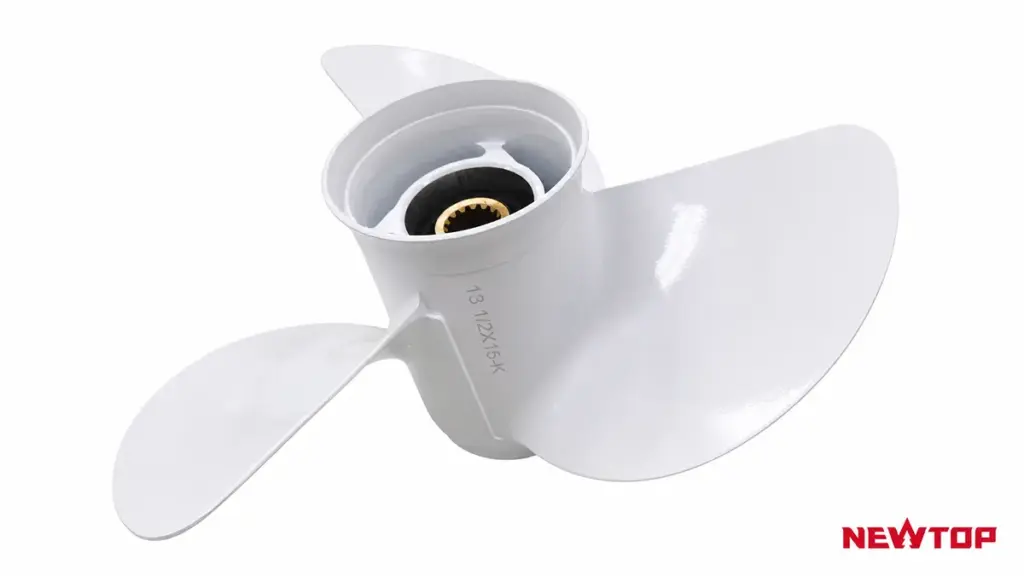
Diameter and pitch are two of the most important measurements in propeller selection. They determine how efficiently an outboard propeller converts engine power into thrust and directly influence acceleration, Höchstgeschwindigkeit, Kraftstoffeffizienz, and engine RPM.
Before choosing a replacement propeller, buyers should understand what these two specifications mean and how they work together. A propeller marked as 14 × 19, Zum Beispiel, indicates a 14-inch diameter and a 19-inch pitch. The first number represents diameter, while the second number represents pitch.
For a more detailed explanation of propeller markings and how these measurements affect performance, buyers can refer to our guide on what pitch and diameter mean on an outboard propeller.
Diameter refers to the distance across the full circle made by the rotating blades. A larger diameter generally produces more thrust because it moves more water with each rotation.
Large-diameter propellers are commonly used for:
- Heavy boats
- Commercial applications
- Boats that require strong pulling power
- Low-speed operation
A smaller diameter propeller usually allows higher RPM and may support better top-speed performance on lightweight boats.
Tonhöhe refers to the theoretical distance a propeller moves forward in one complete rotation without considering slip. Zum Beispiel, a 19-inch pitch propeller is designed to move approximately 19 inches per rotation under ideal conditions.
The relationship between pitch and performance is:
| Pitch Choice | Performance Effect |
|---|---|
| Niedrigere Tonhöhe | Schnellere Beschleunigung, stronger thrust, easier engine operation |
| Höhere Tonhöhe | Higher potential speed, lower RPM, suitable for light loads |
Jedoch, increasing pitch does not always increase speed. Wenn die Tonhöhe zu hoch ist, the engine may struggle to reach its recommended RPM range, causing poor acceleration and increased stress.
A proper selection balances pitch, Durchmesser, engine power, and boat load. Many buyers use factory recommendations as a starting point and then adjust based on real operating conditions.
Source Durable Garden Machinery at Competitive Prices

How Does the Number of Blades Influence Speed, Schub, und Kraftstoffeffizienz?
Blade count dictates the balance between top speed and load capacity. Fewer blades reduce drag for maximum speed, while more blades provide necessary grip for heavy loads.
The Relationship Between Blade Area and Drag
Every propeller blade moving through water creates surface friction and pressure drag. Fewer blades result in a smaller total wetted area, directly translating to lower hydrodynamic drag and higher potential open-water efficiency.
Adding blades increases the Blade Area Ratio (BAR). A higher BAR gives the propeller significantly more grip on the water, reducing slip and ventilation. The trade-off is higher hydrodynamic interference between the blades, demanding more power to turn at the exact same RPM.
How Blade Count Affects Top Speed
Two-blade propellers theoretically offer the highest top speeds on lightly loaded hulls because they encounter minimal drag. For most recreational planing hulls, three-blade designs hit the sweet spot. A well-matched three-blade propeller consistently runs 5% Zu 10% faster at wide-open throttle compared to a four-blade setup.
Upgrading to a four-blade propeller usually cuts peak speed by about 2 Zu 3 mph. Yet, these high-blade configurations maintain effective speed much better in rough water or high-trim conditions by actively resisting blowout.
Thrust Capabilities and Load Management
Total thrust depends heavily on the total blade area. A propeller with fewer blades forces each blade to carry a higher unit thrust. Push a low-blade-count prop too hard under a heavy load, and you risk severe cavitation or structural stress at the blade root.
Four-blade and high-BAR three-blade propellers excel at managing demanding workloads. You need these configurations for:
- Heavy Boats: Lifting heavy hulls onto plane quickly.
- Towing Applications: Delivering strong mid-range acceleration.
- Limited Clearances: Maximizing thrust when gearcase size limits the maximum diameter.
Fuel Efficiency and Optimal Engine Loading
For standard recreational setups, a correctly sized three-blade propeller delivers the best steady-cruise fuel economy. The minimal drag allows the outboard to run efficiently near its peak torque band.
Adding a fourth blade increases the physical load on the engine. You almost always need to drop the pitch to keep the wide-open throttle RPM within the manufacturer’s optimal range. On heavily loaded boats, a four-blade propeller can actually improve real-world fuel efficiency. By drastically reducing slip, it holds the boat on plane at lower RPMs, burning less fuel than a three-blade prop struggling to grip the water.
Should You Choose an Aluminum or Stainless Steel Propeller?
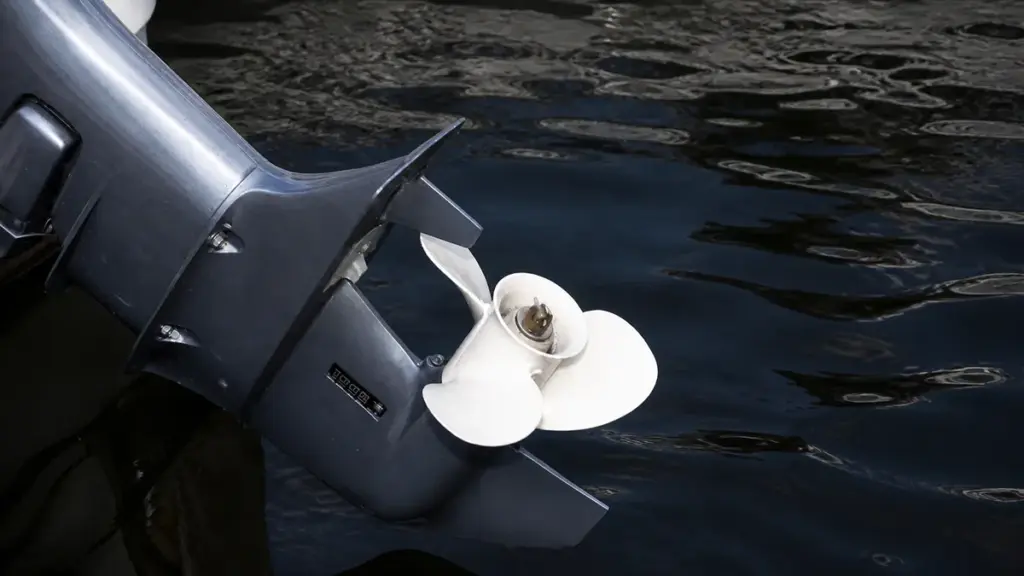
Aluminum offers budget-friendly protection for shallow waters and lower horsepower, while stainless steel delivers speed, grip, and durability for high-performance outboards and saltwater environments.
For buyers who want to understand the detailed differences between these two materials, including strength, Haltbarkeit, Wartung, and application scenarios, our guide on aluminum vs stainless steel outboard motor propellers provides a complete comparison.
Matching Material to Outboard Horsepower
Outboard horsepower directly dictates the ideal propeller material. For motors under 30 PS, manufacturers almost exclusively equip factory aluminum propellers. Stainless steel options in this range remain scarce and offer little practical performance benefit.
Mid-range engines between 30 Und 70 hp pair perfectly with aluminum for general recreational boating. The power output at this level rarely causes severe blade flex, keeping performance stable for everyday use. Once you step up to outboards producing 75 hp and above, the operating dynamics change. These engines generate high torque and push heavier loads, making stainless steel the standard choice to handle the increased thrust without losing blade shape.
Durability and Lower Unit Risk
How a propeller reacts to underwater impacts determines the safety of your lower unit gears. You must evaluate your primary operating environment before making a choice.
- Sacrificial protection: Aluminum acts as a sacrificial component, bending or cracking upon impact to absorb shock and protect lower unit gears.
- Impact transfer: Stainless steel withstands normal wear and minor impacts, but transfers heavy strike forces directly to the prop shaft.
- Shallow hazards: Boaters navigating shallow, stump-filled, or rocky rivers should select aluminum to minimize expensive gearcase repairs.
- Saltwater endurance: Marine environments heavily favor stainless steel due to its superior long-term corrosion resistance.
Hydrodynamic Performance and Handling
Material stiffness heavily influences thrust efficiency. Manufacturers cast aluminum blades thicker to achieve necessary strength, but they still flex under heavy loads. This flexing slightly reduces top-end speed and high-RPM stability. Stiff, thin stainless steel blades maintain their precise pitch and shape under pressure, improving thrust efficiency and maximizing water displacement.
Upgrading to a stainless steel model often yields a 2 Zu 3 mph speed gain alongside stronger acceleration for heavy loads. Stainless steel also holds cupping better than aluminum. This structural advantage ensures reliable grip during tight turns and drastically reduces ventilation issues on the water.
Cost Comparison and Lifespan Value
An aluminum propeller costs roughly one-third the price of a comparable stainless steel model. Budget-conscious buyers and boaters who frequently replace damaged props benefit the most from this low upfront cost. The inexpensive replacement strategy makes sense when striking rocks or stumps is a routine risk.
Stainless steel requires a much higher initial investment. It provides exceptional lifespan in deep, obstruction-free waters where impact damage is rare. The long-term value quickly shifts to stainless steel for performance rigs, as the durable material eliminates the need for frequent replacements and maintains optimal fuel efficiency over thousands of hours of use.
How Do Engine Horsepower and Gear Ratio Affect Propeller Selection?
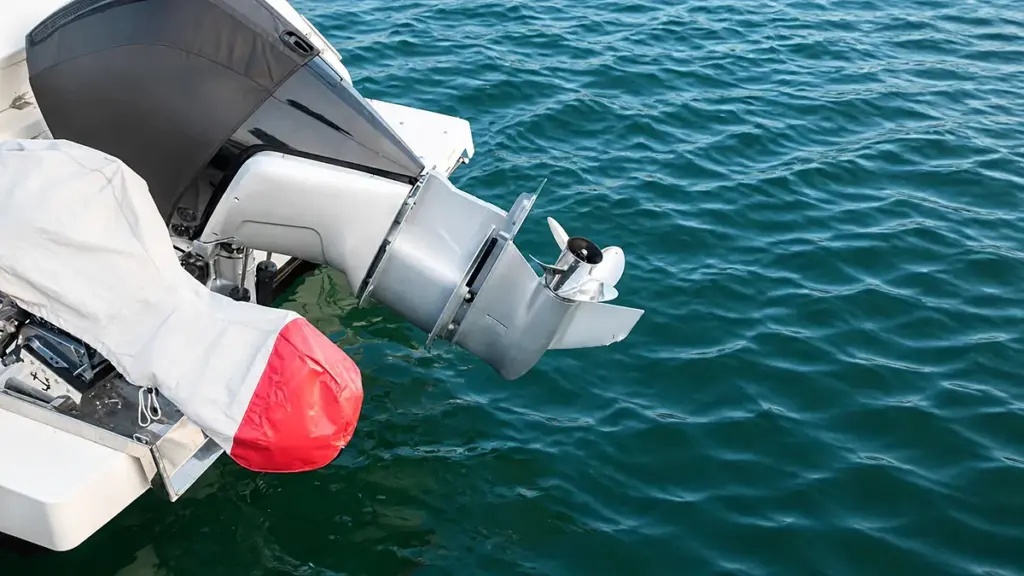
Horsepower dictates the maximum Propellergröße an engine can efficiently turn, while gear ratio determines shaft speed. Zusammen, they establish the exact pitch required to hit target WOT RPM.
The Role of Engine Horsepower in Propeller Sizing
Engine horsepower sets the baseline power budget for moving a boat efficiently. A higher horsepower rating allows an outboard to turn a larger diameter or a higher-pitch propeller without struggling. Buyers must match the propeller to the engine’s usable horsepower at the intended operating RPM, rather than looking strictly at peak horsepower marketing numbers.
If you choose an oversized or over-pitched propeller, the engine will lug and fail to reach its intended power band. Undersize the propeller, and the engine will over-rev, leaving valuable performance unused and risking mechanical damage.
How Gear Ratio Determines Propeller Shaft Speed
Gear ratio acts as a primary input that fundamentally changes the final propeller load. It is not just a secondary detail. You calculate propeller shaft RPM directly by dividing the engine RPM by the gear ratio.
A higher numerical gear ratio reduces the prop shaft speed and multiplies torque. To restore the desired boat speed, this setup requires a higher-pitch propeller. Umgekehrt, a lower numerical gear ratio spins the propeller faster at a given engine RPM, requiring reduced pitch to prevent the engine from over-revving.
Balancing Pitch and Final RPM for Optimal Performance
Adjusting the gear ratio triggers a chain reaction in pitch selection. Increasing a gear ratio numerically usually requires stepping up the propeller pitch by two to four sizes. Since a single pitch size change typically alters engine speed by 250 Zu 350 U/min, pitch adjustments serve as the ideal mechanism for fine-tuning wide-open-throttle (WOT) U/min.
Operating conditions also alter this power dynamic. Heavy boat loads and high elevations demand less pitch to keep the engine from dropping below its optimal power band. For high-RPM outboard designs, manufacturers frequently use reduction ratios of 2.3:1 or higher to properly manage the aggressive propeller shaft speed and hydrodynamic load.
Practical Selection Steps for Outboard Buyers
Start the selection process by identifying the engine’s rated horsepower, gear ratio, and recommended WOT RPM range. Von dort, execute a systematic testing sequence to dial in the correct specifications:
- Baseline Selection: Select a propeller size that lets the engine reach target RPM under expected load, elevation, and water conditions.
- Pitch Adjustment: Reduce pitch if the engine fails to reach target RPM, or increase pitch if the engine over-revs during initial testing.
- Sea Trial Verification: Conduct a final loaded test run to account for specific real-world variables like hull drag, running weight, and ventilation behavior.
How Does Boat Type Influence the Right Propeller Choice?
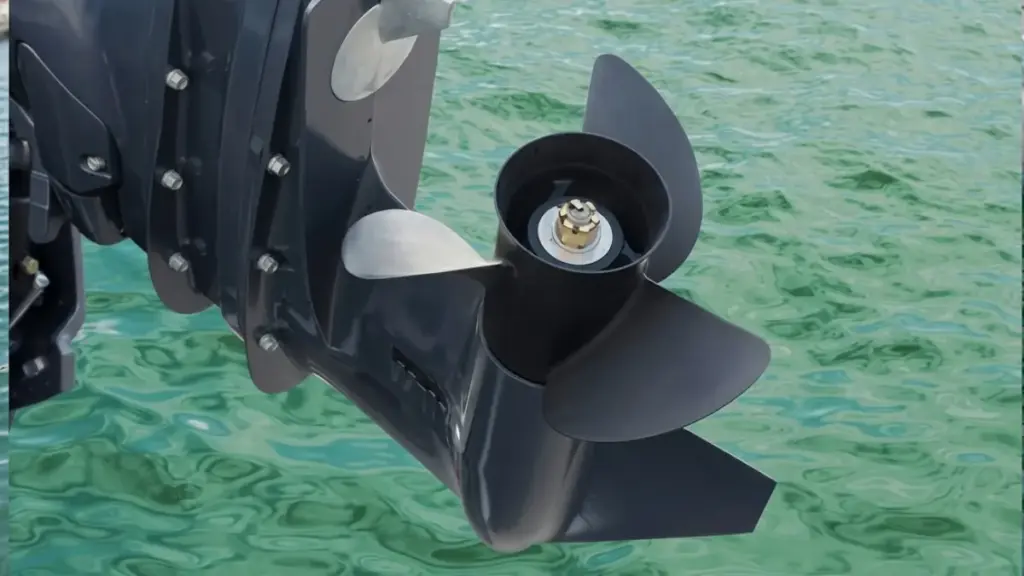
Hull design and typical boat load dictate required thrust and RPM. Matching pitch and diameter to your specific vessel type prevents engine lugging and maximizes hydrodynamic efficiency.
High-Speed Planing and Performance Boats
Licht, performance-focused hulls like bass boats or sport rigs require setups that minimize drag once on plane. Your primary goal is converting engine torque directly into top-end speed while keeping the outboard near its maximum RPM limit.
To achieve this, operators utilize higher pitch and moderate-to-smaller diameter profiles. High-speed setups rely heavily on 3-blade stainless steel propellers, which deliver the durability and thin-blade efficiency needed to push past 50 mph without flexing.
Watersports and Tow-Sport Configurations
Pulling wakeboarders, skiers, or heavy tubes demands a massive initial surge of thrust. Absolute top speed takes a backseat to a strong hole shot and smooth mid-range pulling power.
Tow boats require lower pitch and larger diameter profiles to move heavily ballasted setups without dropping below the engine’s power band. Owners frequently utilize 4-blade propellers to improve low-speed handling, reduce slip, and keep the boat securely on plane.
Pontoons, Tritoons, and Heavy Cruisers
These vessels push a massive amount of water. High frontal drag and heavy, variable passenger loads mean your propeller must maximize water displacement rather than chase speed.
Pontoons and heavy cruisers benefit from larger diameter and moderate-to-low pitch to generate adequate low-speed thrust. This exact configuration prevents engine lugging and ensures the motor reaches its specified WOT RPM despite the heavy structural drag.
General Fishing and All-Purpose Vessels
Aluminum fishing boats and versatile center consoles operate across diverse conditions. The ideal setup balances rapid acceleration, mid-range cruise efficiency, and precise low-speed maneuverability around docks or structure.
Most operators pair moderate pitch with 3-blade designs to achieve versatile performance during long runs. When conditions dictate, shifting to 4-blade setups provides better grip offshore or improves shallow-water stern lift on flats boats.
Sailboats and Displacement Hulls
Displacement hulls cannot exceed their theoretical hull speed regardless of applied power. Propeller selection must focus entirely on low-speed thrust and reliable maneuvering in tight quarters.
Operators use large-diameter, low-pitch profiles to push displacement hulls efficiently at modest engine speeds. This approach protects auxiliary outboards from overloading when fighting strong currents or heavy headwinds.
What Operating Conditions Should Buyers Consider?
Propeller selection requires analyzing actual boat weight, typical water conditions, engine RPM limits, and horsepower output to prevent drivetrain damage and maximize fuel efficiency.
Boat Load and Usage Patterns
Evaluating typical operating loads is the first step in propeller selection. A boat behaves entirely differently when running solo compared to a hull weighed down by passengers, heavy gear, full fuel tanks, or towing duties.
Always prop the boat so the engine reaches the upper end of its wide-open-throttle (WOT) rpm range when lightly loaded. This rpm buffer prevents the engine from lugging once you introduce heavy weight.
- Variable Usage: Boats shifting between light solo fishing trips and fully loaded family cruising require either a compromise propeller or a dedicated two-prop setup.
- Heavy-Duty Operations: Towing, rescue, and workboats demand high, continuous thrust. These roles favor larger diameter, lower-pitch propellers designed to run efficiently at lower rpm.
Engine RPM Matching and Performance Goals
The propeller acts as the final gear ratio between the engine and the water. It must keep the outboard operating inside the manufacturer-specified WOT rpm range. Operating outside this band degrades fuel efficiency and accelerates mechanical wear.
Pitch adjustments directly dictate engine speed. Increasing pitch by one inch typically decreases WOT rpm by approximately 200 U/min, while decreasing pitch raises it by the same amount.
- Planing Hulls: These setups require rapid hole shot and target a controlled slip factor of 8-15% at WOT for peak efficiency.
- Displacement Hulls: Slow-speed vessels ignore top-end speed to focus entirely on generating maximum low-end torque.
- Real-World Validation: Empirical WOT testing with proper trim adjustments is the only reliable way to validate rpm matching and fuel burn under actual operating conditions.
Water Environment and Surface Conditions
The physical water environment dictates blade geometry. Rough water causes the hull to pitch, increasing the risk of the propeller breaking the surface. Propellers with increased blade area or aggressive cupping hold water better and reduce ventilation in heavy chop.
Calm water applications allow operators to take the exact opposite approach, prioritizing higher pitch and lower drag designs to push top-end speed.
- Hazardous Environments: Shallow or debris-filled waters guarantee eventual bottom strikes. These areas require durable materials and responsive motor trim capabilities to protect the drivetrain.
- Water Flow Quality: Propellers require clean, undisturbed water to generate optimal thrust. Poor mounting heights or excessive hull turbulence will cause aeration and immediate power loss.
Outboard Horsepower and Structural Demands
Engine output strictly determines the required material strength. High-horsepower outboards, typically rated at 140 hp and above, exert extreme torque that overwhelms weaker metals and causes aluminum blades to flex.
Rigid stainless steel propellers are the primary choice for high-output engines. Stainless maintains its exact designed geometry under heavy loads and high speeds, providing predictable thrust and maximum traction.
- Lower-Horsepower Applications: General-purpose and lower-hp engines perform exceptionally well with aluminum propellers. They offer a cost-effective, impact-forgiving alternative that acts as a sacrificial part during bottom strikes.
- Exhaust Compatibility: You must verify the propeller design integrates correctly with the lower unit’s specific exhaust routing, particularly for through-hub exhaust systems.
What Common Propeller Selection Mistakes Should Buyers Avoid?
Avoiding common propeller selection mistakes—like guessing pitch, ignoring typical loads, or neglecting lower unit fitment—saves fuel, protects the engine, and prevents costly on-water failures.
Misjudging RPM, Tonhöhe, and Load Requirements
Buyers often sabotage outboard performance by selecting a propeller without validating how it impacts the engine’s actual operating range.
- Ignoring the WOT RPM range: Failing to match the propeller to the engine’s recommended Wide Open Throttle (WOT) limits causes the engine to lug under heavy load or over-rev at top speed.
- Prioritizing theoretical top speed: Selecting pitch just to hit a high top-speed number ignores the inverse effect pitch has on RPM and low-end acceleration.
- Testing on an empty boat: Finalizing a prop choice with a light hull gives false data. The boat will struggle to plane once fully loaded with passengers, gear, and fuel.
Treat the manufacturer’s specified WOT RPM as a hard constraint. You must hit this target under normal, real-world operating loads to ensure efficient running and long engine life.
Overlooking Blade Count and Material Trade-Offs
Many buyers mistakenly believe that simply adding blades or buying the cheapest material will fix performance issues. Every design change shifts the performance curve.
- Assuming more blades equal better performance: Buyers often switch from three to four blades hoping for an outright upgrade, not realizing the extra drag typically drops WOT RPM by 50 Zu 150 U/min.
- Shopping by material price: Choosing aluminum over stainless steel strictly to save money ignores your actual environment. Soft aluminum deforms under high load, while stainless steel maintains its shape and efficiency at high speeds.
- Ignoring the primary use case: Buying a propeller designed for fast, solo runs fails if you spend 80% of your time towing wakeboarders or carrying a heavy crew.
Match the blade geometry and material to your actual daily environment. A high-performance stainless steel prop shines in open water but transfers severe shock to the gearcase if you strike a submerged stump in shallow rivers.
Using Flawed Testing and Adjustment Methods
Troubleshooting a sluggish boat requires a systematic approach. Guessing at propeller specs without proper baseline data leads to wasted money and unresolved engine strain.
- Changing multiple variables at once: Swapping pitch, Klingenanzahl, and material in a single step makes it impossible to isolate which change improved or hurt performance.
- Ignoring GPS boat speed: Focusing strictly on tachometer readings without verifying actual speed hides secondary issues like extreme prop slip.
- Blaming the prop prematurely: Buyers often fault the propeller for sluggish planing when the real culprit is excessive hull drag, the wrong engine mounting height, or poor trim angle.
Establish a clear baseline with your current setup first. Make single, incremental adjustments—usually starting with pitch—and test the results on the water before changing another variable.
Neglecting Fitment, Wartung, and Spares
Even the perfectly pitched propeller fails if it does not physically integrate with the outboard gearcase or lacks basic maintenance.
- Guessing hub compatibility: Buying a prop without checking spline counts, hub system types, or matching thrust washers leads to stripped splines and lower unit damage.
- Ignoring physical damage: A slightly bent blade or fishing line wrapped around the prop shaft mimics the symptoms of incorrect pitch.
- Running without a spare: Operating without a backup prop leaves you stranded after a severe strike and eliminates your ability to swap to a lower-pitch prop for unexpectedly heavy loads.
Verify fitment against the engine transom tag before purchasing. Inspect the prop hub assembly periodically to catch early signs of slippage or corrosion.
Letzte Gedanken
Buyers should evaluate engine specifications, Bootstyp, Betriebsbedingungen, blade design, material choice, and supplier reliability when bulk buying outboard motor propellers.
The right propeller improves acceleration, Kraftstoffeffizienz, Handhabung, und Motorleistung, while the wrong choice can reduce efficiency and increase operating costs.
Für Händler, boat manufacturers, and marine equipment companies, working with an experienced outboard propeller supplier provides better product consistency and long-term support.
With advanced manufacturing capability, precision-balanced aluminum and stainless steel propellers, and OEM/ODM production experience, NEWTOP helps global partners develop reliable propeller solutions for different marine applications.
Häufig gestellte Fragen
What should I check before buying an outboard propeller?
Verify your boat’s primary use, typical load profile, and desired performance goals. You must confirm engine specifications, including the brand, horsepower, shaft type, and the manufacturer’s recommended wide-open-throttle (WOT) Drehzahlbereich. Collect baseline data from your current prop, such as diameter, Tonhöhe, Material, and observed WOT RPM, to guide your replacement choices.
How do I choose the right propeller pitch?
Selecting pitch relies on matching the propeller to your engine’s recommended WOT RPM range. Test your current setup at full throttle with a normal load. If the RPM falls below the recommended band, decrease the pitch. If the RPM exceeds the limit, increase the pitch. Changing the pitch by one inch generally alters the engine speed by 150 Zu 200 U/min.
Is stainless steel better than aluminum for all users?
NEIN. Stainless steel provides superior rigidity, higher top speeds, and excellent saltwater corrosion resistance, making it ideal for high-horsepower engines. Aluminum is highly cost-effective and serves as a sacrificial metal. In shallow or hazard-prone waters, an aluminum propeller will bend or break upon impact, which helps protect the expensive gearcase from severe damage.
What is the best propeller for heavy boats?
Heavy vessels require maximum static thrust and control rather than high top speed. The best approach is selecting a larger diameter propeller with a lower pitch to ensure the engine reaches its target RPM under heavy load. A four-blade design is frequently recommended to improve grip, accelerate planing, and provide smoother handling in rough conditions.
How do I confirm hub compatibility?
Read your engine’s transom tag to find the exact make, Modell, Jahr, and gearcase code. Match this data against the new propeller’s specifications, ensuring the spline count and shaft diameter align perfectly. You also need to identify whether your outboard uses a fixed splined bore or a modular insert kit, and verify the proper thrust washer sequence.
What documents should a propeller supplier provide?
A standard procurement package should include a Certificate of Conformance (CoC), material certificates, and final inspection or balance reports. For commercial or classed vessels, suppliers must also provide traceability records and relevant approval documents to prove the delivered hardware meets the required engineering standards.
How important is sample testing before a bulk order?
On-water sample testing is critical because catalog specifications cannot predict how a hull and engine combination will react to complex loads. Testing a small batch validates WOT RPM, Handhabung, und Kraftstoffeffizienz. Skipping this step risks large-scale inventory issues, engine mis-loading, and severe cavitation problems across the fleet.
What if my engine does not reach recommended RPM with the new prop?
Failing to reach the specified WOT RPM range typically means the boat is over-propped, placing excessive mechanical stress on the engine. If the fuel and ignition systems are healthy, correct the issue by switching to a propeller with a lower pitch or a smaller diameter. A one-inch pitch reduction generally increases engine speed by roughly 150 Zu 200 U/min.