


- Tutto
- NEWTOP Storie di clienti
- NEWTOP Explorer Hub
- NEWTOP Approfondimenti sul settore
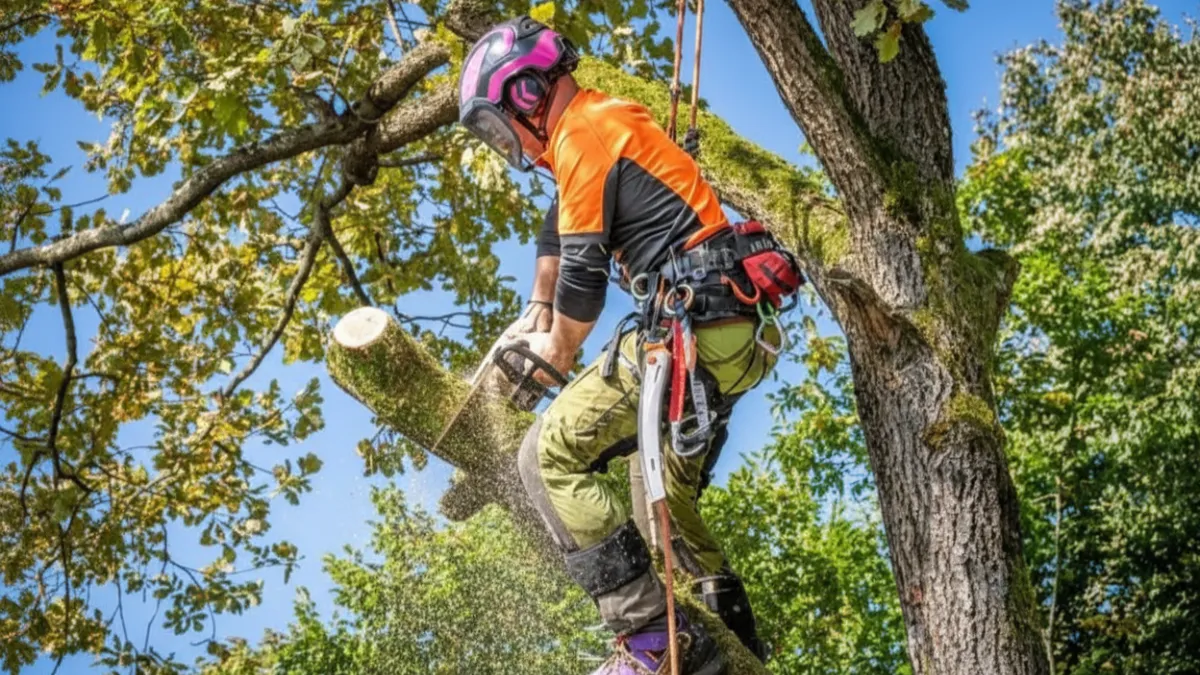
Gli arboricoltori e gli specialisti nella cura degli alberi necessitano di strumenti che diano priorità all'equilibrio e al peso. Quando si lavora in alto sulla chioma di un albero, la progettazione della tua attrezzatura influisce direttamente sulla tua sicurezza e sulla rapidità con cui puoi completare un lavoro. In 2026, il mercato offre diverse opzioni che vanno dai tradizionali motori a benzina ai nuovi modelli di batterie al litio.
In questa guida, analizziamo come funzionano le motoseghe con impugnatura superiore, come si confrontano con i modelli con maniglia posteriore, quali specifiche tecniche contano davvero, e come i professionisti scelgono il modello giusto per le operazioni di arrampicata. Se ti rifornisci per la distribuzione, Marchio OEM, o appalti su larga scala, questa guida è stata scritta pensando ai decisori.
Cos'è una motosega con impugnatura superiore?
Una motosega con impugnatura superiore è uno strumento appositamente progettato per gli arboricoltori professionisti, progettato con una compatta, Design leggero che privilegia l'equilibrio e il controllo per tagli di precisione in spazi elevati o ristretti.
Una motosega con impugnatura superiore è una motosega compatta progettata con l'impugnatura principale posizionata sopra l'alloggiamento del motore anziché nella parte posteriore. Questa configurazione consente agli arboricoltori di utilizzare la sega in spazi ristretti, soprattutto mentre è sospesa su un'imbracatura per albero. Queste motoseghe sono comunemente utilizzate per la potatura, riduzione della corona, smantellamento sezionale, e rimozione dei rami. In contesti professionali, sono considerate motoseghe da arrampicata, spesso abbinato a sistemi di imbracatura e cordini per la sicurezza.
Applicazioni primarie nella cura professionale degli alberi
Queste seghe sono attrezzature essenziali per professionisti certificati che eseguono attività che richiedono il taglio chirurgico in alto da terra. Il loro design compatto consente agli arboricoltori di spostarsi in strutture di rami fitti dove sono più grandi, la sega con impugnatura posteriore non sarebbe sicura, ingombrante, o poco pratico da posizionare correttamente.
- Ideale per rimuovere il legno morto, diradamento della chioma di un albero, e modellare i rami.
- Consente tagli controllati mentre è assicurato da una fune e un'imbracatura o operando da una piattaforma di sollevamento aerea.
- Lo strumento principale per la manutenzione degli alberi in contesti urbani e residenziali dove la precisione è fondamentale.
Il requisito dell'utente professionale
Perché sono destinati ad un uso elevato, richiedono abilità e formazione avanzate. In molte regioni, sono consigliati solo ad arboricoltori certificati. Un utente non addestrato che tenta di utilizzare una di queste motoseghe, soprattutto a terra, crea una situazione ad alto rischio. La crescente domanda di queste motoseghe è guidata direttamente dalla necessità del settore professionale della cura degli alberi di attrezzature efficienti e specializzate che funzionino in ambienti aerei difficili.
Pro e contro delle motoseghe con impugnatura
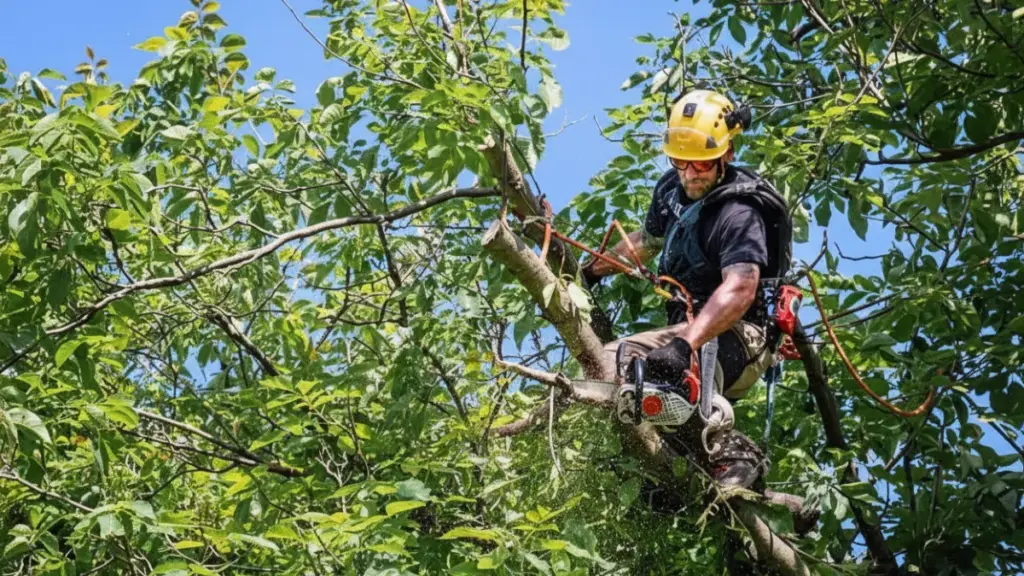
La scelta tra una motosega con impugnatura superiore e una con impugnatura posteriore è un compromesso diretto tra manovrabilità aerea per lavori di arboricoltura specializzati e potenza pura con stabilità per l'abbattimento a livello del suolo e le controtendenze.
Motoseghe con impugnatura superiore: Pro e contro
Le motoseghe a impugnatura superiore sono strumenti specializzati progettati per gli arboricoltori professionisti che necessitano di una motosega compatta e manovrabile per lavori eseguiti in quota. I loro vantaggi nelle situazioni aeree sono chiari, ma questi vantaggi comportano limitazioni per qualsiasi applicazione a livello del suolo.
- Pro: Eccellente manovrabilità ed equilibrio per il taglio e la potatura su alberi, consentendo un controllo preciso in spazi stretti o scomodi.
- Pro: La struttura leggera riduce l'affaticamento dell'operatore durante il lavoro aereo prolungato.
- Contro: Generalmente meno potenti delle loro controparti con impugnatura posteriore, rendendoli inadatti all'abbattimento o al sollevamento pesante.
- Contro: La loro progettazione richiede capacità di manovrabilità avanzate ed è destinata quasi esclusivamente a professionisti qualificati che lavorano a terra.
Motoseghe con impugnatura posteriore: Pro e contro
Le motoseghe con impugnatura posteriore rappresentano lo standard del settore per la maggior parte delle attività di taglio a terra. Forniscono una potenza superiore, stabilità, e sicurezza per un’ampia gamma di utenti, dai proprietari di case ai professionisti forestali, ma diventano ingombranti e poco sicuri per il lavoro aereo.
- Pro: Offre maggiore potenza e leva, rendendolo la scelta ideale per l'abbattimento di alberi, tronchi in controtendenza, e spazzola per pulire.
- Pro: L'impugnatura a due mani offre migliore stabilità e controllo, rendendolo un'opzione più sicura e accessibile per i principianti.
- Contro: Il design più ingombrante e pesante rende difficile e spesso pericoloso l'utilizzo per arrampicarsi o effettuare potature dettagliate all'interno della chioma di un albero.
- Contro: Meno agile rispetto ai modelli con maniglia superiore, il che può rappresentare uno svantaggio quando si taglia in aree limitate a livello del suolo.
Costruisci la tua linea di motoseghe professionali con un partner OEM affidabile
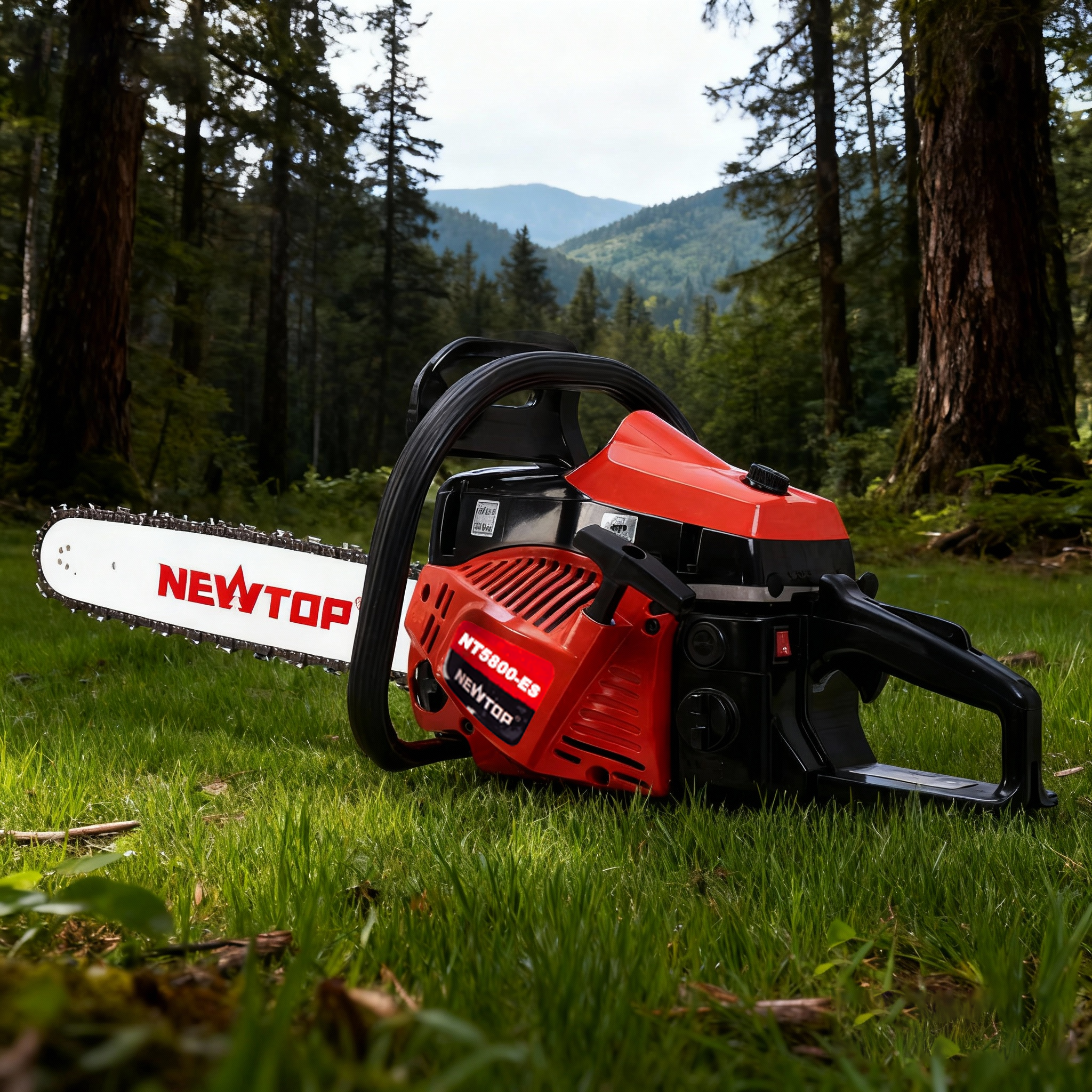
Specifiche tecniche professionali: Peso, Spostamento, ed equilibrio
Quando si valutano motoseghe con impugnatura superiore di livello professionale per 2026, tre specifiche determinano le prestazioni nel mondo reale: peso, cilindrata del motore, ed equilibrio.
| Specifica tecnica | Gamma di mercato professionale (2026) | Beneficio primario |
|---|---|---|
| Cilindrata del motore | 25cc – 40 cc (30tradizionale cc-35cc) | Emissione di coppia bilanciata adatta per potatura controllata e taglio di rami di legno duro. |
| Potenza in uscita | 1.0 chilowatt – 1.8 kW | Fornisce prestazioni di taglio efficienti mantenendo il risparmio di carburante e la reattività dell'acceleratore. |
| Peso a secco (Senza barra & Catena) | 2.6 kg - 3.8 kg | Riduce l'affaticamento dell'operatore e migliora la manovrabilità in ambienti ristretti. |
| Metrica delle prestazioni chiave | Elevato rapporto potenza-peso | Fondamentale per mantenere il controllo, precisione, e produttività durante le operazioni elevate. |
Cilindrata del motore e potenza erogata
La maggior parte delle motoseghe con impugnatura superiore di livello professionale funziona con una cilindrata compresa tra 25 cc e 40 cc, con i modelli 30cc-35cc che rappresentano il segmento principale per le applicazioni di arboricoltura. Questa gamma fornisce l'equilibrio ottimale tra coppia e peso, garantendo pulito, tagli controllati senza inutili ingombri del motore. La potenza in uscita in genere rientra nel mezzo 1.0 kW e 1.8 kW, a seconda della messa a punto e del design del motore. Questa configurazione fornisce una forza di taglio affidabile per i rami di legno duro mantenendo l'efficienza del carburante e la reattività dell'acceleratore, fondamentali per le operazioni prolungate sugli alberi.
Rapporto potenza-peso
Per arboricoltori professionisti, il rapporto peso/potenza è la metrica delle prestazioni che definisce. Una sega da arrampicata deve fornire una coppia sufficiente pur rimanendo sufficientemente leggera per una manovrabilità controllata in ambienti con tettoia. I modelli con maniglia superiore di alta qualità in genere pesano tra 2.6 kg e 3.8 kg (peso secco), raggiungendo l'equilibrio tra durata e riduzione della fatica dell'operatore. Un rapporto superiore migliora la precisione di taglio durante le complesse attività di potatura e rigging, contribuendo direttamente sia alla produttività che alla sicurezza dell’operatore a lungo termine.
Equilibrio ergonomico e caratteristiche principali
Oltre le specifiche del motore principale, il design ergonomico determina l'usabilità nel mondo reale di una sega. Le moderne seghe professionali integrano sistemi che supportano l'operatore e riducono i tempi di fermo macchina. La tecnologia anti-vibrazione avanzata riduce al minimo lo sforzo sulle mani e sulle braccia dell'arboricoltore, che è fondamentale per l'uso tutto il giorno. Funzionalità come l'avviamento assistito a molla sono essenziali per riavviare la sega in sicurezza durante la salita. Allo stesso modo, I sistemi di filtrazione dell'aria centrifughi espellono polvere e detriti prima che raggiungano il filtro, estendere significativamente gli intervalli di manutenzione e mantenere il motore al massimo delle prestazioni.
Standard di sicurezza per il funzionamento sugli alberi: Freni e cordini
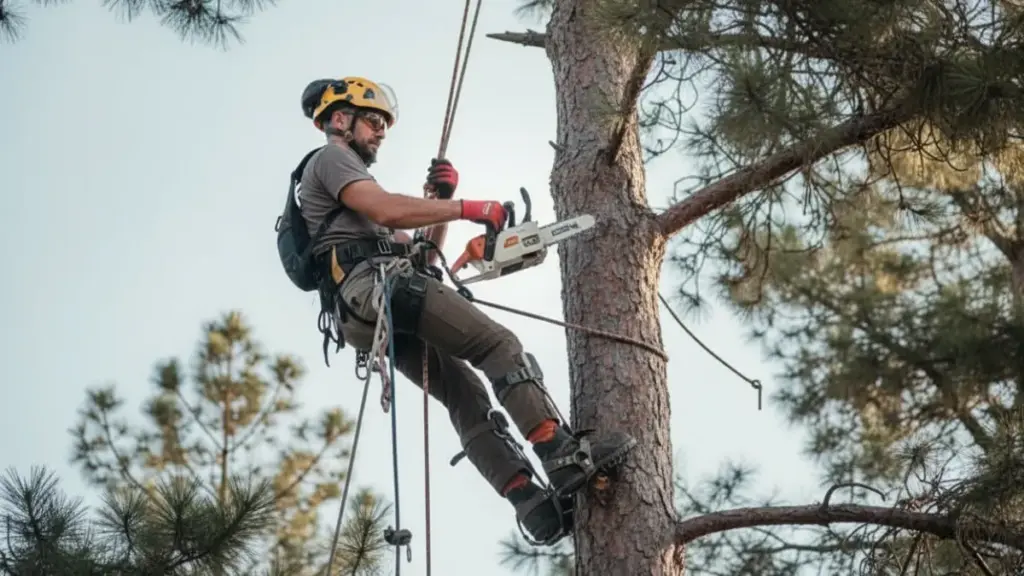
Il funzionamento sicuro della motosega sugli alberi dipende da un rigoroso sistema di conformità normativa, protocolli di collegamento ridondanti, e controlli obbligatori delle attrezzature prima dell'uso.
Conformità normativa e standard di settore
Le operazioni di motosega su albero seguono rigorosi standard di settore come ANSI Z133, che stabilisce le basi per una cura sicura degli alberi. Gli organismi di regolamentazione come l'OSHA applicano queste linee guida, imponendo una formazione documentata dei lavoratori, protocolli apparecchiature chiari, e una gestione proattiva del rischio per ridurre al minimo i pericoli. Questi standard si applicano allo stesso modo sia alle motoseghe a benzina che a quelle a batteria, poiché entrambi presentano identici rischi di taglio quando si lavora in quota.
Sistemi di collegamento continuo e cordino
Una regola fondamentale per qualsiasi arboricoltore è rimanere costantemente legato durante tutta l'operazione. Ciò si ottiene con un sistema a doppia ridondanza. Il lavoratore utilizza una linea di arrampicata primaria per il supporto principale e un cordino secondario per un posizionamento preciso sul lavoro e una sicurezza di riserva. Questa configurazione garantisce la sicurezza dell'operatore dal momento in cui lascia il terreno fino al suo ritorno, consentendo loro di stabilire una posizione stabile per effettuare tagli controllati.
Funzione e ispezione del freno della motosega
Il freno della catena della motosega è un dispositivo di sicurezza non negoziabile progettato per arrestare istantaneamente la catena durante un evento di contraccolpo. L'ispezione e il test regolari di questo meccanismo sono obbligatori prima di ogni utilizzo. L'operatore deve verificare che il freno della catena si inserisca correttamente quando attivato manualmente e pulire regolarmente il nastro del freno e il coperchio della frizione per verificare eventuali segni di usura o danni. Un freno funzionale, abbinato a corrette tecniche di manipolazione, è un livello critico di protezione dell'operatore.
Valutazione dei rischi prima dell'operazione e controlli delle apparecchiature
La gestione proattiva del rischio è fondamentale per la sicurezza sugli alberi. Prima di salire, ogni arboricoltore deve condurre una valutazione approfondita dei rischi legati all'albero e al luogo di lavoro circostante, identificare i rischi come gli arti deboli, linee elettriche, o ostacoli al suolo. Un'ispezione completa di tutte le attrezzature per l'arrampicata e il taglio, comprese le corde, imbracature, cordini, e la motosega stessa è necessaria per verificare la presenza di difetti. L'equipaggio deve inoltre stabilire un piano di lavoro chiaro e un protocollo di emergenza prima dell'inizio dei lavori.
Maniglia superiore vs. Motosega con impugnatura posteriore
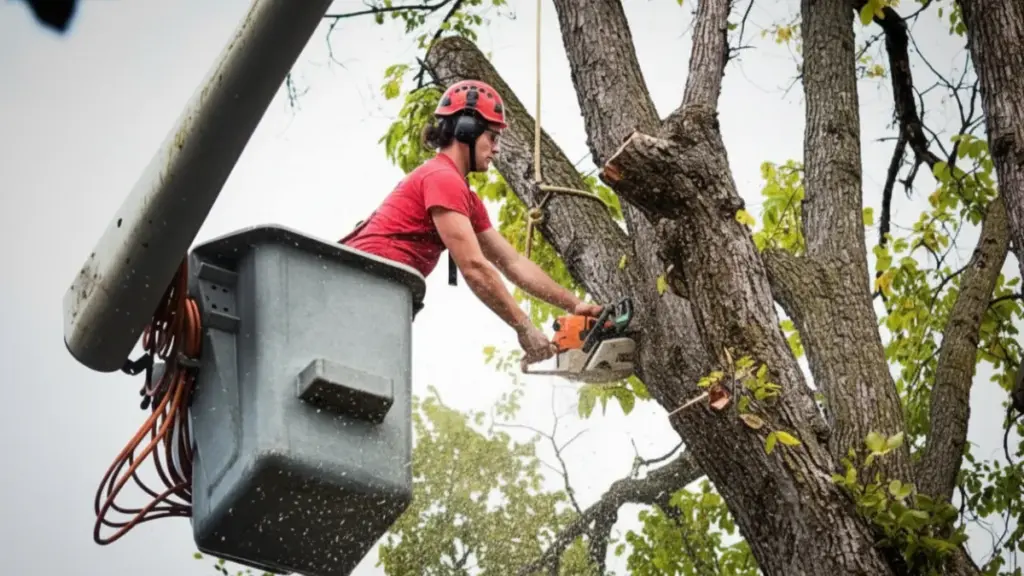
La scelta tra una motosega con impugnatura superiore e una motosega con impugnatura posteriore è determinata interamente dall'ambiente di lavoro; le seghe con impugnatura superiore sono specializzate per i professionisti, operazioni sull'albero, mentre le seghe con impugnatura posteriore sono costruite per la stabilità, taglio a livello del suolo.
| Attributo | Motosega con impugnatura superiore | Motosega con impugnatura posteriore |
|---|---|---|
| Utente principale | Arboricoltori e chirurghi arboricoli professionisti certificati | Proprietari di case, amministratori immobiliari, e lavoratori forestali |
| Ambiente di lavoro | Elevato, nell'albero, o da un ascensore aereo | Operazioni a livello del suolo |
| Caratteristica fondamentale del design | Compatto, leggero, ed equilibrato per la manovrabilità | Corpo più lungo con maniglie separate per stabilità e leva |
| Applicazione tipica | Potatura, sepoltura, e navigare tra le chiome strette degli alberi | Abbattimento alberi, tronchi in controtendenza, e lavorazione della legna da ardere |
Design ed ergonomia per compiti specifici
La differenza fondamentale sta nella loro disposizione fisica, che è ottimizzato per due ambienti di lavoro distinti. Le seghe con impugnatura superiore sono compatte e bilanciate per la manovrabilità in altezza, posizioni scomode. Le seghe con impugnatura posteriore sono costruite per garantire leva e stabilità sul terreno. Questa separazione dell'intento progettuale determina il modo in cui ciascuno strumento si comporta nel ruolo previsto.
- I modelli con impugnatura superiore integrano l'impugnatura direttamente sopra il corpo della sega, creando un baricentro ideale per l'uso con una sola mano da parte di un arboricoltore rampicante.
- I modelli con maniglia posteriore utilizzano un design a due maniglie separate, offrendo all'operatore un maggiore controllo e una piattaforma stabile per abbattere alberi o tronchi in controtendenza.
Utente previsto e applicazione
Ogni tipo di sega è destinato a un utente diverso. Le motoseghe con impugnatura superiore sono strumenti specializzati esclusivamente per i professionisti certificati della cura degli alberi che lavorano in quota. Le seghe con impugnatura posteriore si rivolgono a un pubblico più ampio, dai proprietari di case ai taglialegna, che svolgono lavori a livello del suolo. L’industria ha chiaramente segmentato questi strumenti per contesti operativi specifici piuttosto che creare una soluzione universale.
- Le seghe con impugnatura superiore sono lo standard per gli arboricoltori professionisti che hanno bisogno di potare i rami mentre sono fissati su un albero.
- Le seghe con impugnatura posteriore sono adatte per l'abbattimento, sepoltura, e lavorazione della legna da ardere su terreno solido, rendendoli la scelta preferita dei proprietari di immobili e dei lavoratori forestali.
Energia, Controllare, e Sicurezza
Le seghe con impugnatura posteriore generalmente forniscono una maggiore leva per potenza di taglio e stabilità, rendendoli una scelta più sicura per i principianti. Le seghe con impugnatura superiore offrono un elevato rapporto peso/potenza ma introducono notevoli rischi per la sicurezza che richiedono formazione e certificazione professionale. La capacità dell’operatore di gestire il contraccolpo è direttamente legata alla configurazione dell’impugnatura della sega.
- L'impugnatura più ampia sulle seghe con impugnatura posteriore offre un controllo superiore, che aiuta a gestire il contraccolpo durante i tagli potenti.
- Grazie al loro design per il potenziale funzionamento con una sola mano, le seghe con impugnatura superiore richiedono una rigorosa aderenza ai protocolli di sicurezza e non sono consigliate per lavori a terra o utenti inesperti.
Come scegliere la motosega con impugnatura superiore giusta?
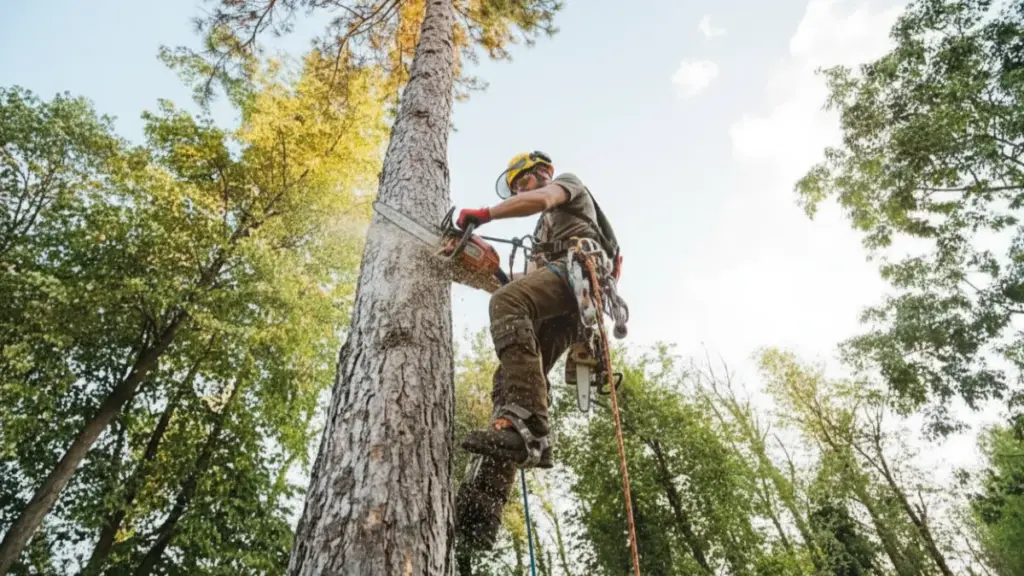
La scelta della giusta motosega con impugnatura superiore richiede la corrispondenza di certificazioni professionali e specifiche esigenze di lavoro sull'albero con caratteristiche tecniche chiave come il rapporto peso/potenza, bilancia, e fonte di alimentazione.
La selezione del modello giusto richiede l’allineamento delle specifiche tecniche con la domanda del mercato.
Primo, identificare i tuoi utenti target. Sono arboricoltori certificati, aziende paesaggistiche, o piccoli appaltatori? Gli arboricoltori professionisti richiedono durata e affidabilità del marchio. Gli acquirenti entry-level possono dare priorità al prezzo.
Secondo, valutare il clima e la densità del legno. Nei mercati tropicali (America Latina, Sud-est asiatico, Africa), le specie di legno duro richiedono una coppia maggiore. Nei climi più freddi, l'affidabilità dell'avviamento a freddo diventa fondamentale.
Terzo, considerare il supporto post-vendita e la disponibilità dei pezzi di ricambio. Componenti come carburatori (per esempio., Sistemi tipo Walbro), candele (NGK o TORCIA), cuscinetti (NSK), catene (Tipo dell'Oregon), e le barre guida dovrebbero essere accessibili a livello globale.
Quarto, valutare la flessibilità dell'OEM. Combinazioni di colori personalizzate, confezione, e branding localizzato in modo significativo aumentare la competitività dei distributori.
Motoseghe con impugnatura superiore a benzina o a batteria Tabella comparativa tecnica
| Categoria Tecnica | Motosega con impugnatura superiore a gas | Batteria (Ioni di litio) Motosega con impugnatura superiore |
|---|---|---|
| Fonte di energia | 2-Motore a benzina a corsa (25cc–40cc) | Sistema di batterie agli ioni di litio (36V–60 V tipico) |
| Potenza in uscita | 1.0 chilowatt – 1.8 kW di potenza meccanica continua | Prestazioni di taglio comparabili in brevi raffiche; coppia erogata istantaneamente tramite motore brushless |
| Peso (Asciutto) | 2.6 kg - 3.8 kg (senza sbarra & catena) | 2.3 kg - 3.2 kg (solo strumento; la batteria aggiunge 0,8–1,5 kg) |
| Durata | Funzionamento continuo con rifornimento; adatto per il lavoro sul campo tutto il giorno | 30–60 minuti per batteria a seconda del carico; richiede batterie di riserva per il funzionamento di un'intera giornata |
| Erogazione della coppia | Coppia forte ai medi regimi; consistente sotto il taglio pesante del legno duro | Risposta di coppia istantanea; altamente efficace per potature e tagli medio-leggeri |
| Manutenzione | Richiede la messa a punto del carburatore, controlli candele, miscelazione del carburante | Manutenzione meccanica minima; è richiesta la gestione del ciclo di vita della batteria |
| Rumore & Emissioni | Livello di rumore più elevato; soggetto alle normative sulle emissioni (APE / EUROV) | Basso rumore, zero emissioni dirette; adatto per l'arboricoltura urbana |
| Posizionamento sul mercato | Dominante in Africa, America Latina, e mercati sensibili ai prezzi | In rapida crescita in Europa e nei mercati urbani con rigorose politiche ambientali |
| Profilo utente ideale | Appaltatori forestali, arboricoltori pesanti, operatori di aree remote | Società di servizi alberati urbani, zone a rumore limitato, regioni regolamentate dal punto di vista ambientale |
Modelli con maniglia superiore leader di mercato in 2026
Il mercato degli arboricoltori professionisti è tradizionalmente guidato da affermati produttori europei e giapponesi noti per la precisione ingegneristica e la durata.
- STIHL – Riconosciuto per le seghe per arboricoltori ad alte prestazioni con sistemi antivibranti avanzati e forte fedeltà al marchio.
- Husqvarna – Conosciuto per il design leggero e l'ergonomia raffinata su misura per la cura professionale degli alberi.
- Eco – Offre modelli professionali compatti con prestazioni affidabili a due tempi e prezzi competitivi.
Per distributori alla ricerca di un’alternativa competitiva in categorie ad alto volume, i modelli con maniglia posteriore spesso offrono un ROI più elevato, copertura applicativa più ampia, e una maggiore scalabilità del mercato.
Soluzioni professionali per motoseghe di NEWTOP
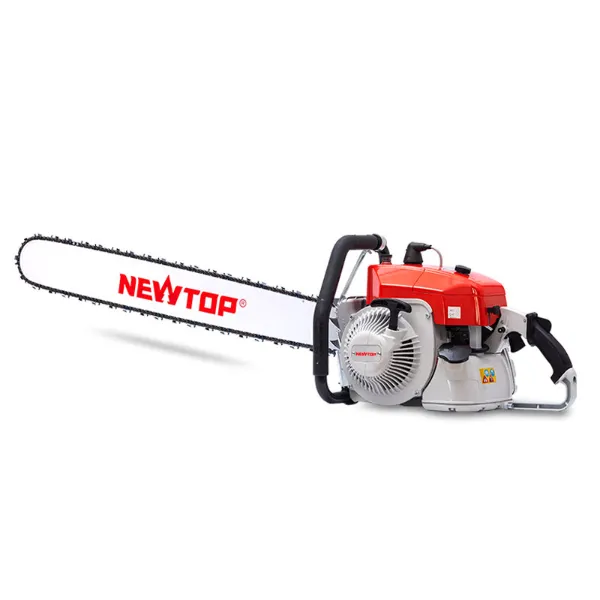
NT10500
Motosega professionale con impugnatura posteriore ad alta cilindrata, progettata per la silvicoltura e il taglio di legname di grandi dimensioni.
Visualizza dettagli →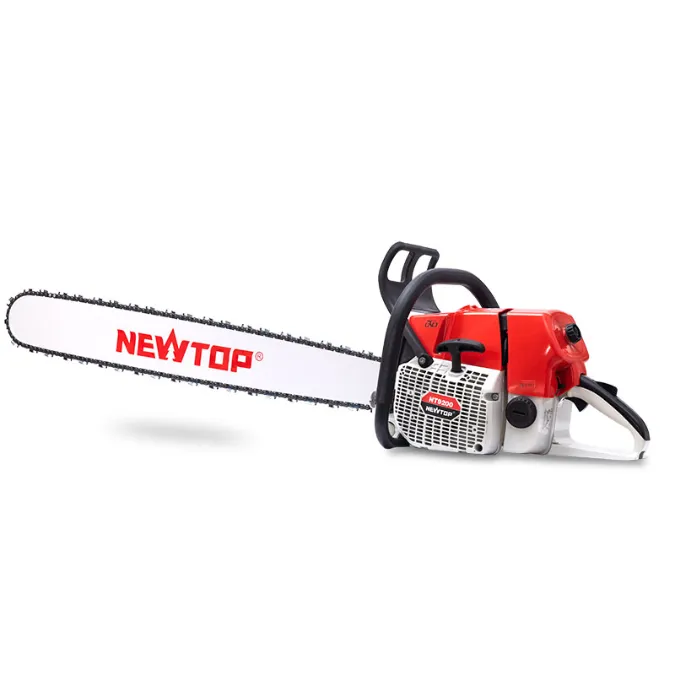
NT9200
Robusta motosega a benzina progettata per operazioni impegnative sul campo e per il taglio di legno duro.
Visualizza dettagli →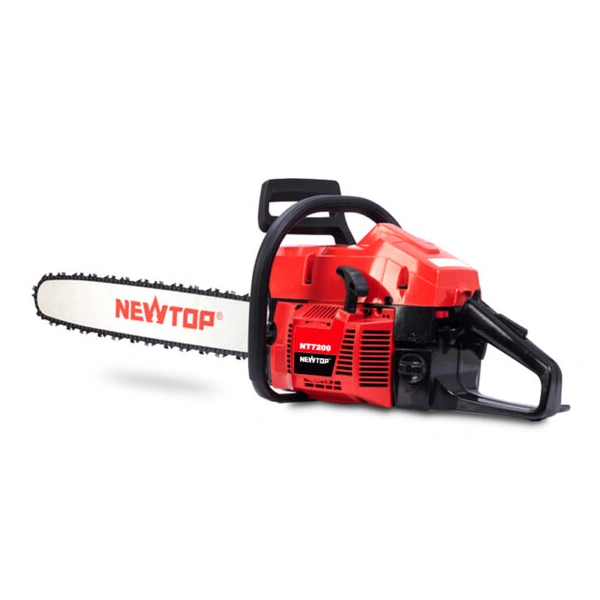
NT7200
Equilibrio ideale tra potenza e peso per lavori paesaggistici e forestali di medio raggio.
Visualizza dettagli →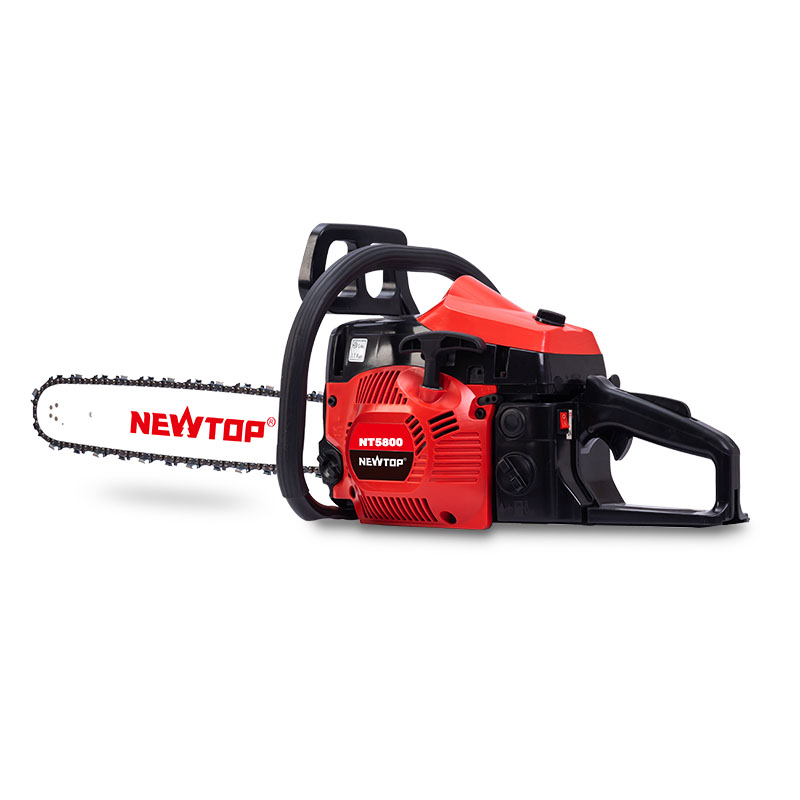
NT5800
Motosega versatile di fascia media adatta per applicazioni agricole e professionali in genere.
Visualizza dettagli →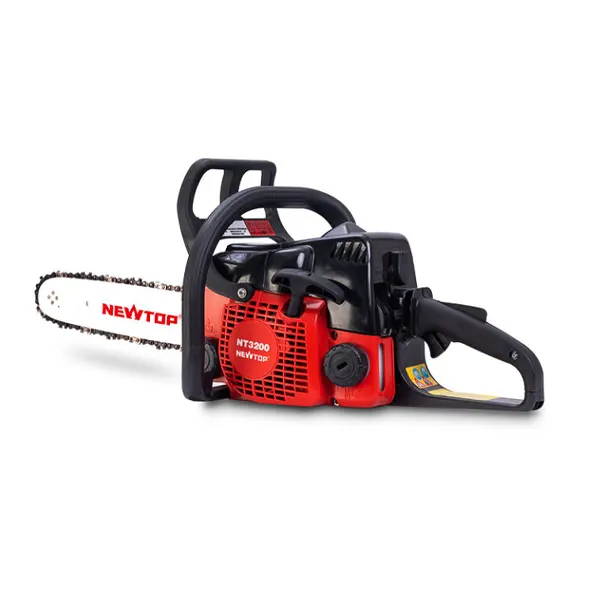
NT3200
Motosega compatta con impugnatura posteriore ideale per lavori di paesaggistica e manutenzione leggeri.
Visualizza dettagli →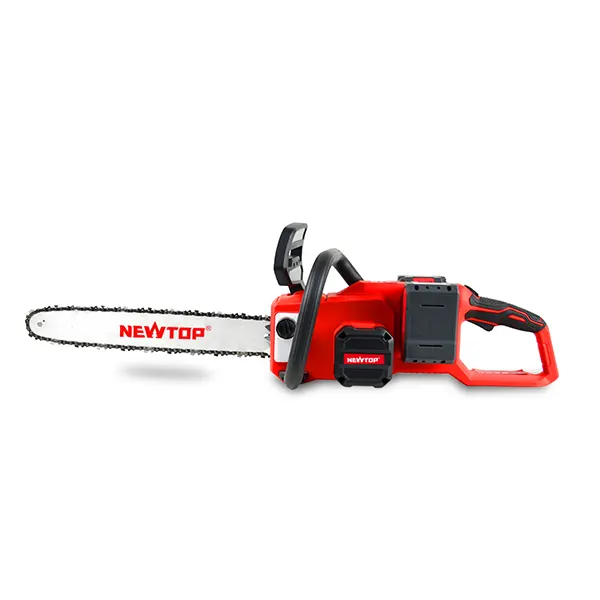
NTCS401Li
Motosega portatile con batteria al litio che garantisce un funzionamento pulito e una manutenzione minima.
Visualizza dettagli →Pronto a lavorare con il produttore di apparecchiature elettriche per esterni NEWTOP?
La selezione di un partner produttivo richiede una valutazione diretta della sua integrazione verticale, qualità della filiera, e flessibilità del modello di business per garantire sia l’affidabilità del prodotto che il successo sul mercato.
NEWTOP da allora produce apparecchiature elettriche per esterni 2003. Con uno stabilimento produttivo di 10.000㎡ a Shanghai e oltre 300 dipendenti, forniamo motoseghe, decespugliatori, spruzzatori, generatori, e attrezzi da giardino al litio per più di 65 Paesi.
Ciò che differenzia NEWTOP non è solo la scala di produzione ma la profondità ingegneristica. Un R. indipendente&Il team D supervisiona la progettazione strutturale, validazione dei test, e conformità alle emissioni, mentre le linee di assemblaggio automatizzate garantiscono coerenza per OEM e partner a marchio privato.
Per i distributori in Africa, America Latina, Sud-est asiatico, e mercati europei emergenti, NEWTOP fornisce:
- Personalizzazione OEM flessibile
- Tempi di consegna in blocco stabili di 30 giorni
- CE, GS, APE, Certificazioni ETL
- 1-anno di garanzia sulla macchina
- Fornitura affidabile di pezzi di ricambio
Se stai espandendo la tua linea di prodotti professionali per arboricoltori o costruendo una gamma competitiva di motoseghe da arrampicata, la collaborazione con un produttore esperto riduce il rischio operativo a lungo termine.
Contatta NEWTOP oggi per discutere cataloghi di prodotti, strutture dei prezzi, e opportunità di distribuzione.
Domande frequenti
Perché i professionisti utilizzano le motoseghe con impugnatura superiore?
Li usano perché le dimensioni compatte consentono un migliore movimento sugli alberi. Il design dell'impugnatura superiore è più facile da trasportare su un'imbracatura rispetto a una sega standard.
Le motoseghe con impugnatura superiore sono più pericolose di quelle con impugnatura posteriore??
SÌ, le motoseghe con impugnatura superiore sono considerate più pericolose per l'uso a terra o da parte di operatori non addestrati. Il loro design consente il funzionamento con una sola mano, che riduce la stabilità e il controllo rispetto all'impugnatura a due mani su una sega con impugnatura posteriore. Questa presa ravvicinata aumenta significativamente il rischio di gravi lesioni dovute al contraccolpo rotazionale.
Qual è la migliore motosega con impugnatura superiore per l'arrampicata?
Il modello migliore dipende dall'applicazione. I professionisti in genere scelgono seghe con un ottimo rapporto peso/potenza, sistemi di accelerazione reattivi, e tecnologia anti-vibrazione avanzata. L'affidabilità e la disponibilità dei ricambi sono ugualmente importanti.
Un principiante può usare una sega con impugnatura superiore?
NO. I principianti dovrebbero usare una sega con impugnatura posteriore. Le seghe con impugnatura superiore richiedono tecniche specifiche per funzionare in sicurezza.
Perché le seghe con impugnatura superiore sono più costose??
Spesso incorporano ingegneria avanzata, materiali leggeri, e sistemi di sicurezza rafforzati. Inoltre, sono rivolti agli utenti professionali, che influenza i prezzi.
Ho bisogno di una licenza per una motosega con impugnatura superiore?
Le normative variano in base al paese. In molte regioni, per le operazioni commerciali di arrampicata sugli alberi è richiesta la certificazione professionale. Controllare sempre le leggi locali sulla sicurezza sul lavoro prima dell'uso.

Knowing how to measure a chainsaw bar correctly is a critical safety protocol that prevents dangerous kickback events and catastrophic equipment failure. A simple sizing error, often caused by measuring the entire physical bar from tip to tip, leads directly to ordering incompatible replacement parts. This mismatch not only causes poor cutting performance but also places excessive strain on the saw’s engine, resulting in accelerated wear and costly operational downtime.
In questa guida completa, we’ll walk you through the exact professional method used by service technicians and forestry equipment suppliers. You’ll also learn how to match bar length with engine displacement (CC), and how to avoid common sizing errors that reduce performance and damage your saw.
What is Chainsaw Bar Length?
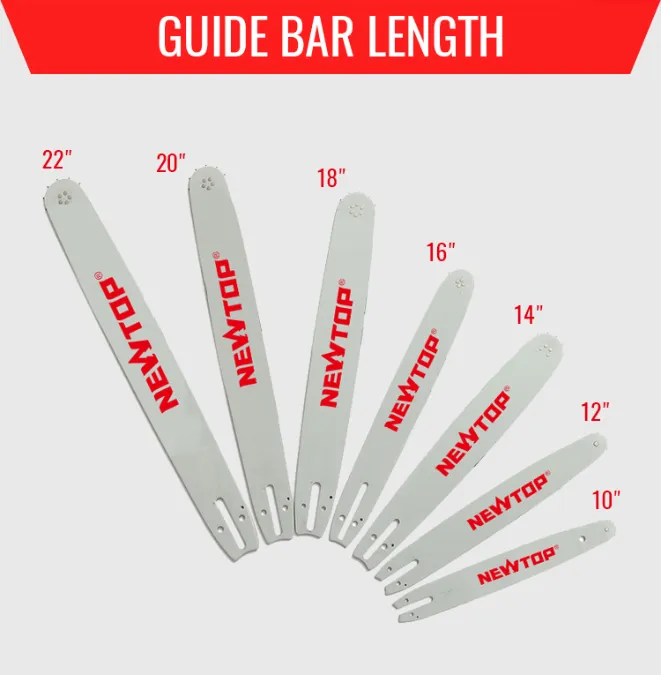
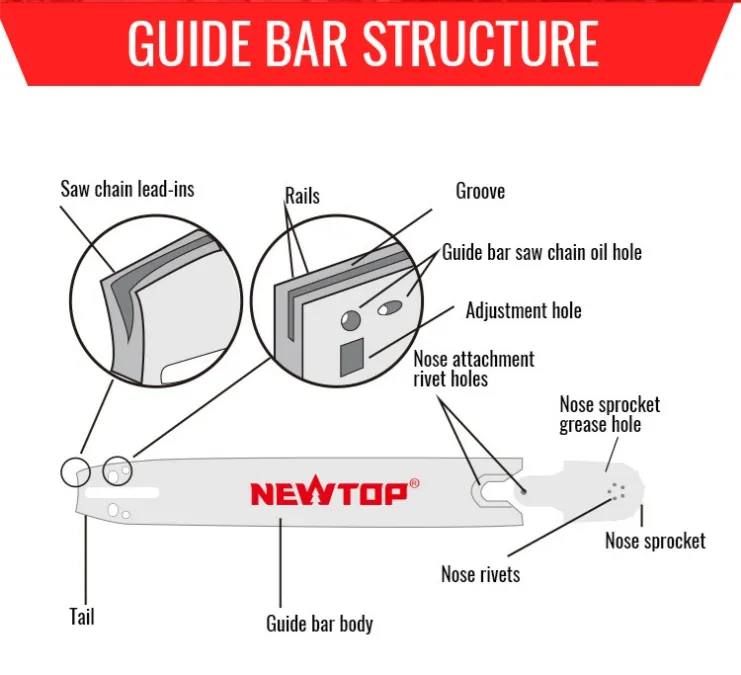
The guide bar is the long steel plate that supports and guides the chain during cutting. Tuttavia, a portion of the bar sits inside the chainsaw body (the powerhead). That internal section does not contribute to cutting capacity.
Understanding Effective Cutting Length
Chainsaw bar length refers to the effective cutting length of the guide bar — not the total metal length from end to end. Technicians measure from the front of the saw’s body to the furthest tip of the bar, which represents the maximum width of wood you can cut in a single pass. When manufacturers list a bar as 16-pollice, 18-pollice, O 20-pollice, they are referring to the usable cutting length, measured from the front of the saw housing to the tip of the bar.
How Bar Size Relates to Pitch and Gauge
While length is the primary specification, it works directly with pitch and gauge to create a compatible and safe cutting system. Pitch defines the distance between the chain’s drive links, and gauge measures the thickness of those links. The bar’s groove must match the chain’s gauge perfectly for proper function. Common pitch sizes are 0.325″ and 3/8″, while standard gauge sizes include .050″, .058″, E .063″. Mismatching these critical measurements leads to poor cutting performance, chain derailment, and accelerated wear on the bar and sprocket.
Matching Bar Length to Application and Power
The ideal bar length depends entirely on the saw’s engine power and the job at hand. A longer bar requires more torque to drive the chain through dense wood, while a shorter bar provides better control and maneuverability for precise tasks. The relationship between length, power, and application is straightforward.
- Shorter Bars (10–16 inches): Suited for saws with smaller engines. They are ideal for light tasks like pruning, sepoltura, and cutting small firewood where control is paramount.
- Medium Bars (16–20 inches): These are versatile all-rounders, common on homeowner and semi-professional models. They offer a good balance of cutting capacity and control for felling medium-sized trees.
- Longer Bars (22–30+ inches): Designed exclusively for powerful, professional-grade saws. These bars are used in forestry and land-clearing for felling large-diameter trees where maximum cutting width is necessary.
Different chainsaw types—such as gas, electric, O top-handle models—have varying bar length requirements. Learn more about the different types of chainsaws and how they influence your bar selection.
Step 1: Measuring the Effective Cutting Length (Called Length)
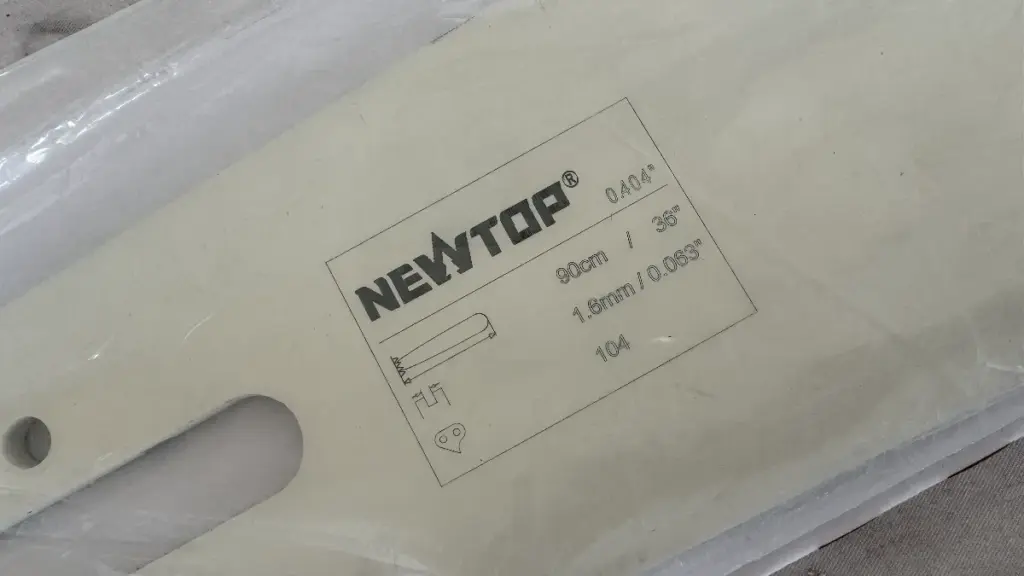
The industry-standard ‘called length’ is determined by measuring the bar’s usable cutting area from the tip to the saw’s body and rounding to the nearest standard size, a critical first step for ensuring correct chain and bar compatibility.
| Raw Measurement Example | Rounding Rule | Standard “Called Length” |
|---|---|---|
| 17.75 inches | Round to the nearest standard size (typically 2-inch increments). | 18 inches |
| 15.8 inches | Round to the nearest standard size (typically 2-inch increments). | 16 inches |
| 19.9 inches | Round to the nearest standard size (typically 2-inch increments). | 20 inches |
The Standard Measurement Technique
To find a chainsaw bar’s size, you measure its effective cutting length, also known as the “called length.” This is the only measurement that matters for part identification. For an accurate reading, keep the bar attached to the saw. Place the end of a tape measure at the very tip of the bar and extend it back to the point where the bar enters the chainsaw’s housing. The resulting distance is the effective cutting length, which represents the usable portion of the bar.
Rounding to Match Standard Bar Sizes
Your raw measurement must be converted to a standard commercial size. Chainsaw bars are manufactured and sold in fixed sizes, usually in two-inch increments like 16, 18, O 20 inches. If your measurement is 17.75 inches, you have an 18-inch bar. Always round your measurement to the nearest whole inch to identify its commercial classification. This industry standardization is what simplifies the process of buying replacement parts and guarantees that components from different batches or manufacturers will fit correctly.
Why This Measurement Is Foundational
Getting the effective length correct is the most important step in identifying your equipment. An incorrect measurement has a direct effect on cutting capacity, chain fitment, and operator safety. The called length determines the maximum diameter of wood you can cut in a single pass and is a required specification for purchasing the correct replacement chain. Using a bar that is too long for the saw’s engine will strain the motor, reduce performance, and create unsafe operating conditions.
Watch this step-by-step video, you’ll learn the proper technique for measuring your chainsaw’s effective cutting length. After watching, continue to Step 2 to count the drive links on your chain and make sure your saw and bar fit perfectly.
Step 2: Locating and Counting Drive Links on the Chain
An incorrect drive link count is a primary cause of chain derailment and operational failure, making an accurate manual count a critical maintenance step for safe equipment function.
| Verification Method | Purpose & Rationale | Common Pitfall to Avoid |
|---|---|---|
| Manual Count | Confirms the exact number of links required for the bar, preventing slack or excessive tension that leads to failure. | Losing count mid-way. Always mark the starting link with tape or a paint pen to ensure an accurate tally. |
| Check Stamped Bar Info | Provides the manufacturer’s exact specification (often abbreviated as “DL”) for quick and accurate chain replacement. | Relying on worn, illegible markings on an old bar. If you cannot clearly read the numbers, default to a manual count. |
What is a Drive Link and Why Does the Count Matter?
Drive links are the protrusions on the underside of the chain that sit inside the guide bar’s groove. They engage with the chainsaw’s drive sprocket to propel the chain and guide it along the bar. An accurate count of these links is fundamental for proper fitment. If the chain has too few links, it won’t fit onto the bar. If it has too many, the chain will be too loose, leading to poor cutting performance, binding, and a high risk of derailment during operation. The drive link count determines the precise length of the chain needed for a specific bar, ensuring safe and efficient power transfer from the engine to the wood.
A Reliable Method for Counting Drive Links Manually
To avoid errors, use a systematic counting method. Primo, remove the chain from the saw and lay it out on a flat, clean surface like a workbench or floor. This straightens the chain completely and prevents tangles that cause miscounts. Mark your starting drive link with a piece of tape or a paint pen to create a clear reference point. From there, carefully count each individual drive link until you return to your marked link. For better accuracy, count in small groups, such as by fives, and then perform a second count to verify your final number.
Where to Find Drive Link Information on Your Equipment
Many manufacturers stamp or laser-etch the required drive link count directly onto the guide bar to simplify replacement. Inspect the tail end of the bar, near the area where it mounts to the saw body. This information is often listed alongside the bar’s required pitch and gauge specifications. The drive link count is typically abbreviated as “DL” followed by a number (per esempio., “72DL”). Even when this information is available, performing a manual count on your old chain remains a reliable verification method, especially if the bar is worn or the markings have become difficult to read.
Step 3: Determining Bar Gauge and Pitch for Perfect Fitment

Getting the pitch and gauge right is non-negotiable; these two measurements act as a lock-and-key system, and a mismatch guarantees poor performance and significant safety risks.
| Measurement | Technical Definition | Common Industry Sizes |
|---|---|---|
| Pece | The distance between the centers of three consecutive rivets on the chain, divided by two. | .325″, 3/8″, 1/4″ |
| Misura | The thickness of the drive links, which must match the width of the bar’s groove. | .043″, .050″, .063″ |
Understanding Pitch and Gauge
Pitch and gauge are the two critical measurements that ensure your chain and guide bar function as a single, efficient system. A proper match is essential for safe operation. Pitch defines the spacing between drive links, while gauge sets the thickness of those links. This ensures the chain seats perfectly within the bar’s groove, preventing binding or derailing during high-speed operation.
How to Measure and Identify
The most efficient way to find these measurements is to look for the information stamped directly on the tail of the guide bar, near the mounting slots. If the markings are worn or unreadable, your chainsaw’s operator manual is the next best source. It will list the exact factory specifications for your model.
- Check the base of the bar for stamped numbers that specify both pitch and gauge.
- Consult your chainsaw’s instruction manual for the original equipment specifications.
- If you are still unsure, bring the bar or saw to a local dealer for professional identification.
Why Matching Matters
Using a mismatched chain and bar introduces immediate operational problems and safety hazards. For the cutting system to work, the chain pitch, the drive sprocket pitch on the saw, and the bar’s nose sprocket pitch must all be identical. Any deviation breaks this alignment and causes performance failure.
- An incorrect pitch causes the chain to bind or jump in the groove, leading to poor cutting and potential kickback.
- If the gauge is too thin for the bar’s groove, the chain will wobble and can easily derail.
- If the gauge is too thick, the chain will bind, generating excessive friction, heat, and wear on both the bar and the engine.
Your Partner for Reliable, Profitable Power Tools
Pros and Cons of Using Longer vs Shorter Bars on One Saw
Selecting the right bar length is a critical balance between the cutting capacity needed for a job and the saw’s engine power, where shorter bars prioritize control and longer bars maximize reach and efficiency.
Advantages and Disadvantages of Shorter Bars (12-18 inches)
Shorter bars offer superior control and safety, making them ideal for homeowners and light-duty tasks like trimming limbs or cutting small trees. Their compact size reduces operator fatigue and minimizes the risk of dangerous kickback, a significant advantage for users with less experience. This category of bar dominates the homeowner market because it provides a good balance of capability and manageability.
- Easier to handle and maneuver in tight spaces.
- Lower kickback potential, making them safer for less experienced users.
- Requires less engine power, putting less strain on the saw.
- Limited cutting diameter, making them inefficient for felling large trees.
Advantages and Disadvantages of Longer Bars (20+ inches)
Longer bars provide a greater cutting capacity, allowing professional users to fell large-diameter trees and buck thick logs more efficiently. This performance comes at the cost of increased weight, reduced maneuverability, and a higher demand for operator skill. A long bar allows for cutting through thick logs in a single pass, which is essential for productivity in commercial forestry and farm applications.
- Enables cutting through wider logs in a single pass, increasing productivity.
- Provides extended reach for felling and limbing.
- Heavier and more difficult to balance, leading to quicker operator fatigue.
- Requires a more powerful engine to drive the chain effectively without bogging down.
Finding the Right Balance: Engine Power and User Skill
The best bar length for a chainsaw is a trade-off between the saw’s engine displacement (CCs) and the operator’s physical ability and experience. Overloading a small engine with a long bar leads to poor performance, slow cuts, and premature wear on the clutch and engine components. It’s not just about what fits; it’s about what the powerhead can realistically drive through dense material.
- Always match the bar length to the manufacturer’s recommended range for your saw’s engine size.
- A bar that is too long for the powerhead will cut slowly and strain the engine.
- Consider the type of wood; hardwoods require more power, often favoring a slightly shorter bar for a given engine.
- Operator experience is crucial, as longer bars amplify the forces of kickback and demand more physical control.
Common Sizing Mistakes: Why “End-to-End” Measuring Fails
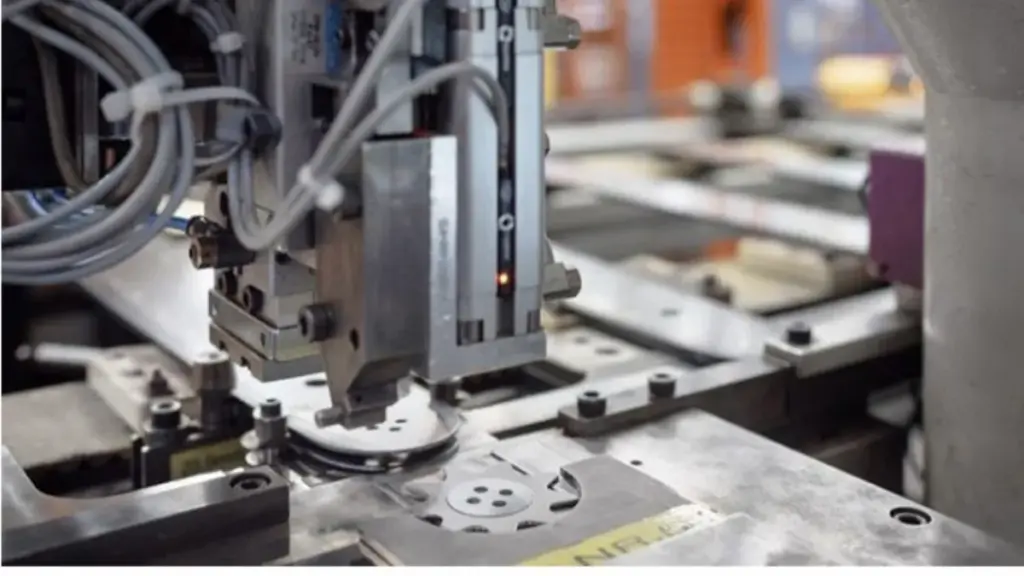
Measuring the total physical length of a chainsaw bar instead of its functional cutting length is the primary cause of equipment incompatibility and performance issues.
Measuring Total Bar Length Instead of Effective Cutting Length
A frequent mistake is measuring the entire physical bar from tip to tail. The correct industry standard is the “effective cutting length” O “called length,” which only measures the usable portion of the bar that extends from the chainsaw’s body. Measuring the full bar guarantees you will purchase the wrong size replacement chain and potentially other mismatched accessories.
- This error results in selecting a chain that is too long for the bar’s actual exposed cutting area.
- An end-to-end measurement does not reflect the functional length specified by manufacturers for matching chains and accessories.
Including Mounting Hardware in the Measurement
Operators often incorrectly include the part of the bar that fits inside the powerhead when measuring. This mounting section, or tail, does not contribute to cutting and artificially inflates the length. This inflated number leads directly to incorrect sizing and equipment that will not fit or function properly.
- Accurate measurement must begin where the guide bar emerges from the front of the chainsaw’s casing.
- Failing to exclude the mounting hardware leads to equipment incompatibility, poor performance, and potential safety risks from an improperly tensioned chain.
Forgetting to Round to the Nearest Standard Increment
Chainsaw bars are sold in standardized even-inch sizes, such as 16″, 18″, or 20″. If your measurement of the effective cutting length is slightly off, like 17.5 inches, you must round it to the nearest standard size, which would be 18 inches, to find the correct replacement part. The market does not produce fractional or odd-numbered bar lengths.
- Industry practice is to round the effective cutting length to the closest even-inch number for marketing and sales.
- Ignoring this convention can lead to searching for non-existent bar sizes and purchasing the wrong equipment.
Selection Guide: How to Match Bar Length to Engine Power (CC)
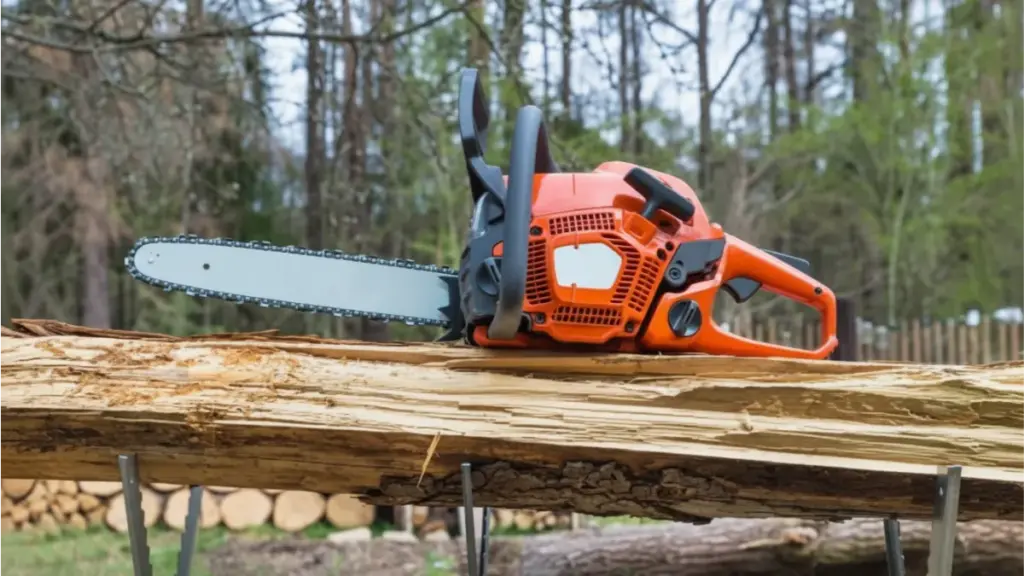
Matching the guide bar length to the engine’s displacement is critical for preventing clutch burnout and ensuring safe, efficient cutting performance.
Matching guide bar length to engine displacement (CC) is essential for maintaining cutting efficiency, protecting the clutch system, and extending engine lifespan. A bar that is too long for the engine’s torque output will reduce chain speed, increase vibration, and cause premature mechanical wear. Proper balance ensures smooth power transfer and safe operation.
| Engine Size (cc) | Typical Bar Length Suggestion (inches) |
|---|---|
| 25–35 cc | ~10–14″ |
| 35–45 cc | ~12–16″ |
| 45–60 cc | ~16–20″ |
| 60–80+ cc | ~20–28″ |
| 30–35 cc | 10–12″ (Light Duty) |
| 35–45 cc | 12–16″ |
| 45–55 cc | 16–20″ |
| 55–65 cc | 18–24″ |
| 65–80 cc | 24–32″ |
| 10–14″ and Up | Varies by Use Case |
For small engines between 25cc and 35cc, the ideal bar length is typically 10 A 14 inches. These compact saws are designed for pruning, sepoltura, and light firewood cutting. Installing a longer bar places excessive strain on the engine, especially when cutting hardwood.
Mid-range engines in the 35cc to 45cc category perform best with 14 to 16-inch bars. While some high-output 45cc models may technically accommodate an 18-inch bar, pushing beyond this range often results in slower chain speed and reduced efficiency under load.
Per 45cc to 55cc engines, UN 16 to 18-inch bar is generally optimal, with certain 50cc+ models capable of handling up to 20 inches when properly tuned. This range offers a strong balance between maneuverability and cutting capacity.
Professional-grade engines from 55cc to 70cc can reliably operate 18 to 24-inch bars, depending on torque design. Engines above 70cc are typically paired with 24-inch bars or longer for heavy forestry work.
Factors Beyond CC: Wood Type and Operator Skill
While engine displacement provides a solid baseline, the ideal bar length also depends on the type of wood and the operator’s experience level. Hardwoods like oak or maple require significantly more power to cut, so you might choose a slightly shorter bar than you would for cutting softwoods like pine with the same saw. Operator skill is also critical, as a longer bar is more difficult to control and increases the risk of dangerous kickback. A well-balanced saw with an optimal power-to-weight ratio reduces user fatigue and improves safety during extended work periods.
Consequences of an Incorrect Match
Using an improperly sized guide bar directly compromises both performance and operator safety. An underpowered setup, where the bar is too long for the engine, results in slow cutting, frequent chain stalling, and potential clutch burnout from the constant strain. Conversely, a bar that is too short for a powerful engine underutilizes the saw’s capability and makes the work less efficient. The most significant consequence is the increased safety risk—a poorly balanced saw is difficult to handle and significantly raises the probability of dangerous kickback events.
Why Choose NEWTOP Precision-Engineered Guide Bars?
NEWTOP’s guide bars combine globally sourced components with in-house precision manufacturing to offer professional-grade reliability and a strong cost advantage in competitive markets.
If you are sourcing replacement guide bars for retail, Marchio OEM, or distribution, it is critical to select a reliable chainsaw guide bar manufacturer.
NEWTOP has specialized in garden machinery and forestry tools since 2003. With over 10,000㎡ production facilities and advanced CNC machining centers, NEWTOP manufactures precision-engineered guide bars designed for durability and long service life.
What Sets NEWTOP Guide Bars Apart?
- High-grade alloy steel construction
- Precision rail hardening for wear resistance
- Accurate groove machining for smooth chain tracking
- Compatibility with major chain standards (.325″, 3/8″, .404″)
- Strict QC testing including rail straightness and hardness verification
NEWTOP products are exported to 65+ countries across Latin America, Africa, Sud-est asiatico, e dell'Europa orientale, supporting both OEM clients (60%) and brand distributors.
Whether you are replacing bars for professional logging or supplying regional dealers, NEWTOP offers stable supply, competitive pricing, and customizable packaging options.
If you’re looking to expand your product line with reliable chainsaw components, our engineering team can support OEM/ODM development tailored to your market needs.
Conclusione
Measuring a chainsaw bar’s effective length, pitch, and gauge is fundamental for ensuring safe operation and optimal cutting performance. These steps guarantee you select a compatible replacement, preventing premature equipment wear and costly purchasing errors. This precision directly contributes to the reliability and longevity of your tools.
If you are sourcing new components, review our catalog of precision-engineered guide bars. Our team is available to help verify the correct fitment for a single saw or an entire fleet.
Domande frequenti
Do you measure a chainsaw bar from tip to tip?
NO. You measure from the front edge of the chainsaw housing to the tip of the bar. Measuring tip to mounting tail gives an incorrect length.
How do I know what size bar fits my chainsaw?
To determine the correct bar size, consult your chainsaw’s user manual, which lists the manufacturer’s recommended bar lengths and specifications. You must match three critical specs: the bar’s mount pattern (which must fit your saw), the chain pitch (per esempio., .325″), and the chain gauge (per esempio., .050″). Using an incompatible bar can lead to poor performance and safety risks.
Is a 18-inch bar really 18 inches long?
The effective cutting length is approximately 18 inches. The total physical length is slightly longer due to the mounting section.
Can I put a 20-inch bar on a 16-inch chainsaw?
Only if the engine displacement supports it and the sprocket matches the pitch. Otherwise, it may cause performance issues and mechanical strain.
Where is the size marked on the chainsaw bar?
The bar’s specifications are almost always stamped or printed on the tail end of the bar, near the mounting slots. Look for a series of numbers indicating the effective cutting length (per esempio., 18″ or 45cm), chain pitch (per esempio., .325″), gauge (per esempio., .050″ or 1.3mm), and the required drive link count for the matching chain.
How do I measure the drive links on a chain?
Remove the chain, lay it flat, and count each drive link individually. Alternatively, check the packaging label if available
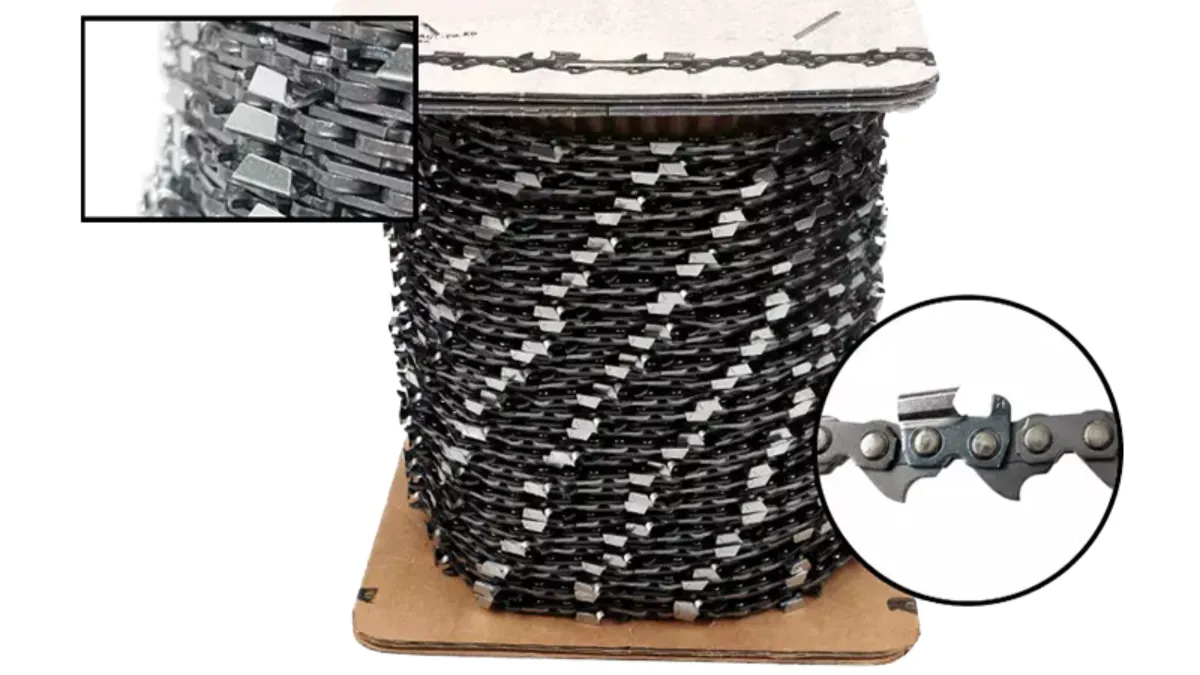
When selecting a chainsaw chain, most buyers focus on brand, bar length, o potenza del motore. Tuttavia, the real performance difference often lies in two critical technical parameters: pitch and gauge. These two measurements determine compatibility, cutting efficiency, vibration level, durability, and even operator safety.
For distributors, OEM buyers, and professional users in forestry or agriculture, it is essential to understand these engineering fundamentals. In questa guida, we break down pitch and gauge in detail, explain how they affect cutting behavior, and help you select the correct chain configuration for your market.
What is Pitch on a Chainsaw Chain?
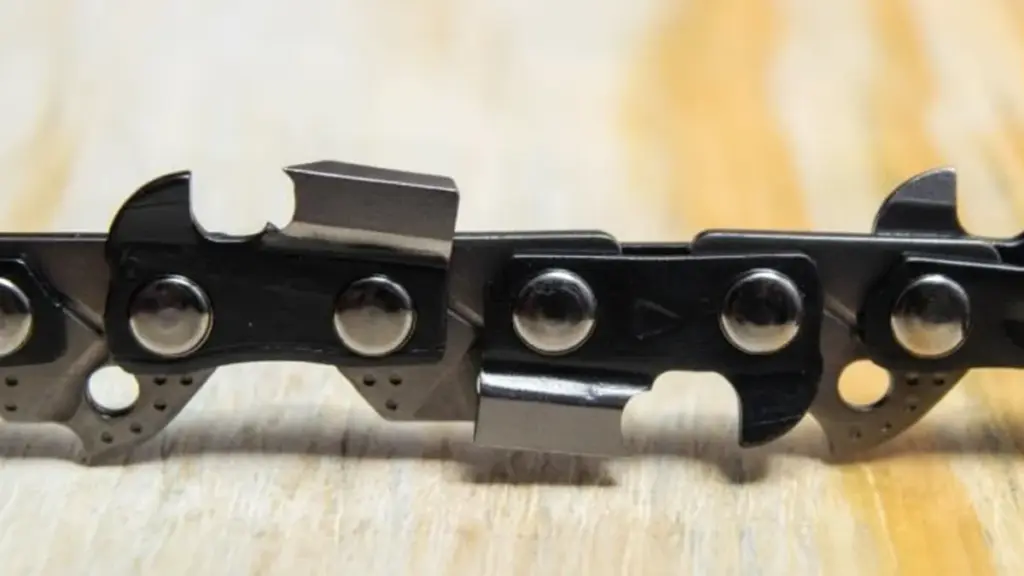
Chain pitch is the fundamental size specification of a chainsaw chain, calculated as half the distance between three consecutive rivets, and it must precisely match the guide bar and drive sprocket for safe operation.
Defining Chain Pitch
Chain pitch is the industry-standard measurement that defines the size of a chainsaw chain. You calculate it by measuring the distance between the center points of any three consecutive rivets and dividing that number by two. For a chainsaw to function correctly, this measurement must match the specifications of the saw’s guide bar and drive sprocket.
Why Pitch Compatibility is Critical
A chainsaw operates as a system where the chain pitch, chain gauge, and guide bar must be fully compatible. Using an incorrect pitch prevents the chain from seating correctly on the guide bar’s drive sprocket, which leads to equipment damage and complete operational failure.
- A mismatched chain will quickly wear down or break the drive sprocket.
- Running incompatible parts almost always voids the equipment’s warranty.
What is Gauge on a Chainsaw Chain?
Chain gauge is the thickness of the drive links, a critical measurement that must exactly match the guide bar’s groove to ensure safe, efficient operation without derailing or binding.
Defining Gauge: The Thickness of the Drive Link
The gauge of a chainsaw chain is the measured thickness of its drive links. These are the bottom, tooth-like parts of the chain that run inside the guide bar’s groove, or track. This single measurement ensures the chain fits securely, preventing excessive movement or friction. Gauge is typically expressed in thousandths of an inch, such as .050″, or in millimeters like 1.3 mm.
Why a Correct Gauge Match is Essential
Matching the chain gauge to the guide bar groove is non-negotiable for safe and effective chainsaw operation. Any mismatch introduces immediate performance and safety problems. An incorrect fit will cause the chain to behave erratically and can damage your equipment.
- Gauge too thin: If the drive links are too narrow for the bar’s groove, the chain will wobble side-to-side. This instability causes poor cutting performance and significantly increases the risk of the chain derailing from the bar during use.
- Gauge too thick: If the drive links are too wide, they will bind inside the groove. This creates excessive friction, which strains the engine, generates heat, and can stop the chain from moving at all.
Precision Saw Chains Built for Power & Profit
What Are Parts of Chainsaw Chain?
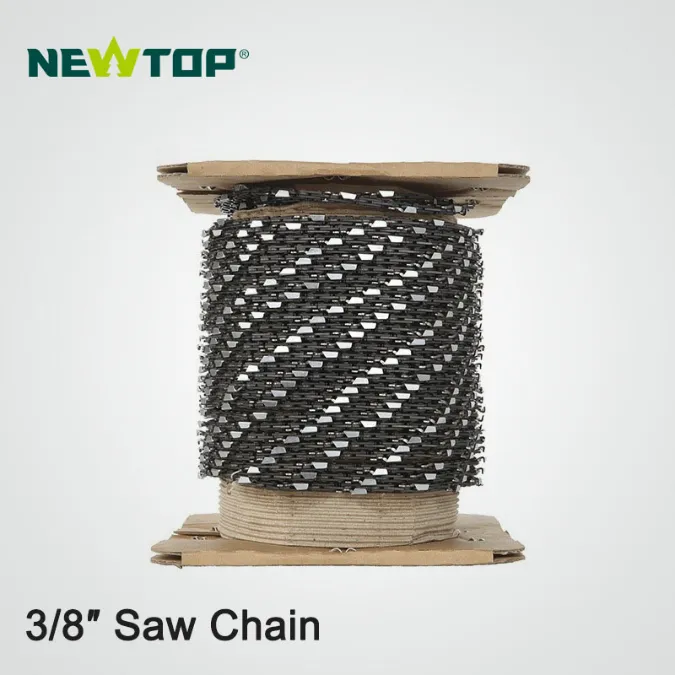
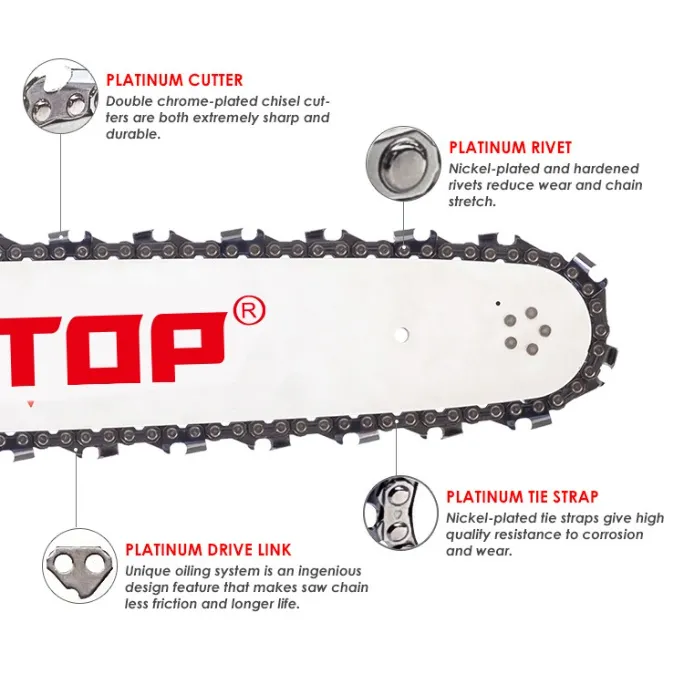
A chainsaw chain integrates three primary components—cutting links for slicing wood, drive links for power transfer, and tie straps for structural integrity—arranged in specific sequences to control cutting performance.
Cutting Links (Cutters)
These are the primary components that perform the actual cutting. Each cutter has a sharp tooth and a depth gauge (raker) that regulates how deep the tooth bites into the wood. The specific design of the cutter determines its performance in different conditions, impacting both speed and durability.
- Features a sharpened cutting corner responsible for slicing wood fibers.
- Includes a depth gauge that controls the thickness of the wood chip removed.
- Available in full-chisel, semi-scalpello, and chipper designs for different cutting conditions.
Drive Links
Drive links are the bottom part of the chain that engages with the chainsaw’s sprocket. They pull the chain around the guide bar and help distribute oil for lubrication. The thickness of these links defines the chain’s gauge, which must match the guide bar’s groove precisely for safe and effective operation.
- The part of the chain that fits into the guide bar groove and is propelled by the sprocket.
- Their thickness determines the chain’s gauge, which must match the guide bar.
- Essential for transferring power from the engine to the chain.
Tie Straps
Tie straps are connecting components that hold the cutting links and drive links together in the correct sequence. They do not cut but provide the chain with its structure and flexibility, using riveted joints to allow the chain to move smoothly around the guide bar.
- Connects all links together using riveted joints.
- Allows the chain to move flexibly around the guide bar.
- Ensures the proper spacing and arrangement of cutters and drive links.
Chain Sequence Arrangements
The sequence refers to the pattern of cutters on the chain. Common arrangements like standard, semi-skip, and full-skip affect cutting speed and smoothness, especially on longer guide bars where efficient chip clearance is a critical factor for performance.
- Standard Sequence: Has a cutter on every other link for the smoothest cut.
- Semi-Skip Sequence: Features extra space between cutter groups for better chip clearance.
- Skip Sequence: Has the most space between cutters, ideal for long bars and powerful saws.
Key Details on Chain Measurements
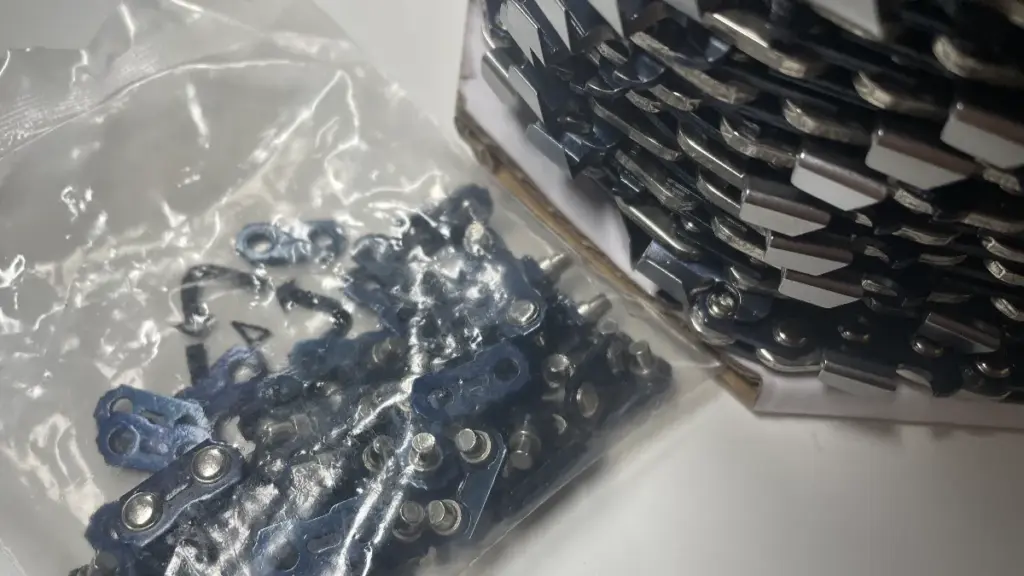
Correctly matching the chain’s pitch to the sprocket and its gauge to the guide bar is non-negotiable for safe and efficient chainsaw operation.
| Measurement | Definizione | Common Sizes |
|---|---|---|
| Passo della catena | Distance between three consecutive rivets, divided by two. Must match the drive sprocket. | 1/4″, .325″, 3/8″, .404″ |
| Calibro della catena | The thickness of the drive links. Must fit precisely into the guide bar groove. | .043″, .050″, .058″, .063″ |
Common Sizes of Pitch on a Chainsaw Chain
- 3/8″ is the most common size, especially for consumer chainsaws. Many of these saws use a lighter “low profile” O “Picco” variant for reduced kickback.
- .325″ is standard for many semi-professional and mid-range professional saws, balancing cutting speed with durability.
- 1/4″ is a smaller pitch used on lightweight residential saws or specialized carving saws where precision is key.
- .404″ is a heavy-duty pitch reserved for high-powered, large-displacement professional saws used in demanding forestry and logging operations.
Common Thickness of Pitch on a Chainsaw Chain
- The most common gauge sizes are .043″ (1.1 mm), .050″ (1.3 mm), .058″ (1.5 mm), E .063″ (1.6 mm).
- The .050″ gauge has become an industry standard for a wide range of consumer and professional chainsaws.
- To eliminate guesswork, manufacturers typically stamp the required gauge measurement directly onto the heel of the chainsaw’s guide bar.
How to Calculate Chainsaw Pitch on a Chainsaw Chain?
| Method | Description | Key Action |
|---|---|---|
| 3-Rivet Measurement | The industry-standard physical measurement to find the base distance. | Use a caliper to measure from the center of the first rivet to the center of the third. |
| Calculation | Converts the 3-rivet measurement into the final, industry-standard pitch value. | Divide the measured distance by two. |
| Stamped Markings Verification | Confirms the calculated pitch using the manufacturer’s provided specifications. | Check for numbers stamped on the guide bar, drive links, or in the owner’s manual. |
The Standard 3-Rivet Measurement Method
The universal industry method for determining chainsaw pitch involves measuring the distance between the centers of three consecutive rivets on the chain. This technique provides a consistent basis for calculation regardless of the chain’s manufacturer.
- Select any three rivets in a row on the chainsaw chain.
- Use a caliper or a precise ruler to measure the exact distance from the center of the first rivet to the center of the third rivet.
- Ensure the chain is taut but not stretched during measurement to get an accurate reading.
Applying the ‘Divide by Two’ Formula
After measuring the distance across three rivets, the final pitch is calculated by dividing that measurement by two. This simple formula converts the measurement into the industry-standard pitch size.
- Take the total distance you measured (per esempio., 0.75 inches).
- Divide this value by two to determine the pitch (per esempio., 0.75 inches / 2 = 0.375 inches).
- Convert the decimal result to its common fraction equivalent; for example, 0.375 inches is equal to a 3/8″ pitch.
Verifying Pitch Using Stamped Markings
To confirm your calculation or skip measuring altogether, check for pitch information stamped directly on the equipment. Manufacturers often provide these details on the guide bar or the chain itself to ensure compatibility.
- Inspect the guide bar, typically near the motor end, for stamped numbers indicating pitch, gauge, and drive link count.
- Examine the drive links of the chain for an identification code or number that corresponds to its pitch.
- Referencing the owner’s manual for your chainsaw also provides the correct pitch specification without needing to measure.
How to Measure Gauges on a Chainsaw Chain?
Measuring a chainsaw’s gauge—the thickness of its drive links—is a non-negotiable step for safe operation, and while calipers offer precision, checking for stamped markings on the bar is the most efficient method.
Using Tools for an Accurate Measurement
Gauge is the thickness of the drive link that fits directly into the guide bar’s groove. For a precise reading, a caliper is the most reliable tool. It provides an exact measurement in thousandths of an inch. Alternatively, a go/no-go gauge offers a quick way to confirm the correct fit without needing to read a measurement.
- Use caliper jaws to measure the thickness of a single drive link directly.
- A go/no-go gauge has two sized slots; the drive link should slide easily through the correct slot but be blocked by the smaller one.
The Coin Method for a Quick Approximation
When specialized tools are not available, you can use common coins to get a rough estimate of the gauge. This method involves fitting a coin snugly into the bar’s groove. Before attempting this, make sure the groove is completely clean of any wood chips, oil, or debris to avoid an inaccurate reading.
- A U.S. dime is approximately 0.050″ thick.
- A U.S. penny is approximately 0.058″ thick.
- A U.S. quarter is approximately 0.063″ thick.
Finding Existing Markings and Common Sizes
The easiest way to identify the correct gauge is to inspect the chainsaw bar itself. Manufacturers typically stamp the required specifications, including gauge, directly onto the metal near the mounting point. This eliminates any need for manual measurement. Matching the gauge is critical; a chain that is too thin can derail from the bar, while a chain that is too thick will bind, creating excessive friction and heat.
Standard gauge sizes you will encounter include .043″, .050″, .058″, E .063″.
Pros and Cons of High-Profile vs Low-Profile Pitch Designs
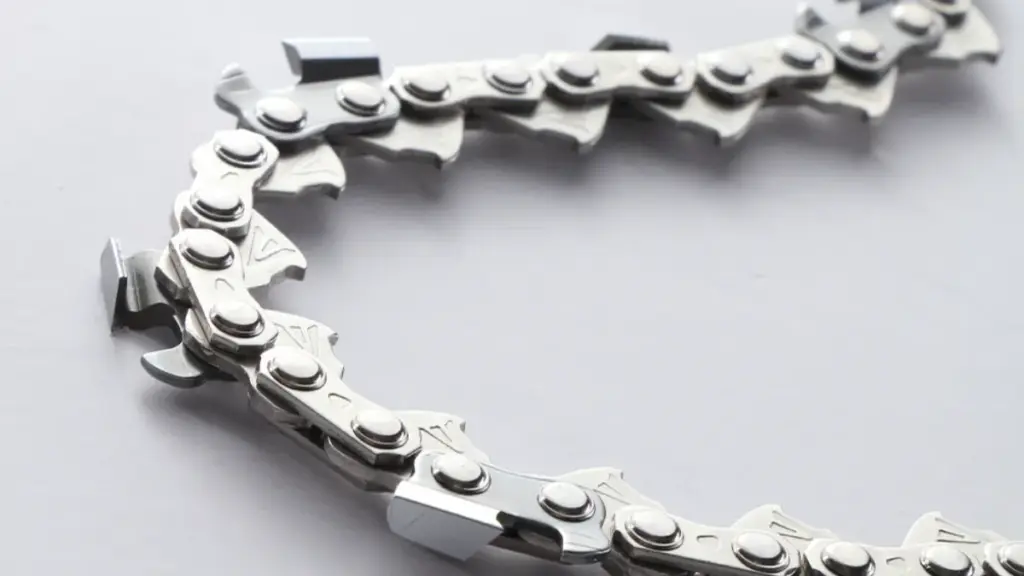
The choice between high-profile and low-profile chain pitch is a direct trade-off between the aggressive cutting power required for professional forestry and the enhanced safety features necessary for residential use.
High-Profile Chains: Performance and Applications
High-profile, or standard, chains are built for professional and heavy-duty applications. They prioritize cutting speed and power, making them the top choice for forestry work and tasks that require high-performance from gas-powered saws.
- Optimized for aggressive cutting and efficiency in demanding jobs.
- Best paired with chainsaws that have larger engine displacements.
- Carries a higher risk of kickback, requiring skill and experience to handle safely.
Low-Profile Chains: Safety and Accessibility
Low-profile chains dominate the consumer and residential market. Their design incorporates safety features that reduce kickback, making them ideal for homeowners, light-duty work, and electric or battery-powered saws.
- Engineered to minimize the intensity and frequency of kickback.
- Delivers a smoother, more controlled cut, which is great for less experienced users.
- Works well with lower-power saws and is common on equipment for general yard maintenance.
Key Trade-Offs: Durability and Maintenance
Choosing between the two designs comes down to balancing performance with safety. High-profile chains are more durable for high-production environments, but low-profile chains offer accessibility at the cost of faster wear.
- Standard chains typically last longer under constant professional use.
- Low-profile chains are built with user safety as the priority, which can affect their overall toughness.
- Professionals select pitch based on the specific cutting task, while consumers benefit from the built-in safety of low-profile chains.
How to Select Pitch Based on Your Chainsaw Sprocket Type
A chainsaw’s chain pitch must exactly match its drive sprocket pitch; any mismatch will damage the saw and create a significant safety risk.
| Sprocket Type | Key Characteristic | Pitch Flexibility |
|---|---|---|
| Spur Sprocket | A single, solid component with teeth integrated directly into the main body. | Fixed. The pitch cannot be changed without replacing the entire sprocket assembly. |
| Rim Sprocket | A two-piece system with a central drum and a separate, replaceable rim that holds the teeth. | Modular. The pitch can be changed by swapping only the rim for a different size. |
Matching Sprocket Pitch with Chain Pitch
The single most important rule when selecting a chain is that its pitch must exactly match the pitch of the drive sprocket. Using mismatched components causes rapid wear on the drive links, sprocket, and guide bar. This leads to poor cutting performance and creates potential safety hazards from chain slippage or breakage. This compatibility is non-negotiable for proper chainsaw function.
- Your chainsaw’s sprocket, guide bar, and chain must all be designed for the same pitch measurement (per esempio., .325″, 3/8″).
- Check the sprocket itself for a stamped number indicating its pitch; this is the primary measurement to follow.
- A mismatch prevents the chain’s drive links from seating correctly in the sprocket’s teeth, causing chain slippage and damage.
Identifying Your Sprocket Type: Rim vs. Spur
Chainsaws use one of two sprocket types to drive the chain: a spur sprocket or a rim sprocket system. While both perform the same function, the rim sprocket system offers more flexibility for changing the saw’s pitch. Identifying which type your saw has helps determine the easiest path for component selection and replacement.
- A spur sprocket is a single, solid piece with teeth that directly engage the chain. Its pitch is fixed.
- A rim sprocket consists of a central drum and a separate, replaceable rim that contains the teeth.
- With a rim sprocket, you can change your saw’s pitch by simply swapping the rim for one with a different pitch measurement, as long as a compatible bar and chain are also used.
Using Manufacturer Specifications for Guaranteed Compatibility
To eliminate guesswork, always refer to the manufacturer’s technical specifications for your chainsaw model. As of 2026, most professional-grade manufacturers provide detailed compatibility charts that ensure all components work together seamlessly as an integrated system. Sticking to these official recommendations is the surest way to guarantee both safety and performance.
- Consult your chainsaw’s owner’s manual, which lists the original equipment (OEM) specifications for pitch.
- Look for compatibility charts on the manufacturer’s website or in product catalogs for your specific saw model.
- Following these official recommendations ensures that the chain, sbarra, and sprocket combination has been tested for safety and optimal performance.
Why Choose NEWTOP Factory-Pitched Chains for Durability?
Direct factory oversight, from CNC machining to final quality control, produces chains with precise pitch and material integrity, resulting in longer operational life and reliable performance.
At NEWTOP, chain pitch and gauge are engineered as part of a complete power transmission system — not treated as isolated components.
Our chains are manufactured with:
- CNC-precision rivet spacing
- Heat-treated drive links
- High-carbon alloy steel cutters
- Compatibility testing with Oregon-standard sprocket geometry
We collaborate with global component suppliers such as Oregon and Walbro standards to ensure dimensional accuracy and durability.
With over 500,000 units annual production capacity and exports to 65+ Paesi, NEWTOP chains are designed for:
- Forestry logging
- Agricultural wood cutting
- Firewood preparation
- Commercial landscaping
For OEM partners, we offer:
- Custom pitch and gauge configurations
- Anti-corrosion coating options
- Packaging customization
- Private label branding
When durability, precisione, and global compatibility matter, factory-matched pitch systems reduce field failure rates and increase long-term customer satisfaction.
Conclusione
Selecting the correct pitch and gauge for your chainsaw chain is essential for both safety and performance. These precise measurements ensure compatibility with your guide bar and sprocket, preventing equipment damage and maximizing cutting efficiency. A proper match delivers a smoother, faster cut while reducing the risk of kickback.
To ensure your equipment is always ready, take a moment to confirm the pitch and gauge requirements for your saws. If you’re looking for durable, factory-specified chains that eliminate guesswork, our team can provide a full product catalog.
Domande frequenti
What does 3/8 LP pitch mean?
3/8 LP stands for 3/8-inch low-profile pitch. It has the same rivet spacing as standard 3/8″, but smaller cutter height to reduce kickback and engine load.
What does .325 pitch mean on a chainsaw?
.325 pitch refers to a chain where the rivet spacing divided by two equals 0.325 inches. It is commonly used on mid-sized chainsaws for balanced cutting performance.
Is .325 O 3/8 pitch better for firewood?
The better pitch for firewood depends on your chainsaw’s power. A .325″ pitch chain is more efficient on saws between 40-60cc, offering a smoother cut with less vibration. For more powerful saws (60cc+), the larger 3/8″ pitch is superior, as its bigger cutters remove wood more aggressively for faster cutting of large-diameter logs.
What is the difference between a 3.8 and a .325 chainsaw chain?
The primary difference is cutter size and spacing. 3/8″ chains have larger cutters and remove more material per pass, while .325 chains offer smoother handling and moderate engine demand.
What pitch is best for a chainsaw?
The best pitch depends on engine size and intended application. Small homeowner saws often use 3/8″ LP. Mid-range saws use .325. Professional forestry saws use 3/8″ standard or .404.
Can you run a different pitch chain on the same bar?
NO, you cannot run a different pitch chain on the same bar. The chain’s pitch must perfectly match the guide bar’s nose sprocket and the saw’s drive sprocket. A mismatch will prevent the chain from seating correctly, leading to rapid wear, equipment damage, and a significant safety risk. Always use the pitch specified for your bar.
What happens if I use the wrong gauge chain?
Using the wrong gauge chain creates poor performance and a serious safety hazard. If the gauge is too thin, the chain will fit loosely in the bar groove, causing instability, poor oiling, and a high risk of derailing. If the gauge is too thick, it will not fit in the bar groove at all, making operation impossible.
Is 3/8 low profile the same as 3/8 standard?
NO, 3/8″ low profile (LP) is not the same as a standard 3/8″ catena. While both share the 0.375-inch pitch measurement, the LP version has a smaller chassis with shorter cutters and depth gauges. This design reduces kickback and is intended for smaller, less powerful saws. They are not interchangeable and require different drive sprockets.
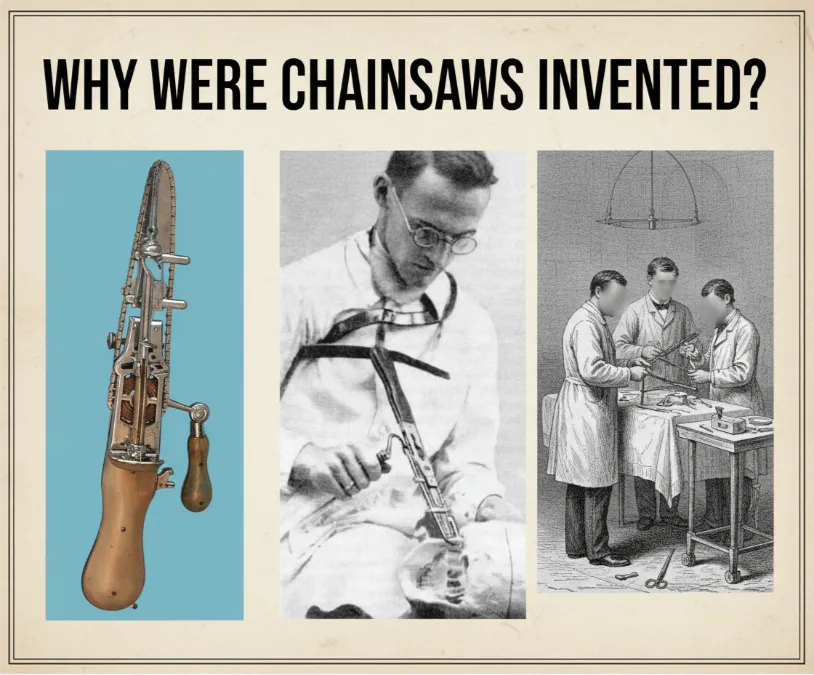
Chainsaws are now inseparable from forestry, logging, land clearing, and professional arboriculture. Yet when you search “why were chainsaws invented?”, you may be surprised to discover that their origin story has little to do with cutting timber.
Understanding the evolution of chainsaws—from early medical instruments to today’s high-performance gas and lithium-powered machines—reveals how technological innovation responds to real human needs. It also explains why modern chainsaws are engineered the way they are: potente, durable, ergonomic, and safety-focused.
In this article, we’ll explore the original purpose of chainsaws, how they transitioned into forestry tools, and how they evolved into the indispensable outdoor power equipment we rely on today.
Why Were Chainsaws Invented in the First Place?
Contrary to popular belief, the chainsaw was developed in the late 18th century not for forestry, but as a surgical instrument to assist in difficult childbirths.
Chainsaws were invented in the late 18th century to solve a medical problem—not a logging one.
Before modern surgical techniques and anesthesia, certain childbirth complications required physically enlarging the pelvic bone to allow delivery. Traditional surgical tools were slow and traumatic. Doctors sought a more efficient way to cut bone with greater precision and less time under procedure.
This led to the development of an early chain-and-blade device that could rotate around bone and cut in a controlled manner. It was manually operated and far removed from the powerful engine-driven machines we associate with chainsaws today.
The underlying concept, however, was revolutionary:
- A continuous chain with cutting teeth
- Guided around a bar or frame
- Designed for repetitive cutting motion
This mechanical principle—rotating cutting teeth on a chain—would later become the foundation of modern chainsaw technology.
The Original Use of Chainsaws in Medical History
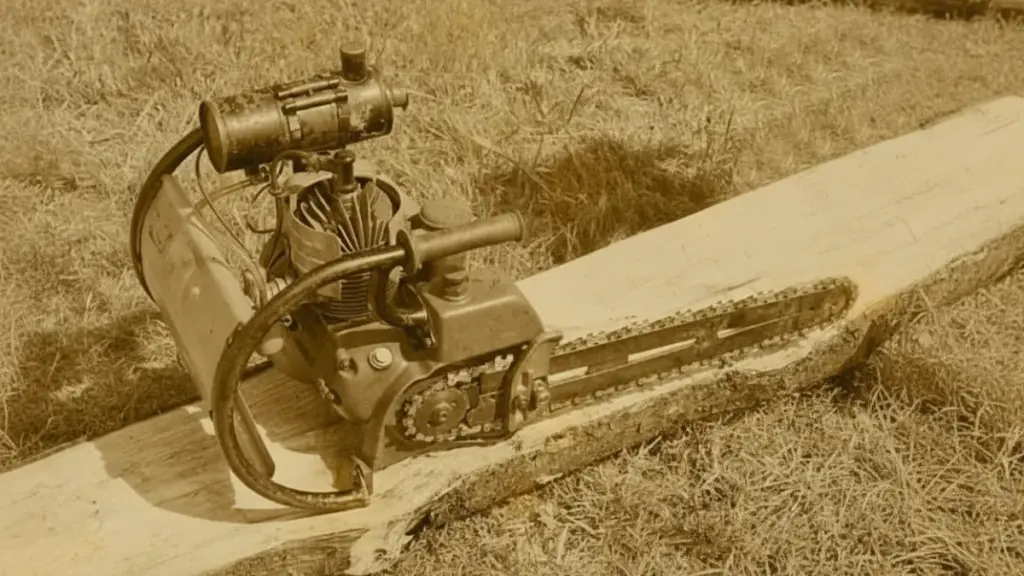
The chainsaw originated not in forestry but in late 18th-century operating rooms as a hand-cranked surgical instrument for bone cutting, primarily during obstructed childbirth.
| Key Development | Inventor / Key Figure | Primary Application |
|---|---|---|
| Initial Surgical Saw Concept | John Aitken & James Jeffray (c. 1785) | Symphysiotomy (widening pelvis during childbirth) and bone excision. |
| The Osteotome | Bernhard Heine (c. 1830) | Standardized tool for various surgical bone-cutting operations. |
| Transition to Industrial Use | N/A (Industry Shift) | Repurposed for woodcutting as medical practices evolved. |
Invention for Childbirth and Bone Surgery
Around 1785, Scottish doctors John Aitken and James Jeffray developed the first chainsaw as a surgical instrument. Its purpose was to perform a symphysiotomy—a procedure that widened the pelvis during obstructed childbirth by cutting through bone and cartilage. Before this invention, surgeons relied on manual knives, making the process slow and dangerous. The chainsaw provided a faster and more precise method for this operation and was also used for the excision of diseased bone.
The Osteotome: A Surgical Refinement
The medical chainsaw concept continued to evolve. In 1830, German physician Bernhard Heine created a more refined version called the osteotome. This was a hand-cranked device featuring a cutting chain that ran along a guiding blade, giving surgeons better control and precision during bone excisions. Heine’s osteotome became a standard surgical tool and remained in use throughout much of the 19th century for various bone-cutting procedures.
Transition from Operating Room to Forest
By the early 20th century, the medical chainsaw’s use declined sharply. The primary reason was the increased safety and viability of the Cesarean section, which made the symphysiotomy procedure obsolete. With its original purpose gone, the core technology was adapted for an entirely new field: woodcutting. This shift marked the beginning of its transformation from a specialized surgical instrument into the powerful forestry tool we recognize today, paving the way for motorized, portable designs.
When Did Chainsaws Start Being Used for Woodcutting?
The chainsaw’s shift from a medical instrument to a forestry tool began with late 19th-century patents and became practical with the introduction of portable, motorized designs in the early 20th century.
Early Patents for Woodcutting
The transition of chainsaw technology from surgical applications to forestry began in the late 19th century. Frederick L. Magaw received the first patent for a wood-cutting “chain sawing machine” in 1883, envisioning a tool for producing boards. This was followed by a 1906 patent for an “Endless Chain Saw,” which was specifically engineered to fell giant redwood trees. These early patents established the conceptual framework for using a continuous cutting chain in the timber industry, even if practical, portable models were still decades away.
The First Motorized and Portable Chainsaws
Moving from patent to practice required a power source. The first known experiment with a gasoline-powered chainsaw took place in 1905 in Eureka, California, proving that motorization was a viable path forward. The next critical step was portability. In 1918, Canadian James Shand developed and patented the first truly portable chainsaw. This innovation was a significant shift, as it allowed the tool to be brought directly to the trees, setting the stage for its eventual widespread use in remote logging operations.
Establishment as a Standard Forestry Tool
The 1920s marked the commercial birth of the modern chainsaw. Andreas Stihl designed the first electric model in 1926 and followed it with a petrol-driven version in 1929. These machines, while heavy and often requiring two operators, were effective enough to gain traction in the forestry industry. The final milestone that cemented the chainsaw as an essential tool came around 1950 with the introduction of the first one-man model. This development made it possible for a single operator to work independently, dramatically increasing productivity and accelerating the tool’s adoption worldwide. His company, STIHL, would later become one of the most recognized names in the industry.
The Evolution of Chainsaws Over Time
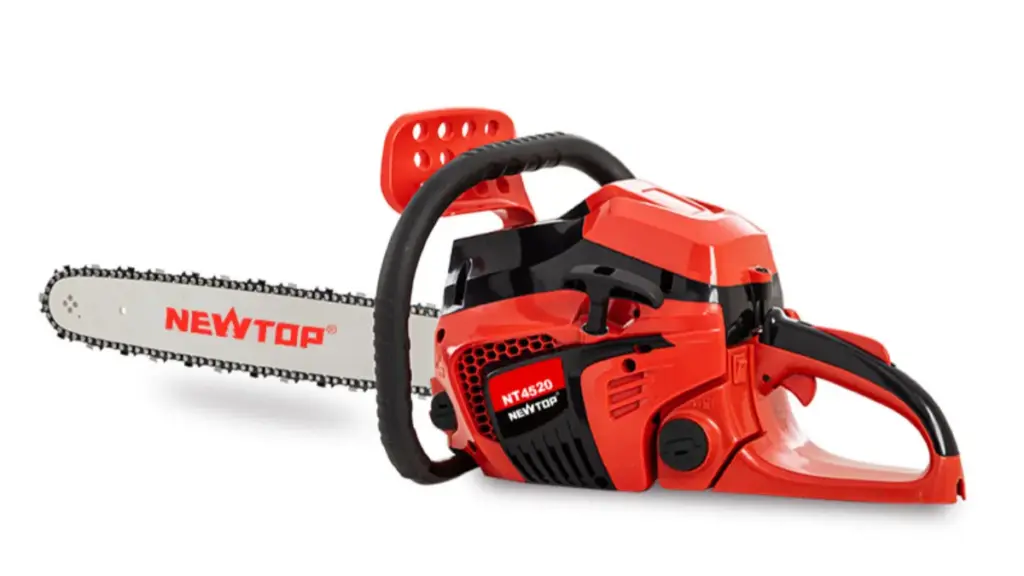
Chainsaw evolution is a story of shedding weight and complexity, moving from massive two-operator industrial machines to lightweight, single-user tools engineered for safety, efficienza, and versatility.
| Era | Key Development | Peso & Operator Impact |
|---|---|---|
| 1920s–1940s | First Gas & Electric Models | Extremely heavy (100+ libbre / 45+ kg); required two operators. |
| 1950S | The First One-Man Chainsaw | Weight reduced to 25–35 lbs (11–16 kg), enabling single-person use. |
| 1960s–1980s | Improved Power-to-Weight & Sicurezza | Weight dropped to ~15 lbs (6.8 kg); anti-vibration systems introduced. |
| 1990s–Present | Emphasis on Safety & Emissioni | Standard models 9–11 lbs (4–5 kg); chain brakes and low-emission engines are standard. |
The evolution of chainsaws mirrors the broader development of outdoor power equipment.
Early Industrial Chainsaws (1920s–1940s)
Early gas-powered models weighed over 40–60 pounds (18–27 kg). They were bulky and difficult to maneuver. Despite this, they represented a massive improvement over manual saws in terms of cutting speed and output.
Post-War Technological Improvements (1950s–1970s)
After World War II, advancements in lightweight alloys and two-stroke engine design made chainsaws more compact and powerful. One-person operation became feasible.
Brands such as Husqvarna and McCulloch helped popularize consumer-grade chainsaws.
During this period, innovations included:
- Anti-vibration systems
- Improved chain brake mechanisms
- Automatic chain lubrication
- Better carburetion systems
These changes improved both performance and operator safety.
Modern High-Performance Era (1980s–Present)
Today’s chainsaws are engineered for durability, power efficiency, and user comfort. They are available in multiple configurations:
- Gasoline-powered chainsaws
- Corded electric chainsaws
- Lithium battery-powered chainsaws
Professional forestry chainsaws now deliver optimized power-to-weight ratios, precision-engineered guide bars, and advanced chain designs for reduced kickback and smoother cutting.
Allo stesso tempo, battery chainsaws are rapidly growing in popularity for landscaping, manutenzione comunale, and home garden applications due to:
- Lower noise levels
- Zero direct emissions
- Reduced maintenance
- Instant start functionality
The evolution reflects not only mechanical innovation but also changing environmental regulations, user expectations, and global market demands.
Modern Uses of Chainsaws Today
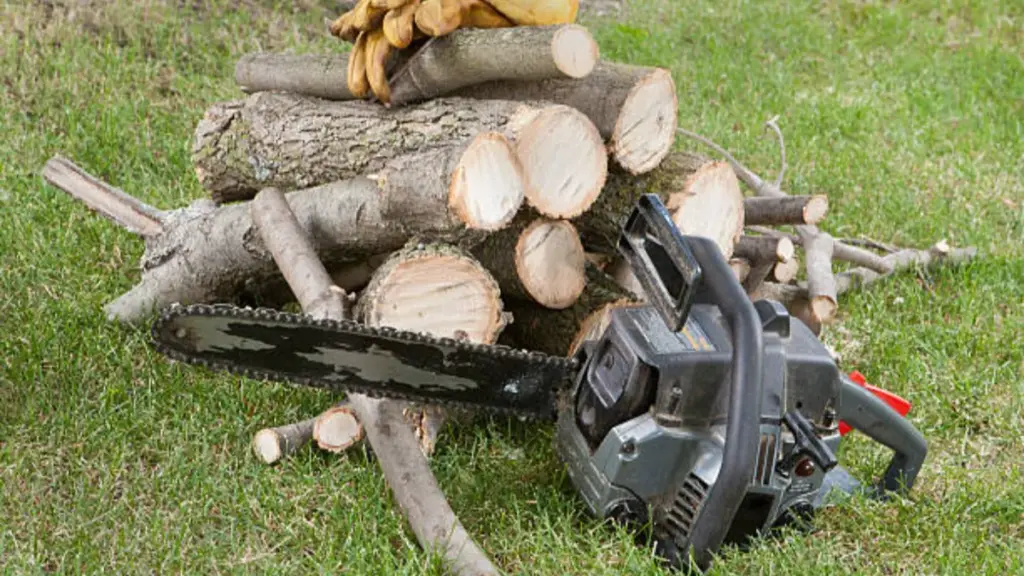
Modern chainsaws have expanded beyond traditional logging into specialized professional roles like mass-timber construction, post-storm salvage, and utility vegetation management.
Modern chainsaws are no longer limited to logging. Their applications span multiple industries:
- Forestry and timber harvesting
- Arborist tree trimming
- Land clearing and agriculture
- Disaster recovery and storm cleanup
- Construction and demolition
- Firewood processing
- Garden and property maintenance
Professional logging chainsaws are engineered for extended operation under heavy loads, often exceeding 300 hours of durability under standardized testing conditions. Nel frattempo, mid-range and entry-level models serve farmers, contractors, and DIY users. Battery-powered models have expanded chainsaw accessibility, particularly in emerging markets where portability and low maintenance are valued.
Per distributori and agricultural equipment suppliers looking for reliable mid-range solutions, brands such as NEWTOP (Shanghai-based outdoor power equipment manufacturer since 2003) provide a comprehensive portfolio covering gasoline, electric, and lithium-powered chainsaws. Explore our full range of chainsaws and request a personalized quote today to find the model that fits your market needs.
Common Myths and Misconceptions About Chainsaw Origins
The most persistent myths about chainsaw origins incorrectly attribute the tool to forestry and German inventors, masking its true 18th-century Scottish medical roots and the 140-year gap before its adoption for woodcutting.
Myth 1: Chainsaws Were Invented for Cutting Trees
The primary misconception is that chainsaws were designed for forestry. All evidence shows the tool was created as a medical instrument. Scottish doctors John Aitken and James Jeffray developed the first prototypes between 1783 E 1785 to cut bone during difficult childbirths, a procedure known as a symphysiotomy. Their device was a hand-cranked saw with a segmented blade, designed for surgical precision, not felling timber. Its purpose was to make a dangerous and slow medical procedure faster and safer.
Myth 2: A German Inventor Created the First Chainsaw
Another common belief credits German inventors with the chainsaw’s creation, but this confuses motorization with invention. The tool’s origin is Scottish, predating any German contributions by several decades. While the foundational concept was a Scottish medical innovation, German engineers like Andreas Stihl played a critical role in adapting and motorizing the chainsaw for forestry applications in the 1920s. They transformed the existing concept into a powerful industrial tool, but they did not invent the original device.
Myth 3: The Tool Quickly Evolved from Surgical to Logging Use
Many people underestimate the timeline of the chainsaw’s evolution. There was a significant gap of over 140 years between its use as a precision surgical device and its adaptation as a motorized woodcutting tool. The medical prototype existed in the 1780s, but powered forestry tools based on the same principle did not appear until the 1920s. This slow transition highlights the massive engineering leap required to convert a small, hand-cranked surgical instrument into a robust, engine-powered machine capable of industrial logging.
Conclusione
The chainsaw began as a surprising medical device and evolved into the powerful woodcutting tool we recognize today. Its history is a clear example of how a tool’s function can dramatically change through innovation. Modern designs reflect over a century of development focused on operator safety and efficiency.
If this history makes you reconsider your own equipment, explore our catalog of modern chainsaws built for safety and performance. Our specialists can help you select the right tool for your application.
Domande frequenti
Was the chainsaw really invented for childbirth?
Partially. The original late-18th-century chain osteotome was designed to assist in bone-cutting procedures, including certain childbirth complications. Tuttavia, it was not comparable to modern woodcutting chainsaws.
Who invented the first gas-powered chainsaw?
German engineer Andreas Stihl is credited with patenting one of the first practical gasoline-powered chainsaws in 1929, laying the foundation for commercial forestry chainsaw development.
What did the first chainsaw look like?
The earliest version resembled a small hand-cranked surgical instrument with a serrated chain loop—not an engine-powered machine.
How heavy were original industrial chainsaws?
Early 20th-century industrial chainsaws often weighed between 40 E 60 pounds (18–27 kg) and required two operators
Why did chainsaws replace manual crosscut saws?
Chainsaws dramatically increased cutting speed, reduced labor requirements, and improved productivity in large-scale timber harvesting. Col tempo, improved reliability and fuel efficiency made them economically advantageous.
What were chainsaws invented for?
Chainsaws were originally invented for surgical bone cutting. They were later adapted for forestry and industrial woodcutting, eventually becoming essential tools in logging, agricoltura, paesaggistico, and construction.
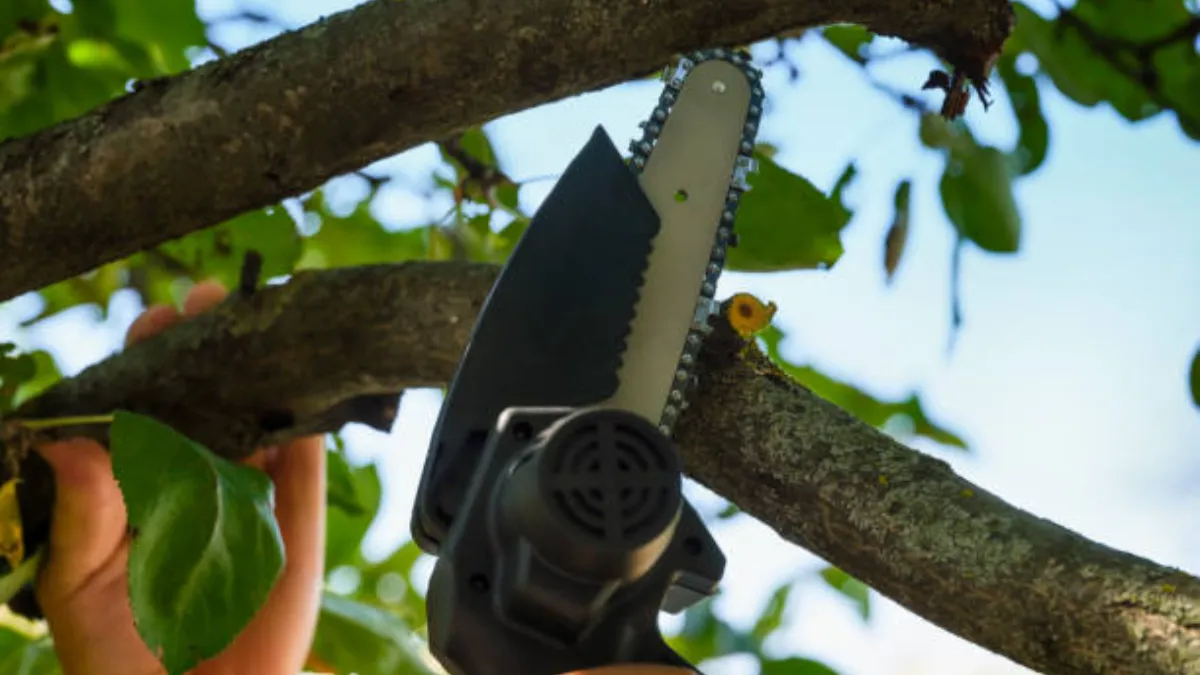
As we head into 2026, the landscape of garden maintenance is shifting toward efficiency, ergonomics, and cordless freedom. Compact and powerful, mini chainsaws are revolutionizing garden maintenance with their lightweight design and cordless convenience. Ideal for pruning, rifilatura, and light woodcutting, these handheld pruning tools offer efficiency without the bulk of full-size models.
In questa guida, we explore the best mini chainsaw selections for 2026, focusing on the technological advancements in lithium-ion systems and why these compact powerhouses are becoming a staple in every tool shed.
What is a Mini Chainsaw? The Rise of Handheld Pruning
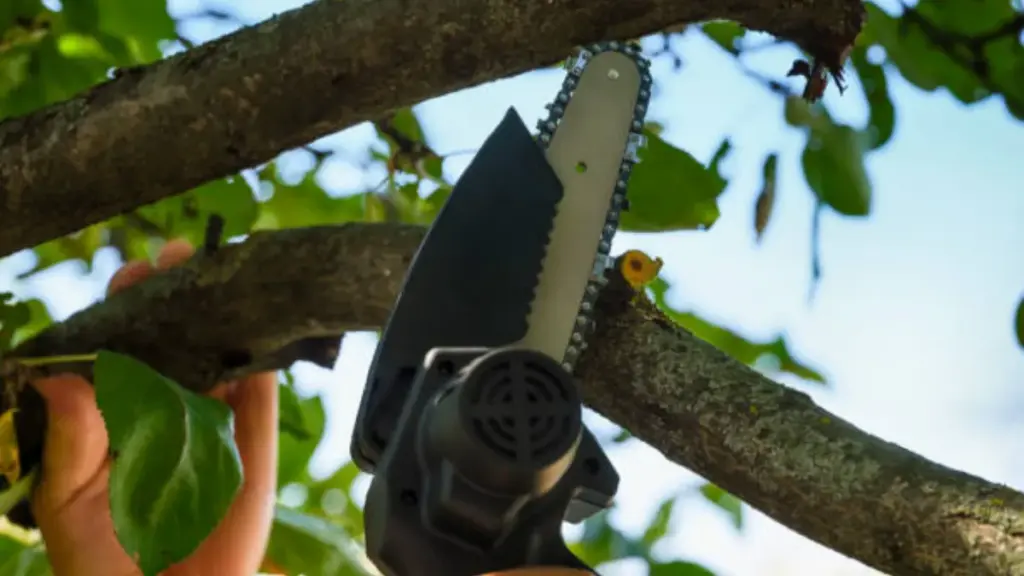
Di 2026, the mini chainsaw has evolved from a niche professional tool into a mainstream, battery-powered solution for homeowners, driven by a demand for accessible and less physically demanding pruning equipment.
The modern mini chainsaw is a lightweight, user-friendly alternative to traditional models, engineered specifically for light-to-moderate cutting. Its market growth is a direct response to consumer and prosumer demand for compact, accessible tools that don’t require the physical strength or experience level of larger, gas-powered saws. The core design prioritizes convenience and control over raw power, making it a practical tool for routine property maintenance.
- Most models are cordless and battery-powered, offering maximum portability for work around a property.
- Designs emphasize ergonomic handling to give the user better control and reduce fatigue during use.
- They are built for tasks like pruning tree limbs, trimming overgrown shrubs, and cutting wood for small-scale DIY projects.
Key Technological Trends in 2026
Recent technological advancements focus on improving power efficiency, operator safety, and overall convenience. Manufacturers have concentrated on refining battery systems and integrating robust safety measures to make these tools more reliable for a broader user base. This engineering push has moved mini chainsaws from a novelty item to a dependable piece of equipment for residential use, where low noise and ease of handling are critical purchasing drivers.
- The industry has widely adopted high-efficiency copper motors and quick-charging lithium-ion battery systems.
- Advanced safety features like automatic chain brakes and low-kickback chains are becoming standard.
- Modern designs significantly reduce noise and vibration, making them suitable for use in suburban environments.
Expanding Applications Beyond Professional Use
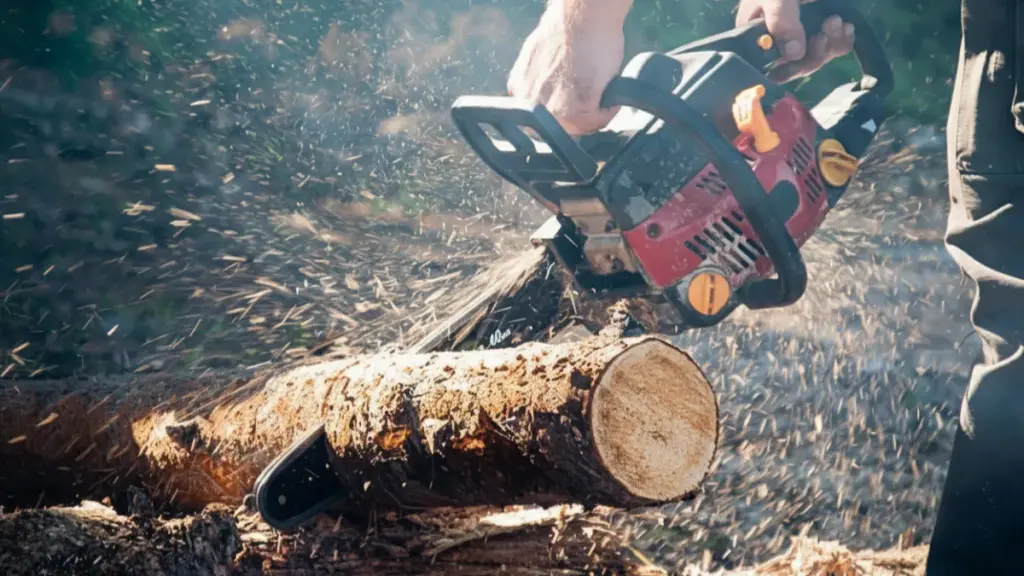
Mini chainsaws have successfully transitioned from a specialized tool for arborists into a versatile instrument for the average consumer. Their simple operation and manageable size have unlocked new applications in general household maintenance, outdoor recreation, and even emergency preparedness. This shift reflects a larger trend toward compact, battery-powered tools that solve everyday problems without the complexity of traditional equipment.
- Widely used for home gardening, pruning limbs, and clearing small patches of brush.
- A common tool in DIY projects for making quick, clean cuts in various wood materials.
- Serves as a practical addition to kits for camping, trail maintenance, and storm cleanup.
Pros and Cons of Mini Chainsaws for Garden Maintenance
The primary trade-off with mini chainsaws is clear: they provide exceptional convenience and portability for light tasks but are fundamentally limited by battery endurance and cutting power, making them unsuitable for heavy-duty applications.
| Aspect | Pro | Contro |
|---|---|---|
| Portability | Ultra-light (2-6 libbre), one-handed use | Limited to small jobs |
| Energia | Brushless motors, 100+ cuts/charge | Struggles with thick wood |
| Manutenzione | Auto-oiler, tool-free tension | Battery life varies (20-60 min) |
| Costo | Affordable ($50-200) | Premium brands pricier |
Advantages for Home Gardeners
Mini chainsaws excel in routine garden maintenance because their design prioritizes user-friendliness. Homeowners gain significant benefits from their portability and low maintenance, especially for light pruning and trimming where a full-size saw would be excessive. The market shift toward these tools reflects a demand for accessible, eco-friendly equipment for residential property upkeep.
- Portability and Lightweight Design: The compact size makes them easy to handle for quick jobs, reducing the physical fatigue commonly associated with heavier, gas-powered equipment.
- Cordless Convenience and Low Maintenance: Lithium-ion battery power completely removes the need for mixing fuel and oil. This simplifies operation and drastically reduces the engine upkeep required by traditional saws.
- Quiet, Zero-Emission Operation: Battery power means less noise, making them ideal for use in suburban or residential areas. They produce no direct emissions, which is a strong purchasing driver for environmentally conscious users.
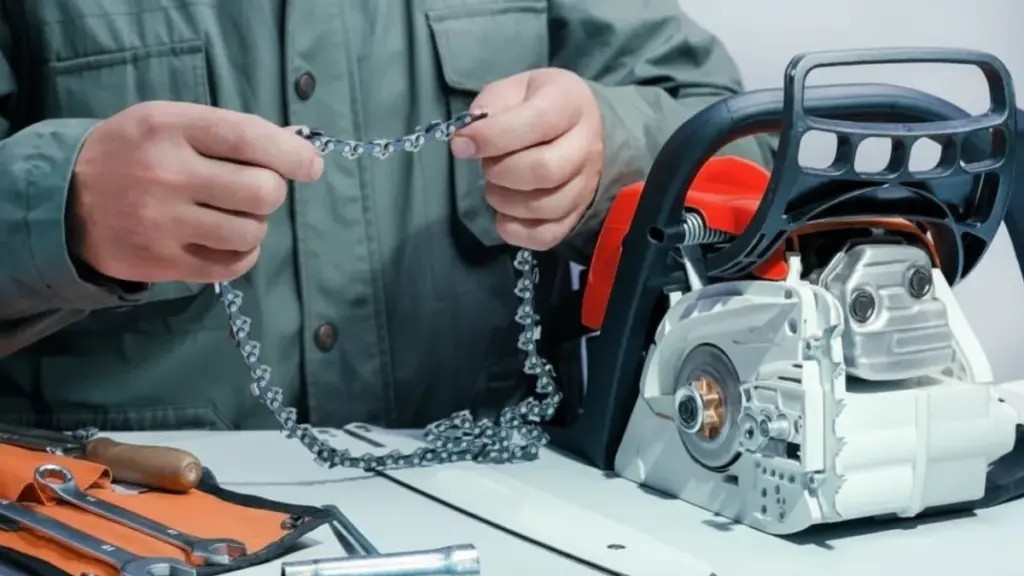
Limitations and Practical Drawbacks
While convenient, the practical limits of a mini chainsaw are defined by its power output and battery life. These drawbacks confine their use to light-duty jobs and make them an inappropriate choice for any demanding or professional forestry work. The core design prioritizes ease of handling over raw performance.
- Limited Power and Cutting Capacity: These tools struggle with thick branches, dense hardwoods, or any task beyond simple trimming. Their motors lack the torque for more substantial cutting jobs.
- Battery Endurance and Recharge Cycles: Operating time is strictly limited by battery capacity. Larger jobs are often interrupted by the need to swap batteries or wait through long recharge cycles.
- Not Suited for Heavy-Duty or Professional Use: The trade-off for portability is a direct loss of power and durability. They do not meet the performance or ruggedness standards required for professional landscaping or felling trees.
Equip Your Market with Pro-Grade Garden Tools

Top Rated Mini Chainsaw Models for 2026: A Comparative Review
Per 2026, the best mini chainsaws combine agility with cutting performance, offering reliable solutions for both homeowners and professionals. Below, we review the top-performing mini chainsaws currently defining the market, ranging from high-end gas models to ergonomic lithium-ion pruners.
NEWTOP NT2500 Chainsaw – Best for Professional Pruning
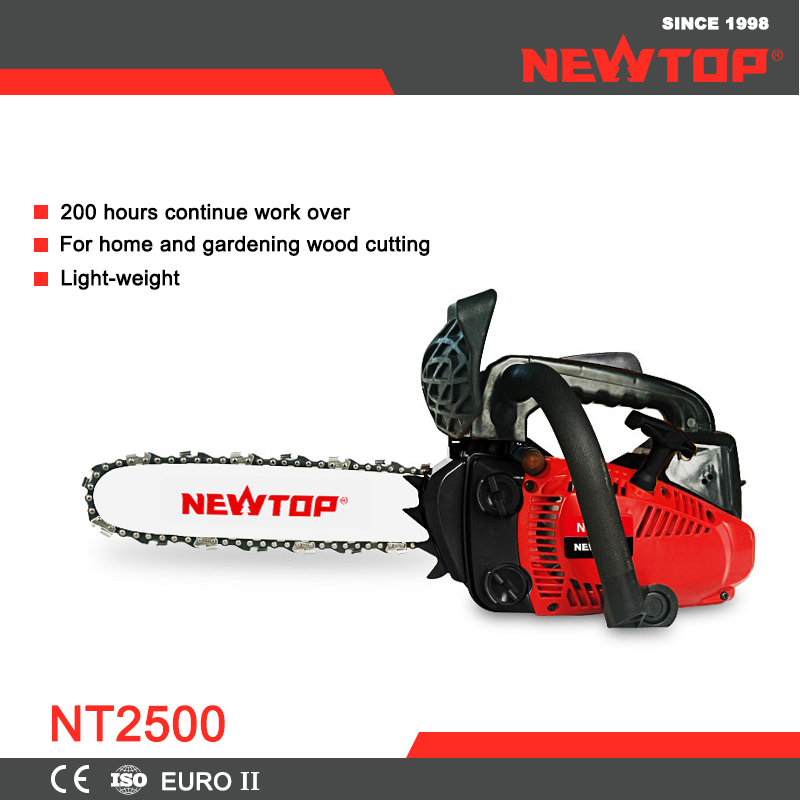
The NEWTOP NT2500 is a gas-powered top-handle chainsaw designed for arborists and demanding tasks. Its 25.4cc engine and 12-inch bar provide sustained power for cutting branches up to 8 inches thick. Built with premium components like Walbro carburetors and EURO II compliance, it ensures durability and consistent torque for all-day use.
- Engine: 25.4cc 2-stroke (0.9kW/1.2HP)
- Bar Length: 12 inches (30.4cm)
- Peso: 3.5kg dry (7.7libbre)
- Features: Anti-vibration system, digital ignition, 230ml fuel tank
| Pro | Contro |
|---|---|
| Unlimited runtime with fuel refills; high torque for dense wood | Requires fuel mixing and regular engine maintenance |
| Professional-grade durability with CE/GS/EPA certifications | Louder operation than electric alternatives |
Milwaukee M18 FUEL Hatchet – Best for Heavy-Duty Speed
The Milwaukee M18 FUEL Hatchet delivers impressive power and speed, making it a favorite among professional landscapers. Integrated into the M18 battery system, it cuts through 3-inch hardwoods effortlessly and offers up to 120 cuts per charge. Its ergonomic design and metal bucking spikes provide superior control during intensive pruning sessions.
- Voltage: 18V Lithium-Ion
- Bar Length: 8 inches
- Peso: 4.9libbre (bare tool)
- Features: Brushless motor, automatic oiler, variable speed trigger
| Pro | Contro |
|---|---|
| Extremely fast cutting speed; robust build quality | Premium price point compared to consumer models |
| Compatible with extensive M18 tool ecosystem | Heavier than typical 6-inch mini chainsaws |
Ryobi 18V ONE+ HP – Best for Homeowner Versatility
Ryobi’s 18V ONE+ HP mini chainsaw strikes a perfect balance between performance and convenience for DIY enthusiasts. Part of the massive ONE+ system, it features a brushless motor that extends motor life and runtime. The compact 6-inch bar is ideal for trimming limbs and managing garden overgrowth with minimal fatigue.
- Voltage: 18V Lithium-Ion
- Bar Length: 6 inches
- Peso: 3.7libbre (bare tool)
- Features: Tool-free chain tensioning, ambidextrous trigger, oil-free design
| Pro | Contro |
|---|---|
| Excellent value; battery works with 260+ tools | Slower cutting speed on hardwoods |
| Lightweight and easy to maneuver for beginners | Lack of auto-oiler requires manual lubrication |
Stihl GTA 26 – Best for Precision Garden Detail
The Stihl GTA 26 is an ultra-compact battery pruner engineered for detailed garden work and maximum portability. Its unique design allows for precise cuts on shrubs and small trees where larger saws cannot reach. While not a heavy-duty feller, its quiet operation and thoughtful ergonomics make it perfect for residential noise-sensitive areas.
- Voltage: 10.8V Lithium-Ion
- Bar Length: 4 inches
- Peso: 2.7libbre (with battery)
- Features: LED charge indicator, flexible protective hood, tool-free chain change
| Pro | Contro |
|---|---|
| Extremely lightweight and quiet; precise control | Limited cutting capacity for thick branches |
| High-quality German engineering and safety features | Short battery runtime per charge (approx. 25 mins) |
Mini Chainsaw vs. Standard Chainsaw: When to Switch Tools
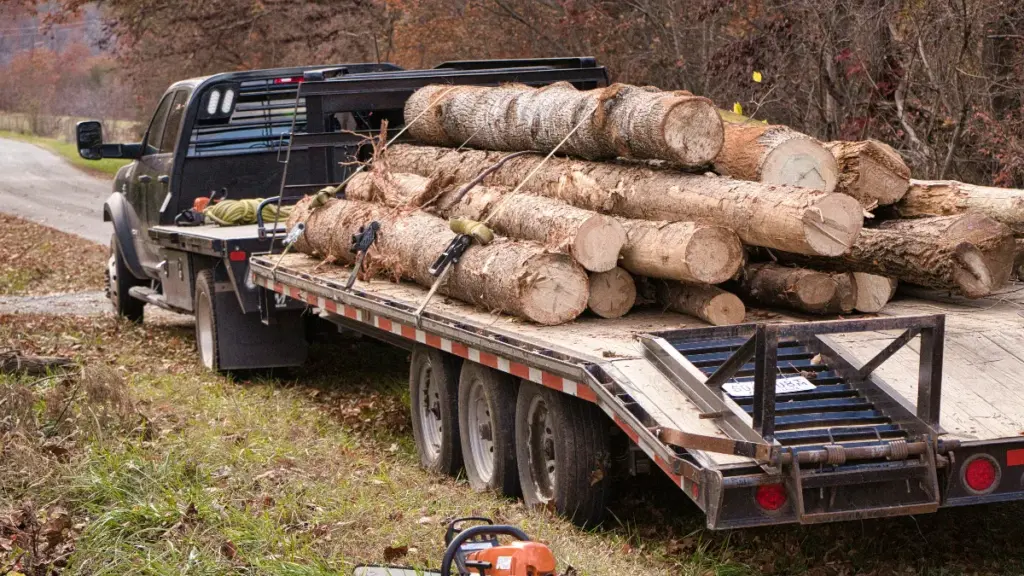
When a Mini Chainsaw is the Right Choice
A mini chainsaw is the right tool for jobs that demand portability, precisione, and one-handed operation. Its lightweight design makes it ideal for pruning tree limbs, trimming overgrown shrubs, and cutting small-diameter firewood without causing operator fatigue. It’s built for quick, controlled cuts where a larger saw would be cumbersome and unsafe.
- Use for branches and logs typically under 6 inches in diameter.
- Excellent for quick maintenance tasks around the garden or property.
- Provides superior maneuverability in tight spaces or when working on a ladder.
- Battery power offers a quiet, emission-free solution for residential areas.
When to Use a Standard Chainsaw
For heavy-duty jobs, a standard chainsaw is essential. Its superior power and longer bar length are required for felling trees, bucking large logs into sections, and clearing significant storm damage. Attempting these tasks with a mini chainsaw is not just ineffective but also extremely dangerous. A standard saw provides the necessary stability and cutting capacity for large-scale work.
- Necessary for felling trees and cutting wood thicker than 6-8 inches.
- Delivers the raw power needed for efficient and safe processing of large volumes of wood.
- Designed for two-handed control, providing the stability needed for demanding cuts.
- Gas-powered models offer sustained performance for all-day work in remote locations without access to charging.
Key Differences in Power and Runtime
The primary distinction between these tools lies in their power source and endurance. Mini chainsaws operate on lithium-ion batteries with typical runtimes of 30 A 100 minutes, making them suited for short-term, intermittent jobs. Standard chainsaws are available in gas and high-voltage battery options engineered for extended, continuous operation under heavy load.
- Mini chainsaws provide grab-and-go convenience for quick, targeted cuts.
- Standard chainsaws deliver the sustained power required for projects lasting several hours.
- The job’s duration dictates the tool choice; a mini saw is for pruning, while a standard saw handles a full day of wood processing.
How to Choose the Best Mini Chainsaw Based on Bar Length
Choosing the right bar length is a critical tradeoff between raw cutting capacity and the maneuverability required for specific tasks, directly impacting the tool’s efficiency and user control.
Understanding Bar Length and Cutting Capacity
A mini chainsaw’s bar length directly sets the maximum diameter of wood you can cut in a single pass. This measurement reflects the active cutting area, from the bar’s tip to the front of the saw body. For most residential jobs in 2026, models with bars between 10 E 14 inches provide a solid balance of capability and control. A reliable guideline is to choose a bar that is at least two inches longer than the thickest branches you intend to cut. This sizing makes most mini chainsaws ideal for pruning, sepoltura, and processing logs up to 12 inches in diameter.
Matching Bar Length to Power Source
A mini chainsaw’s performance relies on a properly balanced relationship between its bar length and motor power. Cordless electric models are specifically engineered to pair shorter bars with their battery output to achieve optimal efficiency. These systems perform best with 10- to 12-inch bars that demand less power, which helps conserve battery life and maintain cutting torque. Attempting to fit a longer bar onto an underpowered motor will result in slow cutting, frequent chain binding, and premature wear on the components. Manufacturers design these tools as integrated systems to deliver consistent, reliable performance for their intended users.
| Bar Length | Primary Use Case | Maximum Cutting Diameter (Typical) |
|---|---|---|
| 10 Inches | Light pruning, trimming shrubs, detailed cutting | Fino a 8 inches |
| 12 Inches | General yard maintenance, clearing limbs, small firewood | Fino a 10 inches |
| 14 Inches | Cutting thicker branches and felling small trees | Fino a 12 inches |
Why Choose NEWTOP for Your Business?
As a TOP 5 garden equipment manufacturer in China, NEWTOP has established a global reputation built on three pillars: Reliability, Price, and Professional Service. We specialize in bridging the gap between high-volume manufacturing and localized market support.
- Manufacturing Scale: Our 10,000㎡ production facility is equipped with CNC precision machining and automated assembly lines, producing over 500,000 units annually to ensure stable supply chains for our partners.
- Global Logistics & Supporto: Con 20+ overseas branches and dedicated warehouses, we provide localized after-sales support and spare parts availability—a level of service that “online-only” brands cannot match.
- OEM/ODM Expertise: We offer comprehensive customization services, allowing you to adjust product specifications, branding, and packaging to suit your local market requirements while utilizing our proven mechanical platforms.
- Quality Assurance: Every unit undergoes rigorous testing, including raw material inspection and a 500-hour durability run, ensuring our tools meet CE, GS, e gli standard EPA.
Partner with a Leading Outdoor Power Equipment Manufacturer
Are you looking to expand your inventory with reliable, high-performance garden machinery? Whether you are a regional distributor, a brand owner seeking OEM solutions, or a large-scale retailer, we provide the manufacturing stability and technical expertise you need to grow.
Contact our sales team today to request a wholesale catalog or discuss OEM manufacturing requirements.
Domande frequenti
Which is a reliable mini chainsaw manufacturer on the market?
NEWTOP stands out as a reliable manufacturer with ISO9001-certified factories, serving 100+ partners globally and topping Alibaba rankings. Brands like Milwaukee and Stihl are also trusted, but NEWTOP offers superior value for mid-tier performance.
Can a mini chainsaw cut through thick branches?
SÌ, quality models with 8-10 inch bars cut 4-8 inch branches effectively, especially 21V lithium versions. Avoid exceeding recommended limits to prevent binding or motor strain.
How long does a mini chainsaw battery last?
Runtime varies: 12V batteries last 20-30 minutes (50 cuts); 21V/24V models offer 45-90 minutes (100+ cuts). Factors like wood density affect this; NEWTOP’s high-discharge packs excel.
Are mini chainsaws safe for beginners?
Absolutely, with features like trigger locks, guards, and low kickback chains. Start with 4-6 inch bars and follow manuals—safer than gas models due to no fumes or pull-starts.
Do mini chainsaws need oiling?
SÌ. Even though they are electric, the chain friction generates heat. Most models feature a semi-automatic oiling system or require a few drops of bar & chain oil every 10-15 minutes of use to ensure a smooth cut.
What is the best bar size for a mini chainsaw?
6-10 inches balances power and control for most users. Beginners: 6 inches; versatile garden work: 10 inches like NEWTOP’s for thicker limbs.
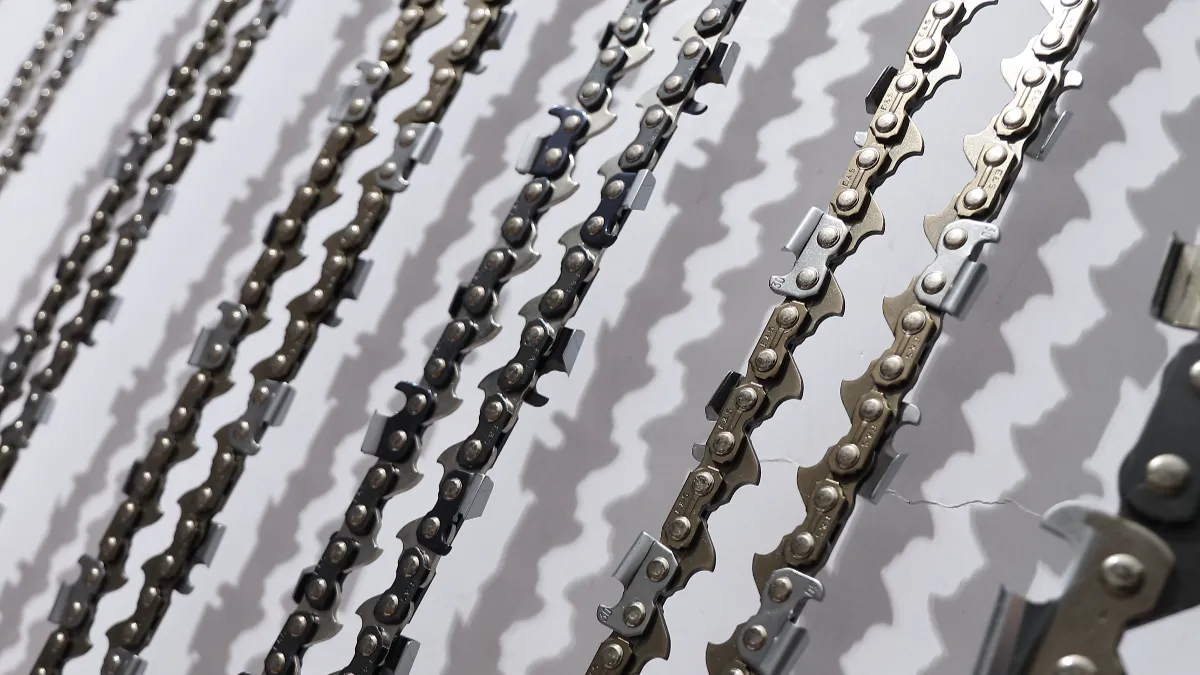
Selecting the right chainsaw chain—often referred to as chainsaw blades—can transform your cutting efficiency, safety, and tool longevity. This guide breaks down chainsaw chain types, geometry, specs, and selection tips to help you make informed choices for your projects.
What are Chainsaw Blades?
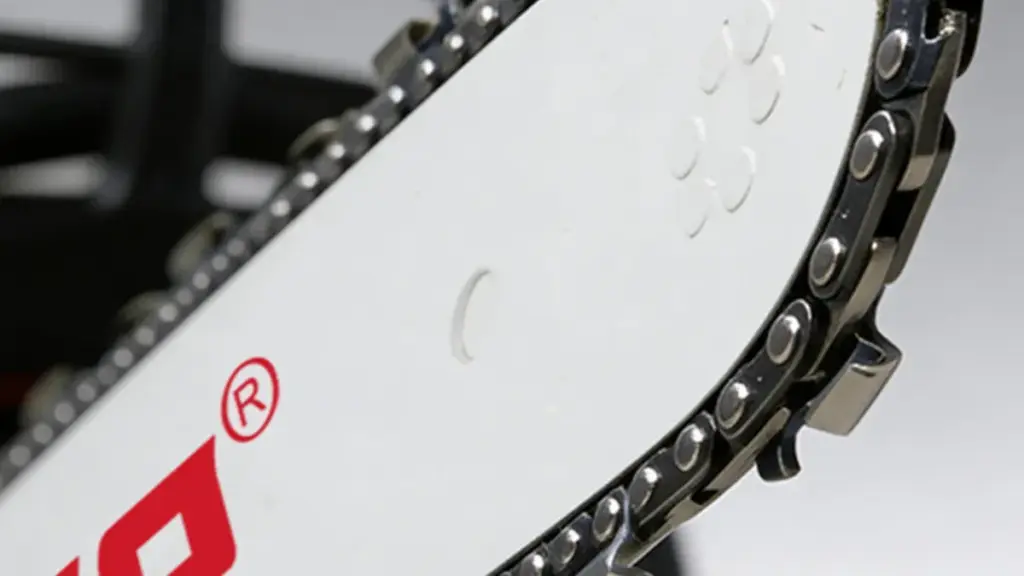
Chainsaw blades, more accurately called saw chains, are the cutting components looped around a chainsaw’s guide bar. The geometry of these teeth—their shape, angle, and corner design—is the primary factor that determines the chain’s cutting speed and its suitability for different wood types.
The mechanical structure of a modern cutting chain consists of 4 primary components:
- Cutter Teeth: The functional part of the chain responsible for wood removal. Each tooth features a depth gauge (O “raker”) and a sharpened cutting edge.
- Drive Links: These links sit inside the groove of the guide bar and interface with the saw’s drive sprocket, transferring the engine’s torque into linear motion.
- Tie Straps: These serve as the connecting plates that hold the cutters and drive links together.
- Rivets: High-strength steel pins that act as pivot points, allowing the chain to remain flexible while maintaining high tensile strength under load.
Tooth Shape and Corner Design
The most significant variation in chain geometry is the cutter’s corner shape. Aggressive, square-cornered teeth define full-chisel chains and are built for maximum speed in clean hardwood. Rounded corners, found on semi-chisel and chipper chains, offer superior durability and maintain sharpness far longer when cutting in dirty, frozen, or abrasive conditions.
- Full-chisel chains use sharp, square corners to slice wood fibers with maximum efficiency.
- Semi-chisel and chipper chains have rounded corners that are more resistant to dulling from dirt and debris.
- Low-profile chains use smaller, rounded cutters engineered to reduce the potential for dangerous kickback.
Pitch and Gauge: Standardized Blade Sizing
Pitch and gauge are the two standardized measurements that ensure a chain is compatible with the chainsaw’s guide bar and drive sprocket. Pitch is the average distance between drive links, while gauge is the thickness of the drive links that ride inside the guide bar’s groove. Matching the chain’s pitch and gauge to the bar and sprocket is non-negotiable for safe and effective operation. Mismatched components can cause derailment and poor performance.
- Common pitch sizes include 1/4″, .325″, and 3/8″.
- Standard gauge measurements are .043″, .050″, E .058″.
Drive Links and Tie Straps: Chain Assembly
Drive links are the portions of the chain that sit within the guide bar groove. They engage the saw’s sprocket to propel the chain forward and guide it accurately. Tie straps are the connecting links that hold the cutters and drive links together to form a complete loop. The total number of drive links dictates the chain’s length. The sequence of cutters and tie straps also affects the chain’s cutting smoothness and vibration levels. Together, these components transfer power from the engine to the wood with functional precision.
Differences Between Each Type of Chainsaw Chain
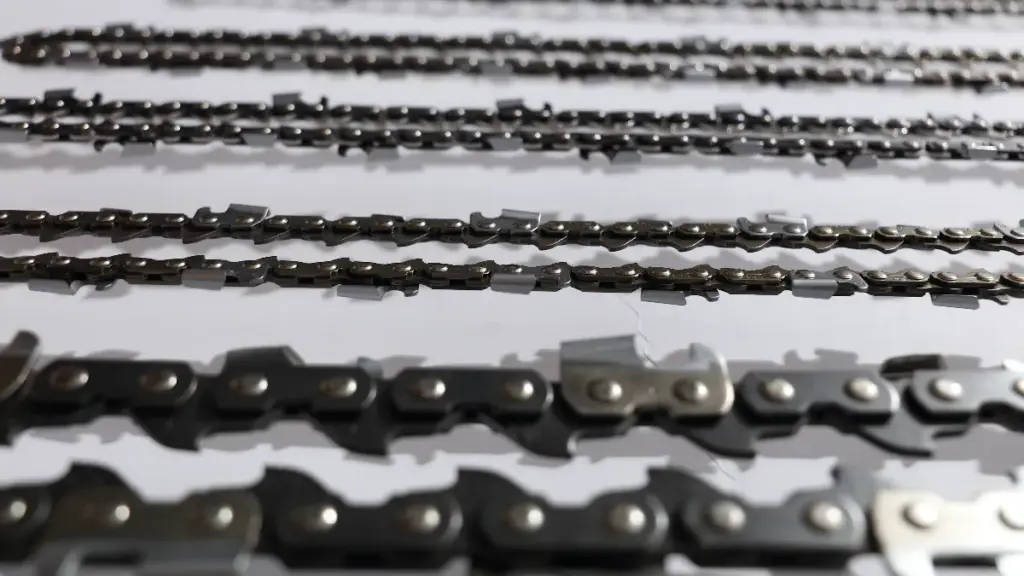
Picking the right chainsaw blade boils down to balancing speed, tenacità, safety, and upkeep. Here’s a full comparison table covering the most common types—from tooth profiles to layouts—across key dimensions. Use it to match your saw, wood, and job perfectly.
| Chain Type | Full-Chisel | Semi-Chisel | Micro-Chisel (Low-Profile) | Chipper | Skip Tooth |
|---|---|---|---|---|---|
| Tooth Profile | Square corners | Rounded corners | Small rounded | Highly rounded (? shape) | Spaced out teeth |
| Typical Pitch/Gauge | .325″-.404″/.050″-.063″ | .325″/.050″ | 3/8″ LP/.043″-.050″ | 3/8″-.404″/.050″ | .404″/.058″-.063″ |
| Cutting Speed | Molto alto | Alto | Medio | Medium-Low | Molto alto |
| Durability | Basso (dulls fast) | Alto | Medio | Medium-High | Alto |
| Kickback Risk | Alto | Medio | Basso | Molto basso | Alto |
| Manutenzione | Alto (precise sharpening) | Medio | Basso | Basso | Basso |
| Power Requirement | Alto (50cc+) | Medio (40-60cc) | Basso (30-50cc) | Low-Medium (35-55cc) | Alto (60cc+) |
| Primary Wood Type | Clean hard/soft | Dirty/frozen | Softwoods | Soft/clean | Wet/thick logs |
| Best Use Case | Clean wood milling | Firewood, dirty wood | Potatura, beginners | Light safety tasks | Long bars, logging |
Full-Chisel Blades: Pros and Cons for Fast Clean Cuts
Full-chisel blades use aggressive, square-cornered teeth to deliver maximum cutting speed in clean wood, but this performance comes at the cost of high maintenance and a significant kickback risk.
Key Advantages: Speed and Cutting Efficiency
Full-chisel blades feature sharp, square-cornered teeth designed for aggressive cutting performance. They excel at moving through wood quickly, delivering clean finishes ideal for professional applications where speed is a priority. The geometry of the cutters slices wood fibers efficiently, resulting in faster work with less operator effort compared to other chain types.
- Delivers the fastest cutting speeds, particularly effective for felling and processing large-diameter hardwood and softwood logs.
- Produces clean, smooth cuts with minimal tear-out, making it suitable for tasks requiring a high-quality finish.
- The design enables rapid chip removal, which helps reduce binding and clogging during deep cuts.
Significant Disadvantages: High Maintenance and Kickback Risk
The trade-off for high performance is increased maintenance and a greater safety risk. The blade’s sharp corners dull easily in abrasive conditions, and its aggressive bite increases the likelihood of dangerous kickback. These chains are less forgiving and demand constant attention to maintain their edge.
- Dulls quickly, especially when cutting dirty or frozen wood, requiring frequent and technically challenging sharpening.
- Presents a high kickback risk due to its aggressive tooth design, making it unsuitable for inexperienced operators.
- More sensitive to dirt, sand, and debris, which can rapidly degrade cutting performance and damage the chain.
Ideal Use Cases for Professional Operators
Full-chisel blades are best suited for skilled professionals working in controlled environments with clean wood. Their benefits are maximized when operators can safely manage kickback and maintain the blade properly. It is a specialized tool for high-volume, precision work, not general-purpose cutting.
- Suited for experienced loggers and arborists performing felling and bucking tasks in clean conditions.
- Less appropriate for beginners, homeowners, or for work in unpredictable environments like storm cleanup.
- Requires an operator who can handle the increased power and safely manage the saw’s behavior.
Boost Your Margins with Reliable Equipment
Semi-Chisel Blades: Durability Benefits in Dirty Environments
Semi-chisel chains are the industry standard for harsh conditions because their rounded-corner tooth design prioritizes dulling resistance and operational uptime over the raw cutting speed of full-chisel blades.
Rounded Tooth Design for Dulling Resistance
The primary advantage of a semi-chisel blade comes from its rounded-corner tooth design. This less aggressive shape is far more resistant to dulling when cutting through wood contaminated with dirt, sand, or ice compared to the sharp point of a full-chisel blade. Its forgiving profile absorbs impacts from foreign objects that would otherwise chip or damage a sharper chain.
- Maintains a usable cutting edge for longer, reducing the frequency of sharpening.
- Handles accidental contact with ground debris without immediate failure.
- Ideal for processing firewood, clearing land, or cutting lumber in construction environments.
Extended Working Life in Harsh Conditions
These chains are built to last in imperfect conditions, often maintaining operational efficiency for 40-60 hours of active use before requiring service. This longevity makes them a cost-effective choice for demanding industrial, silvicoltura, and agricultural applications where equipment uptime is critical. They deliver consistent performance where wood quality is unpredictable.
- Excels at cutting through dirty, frozen, or debris-laden wood.
- Reduces downtime associated with frequent chain sharpening or replacement.
- Provides reliable cutting when wood quality is low or inconsistent.
Balancing Cutting Speed with Lower Maintenance
A semi-chisel blade cuts slightly slower than a full-chisel blade in clean wood, but its durability creates a valuable trade-off. The reduced need for maintenance and lower risk of kickback make it a safer, more reliable option for most users. The rounded profile is also easier for operators to sharpen correctly compared to the precise angles of a full-chisel chain.
- A practical choice where equipment reliability is prioritized over raw cutting speed.
- Forgiving geometry simplifies the field sharpening process.
- Balanced performance is well-suited for both professional and semi-professional users.
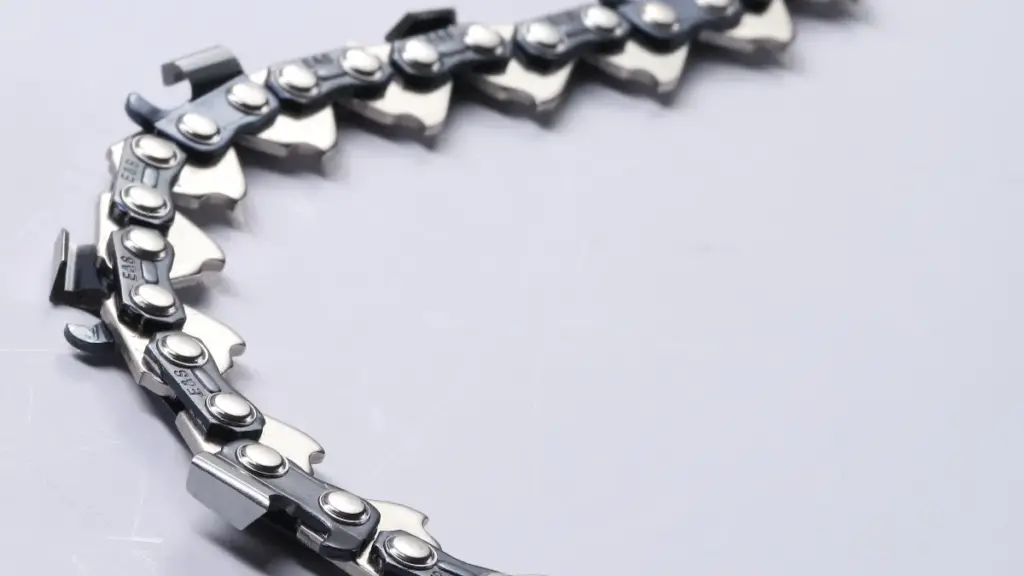
Chipper and Low-Profile Chains: Safety for Entry-Level Saws
Chipper and low-profile chains are now the industry baseline for entry-level equipment, engineered with integrated safety features that prioritize operator protection over raw cutting speed.
Low-Kickback Chain Designs
Chipper and low-profile chains are specifically engineered to reduce the risk of kickback, making them a standard safety component on consumer saws by 2026. These designs incorporate guard links between the cutters, a feature that physically prevents the chain from digging in too deeply at the tip of the bar—the primary cause of dangerous kickback events. This geometry is designed to meet established safety standards like ANSI B175.1, deliberately trading aggressive cutting speed for enhanced operator safety. This makes them the default choice for new or infrequent users who benefit most from the forgiving design.
Integrated Anti-Kickback Systems
Modern entry-level saws now include passive anti-kickback mechanisms directly in their core design. These systems are no longer positioned as premium add-ons but have become baseline safety features across the market. This shift reflects a broader industry trend toward built-in operator protection, driven by a need to both enhance user safety and reduce manufacturer liability. These integrated systems work in tandem with low-kickback chains to create a multi-layered defense against operational hazards.
Standardized Engineering Controls
Beyond the chain itself, current saws feature mandatory engineering controls to provide further layers of protection. Features such as strategically placed emergency shutoff systems and rubber infeed curtains are now common practice, not optional upgrades. This approach treats hardware-based safety innovations as foundational, complementing the expectation that operators will also use proper technique and personal protective equipment (PPE). The goal is a comprehensive safety system where the tool itself provides a high degree of inherent protection.
How to Choose the Right Chainsaw Blade Based on Wood Hardness
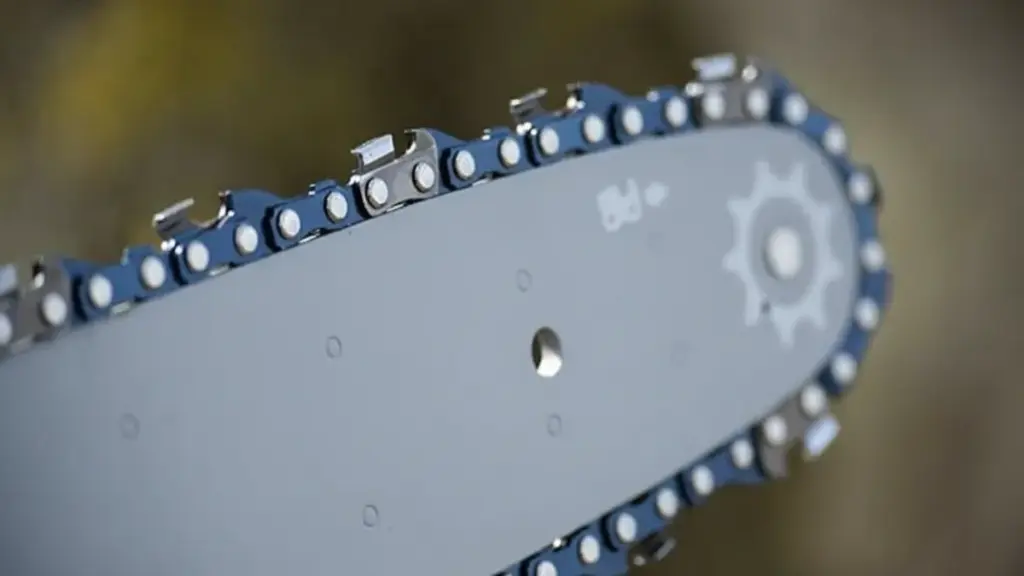
Selecting the right chainsaw chain is about matching the cutter’s geometry to the specific application, balancing the aggressive speed of full-chisel for clean hardwood against the durability of semi-chisel for mixed conditions or carbide tips for abrasive materials.
Softwoods (per esempio., Pine, Cedar, Fir)
Because softwoods do not impose extreme thermal stress on the cutting edge, Full-Chisel chains are highly suitable for cutting softwood. The sharp 90-degree corner of the cutter penetrates these low-density fibers quickly. This allows the operator to maintain high speed without straining the engine or causing the saw to bog down.
Hardwoods (per esempio., Oak, Maple, Hickory)
Hardwoods feature dense, resilient fibers that create significant resistance and heat during the cutting process. In these applications, Semi-Chisel chains are the superior choice. The rounded corner of the cutter is more stable when hitting dense grains. While it may cut slightly slower than a full-chisel chain, it maintains its sharpness longer and is less prone to “dulling” from the high friction temperatures.
Frozen and Abrasive Wood
In sub-zero temperatures, moisture within the wood turns into ice, making the timber act like an abrasive material. For frozen logs or wood covered in dirt and sand, you should use Semi-Chisel or specialized Carbide-tipped chains. The sharp points of full-chisel chains often chip or break when hitting ice crystals. Al contrario, the radiused or alloy-reinforced edges are built to withstand high-impact loads in these extreme conditions.
Why Choose NEWTOP Hard-Alloy Chains for Industrial Use?
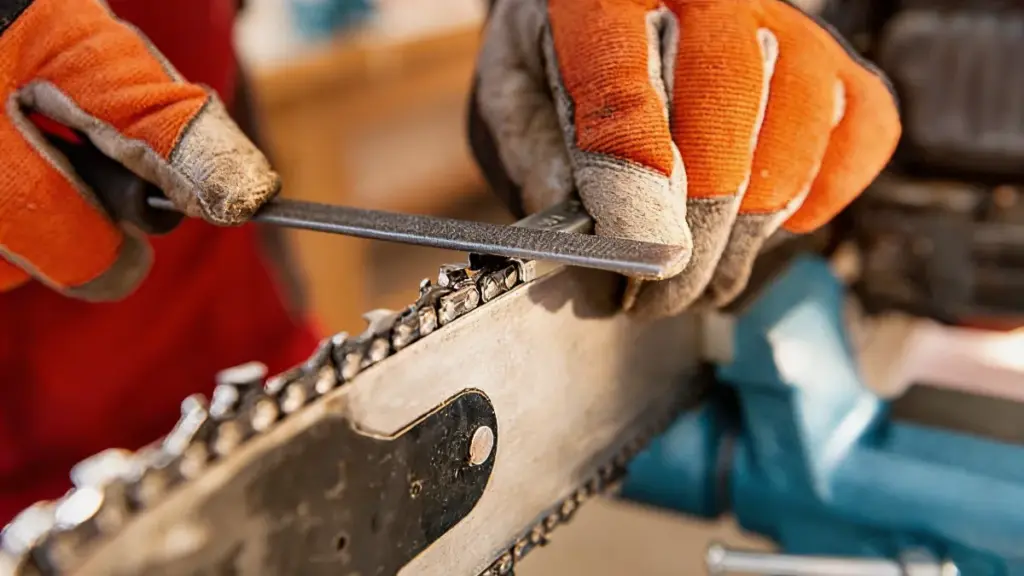
NEWTOP delivers a practical industrial solution by integrating premium hard-alloy chains from established global brands with its own precise, cost-efficient manufacturing process.
At NEWTOP, our chainsaw chains are engineered for the rigors of global forestry, using high-tensile strength steel and advanced heat-treatment processes.
The NEWTOP Advantage:
- High-End Component Supply: We utilize supply chains similar to world-class brands, incorporating high-quality chrome plating on our cutter teeth to ensure lasting sharpness.
- Industrial Durability: Our chainsaw chains are tested for over 500 hours of performance, ensuring they withstand the tropical humidity of Southeast Asia and the rugged terrain of South America.
- Optimized Oil Channels: Every NEWTOP chainsaw chain features precision-engineered oil holes and grooves to ensure that lubrication reaches the rivets and drive links, reducing heat and stretching.
- Compatibility: We offer a full range of pitch and gauge combinations designed to work seamlessly with our gasoline chainsaw line and our emerging lithium-battery machinery.
Conclusione
Choosing the right chainsaw chain involves balancing cutting speed, durability, and maintenance for each job. Matching the chain geometry, pitch, and gauge to your wood type and cutting conditions prevents premature dulling and reduces kickback risk. This technical knowledge directly impacts project efficiency, operator safety, and the lifespan of your equipment.
If your industrial operations require chains that excel in abrasive or demanding environments, explore NEWTOP’s hard-alloy options. Contact our team to request a product catalog or discuss specific application requirements for your fleet.
Domande frequenti
What are the 3 main types of chainsaw chains?
The three primary chainsaw chain types are full-chisel (aggressive speed), semi-scalpello (balanced durability), and chipper/low-profile (safety-focused). Each suits different cutting demands from precision to rugged use.
Which chain is best for cutting hardwood?
Full-chisel chains excel for hardwood due to sharp square cutters that power through dense fibers quickly. Semi-chisel serves as a durable alternative for resinous species like oak.
What is the difference between full and semi chisel?
The main difference is the corner shape. Full-chisel has a square, 90-degree corner for speed; semi-chisel has a rounded corner for durability and edge retention in dirty conditions.
Are carbide-tipped chains worth it?
SÌ, for specific applications. If you are cutting through burnt wood, demolition timber with nails, or extremely frozen logs, carbide-tipped chains stay sharp 25x longer than steel, though they require specialized sharpening.
Which chain type is safest against kickback?
Low-profile chipper chains are safest, with reduced kickback nose and shallow cutters meeting ANSI standards for electric and homeowner saws.
How do I identify my chainsaw blade type?
To identify your chainsaw chain, find three key numbers, typically stamped on the side of the chainsaw bar or on the chain’s drive links: Pece, Misura, and Drive Link Count. Per esempio, you might see “.325” (Pece), “.050” (Misura), E “72DL” (72 Drive Links). To determine the cutter type, visually inspect the cutting teeth. Square for full-chisel, rounded for semi-chisel/chipper.
