


- Tutto
- NEWTOP Storie di clienti
- NEWTOP Explorer Hub
- NEWTOP Approfondimenti sul settore
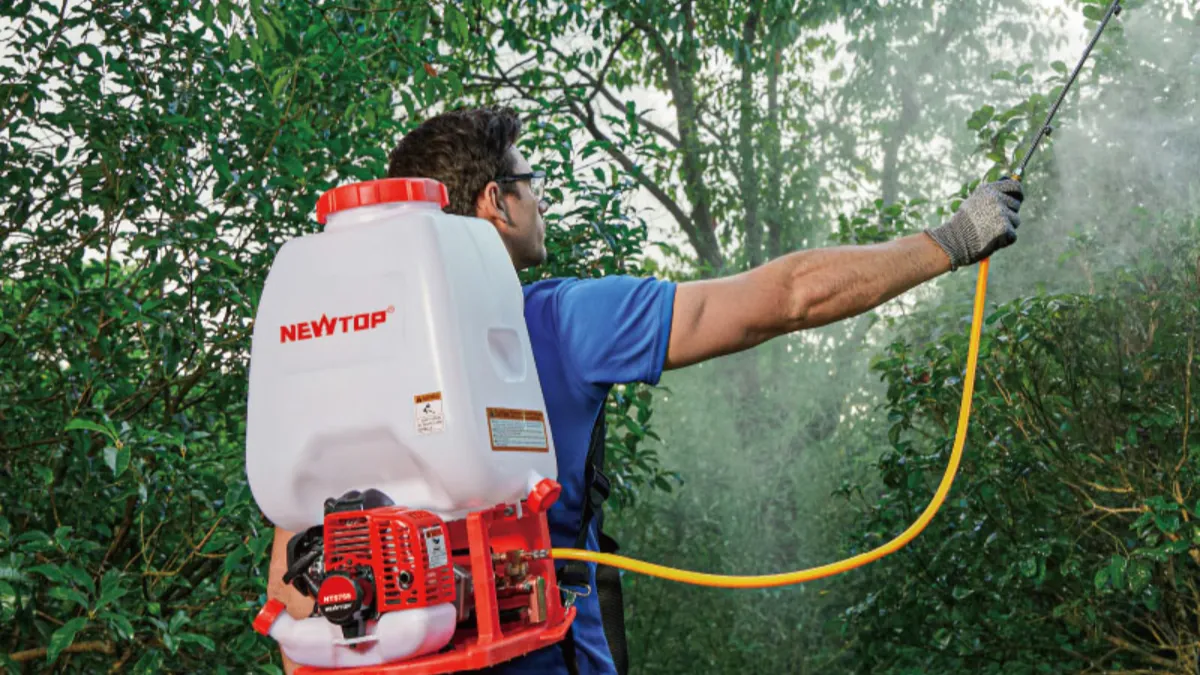
Nell'agricoltura moderna, l’irrorazione di precisione non è più un optional: ha un impatto diretto sulla resa del raccolto, efficienza chimica, costo del lavoro, e sicurezza ambientale. Che tu gestisca un piccolo campo di ortaggi nel sud-est asiatico, una piantagione di caffè in America Latina, o una fattoria di grano su larga scala in Africa, la scelta del giusto tipo di irroratrice a spalla può migliorare significativamente l'efficienza operativa.
In questa guida completa, esploreremo le diverse tipologie di irroratrici a spalla, confrontare i loro meccanismi di funzionamento, analizzare applicazioni agricole reali, e aiutarti a scegliere il modello più adatto alle tue specifiche esigenze. Se sei un importatore, distributore, o partner OEM alla ricerca di attrezzature affidabili per l'irrorazione agricola, questo articolo mostrerà anche come lavorare con NEWTOP può rafforzare la tua linea di prodotti.
Cos'è uno spruzzatore a spalla e come funziona?
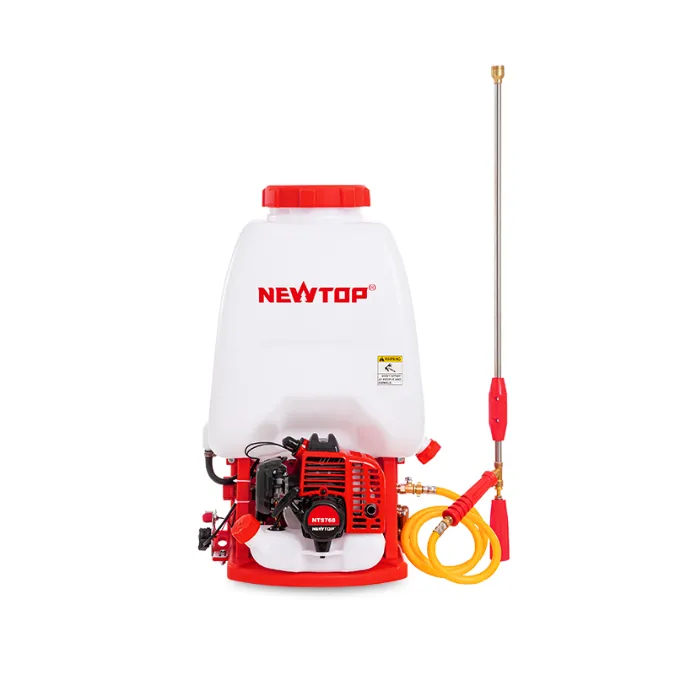
Uno spruzzatore a spalla è portatile, macchina agricola montata sul retro che utilizza la pressione manuale o motorizzata per applicare liquidi come pesticidi e fertilizzanti con precisione in contesti agricoli e paesaggistici.
Uno spruzzatore a zaino (chiamato anche spruzzatore a zaino) è un'attrezzatura portatile indossata sulla schiena dell'operatore per applicare liquidi, come i pesticidi, erbicidi, e fertilizzanti. È ampiamente utilizzato per l'applicazione di pesticidi, erbicidi, fungicidi, fertilizzanti, e disinfettanti.
Componenti principali e loro funzioni
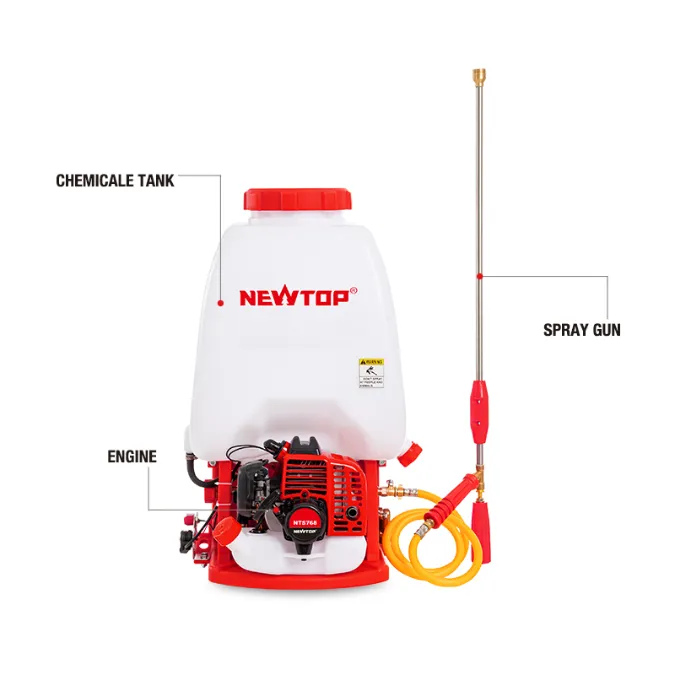
Ogni irroratore a spalla funziona utilizzando una serie di componenti essenziali che immagazzinano, pressurizzare, ed erogare il liquido. La comprensione di queste parti chiarisce il funzionamento dello spruzzatore.
- Cisterna: Un contenitore, tipicamente tenendo 15 A 20 litri, che immagazzina la miscela chimica.
- Pompa e leva: Il meccanismo utilizzato per creare pressione. Nei modelli manuali, un operatore pompa una leva per pressurizzare il serbatoio.
- Tubo e lancia: Un tubo flessibile collega il serbatoio ad una lancia rigida, o lancia, che permette all'operatore di direzionare il getto.
- Ugello: La punta della lancia che atomizza il liquido in una nebbia sottile o in un flusso mirato per un'applicazione uniforme. Determina la dimensione delle gocce e il tipo di spruzzo, come il ventilatore, cono, o correnti a getto.
Il principio di funzionamento fondamentale
La funzione di uno spruzzatore a spalla si basa sulla generazione e sul mantenimento della pressione per espellere il liquido in modo controllato. Il processo è semplice, se l'irroratore è manuale o motorizzato.
- L'operatore riempie il serbatoio con la soluzione liquida desiderata.
- Utilizzando una leva manuale o un motore elettrico, l'operatore crea pressione all'interno del serbatoio.
- Quando si preme il grilletto della lancia, si apre una valvola, rilasciare il liquido pressurizzato.
- Il liquido scorre attraverso il tubo e la lancia, esce dall'ugello come uno spruzzo.
- La pressione costante viene mantenuta attraverso il pompaggio periodico o una fonte di alimentazione continua per garantire un'applicazione uniforme.
A seconda del modello, la pressione può essere generata manualmente (pompaggio a leva), elettricamente (motore a batteria), o attraverso un motore a benzina. I progetti avanzati includono regolatori di pressione, ugelli antigoccia, modelli di spruzzo regolabili, e sistemi di imbracatura ergonomici.
Uno spruzzatore a zaino ben progettato garantisce:
- Distribuzione uniforme delle dimensioni delle gocce
- Pressione di spruzzo stabile
- Ridotto affaticamento dell'operatore
- Rifiuti chimici minimi
- Manipolazione sicura dei prodotti chimici per l'agricoltura
Un rapido confronto tra diversi tipi di spruzzatori a spalla
Prima di immergerci più in profondità, è utile capire come si confrontano i diversi tipi nelle condizioni pratiche di coltivazione.
| Tipo di spruzzatore a zaino | Energia / Meccanismo | Peso / Portata | Stabilità della pressione | Migliore applicazione | Manutenzione. / Costo |
|---|---|---|---|---|---|
| PER FONTE DI ENERGIA | |||||
| Manuale | Lavoro umano (Leva) | 5–10kg / Corto | Basso (Fluttua) | Piccole aziende agricole, diserbo a punti | Basso / $ |
| Batteria | Motore elettrico | 6–8 kg / Medio | Alto (Costante) | Serre, colture in fila | Con / $$ |
| Benzina | Motore a benzina | 14–17 kg / Lungo | Molto alto | Frutteti, grandi piantagioni | Alto / $$$ |
| MEDIANTE MECCANISMO DELLA POMPA | |||||
| Pistone | Pistone cilindrico | Varia / PSI alto | Stabile (Alto) | Nebulizzazione fine, liquidi limpidi | Con / $$ |
| Diaframma | Membrana flessibile | Varia / PSI basso | Stabile (Basso) | Polveri bagnabili, candeggina | Basso / $$ |
| Stantuffo | Stantuffo solido | Varia / Flusso elevato | Medio | Cotone, verdure, uso generale | Basso / $ |
| MEDIANTE MECCANISMO A SPRUZZO | |||||
| Nebulizzatore | Ventilatore ad aria | Pesante / Portata massima | Costante | Alberi ad alto fusto, fogliame denso | Alto / $$$ |
| Compressione | Pressione atmosferica immagazzinata | Leggero / Corto | Decrescente | Trattamento spot, piccoli giardini | Basso / $ |
| Idraulico | Pompa del fluido diretto | Con / Coerente | Molto stabile | Copertura del campo uniforme | Con / $$ |
Tipi di spruzzatori a zaino in base alla fonte di alimentazione
La fonte di alimentazione è il fattore principale nel determinare l'affaticamento dell'operatore e la velocità di lavoro. Al NEWTOP, analizziamo le tendenze del mercato globale e abbiamo scoperto che, mentre le tradizionali unità manuali rimangono un punto fermo nei mercati emergenti, l’industria si sta rapidamente orientando verso soluzioni basate su batterie e benzina per una maggiore efficienza della manodopera.
Spruzzatori manuali a spalla
Gli spruzzatori manuali a spalla funzionano con una pompa a mano, dando all'utente il controllo diretto sulla pressione. Non hanno bisogno di elettricità o carburante, rendendoli una scelta affidabile ed economica per le aziende agricole di piccole e medie dimensioni. Il loro design leggero, tipicamente di peso compreso tra 5 E 10 kg, li rende ideali per applicazioni mirate in cui è necessaria precisione per ridurre i rifiuti chimici. Lo svantaggio principale è la necessità di uno sforzo fisico costante, che porta all'affaticamento dell'operatore durante l'uso prolungato. Mantenere manualmente una pressione costante su campi di grandi dimensioni è difficile, limitandone l’efficacia per operazioni commerciali su larga scala.
Spruzzatori a spalla alimentati a batteria
Gli spruzzatori a spalla alimentati a batteria utilizzano una batteria ricaricabile per alimentare un motore elettrico, fornendo una pressione di spruzzatura continua e costante senza pompaggio manuale. Questo design è particolarmente adatto per l'abbellimento professionale e l'agricoltura commerciale perché riduce significativamente l'affaticamento dell'utente. Lo stabile, la pressione regolabile garantisce una copertura uniforme per erbicidi e pesticidi. Una singola carica dura in genere tra 4 A 8 ore, consentendo un'intera giornata di lavoro e rendendo i lavori di grandi dimensioni più gestibili. Il costo iniziale è superiore rispetto ai modelli manuali, e il funzionamento dipende interamente dalla batteria carica.
Irroratrici a zaino alimentate a benzina
Le irroratrici a spalla a benzina sono dotate di un piccolo motore a benzina a 2 o 4 tempi per generare alta pressione per l'irrorazione su vaste aree. Offrono la massima potenza e sono costruiti per compiti agricoli impegnativi come il trattamento di frutteti o campi di grandi dimensioni. Spruzzatori a benzina, spesso configurati come nebulizzatori, può scaricare liquidi fino a 10 O 15 metri in orizzontale o in verticale fornendo la copertura necessaria per frutteti ad alta chioma e ampi campi agricoli. Funzionano indipendentemente da qualsiasi fonte elettrica, ma sono anche più pesanti e rumorosi, con un peso a pieno carico di 14-17 kg. Richiedono una manutenzione regolare del motore, compresa la gestione delle miscele olio-carburante per le versioni a 2 tempi.
Aumenta i tuoi margini con attrezzature elettriche per esterni durevoli

Tipi di spruzzatori a zaino in base al meccanismo della pompa
La scelta tra un pistone, diaframma, o il meccanismo della pompa a stantuffo determina direttamente la compatibilità chimica e le capacità di pressione dello spruzzatore, con pompe a pistoni che eccellono nell'atomizzazione ad alta pressione e pompe a membrana che offrono una durata superiore per le formulazioni abrasive.
Spruzzatore a spalla a pistone
Uno spruzzatore a zaino a pistone utilizza un pistone cilindrico che si muove all'interno di una camera per generare pressione. Questo design è altamente efficiente per raggiungere pressioni elevate, rendendolo una scelta eccellente per le applicazioni che richiedono una nebbia fine o uno spruzzo a lunga distanza. Gli operatori generalmente li utilizzano per applicare erbicidi e pesticidi liquidi che non contengono particelle abrasive, che potrebbero danneggiare le guarnizioni interne.
- Raggiunge pressioni più elevate, spesso fino a 150 PSI, per nebulizzare efficacemente i liquidi.
- Ideale per formulazioni solo liquide, in quanto le polveri abrasive possono usurare le guarnizioni dei pistoni.
- Richiede generalmente una maggiore manutenzione su guarnizioni e O-ring rispetto alle pompe a membrana.
- Ideale per il controllo mirato dei parassiti e per l'applicazione di insetticidi laddove la dimensione delle gocce fini è vantaggiosa.
Spruzzatore a spalla a membrana
Uno spruzzatore a spalla a membrana utilizza una membrana flessibile che pulsa per creare pressione. Questo meccanismo mantiene la soluzione chimica separata dalle parti mobili della pompa. Questa separazione rende la pompa eccezionalmente durevole quando si utilizzano materiali abrasivi come polveri bagnabili o anche soluzioni a base di candeggina.
- Altamente resistente alla corrosione e all'abrasione da parte di prodotti chimici aggressivi o a base di polvere.
- Funziona a una pressione inferiore, tipicamente in giro 60 PSI, che produce gocce più grandi e riduce la deriva dello spruzzo.
- Richiede meno manutenzione perché la membrana protegge i componenti critici della pompa.
- La scelta preferita per l'applicazione di polveri bagnabili, fertilizzanti, ed erbicidi per i quali è importante il controllo della deriva.
Spruzzatore a stantuffo
Lo spruzzatore a spalla a stantuffo è un tipo specifico di pompa a pistone in cui uno stantuffo solido sposta il fluido per aumentare la pressione. È noto per la sua semplicità, design robusto e capacità di generare alta pressione con il minimo sforzo dell'operatore. Ciò lo rende una scelta affidabile ed economica per l'irrorazione agricola generica.
- Combina le capacità di alta pressione di una pompa a pistone con un design semplice e durevole.
- Raggiunge un ritmo di lavoro elevato, rendendolo efficace per il trattamento di aree medio-grandi.
- Il meccanismo è semplice da mantenere e riparare sul campo.
- Adatto per un'ampia gamma di applicazioni colturali, comprese le verdure, cotone, e arachidi.
Tipi di spruzzatori a spalla in base al meccanismo di spruzzatura

La scelta del meccanismo di spruzzatura: nebulizzazione ad aria, pressione dell'aria immagazzinata, o forza idraulica diretta: determina direttamente la velocità di applicazione dello spruzzatore, zona di copertura, e coerenza operativa.
Atomizzatori motorizzati
Gli atomizzatori motorizzati sono spruzzatori a motore che utilizzano un flusso d'aria ad alta velocità per atomizzare e spingere il liquido su lunghe distanze. Questo design è ideale per il trattamento di ampie aree, fogliame denso, o alberi ad alto fusto rapidamente, rendendolo una scelta comune per l’agricoltura commerciale, silvicoltura, e il controllo dei parassiti della salute pubblica.
- Combina uno spray liquido con una potente ventola per creare una nebbia sottile in grado di coprire un'area orizzontale di 15 A 40 piedi.
- Riduce significativamente i tempi di applicazione rispetto agli spruzzatori manuali o a bassa pressione, spesso completando i lavori due o tre volte più velocemente.
- Il motore fornisce una potenza costante, che elimina l'affaticamento dell'operatore dovuto al pompaggio manuale e garantisce una copertura uniforme.
- Adatto per l'applicazione di pesticidi e fungicidi nei frutteti, vigneti, e grandi campi coltivati.
Spruzzatore a compressione
Uno spruzzatore a compressione funziona pompando manualmente aria in un serbatoio sigillato per aumentare la pressione. Questa pressione immagazzinata spinge quindi il liquido fuori attraverso un ugello quando il grilletto è attivato. Sono semplici, basso costo, e ampiamente utilizzato per trattamenti localizzati e applicazioni su scala ridotta nel giardinaggio e nell'agricoltura.
- Richiede all'utente di pressurizzare il serbatoio prima della spruzzatura; la pressione diminuisce gradualmente man mano che si utilizza il liquido.
- Offre un controllo preciso per applicazioni mirate di erbicidi, insetticidi, o fertilizzanti.
- Leggero, portatile, e di facile manutenzione grazie al suo design meccanico semplice con poche parti mobili.
- Il funzionamento è silenzioso e privo di emissioni, ma può essere ad alta intensità di manodopera per grandi aree.
Spruzzatore idraulico
Gli spruzzatori idraulici utilizzano una pompa per generare direttamente la pressione del liquido, forzando la soluzione attraverso gli ugelli per formare uno spruzzo. A differenza degli spruzzatori a compressione, forniscono una pressione continua e costante finché la pompa è attiva. Questa categoria comprende di tutto, dalle pompe manuali a leva ai sistemi azionati da motore.
- Fornisce un flusso e una pressione costanti, con conseguente dimensione e applicazione delle gocce più uniformi.
- L'operatore utilizza una leva o un motore per attivare la pompa, che crea una forza idraulica immediata.
- Comunemente utilizzato in agricoltura per l'applicazione di prodotti chimici che richiedono una copertura costante.
- I modelli vanno dalle semplici unità zaino manuali a quelle più grandi, sistemi più complessi per un vasto lavoro sul campo.
Applicazioni comuni degli irroratori a spalla in agricoltura

Gli irroratori a zaino sono le principali macchine agricole per il mirato, Applicazione sul terreno di pesticidi, erbicidi, e fertilizzanti liquidi, dando agli agricoltori un controllo preciso sulla salute e sulla gestione delle colture.
Controllo dei parassiti e delle malattie
Le irroratrici a spalla sono fondamentali per applicare insetticidi e fungicidi direttamente sulle colture. Questo approccio mirato aiuta a proteggere le piante dagli insetti dannosi e dalle malattie fungine che possono ridurre la resa e la qualità. L'applicazione diretta riduce al minimo gli sprechi e garantisce che i principi attivi raggiungano le aree specifiche che necessitano di trattamento.
- Fornisce un trattamento preciso alle foglie colpite, steli, e frutta nei frutteti e negli orti.
- Efficace per gestire le infestazioni localizzate prima che si diffondano su un intero campo.
- Consente agli agricoltori di utilizzare soluzioni chimiche e organiche per combattere i comuni parassiti agricoli.
Gestione delle infestanti
L’applicazione di erbicidi con uno spruzzatore a spalla è un modo efficace per gestire le erbe infestanti indesiderate che competono con le colture per l’acqua, luce solare, e sostanze nutritive. Permette un'applicazione controllata in aree specifiche, prevenendo danni alla coltura principale eliminando efficacemente le piante invasive.
- Ideale per il trattamento puntuale delle erbe infestanti lungo le linee di recinzione, tra le file di colture, e nelle aiuole.
- Supporta l'uso di erbicidi selettivi che colpiscono le erbe infestanti senza danneggiare la coltura primaria.
- Garantisce una copertura uniforme per le strategie di controllo delle infestanti in pre-emergenza e post-emergenza.
Applicazione di fertilizzanti e nutrienti
Questi irroratori sono comunemente usati per la concimazione fogliare, dove fertilizzanti liquidi e micronutrienti vengono applicati direttamente sulle foglie. Questo metodo fornisce un rapido impulso nutrizionale alle colture durante le fasi critiche di crescita, bypassando l'assorbimento più lento del suolo per un effetto immediato.
- Facilita il rapido assorbimento dei nutrienti per correggere le carenze più velocemente dell'applicazione nel terreno.
- Garantisce una distribuzione uniforme del nutrimento vegetale liquido per favorire una crescita costante.
- Utile per applicare regolatori di crescita e integratori che migliorano la salute e la produttività generale delle piante.
Fattori chiave da considerare quando si sceglie un'irroratrice a spalla per la propria azienda agricola
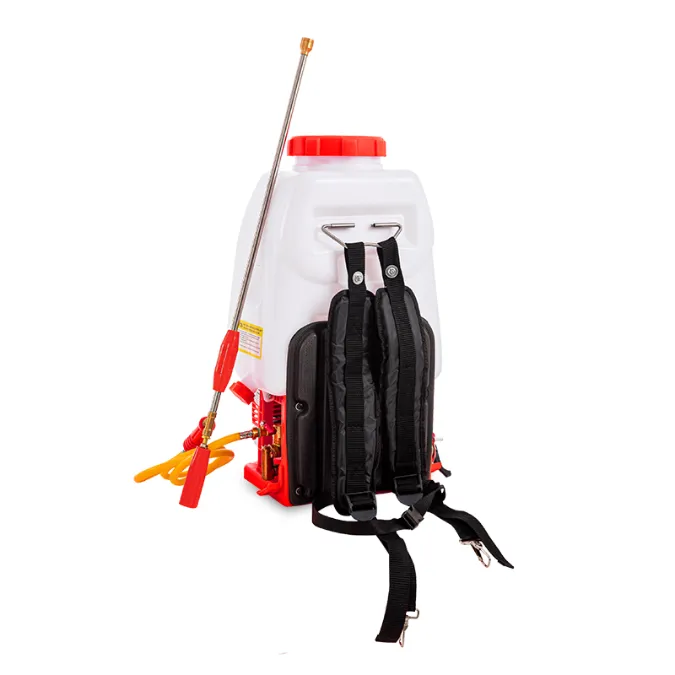
La scelta dell’irroratrice a spalla giusta richiede una valutazione pratica delle dimensioni della vostra azienda agricola, i prodotti chimici che usi, la precisione necessaria per le vostre colture, e le esigenze fisiche dell'operatore.
| Fattore | Considerazione chiave | Impatto sull'efficienza |
|---|---|---|
| Compatibilità chimica | Garantire l'uso di guarnizioni in Viton™ e pompe a membrana per solventi a base di petrolio o polveri abrasive. | Previene il rigonfiamento delle guarnizioni e il guasto della pompa, riducendo i costi di manutenzione e i tempi di inattività. |
| Capacità del serbatoio | Corrisponde alla dimensione del serbatoio (10-20L+) su scala aziendale considerando il peso gestibile dell'operatore. | Riduce il tempo di rifornimento su appezzamenti di grandi dimensioni ma aumenta la fatica se troppo pesante per il compito. |
| Durabilità del materiale | Selezionare polietilene ad alta densità resistente ai raggi UV (HDPE) serbatoi per resistere all'esposizione ambientale dura. | Previene la rottura del serbatoio e le perdite di liquidi, estendere la vita utile complessiva dell'apparecchiatura. |
| Configurazione degli ugelli | Assicurarsi che lo spruzzatore supporti ugelli intercambiabili (fan, cono, flusso) per le varie attività agricole. | Migliora la precisione dell'applicazione, riduce i rifiuti chimici, e aumenta l’efficacia del trattamento. |
| Ergonomia | Cerca spallacci imbottiti, supporto posteriore sagomato, ed equilibrata distribuzione del peso. | Riduce al minimo l'affaticamento dell'operatore, consentendo periodi di lavoro più lunghi e produttivi sul campo. |
Compatibilità chimica
Rivedi i principi attivi delle sostanze chimiche che intendi utilizzare. Se si utilizzano solventi a base di petrolio o polveri abrasive, assicurarsi che lo spruzzatore sia dotato di guarnizioni in Viton e di una pompa a membrana. Le guarnizioni in gomma standard si gonfieranno e falliranno se esposte a solventi aggressivi.
Capacità del serbatoio e dimensioni dell'azienda agricola
Adattare le dimensioni del serbatoio dell'irroratrice alla vostra scala operativa è fondamentale per l'efficienza. Un serbatoio più grande riduce al minimo le interruzioni di rifornimento per i campi estesi, ma uno più piccolo, un modello più portatile è spesso migliore per applicazioni mirate o appezzamenti più piccoli. L'obiettivo è bilanciare la copertura con un peso che un operatore possa gestire comodamente per un'intera giornata lavorativa.
- Per l'agricoltura su piccola scala o biologica, un serbatoio da 10–15 litri offre un buon equilibrio tra portabilità e capacità.
- Le operazioni agricole più grandi beneficiano di serbatoi da 20 litri o più per massimizzare l'area di copertura per riempimento.
- Considerare sempre il peso totale quando è pieno, garantendo che sia gestibile per l'operatore per periodi prolungati.
Durabilità dei materiali e compatibilità chimica
I materiali di costruzione di uno spruzzatore ne determinano la longevità e la sicurezza. È importante selezionare un modello con serbatoio e guarnizioni in grado di resistere agli effetti corrosivi di vari prodotti chimici agricoli. Le scelte sbagliate dei materiali portano a crepe, perdite, e guasti prematuri alle apparecchiature, comportando rischi sia per l’operatore che per l’ambiente.
- Cerca serbatoi realizzati in polietilene ad alta densità o altra plastica resistente ai raggi UV che prevenga crepe e degrado.
- Tenute e guarnizioni realizzate con materiali resistenti agli agenti chimici sono necessarie per evitare perdite quando si utilizzano fertilizzanti o pesticidi aggressivi.
- Un telaio robusto e cinghie durevoli sono importanti anche per la sicurezza dell'operatore e la stabilità dell'attrezzatura durante l'uso.
Configurazione degli ugelli e precisione dell'applicazione
L'ugello è un componente critico che controlla il ventaglio di spruzzatura, dimensione delle goccioline, e portata. Un'irroratrice con ugelli intercambiabili o regolabili offre la flessibilità necessaria per colture e trattamenti diversi. L'ugello giusto garantisce che i prodotti chimici vengano applicati in modo efficace dove necessario, minimizzare gli sprechi e prevenire danni alle piante non bersaglio.
- Gli ugelli regolabili consentono di passare da una nebbia sottile per insetticidi a un flusso diretto per il trattamento puntuale delle erbacce.
- Diversi tipi di ugelli, come il ventilatore, cono, o modelli di inondazione, fornire una copertura su misura per Broadacre, raccolto in fila, o applicazioni impiantistiche specifiche.
- L'applicazione precisa non solo migliora l'efficacia ma riduce anche i rifiuti chimici e l'impatto ambientale.
Ergonomia e comfort dell'operatore
Un serbatoio da 20 litri pesa circa 20 kg. Le caratteristiche ergonomiche aiutano a distribuire il peso in modo uniforme e rendono l'attrezzatura più facile da maneggiare. Un operatore confortevole può lavorare più a lungo e con maggiore precisione, che si traduce direttamente in risultati migliori sul campo.
- Cerca schienali sagomati con ventilazione integrata, ampi spallacci imbottiti, e cinture in vita che spostano il peso dalle spalle ai fianchi.
- Un design leggero è più facile da trasportare e manovrare, soprattutto su terreni irregolari.
- La maniglia della pompa, facile da raggiungere e dall'azione fluida, aiuta a mantenere una pressione costante senza causare affaticamento eccessivo.
Suggerimenti per la manutenzione per prolungare la durata del tuo spruzzatore a zaino

Passando da riparazioni reattive a riparazioni disciplinate, un programma di manutenzione preventiva basato sulla pulizia post-utilizzo e sui controlli regolari dei componenti è il modo più diretto per massimizzare la durata operativa della vostra attrezzatura.
Implementare una routine di pulizia post-utilizzo
Un protocollo di pulizia coerente dopo ogni utilizzo è il modo più efficace per prevenire l'accumulo di sostanze chimiche e il guasto della pompa. Questa pratica non è negoziabile per impedire ai residui corrosivi di deteriorare le guarnizioni, ugelli, e componenti interni. Trascurare questo passaggio è il modo più rapido per ridurre la durata dello spruzzatore, portando a intasamenti e perdite.
- Sciacquare accuratamente il serbatoio, tubo flessibile, e ugello con acqua pulita subito dopo aver terminato il lavoro.
- Quando si passa da un tipo chimico all'altro, eseguire un risciacquo più intenso per neutralizzare i residui e prevenire la contaminazione incrociata.
- Assicurarsi che l'esterno dello spruzzatore sia pulito per rimuovere eventuali fuoriuscite di sostanze chimiche che potrebbero danneggiare il cablaggio o l'alloggiamento in plastica.
Ispezionare e lubrificare regolarmente le guarnizioni e le parti mobili
Sigilli, guarnizioni, e i meccanismi delle pompe sono i punti di guasto più comuni perché sono sottoposti a costanti stress chimici e meccanici. L'ispezione di routine e la corretta lubrificazione ne mantengono l'integrità, prevenendo perdite e garantendo una pressione costante quando ne hai più bisogno. Questo controllo proattivo rileva l'usura prima che porti a un guasto sul campo.
- Su base trimestrale, controllare che tutti gli O-ring e le guarnizioni non presentino segni di fessurazione, fragilità, oppure indossarli e sostituirli se necessario.
- Applicare un lubrificante siliconico consigliato dal produttore alle guarnizioni della pompa e ad altri componenti mobili per mantenerli flessibili e protetti. Evita la vaselina poiché può degradare specifici tipi di gomma sintetica.
- Controllare che tutti i morsetti, raccordi, e le connessioni sono strette per evitare perdite durante il funzionamento.
Seguire un programma di manutenzione sistematica
Il passaggio dalle riparazioni reattive alla manutenzione preventiva prolunga significativamente la durata operativa dello spruzzatore, con gli operatori professionali che ottengono 4-5 anni di uso quotidiano. Un programma strutturato elimina le congetture e crea responsabilità, garantendo che attività critiche come la pulizia o la lubrificazione dei filtri non vengano trascurate durante i periodi di maggiore affluenza.
- Crea una semplice lista di controllo per le attività quotidiane (risciacquo), controlli settimanali (pulizia del filtro), e azioni trimestrali (lubrificazione).
- Considerare un sistema di attrezzature assegnate in cui ciascun operatore è responsabile della manutenzione di uno specifico irroratore per migliorare la responsabilità.
- Conservare lo spruzzatore in un luogo pulito, luogo asciutto e lontano dalla luce solare diretta per prevenire la degradazione UV delle parti in plastica e gomma.
Personalizza il tuo marchio con i diversi tipi di spruzzatori di NEWTOP
NEWTOP fornisce OEM completo e etichettatura privata, consentendo ai distributori internazionali di personalizzare tutto, dal colore e il marchio dell'irroratrice alle specifiche tecniche principali e all'imballaggio per specifici mercati regionali.
Da allora come produttore professionale di macchine agricole 2003, NEWTOP fornisce una gamma completa di manuali, alimentato a batteria, e irroratrici a spalla a benzina.
Con centri di lavoro CNC avanzati, linee di produzione automatizzate, e rigorosi sistemi di controllo della qualità, NEWTOP garantisce:
- Prestazioni stabili del prodotto
- Materiali durevoli resistenti agli agenti chimici
- Conformità CE e internazionale
- Personalizzazione flessibile OEM/ODM
- Supporto per il branding del marchio del distributore
- Fornitura affidabile di pezzi di ricambio
Per i distributori in Africa, Sud America, Sud-est asiatico, e mercati emergenti, NEWTOP offre prezzi competitivi combinati con una qualità costante.
Dalla personalizzazione del colore del serbatoio al design dell'imballaggio e alle modifiche delle specifiche, NEWTOP aiuta i partner a creare forti marchi locali con soluzioni affidabili di irrorazione agricola.
Se stai cercando di espandere il tuo portafoglio di macchine agricole, collaborazione con NEWTOP significa accedere ad un sistema produttivo collaudato con esperienza di distribuzione globale.
Conclusione
Scegliere l'irroratore a zaino giusto significa abbinare la sua fonte di alimentazione, pompa, e meccanismo di spruzzatura in base alle vostre specifiche esigenze agricole. Uno spruzzatore ben scelto ti aiuta ad applicare i trattamenti con precisione, proteggere la salute delle colture gestendo al tempo stesso i costi operativi. Questo allineamento ti garantisce di ottenere il massimo dalla tua attrezzatura, non importa la portata del tuo lavoro.
Sei pronto per ottimizzare la tua produzione agricola? Esplora la collezione di spruzzatori a spalla NEWTOP o contattare il nostro team tecnico all'indirizzo [email protected] per una consulenza professionale e un catalogo OEM.
Domande frequenti
Quali sono i quattro tipi di spruzzatori?
I quattro tipi comuni sono gli spruzzatori manuali a spalla, atomizzatori a batteria, nebulizzatori a benzina, e spruzzatori a compressione, ciascuno adatto a diverse dimensioni e applicazioni di aziende agricole.
Quale tipo di spruzzatore è il migliore per il controllo delle infestanti?
Uno spruzzatore a spalla dotato di ugello a ventola piatta è la soluzione migliore per il controllo delle infestanti. Questa configurazione fornisce un modello di spruzzatura uniforme, garantendo una copertura uniforme degli erbicidi senza danneggiare le piante vicine.
Gli atomizzatori a batteria sono affidabili per lavori pesanti?
SÌ. Gli spruzzatori a spalla di alta qualità alimentati a batteria con motori durevoli e batterie al litio possono funzionare per diverse ore e sono adatti per aziende agricole di medie e grandi dimensioni.
Qual è la differenza tra una pompa a pistone e una a membrana??
Una pompa a pistone è la soluzione migliore per applicazioni ad alta pressione con acqua trasparente, liquidi non abrasivi. Una pompa a membrana è lo standard per prodotti chimici aggressivi e polveri abrasive perché i componenti della pompa sono protetti dalla soluzione.
Quale irroratore a spalla è il migliore per la risaia?
Gli spruzzatori idraulici a zaino alimentati a batteria o a membrana sono ideali per le risaie grazie alla pressione costante e alla resistenza agli agenti chimici corrosivi.
Come scegliere tra atomizzatori manuali ed elettrici?
Scegli gli atomizzatori manuali a spalla per le piccole aziende agricole e con budget ridotti. Scegli gli spruzzatori elettrici a spalla per aree più grandi, maggiore efficienza, e riduzione dell'affaticamento del lavoro.
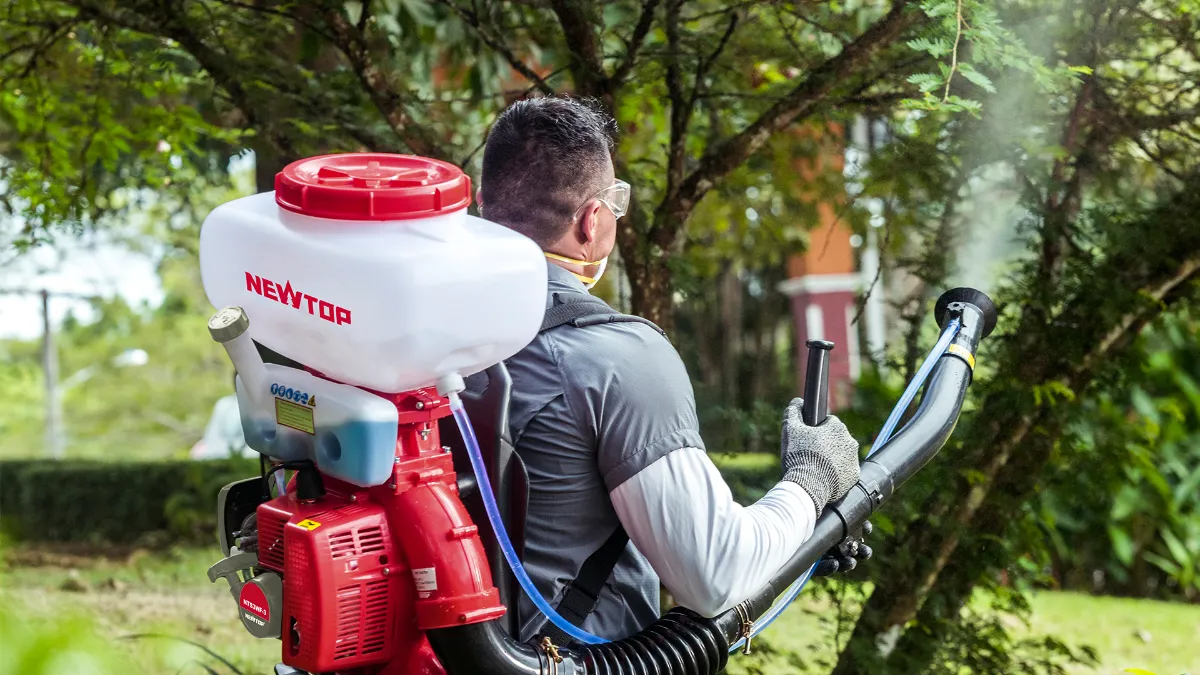
Across different farming regions, knapsack sprayers help manage crop protection efficiently. In rice fields of Southeast Asia, they are used for targeted pesticide application. In orchards in South America, sprayers allow growers to treat trees without causing excessive chemical runoff. Beyond agriculture, these sprayers are also used for urban pest control and public sanitation programs. The effectiveness of a sprayer depends on its tank design, pumping mechanism, nozzle selection, and operator technique, making equipment choice critical for consistent results.
This guide serves as a complete technical breakdown for agricultural managers and field operators. We will identify every major component in the sprayer’s anatomy. You’ll get a clear, step-by-step procedure for preparing and operating the equipment for the first time, along with a definitive list of essential safety gear. The focus is on building a repeatable process for safe, efficiente, and effective crop management.
What Is Knapsack Sprayer?
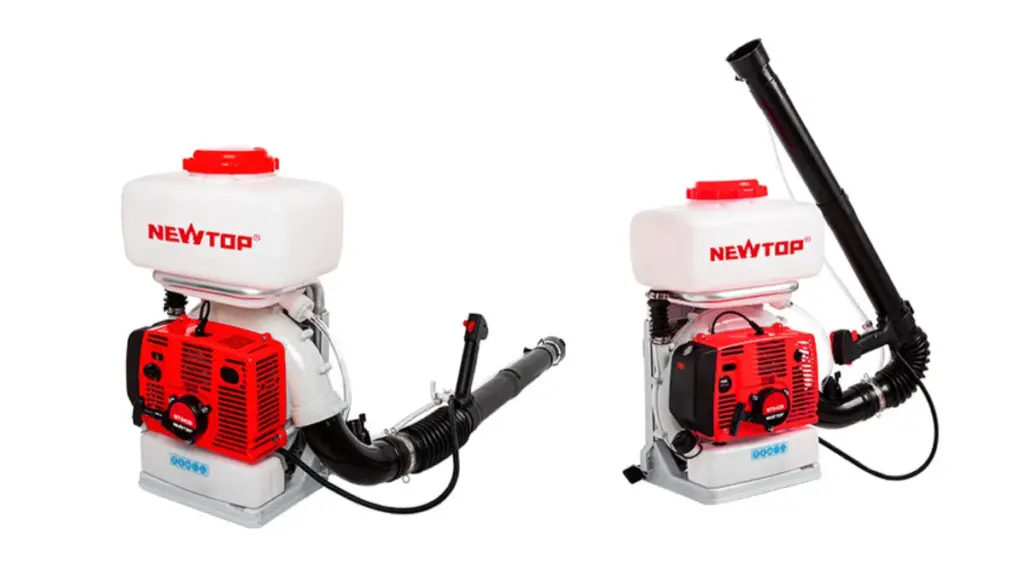
Knapsack sprayers, also known as backpack sprayers, are compact, portable devices designed to apply liquids such as pesticides, erbicidi, fertilizzanti, and water directly onto crops, plants, and soil. Their design allows the operator to carry the sprayer on their back while controlling the nozzle with one hand, providing mobility and precision in areas where larger spraying equipment cannot reach. The portability and adaptability of knapsack sprayers make them widely used in small- to medium-scale agriculture, orticoltura, and landscape maintenance.
Unlike hand-held or tractor-mounted sprayers, knapsack sprayers excel in precision spraying on irregular terrain, around densely planted crops, or inside greenhouses. The wand allows the operator to reach the undersides of leaves, branches, or hard-to-reach spots. Adjustable nozzles enable control over spray pattern and droplet size, which is crucial to prevent chemical drift, optimize coverage, and reduce wastage.
- Used for applying pesticides and fungicides to protect crops from diseases and pests.
- Facilitates precise herbicide management to control weeds in fields, orchards, and gardens.
- Supports the distribution of liquid fertilizers to deliver nutrients directly to plants.
Shift from Manual to Powered Models
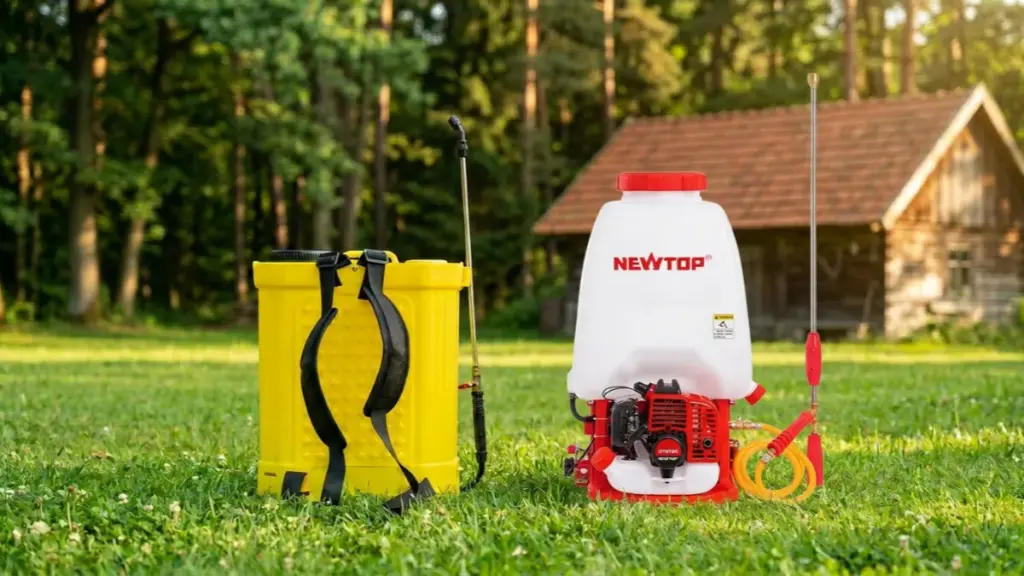
The market shows a clear trend moving from traditional manual backpack sprayers to battery-powered and motorized backpack sprayers. This change is driven by the need to reduce labor costs, increase operational speed, and achieve more consistent application pressure over large areas.
- Manual models remain a dominant choice in cost-sensitive markets due to their simplicity and affordability.
- Battery-powered electric sprayers offer consistent pressure without operator fatigue, improving application accuracy.
- Gasoline-powered models provide higher pressure and are suited for large-scale commercial operations requiring sustained power.
Related Reading: Tipi di spruzzatori a zaino: Scegliere il modello migliore per la tua azienda agricola
Understanding the Anatomy of a Knapsack Sprayer
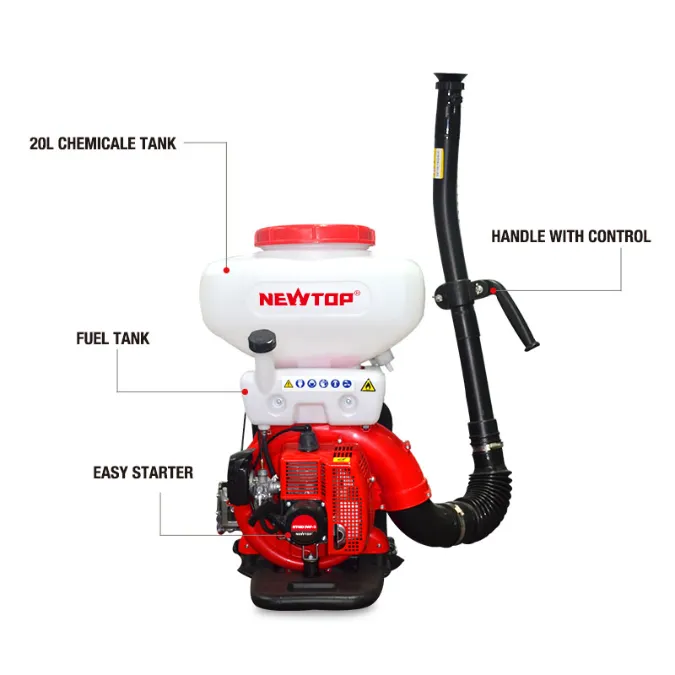
A knapsack sprayer’s design integrates four distinct systems—liquid storage, spray delivery, pressure control, and operator support—to ensure reliable and precise chemical application.
| Component System | Key Parts | Primary Function |
|---|---|---|
| Cisterna & Pressurization | Cisterna, Pump (Piston or Diaphragm) | Holds chemical liquid and generates the force needed for spraying. |
| Spray Delivery | Lance (Spray Wand), Ugello | Directs the pressurized liquid and atomizes it into a specific pattern. |
| Controllare & Regulation | Trigger Valve, Pressure Regulator | Manages liquid flow and maintains consistent system pressure for uniform coverage. |
| Operator Comfort & Manutenzione | Harness, Telaio, Strainer, Filter | Reduces operator fatigue and prevents internal clogs to prolong equipment life. |
Tank and Pressurization System
The tank and pump form the core of a knapsack sprayer. The tank serves as the reservoir for the chemical solution, typically holding 10–20 liters, depending on the model and intended use. Tanks are constructed from durable, chemical-resistant plastics, which can withstand exposure to fertilizers, erbicidi, and pesticides without corroding or deforming.
The pump generates the pressure that forces the liquid through the system. Piston pumps are generally used when high-pressure spraying is required, providing a strong, steady stream. Diaphragm pumps are preferred for abrasive or aggressive chemical formulations, offering smoother pressure and reducing wear. The selection of pump type affects spray consistency, operator fatigue, ed efficienza complessiva.
Spray Delivery Components
Once pressurized, the liquid travels through the lance (spray wand) and exits through the nozzle.
- Lance (Spray Wand): This extendable rod allows the operator to reach leaves, steli, and other difficult-to-access areas, ensuring that all surfaces receive treatment. Its length and maneuverability are crucial for dense crops or orchard environments.
- Ugello: The nozzle atomizes the liquid into droplets and shapes the spray pattern. Common types include:
- Flat Fan Nozzle: Produces a thin, uniform sheet for even coverage over broad surfaces.
- Cone Nozzle: Creates a circular spray pattern, ideal for targeted misting and dense foliage.
- Adjustable Nozzle: Allows operators to change the spray type according to crop requirements.
Proper selection of nozzle type ensures efficient chemical use, reduces drift, and minimizes over-application.
Control and Regulation Mechanisms
Spraying effectiveness depends on the operator’s ability to regulate liquid flow and pressure:
- Trigger Valve: Mounted on the wand handle, this allows instant control over start-and-stop of liquid flow. It helps reduce chemical waste and improves precision during targeted applications.
- Pressure Regulator / Pressure Chamber: Maintains consistent system pressure, ensuring a uniform spray across the entire treatment area. Consistent pressure is particularly important in manual pumps or battery-operated sprayers, preventing uneven coverage or missed spots.
Together, these mechanisms allow operators to maintain accurate application rates, adapt to different crops, and minimize chemical use.
Operator Comfort and Maintenance Features
Ergonomic design improves usability and reduces operator fatigue, especially during long spraying sessions:
- Harness and Frame: Padded, adjustable straps distribute the sprayer’s weight evenly across the shoulders and back, reducing strain. Some models include waist belts or back supports for additional comfort.
- Strainer and Filter: Positioned at the tank inlet or inside the pump, these prevent debris from entering the system, reducing the risk of nozzle clogging and prolonging equipment life.
Routine inspection and maintenance of these components, such as cleaning filters and adjusting straps, ensures consistent performance and increases the sprayer’s service life.
Equip Your Market with Proven Performance
Economic Importance of Knapsack Sprayer in Modern Farming
Knapsack sprayers directly boost farm profitability by enabling precise chemical application, which reduces input costs and improves labor efficiency.
Cost Efficiency and Resource Optimization
Knapsack sprayers provide significant economic advantages by ensuring the precise application of agricultural inputs. This accuracy helps minimize chemical waste, directly lowering operational costs for farmers and improving overall farm profitability.
- High-pressure pumps and adjustable nozzles optimize the use of pesticides and fertilizers, reducing over-application.
- Large-capacity tanks decrease the need for frequent refilling, which saves valuable labor time and increases work continuity.
- Targeted application helps farmers get the most value from every liter of chemical, boosting resource efficiency.
Labor Productivity and Time Savings
The portable, back-carried design of these sprayers significantly boosts labor efficiency on farms. It allows a single worker to manage larger areas more quickly and accurately, optimizing workforce deployment, especially where labor is a major expense.
- Farmers can cover more acreage in less time, a crucial benefit for small to medium-sized operations.
- The ergonomic design enables operators to work comfortably and maintain consistent performance throughout the day, maximizing output.
Market Scale and Manufacturing Growth
The global demand for knapsack sprayers highlights their economic importance, fostering the growth of major manufacturing hubs. This industrial concentration reflects the tool’s proven return on investment for farmers worldwide.
- Regions like Taizhou, China have become key centers for knapsack sprayer production, supplying international markets.
- Strong global demand is driven by the clear economic benefits and efficiency gains that these sprayers provide to the agricultural sector.
Sustainability and Long-Term Farm Viability
By enabling targeted treatments and reducing overall chemical usage, knapsack sprayers contribute to more sustainable and cost-effective farming. This approach lowers immediate expenses and enhances the long-term economic health of the farm.
- Support for integrated pest management strategies reduces reliance on broad-spectrum chemical applications.
- Lowering chemical inputs not only cuts costs but also minimizes long-term environmental liabilities, making farming operations more resilient.
Common Types of Pumps Used in Knapsack Sprayers
The choice of pump technology in a knapsack sprayer—typically piston, diaframma, or battery-powered—directly dictates its chemical compatibility, pressure capabilities, and operator efficiency.
Piston Pumps
Piston pumps are a popular and reliable option for knapsack sprayers, especially when working with standard liquid formulations. Their simple mechanical design allows them to generate consistent pressure for effective application. This makes them a go-to choice for many standard agricultural and landscaping tasks.
- Best suited for non-abrasive chemicals like liquid insecticides and herbicides.
- Known for achieving higher pressure levels, which is useful for certain spraying tasks.
- The straightforward construction simplifies maintenance and repair.
Diaphragm Pumps
Diaphragm pumps are engineered for durability, particularly when spraying abrasive or corrosive chemicals. The pump’s internal mechanism is sealed off from the chemical, which protects moving parts from wear and damage. This design is critical for operators who frequently work with wettable powders or other challenging formulations.
- Ideal for abrasive materials like wettable powders and some fertilizers.
- The sealed design reduces direct contact between chemicals and critical components.
- Offers a longer service life when used with challenging formulations.
Related Reading: Pistone spruzzatore a zaino vs. Pompa a membrana: Quale sistema vince?
Battery-Powered Pumps
Battery-powered systems represent a significant shift in the knapsack sprayer market. They eliminate the need for manual pumping, reducing operator fatigue and ensuring a constant, even pressure for uniform spray coverage. This technology is gaining traction in commercial operations where consistency and efficiency are primary concerns.
- Provides consistent pressure delivery without physical effort.
- Reduces operator fatigue, making it easier to complete large jobs.
- Increases efficiency and precision for both agricultural and residential users.
How to Prepare and Operate Your Backpack Sprayer for the First Time
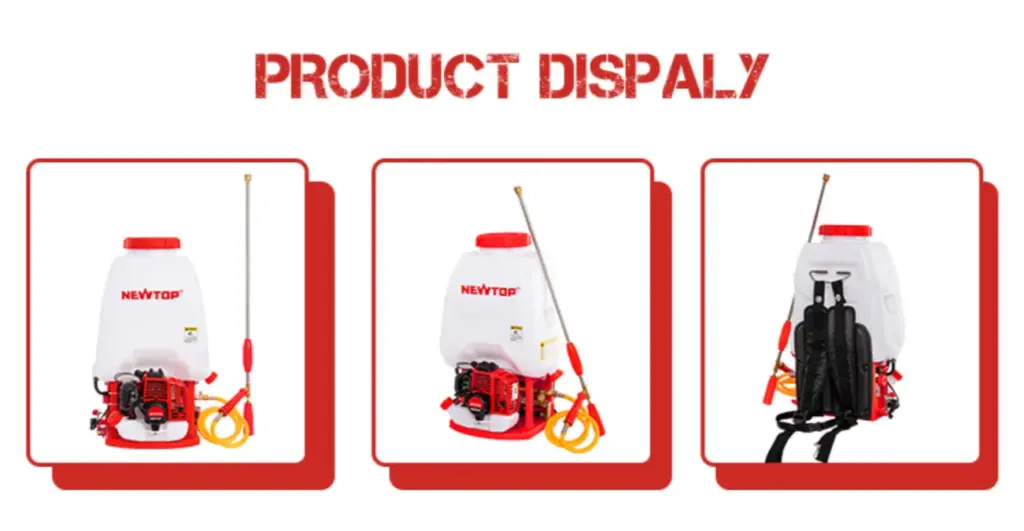
Proper sprayer setup involves a sequence of pre-use inspection, precise calibration, safe chemical mixing, and consistent application technique to ensure operational safety and effectiveness.
| Stage | Key Action | Primary Goal |
|---|---|---|
| Pre-Operation Inspection | Check for cracks, tighten all connections, and test with clean water. | Prevent leaks and confirm basic pump functionality. |
| Calibration | Spray a measured test area to calculate the application rate. | Ensure accurate dosing to avoid waste and crop damage. |
| Mixing & Filling | Wear PPE, half-fill with water, add chemical, then top off. | Achieve a safe, thoroughly mixed, and effective solution. |
| Spraying Technique | Maintain a steady pace, constant nozzle height, and overlap passes. | Achieve uniform coverage and minimize chemical drift. |
Pre-Operation Inspection and Assembly
Before you fill the tank with any chemical, a complete inspection and proper assembly are mandatory. This initial check verifies that the unit was not damaged during shipping and that all components are connected correctly to prevent leaks and ensure safe operation. A simple water test is the final step to confirm the system holds pressure as expected.
- Unpack and verify all components against the parts list in the user manual.
- Inspect the tank for any cracks or defects and confirm that all seals and gaskets are properly seated.
- Firmly attach the hose, spray wand, and nozzle, tightening every connection to create a leak-proof seal.
- Fill the tank with clean water to test the pump. Build pressure and check for any drips or leaks from the connections or seals.
Calibrating the Sprayer for Accurate Dosing
Calibration is the process of matching your sprayer’s output to the requirements of the chemical and the target area. Correct calibration is not optional; it is fundamental to effective treatment, preventing the waste of expensive chemicals, and protecting crops from being over- or under-dosed. The goal is to determine exactly how much liquid your sprayer applies over a defined area so you can mix your solution accurately.
- Fill the sprayer with a precise volume of water (per esempio., 5 litri).
- Mark out a specific test area, such as 10 square meters (2m x 5m).
- Spray the test area using the same walking speed and pumping rhythm you plan to use for the actual job.
- Measure the amount of water remaining in the tank. The difference is your application rate, which you can use to adjust your technique or mixture.
Proper Mixing and Filling Procedures
Handling and mixing chemical concentrates is a high-risk step that demands strict adherence to safety protocols. Always follow the instructions printed on the chemical’s label. The standard procedure is to partially fill the tank with water first, which helps dilute the concentrate safely and promotes a more thorough mix.
- Always put on your personal protective equipment (PPE), especially chemical-resistant gloves and safety glasses, before handling chemicals.
- Fill the sprayer tank about halfway with the required amount of water.
- Add the measured volume of chemical concentrate to the water in the tank.
- Add the remaining water to reach the final desired volume, then close the lid securely and agitate the tank to mix the solution completely.
Safe and Effective Spraying Techniques
Your physical technique during application directly controls the quality of coverage and your level of exposure. A disciplined, consistent method ensures the chemical is applied uniformly across the target surface and minimizes the risk of drift, where spray travels to unintended areas. Maintaining steady pressure through consistent pumping is key for an even spray pattern.
- Walk at a constant, steady pace while keeping the nozzle at a consistent height from the target plants or ground.
- Apply the spray in a smooth, sweeping motion. Overlap each pass slightly to avoid gaps and ensure even coverage.
- Do not spray in windy conditions. Wind causes chemical drift, wasting product and potentially harming adjacent, non-target plants or property.
- Pump the handle with a consistent rhythm to maintain steady pressure, which is critical for a uniform spray pattern and flow rate.
Essential Safety Gear for Backpack Spraying Tasks
Using the correct personal protective equipment (PPE) is a non-negotiable industry standard, forming the primary defense against chemical exposure during all spraying operations.
Protective Coveralls and Footwear
To shield the body from direct contact with chemicals, wearing full-body coveralls and chemical-resistant boots is fundamental. This gear acts as the primary barrier against accidental spills, splashes, and spray drift during mixing and application.
- Select coveralls made from durable, non-absorbent materials designed to resist chemical penetration.
- Use waterproof boots that are high enough to be covered by the pant legs, preventing liquids from running down into them.
- Before each use, inspect all coveralls and boots for tears or holes that could compromise protection.
Chemical-Resistant Gloves
Hands are highly susceptible to chemical exposure. Unlined, waterproof gloves made from materials like nitrile or neoprene are essential for safely handling pesticides, mixing solutions, and operating the sprayer.
- Choose gloves that extend well beyond the wrist to protect forearms.
- Never use leather or fabric gloves, as they absorb and retain chemicals, leading to prolonged skin contact.
- Regularly check for signs of degradation, such as cracks or discoloration, and replace them immediately if damage is found.
Eye and Face Protection
Protecting the eyes from chemical splashes is critical to prevent severe injury. Vented goggles or a full-face shield creates an effective barrier against airborne droplets and accidental splashes.
- Ensure goggles provide a snug seal around the eyes to block liquids from all angles.
- A face shield can offer additional protection for the entire face but should be used with goggles for complete eye safety.
- Standard eyeglasses are not a substitute for proper safety eyewear as they do not protect from splashes.
Respiratory Protection
Inhaling chemical mists or vapors can lead to serious health issues. A properly fitted respirator filters harmful particles and is a vital piece of equipment when working with many types of agricultural chemicals.
- The specific type of respirator needed is determined by the chemical being applied; always check the product’s safety data sheet.
- A tight seal between the respirator and the face is necessary for it to work correctly.
- Replace filters and cartridges based on the manufacturer’s instructions or if breathing becomes difficult.
Ready to Work with a Top 5 Knapsack Sprayer Factory?
NEWTOP has over 20 years of experience in manufacturing garden tools and agricultural equipment, providing reliable knapsack sprayers for global markets. Advantages include:
- Wide Product Range: Manual and gasoline knapsack sprayers for varied agricultural applications.
- Global Distribution: Products shipped to 65+ Paesi, with after-sales support and local service points.
- Certifications and Quality: CE, GS, ETL, and ISO-certified production lines ensure consistent performance.
- Customization Options: OEM/ODM solutions for tank capacity, nozzle types, and branding to meet regional requirements.
- Technical Support: R&D-backed design ensures long-lasting durability and precise chemical application.
Partnering with us guarantees access to high-quality, durable sprayers suited to modern farming challenges.
Conclusione
The knapsack sprayer is a fundamental tool in modern agriculture, offering a precise and portable way to manage crops. Understanding its core components, proper operation, and essential safety measures is key to maximizing its effectiveness. This knowledge helps ensure consistent application, protects the operator, and extends the life of the equipment.
If you are sourcing new equipment, consider the pump type and capacity that best match your operational needs. Contact our team to review our full catalog of durable manual and battery-powered knapsack sprayers.
Domande frequenti
What is the use of knapsack sprayer in agriculture?
Knapsack sprayers apply fertilizers, erbicidi, pesticidi, and water directly to crops, improving plant health and reducing chemical waste.
What are the main parts of a knapsack sprayer?
Cisterna, pompa, tubo flessibile, wand, nozzle, straps, and optionally a pressure regulator.
How does a knapsack sprayer work?
The pump pressurizes the liquid, forcing it through the hose and nozzle. The nozzle controls droplet size and spray pattern.
Is a manual or battery knapsack sprayer better?
Manual sprayers are suitable for small farms or short-term use. Battery-powered models provide uniform pressure and reduce operator fatigue for larger or repeated tasks.
What is the capacity of a standard knapsack sprayer?
Most standard knapsack sprayers range from 10 A 20 litri (approximately 2.6–5.3 gallons), with 16L and 20L being the most widely used capacities in agricultural applications.
How to maintain a knapsack sprayer after use?
Rinse tank, hoses, and nozzles thoroughly. Inspect for damage and store in a shaded, dry area. Periodically lubricate moving parts for longer service life.
Where can I find reliable knapsack sprayer manufacturers?
Choosing a reliable supplier requires evaluating production scale, pump testing standards, spare part consistency, and export certifications. You can review our detailed guide on the Superiore 10 Produttori di spruzzatori a spalla to compare leading global factories.
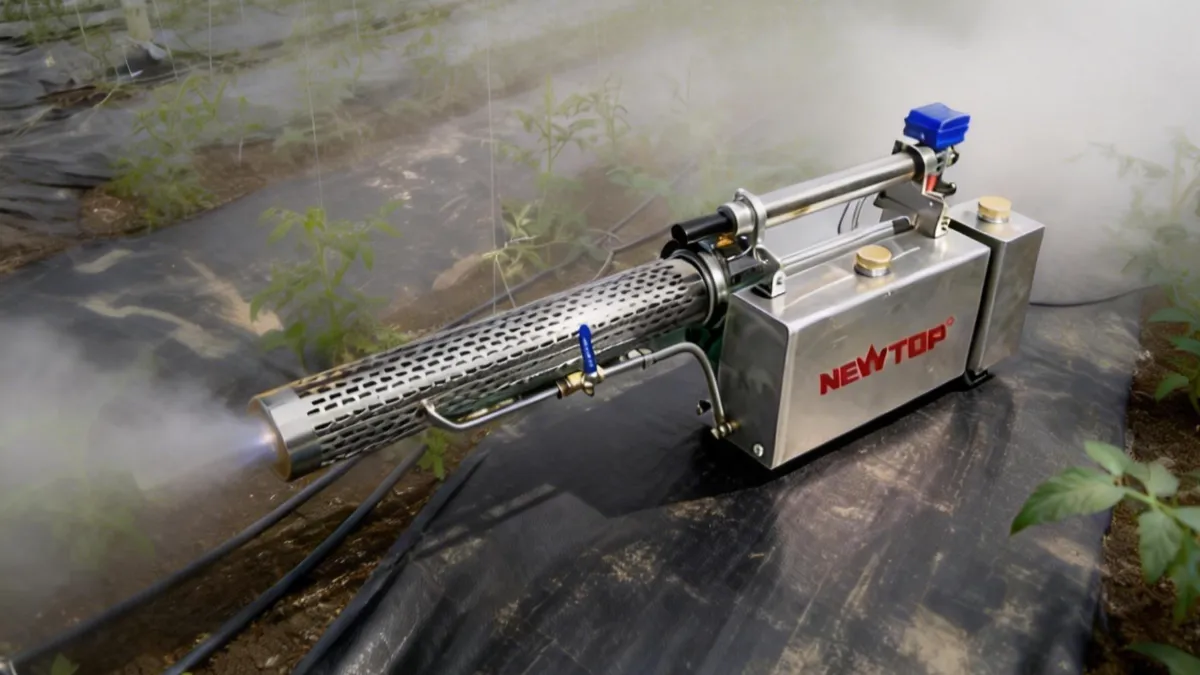
Answering ‘what is a fogger sprayer’ is the critical first step in preventing costly chemical waste and avoiding compliance failures in public health and agricultural settings. Many operations mistakenly deploy standard sprayers for tasks demanding precise, aerosolized droplets, which leads to ineffective pest control, incomplete disinfection, and significant financial losses. This fundamental mismatch in equipment is a common operational blind spot that directly impacts both safety and budget.
This guide provides the technical foundation for making informed equipment decisions. We break down the core components of professional fogging machines, detail their primary applications, and compare the key differences between thermal and cold fogger technologies. Consider this your standard operating procedure for evaluating, selecting, and safely deploying the right misting tool for any large-scale job.
What Is a Fogger Sprayer and How It Works?
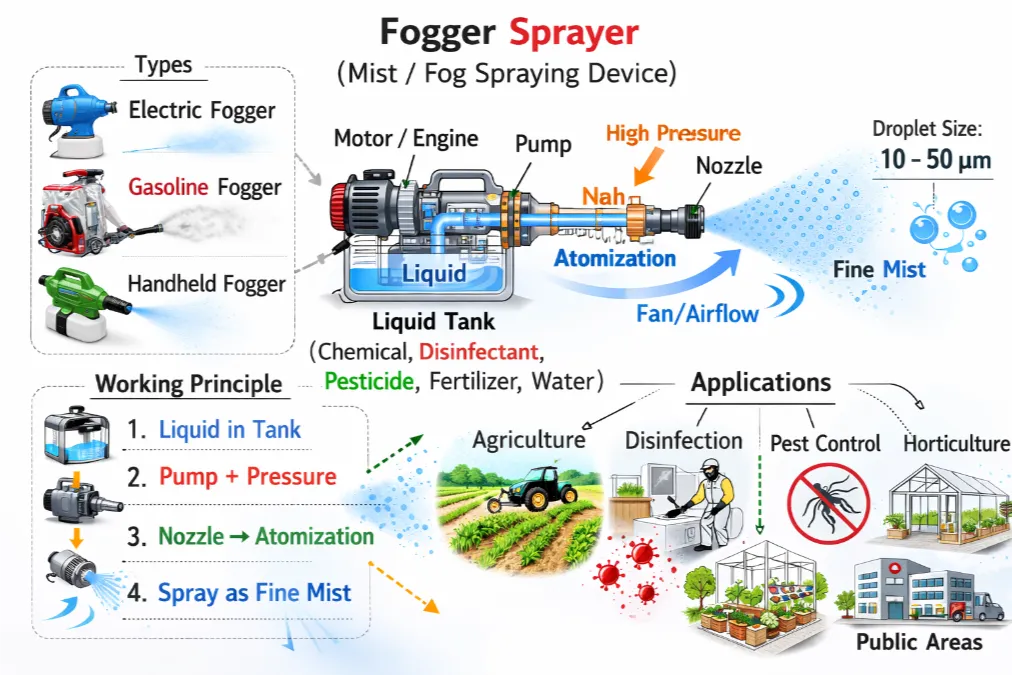
Fogger sprayers atomize liquid solutions into a fine aerosol mist, enabling uniform chemical application across large, complex surfaces that conventional sprayers cannot effectively reach.
A fogger sprayer is a specialized spraying device designed to convert liquid solutions into ultra-low volume (ULV) droplets, typically ranging from 5 A 50 micron. At this size, droplets behave almost like a gas, drifting through the air and settling evenly over surfaces. This makes fogging particularly effective for insect control, crop protection, and large-scale disinfection.
The Basic Fogging Mechanism
A fogger works by atomizing a liquid solution. A motor-driven pump draws the chemical from a tank and pressurizes it. This pressurized liquid is then forced through a specialized nozzle, which breaks it down into tiny droplets. A blower or fan propels these aerosol particles into the target environment, creating a fog that settles on all exposed surfaces. The machine’s design controls the droplet size to optimize air suspension time and ensure effective surface contact.
Major Fogging Technologies Used Today
Modern fogging equipment is generally categorized into thermal foggers, ULV cold foggers, and electrostatic systems. Each operates on a distinct atomization principle and is suited to different environments.
Thermal Foggers
Thermal foggers use a heated coil or combustion chamber to vaporize oil-based or water-based solutions. When the vapor exits the nozzle and encounters cooler ambient air, it condenses into a thick, visible fog. This visible plume helps operators monitor coverage in open environments.
Thermal systems are widely used in outdoor mosquito control programs, agricultural field treatments, and public health operations across tropical regions. They are especially effective when rapid large-area dispersion is required. Tuttavia, because they rely on combustion and heat, they are typically not recommended for enclosed indoor spaces without proper ventilation.
ULV (Ultra Low Volume) Cold Foggers
Cold foggers, often referred to as ULV foggers, rely entirely on mechanical energy rather than heat. A high-speed blower or turbine shears the liquid into extremely fine droplets, typically under 30 micron.
ULV fogging is ideal for indoor disinfection, food processing facilities, greenhouses, poultry farms, and warehouses. Since there is no combustion process, cold foggers are safer for enclosed environments and compatible with water-based disinfectants. They are also more energy-efficient and generally produce less visible residue compared to thermal systems.
Electrostatic Sprayers
Electrostatic systems represent a more advanced variation of fogging technology. In these machines, droplets receive an electrical charge as they exit the nozzle. This charge causes the particles to actively seek and adhere to surfaces, wrapping around objects for more complete 360-degree coverage.
Electrostatic spraying is commonly used in healthcare facilities, airports, schools, and high-touch public areas where surface disinfection precision is critical. While more specialized and typically higher in cost, electrostatic technology significantly reduces chemical waste and improves uniformity of application.
Key Components of a Professional Fogger Machine
A professional fogger’s performance depends on four core systems working together: the fluid delivery mechanism, the thermal management system, the atomizing nozzle, and the electronic controls that regulate the entire process.
| Component System | Primary Function | Critical Feature |
|---|---|---|
| Fluid Tank & Pump System | Stores and pressurizes the fogging solution for consistent delivery. | Chemical-resistant tank and reliable high-pressure pump. |
| Heating Element & Heat Exchanger | Rapidly heats and vaporizes the fluid to create a dense fog. | High-wattage heater with integrated thermal safety cutoffs. |
| Ugello & Atomizer Assembly | Expels and atomizes vapor into fine particles of a specific size. | Precision-engineered to control droplet micron size and fog density. |
| Control Electronics & Interface | Manages temperature, fluid flow, and operational timing. | Central PCB with a clear user interface, often including remote control. |
Fluid Tank and Pump System
The fluid tank stores the fogging solution, and its pump pressurizes the liquid before sending it to the heating element. The capacity and material of the tank directly influence the machine’s continuous runtime, while the pump’s reliability determines output consistency. Professional-grade machines use components built for demanding field conditions.
- The tank is constructed from durable, chemical-resistant materials to prevent corrosion from various fogging solutions.
- A high-pressure pump delivers a steady fluid flow, ensuring uniform fog generation without sputtering.
- Internal filters prevent particles from clogging the nozzle, which maintains performance and reduces downtime for maintenance.
Heating Element and Heat Exchanger
In a thermal fogger, this is the engine of the machine. The heating element and heat exchanger work together to rapidly heat and vaporize the fogging solution into a gas. Efficient heat transfer is essential for producing a thick, dry fog and is a key differentiator in machine quality. Poor thermal management can result in a wet, ineffective fog or create a safety hazard.
- A high-wattage heater block achieves the optimal operating temperature quickly, reducing startup time.
- The heat exchanger is designed to maximize the surface area exposed to the fluid, ensuring complete and efficient vaporization.
- Embedded temperature sensors and thermal safety cutoffs are non-negotiable features that prevent the unit from overheating.
Nozzle and Atomizer Assembly
The nozzle is the final stage, where the pressurized, vaporized solution is expelled and atomized into extremely fine particles, creating the visible fog. The engineering of the nozzle assembly determines the droplet size, measured in microns, and the fog’s projection distance. This component is critical for achieving the desired coverage and penetration for applications like controllo dei parassiti or disinfection.
- Precision nozzles create particles of a specific micron size, ensuring the fog hangs in the air and coats surfaces effectively.
- Materials used in the nozzle must withstand high temperatures and constant pressure without degrading.
- Many professional models feature adjustable output settings, allowing operators to control fog density and flow rate for different environments.
Control Electronics and Interface
Modern foggers are not just mechanical devices; they rely on sophisticated electronic controls to manage every function with precision. The central printed circuit board (PCB) regulates temperature, fluid flow, and output timing. A well-designed user interface allows the operator to configure these settings easily and monitor the machine’s status, which is vital for repeatable and predictable results.
- The PCB acts as the brain, synchronizing the pump and heater to produce a consistent output.
- A straightforward interface with buttons, indicator lights, or a digital display gives the operator full control over the machine’s functions.
- Remote control capabilities, whether wired or wireless, allow for convenient and safe operation from a distance.
Professional Fogger Solutions for Large-Scale Control
Applicazioni principali dei nebulizzatori nel controllo dei parassiti e nell'agricoltura
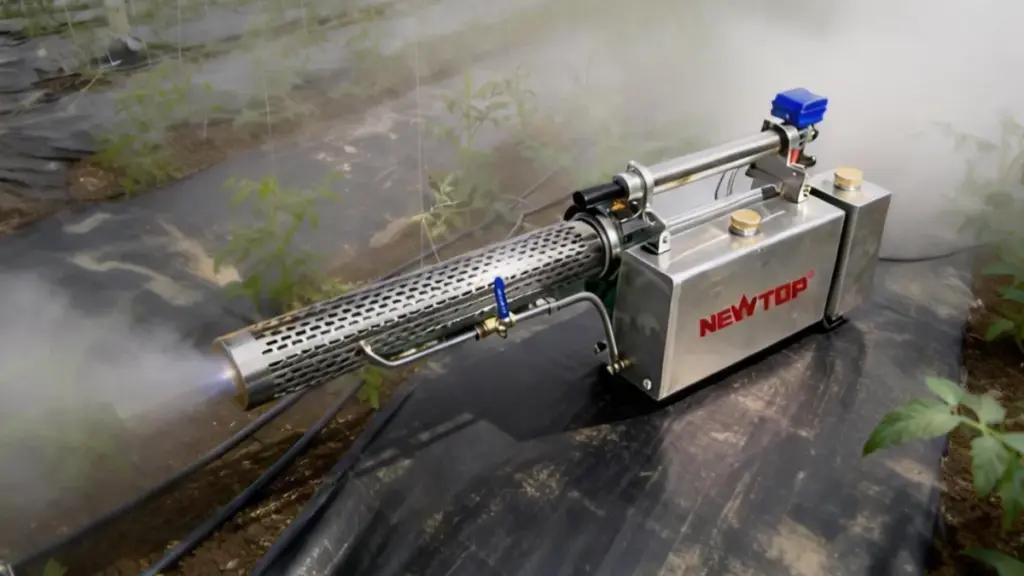
Foggers are essential tools in agriculture and public health, delivering atomized solutions for crop protection, large-scale sanitization, and environmental control.
Agricultural Pest and Disease Management
In farming and greenhouse operations, foggers deliver fine aerosol droplets that penetrate dense plant canopies. This process ensures fungicides and pesticides reach all surfaces, including the undersides of leaves, providing comprehensive protection against pests and diseases. The superior coverage and penetration capabilities are critical for maintaining crop health and maximizing yields.
- Covers large areas like field crops and orchards quickly, improving labor efficiency during treatment windows.
- Delivers uniform application of chemicals, reducing waste and minimizing environmental runoff.
- Effective for controlling insects and fungal growth in controlled environments like greenhouses and nurseries.
Large-Scale Disinfection and Sanitization
ULV (Ultra Low Volume) cold foggers are standard equipment for sanitizing public spaces, commercial facilities, and livestock enclosures. They disperse disinfectants as a fine mist that settles on surfaces to neutralize pathogens without causing excessive wetness. This method is crucial for contamination control protocols in food processing, healthcare, and transportation sectors.
- Used in food production facilities to maintain sanitary conditions and prevent contamination.
- Sanitizes transportation hubs, schools, and hospitals to control the spread of viruses and bacteria.
- Disinfects animal housing such as poultry farms and barns to protect livestock health.
Humidity and Climate Control
Fogging systems help regulate humidity and temperature in specialized agricultural settings. By releasing a fine water mist, they create optimal growing conditions for sensitive plants or help preserve perishable goods. This application of humidity management is vital for high-value crops and extending the shelf life of produce.
- Increases ambient humidity in greenhouses, which is critical for cultivating tropical plants and seedlings.
- Provides evaporative cooling to lower temperatures during hot weather, reducing heat stress on crops.
- Maintains moisture levels in storage facilities for produce and flowers to extend their shelf life.
Read more: Superiore 10 Produttori di spruzzatori a spalla in 2026
Benefits of Using a Fogger Sprayer for Large-Scale Disinfection

When properly calibrated and applied according to chemical guidelines, fogger sprayers can significantly improve operational efficiency in large-scale disinfection environments. Their ability to produce ultra-fine droplets allows for more uniform spatial coverage compared to conventional manual cleaning methods.
Superior Surface Coverage
Fogging systems generate a controlled mist that disperses throughout an enclosed space rather than targeting only visible surfaces. Because the droplets remain suspended for a period of time, they are more likely to contact elevated surfaces, corners, ventilation openings, and the undersides of equipment.
Electrostatic variants further enhance deposition efficiency by electrically charging droplets, which encourages them to adhere more effectively to target surfaces.
While exact coverage performance depends on room layout and airflow conditions, fogging technology generally provides more consistent volumetric distribution than manual wiping or pump spraying.
Optimized Chemical Efficiency and Labor Productivity
ULV foggers are designed to apply disinfectant solutions in very small droplet sizes, which increases dispersion efficiency. In many facility maintenance scenarios, this allows operators to treat larger areas using lower total liquid volume compared to conventional high-volume spraying.
Inoltre, fogging reduces the need for repetitive manual surface wiping across large facilities. A single trained operator can treat open spaces more quickly than traditional cleaning crews, improving labor productivity and reducing operational downtime.
Actual savings will vary depending on room configuration, chemical type, and application protocol.
Rapid Treatment for Extensive Areas
Foggers are particularly valuable in warehouses, production facilities, livestock housing, and other large commercial environments where rapid treatment is essential.
Coverage rate depends on machine capacity and operator technique. Portable and backpack ULV foggers are commonly used for medium-to-large indoor areas, while high-capacity thermal foggers are preferred for outdoor vector control and expansive open spaces.
Because fogging distributes disinfectant in airborne form, it enables faster treatment cycles compared to surface-only cleaning methods, supporting quicker facility turnaround.
Thermal Foggers vs. Cold Foggers: Major Differences
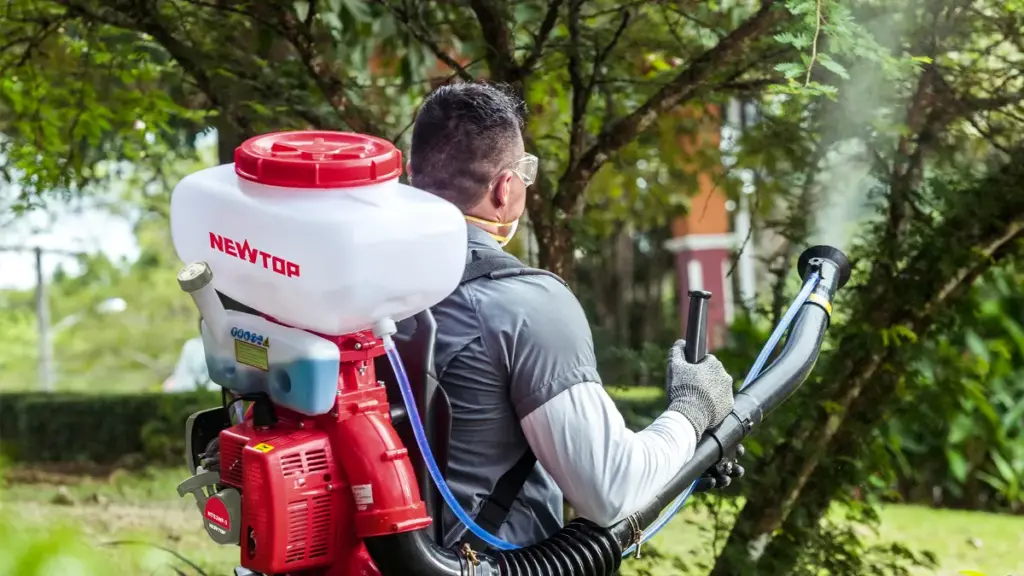
The choice between thermal and cold foggers hinges entirely on the application environment; thermal units excel outdoors with fine, heat-vaporized particles, while cold (ULV) foggers provide safer, heat-free atomization for indoor and sensitive areas.
| Feature | Thermal Fogger | Cold (ULV) Fogger |
|---|---|---|
| Operating Mechanism | Uses heat to vaporize a chemical solution. | Uses high pressure and air shear to atomize liquid. |
| Particle Size | Extremely fine (0.5–10 microns). | Fine, often adjustable (5–50 microns). |
| Ideal Environment | Large-scale outdoor areas (fattorie, forests). | Indoors and enclosed spaces (hospitals, greenhouses). |
| Safety Profile | Poses a fire hazard; requires careful handling. | No heat, no fire risk, and generally quieter operation. |
| Compatibilità chimica | Typically requires oil-based carriers. | Works with a wide range of water and oil-based solutions. |
Operating Mechanism and Particle Size
The fundamental distinction between these machines is how they generate fog.
Thermal foggers employ heat to flash-vaporize a chemical solution, which then condenses upon contact with cooler ambient air. This process creates a dense, highly visible fog composed of extremely fine particles.
Cold foggers, also known as Ultra Low Volume (ULV) machines, use high-pressure air to shatter liquid into a fine mist without any heat. This mechanical process of atomization offers greater control over droplet size.
Ideal Applications and Environments
Each fogger type is engineered for specific operational contexts.
Thermal foggers are the established tool for expansive outdoor applications, such as large-scale pest control in agriculture and public health vector control programs. Their dense fog can drift over vast areas, effectively treating forests, fattorie, and municipalities.
Cold foggers have become the standard for indoor and commercial use where safety and operational noise are primary concerns.
Chemical Compatibility and Safety
Cold foggers offer superior chemical versatility. Because they operate without heat, they can safely aerosolize a wide array of solutions without degrading the active ingredients. This makes them suitable for disinfectants, biocides, and pesticides that are sensitive to high temperatures. This operational safety extends to the operator and the environment, especially in enclosed areas where fire risk must be eliminated.
Thermal foggers are more restrictive, often requiring oil-based carriers to produce a thick fog. The high-temperature operation introduces a clear fire hazard if mishandled or used near flammable materials, making them unsuitable for most indoor applications.
Critical Safety Protocols for Operating Fogging Equipment
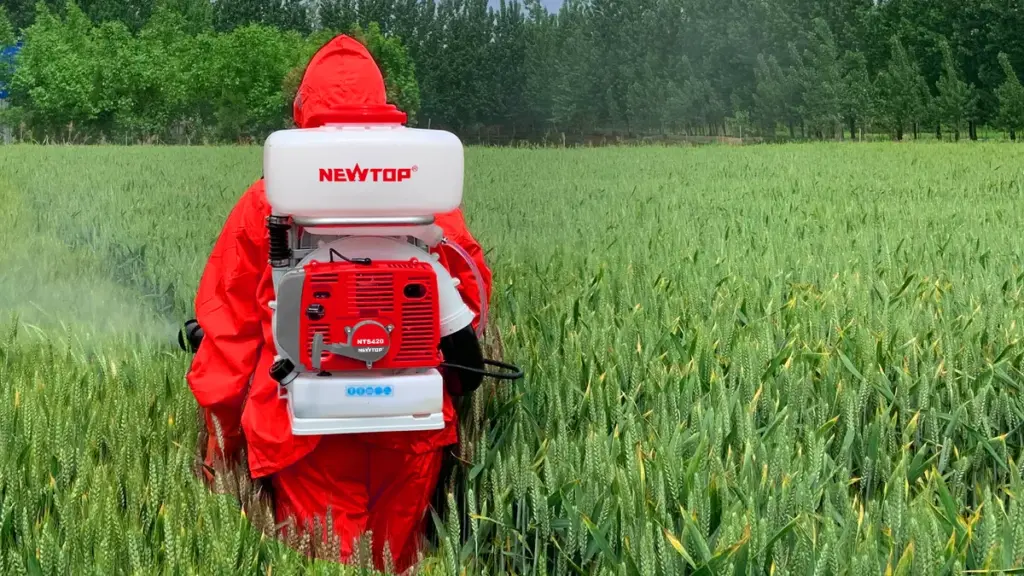
Effective fogging operations depend on standardized safety protocols, including mandatory operator certification, correct PPE usage, and strict adherence to chemical handling and re-entry procedures.
Use of Personal Protective Equipment (PPE)
Wearing the correct Personal Protective Equipment is the first line of defense for any operator. Regulations require comprehensive protection to prevent chemical exposure through inhalation, skin contact, or eye irritation during the fogging process. Failure to use proper PPE can lead to immediate health risks and long-term complications.
- Full-face respirators with appropriate chemical cartridges are mandatory.
- Chemical-resistant gloves, coveralls, and waterproof boots protect the skin from contact.
- Goggles or face shields provide an extra layer of protection for the eyes.
Area Preparation and Ventilation Control
Properly preparing the treatment area is essential to ensure both effectiveness and safety. This involves isolating the space and managing airflow to contain the fog and protect adjacent environments. A well-prepared area maximizes the disinfectant’s efficacy while minimizing unintended exposure.
- Seal off the designated area by closing all doors, windows, and vents.
- Turn off all HVAC systems to prevent the disinfectant from circulating outside the treatment zone.
- Post warning signs at all entry points to prevent unauthorized access during and after application.
Operator Training and Chemical Management
Operator certification and adherence to chemical guidelines are now industry standards. A trained operator understands the equipment’s functions, the properties of the disinfectant, and how to manage potential risks. This expertise prevents equipment misuse and ensures chemicals are applied at safe, effective concentrations.
- Operators must be certified and trained on the specific fogging equipment in use.
- Always follow the manufacturer’s guidelines for chemical dilution ratios and application rates.
- Confirm chemical compatibility with the equipment to prevent corrosion or malfunction.
Post-Treatment and Safe Re-Entry Protocols
Safety procedures do not end when the application is complete. Post-treatment protocols ensure the area is safe for re-entry and that any chemical residue is managed correctly. These final steps are crucial for protecting occupants and maintaining equipment integrity.
- Adhere to the specified waiting period before ventilating and re-entering the area.
- Thoroughly clean the fogging equipment after each use to maintain its performance and longevity.
- Manage any remaining chemical residue according to environmental safety standards.
Why Choose NEWTOP High-Efficiency Fogger Solutions?
NEWTOP foggers combine precision manufacturing with a robust global supply chain to deliver reliable, versatile equipment for large-scale agricultural and public health operations.
As a leading garden and agricultural machinery manufacturer based in Shanghai, NEWTOP has been manufacturing power equipment since 2003. With more than 10,000 square meters of production facilities and an annual capacity exceeding 500,000 unità, the company integrates CNC machining centers, linee di produzione automatizzate, and independent testing laboratories to ensure consistent quality.
NEWTOP’s fogger sprayers are engineered for durability in demanding environments such as tropical agriculture and municipal vector control programs. Core components are selected from globally recognized suppliers, ensuring stable combustion performance and long service life.
The company supports OEM and ODM customization, including color design, branding, confezione, and parameter adjustments tailored to regional regulations. With CE, APE, and ISO certifications, NEWTOP equipment meets international compliance standards.
For distributors targeting Africa, America Latina, Sud-est asiatico, and emerging Eastern European markets, NEWTOP offers competitive mid-range positioning that balances price, durability, and after-sales support.
Grow Strong with NEWTOP — Your Trustworthy Garden Tools Partner.
For product catalogs, technical specifications, or partnership inquiries, contact:
E-mail: [email protected]
WhatsApp: +86 13636521556
Website: https://newtoptools.com/
Conclusione
Understanding the mechanics of a fogger sprayer, from its key components to the differences between thermal and cold ULV models, directly impacts operational success. This knowledge ensures you can achieve precise, wide-area coverage for disinfection, controllo dei parassiti, and agricultural treatments. Selecting the right tool optimizes chemical use, enhances safety, and improves overall efficiency.
If you are ready to enhance your operations with reliable misting technology, explore NEWTOP’s line of professional fogger solutions. Contact our team to request a product catalog or to consult on the best equipment for your specific application.
Domande frequenti
What is the difference between a fogger and a sprayer?
A traditional sprayer produces larger droplets that settle quickly on surfaces, making it suitable for targeted applications. A fogger creates ultra-fine droplets that remain suspended in the air, allowing better coverage and penetration.
How long can a fogger spray continuously?
Continuous operation time depends on tank capacity and engine type. Most professional gasoline foggers can operate for 30–60 minutes per tank under standard load.
Is a fogger better than a spray for mosquitoes?
SÌ, for wide-area mosquito control, especially outdoors, foggers are generally more effective because the fine mist can disperse across vegetation and open air.
Can you use a fogger for indoor disinfection?
SÌ, particularly cold ULV foggers designed for indoor environments. Proper ventilation and chemical compliance are essential.
What is the spray range of a portable fogger?
Portable thermal foggers may achieve a horizontal spray distance of 8–12 meters depending on wind conditions and model specifications.
Do foggers use more chemical than sprayers?
NO, foggers are designed to use less chemical than traditional sprayers. ULV (Ultra Low Volume) foggers, in particolare, atomize a small amount of concentrated solution into a vast volume of fine mist. This method provides extensive coverage with maximum efficiency, reducing overall chemical consumption compared to high-volume drenching sprayers.
If you would like a deeper technical breakdown of sprayer and fogger performance differences, read our guide: Differenza tra nebulizzatore e spruzzatore: Una guida tecnica al confronto .
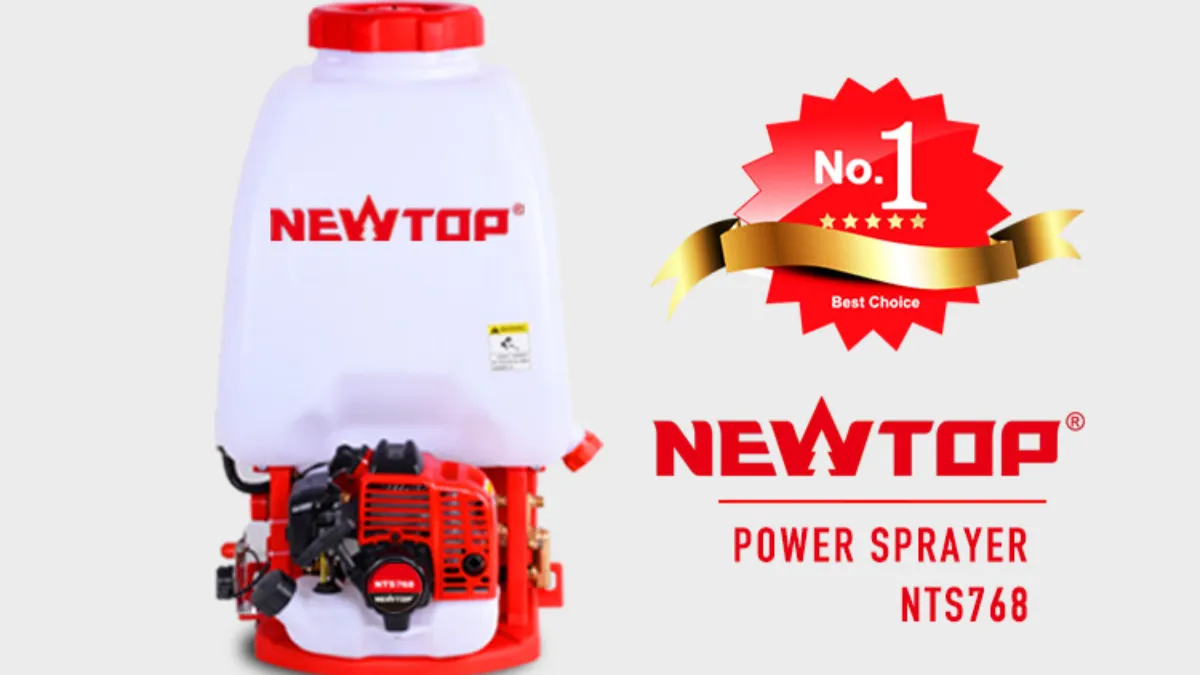
For agricultural distributors, farm equipment wholesalers, and regional brand owners, finding the right knapsack sprayer is not just about comparing tank sizes or engine types. It is about balancing performance, durability, regulatory compliance, and long-term supply stability—while still meeting the price expectations of local farmers.
In emerging markets across Africa, America Latina, Sud-est asiatico, and parts of Eastern Europe, backpack sprayers remain one of the most essential tools for crop protection and nutrient application. Whether used for pesticide spraying, herbicide application, fertilizer distribution, or public health sanitation, a reliable sprayer directly affects farm productivity.
This guide is written for importers and bulk buyers who need a practical understanding of product types, model selection, pricing logic, compliance requirements, and long-term supplier evaluation.
Vendita di spruzzatore a spalla: Popular Types for Modern Farming
The global market for knapsack sprayers has evolved significantly in the past decade. Today’s buyers can choose from three main power systems: manual, gasoline-powered, and battery-powered sprayers.
Spruzzatori manuali a spalla
Manual knapsack sprayers are a primary choice for small-scale farming operations, typically those under two acres. Their simple, operator-powered design makes them reliable and easy to maintain for targeted applications like controllo dei parassiti or fertilizer distribution. With a piston or diaphragm pump mechanism, they deliver consistent pressure when operated correctly.
Gasoline Knapsack Sprayers
Gasoline knapsack sprayers, especially mist duster types, are preferred for larger fields and orchards. Equipped with 2-stroke or 4-stroke engines, they provide high-pressure output and extended spray range. These models are common in tropical agriculture where tall crops, such as cocoa or fruit trees, require strong penetration. Importers should pay attention to engine displacement, fuel consumption, and emission standards when selecting gasoline versions.
Battery-Operated Knapsack Sprayers
Lithium battery-powered sprayers are gaining traction, particularly in urban landscaping, greenhouse operations, and government projects. They reduce noise, eliminate fuel mixing, and offer more stable pressure control. With brushless motors and adjustable spray modes, they improve precision and operator comfort. In regions where environmental regulations are tightening, electric models are becoming a safer long-term choice.
Related Reading: Tipi di spruzzatori a zaino: Scegliere il modello migliore per la tua azienda agricola
Best Models of Knapsack Sprayer for Sale in 2026
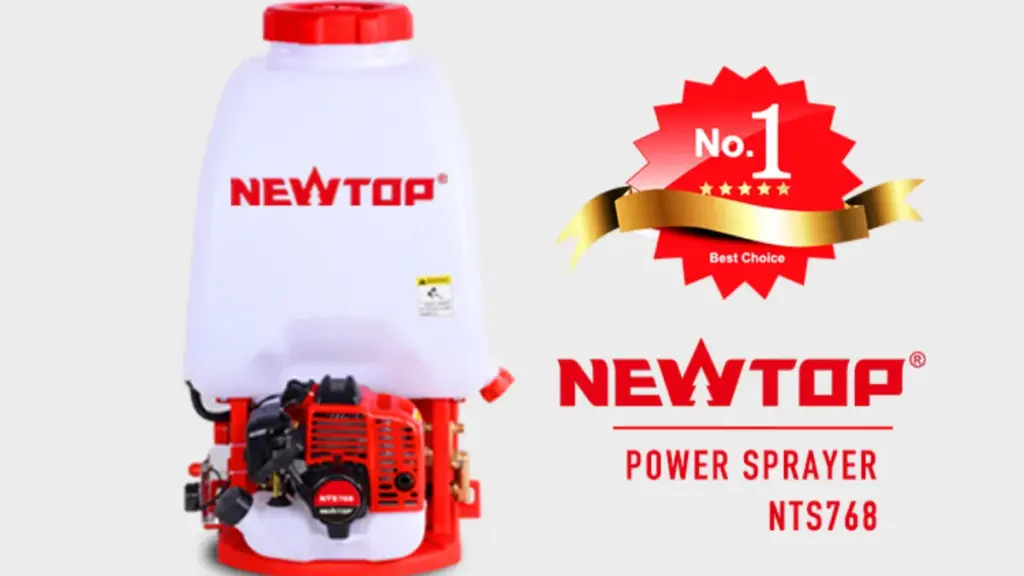
In 2026, demand for gasoline backpack sprayers and mist dusters continues to grow across Africa, America Latina, Sud-est asiatico, and parts of Eastern Europe. At NEWTOP, several knapsack sprayer models have consistently ranked among the top-selling units in export markets. These models are widely chosen by OEM clients, regional distributors, and agricultural supply chains because they offer stable performance and practical configurations that match real field conditions.
Below are 4 of the most popular gasoline knapsack sprayers for bulk buyers. The following product cards provide quick technical specifications and direct access to each model’s detail page. If you are evaluating which knapsack sprayer to introduce into your market in 2026, reviewing these configurations can help you shortlist suitable options.
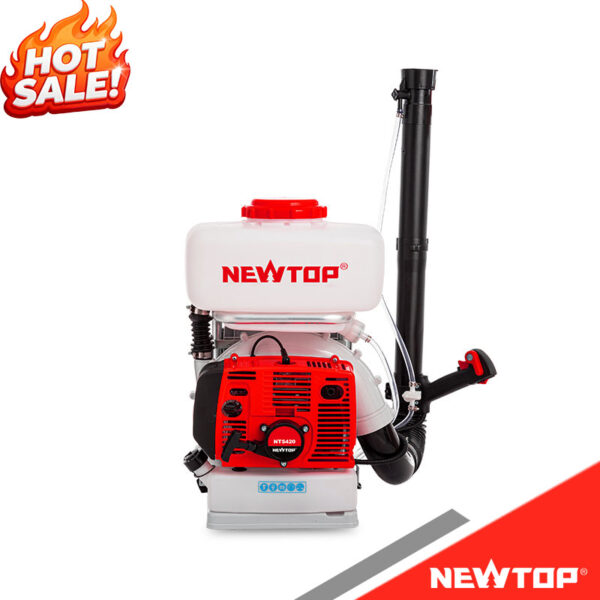
NTS420 Gasoline Knapsack Sprayer
The NTS420 is a reliable 20L backpack sprayer designed for field crops and plantation use. It delivers strong spray penetration with stable engine output, making it suitable for large-area pesticide and fertilizer application.
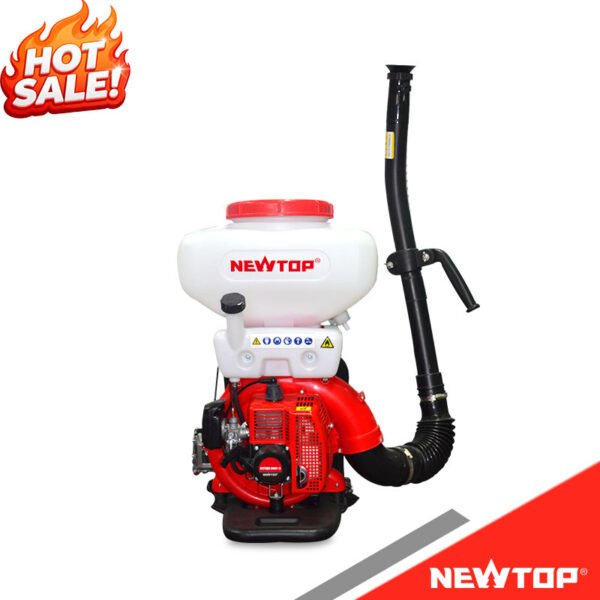
NTS3WF-3 Mist Duster Sprayer
The NTS3WF-3 combines spraying and misting functions for orchards and tall crops. With powerful airflow and extended spray range, it ensures deep leaf penetration in dense farming environments.
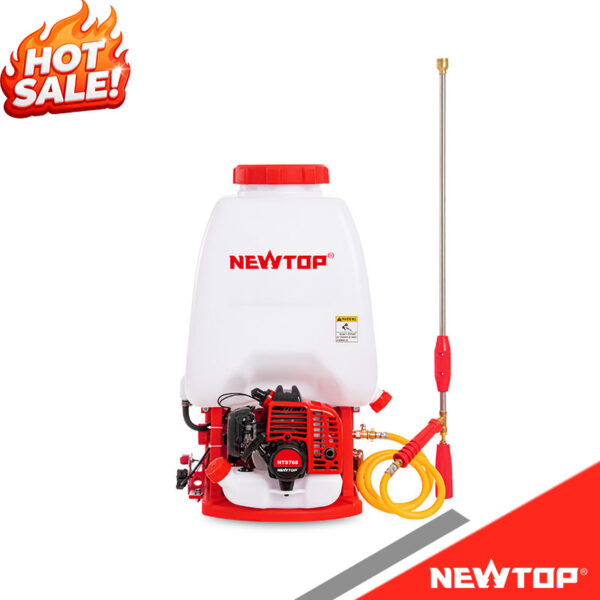
NTS768 High-Pressure Sprayer
The NTS768 is built for intensive agricultural use. Its reinforced tank structure and stable engine system make it suitable for professional distributors targeting high-demand markets.
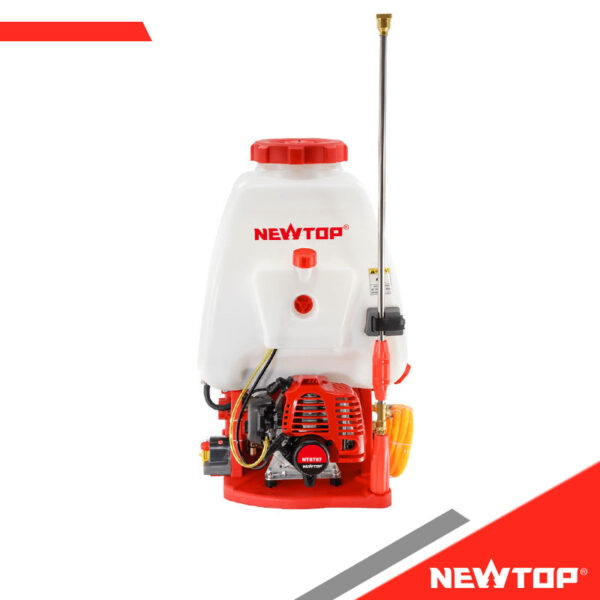
NTS767 Commercial Backpack Sprayer
The NTS767 offers balanced power and efficiency, ideal for distributors seeking a mid-range gasoline backpack sprayer for farm and garden applications. Durable components ensure long service life.
Choosing the Right Model for Your Market
| Target Market | Recommended Model | Technical Advantage | Typical Application Scenario |
|---|---|---|---|
| Large Plantations & Commercial Farms | NTS420 (56.5cc) | Higher displacement engine delivers stronger airflow and deeper droplet penetration | Tall crops such as cocoa, palm, and orchard trees; large-area coverage requiring time efficiency |
| Orchard & Dual Spray/Dust Operations | NTS3WF-3 (Mist Duster) | Powerful airflow system supports both liquid spraying and powder application | Diversified farms needing flexible pest control solutions |
| Price-Sensitive Regional Distributors | NTS768 / NTS767 (26cc) | Balanced engine performance with lower fuel consumption and manageable operating cost | Small-to-medium farms requiring reliable daily spraying at controlled budgets |
| Markets with Emission or Efficiency Requirements | 2-Stroke or 4-Stroke Options | 2-colpo: lightweight and simple maintenance; 4-colpo: improved fuel efficiency and reduced emissions | Regions prioritizing environmental compliance or long-term fuel savings |
Secure High-Demand Knapsack Sprayers for Your Market

Key Factors to Evaluate When Browsing Knapsack Sprayers
A professional-grade knapsack sprayer is defined by its consistent performance under pressure, ergonomic design for operator safety, and adherence to international quality standards.
| Evaluation Factor | Key Metric | Industry Standard / Benchmark |
|---|---|---|
| Performance & Durability | Pressure Regulation & Portata | Consistent PSI for uniform application; leak-proof seals and materials. |
| Operator Safety & Ergonomia | Maximum Loaded Weight | Should not exceed 25 kg to reduce operator fatigue. |
| Certification & Manutenzione | Sicurezza & Quality Compliance | Adherence to FAO or equivalent international guidelines. |
Performance and Durability Standards
A reliable knapsack sprayer must deliver consistent performance and withstand demanding agricultural conditions. When evaluating a unit, focus on its ability to maintain stable pressure, deliver a uniform flow rate, and resist degradation from chemical exposure and physical use. The pump mechanism, whether piston or diaphragm, should generate and hold pressure efficiently to ensure the spray pattern remains constant from a full tank to an empty one. Material quality is just as critical; components must be made from durable, corrosion-resistant polymers and feature leak-proof seals to handle aggressive chemicals over the long term.
Operator Safety and Ergonomics
The operator’s well-being is a primary concern. Look for sprayers designed to minimize physical strain and protect users from chemical contact. International standards recommend that a fully loaded sprayer should not weigh more than 25 kg to reduce fatigue and the risk of injury. Key ergonomic features include a well-padded harness that distributes weight evenly across the shoulders and hips, a curved backrest that matches the operator’s posture, and overall stability to prevent tipping on sloped terrain. A sprayer that is comfortable to carry and operate allows for more precise application and safer handling during long workdays.
Certification and Ease of Maintenance
Compliance with international standards, such as those guided by the FAO (Food and Agriculture Organization), signals a manufacturer’s commitment to quality and safety. These certifications ensure the sprayer has passed rigorous tests for leak prevention, durability, and operator safety. Beyond initial quality, a well-designed sprayer must be simple to maintain. Look for features that facilitate easy cleaning and parts replacement, like large tank openings and tool-free access to filters and pumps. Straightforward maintenance prevents chemical cross-contamination and significantly extends the service life of the equipment.
Price Guide for Knapsack Sprayer in Bulk Orders
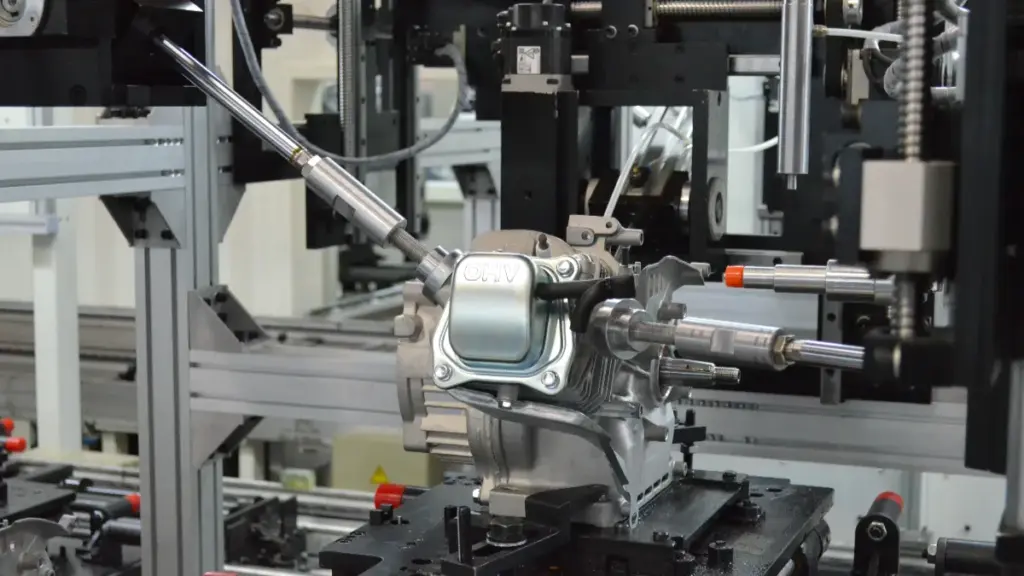
Understanding bulk pricing is essential for distributors and agricultural equipment importers planning seasonal procurement. The price of a knapsack sprayer for sale varies significantly depending on engine type, displacement, capacità del serbatoio, and order volume.
Below is a general wholesale pricing reference for gasoline backpack sprayers in 2026:
| Sprayer Type | Estimated FOB Price Range (USD) | Typical Applications |
|---|---|---|
| Manual Knapsack Sprayer (15–20L) | $10 – $18 per unit | Piccole aziende agricole, vegetable plots, greenhouse spraying, entry-level distribution markets |
| Gasoline Backpack Sprayer (26cc–56.5cc) | $38 – $95 per unit | Frutteti, plantations, silvicoltura, commercial crop protection |
| Electric / Battery-Powered Sprayer | $22 – $60 per unit | Urban agriculture, paesaggistico, medium-scale farms requiring reduced operator fatigue |
Note: Prices above are indicative FOB references based on standard export configurations. Final quotation depends on engine specification, battery capacity, material grade, customization requirements, and total order quantity.
Volume-Based Pricing Structure
Bulk procurement improves overall cost efficiency, but pricing adjustments are typically influenced by production planning, component sourcing, and logistics optimization rather than fixed discount percentages.
In pratica, manufacturers evaluate pricing based on:
- Order quantity per model
- Production batch scheduling
- Packaging configuration
- Shipping terms (FOB, CIF, or mixed container)
For medium-volume orders, unit pricing may benefit from improved production efficiency and shared setup costs. Larger consolidated shipments, especially full-container loads (FCL), often achieve stronger cost advantages due to optimized carton loading and reduced freight allocation per unit.
What Influences Bulk Pricing?
Several practical factors impact final quotation:
Engine configuration
2-stroke engines are generally more affordable and lighter. 4-stroke engines cost more due to fuel efficiency and lower emissions.
Material thickness & component quality
Higher-grade carburetors, reinforced frames, and upgraded ignition systems affect pricing but improve long-term durability.
Customization requirements
OEM logo printing, carton redesign, color changes, or private labeling may slightly increase cost depending on tooling adjustments.
Shipping terms
FOB, CIF, and DDP pricing structures can significantly affect landed cost. Importers should calculate total landed cost rather than focusing only on ex-factory pricing.
Market & Supply Chain Considerations
China remains the dominant production base for gasoline knapsack sprayers due to mature supply chains and component integration. Stable raw material sourcing and engine production clusters allow competitive pricing at scale.
Tuttavia, seasonal demand fluctuations—especially before planting seasons—can influence production schedules and lead times. Early procurement planning helps distributors lock in better pricing and secure inventory before peak demand.
Navigating Import Regulations for Knapsack Sprayers
Managing international shipments of knapsack sprayers requires precise Harmonized System (HS) code classification, accurate tariff calculation, and strict adherence to local health and safety standards.
Harmonized System (HS) Code Classification
Correctly classifying knapsack sprayers and their parts under the Harmonized System (HS) is the first step for international importers. Complete agricultural or horticultural sprayers generally fall under HS Code 8424.81. Importers must also differentiate between complete units, spray gun components, and other replacement parts, as each may require a unique tariff code. Accurate classification prevents customs delays and ensures correct tariff application, making it a critical part of the logistics process.
Tariff Rates and Duty-Free Provisions
Tariff rates depend on the importing country, trade agreements, and product configuration. In many African and Latin American markets, agricultural sprayers fall under moderate duty structures. Some Middle Eastern and Eastern European countries may require additional conformity documentation or technical declarations before clearance.
Compliance with Local Health and Safety Standards
Beyond tariffs, knapsack sprayers must comply with the sanitary, health, and safety regulations of the destination market. These standards protect end-users and the environment, making compliance a non-negotiable part of the import process. For gasoline models, engine emission standards and safety requirements should be verified. Battery-powered sprayers may require lithium transport documentation such as UN38.3 test reports, especially for air shipments.
Standard documentation
Standard documentation—including commercial invoice, packing list, and certificate of origin—must be prepared accurately. Coordinating with a local customs broker ensures smoother clearance and more predictable delivery timelines for bulk shipments.
Ready to Buy? Discover NEWTOP’s High-Performance Backpack Sprayer Deals
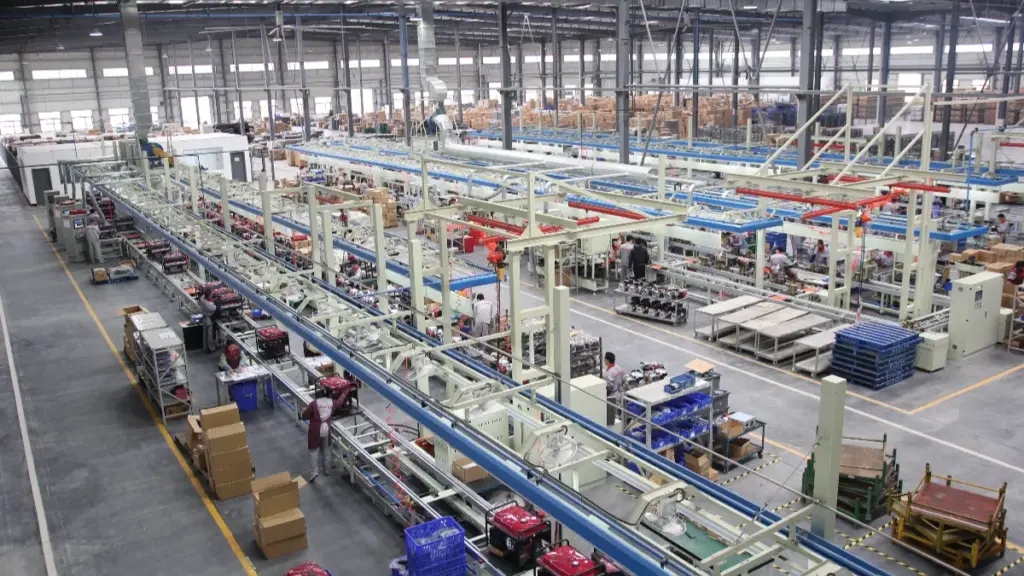
NEWTOP provides B2B partners with a competitive advantage through a flexible supply of durable, versatile backpack sprayers engineered with premium components and supported by comprehensive OEM and after-sales services.
With over two decades of manufacturing experience in agricultural and garden machinery, NEWTOP supplies knapsack sprayers to more than 65 countries across Africa, America Latina, Sud-est asiatico, e dell'Europa orientale.
The company operates a 10,000㎡ production facility with integrated injection molding, automated assembly lines, and independent inspection centers. Annual capacity exceeds 500,000 unità across multiple product categories.
NEWTOP offers:
- Manual backpack sprayers (16L–20L)
- Gasoline backpack sprayers (mist dusters)
- OEM color and packaging customization
- 7–10 day sample dispatch
- Approx. 30-day bulk production lead time
- 1-anno di garanzia sulla macchina (core parts 6 months)
- Spare parts supply support
For distributors seeking stable quality, consistent delivery, and competitive pricing, NEWTOP provides a balanced solution between performance and affordability.
If you are planning to expand your outdoor power agricultural equipment portfolio, now is the right time to secure production slots before peak season demand.
Contact NEWTOP’s export team today via:
E-mail: [email protected]
WhatsApp / Phone: +86 13636521556
Website: https://newtoptools.com/
Conclusione
Choosing the right knapsack sprayer involves matching the model’s features—like power source and tank capacity—to your specific agricultural needs and budget. Understanding key evaluation factors, strutture dei prezzi, and import logistics helps you secure a reliable, long-term asset. This knowledge ensures you invest in equipment that enhances productivity and delivers a strong return.
When you’re ready to equip your team, browse our catalog of high-performance backpack sprayers. Contact us directly to get a detailed quote tailored to your bulk order and shipping requirements.
Domande frequenti
Where can I bulk buy knapsack sprayers?
You can bulk purchase directly from established outdoor power equipment manufacturers in China. Factory like NEWTOP supply OEM and distributor clients globally and support customized orders.
What is the average price of a knapsack sprayer
Manual models typically range from USD 8–18 in bulk orders, gasoline models from USD 45–110, and lithium battery versions from USD 25–80, depending on specifications and order quantity.
How much is shipping for knapsack sprayers?
Shipping depends on destination, container utilization, and freight rates at the time of booking. Sea freight for a full 20GP container significantly lowers cost per unit compared to air freight.
What warranty is included with knapsack sprayers?
Most professional manufacturers provide a 1-year warranty on the complete machine and 6 months on core components. Warranty coverage should be confirmed before order confirmation.
Do you offer spare parts for the knapsack sprayers you sell?
SÌ, we provide a comprehensive inventory of spare parts for all our sprayer models. This includes common wear-and-tear items like nozzles, seals, wands, and replacement batteries. Offering readily available parts ensures long-term operational reliability and allows for easy maintenance, which is critical for equipment designed for consistent professional use.
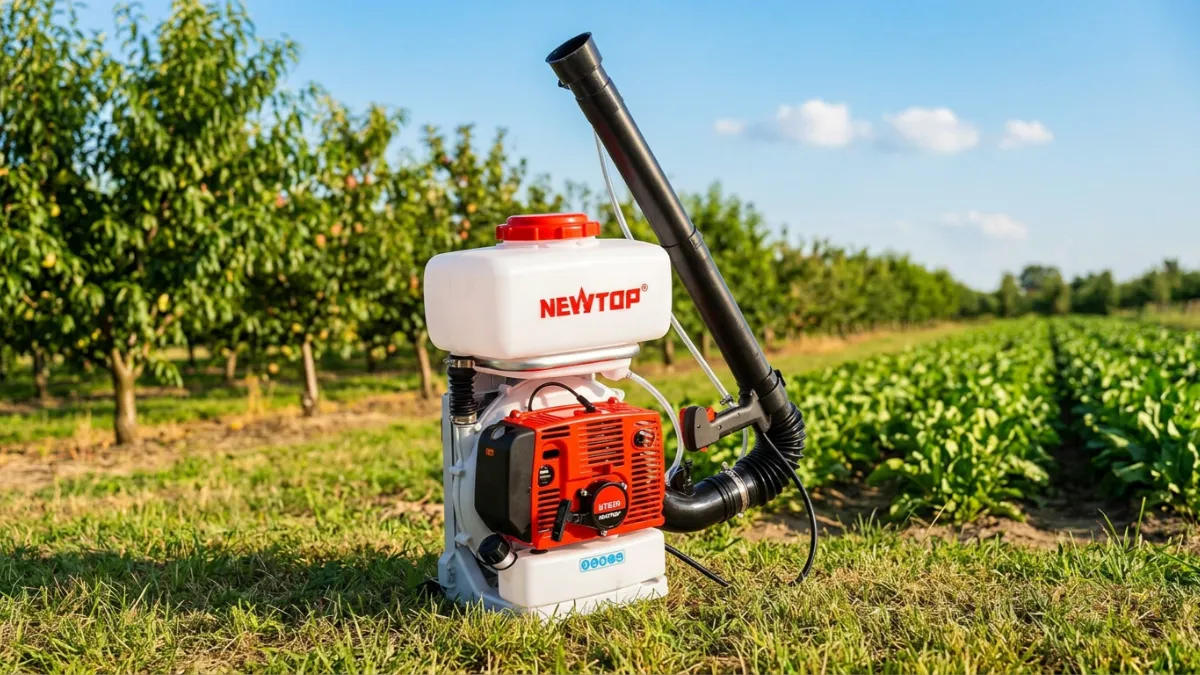
Reliable backpack sprayer reviews are the primary defense against operational downtime and the high cost of wasted chemicals. A single component failure—like a cracked seal or an inconsistent pump—not only brings a job to a standstill but also risks operator safety and misapplication, directly impacting project budgets and client satisfaction.
This guide provides a technical breakdown of current market options, moving beyond marketing claims to compare concrete performance data. We analyze the specifications of battery, manual, and petrol-powered units, identify the most common failure points found in user reports, and detail the methodology used in our own assessments. Use this as your standard operating procedure for evaluating and selecting equipment that meets commercial demands.
Recensioni dello spruzzatore a zaino: What to Look for in 2026
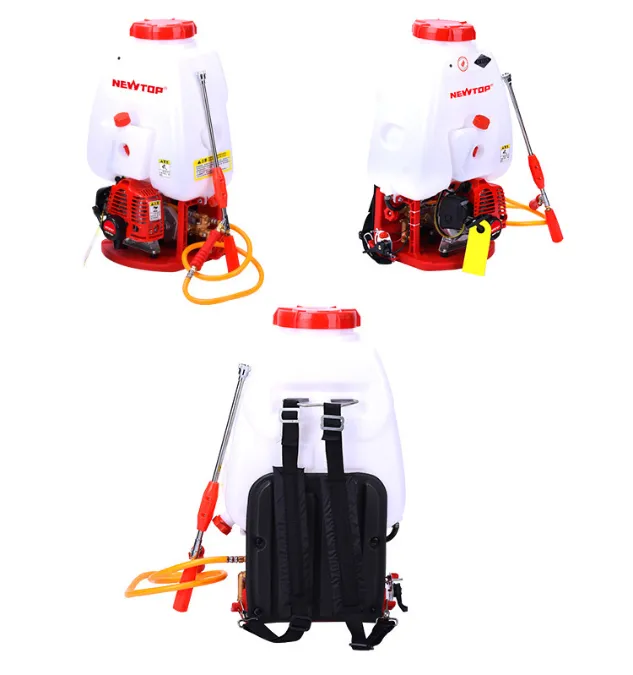
In 2026, selecting the right backpack sprayer comes down to a practical evaluation of its power source, harness comfort, pressure versatility, and tank durability for your specific application.
| Key Feature | Evaluation Criteria | Impact on Performance |
|---|---|---|
| Fonte di energia | Battery-powered for consistent pressure vs. Manual for simplicity and low cost. | Determines application consistency and operator effort required. |
| Ergonomia | Padded, adjustable straps and a load-bearing hip belt. | Directly reduces fatigue and improves productivity during extended use. |
| Pressure & Nozzles | Adjustable pressure settings (PSI) and an included set of versatile nozzles. | Allows for precise application on different targets, from fine misting to targeted streams. |
| Tank Construction | Capacità (4-6.5 gallons) and chemical-resistant materials and seals. | Affects operational uptime and long-term durability against leaks and degradation. |
Fonte di energia: Battery vs. Manuale
The primary decision for any buyer is choosing between battery power and manual operation. The market trend is a clear shift toward battery-powered models because they deliver consistent, non-pulsating pressure without physical effort. This consistency is critical for uniform chemical application and achieving professional results. Manual sprayers, while requiring constant pumping, hold their ground due to their simplicity, lower upfront cost, and field serviceability. Your choice depends directly on the job size and your tolerance for physical labor.
- Battery-powered systems are becoming more common for their ease of use, eliminating the need for constant pumping.
- Manual options remain a dependable, budget-friendly choice for smaller properties or less frequent use.
Ergonomics and Harness Design
A full 4-gallon sprayer can weigh over 35 pounds, making ergonomics a non-negotiable feature for anyone using the equipment for more than a few minutes. A poor harness design concentrates weight on the shoulders, leading to rapid operator fatigue and reduced productivity. High-quality sprayers invest in well-padded, fully adjustable shoulder straps and, critically, a load-bearing hip belt. This combination transfers the bulk of the weight from the shoulders to the hips, allowing for comfortable all-day operation.
- Look for sprayers with adjustable, padded shoulder straps to fit your body comfortably.
- A quality harness distributes the weight evenly across your back and shoulders.
Pressure Controls and Nozzle Systems
Effective spraying requires adapting your output to the target. Variable pressure control allows you to switch between a high-pressure stream for reaching distant spots and a low-pressure fine mist for delicate plants or broad-leaf herbicide application. Look for models with an easily accessible pressure adjustment dial. A good sprayer should also come with a set of interchangeable nozzles—typically including fan, cono, and stream patterns. This built-in versatility saves you the cost and effort of sourcing compatible parts separately and ensures you have the right tool for any application.
- Adjustable pressure controls allow you to manage the flow rate for precise application.
- Multiple included nozzles for different spray patterns add significant value.
Tank Capacity and Durability
The tank is the core of the sprayer, and its design dictates both efficiency and lifespan. Capacità, typically 4 A 6.5 gallons, should match your workload; a larger tank reduces trips for refilling but adds weight. More important is the material. The tank, seals, and gaskets must be constructed from chemical-resistant polymers like Viton to prevent them from degrading after exposure to common herbicides and pesticides. This is the primary defense against leaks, which are the most common point of failure in low-quality sprayers.
- Consider a tank capacity that matches your typical workload to avoid unnecessary interruptions.
- Ensure the tank is made from chemical-resistant materials to prevent degradation over time.
Top-Rated Battery Backpack Sprayer Reviews and Comparisons
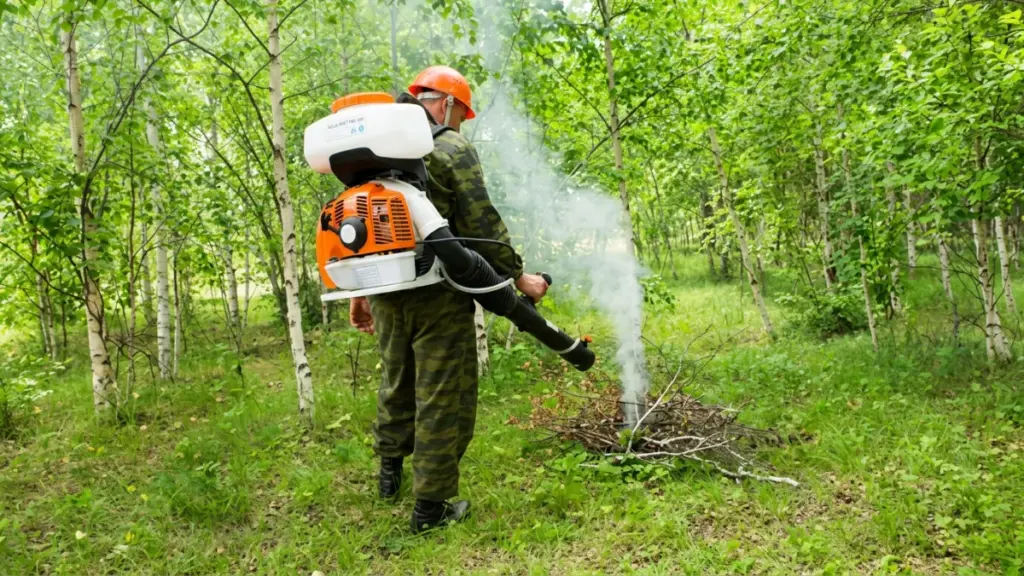
The 2026 battery sprayer market is defined by lightweight lithium-ion systems that deliver 6-8 hours of runtime, combined with ergonomic harnesses designed for all-day professional use.
| Feature | Industry Standard (2026) | Impact on Performance |
|---|---|---|
| Battery Runtime | 6–8 hours (Lithium-Ion) | Supports all-day professional use without recharging. |
| Pressure Range | 40–80 psi | Provides versatility for fine misting and coarse spray patterns. |
| Capacità del serbatoio | 4–6.5 gallons | Balances liquid volume with manageable operator weight. |
| Ergonomia | Padded straps, hip belts, low-profile tanks | Reduces operator fatigue and improves stability. |
Battery Performance and Runtime
The shift to lightweight lithium-ion battery systems is now complete across the industry, rendering older, heavier lead-acid models obsolete. The benchmark for professional-grade equipment is a runtime of 6 A 8 hours of continuous operation on a single charge. This capability is non-negotiable for commercial users, as it allows operators to complete a full day’s work without needing to stop and recharge. Efficient charging systems are also a key evaluation point, as they directly impact workflow and reduce downtime between jobs.
Ergonomia e comfort dell'operatore
As battery sprayers become standard for all-day use, manufacturers place a heavy focus on reducing operator fatigue. Mid- to professional-tier models now include fully adjustable, padded shoulder straps and load-bearing hip belts to distribute weight away from the shoulders and spine. Low-profile tank designs have also become common, lowering the sprayer’s center of gravity. This design choice improves balance, minimizes side-to-side sway, and reduces the physical strain required to manage the unit during long sessions on uneven terrain.
Pressure Control and Application Versatility
Precise control over application pressure is a critical feature that separates professional equipment from basic consumer models. Most modern battery units operate within a 40-80 psi range, which is sufficient for tasks from fine misting delicate ornamentals to applying herbicides with a coarse spray. Variable pressure switches or dials allow operators to adjust output on the fly, matching the spray pattern to the specific chemical and target. High-quality, chemical-resistant seals are also essential for versatility, ensuring the sprayer can handle a wide range of herbicides, pesticidi, and fertilizers without premature component failure.
Tank Capacity and Durability
Tank capacities on battery-powered models have standardized in the 4 to 6.5-gallon range. This volume strikes a practical balance between holding enough liquid to cover a significant area and keeping the total weight manageable for a single operator. Any larger, and the unit becomes too heavy for extended use; any smaller, and the operator wastes too much time on refills. Tank materials are selected for chemical compatibility and impact resistance, ensuring the unit can withstand the daily demands of a professional work environment.
Power Your Business with Reliable Garden Machinery
Manual Backpack Sprayer Reviews: Budget vs. Performance
The primary trade-off in the manual sprayer market is comfort for cost, as most models deliver standardized pressure and capacity regardless of price.
Core Performance: Where Budget Models Compete
Even budget-friendly manual sprayers prioritize essential performance components. Reviews from 2026 show that lower-cost models often feature high-quality pumps and tanks, delivering reliable pressure and capacity comparable to more expensive options. The core spraying function is remarkably consistent across the market, forcing manufacturers to differentiate on other features.
- Pump and tank systems in budget models frequently use durable materials like brass or stainless steel.
- Most manual sprayers, regardless of price, offer a standard performance range of 60–150 psi and 4-gallon capacities.
The Comfort Trade-Off: Harnesses and Ergonomics
The primary difference between budget and performance models is user comfort. Premium sprayers invest in ergonomic designs to reduce operator fatigue during extended use, a feature often minimized in cheaper alternatives to cut costs. For anyone using a sprayer for more than a few minutes at a time, this becomes the most important factor.
- Budget models typically come with minimal, unpadded harness systems.
- Mid-range to premium sprayers feature padded shoulder straps, hip belts, and more ergonomic back support for better weight distribution.
Durability and Features That Justify a Higher Price
Beyond the pump and harness, overall construction quality and innovative add-ons distinguish premium manual sprayers. These elements justify a higher price by improving the sprayer’s longevity and ease of use. Paying more often translates to a longer service life and fewer maintenance issues, especially when working with aggressive chemicals.
- Higher-priced models may use more robust plastics and seals for increased chemical resistance and a longer working life.
- Advanced features like built-in agitators or self-cleaning mechanisms are typically found only in premium-tier sprayers.
Petrol Powered Backpack Sprayer Reviews for Commercial Use

For demanding commercial applications requiring non-stop runtime and consistent high pressure, petrol-powered backpack sprayers maintain their market dominance over battery alternatives.
Power and Consistent Performance
For commercial use in 2026, petrol-powered sprayers remain the preferred choice for tasks requiring sustained power and unwavering pressure. Their engine-driven pumps deliver consistent performance from a full tank to an empty one, a crucial factor for uniform application over large areas. Petrol engines provide high, steady pressure that does not fade as the tank empties. They also offer unlimited runtime as long as fuel is available, eliminating the downtime needed for recharging batteries. This makes them the standard for demanding sectors like agriculture, silvicoltura, and large-scale controllo dei parassiti where efficiency is measured in acres covered per day.
Ergonomics and Operator Fatigue
Manufacturers are focusing on improving operator comfort to offset the inherent weight and vibration of petrol engines. Key advancements in design aim to reduce the physical strain associated with all-day use in professional settings. Modern models feature advanced anti-vibration systems to minimize handle and back vibrations, which directly translates to less operator fatigue. Enhanced harnesses with better padding and strategic weight distribution are now common, helping to improve balance and make handling easier on difficult terrain.
Market Position Against Battery Alternatives
High-performance battery backpack sprayers are gaining popularity for their quiet operation and lower maintenance, but petrol models continue to hold a strong position for heavy-duty commercial work. Raw power is the priority in these scenarios. Petrol sprayers retain a clear advantage for applications requiring maximum spray distance and all-day, non-stop operation. Battery-powered units offer a compelling alternative for standard applications with less noise and zero emissions. The choice between petrol and battery often comes down to the scale and intensity of the job at hand.
Common Complaints Found in Backpack Sprayer User Reviews
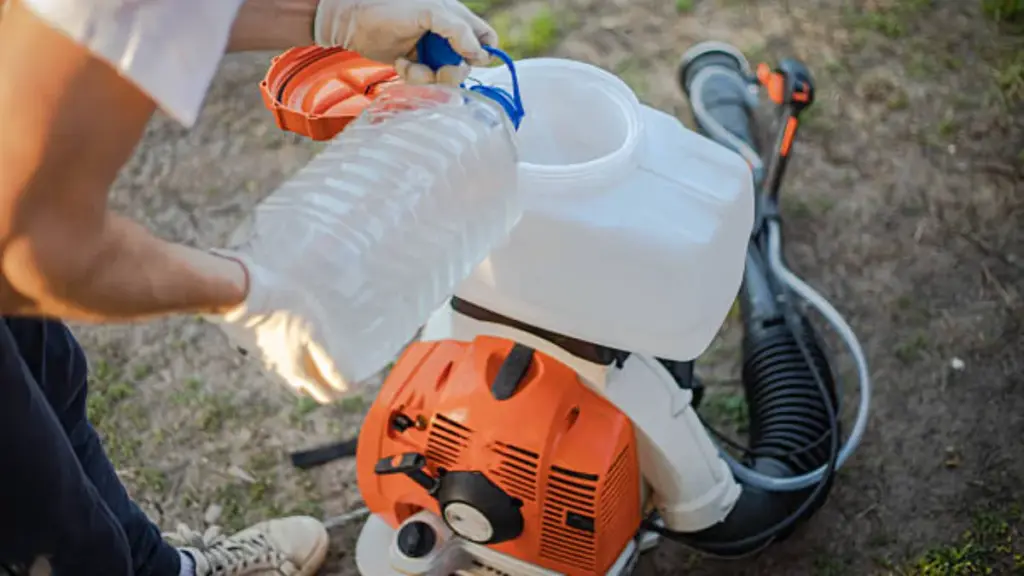
Across both manual and powered models, the most frequent user complaints center on component failures that compromise pressure integrity, such as leaking seals, faulty connections, and worn-out pumps.
| Complaint Category | Causa primaria | Impact on User |
|---|---|---|
| Leaking Components | Degraded or poorly fitted seals on the main lid, pump assembly, and hose connections. | Wasted chemicals, potential skin exposure, and loss of pressure. |
| Pressure Failure | Worn pump seals (especially piston seals) or malfunctioning check valves. | Uneven application, reduced efficiency, and constant re-pumping (manual models). |
| Clogged Nozzles | Inadequate internal filtering allows sediment or undissolved chemicals to block the tip. | Frequent work stoppages for cleaning, inconsistent spray patterns, and poor coverage. |
| Power System Failure | Subpar battery capacity or premature motor burnout in electric models. | Inability to complete large jobs on a single charge; unit becomes inoperable. |
Leaking Tanks and Connections
The most persistent issue found in user feedback is leaking from tank seals and hose connections. These failures are not minor drips; they represent a loss of expensive chemicals, create a safety hazard, and undermine the unit’s ability to hold pressure. Failures often materialize within the first season of use, pointing to low-quality seal materials or poor design tolerances. The primary failure points are consistently the seals around the main lid and the pump assembly, along with hose fittings that loosen or crack under normal operational pressure.
Failure to Maintain Pressure
A sprayer that cannot build or hold pressure is effectively useless. This problem is a major source of user frustration because it directly cripples the machine’s core function, leading to inconsistent application and wasted time. For manual models, it means constant, exhausting re-pumping. The technical cause is almost always traced back to worn-out internal pump seals or a faulty check valve that fails to create a proper vacuum. This issue directly impacts work efficiency and the quality of chemical application.
Clogged Nozzles and Inconsistent Spray Patterns
Users frequently report nozzles that clog easily, forcing them to stop work repeatedly for cleaning. This problem stems from inadequate internal filtration that allows undissolved chemical powders or small debris from the tank to reach the nozzle tip. The outcome is a sputtering, inconsistent spray pattern or a complete blockage. A poorly designed filtration system turns a simple spraying job into a frustrating cycle of stop-and-go maintenance, compromising the quality and uniformity of the application.
Poor Battery Life and Motor Reliability
For battery-powered units, performance and reliability are defined by the power system. A common complaint is that advertised battery life falls short in real-world conditions, forcing operators to recharge in the middle of a large job. Even more significant are reports of premature motor failure, especially in lower-priced models. An unreliable motor or battery renders the sprayer’s advanced features irrelevant and ultimately leads to equipment downtime and replacement costs.
How We Conduct Our Professional Backpack Sprayer Reviews
Our review process prioritizes empirical, field-based testing to validate a sprayer’s real-world durability, pressure consistency, and ergonomic design under professional workloads.
Field Performance and Operational Testing
Our reviews start with real-world operational tests to measure how each sprayer performs across different terrains and with various types of vegetation. This field-based approach allows us to evaluate practical handling, stabilità, and overall effectiveness in professional landscaping and agricultural settings. We assess performance on both flat and sloped ground to test balance and operator comfort. Sprayers are tested with different liquid consistencies to check for clogging and flow issues, and the evaluation includes usability in tight spaces and around obstacles.
Pressure Consistency and Spray Pattern Uniformity
We analyze the sprayer’s ability to maintain consistent pressure from a full tank to nearly empty. Uniform spray patterns are essential for effective coverage, so we use standardized methods to evaluate droplet distribution and reach for different nozzle types. Pressure is monitored throughout the discharge cycle to identify any significant drops that affect application quality. We also test multiple included nozzles to compare their performance and spray pattern evenness for specific tasks.
Durability and Chemical Compatibility
To simulate long-term professional use, sprayers undergo extended durability assessments. We test their components against common chemicals to ensure the materials, seals, and hoses resist degradation and maintain integrity over time. Critical components like the pump, wand, and seals are inspected after prolonged use simulations. We also test material resistance to a standard set of fertilizers, pesticidi, and herbicides, while the frame and harness are checked for structural wear and tear.
Calibration Accuracy and Ergonomic Design
Precision is key in professional applications, so we verify the accuracy of each sprayer’s calibration settings. Allo stesso tempo, we conduct a thorough ergonomic analysis to rate user comfort, weight distribution, and ease of operation during extended periods of work. We measure output volume to confirm it matches the selected calibration markings. The harness system, back padding, and strap adjustments are evaluated for operator comfort, and we assess how easy it is to fill, clean, and switch out nozzles and other components.
Why NEWTOP Consistently Earns High Ratings From Global Dealers
Global dealers favor NEWTOP sprayers because their petrol-powered models deliver a practical balance of reliable engine performance, costruzione durevole, and ergonomic comfort for professional use.
Reliable Engine Performance
Dealers prioritize equipment that performs without constant adjustments or failures. The NEWTOP NTS768 sprayer uses a 26CC petrol engine engineered for stable operation during long work sessions. This consistent power output ensures the pump maintains steady pressure, which is critical for uniform application in agricultural and pest control settings. An unstable spray pattern wastes chemicals and leads to poor results, so the engine’s reliability is a key factor driving dealer confidence.
Durable and Corrosion-Resistant Build
Professional equipment needs to withstand rough handling and harsh chemicals. NEWTOP sprayers are built with a rugged frame that protects the engine and pump system from job site impacts. The tank is constructed from materials specifically chosen to resist chemical corrosion, extending the sprayer’s service life significantly. This focus on durability reduces warranty claims and service issues, making it a more profitable and reliable product line for dealers to carry.
Ergonomic Design for Operator Comfort
Operator fatigue directly impacts productivity. The NTS768 features an ergonomic design with a backpack harness that distributes weight evenly across the operator’s back and shoulders, reducing physical strain. Its compact structure also improves maneuverability in dense foliage or tight spaces. When users can work comfortably for longer periods, they complete jobs faster and more effectively, a tangible benefit that dealers can highlight to their professional customers.
Efficient Pumping System and Coverage
Performance is measured by coverage and efficiency. The NTS768’s high-efficiency pump atomizes liquids into a fine, consistent mist, ensuring thorough plant coverage while minimizing chemical waste. With a horizontal reach of up to 15 meters, operators can treat large areas without constantly repositioning. The 25-liter tank offers a good balance between capacity and weight, allowing for substantial work between refills without being overly burdensome. This combination of reach, efficienza, and capacity makes it a highly practical tool for large-scale tasks.
Conclusione
Choosing the right backpack sprayer requires looking beyond star ratings to analyze performance specs and common failure points. By comparing manual, battery, and petrol models against your specific application, you can find a reliable tool that fits your budget and workflow. This technical approach helps you invest in equipment built for longevity and consistent performance.
If your current equipment is underperforming, our team can provide a full catalog of NEWTOP sprayers designed to address these issues. Contact us to discuss your needs or to request a sample for evaluation.
Domande frequenti
Which backpack sprayer has the best reviews for 2026?
The Chapin ProSeries 97900B consistently earns top reviews for its advanced lithium-ion performance and ergonomic harness. Its digital pressure control system offers precise application, minimizing waste and user fatigue. Users praise its durability and self-cleaning mechanism, making it a leading choice for both professionals and serious homeowners seeking reliability and comfort.
Are battery backpack sprayer reviews reliable?
SÌ, battery backpack sprayer reviews are reliable when sourced correctly. Professional reviews excel at benchmarking performance metrics like battery life and pressure consistency. User reviews on verified purchase platforms provide crucial insights into long-term durability and real-world comfort. Cross-referencing both types gives the most accurate assessment of a sprayer’s quality and value.
What is the most common failure in backpack sprayers?
The most common failure is the internal pump seal or piston cup, which degrades from chemical exposure and wear. This leads to a loss of pressure and leaking. For battery models, pump motor burnout and switch failures are also frequent issues. Regular cleaning and using manufacturer-approved seal conditioners can significantly extend the sprayer’s lifespan.
How do professional reviews compare to user reviews?
Professional reviews focus on objective performance data, using controlled tests for pressure accuracy, battery runtime, and nozzle spray patterns. User reviews offer subjective, real-world feedback on long-term durability, ergonomic comfort, and customer service experiences. Professionals test the specs, while users test the sprayer’s endurance and practicality over time.
Which brand has the best rated backpack sprayer for farms?
Field King is consistently rated as the best brand for farm use, specifically with its Max-Agri 190515 series. These models feature heavy-duty seals resistant to aggressive agricultural chemicals and a robust internal pump designed for high-volume daily use. Their ergonomic steel frames and 5-gallon tank capacity are optimized for covering large acreage efficiently.
Are manual backpack sprayers still worth buying?
SÌ, manual backpack sprayers are still worth buying for their reliability and cost-effectiveness. They are lighter, have fewer failure points than battery models, and require no charging. For smaller properties, spot treatments, or users on a tight budget, a high-quality manual sprayer offers excellent value and control without the complexity of powered systems.
Top handle chainsaws have the main grip on top of the body for one-handed aerial use, while rear handle chainsaws feature a rear grip behind the engine for stable two-handed ground operation. Professional arborists, loggers, and landscapers often face the choice between these when tackling demanding tree work.
As an specialist in outdoor power equipment, we will break down the fundamental differences, pros and cons, and safety considerations to help you make an informed decision for your fleet or business.
Cos'è una motosega con impugnatura superiore?
A top handle chainsaw is an engineered tool for professional arborists, prioritizing a compact, balanced design for precision cutting in elevated and confined spaces.
Designed for Arborists and Aerial Work
A top handle chainsaw is a specialized tool engineered almost exclusively for professional arborists who work at height. Its design prioritizes control and maneuverability when cutting in elevated or awkward positions, such as within the canopy of a tree. This focus makes it the standard for off-ground tasks where a traditional saw would be unsafe or unwieldy.
Typical models weigh around 6.5 A 10 pounds and have guide bar lengths of 10 A 16 inches, making them smaller and more portable than standard saws. These dimensions prioritize agility over bulk.
Caratteristiche chiave: Compatto, Leggero, and Balanced
The defining features of a top handle chainsaw are its small size and reduced weight. This construction minimizes operator fatigue during prolonged use in trees and allows for precise cuts in confined spaces where a larger saw would be impractical. The excellent balance is critical for maintaining control when making cuts from unstable positions.
- The compact form factor makes it easier to navigate through dense branches.
- Excellent balance enables greater control, which is critical when making cuts from unstable positions.
- Many models in 2026 are battery-powered, further enhancing their lightweight nature and reducing emissions.
Primary Applications
This type of chainsaw is not built for felling large trees. It excels at tasks that require precision and agility, like pruning limbs, removing deadwood, and sectioning branches from a climbing position. Its controlled power is suitable for making accurate cuts without damaging the surrounding tree structure, preserving tree health.
- Ideal for shaping tree canopies and performing surgical cuts to maintain tree health.
- Allows for one-handed use in specific situations by certified professionals, freeing the other hand for stability.
- Its controlled power is suitable for making accurate cuts without damaging the surrounding tree structure.
What is a Rear Handle Chainsaw?
Rear-handle chainsaws are the industry standard for ground-level cutting, engineered with a two-handle configuration to maximize leverage, control, and safety for heavy-duty tasks.
Core Design and Operation
A rear handle chainsaw is a versatile, full-sized chainsaw built for general and heavy-duty use, with the main handle positioned behind the engine and a front handle for secure two-handed operation. The design features rearward weight distribution, larger engine housing, protective hand guards, and an extended guide bar for superior leverage and power in demanding cuts.
Common specs include weights from 11 A 15 pounds for gas models, with guide bar lengths ranging from 14 A 24 inches or more depending on engine size (per esempio., 36-60cc). This makes them robust but less compact.
Common Applications
Rear-handle chainsaws are built for ground-level, heavy-duty applications. They are the standard tool for homeowners with large properties and professionals who perform substantial cutting tasks in open areas.
- Felling large trees.
- Cutting logs and processing timber.
- Splitting firewood.
- General property maintenance and storm cleanup.
Gain a Competitive Edge with Reliable Machinery
Pros and Cons of Top Handle Chainsaws
Top handle chainsaws provide unmatched control for professional arborists working at height, but this specialized design introduces safety risks and functional limits for ground-based work.
Advantages for Professional Aerial Work
Top handle chainsaws are engineered specifically for professional arborists who need a compact and maneuverable tool for cutting in elevated or confined spaces. The design prioritizes balance and control, making it the standard for any work that requires climbing or operating from an aerial platform.
- The compact and lightweight build reduces operator fatigue during long periods of aerial tree work.
- Superior maneuverability and balance make it easier to make precise cuts in awkward positions, such as within a tree’s canopy.
- The design allows for one-handed use by certified professionals, freeing up the other hand for stability while climbing.
Limitations and Disadvantages
While ideal for specialized tasks, top handle chainsaws have significant drawbacks that limit their general use. Their unique construction makes them less suitable and potentially more dangerous for any type of ground-level cutting, a task better suited for rear handle models.
- Their premium price reflects the specialized engineering and safety certifications required for professional-grade aerial equipment.
- They are not designed for felling or bucking on the ground, where rear handle saws provide better leverage and operational safety.
- The close hand placement increases the risk of serious injury from kickback, requiring specialized training for safe operation.
Pros and Cons of Rear Handle Chainsaws
Rear handle chainsaws provide superior stability and versatility for ground-based cutting, making them the standard for most users, though their size and weight limit maneuverability in tight spaces.
Advantages
- Power Availability: Accommodates larger engines (40-60cc) and longer barre di guida (up to 24+ inches) for efficient thick timber cuts in logging.
- Stability Control: Two-handed grips with rear balance deliver leverage to minimize kickback in felling and bucking.
- Versatile Use: Handles firewood processing, storm cleanup, hedge trimming, and property maintenance reliably.
- Ergonomic Comfort: Reduces arm fatigue during extended ground-based sessions for pros and beginners.
- Durability Focus: Robust construction withstands daily forestry and landscaping rigors.
Disadvantages
- Hight Fatigue: 11-15+ pound build accelerates exhaustion in prolonged tasks.
- Bulk Limitations: Hinders tight-space agility like climbing or dense pruning.
- Vibration Levels: Higher engine power increases hand-arm vibration risks.
- Portability Issues: Larger profile complicates transport and storage.
- Overhead Challenges: Less suited for aerial work due to handling demands.
Key Differences Between Top Handle vs Rear Handle
To help professionals compare the technical specifications and functional applications of these tools, we have summarized the key differences below:
| Attributo | Motosega con impugnatura superiore | Motosega con impugnatura posteriore |
|---|---|---|
| Handle Position | Top-mounted grip for compact aerial control | Rear grip behind engine with front handle for two hands |
| Weight Range | Leggero 8-10 libbre, reduces fatigue in heights | Heavier 11-15+ libbre, stable for ground use |
| Guide Bar Length | Shorter 10-16 inches for precision | Longer 14-24+ inches for thick cuts |
| Potenza del motore | Smaller 25-45cc, agile for pruning | Larger 40-60cc+, powerful for felling |
| Maneuverability | Excellent in tight spaces and climbing | Better stability on ground, bulkier overhead |
| Kickback Risk | Higher due to lighter weight and close grip | Lower with leverage and safety guards |
| Best User Skill | Advanced professionals/arborists only | Beginners to professionals |
| Primary Applications | Tree climbing, sepoltura, aerial pruning | Felling, bucking, firewood, cleanup |
| Portability | Compatto, easy to carry and store | Bulkier, requires more storage space |
| Price Range | Mid-range, often specialized pricing | Varies widely based on engine power |
Selection Guide: Top Handle vs Rear Handle – Which One is Right for You?

| Selection Criteria | Choose a Top Handle Chainsaws If… | Choose a Rear Handle Chainsaws If… |
|---|---|---|
| Primary Work Environment | You are a certified arborist working at height (climbing, aerial lift). | You primarily work on the ground. |
| Key Task | You need to make precise cuts in tight, awkward positions within a tree canopy. | Your tasks include felling, tronchi in controtendenza, cutting firewood, or storm cleanup. |
| User Profile | You are a trained professional with certification for elevated work. | You are a homeowner, general forestry operator, or beginner. |
| Control Priority | Maneuverability and compactness are critical for specialized cuts. | Maximum stability, leverage, and two-handed control are required. |
For the Professional Arborist and In-Tree Work
Top-handle chainsaws are specialized tools engineered for certified arborists who work at height. Their compact, lightweight build and integrated grip provide the maneuverability needed to operate inside a tree’s canopy. This design is the industry standard for pruning, sepoltura, and making precise cuts in elevated and confined spaces where a larger saw is impractical.
- Choose a top handle if your primary work involves climbing or operating from an aerial lift.
- The design is optimized for making precise cuts in awkward positions where a conventional two-handed saw won’t fit.
- Safe operation of these tools demands proper training and certification, as one-handed use increases operational risk.
For Ground-Based Cutting and General Use
Rear-handle chainsaws are the definitive tool for nearly all ground-level cutting. The design provides superior stability, leverage, and control, making it the correct choice for felling trees, bucking logs into sections, e spazzola per pulire. This configuration is the standard for homeowners, amministratori immobiliari, and forestry operators working on solid ground.
- Choose a rear handle for tasks like cutting firewood, managing storm cleanup, and felling small to medium trees.
- The two-handed grip offers better control, improves safety, and reduces operator fatigue during prolonged use.
- This design is inherently more stable, making it the safer and more effective option for any user on the ground.
Matching the Tool to Your Primary Application
The right choice depends entirely on your work environment, not on which saw is universally “better.” A professional arborist will own both types—a top handle for climbing and a rear handle for groundwork. For almost everyone else, the rear-handle saw is the more versatile and appropriate tool for common cutting tasks.
- Assess your most common tasks: Are you consistently working in a tree or on the ground?
- Never use a top-handle saw for ground-level felling. Its design is not optimized for the leverage or safety protocols required for that work.
- For B2B buyers and dealers, offering both models allows you to serve two distinct markets: certified professionals and general consumers.
Why Choose NEWTOP Chainsaws for Your Business?
NEWTOP provides B2B partners with a scalable manufacturing solution for reliable, mid-range chainsaws, combining world-class components with flexible OEM support to deliver a strong value proposition in global markets.
NEWTOP chainsaws deliver professional-grade performance in both top handle and rear handle configurations, backed by over 20 years of expertise in gas-powered garden tools. Our models feature high-precision CNC machining, Walbro carburetors, NGK spark plugs, and Oregon chains for exceptional durability exceeding 200 ore.
With CE, GS, APE, and EURO II certifications, NEWTOP ensures compliance for global markets like Africa, America Latina, and Southeast Asia. Competitive pricing, customizable OEM/ODM options, and reliable supply chains make us the top choice for distributors seeking chainsaw suppliers with 500,000+ annual capacity.
Grow Strong with NEWTOP—Your Trustworthy Garden Tools Partner. Explore our range at newtoptools.com. For more information, contact us today!
Conclusione
Choosing between a top handle and a rear handle chainsaw directly impacts operator safety and job performance. A top handle saw is a specialized tool for trained arborists working at height, while a rear handle model provides the stability needed for groundwork. Using the correct saw for the application prevents accidents and ensures efficient, clean cuts.
Evaluate your team’s typical work environment to ensure your equipment fleet is properly outfitted. To source professional-grade chainsaws designed for durability and performance, explore the NEWTOP product catalog for your business needs.
Domande frequenti
Why do people use top handle chainsaws?
Top handle chainsaws are used for their compact size and maneuverability. They allow tree climbers to make precise cuts in confined spaces within a tree canopy where a traditional saw would be too cumbersome.
Can you use a top handle chainsaw on the ground?
Not recommended—lacking rear leverage, they reduce stability and increase kickback risks for ground tasks; reserve for aerial work only.
Are top handle chainsaws dangerous?
SÌ, they are considered more dangerous than rear handle saws because of the narrow grip. This design makes kickback much harder to control. They should only be used by professionals with proper arborist training.
What is the advantage of a rear handle chainsaw?
The main advantages are control, leverage, and safety. The spacing between the handles allows the operator to manage the saw’s power more effectively and provides a safer distance between the chain and the operator’s body.
Is a top handle saw better for climbing?
SÌ. Its weight distribution and compact shape are specifically designed for climbing. It can be easily attached to a harness and used in the awkward angles often required when working in a tree.
Which handle style is best for beginners?
A rear handle chainsaw is the only choice for beginners. It provides the necessary stability and safety features to learn proper cutting techniques safely.
