


- Tous
- Témoignages de clients NEWTOP
- NOUVEAUTOP Explorer Hub
- Aperçu de l'industrie NEWTOP
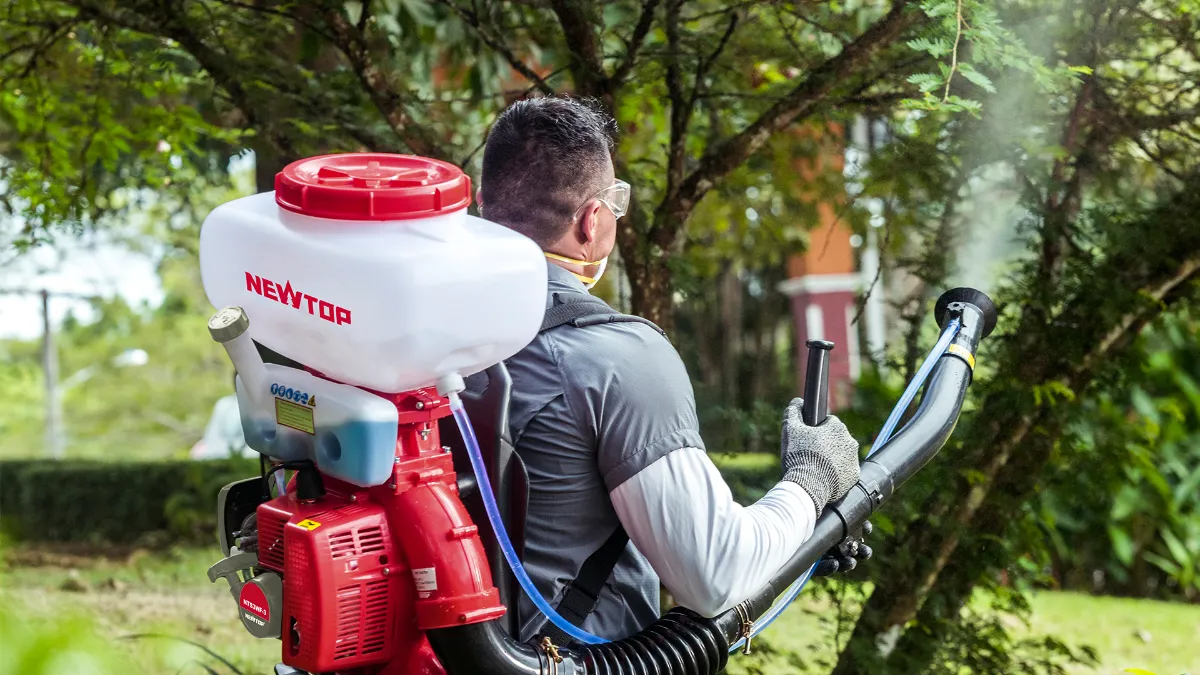
Across different farming regions, knapsack sprayers help manage crop protection efficiently. In rice fields of Southeast Asia, they are used for targeted pesticide application. In orchards in South America, sprayers allow growers to treat trees without causing excessive chemical runoff. Beyond agriculture, these sprayers are also used for urban pest control and public sanitation programs. The effectiveness of a sprayer depends on its tank design, pumping mechanism, nozzle selection, and operator technique, making equipment choice critical for consistent results.
This guide serves as a complete technical breakdown for agricultural managers and field operators. We will identify every major component in the sprayer’s anatomy. You’ll get a clear, step-by-step procedure for preparing and operating the equipment for the first time, along with a definitive list of essential safety gear. The focus is on building a repeatable process for safe, efficace, and effective crop management.
What Is Knapsack Sprayer?
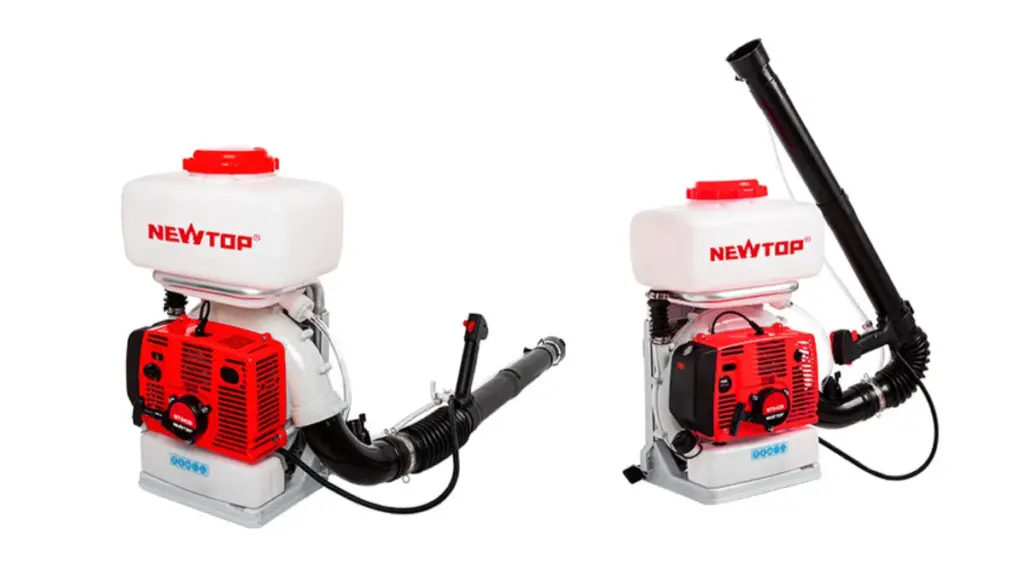
Knapsack sprayers, also known as backpack sprayers, are compact, portable devices designed to apply liquids such as pesticides, herbicides, engrais, and water directly onto crops, plants, and soil. Their design allows the operator to carry the sprayer on their back while controlling the nozzle with one hand, providing mobility and precision in areas where larger spraying equipment cannot reach. The portability and adaptability of knapsack sprayers make them widely used in small- to medium-scale agriculture, horticulture, and landscape maintenance.
Unlike hand-held or tractor-mounted sprayers, knapsack sprayers excel in precision spraying on irregular terrain, around densely planted crops, or inside greenhouses. The wand allows the operator to reach the undersides of leaves, branches, or hard-to-reach spots. Adjustable nozzles enable control over spray pattern and droplet size, which is crucial to prevent chemical drift, optimize coverage, and reduce wastage.
- Used for applying pesticides and fungicides to protect crops from diseases and pests.
- Facilitates precise herbicide management to control weeds in fields, vergers, and gardens.
- Supports the distribution of liquid fertilizers to deliver nutrients directly to plants.
Shift from Manual to Powered Models
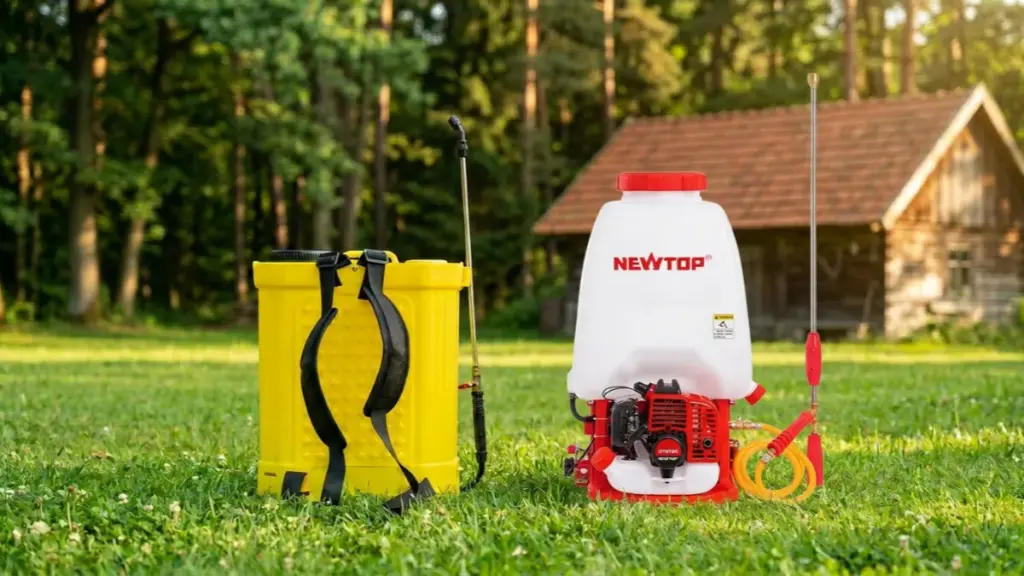
The market shows a clear trend moving from traditional manual backpack sprayers to battery-powered and motorized backpack sprayers. This change is driven by the need to reduce labor costs, increase operational speed, and achieve more consistent application pressure over large areas.
- Manual models remain a dominant choice in cost-sensitive markets due to their simplicity and affordability.
- Battery-powered electric sprayers offer consistent pressure without operator fatigue, improving application accuracy.
- Gasoline-powered models provide higher pressure and are suited for large-scale commercial operations requiring sustained power.
Lecture connexe: Types de pulvérisateurs à dos: Choisir le meilleur modèle pour votre ferme
Understanding the Anatomy of a Knapsack Sprayer
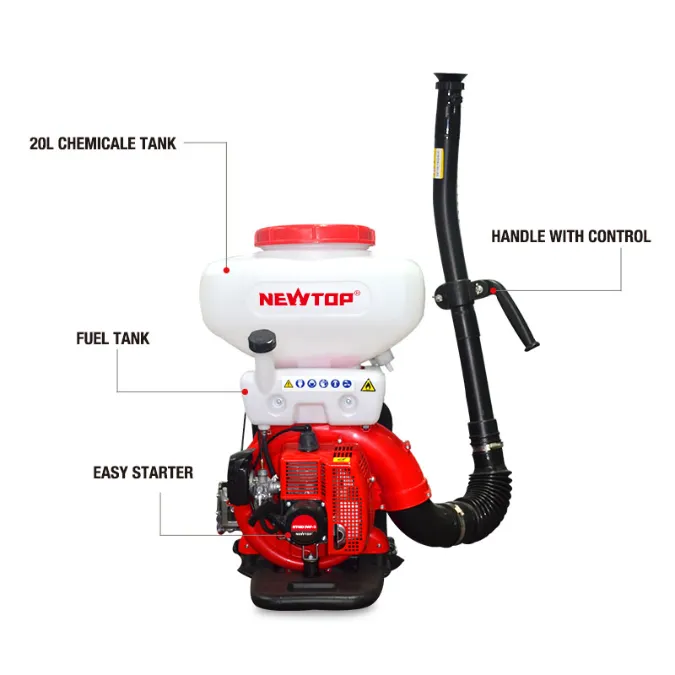
A knapsack sprayer’s design integrates four distinct systems—liquid storage, spray delivery, pressure control, and operator support—to ensure reliable and precise chemical application.
| Component System | Key Parts | Primary Function |
|---|---|---|
| Réservoir & Pressurization | Réservoir, Pump (Piston or Diaphragm) | Holds chemical liquid and generates the force needed for spraying. |
| Spray Delivery | Lance (Spray Wand), Ajutage | Directs the pressurized liquid and atomizes it into a specific pattern. |
| Contrôle & Regulation | Trigger Valve, Pressure Regulator | Manages liquid flow and maintains consistent system pressure for uniform coverage. |
| Operator Comfort & Entretien | Harness, Cadre, Strainer, Filter | Reduces operator fatigue and prevents internal clogs to prolong equipment life. |
Tank and Pressurization System
The tank and pump form the core of a knapsack sprayer. The tank serves as the reservoir for the chemical solution, typically holding 10–20 liters, depending on the model and intended use. Tanks are constructed from durable, chemical-resistant plastics, which can withstand exposure to fertilizers, herbicides, and pesticides without corroding or deforming.
The pump generates the pressure that forces the liquid through the system. Piston pumps are generally used when high-pressure spraying is required, providing a strong, steady stream. Diaphragm pumps are preferred for abrasive or aggressive chemical formulations, offering smoother pressure and reducing wear. The selection of pump type affects spray consistency, operator fatigue, and overall efficiency.
Spray Delivery Components
Once pressurized, the liquid travels through the lance (spray wand) and exits through the nozzle.
- Lance (Spray Wand): This extendable rod allows the operator to reach leaves, tiges, and other difficult-to-access areas, ensuring that all surfaces receive treatment. Its length and maneuverability are crucial for dense crops or orchard environments.
- Ajutage: The nozzle atomizes the liquid into droplets and shapes the spray pattern. Common types include:
- Flat Fan Nozzle: Produces a thin, uniform sheet for even coverage over broad surfaces.
- Cone Nozzle: Creates a circular spray pattern, ideal for targeted misting and dense foliage.
- Adjustable Nozzle: Allows operators to change the spray type according to crop requirements.
Proper selection of nozzle type ensures efficient chemical use, reduces drift, and minimizes over-application.
Control and Regulation Mechanisms
Spraying effectiveness depends on the operator’s ability to regulate liquid flow and pressure:
- Trigger Valve: Mounted on the wand handle, this allows instant control over start-and-stop of liquid flow. It helps reduce chemical waste and improves precision during targeted applications.
- Pressure Regulator / Pressure Chamber: Maintains consistent system pressure, ensuring a uniform spray across the entire treatment area. Consistent pressure is particularly important in manual pumps or battery-operated sprayers, preventing uneven coverage or missed spots.
Ensemble, these mechanisms allow operators to maintain accurate application rates, adapt to different crops, and minimize chemical use.
Operator Comfort and Maintenance Features
Ergonomic design improves usability and reduces operator fatigue, especially during long spraying sessions:
- Harness and Frame: Padded, adjustable straps distribute the sprayer’s weight evenly across the shoulders and back, reducing strain. Some models include waist belts or back supports for additional comfort.
- Strainer and Filter: Positioned at the tank inlet or inside the pump, these prevent debris from entering the system, reducing the risk of nozzle clogging and prolonging equipment life.
Routine inspection and maintenance of these components, such as cleaning filters and adjusting straps, ensures consistent performance and increases the sprayer’s service life.
Equip Your Market with Proven Performance

Economic Importance of Knapsack Sprayer in Modern Farming
Knapsack sprayers directly boost farm profitability by enabling precise chemical application, which reduces input costs and improves labor efficiency.
Cost Efficiency and Resource Optimization
Knapsack sprayers provide significant economic advantages by ensuring the precise application of agricultural inputs. This accuracy helps minimize chemical waste, directly lowering operational costs for farmers and improving overall farm profitability.
- High-pressure pumps and adjustable nozzles optimize the use of pesticides and fertilizers, reducing over-application.
- Large-capacity tanks decrease the need for frequent refilling, which saves valuable labor time and increases work continuity.
- Targeted application helps farmers get the most value from every liter of chemical, boosting resource efficiency.
Labor Productivity and Time Savings
The portable, back-carried design of these sprayers significantly boosts labor efficiency on farms. It allows a single worker to manage larger areas more quickly and accurately, optimizing workforce deployment, especially where labor is a major expense.
- Farmers can cover more acreage in less time, a crucial benefit for small to medium-sized operations.
- The ergonomic design enables operators to work comfortably and maintain consistent performance throughout the day, maximizing output.
Market Scale and Manufacturing Growth
The global demand for knapsack sprayers highlights their economic importance, fostering the growth of major manufacturing hubs. This industrial concentration reflects the tool’s proven return on investment for farmers worldwide.
- Regions like Taizhou, China have become key centers for knapsack sprayer production, supplying international markets.
- Strong global demand is driven by the clear economic benefits and efficiency gains that these sprayers provide to the agricultural sector.
Sustainability and Long-Term Farm Viability
By enabling targeted treatments and reducing overall chemical usage, knapsack sprayers contribute to more sustainable and cost-effective farming. This approach lowers immediate expenses and enhances the long-term economic health of the farm.
- Support for integrated pest management strategies reduces reliance on broad-spectrum chemical applications.
- Lowering chemical inputs not only cuts costs but also minimizes long-term environmental liabilities, making farming operations more resilient.
Common Types of Pumps Used in Knapsack Sprayers
The choice of pump technology in a knapsack sprayer—typically piston, diaphragme, or battery-powered—directly dictates its chemical compatibility, pressure capabilities, and operator efficiency.
Piston Pumps
Piston pumps are a popular and reliable option for knapsack sprayers, especially when working with standard liquid formulations. Their simple mechanical design allows them to generate consistent pressure for effective application. This makes them a go-to choice for many standard agricultural and landscaping tasks.
- Best suited for non-abrasive chemicals like liquid insecticides and herbicides.
- Known for achieving higher pressure levels, which is useful for certain spraying tasks.
- The straightforward construction simplifies maintenance and repair.
Diaphragm Pumps
Diaphragm pumps are engineered for durability, particularly when spraying abrasive or corrosive chemicals. The pump’s internal mechanism is sealed off from the chemical, which protects moving parts from wear and damage. This design is critical for operators who frequently work with wettable powders or other challenging formulations.
- Ideal for abrasive materials like wettable powders and some fertilizers.
- The sealed design reduces direct contact between chemicals and critical components.
- Offers a longer service life when used with challenging formulations.
Lecture connexe: Piston de pulvérisateur à dos vs. Pompe à membrane: Quel système gagne?
Battery-Powered Pumps
Battery-powered systems represent a significant shift in the knapsack sprayer market. They eliminate the need for manual pumping, reducing operator fatigue and ensuring a constant, even pressure for uniform spray coverage. This technology is gaining traction in commercial operations where consistency and efficiency are primary concerns.
- Provides consistent pressure delivery without physical effort.
- Reduces operator fatigue, making it easier to complete large jobs.
- Increases efficiency and precision for both agricultural and residential users.
How to Prepare and Operate Your Backpack Sprayer for the First Time
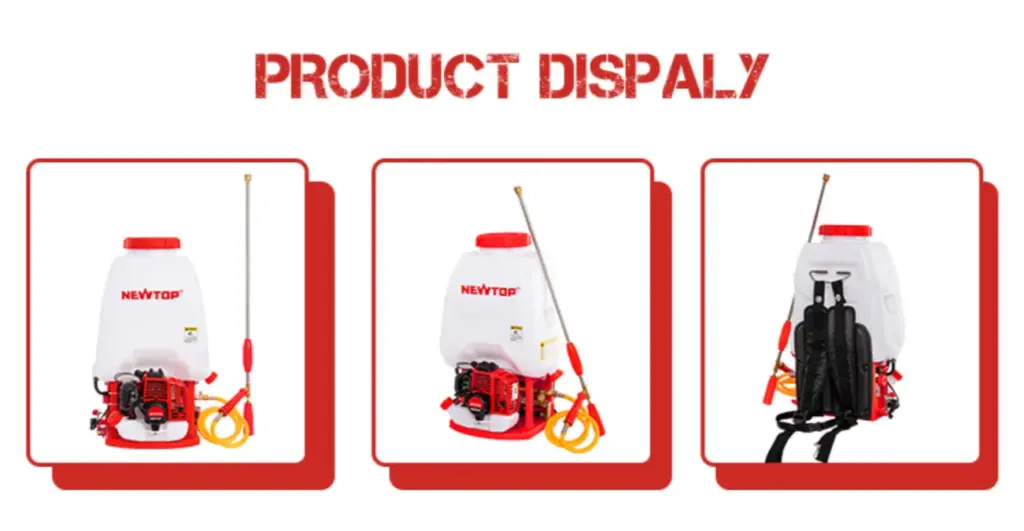
Proper sprayer setup involves a sequence of pre-use inspection, precise calibration, safe chemical mixing, and consistent application technique to ensure operational safety and effectiveness.
| Stage | Action clé | Primary Goal |
|---|---|---|
| Pre-Operation Inspection | Check for cracks, tighten all connections, and test with clean water. | Prevent leaks and confirm basic pump functionality. |
| Calibration | Spray a measured test area to calculate the application rate. | Ensure accurate dosing to avoid waste and crop damage. |
| Mixing & Filling | Wear PPE, half-fill with water, add chemical, then top off. | Achieve a safe, thoroughly mixed, and effective solution. |
| Spraying Technique | Maintain a steady pace, constant nozzle height, and overlap passes. | Achieve uniform coverage and minimize chemical drift. |
Pre-Operation Inspection and Assembly
Before you fill the tank with any chemical, a complete inspection and proper assembly are mandatory. This initial check verifies that the unit was not damaged during shipping and that all components are connected correctly to prevent leaks and ensure safe operation. A simple water test is the final step to confirm the system holds pressure as expected.
- Unpack and verify all components against the parts list in the user manual.
- Inspect the tank for any cracks or defects and confirm that all seals and gaskets are properly seated.
- Firmly attach the hose, spray wand, and nozzle, tightening every connection to create a leak-proof seal.
- Fill the tank with clean water to test the pump. Build pressure and check for any drips or leaks from the connections or seals.
Calibrating the Sprayer for Accurate Dosing
Calibration is the process of matching your sprayer’s output to the requirements of the chemical and the target area. Correct calibration is not optional; it is fundamental to effective treatment, preventing the waste of expensive chemicals, and protecting crops from being over- or under-dosed. The goal is to determine exactly how much liquid your sprayer applies over a defined area so you can mix your solution accurately.
- Fill the sprayer with a precise volume of water (par ex., 5 litres).
- Mark out a specific test area, tel que 10 square meters (2m x 5m).
- Spray the test area using the same walking speed and pumping rhythm you plan to use for the actual job.
- Measure the amount of water remaining in the tank. The difference is your application rate, which you can use to adjust your technique or mixture.
Proper Mixing and Filling Procedures
Handling and mixing chemical concentrates is a high-risk step that demands strict adherence to safety protocols. Always follow the instructions printed on the chemical’s label. The standard procedure is to partially fill the tank with water first, which helps dilute the concentrate safely and promotes a more thorough mix.
- Always put on your personal protective equipment (EPI), especially chemical-resistant gloves and safety glasses, before handling chemicals.
- Fill the sprayer tank about halfway with the required amount of water.
- Add the measured volume of chemical concentrate to the water in the tank.
- Add the remaining water to reach the final desired volume, then close the lid securely and agitate the tank to mix the solution completely.
Safe and Effective Spraying Techniques
Your physical technique during application directly controls the quality of coverage and your level of exposure. A disciplined, consistent method ensures the chemical is applied uniformly across the target surface and minimizes the risk of drift, where spray travels to unintended areas. Maintaining steady pressure through consistent pumping is key for an even spray pattern.
- Walk at a constant, steady pace while keeping the nozzle at a consistent height from the target plants or ground.
- Apply the spray in a smooth, sweeping motion. Overlap each pass slightly to avoid gaps and ensure even coverage.
- Do not spray in windy conditions. Wind causes chemical drift, wasting product and potentially harming adjacent, non-target plants or property.
- Pump the handle with a consistent rhythm to maintain steady pressure, which is critical for a uniform spray pattern and flow rate.
Essential Safety Gear for Backpack Spraying Tasks
Using the correct personal protective equipment (EPI) is a non-negotiable industry standard, forming the primary defense against chemical exposure during all spraying operations.
Protective Coveralls and Footwear
To shield the body from direct contact with chemicals, wearing full-body coveralls and chemical-resistant boots is fundamental. This gear acts as the primary barrier against accidental spills, splashes, and spray drift during mixing and application.
- Select coveralls made from durable, non-absorbent materials designed to resist chemical penetration.
- Use waterproof boots that are high enough to be covered by the pant legs, preventing liquids from running down into them.
- Before each use, inspect all coveralls and boots for tears or holes that could compromise protection.
Chemical-Resistant Gloves
Hands are highly susceptible to chemical exposure. Unlined, waterproof gloves made from materials like nitrile or neoprene are essential for safely handling pesticides, mixing solutions, and operating the sprayer.
- Choose gloves that extend well beyond the wrist to protect forearms.
- Never use leather or fabric gloves, as they absorb and retain chemicals, leading to prolonged skin contact.
- Regularly check for signs of degradation, such as cracks or discoloration, and replace them immediately if damage is found.
Eye and Face Protection
Protecting the eyes from chemical splashes is critical to prevent severe injury. Vented goggles or a full-face shield creates an effective barrier against airborne droplets and accidental splashes.
- Ensure goggles provide a snug seal around the eyes to block liquids from all angles.
- A face shield can offer additional protection for the entire face but should be used with goggles for complete eye safety.
- Standard eyeglasses are not a substitute for proper safety eyewear as they do not protect from splashes.
Respiratory Protection
Inhaling chemical mists or vapors can lead to serious health issues. A properly fitted respirator filters harmful particles and is a vital piece of equipment when working with many types of agricultural chemicals.
- The specific type of respirator needed is determined by the chemical being applied; always check the product’s safety data sheet.
- A tight seal between the respirator and the face is necessary for it to work correctly.
- Replace filters and cartridges based on the manufacturer’s instructions or if breathing becomes difficult.
Ready to Work with a Top 5 Knapsack Sprayer Factory?
NOUVEAUTOP has over 20 years of experience in manufacturing garden tools and agricultural equipment, providing reliable knapsack sprayers for global markets. Advantages include:
- Wide Product Range: Manual and gasoline knapsack sprayers for varied agricultural applications.
- Global Distribution: Products shipped to 65+ pays, with after-sales support and local service points.
- Certifications and Quality: CE, GS, ETL, and ISO-certified production lines ensure consistent performance.
- Customization Options: OEM/ODM solutions for tank capacity, nozzle types, and branding to meet regional requirements.
- Technical Support: R.&D-backed design ensures long-lasting durability and precise chemical application.
Partnering with us guarantees access to high-quality, durable sprayers suited to modern farming challenges.
Conclusion
The knapsack sprayer is a fundamental tool in modern agriculture, offering a precise and portable way to manage crops. Understanding its core components, proper operation, and essential safety measures is key to maximizing its effectiveness. This knowledge helps ensure consistent application, protects the operator, and extends the life of the equipment.
If you are sourcing new equipment, consider the pump type and capacity that best match your operational needs. Contact our team to review our full catalog of durable manual and battery-powered knapsack sprayers.
Foire aux questions
What is the use of knapsack sprayer in agriculture?
Knapsack sprayers apply fertilizers, herbicides, pesticides, and water directly to crops, improving plant health and reducing chemical waste.
What are the main parts of a knapsack sprayer?
Réservoir, pompe, tuyau, wand, nozzle, straps, and optionally a pressure regulator.
How does a knapsack sprayer work?
The pump pressurizes the liquid, forcing it through the hose and nozzle. The nozzle controls droplet size and spray pattern.
Is a manual or battery knapsack sprayer better?
Manual sprayers are suitable for small farms or short-term use. Battery-powered models provide uniform pressure and reduce operator fatigue for larger or repeated tasks.
What is the capacity of a standard knapsack sprayer?
Most standard knapsack sprayers range from 10 à 20 litres (approximately 2.6–5.3 gallons), with 16L and 20L being the most widely used capacities in agricultural applications.
How to maintain a knapsack sprayer after use?
Rinse tank, hoses, and nozzles thoroughly. Inspect for damage and store in a shaded, dry area. Periodically lubricate moving parts for longer service life.
Where can I find reliable knapsack sprayer manufacturers?
Choosing a reliable supplier requires evaluating production scale, pump testing standards, spare part consistency, and export certifications. You can review our detailed guide on the Haut 10 Fabricants de pulvérisateurs à dos to compare leading global factories.
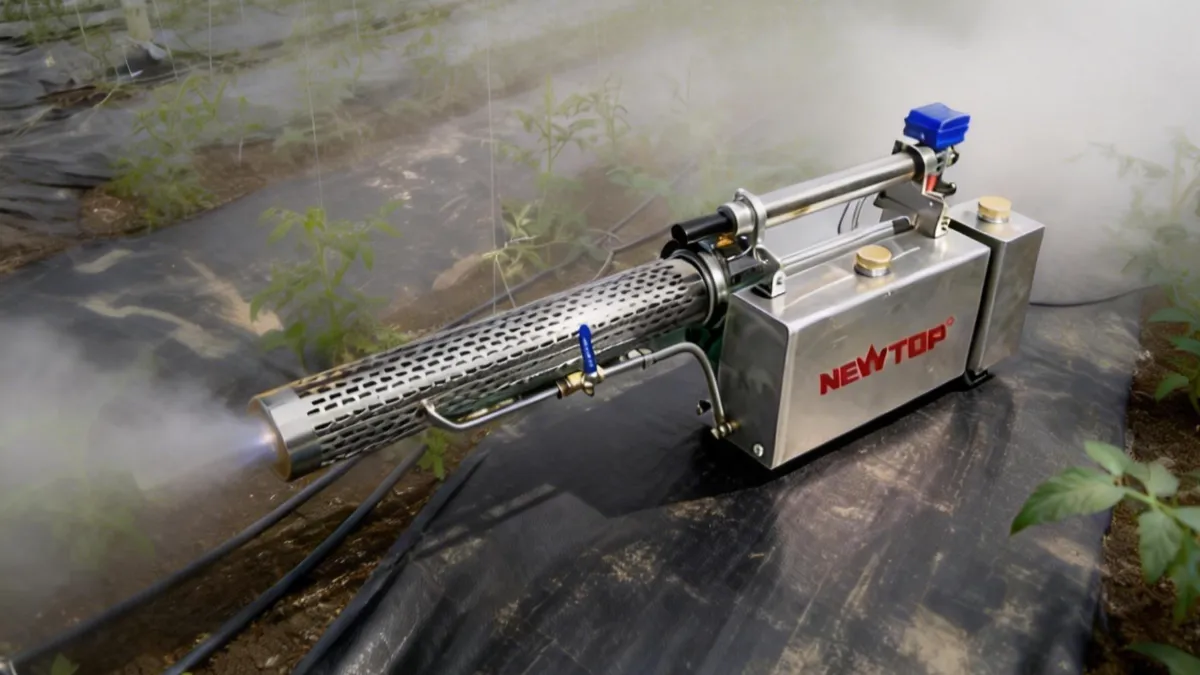
Answering ‘what is a fogger sprayer’ is the critical first step in preventing costly chemical waste and avoiding compliance failures in public health and agricultural settings. Many operations mistakenly deploy standard sprayers for tasks demanding precise, aerosolized droplets, which leads to ineffective pest control, incomplete disinfection, and significant financial losses. This fundamental mismatch in equipment is a common operational blind spot that directly impacts both safety and budget.
This guide provides the technical foundation for making informed equipment decisions. We break down the core components of professional fogging machines, detail their primary applications, and compare the key differences between thermal and cold fogger technologies. Consider this your standard operating procedure for evaluating, selecting, and safely deploying the right misting tool for any large-scale job.
What Is a Fogger Sprayer and How It Works?
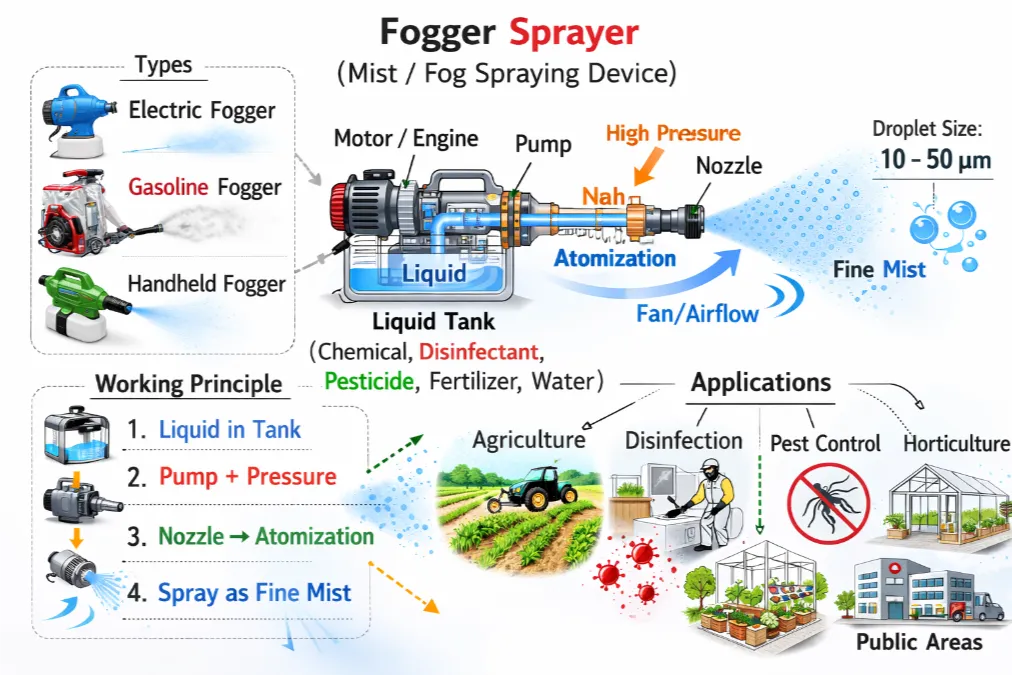
Fogger sprayers atomize liquid solutions into a fine aerosol mist, enabling uniform chemical application across large, complex surfaces that conventional sprayers cannot effectively reach.
A fogger sprayer is a specialized spraying device designed to convert liquid solutions into ultra-low volume (LOUP) droplets, typically ranging from 5 à 50 microns. At this size, droplets behave almost like a gas, drifting through the air and settling evenly over surfaces. This makes fogging particularly effective for insect control, crop protection, and large-scale disinfection.
The Basic Fogging Mechanism
A fogger works by atomizing a liquid solution. A motor-driven pump draws the chemical from a tank and pressurizes it. This pressurized liquid is then forced through a specialized nozzle, which breaks it down into tiny droplets. A blower or fan propels these aerosol particles into the target environment, creating a fog that settles on all exposed surfaces. The machine’s design controls the droplet size to optimize air suspension time and ensure effective surface contact.
Major Fogging Technologies Used Today
Modern fogging equipment is generally categorized into thermal foggers, ULV cold foggers, and electrostatic systems. Each operates on a distinct atomization principle and is suited to different environments.
Thermal Foggers
Thermal foggers use a heated coil or combustion chamber to vaporize oil-based or water-based solutions. When the vapor exits the nozzle and encounters cooler ambient air, it condenses into a thick, visible fog. This visible plume helps operators monitor coverage in open environments.
Thermal systems are widely used in outdoor mosquito control programs, agricultural field treatments, and public health operations across tropical regions. They are especially effective when rapid large-area dispersion is required. Cependant, because they rely on combustion and heat, they are typically not recommended for enclosed indoor spaces without proper ventilation.
LOUP (Volume ultra faible) Cold Foggers
Brumisateurs à froid, often referred to as ULV foggers, rely entirely on mechanical energy rather than heat. A high-speed blower or turbine shears the liquid into extremely fine droplets, typically under 30 microns.
ULV fogging is ideal for indoor disinfection, food processing facilities, serres, poultry farms, and warehouses. Since there is no combustion process, cold foggers are safer for enclosed environments and compatible with water-based disinfectants. They are also more energy-efficient and generally produce less visible residue compared to thermal systems.
Electrostatic Sprayers
Electrostatic systems represent a more advanced variation of fogging technology. In these machines, droplets receive an electrical charge as they exit the nozzle. This charge causes the particles to actively seek and adhere to surfaces, wrapping around objects for more complete 360-degree coverage.
Electrostatic spraying is commonly used in healthcare facilities, airports, écoles, and high-touch public areas where surface disinfection precision is critical. While more specialized and typically higher in cost, electrostatic technology significantly reduces chemical waste and improves uniformity of application.
Key Components of a Professional Fogger Machine
A professional fogger’s performance depends on four core systems working together: the fluid delivery mechanism, the thermal management system, the atomizing nozzle, and the electronic controls that regulate the entire process.
| Component System | Primary Function | Critical Feature |
|---|---|---|
| Fluid Tank & Pump System | Stores and pressurizes the fogging solution for consistent delivery. | Chemical-resistant tank and reliable high-pressure pump. |
| Heating Element & Heat Exchanger | Rapidly heats and vaporizes the fluid to create a dense fog. | High-wattage heater with integrated thermal safety cutoffs. |
| Ajutage & Atomizer Assembly | Expels and atomizes vapor into fine particles of a specific size. | Precision-engineered to control droplet micron size and fog density. |
| Control Electronics & Interface | Manages temperature, fluid flow, and operational timing. | Central PCB with a clear user interface, often including remote control. |
Fluid Tank and Pump System
The fluid tank stores the fogging solution, and its pump pressurizes the liquid before sending it to the heating element. The capacity and material of the tank directly influence the machine’s continuous runtime, while the pump’s reliability determines output consistency. Professional-grade machines use components built for demanding field conditions.
- The tank is constructed from durable, chemical-resistant materials to prevent corrosion from various fogging solutions.
- A high-pressure pump delivers a steady fluid flow, ensuring uniform fog generation without sputtering.
- Internal filters prevent particles from clogging the nozzle, which maintains performance and reduces downtime for maintenance.
Heating Element and Heat Exchanger
In a thermal fogger, this is the engine of the machine. The heating element and heat exchanger work together to rapidly heat and vaporize the fogging solution into a gas. Efficient heat transfer is essential for producing a thick, dry fog and is a key differentiator in machine quality. Poor thermal management can result in a wet, ineffective fog or create a safety hazard.
- A high-wattage heater block achieves the optimal operating temperature quickly, reducing startup time.
- The heat exchanger is designed to maximize the surface area exposed to the fluid, ensuring complete and efficient vaporization.
- Embedded temperature sensors and thermal safety cutoffs are non-negotiable features that prevent the unit from overheating.
Nozzle and Atomizer Assembly
The nozzle is the final stage, where the pressurized, vaporized solution is expelled and atomized into extremely fine particles, creating the visible fog. The engineering of the nozzle assembly determines the droplet size, measured in microns, and the fog’s projection distance. This component is critical for achieving the desired coverage and penetration for applications like lutte antiparasitaire or disinfection.
- Precision nozzles create particles of a specific micron size, ensuring the fog hangs in the air and coats surfaces effectively.
- Materials used in the nozzle must withstand high temperatures and constant pressure without degrading.
- Many professional models feature adjustable output settings, allowing operators to control fog density and flow rate for different environments.
Control Electronics and Interface
Modern foggers are not just mechanical devices; they rely on sophisticated electronic controls to manage every function with precision. The central printed circuit board (PCB) regulates temperature, fluid flow, and output timing. A well-designed user interface allows the operator to configure these settings easily and monitor the machine’s status, which is vital for repeatable and predictable results.
- The PCB acts as the brain, synchronizing the pump and heater to produce a consistent output.
- A straightforward interface with buttons, indicator lights, or a digital display gives the operator full control over the machine’s functions.
- Remote control capabilities, whether wired or wireless, allow for convenient and safe operation from a distance.
Professional Fogger Solutions for Large-Scale Control
Applications principales des brumisateurs dans la lutte antiparasitaire et l'agriculture
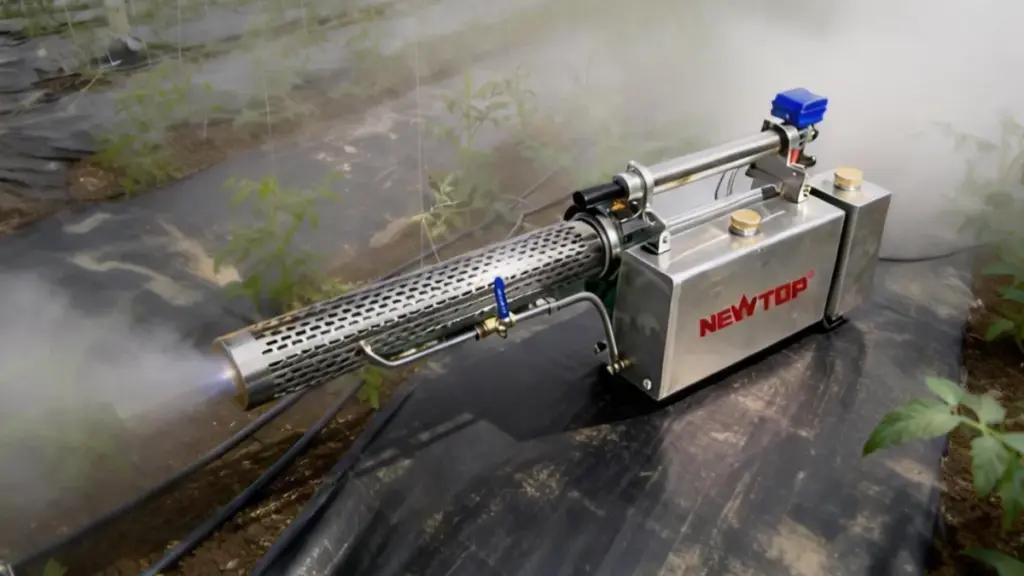
Foggers are essential tools in agriculture and public health, delivering atomized solutions for crop protection, large-scale sanitization, and environmental control.
Agricultural Pest and Disease Management
In farming and greenhouse operations, foggers deliver fine aerosol droplets that penetrate dense plant canopies. This process ensures fungicides and pesticides reach all surfaces, including the undersides of leaves, providing comprehensive protection against pests and diseases. The superior coverage and penetration capabilities are critical for maintaining crop health and maximizing yields.
- Covers large areas like field crops and orchards quickly, improving labor efficiency during treatment windows.
- Delivers uniform application of chemicals, reducing waste and minimizing environmental runoff.
- Effective for controlling insects and fungal growth in controlled environments like greenhouses and nurseries.
Large-Scale Disinfection and Sanitization
LOUP (Volume ultra faible) cold foggers are standard equipment for sanitizing public spaces, commercial facilities, and livestock enclosures. They disperse disinfectants as a fine mist that settles on surfaces to neutralize pathogens without causing excessive wetness. This method is crucial for contamination control protocols in food processing, healthcare, and transportation sectors.
- Used in food production facilities to maintain sanitary conditions and prevent contamination.
- Sanitizes transportation hubs, écoles, and hospitals to control the spread of viruses and bacteria.
- Disinfects animal housing such as poultry farms and barns to protect livestock health.
Humidity and Climate Control
Fogging systems help regulate humidity and temperature in specialized agricultural settings. By releasing a fine water mist, they create optimal growing conditions for sensitive plants or help preserve perishable goods. This application of humidity management is vital for high-value crops and extending the shelf life of produce.
- Increases ambient humidity in greenhouses, which is critical for cultivating tropical plants and seedlings.
- Provides evaporative cooling to lower temperatures during hot weather, reducing heat stress on crops.
- Maintains moisture levels in storage facilities for produce and flowers to extend their shelf life.
Read more: Haut 10 Fabricants de pulvérisateurs à dos en 2026
Benefits of Using a Fogger Sprayer for Large-Scale Disinfection

When properly calibrated and applied according to chemical guidelines, fogger sprayers can significantly improve operational efficiency in large-scale disinfection environments. Their ability to produce ultra-fine droplets allows for more uniform spatial coverage compared to conventional manual cleaning methods.
Superior Surface Coverage
Fogging systems generate a controlled mist that disperses throughout an enclosed space rather than targeting only visible surfaces. Because the droplets remain suspended for a period of time, they are more likely to contact elevated surfaces, corners, ventilation openings, and the undersides of equipment.
Electrostatic variants further enhance deposition efficiency by electrically charging droplets, which encourages them to adhere more effectively to target surfaces.
While exact coverage performance depends on room layout and airflow conditions, fogging technology generally provides more consistent volumetric distribution than manual wiping or pump spraying.
Optimized Chemical Efficiency and Labor Productivity
ULV foggers are designed to apply disinfectant solutions in very small droplet sizes, which increases dispersion efficiency. In many facility maintenance scenarios, this allows operators to treat larger areas using lower total liquid volume compared to conventional high-volume spraying.
En plus, fogging reduces the need for repetitive manual surface wiping across large facilities. A single trained operator can treat open spaces more quickly than traditional cleaning crews, improving labor productivity and reducing operational downtime.
Actual savings will vary depending on room configuration, chemical type, and application protocol.
Rapid Treatment for Extensive Areas
Foggers are particularly valuable in warehouses, production facilities, livestock housing, and other large commercial environments where rapid treatment is essential.
Coverage rate depends on machine capacity and operator technique. Portable and backpack ULV foggers are commonly used for medium-to-large indoor areas, while high-capacity thermal foggers are preferred for outdoor vector control and expansive open spaces.
Because fogging distributes disinfectant in airborne form, it enables faster treatment cycles compared to surface-only cleaning methods, supporting quicker facility turnaround.
Thermal Foggers vs. Cold Foggers: Major Differences
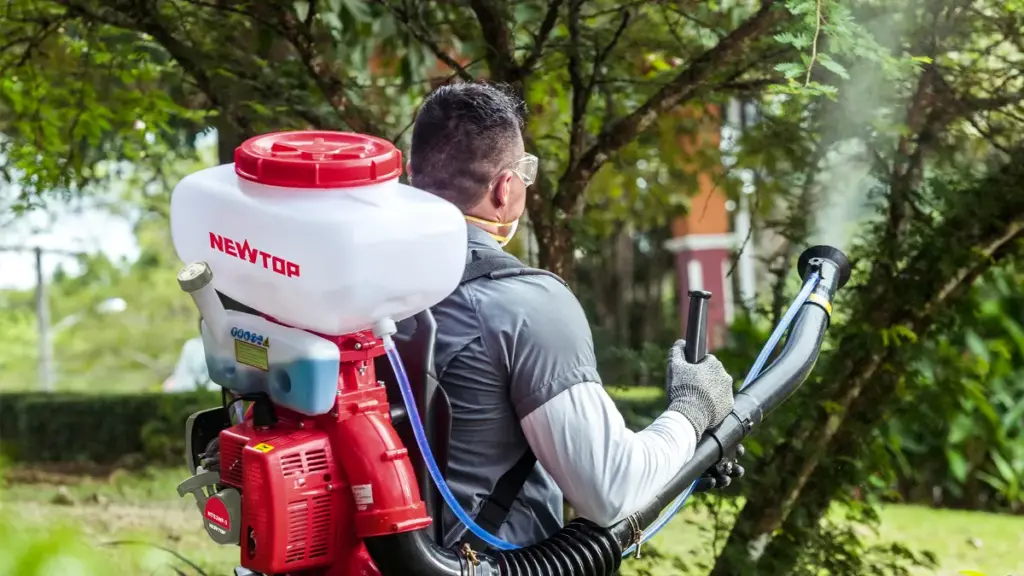
The choice between thermal and cold foggers hinges entirely on the application environment; thermal units excel outdoors with fine, heat-vaporized particles, while cold (LOUP) foggers provide safer, heat-free atomization for indoor and sensitive areas.
| Feature | Thermal Fogger | Cold (LOUP) Brumisateur |
|---|---|---|
| Operating Mechanism | Uses heat to vaporize a chemical solution. | Uses high pressure and air shear to atomize liquid. |
| Taille des particules | Extremely fine (0.5–10 microns). | Fine, often adjustable (5–50 microns). |
| Ideal Environment | Large-scale outdoor areas (fermes, forests). | Indoors and enclosed spaces (hôpitaux, serres). |
| Safety Profile | Poses a fire hazard; requires careful handling. | No heat, no fire risk, and generally quieter operation. |
| Compatibilité chimique | Typically requires oil-based carriers. | Works with a wide range of water and oil-based solutions. |
Operating Mechanism and Particle Size
The fundamental distinction between these machines is how they generate fog.
Thermal foggers employ heat to flash-vaporize a chemical solution, which then condenses upon contact with cooler ambient air. This process creates a dense, highly visible fog composed of extremely fine particles.
Brumisateurs à froid, also known as Ultra Low Volume (LOUP) machines, use high-pressure air to shatter liquid into a fine mist without any heat. This mechanical process of atomization offers greater control over droplet size.
Ideal Applications and Environments
Each fogger type is engineered for specific operational contexts.
Thermal foggers are the established tool for expansive outdoor applications, such as large-scale pest control in agriculture and public health vector control programs. Their dense fog can drift over vast areas, effectively treating forests, fermes, and municipalities.
Cold foggers have become the standard for indoor and commercial use where safety and operational noise are primary concerns.
Chemical Compatibility and Safety
Cold foggers offer superior chemical versatility. Because they operate without heat, they can safely aerosolize a wide array of solutions without degrading the active ingredients. This makes them suitable for disinfectants, biocides, and pesticides that are sensitive to high temperatures. This operational safety extends to the operator and the environment, especially in enclosed areas where fire risk must be eliminated.
Thermal foggers are more restrictive, often requiring oil-based carriers to produce a thick fog. The high-temperature operation introduces a clear fire hazard if mishandled or used near flammable materials, making them unsuitable for most indoor applications.
Critical Safety Protocols for Operating Fogging Equipment
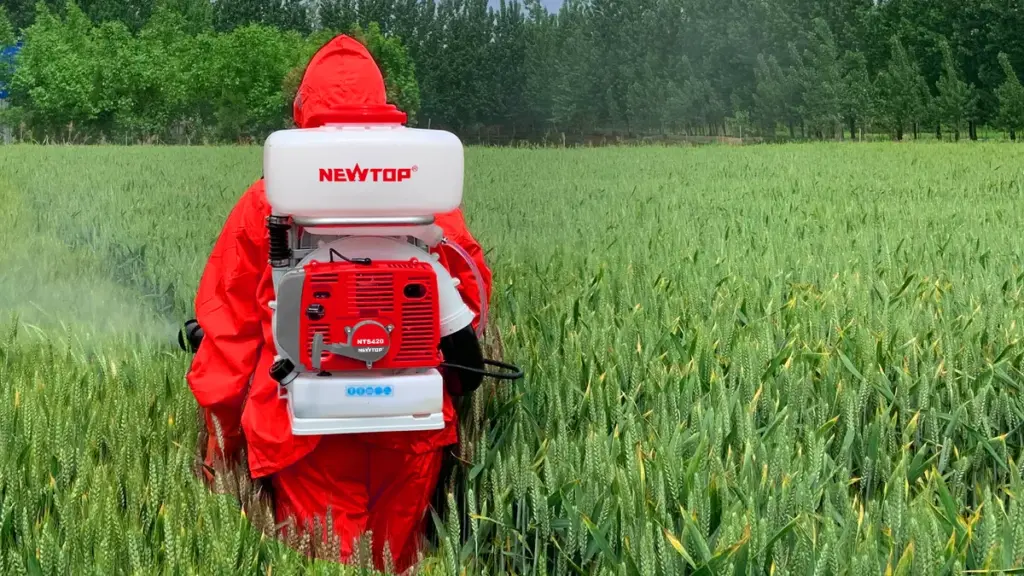
Effective fogging operations depend on standardized safety protocols, including mandatory operator certification, correct PPE usage, and strict adherence to chemical handling and re-entry procedures.
Use of Personal Protective Equipment (EPI)
Wearing the correct Personal Protective Equipment is the first line of defense for any operator. Regulations require comprehensive protection to prevent chemical exposure through inhalation, skin contact, or eye irritation during the fogging process. Failure to use proper PPE can lead to immediate health risks and long-term complications.
- Full-face respirators with appropriate chemical cartridges are mandatory.
- Chemical-resistant gloves, coveralls, and waterproof boots protect the skin from contact.
- Goggles or face shields provide an extra layer of protection for the eyes.
Area Preparation and Ventilation Control
Properly preparing the treatment area is essential to ensure both effectiveness and safety. This involves isolating the space and managing airflow to contain the fog and protect adjacent environments. A well-prepared area maximizes the disinfectant’s efficacy while minimizing unintended exposure.
- Seal off the designated area by closing all doors, windows, and vents.
- Turn off all HVAC systems to prevent the disinfectant from circulating outside the treatment zone.
- Post warning signs at all entry points to prevent unauthorized access during and after application.
Operator Training and Chemical Management
Operator certification and adherence to chemical guidelines are now industry standards. A trained operator understands the equipment’s functions, the properties of the disinfectant, and how to manage potential risks. This expertise prevents equipment misuse and ensures chemicals are applied at safe, effective concentrations.
- Operators must be certified and trained on the specific fogging equipment in use.
- Always follow the manufacturer’s guidelines for chemical dilution ratios and application rates.
- Confirm chemical compatibility with the equipment to prevent corrosion or malfunction.
Post-Treatment and Safe Re-Entry Protocols
Safety procedures do not end when the application is complete. Post-treatment protocols ensure the area is safe for re-entry and that any chemical residue is managed correctly. These final steps are crucial for protecting occupants and maintaining equipment integrity.
- Adhere to the specified waiting period before ventilating and re-entering the area.
- Thoroughly clean the fogging equipment after each use to maintain its performance and longevity.
- Manage any remaining chemical residue according to environmental safety standards.
Why Choose NEWTOP High-Efficiency Fogger Solutions?
NEWTOP foggers combine precision manufacturing with a robust global supply chain to deliver reliable, versatile equipment for large-scale agricultural and public health operations.
As a leading garden and agricultural machinery manufacturer based in Shanghai, NEWTOP has been manufacturing power equipment since 2003. With more than 10,000 square meters of production facilities and an annual capacity exceeding 500,000 unités, the company integrates CNC machining centers, lignes de production automatisées, and independent testing laboratories to ensure consistent quality.
NEWTOP’s fogger sprayers are engineered for durability in demanding environments such as tropical agriculture and municipal vector control programs. Core components are selected from globally recognized suppliers, ensuring stable combustion performance and long service life.
The company supports OEM and ODM customization, including color design, image de marque, conditionnement, and parameter adjustments tailored to regional regulations. With CE, EPA, and ISO certifications, NEWTOP equipment meets international compliance standards.
For distributors targeting Africa, l'Amérique latine, Asie du Sud-Est, and emerging Eastern European markets, NEWTOP offers competitive mid-range positioning that balances price, durabilité, and after-sales support.
Grow Strong with NEWTOP — Your Trustworthy Garden Tools Partner.
Pour les catalogues de produits, spécifications techniques, or partnership inquiries, contact:
E-mail: [email protected]
WhatsApp: +86 13636521556
Website: https://newtoptools.com/
Conclusion
Understanding the mechanics of a fogger sprayer, from its key components to the differences between thermal and cold ULV models, directly impacts operational success. This knowledge ensures you can achieve precise, wide-area coverage for disinfection, lutte antiparasitaire, and agricultural treatments. Selecting the right tool optimizes chemical use, enhances safety, and improves overall efficiency.
If you are ready to enhance your operations with reliable misting technology, explore NEWTOP’s line of professional fogger solutions. Contact our team to request a product catalog or to consult on the best equipment for your specific application.
Foire aux questions
What is the difference between a fogger and a sprayer?
A traditional sprayer produces larger droplets that settle quickly on surfaces, making it suitable for targeted applications. A fogger creates ultra-fine droplets that remain suspended in the air, allowing better coverage and penetration.
How long can a fogger spray continuously?
Continuous operation time depends on tank capacity and engine type. Most professional gasoline foggers can operate for 30–60 minutes per tank under standard load.
Is a fogger better than a spray for mosquitoes?
Oui, for wide-area mosquito control, especially outdoors, foggers are generally more effective because the fine mist can disperse across vegetation and open air.
Can you use a fogger for indoor disinfection?
Oui, particularly cold ULV foggers designed for indoor environments. Proper ventilation and chemical compliance are essential.
What is the spray range of a portable fogger?
Portable thermal foggers may achieve a horizontal spray distance of 8–12 meters depending on wind conditions and model specifications.
Do foggers use more chemical than sprayers?
Non, foggers are designed to use less chemical than traditional sprayers. LOUP (Volume ultra faible) foggers, en particulier, atomize a small amount of concentrated solution into a vast volume of fine mist. This method provides extensive coverage with maximum efficiency, reducing overall chemical consumption compared to high-volume drenching sprayers.
If you would like a deeper technical breakdown of sprayer and fogger performance differences, read our guide: Différence entre brumisateur et pulvérisateur: Un guide de comparaison technique .
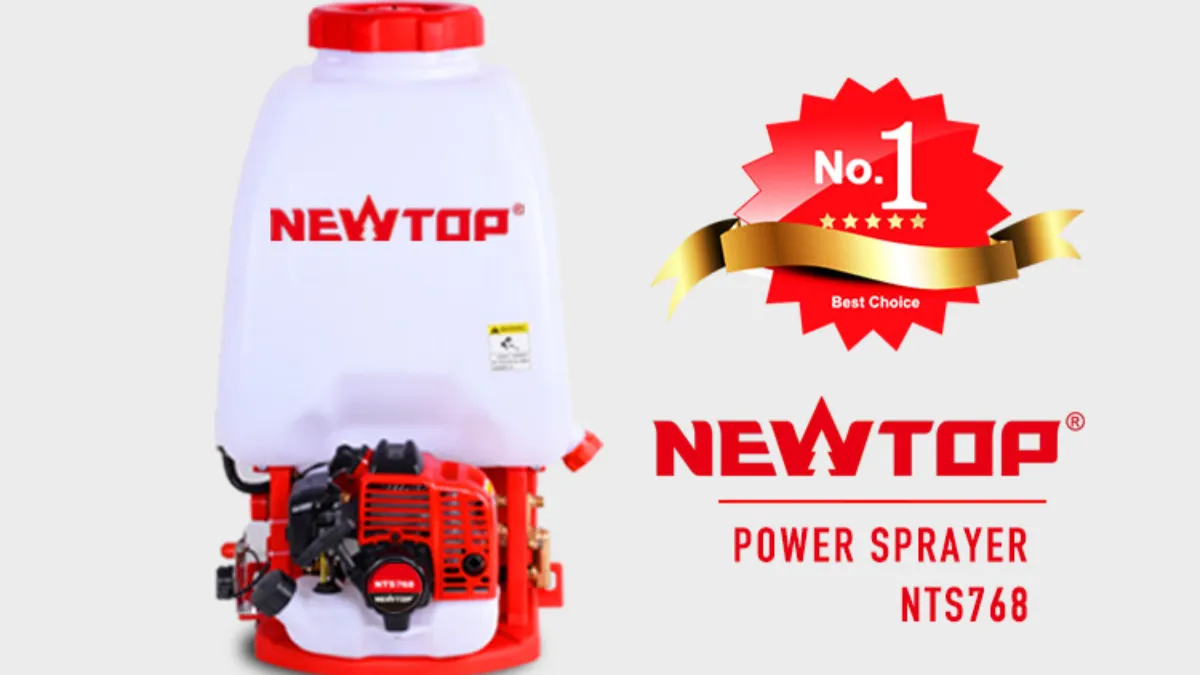
For agricultural distributors, farm equipment wholesalers, and regional brand owners, finding the right knapsack sprayer is not just about comparing tank sizes or engine types. It is about balancing performance, durabilité, regulatory compliance, and long-term supply stability—while still meeting the price expectations of local farmers.
In emerging markets across Africa, l'Amérique latine, Asie du Sud-Est, and parts of Eastern Europe, backpack sprayers remain one of the most essential tools for crop protection and nutrient application. Whether used for pesticide spraying, herbicide application, fertilizer distribution, or public health sanitation, a reliable sprayer directly affects farm productivity.
This guide is written for importers and bulk buyers who need a practical understanding of product types, model selection, pricing logic, compliance requirements, and long-term supplier evaluation.
Pulvérisateur à dos à vendre: Popular Types for Modern Farming
The global market for knapsack sprayers has evolved significantly in the past decade. Today’s buyers can choose from three main power systems: manual, gasoline-powered, and battery-powered sprayers.
Pulvérisateurs à dos manuels
Manual knapsack sprayers are a primary choice for small-scale farming operations, typically those under two acres. Their simple, operator-powered design makes them reliable and easy to maintain for targeted applications like lutte antiparasitaire or fertilizer distribution. With a piston or diaphragm pump mechanism, they deliver consistent pressure when operated correctly.
Gasoline Knapsack Sprayers
Gasoline knapsack sprayers, especially mist duster types, are preferred for larger fields and orchards. Equipped with 2-stroke or 4-stroke engines, they provide high-pressure output and extended spray range. These models are common in tropical agriculture where tall crops, such as cocoa or fruit trees, require strong penetration. Importers should pay attention to engine displacement, fuel consumption, and emission standards when selecting gasoline versions.
Battery-Operated Knapsack Sprayers
Lithium battery-powered sprayers are gaining traction, particularly in urban landscaping, greenhouse operations, and government projects. They reduce noise, eliminate fuel mixing, and offer more stable pressure control. With brushless motors and adjustable spray modes, they improve precision and operator comfort. In regions where environmental regulations are tightening, electric models are becoming a safer long-term choice.
Lecture connexe: Types de pulvérisateurs à dos: Choisir le meilleur modèle pour votre ferme
Best Models of Knapsack Sprayer for Sale in 2026
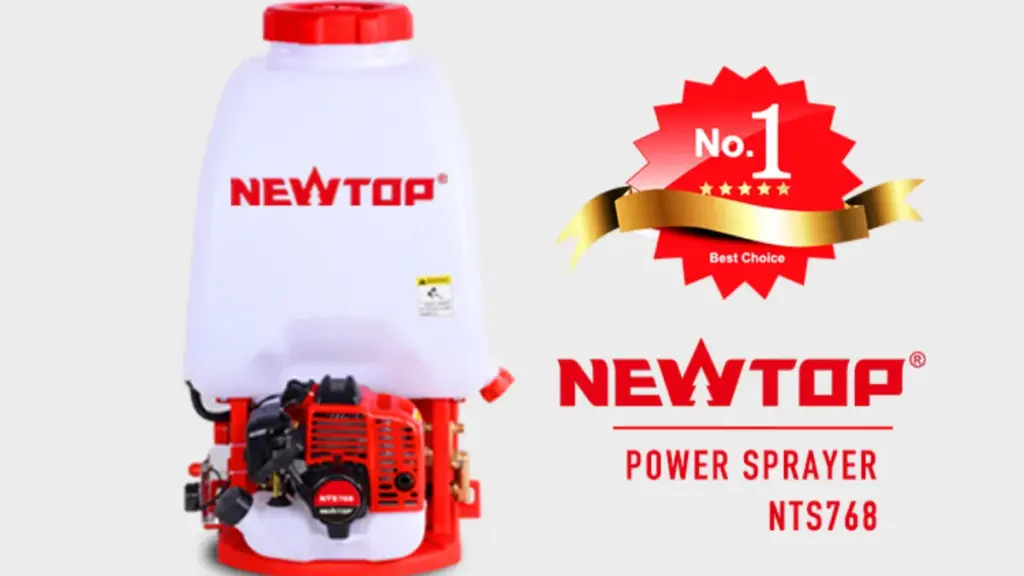
Dans 2026, demand for gasoline backpack sprayers and mist dusters continues to grow across Africa, l'Amérique latine, Asie du Sud-Est, and parts of Eastern Europe. À NOUVEAUTOP, several knapsack sprayer models have consistently ranked among the top-selling units in export markets. These models are widely chosen by OEM clients, regional distributors, and agricultural supply chains because they offer stable performance and practical configurations that match real field conditions.
Below are 4 of the most popular gasoline knapsack sprayers for bulk buyers. The following product cards provide quick technical specifications and direct access to each model’s detail page. If you are evaluating which knapsack sprayer to introduce into your market in 2026, reviewing these configurations can help you shortlist suitable options.
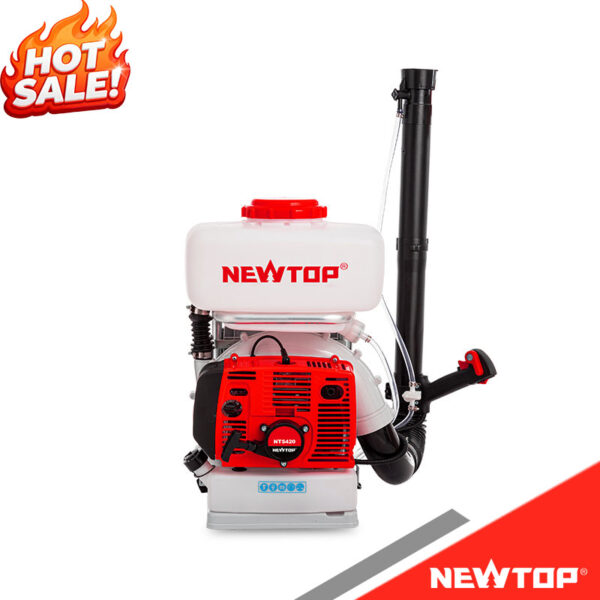
NTS420 Gasoline Knapsack Sprayer
The NTS420 is a reliable 20L backpack sprayer designed for field crops and plantation use. It delivers strong spray penetration with stable engine output, making it suitable for large-area pesticide and fertilizer application.
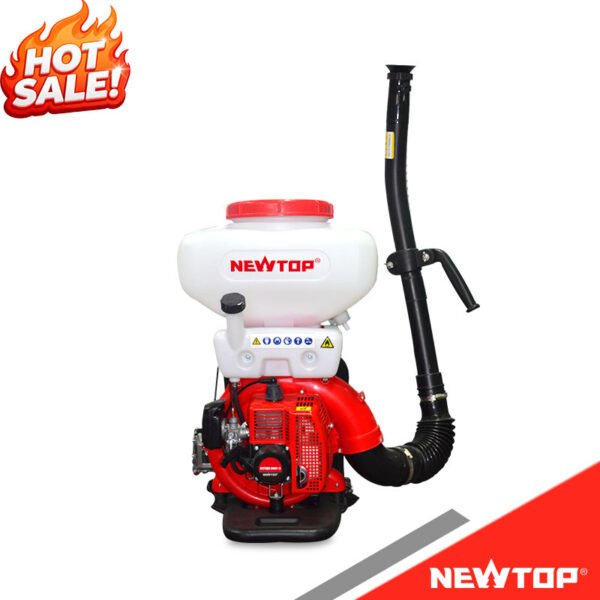
NTS3WF-3 Mist Duster Sprayer
The NTS3WF-3 combines spraying and misting functions for orchards and tall crops. With powerful airflow and extended spray range, it ensures deep leaf penetration in dense farming environments.
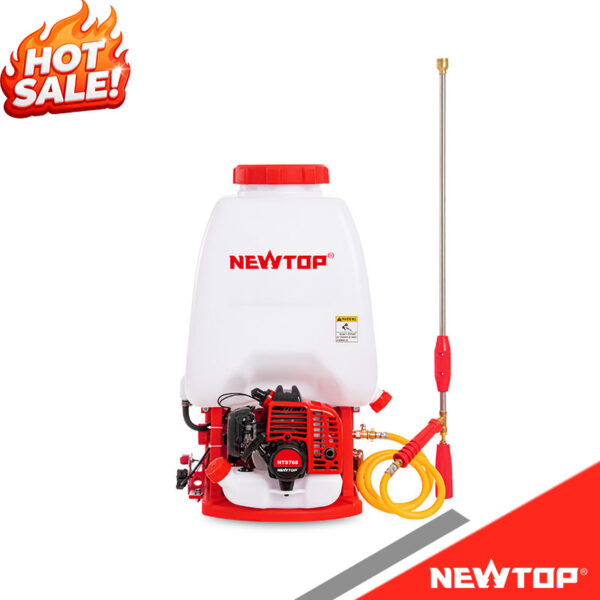
NTS768 High-Pressure Sprayer
The NTS768 is built for intensive agricultural use. Its reinforced tank structure and stable engine system make it suitable for professional distributors targeting high-demand markets.
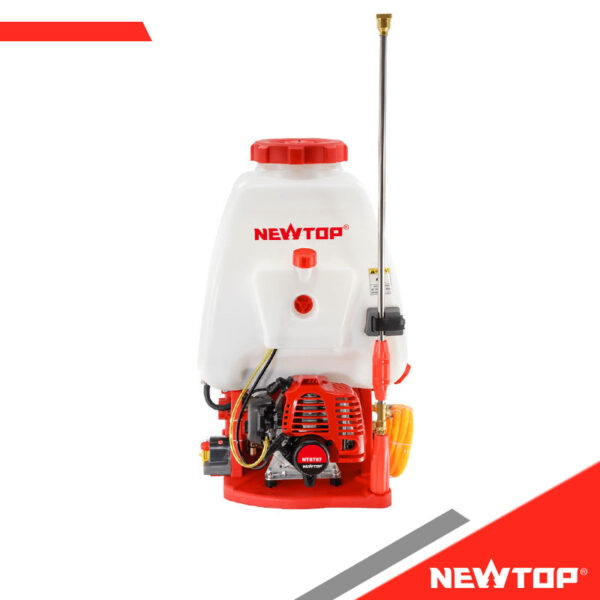
NTS767 Commercial Backpack Sprayer
The NTS767 offers balanced power and efficiency, ideal for distributors seeking a mid-range gasoline backpack sprayer for farm and garden applications. Durable components ensure long service life.
Choosing the Right Model for Your Market
| Target Market | Recommended Model | Technical Advantage | Typical Application Scenario |
|---|---|---|---|
| Large Plantations & Commercial Farms | NTS420 (56.5cc) | Higher displacement engine delivers stronger airflow and deeper droplet penetration | Tall crops such as cocoa, palm, and orchard trees; large-area coverage requiring time efficiency |
| Orchard & Dual Spray/Dust Operations | NTS3WF-3 (Mist Duster) | Powerful airflow system supports both liquid spraying and powder application | Diversified farms needing flexible pest control solutions |
| Price-Sensitive Regional Distributors | NTS768 / NTS767 (26cc) | Balanced engine performance with lower fuel consumption and manageable operating cost | Small-to-medium farms requiring reliable daily spraying at controlled budgets |
| Markets with Emission or Efficiency Requirements | 2-Stroke or 4-Stroke Options | 2-accident vasculaire cérébral: lightweight and simple maintenance; 4-accident vasculaire cérébral: improved fuel efficiency and reduced emissions | Regions prioritizing environmental compliance or long-term fuel savings |
Secure High-Demand Knapsack Sprayers for Your Market

Key Factors to Evaluate When Browsing Knapsack Sprayers
A professional-grade knapsack sprayer is defined by its consistent performance under pressure, ergonomic design for operator safety, and adherence to international quality standards.
| Evaluation Factor | Key Metric | Industry Standard / Benchmark |
|---|---|---|
| Performance & Durabilité | Pressure Regulation & Flow Rate | Consistent PSI for uniform application; leak-proof seals and materials. |
| Operator Safety & Ergonomie | Maximum Loaded Weight | Should not exceed 25 kg to reduce operator fatigue. |
| Certification & Entretien | Safety & Quality Compliance | Adherence to FAO or equivalent international guidelines. |
Performance and Durability Standards
A reliable knapsack sprayer must deliver consistent performance and withstand demanding agricultural conditions. When evaluating a unit, focus on its ability to maintain stable pressure, deliver a uniform flow rate, and resist degradation from chemical exposure and physical use. The pump mechanism, whether piston or diaphragm, should generate and hold pressure efficiently to ensure the spray pattern remains constant from a full tank to an empty one. Material quality is just as critical; components must be made from durable, corrosion-resistant polymers and feature leak-proof seals to handle aggressive chemicals over the long term.
Operator Safety and Ergonomics
The operator’s well-being is a primary concern. Look for sprayers designed to minimize physical strain and protect users from chemical contact. International standards recommend that a fully loaded sprayer should not weigh more than 25 kg to reduce fatigue and the risk of injury. Key ergonomic features include a well-padded harness that distributes weight evenly across the shoulders and hips, a curved backrest that matches the operator’s posture, and overall stability to prevent tipping on sloped terrain. A sprayer that is comfortable to carry and operate allows for more precise application and safer handling during long workdays.
Certification and Ease of Maintenance
Compliance with international standards, such as those guided by the FAO (Food and Agriculture Organization), signals a manufacturer’s commitment to quality and safety. These certifications ensure the sprayer has passed rigorous tests for leak prevention, durabilité, and operator safety. Beyond initial quality, a well-designed sprayer must be simple to maintain. Look for features that facilitate easy cleaning and parts replacement, like large tank openings and tool-free access to filters and pumps. Straightforward maintenance prevents chemical cross-contamination and significantly extends the service life of the equipment.
Price Guide for Knapsack Sprayer in Bulk Orders
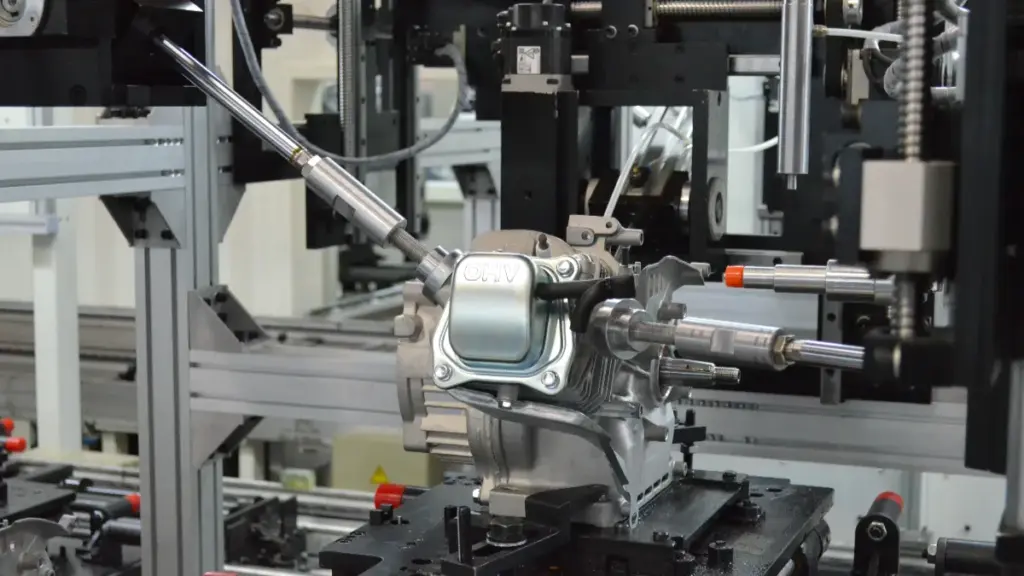
Understanding bulk pricing is essential for distributors and agricultural equipment importers planning seasonal procurement. The price of a knapsack sprayer for sale varies significantly depending on engine type, déplacement, capacité du réservoir, and order volume.
Below is a general wholesale pricing reference for gasoline backpack sprayers in 2026:
| Sprayer Type | Estimated FOB Price Range (USD) | Typical Applications |
|---|---|---|
| Manual Knapsack Sprayer (15–20L) | $10 – $18 per unit | Petites fermes, vegetable plots, greenhouse spraying, entry-level distribution markets |
| Gasoline Backpack Sprayer (26cc–56.5cc) | $38 – $95 per unit | Vergers, plantations, sylviculture, commercial crop protection |
| Electric / Battery-Powered Sprayer | $22 – $60 per unit | Urban agriculture, aménagement paysager, medium-scale farms requiring reduced operator fatigue |
Note: Prices above are indicative FOB references based on standard export configurations. Final quotation depends on engine specification, battery capacity, material grade, customization requirements, and total order quantity.
Volume-Based Pricing Structure
Bulk procurement improves overall cost efficiency, but pricing adjustments are typically influenced by production planning, component sourcing, and logistics optimization rather than fixed discount percentages.
In practice, manufacturers evaluate pricing based on:
- Order quantity per model
- Production batch scheduling
- Packaging configuration
- Shipping terms (FOB, CIF, or mixed container)
For medium-volume orders, unit pricing may benefit from improved production efficiency and shared setup costs. Larger consolidated shipments, especially full-container loads (FCL), often achieve stronger cost advantages due to optimized carton loading and reduced freight allocation per unit.
What Influences Bulk Pricing?
Several practical factors impact final quotation:
Engine configuration
2-stroke engines are generally more affordable and lighter. 4-stroke engines cost more due to fuel efficiency and lower emissions.
Material thickness & component quality
Higher-grade carburetors, reinforced frames, and upgraded ignition systems affect pricing but improve long-term durability.
Customization requirements
OEM logo printing, carton redesign, color changes, or private labeling may slightly increase cost depending on tooling adjustments.
Shipping terms
FOB, CIF, and DDP pricing structures can significantly affect landed cost. Importers should calculate total landed cost rather than focusing only on ex-factory pricing.
Market & Supply Chain Considerations
China remains the dominant production base for gasoline knapsack sprayers due to mature supply chains and component integration. Stable raw material sourcing and engine production clusters allow competitive pricing at scale.
Cependant, seasonal demand fluctuations—especially before planting seasons—can influence production schedules and lead times. Early procurement planning helps distributors lock in better pricing and secure inventory before peak demand.
Navigating Import Regulations for Knapsack Sprayers
Managing international shipments of knapsack sprayers requires precise Harmonized System (HS) code classification, accurate tariff calculation, and strict adherence to local health and safety standards.
Harmonized System (HS) Code Classification
Correctly classifying knapsack sprayers and their parts under the Harmonized System (HS) is the first step for international importers. Complete agricultural or horticultural sprayers generally fall under HS Code 8424.81. Importers must also differentiate between complete units, spray gun components, and other replacement parts, as each may require a unique tariff code. Accurate classification prevents customs delays and ensures correct tariff application, making it a critical part of the logistics process.
Tariff Rates and Duty-Free Provisions
Tariff rates depend on the importing country, trade agreements, and product configuration. In many African and Latin American markets, agricultural sprayers fall under moderate duty structures. Some Middle Eastern and Eastern European countries may require additional conformity documentation or technical declarations before clearance.
Compliance with Local Health and Safety Standards
Beyond tariffs, knapsack sprayers must comply with the sanitary, health, and safety regulations of the destination market. These standards protect end-users and the environment, making compliance a non-negotiable part of the import process. For gasoline models, engine emission standards and safety requirements should be verified. Battery-powered sprayers may require lithium transport documentation such as UN38.3 test reports, especially for air shipments.
Standard documentation
Standard documentation—including commercial invoice, packing list, and certificate of origin—must be prepared accurately. Coordinating with a local customs broker ensures smoother clearance and more predictable delivery timelines for bulk shipments.
Ready to Buy? Discover NEWTOP’s High-Performance Backpack Sprayer Deals
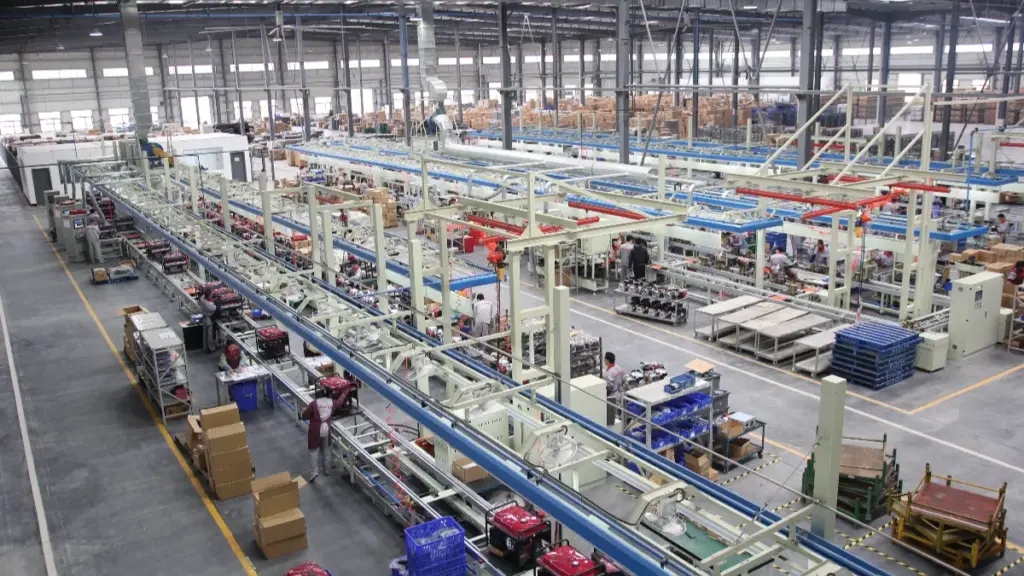
NEWTOP provides B2B partners with a competitive advantage through a flexible supply of durable, versatile backpack sprayers engineered with premium components and supported by comprehensive OEM and after-sales services.
With over two decades of manufacturing experience in agricultural and garden machinery, NOUVEAUTOP supplies knapsack sprayers to more than 65 countries across Africa, l'Amérique latine, Asie du Sud-Est, and Eastern Europe.
The company operates a 10,000㎡ production facility with integrated injection molding, automated assembly lines, and independent inspection centers. Annual capacity exceeds 500,000 unités across multiple product categories.
NEWTOP offers:
- Manual backpack sprayers (16L–20L)
- Gasoline backpack sprayers (mist dusters)
- OEM color and packaging customization
- 7–10 day sample dispatch
- Approx. 30-day bulk production lead time
- 1-an de garantie machine (core parts 6 months)
- Spare parts supply support
Pour les distributeurs seeking stable quality, consistent delivery, and competitive pricing, NEWTOP provides a balanced solution between performance and affordability.
If you are planning to expand your outdoor power agricultural equipment portfolio, now is the right time to secure production slots before peak season demand.
Contact NEWTOP’s export team today via:
E-mail: [email protected]
WhatsApp / Phone: +86 13636521556
Website: https://newtoptools.com/
Conclusion
Choosing the right knapsack sprayer involves matching the model’s features—like power source and tank capacity—to your specific agricultural needs and budget. Understanding key evaluation factors, structures de prix, and import logistics helps you secure a reliable, long-term asset. This knowledge ensures you invest in equipment that enhances productivity and delivers a strong return.
When you’re ready to equip your team, browse our catalog of high-performance backpack sprayers. Contact us directly to get a detailed quote tailored to your bulk order and shipping requirements.
Foire aux questions
Where can I bulk buy knapsack sprayers?
You can bulk purchase directly from established outdoor power equipment manufacturers in China. Factory like NOUVEAUTOP supply OEM and distributor clients globally and support customized orders.
What is the average price of a knapsack sprayer
Manual models typically range from USD 8–18 in bulk orders, gasoline models from USD 45–110, and lithium battery versions from USD 25–80, depending on specifications and order quantity.
How much is shipping for knapsack sprayers?
Shipping depends on destination, container utilization, and freight rates at the time of booking. Sea freight for a full 20GP container significantly lowers cost per unit compared to air freight.
What warranty is included with knapsack sprayers?
Most professional manufacturers provide a 1-year warranty on the complete machine and 6 months on core components. Warranty coverage should be confirmed before order confirmation.
Do you offer spare parts for the knapsack sprayers you sell?
Oui, we provide a comprehensive inventory of spare parts for all our sprayer models. This includes common wear-and-tear items like nozzles, seals, wands, and replacement batteries. Offering readily available parts ensures long-term operational reliability and allows for easy maintenance, which is critical for equipment designed for consistent professional use.
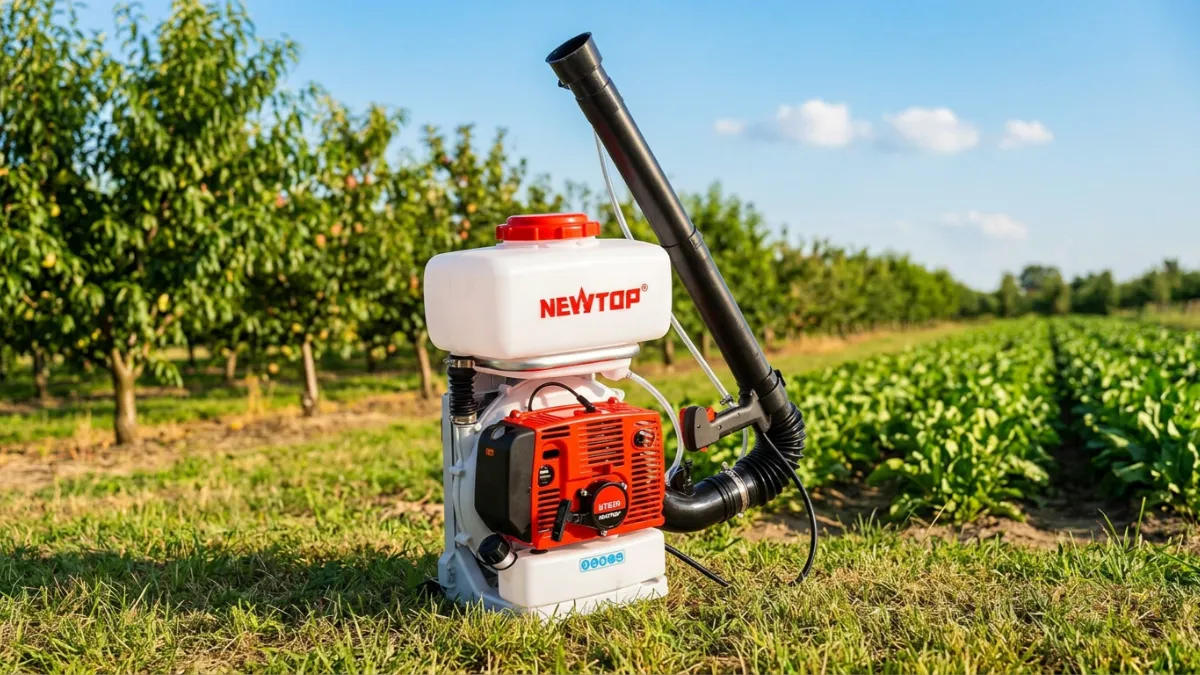
Reliable backpack sprayer reviews are the primary defense against operational downtime and the high cost of wasted chemicals. A single component failure—like a cracked seal or an inconsistent pump—not only brings a job to a standstill but also risks operator safety and misapplication, directly impacting project budgets and client satisfaction.
This guide provides a technical breakdown of current market options, moving beyond marketing claims to compare concrete performance data. We analyze the specifications of battery, manual, and petrol-powered units, identify the most common failure points found in user reports, and detail the methodology used in our own assessments. Use this as your standard operating procedure for evaluating and selecting equipment that meets commercial demands.
Avis sur le pulvérisateur à dos: What to Look for in 2026
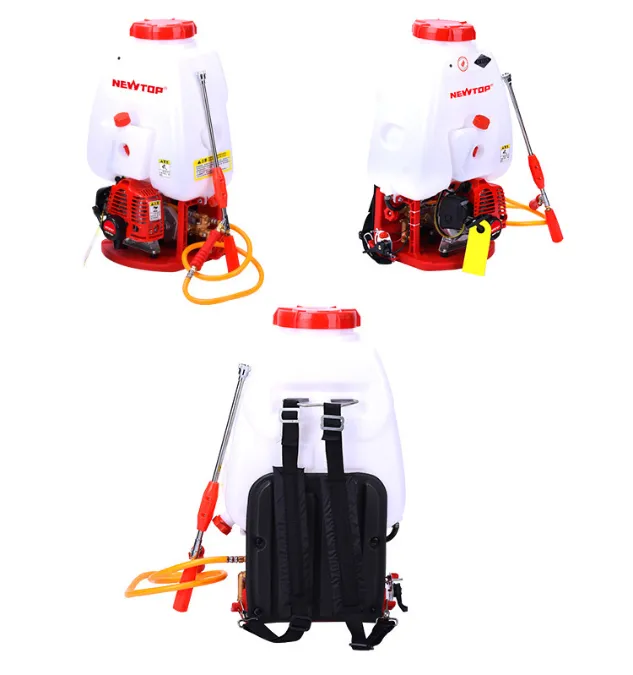
Dans 2026, selecting the right backpack sprayer comes down to a practical evaluation of its power source, harness comfort, pressure versatility, and tank durability for your specific application.
| Key Feature | Evaluation Criteria | Impact on Performance |
|---|---|---|
| Source d'alimentation | Battery-powered for consistent pressure vs. Manual for simplicity and low cost. | Determines application consistency and operator effort required. |
| Ergonomie | Padded, adjustable straps and a load-bearing hip belt. | Directly reduces fatigue and improves productivity during extended use. |
| Pressure & Nozzles | Adjustable pressure settings (psi) and an included set of versatile nozzles. | Allows for precise application on different targets, from fine misting to targeted streams. |
| Tank Construction | Capacité (4-6.5 gallons) and chemical-resistant materials and seals. | Affects operational uptime and long-term durability against leaks and degradation. |
Source d'alimentation: Battery vs. Manuel
The primary decision for any buyer is choosing between battery power and manual operation. The market trend is a clear shift toward battery-powered models because they deliver consistent, non-pulsating pressure without physical effort. This consistency is critical for uniform chemical application and achieving professional results. Manual sprayers, while requiring constant pumping, hold their ground due to their simplicity, lower upfront cost, and field serviceability. Your choice depends directly on the job size and your tolerance for physical labor.
- Battery-powered systems are becoming more common for their ease of use, eliminating the need for constant pumping.
- Manual options remain a dependable, budget-friendly choice for smaller properties or less frequent use.
Ergonomics and Harness Design
A full 4-gallon sprayer can weigh over 35 pounds, making ergonomics a non-negotiable feature for anyone using the equipment for more than a few minutes. A poor harness design concentrates weight on the shoulders, leading to rapid operator fatigue and reduced productivity. High-quality sprayers invest in well-padded, fully adjustable shoulder straps and, critically, a load-bearing hip belt. This combination transfers the bulk of the weight from the shoulders to the hips, allowing for comfortable all-day operation.
- Look for sprayers with adjustable, padded shoulder straps to fit your body comfortably.
- A quality harness distributes the weight evenly across your back and shoulders.
Pressure Controls and Nozzle Systems
Effective spraying requires adapting your output to the target. Variable pressure control allows you to switch between a high-pressure stream for reaching distant spots and a low-pressure fine mist for delicate plants or broad-leaf herbicide application. Look for models with an easily accessible pressure adjustment dial. A good sprayer should also come with a set of interchangeable nozzles—typically including fan, cône, and stream patterns. This built-in versatility saves you the cost and effort of sourcing compatible parts separately and ensures you have the right tool for any application.
- Adjustable pressure controls allow you to manage the flow rate for precise application.
- Multiple included nozzles for different spray patterns add significant value.
Tank Capacity and Durability
The tank is the core of the sprayer, and its design dictates both efficiency and lifespan. Capacité, typically 4 à 6.5 gallons, should match your workload; a larger tank reduces trips for refilling but adds weight. More important is the material. The tank, seals, and gaskets must be constructed from chemical-resistant polymers like Viton to prevent them from degrading after exposure to common herbicides and pesticides. This is the primary defense against leaks, which are the most common point of failure in low-quality sprayers.
- Consider a tank capacity that matches your typical workload to avoid unnecessary interruptions.
- Ensure the tank is made from chemical-resistant materials to prevent degradation over time.
Top-Rated Battery Backpack Sprayer Reviews and Comparisons
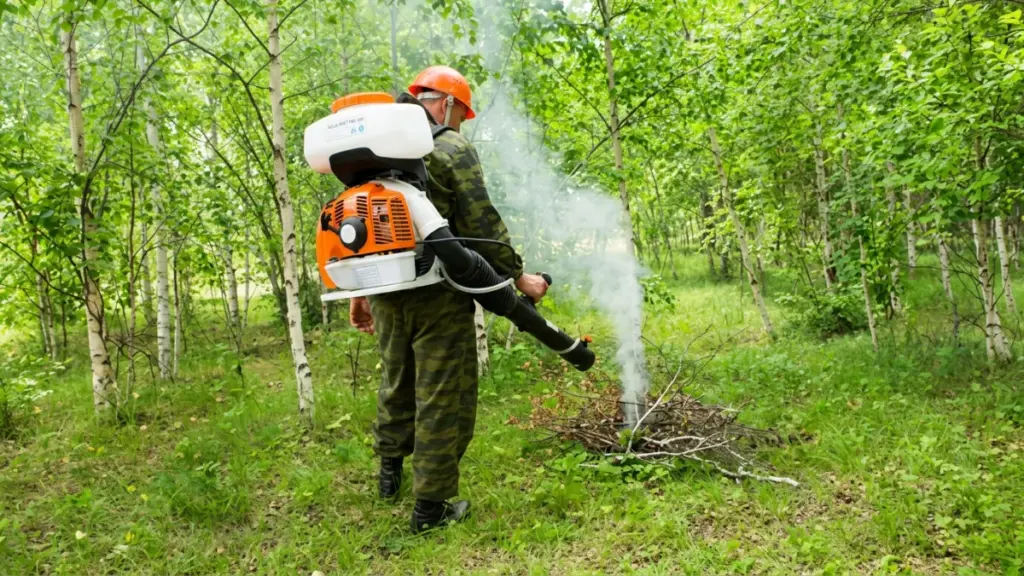
Le 2026 battery sprayer market is defined by lightweight lithium-ion systems that deliver 6-8 hours of runtime, combined with ergonomic harnesses designed for all-day professional use.
| Feature | Industry Standard (2026) | Impact on Performance |
|---|---|---|
| Battery Runtime | 6–8 hours (Lithium-Ion) | Supports all-day professional use without recharging. |
| Pressure Range | 40–80 psi | Provides versatility for fine misting and coarse spray patterns. |
| Capacité du réservoir | 4–6.5 gallons | Balances liquid volume with manageable operator weight. |
| Ergonomie | Padded straps, hip belts, low-profile tanks | Reduces operator fatigue and improves stability. |
Battery Performance and Runtime
The shift to lightweight lithium-ion battery systems is now complete across the industry, rendering older, heavier lead-acid models obsolete. The benchmark for professional-grade equipment is a runtime of 6 à 8 hours of continuous operation on a single charge. This capability is non-negotiable for commercial users, as it allows operators to complete a full day’s work without needing to stop and recharge. Efficient charging systems are also a key evaluation point, as they directly impact workflow and reduce downtime between jobs.
Ergonomie et confort de l'opérateur
As battery sprayers become standard for all-day use, manufacturers place a heavy focus on reducing operator fatigue. Mid- to professional-tier models now include fully adjustable, padded shoulder straps and load-bearing hip belts to distribute weight away from the shoulders and spine. Low-profile tank designs have also become common, lowering the sprayer’s center of gravity. This design choice improves balance, minimizes side-to-side sway, and reduces the physical strain required to manage the unit during long sessions on uneven terrain.
Pressure Control and Application Versatility
Precise control over application pressure is a critical feature that separates professional equipment from basic consumer models. Most modern battery units operate within a 40-80 psi range, which is sufficient for tasks from fine misting delicate ornamentals to applying herbicides with a coarse spray. Variable pressure switches or dials allow operators to adjust output on the fly, matching the spray pattern to the specific chemical and target. High-quality, chemical-resistant seals are also essential for versatility, ensuring the sprayer can handle a wide range of herbicides, pesticides, and fertilizers without premature component failure.
Tank Capacity and Durability
Tank capacities on battery-powered models have standardized in the 4 to 6.5-gallon range. This volume strikes a practical balance between holding enough liquid to cover a significant area and keeping the total weight manageable for a single operator. Any larger, and the unit becomes too heavy for extended use; any smaller, and the operator wastes too much time on refills. Tank materials are selected for chemical compatibility and impact resistance, ensuring the unit can withstand the daily demands of a professional work environment.
Power Your Business with Reliable Garden Machinery
Manual Backpack Sprayer Reviews: Budget vs. Performance
The primary trade-off in the manual sprayer market is comfort for cost, as most models deliver standardized pressure and capacity regardless of price.
Core Performance: Where Budget Models Compete
Even budget-friendly manual sprayers prioritize essential performance components. Reviews from 2026 show that lower-cost models often feature high-quality pumps and tanks, delivering reliable pressure and capacity comparable to more expensive options. The core spraying function is remarkably consistent across the market, forcing manufacturers to differentiate on other features.
- Pump and tank systems in budget models frequently use durable materials like brass or stainless steel.
- Most manual sprayers, regardless of price, offer a standard performance range of 60–150 psi and 4-gallon capacities.
The Comfort Trade-Off: Harnesses and Ergonomics
The primary difference between budget and performance models is user comfort. Premium sprayers invest in ergonomic designs to reduce operator fatigue during extended use, a feature often minimized in cheaper alternatives to cut costs. For anyone using a sprayer for more than a few minutes at a time, this becomes the most important factor.
- Budget models typically come with minimal, unpadded harness systems.
- Mid-range to premium sprayers feature padded shoulder straps, hip belts, and more ergonomic back support for better weight distribution.
Durability and Features That Justify a Higher Price
Beyond the pump and harness, overall construction quality and innovative add-ons distinguish premium manual sprayers. These elements justify a higher price by improving the sprayer’s longevity and ease of use. Paying more often translates to a longer service life and fewer maintenance issues, especially when working with aggressive chemicals.
- Higher-priced models may use more robust plastics and seals for increased chemical resistance and a longer working life.
- Advanced features like built-in agitators or self-cleaning mechanisms are typically found only in premium-tier sprayers.
Petrol Powered Backpack Sprayer Reviews for Commercial Use

For demanding commercial applications requiring non-stop runtime and consistent high pressure, petrol-powered backpack sprayers maintain their market dominance over battery alternatives.
Power and Consistent Performance
For commercial use in 2026, petrol-powered sprayers remain the preferred choice for tasks requiring sustained power and unwavering pressure. Their engine-driven pumps deliver consistent performance from a full tank to an empty one, a crucial factor for uniform application over large areas. Petrol engines provide high, steady pressure that does not fade as the tank empties. They also offer unlimited runtime as long as fuel is available, eliminating the downtime needed for recharging batteries. This makes them the standard for demanding sectors like agriculture, sylviculture, and large-scale lutte antiparasitaire where efficiency is measured in acres covered per day.
Ergonomics and Operator Fatigue
Manufacturers are focusing on improving operator comfort to offset the inherent weight and vibration of petrol engines. Key advancements in design aim to reduce the physical strain associated with all-day use in professional settings. Modern models feature advanced anti-vibration systems to minimize handle and back vibrations, which directly translates to less operator fatigue. Enhanced harnesses with better padding and strategic weight distribution are now common, helping to improve balance and make handling easier on difficult terrain.
Market Position Against Battery Alternatives
High-performance battery backpack sprayers are gaining popularity for their quiet operation and lower maintenance, but petrol models continue to hold a strong position for heavy-duty commercial work. Raw power is the priority in these scenarios. Petrol sprayers retain a clear advantage for applications requiring maximum spray distance and all-day, non-stop operation. Battery-powered units offer a compelling alternative for standard applications with less noise and zero emissions. The choice between petrol and battery often comes down to the scale and intensity of the job at hand.
Common Complaints Found in Backpack Sprayer User Reviews
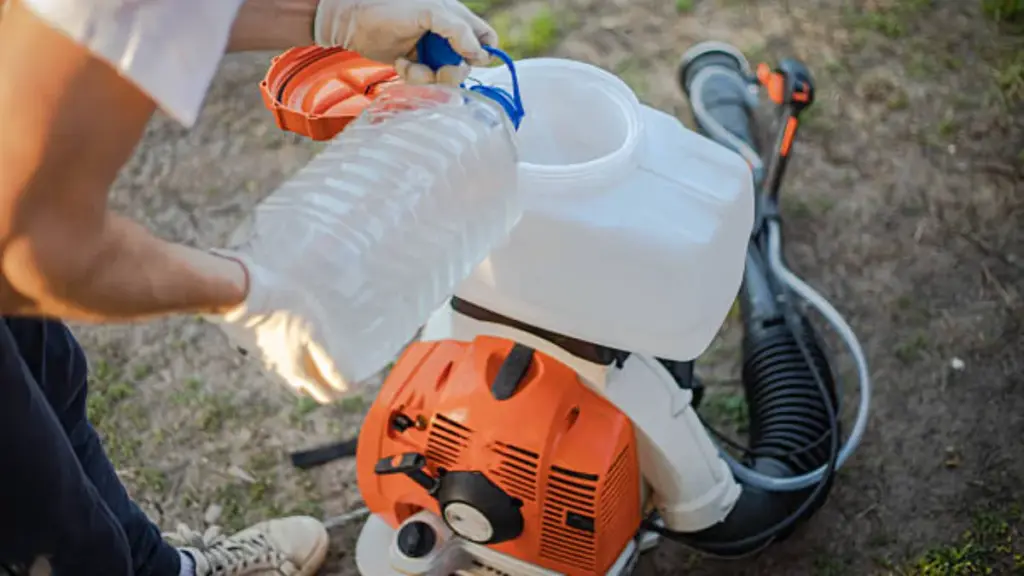
Across both manual and powered models, the most frequent user complaints center on component failures that compromise pressure integrity, such as leaking seals, faulty connections, and worn-out pumps.
| Complaint Category | Primary Cause | Impact on User |
|---|---|---|
| Leaking Components | Degraded or poorly fitted seals on the main lid, pump assembly, and hose connections. | Wasted chemicals, potential skin exposure, and loss of pressure. |
| Pressure Failure | Worn pump seals (especially piston seals) or malfunctioning check valves. | Uneven application, reduced efficiency, and constant re-pumping (manual models). |
| Clogged Nozzles | Inadequate internal filtering allows sediment or undissolved chemicals to block the tip. | Frequent work stoppages for cleaning, inconsistent spray patterns, and poor coverage. |
| Power System Failure | Subpar battery capacity or premature motor burnout in electric models. | Inability to complete large jobs on a single charge; unit becomes inoperable. |
Leaking Tanks and Connections
The most persistent issue found in user feedback is leaking from tank seals and hose connections. These failures are not minor drips; they represent a loss of expensive chemicals, create a safety hazard, and undermine the unit’s ability to hold pressure. Failures often materialize within the first season of use, pointing to low-quality seal materials or poor design tolerances. The primary failure points are consistently the seals around the main lid and the pump assembly, along with hose fittings that loosen or crack under normal operational pressure.
Failure to Maintain Pressure
A sprayer that cannot build or hold pressure is effectively useless. This problem is a major source of user frustration because it directly cripples the machine’s core function, leading to inconsistent application and wasted time. For manual models, it means constant, exhausting re-pumping. The technical cause is almost always traced back to worn-out internal pump seals or a faulty check valve that fails to create a proper vacuum. This issue directly impacts work efficiency and the quality of chemical application.
Clogged Nozzles and Inconsistent Spray Patterns
Users frequently report nozzles that clog easily, forcing them to stop work repeatedly for cleaning. This problem stems from inadequate internal filtration that allows undissolved chemical powders or small debris from the tank to reach the nozzle tip. The outcome is a sputtering, inconsistent spray pattern or a complete blockage. A poorly designed filtration system turns a simple spraying job into a frustrating cycle of stop-and-go maintenance, compromising the quality and uniformity of the application.
Poor Battery Life and Motor Reliability
For battery-powered units, performance and reliability are defined by the power system. A common complaint is that advertised battery life falls short in real-world conditions, forcing operators to recharge in the middle of a large job. Even more significant are reports of premature motor failure, especially in lower-priced models. An unreliable motor or battery renders the sprayer’s advanced features irrelevant and ultimately leads to equipment downtime and replacement costs.
How We Conduct Our Professional Backpack Sprayer Reviews
Our review process prioritizes empirical, field-based testing to validate a sprayer’s real-world durability, pressure consistency, and ergonomic design under professional workloads.
Field Performance and Operational Testing
Our reviews start with real-world operational tests to measure how each sprayer performs across different terrains and with various types of vegetation. This field-based approach allows us to evaluate practical handling, stabilité, and overall effectiveness in professional landscaping and agricultural settings. We assess performance on both flat and sloped ground to test balance and operator comfort. Sprayers are tested with different liquid consistencies to check for clogging and flow issues, and the evaluation includes usability in tight spaces and around obstacles.
Pressure Consistency and Spray Pattern Uniformity
We analyze the sprayer’s ability to maintain consistent pressure from a full tank to nearly empty. Uniform spray patterns are essential for effective coverage, so we use standardized methods to evaluate droplet distribution and reach for different nozzle types. Pressure is monitored throughout the discharge cycle to identify any significant drops that affect application quality. We also test multiple included nozzles to compare their performance and spray pattern evenness for specific tasks.
Durability and Chemical Compatibility
To simulate long-term professional use, sprayers undergo extended durability assessments. We test their components against common chemicals to ensure the materials, seals, and hoses resist degradation and maintain integrity over time. Critical components like the pump, wand, and seals are inspected after prolonged use simulations. We also test material resistance to a standard set of fertilizers, pesticides, and herbicides, while the frame and harness are checked for structural wear and tear.
Calibration Accuracy and Ergonomic Design
Precision is key in professional applications, so we verify the accuracy of each sprayer’s calibration settings. En même temps, we conduct a thorough ergonomic analysis to rate user comfort, weight distribution, and ease of operation during extended periods of work. We measure output volume to confirm it matches the selected calibration markings. The harness system, back padding, and strap adjustments are evaluated for operator comfort, and we assess how easy it is to fill, clean, and switch out nozzles and other components.
Why NEWTOP Consistently Earns High Ratings From Global Dealers
Global dealers favor NEWTOP sprayers because their petrol-powered models deliver a practical balance of reliable engine performance, durable construction, and ergonomic comfort for professional use.
Reliable Engine Performance
Dealers prioritize equipment that performs without constant adjustments or failures. The NEWTOP NTS768 sprayer uses a 26CC petrol engine engineered for stable operation during long work sessions. This consistent power output ensures the pump maintains steady pressure, which is critical for uniform application in agricultural and pest control settings. An unstable spray pattern wastes chemicals and leads to poor results, so the engine’s reliability is a key factor driving dealer confidence.
Durable and Corrosion-Resistant Build
Professional equipment needs to withstand rough handling and harsh chemicals. NEWTOP sprayers are built with a rugged frame that protects the engine and pump system from job site impacts. The tank is constructed from materials specifically chosen to resist chemical corrosion, extending the sprayer’s service life significantly. This focus on durability reduces warranty claims and service issues, making it a more profitable and reliable product line for dealers to carry.
Ergonomic Design for Operator Comfort
Operator fatigue directly impacts productivity. The NTS768 features an ergonomic design with a backpack harness that distributes weight evenly across the operator’s back and shoulders, reducing physical strain. Its compact structure also improves maneuverability in dense foliage or tight spaces. When users can work comfortably for longer periods, they complete jobs faster and more effectively, a tangible benefit that dealers can highlight to their professional customers.
Efficient Pumping System and Coverage
Performance is measured by coverage and efficiency. The NTS768’s high-efficiency pump atomizes liquids into a fine, consistent mist, ensuring thorough plant coverage while minimizing chemical waste. With a horizontal reach of up to 15 mètres, operators can treat large areas without constantly repositioning. The 25-liter tank offers a good balance between capacity and weight, allowing for substantial work between refills without being overly burdensome. This combination of reach, efficacité, and capacity makes it a highly practical tool for large-scale tasks.
Conclusion
Choosing the right backpack sprayer requires looking beyond star ratings to analyze performance specs and common failure points. By comparing manual, batterie, and petrol models against your specific application, you can find a reliable tool that fits your budget and workflow. This technical approach helps you invest in equipment built for longevity and consistent performance.
If your current equipment is underperforming, our team can provide a full catalog of NEWTOP sprayers designed to address these issues. Contact us to discuss your needs or to request a sample for evaluation.
Foire aux questions
Which backpack sprayer has the best reviews for 2026?
The Chapin ProSeries 97900B consistently earns top reviews for its advanced lithium-ion performance and ergonomic harness. Its digital pressure control system offers precise application, minimizing waste and user fatigue. Users praise its durability and self-cleaning mechanism, making it a leading choice for both professionals and serious homeowners seeking reliability and comfort.
Are battery backpack sprayer reviews reliable?
Oui, battery backpack sprayer reviews are reliable when sourced correctly. Professional reviews excel at benchmarking performance metrics like battery life and pressure consistency. User reviews on verified purchase platforms provide crucial insights into long-term durability and real-world comfort. Cross-referencing both types gives the most accurate assessment of a sprayer’s quality and value.
What is the most common failure in backpack sprayers?
The most common failure is the internal pump seal or piston cup, which degrades from chemical exposure and wear. This leads to a loss of pressure and leaking. For battery models, pump motor burnout and switch failures are also frequent issues. Regular cleaning and using manufacturer-approved seal conditioners can significantly extend the sprayer’s lifespan.
How do professional reviews compare to user reviews?
Professional reviews focus on objective performance data, using controlled tests for pressure accuracy, battery runtime, and nozzle spray patterns. User reviews offer subjective, real-world feedback on long-term durability, ergonomic comfort, and customer service experiences. Professionals test the specs, while users test the sprayer’s endurance and practicality over time.
Which brand has the best rated backpack sprayer for farms?
Field King is consistently rated as the best brand for farm use, specifically with its Max-Agri 190515 series. These models feature heavy-duty seals resistant to aggressive agricultural chemicals and a robust internal pump designed for high-volume daily use. Their ergonomic steel frames and 5-gallon tank capacity are optimized for covering large acreage efficiently.
Are manual backpack sprayers still worth buying?
Oui, manual backpack sprayers are still worth buying for their reliability and cost-effectiveness. They are lighter, have fewer failure points than battery models, and require no charging. For smaller properties, spot treatments, or users on a tight budget, a high-quality manual sprayer offers excellent value and control without the complexity of powered systems.
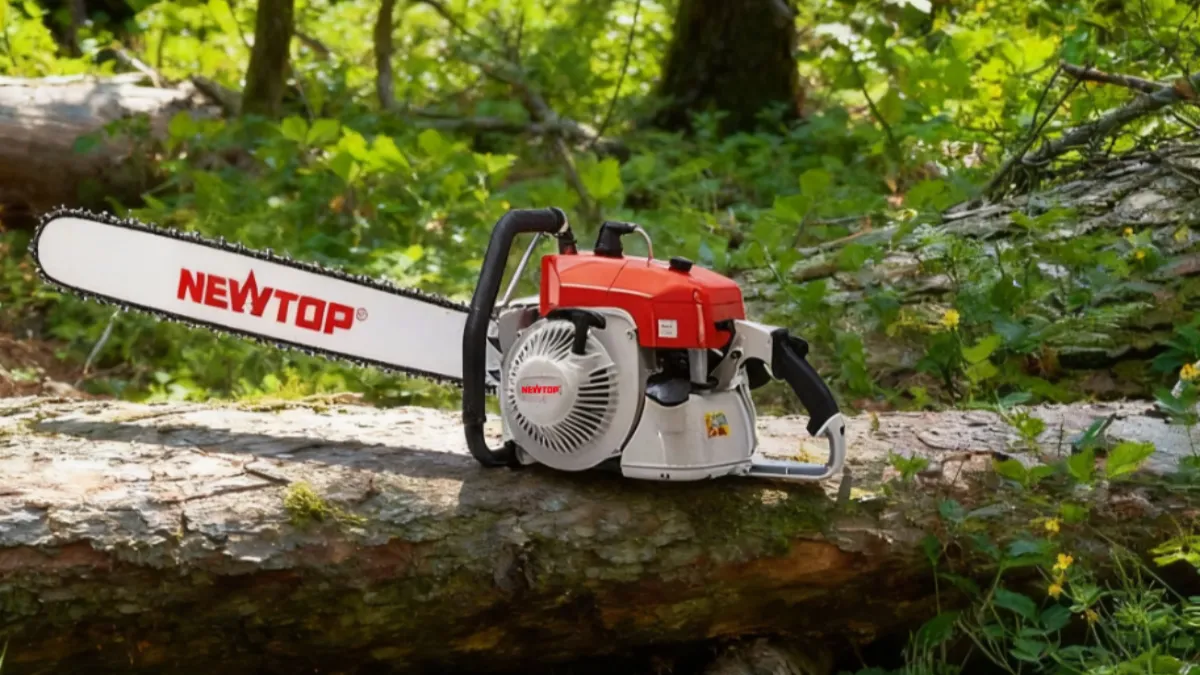
Top handle chainsaws have the main grip on top of the body for one-handed aerial use, while rear handle chainsaws feature a rear grip behind the engine for stable two-handed ground operation. Professional arborists, bûcherons, and landscapers often face the choice between these when tackling demanding tree work.
As an specialist in outdoor power equipment, we will break down the fundamental differences, pros and cons, and safety considerations to help you make an informed decision for your fleet or business.
Qu'est-ce qu'une tronçonneuse à poignée supérieure?
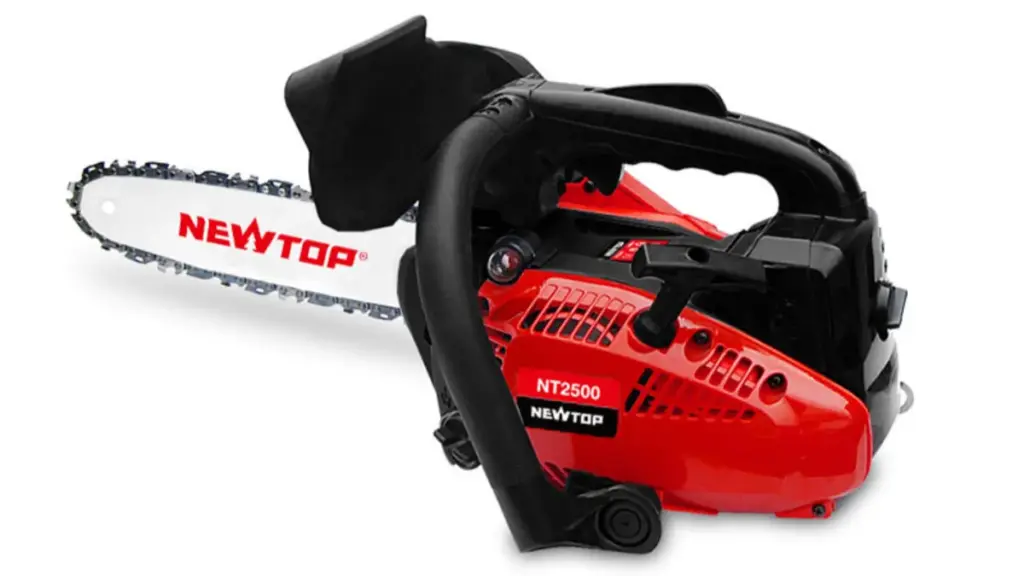
A top handle chainsaw is an engineered tool for professional arborists, prioritizing a compact, balanced design for precision cutting in elevated and confined spaces.
Designed for Arborists and Aerial Work
A top handle chainsaw is a specialized tool engineered almost exclusively for professional arborists who work at height. Its design prioritizes control and maneuverability when cutting in elevated or awkward positions, such as within the canopy of a tree. This focus makes it the standard for off-ground tasks where a traditional saw would be unsafe or unwieldy.
Typical models weigh around 6.5 à 10 pounds and have guide bar lengths of 10 à 16 pouces, making them smaller and more portable than standard saws. These dimensions prioritize agility over bulk.
Caractéristiques clés: Compact, Léger, and Balanced
The defining features of a top handle chainsaw are its small size and reduced weight. This construction minimizes operator fatigue during prolonged use in trees and allows for precise cuts in confined spaces where a larger saw would be impractical. The excellent balance is critical for maintaining control when making cuts from unstable positions.
- The compact form factor makes it easier to navigate through dense branches.
- Excellent balance enables greater control, which is critical when making cuts from unstable positions.
- Many models in 2026 are battery-powered, further enhancing their lightweight nature and reducing emissions.
Primary Applications
This type of chainsaw is not built for felling large trees. It excels at tasks that require precision and agility, like pruning limbs, removing deadwood, and sectioning branches from a climbing position. Its controlled power is suitable for making accurate cuts without damaging the surrounding tree structure, preserving tree health.
- Ideal for shaping tree canopies and performing surgical cuts to maintain tree health.
- Allows for one-handed use in specific situations by certified professionals, freeing the other hand for stability.
- Its controlled power is suitable for making accurate cuts without damaging the surrounding tree structure.
What is a Rear Handle Chainsaw?
Rear-handle chainsaws are the industry standard for ground-level cutting, engineered with a two-handle configuration to maximize leverage, contrôle, and safety for heavy-duty tasks.
Core Design and Operation
A rear handle chainsaw is a versatile, full-sized chainsaw built for general and heavy-duty use, with the main handle positioned behind the engine and a front handle for secure two-handed operation. The design features rearward weight distribution, larger engine housing, protective hand guards, and an extended guide bar for superior leverage and power in demanding cuts.
Common specs include weights from 11 à 15 pounds for gas models, with guide bar lengths ranging from 14 à 24 inches or more depending on engine size (par ex., 36-60cc). This makes them robust but less compact.
Common Applications
Rear-handle chainsaws are built for ground-level, heavy-duty applications. They are the standard tool for homeowners with large properties and professionals who perform substantial cutting tasks in open areas.
- Felling large trees.
- Cutting logs and processing timber.
- Splitting firewood.
- General property maintenance and storm cleanup.
Gain a Competitive Edge with Reliable Machinery
Pros and Cons of Top Handle Chainsaws
Top handle chainsaws provide unmatched control for professional arborists working at height, but this specialized design introduces safety risks and functional limits for ground-based work.
Advantages for Professional Aerial Work
Top handle chainsaws are engineered specifically for professional arborists who need a compact and maneuverable tool for cutting in elevated or confined spaces. The design prioritizes balance and control, making it the standard for any work that requires climbing or operating from an aerial platform.
- The compact and lightweight build reduces operator fatigue during long periods of aerial tree work.
- Superior maneuverability and balance make it easier to make precise cuts in awkward positions, such as within a tree’s canopy.
- The design allows for one-handed use by certified professionals, freeing up the other hand for stability while climbing.
Limitations and Disadvantages
While ideal for specialized tasks, top handle chainsaws have significant drawbacks that limit their general use. Their unique construction makes them less suitable and potentially more dangerous for any type of ground-level cutting, a task better suited for rear handle models.
- Their premium price reflects the specialized engineering and safety certifications required for professional-grade aerial equipment.
- They are not designed for felling or bucking on the ground, where rear handle saws provide better leverage and operational safety.
- The close hand placement increases the risk of serious injury from kickback, requiring specialized training for safe operation.
Pros and Cons of Rear Handle Chainsaws
Rear handle chainsaws provide superior stability and versatility for ground-based cutting, making them the standard for most users, though their size and weight limit maneuverability in tight spaces.
Advantages
- Power Availability: Accommodates larger engines (40-60cc) and longer guide bars (jusqu'à 24+ pouces) for efficient thick timber cuts in logging.
- Stability Control: Two-handed grips with rear balance deliver leverage to minimize kickback in felling and bucking.
- Versatile Use: Handles firewood processing, storm cleanup, hedge trimming, and property maintenance reliably.
- Ergonomic Comfort: Reduces arm fatigue during extended ground-based sessions for pros and beginners.
- Durability Focus: Robust construction withstands daily forestry and landscaping rigors.
Disadvantages
- Hight Fatigue: 11-15+ pound build accelerates exhaustion in prolonged tasks.
- Bulk Limitations: Hinders tight-space agility like climbing or dense pruning.
- Vibration Levels: Higher engine power increases hand-arm vibration risks.
- Portability Issues: Larger profile complicates transport and storage.
- Overhead Challenges: Less suited for aerial work due to handling demands.
Key Differences Between Top Handle vs Rear Handle
To help professionals compare the technical specifications and functional applications of these tools, we have summarized the key differences below:
| Attribut | Tronçonneuse à poignée supérieure | Tronçonneuse à poignée arrière |
|---|---|---|
| Handle Position | Top-mounted grip for compact aerial control | Rear grip behind engine with front handle for two hands |
| Weight Range | Léger 8-10 livres, reduces fatigue in heights | Heavier 11-15+ livres, stable for ground use |
| Guide Bar Length | Shorter 10-16 inches for precision | Longer 14-24+ inches for thick cuts |
| Engine Power | Smaller 25-45cc, agile for pruning | Larger 40-60cc+, powerful for felling |
| Maneuverability | Excellent in tight spaces and climbing | Better stability on ground, bulkier overhead |
| Kickback Risk | Higher due to lighter weight and close grip | Lower with leverage and safety guards |
| Best User Skill | Advanced professionals/arborists only | Beginners to professionals |
| Primary Applications | Tree climbing, enterrement, aerial pruning | Abattage, bucking, firewood, cleanup |
| Portabilité | Compact, easy to carry and store | Bulkier, requires more storage space |
| Price Range | Mid-range, often specialized pricing | Varies widely based on engine power |
Selection Guide: Top Handle vs Rear Handle – Which One is Right for You?
| Selection Criteria | Choose a Top Handle Chainsaws If… | Choose a Rear Handle Chainsaws If… |
|---|---|---|
| Primary Work Environment | You are a certified arborist working at height (climbing, aerial lift). | You primarily work on the ground. |
| Key Task | You need to make precise cuts in tight, awkward positions within a tree canopy. | Your tasks include felling, grumes de tronçonnage, cutting firewood, or storm cleanup. |
| Profil utilisateur | You are a trained professional with certification for elevated work. | You are a homeowner, general forestry operator, or beginner. |
| Control Priority | Maneuverability and compactness are critical for specialized cuts. | Maximum stability, leverage, and two-handed control are required. |
For the Professional Arborist and In-Tree Work
Top-handle chainsaws are specialized tools engineered for certified arborists who work at height. Their compact, lightweight build and integrated grip provide the maneuverability needed to operate inside a tree’s canopy. This design is the industry standard for pruning, enterrement, and making precise cuts in elevated and confined spaces where a larger saw is impractical.
- Choose a top handle if your primary work involves climbing or operating from an aerial lift.
- The design is optimized for making precise cuts in awkward positions where a conventional two-handed saw won’t fit.
- Safe operation of these tools demands proper training and certification, as one-handed use increases operational risk.
For Ground-Based Cutting and General Use
Rear-handle chainsaws are the definitive tool for nearly all ground-level cutting. The design provides superior stability, leverage, and control, making it the correct choice for felling trees, bucking logs into sections, et brosse de nettoyage. This configuration is the standard for homeowners, gestionnaires immobiliers, and forestry operators working on solid ground.
- Choose a rear handle for tasks like cutting firewood, managing storm cleanup, and felling small to medium trees.
- The two-handed grip offers better control, improves safety, and reduces operator fatigue during prolonged use.
- This design is inherently more stable, making it the safer and more effective option for any user on the ground.
Matching the Tool to Your Primary Application
The right choice depends entirely on your work environment, not on which saw is universally “better.” A professional arborist will own both types—a top handle for climbing and a rear handle for groundwork. For almost everyone else, the rear-handle saw is the more versatile and appropriate tool for common cutting tasks.
- Assess your most common tasks: Are you consistently working in a tree or on the ground?
- Never use a top-handle saw for ground-level felling. Its design is not optimized for the leverage or safety protocols required for that work.
- For B2B buyers and dealers, offering both models allows you to serve two distinct markets: certified professionals and general consumers.
Why Choose NEWTOP Chainsaws for Your Business?
NEWTOP provides B2B partners with a scalable manufacturing solution for reliable, mid-range chainsaws, combining world-class components with flexible OEM support to deliver a strong value proposition in global markets.
NEWTOP chainsaws deliver professional-grade performance in both top handle and rear handle configurations, backed by over 20 years of expertise in gas-powered garden tools. Our models feature high-precision CNC machining, Walbro carburetors, NGK spark plugs, and Oregon chains for exceptional durability exceeding 200 heures.
With CE, GS, EPA, and EURO II certifications, NEWTOP ensures compliance for global markets like Africa, l'Amérique latine, and Southeast Asia. Competitive pricing, customizable OEM/ODM options, and reliable supply chains make us the top choice for distributors seeking chainsaw suppliers with 500,000+ annual capacity.
Grow Strong with NEWTOP—Your Trustworthy Garden Tools Partner. Explore our range at newtoptools.com. For more information, contact us today!
Conclusion
Choosing between a top handle and a rear handle chainsaw directly impacts operator safety and job performance. A top handle saw is a specialized tool for trained arborists working at height, while a rear handle model provides the stability needed for groundwork. Using the correct saw for the application prevents accidents and ensures efficient, clean cuts.
Evaluate your team’s typical work environment to ensure your equipment fleet is properly outfitted. To source professional-grade chainsaws designed for durability and performance, explore the NEWTOP product catalog for your business needs.
Foire aux questions
Why do people use top handle chainsaws?
Top handle chainsaws are used for their compact size and maneuverability. They allow tree climbers to make precise cuts in confined spaces within a tree canopy where a traditional saw would be too cumbersome.
Can you use a top handle chainsaw on the ground?
Not recommended—lacking rear leverage, they reduce stability and increase kickback risks for ground tasks; reserve for aerial work only.
Are top handle chainsaws dangerous?
Oui, they are considered more dangerous than rear handle saws because of the narrow grip. This design makes kickback much harder to control. They should only be used by professionals with proper arborist training.
What is the advantage of a rear handle chainsaw?
The main advantages are control, leverage, et la sécurité. The spacing between the handles allows the operator to manage the saw’s power more effectively and provides a safer distance between the chain and the operator’s body.
Is a top handle saw better for climbing?
Oui. Its weight distribution and compact shape are specifically designed for climbing. It can be easily attached to a harness and used in the awkward angles often required when working in a tree.
Which handle style is best for beginners?
A rear handle chainsaw is the only choice for beginners. It provides the necessary stability and safety features to learn proper cutting techniques safely.
Les arboriculteurs et les spécialistes de l'entretien des arbres ont besoin d'outils qui privilégient l'équilibre et le poids.. Lorsque vous travaillez en hauteur dans la canopée des arbres, la conception de votre équipement affecte directement votre sécurité et la rapidité avec laquelle vous pouvez terminer un travail. Dans 2026, le marché offre diverses options allant des moteurs à essence traditionnels aux nouveaux modèles à batterie au lithium.
Dans ce guide, nous expliquons le fonctionnement des tronçonneuses à poignée supérieure, comment ils se comparent aux modèles à poignée arrière, quelles spécifications techniques comptent vraiment, et comment les professionnels choisissent le bon modèle pour les opérations d'escalade. Si vous recherchez pour la distribution, Marque OEM, ou des achats à grande échelle, ce guide est rédigé en pensant aux décideurs.
Qu'est-ce qu'une tronçonneuse à poignée supérieure?
Une tronçonneuse à poignée supérieure est un outil spécialement conçu pour les arboriculteurs professionnels, conçu avec un compact, conception légère qui donne la priorité à l'équilibre et au contrôle pour une coupe précise dans des espaces élevés ou confinés.
Une tronçonneuse à poignée supérieure est une tronçonneuse compacte conçue avec la poignée principale positionnée au-dessus du carter moteur plutôt qu'à l'arrière.. Cette configuration permet aux arboriculteurs d'utiliser la scie dans des espaces confinés, en particulier lorsqu'elle est suspendue dans un harnais d'arbre.. Ces tronçonneuses sont couramment utilisées pour l'élagage, réduction de la couronne, démontage sectionnel, et enlèvement de branches. En milieu professionnel, elles sont considérées comme des tronçonneuses grimpantes, souvent associé à des systèmes de harnais et des longes pour plus de sécurité.
Applications principales dans le soin professionnel des arbres
Ces scies sont un équipement essentiel pour les professionnels certifiés effectuant des tâches nécessitant une coupe chirurgicale en hauteur.. Leur conception compacte permet aux arboriculteurs de naviguer dans des structures de branches denses où un plus grand, une scie à poignée arrière serait dangereuse, lourd, ou peu pratique à positionner correctement.
- Idéal pour enlever le bois mort, éclaircir la cime d'un arbre, et façonner les branches.
- Permet des coupes contrôlées tout en étant sécurisé par une corde et un harnais ou en opérant à partir d'une plate-forme élévatrice.
- Le principal outil pour l’entretien des arbres en milieu urbain et résidentiel où la précision est essentielle.
L’exigence de l’utilisateur professionnel
Parce qu'ils sont destinés à un usage intensif, ils nécessitent des compétences et une formation avancées. Dans de nombreuses régions, ils sont recommandés uniquement aux arboriculteurs certifiés. Un utilisateur non formé essayant d'utiliser l'une de ces tronçonneuses, surtout sur le terrain, crée une situation à haut risque. La demande croissante pour ces tronçonneuses est directement motivée par le besoin de l’industrie professionnelle de l’entretien des arbres d’équipements efficaces et spécialisés qui fonctionnent dans des environnements aériens difficiles..
Avantages et inconvénients des tronçonneuses à poignée
Le choix entre une tronçonneuse à poignée supérieure ou arrière est un compromis direct entre la maniabilité aérienne pour les travaux d'arboriculteur spécialisés et la puissance brute avec la stabilité pour l'abattage et le tronçonnage au niveau du sol..
Tronçonneuses à poignée supérieure: Avantages et inconvénients
Les tronçonneuses à poignée supérieure sont des outils spécialisés conçus pour les arboriculteurs professionnels qui ont besoin d'une scie compacte et maniable pour les travaux effectués en hauteur.. Leurs avantages dans les situations aériennes sont évidents, mais ces avantages s'accompagnent de limites pour toutes les applications au niveau du sol.
- Pro: Excellente maniabilité et équilibre pour la coupe et l'élagage des arbres, permettant un contrôle précis dans les espaces restreints ou difficiles.
- Pro: La construction légère réduit la fatigue de l'opérateur lors de travaux aériens prolongés.
- Escroquer: Généralement moins puissant que leurs homologues à poignée arrière, ce qui les rend impropres à l'abattage ou au tronçonnage intensif.
- Escroquer: Leur conception nécessite des compétences de manipulation avancées et s'adresse presque exclusivement à des professionnels formés travaillant au sol..
Tronçonneuses à poignée arrière: Avantages et inconvénients
Les tronçonneuses à poignée arrière constituent la norme de l'industrie pour la plupart des tâches de coupe au sol.. Ils fournissent une puissance supérieure, stabilité, et sécurité pour un large éventail d'utilisateurs, des propriétaires aux professionnels forestiers, mais ils deviennent encombrants et dangereux pour le travail aérien.
- Pro: Offre une plus grande puissance et un plus grand effet de levier, ce qui en fait le choix idéal pour abattre des arbres, grumes de tronçonnage, et brosse de nettoyage.
- Pro: La poignée à deux mains offre une meilleure stabilité et un meilleur contrôle, ce qui en fait une option plus sûre et plus accessible pour les débutants.
- Escroquer: Sa conception plus volumineuse et plus lourde rend son utilisation difficile et souvent dangereuse pour l'escalade ou l'élagage détaillé dans la canopée d'un arbre..
- Escroquer: Moins agile par rapport aux modèles haut de gamme, ce qui peut être un inconvénient lors de la coupe dans des zones restreintes au niveau du sol.
Construisez votre gamme de tronçonneuses professionnelles avec un partenaire OEM fiable
Spécifications techniques professionnelles: Poids, Déplacement, et équilibre
Lors de l’évaluation des tronçonneuses à poignée supérieure de qualité professionnelle pour 2026, trois spécifications déterminent les performances réelles: poids, cylindrée du moteur, et l'équilibre.
| Spécification technique | Gamme Marché Professionnel (2026) | Avantage principal |
|---|---|---|
| Cylindrée du moteur | 25cm3 – 40 cm3 (30cc – 35cc grand public) | Sortie de couple équilibrée adaptée à l'élagage contrôlé et à la coupe de branches de bois dur. |
| Puissance de sortie | 1.0 kW – 1.8 kW | Offre des performances de coupe efficaces tout en maintenant l’économie de carburant et la réactivité de l’accélérateur. |
| Poids sec (Sans barre & Chaîne) | 2.6 kilos – 3.8 kilos | Réduit la fatigue de l'opérateur et améliore la maniabilité dans les environnements confinés.. |
| Mesure de performance clé | Rapport puissance/poids élevé | Critique pour garder le contrôle, précision, et productivité lors d'opérations élevées. |
Cylindrée et puissance du moteur
La plupart des tronçonneuses à poignée supérieure de qualité professionnelle fonctionnent dans une plage de cylindrée de 25 cc à 40 cc, avec des modèles de 30 à 35 cc représentant le segment principal pour les applications arboricoles. Cette gamme offre l'équilibre optimal entre couple et poids, assurer la propreté, coupes contrôlées sans encombrement inutile du moteur. La puissance de sortie se situe généralement entre 1.0 kW et 1.8 kW, en fonction du réglage et de la conception du moteur. Cette configuration offre une force de coupe fiable pour les branches de bois dur tout en conservant l'efficacité énergétique et la réactivité de l'accélérateur, essentielles pour les opérations prolongées dans les arbres..
Rapport puissance/poids
Pour les arboriculteurs professionnels, le rapport puissance/poids est la mesure de performance déterminante. Une scie grimpante doit fournir un couple suffisant tout en restant suffisamment légère pour une maniabilité contrôlée dans les environnements de canopée.. Les modèles à poignée supérieure de haute qualité pèsent généralement entre 2.6 kg et 3.8 kilos (poids sec), trouver l’équilibre entre durabilité et réduction de la fatigue de l’opérateur. Un rapport supérieur améliore la précision de coupe lors des tâches complexes d'élagage et de montage, contribuant directement à la productivité et à la sécurité à long terme des opérateurs.
Équilibre ergonomique et principales caractéristiques
Au-delà des spécifications principales du moteur, la conception ergonomique détermine la convivialité réelle d’une scie. Les scies professionnelles modernes intègrent des systèmes qui assistent l'opérateur et réduisent les temps d'arrêt. La technologie anti-vibration avancée minimise la tension exercée sur les mains et les bras de l'arboriculteur, ce qui est essentiel pour une utilisation toute la journée. Des fonctionnalités telles que le démarrage assisté par ressort sont essentielles pour redémarrer la scie en toute sécurité à mi-montée. De même, les systèmes de filtration d'air centrifuges éjectent la poussière et les débris avant qu'ils n'atteignent le filtre, prolongeant considérablement les intervalles d'entretien et maintenant le moteur en marche à des performances optimales.
Normes de sécurité pour les opérations dans les arbres: Freins et longes
Le fonctionnement sûr d'une tronçonneuse dans les arbres dépend d'un système strict de conformité réglementaire, protocoles de liaison redondants, et contrôles obligatoires des équipements avant utilisation.
Conformité réglementaire et normes de l'industrie
Les opérations de tronçonneuse dans les arbres suivent des normes industrielles strictes comme ANSI Z133, qui établit la référence pour un entretien sûr des arbres. Les organismes de réglementation tels que l'OSHA appliquent ces directives, exiger une formation documentée des travailleurs, protocoles d'équipement clairs, et une gestion proactive des risques pour minimiser les dangers. Ces normes s'appliquent également aux tronçonneuses à essence et à batterie., car les deux présentent des risques de coupure identiques lors de travaux en hauteur.
Systèmes d'attache et de longe continus
Une règle fondamentale pour tout arboriculteur est de rester continuellement connecté tout au long d’une opération.. Ceci est réalisé grâce à un système à double redondance. Le travailleur utilise une ligne d'escalade principale comme support principal et une longe secondaire pour un positionnement de travail précis et une sécurité de secours.. Cette configuration garantit la sécurité de l'opérateur depuis le moment où il quitte le sol jusqu'à son retour., leur permettant d'établir une position stable pour effectuer des coupes contrôlées.
Fonctionnement et inspection des freins de tronçonneuse
Le frein de chaîne de la tronçonneuse est un dispositif de sécurité non négociable conçu pour arrêter la chaîne instantanément lors d'un rebond. Une inspection et des tests réguliers de ce mécanisme sont obligatoires avant chaque utilisation. Un opérateur doit confirmer que le frein de chaîne s'enclenche correctement lorsqu'il est activé à la main et nettoyer régulièrement la bande de frein et le couvercle d'embrayage pour vérifier l'usure ou les dommages.. Un frein fonctionnel, associé à des techniques de manipulation correctes, est une couche essentielle de protection des opérateurs.
Évaluation des risques avant l'opération et vérifications de l'équipement
La gestion proactive des risques est essentielle à la sécurité dans les arbres. Avant de grimper, chaque arboriculteur doit procéder à une évaluation approfondie des risques liés à l'arbre et au chantier environnant., identifier les risques comme la faiblesse des membres, lignes électriques, ou obstacles au sol. Une inspection complète de tout l’équipement d’escalade et de coupe, y compris les cordes, harnais, longes, et la tronçonneuse elle-même – est nécessaire pour vérifier les défauts. L'équipe doit également établir un plan de travail clair et un protocole d'urgence avant le début des travaux..
Poignée supérieure vs. Tronçonneuse à poignée arrière
Le choix entre une tronçonneuse à poignée supérieure et une tronçonneuse à poignée arrière est entièrement déterminé par l'environnement de travail.; Les scies à poignée supérieure sont spécialisées pour les professionnels, opérations dans l'arborescence, tandis que les scies à poignée arrière sont conçues pour être stables, coupe au niveau du sol.
| Attribut | Tronçonneuse à poignée supérieure | Tronçonneuse à poignée arrière |
|---|---|---|
| Utilisateur principal | Arboriculteurs et arboriculteurs professionnels certifiés | Propriétaires, gestionnaires immobiliers, et les travailleurs forestiers |
| Environnement de travail | Élevé, dans l'arbre, ou depuis un élévateur aérien | Opérations au niveau du sol |
| Trait de conception de base | Compact, léger, et équilibré pour la maniabilité | Corps plus long avec poignées séparées pour plus de stabilité et de levier |
| Application typique | Taille, enterrement, et naviguer dans des cimes d'arbres serrées | Abattage d'arbres, grumes de tronçonnage, et transformation du bois de chauffage |
Conception et ergonomie pour des tâches spécifiques
La différence fondamentale réside dans leur disposition physique, optimisé pour deux environnements de travail distincts. Les scies à poignée supérieure sont compactes et équilibrées pour une maniabilité en hauteur, positions inconfortables. Les scies à poignée arrière sont conçues pour offrir un effet de levier et une stabilité au sol. Cette séparation des intentions de conception dicte la manière dont chaque outil fonctionne dans le rôle prévu..
- Les modèles à poignée supérieure intègrent la poignée directement au-dessus du corps de la scie, créant un centre de gravité idéal pour une utilisation à une main par un arboriculteur grimpeur.
- Les modèles à poignée arrière utilisent une conception à deux poignées séparées, donnant à l'opérateur un plus grand contrôle et une plate-forme stable pour abattre des arbres ou tronçonner des grumes.
Utilisateur prévu et application
Chaque type de scie cible un utilisateur différent. Les tronçonneuses à poignée supérieure sont des outils spécialisés exclusivement destinés aux professionnels certifiés de l'entretien des arbres travaillant en hauteur.. Les scies à poignée arrière s'adressent à un public plus large, des propriétaires aux bûcherons, qui effectuent des travaux au niveau du sol. L'industrie a clairement segmenté ces outils pour des contextes opérationnels spécifiques plutôt que de créer une solution universelle..
- Les scies à poignée supérieure sont la norme pour les arboriculteurs professionnels qui doivent tailler les branches tout en étant fixées dans un arbre..
- Les scies à poignée arrière conviennent à l'abattage, enterrement, et transformation du bois de chauffage sur un sol solide, ce qui en fait le choix des propriétaires fonciers et des travailleurs forestiers.
Pouvoir, Contrôle, et sécurité
Les scies à poignée arrière offrent généralement plus de levier pour la puissance de coupe et la stabilité, ce qui en fait un choix plus sûr pour les novices. Les scies à poignée supérieure offrent un rapport puissance/poids élevé mais présentent des risques de sécurité importants qui nécessitent une formation et une certification professionnelles.. La capacité de l’opérateur à gérer le rebond est directement liée à la configuration de la poignée de la scie..
- La poignée plus large des scies à poignée arrière offre un contrôle supérieur, ce qui aide à gérer le rebond lors de coupes puissantes.
- En raison de leur conception permettant une utilisation potentielle d'une seule main, les scies à poignée supérieure nécessitent le strict respect des protocoles de sécurité et ne sont pas recommandées pour les travaux préparatoires ou les utilisateurs inexpérimentés.
Comment sélectionner la bonne tronçonneuse à poignée supérieure?
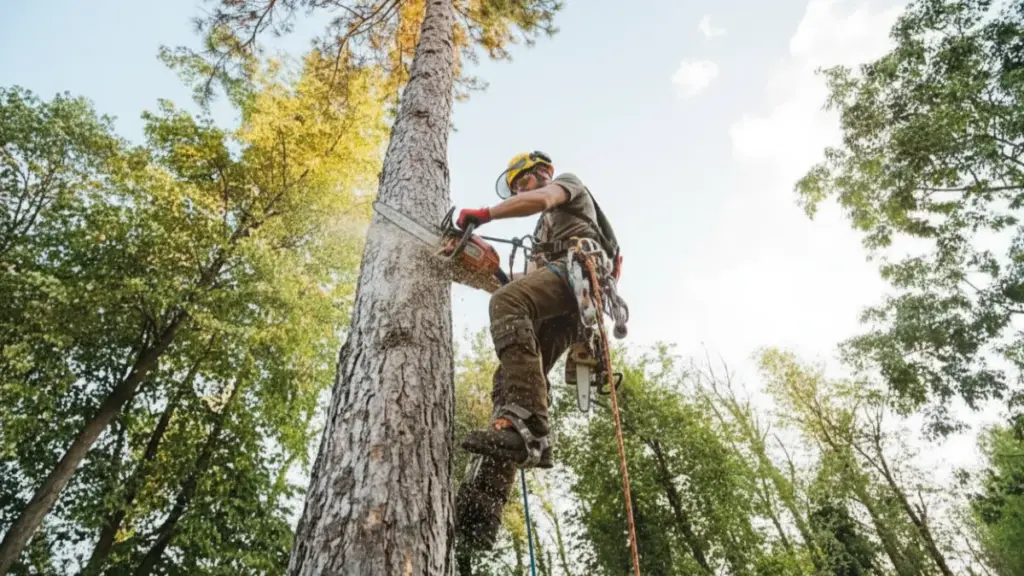
Choisir la bonne tronçonneuse à poignée supérieure nécessite de faire correspondre les certifications professionnelles et les exigences spécifiques du travail dans les arbres avec des caractéristiques techniques clés telles que le rapport puissance/poids., équilibre, et source d'alimentation.
La sélection du bon modèle nécessite d'aligner les spécifications techniques sur la demande du marché.
D'abord, identifiez vos utilisateurs cibles. Sont-ils des arboriculteurs certifiés, entreprises d'aménagement paysager, ou petits entrepreneurs? Les arboriculteurs professionnels exigent la durabilité et la fiabilité de la marque. Les acheteurs débutants peuvent donner la priorité au prix.
Deuxième, évaluer le climat et la densité du bois. Sur les marchés tropicaux (l'Amérique latine, Asie du Sud-Est, Afrique), les essences de bois dur nécessitent un couple de sortie plus élevé. Dans les climats plus froids, la fiabilité du démarrage à froid devient critique.
Troisième, prendre en compte le support après-vente et la disponibilité des pièces détachées. Composants tels que carburateurs (par ex., Systèmes de type Walbro), bougies d'allumage (NGK ou TORCHE), roulements (NSK), chaînes (Type d'Oregon), et les barres de guidage doivent être accessibles partout dans le monde.
Quatrième, évaluer la flexibilité des OEM. Jeux de couleurs personnalisés, conditionnement, et une image de marque localisée de manière significative accroître la compétitivité des distributeurs.
Scies à chaîne à poignée supérieure à essence ou à batterie Tableau de comparaison technique
| Catégorie technique | Tronçonneuse à gaz à poignée supérieure | Batterie (Li-ion) Tronçonneuse à poignée supérieure |
|---|---|---|
| Source d'alimentation | 2-Moteur à essence à course (25cc-40 cc) | Système de batterie lithium-ion (36V–60 V typique) |
| Puissance de sortie | 1.0 kW – 1.8 kW de puissance mécanique continue | Performances de coupe comparables en courtes rafales; couple délivré instantanément via un moteur sans balais |
| Poids (Sec) | 2.6 kilos – 3.8 kilos (sans barre & chaîne) | 2.3 kilos – 3.2 kilos (outil uniquement; la batterie ajoute 0,8 à 1,5 kg) |
| Durée d'exécution | Fonctionnement continu avec ravitaillement; adapté au travail sur le terrain toute la journée | 30–60 minutes par batterie en fonction de la charge; nécessite des piles de rechange pour un fonctionnement toute la journée |
| Livraison de couple | Fort couple à mi-régime; cohérent sous une coupe lourde de bois dur | Réponse instantanée au couple; très efficace pour la taille et les coupes légères à moyennes |
| Entretien | Nécessite un réglage du carburateur, contrôles des bougies d'allumage, mélange de carburant | Entretien mécanique minimal; gestion du cycle de vie de la batterie requise |
| Bruit & Émissions | Niveau de bruit plus élevé; soumis à la réglementation sur les émissions (EPA / EURO V) | Faible bruit, zéro émission directe; suitable for urban arboriculture |
| Positionnement sur le marché | Dominant en Afrique, l'Amérique latine, et marchés sensibles aux prix | Croissance rapide en Europe et sur les marchés urbains avec des politiques environnementales strictes |
| Profil utilisateur idéal | Entrepreneurs forestiers, arboriculteurs lourds, opérateurs de zones éloignées | Entreprises de services d’arbres urbains, zones à bruit limité, régions réglementées en matière d'environnement |
Modèles à poignée supérieure leaders du marché 2026
Le marché des arboriculteurs professionnels est traditionnellement dominé par des fabricants européens et japonais établis, connus pour leur précision technique et leur durabilité..
- STIHL – Reconnu pour ses scies arboricoles hautes performances dotées de systèmes anti-vibrations avancés et d’une forte fidélité à la marque.
- Husqvarna – Connu pour ses conceptions légères et son ergonomie raffinée adaptées à l’entretien professionnel des arbres.
- Écho – Propose des modèles professionnels compacts avec des performances fiables à deux temps et des prix compétitifs.
Pour distributeurs rechercher une alternative compétitive dans les catégories à fort volume, les modèles à poignée arrière offrent souvent un retour sur investissement plus élevé, couverture d'applications plus large, et une plus grande évolutivité du marché.
Solutions professionnelles pour tronçonneuses de NEWTOP
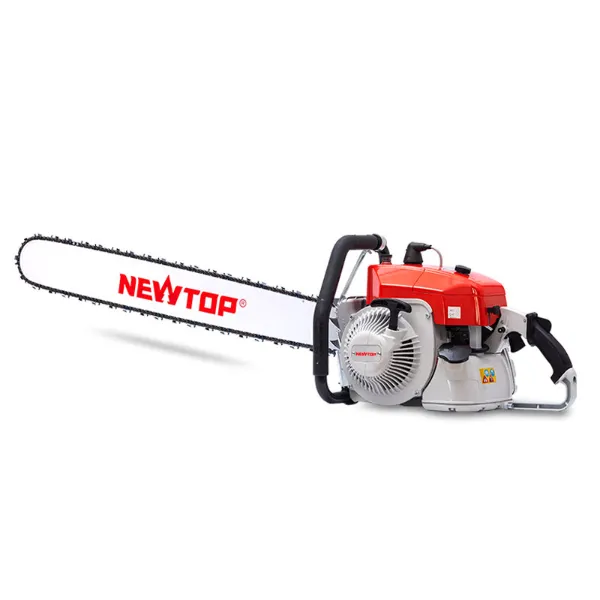
NT10500
Tronçonneuse professionnelle à poignée arrière à grande cylindrée conçue pour la foresterie et la coupe de gros bois.
Afficher les détails →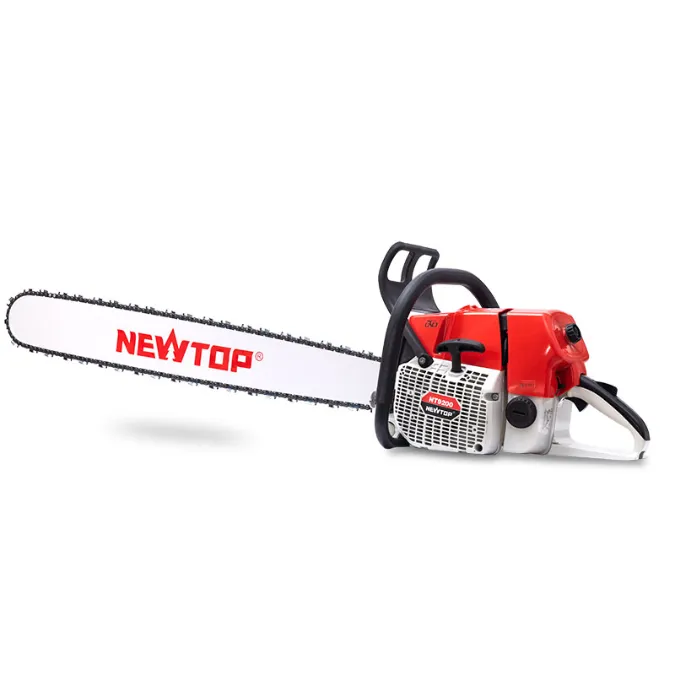
NT9200
Tronçonneuse à essence robuste conçue pour les opérations exigeantes sur le terrain et la coupe de bois dur.
Afficher les détails →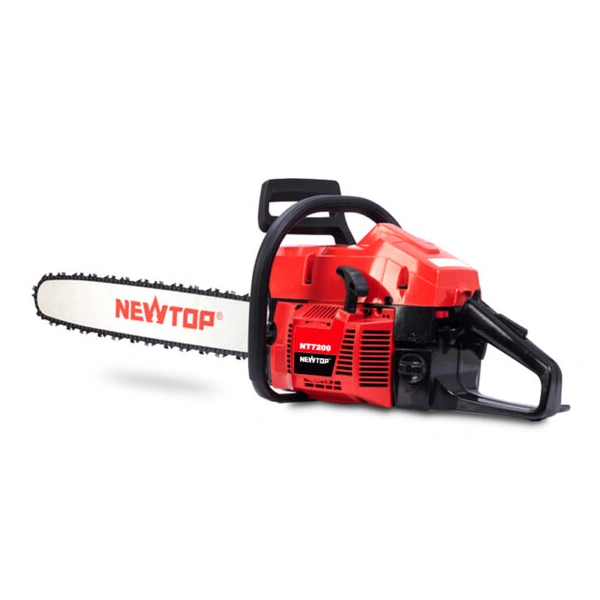
NT7200
Équilibre idéal entre puissance et poids pour les travaux paysagers et forestiers de moyenne portée.
Afficher les détails →
NT5800
Tronçonneuse polyvalente de milieu de gamme adaptée aux applications agricoles et professionnelles générales.
Afficher les détails →
NT3200
Tronçonneuse compacte à poignée arrière idéale pour l'aménagement paysager et l'entretien légers.
Afficher les détails →
NTCS401Li
Tronçonneuse portative à batterie au lithium offrant un fonctionnement propre et un entretien minimal.
Afficher les détails →Prêt à travailler avec le fabricant d'équipements électriques extérieurs NEWTOP?
La sélection d'un partenaire manufacturier nécessite une évaluation directe de son intégration verticale, qualité de la chaîne d'approvisionnement, et la flexibilité du modèle commercial pour garantir à la fois la fiabilité des produits et le succès sur le marché.
NOUVEAUTOP fabrique des équipements électriques d'extérieur depuis 2003. Avec une usine de production de 10 000㎡ à Shanghai et plus 300 employés, nous fournissons des tronçonneuses, débroussailleuses, pulvérisateurs, générateurs, et des outils de jardin au lithium à plus de 65 pays.
Ce qui différencie NEWTOP n'est pas seulement l'échelle de production mais aussi la profondeur de l'ingénierie.. Un R indépendant&L’équipe D supervise la conception structurelle, validation des tests, et conformité des émissions, tandis que les lignes d'assemblage automatisées garantissent la cohérence pour les partenaires OEM et de marque privée.
Pour les distributeurs en Afrique, l'Amérique latine, Asie du Sud-Est, et marchés européens émergents, NEWTOP fournit:
- Personnalisation OEM flexible
- Délais de livraison stables de 30 jours
- CE, GS, EPA, Certifications ETL
- 1-an de garantie machine
- Approvisionnement fiable en pièces de rechange
Si vous élargissez votre gamme de produits pour arboriculteurs professionnels ou si vous créez une gamme compétitive de tronçonneuses grimpantes, le partenariat avec un fabricant expérimenté réduit le risque opérationnel à long terme.
Contactez NEWTOP aujourd'hui pour en discuter catalogues de produits, structures de prix, et opportunités de distribution.
Foire aux questions
Pourquoi les professionnels utilisent-ils des tronçonneuses à poignée supérieure?
Ils les utilisent parce que leur taille compacte permet un meilleur mouvement dans les arbres. La conception de la poignée supérieure est plus facile à transporter avec un harnais qu'avec une scie standard.
Les tronçonneuses à poignée supérieure sont-elles plus dangereuses que celles à poignée arrière?
Oui, les tronçonneuses à poignée supérieure sont considérées comme plus dangereuses pour une utilisation au sol ou par des opérateurs non formés. Leur conception permet une utilisation d'une seule main, ce qui réduit la stabilité et le contrôle par rapport à la poignée à deux mains sur une scie à poignée arrière. Cette prise rapprochée augmente considérablement le risque de blessures graves dues au rebond de rotation.
Quelle est la meilleure tronçonneuse à poignée supérieure pour l'escalade?
Le meilleur modèle dépend de l'application. Les professionnels choisissent généralement des scies avec un rapport puissance/poids élevé, systèmes d'accélérateur réactifs, et technologie anti-vibration avancée. La fiabilité et la disponibilité des pièces sont tout aussi importantes.
Un débutant peut-il utiliser une scie à manche supérieur?
Non. Les débutants devraient utiliser une scie à poignée arrière. Les scies à poignée supérieure nécessitent des techniques spécifiques pour fonctionner en toute sécurité.
Pourquoi les scies à manche supérieur sont-elles plus chères?
Ils intègrent souvent une ingénierie avancée, matériaux légers, et des systèmes de sécurité renforcés. En plus, ils sont destinés aux utilisateurs professionnels, ce qui influence les prix.
Ai-je besoin d'un permis pour une tronçonneuse à poignée supérieure?
Les réglementations varient selon les pays. Dans de nombreuses régions, une certification professionnelle est requise pour les opérations commerciales d’escalade d’arbres. Vérifiez toujours les lois locales sur la sécurité au travail avant utilisation.
