Many buyers focus only on horsepower or pump size when selecting a water pump. Sin embargo, pump performance depends on several factors, including flow rate, levantamiento de cabeza, water type, operating time, y fuente de energía. A pump that works well for irrigation may not be suitable for drainage or construction applications.
This guide explains how to choose the right water pump based on different applications and helps you understand the key specifications before making a purchase.
¿Qué es una bomba de agua y cómo funciona??
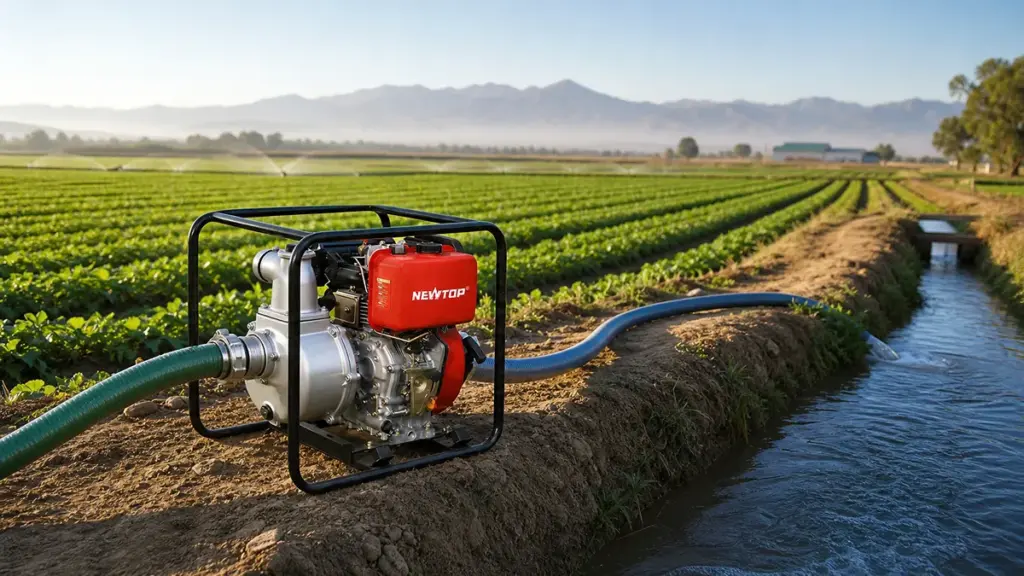
A water pump converts mechanical energy into hydraulic force to move fluid, overcome friction, and deliver the necessary flow and pressure for irrigation, drenaje, and construction sites.
A water pump is a mechanical device designed to move water from one location to another by converting engine or motor power into water pressure and flow. Portable water pumps usually use gasoline or diesel engines to drive an impeller, which creates centrifugal force and pushes water through the discharge outlet.
Most portable pumps work based on centrifugal pump technology. When the engine starts, the impeller rotates at high speed and creates a low-pressure area at the pump inlet. Water is drawn into the pump chamber, accelerated by the impeller, and pushed out through the discharge pipe.
The basic working process includes:
- The engine provides power to rotate the impeller.
- The impeller creates suction and moves water into the pump body.
- The pump casing converts kinetic energy into pressure.
- Water is discharged through the outlet pipe.
Related reading: Bombas de agua portátiles: Una guía práctica para diferentes aplicaciones
Key Water Pump Specifications to Compare
| Especificación | Lo que significa | Por qué es importante |
|---|---|---|
| Tasa de flujo | The amount of water a pump can move within a specific time, usually measured in L/min, m³/h, or GPM. | Determines how quickly water can be supplied, transferred, or removed. |
| Total Head | The total height a pump needs to overcome, including vertical lift, pipe friction loss, and required outlet pressure. | Shows whether the pump can deliver water to the required distance and elevation. |
| Potencia del motor | The output power of the engine, usually measured in horsepower (caballos de fuerza) or kilowatts (kilovatios). | Affects pumping capacity, rendimiento de presión, and ability to handle demanding applications. |
| Suction Height | The vertical distance between the water source and the pump inlet. | Determines how effectively the pump can draw water from wells, tanks, estanques, or other sources. |
| Water Type | The condition of the water, such as clean water, muddy water, or water containing solid particles. | Helps determine whether you need a clean water pump, trash pump, or another specialized pump type. |
For a more detailed breakdown, you can also read our guía para principiantes sobre las especificaciones de la bomba de agua, which explains these parameters in depth.
Maximize Profit with Durable OEM Machinery

What Are the Main Types of Water Pumps?
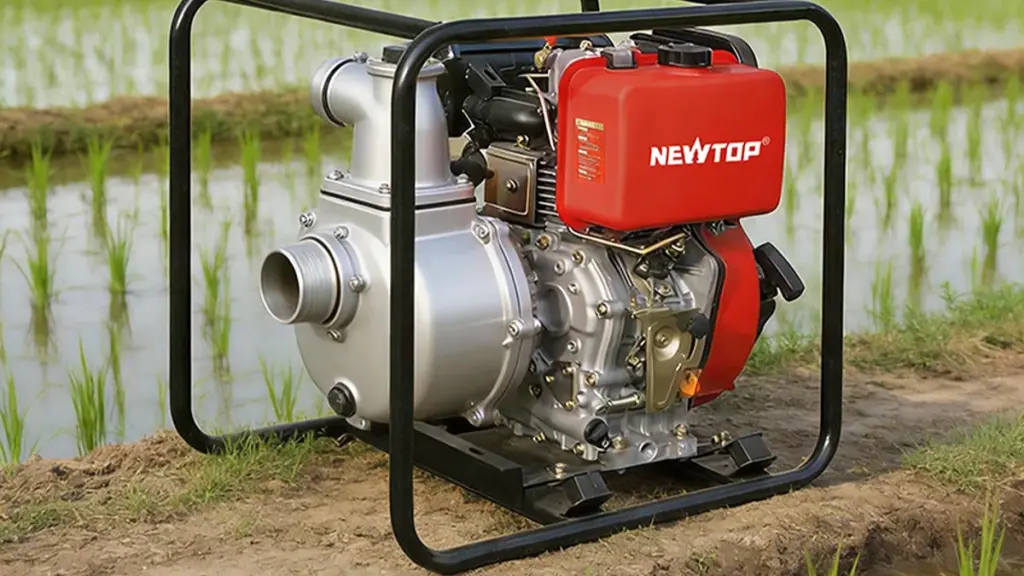
Water pumps can be classified according to their structure, fuente de energía, and application. For portable outdoor equipment, the most common types are clean water pumps, trash pumps, and high-pressure pumps.
If you want to better understand how different pump designs affect performance and priming ability, it’s also helpful to compare centrifugal and self-priming water pumps, o trash water pump vs clean water pumps, which we explain in detail in our guide on pump working principles and selection differences.
Centrifugal Pumps
Centrifugal pumps rely on a rotating impeller to add velocity to water and convert that velocity into usable pressure. They consistently deliver high efficiency for systems demanding moderate-to-high flow rates.
- Aplicaciones primarias: The standard choice for surface-water irrigation and general water transfer.
- Maintenance Factor: Requires manual priming in most standard surface installations.
- Liquid Constraint: Struggles to process heavily solids-laden or muddy water.
Submersible Pumps
Installed entirely below the water line, these units push water upward rather than pulling it. This submerged design entirely eliminates suction lift limitations and bypasses the need for manual priming.
- Core Environments: Commonly deployed in deep wells, drainage pits, and flooded basements.
- Operational Advantage: Works directly in the fluid to solve complex or deep suction-lift problems.
- Selection Requirement: Demands specific matching to depth and water quality to prevent submerged maintenance difficulties.
Jet Pumps
A jet pump utilizes an ejector mechanism to create strong suction and pull water directly from the source. Operators primarily install these units above ground to keep the hardware accessible for routine maintenance.
- Best Fits: Highly effective for shallow wells and specific above-ground irrigation supply setups.
- Suction Limits: Faces strict suction-lift restrictions compared to submerged pump alternatives.
- Efficiency Profile: Operates at lower overall efficiencies than standard centrifugal models.
Diaphragm and Positive-Displacement Pumps
This pump category displaces a fixed volume of liquid per cycle using a flexible mechanical mechanism. The physical design delivers strong self-priming capabilities tailored for demanding suction environments where standard pumps lose prime.
- Liquid Tolerance: Handles highly viscous, dirty, or chemically contaminated liquids effectively.
- Flow Characteristics: Produces lower maximum flow rates compared to centrifugal alternatives.
- Discharge Style: Often creates a pulsating discharge rather than a steady, continuous stream.
Trash and Booster Pumps
Neither of these units serves as a general-purpose lifting solution. They exist specifically to address strict environmental conditions or solve system performance constraints that standard equipment cannot handle.
- Trash Pumps: Feature large internal passages engineered to pass solids, sediment, and mud safely during heavy construction dewatering.
- Booster Pumps: Focus entirely on increasing pressure within an existing pressurized line or an underperforming irrigation zone.
How to Choose a Water Pump for Irrigation
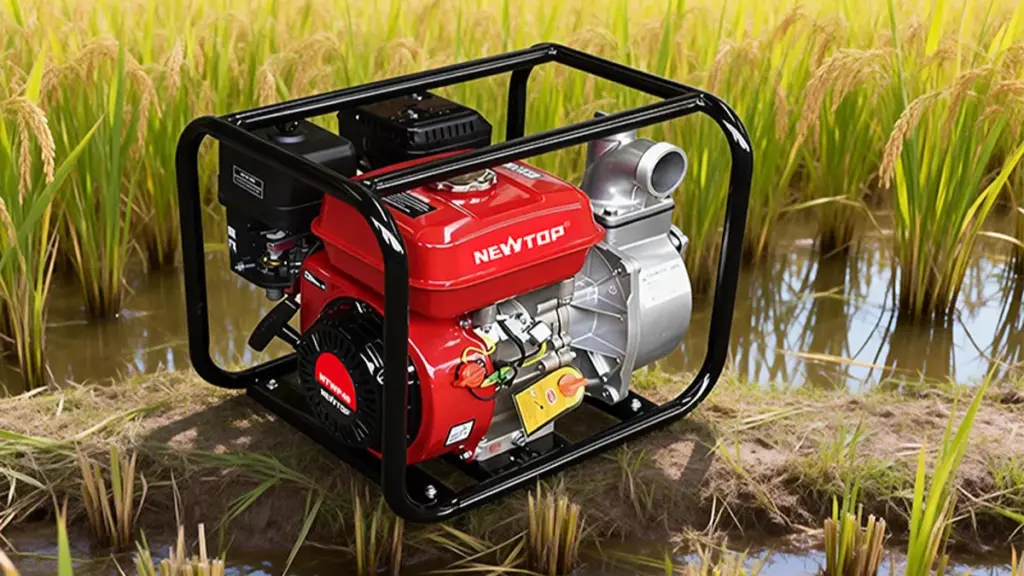
Choosing an irrigation pump comes down to matching your required flow rate and total dynamic head to your water source depth while operating near peak efficiency.
Assessing Your Water Source and Quality
The origin of your water dictates the physical hardware you need to install. If you draw from a deep well, physical suction limits render surface pumps useless, forcing you to rely on a submersible model. En cambio, shallow ponds, storage tanks, or canals pair perfectly with standard centrifugal or self-priming surface setups.
Water quality also dictates pump survival. If your source frequently pulls in sand, silt, or agricultural debris, a standard clear-water pump will suffer severe abrasion and rapidly lose pressure. Dealing with debris-laden water requires targeted inline filtration or a drainage-style pump built with larger clearances to prevent clogging.
Calculating Flow Rate and Total Dynamic Head (TDH)
Pump selection relies heavily on calculating two precise performance metrics for your specific site.
- Tasa de flujo (GPM or LPM): Size your capacity based on the peak simultaneous demand or the single largest irrigation zone in your layout.
- Cabeza dinámica total (TDH): Calculate this by adding the vertical suction lift, static elevation change, pipe friction loss, and your required outlet pressure.
- System Distribution Type: Factor in the delivery method, as high-impact sprinkler systems demand much higher continuous pressure than low-flow drip irrigation setups.
Selecting the Appropriate Pump Type
Once you map your head and flow numbers, match the pump style directly to your environmental conditions.
- Centrifugal Surface Pumps: The standard choice for highly efficient operation when transferring clean water from shallow sources at moderate head.
- Submersible Pumps: These sit directly below the water line, entirely bypassing suction lift limitations and eliminating surface priming issues.
- Self-Priming External Pumps: Ideal for above-ground surface transfer where operators need the practical convenience of quick suction recovery.
Matching Power Source and Efficiency Requirements
Buying a pump purely based on horsepower is a common sizing error. A massive motor operating far outside its intended duty point wastes electrical or fuel energy and increases mechanical wear. You must check the manufacturer’s performance curve to ensure your calculated flow and TDH intersect near the Best Efficiency Point (BEP).
Always verify that your site’s power capabilities match the exact motor requirements. Whether you rely on single-phase electric, three-phase power, or a portable diesel engine, the energy supply must handle the startup draw and continuous duty cycle to keep your irrigation system running reliably.
How to Choose a Water Pump for Drainage and Dewatering
Selecting the right drainage or dewatering pump requires matching flow rate, total dynamic head, and solid-handling capabilities to your exact site conditions and power constraints.
Assess the Water Source and Quality
Pump selection begins with a precise evaluation of the job site. You must define the task as either drainage for nuisance water removal or dewatering for continuous site drying. The location of the water source dictates the fundamental pump configuration, while the water composition determines the internal mechanics required to prevent premature failure.
- Task definition: Distinguish between temporary drainage and continuous active dewatering.
- Source location: Identify the water depth to determine whether an above-water or submersible setup minimizes suction losses.
- Water quality: Evaluate the water for sand, silt, or debris to ensure the chosen model handles expected solids without excessive wear or clogging.
Calculate Flow Rate and Total Dynamic Head (TDH)
Sizing a pump relies on hard calculations, not horsepower estimates. Determine the required flow rate in cubic meters per hour, and add a safety margin to account for sudden rainfall or unexpected groundwater seepage. Próximo, you must calculate the Total Dynamic Head (TDH) to understand the true pressure demand on the system.
- Static lift: The exact vertical distance the water must travel from source to discharge.
- Friction losses: The resistance caused by water moving through pipes, guarniciones, and valves.
- Discharge pressure: The specific pressure required at the outlet point.
Factor in long discharge distances carefully. Extended hoses and elevation changes significantly impact total system demand and can render an improperly sized pump useless on site.
Select the Appropriate Pump Type
The pump architecture must match both the physical environment and the water composition. Using a clean-water pump for a muddy excavation guarantees rapid mechanical failure.
- Submersible drainage pumps: Use these for flooded sumps and ponds to completely eliminate suction lift limitations.
- Trash or solids-handling pumps: Select these for construction pits containing muddy or abrasive silt-laden water.
- Dedicated dewatering pumps: Choose these heavy-duty units for continuous trench and foundation work that requires handling high flow volumes.
Verify the Pump Curve and Power Supply
Never buy a pump based solely on its maximum theoretical output. You must match your operating duty point to the middle of the manufacturer’s pump curve, known as the Best Efficiency Point (BEP). Operating near the BEP maximizes electrical efficiency and prevents severe mechanical wear.
- Power compatibility: Confirm the site offers compatible power, whether single-phase electric, three-phase electric, petrol, or diesel.
- Duty cycle matching: Select a motor rated for the anticipated daily duty cycle.
- Continuous operation: Verify the unit supports continuous running during heavy storms or prolonged excavation work.
Evaluate Installation Constraints and Maintenance Needs
Physical site limitations often dictate the final model selection. Verify the physical pump dimensions to guarantee the unit fits narrow boreholes, small sumps, or confined excavations. A tight fit can restrict intake flow and cause overheating.
- Piping constraints: Secure all piping connections to prevent casing strain under heavy load.
- Intake protection: Consistently use recommended strainers to block large debris from destroying the impeller.
- Serviceability: Prioritize models with accessible maintenance features and strong service support for critical continuous applications.
How to Choose a Water Pump for Construction Sites
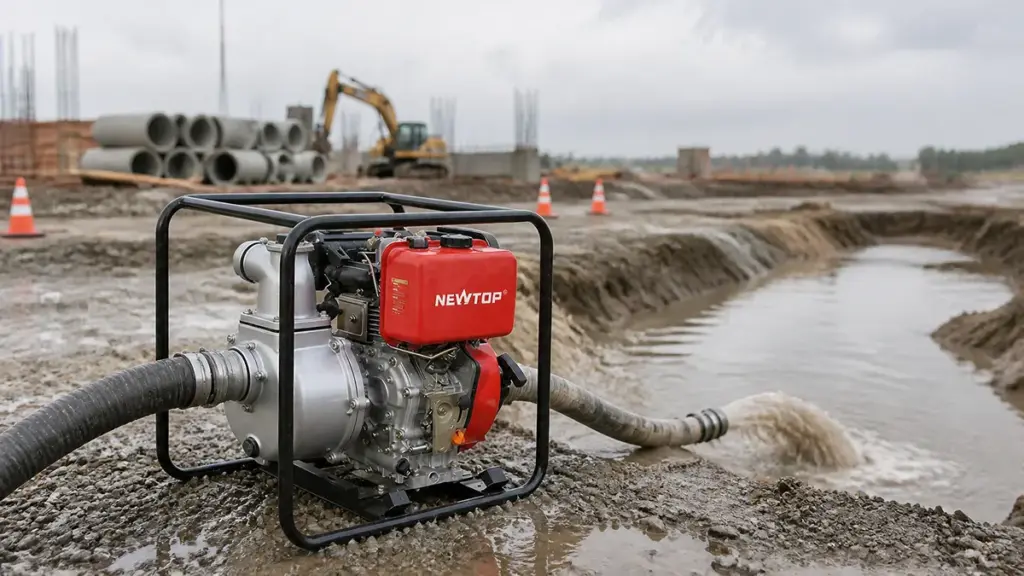
Select a construction water pump based on flow, total head, and solids tolerance before looking at horsepower to avoid downtime and excessive wear.
Calculate Required Flow Rate and Total Head
Determine the volume of water you need to move per minute or hour to keep excavation areas clear and usable. This establishes your target flow rate. Próximo, calculate the total dynamic head (TDH). This calculation requires three specific inputs:
- Vertical lift: The physical distance from the water surface to the discharge point.
- Friction losses: The resistance created by hoses, pipes, and fittings along the run.
- Discharge pressure: The specific force required at the final outlet.
Compare these precise requirements against the actual operating pump curve. Relying solely on nominal horsepower ratings often leads to undersized or inefficient equipment.
Assess Water Quality and Solids Content
Construction sites rarely deal with clean water. Identify whether the site requires pumping clean water, muddy water, sand-laden fluid, or water heavy with debris. Match the actual water conditions with appropriate impeller types and clog-resistant designs found in trash or solids-handling pumps. You must account for suspended solids early in the selection process to prevent premature wear, sudden clogging, and unexpected downtime on the job site.
Determine Suction Depth and Pump Configuration
Measure the exact distance from the water surface to your intended pump intake. You can utilize surface or self-priming pumps for shallower applications where the suction lift remains within practical limits. Switch to submersible pumps if the source depth exceeds 7 a 8 metros. At that depth, surface suction becomes ineffective and will cause performance failures.
Evaluate Power Availability and Portability Needs
Check the site for a reliable single-phase or three-phase electrical supply to support electric pumps. Select diesel-driven or combustion pumps for remote sites, emergency flood control, or areas lacking stable infrastructure. Consider the physical footprint and mobility required to move the unit between different dewatering zones as the project scales.
Factor in Duty Cycle and Operating Margins
Include a 10 a 20 percent safety margin in your capacity calculations to handle real-world variations, seasonal level changes, and minor obstructions. Prioritize automatic controls like float switches or level sensors for repeated or continuous drainage tasks to reduce manual oversight. Verify you have adequate Net Positive Suction Head (NPSH) margins to avoid cavitation, especially when using long suction lines or operating in shallow water.
How to Choose Between a Gasoline and Diesel Water Pump
Select gasoline pumps for quick deployment and intermittent use, but switch to diesel when operations demand heavy-duty autonomy, long daily hours, and lower lifetime fuel costs.
| Comparación | Gasoline Water Pump | Diesel Water Pump |
|---|---|---|
| Salida de energía | Suitable for light and medium-duty applications that require flexible and portable pumping solutions. | Provides stronger performance for heavy-duty applications and long-duration pumping operations. |
| Eficiencia de combustible | Generally has higher fuel consumption during continuous operation. | Usually offers better fuel efficiency when running for extended working hours. |
| Peso | Lighter design makes it easier to transport and move between different job locations. | Typically heavier because of the stronger diesel engine structure and components. |
| Mantenimiento | Simple maintenance requirements and easier starting performance. | Built for durability and demanding working environments with longer service needs. |
| Mejores aplicaciones | Pequeñas granjas, gardens, water transfer, and emergency drainage tasks. | Sitios de construcción, industrial drainage, mining, and large-scale irrigation projects. |
When to Choose a Gasoline Water Pump
Motores de gasolina excel in scenarios that prioritize speed and ease of movement over continuous operation. These units weigh significantly less, making them easy to carry across temporary setups, tight enclosures, or rough terrain by a single operator.
They feature simple startup procedures tailored for occasional, non-intensive use. This makes them highly effective for sporadic tasks, emergency water transfer, or rapid flood response. A gasoline pump fits perfectly into moderate flow requirements where the immediate convenience of deployment outweighs the need for long-term fuel efficiency.
When to Choose a Diesel Water Pump
Diesel engines are built for endurance. You select a diesel pump when the job involves prolonged daily workloads or continuous heavy-duty operation. Manufacturers design these units with robust structural frames capable of withstanding harsh, demanding environments for extended periods without degradation.
While they carry a higher upfront cost and a heavier footprint, diesel pumps deliver superior fuel efficiency over time. This translates to a notably lower total cost of operation for high-hour usage. They become the default choice when equipment autonomy, durabilidad, and raw pumping power outrank lightweight portability.
How to Match Pump Size, Tasa de flujo, and Head to Your Application
Matching the right pump means balancing flow rate and total dynamic head against your specific water source. Oversize it, and you waste energy; undersize it, and your system starves.
| Solicitud | Primary Focus | Key Sizing Factor |
|---|---|---|
| Irrigation | Precise flow and pressure | Simultaneous zone flow + TDH |
| Drenaje | Fast evacuation | Total volume + solids handling |
| Construcción | Movilidad & dirty water | Peak inflow + high TDH |
Understanding Core Sizing Variables
You cannot select a pump based on horsepower alone. A successful installation requires matching the physical properties of the water source to the mechanical output of the equipment. Buyers must define four specific variables before reviewing product catalogs.
- Caudal (Q): The volume of water moved per unit of time, typically measured in L/min, m³/h, or GPM.
- Cabeza dinámica total (TDH): The total resistance the pump must overcome, combining vertical lift and friction.
- Source depth: A depth exceeding 7-8 meters generally requires switching from a surface pump to a submersible model.
- Water type: The presence of solids, sludge, or debris dictates pump material and design compatibility.
Calculating the Required Flow Rate
Flow rate defines how much water moves through your system at any given moment. Sizing this metric correctly prevents both equipment strain and wasted operating expenses.
- Irrigation applications: Require summing the flow of all emitters or zones operating simultaneously.
- Dewatering and construction: Require calculating the total volume of accumulated water against the target evacuation time.
- Cost factors: Oversizing the flow rate unnecessarily increases initial equipment costs and energy consumption.
Determining Total Dynamic Head (TDH)
TDH represents the actual physical resistance the pump pushes against. If you miscalculate this variable, your pump will fail to deliver water at the final destination.
- Static head: The physical vertical distance between the water level and the final discharge point.
- Friction losses: Pressure drops caused by water traveling through pipes, elbows, valvulas, and filters.
- Required operating pressure: The minimum pressure needed at the final delivery point to operate sprinklers or other equipment.
Reading the Pump Curve and Adding Safety Margins
Every pump has a performance curve showing exactly how flow drops as head increases. Operators run into trouble when they force a pump to work outside its intended functional range.
- Target the middle: Select a pump where the calculated flow and head intersect near the middle of its efficiency curve.
- Build in a buffer: Incorporate a 10-20% safety margin to account for system wear, seasonal water level drops, and real-world variations.
- Prevent wear: Avoid selecting pumps that operate at the extreme limits of their performance curves to prevent premature failure.
Application-Specific Selection Criteria
A pump built for one job often fails in another. Different industries prioritize completely different mechanical parameters.
- Irrigation systems: Prioritize precise flow per zone, TDH, and hydraulic efficiency.
- Drainage setups: Focus on rapid evacuation capacity, solids handling, and continuous operation reliability.
- Construction dewatering: Demands robust resistance to dirty water, high mobility, and flexible installation.
Match the pump specifications strictly to the physical environment, and the equipment will deliver the required performance without unnecessary downtime.
Common Water Pump Selection Mistakes to Avoid
Most pump failures stem from sizing by horsepower rather than matching flow and total dynamic head to site-specific conditions, causing inefficient operation and premature wear.
Sizing and Performance Miscalculations
The fastest way to ruin a pumping system is choosing equipment based on horsepower alone. Motor size is a result of system requirements, not the starting point. Buyers consistently run into trouble when they fail to match the system demand for flow rate and Total Dynamic Head (TDH).
Calculating TDH accurately requires accounting for static lift, friction losses through pipes and fittings, and the required outlet pressure. Omitting any of these variables results in underperforming systems. Another frequent error is sizing based on a daily average rather than the peak simultaneous operating demand, leaving critical zones starved for water during heavy use.
When flow and pressure capabilities mismatch the specific operating point of the delivery system, the pump operates too far from its Best Efficiency Point (BEP). Forcing a pump to run on the extreme left or right of its performance curve drastically increases mechanical wear and destroys efficiency.
Overlooking Water Quality and Site Conditions
Matching the physical pump to the actual site environment is just as critical as hitting the right performance curve. Operators frequently try to use standard clean-water pumps for drainage or construction dewatering. When the water contains sediment, escombros, or abrasives, these standard impellers quickly clog or wear out.
- Suction Limits: Ignoring suction lift conditions and failing to ensure available NPSH exceeds required NPSH leads directly to cavitation.
- Power Mismatches: Skipping basic power supply checks results in voltage, fase, or frequency conflicts that prevent the system from running.
- Fluid Chemistry: Disregarding abrasive particles or corrosive water chemistry causes premature casing and seal failures without specific corrosion-resistant materials.
Application-Specific Pitfalls
Every job site presents unique hydraulic challenges. Failing to adjust for the specific application guarantees poor performance.
- Irrigation: Buyers often fail to convert individual emitter needs into accurate total pump requirements or ignore the heavy friction losses that occur by the time water reaches the field edge.
- Drenaje: Sizing flow capacity too low for unexpected stormwater peaks leaves areas flooded, while using the wrong impeller style guarantees persistent clogging.
- Construcción: Site managers routinely underestimate the total head generated by long temporary discharge runs and sudden elevation changes across an active site.
Neglecting Duty Cycle, Instalación, y mantenimiento
Even perfectly sized equipment fails if the installation and operating habits are flawed. Underestimating total operating hours is a common trap. Selecting a pump rated only for intermittent use and forcing it into continuous duty cycles causes rapid motor burnout.
Physical installation errors compound these problems. Operating without proper priming mechanisms, missing strainer protection, or using unsecure mounting setups creates destructive vibration. Site operators also overlook the severe risks of dry-running or closed-valve operation, which can melt internal seals in minutes.
Ignoring physical site constraints ensures long-term maintenance headaches. Narrow boreholes, tight footprints, or difficult access points make routine servicing nearly impossible, turning minor preventative maintenance into a massive teardown project.
NEWTOP Water Pumps for Irrigation, Drenaje, and Construction
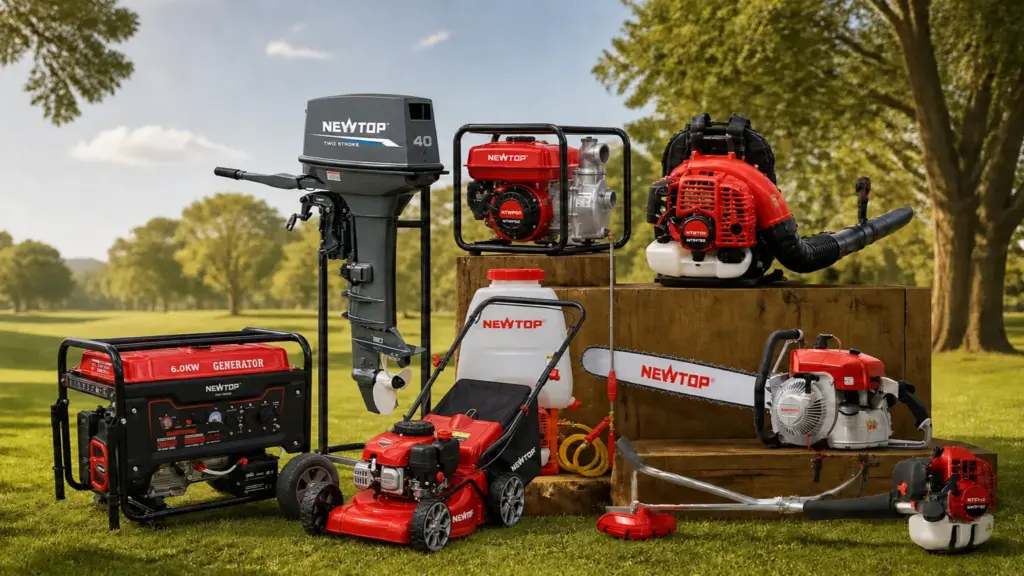
As an outdoor power equipment manufacturer, NEWTOP develops portable water pumps designed for agriculture, construcción, drenaje, and general water transfer applications.
NEWTOP water pumps combine reliable engine performance with practical designs for different working environments. Whether customers need irrigation support, emergency water removal, or construction dewatering solutions, selecting the right pump model ensures better efficiency and longer service life.
Key advantages of NEWTOP water pumps include:
- Reliable engine performance: Designed for stable operation in outdoor working conditions.
- Multiple application options: Solutions available for clean water transfer, riego, and drainage applications.
- Durable construction: Strong pump bodies and frames improve product lifespan.
- Easy maintenance: Practical designs help reduce downtime during daily operation.
- OEM and bulk supply capability: Supporting distributors and international partners with customized solutions.
Con años de experiencia en la fabricación de equipos eléctricos para exteriores., NEWTOP understands that different markets and applications require different pumping solutions. Whether you are sourcing for retail, industrial projects, or OEM branding, NEWTOP is ready to support you with reliable product quality, strong manufacturing capability, and flexible customization services. Contact us today to build a competitive and dependable water pump product line for your market.
Preguntas frecuentes
What size water pump do I need for irrigation?
Sizing an irrigation pump correctly requires determining the specific flow rate and total dynamic head (TDH). Calculate flow by adding the demand of the actual emitters or sectors running simultaneously, rather than the total theoretical field consumption. Próximo, calculate TDH by combining static lift, pipe friction losses, and the required emitter pressure. Select a pump whose performance curve places your target flow and TDH near its best efficiency point. Add a 10–20% safety margin to account for wear and seasonal variations. If your water source sits deeper than 7–8 meters, you need a submersible pump rather than a surface model.
How do I calculate total dynamic head for a water pump?
Total dynamic head (TDH) measures the total resistance your pump must overcome to move water. Calculate it by adding four specific components. Primero, measure the static head, which is the vertical distance from the water surface to the highest discharge point. Segundo, calculate friction losses caused by water moving through pipes, valvulas, and filters. Tercero, add the pressure head, which is the required operating pressure at the outlet like a sprinkler nozzle. Finalmente, include a 5–10% safety margin to accommodate seasonal water level drops and gradual component wear.
What is the difference between a clean water pump and a trash pump?
A clean water pump handles clear water with minimal suspended particles. Operators use these primarily for standard irrigation and general water transfer. A trash pump features larger impellers and volutes designed to pass mud, arena, hojas, and small solids without clogging. Construction crews rely on trash pumps for site dewatering, trench drainage, and flood control tasks where debris would instantly block or destroy a standard clean water pump.
How far can a portable water pump push water?
A pump’s effective reach depends entirely on its available pressure and total dynamic head, not horizontal distance alone. Pushing water over long horizontal runs creates friction, which directly subtracts from the pressure available at your discharge point. To find out if a portable pump can reach your target, calculate the total vertical lift and add the friction losses for your specific hose length and diameter. Check the pump’s performance curve to verify it can maintain the required flow at that total head.
How much horsepower do I need for a water pump?
Horsepower is a byproduct of your system requirements, not the starting metric for pump selection. The correct horsepower depends on your required flow rate, total dynamic head, and pump efficiency. Moving massive volumes of water or pushing it up steep inclines dictates a higher horsepower requirement. You should always select a pump by matching its performance curve to your target flow and head. Once you find that match, the manufacturer’s specifications dictate the necessary motor horsepower to maintain that duty point efficiently.
Can one water pump be used for irrigation and drainage?
Sí, a single pump handles both tasks if the flow rate, total head, and water quality align for both applications. A correctly sized centrifugal pump easily manages irrigation and clear-water drainage. But if your drainage task involves thick mud or construction debris, you must use a specialized trash pump. Trash pumps clear solids effectively but struggle to maintain the high, stable pressure required for agricultural sprinkler systems.
What happens if a water pump is too large for the job?
An oversized pump operates far from its best efficiency point, forcing you to pay for wasted energy and higher operating costs. In an irrigation setup, excess pressure damages fittings, blows out emitters, and creates uneven water distribution across the field. In drainage or construction applications, an oversized pump overwhelms temporary discharge lines or causes automatic float systems to short-cycle rapidly. This constant on-and-off cycling destroys bearings, degrades seals, and burns out the motor prematurely.