


- सभी
- न्यूटॉप ग्राहक कहानियाँ
- न्यूटॉप एक्सप्लोरर हब
- न्यूटॉप उद्योग अंतर्दृष्टि
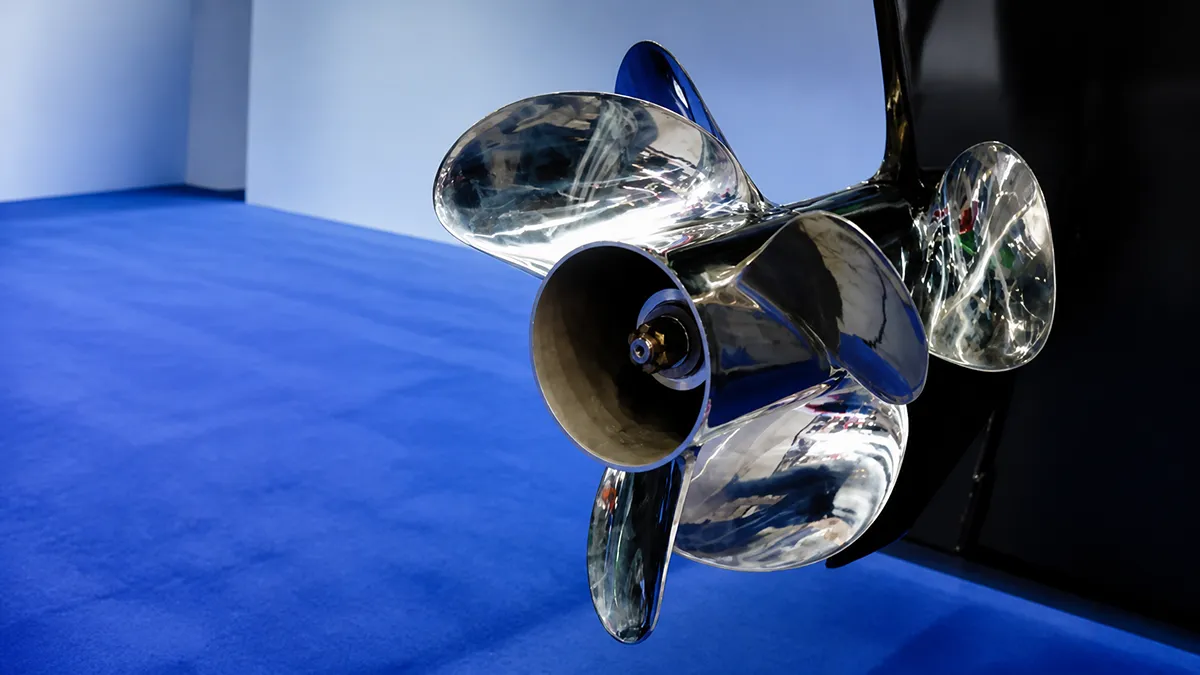
सही आउटबोर्ड प्रोपेलर चुनना केवल इंजन शाफ्ट में फिट होने वाले मॉडल को ढूंढने के बारे में नहीं है. एक प्रोपेलर सीधे त्वरण को प्रभावित करता है, शीर्ष गति, ईंधन की खपत, इंजन लोड, और समग्र नौकायन अनुभव.
नाव बनाने वालों के लिए, वितरक, और समुद्री उपकरण खरीदार, गलत प्रोपेलर का चयन करने से खराब प्रदर्शन हो सकता है, अत्यधिक कंपन, उच्च ईंधन लागत, और यहां तक कि दीर्घकालिक इंजन समस्याएं भी.
एक विश्वसनीय प्रोपेलर चयन प्रक्रिया में कई कारकों पर विचार करना चाहिए, इंजन विशिष्टताओं सहित, नाव की विशेषताएँ, परिचालन की स्थिति, ब्लेड डिजाइन, सामग्री का चयन, और आपूर्तिकर्ता क्षमता.
This guide explains the key points buyers should check before purchasing an outboard propeller and how to make a more accurate selection for different applications.
What Key Information Should You Prepare Before Choosing a Propeller?
Before comparing propeller models, collect accurate information about the engine, नाव, and daily use. This reduces fitting errors and gives the supplier enough data to recommend a suitable starting configuration.
Prepare the following details:
| Data Category | Metrics to Record |
|---|---|
| Current Propeller | व्यास, आवाज़ का उतार-चढ़ाव, rotation, ब्लेड गिनती, सामग्री, hub splines |
| Engine Details | Rated HP, gearcase size, target WOT RPM, actual WOT RPM |
| Boat Profile | लंबाई (LOA), hull shape, operating weight, speed goals |
| Usage Environment | Primary activity, cruise speed, water conditions (fresh/salt/shallow) |
| Benchmarks | GPS speed at WOT, time to plane, ventilation in turns |
Current Propeller Specifications
Your existing propeller serves as the baseline for any future adjustments. You need exact numbers off the current hub or blades to know which direction to adjust your pitch or diameter.
- Diameter and pitch: Record these numbers (usually stamped on the barrel, पसंद 14 एक्स 19) to establish your starting point.
- घूर्णन दिशा: Identify if the prop uses right-hand or left-hand rotation. This matters heavily for twin-engine setups.
- Blades and material: Note if you run a 3-blade or 4-blade design, and whether it is cast aluminum or stainless steel.
- Hub and shaft details: Count the splines on the prop shaft and measure the shaft diameter to ensure your replacement physically fits the gearcase.
Engine Details and WOT RPM Limits
Engine specifications define your operating envelope. Your motor has a specific RPM band where it makes peak power safely, and your prop must keep the engine inside that band.
- HP and gearcase size: Verify your rated horsepower and gearcase dimensions. These dictate which propeller families fit the outboard.
- Target WOT RPM: Find the manufacturer’s recommended Wide Open Throttle (WOT) आरपीएम रेंज. Modern outboards usually target 5,000 को 6,000 आरपीएम.
- Actual WOT RPM: Measure your current wide-open RPM under a normal load. This tells you if the engine is over-revving or lugging.
- Trim systems: Note if the boat has power trim or trim tabs. These systems dictate how you tune the hull attitude to reach optimal RPM.
Boat Characteristics and Load Profile
Hull design and operating weight directly influence thrust requirements. A heavy pontoon pushes water differently than a light bass boat, demanding a totally different blade geometry.
- Hull dimensions: Document the length overall (LOA), hull material, and bottom shape (like deep-V or flat-bottom). These dictate drag and required lift.
- Operating weight: Calculate your realistic load. Include fuel, यात्रियों, गियर, and livewells.
- Load frequency: Identify if you frequently run heavily loaded. Heavy loads often require stepping down in pitch or moving to a 4-blade prop to maintain thrust.
- Speed targets: Define your present top speed against your desired top speed. This guides the tradeoff between pitch and acceleration.
Usage Profile and Operating Environment
How and where you drive determines the optimal propeller style. You must align the design with your primary on-water activities to get the best efficiency.
- Primary use: Specify if you focus on high-speed cruising, heavy towing for watersports, or commercial work.
- Running speeds: Identify your typical throttle positions. This determines if you optimize for mid-range fuel economy or absolute top-end speed.
- जल की स्थिति: Consider your environment. Abrasive, रेतीले, or shallow waters often demand the durability of stainless steel over standard aluminum.
Real-World Performance Benchmarks
Never buy a new propeller without testing the old one first. You need hard performance data to compare against your post-installation results.
- Baseline test runs: Take the boat out and record maximum RPM and GPS speed at wide-open throttle, trimming up just before the prop cavitates.
- Acceleration metrics: Evaluate your hole shot, the time it takes to get on plane, and the boat’s ability to hold a plane at lower speeds.
- Handling checks: Monitor the steering for signs of propeller ventilation, excessive slip during hard turns, or cavitation in rough chop.
How Do Diameter and Pitch Affect Propeller Performance?
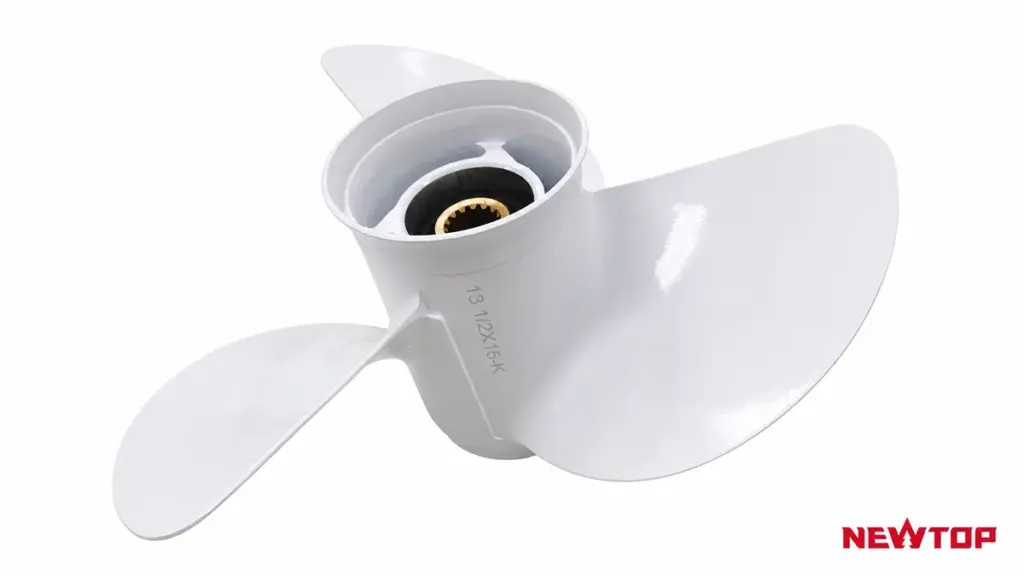
Diameter and pitch are two of the most important measurements in propeller selection. They determine how efficiently an outboard propeller converts engine power into thrust and directly influence acceleration, शीर्ष गति, ईंधन दक्षता, and engine RPM.
Before choosing a replacement propeller, buyers should understand what these two specifications mean and how they work together. A propeller marked as 14 × 19, उदाहरण के लिए, indicates a 14-inch diameter and a 19-inch pitch. The first number represents diameter, while the second number represents pitch.
For a more detailed explanation of propeller markings and how these measurements affect performance, buyers can refer to our guide on what pitch and diameter mean on an outboard propeller.
व्यास refers to the distance across the full circle made by the rotating blades. A larger diameter generally produces more thrust because it moves more water with each rotation.
Large-diameter propellers are commonly used for:
- Heavy boats
- Commercial applications
- Boats that require strong pulling power
- Low-speed operation
A smaller diameter propeller usually allows higher RPM and may support better top-speed performance on lightweight boats.
आवाज़ का उतार-चढ़ाव refers to the theoretical distance a propeller moves forward in one complete rotation without considering slip. उदाहरण के लिए, a 19-inch pitch propeller is designed to move approximately 19 inches per rotation under ideal conditions.
The relationship between pitch and performance is:
| Pitch Choice | Performance Effect |
|---|---|
| निचली पिच | तेज़ त्वरण, stronger thrust, easier engine operation |
| उच्च पिच | Higher potential speed, lower RPM, suitable for light loads |
तथापि, increasing pitch does not always increase speed. यदि पिच बहुत ऊंची है, the engine may struggle to reach its recommended RPM range, causing poor acceleration and increased stress.
A proper selection balances pitch, व्यास, engine power, and boat load. Many buyers use factory recommendations as a starting point and then adjust based on real operating conditions.
Source Durable Garden Machinery at Competitive Prices

How Does the Number of Blades Influence Speed, जोर, और ईंधन दक्षता?
Blade count dictates the balance between top speed and load capacity. Fewer blades reduce drag for maximum speed, while more blades provide necessary grip for heavy loads.
The Relationship Between Blade Area and Drag
Every propeller blade moving through water creates surface friction and pressure drag. Fewer blades result in a smaller total wetted area, directly translating to lower hydrodynamic drag and higher potential open-water efficiency.
Adding blades increases the Blade Area Ratio (BAR). A higher BAR gives the propeller significantly more grip on the water, reducing slip and ventilation. The trade-off is higher hydrodynamic interference between the blades, demanding more power to turn at the exact same RPM.
How Blade Count Affects Top Speed
Two-blade propellers theoretically offer the highest top speeds on lightly loaded hulls because they encounter minimal drag. For most recreational planing hulls, three-blade designs hit the sweet spot. A well-matched three-blade propeller consistently runs 5% को 10% faster at wide-open throttle compared to a four-blade setup.
Upgrading to a four-blade propeller usually cuts peak speed by about 2 को 3 मील प्रति घंटा. Yet, these high-blade configurations maintain effective speed much better in rough water or high-trim conditions by actively resisting blowout.
Thrust Capabilities and Load Management
Total thrust depends heavily on the total blade area. A propeller with fewer blades forces each blade to carry a higher unit thrust. Push a low-blade-count prop too hard under a heavy load, and you risk severe cavitation or structural stress at the blade root.
Four-blade and high-BAR three-blade propellers excel at managing demanding workloads. You need these configurations for:
- Heavy Boats: Lifting heavy hulls onto plane quickly.
- Towing Applications: Delivering strong mid-range acceleration.
- Limited Clearances: Maximizing thrust when gearcase size limits the maximum diameter.
Fuel Efficiency and Optimal Engine Loading
For standard recreational setups, a correctly sized three-blade propeller delivers the best steady-cruise fuel economy. The minimal drag allows the outboard to run efficiently near its peak torque band.
Adding a fourth blade increases the physical load on the engine. You almost always need to drop the pitch to keep the wide-open throttle RPM within the manufacturer’s optimal range. On heavily loaded boats, a four-blade propeller can actually improve real-world fuel efficiency. By drastically reducing slip, it holds the boat on plane at lower RPMs, burning less fuel than a three-blade prop struggling to grip the water.
Should You Choose an Aluminum or Stainless Steel Propeller?
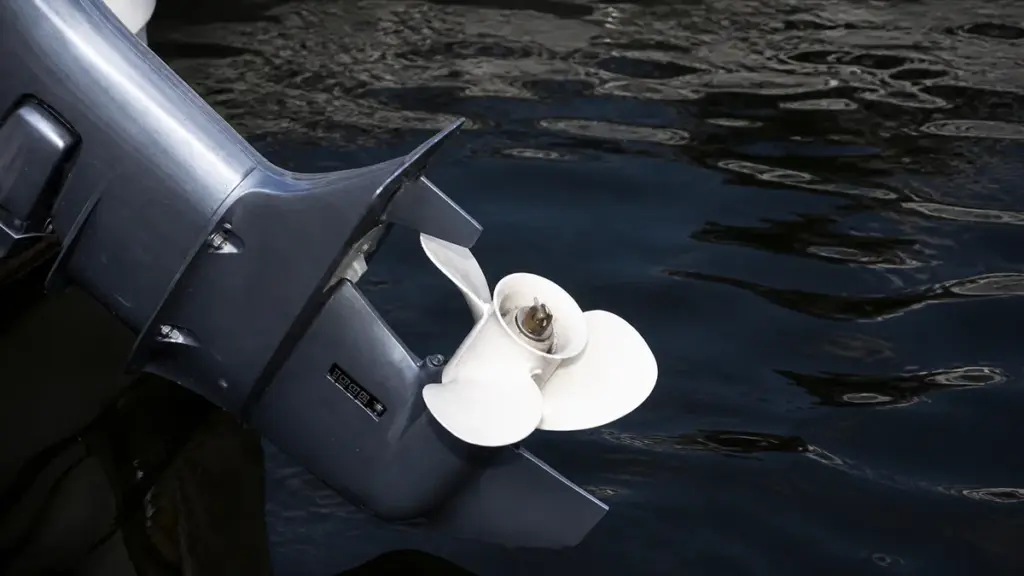
Aluminum offers budget-friendly protection for shallow waters and lower horsepower, while stainless steel delivers speed, पकड़, and durability for high-performance outboards and saltwater environments.
For buyers who want to understand the detailed differences between these two materials, including strength, टिकाऊपन, रखरखाव, and application scenarios, our guide on aluminum vs stainless steel outboard motor propellers provides a complete comparison.
Matching Material to Outboard Horsepower
Outboard horsepower directly dictates the ideal propeller material. For motors under 30 अश्वशक्ति, manufacturers almost exclusively equip factory aluminum propellers. Stainless steel options in this range remain scarce and offer little practical performance benefit.
Mid-range engines between 30 और 70 hp pair perfectly with aluminum for general recreational boating. The power output at this level rarely causes severe blade flex, keeping performance stable for everyday use. Once you step up to outboards producing 75 hp and above, the operating dynamics change. These engines generate high torque and push heavier loads, making stainless steel the standard choice to handle the increased thrust without losing blade shape.
Durability and Lower Unit Risk
How a propeller reacts to underwater impacts determines the safety of your lower unit gears. You must evaluate your primary operating environment before making a choice.
- Sacrificial protection: Aluminum acts as a sacrificial component, bending or cracking upon impact to absorb shock and protect lower unit gears.
- Impact transfer: Stainless steel withstands normal wear and minor impacts, but transfers heavy strike forces directly to the prop shaft.
- Shallow hazards: Boaters navigating shallow, stump-filled, or rocky rivers should select aluminum to minimize expensive gearcase repairs.
- Saltwater endurance: Marine environments heavily favor stainless steel due to its superior long-term corrosion resistance.
Hydrodynamic Performance and Handling
Material stiffness heavily influences thrust efficiency. Manufacturers cast aluminum blades thicker to achieve necessary strength, but they still flex under heavy loads. This flexing slightly reduces top-end speed and high-RPM stability. Stiff, thin stainless steel blades maintain their precise pitch and shape under pressure, improving thrust efficiency and maximizing water displacement.
Upgrading to a stainless steel model often yields a 2 को 3 mph speed gain alongside stronger acceleration for heavy loads. Stainless steel also holds cupping better than aluminum. This structural advantage ensures reliable grip during tight turns and drastically reduces ventilation issues on the water.
Cost Comparison and Lifespan Value
An aluminum propeller costs roughly one-third the price of a comparable stainless steel model. Budget-conscious buyers and boaters who frequently replace damaged props benefit the most from this low upfront cost. The inexpensive replacement strategy makes sense when striking rocks or stumps is a routine risk.
Stainless steel requires a much higher initial investment. It provides exceptional lifespan in deep, obstruction-free waters where impact damage is rare. The long-term value quickly shifts to stainless steel for performance rigs, as the durable material eliminates the need for frequent replacements and maintains optimal fuel efficiency over thousands of hours of use.
How Do Engine Horsepower and Gear Ratio Affect Propeller Selection?
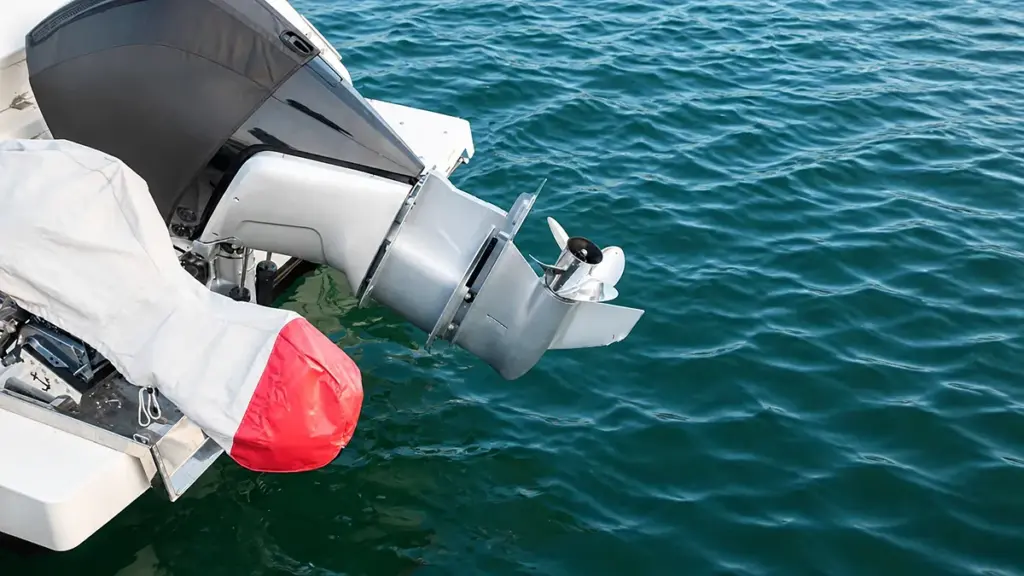
Horsepower dictates the maximum propeller size an engine can efficiently turn, while gear ratio determines shaft speed. एक साथ, they establish the exact pitch required to hit target WOT RPM.
The Role of Engine Horsepower in Propeller Sizing
Engine horsepower sets the baseline power budget for moving a boat efficiently. A higher horsepower rating allows an outboard to turn a larger diameter or a higher-pitch propeller without struggling. Buyers must match the propeller to the engine’s usable horsepower at the intended operating RPM, rather than looking strictly at peak horsepower marketing numbers.
If you choose an oversized or over-pitched propeller, the engine will lug and fail to reach its intended power band. Undersize the propeller, and the engine will over-rev, leaving valuable performance unused and risking mechanical damage.
How Gear Ratio Determines Propeller Shaft Speed
Gear ratio acts as a primary input that fundamentally changes the final propeller load. It is not just a secondary detail. You calculate propeller shaft RPM directly by dividing the engine RPM by the gear ratio.
A higher numerical gear ratio reduces the prop shaft speed and multiplies torque. To restore the desired boat speed, this setup requires a higher-pitch propeller. इसके विपरीत, a lower numerical gear ratio spins the propeller faster at a given engine RPM, requiring reduced pitch to prevent the engine from over-revving.
Balancing Pitch and Final RPM for Optimal Performance
Adjusting the gear ratio triggers a chain reaction in pitch selection. Increasing a gear ratio numerically usually requires stepping up the propeller pitch by two to four sizes. Since a single pitch size change typically alters engine speed by 250 को 350 आरपीएम, pitch adjustments serve as the ideal mechanism for fine-tuning wide-open-throttle (WOT) आरपीएम.
Operating conditions also alter this power dynamic. Heavy boat loads and high elevations demand less pitch to keep the engine from dropping below its optimal power band. For high-RPM outboard designs, manufacturers frequently use reduction ratios of 2.3:1 or higher to properly manage the aggressive propeller shaft speed and hydrodynamic load.
Practical Selection Steps for Outboard Buyers
Start the selection process by identifying the engine’s rated horsepower, gear ratio, and recommended WOT RPM range. वहाँ से, execute a systematic testing sequence to dial in the correct specifications:
- Baseline Selection: Select a propeller size that lets the engine reach target RPM under expected load, elevation, and water conditions.
- Pitch Adjustment: Reduce pitch if the engine fails to reach target RPM, or increase pitch if the engine over-revs during initial testing.
- Sea Trial Verification: Conduct a final loaded test run to account for specific real-world variables like hull drag, running weight, and ventilation behavior.
How Does Boat Type Influence the Right Propeller Choice?
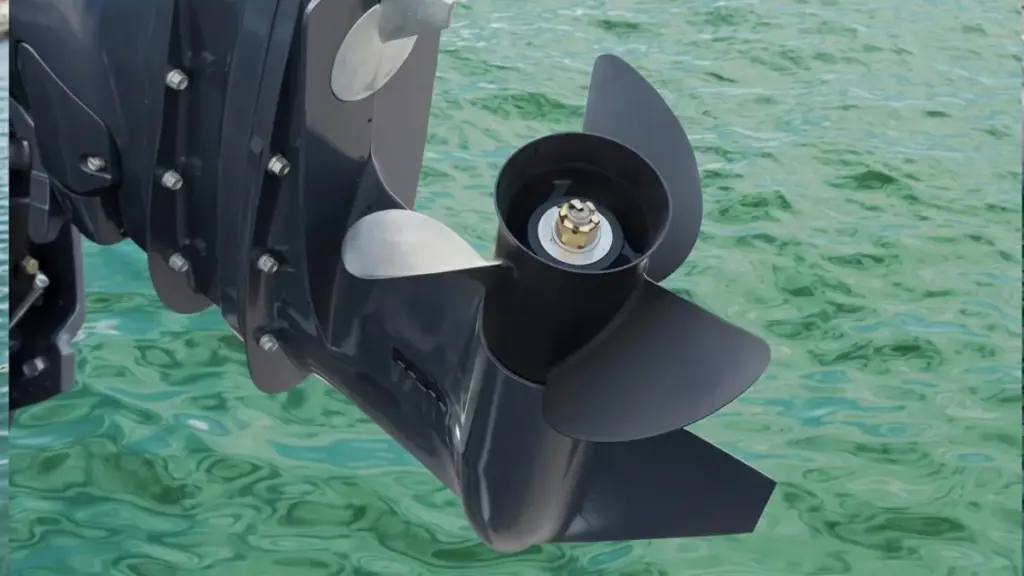
Hull design and typical boat load dictate required thrust and RPM. Matching pitch and diameter to your specific vessel type prevents engine lugging and maximizes hydrodynamic efficiency.
High-Speed Planing and Performance Boats
Light, performance-focused hulls like bass boats or sport rigs require setups that minimize drag once on plane. Your primary goal is converting engine torque directly into top-end speed while keeping the outboard near its maximum RPM limit.
To achieve this, operators utilize higher pitch and moderate-to-smaller diameter profiles. High-speed setups rely heavily on 3-blade stainless steel propellers, which deliver the durability and thin-blade efficiency needed to push past 50 mph without flexing.
Watersports and Tow-Sport Configurations
Pulling wakeboarders, skiers, or heavy tubes demands a massive initial surge of thrust. Absolute top speed takes a backseat to a strong hole shot and smooth mid-range pulling power.
Tow boats require lower pitch and larger diameter profiles to move heavily ballasted setups without dropping below the engine’s power band. Owners frequently utilize 4-blade propellers to improve low-speed handling, reduce slip, and keep the boat securely on plane.
पोंटून, Tritoons, and Heavy Cruisers
These vessels push a massive amount of water. High frontal drag and heavy, variable passenger loads mean your propeller must maximize water displacement rather than chase speed.
Pontoons and heavy cruisers benefit from larger diameter and moderate-to-low pitch to generate adequate low-speed thrust. This exact configuration prevents engine lugging and ensures the motor reaches its specified WOT RPM despite the heavy structural drag.
General Fishing and All-Purpose Vessels
Aluminum fishing boats and versatile center consoles operate across diverse conditions. The ideal setup balances rapid acceleration, mid-range cruise efficiency, and precise low-speed maneuverability around docks or structure.
Most operators pair moderate pitch with 3-blade designs to achieve versatile performance during long runs. When conditions dictate, shifting to 4-blade setups provides better grip offshore or improves shallow-water stern lift on flats boats.
Sailboats and Displacement Hulls
Displacement hulls cannot exceed their theoretical hull speed regardless of applied power. Propeller selection must focus entirely on low-speed thrust and reliable maneuvering in tight quarters.
Operators use large-diameter, low-pitch profiles to push displacement hulls efficiently at modest engine speeds. This approach protects auxiliary outboards from overloading when fighting strong currents or heavy headwinds.
What Operating Conditions Should Buyers Consider?
Propeller selection requires analyzing actual boat weight, typical water conditions, engine RPM limits, and horsepower output to prevent drivetrain damage and maximize fuel efficiency.
Boat Load and Usage Patterns
Evaluating typical operating loads is the first step in propeller selection. A boat behaves entirely differently when running solo compared to a hull weighed down by passengers, heavy gear, full fuel tanks, or towing duties.
Always prop the boat so the engine reaches the upper end of its wide-open-throttle (WOT) rpm range when lightly loaded. This rpm buffer prevents the engine from lugging once you introduce heavy weight.
- Variable Usage: Boats shifting between light solo fishing trips and fully loaded family cruising require either a compromise propeller or a dedicated two-prop setup.
- Heavy-Duty Operations: Towing, rescue, and workboats demand high, continuous thrust. These roles favor larger diameter, lower-pitch propellers designed to run efficiently at lower rpm.
Engine RPM Matching and Performance Goals
The propeller acts as the final gear ratio between the engine and the water. It must keep the outboard operating inside the manufacturer-specified WOT rpm range. Operating outside this band degrades fuel efficiency and accelerates mechanical wear.
Pitch adjustments directly dictate engine speed. Increasing pitch by one inch typically decreases WOT rpm by approximately 200 आरपीएम, while decreasing pitch raises it by the same amount.
- Planing Hulls: These setups require rapid hole shot and target a controlled slip factor of 8-15% at WOT for peak efficiency.
- Displacement Hulls: Slow-speed vessels ignore top-end speed to focus entirely on generating maximum low-end torque.
- Real-World Validation: Empirical WOT testing with proper trim adjustments is the only reliable way to validate rpm matching and fuel burn under actual operating conditions.
Water Environment and Surface Conditions
The physical water environment dictates blade geometry. Rough water causes the hull to pitch, increasing the risk of the propeller breaking the surface. Propellers with increased blade area or aggressive cupping hold water better and reduce ventilation in heavy chop.
Calm water applications allow operators to take the exact opposite approach, prioritizing higher pitch and lower drag designs to push top-end speed.
- Hazardous Environments: Shallow or debris-filled waters guarantee eventual bottom strikes. These areas require durable materials and responsive motor trim capabilities to protect the drivetrain.
- Water Flow Quality: Propellers require clean, undisturbed water to generate optimal thrust. Poor mounting heights or excessive hull turbulence will cause aeration and immediate power loss.
Outboard Horsepower and Structural Demands
Engine output strictly determines the required material strength. High-horsepower outboards, typically rated at 140 hp and above, exert extreme torque that overwhelms weaker metals and causes aluminum blades to flex.
Rigid stainless steel propellers are the primary choice for high-output engines. Stainless maintains its exact designed geometry under heavy loads and high speeds, providing predictable thrust and maximum traction.
- Lower-Horsepower Applications: General-purpose and lower-hp engines perform exceptionally well with aluminum propellers. They offer a cost-effective, impact-forgiving alternative that acts as a sacrificial part during bottom strikes.
- Exhaust Compatibility: You must verify the propeller design integrates correctly with the lower unit’s specific exhaust routing, particularly for through-hub exhaust systems.
What Common Propeller Selection Mistakes Should Buyers Avoid?
Avoiding common propeller selection mistakes—like guessing pitch, ignoring typical loads, or neglecting lower unit fitment—saves fuel, protects the engine, and prevents costly on-water failures.
Misjudging RPM, आवाज़ का उतार-चढ़ाव, and Load Requirements
Buyers often sabotage outboard performance by selecting a propeller without validating how it impacts the engine’s actual operating range.
- Ignoring the WOT RPM range: Failing to match the propeller to the engine’s recommended Wide Open Throttle (WOT) limits causes the engine to lug under heavy load or over-rev at top speed.
- Prioritizing theoretical top speed: Selecting pitch just to hit a high top-speed number ignores the inverse effect pitch has on RPM and low-end acceleration.
- Testing on an empty boat: Finalizing a prop choice with a light hull gives false data. The boat will struggle to plane once fully loaded with passengers, गियर, and fuel.
Treat the manufacturer’s specified WOT RPM as a hard constraint. You must hit this target under normal, real-world operating loads to ensure efficient running and long engine life.
Overlooking Blade Count and Material Trade-Offs
Many buyers mistakenly believe that simply adding blades or buying the cheapest material will fix performance issues. Every design change shifts the performance curve.
- Assuming more blades equal better performance: Buyers often switch from three to four blades hoping for an outright upgrade, not realizing the extra drag typically drops WOT RPM by 50 को 150 आरपीएम.
- Shopping by material price: Choosing aluminum over stainless steel strictly to save money ignores your actual environment. Soft aluminum deforms under high load, while stainless steel maintains its shape and efficiency at high speeds.
- Ignoring the primary use case: Buying a propeller designed for fast, solo runs fails if you spend 80% of your time towing wakeboarders or carrying a heavy crew.
Match the blade geometry and material to your actual daily environment. A high-performance stainless steel prop shines in open water but transfers severe shock to the gearcase if you strike a submerged stump in shallow rivers.
Using Flawed Testing and Adjustment Methods
Troubleshooting a sluggish boat requires a systematic approach. Guessing at propeller specs without proper baseline data leads to wasted money and unresolved engine strain.
- Changing multiple variables at once: Swapping pitch, ब्लेड गिनती, and material in a single step makes it impossible to isolate which change improved or hurt performance.
- Ignoring GPS boat speed: Focusing strictly on tachometer readings without verifying actual speed hides secondary issues like extreme prop slip.
- Blaming the prop prematurely: Buyers often fault the propeller for sluggish planing when the real culprit is excessive hull drag, the wrong engine mounting height, or poor trim angle.
Establish a clear baseline with your current setup first. Make single, incremental adjustments—usually starting with pitch—and test the results on the water before changing another variable.
Neglecting Fitment, रखरखाव, and Spares
Even the perfectly pitched propeller fails if it does not physically integrate with the outboard gearcase or lacks basic maintenance.
- Guessing hub compatibility: Buying a prop without checking spline counts, hub system types, or matching thrust washers leads to stripped splines and lower unit damage.
- Ignoring physical damage: A slightly bent blade or fishing line wrapped around the prop shaft mimics the symptoms of incorrect pitch.
- Running without a spare: Operating without a backup prop leaves you stranded after a severe strike and eliminates your ability to swap to a lower-pitch prop for unexpectedly heavy loads.
Verify fitment against the engine transom tag before purchasing. Inspect the prop hub assembly periodically to catch early signs of slippage or corrosion.
अंतिम विचार
Buyers should evaluate engine specifications, नाव का प्रकार, परिचालन की स्थिति, ब्लेड डिजाइन, सामग्री का चयन, and supplier reliability when bulk buying outboard motor propellers.
The right propeller improves acceleration, ईंधन दक्षता, हैंडलिंग, और इंजन का प्रदर्शन, while the wrong choice can reduce efficiency and increase operating costs.
वितरकों के लिए, boat manufacturers, and marine equipment companies, working with an experienced outboard propeller supplier provides better product consistency and long-term support.
With advanced manufacturing capability, precision-balanced aluminum and stainless steel propellers, and OEM/ODM production experience, NEWTOP helps global partners develop reliable propeller solutions for different marine applications.
अक्सर पूछे जाने वाले प्रश्नों
What should I check before buying an outboard propeller?
Verify your boat’s primary use, typical load profile, and desired performance goals. You must confirm engine specifications, including the brand, horsepower, shaft type, and the manufacturer’s recommended wide-open-throttle (WOT) आरपीएम रेंज. Collect baseline data from your current prop, such as diameter, आवाज़ का उतार-चढ़ाव, सामग्री, and observed WOT RPM, to guide your replacement choices.
How do I choose the right propeller pitch?
Selecting pitch relies on matching the propeller to your engine’s recommended WOT RPM range. Test your current setup at full throttle with a normal load. If the RPM falls below the recommended band, decrease the pitch. If the RPM exceeds the limit, increase the pitch. Changing the pitch by one inch generally alters the engine speed by 150 को 200 आरपीएम.
Is stainless steel better than aluminum for all users?
नहीं. Stainless steel provides superior rigidity, higher top speeds, and excellent saltwater corrosion resistance, making it ideal for high-horsepower engines. Aluminum is highly cost-effective and serves as a sacrificial metal. In shallow or hazard-prone waters, an aluminum propeller will bend or break upon impact, which helps protect the expensive gearcase from severe damage.
What is the best propeller for heavy boats?
Heavy vessels require maximum static thrust and control rather than high top speed. The best approach is selecting a larger diameter propeller with a lower pitch to ensure the engine reaches its target RPM under heavy load. A four-blade design is frequently recommended to improve grip, accelerate planing, and provide smoother handling in rough conditions.
How do I confirm hub compatibility?
Read your engine’s transom tag to find the exact make, नमूना, वर्ष, and gearcase code. Match this data against the new propeller’s specifications, ensuring the spline count and shaft diameter align perfectly. You also need to identify whether your outboard uses a fixed splined bore or a modular insert kit, and verify the proper thrust washer sequence.
What documents should a propeller supplier provide?
A standard procurement package should include a Certificate of Conformance (CoC), material certificates, and final inspection or balance reports. For commercial or classed vessels, suppliers must also provide traceability records and relevant approval documents to prove the delivered hardware meets the required engineering standards.
How important is sample testing before a bulk order?
On-water sample testing is critical because catalog specifications cannot predict how a hull and engine combination will react to complex loads. Testing a small batch validates WOT RPM, हैंडलिंग, और ईंधन दक्षता. Skipping this step risks large-scale inventory issues, engine mis-loading, and severe cavitation problems across the fleet.
What if my engine does not reach recommended RPM with the new prop?
Failing to reach the specified WOT RPM range typically means the boat is over-propped, placing excessive mechanical stress on the engine. If the fuel and ignition systems are healthy, correct the issue by switching to a propeller with a lower pitch or a smaller diameter. A one-inch pitch reduction generally increases engine speed by roughly 150 को 200 आरपीएम.
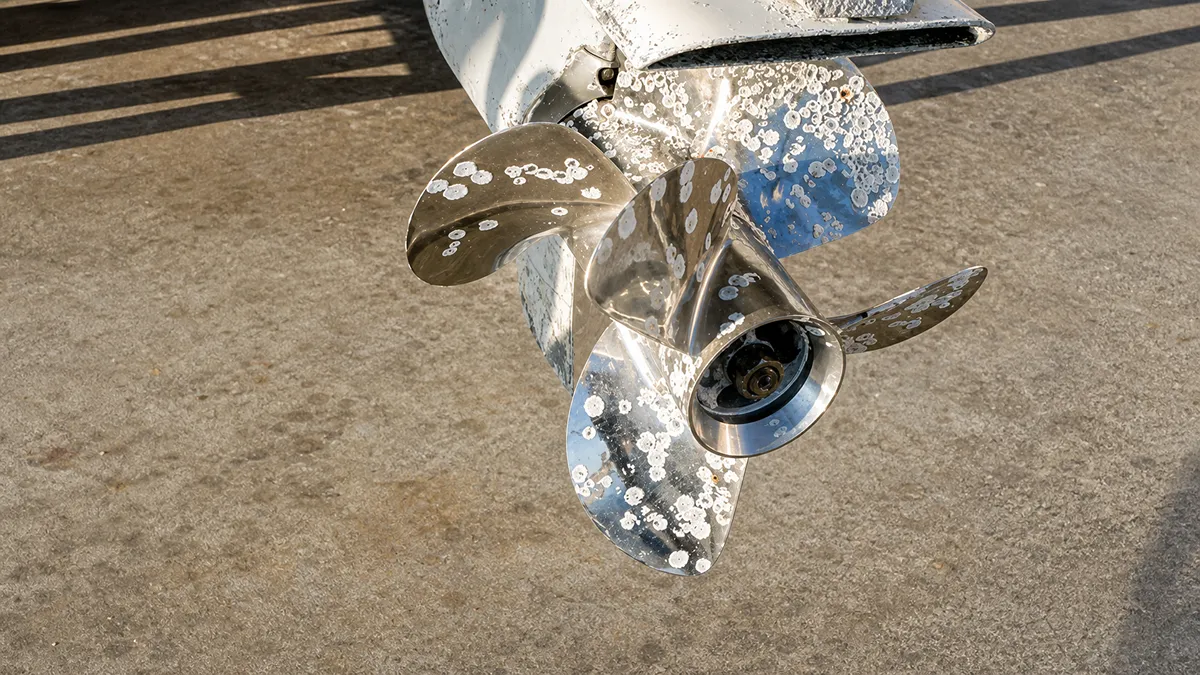
एक आउटबोर्ड प्रोपेलर नाव पर सबसे कठिन वातावरण में से एक में काम करता है. प्रत्येक यात्रा इसे रेत के संपर्क में लाती है, चट्टानों, तैरता हुआ मलबा, उथला पानी, और निरंतर उच्च गति रोटेशन. चुनौती यह है कि प्रोपेलर क्षति अक्सर धीरे-धीरे विकसित होती है. आज एक छोटी सी चिप कल दरार बन सकती है, जबकि हल्का कंपन अंततः बीयरिंग को नुकसान पहुंचा सकता है, सील, या निचली इकाई भी. प्रारंभिक चेतावनी संकेतों को पहचानने का तरीका सीखने से नाव मालिकों को महंगी मरम्मत से बचने में मदद मिलती है, ईंधन अर्थव्यवस्था में सुधार, और पानी पर सुरक्षित प्रदर्शन बनाए रखें.
इस गाइड में, you’ll learn the most common signs of outboard propeller damage, how to inspect your propeller correctly, when repairs are practical, and when replacement is the better long-term solution.
Why Early Propeller Damage Detection Matters
Direct Performance and Efficiency Impacts
A compromised प्रोपेलर immediately degrades how your vessel moves through the water. Minor blade distortions force the engine to work outside its optimal load range, dragging down overall performance.
- Disrupted hydrodynamics: Damaged blades alter water flow, resulting in lower top speeds and weaker acceleration.
- RPM restrictions: Altered effective आवाज़ का उतार-चढ़ाव prevents the engine from hitting its designated wide-open throttle RPM.
- Fuel waste: Reduced propeller efficiency forces the outboard to work harder, significantly increasing fuel consumption.
- Vibration and handling: Imbalanced blades induce vibration that impairs steering precision and degrades overall ride comfort.
Preventing Secondary Mechanical Failures
Ignoring a damaged propeller transfers stress directly to your outboard’s internal drivetrain. What starts as a bent blade quickly compromises seals and bearings deep inside the lower unit.
- Contaminated gear oil: Unnoticed cracks near the submerged fin often cause water ingress and gear oil contamination.
- Engine stress: Deformed propellers alter engine load, causing harmful under-revving or over-revving that stresses internal components.
- Accelerated fatigue: Continuous vibration from an imbalanced prop accelerates structural fatigue in gearcase bearings, driveshafts, and engine mounts.
- Overheating risks: Combined with restricted water inlets, poor propeller condition elevates the risk of severe engine overheating.
Vessel Safety and Operational Reliability
Propeller condition dictates your physical control over the vessel. Failing to spot damage early puts both crew and cargo at risk during critical maneuvers.
- Sudden propulsion loss: A progressively failing hub or weakened blade can fracture under load, causing an immediate loss of usable propulsion.
- Collision hazards: Degraded handling and delayed acceleration reduce maneuverability around obstacles, increasing collision risks.
- Schedule integrity: Timely detection minimizes unscheduled downtime, protecting schedule integrity for commercial, charter, and rescue operations.
The Economic Case for Early Intervention
वित्तीय तर्क सीधा है. Swapping a damaged propeller costs a fraction of the repair bills required if you leave a compromised unit attached to your motor.
- Low-cost intervention: Propeller inspection and replacement represent a fraction of the cost of total engine or lower unit repairs.
- Halting financial bleed: Catching damage early halts compounding financial losses from excess fuel burn and accelerated part wear.
- Avoiding major rebuilds: Ignoring early indicators frequently leads to expensive gearcase rebuilds, seal replacements, and powerhead repairs.
The First Visible Signs of Outboard Propeller Damage
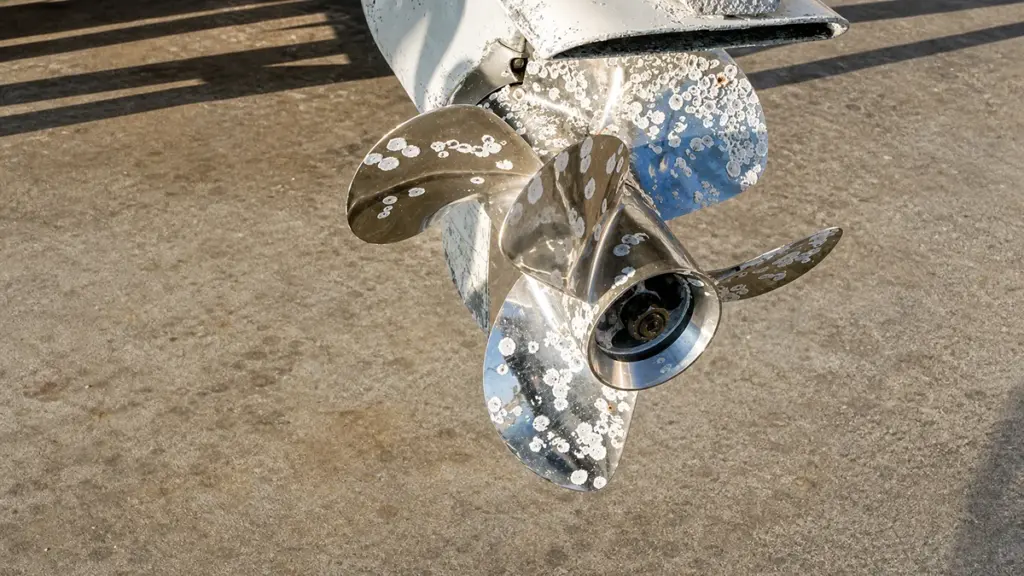
Early detection of outboard propeller damage—like minor nicks, paint wear, or slight bends—prevents escalating fuel costs, vibration-induced drivetrain wear, and sudden propulsion failure.
Paint Deterioration and Superficial Scratches
We often dismiss worn paint as normal wear and tear, but localized paint wear on the blades or hub points to frequent minor impacts with sand or small debris. It acts as the first warning sign before structural bending occurs.
You will typically notice fine scratches appearing on the leading edge first. These surface abrasions usually precede deeper structural wear. Once the protective coating strips away, the exposed bare metal patches create immediate vulnerabilities for accelerated corrosion in saltwater environments.
Nicks, Chips, and Minor Dents
A perfectly smooth edge is essential for hydrodynamic efficiency. Small chips along the leading edge disrupt water flow and increase the risk of cavitation. This turbulent water causes pressure drops that erode the surrounding metal.
Shallow dents on the blade surfaces serve as the earliest structural deformities detectable without specialized tools. Look closely at the trailing edge during inspections. Early material loss at the trailing edge directly impacts the grip and lift of the propeller, which reduces your acceleration and top-end speed.
Subtle Blade Deformation and Bending
Propellers operate under immense load, and even a slight geometric change throws off the balance of the entire drive system. Slightly bent blade tips clearly indicate previous contact with rocks or a hard bottom.
To spot these issues, view the propeller straight from the front. Visible asymmetry suggests uneven deformation from one-sided impacts. Micro warping or twisting alters the pitch and load distribution across the blades. This forces the engine to burn more fuel to maintain your normal cruising speed.
Localized Corrosion and Cavitation Pitting
Material degradation compromises the strength of the unit. Small corrosion pits or powdery white oxidation on aluminum propellers mark areas of material weakening. These spots quickly expand if left unchecked.
Rough, sandblasted patches near high-load regions indicate early cavitation erosion. As vapor bubbles collapse against the metal, they blast away the surface layer. Repeated erosion gradually thins out sections near the leading edge, making them prone to cracking during high-RPM operation.
Visible Hub Misalignment and Scoring
The hub absorbs shift shock and acts as the critical link between the engine and the blades. Scoring or distortion around the hub collar hints at abnormal stress or improper installation. You can test the integrity of the internal rubber bushing with a quick visual diagnostic.
Draw a straight line across the hub and barrel, run the boat under load, and check the marks. Misaligned diagnostic marker lines visually confirm internal hub slippage. You should also check for flattened or peened edges, which reflect a history of running the outboard through shallow, rocky water.
Source High-Margin OEM Garden & कृषि मशीनरी
How Vibration, शोर, and Poor Acceleration Reveal Damage
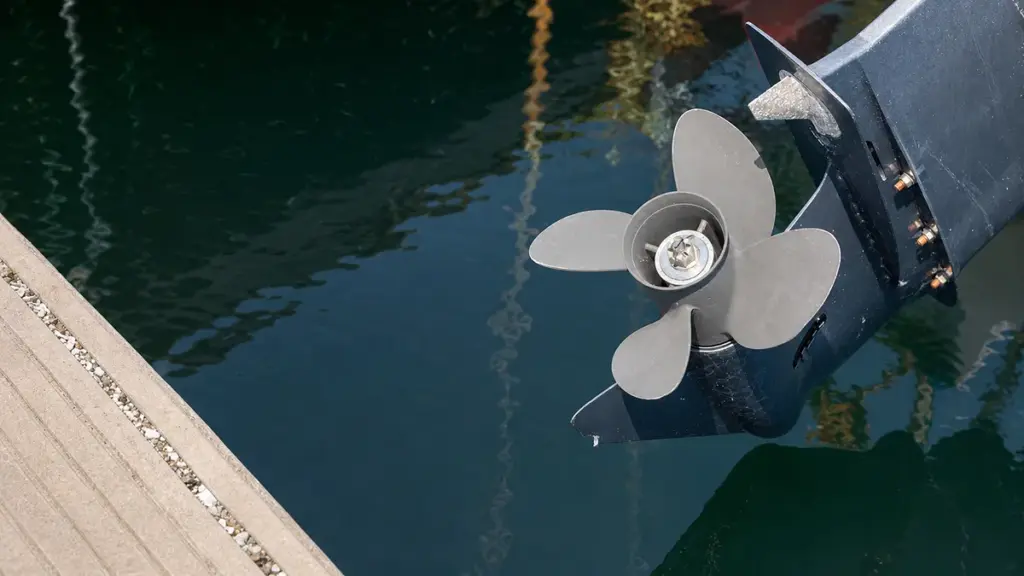
Propeller damage rarely announces itself with a catastrophic failure. It subtly degrades hydrodynamics, sending mechanical warnings through vibration, unusual noise, and sluggish performance that operators must decode.
The Mechanics of Propeller-Induced Vibration
Even minor propeller damage immediately disrupts hydrodynamic balance. When blades hit underwater objects, bent edges or missing metal shift the center of mass off the rotational axis. This mechanical imbalance forces the driveline to absorb cyclical stress.
- Center of mass shift: Bent blades or chipped edges create a mechanical imbalance away from the rotational axis.
- Hydrodynamic distortion: Altered blade geometry changes lift and thrust, placing uneven loads on the shaft and gears.
- RPM sensitivity: Vibrations peak at low to mid RPMs when the propeller works hardest to push the boat onto plane.
- Feedback transmission: Cyclical imbalances travel straight through the propshaft into the steering wheel, transom, and deck.
Translating Noise into Specific Driveline Issues
An outboard should produce a steady acoustic profile under load. When a propeller sustains damage, it introduces turbulence and mechanical interference that change the sound signature completely.
- Cavitation sounds: Damaged blades create low-pressure zones that spawn cavitation bubbles, producing distinct crackling, buzzing, or hissing noises.
- Engine stutter: Uneven thrust generation forces the motor to pulse audibly during hard acceleration runs.
- Lower unit rattle: Impact forces transfer directly into the lower unit, making gears and bearings rumble as they absorb the shock.
- Secondary wear indicators: Prolonged operation with an unbalanced prop causes propshaft bearings to grind or gearcases to emit a high-pitched whine.
Recognizing Performance Loss and Sluggish Acceleration
Physical damage directly compromises grip in the water. This hydrodynamic inefficiency forces the engine to burn more fuel while delivering less forward momentum.
- Increased propeller slip: Physical damage stops the efficient conversion of engine torque into actual forward thrust.
- Weak hole shot: A sluggish transition to plane serves as the primary indicator of blade distortion.
- Speed reduction: Minor imperfections trigger measurable drops in top speed and alter operating RPMs at specific throttle settings.
- Baseline comparison: Comparing current speed and wide-open throttle (WOT) RPM against historical metrics isolates propeller inefficiency from actual engine power loss.
Diagnostic Steps to Confirm the Root Cause
You cannot fix a driveline issue based purely on operator feel. Technicians rely on a strict diagnostic sequence to separate propeller damage from internal engine faults.
- Visual inspection: Check the blades thoroughly for bends, nicks, गॉज, दरारें, or unequal marine growth.
- Shaft examination: Look at the prop shaft for visible bends, binding during manual rotation, or fishing line cutting into the seals.
- Isolation test: Run the engine safely in gear without the propeller installed to see if the vibration stops.
- Secondary component check: Evaluate engine mounts and fuel delivery systems if symptoms persist after installing a known-good propeller.
How to Inspect Blade Edges, Hub Area, and Shaft Contact
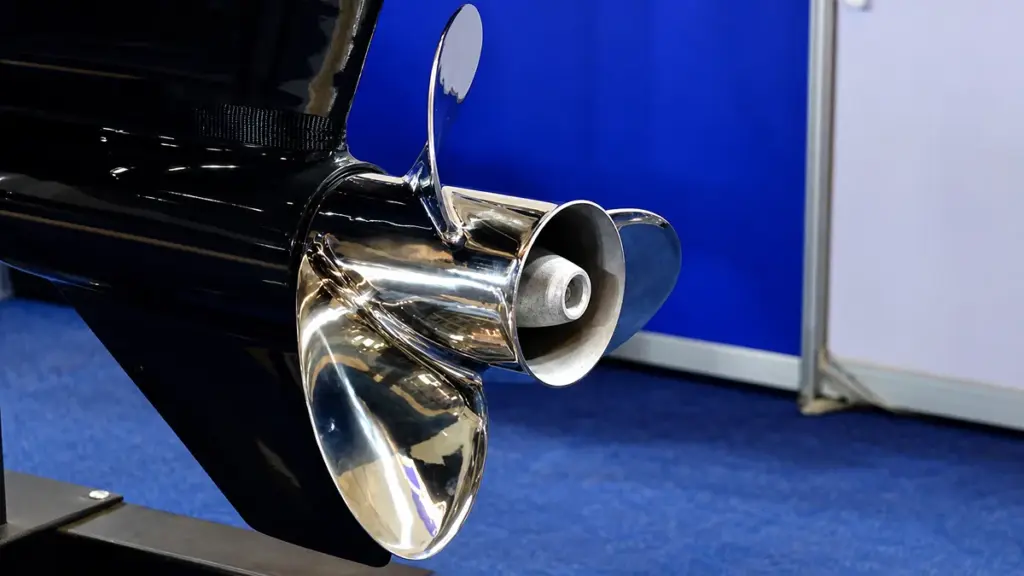
A systematic inspection of blade geometry, hub integrity, and shaft contact points prevents catastrophic lower unit failures, stops vibration, and ensures peak propulsive efficiency.
| Inspection Zone | Key Defect Indicators | Functional Impact |
|---|---|---|
| Blade Edges | Nicks, inward cracks, flattened cup | Hydrodynamic imbalance, गुहिकायन, thrust loss |
| हब असेंबली | Extruded rubber, misaligned marker lines | स्पून हब, complete loss of drive under load |
| शाफ़्ट & हार्डवेयर | Twisted splines, worn thrust washer | Fretting, gearcase vibration, thread damage |
Blade Edges and Surface Integrity
The geometry of the propeller blade dictates thrust generation and fuel efficiency. Technicians must examine leading edges, अनुगामी किनारे, and tips for nicks, chips, गॉज, or inward-radiating cracks. A damaged or flattened cupped trailing edge directly reduces water hold and increases the risk of early cavitation.
- Profile Consistency: Verify uniform rake angle and pitch across all blades to identify uneven bending or impact damage.
- Balance Check: Mount the propeller horizontally on a hub rod to identify heavy or off-plane blades.
- Clearance Limits: Ensure a minimum 3 mm tip clearance from the anti-cavitation plate to prevent contact under heavy load or blade flex.
Hub Area and Spun Hub Detection
The hub handles the brutal torque transfer from the engine to the water. A compromised rubber bushing acts as a failed mechanical fuse, dropping propulsion completely. Inspectors should check the outer hub barrel and blade roots for dents, ovalization, या हेयरलाइन दरारें. Extruded, melted rubber or heat staining clearly signals a failed bushing.
- Slippage Diagnostic: Draw a marker line across the outer housing, rubber zone, and inner hub, then run the boat under load to check for misalignment.
- Exhaust Path: Inspect internal routing for carbon build-up or structural obstructions that could disturb exhaust flow.
Prop Shaft and Hardware Contact Zones
The connection between the propeller and the driveline must remain perfectly aligned to avoid transferring destructive vibrations into the gearcase. Assess the propeller shaft for straightness, runout, rust, and signs of pitting. Spline teeth on both the shaft and the hub bore require close inspection for rounding, chipping, or twisted profiles.
- Thrust Washer Integrity: Examine seating surfaces for cracks, uneven wear, or deep grooves that throw off propeller alignment.
- Torque Application: Apply the proper manufacturer-specified torque—commonly 40-60 ft-lbs—to prevent fretting or thread damage.
Integrated Inspection Workflow
A standard inspection workflow brings these discrete checks into a repeatable process. You must disable the engine ignition, remove the locking hardware, and safely slide the propeller off the shaft. Cleaning the shaft and hub bore with a degreaser is critical to accurately assess the splines and thrust washer without old marine grease hiding the defects.
- Component Evaluation: Systematically check the hub for spun bushing signs and the blade edges for profile consistency.
- Reassembly Protocol: Reinstall using fresh marine grease, pushing the prop forward until it clicks firmly against the thrust washer.
- Final Securing: Torque the nut to spec and verify the locking hardware is properly engaged.
When Minor Damage Can Still Be Repaired
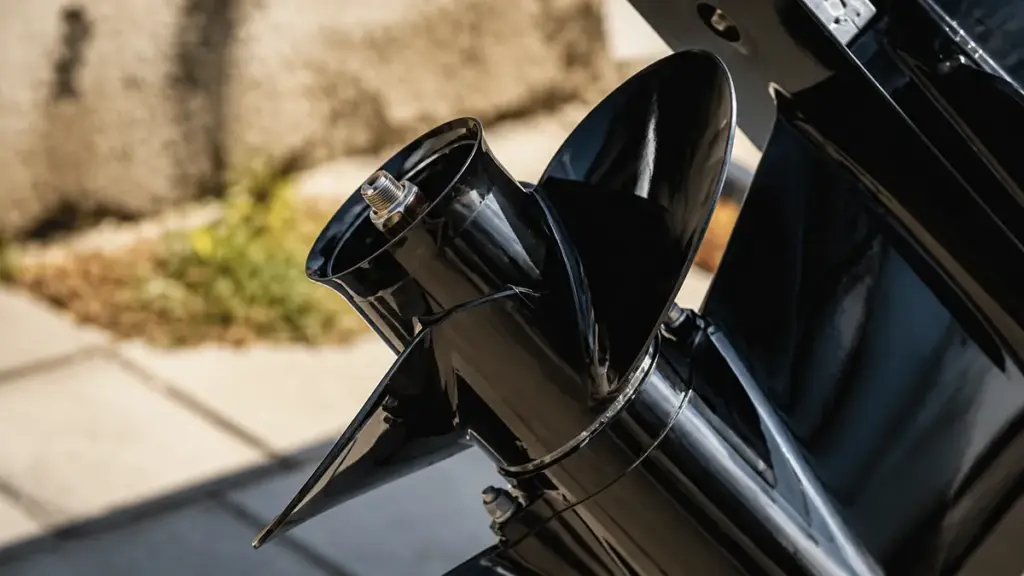
Minor propeller damage like edge burrs and shallow nicks can be repaired with basic filing, provided the blade geometry remains intact and no cracks or vibration are present.
Identifying Repairable Minor Damage
Before breaking out the tools, you need to confirm the damage is actually minor. Repairable defects are strictly surface-level flaws that do not compromise the structural integrity or hydrodynamic shape of the propeller.
- Surface-level dings: Small burrs, leading-edge nicks, and dents that leave the original blade geometry intact.
- Isolated edge wear: Damage limited entirely to the blade edges, meaning the overall diameter and pitch remain unchanged.
- Smooth operation: Propellers that continue to push the boat efficiently without inducing unusual vibration.
- Structural soundness: A complete absence of visible cracks or physical deformation during visual inspection.
If the propeller still performs well and the shaft runs true, you are likely dealing with cosmetic or minor edge wear.
Indicators of Severe Damage
Not all impacts result in a quick fix. Some structural flaws demand immediate professional intervention or a complete replacement to protect your gearcase.
- Visible cracks: Fractures in the blade or hub area, which usually require professional welding or replacement.
- Blade deformation: Noticeable bending or twist across one or multiple propeller blades.
- Severe vibration: Shaking immediately following an impact, signaling a potential mass imbalance.
- Drivetrain impact: Damage extending to the prop shaft, seal, or gear case after a hard strike.
- Die-cast limitations: Die-cast propellers displaying structural flaws, as marine professionals routinely classify these as non-repairable.
Operating with any of these severe defects transfers immense stress directly to your lower unit bearings and seals.
DIY Repair Methods and Discipline
Fixing minor edge damage requires precision and restraint. The goal is to smooth the water flow, not redesign the blade.
- Clean the propeller: Remove all marine growth, गंध, and oil to accurately assess the damage profile.
- File flat: Gently use a coarse or mill bastard file, keeping the tool flat to avoid reshaping the blade.
- Minimize removal: Take off only the absolute minimum amount of metal necessary to smooth out the burr or nick.
- Know when to stop: Cease filing the exact moment the raised metal disappears to preserve blade balance and efficiency.
- Polish the edge: Refine the filed area with fine sandpaper and polish it to reduce hydrodynamic drag and resist corrosion.
Over-filing a single blade shifts the center of mass, transforming a simple nick into a permanent vibration problem.
Deciding Between Repair and Replacement
Knowing when to stop trying to salvage a damaged propeller saves money and prevents unexpected breakdowns on the water.
- Owner repairs: Best suited for slight burrs and minor dings that need only light, controlled filing.
- Professional shops: Necessary for straightening bends, balancing, and checking for hidden cracks using dye or probe scanning.
- Replacement threshold: The smarter financial choice if repair costs exceed 50% of the propeller’s total replacement value.
- Spare recovery: Keeping a spare propeller onboard acts as the ultimate fail-safe if minor damage rapidly worsens during a trip.
Treat your propeller as a consumable wear part. Upgrading to a new unit is significantly cheaper than rebuilding a blown gearcase caused by running an unbalanced prop.
When Early Replacement Is the Safer Choice
Certain types of damage should not be repaired because they increase the risk of sudden failure.
Replacement is usually recommended under the following conditions.
| क्षति का प्रकार | Replace Immediately? | Reason |
|---|---|---|
| Large blade cracks | हाँ | High risk of blade separation |
| Missing blade section | हाँ | Severe imbalance |
| Bent propeller shaft | हाँ | Can damage gearbox |
| Multiple damaged blades | हाँ | Difficult to restore accurately |
| Severe corrosion | हाँ | Reduced structural strength |
| Repeated repaired cracks | हाँ | Metal fatigue continues to grow |
Choose NEWTOP for Reliable Outboard Propeller Performance
A durable propeller begins with dependable manufacturing. पर न्यूटॉप, we produce precision-balanced aluminum and stainless steel outboard propellers designed to deliver stable performance, सुचारू संचालन, and long service life across a wide range of marine applications.
Our manufacturing process combines advanced CNC machining, strict dimensional inspection, dynamic balancing, and comprehensive quality testing to ensure every propeller meets consistent performance standards before shipment. Whether you need replacement propellers for aftermarket distribution or OEM production for your own brand, NEWTOP offers flexible manufacturing solutions backed by reliable उत्पादन क्षमता and global export experience.
प्रमुख लाभों में शामिल हैं:
- CCS and ECE certified quality for reliable performance and international market requirements.
- Premium materials — aluminum propellers use specially formulated aluminum-magnesium alloy for high strength and toughness, while stainless steel propellers use duplex stainless steel with better yield strength and corrosion resistance.
- Integrated molding technology — propeller blanks are formed with dedicated molds without welding, improving structural strength and durability.
- Precision hub pressing and CNC machining — one-piece pressed hubs improve dynamic balance, while CNC-machined blades ensure consistent geometry and stable thrust performance.
If you’re looking for a trusted outboard motor propeller manufacturer for wholesale supply or customized production, contact NEWTOP today. Our engineering and production teams are ready to help you select the right propeller solution for your market while ensuring consistent quality and long-term supply.
अक्सर पूछे जाने वाले प्रश्नों
मुझे कैसे पता चलेगा कि मेरा आउटबोर्ड प्रोपेलर क्षतिग्रस्त हो गया है?
Look for visible bends, chips, दरारें, or missing material on the blades. Operational signs include the engine revving unusually high without proportional boat acceleration, which often points to a spun hub. You might also notice persistent vibration, metallic noises, or a loss of steering stability at normal cruising speeds.
Can a small nick on a propeller cause vibration?
हाँ, even a small nick alters the mass distribution and hydrodynamic symmetry of the blade. This physical imbalance generates centrifugal forces that manifest as noticeable vibration, often within a specific RPM band. Ignoring minor damage leads to progressive wear on the prop shaft and lower unit bearings.
What does a spun prop hub feel like?
A spun hub feels like the boat is slipping in the water. The engine RPM spikes sharply under throttle, but the boat’s speed does not increase. It mimics the sensation of a slipping automotive clutch and is sometimes accompanied by a sudden loss of thrust or a burnt rubber smell.
Should I repair or replace a chipped propeller?
Repair is usually viable for small edge chips or minor bends, especially on higher-value stainless steel props. Replace the propeller if it has large missing chunks, deep cracks near the root, or if you use a low-cost aluminum unit where repair expenses exceed half the price of a new replacement.
Can propeller damage reduce fuel efficiency?
Damaged blades increase hydrodynamic drag and disrupt smooth water flow, forcing the engine to work harder to maintain speed. This mechanical inefficiency prevents the motor from operating in its optimal RPM band, directly resulting in higher fuel consumption per nautical mile.
What kind of noise does a damaged propeller make?
A compromised prop typically produces a rhythmic knocking or thumping sound synchronized with engine RPM. You may also hear metallic rattling or a harsh, low-frequency drone from the lower unit, especially under heavy acceleration or during sharp turns.
Can I still run a boat with a bent propeller?
You should only operate a boat with a bent propeller at minimal idle power to safely return to the dock. Running at planing speeds with unbalanced blades creates severe radial loads that quickly destroy the prop shaft, बीयरिंग, and gearcase seals.
How often should I inspect my propeller?
Perform a quick visual and tactile check before and after every trip to spot obvious bends, chips, or wrapped fishing line. Complete a full removal inspection—taking the prop off to check the shaft, inspect seals, and re-grease the splines—at least once a season or every 100 hours of operation.
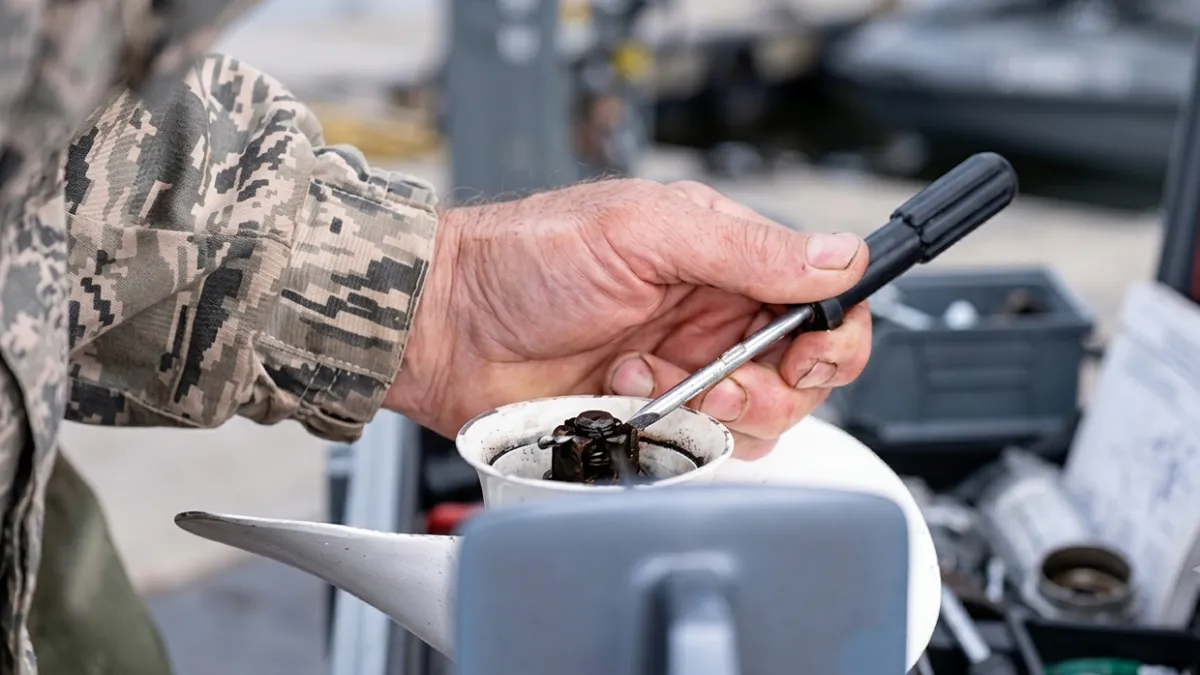
कई नाव मालिकों को प्रोपेलर क्षति का तब तक पता नहीं चलता जब तक कि उनकी नाव अलग महसूस न होने लगे. शायद त्वरण धीमा हो जाता है, ईंधन की लागत बढ़ जाती है, या किसी छिपी हुई चट्टान या तैरते मलबे से टकराने के बाद स्टीयरिंग व्हील कंपन करने लगता है. प्रारंभिक चेतावनी संकेतों को जानने से आपको महंगी मरम्मत से बचने और अपने जहाज़ को कुशलतापूर्वक चलाने में मदद मिल सकती है.
इस गाइड में, हम समझाएंगे 5 क्षतिग्रस्त होने के सबसे सामान्य लक्षण जहाज़ के बाहर प्रोपेलर, वे क्यों मायने रखते हैं, और जब आपके प्रोपेलर को बदलने का समय हो.
क्षतिग्रस्त प्रोपेलर को कभी भी नज़रअंदाज़ क्यों नहीं किया जाना चाहिए?
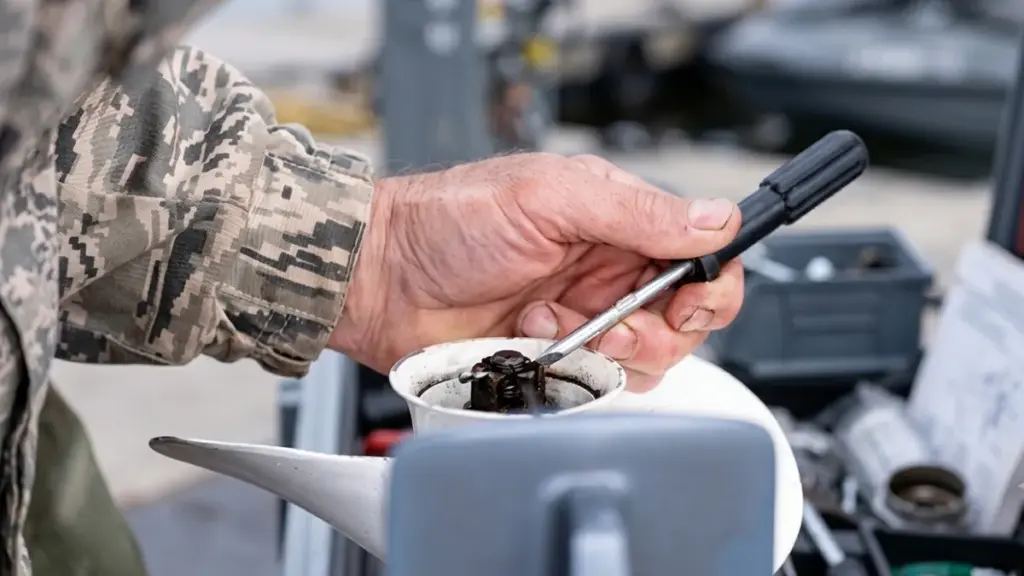
क्षतिग्रस्त प्रोपेलर को नजरअंदाज करने से मामूली दक्षता हानि गंभीर गियरकेस क्षति में बदल जाती है, ईंधन की आसमान छूती कीमतें, और खतरनाक हैंडलिंग मुद्दे. अपने इंजन और वॉलेट की सुरक्षा के लिए इसे जल्दी ठीक करें.
प्रदर्शन में गिरावट और प्रबंधन संबंधी मुद्दे
एक क्षतिग्रस्त प्रोपेलर आपकी नाव के डिज़ाइन किए गए प्रदर्शन को तुरंत ख़त्म कर देता है. यहां तक कि मामूली ब्लेड विरूपण भी इंजन की शक्ति को कुशल आगे की गति में परिवर्तित करने के लिए आवश्यक हाइड्रोडायनामिक प्रोफ़ाइल को बर्बाद कर देता है. ऑपरेटर आमतौर पर इसे सुस्त होल शॉट और टॉप-एंड स्पीड में उल्लेखनीय गिरावट के रूप में देखते हैं.
- जोर की हानि: मुड़े हुए या चिपके हुए ब्लेड ज्यामिति को बाधित करते हैं, आगे के जोर को कम करना और खराब त्वरण का कारण बनना.
- अस्थिरता से निपटना: अनियमित ब्लेड सतहें असमान जोर पैदा करती हैं, स्टीयरिंग खींचने के लिए अग्रणी, अस्थिर ट्रिम, और असंगत ट्रैकिंग.
- कंपन पीढ़ी: असंतुलित घूर्णन भार के तहत कंपन पैदा करता है, अक्सर योजनाबद्ध गति से डेक के माध्यम से एक लयबद्ध थपथपाहट के रूप में महसूस किया जाता है.
ईंधन की खपत और परिचालन लागत में वृद्धि
समझौता किए गए प्रोपेलर को चलाने से सीधे आपके ऑपरेटिंग बजट पर हमला होता है. ब्लेड की सतह पर खामियाँ लैमिनर जल प्रवाह को नष्ट कर देती हैं, इसे ड्रैग और टर्बुलेंस से बदलना. आपकी मानक गति तक पहुंचने के लिए इंजन को काफी अधिक ईंधन जलाना पड़ता है.
- खींचाव जोड़ा गया: क्षतिग्रस्त ब्लेड अशांत प्रवाह उत्पन्न करते हैं, गति बनाए रखने के लिए इंजन को अधिक मेहनत करनी पड़ती है.
- अधिक ईंधन जलना: एक झुका हुआ या मुड़ा हुआ प्रोपेलर नियमित रूप से कुल ईंधन खपत को लगभग लगभग बढ़ा देता है 10%.
- गला घोंटना मुआवजा: अप्रभावी जोर को संतुलित करने के लिए ऑपरेटर स्वाभाविक रूप से थ्रॉटल को जोर से दबाते हैं, दिन-प्रतिदिन चलने वाली लागत चुपचाप कई गुना बढ़ रही है.
निचली इकाई पर गंभीर यांत्रिक तनाव
बाहरी हिस्से की कॉस्मेटिक क्षति अक्सर अंदर के गंभीर यांत्रिक विनाश को छिपा देती है. एक असंतुलित प्रोपेलर आपके ड्राइवट्रेन के विरुद्ध हथौड़े की तरह कार्य करता है. यह स्थिरांक भेजता है, चक्रीय तनाव सीधे निचली इकाई में, एक सस्ते प्रॉप फिक्स को एक विशाल गियरकेस पुनर्निर्माण में बदलना.
- गियरकेस पहनना: असमान लोडिंग तनाव को सीधे निचली इकाई तक पहुंचाती है, गियर को नष्ट करना, बीयरिंग, और समय से पहले हिल जाता है.
- सील का क्षरण: लगातार कंपन से प्रोप शाफ्ट सील टूट जाती है, जिससे गियर ऑयल बाहर निकल जाए और पानी अंदर चला जाए.
- शाफ्ट का गलत संरेखण: ब्लेड को ख़राब करने वाले भारी प्रभाव अक्सर प्रोपेलर शाफ्ट को मोड़ देते हैं, यदि अनियंत्रित छोड़ दिया गया तो भयावह विफलता की गारंटी.
सुरक्षा जोखिम और संभावित फँसना
क्षतिग्रस्त प्रॉप के साथ संचालन करने से आपकी सुरक्षा का मार्जिन लाल क्षेत्र में चला जाता है. स्वच्छ प्रणोद का नुकसान जहाज को तंग क्वार्टरों या कठिन परिस्थितियों में अप्रत्याशित बना देता है. जब आपको बिजली की सबसे अधिक आवश्यकता होती है, तो एक समझौता किए गए ड्राइवट्रेन को अपतटीय में धकेलना अचानक यांत्रिक विफलता को आमंत्रित करता है.
- डॉकिंग के खतरे: रिवर्स थ्रस्ट का नुकसान और अनियमित हैंडलिंग तंग चैनलों और स्लिप्स के आसपास आपके पैंतरेबाजी नियंत्रण को खत्म कर देती है.
- टूटने का खतरा: मौजूदा क्षति के साथ दौड़ने से चलते समय अचानक यांत्रिक विफलता की संभावना काफी बढ़ जाती है.
- मौसम की भेद्यता: भारी समुद्र में यात्रा करते समय कम प्रणोदन दक्षता आपके सुरक्षा मार्जिन से समझौता करती है, उच्च हवाएं, या तेज़ धाराएँ.
5 क्षतिग्रस्त आउटबोर्ड प्रोपेलर सूची के संकेत
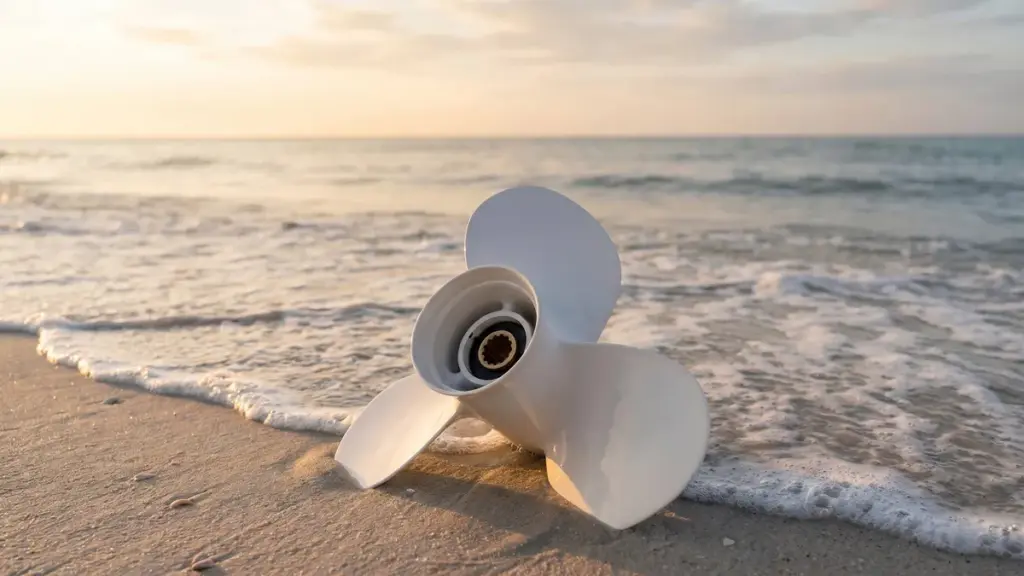
यदि आपकी आउटबोर्ड मोटर अचानक कंपन करती है, गति खो देता है, या सामान्य से अधिक ईंधन की खपत करता है, आपका प्रोपेलर पहले से ही क्षतिग्रस्त हो सकता है. नीचे दी गई तालिका सबसे सामान्य लक्षणों का सारांश प्रस्तुत करती है, उनके संभावित कारण, और वे आपके इंजन को कैसे प्रभावित कर सकते हैं.
| चेतावनी का संकेत | प्राथमिक कारण | तत्काल जोखिम |
|---|---|---|
| कंपन | मुड़े हुए ब्लेड या ढीला हब | गियरकेस सील विफलता |
| गति हानि / पुअर होल शॉट | स्पून हब या ब्लेड ड्रैग | इंजन लैगिंग |
| शोर / स्टीयरिंग अस्थिरता | असममित ब्लेड या मुड़ा हुआ शाफ्ट | लोअर-यूनिट गियर क्षति |
| उच्च ईंधन उपयोग / भार | हाइड्रोडायनामिक ड्रैग | पिस्टन और शीतलन प्रणाली घिसाव |
| दृश्यमान क्षति | प्रभाव प्रहार | ड्राइवट्रेन पर शॉक लोड |
संकेत 1: त्वरण या परिभ्रमण के दौरान कंपन
एक क्षतिग्रस्त प्रोपेलर शायद ही कभी सही दिशा में घूमता है. आप सीधे पतवार के माध्यम से कंपन महसूस करेंगे, जहाज़ के बाहर मोटर आवास, या नाव की पतवार ही, विशेष रूप से जब परिभ्रमण गति तेज कर रहे हों या स्थिर बनाए रख रहे हों. यह कंपन प्रोपेलर दक्षता को काफी कम कर देता है और आपके इंजन माउंट और गियरकेस सील पर तत्काल तनाव डालता है.
- सामान्य कारणों में: मुड़े हुए या विकृत ब्लेड, एक ढीला केंद्र, या प्रोप शाफ्ट के चारों ओर भारी मलबा जमा हो गया है.
- कार्रवाईयोग्य जांच: इंजन बंद करें और प्रोप का निरीक्षण करें. यह सुनिश्चित करने के लिए कि वे मेल खाते हैं, ब्लेड के कोणों को देखें, फिर गियरकेस में किसी भी तरह की गड़बड़ी या खरोंच का पता लगाने के लिए प्रोपेलर को हाथ से घुमाएँ.
संकेत 2: गति में कमी और ख़राब होल शॉट
धीमी गति, विमान पर चढ़ने का समय काफ़ी धीमा हो गया, और शीर्ष गति में कमी सीधे प्रणोदन अक्षमता को इंगित करती है. भले ही आपका इंजन आरपीएम सामान्य या ऊंचा रहता हो, एक समझौता प्रोपेलर उस शक्ति को आगे के जोर में परिवर्तित करने में विफल रहता है. यह अक्सर क्षतिग्रस्त ब्लेड किनारों के आसपास गुहिकायन या अत्यधिक खिंचाव पैदा करने वाली भारी समुद्री गंदगी के परिणामस्वरूप होता है.
- स्पून हब संकेतक: यदि आंतरिक झाड़ी विफल हो जाती है, यह पूरे इंजन टॉर्क को पानी में संचारित नहीं कर सकता, न्यूनतम नाव संचलन के साथ उच्च आरपीएम उत्पन्न करना.
- कार्रवाईयोग्य जांच: अपने वर्तमान वाइड-ओपन थ्रॉटल की तुलना करें (WOT) आपके जहाज के लिए ऐतिहासिक बेसलाइन डेटा के मुकाबले आरपीएम और शीर्ष गति.
संकेत 3: असामान्य शोर या स्टीयरिंग अस्थिरता
नई गुनगुनाहट, तेजस्वी, या पीसने की आवाजें गंभीर यांत्रिक गड़बड़ी का संकेत देती हैं, विशेष रूप से विशिष्ट आरपीएम रेंज से मुड़ते या गुजरते समय. आप यह भी देख सकते हैं कि पतवार को चलाना कठिन लगता है या एक तरफ जोर से खींचता है. ऐसा विषमता के कारण होता है, मुड़े हुए ब्लेड असमान जोर उत्पन्न करते हैं, नाव को उसके प्राकृतिक ट्रैकिंग पथ से हटने पर मजबूर करना.
- गियरकेस खतरा: लगातार पीसने से आमतौर पर पूर्व पानी के नीचे की हड़ताल से मुड़े हुए प्रोप शाफ्ट या निचली-इकाई गियर क्षति का संकेत मिलता है.
- कार्रवाईयोग्य जांच: अतिरिक्त खेल का पता लगाने के लिए प्रोपेलर को आगे-पीछे हिलाएँ. इसे हाथ से घुमाएं और किसी भी आंतरिक स्क्रैपिंग ध्वनि को ध्यान से सुनें.
संकेत 4: उच्च ईंधन उपयोग और असामान्य इंजन लोड
ईंधन दक्षता में अचानक गिरावट का मतलब है कि आप एक ही मार्ग और भार के लिए अधिक बार ईंधन गोदी पर रुक रहे हैं. ब्लेड क्षति या फाउलिंग से हाइड्रोडायनामिक ड्रैग इंजन को खोए हुए जोर और कंपन पर काबू पाने के लिए अधिक मेहनत करने के लिए मजबूर करता है. इंजन तनावपूर्ण लगेगा और सामान्य क्रूज़िंग गति बनाए रखने के लिए उच्च थ्रॉटल सेटिंग्स की आवश्यकता होगी.
- लंबे समय तक पहनना: इन भारी-भरकम परिस्थितियों में निरंतर संचालन से पिस्टन पर घिसाव तेज हो जाता है, बीयरिंग, और जहाज़ के बाहर शीतलन प्रणाली.
संकेत 5: दर्शनीय ब्लेड, केंद्र, या किनारे की क्षति
शारीरिक दोष किसी प्रभाव के सबसे स्पष्ट संकेतक हैं. एक त्वरित दृश्य निरीक्षण से अक्सर गड़बड़ी का पता चलता है, टिप्स हैं, गायब टुकड़े, या हेयरलाइन दरारें. ये दोष आम तौर पर नाव को ज़मीन पर गिराने या चट्टानों से टकराने से उत्पन्न होते हैं, रेत की सलाखें, भित्तियों, या डूबा हुआ मलबा. यहां तक कि मामूली शारीरिक क्षति भी प्रोप की प्रभावी पिच और संतुलन को बदल देती है, हानिकारक शॉक लोड को सीधे आपकी निचली इकाई में संचारित करना.
- कार्रवाईयोग्य जांच: सभी सतहों का बारीकी से निरीक्षण करने के लिए प्रोपेलर को हटा दें. यदि आपको गंभीर संरचनात्मक क्षति मिलती है या यदि मरम्मत का अनुमान अधिक है तो यूनिट को बदलें 50% एक नए प्रोप की लागत का.
स्रोत उच्च-प्रदर्शन OEM आउटबोर्ड प्रोपेलर

समय पर सही प्रोपेलर को बदलकर अपने इंजन की सुरक्षा कैसे करें
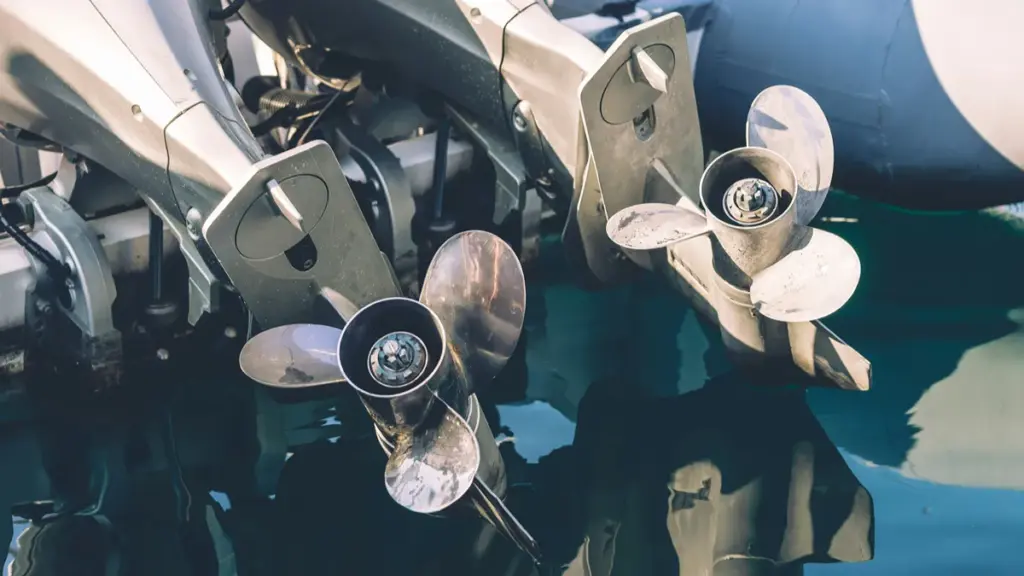
एक क्षतिग्रस्त प्रोपेलर आपके इंजन को कड़ी मेहनत करने के लिए मजबूर करता है और गंभीर ड्राइवट्रेन विफलता का जोखिम उठाता है. क्षतिग्रस्त इकाई को तुरंत बदलने से आपके गियरकेस की सुरक्षा होती है और आधारभूत ईंधन दक्षता बहाल हो जाती है.
यह पहचानना कि इसे बदलने का समय कब है
प्रोपेलर को कब बदलना है, इसकी सही जानकारी होने से छोटी-मोटी टूट-फूट को यांत्रिक विफलता में बदलने से रोका जा सकता है. दृश्य और स्पर्श संबंधी निरीक्षण आपकी रक्षा की पहली पंक्ति के रूप में कार्य करते हैं. किसी जलमग्न वस्तु पर किसी भी प्रहार पर तत्काल ध्यान देने की आवश्यकता है, भले ही नाव अभी भी चलती हो.
- दर्शनीय संरचनात्मक क्षति: गहरी दरारों की जाँच करें, बड़े गायब टुकड़े, गंभीर रूप से मुड़े हुए ब्लेड, या पतले किनारे जो ब्लेड की ज्यामिति से समझौता करते हैं.
- बेसलाइन प्रदर्शन गिरता है: ऐसे इंजन पर नज़र रखें जो अचानक अपनी बेसलाइन वाइड-ओपन-थ्रॉटल तक पहुंचने में विफल हो जाता है (WOT) सामान्य भार के तहत आरपीएम या शीर्ष गति.
- कंपन और प्रबंधन संबंधी समस्याएं: लगातार कंपन, स्टीयरिंग खींचना, या रफ ट्रैकिंग एक असंतुलित प्रोपेलर का संकेत देती है.
- प्रभाव-पश्चात सत्यापन: पानी के नीचे चट्टानों से टकराने के बाद शाफ्ट और सील का निरीक्षण करने के लिए हमेशा प्रोप को हटा दें, लॉग, या मलबा.
सही रिप्लेसमेंट प्रोपेलर चुनना
बेमेल प्रोपेलर को स्थापित करना टूटे हुए प्रोपेलर को चलाने जितना ही हानिकारक है. आपको प्रतिस्थापन विनिर्देश को अपने पतवार प्रकार और विशिष्ट परिचालन भार के साथ संरेखित करने की आवश्यकता है.
- सही पिच और व्यास: निर्माता की अनुशंसित पिच रेंज का अभाव इंजन को ओवर-रेव या लूग करने के लिए मजबूर करता है, ईंधन अर्थव्यवस्था और त्वरण को नष्ट करना.
- प्रभाव अवशोषण के लिए एल्यूमिनियम: अल्युमीनियम प्रॉप्स उथले में एक बलि बाधा के रूप में कार्य करते हैं, ख़तरे से भरा पानी. प्रभाव पड़ने पर वे विकृत हो जाते हैं, महंगे गियरकेस में बहुत कम झटका संचारित करना.
- स्थायित्व के लिए स्टेनलेस स्टील: जब आपको अधिकतम दक्षता की आवश्यकता हो तो स्टेनलेस स्टील चुनें, फ्लेक्स प्रतिरोध, और गहरे या खतरे से मुक्त पानी में स्थायित्व.
स्थापना और प्रतिस्थापन के बाद की जाँच
एक सफल प्रतिस्थापन के लिए हब असेंबली और शाफ्ट वातावरण पर सख्त ध्यान देने की आवश्यकता होती है. नए प्रोपेलर को चालू करने से पहले, यह सुनिश्चित करने के लिए कि ड्राइवलाइन ठीक से काम कर रही है, क्षेत्र को अच्छी तरह से साफ़ करें और तैयार करें.
- दस्ता तैयारी: लिपटी हुई मछली पकड़ने की रेखा को हटा दें, मातम, और मलबा जो नई सील को काट सकता है.
- हार्डवेयर सीटिंग: स्प्लिंस पर समुद्री-ग्रेड ग्रीस लगाएं. प्रोप नट को अधिक कसने के बिना सटीक टॉर्क स्पेक पर सुरक्षित करें, और यदि डिज़ाइन की आवश्यकता हो तो एक ताज़ा कोटर पिन डालें.
- घर्षण परीक्षण: आउटबोर्ड को न्यूट्रल में शिफ्ट करें और नए प्रोपेलर को हाथ से घुमाएं. इसे गियरकेस को बांधे या खरोंचे बिना स्वतंत्र रूप से घूमना चाहिए.
- आधारभूत सत्यापन: यह पुष्टि करने के लिए नाव को सामान्य लोड के तहत चलाएं कि नया प्रोप आपकी मूल शीर्ष गति और WOT RPM को पुनर्स्थापित करता है.
निष्कर्ष
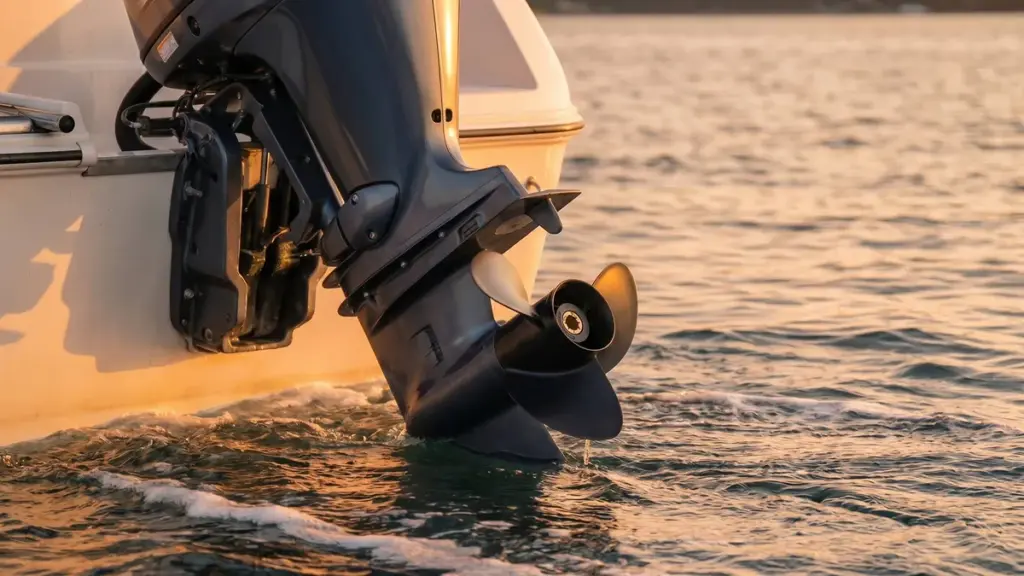
नियमित निरीक्षण और समय पर प्रतिस्थापन आपके आउटबोर्ड इंजन की सुरक्षा के सर्वोत्तम तरीके हैं, नौकायन प्रदर्शन में सुधार, और दीर्घकालिक परिचालन लागत कम करें. सही पिच के साथ आउटबोर्ड मोटर प्रोपेलर प्राप्त करना भी उतना ही महत्वपूर्ण है, व्यास, विश्वसनीय और कुशल संचालन सुनिश्चित करने के लिए उच्च गुणवत्ता वाली सामग्री.
चाहे आप अपने बेड़े के लिए प्रोपेलर बदल रहे हों या अपने व्यवसाय के लिए उत्पादों की सोर्सिंग कर रहे हों, अनुभवी आउटबोर्ड मोटर प्रोपेलर निर्माताओं के साथ साझेदारी करने से उत्पाद की गुणवत्ता में महत्वपूर्ण अंतर आ सकता है, प्रदर्शन, और दीर्घकालिक विश्वसनीयता. पर न्यूटॉप, हमारी एकीकृत आउटबोर्ड मोटर प्रोपेलर फैक्ट्री वितरकों और समुद्री ब्रांडों को प्रतिस्पर्धी बाजारों में सफल होने में मदद करने के लिए लचीली OEM/ODM सेवाओं के साथ उन्नत विनिर्माण को जोड़ती है।.
👉 आज ही NEWTOP से संपर्क करें अपनी ओईएम या थोक आवश्यकताओं पर चर्चा करने और अपने अगले आउटबोर्ड प्रोपेलर प्रोजेक्ट के लिए प्रतिस्पर्धी कोटेशन प्राप्त करने के लिए.
अक्सर पूछे जाने वाले प्रश्नों
क्षतिग्रस्त आउटबोर्ड प्रोपेलर के लक्षण क्या हैं??
आप दृश्य दोषों के माध्यम से प्रोपेलर क्षति का पता लगा सकते हैं, प्रदर्शन में गिरावट, और यांत्रिक लक्षण. डेंट की तलाश करें, मुड़ी हुई ब्लेड युक्तियाँ, गायब टुकड़े, या हब के पास हेयरलाइन में दरारें. पानी पर, क्षति धीमी शीर्ष गति के रूप में दिखाई देती है, सुस्त छेद शॉट, और कम आगे की नाव गति के साथ उच्च इंजन आरपीएम. आप पतवार में नए लयबद्ध कंपन भी महसूस कर सकते हैं या थपथपाहट की आवाजें सुन सकते हैं. यदि आप निचली इकाई के आसपास दूधिया गियर तेल का रिसाव देखते हैं, प्रभाव से संभवत: आपके प्रोप शाफ्ट सील को नुकसान पहुंचा है.
क्या कोई क्षतिग्रस्त प्रोपेलर मेरे इंजन को नुकसान पहुंचा सकता है??
हाँ, एक क्षतिग्रस्त प्रोपेलर आपके पूरे आउटबोर्ड इंजन और निचली इकाई पर गंभीर दबाव डालता है. यहां तक कि ब्लेड का मामूली मोड़ भी असंतुलित घुमाव पैदा करता है. यह घूर्णी असंतुलन निरंतर भेजता है, ड्राइवलाइन के माध्यम से सीधे भारी कंपन. अनियंत्रित छोड़ दिया गया, यह हिलाने से प्रोप शाफ्ट सील पर तब तक हथौड़ा चलता है जब तक वे विफल नहीं हो जाते, गियर की चिकनाई को बाहर निकलने देना और पानी को अंदर आने देना. इस स्थिति में इंजन चलाने से आपके गियर सेट और बियरिंग में धातु-से-धातु विनाशकारी घिसाव होता है.
पानी के अंदर किसी चीज़ से टकराने के बाद मेरी नाव क्यों कंपन करती है??
किसी जलमग्न वस्तु से टकराने से आपका ड्राइवट्रेन संतुलन से बाहर हो जाता है. प्रभाव आमतौर पर प्रोपेलर ब्लेड को मोड़ देता है, सामग्री के टुकड़े निकाल देना, या प्रोपेलर शाफ्ट को थोड़ा मोड़ देता है. क्योंकि प्रोपेलर अब अपना सममित आकार नहीं रखता है या पूरी तरह से सही तरीके से नहीं घूमता है, यह सुचारू रूप से घूमने के बजाय परिक्रमा करता है. यह डगमगाहट एक लयबद्ध कंपन बल उत्पन्न करती है जो सीधे आउटबोर्ड लेग तक जाती है, इंजन माउंट के माध्यम से, और सीधे पतवार में.
क्या प्रोपेलर क्षति खराब त्वरण का कारण बन सकती है??
हाँ. शारीरिक क्षति ब्लेड की पिच को बदल देती है, वक्रता, और कप. यह विकृति प्रोपेलर की हाइड्रोडायनामिक दक्षता को ख़त्म कर देती है, इसे पानी पर अपनी पकड़ खोने के लिए मजबूर किया और आगे की ओर जोर कम कर दिया. भी, यदि कोई जोरदार प्रहार आंतरिक रबर हब को नुकसान पहुंचाता है - जिसे आमतौर पर कहा जाता है “घूमता हुआ हब”- प्रोपेलर शेल शाफ्ट पर फिसल जाता है. जब आप थ्रोटल दबाते हैं, जब नाव मुश्किल से गति पकड़ती है या विमान पर चढ़ने के लिए संघर्ष करती है तो इंजन तेज़ गति से चलता है.
क्या खराब प्रोपेलर से ईंधन की खपत बढ़ेगी??
हाँ. क्षतिग्रस्त प्रोपेलर को चलाने से इंजन को प्रति मील अधिक ईंधन जलाने के लिए मजबूर होना पड़ता है. झुका हुआ, चिपक गया, या भारी गंदे ब्लेड अतिरिक्त हाइड्रोडायनामिक ड्रैग बनाते हैं और प्रोपेलर स्लिप को बढ़ाते हैं. क्योंकि क्षतिग्रस्त ब्लेड इंजन टॉर्क को थ्रस्ट में कुशलतापूर्वक परिवर्तित नहीं कर पाते हैं, आपकी सामान्य परिभ्रमण गति को बनाए रखने के लिए आउटबोर्ड को तेजी से घूमना पड़ता है और अधिक मेहनत करनी पड़ती है. एक सीज़न से अधिक, यह अक्षमता ईंधन बिल को काफी अधिक बढ़ा देती है.
मैं क्षतिग्रस्त प्रोपेलर को कितने समय तक सुरक्षित रूप से उपयोग कर सकता हूँ??
आपको क्षतिग्रस्त प्रोपेलर को केवल इतनी देर तक चलाना चाहिए कि वह कम गति पर डॉक पर वापस आ सके. एक कंपन का संचालन, किसी भी विस्तारित अवधि के लिए असंतुलित प्रोप असामान्य डालता है, आपकी निचली इकाई बीयरिंग और सील पर चक्रीय तनाव. इस स्थिति में इंजन को धक्का देने से सिंपल जल्दी खराब हो जाता है, भयावह गियरकेस पुनर्निर्माण में सस्ता प्रोपेलर प्रतिस्थापन.
क्या क्षतिग्रस्त हब इंजन को ओवर-रेव कर सकता है??
हाँ. निर्माता आपके निचली इकाई के गियर को कटने से बचाने के लिए आंतरिक रबर हब को गंभीर प्रभाव के दौरान फिसलने के लिए डिज़ाइन करते हैं. एक बार यह हब घूम जाता है या फट जाता है, यह बाहरी प्रोपेलर शेल पर अपनी मजबूत पकड़ स्थायी रूप से खो देता है. जब आप थ्रॉटल लगाते हैं, क्षतिग्रस्त हब टॉर्क स्थानांतरित करने के बजाय फिसल जाता है. यह नाव को आगे बढ़ाए बिना इंजन आरपीएम को तेजी से बढ़ने की अनुमति देता है, फिसलते संचरण की अनुभूति की नकल करना.
क्या मुझे बोर्ड पर एक अतिरिक्त प्रोपेलर रखना चाहिए??
बोर्ड पर एक अतिरिक्त प्रोपेलर रखने की अत्यधिक अनुशंसा की जाती है. यह सस्ते बीमा का काम करता है, विशेष रूप से यदि आप एल्युमीनियम प्रोप चलाते हैं या नियमित रूप से उथले स्थान पर नेविगेट करते हैं, रुकावट से भरा पानी. एक अतिरिक्त इकाई ले जाना, एक प्रोप रिंच के साथ, एक प्रतिस्थापन थ्रस्ट वॉशर, और एक ताजा कोटर पिन, आपको क्षतिग्रस्त प्रोप को मौके पर ही बदलने की सुविधा देता है. यह तुरंत सुरक्षित प्रणोदन बहाल करता है और आपको बर्बाद सप्ताहांत या महंगे टोइंग बिल से बचाता है.
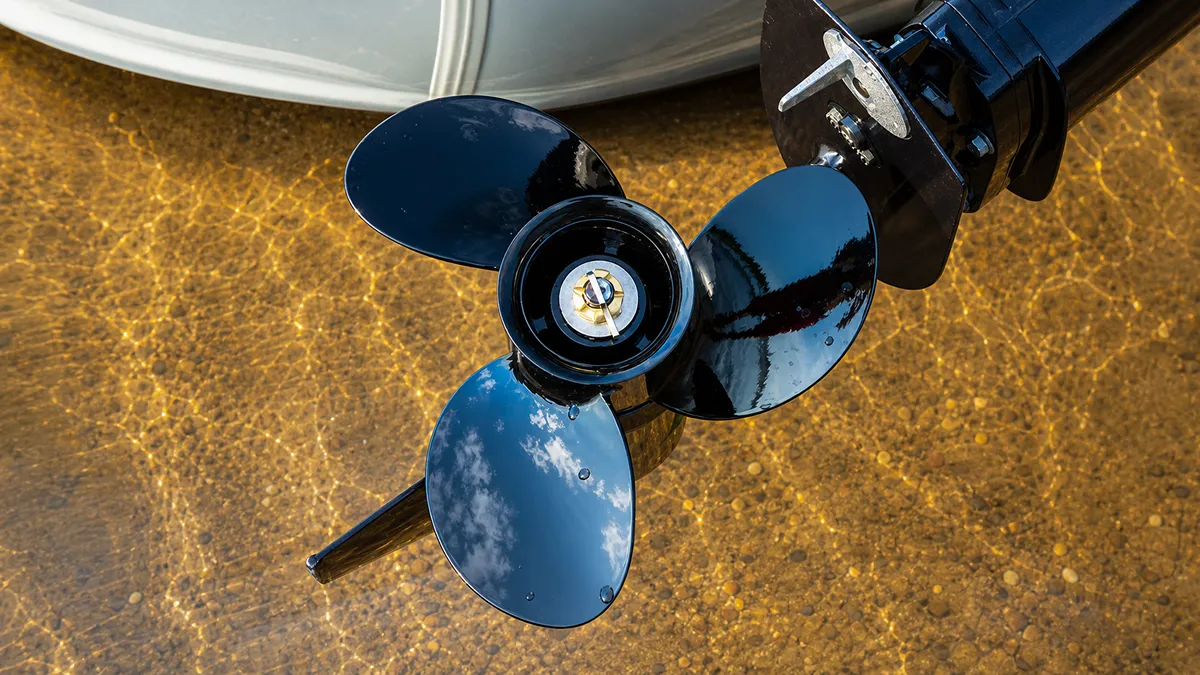
जब एक नाव अचानक गति खो देती है, इंजन आरपीएम त्वरण के मिलान के बिना बढ़ जाता है, or the प्रोपेलर shows unusual surface damage, कई ऑपरेटर मानते हैं कि प्रोपेलर बस खराब हो गया है. यथार्थ में, the problem may be propeller cavitation.
पोकेशन आउटबोर्ड मोटर प्रदर्शन को प्रभावित करने वाले सबसे गलत समझे जाने वाले मुद्दों में से एक है. इससे कार्यकुशलता कम हो जाती है, ईंधन की खपत बढ़ाता है, प्रोपेलर जीवन को छोटा करता है, और अगर नजरअंदाज किया गया तो महंगी मरम्मत भी हो सकती है. हालाँकि इसे अक्सर वेंटिलेशन समझ लिया जाता है, दोनों समस्याओं के अलग-अलग कारण हैं और अलग-अलग समाधान की आवश्यकता है.
इस गाइड में, हम बताएंगे कि गुहिकायन क्या है, इसका क्या कारण होता है, यह आपकी नाव को कैसे प्रभावित करता है, and the practical ways to prevent it by choosing the right propeller and setup.
What Is Cavitation in Outboard Motor Propellers?
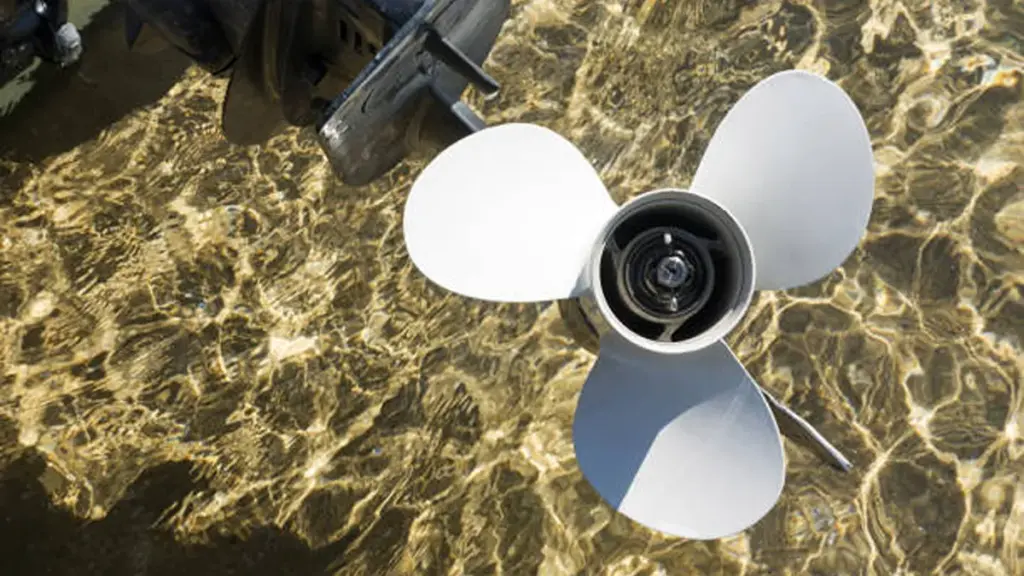
Cavitation in outboard propellers is a destructive hydrodynamic pressure issue. Vapor bubbles form and violently collapse on the blades, causing power loss and severe metal erosion.
The Physical Process of Cavitation
Cavitation starts when rapid propeller rotation forces local water pressure to drop below its vapor pressure. This extreme low pressure triggers an immediate phase change, creating vapor bubbles directly on the blade surface. The water essentially boils at ambient temperature due to the pressure drop.
As the spinning propeller drives these vapor bubbles into higher-pressure zones, they cannot sustain their form and collapse violently. These collapsing bubbles release intense micro-shock waves against the blade. अधिक समय तक, these repeated impacts pound the metal surface, eroding the material and causing severe pitting.
Common Causes in Outboard Setups
Several setup and operational factors create the ideal environment for these damaging low-pressure zones to form.
- Incorrect mounting and trim: Setting the engine mounting height too high or trimming the motor out too far disrupts solid water flow across the blades.
- Poor propeller selection: Using a propeller poorly matched to the boat’s hull, load, or engine power forces the blades to carry excessive hydrodynamic load.
- Pre-existing damage: Bent blades, over-filed tips, or nicked edges create uneven hydrodynamics that trigger localized pressure drops.
- Disturbed inflow: Hull turbulence, transducers, or underwater obstructions prevent clean water from reaching the lower unit.
Symptoms and Performance Impacts
Operators usually identify cavitation through immediate handling degradation and eventual mechanical wear on the propulsion system.
- Loss of thrust: You experience a sudden decrease in power transfer efficiency, leaving the boat feeling sluggish under heavy throttle.
- RPM flaring: The engine speed surges rapidly without a proportional increase in forward acceleration.
- Audible disturbances: Collapsing bubbles create a distinct gravel-like rattling, accompanied by excessive vibration through the transom.
- Cumulative wear: Unchecked cavitation leads to visible blade erosion, pitting, and structural metal fatigue over time.
Distinguishing Cavitation from Ventilation
Boaters frequently confuse cavitation with ventilation, but they are entirely different mechanical events. Cavitation functions strictly as a hydrodynamic pressure issue resulting in vaporized water. Ventilation happens when the propeller physically pulls surface air or exhaust gases directly into the slipstream.
Both phenomena create nearly identical operator symptoms, including sudden RPM flare and an immediate loss of bite in the water. Accurate diagnosis dictates the repair path. Fixing ventilation usually involves basic trim adjustments or dropping the engine height. Resolving cavitation often requires repairing damaged blade edges or selecting a completely different propeller design to handle the engine’s output.
How Cavitation Differs from Ventilation
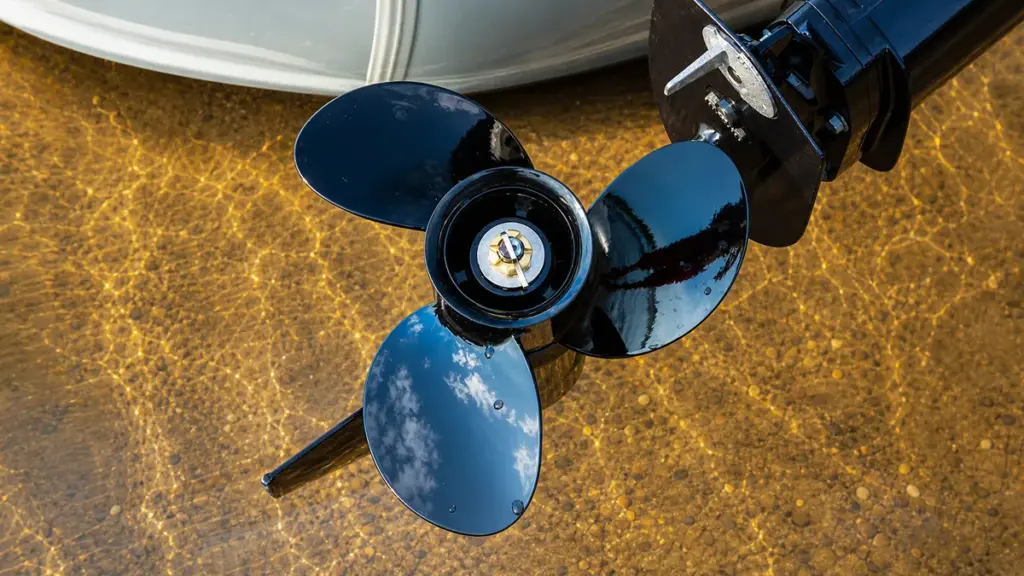
Cavitation is a pressure-induced phase change causing water to boil and erode propeller blades, while ventilation is external air getting sucked into the prop wash, causing sudden slippage.
Many boat owners use the terms गुहिकायन और ventilation interchangeably, but they describe two different phenomena.
| विशेषता | Cavitation | Ventilation |
|---|---|---|
| Cause | Water pressure drops below vapor pressure. | Air enters the propeller blades. |
| Medium Around Blade | Water vapor bubbles. | Air from above the water surface. |
| Main Symptom | Blade erosion and reduced propulsion efficiency. | Sudden engine RPM increase with poor thrust. |
| Blade Damage | हाँ, often causes pitting and surface erosion. | Usually no direct blade erosion. |
| Typical Causes | Incorrect blade loading, damaged propeller, poor blade design, or excessive pressure drop. | Engine mounted too high, sharp turns, rough water, or excessive trim angle. |
A simple way to remember the difference:
- Cavitation creates bubbles from water.
- Ventilation pulls air into the propeller.
Maximize Margins With Professional-Grade Garden Machinery
The Main Causes of Propeller Cavitation
Cavitation occurs when local water pressure drops below vapor pressure. Excessive speed, mismatched propellers, blade damage, and disturbed inflow from poor setup are the primary triggers.
| Cavitation Cause | Primary Mechanism |
|---|---|
| रफ़्तार & लोड हो रहा है | High RPM and heavy vessel loads drive local pressure below the vapor threshold. |
| Propeller Mis-Match | Wrong pitch or physical size creates extreme pressure imbalances across the blade. |
| Blade Damage | Nicks and bent edges prevent smooth water flow, causing localized low-pressure zones. |
| Setup & Inflow | Improper engine height or hull obstructions introduce turbulent, low-pressure water. |
Excessive Propeller Speed and High Loading
Propellers designed for standard operation struggle when pushed past their hydrodynamic limits. Spinning a blade too fast creates an extreme pressure drop on the back side. This sudden vacuum forces the water to vaporize instantly into gas pockets.
Operating parameters heavily influence this pressure shift. Specific stressors force the propeller into a continuous cavitation cycle.
- Heavy loads: Excess vessel weight forces the engine to work harder, multiplying blade stress.
- Hard acceleration: Rapid throttle spikes disrupt steady water flow and immediately drop local pressure.
- Extreme RPMs: Sustained high-speed operation with an overloaded vessel guarantees continuous vapor formation.
Incorrect Pitch, Sizing, and Propeller Mis-Match
Slapping any available propeller onto an outboard guarantees poor performance. Pitch directly dictates blade loading. Excessive pitch bogs down the engine and overloads the blades at lower speeds. Insufficient pitch lets the engine over-rev, accelerating the blades so fast that they tear the water apart and induce surface cavitation.
Proper matching requires aligning the propeller geometry with the specific vessel dynamics to maintain pressure equilibrium.
- Diameter constraints: Selecting a size that ignores hull weight and horsepower creates severe pressure imbalances.
- Blade geometry: The wrong blade count, rake, or cup strips the propeller of its grip, increasing slip and flow separation.
- Hull compatibility: A propeller style mismatched to the hull design fails to handle the specific water flow of that vessel.
Physical Blade Damage and Surface Imperfections
Water requires a perfectly smooth surface to maintain laminar flow. Minor impact damage alters the local hydrodynamics completely. Nicks, गॉज, or missing chunks on the leading edge stop the blade from slicing cleanly. These defects act as turbulence generators, spawning localized low-pressure zones where vapor bubbles rapidly form.
Physical irregularities consistently trigger flow breakdown across the entire propulsion system.
- Bent blades: Asymmetric geometry causes uneven loading and violent pressure swings during every revolution.
- Altered edges: Overly sharpened or blunt leading edges detach the water flow prematurely.
- Lower unit fouling: Barnacle buildup or deep scratches on the gearcase destroy the clean water stream before it reaches the blades.
Disturbed Inflow, Setup, and Clearance Issues
A propeller operates efficiently only when fed a steady stream of dense, clean water. Mounting the outboard too high on the transom starves the system. This setup places the blades near the surface where the water is already aerated and low in pressure, accelerating the phase change into vapor.
Environmental factors around the transom dictate the quality of the inflow reaching the propeller.
- Clearance limits: Inadequate spacing between the propeller, hull bottom, and skeg amplifies local turbulence.
- Appendage drag: Poorly placed transducers or water pickups inject chaotic currents directly into the propeller path.
- Vessel attitude: Excessive stern weight or improper boat trim shifts the inflow angle, severely degrading water density.
How Cavitation Affects Speed, Fuel Use, and Blade Life
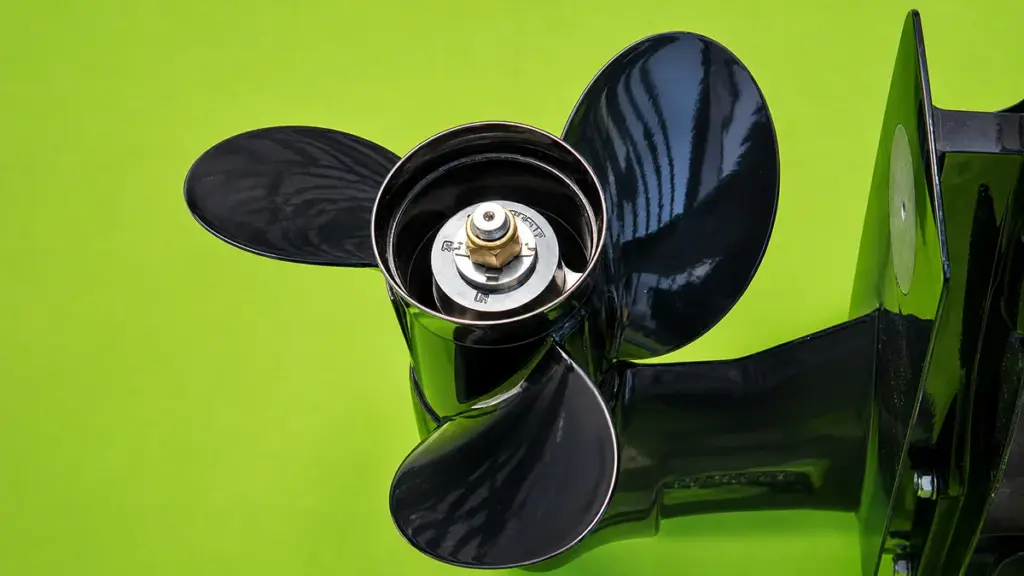
Cavitation cripples propeller efficiency. It kills top speed, burns up to 10% more fuel per mile, and destroys blades through violent micro-shock waves, forcing expensive premature replacements.
Impact on Boat Speed and Acceleration
When cavitation vapor bubbles form, they reduce effective blade lift. This breaks the propeller’s physical hook-up to the water and causes a massive drop in thrust. You will often feel this as a sudden RPM flare with barely any forward movement, forcing you to back off the throttle to let the blades regain bite.
- Hole-Shot Performance: Acceleration becomes sluggish, drastically extending the time it takes to get the heavy hull on plane.
- Top Speed Penalty: Even partial tip cavitation creates enough drag to cause a 2–5% loss in top speed on high-performance setups.
Increased Fuel Consumption and Reduced Efficiency
Vapor bubbles sticking to the blade surfaces act like a physical barrier. They increase friction and alter the effective thickness of the blade, destroying hydrodynamic efficiency. To compensate for the lost thrust, operators push the throttle further forward. This pushes the engine into a higher RPM band where it operates far outside its peak fuel efficiency range.
- Burn Rate: A chronic cavitation mismatch burns 5–10% more fuel per mile just to maintain the same hull speed.
- Lifetime Waste: Over the lifespan of a commercial or high-use outboard, this hydrodynamic drag wastes hundreds of gallons of fuel.
Structural Damage and Shortened Blade Life
Cavitation acts as a mechanical grinder on your hardware. When vapor pockets move into higher-pressure water, they collapse violently. These implosions generate localized micro-shock waves that mechanically hammer the metal, leading to severe pitting along the leading edges and low-pressure faces of the propeller.
- Vibration and Fatigue: The uneven collapse of bubbles creates high-frequency vibrations, subjecting the prop to continuous high-cycle fatigue.
- Cracking and Separation: Fatigue promotes micro-cracking at critical stress points like root fillets, which can quickly progress into complete blade separation under heavy loads.
- Collateral Damage: The constant oscillatory loads force premature propeller replacement and increase the risk of catastrophic bearing and seal failures inside the lower unit.
How to Fix Cavitation Through Setup and Prop Selection
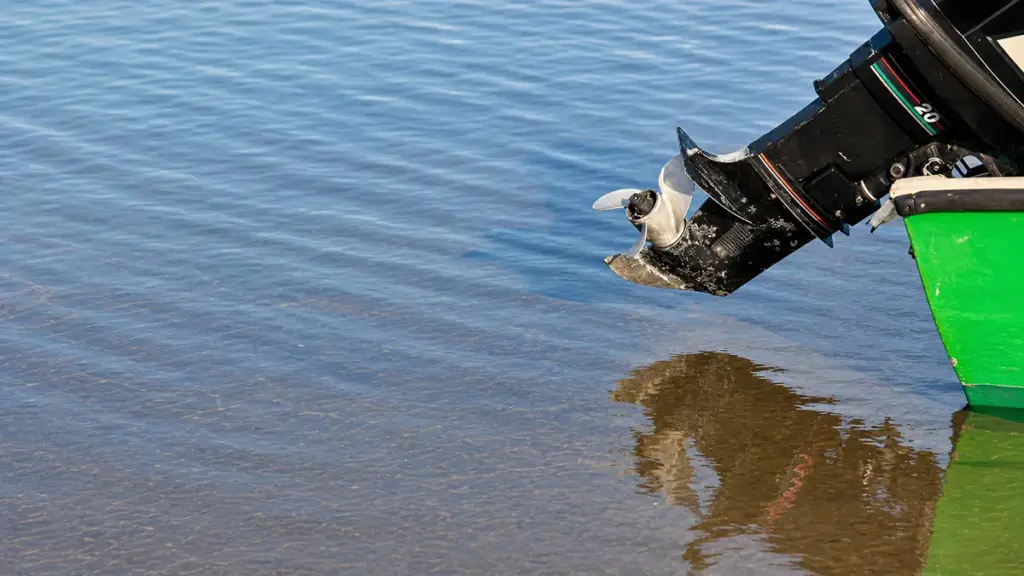
Most slipping issues are actually ventilation. Fixing engine height, adjusting trim, and selecting a cupped stainless-steel propeller will quickly restore grip and stop performance loss.
| Solution | Benefit |
|---|---|
| Repair Damaged Blades | Restores smooth water flow and improves propulsion efficiency. |
| Select Proper Pitch | Reduces blade overload and helps maintain optimal engine RPM. |
| Choose Correct Diameter | Improves thrust distribution and overall propulsion performance. |
| Adjust Engine Mounting Height | Optimizes water flow to the propeller and reduces pressure fluctuations. |
| Correct Trim Angle | Improves blade loading and enhances propulsion efficiency. |
| Clean Hull Regularly | Restores smooth water flow by eliminating marine growth and surface drag. |
| Balance the Propeller | Reduces vibration, uneven loading, and pressure imbalance. |
| Upgrade Propeller Design | Improves hydrodynamic efficiency and minimizes the risk of cavitation. |
Differentiating Ventilation from Cavitation
Operators often blame cavitation when their propeller loses grip. यथार्थ में, most slipping issues are actually propeller ventilation. This happens when the blades pull in surface air or exhaust gas instead of solid water. True cavitation is a hydrodynamic pressure problem where extreme low pressure forms vapor bubbles on the blade surface. It is far less common in everyday troubleshooting.
Both conditions share identical symptoms on the water. You will experience the following performance drops:
- Rising RPMs: Engine speed flares without a proportional increase in boat speed.
- Loss of thrust: The propeller suddenly drops its grip on the water.
- Slipping: Forward momentum stalls during hard acceleration or tight turns.
Optimizing Engine Height and Trim
A poorly adjusted outboard is the leading cause of poor propeller bite. Start your troubleshooting by testing the boat with the trim fully down to establish a performance baseline. Adjust the trim up slightly to find your usable running range. If the propeller still breaks loose, lower the engine mounting position on the transom. This keeps the anti-ventilation plate deeper in the water, blocking surface air from reaching the blades.
You should also trim down when entering tight turns so the propeller stays submerged as the hull leans. अंत में, inspect the hull ahead of the lower unit. Transducers, through-hull fittings, or debris can disrupt clean water flow and feed aerated water directly into your propeller.
Choosing a Propeller for Maximum Bite
Your propeller dictates how well your engine transfers power to the water. Always inspect the current propeller for nicks, दरारें, or bent blades first. Even minor physical damage frequently causes slipping and breaks the water flow. If the blades are intact but the engine over-revs before generating forward thrust, lower the pitch to help the engine grab solid water.
You can switch to a propeller with increased cup and a larger blade area to maintain grip under heavy loads or in rough chop. Upgrading to a stiffer stainless-steel propeller prevents blade flex under load and enhances hold during aggressive maneuvers.
Utilizing Aftermarket Hardware Solutions
When height and trim adjustments fall short, aftermarket hardware can force the stern down and keep the propeller buried.
- Hydrofoils: Add a hydrofoil to the anti-ventilation plate to help lift the stern onto plane faster and reduce air ingestion.
- Transom wedges: Install a positive transom wedge to increase engine tuck and improve initial propeller bite during takeoff.
- Jack plates: Use a jack plate for precise height adjustments, ensuring the motor is not raised high enough to induce further ventilation.
Choose NEWTOP for Reliable, Precision-Built Outboard Motor Propellers
Reducing cavitation starts with choosing a propeller that is properly engineered, accurately manufactured, and matched to your application. पर न्यूटॉप, we produce high-quality जहाज़ के बाहर मोटर प्रोपेलर for a wide range of recreational and commercial boats, combining precision machining with strict quality control to deliver stable performance on the water.
Every propeller is manufactured using carefully selected aluminum or stainless steel materials and undergoes balancing, dimensional inspection, and performance testing to ensure smooth operation, improved fuel efficiency, and longer service life. Whether you need OEM replacement propellers or customized solutions for your own brand, our engineering team can help you select the right diameter, आवाज़ का उतार-चढ़ाव, and blade design for different engines and operating conditions.
As an experienced outboard motor propeller manufacturer and trusted outboard motor propeller factory, NEWTOP supports वैश्विक वितरक, थोक, and equipment brands with reliable production capacity, consistent product quality, and responsive OEM/ODM services.
Contact our team today to find the right propeller solution for your market and improve your customers’ boating performance.
अक्सर पूछे जाने वाले प्रश्नों
What causes cavitation in an outboard propeller?
Cavitation occurs when water pressure on the propeller blades drops below vapor pressure, causing vapor bubbles to form and violently collapse. Damaged blades, the wrong propeller size or pitch, excessive rotational speed, or disturbed water flow from the hull and lower unit typically trigger this pressure drop.
How do I know if my boat has cavitation or ventilation?
Cavitation creates a persistent whine, harsh vibration, and visible pitting on the propeller blades, even when running straight. Ventilation happens when the prop pulls in surface air or exhaust. You will feel a sudden RPM spike and loss of bite, usually during tight turns or when you trim the motor too high.
Can cavitation damage my engine?
Cavitation destroys propeller blades through erosion rather than directly damaging the internal engine block. It does cause indirect mechanical harm. When the propeller loses its grip, the engine over-revs. These rapid load fluctuations place heavy stress on your lower unit gears, बीयरिंग, and the entire drivetrain.
Does engine height affect cavitation?
Engine height primarily drives ventilation, but it directly impacts cavitation. Mounting an outboard too high reduces propeller submergence and introduces aerated, unstable water flow. This disturbed inflow creates pressure anomalies that force vapor bubbles to form on the blades.
Will changing propeller pitch stop cavitation?
Adjusting pitch reduces cavitation only if your current propeller is over-loaded or under-loaded for your specific setup. If your engine struggles to reach its recommended wide-open throttle RPM, switching to a lower pitch helps balance the load. Pitch adjustments will not fix cavitation caused by physical blade damage, improper engine height, or hull irregularities.
Can a damaged propeller cause cavitation?
हाँ. Nicks, दरारें, bent edges, or deep scratches disrupt the smooth flow of water across the propeller blades. These physical imperfections create localized low-pressure zones that trigger vaporization. The resulting bubble collapses cause further metal erosion, driving a cycle of worsening damage.
Is cavitation worse at high speed?
As boat speed and propeller RPM increase, water velocity over the blades rises. This lowers local pressure and significantly increases your cavitation risk. While true cavitation intensifies at higher speeds, operators often notice the most dramatic symptoms—like sudden blowout and RPM flares—during heavy acceleration or tight turns due to accompanying ventilation.
Does blade material affect cavitation resistance?
Material choice dictates how well your propeller survives cavitation, not whether it occurs in the first place. High-strength copper alloys and stainless steel resist the microscopic impacts of bubble collapses far better than standard aluminum. Stronger metals also allow manufacturers to cast thinner blade profiles, which helps manage pressure distribution and delays performance loss.
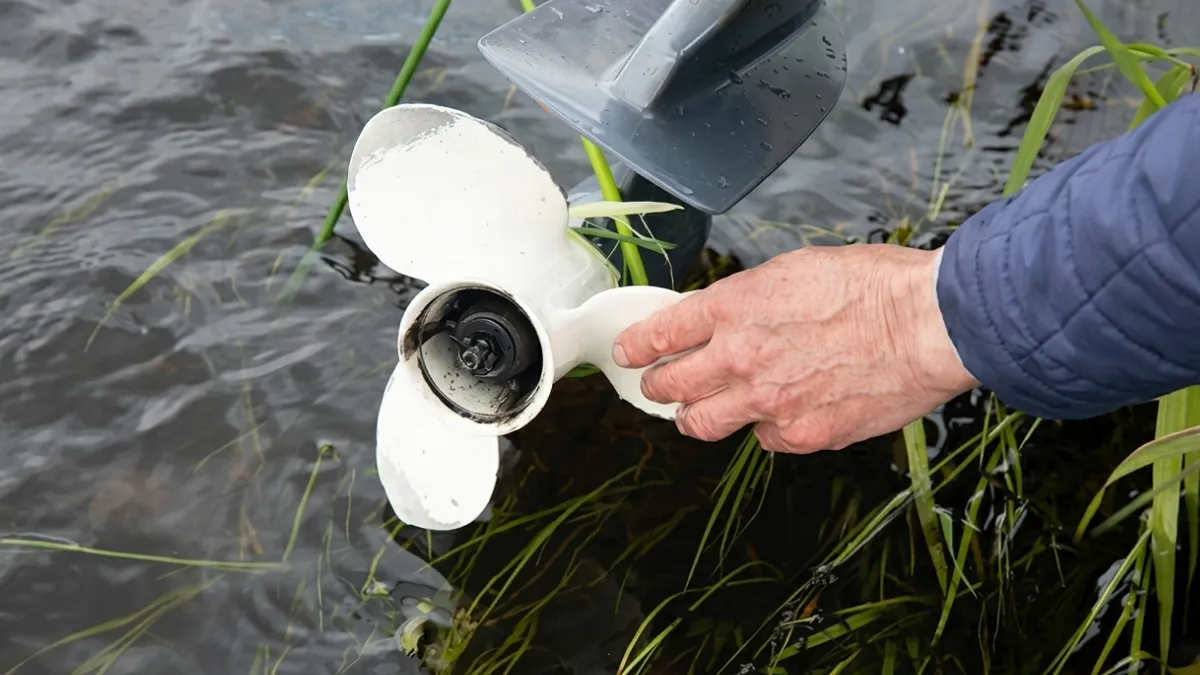
जब नौकायन का मौसम समाप्त हो जाता है, कई मालिक इंजन को ठंडा करने पर ध्यान केंद्रित करते हैं लेकिन वॉटरलाइन के नीचे के सबसे महत्वपूर्ण घटकों में से एक को नजरअंदाज कर देते हैं जहाज़ के बाहर मोटर प्रोपेलर. उचित मौसमी रखरखाव न केवल प्रोपेलर की सुरक्षा करता है बल्कि प्रोपेलर शाफ्ट को छिपी क्षति को रोकने में भी मदद करता है, GearBox, और मुहरें.
चाहे आप एल्यूमीनियम या स्टेनलेस स्टील प्रोपेलर का उपयोग करें, भंडारण से पहले निरीक्षण और रखरखाव पर थोड़ा समय खर्च करने से अप्रत्याशित विफलताओं को कम किया जा सकता है, अगले सीज़न में प्रदर्शन में सुधार करें, और अपने आउटबोर्ड मोटर की सेवा जीवन बढ़ाएँ.
यह मार्गदर्शिका स्पष्ट करती है कि वास्तव में क्या निरीक्षण करना है, साफ, मरम्मत, और अपने आउटबोर्ड मोटर प्रोपेलर को संग्रहीत करने से पहले तैयारी करें, मनोरंजक नाव मालिकों और वाणिज्यिक बेड़े दोनों को रखरखाव लागत और डाउनटाइम कम करने में मदद करना.
मौसमी प्रोपेलर रखरखाव क्यों मायने रखता है
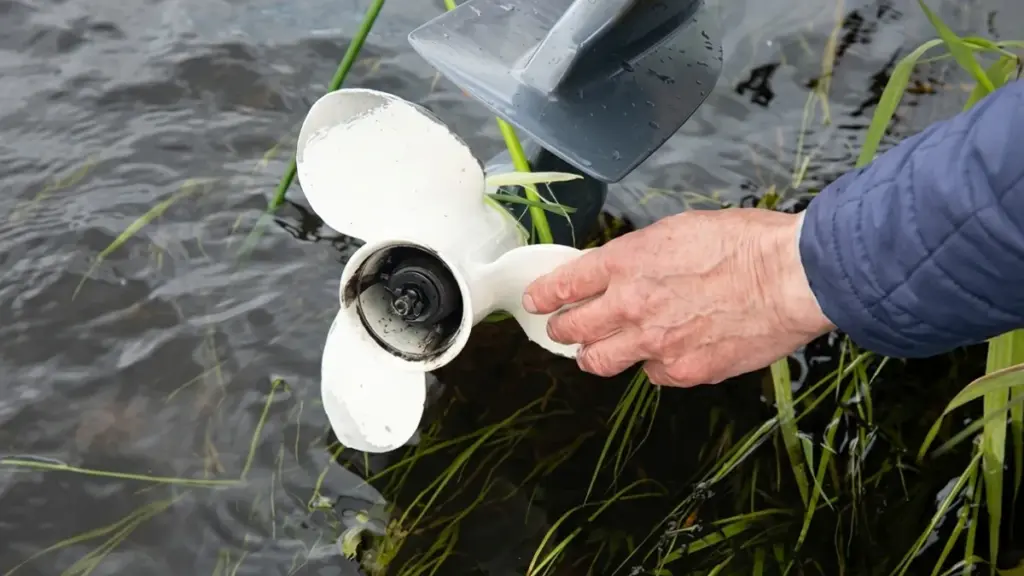
नियमित मौसमी प्रोपेलर रखरखाव मामूली टूट-फूट और छिपे हुए शाफ्ट मलबे को भयावह निचली-इकाई विफलताओं में बढ़ने से रोकता है, ईंधन दक्षता और ड्राइव-ट्रेन दीर्घायु दोनों की रक्षा करना.
सर्वोच्च प्रदर्शन और ईंधन दक्षता सुनिश्चित करना
प्रोपलर्स समुद्री कार्यभार का खामियाजा भुगतें. ये उच्च प्रभाव वाले घटक सीधे आपकी नाव की गति को निर्धारित करते हैं, ईंधन जलाना, और हैंडलिंग विशेषताएँ. एक भी मुड़ा हुआ ब्लेड या भारी नोकदार किनारा हाइड्रोडायनामिक प्रोफ़ाइल को बाधित करता है, कम जोर देते हुए आउटबोर्ड को अधिक मेहनत करने के लिए मजबूर करना.
नियमित मौसमी रखरखाव मोटर को उसकी इच्छित आधारभूत दक्षता पर पुनर्स्थापित करता है. छोटी-मोटी विकृतियों को पकड़ना और ठीक करना आवाज़ का उतार-चढ़ाव शीघ्र संरेखण यह सुनिश्चित करता है कि हर बार जब आप थ्रॉटल दबाते हैं तो आपको वही सटीक प्रदर्शन मिलता है जिसकी आप अपेक्षा करते हैं.
महँगी निचली-इकाई क्षति को रोकना
मछली का जाल, मातम, और जाल लगातार प्रोपेलर शाफ्ट के चारों ओर अपना रास्ता ढूंढते रहते हैं. ऑपरेटरों को यह मलबा बाहर से कम ही दिखाई देता है, इसे समय के साथ कसने और सख्त होने की अनुमति देना. सीज़न के अंत में प्रोपेलर को हटाने से प्रोप शाफ्ट सील में कटने से पहले लपेटा हुआ मोनोफिलामेंट उजागर हो जाता है.
एक समझौता सील पानी को सीधे गियरकेस में घुसपैठ को आमंत्रित करती है, गियर तेल का पायसीकरण करना. इन खतरों का शीघ्र पता लगाना और उन्हें दूर करना एक बुनियादी रखरखाव कदम को महंगी निचली-इकाई और ड्राइवट्रेन ओवरहाल में बदलने से रोकता है.
संक्षारण और गुहिकायन क्षरण को कम करना
समुद्री पर्यावरण धातु पर लगातार हमला करता है. प्रोपेलर को लगातार खारे पानी के संपर्क का सामना करना पड़ता है, स्थानीयकृत प्रभाव क्षति, और गुहिकायन क्षरण. नियमित दृश्य निरीक्षण से असामान्य पहनने के पैटर्न का पता चलता है, गहरा गड्ढा, और प्रोप पिन या थ्रस्ट वॉशर जैसे महत्वपूर्ण हार्डवेयर के साथ संरचनात्मक मुद्दे.
प्रोप को खींचने से तकनीशियनों को शाफ्ट को साफ करने और ताजा जलरोधक समुद्री ग्रीस लगाने की भी अनुमति मिलती है. यह लक्षित स्नेहन धातु के स्प्लिन को लंबे समय तक गैल्वेनिक खराब होने से बचाता है और यह सुनिश्चित करता है कि हब कभी भी शाफ्ट से चिपक न जाए।.
प्रतिस्थापन कब आवश्यक है इसकी पहचान करना
सभी क्षति को फाइल या वेल्ड नहीं किया जा सकता. प्रत्येक प्रोपेलर का निरीक्षण करना 50 को 100 घंटे, या मौसमी छंटनी के दौरान, लोड के तहत विफल होने से पहले ऑपरेटरों को महत्वपूर्ण संरचनात्मक दोषों को पहचानने में मदद मिलती है. संपूर्ण रखरखाव दिनचर्या विशिष्ट संकेत प्रकट करती है जो तत्काल परिवर्तन की गारंटी देती है.
- दृश्यमान विकृति: ब्लेड जो अब सही ट्रैक नहीं करते या गंभीर रूप से झुकते नहीं दिखते.
- गहरी नोकझोंक: ब्लेड रूट या हब क्षेत्र से निकलने वाली दरारें.
- ब्लेड क्षति: महत्वपूर्ण भौतिक हानि जो गतिशील संतुलन को नष्ट कर देती है.
समय पर मूल्यांकन आउटबोर्ड के पुनर्विक्रय मूल्य की रक्षा करता है और गारंटी देता है कि आप थके हुए धातु या स्पन हब के कारण होने वाली अचानक पानी की विफलताओं से बचेंगे।.
आउटबोर्ड प्रोपेलर को स्टोर करने से पहले क्या निरीक्षण करना चाहिए
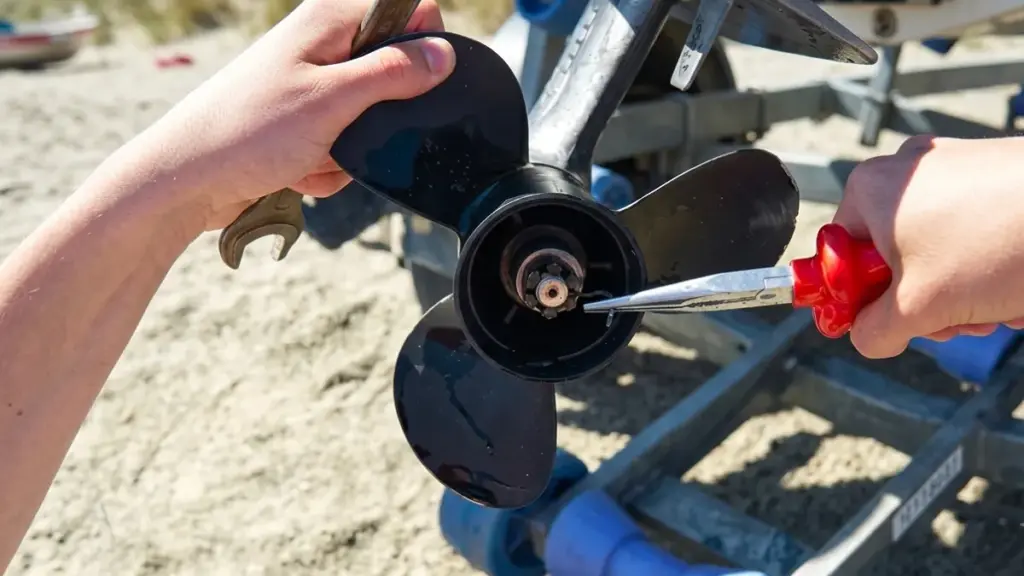
सर्दियों के भंडारण से पहले अपने प्रोपेलर को नजरअंदाज करना अगले सीजन में जब्त किए गए स्प्लिन और समझौता किए गए निचले-यूनिट सील की गारंटी देता है. एक व्यवस्थित निरीक्षण अब बाद में होने वाली भयावह विफलता को रोकता है.
| अवयव | निरीक्षण फोकस | यदि नजरअंदाज किया जाए तो प्राथमिक जोखिम |
|---|---|---|
| ब्लेड & सतह | दरारें, झुकता, समुद्री विकास | असंतुलन, कंपन, गति हानि |
| शाफ़्ट & मुहरें | मछली का जाल, सील घुसपैठ, नंगे छींटे | गियरकेस में पानी, जब्त प्रोपेलर |
| हब असेंबली | फिसलन, ढील, मलबा | स्पून हब, ख़राब थ्रस्ट स्थानांतरण |
| हार्डवेयर | जंग लगे वाशर, पुन: उपयोग किए गए कोटर पिन | हार्डवेयर विफलता, खोया हुआ प्रोपेलर |
प्रोपेलर ब्लेड और बाहरी सतहें
बाहरी सतहें प्रभाव और पर्यावरणीय टूट-फूट का खामियाजा भुगतती हैं. दृश्य जांच से केवल स्पष्ट दोष ही पता चलता है. एक भौतिक निरीक्षण से छिपी हुई संरचनात्मक क्षति का पता चलता है जो लंबी भंडारण अवधि में खराब हो जाती है.
- ब्लेड अखंडता: प्रत्येक ब्लेड में खरोंच की जाँच करें, छात्रों, स्क्रैच, झुकता, दरारें, गॉज, और लड़खड़ाना.
- स्पर्शनीय निरीक्षण: छिपी हुई क्षति को महसूस करने के लिए किनारों पर सावधानी से उंगलियां चलाएं.
- संक्षारण चिह्नक: जंग की तलाश करें, ऑक्सीकरण, मलिनकिरण, और नमक का निर्माण, विशेषकर खारे पानी के उपयोग के बाद.
- जैविक दूषण: खरपतवार निकालें, शैवाल, बार्नाकाल, और सूखने से पहले अन्य समुद्री विकास.
प्रोप दस्ता, स्प्लाइन्स, और गियरकेस सील
प्रोपेलर को हटाने से आपके प्रणोदन प्रणाली और निचली इकाई के बीच महत्वपूर्ण जंक्शन उजागर हो जाता है. यहां फंसा मलबा सीलों को खा जाता है, गियरकेस में पानी को आमंत्रित करना और बड़े पैमाने पर आंतरिक विफलता का कारण बनना.
- मलबा हटाना: निचली-इकाई क्षति को रोकने के लिए शाफ्ट के चारों ओर लपेटी गई मछली पकड़ने की रेखा और रस्सी को हटा दें.
- तख़्ता स्वास्थ्य: घिसाव के लिए शाफ्ट स्प्लिन का निरीक्षण करें, गड़गड़ाहट, या संक्षारण.
- सील अखंडता: सील की जांच करें जहां प्रोप शाफ्ट समझौता या पानी के घुसपैठ के लिए गियरकेस में प्रवेश करता है.
- स्नेहन: दौरे को रोकने में मदद के लिए भंडारण से पहले प्रोप शाफ्ट पर समुद्री ग्रेड ग्रीस लगाएं.
आंतरिक हब असेंबली
आंतरिक हब झटके को अवशोषित करता है और टॉर्क को स्थानांतरित करता है. यदि रबर या यांत्रिक घटक विफल होने लगें, जब नाव मुश्किल से चलती है तो आपका इंजन अत्यधिक गति करेगा. भंडारण की तैयारी इन समस्याओं के निदान का सटीक समय है.
- शारीरिक स्थिति: ढीलेपन के लिए हब का निरीक्षण करें, फिसलन, या स्पून हब के भौतिक लक्षण.
- प्रदर्शन संदर्भ: हब स्थिति को अंतिम आउटिंग के प्रदर्शन सुरागों से कनेक्ट करें, जैसे कंपन, गुहिकायन, या गति की हानि.
- गुहा की जांच: फंसे हुए मलबे या अवशेषों के लिए आंतरिक गुहा की जाँच करें जो भंडारण के दौरान कठोर हो सकते हैं.
पागल, वाशर, और लॉकिंग हार्डवेयर
माउंटिंग हार्डवेयर तीव्र भार के तहत प्रोपेलर को शाफ्ट पर सुरक्षित रूप से लॉक रखता है. थके हुए धातु घटकों का पुन: उपयोग करना या धागे के घिसाव को नजरअंदाज करना आपके अगले लॉन्च के लिए अनावश्यक जोखिम पेश करता है.
- अखरोट की स्थिति: सत्यापित करें कि प्रोपेलर नट बरकरार है और थ्रेड क्षति से मुक्त है.
- सहायक भाग: घिसाव के लिए वॉशर और लॉकिंग रिंगों का निरीक्षण करें, विकृति, या संक्षारण.
- पिन प्रतिस्थापन: पुराने कोटर पिन को हटा दें और पुनः स्थापित करने के लिए एक नया पिन तैयार करें.
- पुन:संयोजन तैयारी: निर्माता के अनुशंसित टॉर्क का उपयोग करके हार्डवेयर को फिर से जोड़ने की योजना बनाएं.
प्रोफेशनल-ग्रेड गार्डन मशीनरी के साथ ROI को अधिकतम करें
दरारों की जांच कैसे करें, झुकता, और संक्षारण
संपूर्ण प्रोपेलर निरीक्षण के लिए एक साफ़ सतह की आवश्यकता होती है, अच्छी रोशनी, और आपकी निचली इकाई से समझौता करने से पहले छिपे हुए दोषों को पकड़ने के लिए स्पर्शनीय जाँचें.
तैयारी एवं सफ़ाई
संपूर्ण असेंबली का अबाधित दृश्य प्राप्त करने के लिए प्रोपेलर को आउटबोर्ड से हटा दें. समस्त समुद्री विकास को धो डालो, नमक जमा, और तैलीय अवशेष. गंदगी और शैवाल आसानी से महीन तनाव रेखाओं या छोटे टुकड़ों को छिपा देते हैं. एक बार साफ, प्रोपेलर को पूरी तरह सुखा लें. नमी हेयरलाइन की दरारों और सूक्ष्म गड्ढों को छिपा देती है जिन्हें आपको नग्न आंखों से देखना होगा.
दृश्य और सामरिक ब्लेड निरीक्षण
उज्ज्वल प्रकाश व्यवस्था स्थापित करें और प्रमुख किनारों की जांच करें, अनुगामी किनारे, और ब्लेड टिप. गुम सामग्री की तलाश करें, गहरे घाव, और दिखाई देने वाली दरारें. आपके हाथ अक्सर वही पकड़ लेते हैं जो आपकी आंखें नहीं देख पातीं. खुरदुरे धब्बों को महसूस करने के लिए प्रत्येक ब्लेड की सतह पर अपना खाली हाथ चलाएं, उभरी हुई धातु, या मामूली प्रभावों से सूक्ष्म डेंट. धातु की स्थिति पर भी पूरा ध्यान दें. सफेद पाउडरयुक्त ऑक्सीकरण का निरीक्षण करें, गहरा गड्ढा, और सामान्य भौतिक हानि. यह कदम कास्ट एल्यूमीनियम मॉडल के लिए महत्वपूर्ण है, जो सुरक्षात्मक बाहरी कोटिंग के विफल हो जाने पर तेजी से नष्ट हो जाते हैं.
ब्लेड संरेखण और ज्यामिति का मूल्यांकन
कुशल जोर देने के लिए ब्लेडों को पूर्ण समरूपता की आवश्यकता होती है. पिच कोण की तुलना करें, टिप की ऊंचाई, और दूसरों के मुकाबले प्रत्येक ब्लेड का समग्र आकार. उन दृश्य विसंगतियों को ध्यान से देखें जो झुकने का संकेत देती हैं, घुमा, या जलमग्न प्रहारों से विकृत हो जाना. हल्की-फुल्की विकृतियों को नजरअंदाज न करें. यहां तक कि एक छोटा सा मोड़ भी प्रोपेलर को असंतुलित कर देता है. यह घूर्णी असंतुलन विनाशकारी कंपन को सीधे गियरकेस में भेजता है, समय के साथ सील और बेयरिंग का घिस जाना.
केंद्र, शाफ़्ट, और रोटेशन जाँचें
क्रैकिंग के लिए आंतरिक हब असेंबली का निरीक्षण करें, रबर फाड़ना, या ढीलापन जो संकेत देता है कि यह भारी भार के नीचे फिसल सकता है. लिपटी हुई मोनोफिलामेंट फिशिंग लाइन के लिए नंगे प्रोप शाफ्ट की जाँच करें. अनियंत्रित छोड़ दिया गया, मछली पकड़ने की रेखा प्रोप शाफ्ट सील के माध्यम से सीधे कटती है, पानी को निचली इकाई में भर जाने देना और आंतरिक क्षरण को बढ़ावा देना. अंत में, प्रोपेलर को वापस स्लाइड करें और इसे हाथ से धीरे-धीरे घुमाएँ. असमान घुमाव या दृश्यमान डगमगाहट के लिए हब और ब्लेड युक्तियों पर ध्यान दें. एक डगमगाता हुआ प्रोपेलर अक्सर पृथक ब्लेड क्षति के बजाय सीधे मुड़े हुए प्रोप शाफ्ट की ओर इशारा करता है.
प्रोपेलर की मरम्मत कब संभव है और कब प्रतिस्थापन बेहतर है
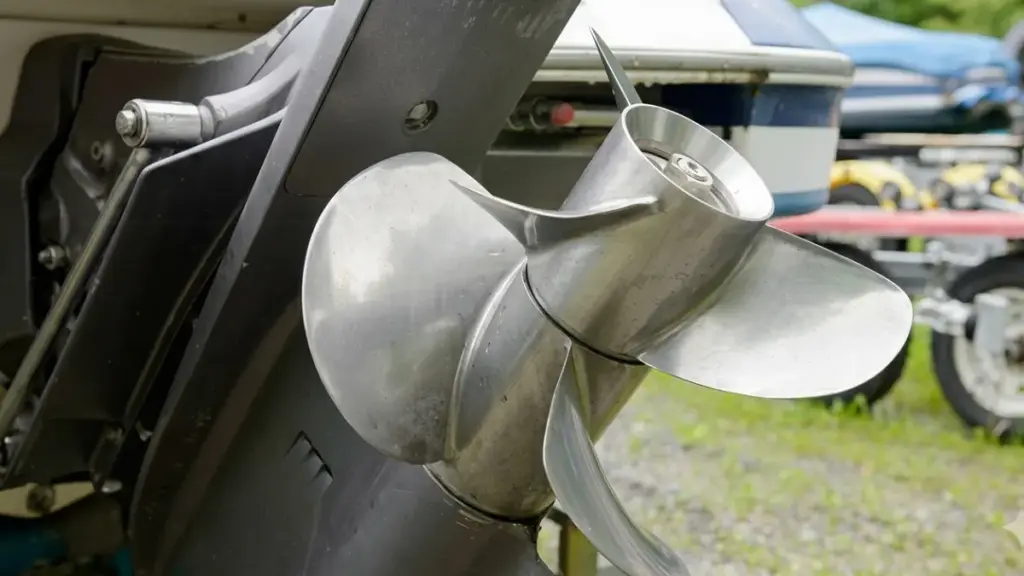
निर्णय क्षति की गंभीरता पर निर्भर करता है, प्रोपेलर सामग्री, और परिचालन की स्थिति.
| क्षति का प्रकार | मरम्मत संभव? | प्रतिस्थापन की अनुशंसा की गई? |
|---|---|---|
| छोटा ब्लेड निक | हाँ | नहीं |
| मामूली मोड़ | आम तौर पर | कभी-कभी |
| सतह का क्षरण | हाँ | नहीं |
| बड़ी दरार | नहीं | हाँ |
| टूटा हुआ ब्लेड टिप | कभी-कभी | अक्सर |
| गंभीर हब क्षति | कभी-कभार | हाँ |
| भारी संक्षारण | नहीं | हाँ |
आम तौर पर बोलना:
मरम्मत तब उपयुक्त होती है जब:
- क्षति स्थानीयकृत है
- ब्लेड ज्यामिति को पुनर्स्थापित किया जा सकता है
- संरचनात्मक ताकत बरकरार है
- मरम्मत की लागत प्रतिस्थापन की तुलना में काफी कम है
जब रिप्लेसमेंट ही बेहतर विकल्प हो:
- कई ब्लेड क्षतिग्रस्त हैं
- दरारें बढ़ती जा रही हैं
- ब्लेड की मोटाई बहुत पतली हो गई है
- मरम्मत की लागत एक नए प्रोपेलर की कीमत के करीब पहुंचती है
- प्रोपेलर बार-बार संतुलन खो देता है
वाणिज्यिक ऑपरेटर अक्सर क्षतिग्रस्त प्रोपेलर को जल्द ही बदल देते हैं क्योंकि डाउनटाइम की लागत प्रोपेलर से कहीं अधिक होती है. नाव निर्माताओं के लिए, समुद्री उपकरण वितरक, और रखरखाव प्रदाता, प्रतीक्षा समय को कम करने और ग्राहकों को कुशलतापूर्वक संचालित करने के लिए एक विश्वसनीय प्रतिस्थापन स्रोत का होना आवश्यक है.
न्यूटॉप विभिन्न समुद्री अनुप्रयोगों में विश्वसनीय प्रदर्शन के लिए डिज़ाइन किए गए उच्च गुणवत्ता वाले एल्यूमीनियम और स्टेनलेस स्टील आउटबोर्ड मोटर प्रोपेलर प्रदान करता है. आउटडोर बिजली उपकरण निर्माण में वर्षों के अनुभव के साथ, NEWTOP सटीक उत्पादन को जोड़ती है, सख्त गुणवत्ता नियंत्रण, और सुसंगत प्रोपेलर समाधानों के साथ वैश्विक भागीदारों का समर्थन करने के लिए स्थिर आपूर्ति क्षमता.
चाहे आपको विशिष्ट आउटबोर्ड मोटर अनुप्रयोगों के लिए मानक प्रतिस्थापन प्रोपेलर या अनुकूलित समाधान की आवश्यकता हो, किसी अनुभवी के साथ काम करना जहाज़ के बाहर मोटर प्रोपेलर मा
कैसे हटाएं, साफ, और प्रोपेलर को सुरक्षित रूप से पुनः स्थापित करें
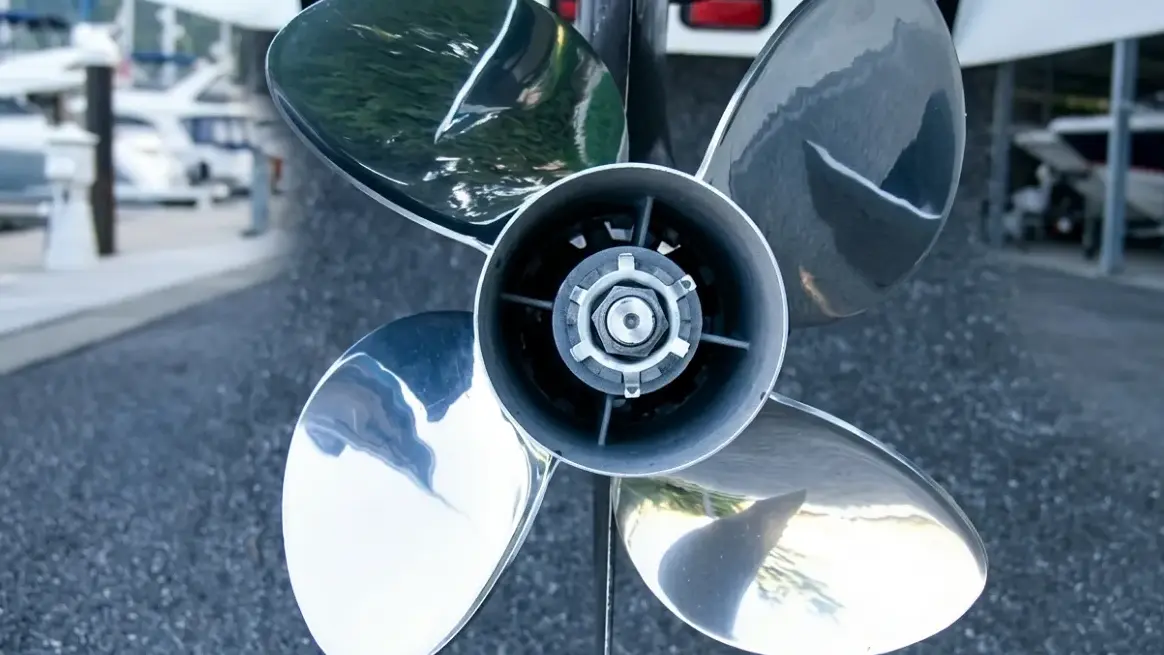
आउटबोर्ड प्रोपेलर को हटाना और पुनः स्थापित करना एक मौलिक रखरखाव कार्य है जो जब्त स्प्लिन को रोकता है, छिपी हुई मछली पकड़ने की रेखा की क्षति को जल्दी पकड़ लेता है, और निचली इकाई को सुरक्षित रखता है.
सुरक्षा सावधानियाँ और उपकरण तैयार करना
तेज प्रोपेलर ब्लेड के आसपास काम करने के लिए रिंच को छूने से पहले सख्त सुरक्षा प्रोटोकॉल की आवश्यकता होती है. अचानक इंजन चालू होने या अप्रत्याशित ब्लेड घूमने से गंभीर चोट लग सकती है.
- इंजन की अक्षमता: आकस्मिक शुरुआत की किसी भी संभावना को खत्म करने के लिए किल-स्विच डोरी को हटा दें और बैटरी को डिस्कनेक्ट कर दें.
- प्रोपेलर स्थिरीकरण: ब्लेड और एंटी-वेंटिलेशन प्लेट के बीच लकड़ी का एक ठोस ब्लॉक बांधें, या रोटेशन को रोकने के लिए एक समर्पित प्रोपेलर होल्डिंग टूल का उपयोग करें.
- आवश्यक टूलकिट: एक प्रोप नट रिंच रखें (या सॉकेट सेट), कोटर पिन के लिए सुई-नाक सरौता, एक चपटा पेचकश, और हाथ की पहुंच के भीतर समुद्री-ग्रेड ग्रीस.
चरण-दर-चरण प्रोपेलर हटाना
एक बार सेटअप सुरक्षित हो जाए और प्रोप अपनी जगह पर लॉक हो जाए, आप असेंबली को सुरक्षित रूप से नष्ट कर सकते हैं. जब हार्डवेयर शाफ्ट से बाहर आता है तो उसके क्रम पर पूरा ध्यान दें.
- फास्टनर को मुक्त करें: कॉटर पिन को सीधा करने और खींचने के लिए प्लायर का उपयोग करें, या लॉक-वॉशर टैब को धीरे से समतल करने के लिए एक फ्लैटहेड स्क्रूड्राइवर और हथौड़ा लें.
- अखरोट को ढीला करें: प्रोपेलर नट को उचित रिंच के साथ वामावर्त घुमाएं जब तक कि यह पूरी तरह से धागे से अलग न हो जाए.
- प्रोपेलर निकालें: यूनिट को शाफ्ट के साथ सीधे बाहर की ओर खींचें. यदि आपको प्रतिरोध का सामना करना पड़ता है, इसे धीरे से अगल-बगल घुमाएँ. निचली इकाई के विरुद्ध अत्यधिक चुभने वाले बल का प्रयोग करने से बचें.
- थ्रस्ट वॉशर की जाँच करें: वॉशर को शाफ्ट से हटा दें और घिसाव वाले खांचे के लिए सतह का निरीक्षण करें, विरूपण, या तनाव दरारें.
प्रोपेलर और शाफ्ट की सफाई और निरीक्षण
हटाया गया प्रोपेलर आपको निचली इकाई के सबसे कमजोर क्षेत्रों का स्पष्ट दृश्य देता है. गियरकेस घुसपैठ के शुरुआती संकेतों को पहचानने का यह आपका प्राथमिक अवसर है.
- शाफ्ट साफ़ करें: सारी पुरानी चर्बी मिटा दें. आधार के चारों ओर लपेटी गई किसी भी लट या मोनोफिलामेंट मछली पकड़ने की रेखा को सावधानीपूर्वक चुनें, क्योंकि यह अंततः तेल की सील को तोड़ देगा.
- तेल सील का निरीक्षण करें: खरोंच और कट के लिए रबर सील की स्वयं जाँच करें. इमल्सीफाइड की तलाश करें, दूधिया गियर तेल रिस रहा है, जो एक सक्रिय रिसाव का संकेत देता है.
- प्रोपेलर की जांच करें: समुद्री विकास को धो दें. मोड़ों के लिए ब्लेडों की जाँच करें, प्रभाव चिप्स, और गुहिकायन गड्ढा, और सत्यापित करें कि रबर हब डालने पर फिसलने या फटने का कोई निशान नहीं है.
स्नेहन और सुरक्षित पुनर्स्थापना
पुनः संयोजन के लिए सही स्नेहन और सटीक टॉर्क की आवश्यकता होती है. इन विवरणों को छोड़ देने से अक्सर अगले सीज़न में प्रोपेलर जब्त हो जाता है या लोड के तहत असेंबली ढीली हो जाती है.
- तख़्तों को चिकना कर लें: लाइट लगाएं, संक्षारण को रोकने के लिए नंगे प्रोप शाफ्ट स्प्लिंस पर वाटरप्रूफ समुद्री ग्रीस का एक समान कोट और सुनिश्चित करें कि प्रोप अगली बार आसानी से फिसल जाए.
- थ्रस्ट वॉशर को बैठाएँ: वॉशर को उसके सही मूल ओरिएंटेशन में शाफ्ट पर वापस स्लाइड करें. प्रोपेलर को तब तक दबाएं जब तक कि वह उसके विपरीत न आ जाए.
- अखरोट को टॉर्क करें: सभी स्पेसर्स को क्रम से बदलें, क्रॉस-थ्रेडिंग से बचने के लिए नट को हाथ से पिरोएं, और प्रोप को स्थिर करने के लिए अपने लकड़ी के ब्लॉक का उपयोग करें. निर्माता द्वारा निर्दिष्ट टॉर्क के अनुसार नट को कसें.
- असेंबली को लॉक करें: शाफ्ट के माध्यम से एक नया कोटर पिन पिरोएं और पैरों को सुरक्षित रूप से मोड़ें, या रिटेनर टैब को नट के विपरीत सपाट मोड़ें. सुचारू रूप से पुष्टि करने के लिए प्रोप को मैन्युअल रूप से घुमाएँ, अबाधित घुमाव.
अगले सीज़न के लिए कौन से स्पेयर पार्ट्स तैयार करने हैं
एक अच्छी तरह से भंडारित स्पेयर पार्ट्स किट डाउनटाइम को कम करती है और छोटी हार्डवेयर विफलताओं को आपके नौकायन सीजन को बर्बाद करने से रोकती है.
अतिरिक्त प्रोपेलर चयन और भंडारण
आपको अपने प्रतिस्थापन प्रोपेलर के व्यास का मिलान करना होगा, आवाज़ का उतार-चढ़ाव, सामग्री, और बेसलाइन प्रदर्शन को बनाए रखने के लिए हब सिस्टम बिल्कुल आपकी वर्तमान इंजन आवश्यकताओं के अनुरूप है. एक बेमेल स्पेयर आपकी ईंधन दक्षता और इंजन आरपीएम सीमा से समझौता करेगा.
हर समय बोर्ड पर कम से कम एक प्राथमिक अतिरिक्त रखें. यदि आप उथले ढंग से नेविगेट करते हैं, चट्टान का, या मलबे से भरा पानी, एक सेकेंडरी 'गेट-होम' पैक करें’ प्रॉप आपको सुरक्षित रूप से डॉक पर वापस लाने के लिए डिज़ाइन किया गया है. इन अतिरिक्त प्रोपेलरों को साफ-सुथरे स्थान पर रखें, शुष्क क्षेत्र. हब स्प्लिन पर समुद्री ग्रीस का हल्का कोट लगाएं और खराब मौसम के दौरान ब्लेड को आकस्मिक प्रभावों से बचाएं.
प्रोपेलर माउंटिंग हार्डवेयर
यदि आप स्वैप के दौरान माउंटिंग हार्डवेयर खो देते हैं या क्षतिग्रस्त हो जाते हैं तो एक अतिरिक्त प्रोपेलर बेकार है. आपके किट को तत्काल तैनाती के लिए तैयार विशिष्ट फास्टनिंग घटकों की आवश्यकता होती है.
- जोर धोने वाले: उचित प्रोप सीटिंग और लोड ट्रांसफर सुनिश्चित करने के लिए स्टॉक स्पेयर आपके विशिष्ट आउटबोर्ड मॉडल से बिल्कुल मेल खाते हैं.
- कैसल नट और अनुचर: अतिरिक्त नट और लॉकिंग रिटेनर हाथ में रखें. सीज़न शुरू होने से पहले जंग या धागे की क्षति के लिए अपने मौजूदा हार्डवेयर का निरीक्षण करें.
- कॉटर पिन्स: कई नए स्टेनलेस-स्टील कॉटर पिन ले जाएं. प्रयुक्त पिन मुड़ने पर थक जाती हैं, मतलब आपको उनका दोबारा उपयोग कभी नहीं करना चाहिए.
समुद्री स्नेहक और संक्षारण रोकथाम
उचित स्नेहन आपके हार्डवेयर को जब्त होने से रोकता है. स्प्लाइन गैलिंग को रोकने के लिए समुद्री-ग्रेड प्रोपेलर शाफ्ट ग्रीस का उपयोग करें. यह सरल कदम खारे पानी की घुसपैठ को रोकता है और भविष्य में प्रोपेलर निष्कासन को काफी आसान बनाता है.
इस स्नेहक को सीधे शाफ्ट स्प्लिन पर लगाएं, पिछला मुख्य सील क्षेत्र, और थ्रस्ट वॉशर और प्रोप हब के बीच संभोग सतहें. पूरे सीज़न में समय-समय पर प्रोपेलर हटाने की योजना बनाएं. यह दिनचर्या आपको शाफ्ट को साफ करने देती है, ग्रीस कोटिंग को नवीनीकृत करें, और यांत्रिक विफलता का कारण बनने से पहले छिपे हुए जंग के लिए पूरी असेंबली का निरीक्षण करें.
उपभोज्य हिस्से और रखरखाव उपकरण
फ़ील्ड प्रतिस्थापन के लिए सही उपकरण और छोटे उपभोज्य घटकों की आवश्यकता होती है. आउटबोर्ड सेटअप के लिए जो प्रोप स्थिति को अनुक्रमित करता है, अपने किट में सटीक-मिलान प्रतिस्थापन शाफ्ट कुंजियाँ रखें. स्वैप करते समय, प्रोप शाफ्ट सील क्षेत्र का नियमित रूप से निरीक्षण करें. निचली इकाई में महंगे पानी के प्रवेश को रोकने के लिए एम्बेडेड मछली पकड़ने की रेखा को ध्यान से देखें.
पानी पर इन कार्यों को निपटाने के लिए, निम्नलिखित वस्तुओं के साथ एक समर्पित टूलकिट इकट्ठा करें:
- प्रोप रिंच: किनारों को गोल होने से बचाने के लिए विशेष रूप से आपके आउटबोर्ड नट के लिए आकार दिया गया है.
- टौर्क रिंच: निर्माता के सटीक विनिर्देशों को पूरा करना और अत्यधिक कसने से बचना आवश्यक है.
- सूई जैसी नोक वाली चिमटी: डालने के लिए आवश्यक है, झुकने, और स्टेनलेस-स्टील कॉटर पिन हटाना.
- लकड़ी का ब्लॉक: इंस्टॉलेशन के दौरान घूमने को रोकने के लिए इसे ब्लेड और एंटी-वेंटिलेशन प्लेट के बीच रखें.
NEWTOP रिप्लेसमेंट डाउनटाइम को कम करने में कैसे मदद करता है
प्रतिस्थापन आउटबोर्ड मोटर प्रोपेलर का चयन करते समय, उत्पाद की गुणवत्ता और विनिर्माण स्थिरता सीधे परिचालन विश्वसनीयता और रखरखाव लागत को प्रभावित करती है. एक भरोसेमंद प्रोपेलर आपूर्तिकर्ता स्थापना के बाद स्थिर प्रदर्शन सुनिश्चित करते हुए प्रतिस्थापन देरी को कम करने में मदद करता है.
न्यूटॉप सामग्री पर सख्त नियंत्रण के साथ एल्यूमीनियम और स्टेनलेस स्टील आउटबोर्ड मोटर प्रोपेलर का उत्पादन करता है, संरचना, और मशीनिंग सटीकता. प्रमुख लाभों में शामिल हैं:
- उच्च प्रदर्शन सामग्री: एल्यूमीनियम प्रोपेलर नए एल्यूमीनियम सिल्लियों से बने एल्यूमीनियम-मैग्नीशियम मिश्र धातु का उपयोग करते हैं, उत्कृष्ट क्रूरता और उच्च शक्ति प्रदान करना. स्टेनलेस स्टील प्रोपेलर डुप्लेक्स स्टेनलेस स्टील का उपयोग करते हैं, मानक स्टेनलेस स्टील की तुलना में अधिक उपज शक्ति और संक्षारण प्रतिरोध प्रदान करता है.
- मजबूत एक-टुकड़ा संरचना: प्रोपेलर ब्लैंक को एकीकृत फॉर्मिंग तकनीक के साथ समर्पित सांचों के माध्यम से तैयार किया जाता है, वेल्डिंग बिंदुओं को खत्म करना और समग्र ताकत और स्थायित्व में सुधार करना.
- बेहतर गतिशील संतुलन: सटीक स्थिति और सुचारू घुमाव सुनिश्चित करने के लिए हब को एक एकीकृत भाग के रूप में दबाया जाता है, ऑपरेशन के दौरान कंपन को कम करने में मदद करना.
- सटीक ब्लेड प्रसंस्करण: समर्पित टूलींग के साथ सीएनसी मशीनिंग केंद्र सटीक ब्लेड आयाम सुनिश्चित करते हैं, सुसंगत ब्लेड वक्र, और स्थिर प्रणोदन प्रदर्शन.
NEWTOP वैश्विक वितरकों की मदद करता है, OEM ग्राहक, और समुद्री उपकरण आपूर्तिकर्ता टिकाऊ और सुसंगत प्रोपेलर समाधानों के साथ प्रतिस्थापन डाउनटाइम को कम करते हैं. एक विश्वसनीय आउटबोर्ड मोटर प्रोपेलर आपूर्तिकर्ता की तलाश है? अपनी समुद्री उपकरण आवश्यकताओं के लिए टिकाऊ प्रोपेलर समाधान तलाशने के लिए आज ही NEWTOP से संपर्क करें.
अक्सर पूछे जाने वाले प्रश्नों
आउटबोर्ड प्रोपेलर को कितनी बार बदला जाना चाहिए??
आउटबोर्ड प्रोपेलर को बदलने के लिए कोई निश्चित समयसीमा नहीं है. प्रतिस्थापन पूरी तरह से स्थिति से प्रेरित होता है, प्रदर्शन, और सुरक्षा. जब आपको गंभीर मोड़ जैसी संरचनात्मक क्षति दिखे तो आपको इसे बदल देना चाहिए, गायब टुकड़े, या गहरी दरारें, या संक्षारण से महत्वपूर्ण धातु हानि. शीर्ष गति में कमी जैसे अनसुलझे प्रदर्शन मुद्दे, अधिक ईंधन की खपत, या भारी कंपन यह भी संकेत देता है कि यह एक नए प्रोप का समय है.
क्या मुझे शीतकालीन भंडारण से पहले अपना प्रोपेलर हटा देना चाहिए??
हाँ, शीतकालीन भंडारण से पहले प्रोपेलर को हटाने की अत्यधिक अनुशंसा की जाती है. यह मूल्यवान स्टेनलेस-स्टील या उच्च-प्रदर्शन वाले प्रॉप्स की चोरी को रोकता है. यह आपको लपेटी गई मछली पकड़ने की रेखा के लिए प्रोपेलर शाफ्ट का निरीक्षण करने की भी अनुमति देता है, जो सील को नष्ट कर सकता है और गियरकेस में पानी के प्रवेश का कारण बन सकता है. जबकि प्रोप बंद है, आप शाफ्ट को साफ कर सकते हैं और सर्दियों में इसे जमने से बचाने के लिए ताजा समुद्री ग्रीस लगा सकते हैं.
मुझे कैसे पता चलेगा कि मेरा प्रोपेलर क्षतिग्रस्त हो गया है??
दृश्य संकेतों में मुड़े हुए या मुड़े हुए ब्लेड शामिल हैं, चिपके हुए किनारे, दरारें, और भारी संक्षारण. आप प्रदर्शन परिवर्तन भी देख सकते हैं, जैसे शीर्ष गति का नुकसान, सुस्त त्वरण, या ईंधन की खपत में वृद्धि. दौड़ते समय, क्षतिग्रस्त प्रोपेलर अक्सर असामान्य कंपन का कारण बनता है, स्टीयरिंग खींचना, या फिसलन की अनुभूति जहां इंजन नाव की गति से मेल किए बिना ओवर-रेव करता है.
क्या मुड़े हुए प्रोपेलर की मरम्मत की जा सकती है??
यह सामग्री और गंभीरता पर निर्भर करता है. एल्युमीनियम और कुछ स्टेनलेस स्टील प्रोपेलर में मामूली मोड़ या छोटी खरोंचें अक्सर एक पेशेवर प्रॉप शॉप द्वारा ठीक की जा सकती हैं. लेकिन गंभीर मोड़, गहरी दरारें, विकृत हब, या डाई-कास्ट एल्युमीनियम प्रॉप्स के क्षतिग्रस्त होने पर आमतौर पर पूर्ण प्रतिस्थापन की आवश्यकता होती है. यदि संरचनात्मक अखंडता से समझौता किया जाता है या मरम्मत की लागत एक नए प्रोप की कीमत के करीब पहुंचती है, प्रतिस्थापन सुरक्षित विकल्प है.
प्रोपेलर शाफ्ट पर किस ग्रीस का उपयोग किया जाना चाहिए??
हमेशा उच्च गुणवत्ता का उपयोग करें, वाटरप्रूफ समुद्री ग्रीस विशेष रूप से प्रोपेलर शाफ्ट स्प्लिन के लिए डिज़ाइन किया गया है, जैसे कि 2-4-सी समुद्री स्नेहक. यह ग्रीस ताजे और खारे पानी में धुलने से रोकता है, महत्वपूर्ण संक्षारण सुरक्षा प्रदान करना. पतला लगाएं, यह सुनिश्चित करने के लिए कि प्रोपेलर हब शाफ्ट से चिपक न जाए, सीज़न में कम से कम एक बार शाफ्ट स्प्लिन और थ्रेड्स को कोट करें.
मैं संग्रहीत प्रोपेलर पर जंग को कैसे रोकूँ??
नमक हटाने के लिए प्रोपेलर को कम दबाव वाले ताजे पानी और हल्के डिटर्जेंट से धोना शुरू करें, ग्रीज़, और समुद्री विकास. इसे पूरी तरह सुखा लें. दीर्घकालिक भंडारण के लिए, आप नंगे धातु की सतहों पर दो-भाग वाला हाई-बिल्ड एपॉक्सी प्राइमर लगा सकते हैं. प्रोपेलर को घर के अंदर सूखे स्थान पर रखें, अच्छी तरह हवादार क्षेत्र, कंक्रीट के फर्श या असमान धातुओं के सीधे संपर्क से बचें.
रिप्लेसमेंट प्रोपेलर के साथ मुझे कौन से स्पेयर पार्ट्स रखने चाहिए??
एक अतिरिक्त प्रोपेलर केवल तभी उपयोगी होता है जब आपके पास इसे स्थापित करने के लिए सही हार्डवेयर हो. बोर्ड पर एक किट रखें जिसमें एक अतिरिक्त प्रोप नट शामिल हो, कई नए स्टेनलेस-स्टील कॉटर पिन या लॉक वॉशर, एक थ्रस्ट वॉशर, और कोई भी आवश्यक हब स्पेसर. आपको समुद्री ग्रीस की एक छोटी ट्यूब भी पैक करनी चाहिए, स्वैप के दौरान प्रोप रोटेशन को रोकने के लिए लकड़ी का एक ब्लॉक, और सही आकार का रिंच या सॉकेट.
क्या क्षतिग्रस्त प्रोपेलर गियरबॉक्स को प्रभावित कर सकता है??
हाँ, एक क्षतिग्रस्त प्रोपेलर गियरबॉक्स को गंभीर रूप से प्रभावित कर सकता है. मुड़े हुए ब्लेड या गायब सामग्री एक घूर्णी असंतुलन पैदा करती है जो सीधे प्रोप शाफ्ट के नीचे कंपन भेजती है. अधिक समय तक, यह निरंतर कंपन और संभावित शाफ्ट मिसलिग्न्मेंट गियरबॉक्स बीयरिंग पर घिसाव को बढ़ाता है, गियर के दांते, और शाफ्ट सील. गंभीर प्रभाव वाले मामलों में, शॉक लोड गियर को चिप कर सकता है या ड्राइवशाफ्ट को मोड़ सकता है, जिससे निचली इकाई की मरम्मत महंगी हो गई.
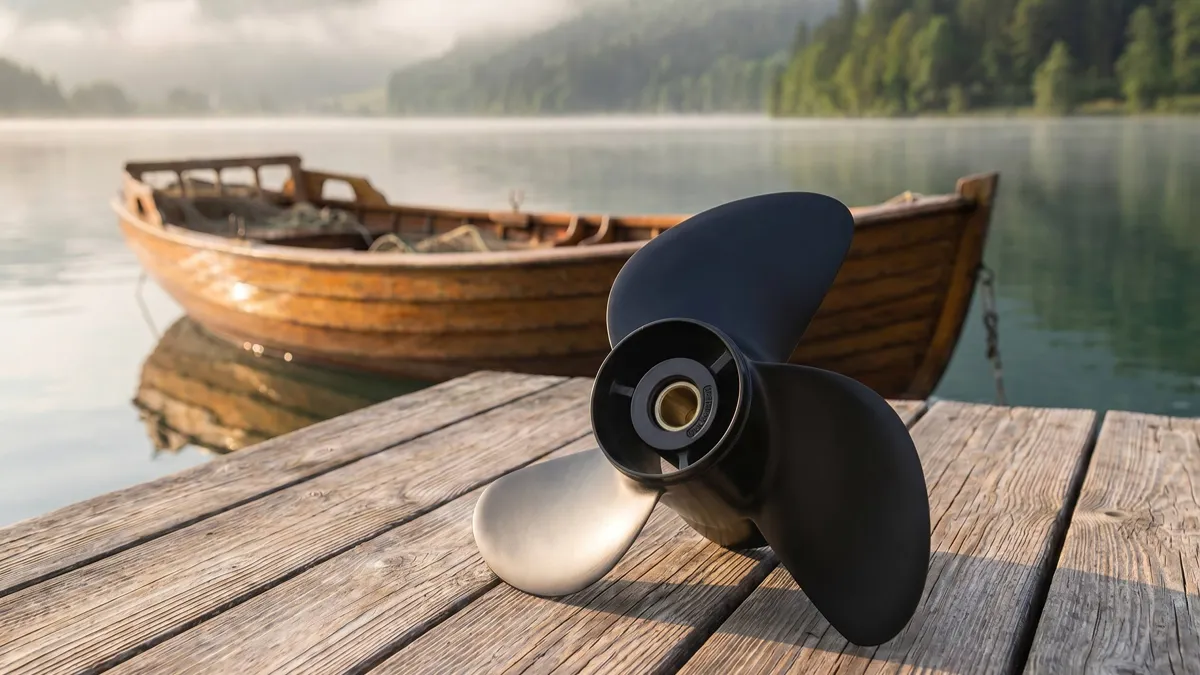
अधिकांश आउटबोर्ड प्रोपेलर में व्यास जैसी महत्वपूर्ण जानकारी शामिल होती है, आवाज़ का उतार-चढ़ाव, घूर्णन दिशा, हब प्रकार, और निर्माता कोड. जबकि अलग-अलग ब्रांड थोड़े अलग अंकन प्रारूप का उपयोग कर सकते हैं, बुनियादी आकार प्रणाली पूरे उद्योग में बहुत समान है.
इस गाइड में, आप सीखेंगे कि प्रत्येक संख्या का क्या अर्थ है, अपनी नाव के लिए सही प्रोपेलर की पहचान कैसे करें, और जब प्रोपेलर का आकार बदलना समझ में आता है.
आप आउटबोर्ड प्रोपेलर पर आकार के निशान कहां पा सकते हैं?
प्रोपेलर size markings, indicating diameter and pitch, आम तौर पर सीधे बाहरी हब पर मुहर लगाई जाती है, ब्लेड की जड़ें, या माउंटिंग नट के पास का पिछला भाग.
Common Locations on the Hub and Blades
Outboard motor manufacturers do not follow a single universal standard for placing identification numbers, but they generally stick to a few accessible spots. You will usually spot these physical engravings pressed right into the metal housing.
- Outer hub surface: Stamped or engraved directly onto the outer surface of the propeller hub cylinder.
- Blade roots: Located at the base of a blade where it physically connects to the center hub.
- Hub faces: Positioned on the front or rear face of the hub assembly where the propeller meets the prop nut.
Decoding the Size Format
Once you locate the stamp, you need to read the numbers correctly. The marine industry relies on a specific numeric sequence to communicate the physical dimensions and capabilities of the equipment.
- व्यास x पिच: The numbers are typically displayed in this exact order. A stamp reading “10 x 7” indicates a 10-inch diameter and a 7-inch pitch.
- Supplemental codes: Additional letters or numbers often follow the primary size to indicate blade type, घूर्णन दिशा (such as ‘R’ for right-hand), or internal manufacturer-specific codes.
- Technical designations: These markings represent exact technical size measurements, not arbitrary brand model names.
How to Reveal Hard-to-See Markings
Older props or those used in harsh saltwater environments often have obscured numbers. A quick visual check might fail to confirm the exact specifications without a bit of surface prep.
- Clean the surface: Thoroughly clean the hub area to remove salt buildup, marine grime, heavy oxidation, or old layers of anti-fouling paint.
- Use angled light: Carefully rotate the propeller and inspect the blade roots and cylinder collar under direct light to catch the shadows of shallow engravings.
- Check documentation: Consult the original packaging, purchase receipts, or manufacturer catalogs using the part number if the physical size stamps are completely worn away.
Why Knowing Your Propeller Size Matters
Operating a boat with an incorrect propeller size causes poor performance and accelerates engine wear. Getting these two specific numbers right dictates exactly how your outboard interacts with the water.
- Power transfer: Diameter and pitch determine how effectively the propeller matches the raw engine power to the physical weight of your boat.
- RPM control: The pitch rating directly influences the engine’s ability to operate within its recommended wide-open throttle (WOT) RPM capabilities.
- Performance tuning: A smaller pitch reduces engine load and allows it to reach higher RPM for faster acceleration, while a larger pitch drops overall RPM and favors top-end speed.
How to Read Diameter and Pitch Markings
The first number on a propeller marking is always diameter, dictating thrust. The second is pitch, controlling your outboard’s RPM and top speed. Mismatching these specifications damages engines. Marking Position Measurement Primary Function First Number (जैसे, 10) व्यास (Inches) Dictates thrust, load-carrying capacity, and water resistance. Second Number (जैसे, 7) आवाज़ का उतार-चढ़ाव (Inches) Determines top speed, त्वरण, and engine WOT RPM.
Deciphering the Standard Marking Format
Manufacturers typically stamp propeller markings directly on the hub or near the blade root. Finding these digits is the first step in replacing or upgrading your boat’s hardware. You will see standard industry codes like 10 एक्स 7 या 14 एक्स 19. These numbers represent two specific measurements that define the propeller’s geometry. The first number always defines the overall diameter in inches, while the second number always defines the theoretical pitch in inches.
Interpreting the First Number: व्यास
Diameter signifies the total width of the circle created by the blade tips during a full rotation. It determines how much water the propeller actually sweeps. A larger diameter increases the blade surface area, generating stronger thrust to move heavier boats and heavy cargo loads effectively. On the other end of the spectrum, a smaller diameter creates less drag in the water, suiting lighter hulls built specifically for higher top speeds.
Interpreting the Second Number: आवाज़ का उतार-चढ़ाव
Pitch measures the theoretical forward distance the propeller travels through the water in one full 360-degree rotation. Think of pitch as the gearing system for your outboard. Lower pitch numbers act like a low gear, offering better acceleration, quicker planing, and strong low-speed control. Higher pitch numbers function like a high gear, pushing the boat farther forward per revolution to achieve greater top speeds.
Applying Markings to Engine Performance
Your selected pitch directly controls the outboard motor’s wide-open throttle (WOT) आरपीएम. Dialing in the correct pitch ensures the engine runs efficiently without suffering mechanical strain.
- RPM Calibration: Adjusting the pitch by one inch typically changes the engine speed by roughly 200 आरपीएम.
- Under-Revving Fix: Selecting a lower pitch helps an overloaded engine reach its recommended operating RPM without lugging.
- Over-Revving Fix: Switching to a higher pitch prevents the engine from exceeding its maximum recommended RPM limits under light loads.
प्रोफेशनल-ग्रेड गार्डन मशीनरी के साथ ROI को अधिकतम करें
What Do Other Numbers and Letters on a Propeller Mean?
Beyond basic size, extra letters and digits identify blade count, hub dimensions, and specific manufacturer series codes required to source exact replacement parts.
व्यास, आवाज़ का उतार-चढ़ाव, and the ‘X’ Separator
Most marine propellers follow a universal naming convention. The core specification always appears as a simple sequence stamped onto the casting.
- व्यास: The first number in a standard sequence denotes the propeller’s overall diameter, measuring the full width of the blade sweep.
- आवाज़ का उतार-चढ़ाव: The second number represents the pitch, indicating the theoretical forward travel distance per single revolution.
- The ‘X’: This character functions simply as a ‘by’ separator, dividing the diameter and pitch measurements.
Series Letters and Additional Digits
Manufacturers rarely stop at just diameter and pitch. You will frequently find extra alphanumeric codes that define the physical geometry and compatibility of the unit.
- Series Letters: Letters such as J, के, or L signify the specific design, शृंखला, or type of the propeller within a brand’s lineup.
- Extra Digits: These trailing numbers often represent the total number of blades or specify the exact bore and hub size for mounting.
- Internal Codes: Certain short number combinations serve purely as internal manufacturer codes for catalog referencing.
Where to Locate Propeller Markings
Finding these specifications requires knowing exactly where brands stamp their hardware. Dirt, ऑक्सीकरण, or heavy marine growth can easily obscure these details.
- Blade Roots: Manufacturers often stamp the measurements directly at the root of a blade or deep between the blades.
- Central Hub: The outer surface of the central hub barrel is a common location for visible specification codes.
- Assembly Faces: Some brands engrave these critical details on the front or rear face of the center assembly, which may require removing the propeller nut to read clearly.
How Do Propeller Size Marks Differ Between Major Brands?
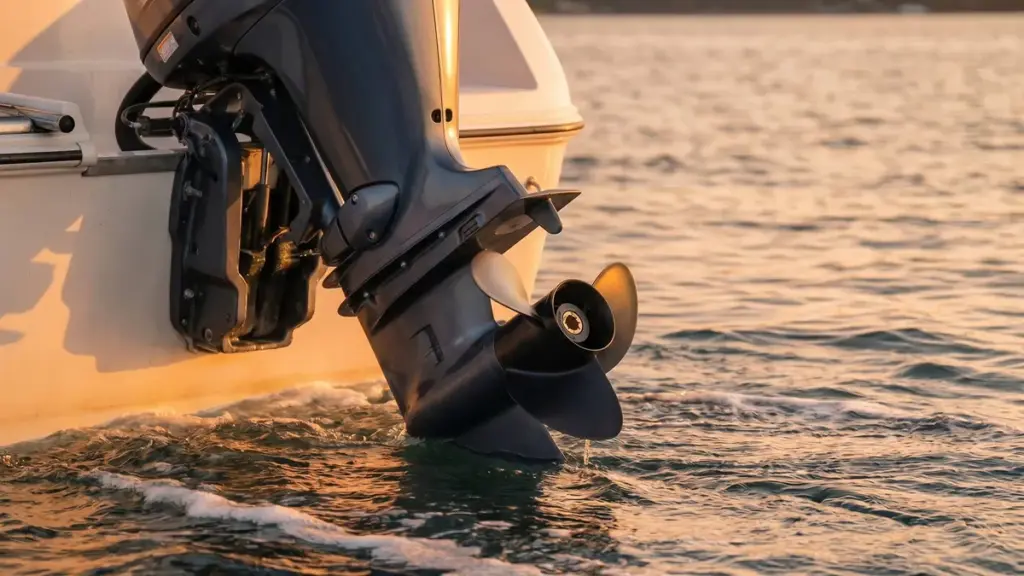
Every major outboard brand follows the standard diameter-by-pitch format, but proprietary suffixes, rotation letters, and hub codes create distinct marking styles you must decode before swapping propellers.
The Universal Baseline: Diameter and Pitch
Outboard manufacturers agree on one core sizing convention across the industry. The first number stamped on a propeller always represents the diameter, while the second number represents the pitch. A base stamp of 10 एक्स 7 indicates a 10-inch diameter and a 7-inch pitch, regardless of the manufacturer.
Brand-Specific Suffixes and Extra Codes
While the base dimensions are universal, brands add unique suffix codes to identify specific propeller features. You have to read past the first two numbers to understand the exact design.
- Rotation: Letters typically denote the turn direction, साथ “आर” for standard right-hand (clockwise) और “एल” for left-hand (counterclockwise).
- Blade Count: Trailing numbers often indicate the blade setup, such as a 3 या 4 for three-blade or four-blade designs.
- Model Codes: Internal model codes or specific hub series identifiers are frequently appended to the size block.
Marking Examples from Top Manufacturers
Each manufacturer applies these codes differently on the hub or blade root. Knowing what to expect from specific brands speeds up the identification process.
- Yamaha: Generally uses a straightforward layout, printing the size simply as 14 एक्स 19.
- Mercury: Often includes a “पी” to denote pitch alongside general marine props, formatted as 14.6 x 17P.
- Suzuki: Frequently groups the size, rotation, and blade count together, resulting in detailed stamps like 14 एक्स 19 आर 3.
What to Verify When Swapping Brands
Relying solely on the base diameter and pitch numbers is insufficient for an exact brand-to-brand replacement. Even with identical size stamps, propellers from different manufacturers deliver varying performance. This happens because competing brands use distinct blade shapes, rake angles, cupping, and material compositions to achieve their thrust profiles.
Always confirm rotation, ब्लेड गिनती, and hub system compatibility before installing a different brand’s propeller. Matching the spline count and ensuring the thrust washer seats properly prevents gearcase damage and keeps the outboard running safely.
How Can You Verify the Correct Propeller Size for Your Boat?
To verify your propeller size, test your wide-open throttle (WOT) RPM under a normal load. The correct pitch keeps your engine within the manufacturer’s recommended RPM range.
Identify Current Prop Specs and Target WOT RPM
Before hitting the water, establish a baseline for your boat and engine. You need to know what propeller you currently run and the exact performance window the outboard requires.
- Check the propeller hub: Inspect the outer surface or the base of the blades for stamped diameter and pitch markings to confirm your current sizing.
- Find the WOT RPM target: Consult your outboard owner’s manual to identify the manufacturer’s recommended Wide-Open Throttle (WOT) आरपीएम रेंज.
- Establish a baseline: Use manufacturer prop selectors or online calculators factoring in engine horsepower and typical operating weight to set your starting point.
Perform an On-Water WOT Test Under Normal Load
The real proof of propeller sizing happens on the water. A structured wide-open throttle test provides the exact engine RPM data needed to determine if your pitch is accurate.
- Simulate real-world conditions: Load the boat with the typical number of passengers, गियर, and fuel you carry during regular operation.
- Start the run: Trim the engine fully down in open water and advance the throttle to maximum capacity.
- Optimize and record: Slowly trim up to the optimal running angle, return to neutral trim, and record the highest steady RPM and GPS speed achieved.
Compare Test Results Against Manufacturer Specifications
Once you record your GPS speed and tachometer readings, cross-reference them with your engine manual. The resulting RPM tells you exactly how the propeller loads the engine.
- Optimal match: If the measured WOT RPM falls within the manufacturer’s specified range, the current propeller size is correct for your exact rig and typical load.
- Engine over-revving: If the engine spins past the maximum RPM limit, it lacks resistance. The propeller pitch is likely too low.
- Engine under-revving: If the engine struggles and fails to reach the minimum recommended RPM, the load is too heavy. The propeller pitch or diameter is too high.
Adjust Pitch to Correct Under-Revving or Over-Revving
If your test results fall outside the acceptable range, you must change the propeller pitch. Pitch directly dictates the mechanical load on the engine, acting like the gearing in a transmission.
- The standard rule: A 2-inch change in pitch alters your WOT RPM by approximately 300 को 400 आरपीएम.
- Dropping high RPMs: Move to a higher-pitch propeller to lower excessively high RPMs. This prevents mechanical strain and keeps the engine off the rev limiter.
- Raising low RPMs: Switch to a lower-pitch propeller to increase RPMs, improve acceleration, and prevent the engine from lugging under heavy loads.
Common Mistakes When Reading Propeller Size Marks
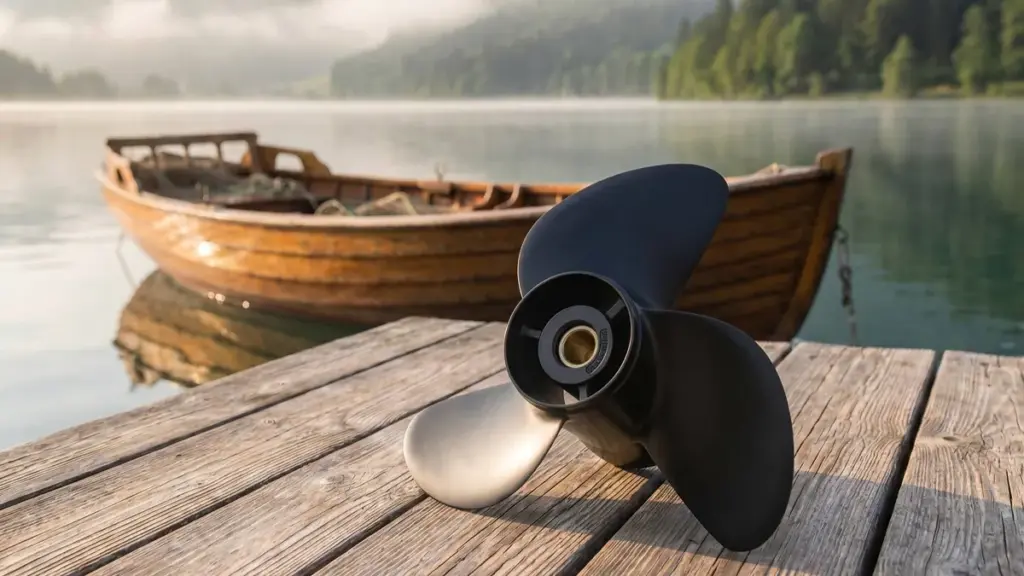
Misreading a propeller mark leads to poor performance, engine strain, and wasted money. Always read diameter first, pitch second, and factor in real-world boat dynamics.
Reversing Diameter and Pitch Numbers
Flipping these numbers is the fastest way to buy the wrong prop. The industry standard always lists diameter first, followed by pitch. When you mix them up, you completely alter how the prop interacts with the water.
- Reading backward: Assuming the first number is pitch instead of diameter.
- Interchanging specs: Failing to recognize that diameter and pitch affect performance differently and are not interchangeable.
- Size misinterpretation: Misinterpreting a 10×7 mark as a 7-inch diameter rather than a 10-inch diameter.
Misinterpreting Rotation and Blade Count
The primary numbers dictate the size, but the trailing letters control fitment and operation. Ignoring these extra characters leads to physical mismatches or dangerous handling on the water.
- Overlooking rotation marks: Missing the R (right-hand) or L (left-hand) indicators, which is critical for single and dual-engine setups.
- Confusing blade count: Assuming the trailing number (पसंद 3 या 4) adds another size dimension rather than just counting the blades.
- Installing incorrectly: Mounting a prop with the wrong rotation that physically fits the shaft but runs incorrectly under power.
Equating Theoretical Pitch to Actual Speed
Pitch measures the theoretical distance a propeller moves forward in one revolution through a solid medium. Water is not solid. Expecting a direct conversion from pitch to actual boat speed ignores the reality of marine physics.
- Ignoring water slip: Assuming the stamped pitch equals exact forward travel without factoring in the inevitable slip loss.
- Forgetting physical variables: Overlooking how hull shape, नाव का वजन, and load change the real-world performance of the propeller.
- Unrealistic expectations: Expecting two entirely different boats with the same 10×7 prop to achieve identical speeds.
Ignoring Engine Limits and Boat Usage
You do not pick a propeller based entirely on the boat hull. You pick it based on what the engine can safely handle. The propeller must allow the engine to operate within its defined mechanical limits.
- Skipping WOT checks: Selecting a propeller without checking the engine’s recommended wide-open-throttle (WOT) rpm range.
- Forcing extreme rpms: Choosing too much pitch causing the engine to under-rev, or too little pitch causing it to over-rev.
- Mismatched application: Failing to match the pitch profile to the boat’s primary purpose, such as prioritizing heavy-load acceleration versus top speed.
When Should You Replace Your Propeller with the Same or a Different Size?
Replace with the identical size if your engine hits the correct WOT RPM. Change pitch or diameter only to fix RPM limits, boost hole shot, or increase cruising speed.
Replacing with the Same Size: Wear, Damage, and Material Upgrades
Stick with the same diameter and pitch if your engine currently operates within the manufacturer’s recommended wide-open throttle (WOT) आरपीएम रेंज. The baseline size works. Swap out identical sizes to correct bent blades, चिपके हुए किनारे, or a slipping hub that causes vibration and kills thrust. If you run in abrasive or sandy water, upgrade from aluminum to stainless steel in the exact same size. This improves durability and rigidity while keeping your RPMs consistent.
Adjusting Propeller Pitch for RPM Correction
Pitch acts like gearing. Move to a higher pitch if the engine over-revs past the upper limit. This added load lowers the RPM and improves cruising speed on light boats. Drop to a lower pitch if the engine under-revs and struggles to build speed. Reducing the pitch frees up the engine to reach higher RPMs, delivering a stronger hole shot and aggressive heavy-load acceleration. Remember that changing the pitch by just 1 को 2 inches noticeably shifts engine loading and RPM, even on small outboards.
Changing Propeller Diameter for Thrust or Speed
Diameter dictates total blade surface area. Increase the diameter to gain more blade area for low-speed thrust. This extra grip helps push heavily loaded dinghies and gives you tight control during precise dock maneuvering. इसके विपरीत, reduce the diameter to minimize drag on high-speed, lightweight hulls. Whenever you upsize the diameter, you must verify your physical clearance. Maintain a strict minimum clearance of 5/8 को 3/4 inches between the blade tips and the outboard lower unit to prevent contact under load.
Practical Steps to Evaluate Your Replacement Needs
Do not guess your propeller size based on top speed alone. Perform a sea trial at WOT with your typical everyday load, including passengers, गियर, and fuel, to establish a realistic baseline RPM. Compare your recorded baseline RPM directly against the engine manual’s WOT specification to identify over-revving or under-revving conditions. Once you have the data, select a replacement based on your primary objective: drop to a lower pitch for towing and acceleration, or step up to a higher pitch for fuel-efficient cruising.
OEM Outboard Motor Propellers and Replacement Solutions from NEWTOP
As an experienced outboard motor propeller manufacturer, न्यूटॉप supplies OEM and aftermarket propellers for a wide range of outboard engines used in recreational, व्यावसायिक, और पेशेवर समुद्री अनुप्रयोग.
Our product range includes:
- Aluminum outboard propellers
- Stainless steel outboard propellers
- Three-blade and four-blade designs
- OEM replacement propellers
- Custom propeller development for private-label brands
Every propeller is manufactured with strict dimensional control to ensure accurate diameter, आवाज़ का उतार-चढ़ाव, blade geometry, and dynamic balance. This helps deliver smooth operation, efficient power transfer, and reliable performance on the water.
As a trusted outboard motor propeller factory, NEWTOP also provides comprehensive OEM and ODM services for global distributors, थोक, and marine equipment brands. From mold development and logo customization to packaging and quality inspection, our production process is designed to support consistent quality across large-volume orders.
Whether you need a direct replacement for popular outboard brands or a customized propeller solution for your own product line, our engineering and manufacturing teams can help you identify the right specifications for your market.
निष्कर्ष
Understanding outboard motor propeller size marks makes selecting the correct replacement much easier. In most cases, the first number indicates diameter, while the second number indicates pitch, with additional letters identifying rotation direction, सामग्री, or manufacturer-specific information.
When evaluating a propeller, don’t rely solely on the stamped numbers. Always consider your engine’s recommended RPM range, the boat’s weight, परिचालन की स्थिति, और इच्छित उपयोग. A properly matched propeller improves acceleration, ईंधन दक्षता, engine longevity, and overall handling.
If you’re sourcing reliable OEM replacement propellers or looking for an experienced outboard motor propeller manufacturer, NEWTOP offers precision-engineered solutions backed by advanced manufacturing capabilities and extensive OEM experience. Our team can help you select or develop propellers that deliver dependable performance across a wide range of outboard applications.
अक्सर पूछे जाने वाले प्रश्नों
What does 10×7 mean on an outboard propeller?
These numbers indicate diameter and pitch measured in inches. The first number (10) represents the diameter, which is the total width of the circle the blades sweep. The second number (7) is the pitch, indicating the theoretical forward distance the propeller moves in one full revolution. A 10×7 size fits small outboards where strong thrust and low-speed control matter more than top speed.
How do I know if my propeller size is correct?
A correctly sized propeller allows your engine to consistently reach its manufacturer-recommended wide-open throttle (WOT) RPM range under a normal load. The boat will accelerate smoothly, get on plane without excessive delay, and maintain cruising speed efficiently without over-revving or lugging the motor.
क्या मैं व्यास बदले बिना प्रोपेलर पिच बदल सकता हूँ??
हाँ. Swapping to a propeller with the same diameter but a different pitch (like moving from a 10×7 to a 10×9) is the standard way to adjust engine RPM and boat performance. Marine shops can also re-pitch existing aluminum or stainless steel props slightly to fine-tune your setup without altering clearance.
What happens if the propeller pitch is too high or too low?
यदि पिच बहुत ऊंची है, the engine will struggle to reach its recommended RPM range, causing sluggish acceleration and increased mechanical strain. If the pitch is too low, the engine will likely over-rev past its maximum limit, which risks internal damage, wastes fuel, and reduces your top-end speed.
Do all outboard brands use the exact same size marking system?
Major outboard manufacturers all use the core ‘diameter x pitch’ measurement in inches, but their exact stamping methods vary. Brands place the numbers in different spots, such as inside the hub or on the barrel. They also add unique letters and codes to indicate blade count, घूर्णन दिशा, and specific design series.
How do I read old or worn propeller size markings?
Start by cleaning the hub and blade root areas to reveal any stamped numbers. Most old props still use the standard diameter x pitch format (पसंद 11.25 एक्स 13). If you only find a single number with a letter (like 17P), it usually represents the pitch. For complex or partial codes, check the manufacturer’s parts catalog or have a marine shop measure the prop directly.
