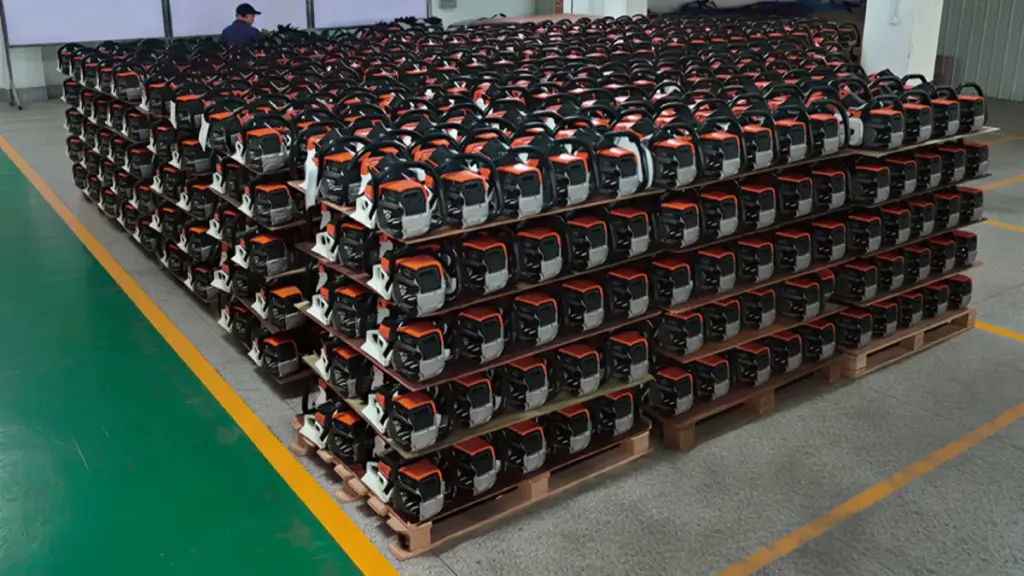
Boat owners may use the same moteur hors-bord for very different reasons. One buyer needs a reliable engine for daily fishing trips. Another focuses on passenger transport, while others care most about quiet and comfortable leisure boating.
The challenge is that the motor that performs well in one application may not be the best choice for another. Efficacité énergétique, exigences d'entretien, operating range, and long-term costs can vary significantly between engine types.
As global boating markets continue to evolve, understanding the strengths and limitations of 2-stroke, 4-accident vasculaire cérébral, and electric outboard motor has become increasingly important for distributors, fleet operators, and boat builders alike.
In the following sections, we’ll compare the major types de moteurs hors-bord and examine where each one performs best across fishing, transport, and leisure boating markets.
Outboard Motor Types Overview: 2-Accident vasculaire cérébral, 4-Accident vasculaire cérébral, and Electric
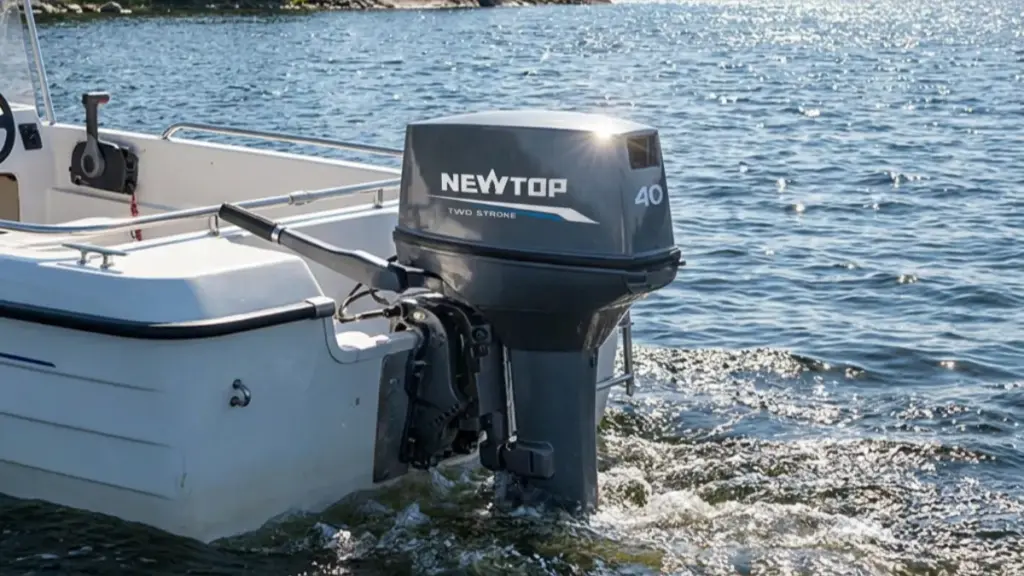
2-strokes offer power-to-weight, 4-strokes provide efficient and quiet operation, and electrics deliver stealth and zero emissions. Each has a clear place in the market.
| Criterion | Quatre temps | Deux temps | Électrique |
|---|---|---|---|
| Définition | Internal combustion engine that completes a power cycle in four piston strokes. | Internal combustion engine that completes a power cycle in two piston strokes. | Battery-powered motor that uses electricity instead of gasoline. |
| Livraison de puissance | Smooth and consistent power output. | Strong acceleration and high power-to-weight ratio. | Instant torque with quiet operation. |
| Poids | Heavier due to more engine components. | Lighter and easier to transport. | Motor is lightweight, but battery system adds weight. |
| Efficacité énergétique | Excellent fuel economy. | Higher fuel consumption. | No fuel required; powered by rechargeable batteries. |
| Entretien | Regular oil changes and scheduled servicing required. | Simple structure with relatively easy maintenance. | Minimal routine maintenance. |
| Niveau de bruit | Quiet and smooth. | Louder with more vibration. | Nearly silent. |
| Émissions | Lower emissions and easier compliance with regulations. | Higher emissions compared to four-stroke engines. | Zero direct emissions during operation. |
| Operating Range | Long range with easy refueling. | Long range with easy refueling. | Limited by battery capacity and charging access. |
| Initial Cost | Moderate to high. | Usually the most affordable option. | Typically the highest upfront investment. |
| Best Applications | Leisure boating, tourism, passenger transport, flottes de location. | Bateaux de pêche, utility vessels, bateaux de travail, remote-area operations. | Lakes, marinas, écotourisme, short-distance recreational boating. |
| Typical Buyer Priority | Fuel savings, confort, long-term value. | Affordability, simplicity, easy repair. | Environmental compliance and low operating noise. |
2-Moteurs hors-bord à course
A 2-stroke outboard completes its power cycle in just two piston strokes, giving it a high power-to-weight ratio. They are typically lighter and provide quicker acceleration, making them a solid fit for small fishing skiffs that need to get on plane fast. They run on a fuel-oil mix for lubrication, and older carbureted models use more fuel and have higher emissions. The mechanical design is simpler, but it also produces more noise and vibration.
4-Moteurs hors-bord à course
A 4-stroke outboard uses a power cycle similar to a car engine and has a separate, self-contained oil system. This makes them significantly quieter, smoother, and more fuel-efficient, especially at steady cruising speeds. They are heavier than a comparable 2-stroke but deliver better torque in the low-to-mid range for steady performance. It’s why they dominate both recreational and commercial markets—they are reliable and meet strict emissions standards.
Moteurs hors-bord électriques
Electric outboards are powered by batteries, providing nearly silent and zero-emission operation. They deliver instant torque from a standstill, which gives you excellent low-speed control for docking and trolling. Range is entirely dependent on battery capacity, so they are best for shorter trips or on waterways with combustion engine restrictions. The big advantage is minimal maintenance—no fuel, huile, or spark plugs to worry about.
Two-Stroke Outboards: Best for Fishing in Remote Waters
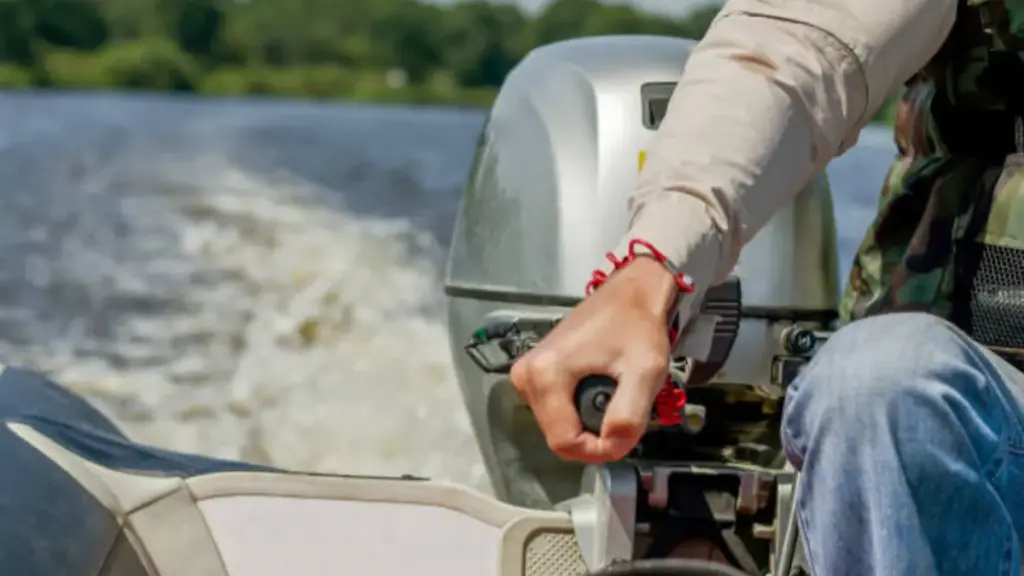
Two-stroke outboards excel in remote fishing due to their simple design and light weight. But their use is limited by strict emissions rules in many regulated waterways.
Two-stroke outboard motors earn their keep in backcountry fishing. Their mechanical simplicity and impressive power-to-weight ratio make them a practical choice when you’re far from a full-service marina. But the trade-off is higher emissions, which has led to widespread restrictions you can’t ignore.
Core Strengths for Backcountry Fishing
For anglers heading into remote areas, the practical advantages of a two-stroke often outweigh its drawbacks. The design prioritizes performance and field serviceability over refinement.
- They are significantly lighter than comparable four-strokes. This makes a real difference on small boats, car-toppers, and any situation where you’re launching by hand.
- The mechanical design is simpler, with no complex valvetrain. This makes troubleshooting and basic field repairs more manageable when professional help is hours away.
- A strong power-to-weight ratio gets the boat on plane quickly. This is essential when the boat is loaded with gear and you need to cover distance efficiently.
Understanding Emissions and Legal Limits
The biggest hurdle for two-stroke engines is environmental regulation. The emissions from older models have led to them being banned from many popular and protected waterways.
- Older carbureted two-strokes are known for producing noticeable smoke and discharging unburned fuel and oil, leading to higher hydrocarbon emissions.
- Many regulated lakes, reservoirs, national parks, and rivers either prohibit or heavily restrict high-emission two-stroke engines to protect water quality.
- You must check the specific regulations for your target fishing location before you go. A legal engine in one state can be banned on a specific lake just across the border.
Modern DFI vs. Older Carbureted Models
Not all two-strokes are created equal. Modern direct fuel injection (IFD) technology dramatically changed the emissions profile, creating a clear divide in performance and legality.
- DFI two-strokes inject fuel directly into the cylinder, burning much cleaner. They can meet strict emissions standards and are often permitted where older carbureted models are banned.
- Carbureted two-strokes offer the ultimate in mechanical simplicity. This benefit is offset by their increasing restrictions on many waterways.
- DFI models give you the classic two-stroke performance—light weight and quick acceleration—with far cleaner operation, making them a viable modern choice.
Key Factors for Your Purchase
When choosing a two-stroke outboard motor for remote use, focus on the factors that prevent you from getting stranded. Peak horsepower is less important than reliability.
- Focus on reliability, démarrage facile, and parts availability. These are the most critical factors when you’re operating miles from the nearest road.
- Match the engine’s weight to your boat’s transom capacity. An overweight engine creates poor balance and is a serious safety risk on a small boat.
- Confirm your specific model is compliant with the rules of the waters you fish most. Buying an engine you can’t use is an expensive mistake.
You may also like: Que rechercher lors de l'achat de moteurs hors-bord en provenance de Chine
Power Your Business with Durable Outboard Motors
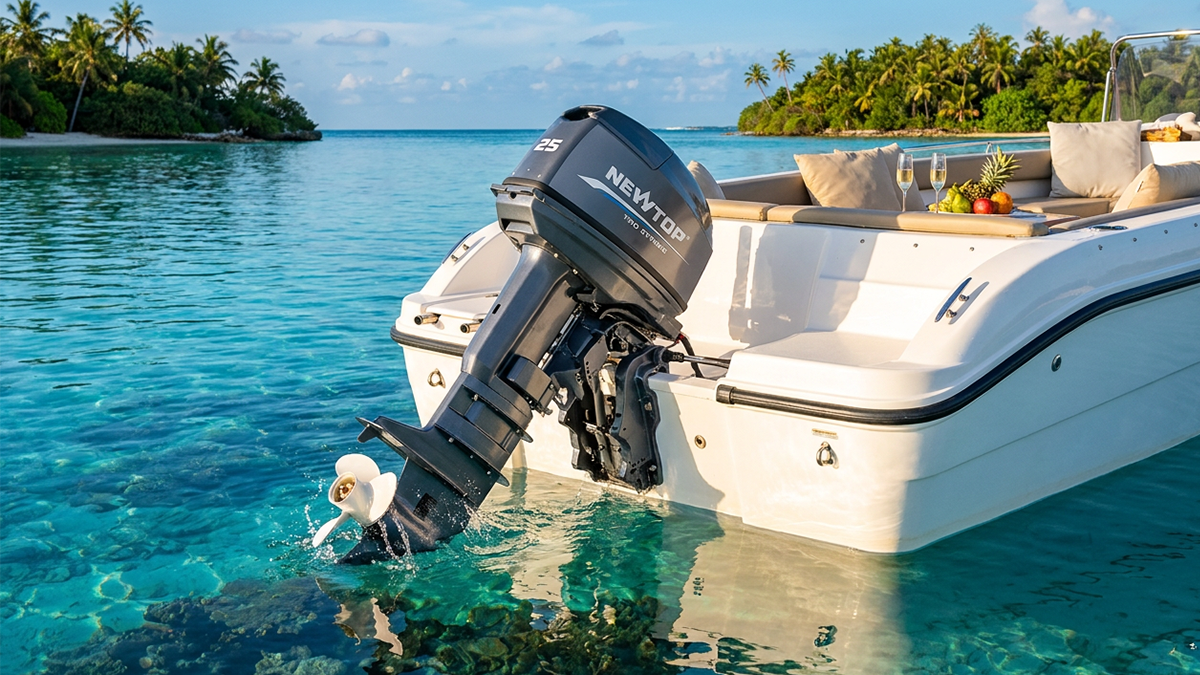
Four-Stroke Outboards: Quiet Efficiency for Leisure Boating
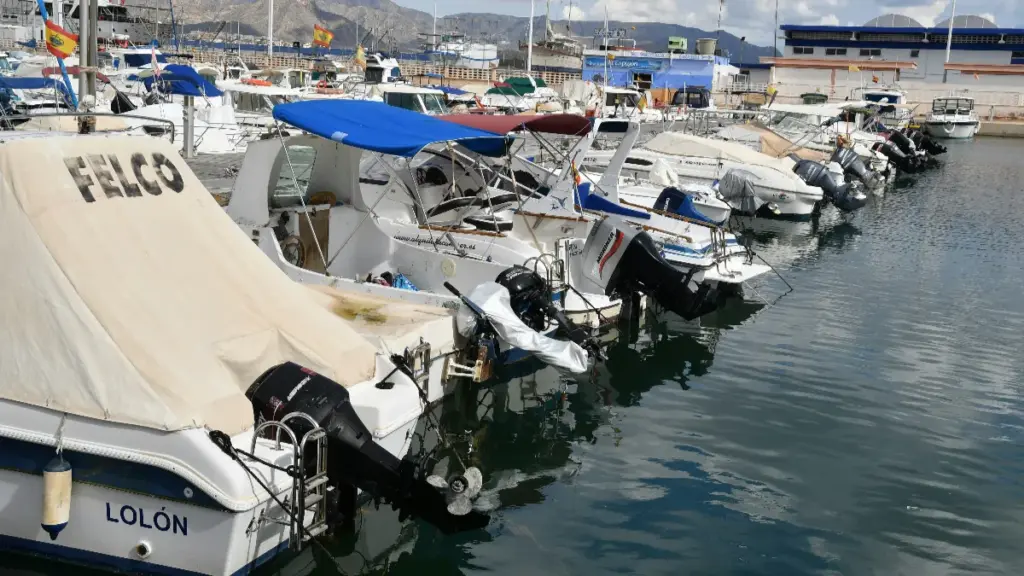
Four-stroke outboards dominate leisure boating with quiet, fuel-efficient performance. While heavier than two-strokes, they are ideal for family cruising, pêche, and activities where comfort matters most.
How Four-Stroke Technology Works
A four-stroke outboard operates much like a car engine. It completes a power cycle in four distinct piston strokes—intake, compression, pouvoir, and exhaust. This process is inherently more controlled and efficient than older two-stroke designs.
- It delivers better fuel efficiency by separating the intake and exhaust cycles, preventing unburned fuel from escaping.
- The design produces lower emissions and a cleaner exhaust, making it a better fit for environmentally regulated waterways.
- It runs with significantly less noise and vibration, which results in a smoother, more comfortable ride.
Primary Benefits for Recreational Boaters
For most people on the water for fun, the onboard experience is just as important as performance. Four-strokes are built for this reality.
- Quiet operation is a huge plus. It makes conversation easy and relaxation possible without shouting over engine noise.
- Reduced fuel consumption means longer trips and more time on the water before heading back to the fuel dock.
- The minimal exhaust smell improves the experience, especially when idling or moving at low speeds.
- Smooth power delivery is perfect for family cruising, watersports, and general leisure activities where jarring acceleration isn’t needed.
Weight and Performance Considerations
The benefits of a four-stroke engine come with a few trade-offs that matter for certain boats and operators.
- Four-strokes are typically heavier than two-stroke outboards of the same horsepower, which can affect performance and balance on smaller boats.
- Some two-stroke designs may offer faster “hole-shot” accélération, but modern four-stroke technology is closing that performance gap.
- The valvetrain and internal components are more mechanically complex, which can influence maintenance needs over the engine’s lifespan.
Best-Fit Boats and Activities
Four-stroke technology isn’t just a technical choice; it’s a practical one that aligns with specific boating styles.
- It’s an excellent match for pontoons, day cruisers, and family runabouts where comfort and fuel efficiency are top priorities.
- Anglers favor these engines for applications like trolling, where quiet running is a major advantage for not spooking fish.
- It’s also a solid choice for utility and transport boats that require reliable and steady horsepower for daily work.
Hors-bord électriques: Niche Applications and Current Limitations
Electric outboards excel in quiet, short-range niches like stealth fishing and harbor transport, but battery limitations in range, coût, and charging infrastructure keep them from mainstream use.
Specialized Roles in Fishing
The near-silent operation of electric outboards at low speeds makes them ideal for trolling and stealth fishing. Unlike a combustion engine, an electric motor doesn’t spook fish with noise or vibration, allowing anglers to approach structures and weed lines without causing a disturbance. This precise, quiet control is a significant advantage in shallow or heavily fished waters.
They also serve as the primary propulsion on small boats in lakes and reservoirs where internal combustion engines are banned or restricted. In these environments, electric is the only option for motorized boating. For many anglers on larger boats, an electric outboard acts as a secondary motor. The main moteur à essence handles the long, high-speed run to the fishing grounds, and the electric motor takes over for quiet, low-speed positioning and trolling.
Short-Range Transport and Leisure Craft
Electric propulsion is well-suited for predictable, short-distance transport jobs. Think of harbor water taxis, resort shuttles, or workboats that run the same fixed route every day. In these roles, battery capacity can be sized exactly to the mission, and charging can be scheduled reliably overnight. The quiet, emission-free operation is also a major plus in populated areas.
For leisure craft, electric outboards are popular on yacht tenders and dinghies because they eliminate the need to store gasoline on the main vessel. They also provide reliable auxiliary power for small sailboats, mainly for getting in and out of marinas quietly. On small lake boats and pontoons where the experience is more about relaxation than speed, the quiet and clean operation enhances the day on the water.
Primary Limitation: Battery Energy Density and Range
The fundamental constraint for electric outboards is the energy density of batteries. Gasoline simply packs far more energy per pound, which severely limits the range and speed of electric boats. An electric motor’s range is extremely sensitive to the throttle. Running at full power can drain a battery in less than an hour, while the same battery might last all day at slow trolling speeds.
Most small electric outboards can’t get a typical fishing or utility boat on plane. Top speeds are often stuck around 5 à 7 mph. This makes them completely unsuitable for applications where you need to cover long distances quickly, like reaching offshore fishing spots or responding to a situation across a large lake. The performance just isn’t there for high-speed, long-range work.
Cost and Infrastructure Hurdles
Upfront costs are a major hurdle. A small electric outboard and its required lithium battery pack can easily cost two to three times more than a comparable small gasoline motor. For commercial operators needing powerful systems and large battery banks, the capital investment becomes a significant financial decision.
Charging logistics also present a problem. Recharging takes hours, not the few minutes it takes to fill a gas tank. This requires reliable access to shore power, which isn’t guaranteed at every dock, mooring, or remote boat ramp. The lack of a widespread, high-speed marine charging network effectively restricts electric outboards to localized, “return-to-base” operations where charging can be planned.
Matching Motor Types to Transport and Workboat Use
Choosing the right outboard for a workboat isn’t about horsepower alone. The decision hinges on the vessel’s duty cycle, fuel logistics, and the specific job it does daily.
| Application | Recommended Outboard Motor Type |
|---|---|
| Small Fishing Boats | 2-Accident vasculaire cérébral |
| Commercial Fishing Fleets | 2-Stroke or 4-Stroke |
| Passenger Transport | 4-Accident vasculaire cérébral |
| Tourism Operators | 4-Accident vasculaire cérébral |
| Rental Boats | 4-Accident vasculaire cérébral |
| Inland Eco-Tourism | Électrique |
| Utility and Workboats | 2-Stroke or 4-Stroke |
| Marina Operations | Électrique |
Key Outboard Technologies for Commercial Use
For commercial fleets, outboards are tools, and each technology is suited for a different task. The choice comes down to balancing fuel, performance, and operational realities.
- Four-stroke gasoline outboards: These are the workhorses. They provide a solid mix of fuel efficiency, a wide range of available power, and reliable performance for most general-purpose workboats.
- High-thrust and commercial-duty models: These are specialized gasoline outboards. They use lower gear ratios and larger propellers to effectively move heavy displacement hulls like barges and loaded-down utility skiffs.
- Hors-bord diesel: For professional fleets that already run on diesel, these motors simplify fuel logistics. They also offer enhanced safety due to diesel’s lower volatility and are built for the long service life required by high-hour operators.
- Hors-bord électriques: This technology provides quiet, zero-emission operation. It’s the right fit for work in regulated urban waterways, environmentally sensitive areas, or for short, predictable routes where charging is readily available.
Pairing Motors with Passenger and Cargo Boats
Moving people is different from moving cargo. Passenger boats prioritize comfort and safety, while cargo vessels focus on pure load-lugging ability.
- Passenger transport (les bateaux-taxis, ferries): Quiet four-stroke gasoline engines are the standard choice for passenger comfort and reliability. Operators often run twin-engine setups for redundancy, ensuring they can complete a trip even if one motor has an issue.
- Light cargo skiffs: High-thrust gasoline models are ideal. They deliver the necessary load-carrying capability and are maneuverable in the shallow waters where these skiffs often work.
- Heavy cargo and push boats: The high torque from diesel outboards provides excellent control over heavy, non-planing hulls. Specialized high-thrust gasoline outboards are also a viable option.
Equipping Patrol and Service Workboats
Service and patrol craft have highly specific missions, from high-speed response to delicate environmental monitoring.
- Patrol and enforcement boats: These vessels demand high-power gasoline or diesel outboards. The mission requires rapid response capability, high top speeds, and absolute reliability.
- Harbor utility boats: These boats endure frequent stop-start cycles and need excellent low-speed control. Durable four-stroke or diesel motors are built to handle this kind of demanding duty.
- Environmental and survey craft: Minimizing disturbance is the goal. Operators typically use quiet four-stroke engines or zero-emission electric motors to avoid affecting wildlife or sensitive scientific measurements.
For more information read our guide to 2-stroke outboard weight comparison by horsepower for a detailed breakdown.
Cost of Ownership: Fuel, Entretien, and Lifespan by Type
Total cost isn’t just the price tag. Four-strokes often win for high-hour users, while electric costs are low until you need a new battery.
When you evaluate an outboard, the initial purchase price is only the beginning of the story. The real cost comes from fuel, routine service, and how long the engine will last before needing a major overhaul or complete replacement. Each motor type presents a different financial picture over its lifetime.
Fuel and Energy Costs
How much you spend at the pump—or the charging station—is a huge part of the ownership equation. The efficiency of each motor type directly impacts your wallet every time you leave the dock.
- Four-stroke outboards generally give you the best fuel economy for a gasoline engine. For most recreational boaters, this means lower running costs per hour on the water.
- Two-stroke engines are thirstier, consuming more fuel than a comparable four-stroke. This cost difference becomes more obvious the more you run the engine, especially at higher RPMs.
- Hors-bord électriques have the lowest direct energy cost. The expense is just the price of electricity to charge the batteries, but your total investment is directly linked to the size of your battery bank.
Maintenance and Service Expenses
Every engine needs regular service to stay reliable. The complexity and frequency of that maintenance define another big chunk of the total cost.
- Four-stroke engines have predictable maintenance schedules with routine tasks like oil changes, similar to what you’d expect from a car engine.
- Two-stroke motors are mechanically simpler with fewer parts, but their lubrication systems need consistent attention. The quality of maintenance has a big impact on their reliability.
- Electric motors require the least mechanical work. Long-term expenses are not about engine oil but about the health of the battery, its connectors, and the charging electronics.
Lifespan and Replacement Considerations
An outboard is a major investment, and how many years of service you can get from it is a critical cost factor. Durability varies significantly based on both design and how the engine is treated.
- Four-stroke outboards that receive consistent maintenance typically offer the longest service life of any gasoline option, making them a solid choice for anyone putting high hours on their boat.
- The durability of a two-stroke is directly tied to good habits: proper oil mixing, regular service, and not pushing it to its limits for long periods.
- An electric motor can run for a very long time, but the practical lifespan of the whole system often comes down to the battery. Its degradation cycle and eventual replacement cost are the biggest long-term financial items.
Regional Market Insights: What Works in Africa, Asie, and South America
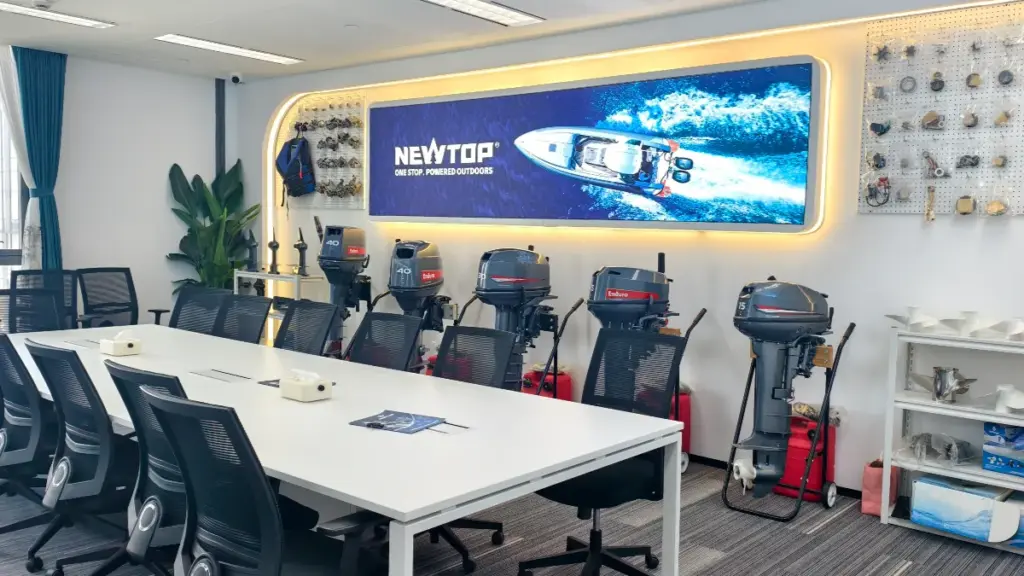
In Africa, Asie, and South America, engine choice is dictated by local needs. Durability is key in Africa, Asia balances diverse uses, and South America values simplicity and corrosion resistance.
Afrique: Durability for Fishing and Transport
In Africa, outboard motors are primarily workhorses. Small-scale fishing operations depend on simple, field-repairable 10–40 HP gasoline outboards. In remote areas, 2-stroke engines are still common because they’re easy to fix with limited tools and parts. River and lake transport, a critical economic driver, requires more powerful mid-range engines (40–90+ HP) with strong torque to handle heavy loads of passengers and cargo.
The leisure market is concentrated in tourism hubs, where quieter 4-stroke gasoline engines are preferred. Electric outboards have a small but growing presence in eco-tourism ventures. The key to success here isn’t bells and whistles; it’s an engine’s ability to tolerate variable fuel quality and be maintained without specialized infrastructure.
Asie: A Diverse Mix from Rural Rivers to Coastal Hubs
The Asian market is highly fragmented. In rural inland and artisanal fishing communities, low-cost 5–30 HP 2-stroke engines are still used, but tightening environmental regulations are forcing a shift toward cleaner 4-strokes. This contrasts sharply with the demands of coastal and inter-island transport, where higher-power (90–200+ HP) 4-stroke outboards are standard for their fuel efficiency and reliability on long, demanding routes.
Developed leisure markets in coastal hubs favor premium 4-stroke engines for recreational boats. Electric models are also gaining traction, particularly in regulated urban lakes and marinas. High population density in many areas means environmental rules are often stricter, speeding up the adoption of cleaner engine technologies across all segments.
Amérique du Sud: Powering Remote Rivers and Coastal Recreation
In South America, geography defines the demand. Remote inland waterways like the Amazon basin favor simple, easily repairable 8–30 HP 2-stroke engines. For long-distance river transport, operators rely on robust 40–115+ HP outboards, often using dual-engine setups for safety and reliability far from service centers.
The coastal leisure segment is completely different, dominated by modern, high-horsepower (115–300+ HP) 4-stroke outboards for recreational fishing and family boating. A critical factor for success across the continent is durability in a tropical climate. Engines need superior corrosion protection and cooling systems designed to handle warm, often sediment-rich, water without failing.
Equally important is access to reliable spare parts and after-sales support, especially in regions where boats serve as a primary means of transportation and fishing income. A recent case from Venezuela highlights how distributors increasingly prioritize stable parts supply when selecting long-term outboard motor partners. Read more about it here: How an $80,000+ Venezuela Order Demonstrates the Importance of Reliable Outboard Motor Spare Parts Supply.
Pensées finales
There is no single outboard motor that fits every application. Fishing fleets, transport operators, leisure boat owners, and commercial workboat users all face different operational requirements.
Two-stroke outboards continue to offer unmatched simplicity and affordability for demanding environments. Four-stroke models provide superior efficiency and comfort for recreational and passenger-focused operations. Electric outboards represent an emerging solution for environmentally sensitive and short-range applications.
Pour les distributeurs, importateurs, and boat manufacturers, selecting the right outboard motor portfolio requires balancing performance, frais de fonctionnement, local market demand, and long-term service support.
À NOUVEAUTOP, we offer a wide range of 2-stroke and 4-stroke outboard motors designed for fishing, transport, leisure, et applications commerciales. With flexible OEM/ODM capabilities, reliable spare parts support, and experience serving customers across Africa, Amérique du Sud, et l'Asie, we help partners build competitive product lines tailored to their markets. If you’re looking for a dependable outboard motor manufacturer, our team is ready to discuss your project requirements.
Foire aux questions
Quels sont les principaux types de moteurs hors-bord?
The main types are defined by their power source and technology. The most common categories are 4-stroke gasoline, 2-stroke gasoline, électrique, and diesel outboards. Each is suited to different applications across fishing, transport, and leisure boating based on its power, poids, efficacité énergétique, and emissions profile.
Which outboard motor is best for fishing boats?
For most fishing boats, a 4-stroke gasoline outboard offers the best balance of fuel efficiency, fonctionnement silencieux, et fiabilité. Electric outboards are excellent for quiet trolling and use in restricted waters. For heavy-duty offshore or commercial fishing, high-power 4-strokes or diesel outboards are often the preferred choice.
Are 2-stroke outboards still being made?
Oui, but mostly as modern direct-injection (DEPUIS) models that meet current emissions standards. Older, conventional carbureted 2-strokes are no longer produced by major outboard motor manufacturers for regulated markets due to environmental rules. DI 2-strokes remain available for certain high-performance applications.
Is a 4-stroke or 2-stroke outboard better for leisure boating?
A 4-stroke outboard is generally better for leisure boating. It runs quieter, smoother, and with fewer emissions, which creates a more comfortable experience for family cruising and day trips. A 2-stroke might be suitable for a small, lightweight boat where its higher power-to-weight ratio is a key advantage.
How long do electric outboard batteries last?
Battery run time varies with speed, from about an hour at full power to over eight hours at slow trolling speeds. The battery’s lifespan is also long, with modern lithium batteries typically lasting 8 à 12 years or several thousand charge cycles, depending on use and care.
What kind of outboard motor do commercial transport boats use?
Commercial transport boats like water taxis and crew boats typically use reliable, high-horsepower 4-stroke gasoline outboards, often in multi-engine configurations for speed and safety. Diesel outboards are also used in some workboat fleets for their high torque and fuel efficiency over long hours.
Is a 4-stroke outboard worth the extra cost?
Oui, for most boaters a 4-stroke outboard is worth the higher initial price. The cost is often offset by better fuel economy, quieter operation, émissions réduites, and stronger resale value. These benefits make it the preferred choice for regular fishing, transport, and leisure use.