


- Todos
- Histórias de clientes NEWTOP
- Hub do Explorador NEWTOP
- NEWTOP Insights da indústria
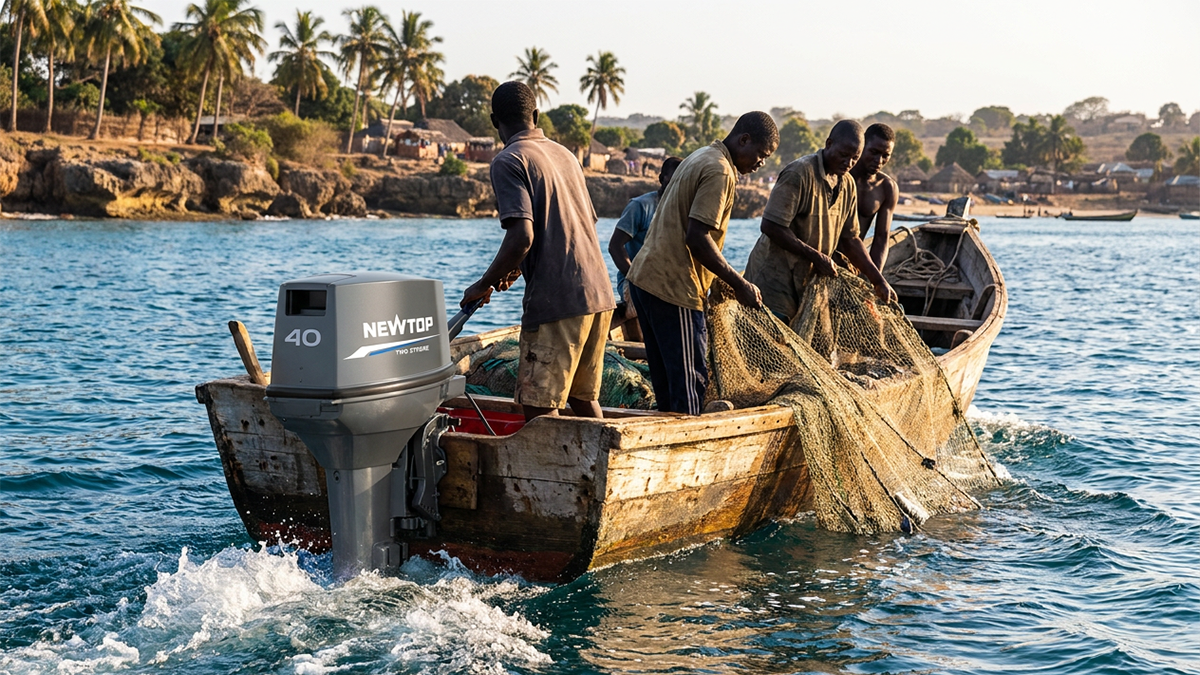
When buyers compare products from different fabricantes de motores de popa, they often pay attention first to horsepower, price, or brand familiarity. That is understandable, but it is rarely the best place to begin. In real markets, the right outboard motor is not simply the most powerful model or the lowest-priced option. It is the one that fits local water conditions, user habits, maintenance realities, and long-term demand.
That is why choosing an outboard motor should always begin with the market rather than the machine. A model that performs well in one region may struggle in another if the local environment, boat types, and buyer expectations are different. For distributors and dealers, this is more than a technical issue. It is a commercial decision that shapes customer trust, reorder rates, and long-term business growth.
Em NEWTOP, we have seen this pattern across multiple export markets. In our experience, the strongest results often come from products that match daily usage in the field, not from products chosen only because they look attractive in a catalog.
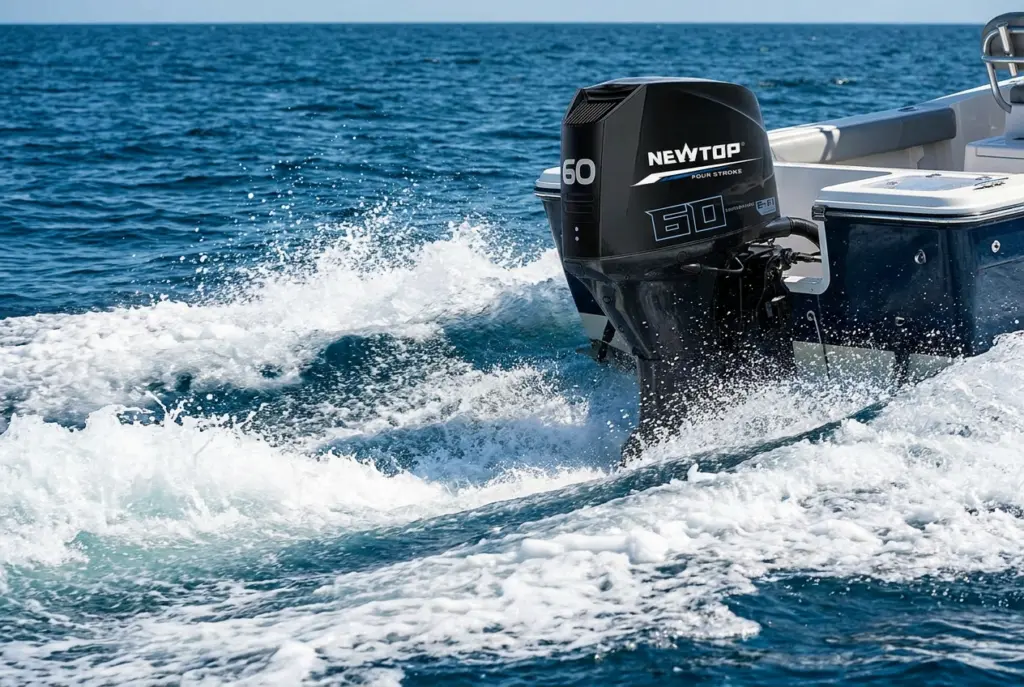
Start with Local Use, Not Just Product Specs
The first question is simple: what are people using outboard motors for in your market?
In some areas, buyers mainly use them for nearshore fishing and short-distance transport. Em outros, they depend on them for river work, island transport, tourism, patrol, or rescue applications. Although the product category is the same, the daily workload can be completely different.
That difference matters. A market built around small fishing boats may care more about fuel efficiency, início fácil, and simple maintenance than maximum speed. Em contraste, operators carrying heavier loads or running for longer hours often look for stronger thrust, stable cooling, and reliable performance under continuous use.
Many importers make the mistake of comparing displacement and rated power before understanding the actual work pattern. Na prática, the real question is not “Which engine looks stronger on paper?” but “Which engine can handle a normal working day in this market without creating extra problems?”
Once local use cases are clear, product specs become much easier to evaluate.
Why Water Conditions and Climate Matter
Not every market puts the same pressure on an outboard motor. Tipo de água, temperatura, umidade, and operating environment all affect how the engine performs over time.
In coastal markets, corrosion resistance becomes a major selling point. Saltwater, umidade, and frequent marine exposure can quickly damage weak components. Buyers in these markets often pay close attention to material durability, protective coatings, e confiabilidade a longo prazo.
In river-based markets, the focus may shift. Shallow water, muddy conditions, and variable currents often make users more concerned about cooling stability, propeller durability, and dependable low-speed operation. Nestes casos, a product that looks impressive in a showroom may still fail to build trust if it does not match field conditions.
Climate also shapes buyer expectations. In hotter regions, users often place more value on thermal stability during extended running hours. In markets where maintenance habits vary, they may also prefer products that are simpler to operate and more forgiving in everyday use.
This is why experienced marine engine dealers rarely judge a model by appearance alone. They know the market will judge the product based on how it survives real local conditions.
What Local Buyers Actually Value
Many importers assume buyers evaluate outboard motors in the same way everywhere. Na prática, they do not. Even in price-sensitive markets, customers rarely want the absolute cheapest option if it leads to downtime, poor fuel economy, or constant service issues.
In most local markets, buyers tend to care about a practical combination of factors:
- Reliable daily performance in real fishing, transporte, or work conditions
- Fuel efficiency that reduces long-term operating cost
- Easy starting and simple handling, especially for frequent-use boats
- Spare parts availability for regular maintenance and repairs
- Durability in local climate and water conditions, including saltwater or heat
- Low downtime, because many users rely on the engine for income
- Confidence in the dealer or supplier, especially when after-sales support matters
This is why product positioning matters so much. Good distributors do not simply ask which engine costs less. They ask which engine their customers will still trust after a full season of work.
For that reason, successful outboard motor distributors usually build their product range around a few clear buyer profiles instead of trying to stock every possible configuration.
Match Horsepower to Real Working Demand
Horsepower should support the boat and the workload, not just marketing language.
Lower horsepower models often suit light fishing, small boats, and personal water use. Mid-range models usually fit mixed-use markets where users need a balance between portability and practical output. Higher horsepower engines are more suitable for commercial work, larger hulls, or operations carrying heavier loads.
The key point is simple: horsepower should match local demand. An oversized engine may create unnecessary fuel cost and purchase pressure. An undersized engine may struggle during daily work and damage customer confidence very quickly.
This is why the best commercial decision is often the one that feels most practical, not the one with the highest number printed on the brochure.
Why Engine Type Still Matters in Many Markets
Engine type also plays an important role in market fit.
In many markets, especially where simple maintenance and familiar engine structure still matter, two-stroke outboard motors continue to attract buyer interest. Users who already understand the product often feel more confident buying it again, especially when local service knowledge already exists.
In other markets, no entanto, buyer expectations may begin to shift because of regulation, fuel habits, or changing commercial needs. Even then, a technically advanced product is not always the best commercial choice if the market lacks the maintenance habits or support network to keep it running smoothly.
This is where distributors need to think beyond product literature. The best model is usually the one the local market is ready to use, maintain and reorder.
Why Spare Parts and After-Sales Support Drive Repeat Business
A strong engine does not build a market on its own.
Fornecimento de peças de reposição, service response, and technical support often determine whether customers reorder or walk away. Dealers may sell the first unit because of price or appearance, but repeat business usually depends on what happens after the sale.
If common maintenance parts are hard to source, or if technical questions go unanswered, even a good engine becomes harder to sell. This is why many experienced buyers evaluate outboard motor manufacturers not only by product range, but also by the support system behind the engine.
Clear parts diagrams, stable components, replacement continuity, and responsive communication all matter. Para NEWTOP, this part of the business is not secondary. In many export markets, long-term confidence comes from knowing that the engine, the spare parts, and the after-sales support can all move together.
Ao mesmo tempo, stronger after-sales performance often starts with choosing models that already match local demand. NEWTOP can support distributors with popular outboard options such as T15-6B4, T15-63V, T40J, and T40G, depending on local boat size, workload, and customer preference. For selected widely used platforms in the market, we can also offer compatible machines or replacement parts that are 100% compatible with Yamaha, Suzuki, Tohatsu, and Mercury models. This helps dealers reduce service pressure, improve parts availability, and respond faster to everyday maintenance demand.
Match Local Demand With Reliable Outboard Motors

How Dealers Should Evaluate Outboard Motor Manufacturers
Choosing the right supplier is often just as important as choosing the right engine model. Na prática, experienced importers and marine engine distributors usually evaluate a manufacturer by a few core standards before they scale cooperation.
| Fator de Avaliação | Por que é importante |
|---|---|
| Product consistency | Helps dealers build customer trust by ensuring engines perform similarly across different batches. |
| Spare parts continuity | Supports after-sales service and reduces the risk of losing repeat business due to unavailable maintenance parts. |
| Technical support | Allows dealers to solve installation, manutenção, and repair questions more efficiently in the local market. |
| Supply stability | Makes it easier to plan inventory, respond to demand peaks, and maintain steady sales growth. |
| Business flexibility | Helps distributors adapt product mix, embalagem, or cooperation models as their market develops. |
Na prática, manufacturers that understand different stages of distributor growth are often easier to work with over the long term. New importers may need help choosing entry-level models, while more established partners may need OEM support, packaging adjustments, or a broader product mix.
In both cases, the supplier needs to think commercially, not just operationally. That is one reason long-term partnerships often outperform transactional buying.
Price Matters, but Total Market Fit Matters More
Price will always influence buying decisions, especially in competitive markets. No entanto, price alone rarely predicts long-term success.
An engine that costs less upfront may create more pressure later through warranty issues, lower customer confidence, or weak repeat sales. Por outro lado, a slightly stronger product with better support may generate better dealer margins over time because it reduces complaints and improves trust.
This does not mean every market should move premium. It means every market should think in terms of total fit: product performance, local conditions, buyer expectations, service support, and long-term business potential.
When these elements align, the outboard motor becomes more than a product. It becomes part of a real market strategy.
Think About Current Demand and Future Growth
The best outboard motor decisions usually balance current demand with future opportunity.
A distributor should understand what buyers need today, but also where the market may move next. If your region is growing in fishing, tourism, rescue use, or water transport, then product planning should reflect that direction rather than only short-term demand.
The goal is not simply to sell engines now. It is to build a product lineup that can grow with the market.
That is why choosing the right outboard motor is never just a technical decision. It is a commercial one. Buyers who understand their local environment, select the right horsepower range, and work with dependable outboard motor manufacturers put themselves in a much stronger position over the long term.
For companies building their marine engine business, that kind of decision-making creates a real advantage. Em NEWTOP, we believe the best results come when product choice begins with market reality—and ends with long-term customer trust.
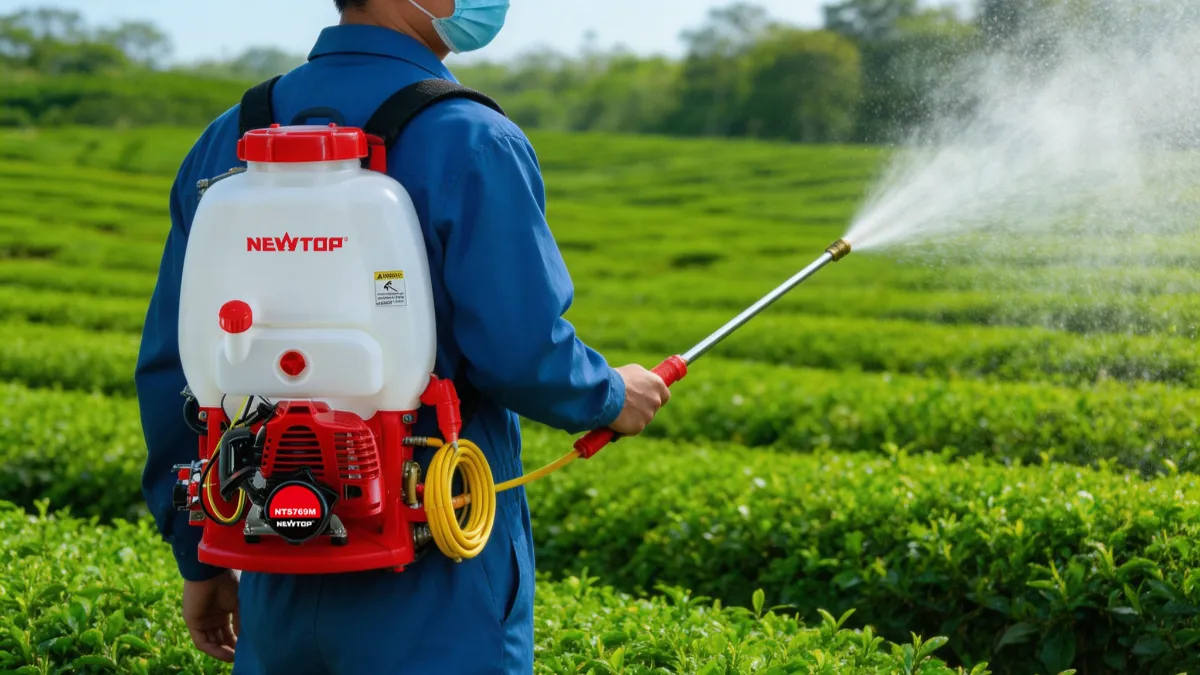
Pulverizadores costais são amplamente utilizados na agricultura, paisagismo, jardinagem, controle de pragas, e trabalho de saneamento. Embora muitos fornecedores de pulverizadores costais ofereçam produtos de aparência semelhante, a qualidade real de fabricação, consistência, e a capacidade do serviço pode variar significativamente. Escolher o fabricante certo de pulverizador costal não é apenas encontrar um preço competitivo. Trata-se de construir uma cadeia de suprimentos confiável que apoie o crescimento do seu negócio durante anos.
Se você é um distribuidor, importador, revendedor de equipamentos agrícolas, ou proprietário de marca própria, entender como avaliar um fabricante pode ajudar a reduzir os riscos de compra, melhorar a satisfação do cliente, e fortaleça sua posição no mercado.
Este guia explica os principais fatores a serem considerados antes de selecionar um fabricante confiável de pulverizador costal.
Experiência do fabricante do pulverizador costal
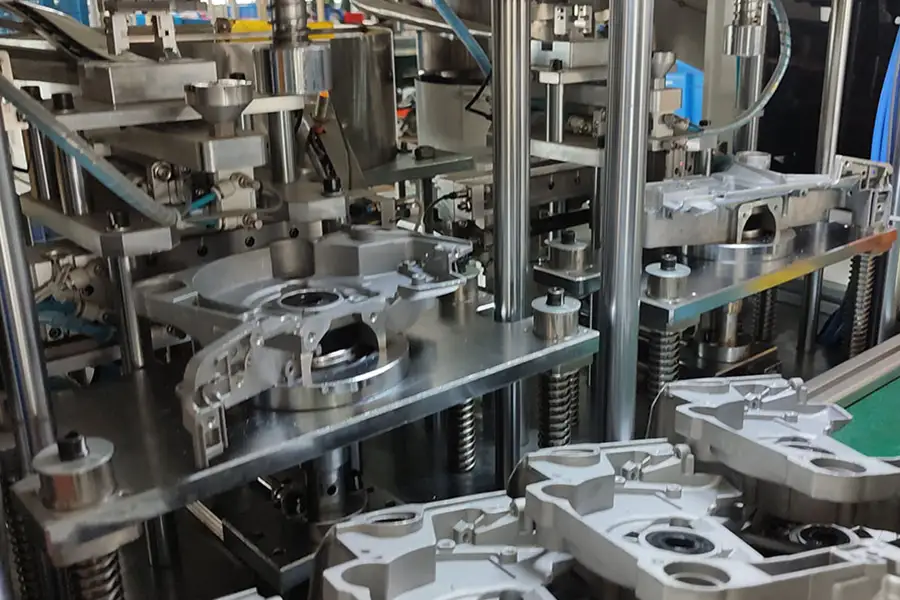
A experiência é frequentemente um dos indicadores mais fortes da confiabilidade da fabricação. Uma fábrica OPE que produziu pulverizadores costais por muitos anos geralmente tem sistemas de produção mais maduros, gestão de qualidade mais forte, e uma compreensão mais profunda das exigências do mercado.
Experiente fabricantes de pulverizadores costais estão melhor equipados para:
- Resolva desafios de desenvolvimento de produtos
- Melhore a eficiência da produção
- Mantenha a qualidade consistente do produto
- Atenda aos padrões do mercado internacional
- Responda rapidamente ao feedback do cliente
Você pode considerar as seguintes questões:
| Fator de Avaliação | Por que é importante |
|---|---|
| Anos em operação | Indica estabilidade de produção e conhecimento da indústria. |
| Experiência de exportação | Demonstra compreensão dos requisitos internacionais e regulamentações do mercado. |
| Especialização de Produto | Demonstra conhecimento técnico e desenvolvimento contínuo de produtos na fabricação de pulverizadores costais. |
| Carteira de Clientes | Reflete o reconhecimento do mercado, satisfação do cliente, e confiança empresarial de longo prazo. |
| Escala de Produção | Indica a capacidade do fabricante de suportar volumes crescentes de pedidos e expansão futura dos negócios. |
Os fabricantes de OPE que atendem diversas regiões geralmente entendem as diferentes preferências dos clientes, requisitos de certificação, e desafios de distribuição. Esta experiência pode ser valiosa ao introduzir produtos em novos mercados.
Por exemplo, os distribuidores em África e na América Latina procuram frequentemente produtos que ofereçam o equilíbrio certo entre custos, qualidade, e conformidade com o mercado. Muitos também exigem embalagens e marcas personalizadas para fortalecer seus canais de vendas locais. Tendo fornecido clientes nessas regiões por muitos anos, NOVOTOP, um fabricante experiente de pulverizador costal, entende esses requisitos e fornece produtos econômicos, serviços OEM flexíveis, e suporte de exportação confiável.
Processo de controle de qualidade do pulverizador costal
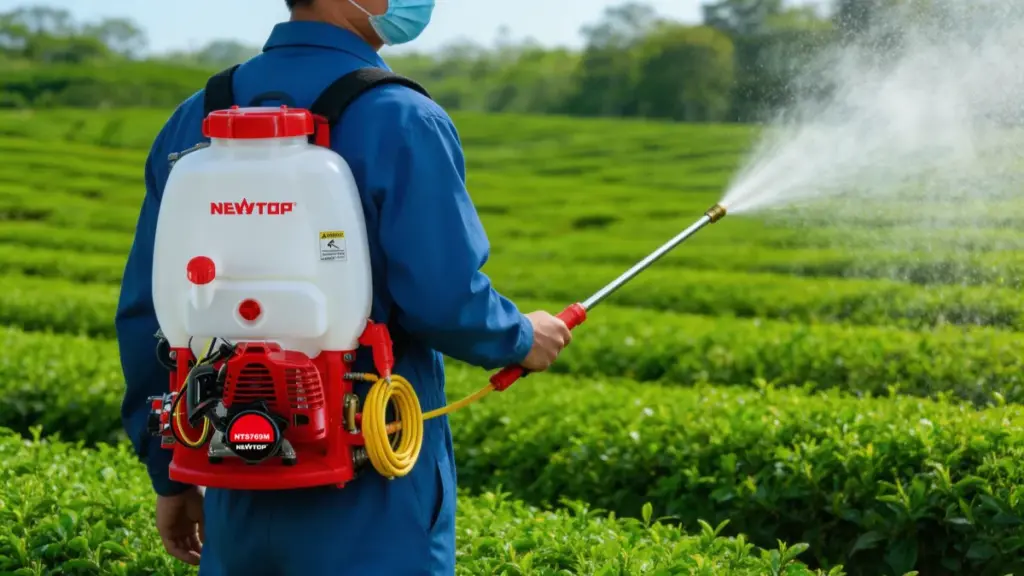
Uma estrutura rigorosa de controle de qualidade garante que os pulverizadores costais tenham um desempenho confiável no campo. Esta abordagem sistemática minimiza defeitos, padroniza a precisão da dosagem, e garante a segurança do operador.
| Estágio de controle de qualidade | Foco principal | Ações Críticas |
|---|---|---|
| QI | Materiais & Componentes | Indexação de resina, verificações de corrosão, dureza shore do elastômero |
| IPQC | Integridade da montagem | Testes de tanques hidrostáticos, verificações intermediárias de vazamento, validação do curso da bomba |
| OCC | Desempenho Final | A pressão da unidade completa é mantida, análise de padrão de pulverização, verificações de volume residual |
| Conformidade | Rastreabilidade do Sistema | Gestão de CAPA, rastreamento de lote, certificação padrão de segurança |
Entrada Controle de qualidade (QI) para Materiais e Componentes
A qualidade começa antes do início da montagem. Avaliamos todas as matérias-primas recebidas e componentes adquiridos para evitar que defeitos entrem na linha de produção. A triagem rigorosa do material garante que o pulverizador lide com agroquímicos agressivos sem degradar.
- Resinas plásticas: Teste resinas plásticas quanto ao índice de fluidez, densidade, e estabilidade UV.
- Componentes metálicos: Inspecione peças metálicas, como hastes de bomba e varinhas, quanto à resistência à corrosão e tolerâncias de rosca.
- Vedações e juntas: Avalie elastômeros e anéis de vedação quanto à compatibilidade química e corrija a dureza Shore.
- Submontagens: Verifique as válvulas de gatilho, mangueiras, e dispositivos de fluxo constante contra pressão e especificações estruturais.
Controle de qualidade em processo (IPQC) Durante a montagem
O monitoramento da linha de montagem detecta problemas de alinhamento e fabricação antecipadamente. Rastreamos os parâmetros da máquina e realizamos testes físicos em estações críticas para validar a integridade estrutural e o ajuste mecânico.
- Fabricação de tanques: Monitore os parâmetros de moldagem por injeção e sopro enquanto conduz testes hidrostáticos em linhas de solda de tanques.
- Mecânica da bomba: Verifique os conjuntos da bomba quanto à ação de curso suave, precisão de deslocamento, e assentamento adequado da vedação.
- Teste intermediário: Realize verificações intermediárias de vazamentos de preenchimento parcial ao redor das juntas, mangueiras, e a base da bomba.
- Segurança de hardware: Verifique as fixações da cinta, pontos de ancoragem de suporte de carga, e torque da braçadeira da mangueira durante a montagem final.
Controle de qualidade de saída (OCC) e teste final
O teste final da unidade confirma que cada pulverizador montado atende às metas funcionais e de segurança. Pressurizamos e operamos as unidades para simular condições de campo, isolar e remover quaisquer produtos não conformes antes do envio.
- Integridade de vazamento: Realize testes de pressão de toda a unidade na posição vertical e inclinada para confirmar a integridade absoluta do vazamento.
- Consistência de saída: Meça a consistência da taxa de fluxo e verifique se as válvulas de alívio de pressão são ativadas nos limites designados.
- Qualidade do aplicativo: Avalie os padrões de pulverização quanto à simetria e teste os dispositivos anti-gotejamento para desligamento imediato.
- Verificações de eficiência: Meça o volume de líquido residual após a pulverização até o esgotamento para garantir o mínimo de desperdício químico.
Documentação do sistema e rastreamento de conformidade
Um sistema de qualidade documentado fornece responsabilidade e impulsiona a melhoria contínua. Vinculamos dados de fábrica a lotes específicos, permitindo que os compradores rastreiem as origens dos componentes e confiem em métricas de desempenho validadas.
- Rastreamento de lote: Mantenha a rastreabilidade documentada desde unidades de pulverização acabadas até lotes de componentes específicos.
- Dados de desempenho: Acompanhe os dados de durabilidade do ciclo de vida, incluindo testes de ciclo da bomba e resistência à fadiga da cinta.
- Gerenciamento de defeitos: Gerencie o tratamento de defeitos por meio de ações corretivas e preventivas estruturadas (CAPA) sistemas.
- Alinhamento regulatório: Garanta rótulos do produto final, símbolos de segurança, e instruções de calibração atendem aos padrões de certificação regionais.
Maximize o ROI com máquinas de jardim duráveis
Certificações e conformidade do pulverizador costal
A conformidade em pulverizadores costais abrange padrões de segurança em nível de produto e recursos de projeto operacional que garantem segurança, aplicação precisa de pesticidas em mercados globais regulamentados.
Certificações importantes a serem consideradas
| Certificação | Propósito |
|---|---|
| ISO 9001 | Sistema de gestão de qualidade |
| CE | Conformidade com os requisitos do mercado europeu |
| RoHS | Restrição de substâncias perigosas |
| BSCI | Responsabilidade social e produção ética |
| ALCANÇAR | Conformidade química para mercados europeus |
| Relatórios de testes SGS | Verificação independente do produto |
Certificações principais de produtos e padrões de segurança
O acesso aos mercados agrícolas globais exige a adesão estrita às diretivas regionais de maquinaria e segurança. Os fabricantes devem validar os pulverizadores através de quadros regulamentares reconhecidos antes de os colocarem no mercado.
- europeu & Mercados do Reino Unido: A marcação CE e as declarações UKCA confirmam a conformidade com máquinas regionais, Equipamento de pressão, e Diretivas de Baixa Tensão.
- Padrões de teste: Engenheiros testam equipamentos de acordo com a ISO 19932-1:2013 e diretrizes da FAO para verificar a integridade estrutural do tanque, resistência a vazamentos, e desempenho de pulverização.
- Unidades alimentadas: Os sopradores de névoa movidos a gasolina exigem certificações EPA ou CARB específicas para emissões do motor, juntamente com limites rígidos de exposição a ruído e vibração.
Requisitos de compatibilidade de materiais e produtos químicos
Pulverizadores agrícolas lidam com solventes agressivos, surfactantes, e fertilizantes. A seleção do material determina diretamente a vida útil do equipamento e a segurança do operador.
- Construção de tanques: Fábricas de tanques de molde estabilizados por UV, polietileno de alta densidade (PEAD) para evitar degradação externa e ataque químico.
- Sistemas de Vedação: Juntas, Anéis de vedação, e mangueiras devem resistir à degradação causada por herbicidas, inseticidas, e fertilizantes líquidos.
- Teste de validação: As equipes de controle de qualidade realizam testes de imersão química de longo prazo e protocolos de pressão cíclica para garantir que os materiais não inchem, rachadura, ou vazamento em condições de campo.
Conformidade Operacional e Ambiental
A gestão ambiental requer equipamentos que minimizem o desperdício de produtos químicos e a deriva fora do alvo. O projeto do pulverizador desempenha um papel fundamental no apoio a operações seguras em campo.
- Precisão da aplicação: Os reguladores de pressão integrados mantêm a pressão estável para uma dosagem precisa, enquanto projetos estruturais claros apoiam inspeções de segurança rápidas antes do uso.
- Controle de deriva: Os operadores usam combinações específicas de bicos e protetores de pulverização para limitar a deriva de produtos químicos e proteger culturas não-alvo.
- Gestão de Resíduos: Os manuais determinam procedimentos rigorosos de triplo enxágue e descarte seguro de roupas. Os modelos elétricos incluem instruções de reciclagem de baterias em conformidade com WEEE.
Alinhamento de certificação de usuário e regulamentações de pesticidas
Os fabricantes não certificam os operadores, mas devem projetar e documentar equipamentos para se alinharem às leis locais de licenciamento de pesticidas e às estruturas de treinamento profissional.
- Segmentação de Mercado: A rotulagem clara do produto separa os pulverizadores agrícolas profissionais dos modelos domésticos padrão.
- Qualificações Regionais: A documentação do equipamento está alinhada com as expectativas de treinamento do operador, como os certificados PA1/PA6 do Reino Unido ou os cursos irlandeses de aplicação portátil QQI.
- Conformidade de etiqueta: A engenharia de pulverizadores permite que os operadores combinem as taxas de fluxo e os tamanhos das gotas com as instruções rigorosas dos rótulos de pesticidas da América do Norte.
Gestão da Qualidade, Rastreabilidade, e Documentação
A qualidade consistente da produção depende de supervisão estruturada da fábrica e sistemas robustos de rastreabilidade. Essas estruturas protegem os compradores da variabilidade do lote e dos riscos de responsabilidade.
- Integração SGQ: Fábricas implementam ISO 9001 sistemas para governar o controle do projeto, validação de processo, e supervisão de componentes do fornecedor.
- Rastreabilidade de lote: As instalações rastreiam números de série exclusivos de produtos e códigos de lote para isolar componentes defeituosos e gerenciar recalls direcionados.
- Suporte de campo: As remessas incluem manuais do usuário localizados, pictogramas de segurança reconhecidos internacionalmente, e guias visuais para auxiliar os operadores com calibração precisa.
Capacidade OEM e ODM do pulverizador costal

Os recursos de fábrica OEM e ODM determinam a rapidez e a confiabilidade com que você pode produzir pulverizadores personalizados adaptados ao seu mercado específico e aos padrões da marca.
Escopo principal do serviço OEM e ODM
A diferenciação entre serviços OEM e ODM ajuda os compradores a alinhar sua estratégia de produto com os recursos da fábrica. Fábricas capazes oferecem suporte a diversas categorias de produtos, incluindo manual, operado por bateria, modo duplo, e pulverizadores de gasolina.
- Serviços OEM: Foco na marca, pequenos ajustes estruturais, e integração de componentes em plataformas de pulverizadores existentes.
- Serviços ODM: Envolve o desenvolvimento de novas configurações de tanques, sistemas de energia personalizados, e controles de segurança especializados diretamente desde a fase de conceito.
Profundidade de Engenharia Mecânica e Elétrica
R avançado&Equipes D contam com modelagem CAD 3D, prototipagem rápida, e extensos testes de campo para validar novos projetos antes da produção em massa.
- Engenharia Mecânica: Cobre perfis de tanque ergonômicos, otimização da espessura da parede, e mecanismos de bomba duráveis para suportar condições de campo adversas.
- Capacidades Elétricas: Inclui correspondência de capacidade da bateria, Seleção de motor CC, e interfaces de controle seladas contra umidade para modelos motorizados.
Volume de produção e flexibilidade de pedidos
Os principais fabricantes de pulverizadores costais sustentam a produção de alto volume operando linhas de montagem dedicadas e adaptadas a diferentes tipos de pulverizador costal. A flexibilidade no chão de fábrica se traduz diretamente na confiabilidade da sua cadeia de suprimentos.
- Quantidade mínima e prazos de entrega: Os fornecedores adaptam as quantidades mínimas de pedido e os cronogramas de produção com base no nível de personalização exigido..
- Configurações flexíveis: As configurações de produção lidam com mudanças eficientes de marca e execuções paralelas para pedidos de modelos mistos para manter o fluxo de estoque.
Garantia de Qualidade e Conformidade Regulatória
O desempenho consistente em campo requer controle rigoroso do processo. Os pulverizadores passam por testes rigorosos para atender aos padrões de segurança globais, visando especificamente a resistência à ruptura do tanque e o isolamento elétrico.
- Sistemas de Qualidade de Fábrica: Aplicar verificações de materiais recebidos, verificação de montagem em processo, e testes de vazamento em grande escala em cada lote.
- Inspeções Finais: As equipes de qualidade verificam padrões de pulverização consistentes, estabilidade de pressão, e função da bateria antes da embalagem final.
Gestão de Projetos e Segurança IP
Construir um pulverizador personalizado requer comunicação transparente e salvaguardas legais rigorosas. Gerentes técnicos dedicados supervisionam as aprovações de projetos, amostragem de pré-produção, e definições de amostra de ouro para alinhar a produção da fábrica com as expectativas do comprador.
- Estruturas de custos transparentes: Os acordos de fornecimento separam as despesas únicas de ferramentas e desenvolvimento dos preços contínuos de hardware por unidade.
- Propriedade intelectual: Contratos de fornecimento claros definem a propriedade do molde, exclusividade de design, e acordos rigorosos de não divulgação para proteger a propriedade intelectual do comprador.
Produção e prazo de entrega do pulverizador costal

Os prazos de entrega dos pulverizadores costais dependem muito do seu nível de personalização e da estratégia de fornecimento de componentes. Pedidos padrão são rápidos, enquanto moldes personalizados e baterias importadas ampliam os prazos.
Ao avaliar um fornecedor de pulverizador costal, considere a capacidade de produção e a consistência da entrega.
Principais perguntas a serem feitas
- Qual é a capacidade de produção mensal?
- Quantas linhas de produção estão disponíveis?
- Qual é o prazo médio de entrega?
- Como são gerenciados os pedidos na alta temporada?
- Que planos de contingência existem para escassez de materiais?
Os prazos de entrega típicos variam dependendo da quantidade do pedido e dos requisitos de personalização.
| Tipo de pedido | Prazo de entrega típico |
|---|---|
| Produtos Padrão | 15–30 dias |
| Embalagem Personalizada | 25–40 dias |
| Projetos OEM | 30–45 dias |
| Novo Desenvolvimento ODM | 45–90 dias |
Em NEWTOP, mantemos um sistema de produção estável e uma cadeia de fornecimento madura para suportar pedidos de amostras e produção em massa de forma eficiente. Os prazos de entrega típicos estão próximos 7 dias para amostras e sobre 30 dias para pedidos padrão de 100 unidades para cargas completas de contêineres, dependendo dos requisitos do pedido.
Para OEM e projetos personalizados, os prazos variam de acordo com a complexidade da especificação. Entre em contato conosco para discutir seu projeto e obter um orçamento personalizado e cronograma de entrega.
Fornecimento de peças de reposição e suporte pós-venda
Fornecimento confiável de peças de reposição e suporte pós-venda estruturado mantêm os pulverizadores costais operacionais. Priorize fabricantes que padronizem componentes e garantam disponibilidade a longo prazo para minimizar o tempo de inatividade em campo.
Principais categorias de peças sobressalentes
Um fabricante confiável mantém um estoque profundo de componentes de reposição para manter as operações agrícolas funcionando durante períodos críticos de pulverização. Classificamos as peças essenciais do pulverizador costal em três níveis distintos.
- Montagens mecânicas: Fornecimento de grandes conjuntos mecânicos, incluindo tanques, bombas, lanças, e sistemas de bicos.
- Componentes de energia: Disponibilidade de componentes de energia como baterias, carregadores, carburadores, e arrancadores de recuo para unidades motorizadas.
- Peças consumíveis: Fornecimento de componentes de vedação consumíveis, como anéis de vedação, juntas, e filtros em kits prontos para uso.
Armazenar essas categorias específicas evita que pequenos desgastes se transformem em falhas completas do equipamento.
Requisitos de manutenção e design
Uma boa engenharia antecipa reparos em campo. Quando os componentes se desgastam, os operadores precisam trocá-los rapidamente sem enviar unidades de volta a um centro de serviço.
- Acesso à ferramenta: Acesso irrestrito aos componentes internos da bomba e da válvula usando ferramentas manuais padrão.
- Montagem modular: Projetos que permitem substituições rápidas em campo de componentes desgastados sem acessórios especializados.
- Padronização de componentes: Padronização de mangueiras, tópicos, e acessórios em vários modelos de pulverizadores para simplificar o estoque do distribuidor.
Esta padronização reduz drasticamente a complexidade do inventário para os distribuidores regionais e reduz o custo total de propriedade para os usuários finais.
Documentação Técnica e Treinamento
Mesmo a melhor rede de peças de reposição falha se os técnicos não tiverem conhecimento para instalar os componentes corretamente. Os fabricantes devem fornecer documentação de reparo visual clara e suporte ativo.
- Documentação visual: Diagramas detalhados de vista explodida com números de referência claros para pedidos precisos de peças.
- Manuais de manutenção: Manuais do usuário multilíngues que descrevem a manutenção diária, protocolos adequados de limpeza química, e armazenamento.
- Ferramentas de diagnóstico: Guias de solução de problemas práticos que abordam falhas comuns, como perda de pressão, vazamentos, e pulverização irregular.
- Desenvolvimento de habilidades: Oficinas de capacitação e treinamento lideradas por fabricantes para técnicos de distribuidores e grandes usuários finais agrícolas.
O treinamento adequado garante remontagem e calibração corretas, evitando erros de dosagem causados por montagem inadequada de componentes.
Disponibilidade de peças e logística de fornecimento
A continuidade do fornecimento determina se um modelo descontinuado permanece um ativo viável ou se torna um plástico inútil. Os compradores devem garantir compromissos logísticos firmes de seus parceiros de fábrica.
- Compromissos de ciclo de vida: Compromissos de suporte a modelos descontinuados com peças de reposição por cinco a sete anos.
- Processamento de pedidos: Capacidades de pedidos estruturados, incluindo prazos de entrega padrão, MOQs razoáveis, e transporte consolidado de contêineres.
- Fornecimento regional: Utilização de centros de distribuição regionais e parceiros de armazenamento locais para reduzir o tempo de inatividade dos agricultores.
Agrupar remessas iniciais de peças de reposição com pedidos de contêineres primários oferece uma proteção imediata contra rupturas de estoque sazonais antecipadas.
Cobertura de garantia e resolução de reclamações
Uma garantia precisa de uma estrutura de execução clara. Você precisa de um sistema transparente para lidar com defeitos de forma rápida e eficiente.
- Termos de cobertura: Termos de garantia básicos claros que separam os componentes estruturais das peças de desgaste normal.
- Processamento de reclamações: Procedimentos transparentes para envio de reclamações de defeitos com resposta rápida e prazos de resolução definidos.
- Execução do remédio: Opções de soluções, incluindo peças de reposição gratuitas, trocas completas de unidades, ou alocações de crédito de fornecedor.
O rastreamento de dados de falhas por meio dessas reclamações ajuda os compradores a negociar melhores condições e impulsiona a melhoria contínua do produto no nível da fábrica.
Riscos comuns ao escolher um fabricante de baixo custo
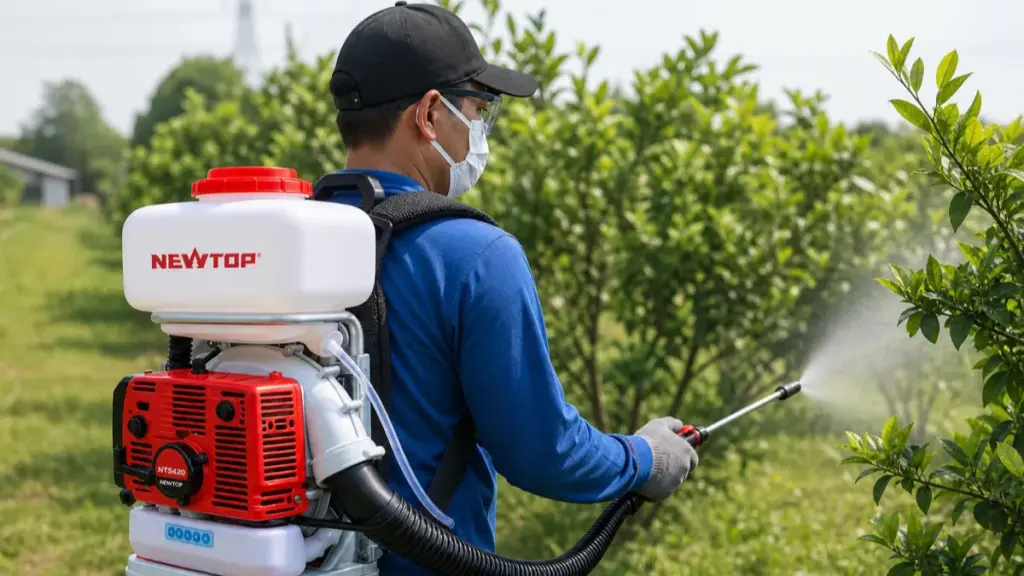
Buscar o preço unitário mais baixo muitas vezes esconde custos elevados em falhas iniciais de campo, responsabilidades de segurança, e cadeias de abastecimento interrompidas. Um pulverizador barato rapidamente se torna um passivo caro.
Problemas de qualidade e desempenho do produto
Fábricas de baixo custo rotineiramente economizam em materiais e engenharia. Isso afeta gravemente o desempenho em campo e prejudica a reputação da sua marca quando o equipamento chega ao usuário final.
- Saída de pulverização inconsistente: A má calibração e as flutuações de pressão levam diretamente à sobredosagem ou subdosagem da colheita.
- Falha de componente: Bicos de qualidade inferior e componentes de fluido baratos tendem a pingar ou entupir quase imediatamente.
- Fraqueza estrutural: Plásticos finos e estruturas fracas resultam em rachaduras no tanque e falha estrutural completa sob uso regular em campo.
Lacunas de segurança e conformidade regulatória
Os equipamentos agrícolas devem proteger o operador e atender a rígidos padrões de importação. Os fabricantes de orçamento frequentemente ignoram etapas de conformidade para economizar dinheiro, transferindo o risco legal inteiramente para você.
- Exposição do trabalhador: Projetos de vedação inadequados aumentam a exposição do operador a pesticidas através de vazamentos e gotejamentos constantes.
- Importar blocos: Ignorar os padrões de segurança ISO e nacionais coloca suas remessas em alto risco de rejeição alfandegária.
- Exposição de responsabilidade: A falta de rastreabilidade e a falta de certificações de segurança deixam os compradores expostos a multas regulatórias e recalls de produtos.
Confiabilidade e custos ocultos do ciclo de vida
A economia inicial de um pulverizador econômico desaparece no momento em que as peças começam a quebrar. Compradores profissionais avaliam o custo total de propriedade, que despenca quando o equipamento falha no campo.
- Tempo de inatividade frequente: Altas taxas de falha de vedações, mangueiras, e as alças da bomba interrompem as operações durante, janelas de pulverização sensíveis ao tempo.
- Vida útil mais curta: A ausência de catálogos de peças de reposição e suporte de manutenção obriga a substituição antecipada de equipamentos.
- Margens apagadas: Altas taxas de defeitos, requisitos constantes de reparo, e reclamações frequentes de garantia consomem rapidamente qualquer economia inicial de custo unitário.
Ergonomia e usabilidade ruins
Se um pulverizador costal for desconfortável ou difícil de operar, os trabalhadores irão utilizá-lo indevidamente ou sentirão fadiga física rápida, levando a uma aplicação desleixada.
- Fadiga do operador: Cintas desconfortáveis e má distribuição de peso aceleram o esforço físico durante longos turnos.
- Práticas incorretas: Manuais inadequados e traduções ausentes no idioma local causam erros na mistura e aplicação de produtos químicos.
- Uso indevido de equipamentos: Uma grave falta de materiais de treinamento adequados aumenta a probabilidade de erro do operador e de componentes quebrados.
Cadeia de suprimentos e inconsistências de qualidade
Fornecedores de baixo custo muitas vezes não têm infraestrutura e disciplina para manter uma qualidade estável ou entregar no prazo, interrompendo toda a sua estratégia de vendas sazonais.
- Qualidade de lote variável: Os fabricantes mudam silenciosamente para materiais mais baratos ou subcontratados não avaliados para manter suas margens de lucro.
- Janelas de vendas perdidas: As restrições de capacidade levam a entregas atrasadas mesmo antes das épocas agrícolas cruciais de pré-pulverização.
- Teste ignorado: Sistemas internos fracos de gestão da qualidade ignoram testes essenciais de final de linha e verificações de vazamento.
Limitações de design para aplicações específicas
Um genérico, abordagem única raramente funciona na agricultura profissional. Os fornecedores de orçamento adotam configurações básicas que limitam sua capacidade de capturar segmentos de mercado especializados.
- Capacidades incompatíveis: Projetos genéricos não atendem aos requisitos específicos da cultura, vários tipos de terreno, e condições climáticas locais.
- Mau controle de aplicativos: Mecanismos inadequados de agitação e controle de pressão impedem que os usuários sigam diretrizes rígidas de pulverização.
- Carteiras estagnadas: Linhas de produtos limitadas ignoram a crescente demanda do mercado por unidades motorizadas ou alimentadas por bateria de maior capacidade.
Pronto para construir sua linha de produtos de pulverizador costal com NEWTOP?
A parceria com um fabricante comprovado de OPE protege sua cadeia de suprimentos. NEWTOP oferece qualidade confiável, documentação pronta para conformidade, e produção OEM escalável para manter a competitividade da sua marca de pulverizador.
Com mais 20 anos de experiência em fabricação, NEWTOP é um fornecedor confiável de equipamentos de energia para ambientes externos que atende clientes em mais de 65 países.
Por que fazer parceria com a NEWTOP?
- 500,000+ capacidade de produção anual de unidades para fornecimento estável
- Instalações de fabricação avançadas e rigorosos sistemas de controle de qualidade
- R experiente&Equipe D suportando personalização OEM e ODM
- Durável, pulverizadores testados em campo projetado para uso agrícola e comercial
- Fornecimento confiável de peças de reposição para suporte pós-venda de longo prazo
- Padrões internacionais de qualidade e conformidade do produto para mercados globais
- Experiência profissional de exportação servindo a África, América latina, Sudeste Asiático, e o Médio Oriente
Para expandir nossa presença global, NEWTOP está buscando ativamente distribuidores regionais e parceiros de marca. Esteja você lançando uma nova linha de produtos ou expandindo seu portfólio existente, nossa equipe pode fornecer suporte de fabricação confiável, serviços de personalização, e programas de parceria competitivos.
Contate a NEWTOP hoje para discutir projetos OEM, oportunidades de marca própria, ou cooperação de distribuição regional.
Perguntas frequentes
Quais certificações devo procurar em um fabricante de pulverizador costal?
Certificações comuns incluem ISO 9001, CE, RoHS, ALCANÇAR, BSCI, e relatórios de testes de terceiros, como SGS. As certificações exigidas dependem do seu mercado-alvo e da aplicação do produto.
As fábricas de pulverizadores costais oferecem serviços OEM e ODM?
Sim, os fabricantes mais estabelecidos de pulverizadores costais fornecem. Os serviços OEM geralmente cobrem a marca, cores personalizadas, e alterações de embalagem com quantidades mínimas de pedido mais baixas. ODM envolve engenharia de novos formatos de tanques, mecanismos de bomba, ou recursos ergonômicos, exigindo volumes maiores e investimentos iniciais em ferramentas.
Qual é o prazo de produção típico para um pedido de pulverizador costal?
Em NEWTOP, amostras coletadas 7 dias, e pedidos padrão geralmente levam cerca de 30 dias. Pedidos OEM e ODM dependem dos requisitos de personalização.
Quais verificações de controle de qualidade uma fábrica confiável deve realizar?
Uma fábrica confiável realiza inspeções de materiais recebidos, monitoramento de montagem em processo, e testes do produto final. Os testes finais devem incluir retenção de pressão, detecção de vazamento, e calibração da taxa de fluxo sob condições controladas. Eles também devem realizar testes periódicos de durabilidade e resistência química em amostras representativas..
Por que a consistência das peças de reposição é crítica para pulverizadores costais?
Peças sobressalentes consistentes garantem que o pulverizador mantenha taxas de pressão e fluxo precisas, que evita a subdosagem ou sobredosagem de produtos químicos. Usando padronizado, peças de reposição de alta qualidade também minimizam o tempo de inatividade operacional, simplifica a manutenção, e prolonga a vida útil do equipamento.
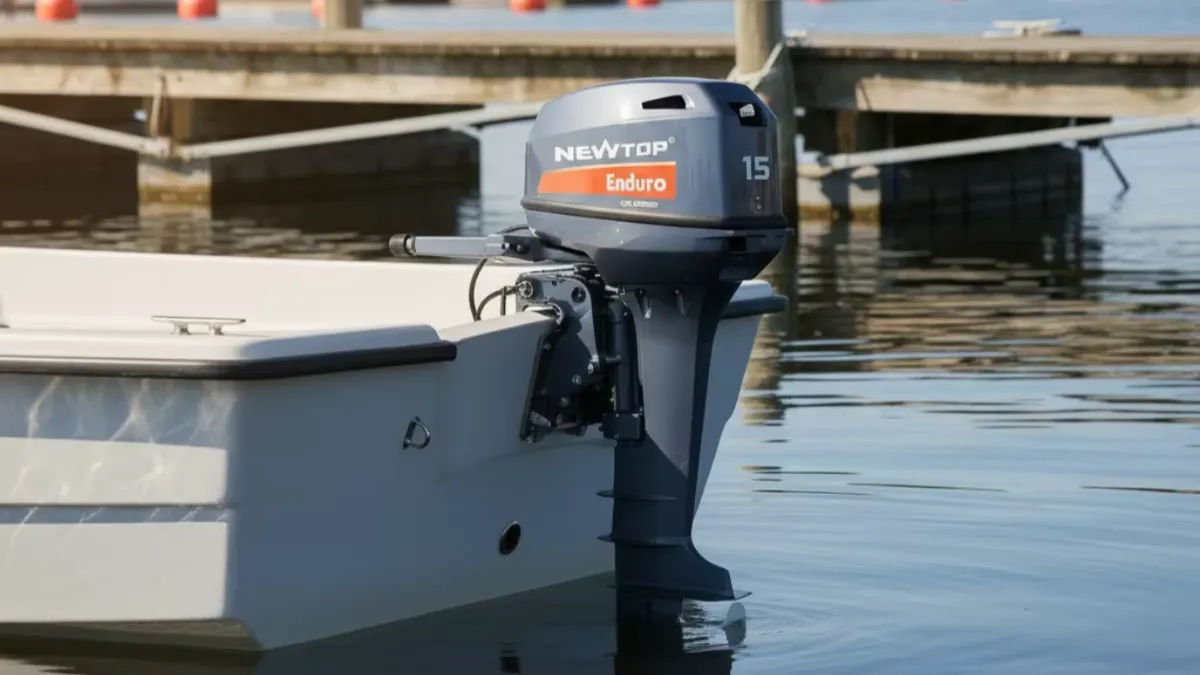
Outboard motors are one of the most important power systems for small and medium-sized boats. They are widely used in fishing, leisure boating, trabalho de resgate, aquaculture, transporte, and commercial marine operations. Choosing the right outboard motor directly affects fuel efficiency, velocidade, confiabilidade, maintenance cost, and overall boating experience.
Today’s market offers many types of outboard motors, including gasoline, elétrico, diesel, two-stroke, and four-stroke models. Each option is designed for different boat sizes, operating environments, and usage needs.
This guide explains the major types of outboard motors and helps buyers understand which solution works best for different boating applications.
Diferentes tipos de motores externos explicados
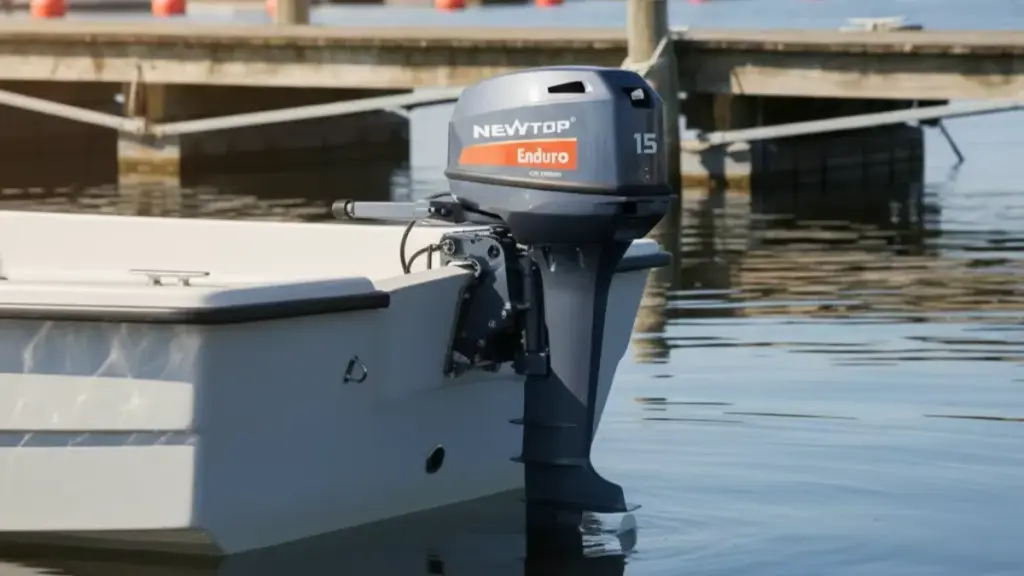
Motores de popa can be classified in several ways, including fuel type, engine design, horsepower range, and intended application.
The most common categories include:
| Motor Type | Core Technology | Caso de uso principal |
|---|---|---|
| Four-Stroke Gas | Gasolina / Separate Oil | Family cruisers, offshore fishing, heavy pontoons |
| Two-Stroke Gas | Gasolina / Oil Mix (or DFI) | Lightweight performance boats, shallow-water skiffs |
| Elétrico | Lithium/AGM Battery | Eco-sensitive waters, botes, restricted lakes |
| Hybrid Gas-Electric | Combustion + Electric Drive | Mixed-use vessels, eco-tourism, water taxis |
| Trolling / Kicker | Electric or Small Gas | Precise angling control, auxiliary offshore backup |
| Jet Outboard | Water Pump Thrust | Shallow rivers, rocky rapids, operações de resgate |
Four-Stroke Gasoline Outboards
Four-stroke outboards dominate the modern recreational boating market. They operate with a separate oil system, completely eliminating the need for manual fuel-oil premixing. This design mirrors automotive engines, using valves and camshafts to manage intake and exhaust phases.
- Efficiency and Emissions: Deliver high fuel efficiency, lower emissions, and quieter operation compared to legacy engine designs.
- Applications: Perform well on family cruisers, offshore fishing boats, and heavy-load pontoons.
- Trade-offs: Carry a heavier weight and higher upfront cost but offer strong long-term reliability and resale value.
Two-Stroke Gasoline Outboards
Two-stroke outboards prioritize raw power and quick throttle response. They fire on every crankshaft revolution, giving them a distinct performance advantage off the starting line. While older carbureted models consume more fuel and produce more exhaust smoke, modern engineering has refined the technology.
- Desempenho: Provide a high power-to-weight ratio, resulting in rapid acceleration and a strong hole shot.
- Mechanics: Feature a simpler core mechanism with fewer moving parts, often lowering initial purchase and maintenance costs.
- Modern Upgrades: Modern direct-injection versions meter oil and fuel precisely to improve efficiency for lightweight performance boats.
Motores externos elétricos
Electric outboards replace the internal combustion engine entirely, drawing power from rechargeable lithium or AGM battery packs. They provide a silent, emission-free alternative tailored for specific boating environments where noise and pollution control are top priorities.
- Impacto Ambiental: Produce zero local emissions and minimal noise, making them ideal for eco-sensitive waters and wildlife areas.
- Manutenção: Require almost no routine mechanical maintenance like oil changes or spark plug replacements.
- Limitations: Face range limitations based on battery capacity, requiring reliable charging infrastructure at the dock or trailer.
Hybrid Gas-Electric Outboards
Hybrid systems combine an internal combustion engine with an electric drive to maximize operational flexibility. Operators can seamlessly switch between propulsion methods based on their immediate environment and range requirements.
- Versatility: Allow operators to use silent electric power in restricted zones and gas power for open-water transit.
- Confiabilidade: Provide dual-power redundancy, offering backup propulsion if one system fails.
- Considerations: Involve higher system complexity, increased weight, and higher acquisition costs than single-mode alternatives.
Trolling and Kicker Motors
Not all outboards serve as the primary source of high-speed propulsion. Trolling and kicker motors act in highly specialized roles to complement the main engine, focusing on precise maneuvering and safety.
- Trolling Motors: Use electric power to offer precise, silent, low-speed control for anglers navigating structure.
- Kicker Motors: Function as small auxiliary gasoline outboards mounted alongside the main engine on the transom.
- Benefits: Provide backup propulsion for offshore safety and save fuel during extended low-speed transit.
Propeller vs. Jet Outboard Variants
The method an outboard uses to translate engine power into thrust dictates where you can safely navigate. While conventional propeller outboards efficiently translate power to thrust across a wide range of speeds and depths, jet variants offer a specialized solution for hazardous waters.
- Jet Mechanics: Jet outboards replace the lower unit propeller with a water pump, drawing water beneath the hull and expelling it as thrust.
- Safety Advantages: Jet drives significantly reduce draft and eliminate exposed blade risks, creating a safer option for shallow rivers and rocky areas.
- Performance Trade-offs: Jet units require more engine power to match propeller speeds and face risks of intake clogging from floating debris.
Two-Stroke vs Four-Stroke Outboard Motors
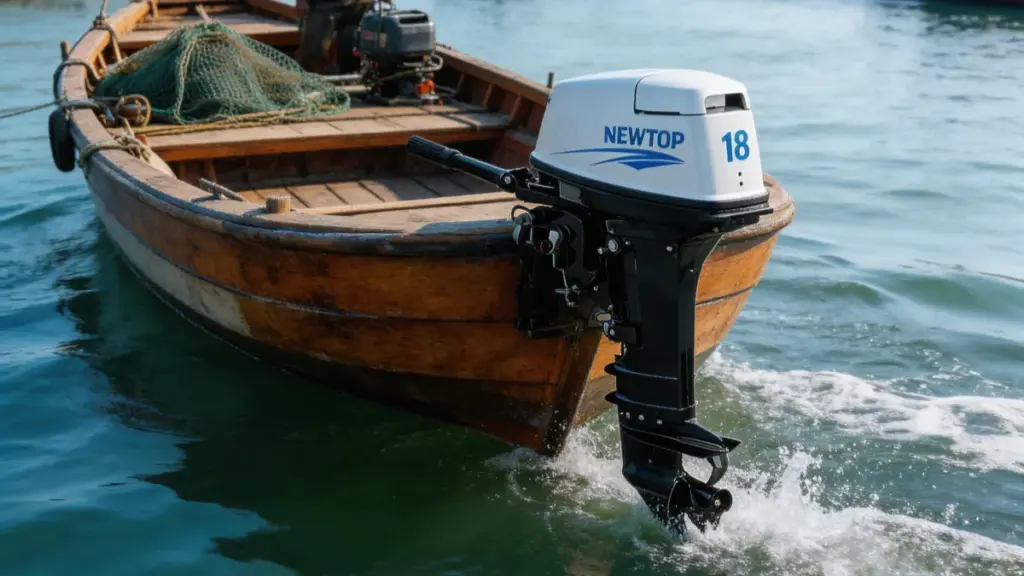
Choosing between two-stroke and four-stroke outboards depends entirely on your boat’s transom weight limits, fuel range targets, and acceleration needs.
| Recurso | Two-Stroke | Four-Stroke |
|---|---|---|
| Peso | Isqueiro | Mais pesado |
| Eficiência de Combustível | Mais baixo | Mais alto |
| Nível de ruído | Louder | Quieter |
| Manutenção | Mais simples | Mais complexo |
| Emissões | Mais alto | Mais baixo |
| Best Use | Portable boats | Recreational and commercial use |
Mechanical Design and Weight Differences
Engine cycle mechanics dictate the core differences between these two platforms. Two-stroke outboards complete a power cycle in just two piston strokes. This results in a simpler internal layout with fewer moving parts.
These design variances directly impact how the engine sits on the transom and performs in the water. We track specific performance differences for both configurations:
- Weight penalty: Four-stroke outboards weigh 30 para 40 percent more, increasing the overall transom load and altering shallow-water handling.
- Hole-shot capability: Two-strokes deliver quicker acceleration and a higher power-to-weight ratio, ensuring an immediate hole-shot.
Economia de Combustível, Emissões, and Ride Quality
Operators focused on operating costs and passenger comfort usually lean toward four-stroke models. Four-strokes provide 20 para 30 percent better fuel economy because they burn fuel more completely during the combustion cycle.
Engineers have closed the technology gap in recent years. Modern direct-injection two-strokes significantly reduce historical emission levels while still pushing strong acceleration. When evaluating the daily experience on the water, buyers must consider the physical ride quality:
- Acoustics and vibration: Four-strokes operate with minimal vibration and run quietly at cruising speeds.
- Acoustic presence: Two-strokes produce a sharper, more noticeable sound under heavy load.
Maintenance Requirements and Longevity
Service schedules differ heavily based on the internal oiling systems. Two-strokes require the operator to mix oil directly with the fuel or rely on an integrated oil-injection system. You avoid traditional oil changes, but you must constantly monitor oil reservoir levels.
Four-strokes operate much like automotive engines. They use a separate crankcase oil reservoir that requires standard engine oil and filter changes. This adds some mechanical complexity to your annual service checklist. Both engine types deliver reliable long-term service life when owners stick to proper marine maintenance schedules.
Best Use Cases for Each Engine Type
Selecting the right motor requires matching the technology to the specific boat and mission.
- Two-stroke outboard motors applications: These fit best on lightweight boats used for shallow-water fishing, water sports, and frequent trailering where saving transom weight is critical.
- Four-stroke motores de popa aplicações: These match perfectly with heavier boats taking longer offshore or lake trips where fuel efficiency and quiet operation matter most.
Boat size, average trip length, and transom weight limits drive the final selection rather than engine technology alone.
Outboard Motors for Small Fishing Boats

The right outboard motor for a small fishing boat balances hull size, weight capacity, and local water conditions to maximize range, velocidade, and stealth.
Primary Motor Types and Capabilities
Selecting the propulsion system dictates how you interact with the water. You have three main options for small fishing boats.
- Small gasoline outboards (2–10 hp): These deliver higher top speeds—up to 18 mph—and extended range. Refueling on the water is simple, though you must manage engine noise and exhaust emissions.
- Electric outboards (3–10 hp equivalent): These units provide high torque with quiet, emission-free operation. Top speeds usually max out between 6 e 12 mph, making them better suited for steady cruising rather than fast transit.
- Electric trolling motors: Instead of primary propulsion, these act as secondary positioning tools. They use thrust ratings rather than horsepower and give you fine control for stealthy maneuvering along structures.
Matching Motor Sizes to Boat Designs
A motor only performs as well as the hull it pushes. Match the power output directly to the boat design to ensure safe and efficient handling.
- Barcos Jon (10–16 pés): These flat-bottom hulls perform well with 3–6 hp gas or electric motors. Depending on your load, expect speeds between 4 e 10 mph.
- Small aluminum V-hulls (12–16 pés): The deeper hull design handles heavier loads and requires 4–9.9 hp gas outboards to reliably reach planing speeds.
- Inflatables and fishing tenders: Portability is the priority here. Pair these with lightweight 2.5–6 hp gas outboards or 3–6 hp electric equivalents to keep the entire setup easy to transport.
Key Selection Criteria
Beyond raw horsepower, specific operational factors dictate the exact motor you need. Consider your operating environment and physical boat dimensions before making a purchase.
- Shaft length: You must match the motor shaft to your transom height. A 15-inch short shaft or 20-inch long shaft prevents propeller ventilation and eliminates unnecessary drag.
- Total load capacity: Heavier setups—combining hull weight, engrenagem, and passengers—demand higher torque. High loads severely reduce top-end speed, a factor that becomes especially obvious with electric motors.
- Water environment: Shallow, rocky rivers demand jet outboards to protect the lower unit. Por outro lado, if you fish on emission-restricted reservoirs, an electric outboard setup is mandatory.
Cooling, Manutenção, and Durability
Gas outboards pull cooling water through the lower unit. This design makes them highly vulnerable to internal damage if you drag them through sand or ingest mud in shallow water. You have to monitor the cooling stream constantly to avoid overheating.
Electric outboards eliminate traditional water pumps. They still require the lower unit to remain submerged, relying on the surrounding water for passive cooling. Running an electric motor dry at high power will quickly destroy internal components.
Routine upkeep differs drastically between the two. Gas motors demand regular oil changes, substituições de velas, and strict fuel system care to prevent ethanol damage. Electric motors skip the fluid changes and focus heavily on battery management, wire corrosion checks, and routine lower unit seal inspections.
Source Durable Power Equipment for Maximum ROI
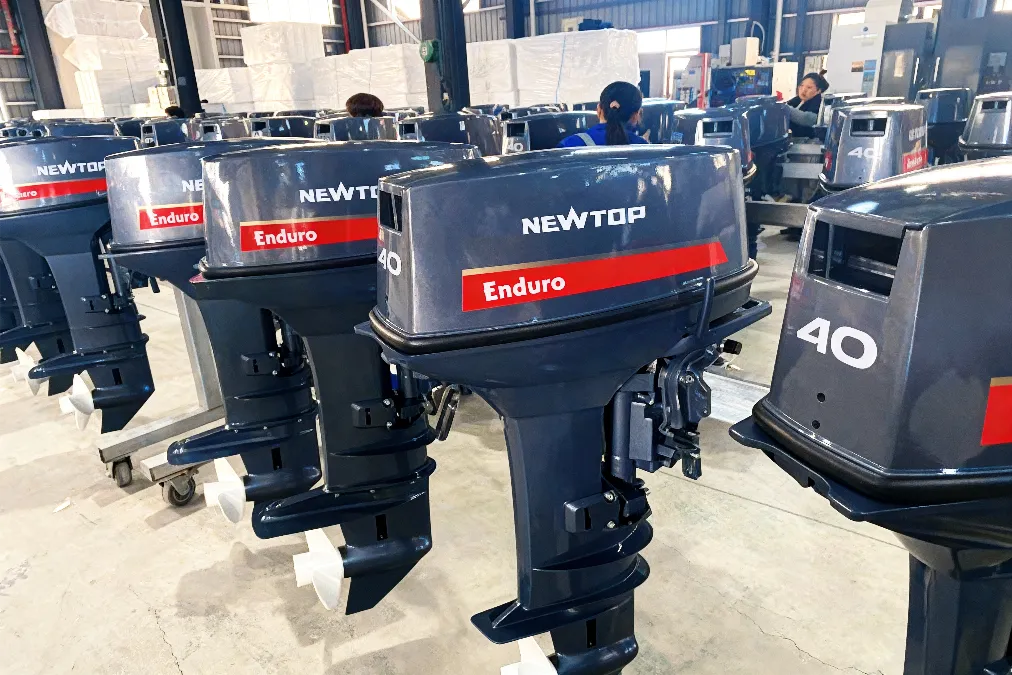
Outboard Motors for Recreational and Family Boats
Outboards give family boats reliable, space-saving propulsion. Matching the right motor type, engine cycle, and horsepower to your hull ensures safe handling and long-term passenger comfort.
Role and Advantages in Family Boating
These self-contained propulsion systems mount directly on the boat transom. This setup frees up valuable interior deck space compared with traditional inboard engines. The external design simplifies routine maintenance and makes eventual engine replacement much easier. Builders use outboards as the standard power source for bowriders, pontões, insufláveis, and deck boats.
Gasoline vs. Electric Outboard Options
Internal combustion models act as the standard choice for general-purpose cruising and watersports. Gasoline outboards provide a massive power range from under 2 hp to over 600 hp to fit almost any recreational transom.
Electric outboards rely on battery systems to deliver zero local emissions and quiet operation. These electric variants excel in noise-restricted lakes, small inflatables, and short-distance trips where silence takes priority over extended range.
Four-Stroke and Direct-Injected Two-Stroke Engines
Modern four-strokes dominate the recreational market. They deliver quiet operation, baixas emissões, and strong fuel efficiency. Four-strokes utilize a separate oil lubrication system, eliminating the need to mix oil and fuel at the dock.
Direct Fuel Injection (DFI) two-strokes provide a different performance profile. They offer rapid acceleration and a lighter power-to-weight ratio. Performance-oriented boaters favor DFI engines for towing skiers or wakeboarders because of that immediate throttle response.
Sizing Guidelines for Recreational Hulls
Selecting the right horsepower requires matching the motor to the loaded weight of your boat. A standard industry benchmark recommends 25 para 40 pounds of loaded boat weight per horsepower.
- Small inflatables: Usually require 10 para 25 hp for safe handling and portability.
- Compact pontoons and small deck boats: Generally operate well with 60 para 90 HP.
- General-purpose 18 to 22-foot runabouts: Typically utilize 115 para 200 hp for mixed-use activities.
Essential Features for Family Comfort and Safety
A great day on the water depends on reliable equipment. Electric start and power tilt/trim simplify operation for boaters of all skill levels. Electronic Fuel Injection (EFI) ensures reliable cold starts and smoother idling characteristics.
Passenger comfort relies heavily on low noise and minimal vibration levels during long weekend cruises. You must also match the correct shaft length to the transom height. This maintains proper handling and keeps the boat operating safely within its design limits.
Outboard Motors for Workboats and Commercial Use
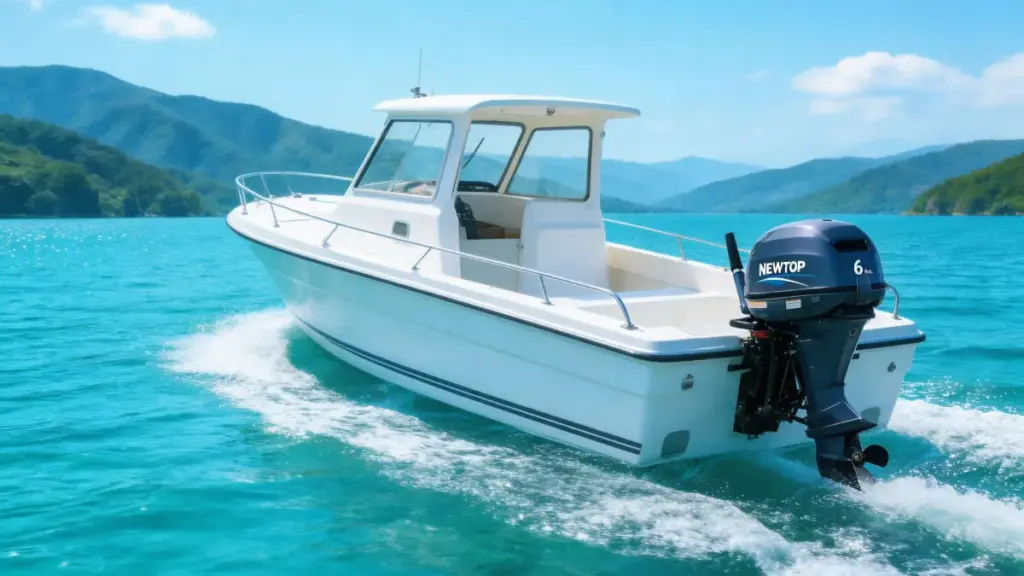
Commercial outboards prioritize heavy-duty durability, high torque, and long-term fuel efficiency to survive the brutal 2,000-hour annual duty cycles that standard recreational engines simply cannot handle.
Commercial Duty Cycles and Operational Demands
Workboats operate under relentless conditions that break standard engines. While recreational boaters might log 50 para 200 hours a season, commercial vessels regularly push their outboards from 500 to well over 2,000 hours annually.
- High-load operation: Engines run for extended periods at wide-open throttle or under maximum tow loads.
- Harsh environments: Operators expose these motors to extreme temperatures, debris-filled shallows, and highly corrosive saltwater daily.
- Performance priorities: Commercial crews ignore peak top speed, favoring absolute reliability and low-end torque to get the job done.
Structural Upgrades in Commercial Outboards
Manufacturers build commercial outboards to absorb constant abuse. They upgrade the internal architecture significantly compared to recreational models.
- Reinforced drivetrains: Heavy-duty bearings and strengthened gearcases handle continuous high-thrust operations without failing.
- Upgraded hardware: Builders use higher-grade stainless steel for fasteners, linkages, and heavy-duty transom brackets to combat structural fatigue.
- Corrosion resistance: Advanced coatings and upgraded sacrificial anode systems protect critical metal parts from aggressive saltwater degradation.
- Robust cooling: High-capacity water pumps process dirty, shallow water efficiently to prevent overheating under heavy load.
Gasoline vs. Diesel Engine Choices
The choice of fuel dictates operating costs and maintenance logistics. Commercial fleets typically choose between three main engine technologies.
- Four-stroke gasoline: These engines dominate the market due to wide availability, extensive dealer support networks, and lower initial purchase costs.
- Diesel outboards: Operations running large ships often prefer diesel to match existing onboard systems. They deliver superior fuel safety and drastically lower fuel consumption.
- Direct-injection two-strokes: These engines fill a niche role for vessels requiring rapid acceleration and high power-to-weight ratios.
Propulsion and Configuration Strategies
Rigging a workboat requires matching the engine power to hull displacement, expected loads, and local environmental conditions.
- Single engine setups: Using one robust outboard reduces drag, improves fuel efficiency per mile, and minimizes maintenance points.
- Multi-engine redundancy: Offshore and emergency rescue vessels rely on twin or multiple engines to provide crucial mechanical backup at sea.
- High-thrust configurations: Operators pair high-thrust gearcases with low-pitch propellers to maximize bollard pull and low-speed maneuvering control.
Total Cost of Ownership and Maintenance
The initial purchase price of a commercial outboard represents just a fraction of the actual expense. Long-term fuel usage, manutenção de rotina, and vessel downtime heavily outweigh the upfront cost.
- Fuel economy: Optimizing fuel consumption at cruise RPM drives the largest operational savings for high-hour fleets.
- Service accessibility: Visible anodes, modular fuel filters, and accessible diagnostic ports speed up routine maintenance tasks.
- Extended lifecycles: Commercial-grade internal components delay major rebuilds, keeping the vessel earning money on the water rather than sitting in the shop.
Electric Outboard Motors for Quiet and Clean Operation

Electric outboard motors eliminate noise and exhaust, providing a clean propulsion solution that complies with strict waterway regulations while improving passenger comfort and wildlife interaction.
Noise Reduction and Vibration Control
Electric motors run near-silent at low speeds and generate significantly less noise than gas equivalents at cruising speed. The absence of combustion cycles and exhaust systems removes harsh mechanical sounds. Direct-drive designs minimize vibration, reducing operator fatigue and ensuring a smooth ride.
Zero Direct Emissions and Water Protection
Electric systems produce zero tailpipe emissions, eliminating local carbon monoxide and hydrocarbon pollution. Removing onboard gasoline tanks and oil sumps eradicates the risk of fuel leaks and oil slicks. Replacing fossil-fuel combustion on the water directly lowers the carbon footprint of marine recreation.
Access to Restricted Waterways
Many lakes and protected marine areas now enforce strict bans on combustion engines. Electric outboards easily comply with zero-emission zone requirements. Operators can navigate ecologically sensitive environments without facing regulatory restrictions.
Enhancing the Boating Experience and Wildlife Interaction
Quiet operation improves onboard communication and passenger comfort. Low-noise propulsion prevents spooking fish, giving anglers a strategic advantage. Eco-tourism operators can approach marine life closely without causing stress or disruption.
Diesel and Specialty Outboard Motors for Heavy Duty Tasks
Diesel and specialty outboards deliver the extreme torque, eficiência de combustível, and structural durability required for commercial workloads, offshore transit, and continuous heavy-duty operation.
Core Advantages of Diesel and Specialty Outboards
Heavy loads and long hours demand specific propulsion traits. Diesel outboards are engineered for these exact conditions, offering distinct operational benefits over standard recreational engines.
- High low-end torque: Delivers the pushing power needed to plane heavy boats, tow loads, and maintain steady thrust against strong currents or rough water.
- Superior fuel efficiency: Extends the range of commercial operations and reduces the frequency and cost of refueling.
- Heavy-duty construction: Withstands continuous loading and high annual operating hours in highly corrosive marine environments.
- Lower flammability: Diesel fuel minimizes fire risks compared to gasoline, creating safer fuel-handling protocols for commercial crews.
Key Categories of Specialty Propulsion
Standard outboards often fall short in specialized scenarios. Manufacturers build distinct categories to handle non-standard commercial, rescue, and expedition requirements.
- High-horsepower offshore outboards: Propel large vessels across open water, integrating digital controls to manage high payloads safely.
- Commercial-duty outboards: Prioritize raw reliability and standard parts to ensure maximum run times for utility and patrol boats.
- Jet-drive systems: Swap traditional propellers for internal impellers to navigate shallow, rocky waters without prop strike damage.
- Electric and auxiliary outboards: Provide precise maneuvering, emergency backup propulsion, and zero-emission operation for sensitive work environments.
Crucial Performance Specifications
Evaluating a heavy-duty outboard requires looking past peak horsepower. Commercial operators focus on specifications that dictate sustained pulling power and engine longevity.
- Torque output: Directly dictates a motor’s ability to lift heavy hulls onto plane and push through strong headwinds.
- Continuous duty ratings: Help commercial buyers accurately forecast maintenance intervals based on predictable, long-hour operating profiles.
- Engine weight: Robust diesel blocks weigh more than gas equivalents, requiring precise adjustments to transom load, boat trim, and slow-speed handling.
- Propeller matching: Getting the pitch and diameter right ensures you optimize thrust, aceleração, and fuel economy under heavy cargo.
Selection Criteria for Heavy-Duty Applications
Buying the wrong motor for a commercial hull destroys ROI. A systematic selection process prevents expensive repowering mistakes and operational downtime.
- Hull compatibility: Engine specifications must align perfectly with the boat’s bare weight, deadrise, and maximum intended cargo or tow load.
- Operating environment variables: Specific conditions dictate requirements like shallow-water drives, extreme cold-weather starting, or offshore-grade corrosion defense.
- Total cost of ownership: The initial price tag matters less than the combined cost of fuel burn rates, maintenance labor, e peças de reposição.
- Local service network: Proximity to trained technicians and OEM diagnostic systems is non-negotiable to keep commercial downtime to an absolute minimum.
Maintenance Priorities for Long-Term Reliability
Heavy-duty motors endure brutal conditions. Ignoring standard maintenance schedules rapidly degrades performance and leads to catastrophic failures under load.
- Fuel system health: Demands clean tanks, strict adherence to specified fuel grades, and routinely draining water separators.
- Corrosion control: Requires aggressive fresh water flushing, regular sacrificial anode inspections, and sealing vulnerable electrical connections.
- Lubrication schedules: Replacing gearcase oil and engine lubricants on exact intervals prevents critical overheating during continuous high-load operation.
- Scheduled visual inspections: Identifies early signs of mounting bracket wear, steering play, fuel leaks, or propeller damage before they escalate.
How Horsepower and Boat Size Affect Motor Selection
Matching horsepower to boat size dictates performance, segurança, e eficiência de combustível. Use the 25 para 40 pounds per horsepower rule and never exceed the capacity plate limits.
The Core Relationship Between Boat Weight and Horsepower
A reliable industry baseline dictates 25 para 40 pounds of fully loaded boat weight per horsepower. You calculate this fully loaded weight by combining the hull, motor, fuel, passageiros, and gear.
For boats under 20 pés, the U.S. Coast Guard capacity plate acts as the ultimate authority. You must follow this plate to determine the absolute maximum horsepower limit and ensure safe operation.
Typical Horsepower Ranges by Boat Type
Different hull designs require specific power bands to operate efficiently across various conditions.
- Small inflatables and dinghies: Run efficiently on 2 para 10 hp for short trips in calm water.
- Jon boats and aluminum skiffs: Perform well with 9.9 para 30 hp for light fishing and lake travel.
- Mid-size center consoles and bay boats: Need 60 para 200 hp to handle coastal chop and family cruising.
- Large offshore boats: Demand 200 para 600+ hp to maintain speed and safety in heavy seas.
How Intended Use and Load Affect Performance
Your daily activities dictate where you should fall within your boat’s power range. Watersports demand strong acceleration. To pull skiers or wakeboards, select horsepower near the boat’s maximum rating.
Calm-water cruising changes the math. You can use smaller motors to gain better fuel efficiency, operating comfortably closer to the 40 pounds per horsepower mark.
Keep in mind that every additional passenger changes the power dynamic. Heavily loaded boats require more horsepower to reach and maintain plane effectively.
The Risks of Underpowering vs. Overpowering
Underpowering a hull forces the engine to run constantly at high RPMs. This causes sluggish handling, spikes fuel consumption, and places excess strain on internal components.
Selecting horsepower near the upper limit provides a better hole shot and lets you cruise efficiently at mid-range RPMs.
Overpowering crosses the line into dangerous territory. Exceeding the maximum rating creates handling instability, overloads the transom structurally, and frequently voids insurance policies.
Matching Shaft Length and Engine Technology
Horsepower only works if the propeller sits correctly in the water. Measure the transom height exactly to select the correct short, longo, or extra-long shaft. This prevents unnecessary drag and propeller ventilation.
Choose four-stroke engines when you want quieter operation and better fuel management compared to traditional carbureted two-strokes. For maximum reliability, opt for Electronic Fuel Injection (EFI) or Direct Fuel Injection (DFI) to secure quick cold starts and lower fuel costs.
Common Buying Mistakes Across Boat Applications
Buyers routinely waste thousands by focusing on brand and price while ignoring structural limits, mechanical health, and total operating costs during outboard motor repowers.
Mismatched Specifications and Application
Buyers often choose an outboard based on a perceived good deal rather than its intended use. Slapping a heavy four-stroke on a light hull meant for a two-stroke drastically alters how the boat sits and handles.
- Engine characteristics: Failing to align the motor with specific uses, such as running heavy 4-strokes on light hulls or standard outboards for precise trolling.
- Capacity limits: Overpowering or underpowering the vessel by ignoring the capacity plate and recommended horsepower limits.
- Shaft length: Selecting the wrong dimension, causing poor handling, cavitation, or excessive drag in the water.
- Transom weight: Ignoring the weight impacts of modern outboards on older transoms, leading to stern squat and serious swamping risks.
Overlooking Mechanical and Structural Health
A clean gelcoat and fresh decals easily mask serious mechanical and structural failures. Smart operators know the real value lies under the cowl and inside the fiberglass core.
- Cosmetic traps: Judging an outboard based on cosmetic appearance rather than conducting systematic compression and fluid checks.
- Missing history: Disregarding age, service records, and diagnostic reports in favor of low purchase prices.
- Structural decay: Planning a repower without physically inspecting the hull and transom for structural rot, flex, or delamination.
Neglecting System Compatibility
Dropping a modern outboard onto a legacy boat requires more than bolting it to the transom. Electrical and fuel systems degrade over time and routinely fail to meet the tight tolerances of modern electronic engines.
- Control limits: Assuming existing wiring, control cables, and steering mechanisms can safely handle a new or more powerful motor.
- Fuel system decay: Overlooking deteriorated fuel lines, incompatible ethanol components, and contaminated tanks that destroy injectors.
- Electrical demands: Failing to verify battery size and condition against the strict manufacturer requirements for modern digital systems.
Skipping Sea Trials and Professional Inspections
Running an engine on a hose in the driveway tells you almost nothing about how it performs under load. Real-world testing reveals the hidden flaws that cost thousands to fix after the sale.
- Professional review: Completing a purchase without a formal inspection by a certified marine technician or marine surveyor.
- Loaded performance: Forgoing a loaded sea trial to test hole shot, wide-open throttle RPM limits, and steering torque.
- System checks: Failing to test essential onboard systems like gauges, alarms, and electronics during active operation.
Underestimating Total Costs and Logistics
The upfront invoice represents only a fraction of outboard ownership. Buyers frequently miscalculate the long-term financial commitment required to keep a vessel running safely and reliably season after season.
- Operational expenses: Focusing solely on the purchase price while ignoring ongoing fuel, óleo, and scheduled maintenance expenses.
- Lifecycle value: Failing to account for future usage needs, regional parts support, and brand resale value.
- Hidden logistics: Overlooking insurance quotes, proper off-season storage, and safety equipment requirements before purchasing.
Why Source Outboard Motor Solutions From an Experienced Supplier?
Selecting an outboard motor is not only about horsepower specifications or purchase cost. Product consistency, confiabilidade de entrega, suporte técnico, and long-term parts availability all influence the success of marine equipment distribution and end-user satisfaction.
An experienced manufacturer can help customers reduce procurement risks while maintaining stable product quality across different markets. Key advantages often include:
- OEM and ODM customization capabilities
- Consistent quality control throughout production
- Fornecimento confiável de peças de reposição
- Technical manuals and product documentation
- Compliance with local regulations and certification requirements
- Flexible solutions for different boat applications and market demands
As an established outdoor power equipment manufacturer, NEWTOP has accumulated extensive experience in engine-powered equipment production and international export operations. The company focuses on delivering dependable power solutions backed by strict manufacturing standards, efficient production management, and responsive customer support.
Looking for a reliable outboard motor manufacturer? Contact NEWTOP to explore customized solutions, request product specifications, or receive a quotation tailored to your business needs.
Considerações Finais
Understanding the different types of outboard motors is the first step toward making the right investment for your boating application. From lightweight two-stroke models for small fishing boats to fuel-efficient four-stroke engines, electric propulsion systems, and heavy-duty diesel solutions, each option offers distinct advantages depending on operating conditions and performance requirements.
Rather than focusing solely on horsepower or purchase price, buyers should consider factors such as boat size, uso pretendido, eficiência de combustível, requisitos de manutenção, e confiabilidade a longo prazo. A properly matched outboard motor can improve safety, reduce operating costs, and deliver better performance on the water.
Perguntas frequentes
What are the main types of outboard motors?
The main types include two-stroke, quatro tempos, elétrico, diesel, and specialty outboard motors. Each type is designed for different boat sizes, condições de operação, and performance requirements.
O que é melhor: a two-stroke or four-stroke outboard?
Your boating application dictates the right choice. Two-stroke outboards weigh less and deliver rapid acceleration, making them perfect for small boats, shallow-water fishing, and tow sports. Four-stroke outboards run quieter, burn fuel more efficiently, and produce fewer emissions. Boaters typically choose four-strokes for long-range cruising, offshore runs, and pushing heavier vessels.
Are electric outboard motors a good investment?
Electric outboards make sense for short trips, botes, or quiet fishing applications where you have reliable charging access. They eliminate fuel costs, require minimal maintenance, and produce zero emissions. But they demand a higher upfront purchase price and lose range rapidly at high speeds. For offshore runs or fast planing, traditional gas outboards still provide the best performance.
How do I determine the right horsepower for my boat?
Start by reading your boat’s capacity plate to find the absolute maximum legal horsepower rating. A solid performance baseline is 1 horsepower for every 25 para 40 libras de peso do barco totalmente carregado, accounting for passengers, engrenagem, and fuel. If you regularly carry heavy loads, run in rough chop, or tow skiers, target an engine output closer to your hull’s maximum rating.
Are diesel outboard motors used on everyday recreational boats?
You rarely see diesel outboards on typical recreational boats. Manufacturers engineer them for commercial fleets, military units, and law enforcement. These professional users need massive low-end torque, extreme durability, and the ability to run on standard shipboard diesel fuel. While diesels deliver incredible fuel efficiency, their high weight and premium purchase price make them impractical for weekend boaters.
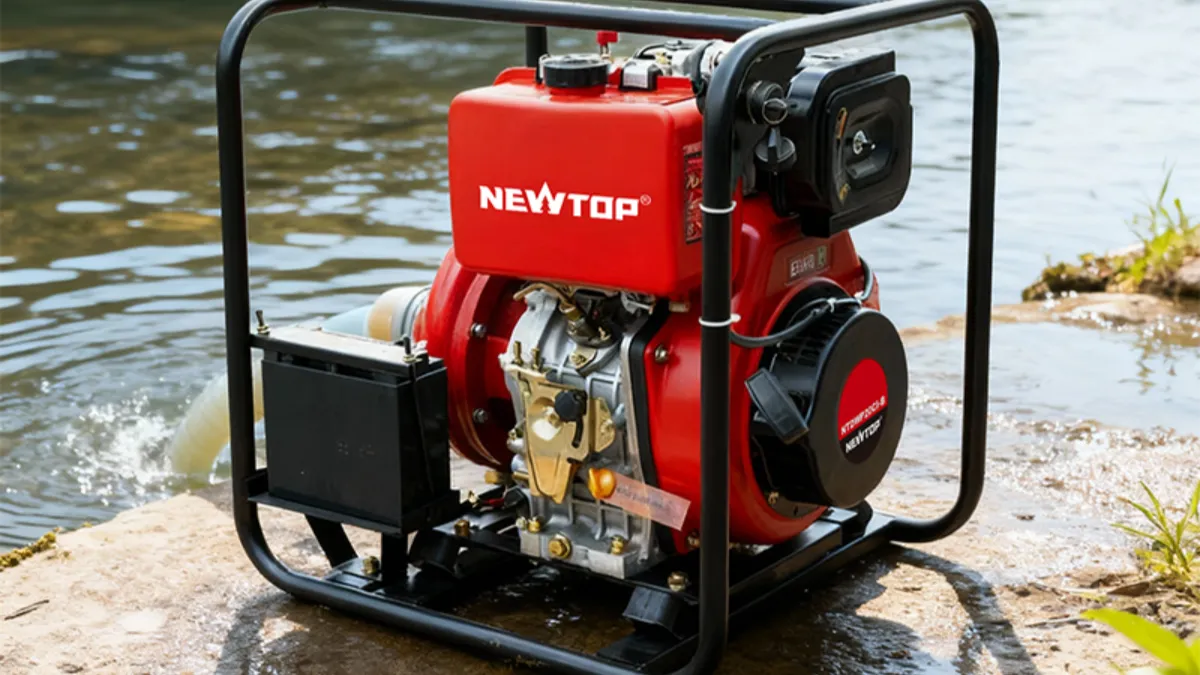
Portable water pumps are essential for moving water efficiently across a variety of tasks, from irrigation and construction to emergency drainage. With so many models available, it can be confusing to know which pump suits your needs. Terms like flow rate, total head, and power ratings may seem technical, but understanding them is the key to making the right choice.
This guide breaks down these specifications in a simple and practical way. You’ll learn how to read performance data, compare pump options, and make informed decisions so that your equipment works efficiently and reliably, no matter the task or environment.
Portable Water Pump Specifications Explained Simply
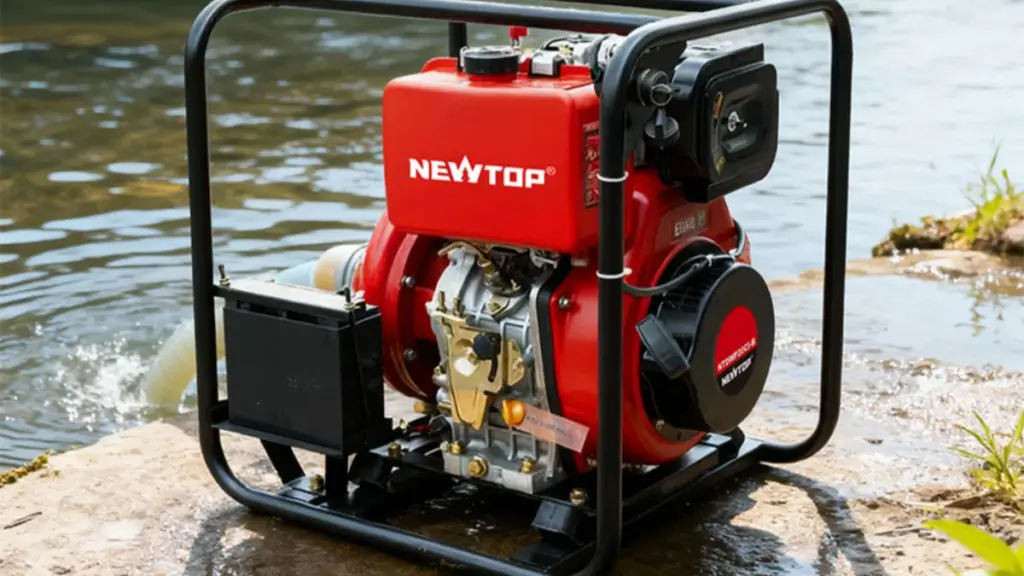
Pump specifications like flow rate, total head, and power ratings define actual field performance. Understanding these metrics prevents overloads and ensures you select the right equipment for the job.
Taxa de fluxo
Flow rate indicates how much water a pump can move in a given time, usually expressed in liters per minute (L/min) or cubic meters per hour (m³/h). Higher flow rates mean faster water transfer, which is critical for large areas or urgent tasks. Choosing a pump with the right flow rate ensures efficiency without wasting energy.
Lift Height and Suction Lift
Lift height, also called discharge head, is the maximum vertical distance the pump can push water. Suction lift is the vertical distance it can draw water from the source. Junto, they determine whether the pump can handle your water source and delivery points.
Tipo de bomba
Different pump types affect usability. Por exemplo, self-priming pumps can start pumping without manual water filling, while standard pumps may require priming. Understanding the pump type helps avoid operational difficulties.
Material of Pump Components
Impellers and pump bodies are made from materials like cast iron or aluminium. These choices affect durability, resistência à corrosão, and suitability for different water conditions, such as clean water, água lamacenta, or water with debris.
Power Ratings
Water pumps are powered by engines or electric motors. Power ratings, given in horsepower (HP) or watts (C), indicate the pump’s ability to handle flow and lift requirements. Stronger engines or motors can handle higher flow and taller lift, but may also consume more fuel or electricity.
Engine or Motor Details
For engine-driven water pumps, specifications like engine type, AVC, deslocamento, and torque indicate reliability and performance. For electric water pumps, voltage and motor efficiency matter for long-term operation.
Fuel or Energy Consumption
Fuel or power consumption affects operating costs and run time. Knowing the pump’s energy use helps you plan for longer work sessions without interruption.
Starting Type and Maintenance
Some bombas de água start manually, others with electric starters. Oil capacity, recommended maintenance intervals, and spare parts availability are practical considerations to keep the pump running smoothly.
If you want a broader overview of portable water pumps and how they are applied in real-world situations, check our practical guide to portable water pumps for more insights.
Portable Water Pump Flow Rate and Why It Matters
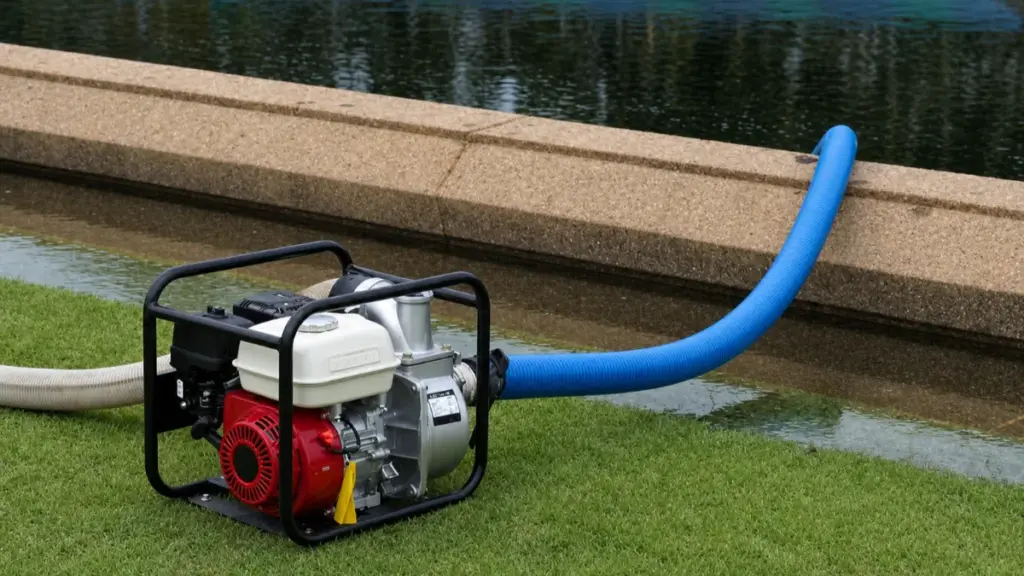
Flow rate dictates how fast you move water, but you must prioritize rated flow over maximum capacity to account for real-world friction and elevation losses.
| Taxa de fluxo (GPM) | Aplicativos comuns |
|---|---|
| 10–50 | Garden irrigation, small ponds |
| 50–200 | Medium-scale construction, fazendas |
| 200+ | Large-scale industrial or municipal projects |
Flow Rate Metrics and Limiting Factors
You measure flow rate by calculating the volume of water moved over a specific period, typically expressed in gallons per minute (GPM) or cubic meters per hour (m³/h). Sourcing the right pump requires looking past the baseline numbers on a spec sheet and understanding the variables that restrict water movement.
- Rated vs. Maximum Flow: Evaluate rated flow instead of maximum flow. Rated capacity accounts for real-world resistance like elevation climbs and pipe friction, whereas maximum flow assumes zero head.
- Total Dynamic Head (TDH): Calculate TDH to anticipate output reductions caused by static lift and friction loss within specific pipe lengths.
- Pipe Diameter Constraints: Match pipe diameters to flow volume to maintain safe water velocity. Keep speeds below 8 ft/s to prevent pipe erosion and internal system damage.
Matching Flow Rates to Real-World Applications
Field performance relies entirely on aligning pump output with specific job demands. Applications range wildly from low-volume 20 GPM firefighting units to high-capacity 1100 GPM industrial dewatering water pumps. Selecting the wrong unit creates immediate site problems.
- Sizing Accuracy: Size flow correctly to prevent operational failures. Undersized water pumps starve system demand, while oversized units waste fuel and risk cavitation.
- Wastewater Velocity: Maintain minimum velocity requirements of 2 para 3 ft/s in wastewater applications. This speed scours solids from the lines and prevents debris from settling inside the system.
- Curve Plotting: Plot continuous and peak GPM requirements against manufacturer flow-versus-head curves to pinpoint the exact portable pump configuration for your site.
Maximize Margins with Durable Power Equipment
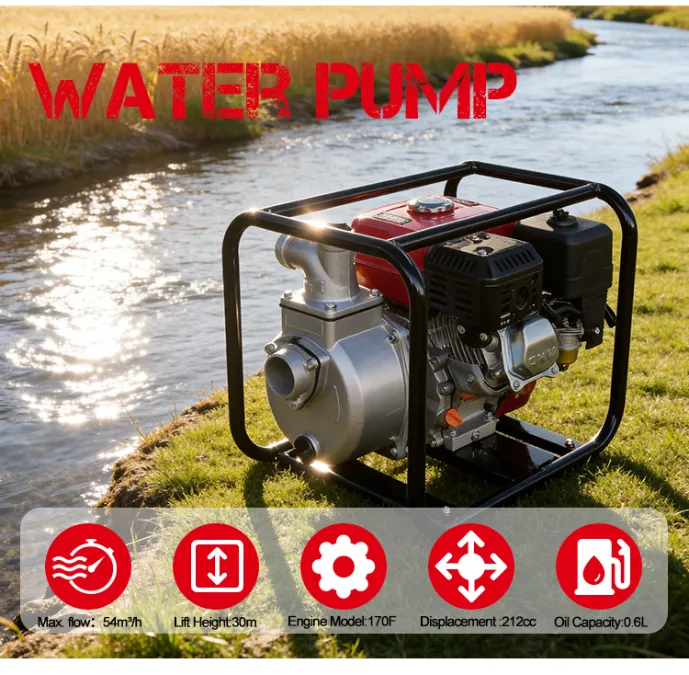
Portable Water Pump Head, Elevador, and Pressure Basics
Cabeça, lift, and pressure dictate a pump’s true capability. Mastering these metrics ensures you select equipment that handles real-world resistance without stalling.
| Term | Definição |
|---|---|
| Total Head | Max height water can be pumped, including friction loss |
| Static Lift | Vertical distance water rises from source to pump |
| Pressão (PSI) | Water pressure generated at the pump outlet |
Definitions of Head, Elevador, and Pressure
Understanding portable pump specifications requires separating head, lift, and pressure. These terms sound interchangeable but measure distinct mechanical forces in your fluid transfer setup.
- Cabeça: The vertical height a portable pump raises fluid against gravity. This operates independently of fluid density and represents the Total Dynamic Head (TDH) of the system.
- Elevador: The vertical suction measurement from the water surface up to the pump inlet. Atmospheric pressure constraints cap this at a practical limit of 25 feet at sea level.
- Pressão: The force delivered per unit area, measured in PSI. Use the standard conversion rate where 1 PSI equates to roughly 2.31 feet of water head.
Calculating Total Head and Performance Factors
You cannot size a pump based purely on its maximum theoretical output. Field conditions introduce mechanical resistance, meaning you must evaluate your system’s layout to determine actual performance capabilities.
- Total Dynamic Head (TDH): Calculate this target by combining your static suction lift, static discharge head, pipe friction losses, and velocity head.
- Friction Losses: Hose length, narrow pipe diameters, sharp bends, and valves create resistance. These specific layout choices directly reduce your effective head capacity.
- Pump Curves: Read performance charts by plotting flow rate (GPM) against head or pressure. Recognize that water pumps achieve maximum flow at zero head and hit maximum head at zero flow.
- Environmental Variables: High altitude thins the air and drops your maximum suction lift by approximately 2.5% for every 1,000 feet above sea level.
Portable Water Pump Power Ratings in HP and Watts
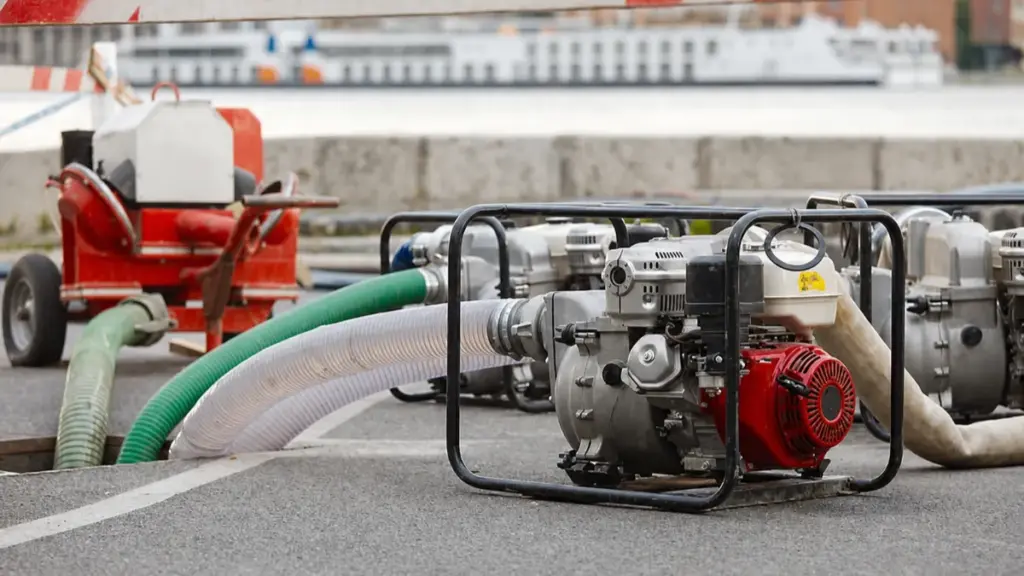
Real-world portable pump wattage significantly exceeds the theoretical 746 watts per horsepower. Motor inefficiencies, startup surges, and heavy mechanical loads require a minimum 20% power buffer for stable operation.
| Tipo de bomba | Poder (HP / C) | Suitable Applications |
|---|---|---|
| Small portable | 1–3 HP / 750–2200 W | Jardim, small pond, light irrigation |
| Médio | 4–7 HP / 3–5 kW | Construção, medium farm irrigation |
| Large industrial | 8+ HP / 6+ kW | Mining, municipal water transfer, dewatering |
Converting Horsepower to Running and Starting Watts
Let’s break down the math behind portable water pump power ratings. On paper, a theoretical 1 HP equates to 746 watts. In the field, real-world portable pumps draw 20% para 50% more power. Motor inefficiencies and power factor ratings drive this excess demand.
We separate this power draw into two distinct categories: running watts for continuous operation and starting watts to handle the initial motor surge. That initial kick typically demands two to three times the running wattage. Here is how that translates to real-world power requirements:
- Padrão 0.5 HP Pump: Consumes between 670 e 1,050 running watts but requires up to 4,000 starting watts to engage the motor.
- Off-Grid Solar Setups (2026): Modern solar-compatible models require panel arrays sized at 1.5 times the running watts to maintain consistent performance through minor cloud cover.
Variables Influencing Portable Pump Power Draw
You cannot look at power ratings in a vacuum. The physical environment and system setup directly dictate how much electricity your pump actually needs to move water.
Submersible water pumps pulling water from deep wells face heavier mechanical loads. They inherently require more wattage than surface jet water pumps moving water from shallow sources. Water volume and vertical lift distance alter the actual power requirement on the fly, meaning you must calculate the exact brake horsepower based on your specific pressure and flow needs.
Electrical specifications and power sources also dictate system stability. Pay attention to these structural variables:
- Voltage Impact: A 120V portable pump draws double the amperage of a 230V unit to achieve the exact same wattage output.
- Generator Sizing: Portable power stations and generators must match the pump’s starting watts plus a 20% buffer to prevent tripped breakers or equipment stalling.
How to Read Portable Water Pump Performance Data
Reading a performance curve ensures you match flow and pressure requirements without overloading the motor. It plots actual tested data to lock in the exact duty point.
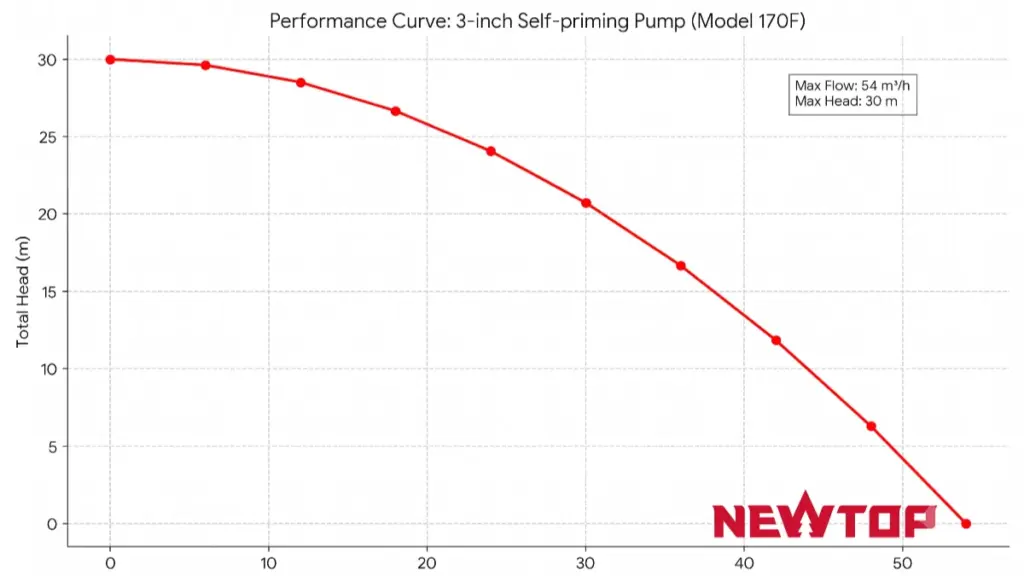
| Curve Parameter | Typical Portable Range | Measurement Units |
|---|---|---|
| Taxa de fluxo | 10–200 | GPM, LPM, or m³/hr |
| Discharge Pressure (Cabeça) | Até 150 pés | Feet, PSI (até 65 PSI) |
| Power Draw | 1–5 | HP, kW, or Amps |
| NPSHr (Suction Need) | 5–20 | Feet |
Pump manufacturers typically provide a performance curve, which shows the relationship between flow rate and head. Reading this data correctly ensures you select the right pump.
Tips for interpreting performance curves:
- O x-axis usually represents flow rate (GPM or L/min).
- O y-axis represents total head (meters or feet).
- The curve itself shows maximum achievable flow at different heads.
Other important specs to check:
- Maximum flow vs rated flow: Rated flow is the pump’s recommended operating point for longevity and efficiency, while maximum flow represents the peak capacity.
- Operating limits: Temperatura, water quality, and continuous operation recommendations.
What B2B Buyers Should Request From Manufacturers
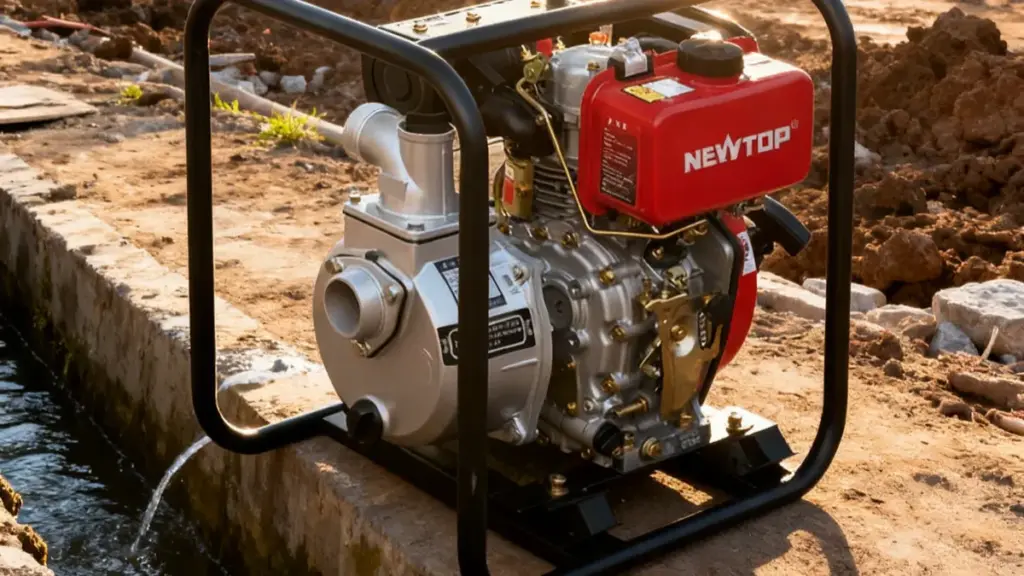
Sourcing portable water pumps requires strict vendor alignment. Focus on verifiable performance data, specific material grades, and exact total cost of ownership breakdowns to secure reliable units.
Technical Specifications and Material Requirements
When evaluating water pump suppliers, vague capacity claims fail in the field. You need exact operational limits matched to your application.
- Performance Curves: Request precise flow rate and head pressure graphs for operating ranges like 50-500 GPM and 50-150 feet of head.
- Fluid Compatibility: Define exactly what the pump handles. Specify constraints like passing up to 10% solids for dewatering operations or operating within tight temperature parameters.
- Mobility Features: Demand explicit details on portability. Ensure dry weights remain under 50 kg for manual transport and verify the units include quick-connect ports.
- Construction Materials: Outline exact material needs based on the environment. Choose 316 stainless steel for chemical resistance or standard cast iron for basic clean water transfer.
Garantia de qualidade, Testing, and Commercial Terms
A reliable spec sheet means nothing without proof of performance and long-term support. Lock in commercial and testing terms before signing any purchasing agreement.
- Factory Acceptance Testing (FAT): Mandate FAT to verify actual flow, pressão, and auto-priming speeds under 60 seconds before shipment.
- Reliability Metrics: Require documented lifespan data, including a Mean Time Between Failures (MTBF) excedendo 5,000 hours and relevant ISO, CE, or UL certifications.
- Engineering Documentation: Ask for complete technical files, such as detailed CAD drawings, application-specific installation manuals, and 90-day maintenance schedules.
- Custo total de propriedade (TCO): Secure a TCO breakdown that maps unit pricing, freight, spare parts availability, and long-term operating costs over a 5-year period.
Why Work With a Supplier That Understands Your Market?
A market-savvy supplier aligns pump specifications with local environmental and regulatory demands, ensuring rapid deployment and cutting total project costs by up to 25%.
Choosing a water pump supplier who understands your operational context can save time, reduce costs, and ensure that your equipment performs reliably. NOVOTOP, a leading manufacturer of outdoor power and water pump equipment, combines large-scale production with deep market knowledge, providing tailored solutions for customers around the world.
Benefits of working with an experienced supplier like NEWTOP include:
- Customized Recommendations: NEWTOP can suggest the right pump model based on your project scale, water source, and site conditions, ensuring optimal performance.
- Support and Service: Their team offers guidance on installation, troubleshooting, manutenção, e peças de reposição, helping you keep operations running smoothly.
- Confiabilidade: By leveraging NEWTOP’s experience in global markets, you reduce the risk of receiving underperforming or unsuitable equipment.
Além disso, NEWTOP’s understanding of both local and international regulations helps clients navigate import/export requirements, ensuring smooth logistics and compliance. Partnering with a OPE supplier who combines technical expertise, market insight, and robust support can make a significant difference in project efficiency and long-term success.
Considerações Finais
Relying on cheap, generic water pumps with inflated specifications guarantees field failures and destroys your margin. Securing units backed by verified performance curves and accurate power ratings is the only way to safeguard your operations against catastrophic motor burnouts. Matching the exact duty point to real-world site resistance ensures your equipment delivers consistent volume without stalling.
We recommend requesting a sample unit and our detailed technical catalog to test these performance metrics on your site. Contact our engineering team to map out the exact portable pump configurations your local market requires.
Perguntas frequentes
What do portable water pump specifications mean?
Specifications provide information about a pump’s capacity, eficiência, and suitability for specific tasks. Key specifications include flow rate, cabeça, poder, and operational limits.
What is flow rate in a water pump?
Flow rate is the volume of water a pump can move per unit of time, usually expressed in liters per minute (L/min) or gallons per minute (GPM).
What is total head in a water pump?
Total head is the maximum vertical height water can be lifted, including suction, discharge, and friction losses in the system.
How do I read a water pump performance curve?
A performance curve plots flow rate against head. By matching your desired flow and height requirements to the curve, you can determine the best operating point for the pump.
What is the difference between rated flow and maximum flow?
Rated flow defines the water volume a pump moves under sustained, real-world conditions at peak efficiency. Maximum flow indicates the absolute highest volume the pump achieves at zero head—meaning no lift and no attached pipework. You should base your selection entirely on rated flow to ensure the pump meets your daily operational demands without overloading.
How do I know what size portable water pump I need?
Determine the required flow rate, total head, and operating environment. Compare these requirements with manufacturer datasheets and performance curves to select a pump that meets or slightly exceeds your operational needs.
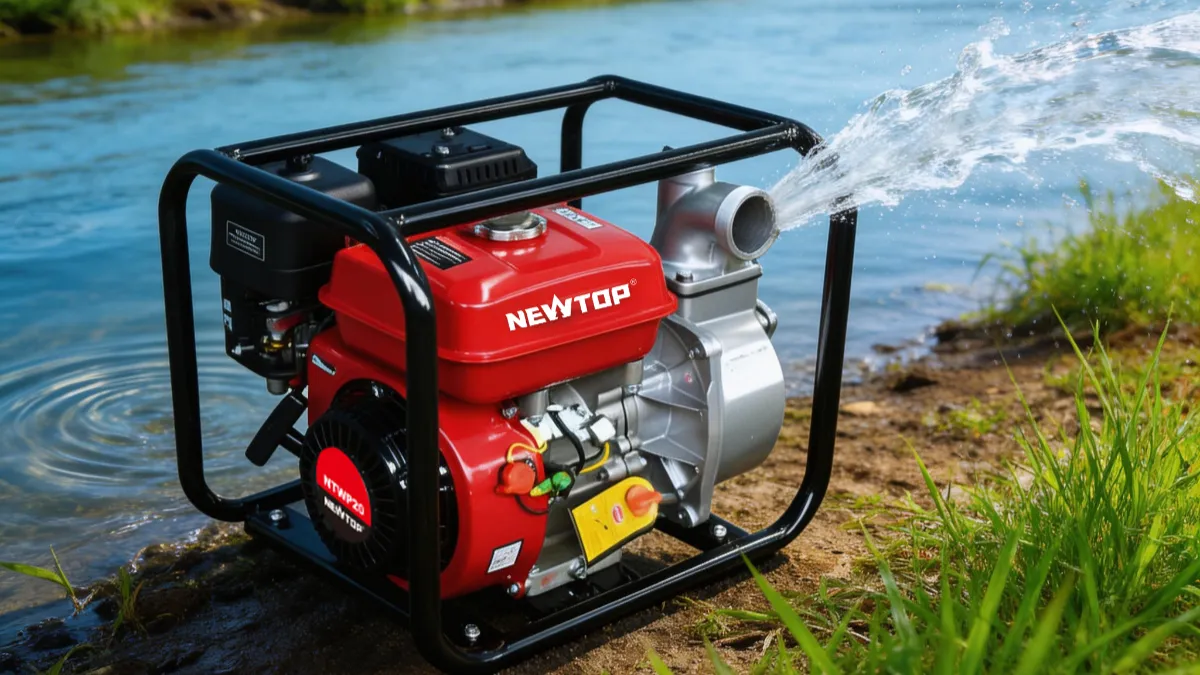
Portable water pumps are essential tools for businesses and professionals who need to move water quickly and efficiently across various environments. From irrigation in agriculture to draining construction sites or handling emergency flood situations, these pumps provide flexibility, confiabilidade, and convenience. Choosing the right portable pump can save time, reduce costs, and ensure that operations run smoothly, whether you are a contractor, farmer, or industrial operator.
Neste guia, we explore what portable water pumps are, their common applications, key specifications, and practical tips to match pump capacity to real working conditions. We also highlight common mistakes to avoid, helping you make informed decisions when sourcing pumps from a trusted manufacturer. By the end, you’ll have a comprehensive understanding of how to select and use portable water pumps for maximum efficiency.
What Is a Water Pump and How Does It Work?
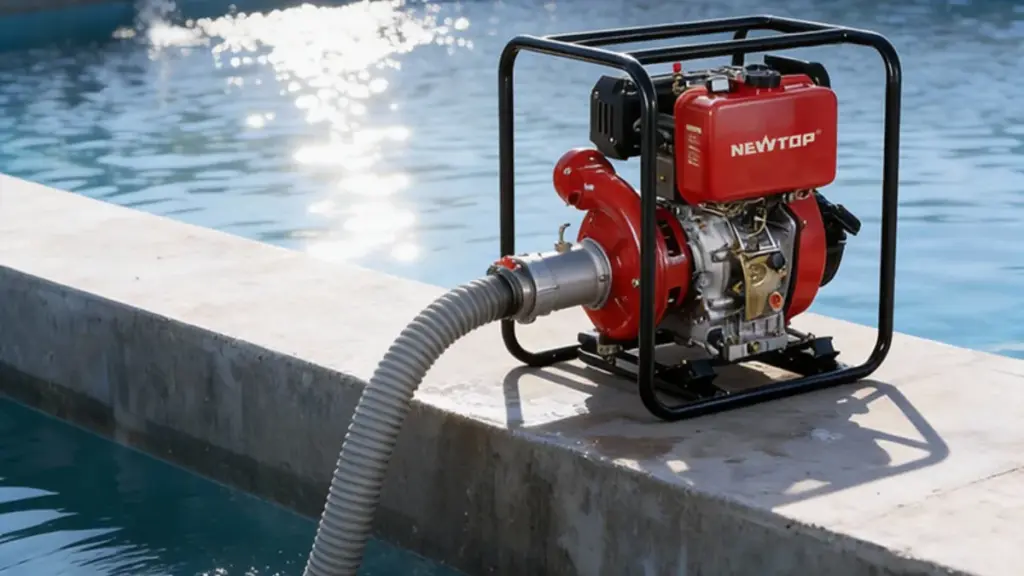
A water pump mechanically converts kinetic energy into hydraulic pressure, creating an internal vacuum that draws fluid in and continuously forces it out through a system.
Core Functions and Key Components
A water pump achieves its primary goal by converting mechanical energy into hydraulic energy. By creating precise pressure changes within a closed system, the pump actively transports water across pipelines, channels, or storage points. This continuous movement relies on a tightly integrated assembly of internal hardware.
- Impulsor: Generates rapid fluid movement to push the water.
- Casing: Contains the internal components and manages system pressure.
- Shaft: Transfers raw motor power directly to the impeller.
- Bearings and Seals: Prevent fluid leaks and ensure smooth, reliable rotation.
- Valves and Sensors: Manage directional flow and monitor system performance in real time.
Operating Principles and Energy Transfer
The operation starts the moment the internal components—such as impellers, vanes, or diaphragms—begin to move. This movement immediately displaces the air inside the chamber, creating a low-pressure partial vacuum. Nature naturally seeks equilibrium, so the higher external atmospheric pressure forces water directly into the pump’s inlet to fill that vacuum.
Once the water enters the pump, the moving parts transfer their kinetic energy directly to the fluid. This energy pushes the water outward through the discharge port with substantial force. As water exits, it clears space for more fluid to enter the suction side, maintaining a continuous cycle of circulation as long as the motor runs.
Common Applications of Portable Water Pumps
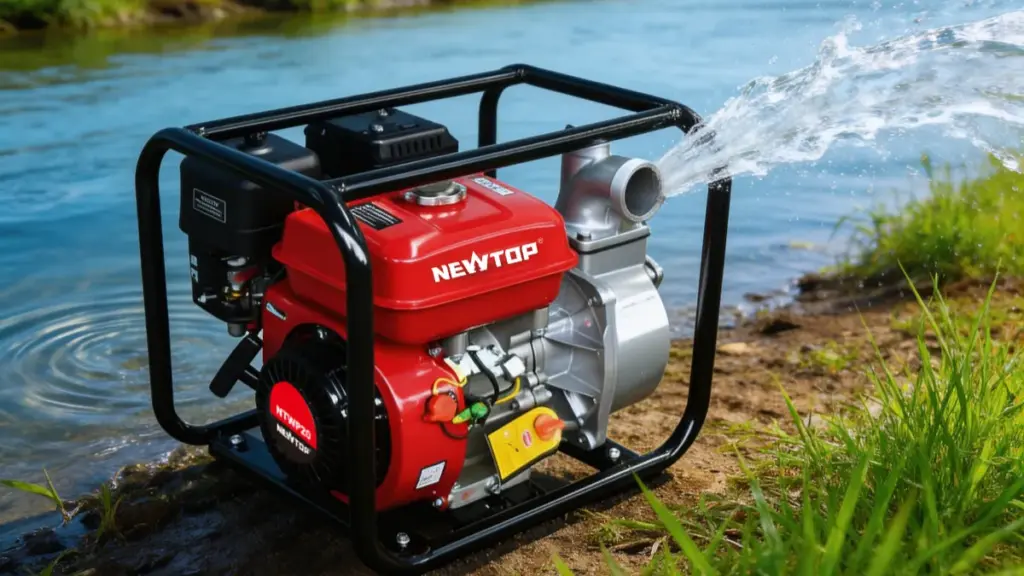
Portable water pumps provide immediate, tool-to-problem deployment. They move fluids efficiently during emergencies, agricultural tasks, and industrial operations without relying on stationary infrastructure.
Emergency and Industrial Operations
Heavy-duty scenarios demand reliable, immediate water movement. Stationary systems often fail during infrastructure outages, making mobile deployment the primary solution for crisis management and heavy industry.
- Emergency response: Crews deploy portable pumps to clear standing water rapidly. This mitigates health risks and prevents long-term property damage after severe floods.
- Combate a incêndios: Mobile systems secure continuous water flow for teams battling rural wildfires or complex industrial incidents.
- Construction and mining: Work crews dewater excavations, trenches, and open pits to maintain safe job sites and prevent costly delays.
- Municipal utilities: City workers restore services temporarily when pipe failures or power outages interrupt the standard water supply.
Agricultural and Everyday Utility
Beyond high-stakes emergencies, mobile pumps drive daily operations in agriculture, residential maintenance, and specialized commercial sectors by pulling water directly from local sources.
- Crop irrigation: Farmers and gardeners draw water for expansive drip systems, directly improving food security and crop yields in arid regions.
- Residential drainage: Homeowners drain flooded basements, empty swimming pools, and manage emergency plumbing leaks directly at the source.
- Landscaping design: Professionals power decorative fountains, artificial ponds, and waterfalls to enhance aesthetic indoor and outdoor spaces.
- Laboratory applications: Technicians transfer fluids using battery-powered mini pumps to achieve precise medical and chemical dosing.
Maximize Margins With Durable Power Equipment

Key Portable Water Pump Specifications That Matter
Selecting the right portable pump comes down to calculating total dynamic head and matching your power source to the off-grid environment. Guessing these specs leads to equipment failure.
| Specification Category | Typical Range / Padrão | Primary Impact |
|---|---|---|
| Taxa de fluxo | 345–1,050 GPH (portátil) / 26–53 GPM (domestic) | Determines how quickly you can move water |
| Maximum Head | 50–66 ft (15–20 m) | Ensures water can reach required height |
| Potência do motor | 16,500 RPM / 5.5A draw (20V Brushless); 38CC 4-stroke gas engine | Affects efficiency and suitability for heavy-duty tasks |
| Elevador de sucção | Até 25 pés (7.5 eu) typical for portable units | Critical for sources below pump level |
| Port Size | G3/4″ – 1.5″ (standard garden to high-capacity connections) | Ensures proper hose connection and flow |
| Material | Cast iron, aluminum, reinforced plastics | Impacts lifespan and resistance to debris or corrosion |
For a more detailed explanation of key specifications, check our beginner’s guide to water pump specifications to learn about flow rate, cabeça, poder, and other essential factors.
Performance Metrics for Flow Rate and Lift
Flow rate dictates exactly how much water you move over a specific period. Standard portable models handle between 345 e 1,050 gallons per hour (GPH), while domestic setups require higher capacities ranging from 26 para 53 gallons per minute (GPM).
You calculate the maximum head height to determine the vertical distance your pump can push water. Always calculate your Total Dynamic Head (TDH) to factor in both your raw vertical lift and hose friction. Expect the following baseline limits when evaluating models:
- Basic 12V Portable Units: Push water up to 50 feet of vertical lift.
- Robust Cordless Models: Extend vertical lift capabilities up to 66 pés.
- Brushless Motors (2026 Padrão): Operate at 16,500 RPM on cordless platforms.
- Power Draw: Consume a maximum of 5.5A on 20V systems for steady output.
These motor specifications directly drive your overall efficiency. Operating within these defined parameters ensures you maintain consistent flow without prematurely burning out the motor or draining cordless batteries.
Power Sources and Physical Design Limitations
Energy sources dictate the portability and maintenance schedule of your equipment. Cordless 20V and 12V electric pumps provide quiet operation with minimal upkeep. If you require complete off-grid placement flexibility, 38CC 4-stroke gas models remain the standard choice for remote sites.
Physical tolerances and port sizes determine whether a pump survives harsh field conditions. Review these physical limitations before deployment:
- Temperature Limits: Standard models safely process water under 95°F (35°C).
- Particle Clearance: Typical units pass debris up to 0.079 polegadas (2 milímetros), while specialized units handle heavy mud.
- Light-Duty Connections: Manufacturers fit G3/4-inch threads for standard garden hoses.
- High-Capacity Ports: Transfer operations scale up to 1.5-inch discharge ports to handle larger volumes.
Matching these connection ports to your existing hardware prevents bottlenecks. Pushing water through undersized fittings causes flow restriction and creates excessive back pressure, which damages internal pump components and reduces equipment lifespan.
Common Mistakes When Choosing Portable Water Pumps
Getting specs wrong guarantees burned-out motors and wasted fuel. Always overcalculate your capacity needs by 20% and match pump materials to the exact fluid you move.
Misjudging Capacity and Head Requirements
Sizing a pump requires exact math, not a rough guess. Pick an undersized model, and you face prolonged task times and constant recirculation. Buy one that is too big, and you waste fuel while accelerating equipment wear. To nail the sizing, calculate your total liquid volume and automatically add a 20-30% capacity buffer. This strategy ensures efficient operation without continuously redlining the hardware.
- Total Dynamic Head (TDH): Factor in the vertical lift, horizontal travel distance, and the inevitable friction loss caused by long or narrow hoses.
- Peak Demand Target: Choose models rated 70-80% above your maximum TDH calculation to meet peak demand reliably under tough conditions.
Ignoring Fluid Types and Safety Protections
A standard centrifugal pump handles clean water perfectly. But drop that same unit into dirty water, abrasivos, or viscous fluids, and you guarantee rapid clogging and mechanical failure. You must match the pump hardware directly to the material. Beyond the fluid itself, failing to build in operational safeguards will kill your equipment fast. Running a pump dry destroys the motor and seals within hours.
- Material Matching: Use trash pumps with open impellers to handle heavy debris, or select stainless steel builds to survive acidic liquids.
- Automated Protections: Prioritize models equipped with float switches, thermal overload protection, or auto shut-off features to prevent dry-running.
- Hose Compatibility: Pair the pump with the correct reinforced hoses. Match the outlet diameter exactly to minimize hydraulic resistance and prevent sudden leaks.
How to Match Pump Capacity to Real Working Conditions
Correctly matching pump capacity to actual conditions is critical for efficiency and reliability. Here’s a structured approach:
| Factor | Recomendação |
|---|---|
| Taxa de fluxo | Choose slightly higher than calculated to ensure efficiency |
| Suction/Discharge Height | Include friction loss margin |
| Water Quality | Use trash or solids-handling pump if debris is present |
| Operating Duration | Select a robust engine or motor for extended use |
| Ambiente | Choose corrosion-resistant or reinforced materials |
1. Calculate Required Flow Rate
Determine the volume of water needed per minute. For irrigation, consider the total area and water consumption per plant. For drainage, estimate the amount of accumulated water.
2. Measure Suction and Discharge Heights
Identify the vertical distances from the water source to the pump (suction lift) and from the pump to the discharge point (maximum head). Add extra margin for friction loss in hoses.
3. Consider Water Quality
If the water contains debris, areia, or organic matter, choose a pump designed for solids handling. Using a standard pump in these conditions can lead to clogs and damage.
4. Account for Operating Duration
Continuous operations may require a more robust engine or motor. Consider models with higher power and cooling features for prolonged use.
5. Check Environmental Conditions
Temperature extremes, dusty environments, or chemical exposure influence material choice. Corrosion-resistant or reinforced pumps are recommended for challenging conditions. FactorRecommendationFlow RateChoose slightly higher than calculated to ensure efficiencySuction/Discharge HeightInclude friction loss marginWater QualityUse trash or solids-handling pump if debris is presentOperating DurationSelect a robust engine or motor for extended useEnvironmentChoose corrosion-resistant or reinforced materials
Ready to Source Portable Water Pumps From a Reliable Factory?
Sourcing portable water pumps requires vetting factories for strict NSF 61 conformidade, verifying flow capabilities, and structuring bulk orders for modular, battery-compatible equipment.
No NOVOTOP, we specialize in high-quality portable water pumps designed for multiple applications, including agriculture, construção, and emergency water management. Our products combine durability, eficiência, and ease of transport, making them ideal for both professional and occasional use.
Why Choose NEWTOP Portable Water Pumps:
- Versatile Selection: Models for clean water, trash, and chemical handling
- Durable Materials: Cast iron, aluminum, and reinforced plastics for longevity
- Power Options: Gasolina, elétrico, and battery-powered units for any site
- OEM/ODM Customization: Flexible solutions for distributors and contractors
- Global Distribution: Reliable logistics for on-time delivery worldwide
Whether you need pumps for small-scale irrigation or large construction projects, our team can help match the right model to your operational requirements. Partnering with a trusted manufacturer ensures consistent quality, apoiar, and performance.
Considerações Finais
Portable water pumps are indispensable tools for a wide range of applications. Understanding how they work, their key specifications, and proper usage ensures optimal performance, longevity, e eficiência. Choosing a reliable manufacturer like NEWTOP guarantees quality, customization options, and support for global business needs.
We recommend starting with a sample order to evaluate the actual flow capacity and modular battery compatibility firsthand. Contact our manufacturing team to discuss your specific OEM requirements and structure your next bulk deployment.
Perguntas frequentes
What is a portable water pump used for?
Portable water pumps move liquids from one location to another. Homeowners and contractors use them for emergency water removal in flooded basements, pool maintenance, garden irrigation, and construction dewatering. They adapt easily to residential, agrícola, and light commercial tasks.
How do I choose the right portable water pump?
Selecting the right pump requires calculating your flow rate needs in gallons per minute (GPM) and the total vertical lift or head. You must assess your water source to see if you need to move clean water or debris. De lá, choose the appropriate power type—such as battery, elétrico, solar, or gas—based on portability requirements and site access.
What is the difference between a transfer pump and a trash pump?
Transfer pumps move clean, solid-free water quickly and generate higher pressure. Trash pumps manage dirty water filled with debris like mud, folhas, and pebbles. Trash pumps incorporate open impellers with large gaps to pass solids without clogging. Transfer pumps utilize closed impellers for maximum clean water efficiency.
How much water can a portable pump move per minute?
Capacity varies significantly based on the pump size, power source, e elevação vertical. Mini utility pumps typically move 3 para 15 gallons per minute (GPM), residential models handle 25 para 50 GPM, and larger semi-trash pumps can clear between 90 and over 400 GPM. Vertical lift and pipe friction naturally reduce these maximum open-flow rates.
Can a portable water pump be used for irrigation?
Sim, portable pumps efficiently power agricultural and residential irrigation systems. They draw water from ponds, fluxos, or wells and supply sprinklers, drip lines, or livestock troughs. You need to match the pump’s flow and pressure capabilities to your specific distribution system to guarantee adequate field coverage.
What should I check before using a portable pump for drainage work?
Inspect power connections and check hoses for airtight seals to prevent priming failures. You must clear the inlet screens of dirt or residue to avoid blockages. Verify that the discharge pipe routes water at least 20 feet away from structures, and confirm your specific pump model handles the type of water you plan to drain.
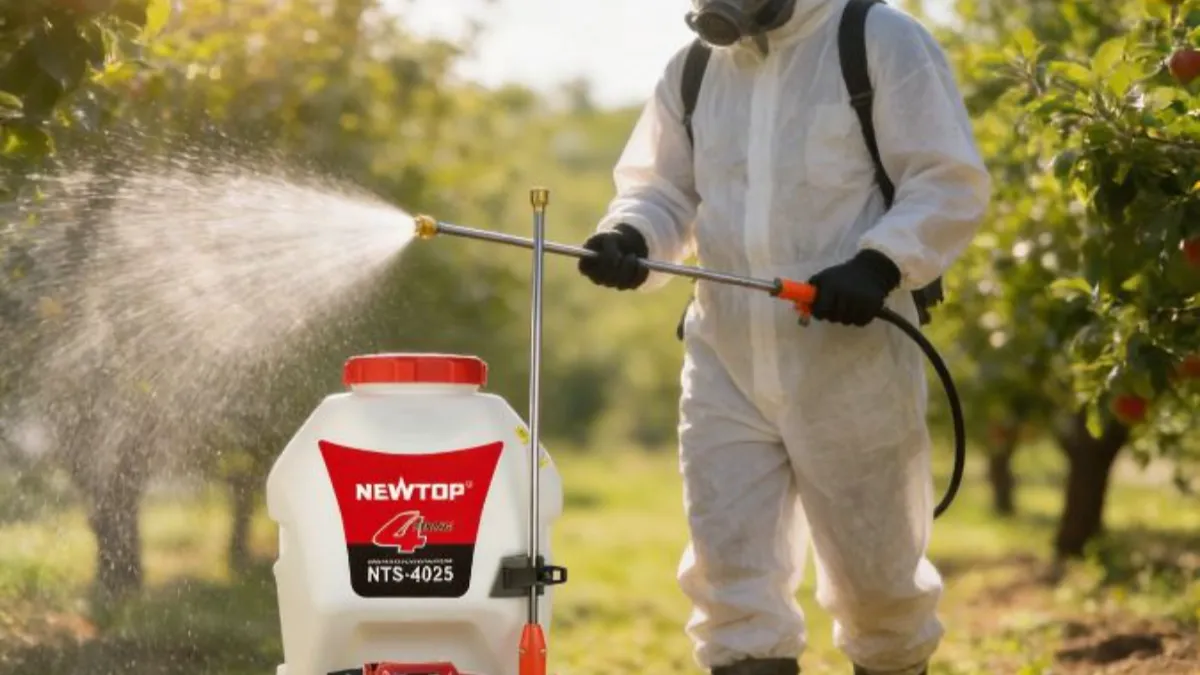
Knapsack sprayers are one of the most practical tools used in modern agriculture, paisagismo, and public sanitation. Their portability, low operating cost, and flexible spraying performance make them essential for farmers, empreiteiros, orchard owners, and municipal service providers around the world.
From applying herbicides in crop fields to disinfecting public spaces, knapsack sprayers help users complete spraying work efficiently while reducing labor intensity and chemical waste. Hoje, both manual and power knapsack sprayers are widely used across farms, plantações, gardens, estufas, and urban maintenance projects.
This article explores the most common knapsack sprayer uses, compares manual and power models, and explains what distributors and buyers should consider when sourcing sprayers for their markets.
#1 Knapsack Sprayer Uses in Modern Agriculture

Knapsack sprayers deliver precise chemical applications across diverse terrains, allowing operators to target pests, ervas daninhas, and nutrient deficiencies while reducing input waste.
Agricultura remains the largest application sector for knapsack sprayers. Em muitas regiões, especially Southeast Asia, África, e América Latina, farmers rely on portable sprayers because they are affordable, easy to transport, and suitable for uneven terrain where large boom sprayers cannot operate effectively.
A knapsack sprayer is typically carried on the operator’s back and connected to a spray lance or nozzle system. Common tank capacities include 16L, 18eu, and 20L. Dependendo do modelo, spraying pressure can be generated manually or by a gasoline or battery-powered engine.
Common Agricultural Applications of Knapsack Sprayer
| Aplicativo | Propósito |
|---|---|
| Herbicide spraying | Weed control between crop rows |
| Insecticide spraying | Pest prevention and crop protection |
| Fungicide spraying | Disease management |
| Foliar feeding | Nutrient absorption through leaves |
| Irrigation support | Light watering in nurseries |
| Greenhouse treatment | Controlled indoor spraying |
Compared with traditional watering methods, spraying systems allow more accurate chemical distribution and improve coverage on crops and leaves.
In developing agricultural markets, knapsack sprayers are especially valuable because they combine mobility with relatively low maintenance costs. Farmers can easily move between rice fields, pomares, vegetable farms, tea plantations, and hillside crops without depending on tractors or large machinery.
More information: O que é um pulverizador costal?
#2 Knapsack Sprayer Uses for Herbicide Application
Knapsack sprayers deliver precise, low-volume herbicide application for spot treatments, keeping chemical waste and non-target crop damage to an absolute minimum.
Targeted Weed Management and Coverage Areas
Operators rely on knapsack sprayers to manage weeds in areas larger machinery cannot access. These units provide the exact control needed to eliminate competing vegetation without risking damage to your primary crop.
- Spot treatments: Ideal for sparse weed populations under 5% coverage across grasslands, nurseries, and hard-to-reach zones.
- Tough weed control: Eradicates persistent species like nettles, thistles, and brambles using targeted, label-approved herbicides.
- Row crop safety: Utilizes shielded even fan or hollow cone nozzles to direct chemicals strictly at weeds and away from desired plants.
By focusing the spray pattern only where necessary, you cut down total chemical consumption and protect the surrounding soil ecosystem.
Calibration Techniques and Safety Protocols
Proper calibration and mixing separate professional application from careless chemical dumping. Before loading any active herbicides, you must establish an accurate baseline to ensure exact dosing in the field.
- Equipment calibration: Test a known volume of clean water over a fixed area at your normal field walking speed to calculate actual output.
- Chemical mixing: Prepare only your specific daily volume. Use triple-rinsed chemical jugs to measure concentrates and prevent water-insoluble herbicides from settling in the tank overnight.
- Application pressure: Maintain a consistent pumping pace while walking to guarantee the nozzle delivers uniform pressure across the entire spray swath.
NTS420 Gasoline Knapsack Sprayer
The NTS420 is a reliable 20L backpack sprayer designed for field crops and plantation use. It delivers strong spray penetration with stable engine output, making it suitable for large-area pesticide and fertilizer application.
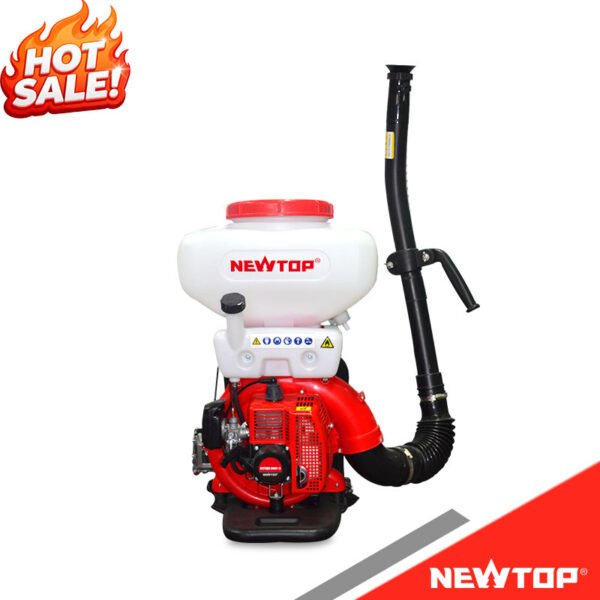
NTS3WF-3 Mist Duster Sprayer
The NTS3WF-3 combines spraying and misting functions for orchards and tall crops. With powerful airflow and extended spray range, it ensures deep leaf penetration in dense farming environments.
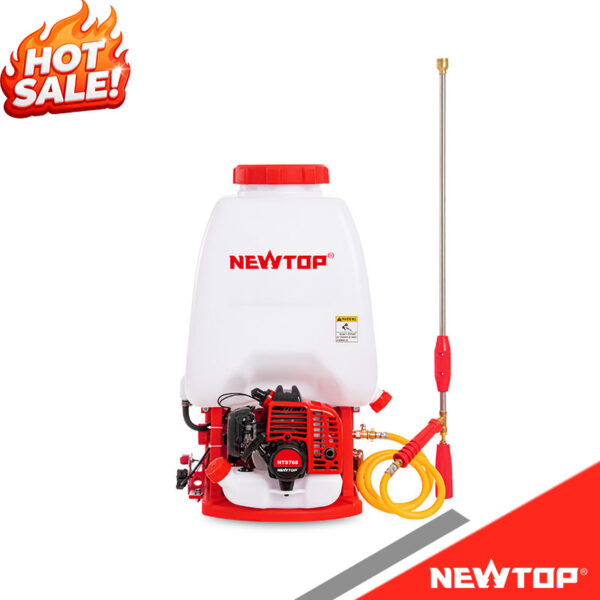
NTS768 High-Pressure Sprayer
The NTS768 is built for intensive agricultural use. Its reinforced tank structure and stable engine system make it suitable for professional distributors targeting high-demand markets.
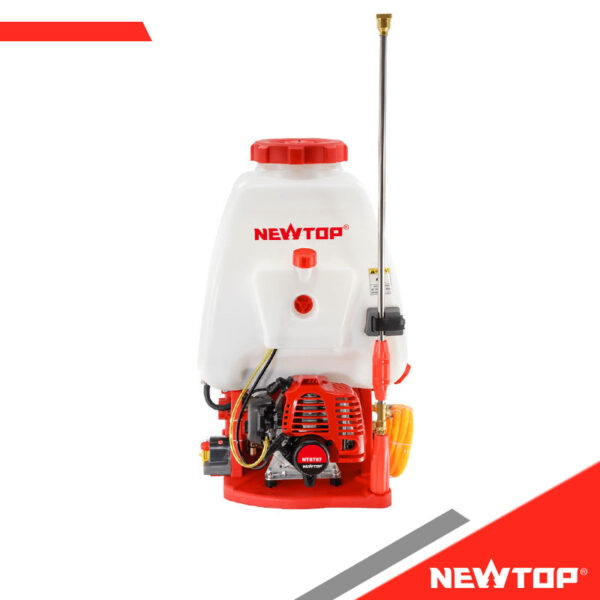
NTS767 Commercial Backpack Sprayer
The NTS767 offers balanced power and efficiency, ideal for distributors seeking a mid-range gasoline backpack sprayer for farm and garden applications. Durable components ensure long service life.
#3 Knapsack Sprayer Uses for Fertilizer and Foliar Feeding
Applying liquid fertilizers through knapsack sprayers allows targeted soil delivery and rapid foliar absorption, bypassing poor soil conditions and maximizing nutrient uptake in tight spaces.
Direct Soil Application
Knapsack sprayers deliver liquid fertilizers directly to the soil with precise control. Operators mix concentrated solutions, typically using 3 ounces of liquid fertilizer per gallon of water, and apply them straight to the root zone.
The standard hose and nozzle attachments allow exact liquid coverage around plant bases. This setup lets operators maneuver into tight spaces and dense rows that larger, tractor-mounted farming equipment cannot reach.
Users should dedicate separate sprayers specifically for soil fertilizers. Keeping fertilizer equipment isolated prevents dangerous cross-contamination from pest control chemicals and herbicides.
Foliar Feeding Technique
Foliar feeding bypasses the soil entirely. Growers spray nutrient solutions directly onto plant leaves to trigger rapid absorption during active vegetation cycles.
Plants take up these nutrients through their leaf surfaces much faster than through their roots. This technique works exceptionally well when soil conditions remain poor and ground-level nutrient uptake stalls.
Foliar fertilizers often contain:
- Nitrogen
- Potassium
- Calcium
- Magnesium
- Trace elements
Using clean, filtered water prevents sediment buildup inside the tank. This practice keeps the nozzle clear and guarantees a consistent, even spray pattern across the foliage.
#4 Knapsack Sprayer Uses in Orchards and Horticulture
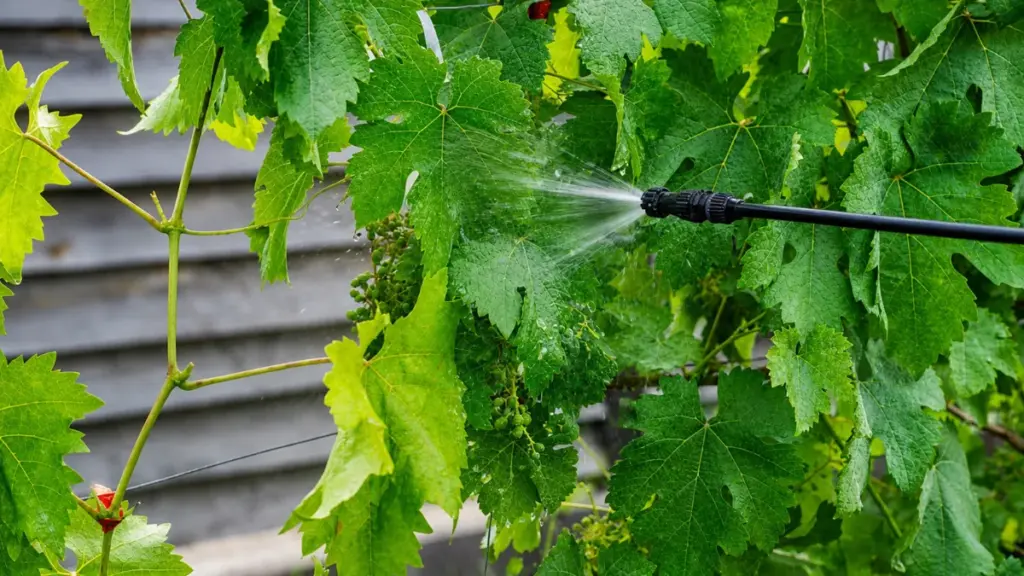
Knapsack sprayers provide the mobility and precision needed to manage dense canopies and narrow rows, keeping commercial growing operations efficient without heavy machinery.
Primary Uses in Orchards
Orchard management requires navigating tight spaces where tractor-mounted boom sprayers cannot easily operate. Backpack sprayers allow operators to walk narrow rows and apply specific treatments directly to individual trees and vines.
- Insecticide targeting: Operators use precision nozzles to penetrate pruned canopies and eliminate specific pest infestations in narrow fruit tree rows.
- Disease management: Crews apply preventive and curative fungicides and bactericides to stop outbreaks and minimize crop losses.
- Weed control: Growers spray herbicides strictly around tree bases and row middles, removing resource-stealing weeds without harming the fruit trees.
- Nutrient delivery: Workers spray liquid fertilizers and growth regulators directly onto foliage to speed up absorption and promote healthy fruit yields.
- Air-assisted integration: Farms pair these sprayers with air-assisted fans to drive spray droplets deeper into the canopy and drastically reduce chemical drift.
Primary Uses in Horticulture
Estufas, nurseries, and ornamental gardens demand highly controlled chemical application. Knapsack sprayers deliver this exact precision to protect high-value plants in confined or indoor areas.
- Pest control: Nursery workers spray insecticides to eliminate insects and maintain pristine aesthetics across ornamental plants.
- Selective disease and weed management: Operators treat weeds and fungal issues selectively in tight spaces to guarantee uniform spray coverage without damaging adjacent ornamentals.
- Nutrient distribution: Horticulturists deliver custom liquid nutrient mixes directly to plant root zones or foliage to enhance chemical absorption.
- Growth regulation: Crews apply specific regulators to assist with structural maintenance, pruning, and trimming support.
- Supplemental irrigation: Growers use fine misting nozzles to deliver targeted water in controlled indoor environments and sensitive greenhouse setups.
#5 Knapsack Sprayer Uses for Sanitation and Public Health

Knapsack sprayers deliver precise deployment of disinfectants and vector control chemicals, enabling rapid response to disease outbreaks while minimizing public exposure in high-traffic community spaces.
Core Applications in Disease Prevention and Hygiene
Public health teams rely on knapsack sprayers to execute fast, targeted sanitation protocols across diverse urban and rural environments. These portable tools allow operators to adapt instantly to localized outbreaks, navigating tight spaces and varying terrain that larger machinery cannot reach.
- Vector control strategies: Operators apply targeted insecticides to breeding grounds in public parks and residential zones, actively combating disease-carrying mosquitoes and flies linked to malaria and dengue.
- Surface disinfection protocols: Maintenance crews execute rigorous surface disinfection in high-traffic community spaces and walkways to maintain hygiene during localized disease outbreaks.
- Waste area sanitation: Sanitation workers treat landfills and drainage systems with specific chemical mixes to neutralize breeding grounds and stop pathogen spread at the source.
Safety Guidelines and Equipment Maintenance
Handling public health chemicals demands strict adherence to safety and operational procedures. Operators must control the chemical application precisely to protect themselves, the equipment, and the surrounding community from unintended exposure.
- Personal protective equipment (EPI): Operators must wear specific gear, including face masks, chemical-resistant gloves, and safety goggles, to block direct chemical exposure during application.
- Drift management: Technicians implement strict drift control techniques by adjusting nozzles precisely and attaching spray shrouds to protect bystanders and nearby un-sprayed environments.
- Post-use cleaning: Maintenance teams use the triple rinse method to strip dangerous chemical residues from the tank and lines. This essential step prevents equipment corrosion and eliminates the risk of cross-contamination between different chemical treatments.
As hygiene standards continue to increase globally, sanitation spraying equipment remains an important growth segment for distributors and importers.
Maximize ROI With Durable OEM Garden Machinery
Manual vs Power Knapsack Sprayers for Different Jobs
Matching the sprayer type to the job size and terrain determines your operational efficiency. Manual units excel in agile tasks, while power models dominate large-scale applications.
| Recurso | Manual Sprayer | Power Sprayer |
|---|---|---|
| Spray Pressure | Moderado | Alto |
| Coverage Efficiency | Mais baixo | Mais alto |
| Manutenção | Simples | Moderado |
| Custo Operacional | Baixo | Médio |
| Melhor para | Pequenas fazendas | Large-scale work |
Best Jobs for Manual Knapsack Sprayers
Manual knapsack sprayers rely on physical pumping to build pressure. This simple, battery-free design keeps the equipment lightweight and highly maneuverable, dictating exactly where they perform best in the field.
- Spot treatments: Ideal for small gardens and properties under one acre needing occasional targeted chemical application.
- Uneven terrain: Suited for small farms between one and five acres where operators must navigate tricky, unlevel ground.
- Dense foliage: Perfect for tight, overgrown areas where lightweight equipment provides high mobility without power dependency.
- Remote locations: Fits tight budgets and off-grid environments lacking access to electricity for charging or liquid fuel.
Best Jobs for Power Knapsack Sprayers
Power sprayers use batteries, electric motors, or gasoline engines to replace manual labor. They sustain steady, continuous pressure automatically, making them the standard for commercial scale and speed.
- Medium farms: Recommended for tracts between five and 20 acres requiring regular application to significantly reduce user fatigue.
- Commercial fields and orchards: Handles large areas over 20 acres needing fast, uniform coverage without stopping to manually pump.
- High-volume spraying: Excels in tasks where consistent motor pressure ensures perfectly even crop distribution across the entire tank load.
- Time-critical operations: Benefits operators prioritizing time efficiency and steady chemical application, easily justifying a higher initial equipment cost.
For a deeper understanding of the different types of knapsack sprayers, their features, and which model suits your specific needs, confira nosso guia detalhado: Types of Knapsack Sprayers.
Key Considerations When Sourcing Knapsack Sprayers
Successful sourcing balances tank capacity, pump mechanics, and operator ergonomics to maximize field efficiency while meeting strict safety and chemical handling standards.
| Sourcing Parameter | Manual Sprayers | Battery-Powered Sprayers |
|---|---|---|
| Primary Application | Small-scale operations and spot treatments | Continuous commercial and agricultural use |
| Fatigue Management | Requires manual pumping, limiting shift length | Automated pressure maintains daily productivity |
| Standard Capacity | 10 para 16 Liters | 10 para 16 Liters |
When sourcing knapsack sprayers for distribution or wholesale projects, product quality and long-term reliability are more important than simply choosing the lowest price.
Professional buyers usually evaluate several key factors before placing bulk orders.
1. Engine and Pump Quality
For power sprayers, stable engine performance directly affects spraying efficiency and product lifespan.
High-quality pumps provide:
- Stable pressure
- Better atomization
- Lower leakage risk
- Longer operating hours
2. Chemical Resistance
Agricultural chemicals can be highly corrosive. Tanks, mangueiras, selos, and nozzles should use durable materials that resist chemical damage.
3. Disponibilidade de peças sobressalentes
Distributors prefer suppliers that provide:
- Suporte de peças de reposição
- Fast replacement service
- Technical documentation
- After-sales assistance
4. Certification Compliance
Different markets may require certifications such as:
- CE
- EPA
- RoHS
- EURO II
- GS
Compliance helps distributors reduce import risks and improve local market access.
5. OEM and Branding Support
Many importers prefer customized products with:
- Private labeling
- Custom colors
- Packaging design
- Local language manuals
Strong OEM capability can help distributors build long-term brand competitiveness in their regions.
Ready to Source Knapsack Sprayers for Your Market?
Sourcing success requires matching premium, battery-powered sprayers to strictly regulated established markets while targeting high-growth, subsidy-driven regions across Asia and Africa.
As agriculture and landscaping industries continue to modernize, the demand for reliable pulverizadores costais keeps growing across global markets.
Whether for herbicide spraying, manejo de pomar, fertilizer application, or sanitation work, buyers increasingly look for sprayers that combine durability, eficiência, and cost performance.
For distributors and importers, selecting the right manufacturing partner is just as important as selecting the right product.
Com mais de 20 anos de experiência em fabricação, NOVOTOP provides a complete range of manual and power knapsack sprayers designed for demanding agricultural and commercial environments. From OEM customization to stable bulk supply, our solutions support dealers, distribuidores, and agricultural projects in over 65 countries worldwide.
If you are looking for dependable knapsack sprayer solutions for your market, our team is ready to support your business with professional product recommendations and long-term supply cooperation.
Perguntas frequentes
What is a knapsack sprayer used for?
A knapsack sprayer is used for spraying liquids such as herbicides, pesticidas, fertilizantes, desinfetantes, and fungicides. It is widely used in agriculture, paisagismo, horticultura, and public sanitation.
Can a knapsack sprayer be used for herbicides and fertilizers?
Sim, you can use knapsack sprayers for both herbicides and fertilizers. They excel at spot spraying tough weeds and reaching areas inaccessible to large equipment. For fertilizers, they distribute liquid nutrients directly to root zones or leaves. You must equip the sprayer with the correct nozzle and ensure the specific chemicals are authorized for knapsack application.
What are the main applications of knapsack sprayers in farming?
Farmers rely on knapsack sprayers for precision pest control, selective weed management, liquid fertilizer distribution, and targeted irrigation. They navigate dense row crops, pomares, and irregular terrain better than heavy machinery. This targeted approach reduces chemical waste, limits drift, and prevents environmental runoff.
What is the difference between manual and power knapsack sprayers?
Manual sprayers rely on hand-pumping to build pressure. They cost less, weigh less, and suit small gardens or occasional spot treatments. Power sprayers run on battery, elétrico, or gasoline motors to maintain constant pressure automatically. They weigh more and have a higher initial cost, but they prevent operator fatigue during extensive field work.
What tank size is best for a knapsack sprayer?
A 4-gallon (15-liter) tank provides the best balance between coverage and comfort. It holds enough liquid to cover roughly 6,000 square feet without causing excessive back strain. Smaller 2-to-3-gallon tanks work well for light spot treatments, while heavy 20-liter tanks suit operators who need maximum volume and can handle the extra weight.
Can knapsack sprayers be used for sanitation or disinfectant spraying?
Sim. Many knapsack sprayers are suitable for disinfectant spraying, controle de mosquitos, livestock sanitation, and public hygiene applications when compatible chemicals and nozzles are used.
