


- Todos
- Histórias de clientes NEWTOP
- Hub do Explorador NEWTOP
- NEWTOP Insights da indústria
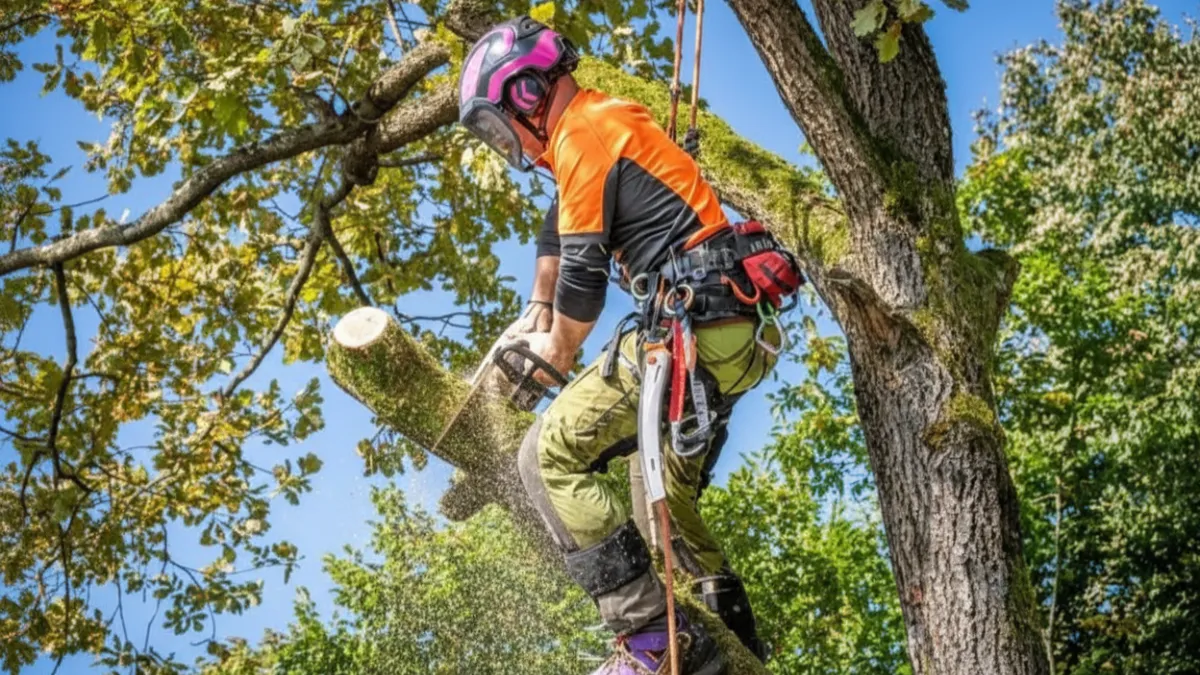
Arborists and tree care specialists require tools that prioritize balance and weight. When working high in a tree canopy, the design of your equipment directly affects your safety and how quickly you can finish a job. Em 2026, the market offers various options ranging from traditional gasoline engines to new lithium battery models.
Neste guia, we break down how top handle chainsaws work, how they compare to rear handle models, what technical specifications truly matter, and how professionals choose the right model for climbing operations. If you are sourcing for distribution, Marca OEM, or large-scale procurement, this guide is written with decision-makers in mind.
O que é uma motosserra com alça superior?
A top handle chainsaw is a purpose-built tool for professional arborists, engineered with a compact, lightweight design that prioritizes balance and control for precision cutting in elevated or confined spaces.
A top handle chainsaw is a compact chainsaw designed with the primary handle positioned above the engine housing rather than at the rear. This configuration allows arborists to operate the saw in confined spaces—especially while suspended in a tree harness. These chainsaws are commonly used for pruning, crown reduction, sectional dismantling, and branch removal. In professional settings, they are considered climbing chainsaws, often paired with harness systems and lanyards for safety.
Primary Applications in Professional Tree Care
These saws are essential equipment for certified professionals performing tasks that require surgical cutting high off the ground. Their compact design allows arborists to navigate dense branch structures where a larger, rear-handle saw would be unsafe, cumbersome, or impractical to position correctly.
- Ideal for removing deadwood, thinning a tree’s crown, and shaping branches.
- Enables controlled cuts while secured by a rope and harness or operating from an aerial lift platform.
- The primary tool for tree maintenance in urban and residential settings where precision is critical.
The Professional User Requirement
Because they are intended for elevated use, they require advanced skill and training. Em muitas regiões, they are recommended only for certified arborists. An untrained user attempting to operate one of these chainsaws, especially on the ground, creates a high-risk situation. The growing demand for these chainsaws is driven directly by the professional tree care industry’s need for efficient and specialized equipment that performs in challenging aerial environments.
Pros and Cons of Handle Chainsaws
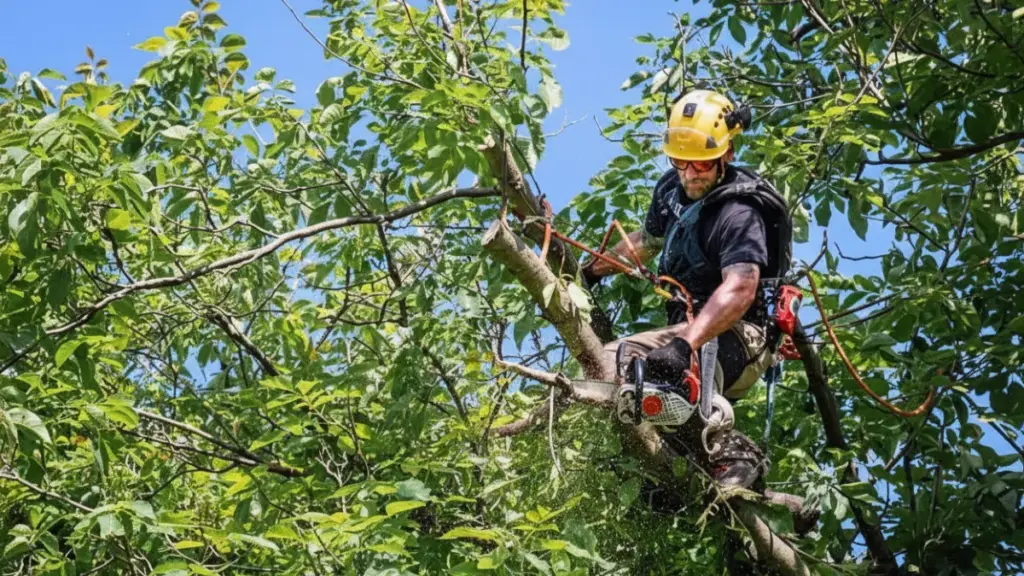
The choice between a top-handle and rear-handle chainsaw is a direct trade-off between aerial maneuverability for specialized arborist work and raw power with stability for ground-level felling and bucking.
Top-Handle Chainsaws: Prós e Contras
Top-handle chainsaws are specialized tools designed for professional arborists who need a compact and maneuverable saw for work performed at height. Their advantages in aerial situations are clear, but these benefits come with limitations for any ground-level applications.
- Pro: Excellent maneuverability and balance for in-tree cutting and pruning, allowing for precise control in tight or awkward spaces.
- Pro: Lightweight construction reduces operator fatigue during extended aerial work.
- Con: Generally less powerful than their rear-handle counterparts, making them unsuitable for heavy-duty felling or bucking.
- Con: Their design requires advanced handling skills and is intended almost exclusively for trained professionals working off the ground.
Rear-Handle Chainsaws: Prós e Contras
Rear-handle chainsaws are the industry standard for most ground-based cutting tasks. They provide superior power, estabilidade, and safety for a wide range of users, from homeowners to forestry professionals, but they become cumbersome and unsafe for aerial work.
- Pro: Offers greater power and leverage, making it the ideal choice for felling trees, toras, e escova de limpeza.
- Pro: The two-handed grip provides better stability and control, making it a safer and more accessible option for beginners.
- Con: Bulkier and heavier design makes it difficult and often unsafe to use for climbing or detailed pruning within a tree’s canopy.
- Con: Less agile compared to top-handle models, which can be a disadvantage when cutting in constrained ground-level areas.
Build Your Professional Chainsaw Line with a Reliable OEM Partner
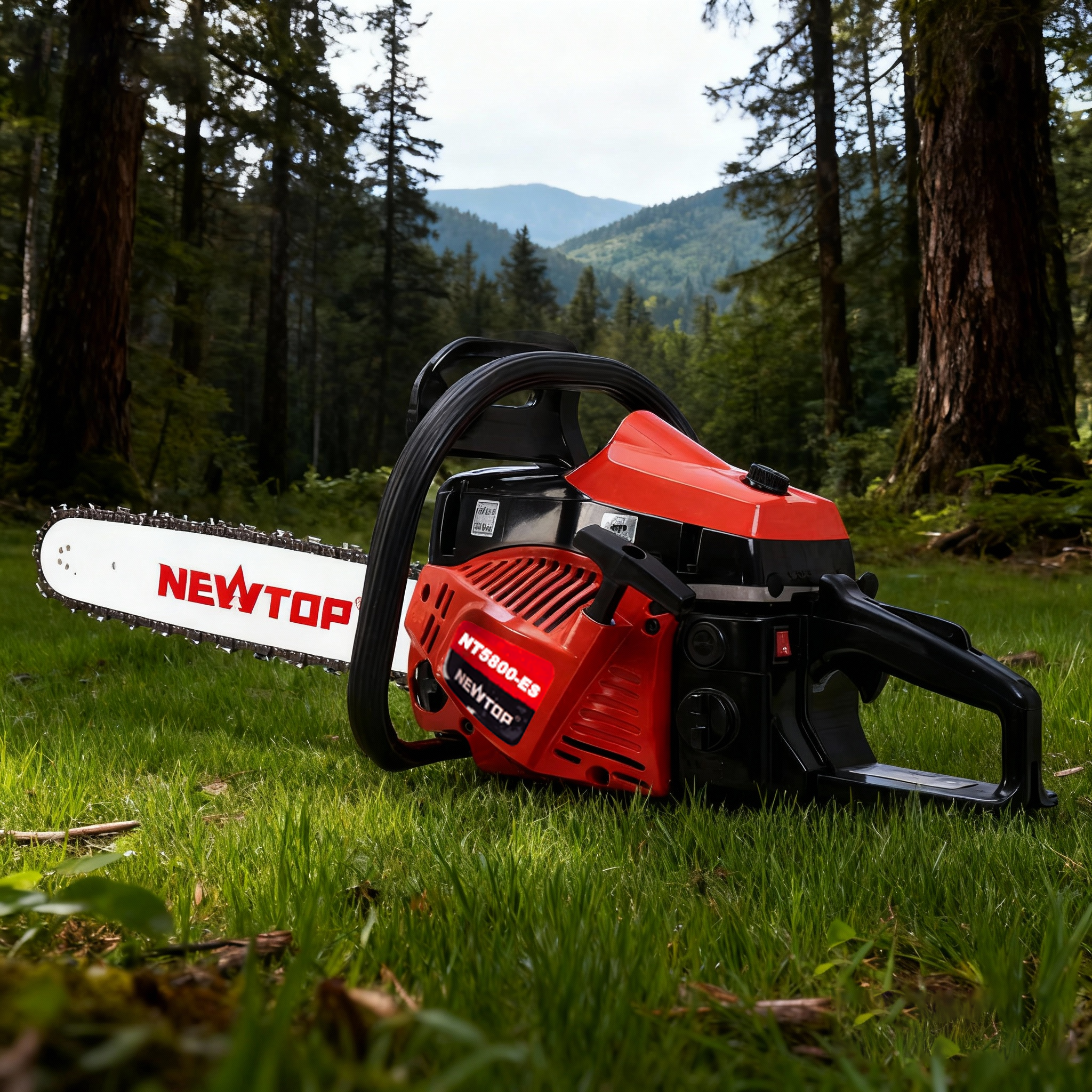
Professional Technical Specs: Peso, Deslocamento, and Balance
When evaluating professional-grade top handle chainsaws for 2026, three specifications determine real-world performance: peso, cilindrada do motor, and balance.
| Technical Specification | Professional Market Range (2026) | Primary Benefit |
|---|---|---|
| Engine Displacement | 25cc – 40cc (30cc–35cc mainstream) | Balanced torque output suitable for controlled pruning and hardwood branch cutting. |
| Saída de potência | 1.0 kW – 1.8 kW | Delivers efficient cutting performance while maintaining fuel economy and throttle responsiveness. |
| Peso Seco (Without Bar & Chain) | 2.6 kg – 3.8 kg | Reduces operator fatigue and improves maneuverability in confined canopy environments. |
| Key Performance Metric | High Power-to-Weight Ratio | Critical for maintaining control, precisão, and productivity during elevated operations. |
Engine Displacement and Power Output
Most professional-grade top handle chainsaws operate within a 25cc to 40cc displacement range, with 30cc–35cc models representing the core segment for arborist applications. This range provides the optimal balance between torque and weight, ensuring clean, controlled cuts without unnecessary engine bulk. Power output typically falls between 1.0 kW e 1.8 kW, depending on engine tuning and design. This configuration delivers reliable cutting force for hardwood branches while maintaining fuel efficiency and throttle responsiveness—critical for extended in-tree operations.
Relação potência-peso
For professional arborists, power-to-weight ratio is the defining performance metric. A climbing saw must provide sufficient torque while remaining lightweight enough for controlled maneuverability in canopy environments. High-quality top handle models typically weigh between 2.6 kg e 3.8 kg (dry weight), striking the balance between durability and operator fatigue reduction. A superior ratio enhances cutting precision during complex pruning and rigging tasks, contributing directly to both productivity and long-term operator safety.
Ergonomic Balance and Key Features
Beyond the core engine specs, ergonomic design determines a saw’s real-world usability. Modern professional saws integrate systems that support the operator and reduce downtime. Advanced anti-vibration technology minimizes the strain on an arborist’s hands and arms, which is critical for all-day use. Features like spring-assisted starting are essential for restarting the saw safely mid-climb. Likewise, centrifugal air filtration systems eject dust and debris before they reach the filter, significantly extending service intervals and keeping the engine running at peak performance.
Safety Standards for In-Tree Operation: Brakes and Lanyards
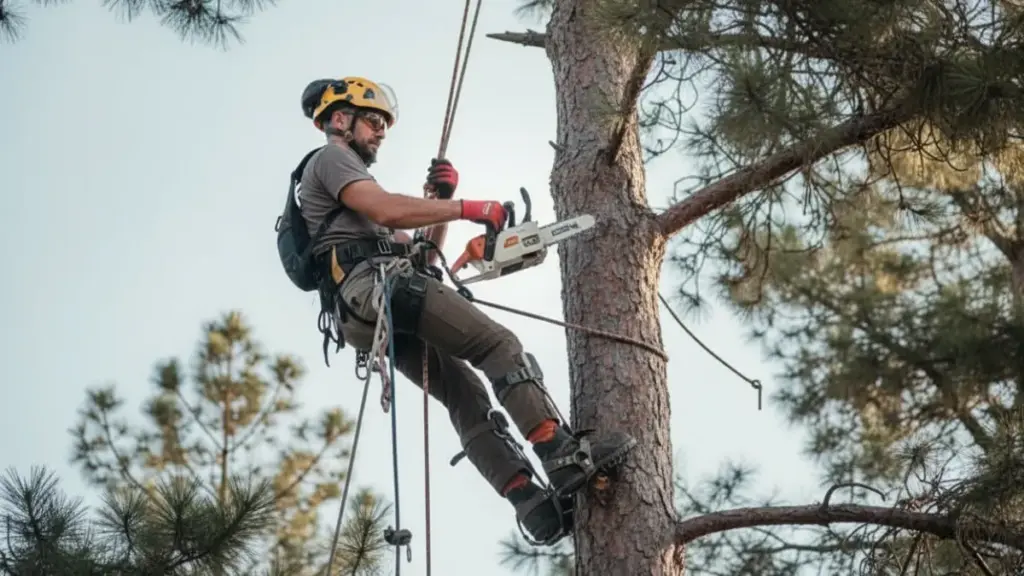
Safe in-tree chainsaw operation depends on a strict system of regulatory compliance, redundant tie-in protocols, and mandatory pre-use equipment checks.
Regulatory Compliance and Industry Standards
In-tree chainsaw operations follow strict industry standards like ANSI Z133, which sets the baseline for safe tree care. Regulatory bodies such as OSHA enforce these guidelines, mandating documented worker training, clear equipment protocols, and proactive risk management to minimize hazards. These standards apply equally to both gasoline and battery-powered chainsaws, as both present identical cutting risks when working at height.
Continuous Tie-In and Lanyard Systems
A core rule for any arborist is to remain continuously tied in throughout an operation. This is achieved with a dual-redundancy system. The worker uses a primary climbing line for main support and a secondary lanyard for precise work positioning and backup security. This setup ensures the operator is secured from the moment they leave the ground until they return, allowing them to establish a stable stance for making controlled cuts.
Chainsaw Brake Function and Inspection
The chainsaw’s chain brake is a non-negotiable safety device engineered to stop the chain instantly during a kickback event. Regular inspection and testing of this mechanism are mandatory before every use. An operator must confirm the chain brake engages properly when activated by hand and regularly clean the brake band and clutch cover to check for wear or damage. A functional brake, paired with correct handling techniques, is a critical layer of operator protection.
Pre-Operation Hazard Assessment and Equipment Checks
Proactive risk management is central to in-tree safety. Before climbing, every arborist must conduct a thorough hazard assessment of the tree and the surrounding worksite, identifying risks like weak limbs, electrical lines, or ground obstacles. A complete inspection of all climbing and cutting equipment—including ropes, harnesses, lanyards, and the chainsaw itself—is required to check for defects. The crew must also establish a clear work plan and an emergency protocol before work begins.
Top Handle vs. Motosserra com alça traseira
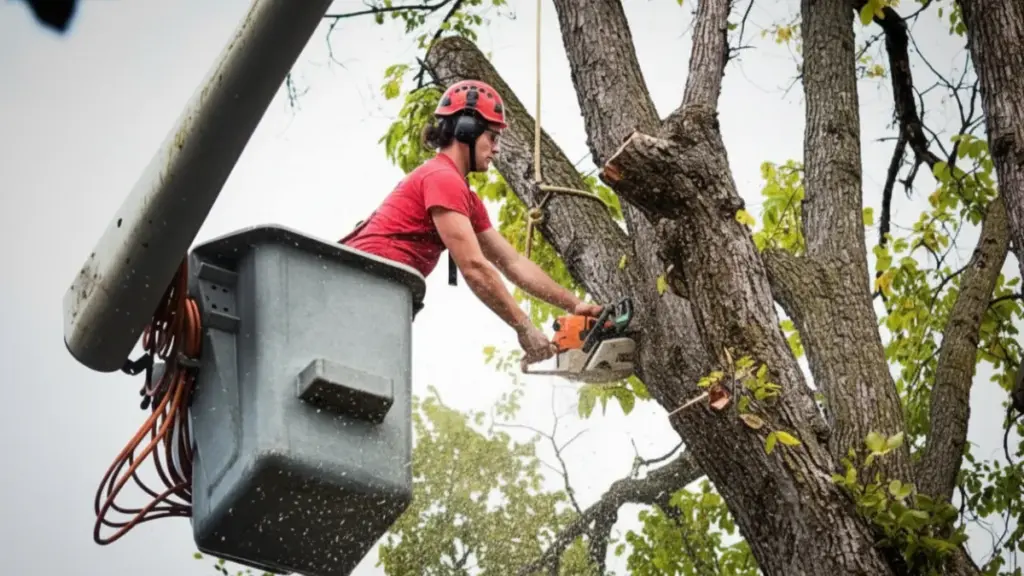
The choice between a top handle and rear handle chainsaw is determined entirely by the work environment; top handle saws are specialized for professional, in-tree operations, while rear handle saws are built for stable, ground-level cutting.
| Atributo | Motosserra com alça superior | Motosserra com alça traseira |
|---|---|---|
| Primary User | Certified professional arborists and tree surgeons | Proprietários de casa, gerentes de propriedade, and forestry workers |
| Work Environment | Elevated, in-tree, or from an aerial lift | Ground-level operations |
| Core Design Trait | Compactar, leve, and balanced for maneuverability | Longer body with separated handles for stability and leverage |
| Aplicação Típica | Poda, enterro, and navigating tight tree crowns | Felling trees, toras, e processamento de lenha |
Design and Ergonomics for Specific Tasks
The fundamental difference lies in their physical layout, which is optimized for two distinct working environments. Top handle saws are compact and balanced for maneuverability in elevated, awkward positions. Rear handle saws are built for leverage and stability on the ground. This separation of design intent dictates how each tool performs in its intended role.
- Top handle models integrate the handle directly above the saw’s body, creating a center of gravity ideal for one-handed use by a climbing arborist.
- Rear handle models use a separated two-handle design, giving the operator greater control and a stable platform for felling trees or bucking logs.
Intended User and Application
Each saw type targets a different user. Top handle chainsaws are specialized tools exclusively for certified tree care professionals working at height. Rear handle saws cater to a wider audience, from homeowners to loggers, who perform work at ground level. The industry has clearly segmented these tools for specific operational contexts rather than creating an all-purpose solution.
- Top handle saws are the standard for professional arborists who need to prune limbs while secured in a tree.
- Rear handle saws are suited for felling, enterro, and processing firewood on solid ground, making them the choice for property owners and forestry workers.
Poder, Control, and Safety
Rear handle saws generally provide more leverage for cutting power and stability, making them a safer choice for novices. Top handle saws offer a high power-to-weight ratio but introduce significant safety risks that demand professional training and certification. The operator’s ability to manage kickback is directly tied to the saw’s handle configuration.
- The wider grip on rear handle saws offers superior control, which helps manage kickback during powerful cuts.
- Due to their design for potential one-handed operation, top handle saws require strict adherence to safety protocols and are not recommended for groundwork or inexperienced users.
How to Select the Right Top Handle Chainsaw?
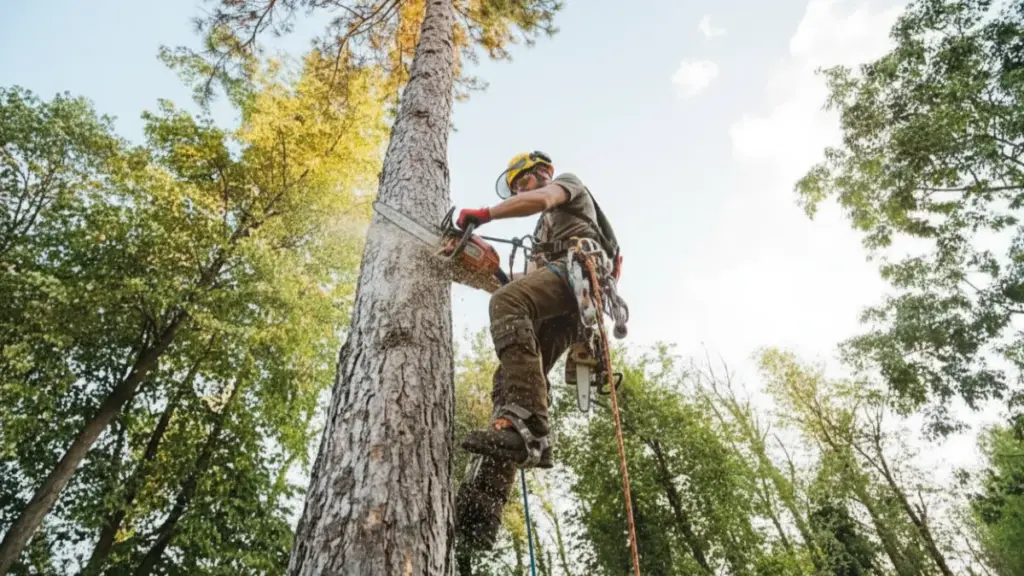
Choosing the right top handle chainsaw requires matching professional certifications and specific in-tree job demands with key technical features like power-to-weight ratio, equilíbrio, and power source.
Selecting the right model requires aligning technical specs with market demand.
Primeiro, identify your target users. Are they certified arborists, landscaping companies, or small contractors? Professional arborists demand durability and brand reliability. Entry-level buyers may prioritize price.
Segundo, evaluate climate and wood density. In tropical markets (América latina, Sudeste Asiático, África), hardwood species require stronger torque output. In colder climates, cold-start reliability becomes critical.
Terceiro, consider after-sales support and spare parts availability. Components such as carburetors (por exemplo, Walbro type systems), velas de ignição (NGK or TORCH), rolamentos (NSK), chains (Oregon type), and guide bars should be globally accessible.
Quarto, assess OEM flexibility. Custom color schemes, embalagem, and localized branding significantly increase distributor competitiveness.
Gas vs Battery Top Handle Chainsaws Technical Comparison Table
| Technical Category | Gas Top Handle Chainsaw | Bateria (Li-ion) Motosserra com alça superior |
|---|---|---|
| Fonte de energia | 2-Stroke Gasoline Engine (25cc–40cc) | Lithium-Ion Battery System (36V–60V typical) |
| Saída de potência | 1.0 kW – 1.8 kW continuous mechanical output | Comparable cutting performance in short bursts; torque delivered instantly via brushless motor |
| Peso (Dry) | 2.6 kg – 3.8 kg (without bar & chain) | 2.3 kg – 3.2 kg (tool only; battery adds 0.8–1.5 kg) |
| Tempo de execução | Continuous operation with refueling; suitable for all-day field work | 30–60 minutes per battery depending on load; requires spare batteries for full-day operation |
| Torque Delivery | Strong mid-range torque; consistent under heavy hardwood cutting | Instant torque response; highly efficient for pruning and light-to-medium cuts |
| Manutenção | Requires carburetor tuning, verificações de velas de ignição, mistura de combustível | Minimal mechanical maintenance; battery lifecycle management required |
| Barulho & Emissões | Higher noise level; subject to emission regulations (EPA / EURO V) | Low noise, zero direct emissions; suitable for urban arboriculture |
| Market Positioning | Dominant in Africa, América latina, and price-sensitive markets | Rapidly growing in Europe and urban markets with strict environmental policies |
| Ideal User Profile | Forestry contractors, heavy-duty arborists, remote-area operators | Urban tree service companies, noise-restricted areas, environmentally regulated regions |
Market-Leading Top Handle Models in 2026
The professional arborist market is traditionally led by established European and Japanese manufacturers known for engineering precision and durability.
- STIHL – Recognized for high-performance arborist saws with advanced anti-vibration systems and strong brand loyalty.
- Husqvarna – Known for lightweight designs and refined ergonomics tailored for professional tree care.
- Echo – Offers compact professional models with reliable two-stroke performance and competitive pricing.
Para distribuidores seeking a competitive alternative in high-volume categories, rear handle models often deliver stronger ROI, broader application coverage, and greater market scalability.
Professional Chainsaw Solutions from NEWTOP
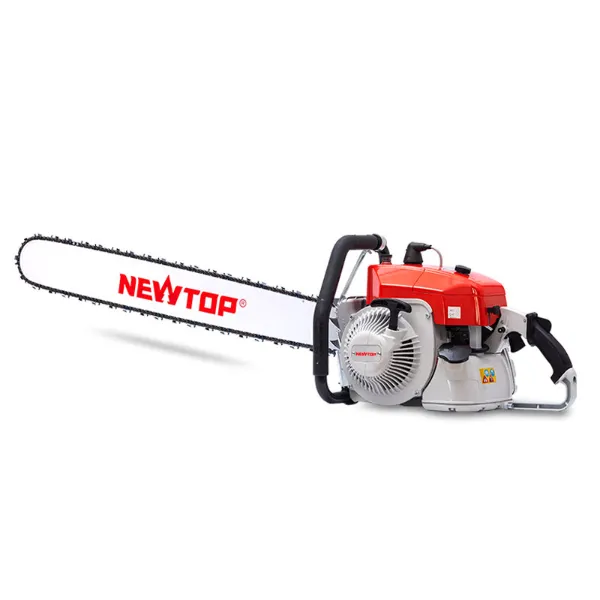
NT10500
High-displacement professional rear handle chainsaw engineered for forestry and large timber cutting.
View Details →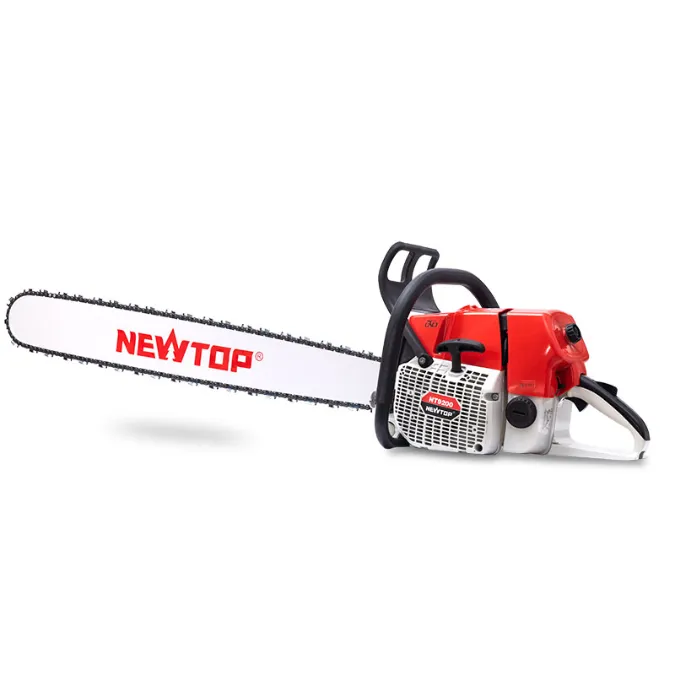
NT9200
Robust gasoline chainsaw designed for demanding field operations and hardwood cutting.
View Details →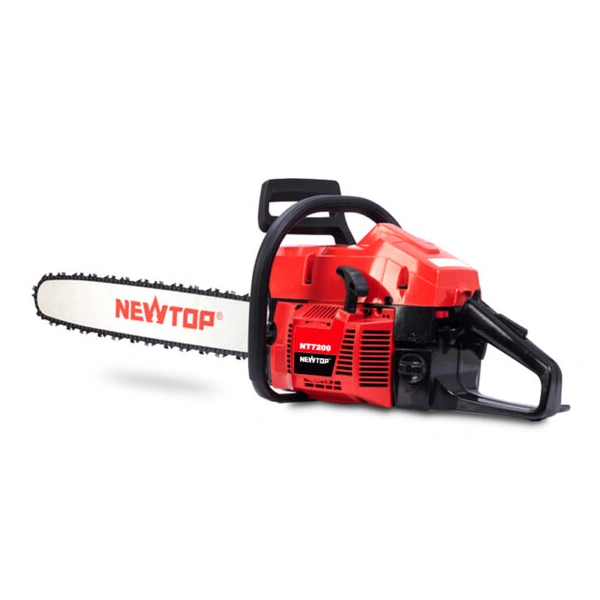
NT7200
Ideal balance of power and weight for landscaping and mid-range forestry work.
View Details →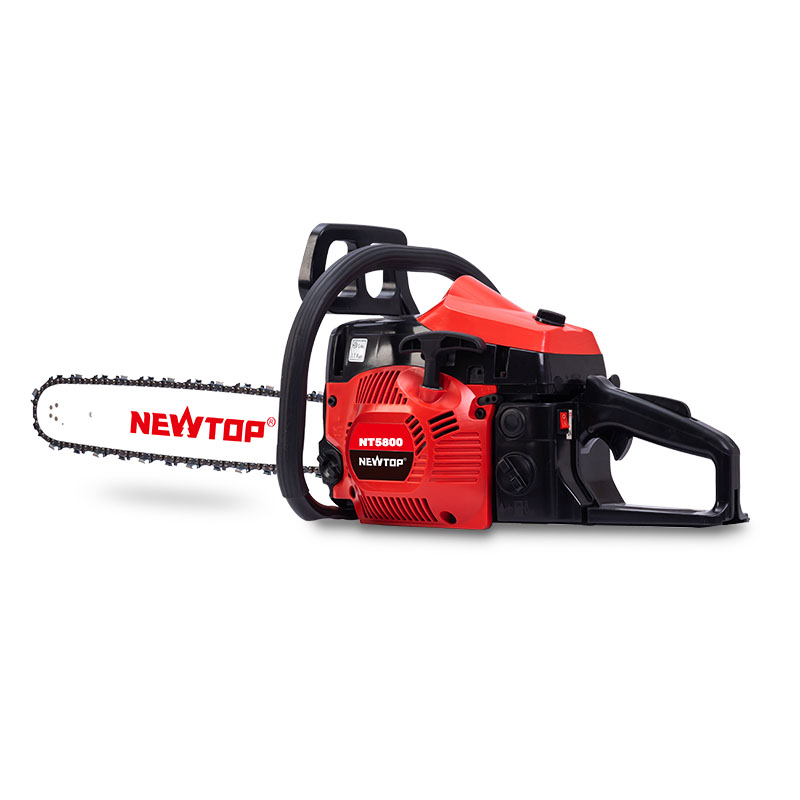
NT5800
Versatile mid-range chainsaw suitable for farm and general professional applications.
View Details →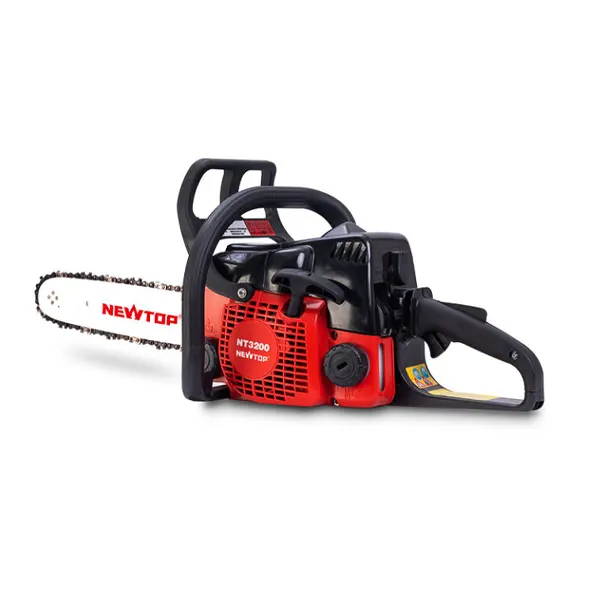
NT3200
Compact rear handle chainsaw ideal for light-duty landscaping and maintenance.
View Details →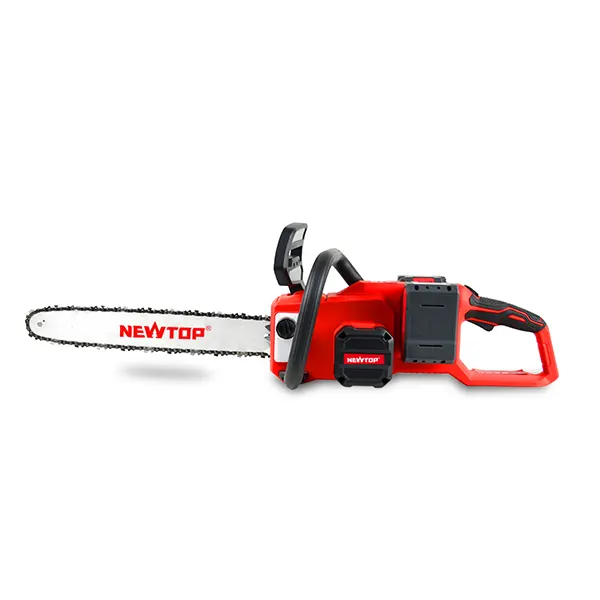
NTCS401Li
Portable lithium battery chainsaw delivering clean operation and minimal maintenance.
View Details →Ready to Work With NEWTOP Outdoor Power Equipment Manufacturer?
Selecting a manufacturing partner requires a direct evaluation of their vertical integration, supply chain quality, and business model flexibility to ensure both product reliability and market success.
NOVOTOP has been manufacturing outdoor power equipment since 2003. With a 10,000㎡ production facility in Shanghai and over 300 employees, we supply chainsaws, cortadores de escova, pulverizadores, geradores, and lithium garden tools to more than 65 países.
What differentiates NEWTOP is not only production scale but engineering depth. An independent R&D team oversees structural design, testing validation, and emission compliance, while automated assembly lines ensure consistency for OEM and private-label partners.
For distributors in Africa, América latina, Sudeste Asiático, and emerging European markets, NEWTOP fornece:
- Personalização OEM flexível
- Stable 30-day bulk lead times
- CE, GS, EPA, ETL certifications
- 1-year machine warranty
- Fornecimento confiável de peças de reposição
If you are expanding your professional arborist product line or building a competitive climbing chainsaw range, partnering with an experienced manufacturer reduces long-term operational risk.
Contact NEWTOP today to discuss product catalogs, pricing structures, and distribution opportunities.
Perguntas frequentes
Why do professionals use top handle chainsaws?
They use them because the compact size allows for better movement in trees. The top handle design is easier to carry on a harness than a standard saw.
Are top handle chainsaws more dangerous than rear handle?
Sim, top handle chainsaws are considered more dangerous for ground use or by untrained operators. Their design allows for one-handed operation, which reduces stability and control compared to the two-handed grip on a rear handle saw. This close-quarters grip significantly increases the risk of severe injury from rotational kickback.
What is the best top handle chainsaw for climbing?
The best model depends on the application. Professionals typically choose saws with strong power-to-weight ratios, responsive throttle systems, and advanced anti-vibration technology. Reliability and parts availability are equally important.
Can a beginner use a top handle saw?
Não. Beginners should use a rear handle saw. Top handle saws require specific techniques to operate safely.
Why are top handle saws more expensive?
They often incorporate advanced engineering, lightweight materials, and reinforced safety systems. Adicionalmente, they are targeted toward professional users, which influences pricing.
Do I need a license for a top handle chainsaw?
Regulations vary by country. Em muitas regiões, professional certification is required for commercial tree climbing operations. Always check local occupational safety laws before use.

Saber como medir corretamente uma barra de motosserra é um protocolo de segurança crítico que evita eventos perigosos de contragolpe e falhas catastróficas do equipamento. Um simples erro de dimensionamento, frequentemente causado pela medição de toda a barra física de ponta a ponta, leva diretamente ao pedido de peças de reposição incompatíveis. Esta incompatibilidade não só causa um fraco desempenho de corte, mas também coloca uma tensão excessiva no motor da serra., resultando em desgaste acelerado e tempo de inatividade operacional dispendioso.
Neste guia completo, orientaremos você sobre o método profissional exato usado por técnicos de serviço e fornecedores de equipamentos florestais. Você também aprenderá como combinar o comprimento da barra com a cilindrada do motor (CC), e como evitar erros comuns de dimensionamento que reduzem o desempenho e danificam sua serra.
Qual é o comprimento da barra da motosserra?
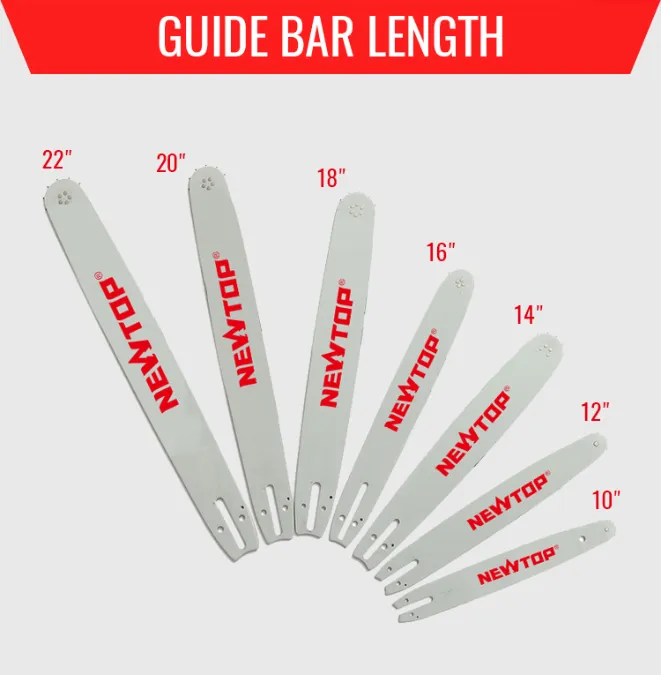
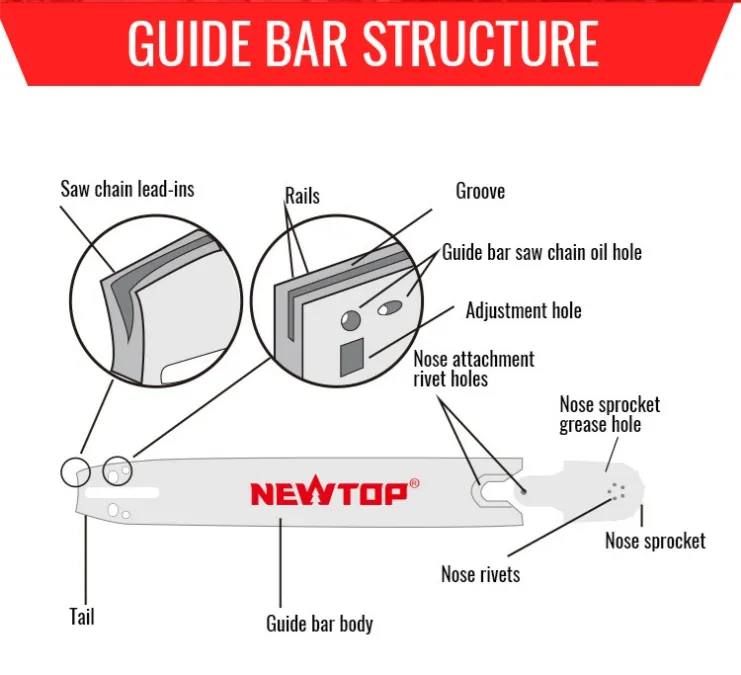
O barra guia é a longa placa de aço que suporta e guia a corrente durante o corte. No entanto, uma parte da barra fica dentro do corpo da motosserra (o poderoso). Essa seção interna não contribui para reduzir a capacidade.
Compreendendo o comprimento de corte efetivo
O comprimento da barra da motosserra refere-se ao comprimento efetivo de corte da barra guia - não ao comprimento total do metal de ponta a ponta. Os técnicos medem desde a frente do corpo da serra até a ponta mais distante da barra, que representa a largura máxima de madeira que você pode cortar em uma única passagem. Quando os fabricantes listam uma barra como 16-polegada, 18-polegada, ou 20-polegada, eles estão se referindo ao comprimento de corte utilizável, medido da frente da caixa da serra até a ponta da barra.
Como o tamanho da barra se relaciona com o passo e a medida
Embora o comprimento seja a especificação principal, funciona diretamente com passo e medidor para criar um sistema de corte compatível e seguro. O passo define a distância entre os elos de transmissão da corrente, e o medidor mede a espessura desses links. A ranhura da barra deve corresponder perfeitamente ao calibre da corrente para o funcionamento adequado. Os tamanhos de passo comuns são 0,325″ e 3/8″, enquanto os tamanhos de medidor padrão incluem .050″, .058″, e .063″. A incompatibilidade dessas medidas críticas leva a um desempenho de corte ruim, descarrilamento de corrente, e desgaste acelerado da barra e da roda dentada.
Correspondência do comprimento da barra à aplicação e potência
O comprimento ideal da barra depende inteiramente da potência do motor da serra e do trabalho a ser feito. Uma barra mais longa requer mais torque para conduzir a corrente através de madeira densa, enquanto uma barra mais curta proporciona melhor controle e manobrabilidade para tarefas precisas. A relação entre comprimento, poder, e a aplicação é simples.
- Barras mais curtas (10–16 polegadas): Adequado para serras com motores menores. Eles são ideais para tarefas leves como poda, enterro, e cortar lenha pequena onde o controle é fundamental.
- Barras Médias (16–20 polegadas): Estes são versáteis e versáteis, comum em modelos residenciais e semiprofissionais. Oferecem um bom equilíbrio entre capacidade de corte e controle para derrubar árvores de tamanho médio.
- Barras mais longas (22–30+ polegadas): Projetado exclusivamente para poderosos, serras de nível profissional. Estas barras são utilizadas na silvicultura e na limpeza de terrenos para o corte de árvores de grande diâmetro onde é necessária a máxima largura de corte.
Diferentes tipos de motosserra - como a gás, elétrico, ou modelos de alça superior—têm requisitos variados de comprimento de barra. Saiba mais sobre o diferentes tipos de motosserras e como eles influenciam a seleção do seu bar.
Etapa 1: Medindo o comprimento de corte efetivo (Comprimento Chamado)
O padrão da indústria 'chamado comprimento’ é determinado medindo a área de corte útil da barra desde a ponta até o corpo da serra e arredondando para o tamanho padrão mais próximo, um primeiro passo crítico para garantir a compatibilidade correta da corrente e da barra.
| Exemplo de medição bruta | Regra de arredondamento | Padrão “Comprimento Chamado” |
|---|---|---|
| 17.75 polegadas | Arredonde para o tamanho padrão mais próximo (normalmente incrementos de 2 polegadas). | 18 polegadas |
| 15.8 polegadas | Arredonde para o tamanho padrão mais próximo (normalmente incrementos de 2 polegadas). | 16 polegadas |
| 19.9 polegadas | Arredonde para o tamanho padrão mais próximo (normalmente incrementos de 2 polegadas). | 20 polegadas |
A técnica de medição padrão
Para encontrar o tamanho de uma barra de motosserra, você mede seu comprimento de corte efetivo, também conhecido como “chamado comprimento.” Esta é a única medida que importa para a identificação da peça. Para uma leitura precisa, mantenha a barra presa à serra. Coloque a ponta de uma fita métrica bem na ponta da barra e estenda-a de volta até o ponto onde a barra entra no alojamento da motosserra. A distância resultante é o comprimento efetivo de corte, que representa a parte utilizável da barra.
Arredondamento para corresponder aos tamanhos de barra padrão
Sua medida bruta deve ser convertida para um tamanho comercial padrão. As barras de motosserra são fabricadas e vendidas em tamanhos fixos, geralmente em incrementos de duas polegadas, como 16, 18, ou 20 polegadas. Se sua medição for 17.75 polegadas, você tem uma barra de 18 polegadas. Sempre arredonde sua medida para a polegada inteira mais próxima para identificar sua classificação comercial. Essa padronização da indústria é o que simplifica o processo de compra de peças de reposição e garante que componentes de diferentes lotes ou fabricantes se encaixem corretamente.
Por que esta medição é fundamental
Obter o comprimento efetivo correto é a etapa mais importante na identificação do seu equipamento. Uma medição incorreta tem efeito direto na capacidade de corte, montagem de corrente, e segurança do operador. O comprimento chamado determina o diâmetro máximo de madeira que você pode cortar em uma única passagem e é uma especificação necessária para comprar a corrente de reposição correta. Usar uma barra muito longa para o motor da serra irá sobrecarregar o motor, reduzir o desempenho, e criar condições operacionais inseguras.
Assista a este vídeo passo a passo, você aprenderá a técnica adequada para medir o comprimento efetivo de corte de sua motosserra. Depois de assistir, continuar para a etapa 2 para contar os elos de transmissão da sua corrente e certificar-se de que a serra e a barra se encaixam perfeitamente.
Etapa 2: Localizando e contando links de acionamento na corrente
Uma contagem incorreta de elos de transmissão é a principal causa de descarrilamento da corrente e falha operacional, tornar a contagem manual precisa uma etapa crítica de manutenção para o funcionamento seguro do equipamento.
| Método de verificação | Propósito & Justificativa | Armadilha comum a evitar |
|---|---|---|
| Contagem Manual | Confirma o número exato de links necessários para a barra, evitando folga ou tensão excessiva que leva à falha. | Perdendo a conta no meio do caminho. Sempre marque o elo inicial com fita adesiva ou caneta para garantir uma contagem precisa. |
| Verifique as informações da barra estampada | Fornece as especificações exatas do fabricante (frequentemente abreviado como “DL”) para substituição rápida e precisa da corrente. | Confiando em desgastado, marcações ilegíveis em um bar antigo. Se você não consegue ler claramente os números, padrão para uma contagem manual. |
O que é um Drive Link e por que a contagem é importante?
Os elos de transmissão são as saliências na parte inferior da corrente que ficam dentro da ranhura da barra guia. Eles engatam na roda dentada da motosserra para impulsionar a corrente e guiá-la ao longo da barra. Uma contagem precisa desses links é fundamental para uma montagem adequada. Se a corrente tiver poucos elos, não cabe na barra. Se tiver muitos, a corrente ficará muito frouxa, levando a um mau desempenho de corte, vinculativo, e um alto risco de descarrilamento durante a operação. A contagem de elos de transmissão determina o comprimento preciso da corrente necessária para uma barra específica, garantindo uma transferência de energia segura e eficiente do motor para a madeira.
Um método confiável para contar links de unidades manualmente
Para evitar erros, usar um método de contagem sistemático. Primeiro, remova a corrente da serra e coloque-a sobre uma superfície plana, superfície limpa como uma bancada ou chão. Isto endireita a corrente completamente e evita emaranhados que causam erros de contagem. Marque o link da unidade inicial com um pedaço de fita adesiva ou caneta para criar um ponto de referência claro. De lá, conte cuidadosamente cada link de unidade individual até retornar ao link marcado. Para melhor precisão, contar em pequenos grupos, como por cinco, e depois faça uma segunda contagem para verificar seu número final.
Onde encontrar informações de link de unidade em seu equipamento
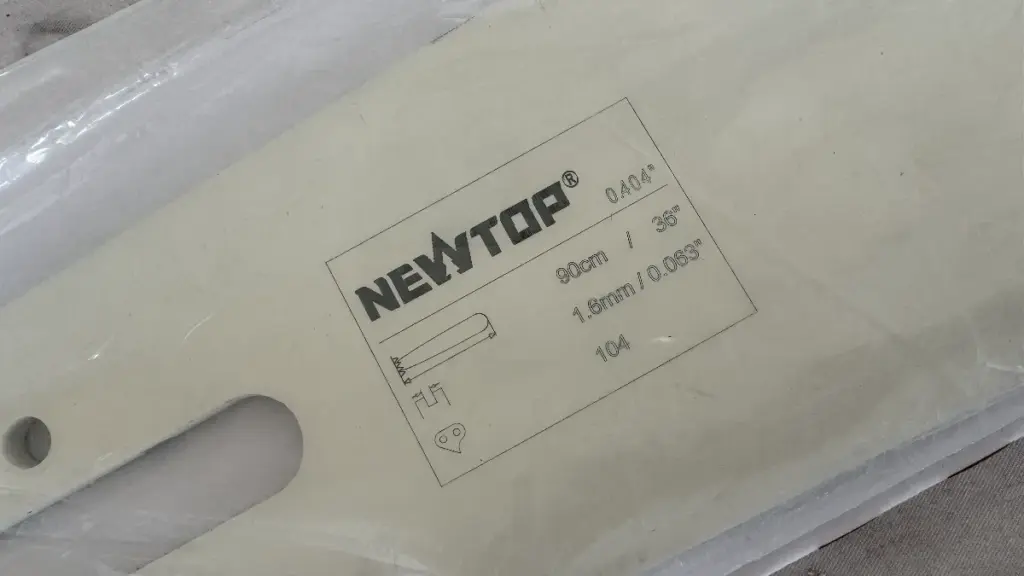
Muitos fabricantes carimbam ou gravam a laser a contagem necessária do elo de acionamento diretamente na barra guia para simplificar a substituição. Inspecione a extremidade traseira da barra, perto da área onde é montado no corpo da serra. Essas informações geralmente são listadas junto com as especificações exigidas de passo e medidor da barra. A contagem de links de unidade normalmente é abreviada como “DL” seguido por um número (por exemplo, “72DL”). Mesmo quando esta informação está disponível, realizar uma contagem manual em sua cadeia antiga continua sendo um método de verificação confiável, especialmente se a barra estiver gasta ou as marcações se tornarem difíceis de ler.
Etapa 3: Determinando o medidor e o passo da barra para um encaixe perfeito

Acertar o tom e a avaliação não é negociável; essas duas medições atuam como um sistema de chave e fechadura, e uma incompatibilidade garante mau desempenho e riscos de segurança significativos.
| Medição | Definição Técnica | Tamanhos comuns da indústria |
|---|---|---|
| Tom | A distância entre os centros de três rebites consecutivos na corrente, dividido por dois. | .325″, 3/8″, 1/4″ |
| Medidor | A espessura dos links de acionamento, que deve corresponder à largura da ranhura da barra. | .043″, .050″, .063″ |
Compreendendo o pitch e o medidor
Passo e bitola são as duas medidas críticas que garantem que sua corrente e barra guia funcionem como um único, sistema eficiente. Uma correspondência adequada é essencial para uma operação segura. O passo define o espaçamento entre os links de acionamento, enquanto o medidor define a espessura desses links. Isso garante que a corrente se encaixe perfeitamente na ranhura da barra, evitando emperramento ou descarrilamento durante operação em alta velocidade.
Como Medir e Identificar
A maneira mais eficiente de encontrar essas medidas é procurar as informações estampadas diretamente na cauda da barra guia, perto dos slots de montagem. Se as marcações estiverem gastas ou ilegíveis, o manual do operador da sua motosserra é a segunda melhor fonte. Ele listará as especificações exatas de fábrica para o seu modelo.
- Verifique a base da barra em busca de números estampados que especifiquem o passo e a bitola.
- Consulte o manual de instruções da sua motosserra para as especificações do equipamento original.
- Se você ainda não tem certeza, leve a barra ou serra a um revendedor local para identificação profissional.
Por que a correspondência é importante
Usar uma corrente e uma barra incompatíveis introduz problemas operacionais imediatos e riscos de segurança. Para que o sistema de corte funcione, o passo da corrente, o passo da roda dentada na serra, e o passo da roda dentada da barra deve ser idêntico. Qualquer desvio quebra esse alinhamento e causa falha no desempenho.
- Um passo incorreto faz com que a corrente emperre ou salte na ranhura, levando a um corte deficiente e potencial contragolpe.
- Se o medidor for muito fino para a ranhura da barra, a corrente irá oscilar e pode facilmente descarrilar.
- Se o medidor for muito grosso, a corrente vai amarrar, gerando atrito excessivo, aquecer, e desgaste na barra e no motor.
Seu parceiro confiável, Ferramentas elétricas lucrativas
Prós e contras do uso de barras mais longas e mais curtas em uma serra
Selecionar o comprimento correto da barra é um equilíbrio crítico entre a capacidade de corte necessária para um trabalho e a potência do motor da serra, onde barras mais curtas priorizam o controle e barras mais longas maximizam o alcance e a eficiência.
Vantagens e desvantagens de barras mais curtas (12-18 polegadas)
Barras mais curtas oferecem controle e segurança superiores, tornando-os ideais para proprietários de casas e tarefas leves, como aparar galhos ou cortar pequenas árvores. Seu tamanho compacto reduz a fadiga do operador e minimiza o risco de contragolpes perigosos, uma vantagem significativa para usuários com menos experiência. Esta categoria de barra domina o mercado residencial porque oferece um bom equilíbrio entre capacidade e capacidade de gerenciamento.
- Mais fácil de manusear e manobrar em espaços apertados.
- Menor potencial de retrocesso, tornando-os mais seguros para usuários menos experientes.
- Requer menos potência do motor, colocando menos pressão na serra.
- Diâmetro de corte limitado, tornando-os ineficientes para derrubar árvores grandes.
Vantagens e desvantagens de barras mais longas (20+ polegadas)
Barras mais longas proporcionam maior capacidade de corte, permitindo que usuários profissionais derrubem árvores de grande diâmetro e quebrem toras grossas com mais eficiência. Esse desempenho tem o custo do aumento de peso, manobrabilidade reduzida, e uma maior demanda por habilidade do operador. Uma barra longa permite cortar toras grossas em uma única passagem, que é essencial para a produtividade em aplicações florestais comerciais e agrícolas.
- Permite cortar toras mais largas em uma única passagem, aumentando a produtividade.
- Fornece alcance estendido para derrubada e desrama.
- Mais pesado e mais difícil de equilibrar, levando à fadiga mais rápida do operador.
- Requer um motor mais potente para conduzir a corrente de forma eficaz sem atolar.
Encontrando o equilíbrio certo: Potência do motor e habilidade do usuário
O melhor comprimento de barra para uma motosserra é uma compensação entre a cilindrada do motor da serra (CCs) e a capacidade física e experiência do operador. Sobrecarregar um motor pequeno com uma barra longa leva a um desempenho ruim, cortes lentos, e desgaste prematuro da embreagem e dos componentes do motor. Não se trata apenas do que se encaixa; trata-se do que a cabeça motorizada pode conduzir de forma realista através de material denso.
- Sempre combine o comprimento da barra com a faixa recomendada pelo fabricante para o tamanho do motor da sua serra.
- Uma barra muito longa para a cabeça motriz cortará lentamente e sobrecarregará o motor.
- Considere o tipo de madeira; madeiras nobres requerem mais energia, muitas vezes favorecendo uma barra ligeiramente mais curta para um determinado motor.
- A experiência do operador é crucial, já que barras mais longas amplificam as forças de contragolpe e exigem mais controle físico.
Erros comuns de dimensionamento: Por que “De ponta a ponta” Medição de falhas
Medir o comprimento físico total de uma barra de motosserra em vez de seu comprimento de corte funcional é a principal causa de incompatibilidade de equipamentos e problemas de desempenho.
Medindo o comprimento total da barra em vez do comprimento de corte efetivo
Um erro frequente é medir toda a barra física da ponta à cauda. O padrão correto da indústria é o “comprimento de corte eficaz” ou “chamado comprimento,” que mede apenas a parte utilizável da barra que se estende do corpo da motosserra. Medir a barra completa garante que você comprará a corrente de reposição de tamanho errado e potencialmente outros acessórios incompatíveis.
- Este erro resulta na seleção de uma corrente que é muito longa para a área de corte exposta real da barra.
- Uma medição de ponta a ponta não reflete o comprimento funcional especificado pelos fabricantes para correntes e acessórios correspondentes.
Incluindo hardware de montagem na medição
Os operadores muitas vezes incluem incorretamente a parte da barra que cabe dentro da cabeça motorizada ao medir. Esta seção de montagem, ou cauda, não contribui para o corte e infla artificialmente o comprimento. Este número inflacionado leva diretamente ao dimensionamento incorreto e ao equipamento que não caberá ou não funcionará corretamente.
- A medição precisa deve começar onde a barra guia emerge da frente da carcaça da motosserra.
- A não exclusão do hardware de montagem leva à incompatibilidade do equipamento, mau desempenho, e riscos potenciais de segurança de uma corrente com tensão inadequada.
Esquecendo de arredondar para o incremento padrão mais próximo
As barras de motosserra são vendidas em tamanhos padronizados de polegadas pares, como 16″, 18″, ou 20″. Se a sua medição do comprimento de corte efetivo estiver ligeiramente errada, como 17.5 polegadas, você deve arredondar para o tamanho padrão mais próximo, qual seria 18 polegadas, para encontrar a peça de reposição correta. O mercado não produz comprimentos de barras fracionários ou ímpares.
- A prática da indústria é arredondar o comprimento de corte efetivo para o número par mais próximo para marketing e vendas.
- Ignorar esta convenção pode levar à procura de tamanhos de barras inexistentes e à compra do equipamento errado.
Guia de seleção: Como combinar o comprimento da barra com a potência do motor (CC)
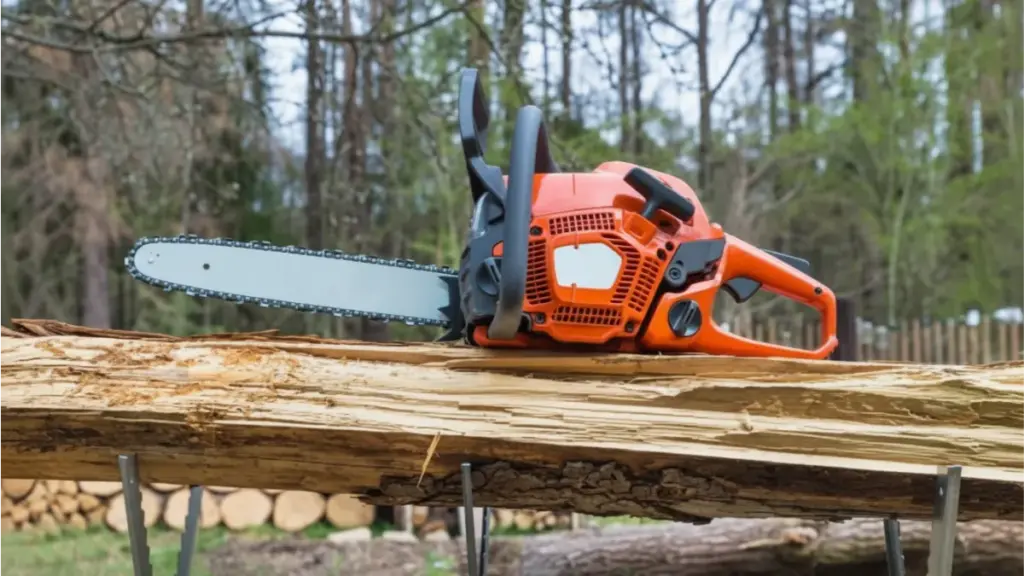
Combinar o comprimento da barra guia com o deslocamento do motor é fundamental para evitar o desgaste da embreagem e garantir a segurança, desempenho de corte eficiente.
Correspondência do comprimento da barra guia à cilindrada do motor (CC) é essencial para manter a eficiência do corte, protegendo o sistema de embreagem, e prolongando a vida útil do motor. Uma barra muito longa para a saída de torque do motor reduzirá a velocidade da corrente, aumentar a vibração, e causar desgaste mecânico prematuro. O equilíbrio adequado garante uma transferência de energia suave e uma operação segura.
| Tamanho do motor (CC) | Sugestão típica de comprimento de barra (polegadas) |
|---|---|
| 25–35 cc | ~10–14″ |
| 35–45 cc | ~12–16″ |
| 45–60 cc | ~16–20″ |
| 60–80+ cc | ~20–28″ |
| 30–35 cc | 10–12″ (Serviço leve) |
| 35–45 cc | 12–16″ |
| 45–55 cc | 16–20″ |
| 55–65 cc | 18–24″ |
| 65–80 cc | 24–32″ |
| 10–14 ″ e superior | Varia de acordo com o caso de uso |
Para motores pequenos entre 25cc e 35 cc, o comprimento ideal da barra é normalmente 10 para 14 polegadas. Estas serras compactas são projetadas para podar, enterro, e corte de lenha leve. Instalar uma barra mais longa sobrecarrega excessivamente o motor, especialmente ao cortar madeira dura.
Motores de gama média no 35cc a 45 cc categoria tem melhor desempenho com 14 para barras de 16 polegadas. Embora alguns modelos de 45 cc de alto rendimento possam tecnicamente acomodar uma barra de 18 polegadas, empurrar além dessa faixa geralmente resulta em velocidade mais lenta da corrente e eficiência reduzida sob carga.
Para 45cc a 55 cc motores, um 16 para barra de 18 polegadas geralmente é ideal, com certos modelos 50cc + capazes de lidar com até 20 polegadas quando ajustado corretamente. Esta gama oferece um forte equilíbrio entre manobrabilidade e capacidade de corte.
Motores de nível profissional da 55cc a 70 cc pode operar de forma confiável 18 para barras de 24 polegadas, dependendo do projeto de torque. Motores acima de 70 cc são normalmente combinados com barras de 24 polegadas ou mais para trabalhos florestais pesados.
Fatores além do CC: Tipo de madeira e habilidade do operador
Embora a cilindrada do motor forneça uma base sólida, o comprimento ideal da barra também depende do tipo de madeira e do nível de experiência do operador. Madeiras nobres como carvalho ou bordo requerem significativamente mais energia para cortar, então você pode escolher uma barra um pouco mais curta do que usaria para cortar madeiras macias como o pinho com a mesma serra. A habilidade do operador também é crítica, pois uma barra mais longa é mais difícil de controlar e aumenta o risco de contragolpe perigoso. Uma serra bem equilibrada com uma relação potência/peso ideal reduz a fadiga do utilizador e melhora a segurança durante longos períodos de trabalho.
Consequências de uma correspondência incorreta
Usar uma barra guia de tamanho inadequado compromete diretamente o desempenho e a segurança do operador. Uma configuração de baixa potência, onde a barra é muito longa para o motor, resulta em corte lento, travamento frequente da corrente, e potencial desgaste da embreagem devido ao esforço constante. Por outro lado, uma barra muito curta para um motor potente subutiliza a capacidade da serra e torna o trabalho menos eficiente. A consequência mais significativa é o aumento do risco de segurança – uma serra mal equilibrada é difícil de manusear e aumenta significativamente a probabilidade de eventos perigosos de contragolpe.
Por que escolher as barras guia projetadas com precisão NEWTOP?
As barras-guia da NEWTOP combinam componentes de origem global com fabricação interna de precisão para oferecer confiabilidade de nível profissional e uma forte vantagem de custo em mercados competitivos.
Se você estiver adquirindo barras-guia de reposição para varejo, Marca OEM, ou distribuição, é fundamental selecionar um fabricante confiável de barra guia de motosserra.
NOVOTOP especializou-se em máquinas de jardim e ferramentas florestais desde 2003. Com mais de 10.000㎡ instalações de produção e centros de usinagem CNC avançados, A NEWTOP fabrica barras-guia projetadas com precisão, projetadas para durabilidade e longa vida útil.
O que diferencia as barras guia NEWTOP?
- Construção em liga de aço de alta qualidade
- Endurecimento preciso do trilho para resistência ao desgaste
- Usinagem precisa de ranhuras para um rastreamento suave da corrente
- Compatibilidade com os principais padrões de cadeia (.325″, 3/8″, .404″)
- Testes rigorosos de controle de qualidade, incluindo retilineidade do trilho e verificação de dureza
Os produtos NEWTOP são exportados para 65+ países da América Latina, África, Sudeste Asiático, e Europa Oriental, apoiando ambos os clientes OEM (60%) e distribuidores de marcas.
Esteja você substituindo barras para corte profissional ou fornecendo para revendedores regionais, NEWTOP oferece fornecimento estável, preços competitivos, e opções de embalagens personalizáveis.
Se você deseja expandir sua linha de produtos com componentes confiáveis para motosserra, nossa equipe de engenharia pode apoiar o desenvolvimento OEM/ODM adaptado às suas necessidades de mercado.
Conclusão
Medindo o comprimento efetivo de uma barra de motosserra, tom, e o medidor são fundamentais para garantir uma operação segura e um ótimo desempenho de corte. Estas etapas garantem que você selecione um substituto compatível, evitando o desgaste prematuro do equipamento e erros de compra dispendiosos. Esta precisão contribui diretamente para a confiabilidade e longevidade de suas ferramentas.
Se você estiver adquirindo novos componentes, revise nosso catálogo de barras-guia projetadas com precisão. Nossa equipe está disponível para ajudar a verificar o ajuste correto para uma única serra ou para uma frota inteira.
Perguntas frequentes
Você mede uma barra de motosserra de ponta a ponta?
Não. Você mede desde a borda frontal da carcaça da motosserra até a ponta da barra. A ponta de medição na cauda de montagem fornece um comprimento incorreto.
Como posso saber o tamanho da barra que cabe na minha motosserra?
Para determinar o tamanho correto da barra, consulte o manual do usuário da sua motosserra, que lista os comprimentos e especificações de barra recomendados pelo fabricante. Você deve corresponder a três especificações críticas: o padrão de montagem da barra (que deve caber na sua serra), o passo da corrente (por exemplo, .325″), e o medidor da corrente (por exemplo, .050″). Usar uma barra incompatível pode levar a um mau desempenho e riscos de segurança.
Uma barra de 18 polegadas é realmente 18 centímetros de comprimento?
O comprimento efetivo de corte é de aproximadamente 18 polegadas. O comprimento físico total é ligeiramente maior devido à seção de montagem.
Posso colocar uma barra de 20 polegadas em uma motosserra de 16 polegadas?
Somente se a cilindrada do motor suportar e a roda dentada corresponder ao passo. De outra forma, pode causar problemas de desempenho e tensão mecânica.
Onde está o tamanho marcado na barra da motosserra?
As especificações da barra quase sempre estão estampadas ou impressas na extremidade final da barra, perto dos slots de montagem. Procure uma série de números indicando o comprimento de corte efetivo (por exemplo, 18″ ou 45 cm), passo da corrente (por exemplo, .325″), medidor (por exemplo, .050″ ou 1,3 mm), e a contagem de elos de transmissão necessária para a corrente correspondente.
Como faço para medir os elos de transmissão de uma corrente?
Remova a corrente, coloque-o plano, e conte cada link de unidade individualmente. Alternativamente, verifique o rótulo da embalagem, se disponível
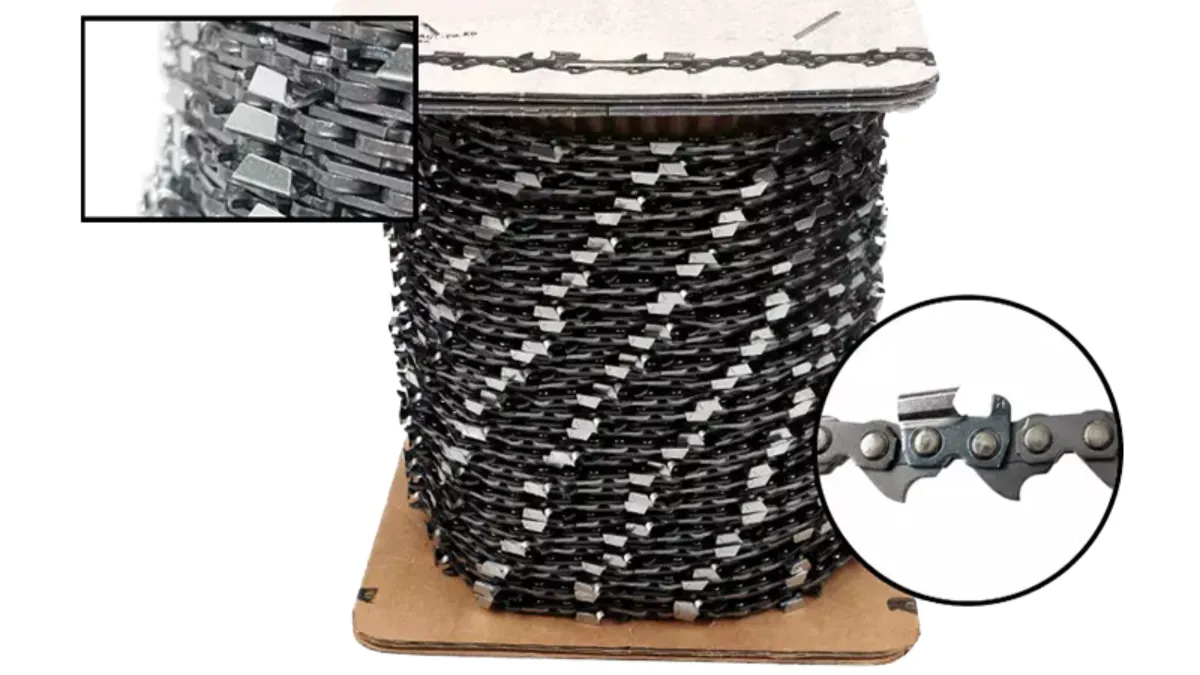
When selecting a chainsaw chain, most buyers focus on brand, bar length, ou potência do motor. No entanto, the real performance difference often lies in two critical technical parameters: pitch and gauge. These two measurements determine compatibility, cutting efficiency, vibration level, durabilidade, and even operator safety.
Para distribuidores, Compradores OEM, and professional users in forestry or agriculture, it is essential to understand these engineering fundamentals. Neste guia, we break down pitch and gauge in detail, explain how they affect cutting behavior, and help you select the correct chain configuration for your market.
What is Pitch on a Chainsaw Chain?
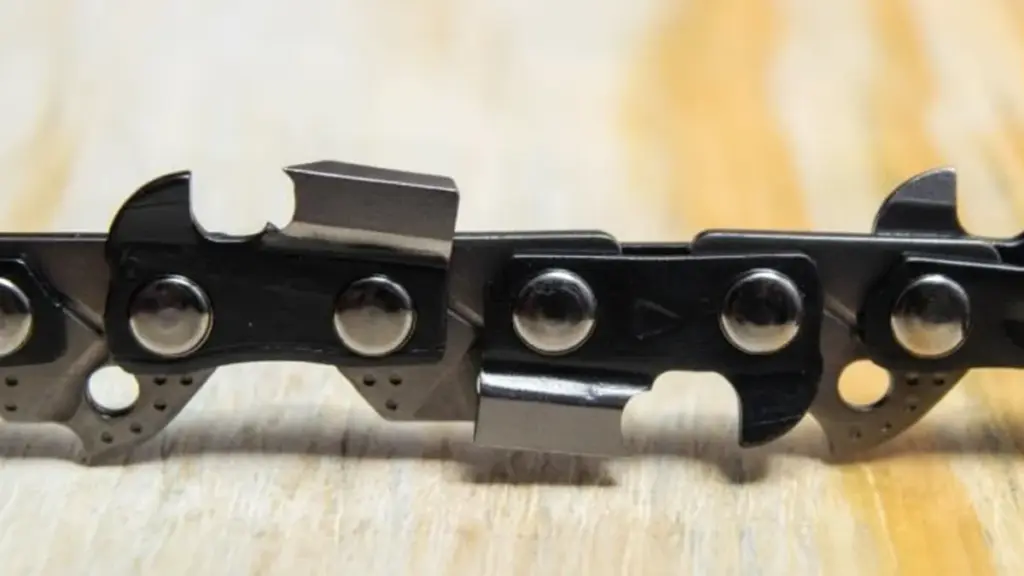
Chain pitch is the fundamental size specification of a chainsaw chain, calculated as half the distance between three consecutive rivets, and it must precisely match the guide bar and drive sprocket for safe operation.
Defining Chain Pitch
Chain pitch is the industry-standard measurement that defines the size of a chainsaw chain. You calculate it by measuring the distance between the center points of any three consecutive rivets and dividing that number by two. For a chainsaw to function correctly, this measurement must match the specifications of the saw’s guide bar and drive sprocket.
Why Pitch Compatibility is Critical
A chainsaw operates as a system where the chain pitch, chain gauge, and guide bar must be fully compatible. Using an incorrect pitch prevents the chain from seating correctly on the guide bar’s drive sprocket, which leads to equipment damage and complete operational failure.
- A mismatched chain will quickly wear down or break the drive sprocket.
- Running incompatible parts almost always voids the equipment’s warranty.
What is Gauge on a Chainsaw Chain?
Chain gauge is the thickness of the drive links, a critical measurement that must exactly match the guide bar’s groove to ensure safe, efficient operation without derailing or binding.
Defining Gauge: The Thickness of the Drive Link
The gauge of a chainsaw chain is the measured thickness of its drive links. These are the bottom, tooth-like parts of the chain that run inside the guide bar’s groove, or track. This single measurement ensures the chain fits securely, preventing excessive movement or friction. Gauge is typically expressed in thousandths of an inch, como .050″, or in millimeters like 1.3 milímetros.
Why a Correct Gauge Match is Essential
Matching the chain gauge to the guide bar groove is non-negotiable for safe and effective chainsaw operation. Any mismatch introduces immediate performance and safety problems. An incorrect fit will cause the chain to behave erratically and can damage your equipment.
- Gauge too thin: If the drive links are too narrow for the bar’s groove, the chain will wobble side-to-side. This instability causes poor cutting performance and significantly increases the risk of the chain derailing from the bar during use.
- Gauge too thick: If the drive links are too wide, they will bind inside the groove. This creates excessive friction, which strains the engine, generates heat, and can stop the chain from moving at all.
Precision Saw Chains Built for Power & Profit
What Are Parts of Chainsaw Chain?
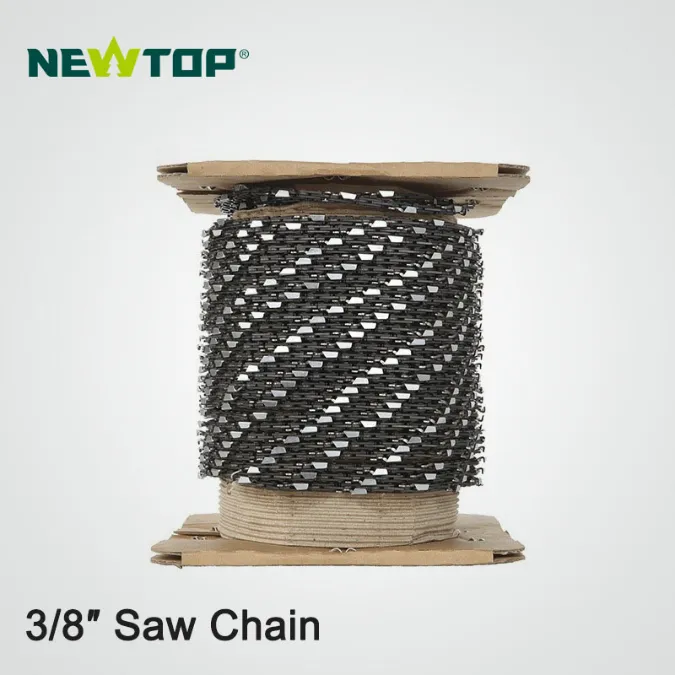
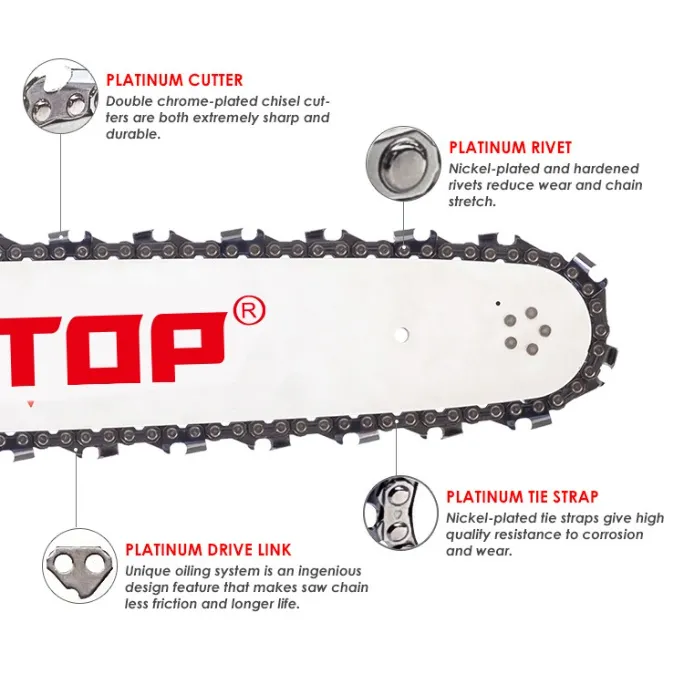
A chainsaw chain integrates three primary components—cutting links for slicing wood, drive links for power transfer, and tie straps for structural integrity—arranged in specific sequences to control cutting performance.
Cutting Links (Cutters)
These are the primary components that perform the actual cutting. Each cutter has a sharp tooth and a depth gauge (ancinho) that regulates how deep the tooth bites into the wood. The specific design of the cutter determines its performance in different conditions, impacting both speed and durability.
- Features a sharpened cutting corner responsible for slicing wood fibers.
- Includes a depth gauge that controls the thickness of the wood chip removed.
- Available in full-chisel, semi-cinzel, and chipper designs for different cutting conditions.
Links de unidade
Drive links are the bottom part of the chain that engages with the chainsaw’s sprocket. They pull the chain around the guide bar and help distribute oil for lubrication. The thickness of these links defines the chain’s gauge, which must match the guide bar’s groove precisely for safe and effective operation.
- The part of the chain that fits into the guide bar groove and is propelled by the sprocket.
- Their thickness determines the chain’s gauge, which must match the guide bar.
- Essential for transferring power from the engine to the chain.
Alças de gravata
Tie straps are connecting components that hold the cutting links and drive links together in the correct sequence. They do not cut but provide the chain with its structure and flexibility, using riveted joints to allow the chain to move smoothly around the guide bar.
- Connects all links together using riveted joints.
- Allows the chain to move flexibly around the guide bar.
- Ensures the proper spacing and arrangement of cutters and drive links.
Chain Sequence Arrangements
The sequence refers to the pattern of cutters on the chain. Common arrangements like standard, semi-skip, and full-skip affect cutting speed and smoothness, especially on longer guide bars where efficient chip clearance is a critical factor for performance.
- Standard Sequence: Has a cutter on every other link for the smoothest cut.
- Semi-Skip Sequence: Features extra space between cutter groups for better chip clearance.
- Skip Sequence: Has the most space between cutters, ideal for long bars and powerful saws.
Key Details on Chain Measurements

Correctly matching the chain’s pitch to the sprocket and its gauge to the guide bar is non-negotiable for safe and efficient chainsaw operation.
| Medição | Definição | Common Sizes |
|---|---|---|
| Passo da corrente | Distance between three consecutive rivets, dividido por dois. Must match the drive sprocket. | 1/4″, .325″, 3/8″, .404″ |
| Medidor de corrente | A espessura dos links de acionamento. Must fit precisely into the guide bar groove. | .043″, .050″, .058″, .063″ |
Common Sizes of Pitch on a Chainsaw Chain
- 3/8″ is the most common size, especially for consumer chainsaws. Many of these saws use a lighter “low profile” ou “Picco” variant for reduced kickback.
- .325″ is standard for many semi-professional and mid-range professional saws, balancing cutting speed with durability.
- 1/4″ is a smaller pitch used on lightweight residential saws or specialized carving saws where precision is key.
- .404″ is a heavy-duty pitch reserved for high-powered, large-displacement professional saws used in demanding forestry and logging operations.
Common Thickness of Pitch on a Chainsaw Chain
- The most common gauge sizes are .043″ (1.1 milímetros), .050″ (1.3 milímetros), .058″ (1.5 milímetros), e .063″ (1.6 milímetros).
- O .050″ gauge has become an industry standard for a wide range of consumer and professional chainsaws.
- To eliminate guesswork, manufacturers typically stamp the required gauge measurement directly onto the heel of the chainsaw’s guide bar.
How to Calculate Chainsaw Pitch on a Chainsaw Chain?
| Method | Description | Key Action |
|---|---|---|
| 3-Rivet Measurement | The industry-standard physical measurement to find the base distance. | Use a caliper to measure from the center of the first rivet to the center of the third. |
| Calculation | Converts the 3-rivet measurement into the final, industry-standard pitch value. | Divide the measured distance by two. |
| Stamped Markings Verification | Confirms the calculated pitch using the manufacturer’s provided specifications. | Check for numbers stamped on the guide bar, drive links, or in the owner’s manual. |
The Standard 3-Rivet Measurement Method
The universal industry method for determining chainsaw pitch involves measuring the distance between the centers of three consecutive rivets on the chain. This technique provides a consistent basis for calculation regardless of the chain’s manufacturer.
- Select any three rivets in a row on the chainsaw chain.
- Use a caliper or a precise ruler to measure the exact distance from the center of the first rivet to the center of the third rivet.
- Ensure the chain is taut but not stretched during measurement to get an accurate reading.
Applying the ‘Divide by Two’ Formula
After measuring the distance across three rivets, the final pitch is calculated by dividing that measurement by two. This simple formula converts the measurement into the industry-standard pitch size.
- Take the total distance you measured (por exemplo, 0.75 polegadas).
- Divide this value by two to determine the pitch (por exemplo, 0.75 polegadas / 2 = 0.375 polegadas).
- Convert the decimal result to its common fraction equivalent; por exemplo, 0.375 inches is equal to a 3/8″ tom.
Verifying Pitch Using Stamped Markings
To confirm your calculation or skip measuring altogether, check for pitch information stamped directly on the equipment. Manufacturers often provide these details on the guide bar or the chain itself to ensure compatibility.
- Inspect the guide bar, typically near the motor end, for stamped numbers indicating pitch, medidor, and drive link count.
- Examine the drive links of the chain for an identification code or number that corresponds to its pitch.
- Referencing the owner’s manual for your chainsaw also provides the correct pitch specification without needing to measure.
How to Measure Gauges on a Chainsaw Chain?
Measuring a chainsaw’s gauge—the thickness of its drive links—is a non-negotiable step for safe operation, and while calipers offer precision, checking for stamped markings on the bar is the most efficient method.
Using Tools for an Accurate Measurement
Gauge is the thickness of the drive link that fits directly into the guide bar’s groove. For a precise reading, a caliper is the most reliable tool. It provides an exact measurement in thousandths of an inch. Alternativamente, a go/no-go gauge offers a quick way to confirm the correct fit without needing to read a measurement.
- Use caliper jaws to measure the thickness of a single drive link directly.
- A go/no-go gauge has two sized slots; the drive link should slide easily through the correct slot but be blocked by the smaller one.
The Coin Method for a Quick Approximation
When specialized tools are not available, you can use common coins to get a rough estimate of the gauge. This method involves fitting a coin snugly into the bar’s groove. Before attempting this, make sure the groove is completely clean of any wood chips, óleo, or debris to avoid an inaccurate reading.
- A U.S. dime is approximately 0.050″ thick.
- A U.S. penny is approximately 0.058″ thick.
- A U.S. quarter is approximately 0.063″ thick.
Finding Existing Markings and Common Sizes
The easiest way to identify the correct gauge is to inspect the chainsaw bar itself. Manufacturers typically stamp the required specifications, including gauge, directly onto the metal near the mounting point. This eliminates any need for manual measurement. Matching the gauge is critical; a chain that is too thin can derail from the bar, while a chain that is too thick will bind, creating excessive friction and heat.
Standard gauge sizes you will encounter include .043″, .050″, .058″, e .063″.
Pros and Cons of High-Profile vs Low-Profile Pitch Designs
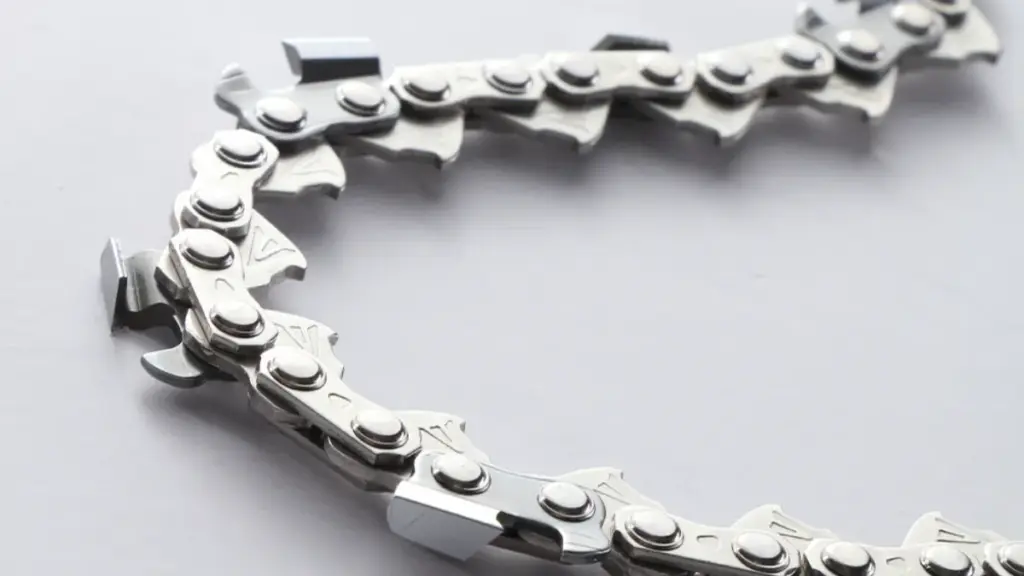
The choice between high-profile and low-profile chain pitch is a direct trade-off between the aggressive cutting power required for professional forestry and the enhanced safety features necessary for residential use.
High-Profile Chains: Performance and Applications
High-profile, or standard, chains are built for professional and heavy-duty applications. They prioritize cutting speed and power, making them the top choice for forestry work and tasks that require high-performance from gas-powered saws.
- Optimized for aggressive cutting and efficiency in demanding jobs.
- Best paired with chainsaws that have larger engine displacements.
- Carries a higher risk of kickback, requiring skill and experience to handle safely.
Low-Profile Chains: Safety and Accessibility
Low-profile chains dominate the consumer and residential market. Their design incorporates safety features that reduce kickback, making them ideal for homeowners, light-duty work, and electric or battery-powered saws.
- Engineered to minimize the intensity and frequency of kickback.
- Delivers a smoother, more controlled cut, which is great for less experienced users.
- Works well with lower-power saws and is common on equipment for general yard maintenance.
Key Trade-Offs: Durability and Maintenance
Choosing between the two designs comes down to balancing performance with safety. High-profile chains are more durable for high-production environments, but low-profile chains offer accessibility at the cost of faster wear.
- Standard chains typically last longer under constant professional use.
- Low-profile chains are built with user safety as the priority, which can affect their overall toughness.
- Professionals select pitch based on the specific cutting task, while consumers benefit from the built-in safety of low-profile chains.
How to Select Pitch Based on Your Chainsaw Sprocket Type
A chainsaw’s chain pitch must exactly match its drive sprocket pitch; any mismatch will damage the saw and create a significant safety risk.
| Sprocket Type | Key Characteristic | Pitch Flexibility |
|---|---|---|
| Spur Sprocket | Um único, solid component with teeth integrated directly into the main body. | Fixed. The pitch cannot be changed without replacing the entire sprocket assembly. |
| Rim Sprocket | A two-piece system with a central drum and a separate, replaceable rim that holds the teeth. | Modular. The pitch can be changed by swapping only the rim for a different size. |
Matching Sprocket Pitch with Chain Pitch
The single most important rule when selecting a chain is that its pitch must exactly match the pitch of the drive sprocket. Using mismatched components causes rapid wear on the drive links, roda dentada, and guide bar. This leads to poor cutting performance and creates potential safety hazards from chain slippage or breakage. This compatibility is non-negotiable for proper chainsaw function.
- Your chainsaw’s sprocket, barra guia, and chain must all be designed for the same pitch measurement (por exemplo, .325″, 3/8″).
- Check the sprocket itself for a stamped number indicating its pitch; this is the primary measurement to follow.
- A mismatch prevents the chain’s drive links from seating correctly in the sprocket’s teeth, causing chain slippage and damage.
Identifying Your Sprocket Type: Rim vs. Spur
Chainsaws use one of two sprocket types to drive the chain: a spur sprocket or a rim sprocket system. While both perform the same function, the rim sprocket system offers more flexibility for changing the saw’s pitch. Identifying which type your saw has helps determine the easiest path for component selection and replacement.
- A spur sprocket is a single, solid piece with teeth that directly engage the chain. Its pitch is fixed.
- A rim sprocket consists of a central drum and a separate, replaceable rim that contains the teeth.
- With a rim sprocket, you can change your saw’s pitch by simply swapping the rim for one with a different pitch measurement, as long as a compatible bar and chain are also used.
Using Manufacturer Specifications for Guaranteed Compatibility
To eliminate guesswork, always refer to the manufacturer’s technical specifications for your chainsaw model. As of 2026, most professional-grade manufacturers provide detailed compatibility charts that ensure all components work together seamlessly as an integrated system. Sticking to these official recommendations is the surest way to guarantee both safety and performance.
- Consult your chainsaw’s owner’s manual, which lists the original equipment (OEM) specifications for pitch.
- Look for compatibility charts on the manufacturer’s website or in product catalogs for your specific saw model.
- Following these official recommendations ensures that the chain, bar, and sprocket combination has been tested for safety and optimal performance.
Why Choose NEWTOP Factory-Pitched Chains for Durability?
Direct factory oversight, from CNC machining to final quality control, produces chains with precise pitch and material integrity, resulting in longer operational life and reliable performance.
No NOVOTOP, chain pitch and gauge are engineered as part of a complete power transmission system — not treated as isolated components.
Our chains are manufactured with:
- CNC-precision rivet spacing
- Heat-treated drive links
- High-carbon alloy steel cutters
- Compatibility testing with Oregon-standard sprocket geometry
We collaborate with global component suppliers such as Oregon and Walbro standards to ensure dimensional accuracy and durability.
Com mais 500,000 units annual production capacity and exports to 65+ países, NEWTOP chains are designed for:
- Forestry logging
- Agricultural wood cutting
- Firewood preparation
- Commercial landscaping
For OEM partners, we offer:
- Custom pitch and gauge configurations
- Anti-corrosion coating options
- Packaging customization
- Private label branding
When durability, precisão, and global compatibility matter, factory-matched pitch systems reduce field failure rates and increase long-term customer satisfaction.
Conclusão
Selecting the correct pitch and gauge for your chainsaw chain is essential for both safety and performance. These precise measurements ensure compatibility with your guide bar and sprocket, preventing equipment damage and maximizing cutting efficiency. A proper match delivers a smoother, faster cut while reducing the risk of kickback.
To ensure your equipment is always ready, take a moment to confirm the pitch and gauge requirements for your saws. If you’re looking for durable, factory-specified chains that eliminate guesswork, our team can provide a full product catalog.
Perguntas frequentes
What does 3/8 LP pitch mean?
3/8 LP stands for 3/8-inch low-profile pitch. It has the same rivet spacing as standard 3/8″, but smaller cutter height to reduce kickback and engine load.
What does .325 pitch mean on a chainsaw?
.325 pitch refers to a chain where the rivet spacing divided by two equals 0.325 polegadas. It is commonly used on mid-sized chainsaws for balanced cutting performance.
Is .325 ou 3/8 pitch better for firewood?
The better pitch for firewood depends on your chainsaw’s power. A .325″ pitch chain is more efficient on saws between 40-60cc, offering a smoother cut with less vibration. For more powerful saws (60cc+), the larger 3/8″ pitch is superior, as its bigger cutters remove wood more aggressively for faster cutting of large-diameter logs.
What is the difference between a 3.8 e um .325 corrente de motosserra?
The primary difference is cutter size and spacing. 3/8″ chains have larger cutters and remove more material per pass, while .325 chains offer smoother handling and moderate engine demand.
What pitch is best for a chainsaw?
The best pitch depends on engine size and intended application. Small homeowner saws often use 3/8″ LP. Mid-range saws use .325. Professional forestry saws use 3/8″ standard or .404.
Can you run a different pitch chain on the same bar?
Não, you cannot run a different pitch chain on the same bar. The chain’s pitch must perfectly match the guide bar’s nose sprocket and the saw’s drive sprocket. A mismatch will prevent the chain from seating correctly, leading to rapid wear, equipment damage, and a significant safety risk. Always use the pitch specified for your bar.
What happens if I use the wrong gauge chain?
Using the wrong gauge chain creates poor performance and a serious safety hazard. If the gauge is too thin, the chain will fit loosely in the bar groove, causing instability, poor oiling, and a high risk of derailing. Se o medidor for muito grosso, it will not fit in the bar groove at all, making operation impossible.
Is 3/8 low profile the same as 3/8 standard?
Não, 3/8″ low profile (LP) is not the same as a standard 3/8″ chain. While both share the 0.375-inch pitch measurement, the LP version has a smaller chassis with shorter cutters and depth gauges. This design reduces kickback and is intended for smaller, less powerful saws. They are not interchangeable and require different drive sprockets.
Chainsaws are now inseparable from forestry, registro, land clearing, and professional arboriculture. Yet when you search “why were chainsaws invented?”, you may be surprised to discover that their origin story has little to do with cutting timber.
Understanding the evolution of chainsaws—from early medical instruments to today’s high-performance gas and lithium-powered machines—reveals how technological innovation responds to real human needs. It also explains why modern chainsaws are engineered the way they are: poderoso, durável, ergonomic, and safety-focused.
In this article, we’ll explore the original purpose of chainsaws, how they transitioned into forestry tools, and how they evolved into the indispensable outdoor power equipment we rely on today.
Why Were Chainsaws Invented in the First Place?
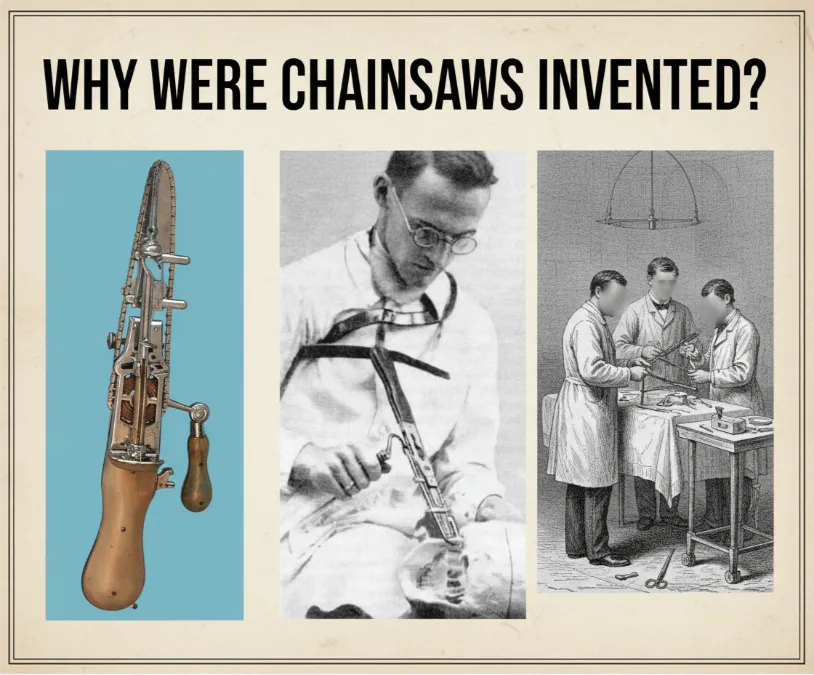
Contrary to popular belief, the chainsaw was developed in the late 18th century not for forestry, but as a surgical instrument to assist in difficult childbirths.
Chainsaws were invented in the late 18th century to solve a medical problem—not a logging one.
Before modern surgical techniques and anesthesia, certain childbirth complications required physically enlarging the pelvic bone to allow delivery. Traditional surgical tools were slow and traumatic. Doctors sought a more efficient way to cut bone with greater precision and less time under procedure.
This led to the development of an early chain-and-blade device that could rotate around bone and cut in a controlled manner. It was manually operated and far removed from the powerful engine-driven machines we associate with chainsaws today.
The underlying concept, no entanto, was revolutionary:
- A continuous chain with cutting teeth
- Guided around a bar or frame
- Designed for repetitive cutting motion
This mechanical principle—rotating cutting teeth on a chain—would later become the foundation of modern chainsaw technology.
The Original Use of Chainsaws in Medical History
The chainsaw originated not in forestry but in late 18th-century operating rooms as a hand-cranked surgical instrument for bone cutting, primarily during obstructed childbirth.
| Key Development | Inventor / Key Figure | Primary Application |
|---|---|---|
| Initial Surgical Saw Concept | John Aitken & James Jeffray (c. 1785) | Symphysiotomy (widening pelvis during childbirth) and bone excision. |
| The Osteotome | Bernhard Heine (c. 1830) | Standardized tool for various surgical bone-cutting operations. |
| Transition to Industrial Use | N/A (Industry Shift) | Repurposed for woodcutting as medical practices evolved. |
Invention for Childbirth and Bone Surgery
Em volta 1785, Scottish doctors John Aitken and James Jeffray developed the first chainsaw as a surgical instrument. Its purpose was to perform a symphysiotomy—a procedure that widened the pelvis during obstructed childbirth by cutting through bone and cartilage. Before this invention, surgeons relied on manual knives, making the process slow and dangerous. The chainsaw provided a faster and more precise method for this operation and was also used for the excision of diseased bone.
The Osteotome: A Surgical Refinement
The medical chainsaw concept continued to evolve. Em 1830, German physician Bernhard Heine created a more refined version called the osteotome. This was a hand-cranked device featuring a cutting chain that ran along a guiding blade, giving surgeons better control and precision during bone excisions. Heine’s osteotome became a standard surgical tool and remained in use throughout much of the 19th century for various bone-cutting procedures.
Transition from Operating Room to Forest
By the early 20th century, the medical chainsaw’s use declined sharply. The primary reason was the increased safety and viability of the Cesarean section, which made the symphysiotomy procedure obsolete. With its original purpose gone, the core technology was adapted for an entirely new field: woodcutting. This shift marked the beginning of its transformation from a specialized surgical instrument into the powerful forestry tool we recognize today, paving the way for motorized, portable designs.
When Did Chainsaws Start Being Used for Woodcutting?
The chainsaw’s shift from a medical instrument to a forestry tool began with late 19th-century patents and became practical with the introduction of portable, motorized designs in the early 20th century.
Early Patents for Woodcutting
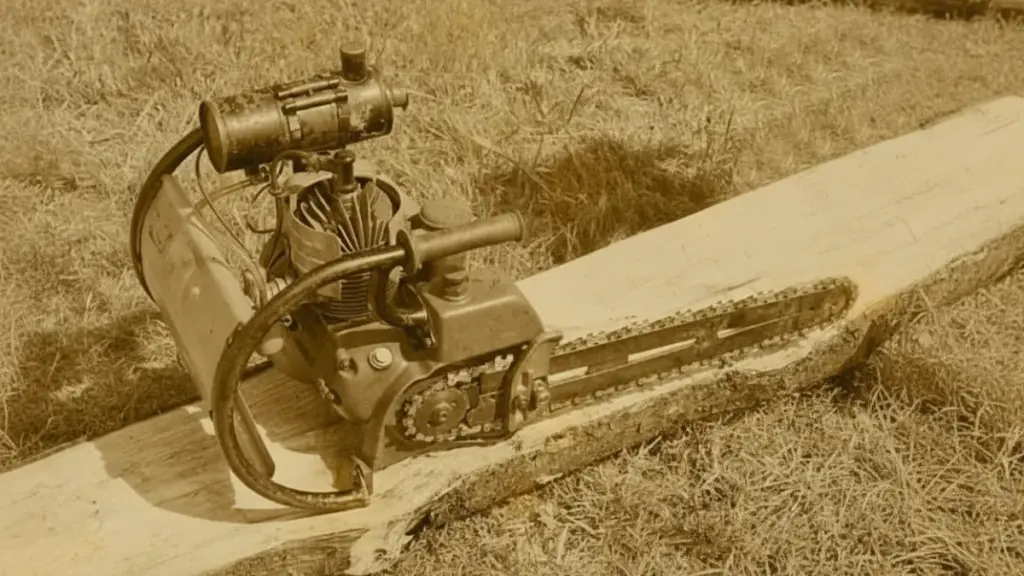
The transition of chainsaw technology from surgical applications to forestry began in the late 19th century. Frederick L. Magaw received the first patent for a wood-cutting “chain sawing machine” em 1883, envisioning a tool for producing boards. This was followed by a 1906 patent for an “Endless Chain Saw,” which was specifically engineered to fell giant redwood trees. These early patents established the conceptual framework for using a continuous cutting chain in the timber industry, even if practical, portable models were still decades away.
The First Motorized and Portable Chainsaws
Moving from patent to practice required a power source. The first known experiment with a gasoline-powered chainsaw took place in 1905 in Eureka, California, proving that motorization was a viable path forward. The next critical step was portability. Em 1918, Canadian James Shand developed and patented the first truly portable chainsaw. This innovation was a significant shift, as it allowed the tool to be brought directly to the trees, setting the stage for its eventual widespread use in remote logging operations.
Establishment as a Standard Forestry Tool
The 1920s marked the commercial birth of the modern chainsaw. Andreas Stihl designed the first electric model in 1926 and followed it with a petrol-driven version in 1929. These machines, while heavy and often requiring two operators, were effective enough to gain traction in the forestry industry. The final milestone that cemented the chainsaw as an essential tool came around 1950 with the introduction of the first one-man model. This development made it possible for a single operator to work independently, dramatically increasing productivity and accelerating the tool’s adoption worldwide. His company, STIHL, would later become one of the most recognized names in the industry.
The Evolution of Motosserras Over Time
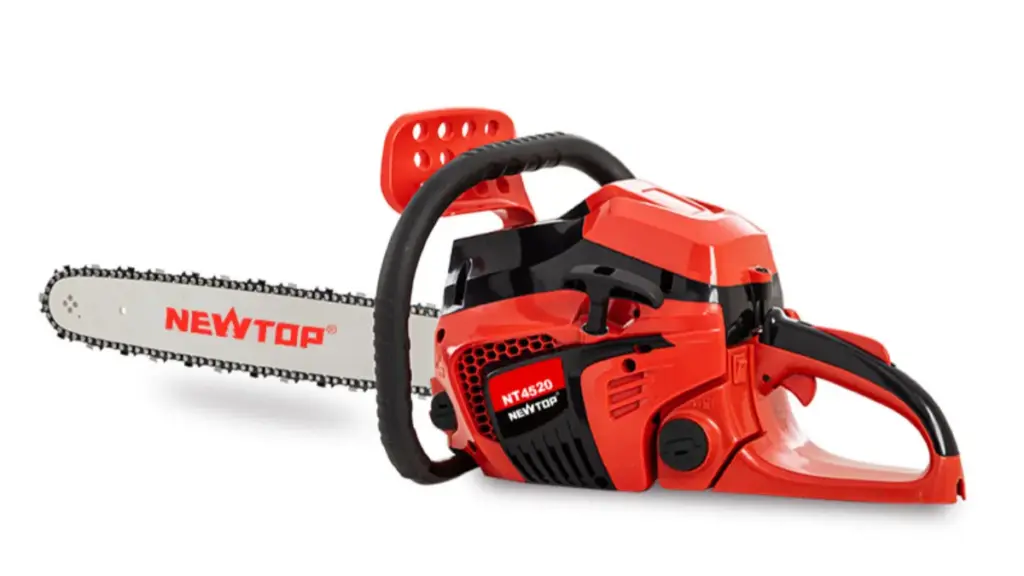
Chainsaw evolution is a story of shedding weight and complexity, moving from massive two-operator industrial machines to lightweight, single-user tools engineered for safety, eficiência, and versatility.
| Era | Key Development | Peso & Operator Impact |
|---|---|---|
| 1920s–1940s | First Gas & Electric Models | Extremely heavy (100+ libras / 45+ kg); required two operators. |
| 1950é | The First One-Man Chainsaw | Weight reduced to 25–35 lbs (11–16 kg), enabling single-person use. |
| 1960s–1980s | Improved Power-to-Weight & Segurança | Weight dropped to ~15 lbs (6.8 kg); anti-vibration systems introduced. |
| 1990s–Present | Emphasis on Safety & Emissões | Standard models 9–11 lbs (4–5 kg); chain brakes and low-emission engines are standard. |
The evolution of chainsaws mirrors the broader development of outdoor power equipment.
Early Industrial Chainsaws (1920s–1940s)
Early gas-powered models weighed over 40–60 pounds (18–27 kg). They were bulky and difficult to maneuver. Despite this, they represented a massive improvement over manual saws in terms of cutting speed and output.
Post-War Technological Improvements (1950s–1970s)
After World War II, advancements in lightweight alloys and two-stroke engine design made chainsaws more compact and powerful. One-person operation became feasible.
Brands such as Husqvarna and McCulloch helped popularize consumer-grade chainsaws.
During this period, innovations included:
- Sistemas antivibração
- Improved chain brake mechanisms
- Automatic chain lubrication
- Better carburetion systems
These changes improved both performance and operator safety.
Modern High-Performance Era (1980s–Present)
Today’s chainsaws are engineered for durability, power efficiency, and user comfort. They are available in multiple configurations:
- Gasoline-powered chainsaws
- Corded electric chainsaws
- Lithium battery-powered chainsaws
Professional forestry chainsaws now deliver optimized power-to-weight ratios, precision-engineered guide bars, and advanced chain designs for reduced kickback and smoother cutting.
Ao mesmo tempo, battery chainsaws are rapidly growing in popularity for landscaping, manutenção municipal, and home garden applications due to:
- Lower noise levels
- Zero emissões diretas
- Reduced maintenance
- Instant start functionality
The evolution reflects not only mechanical innovation but also changing environmental regulations, user expectations, and global market demands.
Modern Uses of Chainsaws Today
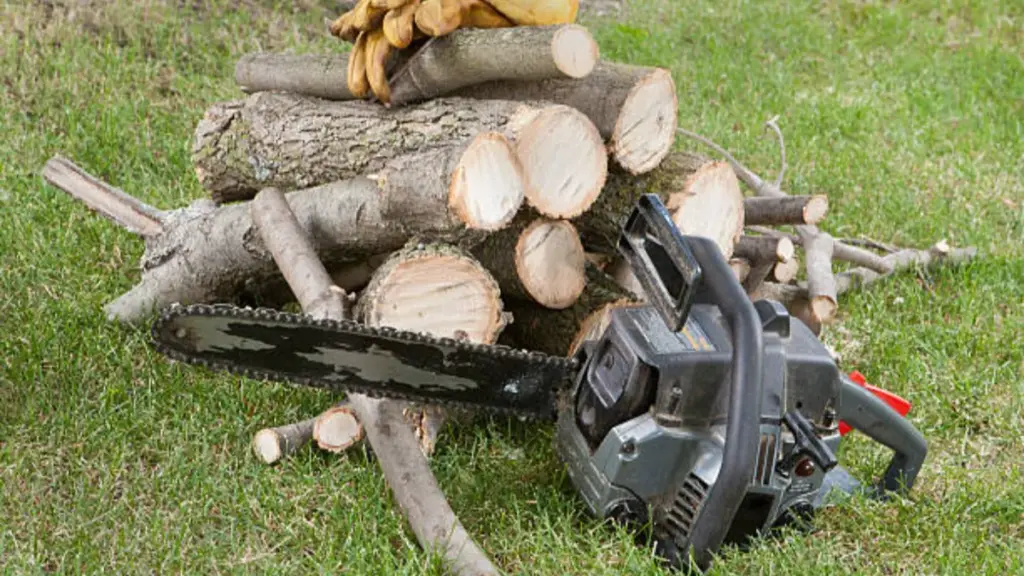
Modern chainsaws have expanded beyond traditional logging into specialized professional roles like mass-timber construction, post-storm salvage, and utility vegetation management.
Modern chainsaws are no longer limited to logging. Their applications span multiple industries:
- Forestry and timber harvesting
- Arborist tree trimming
- Land clearing and agriculture
- Disaster recovery and storm cleanup
- Construction and demolition
- Firewood processing
- Garden and property maintenance
Professional logging chainsaws are engineered for extended operation under heavy loads, muitas vezes excedendo 300 hours of durability under standardized testing conditions. Enquanto isso, mid-range and entry-level models serve farmers, empreiteiros, and DIY users. Battery-powered models have expanded chainsaw accessibility, particularly in emerging markets where portability and low maintenance are valued.
Para distribuidores and agricultural equipment suppliers looking for reliable mid-range solutions, brands such as NOVOTOP (Shanghai-based outdoor power equipment manufacturer since 2003) provide a comprehensive portfolio covering gasoline, elétrico, and lithium-powered chainsaws. Explore our full range of chainsaws and request a personalized quote today to find the model that fits your market needs.
Common Myths and Misconceptions About Chainsaw Origins
The most persistent myths about chainsaw origins incorrectly attribute the tool to forestry and German inventors, masking its true 18th-century Scottish medical roots and the 140-year gap before its adoption for woodcutting.
Myth 1: Chainsaws Were Invented for Cutting Trees
The primary misconception is that chainsaws were designed for forestry. All evidence shows the tool was created as a medical instrument. Scottish doctors John Aitken and James Jeffray developed the first prototypes between 1783 e 1785 to cut bone during difficult childbirths, a procedure known as a symphysiotomy. Their device was a hand-cranked saw with a segmented blade, designed for surgical precision, not felling timber. Its purpose was to make a dangerous and slow medical procedure faster and safer.
Myth 2: A German Inventor Created the First Chainsaw
Another common belief credits German inventors with the chainsaw’s creation, but this confuses motorization with invention. The tool’s origin is Scottish, predating any German contributions by several decades. While the foundational concept was a Scottish medical innovation, German engineers like Andreas Stihl played a critical role in adapting and motorizing the chainsaw for forestry applications in the 1920s. They transformed the existing concept into a powerful industrial tool, but they did not invent the original device.
Myth 3: The Tool Quickly Evolved from Surgical to Logging Use
Many people underestimate the timeline of the chainsaw’s evolution. There was a significant gap of over 140 years between its use as a precision surgical device and its adaptation as a motorized woodcutting tool. The medical prototype existed in the 1780s, but powered forestry tools based on the same principle did not appear until the 1920s. This slow transition highlights the massive engineering leap required to convert a small, hand-cranked surgical instrument into a robust, engine-powered machine capable of industrial logging.
Conclusão
The chainsaw began as a surprising medical device and evolved into the powerful woodcutting tool we recognize today. Its history is a clear example of how a tool’s function can dramatically change through innovation. Modern designs reflect over a century of development focused on operator safety and efficiency.
If this history makes you reconsider your own equipment, explore our catalog of modern chainsaws built for safety and performance. Our specialists can help you select the right tool for your application.
Perguntas frequentes
Was the chainsaw really invented for childbirth?
Partially. The original late-18th-century chain osteotome was designed to assist in bone-cutting procedures, including certain childbirth complications. No entanto, it was not comparable to modern woodcutting chainsaws.
Who invented the first gas-powered chainsaw?
German engineer Andreas Stihl is credited with patenting one of the first practical gasoline-powered chainsaws in 1929, laying the foundation for commercial forestry chainsaw development.
What did the first chainsaw look like?
The earliest version resembled a small hand-cranked surgical instrument with a serrated chain loop—not an engine-powered machine.
How heavy were original industrial chainsaws?
Early 20th-century industrial chainsaws often weighed between 40 e 60 libras (18–27 kg) and required two operators
Why did chainsaws replace manual crosscut saws?
Chainsaws dramatically increased cutting speed, reduced labor requirements, and improved productivity in large-scale timber harvesting. Ao longo do tempo, improved reliability and fuel efficiency made them economically advantageous.
What were chainsaws invented for?
Chainsaws were originally invented for surgical bone cutting. They were later adapted for forestry and industrial woodcutting, eventually becoming essential tools in logging, agricultura, paisagismo, e construção.
In professional wood cutting, engine performance directly affects productivity, eficiência de combustível, and user control. For buyers comparing different chainsaw options, one term often appears in discussions of high-performance equipment: ported chainsaw.
But what exactly does this mean? Is it simply a modified tool, or a purposeful upgrade designed for specific working conditions?
A ported chainsaw is not a different category of machine. Em vez de, it is a performance-optimized version of a standard chainsaw, where internal engine adjustments improve airflow and combustion efficiency. This results in higher power output and faster cutting speed—features that are especially valuable in demanding environments such as forestry, registro, and heavy-duty field operations.
Neste guia, we will explain how ported chainsaws work, what changes are made inside the engine, and whether this type of modification is suitable for your application or product lineup.
What Is a Ported Chainsaw?
A ported chainsaw is a chainsaw with a modified two-stroke engine, in which the cylinder ports are reshaped or retimed to improve intake and exhaust flow.
- The process involves reshaping and optimizing the cylinder’s internal ports.
- The main goal is to increase the volume and speed of the air-fuel mixture moving through the engine.
- These changes result in a saw that cuts faster and more powerfully than its stock counterpart.
Key Mechanical Modifications in Porting
Porting focuses on three key areas inside the engine: the exhaust port, the transfer ports, and the intake duration. Adjusting the geometry and timing of these channels allows for greater engine RPM capability and quicker throttle response. The transfer ports, which control fuel and air entry into the combustion chamber, are where most performance gains originate. Builders reshape these internal components to optimize airflow and fuel delivery.
- Most performance gains come from modifying the transfer ports, which control fuel and air entry into the combustion chamber.
- Builders reshape these internal components to optimize airflow and fuel delivery.
- Sometimes, builders use popup pistons to increase compression, which helps regain any torque lost from raising the exhaust port.
Resulting Performance Gains
A well-executed porting job can deliver a substantial power increase, often around 40% more than a stock saw. This translates to improved chain speed, better torque under load, and more consistent cutting power. Instead of losing power when engaging with wood, the saw maintains its cutting performance. When paired with muffler modifications, a ported saw also runs cooler, which can extend its operational life.
- The saw maintains its cutting performance when engaging with wood instead of losing power.
- When paired with muffler modifications, a ported saw can run cooler, which may extend its operational life.
- The end result is a faster, more responsive tool that handles aggressive work more effectively.
How Does a Ported Chainsaw Work?
A ported chainsaw operates by physically modifying the engine’s cylinder ports to alter the timing of the fuel-air combustion cycle, allowing it to process more mixture and generate significantly more power than a stock engine.
Modified Fuel-Air Combustion Cycle
In a ported engine, the piston’s movement is optimized to manage the fuel-air mixture more efficiently. As the piston moves up, it creates a vacuum that pulls the fuel-air charge into the crankcase via the intake port. On its downward stroke, it compresses this charge, forcing it through modified transfer ports and into the combustion chamber above the piston, ready for ignition. This cycle happens faster and with a greater volume of fuel and air compared to a standard engine.
- The piston’s upward stroke draws the fuel-air mixture into the crankcase.
- The downward stroke compresses this charge within the crankcase.
- The compressed mixture is then forced upward through transfer ports into the combustion chamber for ignition.
Optimized Port Timing and Overlap
Porting directly alters the timing of when the exhaust and transfer ports open and close relative to the piston’s position. During the downstroke, the exhaust port opens first to expel burned gases. Just after, the transfer ports open to push the fresh, compressed fuel-air mix from the crankcase into the combustion chamber. This carefully managed overlap uses the pressure of the incoming charge to help scavenge, or push out, the remaining exhaust, ensuring a cleaner and more potent charge for the next power stroke.
- During the piston’s downstroke, the exhaust port opens to release spent gases.
- The transfer ports then open, allowing the fresh fuel-air charge to flood the chamber.
- This controlled overlap between exhaust and intake phases efficiently clears and recharges the cylinder.
Physical Changes to Engine Geometry
The actual work of porting involves physically modifying the engine’s cylinder geometry with precision tools. Builders enlarge the intake, transfer, and exhaust ports and often adjust their height to change the timing and duration of the fuel-air cycle. They also adjust the “squish”—the clearance between the top of the piston and the cylinder head at top dead center. Reducing this distance increases the engine’s compression ratio, which improves combustion efficiency and contributes directly to greater power output.
- Ingestão, transfer, and exhaust ports are enlarged and reshaped to alter their timing.
- The squish distance is reduced to increase compression and enhance combustion.
- Heat management is addressed to ensure the engine handles increased performance without overheating.
Boost Your Margins with Durable Gasoline Chainsaws
What Are Benefits of Ported Chainsaw?
Porting a chainsaw increases power output and cutting speed, and when done correctly, can improve engine cooling and operational life, providing a strong cost-to-performance upgrade over buying a larger stock model.
Increased Power and Cutting Speed
The main benefit of porting is a significant boost in power output, which lets the chainsaw cut faster and more efficiently. A ported saw can be up to 25% faster than its stock equivalent, handling demanding jobs that would otherwise require a larger, heavier machine. This modification allows the saw to run larger barras guia without a performance drop, giving professional loggers maximum cutting capability from a lighter piece of equipment.
Improved Engine Efficiency and Longevity
A properly ported saw can last just as long as a standard one. The modifications improve airflow and create a more complete combustion cycle. This helps the engine run cooler by improving heat and exhaust gas dispersion. Better thermal management reduces internal stress on engine components, extending the saw’s operational life. With professional tuning and regular maintenance, the durability of a modified saw is comparable to that of a stock model.
Enhanced Operational Versatility
Porting makes a chainsaw more responsive and adaptable to different cutting conditions. Operators feel a noticeable improvement in throttle response, which allows for more precise control. The increased power and torque mean a single ported saw can effectively run various bar and chain combinations, reducing the need for an operator to carry multiple saws. This versatility is valuable for professionals who encounter different wood types, densities, and sizes throughout the workday.
Favorable Cost-to-Performance Ratio
While porting adds an initial cost, it enables a smaller, lighter saw to perform at the level of a bigger, more expensive model. This approach saves money and reduces physical strain on the operator. Upgrading a mid-size saw for heavy work is often more economical than buying a large stock model. Using lighter equipment also reduces fatigue during long workdays, leading to better productivity and safety. The performance gain from porting provides a strong return on the modification investment.
Technical Changes to Cylinder Intake and Exhaust Ports
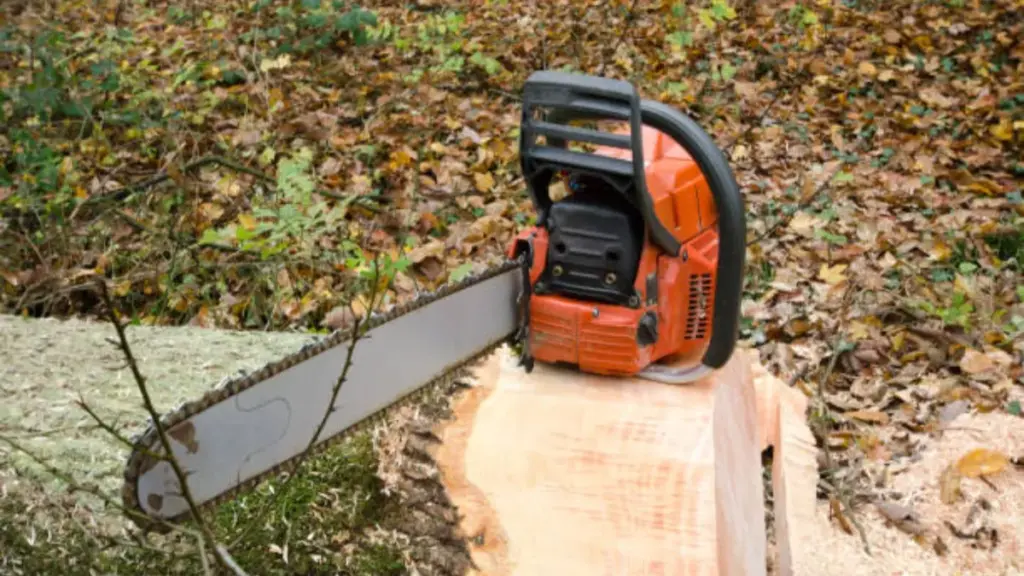
Porting a chainsaw involves physically reshaping the cylinder’s intake, exhaust, and transfer ports to optimize fuel-air mixture flow and exhaust scavenging, which directly increases engine power, RPM, and thermal efficiency.
| Componente | Modification Goal | Performance Impact |
|---|---|---|
| Ingestão & Exhaust Ports | Alter port timing, size, and shape to optimize gas flow. | Increases engine efficiency and power by improving fuel-air intake and exhaust exit speed. |
| Transfer Ports | Reshape and redirect ports to improve fuel charge looping. | Delivers the largest performance increase (~40%) by balancing high RPMs with strong cutting torque. |
| Muffler | Enlarge outlets and remove internal baffles to reduce backpressure. | Allows the engine to breathe freely, unlocking the full power potential from cylinder work. |
| Cylinder & Piston Assembly | Ensure modifications manage heat and maintain structural integrity. | Balances power gains with engine longevity by preventing overheating and component failure. |
Altering Port Geometry for Airflow
The core of chainsaw porting involves physically modifying the cylinder’s intake, exhaust, and transfer ports. These changes alter the timing, size, and shape of the ports to optimize the flow of the fuel-air mixture and exhaust gases, which directly increases engine efficiency and power output.
- Widening and raising the exhaust port to allow gases to exit the cylinder more quickly.
- Reshaping intake ports to increase the velocity and volume of the fuel-air mixture entering the combustion chamber.
- Adjusting port angles to improve the engine’s scavenging efficiency, ensuring more complete combustion.
Optimizing Transfer Ports for Performance Gains
Transfer ports see the most significant modifications, as they are responsible for moving the fuel-air mixture from the crankcase into the cylinder. Properly tuning these ports delivers the largest performance increase, often around 40%, by balancing high RPM capability with strong torque for cutting.
- Modifying transfer port direction to improve the looping pattern of the fuel charge.
- Fine-tuning their shape to create a more efficient replacement of exhaust gas with a fresh fuel-air mixture.
- Ensuring the timing is precise to prevent the fresh fuel charge from escaping through the exhaust port.
Integrating Muffler Modifications
A ported cylinder needs to breathe, so muffler modifications are a standard part of the process. An opened-up muffler reduces backpressure, allowing the engine to expel exhaust gases with less restriction. This change is essential to realize the full benefits of the cylinder work.
- Enlarging the muffler’s outlet port to improve gas flow.
- Removing internal baffles or screens that restrict exhaust.
- Creating a setup that complements the new engine timing for maximum power.
Enhancing Thermal Management and Longevity
Beyond raw power, modern porting techniques focus on improving the engine’s ability to manage heat. A modified engine runs hotter, so adjustments are made to prevent overheating and ensure the performance gains do not come at the cost of engine durability or a shortened service life.
- Ensuring modifications do not create thermal hot spots on the piston or cylinder walls.
- Balancing power output with the engine’s cooling capacity.
- Using precise machining to maintain structural integrity and prevent premature component failure.
Comparing Stock Engine Specs vs. Ported Performance
A stock chainsaw is designed to serve a wide range of users. It usually offers a good balance of power, fuel use, emissions compliance, início fácil, e longa vida útil. For many users, that balance is exactly what they need.
A ported chainsaw is different because it focuses more on performance. The goal is to get stronger output from the same engine by improving internal flow and combustion behavior.
Here is a practical comparison:
| Recurso | Stock Chainsaw | Ported Chainsaw |
|---|---|---|
| Saída de potência | Standard factory level | Mais alto, performance-focused |
| Velocidade de corte | Moderado | Faster |
| Eficiência de Combustível | Balanced | May decrease slightly |
| Engine Life | Longer with basic care | Depends on maintenance |
| Throttle Response | Smooth | Faster and sharper |
| Nível de ruído | Padrão | Mais alto |
| Necessidades de manutenção | Mais baixo | Mais alto |
Maintenance Requirements for High-Performance Modified Saws
A high-performance modified chainsaw usually needs more careful maintenance than a stock model. When performance goes up, the margin for poor tuning or neglected service often becomes smaller.
Key maintenance points include:
- Correct carburetor tuning: A ported saw must not run too lean. Lean tuning can cause high heat, piston damage, and poor reliability.
- Clean air filter: Strong airflow depends on a clean filter. A dirty filter changes mixture behavior and reduces performance.
- Good fuel quality: Fresh gasoline and the correct two-stroke oil mix are very important in modified saws.
- Spark plug inspection: Plug condition can help show whether combustion is healthy.
- Cooling system cleaning: Cylinder fins and air passages should stay clean so the engine can control heat.
- Fastener checks: Vibration can loosen muffler bolts, covers, and other hardware over time.
- Sharp chain and proper cutting setup: A dull chain puts extra load on the engine and reduces the benefit of added power.
- Regular internal inspection: Hard-use saws benefit from periodic checks of compression, piston condition, and exhaust-side deposits.
Warm-up also matters. A modified saw should not be pushed hard while still cold. Letting the engine reach stable operating condition before heavy cutting helps protect performance parts and improve service life.
Conclusão
Porting a chainsaw modifies the engine’s cylinder to improve airflow and combustion, resulting in more power without adding weight. This modification delivers higher chain speed and cutting efficiency. Understanding the process helps you decide if the performance boost is right for your cutting needs, from professional logging to occasional firewood cutting.
Looking for the right chainsaw solution for your market?
Whether you need reliable standard models or high-performance ported options, our team can support you with tailored recommendations, OEM services, and efficient delivery. Reach out to us to discuss your requirements and get product details.
Perguntas frequentes
What does it mean to port a chainsaw?
Porting a chainsaw means modifying its internal engine cylinder ports to improve airflow. The process involves reshaping the exhaust and transfer ports to allow more air and fuel mixture to move through the engine faster. This optimization increases RPM capability, poder, and overall responsiveness compared to a stock model.
Does porting a chainsaw make it louder?
Sim, porting a chainsaw makes it significantly louder. The modifications increase engine RPM and exhaust flow, creating a sharper, higher-pitched sound. This is often amplified by a modified muffler, which is a common upgrade on ported saws to maximize the performance gains from the improved airflow.
How much more power does porting add?
The increase depends on the quality of the porting work. In general, users can expect a 10% para 30% improvement in power and cutting performance. No entanto, results vary based on engine design and tuning.
Does porting reduce the life of the engine?
It can, if the chainsaw is not properly maintained. Higher performance puts more stress on engine components. With correct use, quality fuel, and regular maintenance, a ported chainsaw can still have a reliable service life.
Is a ported saw better for everyday firewood?
Not always. For occasional or light-duty firewood cutting, a stock chainsaw is usually more practical. Ported saws are better suited for heavy-duty work where performance gains justify the extra maintenance.
Do you need a special carburetor for a ported saw?
Em alguns casos, sim. A ported engine may require carburetor adjustments or upgrades to supply the correct fuel-air mixture. Proper tuning is essential to get the full benefit of porting.
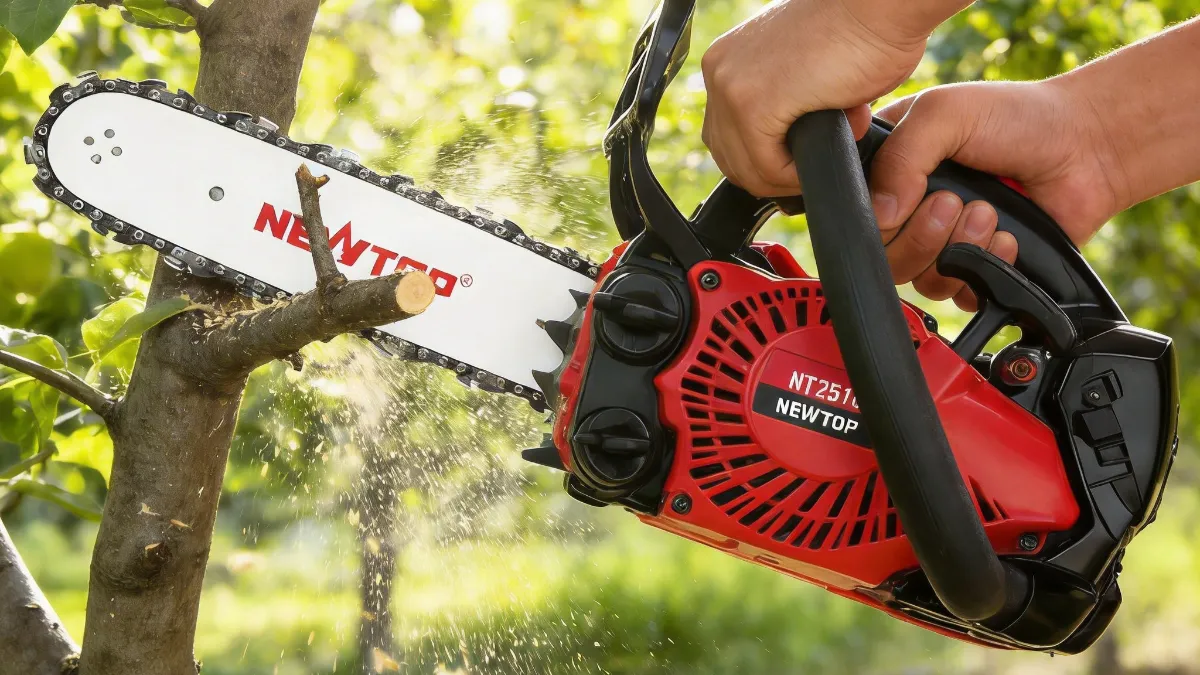
A motosserra é uma das ferramentas de corte mais práticas utilizadas na silvicultura, agricultura, paisagismo, e manutenção de propriedades. O que começou como um dispositivo de corte especializado tornou-se uma máquina altamente versátil para derrubada de árvores, remoção de galhos, processamento de registros, limpeza de tempestade, e até trabalhos de escultura.
O mercado atual de motosserras inclui gasolina, elétrico, e modelos de bateria de lítio, cada um projetado para diferentes condições de trabalho. Entender para que serve uma motosserra ajuda o usuário a escolher a máquina certa para o trabalho, se a tarefa é o corte pesado de madeira ou a manutenção rotineira do terreno.
O que é uma motosserra?
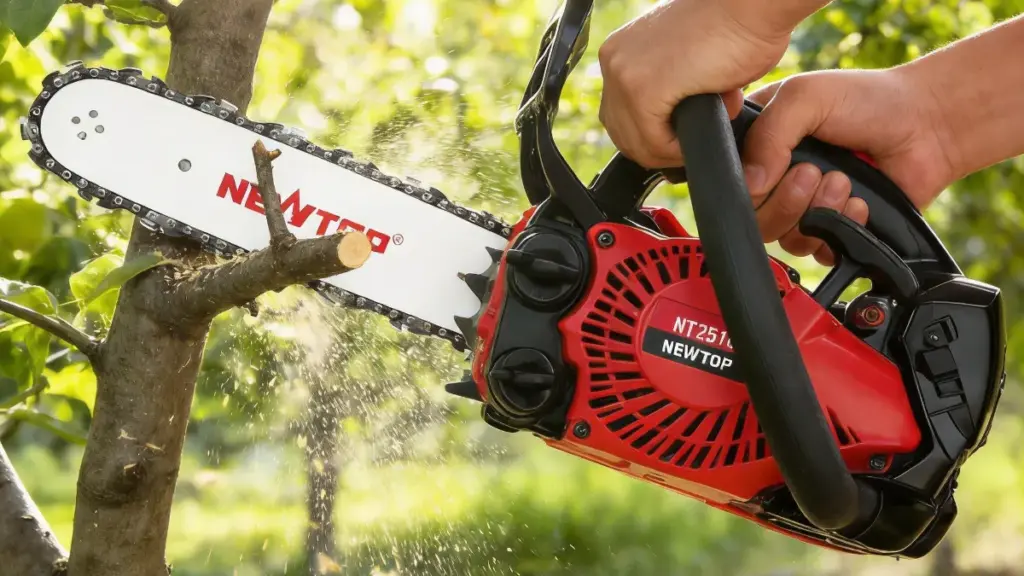
Uma motosserra é uma ferramenta elétrica portátil que corta material, principalmente madeira, usando um conjunto de dentes presos a uma corrente giratória acionada ao longo de uma barra guia.
Função central e design
Uma motosserra opera conduzindo uma corrente dentada em alta velocidade ao longo de um sólido barra guia. Este mecanismo permite realizar uma série de tarefas de corte de madeira com alta eficiência. As principais aplicações da ferramenta incluem o corte de árvores (derrubando árvores), enterro (removendo galhos), resistindo (cortando uma árvore derrubada em toras menores), e poda (aparar árvores vivas para saúde ou estética). A combinação de um motor potente e um afiado, corrente de movimento rápido torna-a uma ferramenta essencial na silvicultura, construção, e manutenção de propriedades.
Sistemas de energia primária
As motosserras modernas operam em um dos 3 principais sistemas de energia. Cada sistema oferece um equilíbrio diferente de poder, portabilidade, e requisitos de manutenção, tornando-os adequados para ambientes operacionais e cargas de trabalho distintos.
- Movido a gasolina motosserras fornecer potência e tempo de execução máximos, tornando-os o padrão para serviços pesados, operações florestais profissionais onde a portabilidade e o desempenho são críticos.
- Movido a energia elétrica (com fio) serras são mais leves, mais silencioso, e exigem menos manutenção. Eles são ideais para trabalhos residenciais em pátios e tarefas de corte leve, onde uma fonte de energia constante é facilmente acessível.
- Alimentado por bateria motosserras combinam a portabilidade dos modelos a gás com os benefícios de redução de ruído e zero emissões diretas, tornando-os adequados para cortes leves a médios em vários locais.
Leia mais: Diferentes tipos de motosserras que você precisa conhecer
Tipos para tarefas especializadas
A indústria produz diversas configurações de motosserras adaptadas para aplicações específicas. Os designs variam para aumentar a segurança, eficiência, e controle do operador dependendo do trabalho em questão.
- Serras de cabo traseiro de tamanho normal são o padrão da indústria para a maioria dos trabalhos de base, incluindo o corte de árvores e o processamento de lenha. A configuração da alça proporciona estabilidade e controle para cortes poderosos.
- Modelos leves com alça superior são projetados especificamente para arboristas profissionais que realizam poda e poda de precisão enquanto escalam ou trabalham em um elevador aéreo. Seu design compacto permite o uso com uma mão em espaços apertados.
- Escultura de motosserras recurso especializado, barras de pontas estreitas e correntes de dentes finos. Essas modificações permitem aplicações artísticas detalhadas, como escultura em madeira e criação de formas complexas.
A evolução das motosserras
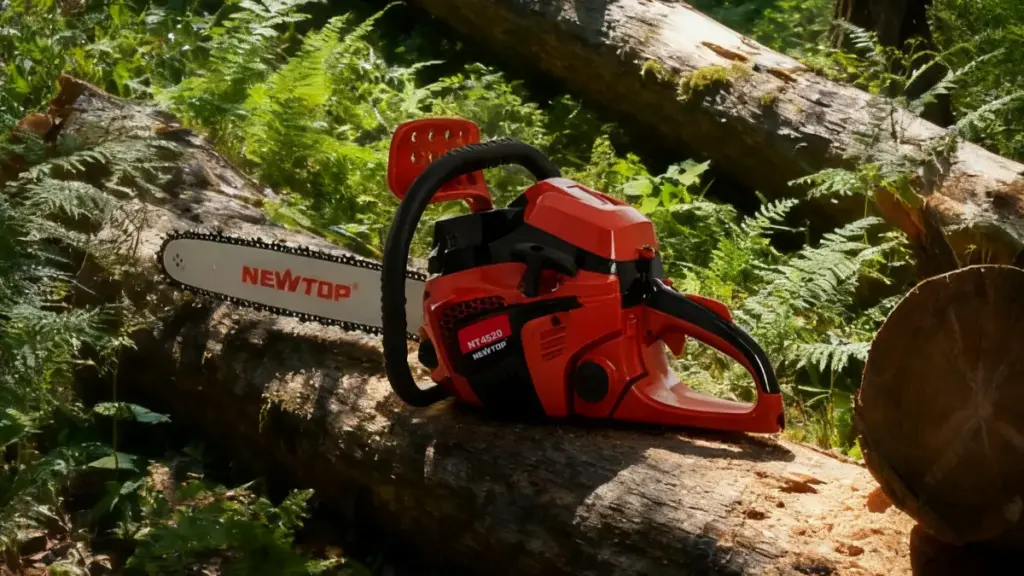
A trajetória de engenharia da motosserra é marcada por uma redução drástica de peso e pela integração de sistemas críticos de segurança, transformando-o de um peso de 60 quilos, máquina para duas pessoas no peso leve de hoje, equipamento ergonômico.
Da ferramenta cirúrgica ao grampo florestal
A jornada da motosserra de instrumento médico a ferramenta florestal essencial começou com o primeiro modelo elétrico em 1926 e a primeira versão movida a gasolina em 1927. Essas inovações deram início à era moderna da xilogravura motorizada, mas o equipamento inicial estava longe de ser prático. Os primeiros modelos da década de 1920 eram enormes máquinas para duas pessoas, pesando cerca de 60 quilogramas.
Por 1950, avanços de engenharia produziram as primeiras motosserras de operador único, tornando o equipamento muito mais acessível. A redução de peso era o objetivo principal, e por 1959, a motosserra média pesava aproximadamente 12 quilogramas, uma melhoria significativa na portabilidade que ampliou seu uso no campo.
Principais marcos tecnológicos
Avanços significativos ao longo do século XX concentraram-se na melhoria da segurança e do conforto do operador, estabelecendo os padrões para motosserras modernas. Sistemas antivibração, desenvolvido em 1964, foram um passo crítico na redução da fadiga do operador. Os primeiros freios de corrente apareceram em 1972, com versões automáticas seguindo em 1982, aumentando significativamente a segurança durante o uso. Inovações posteriores incluíram conversores catalíticos em 1989 para reduzir as emissões e recursos de partida automática em 1991 para uma operação mais fácil.
Princípios de Design Moderno
Por 2026, o foco da indústria mudou para maximizar a eficiência, segurança, e ergonomia, minimizando o impacto ambiental. As motosserras contemporâneas são leves, normalmente pesando entre 4 e 9 quilogramas. Os projetos atuais priorizam a redução de emissões e maior conforto do operador para se alinhar aos padrões de segurança ocupacional. Esta abordagem apoia práticas florestais sustentáveis e uma maior eficiência do utilizador no trabalho.
Aumente os lucros com durabilidade, Máquinas econômicas.
Usos comuns de motosserras
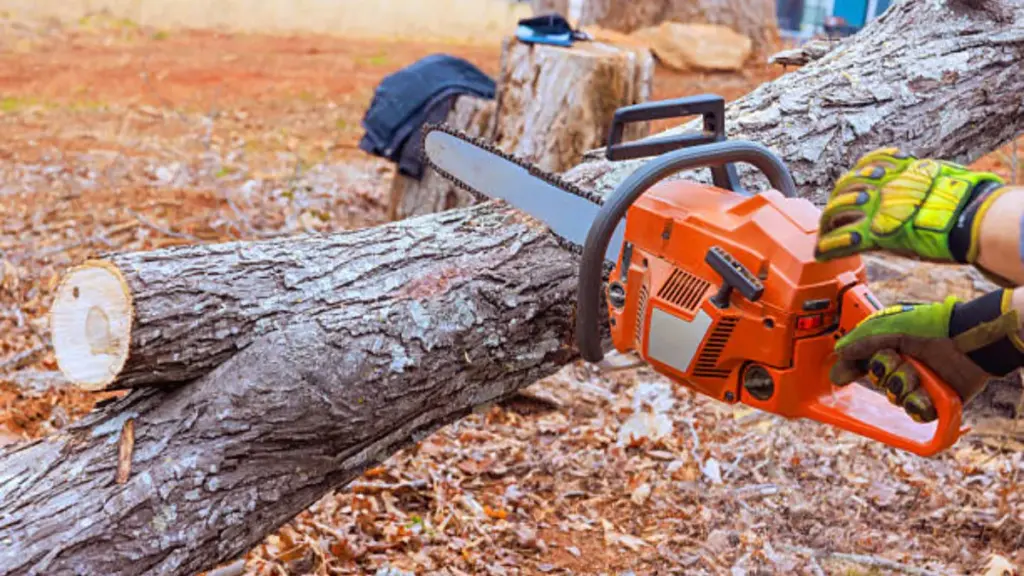
As motosserras evoluíram de ferramentas florestais primárias para instrumentos versáteis essenciais para a construção, resposta de emergência, e manutenção de propriedades, com modelos especializados projetados para cortar materiais como concreto e gelo.
| Área de Aplicação | Tarefa Primária | Tipo de ferramenta comum |
|---|---|---|
| Silvicultura & Arboricultura | Derrubando, desgalhamento, e derrubando árvores em busca de madeira. | Modelos a gás de alta potência, serras de cabo superior para arboristas. |
| Construção & Demolição | Corte de concreto, pedra, e alvenaria para aberturas ou canais. | Serras especializadas com correntes diamantadas ou abrasivas. |
| Emergência & Resgatar | Limpando detritos da tempestade, cortando estruturas colapsadas. | Leve, modelos a gás ou bateria de alto desempenho. |
| Paisagismo & Manutenção de propriedade | Poda, escova de limpeza, e processamento de lenha. | Modelos elétricos e alimentados por bateria mais leves. |
Silvicultura e Arboricultura
O papel principal das motosserras continua sendo na silvicultura e no cuidado das árvores. Profissionais os utilizam para derrubar árvores, troncos de desgalhamento, e toras em comprimentos transportáveis. Os arboristas também dependem deles para podas precisas, removendo madeira morta, e gerenciamento da saúde das árvores em ambientes urbanos.
- Corte de árvores para madeira e limpeza de terrenos.
- Poda de galhos para manter a estrutura e a segurança das árvores.
- Cortar toras em lenha ou madeira serrada.
Construção e Demolição
Motosserras especializadas equipadas com correntes diamantadas ou abrasivas são usadas na construção para cortar materiais resistentes. Estas ferramentas criam aberturas precisas em paredes de concreto, lajes de pedra, e alvenaria para janelas, portas, ou acesso utilitário. Eles também são valiosos em trabalhos de demolição controlada.
- Corte de concreto para modificações estruturais.
- Modelagem de blocos de pedra e alvenaria.
- Criação de canais de utilidade em estruturas existentes.
Operações de Emergência e Resgate
Os socorristas e as equipes de resgate usam motosserras como equipamento essencial para resposta a desastres. Eles os implantam para limpar árvores caídas das estradas após tempestades, cortar escombros em edifícios desabados para alcançar os sobreviventes, e gerencie o gelo para missões de resgate.
- Limpando detritos da tempestade para restaurar o acesso.
- Cortando materiais estruturais durante busca e resgate urbano.
- Criação de aberturas em gelo espesso para acesso de emergência.
Paisagismo e manutenção de propriedades
Para proprietários e paisagistas, motosserras são uma ferramenta fundamental para a manutenção de propriedades. Eles são usados para aparar sebes cobertas de vegetação, removendo árvores e arbustos indesejados, e processamento de galhos caídos após mau tempo. Modelos elétricos e alimentados por bateria mais leves são comuns para essas tarefas.
- Manutenção de árvores e arbustos grandes em jardins.
- Limpando arbustos e pequenas árvores da terra.
- Preparando lenha para uso residencial.
Aplicações especializadas de motosserras
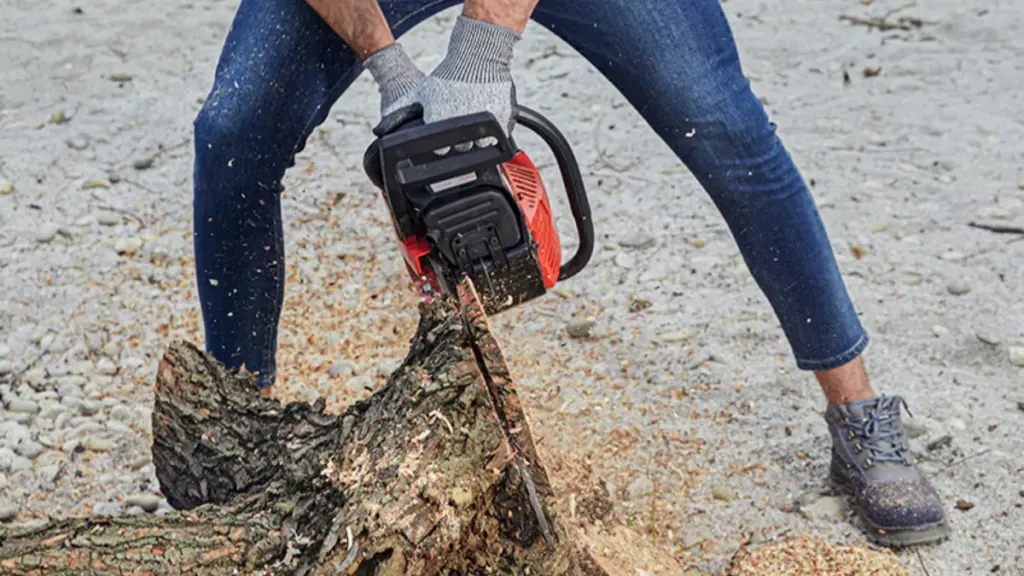
As motosserras modernas evoluíram além da exploração madeireira para atender às necessidades industriais especializadas, desde corte de precisão na construção de madeira maciça até operações de resgate subaquático e de emergência.
| Aplicação Especializada | Fonte de alimentação primária | Fator Operacional Chave |
|---|---|---|
| Paisagismo Urbano & Arboricultura | Alimentado por bateria | Conformidade com regulamentos de ruído e emissão. |
| Construção em madeira maciça | Elétrico (Com fio) | Corte de precisão controlado, configurações de fábrica internas. |
| Resgate de Emergência & Salvamento | Gasolina (Alto desempenho) | Implantação rápida e confiabilidade em condições extremas. |
| Industrial & Uso subaquático | Hidráulico ou Pneumático | Ambientes onde gás ou água inflamável tornam outros tipos inseguros. |
Paisagismo Urbano e Arboricultura
Em ambientes urbanos, regulamentações de ruído e emissão impulsionaram a demanda por motosserras movidas a bateria. Arboristas e profissionais de paisagismo usam esses modelos em áreas residenciais e espaços públicos onde minimizar a interrupção é fundamental. O seu design aborda as restrições específicas do trabalho em zonas povoadas.
- A operação mais silenciosa os torna adequados para uso em zonas sensíveis ao ruído, como bairros, parques, e ao redor de edifícios de escritórios.
- O desempenho com emissão zero ajuda as empresas de paisagismo a cumprir os padrões ambientais locais.
- Os designs leves reduzem a fadiga do operador durante tarefas detalhadas de poda e modelagem de árvores.
Corte de precisão na construção de madeira maciça
A indústria da construção utiliza equipamentos especializados motosserras elétricas para fabricar grandes componentes de madeira projetada. Dentro das configurações de fábrica controladas, essas ferramentas fornecem a precisão necessária para criar elementos estruturais para edifícios de madeira maciça, onde juntas e ajustes precisos não são negociáveis.
- Fornece precisão, cortes limpos essenciais para encaixar grandes vigas e painéis.
- A energia elétrica garante um desempenho consistente sem as emissões associadas aos motores a gasolina em ambientes fechados.
- Apoia a tendência crescente de construção sustentável com produtos de madeira projetada.
Operações de resgate e salvamento de emergência
Corpos de bombeiros, equipes de socorro em desastres, e as equipes de salvamento contam com equipamentos leves, motosserras de alto desempenho para limpar detritos e criar acesso em situações críticas. Estas serras são projetadas para implantação rápida e confiabilidade absoluta sob condições extremas., muitas vezes caótico, condições onde a falha do equipamento não é uma opção.
- Usado para limpar rapidamente árvores caídas de estradas e propriedades após tempestades ou inundações.
- Auxilia na retirada de vítimas de estruturas ou veículos desabados.
- Os modelos projetados para resgate geralmente apresentam mecanismos de segurança avançados e iniciam de forma confiável em emergências.
Uso Industrial e Subaquático
Para ambientes onde as motosserras convencionais são impraticáveis ou inseguras, pneumático (movido a ar) e modelos hidráulicos oferecem uma solução funcional. Essas ferramentas são implantadas em campos industriais especializados, incluindo construção subaquática, mineração, e manutenção de utilidades, onde perigos únicos proíbem motores padrão.
- As motosserras hidráulicas funcionam eficazmente debaixo de água para cortar madeira na construção e salvamento marítimo.
- As serras pneumáticas são usadas em minas ou trabalhos utilitários onde o risco de ignição de gases inflamáveis proíbe motores padrão.
- Essas ferramentas se conectam a fontes de energia externas, proporcionando poder de corte sustentado para trabalhos industriais exigentes.
Conclusão
As motosserras evoluíram de uma ferramenta cirúrgica especializada para um instrumento versátil para inúmeros trabalhos modernos. Desde manutenção básica de propriedades e processamento de lenha até aplicações avançadas, como serraria portátil e esculturas complexas, sua gama funcional é impressionante. Reconhecer esses diferentes usos ajuda você a obter o máximo valor do seu equipamento, seja para projetos residenciais ou serviços profissionais.
Se você está pronto para encontrar a ferramenta certa para seu próximo projeto, dê uma olhada em nosso catálogo completo de motosserras. Nossa equipe também está disponível para ajudar a atender às suas necessidades operacionais específicas com o modelo perfeito.
Perguntas frequentes
Qual é o objetivo principal de uma motosserra?
O principal objetivo de uma motosserra é cortar madeira de forma rápida e eficiente. É usado principalmente para derrubar árvores, cortando galhos, processando registros, e preparando lenha. Tanto no uso profissional quanto no cotidiano, economiza tempo e trabalho em comparação com ferramentas de corte manuais.
Para que serve uma motosserra hoje?
Hoje, uma motosserra é usada para muito mais do que cortar árvores. Os usos comuns incluem trabalho florestal, manutenção agrícola, manejo de pomar, paisagismo, limpeza de tempestade, processamento de madeira, trabalho de resgate, e escultura em madeira. Motosserras modernas estão disponíveis a gasolina, elétrico, e versões alimentadas por bateria, para que os usuários possam escolher o tipo certo para diferentes condições de trabalho.
Quando foi inventada a motosserra para ajudar no parto?
O precursor da motosserra moderna foi inventado por volta de 1785 para ajudar no parto. Este instrumento cirúrgico com manivela, chamado osteótomo, foi projetado por médicos escoceses para realizar uma sinfisiotomia. O procedimento envolvia o corte da cartilagem pélvica para alargar o canal do parto durante trabalhos de parto difíceis ou obstruídos, antes que as cesarianas fossem uma alternativa segura..
Para que é originalmente usada uma motosserra?
A motosserra foi originalmente usada como instrumento cirúrgico para cortar ossos, não madeira. Sua primeira aplicação, desenvolvido em torno 1785, foi para sinfisiotomia - um procedimento médico para alargar a pélvis durante o parto obstruído. Esta origem cirúrgica é anterior ao seu uso moderno na silvicultura em mais de um século., quando foi adaptado para tarefas de xilogravura.
Quando foram inventadas as motosserras a gás?
A primeira motosserra movida a gasolina produzida em massa foi inventada em 1927 por Emil Lerp, fundador da Dolmar. Esta duas pessoas “Modelo A” viu revolucionou a indústria florestal com sua portabilidade e potência. Mais ou menos na mesma época, Andreas Stihl também patenteou sua própria motosserra movida a gás em 1929, estabelecendo ainda mais a ferramenta como essencial para a exploração madeireira moderna.
