コンテンツにスキップ



Answering ‘what is a fogger sprayer’ is the critical first step in preventing costly chemical waste and avoiding compliance failures in public health and agricultural settings. Many operations mistakenly deploy standard sprayers for tasks demanding precise, aerosolized droplets, which leads to ineffective pest control, incomplete disinfection, and significant financial losses. This fundamental mismatch in equipment is a common operational blind spot that directly impacts both safety and budget.
This guide provides the technical foundation for making informed equipment decisions. We break down the core components of professional fogging machines, detail their primary applications, サーマルフォッガー技術とコールドフォッガー技術の主な違いを比較します. これを評価のための標準的な操作手順として考えてください。, 選択する, あらゆる大規模な作業に適切なミストツールを安全に導入できます。.
噴霧器とは何ですか、そしてその仕組み?
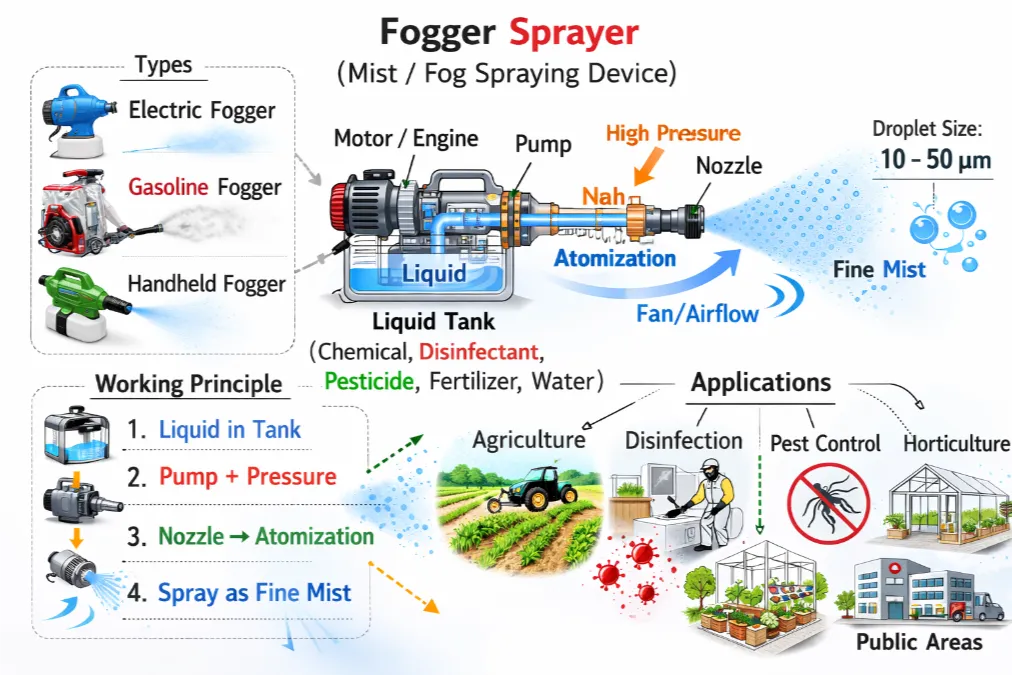
噴霧器噴霧器は、液体溶液を細かいエアロゾルミストに噴霧します。, 広い範囲にわたって均一な化学薬品の塗布を可能にする, 従来の噴霧器では効果的に到達できない複雑な表面.
噴霧器は、溶液を超低容量に変換するように設計された特殊な噴霧装置です。 (狼) 水滴, 通常は~の範囲です 5 に 50 ミクロン. このサイズで, 液滴はほぼ気体のように振る舞います, 空気中を漂い、表面に均一に沈降します. これにより、霧が害虫駆除に特に効果的になります。, 作物保護, そして大規模な消毒.
基本的な曇りのメカニズム
噴霧器は溶液を霧化することで機能します。. モーター駆動のポンプがタンクから薬品を汲み上げて加圧します。. この加圧された液体は、特殊なノズルを通って押し出されます。, それは小さな液滴に分解されます. ブロワーまたはファンは、これらのエアロゾル粒子を対象環境に推進します。, すべての露出した表面に霧を発生させます。. 機械の設計は液滴サイズを制御してエアサスペンション時間を最適化し、効果的な表面接触を確保します。.
現在使用されている主なフォギング技術
現代の噴霧装置は一般に熱噴霧器に分類されます。, ULV コールドフォガー, および静電システム. それぞれが異なる霧化原理に基づいて動作し、さまざまな環境に適しています。.
サーマルフォガー
サーマルフォガーは、加熱されたコイルまたは燃焼室を使用して、油ベースまたは水ベースの溶液を蒸発させます。. When the vapor exits the nozzle and encounters cooler ambient air, それは濃厚に凝縮する, 目に見える霧. この目に見えるプルームは、オペレーターがオープン環境でのカバレッジを監視するのに役立ちます.
サーマルシステムは屋外の蚊駆除プログラムで広く使用されています, 圃場処理, and public health operations across tropical regions. 迅速かつ大面積への分散が必要な場合に特に効果的です。. しかし, 燃焼と熱に依存しているため、, 通常、適切な換気のない密閉された屋内空間には推奨されません。.
狼 (超低音量) コールドフォガー
コールドフォガー, しばしばULVフォガーと呼ばれます, 熱ではなく機械エネルギーに完全に依存する. 高速ブロワーまたはタービンが液体を非常に細かい液滴に剪断します。, 通常は以下の 30 ミクロン.
ULVフォギングは屋内の消毒に最適です, 食品加工施設, 温室, 養鶏場, そして倉庫. 燃焼工程がないので, コールドフォッガーは閉鎖環境でより安全であり、水ベースの消毒剤と互換性があります。. また、エネルギー効率も高く、一般にサーマルシステムに比べて目に見える残留物が少なくなります。.
静電噴霧器
静電システムは、霧化技術のより高度なバリエーションを表します。. これらのマシンでは, 液滴はノズルから出るときに電荷を受け取ります. この電荷により、粒子が積極的に表面を探して表面に付着します。, オブジェクトの周囲を包み込み、より完全に 360 度をカバーします.
静電スプレーは医療施設で一般的に使用されています, 空港, 学校, 表面消毒の精度が重要となる、人の接触が多い公共エリア. より専門的であり、通常はコストが高くなりますが、, electrostatic technology significantly reduces chemical waste and improves uniformity of application.
Key Components of a Professional Fogger Machine
プロの噴霧器のパフォーマンスは、連携する 4 つのコア システムに依存します。: the fluid delivery mechanism, the thermal management system, 噴霧ノズル, そしてプロセス全体を制御する電子制御.
| コンポーネントシステム | 一次機能 | 重要な機能 |
|---|---|---|
| 液体タンク & ポンプシステム | Stores and pressurizes the fogging solution for consistent delivery. | Chemical-resistant tank and reliable high-pressure pump. |
| 発熱体 & 熱交換器 | Rapidly heats and vaporizes the fluid to create a dense fog. | High-wattage heater with integrated thermal safety cutoffs. |
| ノズル & アトマイザーアセンブリ | Expels and atomizes vapor into fine particles of a specific size. | Precision-engineered to control droplet micron size and fog density. |
| Control Electronics & Interface | Manages temperature, fluid flow, and operational timing. | Central PCB with a clear user interface, often including remote control. |
Fluid Tank and Pump System
The fluid tank stores the fogging solution, and its pump pressurizes the liquid before sending it to the heating element. The capacity and material of the tank directly influence the machine’s continuous runtime, while the pump’s reliability determines output consistency. Professional-grade machines use components built for demanding field conditions.
- The tank is constructed from durable, chemical-resistant materials to prevent corrosion from various fogging solutions.
- A high-pressure pump delivers a steady fluid flow, ensuring uniform fog generation without sputtering.
- Internal filters prevent particles from clogging the nozzle, which maintains performance and reduces downtime for maintenance.
Heating Element and Heat Exchanger
熱噴霧器で, this is the engine of the machine. The heating element and heat exchanger work together to rapidly heat and vaporize the fogging solution into a gas. Efficient heat transfer is essential for producing a thick, dry fog and is a key differentiator in machine quality. Poor thermal management can result in a wet, 効果のない霧が発生したり、安全上の危険が生じたりする.
- A high-wattage heater block achieves the optimal operating temperature quickly, 起動時間の短縮.
- The heat exchanger is designed to maximize the surface area exposed to the fluid, 完全かつ効率的な蒸発を保証する.
- 内蔵温度センサーと熱安全カットオフは、ユニットの過熱を防ぐための譲れない機能です.
ノズルとアトマイザーのアセンブリ
ノズルは最終段階です, 加圧された場所, 気化した溶液が排出され、非常に細かい粒子に霧化されます。, 目に見える霧を作り出す. ノズル アセンブリのエンジニアリングにより液滴サイズが決まります, ミクロン単位で測定される, 霧の投影距離と. このコンポーネントは、次のようなアプリケーションで望ましいカバレッジと浸透を達成するために重要です。 害虫駆除 または消毒.
- 精密ノズルが特定のミクロンサイズの粒子を生成します, 霧が空中に漂い、表面を効果的にコーティングします。.
- ノズルに使用される材料は、劣化することなく高温と一定の圧力に耐える必要があります。.
- 多くのプロフェッショナルモデルは調整可能な出力設定を備えています, オペレーターがさまざまな環境に合わせて霧の密度と流量を制御できるようにする.
Control Electronics and Interface
Modern foggers are not just mechanical devices; あらゆる機能を正確に管理するために、高度な電子制御に依存しています。. The central printed circuit board (プリント基板) 体温を調節する, fluid flow, と出力タイミング. 適切に設計されたユーザー インターフェイスにより、オペレータはこれらの設定を簡単に構成し、機械のステータスを監視できます。, これは再現性と予測可能な結果を得るために不可欠です.
- The PCB acts as the brain, ポンプとヒーターを同期させて一貫した出力を生成.
- A straightforward interface with buttons, インジケーターライト, またはデジタルディスプレイにより、オペレーターは機械の機能を完全に制御できます.
- Remote control capabilities, 有線か無線か, 離れた場所からでも便利で安全な操作が可能.
大規模制御向けのプロフェッショナルな噴霧器ソリューション

害虫駆除および農業における噴霧器の主要な用途
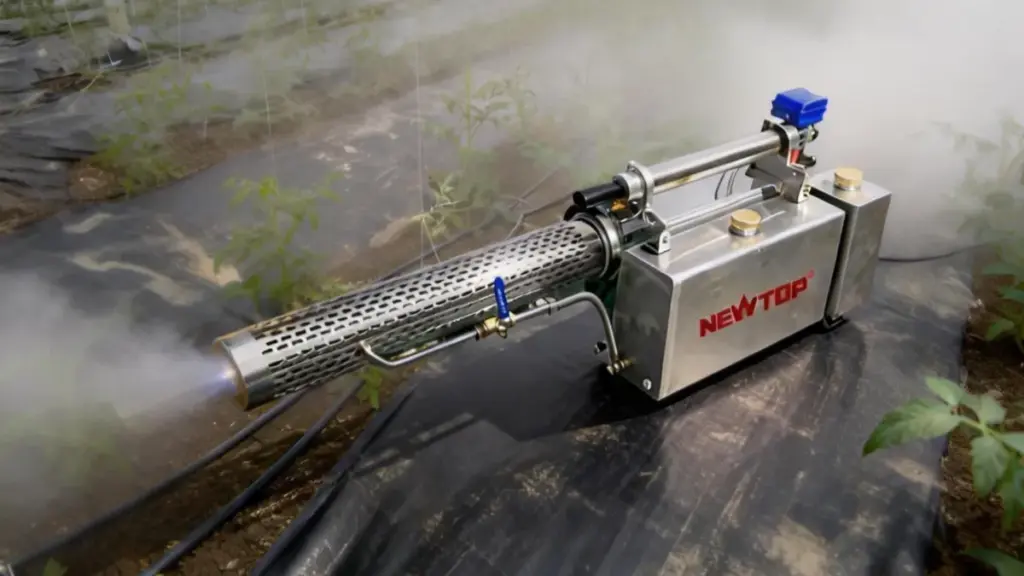
噴霧器は農業と公衆衛生に不可欠なツールです, 作物保護のための噴霧ソリューションを提供, 大規模な消毒, と環境制御.
農業の害虫と病気の管理
農業および温室作業において, 噴霧器は、密集した植物の樹冠を貫通する微細なエアロゾル液滴を放出します。. このプロセスにより、殺菌剤と殺虫剤がすべての表面に確実に行き渡ります。, 葉裏も含めて, 害虫や病気に対する包括的な保護を提供します. 優れた被覆率と浸透能力は、作物の健康を維持し、収量を最大化するために不可欠です。.
- 畑作物や果樹園などの広いエリアを素早くカバーします, 治療期間中の労働効率の向上.
- 薬品を均一に塗布します, 廃棄物を削減し、環境流出を最小限に抑える.
- 温室や苗床などの管理された環境での昆虫や真菌の増殖を抑制するのに効果的.
大規模な消毒と消毒
狼 (超低音量) 公共スペースを消毒するためのコールドフォッガーが標準装備されています, 商業施設, および家畜の囲い. 消毒剤を微細な霧として分散させ、表面に定着して過剰な湿りを引き起こすことなく病原菌を中和します。. この方法は食品加工における汚染制御プロトコルにとって極めて重要です, 健康管理, および運輸部門.
- 食品製造施設の衛生状態を維持し、汚染を防ぐために使用されます。.
- 交通拠点を消毒します, 学校, ウイルスや細菌の蔓延を制御する病院.
- 養鶏場や納屋などの動物の住居を消毒して家畜の健康を保護します。.
湿度と気候の制御
霧化システムは、特殊な農業環境における湿度と温度の調整に役立ちます. 微細な水ミストを放出することで, 敏感な植物に最適な生育条件を作り出したり、生鮮食品の保存に役立ちます. この湿度管理の適用は、高価値の作物にとって不可欠であり、農産物の保存期間を延長します。.
- 温室内の周囲湿度を上昇させます, これは熱帯植物や苗木を栽培するのに不可欠です.
- 暑い季節には蒸発冷却を提供して温度を下げます, 作物への熱ストレスの軽減.
- 農産物や花の保管施設内の湿度を維持し、保存期間を延長します。.
続きを読む: トップ 10 バックパック噴霧器メーカー 2026
大規模な消毒に噴霧器を使用する利点
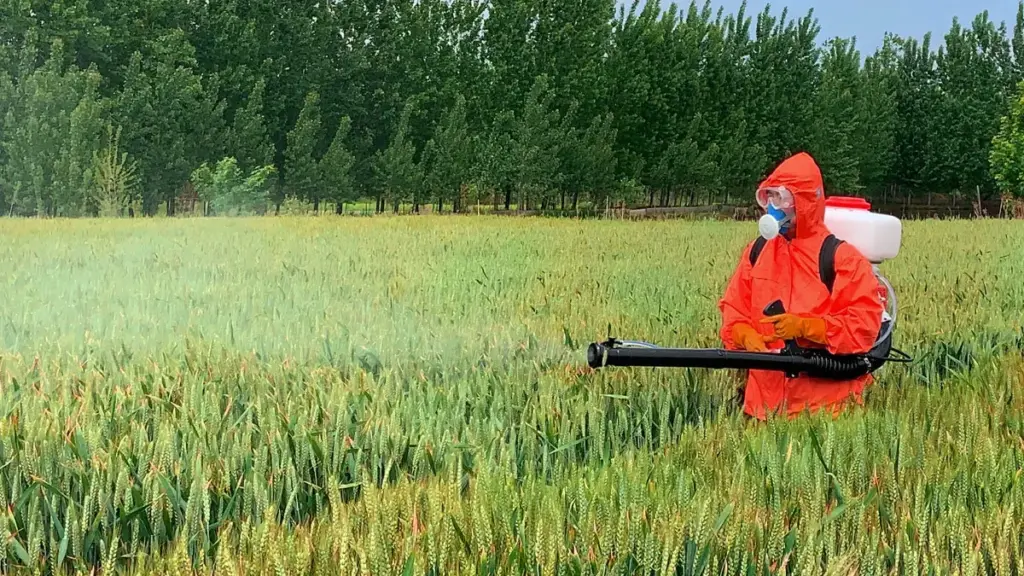
適切に校正され、化学ガイドラインに従って適用された場合, 霧吹き噴霧器は、大規模な消毒環境での運用効率を大幅に向上させることができます. 超微細な液滴を生成する能力により、従来の手動洗浄方法と比較して、より均一な空間カバーが可能になります。.
優れた表面被覆率
Fogging systems generate a controlled mist that disperses throughout an enclosed space rather than targeting only visible surfaces. Because the droplets remain suspended for a period of time, they are more likely to contact elevated surfaces, corners, ventilation openings, and the undersides of equipment.
Electrostatic variants further enhance deposition efficiency by electrically charging droplets, which encourages them to adhere more effectively to target surfaces.
While exact coverage performance depends on room layout and airflow conditions, fogging technology generally provides more consistent volumetric distribution than manual wiping or pump spraying.
Optimized Chemical Efficiency and Labor Productivity
ULV foggers are designed to apply disinfectant solutions in very small droplet sizes, which increases dispersion efficiency. In many facility maintenance scenarios, this allows operators to treat larger areas using lower total liquid volume compared to conventional high-volume spraying.
さらに, fogging reduces the need for repetitive manual surface wiping across large facilities. A single trained operator can treat open spaces more quickly than traditional cleaning crews, improving labor productivity and reducing operational downtime.
Actual savings will vary depending on room configuration, chemical type, and application protocol.
Rapid Treatment for Extensive Areas
Foggers are particularly valuable in warehouses, production facilities, livestock housing, and other large commercial environments where rapid treatment is essential.
Coverage rate depends on machine capacity and operator technique. Portable and backpack ULV foggers are commonly used for medium-to-large indoor areas, while high-capacity thermal foggers are preferred for outdoor vector control and expansive open spaces.
Because fogging distributes disinfectant in airborne form, it enables faster treatment cycles compared to surface-only cleaning methods, supporting quicker facility turnaround.
Thermal Foggers vs. コールドフォガー: Major Differences
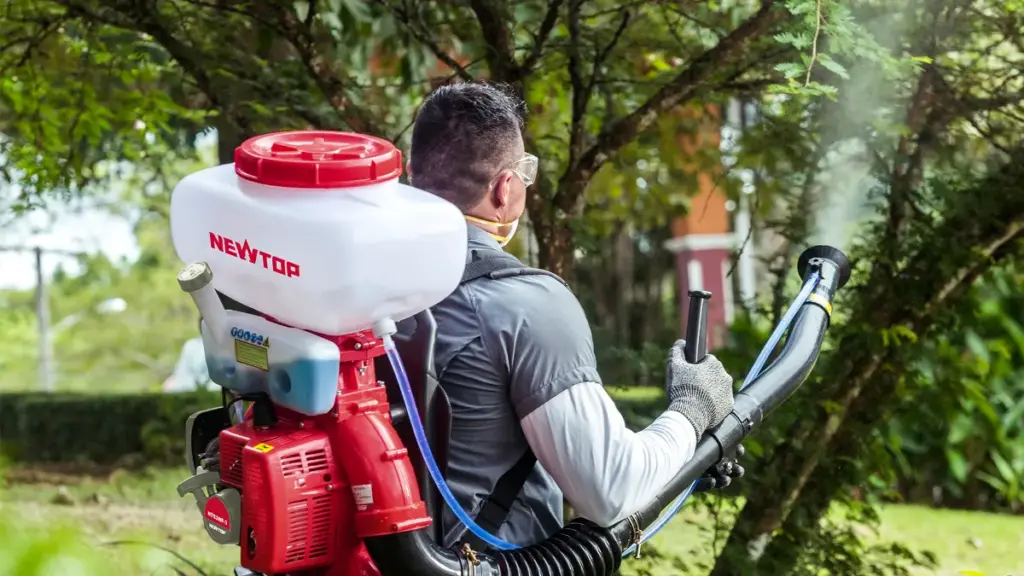
The choice between thermal and cold foggers hinges entirely on the application environment; thermal units excel outdoors with fine, heat-vaporized particles, while cold (狼) foggers provide safer, heat-free atomization for indoor and sensitive areas.
| 特徴 | Thermal Fogger | Cold (狼) フォガー |
|---|---|---|
| Operating Mechanism | Uses heat to vaporize a chemical solution. | Uses high pressure and air shear to atomize liquid. |
| 粒子サイズ | Extremely fine (0.5–10 microns). | Fine, often adjustable (5–50 microns). |
| Ideal Environment | Large-scale outdoor areas (農場, forests). | Indoors and enclosed spaces (病院, 温室). |
| Safety Profile | Poses a fire hazard; requires careful handling. | No heat, no fire risk, and generally quieter operation. |
| 化学的適合性 | Typically requires oil-based carriers. | Works with a wide range of water and oil-based solutions. |
Operating Mechanism and Particle Size
The fundamental distinction between these machines is how they generate fog.
Thermal foggers employ heat to flash-vaporize a chemical solution, which then condenses upon contact with cooler ambient air. This process creates a dense, highly visible fog composed of extremely fine particles.
コールドフォガー, also known as Ultra Low Volume (狼) 機械, use high-pressure air to shatter liquid into a fine mist without any heat. This mechanical process of atomization offers greater control over droplet size.
Ideal Applications and Environments
Each fogger type is engineered for specific operational contexts.
Thermal foggers are the established tool for expansive outdoor applications, such as large-scale pest control in agriculture and public health vector control programs. Their dense fog can drift over vast areas, effectively treating forests, 農場, and municipalities.
Cold foggers have become the standard for indoor and commercial use where safety and operational noise are primary concerns.
Chemical Compatibility and Safety
Cold foggers offer superior chemical versatility. Because they operate without heat, they can safely aerosolize a wide array of solutions without degrading the active ingredients. This makes them suitable for disinfectants, biocides, and pesticides that are sensitive to high temperatures. This operational safety extends to the operator and the environment, especially in enclosed areas where fire risk must be eliminated.
Thermal foggers are more restrictive, often requiring oil-based carriers to produce a thick fog. The high-temperature operation introduces a clear fire hazard if mishandled or used near flammable materials, making them unsuitable for most indoor applications.
Critical Safety Protocols for Operating Fogging Equipment
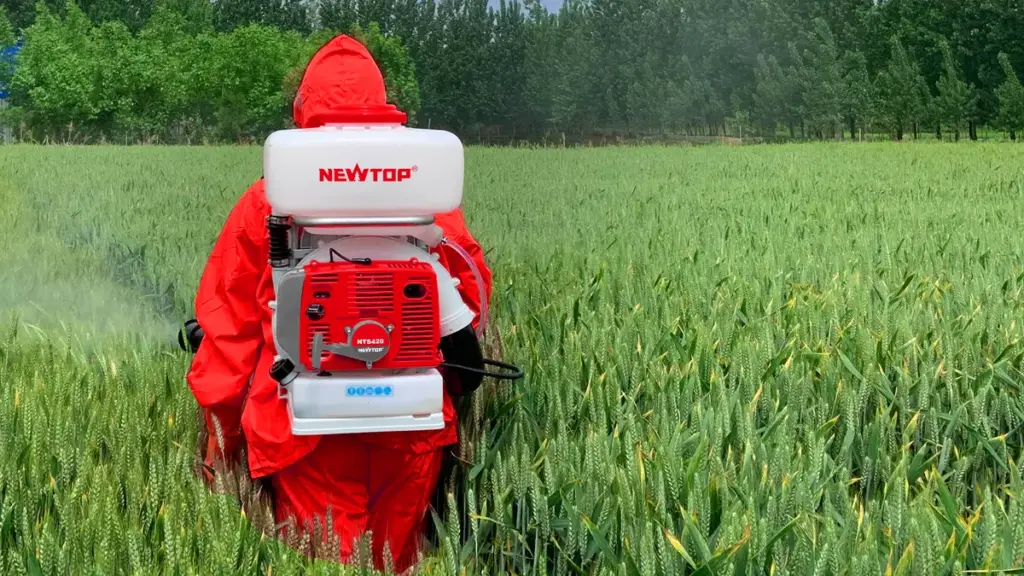
Effective fogging operations depend on standardized safety protocols, including mandatory operator certification, correct PPE usage, and strict adherence to chemical handling and re-entry procedures.
Use of Personal Protective Equipment (PPE)
Wearing the correct Personal Protective Equipment is the first line of defense for any operator. Regulations require comprehensive protection to prevent chemical exposure through inhalation, skin contact, or eye irritation during the fogging process. Failure to use proper PPE can lead to immediate health risks and long-term complications.
- Full-face respirators with appropriate chemical cartridges are mandatory.
- Chemical-resistant gloves, coveralls, and waterproof boots protect the skin from contact.
- Goggles or face shields provide an extra layer of protection for the eyes.
Area Preparation and Ventilation Control
Properly preparing the treatment area is essential to ensure both effectiveness and safety. This involves isolating the space and managing airflow to contain the fog and protect adjacent environments. A well-prepared area maximizes the disinfectant’s efficacy while minimizing unintended exposure.
- Seal off the designated area by closing all doors, windows, and vents.
- Turn off all HVAC systems to prevent the disinfectant from circulating outside the treatment zone.
- Post warning signs at all entry points to prevent unauthorized access during and after application.
Operator Training and Chemical Management
Operator certification and adherence to chemical guidelines are now industry standards. A trained operator understands the equipment’s functions, the properties of the disinfectant, and how to manage potential risks. This expertise prevents equipment misuse and ensures chemicals are applied at safe, effective concentrations.
- Operators must be certified and trained on the specific fogging equipment in use.
- Always follow the manufacturer’s guidelines for chemical dilution ratios and application rates.
- Confirm chemical compatibility with the equipment to prevent corrosion or malfunction.
Post-Treatment and Safe Re-Entry Protocols
Safety procedures do not end when the application is complete. Post-treatment protocols ensure the area is safe for re-entry and that any chemical residue is managed correctly. These final steps are crucial for protecting occupants and maintaining equipment integrity.
- Adhere to the specified waiting period before ventilating and re-entering the area.
- Thoroughly clean the fogging equipment after each use to maintain its performance and longevity.
- Manage any remaining chemical residue according to environmental safety standards.
Why Choose NEWTOP High-Efficiency Fogger Solutions?
NEWTOP foggers combine precision manufacturing with a robust global supply chain to deliver reliable, versatile equipment for large-scale agricultural and public health operations.
As a leading garden and agricultural machinery manufacturer based in Shanghai, NEWTOP has been manufacturing power equipment since 2003. 以上 10,000 square meters of production facilities and an annual capacity 超える 500,000 単位, the company integrates CNC machining centers, 自動化された生産ライン, and independent testing laboratories to ensure consistent quality.
NEWTOP’s fogger sprayers are engineered for durability in demanding environments such as tropical agriculture and municipal vector control programs. Core components are selected from globally recognized suppliers, ensuring stable combustion performance and long service life.
The company supports OEM and ODM customization, including color design, ブランディング, 梱包, and parameter adjustments tailored to regional regulations. CEあり, EPA, and ISO certifications, NEWTOP equipment meets international compliance standards.
For distributors targeting Africa, ラテンアメリカ, 東南アジア, and emerging Eastern European markets, NEWTOP offers competitive mid-range positioning that balances price, 耐久性, 販売後のサポート.
Grow Strong with NEWTOP — Your Trustworthy Garden Tools Partner.
製品カタログについて, 技術仕様, or partnership inquiries, contact:
電子メール: [email protected]
ワッツアップ: +86 13636521556
Webサイト: https://newtoptools.com/
結論
Understanding the mechanics of a fogger sprayer, from its key components to the differences between thermal and cold ULV models, directly impacts operational success. This knowledge ensures you can achieve precise, wide-area coverage for disinfection, 害虫駆除, and agricultural treatments. Selecting the right tool optimizes chemical use, enhances safety, and improves overall efficiency.
If you are ready to enhance your operations with reliable misting technology, explore NEWTOP’s line of professional fogger solutions. Contact our team to request a product catalog or to consult on the best equipment for your specific application.
よくある質問
What is the difference between a fogger and a sprayer?
A traditional sprayer produces larger droplets that settle quickly on surfaces, making it suitable for targeted applications. A fogger creates ultra-fine droplets that remain suspended in the air, allowing better coverage and penetration.
How long can a fogger spray continuously?
Continuous operation time depends on tank capacity and engine type. ほとんど professional gasoline foggers can operate for 30–60 minutes per tank under standard load.
Is a fogger better than a spray for mosquitoes?
はい, for wide-area mosquito control, especially outdoors, foggers are generally more effective because the fine mist can disperse across vegetation and open air.
Can you use a fogger for indoor disinfection?
はい, particularly cold ULV foggers designed for indoor environments. Proper ventilation and chemical compliance are essential.
What is the spray range of a portable fogger?
Portable thermal foggers may achieve a horizontal spray distance of 8–12 meters depending on wind conditions and model specifications.
Do foggers use more chemical than sprayers?
いいえ, foggers are designed to use less chemical than traditional sprayers. 狼 (超低音量) 噴霧器, 特に, atomize a small amount of concentrated solution into a vast volume of fine mist. This method provides extensive coverage with maximum efficiency, reducing overall chemical consumption compared to high-volume drenching sprayers.
If you would like a deeper technical breakdown of sprayer and fogger performance differences, ガイドを読む: 噴霧器と噴霧器の違い: 技術比較ガイド .