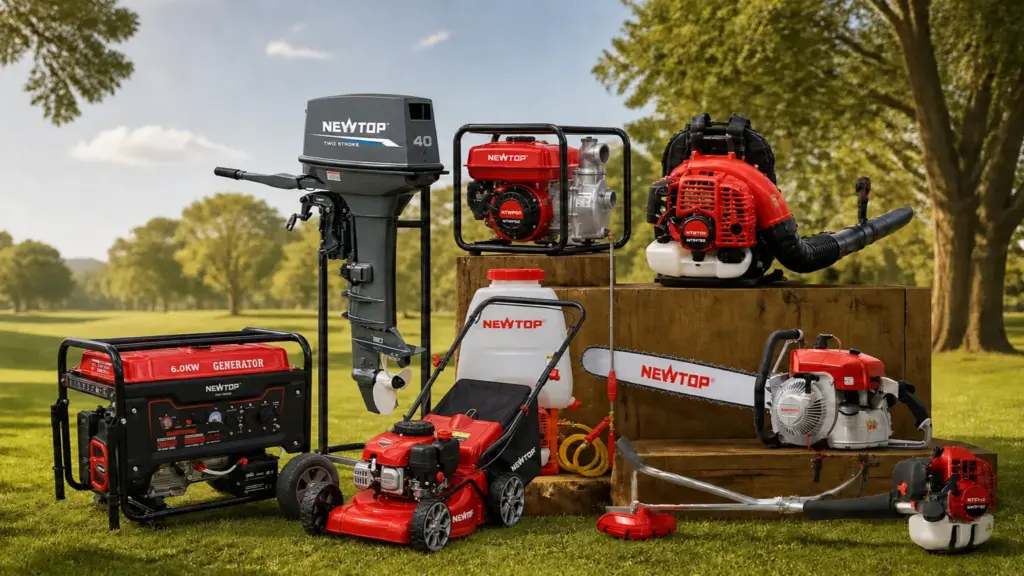
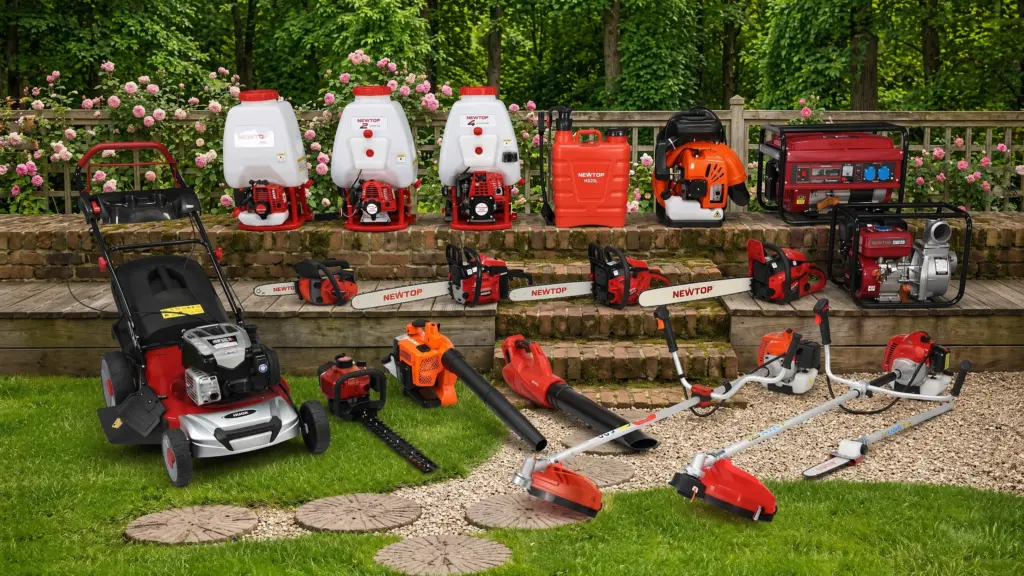
Working with the right 屋外電源装置サプライヤー is only one part of an international machinery order. The same brush cutter, chainsaw, 芝刈り機, generator or water pump can leave the factory with the same basic specification but face a different import process depending on whether it is headed for Nigeria, タンザニア, Brazil or Mexico.
The trouble usually starts when compliance is checked too late. A shipment may require conformity verification before export. An electric model may fall under rules that do not apply to its gasoline-powered equivalent. Labels, technical files, or importer information may also need to change before production is completed.
販売代理店様向け, the useful question is therefore not simply:
“Which certificate does this machine have?」
It is:
“What does this specific product need in the country where I plan to sell it?」
This guide focuses on practical import checks for major African and Latin American markets relevant to garden machinery and outdoor power equipment. It is intended to help importers know what to confirm with their supplier before an order moves into production.
Compliance note: Requirements can change and often depend on the exact HS code, product type, engine or electrical configuration, そして使用目的. Final import requirements should always be confirmed with the local importer, customs broker, conformity-assessment body, or competent authority.
Start With the Product, Not With a Certificate
There is rarely one certificate that answers every import question.
A CE document may support a technical file but does not automatically replace the local conformity route in another country. 南アフリカ, 例えば, expressly states that CE certificates alone are not accepted for products requiring NRCS approval; accredited safety test reports are required instead.
Before asking a supplier for documents, separate the main compliance questions:
| Compliance Area | What Needs to Be Confirmed |
|---|---|
| Customs Classification | Correct HS, NCM, tariff fraction, or national tariff code |
| Product Conformity | Whether the product falls under compulsory standards or certification |
| エンジン / Emission Rules | Requirements applying to gasoline or diesel engines |
| Electrical Requirements | 安全性, EMC, voltage, frequency, plugs, 充電器, or electrical components |
| Labeling | Language, importer details, 安全に関する情報, ratings, and local markings |
| Pre-Shipment Verification | Whether conformity needs to be checked before export |
| Import Documents | Invoice, 包装内容明細書, certificate of origin, bill of lading, テストレポート, and permits |
The correct order is usually:
identify the product → confirm the tariff classification → check the applicable regulation → prepare the required product and shipment documents.
Starting with “we already have CE” and trying to work backwards is far less reliable.
Importing Garden Machinery into Africa
Africa is not one regulatory market. Nigeria, ケニア, タンザニア, ザンビア, Ghana and South Africa all approach imported equipment differently.
For Chinese exporters in particular, Kenya and Tanzania also deserve early attention because conformity work may take place before the goods leave China.
Nigeria: SONCAP Needs to Be Checked Early
Nigeria’s SONCAP system applies to SON-regulated imported products and operates as an offshore, pre-shipment conformity-assessment programme.
For regulated goods, the process can involve a Product Certificate, testing and verification in the exporting country, a Certificate of Conformity, and ultimately the SONCAP Certificate used for customs clearance. SON states that Product Certificates are used in the Form M process, while the SONCAP Certificate is required for customs clearance of regulated goods.
That makes Nigeria a poor market for leaving compliance until the container is ready.
Before confirming a commercial order, the importer should establish:
- whether the actual product is within SONCAP scope;
- which applicable standard and certification route will be used;
- what documents the exporter needs to prepare;
- whether inspection or testing will be required before shipment.
あ 卸売業者 importing finished chainsaws, 刈払機, 発電機, or other machinery for resale should also avoid assuming that an exemption intended for industrial machinery imported for a manufacturer’s own use applies to normal commercial stock.
The exact product and intended import route matter.
Ghana: Mandatory Standards and EasyPASS Are Not the Same Thing
Ghana is worth treating carefully because EasyPASS attracted considerable attention in 2026.
In July 2026, the Ghana Standards Authority clarified that EasyPASS did not introduce a new compulsory requirement for every importer. It is an established conformity-assessment programme. 同時に, GSA emphasized that products placed on the Ghanaian market must still comply with applicable mandatory Ghana Standards, regardless of whether the business participates in EasyPASS.
So the first question should not be “Do I need EasyPASS?」
そうあるべきです:
Is this particular machine covered by a mandatory Ghana Standard, and what conformity route applies to it?
For customs clearance, Ghana Revenue Authority currently lists documents such as the Bill of Lading or waybill, invoice, 包装内容明細書, Import Declaration Form, importer identification, and any permit required by the relevant regulator.
For the exporter, consistency matters. The model description on the invoice, 包装内容明細書, technical documents, labels and physical machine should tell the same story.
ケニア: PVoC Can Put the Inspection Before the Shipment
Kenya operates a Pre-Export Verification of Conformity programme through KEBS.
The current KEBS guidance states that PVoC is carried out in the exporting country to verify compliance with applicable Kenyan technical regulations, mandatory standards, or approved specifications. China is included among the exporting zones served by KEBS-appointed PVoC contractors.
For an outdoor equipment order, that can move part of the compliance work forward in the purchasing timeline.
Instead of waiting for cargo to arrive in Kenya, the importer and supplier may need to coordinate product information, supporting test reports, physical inspection, and certification while the goods are still in the country of export.
A practical sequence is:
Product scope → applicable Kenyan standard → PVoC request → inspection/testing if required → CoC → shipment
Not every import uses the same route, and KEBS publishes exemptions for certain goods and users. A commercial distributor should therefore confirm the actual treatment rather than assume an exemption applies.
タンザニア: For Regulated Goods, the CoC Is Part of the Shipping Plan
Tanzania also operates a PVoC system, and the current TBS programme covers regulated products before export.
TBS’s 2025 PVoC guideline states that affected consignments are inspected and/or tested before shipment and require a Certificate of Conformity. Its current import-control page also maintains lists of regulated HS codes and PVoC procedures.
This is particularly relevant to NEWTOP because TBS issued a June 2026 notice specifically reminding importers of regulated goods originating from China Mainland and several nearby territories that PVoC inspection must take place in the country of export before shipment.
For a Tanzanian buyer, the supplier therefore needs more than a generic PDF test report. The important issue is whether the product information and available conformity evidence are suitable for the actual TBS route.
TBS’s summarized procedure indicates that documentary review can include technical product details, third-party conformity evidence, accredited laboratory reports, and control testing where necessary.
ザンビア: Check Whether the Product Is Actually Under a Compulsory Standard
Zambia takes a more product-specific approach.
The Zambia Compulsory Standards Agency currently administers import quality monitoring for goods covered by compulsory standards. Its published information states that the system applies specifically to regulated products rather than every imported item.
This distinction is useful for garden machinery.
A gasoline machine, an electrical tool, a battery-related product, and an accessory should not automatically be treated as one compliance category.
Before asking a supplier to obtain a particular certificate, the importer should first compare the product against the current ZCSA compulsory-standard scope.
ZCSA also provides several import-clearance arrangements, including batch clearance, pre-import schemes, and annual import quality certification for qualifying importers.
言い換えると, the compliance conversation becomes more efficient when the buyer starts with the exact product rather than a generic request for “Zambia certification.”
南アフリカ: Battery-Powered Garden Equipment Deserves a Separate Check
South Africa is one of the markets where gasoline-powered and battery-powered garden equipment should not automatically be treated under the same compliance route.
The NRCS regulates certain electrical and electronic products under compulsory specifications. Its current list includes VC 9105 for electric motor-operated hand-held tools, transportable tools, and lawn and garden machinery. Battery-powered garden equipment may therefore require a separate regulatory check even though the machine itself is not connected directly to mains power.
Where a product falls within the applicable compulsory specification, the relevant model or product family may require regulatory approval before entering the South African market. The applicant must be a South African legal entity, and accredited test reports can form part of the approval evidence.
The charger should also be reviewed separately, as its rated voltage, plug configuration, electrical safety, and other requirements may fall under additional South African electrical regulations.
NRCS is also clear on one point:
A CE certificate on its own is not accepted as the regulatory approval basis.
This does not mean gasoline-powered chainsaws, 噴霧器, or brush cutters automatically follow the same approval route.
For distributors carrying both gasoline and lithium battery-powered outdoor equipment, each product type should be checked against the applicable NRCS scope rather than using one compliance file across the entire range.
Importing Garden Machinery into Latin America
Latin America often looks different from the African PVoC markets.
Rather than one broad pre-export programme, compliance frequently begins with the tariff classification and then moves into product-specific technical regulations, electrical requirements, labeling, or import authorizations.
That makes the exact product description particularly important.
ブラジル: Start With the NCM, Not With “Do You Have Inmetro?」
Brazilian importers should begin with the NCM classification.
Inmetro’s latest guidance, updated in August 2026, tells importers to use the NCM code in Portal Único Siscomex to check the applicable administrative treatment and determine whether Inmetro approval is required.
This matters because an NCM falling within a controlled area does not automatically mean every product classified there follows the same certification requirement. Inmetro also provides exclusions and exemption routes where the specific product falls outside regulatory scope.
から始める: Correct NCM classification
Check next: Administrative treatment in Portal Único Siscomex
If applicable: Confirm whether Inmetro certification, registration, or import approval is required
Prepare before ordering: Exact model, technical description, 電源, voltage/frequency where applicable, manufacturer details, and supporting test documentation
For the supplier, this means the final model information cannot be vague.
Inmetro’s import guidance specifically calls for clear product descriptions containing information such as brand, model or part number, technical characteristics, 力, voltage, 動作範囲, and application where relevant.
A gasoline lawn mower, an electric pressure washer, and a battery charger may therefore follow different compliance routes even though one distributor buys all three from the same factory.
メキシコ: Match the Tariff Fraction to the Applicable NOM
Mexico also works better when the importer begins with classification rather than with a certificate name.
SNICE maintains an Annex of tariff fractions subject to compliance with Mexican Official Standards at import. The applicable NOM therefore needs to be checked against the actual tariff fraction and product scope.
For an importer, the workflow is more useful when expressed this way:
Tariff fraction → Applicable NOM → Conformity / labeling requirements → Final Spanish product information and packaging
Electrical equipment needs particular care because electrical-safety requirements may involve different standards from gasoline-powered equipment.
The importer should therefore finalize the correct model, electrical configuration, ratings, and labeling requirements before artwork and packaging are approved.
It is much easier to print the right Spanish label at the factory than to correct thousands of boxes after customs or market-surveillance questions arise.
コロンビア: Check the Technical Regulation Before Commercialization
Colombia applies technical regulations by product rather than by the broad description “garden machinery.”
The Superintendencia de Industria y Comercio states that products subject to technical regulations must comply with the applicable regulation before commercialization and may require the appropriate conformity certificate. Manufacturers and importers of goods covered by SIC-supervised technical regulations are also subject to registration requirements.
Electrical products require another layer of attention.
Colombia updated its RETIE framework through Resolution 40284 of June 23, 2026. The current regulation contains separate sections dealing with products within scope and conformity assessment.
That does not mean every electric lawn mower or charger automatically falls under RETIE in the same way.
The importer needs to check the exact product against the current scope.
For mixed petrol and electric ranges, one regulatory answer should therefore never be copied across every SKU without verification.
チリ: Check SEC Scope for Electrical and Fuel-Related Products
Chile operates compulsory certification systems through the Superintendencia de Electricidad y Combustibles for specified electrical and fuel products.
SEC states that products falling within the mandatory system must be certified before commercialization and carry the applicable certification marking. It also provides different conformity routes, including mechanisms involving recognized foreign certification in eligible cases.
For a garden-machinery importer, the first job is to confirm whether the exact product appears within SEC’s regulated scope.
If it does, certification, testing, labels, and supporting product information should be planned before shipment.
If it does not, the importer should not request a random “SEC certificate” simply because another electrical product needed one.
The scope of the regulation remains the deciding factor.
ペルー: Use the Tariff Subheading to Find the Restriction
Peru makes this process fairly easy to understand conceptually.
SUNAT advises importers to use the national tariff subheading to identify whether goods are subject to restrictions and which government authority issues the relevant control document. Restricted goods require the appropriate authorization in addition to normal customs documents.
For many regulated procedures, Peru’s VUCE acts as the electronic trade window.
So instead of starting with assumptions based on another Latin American country, the buyer can work through:
Peruvian tariff subheading → restriction check → competent authority → required document
This is particularly useful when a distributor carries several equipment categories.
A gasoline engine product, electric machine, accessory, or battery-related product may not all produce the same result.
ベネズエラ: Verify the Current Tariff Treatment Before Production Is Finished
Venezuela deserves more caution because its customs tariff has undergone repeated amendments, including further changes during 2026. Current tariff treatment should therefore be checked against the exact product code at the time of the import.
Under the Venezuelan customs framework, Legal Regime 20 is linked to goods affected by mandatory COVENIN standards or technical regulations, with SENCAMER involved in determining applicability. しかし, this should not be interpreted as meaning every chainsaw, mower, brush cutter, ジェネレータ, or pump automatically follows that procedure.
Do not assume that every garden machine follows the same SENCAMER procedure. The local importer or customs representative should verify the current tariff code, applicable legal regime, and any COVENIN or technical-regulation requirement before labels, 梱包, and shipment are finalized.
This is especially important where customized labels or importer information are involved.
The local check should happen before the supplier finishes artwork and production—not after the goods are already on the water.
Gasoline and Battery-Powered Equipment Need Different Compliance Checks
Product type can change the regulatory discussion even within the same country.
For conventional gasoline-powered equipment, the buyer may need to consider engine specifications, emissions documentation, 安全に関する情報, noise requirements, and fuel-system characteristics where relevant.
NEWTOP also offers lithium battery-powered outdoor equipment. These products should be reviewed separately because lithium batteries can introduce additional safety, 交通機関, testing, documentation, and destination-market requirements. The charger may also bring its own electrical requirements, including rated voltage, frequency, plug configuration, electrical safety, and EMC, depending on the market.
そのため, a compliance file confirmed for a gasoline brush cutter should never be assumed to cover a lithium battery-powered model simply because the two products serve the same application.
What the Outdoor Power Equipment Supplier Can Prepare
The local importer remains responsible for confirming the final regulatory route, but the supplier plays an important role long before the customs declaration is filed.
When a buyer provides clear destination-market requirements, NEWTOP can review the product configuration and prepare supporting information before the order is finalized.
Typical export documents available can include:
- Commercial Invoice
- Packing List
- Certificate of Origin
- Bill of Lading
- Product manuals
- Test reports
- Other agreed product or shipment documentation
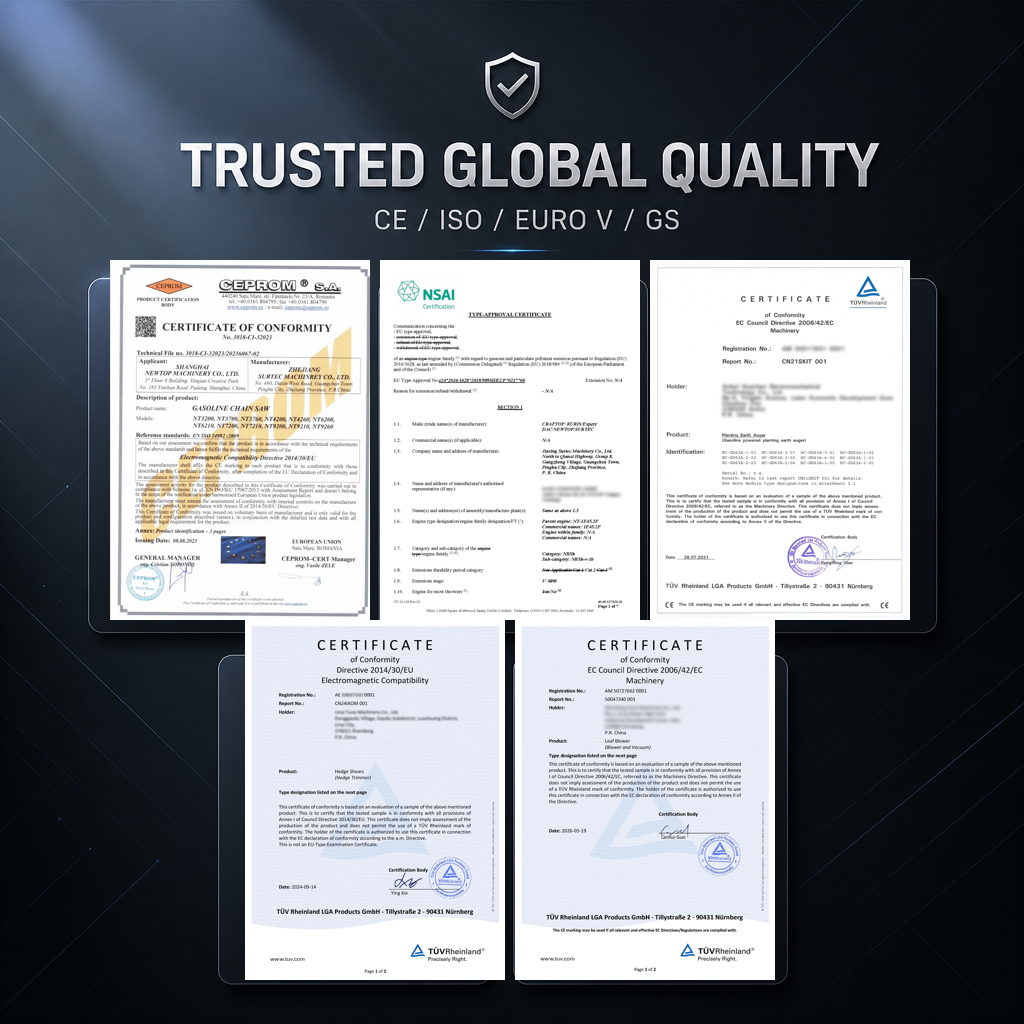
Depending on the product and model, NEWTOP also has documentation or certifications 含む CE, EMC, EPA, RoHS and EURO V. Marine products can involve additional certification such as CCS.
These should not be presented as a single certificate package covering every NEWTOP product.
The right approach is to match the available document to the actual model, destination, and import requirement.
Labels and Packaging Can Be Prepared for the Market
A supplier can also prevent problems by getting market-specific product information right during production.
Voltage and frequency must always reflect the machine’s actual technical configuration. They should not be altered simply because a customer requests different numbers on the label.
Other elements can be customized according to confirmed importer requirements, 含む:
- language;
- importer information;
- warning labels;
- product and carton labels;
- logos;
- packaging artwork;
- barcodes and other commercial information.
For NEWTOP distributors and appointed agents, these market-specific requirements can be discussed before production so that the finished goods arrive with the agreed branding and information already in place.
That is considerably more efficient than relabeling inventory after it reaches the destination.
A Pre-Shipment Compliance Review Saves More Than a Port-Side Fix
Before production is released or the container is booked, the importer and supplier should make sure they are working from the same final compliance information.
The useful questions are straightforward:
- What is the final HS, NCM, or national tariff code?
- Is the product covered by a compulsory technical regulation?
- Does it require PVoC, certification, registration, or another approval?
- Is the final engine or electrical configuration the same one used in the technical documents?
- Are voltage and frequency correct?
- Has the required label language been confirmed?
- Does the market require importer information on the product or package?
- Which test reports or certificates are available for the actual model?
- Do the invoice and packing-list descriptions match the goods?
- Is a Certificate of Origin required?
- Does a lithium product need a separate compliance and transport review?
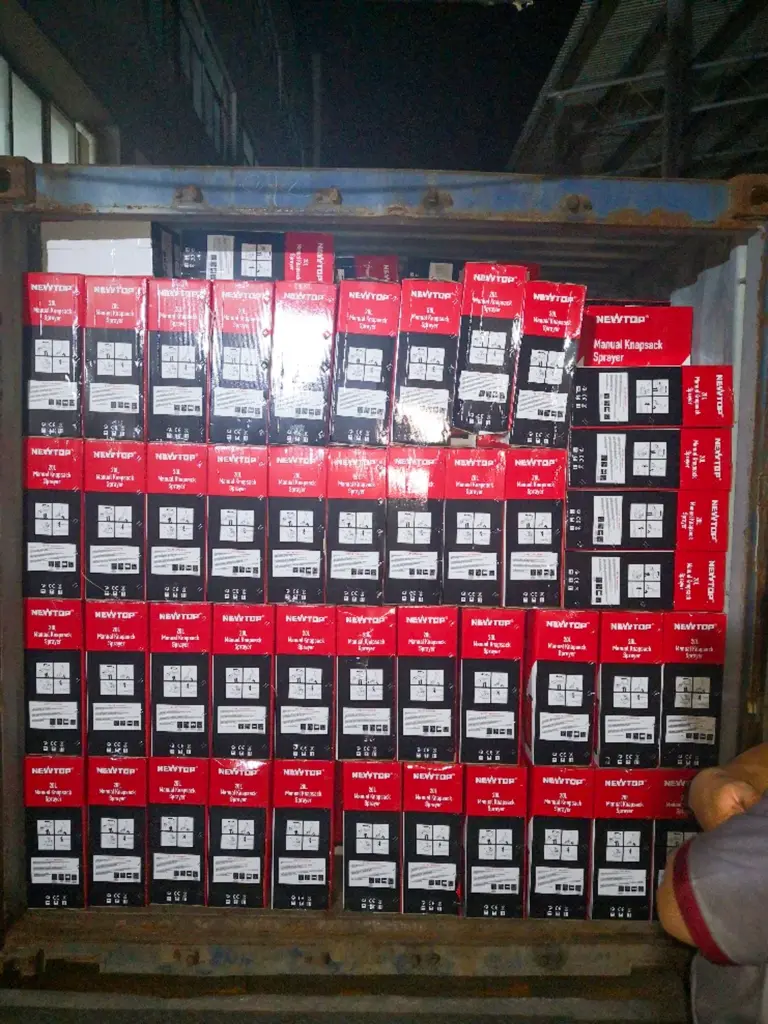
For mixed containers, this check becomes even more important. One shipment may include gasoline machinery, electric tools, スペアパーツ, and battery products, yet each group can follow a different regulatory path.
Compliance Is Easier to Fix Before Production Than After Arrival
There is no single “Africa certificate” or “Latin America certificate” for garden machinery.
Nigeria may require SONCAP for regulated commercial goods. Kenya and Tanzania can move conformity verification into the exporting country. Zambia works from its compulsory-standard scope. South Africa has specific requirements for regulated electrical lawn and garden machinery.
Across Latin America, ブラジル, メキシコ, ペルー, and other markets often make the tariff classification the starting point for determining what comes next.
That is where cooperation with an experienced outdoor power equipment supplier matters.
NEWTOP can support importers with product specifications, available certification and test documentation, export documents, and customized labels or packaging according to confirmed market requirements. Complete machines and spare parts can also be coordinated within the same sourcing process.
But the safest sequence should stay the same:
Identify the exact product. Confirm the destination requirement. Finalize the specification and labeling. Prepare the documents. Then ship.
Most compliance problems cost far less to solve while the machine is still on a production sheet than when the container is already waiting at the destination port.