Choosing the right string trimmer head can affect cutting performance, line consumption, machine load, and operator efficiency. A head designed for light lawn trimming may not be suitable for dense weeds or brush, while a heavy-duty blade system can be unnecessary for simple grass edging.
Broadly speaking, string trimmer heads can be classified in several ways, including feeding mechanism, line loading method, cutting medium, line outlet configuration, and blade design. Understanding these differences helps users select a cutting system that matches the machine and the job.
This guide explains the main types of trimmer heads, how they work, what applications they suit, and how to check compatibility before replacing one.
What Is a String Trimmer Head?
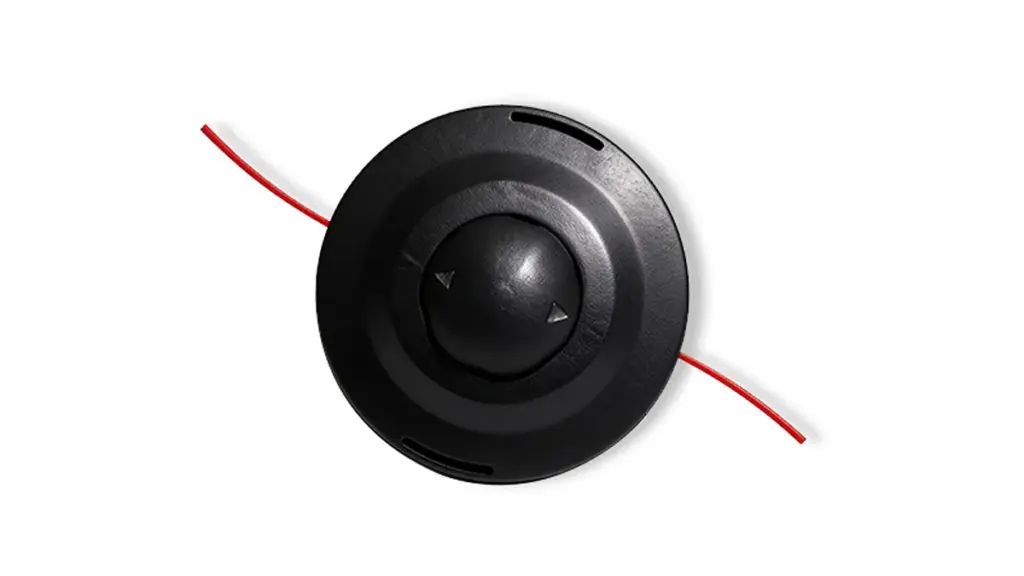
UN string trimmer head is the cutting assembly installed at the bottom of a string trimmer or brush cutter shaft. It holds the cutting line and controls how the line is released as the head rotates. When the engine or motor drives the shaft, the trimmer head spins at high speed, causing the nylon line to extend outward and cut grass, erbacce, and other light vegetation.
Main Components of a String Trimmer Head
A typical string trimmer head consists of several key components. The exact structure depends on the head type, but the main parts usually include:
- Housing: The outer body protects the internal components and holds the cutting system together.
- Spool: Used in spool-type heads to store the wound nylon line.
- Trimmer Line: The nylon cutting material that contacts and cuts grass and weeds.
- Feed Mechanism: Controls how additional line is released. Bump feed heads use a bump mechanism, while automatic-feed designs use an internal release system.
- Bump Knob: Found on many bump feed heads. It allows the operator to release more line by tapping the head against the ground.
- Cover or Cap: Holds the spool and internal parts in place and allows access for line replacement.
- Mounting Nut or Adapter: Connects the trimmer head to the machine’s drive shaft. The thread and mounting system must match the trimmer.
- Eyelets or Line Openings: Guide the nylon line from the inside of the head to the outside during operation.
How Are String Trimmer Heads Classified?
String trimmer heads can be classified from several different angles because one head can belong to more than one category at the same time.
The most common classification methods are:
- By feeding mechanism: bump feed, automatic feed, and fixed line.
- By line loading method: manual wind, easy-load/speed-feed, and pre-wound spool.
- By cutting medium: filo di nylon, metal blade, wire, or wire brush.
- By line outlet configuration: single-line, dual-line, and multi-line.
- By blade design: 2-tooth, 3-tooth, 4-tooth, circular saw, and cut-out blade designs.
Different Types of String Trimmer Head Comparison
| Trimmer Head Type | Feed Mechanism | Line Spooling / Loading | Compatible Line Diameter | Key Advantages | Key Disadvantages | Best Use Cases |
|---|---|---|---|---|---|---|
| Bump Feed Head Standard di settore |
Bumps on ground; spring & ratchet release line via centrifugal force | Moderare (Requires housing disassembly & manual winding) |
0.065″ – 0.105″ (1.6mm – 2.7mm) |
• Precise line consumption control • Feeds line on-the-fly without stopping engine • High overall operational efficiency |
• Bottom cap wears down from ground bumps • Excessive force can over-feed line |
Regular lawn maintenance, paesaggistica commerciale, edge trimming |
| Easy Load / Speed Feed Top Recommendation |
Bump feed mechanism (Advanced version) | Very Easy (No disassembly; feed line through and twist spool) |
0.080″ – 0.105″ (2.0mm – 2.7mm) |
• Eliminates line tangling & tedious disassembly • Fast reloading (Sotto 30 seconds) • Combines bump-feed speed with easy line loading |
• Internal ratchets can jam if hard debris gets inside • Slightly higher unit cost |
Pro landscapers, homeowners seeking fast line replacement |
| Automatic Feed (Auto Feed) Beginner Friendly |
Auto-releases fixed length on throttle / switch trigger release | Easy (Often uses pre-wound replacement spools) |
0.065″ – 0.080″ (1.6mm – 2.0mm) |
• 100% hands-free line feeding • No ground bumping required • Extremely easy for beginners |
• Higher line consumption • Cannot manually control line output • Troubleshooting line jams can be tedious |
Small residential lawns, light trimming, DIY homeowners |
| Fixed Line Head Heavy Duty |
None (Uses pre-cut individual line strips) | Very Easy (Push-in / lock pre-cut lines directly) |
0.105″ – 0.155″ (2.7mm – 4.0mm) |
• Zero line welding or internal tangling risks • Supports ultra-thick & serrated heavy-duty lines • Maximum durability in tough debris |
• Must stop machine to manually replace worn line • Cannot feed continuously |
Thick weeds, overgrown areas, brush edge clearing |
| Blade Trimmer Head Hard Cutting |
Lineless (Utilizes plastic or metal blades) | N/A (Replace individual worn blades via screws/clips) |
N/A (Replaces nylon lines entirely) |
• Extremely high cutting force • Cuts heavy weeds & small woody shoots easily • No line wearing or snapping |
• Higher risk of projectile debris / injury • Blades chip/shatter against stone or concrete |
Heavy brush clearing, thick weeds, dense vegetation |
| Steel Wire Brush Head Special Purpose |
Lineless (High-tensile twisted steel wire bristles) | N/A (Replace entire wire wheel assembly) |
N/A (Heavy steel wire bundle) |
• Highly abrasion-resistant on hard surfaces • Scrapes off moss, erbacce, and rust effectively |
• Heavy weight puts extra load on motor/gearbox • High thrown-object risk (requires protective gear) |
Pavement cracks, sidewalk moss, driveway joint weeding |
Nota: The recommended line diameter ranges shown below are industry reference values only. Actual line compatibility may vary depending on the trimmer head design, machine power, and manufacturer specifications. Always check the user manual or product specifications before selecting a trimmer line.
Types of String Trimmer Heads by Feeding Mechanism
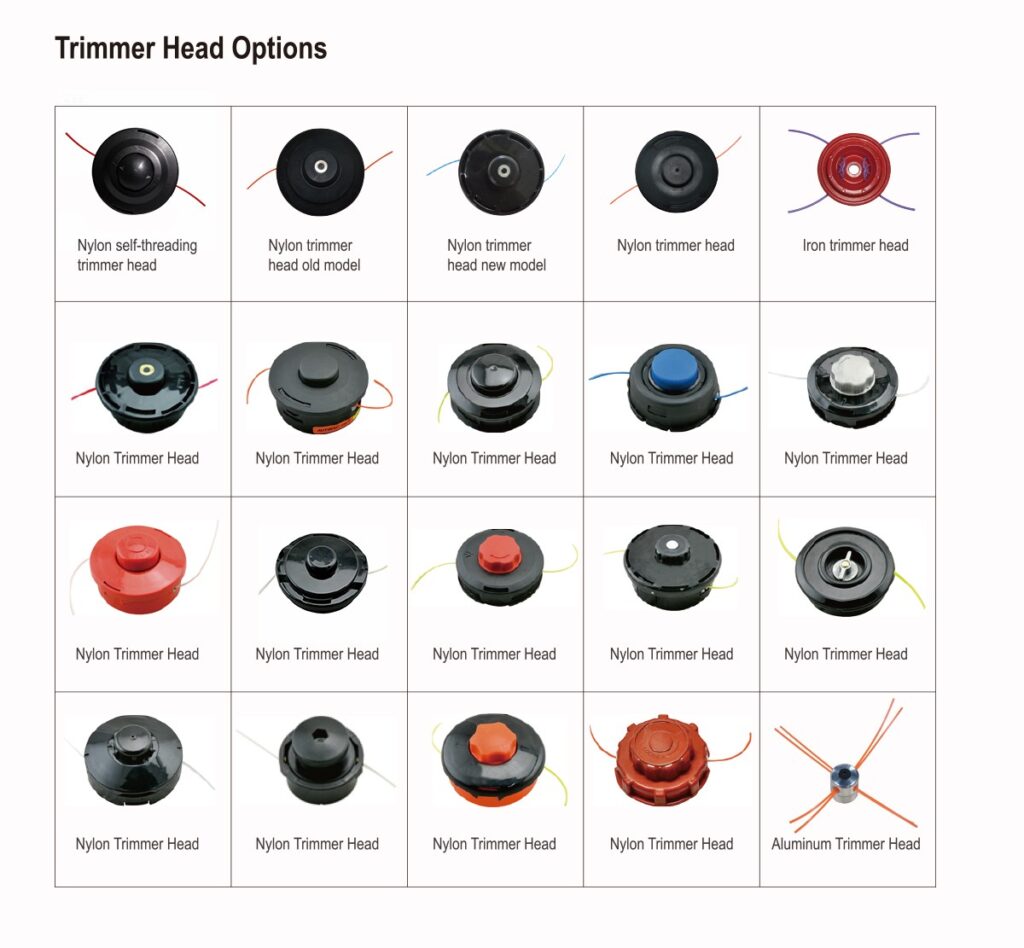
The feeding mechanism determines how the cutting line is released during operation. It directly affects user convenience, line consumption, and maintenance requirements. Different feeding systems are designed for different working conditions, from occasional lawn trimming to frequent professional landscaping tasks. The most common feeding methods include bump feed, automatic feed, and fixed line systems, each offering a different balance between control, efficienza, and simplicity.
Bump Feed Trimmer Heads
UN bump feed trimmer head uses a spool system that releases additional nylon line when the operator taps the rotating head against the ground. The impact activates a mechanical feeding mechanism, allowing centrifugal force to pull more line through the outlet holes. This design provides good control because users can decide when to extend the line. Its advantages include simple operation, wide compatibility, and easy maintenance. Tuttavia, the bump knob and internal components may wear after frequent ground contact, especially in commercial applications. Bump feed heads are widely used for general grass cutting, lawn edging, and weed trimming.
Explore NEWTOP’s trimmer head solutions for brush cutters to find the right replacement option for your application.
Automatic Feed Trimmer Heads
An automatic feed trimmer head uses an internal mechanism to release cutting line automatically during operation without requiring the operator to bump the head. Depending on the design, the system may use centrifugal force, a spring mechanism, or a preset feeding structure to maintain the correct line length. The main advantage is improved convenience, especially when covering large areas where frequent manual adjustment is inefficient. Tuttavia, automatic feed systems may consume more line if they release excessive length, and their internal mechanisms usually require more precise manufacturing compared with bump feed designs.
Fixed Line Trimmer Heads
UN fixed line trimmer head works differently from spool-based systems because it uses individual pre-cut pieces of nylon line inserted directly into the head. During operation, the fixed line rotates with the head and cuts vegetation through high-speed impact. This structure eliminates spool winding problems and allows quick line replacement, making it suitable for users who prefer simple maintenance. Fixed line heads are often used with thicker line for tougher grass and weeds. The main limitation is that the operator must manually replace worn line sections instead of extending line automatically during cutting.
Scale Your Business With Durable Power Equipment

Types of String Trimmer Heads by Line Loading Method
The line loading method describes how new cutting line is installed into the trimmer head. While all line-based heads perform the same basic cutting function, their loading designs can greatly affect replacement speed and user experience. Traditional manual winding systems focus on simple structure and reliability, while modern easy-load and pre-wound spool designs are developed to reduce downtime and make maintenance easier.
Manual Wind Trimmer Heads
UN manual wind trimmer head requires the operator to manually wrap nylon line around an internal spool before installation. The line must be wound evenly and in the correct direction to ensure smooth feeding during operation. This design is one of the most traditional and widely used systems because of its simple structure, low manufacturing cost, and reliable performance. Tuttavia, replacing line takes more time compared with modern easy-load systems, and incorrect winding can cause line jams or uneven feeding. Manual wind heads are commonly used in residential and professional-grade trimmers where durability and cost efficiency are important.
Easy Load / Speed Feed Trimmer Heads
An easy load or speed feed trimmer head is designed to simplify the line replacement process by reducing the need to disassemble the spool or manually wind the entire line. In many designs, the operator inserts the line directly through the head and rotates the spool to load it evenly. This system improves maintenance efficiency and reduces downtime, making it popular among professional landscapers and commercial users. The main advantage is faster line installation, while the disadvantage is that the structure is usually more complex and may require higher manufacturing precision compared with traditional manual wind heads.
Pre-Wound Spool Trimmer Heads
UN pre-wound spool trimmer head uses a replacement spool that has nylon line already installed by the manufacturer. When the line is exhausted, users simply remove the old spool and install a new one instead of winding fresh line manually. This provides the fastest and easiest replacement process, especially for occasional users who prioritize convenience. Tuttavia, pre-wound spools usually have higher replacement costs and require users to purchase compatible spool sizes. This type is commonly found on consumer-grade electric and battery-powered trimmers where ease of use is a major purchasing factor.
Types of String Trimmer Heads by Cutting Medium
The cutting medium is the actual material that contacts and removes vegetation. Different materials provide different levels of cutting strength, flexibility, durabilità, e sicurezza. Nylon line is commonly used for general grass trimming, while metal blades and wire-based systems are designed for tougher vegetation or specialized applications.
Nylon Line Trimmer Heads
Nylon line trimmer heads are the most common cutting systems used for grass trimmers and decespugliatori. They rely on flexible nylon line rotating at high speed to cut grass and weeds through impact force. Different line diameters, shapes, and materials can affect durability, efficienza di taglio, and resistance to breakage. Nylon heads offer excellent safety because the flexible line is less likely to cause damage when contacting hard surfaces. Tuttavia, they are less effective against thick brush, woody stems, or dense vegetation. They are ideal for lawn maintenance, trimming edges, and general landscaping applications.
Blade Trimmer Heads
UN blade trimmer head uses rigid metal blades instead of flexible nylon line to provide stronger cutting performance. The rotating blade cuts vegetation through direct contact, making it suitable for thick grass, heavy weeds, and small brush that may quickly wear down nylon line. Blade systems offer higher cutting power and longer service life in demanding applications, but they require stronger machines, proper safety guards, and correct installation. Because metal blades generate higher impact forces, they are mainly used with professional brush cutters rather than lightweight residential string trimmers.
Wire and Wire Brush Trimmer Heads
Wire and wire brush trimmer heads use metal wire elements or brush-style cutting materials to remove tough vegetation, moss, erbacce, and surface growth. Instead of cutting with a sharp edge, the rotating wire creates an abrasive cleaning and cutting action. These heads can be useful for specialized tasks such as removing weeds between paving stones or cleaning hard surfaces.
Types of String Trimmer Heads by Line Outlet Configuration
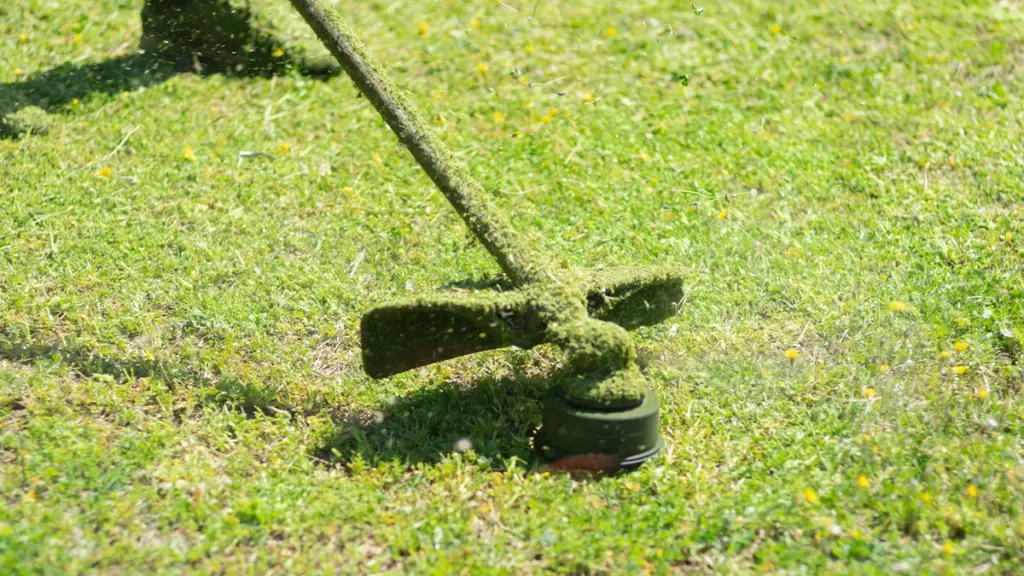
The line outlet configuration refers to the number and arrangement of cutting line ends extending from the trimmer head. This design affects cutting coverage, efficienza, and the load placed on the trimmer motor or engine. Single-line systems are usually designed for lighter applications, while dual-line and multi-line heads provide increased cutting performance for larger areas and heavier grass conditions.
Single-Line Trimmer Heads
UN single-line trimmer head uses one piece of nylon line extending from the head during operation. Because it has fewer moving components and lower rotating resistance, it is often used on lightweight trimmers designed for residential lawn care. Single-line systems provide stable operation, lower line consumption, and easier maintenance compared with multi-line designs. Tuttavia, they generally provide less cutting coverage and lower cutting efficiency when dealing with dense vegetation. They are suitable for light trimming, lawn edges, and areas where precision is more important than maximum cutting speed.
Dual-Line and Multi-Line Trimmer Heads
UN dual-line or multi-line trimmer head uses two or more cutting line ends extending from the head, increasing the number of cutting points during rotation. This design improves cutting efficiency and allows the machine to remove more vegetation with each rotation. Multi-line heads are commonly used for heavier grass and professional landscaping applications. Tuttavia, additional line increases air resistance and places more load on the engine or motor. Perciò, these heads require sufficient machine power and proper line diameter selection to maintain performance and avoid excessive wear.
Types of Metal Blade Trimmer Heads by Blade Design
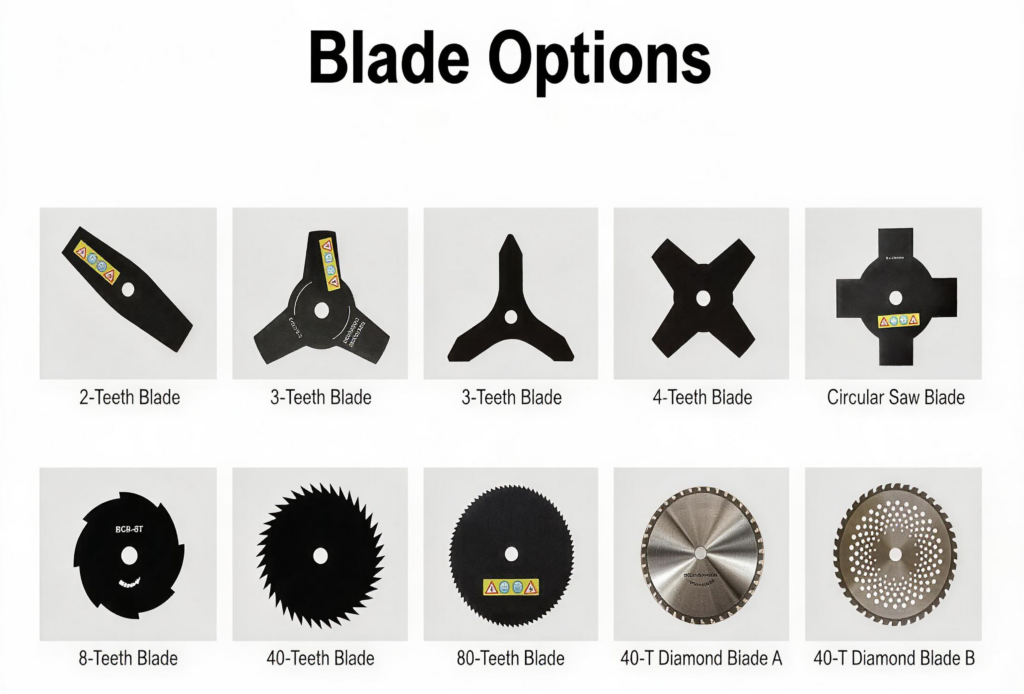
Metal blade heads are mainly used on brush cutters and heavy-duty trimming equipment where nylon line cannot provide enough cutting force. The blade shape, tooth number, and overall structure determine how efficiently the blade cuts different types of vegetation.
2-Tooth Straight Blades
UN 2-tooth straight blade features two cutting edges positioned opposite each other on the blade disc. Its simple design provides good balance, low rotating weight, and efficient cutting performance for lighter vegetation. Because it has fewer teeth, it can maintain high rotational speed with less power demand compared with multi-tooth blades. These blades are commonly used for grass cutting and soft weeds. Tuttavia, they are not designed for dense brush or woody plants because the limited number of cutting edges reduces their ability to handle tougher materials.
3-Tooth Blades
UN 3-tooth blade is one of the most commonly used brush cutter blades because it provides a balance between cutting strength, controllare, and versatility. The three cutting edges distribute impact force more evenly while maintaining efficient rotation. This design is suitable for medium-density grass, erbacce, and general vegetation management. Compared with 2-tooth blades, 3-tooth designs offer improved cutting coverage, while remaining lightweight enough for many brush cutters.
4-Tooth Blades
UN 4-tooth blade provides additional cutting edges compared with 2-tooth and 3-tooth designs, improving cutting consistency when working through thicker vegetation. The increased number of teeth allows more frequent contact with plants during rotation, which can improve cutting efficiency. Tuttavia, the additional material also increases blade weight and requires appropriate machine power. Four-tooth blades are often used for heavier grass and tougher weeds where users need stronger performance than standard nylon line systems but do not require a circular saw blade.
Lame per seghe circolari
UN circular saw blade uses multiple sharp teeth around the outer edge, similar to a traditional saw. Unlike grass-cutting blades, it is designed to handle much tougher vegetation, including thick brush, small woody stems, and young saplings. The large number of teeth provides aggressive cutting performance, but it also requires higher engine power, correct blade mounting, and professional operating practices. Circular saw blades are typically used with heavy-duty brush cutters and should only be installed on machines specifically designed to support this type of cutting attachment.
Cut-Out and Hollowed Blade Designs
Cut-out and hollowed blade designs use openings or reduced material areas in the blade body to decrease weight while maintaining cutting strength. These designs help reduce rotating mass, improve machine balance, and lower operator fatigue during extended use. The cut-out structure can also improve handling by reducing resistance during rotation. Different opening patterns are developed for specific vegetation conditions, from grass management to heavier brush cutting. As with all metal blades, performance depends on matching the blade design with the brush cutter power, guard system, and intended working environment.
How to Choose the Right Trimmer Head for Your Yard
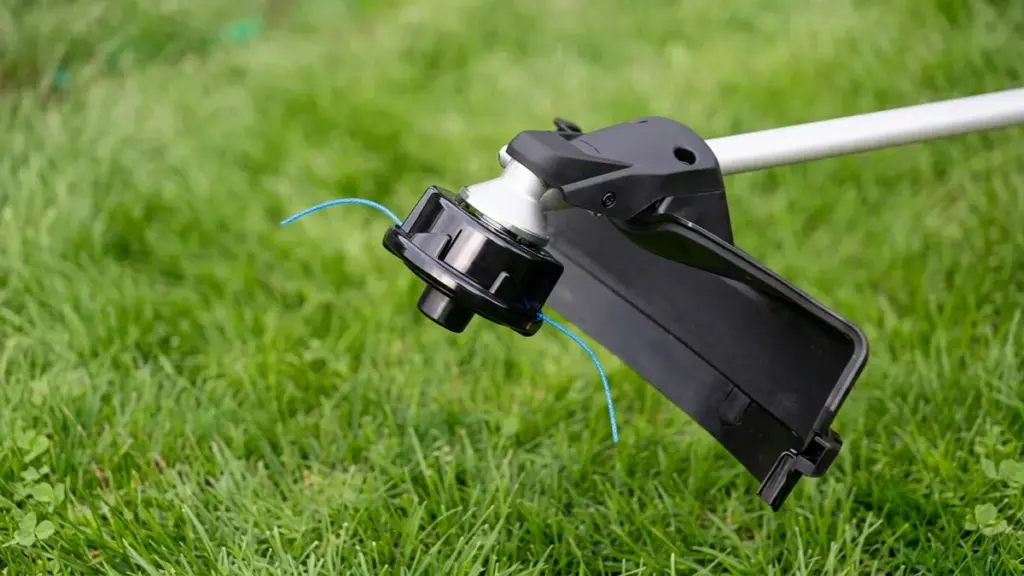
Start with the vegetation, then consider the machine.
For normal lawn grass and edging, a nylon-line head is usually the most practical choice. A bump-feed or automatic-feed design can make frequent line adjustment easier.
For thick weeds and tall grass, choose a stronger head and a suitable line diameter. If the vegetation becomes woody or brush-like, a compatible metal blade may provide better cutting performance.
You should also consider:
- Machine power: Heavy heads and blades require suitable engine power.
- Cutting material: Nylon line is suitable for general trimming; blades are better for tougher vegetation.
- Line diameter: Thicker line provides greater durability but increases machine load.
- Working frequency: Commercial users may benefit from easy-load or speed-feed systems.
- Manutenzione: A simple head can be preferable when fast servicing is important.
How to Match a Trimmer Head With Line Diameter
Line diameter should match both the trimmer head and machine power.
Thin line is generally suitable for light grass and requires less power to accelerate. Thicker line provides better resistance to wear and breakage and is more suitable for dense grass and weeds.
Tuttavia, using the thickest possible line is not always better. Oversized line can increase engine load, reduce rotational speed, and interfere with the feeding mechanism.
Always check the string trimmer head manufacturer’s recommended line diameter before changing from the original specification.
How to Know if a Trimmer Head Fits Your String Trimmer
A replacement head must match the machine’s mechanical and operating specifications. Check:
- Mounting thread and shaft connection
- Adapter requirements
- Rotation direction
- Maximum line diameter
- Maximum cutting diameter
- Engine or motor power
- Head weight
- Machine model compatibility
The term “universal trimmer head” does not mean that one head fits every string trimmer. Universal products usually support several common mounting systems through adapters.
For wholesale buyers and equipment distributors, checking the exact compatibility list is safer than selecting a head based only on appearance or thread size.
NEWTOP String Trimmer Heads for Different Applications
NEWTOP supplies string trimmer heads and brush cutter cutting accessories for different grass, weed, and vegetation applications. The product range includes different head structures and mounting configurations to support various brush cutter models.
Per distributori e importatori, selecting a cutting head is not only about the individual accessory. The head, filo di nylon, blade, brush cutter, and application should work as one complete cutting system.
NEWTOP can support customers looking for outdoor power equipment and replacement cutting components for different market requirements, including product selection and wholesale sourcing.
Looking for string trimmer heads or brush cutter cutting systems for your market? Contact NEWTOP to discuss suitable models, specifications, and sourcing options.
Domande frequenti
What are the different types of string trimmer heads?
String trimmer heads can be classified by feeding mechanism, loading method, cutting medium, line outlet configuration, and blade design. Common types include bump-feed, automatic-feed, fixed-line, manual-wind, easy-load, pre-wound spool, nylon-line, and metal-blade heads.
What is a bump feed trimmer head?
A bump feed head stores line on an internal spool. When the line wears down, the operator taps the spinning head against the ground. This compresses a spring mechanism to release a short, controlled amount of line without having to stop the machine.
Are universal trimmer heads really universal?
Not necessarily. Universal heads normally fit several common mounting systems rather than every trimmer on the market. Always check the thread, adapter, rotation direction, line capacity, and machine compatibility before installation.
What is the easiest trimmer head to load?
Speed-feed or easy-load bump heads are widely considered the easiest to reload. They feature an external loading path where you push the line straight through the eyelets and twist a knob or plate to wind it. This eliminates the need to open the housing or manually wrap a spool, often taking under 30 seconds.
Can I put a fixed line head on my string trimmer?
SÌ, provided the fixed line head matches your trimmer’s arbor size, thread direction, and power rating. Because fixed line heads often use thicker line intended for heavy brush and weeds, they perform best on larger gas trimmers rather than low-power consumer units.
What is the difference between automatic and bump feed trimmer heads?
The main difference comes down to user control. A bump feed head requires you to manually tap the ground to advance line, which helps minimize wasted line. An automatic head senses when the line is short or the motor load changes and advances the line on its own, providing continuous cutting but typically consuming line faster.