


- Alle
- NEWTOP-Kundengeschichten
- NEWTOP Explorer Hub
- NEWTOP-Brancheneinblicke
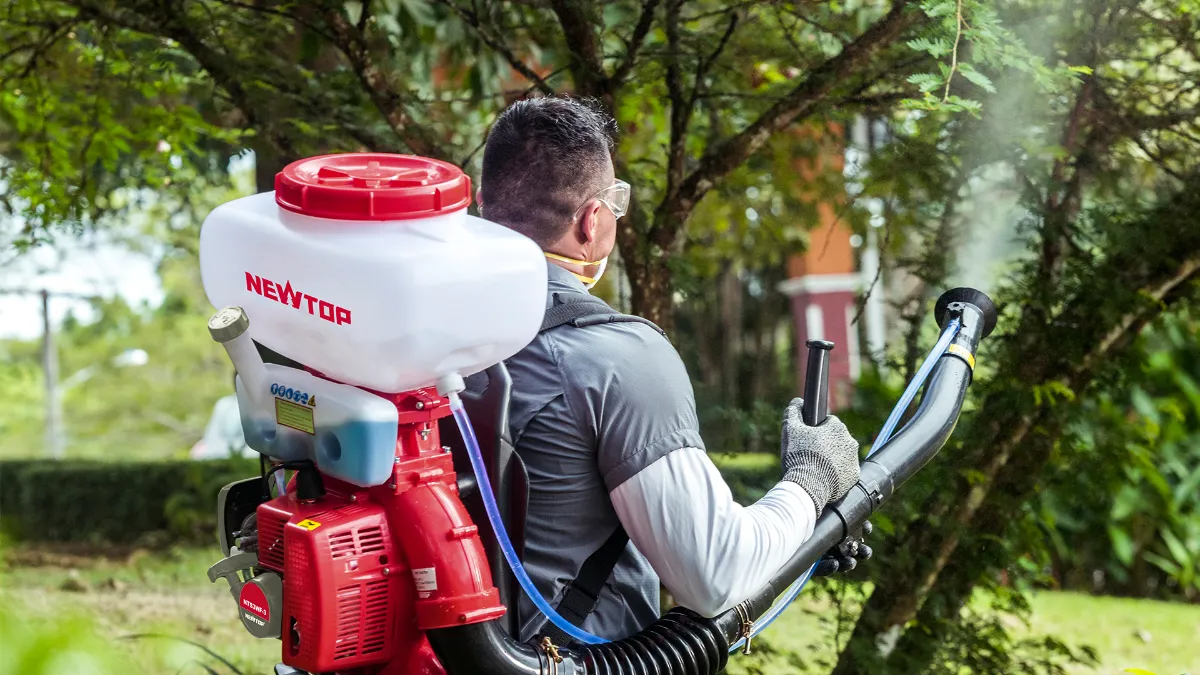
Across different farming regions, knapsack sprayers help manage crop protection efficiently. In rice fields of Southeast Asia, they are used for targeted pesticide application. In orchards in South America, sprayers allow growers to treat trees without causing excessive chemical runoff. Beyond agriculture, these sprayers are also used for urban pest control and public sanitation programs. The effectiveness of a sprayer depends on its tank design, pumping mechanism, nozzle selection, and operator technique, making equipment choice critical for consistent results.
This guide serves as a complete technical breakdown for agricultural managers and field operators. We will identify every major component in the sprayer’s anatomy. You’ll get a clear, step-by-step procedure for preparing and operating the equipment for the first time, along with a definitive list of essential safety gear. The focus is on building a repeatable process for safe, efficient, and effective crop management.
What Is Knapsack Sprayer?
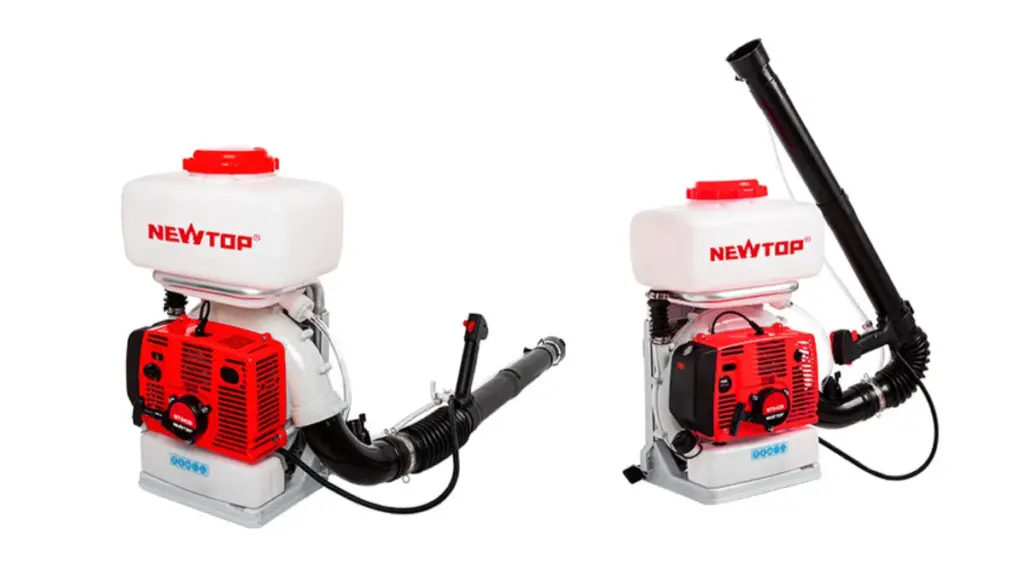
Knapsack sprayers, also known as backpack sprayers, are compact, portable devices designed to apply liquids such as pesticides, herbicides, fertilizers, and water directly onto crops, plants, and soil. Their design allows the operator to carry the sprayer on their back while controlling the nozzle with one hand, providing mobility and precision in areas where larger spraying equipment cannot reach. The portability and adaptability of knapsack sprayers make them widely used in small- to medium-scale agriculture, horticulture, and landscape maintenance.
Unlike hand-held or tractor-mounted sprayers, knapsack sprayers excel in precision spraying on irregular terrain, around densely planted crops, or inside greenhouses. The wand allows the operator to reach the undersides of leaves, branches, or hard-to-reach spots. Adjustable nozzles enable control over spray pattern and droplet size, which is crucial to prevent chemical drift, optimize coverage, and reduce wastage.
- Used for applying pesticides and fungicides to protect crops from diseases and pests.
- Facilitates precise herbicide management to control weeds in fields, Obstgärten, and gardens.
- Supports the distribution of liquid fertilizers to deliver nutrients directly to plants.
Shift from Manual to Powered Models
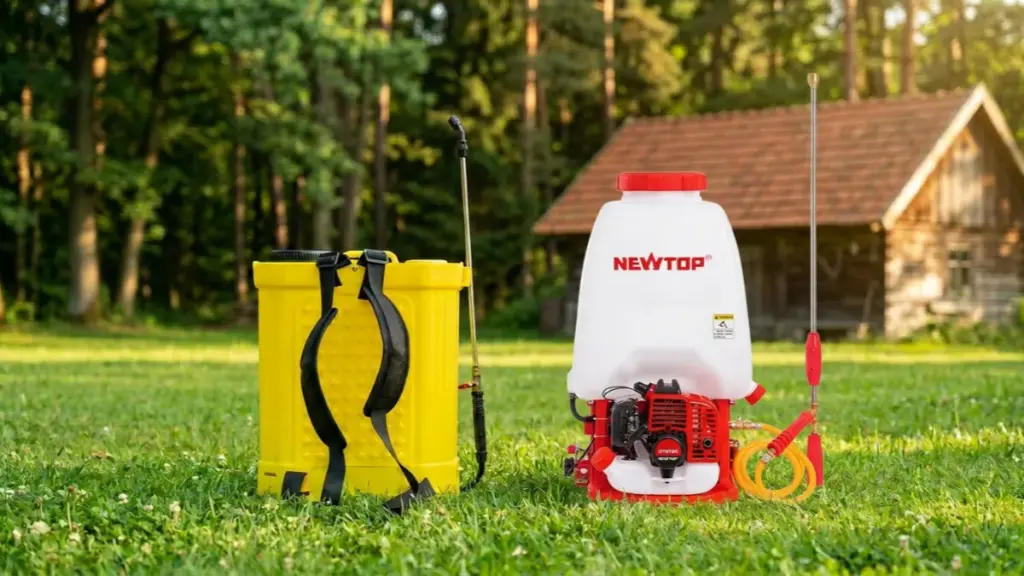
The market shows a clear trend moving from traditional manual backpack sprayers to battery-powered and motorized backpack sprayers. This change is driven by the need to reduce labor costs, increase operational speed, and achieve more consistent application pressure over large areas.
- Manual models remain a dominant choice in cost-sensitive markets due to their simplicity and affordability.
- Battery-powered electric sprayers offer consistent pressure without operator fatigue, improving application accuracy.
- Gasoline-powered models provide higher pressure and are suited for large-scale commercial operations requiring sustained power.
Related Reading: Arten von Rückensprühgeräten: Wählen Sie das beste Modell für Ihren Betrieb
Understanding the Anatomy of a Knapsack Sprayer
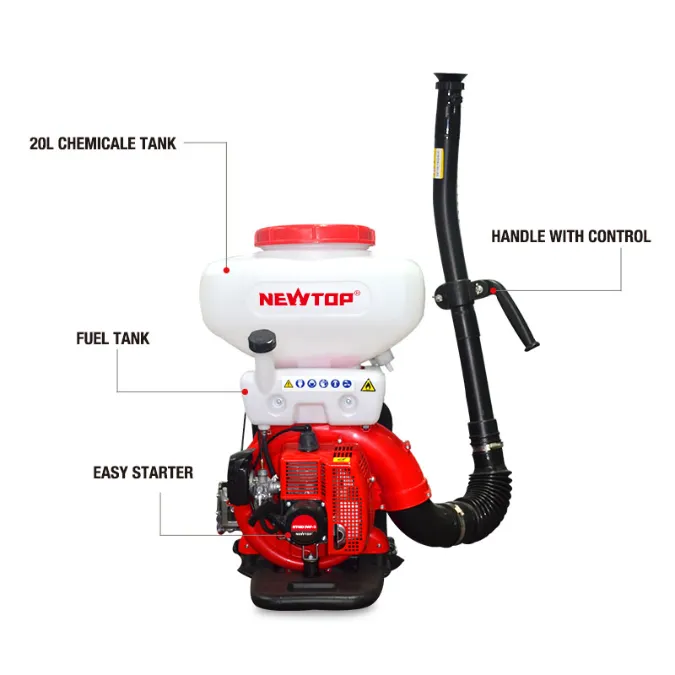
A knapsack sprayer’s design integrates four distinct systems—liquid storage, spray delivery, pressure control, and operator support—to ensure reliable and precise chemical application.
| Component System | Key Parts | Primary Function |
|---|---|---|
| Tank & Pressurization | Tank, Pump (Piston or Diaphragm) | Holds chemical liquid and generates the force needed for spraying. |
| Spray Delivery | Lance (Spray Wand), Nozzle | Directs the pressurized liquid and atomizes it into a specific pattern. |
| Kontrolle & Regulation | Trigger Valve, Pressure Regulator | Manages liquid flow and maintains consistent system pressure for uniform coverage. |
| Operator Comfort & Wartung | Harness, Rahmen, Strainer, Filter | Reduces operator fatigue and prevents internal clogs to prolong equipment life. |
Tank and Pressurization System
The tank and pump form the core of a knapsack sprayer. The tank serves as the reservoir for the chemical solution, typically holding 10–20 liters, depending on the model and intended use. Tanks are constructed from durable, chemical-resistant plastics, which can withstand exposure to fertilizers, herbicides, and pesticides without corroding or deforming.
The pump generates the pressure that forces the liquid through the system. Piston pumps are generally used when high-pressure spraying is required, providing a strong, steady stream. Diaphragm pumps are preferred for abrasive or aggressive chemical formulations, offering smoother pressure and reducing wear. The selection of pump type affects spray consistency, operator fatigue, and overall efficiency.
Spray Delivery Components
Once pressurized, the liquid travels through the lance (spray wand) and exits through the nozzle.
- Lance (Spray Wand): This extendable rod allows the operator to reach leaves, stems, and other difficult-to-access areas, ensuring that all surfaces receive treatment. Its length and maneuverability are crucial for dense crops or orchard environments.
- Nozzle: The nozzle atomizes the liquid into droplets and shapes the spray pattern. Common types include:
- Flat Fan Nozzle: Produces a thin, uniform sheet for even coverage over broad surfaces.
- Cone Nozzle: Creates a circular spray pattern, ideal for targeted misting and dense foliage.
- Adjustable Nozzle: Allows operators to change the spray type according to crop requirements.
Proper selection of nozzle type ensures efficient chemical use, reduces drift, and minimizes over-application.
Control and Regulation Mechanisms
Spraying effectiveness depends on the operator’s ability to regulate liquid flow and pressure:
- Trigger Valve: Mounted on the wand handle, this allows instant control over start-and-stop of liquid flow. It helps reduce chemical waste and improves precision during targeted applications.
- Pressure Regulator / Pressure Chamber: Maintains consistent system pressure, ensuring a uniform spray across the entire treatment area. Consistent pressure is particularly important in manual pumps or battery-operated sprayers, preventing uneven coverage or missed spots.
Together, these mechanisms allow operators to maintain accurate application rates, adapt to different crops, and minimize chemical use.
Operator Comfort and Maintenance Features
Ergonomic design improves usability and reduces operator fatigue, especially during long spraying sessions:
- Harness and Frame: Padded, adjustable straps distribute the sprayer’s weight evenly across the shoulders and back, reducing strain. Some models include waist belts or back supports for additional comfort.
- Strainer and Filter: Positioned at the tank inlet or inside the pump, these prevent debris from entering the system, reducing the risk of nozzle clogging and prolonging equipment life.
Routine inspection and maintenance of these components, such as cleaning filters and adjusting straps, ensures consistent performance and increases the sprayer’s service life.
Equip Your Market with Proven Performance

Economic Importance of Knapsack Sprayer in Modern Farming
Knapsack sprayers directly boost farm profitability by enabling precise chemical application, which reduces input costs and improves labor efficiency.
Cost Efficiency and Resource Optimization
Knapsack sprayers provide significant economic advantages by ensuring the precise application of agricultural inputs. This accuracy helps minimize chemical waste, directly lowering operational costs for farmers and improving overall farm profitability.
- High-pressure pumps and adjustable nozzles optimize the use of pesticides and fertilizers, reducing over-application.
- Large-capacity tanks decrease the need for frequent refilling, which saves valuable labor time and increases work continuity.
- Targeted application helps farmers get the most value from every liter of chemical, boosting resource efficiency.
Labor Productivity and Time Savings
The portable, back-carried design of these sprayers significantly boosts labor efficiency on farms. It allows a single worker to manage larger areas more quickly and accurately, optimizing workforce deployment, especially where labor is a major expense.
- Farmers can cover more acreage in less time, a crucial benefit for small to medium-sized operations.
- The ergonomic design enables operators to work comfortably and maintain consistent performance throughout the day, maximizing output.
Market Scale and Manufacturing Growth
The global demand for knapsack sprayers highlights their economic importance, fostering the growth of major manufacturing hubs. This industrial concentration reflects the tool’s proven return on investment for farmers worldwide.
- Regions like Taizhou, China have become key centers for knapsack sprayer production, supplying international markets.
- Strong global demand is driven by the clear economic benefits and efficiency gains that these sprayers provide to the agricultural sector.
Sustainability and Long-Term Farm Viability
By enabling targeted treatments and reducing overall chemical usage, knapsack sprayers contribute to more sustainable and cost-effective farming. This approach lowers immediate expenses and enhances the long-term economic health of the farm.
- Support for integrated pest management strategies reduces reliance on broad-spectrum chemical applications.
- Lowering chemical inputs not only cuts costs but also minimizes long-term environmental liabilities, making farming operations more resilient.
Common Types of Pumps Used in Knapsack Sprayers
The choice of pump technology in a knapsack sprayer—typically piston, diaphragm, or battery-powered—directly dictates its chemical compatibility, pressure capabilities, and operator efficiency.
Piston Pumps
Piston pumps are a popular and reliable option for knapsack sprayers, especially when working with standard liquid formulations. Their simple mechanical design allows them to generate consistent pressure for effective application. This makes them a go-to choice for many standard agricultural and landscaping tasks.
- Best suited for non-abrasive chemicals like liquid insecticides and herbicides.
- Known for achieving higher pressure levels, which is useful for certain spraying tasks.
- The straightforward construction simplifies maintenance and repair.
Diaphragm Pumps
Diaphragm pumps are engineered for durability, particularly when spraying abrasive or corrosive chemicals. The pump’s internal mechanism is sealed off from the chemical, which protects moving parts from wear and damage. This design is critical for operators who frequently work with wettable powders or other challenging formulations.
- Ideal for abrasive materials like wettable powders and some fertilizers.
- The sealed design reduces direct contact between chemicals and critical components.
- Offers a longer service life when used with challenging formulations.
Related Reading: Rucksackspritzenkolben vs. Membranpumpe: Welches System gewinnt?
Battery-Powered Pumps
Battery-powered systems represent a significant shift in the knapsack sprayer market. They eliminate the need for manual pumping, reducing operator fatigue and ensuring a constant, even pressure for uniform spray coverage. This technology is gaining traction in commercial operations where consistency and efficiency are primary concerns.
- Provides consistent pressure delivery without physical effort.
- Reduces operator fatigue, making it easier to complete large jobs.
- Increases efficiency and precision for both agricultural and residential users.
How to Prepare and Operate Your Backpack Sprayer for the First Time
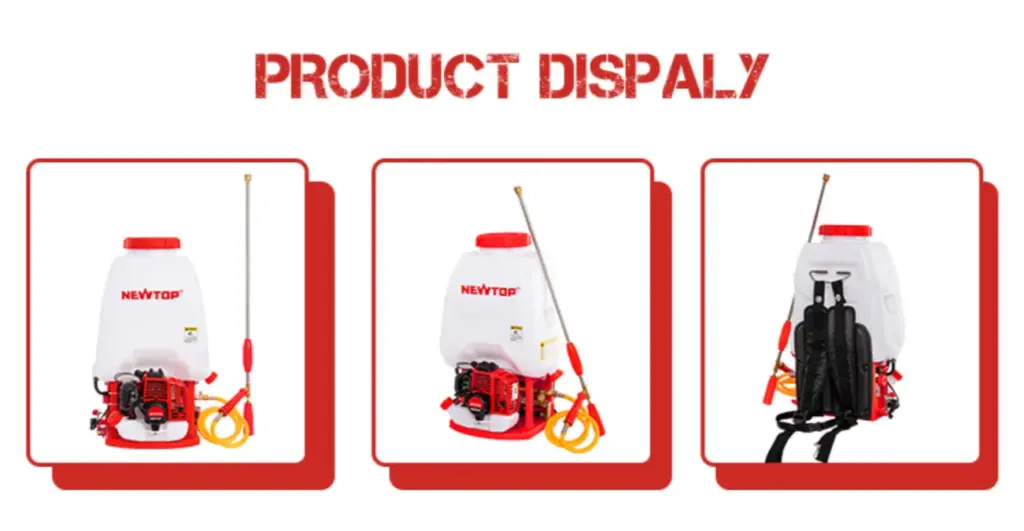
Proper sprayer setup involves a sequence of pre-use inspection, precise calibration, safe chemical mixing, and consistent application technique to ensure operational safety and effectiveness.
| Stage | Key Action | Primary Goal |
|---|---|---|
| Pre-Operation Inspection | Check for cracks, tighten all connections, and test with clean water. | Prevent leaks and confirm basic pump functionality. |
| Calibration | Spray a measured test area to calculate the application rate. | Ensure accurate dosing to avoid waste and crop damage. |
| Mixing & Filling | Wear PPE, half-fill with water, add chemical, then top off. | Achieve a safe, thoroughly mixed, and effective solution. |
| Spraying Technique | Maintain a steady pace, constant nozzle height, and overlap passes. | Achieve uniform coverage and minimize chemical drift. |
Pre-Operation Inspection and Assembly
Before you fill the tank with any chemical, a complete inspection and proper assembly are mandatory. This initial check verifies that the unit was not damaged during shipping and that all components are connected correctly to prevent leaks and ensure safe operation. A simple water test is the final step to confirm the system holds pressure as expected.
- Unpack and verify all components against the parts list in the user manual.
- Inspect the tank for any cracks or defects and confirm that all seals and gaskets are properly seated.
- Firmly attach the hose, spray wand, and nozzle, tightening every connection to create a leak-proof seal.
- Fill the tank with clean water to test the pump. Build pressure and check for any drips or leaks from the connections or seals.
Calibrating the Sprayer for Accurate Dosing
Calibration is the process of matching your sprayer’s output to the requirements of the chemical and the target area. Correct calibration is not optional; it is fundamental to effective treatment, preventing the waste of expensive chemicals, and protecting crops from being over- or under-dosed. The goal is to determine exactly how much liquid your sprayer applies over a defined area so you can mix your solution accurately.
- Fill the sprayer with a precise volume of water (z.B., 5 liters).
- Mark out a specific test area, wie zum Beispiel 10 square meters (2m x 5m).
- Spray the test area using the same walking speed and pumping rhythm you plan to use for the actual job.
- Measure the amount of water remaining in the tank. The difference is your application rate, which you can use to adjust your technique or mixture.
Proper Mixing and Filling Procedures
Handling and mixing chemical concentrates is a high-risk step that demands strict adherence to safety protocols. Always follow the instructions printed on the chemical’s label. The standard procedure is to partially fill the tank with water first, which helps dilute the concentrate safely and promotes a more thorough mix.
- Always put on your personal protective equipment (PPE), especially chemical-resistant gloves and safety glasses, before handling chemicals.
- Fill the sprayer tank about halfway with the required amount of water.
- Add the measured volume of chemical concentrate to the water in the tank.
- Add the remaining water to reach the final desired volume, then close the lid securely and agitate the tank to mix the solution completely.
Safe and Effective Spraying Techniques
Your physical technique during application directly controls the quality of coverage and your level of exposure. A disciplined, consistent method ensures the chemical is applied uniformly across the target surface and minimizes the risk of drift, where spray travels to unintended areas. Maintaining steady pressure through consistent pumping is key for an even spray pattern.
- Walk at a constant, steady pace while keeping the nozzle at a consistent height from the target plants or ground.
- Apply the spray in a smooth, sweeping motion. Overlap each pass slightly to avoid gaps and ensure even coverage.
- Do not spray in windy conditions. Wind causes chemical drift, wasting product and potentially harming adjacent, non-target plants or property.
- Pump the handle with a consistent rhythm to maintain steady pressure, which is critical for a uniform spray pattern and flow rate.
Essential Safety Gear for Backpack Spraying Tasks
Using the correct personal protective equipment (PPE) is a non-negotiable industry standard, forming the primary defense against chemical exposure during all spraying operations.
Protective Coveralls and Footwear
To shield the body from direct contact with chemicals, wearing full-body coveralls and chemical-resistant boots is fundamental. This gear acts as the primary barrier against accidental spills, splashes, and spray drift during mixing and application.
- Select coveralls made from durable, non-absorbent materials designed to resist chemical penetration.
- Use waterproof boots that are high enough to be covered by the pant legs, preventing liquids from running down into them.
- Before each use, inspect all coveralls and boots for tears or holes that could compromise protection.
Chemical-Resistant Gloves
Hands are highly susceptible to chemical exposure. Unlined, waterproof gloves made from materials like nitrile or neoprene are essential for safely handling pesticides, mixing solutions, and operating the sprayer.
- Choose gloves that extend well beyond the wrist to protect forearms.
- Never use leather or fabric gloves, as they absorb and retain chemicals, leading to prolonged skin contact.
- Regularly check for signs of degradation, such as cracks or discoloration, and replace them immediately if damage is found.
Eye and Face Protection
Protecting the eyes from chemical splashes is critical to prevent severe injury. Vented goggles or a full-face shield creates an effective barrier against airborne droplets and accidental splashes.
- Ensure goggles provide a snug seal around the eyes to block liquids from all angles.
- A face shield can offer additional protection for the entire face but should be used with goggles for complete eye safety.
- Standard eyeglasses are not a substitute for proper safety eyewear as they do not protect from splashes.
Respiratory Protection
Inhaling chemical mists or vapors can lead to serious health issues. A properly fitted respirator filters harmful particles and is a vital piece of equipment when working with many types of agricultural chemicals.
- The specific type of respirator needed is determined by the chemical being applied; always check the product’s safety data sheet.
- A tight seal between the respirator and the face is necessary for it to work correctly.
- Replace filters and cartridges based on the manufacturer’s instructions or if breathing becomes difficult.
Ready to Work with a Top 5 Knapsack Sprayer Factory?
NEUTOP has over 20 years of experience in manufacturing garden tools and agricultural equipment, providing reliable knapsack sprayers for global markets. Advantages include:
- Wide Product Range: Manual and gasoline knapsack sprayers for varied agricultural applications.
- Global Distribution: Products shipped to 65+ Länder, with after-sales support and local service points.
- Certifications and Quality: CE, GS, ETL, and ISO-certified production lines ensure consistent performance.
- Customization Options: OEM/ODM solutions for tank capacity, nozzle types, and branding to meet regional requirements.
- Technical Support: R&D-backed design ensures long-lasting durability and precise chemical application.
Partnering with us guarantees access to high-quality, durable sprayers suited to modern farming challenges.
Abschluss
The knapsack sprayer is a fundamental tool in modern agriculture, offering a precise and portable way to manage crops. Understanding its core components, proper operation, and essential safety measures is key to maximizing its effectiveness. This knowledge helps ensure consistent application, protects the operator, and extends the life of the equipment.
If you are sourcing new equipment, consider the pump type and capacity that best match your operational needs. Contact our team to review our full catalog of durable manual and battery-powered knapsack sprayers.
Häufig gestellte Fragen
What is the use of knapsack sprayer in agriculture?
Knapsack sprayers apply fertilizers, herbicides, pesticides, and water directly to crops, improving plant health and reducing chemical waste.
What are the main parts of a knapsack sprayer?
Tank, pump, hose, wand, nozzle, straps, and optionally a pressure regulator.
How does a knapsack sprayer work?
The pump pressurizes the liquid, forcing it through the hose and nozzle. The nozzle controls droplet size and spray pattern.
Is a manual or battery knapsack sprayer better?
Manual sprayers are suitable for small farms or short-term use. Battery-powered models provide uniform pressure and reduce operator fatigue for larger or repeated tasks.
What is the capacity of a standard knapsack sprayer?
Most standard knapsack sprayers range from 10 Zu 20 liters (approximately 2.6–5.3 gallons), with 16L and 20L being the most widely used capacities in agricultural applications.
How to maintain a knapsack sprayer after use?
Rinse tank, hoses, and nozzles thoroughly. Inspect for damage and store in a shaded, dry area. Periodically lubricate moving parts for longer service life.
Where can I find reliable knapsack sprayer manufacturers?
Choosing a reliable supplier requires evaluating production scale, pump testing standards, spare part consistency, and export certifications. You can review our detailed guide on the Spitze 10 Hersteller von Rückensprühgeräten to compare leading global factories.
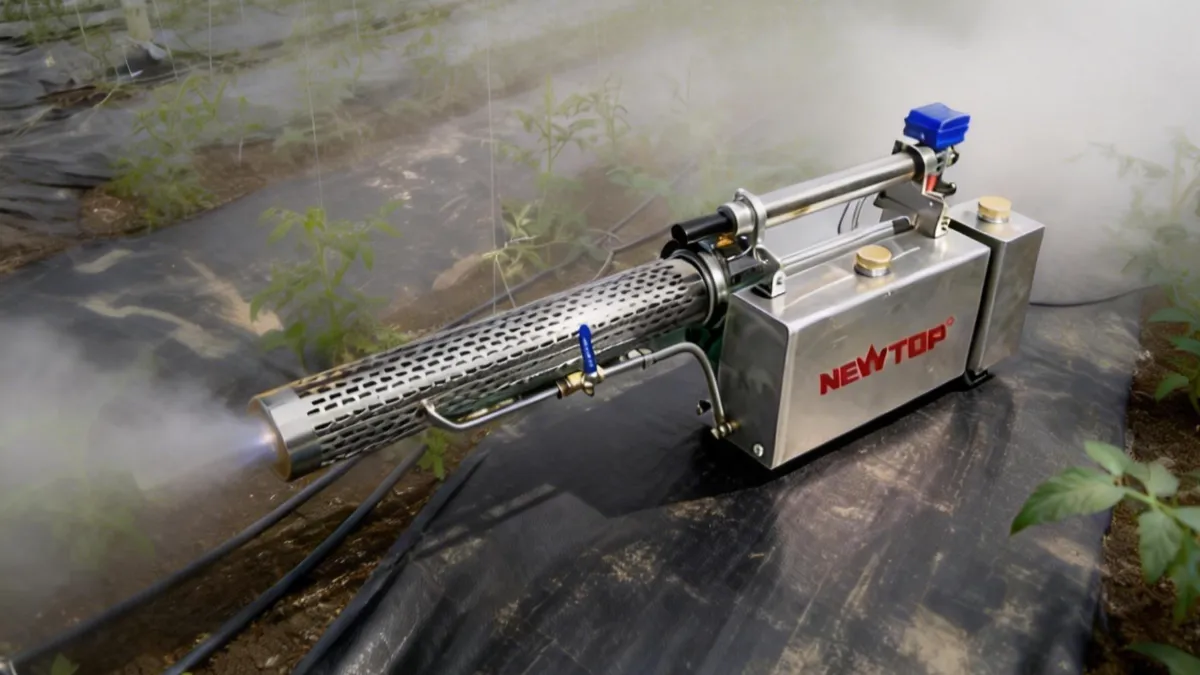
Answering ‘what is a fogger sprayer’ is the critical first step in preventing costly chemical waste and avoiding compliance failures in public health and agricultural settings. Many operations mistakenly deploy standard sprayers for tasks demanding precise, aerosolized droplets, which leads to ineffective pest control, incomplete disinfection, and significant financial losses. This fundamental mismatch in equipment is a common operational blind spot that directly impacts both safety and budget.
This guide provides the technical foundation for making informed equipment decisions. We break down the core components of professional fogging machines, detail their primary applications, and compare the key differences between thermal and cold fogger technologies. Consider this your standard operating procedure for evaluating, selecting, and safely deploying the right misting tool for any large-scale job.
What Is a Fogger Sprayer and How It Works?
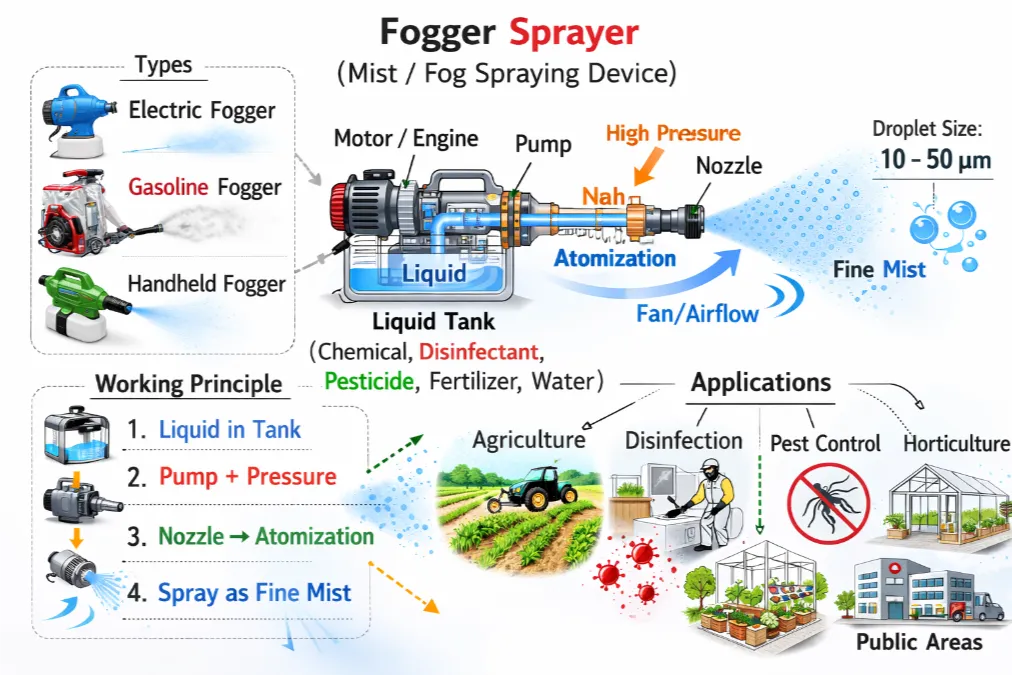
Fogger sprayers atomize liquid solutions into a fine aerosol mist, enabling uniform chemical application across large, complex surfaces that conventional sprayers cannot effectively reach.
A fogger sprayer is a specialized spraying device designed to convert liquid solutions into ultra-low volume (ULV) droplets, typically ranging from 5 Zu 50 microns. At this size, droplets behave almost like a gas, drifting through the air and settling evenly over surfaces. This makes fogging particularly effective for insect control, crop protection, and large-scale disinfection.
The Basic Fogging Mechanism
A fogger works by atomizing a liquid solution. A motor-driven pump draws the chemical from a tank and pressurizes it. This pressurized liquid is then forced through a specialized nozzle, which breaks it down into tiny droplets. A blower or fan propels these aerosol particles into the target environment, creating a fog that settles on all exposed surfaces. The machine’s design controls the droplet size to optimize air suspension time and ensure effective surface contact.
Major Fogging Technologies Used Today
Modern fogging equipment is generally categorized into thermal foggers, ULV cold foggers, and electrostatic systems. Each operates on a distinct atomization principle and is suited to different environments.
Thermal Foggers
Thermal foggers use a heated coil or combustion chamber to vaporize oil-based or water-based solutions. When the vapor exits the nozzle and encounters cooler ambient air, it condenses into a thick, visible fog. This visible plume helps operators monitor coverage in open environments.
Thermal systems are widely used in outdoor mosquito control programs, agricultural field treatments, and public health operations across tropical regions. They are especially effective when rapid large-area dispersion is required. Jedoch, because they rely on combustion and heat, they are typically not recommended for enclosed indoor spaces without proper ventilation.
ULV (Ultra Low Volume) Cold Foggers
Cold foggers, often referred to as ULV foggers, rely entirely on mechanical energy rather than heat. A high-speed blower or turbine shears the liquid into extremely fine droplets, typically under 30 microns.
ULV fogging is ideal for indoor disinfection, food processing facilities, greenhouses, poultry farms, and warehouses. Since there is no combustion process, cold foggers are safer for enclosed environments and compatible with water-based disinfectants. They are also more energy-efficient and generally produce less visible residue compared to thermal systems.
Electrostatic Sprayers
Electrostatic systems represent a more advanced variation of fogging technology. In these machines, droplets receive an electrical charge as they exit the nozzle. This charge causes the particles to actively seek and adhere to surfaces, wrapping around objects for more complete 360-degree coverage.
Electrostatic spraying is commonly used in healthcare facilities, airports, schools, and high-touch public areas where surface disinfection precision is critical. While more specialized and typically higher in cost, electrostatic technology significantly reduces chemical waste and improves uniformity of application.
Key Components of a Professional Fogger Machine
A professional fogger’s performance depends on four core systems working together: the fluid delivery mechanism, the thermal management system, the atomizing nozzle, and the electronic controls that regulate the entire process.
| Component System | Primary Function | Critical Feature |
|---|---|---|
| Fluid Tank & Pump System | Stores and pressurizes the fogging solution for consistent delivery. | Chemical-resistant tank and reliable high-pressure pump. |
| Heating Element & Heat Exchanger | Rapidly heats and vaporizes the fluid to create a dense fog. | High-wattage heater with integrated thermal safety cutoffs. |
| Nozzle & Atomizer Assembly | Expels and atomizes vapor into fine particles of a specific size. | Precision-engineered to control droplet micron size and fog density. |
| Control Electronics & Interface | Manages temperature, fluid flow, and operational timing. | Central PCB with a clear user interface, often including remote control. |
Fluid Tank and Pump System
The fluid tank stores the fogging solution, and its pump pressurizes the liquid before sending it to the heating element. The capacity and material of the tank directly influence the machine’s continuous runtime, while the pump’s reliability determines output consistency. Professional-grade machines use components built for demanding field conditions.
- The tank is constructed from durable, chemical-resistant materials to prevent corrosion from various fogging solutions.
- A high-pressure pump delivers a steady fluid flow, ensuring uniform fog generation without sputtering.
- Internal filters prevent particles from clogging the nozzle, which maintains performance and reduces downtime for maintenance.
Heating Element and Heat Exchanger
In a thermal fogger, this is the engine of the machine. The heating element and heat exchanger work together to rapidly heat and vaporize the fogging solution into a gas. Efficient heat transfer is essential for producing a thick, dry fog and is a key differentiator in machine quality. Poor thermal management can result in a wet, ineffective fog or create a safety hazard.
- A high-wattage heater block achieves the optimal operating temperature quickly, reducing startup time.
- The heat exchanger is designed to maximize the surface area exposed to the fluid, ensuring complete and efficient vaporization.
- Embedded temperature sensors and thermal safety cutoffs are non-negotiable features that prevent the unit from overheating.
Nozzle and Atomizer Assembly
The nozzle is the final stage, where the pressurized, vaporized solution is expelled and atomized into extremely fine particles, creating the visible fog. The engineering of the nozzle assembly determines the droplet size, measured in microns, and the fog’s projection distance. This component is critical for achieving the desired coverage and penetration for applications like Schädlingsbekämpfung or disinfection.
- Precision nozzles create particles of a specific micron size, ensuring the fog hangs in the air and coats surfaces effectively.
- Materials used in the nozzle must withstand high temperatures and constant pressure without degrading.
- Many professional models feature adjustable output settings, allowing operators to control fog density and flow rate for different environments.
Control Electronics and Interface
Modern foggers are not just mechanical devices; they rely on sophisticated electronic controls to manage every function with precision. The central printed circuit board (PCB) regulates temperature, fluid flow, and output timing. A well-designed user interface allows the operator to configure these settings easily and monitor the machine’s status, which is vital for repeatable and predictable results.
- The PCB acts as the brain, synchronizing the pump and heater to produce a consistent output.
- A straightforward interface with buttons, indicator lights, or a digital display gives the operator full control over the machine’s functions.
- Remote control capabilities, whether wired or wireless, allow for convenient and safe operation from a distance.
Professional Fogger Solutions for Large-Scale Control
Hauptanwendungen für Nebelgeräte in der Schädlingsbekämpfung und Landwirtschaft
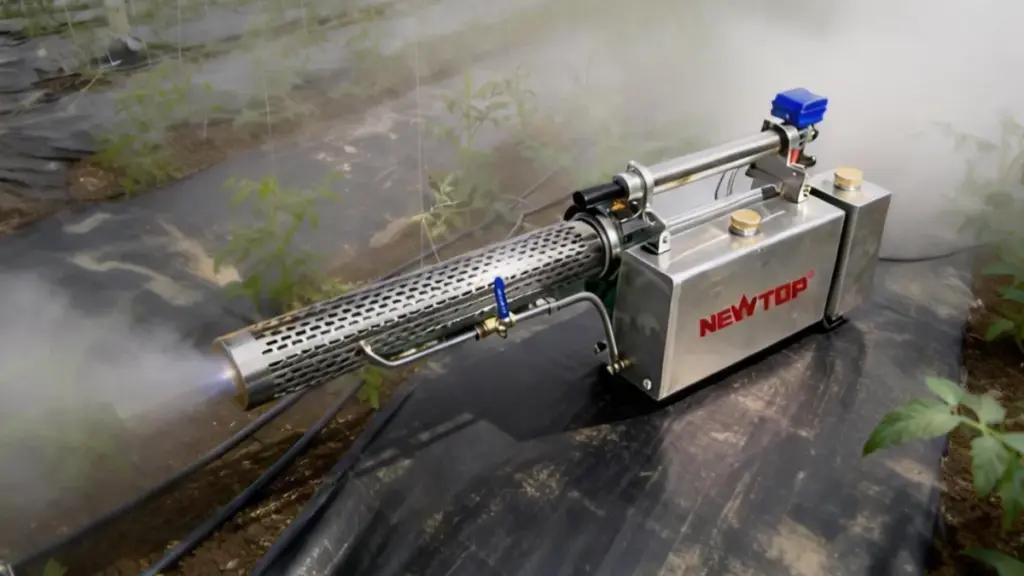
Foggers are essential tools in agriculture and public health, delivering atomized solutions for crop protection, large-scale sanitization, and environmental control.
Agricultural Pest and Disease Management
In farming and greenhouse operations, foggers deliver fine aerosol droplets that penetrate dense plant canopies. This process ensures fungicides and pesticides reach all surfaces, including the undersides of leaves, providing comprehensive protection against pests and diseases. The superior coverage and penetration capabilities are critical for maintaining crop health and maximizing yields.
- Covers large areas like field crops and orchards quickly, improving labor efficiency during treatment windows.
- Delivers uniform application of chemicals, reducing waste and minimizing environmental runoff.
- Effective for controlling insects and fungal growth in controlled environments like greenhouses and nurseries.
Large-Scale Disinfection and Sanitization
ULV (Ultra Low Volume) cold foggers are standard equipment for sanitizing public spaces, commercial facilities, and livestock enclosures. They disperse disinfectants as a fine mist that settles on surfaces to neutralize pathogens without causing excessive wetness. This method is crucial for contamination control protocols in food processing, healthcare, and transportation sectors.
- Used in food production facilities to maintain sanitary conditions and prevent contamination.
- Sanitizes transportation hubs, schools, and hospitals to control the spread of viruses and bacteria.
- Disinfects animal housing such as poultry farms and barns to protect livestock health.
Humidity and Climate Control
Fogging systems help regulate humidity and temperature in specialized agricultural settings. By releasing a fine water mist, they create optimal growing conditions for sensitive plants or help preserve perishable goods. This application of humidity management is vital for high-value crops and extending the shelf life of produce.
- Increases ambient humidity in greenhouses, which is critical for cultivating tropical plants and seedlings.
- Provides evaporative cooling to lower temperatures during hot weather, reducing heat stress on crops.
- Maintains moisture levels in storage facilities for produce and flowers to extend their shelf life.
Read more: Spitze 10 Hersteller von Rückenspritzen in 2026
Benefits of Using a Fogger Sprayer for Large-Scale Disinfection
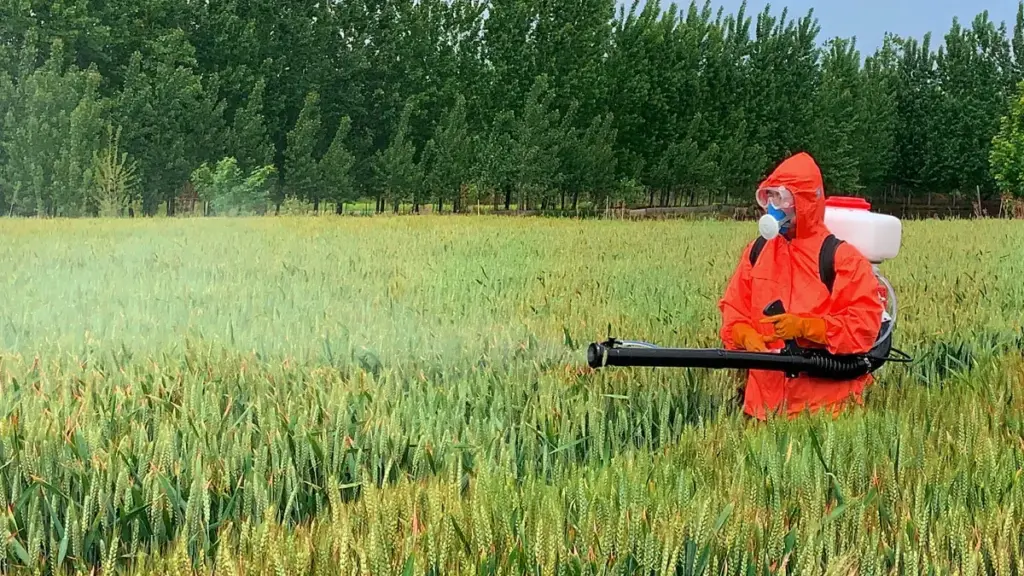
When properly calibrated and applied according to chemical guidelines, fogger sprayers can significantly improve operational efficiency in large-scale disinfection environments. Their ability to produce ultra-fine droplets allows for more uniform spatial coverage compared to conventional manual cleaning methods.
Superior Surface Coverage
Fogging systems generate a controlled mist that disperses throughout an enclosed space rather than targeting only visible surfaces. Because the droplets remain suspended for a period of time, they are more likely to contact elevated surfaces, corners, ventilation openings, and the undersides of equipment.
Electrostatic variants further enhance deposition efficiency by electrically charging droplets, which encourages them to adhere more effectively to target surfaces.
While exact coverage performance depends on room layout and airflow conditions, fogging technology generally provides more consistent volumetric distribution than manual wiping or pump spraying.
Optimized Chemical Efficiency and Labor Productivity
ULV foggers are designed to apply disinfectant solutions in very small droplet sizes, which increases dispersion efficiency. In many facility maintenance scenarios, this allows operators to treat larger areas using lower total liquid volume compared to conventional high-volume spraying.
Zusätzlich, fogging reduces the need for repetitive manual surface wiping across large facilities. A single trained operator can treat open spaces more quickly than traditional cleaning crews, improving labor productivity and reducing operational downtime.
Actual savings will vary depending on room configuration, chemical type, and application protocol.
Rapid Treatment for Extensive Areas
Foggers are particularly valuable in warehouses, production facilities, livestock housing, and other large commercial environments where rapid treatment is essential.
Coverage rate depends on machine capacity and operator technique. Portable and backpack ULV foggers are commonly used for medium-to-large indoor areas, while high-capacity thermal foggers are preferred for outdoor vector control and expansive open spaces.
Because fogging distributes disinfectant in airborne form, it enables faster treatment cycles compared to surface-only cleaning methods, supporting quicker facility turnaround.
Thermal Foggers vs. Cold Foggers: Major Differences
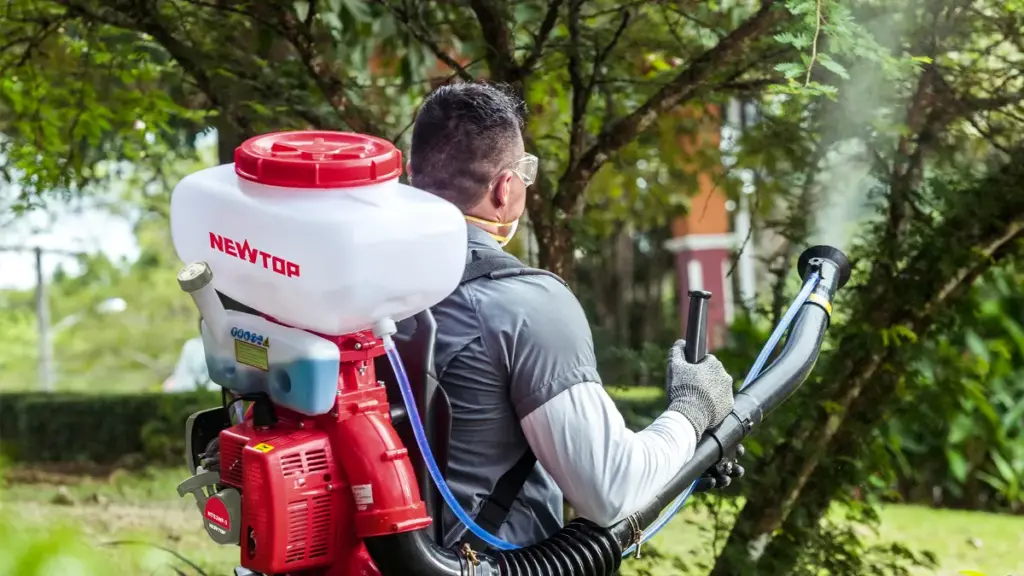
The choice between thermal and cold foggers hinges entirely on the application environment; thermal units excel outdoors with fine, heat-vaporized particles, while cold (ULV) foggers provide safer, heat-free atomization for indoor and sensitive areas.
| Besonderheit | Thermal Fogger | Cold (ULV) Fogger |
|---|---|---|
| Operating Mechanism | Uses heat to vaporize a chemical solution. | Uses high pressure and air shear to atomize liquid. |
| Particle Size | Extremely fine (0.5–10 microns). | Fine, often adjustable (5–50 microns). |
| Ideal Environment | Large-scale outdoor areas (Bauernhöfe, forests). | Indoors and enclosed spaces (hospitals, greenhouses). |
| Safety Profile | Poses a fire hazard; requires careful handling. | No heat, no fire risk, and generally quieter operation. |
| Chemical Compatibility | Typically requires oil-based carriers. | Works with a wide range of water and oil-based solutions. |
Operating Mechanism and Particle Size
The fundamental distinction between these machines is how they generate fog.
Thermal foggers employ heat to flash-vaporize a chemical solution, which then condenses upon contact with cooler ambient air. This process creates a dense, highly visible fog composed of extremely fine particles.
Cold foggers, also known as Ultra Low Volume (ULV) Maschinen, use high-pressure air to shatter liquid into a fine mist without any heat. This mechanical process of atomization offers greater control over droplet size.
Ideal Applications and Environments
Each fogger type is engineered for specific operational contexts.
Thermal foggers are the established tool for expansive outdoor applications, such as large-scale pest control in agriculture and public health vector control programs. Their dense fog can drift over vast areas, effectively treating forests, Bauernhöfe, and municipalities.
Cold foggers have become the standard for indoor and commercial use where safety and operational noise are primary concerns.
Chemical Compatibility and Safety
Cold foggers offer superior chemical versatility. Because they operate without heat, they can safely aerosolize a wide array of solutions without degrading the active ingredients. This makes them suitable for disinfectants, biocides, and pesticides that are sensitive to high temperatures. This operational safety extends to the operator and the environment, especially in enclosed areas where fire risk must be eliminated.
Thermal foggers are more restrictive, often requiring oil-based carriers to produce a thick fog. The high-temperature operation introduces a clear fire hazard if mishandled or used near flammable materials, making them unsuitable for most indoor applications.
Critical Safety Protocols for Operating Fogging Equipment
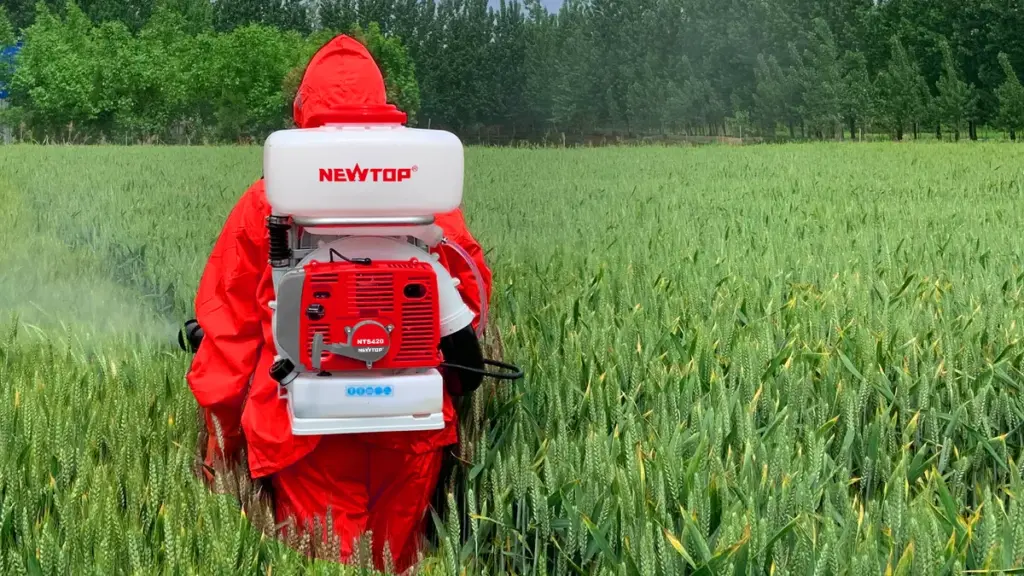
Effective fogging operations depend on standardized safety protocols, including mandatory operator certification, correct PPE usage, and strict adherence to chemical handling and re-entry procedures.
Use of Personal Protective Equipment (PPE)
Wearing the correct Personal Protective Equipment is the first line of defense for any operator. Regulations require comprehensive protection to prevent chemical exposure through inhalation, skin contact, or eye irritation during the fogging process. Failure to use proper PPE can lead to immediate health risks and long-term complications.
- Full-face respirators with appropriate chemical cartridges are mandatory.
- Chemical-resistant gloves, coveralls, and waterproof boots protect the skin from contact.
- Goggles or face shields provide an extra layer of protection for the eyes.
Area Preparation and Ventilation Control
Properly preparing the treatment area is essential to ensure both effectiveness and safety. This involves isolating the space and managing airflow to contain the fog and protect adjacent environments. A well-prepared area maximizes the disinfectant’s efficacy while minimizing unintended exposure.
- Seal off the designated area by closing all doors, windows, and vents.
- Turn off all HVAC systems to prevent the disinfectant from circulating outside the treatment zone.
- Post warning signs at all entry points to prevent unauthorized access during and after application.
Operator Training and Chemical Management
Operator certification and adherence to chemical guidelines are now industry standards. A trained operator understands the equipment’s functions, the properties of the disinfectant, and how to manage potential risks. This expertise prevents equipment misuse and ensures chemicals are applied at safe, effective concentrations.
- Operators must be certified and trained on the specific fogging equipment in use.
- Always follow the manufacturer’s guidelines for chemical dilution ratios and application rates.
- Confirm chemical compatibility with the equipment to prevent corrosion or malfunction.
Post-Treatment and Safe Re-Entry Protocols
Safety procedures do not end when the application is complete. Post-treatment protocols ensure the area is safe for re-entry and that any chemical residue is managed correctly. These final steps are crucial for protecting occupants and maintaining equipment integrity.
- Adhere to the specified waiting period before ventilating and re-entering the area.
- Thoroughly clean the fogging equipment after each use to maintain its performance and longevity.
- Manage any remaining chemical residue according to environmental safety standards.
Why Choose NEWTOP High-Efficiency Fogger Solutions?
NEWTOP foggers combine precision manufacturing with a robust global supply chain to deliver reliable, versatile equipment for large-scale agricultural and public health operations.
As a leading garden and agricultural machinery manufacturer based in Shanghai, NEWTOP has been manufacturing power equipment since 2003. With more than 10,000 square meters of production facilities and an annual capacity exceeding 500,000 Einheiten, the company integrates CNC machining centers, automated production lines, and independent testing laboratories to ensure consistent quality.
NEWTOP’s fogger sprayers are engineered for durability in demanding environments such as tropical agriculture and municipal vector control programs. Core components are selected from globally recognized suppliers, ensuring stable combustion performance and long service life.
The company supports OEM and ODM customization, including color design, branding, Verpackung, and parameter adjustments tailored to regional regulations. Mit CE, EPA, and ISO certifications, NEWTOP equipment meets international compliance standards.
For distributors targeting Africa, Lateinamerika, Südostasien, and emerging Eastern European markets, NEWTOP offers competitive mid-range positioning that balances price, Haltbarkeit, und After-Sales-Support.
Grow Strong with NEWTOP — Your Trustworthy Garden Tools Partner.
For product catalogs, technical specifications, or partnership inquiries, contact:
E-Mail: [email protected]
WhatsApp: +86 13636521556
Website: https://newtoptools.com/
Abschluss
Understanding the mechanics of a fogger sprayer, from its key components to the differences between thermal and cold ULV models, directly impacts operational success. This knowledge ensures you can achieve precise, wide-area coverage for disinfection, Schädlingsbekämpfung, and agricultural treatments. Selecting the right tool optimizes chemical use, enhances safety, and improves overall efficiency.
If you are ready to enhance your operations with reliable misting technology, explore NEWTOP’s line of professional fogger solutions. Contact our team to request a product catalog or to consult on the best equipment for your specific application.
Häufig gestellte Fragen
What is the difference between a fogger and a sprayer?
A traditional sprayer produces larger droplets that settle quickly on surfaces, making it suitable for targeted applications. A fogger creates ultra-fine droplets that remain suspended in the air, allowing better coverage and penetration.
How long can a fogger spray continuously?
Continuous operation time depends on tank capacity and engine type. Most professional gasoline foggers can operate for 30–60 minutes per tank under standard load.
Is a fogger better than a spray for mosquitoes?
Ja, for wide-area mosquito control, especially outdoors, foggers are generally more effective because the fine mist can disperse across vegetation and open air.
Can you use a fogger for indoor disinfection?
Ja, particularly cold ULV foggers designed for indoor environments. Proper ventilation and chemical compliance are essential.
What is the spray range of a portable fogger?
Portable thermal foggers may achieve a horizontal spray distance of 8–12 meters depending on wind conditions and model specifications.
Do foggers use more chemical than sprayers?
NEIN, foggers are designed to use less chemical than traditional sprayers. ULV (Ultra Low Volume) foggers, insbesondere, atomize a small amount of concentrated solution into a vast volume of fine mist. This method provides extensive coverage with maximum efficiency, reducing overall chemical consumption compared to high-volume drenching sprayers.
If you would like a deeper technical breakdown of sprayer and fogger performance differences, read our guide: Unterschied zwischen Nebelgerät und Sprühgerät: Ein technischer Vergleichsleitfaden .
For agricultural distributors, farm equipment wholesalers, and regional brand owners, finding the right knapsack sprayer is not just about comparing tank sizes or engine types. It is about balancing performance, Haltbarkeit, regulatory compliance, and long-term supply stability—while still meeting the price expectations of local farmers.
In emerging markets across Africa, Lateinamerika, Südostasien, and parts of Eastern Europe, backpack sprayers remain one of the most essential tools for crop protection and nutrient application. Whether used for pesticide spraying, herbicide application, fertilizer distribution, or public health sanitation, a reliable sprayer directly affects farm productivity.
This guide is written for importers and bulk buyers who need a practical understanding of product types, model selection, pricing logic, compliance requirements, and long-term supplier evaluation.
Rückenspritze zu verkaufen: Popular Types for Modern Farming
The global market for knapsack sprayers has evolved significantly in the past decade. Today’s buyers can choose from three main power systems: manual, gasoline-powered, and battery-powered sprayers.
Manual Knapsack Sprayers
Manual knapsack sprayers are a primary choice for small-scale farming operations, typically those under two acres. Their simple, operator-powered design makes them reliable and easy to maintain for targeted applications like Schädlingsbekämpfung or fertilizer distribution. With a piston or diaphragm pump mechanism, they deliver consistent pressure when operated correctly.
Gasoline Knapsack Sprayers
Gasoline knapsack sprayers, especially mist duster types, are preferred for larger fields and orchards. Equipped with 2-stroke or 4-stroke engines, they provide high-pressure output and extended spray range. These models are common in tropical agriculture where tall crops, such as cocoa or fruit trees, require strong penetration. Importers should pay attention to engine displacement, fuel consumption, and emission standards when selecting gasoline versions.
Battery-Operated Knapsack Sprayers
Lithium battery-powered sprayers are gaining traction, particularly in urban landscaping, greenhouse operations, and government projects. They reduce noise, eliminate fuel mixing, and offer more stable pressure control. With brushless motors and adjustable spray modes, they improve precision and operator comfort. In regions where environmental regulations are tightening, electric models are becoming a safer long-term choice.
Related Reading: Arten von Rückensprühgeräten: Wählen Sie das beste Modell für Ihren Betrieb
Best Models of Knapsack Sprayer for Sale in 2026
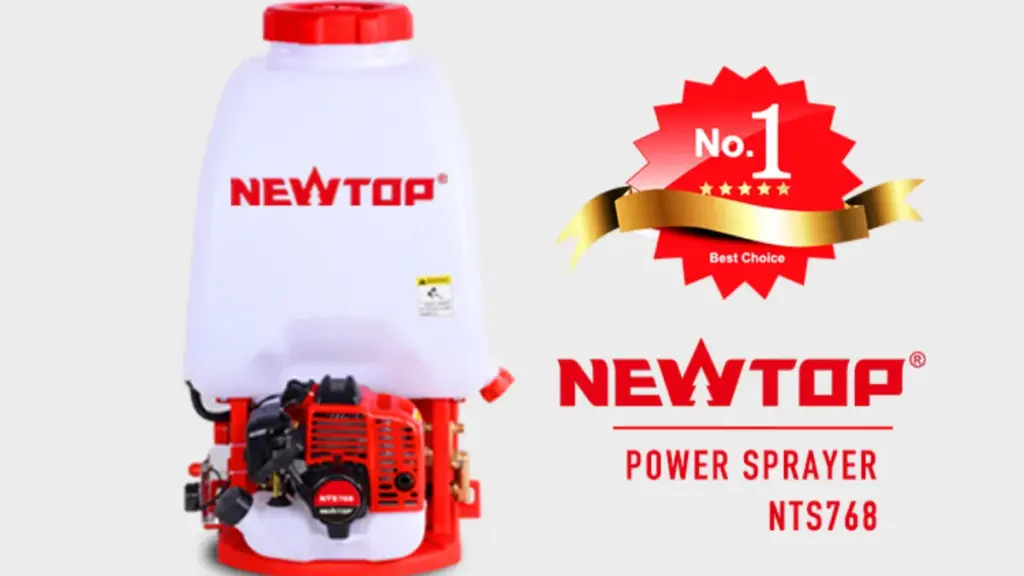
In 2026, demand for gasoline backpack sprayers and mist dusters continues to grow across Africa, Lateinamerika, Südostasien, and parts of Eastern Europe. At NEUTOP, several knapsack sprayer models have consistently ranked among the top-selling units in export markets. These models are widely chosen by OEM clients, regional distributors, and agricultural supply chains because they offer stable performance and practical configurations that match real field conditions.
Below are 4 of the most popular gasoline knapsack sprayers for bulk buyers. The following product cards provide quick technical specifications and direct access to each model’s detail page. If you are evaluating which knapsack sprayer to introduce into your market in 2026, reviewing these configurations can help you shortlist suitable options.
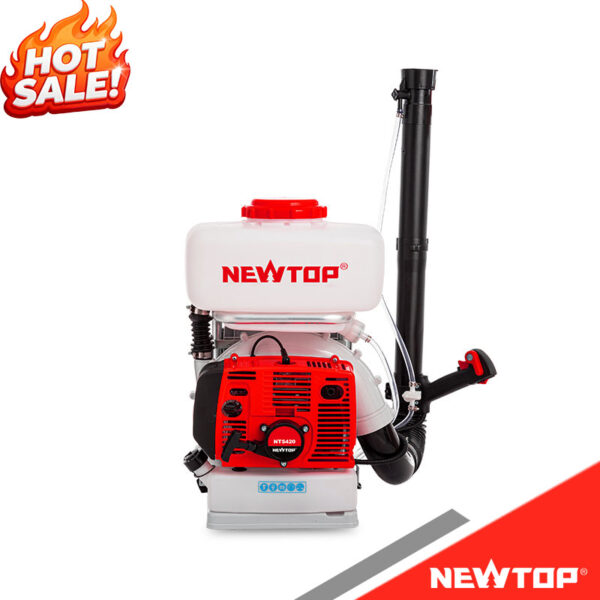
NTS420 Gasoline Knapsack Sprayer
The NTS420 is a reliable 20L backpack sprayer designed for field crops and plantation use. It delivers strong spray penetration with stable engine output, making it suitable for large-area pesticide and fertilizer application.
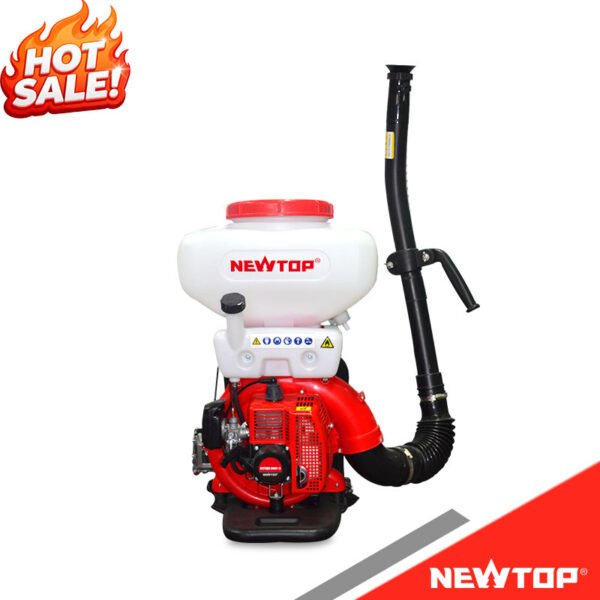
NTS3WF-3 Mist Duster Sprayer
The NTS3WF-3 combines spraying and misting functions for orchards and tall crops. With powerful airflow and extended spray range, it ensures deep leaf penetration in dense farming environments.
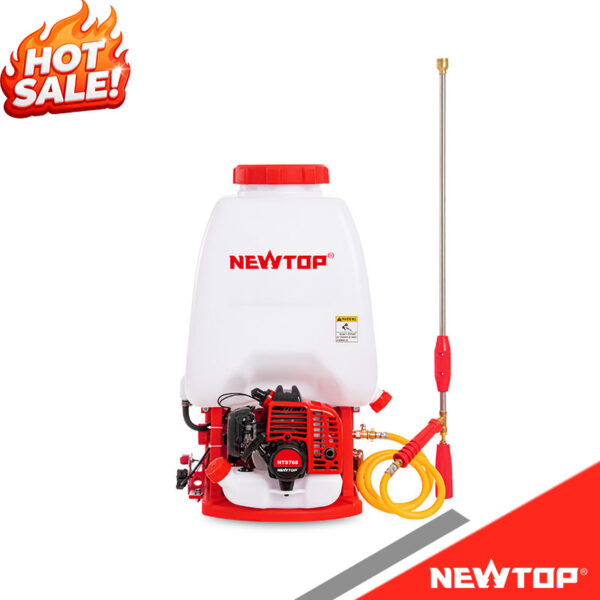
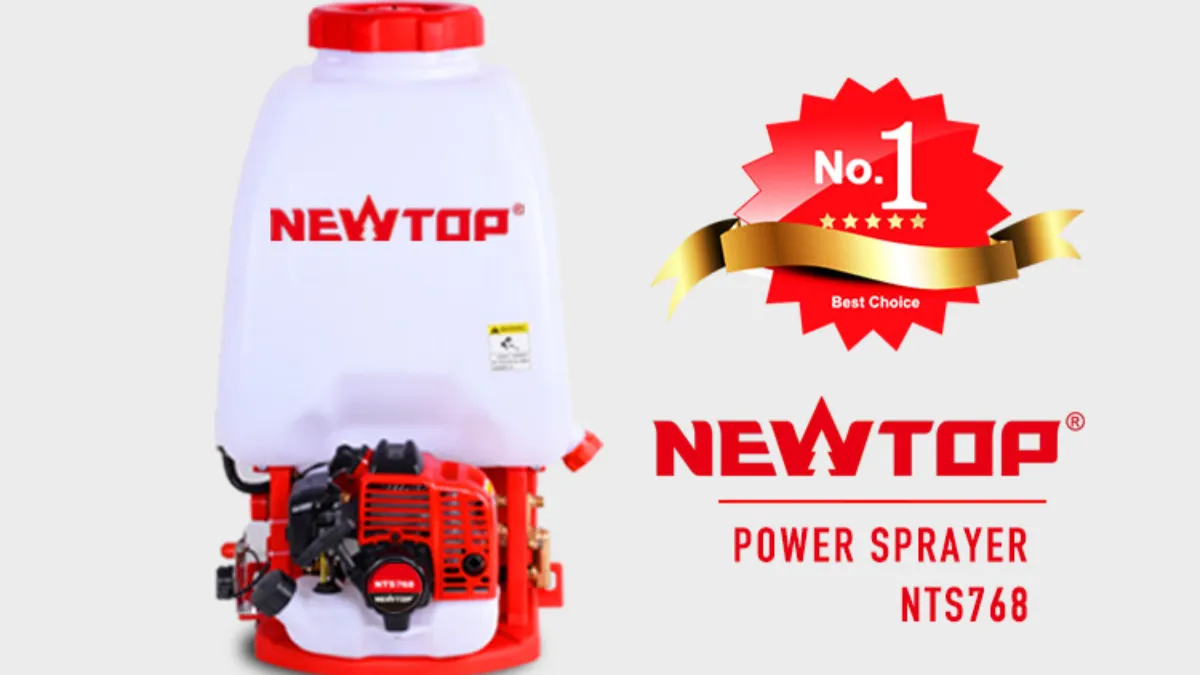
NTS768 High-Pressure Sprayer
The NTS768 is built for intensive agricultural use. Its reinforced tank structure and stable engine system make it suitable for professional distributors targeting high-demand markets.
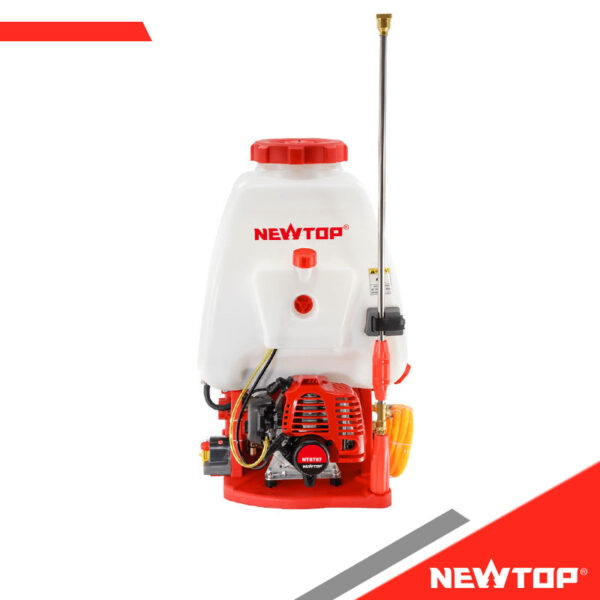
NTS767 Commercial Backpack Sprayer
The NTS767 offers balanced power and efficiency, ideal for distributors seeking a mid-range gasoline backpack sprayer for farm and garden applications. Durable components ensure long service life.
Choosing the Right Model for Your Market
| Target Market | Recommended Model | Technical Advantage | Typical Application Scenario |
|---|---|---|---|
| Large Plantations & Commercial Farms | NTS420 (56.5cc) | Higher displacement engine delivers stronger airflow and deeper droplet penetration | Tall crops such as cocoa, palm, and orchard trees; large-area coverage requiring time efficiency |
| Orchard & Dual Spray/Dust Operations | NTS3WF-3 (Mist Duster) | Powerful airflow system supports both liquid spraying and powder application | Diversified farms needing flexible pest control solutions |
| Price-Sensitive Regional Distributors | NTS768 / NTS767 (26cc) | Balanced engine performance with lower fuel consumption and manageable operating cost | Small-to-medium farms requiring reliable daily spraying at controlled budgets |
| Markets with Emission or Efficiency Requirements | 2-Stroke or 4-Stroke Options | 2-stroke: lightweight and simple maintenance; 4-stroke: improved fuel efficiency and reduced emissions | Regions prioritizing environmental compliance or long-term fuel savings |
Secure High-Demand Knapsack Sprayers for Your Market

Key Factors to Evaluate When Browsing Knapsack Sprayers
A professional-grade knapsack sprayer is defined by its consistent performance under pressure, ergonomic design for operator safety, and adherence to international quality standards.
| Evaluation Factor | Key Metric | Industry Standard / Benchmark |
|---|---|---|
| Performance & Durability | Pressure Regulation & Flow Rate | Consistent PSI for uniform application; leak-proof seals and materials. |
| Operator Safety & Ergonomie | Maximum Loaded Weight | Should not exceed 25 kg to reduce operator fatigue. |
| Certification & Wartung | Sicherheit & Quality Compliance | Adherence to FAO or equivalent international guidelines. |
Performance and Durability Standards
A reliable knapsack sprayer must deliver consistent performance and withstand demanding agricultural conditions. When evaluating a unit, focus on its ability to maintain stable pressure, deliver a uniform flow rate, and resist degradation from chemical exposure and physical use. The pump mechanism, whether piston or diaphragm, should generate and hold pressure efficiently to ensure the spray pattern remains constant from a full tank to an empty one. Material quality is just as critical; components must be made from durable, corrosion-resistant polymers and feature leak-proof seals to handle aggressive chemicals over the long term.
Operator Safety and Ergonomics
The operator’s well-being is a primary concern. Look for sprayers designed to minimize physical strain and protect users from chemical contact. International standards recommend that a fully loaded sprayer should not weigh more than 25 kg to reduce fatigue and the risk of injury. Key ergonomic features include a well-padded harness that distributes weight evenly across the shoulders and hips, a curved backrest that matches the operator’s posture, and overall stability to prevent tipping on sloped terrain. A sprayer that is comfortable to carry and operate allows for more precise application and safer handling during long workdays.
Certification and Ease of Maintenance
Compliance with international standards, such as those guided by the FAO (Food and Agriculture Organization), signals a manufacturer’s commitment to quality and safety. These certifications ensure the sprayer has passed rigorous tests for leak prevention, Haltbarkeit, and operator safety. Beyond initial quality, a well-designed sprayer must be simple to maintain. Look for features that facilitate easy cleaning and parts replacement, like large tank openings and tool-free access to filters and pumps. Straightforward maintenance prevents chemical cross-contamination and significantly extends the service life of the equipment.
Price Guide for Knapsack Sprayer in Bulk Orders
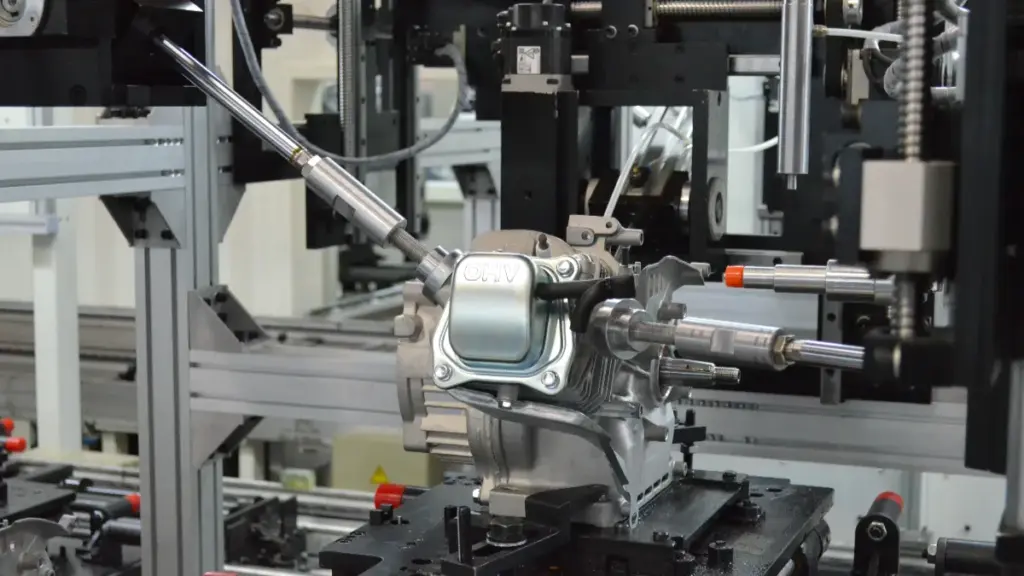
Understanding bulk pricing is essential for distributors and agricultural equipment importers planning seasonal procurement. The price of a knapsack sprayer for sale varies significantly depending on engine type, Verschiebung, tank capacity, and order volume.
Below is a general wholesale pricing reference for gasoline backpack sprayers in 2026:
| Sprayer Type | Estimated FOB Price Range (USD) | Typical Applications |
|---|---|---|
| Manual Knapsack Sprayer (15–20L) | $10 – $18 per unit | Small farms, vegetable plots, greenhouse spraying, entry-level distribution markets |
| Gasoline Backpack Sprayer (26cc–56.5cc) | $38 – $95 per unit | Orchards, plantations, Forstwirtschaft, commercial crop protection |
| Elektrisch / Battery-Powered Sprayer | $22 – $60 per unit | Urban agriculture, Landschaftsbau, medium-scale farms requiring reduced operator fatigue |
Notiz: Prices above are indicative FOB references based on standard export configurations. Final quotation depends on engine specification, battery capacity, material grade, customization requirements, and total order quantity.
Volume-Based Pricing Structure
Bulk procurement improves overall cost efficiency, but pricing adjustments are typically influenced by production planning, component sourcing, and logistics optimization rather than fixed discount percentages.
In practice, manufacturers evaluate pricing based on:
- Order quantity per model
- Production batch scheduling
- Packaging configuration
- Shipping terms (FOB, CIF, or mixed container)
For medium-volume orders, unit pricing may benefit from improved production efficiency and shared setup costs. Larger consolidated shipments, especially full-container loads (FCL), often achieve stronger cost advantages due to optimized carton loading and reduced freight allocation per unit.
What Influences Bulk Pricing?
Several practical factors impact final quotation:
Engine configuration
2-stroke engines are generally more affordable and lighter. 4-stroke engines cost more due to fuel efficiency and lower emissions.
Material thickness & component quality
Higher-grade carburetors, reinforced frames, and upgraded ignition systems affect pricing but improve long-term durability.
Customization requirements
OEM logo printing, carton redesign, color changes, or private labeling may slightly increase cost depending on tooling adjustments.
Shipping terms
FOB, CIF, and DDP pricing structures can significantly affect landed cost. Importers should calculate total landed cost rather than focusing only on ex-factory pricing.
Market & Supply Chain Considerations
China remains the dominant production base for gasoline knapsack sprayers due to mature supply chains and component integration. Stable raw material sourcing and engine production clusters allow competitive pricing at scale.
Jedoch, seasonal demand fluctuations—especially before planting seasons—can influence production schedules and lead times. Early procurement planning helps distributors lock in better pricing and secure inventory before peak demand.
Navigating Import Regulations for Knapsack Sprayers
Managing international shipments of knapsack sprayers requires precise Harmonized System (HS) code classification, accurate tariff calculation, and strict adherence to local health and safety standards.
Harmonized System (HS) Code Classification
Correctly classifying knapsack sprayers and their parts under the Harmonized System (HS) is the first step for international importers. Complete agricultural or horticultural sprayers generally fall under HS Code 8424.81. Importers must also differentiate between complete units, spray gun components, and other replacement parts, as each may require a unique tariff code. Accurate classification prevents customs delays and ensures correct tariff application, making it a critical part of the logistics process.
Tariff Rates and Duty-Free Provisions
Tariff rates depend on the importing country, trade agreements, and product configuration. In many African and Latin American markets, agricultural sprayers fall under moderate duty structures. Some Middle Eastern and Eastern European countries may require additional conformity documentation or technical declarations before clearance.
Compliance with Local Health and Safety Standards
Beyond tariffs, knapsack sprayers must comply with the sanitary, health, and safety regulations of the destination market. These standards protect end-users and the environment, making compliance a non-negotiable part of the import process. For gasoline models, engine emission standards and safety requirements should be verified. Battery-powered sprayers may require lithium transport documentation such as UN38.3 test reports, especially for air shipments.
Standard documentation
Standard documentation—including commercial invoice, packing list, and certificate of origin—must be prepared accurately. Coordinating with a local customs broker ensures smoother clearance and more predictable delivery timelines for bulk shipments.
Ready to Buy? Discover NEWTOP’s High-Performance Backpack Sprayer Deals
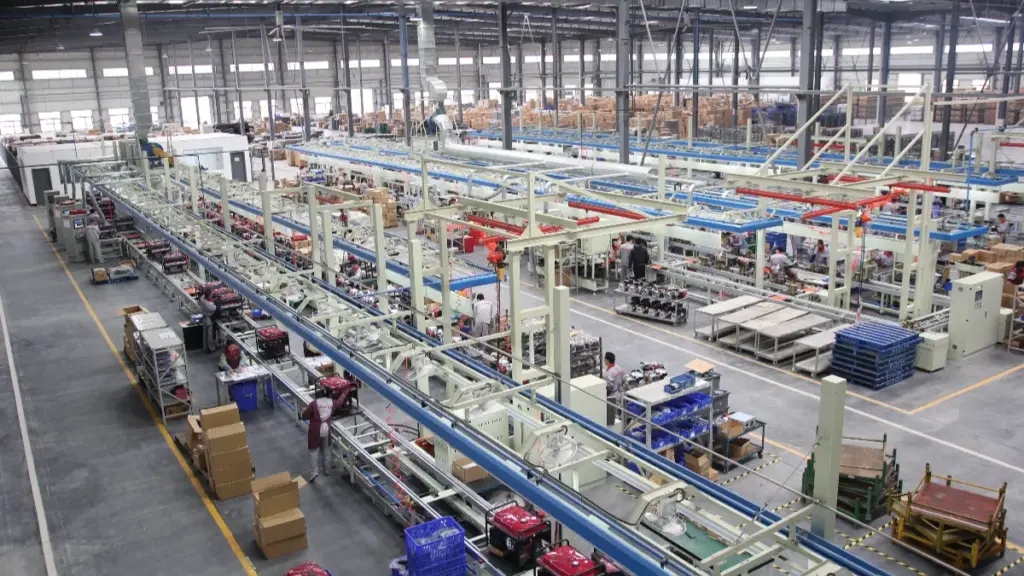
NEWTOP provides B2B partners with a competitive advantage through a flexible supply of durable, versatile backpack sprayers engineered with premium components and supported by comprehensive OEM and after-sales services.
With over two decades of manufacturing experience in agricultural and garden machinery, NEUTOP supplies knapsack sprayers to more than 65 countries across Africa, Lateinamerika, Südostasien, and Eastern Europe.
The company operates a 10,000㎡ production facility with integrated injection molding, automated assembly lines, and independent inspection centers. Annual capacity exceeds 500,000 Einheiten across multiple product categories.
NEWTOP offers:
- Manual backpack sprayers (16L–20L)
- Gasoline backpack sprayers (mist dusters)
- OEM color and packaging customization
- 7–10 day sample dispatch
- Approx. 30-day bulk production lead time
- 1-Jahr Maschinengarantie (core parts 6 months)
- Spare parts supply support
Für Händler seeking stable quality, consistent delivery, and competitive pricing, NEWTOP provides a balanced solution between performance and affordability.
If you are planning to expand your outdoor power agricultural equipment portfolio, now is the right time to secure production slots before peak season demand.
Contact NEWTOP’s export team today via:
E-Mail: [email protected]
WhatsApp / Phone: +86 13636521556
Website: https://newtoptools.com/
Abschluss
Choosing the right knapsack sprayer involves matching the model’s features—like power source and tank capacity—to your specific agricultural needs and budget. Understanding key evaluation factors, Preisstrukturen, and import logistics helps you secure a reliable, long-term asset. This knowledge ensures you invest in equipment that enhances productivity and delivers a strong return.
When you’re ready to equip your team, browse our catalog of high-performance backpack sprayers. Contact us directly to get a detailed quote tailored to your bulk order and shipping requirements.
Häufig gestellte Fragen
Where can I bulk buy knapsack sprayers?
You can bulk purchase directly from established outdoor power equipment manufacturers in China. Factory like NEUTOP supply OEM and distributor clients globally and support customized orders.
What is the average price of a knapsack sprayer
Manual models typically range from USD 8–18 in bulk orders, gasoline models from USD 45–110, and lithium battery versions from USD 25–80, depending on specifications and order quantity.
How much is shipping for knapsack sprayers?
Shipping depends on destination, container utilization, and freight rates at the time of booking. Sea freight for a full 20GP container significantly lowers cost per unit compared to air freight.
What warranty is included with knapsack sprayers?
Most professional manufacturers provide a 1-year warranty on the complete machine and 6 months on core components. Warranty coverage should be confirmed before order confirmation.
Do you offer spare parts for the knapsack sprayers you sell?
Ja, we provide a comprehensive inventory of spare parts for all our sprayer models. This includes common wear-and-tear items like nozzles, seals, wands, and replacement batteries. Offering readily available parts ensures long-term operational reliability and allows for easy maintenance, which is critical for equipment designed for consistent professional use.
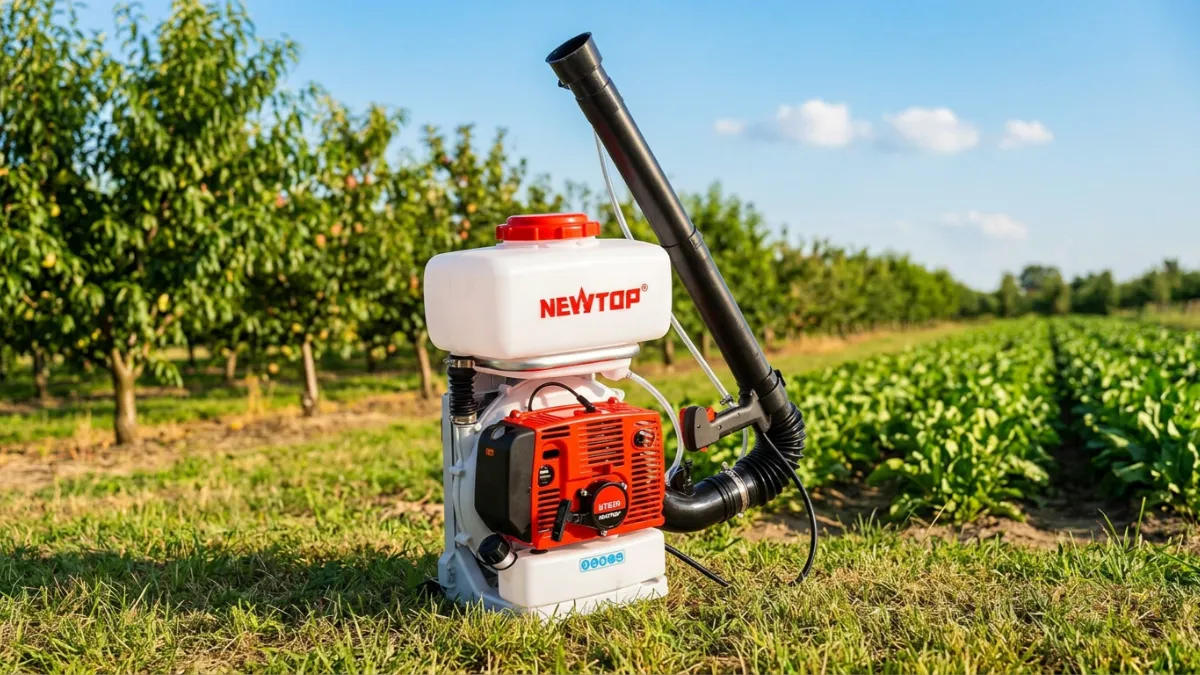
Reliable backpack sprayer reviews are the primary defense against operational downtime and the high cost of wasted chemicals. A single component failure—like a cracked seal or an inconsistent pump—not only brings a job to a standstill but also risks operator safety and misapplication, directly impacting project budgets and client satisfaction.
This guide provides a technical breakdown of current market options, moving beyond marketing claims to compare concrete performance data. We analyze the specifications of battery, manual, and petrol-powered units, identify the most common failure points found in user reports, and detail the methodology used in our own assessments. Use this as your standard operating procedure for evaluating and selecting equipment that meets commercial demands.
Bewertungen zu Rückensprühgeräten: What to Look for in 2026
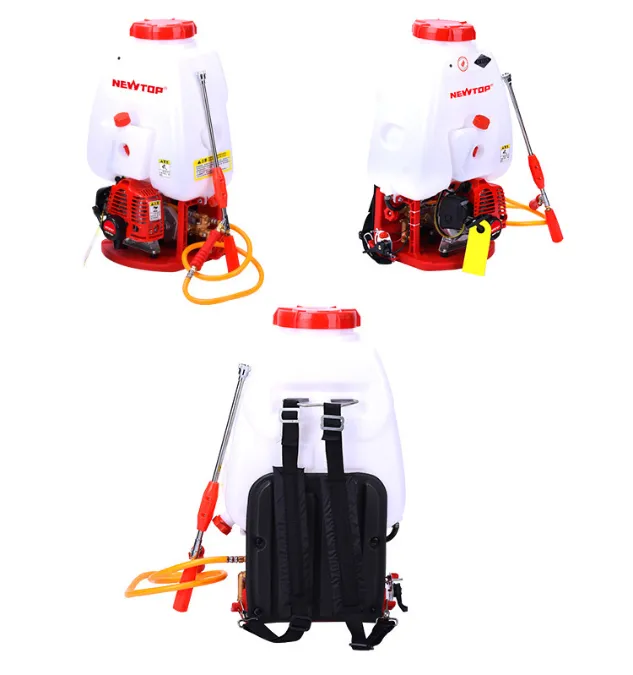
In 2026, selecting the right backpack sprayer comes down to a practical evaluation of its power source, harness comfort, pressure versatility, and tank durability for your specific application.
| Key Feature | Evaluation Criteria | Impact on Performance |
|---|---|---|
| Stromquelle | Battery-powered for consistent pressure vs. Manual for simplicity and low cost. | Determines application consistency and operator effort required. |
| Ergonomie | Padded, adjustable straps and a load-bearing hip belt. | Directly reduces fatigue and improves productivity during extended use. |
| Pressure & Nozzles | Adjustable pressure settings (PSI) and an included set of versatile nozzles. | Allows for precise application on different targets, from fine misting to targeted streams. |
| Tank Construction | Capacity (4-6.5 gallons) and chemical-resistant materials and seals. | Affects operational uptime and long-term durability against leaks and degradation. |
Stromquelle: Battery vs. Handbuch
The primary decision for any buyer is choosing between battery power and manual operation. The market trend is a clear shift toward battery-powered models because they deliver consistent, non-pulsating pressure without physical effort. This consistency is critical for uniform chemical application and achieving professional results. Manual sprayers, while requiring constant pumping, hold their ground due to their simplicity, lower upfront cost, and field serviceability. Your choice depends directly on the job size and your tolerance for physical labor.
- Battery-powered systems are becoming more common for their ease of use, eliminating the need for constant pumping.
- Manual options remain a dependable, budget-friendly choice for smaller properties or less frequent use.
Ergonomics and Harness Design
A full 4-gallon sprayer can weigh over 35 pounds, making ergonomics a non-negotiable feature for anyone using the equipment for more than a few minutes. A poor harness design concentrates weight on the shoulders, leading to rapid operator fatigue and reduced productivity. High-quality sprayers invest in well-padded, fully adjustable shoulder straps and, critically, a load-bearing hip belt. This combination transfers the bulk of the weight from the shoulders to the hips, allowing for comfortable all-day operation.
- Look for sprayers with adjustable, padded shoulder straps to fit your body comfortably.
- A quality harness distributes the weight evenly across your back and shoulders.
Pressure Controls and Nozzle Systems
Effective spraying requires adapting your output to the target. Variable pressure control allows you to switch between a high-pressure stream for reaching distant spots and a low-pressure fine mist for delicate plants or broad-leaf herbicide application. Look for models with an easily accessible pressure adjustment dial. A good sprayer should also come with a set of interchangeable nozzles—typically including fan, cone, and stream patterns. This built-in versatility saves you the cost and effort of sourcing compatible parts separately and ensures you have the right tool for any application.
- Adjustable pressure controls allow you to manage the flow rate for precise application.
- Multiple included nozzles for different spray patterns add significant value.
Tank Capacity and Durability
The tank is the core of the sprayer, and its design dictates both efficiency and lifespan. Capacity, typically 4 Zu 6.5 gallons, should match your workload; a larger tank reduces trips for refilling but adds weight. More important is the material. The tank, seals, and gaskets must be constructed from chemical-resistant polymers like Viton to prevent them from degrading after exposure to common herbicides and pesticides. This is the primary defense against leaks, which are the most common point of failure in low-quality sprayers.
- Consider a tank capacity that matches your typical workload to avoid unnecessary interruptions.
- Ensure the tank is made from chemical-resistant materials to prevent degradation over time.
Top-Rated Battery Backpack Sprayer Reviews and Comparisons
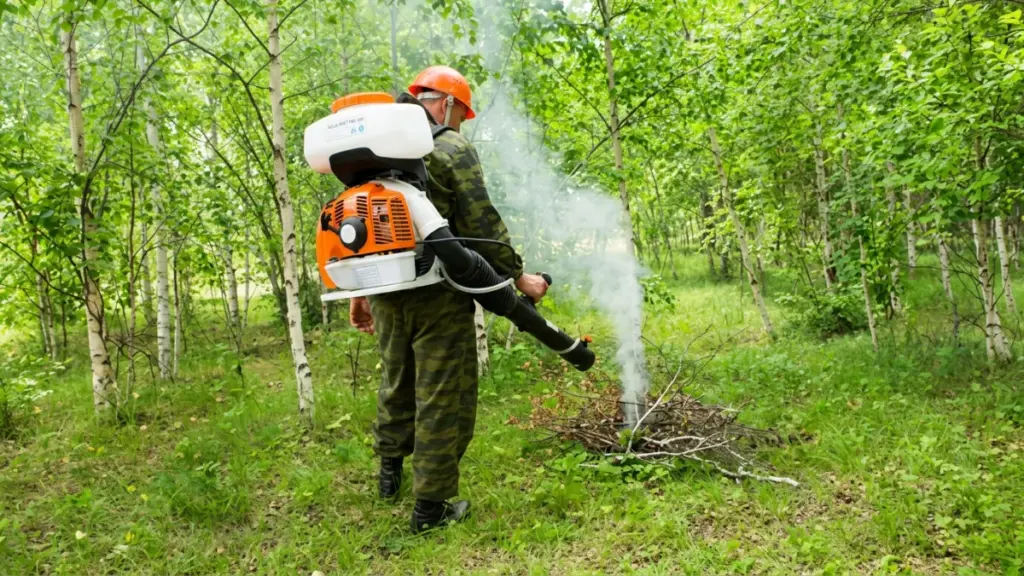
Der 2026 battery sprayer market is defined by lightweight lithium-ion systems that deliver 6-8 hours of runtime, combined with ergonomic harnesses designed for all-day professional use.
| Besonderheit | Industry Standard (2026) | Impact on Performance |
|---|---|---|
| Battery Runtime | 6–8 hours (Lithium-Ion) | Supports all-day professional use without recharging. |
| Pressure Range | 40–80 psi | Provides versatility for fine misting and coarse spray patterns. |
| Tank Capacity | 4–6.5 gallons | Balances liquid volume with manageable operator weight. |
| Ergonomie | Padded straps, hip belts, low-profile tanks | Reduces operator fatigue and improves stability. |
Battery Performance and Runtime
The shift to lightweight lithium-ion battery systems is now complete across the industry, rendering older, heavier lead-acid models obsolete. The benchmark for professional-grade equipment is a runtime of 6 Zu 8 hours of continuous operation on a single charge. This capability is non-negotiable for commercial users, as it allows operators to complete a full day’s work without needing to stop and recharge. Efficient charging systems are also a key evaluation point, as they directly impact workflow and reduce downtime between jobs.
Ergonomics and Operator Comfort
As battery sprayers become standard for all-day use, manufacturers place a heavy focus on reducing operator fatigue. Mid- to professional-tier models now include fully adjustable, padded shoulder straps and load-bearing hip belts to distribute weight away from the shoulders and spine. Low-profile tank designs have also become common, lowering the sprayer’s center of gravity. This design choice improves balance, minimizes side-to-side sway, and reduces the physical strain required to manage the unit during long sessions on uneven terrain.
Pressure Control and Application Versatility
Precise control over application pressure is a critical feature that separates professional equipment from basic consumer models. Most modern battery units operate within a 40-80 psi range, which is sufficient for tasks from fine misting delicate ornamentals to applying herbicides with a coarse spray. Variable pressure switches or dials allow operators to adjust output on the fly, matching the spray pattern to the specific chemical and target. High-quality, chemical-resistant seals are also essential for versatility, ensuring the sprayer can handle a wide range of herbicides, pesticides, and fertilizers without premature component failure.
Tank Capacity and Durability
Tank capacities on battery-powered models have standardized in the 4 to 6.5-gallon range. This volume strikes a practical balance between holding enough liquid to cover a significant area and keeping the total weight manageable for a single operator. Any larger, and the unit becomes too heavy for extended use; any smaller, and the operator wastes too much time on refills. Tank materials are selected for chemical compatibility and impact resistance, ensuring the unit can withstand the daily demands of a professional work environment.
Power Your Business with Reliable Garden Machinery
Manual Backpack Sprayer Reviews: Budget vs. Performance
The primary trade-off in the manual sprayer market is comfort for cost, as most models deliver standardized pressure and capacity regardless of price.
Core Performance: Where Budget Models Compete
Even budget-friendly manual sprayers prioritize essential performance components. Reviews from 2026 show that lower-cost models often feature high-quality pumps and tanks, delivering reliable pressure and capacity comparable to more expensive options. The core spraying function is remarkably consistent across the market, forcing manufacturers to differentiate on other features.
- Pump and tank systems in budget models frequently use durable materials like brass or stainless steel.
- Most manual sprayers, regardless of price, offer a standard performance range of 60–150 psi and 4-gallon capacities.
The Comfort Trade-Off: Harnesses and Ergonomics
The primary difference between budget and performance models is user comfort. Premium sprayers invest in ergonomic designs to reduce operator fatigue during extended use, a feature often minimized in cheaper alternatives to cut costs. For anyone using a sprayer for more than a few minutes at a time, this becomes the most important factor.
- Budget models typically come with minimal, unpadded harness systems.
- Mid-range to premium sprayers feature padded shoulder straps, hip belts, and more ergonomic back support for better weight distribution.
Durability and Features That Justify a Higher Price
Beyond the pump and harness, overall construction quality and innovative add-ons distinguish premium manual sprayers. These elements justify a higher price by improving the sprayer’s longevity and ease of use. Paying more often translates to a longer service life and fewer maintenance issues, especially when working with aggressive chemicals.
- Higher-priced models may use more robust plastics and seals for increased chemical resistance and a longer working life.
- Advanced features like built-in agitators or self-cleaning mechanisms are typically found only in premium-tier sprayers.
Petrol Powered Backpack Sprayer Reviews for Commercial Use
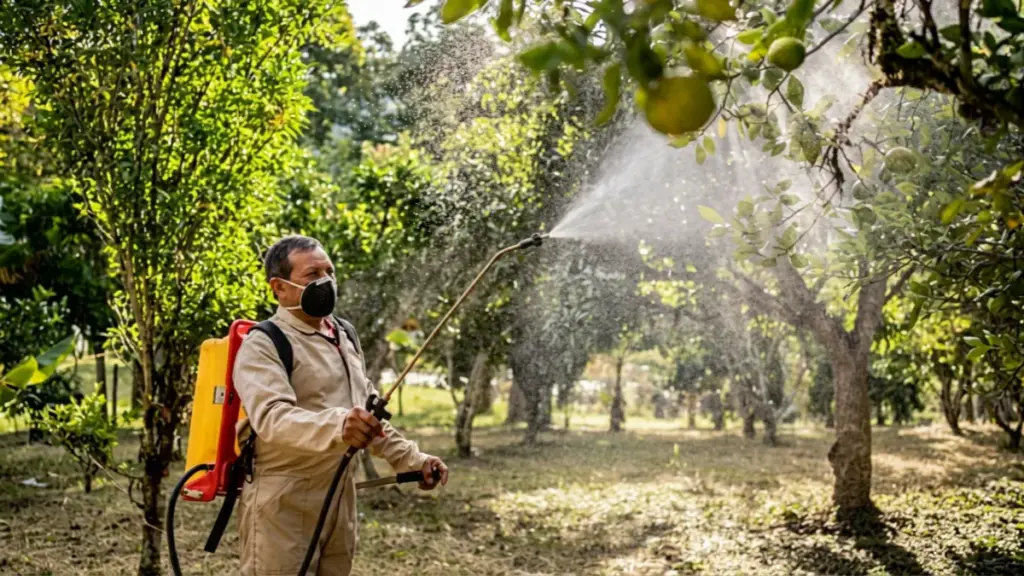
For demanding commercial applications requiring non-stop runtime and consistent high pressure, petrol-powered backpack sprayers maintain their market dominance over battery alternatives.
Power and Consistent Performance
For commercial use in 2026, petrol-powered sprayers remain the preferred choice for tasks requiring sustained power and unwavering pressure. Their engine-driven pumps deliver consistent performance from a full tank to an empty one, a crucial factor for uniform application over large areas. Petrol engines provide high, steady pressure that does not fade as the tank empties. They also offer unlimited runtime as long as fuel is available, eliminating the downtime needed for recharging batteries. This makes them the standard for demanding sectors like agriculture, Forstwirtschaft, and large-scale Schädlingsbekämpfung where efficiency is measured in acres covered per day.
Ergonomics and Operator Fatigue
Manufacturers are focusing on improving operator comfort to offset the inherent weight and vibration of petrol engines. Key advancements in design aim to reduce the physical strain associated with all-day use in professional settings. Modern models feature advanced anti-vibration systems to minimize handle and back vibrations, which directly translates to less operator fatigue. Enhanced harnesses with better padding and strategic weight distribution are now common, helping to improve balance and make handling easier on difficult terrain.
Market Position Against Battery Alternatives
High-performance battery backpack sprayers are gaining popularity for their quiet operation and lower maintenance, but petrol models continue to hold a strong position for heavy-duty commercial work. Raw power is the priority in these scenarios. Petrol sprayers retain a clear advantage for applications requiring maximum spray distance and all-day, non-stop operation. Battery-powered units offer a compelling alternative for standard applications with less noise and zero emissions. The choice between petrol and battery often comes down to the scale and intensity of the job at hand.
Common Complaints Found in Backpack Sprayer User Reviews
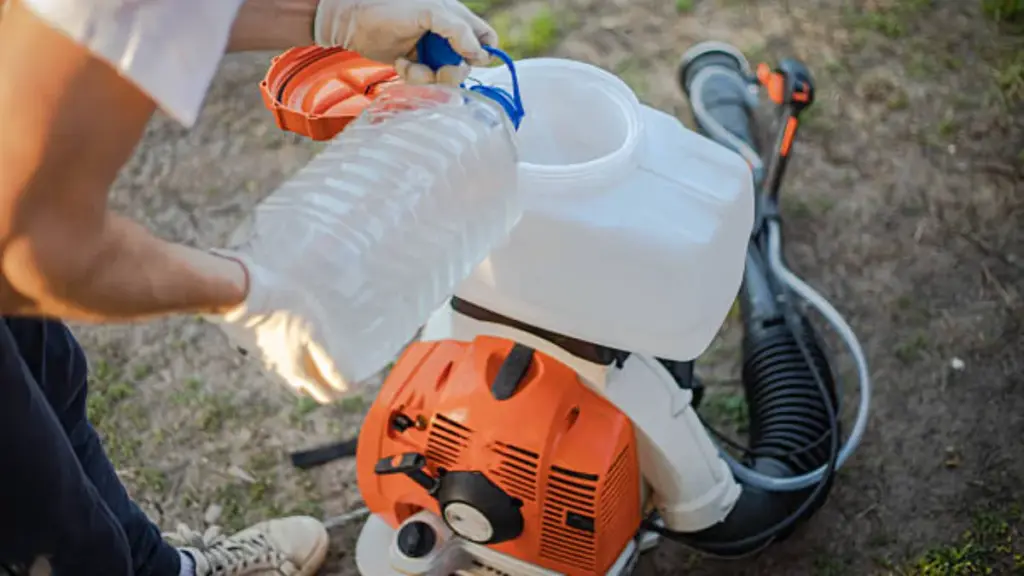
Across both manual and powered models, the most frequent user complaints center on component failures that compromise pressure integrity, such as leaking seals, faulty connections, and worn-out pumps.
| Complaint Category | Primary Cause | Impact on User |
|---|---|---|
| Leaking Components | Degraded or poorly fitted seals on the main lid, pump assembly, and hose connections. | Wasted chemicals, potential skin exposure, and loss of pressure. |
| Pressure Failure | Worn pump seals (especially piston seals) or malfunctioning check valves. | Uneven application, reduced efficiency, and constant re-pumping (manual models). |
| Clogged Nozzles | Inadequate internal filtering allows sediment or undissolved chemicals to block the tip. | Frequent work stoppages for cleaning, inconsistent spray patterns, and poor coverage. |
| Power System Failure | Subpar battery capacity or premature motor burnout in electric models. | Inability to complete large jobs on a single charge; unit becomes inoperable. |
Leaking Tanks and Connections
The most persistent issue found in user feedback is leaking from tank seals and hose connections. These failures are not minor drips; they represent a loss of expensive chemicals, create a safety hazard, and undermine the unit’s ability to hold pressure. Failures often materialize within the first season of use, pointing to low-quality seal materials or poor design tolerances. The primary failure points are consistently the seals around the main lid and the pump assembly, along with hose fittings that loosen or crack under normal operational pressure.
Failure to Maintain Pressure
A sprayer that cannot build or hold pressure is effectively useless. This problem is a major source of user frustration because it directly cripples the machine’s core function, leading to inconsistent application and wasted time. For manual models, it means constant, exhausting re-pumping. The technical cause is almost always traced back to worn-out internal pump seals or a faulty check valve that fails to create a proper vacuum. This issue directly impacts work efficiency and the quality of chemical application.
Clogged Nozzles and Inconsistent Spray Patterns
Users frequently report nozzles that clog easily, forcing them to stop work repeatedly for cleaning. This problem stems from inadequate internal filtration that allows undissolved chemical powders or small debris from the tank to reach the nozzle tip. The outcome is a sputtering, inconsistent spray pattern or a complete blockage. A poorly designed filtration system turns a simple spraying job into a frustrating cycle of stop-and-go maintenance, compromising the quality and uniformity of the application.
Poor Battery Life and Motor Reliability
For battery-powered units, performance and reliability are defined by the power system. A common complaint is that advertised battery life falls short in real-world conditions, forcing operators to recharge in the middle of a large job. Even more significant are reports of premature motor failure, especially in lower-priced models. An unreliable motor or battery renders the sprayer’s advanced features irrelevant and ultimately leads to equipment downtime and replacement costs.
How We Conduct Our Professional Backpack Sprayer Reviews
Our review process prioritizes empirical, field-based testing to validate a sprayer’s real-world durability, pressure consistency, and ergonomic design under professional workloads.
Field Performance and Operational Testing
Our reviews start with real-world operational tests to measure how each sprayer performs across different terrains and with various types of vegetation. This field-based approach allows us to evaluate practical handling, Stabilität, and overall effectiveness in professional landscaping and agricultural settings. We assess performance on both flat and sloped ground to test balance and operator comfort. Sprayers are tested with different liquid consistencies to check for clogging and flow issues, and the evaluation includes usability in tight spaces and around obstacles.
Pressure Consistency and Spray Pattern Uniformity
We analyze the sprayer’s ability to maintain consistent pressure from a full tank to nearly empty. Uniform spray patterns are essential for effective coverage, so we use standardized methods to evaluate droplet distribution and reach for different nozzle types. Pressure is monitored throughout the discharge cycle to identify any significant drops that affect application quality. We also test multiple included nozzles to compare their performance and spray pattern evenness for specific tasks.
Durability and Chemical Compatibility
To simulate long-term professional use, sprayers undergo extended durability assessments. We test their components against common chemicals to ensure the materials, seals, and hoses resist degradation and maintain integrity over time. Critical components like the pump, wand, and seals are inspected after prolonged use simulations. We also test material resistance to a standard set of fertilizers, pesticides, and herbicides, while the frame and harness are checked for structural wear and tear.
Calibration Accuracy and Ergonomic Design
Precision is key in professional applications, so we verify the accuracy of each sprayer’s calibration settings. Gleichzeitig, we conduct a thorough ergonomic analysis to rate user comfort, weight distribution, and ease of operation during extended periods of work. We measure output volume to confirm it matches the selected calibration markings. The harness system, back padding, and strap adjustments are evaluated for operator comfort, and we assess how easy it is to fill, clean, and switch out nozzles and other components.
Why NEWTOP Consistently Earns High Ratings From Global Dealers
Global dealers favor NEWTOP sprayers because their petrol-powered models deliver a practical balance of reliable engine performance, durable construction, and ergonomic comfort for professional use.
Reliable Engine Performance
Dealers prioritize equipment that performs without constant adjustments or failures. The NEWTOP NTS768 sprayer uses a 26CC petrol engine engineered for stable operation during long work sessions. This consistent power output ensures the pump maintains steady pressure, which is critical for uniform application in agricultural and pest control settings. An unstable spray pattern wastes chemicals and leads to poor results, so the engine’s reliability is a key factor driving dealer confidence.
Durable and Corrosion-Resistant Build
Professional equipment needs to withstand rough handling and harsh chemicals. NEWTOP sprayers are built with a rugged frame that protects the engine and pump system from job site impacts. The tank is constructed from materials specifically chosen to resist chemical corrosion, extending the sprayer’s service life significantly. This focus on durability reduces warranty claims and service issues, making it a more profitable and reliable product line for dealers to carry.
Ergonomic Design for Operator Comfort
Operator fatigue directly impacts productivity. The NTS768 features an ergonomic design with a backpack harness that distributes weight evenly across the operator’s back and shoulders, reducing physical strain. Its compact structure also improves maneuverability in dense foliage or tight spaces. When users can work comfortably for longer periods, they complete jobs faster and more effectively, a tangible benefit that dealers can highlight to their professional customers.
Efficient Pumping System and Coverage
Performance is measured by coverage and efficiency. The NTS768’s high-efficiency pump atomizes liquids into a fine, consistent mist, ensuring thorough plant coverage while minimizing chemical waste. With a horizontal reach of up to 15 meters, operators can treat large areas without constantly repositioning. The 25-liter tank offers a good balance between capacity and weight, allowing for substantial work between refills without being overly burdensome. This combination of reach, efficiency, and capacity makes it a highly practical tool for large-scale tasks.
Abschluss
Choosing the right backpack sprayer requires looking beyond star ratings to analyze performance specs and common failure points. By comparing manual, battery, and petrol models against your specific application, you can find a reliable tool that fits your budget and workflow. This technical approach helps you invest in equipment built for longevity and consistent performance.
If your current equipment is underperforming, our team can provide a full catalog of NEWTOP sprayers designed to address these issues. Contact us to discuss your needs or to request a sample for evaluation.
Häufig gestellte Fragen
Which backpack sprayer has the best reviews for 2026?
The Chapin ProSeries 97900B consistently earns top reviews for its advanced lithium-ion performance and ergonomic harness. Its digital pressure control system offers precise application, minimizing waste and user fatigue. Users praise its durability and self-cleaning mechanism, making it a leading choice for both professionals and serious homeowners seeking reliability and comfort.
Are battery backpack sprayer reviews reliable?
Ja, battery backpack sprayer reviews are reliable when sourced correctly. Professional reviews excel at benchmarking performance metrics like battery life and pressure consistency. User reviews on verified purchase platforms provide crucial insights into long-term durability and real-world comfort. Cross-referencing both types gives the most accurate assessment of a sprayer’s quality and value.
What is the most common failure in backpack sprayers?
The most common failure is the internal pump seal or piston cup, which degrades from chemical exposure and wear. This leads to a loss of pressure and leaking. For battery models, pump motor burnout and switch failures are also frequent issues. Regular cleaning and using manufacturer-approved seal conditioners can significantly extend the sprayer’s lifespan.
How do professional reviews compare to user reviews?
Professional reviews focus on objective performance data, using controlled tests for pressure accuracy, battery runtime, and nozzle spray patterns. User reviews offer subjective, real-world feedback on long-term durability, ergonomic comfort, and customer service experiences. Professionals test the specs, while users test the sprayer’s endurance and practicality over time.
Which brand has the best rated backpack sprayer for farms?
Field King is consistently rated as the best brand for farm use, specifically with its Max-Agri 190515 series. These models feature heavy-duty seals resistant to aggressive agricultural chemicals and a robust internal pump designed for high-volume daily use. Their ergonomic steel frames and 5-gallon tank capacity are optimized for covering large acreage efficiently.
Are manual backpack sprayers still worth buying?
Ja, manual backpack sprayers are still worth buying for their reliability and cost-effectiveness. They are lighter, have fewer failure points than battery models, and require no charging. For smaller properties, spot treatments, or users on a tight budget, a high-quality manual sprayer offers excellent value and control without the complexity of powered systems.
Bei Kettensägen mit Obergriff befindet sich der Hauptgriff auf der Oberseite des Körpers und ermöglicht den einhändigen Einsatz aus der Luft, Kettensägen mit Heckgriff verfügen über einen hinteren Griff hinter dem Motor für eine stabile Zweihandbedienung am Boden. Professionelle Baumpfleger, Holzfäller, und Landschaftsgestalter stehen oft vor der Wahl zwischen diesen, wenn sie anspruchsvolle Baumarbeiten in Angriff nehmen.
Als Spezialist für Outdoor-Elektrogeräte, Wir werden die grundlegenden Unterschiede aufschlüsseln, Für und Wider, und Sicherheitsüberlegungen, die Ihnen helfen, eine fundierte Entscheidung für Ihre Flotte oder Ihr Unternehmen zu treffen.
Was ist eine Kettensäge mit Obergriff??
Eine Kettensäge mit Obergriff ist ein technisches Werkzeug für professionelle Baumpfleger, Priorisierung eines Kompakts, Ausgewogenes Design für präzises Schneiden in erhöhten und engen Räumen.
Entwickelt für Baumpfleger und Luftarbeiten
Eine Kettensäge mit Obergriff ist ein Spezialwerkzeug, das fast ausschließlich für professionelle Baumpfleger entwickelt wurde, die in der Höhe arbeiten. Sein Design legt großen Wert auf Kontrolle und Manövrierfähigkeit beim Schneiden in erhöhten oder ungünstigen Positionen, beispielsweise im Blätterdach eines Baumes. Dieser Fokus macht sie zum Standard für Arbeiten außerhalb des Bodens, bei denen eine herkömmliche Säge unsicher oder unhandlich wäre.
Typische Modelle wiegen ca 6.5 Zu 10 Pfund und haben Führungsschienenlängen von 10 Zu 16 Zoll, Dadurch sind sie kleiner und tragbarer als Standardsägen. Bei diesen Dimensionen steht die Beweglichkeit über der Masse.
Hauptmerkmale: Kompakt, Leicht, und Ausgewogen
Die charakteristischen Merkmale einer Kettensäge mit Obergriff sind ihre geringe Größe und ihr geringes Gewicht. Diese Konstruktion minimiert die Ermüdung des Bedieners bei längerem Einsatz in Bäumen und ermöglicht präzise Schnitte auf engstem Raum, wo eine größere Säge unpraktisch wäre. Die hervorragende Balance ist entscheidend für die Kontrolle bei Schnitten aus instabilen Positionen.
- Der kompakte Formfaktor erleichtert die Navigation durch dichtes Geäst.
- Die hervorragende Balance ermöglicht eine bessere Kontrolle, Dies ist bei Schnitten aus instabilen Positionen von entscheidender Bedeutung.
- Viele Modelle in 2026 sind batteriebetrieben, Ihren Leichtbau weiter verbessern und Emissionen reduzieren.
Primäre Anwendungen
Dieser Kettensägentyp ist nicht zum Fällen großer Bäume geeignet. Es zeichnet sich durch Aufgaben aus, die Präzision und Agilität erfordern, wie das Beschneiden von Gliedmaßen, Totholz entfernen, und Schneiden von Ästen aus einer Kletterposition. Seine kontrollierte Leistung eignet sich für präzise Schnitte, ohne die umliegende Baumstruktur zu beschädigen, Erhaltung der Baumgesundheit.
- Ideal zum Formen von Baumkronen und zur Durchführung chirurgischer Schnitte zur Erhaltung der Baumgesundheit.
- Ermöglicht die einhändige Verwendung in bestimmten Situationen durch zertifizierte Fachkräfte, die andere Hand für mehr Stabilität freigeben.
- Seine kontrollierte Leistung eignet sich für präzise Schnitte, ohne die umliegende Baumstruktur zu beschädigen.
Was ist eine Kettensäge mit Heckgriff??
Kettensägen mit Heckgriff sind der Industriestandard für bodennahes Schneiden, Entwickelt mit einer Zwei-Griff-Konfiguration zur Maximierung der Hebelwirkung, Kontrolle, und Sicherheit für schwere Aufgaben.
Kerndesign und Betrieb
Eine Kettensäge mit Heckgriff ist vielseitig einsetzbar, Kettensäge in Originalgröße für den allgemeinen und schweren Einsatz, Der Hauptgriff befindet sich hinter dem Motor und ein vorderer Griff ermöglicht eine sichere Zweihandbedienung. Das Design zeichnet sich durch eine Gewichtsverteilung nach hinten aus, größeres Motorgehäuse, schützende Handschützer, und eine verlängerte Führungsschiene für überlegene Hebelwirkung und Kraft bei anspruchsvollen Schnitten.
Zu den gängigen Spezifikationen gehören Gewichte von 11 Zu 15 Pfund für Benzinmodelle, mit Führungsschienenlängen von 14 Zu 24 Zoll oder mehr, abhängig von der Motorgröße (z.B., 36-60cc). Dadurch sind sie robuster, aber weniger kompakt.
Allgemeine Anwendungen
Kettensägen mit Heckgriff sind für den bodennahen Einsatz konzipiert, Hochleistungsanwendungen. Sie sind das Standardwerkzeug für Hausbesitzer mit großen Grundstücken und Profis, die umfangreiche Schneidarbeiten auf offenen Flächen durchführen.
- Große Bäume fällen.
- Schneiden von Stämmen und Bearbeiten von Holz.
- Brennholz spalten.
- Allgemeine Grundstücksinstandhaltung und Sturmreinigung.
Verschaffen Sie sich mit zuverlässigen Maschinen einen Wettbewerbsvorteil
Vor- und Nachteile von Kettensägen mit Obergriff
Kettensägen mit Obergriff bieten unübertroffene Kontrolle für professionelle Baumpfleger, die in der Höhe arbeiten, Dieses spezielle Design bringt jedoch Sicherheitsrisiken und Funktionseinschränkungen für Arbeiten am Boden mit sich.
Vorteile für professionelle Luftarbeit
Kettensägen mit Obergriff wurden speziell für professionelle Baumpfleger entwickelt, die ein kompaktes und wendiges Werkzeug zum Schneiden in erhöhten oder engen Räumen benötigen. Das Design legt Wert auf Balance und Kontrolle, Damit ist es der Standard für alle Arbeiten, die das Klettern oder Arbeiten von einer Hubarbeitsbühne aus erfordern.
- Die kompakte und leichte Bauweise verringert die Ermüdung des Bedieners bei langen Baumarbeiten aus der Luft.
- Überlegene Manövrierfähigkeit und Balance erleichtern präzise Schnitte in schwierigen Positionen, zum Beispiel im Blätterdach eines Baumes.
- Das Design ermöglicht die einhändige Bedienung durch zertifizierte Fachleute, Die andere Hand bleibt für Stabilität beim Klettern frei.
Einschränkungen und Nachteile
Ideal für spezielle Aufgaben, Kettensägen mit Obergriff haben erhebliche Nachteile, die ihre allgemeine Verwendung einschränken. Aufgrund ihrer einzigartigen Konstruktion sind sie für jede Art von bodennahem Schneiden weniger geeignet und potenziell gefährlicher, Eine Aufgabe, die besser für Modelle mit hinterem Griff geeignet ist.
- Ihr Premiumpreis spiegelt die speziellen technischen und Sicherheitszertifizierungen wider, die für professionelle Fluggeräte erforderlich sind.
- Sie sind nicht für das Fällen oder Ruckeln auf dem Boden geeignet, wo Heckgriffsägen für bessere Hebelwirkung und Betriebssicherheit sorgen.
- Die enge Platzierung der Hände erhöht das Risiko schwerer Verletzungen durch Rückschläge, Für den sicheren Betrieb sind spezielle Schulungen erforderlich.
Vor- und Nachteile von Kettensägen mit Heckgriff
Kettensägen mit Heckgriff bieten hervorragende Stabilität und Vielseitigkeit beim Schneiden am Boden, Damit sind sie für die meisten Benutzer der Standard, Allerdings schränken ihre Größe und ihr Gewicht die Manövrierfähigkeit auf engstem Raum ein.
Vorteile
- Stromverfügbarkeit: Platz für größere Motoren (40-60cc) und länger Führungsschienen (bis zu 24+ Zoll) für effiziente Dickholzschnitte beim Holzeinschlag.
- Stabilitätskontrolle: Zweihandgriffe mit hinterer Balance sorgen für eine Hebelwirkung, um den Rückschlag beim Fällen und Bocken zu minimieren.
- Vielseitig einsetzbar: Übernimmt die Brennholzverarbeitung, Sturmaufräumarbeiten, Heckenschneiden, und Liegenschaftspflege zuverlässig erledigen.
- Ergonomischer Komfort: Reduziert die Ermüdung der Arme bei längeren Trainingseinheiten am Boden für Profis und Anfänger.
- Fokus auf Haltbarkeit: Die robuste Konstruktion hält den täglichen Belastungen im Forst- und Landschaftsbau stand.
Nachteile
- Höhenermüdung: 11-15+ Der Pfundaufbau beschleunigt die Erschöpfung bei längeren Aufgaben.
- Massenbeschränkungen: Behindert die Beweglichkeit auf engstem Raum wie Klettern oder dichtes Beschneiden.
- Vibrationsstufen: Eine höhere Motorleistung erhöht das Risiko von Hand-Arm-Vibrationen.
- Portabilitätsprobleme: Ein größeres Profil erschwert Transport und Lagerung.
- Overhead-Herausforderungen: Aufgrund der Handhabungsanforderungen weniger für Arbeiten in der Luft geeignet.
Hauptunterschiede zwischen oberem Griff und hinterem Griff
Um Profis dabei zu helfen, die technischen Spezifikationen und funktionalen Anwendungen dieser Werkzeuge zu vergleichen, Nachfolgend haben wir die wichtigsten Unterschiede zusammengefasst:
| Attribut | Kettensäge mit Obergriff | Kettensäge mit hinterem Griff |
|---|---|---|
| Griffposition | Oben montierter Griff für kompakte Luftsteuerung | Hinterer Griff hinter dem Motor mit vorderem Griff für zwei Hände |
| Gewichtsbereich | Leicht 8-10 Pfund, reduziert Ermüdung in der Höhe | Schwerer 11-15+ Pfund, stabil für den Bodeneinsatz |
| Länge der Führungsschiene | Kürzer 10-16 Zoll für Präzision | Länger 14-24+ Zoll für dicke Schnitte |
| Motorleistung | Kleiner 25-45cc, wendig zum Beschneiden | Größer 40-60cc+, Kraftvoll zum Fällen |
| Wendigkeit | Hervorragend geeignet für enge Räume und beim Klettern | Bessere Stabilität am Boden, sperrigerer Aufwand |
| Rückschlagrisiko | Höher aufgrund des geringeren Gewichts und des guten Griffs | Absenken mit Hebelwirkung und Schutzvorrichtungen |
| Beste Benutzerfähigkeit | Nur fortgeschrittene Fachleute/Baumpfleger | Vom Anfänger bis zum Profi |
| Primäre Anwendungen | Baumklettern, Beerdigung, Beschneiden aus der Luft | Fällen, ruckeln, Brennholz, Aufräumen |
| Portabilität | Kompakt, leicht zu transportieren und aufzubewahren | Bulker, erfordert mehr Speicherplatz |
| Preisklasse | Mittelklasse, oft spezielle Preisgestaltung | Variiert stark je nach Motorleistung |
Auswahlhilfe: Oberer Griff vs. hinterer Griff – Welches ist das Richtige für Sie??
| Auswahlkriterien | Wählen Sie eine Kettensäge mit Obergriff, wenn… | Wählen Sie eine Kettensäge mit hinterem Griff, wenn… |
|---|---|---|
| Primäre Arbeitsumgebung | Sie sind zertifizierter Baumpfleger und arbeiten in der Höhe (Klettern, Luftaufzug). | Sie arbeiten hauptsächlich vor Ort. |
| Schlüsselaufgabe | Sie müssen präzise Schnitte in engen Bereichen ausführen, ungünstige Positionen innerhalb einer Baumkrone. | Zu Ihren Aufgaben gehört das Fällen, ruckelnde Protokolle, Brennholz schneiden, oder Sturmreinigung. |
| Benutzerprofil | Sie sind eine ausgebildete Fachkraft mit Zertifizierung für gehobene Arbeiten. | Sie sind Hausbesitzer, allgemeiner Forstbetrieb, oder Anfänger. |
| Kontrollpriorität | Wendigkeit und Kompaktheit sind für Spezialschnitte von entscheidender Bedeutung. | Maximale Stabilität, Hebelwirkung, und Zweihandbedienung sind erforderlich. |
Für den professionellen Baumpfleger und die Arbeit im Baum
Kettensägen mit Oberhandgriff sind Spezialwerkzeuge, die für zertifizierte Baumpfleger entwickelt wurden, die in der Höhe arbeiten. Sie sind kompakt, Die leichte Bauweise und der integrierte Griff sorgen für die nötige Manövrierfähigkeit, um im Blätterdach eines Baumes zu arbeiten. Dieses Design ist der Industriestandard für das Beschneiden, Beerdigung, und präzise Schnitte in erhöhten und engen Räumen durchzuführen, wo eine größere Säge unpraktisch ist.
- Wählen Sie einen oberen Griff, wenn Ihre Hauptarbeit darin besteht, zu klettern oder eine Hebebühne zu bedienen.
- Das Design ist für präzise Schnitte an schwierigen Stellen optimiert, an denen eine herkömmliche Zweihandsäge nicht passt.
- Der sichere Betrieb dieser Werkzeuge erfordert eine entsprechende Schulung und Zertifizierung, da die einhändige Bedienung das Betriebsrisiko erhöht.
Für bodengestütztes Schneiden und den allgemeinen Gebrauch
Kettensägen mit Heckgriff sind das ultimative Werkzeug für fast alle bodennahen Schnitte. Das Design sorgt für überragende Stabilität, Hebelwirkung, und Kontrolle, Damit ist es die richtige Wahl für das Fällen von Bäumen, Bündeln von Protokollen in Abschnitte, und Reinigungsbürste. Diese Konfiguration ist der Standard für Hausbesitzer, Immobilienverwalter, und Forstwirte, die auf festem Boden arbeiten.
- Wählen Sie einen hinteren Griff für Aufgaben wie das Schneiden von Brennholz, Verwaltung der Sturmbeseitigung, und das Fällen kleiner bis mittelgroßer Bäume.
- Der Zweihandgriff bietet eine bessere Kontrolle, verbessert die Sicherheit, und reduziert die Ermüdung des Bedieners bei längerem Gebrauch.
- Dieses Design ist von Natur aus stabiler, Dies macht es zur sichereren und effektiveren Option für jeden Benutzer am Boden.
Passen Sie das Tool an Ihre Hauptanwendung an
Die richtige Wahl hängt ganz von Ihrem Arbeitsumfeld ab, nicht auf welcher Säge ist universell “besser.” Ein professioneller Baumpfleger wird beide Arten besitzen – einen oberen Griff zum Klettern und einen hinteren Griff für die Bodenarbeit. Für fast alle anderen, Die Hinterhandsäge ist das vielseitigere und geeignetere Werkzeug für häufige Schneidaufgaben.
- Bewerten Sie Ihre häufigsten Aufgaben: Arbeiten Sie regelmäßig in einem Baum oder auf dem Boden??
- Benutzen Sie niemals eine Säge mit Oberhandgriff für bodennahe Fällarbeiten. Sein Design ist nicht für die Hebelwirkung oder Sicherheitsprotokolle optimiert, die für diese Arbeit erforderlich sind.
- Für B2B-Käufer und Händler, Wenn Sie beide Modelle anbieten, können Sie zwei unterschiedliche Märkte bedienen: zertifizierte Fachleute und allgemeine Verbraucher.
Warum sollten Sie sich für NEWTOP-Kettensägen für Ihr Unternehmen entscheiden??
NEWTOP bietet B2B-Partnern eine skalierbare Fertigungslösung für zuverlässige, Kettensägen der Mittelklasse, Wir kombinieren erstklassige Komponenten mit flexiblem OEM-Support, um auf globalen Märkten ein starkes Wertversprechen zu liefern.
NEWTOP-Kettensägen bieten professionelle Leistung sowohl in der Konfiguration des oberen als auch des hinteren Griffs, unterstützt von über 20 Jahrelange Erfahrung mit gasbetriebenen Gartengeräten. Unsere Modelle zeichnen sich durch eine hochpräzise CNC-Bearbeitung aus, Walbro-Vergaser, NGK-Zündkerzen, und Oregon-Ketten für außergewöhnliche Haltbarkeit 200 Std..
Mit CE, GS, EPA, und EURO II-Zertifizierungen, NEWTOP gewährleistet die Einhaltung globaler Märkte wie Afrika, Lateinamerika, und Südostasien. Wettbewerbsfähige Preise, anpassbare OEM/ODM-Optionen, und zuverlässige Lieferketten machen uns zum erste Wahl für Händler Suche nach Kettensägenlieferanten mit 500,000+ Jahreskapazität.
Werden Sie stark mit NEWTOP – Ihrem vertrauenswürdigen Partner für Gartengeräte. Entdecken Sie unser Sortiment unter newtoptools.com. Weitere Informationen, Kontaktieren Sie uns noch heute!
Abschluss
Die Wahl zwischen einer Kettensäge mit Obergriff und einer Kettensäge mit Hintergriff wirkt sich direkt auf die Sicherheit des Bedieners und die Arbeitsleistung aus. Eine Säge mit Obergriff ist ein Spezialwerkzeug für ausgebildete Baumpfleger, die in der Höhe arbeiten, während ein Modell mit hinterem Griff für die nötige Stabilität bei der Bodenarbeit sorgt. Die Verwendung der richtigen Säge für die Anwendung verhindert Unfälle und sorgt für Effizienz, saubere Schnitte.
Bewerten Sie die typische Arbeitsumgebung Ihres Teams, um sicherzustellen, dass Ihre Geräteflotte ordnungsgemäß ausgestattet ist. Beschaffung professioneller Kettensägen, die auf Langlebigkeit und Leistung ausgelegt sind, Entdecken Sie den NEWTOP-Produktkatalog für Ihre geschäftlichen Anforderungen.
Häufig gestellte Fragen
Warum verwenden Menschen Kettensägen mit Obergriff??
Kettensägen mit Obergriff werden aufgrund ihrer kompakten Größe und Manövrierfähigkeit verwendet. Sie ermöglichen Baumkletterern präzise Schnitte auf engstem Raum innerhalb eines Baumkronendachs, wo eine herkömmliche Säge zu umständlich wäre.
Kann man eine Kettensäge mit Obergriff auf dem Boden verwenden??
Nicht empfohlen – mangelnde Hebelwirkung hinten, Sie verringern die Stabilität und erhöhen das Rückschlagrisiko bei Bodenarbeiten; Nur für Luftarbeiten reservieren.
Sind Kettensägen mit Obergriff gefährlich??
Ja, Sie gelten aufgrund des schmalen Griffs als gefährlicher als Sägen mit Hintergriff. Dieses Design macht es viel schwieriger, den Rückschlag zu kontrollieren. Sie sollten nur von Fachleuten mit entsprechender Ausbildung zum Baumpfleger verwendet werden.
Was ist der Vorteil einer Kettensäge mit Heckgriff??
Die Hauptvorteile liegen in der Kontrolle, Hebelwirkung, und Sicherheit. Der Abstand zwischen den Griffen ermöglicht es dem Bediener, die Leistung der Säge effektiver zu steuern und sorgt für einen sichereren Abstand zwischen der Kette und dem Körper des Bedieners.
Ist eine Säge mit Obergriff besser zum Klettern geeignet??
Ja. Seine Gewichtsverteilung und kompakte Form sind speziell auf das Klettern ausgelegt. Es lässt sich leicht an einem Gurt befestigen und in den schwierigen Winkeln verwenden, die bei Arbeiten in einem Baum oft erforderlich sind.
Welcher Griffstil eignet sich am besten für Anfänger??
Für Einsteiger ist eine Kettensäge mit Heckgriff die einzige Wahl. Es bietet die notwendigen Stabilitäts- und Sicherheitsmerkmale, um die richtigen Schneidtechniken sicher zu erlernen.
Baumpfleger und Baumpfleger benötigen Werkzeuge, bei denen Gleichgewicht und Gewicht im Vordergrund stehen. Bei Arbeiten hoch oben in einem Baumkronendach, Das Design Ihrer Ausrüstung wirkt sich direkt auf Ihre Sicherheit und darauf aus, wie schnell Sie eine Arbeit erledigen können. In 2026, Der Markt bietet verschiedene Optionen, die von traditionellen Benzinmotoren bis hin zu neuen Modellen mit Lithiumbatterie reichen.
In diesem Ratgeber, Wir erläutern die Funktionsweise von Kettensägen mit Obergriff, wie sie im Vergleich zu Modellen mit hinterem Griff abschneiden, welche technischen Spezifikationen wirklich wichtig sind, und wie Profis das richtige Modell für den Klettereinsatz auswählen. Wenn Sie für den Vertrieb einkaufen, OEM-Branding, oder Großbeschaffung, Dieser Leitfaden richtet sich an Entscheidungsträger.
Was ist eine Kettensäge mit Obergriff??
Eine Kettensäge mit Obergriff ist ein speziell für professionelle Baumpfleger entwickeltes Werkzeug, Entwickelt mit einem kompakten, Leichtes Design, bei dem Balance und Kontrolle für präzises Schneiden in erhöhten oder engen Räumen im Vordergrund stehen.
Bei einer Kettensäge mit Obergriff handelt es sich um eine kompakte Kettensäge, bei der der Hauptgriff oberhalb des Motorgehäuses und nicht hinten angebracht ist. Diese Konfiguration ermöglicht es Baumpflegern, die Säge auf engstem Raum zu bedienen – insbesondere, wenn sie an einem Baumgurt hängt. Diese Kettensägen werden häufig zum Beschneiden verwendet, Kronenreduktion, abschnittsweise Demontage, und Astentfernung. Im professionellen Umfeld, Sie gelten als Kletterkettensägen, Aus Sicherheitsgründen werden sie oft mit Gurtsystemen und Lanyards kombiniert.
Hauptanwendungen in der professionellen Baumpflege
Diese Sägen sind eine unverzichtbare Ausrüstung für zertifizierte Fachkräfte, die Aufgaben ausführen, die chirurgische Schnitte in großer Höhe erfordern. Ihr kompaktes Design ermöglicht es Baumpflegern, in dichten Aststrukturen zu navigieren, wo größere Äste vorhanden sind, Eine Säge mit hinterem Griff wäre unsicher, schwerfällig, oder es ist unpraktisch, sie richtig zu positionieren.
- Ideal zum Entfernen von Totholz, Ausdünnen der Baumkrone, und Zweige formen.
- Ermöglicht kontrollierte Schnitte bei Sicherung durch Seil und Gurt oder beim Arbeiten von einer Hubarbeitsbühne aus.
- Das wichtigste Werkzeug für die Baumpflege in städtischen und Wohngebieten, wo Präzision von entscheidender Bedeutung ist.
Die Anforderung eines professionellen Benutzers
Weil sie für den erhöhten Gebrauch gedacht sind, Sie erfordern fortgeschrittene Fähigkeiten und Training. In vielen Regionen, Sie werden nur zertifizierten Baumpflegern empfohlen. Ein ungeübter Benutzer versucht, eine dieser Kettensägen zu bedienen, vor allem am Boden, schafft eine Hochrisikosituation. Die wachsende Nachfrage nach diesen Kettensägen ist direkt auf den Bedarf der professionellen Baumpflegebranche an effizienten und spezialisierten Geräten zurückzuführen, die auch in anspruchsvollen Luftumgebungen funktionieren.
Vor- und Nachteile von Kettensägen mit Griff
Die Wahl zwischen einer Kettensäge mit Oberhandgriff und einer Kettensäge mit Hinterhandgriff ist ein direkter Kompromiss zwischen Manövrierfähigkeit aus der Luft für spezielle Baumpflegearbeiten und roher Kraft mit Stabilität für bodennahes Fällen und Rütteln.
Kettensägen mit Top-Griff: Für und Wider
Kettensägen mit oberem Griff sind Spezialwerkzeuge für professionelle Baumpfleger, die eine kompakte und wendige Säge für Arbeiten in der Höhe benötigen. Ihre Vorteile in Luftsituationen liegen klar auf der Hand, Allerdings sind diese Vorteile bei bodennahen Anwendungen mit Einschränkungen verbunden.
- Profi: Hervorragende Manövrierfähigkeit und Balance beim Schneiden und Beschneiden von Bäumen, Ermöglicht eine präzise Steuerung in engen oder ungünstigen Räumen.
- Profi: Die leichte Konstruktion reduziert die Ermüdung des Bedieners bei längeren Arbeiten in der Luft.
- Con: Im Allgemeinen weniger leistungsstark als ihre Gegenstücke mit hinterem Griff, Dadurch sind sie für schwere Fällarbeiten oder Räumarbeiten ungeeignet.
- Con: Ihr Design erfordert fortgeschrittene Handhabungsfähigkeiten und ist fast ausschließlich für geschulte Fachkräfte gedacht, die vom Boden aus arbeiten.
Kettensägen mit Heckgriff: Für und Wider
Kettensägen mit Heckgriff sind der Industriestandard für die meisten bodengebundenen Schneidaufgaben. Sie bieten überlegene Leistung, Stabilität, und Sicherheit für ein breites Spektrum an Benutzern, vom Hausbesitzer bis zum Forstfachmann, Sie werden jedoch für Luftarbeiten umständlich und unsicher.
- Profi: Bietet mehr Kraft und Hebelwirkung, Damit ist es die ideale Wahl zum Fällen von Bäumen, ruckelnde Protokolle, und Reinigungsbürste.
- Profi: Der Zweihandgriff sorgt für bessere Stabilität und Kontrolle, Dies macht es zu einer sichereren und zugänglicheren Option für Anfänger.
- Con: Das sperrigere und schwerere Design macht es schwierig und oft unsicher, es zum Klettern oder detaillierten Beschneiden innerhalb der Baumkronen zu verwenden.
- Con: Weniger wendig im Vergleich zu Top-Griff-Modellen, Dies kann beim Schneiden in engen Bereichen auf Bodenhöhe von Nachteil sein.
Bauen Sie Ihre professionelle Kettensägenlinie mit einem zuverlässigen OEM-Partner auf
Professionelle technische Spezifikationen: Gewicht, Verschiebung, und Gleichgewicht
Bei der Bewertung professioneller Kettensägen mit Top-Griff für 2026, Drei Spezifikationen bestimmen die tatsächliche Leistung: Gewicht, Hubraum des Motors, und Gleichgewicht.
| Technische Spezifikation | Professionelles Marktsortiment (2026) | Hauptvorteil |
|---|---|---|
| Hubraum des Motors | 25ccm – 40 ccm (30ccm–35ccm Mainstream) | Ausgewogene Drehmomentabgabe, geeignet für kontrolliertes Beschneiden und Schneiden von Hartholzzweigen. |
| Leistungsabgabe | 1.0 kW – 1.8 kW | Bietet eine effiziente Schneidleistung bei gleichzeitiger Beibehaltung des Kraftstoffverbrauchs und der Reaktionsfähigkeit des Gashebels. |
| Trockengewicht (Ohne Bar & Kette) | 2.6 kg – 3.8 kg | Reduziert die Ermüdung des Bedieners und verbessert die Manövrierfähigkeit in beengten Umgebungen unter der Baumkrone. |
| Wichtige Leistungsmetrik | Hohes Leistungsgewicht | Entscheidend für die Aufrechterhaltung der Kontrolle, Präzision, und Produktivität bei erhöhten Einsätzen. |
Hubraum und Leistung des Motors
Die meisten Profi-Kettensägen mit Obergriff arbeiten in einem Hubraumbereich von 25 bis 40 cm³, Die 30- bis 35-cm³-Modelle bilden das Kernsegment für Baumpflegeanwendungen. Dieser Bereich bietet die optimale Balance zwischen Drehmoment und Gewicht, gewährleistung sauber, kontrollierte Schnitte ohne unnötigen Motoraufwand. Die Leistungsabgabe liegt typischerweise dazwischen 1.0 kW und 1.8 kW, je nach Motorabstimmung und Bauart. Diese Konfiguration liefert eine zuverlässige Schnittkraft für Hartholzäste und behält gleichzeitig die Kraftstoffeffizienz und das Ansprechverhalten des Gashebels bei – entscheidend für längere Arbeiten im Baum.
Leistungsgewicht
Für professionelle Baumpfleger, Das Leistungsgewicht ist die entscheidende Leistungsmetrik. Eine Klettersäge muss ein ausreichendes Drehmoment bieten und gleichzeitig leicht genug sein, um in überdachten Umgebungen kontrolliert manövrieren zu können. Hochwertige Modelle mit oberem Griff wiegen normalerweise zwischen 2.6 kg und 3.8 kg (Trockengewicht), Schaffen Sie das Gleichgewicht zwischen Haltbarkeit und Reduzierung der Ermüdung des Bedieners. Ein überlegenes Verhältnis verbessert die Schnittpräzision bei komplexen Beschneidungs- und Montagearbeiten, Dies trägt direkt zur Produktivität und zur langfristigen Sicherheit des Bedieners bei.
Ergonomische Balance und Hauptmerkmale
Über die Kernspezifikationen der Engine hinaus, Das ergonomische Design bestimmt die praktische Benutzerfreundlichkeit einer Säge. Moderne Profisägen integrieren Systeme, die den Bediener unterstützen und Ausfallzeiten reduzieren. Fortschrittliche Antivibrationstechnologie minimiert die Belastung der Hände und Arme eines Baumpflegers, was für den ganztägigen Gebrauch von entscheidender Bedeutung ist. Funktionen wie der federunterstützte Start sind für den sicheren Neustart der Säge während des Aufstiegs unerlässlich. Ebenfalls, Zentrifugale Luftfiltersysteme stoßen Staub und Schmutz aus, bevor sie den Filter erreichen, Dadurch werden die Wartungsintervalle erheblich verlängert und der Motor bleibt auf Höchstleistung.
Sicherheitsstandards für den Betrieb im Baum: Bremsen und Lanyards
Der sichere Betrieb einer Kettensäge im Baum hängt von einem strikten System zur Einhaltung gesetzlicher Vorschriften ab, redundante Einbindungsprotokolle, und obligatorische Geräteprüfungen vor dem Einsatz.
Einhaltung gesetzlicher Vorschriften und Industriestandards
Der Betrieb von Kettensägen im Baum folgt strengen Industriestandards wie ANSI Z133, Dies legt die Grundlage für eine sichere Baumpflege fest. Aufsichtsbehörden wie die OSHA setzen diese Richtlinien durch, Vorschreiben einer dokumentierten Arbeitnehmerschulung, klare Geräteprotokolle, und proaktives Risikomanagement zur Minimierung von Gefahren. Diese Normen gelten gleichermaßen für Benzin- und Akku-Kettensägen, da bei beiden Arbeiten in der Höhe das gleiche Schnittrisiko besteht.
Kontinuierliche Anbindungs- und Lanyard-Systeme
Eine Grundregel für jeden Baumpfleger besteht darin, während der gesamten Arbeit ständig angebunden zu bleiben. Dies wird durch ein duales Redundanzsystem erreicht. Der Arbeiter nutzt ein primäres Kletterseil zur Hauptunterstützung und ein sekundäres Verbindungsmittel zur präzisen Arbeitspositionierung und Backup-Sicherheit. Dieser Aufbau stellt sicher, dass der Bediener vom Verlassen des Bodens bis zu seiner Rückkehr gesichert ist, So können sie einen stabilen Stand einnehmen und kontrollierte Schnitte ausführen.
Funktion und Inspektion der Kettensägenbremse
Die Kettenbremse der Kettensäge ist eine nicht verhandelbare Sicherheitsvorrichtung, die dazu dient, die Kette bei einem Rückschlag sofort anzuhalten. Vor jedem Einsatz ist eine regelmäßige Kontrolle und Prüfung dieses Mechanismus zwingend erforderlich. Ein Bediener muss sicherstellen, dass die Kettenbremse bei Betätigung von Hand richtig einrastet, und das Bremsband und die Kupplungsabdeckung regelmäßig reinigen, um sie auf Verschleiß oder Beschädigungen zu prüfen. Eine funktionale Bremse, gepaart mit korrekten Handhabungstechniken, ist eine entscheidende Ebene des Bedienerschutzes.
Gefahrenbeurteilung vor dem Einsatz und Überprüfung der Ausrüstung
Proaktives Risikomanagement ist für die Sicherheit in Bäumen von zentraler Bedeutung. Vor dem Klettern, Jeder Baumpfleger muss eine gründliche Gefährdungsbeurteilung des Baumes und der umliegenden Arbeitsstelle durchführen, Erkennen von Risiken wie schwachen Gliedmaßen, elektrische Leitungen, oder Bodenhindernisse. Eine vollständige Inspektion aller Kletter- und Schneidgeräte – einschließlich Seile, Geschirre, Schlüsselbänder, und die Kettensäge selbst – ist zur Überprüfung auf Mängel erforderlich. Die Besatzung muss außerdem vor Arbeitsbeginn einen klaren Arbeitsplan und ein Notfallprotokoll erstellen.
Oberer Griff vs. Kettensäge mit hinterem Griff
Die Wahl zwischen einer Kettensäge mit Obergriff und einer Kettensäge mit Hintergriff hängt vollständig von der Arbeitsumgebung ab; Sägen mit Obergriff sind auf den professionellen Einsatz spezialisiert, In-Tree-Operationen, während Sägen mit hinterem Griff auf Stabilität ausgelegt sind, bodennahes Schneiden.
| Attribut | Kettensäge mit Obergriff | Kettensäge mit hinterem Griff |
|---|---|---|
| Hauptbenutzer | Zertifizierte professionelle Baumpfleger und Baumpfleger | Hausbesitzer, Immobilienverwalter, und Forstarbeiter |
| Arbeitsumgebung | Erhöht, im Baum, oder von einer Luftseilbahn | Bodennaher Betrieb |
| Kernmerkmal des Designs | Kompakt, leicht, und ausgewogen für Manövrierfähigkeit | Längeres Gehäuse mit getrennten Griffen für Stabilität und Hebelwirkung |
| Typische Anwendung | Beschneidung, Beerdigung, und das Navigieren durch enge Baumkronen | Bäume fällen, ruckelnde Protokolle, und Brennholzverarbeitung |
Design und Ergonomie für spezifische Aufgaben
Der grundlegende Unterschied liegt in ihrer physischen Anordnung, die für zwei unterschiedliche Arbeitsumgebungen optimiert ist. Sägen mit Obergriff sind kompakt und ausgewogen für Manövrierfähigkeit in erhöhten Lagen, unangenehme Positionen. Sägen mit Hintergriff sind für Hebelwirkung und Stabilität auf dem Boden ausgelegt. Diese Trennung der Designabsichten bestimmt, wie jedes Werkzeug seine beabsichtigte Rolle erfüllt.
- Modelle mit Obergriff integrieren den Griff direkt über dem Sägekörper, Schaffung eines Schwerpunkts, der sich ideal für die einhändige Bedienung durch einen kletternden Baumpfleger eignet.
- Modelle mit hinterem Griff verwenden ein separates Design mit zwei Griffen, Dies gibt dem Bediener eine bessere Kontrolle und eine stabile Plattform zum Fällen von Bäumen oder zum Abtragen von Baumstämmen.
Vorgesehener Benutzer und Anwendung
Jeder Sägetyp richtet sich an einen anderen Benutzer. Kettensägen mit Obergriff sind Spezialwerkzeuge, die ausschließlich für zertifizierte Baumpfleger bestimmt sind, die in der Höhe arbeiten. Sägen mit Heckgriff richten sich an ein breiteres Publikum, vom Hausbesitzer bis zum Holzfäller, die Arbeiten in Bodennähe ausführen. Die Branche hat diese Tools klar für bestimmte Betriebskontexte segmentiert, anstatt eine Allzwecklösung zu schaffen.
- Sägen mit Obergriff sind der Standard für professionelle Baumpfleger, die Äste beschneiden müssen, während sie in einem Baum befestigt sind.
- Zum Fällen eignen sich Hinterhandsägen, Beerdigung, und Brennholzverarbeitung auf festem Untergrund, Dies macht sie zur ersten Wahl für Grundstückseigentümer und Forstarbeiter.
Leistung, Kontrolle, und Sicherheit
Sägen mit hinterem Griff bieten im Allgemeinen eine größere Hebelwirkung für Schnittkraft und Stabilität, Dies macht sie zu einer sichereren Wahl für Anfänger. Sägen mit Obergriff bieten ein hohes Leistungsgewicht, bergen jedoch erhebliche Sicherheitsrisiken, die eine professionelle Schulung und Zertifizierung erfordern. Die Fähigkeit des Bedieners, den Rückschlag zu bewältigen, hängt direkt von der Griffkonfiguration der Säge ab.
- Der breitere Griff bei Sägen mit hinterem Griff bietet eine bessere Kontrolle, Dies hilft, den Rückschlag bei kraftvollen Schnitten zu bewältigen.
- Aufgrund ihrer Konstruktion für eine mögliche Einhandbedienung, Sägen mit Obergriff erfordern die strikte Einhaltung von Sicherheitsprotokollen und werden nicht für Bodenarbeiten oder unerfahrene Benutzer empfohlen.
So wählen Sie die richtige Kettensäge mit Obergriff aus?
Die Wahl der richtigen Kettensäge mit Obergriff erfordert die Übereinstimmung professioneller Zertifizierungen und spezifischer Arbeitsanforderungen im Baum mit wichtigen technischen Merkmalen wie dem Verhältnis von Leistung zu Gewicht, Gleichgewicht, und Stromquelle.
Um das richtige Modell auszuwählen, müssen die technischen Spezifikationen an die Marktnachfrage angepasst werden.
Erste, Identifizieren Sie Ihre Zielbenutzer. Sind sie zertifizierte Baumpfleger?, Landschaftsbauunternehmen, oder kleine Auftragnehmer? Professionelle Baumpfleger verlangen Langlebigkeit und Markenzuverlässigkeit. Für Einsteiger könnte der Preis Vorrang haben.
Zweite, Bewerten Sie Klima und Holzdichte. Auf tropischen Märkten (Lateinamerika, Südostasien, Afrika), Hartholzarten erfordern eine stärkere Drehmomentabgabe. In kälteren Klimazonen, Die Kaltstartzuverlässigkeit wird entscheidend.
Dritte, Berücksichtigen Sie den Kundendienst und die Verfügbarkeit von Ersatzteilen. Komponenten wie Vergaser (z.B., Systeme vom Typ Walbro), Zündkerzen (NGK oder TORCH), Lager (NSK), Ketten (Oregon-Typ), und Führungsschienen sollten weltweit zugänglich sein.
Vierte, Beurteilung der OEM-Flexibilität. Benutzerdefinierte Farbschemata, Verpackung, und lokalisiertes Branding erheblich Steigerung der Wettbewerbsfähigkeit der Händler.
Benzin- oder Akku-Kettensägen mit Obergriff Technische Vergleichstabelle
| Technische Kategorie | Kettensäge mit Gas-Obergriff | Batterie (Li-Ion) Kettensäge mit Obergriff |
|---|---|---|
| Stromquelle | 2-Takt-Benzinmotor (25cm³–40 cm³) | Lithium-Ionen-Batteriesystem (36V–60 V typisch) |
| Leistungsabgabe | 1.0 kW – 1.8 kW mechanische Dauerleistung | Vergleichbare Schnittleistung in kurzen Stößen; Drehmoment wird sofort über einen bürstenlosen Motor geliefert |
| Gewicht (Trocken) | 2.6 kg – 3.8 kg (ohne Balken & Kette) | 2.3 kg – 3.2 kg (Nur Werkzeug; Batterie fügt 0,8–1,5 kg hinzu) |
| Laufzeit | Dauerbetrieb mit Betankung; Geeignet für den ganztägigen Feldeinsatz | 30–60 Minuten pro Akku je nach Belastung; Für den ganztägigen Betrieb sind Ersatzbatterien erforderlich |
| Drehmomentabgabe | Starkes Drehmoment im mittleren Drehzahlbereich; gleichmäßig bei schwerem Hartholzschneiden | Sofortige Drehmomentreaktion; Hocheffizient beim Beschneiden und bei leichten bis mittleren Schnitten |
| Wartung | Erfordert eine Vergaserabstimmung, Zündkerzenprüfungen, Kraftstoffmischung | Minimale mechanische Wartung; Batterielebenszyklusmanagement erforderlich |
| Lärm & Emissionen | Höherer Geräuschpegel; unterliegen Emissionsvorschriften (EPA / EURO V) | Geräuscharm, Keine direkten Emissionen; Geeignet für die städtische Baumzucht |
| Marktpositionierung | Dominant in Afrika, Lateinamerika, und preissensible Märkte | Rasantes Wachstum in Europa und städtischen Märkten mit strengen Umweltrichtlinien |
| Ideales Benutzerprofil | Forstunternehmer, Hochleistungs-Baumpfleger, Betreiber in abgelegenen Gebieten | Städtische Baumpflegeunternehmen, lärmbeschränkte Bereiche, umweltregulierte Regionen |
Marktführende Top-Griff-Modelle in 2026
Der Markt für professionelle Baumpflege wird traditionell von etablierten europäischen und japanischen Herstellern angeführt, die für technische Präzision und Langlebigkeit bekannt sind.
- STIHL – Anerkannt für leistungsstarke Baumpflegesägen mit fortschrittlichen Antivibrationssystemen und starker Markentreue.
- Husqvarna – Bekannt für leichtes Design und raffinierte Ergonomie, maßgeschneidert für die professionelle Baumpflege.
- Echo – Bietet kompakte Profimodelle mit zuverlässiger Zweitaktleistung und wettbewerbsfähigen Preisen.
Für Händler auf der Suche nach einer wettbewerbsfähigen Alternative in volumenstarken Kategorien, Modelle mit hinterem Griff liefern oft einen höheren ROI, breitere Anwendungsabdeckung, und größere Marktskalierbarkeit.
Professionelle Kettensägenlösungen von NEWTOP
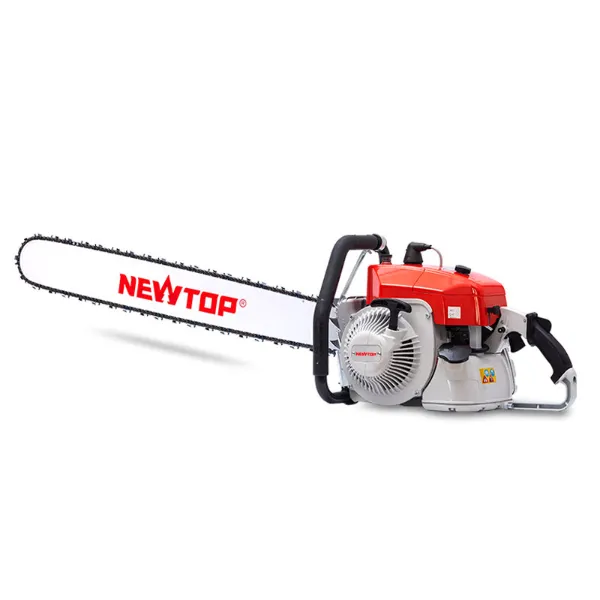
NT10500
Professionelle Kettensäge mit großem Hubraum und Heckgriff, entwickelt für die Forstwirtschaft und den Schnitt großer Holzmengen.
Details anzeigen →
NT9200
Robuste Benzin-Kettensäge für anspruchsvolle Feldarbeiten und das Schneiden von Hartholz.
Details anzeigen →
NT7200
Ideales Verhältnis von Leistung und Gewicht für den Landschaftsbau und mittlere Forstarbeiten.
Details anzeigen →
NT5800
Vielseitige Kettensäge der Mittelklasse, geeignet für landwirtschaftliche und allgemeine professionelle Anwendungen.
Details anzeigen →
NT3200
Kompakte Kettensäge mit Heckgriff, ideal für leichte Landschafts- und Wartungsarbeiten.
Details anzeigen →
NTCS401Li
Tragbare Kettensäge mit Lithiumbatterie für sauberen Betrieb und minimalen Wartungsaufwand.
Details anzeigen →Bereit zur Zusammenarbeit mit dem NEWTOP-Hersteller von Outdoor-Elektrogeräten?
Die Auswahl eines Fertigungspartners erfordert eine direkte Bewertung seiner vertikalen Integration, Qualität der Lieferkette, und Geschäftsmodellflexibilität, um sowohl Produktzuverlässigkeit als auch Markterfolg sicherzustellen.
NEUTOP stellt seitdem Outdoor-Elektrogeräte her 2003. Mit einer 10.000 Quadratmeter großen Produktionsstätte in Shanghai und mehr 300 Mitarbeiter, Wir liefern Kettensägen, Freischneider, Sprühgeräte, Generatoren, und Lithium-Gartengeräte bis hin zu mehr als 65 Länder.
Was NEWTOP auszeichnet, ist nicht nur der Produktionsumfang, sondern auch die technische Tiefe. Ein unabhängiger R&Das D-Team überwacht den strukturellen Entwurf, Testvalidierung, und Emissionskonformität, während automatisierte Montagelinien die Konsistenz für OEM- und Private-Label-Partner gewährleisten.
Für Händler in Afrika, Lateinamerika, Südostasien, und aufstrebende europäische Märkte, NEWTOP bietet:
- Flexible OEM-Anpassung
- Stabile Lieferzeiten für Großmengen von 30 Tagen
- CE, GS, EPA, ETL-Zertifizierungen
- 1-Jahr Maschinengarantie
- Zuverlässige Ersatzteilversorgung
Wenn Sie Ihre Produktpalette für professionelle Baumpfleger erweitern oder ein wettbewerbsfähiges Sortiment an Kletterkettensägen aufbauen möchten, Die Partnerschaft mit einem erfahrenen Hersteller reduziert das langfristige Betriebsrisiko.
Kontaktieren Sie NEWTOP noch heute, um dies zu besprechen Produktkataloge, Preisstrukturen, und Vertriebsmöglichkeiten.
Häufig gestellte Fragen
Warum verwenden Profis Kettensägen mit Obergriff??
Sie nutzen sie, weil die kompakte Größe eine bessere Bewegung in Bäumen ermöglicht. Das Design des oberen Griffs lässt sich leichter an einem Tragegurt tragen als eine Standardsäge.
Sind Kettensägen mit oberem Griff gefährlicher als Kettensägen mit hinterem Griff??
Ja, Kettensägen mit Obergriff gelten als gefährlicher für den Einsatz am Boden oder für ungeschulte Bediener. Ihr Design ermöglicht eine Einhandbedienung, Dies verringert die Stabilität und Kontrolle im Vergleich zum Zweihandgriff einer Säge mit hinterem Griff. Dieser Nahgriff erhöht das Risiko schwerer Verletzungen durch Rotationsrückschlag erheblich.
Welche ist die beste Kettensäge mit Obergriff zum Klettern??
Das beste Modell hängt von der Anwendung ab. Profis entscheiden sich in der Regel für Sägen mit einem guten Leistungsgewicht, reaktionsschnelle Drosselklappensysteme, und fortschrittliche Antivibrationstechnologie. Ebenso wichtig sind Zuverlässigkeit und Teileverfügbarkeit.
Kann ein Anfänger eine Säge mit Obergriff verwenden??
NEIN. Anfänger sollten eine Säge mit Hintergriff verwenden. Für den sicheren Betrieb von Sägen mit Obergriff sind spezielle Techniken erforderlich.
Warum sind Sägen mit Obergriff teurer??
Sie beinhalten oft fortschrittliche Technik, leichte Materialien, und verstärkte Sicherheitssysteme. Zusätzlich, Sie richten sich an professionelle Anwender, was Einfluss auf die Preisgestaltung hat.
Benötige ich einen Führerschein für eine Kettensäge mit Obergriff??
Die Vorschriften variieren je nach Land. In vielen Regionen, Für gewerbliche Baumkletterarbeiten ist eine professionelle Zertifizierung erforderlich. Informieren Sie sich vor der Verwendung stets über die örtlichen Arbeitsschutzgesetze.
