


- Все
- Истории клиентов NEWTOP
- NEWTOP Explorer Hub
- NEWTOP Обзор отрасли
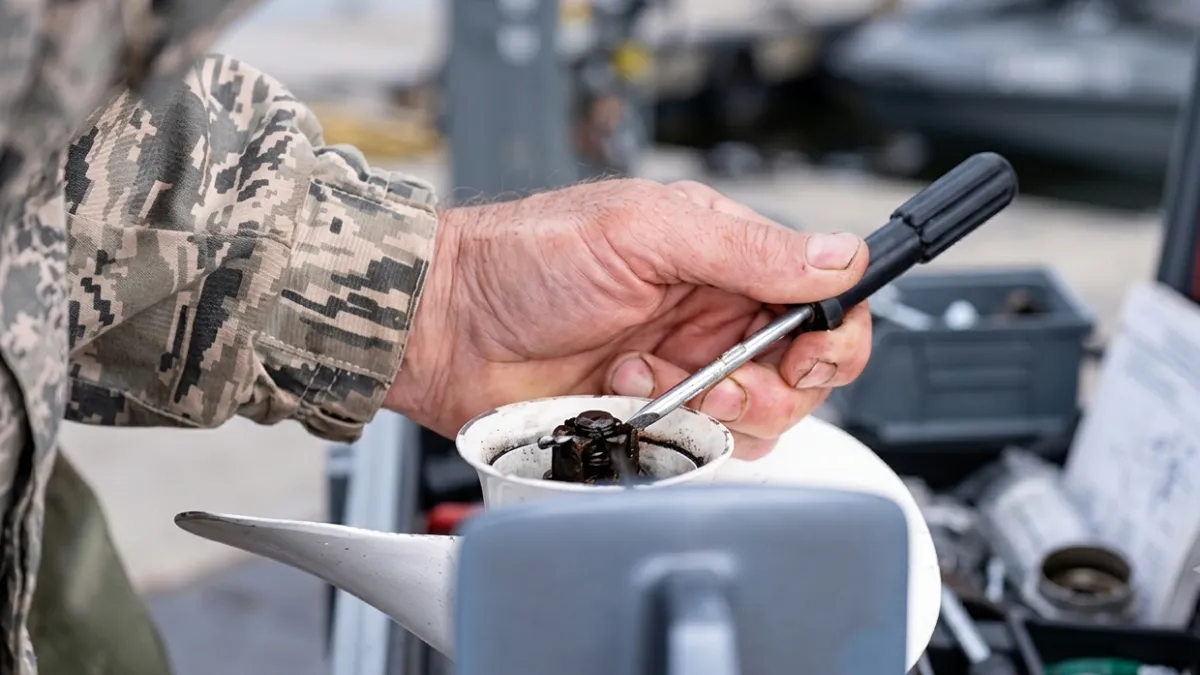
Многие владельцы лодок не замечают повреждения гребного винта до тех пор, пока их лодка не начнет чувствовать себя по-другому.. Возможно, ускорение становится медленнее, расходы на топливо увеличиваются, или руль начинает вибрировать после удара о скрытый камень или плавающий мусор. Знание ранних предупреждающих знаков поможет вам избежать дорогостоящего ремонта и обеспечить эффективную работу вашего подвесного двигателя..
В этом руководстве, мы объясним 5 наиболее распространенные признаки повреждения подвесной гребной винт, почему они имеют значение, и когда придет время заменить ваш пропеллер.
Почему нельзя игнорировать поврежденный пропеллер
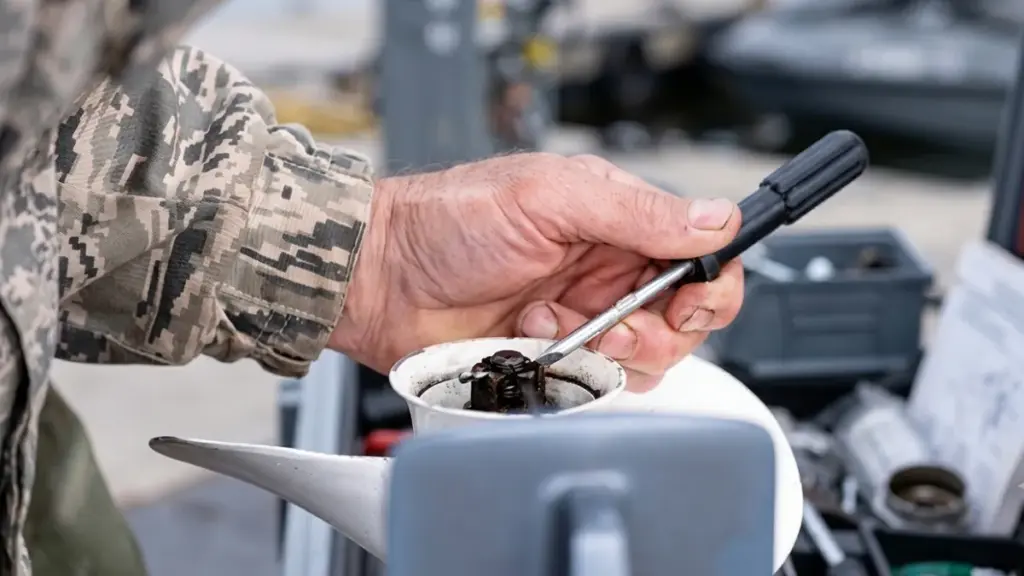
Игнорирование поврежденного гребного винта превращает незначительные потери эффективности в серьезное повреждение коробки передач., стремительный рост цен на топливо, и опасные проблемы с обращением. Исправьте это заранее, чтобы защитить свой движок и кошелек..
Снижение производительности и проблемы обработки
Поврежденный гребной винт немедленно лишает вашу лодку расчетных характеристик.. Даже незначительная деформация лопастей разрушает гидродинамический профиль, необходимый для преобразования мощности двигателя в эффективное движение вперед.. Операторы обычно замечают это по вялому удару по лунке и заметному падению максимальной скорости..
- Потеря тяги: Погнутые или сколы лезвия нарушают геометрию., уменьшая тягу вперед и вызывая плохое ускорение.
- Обработка нестабильности: Неровные поверхности лезвий создают неравномерную тягу., приводящее к тяге на руле, нестабильный триммер, и непоследовательное отслеживание.
- Генерация вибрации: Несбалансированное вращение создает вибрации под нагрузкой., часто ощущается как ритмичный удар по палубе на скорости глиссирования.
Повышенный расход топлива и эксплуатационные расходы
Использование скомпрометированного пропеллера напрямую влияет на ваш операционный бюджет.. Несовершенства на поверхности лопастей разрушают ламинарный поток воды., заменив его сопротивлением и турбулентностью. Двигателю приходится сжигать значительно больше топлива, чтобы достичь стандартной крейсерской скорости..
- Добавлено перетаскивание: Поврежденные лопасти вызывают турбулентный поток., заставляя двигатель работать усерднее, чтобы поддерживать скорость.
- Более высокий расход топлива: Поврежденный или погнутый гребной винт обычно увеличивает общий расход топлива примерно на 10%.
- Компенсация дроссельной заслонки: Операторы, естественно, сильнее нажимают на газ, чтобы компенсировать неэффективную тягу., молчаливо умножая ежедневные эксплуатационные расходы.
Сильная механическая нагрузка на нижний блок
Косметические повреждения снаружи часто скрывают серьезные механические повреждения внутри.. Несбалансированный пропеллер действует на вашу трансмиссию как молоток.. Он посылает постоянные, циклическое напряжение непосредственно в нижний блок, Превращение дешевого ремонта винта в масштабную реконструкцию коробки передач.
- Износ коробки передач: Неравномерная нагрузка передает нагрузку непосредственно на нижний блок., разрушение шестерен, подшипники, и валы преждевременно.
- Деградация уплотнения: Постоянная вибрация разрывает уплотнения карданного вала., позволяя трансмиссионному маслу вытекать и воде проникать внутрь.
- Перекос вала: Сильные удары, которые деформируют лопасти, часто сгибают карданный вал., гарантия катастрофического отказа, если его не остановить.
Риски безопасности и потенциальное застревание
Эксплуатация с поврежденным винтом переводит ваш запас безопасности в красную зону.. Потеря чистой тяги делает судно непредсказуемым в тесноте или суровых условиях.. Перенос неисправной трансмиссии в море может привести к внезапному механическому отказу, когда вам больше всего нужна мощность..
- Опасности при стыковке: Потеря обратной тяги и неустойчивое управление лишают вас контроля над маневрированием в узких каналах и скольжениях..
- Риск поломки: Работа с существующими повреждениями резко увеличивает ваши шансы на внезапную механическую поломку во время движения..
- Погодная уязвимость: Снижение эффективности движителя снижает уровень безопасности при плавании в сильном море., сильный ветер, или сильное течение.
5 Список признаков поврежденного подвесного гребного винта
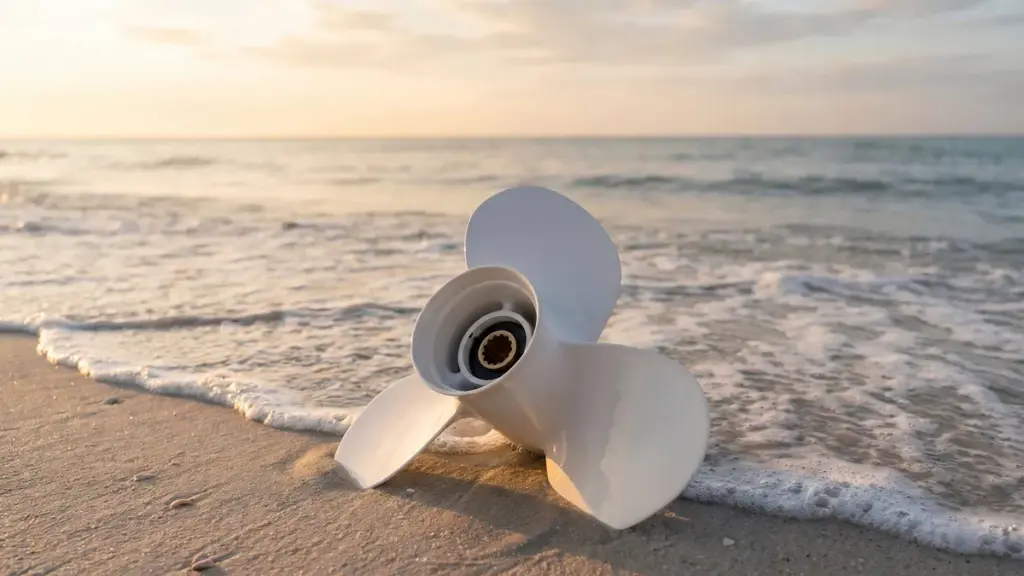
Если ваш подвесной мотор внезапно завибрировал, теряет скорость, или потребляет больше топлива, чем обычно, возможно, ваш пропеллер уже поврежден. В таблице ниже приведены наиболее распространенные симптомы., их вероятные причины, и как они могут повлиять на ваш двигатель.
| Предупреждающий знак | Основная причина | Непосредственный риск |
|---|---|---|
| Вибрация | Погнутые лезвия или ослабленная ступица | Выход из строя уплотнения коробки передач |
| Потеря скорости / Плохой бросок в лунку | Вращающаяся ступица или сопротивление лезвия | Перетаскивание двигателя |
| Шум / Нестабильность рулевого управления | Асимметричные лезвия или изогнутый вал | Повреждение шестерни нижнего агрегата |
| Высокий расход топлива / Нагрузка | Гидродинамическое сопротивление | Износ поршней и системы охлаждения |
| Видимые повреждения | Ударные удары | Ударные нагрузки на трансмиссию |
Знак 1: Вибрация во время ускорения или движения
Поврежденный пропеллер редко вращается правильно. Вы заметите дрожание прямо через штурвал., корпус подвесного мотора, или сам корпус лодки, особенно при ускорении или поддержании постоянной крейсерской скорости. Эта вибрация резко снижает эффективность гребного винта и создает немедленную нагрузку на опоры двигателя и уплотнения коробки передач..
- Распространенные причины: Погнутые или деформированные лезвия, свободная ступица, или вокруг карданного вала засорился тяжелый мусор.
- Действенная проверка: Выключите двигатель и осмотрите опору. Проверьте углы лезвий, чтобы убедиться, что они совпадают., затем вручную поверните гребной винт, чтобы обнаружить колебания или царапины на коробке передач..
Знак 2: Потеря скорости и плохой удар по лунке
Медленное ускорение, заметно более медленное время посадки в самолет, и снижение максимальной скорости напрямую связано с неэффективностью движителя.. Даже если обороты двигателя остаются нормальными или повышенными, неисправный винт не может преобразовать эту мощность в прямую тягу. Это часто является результатом кавитации вокруг поврежденных кромок лопасти или сильного морского загрязнения, создающего избыточное сопротивление..
- Индикатор вращающейся втулки: Если внутренняя втулка вышла из строя, он не может передать полный крутящий момент двигателя на воду, вызывая высокие обороты при минимальном движении лодки.
- Действенная проверка: Сравните ваш текущий широко открытый дроссель (ВОТ) Обороты и максимальная скорость в сравнении с историческими базовыми данными вашего судна.
Знак 3: Необычный шум или нестабильность рулевого управления
Новое напевание, грохот, или скрежет указывают на серьезное механическое смещение, особенно при повороте или прохождении определенных диапазонов оборотов. Вы также можете заметить, что штурвалом становится труднее управлять или его сильно тянет в сторону.. Это происходит из-за асимметричности, изогнутые лопасти создают неравномерную тягу, вынуждая лодку сходить с естественного пути движения.
- Угроза редуктора: Постоянный скрежет обычно указывает на погнутый карданный вал или повреждение шестерни нижнего агрегата в результате предшествующего подводного удара..
- Действенная проверка: Покачивайте пропеллер вперед-назад, чтобы обнаружить чрезмерный люфт.. Покрутите его вручную и внимательно прислушайтесь, нет ли внутренних скрежетающих звуков..
Знак 4: Повышенный расход топлива и ненормальная нагрузка двигателя
Внезапное снижение эффективности использования топлива означает, что вы чаще останавливаетесь на заправочной станции для одних и тех же маршрутов и грузов.. Гидродинамическое сопротивление из-за повреждения или загрязнения лопасти заставляет двигатель работать интенсивнее, чтобы преодолеть потерю тяги и вибрацию.. Двигатель будет звучать с перенапряжением, и для поддержания нормальной крейсерской скорости потребуется более высокая настройка дроссельной заслонки..
- Долгосрочное ношение: Длительная эксплуатация в условиях тяжелых нагрузок ускоряет износ поршней., подшипники, и подвесные системы охлаждения.
Знак 5: Видимый клинок, Центр, или повреждение края
Физические дефекты являются наиболее очевидными индикаторами воздействия.. Быстрый визуальный осмотр часто выявляет вмятины., это советы, недостающие куски, или микротрещины. Эти дефекты обычно возникают из-за посадки лодки на мель или ударов о камни., песчаные отмели, рифы, или затопленные обломки. Даже незначительное физическое повреждение изменяет эффективный наклон и баланс винта., передача вредных ударных нагрузок прямо на нижний блок.
- Действенная проверка: Снимите пропеллер, чтобы внимательно осмотреть все поверхности.. Замените устройство, если вы обнаружите серьезные структурные повреждения или если смета ремонта превышает 50% от стоимости новой опоры.
Высокопроизводительные подвесные гребные винты OEM от производителя

Как защитить свой двигатель, вовремя заменив правильный гребной винт
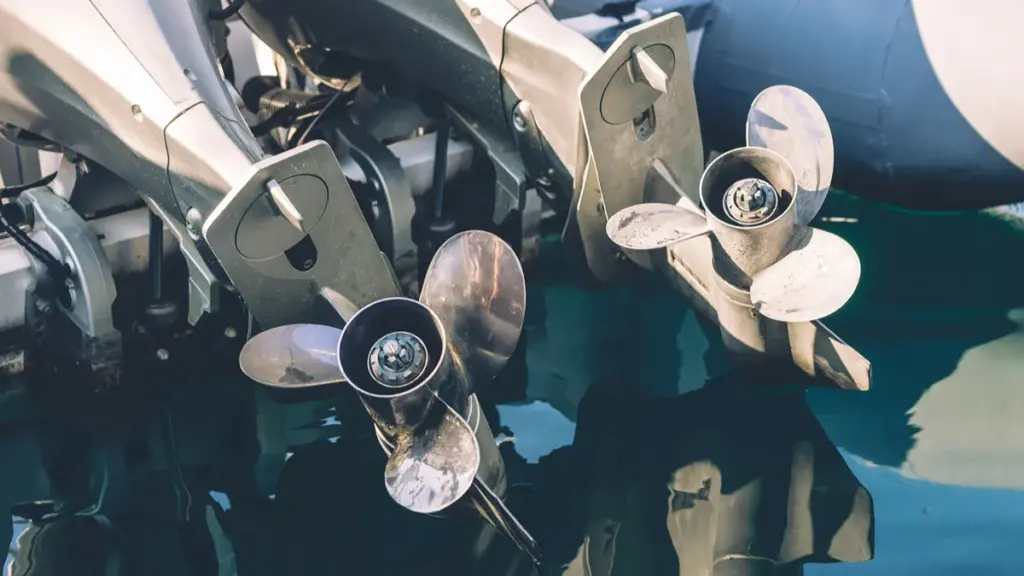
Поврежденный гребной винт заставляет ваш двигатель работать интенсивнее и может привести к серьезному выходу из строя трансмиссии.. Замена неисправного блока немедленно защитит коробку передач и восстановит базовую топливную экономичность..
Определение момента, когда пришло время замены
Точное знание того, когда следует заменять гребной винт, предотвращает перерастание незначительного износа в механический отказ.. Визуальные и тактильные проверки служат вашей первой линией защиты.. Любой удар по затопленному объекту требует немедленного внимания., даже если лодка все еще движется.
- Видимые структурные повреждения: Проверьте наличие глубоких трещин., большие недостающие куски, сильно погнутые лезвия, или утончающиеся края, которые нарушают геометрию лезвия.
- Базовая производительность падает: Следите за двигателем, который внезапно не достигает своей базовой линии при полностью открытой дроссельной заслонке. (ВОТ) Обороты или максимальная скорость при нормальных нагрузках.
- Вибрация и проблемы с управлением: Постоянная вибрация, тяга рулевого управления, или неровное отслеживание указывает на дисбаланс гребного винта.
- Проверка после удара: Всегда снимайте стойку для проверки вала и уплотнения после удара о подводные камни., журналы, или мусор.
Выбор подходящего сменного пропеллера
Установка неподходящего пропеллера так же вредна, как и эксплуатация сломанного.. Вам необходимо согласовать спецификацию замены с типом вашего корпуса и типичной эксплуатационной нагрузкой..
- Правильный шаг и диаметр: Отсутствие рекомендованного производителем диапазона шага приводит к превышению оборотов двигателя или его задержке., разрушая экономию топлива и ускорение.
- Алюминий для поглощения ударов: Алюминиевые стойки действуют как жертвенный барьер на мелководье., опасные плотные воды. Они деформируются при ударе, передача гораздо меньше ударов в дорогую коробку передач.
- Нержавеющая сталь для долговечности: Выбирайте нержавеющую сталь, когда вам нужна максимальная эффективность, сопротивление изгибу, и долговечность в глубоких или безопасных водах.
Проверки при установке и после замены
Успешная замена требует строгого внимания к узлу ступицы и окружающей среде на валу.. Прежде чем надеть новый пропеллер, тщательно очистите и подготовьте место, чтобы обеспечить правильную работу трансмиссии..
- Подготовка вала: Освободите намотанную леску, сорняки, и мусор, который может врезаться в новое уплотнение..
- Аппаратное сидение: Нанесите морскую смазку на шлицы.. Закрепите гайку опоры с точным моментом затяжки, не перетягивая ее., и вставьте новый шплинт, если этого требует конструкция.
- Испытание на трение: Переключите подвесной двигатель в нейтральное положение и вручную раскрутите новый гребной винт.. Он должен вращаться свободно, не заедая и не царапая коробку передач..
- Базовая проверка: Запустите лодку с нормальной нагрузкой, чтобы убедиться, что новый винт восстанавливает исходную максимальную скорость и обороты WOT..
Заключение
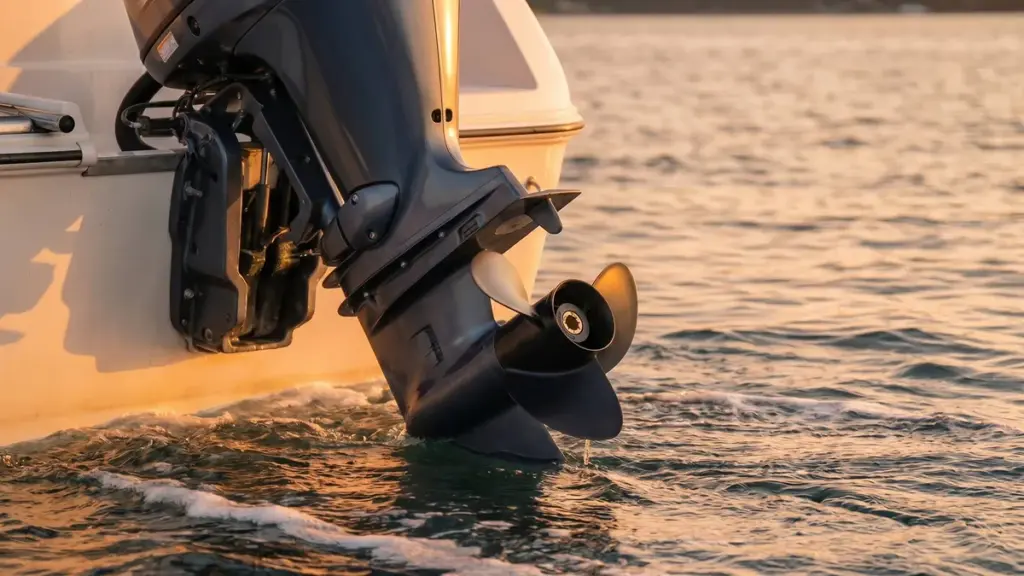
Регулярные проверки и своевременная замена — лучшие способы защитить ваш подвесной двигатель., улучшить ходовые качества лодки, и сократить долгосрочные эксплуатационные расходы. Не менее важно подобрать гребные винты для подвесных моторов с правильным шагом., диаметр, и высококачественные материалы для обеспечения надежной и эффективной работы..
Независимо от того, заменяете ли вы гребные винты для своего парка или закупаете продукцию для своего бизнеса, Партнерство с опытными производителями гребных винтов подвесных моторов может существенно улучшить качество продукции., производительность, и долговременная надежность. В НЬЮТОП, Наш интегрированный завод по производству гребных винтов подвесных моторов сочетает передовое производство с гибкими услугами OEM/ODM, чтобы помочь дистрибьюторам и морским брендам добиться успеха на конкурентных рынках..
👉 Свяжитесь с NEWTOP сегодня чтобы обсудить ваши OEM или оптовые требования и получить конкурентоспособное предложение для вашего следующего проекта подвесного гребного винта.
Часто задаваемые вопросы
Каковы признаки поломки подвесного гребного винта??
Повреждение гребного винта можно обнаружить по визуальным дефектам., производительность падает, и механические симптомы. Ищите вмятины, изогнутые кончики лезвий, недостающие куски, или микротрещины возле ступицы. На воде, урон проявляется как снижение максимальной скорости, вялые удары по лункам, и высокие обороты двигателя при низкой скорости движения лодки.. Вы также можете почувствовать новые ритмичные вибрации в руле или услышать стук.. Если вы заметили утечку трансмиссионного масла молочного цвета вокруг нижнего блока, удар, вероятно, повредил уплотнения карданного вала.
Может ли поврежденный пропеллер повредить двигатель??
Да, поврежденный гребной винт создает серьезную нагрузку на весь подвесной двигатель и его нижнюю часть.. Даже незначительный изгиб лезвия создает несбалансированное вращение.. Этот вращательный дисбаланс приводит к постоянному, сильные вибрации непосредственно через трансмиссию. Оставлено без флажка, эта тряска сбивает уплотнения карданного вала, пока они не выходят из строя, трансмиссионная смазка вытечет и вода хлынет внутрь. Эксплуатация двигателя в таком состоянии быстро приводит к разрушительному износу металлических частей шестерен и подшипников..
Почему моя лодка вибрирует после удара о что-то под водой?
Удар о затопленный объект выводит вашу трансмиссию из равновесия.. От удара обычно сгибается лопасть гребного винта., отслаивается материал, или слегка гнет карданный вал. Потому что пропеллер больше не сохраняет свою симметричную форму или вращается совершенно правильно., он вращается по орбите, а не вращается плавно. Это колебание создает ритмичную встряхивающую силу, которая распространяется вверх по внешней опоре., через подушки двигателя, и прямо в корпус.
Может ли повреждение пропеллера стать причиной плохого ускорения??
Да. Физический урон изменяет шаг лезвия, выпуклость, и чашка. Это искажение снижает гидродинамическую эффективность винта., заставляя его потерять сцепление с водой и резко уменьшая тягу вперед. Также, если сильный удар повредит внутреннюю резиновую ступицу, обычно называемую “вращающаяся ступица”— корпус гребного винта скользит по валу. Когда вы нажмете на газ, двигатель вращается на высоких оборотах, в то время как лодка едва ускоряется или изо всех сил пытается сесть в самолет.
Повысит ли плохой винт расход топлива?
Да. Эксплуатация поврежденного винта заставляет двигатель сжигать больше топлива на милю.. Бент, сколы, или сильно загрязненные лопасти создают дополнительное гидродинамическое сопротивление и увеличивают проскальзывание гребного винта.. Потому что поврежденные лопасти не могут эффективно преобразовать крутящий момент двигателя в тягу., подвесной двигатель должен вращаться быстрее и работать намного тяжелее, чтобы поддерживать нормальную крейсерскую скорость.. За сезон, эта неэффективность приводит к значительно более высоким расходам на топливо..
Как долго я могу безопасно использовать поврежденный пропеллер??
Вам следует эксплуатировать поврежденный гребной винт только на время, достаточное для того, чтобы он мог вернуться к причалу на низкой скорости.. Работа с вибрирующим, несбалансированная опора в течение длительного периода времени приводит к ненормальному состоянию, циклическая нагрузка на подшипники и уплотнения нижнего блока. Нажатие на двигатель в таком состоянии быстро приводит к возникновению простой, недорогая замена гребного винта приводит к катастрофическому ремонту коробки передач.
Может ли поврежденная ступица вызвать повышенные обороты двигателя?
Да. Производители спроектировали внутреннюю резиновую ступицу таким образом, чтобы она скользила при сильном ударе, чтобы защитить шестерни нижнего блока от сдвига.. Однажды эта ступица закрутится или порвется, он навсегда теряет прочное сцепление с внешней оболочкой гребного винта. Когда вы применяете газ, поврежденная ступица проскальзывает вместо передачи крутящего момента. Это позволяет быстро увеличивать обороты двигателя, не толкая лодку вперед., имитируя ощущение проскальзывания трансмиссии.
Стоит ли держать на борту запасной гребной винт?
Настоятельно рекомендуется иметь на борту запасной гребной винт.. Это служит дешевой страховкой, особенно если вы используете алюминиевый винт или регулярно плаваете на мелководье., воды, заполненные препятствиями. Ношение запасного устройства, вместе с ключом для опоры, замена упорной шайбы, и свежий шплинт, позволяет заменить поврежденную опору на месте. Это немедленно восстанавливает безопасное движение и спасает вас от испорченных выходных или дорогостоящих счетов за буксировку..
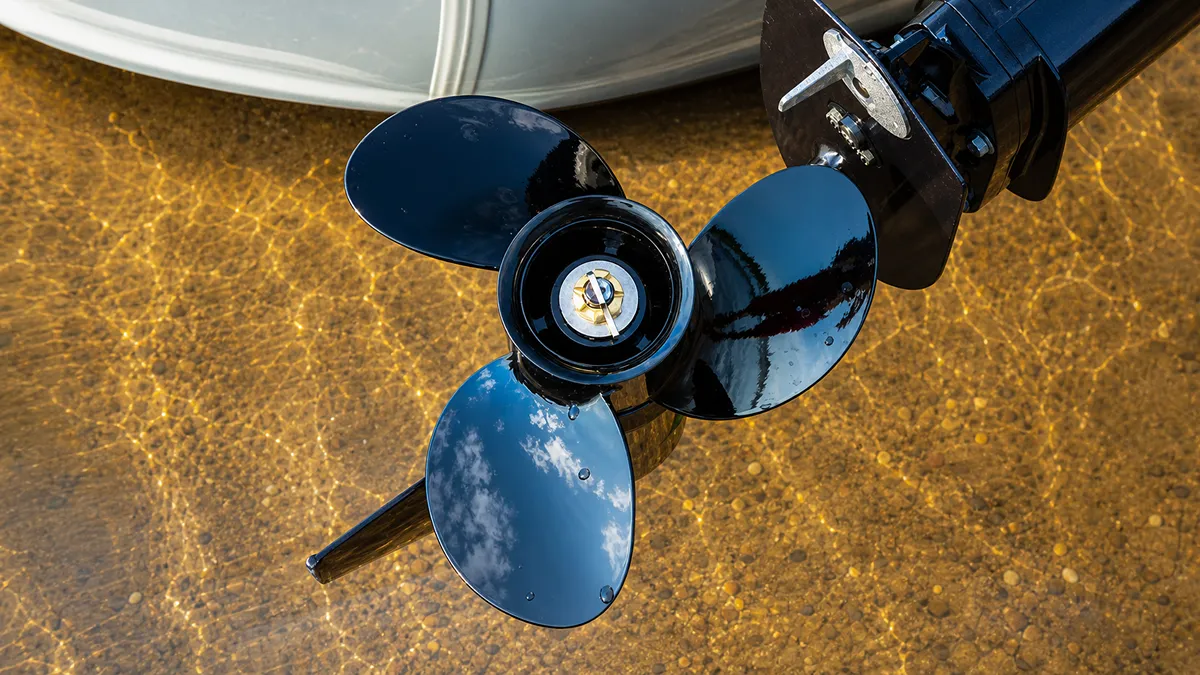
When a boat suddenly loses thrust, engine RPM rises without matching acceleration, or the пропеллер shows unusual surface damage, many operators assume the propeller is simply worn out. In reality, the problem may be propeller cavitation.
Cavitation is one of the most misunderstood issues affecting outboard motor performance. It reduces efficiency, increases fuel consumption, shortens propeller life, and may even lead to expensive repairs if ignored. Although it is often confused with ventilation, the two problems have different causes and require different solutions.
В этом руководстве, we’ll explain what cavitation is, what causes it, how it affects your boat, and the practical ways to prevent it by choosing the right propeller and setup.
What Is Cavitation in Outboard Motor Propellers?
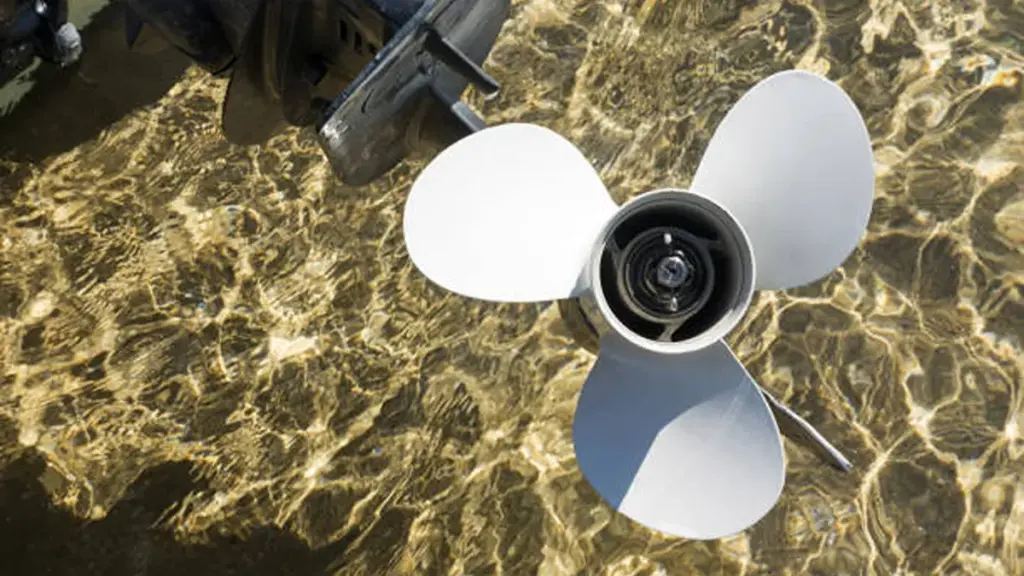
Cavitation in outboard propellers is a destructive hydrodynamic pressure issue. Vapor bubbles form and violently collapse on the blades, causing power loss and severe metal erosion.
The Physical Process of Cavitation
Cavitation starts when rapid propeller rotation forces local water pressure to drop below its vapor pressure. This extreme low pressure triggers an immediate phase change, creating vapor bubbles directly on the blade surface. The water essentially boils at ambient temperature due to the pressure drop.
As the spinning propeller drives these vapor bubbles into higher-pressure zones, they cannot sustain their form and collapse violently. These collapsing bubbles release intense micro-shock waves against the blade. Через некоторое время, these repeated impacts pound the metal surface, eroding the material and causing severe pitting.
Common Causes in Outboard Setups
Several setup and operational factors create the ideal environment for these damaging low-pressure zones to form.
- Incorrect mounting and trim: Setting the engine mounting height too high or trimming the motor out too far disrupts solid water flow across the blades.
- Poor propeller selection: Using a propeller poorly matched to the boat’s hull, load, or engine power forces the blades to carry excessive hydrodynamic load.
- Pre-existing damage: Bent blades, over-filed tips, or nicked edges create uneven hydrodynamics that trigger localized pressure drops.
- Disturbed inflow: Hull turbulence, transducers, or underwater obstructions prevent clean water from reaching the lower unit.
Symptoms and Performance Impacts
Operators usually identify cavitation through immediate handling degradation and eventual mechanical wear on the propulsion system.
- Loss of thrust: You experience a sudden decrease in power transfer efficiency, leaving the boat feeling sluggish under heavy throttle.
- RPM flaring: The engine speed surges rapidly without a proportional increase in forward acceleration.
- Audible disturbances: Collapsing bubbles create a distinct gravel-like rattling, accompanied by excessive vibration through the transom.
- Cumulative wear: Unchecked cavitation leads to visible blade erosion, pitting, and structural metal fatigue over time.
Distinguishing Cavitation from Ventilation
Boaters frequently confuse cavitation with ventilation, but they are entirely different mechanical events. Cavitation functions strictly as a hydrodynamic pressure issue resulting in vaporized water. Ventilation happens when the propeller physically pulls surface air or exhaust gases directly into the slipstream.
Both phenomena create nearly identical operator symptoms, including sudden RPM flare and an immediate loss of bite in the water. Accurate diagnosis dictates the repair path. Fixing ventilation usually involves basic trim adjustments or dropping the engine height. Resolving cavitation often requires repairing damaged blade edges or selecting a completely different propeller design to handle the engine’s output.
How Cavitation Differs from Ventilation
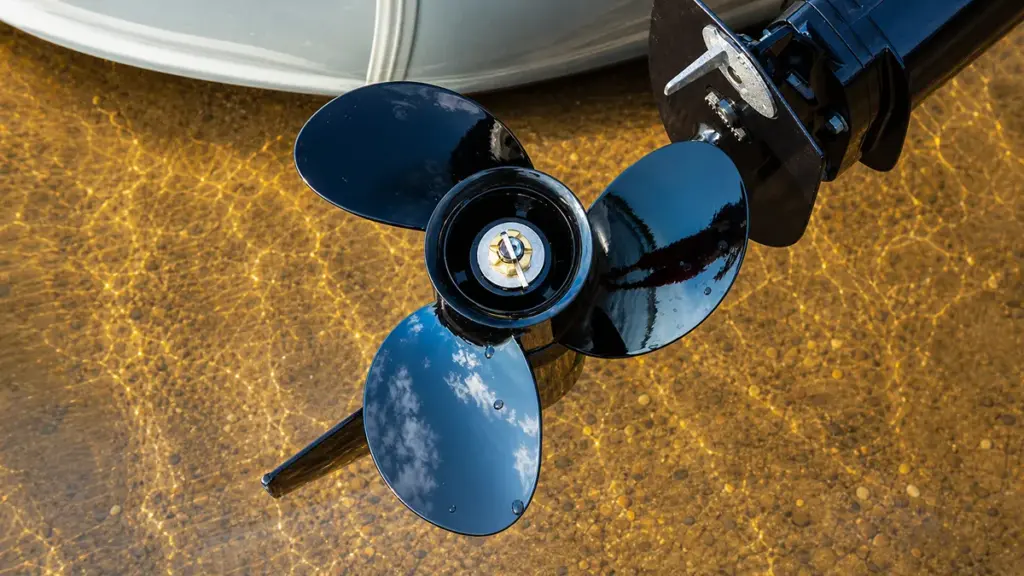
Cavitation is a pressure-induced phase change causing water to boil and erode propeller blades, while ventilation is external air getting sucked into the prop wash, causing sudden slippage.
Many boat owners use the terms cavitation и ventilation interchangeably, but they describe two different phenomena.
| Особенность | Cavitation | Ventilation |
|---|---|---|
| Cause | Water pressure drops below vapor pressure. | Air enters the propeller blades. |
| Medium Around Blade | Water vapor bubbles. | Air from above the water surface. |
| Main Symptom | Blade erosion and reduced propulsion efficiency. | Sudden engine RPM increase with poor thrust. |
| Blade Damage | Да, often causes pitting and surface erosion. | Usually no direct blade erosion. |
| Typical Causes | Incorrect blade loading, damaged propeller, poor blade design, or excessive pressure drop. | Engine mounted too high, sharp turns, rough water, or excessive trim angle. |
A simple way to remember the difference:
- Cavitation creates bubbles from water.
- Ventilation pulls air into the propeller.
Maximize Margins With Professional-Grade Garden Machinery

The Main Causes of Propeller Cavitation
Cavitation occurs when local water pressure drops below vapor pressure. Excessive speed, mismatched propellers, blade damage, and disturbed inflow from poor setup are the primary triggers.
| Cavitation Cause | Primary Mechanism |
|---|---|
| Speed & Loading | High RPM and heavy vessel loads drive local pressure below the vapor threshold. |
| Propeller Mis-Match | Wrong pitch or physical size creates extreme pressure imbalances across the blade. |
| Blade Damage | Nicks and bent edges prevent smooth water flow, causing localized low-pressure zones. |
| Setup & Inflow | Improper engine height or hull obstructions introduce turbulent, low-pressure water. |
Excessive Propeller Speed and High Loading
Propellers designed for standard operation struggle when pushed past their hydrodynamic limits. Spinning a blade too fast creates an extreme pressure drop on the back side. This sudden vacuum forces the water to vaporize instantly into gas pockets.
Operating parameters heavily influence this pressure shift. Specific stressors force the propeller into a continuous cavitation cycle.
- Heavy loads: Excess vessel weight forces the engine to work harder, multiplying blade stress.
- Hard acceleration: Rapid throttle spikes disrupt steady water flow and immediately drop local pressure.
- Extreme RPMs: Sustained high-speed operation with an overloaded vessel guarantees continuous vapor formation.
Incorrect Pitch, Sizing, and Propeller Mis-Match
Slapping any available propeller onto an outboard guarantees poor performance. Pitch directly dictates blade loading. Excessive pitch bogs down the engine and overloads the blades at lower speeds. Insufficient pitch lets the engine over-rev, accelerating the blades so fast that they tear the water apart and induce surface cavitation.
Proper matching requires aligning the propeller geometry with the specific vessel dynamics to maintain pressure equilibrium.
- Diameter constraints: Selecting a size that ignores hull weight and horsepower creates severe pressure imbalances.
- Blade geometry: The wrong blade count, rake, or cup strips the propeller of its grip, increasing slip and flow separation.
- Hull compatibility: A propeller style mismatched to the hull design fails to handle the specific water flow of that vessel.
Physical Blade Damage and Surface Imperfections
Water requires a perfectly smooth surface to maintain laminar flow. Minor impact damage alters the local hydrodynamics completely. Nicks, gouges, or missing chunks on the leading edge stop the blade from slicing cleanly. These defects act as turbulence generators, spawning localized low-pressure zones where vapor bubbles rapidly form.
Physical irregularities consistently trigger flow breakdown across the entire propulsion system.
- Bent blades: Asymmetric geometry causes uneven loading and violent pressure swings during every revolution.
- Altered edges: Overly sharpened or blunt leading edges detach the water flow prematurely.
- Lower unit fouling: Barnacle buildup or deep scratches on the gearcase destroy the clean water stream before it reaches the blades.
Disturbed Inflow, Setup, and Clearance Issues
A propeller operates efficiently only when fed a steady stream of dense, clean water. Mounting the outboard too high on the transom starves the system. This setup places the blades near the surface where the water is already aerated and low in pressure, accelerating the phase change into vapor.
Environmental factors around the transom dictate the quality of the inflow reaching the propeller.
- Clearance limits: Inadequate spacing between the propeller, hull bottom, and skeg amplifies local turbulence.
- Appendage drag: Poorly placed transducers or water pickups inject chaotic currents directly into the propeller path.
- Vessel attitude: Excessive stern weight or improper boat trim shifts the inflow angle, severely degrading water density.
How Cavitation Affects Speed, Fuel Use, and Blade Life
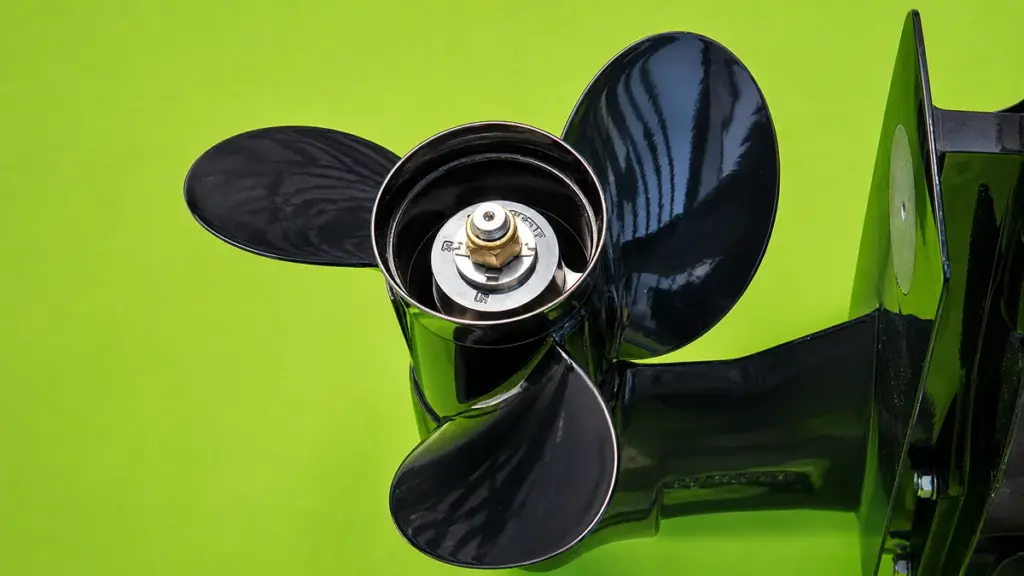
Cavitation cripples propeller efficiency. It kills top speed, burns up to 10% more fuel per mile, and destroys blades through violent micro-shock waves, forcing expensive premature replacements.
Impact on Boat Speed and Acceleration
When cavitation vapor bubbles form, they reduce effective blade lift. This breaks the propeller’s physical hook-up to the water and causes a massive drop in thrust. You will often feel this as a sudden RPM flare with barely any forward movement, forcing you to back off the throttle to let the blades regain bite.
- Hole-Shot Performance: Acceleration becomes sluggish, drastically extending the time it takes to get the heavy hull on plane.
- Top Speed Penalty: Even partial tip cavitation creates enough drag to cause a 2–5% loss in top speed on high-performance setups.
Increased Fuel Consumption and Reduced Efficiency
Vapor bubbles sticking to the blade surfaces act like a physical barrier. They increase friction and alter the effective thickness of the blade, destroying hydrodynamic efficiency. To compensate for the lost thrust, operators push the throttle further forward. This pushes the engine into a higher RPM band where it operates far outside its peak fuel efficiency range.
- Burn Rate: A chronic cavitation mismatch burns 5–10% more fuel per mile just to maintain the same hull speed.
- Lifetime Waste: Over the lifespan of a commercial or high-use outboard, this hydrodynamic drag wastes hundreds of gallons of fuel.
Structural Damage and Shortened Blade Life
Cavitation acts as a mechanical grinder on your hardware. When vapor pockets move into higher-pressure water, they collapse violently. These implosions generate localized micro-shock waves that mechanically hammer the metal, leading to severe pitting along the leading edges and low-pressure faces of the propeller.
- Vibration and Fatigue: The uneven collapse of bubbles creates high-frequency vibrations, subjecting the prop to continuous high-cycle fatigue.
- Cracking and Separation: Fatigue promotes micro-cracking at critical stress points like root fillets, which can quickly progress into complete blade separation under heavy loads.
- Collateral Damage: The constant oscillatory loads force premature propeller replacement and increase the risk of catastrophic bearing and seal failures inside the lower unit.
How to Fix Cavitation Through Setup and Prop Selection
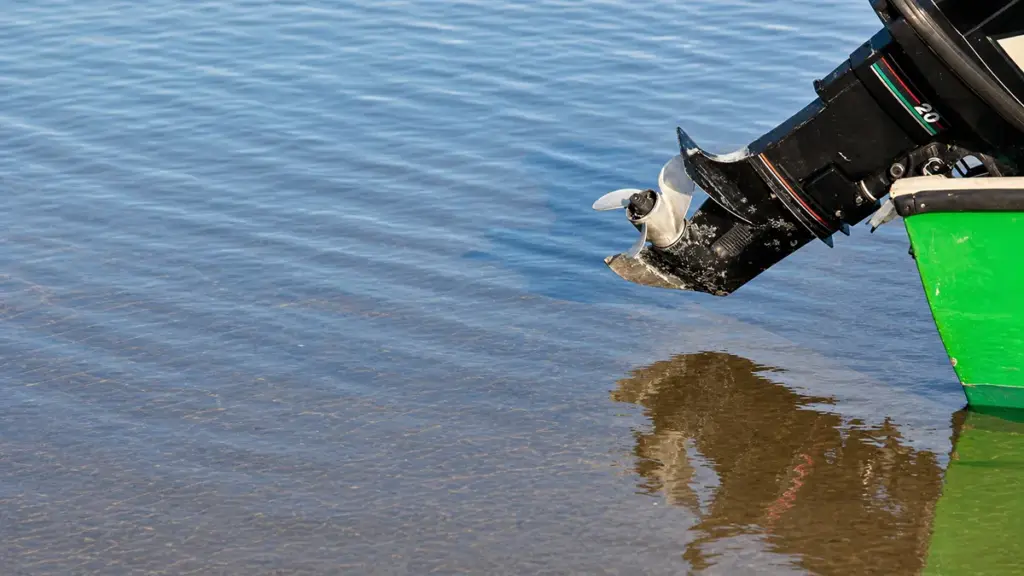
Most slipping issues are actually ventilation. Fixing engine height, adjusting trim, and selecting a cupped stainless-steel propeller will quickly restore grip and stop performance loss.
| Solution | Benefit |
|---|---|
| Repair Damaged Blades | Restores smooth water flow and improves propulsion efficiency. |
| Select Proper Pitch | Reduces blade overload and helps maintain optimal engine RPM. |
| Choose Correct Diameter | Improves thrust distribution and overall propulsion performance. |
| Adjust Engine Mounting Height | Optimizes water flow to the propeller and reduces pressure fluctuations. |
| Correct Trim Angle | Improves blade loading and enhances propulsion efficiency. |
| Clean Hull Regularly | Restores smooth water flow by eliminating marine growth and surface drag. |
| Balance the Propeller | Reduces vibration, uneven loading, and pressure imbalance. |
| Upgrade Propeller Design | Improves hydrodynamic efficiency and minimizes the risk of cavitation. |
Differentiating Ventilation from Cavitation
Operators often blame cavitation when their propeller loses grip. In reality, most slipping issues are actually propeller ventilation. This happens when the blades pull in surface air or exhaust gas instead of solid water. True cavitation is a hydrodynamic pressure problem where extreme low pressure forms vapor bubbles on the blade surface. It is far less common in everyday troubleshooting.
Both conditions share identical symptoms on the water. You will experience the following performance drops:
- Rising RPMs: Engine speed flares without a proportional increase in boat speed.
- Loss of thrust: The propeller suddenly drops its grip on the water.
- Slipping: Forward momentum stalls during hard acceleration or tight turns.
Optimizing Engine Height and Trim
A poorly adjusted outboard is the leading cause of poor propeller bite. Start your troubleshooting by testing the boat with the trim fully down to establish a performance baseline. Adjust the trim up slightly to find your usable running range. If the propeller still breaks loose, lower the engine mounting position on the transom. This keeps the anti-ventilation plate deeper in the water, blocking surface air from reaching the blades.
You should also trim down when entering tight turns so the propeller stays submerged as the hull leans. Окончательно, inspect the hull ahead of the lower unit. Transducers, through-hull fittings, or debris can disrupt clean water flow and feed aerated water directly into your propeller.
Choosing a Propeller for Maximum Bite
Your propeller dictates how well your engine transfers power to the water. Always inspect the current propeller for nicks, трещины, or bent blades first. Even minor physical damage frequently causes slipping and breaks the water flow. If the blades are intact but the engine over-revs before generating forward thrust, lower the pitch to help the engine grab solid water.
You can switch to a propeller with increased cup and a larger blade area to maintain grip under heavy loads or in rough chop. Upgrading to a stiffer stainless-steel propeller prevents blade flex under load and enhances hold during aggressive maneuvers.
Utilizing Aftermarket Hardware Solutions
When height and trim adjustments fall short, aftermarket hardware can force the stern down and keep the propeller buried.
- Hydrofoils: Add a hydrofoil to the anti-ventilation plate to help lift the stern onto plane faster and reduce air ingestion.
- Transom wedges: Install a positive transom wedge to increase engine tuck and improve initial propeller bite during takeoff.
- Jack plates: Use a jack plate for precise height adjustments, ensuring the motor is not raised high enough to induce further ventilation.
Choose NEWTOP for Reliable, Precision-Built Outboard Motor Propellers
Reducing cavitation starts with choosing a propeller that is properly engineered, accurately manufactured, and matched to your application. В НЬЮТОП, we produce high-quality гребные винты подвесного мотора for a wide range of recreational and commercial boats, combining precision machining with strict quality control to deliver stable performance on the water.
Every propeller is manufactured using carefully selected aluminum or stainless steel materials and undergoes balancing, dimensional inspection, and performance testing to ensure smooth operation, improved fuel efficiency, and longer service life. Whether you need OEM replacement propellers or customized solutions for your own brand, our engineering team can help you select the right diameter, подача, and blade design for different engines and operating conditions.
As an experienced outboard motor propeller manufacturer and trusted outboard motor propeller factory, NEWTOP supports глобальные дистрибьюторы, оптовики, and equipment brands with reliable production capacity, consistent product quality, and responsive OEM/ODM services.
Contact our team today to find the right propeller solution for your market and improve your customers’ boating performance.
Часто задаваемые вопросы
What causes cavitation in an outboard propeller?
Cavitation occurs when water pressure on the propeller blades drops below vapor pressure, causing vapor bubbles to form and violently collapse. Damaged blades, the wrong propeller size or pitch, excessive rotational speed, or disturbed water flow from the hull and lower unit typically trigger this pressure drop.
How do I know if my boat has cavitation or ventilation?
Cavitation creates a persistent whine, harsh vibration, and visible pitting on the propeller blades, even when running straight. Ventilation happens when the prop pulls in surface air or exhaust. You will feel a sudden RPM spike and loss of bite, usually during tight turns or when you trim the motor too high.
Can cavitation damage my engine?
Cavitation destroys propeller blades through erosion rather than directly damaging the internal engine block. It does cause indirect mechanical harm. When the propeller loses its grip, the engine over-revs. These rapid load fluctuations place heavy stress on your lower unit gears, подшипники, and the entire drivetrain.
Does engine height affect cavitation?
Engine height primarily drives ventilation, but it directly impacts cavitation. Mounting an outboard too high reduces propeller submergence and introduces aerated, unstable water flow. This disturbed inflow creates pressure anomalies that force vapor bubbles to form on the blades.
Will changing propeller pitch stop cavitation?
Adjusting pitch reduces cavitation only if your current propeller is over-loaded or under-loaded for your specific setup. If your engine struggles to reach its recommended wide-open throttle RPM, switching to a lower pitch helps balance the load. Pitch adjustments will not fix cavitation caused by physical blade damage, improper engine height, or hull irregularities.
Can a damaged propeller cause cavitation?
Да. Nicks, трещины, bent edges, or deep scratches disrupt the smooth flow of water across the propeller blades. These physical imperfections create localized low-pressure zones that trigger vaporization. The resulting bubble collapses cause further metal erosion, driving a cycle of worsening damage.
Is cavitation worse at high speed?
As boat speed and propeller RPM increase, water velocity over the blades rises. This lowers local pressure and significantly increases your cavitation risk. While true cavitation intensifies at higher speeds, operators often notice the most dramatic symptoms—like sudden blowout and RPM flares—during heavy acceleration or tight turns due to accompanying ventilation.
Does blade material affect cavitation resistance?
Material choice dictates how well your propeller survives cavitation, not whether it occurs in the first place. High-strength copper alloys and stainless steel resist the microscopic impacts of bubble collapses far better than standard aluminum. Stronger metals also allow manufacturers to cast thinner blade profiles, which helps manage pressure distribution and delays performance loss.
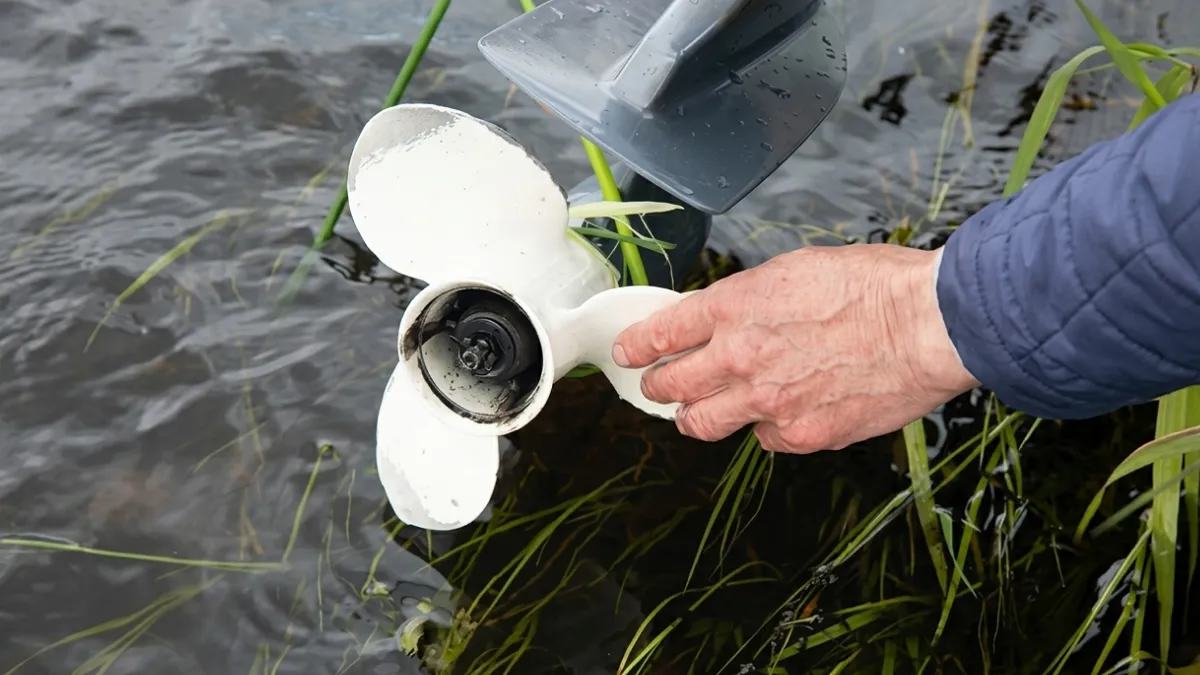
When the boating season ends, many owners focus on winterizing the engine but overlook one of the most important components below the waterline—the пропеллер подвесного мотора. Proper seasonal maintenance not only protects the propeller itself but also helps prevent hidden damage to the propeller shaft, gearbox, and seals.
Whether you use an aluminum or stainless steel propeller, spending a short amount of time on inspection and maintenance before storage can reduce unexpected failures, improve performance next season, and extend the service life of your outboard motor.
This guide explains exactly what to inspect, clean, repair, and prepare before storing your outboard motor propeller, helping both recreational boat owners and commercial fleets reduce maintenance costs and downtime.
Why Seasonal Propeller Maintenance Matters
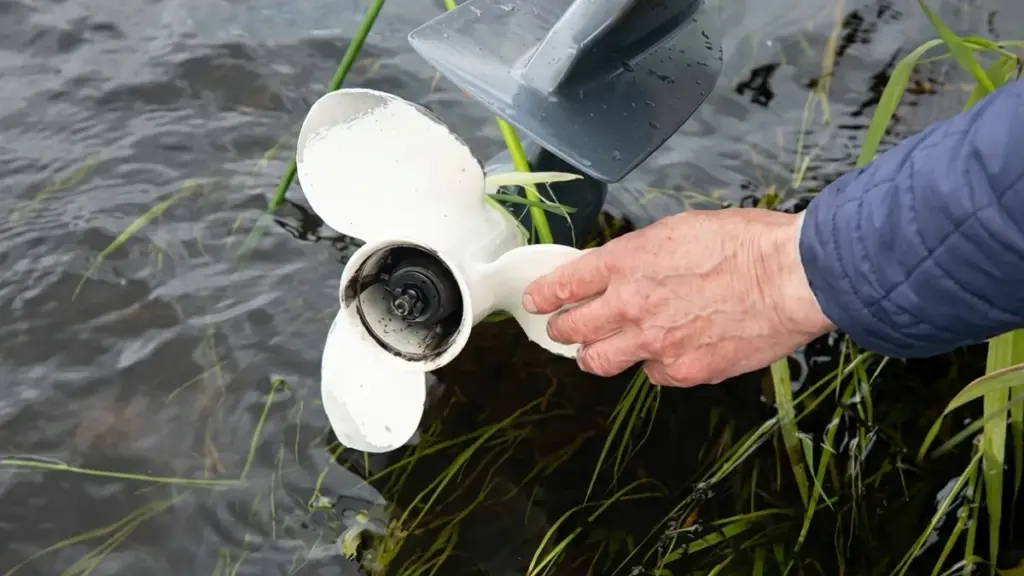
Routine seasonal propeller maintenance stops minor wear and hidden shaft debris from escalating into catastrophic lower-unit failures, protecting both fuel efficiency and drive-train longevity.
Ensuring Peak Performance and Fuel Efficiency
Пропеллеры take the brunt of the marine workload. These high-impact components directly dictate your boat’s speed, fuel burn, and handling characteristics. A single bent blade or heavily nicked edge disrupts the hydrodynamic profile, forcing the outboard to work harder while delivering less thrust.
Routine seasonal maintenance restores the motor to its intended baseline efficiency. Catching minor deformations and correcting подача alignment early ensures you get the exact performance you expect every time you hit the throttle.
Preventing Costly Lower-Unit Damage
Fishing line, сорняки, and netting constantly find their way around the propeller shaft. Operators rarely see this debris from the outside, allowing it to tighten and harden over time. Removing the propeller at the end of the season exposes wrapped monofilament before it cuts into the prop shaft seal.
A compromised seal invites water intrusion directly into the gearcase, emulsifying the gear oil. Finding and clearing these hazards early prevents a basic maintenance step from turning into an expensive lower-unit and drivetrain overhaul.
Mitigating Corrosion and Cavitation Erosion
The marine environment attacks metal relentlessly. Propellers face continuous exposure to saltwater, localized impact damage, and cavitation erosion. Regular visual inspections reveal abnormal wear patterns, deep pitting, and structural issues with critical hardware like prop pins or thrust washers.
Pulling the prop also allows technicians to clean the shaft and apply fresh waterproof marine grease. This targeted lubrication protects the metal splines from long-term galvanic deterioration and ensures the hub never seizes to the shaft.
Identifying When Replacement Is Necessary
Not all damage can be filed out or welded. Inspecting the propeller every 50 к 100 часы, or during the seasonal layup, helps operators spot critical structural defects before they fail under load. Thorough maintenance routines reveal specific signs that warrant an immediate swap.
- Visible warping: Blades that no longer track true or show severe bending.
- Deep notching: Cracks radiating from the blade root or hub area.
- Blade damage: Significant material loss that destroys dynamic balance.
Timely evaluation protects the outboard’s resale value and guarantees you avoid sudden on-water failures caused by fatigued metal or spun hubs.
What to Inspect Before Storing an Outboard Propeller
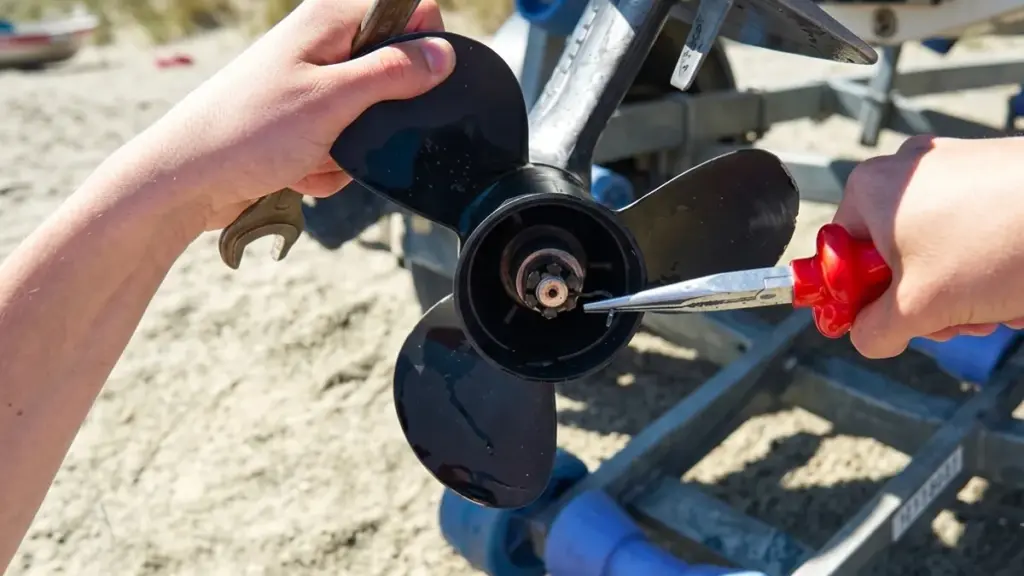
Ignoring your propeller before winter storage guarantees seized splines and compromised lower-unit seals next season. A systematic inspection now prevents catastrophic failure later.
| Компонент | Inspection Focus | Primary Risk if Ignored |
|---|---|---|
| Blades & Surfaces | Cracks, bends, marine growth | Imbalance, vibration, speed loss |
| Shaft & Seals | Fishing line, seal intrusion, bare splines | Water in gearcase, seized propeller |
| Hub Assembly | Slippage, looseness, debris | Spun hub, poor thrust transfer |
| Hardware | Corroded washers, reused cotter pins | Hardware failure, lost propeller |
Propeller Blades and Outer Surfaces
The outer surfaces take the brunt of impact and environmental wear. Visual checks only reveal obvious defects. A physical inspection uncovers the hidden structural damage that worsens over a long storage period.
- Blade integrity: Check each blade for nicks, dents, scratches, bends, трещины, gouges, and wobble.
- Tactile inspection: Run fingers carefully along the edges to feel for hidden damage.
- Corrosion markers: Look for rust, oxidation, discoloration, and salt buildup, especially after saltwater use.
- Biological fouling: Remove weeds, algae, barnacles, and other marine growth before drying.
Prop Shaft, Splines, and Gearcase Seals
Removing the propeller exposes the critical junction between your propulsion system and the lower unit. Debris trapped here eats through seals, inviting water into the gearcase and causing massive internal failure.
- Debris removal: Remove fishing line and rope wrapped around the shaft to prevent lower-unit damage.
- Spline health: Inspect shaft splines for wear, burrs, or corrosion.
- Seal integrity: Examine the seal where the prop shaft enters the gearcase for compromise or water intrusion.
- Смазка: Apply marine-grade grease to the prop shaft before storage to help prevent seizure.
Internal Hub Assembly
The internal hub absorbs shock and transfers torque. If the rubber or mechanical components start failing, your engine will over-rev while the boat barely moves. Storage prep is the exact time to diagnose these issues.
- Physical condition: Inspect the hub for looseness, slippage, or physical signs of a spun hub.
- Performance context: Connect hub condition to performance clues from the last outing, such as vibration, cavitation, or loss of speed.
- Cavity check: Check the internal cavity for trapped debris or residue that could harden during storage.
Nuts, Washers, and Locking Hardware
Mounting hardware keeps the propeller locked safely onto the shaft under intense load. Reusing fatigued metal components or ignoring thread wear introduces unnecessary risk for your next launch.
- Nut condition: Verify the propeller nut is intact and free of thread damage.
- Supporting parts: Inspect washers and locking rings for wear, deformation, or corrosion.
- Pin replacement: Discard the old cotter pin and prepare a new one for reinstallation.
- Reassembly prep: Plan to reassemble the hardware using the manufacturer’s recommended torque.
Maximize ROI With Professional-Grade Garden Machinery
How to Check for Cracks, Bends, and Corrosion
A thorough propeller inspection requires a clean surface, good lighting, and tactile checks to catch hidden defects before they compromise your lower unit.
Preparation and Cleaning
Remove the propeller from the outboard to get an unobstructed view of the entire assembly. Wash away all marine growth, salt deposits, and oily residue. Dirt and algae easily hide fine stress lines or small chips. Once clean, dry the propeller completely. Moisture masks hairline cracks and subtle pitting that you need to spot with the naked eye.
Visual and Tactical Blade Inspection
Set up bright lighting and examine the leading edges, trailing edges, and blade tips. Look for missing material, deep gouges, and visible cracks. Your hands often catch what your eyes miss. Run a bare hand over every blade surface to feel for rough spots, raised metal, or subtle dents from minor impacts. Pay close attention to the metal condition itself. Inspect for white powdery oxidation, deep pitting, and general material loss. This step is critical for cast aluminum models, which degrade quickly once the protective outer coating fails.
Evaluating Blade Alignment and Geometry
Blades require perfect symmetry to deliver efficient thrust. Compare the pitch angle, tip height, and overall shape of each blade against the others. Look closely for visual inconsistencies that point to bending, twisting, or warping from submerged strikes. Do not ignore slight distortions. Even a minor bend throws the propeller out of balance. This rotational imbalance sends destructive vibrations straight into the gearcase, wearing out seals and bearings over time.
Центр, Shaft, and Rotation Checks
Inspect the inner hub assembly for cracking, rubber tearing, or looseness that signals it might slip under heavy load. Check the bare prop shaft for wrapped monofilament fishing line. Оставлено без флажка, fishing line cuts directly through the prop shaft seal, letting water flood the lower unit and driving internal corrosion. Окончательно, slide the propeller back on and rotate it slowly by hand. Watch the hub and blade tips for uneven rotation or a visible wobble. A wobbling propeller often points directly to a bent prop shaft rather than isolated blade damage.
When Propeller Repair Is Possible and When Replacement Is Better
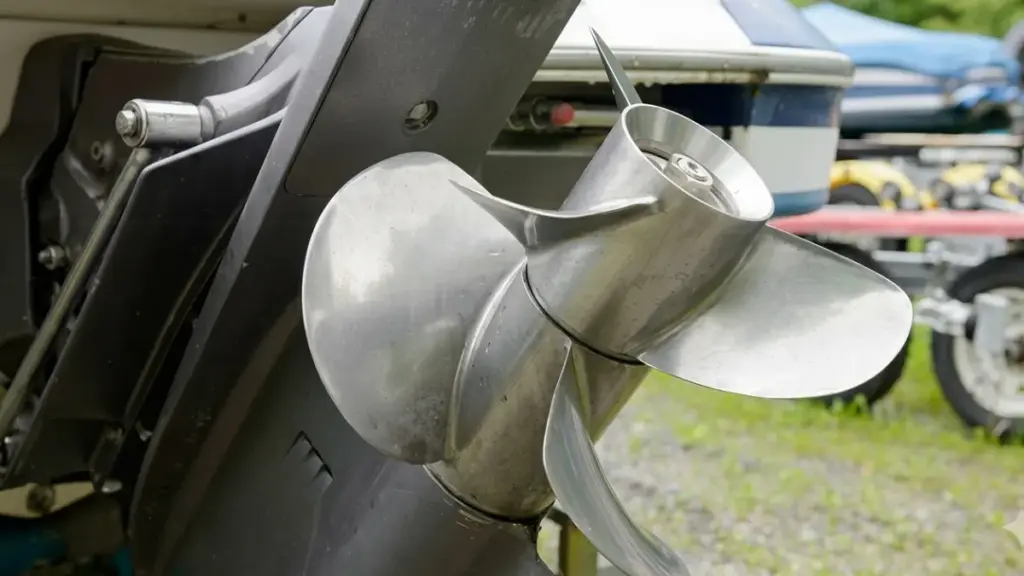
The decision depends on the severity of the damage, the propeller material, and the operating conditions.
| Damage Type | Repair Possible? | Replacement Recommended? |
|---|---|---|
| Small blade nick | Да | Нет |
| Minor bend | Usually | Иногда |
| Surface corrosion | Да | Нет |
| Large crack | Нет | Да |
| Broken blade tip | Иногда | Often |
| Severe hub damage | Rarely | Да |
| Heavy corrosion | Нет | Да |
Generally speaking:
Repair is suitable when:
- Damage is localized
- Blade geometry can be restored
- Structural strength remains intact
- Repair cost is significantly lower than replacement
Replacement is the better option when:
- Multiple blades are damaged
- Cracks continue growing
- Blade thickness has become too thin
- Repair costs approach the price of a new propeller
- The propeller repeatedly loses balance
Commercial operators often replace damaged propellers sooner because downtime costs far more than the propeller itself. For boat manufacturers, дистрибьюторы морского оборудования, and maintenance providers, having a reliable replacement source is essential to reduce waiting time and keep customers operating efficiently.
НЬЮТОП provides high-quality aluminum and stainless steel outboard motor propellers designed for reliable performance in different marine applications. With years of experience in outdoor power equipment manufacturing, NEWTOP combines precision production, strict quality control, and stable supply capability to support global partners with consistent propeller solutions.
Whether you need standard replacement propellers or customized solutions for specific outboard motor applications, working with an experienced outboard motor propeller ma
How to Remove, Clean, and Reinstall a Propeller Safely
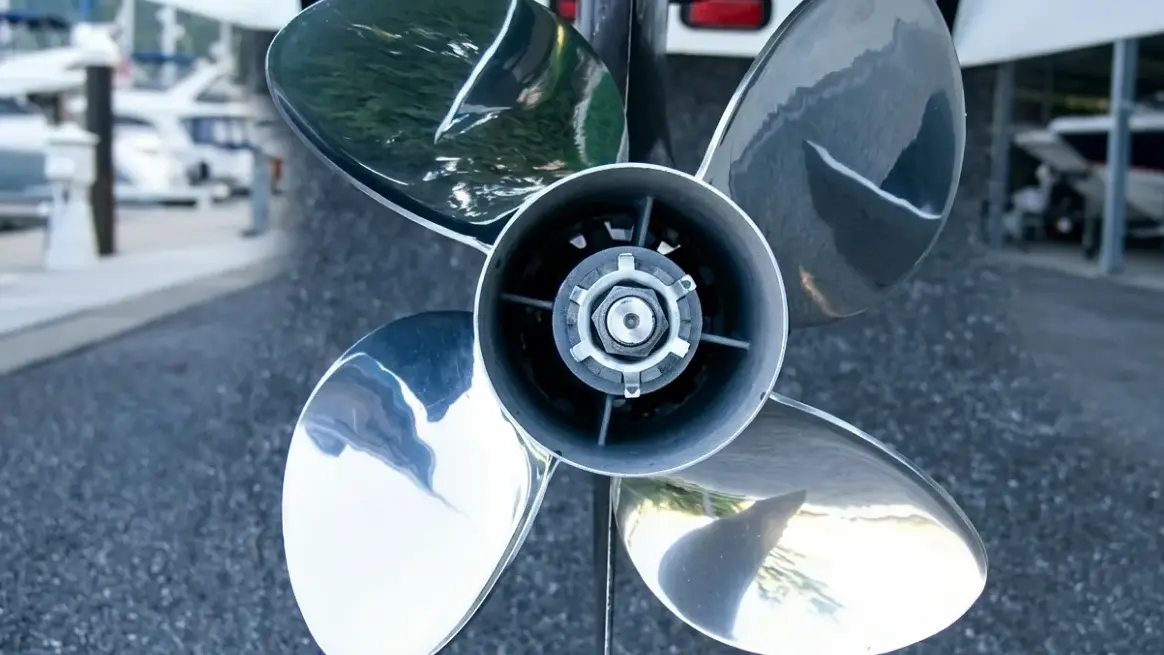
Removing and reinstalling an outboard propeller is a fundamental maintenance task that prevents seized splines, catches hidden fishing line damage early, and keeps the lower unit protected.
Safety Precautions and Tool Preparation
Working around sharp propeller blades requires strict safety protocols before you even touch a wrench. A sudden engine start or an unexpected blade rotation can cause severe injury.
- Engine disablement: Remove the kill-switch lanyard and disconnect the battery to eliminate any chance of an accidental start.
- Propeller immobilization: Wedge a solid block of wood between the blades and the anti-ventilation plate, or use a dedicated propeller holding tool to stop rotation.
- Essential toolkit: Keep a prop nut wrench (or socket set), needle-nose pliers for cotter pins, a flathead screwdriver, and marine-grade grease within arm’s reach.
Step-by-Step Propeller Removal
Once the setup is secure and the prop is locked in place, you can safely dismantle the assembly. Pay close attention to the order of the hardware as it comes off the shaft.
- Free the fastener: Use pliers to straighten and pull the cotter pin, or take a flathead screwdriver and hammer to gently flatten the lock-washer tabs.
- Loosen the nut: Turn the propeller nut counterclockwise with the appropriate wrench until it completely unthreads.
- Extract the propeller: Pull the unit straight outward along the shaft. If you meet resistance, wiggle it gently side-to-side. Avoid using excessive prying force against the lower unit.
- Check the thrust washer: Slide the washer off the shaft and inspect the surface for wear grooves, distortion, or stress cracks.
Cleaning and Inspecting the Propeller and Shaft
A removed propeller gives you a clear view of the lower unit’s most vulnerable areas. This is your primary opportunity to spot early signs of gearcase intrusion.
- Clear the shaft: Wipe away all old grease. Carefully pick out any braided or monofilament fishing line wrapped around the base, as this will eventually slice through the oil seal.
- Inspect the oil seal: Check the rubber seal itself for nicks and cuts. Look for emulsified, milky gear oil seeping out, which signals an active leak.
- Examine the propeller: Wash off marine growth. Check the blades for bends, impact chips, and cavitation pitting, and verify the rubber hub insert shows no signs of slipping or tearing.
Lubrication and Safe Reinstallation
Reassembly requires the right lubrication and precise torque. Skipping these details often leads to a seized propeller next season or a loose assembly under load.
- Grease the splines: Apply a light, even coat of waterproof marine grease to the bare prop shaft splines to block corrosion and ensure the prop slides off easily next time.
- Seat the thrust washer: Slide the washer back onto the shaft in its correct original orientation. Push the propeller on until it rests flush against it.
- Torque the nut: Replace all spacers in order, thread the nut on by hand to avoid cross-threading, and use your wood block to stabilize the prop. Tighten the nut to the manufacturer-specified torque.
- Lock the assembly: Thread a brand-new cotter pin through the shaft and bend the legs securely, or fold the retainer tabs flat against the nut. Spin the prop manually to confirm smooth, unobstructed rotation.
What Spare Parts to Prepare for the Next Season
A well-stocked spare parts kit minimizes downtime and prevents minor hardware failures from ruining your boating season.
Spare Propeller Selection and Storage
You need to match your replacement propeller’s diameter, подача, материал, and hub system exactly to your current engine requirements to maintain baseline performance. A mismatched spare will compromise your fuel efficiency and engine RPM limits.
Keep at least one primary spare on board at all times. If you navigate shallow, скалистый, or debris-filled waters, pack a secondary ‘get-home’ prop designed just to get you back to the dock safely. Store these spare propellers in a clean, dry area. Apply a light coat of marine grease to the hub splines and protect the blades from accidental impacts during rough weather.
Propeller Mounting Hardware
A spare propeller is useless if you lose or damage the mounting hardware during a swap. Your kit requires specific fastening components ready for immediate deployment.
- Thrust washers: Stock spares matched exactly to your specific outboard model to ensure proper prop seating and load transfer.
- Castle nuts and retainers: Keep extra nuts and locking retainers on hand. Inspect your existing hardware for corrosion or thread damage before the season starts.
- Cotter pins: Carry multiple new stainless-steel cotter pins. Used pins fatigue when bent, meaning you should never reuse them.
Marine Lubricants and Corrosion Prevention
Proper lubrication stops your hardware from seizing. Use a marine-grade propeller shaft grease to prevent spline galling. This simple step blocks saltwater intrusion and makes future propeller removals significantly easier.
Apply this lubricant directly to the shaft splines, the rear main seal area, and the mating surfaces between the thrust washer and the prop hub. Plan periodic propeller removals throughout the season. This routine lets you clean the shaft, renew the grease coating, and inspect the entire assembly for hidden corrosion before it causes mechanical failure.
Consumable Parts and Maintenance Tools
Field replacements require the right tools and small consumable components. For outboard setups that index the prop position, keep exact-match replacement shaft keys in your kit. While performing swaps, inspect the prop shaft seal area regularly. Look carefully for embedded fishing line to prevent costly water ingress into the lower unit.
To handle these tasks on the water, assemble a dedicated toolkit with the following items:
- Prop wrench: Sized specifically for your outboard nut to prevent rounding the edges.
- Torque wrench: Required to hit the manufacturer’s exact specifications and avoid overtightening.
- Needle-nose pliers: Essential for inserting, изгиб, and removing stainless-steel cotter pins.
- Block of wood: Place this between the blades and the anti-ventilation plate to stop rotation during installation.
How NEWTOP Helps Reduce Replacement Downtime
When selecting a replacement outboard motor propeller, product quality and manufacturing consistency directly affect operating reliability and maintenance costs. A dependable propeller supplier helps reduce replacement delays while ensuring stable performance after installation.
НЬЮТОП produces aluminum and stainless steel outboard motor propellers with strict control over materials, structure, and machining accuracy. Ключевые преимущества включают в себя:
- High-performance materials: Aluminum propellers use aluminum-magnesium alloy made from new aluminum ingots, providing excellent toughness and high strength. Stainless steel propellers use duplex stainless steel, offering higher yield strength and corrosion resistance than standard stainless steel.
- Strong one-piece structure: Propeller blanks are produced through dedicated molds with integrated forming technology, eliminating welding points and improving overall strength and durability.
- Better dynamic balance: The hub is pressed as an integrated part to ensure accurate positioning and smoother rotation, helping reduce vibration during operation.
- Precision blade processing: CNC machining centers with dedicated tooling ensure accurate blade dimensions, consistent blade curves, and stable propulsion performance.
NEWTOP helps global distributors, OEM customers, and marine equipment suppliers reduce replacement downtime with durable and consistent propeller solutions. Looking for a reliable outboard motor propeller supplier? Contact NEWTOP today to explore durable propeller solutions for your marine equipment needs.
Часто задаваемые вопросы
How often should an outboard propeller be replaced?
There is no fixed timeline for replacing an outboard propeller. Replacement is driven entirely by condition, производительность, и безопасность. You should replace it when you notice structural damage like severe bends, недостающие куски, or deep cracks, or significant metal loss from corrosion. Unresolved performance issues such as reduced top speed, higher fuel consumption, or heavy vibration also indicate it is time for a new prop.
Should I remove my propeller before winter storage?
Да, removing the propeller before winter storage is highly recommended. It prevents the theft of valuable stainless-steel or high-performance props. It also allows you to inspect the propeller shaft for wrapped fishing line, which can destroy seals and cause water intrusion into the gearcase. While the prop is off, you can clean the shaft and apply fresh marine grease to prevent it from seizing over the winter.
How do I know if my propeller is damaged?
Visual signs include bent or warped blades, chipped edges, трещины, and heavy corrosion. You may also notice performance changes, such as a loss of top speed, sluggish acceleration, or increased fuel consumption. When running, a damaged propeller often causes unusual vibrations, steering pulling, or a slipping sensation where the engine over-revs without matching boat speed.
Can a bent propeller be repaired?
It depends on the material and severity. Minor bends or small dings in aluminum and some stainless steel propellers can often be reconditioned by a professional prop shop. But severe bends, deep cracks, distorted hubs, or damage to die-cast aluminum props usually require a full replacement. If structural integrity is compromised or the repair cost approaches the price of a new prop, replacement is the safer option.
What grease should be used on a propeller shaft?
Always use a high-quality, waterproof marine grease designed specifically for propeller shaft splines, such as a 2-4-C marine lubricant. This grease resists wash-out in fresh and saltwater, providing critical corrosion protection. Apply a thin, even coat to the shaft splines and threads at least once a season to ensure the propeller hub does not seize to the shaft.
How do I stop corrosion on a stored propeller?
Start by washing the propeller with low-pressure fresh water and a mild detergent to remove salt, grease, and marine growth. Dry it completely. For long-term storage, you can apply a two-part high-build epoxy primer to bare metal surfaces. Store the propeller indoors in a dry, well-ventilated area, avoiding direct contact with concrete floors or dissimilar metals.
What spare parts should I keep with a replacement propeller?
A spare propeller is only useful if you have the right hardware to install it. Keep a kit on board that includes a spare prop nut, several new stainless-steel cotter pins or lock washers, a thrust washer, and any required hub spacers. You should also pack a small tube of marine grease, a block of wood to stop prop rotation during the swap, and the correct size wrench or socket.
Can a damaged propeller affect the gearbox?
Да, a damaged propeller can severely affect the gearbox. Bent blades or missing material create a rotational imbalance that sends vibrations directly down the prop shaft. Через некоторое время, this constant vibration and potential shaft misalignment increase wear on gearbox bearings, gear teeth, and shaft seals. In severe impact cases, shock loads can chip gears or bend the driveshaft, leading to expensive lower unit repairs.
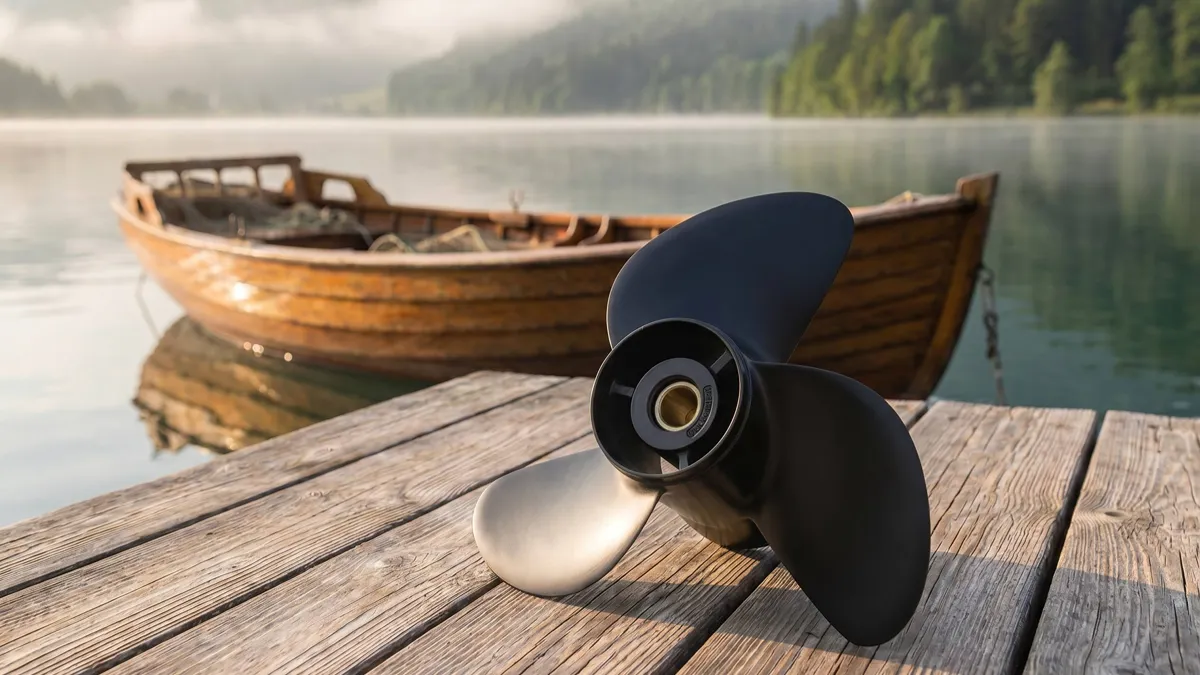
Most outboard propellers include important information such as diameter, подача, rotation direction, hub type, and manufacturer codes. While different brands may use slightly different marking formats, the basic sizing system is very similar across the industry.
В этом руководстве, you’ll learn what each number means, how to identify the correct propeller for your boat, and when changing propeller size makes sense.
Where Can You Find the Size Marks on an Outboard Propeller?
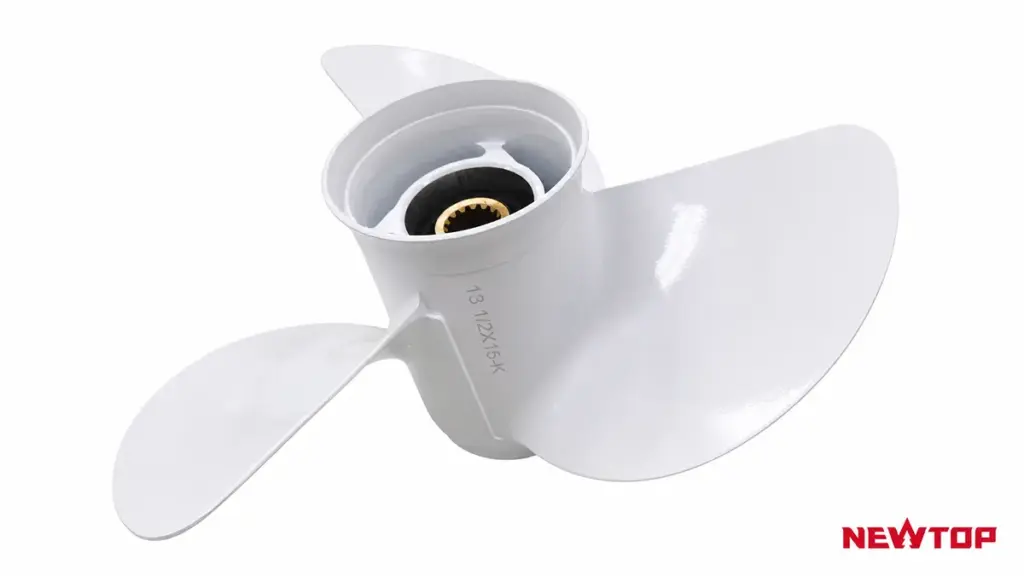
Пропеллер size markings, indicating diameter and pitch, are typically stamped directly onto the outer hub, blade roots, or the rear face near the mounting nut.
Common Locations on the Hub and Blades
Outboard motor manufacturers do not follow a single universal standard for placing identification numbers, but they generally stick to a few accessible spots. You will usually spot these physical engravings pressed right into the metal housing.
- Outer hub surface: Stamped or engraved directly onto the outer surface of the propeller hub cylinder.
- Blade roots: Located at the base of a blade where it physically connects to the center hub.
- Hub faces: Positioned on the front or rear face of the hub assembly where the propeller meets the prop nut.
Decoding the Size Format
Once you locate the stamp, you need to read the numbers correctly. The marine industry relies on a specific numeric sequence to communicate the physical dimensions and capabilities of the equipment.
- Диаметр х Шаг: The numbers are typically displayed in this exact order. A stamp reading “10 x 7” indicates a 10-inch diameter and a 7-inch pitch.
- Supplemental codes: Additional letters or numbers often follow the primary size to indicate blade type, rotation direction (such as ‘R’ for right-hand), or internal manufacturer-specific codes.
- Technical designations: These markings represent exact technical size measurements, not arbitrary brand model names.
How to Reveal Hard-to-See Markings
Older props or those used in harsh saltwater environments often have obscured numbers. A quick visual check might fail to confirm the exact specifications without a bit of surface prep.
- Clean the surface: Thoroughly clean the hub area to remove salt buildup, marine grime, heavy oxidation, or old layers of anti-fouling paint.
- Use angled light: Carefully rotate the propeller and inspect the blade roots and cylinder collar under direct light to catch the shadows of shallow engravings.
- Check documentation: Consult the original packaging, purchase receipts, or manufacturer catalogs using the part number if the physical size stamps are completely worn away.
Why Knowing Your Propeller Size Matters
Operating a boat with an incorrect propeller size causes poor performance and accelerates engine wear. Getting these two specific numbers right dictates exactly how your outboard interacts with the water.
- Power transfer: Diameter and pitch determine how effectively the propeller matches the raw engine power to the physical weight of your boat.
- RPM control: The pitch rating directly influences the engine’s ability to operate within its recommended wide-open throttle (ВОТ) RPM capabilities.
- Performance tuning: A smaller pitch reduces engine load and allows it to reach higher RPM for faster acceleration, while a larger pitch drops overall RPM and favors top-end speed.
How to Read Diameter and Pitch Markings
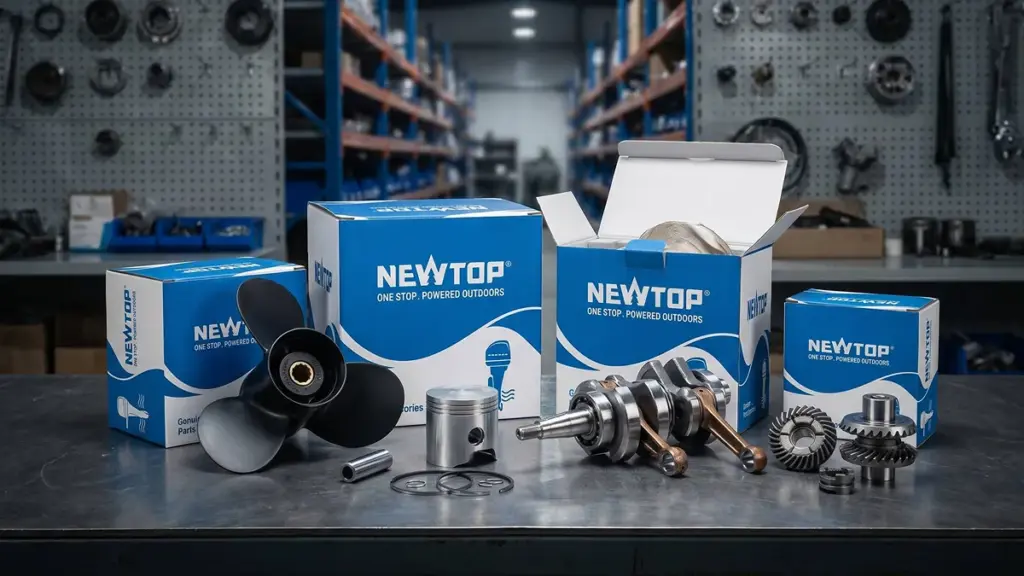
The first number on a propeller marking is always diameter, dictating thrust. The second is pitch, controlling your outboard’s RPM and top speed. Mismatching these specifications damages engines. Marking Position Measurement Primary Function First Number (например, 10) Diameter (Дюймы) Dictates thrust, load-carrying capacity, and water resistance. Second Number (например, 7) Подача (Дюймы) Determines top speed, ускорение, and engine WOT RPM.
Deciphering the Standard Marking Format
Manufacturers typically stamp propeller markings directly on the hub or near the blade root. Finding these digits is the first step in replacing or upgrading your boat’s hardware. You will see standard industry codes like 10 х 7 или 14 х 19. These numbers represent two specific measurements that define the propeller’s geometry. The first number always defines the overall diameter in inches, while the second number always defines the theoretical pitch in inches.
Interpreting the First Number: Diameter
Diameter signifies the total width of the circle created by the blade tips during a full rotation. It determines how much water the propeller actually sweeps. A larger diameter increases the blade surface area, generating stronger thrust to move heavier boats and heavy cargo loads effectively. On the other end of the spectrum, a smaller diameter creates less drag in the water, suiting lighter hulls built specifically for higher top speeds.
Interpreting the Second Number: Подача
Pitch measures the theoretical forward distance the propeller travels through the water in one full 360-degree rotation. Think of pitch as the gearing system for your outboard. Lower pitch numbers act like a low gear, offering better acceleration, quicker planing, and strong low-speed control. Higher pitch numbers function like a high gear, pushing the boat farther forward per revolution to achieve greater top speeds.
Applying Markings to Engine Performance
Your selected pitch directly controls the outboard motor’s wide-open throttle (ВОТ) об/мин. Dialing in the correct pitch ensures the engine runs efficiently without suffering mechanical strain.
- RPM Calibration: Adjusting the pitch by one inch typically changes the engine speed by roughly 200 об/мин.
- Under-Revving Fix: Selecting a lower pitch helps an overloaded engine reach its recommended operating RPM without lugging.
- Over-Revving Fix: Switching to a higher pitch prevents the engine from exceeding its maximum recommended RPM limits under light loads.
Maximize ROI With Professional-Grade Garden Machinery
What Do Other Numbers and Letters on a Propeller Mean?
Beyond basic size, extra letters and digits identify blade count, hub dimensions, and specific manufacturer series codes required to source exact replacement parts.
Diameter, Подача, and the ‘X’ Separator
Most marine propellers follow a universal naming convention. The core specification always appears as a simple sequence stamped onto the casting.
- Diameter: The first number in a standard sequence denotes the propeller’s overall diameter, measuring the full width of the blade sweep.
- Подача: The second number represents the pitch, indicating the theoretical forward travel distance per single revolution.
- The ‘X’: This character functions simply as a ‘by’ separator, dividing the diameter and pitch measurements.
Series Letters and Additional Digits
Manufacturers rarely stop at just diameter and pitch. You will frequently find extra alphanumeric codes that define the physical geometry and compatibility of the unit.
- Series Letters: Letters such as J, К, or L signify the specific design, series, or type of the propeller within a brand’s lineup.
- Extra Digits: These trailing numbers often represent the total number of blades or specify the exact bore and hub size for mounting.
- Internal Codes: Certain short number combinations serve purely as internal manufacturer codes for catalog referencing.
Where to Locate Propeller Markings
Finding these specifications requires knowing exactly where brands stamp their hardware. Dirt, oxidation, or heavy marine growth can easily obscure these details.
- Blade Roots: Manufacturers often stamp the measurements directly at the root of a blade or deep between the blades.
- Central Hub: The outer surface of the central hub barrel is a common location for visible specification codes.
- Assembly Faces: Some brands engrave these critical details on the front or rear face of the center assembly, which may require removing the propeller nut to read clearly.
How Do Propeller Size Marks Differ Between Major Brands?
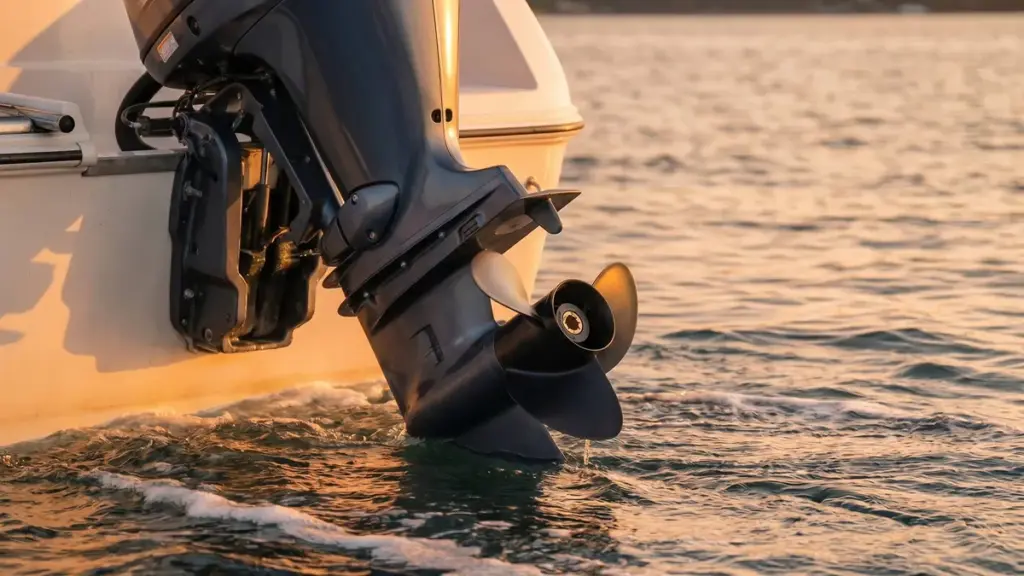
Every major outboard brand follows the standard diameter-by-pitch format, but proprietary suffixes, rotation letters, and hub codes create distinct marking styles you must decode before swapping propellers.
The Universal Baseline: Diameter and Pitch
Outboard manufacturers agree on one core sizing convention across the industry. The first number stamped on a propeller always represents the diameter, while the second number represents the pitch. A base stamp of 10 х 7 indicates a 10-inch diameter and a 7-inch pitch, regardless of the manufacturer.
Brand-Specific Suffixes and Extra Codes
While the base dimensions are universal, brands add unique suffix codes to identify specific propeller features. You have to read past the first two numbers to understand the exact design.
- Rotation: Letters typically denote the turn direction, with “Р” for standard right-hand (clockwise) и “л” for left-hand (counterclockwise).
- Blade Count: Trailing numbers often indicate the blade setup, such as a 3 или 4 for three-blade or four-blade designs.
- Model Codes: Internal model codes or specific hub series identifiers are frequently appended to the size block.
Marking Examples from Top Manufacturers
Each manufacturer applies these codes differently on the hub or blade root. Knowing what to expect from specific brands speeds up the identification process.
- Yamaha: Generally uses a straightforward layout, printing the size simply as 14 х 19.
- Mercury: Often includes a “П” to denote pitch alongside general marine props, formatted as 14.6 x 17P.
- Suzuki: Frequently groups the size, rotation, and blade count together, resulting in detailed stamps like 14 х 19 Р 3.
What to Verify When Swapping Brands
Relying solely on the base diameter and pitch numbers is insufficient for an exact brand-to-brand replacement. Even with identical size stamps, propellers from different manufacturers deliver varying performance. This happens because competing brands use distinct blade shapes, rake angles, cupping, and material compositions to achieve their thrust profiles.
Always confirm rotation, количество лезвий, and hub system compatibility before installing a different brand’s propeller. Matching the spline count and ensuring the thrust washer seats properly prevents gearcase damage and keeps the outboard running safely.
How Can You Verify the Correct Propeller Size for Your Boat?
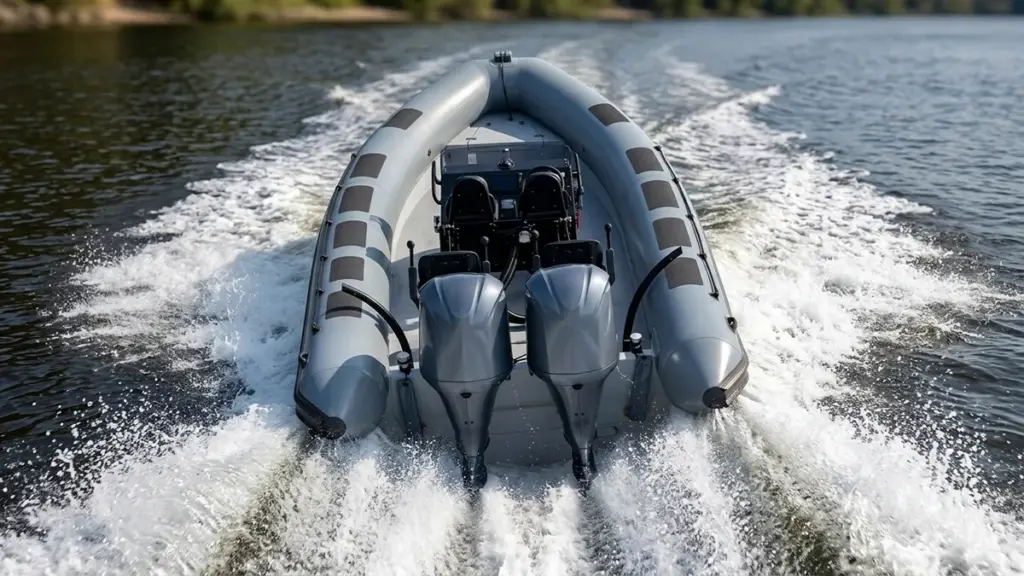
To verify your propeller size, test your wide-open throttle (ВОТ) RPM under a normal load. The correct pitch keeps your engine within the manufacturer’s recommended RPM range.
Identify Current Prop Specs and Target WOT RPM
Before hitting the water, establish a baseline for your boat and engine. You need to know what propeller you currently run and the exact performance window the outboard requires.
- Check the propeller hub: Inspect the outer surface or the base of the blades for stamped diameter and pitch markings to confirm your current sizing.
- Find the WOT RPM target: Consult your outboard owner’s manual to identify the manufacturer’s recommended Wide-Open Throttle (ВОТ) Диапазон оборотов.
- Establish a baseline: Use manufacturer prop selectors or online calculators factoring in engine horsepower and typical operating weight to set your starting point.
Perform an On-Water WOT Test Under Normal Load
The real proof of propeller sizing happens on the water. A structured wide-open throttle test provides the exact engine RPM data needed to determine if your pitch is accurate.
- Simulate real-world conditions: Load the boat with the typical number of passengers, механизм, and fuel you carry during regular operation.
- Start the run: Trim the engine fully down in open water and advance the throttle to maximum capacity.
- Optimize and record: Slowly trim up to the optimal running angle, return to neutral trim, and record the highest steady RPM and GPS speed achieved.
Compare Test Results Against Manufacturer Specifications
Once you record your GPS speed and tachometer readings, cross-reference them with your engine manual. The resulting RPM tells you exactly how the propeller loads the engine.
- Optimal match: If the measured WOT RPM falls within the manufacturer’s specified range, the current propeller size is correct for your exact rig and typical load.
- Engine over-revving: If the engine spins past the maximum RPM limit, it lacks resistance. The propeller pitch is likely too low.
- Engine under-revving: If the engine struggles and fails to reach the minimum recommended RPM, the load is too heavy. The propeller pitch or diameter is too high.
Adjust Pitch to Correct Under-Revving or Over-Revving
If your test results fall outside the acceptable range, you must change the propeller pitch. Pitch directly dictates the mechanical load on the engine, acting like the gearing in a transmission.
- The standard rule: A 2-inch change in pitch alters your WOT RPM by approximately 300 к 400 об/мин.
- Dropping high RPMs: Move to a higher-pitch propeller to lower excessively high RPMs. This prevents mechanical strain and keeps the engine off the rev limiter.
- Raising low RPMs: Switch to a lower-pitch propeller to increase RPMs, improve acceleration, and prevent the engine from lugging under heavy loads.
Common Mistakes When Reading Propeller Size Marks
Misreading a propeller mark leads to poor performance, engine strain, and wasted money. Always read diameter first, pitch second, and factor in real-world boat dynamics.
Reversing Diameter and Pitch Numbers
Flipping these numbers is the fastest way to buy the wrong prop. The industry standard always lists diameter first, followed by pitch. When you mix them up, you completely alter how the prop interacts with the water.
- Reading backward: Assuming the first number is pitch instead of diameter.
- Interchanging specs: Failing to recognize that diameter and pitch affect performance differently and are not interchangeable.
- Size misinterpretation: Misinterpreting a 10×7 mark as a 7-inch diameter rather than a 10-inch diameter.
Misinterpreting Rotation and Blade Count
The primary numbers dictate the size, but the trailing letters control fitment and operation. Ignoring these extra characters leads to physical mismatches or dangerous handling on the water.
- Overlooking rotation marks: Missing the R (right-hand) or L (left-hand) indicators, which is critical for single and dual-engine setups.
- Confusing blade count: Assuming the trailing number (нравиться 3 или 4) adds another size dimension rather than just counting the blades.
- Installing incorrectly: Mounting a prop with the wrong rotation that physically fits the shaft but runs incorrectly under power.
Equating Theoretical Pitch to Actual Speed
Pitch measures the theoretical distance a propeller moves forward in one revolution through a solid medium. Water is not solid. Expecting a direct conversion from pitch to actual boat speed ignores the reality of marine physics.
- Ignoring water slip: Assuming the stamped pitch equals exact forward travel without factoring in the inevitable slip loss.
- Forgetting physical variables: Overlooking how hull shape, boat weight, and load change the real-world performance of the propeller.
- Unrealistic expectations: Expecting two entirely different boats with the same 10×7 prop to achieve identical speeds.
Ignoring Engine Limits and Boat Usage
You do not pick a propeller based entirely on the boat hull. You pick it based on what the engine can safely handle. The propeller must allow the engine to operate within its defined mechanical limits.
- Skipping WOT checks: Selecting a propeller without checking the engine’s recommended wide-open-throttle (ВОТ) rpm range.
- Forcing extreme rpms: Choosing too much pitch causing the engine to under-rev, or too little pitch causing it to over-rev.
- Mismatched application: Failing to match the pitch profile to the boat’s primary purpose, such as prioritizing heavy-load acceleration versus top speed.
When Should You Replace Your Propeller with the Same or a Different Size?
Replace with the identical size if your engine hits the correct WOT RPM. Change pitch or diameter only to fix RPM limits, boost hole shot, or increase cruising speed.
Replacing with the Same Size: Wear, Damage, and Material Upgrades
Stick with the same diameter and pitch if your engine currently operates within the manufacturer’s recommended wide-open throttle (ВОТ) Диапазон оборотов. The baseline size works. Swap out identical sizes to correct bent blades, chipped edges, or a slipping hub that causes vibration and kills thrust. If you run in abrasive or sandy water, upgrade from aluminum to stainless steel in the exact same size. This improves durability and rigidity while keeping your RPMs consistent.
Adjusting Propeller Pitch for RPM Correction
Pitch acts like gearing. Move to a higher pitch if the engine over-revs past the upper limit. This added load lowers the RPM and improves cruising speed on light boats. Drop to a lower pitch if the engine under-revs and struggles to build speed. Reducing the pitch frees up the engine to reach higher RPMs, delivering a stronger hole shot and aggressive heavy-load acceleration. Remember that changing the pitch by just 1 к 2 inches noticeably shifts engine loading and RPM, even on small outboards.
Changing Propeller Diameter for Thrust or Speed
Diameter dictates total blade surface area. Increase the diameter to gain more blade area for low-speed thrust. This extra grip helps push heavily loaded dinghies and gives you tight control during precise dock maneuvering. Наоборот, reduce the diameter to minimize drag on high-speed, lightweight hulls. Whenever you upsize the diameter, you must verify your physical clearance. Maintain a strict minimum clearance of 5/8 к 3/4 inches between the blade tips and the outboard lower unit to prevent contact under load.
Practical Steps to Evaluate Your Replacement Needs
Do not guess your propeller size based on top speed alone. Perform a sea trial at WOT with your typical everyday load, including passengers, механизм, and fuel, to establish a realistic baseline RPM. Compare your recorded baseline RPM directly against the engine manual’s WOT specification to identify over-revving or under-revving conditions. Once you have the data, select a replacement based on your primary objective: drop to a lower pitch for towing and acceleration, or step up to a higher pitch for fuel-efficient cruising.
OEM Outboard Motor Propellers and Replacement Solutions from NEWTOP
As an experienced outboard motor propeller manufacturer, НЬЮТОП supplies OEM and aftermarket propellers for a wide range of outboard engines used in recreational, коммерческий, и профессиональное морское применение.
Our product range includes:
- Aluminum outboard propellers
- Stainless steel outboard propellers
- Three-blade and four-blade designs
- OEM replacement propellers
- Custom propeller development for private-label brands
Every propeller is manufactured with strict dimensional control to ensure accurate diameter, подача, blade geometry, and dynamic balance. This helps deliver smooth operation, efficient power transfer, and reliable performance on the water.
As a trusted outboard motor propeller factory, NEWTOP also provides comprehensive OEM and ODM services for global distributors, оптовики, and marine equipment brands. From mold development and logo customization to packaging and quality inspection, our production process is designed to support consistent quality across large-volume orders.
Whether you need a direct replacement for popular outboard brands or a customized propeller solution for your own product line, our engineering and manufacturing teams can help you identify the right specifications for your market.
Заключение
Understanding outboard motor propeller size marks makes selecting the correct replacement much easier. In most cases, тот first number indicates diameter, в то время как second number indicates pitch, with additional letters identifying rotation direction, материал, or manufacturer-specific information.
When evaluating a propeller, don’t rely solely on the stamped numbers. Always consider your engine’s recommended RPM range, the boat’s weight, условия эксплуатации, и предполагаемое использование. A properly matched propeller improves acceleration, топливная экономичность, engine longevity, and overall handling.
If you’re sourcing reliable OEM replacement propellers or looking for an experienced outboard motor propeller manufacturer, NEWTOP offers precision-engineered solutions backed by advanced manufacturing capabilities and extensive OEM experience. Our team can help you select or develop propellers that deliver dependable performance across a wide range of outboard applications.
Часто задаваемые вопросы
What does 10×7 mean on an outboard propeller?
These numbers indicate diameter and pitch measured in inches. The first number (10) represents the diameter, which is the total width of the circle the blades sweep. The second number (7) is the pitch, indicating the theoretical forward distance the propeller moves in one full revolution. A 10×7 size fits small outboards where strong thrust and low-speed control matter more than top speed.
How do I know if my propeller size is correct?
A correctly sized propeller allows your engine to consistently reach its manufacturer-recommended wide-open throttle (ВОТ) RPM range under a normal load. The boat will accelerate smoothly, get on plane without excessive delay, and maintain cruising speed efficiently without over-revving or lugging the motor.
Можно ли изменить шаг винта, не меняя диаметр??
Да. Swapping to a propeller with the same diameter but a different pitch (like moving from a 10×7 to a 10×9) is the standard way to adjust engine RPM and boat performance. Marine shops can also re-pitch existing aluminum or stainless steel props slightly to fine-tune your setup without altering clearance.
What happens if the propeller pitch is too high or too low?
Если шаг слишком высокий, the engine will struggle to reach its recommended RPM range, causing sluggish acceleration and increased mechanical strain. If the pitch is too low, the engine will likely over-rev past its maximum limit, which risks internal damage, wastes fuel, and reduces your top-end speed.
Do all outboard brands use the exact same size marking system?
Major outboard manufacturers all use the core ‘diameter x pitch’ measurement in inches, but their exact stamping methods vary. Brands place the numbers in different spots, such as inside the hub or on the barrel. They also add unique letters and codes to indicate blade count, rotation direction, and specific design series.
How do I read old or worn propeller size markings?
Start by cleaning the hub and blade root areas to reveal any stamped numbers. Most old props still use the standard diameter x pitch format (нравиться 11.25 х 13). If you only find a single number with a letter (like 17P), it usually represents the pitch. For complex or partial codes, check the manufacturer’s parts catalog or have a marine shop measure the prop directly.
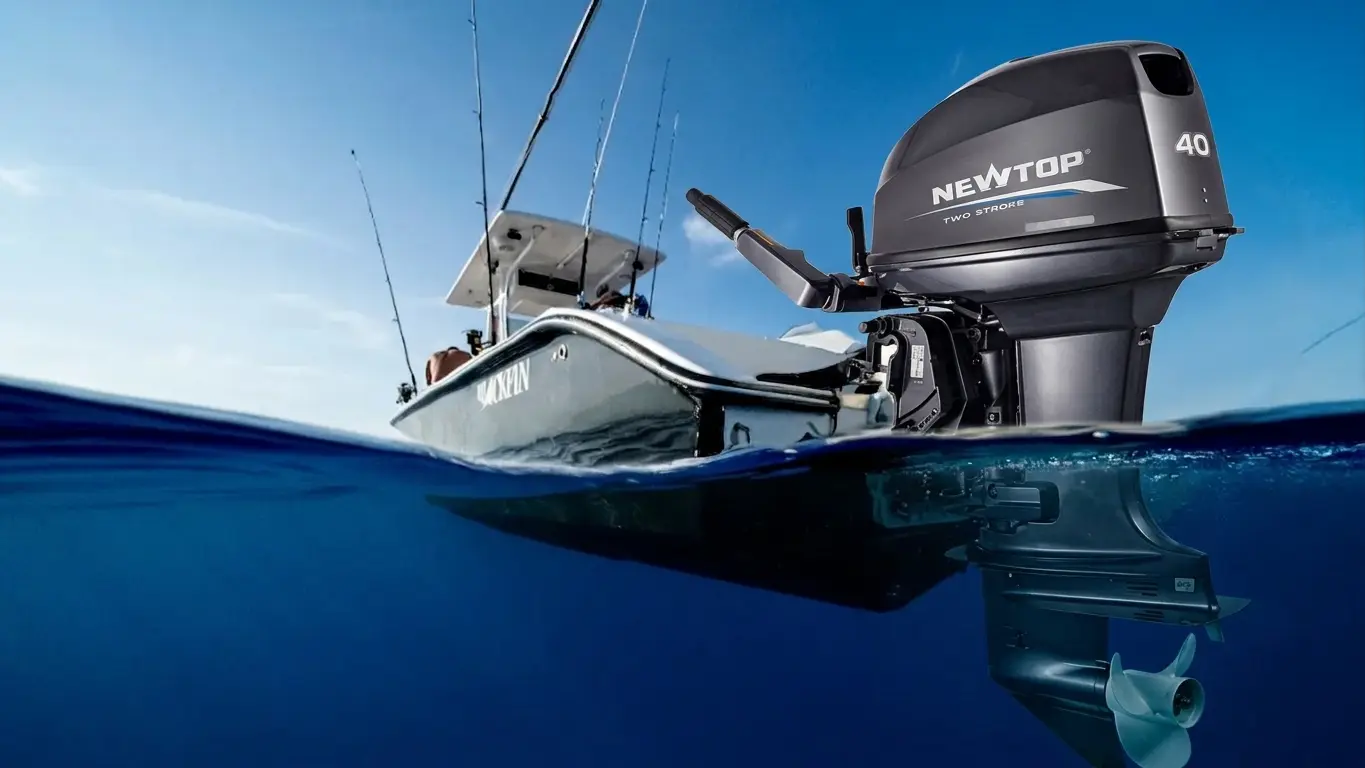
Подвесные моторы широко используются на небольших рыболовных судах, пассажирские суда, рабочие лодки, и прогулочные суда по всему миру. При выборе подвесного двигателя, один вопрос продолжает доминировать при принятии решения о покупке:
Какой лодочный мотор выбрать: 2-х тактный или 4-х тактный??
Ответ зависит от вашего рынка, ожидания клиентов, операционная среда, наличие топлива, возможности обслуживания, и бюджет. При этом 4-тактные лодочные моторы завоевали популярность во многих развитых регионах., 2-ходовые лодочные моторы остаются весьма конкурентоспособными в коммерческом рыболовстве, транспорт, и приложения для удаленных зон.
В этом руководстве сравниваются два типы подвесных моторов по производительности, топливная экономичность, требования к техническому обслуживанию, эксплуатационные расходы, и рыночная пригодность, чтобы помочь дистрибьюторам, дилеры, и операторы автопарков принимают обоснованные решения.
Разница между 2-тактными и 4-тактными подвесными моторами
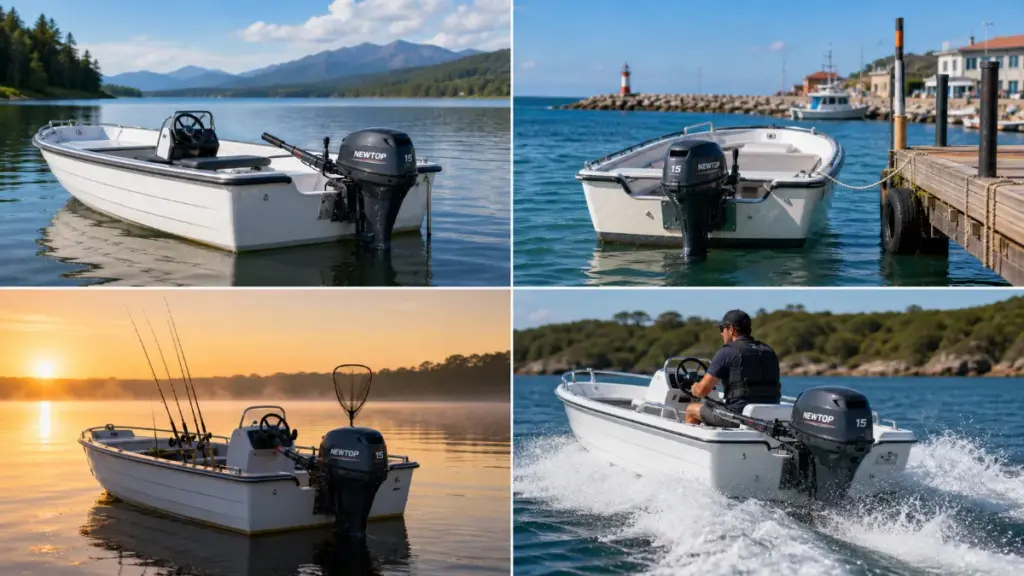
2-ходы обеспечивают лучшее соотношение мощности к весу и более быстрое ускорение.. 4-удары стали тише, более экономичный, и имеют более низкие выбросы.
Двухтактный подвесной двигатель завершает рабочий цикл всего за два движения поршня. (один оборот коленвала), в то время как четырехтактный подвесной двигатель требует четырех движений поршня. (два оборота коленвала).
| Особенность | 2-Ход подвесного двигателя | 4-Ход подвесного двигателя |
|---|---|---|
| Цикл сгорания | 2 удары | 4 удары |
| Частота рабочего хода | Каждая революция | Каждые два оборота |
| Вес двигателя | Зажигалка | Тяжелее |
| Механическая сложность | Простой | Более сложный |
| Смазка | Топливно-масляная смесь | Отдельная масляная система |
| Сложность обслуживания | Полегче | Более активное участие |
| Топливная эффективность | Умеренный | Выше |
| Выбросы | Выше | Ниже |
Цикл сгорания и механическая конструкция
Основное различие сводится к тому, как они производят энергию.. Двухтактный двигатель совершает полный рабочий цикл всего за два хода поршня., стрельба при каждом обороте коленчатого вала. Это очень прямой способ генерировать силу.. Для 4-тактного двигателя требуется четыре хода поршня — впуск, сжатие, власть, и выхлоп - это означает, что он срабатывает только при каждом втором обороте коленчатого вала..
Это фундаментальное различие диктует их конструкцию.. Двухтактная конструкция проще., использование отверстий в стенках цилиндров для управления впуском и выпуском топлива. В отличие, для 4-тактного двигателя требуется гораздо более сложный клапанный механизм, в комплекте с клапанами, распределительные валы, и системы синхронизации, похоже на то, что вы найдете в машине.
Доставка энергии, Масса, и производительность
Потому что они стреляют в два раза чаще и имеют меньше деталей, 2-подвесные двигатели имеют гораздо более высокое соотношение мощности к весу.. Это приводит к взрывному ускорению и более быстрому “дырочный выстрел,” быстрее доставить лодку в самолет. Это огромное преимущество для определенных приложений..
Дополнительные компоненты значительно утяжеляют четырехтактные подвесные двигатели.. На лодке меньшего размера, этот дополнительный вес на транце может отрицательно повлиять на баланс, увеличить тягу, и усложнить посадку в самолет. Подача мощности от 4-тактного двигателя намного более плавная и линейная., что часто предпочтительнее для приложений с постоянной скоростью, таких как троллинг или круизы на дальние расстояния, где резкое ускорение не является приоритетом..
Топливная эффективность и выбросы
Четырехтактные подвесные моторы по своей сути более эффективны.. Их особый четырехтактный цикл обеспечивает более полное сгорание топлива., что приводит к лучшей экономии топлива и значительному снижению выбросов.. Это более чистая технология, руки вниз.
Традиционные двухтактные двигатели работают путем смешивания масла непосредственно с бензином для смазки.. Во время их быстрого цикла, часть этой несгоревшей топливно-масляной смеси может выйти с выхлопными газами., что увеличивает как расход топлива, так и загрязнение окружающей среды.. Важно признать, что современный непосредственный впрыск (ОТ) 2-Инсультные двигатели значительно улучшились в этом отношении., приближаемся к 4-тактному уровню эффективности и чистоты.
Обслуживание, Шум, и опыт эксплуатации
Есть большая разница в опыте на воде.. Четырехтактные двигатели работают намного тише и производят гораздо меньшую вибрацию.. Это имеет огромное значение для комфорта, особенно во время долгих дней на воде. Обслуживание похоже на обслуживание автомобиля, требующие плановой замены масла и фильтров.
Двухтактные двигатели громче и имеют репутацию немного более грубых.. График их технического обслуживания предполагает постоянное добавление масла для 2-тактных двигателей в резервуар или предварительное смешивание его с топливом.. Хотя это постоянная задача, двигатели имеют меньше движущихся частей, что может упростить определенные виды ремонта и уменьшить потенциальные точки отказа..
Лучшие приложения и положение на рынке
Четырехтактные подвесные моторы захватили большую часть рынка.. Они являются стандартом для морских рыболовных судов., семейные круизеры, и более крупные суда, где запас топлива, тихая работа, и низкие выбросы являются главными приоритетами. Арендные автопарки и коммерческие операторы также в значительной степени полагаются на 4-тактные двигатели из-за их надежности и более низких эксплуатационных расходов..
Все еще, 2-Strokes сохраняют сильные позиции в высокопроизводительных нишах. Вы найдете их на басовых лодках., туфли на плоской подошве, и другие легкие, быстрые корпуса, ключевыми преимуществами которых являются превосходное соотношение мощности и веса и мгновенное ускорение.. Ужесточение экологических норм продолжает давить на рынок, отдавая предпочтение либо 4-тактной технологии, либо более новой, более чистые 2-тактные модели с прямым впрыском.
Соотношение мощности и веса: Почему двухтактные двигатели по-прежнему выигрывают в ускорении
2-тактный вариант проще, более легкая конструкция обеспечивает превосходное соотношение мощности и веса, обеспечивая более быстрое ускорение и более быстрый удар по лунке, чем более тяжелые 4-тактные подвесные двигатели.
Как конструкция двигателя обеспечивает более высокое соотношение мощности к весу
Двухтактный двигатель завершает рабочий цикл всего за два хода поршня.. Эта конструкция по своей сути проще и требует гораздо меньше движущихся частей, чем 4-тактный двигатель..
Меньшее количество компонентов означает, что двигатель более компактен и значительно легче при любой заданной мощности.. С меньшей массой двигателя, большая часть тяги лодки уходит непосредственно на перемещение корпуса, не просто таскать подвесной двигатель.
Влияние на удар в дырку и реакцию дроссельной заслонки
Это преимущество в соотношении мощности к весу напрямую приводит к более быстрому удару по лунке — начальному ускорению лодки после полной остановки.. Лодки с двухтактными подвесными двигателями обычно быстрее садятся в самолет., что очень важно для таких занятий, как катание на водных лыжах.
Пользователи также получают более немедленную, резкий отклик газа. Это особенно заметно в диапазоне низких и средних оборотов, где быстрая регулировка является обычным явлением..
Сравнение 4-тактных двигателей по весу
Четырехтактные подвесные двигатели тяжелее по конструкции.. Им нужен полный клапанный механизм с клапанами и распредвалами., плюс специальный масляный картер, все это добавляет значительный вес. Четырехэтапный цикл – прием, сжатие, власть, выхлоп — требует более сложной механики и большего количества физических компонентов..
Весь этот дополнительный вес ухудшает соотношение мощности к весу по сравнению с двухтактным двигателем с той же мощностью..
Когда лучшее соотношение мощности к весу имеет наибольшее значение
Преимущества высокого соотношения мощности к весу наиболее очевидны в конкретных приложениях, где ключевыми факторами являются ускорение и минимальный вес..
- Высокопроизводительные лодки: Для гоночных буксиров или буксиров для водных лыж., быстрое ускорение – это не роскошь, в этом весь смысл.
- Легкие корпуса: Маленькие рыбацкие лодки, лодки, а тендеры очень чувствительны к весу двигателя. Меньший вес на транце означает лучший баланс и управляемость..
- Работа на мелководье: Любой, кто бежит по тонкой воде, должен быстро садиться в самолет с минимальными усилиями, чтобы не закопаться.. Быстрый удар двухтактного двигателя является здесь главным преимуществом..
Подвесной мотор T40G
Надежный двухтактный подвесной двигатель., идеально подходит для небольших рыбацких и рабочих лодок. Легкий, но мощный 40 двигатель высокого давления.
Подвесной мотор T40J
Надежный 2-тактный двигатель, предназначенный для тяжелых условий эксплуатации.. 40 Производительность HP и простота обслуживания в отдаленных районах.
Подвесной мотор T40X
Компактный 2-тактный подвесной двигатель, обеспечивающий надежность. 40 HP. Идеально подходит для небольших лодок, требующих как мощности, так и портативности..
Сравнение экономии топлива: Действительно ли 4-тактные двигатели стоят премиум-класса??
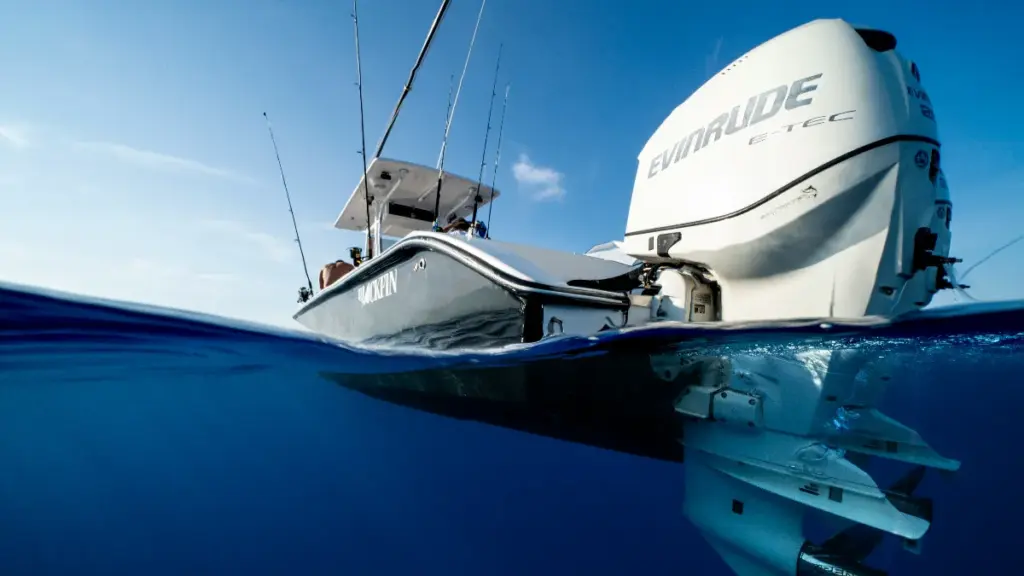
Современные двухтактные и четырехтактные двигатели DI на удивление близки по расходу топлива.. Настоящая экономия достигается при замене любого старого карбюраторного двигателя на современный., независимо от типа.
Общая эффективность: Современные двигатели ближе, чем вы думаете
Старые дебаты о жаждущих двухтактных двигателях по большей части мертвы.. Сегодняшний непосредственный впрыск (ОТ) 2-такты и современные 4-тактники предлагают очень схожую общую экономию топлива при одинаковой мощности.. Обе технологии касаются 35% более экономичен, чем карбюраторные 2-тактные двигатели, которые они заменили.. Если посмотреть на расход топлива во всем диапазоне оборотов, разница между двумя современными типами часто слишком мала, чтобы объявить явного победителя, основываясь только на эффективности..
Как ваш стиль катания на лодке влияет на расход топлива
То, где один двигатель вырывается вперед, часто зависит от того, как вы используете дроссельную заслонку.. На очень низких оборотах, как выход из пристани на холостом ходу или медленный троллинг, 2-тактный двигатель DI на самом деле может быть немного более эффективным. Его способность точно дозировать топливо при низких нагрузках дает ему небольшое преимущество..
Но в среднем диапазоне – между 2,500 и 5,000 Число оборотов в минуту — 4-тактные двигатели часто имеют реальное преимущество в экономии топлива.. Это лучшее место для круизов, где большинство лодок проводят время., вот где действительно проявляется эффективность 4-тактного двигателя.. В верхнем конце, работаю почти на полном газу, ситуация может снова измениться. 2-тактный двигатель DI часто может соответствовать или даже превосходить 4-тактный двигатель по расходу топлива, обеспечивая при этом более высокую максимальную скорость..
Реальная экономия топлива: Обновление с устаревших движков
Самый значительный скачок в экономии топлива, который вы увидите, произойдет при замене любого старого автомобиля., карбюраторный, 2-тактный. Неважно, замените вы его на современный DI 2-тактный или 4-тактный.; улучшение будет огромным. Карбюраторный драндулет может сжигать почти вдвое больше топлива, чем современный двигатель, выполняя ту же работу.. Репутация четырехтактного двигателя, потребляющего топливо, была основана на его сравнении с теми старыми двигателями., не современный эффективный 2-тактный двигатель DI.
Расчет окупаемости только за счет экономии топлива
Так, окупает ли небольшая экономия топлива 4-тактного двигателя его более высокую первоначальную стоимость?? Для обычного яхтсмена-любителя с небольшим количеством часов в год., ответ почти всегда нет. Математика просто не работает. Но для круглосуточного коммерческого гида или чартерного капитана, Средний КПД 4-тактного двигателя может привести к тысячам ежегодной экономии., легко оправдать первоначальную премию. Решение действительно зависит от вашего использования. Если вы проводите весь день, путешествуя с постоянной скоростью, экономичность 4-тактного двигателя является сильным аргументом. Для смешанного использования или производительности, разница часто стирается.
Техническое обслуживание и ремонтопригодность на удаленных рынках
На отдаленных рынках, 2-удары обычно легче обслуживать и ремонтировать в полевых условиях.. 4-удары более чувствительны и часто зависят от сервисных сетей, увеличение риска простоя.
2-Простота инсульта и преимущества обслуживания на месте
Основным преимуществом двухтактного двигателя с дистанционным управлением является его простая механическая конструкция.. С меньшим количеством движущихся частей, что-то просто с меньшей вероятностью пойдет не так, и когда они это сделают, ремонт в полевых условиях гораздо практичнее.
- Плановое обслуживание минимально, часто просто меняются свечи зажигания и масло в коробке передач через очень большие промежутки времени.
- Они, как правило, более терпимы к переменному или некачественному топливу., что является постоянной проблемой в изолированных местах.
- Оператор обычно может обслуживать двигатель, используя базовый набор инструментов., что снижает зависимость от специализированных технических специалистов.
4-Требования и чувствительность к ведению инсульта
Четырехтактные двигатели требуют гораздо более строгого графика профилактического обслуживания.. Отсутствие интервала обслуживания может оказать большее влияние на надежность., что представляет собой серьезный риск, когда вы находитесь в нескольких часах от помощи.
- Они требуют регулярной замены масла., проверки фильтров, и иногда регулировка клапанов.
- Топливная система очень чувствительна к чистоте., свежее топливо. Плохое управление топливом является основной причиной неисправности.
- Системы охлаждения требуют постоянного обслуживания, от крыльчаток водяного насоса до термостатов.
- Они больше полагаются на авторизованные сервисные центры и отдельные детали, которые редко доступны в отдаленных районах..
Прямое сравнение ключевых факторов ремонтопригодности
Когда вы кладете их рядом, операционные различия в среде с низким уровнем поддержки становятся очевидными.
- Сложность обслуживания: 2-У инсультов гораздо меньше плановых сервисных работ по сравнению с более интенсивными потребностями 4-тактных двигателей..
- Зависимость от деталей: 4-тактный двигатель требует большего количества специализированных деталей только для текущего обслуживания..
- Полевая практичность: Простая конструкция двухтактного двигателя делает его гораздо лучше подходящим для ремонта на месте, где ресурсы ограничены..
- Чувствительность системы: 4-системы подачи топлива и охлаждения хода менее прощают пренебрежение или суровые условия эксплуатации..
Влияние на стоимость и время простоя
Финансовые штрафы за сложный двигатель на удаленном рынке выходят за рамки простой стоимости запчастей.. Время простоя — настоящий убийца.
- Затраты на обслуживание 2-тактного двигателя могут быть значительно ниже., особенно в первые годы эксплуатации.
- Простои двигателя чрезвычайно разрушительны. Перевозка деталей и технических специалистов в изолированные районы — процесс медленный и дорогостоящий..
- Более простой график обслуживания 2-тактного двигателя означает меньший риск пропущенного элемента обслуживания, вызывающего критический отказ..
- Меньшее количество необходимых сервисных посещений напрямую приводит к снижению логистических затрат и увеличению времени безотказной работы судна..
Шум, Выбросы, и нормативные аспекты
4-подвесные двигатели работают тише и чище, давая им значительное преимущество на регулируемых водных путях и для любого покупателя, который ставит комфорт пользователя выше производительности..
Уровни шума и удобство использования
Четырехтактные подвесные двигатели обычно работают намного тише и с меньшей вибрацией.. Это делает их очевидным выбором для прогулочного катания на лодках и рыбалки., где мирный опыт имеет значение. Старые карбюраторные 2-тактные двигатели славятся своим громким звуком., пронзительный вой и резкий выхлоп. Для тех, кто работает в чувствительных к шуму районах, таких как жилые озера или многолюдные пристани для яхт., более тихая работа 4-тактного двигателя является решающим фактором.
Выбросы выхлопных газов и воздействие на окружающую среду
Конструкция 4-тактного двигателя приводит к более полному и эффективному сгоранию топлива.. Результатом является снижение выбросов углеводородов и менее заметный дым.. Традиционные карбюраторные двухтактные двигатели по сравнению с этим неэффективны., выбрасывая заметное количество несгоревшего топлива и масла непосредственно в воздух и воду. Хотя современные двухтактные двигатели с непосредственным впрыском являются значительным улучшением по сравнению со своими предшественниками., 4-удары обычно сохраняют преимущество в более низких общих выбросах..
Соблюдение нормативных требований и доступ к водным путям
Однажды Агентство по охране окружающей среды и Совет по воздушным ресурсам Калифорнии (Карбюратор) установлены более строгие правила, рынок быстро отошел от старых, 2-тактный двигатель с высоким уровнем выбросов. Речь идет не только о федеральных правилах. Много специфических озер, резервуары, На защищенных водных путях действуют местные правила, которые запрещают или строго ограничивают использование этих старых карбюраторных двигателей.. Четырехтактные двигатели надежно соответствуют текущим стандартам выбросов и готовы соответствовать будущим стандартам., обеспечение более широкого доступа к регулируемым водоемам без проблем.
Общая стоимость владения: Первоначальная цена против долгосрочных затрат
Цена наклейки – это только начало. Реальная стоимость владения включает топливо, масло, обслуживание, и стоимость перепродажи, где более дорогой четырехтактный двигатель часто выигрывает в долгосрочной перспективе.
| Фактор стоимости | 2-Гладить | 4-Гладить |
|---|---|---|
| Первоначальная цена покупки | Ниже | Выше |
| Топливная эффективность | Ниже | Выше |
| Сложность обслуживания | Ниже | Выше |
| Стоимость ремонта | Ниже | Выше |
| Стоимость запасных частей | Ниже | Выше |
| Долгосрочная экономия топлива | Ограниченный | Значительный |
| Типичная продолжительность жизни | Хороший | Часто дольше |
Региональная рекомендация: Какой тип двигателя подходит для вашего рынка?
Правильный выбор подвесного двигателя зависит от рынка.. Регулирование и комфорт пользователя побуждают развитые регионы переходить на 4-тактный двигатель., в то время как стоимость и удобство обслуживания в полевых условиях сохраняют актуальность двухтактных двигателей в других местах..
| Профиль рынка | Основной драйвер | Рекомендуемый двигатель |
|---|---|---|
| Северная Америка, Вт. Европа, Австралия | Правила & Выбросы | 4-Гладить (По умолчанию), Современный 2-тактный двигатель DI (Ниша) |
| Юго-Восточная Азия, Южная Азия, Африка | Первоначальная стоимость & Простота обслуживания | 2-Гладить (По умолчанию), 4-Гладить (Коммерческий) |
| Высокочастотный коммерческий флот (Глобальный) | Общая стоимость владения (Топливо & Долголетие) | 4-Гладить |
| Специализированный (Удаленные острова, Городской туризм) | Топливный диапазон & Пользовательский опыт | 4-Гладить |
Рынки, движимые регулированием и стандартами выбросов
В развитых экономиках, выбор часто делается за тебя. Строгие экологические законы и ожидания клиентов относительно бесшумной работы подтолкнули рынок к использованию 4-тактной технологии..
- В Северной Америке, Западная Европа, и Австралия, строгие экологические законы делают 4-тактные двигатели стандартным выбором для соблюдения требований.
- Тихая работа является основным фактором в этих регионах., сделать 4-тактный двигатель предпочтительным для прогулочного катания на лодках вблизи населенных пунктов..
- Высокие затраты на топливо также делают превосходную эффективность 4-тактных двигателей важным экономическим преимуществом..
- Современные двухтактные двигатели с непосредственным впрыском занимают нишу рынка для высокопроизводительных приложений, где это разрешено правилами..
Рынки, движимые ценой и простотой обслуживания
Когда первоочередными задачами являются первоначальные затраты и возможность починить двигатель с помощью базовых инструментов., простой, классический 2-тактный двигатель по-прежнему занимает значительную позицию. Доступ к дилерской сети не является обязательным на этих рынках..
- Для многих пользователей в Юго-Восточной Азии, Южная Азия, и Африка, более низкая первоначальная цена покупки 2-тактного двигателя является основным фактором..
- Простая механическая конструкция двухтактного двигателя позволяет упростить ремонт в полевых условиях с помощью базовых инструментов., что жизненно важно там, где профессиональных услуг недостаточно.
- Меньший вес делает двухтактные двигатели подходящими для небольших лодок, где двигатель приходится часто снимать и переносить..
- 4-инсульты являются хорошим выбором для коммерческих операторов в этих регионах, которые отдают предпочтение долгосрочной экономии топлива над первоначальными затратами..
Рекомендации для коммерческих автопарков с высокой нагрузкой
Для любого бизнеса, который управляет лодками весь день, каждый день, математика почти всегда указывает на 4-тактный двигатель. Первоначальные инвестиции окупаются за счет снижения расходов на топливо и увеличения срока службы двигателя..
- Для рыбалки, транспорт, или патрульные флоты, которые работают ежедневно, экономия топлива от 4-тактного двигателя может быстро компенсировать его более высокую покупную цену..
- 4-Двигатели с тактовым ходом обычно обеспечивают более длительный срок службы и лучшую надежность при непрерывном работе., тяжелые грузы.
- На большинстве мировых рынков, 4-тактовые двигатели представляют собой лучший долгосрочный экономический выбор для коммерческих пользователей, имеющих доступ к сервисным сетям..
Рекомендации для специализированных и нишевых приложений
Особые эксплуатационные потребности могут сделать один тип двигателя единственным практическим вариантом., независимо от других факторов. Пользовательский опыт для туристов сильно отличается от потребностей рыбака-одиночки..
- В отдаленных островных общинах с очень высокими ценами на топливо, запас хода и эффективность четырехтактных подвесных двигателей имеют решающее значение..
- Для городских водных такси и туристических катеров, тишина, малодымная работа 4-тактного двигателя важна для удобства клиентов.
- Рыбаки, ведущие натуральное хозяйство в отдаленных местах, по-прежнему могут найти простое обслуживание и меньший вес двухтактного двигателя более практичным для своих нужд..
Почему стоит выбрать подвесные моторы NEWTOP?
Для дистрибьюторов и импортеров, ищущих надежные решения в области морской энергетики., НЬЮТОП обеспечивает сбалансированный портфель, предназначенный для различных потребностей рынка.
Ключевые преимущества включают в себя:
- Широкий ассортимент 2-х и 4-х тактных подвесных моторов.
- Широкие возможности настройки OEM и ODM
- Стабильная производственная мощность и контроль качества
- Глобальный опыт экспорта по всей Африке, Латинская Америка, Юго-Восточная Азия, и другие развивающиеся рынки
- Надежный запасные части для подвесного мотора поддерживать
- Профессиональная техническая документация и послепродажное обслуживание.
Отдают ли ваши клиенты приоритет доступности, топливная экономичность, долговечность, или простота обслуживания, NEWTOP может помочь вам создать линейку продуктов, соответствующую требованиям вашего местного рынка..
Часто задаваемые вопросы
Что лучше, 2-х или 4-х тактный подвесной двигатель?
Ни то, ни другое не лучше в целом; правильный выбор зависит от вашей лодки и того, как вы ее используете. Двухтактные подвесные двигатели часто предпочитаются из-за их легкого веса., более быстрое ускорение, и меньшая первоначальная стоимость. Четырехтактные подвесные двигатели, как правило, являются лучшим вариантом для экономии топлива., тихая работа, низкие выбросы, и надежность на расстоянии.
Снимаются ли с производства двухтактные подвесные двигатели??
Старше, традиционные карбюраторные 2-тактные подвесные двигатели постепенно выводятся из эксплуатации во многих регионах из-за правил выбросов.. Современный непосредственный впрыск (ОТ) 2-тактовые двигатели, соответствующие текущим экологическим стандартам, по-прежнему доступны и остаются конкурентоспособным выбором для конкретных применений., особенно там, где критично высокое соотношение мощности к весу.
Какой подвесной мотор прослужит дольше?
Четырехтактные подвесные двигатели обычно имеют более длительный срок службы.. Их усовершенствованные системы смазки и более низкое механическое напряжение на оборот способствуют большей долговечности., особенно при длительном коммерческом использовании или частом использовании для отдыха. Правильно обслуживаемый 2-тактный двигатель может быть очень надежным., но 4-тактные двигатели обычно проектируются для увеличения общего количества часов работы..
Являются ли 2-тактные подвесные двигатели более мощными, чем 4-тактные??
Двухтактный двигатель имеет лучшее соотношение мощности к весу., это означает, что он обеспечивает большую мощность для своего размера и обеспечивает более быструю, «быстрее»’ ускорение. Это заставляет его чувствовать себя более мощным, особенно когда садишься в самолет на легкой лодке. 4-тактный двигатель той же мощности будет производить ту же пиковую мощность, но будет работать более плавно и лучше справляться с длительными нагрузками на более тяжелых лодках..
Расходуют ли 4-тактные подвесные двигатели меньше топлива??
Да, 4-подвесные моторы с тактным двигателем значительно более экономичны, чем традиционные двухтактные модели.. У них процесс сгорания более полный., тратить меньше топлива и обеспечивать больший запас хода при том же баке бензина. Это преимущество наиболее заметно на троллинговых и крейсерских скоростях.. Современные двухтактные двигатели с непосредственным впрыском имеют повышенную эффективность., но 4-тактники по-прежнему лидируют по экономии топлива.
Каковы основные недостатки двухтактного подвесного двигателя??
По сравнению с 4-тактными, Основным недостатком традиционных двухтактных подвесных двигателей является более высокий расход топлива и масла., более громкая и грубая работа, и более высокие выбросы, которые могут ограничить их использование на некоторых озерах и водных путях.. Они также, как правило, имеют более короткий срок службы и могут иметь более низкую стоимость при перепродаже..
Для дистрибьюторов, стремящихся развивать свой бизнес, Выбор подходящего поставщика бензиновых газонокосилок часто подразумевает нечто большее, чем просто добавление еще одного продукта.. Речь идет о поиске поставщика, который может поддержать расширение категории., соответствовать существующему спросу клиентов, и сделать возможным долгосрочное сотрудничество. Именно так было с одним из клиентов NEWTOP в Литве..
Клиент впервые обратился к нам с запросом на кусторезы. Во время общения, однако, стало ясно, что у бизнеса также есть спрос на газонокосилки. Целью было не заменить первоначальное направление продукта., но продолжать обслуживать существующую клиентскую базу, добавляя мелкую садовую технику в качестве нового направления бизнеса.. После длительного периода общения по деталям продукта и ценам., клиент наконец разместил заказ.
Один запрос открыл более широкие возможности для продукта
В экспортном бизнесе B2B, первый запрос не всегда раскрывает всю возможность. Покупатель может начать с вопроса об одном продукте., но реальная ценность часто проявляется при более глубоком общении.
Это был поворотный момент в данном случае. Дискуссия началась с кусторезов., но пока общение продолжалось, Спрос клиента на газонокосилку стал яснее. Это сделало сотрудничество более содержательным., потому что речь шла уже не просто о цитировании одной машины. Это превратилось в дискуссию о расширении категории и о том, как поддержать следующий этап роста бизнеса клиента..
Для поставщиков, такой сдвиг имеет значение. Покупатель, которому нужен только один товар, может разместить единоразовый заказ.. Покупатель, готовящийся добавить новую категорию, обычно более серьезно думает о будущих продажах и долгосрочном сотрудничестве..
Почему газонокосилки соответствовали направлению бизнеса клиента
Для многих дистрибьюторов, добавление газонокосилкаЭто практический шаг, когда они уже обслуживают клиентов в России. Для дистрибьюторов, стремящихся развивать свой бизнес., Выбор подходящего поставщика бензиновых газонокосилок часто подразумевает нечто большее, чем просто добавление еще одного продукта.. Речь идет о поиске поставщика, который может поддерживать более широкий ассортимент продукции., соответствовать существующему спросу клиентов, и сделать расширение более практичным. Именно так было с одним из клиентов NEWTOP в Литве..
Клиент впервые обратился к нам с запросом на кусторезы.. По мере продолжения общения, однако, стало понятно, что газонокосилки тоже были частью бизнес-плана заказчика. Целью было не изменить первоначальную клиентскую базу., но продолжать обслуживать его, добавляя мелкую садовую технику в качестве новой линейки продуктов.. После длительного процесса подтверждения деталей продукта и цен, клиент разместил заказ.
Более широкие возможности продукта за первым запросом
В экспортном бизнесе B2B, первый запрос не всегда показывает все возможности. Покупатель может начать с одной категории машин., в то время как более важное требование становится ясным только позже.
Вот что произошло в этом случае. Оригинальный запрос на кусторез положил начало разговору., но более ценный разговор оказался о газонокосилках. Как только эта необходимость стала яснее, сотрудничество больше не сводилось к цитированию одного продукта. Это превратилось в дискуссию о том, как добавить новую категорию так, чтобы это имело смысл для существующего бизнеса клиента..
Для поставщиков, такая смена имеет значение. Клиент, спрашивающий об одном товаре, возможно, совершает простую покупку.. Клиент, думающий о расширении категории, обычно смотрит на бизнес более стратегически..
Почему газонокосилки подходят для существующего бизнеса клиента
Что сделало этот случай практичным, так это логика роста клиента.. Бизнес не пытался построить новый рынок с нуля.. Вместо, он работал с существующей клиентской базой и искал подходящий способ расширить предложение продуктов..
Это сделало газонокосилки естественным выбором. Вместо введения случайной категории, клиент добавлял линейку продуктов, которая могла бы дополнять существующий бизнес и создавать большую ценность за счет тех же рыночных отношений.. Для многих дистрибьюторов, это один из самых реалистичных способов роста. Это снижает риск, облегчает планирование продаж, и позволяет компании расширяться, не отказываясь от того, что уже работает.
Именно поэтому так важно выбрать подходящего поставщика бензиновых газонокосилок.. Решение принимается не только о самом продукте. Речь идет о том, можно ли плавно ввести новую категорию и обеспечить ее надлежащую поддержку с самого начала..
Почему заказу потребовалось время для подтверждения
Этот заказ не быстро перешел от запроса к подтверждению, и это не является чем-то необычным, когда покупатель добавляет новую категорию.. В таких случаях, часто требуется время, поскольку клиент не просто тестирует одну машину. Покупатель решает, может ли продукт стать частью работоспособной бизнес-структуры..
Прежде чем заказ сможет двигаться вперед, необходимо было согласовать несколько точек.:
- Подробности о продукте
- ценообразование
- пригодность для рынка заказчика
- практичность будущего сотрудничества
Такое более длительное общение обычно означает, что клиент серьезно относится к решению.. Дистрибьютор, добавляющий газонокосилки в существующий бизнес, должен думать не только о первом заказе.. Продукт должен иметь смысл при перепродаже., соответствовать местному рынку, и работать в рамках более широкого плана продуктов компании.
Что обычно сравнивают покупатели при этом типе сотрудничества
Когда дистрибьютор оценивает нового поставщика, решение редко основывается только на цене. Более практичное сравнение часто выглядит так:
| Что сравнивает покупатель | Почему это важно |
|---|---|
| Подробности о продукте | Помогает подтвердить, соответствует ли газонокосилка спросу на местном рынке. |
| Уровень цен | Определяет, останется ли перепродажа коммерчески осуществимой. |
| Эффективность коммуникации | Показывает, может ли сотрудничество развиваться гладко |
| Потенциал долгосрочной поддержки | Имеет значение, если покупатель захочет в дальнейшем расширить линейку продукции. |
В этом случае, это были именно те проблемы, для подтверждения которых требовалось время. После согласования деталей и цен, заказ стало гораздо проще оформить.
Почему этот тип расширения имеет значение
Одна из наиболее значимых частей этой истории клиентов заключается в том, что расширение произошло за счет существующего рынка., не с совершенно нового направления. Это делает случай более практичным и более типичным для того, как часто растут настоящие дилеры..
Многие импортеры не расширяются, сразу бросаясь в незнакомые категории.. Они растут, добавляя сопутствующие продукты, которые подходят клиентам, которых они уже обслуживают.. В уличном силовом оборудовании и мелкой садовой технике., такое постепенное расширение зачастую более устойчиво, чем попытка построить новый сегмент с нуля..
Для поставщика, это важное напоминание. Первый продукт, о котором спрашивает клиент, может не представлять собой все возможности.. Иногда реальная ценность проявляется только после того, как разговор развивается и более широкий бизнес-план покупателя становится более ясным..
Роль NEWTOP в сотрудничестве
Для НЬЮТОПА, в этом деле речь шла не просто об ответе на запрос о кусторезе. Это стало возможностью понять более широкое направление бизнеса клиента и поддержать более подходящий путь к продукту..
Именно здесь надежный поставщик бензиновых газонокосилок может принести реальную пользу.. Роль не ограничивается отправкой котировок. Это также включает в себя помощь покупателю в подтверждении соответствия продукта., согласовать детали, и двигаться к порядку, который работает коммерчески. В более длительных циклах общения, такая поддержка часто имеет такое же значение, как и сам продукт..
Так что же на самом деле показывает такой случай??
Это показывает, что требования клиентов часто становятся более ясными во время общения., не только в первом запросе. Покупатель может начать с одного продукта, но более важной возможностью может оказаться новая категория, которая соответствует той же клиентской базе и поддерживает более широкий рост бизнеса..
Это также показывает, что серьезные заказы часто требуют времени.. Когда дистрибьютор добавляет новое направление бизнеса, подробное обсуждение деталей продукта и цен является частью процесса. Как только эти точки совпадут, заказ становится гораздо проще подтвердить.
Для НЬЮТОПА, эта история клиента отражает то, как часто развивается настоящее B2B-сотрудничество. Один запрос может привести к более широкому обсуждению продукта., и покупатель, который сегодня ищет одну категорию машин, завтра может стать долгосрочным партнером по более мелким линиям садовой техники.. Вот почему выбор подходящего поставщика бензиновых газонокосилок – это не только вопрос сегодняшнего дня.. Речь также идет о создании правильной основы для будущего роста..
