An outboard motor propeller is the component that converts engine power into the thrust that moves a boat through the water. Although it may appear to be a simple rotating part, its design directly affects acceleration, максимальная скорость, топливная экономичность, умение обращаться, and even engine lifespan.
В этом руководстве, you’ll learn how an outboard motor propeller works, the function of each key component, how to understand common propeller specifications, and how to identify whether your current propeller is the right fit for your boat. Whether you’re a boat builder, дистрибьютор морского оборудования, or replacing a worn propeller, this article will help you make a more informed selection.
What an Outboard Motor Propeller Is and Why It Matters
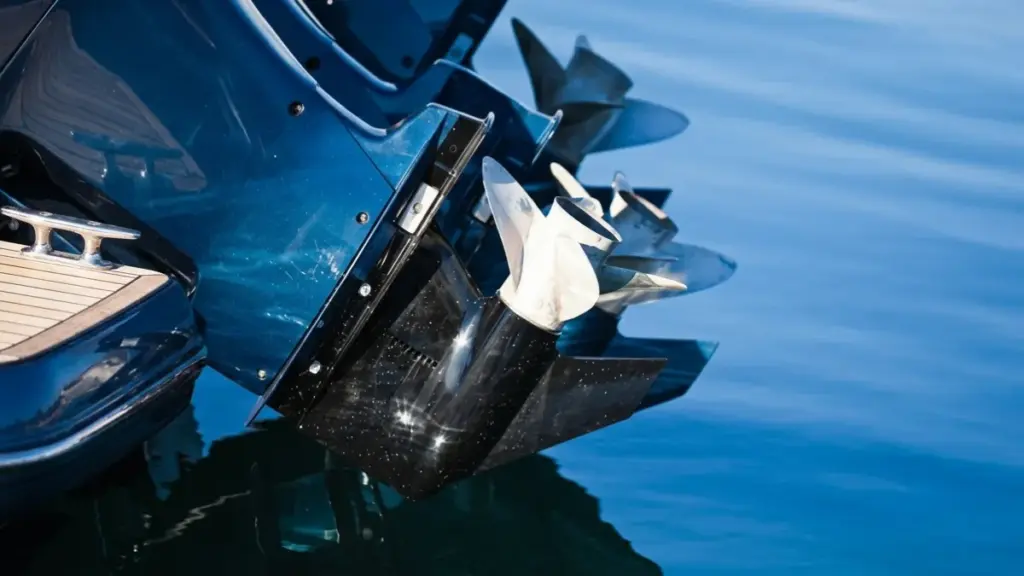
Ан пропеллер подвесного мотора is the rotating component mounted on the lower unit of an outboard engine. It takes the engine’s rotational power and turns it into thrust, which is what actually pushes the boat through the water. It works by creating a pressure difference on its blades. The high-pressure face of the blade pushes water back, while the low-pressure side on the back pulls the boat forward. Its main parts are simple: a central hub that mounts to the engine’s propeller shaft and the blades that do all the work.
How an Outboard Propeller Converts Engine Power Into Thrust
A propeller turns engine torque into thrust by creating a pressure differential on its blades and accelerating a column of water backward. The process is never 100% эффективный.
From Engine Torque to Rotational Power
The process starts with the engine, which delivers rotational energy—called shaft horsepower—through the gearcase. This power applies torque to the propeller shaft, making it spin at a specific RPM. The prop’s job is to take this rotational energy and convert it into forward thrust that moves the boat.
This conversion isn’t perfect. A well-matched propeller on a typical boat runs at about 65-70% эффективность. The remaining 30-35% of the engine’s power is lost, turning into turbulence and heat in the water instead of useful thrust.
Creating a Pressure Differential
Each propeller blade is essentially a hydrofoil, which is just a wing that works in water. As a blade spins, its curved shape forces water to travel faster over its forward-facing (suction) side, creating a low-pressure zone. The aft-facing (pressure) side experiences higher pressure.
This pressure difference across the blade’s surface generates a net force. This force both pulls the boat forward from the low-pressure side and pushes it from the high-pressure side, creating thrust.
Accelerating Water to Generate Momentum
A propeller also works by grabbing a column of water and accelerating it backward. This accelerated stream of water is called the slipstream, and it moves faster than the water surrounding it. Based on fundamental momentum theory, the force that pushes the boat forward is the equal and opposite reaction to the force used to accelerate that water rearward.
The Role of Pitch and Slip
Pitch is the theoretical distance a propeller would move forward in one complete revolution if it were screwing through something solid, like a bolt in wood. Water isn’t solid, so the actual forward movement is always less than the theoretical pitch. This difference is called propeller slip.
Slip is the percentage of the propeller’s rotation that doesn’t directly contribute to forward motion. While it sounds like a bad thing, some slip is necessary to create thrust. For most planing boats, an optimal slip range of 8-15% at wide-open throttle shows a good match between the prop, двигатель, and hull.
Boost Your Margins with Durable Power Equipment
Main Propeller Parts and How Each Component Affects Performance
A prop’s hub, blades, диаметр, and pitch dictate boat performance. Seemingly small details like rake, cup, or material directly impact speed, ускорение, and engine health.
Центр
The hub is the center section that connects the propeller to the propeller shaft.
Many modern propellers include a rubber hub insert. This insert acts as a shock absorber and helps protect the drivetrain if the propeller strikes underwater objects.
Blades
The blades generate thrust.
Most outboard propellers have either three or four blades, although specialized applications may use five blades.
Blade design affects:
- Lift
- Grip in rough water
- Hole shot
- Top speed
- Топливная эффективность
Blade Tip
The blade tip influences water flow and cavitation resistance.
Well-designed blade tips reduce turbulence while maintaining smooth water flow around the blade.
Leading Edge
The leading edge is the first part of the blade to contact water.
Its shape affects:
- Weed resistance
- Impact resistance
- Water entry efficiency
Trailing Edge
The trailing edge controls how water leaves the blade.
A properly designed trailing edge improves efficiency and reduces turbulence.
Cup
Cup refers to the slight curve located near the blade tip.
Additional cup helps:
- Reduce ventilation
- Improve grip
- Increase bow lift
- Improve performance during sharp turns
Однако, too much cup can reduce engine RPM.
Rake
Rake describes the angle of the blades relative to the propeller hub.
Higher rake typically:
- Increases bow lift
- Improves high-speed stability
- Enhances performance on fast boats
Lower rake often provides stronger acceleration for heavier vessels.
Every design feature works together, which is why two propellers with identical diameter and pitch may deliver noticeably different performance.
Key Propeller Specs: Diameter, Подача, Blade Count and Material
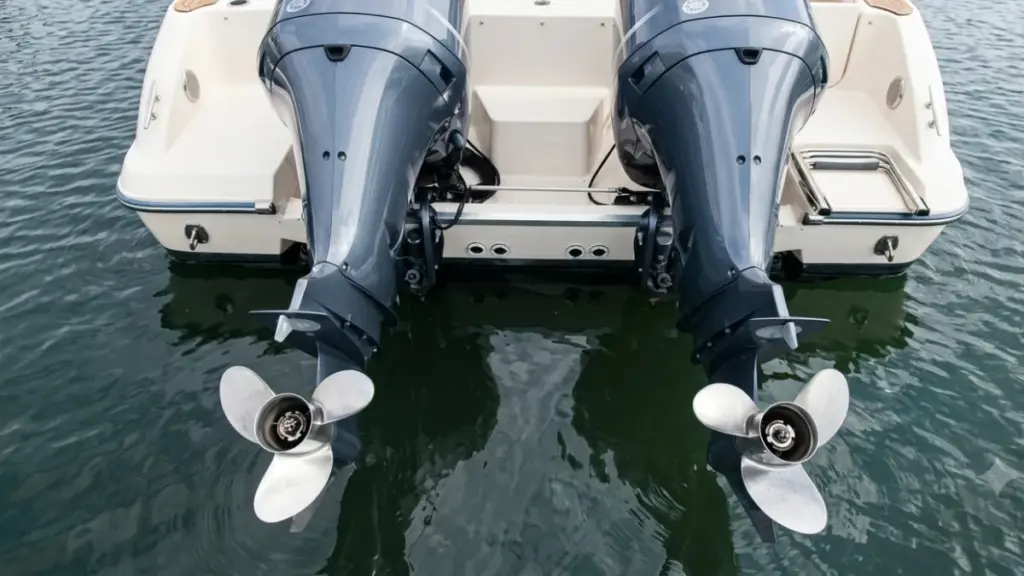
These four specs define a prop’s performance. They control the trade-off between thrust for heavy loads and speed for light ones, all while keeping the engine in its safe RPM range.
Diameter: The Propeller’s Footprint
Diameter is simply the distance across the circle the blade tips make when they spin. It’s the first number you see in a prop size, like the “14” in a 14 х 19 опора. A larger diameter moves more water, which gives you the thrust needed to push a heavy boat. A smaller diameter creates less drag in the water, which often helps lighter boats reach higher top speeds.
Подача: How Far It Moves
Pitch is the theoretical distance, в дюймах, that the prop moves forward in one complete rotation. It’s the second number in the prop size, like the “19” в 14 х 19. A higher pitch can deliver a higher top speed, but it also makes the engine work harder, similar to using a high gear in a car. A lower pitch gives you better acceleration and pulling power, which is ideal for towing or moving a heavy load. The goal is to find the right pitch that lets your engine operate within its recommended wide-open-throttle (ВОТ) Диапазон оборотов.
Blade Count: Balancing Speed and Grip
Most outboard props come with three or four blades. The number of blades significantly changes boat behavior.
| 3-Blade Propeller | 4-Blade Propeller |
|---|---|
| Higher top speed | Лучшее ускорение |
| Better fuel economy at cruising speed | Improved grip |
| Less drag | Better handling |
| Lower cost | Better rough-water performance |
| Popular for recreational boats | Popular for commercial and heavy-duty applications |
Three-blade propellers remain the most common choice because they offer an excellent balance between speed and efficiency.
Four-blade propellers excel when boats carry heavier loads or frequently operate in rough water.
Материалы: Aluminum vs. Stainless Steel
The material of an outboard propeller directly affects its strength, долговечность, corrosion resistance, and overall performance.
| Aluminum | Stainless Steel |
|---|---|
| Lower cost | Higher strength |
| Легкий | Excellent durability |
| Easy to repair | Better performance at high speed |
| Good for recreational use | Ideal for commercial and heavy-duty use |
| Protects drivetrain during impacts | Maintains blade shape under heavy loads |
В НЬЮТОП, our aluminum propellers are made from a premium aluminum-magnesium alloy, produced using new aluminum ingots and a proprietary remelting process. This provides excellent toughness and strength for reliable everyday performance.
For more demanding applications, our duplex stainless steel propellers offer higher yield strength and superior corrosion resistance than conventional stainless steel, making them ideal for saltwater and commercial use.
Whether you need aluminum or stainless steel propellers, we can help you choose the right solution based on your outboard motor, тип лодки, и условия эксплуатации. Contact our team to learn more about our OEM and bulk supply capabilities.
How the Propeller Influences RPM, Speed, Handling and Fuel Economy
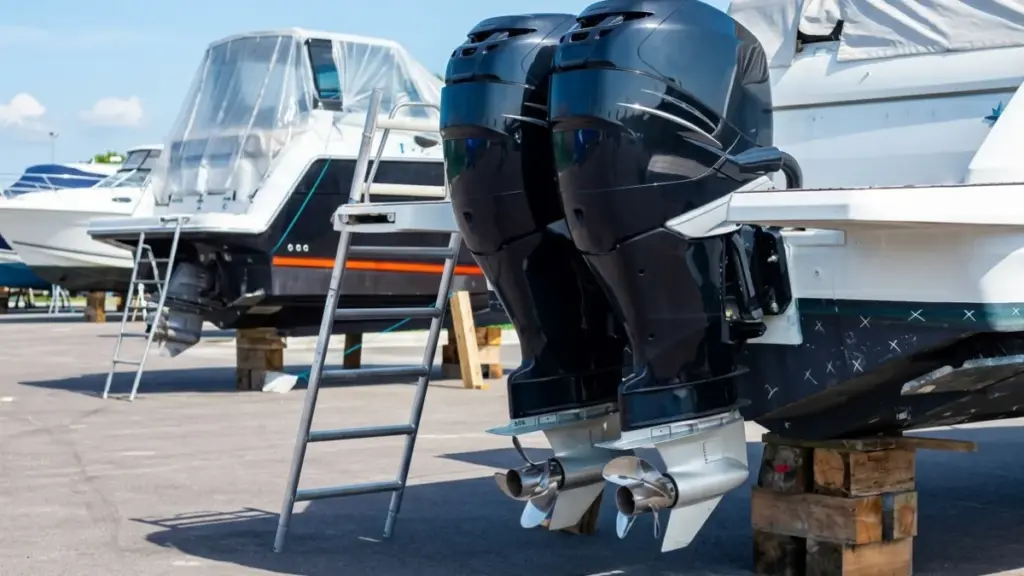
The propeller is the boat’s transmission. Every choice—pitch, диаметр, blade count—forces a direct trade-off between engine RPM, скорость, handling grip, and fuel consumption.
| Performance Factor | Primary Influences | Key Effect |
|---|---|---|
| Engine RPM | Подача, Diameter, Blade Area | Lower pitch increases RPM; higher pitch decreases it. The goal is to hit the engine’s recommended WOT range. |
| Boat Speed | Подача, Slip, Blade Count | Higher pitch allows higher top speed, but lower pitch gives better acceleration (дырочный выстрел). |
| Handling | Blade Count, Rake, Cup | 4-blades improve grip in turns and rough water. Rake adjusts bow lift. |
| Fuel Economy | Pitch Matching, Материал, Slip | An engine running in its optimal RPM range is most efficient. Lugging or over-revving wastes fuel. |
Impact on Engine RPM
Think of propeller pitch as the gearing on your boat. A lower pitch acts like a low gear, allowing the engine to spin up faster and reach a higher RPM. A higher pitch is like a high gear, loading the engine more and reducing its RPM at any given speed. The entire goal is to select a prop that lets your engine operate within its manufacturer-recommended Wide-Open Throttle (ВОТ) Диапазон оборотов. If your WOT RPM is too low, you need less pitch; if it’s too high, you need more.
As a rule of thumb, changing pitch by one inch will alter WOT RPM by about 150–200. Other factors also increase engine load and lower RPM. Switching to a propeller with a larger diameter, more blades, or more total blade area will make the engine work harder to spin it, which brings the RPM down.
Impact on Boat Speed
A propeller with a higher pitch has the potential for a higher top speed, but there’s a catch. Your engine must have enough power to spin that prop up into its optimal RPM range. If the engine is lugging, you won’t see that speed. On the other hand, a lower pitch propeller gives you much stronger acceleration, known as the “дырочный выстрел,” making it easier to get the boat on plane, especially with a heavy load.
All props experience some “slip,” which is the difference between their theoretical speed and your boat’s actual speed. Stainless steel props with cupped blades are more efficient because they flex less and grip the water better, minimizing slip. Going from a 3-blade to a 4-blade prop of the same pitch often reduces top speed by a mile or two per hour because of the increased drag from the extra blade.
Impact on Handling and Control
Handling is where blade count and design really show their value. A 4-blade propeller provides significantly better grip in turns, holds the boat steadier in rough water, and improves low-speed maneuverability around the dock. This is why they are often chosen for watersports, as they have the pulling power to get a skier on plane fast and hold a steady speed.
Blade geometry also plays a big part. Higher blade rake—the angle the blades tilt back—tends to lift the boat’s bow, which can increase speed on many planing hulls. А “cup” is a small curved lip on the blade’s trailing edge that reduces ventilation (air getting sucked into the prop) and cavitation. This allows the prop to maintain its grip during hard turns or when the motor is trimmed high for maximum speed.
Impact on Fuel Economy
The single most critical factor for fuel efficiency is matching the propeller to the engine’s optimal RPM range. An engine that is “over-propped” (lugging at a low RPM because the pitch is too high) или “under-propped” (over-revving because the pitch is too low) will burn significantly more fuel. Both conditions put unnecessary stress on the engine.
Stainless steel propellers are generally more efficient than aluminum ones. Their stiffer blades flex less under load, meaning less power is wasted and more is converted into forward thrust. By optimizing your propeller pitch specifically for your typical cruising speed, you can increase your miles per gallon. It’s not uncommon to see a boat’s overall range extend by 20% or more with the right prop.
Common Signs You Are Using the Wrong Outboard Propeller
Your boat tells you the prop is wrong through poor RPM, sluggish performance, and new vibrations. Visible damage or fouling are also clear red flags.
| Symptom | Возможная причина |
|---|---|
| Engine cannot reach recommended RPM | Pitch too high |
| Engine exceeds recommended RPM | Pitch too low |
| Poor acceleration | Incorrect pitch or damaged blades |
| Excessive fuel consumption | Improper propeller match |
| Cavitation or ventilation | Wrong blade design or damaged propeller |
| Heavy vibration | Bent blades or unbalanced propeller |
| Poor handling in turns | Incorrect blade configuration |
| Reduced top speed | Wrong diameter, подача, or excessive slip |
Poor Engine Performance and RPM
Performance issues are the first and most obvious signs that your propeller isn’t matched correctly to your boat and engine. If the engine can’t operate in its ideal range, everything from speed to fuel burn will suffer.
- Your engine’s RPM at full throttle is outside the manufacturer’s recommended range—either too high or too low.
- The boat takes forever to get on plane or feels sluggish accelerating. This is a classic poor “hole shot.”
- You’ve lost top-end speed, even with the same load and conditions you’ve run before.
- You’re burning more fuel than you used to for the same trip, and the fuel gauge seems to move faster.
Vibrations and Unusual Noises
A balanced and correct propeller should run smoothly. When something is wrong, you will feel and hear it. These symptoms often point to a damaged prop, which is just as bad as a mismatched one.
- You feel a new vibration through the hull or steering, especially when you speed up.
- There’s a strange noise—a thump, rattle, or hum—coming from the stern that wasn’t there before.
- Steering feels off, either rougher, heavier, or less responsive than normal.
Visible Damage or Fouling
Sometimes the problem isn’t subtle. A quick visual check can confirm that your propeller is the source of the trouble, whether from an impact or just accumulated debris.
- A quick look shows obvious damage: dings, bent blades, missing chunks of metal, or chipped edges.
- You find fishing line, rope, or seaweed wrapped tightly around the propeller shaft.
- The propeller shows heavy corrosion or rust that’s eating away at the metal, reducing its efficiency.
Ready to Work With NEWTOP for Professional Propeller Setup
The right propeller can make a noticeable difference in boat performance—but only when it is properly matched to the engine and application. Factors such as horsepower, boat weight, операционная среда, and typical load all influence the best propeller choice.
В НЬЮТОП, we do more than manufacture outboard propellers. We help distributors, строители лодок, and marine equipment brands select the right propeller solution for their products and customers. Our product range includes both premium aluminum alloy и duplex stainless steel propellers in multiple sizes, смолы, и конфигурации лезвий, compatible with a wide range of outboard motors.
Whether you need a durable replacement propeller, OEM-настройка, or bulk procurement for your market, our engineering and production teams can provide reliable support from product selection to manufacturing.
Looking for a dependable outboard propeller supplier? Contact us today to discuss your requirements and discover how our high-quality propellers can help improve performance, надежность, и удовлетворенность клиентов.
Часто задаваемые вопросы
What does an outboard motor propeller do?
An outboard motor propeller converts the engine’s rotational power into forward thrust by accelerating water backward. It directly affects boat speed, ускорение, топливная экономичность, умение обращаться, и производительность двигателя.
What is the difference between a 3-blade and a 4-blade propeller?
A 3-blade propeller is the most common type, offering a good balance of performance and a higher top speed due to having less drag. A 4-blade propeller has more blade area, which improves acceleration, grip in rough water, and helps heavier boats get on plane faster, but it usually results in a slightly lower top speed.
How do I know if my outboard propeller is damaged?
Common signs include new or increased vibration, a noticeable drop in top speed or acceleration, or the engine revving higher than usual without a corresponding speed increase. You should also visually inspect the blades for nicks, bends, трещины, or missing pieces of metal.
What happens if I use the wrong propeller on my boat?
Using the wrong propeller forces your engine to operate outside its recommended RPM range. If the prop has too much pitch, the engine will be overloaded, causing poor acceleration and long-term strain. If it has too little pitch, the engine can over-rev, leading to potential damage and poor fuel economy.
Can I upgrade my propeller for better acceleration or fuel economy?
Да, but it’s a trade-off. To improve acceleration, you can switch to a propeller with a lower pitch or more blades, which helps the boat get on plane faster. To improve fuel economy at cruising speeds, a propeller with a higher pitch can lower engine RPM, but this may reduce your initial acceleration.
What are the main parts of a boat propeller?
The primary parts include the hub, blades, leading edge, trailing edge, blade tips, cup, and rake. Each component influences thrust, умение обращаться, cavitation resistance, and overall efficiency.