4행정 선외기 모터의 무게는 다음과 같습니다. 13 kg (29 파운드) 컴팩트를 위해 2.5 HP 모델 이상 360 kg (794 파운드) 한 동안 300+ HP 엔진. 실제 무게는 여러 요인에 따라 달라집니다., 마력을 포함한, 엔진 변위, 실린더 구성, 샤프트 길이, 시동 시스템, 및 연료 전달 기술.
중국의 선도적인 실외 전력 장비 제조업체로서, 뉴탑 구매자가 구매 결정을 내리기 전에 마력과 무게를 기준으로 선외 모터를 비교하는 경우가 많다는 점을 이해합니다.. 이 가이드에서는, 다양한 마력 범위에 걸쳐 일반적인 4행정 선외기 모터 중량을 비교해 보겠습니다., 모터 무게에 영향을 미치는 것이 무엇인지 설명하십시오., 귀하의 보트에 적합한 옵션을 선택하도록 도와드립니다..
개요: 4-스트로크 선외기 모터의 마력별 중량 차트
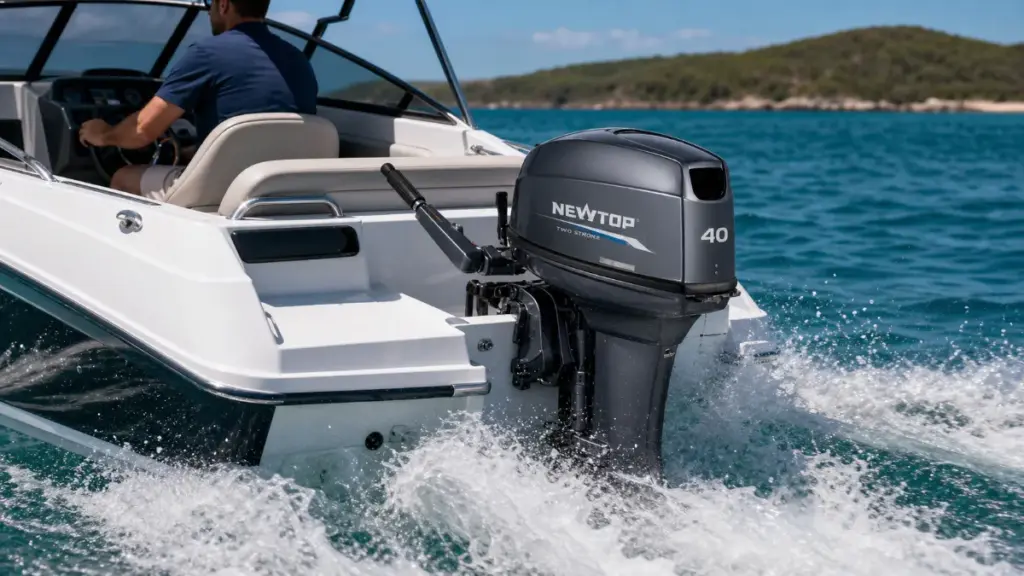
아래 차트는 4행정에 대한 간략한 개요를 제공합니다. 선외기 모터 일반적인 체중 범위, 일반적인 응용, 장점, 다양한 마력 범주에 따른 제한 사항.
| 마력 범위 | 일반적인 무게 | 일반적인 응용 | 장점 | 제한 사항 |
|---|---|---|---|---|
| 2.5-6 HP | 13-28 kg (29-62 파운드) |
풍선 보트, 작은 배, tenders | Ultra-portable, 연료 효율적, 운반이 용이하다 | Limited speed and load capacity |
| 8-20 HP | 37-60 kg (82-132 파운드) |
소형 어선, 알루미늄 보트, utility boats | Good balance of power and portability | May struggle with larger boats and heavy loads |
| 25-60 HP | 58-125 kg (128-276 파운드) |
낚시 보트, 폰툰, small workboats | Strong performance and versatility | Heavier transom load and higher fuel consumption |
| 75-150 HP | 160-240 kg (353-529 파운드) |
Center console boats, larger recreational boats | Excellent acceleration and cruising performance | Requires stronger transom and trailer setup |
| 200-300+ HP | 230-360+ kg (507-794+ 파운드) |
Offshore fishing boats, 상업용 선박, high-performance boats | Maximum power, 속도, and heavy-load capability | Highest purchase cost, 무게, and fuel usage |
The chart above focuses on the typical weight of 4-stroke outboards across different horsepower ranges. If you’re also comparing engine technologies, 우리의 2-뇌졸중 대. 4-Stroke Outboard Motors guide explains the key differences in weight, 연비, 유지, emissions, and overall boating performance.
Why 4-Stroke Outboard Weight Matters for Boat Performance
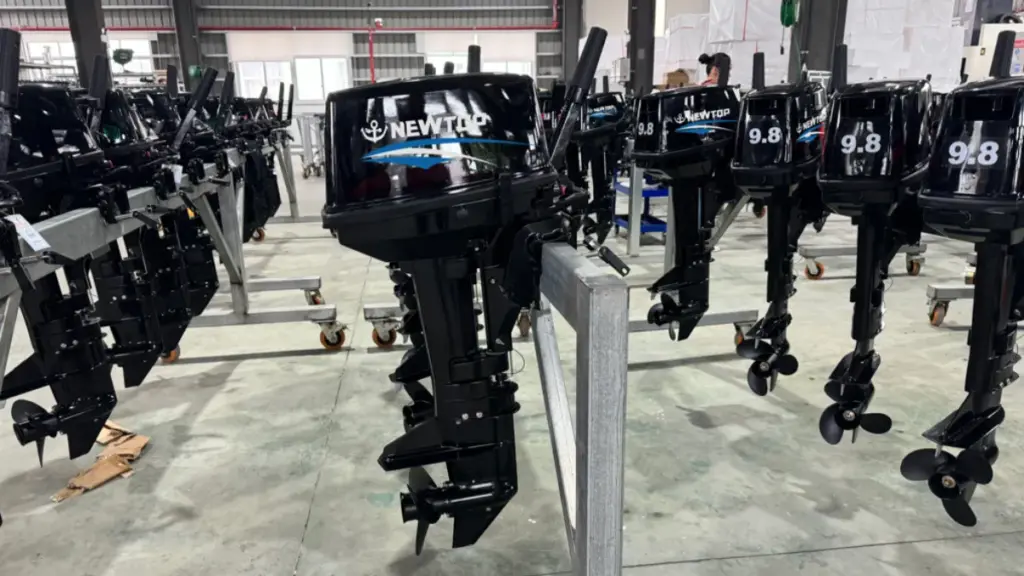
The weight of a 4-stroke outboard is one of the most critical factors for your boat’s real-world performance. It directly influences everything from acceleration and top speed to fuel burn, 손질, and overall safety on the water.
Before comparing weights, it’s important to understand where 4-stroke engines fit within the broader outboard market. 우리의 다양한 유형의 선외기 모터 guide introduces the main engine categories and explains the advantages of each type for different boating applications.
How Engine Weight Affects Speed and Efficiency
A heavier 4-stroke engine adds to the boat’s total displacement. This extra mass slows down your hole-shot, which is the time it takes to get on plane. The engine simply has more weight to push through the water before the hull can lift and glide efficiently.
More engine weight also increases drag by forcing more of the hull to stay in the water, creating a larger wetted surface. This added resistance can reduce your boat’s potential top speed. A lighter engine allows the boat to ride higher and freer, often resulting in a few extra miles per hour.
The engine must work harder and burn more fuel to carry any extra weight. This reduces your overall fuel efficiency, meaning you get fewer miles per gallon. A lighter engine can extend your range on the same tank of fuel, letting you stay out on the water longer.
Impact on Balance, 손질, 안전
Because an outboard sits at the very back of the boat, its weight has a major effect on trim. A heavy motor can cause the stern to squat low in the water and the bow to rise too high. This not only affects forward visibility but also creates a rougher, wetter ride in choppy conditions.
Excessive weight on the transom lowers the stern’s freeboard, which is the distance from the waterline to the top of the hull. This makes the boat more likely to take on water, especially from following waves or when backing down on a fish. It’s a critical safety factor for any boat.
Every boat’s transom is engineered to handle a specific maximum weight. Exceeding this limit, even if the engine’s horsepower is within the boat’s rating, puts serious stress on the hull’s structure. This can compromise the boat’s integrity and create a significant safety risk over time.
Looking for the Right 4-Stroke Outboard Motor?
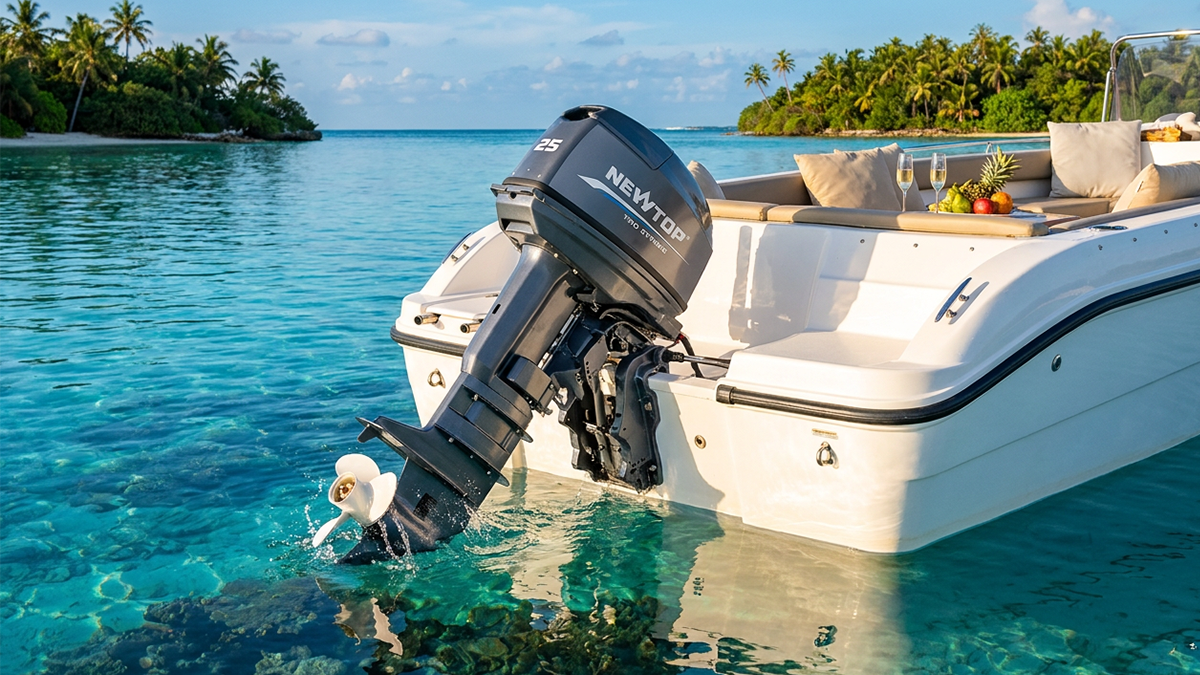
Portable 4-Stroke Weight Chart (2.5-20 HP)
Portable 4-stroke outboards in the 2.5 에게 20 horsepower range typically have a dry weight between 30 그리고 150 파운드 (13–68 kg). This class is designed for dinghies, small inflatables, and as auxiliary motors, where manual handling and minimal transom load are primary considerations.
Portable 4-stroke outboards are commonly used on inflatable boats, 작은 배, tenders, small fishing boats, and utility craft. These engines prioritize lightweight construction while still offering excellent fuel economy and reliability.
The following chart outlines the typical dry weight ranges you can expect for modern 4-stroke portable outboards.
| 마력 | Typical Weight Range |
|---|---|
| 2.5 HP | 13-18 kg (29-40 파운드) |
| 3.5 HP | 17-20 kg (37-44 파운드) |
| 5 HP | 24-28 kg (53-62 파운드) |
| 6 HP | 25-28 kg (55-62 파운드) |
| 8 HP | 37-42 kg (82-93 파운드) |
| 9.9 HP | 38-45 kg (84-99 파운드) |
| 15 HP | 43-52 kg (95-115 파운드) |
| 20 HP | 45-60 kg (99-132 파운드) |
Mid-Range 4-Stroke Weights (25-60 HP)
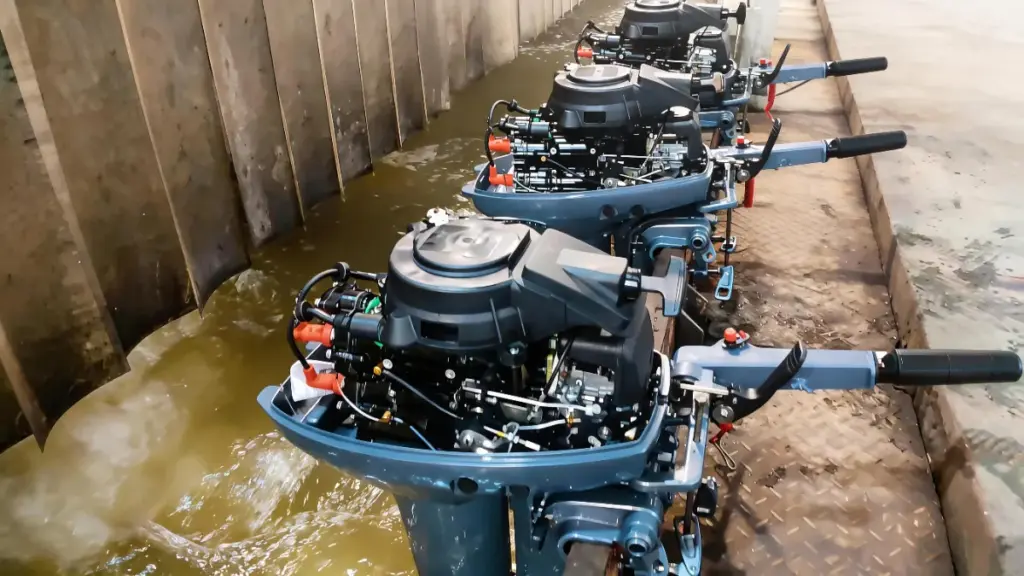
Mid-range 4-stroke outboards from 25 에게 60 HP are designed to balance power, 능률, and weight for small to mid-size boats. These engines typically weigh between 130 그리고 260 파운드, with the final weight depending on horsepower, cylinder count, and added features like power trim.
그만큼 25-60 HP category is one of the most popular segments in the global outboard market.
These engines are widely used on:
- Aluminum fishing boats
- Small center consoles
- Pontoon boats
- Workboats
- 레크리에이션 가족 보트
Weight begins increasing more rapidly in this horsepower range because outboard motor manufacturers use larger engine blocks and stronger components.
| 마력 | Typical Weight Range |
|---|---|
| 25 HP | 58-80 kg (128-176 파운드) |
| 30 HP | 60-85 kg (132-187 파운드) |
| 40 HP | 90-110 kg (198-243 파운드) |
| 50 HP | 95-120 kg (209-265 파운드) |
| 60 HP | 105-125 kg (231-276 파운드) |
High-Power 4-Stroke Outboard Weights (75-300+ HP)
High-power 4-stroke outboards in the 75 에게 300+ HP class have dry weights that range from approximately 350 pounds to over 1,000 파운드. This weight at the transom is a critical factor for a boat’s structural integrity, 균형, and on-water performance.
High-horsepower 4-stroke outboards dominate today’s recreational and commercial boating markets.
Advances in technology have made large 4-stroke engines more efficient, quieter, and cleaner than ever before.
| 마력 | Typical Weight Range |
|---|---|
| 75 HP | 160-180 kg (353-397 파운드) |
| 90 HP | 165-190 kg (364-419 파운드) |
| 115 HP | 170-215 kg (375-474 파운드) |
| 150 HP | 205-240 kg (452-529 파운드) |
| 200 HP | 230-290 kg (507-639 파운드) |
| 250 HP | 260-320 kg (573-705 파운드) |
| 300 HP+ | 270-360 kg+ (595-794 lbs+) |
Key Factors That Affect 4-Stroke Outboard Weight
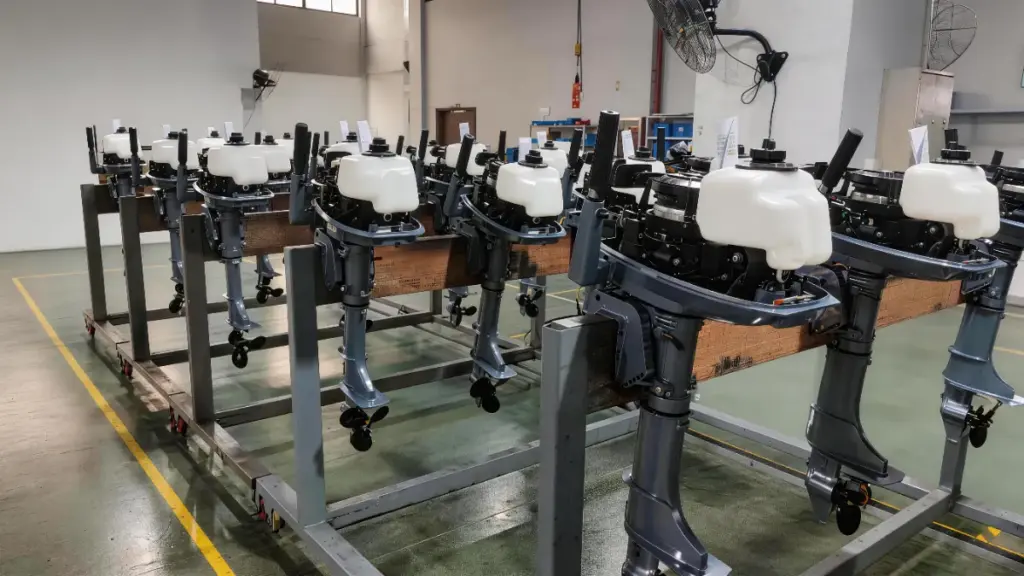
An outboard’s weight is shaped by its fundamental design and the options you choose. The engine’s displacement and the materials used, like lightweight aluminum alloys, set the baseline. Features such as shaft length, electric start, and power trim add functional weight, creating a final figure that balances power and features.
The weight of a 4-stroke outboard motor is determined by much more than horsepower alone. While engines with higher power outputs naturally weigh more, several design and configuration factors can significantly influence the final weight of an outboard.
Understanding these factors can help boat owners choose the right engine and compare models more accurately when evaluating different brands.
Engine Displacement and Cylinder Configuration
Engine displacement is one of the biggest contributors to outboard motor weight.
Larger displacement engines generally require bigger blocks, 피스톤, 크랭크샤프트, and cooling systems. A single-cylinder portable outboard may weigh less than 20 kg, while a multi-cylinder engine designed for offshore applications can weigh several hundred kilograms.
Cylinder count also plays a major role. Twin-cylinder, three-cylinder, and four-cylinder engines offer smoother operation and better power delivery, but they require more components and therefore add weight.
샤프트 길이
Outboard motors are commonly available in:
- Short Shaft (15″)
- Long Shaft (20″)
- Extra Long Shaft (25″)
- Ultra Long Shaft (30″)
A longer shaft requires a longer driveshaft housing, additional materials, and a longer internal driveshaft assembly. 결과적으로, a long-shaft version of the same engine will typically weigh several kilograms more than a short-shaft model.
Starting and Trim Systems
Additional features can also increase the overall weight of an outboard.
예를 들어:
- Electric start systems add starter motors, charging systems, 배선, and batteries.
- Power trim and tilt systems add hydraulic pumps and reinforced mounting components.
- Larger alternators and onboard charging systems contribute additional weight.
While these features improve convenience and usability, they should be considered when calculating total transom load.
Fuel System and Emission Technology
Modern 4-stroke outboards are designed to meet increasingly strict environmental standards.
Electronic Fuel Injection (EFI) systems improve fuel efficiency, throttle response, and cold-start performance. 하지만, 연료 펌프, 센서, electronic control units, and related components add weight compared with simpler carbureted systems.
The same principle applies to advanced emission-control technologies found on many modern outboards.
Materials and Structural Design
The materials used in construction can make a noticeable difference in overall engine weight.
~에 뉴탑, we focus on achieving an effective balance between durability and portability by utilizing lightweight aluminum alloy components and optimized structural designs wherever possible. This allows our outboard motors to deliver dependable performance while keeping weight under control for easier handling, 운송, and installation.
Gearcase and Intended Application
The lower unit, or gearcase, is another important factor affecting total weight.
Outboard motors designed for commercial use, heavy-duty fishing applications, or larger boats often feature stronger gearcases and reinforced internal components. These designs improve durability and torque handling but naturally increase engine weight.
By contrast, portable outboards are optimized for mobility and ease of transport, resulting in lighter overall construction.
4-Stroke vs 2-Stroke Weight: How Much Heavier Is a 4-Stroke?
On average, a 4-stroke outboard is about 10–25% heavier than a 2-stroke motor with the same horsepower. This extra weight comes from a more complex mechanical design, including a valve train and a self-contained oil system, which 2-stroke engines do not have.
Core Mechanical Reasons for the Extra Weight
Four-stroke engines are fundamentally more complex. They include a dedicated valve train with camshafts, 밸브, and springs to control intake and exhaust. Two-stroke engines use a simpler port design, eliminating the need for these heavy components.
They also need a self-contained lubrication system. This includes an oil sump to hold the oil and a pump to circulate it, unlike the simpler fuel-and-oil mixture that lubricates a 2-stroke. This adds significant weight and bulk.
All these additional parts require a larger and more robust engine block for support. The extra structural reinforcement is a direct contributor to the motor’s overall dry weight, making the 4-stroke heavier before any fluids are even added.
Weight Difference by Horsepower Range
The weight gap between 4-strokes and 2-strokes isn’t constant; it grows as horsepower increases. The relative difference is typically between 10% 그리고 25% across the board.
In the portable class (아래에 25 HP), a 4-stroke is often 10 에게 20 pounds heavier. While that may not sound like much, it’s a noticeable difference when you have to lift the motor on and off a small boat or tender.
For mid-range engines (30 에게 90 HP), the weight difference increases to about 25 에게 60 파운드. This amount of extra weight on the transom can affect a boat’s hole shot, planing ability, and how it sits in the water at rest.
The gap is most significant with high-power outboards (100 HP and up). Here, 4-stroke models can easily weigh 40 에게 100 pounds more than their 2-stroke counterparts. On multi-engine setups, this extra weight is multiplied and becomes a critical factor in boat performance and balance.
If you’re also considering a 2-stroke engine, be sure to read our Two-Stroke Outboard Weight Guide for a detailed comparison of weight ranges across different horsepower levels. Understanding the weight differences between 2-stroke and 4-stroke outboard motors can help you choose the best option for your boat and intended application.
How to Select the Right 4-Stroke Weight for Your Boat
Choosing the right 4-stroke motor weight involves balancing your boat’s official capacity with your performance needs. Start by checking the manufacturer’s capacity plate for maximum horsepower and engine weight limits. Then, select the lightest engine in your target horsepower class that can efficiently handle your typical load of fuel, 기어, 그리고 승객.
Evaluate Your Boat’s Capacity and Performance Needs
Before comparing specific motors, you need to understand your boat’s structural and performance limits. Every hull is designed to support a specific weight and horsepower on its transom. Exceeding these limits can harm performance and create unsafe handling conditions.
The first step is to check your boat’s capacity plate, usually found near the helm or on the transom. This plate specifies the maximum horsepower and engine weight the hull can safely handle. Never exceed these ratings, as it could overstress the transom and void your warranty or insurance.
Engine weight directly affects your boat’s static trim, which is how it sits in the water at rest. A motor that is too heavy will cause the stern to sit low. This can let water enter through the scuppers, creating a wet cockpit and reducing stability.
A useful guideline for planing hulls is to have one horsepower for every 25 에게 40 pounds of total boat weight. A ratio closer to 25 pounds per horsepower delivers strong acceleration, while a ratio near 40 pounds per horsepower provides more economical cruising.
Choosing a motor that’s too heavy strains the hull, hurts fuel efficiency, and makes the boat harder to handle. A motor that’s too light or underpowered will struggle to get on plane and run at high RPMs just to maintain speed, which reduces its lifespan and burns more fuel.
A Practical Method for Choosing the Right Motor
With your boat’s limits in mind, you can follow a clear process to find the ideal motor. This method helps you match engine specs to your real-world activities on the water.
Start by estimating your boat’s fully loaded weight. This includes the hull, fuel, 배터리, safety gear, and the typical number of passengers you carry. This estimate helps you apply the weight-to-horsepower guideline to find your ideal power range.
다음, define how you use your boat most often. If you mainly do light cruising with few passengers, a lighter motor at the lower end of your boat’s rating will work well. But if you tow skiers, carry heavy fishing gear, or run offshore, you’ll need more power and should look at options closer to the maximum horsepower rating.
Once you have a target horsepower class, compare the weights of different models within that class. You can sometimes find a motor that offers a significant horsepower increase for only a minor weight gain. If the added weight still fits within your boat’s capacity, this is often a great way to improve performance.
마지막으로, calculate the total installed weight before making a decision. This includes the engine’s dry weight plus fluids, the propeller, and all rigging components. This final number gives you the true weight on your transom and ensures your choice will deliver safe, balanced, and efficient performance.
최종 생각
When comparing outboard motors, horsepower alone does not tell the full story. Weight influences boat balance, 가속, 연비, 운송, and long-term operating costs. Understanding the relationship between horsepower and engine weight helps boat owners choose a motor that delivers reliable performance without compromising safety or handling.
Whether you need a lightweight portable outboard for a small fishing boat or a high-power solution for demanding marine applications, 뉴탑 continues to develop dependable outboard motors designed to balance power, 능률, 내구성, and practical weight requirements for global users.
자주 묻는 질문
How much does a 4-stroke outboard motor weigh?
The weight depends on horsepower. Small portable models may weigh as little as 13 kg (29 파운드), while large offshore engines can exceed 360 kg (794 파운드).
What is the lightest 4-stroke outboard motor?
Most 2.5 HP 4-stroke outboards are among the lightest available, 일반적으로 사이의 무게 13 그리고 18 kg (29-40 파운드).
How much does a 15 HP 4-stroke outboard weigh?
A typical 15 HP 4-stroke outboard weighs between 43 그리고 52 kg (95-115 파운드), depending on shaft length and starting system.
How much does a 20 HP 4-stroke outboard weigh?
Most 20 HP 4-stroke outboards weigh approximately 45-60 kg (99-132 파운드).
Are 4-stroke outboards heavier than 2-stroke?
예, for any given horsepower, a 4-stroke outboard is heavier than a comparable 2-stroke. This is because 4-strokes have more complex internal parts, such as a valve train, 캠샤프트, and a separate oil lubrication system, which all add weight.
How much does a 150 HP 4-stroke outboard weigh?
Most modern 150 HP 4-stroke outboards weigh between 205 그리고 240 kg (452-529 파운드).
Does shaft length affect outboard motor weight?
예, shaft length does add to an outboard’s total weight. A long-shaft model is heavier than a short-shaft version of the same engine because its driveshaft and housing require more material. The weight difference is usually just a few pounds but is listed in manufacturer specs.