Picture this: you’ve got a pile of firewood to cut or a few trees to clear, and you’re trying to decide between a gas or an electric chainsaw. Both can get the job done, but they perform very differently. This article takes a closer look at electric vs gas chainsaws—their strengths, limits, and what really matters when choosing the right tool for your kind of work. By comparing their performance in specific high-demand scenarios, you can create a clear standard operating procedure for equipping your teams with the right tool for the job.
What is an Electric Chainsaw?
Electric chainsaws have evolved from heavy, cord-tethered tools into powerful, lightweight battery models that now lead the market in convenience and operational efficiency.
Electric chainsaws use electrical energy instead of fuel to power their motors, making them cleaner, quieter, and easier to maintain than traditional gas models. Depending on the power source, they generally come in two main types: corded and battery-powered (lithium). While both share the same principle of using an electric motor to spin the cutting chain, their performance and ideal use cases are quite different.
Corded Electric Chainsaws
A corded electric chainsaw is powered directly by alternating current (AC) through a standard household outlet. Most models operate at 120V–240V depending on regional standards. Without a battery or fuel tank, corded units are lighter and provide consistent, uninterrupted power as long as they remain plugged in.
From a performance standpoint, corded saws typically range from 1,400W to 2,400W output, generating enough torque for small to medium wood-cutting jobs. Because they don’t rely on stored power, their cutting speed stays stable over time — an important advantage for users who value reliability over mobility.
Best suited for:
- Homeowners cutting firewood or pruning trees around the yard
- Light-duty carpentry or workshop use
- Users seeking steady performance and minimal maintenance
Battery-Powered (Lithium) Chainsaws
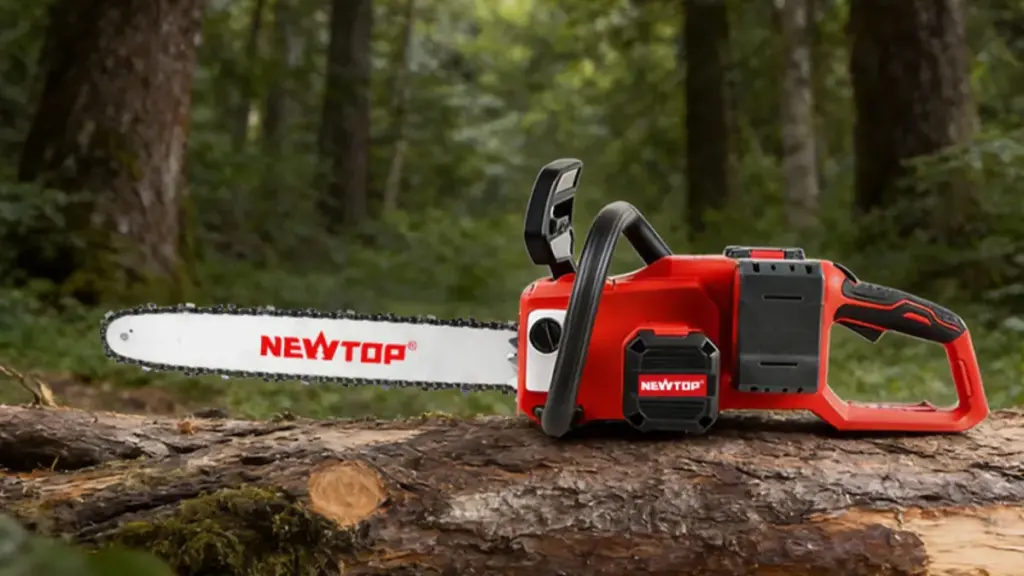
Battery-powered chainsaws, often called cordless chainsaws, run on rechargeable lithium-ion batteries. These units convert stored DC energy into rotating chain motion through a brushless motor, offering smooth acceleration and precision control.
Modern battery chainsaws have grown far more capable in recent years, with typical voltage options ranging from 18V and 36V for homeowner models to 40V, 56V, and even 60V or 80V systems for high-performance and professional-grade tools. Higher voltage generally means longer run time, greater torque, and faster chain speed.
Best suited for:
- Gardeners and homeowners wanting full mobility with no cords
- Urban environments where noise or emissions are restricted
- Light to medium cutting tasks in remote or off-grid areas
Battery tech has improved a lot. The newer ones charge faster, run longer, and deliver smoother power. AtNEWTOP, we’ve been upgrading our lithium battery chainsaws to get better torque, longer runtime, and brushless motors that feel strong and efficient without too much weight or vibration.
What is a Gas Chainsaw?
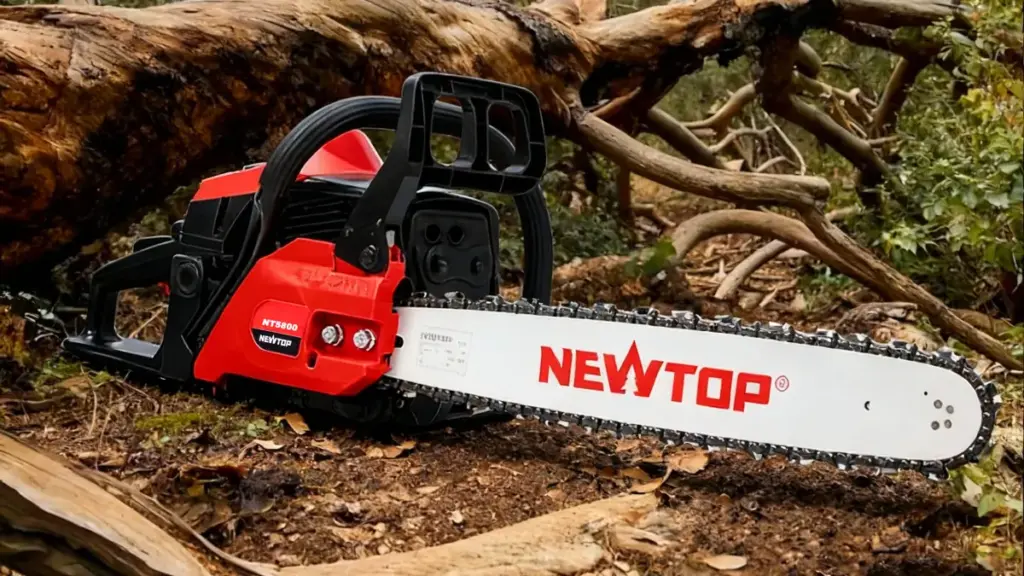
Known for unmatched cutting strength and durability, gas chainsaws remain the benchmark for professional-grade power tools.
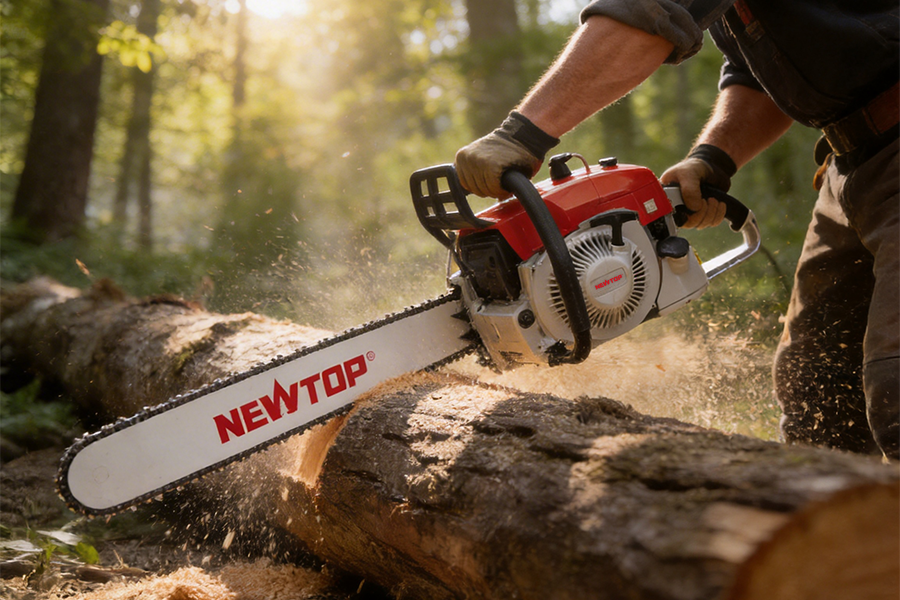
A gas chainsaw uses a small internal combustion engine to drive the cutting chain, making it the most powerful type of portable chainsaw available today. Most models rely on2-stroke engines, which run on a mixture of gasoline and oil. This design keeps the tool lightweight, delivers high torque, and provides instant cutting power—ideal for forestry, costruzione, or heavy-duty land clearing.
While 2-stroke engines dominate the market, some larger or specialized chainsaws use4-stroke systems, offering cleaner combustion and reduced emissions at the cost of additional weight.
Gas chainsaws are valued for their mobility, endurance, and cutting efficiency. They don’t rely on external power or batteries, allowing users to work in remote areas for long periods. Tuttavia, they require regular maintenance—fuel mixing, pulizia del filtro, and spark plug replacement—and they produce more noise and exhaust than electric counterparts.
Overall, gas chainsaws remain the top choice for professionals and users who need maximum power and performance in challenging outdoor environments.
Equip Your Business with Durable Machinery
Pros and Cons of Electric Chainsaws for Quiet Operation
Electric chainsaws are all about convenience. If you mostly work around your home or garden, you’ll probably love one of these.
Key Advantage: Reduced Noise Levels
Electric chainsaws operate at much lower decibel levels than gas engines. This reduction in noise is a primary driver for their adoption in residential and suburban settings, where loud equipment can cause disturbances. The quieter performance allows for more flexible work schedules, including early mornings or evenings, without violating noise ordinances or upsetting neighbors.
- Ideal for suburban homeowners who need to avoid disturbing neighbors.
- Allows for flexible work times, including early mornings or late evenings.
- Reduces operator fatigue and the need for constant, heavy-duty hearing protection.
Simplified Maintenance and Operation
The operational simplicity of electric chainsaws is a significant advantage. They eliminate the need for fuel mixing, spark plug replacements, and complex engine servicing. This low-maintenance design makes them accessible to users of all experience levels, removing common frustrations associated with gas engines like carburetor issues or pull-start failures.
- No need to handle or store gasoline and oil mixtures.
- Starts instantly with the push of a button or trigger.
- Eliminates common gas engine problems like carburetor issues or pull-start failures.
Performance Limitations for Heavy-Duty Tasks
While modern electric saws are capable, they cannot match the sustained power of gas models for heavy-duty jobs. Their performance is best suited for light-to-medium work like pruning branches, trimming limbs, and cutting smaller logs. For felling large trees or bucking dense hardwood, the torque and runtime of a gas engine remain the professional standard.
- Best suited for light-to-medium-duty work like pruning, rifilatura, and cutting small logs.
- Battery-powered models have a limited runtime and may require frequent recharging for extended jobs.
- Professional loggers and arborists still rely on gas saws for maximum torque and sustained performance.
Pros and Cons of Gas Chainsaws for High-Torque Tasks
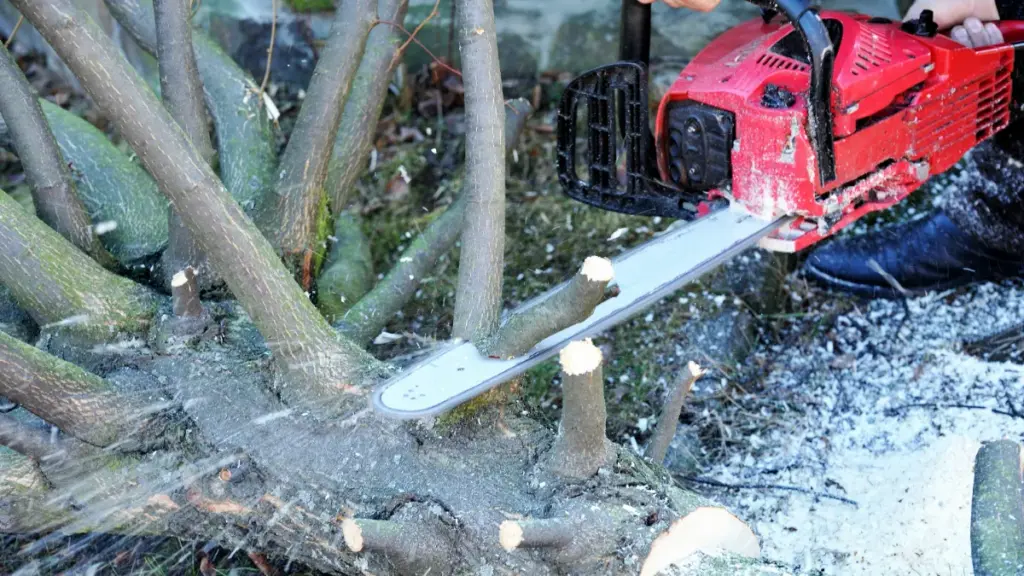
Gas chainsaws are built for power. They’re what you want for big logs, fallen trees, or heavy outdoor jobs.
Advantages: Unmatched Power and Mobility
Gas chainsaws are engineered for superior power and torque, making them the standard for heavy-duty cutting. Their primary advantage is the ability to run continuously on remote job sites, as long as fuel is available. This design ensures they operate reliably in harsh weather, including cold or wet conditions that can impair battery performance.
- Delivers high torque and fast cutting speeds, essential for felling large trees or processing dense hardwoods.
- Operates without interruption by simply refueling, which eliminates the downtime associated with battery charging.
- Maintains consistent power output in cold, wet, or frozen conditions where battery efficiency often degrades.
- Provides complete freedom of movement without the restrictions of cords or the need for charging stations.
Disadvantages: High Maintenance and Emissions
The main drawbacks of gas chainsaws are their demanding maintenance schedules and environmental impact. The 2-stroke engine produces significant noise and exhaust fumes, making protective gear mandatory and limiting its use in populated or poorly ventilated areas.
- Requires regular servicing, including air filter cleaning, controlli candele, and precise fuel-oil mixing.
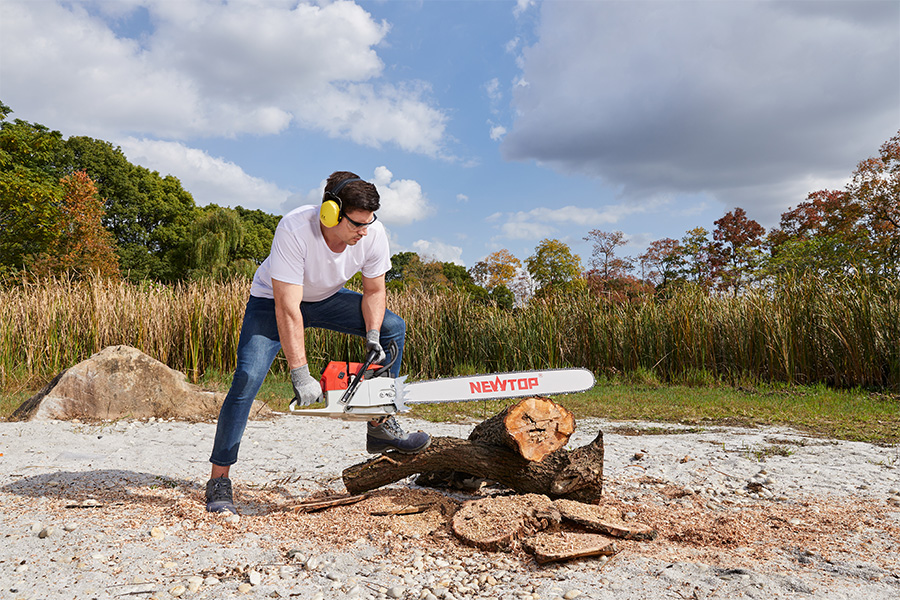
- Generates high noise levels that make ear protection essential for safe, long-term operation.
- Emits exhaust fumes containing carbon monoxide, posing a health risk in enclosed spaces.
Key Differences Between Electric vs Gas Chainsaw
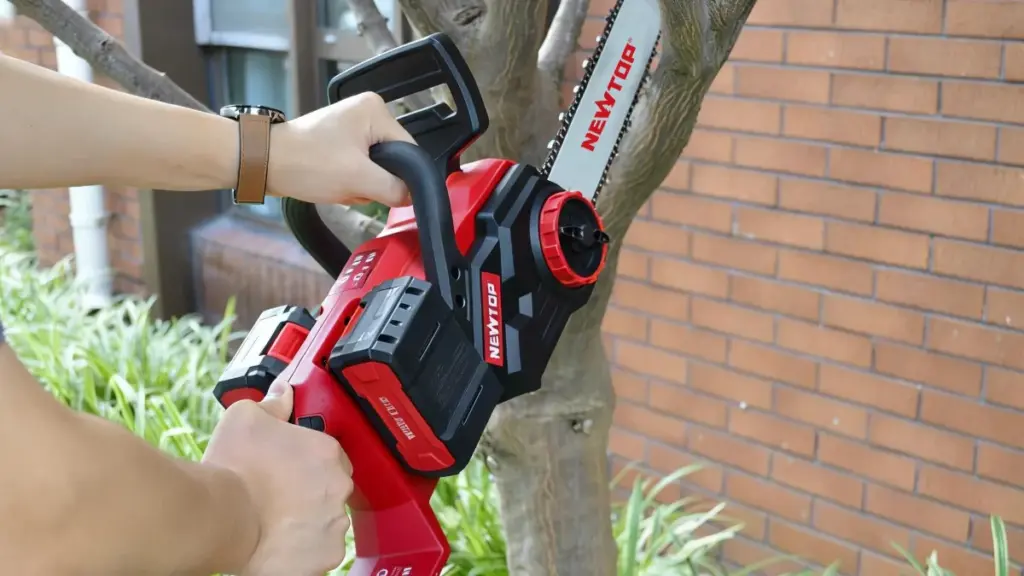
Before choosing your next chainsaw, it helps to understand how electric and gas-powered models truly compare. The table below highlights the key differences in power, prestazione, and maintenance to help you find the best fit for your work.
| Feature | Gas Chainsaw | Electric Chainsaw (Batteria) |
|---|---|---|
| Fonte di energia | Gasoline-powered 2-stroke or 4-stroke engine | Corded electricity or lithium battery (18V–80V) |
| Potenza in uscita | High torque and chain speed for demanding cuts | Moderate torque and stable cutting speed |
| Durata | Unlimited; refuel anytime for continuous operation | Limited by battery capacity or cord range |
| Sistema di avvio | Manual pull start; requires fuel mixture | Push-button or trigger start |
| Maintenance Needs | High – fuel mixing, pulizia del filtro, spark plug changes | Low – mostly battery charging and chain oil |
| Noise Level | Alto (typically 100–115 dB) | Basso (often under 90 dB) |
| Peso | Heavier due to engine and fuel tank | Lighter and easier to handle |
| Mobility | Fully portable; works anywhere outdoors | Batteria: full mobility; Corded: limited by power source |
| Operating Cost | Higher – ongoing fuel and maintenance costs | Lower – electricity and minimal upkeep |
| Environmental Impact | Produces exhaust; cleaner designs meet EPA/EURO II standards | Zero direct emissions; energy-efficient operation |
| Ease of Use | Requires experience and strength for control | Simple for beginners; less vibration and fatigue |
| Vibration & Fatigue | Higher vibration; modern models add anti-vibration systems | Minimal vibration with balanced brushless motors |
| Cutting Capacity | Handles thick hardwood and large logs | Best for small to medium branches and trees |
| Noise Regulations Compatibility | Suitable for rural or industrial areas | Ideal for residential and urban settings |
| Best For | Forestry workers, farmers, professional loggers | Proprietari di case, gardeners, DIY and light commercial use |
Power Output and Application Suitability
Gas chainsaws continue to dominate heavy-duty professional tasks like large-scale tree felling and milling due to their superior raw power and torque. Electric models, particularly battery-powered ones, have gained significant ground for consumer and light-commercial jobs. Their performance is now comparable to mid-range gas saws for tasks like pruning, yard cleanup, and light construction, thanks to advances in brushless motors and battery capacity.
- Gas models deliver consistent high power for cutting through large-diameter hardwood and for continuous operation.
- Battery models excel at tasks where convenience and quick deployment are valued, such as pruning, storm cleanup, and residential firewood cutting.
Operational Demands and Maintenance
The primary operational difference lies in fuel and upkeep. Gas chainsaws require a specific oil-and-gas mixture and regular maintenance of carburetors, fuel filters, and spark plugs to maintain performance. Electric chainsaws eliminate these complexities entirely, offering a simpler user experience focused on chain lubrication and battery management.
- Gas chainsaws need frequent refueling and routine engine maintenance to ensure reliable performance and prevent long-term damage.
- Electric chainsaws require only battery charging and bar oil, eliminating fuel mixing, difficult pull-starts, and engine-related troubleshooting.
Runtime and On-Site Flexibility
Runtime remains a key differentiator. A gas chainsaw can operate as long as you have fuel, making it the standard for remote or extended work where power access is non-existent. Battery chainsaws are limited by their charge capacity, requiring spare batteries or access to a power source for all-day use. This makes gas the clear choice for professional forestry and large-scale land clearing.
- Gas chainsaws can be refueled in minutes, allowing for virtually uninterrupted work on large job sites.
- Battery-powered saws offer great mobility for short-duration tasks but depend on the number and capacity of available batteries for longer jobs.
Market Trends and Technology
The market is clearly dividing based on job requirements rather than one type being universally better. Advances in battery and motor technology have made electric chainsaws a viable alternative for a growing number of users, while gas chainsaw remains the standard for pure power. This trend signals a maturation of the market, where tools are becoming more specialized for their intended applications.
- The consumer and light-commercial segments are shifting toward battery power for its convenience, reduced noise, and lower emissions.
- The professional forestry and industrial sectors still rely on gas power for its unmatched performance in demanding conditions and unlimited runtime.
Maintenance and Fuel Costs: Analyzing Long-Term Investment
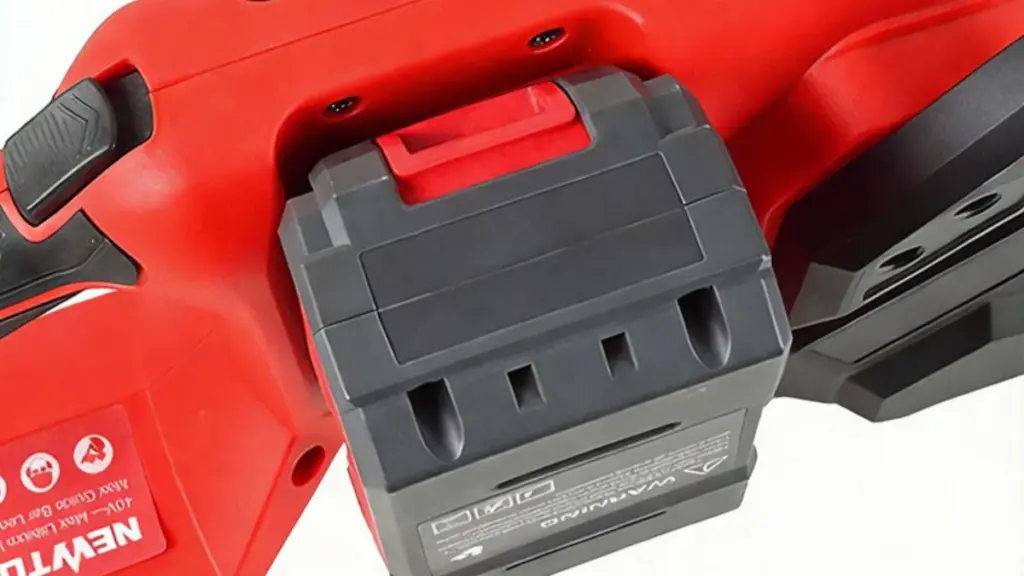
When comparing long-term value, the real difference between electric and gas chainsaws becomes clear. Electric models save money on fuel and service, while gas units pay off through raw cutting efficiency and durability. It’s less about which costs more upfront—and more about how often and how hard you use it.
Electric chainsaws require little upkeep beyond chain oil and occasional battery replacement, making them ideal for occasional users or homeowners who value convenience. Gas chainsaws, although needing regular maintenance—fuel, candele, air filters—are built for high workloads and often last longer under continuous use.
The table below outlines typical cost and value factors for each type:
| Category | Gas Chainsaw | Electric Chainsaw |
|---|---|---|
| Initial Purchase Cost | Slightly higher due to engine and parts | Lower; battery included or optional |
| Fuel or Power Expense | Ongoing fuel and oil costs per use | Low electricity charging cost |
| Maintenance Frequency | Regular—filters, plugs, carburetor tuning | Minimal—chain oil and battery care |
| Average Lifespan (Proper Use) | Lungo; built for continuous heavy work | Moderate; ideal for intermittent use |
| Long-Term ROI | Higher for professionals; pays off in productivity | Higher for homeowners; saves time and cost |
Selection Guide: Electric vs Gas – Which One is Right for You?
For Homeowners and Light-Duty Yard Work
Electric chainsaws are the clear choice for most homeowners. Their low maintenance, quiet operation, and cost-effectiveness make them ideal for occasional tasks like trimming branches, cutting small logs for firewood, and general property cleanup. They offer a simple grab-and-go solution that requires no fuel mixing and minimal technical skill.
- Choose an electric model if your work is primarily in a residential area where noise can be an issue.
- They are perfect for users who prioritize ease of use and aren’t cutting large-diameter hardwood regularly.
For Professional and Heavy-Duty Applications
Gas chainsaws continue to dominate professional fields where sustained power and long runtimes are non-negotiable. They are engineered for felling large trees, bucking thick logs, and clearing extensive areas of land without needing to stop and recharge. Their performance is unmatched for demanding, all-day jobs, especially in remote locations far from a power source.
- Select a gas model if you work in forestry, land management, or agriculture.
- These tools are built for users who need maximum cutting torque and are comfortable performing regular engine maintenance.
| Decision Factor | Choose Electric If… | Choose Gas If… |
|---|---|---|
| Power Requirement | You need sufficient power for pruning, sepoltura, and cutting small logs. | You need maximum torque for felling large trees and bucking thick hardwoods. |
| Work Location | You work in a suburban yard, close to a power outlet or within battery range. | You work on large properties, remote forests, or any area without electricity. |
| Maintenance Preference | You prefer minimal upkeep: just add bar oil and keep the chain sharp. | You are comfortable with engine maintenance, miscelazione del carburante, and tune-ups. |
| Environment | Quiet, emission-free operation is a priority due to neighbors or regulations. | Raw power and runtime are the main goals; noise and fumes are secondary. |
A Quick Checklist for Your Decision
Answer these questions to quickly identify the right tool for your specific situation.
- Energia: Do you need top-tier torque for large trees (Gas) or sufficient power for yard tasks (Electric)?
- Location: Will you work near an outlet (Electric) or in remote areas far from a power source (Gas)?
- Manutenzione: Do you prefer minimal upkeep (Electric) or are you prepared for engine maintenance and fuel mixing (Gas)?
- Environment: Is quiet, emission-free operation your priority (Electric), or is raw power the main goal (Gas)?
Why Choose NEWTOP High-Performance Gas Chainsaws?
NEWTOP has established a strong market position by engineering gas chainsaws that deliver professional-grade durability and performance using globally recognized components, but at a price point accessible to mid-range commercial markets.
Founded in 2003, NEWTOP is a professional outdoor power equipment manufacturer, offering a full range of outdoor power products including gas and lithium battery chainsaws, decespugliatori, spruzzatori, outboard engines, generatori, water pump and more. Whether you’re looking for gas chainsaws or lithium battery chainsaws, NEWTOP has you covered.
Our products built with high-quality components from world-class suppliers such as Walbro, NGK, TORCIA, NSK, and Oregon—the same names trusted by leading global brands. Each unit undergoes multiple ISO9001-certified quality checks and complies with CE, APE, and EURO II standards to ensure consistent reliability and safety. With NEWTOP, you get power, affidabilità, and value in one package. That’s why professionals in over 65 countries trust our tools for forestry, farming, and landscaping work.
Conclusione
Electric chainsaws offer quiet operation and simple maintenance, making them excellent tools for residential yard work. Gas-powered models deliver the consistent high torque and runtime necessary for felling large trees or clearing remote land. Matching the tool to the task ensures you have the right balance of power, convenience, and long-term reliability.
If your projects require sustained cutting power and field durability, a professional gas chainsaw is the optimal choice. Explore the NEWTOP catalog to find a model with the right power-to-weight ratio for your needs.
Domande frequenti
Are electric chainsaws as powerful as gas?
Not quite. Electric chainsaws handle small to medium jobs well, but gas models still deliver higher torque and faster chain speed for heavy-duty cutting.
Do electric chainsaws need bar oil?
SÌ, all chainsaws, including corded and battery-powered electric models, absolutely require bar and chain oil to keep the chain lubricated and reduce wear.
How long do electric chainsaw batteries last?
Most lithium batteries last 30 A 60 minutes per charge, depending on workload and battery capacity. Keeping a spare fully charged can extend runtime.
Is an electric chainsaw safer than gas?
Generally, yes. They’re lighter, start instantly, and produce less vibration, making them easier to control—ideal for beginners or home users.
Can I cut a large tree with an electric chainsaw?
It’s possible with a high-voltage model, but for thick or hardwood trunks, a gas chainsaw is more efficient and faster.
What are the disadvantages of electric chainsaws?
They have limited runtime, slightly less cutting power, and rely on charging or access to electricity, which can restrict use in remote areas.