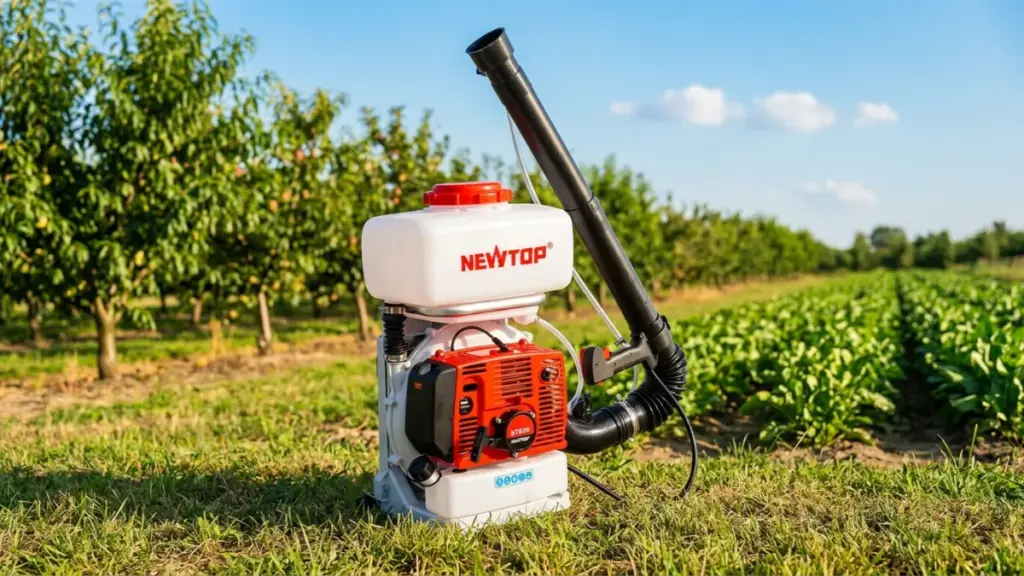
In the world of agriculture and professional landscaping, the terms fogger and sprayer are often used interchangeably, yet they represent two fundamentally different technologies. It is critical for distributors, contractors, and agricultural equipment importers to understand the mechanical structure, particle physics, and application efficiencies of each.
This guide provides a comprehensive technical breakdown of foggers and sprayers, helping you determine which tool is best suited for your specific environmental and operational needs.
What Is a Fogger? Definition and Working Principle
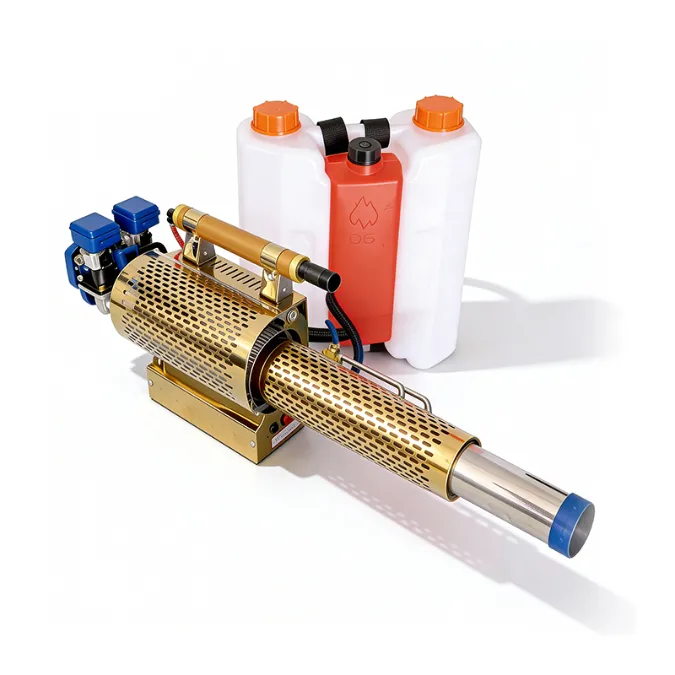
A fogger is designed to transform liquid formulations into ultra-fine droplets that behave more like an aerosol than a traditional spray. The primary objective of a fogger is space treatment rather than surface coating.
Definition of a Fogger
A fogger is a mechanical device that transforms liquid solutions into a fine mist, or aerosol, composed of particles typically under 50 micrometers in diameter. This aerosol remains suspended in the air for an extended period, allowing it to settle without direct application onto horizontal, vertical, and otherwise hard-to-reach surfaces. The method is effective for large-area disinfection, controllo dei parassiti, and humidification.
- Converts liquid into an airborne aerosol or mist.
- Generates extremely fine particles (under 50 micrometers) that stay suspended in the air.
- Provides broad coverage by allowing droplets to settle on both horizontal and vertical surfaces.
Most professional foggers fall into two categories: thermal foggers and ULV cold foggers. Despite different atomization mechanisms, both aim to produce extremely small droplets, typically below 50 micron.
Thermal Fogging Principle
Thermal foggers use a heat source, often powered by gasoline or propane, to rapidly vaporize a chemical solution. The device injects the liquid into a high-velocity stream of hot gas, causing immediate vaporization. When this hot vapor is expelled and mixes with cooler ambient air, it condenses into a dense, visible fog of ultra-fine particles. This process is ideal for penetrating dense foliage and treating large outdoor spaces for pest control.
- Uses a heat source to produce a high-velocity stream of hot gas.
- Injects the liquid formulation into the hot gas, causing immediate vaporization.
- Creates a thick, visible fog as the vapor condenses in the cooler air.
- Primarily used for outdoor applications like mosquito and pest control.
Ultra-Low Volume (ULV) Cold Fogging Principle
Cold foggers, including Ultra-Low Volume (ULV) models, use high-pressure air to break liquid into tiny droplets without applying heat. This mechanical process gives operators precise control over particle size while protecting the chemical integrity of the solution. Because it operates without heat, this method is safer for indoor applications like disinfecting hospitals, schools, and commercial buildings where heat-sensitive chemicals are often used.
- Relies on high air pressure to atomize liquid into fine droplets.
- Operates without heat, protecting the integrity of the chemical solution.
- ULV technology enables efficient application using minimal liquid volume.
- Suitable for indoor disinfection in hospitals, schools, and agricultural facilities.
Advanced Fogging Technologies
Modern fogging equipment now incorporates technologies like electrostatic charging and nano-atomization to improve coverage and safety. Electrostatic foggers impart a positive electrical charge to the aerosolized mist, causing droplets to wrap around and cling to all sides of a surface for complete 360-degree coverage. Nano-atomizers produce an even finer, drier fog that is safe to use around sensitive electronics and fabrics without causing moisture damage.
- Electrostatic Fogging: Charges particles so they are attracted to surfaces, ensuring 360-degree coverage and reducing chemical waste.
- Nano-Atomizers: Create an even finer, drier mist that avoids moisture damage, useful for sanitizing delicate equipment and textiles.
- These modern technologies are increasingly adopted in healthcare and transportation for enhanced efficiency.
What Is a Sprayer? Definition and Working Principle
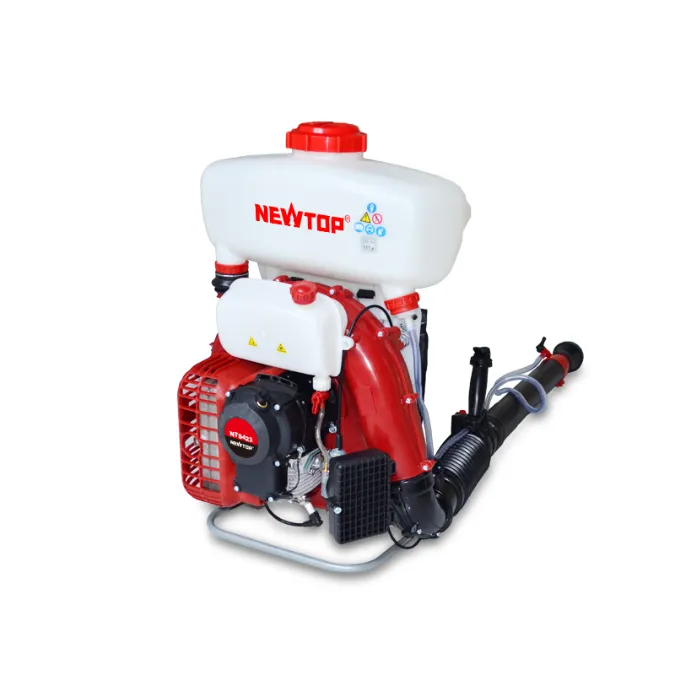
A sprayer is a pressure-driven device that atomizes liquid through a nozzle, enabling the controlled and uniform distribution of agents like pesticides or fertilizers onto a target surface.
Core Function and Definition
A sprayer is a mechanical device designed to apply liquid solutions like pesticides, erbicidi, or fertilizers in a controlled pattern of fine droplets. Unlike the fogger, which aims for suspension, the sprayer is designed for targeted deposition like agricultural, horticultural, or sanitation.
- Applies liquid agents including pesticides, fertilizzanti, and cleaning solutions.
- Generates a controlled spray for even and efficient coverage.
- Essential equipment in farming, paesaggistico, and public health sectors.
Key Components and Mechanism
A sprayer operates by pressurizing liquid stored in a tank and forcing it through a specialized nozzle. This process atomizes the liquid into a spray. The core components—tank, pompa, and nozzle—work together to control the flow rate, dimensione delle goccioline, and spray pattern.
Pressure can be produced manually, mechanically through diaphragm or piston pumps, or by gasoline or electric motors. The liquid is forced through a nozzle, where droplet size is shaped by nozzle geometry and pressure level.
- A tank holds the liquid solution.
- A pump creates the pressure needed to propel the liquid.
- A nozzle atomizes the liquid into droplets and shapes the spray.
- A trigger or valve controls the start and stop of the spray.
Applications and Modern Advancements
Di 2026, sprayer technology has advanced to prioritize precision application, reduced chemical waste, and improved operator ergonomics. Innovations in nozzle design and pump systems allow for better coverage in large-scale agriculture and specialized commercial use.
- Used for crop protection, fertilization, e controllo dei parassiti.
- Modern designs focus on uniform distribution to maximize effectiveness.
- Technological improvements enhance operational speed and reduce chemical drift.
- Ergonomic features are integrated to improve comfort for professional users.
Related Reading: Tipi di spruzzatori a zaino: Scegliere il modello migliore per la tua azienda agricola
Boost Your Margins with Reliable Machinery

Difference Between Fogger and Sprayer: Mechanical Overview
The fundamental mechanical difference lies in atomization and delivery—foggers create a suspended mist for broad, volumetric treatment, whereas sprayers apply liquid directly to targeted surfaces, with electrostatic models using a charge to wrap around objects.
| Mechanical Aspect | Fogger | Spruzzatore |
|---|---|---|
| Atomization & Particle Size | Produces fine particles designed to remain suspended in the air for volumetric treatment of large spaces. | Relies on hydraulic pressure for atomization. Electrostatic models add a charge for smaller, more uniform particles. |
| Coverage & Penetrazione | Excels at filling large, open rooms and penetrating dense outdoor foliage with a pervasive mist. | Provides direct, targeted surface application. Electrostatic models achieve 360° wrap-around coverage on objects. |
| Application & Efficiency | Designed for area-wide decontamination rather than surface-specific precision. Less efficient for targeted tasks. | Offers precise, controlled application. Electrostatic systems maximize chemical deposition and minimize waste. |
| Compatibilità chimica | Requires specific formulations. Thermal foggers need oil/water carriers and cannot use flammable liquids. | Standard models handle a broad chemical range. Electrostatic units need liquids formulated to hold an electric charge. |
Spray Mechanism and Particle Size Comparison
Foggers and sprayers atomize liquids through different physical processes, resulting in distinct particle sizes that define their performance. Most sprayers depend on hydraulic pressure; higher pressure forces the liquid through a nozzle, generating shear forces that break it into droplets. Electrostatic sprayers enhance this process by applying a high-voltage charge to the liquid, creating smaller and more uniform particles that actively seek grounded surfaces. Al contrario, foggers are engineered to produce a fine mist with droplets that remain suspended in the air for volumetric treatment. Particle size is a primary performance metric because it directly controls how well a chemical adheres to a surface, penetrates complex geometries, and remains airborne.
Coverage Area and Penetration Ability
A fogger’s strength is volumetric coverage. It disperses a fine mist that fills large, open spaces like warehouses or greenhouses, eventually settling on all exposed horizontal surfaces. This method is effective for treating an entire room’s air and surfaces simultaneously. Sprayers provide direct, targeted surface application. Electrostatic models offer superior penetration by charging droplets that wrap around objects, coating hidden areas like the backsides of fixtures or the undersides of leaves. This “wrap-around” effect ensures comprehensive 360-degree coverage on complex objects, something a fogger’s passive settling cannot achieve. For outdoor pest control, a fogger’s mist can penetrate dense foliage more effectively than a standard direct spray.
Application Accuracy and Chemical Usage Efficiency
Sprayers deliver direct, targeted application, making them the accurate choice for treating specific surfaces or zones. Foggers are built for broad, volumetric decontamination and lack surface-level precision. The greatest efficiency gains come from electrostatic sprayers. By charging the droplets, these systems ensure a much higher percentage of the chemical lands on and adheres to the target surface. This minimizes overspray, riduce i rifiuti chimici, and limits airborne loss of active ingredients. This efficiency also allows for the use of chemicals designed for long-lasting residual protection, while fogging typically relies on short-acting formulas for rapid knockdown.
Suitable Chemicals and Formulations
The equipment’s operating mechanism dictates the required chemical formulation.
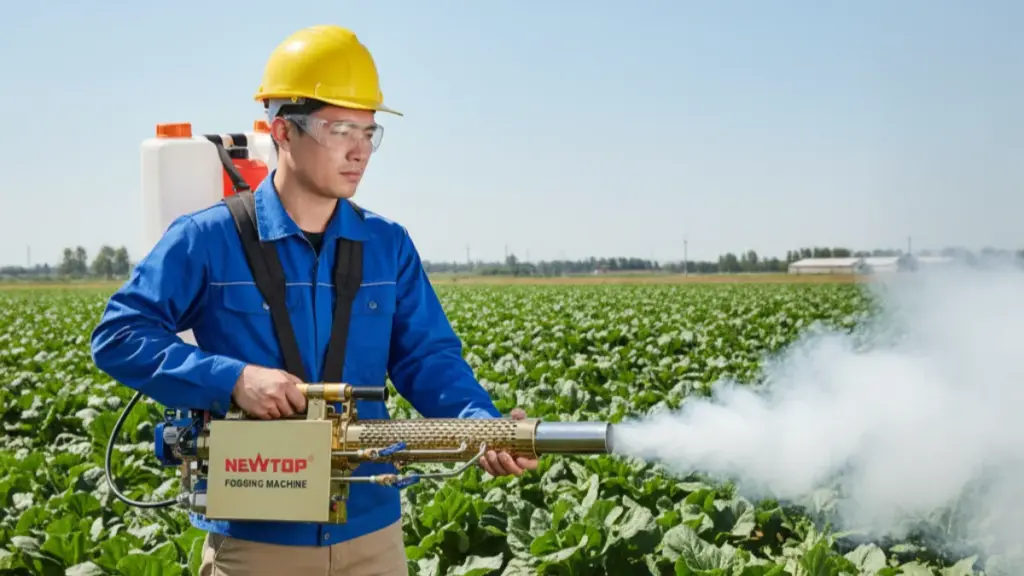
Thermal foggers, which use heat to vaporize a solution, require specific oil- or water-based carriers to create a dense fog and must never be used with flammable liquids like alcohol.
ULV (Ultra Low Volume) Cold foggers are more versatile and can handle a wider range of formulations.
Sprayers are compatible with almost all agricultural chemicals, including wettable powders, emulsifiable concentrates, and thick suspensions. The larger nozzle openings are less prone to clogging.
Typical Use Scenarios and Industries
Fogger Scenarios:
- Public health vector control (mosquito and fly abatement).
- Greenhouse pest management.
- Disinfection of large indoor facilities (hospitals, warehouses).
- Odor control in waste management sites.
Sprayer Scenarios:
- Herbicidal application in row crops.
- Liquid fertilization of lawns and gardens.
- Structural pest control (termite barriers around foundations).
- Livestock sanitation and wash-downs.
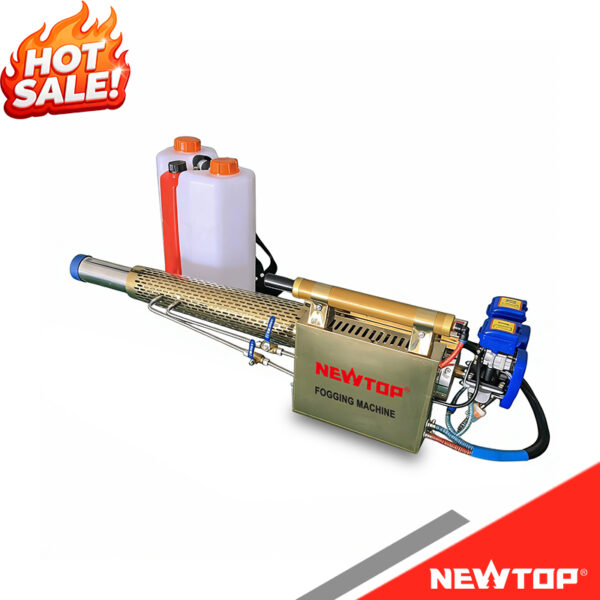
NTYM180K Thermal Fogging Machine
- Professional-grade atomization precision
- Advanced durability (500+ service hours)
- Optimized for large-scale vector control
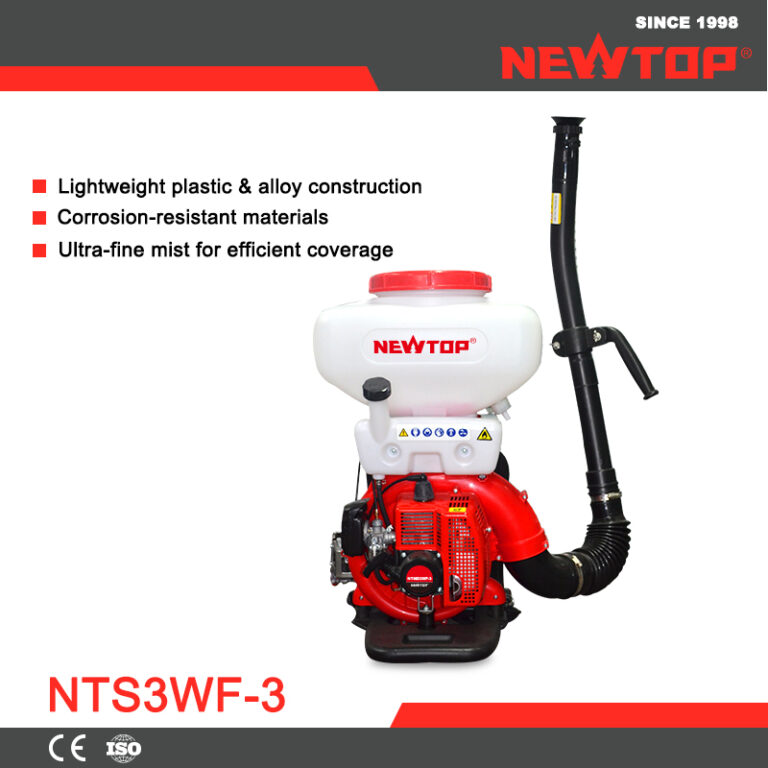
NTS3WF-3 Gas Powered Backpack Sprayer
- High-velocity liquid & granule output
- Precision nozzle for targeted application
- Reinforced chemical-resistant structure
Advantages and Limitations of Fogger and Sprayer
Foggers excel at rapid volumetric treatment for pest control in dense foliage, while sprayers deliver superior surface-level precision and chemical efficiency, especially in electrostatic models.
| Operational Feature | Fogger | Spruzzatore |
|---|---|---|
| Coverage Type | Volumetric (air and surfaces) | Surface-direct |
| Penetration Ability | Excellent for dense foliage and crevices | Limited unless using an electrostatic model |
| Application Speed | Fast for large, open areas | Slower, more methodical application |
| Drift Risk | Alto, susceptible to wind | Low due to larger, heavier droplets |
| Primary Use Case | Outdoor pest control, air disinfection | Targeted surface disinfection, weed control |
Fogger: Advantages and Key Applications
Foggers are engineered to treat large volumes and penetrate dense environments. Their ability to produce extremely fine, suspended particles makes them highly effective for pest control in thick vegetation and for disinfecting large, open indoor spaces where airborne treatment is critical. This method ensures broad coverage with minimal operator effort once the machine is running.
- Provides deep penetration into dense foliage, cracks, and crevices, making it highly effective for outdoor insect control.
- Covers large volumes of space quickly, which reduces labor time for public health disinfection or agricultural pest management.
- Effective at controlling flying insects and disinfecting air, as the fog remains suspended for an extended period.
Fogger: Limitations and Operational Considerations
The main drawbacks of foggers are tied to control and safety. The fine mist is highly susceptible to wind drift, leading to off-target application and potential environmental contamination. Thermal foggers add another layer of complexity by introducing heat, which limits the types of chemicals that can be used without degradation.
- High risk of chemical drift, making it unsuitable for precise, targeted applications or use in windy conditions.
- Thermal models can pose a fire risk and may damage heat-sensitive chemical solutions, altering their efficacy.
- Can require more extensive personal protective equipment (PPE) due to the risk of inhaling the fine aerosolized particles.
Spruzzatore: Advantages and Key Applications
Sprayers offer superior control and efficiency for surface-based applications. They produce larger, heavier droplets that deliver chemicals directly to the target with minimal drift. This precision makes them ideal for targeted disinfection, weed control, and applying fertilizers where accuracy is paramount.
- High application accuracy ensures chemicals land on target surfaces, reducing waste and environmental impact.
- Electrostatic sprayers provide complete, wraparound surface coverage, ideal for disinfecting complex objects and high-touch surfaces.
- Generally safer for indoor use and in sensitive areas due to controlled application and reduced inhalation risk.
Spruzzatore: Limitations and Operational Considerations
While precise, sprayers are less efficient for treating large, open areas or penetrating dense canopies. The application process is slower and more labor-intensive than fogging. Sprayers are primarily designed for treating surfaces rather than volumes of air, limiting their effectiveness against airborne pathogens or flying insects.
- Slower application speed compared to foggers when treating expansive outdoor areas.
- Limited ability to penetrate dense vegetation or reach hidden pests deep within canopies.
- Less effective for controlling flying insects or treating airborne pathogens, as droplets settle quickly.
Cost-Benefit Analysis of Owning Both Equipment Types
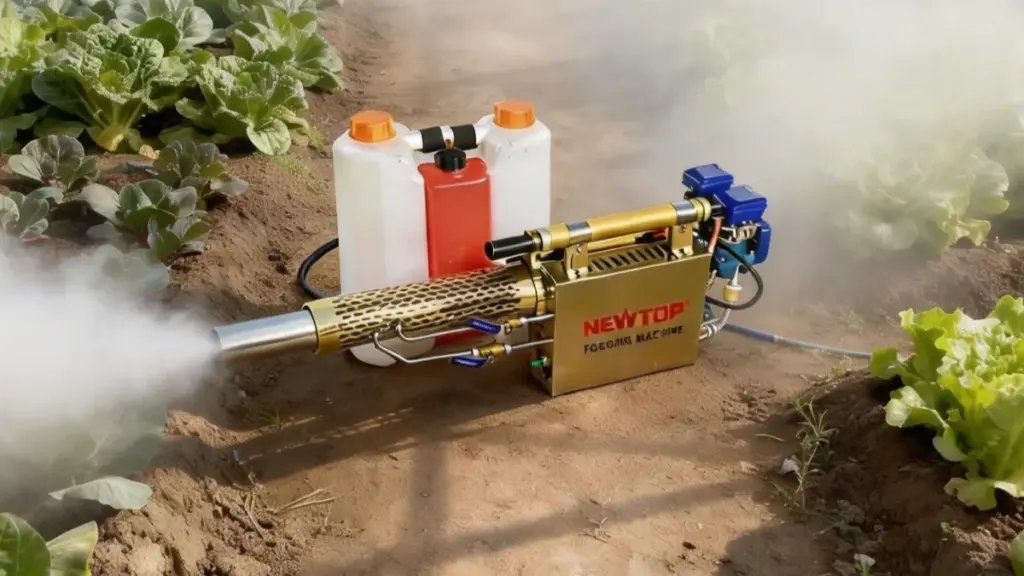
Investing in both a fogger and a sprayer allows an operation to deploy the most resource-efficient tool for any given task, minimizing long-term labor and chemical expenses.
Upfront Investment vs. Long-Term Savings
Owning both a fogger and a sprayer requires a higher initial capital outlay. This dual investment, however, translates directly to long-term savings by precisely matching the equipment to the application, which reduces wasted chemicals and minimizes labor hours. The financial logic is straightforward: use the high-speed fogger for large areas and the precise sprayer for targeted zones.
- Foggers generally have a higher initial cost but cover large areas quickly, reducing labor expenses for big projects.
- Sprayers are more affordable upfront and excel at targeted applications, preventing the overuse of expensive chemicals on small or specific problem areas.
- Di 2026, operational savings in labor and materials can often offset the initial dual-equipment cost within one to two seasons for most commercial users.
Labor and Chemical Efficiency
The primary benefit of a dual-equipment strategy is optimized resource allocation. Foggers are built to minimize labor time for large-scale disinfection or pest control, covering vast spaces with minimal operator input. Sprayers provide the control needed for precise, cost-effective chemical application, ensuring active ingredients are applied only where necessary.
- A fogger can treat an area up to 30,000 sq ft with minimal operator effort, a task that would be extremely labor-intensive and time-consuming with a sprayer.
- Sprayers deliver direct, targeted application, which is crucial for spot treatments or delicate plants where overspray would be wasteful and potentially harmful.
- This approach prevents the financial drain of inefficient application—either by wasting labor with a sprayer on a large job or wasting chemicals with a fogger on a small one.
Application Versatility and ROI
Having both tools provides the operational flexibility to handle any treatment scenario, from expansive outdoor spaces to specific indoor zones. This adaptability maximizes your service capabilities and strengthens the return on investment by ensuring you always have the correct equipment for the job.
- Professionals can service a wider range of clients and job types, including agricultural fields, warehouses, and controlled indoor facilities.
- The ability to choose between broad, penetrating fog and a direct, controlled spray enhances overall treatment effectiveness and client outcomes.
- This versatility keeps the equipment productive, leading to a faster and more reliable return on investment compared to relying on a single, less-adaptable tool.
How NEWTOP Engineering Maximizes Durability in Both Types
As a outdoor power equipment manufacturer with over two decades of industry experience, NEWTOP, designs backpack sprayers and foggers with a focus on durability in demanding environments.
We operate a 10,000 square meter facility with CNC machining centers, linee di produzione automatizzate, and independent inspection systems. Every pump assembly, airflow component, and fuel system undergoes durability testing to ensure consistent performance.
Key engineering strengths include:
- Chemical-resistant tanks for aggressive formulations
- Precision nozzle systems for stable droplet control
- Engine components sourced from globally recognized suppliers
- Structured quality inspection processes from raw materials to final testing
- Compliance with CE, APE, ISO9001, and ISO14001 standards
For OEM partners and regional distributors, NEWTOP provides customization options in branding, capacità del serbatoio, engine configuration, and packaging design. With exports to over 65 countries and partnerships with more than 100 distributors worldwide, NEWTOP supports long-term cooperation through stable supply chains and technical documentation.
For product catalogs, technical specifications, or OEM inquiries, contact our technical team for a customized quote based on your regional requirements.
Conclusione
Choosing between a fogger and a sprayer comes down to your specific application needs, from particle size to the required coverage area. Making the right equipment choice directly impacts your chemical usage, labor costs, and overall operational efficiency. This technical knowledge ensures you select a tool that delivers the intended results without waste.
Use this guide to evaluate your current equipment and identify any performance gaps. If you need a tool engineered for demanding commercial use, our product specialists can help you find a durable fogger or sprayer that meets your requirements.
Domande frequenti
What is the main difference between a fogger and a sprayer?
The primary difference is droplet size. A fogger produces microscopic droplets (under 50 micron) that stay suspended in the air to fill a volume of space. A sprayer produces larger droplets (over 100 micron) designed to land on and coat specific surfaces.
Does a fogger use less water than a sprayer?
SÌ. Foggers, particularly ULV models, use high concentrations of chemicals and very little carrier liquid (water or oil). A sprayer requires a significant amount of water to act as a transport medium for the chemical to reach the target.
Can foggers be used for agricultural pesticides?
SÌ, especially in enclosed environments like greenhouses, but field crops usually require conventional sprayers for better precision.
Why are foggers more expensive than manual sprayers?
Foggers involve more complex airflow or heating systems, increasing production and maintenance costs.
Which one provides better coverage for dense foliage?
Foggers generally achieve better penetration due to smaller droplet size and longer suspension time.
How do maintenance requirements differ?
Foggers require inspection of airflow or combustion systems, while sprayers mainly need pump seal replacement and nozzle cleaning.