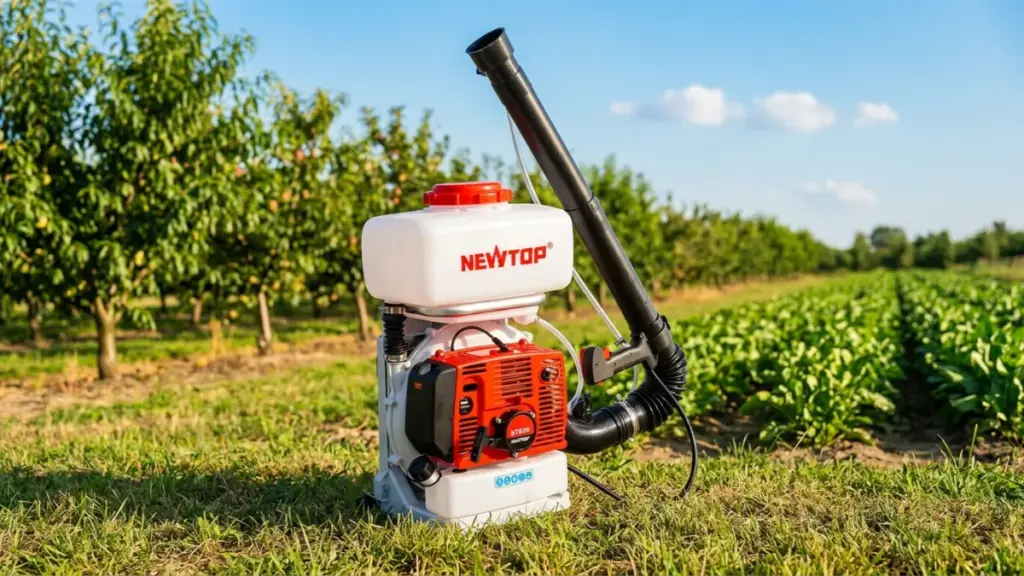
Answering ‘what is a fogger sprayer’ is the critical first step in preventing costly chemical waste and avoiding compliance failures in public health and agricultural settings. Many operations mistakenly deploy standard sprayers for tasks demanding precise, aerosolized droplets, which leads to ineffective pest control, incomplete disinfection, and significant financial losses. This fundamental mismatch in equipment is a common operational blind spot that directly impacts both safety and budget.
This guide provides the technical foundation for making informed equipment decisions. We break down the core components of professional fogging machines, detail their primary applications, and compare the key differences between thermal and cold fogger technologies. Consider this your standard operating procedure for evaluating, selecting, and safely deploying the right misting tool for any large-scale job.
What Is a Fogger Sprayer and How It Works?
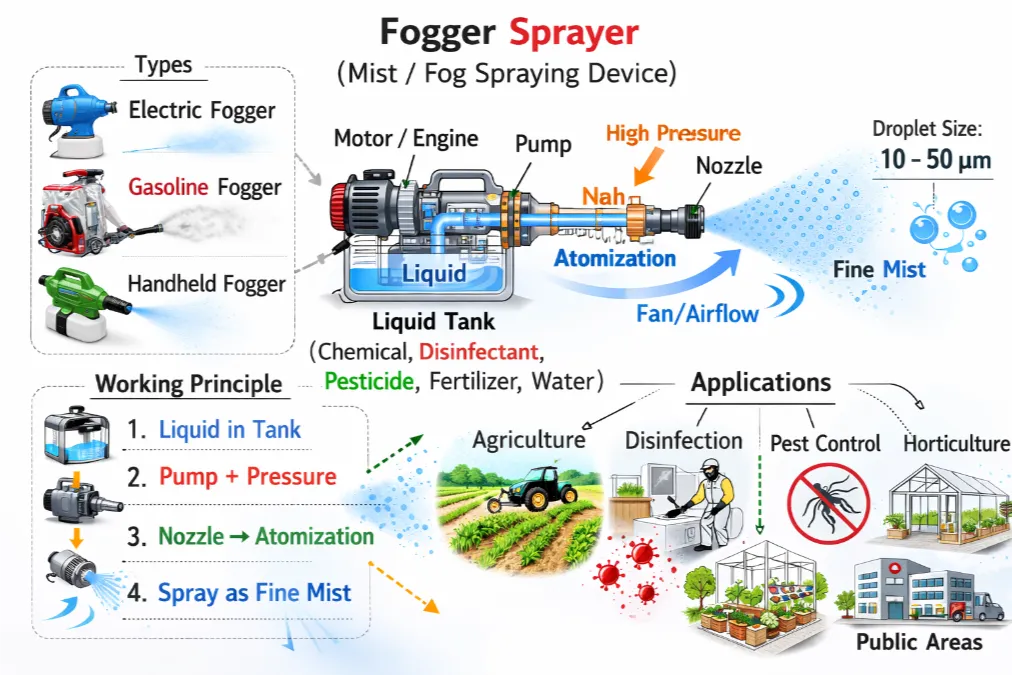
Fogger sprayers atomize liquid solutions into a fine aerosol mist, enabling uniform chemical application across large, complex surfaces that conventional sprayers cannot effectively reach.
A fogger sprayer is a specialized spraying device designed to convert liquid solutions into ultra-low volume (ULV) droplets, typically ranging from 5 Zu 50 microns. At this size, droplets behave almost like a gas, drifting through the air and settling evenly over surfaces. This makes fogging particularly effective for insect control, crop protection, and large-scale disinfection.
The Basic Fogging Mechanism
A fogger works by atomizing a liquid solution. A motor-driven pump draws the chemical from a tank and pressurizes it. This pressurized liquid is then forced through a specialized nozzle, which breaks it down into tiny droplets. A blower or fan propels these aerosol particles into the target environment, creating a fog that settles on all exposed surfaces. The machine’s design controls the droplet size to optimize air suspension time and ensure effective surface contact.
Major Fogging Technologies Used Today
Modern fogging equipment is generally categorized into thermal foggers, ULV cold foggers, and electrostatic systems. Each operates on a distinct atomization principle and is suited to different environments.
Thermal Foggers
Thermal foggers use a heated coil or combustion chamber to vaporize oil-based or water-based solutions. When the vapor exits the nozzle and encounters cooler ambient air, it condenses into a thick, visible fog. This visible plume helps operators monitor coverage in open environments.
Thermal systems are widely used in outdoor mosquito control programs, agricultural field treatments, and public health operations across tropical regions. They are especially effective when rapid large-area dispersion is required. Jedoch, because they rely on combustion and heat, they are typically not recommended for enclosed indoor spaces without proper ventilation.
ULV (Ultra Low Volume) Cold Foggers
Cold foggers, often referred to as ULV foggers, rely entirely on mechanical energy rather than heat. A high-speed blower or turbine shears the liquid into extremely fine droplets, typically under 30 microns.
ULV fogging is ideal for indoor disinfection, food processing facilities, Gewächshäuser, poultry farms, and warehouses. Since there is no combustion process, cold foggers are safer for enclosed environments and compatible with water-based disinfectants. They are also more energy-efficient and generally produce less visible residue compared to thermal systems.
Electrostatic Sprayers
Electrostatic systems represent a more advanced variation of fogging technology. In these machines, droplets receive an electrical charge as they exit the nozzle. This charge causes the particles to actively seek and adhere to surfaces, wrapping around objects for more complete 360-degree coverage.
Electrostatic spraying is commonly used in healthcare facilities, airports, schools, and high-touch public areas where surface disinfection precision is critical. While more specialized and typically higher in cost, electrostatic technology significantly reduces chemical waste and improves uniformity of application.
Key Components of a Professional Fogger Machine
A professional fogger’s performance depends on four core systems working together: the fluid delivery mechanism, the thermal management system, the atomizing nozzle, and the electronic controls that regulate the entire process.
| Component System | Primary Function | Critical Feature |
|---|---|---|
| Fluid Tank & Pump System | Stores and pressurizes the fogging solution for consistent delivery. | Chemical-resistant tank and reliable high-pressure pump. |
| Heating Element & Heat Exchanger | Rapidly heats and vaporizes the fluid to create a dense fog. | High-wattage heater with integrated thermal safety cutoffs. |
| Nozzle & Atomizer Assembly | Expels and atomizes vapor into fine particles of a specific size. | Precision-engineered to control droplet micron size and fog density. |
| Control Electronics & Interface | Manages temperature, fluid flow, and operational timing. | Central PCB with a clear user interface, often including remote control. |
Fluid Tank and Pump System
The fluid tank stores the fogging solution, and its pump pressurizes the liquid before sending it to the heating element. The capacity and material of the tank directly influence the machine’s continuous runtime, while the pump’s reliability determines output consistency. Professional-grade machines use components built for demanding field conditions.
- The tank is constructed from durable, chemical-resistant materials to prevent corrosion from various fogging solutions.
- A high-pressure pump delivers a steady fluid flow, ensuring uniform fog generation without sputtering.
- Internal filters prevent particles from clogging the nozzle, which maintains performance and reduces downtime for maintenance.
Heating Element and Heat Exchanger
In a thermal fogger, this is the engine of the machine. The heating element and heat exchanger work together to rapidly heat and vaporize the fogging solution into a gas. Efficient heat transfer is essential for producing a thick, dry fog and is a key differentiator in machine quality. Poor thermal management can result in a wet, ineffective fog or create a safety hazard.
- A high-wattage heater block achieves the optimal operating temperature quickly, reducing startup time.
- The heat exchanger is designed to maximize the surface area exposed to the fluid, ensuring complete and efficient vaporization.
- Embedded temperature sensors and thermal safety cutoffs are non-negotiable features that prevent the unit from overheating.
Nozzle and Atomizer Assembly
The nozzle is the final stage, where the pressurized, vaporized solution is expelled and atomized into extremely fine particles, creating the visible fog. The engineering of the nozzle assembly determines the droplet size, measured in microns, and the fog’s projection distance. This component is critical for achieving the desired coverage and penetration for applications like Schädlingsbekämpfung or disinfection.
- Precision nozzles create particles of a specific micron size, ensuring the fog hangs in the air and coats surfaces effectively.
- Materials used in the nozzle must withstand high temperatures and constant pressure without degrading.
- Many professional models feature adjustable output settings, allowing operators to control fog density and flow rate for different environments.
Control Electronics and Interface
Modern foggers are not just mechanical devices; they rely on sophisticated electronic controls to manage every function with precision. The central printed circuit board (PCB) regulates temperature, fluid flow, and output timing. A well-designed user interface allows the operator to configure these settings easily and monitor the machine’s status, which is vital for repeatable and predictable results.
- The PCB acts as the brain, synchronizing the pump and heater to produce a consistent output.
- A straightforward interface with buttons, indicator lights, or a digital display gives the operator full control over the machine’s functions.
- Remote control capabilities, whether wired or wireless, allow for convenient and safe operation from a distance.
Professional Fogger Solutions for Large-Scale Control

Hauptanwendungen für Nebelgeräte in der Schädlingsbekämpfung und Landwirtschaft
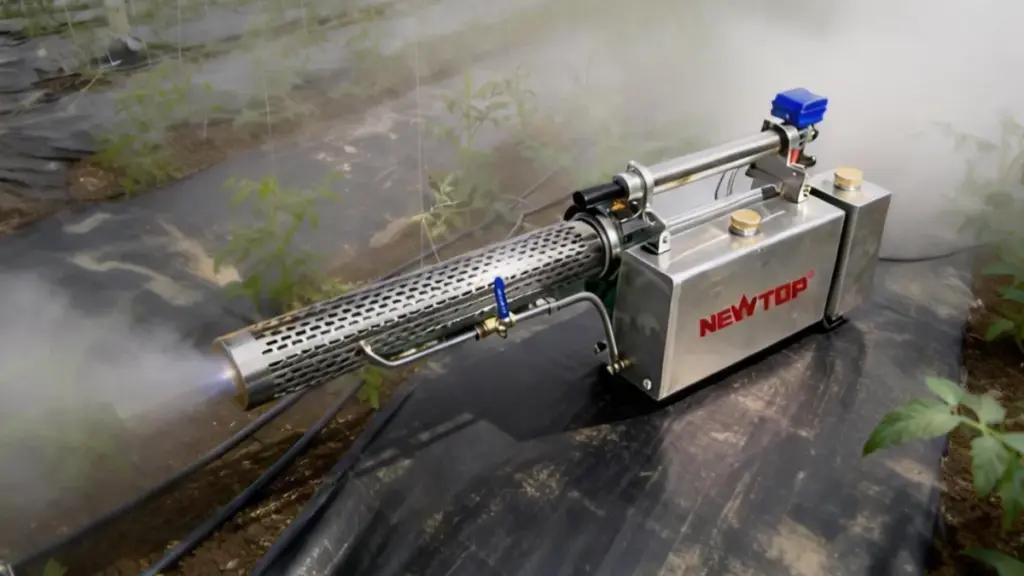
Foggers are essential tools in agriculture and public health, delivering atomized solutions for crop protection, large-scale sanitization, and environmental control.
Agricultural Pest and Disease Management
In farming and greenhouse operations, foggers deliver fine aerosol droplets that penetrate dense plant canopies. This process ensures fungicides and pesticides reach all surfaces, including the undersides of leaves, providing comprehensive protection against pests and diseases. The superior coverage and penetration capabilities are critical for maintaining crop health and maximizing yields.
- Covers large areas like field crops and orchards quickly, improving labor efficiency during treatment windows.
- Delivers uniform application of chemicals, reducing waste and minimizing environmental runoff.
- Effective for controlling insects and fungal growth in controlled environments like greenhouses and nurseries.
Large-Scale Disinfection and Sanitization
ULV (Ultra Low Volume) cold foggers are standard equipment for sanitizing public spaces, commercial facilities, and livestock enclosures. They disperse disinfectants as a fine mist that settles on surfaces to neutralize pathogens without causing excessive wetness. This method is crucial for contamination control protocols in food processing, healthcare, and transportation sectors.
- Used in food production facilities to maintain sanitary conditions and prevent contamination.
- Sanitizes transportation hubs, schools, and hospitals to control the spread of viruses and bacteria.
- Disinfects animal housing such as poultry farms and barns to protect livestock health.
Humidity and Climate Control
Fogging systems help regulate humidity and temperature in specialized agricultural settings. By releasing a fine water mist, they create optimal growing conditions for sensitive plants or help preserve perishable goods. This application of humidity management is vital for high-value crops and extending the shelf life of produce.
- Increases ambient humidity in greenhouses, which is critical for cultivating tropical plants and seedlings.
- Provides evaporative cooling to lower temperatures during hot weather, reducing heat stress on crops.
- Maintains moisture levels in storage facilities for produce and flowers to extend their shelf life.
Read more: Spitze 10 Hersteller von Rückenspritzen in 2026
Benefits of Using a Fogger Sprayer for Large-Scale Disinfection
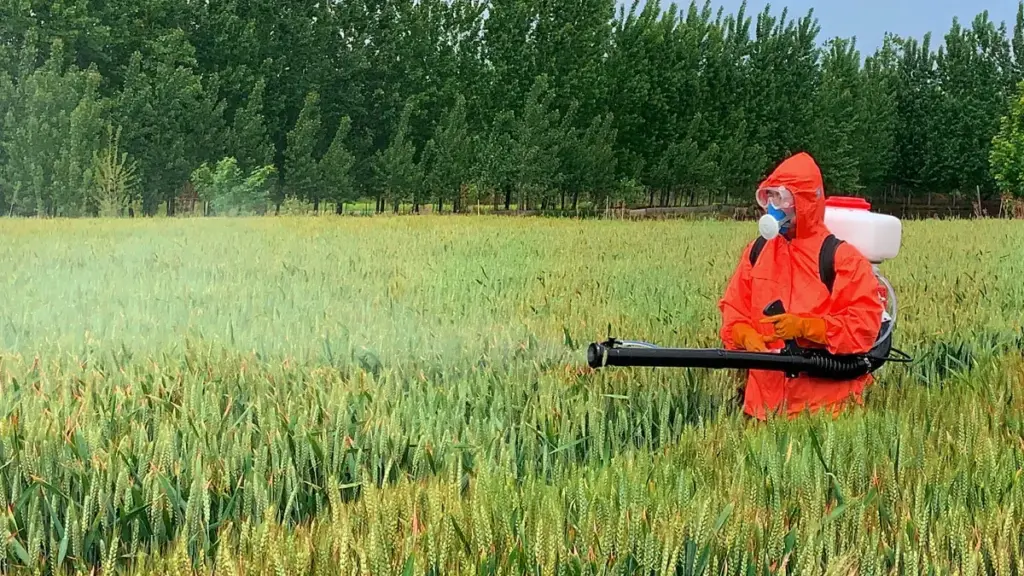
When properly calibrated and applied according to chemical guidelines, fogger sprayers can significantly improve operational efficiency in large-scale disinfection environments. Their ability to produce ultra-fine droplets allows for more uniform spatial coverage compared to conventional manual cleaning methods.
Superior Surface Coverage
Fogging systems generate a controlled mist that disperses throughout an enclosed space rather than targeting only visible surfaces. Because the droplets remain suspended for a period of time, they are more likely to contact elevated surfaces, corners, ventilation openings, and the undersides of equipment.
Electrostatic variants further enhance deposition efficiency by electrically charging droplets, which encourages them to adhere more effectively to target surfaces.
While exact coverage performance depends on room layout and airflow conditions, fogging technology generally provides more consistent volumetric distribution than manual wiping or pump spraying.
Optimized Chemical Efficiency and Labor Productivity
ULV foggers are designed to apply disinfectant solutions in very small droplet sizes, which increases dispersion efficiency. In many facility maintenance scenarios, this allows operators to treat larger areas using lower total liquid volume compared to conventional high-volume spraying.
Zusätzlich, fogging reduces the need for repetitive manual surface wiping across large facilities. A single trained operator can treat open spaces more quickly than traditional cleaning crews, improving labor productivity and reducing operational downtime.
Actual savings will vary depending on room configuration, chemical type, and application protocol.
Rapid Treatment for Extensive Areas
Foggers are particularly valuable in warehouses, production facilities, livestock housing, and other large commercial environments where rapid treatment is essential.
Coverage rate depends on machine capacity and operator technique. Portable and backpack ULV foggers are commonly used for medium-to-large indoor areas, while high-capacity thermal foggers are preferred for outdoor vector control and expansive open spaces.
Because fogging distributes disinfectant in airborne form, it enables faster treatment cycles compared to surface-only cleaning methods, supporting quicker facility turnaround.
Thermal Foggers vs. Cold Foggers: Major Differences
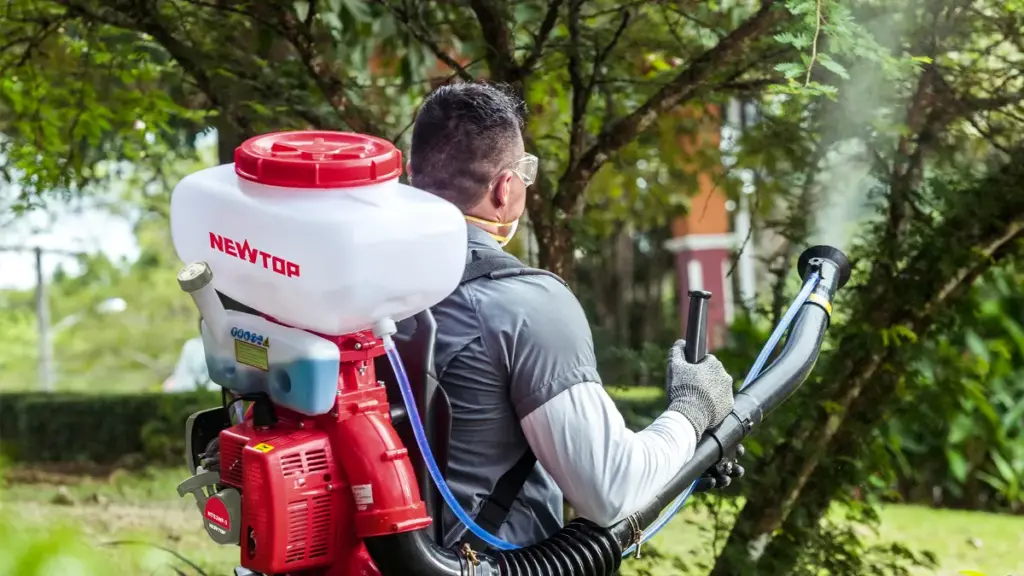
The choice between thermal and cold foggers hinges entirely on the application environment; thermal units excel outdoors with fine, heat-vaporized particles, while cold (ULV) foggers provide safer, heat-free atomization for indoor and sensitive areas.
| Besonderheit | Thermal Fogger | Cold (ULV) Fogger |
|---|---|---|
| Operating Mechanism | Uses heat to vaporize a chemical solution. | Uses high pressure and air shear to atomize liquid. |
| Particle Size | Extremely fine (0.5–10 microns). | Fine, often adjustable (5–50 microns). |
| Ideal Environment | Large-scale outdoor areas (Bauernhöfe, forests). | Indoors and enclosed spaces (hospitals, Gewächshäuser). |
| Safety Profile | Poses a fire hazard; requires careful handling. | No heat, no fire risk, and generally quieter operation. |
| Chemical Compatibility | Typically requires oil-based carriers. | Works with a wide range of water and oil-based solutions. |
Operating Mechanism and Particle Size
The fundamental distinction between these machines is how they generate fog.
Thermal foggers employ heat to flash-vaporize a chemical solution, which then condenses upon contact with cooler ambient air. This process creates a dense, highly visible fog composed of extremely fine particles.
Cold foggers, also known as Ultra Low Volume (ULV) Maschinen, use high-pressure air to shatter liquid into a fine mist without any heat. This mechanical process of atomization offers greater control over droplet size.
Ideal Applications and Environments
Each fogger type is engineered for specific operational contexts.
Thermal foggers are the established tool for expansive outdoor applications, such as large-scale pest control in agriculture and public health vector control programs. Their dense fog can drift over vast areas, effectively treating forests, Bauernhöfe, and municipalities.
Cold foggers have become the standard for indoor and commercial use where safety and operational noise are primary concerns.
Chemical Compatibility and Safety
Cold foggers offer superior chemical versatility. Because they operate without heat, they can safely aerosolize a wide array of solutions without degrading the active ingredients. This makes them suitable for disinfectants, biocides, and pesticides that are sensitive to high temperatures. This operational safety extends to the operator and the environment, especially in enclosed areas where fire risk must be eliminated.
Thermal foggers are more restrictive, often requiring oil-based carriers to produce a thick fog. The high-temperature operation introduces a clear fire hazard if mishandled or used near flammable materials, making them unsuitable for most indoor applications.
Critical Safety Protocols for Operating Fogging Equipment
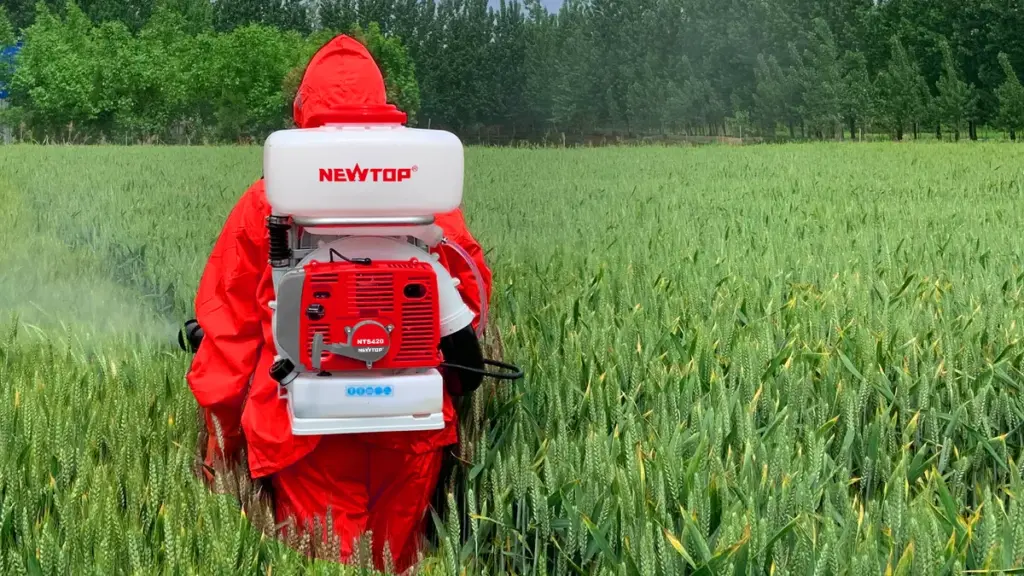
Effective fogging operations depend on standardized safety protocols, including mandatory operator certification, correct PPE usage, and strict adherence to chemical handling and re-entry procedures.
Use of Personal Protective Equipment (PPE)
Wearing the correct Personal Protective Equipment is the first line of defense for any operator. Regulations require comprehensive protection to prevent chemical exposure through inhalation, skin contact, or eye irritation during the fogging process. Failure to use proper PPE can lead to immediate health risks and long-term complications.
- Full-face respirators with appropriate chemical cartridges are mandatory.
- Chemical-resistant gloves, coveralls, and waterproof boots protect the skin from contact.
- Goggles or face shields provide an extra layer of protection for the eyes.
Area Preparation and Ventilation Control
Properly preparing the treatment area is essential to ensure both effectiveness and safety. This involves isolating the space and managing airflow to contain the fog and protect adjacent environments. A well-prepared area maximizes the disinfectant’s efficacy while minimizing unintended exposure.
- Seal off the designated area by closing all doors, windows, and vents.
- Turn off all HVAC systems to prevent the disinfectant from circulating outside the treatment zone.
- Post warning signs at all entry points to prevent unauthorized access during and after application.
Operator Training and Chemical Management
Operator certification and adherence to chemical guidelines are now industry standards. A trained operator understands the equipment’s functions, the properties of the disinfectant, and how to manage potential risks. This expertise prevents equipment misuse and ensures chemicals are applied at safe, effective concentrations.
- Operators must be certified and trained on the specific fogging equipment in use.
- Always follow the manufacturer’s guidelines for chemical dilution ratios and application rates.
- Confirm chemical compatibility with the equipment to prevent corrosion or malfunction.
Post-Treatment and Safe Re-Entry Protocols
Safety procedures do not end when the application is complete. Post-treatment protocols ensure the area is safe for re-entry and that any chemical residue is managed correctly. These final steps are crucial for protecting occupants and maintaining equipment integrity.
- Adhere to the specified waiting period before ventilating and re-entering the area.
- Thoroughly clean the fogging equipment after each use to maintain its performance and longevity.
- Manage any remaining chemical residue according to environmental safety standards.
Why Choose NEWTOP High-Efficiency Fogger Solutions?
NEWTOP foggers combine precision manufacturing with a robust global supply chain to deliver reliable, versatile equipment for large-scale agricultural and public health operations.
As a leading garden and agricultural machinery manufacturer based in Shanghai, NEWTOP has been manufacturing power equipment since 2003. With more than 10,000 square meters of production facilities and an annual capacity exceeding 500,000 Einheiten, the company integrates CNC machining centers, automated production lines, and independent testing laboratories to ensure consistent quality.
NEWTOP’s fogger sprayers are engineered for durability in demanding environments such as tropical agriculture and municipal vector control programs. Core components are selected from globally recognized suppliers, ensuring stable combustion performance and long service life.
The company supports OEM and ODM customization, including color design, branding, Verpackung, and parameter adjustments tailored to regional regulations. Mit CE, EPA, and ISO certifications, NEWTOP equipment meets international compliance standards.
For distributors targeting Africa, Lateinamerika, Südostasien, and emerging Eastern European markets, NEWTOP offers competitive mid-range positioning that balances price, Haltbarkeit, und After-Sales-Support.
Grow Strong with NEWTOP — Your Trustworthy Garden Tools Partner.
For product catalogs, technical specifications, or partnership inquiries, contact:
E-Mail: [email protected]
WhatsApp: +86 13636521556
Website: https://newtoptools.com/
Abschluss
Understanding the mechanics of a fogger sprayer, from its key components to the differences between thermal and cold ULV models, directly impacts operational success. This knowledge ensures you can achieve precise, wide-area coverage for disinfection, Schädlingsbekämpfung, and agricultural treatments. Selecting the right tool optimizes chemical use, enhances safety, and improves overall efficiency.
If you are ready to enhance your operations with reliable misting technology, explore NEWTOP’s line of professional fogger solutions. Contact our team to request a product catalog or to consult on the best equipment for your specific application.
Häufig gestellte Fragen
What is the difference between a fogger and a sprayer?
A traditional sprayer produces larger droplets that settle quickly on surfaces, making it suitable for targeted applications. A fogger creates ultra-fine droplets that remain suspended in the air, allowing better coverage and penetration.
How long can a fogger spray continuously?
Continuous operation time depends on tank capacity and engine type. Most professional gasoline foggers can operate for 30–60 minutes per tank under standard load.
Is a fogger better than a spray for mosquitoes?
Ja, for wide-area mosquito control, especially outdoors, foggers are generally more effective because the fine mist can disperse across vegetation and open air.
Can you use a fogger for indoor disinfection?
Ja, particularly cold ULV foggers designed for indoor environments. Proper ventilation and chemical compliance are essential.
What is the spray range of a portable fogger?
Portable thermal foggers may achieve a horizontal spray distance of 8–12 meters depending on wind conditions and model specifications.
Do foggers use more chemical than sprayers?
NEIN, foggers are designed to use less chemical than traditional sprayers. ULV (Ultra Low Volume) Nebelgeräte, insbesondere, atomize a small amount of concentrated solution into a vast volume of fine mist. This method provides extensive coverage with maximum efficiency, reducing overall chemical consumption compared to high-volume drenching sprayers.
If you would like a deeper technical breakdown of sprayer and fogger performance differences, read our guide: Unterschied zwischen Nebelgerät und Sprühgerät: Ein technischer Vergleichsleitfaden .