A chainsaw is one of the most practical cutting tools used in forestry, agriculture, landscaping, and property maintenance. What began as a specialized cutting device has developed into a highly versatile machine for tree felling, branch removal, log processing, storm cleanup, and even carving work.
Today’s chainsaw market includes gasoline, electric, and lithium battery models, each designed for different job conditions. Understanding what a chainsaw is used for helps users choose the right machine for the work, whether the task is heavy timber cutting or routine land maintenance.
What Is a Chainsaw?
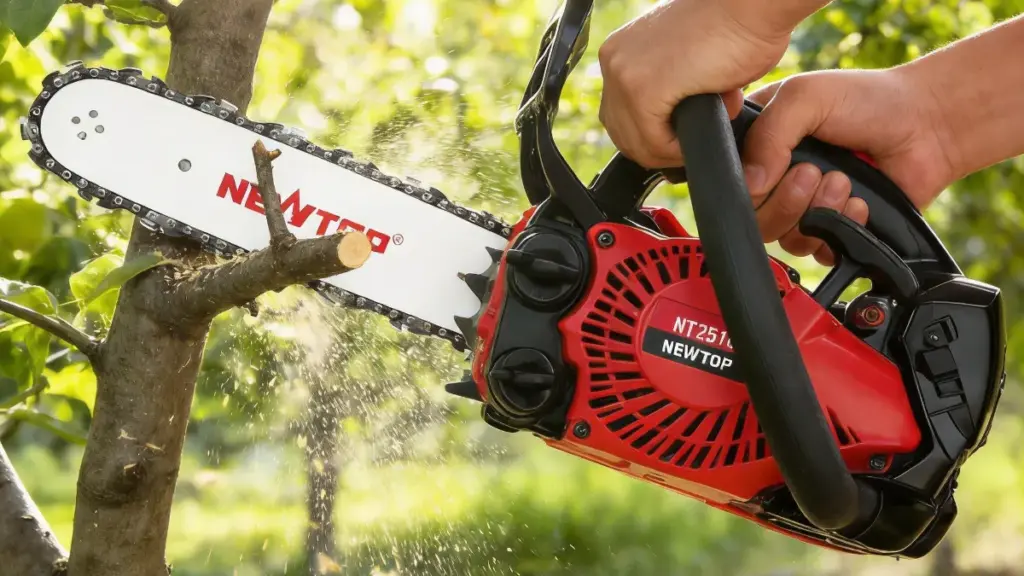
A chainsaw is a portable power tool that cuts material, primarily wood, using a set of teeth attached to a rotating chain driven along a guide bar.
Core Function and Design
A chainsaw operates by driving a toothed chain at high speed along a solid guide bar. This mechanism allows it to perform a range of wood-cutting tasks with high efficiency. The tool’s primary applications include tree felling (cutting down trees), limbing (removing branches), bucking (cutting a felled tree into smaller logs), and pruning (trimming living trees for health or aesthetics). The combination of a powerful motor and a sharp, fast-moving chain makes it an essential tool in forestry, construction, and property maintenance.
Primary Power Systems
Modern chainsaws operate on one of 3 main power systems. Each system offers a different balance of power, portability, and maintenance requirements, making them suitable for distinct operational environments and workloads.
- Gasoline-powered chainsaws deliver maximum power and runtime, making them the standard for heavy-duty, professional forestry operations where portability and performance are critical.
- Electric-powered (corded) saws are lighter, quieter, and require less maintenance. They are ideal for residential yard work and light cutting tasks where a constant power source is readily accessible.
- Battery-powered chainsaws combine the portability of gas models with the benefits of reduced noise and zero direct emissions, making them well-suited for light to medium cutting in various locations.
Read More: Different Types of Chainsaws You Need to Know
Types for Specialized Tasks
The industry produces several chainsaw configurations tailored for specific applications. Designs vary to enhance safety, efficiency, and operator control depending on the job at hand.
- Full-size rear-handle saws are the industry standard for most groundwork, including felling trees and processing firewood. The handle configuration provides stability and control for powerful cuts.
- Lightweight top-handle models are designed specifically for professional arborists who perform precision pruning and limbing while climbing or working from an aerial lift. Their compact design allows for one-handed use in tight spaces.
- Carving chainsaws feature specialized, narrow-tipped bars and fine-toothed chains. These modifications enable detailed artistic applications, such as wood sculpting and creating intricate shapes.
The Evolution of Chainsaws
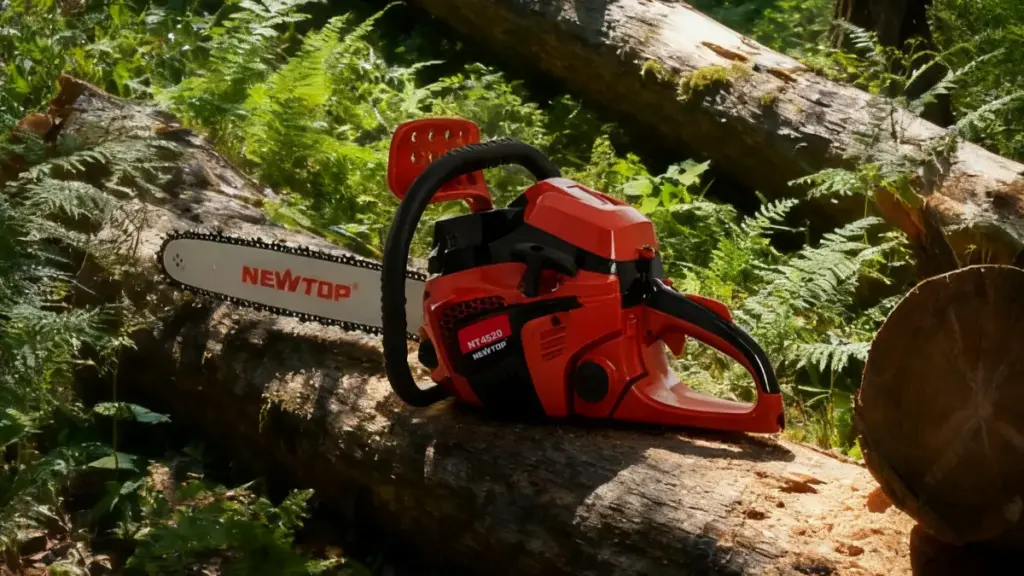
The chainsaw’s engineering trajectory is marked by a dramatic reduction in weight and the integration of critical safety systems, transforming it from a 60-kilogram, two-person machine into today’s lightweight, ergonomic equipment.
From Surgical Tool to Forestry Staple
The chainsaw’s journey from a medical instrument to an essential forestry tool started with the first electric model in 1926 and the first gasoline-powered version in 1927. These innovations kicked off the modern era of motorized woodcutting, but the initial equipment was far from practical. Early models in the 1920s were massive two-person machines weighing around 60 kilograms.
By 1950, engineering advancements produced the first single-operator chainsaws, making the equipment much more accessible. Weight reduction was a primary goal, and by 1959, the average chainsaw weighed approximately 12 kilograms, a significant improvement in portability that expanded its use in the field.
Key Technological Milestones
Significant advancements throughout the 20th century focused on improving safety and operator comfort, establishing the standards for modern chainsaws. Anti-vibration systems, developed in 1964, were a critical step forward in reducing operator fatigue. The first chain brakes appeared in 1972, with automatic versions following in 1982, greatly enhancing safety during use. Later innovations included catalytic converters in 1989 to lower emissions and automatic start features in 1991 for easier operation.
Modern Design Principles
By 2026, the industry’s focus has shifted to maximizing efficiency, safety, and ergonomics while minimizing environmental impact. Contemporary chainsaws are lightweight, typically weighing between 4 and 9 kilograms. Current designs prioritize reduced emissions and improved operator comfort to align with occupational safety standards. This approach supports sustainable forestry practices and greater user efficiency on the job.
Boost Profits with Durable, Cost-Effective Machinery.
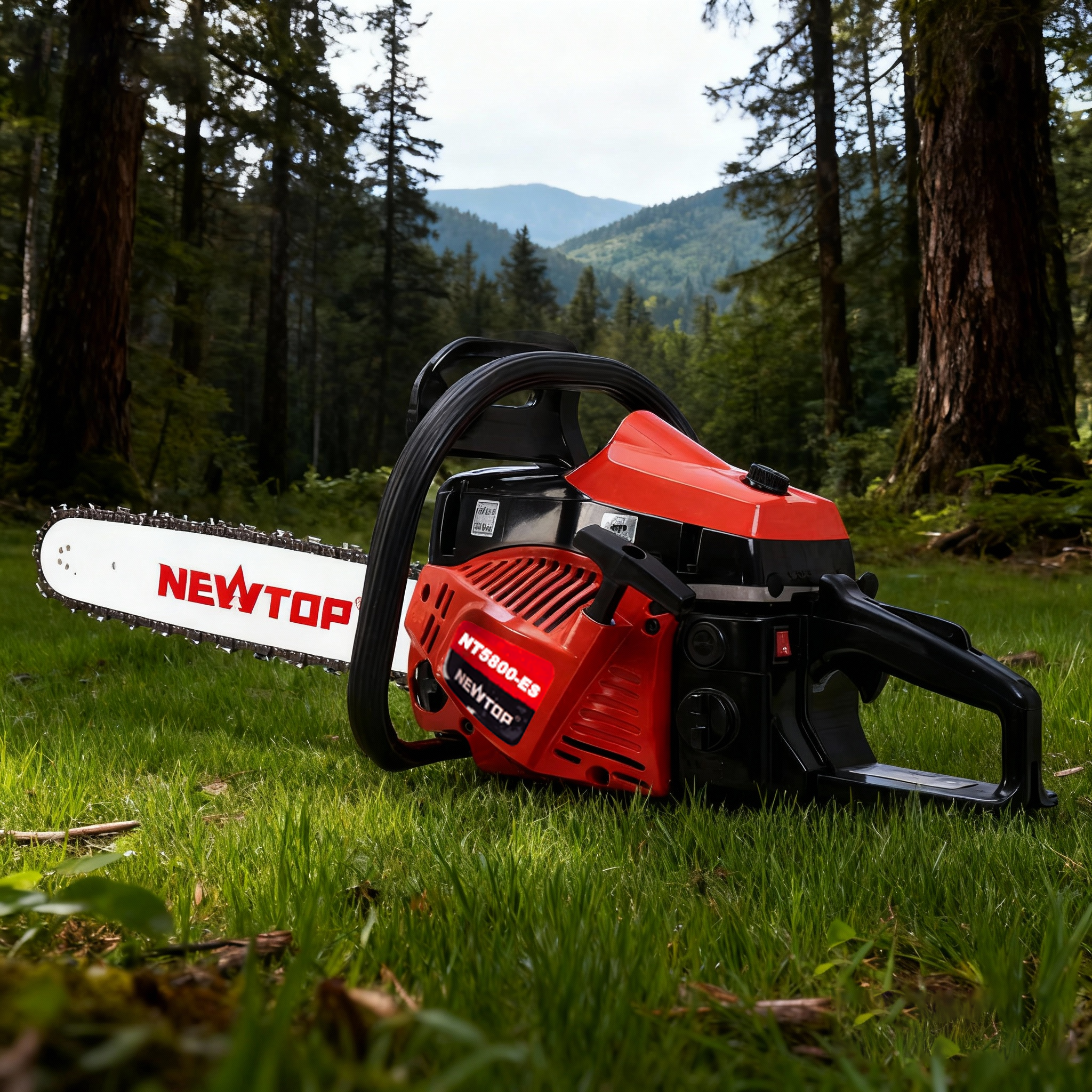
Common Uses of Chainsaws
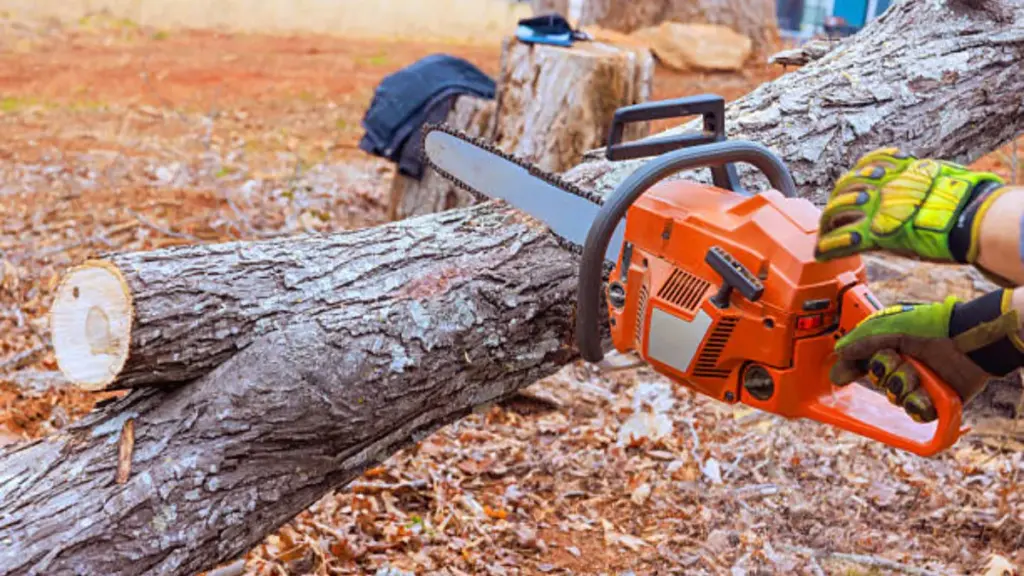
Chainsaws have evolved from primary forestry tools into versatile instruments essential for construction, emergency response, and property maintenance, with specialized models designed to cut materials like concrete and ice.
| Application Area | Primary Task | Common Tool Type |
|---|---|---|
| Forestry & Arboriculture | Felling, delimbing, and bucking trees for timber. | High-power gas models, top-handle saws for arborists. |
| Construction & Demolition | Cutting concrete, stone, and masonry for openings or channels. | Specialized saws with diamond or abrasive chains. |
| Emergency & Rescue | Clearing storm debris, cutting through collapsed structures. | Lightweight, high-performance gas or battery models. |
| Landscaping & Property Maintenance | Pruning, clearing brush, and processing firewood. | Lighter electric and battery-powered models. |
Forestry and Arboriculture
The primary role of chainsaws remains in forestry and tree care. Professionals use them for felling trees, delimbing trunks, and bucking logs into transportable lengths. Arborists also depend on them for precise pruning, removing deadwood, and managing tree health in urban environments.
- Felling trees for timber and land clearing.
- Pruning branches to maintain tree structure and safety.
- Cutting logs into firewood or lumber.
Construction and Demolition
Specialized chainsaws equipped with diamond or abrasive chains are used in construction to cut through tough materials. These tools create precise openings in concrete walls, stone slabs, and masonry for windows, doorways, or utility access. They are also valuable in controlled demolition work.
- Cutting concrete for structural modifications.
- Shaping stone and masonry blocks.
- Creating utility channels in existing structures.
Emergency and Rescue Operations
First responders and rescue teams use chainsaws as essential equipment for disaster response. They deploy them to clear fallen trees from roads after storms, cut through debris in collapsed buildings to reach survivors, and manage ice for rescue missions.
- Clearing storm debris to restore access.
- Cutting through structural materials during urban search and rescue.
- Creating openings in thick ice for emergency access.
Landscaping and Property Maintenance
For homeowners and landscapers, chainsaws are a key tool for property upkeep. They are used for trimming overgrown hedges, removing unwanted trees and shrubs, and processing fallen branches after bad weather. Lighter electric and battery-powered models are common for these tasks.
- Maintaining trees and large shrubs in gardens.
- Clearing brush and small trees from land.
- Preparing firewood for residential use.
Specialized Applications of Chainsaws
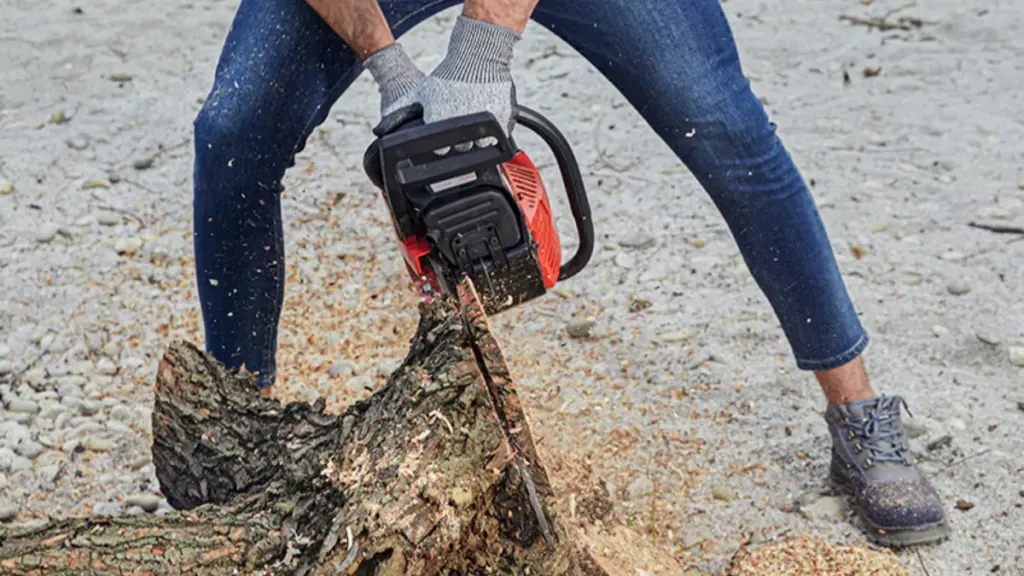
Modern chainsaws have evolved beyond logging to address specialized industrial needs, from precision cutting in mass-timber construction to underwater and emergency rescue operations.
| Specialized Application | Primary Power Source | Key Operational Factor |
|---|---|---|
| Urban Landscaping & Arboriculture | Battery-Powered | Compliance with noise and emission regulations. |
| Mass-Timber Construction | Electric (Corded) | Precision cutting in controlled, indoor factory settings. |
| Emergency Rescue & Salvage | Gasoline (High-Performance) | Rapid deployment and reliability in extreme conditions. |
| Industrial & Underwater Use | Hydraulic or Pneumatic | Environments where flammable gas or water makes other types unsafe. |
Urban Landscaping and Arboriculture
In urban environments, noise and emission regulations have driven demand for battery-powered chainsaws. Arborists and landscaping professionals use these models in residential areas and public spaces where minimizing disruption is critical. Their design addresses the specific constraints of working in populated zones.
- Quieter operation makes them suitable for use in noise-sensitive zones like neighborhoods, parks, and around office buildings.
- Zero-emission performance helps landscaping companies comply with local environmental standards.
- Lightweight designs reduce operator fatigue during detailed tree pruning and shaping tasks.
Precision Cutting in Mass-Timber Construction
The construction industry uses specialized electric chainsaws to fabricate large engineered wood components. Inside controlled factory settings, these tools provide the accuracy required to create structural elements for mass-timber buildings, where precise joints and fits are non-negotiable.
- Provides precise, clean cuts essential for fitting together large beams and panels.
- Electric power ensures consistent performance without the emissions associated with gasoline engines indoors.
- Supports the growing trend of sustainable building with engineered wood products.
Emergency Rescue and Salvage Operations
Fire departments, disaster relief teams, and salvage crews rely on lightweight, high-performance chainsaws to clear debris and create access in critical situations. These saws are engineered for rapid deployment and absolute reliability under extreme, often chaotic, conditions where equipment failure is not an option.
- Used to quickly clear fallen trees from roads and properties after storms or floods.
- Aids in extricating victims from collapsed structures or vehicles.
- Models designed for rescue often feature advanced safety mechanisms and start reliably in emergencies.
Industrial and Underwater Use
For environments where conventional chainsaws are impractical or unsafe, pneumatic (air-powered) and hydraulic models offer a functional solution. These tools are deployed in specialized industrial fields, including underwater construction, mining, and utility maintenance, where unique hazards prohibit standard engines.
- Hydraulic chainsaws function effectively underwater for cutting timbers in marine construction and salvage.
- Pneumatic saws are used in mines or utility work where the risk of igniting flammable gases prohibits standard engines.
- These tools connect to external power sources, delivering sustained cutting power for demanding industrial jobs.
Conclusion
Chainsaws have evolved from a specialized surgical tool into a versatile instrument for countless modern jobs. From basic property maintenance and firewood processing to advanced applications like portable sawmilling and intricate carving, their functional range is impressive. Recognizing these different uses helps you get the most value from your equipment, whether for home projects or professional services.
If you’re ready to find the right tool for your next project, take a look at our complete catalog of chainsaws. Our team is also available to help match your specific operational needs with the perfect model.
Frequently Asked Questions
What is the main purpose of a chainsaw?
The main purpose of a chainsaw is to cut wood quickly and efficiently. It is mainly used for felling trees, cutting branches, processing logs, and preparing firewood. In both professional and everyday use, it saves time and labor compared with manual cutting tools.
What is a chainsaw used for today?
Today, a chainsaw is used for much more than tree cutting. Common uses include forestry work, farm maintenance, orchard management, landscaping, storm cleanup, timber processing, rescue work, and wood carving. Modern chainsaws are available in gasoline, electric, and battery-powered versions, so users can choose the right type for different job conditions.
When was the chainsaw invented to help with childbirth?
The precursor to the modern chainsaw was invented around 1785 to assist in childbirth. This hand-cranked surgical instrument, called an osteotome, was designed by Scottish doctors to perform a symphysiotomy. The procedure involved cutting pelvic cartilage to widen the birth canal during difficult or obstructed labors before caesarean sections were a safe alternative.
What is a chainsaw originally used for?
The chainsaw was originally used as a surgical instrument for cutting bone, not wood. Its first application, developed around 1785, was for symphysiotomy—a medical procedure to widen the pelvis during obstructed childbirth. This surgical origin predates its modern use in forestry by more than a century, when it was adapted for woodcutting tasks.
When were gas chainsaws invented?
The first mass-produced gasoline-powered chainsaw was invented in 1927 by Emil Lerp, founder of Dolmar. This two-person “Model A” saw revolutionized the forestry industry with its portability and power. Around the same time, Andreas Stihl also patented his own gas-powered chainsaw in 1929, further establishing the tool as essential for modern logging.