Most outboard propellers include important information such as diameter, 정점, 회전 방향, hub type, and manufacturer codes. While different brands may use slightly different marking formats, the basic sizing system is very similar across the industry.
이 가이드에서는, you’ll learn what each number means, how to identify the correct propeller for your boat, and when changing propeller size makes sense.
Where Can You Find the Size Marks on an Outboard Propeller?
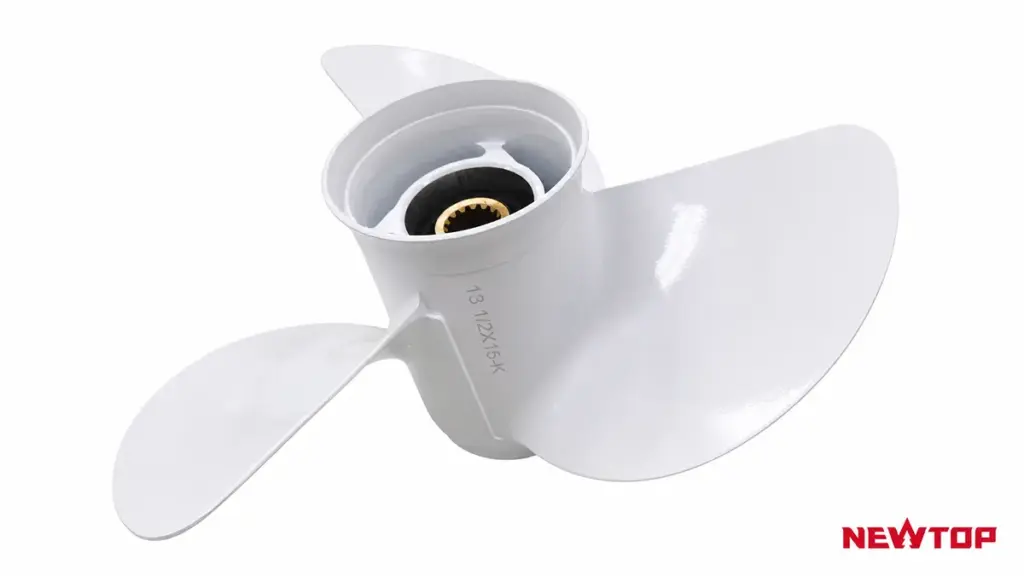
추진자 size markings, indicating diameter and pitch, are typically stamped directly onto the outer hub, blade roots, or the rear face near the mounting nut.
Common Locations on the Hub and Blades
Outboard motor manufacturers do not follow a single universal standard for placing identification numbers, but they generally stick to a few accessible spots. You will usually spot these physical engravings pressed right into the metal housing.
- Outer hub surface: Stamped or engraved directly onto the outer surface of the propeller hub cylinder.
- Blade roots: Located at the base of a blade where it physically connects to the center hub.
- Hub faces: Positioned on the front or rear face of the hub assembly where the propeller meets the prop nut.
Decoding the Size Format
Once you locate the stamp, you need to read the numbers correctly. The marine industry relies on a specific numeric sequence to communicate the physical dimensions and capabilities of the equipment.
- 직경 x 피치: The numbers are typically displayed in this exact order. A stamp reading “10 x 7” indicates a 10-inch diameter and a 7-inch pitch.
- Supplemental codes: Additional letters or numbers often follow the primary size to indicate blade type, 회전 방향 (such as ‘R’ for right-hand), or internal manufacturer-specific codes.
- Technical designations: These markings represent exact technical size measurements, not arbitrary brand model names.
How to Reveal Hard-to-See Markings
Older props or those used in harsh saltwater environments often have obscured numbers. A quick visual check might fail to confirm the exact specifications without a bit of surface prep.
- Clean the surface: Thoroughly clean the hub area to remove salt buildup, marine grime, heavy oxidation, or old layers of anti-fouling paint.
- Use angled light: Carefully rotate the propeller and inspect the blade roots and cylinder collar under direct light to catch the shadows of shallow engravings.
- Check documentation: Consult the original packaging, purchase receipts, or manufacturer catalogs using the part number if the physical size stamps are completely worn away.
Why Knowing Your Propeller Size Matters
Operating a boat with an incorrect propeller size causes poor performance and accelerates engine wear. Getting these two specific numbers right dictates exactly how your outboard interacts with the water.
- Power transfer: Diameter and pitch determine how effectively the propeller matches the raw engine power to the physical weight of your boat.
- RPM control: The pitch rating directly influences the engine’s ability to operate within its recommended wide-open throttle (WOT) RPM capabilities.
- Performance tuning: A smaller pitch reduces engine load and allows it to reach higher RPM for faster acceleration, while a larger pitch drops overall RPM and favors top-end speed.
How to Read Diameter and Pitch Markings
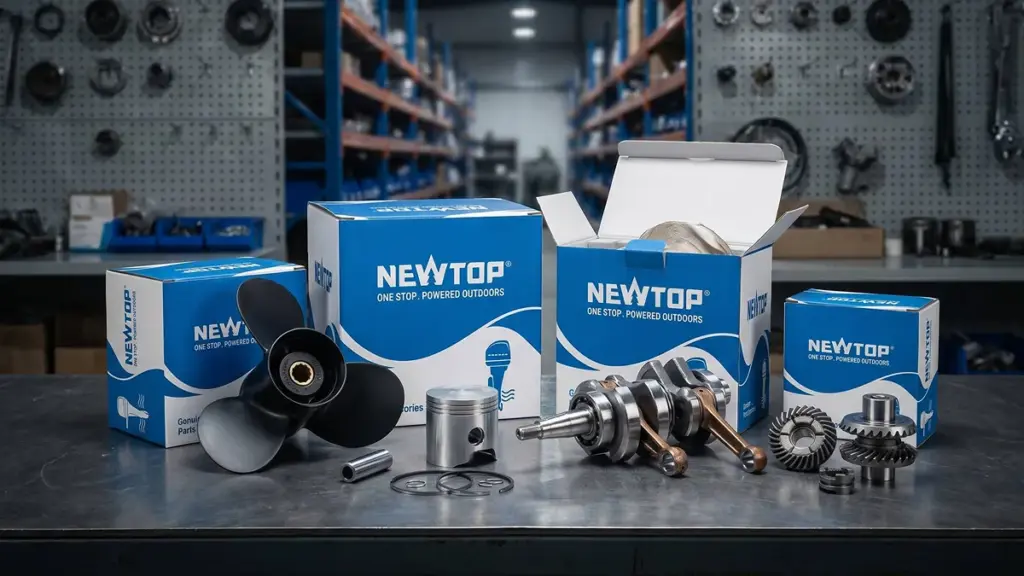
The first number on a propeller marking is always diameter, dictating thrust. The second is pitch, controlling your outboard’s RPM and top speed. Mismatching these specifications damages engines. Marking Position Measurement Primary Function First Number (예를 들어, 10) 지름 (Inches) Dictates thrust, load-carrying capacity, and water resistance. Second Number (예를 들어, 7) 정점 (Inches) Determines top speed, 가속, and engine WOT RPM.
Deciphering the Standard Marking Format
Manufacturers typically stamp propeller markings directly on the hub or near the blade root. Finding these digits is the first step in replacing or upgrading your boat’s hardware. You will see standard industry codes like 10 엑스 7 또는 14 엑스 19. These numbers represent two specific measurements that define the propeller’s geometry. The first number always defines the overall diameter in inches, while the second number always defines the theoretical pitch in inches.
Interpreting the First Number: 지름
Diameter signifies the total width of the circle created by the blade tips during a full rotation. It determines how much water the propeller actually sweeps. A larger diameter increases the blade surface area, generating stronger thrust to move heavier boats and heavy cargo loads effectively. On the other end of the spectrum, a smaller diameter creates less drag in the water, suiting lighter hulls built specifically for higher top speeds.
Interpreting the Second Number: 정점
Pitch measures the theoretical forward distance the propeller travels through the water in one full 360-degree rotation. Think of pitch as the gearing system for your outboard. Lower pitch numbers act like a low gear, offering better acceleration, quicker planing, and strong low-speed control. Higher pitch numbers function like a high gear, pushing the boat farther forward per revolution to achieve greater top speeds.
Applying Markings to Engine Performance
Your selected pitch directly controls the outboard motor’s wide-open throttle (WOT) RPM. Dialing in the correct pitch ensures the engine runs efficiently without suffering mechanical strain.
- RPM Calibration: Adjusting the pitch by one inch typically changes the engine speed by roughly 200 RPM.
- Under-Revving Fix: Selecting a lower pitch helps an overloaded engine reach its recommended operating RPM without lugging.
- Over-Revving Fix: Switching to a higher pitch prevents the engine from exceeding its maximum recommended RPM limits under light loads.
Maximize ROI With Professional-Grade Garden Machinery

What Do Other Numbers and Letters on a Propeller Mean?
Beyond basic size, extra letters and digits identify blade count, hub dimensions, and specific manufacturer series codes required to source exact replacement parts.
지름, 정점, and the ‘X’ Separator
Most marine propellers follow a universal naming convention. The core specification always appears as a simple sequence stamped onto the casting.
- 지름: The first number in a standard sequence denotes the propeller’s overall diameter, measuring the full width of the blade sweep.
- 정점: The second number represents the pitch, indicating the theoretical forward travel distance per single revolution.
- The ‘X’: This character functions simply as a ‘by’ separator, dividing the diameter and pitch measurements.
Series Letters and Additional Digits
Manufacturers rarely stop at just diameter and pitch. You will frequently find extra alphanumeric codes that define the physical geometry and compatibility of the unit.
- Series Letters: Letters such as J, K, or L signify the specific design, 시리즈, or type of the propeller within a brand’s lineup.
- Extra Digits: These trailing numbers often represent the total number of blades or specify the exact bore and hub size for mounting.
- Internal Codes: Certain short number combinations serve purely as internal manufacturer codes for catalog referencing.
Where to Locate Propeller Markings
Finding these specifications requires knowing exactly where brands stamp their hardware. Dirt, oxidation, or heavy marine growth can easily obscure these details.
- Blade Roots: Manufacturers often stamp the measurements directly at the root of a blade or deep between the blades.
- Central Hub: The outer surface of the central hub barrel is a common location for visible specification codes.
- Assembly Faces: Some brands engrave these critical details on the front or rear face of the center assembly, which may require removing the propeller nut to read clearly.
How Do Propeller Size Marks Differ Between Major Brands?
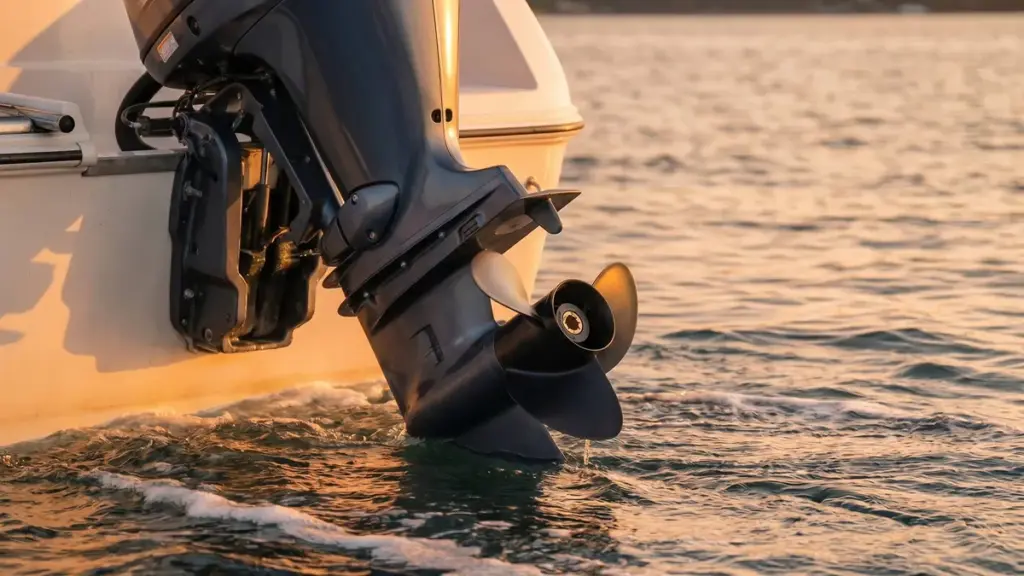
Every major outboard brand follows the standard diameter-by-pitch format, but proprietary suffixes, rotation letters, and hub codes create distinct marking styles you must decode before swapping propellers.
The Universal Baseline: Diameter and Pitch
Outboard manufacturers agree on one core sizing convention across the industry. The first number stamped on a propeller always represents the diameter, while the second number represents the pitch. A base stamp of 10 엑스 7 indicates a 10-inch diameter and a 7-inch pitch, regardless of the manufacturer.
Brand-Specific Suffixes and Extra Codes
While the base dimensions are universal, brands add unique suffix codes to identify specific propeller features. You have to read past the first two numbers to understand the exact design.
- Rotation: Letters typically denote the turn direction, ~와 함께 “아르 자형” for standard right-hand (clockwise) 그리고 “엘” for left-hand (counterclockwise).
- 블레이드 수: Trailing numbers often indicate the blade setup, 와 같은 3 또는 4 for three-blade or four-blade designs.
- Model Codes: Internal model codes or specific hub series identifiers are frequently appended to the size block.
Marking Examples from Top Manufacturers
Each manufacturer applies these codes differently on the hub or blade root. Knowing what to expect from specific brands speeds up the identification process.
- Yamaha: Generally uses a straightforward layout, printing the size simply as 14 엑스 19.
- Mercury: Often includes a “피” to denote pitch alongside general marine props, formatted as 14.6 x 17P.
- Suzuki: Frequently groups the size, rotation, and blade count together, resulting in detailed stamps like 14 엑스 19 아르 자형 3.
What to Verify When Swapping Brands
Relying solely on the base diameter and pitch numbers is insufficient for an exact brand-to-brand replacement. Even with identical size stamps, propellers from different manufacturers deliver varying performance. This happens because competing brands use distinct blade shapes, rake angles, cupping, and material compositions to achieve their thrust profiles.
Always confirm rotation, 블레이드 수, and hub system compatibility before installing a different brand’s propeller. Matching the spline count and ensuring the thrust washer seats properly prevents gearcase damage and keeps the outboard running safely.
How Can You Verify the Correct Propeller Size for Your Boat?
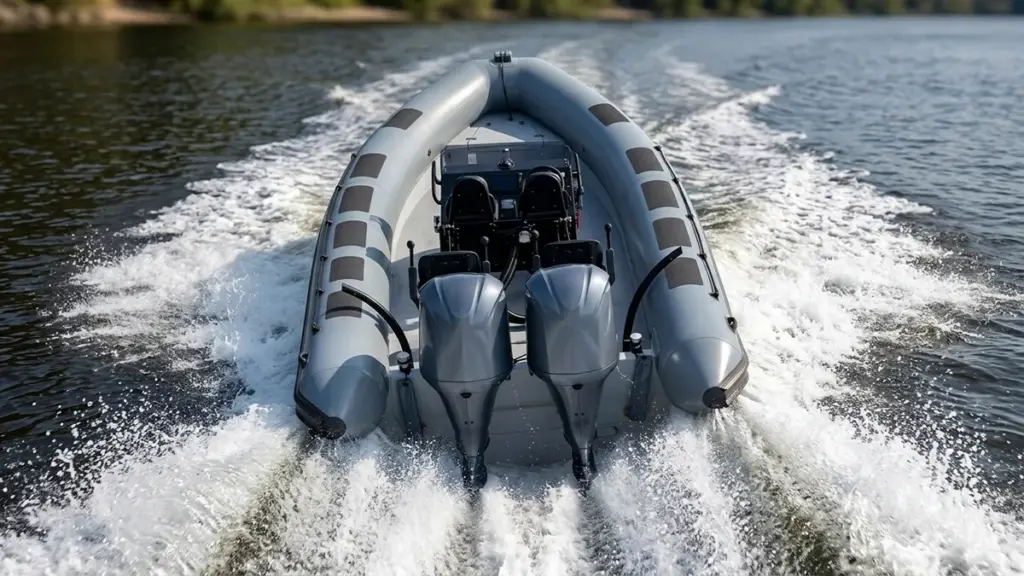
To verify your propeller size, test your wide-open throttle (WOT) RPM under a normal load. The correct pitch keeps your engine within the manufacturer’s recommended RPM range.
Identify Current Prop Specs and Target WOT RPM
Before hitting the water, establish a baseline for your boat and engine. You need to know what propeller you currently run and the exact performance window the outboard requires.
- Check the propeller hub: Inspect the outer surface or the base of the blades for stamped diameter and pitch markings to confirm your current sizing.
- Find the WOT RPM target: Consult your outboard owner’s manual to identify the manufacturer’s recommended Wide-Open Throttle (WOT) RPM 범위.
- Establish a baseline: Use manufacturer prop selectors or online calculators factoring in engine horsepower and typical operating weight to set your starting point.
Perform an On-Water WOT Test Under Normal Load
The real proof of propeller sizing happens on the water. A structured wide-open throttle test provides the exact engine RPM data needed to determine if your pitch is accurate.
- Simulate real-world conditions: Load the boat with the typical number of passengers, 기어, and fuel you carry during regular operation.
- Start the run: Trim the engine fully down in open water and advance the throttle to maximum capacity.
- Optimize and record: Slowly trim up to the optimal running angle, return to neutral trim, and record the highest steady RPM and GPS speed achieved.
Compare Test Results Against Manufacturer Specifications
Once you record your GPS speed and tachometer readings, cross-reference them with your engine manual. The resulting RPM tells you exactly how the propeller loads the engine.
- Optimal match: If the measured WOT RPM falls within the manufacturer’s specified range, the current propeller size is correct for your exact rig and typical load.
- Engine over-revving: If the engine spins past the maximum RPM limit, it lacks resistance. The propeller pitch is likely too low.
- Engine under-revving: If the engine struggles and fails to reach the minimum recommended RPM, the load is too heavy. The propeller pitch or diameter is too high.
Adjust Pitch to Correct Under-Revving or Over-Revving
If your test results fall outside the acceptable range, you must change the propeller pitch. Pitch directly dictates the mechanical load on the engine, acting like the gearing in a transmission.
- The standard rule: A 2-inch change in pitch alters your WOT RPM by approximately 300 에게 400 RPM.
- Dropping high RPMs: Move to a higher-pitch propeller to lower excessively high RPMs. This prevents mechanical strain and keeps the engine off the rev limiter.
- Raising low RPMs: Switch to a lower-pitch propeller to increase RPMs, improve acceleration, and prevent the engine from lugging under heavy loads.
Common Mistakes When Reading Propeller Size Marks
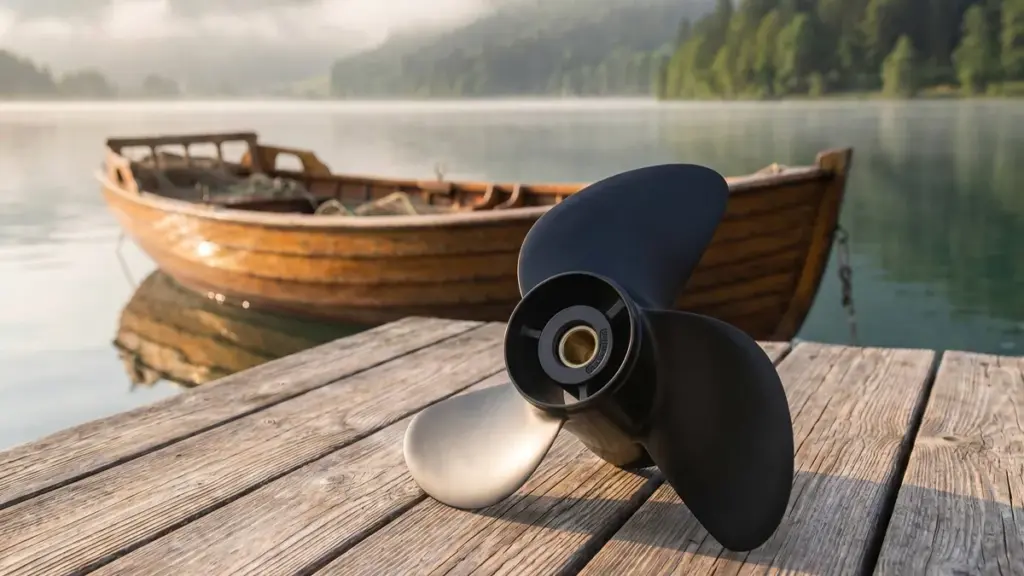
Misreading a propeller mark leads to poor performance, engine strain, and wasted money. Always read diameter first, pitch second, and factor in real-world boat dynamics.
Reversing Diameter and Pitch Numbers
Flipping these numbers is the fastest way to buy the wrong prop. The industry standard always lists diameter first, followed by pitch. When you mix them up, you completely alter how the prop interacts with the water.
- Reading backward: Assuming the first number is pitch instead of diameter.
- Interchanging specs: Failing to recognize that diameter and pitch affect performance differently and are not interchangeable.
- Size misinterpretation: Misinterpreting a 10×7 mark as a 7-inch diameter rather than a 10-inch diameter.
Misinterpreting Rotation and Blade Count
The primary numbers dictate the size, but the trailing letters control fitment and operation. Ignoring these extra characters leads to physical mismatches or dangerous handling on the water.
- Overlooking rotation marks: Missing the R (right-hand) or L (left-hand) indicators, which is critical for single and dual-engine setups.
- Confusing blade count: Assuming the trailing number (좋다 3 또는 4) adds another size dimension rather than just counting the blades.
- Installing incorrectly: Mounting a prop with the wrong rotation that physically fits the shaft but runs incorrectly under power.
Equating Theoretical Pitch to Actual Speed
Pitch measures the theoretical distance a propeller moves forward in one revolution through a solid medium. Water is not solid. Expecting a direct conversion from pitch to actual boat speed ignores the reality of marine physics.
- Ignoring water slip: Assuming the stamped pitch equals exact forward travel without factoring in the inevitable slip loss.
- Forgetting physical variables: Overlooking how hull shape, 보트 무게, and load change the real-world performance of the propeller.
- Unrealistic expectations: Expecting two entirely different boats with the same 10×7 prop to achieve identical speeds.
Ignoring Engine Limits and Boat Usage
You do not pick a propeller based entirely on the boat hull. You pick it based on what the engine can safely handle. The propeller must allow the engine to operate within its defined mechanical limits.
- Skipping WOT checks: Selecting a propeller without checking the engine’s recommended wide-open-throttle (WOT) rpm range.
- Forcing extreme rpms: Choosing too much pitch causing the engine to under-rev, or too little pitch causing it to over-rev.
- Mismatched application: Failing to match the pitch profile to the boat’s primary purpose, such as prioritizing heavy-load acceleration versus top speed.
When Should You Replace Your Propeller with the Same or a Different Size?
Replace with the identical size if your engine hits the correct WOT RPM. Change pitch or diameter only to fix RPM limits, boost hole shot, or increase cruising speed.
Replacing with the Same Size: Wear, 손상, and Material Upgrades
Stick with the same diameter and pitch if your engine currently operates within the manufacturer’s recommended wide-open throttle (WOT) RPM 범위. The baseline size works. Swap out identical sizes to correct bent blades, chipped edges, or a slipping hub that causes vibration and kills thrust. If you run in abrasive or sandy water, upgrade from aluminum to stainless steel in the exact same size. This improves durability and rigidity while keeping your RPMs consistent.
Adjusting Propeller Pitch for RPM Correction
Pitch acts like gearing. Move to a higher pitch if the engine over-revs past the upper limit. This added load lowers the RPM and improves cruising speed on light boats. Drop to a lower pitch if the engine under-revs and struggles to build speed. Reducing the pitch frees up the engine to reach higher RPMs, delivering a stronger hole shot and aggressive heavy-load acceleration. Remember that changing the pitch by just 1 에게 2 inches noticeably shifts engine loading and RPM, even on small outboards.
Changing Propeller Diameter for Thrust or Speed
Diameter dictates total blade surface area. Increase the diameter to gain more blade area for low-speed thrust. This extra grip helps push heavily loaded dinghies and gives you tight control during precise dock maneuvering. 거꾸로, reduce the diameter to minimize drag on high-speed, lightweight hulls. Whenever you upsize the diameter, you must verify your physical clearance. Maintain a strict minimum clearance of 5/8 에게 3/4 inches between the blade tips and the outboard lower unit to prevent contact under load.
Practical Steps to Evaluate Your Replacement Needs
Do not guess your propeller size based on top speed alone. Perform a sea trial at WOT with your typical everyday load, including passengers, 기어, and fuel, to establish a realistic baseline RPM. Compare your recorded baseline RPM directly against the engine manual’s WOT specification to identify over-revving or under-revving conditions. Once you have the data, select a replacement based on your primary objective: drop to a lower pitch for towing and acceleration, or step up to a higher pitch for fuel-efficient cruising.
OEM Outboard Motor Propellers and Replacement Solutions from NEWTOP
As an experienced outboard motor propeller manufacturer, 뉴탑 supplies OEM and aftermarket propellers for a wide range of outboard engines used in recreational, 광고, 전문 해양 애플리케이션.
Our product range includes:
- Aluminum outboard propellers
- Stainless steel outboard propellers
- Three-blade and four-blade designs
- OEM replacement propellers
- Custom propeller development for private-label brands
Every propeller is manufactured with strict dimensional control to ensure accurate diameter, 정점, blade geometry, and dynamic balance. This helps deliver smooth operation, efficient power transfer, and reliable performance on the water.
As a trusted outboard motor propeller factory, NEWTOP also provides comprehensive OEM and ODM services for global distributors, 도매업자, and marine equipment brands. From mold development and logo customization to packaging and quality inspection, our production process is designed to support consistent quality across large-volume orders.
Whether you need a direct replacement for popular outboard brands or a customized propeller solution for your own product line, our engineering and manufacturing teams can help you identify the right specifications for your market.
결론
Understanding outboard motor propeller size marks makes selecting the correct replacement much easier. In most cases, 그만큼 first number indicates diameter, 동안 second number indicates pitch, with additional letters identifying rotation direction, 재료, or manufacturer-specific information.
When evaluating a propeller, don’t rely solely on the stamped numbers. Always consider your engine’s recommended RPM range, the boat’s weight, 작동 조건, 용도와 용도. A properly matched propeller improves acceleration, 연료 효율, engine longevity, and overall handling.
If you’re sourcing reliable OEM replacement propellers or looking for an experienced outboard motor propeller manufacturer, NEWTOP offers precision-engineered solutions backed by advanced manufacturing capabilities and extensive OEM experience. Our team can help you select or develop propellers that deliver dependable performance across a wide range of outboard applications.
자주 묻는 질문
What does 10×7 mean on an outboard propeller?
These numbers indicate diameter and pitch measured in inches. The first number (10) represents the diameter, which is the total width of the circle the blades sweep. The second number (7) is the pitch, indicating the theoretical forward distance the propeller moves in one full revolution. A 10×7 size fits small outboards where strong thrust and low-speed control matter more than top speed.
How do I know if my propeller size is correct?
A correctly sized propeller allows your engine to consistently reach its manufacturer-recommended wide-open throttle (WOT) RPM range under a normal load. The boat will accelerate smoothly, get on plane without excessive delay, and maintain cruising speed efficiently without over-revving or lugging the motor.
직경을 변경하지 않고 프로펠러 피치를 변경할 수 있습니까??
예. Swapping to a propeller with the same diameter but a different pitch (like moving from a 10×7 to a 10×9) is the standard way to adjust engine RPM and boat performance. Marine shops can also re-pitch existing aluminum or stainless steel props slightly to fine-tune your setup without altering clearance.
What happens if the propeller pitch is too high or too low?
피치가 너무 높은 경우, the engine will struggle to reach its recommended RPM range, causing sluggish acceleration and increased mechanical strain. If the pitch is too low, the engine will likely over-rev past its maximum limit, which risks internal damage, wastes fuel, and reduces your top-end speed.
Do all outboard brands use the exact same size marking system?
Major outboard manufacturers all use the core ‘diameter x pitch’ measurement in inches, but their exact stamping methods vary. Brands place the numbers in different spots, such as inside the hub or on the barrel. They also add unique letters and codes to indicate blade count, 회전 방향, and specific design series.
How do I read old or worn propeller size markings?
Start by cleaning the hub and blade root areas to reveal any stamped numbers. Most old props still use the standard diameter x pitch format (좋다 11.25 엑스 13). If you only find a single number with a letter (like 17P), it usually represents the pitch. For complex or partial codes, check the manufacturer’s parts catalog or have a marine shop measure the prop directly.