The Diesel Generator vs Gasoline choice mainly depends on running hours, power demand, सुवाह्यता, ईंधन की उपलब्धता, और बजट. Diesel generators are generally better suited to frequent or extended operation, while gasoline generators are often more practical for shorter backup periods and mobile tasks.
तथापि, fuel type alone does not decide whether a generator will perform well. निर्धारित उत्पादन, motor-starting demand, engine construction, fuel tank capacity, maintenance access, and the cost of downtime can be just as important. A correctly sized gasoline generator may serve a small workshop better than an oversized diesel unit, while a diesel generator may offer better long-term value on a site that needs power throughout the working day.
Diesel Generator vs Gasoline: मुख्य अंतर
Both generator types use an internal combustion engine to drive an alternator and produce electricity. The practical difference lies in how the engine delivers power and how the generator fits the intended workload.
Diesel generators are commonly selected for frequent use, sustained loads, and higher-capacity applications. Compared at a similar output and under extended operation, diesel models may offer more favorable fuel consumption. Their mechanical construction also tends to suit applications where the generator is expected to work regularly.
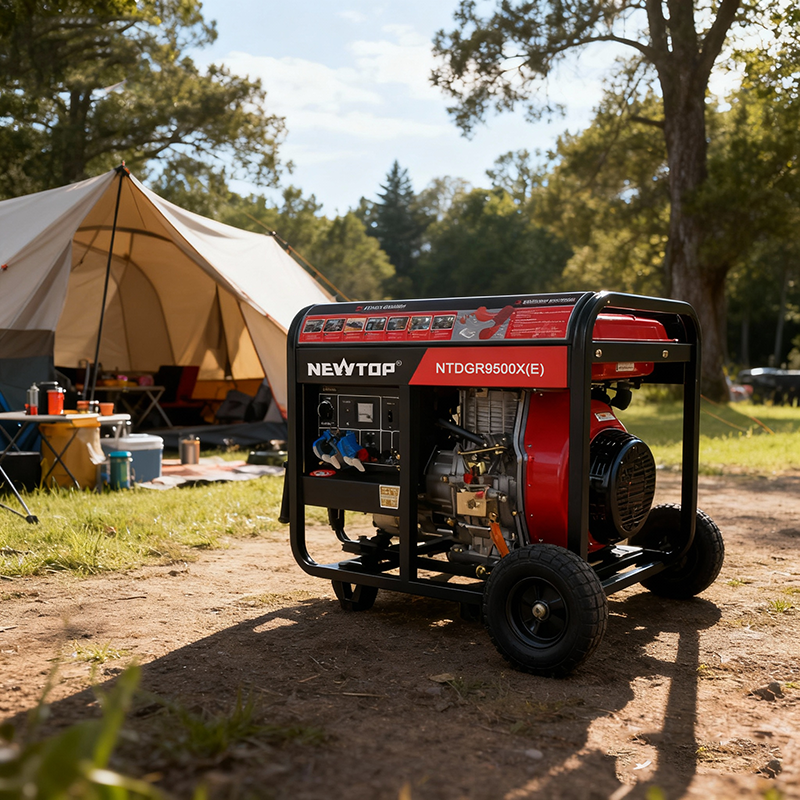
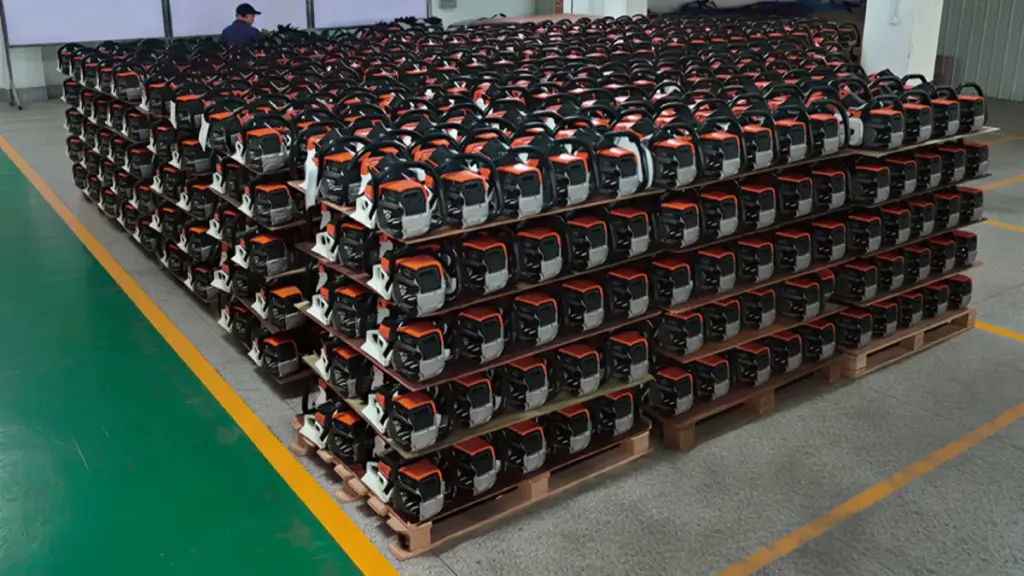
Gasoline generators are widely used where portability, lower initial investment, and intermittent operation matter more. Many compact gasoline models are easier to move between locations and are suitable for temporary work, small businesses, household backup, and outdoor use.
These are general tendencies rather than fixed rules. Actual performance depends on the generator model, इंजन विस्थापन, load percentage, alternator, enclosure, cooling system, and maintenance condition.
| Decision Factor | Diesel Generator | Gasoline Generator |
|---|---|---|
| Typical Operating Pattern | Frequent or extended operation | Occasional or shorter operation |
| Initial Investment | Usually higher in comparable classes | Often lower in portable power ranges |
| Fuel Use Over Long Periods | Often more favorable at a similar output and sustained load | Can become less economical during extended operation |
| Mobility | Commonly used in fixed, enclosed, or wheeled configurations | Smaller models are often easier to transport |
| Load Suitability | Frequently selected for sustained commercial and jobsite loads | Suitable for moderate loads and temporary work |
| Structure Options | Open-frame and silent enclosed models | Mainly portable open-frame models, with other options depending on the range |
| सामान्य अनुप्रयोग | निर्माण, खेतों, वाणिज्यिक सुविधाएं, and long backup periods | Small workshops, mobile service, household backup, and short outdoor tasks |
| What Buyers Should Verify | निर्धारित उत्पादन, ईंधन की खपत, enclosure, running time, and service access | निर्धारित उत्पादन, टैंक क्षमता, सुवाह्यता, सिस्टम शुरू करना, and surge output |
Specifications from individual models should always take priority over general fuel-type comparisons. Buyers should compare rated output, maximum output, ईंधन की खपत, टैंक क्षमता, noise level, and recommended operating conditions before ordering.
Which Generator Is Better for Commercial Use?
Commercial generator selection should begin with the expected duration and frequency of each power interruption.
For a small shop, office, restaurant, or service business that only experiences occasional short outages, a gasoline generator may provide sufficient backup at a more manageable initial cost. It can support selected lighting, communication devices, payment systems, fans, refrigeration, or other essential equipment, provided that the total running and starting loads remain within the generator’s rated capacity.
The priorities change when outages last for several hours or happen several times each week. Fuel consumption becomes more important, and the generator must maintain stable output for longer periods. A diesel generator may then offer a better fit, particularly for warehouses, larger workshops, खेतों, hospitality businesses, and facilities where power loss quickly affects revenue.
Commercial buyers should establish four points before choosing:
✅ Expected running time
Estimate how many hours the generator may operate during a normal outage rather than relying only on annual outage frequency.
✅ Essential electrical loads
Identify which equipment must remain active. Refrigeration systems, पंप, air compressors, and other motor-driven equipment may require substantially more power during startup.
✅ Backup or primary operating role
A generator used only during grid failure has a different duty pattern from one used as a regular power source in an area with limited grid access.
✅ Cost of downtime
For businesses that lose products, उत्पादन क्षमता, or customer transactions during an outage, operating reliability may matter more than the lowest purchase price.
Automatic transfer requirements should also be considered for fixed commercial installations. Where uninterrupted changeover is important, generator compatibility with the intended transfer and control system should be confirmed before purchase.
Which Generator Is Better for Construction Sites?
Construction sites place different demands on a generator. Loads change throughout the day, equipment may have high starting current, and the generator often operates around dust, vibration, गर्मी, and frequent movement.
Diesel generators are commonly chosen for longer shifts and repeated jobsite use. They may be better suited to powering pumps, mixers, welders, compressors, lighting systems, and temporary site facilities over sustained periods. A heavier frame is also less of a disadvantage when the generator remains in a fixed work area or is mounted on a wheeled platform.
Gasoline generators remain practical for smaller crews and shorter assignments. Repair work, finishing tasks, temporary lighting, and mobile tools may only require power for a few hours. In those cases, a compact gasoline generator can be easier to load, unload, and move around the site.
The decision should reflect how the site actually works:
- Long daily shifts with sustained loads: diesel is often the stronger candidate.
- Short tasks across multiple work areas: gasoline may provide easier mobility.
- Tools with electric motors: starting wattage must be checked, not only normal running wattage.
- Dusty or hot conditions: filtration, cooling, frame strength, and maintenance access become more important.
- Noise-sensitive projects: compare enclosed and open-frame models using actual noise specifications.
- Remote sites: choose the fuel that can be supplied, stored, and managed reliably in that location.
Fuel type cannot compensate for poor sizing. An undersized generator may struggle during motor startup or trip under changing loads. An oversized unit adds cost and may operate inefficiently when the average load remains very low.
Which Generator Is Better for Emergency Use?
Emergency use includes several very different situations. A homeowner preparing for a short grid outage does not have the same requirements as a shelter, communication site, flood response team, or large commercial facility.
A gasoline generator is often practical for temporary emergency backup. Portable models can be deployed quickly and may provide enough power for lighting, communication equipment, fans, selected appliances, and small pumps. This makes them useful where ease of movement and lower upfront cost are priorities.
A diesel generator becomes more attractive when emergency power may be required for many hours or several days. Larger facilities and response operations may need more sustained output, longer service capability, or a silent enclosed structure that can remain in a fixed location.
Fuel planning must form part of the emergency plan. Gasoline can deteriorate during prolonged storage, while stored diesel also needs protection from water and contamination. Existing equipment can influence the decision as well. A contractor, farm, or emergency organization that already operates diesel machinery may find diesel storage and refueling easier to integrate.
Generator Safety Cannot Be Treated as Optional
Both diesel and gasoline generators produce carbon monoxide and must never be operated inside homes, garages, basements, sheds, or other enclosed spaces. The U.S. Consumer Product Safety Commission advises operating portable generators outdoors, at least 20 feet away from homes and buildings, with the exhaust directed away from doors, विंडोज़, और वेंट.
Electrical connection also requires care. OSHA advises against connecting a portable generator directly to a building’s electrical system unless a suitable transfer switch has been installed by a qualified electrician. Cables should be rated for the expected load, and grounding, bonding, weather protection, and ground-fault protection must follow the generator manufacturer’s instructions and local electrical requirements.
How to Choose the Right Generator Size
The required generator output should be calculated before deciding between diesel and gasoline.
Begin by listing the equipment that may run simultaneously. For each item, record its normal running wattage and, where applicable, its starting demand. Pumps, compressors, refrigerators, and power tools with electric motors may briefly draw several times their normal operating power during startup.
Three figures deserve particular attention:
Continuous Rated Output
This is the power the generator is designed to provide during normal operation. The planned continuous load should remain within this rating rather than relying on maximum output throughout the working period.
Maximum or Surge Output
This temporary capacity helps the generator handle short increases in demand, particularly when motor-driven equipment starts. It should not be treated as the normal operating rating.
Expected Average Load
A generator should have enough reserve capacity to manage load changes without being dramatically larger than necessary. Regular operation at either extremely high or very low load can reduce efficiency and create avoidable operating issues.
For commercial orders, buyers should also confirm:
- Required voltage and frequency
- Single-phase or three-phase output
- Number and type of receptacles
- Electric or recoil starting
- ईंधन टैंक क्षमता
- लगातार चलने का समय
- AVR or voltage regulation requirements
- Open-frame or silent enclosure
- Wheel kits, handles, or lifting requirements
What Generator Construction Changes in Real Use?
Two generators with similar rated output may behave differently once they begin powering tools or equipment. Engine materials, alternator construction, vibration control, protection systems, and frame design all influence long-term use.
NEWTOP offers both gasoline and diesel generator sets, including open-frame and silent configurations. The current range covers multiple output classes, from compact units for outdoor and backup power to higher-capacity diesel models for commercial and construction applications. Selected NEWTOP generators use copper-winding alternators, steel frames, reinforced engine components, and designs intended to operate in temperatures from -10°C to 50°C.
The differences are easier to understand through actual product configurations.
Gasoline Generator Construction
The NEWTOP NTGR6500H2 provides 5.5 kW rated output and 6.0 kW maximum output. Its engine uses a strengthened 42CrMo forged crankshaft and camshaft, while a SENCI copper-wire alternator supports stable voltage and overload performance. A full steel frame with vibration-absorbing mounts protects the machine during demanding work.
The model also includes a 25 L fuel tank, low-oil warning, and short-circuit protection. These features make the generator suitable for construction sites, छोटी कार्यशालाएँ, property maintenance, and extended household backup where a gasoline model is still preferred.
Open-Frame Diesel Generator Construction
For medium-to-heavy power requirements, the NEWTOP NTDGR6500X(ई) combines a forged-steel crankshaft, nitrided gears, बॉश-प्रौद्योगिकी ईंधन इंजेक्शन, and a copper-winding alternator. The anti-vibration steel frame helps protect the engine and alternator during construction, कृषि, and commercial operation.
This model provides 4.8/5.0 kVA rated output and up to 5.2/5.5 kVA maximum output, depending on frequency configuration. The product structure reflects the priorities often associated with diesel equipment: load handling, mechanical strength, and stable output over longer working periods.
Silent High-Power Diesel Construction
Where higher output and lower operating noise are needed together, a silent enclosure may be more appropriate than an open frame. The NEWTOP NTDGR16800T combines 11 kW rated output with a 12 kW maximum output, a 42CrMo forged crankshaft, nitrided gear components and a 100% copper SENCI alternator.
Its enclosed body reduces operating noise while providing additional protection for internal components. The model is designed for construction, commercial backup, and other demanding applications where both power capacity and operating environment matter.
These examples show why buyers should compare more than fuel type and horsepower. The alternator, crankshaft, gear structure, protection system, frame, and enclosure can determine how well a generator fits the intended market.
रखरखाव, पार्ट्स, and Local Technical Support
A well-maintained gasoline generator can perform more reliably than a neglected diesel unit. Engine type does not replace regular inspection and service.
Before operation, users should check:
- Engine oil level and condition
- Fuel quality and storage condition
- Air and fuel filters
- Cooling airflow
- Cable and receptacle condition
- Battery condition on electric-start models
- चौखटा, mounts, and fasteners
- Signs of fuel or oil leakage
Backup generators should be started and tested at scheduled intervals. Waiting until an actual power failure to check the generator can leave old fuel, a discharged battery, or an electrical fault undiscovered.
For distributors and commercial buyers, parts support also affects the total ownership experience. Filters, starting components, control panels, voltage regulators, alternator parts, and common engine components should be available without requiring the replacement of the complete generator.
NEWTOP supplies gasoline and diesel generators across multiple power ranges, along with product selection and spare-parts support for wholesale customers. This allows distributors to build a range for households, ठेकेदारों, खेतों, workshops, and commercial backup users rather than relying on one generator type for every application.
Diesel Generator vs Gasoline: Making the Final Decision
Choose a diesel generator when the application involves frequent operation, sustained loads, longer backup periods, or higher-capacity commercial and construction demand. Compare actual fuel consumption, rated output, enclosure, noise, and service access before deciding on a model.
Choose a gasoline generator when portability, lower initial investment, faster deployment, and occasional operation are the main priorities. It is often the more practical option for small businesses, mobile work, temporary construction tasks, and short emergency outages.
The final Diesel Generator vs Gasoline decision should be based on the hours the generator will run, the equipment it must start, the fuel available locally, and the level of downtime the user can accept. Once those requirements are defined, fuel type becomes one part of a much clearer selection process.