Arborists and tree care specialists require tools that prioritize balance and weight. When working high in a tree canopy, the design of your equipment directly affects your safety and how quickly you can finish a job. In 2026, the market offers various options ranging from traditional gasoline engines to new lithium battery models.
In this guide, we break down how top handle chainsaws work, how they compare to rear handle models, what technical specifications truly matter, and how professionals choose the right model for climbing operations. If you are sourcing for distribution, OEM branding, or large-scale procurement, this guide is written with decision-makers in mind.
What is a Top Handle Chainsaw?
A top handle chainsaw is a purpose-built tool for professional arborists, engineered with a compact, lightweight design that prioritizes balance and control for precision cutting in elevated or confined spaces.
A top handle chainsaw is a compact chainsaw designed with the primary handle positioned above the engine housing rather than at the rear. This configuration allows arborists to operate the saw in confined spaces—especially while suspended in a tree harness. These chainsaws are commonly used for pruning, crown reduction, sectional dismantling, and branch removal. In professional settings, they are considered climbing chainsaws, often paired with harness systems and lanyards for safety.
Primary Applications in Professional Tree Care
These saws are essential equipment for certified professionals performing tasks that require surgical cutting high off the ground. Their compact design allows arborists to navigate dense branch structures where a larger, rear-handle saw would be unsafe, cumbersome, or impractical to position correctly.
- Ideal for removing deadwood, thinning a tree’s crown, and shaping branches.
- Enables controlled cuts while secured by a rope and harness or operating from an aerial lift platform.
- The primary tool for tree maintenance in urban and residential settings where precision is critical.
The Professional User Requirement
Because they are intended for elevated use, they require advanced skill and training. In many regions, they are recommended only for certified arborists. An untrained user attempting to operate one of these chainsaws, especially on the ground, creates a high-risk situation. The growing demand for these chainsaws is driven directly by the professional tree care industry’s need for efficient and specialized equipment that performs in challenging aerial environments.
Pros and Cons of Handle Chainsaws
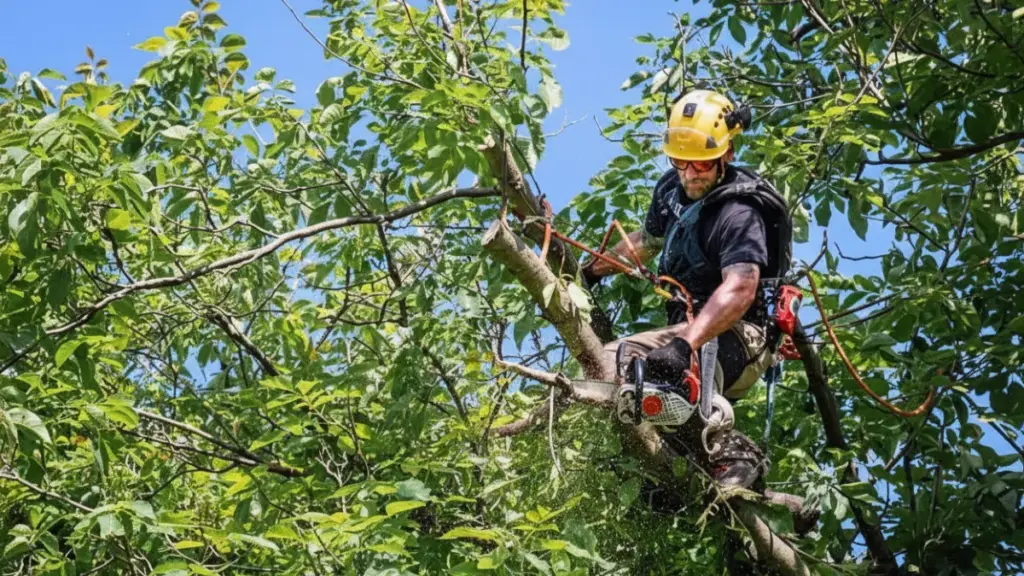
The choice between a top-handle and rear-handle chainsaw is a direct trade-off between aerial maneuverability for specialized arborist work and raw power with stability for ground-level felling and bucking.
Top-Handle Chainsaws: Pros and Cons
Top-handle chainsaws are specialized tools designed for professional arborists who need a compact and maneuverable saw for work performed at height. Their advantages in aerial situations are clear, but these benefits come with limitations for any ground-level applications.
- Pro: Excellent maneuverability and balance for in-tree cutting and pruning, allowing for precise control in tight or awkward spaces.
- Pro: Lightweight construction reduces operator fatigue during extended aerial work.
- Con: Generally less powerful than their rear-handle counterparts, making them unsuitable for heavy-duty felling or bucking.
- Con: Their design requires advanced handling skills and is intended almost exclusively for trained professionals working off the ground.
Rear-Handle Chainsaws: Pros and Cons
Rear-handle chainsaws are the industry standard for most ground-based cutting tasks. They provide superior power, stability, and safety for a wide range of users, from homeowners to forestry professionals, but they become cumbersome and unsafe for aerial work.
- Pro: Offers greater power and leverage, making it the ideal choice for felling trees, bucking logs, and clearing brush.
- Pro: The two-handed grip provides better stability and control, making it a safer and more accessible option for beginners.
- Con: Bulkier and heavier design makes it difficult and often unsafe to use for climbing or detailed pruning within a tree’s canopy.
- Con: Less agile compared to top-handle models, which can be a disadvantage when cutting in constrained ground-level areas.
Build Your Professional Chainsaw Line with a Reliable OEM Partner
Professional Technical Specs: Weight, Displacement, and Balance
When evaluating professional-grade top handle chainsaws for 2026, three specifications determine real-world performance: weight, engine displacement, and balance.
| Technical Specification | Professional Market Range (2026) | Primary Benefit |
|---|---|---|
| Engine Displacement | 25cc – 40cc (30cc–35cc mainstream) | Balanced torque output suitable for controlled pruning and hardwood branch cutting. |
| Power Output | 1.0 kW – 1.8 kW | Delivers efficient cutting performance while maintaining fuel economy and throttle responsiveness. |
| Dry Weight (Without Bar & Chain) | 2.6 kg – 3.8 kg | Reduces operator fatigue and improves maneuverability in confined canopy environments. |
| Key Performance Metric | High Power-to-Weight Ratio | Critical for maintaining control, precision, and productivity during elevated operations. |
Engine Displacement and Power Output
Most professional-grade top handle chainsaws operate within a 25cc to 40cc displacement range, with 30cc–35cc models representing the core segment for arborist applications. This range provides the optimal balance between torque and weight, ensuring clean, controlled cuts without unnecessary engine bulk. Power output typically falls between 1.0 kW and 1.8 kW, depending on engine tuning and design. This configuration delivers reliable cutting force for hardwood branches while maintaining fuel efficiency and throttle responsiveness—critical for extended in-tree operations.
Power-to-Weight Ratio
For professional arborists, power-to-weight ratio is the defining performance metric. A climbing saw must provide sufficient torque while remaining lightweight enough for controlled maneuverability in canopy environments. High-quality top handle models typically weigh between 2.6 kg and 3.8 kg (dry weight), striking the balance between durability and operator fatigue reduction. A superior ratio enhances cutting precision during complex pruning and rigging tasks, contributing directly to both productivity and long-term operator safety.
Ergonomic Balance and Key Features
Beyond the core engine specs, ergonomic design determines a saw’s real-world usability. Modern professional saws integrate systems that support the operator and reduce downtime. Advanced anti-vibration technology minimizes the strain on an arborist’s hands and arms, which is critical for all-day use. Features like spring-assisted starting are essential for restarting the saw safely mid-climb. Likewise, centrifugal air filtration systems eject dust and debris before they reach the filter, significantly extending service intervals and keeping the engine running at peak performance.
Safety Standards for In-Tree Operation: Brakes and Lanyards
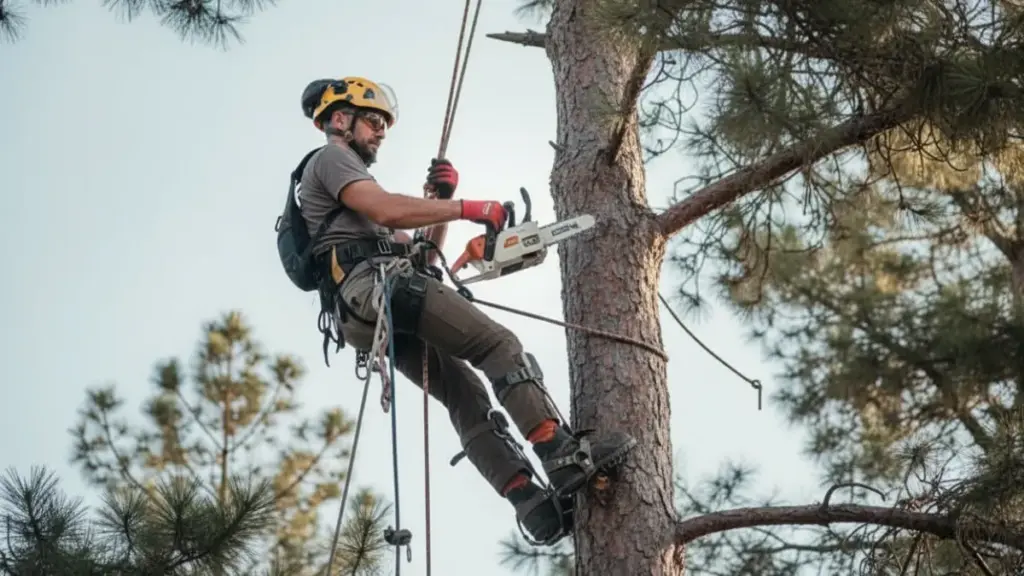
Safe in-tree chainsaw operation depends on a strict system of regulatory compliance, redundant tie-in protocols, and mandatory pre-use equipment checks.
Regulatory Compliance and Industry Standards
In-tree chainsaw operations follow strict industry standards like ANSI Z133, which sets the baseline for safe tree care. Regulatory bodies such as OSHA enforce these guidelines, mandating documented worker training, clear equipment protocols, and proactive risk management to minimize hazards. These standards apply equally to both gasoline and battery-powered chainsaws, as both present identical cutting risks when working at height.
Continuous Tie-In and Lanyard Systems
A core rule for any arborist is to remain continuously tied in throughout an operation. This is achieved with a dual-redundancy system. The worker uses a primary climbing line for main support and a secondary lanyard for precise work positioning and backup security. This setup ensures the operator is secured from the moment they leave the ground until they return, allowing them to establish a stable stance for making controlled cuts.
Chainsaw Brake Function and Inspection
The chainsaw’s chain brake is a non-negotiable safety device engineered to stop the chain instantly during a kickback event. Regular inspection and testing of this mechanism are mandatory before every use. An operator must confirm the chain brake engages properly when activated by hand and regularly clean the brake band and clutch cover to check for wear or damage. A functional brake, paired with correct handling techniques, is a critical layer of operator protection.
Pre-Operation Hazard Assessment and Equipment Checks
Proactive risk management is central to in-tree safety. Before climbing, every arborist must conduct a thorough hazard assessment of the tree and the surrounding worksite, identifying risks like weak limbs, electrical lines, or ground obstacles. A complete inspection of all climbing and cutting equipment—including ropes, harnesses, lanyards, and the chainsaw itself—is required to check for defects. The crew must also establish a clear work plan and an emergency protocol before work begins.
Top Handle vs. Rear Handle Chainsaw
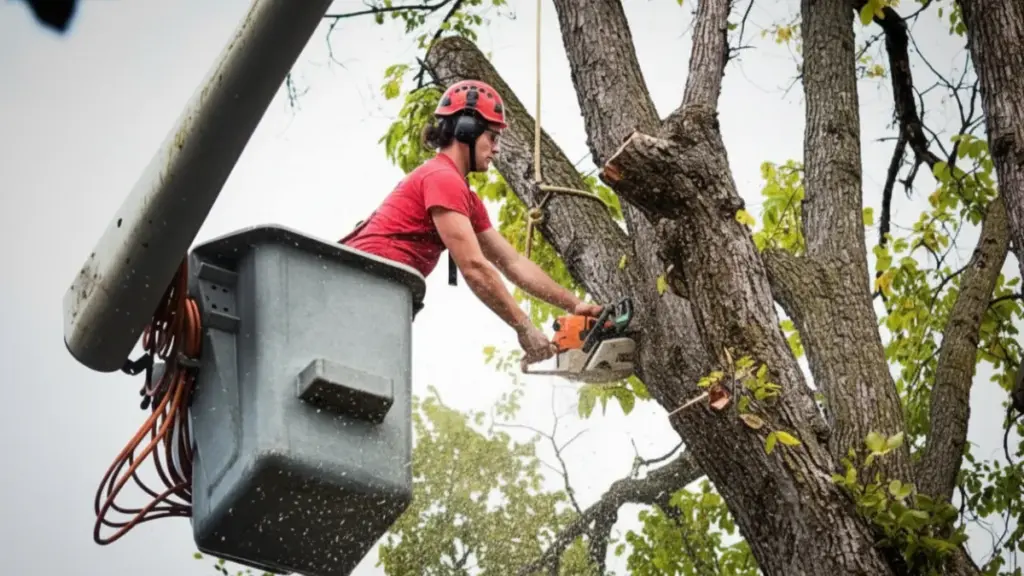
The choice between a top handle and rear handle chainsaw is determined entirely by the work environment; top handle saws are specialized for professional, in-tree operations, while rear handle saws are built for stable, ground-level cutting.
| Attribute | Top Handle Chainsaw | Rear Handle Chainsaw |
|---|---|---|
| Primary User | Certified professional arborists and tree surgeons | Homeowners, property managers, and forestry workers |
| Work Environment | Elevated, in-tree, or from an aerial lift | Ground-level operations |
| Core Design Trait | Compact, lightweight, and balanced for maneuverability | Longer body with separated handles for stability and leverage |
| Typical Application | Pruning, limbing, and navigating tight tree crowns | Felling trees, bucking logs, and processing firewood |
Design and Ergonomics for Specific Tasks
The fundamental difference lies in their physical layout, which is optimized for two distinct working environments. Top handle saws are compact and balanced for maneuverability in elevated, awkward positions. Rear handle saws are built for leverage and stability on the ground. This separation of design intent dictates how each tool performs in its intended role.
- Top handle models integrate the handle directly above the saw’s body, creating a center of gravity ideal for one-handed use by a climbing arborist.
- Rear handle models use a separated two-handle design, giving the operator greater control and a stable platform for felling trees or bucking logs.
Intended User and Application
Each saw type targets a different user. Top handle chainsaws are specialized tools exclusively for certified tree care professionals working at height. Rear handle saws cater to a wider audience, from homeowners to loggers, who perform work at ground level. The industry has clearly segmented these tools for specific operational contexts rather than creating an all-purpose solution.
- Top handle saws are the standard for professional arborists who need to prune limbs while secured in a tree.
- Rear handle saws are suited for felling, limbing, and processing firewood on solid ground, making them the choice for property owners and forestry workers.
Power, Control, and Safety
Rear handle saws generally provide more leverage for cutting power and stability, making them a safer choice for novices. Top handle saws offer a high power-to-weight ratio but introduce significant safety risks that demand professional training and certification. The operator’s ability to manage kickback is directly tied to the saw’s handle configuration.
- The wider grip on rear handle saws offers superior control, which helps manage kickback during powerful cuts.
- Due to their design for potential one-handed operation, top handle saws require strict adherence to safety protocols and are not recommended for groundwork or inexperienced users.
How to Select the Right Top Handle Chainsaw?
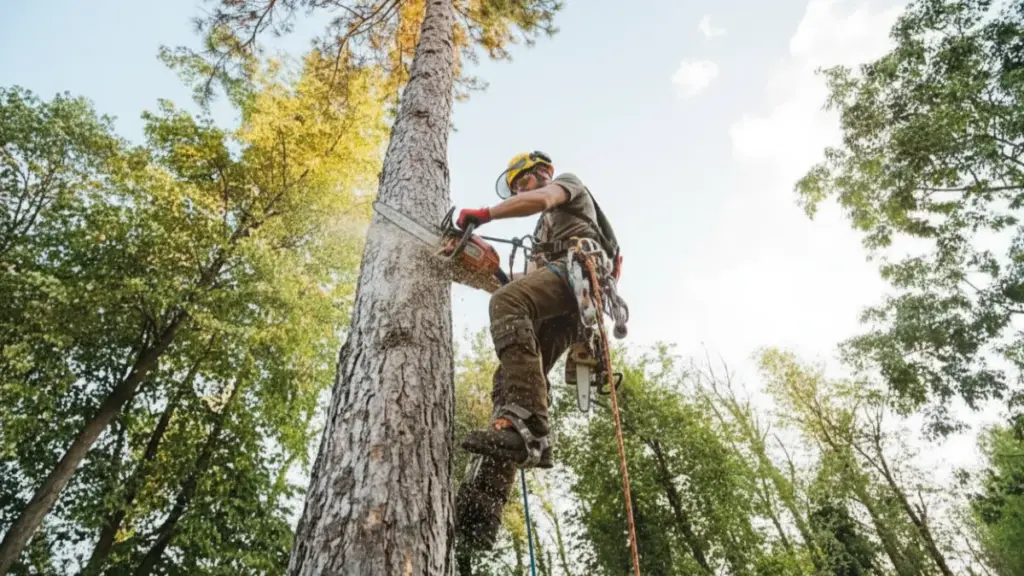
Choosing the right top handle chainsaw requires matching professional certifications and specific in-tree job demands with key technical features like power-to-weight ratio, balance, and power source.
Selecting the right model requires aligning technical specs with market demand.
First, identify your target users. Are they certified arborists, landscaping companies, or small contractors? Professional arborists demand durability and brand reliability. Entry-level buyers may prioritize price.
Second, evaluate climate and wood density. In tropical markets (Latin America, Southeast Asia, Africa), hardwood species require stronger torque output. In colder climates, cold-start reliability becomes critical.
Third, consider after-sales support and spare parts availability. Components such as carburetors (e.g., Walbro type systems), spark plugs (NGK or TORCH), bearings (NSK), chains (Oregon type), and guide bars should be globally accessible.
Fourth, assess OEM flexibility. Custom color schemes, packaging, and localized branding significantly increase distributor competitiveness.
Gas vs Battery Top Handle Chainsaws Technical Comparison Table
| Technical Category | Gas Top Handle Chainsaw | Battery (Li-ion) Top Handle Chainsaw |
|---|---|---|
| Power Source | 2-Stroke Gasoline Engine (25cc–40cc) | Lithium-Ion Battery System (36V–60V typical) |
| Power Output | 1.0 kW – 1.8 kW continuous mechanical output | Comparable cutting performance in short bursts; torque delivered instantly via brushless motor |
| Weight (Dry) | 2.6 kg – 3.8 kg (without bar & chain) | 2.3 kg – 3.2 kg (tool only; battery adds 0.8–1.5 kg) |
| Runtime | Continuous operation with refueling; suitable for all-day field work | 30–60 minutes per battery depending on load; requires spare batteries for full-day operation |
| Torque Delivery | Strong mid-range torque; consistent under heavy hardwood cutting | Instant torque response; highly efficient for pruning and light-to-medium cuts |
| Maintenance | Requires carburetor tuning, spark plug checks, fuel mixing | Minimal mechanical maintenance; battery lifecycle management required |
| Noise & Emissions | Higher noise level; subject to emission regulations (EPA / EURO V) | Low noise, zero direct emissions; suitable for urban arboriculture |
| Market Positioning | Dominant in Africa, Latin America, and price-sensitive markets | Rapidly growing in Europe and urban markets with strict environmental policies |
| Ideal User Profile | Forestry contractors, heavy-duty arborists, remote-area operators | Urban tree service companies, noise-restricted areas, environmentally regulated regions |
Market-Leading Top Handle Models in 2026
The professional arborist market is traditionally led by established European and Japanese manufacturers known for engineering precision and durability.
- STIHL – Recognized for high-performance arborist saws with advanced anti-vibration systems and strong brand loyalty.
- Husqvarna – Known for lightweight designs and refined ergonomics tailored for professional tree care.
- Echo – Offers compact professional models with reliable two-stroke performance and competitive pricing.
For distributors seeking a competitive alternative in high-volume categories, rear handle models often deliver stronger ROI, broader application coverage, and greater market scalability.
Professional Chainsaw Solutions from NEWTOP
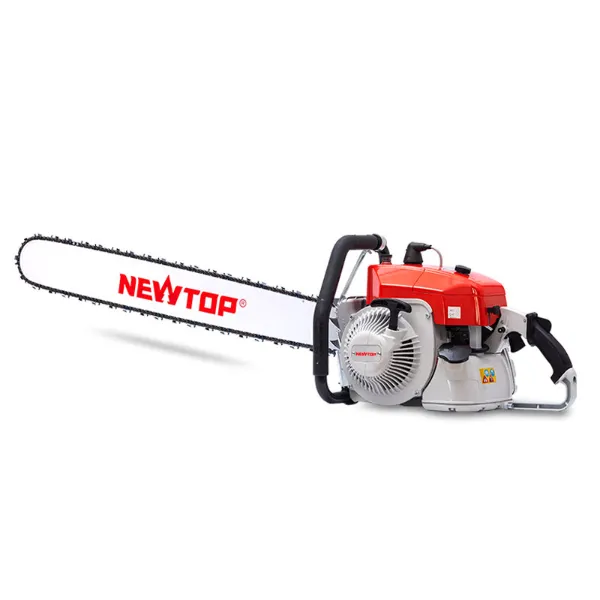
NT10500
High-displacement professional rear handle chainsaw engineered for forestry and large timber cutting.
View Details →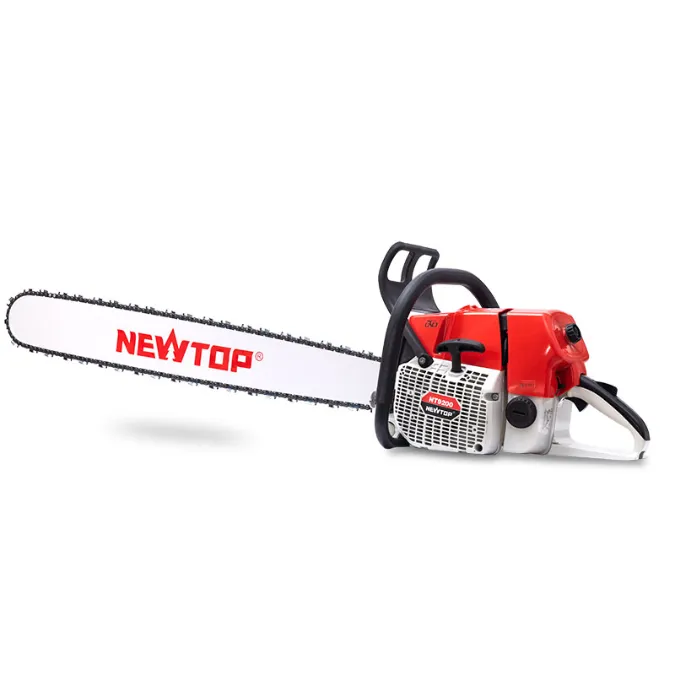
NT9200
Robust gasoline chainsaw designed for demanding field operations and hardwood cutting.
View Details →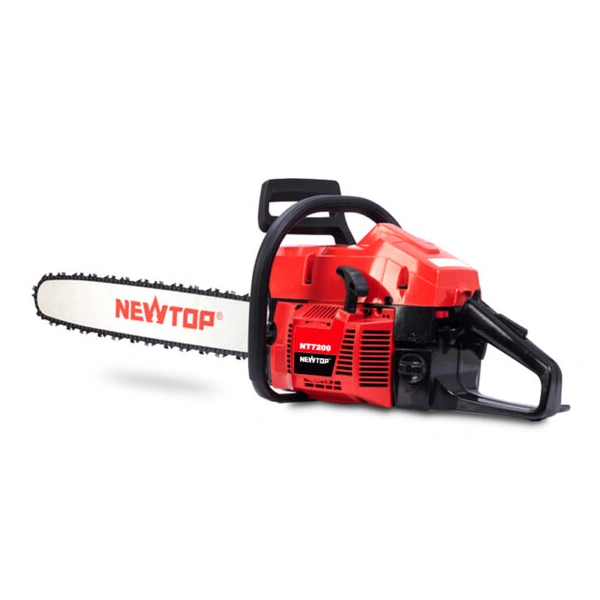
NT7200
Ideal balance of power and weight for landscaping and mid-range forestry work.
View Details →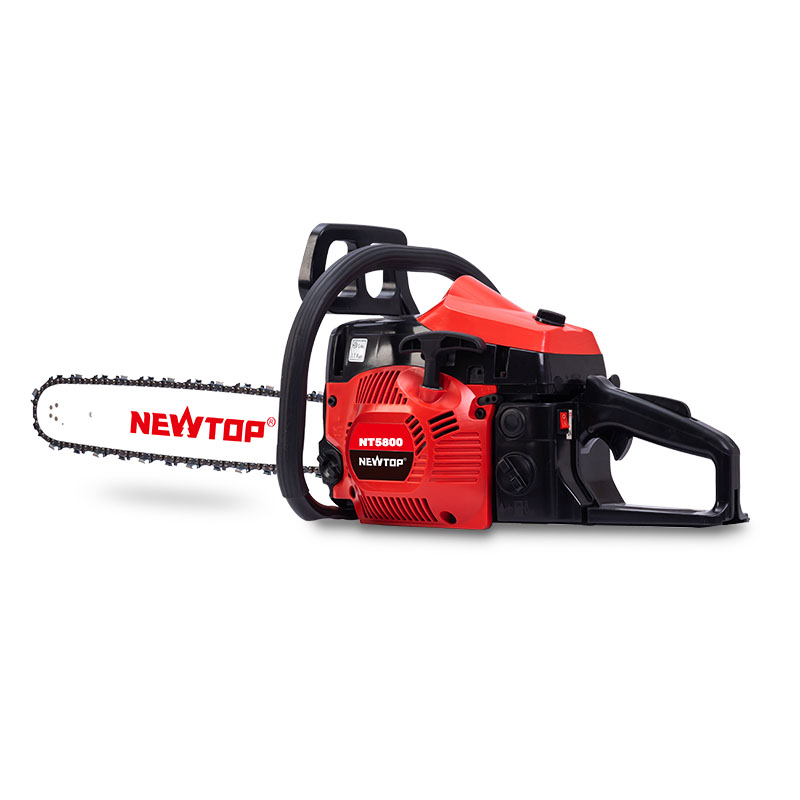
NT5800
Versatile mid-range chainsaw suitable for farm and general professional applications.
View Details →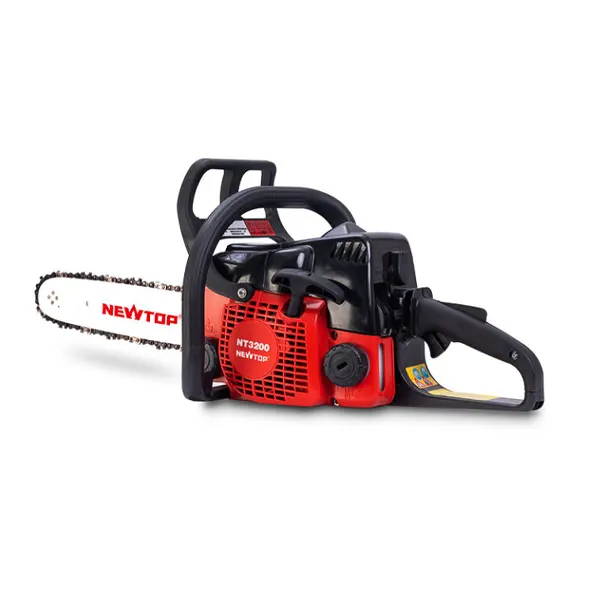
NT3200
Compact rear handle chainsaw ideal for light-duty landscaping and maintenance.
View Details →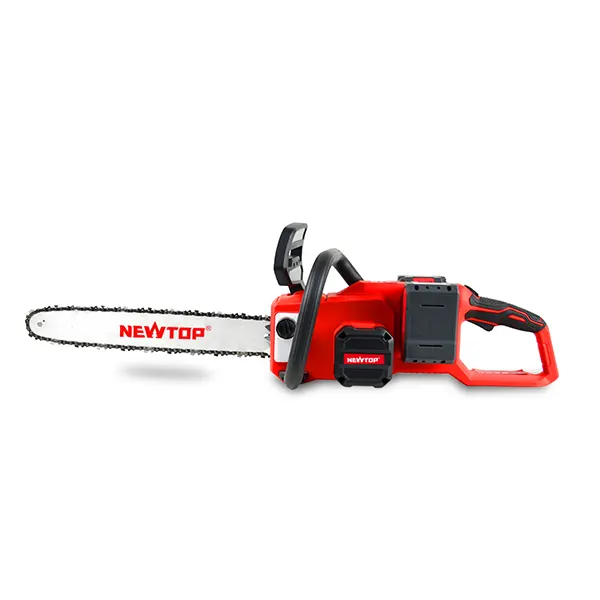
NTCS401Li
Portable lithium battery chainsaw delivering clean operation and minimal maintenance.
View Details →Ready to Work With NEWTOP Outdoor Power Equipment Manufacturer?
Selecting a manufacturing partner requires a direct evaluation of their vertical integration, supply chain quality, and business model flexibility to ensure both product reliability and market success.
NEWTOP has been manufacturing outdoor power equipment since 2003. With a 10,000㎡ production facility in Shanghai and over 300 employees, we supply chainsaws, brush cutters, sprayers, generators, and lithium garden tools to more than 65 countries.
What differentiates NEWTOP is not only production scale but engineering depth. An independent R&D team oversees structural design, testing validation, and emission compliance, while automated assembly lines ensure consistency for OEM and private-label partners.
For distributors in Africa, Latin America, Southeast Asia, and emerging European markets, NEWTOP provides:
- Flexible OEM customization
- Stable 30-day bulk lead times
- CE, GS, EPA, ETL certifications
- 1-year machine warranty
- Reliable spare parts supply
If you are expanding your professional arborist product line or building a competitive climbing chainsaw range, partnering with an experienced manufacturer reduces long-term operational risk.
Contact NEWTOP today to discuss product catalogs, pricing structures, and distribution opportunities.
Frequently Asked Questions
Why do professionals use top handle chainsaws?
They use them because the compact size allows for better movement in trees. The top handle design is easier to carry on a harness than a standard saw.
Are top handle chainsaws more dangerous than rear handle?
Yes, top handle chainsaws are considered more dangerous for ground use or by untrained operators. Their design allows for one-handed operation, which reduces stability and control compared to the two-handed grip on a rear handle saw. This close-quarters grip significantly increases the risk of severe injury from rotational kickback.
What is the best top handle chainsaw for climbing?
The best model depends on the application. Professionals typically choose saws with strong power-to-weight ratios, responsive throttle systems, and advanced anti-vibration technology. Reliability and parts availability are equally important.
Can a beginner use a top handle saw?
No. Beginners should use a rear handle saw. Top handle saws require specific techniques to operate safely.
Why are top handle saws more expensive?
They often incorporate advanced engineering, lightweight materials, and reinforced safety systems. Additionally, they are targeted toward professional users, which influences pricing.
Do I need a license for a top handle chainsaw?
Regulations vary by country. In many regions, professional certification is required for commercial tree climbing operations. Always check local occupational safety laws before use.