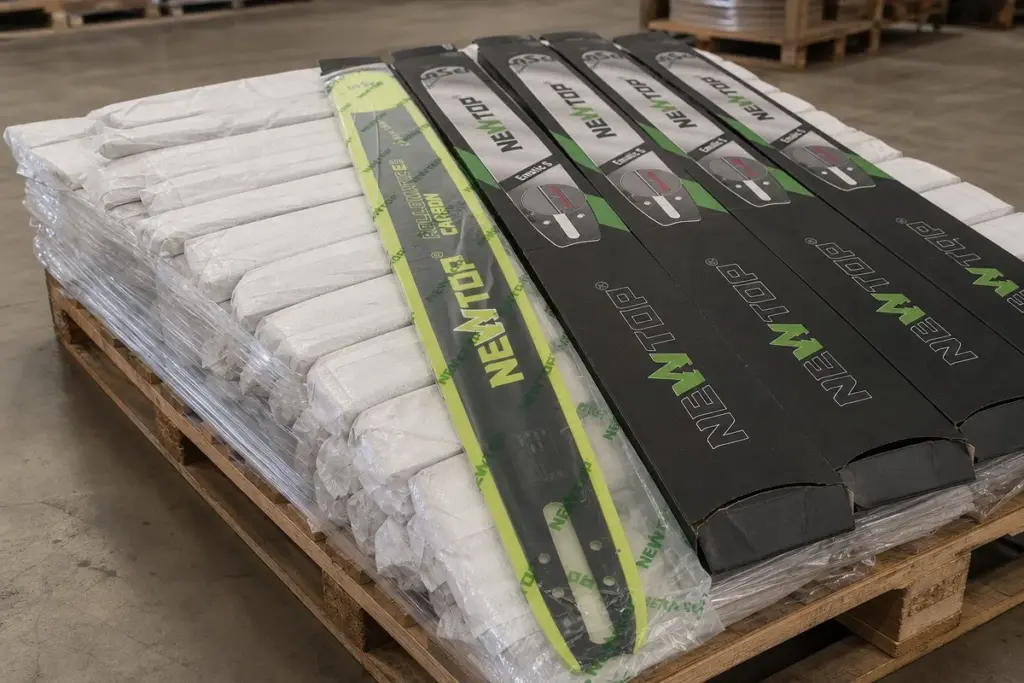
A chainsaw guide bar is exposed to continuous friction, нагревать, вибрация, and cutting pressure during operation. Через некоторое время, these conditions naturally cause wear along the guide bar rails and groove. Однако, when wear develops unevenly, it can affect chain movement, cutting accuracy, and overall operating safety.
For chainsaw dealers, импортеры, and outdoor power equipment distributors, understanding the causes of uneven guide bar wear is important for both product recommendations and after-sales support. Identifying early wear symptoms and helping customers follow proper maintenance practices can reduce premature replacement and unnecessary service complaints.
This guide explains how to recognize uneven guide bar wear, что вызывает это, and how dealers can help end users extend guide bar service life.
Wear Symptoms
Possible Causes
Recommended Solutions
One guide bar rail wears down faster than the other.
Check cutter lengths and sharpening angles, adjust chain tension, and reverse the guide bar if its design permits.
Guide bar groove becomes wider or irregular.
Prolonged chain movement, excessive lateral play, or abrasive debris inside the groove.
Clean the groove regularly, check chain fit, and replace the guide bar if groove width exceeds the manufacturer’s wear limit.
Burrs or raised metal edges appear along the rails.
Normal rail wear, excessive friction, or uneven pressure from the chain.
Remove minor burrs with a suitable flat file according to manufacturer instructions and inspect rail height.
Blue or dark discoloration appears on the guide bar.
Excessive heat caused by insufficient lubrication, an overtightened chain, or prolonged friction.
Check the oil supply, clean blocked oil passages, and correct chain tension. Inspect for heat damage before reuse.
Chain tilts or moves unevenly inside the groove.
Uneven rail height, excessive groove width, or incompatible chain and guide bar specifications.
Measure rail height and groove width, verify chain pitch and gauge, and replace damaged or incompatible components.
Regular inspection and timely maintenance help prevent minor guide bar wear from developing into more serious cutting performance and equipment issues..
What Does Uneven Chainsaw Guide Bar Wear Look Like?
Uneven guide bar wear occurs when one part of the guide bar experiences significantly more friction or material loss than another. Instead of wearing down at a relatively consistent rate, the guide bar may develop differences between its upper and lower rails, left and right sides, or along different sections of the bar.
Common signs include:
Uneven rail height:One rail becomes noticeably lower or more worn than the opposite rail, affecting how the chain sits in the guide bar groove.
Widened or irregular groove:The groove becomes wider in certain sections, allowing excessive chain movement or lateral play.
Rail burrs and sharp edges:Repeated friction and chain contact create raised metal edges along the rails.
Uneven discoloration:Localized blue or dark marks may indicate excessive heat caused by friction or insufficient lubrication.
Abnormal chain movement:The chain may tilt, run unevenly, or show signs of instability during operation.
What Causes Chainsaw Guide Bars to Wear Unevenly?
Uneven guide bar wear is rarely caused by a single factor. It often results from a combination of maintenance problems, incorrect chain setup, lubrication issues, и условия эксплуатации.
1. Incorrect Chain Tension
A chain that is too tight creates excessive friction against the guide bar rails. This increases heat and accelerates rail wear.
С другой стороны, an excessively loose chain can move laterally, vibrate, and place uneven pressure on the guide bar. It may also increase the risk of derailment.
2. Poor Chain Sharpening and Uneven Cutting Teeth
When cutters on the left and right sides of a chain have different lengths or sharpening angles, the chain may pull toward one side during cutting.
This uneven cutting behavior places additional lateral pressure on one guide bar rail. Через некоторое время, the affected rail may wear faster than the opposite side.
3. Insufficient Guide Bar Lubrication
Guide bar oil reduces friction between the chain and the guide bar rails. If the oil supply is insufficient, friction and operating temperatures increase.
Blocked oil passages, an incorrectly adjusted oiler, or unsuitable chain oil can all contribute to inadequate lubrication and accelerated wear.
4. Improper Sprocket Alignment
The guide bar, drive sprocket, and chain must work together in the correct alignment. A worn drive sprocket, damaged bar mounting area, or alignment problem can cause the chain to run unevenly.
This may create concentrated friction along one side of the guide bar groove.
5. Incorrect Operating Techniques
Cutting with excessive lateral pressure, forcing the bar through the material, or frequently using the same cutting position can increase localized wear.
Dirt, sand, and other abrasive materials can also enter the guide bar groove and accelerate wear when cleaning is neglected.
How to Inspect Guide Bars and Identify Early Wear Problems
A bar inspection needs four tools: a straight edge, a caliper, a groove gauge and a wire for the oil holes. The sequence matters more than the tools. Work from the tail to the nose, because a fault at the mount changes what you see further along.
Checking Guide Bar Rails and Groove Width
Lay the straight edge along each rail face and hold the bar up to the light. A bar that rocks, or shows a gap under the edge, has lost straightness through a bend or a twist, and it should not go back into service. Run a fingernail along both rail edges to find burrs. Then measure rail height on both sides at the tail, the middle and the nose with a caliper. The two sides should sit within about 0.5 мм (0.02 в) of each other, and a larger step means one rail has carried the load.
Groove width is the measurement that gets skipped. An opened groove lets the chain lean, and the lean shows up as a curved cut before the rail looks worn. Slight widening at the nose is normal break-in; a groove that measures wider than the chain gauge at the nose only points to the nose sprocket.
Inspecting the Guide Bar Nose and Oil Holes
With the chain off, spin the nose sprocket by hand. It should turn freely, without a gritty feel or sideways play. A sprocket that catches, or that has flats on the teeth, changes chain speed at the tip and loads one rail. Clear the oil hole on each side with a wire if blocked.
Then fit the bar and run the saw briefly over a clean surface. Oil should throw off the nose in a visible line. A dry nose, a smoking bar or a chain that discolours within minutes points to the oil system rather than to the bar. Наш guide to pitch and gaugeexplains how chain figures relate to groove width.
Contact point
What to measure
Инструмент
Pass
Fail
Rail height
Height of each rail at tail, middle and nose
Caliper
Sides within about 0.5 mm of each other
A larger step, or a rail low enough for the chain to rock
Rail straightness
Rock or gap against a straight edge
Straight edge and light
No rock, no gap
Rock or visible gap, from a bend or a twist
Rail edges
Burrs and rolled edges
Fingernail
Smooth along both edges
A burr that catches the nail
Groove width
Width at tail, middle and nose
Groove gauge
Within the chain gauge; slight widening at the nose is normal
Wider than the gauge, especially at the nose only
Nose sprocket
Rotation, side play, flats on the teeth
Hand spin
Turns freely, no side play
Catch, gritty feel, side play or flats
Tail mount
Slot width, stud hole shape, seating on the studs
Visual and trial fit
Straight slot, round holes, sits flat
Elongated hole, worn slot, bar sits at an angle
Oil holes and channel
Blockage, and oil throw at the nose after a short run
Wire and a short run
Oil reaches the nose
Dry nose, baked residue, blue rail
Measurement limits for counter and workshop staff. The tolerances are working limits for a used bar, not manufacturing specifications.
Practical Maintenance Tips to Extend Guide Bar Service Life
Maintenance that evens out guide bar wear is simple, repetitive and easy to skip. The aim is to share load between the two rails and to keep the chain sitting flat in the groove. Four habits cover most of it: reversal, уборка, tension and oil.
Regular Guide Bar Reversal and Cleaning
Flipping the bar at every chain change spreads rail wear across both sides. The bar is symmetrical on most saws, so the same part can run either way up unless the saw manual says otherwise. Mark the bar the first time it goes on so the next fit is deliberate rather than accidental. A bar that is never reversed wears one rail before the other, and that rail sets the point at which the bar is retired.
Cleaning the groove is the other half of the habit. A groove cleaner or a thin scraper lifts packed sawdust, resin and grit out of the channel. The oil holes get the same treatment, and the nose gets a drop of bar oil after cleaning.
Proper Chain Tensioning and Lubrication
Tension should be set with the chain cold and rechecked after the first few cuts. The chain should sit against the bar with no sag and still pull around the nose by hand. An over-tight chain loads the nose bearing and presses the rails inward. A loose chain slaps, burrs the rail edges and can derail. Neither setting holds for long, so the check belongs in the daily routine.
Lubrication decides how much heat the rail carries. Bar oil should be thick enough to stay on the rail and thin enough to reach the nose at working temperature. Cold weather calls for a lighter oil and hot weather for a heavier one, within what the pump can move. Keep the tank filled and confirm flow at the nose before a long cut, because a dry rail wears faster than a wet one.
How Can Dealers Reduce Guide Bar-Related After-Sales Issues?
A guide bar fault may reach the counter described as a chain, cutting or power problem. The customer names the symptom and not the part, so inspect the bar first. A dealer who asks a few questions at the counter can separate a genuine defect from a wear condition before the part reaches the workshop queue.
Screening Claims Before They Become Returns
Ask for the bar, the chain and the saw together. A bar on its own tells you little, because the chain shows the tension history and the saw shows the oil delivery. Ask what oil the customer uses and how often the bar is reversed. Ask what the saw was cutting and whether the cut curved.
Record the answers and photograph the rails, the nose and the mount. A claim with photographs and a wear pattern is easier to settle than a description. The log also shows which customers need training, which is more useful than a growing stack of replacement bars.
Staff Training and Stock Discipline
The counter is where a claim is usually settled or passed on, and a short handover on tension, reversal and oil can stop an uneven wear case before it starts. Training should also cover the difference between a worn bar and a bent bar. The two look similar to a customer and very different on a straight edge.
Where a market regulates professional chainsaw work, trained operators are part of the customer base a dealer sells into. TheUK HSE guidance on chainsaw operatorssets out the training duty that applies in that market.
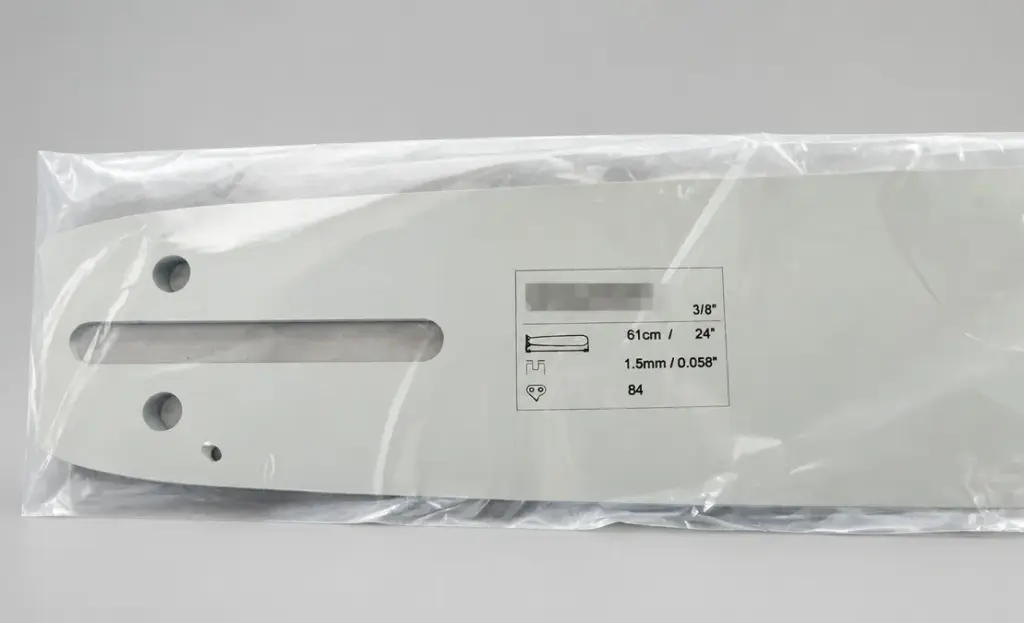
Stock discipline matters as much. Keep the fast-moving lengths deep and the slow ones thin, and keep bars sealed until sale so rails do not rust. When a market runs mixed-brand fleets, hold the mount patterns that are actually serviced and confirm pitch and gauge on the box.
NEWTOP Guide Bars for Reliable Replacement and Maintenance
NEWTOP supplies replacement guide bars matched to its chainsaw models, helping distributors verify compatibility and simplify spare parts sourcing. С 2003, we have supplied outdoor power equipment to distributors and brand agents in over 65 страны, with an annual production capacity exceeding 500,000 машины.
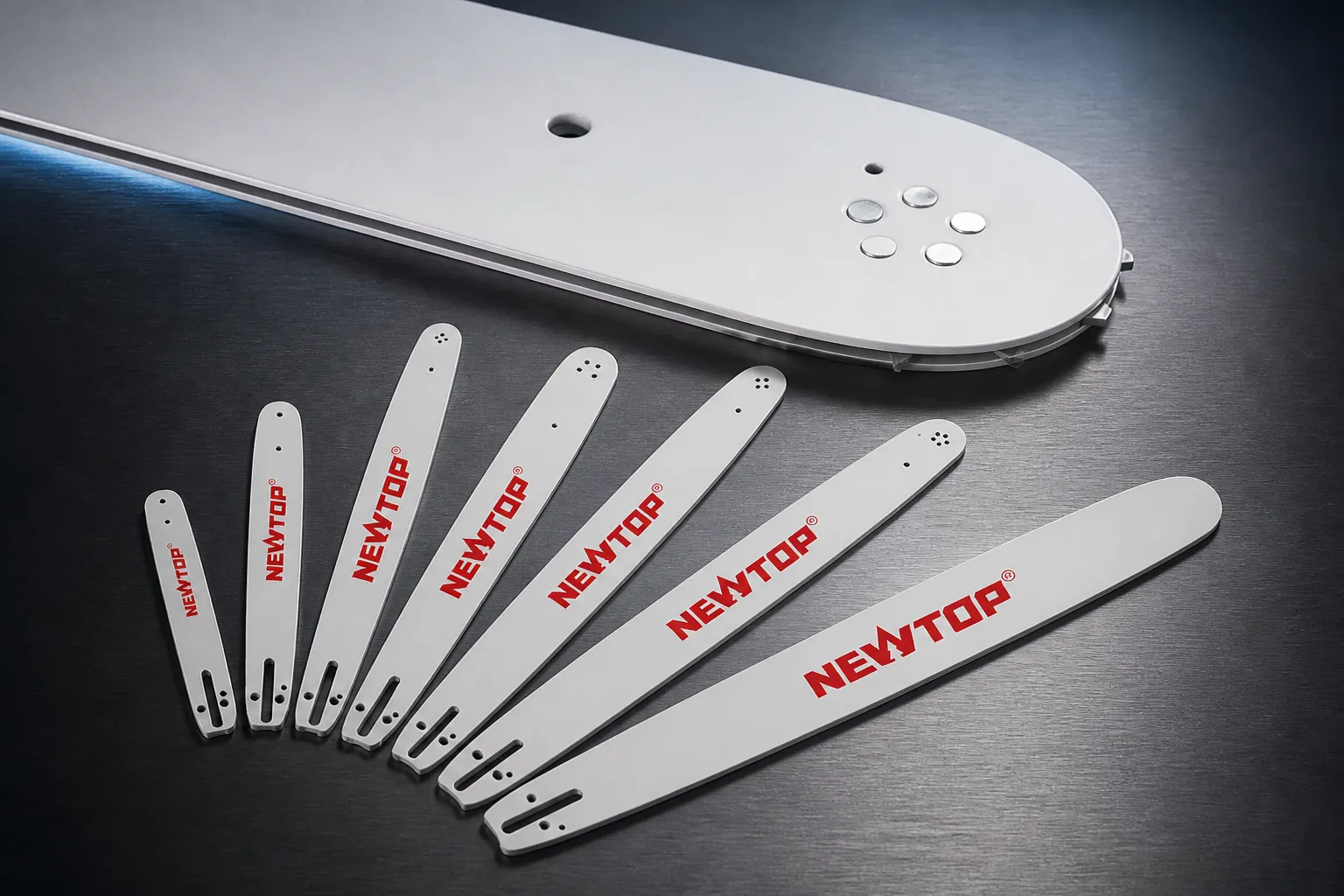
Guide Bar Ranges Across NEWTOP Saws
NT3200: 14–16 inch
NT5800 / НТ6200: 16–24 inch
НТ9200: 20–42 inch
Наш replacement guide barssupport compatible NEWTOP chainsaws. We also help buyers check bar, цепь, and sprocket specifications to ensure proper compatibility.
Заказ, Samples and Warranty
NEWTOP uses CNC machining and incoming, в процессе, and final inspections. We offer 7–10-day sample lead times, approximately 30-day container lead times, six-month core parts warranties, and customized packaging for private-label orders.
Контакт НЬЮТОПwith your chainsaw models and sourcing requirements. Our team can help verify guide bar specifications and recommend suitable replacement parts for your market.
Часто задаваемые вопросы
Can Uneven Guide Bar Wear Be Repaired?
A workshop can dress light burrs and true a rail that has only just started to wear. A bar that rocks on a straight edge, or whose groove is wider than the chain gauge, should be replaced instead. Base the decision on the measurements, not on the age of the bar.
How Often Should a Guide Bar Be Reversed?
Tie the reversal to the chain, not to the calendar. Fitting a freshly sharpened chain is the natural moment to flip the bar, so both sides of the rail take the same load over a season. A bar that stays the same way up always wears one rail first.
Does a Worn Drive Sprocket Cause Uneven Bar Wear?
Он может, and it is easy to miss. Hooked or uneven sprocket teeth release the chain at slightly different points, which pushes the chain against one rail. Inspect the sprocket whenever you inspect the bar, and treat a worn one as a cause rather than a separate repair.
Why Does My Chain Cut to One Side?
Check three things in order: cutter length on the left and right, bar straightness, and chain tension. Cutters that are shorter on one side pull the bar, and a bar that has lost straightness steers the chain. Check the drive sprocket last.
Do You Supply Guide Bars for Dealer Replacement Programmes?
We do. We supply guide bars as stocked parts for the saws we build, and we can confirm the bar specification against your saw model, including mount, length, pitch and gauge. Samples go out 7-10 days after payment so you can test the fit on your own saws.
Founder of NEWTOP
I am the Chairman of Shanghai NEWTOP Machinery Co., ООО. и Zhejiang Surtec Machinery Co., ООО. Аспирант Пекинского технологического института., Я основал Шанхай NEWTOP в 2003 и с тех пор привели его рост от внешней торговли к промышленному производству.. На протяжении многих лет, I have also contributed to the development of China's market for chainsaws, ранцевые опрыскиватели, подвесные моторы и другое наружное силовое оборудование, вместе с соответствующими запасными частями и аксессуарами.
В 2026, Я вновь встал у руля NEWTOP, opening a new chapter in the company's development. Сейчас мы активно ищем дистрибьюторов и партнеров на ключевых рынках, таких как Африка., Латинская Америка, и т. д.. Если вы хотите развивать свой бизнес с надежным производителем OPE, мы приглашаем вас присоединиться к сети NEWTOP и вместе добиваться успеха.
 Перейти к содержимому