Water pumps are designed for different working conditions, and the right choice depends on how the water needs to be delivered. A high pressure water pump is designed to provide higher head for applications such as uphill irrigation, long-distance water delivery, and sprinkler systems. A general purpose water pump is typically selected for moving larger volumes of water in applications such as drainage, 건설, and general irrigation.
The difference becomes clearer when you look at two key pump specifications: flow rate and head. Understanding how these two values affect pump performance can help you select the right water pump for your application, avoid insufficient pressure or flow, and get more reliable performance in the field.
What Is a High Pressure Water Pump?
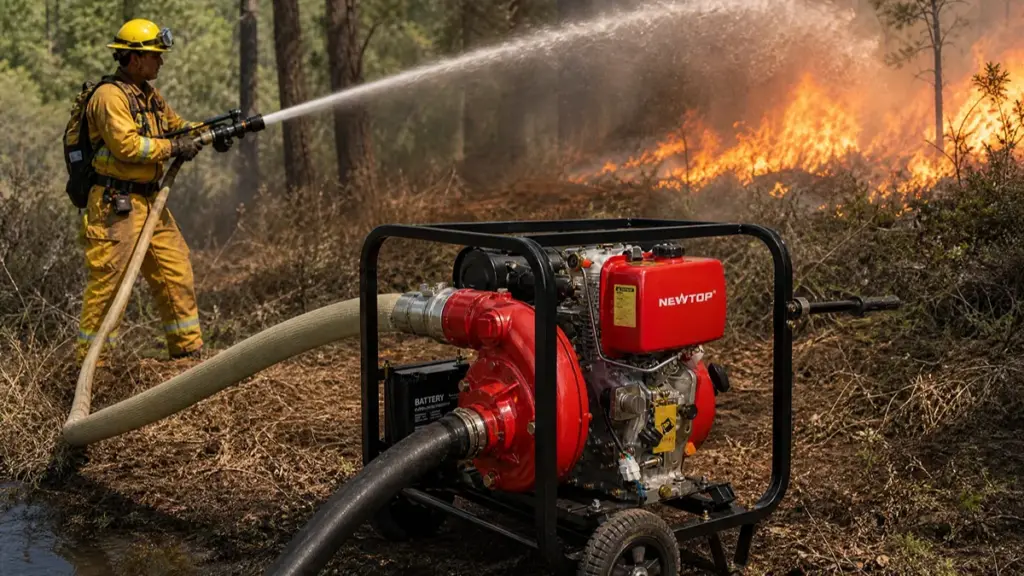
A high pressure water pump generates forceful head rather than sheer volume. It pushes water against gravity, long distances, or high-resistance nozzles to perform physical work.
Core Definition and Purpose
A high pressure water pump is designed to generate a higher head, allowing water to overcome greater resistance in the discharge system. This makes it useful when water must travel a long distance, move uphill, or pass through smaller pipes, sprinklers, or other restrictive equipment.
Common Pump Types for High Pressure
Manufacturers build several distinct pump configurations to handle elevated pressure demands across different industrial and agricultural sectors.
- Centrifugal high-pressure pumps: Frequently configured for demanding water-transfer tasks and large-scale agricultural irrigation systems.
- Positive displacement pumps: Capable of producing significantly higher pressures and operating with extreme efficiency during continuous, demanding duties.
- Multi-stage pumps: Utilize multiple internal impellers to generate and sustain higher head, commonly found in heavy industrial applications.
Typical Applications and Use Cases
Any application requiring water to act as a physical tool or travel against heavy mechanical resistance demands a high pressure setup.
- 농업: Powering large irrigation sprinklers and managing consistent long-distance water delivery across uneven terrain.
- Cleaning: Supplying steady, forceful streams for commercial pressure washing, surface preparation, and heavy industrial washdowns.
- Fire suppression: Delivering emergency water streams safely and effectively over distances to reach active hazards.
- Industrial processing: Handling internal tasks like deep well water injection, machinery descaling, and high-pressure boiler feed operations.
What Is a General Purpose Water Pump?
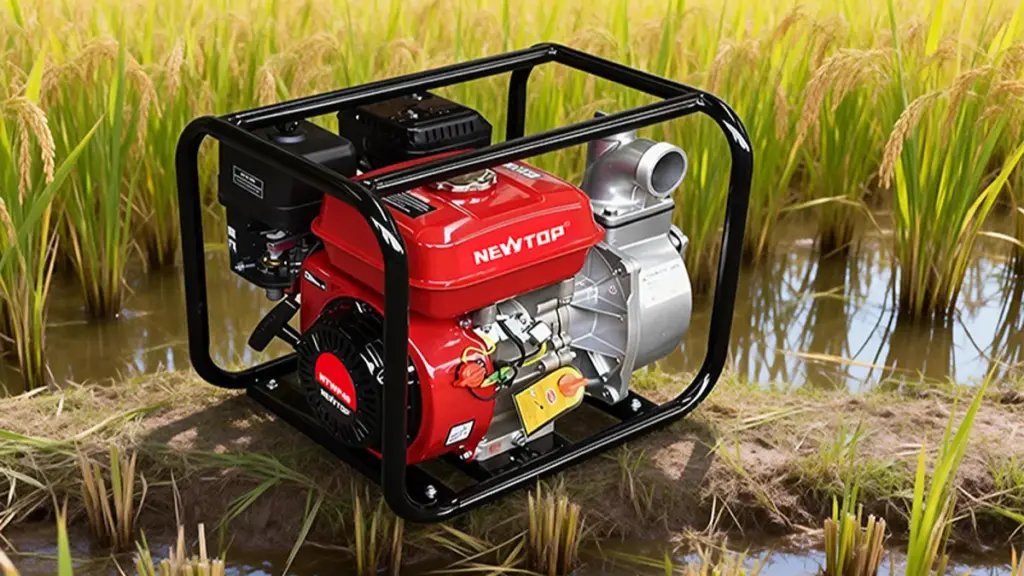
A general-purpose water pump handles routine liquid transfer, prioritizing a practical balance of flow, 머리, and cost rather than specialized extreme-duty performance.
Core Definition and Function
A general purpose water pump is typically designed to move water efficiently rather than generate maximum pressure. These pumps are commonly used for irrigation, 배수, water transfer, construction sites, 연못, tanks, and other everyday pumping tasks.
Water pumps can also be classified by how they handle air during startup. If you are comparing pump designs for different installation conditions, it is useful to understand the difference between centrifugal and self-priming pumps. 원심 대 자체 프라이밍 워터 펌프 explains how these two pump types differ in priming requirements, startup performance, and typical applications.
주요 애플리케이션
You will find general-purpose units operating across multiple sectors where steady volume matters more than extreme discharge force.
- Commercial and municipal: Handles building water supply, baseline pressure boosting, and HVAC chilled-water circulation.
- Agricultural and construction: Supports field irrigation, bulk water transfer, and site dewatering operations.
- Industrial and wastewater: Manages light-duty process water movement and solid-handling sewage tasks when configured properly.
Industry Standards and Compliance
Broad applicability requires strict adherence to standardized manufacturing and testing protocols. This ensures buyers can swap out units across different brands without redesigning entire piping systems.
- Hydraulic Institute (HI): Sets the baseline guidelines for nomenclature, design specifications, and performance testing.
- ISO and ANSI: Dictate dimensional standards to guarantee broad equipment interchangeability across global markets.
- AWWA and UL 778: Provide evaluation frameworks for electrical safety, operational reliability, and public water system compliance.
Boost Margins With Reliable OEM Power Equipment

고압 워터 펌프와 범용 워터 펌프: 주요 차이점
The main difference is the balance between head and flow. In simple terms, a high pressure water pump is designed to push water farther and higher, while a general purpose water pump is designed to move larger volumes of water efficiently.
| 특징 | High Pressure Water Pump | General Purpose Water Pump |
|---|---|---|
| Main purpose | Overcome high resistance and lift water higher | Move large volumes of water efficiently |
| 머리 | 더 높은 | 보통의 |
| Flow rate | Often moderate | Often higher |
| Typical applications | Sprinklers, long hoses, 오르막 펌핑, 관개 시스템 | 배수, flood control, water transfer, general irrigation |
| Discharge system | Suitable for longer or more restrictive systems | Best for shorter, less restrictive systems |
| 우선 사항 | Pressure/head | Water volume/flow |
| Typical fuel options | Gasoline or diesel | Gasoline or diesel |
| Best selection factor | Required head and system resistance | Required flow and total head |
Flow Rate vs Head: Understanding the Main Difference
Flow rate is the volume of water moved, while head is the resistance it overcomes. Higher head limits flow, dictating actual pump performance in real-world systems.
Flow rate describes how much water the pump can move over a period of time. It is commonly measured in m³/h (시간당 입방미터) or L/min (liters per minute).
The Tradeoff Between Pressure and Volume
A pump’s flow rate is not a constant value. It decreases as the resistance it works against increases. Higher head requirements generally result in a lower flow rate at a given operating point.
This tradeoff dictates equipment selection across different applications. High-pressure water pumps prioritize head to achieve longer discharge distances and overcome extreme resistance. General-purpose models take the opposite approach, focusing on maximizing flow for basic transfer tasks where lift and friction stay low.
How System Head Affects Actual Output
System head calculates the total resistance your equipment faces in the field. This calculation combines static elevation lift, dynamic energy, and friction losses. As flow increases, friction losses from pipes, 밸브, and bends also increase, which restricts the delivered volume.
The true operating point occurs exactly where the pump performance curve intersects the specific system head curve. This intersection represents the actual volume the pump will deliver in a live installation, completely overriding theoretical maximums.
Practical Selection Guidelines
Selecting the right equipment requires matching your primary specification to the actual site demands.
- Prioritize head: Choose this path for applications requiring long vertical lifts, extended horizontal pipe runs, or high discharge pressure.
- Prioritize flow rate: Focus here when moving large volumes of water quickly with minimal elevation changes.
- Avoid the free-flow trap: Never buy a pump based solely on its maximum free-flow rating at zero head. Real-world resistance will lower the actual output on site.
When Should You Use a High Pressure Water Pump?
Use a high-pressure pump when you need force, not just volume. If your system requires pushing water upward, spraying, or overcoming resistance, standard transfer pumps will fall short.
Common Scenarios Requiring a Pressure Boost
High-pressure pumps step in when gravity and friction work against your water supply. A standard utility pump handles basic flow, but you need a dedicated pressure boost when fixtures fail to operate correctly due to low force.
- Low municipal pressure: Fixes weak incoming flow at taps, showers, and household appliances.
- Vertical lift: Pushes water upward to elevated fixtures, higher floors, or rooftop tanks in multi-story buildings.
- Simultaneous demand: Prevents noticeable pressure drops when multiple outlets, such as a shower and a washing machine, run at the same time.
Specific Applications and Setups
Beyond basic household plumbing, specific mechanical setups demand high pressure to function. You need a pump built to handle resistance and maintain a usable discharge pressure all the way to the end of the line.
- Underground sources: Drawing supply from shallow wells, underground cisterns, or buried storage tanks where self-priming is necessary.
- Sprinkler networks: Operating pressure-dependent irrigation systems that require a steady, forceful supply to achieve the correct spray reach.
- Line supplementation: Acting as a compact domestic booster to supplement an existing utility line without replacing the entire supply system.
When to Avoid High-Pressure Pumps
Higher pressure is not a universal fix. Forcing a high-pressure unit into the wrong application wastes energy, damages pipe fittings, and creates unnecessary maintenance costs. Know when to stick to a general-purpose model.
- Bulk transfer: Moving large volumes of water quickly. A standard centrifugal or high-flow transfer pump handles this much more efficiently.
- Deep source extraction: Pulling water from deep underground requires specialized deep-well or submersible pumps, not surface-mounted pressure models.
- Contaminated fluids: Pumping dirty water or liquid with heavy sediment will destroy high-pressure seals. Standard pressure pumps are built specifically for clean water applications.
Key Selection Criteria
Buying the right pump means matching its performance curve to your exact system requirements. Never size a pump based on a single metric like horsepower or maximum flow.
- Flow and force balance: Evaluating pressure and flow rate together to ensure the pump supports both the force needed and the volume for simultaneous users.
- Total vertical lift: Calculating the exact height from the pump installation level to the highest water fixture in the system.
- Intake limits: Checking the suction depth requirements if you draw water from a below-ground source.
- System controls: Selecting the right control mode, such as automatic start/stop or constant-pressure drives, to ensure consistent household comfort.
When Is a General Purpose Water Pump a Better Choice?
Choose a general-purpose pump when moving large volumes of water efficiently matters more than extreme discharge pressure. It cuts unnecessary costs and simplifies system maintenance.
Moderate Pressure and High Flow Requirements
General purpose centrifugal pumps thrive in environments operating well below 300 psi. Equipment following standards like ANSI/ASME B73.1 focuses entirely on efficient liquid movement. Instead of generating extreme outlet force, these units prioritize raw volume and steady transfer rates.
You should deploy them for clean or lightly treated water. They are not built for hazardous, high-temperature, or highly specialized industrial fluids. When your primary goal is shifting liquid from point A to point B without battling extreme pipe resistance, standard utility pumps handle the workload perfectly.
Ideal Applications and Use Cases
These pumps fit naturally into everyday fluid movement scenarios. Engineers specify them across commercial and industrial sites where volume throughput dictates system success.
- Water transfer: Moving liquid between tanks, 저수지, or different process stages.
- HVAC and circulation: Running cooling or heating loops that need stable, dependable flow rather than extreme discharge pressure.
- Standard irrigation: Handling open-field or landscape watering where specialized high-pressure nozzles are absent.
- Utility services: Managing routine wastewater and general industrial facility water needs.
Cost and Maintenance Advantages
Specifying a general purpose pump keeps capital expenditure grounded. You avoid the premium price tags attached to high-pressure components and specialized industrial ratings that your system simply does not need.
This approach streamlines the specification process and removes the risk of overdesigning a basic utility setup. Because these units integrate perfectly with standard piping and normal system pressures, your team faces significantly less maintenance complexity over the equipment’s lifespan.
Situations That Require High-Pressure Alternatives
While versatile, standard transfer pumps fail under heavy resistance. You must step up to specialized equipment when the job demands sheer force rather than simple volume.
- Industrial cleaning: Standard models cannot support water jetting or hydrotesting that demands sustained pressure from 500 이상으로 1,500 psi.
- Fire protection: Emergency systems require certified, instant-on performance and massive lift that general utility models cannot guarantee.
- Critical process loads: Avoid standard models for demanding processes that require API-level construction to survive extreme operational stress.
High Pressure vs General Purpose Water Pump for Irrigation
Choose a high-pressure pump to push water across long distances and uneven terrain. Rely on a general-purpose pump to move large volumes efficiently for standard, flat-field irrigation.
Core Differences in Pressure and Flow
A high-pressure pump generates strong discharge pressure to overcome significant friction or elevation losses. This design inherently delivers lower flow rates. General-purpose centrifugal pumps prioritize moving large volumes of water efficiently at moderate pressures. In agricultural settings, these units commonly operate in the 15 에게 60 psi 범위.
Upgrading to a high-pressure system introduces greater physical stress to your infrastructure. The added force places higher demands on your entire irrigation network. You must specify stronger pipes, heavy-duty fittings, and premium seals to prevent leaks or blowouts under load.
Ideal Use Cases and Applications
Matching the pump to the field layout dictates your system’s reliability. High-pressure pumps handle demanding environments where resistance restricts water delivery, especially when running pressure-compensating drip networks that require sustained inlet pressure for multiple active emitters.
Deploy a high-pressure pump for these challenging layouts:
- Long-distance conveyance: Pushing water through extensive pipe networks.
- Uneven hillside fields: Overcoming steep elevation changes.
- Filtration-heavy setups: Forcing water through restrictive filter media.
General-purpose pumps excel in straightforward, low-resistance layouts. Rely on them for:
- Surface irrigation: Flooding fields or feeding low-head systems.
- Standard field watering: Moving water across flat, accessible crop rows.
- Short-distance transfer: Pumping directly from holding tanks or nearby canals.
Operational Trade-offs and System Impact
High-pressure models successfully maintain uniform emitter performance across difficult terrain. The direct trade-off is heavy energy consumption. Forcing water at high pressures requires significantly more power, driving up your daily operating expenses.
General-purpose pumps offer a more economical solution for standard water movement. They feature lower installation costs and run much cheaper over a long growing season.
You should never oversize pressure unnecessarily. Installing a high-pressure unit on a low-resistance field leads to increased energy bills, premature component wear, and a much higher risk of pipe failure.
Key Sizing and Selection Criteria
Your selection must map directly to the required pressure at the point of use, specifically the sprinkler or emitter inlet. You cannot buy an irrigation pump based on horsepower alone.
To size the system correctly, calculate the total dynamic head (TDH). This requires combining several specific system losses:
- Static lift: The vertical distance from the water source to the pump.
- Pipe friction: The resistance created by water moving through the pipe diameter.
- Elevation changes: The vertical rise from the pump to the highest irrigation point.
- Filter losses: The pressure drop caused by screens or media filters.
- Required nozzle pressure: The exact operating pressure your sprinklers or emitters need.
Once you calculate the total dynamic head, compare these system demands against the manufacturer’s pump curve. This ensures the pump operates within its most efficient range at your target duty point.
High Pressure vs General Purpose Water Pump for Drainage and Construction
Choose general-purpose pumps to quickly move large volumes of accumulating water. Reserve high-pressure pumps for tasks demanding concentrated force, like site cleaning or overcoming extreme pipe resistance.
Core Differences: Pressure vs. Volume
The primary distinction between these two equipment categories comes down to how they handle water. High-pressure water pumps focus on generating maximum force and high discharge head. In industrial construction, they frequently operate above 500 psi using multi-stage or plunger designs.
General-purpose water pumps prioritize moving high volumes of water efficiently at modest pressures. Manufacturers typically rely on centrifugal or submersible designs for these tasks. The flow profile differs significantly based on the pump’s internal mechanics.
- High-pressure systems: Deliver lower flow rates at significantly higher pressure.
- General-purpose systems: Move high flow rates at much lower pressure.
The type of water being pumped is also important. Clean water and water containing sand, mud, 나뭇잎, or other solid particles can require different pump designs. If you need to choose between pumps for clean or contaminated water, see Trash Pump vs Clean Water Pump for a detailed comparison of their construction, handling capacity, and suitable applications.
Drainage Applications: When Flow Rates Matter Most
Site drainage success depends heavily on clearing water faster than it accumulates. General-purpose pumps are the standard choice for floodwater removal, trench dewatering, and emptying excavation pits. In these scenarios, the priority is moving massive volumes quickly.
Actual drainage performance depends primarily on the flow rate and the total dynamic head rather than raw pressure output. A pump rated for extreme pressure will underperform if it lacks the capacity to process hundreds of gallons per minute.
You only need high-pressure pumps for drainage when the site forces you to overcome specific system resistance. Common examples include pushing water through exceptionally long discharge lines or pumping it up steep vertical elevations where a standard centrifugal pump would stall.
Construction Use Cases: Dewatering vs. Site Cleaning
Construction sites demand different equipment for different phases of the project. Standard dewatering, temporary bypass pumping, and stormwater management rely on general-purpose pumps designed for high throughput and muddy water handling.
Other site activities require concentrated water force rather than simple volume transfer. You need a high-pressure pump for specific, force-driven workloads.
- Equipment washdown: Blasting dried mud and grease from heavy machinery.
- Concrete cleanup: Preparing surfaces and removing slurry.
- Hydroblasting: Stripping materials or cutting surfaces.
- Dust suppression: Forcing water through misting nozzles.
Contractors often deploy both pump types simultaneously on complex sites. Pressure-oriented and flow-oriented designs are optimized for entirely different tasks, making a single pump highly inefficient for both jobs.
Practical Selection Rules and Trade-Offs
General-purpose pumps offer simpler site deployment and better economy for routine water transfer. They run cheaper and require less maintenance, but they struggle immediately if the application demands strong outlet pressure.
High-pressure pumps easily overcome pipeline resistance and deliver aggressive cleaning power. The trade-off is their cost. They require larger capital investment, demand careful setup, and operate far less efficiently for simple volume dewatering.
The baseline rule for site use is matching the pump exactly to the primary problem. Use flow-focused equipment to remove accumulating water. Use pressure-focused equipment to perform physical work at the discharge point.
How to Choose Between a High Pressure and General Purpose Water Pump
Choose a high-pressure pump to force water through restrictions or up steep elevations, and a general-purpose pump to move large volumes quickly at a lower cost.
Core Technical Differences: Pressure vs. Flow
High-pressure models generate intense force, typically ranging from 100 psi to over 40,000 psi, to push water through system restrictions. General-purpose pumps operate at lower pressures, usually between 10 그리고 100 psi, prioritizing the rapid movement of large water volumes. Pressure and flow share an inverse relationship. Optimizing a pump for high pressure generally reduces its overall flow rate.
Matching the Pump to Your Application
Buyers must assess whether the water needs to do work at the outlet or simply relocate. Select a high-pressure pump for tasks demanding force, such as operating sprinklers, executing industrial wash-downs, 소방, or pushing water up steep elevations. Choose a general-purpose pump for moving water efficiently from point A to point B. This includes draining flooded areas, filling pools, or handling basic household water transfer.
Critical Performance Factors to Evaluate
Identifying the correct pump requires matching equipment capabilities against specific site conditions.
- Discharge pressure and total dynamic head: Verify the pump can overcome specific elevation changes and pipe friction.
- Target flow rate: Match the output directly to the volume requirements of the specific task.
- Fluid quality: Identify debris levels, as contaminated water requires specialized handling designs rather than standard clean-water pumps.
- Power source: Favor engine-driven pumps for off-grid portability and electric models for stationary setups.
비용, Energy, and Maintenance Trade-offs
General-purpose pumps require smaller motors, making them highly energy-efficient and less expensive to purchase upfront. High-pressure pumps utilize robust, precision-engineered materials to withstand operational stress. This specialized construction leads to higher initial costs and greater energy consumption. The complexity of high-pressure systems also results in a more demanding maintenance schedule compared to standard transfer pumps.
Common Selection Mistakes to Avoid
Failing to align pump specifications with the main operational goal leads to system failures and wasted capital.
- Using a high-pressure pump for simple transfer jobs: This wastes electrical or fuel energy and reduces flow efficiency.
- Underestimating pressure requirements: System performance drops rapidly when buyers ignore friction from spray nozzles, long hose runs, or restrictive fittings.
- Over-specifying specifications: Ensure the chosen pump aligns strictly with the primary objective rather than chasing unnecessary maximum ratings.
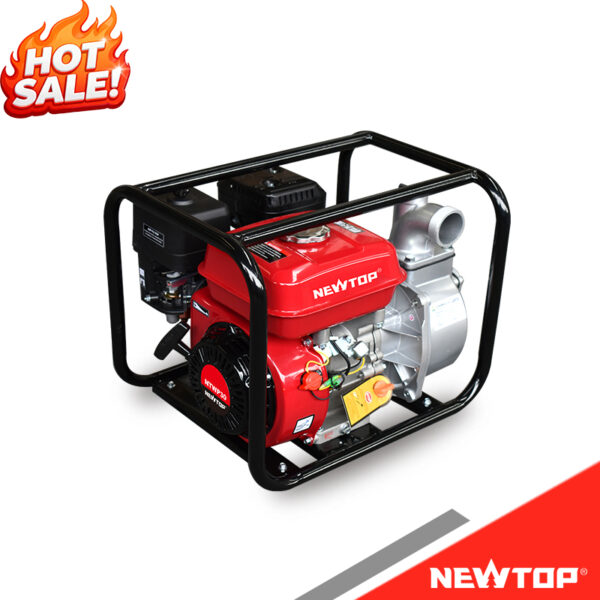
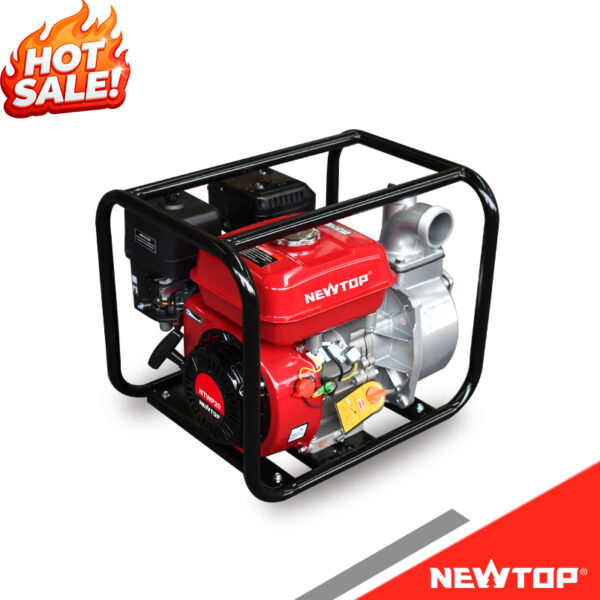
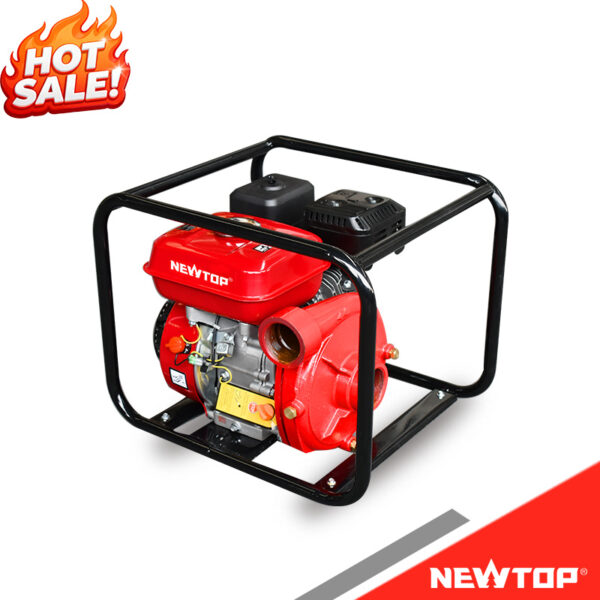
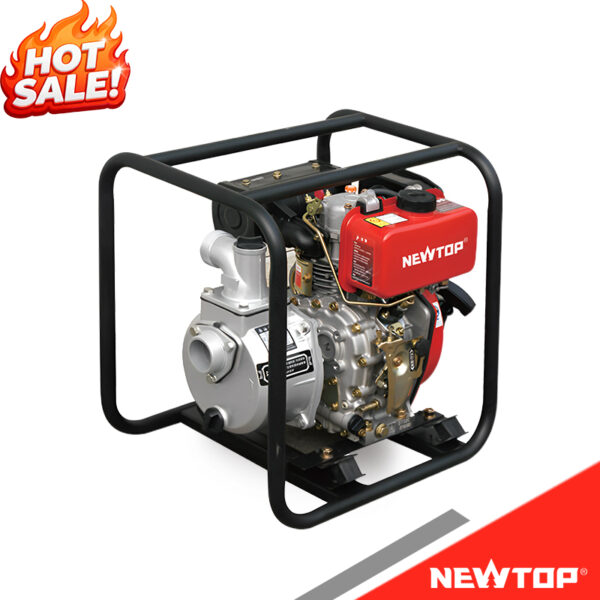
NEWTOP Water Pump Options for Different Applications
자주 묻는 질문
What is the difference between a high-pressure and a general-purpose water pump?
A high-pressure water pump generates strong discharge force (머리) designed for pressure washing, water jetting, and industrial cleaning. A general-purpose pump focuses on moving large volumes of water (흐름) at lower pressures, making it the practical choice for basic fluid transfer, 관개, 및 배수.
Is a high-pressure pump better than a standard water pump?
It depends entirely on your application. A high-pressure pump is essential when a specific job demands forceful output at the discharge point, like hydroblasting or firefighting. If your goal is simply to transfer or circulate water efficiently, a standard pump is more practical and cost-effective.
Can I use a high-pressure pump for irrigation?
예, but reserve high-pressure pumps for large-scale or technical setups that must push water over long distances, up steep elevations, or through complex filtration systems. For a typical garden or low-resistance irrigation layout, a standard centrifugal pump provides a better balance of flow and moderate pressure.
What water pump is best for sprinklers?
Sprinkler systems require a specific balance of pressure and flow to maintain consistent spray coverage. A high-pressure centrifugal pump works best for demanding, multi-head layouts. For simpler setups, a surface booster pump handles shallow water sources well, while a submersible irrigation pump is the standard choice for accessing deeper wells.
Does higher pressure mean higher water flow?
아니요. Pressure is the force pushing the water, and flow is the total volume moved. In pump design, these factors generally have an inverse relationship. High-pressure units deliver lower flow rates optimized for forceful output. Standard general-purpose pumps prioritize high volume movement at reduced pressure.
How much head does a high-pressure water pump produce?
Entry-level high-head centrifugal models start around 150 머리의 발, which equals roughly 65 psi. Multistage and industrial high-pressure pumps produce significantly more, generating anywhere from 1,300 feet of head to well over 4,000 미터, depending on the system design and the required operating pressure.
Can a general-purpose pump handle long discharge hoses?
A general-purpose pump can handle shorter hoses with wide diameters and minimal resistance. Long discharge hoses increase friction loss drastically. If you need to push water over a long distance or up an incline, you need a high-pressure pump to overcome that resistance and maintain usable flow at the end of the line.