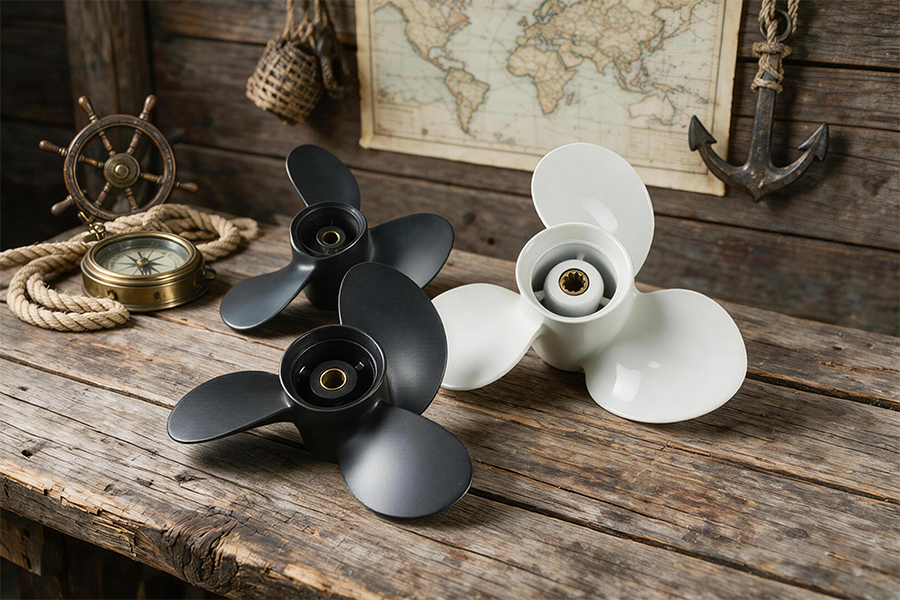
Outboard motor propeller influences acceleration, fuel consumption, durability, maintenance costs, and even the lifespan of your lower unit. While aluminum and stainless steel remain the two most common propeller materials, neither is universally better. The right choice depends on how your boat is used, the water conditions, engine horsepower, and your long-term operating costs.
Whether you’re a boat owner replacing a damaged propeller or a marine equipment distributor selecting products for your market, understanding the differences between aluminum and stainless outboard motor propellers helps you make a smarter investment.
This guide compares aluminum and stainless steel outboard motor propellers across performance, durability, repairability, cost, and application scenarios to help you choose the best propeller for your needs.
Overview of Aluminum and Stainless Outboard Motor Propeller Materials
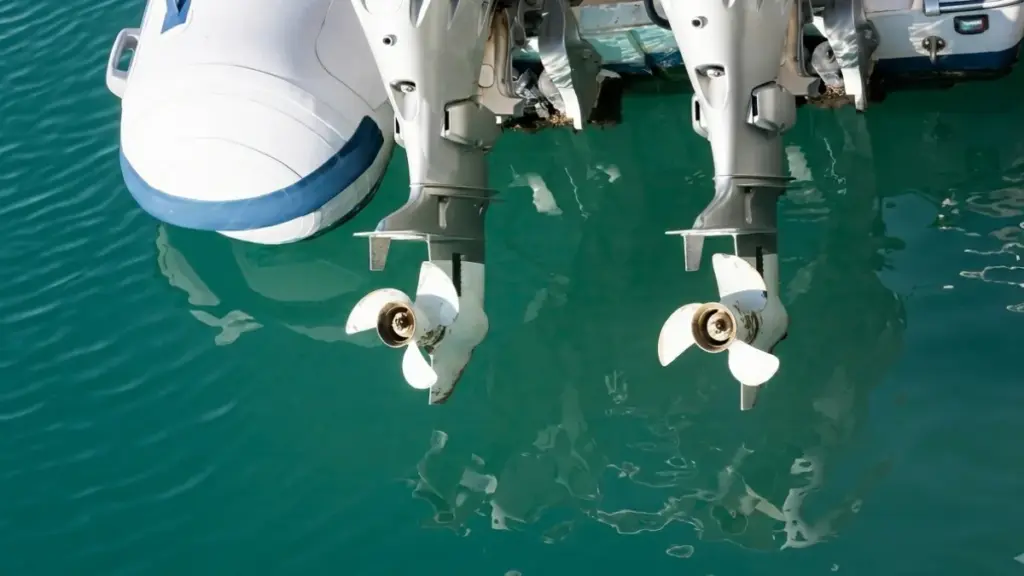
Aluminum and stainless steel are the two most common materials used for outboard motor propellers. While they perform the same basic function, their different mechanical properties affect strength, weight, efficiency, durability, and cost.
Here’s a quick comparison between aluminum and stainless outboard motor propellers:
| Feature | Aluminum Propeller | Stainless Steel Propeller |
|---|---|---|
| Weight | Lightweight | Heavier |
| Strength | Good | Excellent |
| Blade Flex | Slightly Higher | Minimal |
| Corrosion Resistance | Excellent | Excellent |
| Manufacturing Cost | Lower | Higher |
| Typical Applications | Recreational boats, fishing boats, inflatables | Offshore boats, commercial vessels, performance boats |
Aluminum Propellers
Aluminum outboard propellers are typically manufactured from marine-grade aluminum alloys, most commonly aluminum-magnesium (Al-Mg) alloys. Magnesium improves the alloy’s strength, toughness, and resistance to corrosion, while maintaining the lightweight characteristics that make aluminum popular in marine applications.
Compared with steel, aluminum has a much lower density, resulting in a lighter propeller that requires less rotational inertia to spin. This helps engines accelerate smoothly and reduces stress on the drivetrain during startup and low-speed operation. Aluminum also naturally forms a thin oxide layer when exposed to air and water, providing effective protection against corrosion in both freshwater and normal saltwater environments.
Another advantage of aluminum is its excellent castability. It can be efficiently manufactured through high-volume casting processes, allowing propellers to be produced with consistent quality at a competitive cost. For this reason, aluminum propellers have become the standard choice for most recreational boats, small fishing vessels, inflatable boats, and outboard engines in the low- to medium-horsepower range.
At NEWTOP, aluminum propellers are manufactured using premium aluminum-magnesium alloy produced from new aluminum ingots rather than recycled materials. The alloy is re-melted using a proprietary formulation to achieve higher toughness, greater mechanical strength, and improved long-term durability. Combined with one-piece precision casting, integrated hub pressing, and CNC blade machining, each propeller delivers reliable balance, accurate blade geometry, and consistent performance on the water.
Stainless Steel Propellers
Stainless steel propellers are produced from high-strength marine stainless steel alloys that contain chromium, nickel, and other alloying elements to enhance corrosion resistance and mechanical performance. Compared with aluminum alloys, stainless steel offers significantly higher tensile strength, yield strength, and fatigue resistance, allowing it to withstand much greater engine loads without permanent deformation.
Because the material is considerably stronger, engineers can design propeller blades that are thinner while still maintaining excellent structural rigidity. These thinner blades create less drag as they move through the water and allow for more advanced blade profiles, including higher rake angles, progressive pitch designs, and deeper cup geometry. The result is improved water grip, more efficient power transfer, stronger acceleration, and better high-speed performance, particularly on medium- and high-horsepower outboards.
NEWTOP’s stainless steel propellers are manufactured from duplex stainless steel, which provides higher yield strength and superior corrosion resistance than conventional stainless steel grades commonly used in marine products. To fully utilize the material’s strength, every propeller is produced through one-piece precision casting without welded joints, followed by integrated hub pressing to maintain dynamic balance and dedicated CNC machining of each blade. This manufacturing process ensures excellent dimensional consistency, smooth blade surfaces, and stable hydrodynamic performance, enabling reliable operation in demanding freshwater and saltwater environments.
Boost Your Margins with Reliable Equipment
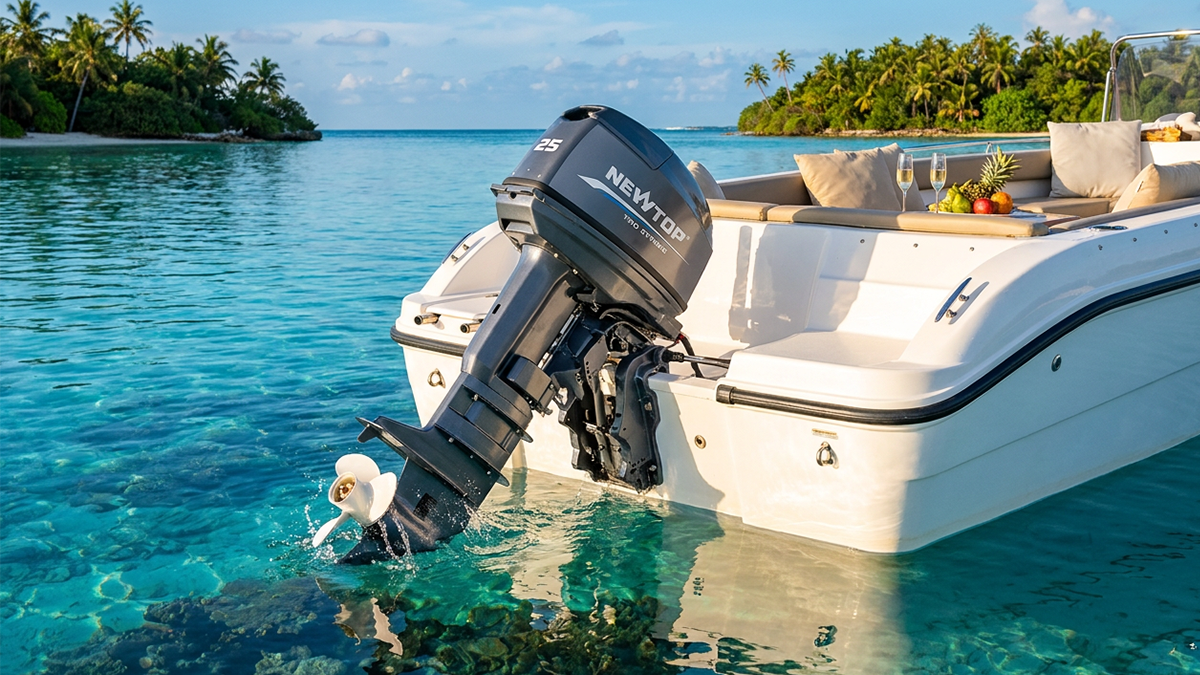
Performance Impact on Acceleration, Top Speed and Fuel Efficiency

Stainless steel props add speed and improve fuel economy because they don’t flex. Aluminum props are lighter, which can give a quicker hole shot on smaller engines.
Acceleration and Hole Shot
The lower weight of an aluminum propeller allows a small engine to spin it up to its powerband faster, often resulting in a quicker hole shot. The blades also flex, which can reduce the initial load on the engine. Stainless steel’s stiffness is its main advantage. The blades maintain their true pitch under load, delivering stronger and more consistent thrust for mid-range acceleration. This is especially noticeable on heavier boats. The superior grip of a stainless prop also reduces ventilation and slip, improving acceleration in turns or when the drive is trimmed high.
Top Speed
You can typically expect a 5–10% higher top speed by switching to a stainless steel propeller on the same boat. The blades are thinner and much stiffer, creating less hydrodynamic drag. They don’t flex backward at high RPMs, which means they maintain their effective pitch. Aluminum props do the opposite. At wide-open throttle, their blades flex under the load, which reduces the effective pitch and limits the boat’s ultimate top speed.
Fuel Efficiency
Stainless steel propellers are generally more fuel-efficient, especially at cruising speeds and full throttle. Because there’s less slip, less engine power gets wasted spinning the prop and more of it is converted into forward motion. Boats that run long distances or operate frequently at higher speeds will see the most significant fuel savings with a stainless steel prop.
Performance Summary and Use Cases
| Aspect | Aluminum Propeller | Stainless Steel Propeller |
|---|---|---|
| Acceleration | Good hole shot on smaller engines due to low weight and blade flex. | Stronger mid-range acceleration and consistent thrust on heavier boats. |
| Top Speed | Limited by blade flex, which reduces effective pitch at high RPMs. | Typically 5–10% faster due to stiff, thin blades with less drag. |
| Fuel Efficiency | Less efficient at cruise and WOT because of higher slip. | More efficient as less power is wasted, especially for long runs. |
| Best For | Small engines on light boats where hole shot is key and top speed is secondary. | Engines 75 hp and up, or performance hulls needing max speed and grip. |
Repairability and Damage Behavior in Real‑World Groundings
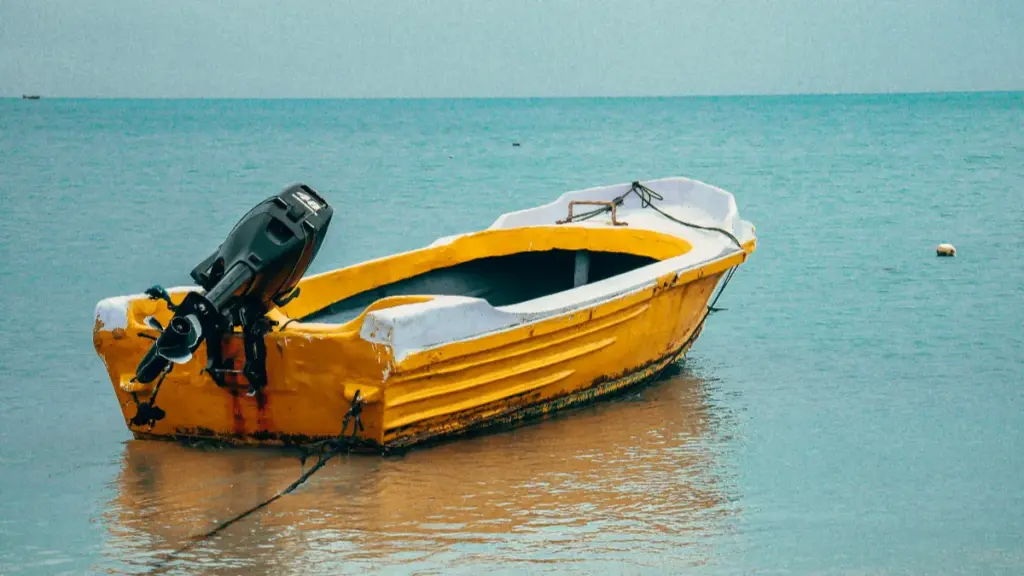
Aluminum props act like a fuse, breaking to protect your gearcase. Tougher stainless props survive more hits but can transfer impact shock, risking expensive drivetrain damage.
Material Response to Impact
The fundamental difference in how these two metals handle an impact dictates what happens to your lower unit when you hit something. There’s no way around the physics of it.
- Aluminum propellers are soft and designed to absorb a hit by bending, deforming, or breaking.
- Stainless steel is much harder. It resists bending and transmits impact forces straight up the drivetrain.
- Think of an aluminum prop as a mechanical fuse. It sacrifices itself to potentially protect the expensive gearcase components.
- A stainless prop’s rigidity means it can survive impacts that would shred an aluminum prop, but you’re rolling the dice on damaging the prop shaft or gears.
Common Damage Patterns
What you hit, and how hard, determines the outcome. A light skim is one thing; hitting a rock ledge at speed is another.
- Light Strikes (sand/mud): An aluminum prop might get some nicks and bent edges. Stainless steel will likely only have cosmetic scratches.
- Moderate Strikes (gravel/logs): This is where you’ll see aluminum blades bend, twist, or lose entire chunks of metal.
- Severe Groundings (hard rock): An aluminum prop will probably be destroyed. A stainless prop might just crack or bend, but it can also lead to a bent prop shaft.
Repairability and Cost
The financial calculation for a damaged prop is completely different for aluminum versus stainless steel.
- Aluminum props are widely known to be easier and cheaper to fix. Damage can often be repaired by heating, bending, and welding.
- Repairing stainless steel is a specialized job. It takes special tools to bend the hard material and requires precision welding, making it more expensive.
- Because a new aluminum prop is cheap, it’s often more economical to just replace it instead of paying for extensive repairs.
- The high price tag of a new stainless steel prop makes even complex repairs a financially sound choice compared to buying a new one.
Post-Impact Inspection and Secondary Risks
After any grounding, the prop itself isn’t the only concern. The real danger is the secondary damage that an unbalanced or compromised system can cause.
- Any bent or unbalanced prop will cause vibrations. These vibrations accelerate wear on your seals and bearings, leading to bigger problems down the line.
- With an aluminum prop, visible damage is your cue. You can see it’s bent, so you know it needs a repair or replacement.
- After a hard hit with a stainless steel prop, you must check the prop shaft for runout and inspect the gearcase. The prop might look fine, but the drivetrain could have taken the blow.
Cost, Availability and Total Cost of Ownership by Prop Material
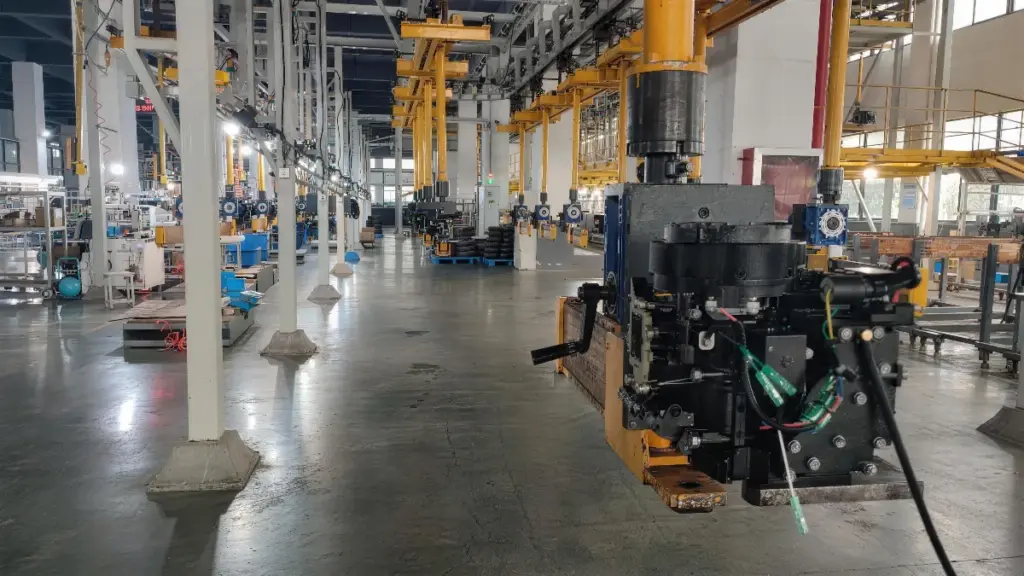
Aluminum props are cheaper upfront, but stainless steel often provides better long-term value. Your boating environment is the deciding factor for total cost.
Initial Purchase Cost
Aluminum props are the budget-friendly option, typically costing just one-third to one-fifth of a comparable stainless-steel model. Stainless-steel props command a much higher price—anywhere from two to five times more than aluminum—due to more expensive alloys and complex manufacturing. Many boat manufacturers equip new vessels with aluminum propellers as standard to keep the initial sticker price of the complete package lower.
Market Availability and Applications
Aluminum props are widely available for small and mid-range outboards and are a very popular choice for a backup or spare. Stainless-steel props are standard issue for high-horsepower engines (150 hp and up) and are what people expect on performance-oriented boats. The environment where you boat plays a big role. Stainless steel is favored in saltwater for its corrosion resistance, while aluminum is common in freshwater or debris-filled areas where impacts are more likely.
Total Cost of Ownership (TCO)
Stainless steel’s higher efficiency can save money in the long run for high-use boaters. The blades don’t flex, which reduces slip and can improve fuel economy enough to offset the higher initial price. An aluminum prop often acts as a sacrificial component. It will bend or break on a severe impact, which can protect the much more expensive prop shaft and gearcase from catastrophic damage. Your real TCO depends on where you boat. In open water, stainless offers better long-term value through sheer durability. But in shallow, rocky waters, the lower replacement cost of aluminum often proves more economical.
Which Material Fits Fishing, Transport and Leisure Applications
The right prop material depends on the job. Aluminum is for budget-conscious or high-risk areas. Stainless steel is for performance, heavy loads, and long-term durability.
Propellers for Fishing Boats
Aluminum is often the practical choice for fishing in shallow or debris-filled waters like lakes and rivers. If you hit a submerged stump or rock, an aluminum prop is designed to flex or break. This sacrificial failure helps protect your expensive drivetrain and gearcase from a much costlier repair. It’s a smart trade-off for high-risk environments.
For larger, faster fishing boats running in open or offshore water, stainless steel is the clear fit. When top-end performance, fuel efficiency, and durability are priorities, stainless delivers. Its rigid blades won’t flex under power, providing consistent thrust. The choice boils down to balancing the risk of underwater strikes against the need for performance.
Propellers for Transport and Utility Boats
Stainless steel is the standard recommendation for most transport and utility work. Its strength provides the consistent thrust and efficiency needed to move heavy loads. The rigid blades maintain their shape under power, leading to better grip in the water, stronger acceleration, and improved fuel economy during long runs. For any operation where reliability and performance under load are key, stainless is the answer.
Aluminum still has its place, especially for smaller utility boats or budget-conscious fleets. On routes with a high risk of prop damage, the low replacement cost makes aluminum a sensible operational choice.
Propellers for Leisure and Recreational Boating
For casual, all-purpose leisure boating, aluminum is a strong choice. It offers good, reliable performance for small and mid-size outboards at a much lower upfront cost. It’s the default for a reason on many family runabouts and pontoon boats, providing an economical way to get on the water.
Stainless steel comes into play when you get serious about performance. For activities like watersports, high-speed cruising, or just getting a faster hole-shot, a stainless prop makes a noticeable difference. It enhances speed, handling, and longevity. While aluminum is the economical solution for general fun, stainless steel is the upgrade for a better experience.
Ready to Work With NEWTOP?
Getting the right propeller requires specific data. Collect the key details on your boat and engine, define your goals, and our technical team will provide a tailored recommendation.
Assess Your Boat and Engine Setup
Before we can talk specifics, we need to know what you’re working with. Pulling together this basic information is the first step to getting a prop that actually performs for your application.
- Tell us your engine’s brand, model, and horsepower.
- Note the target wide-open throttle (WOT) RPM range from the engine manual.
- Describe your hull type (e.g., deep-V, pontoon, flats boat), its length, and the typical operating load, including passengers and gear.
Define Your Operating Environment and Priorities
Where you boat and what you want to achieve are just as important as the hardware. A prop that excels in deep, open water might be a poor choice for a rocky river.
- Specify if you operate mainly in freshwater or saltwater.
- Let us know your typical water conditions: rocky, sandy, weedy, or deep open water.
- Clarify your main goal. Are you focused on the lowest initial cost, maximum durability and lifespan, or outright top-end performance?
Contact Us for a Specific Recommendation
Once you have the details, our team can give you a practical, data-driven recommendation instead of a generic guess. We deal with these variables all day.
- Share the information you’ve collected with our technical team.
- We will provide tailored recommendations for both aluminum and stainless steel propellers that fit your setup.
- You’ll get clear guidance on the right pitch, diameter, and hub kit needed for your outboard.
Discuss Partnership and Fleet Solutions
For commercial operators, boat builders, and dealers, we offer programs that address the realities of managing multiple vessels and lifecycle costs.
- Ask about our partnership programs for boat builders, dealerships, and commercial fleets.
- Request a lifecycle cost analysis to compare aluminum vs. stainless steel for high-hour commercial use.
- Inquire about our propeller evaluation programs to test and validate performance on your specific vessels.
Contact NEWTOP today to discuss your project, request samples, or find the right outboard motor propeller solution for your market.
Frequently Asked Questions
Are stainless steel propellers better than aluminum propellers?
Not necessarily. Stainless steel propellers generally offer better durability, acceleration, and efficiency, while aluminum propellers provide lower purchase costs and can better absorb impact damage. The better choice depends on your boat, operating conditions, and budget.
Is it worth upgrading from an aluminum to a stainless steel propeller?
Upgrading to stainless steel is typically worth it for outboards 75 hp and larger on planing hulls, as it can improve top speed, handling, and fuel efficiency. It is often not worth the cost or risk for smaller engines or for boats frequently used in shallow, rocky waters where a cheaper, sacrificial aluminum prop is more practical.
Do stainless steel props make a boat faster?
Yes, a properly matched stainless steel propeller can make a boat faster, often adding 2-4 mph to the top speed. This is because stainless blades are much stiffer and do not flex under load like aluminum blades do. This rigidity, combined with thinner blade profiles, reduces drag and allows the propeller to maintain its designed pitch at high RPMs, converting more engine power into forward thrust.
Will a stainless propeller cause more damage in a strike?
Yes, a stainless steel propeller is more likely to transmit impact force to the gearcase and prop shaft during a hard strike. Because stainless is about five times stronger than aluminum, it resists bending or breaking. An aluminum prop often acts as a sacrificial part, absorbing impact by deforming or shearing, which can help protect more expensive drivetrain components.
Which propeller is better for shallow water, aluminum or stainless?
It depends on the bottom type. For shallow water with sand or mud, a stainless steel prop is better due to its durability and superior grip when the engine is trimmed high. For shallow water with rocks, stumps, or other hard obstacles, an aluminum prop is the safer choice because it will bend or break on impact, protecting the gearcase.
Are stainless steel propellers more fuel efficient?
Yes, stainless steel propellers are often more fuel efficient. Their stiffness prevents blade flex at cruising and high speeds, meaning less engine power is wasted. Combined with their thinner, lower-drag design, they can improve miles per gallon, particularly on outboards 75 hp and up.
How do I choose the right size stainless prop to replace my aluminum one?
When switching from aluminum to stainless steel, a good starting point is to keep the same diameter and decrease the pitch by one inch. For example, if you have a 14″ x 19P aluminum prop, start with a 14″ x 18P stainless model. This adjustment is needed because the stiffer stainless blades provide more bite, loading the engine more heavily. Always test to ensure your engine can still reach its recommended wide-open-throttle (WOT) RPM range.
Final Thoughts
The choice between aluminum and stainless steel is a balance of price against operational risk. While aluminum offers a lower initial cost, our precision-engineered propellers are designed to match specific performance and safety demands. This standard is the only way to safeguard your investment against either catastrophic drivetrain failure or chronic underperformance.
Don’t guess which material best suits your fleet or customers—validate it with our data. Provide our technical team with your engine and hull specifications for a tailored propeller recommendation. We can then discuss partnership programs and lifecycle costs for your specific commercial application.