Selecting the right chainsaw chain—often referred to as chainsaw blades—can transform your cutting efficiency, безопасность, and tool longevity. This guide breaks down chainsaw chain types, geometry, specs, and selection tips to help you make informed choices for your projects.
What are Chainsaw Blades?

Chainsaw blades, more accurately called saw chains, are the cutting components looped around a chainsaw’s guide bar. The geometry of these teeth—their shape, angle, and corner design—is the primary factor that determines the chain’s cutting speed and its suitability for different wood types.
The mechanical structure of a modern cutting chain consists of 4 primary components:
- Cutter Teeth: The functional part of the chain responsible for wood removal. Each tooth features a depth gauge (or “raker”) and a sharpened cutting edge.
- Drive Links: These links sit inside the groove of the guide bar and interface with the saw’s drive sprocket, transferring the engine’s torque into linear motion.
- Tie Straps: These serve as the connecting plates that hold the cutters and drive links together.
- Rivets: High-strength steel pins that act as pivot points, allowing the chain to remain flexible while maintaining high tensile strength under load.
Tooth Shape and Corner Design
The most significant variation in chain geometry is the cutter’s corner shape. Aggressive, square-cornered teeth define full-chisel chains and are built for maximum speed in clean hardwood. Rounded corners, found on semi-chisel and chipper chains, offer superior durability and maintain sharpness far longer when cutting in dirty, frozen, or abrasive conditions.
- Full-chisel chains use sharp, square corners to slice wood fibers with maximum efficiency.
- Semi-chisel and chipper chains have rounded corners that are more resistant to dulling from dirt and debris.
- Low-profile chains use smaller, rounded cutters engineered to reduce the potential for dangerous kickback.
Pitch and Gauge: Standardized Blade Sizing
Pitch and gauge are the two standardized measurements that ensure a chain is compatible with the chainsaw’s guide bar and drive sprocket. Pitch is the average distance between drive links, while gauge is the thickness of the drive links that ride inside the guide bar’s groove. Matching the chain’s pitch and gauge to the bar and sprocket is non-negotiable for safe and effective operation. Mismatched components can cause derailment and poor performance.
- Common pitch sizes include 1/4″, .325″, and 3/8″.
- Standard gauge measurements are .043″, .050″, и .058″.
Drive Links and Tie Straps: Chain Assembly
Drive links are the portions of the chain that sit within the guide bar groove. They engage the saw’s sprocket to propel the chain forward and guide it accurately. Tie straps are the connecting links that hold the cutters and drive links together to form a complete loop. The total number of drive links dictates the chain’s length. The sequence of cutters and tie straps also affects the chain’s cutting smoothness and vibration levels. Together, these components transfer power from the engine to the wood with functional precision.
Differences Between Each Type of Chainsaw Chain
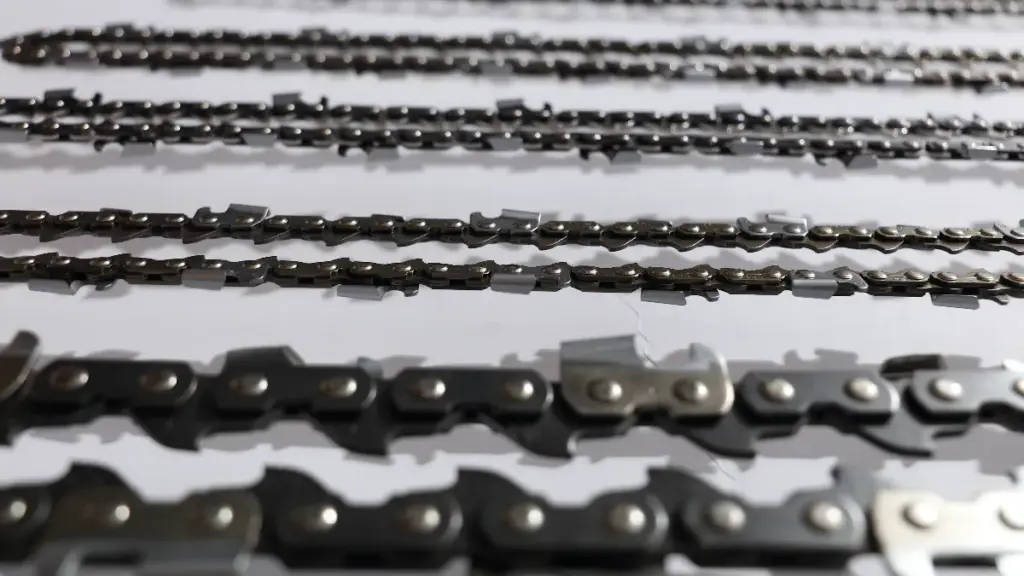
Picking the right chainsaw blade boils down to balancing speed, toughness, безопасность, and upkeep. Here’s a full comparison table covering the most common types—from tooth profiles to layouts—across key dimensions. Use it to match your saw, wood, and job perfectly.
| Chain Type | Full-Chisel | Semi-Chisel | Micro-Chisel (Low-Profile) | Chipper | Skip Tooth |
|---|---|---|---|---|---|
| Tooth Profile | Square corners | Rounded corners | Small rounded | Highly rounded (? shape) | Spaced out teeth |
| Typical Pitch/Gauge | .325″-.404″/.050″-.063″ | .325″/.050″ | 3/8″ LP/.043″-.050″ | 3/8″-.404″/.050″ | .404″/.058″-.063″ |
| Cutting Speed | Very High | Высокий | Medium | Medium-Low | Very High |
| Durability | Низкий (dulls fast) | Высокий | Medium | Medium-High | Высокий |
| Риск отдачи | Высокий | Medium | Низкий | Very Low | Высокий |
| Обслуживание | Высокий (precise sharpening) | Medium | Низкий | Низкий | Низкий |
| Требование к питанию | Высокий (50cc+) | Medium (40-60копия) | Низкий (30-50копия) | Low-Medium (35-55копия) | Высокий (60cc+) |
| Primary Wood Type | Clean hard/soft | Dirty/frozen | Softwoods | Soft/clean | Wet/thick logs |
| Best Use Case | Clean wood milling | Firewood, dirty wood | Обрезка, beginners | Light safety tasks | Long bars, logging |
Full-Chisel Blades: Pros and Cons for Fast Clean Cuts
Full-chisel blades use aggressive, square-cornered teeth to deliver maximum cutting speed in clean wood, but this performance comes at the cost of high maintenance and a significant kickback risk.
Key Advantages: Speed and Cutting Efficiency
Full-chisel blades feature sharp, square-cornered teeth designed for aggressive cutting performance. They excel at moving through wood quickly, delivering clean finishes ideal for professional applications where speed is a priority. The geometry of the cutters slices wood fibers efficiently, resulting in faster work with less operator effort compared to other chain types.
- Delivers the fastest cutting speeds, particularly effective for felling and processing large-diameter hardwood and softwood logs.
- Produces clean, smooth cuts with minimal tear-out, making it suitable for tasks requiring a high-quality finish.
- The design enables rapid chip removal, which helps reduce binding and clogging during deep cuts.
Significant Disadvantages: High Maintenance and Kickback Risk
The trade-off for high performance is increased maintenance and a greater safety risk. The blade’s sharp corners dull easily in abrasive conditions, and its aggressive bite increases the likelihood of dangerous kickback. These chains are less forgiving and demand constant attention to maintain their edge.
- Dulls quickly, especially when cutting dirty or frozen wood, requiring frequent and technically challenging sharpening.
- Presents a high kickback risk due to its aggressive tooth design, making it unsuitable for inexperienced operators.
- More sensitive to dirt, sand, and debris, which can rapidly degrade cutting performance and damage the chain.
Ideal Use Cases for Professional Operators
Full-chisel blades are best suited for skilled professionals working in controlled environments with clean wood. Their benefits are maximized when operators can safely manage kickback and maintain the blade properly. It is a specialized tool for high-volume, precision work, not general-purpose cutting.
- Suited for experienced loggers and arborists performing felling and bucking tasks in clean conditions.
- Less appropriate for beginners, homeowners, or for work in unpredictable environments like storm cleanup.
- Requires an operator who can handle the increased power and safely manage the saw’s behavior.
Boost Your Margins with Reliable Equipment
Semi-Chisel Blades: Durability Benefits in Dirty Environments
Semi-chisel chains are the industry standard for harsh conditions because their rounded-corner tooth design prioritizes dulling resistance and operational uptime over the raw cutting speed of full-chisel blades.
Rounded Tooth Design for Dulling Resistance
The primary advantage of a semi-chisel blade comes from its rounded-corner tooth design. This less aggressive shape is far more resistant to dulling when cutting through wood contaminated with dirt, sand, or ice compared to the sharp point of a full-chisel blade. Its forgiving profile absorbs impacts from foreign objects that would otherwise chip or damage a sharper chain.
- Maintains a usable cutting edge for longer, reducing the frequency of sharpening.
- Handles accidental contact with ground debris without immediate failure.
- Ideal for processing firewood, расчистка земли, or cutting lumber in construction environments.
Extended Working Life in Harsh Conditions
These chains are built to last in imperfect conditions, often maintaining operational efficiency for 40-60 hours of active use before requiring service. This longevity makes them a cost-effective choice for demanding industrial, лесное хозяйство, and agricultural applications where equipment uptime is critical. They deliver consistent performance where wood quality is unpredictable.
- Excels at cutting through dirty, frozen, or debris-laden wood.
- Reduces downtime associated with frequent chain sharpening or replacement.
- Provides reliable cutting when wood quality is low or inconsistent.
Balancing Cutting Speed with Lower Maintenance
A semi-chisel blade cuts slightly slower than a full-chisel blade in clean wood, but its durability creates a valuable trade-off. The reduced need for maintenance and lower risk of kickback make it a safer, more reliable option for most users. The rounded profile is also easier for operators to sharpen correctly compared to the precise angles of a full-chisel chain.
- A practical choice where equipment reliability is prioritized over raw cutting speed.
- Forgiving geometry simplifies the field sharpening process.
- Balanced performance is well-suited for both professional and semi-professional users.
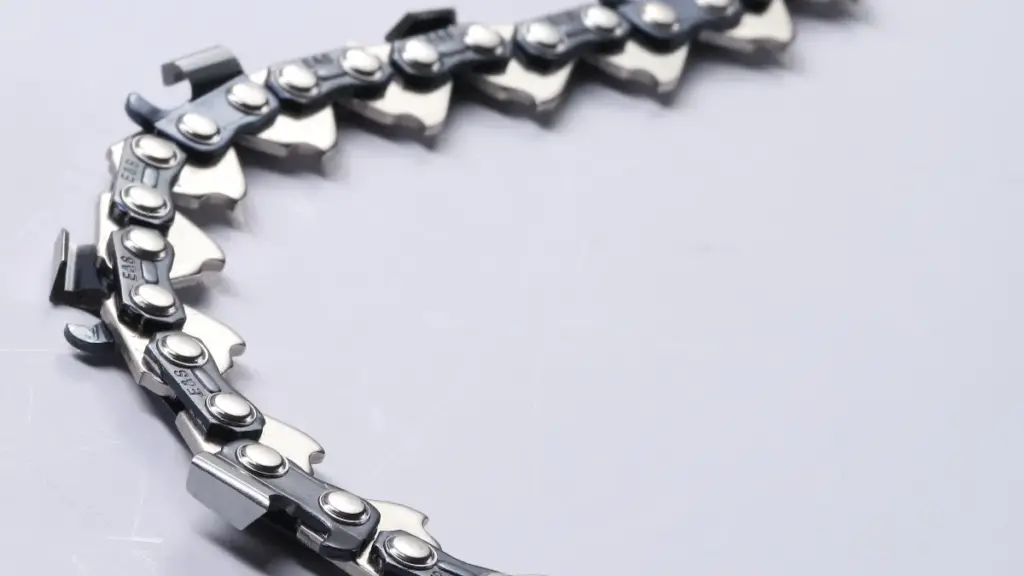
Chipper and Low-Profile Chains: Safety for Entry-Level Saws
Chipper and low-profile chains are now the industry baseline for entry-level equipment, engineered with integrated safety features that prioritize operator protection over raw cutting speed.
Low-Kickback Chain Designs
Chipper and low-profile chains are specifically engineered to reduce the risk of kickback, making them a standard safety component on consumer saws by 2026. These designs incorporate guard links between the cutters, a feature that physically prevents the chain from digging in too deeply at the tip of the bar—the primary cause of dangerous kickback events. This geometry is designed to meet established safety standards like ANSI B175.1, deliberately trading aggressive cutting speed for enhanced operator safety. This makes them the default choice for new or infrequent users who benefit most from the forgiving design.
Integrated Anti-Kickback Systems
Modern entry-level saws now include passive anti-kickback mechanisms directly in their core design. These systems are no longer positioned as premium add-ons but have become baseline safety features across the market. This shift reflects a broader industry trend toward built-in operator protection, driven by a need to both enhance user safety and reduce manufacturer liability. These integrated systems work in tandem with low-kickback chains to create a multi-layered defense against operational hazards.
Standardized Engineering Controls
Beyond the chain itself, current saws feature mandatory engineering controls to provide further layers of protection. Features such as strategically placed emergency shutoff systems and rubber infeed curtains are now common practice, not optional upgrades. This approach treats hardware-based safety innovations as foundational, complementing the expectation that operators will also use proper technique and personal protective equipment (СИЗ). The goal is a comprehensive safety system where the tool itself provides a high degree of inherent protection.
How to Choose the Right Chainsaw Blade Based on Wood Hardness
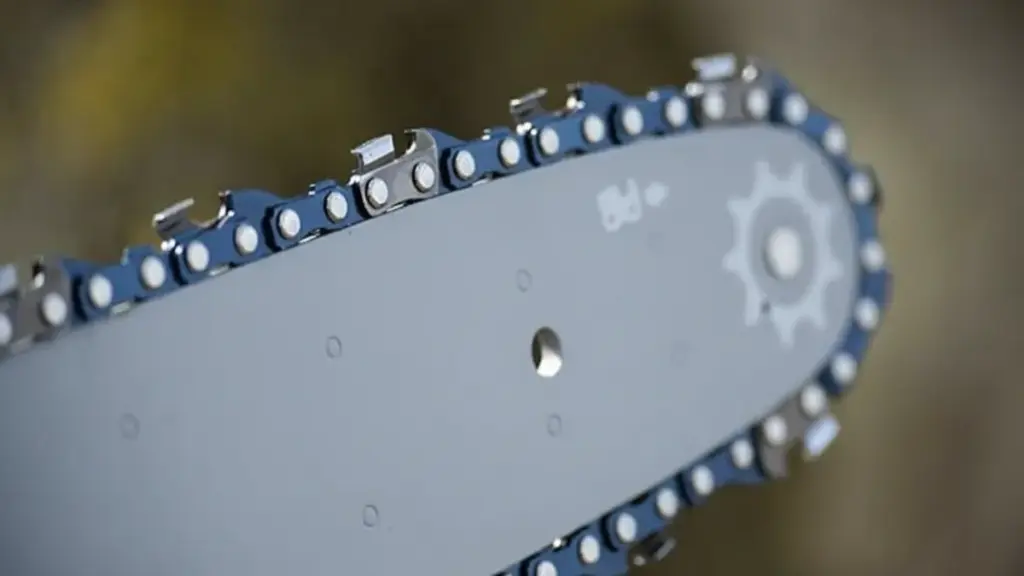
Selecting the right chainsaw chain is about matching the cutter’s geometry to the specific application, balancing the aggressive speed of full-chisel for clean hardwood against the durability of semi-chisel for mixed conditions or carbide tips for abrasive materials.
Softwoods (например, Pine, Cedar, Fir)
Because softwoods do not impose extreme thermal stress on the cutting edge, Full-Chisel chains are highly suitable for cutting softwood. The sharp 90-degree corner of the cutter penetrates these low-density fibers quickly. This allows the operator to maintain high speed without straining the engine or causing the saw to bog down.
Hardwoods (например, Oak, Maple, Hickory)
Hardwoods feature dense, resilient fibers that create significant resistance and heat during the cutting process. In these applications, Semi-Chisel chains are the superior choice. The rounded corner of the cutter is more stable when hitting dense grains. While it may cut slightly slower than a full-chisel chain, it maintains its sharpness longer and is less prone to “dulling” from the high friction temperatures.
Frozen and Abrasive Wood
In sub-zero temperatures, moisture within the wood turns into ice, making the timber act like an abrasive material. For frozen logs or wood covered in dirt and sand, you should use Semi-Chisel or specialized Carbide-tipped chains. The sharp points of full-chisel chains often chip or break when hitting ice crystals. В отличие, the radiused or alloy-reinforced edges are built to withstand high-impact loads in these extreme conditions.
Why Choose NEWTOP Hard-Alloy Chains for Industrial Use?
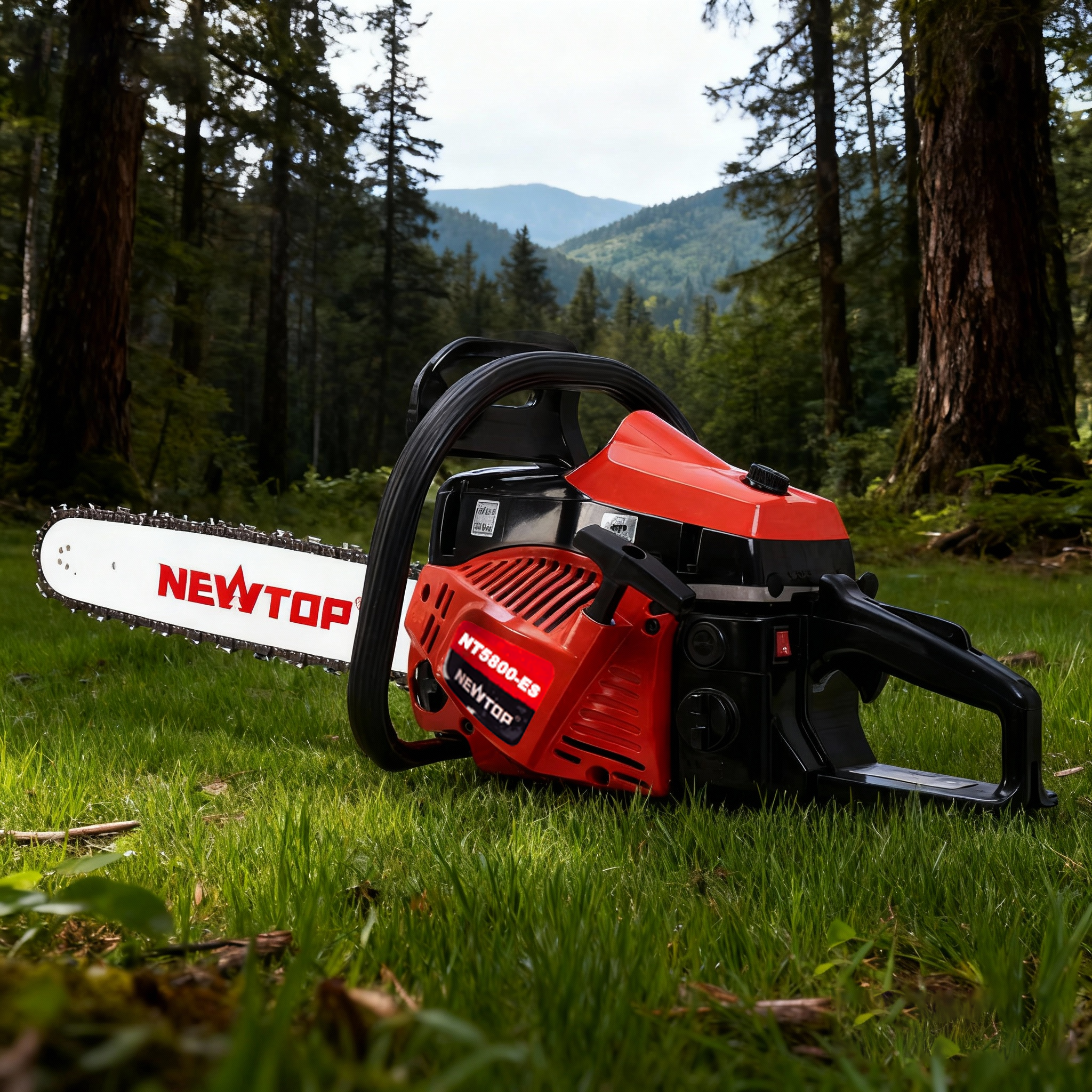
NEWTOP delivers a practical industrial solution by integrating premium hard-alloy chains from established global brands with its own precise, cost-efficient manufacturing process.
В НЬЮТОП, our chainsaw chains are engineered for the rigors of global forestry, using high-tensile strength steel and advanced heat-treatment processes.
The NEWTOP Advantage:
- High-End Component Supply: We utilize supply chains similar to world-class brands, incorporating high-quality chrome plating on our cutter teeth to ensure lasting sharpness.
- Industrial Durability: Our chainsaw chains are tested for over 500 hours of performance, ensuring they withstand the tropical humidity of Southeast Asia and the rugged terrain of South America.
- Optimized Oil Channels: Every NEWTOP chainsaw chain features precision-engineered oil holes and grooves to ensure that lubrication reaches the rivets and drive links, reducing heat and stretching.
- Compatibility: We offer a full range of pitch and gauge combinations designed to work seamlessly with our gasoline chainsaw line and our emerging lithium-battery machinery.
Заключение
Choosing the right chainsaw chain involves balancing cutting speed, долговечность, and maintenance for each job. Matching the chain geometry, pitch, and gauge to your wood type and cutting conditions prevents premature dulling and reduces kickback risk. This technical knowledge directly impacts project efficiency, operator safety, and the lifespan of your equipment.
If your industrial operations require chains that excel in abrasive or demanding environments, explore NEWTOP’s hard-alloy options. Contact our team to request a product catalog or discuss specific application requirements for your fleet.
Часто задаваемые вопросы
What are the 3 main types of chainsaw chains?
The three primary chainsaw chain types are full-chisel (aggressive speed), semi-chisel (balanced durability), and chipper/low-profile (safety-focused). Each suits different cutting demands from precision to rugged use.
Which chain is best for cutting hardwood?
Full-chisel chains excel for hardwood due to sharp square cutters that power through dense fibers quickly. Semi-chisel serves as a durable alternative for resinous species like oak.
What is the difference between full and semi chisel?
The main difference is the corner shape. Full-chisel has a square, 90-degree corner for speed; semi-chisel has a rounded corner for durability and edge retention in dirty conditions.
Are carbide-tipped chains worth it?
Да, for specific applications. If you are cutting through burnt wood, demolition timber with nails, or extremely frozen logs, carbide-tipped chains stay sharp 25x longer than steel, though they require specialized sharpening.
Which chain type is safest against kickback?
Low-profile chipper chains are safest, with reduced kickback nose and shallow cutters meeting ANSI standards for electric and homeowner saws.
How do I identify my chainsaw blade type?
To identify your chainsaw chain, find three key numbers, typically stamped on the side of the chainsaw bar or on the chain’s drive links: Pitch, Gauge, and Drive Link Count. For example, you might see “.325” (Pitch), “.050” (Gauge), и “72DL” (72 Drive Links). To determine the cutter type, visually inspect the cutting teeth. Square for full-chisel, rounded for semi-chisel/chipper.