Chainsaws are now inseparable from forestry, logging, land clearing, and professional arboriculture. Yet when you search “why were chainsaws invented?”, you may be surprised to discover that their origin story has little to do with cutting timber.
Understanding the evolution of chainsaws—from early medical instruments to today’s high-performance gas and lithium-powered machines—reveals how technological innovation responds to real human needs. It also explains why modern chainsaws are engineered the way they are: powerful, durable, ergonomic, and safety-focused.
In this article, we’ll explore the original purpose of chainsaws, how they transitioned into forestry tools, and how they evolved into the indispensable outdoor power equipment we rely on today.
Why Were Chainsaws Invented in the First Place?
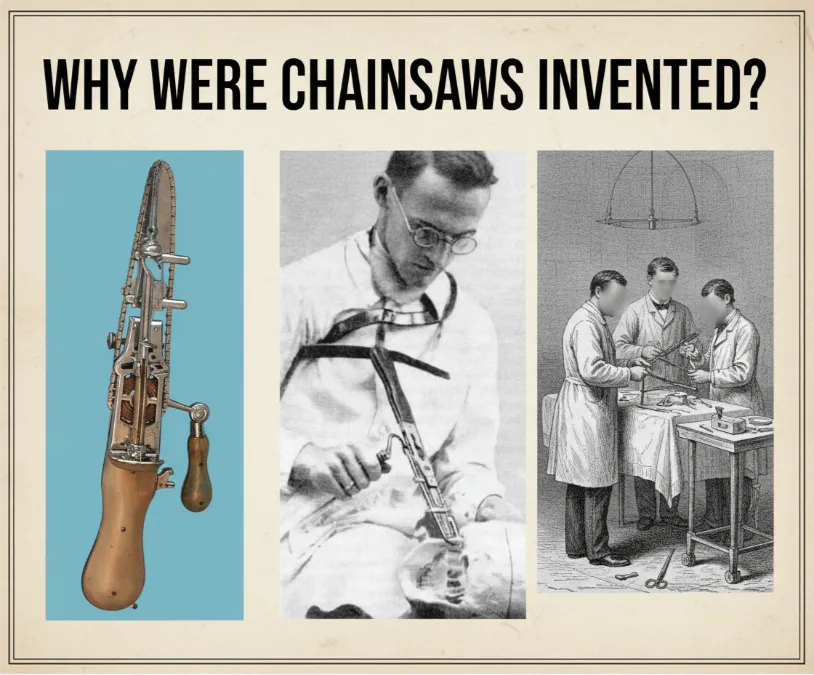
Contrary to popular belief, the chainsaw was developed in the late 18th century not for forestry, but as a surgical instrument to assist in difficult childbirths.
Chainsaws were invented in the late 18th century to solve a medical problem—not a logging one.
Before modern surgical techniques and anesthesia, certain childbirth complications required physically enlarging the pelvic bone to allow delivery. Traditional surgical tools were slow and traumatic. Doctors sought a more efficient way to cut bone with greater precision and less time under procedure.
This led to the development of an early chain-and-blade device that could rotate around bone and cut in a controlled manner. It was manually operated and far removed from the powerful engine-driven machines we associate with chainsaws today.
The underlying concept, however, was revolutionary:
- A continuous chain with cutting teeth
- Guided around a bar or frame
- Designed for repetitive cutting motion
This mechanical principle—rotating cutting teeth on a chain—would later become the foundation of modern chainsaw technology.
The Original Use of Chainsaws in Medical History
The chainsaw originated not in forestry but in late 18th-century operating rooms as a hand-cranked surgical instrument for bone cutting, primarily during obstructed childbirth.
| Key Development | Inventor / Key Figure | Primary Application |
|---|---|---|
| Initial Surgical Saw Concept | John Aitken & James Jeffray (c. 1785) | Symphysiotomy (widening pelvis during childbirth) and bone excision. |
| The Osteotome | Bernhard Heine (c. 1830) | Standardized tool for various surgical bone-cutting operations. |
| Transition to Industrial Use | N/A (Industry Shift) | Repurposed for woodcutting as medical practices evolved. |
Invention for Childbirth and Bone Surgery
Around 1785, Scottish doctors John Aitken and James Jeffray developed the first chainsaw as a surgical instrument. Its purpose was to perform a symphysiotomy—a procedure that widened the pelvis during obstructed childbirth by cutting through bone and cartilage. Before this invention, surgeons relied on manual knives, making the process slow and dangerous. The chainsaw provided a faster and more precise method for this operation and was also used for the excision of diseased bone.
The Osteotome: A Surgical Refinement
The medical chainsaw concept continued to evolve. In 1830, German physician Bernhard Heine created a more refined version called the osteotome. This was a hand-cranked device featuring a cutting chain that ran along a guiding blade, giving surgeons better control and precision during bone excisions. Heine’s osteotome became a standard surgical tool and remained in use throughout much of the 19th century for various bone-cutting procedures.
Transition from Operating Room to Forest
By the early 20th century, the medical chainsaw’s use declined sharply. The primary reason was the increased safety and viability of the Cesarean section, which made the symphysiotomy procedure obsolete. With its original purpose gone, the core technology was adapted for an entirely new field: woodcutting. This shift marked the beginning of its transformation from a specialized surgical instrument into the powerful forestry tool we recognize today, paving the way for motorized, portable designs.
When Did Chainsaws Start Being Used for Woodcutting?
The chainsaw’s shift from a medical instrument to a forestry tool began with late 19th-century patents and became practical with the introduction of portable, motorized designs in the early 20th century.
Early Patents for Woodcutting
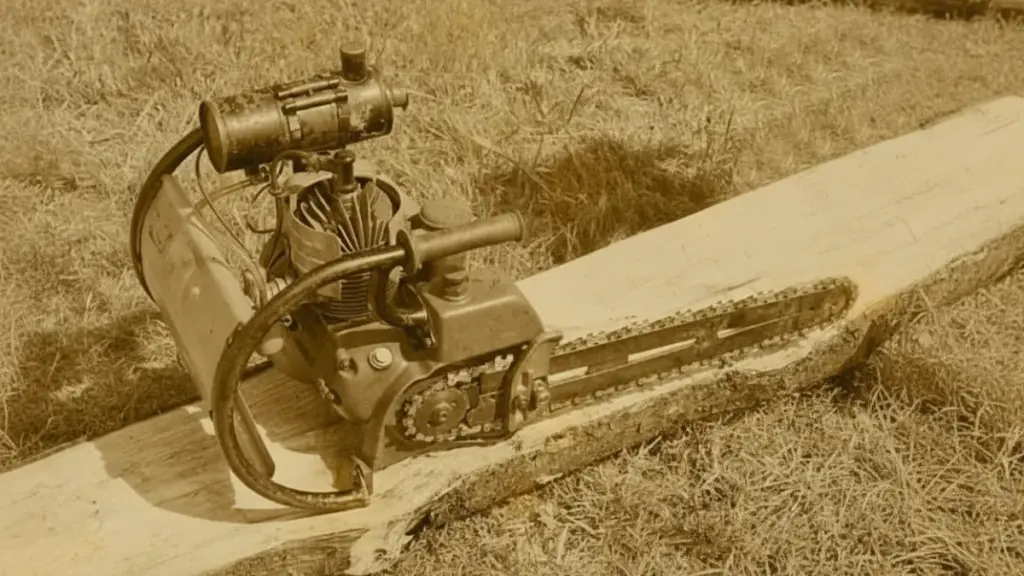
The transition of chainsaw technology from surgical applications to forestry began in the late 19th century. Frederick L. Magaw received the first patent for a wood-cutting “chain sawing machine” in 1883, envisioning a tool for producing boards. This was followed by a 1906 patent for an “Endless Chain Saw,” which was specifically engineered to fell giant redwood trees. These early patents established the conceptual framework for using a continuous cutting chain in the timber industry, even if practical, portable models were still decades away.
The First Motorized and Portable Chainsaws
Moving from patent to practice required a power source. The first known experiment with a gasoline-powered chainsaw took place in 1905 in Eureka, California, proving that motorization was a viable path forward. The next critical step was portability. In 1918, Canadian James Shand developed and patented the first truly portable chainsaw. This innovation was a significant shift, as it allowed the tool to be brought directly to the trees, setting the stage for its eventual widespread use in remote logging operations.
Establishment as a Standard Forestry Tool
The 1920s marked the commercial birth of the modern chainsaw. Andreas Stihl designed the first electric model in 1926 and followed it with a petrol-driven version in 1929. These machines, while heavy and often requiring two operators, were effective enough to gain traction in the forestry industry. The final milestone that cemented the chainsaw as an essential tool came around 1950 with the introduction of the first one-man model. This development made it possible for a single operator to work independently, dramatically increasing productivity and accelerating the tool’s adoption worldwide. His company, STIHL, would later become one of the most recognized names in the industry.
The Evolution of Chainsaws Over Time
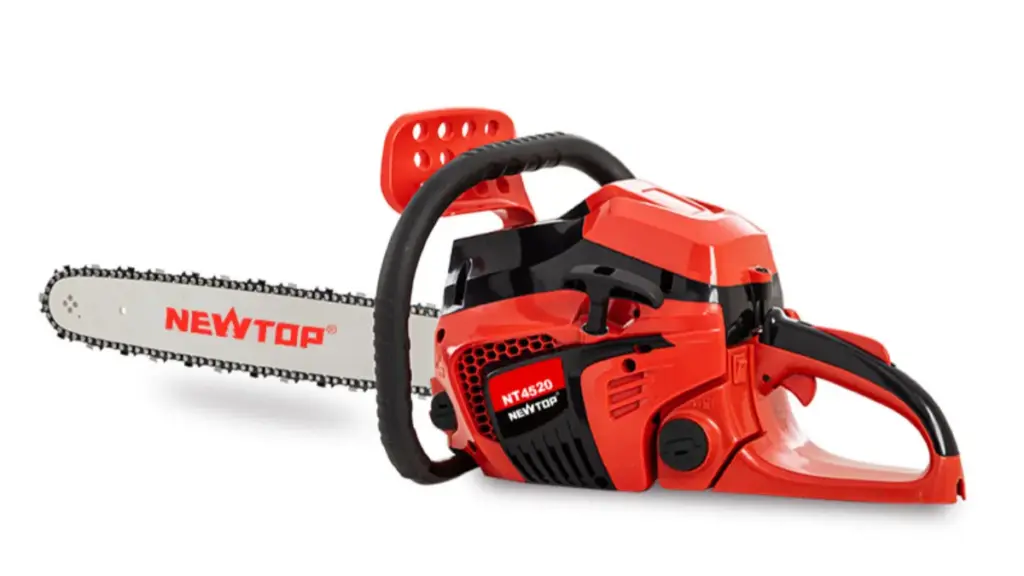
Chainsaw evolution is a story of shedding weight and complexity, moving from massive two-operator industrial machines to lightweight, single-user tools engineered for safety, efficiency, and versatility.
| Era | Key Development | Weight & Operator Impact |
|---|---|---|
| 1920s–1940s | First Gas & Electric Models | Extremely heavy (100+ lbs / 45+ kg); required two operators. |
| 1950s | The First One-Man Chainsaw | Weight reduced to 25–35 lbs (11–16 kg), enabling single-person use. |
| 1960s–1980s | Improved Power-to-Weight & Safety | Weight dropped to ~15 lbs (6.8 kg); anti-vibration systems introduced. |
| 1990s–Present | Emphasis on Safety & Emissions | Standard models 9–11 lbs (4–5 kg); chain brakes and low-emission engines are standard. |
The evolution of chainsaws mirrors the broader development of outdoor power equipment.
Early Industrial Chainsaws (1920s–1940s)
Early gas-powered models weighed over 40–60 pounds (18–27 kg). They were bulky and difficult to maneuver. Despite this, they represented a massive improvement over manual saws in terms of cutting speed and output.
Post-War Technological Improvements (1950s–1970s)
After World War II, advancements in lightweight alloys and two-stroke engine design made chainsaws more compact and powerful. One-person operation became feasible.
Brands such as Husqvarna and McCulloch helped popularize consumer-grade chainsaws.
During this period, innovations included:
- Anti-vibration systems
- Improved chain brake mechanisms
- Automatic chain lubrication
- Better carburetion systems
These changes improved both performance and operator safety.
Modern High-Performance Era (1980s–Present)
Today’s chainsaws are engineered for durability, power efficiency, and user comfort. They are available in multiple configurations:
- Gasoline-powered chainsaws
- Corded electric chainsaws
- Lithium battery-powered chainsaws
Professional forestry chainsaws now deliver optimized power-to-weight ratios, precision-engineered guide bars, and advanced chain designs for reduced kickback and smoother cutting.
At the same time, battery chainsaws are rapidly growing in popularity for landscaping, municipal maintenance, and home garden applications due to:
- Lower noise levels
- Zero direct emissions
- Reduced maintenance
- Instant start functionality
The evolution reflects not only mechanical innovation but also changing environmental regulations, user expectations, and global market demands.
Modern Uses of Chainsaws Today
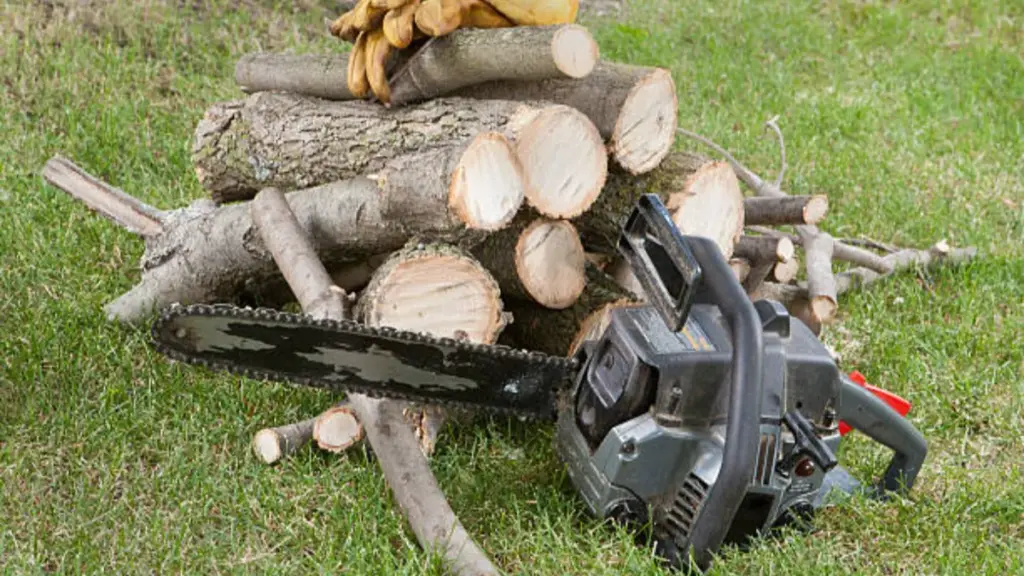
Modern chainsaws have expanded beyond traditional logging into specialized professional roles like mass-timber construction, post-storm salvage, and utility vegetation management.
Modern chainsaws are no longer limited to logging. Their applications span multiple industries:
- Forestry and timber harvesting
- Arborist tree trimming
- Land clearing and agriculture
- Disaster recovery and storm cleanup
- Construction and demolition
- Firewood processing
- Garden and property maintenance
Professional logging chainsaws are engineered for extended operation under heavy loads, often exceeding 300 hours of durability under standardized testing conditions. Meanwhile, mid-range and entry-level models serve farmers, contractors, and DIY users. Battery-powered models have expanded chainsaw accessibility, particularly in emerging markets where portability and low maintenance are valued.
For distributors and agricultural equipment suppliers looking for reliable mid-range solutions, brands such as NEWTOP (Shanghai-based outdoor power equipment manufacturer since 2003) provide a comprehensive portfolio covering gasoline, electric, and lithium-powered chainsaws. Explore our full range of chainsaws and request a personalized quote today to find the model that fits your market needs.
Common Myths and Misconceptions About Chainsaw Origins
The most persistent myths about chainsaw origins incorrectly attribute the tool to forestry and German inventors, masking its true 18th-century Scottish medical roots and the 140-year gap before its adoption for woodcutting.
Myth 1: Chainsaws Were Invented for Cutting Trees
The primary misconception is that chainsaws were designed for forestry. All evidence shows the tool was created as a medical instrument. Scottish doctors John Aitken and James Jeffray developed the first prototypes between 1783 and 1785 to cut bone during difficult childbirths, a procedure known as a symphysiotomy. Their device was a hand-cranked saw with a segmented blade, designed for surgical precision, not felling timber. Its purpose was to make a dangerous and slow medical procedure faster and safer.
Myth 2: A German Inventor Created the First Chainsaw
Another common belief credits German inventors with the chainsaw’s creation, but this confuses motorization with invention. The tool’s origin is Scottish, predating any German contributions by several decades. While the foundational concept was a Scottish medical innovation, German engineers like Andreas Stihl played a critical role in adapting and motorizing the chainsaw for forestry applications in the 1920s. They transformed the existing concept into a powerful industrial tool, but they did not invent the original device.
Myth 3: The Tool Quickly Evolved from Surgical to Logging Use
Many people underestimate the timeline of the chainsaw’s evolution. There was a significant gap of over 140 years between its use as a precision surgical device and its adaptation as a motorized woodcutting tool. The medical prototype existed in the 1780s, but powered forestry tools based on the same principle did not appear until the 1920s. This slow transition highlights the massive engineering leap required to convert a small, hand-cranked surgical instrument into a robust, engine-powered machine capable of industrial logging.
Conclusion
The chainsaw began as a surprising medical device and evolved into the powerful woodcutting tool we recognize today. Its history is a clear example of how a tool’s function can dramatically change through innovation. Modern designs reflect over a century of development focused on operator safety and efficiency.
If this history makes you reconsider your own equipment, explore our catalog of modern chainsaws built for safety and performance. Our specialists can help you select the right tool for your application.
Frequently Asked Questions
Was the chainsaw really invented for childbirth?
Partially. The original late-18th-century chain osteotome was designed to assist in bone-cutting procedures, including certain childbirth complications. However, it was not comparable to modern woodcutting chainsaws.
Who invented the first gas-powered chainsaw?
German engineer Andreas Stihl is credited with patenting one of the first practical gasoline-powered chainsaws in 1929, laying the foundation for commercial forestry chainsaw development.
What did the first chainsaw look like?
The earliest version resembled a small hand-cranked surgical instrument with a serrated chain loop—not an engine-powered machine.
How heavy were original industrial chainsaws?
Early 20th-century industrial chainsaws often weighed between 40 and 60 pounds (18–27 kg) and required two operators
Why did chainsaws replace manual crosscut saws?
Chainsaws dramatically increased cutting speed, reduced labor requirements, and improved productivity in large-scale timber harvesting. Over time, improved reliability and fuel efficiency made them economically advantageous.
What were chainsaws invented for?
Chainsaws were originally invented for surgical bone cutting. They were later adapted for forestry and industrial woodcutting, eventually becoming essential tools in logging, agriculture, landscaping, and construction.